Turning back the clock to October 7th of last year, the world as we know it took a tragic and heinous detour. I shan’t dwell on the much-discussed events of that terrible day, but the very next day I was called up for emergency military reserve duty – myself and hundreds of thousands of reserve soldiers like me. I spent the following two months or so in a few sections of the country, bouncing back and forth from my home base near Afula to my first station in Be’er Sheva, and my second station at the nearby Tel HaShomer base complex. Alas, during my service, I was minorly injured with a bulging disc in my lower back and was subsequently released from duty. I spent two weeks recuperating, and then returned to my job – certainly an easier transition from military to civilian life than many others have.
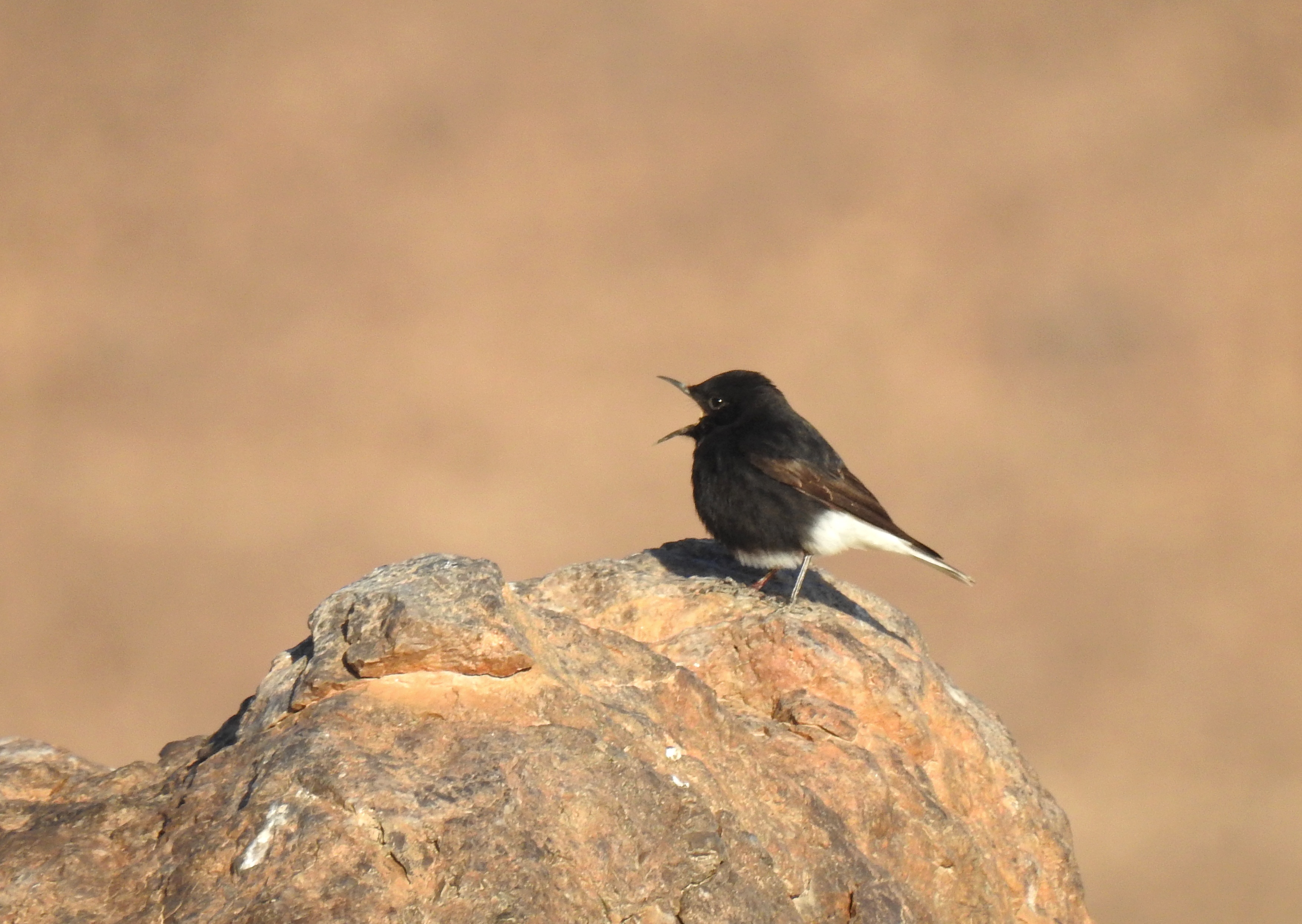
White-crowned wheatear
It was while I was stationed down south that I had a strong urge to have a vacation, to escape for a spell and ideally overseas. That didn’t pan out, but, knowing that I could use a breather, Bracha came up with an attractive alternative. There had been an influx of several interesting bird species further down south, mostly in the Arava and Eilat areas. This would be the perfect opportunity to combine a breath of fresh air with some twitching and quality birding, something that has been hard to come by in the last year or two. In birding nomenclature, the term “twitching” is used to describe one’s pursuit of specific, generally rare, bird species.
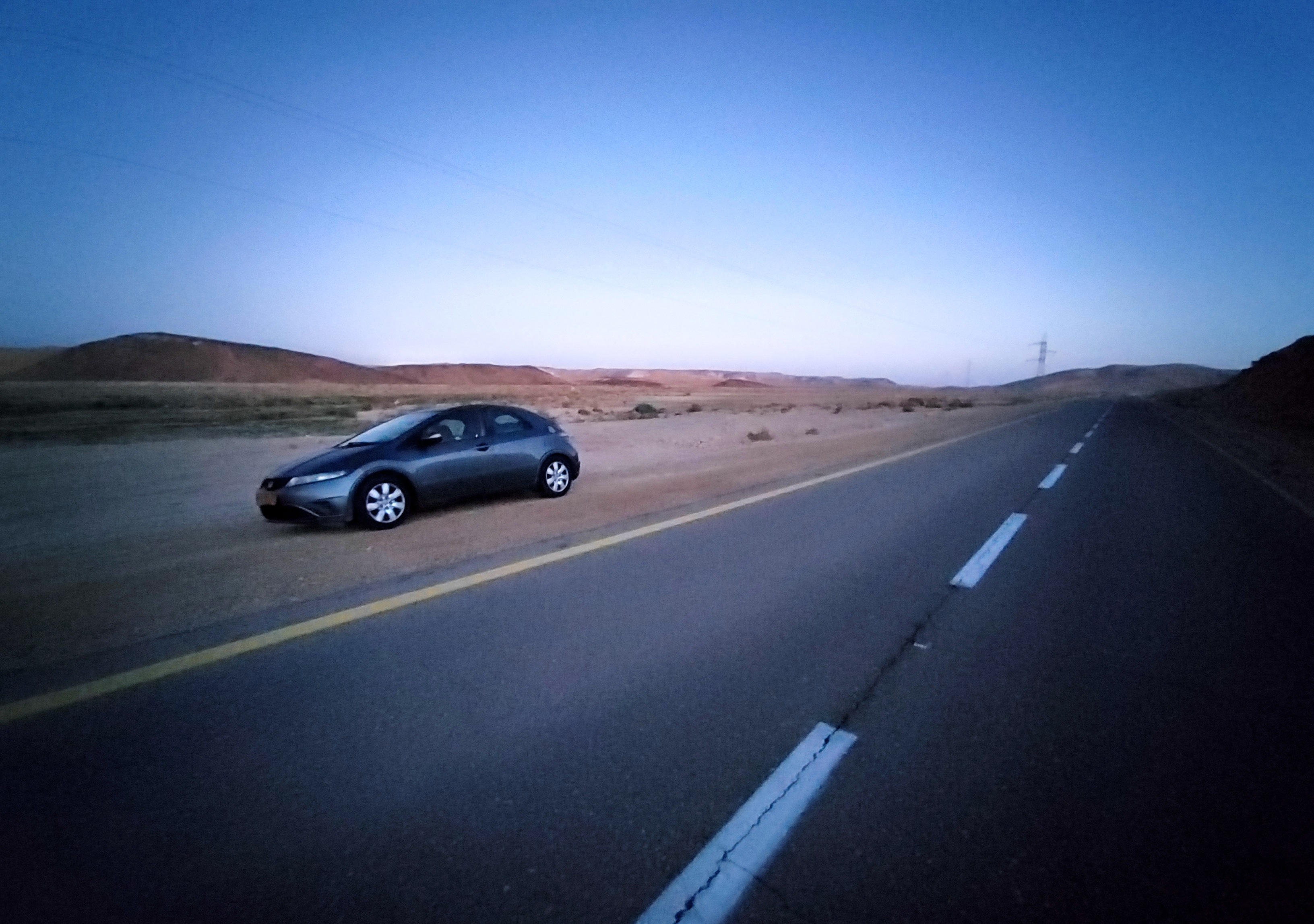
Dawn in the Uvda Valley
Once the dates were set, I began to do my research – this involved scouring eBird’s checklists and hotspots, reading up on fellow birders’ reports on social media and keeping close tabs on the location updates of some high value targets. I mapped out a series of sites that I could visit over a two day period, optioning in alternate travel plans that would be determined or tweaked in real time. I had a flexible itinerary and a few side missions to attend to in Eilat, including picking up a new laptop that I was ordering (may my trusty old one rest in peace).

My first Asiatic wild asses
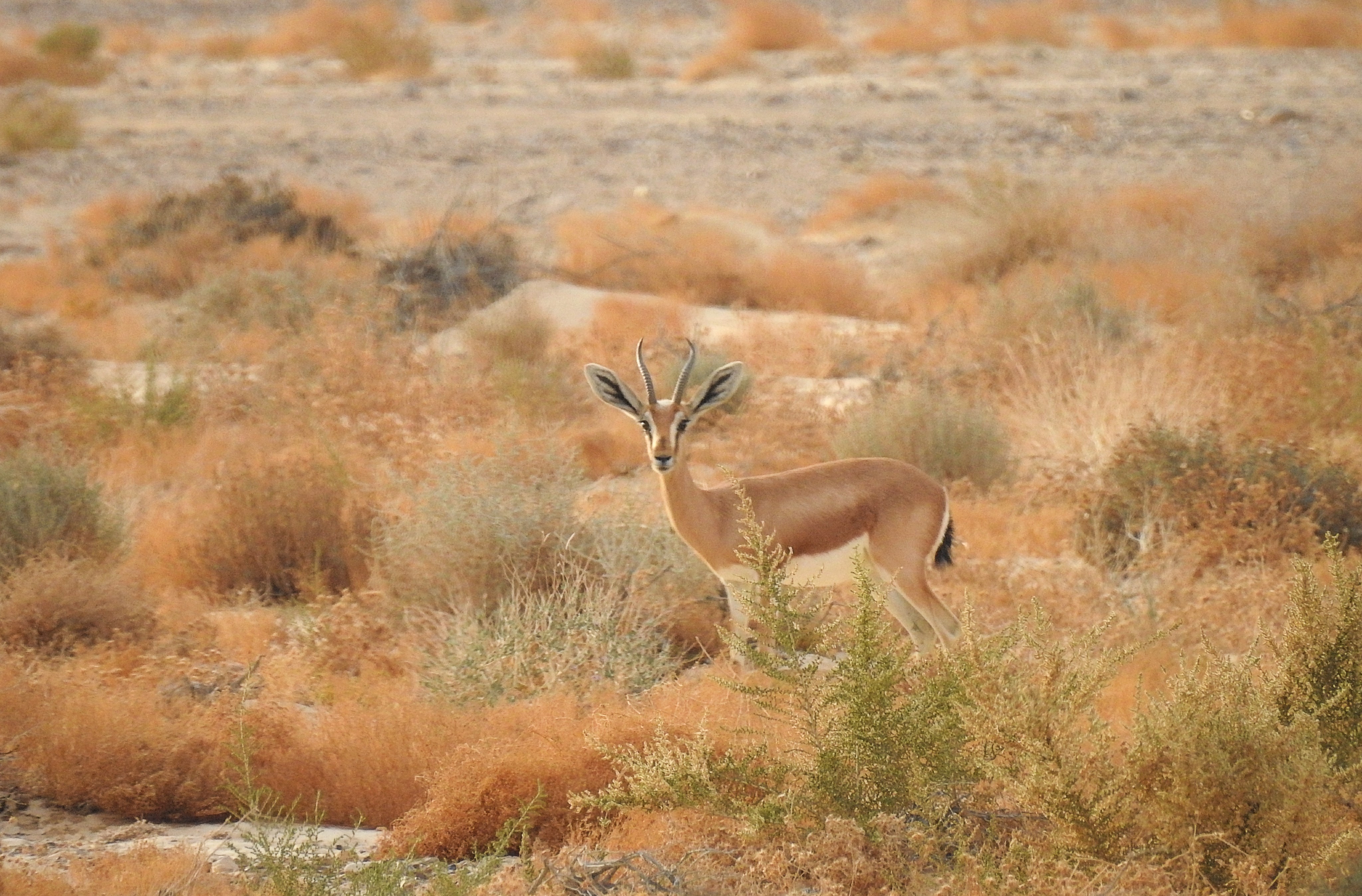
With the preamble finished, the adventure began in the wee hours of the morning (approximately 2:45 AM) with a 300-kilometre drive down south to the Uvda Valley, my first destination hotspot. The drive was enjoyable, inky black as I entered the desert regions, and bitterly cold. First light was just cracking through as I turned into the Uvda Valley, and I pulled over on the side of the quiet desert road. The cold penetrated through my layers of clothing as I waited patiently for the light to strengthen. I could make out a few Asiatic wild asses not far off, my very first sighting of this horse species, as well as a few dorcas gazelles. At last, with adequate lighting and stiff fingers, I was able to scan my surroundings and photograph freely.

My first pied wheatear
I took some photos of several species of wheatears, some of them being “lifers” – the term used by birders to indicate the first time seeing a specific species of bird. Wandering about and admiring the crisp desert scenery, I was joined by a handful of other birders who similarly wandered about alongside the road. As I looped back around towards where I had parked the car, I saw an irregular wheatear fly by and noticed that the other birders had taken a keen interest in it. Sure enough, it was a rare pied wheatear – one of the four highly sought-after rarities to grace the region over the winter months.

Exploring the drier parts of Uvda Valley
Having chatted a bit with my fellow bird enthusiasts, I took off again to roam about and find more target species. I walked along Nachal Hayyun’s dry streambed and kept my eyes peeled for more interesting species – not only birds. Unfortunately, despite being a hotspot for Arabian wolves, I didn’t merit in seeing any that day. I did, however, see a number of other lifers, which filled me with a deep feeling of joy. As I was watching a few hooded wheatears flutter about with some of their taxonomic relatives, I suddenly noticed a small flock of small brown birds feeding in a swath of grass to my left.
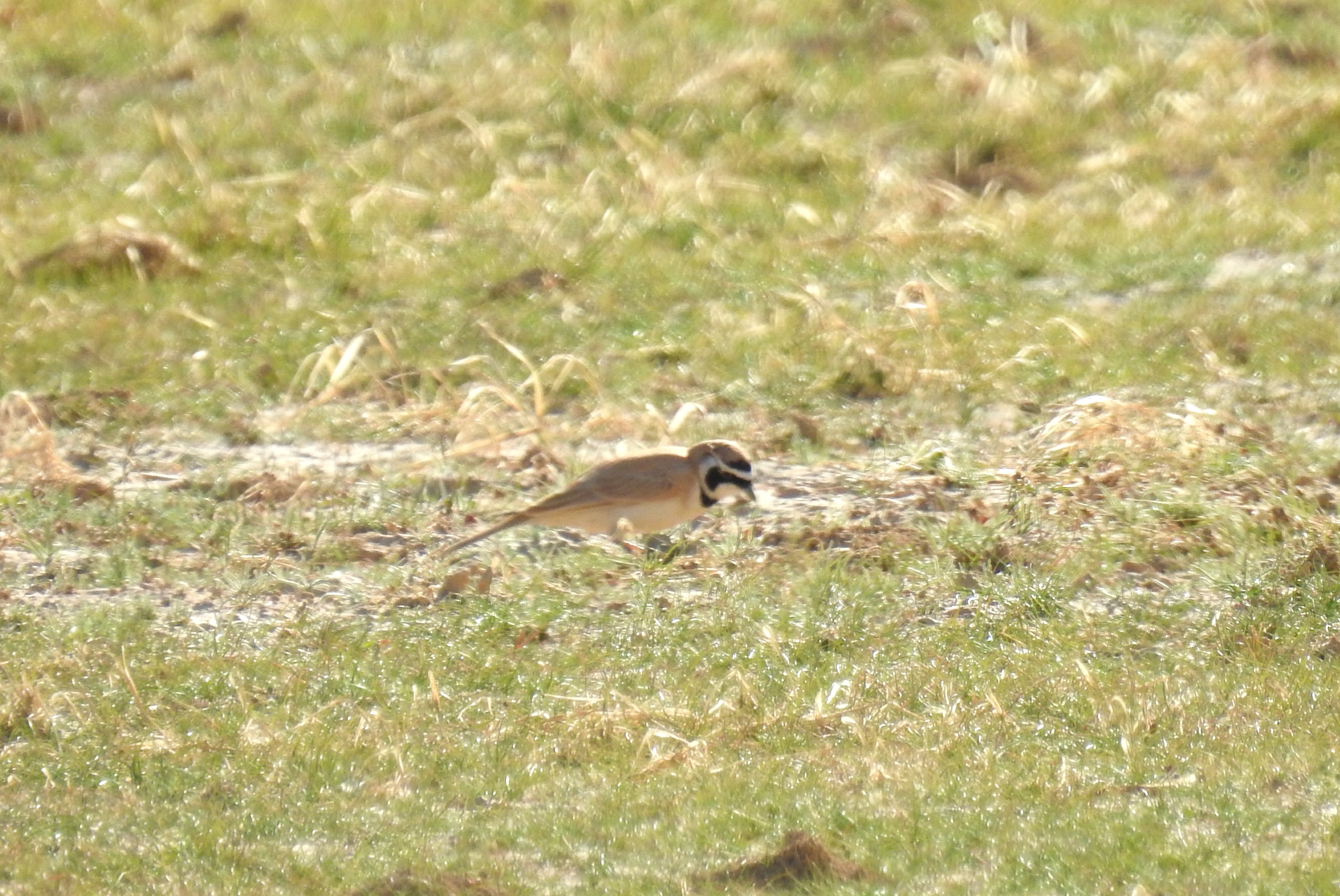
Record shot of my first Temminck’s lark
I was seized with excitement as I documented yet another lifer that morning, this time the beautiful, if demure, Temminck’s lark. Hoping to get a better angle, where the morning sun would not backlight the birds, I made a wide circle and then they all flew away. I was saddened, this too is true, but happy that I happened to notice them in the first place. Another high-profile rarity that had been spotted earlier in the month along the streambed was the Menetries’s warbler, but I was unable to find it no matter how hard I tried.

Nachal Hemda (or KM 94)
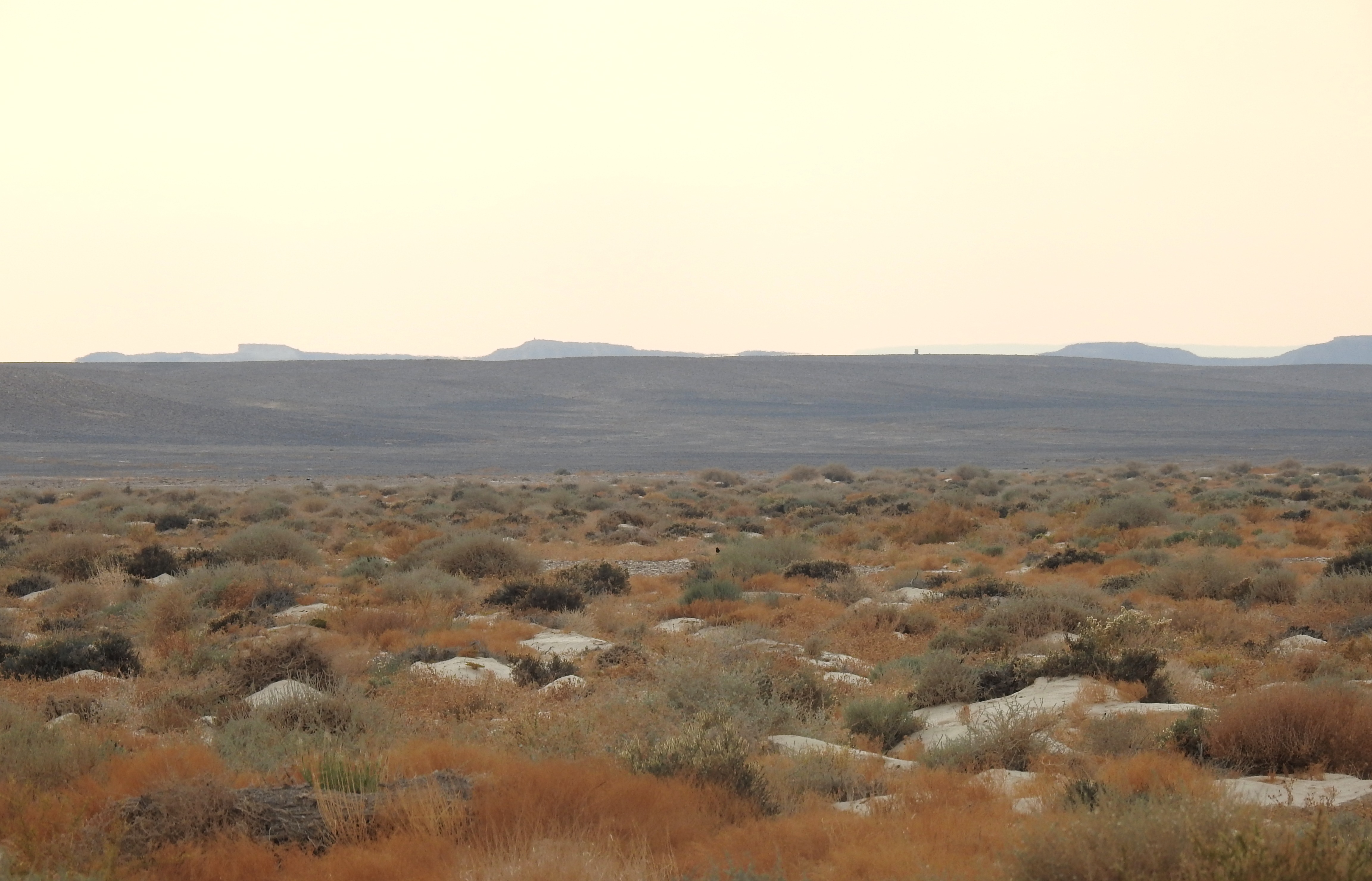
Not wanting to leave this vibrant valley paradise, but knowing that there was much more to be seen, I urged myself back into the car and headed for Road 90. I was headed for another birding hotspot, the roadside streambed of Nachal Hemda, known as KM 94 – being at the 94th kilometre marker from the start/end of the road at Eilat. Since it wasn’t the weekend, and the site being an active IDF firing zone, my birding activity was limited to the vicinity of the paved highway.
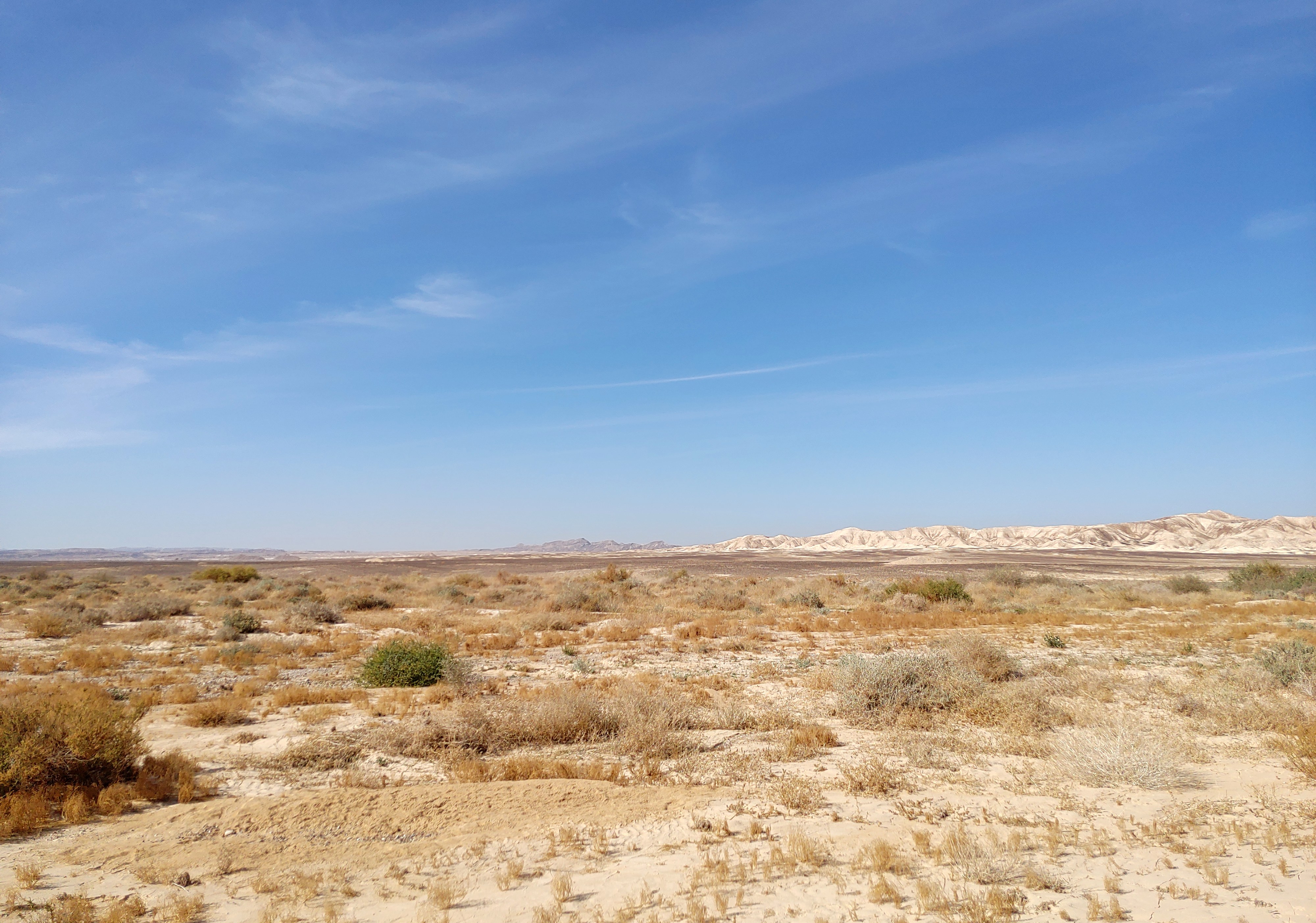
Open desert expanses at Nachal Hemda
I pulled over near the kilometre marker and parked on the hard, dry soil, spotting a single dorcas gazelle which had the indecency of dashing off before I could get a decent photo. Scanning the streambed’s low shrubbery, I was predominantly in search of one prominent species – the globally rare basalt wheatear. While currently floating between the status of species or subspecies, the basalt wheatear is both very rare and very cryptic. The main population is believed to live in the basalt desert of northern Jordan, with individuals making their way down to the Arava every couple of years.
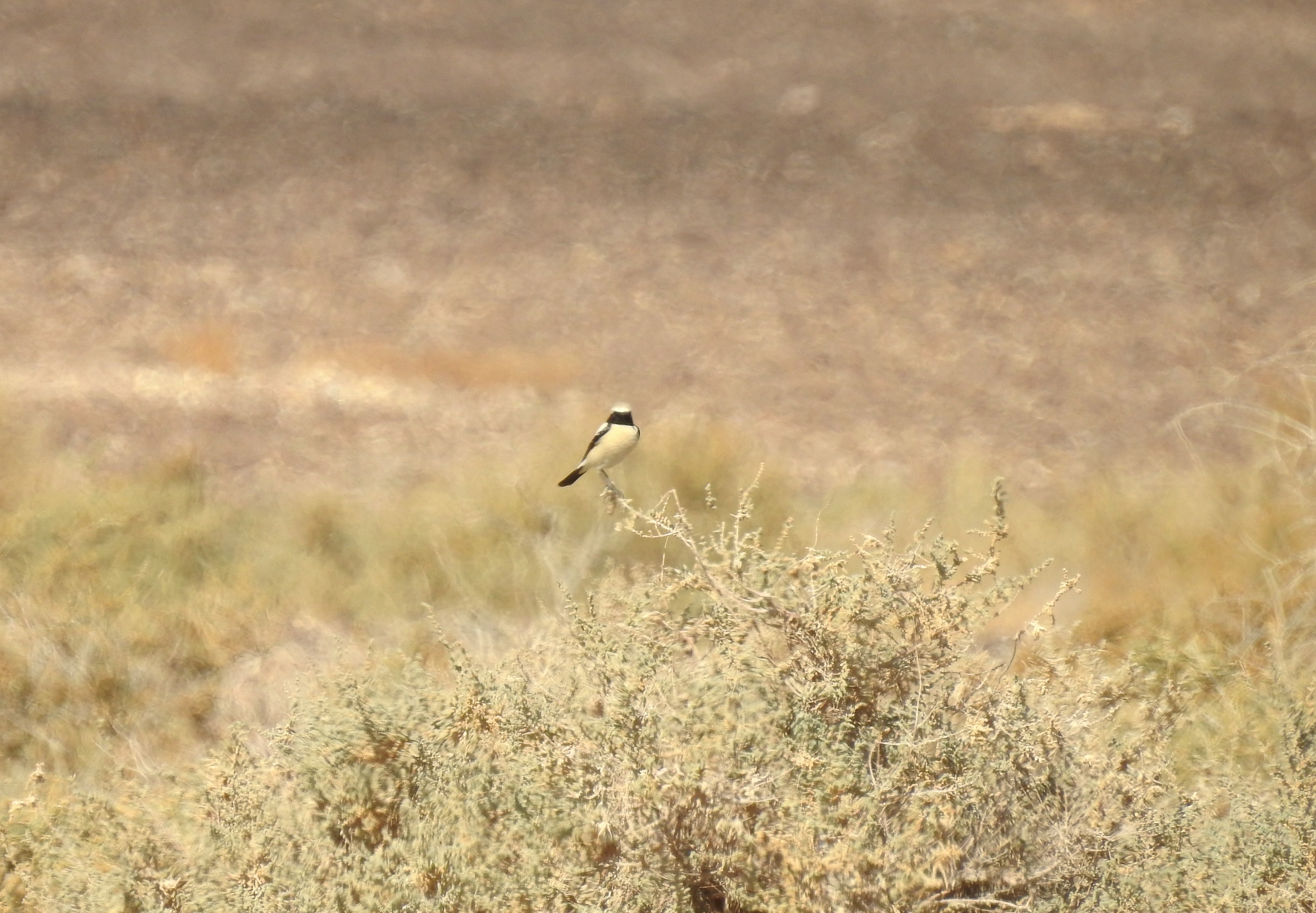
Terrible shot of a desert wheatear
Overall, wheatears are relatively easy birds to spot – they perch conspicuously on rocks or bushes and generally stick to the same area for enough time to get acquainted. Basalt wheatears in the Arava are even easier, their jet black plumage easily noticed in the drab, yellow-brown environs. However, no matter where I looked, there was no tell-tale black dot to be seen – in fact, there were hardly any birds at all. My morale dipped a bit as I failed to find other target species, and the hot desert sun was making my birding a bit uncomfortable. I wasn’t entirely disappointed because there was a small flock of spotted sandgrouse and yet another lifer, desert wheatears, so who was I to complain. I gathered up my hopes and dreams and headed back to the car, ready to try another of my pre-planned hotspots.

Nachal Ketura
I drove back down Road 90 until I reached Nachal Ketura where I pulled over and parked along the highway. This time, I was in a construction site of sorts, but I had to leave the car and focus on the mission at hand. I needed to find my next target lifer, the rare Menetries’s warbler, which I had failed to find earlier that morning at Uvda Valley. Thankfully, throughout the trip I was able to receive tips and updates from fellow birders, some going so far as to telling me exactly where to look. I hiked a short distance to the dry streambed, dotted with shrubs and acacia trees, and began my searches.

Nice little green bee-eater pausing for a picture
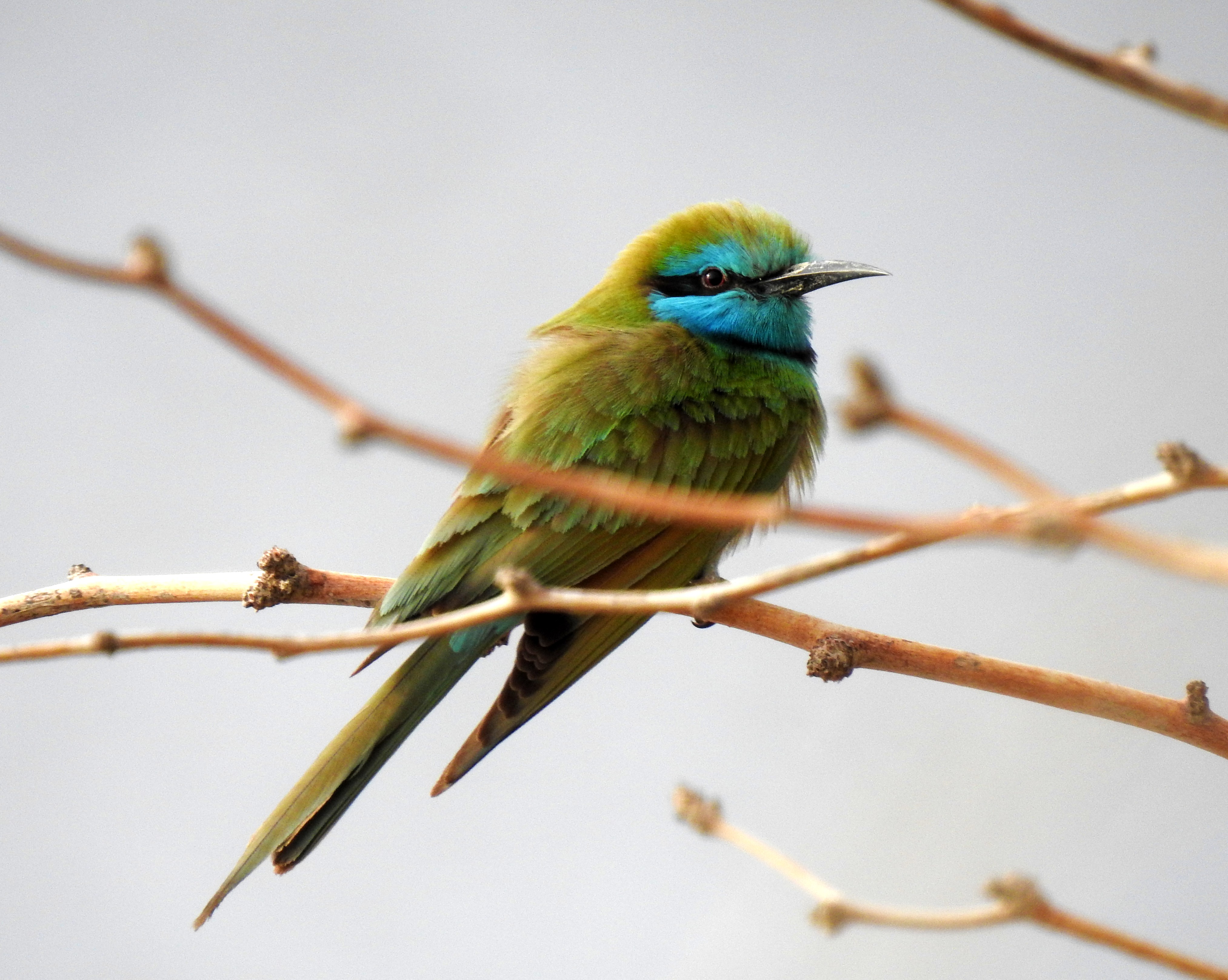
In stark contrast to Nachal Hemda and its overall lack of avian fauna, Nachal Ketura was brimming with bird life. Rock martins and little green bee-eaters dipped to and fro overhead while blackstarts and bluethroats flitted anxiously in the bushes. I stalked around the small trees, one hand clutching my binoculars and one grasping my ever-ready camera, waiting for a warbler to come into view. It was the calls that gave it away, sounds that I had listened to in preparation for this important moment. I zeroed in on a small grouping of small trees and stood stock still, waiting for the grand reveal. My patience paid off and a graceful warbler fluttered into view. It dropped down to the ground and strutted about, looking like a Sardinian warbler but acting like a bluethroat. I watched it hungrily with my binoculars, looking for all of the right identification marks to confirm its ID, and thus, my photo op was missed. It was the only rare lifer of my trip that I failed to get a photo of.

Enjoying a milkshake at Yotvata
Excited that my excursion was off to such a great start, I decided that it was time to cool down in celebration with a short stop at the renowned Yotvata visitor centre. Yotvata is famous for their milk and dairy production and the visitor centre boasts sweet dairy treats from chocolate milk to ice cream. I helped myself to a milkshake, a delicious beverage which is sorely missing in my day-to-day life, and had a look around the touristic complex.
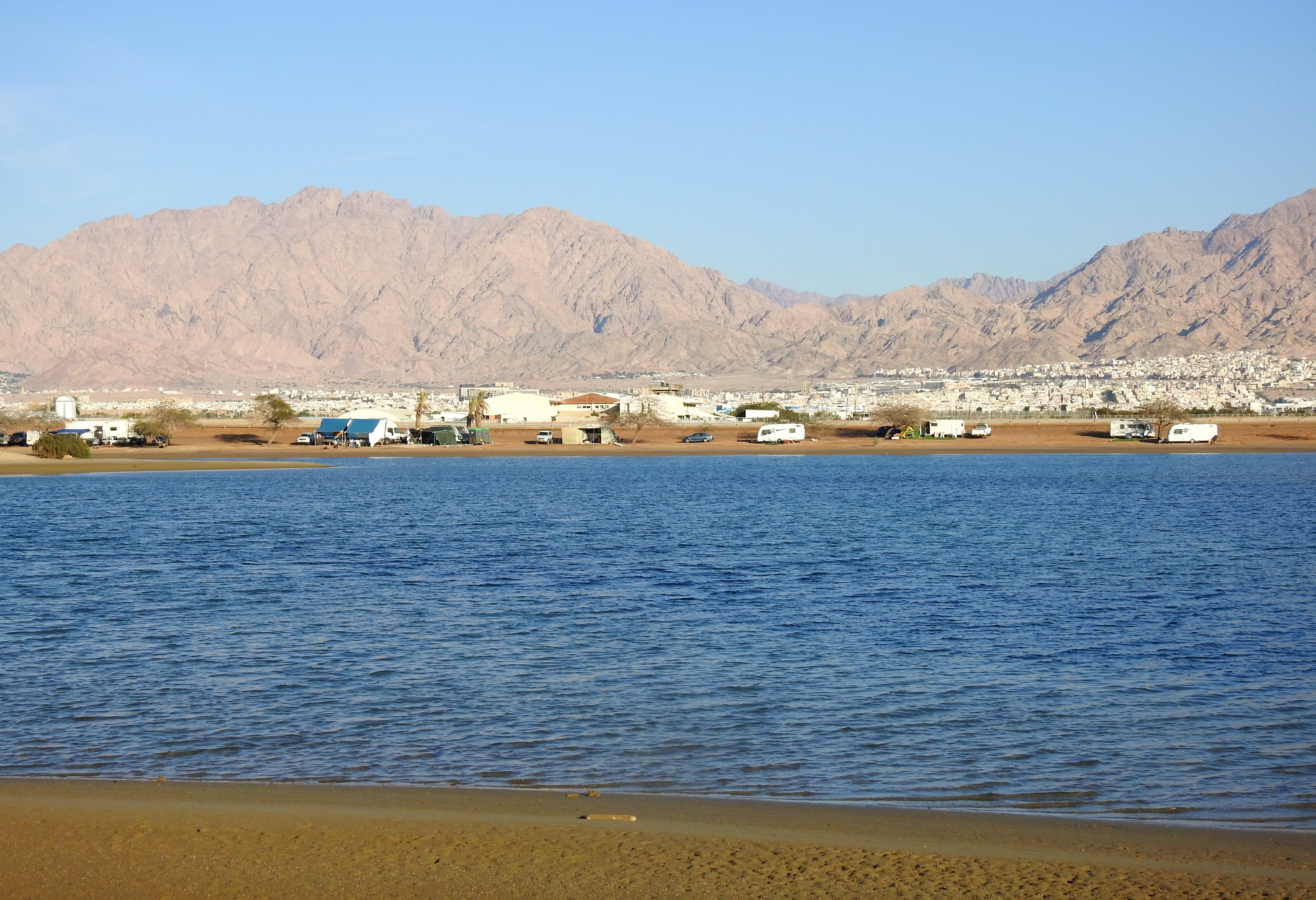
The peaceful lagoon
It was finally time to head down to Eilat where even more potential lifers awaited, one patiently bobbing about in a small lagoon just off North Beach. This was the rarest of the rare birds that winter, a first for Israel and an overall humdinger of a sighting. I speak of the Pacific diver, a bird that predominantly lives in the northern Pacific, and of which one has made its way all the way to Eilat. Another easy tick for most twitchers, the diver spent a month or two in the lagoon area, swimming about leisurely and snacking on the small fish that it caught.

The exciting moment captured in the moment
Sure enough, it was an easy target and I found the Pacific diver bobbing sleepily in the gentle current, the late afternoon sun gleaming through its half-closed eyelids. There was a great feeling of ecstasy as I watched the graceful bird paddle its way around the little lagoon, the bustling resort town setting providing near comedic subtext.

Israel’s first Pacific diver
I wondered how many people around me, and surely all those looking out the hotel windows nearby, had any idea that this bird made its way all the way from Alaska, or some equally remote region of the north Pacific. How many of them knew that this was the very first of its species to have been spotted here in Israel. Surely some people noticed the attention it was getting, and I later saw a short clip that was filmed for national TV (and this delightful video on YouTube).

Looking over at Jordanian Aqaba
I walked on over to North Beach, just a few minutes away, and looked for some interesting birds and mammalian species. I saw some terns, gulls and some commercial airplanes, but nothing truly captivated my attention – certainly no Houthi cruise missiles. With the sun slowly setting, I made my way back to the car and turned my focus to the other aspects of my trip. I picked up my new laptop, which was a great purchase, and then off for some dinner, light shopping and an early night’s sleep. My initial dinner plans hadn’t been researched well enough, so I ended up just having a nice falafel around the corner from the Melio Hotel, an inexpensive hotel which served my needs perfectly. After an action-packed day, with over 18,000 steps recorded by my smartwatch, a nice warm shower and a good night’s sleep was the perfect ending.




















 Israel's Good Name