While woefully missing out on bloggable adventures as of late, this past week I was off from work due to the Christmas holiday and did a bit of adventuring on my lonesome. It started with a drive down to Matash Ayalon for some convenient, and guaranteed, quality birding – a known hotspot for wintering duck species, which never fails. I was pleased that I chose this site, as I was able to tick off another new bird species – a reed bunting, an uncommon bird which appeared before me on a bare tree for a good minute or so. But, this post is not about my short birding trip, nor the bit of shopping that I did afterwards, but rather the meagre remains of an old Crusader castle that I happened to visit.

Casel des Plains
I had just finished shopping in Holon when I had a look at Google Maps to see what interesting places I had bookmarked for later perusal. Much to my surprise, there was a Crusader castle just a few minutes away in Azor, a site that I had plumb forgotten about in recent years. Truthfully, I had to do a bit of research before writing this post as my knowledge was lacking. Parking just outside of the municipal archaeological park, which contains Casel des Plains’ ruins and more, I made my way up to explore the tiny urban oasis.
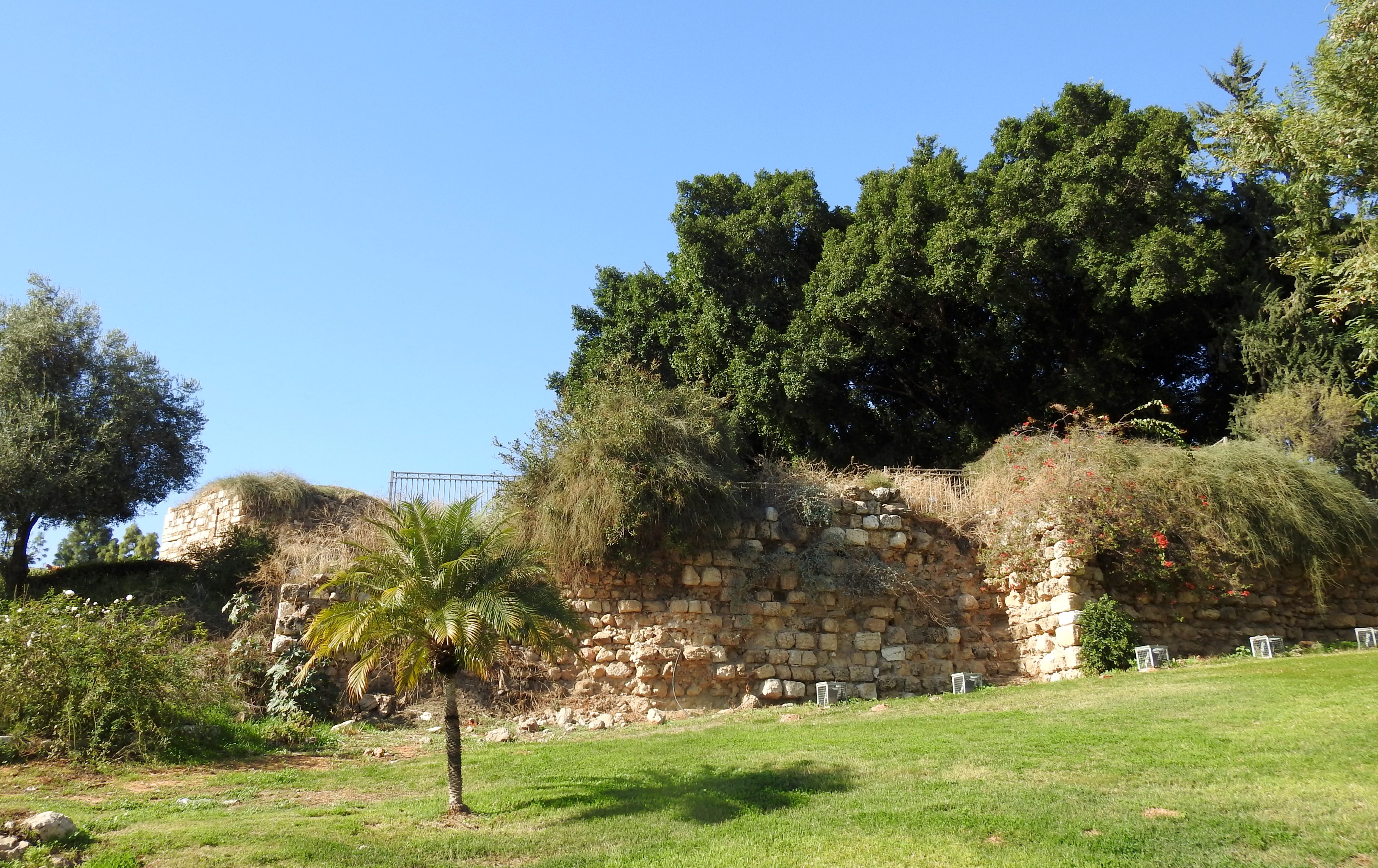
The fortress’ enclosure walls
From my understanding of the site, I passed some overgrown castle enclosure walls as I climbed Tel Azor before laying eyes on the fortress tower. Modern flags waved at me as I sized up the stout structure, taking a few pictures before encircling the remains. Casel des Plains (also referred to as Chateau du Plains and Casellum Balneorum) was built alongside the village of Yazur seemingly sometime during the 1100s by Crusaders, following their success and establishment of the Kingdom of Jerusalem. In 1191, the fortress was destroyed by the Ayyubid emir Saladin and subsequently refortified by the Templars later that year. In 1192, the castle was believed to have been the base of operations for Richard the Lion-hearted, one of the leaders of the Third Crusade, who abandoned the site when Saladin reappeared. Orders were then given by the emir to dismantle the fortress and that was the end of that.
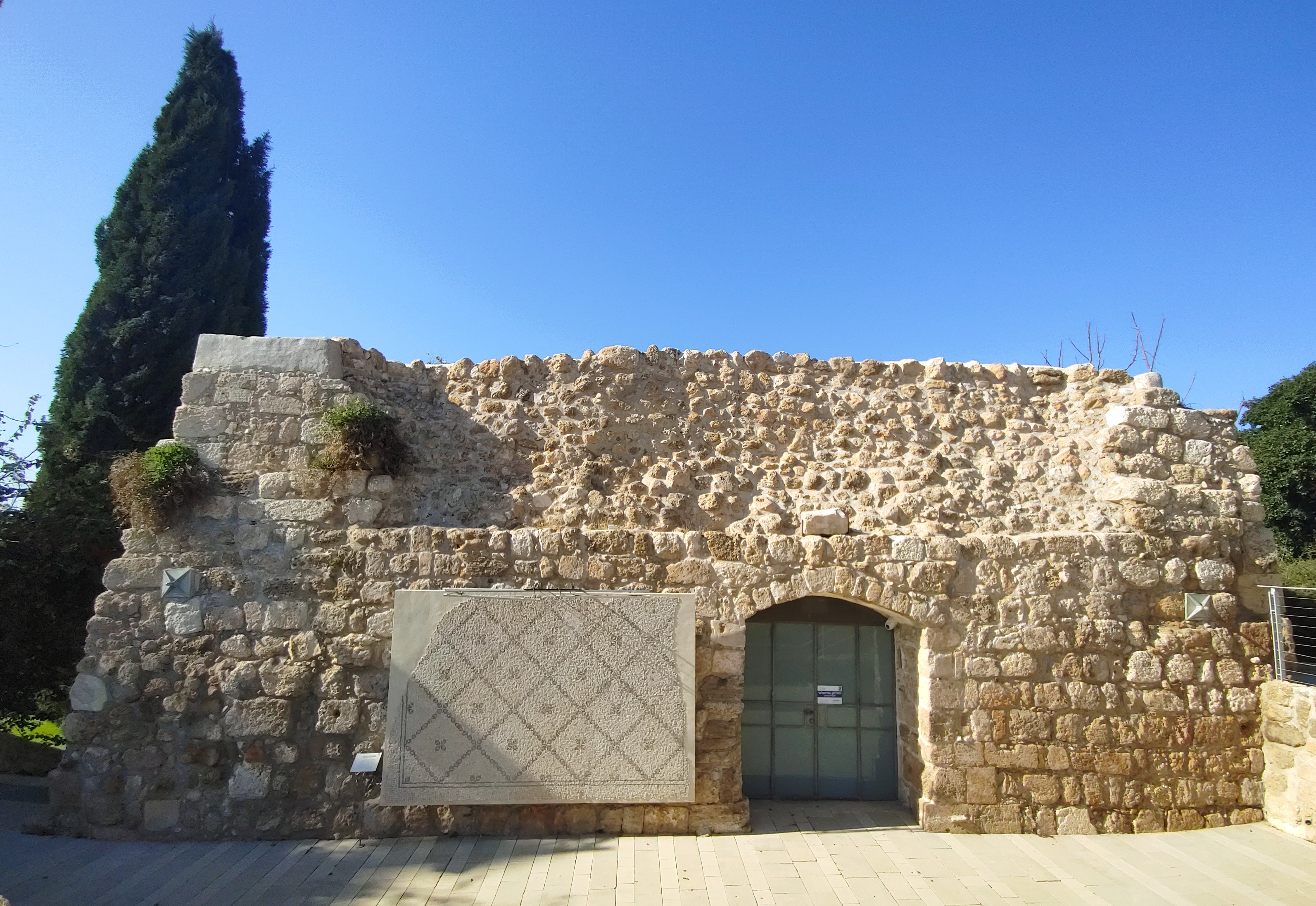
The Ottoman mosque building and displayed Byzantine mosaic
I admired the sturdy masonry and made my way to what looked like another part of the Crusader fortress. Yet, this structure was erected only in the Ottoman period, and served as a mosque. Today, it houses a local archaeological museum, which, unfortunately, is only open on Friday mornings. Eking out all that I could of my impromptu visit, I had a cheeky peek-in through the grated side door, and took a few pictures of the displayed artefacts. I sure would have liked to have had a bit of a closer look, but had to make due with my poor timing.

Inside Azor’s archaeology museum
The mosque structure also featured a sizable Byzantine mosaic, which was discovered just a bit further south on Tel Azor during salvage excavations in 2011-2012. The preliminary excavation report, published by the archaeologists on behalf of Israel’s Antiquities Authority, suggests that the mosaic may have belonged to a Byzantine church. Perhaps unconnected, a beautifully constructed church was periodically reported at Azor/Yazor by travelers and clergymen in the centuries following the fall of the Crusader fortress.

The archaeological garden
Looping back around, I admired a display of agricultural artefacts that make up the tel’s archaeological garden (created in 2008). A variety of stone presses, used to crush olives and grapes for their valuable juices – some of which were found in the region – posed plainly in a simple sequential layout. I gave them each a moment or two, and headed for Casel des Plains tower’s arched doorway. Inside, looking through the locked barrier, I found cases of soft drinks and construction materials. Surely, a better place could be sourced for so banal an existence.

Looking at the entrance of Casel des Plains
While looking more closely, I noticed that there is what looks to be a marble column serving as a doorstep, as well as a drainage system within the wall to the left of the thick doorway. So, unable to enter the tower and explore more, I began my way back down the small tel. I passed a small patio area with a burnt-out coffee cart, which looked like it had been permanently abandoned there following the fiery incident.

We musn’t forget the reed bunting
Great ficus trees shaded me as I had one last look at the fortress’s enclosure walls, and then I was off. I made a short detour to a highly-recommended hummus joint in Petach Tikva, where I enjoyed a dish of roasted chestnut-topped hummus, and headed homeward-bound.
 Israel's Good Name