This past Yom Haatzmaut, or Israeli Independence Day, we took the opportunity to visit some old friends living a bit deeper into the Shomron (Samaria). It was a lovely morning, the first of May, as we got into the car and left our home in Elkana, driving south past the Crusader castle Mirabel and Mazor Mausoleum before turning back into the Shomron. Our friends, the Yablons, lived at the time in a small, up-and-coming yishuv by the name of Kerem Re’im, nestled in a cluster of Jewish settlements about 7 km northwest of Ramallah.
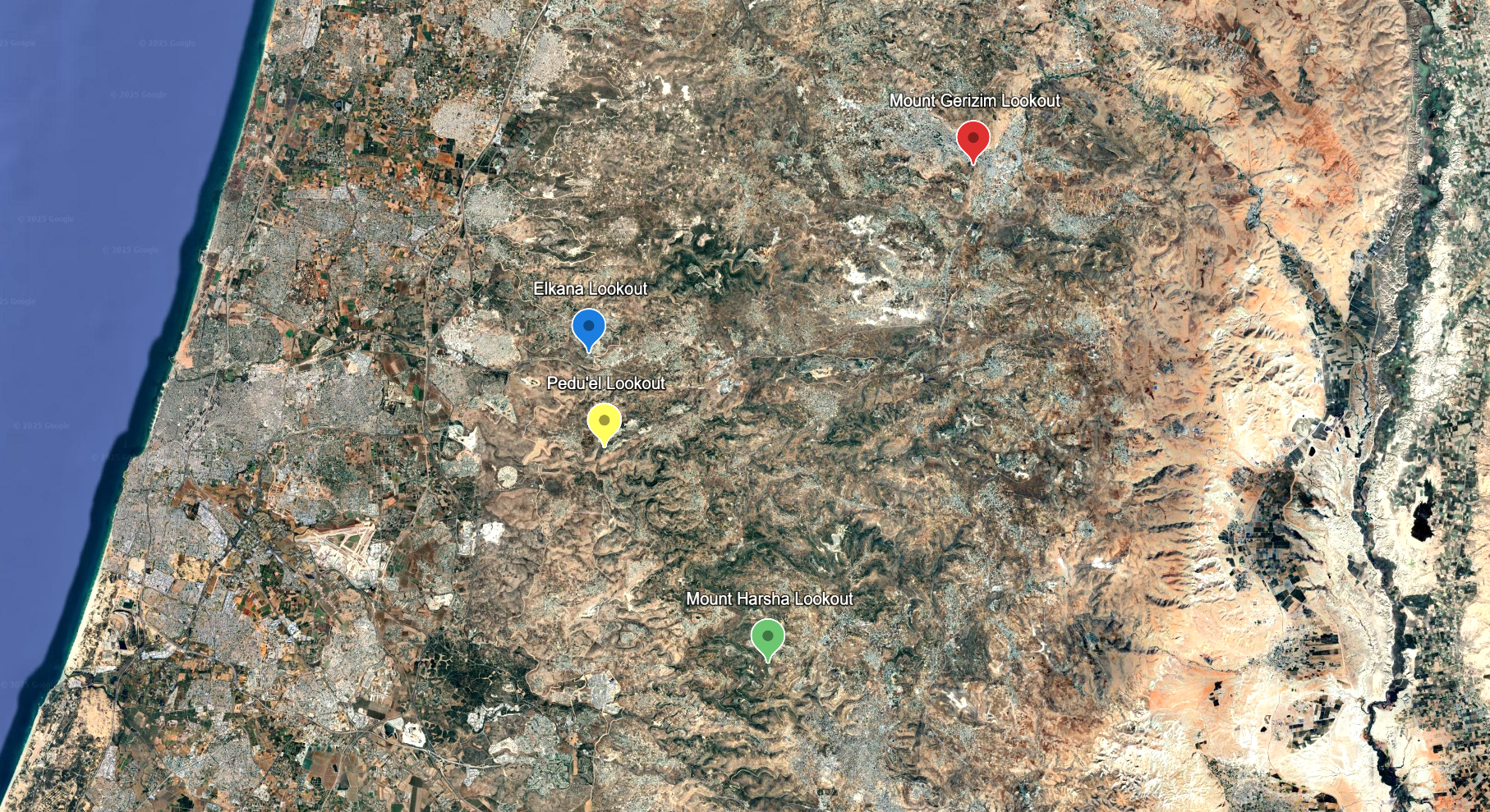
Map of the lookouts
Passing a checkpoint or two, we reached the small enclave and made our way to their house. Meeting up with Ben and Miriam, and their three kids, was a nice reunion celebrated with pita, spreads, cookies and strong black coffee. We examined our options and decided to have a short drive over to the nearby mountaintop, which overlooks Kerem Re’im and can be seen from their front door. Getting back into the car, it was a nice and windy drive up Mount Harsha – familiar in part from my stint in military reserves.

Panoramic view from Mount Harsha looking north
Atop the mountain is a small community which was established rather recently, in 1999. At the northern edge of Harsha is the lookout which is approximately 740 metres above sea level. It provides excellent views of the surrounding countryside and more, depending on weather conditions and visibility. As exciting as that seems, my attention was drawn elsewhere – to the sky! Dozens of birds of prey were zipping along the strong winds, heading northeast as they migrated back to Eurasia.
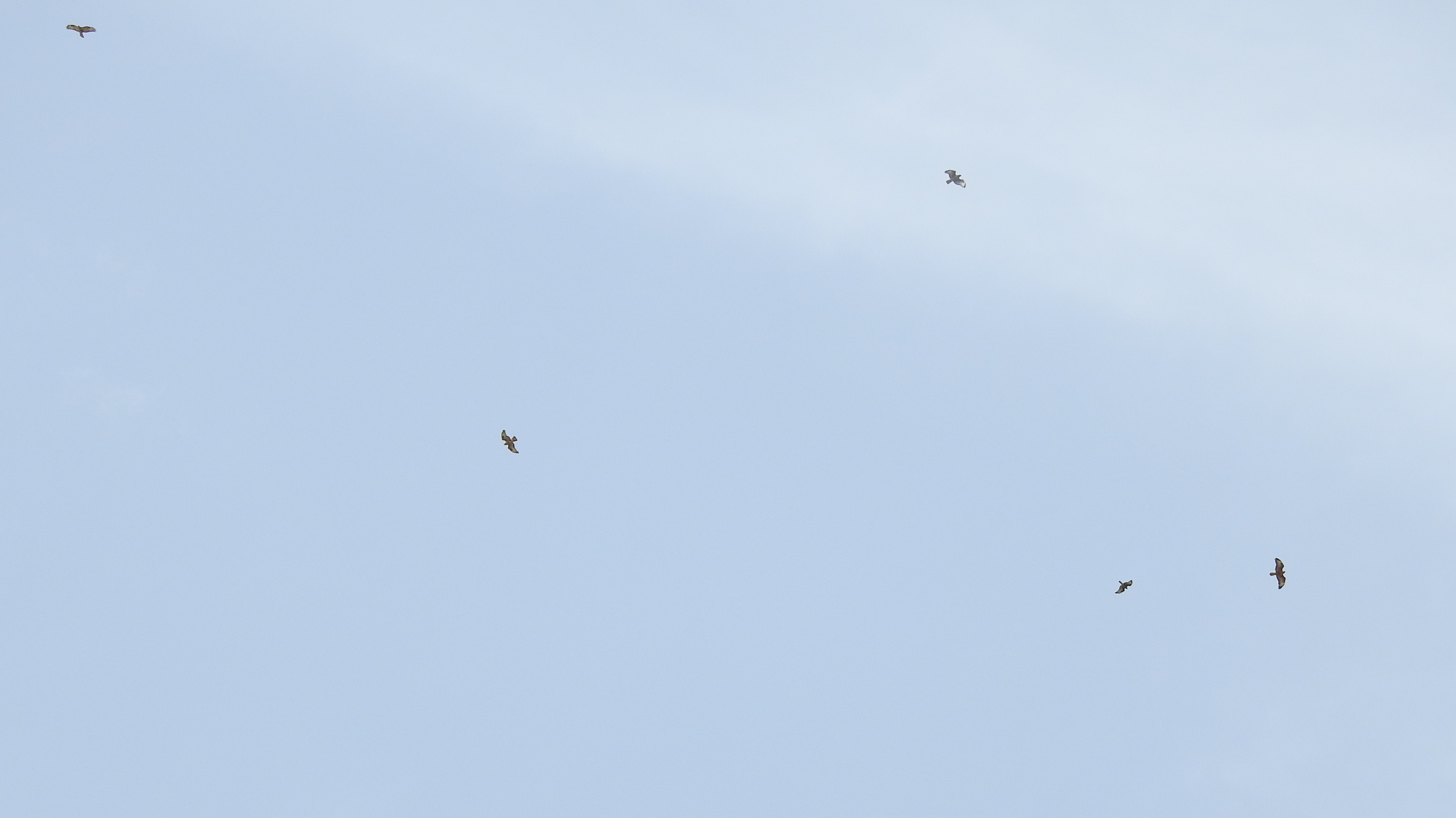
A bit of raptor migration overhead
For raptors passing through Israel, spring migration usually takes place further east than it does in autumn, which generally made it difficult for me to witness. Now, I was darting my eyes left and right as I spotted dark figures coursing through the cloudy skies, wings tucked as they soared past. I saw some steppe buzzards, honey buzzards, black kites, lesser-spotted eagles, short-toed eagles and at least one steppe eagle.

Posing atop Mount Harsha
After an agreeable look around, we headed back to the cars to drive down to a local spring, Ein Harsha. It was directly downhill on the southern side of the mountain, the winding road leading us to some fruit trees and an open area to park.

The Yablon child-juggling act
We hadn’t come properly attired for a dip in the spring, nor is that something that ever appeals to me too much, so we had a bit of a gander and enjoyed watching other families splash about gleefully. The spring itself gushes out from the cliffside, obscured from view, and empties into a large concrete basin. Fixed ladders allow swimmers to enter and exit freely, no matter how much water there is at any given moment.
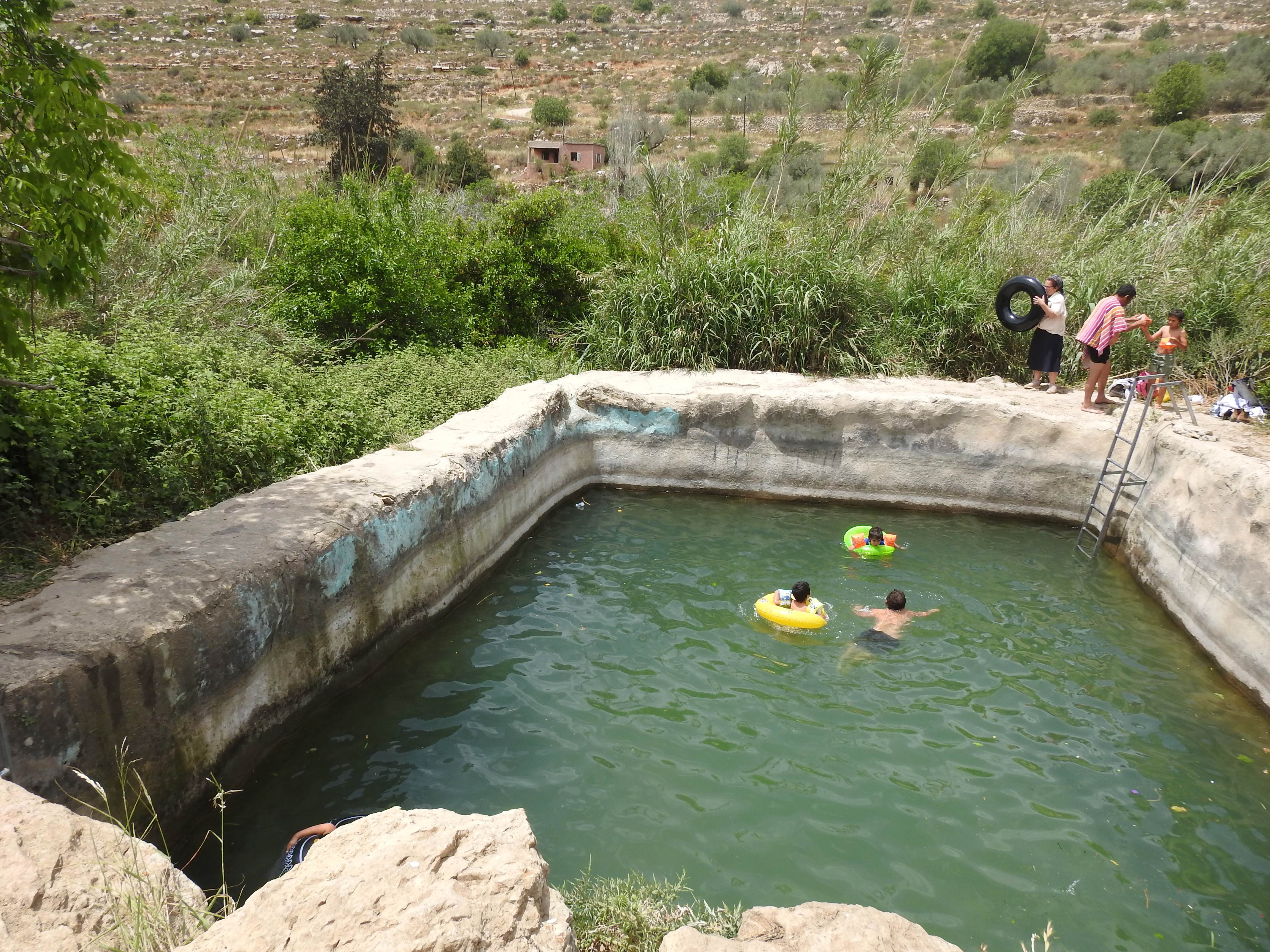
Ein Harsha
Overlooking the spring, I noticed some interesting construction projects which appeared to have been abandoned. A bit of research on AmudAnan told me that this was a housing project for then-PA leader Arafat’s security forces, funded by the EU and abandoned when the funds ran out, one way or another. As I looked up at these structures, I saw bee-eaters and a hovering short-toed eagle hunting in the distance.
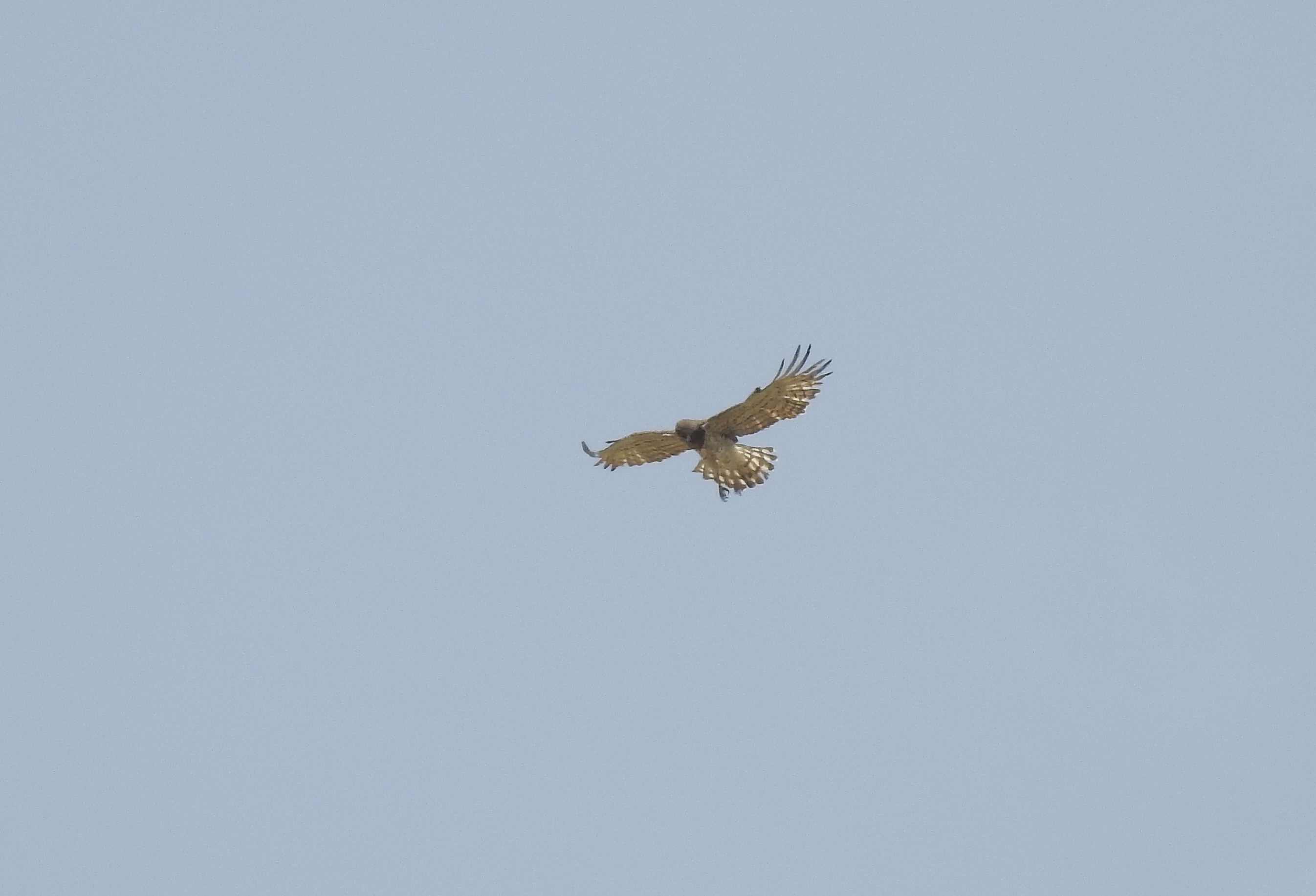
Short-toed eagle looking for prey
We tried a local freshly-picked clementine, which proved to be inedibly sour, and then got back into the cars to drive back to Kerem Re’im for the barbecue. While Ben manned the grill, I cracked open one of our old homebrews that we had made together back in Givat Shmuel under the Arx Meles branding. It was a barleywine brewed back in January of 2019, clocking in at an impressive 12.1% ABV. I can’t say that I particularly enjoyed revisiting the potent ale, but it was a fun experience and I wonder what time will do to the other bottles waiting in storage.

Tasting the old barleywine
The barbecue was delicious, a smorgasbord of grilled meats and side dishes, and we ate to our hearts’ content. Finishing off with a chocolate chip cookie or two, I headed outside with Amir for him to play and noticed that I could see – and photograph – the lookout of Mount Harsha from outside the Yablon residence, nearly 1.6 kilometres away as the crow flies.

Mount Harsha lookout from Kerem Re’im (1.59km away)
When we drove home, we passed by the cliffs under Pedu’el, alongside Nachal Shiloh before it drains down into the coastal flatland and becomes a tributary of the Yarkon. I felt quite inspired by the previous lookout, so much so that we formulated a plan to go back again the following day, this time to the Israel’s Lookout at Pedu’el (which I had already been to two or three times before).

Juvenile Sardinian warbler
The very next day, a calm and relaxing Friday, we got out and drove to Bruchin, one of the nearby towns that is close from a geographical sense, but requires quite a drive to physically get there. Bruchin, as I remember it from my army days, was quite a fledgling community and had quite the small settlement vibe to it. Now, an extensive housing project has transformed Bruchin into a much-desired locale for young, orthodox families. With the housing came civil infrastructure, including the popular Hillel’s cafe, which was our first stop for the day.

Some hollyhock backdropped by Deir Balut
We ordered some food and drink for the three of us, delighting myself with the most fantastic balsamic-glazed caprese croissant. It sang into my gullet, each bite more decadent than the last, begging to enslave me to the unsuspecting artisan who crafted the choice morsels. Anyway, once we finished our brunch, we drove on over to the far end of Pedu’el, overlooking the central coastal region of Israel.

Family selfie at Pedu’el’s lookout
This lookout (approximately 380 metres above sea level) has become more popular in recent years, so much so that there is a paved trail with informational signs and even a coffee cart café just outside the entrance. We joined the throngs of visitors, Friday being a national day off for most of the workforce. I was pleased to see the recent developments, and marveled once again at the lovely view. Although, this time, a new landmark jumped out at me. It was none other than the almost-completed Protea assisted living facility, whose behemoth structure rises up from the residential houses of Elkana.

Elkana as seen from Pedu’el’s lookout (5.6km away)
While the photo certainly captured the Protea building, unfortunately, the Elkana lookout (to be discussed soon) is mostly out of frame – just the winding path up, and a bit of the gazebo is visible right above the gleaming minaret on the far left side of the picture. But, we enjoyed taking photos and walking about the crusty bedrock on the gentle slope to the precipice.

Bracha and Amir having a closer look
Similar to the day before, there was a bit of migration activity – mostly a few buzzards and short-toed eagles. We sat together on the porch swing, rocking ever so gently, as we chatted and admired the views of Deir Balut and the Tel Aviv skyline. The Samaritan monastery ruins of Deir Qal’a were off to the left of us, just a short hike away, but I had already visited the site before.

Mount Harsha from Pedu’el’s lookout (15.84km away)
As we were heading back, still needing to prepare for Shabbat that evening, I realised that I was looking at a familiar mountaintop way off to the southeast. I steadied my camera’s 83x optical zoom and zeroed in on the three short antennas cresting the rounded peak 15.84 kilometres (nearly 10 miles) away. Sure enough, I had spotted Mount Harsha and, although not visible at this distance, the lookout where we had stood the day before. I was overjoyed, and ecstatically shared my discovery with my family, and then with the Yablons once I transferred the photo to my phone.
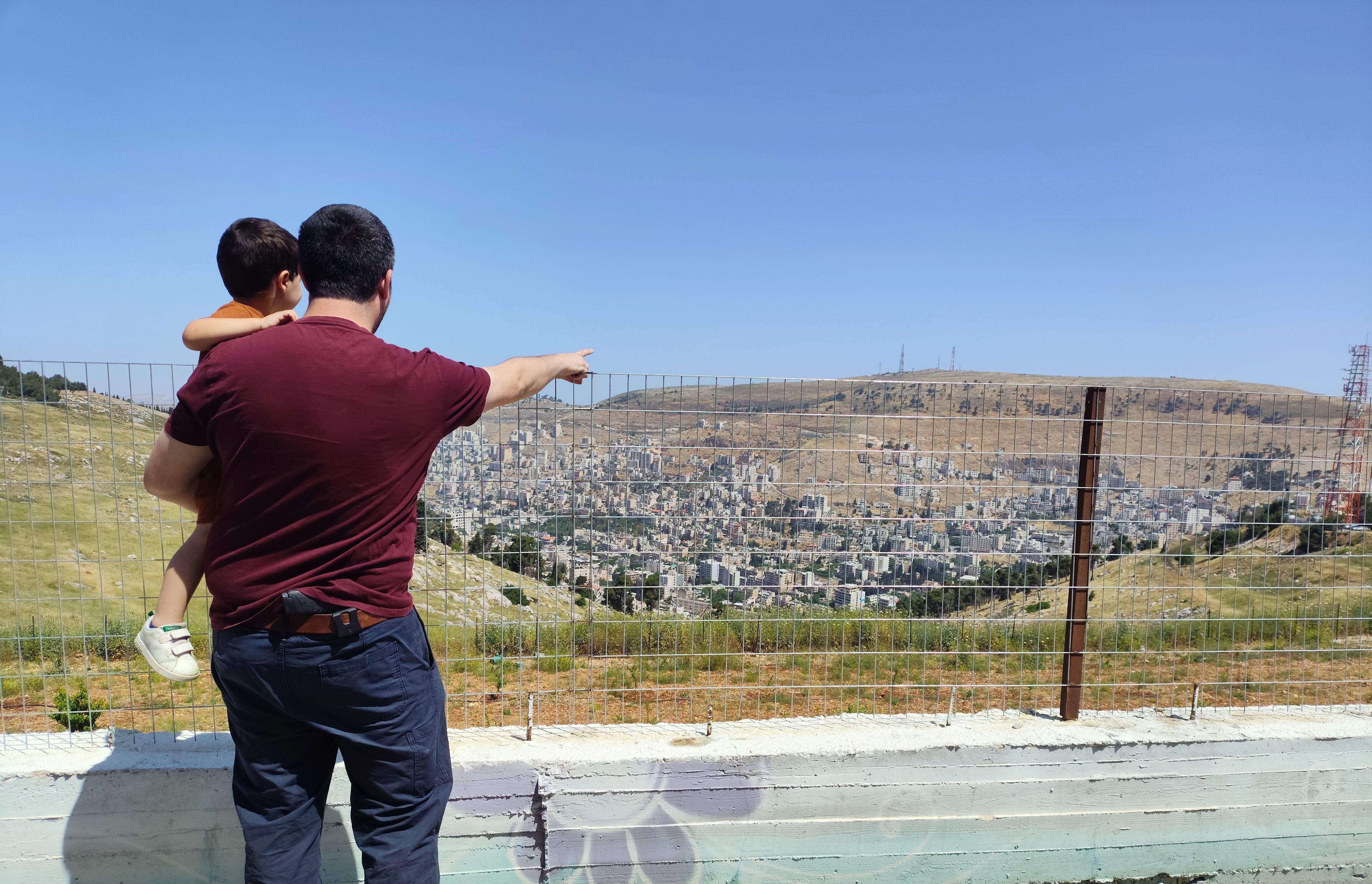
Pointing out Joshua’s Altar on nearby Mount Ebal
Ending on a high note, we headed back home and resumed our daily lives, until the following Friday. Inspired by our own adventures, and eager to see the famed Har Bracha tehina factory, we got back into our car and drove off in the direction of Shechem (Nablus). Just before we reached the city entrance, we turned left and drove up Har Bracha (or Mount Gerizim). We drove through the Samaritan village and then parked outside the factory. Sadly, the workers are all off on Fridays, so we couldn’t have a production tour, but we managed to buy some wholesale tehina from the big boss and relegated ourselves to enjoying the view atop Mount Gerizim. First we looked towards the northwest, where the urban sprawl of Nablus creeps up the opposing mountain, Mount Ebal. Although I have yet to visit Mount Ebal, there is a famous archaeological site at the very top, believed to be Joshua’s altar from the biblical book of Joshua (8:30–35).

Amir looking out over Shechem (Nablus)
Next, we popped over to Mitzpe Yosef, a mighty fine lookout around 800 metres above sea level, boasting views of Shechem and the Samarian landscape beyond. I had visited the IDF outpost adjacent to the lookout several times during my army service, and remembered the place quite fondly. I enjoyed pointing out the various landmarks in Shechem down below, most notably the ancient Tel Balata and Kever Yosef, where the biblical character Joseph was believed to have been buried.

Practicing my photography skills
I don’t think that we can truly count Mitzpe Yosef as one of the lookouts of the Western Shomron, but Elkana’s lookout certainly does fit the geographical qualification. Generally, when we would go out for a walk on Shabbat afternoons when the weather was better, we either walked around the security fence (near where I had affixed my trailcam in recent months) or up to the lookout. Since every time we had journeyed up to said lookout was on Shabbat, I never had the opportunity to take any pictures – particularly troubling when once we saw some breathtaking cloud iridescence, which just begged to be photographed.

Tel Aviv skyline from Elkana’s lookout
Either way, since we frequent the lookout, I figured it was only fair to include it in this blog post. So, we planned a nice picnic dinner for late afternoon on Thursday, the 12th of June. We greeted the other visitors – including one young man who had a camera set up on a tripod – and settled down for our delicious spaghetti, watching the sun slowly make its way down towards the Levantine coastline.
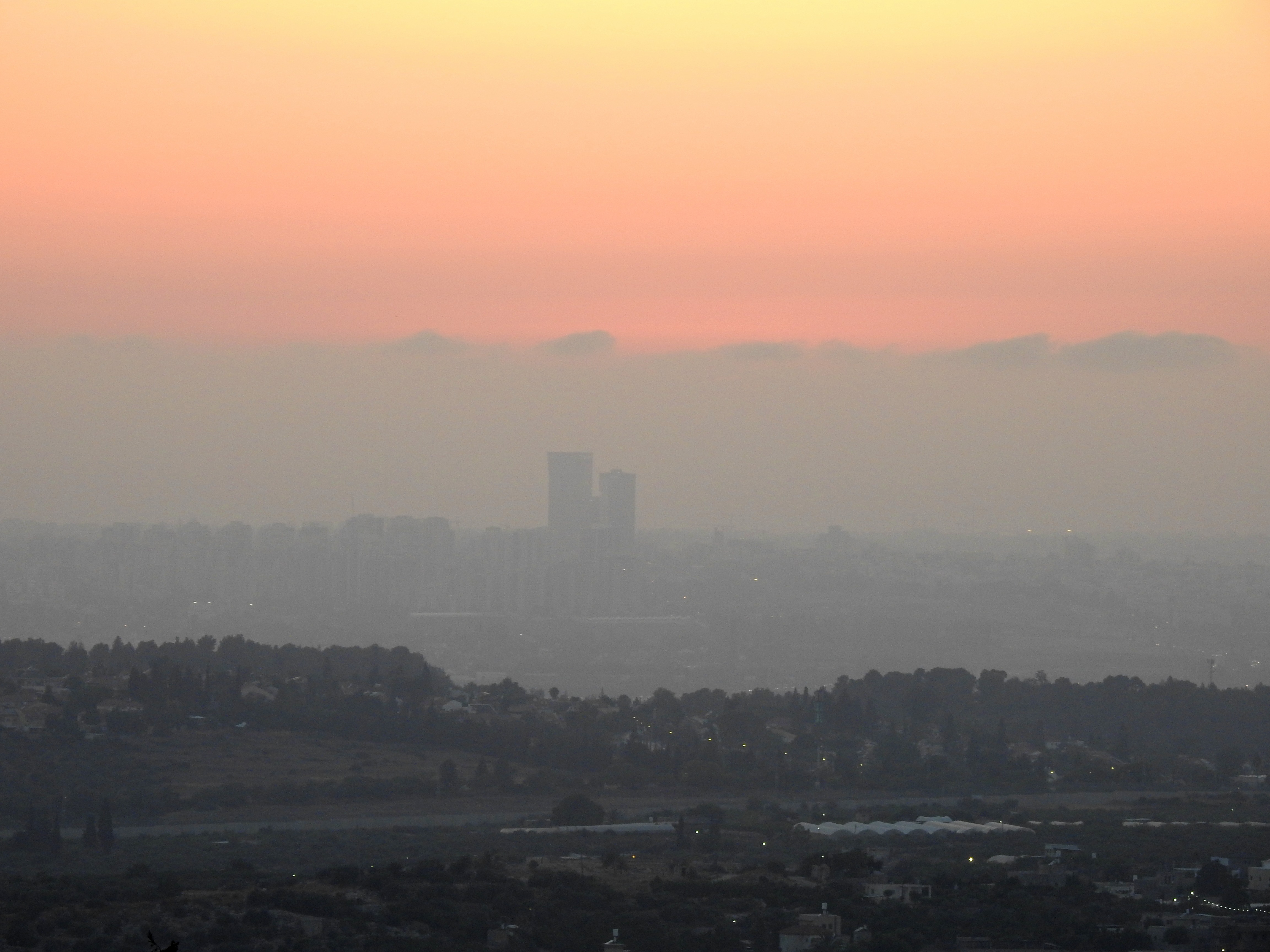
Layers of pastel beauty
Every now and again I took some photos, hoping to capture a good representation of the nice views we had, albeit being only approximately 290 metres above sea level. From the lookout, one can see as far north as the Hadera power station on the coastline, where sharks frequent. Yet, to the south, I couldn’t quite make out Pedu’el’s lookout, and failed to get any photo of it.

The gazebo lookout at Elkana
That said, I did manage to take a photo of Elkana when flying over, coming back from our little family vacation to Rome in the beginning of February (trip album HERE). When zoomed in, the lookout’s gazebo can be spotted to the left of the giant water tank on the far right side of the photo. Months later, I’m still quite impressed that I was able to get such a clear photo through the thick glass of the airplane window, and considering the speed of a jet in descent.
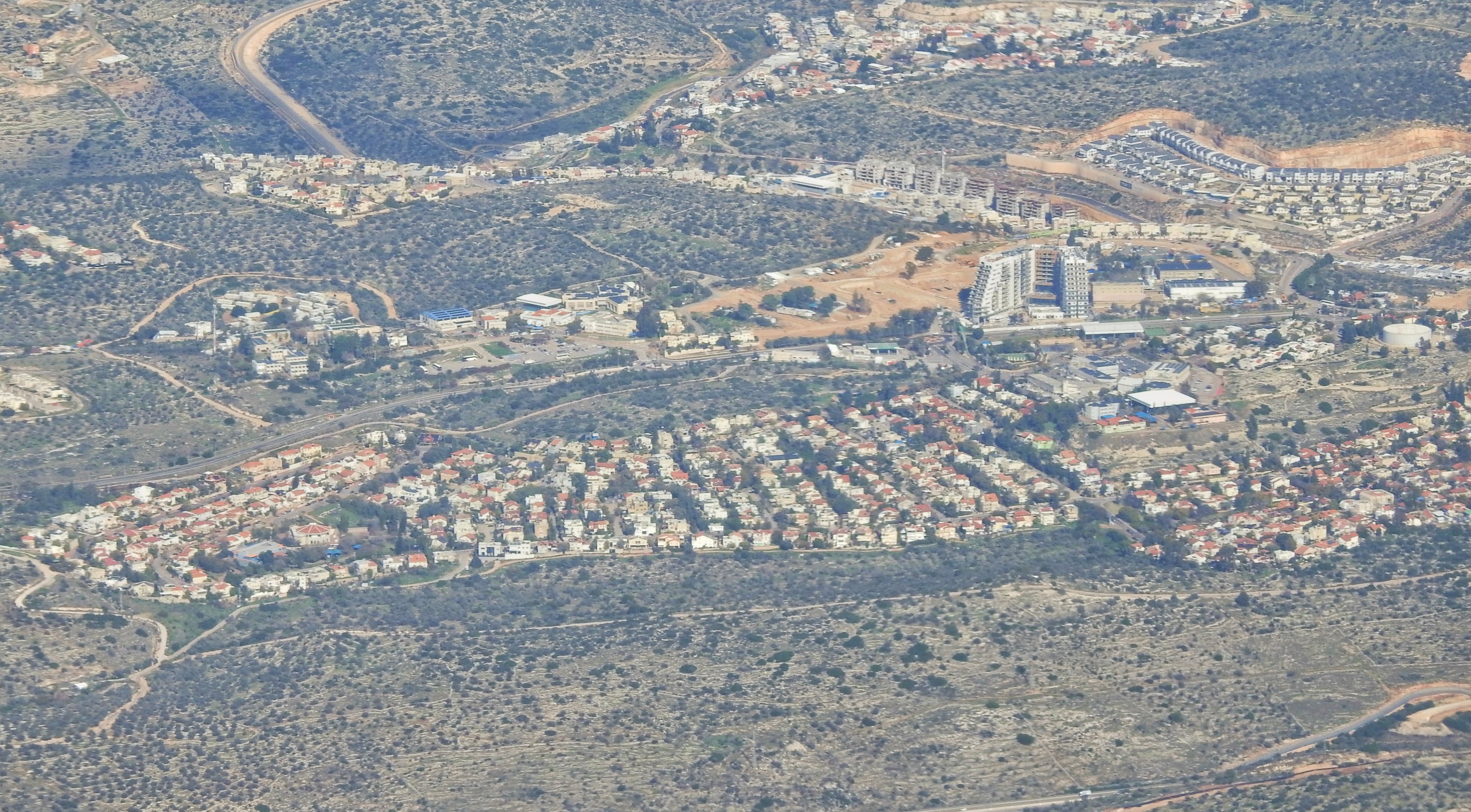
Elkana from the airplane window
Back at the lookout, Amir and I climbed about the rocky terrain around the gazebo, and ventured towards the old Jordanian military bunker which used to be manned with Jordanian soldiers, facing the old border to the west. In fact, Elkana itself is built on conquered military ground, the current local council building being an old Jordanian police station and/or army outpost.

Exploring the Jordanian bunker area
When sunset came, I was taken back by the beauty, and pleased that I was finally able to capture the rich, warm oranges that painted the horizon. Snapping away furiously, I tried my very best to capture both the lookout itself, and the magnificent culmination of yet another day.
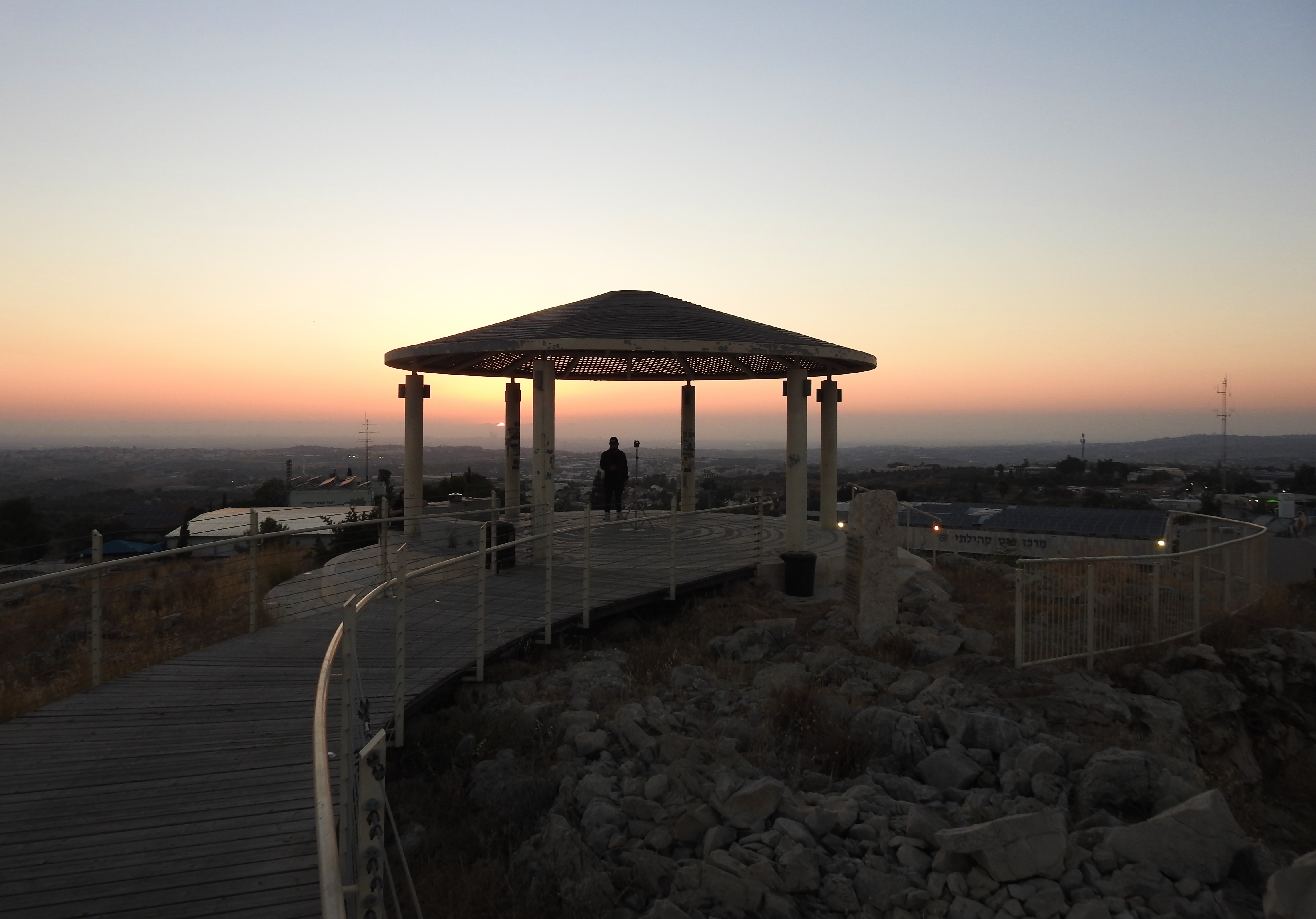
Sunset at Elkana’s lookout
Later that night, we were woken to chaotic alarms coming from our phones, eventually learning that the IDF had launched a full-fledged military operation against the Iranian regime. I was happy that we were able to have that moment of peace as we basked in the sunset, since the next two weeks were a tumultuous turn of events. From dashes to the local bomb shelter (where we met the young photographer from the lookout) and sleepless nights to the morale-boosting reports of our successes in both military and diplomacy, and then back to the tragic news of Iranian missiles landing in densely-populated cities, causing twenty-eight senseless deaths.
 Israel's Good Name