A few months ago, at the end of April, we went up north to celebrate the last day of Pesach (Passover) with my parents, the owners and operators of Aliyah Lift Shipping – helping fellow olim (immigrants) make their move to Israel. Friends Adam and Vered Ota joined us for both the drive and the holiday, a cause for celebration in its own right. To break up the 2+ hour drive up to Ma’alot, and for the enjoyment of us all, we had a stop at the recommended Yodfat Monkey Park.

Squirrel monkey
I had heard about the site from both my sister Esther and a mate at work, and felt particularly keen to see how young Amir would react. We packed up our luggage for the holiday, scooped up the Otas and made our way up north along the Mediterranean coastline. It was a nice drive into the hinterland and through the Lower Galilee. Before long we turned into Yodfat, a moshav named after an ancient Jewish town whose destruction by the Romans was well-documented by the venerable historian Josephus.
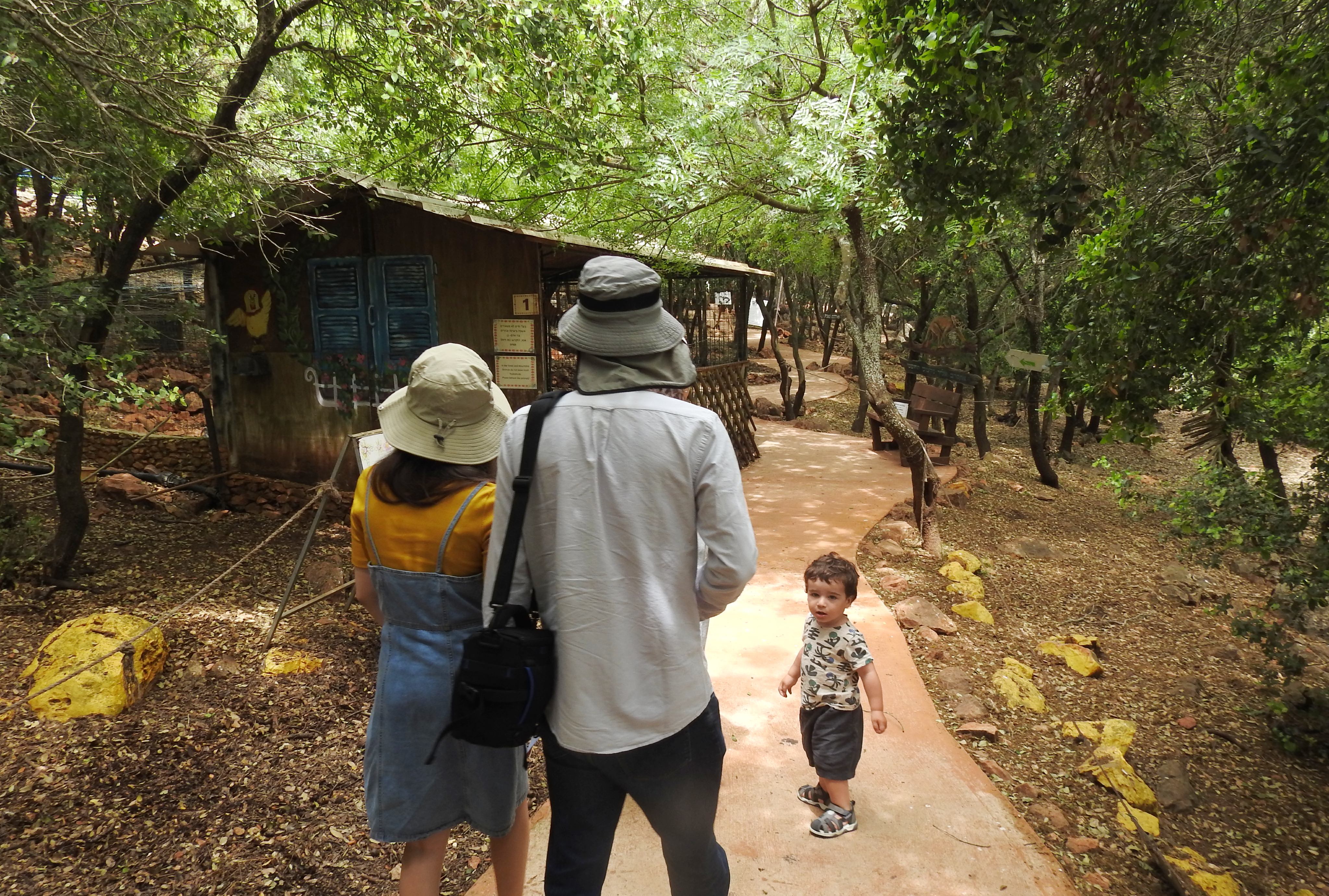
Entering the Yodfat Monkey Forest
Somehow, despite being an important archaeological site, the ruins of ancient Yodfat have escaped me, an oversight which will one day be rectified. But, for now, our destination was a playful monkey park with oodles of other furred and feathered creatures to gawk at. We joined the multitude of cars parked outside along the access road and walked into the park, where I bumped into an old acquaintance who served with me in the army a decade or so ago.

Capuchin monkey having a snack
Gaining entrance, we were stripped of our bags and of any and all food products – lest the monkeys rob us blind. We were duly warned not to feed the monkeys and not to touch their soft brown fur, but photography was allowed. It wasn’t long before we saw our first small squirrel monkey speeding along the thick trees, the first of many monkeys to be seen that day.
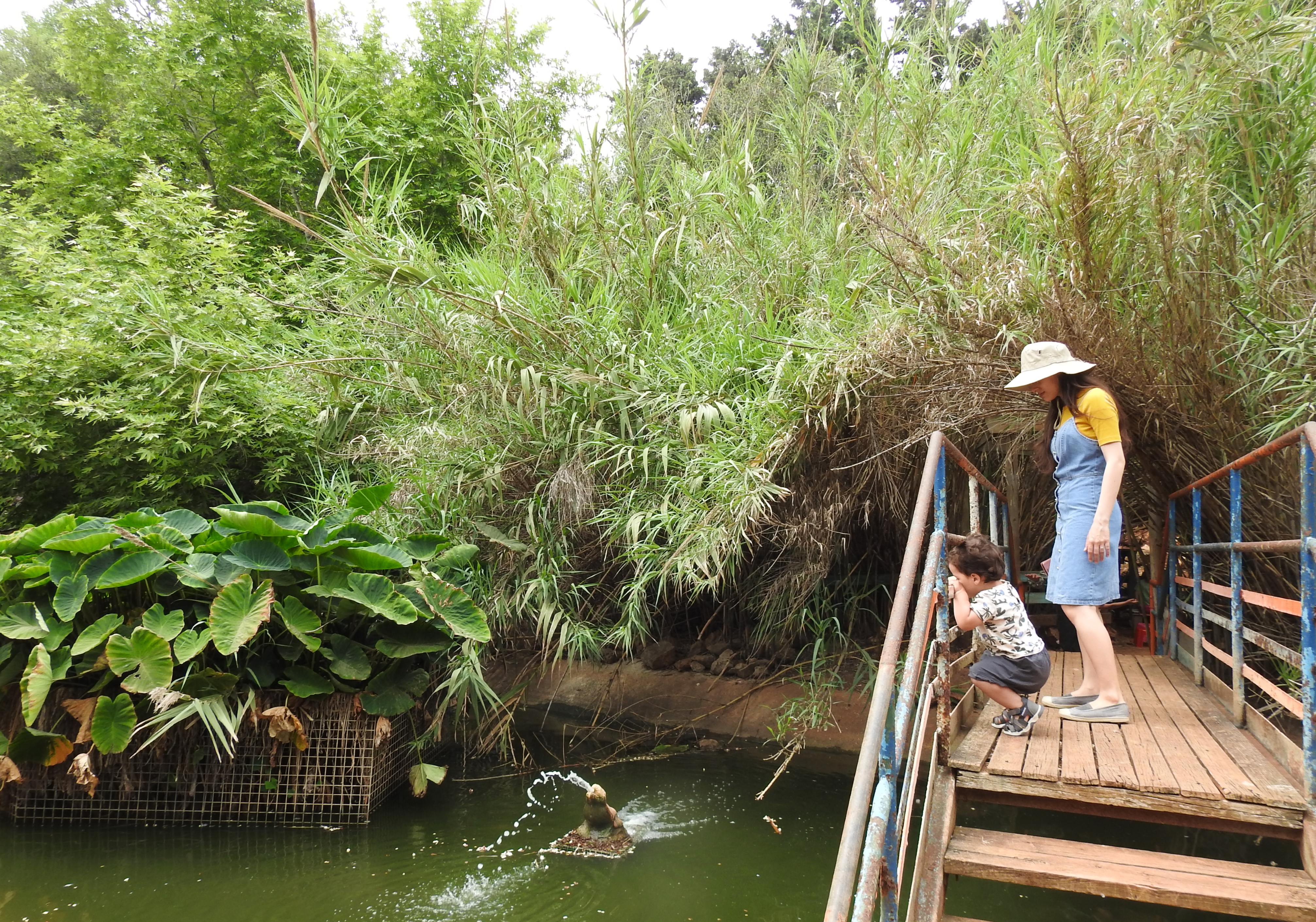
Captivated by the water jet
These monkeys were the foundation of the park, a 30-dunam natural oak forest to which squirrel monkeys were first introduced in 1976. This was added to the preexisting small zoo which had been created for the children of Yodfat. Then, in 1990, the park became a wildlife sanctuary with a belief that the animals should be treated as well as one would people who sought refuge.

Admiring the bare-eyed corella
As we walked, chickens and peacocks meandered around alongside us, a recurring theme throughout the entire park, their distinct calls titillating Amir and encouraging him to emulate them. After seeing some farm animals and a mara rodent or two, we headed for the enclosure where the squirrel monkeys can be fed by paying visitors. We purchased a small container of mealworms and situated ourselves so that the hungry squirrel monkeys could climb up onto us for a quick snack. One bold monkey scampered up Amir and I and helped himself to a few writhing mealworms (see the short video HERE). Another monkey finished off the rest of them from Bracha’s patient, out-stretched hand.

Adam and Vered
Walking along the park’s trail, we gazed upon mountain goats, coatis and what I believe was a llama. Some of the animals are in enclosures while some roam the park freely, mingling with the human visitors. We took a short break at the small café and Bracha bought Amir a plush monkey toy as a souvenir – this monkey is now named Monkey and spends most of its days behind bars in Amir’s cozy crib. With that, we continued along, passing parrots and parakeets, ducks and swans, and a number of other feathered friends. Adam and Vered played with the encaged cockatoos whilst we let Amir admire the black swans, an Australian species – not unlike Adam.
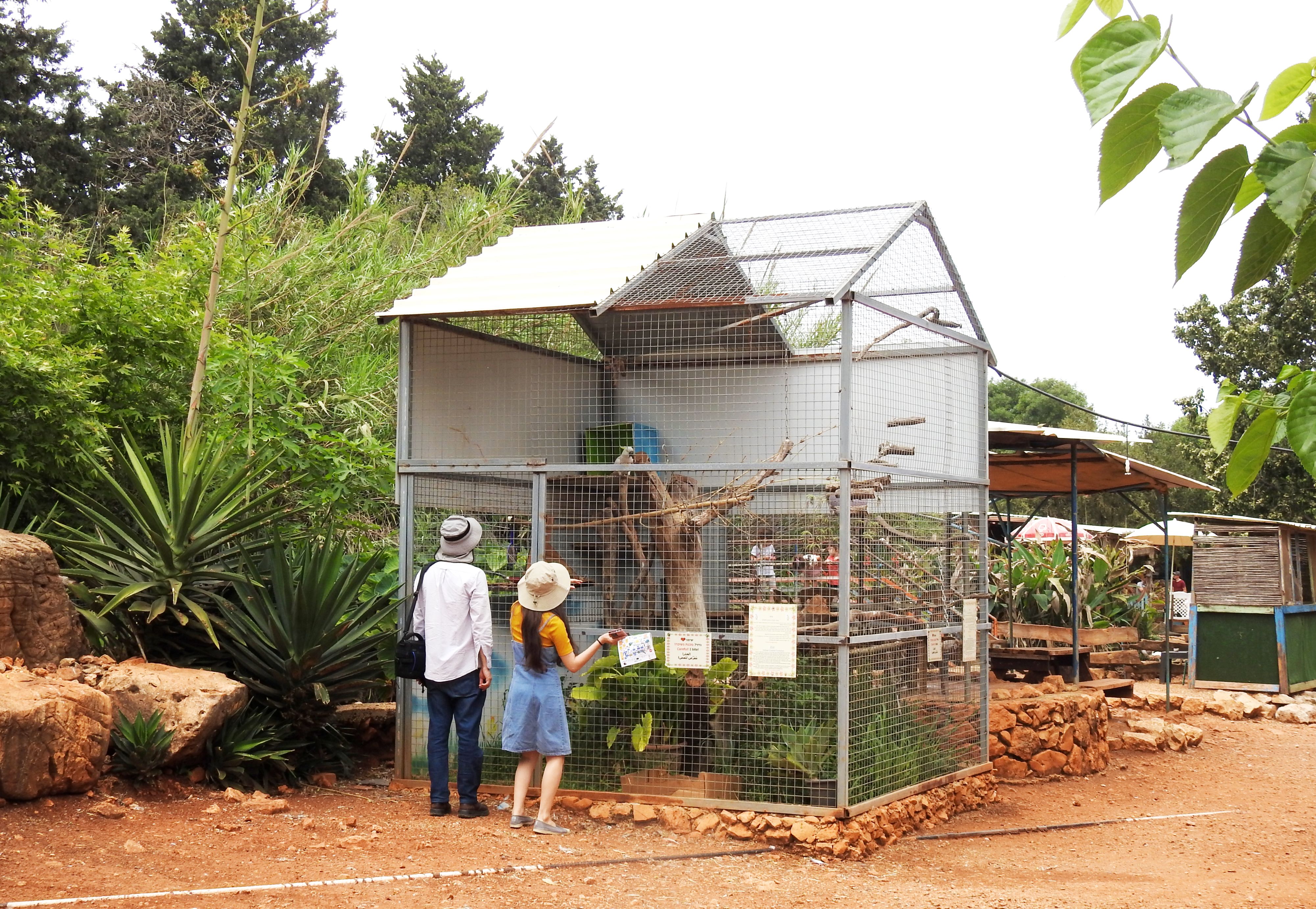
So many birds to see
At last, we arrived at the enclosures where the other monkey species are kept. We entered a chain-link tunnel that passes through the capuchin monkey yard and took photos of one another. There were some lemurs and some rabbits of sorts and then the trail came to an end, a gate leading us back out into the real world. We said goodbye to our primate friends and reclaimed our stroller and bags. There was a nice picnic table that was available, giving us a pleasant place to enjoy some lunch before getting back into the car for the rest of the drive to Ma’alot.

Two of my favourite primates
Overall, it was an enjoyable experience and certainly worthwhile as an activity to do with children. I think, considering my deep appreciation of nature, it will always feel hard to fully enjoy parks where animals are in enclosures – parks and zoos alike. There is certainly an argument to make for wildlife conservation, and some rescued animals (to say nothing of those born into captivity) need a safe place to live without being physically able to return to the wild. But, a cage is still a cage, and I will forever have a higher appreciation for being able to see an animal free in its natural habitat.
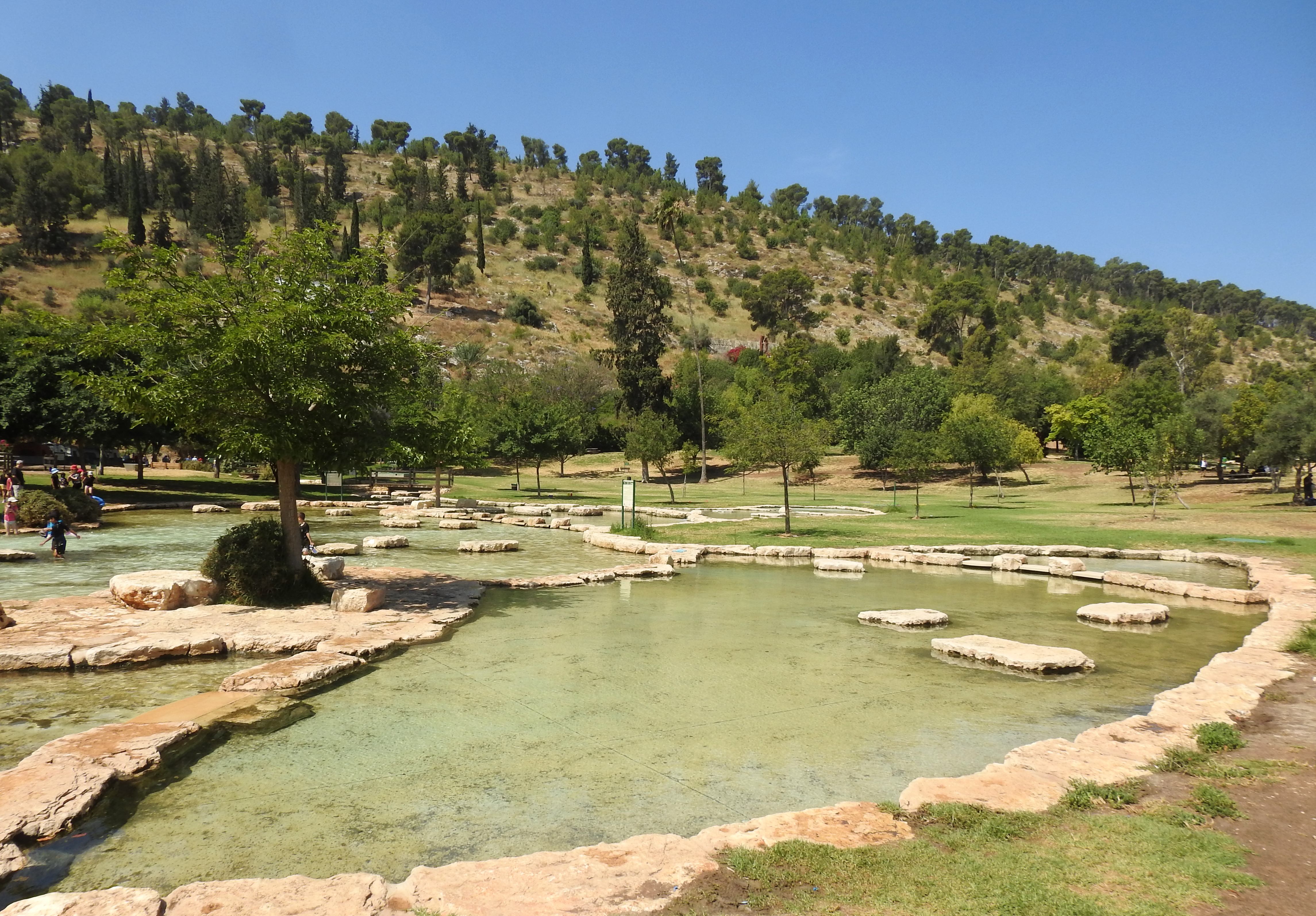







































 Israel's Good Name