Israel's Good Name

Archive for the ‘Golan’ Category

Mount Bental

In Golan, Israel on March 29, 2012 at 11:48 AM

The third leg of the day’s adventures in the Golan with Boruch Len: Mount Bental. Following our fun back at Nimrod Fortress and the waterfalls of Banias and Sa’ar, we turned South and drove through some Druze and Jewish villages. We spotted the wind turbines which have now become a sort of landmark in that area of the Golan. At one point we stopped the car and got out to capture pictures of the majestic Mount Hermon, Israel’s highest peak. Here is my shot:
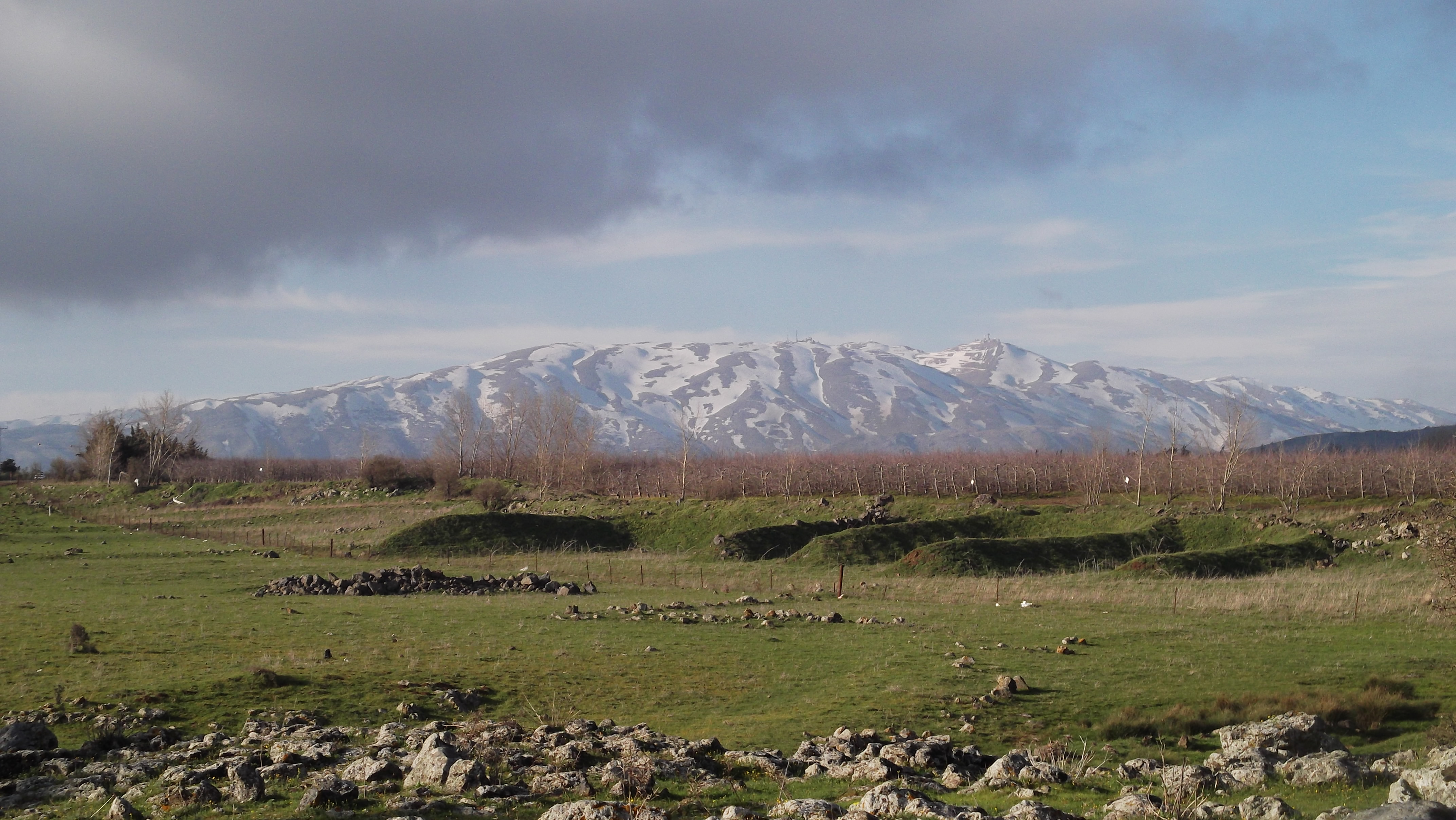
Mount Hermon from the road to Mount Bental

The drive up the mountain was far shorter than I had thought it would be and before long we were just minutes away from Coffee Anan (which really means both Kofi Annan the UN Secretary-General and “Coffee [of the] Clouds” – I don’t know if they had both in mind when naming the cafe). Along the way there were some interesting Dutch sculptures of welded metal and a section of a bunker. On the peak of the mountain we had an incredible view of the whole Golan from Mt. Hermon (which had gotten an inconvenient cloud-wrapping during our ascent) to the Hula Valley to the Israeli-Syrian frontier. Here is a panoramic shot of the valley area stretching out to Syria (click to enlarge, as always):
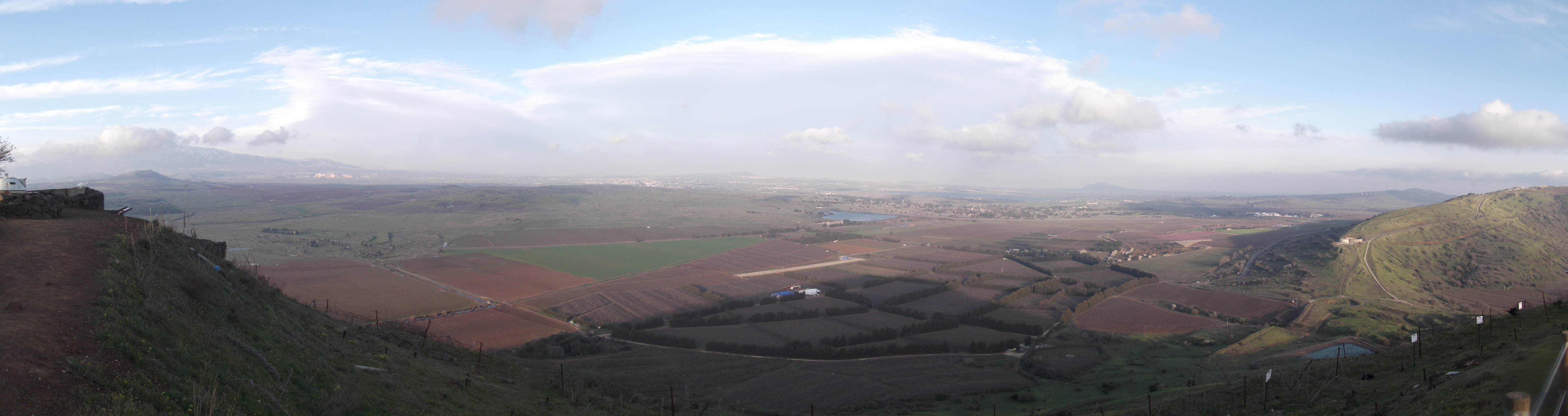
The valley all the way to Syria

Mount Bental was the site of an important battle when conquering the Golan from the Syrian forces. Today, the bunkers atop the mountain have been mostly cleared out but are accessible to all. We ventured on in, glad to be wielding flashlights, and had a look around the deep old bunker. I was really fascinated by the bunker’s corridor walls which are strikingly similar to those in the Israeli movie Beaufort which was actually filmed at the Nimrod Fortress.

Underground bunker corridors

There is nothing cooler than walking through something that has been definitively used in a war for Israeli freedom – I just love it! And to see the bare wooden beds still left inside… and the old batteries left behind… and the old communication equipment – fascinating! When we emerged on the other side of the bunker area we saw these metal soldier silhouettes, a 2D representation and reminder of what this mountain once was and what significance it held:
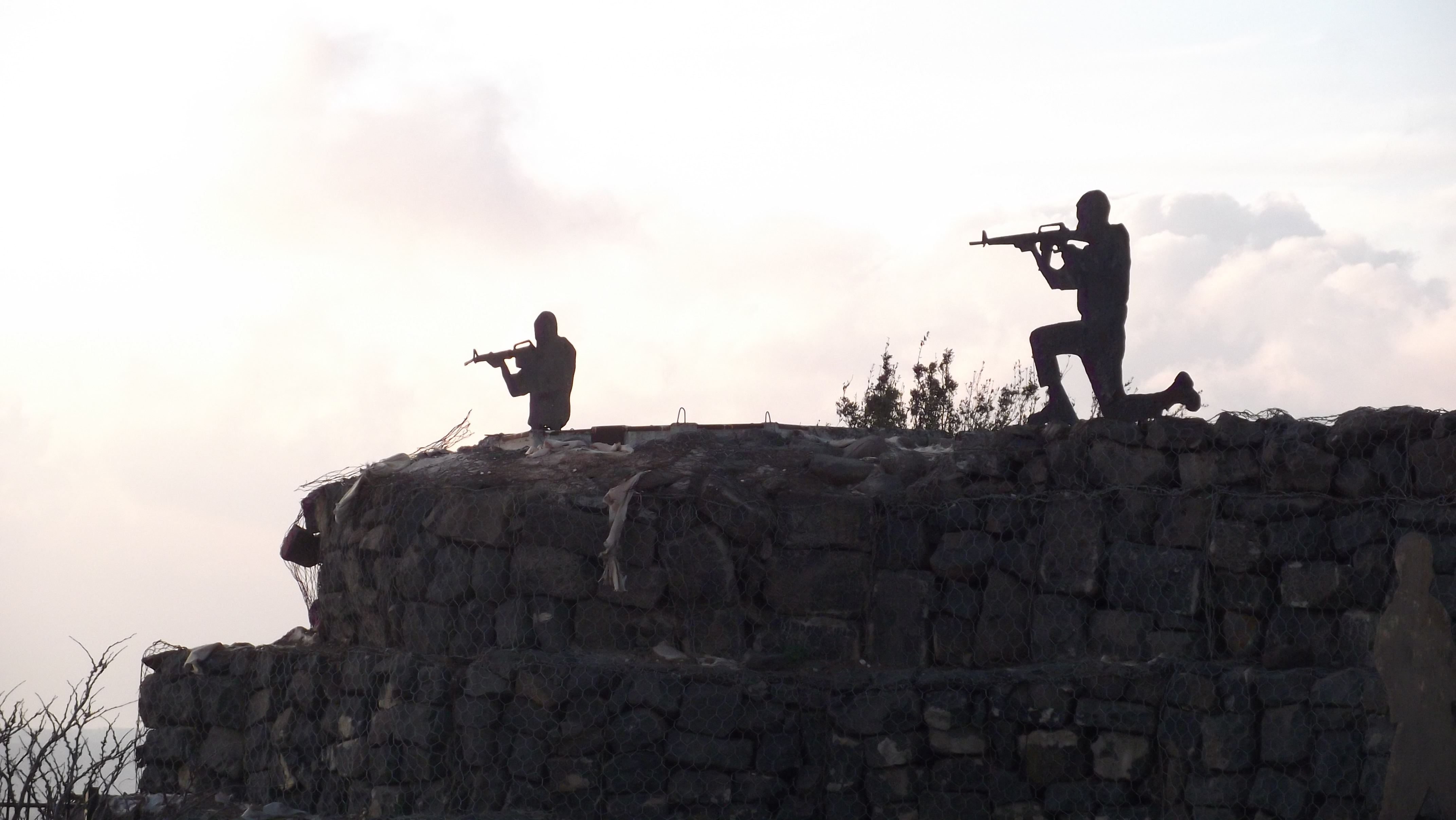
Mountain-top bunker

So after we absorbed the blood and tears of history we waited a short while for the clouds to pass over Mt. Hermon. But they were stubborn and thick and refused to leave, so we left instead. We drove to the far side of the mountain-top parking lot and rejoiced in the setting sun. When the clouds permitted us, we tried doing trick photography but the wind was also out to get us. As I would pose I would be blown over by the fierce, freezing blasts of cold air that reign dominant on mountain-tops. This is the best we got of me trying to hold the sun:
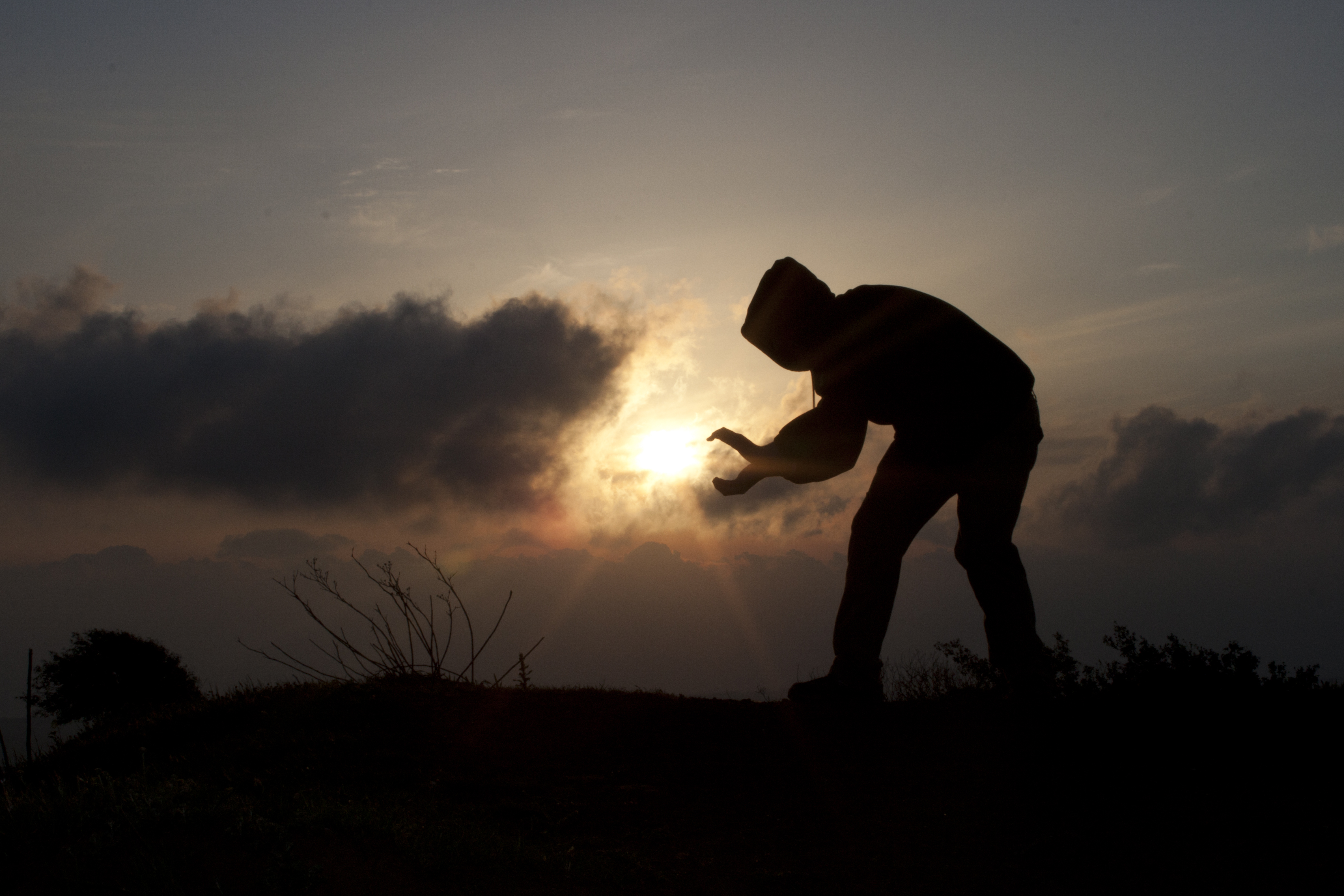
Trying to do trick photography with the setting sun (courtesy of Boruch Len)

But with a setting sun comes a sunset (obviously) and sunsets are quite often remarkably beautiful. Looking out from Mount Bental, the low, fertile Hula Valley down below, the sunset was just breathtaking. The colours in the sky were to be envied upon! Here is a panoramic I shot of the gorgeous sunset, with photographer Boruch Len on the very far right side of the picture, doing the same thing I was:

Sunset over the Golan

And so concludes an amazing day – a day action-packed with history (both ancient and recent), adventure, scenery and natural beauty. But of course, I was still way out in the Golan, nowhere near home. It was another two hours (by car, taxi, bus and feet) until I was home. That was a day I’d love to re-experience!
The Sa’ar Falls & Banias

In Golan, Israel on March 28, 2012 at 11:31 AM

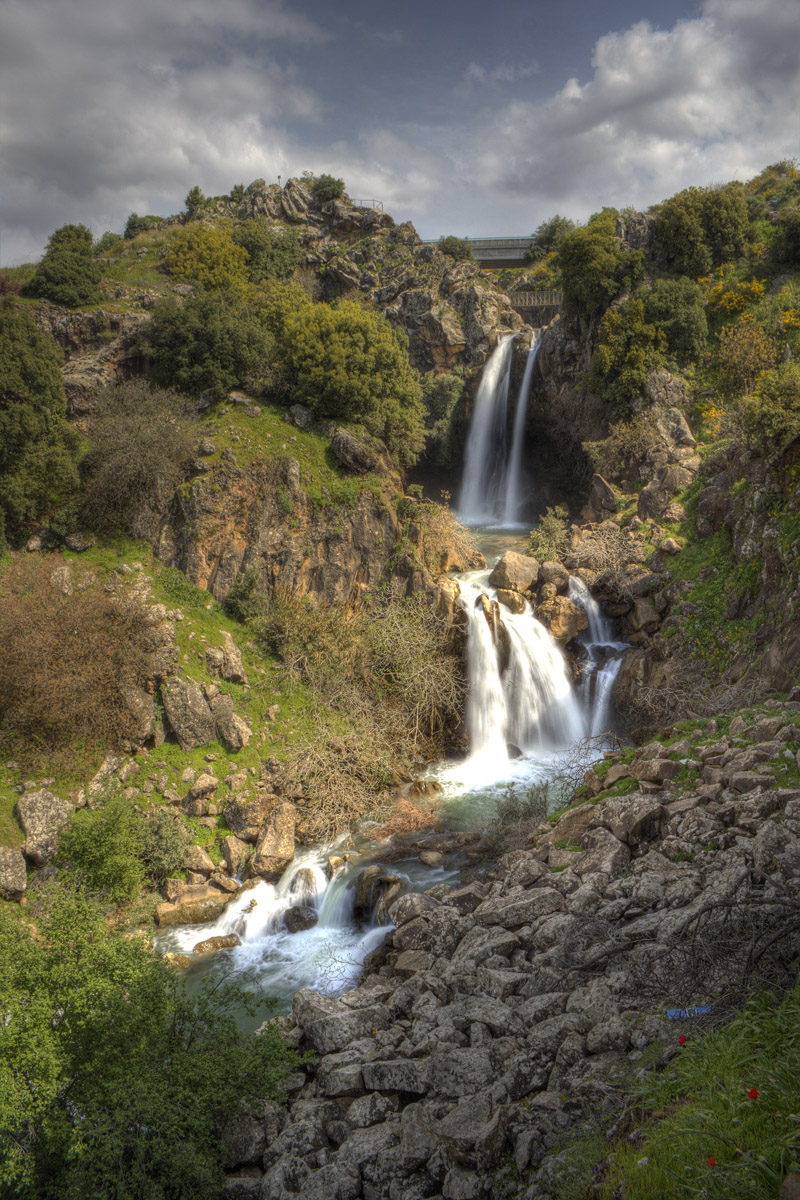
Continuing on after the previous stop at the Nimrod Fortress with my photographer friend Boruch Len, our next stop on our little tour of the Upper Golan was the Sa’ar Falls. We sought it out after seeing a picture of it posted on the Tourist Israel Facebook page (here), and eventually found what we were looking for. We parked the car and got out, asking an ice cream vendor for popsicles and directions. To our surprise, the paradise from the picture was just minutes from the road – by foot. It is actually possible to drive off the bridge and into the river… and then down the waterfalls.

Sa'ar Falls (courtesy of Boruch Len)

We stood on the bridge and watched the first waterfall, our popsicles not quite melting in the warm Spring weather. I was impressed with the torrid rush of cold water that misted daintily up at us but I knew from the roar that there was something even better below us. So we walked away, got into the car and parked on the other side of the bridge where a full view of the three falls was available. I watched the water for some time as Boruch fiddled with his camera, walking from place to place trying to get perfect shots (like the one above). I was content with snapping just a few, knowing that in truth, you need to actually be on location to truly appreciate it. But of course, I took a short panoramic, encompassing the Nimrod Fortress, Mount Hermon, the low mountains and hills leading up through the wilderness and fields to the jagged Sa’ar Falls:

Small panoramic of the falls with Nimrod Fortress on the left

And Boruch, with his professional CS5 photo-stitching feature, created this narrower panoramic of the Sa’ar Valley looking North (this was photographed not at the Sa’ar Falls but on a road heading South):

Sa'ar Valley (courtesy of Boruch Len)

After spending a nice, leisurely time skirting the falls’ cliff-edge and watching the scores of tourists and school-children enjoying the same beautiful spot, we got into the car and continued on to Banias. We pulled into one of the Banias park entrances and got out to see Pan’s Cave, ruins of what once was a large Greek temple complex built in honour of Pan. Today not much remains of what once was the Temple of Augustus, the Court of Pan and the Nymphs, the Temple of Zeus, the Court of Nemesis, the Tomb Temple of the Sacred Goats and the Temple of Pan and the Dancing Goats. But what lasted was the name of Pan: “Banias” is an Arabic corruption of the word Panias or Paneus, referring to the Greek god Pan.

Pan's Cave

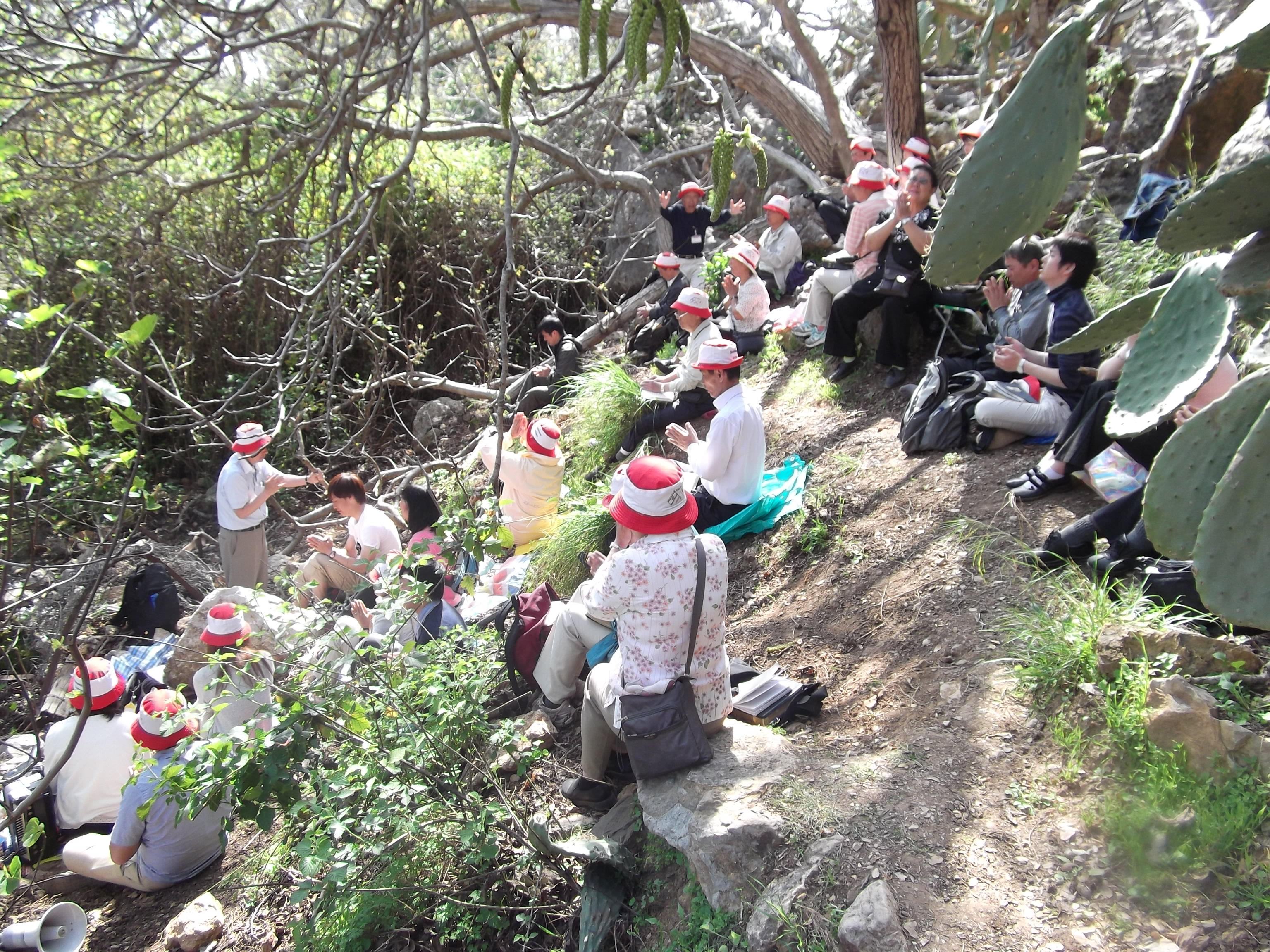
While we were “shooting the cave” we were disturbed by loud wailing and chanting. I set off to identify the source of this loud noise and found a group of Japanese men and women seated on the ground in some little piece of land right at the banks of the Hermon Stream. I couldn’t figure who they were at the time but I did film their strange behaviour. They started to draw a small crowd, and a tour guide waved me over. He explained that they are disciples of Juji Nakada, a Japanese spiritualist who had a strong belief about a connection between the Jews and the Japanese. Nakada “saw the Jews as mystical saviors whose redemption would ensure the political and military, as well as spiritual, salvation of the Japanese.”

Japanese group - healing and chanting on location

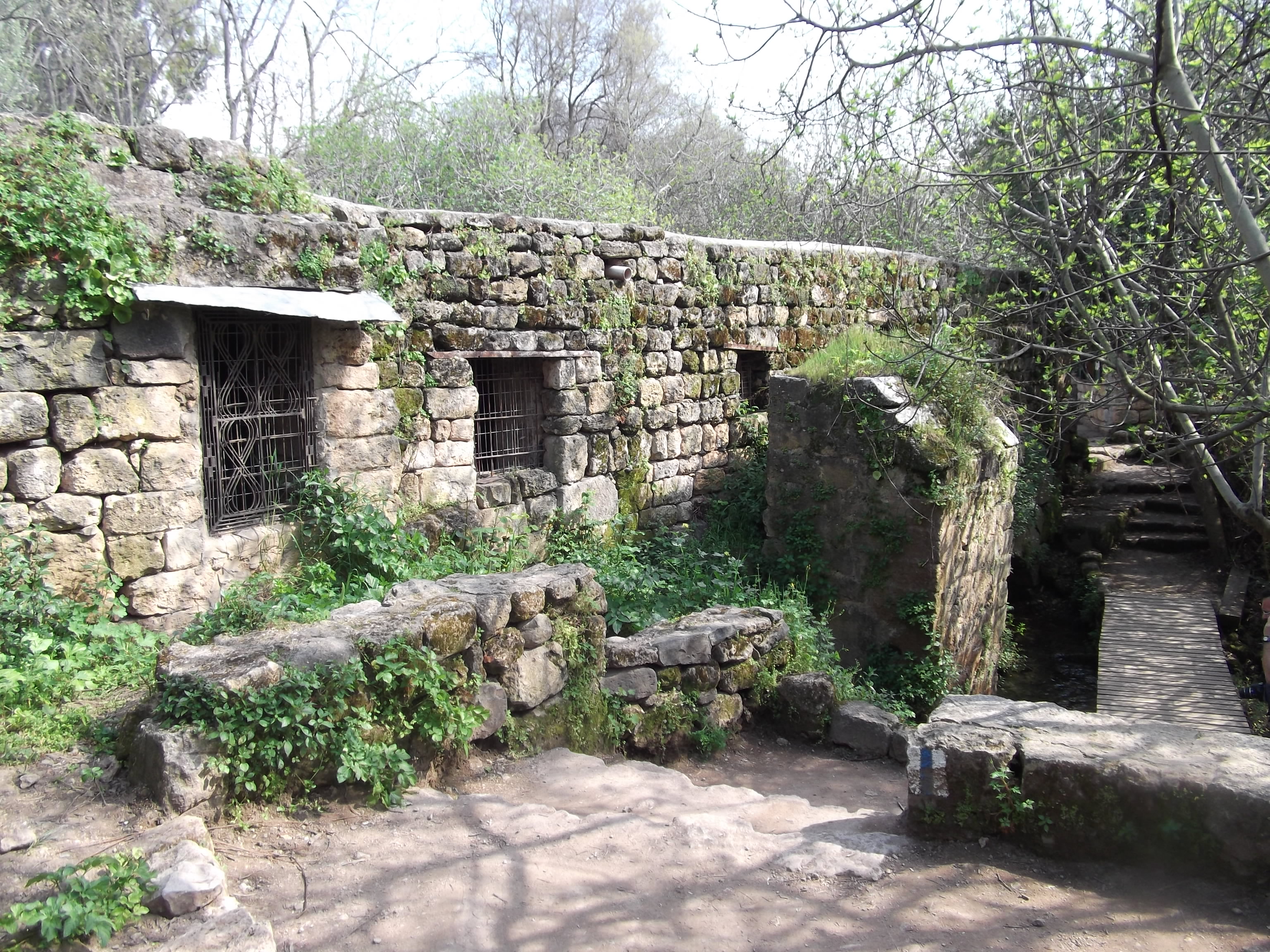
We then continued on to the Roman Bridge and the old flour mill, only minutes away down the Hermon Stream. It is truly amazing to see such history all over, even the ancient flour mill which still stands today and is theoretically fully operational. There is a Druze pita stand just outside the mill but apparently the flour comes from a more commercial source.

Old flour mill

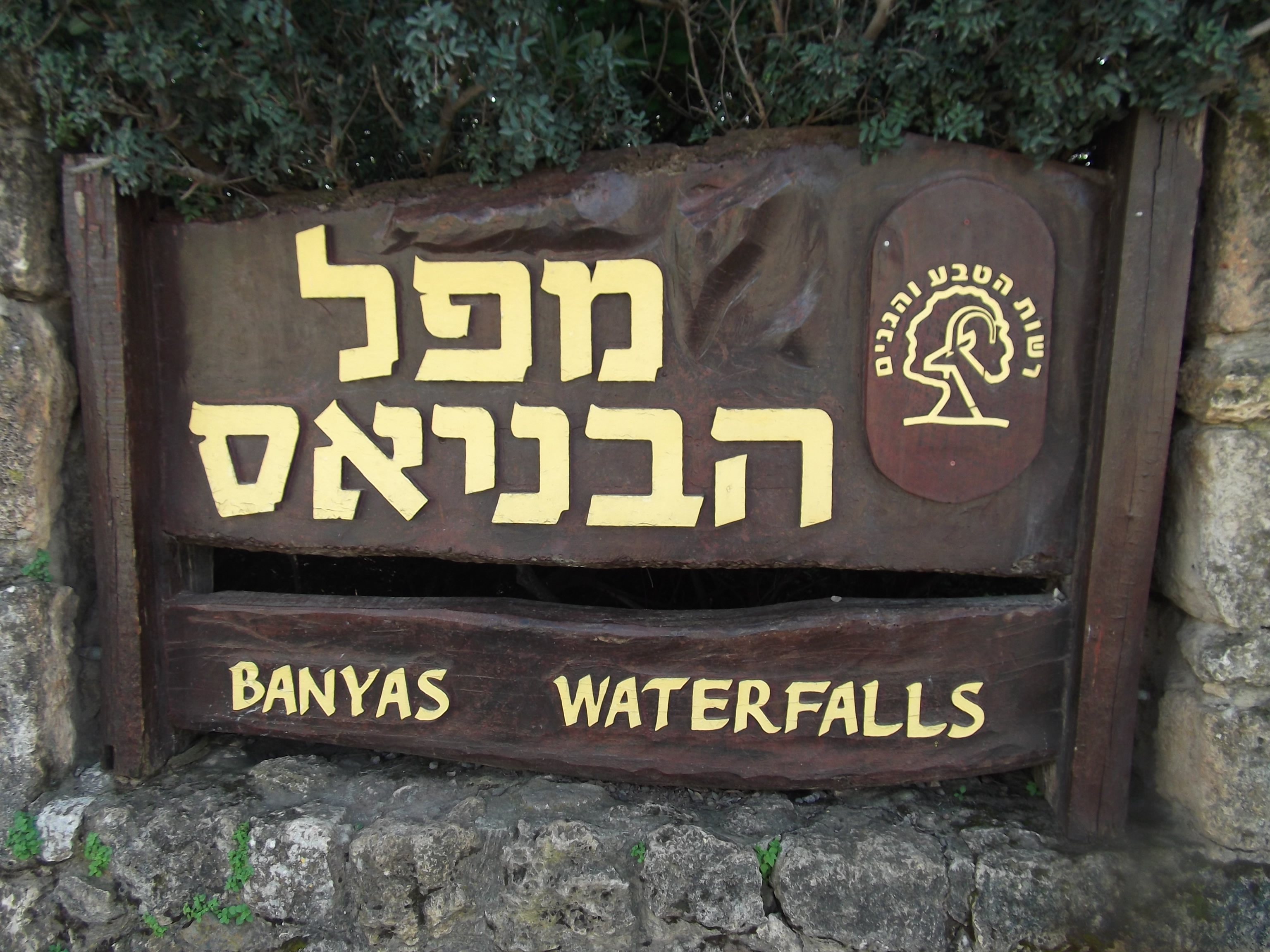
After the flour mill we turned back and made our way to the car. We hit the road and found the park entrance that is beside (and above) the Banias waterfall, the largest waterfall in Israel. There we were to make our way down a gorge gashed into the lush green land and find the roaring white Hermon Stream as it pounds its way down from Hermon mountains and to the Kinneret (Sea of Galilee).

Banias Waterfall sign

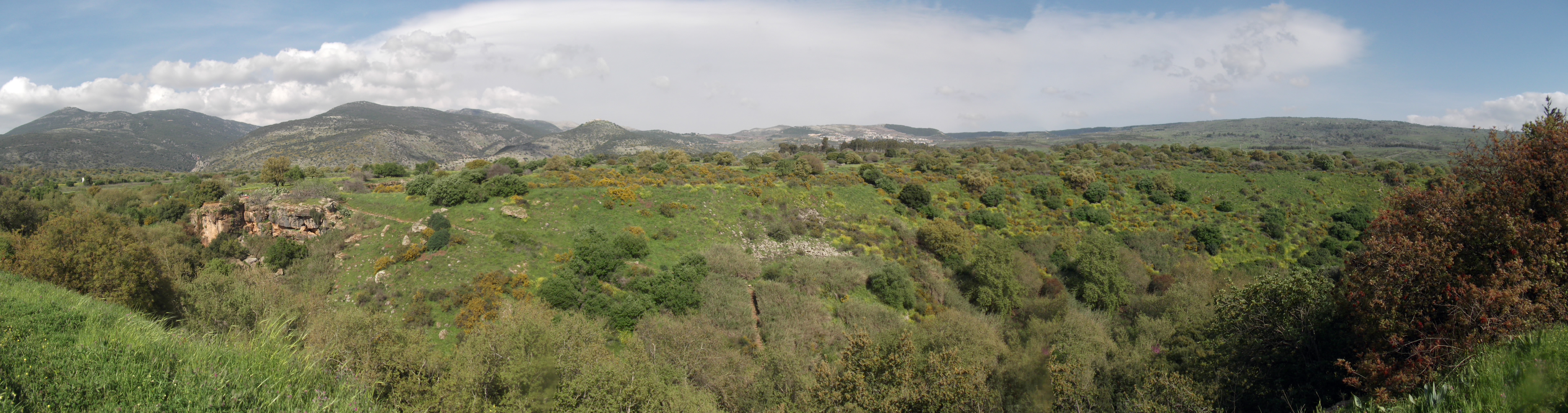
The walk down was beautiful, affording me a great panoramic of the land which was so nice and green after so much rain this winter. Here it is:

Panoramic of the Banias forest above the waterfall

The way down to the waterfall is exceptionally clever. They built a suspended bridge along the basalt and travertine stone walls of the gorge leading down to the water. While we walked on the platform the white water below us crashed and roared. As we approached the waterfall we saw what we had come for. The waterfall is 33 feet high and buried deep within the rocky gorge, the fast-flowing water forced to spray the thrilled viewers. Within just a few seconds I was in danger of getting really wet. Boruch went down on the rocks at the edge of the stream and shot this great picture:

Banias Falls (courtesy of Boruch Len)

Soon to be posted: Mount Bental

Nimrod Fortress

In Golan, Israel on March 27, 2012 at 6:10 PM

Yesterday, I went, for my very first time, to the Upper Golan. I accompanied Boruch Len, a master of photography, and we set forth to explore (and document) some of the Golan’s grandeur. The first place on our list was the huge Nimrod Fortress, an old castle built over a 46-year span in the mid 13th century by the local ruling Arabs (construction was started by the nephew of Saladin – the arch-enemy of the Crusaders). The Nimrod Fortress happens to be the largest Crusade-era fortress/castle in Israel and was used in the filming of the Academy award-nominated film Beaufortreplacing the actual Beaufort castle which is in Lebanon, out of reach for Israeli filmmakers. Just to point out, this was a trip heavily influenced by photography – however, the weather made consistent photography tricky. The clouds and sun played their games throughout the day and so the following pictures will appear as if taken on separate days but have really been simply subjected to finicky weather.

The West portion of the fortress

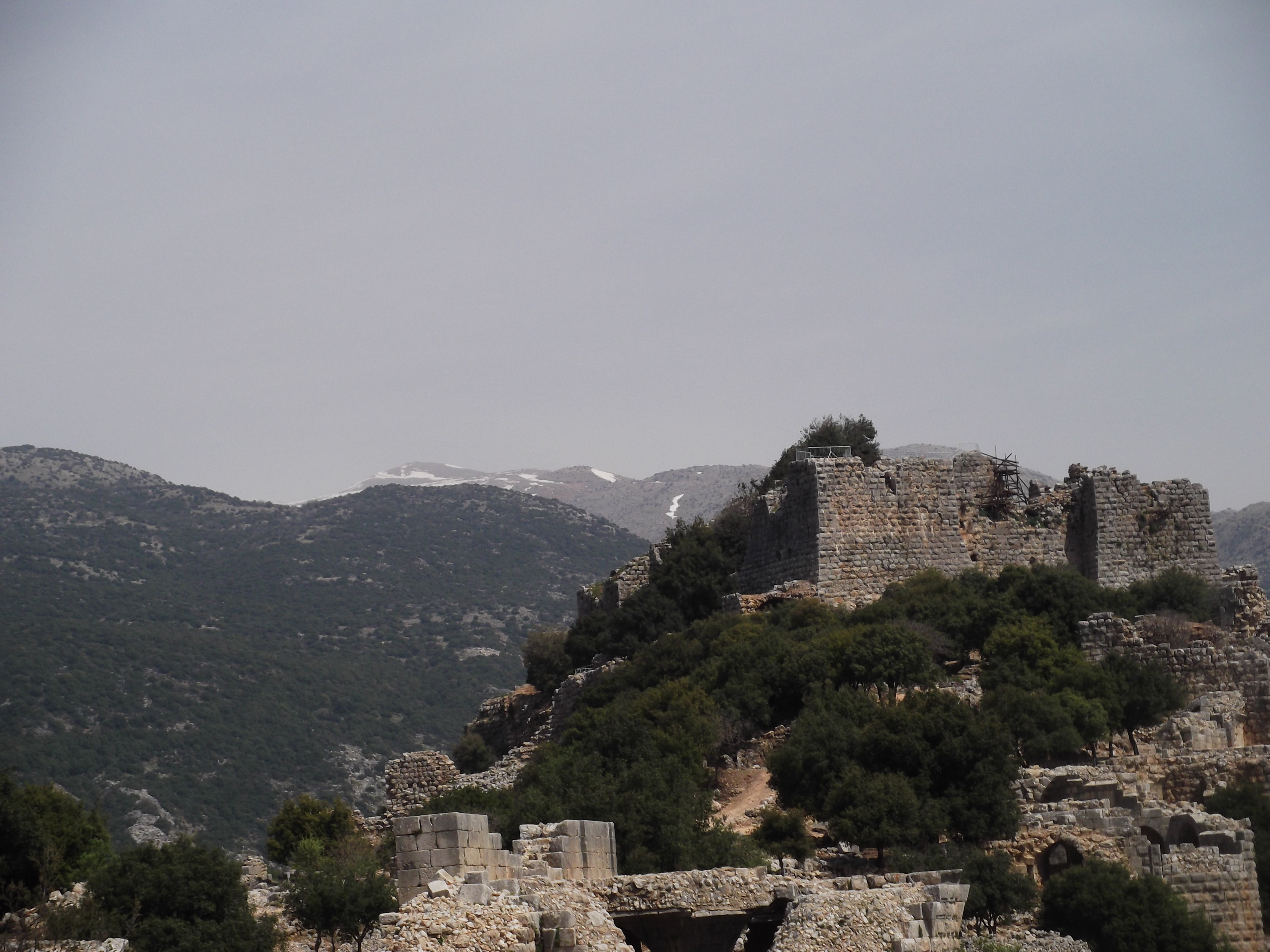
We started the tour just minutes after a large group of school-children so we decided to circle the fortress in reverse. That decision ended up reaping rewards as each place we went to was even more fascinating than the last. In the first hour or so, we walked up from the West side (where parking is) to the East side – the higher but less intricate section of the castle. The East side was the part first built and gave us a great view of the high mountains surrounding, and obscuring, Mount Hermon. Here we saw a glimpse of Hermon, the snow already melting:

The highest part of the fortress with the snowy Hermon in the back

Descending to the “dip” of the fortress, we found a few interesting rooms, each one better than the next. The old, thick stone outside walls had tons of “archery ports” – with those slits for shooting down on invaders. We spent many minutes snapping pictures of the various angles, trying to capture the best photo possible – each with our respective cameras (Boruch Len – fancy SLR with multiple lenses / me –  run-of-the-mill-but-kinda-heavy-on-the-features Fujifilm digital camera).

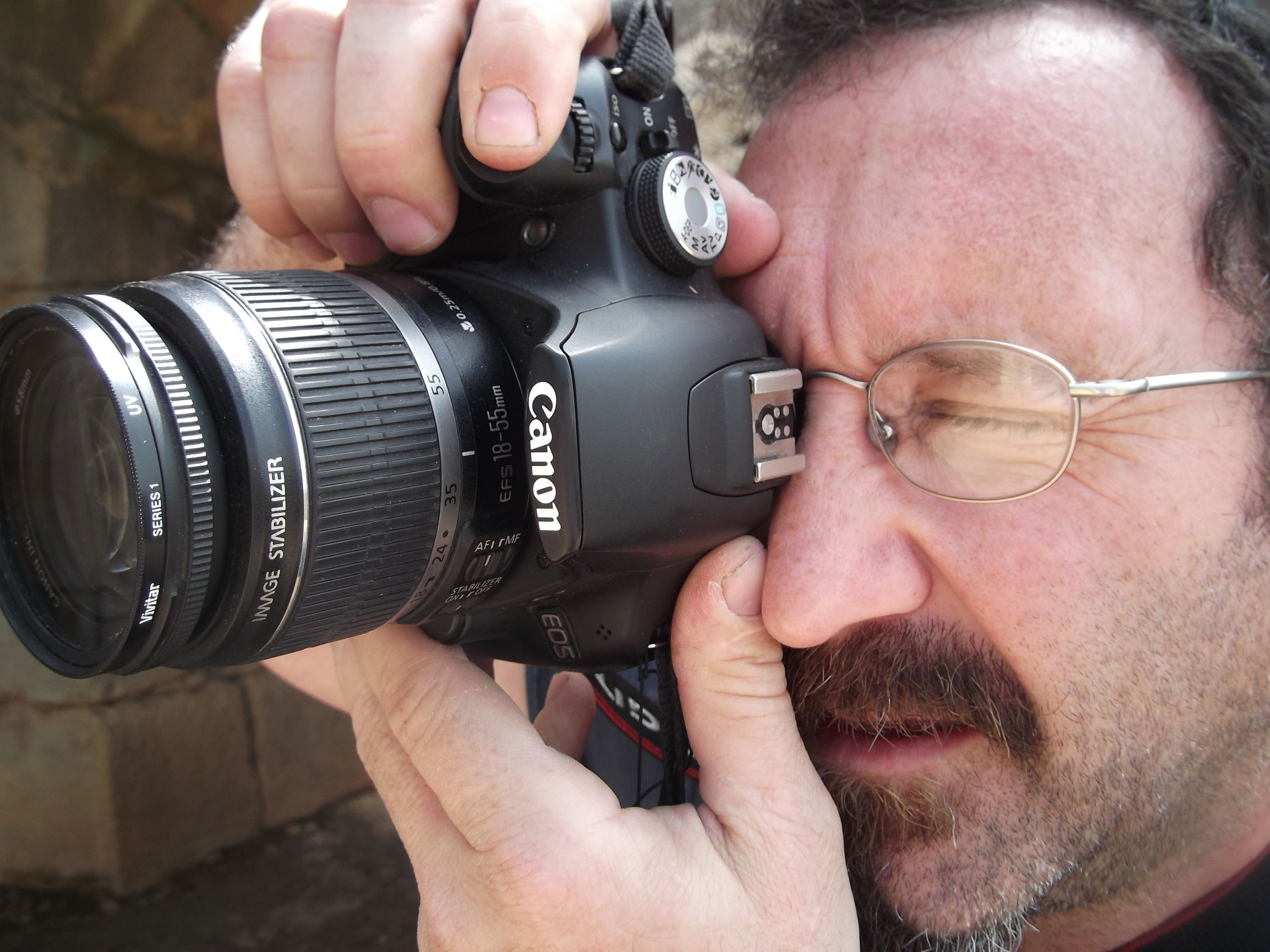
Boruch Len "on the job"

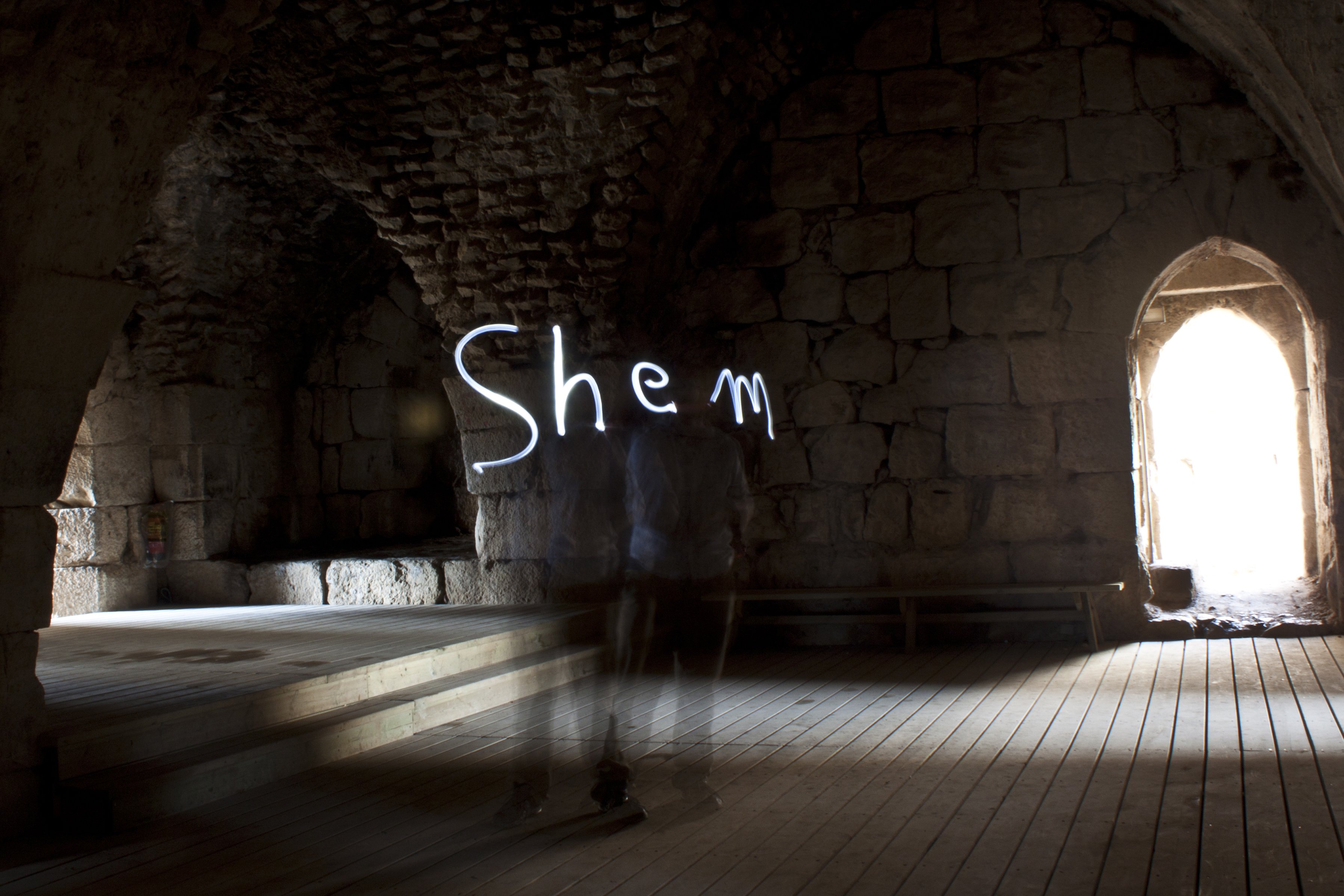
So, you can imagine the amount of pictures that were taken, with all the beautiful stone walls, doorways, columns and arches. But the coolest photography we did had little to do with the actual location. In the grand ceremonial hall, found in the Keep on the Western side, we did something called “light painting.” What it is: With the fancy SLR camera, the shutter can be left open for some time and through a process of photographic magic, only some things are retained in the final picture. One of those things is light. So, Boruch whipped out some flashlights and we took turns writing our names/initials in the air with the light. I tried over and over but my first attempt remained the best, here it is:

Painting my name with light in the ceremonial hall (courtesy of Boruch Len)

As can be seen in the picture, the camera retained two ghostly appearances of me. I’d have to be constantly moving for the words to appear without my body showing as well. Nonetheless, it was great fun and it made me want to buy an SLR camera. Maybe I will one day… Returning to the fortress, the ceremonial hall was not the only thing interesting on the West side. Soon we came across the Large Reservoir, alive in a flurry of chirping and cooing birds.

The Large Reservoir (courtesy of Boruch Len)

Again, we spent a very long time, photographing the birds and the room. On our way out of the reservoir, I spotted a lone koi fish, swimming sadly in the green water. I wonder how it got there – some prankster? Another cool place was this tiny spiral staircase that was blocked off with rope. We hopped the rope and ventured down, the end result wasn’t too exciting but the stairs were neat. Naughty, I know – but Boruch has a press pass of sorts so we had a partial reason to be there. On our way back up to the towers on the West side of Nimrod Fortress, we found ourselves with more grand views. Here is a panoramic that I took, facing the towers on the West side (click to expand):

Panoramic looking West

And before I end this post, the first of three that will cover this exciting day, here is a picture of me posing in a beautiful stone doorway – a proof that I was there:

Me in a doorway (courtesy of Boruch Len)

Soon to be posted: Banias & the Sa’ar Falls

Chanukah (Part 1)

In Galilee, Golan, Israel on January 1, 2012 at 7:19 PM

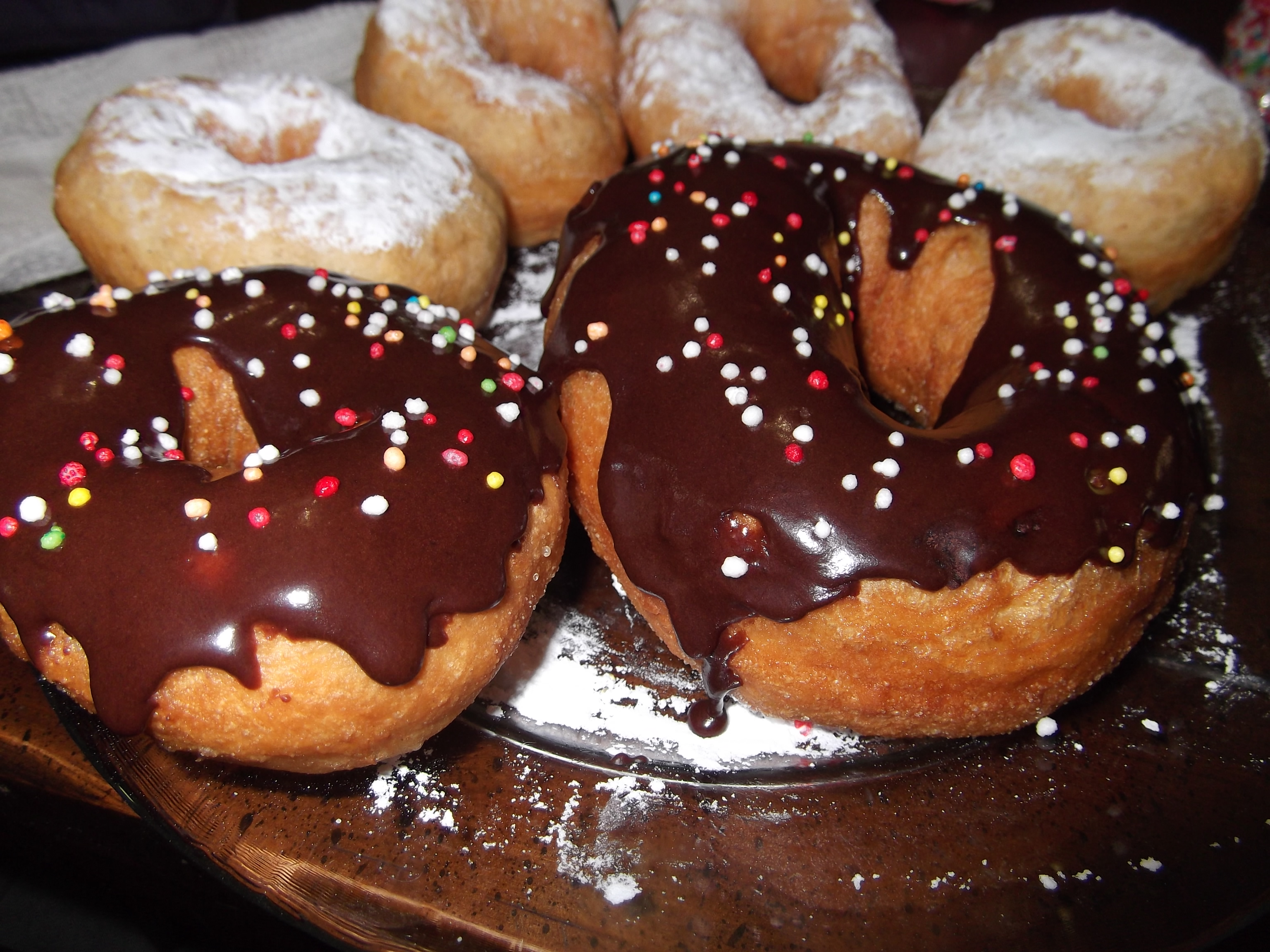
Part of this past week and part of the week before it was the holiday of Chanukah, 8 days of joyous celebration over our salvation from the Greeks some 2,300 years ago. This year we did some stuff and took some trips. Here is a brief overview of what happened and where… And what we ate. Here are sufganiot (doughnuts) that my sister Esther made for us to eat the first night of Chanukah:

Doughnuts

The first trip we took, on Thursday – the 2nd day of Chanukah, was to the Golan, in search for something known as dolmens,  an ancient stone structure built as either tombs or landmarks and found from Ireland to Israel to Korea. These dolmens are often huge and in large groups but the ones we saw were kind of isolated from the large group in Gamla National Park. Israel’s dolmens are made out of basalt and are covered in lichen.

Ancient dolmen

But before we found the dolmens we were driving out in the flat plains of the Golan looking for a large circular formation of low stone walls built thousands of years ago. Despite our relentless searches we were unable to locate the circles we wanted but we did find plenty of ancient low stone walls that told us we were in the right area.

Ancient walls that run through the open fields

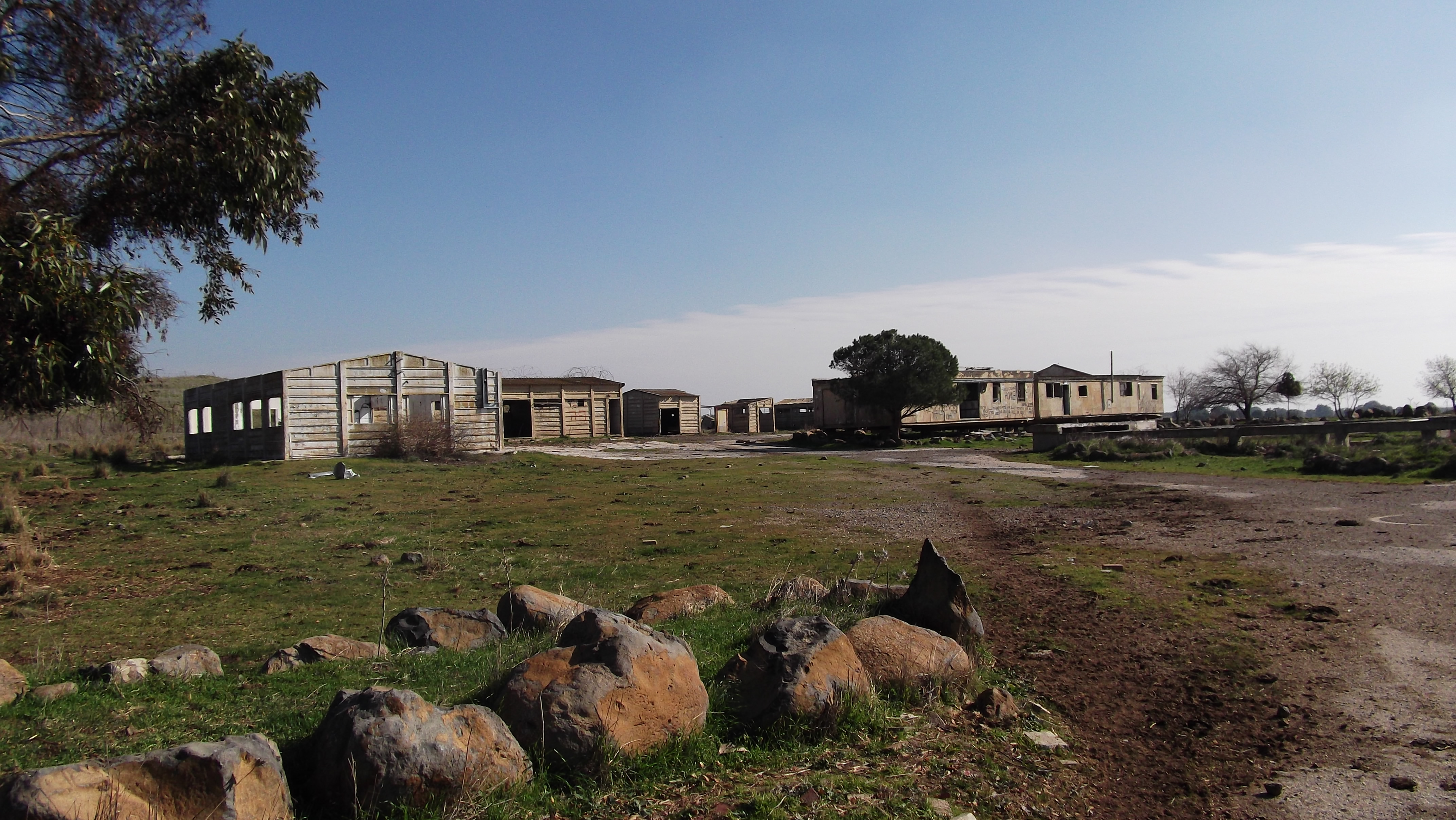
But to say that we found only the ancient walls and dolmens would not be true, we also stumbled upon new structures, those belonging to the IDF. Here is a recently abandoned army base where dozens of empty, rusted ammunition cases were scattered about:

An army base recently abandoned

And here, on the side of the road, is a military bunker/trench of sorts with small rusted metal storage cabinets inside:

Army bunker and trench

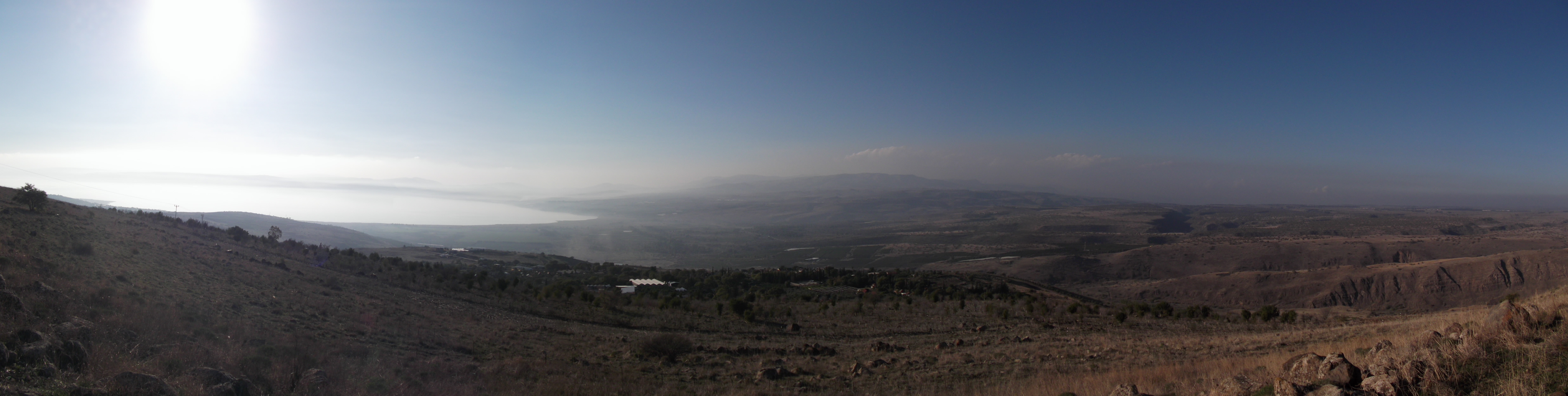
Leaving the flat region of the Golan we found ourselves at the Bet Saida Vista overlooking the Kinneret (Sea of Galilee) and the Jordan River area north of it, including parts of Gamla. Here is a panoramic shot of the view (click to enlarge):

From the Kinneret to Gamla

That was Thursday.

Sunday, the 5th day of Chanukah, was another day full of adventure. We headed slightly south past Karmiel to the Johncolad chocolate factory. This particular chocolatier hails from New Zealand and now lives in the South African-founded Moshav Manof. His name is John Alford and this is a brief look at the chocolatey adventure we had.

Johncolad logo

When we first walked in John looked at us and told us that he recognises us. My father than explained to him that we had once come to buy chocolates and take the tour that is offered. In fact, my father even wrote a blog post that included our previous trip to Johncolad and here it is: http://aliyahlift.wordpress.com/2010/10/31/g-stands-for-golan-galil-and-gourmet-pt-1/

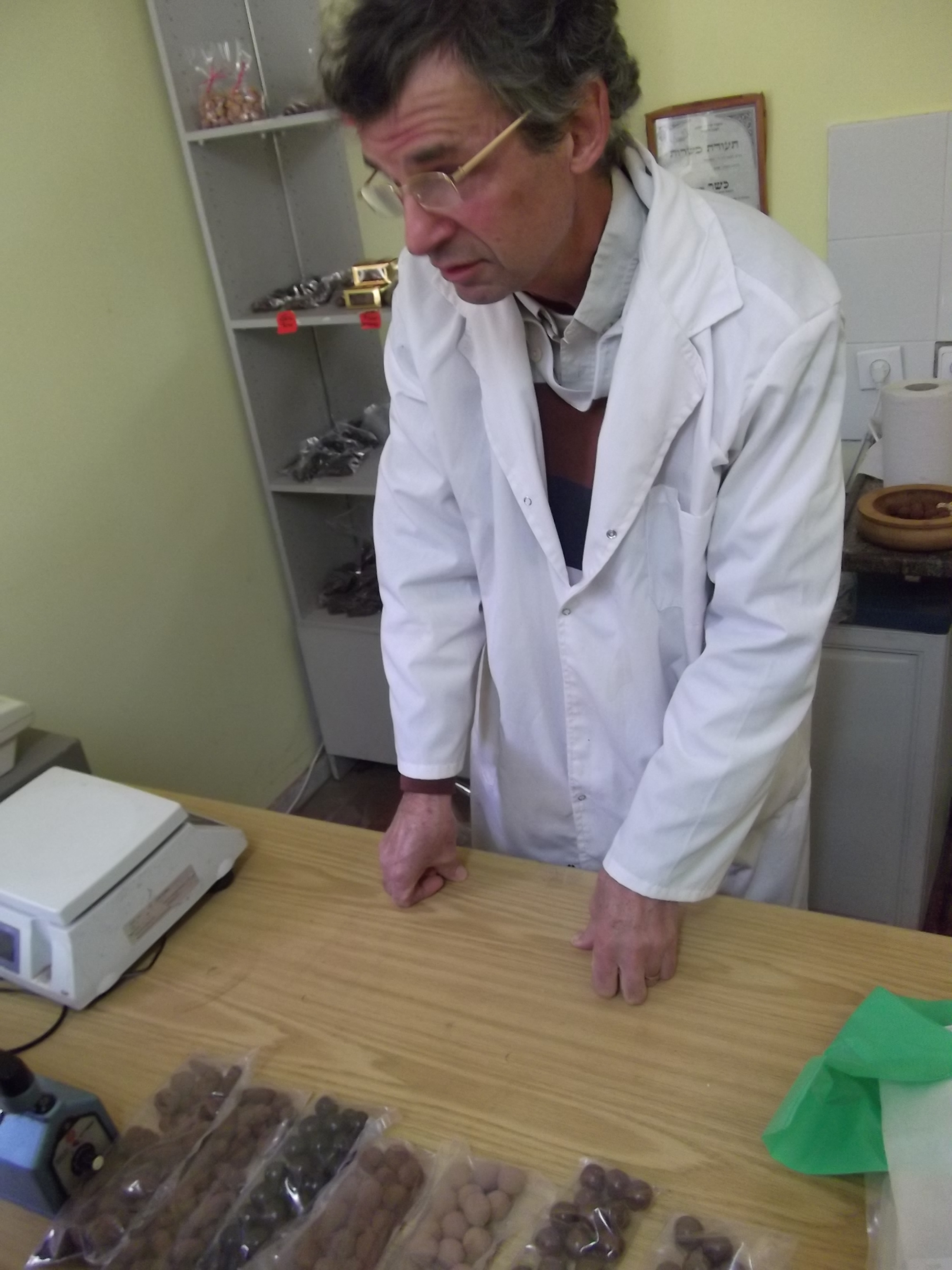
After we all figured out what’s what and where’s where we decided to buy some chocolates. I asked if we were getting a tour but he told us that we have already seen the tour so I decided not to pursue the issue. Here is John lining up the packs of chocolate:

John Alford selling us his chocolates

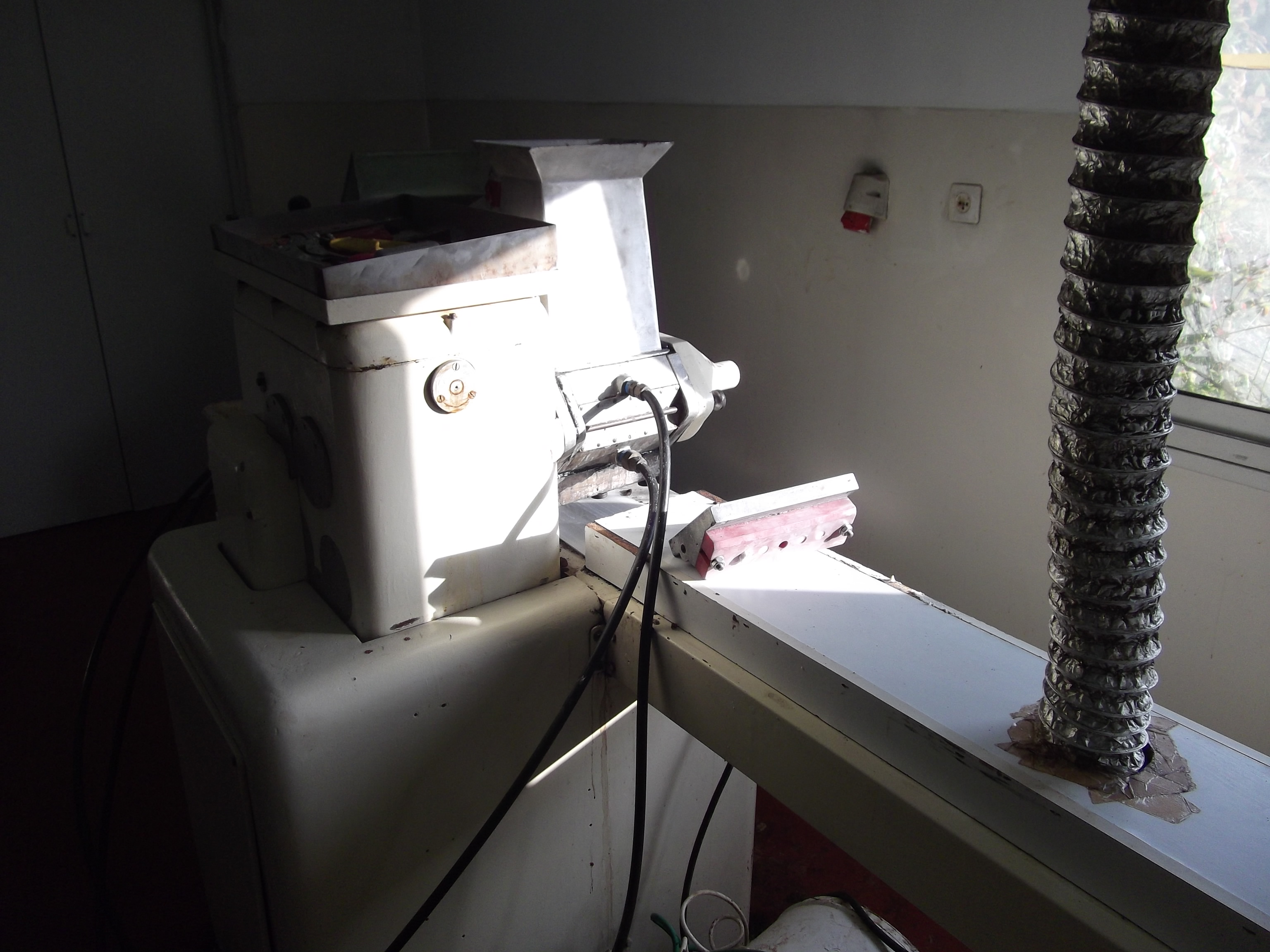
Even though we were not treated to a tour of the chocolate making I snuck back and snapped some shots of the resting machinery:

Chocolate making machine

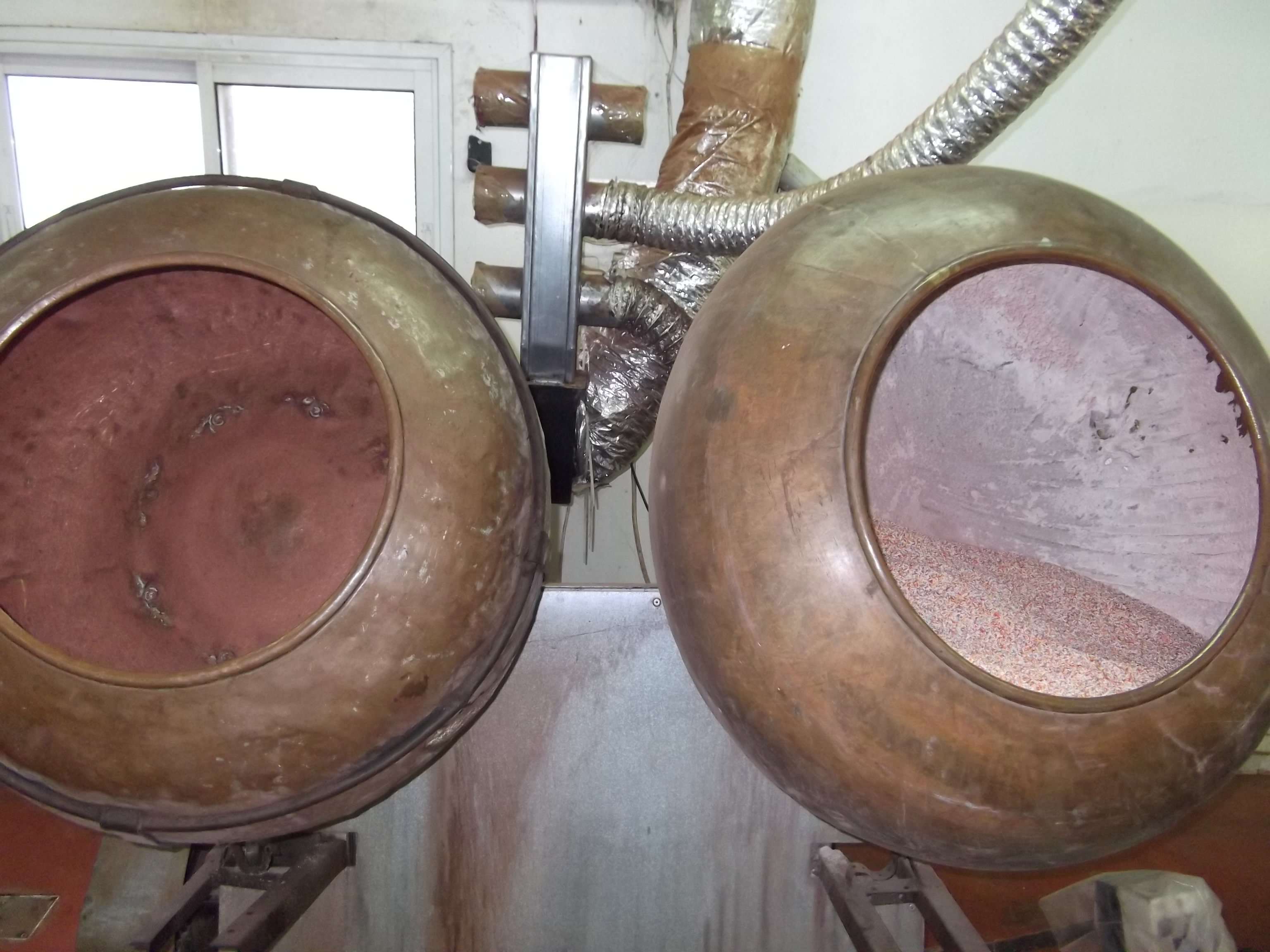
Drums for nonpareils and powdered cocoa

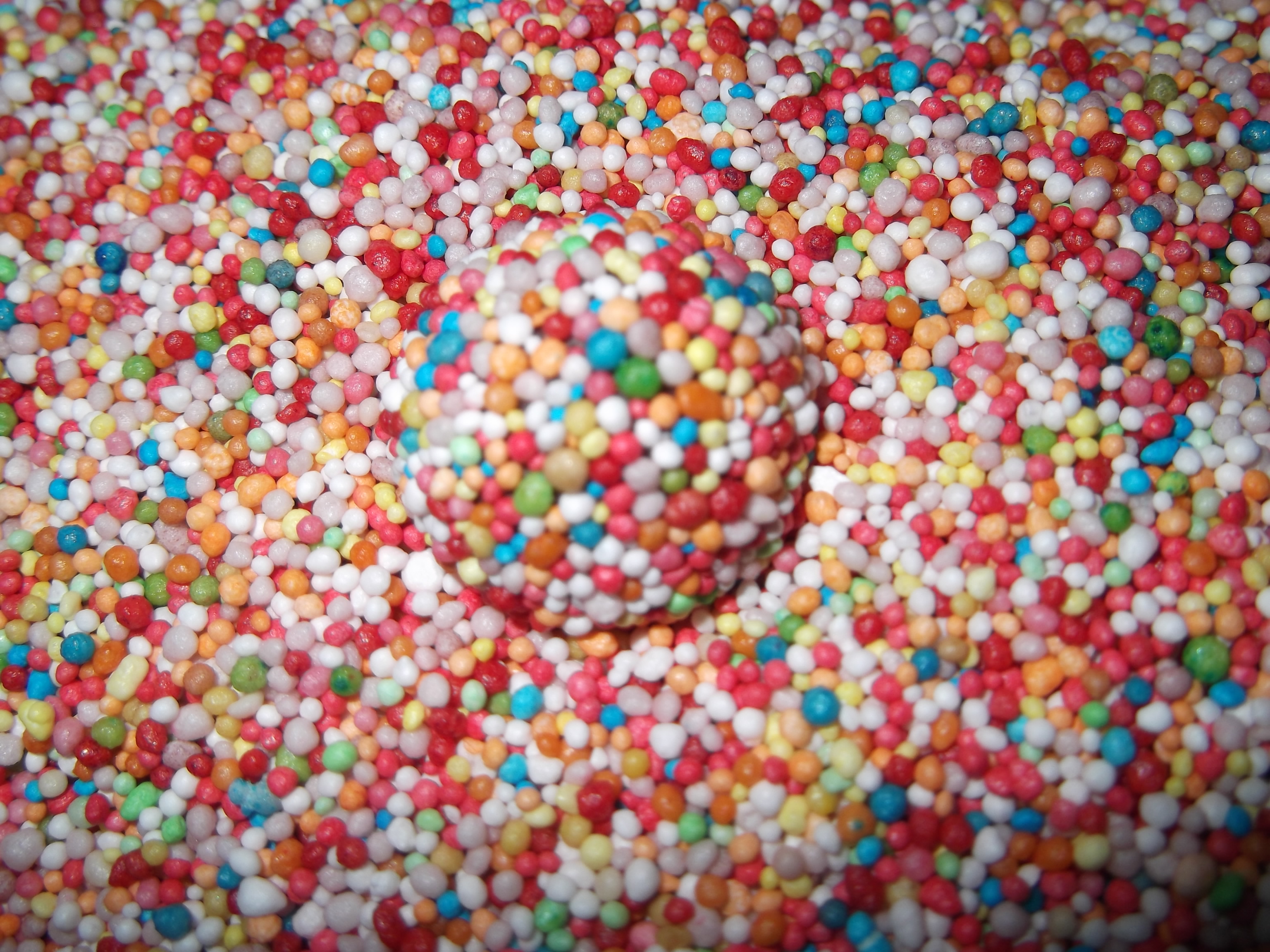
As I peered inside the right drum I spotted a stray chocolate ball, all covered in nonpareils and looking down-right delicious:

A chocolate ball hidden on a bed of nonpareils

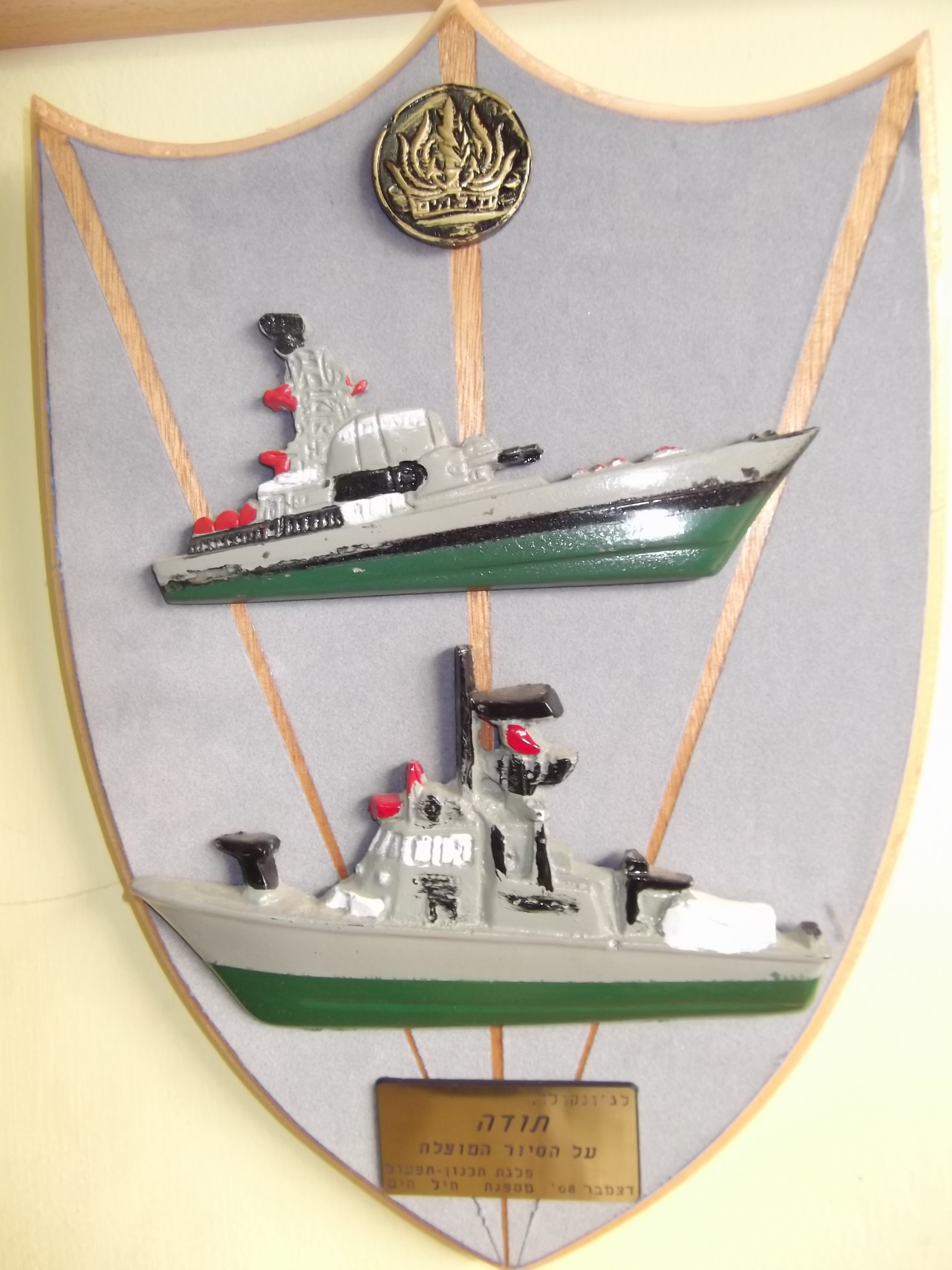
After we had purchased our chocolates and chatted enough with John we headed out the door. On the way, chest-high on the wall next to the door, I once again caught sight of one of my favourite features in the Johncolad establishment… A plaque from the Israeli Navy thanking John for his tour of the Johncolad factory:

Thank you plaque from the Israeli Navy

And, as a final touch of Manof, as we drove out, this was the view that greeted us. The stretch of land reaching the Haifa Bay, with the historic Mount Carmel as a long backdrop. Doesn’t get much better than this:

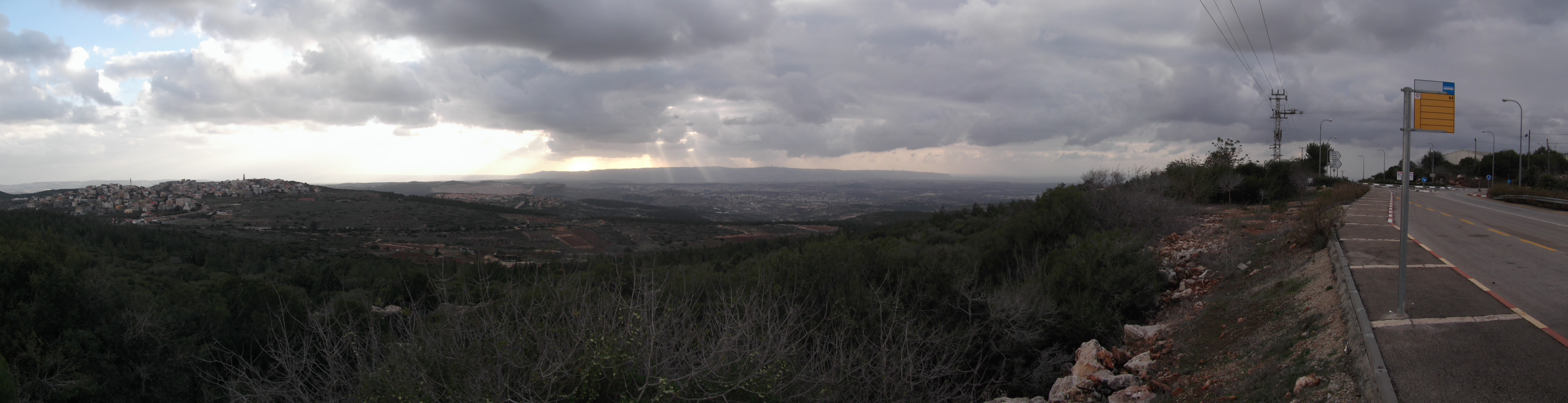
Panoramic shot of the land looking south toward Mt Carmel

And that was Sunday day. Sunday night and the rest of Chanukah will be presented in the next post.