Israel's Good Name

Archive for the ‘Israel’ Category

Apollonia (Arsuf)

In Central Israel, Israel on October 1, 2017 at 4:52 PM

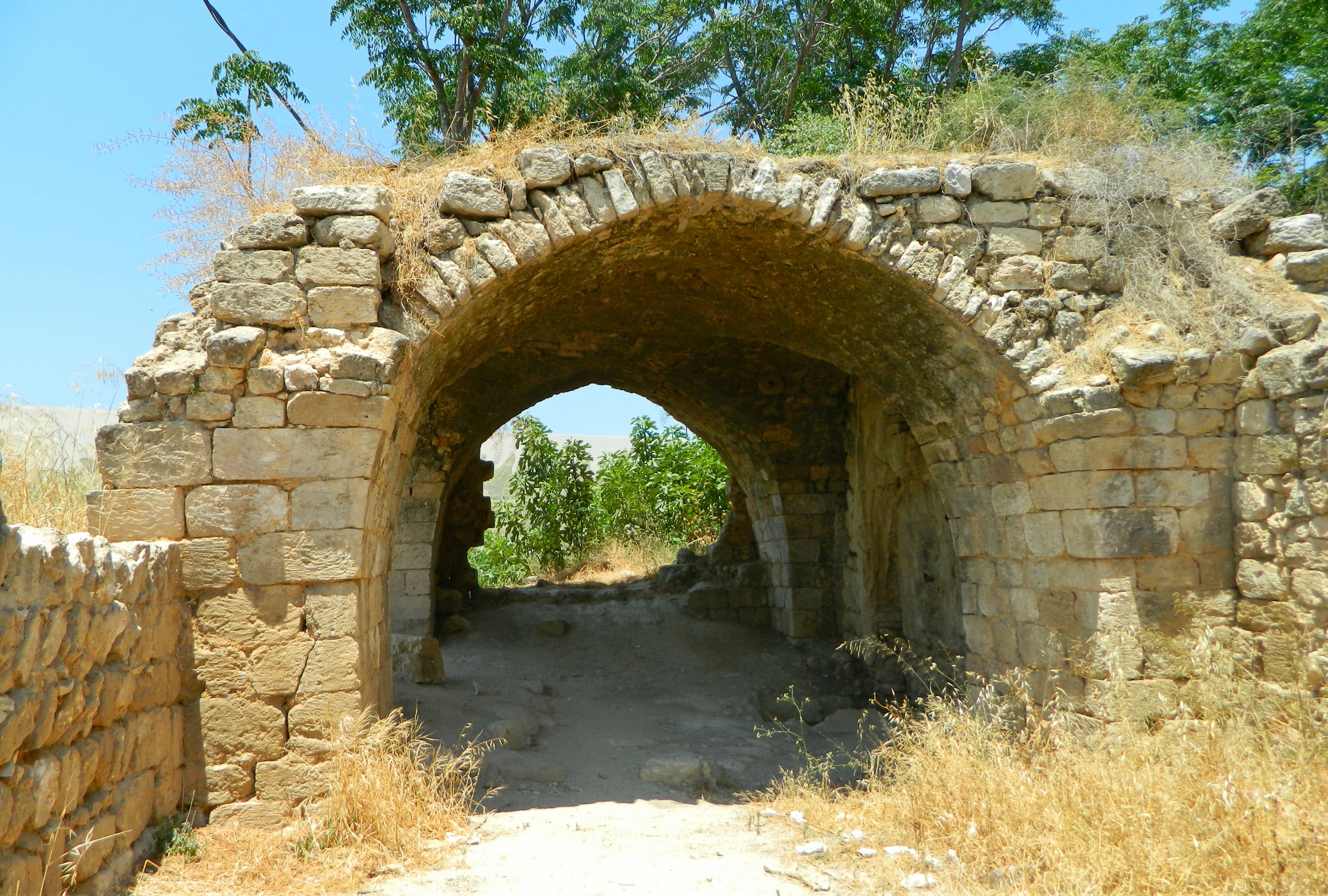
A week after I finished volunteering at the Horvat Midras archaeological dig, where I participated in clearing Israel’s only pyramid, I took a fun trip with my friend Adam. In the morning we headed to a coastal Crusader castle Apollonia (or Arsuf) at the northern end of Herzliya, busing our way via Tel Aviv. We made our way to the park after disembarking a few blocks away, noticing a large piece of glass laying on display at the entrance, testimony of Apollonia’s ancient glass industry.
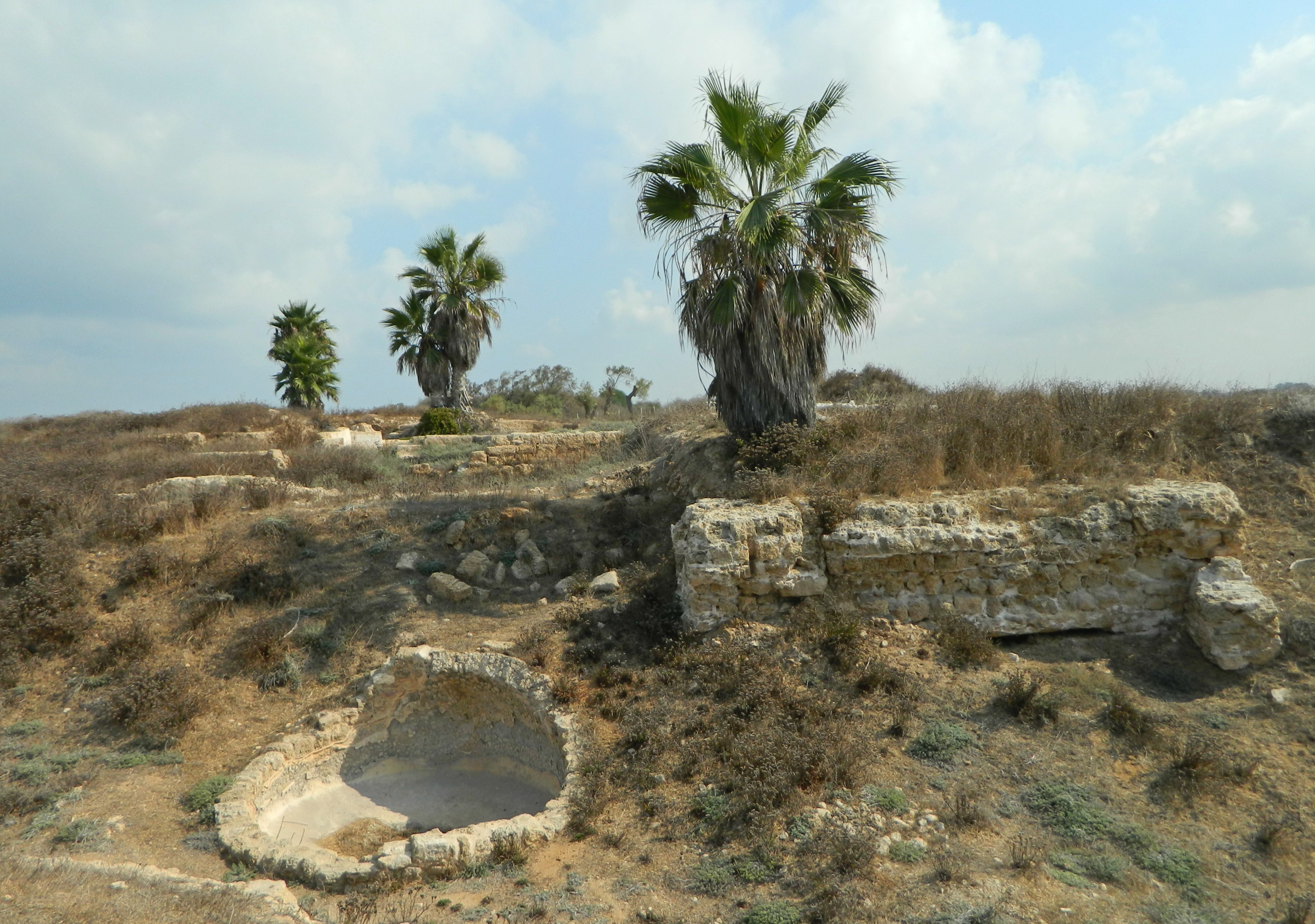
City ruins

In Apollonia’s earliest years, when the so-called Phoenicians ruled the coastal area, a small port city was founded. They called this city Arsuf after their god of war and storms, Reshef. When Hellenistic influence overrode the locals, the city’s name was changed to Apollonia, in honour of Apollo, the Greek equivalent of Reshef.

Ice plants decorating the scenery

The Roman times saw an enlargement of the city, with several different communities of inhabitants. During the Byzantine era the city became important, reaching its height of development and a sizable glass industry was created. We noticed lots of ancient glass bits littered about the path area towards the end of our visit, which brought us great excitement.
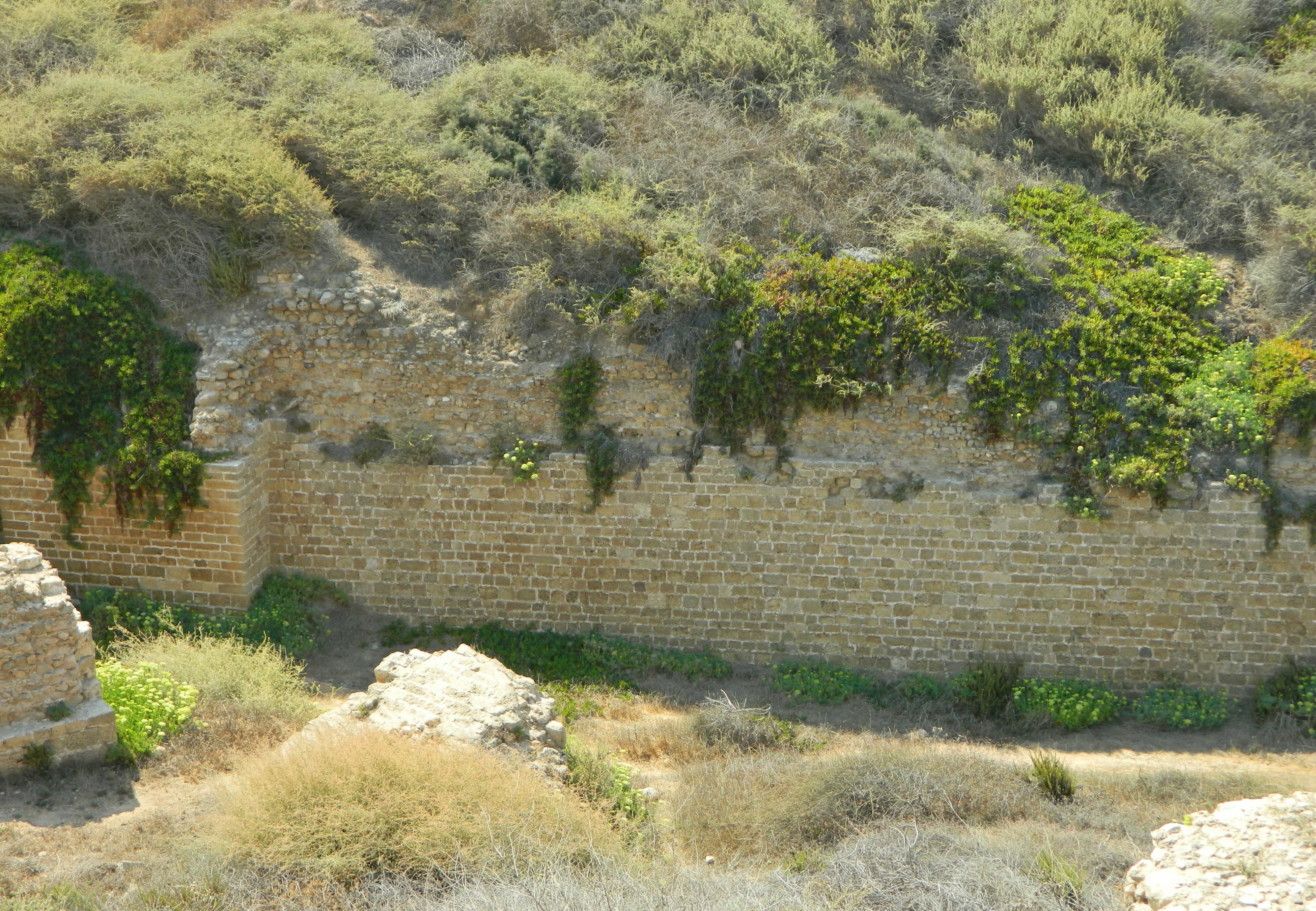
Details of the castle moat

But it was the Crusader times and ruins that intrigue me most about Apollonia, when the site was renamed to Arsuf or Arsur by the Muslim and Christian forces, respectively. Thankfully there are ruins of this period still standing for us to see, the centerpiece of the park.
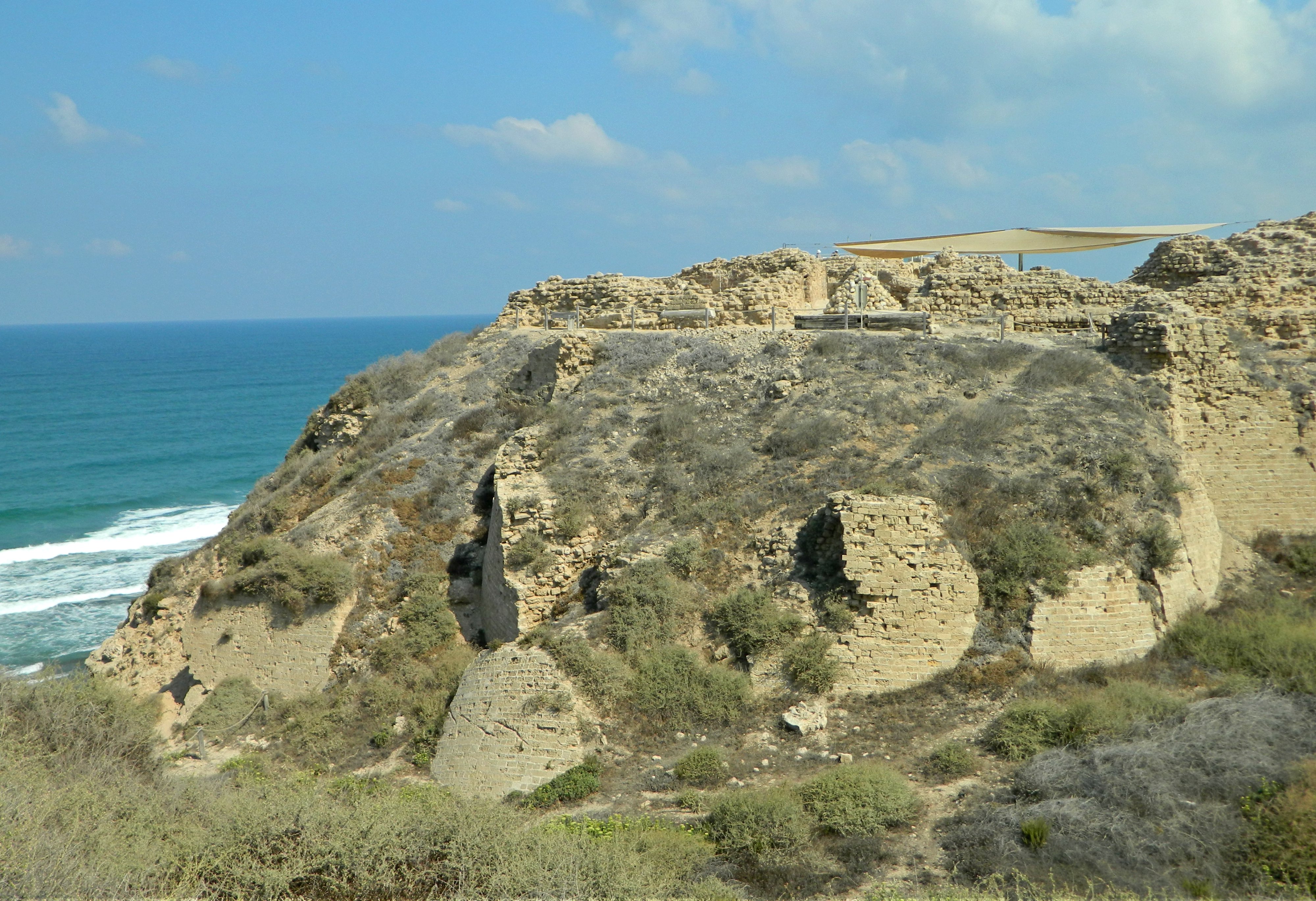
Crusader castle of Arsuf

I had read a lot about the battles that took place in and around Apollonia, as well as learned about modern techniques in research to verify theories with archaeological findings. Dr Rafi Lewis of Haifa University explained to me one evening his process towards identifying the battleground location of the Battle of Arsuf between the Ayyubids under Saladin and the Franks under Richard the Lionheart, which was described as being partially fought at the edge of a forest. Unfortunately, the Ottomans cut down most of the trees in the Holy Land to fuel their impressive rail system, so the forest is no longer. However, a veritable line of medieval arrowheads was found and, using a clever method of using data gleamed from shooting recreated Ayyubid bows, the arrow flight distance was calculated. Measuring the length of the flight backwards from the arrow line gave an approximate location for the place where Ayyubid archers hid in ambush to cut down the Frankish troops. I found that to be absolutely fascinating and, since then, yearned for the day to visit Arsuf.

Path along the sea

Returning to our adventure, we entered the park and began along the paved path. We gaze upon the southern moat and wall of the Crusader city and then the excavated remains of a Roman villa as we headed in the direction of the sea. The Mediterranean looked mighty fine that day, with a scattering of wispy white clouds in the rich blue sky. Walking along the sea cliff, parallel with the beach down below, we passed Byzantine water cisterns and reservoirs.

Adam at a cistern

We continued north until we reached the Ottoman lime kiln, a stone-lined furnace, and then swung inland a tad to walk around the Crusader moat. With moats come castles and this time was no exception. We gazed upon the stony ruins, imagining a time long since passed. The castle at Apollonia was built in the mid 1200s after the city had been in and out of European rule since 1101 when it was conquered by King Baldwin I with Italian naval support. When the city was gifted to more private hands, those of a noble family, the castle was built. However, this was short-lived because the Mamluks were on their campaign from the south and, in efforts to save the region, Apollonia was given to the Hospitaller Order. But even the famous knights couldn’t stem the tide of Muslim conquest under the leadership of Baibars and the castle fell in 1265 after a forty-day siege.
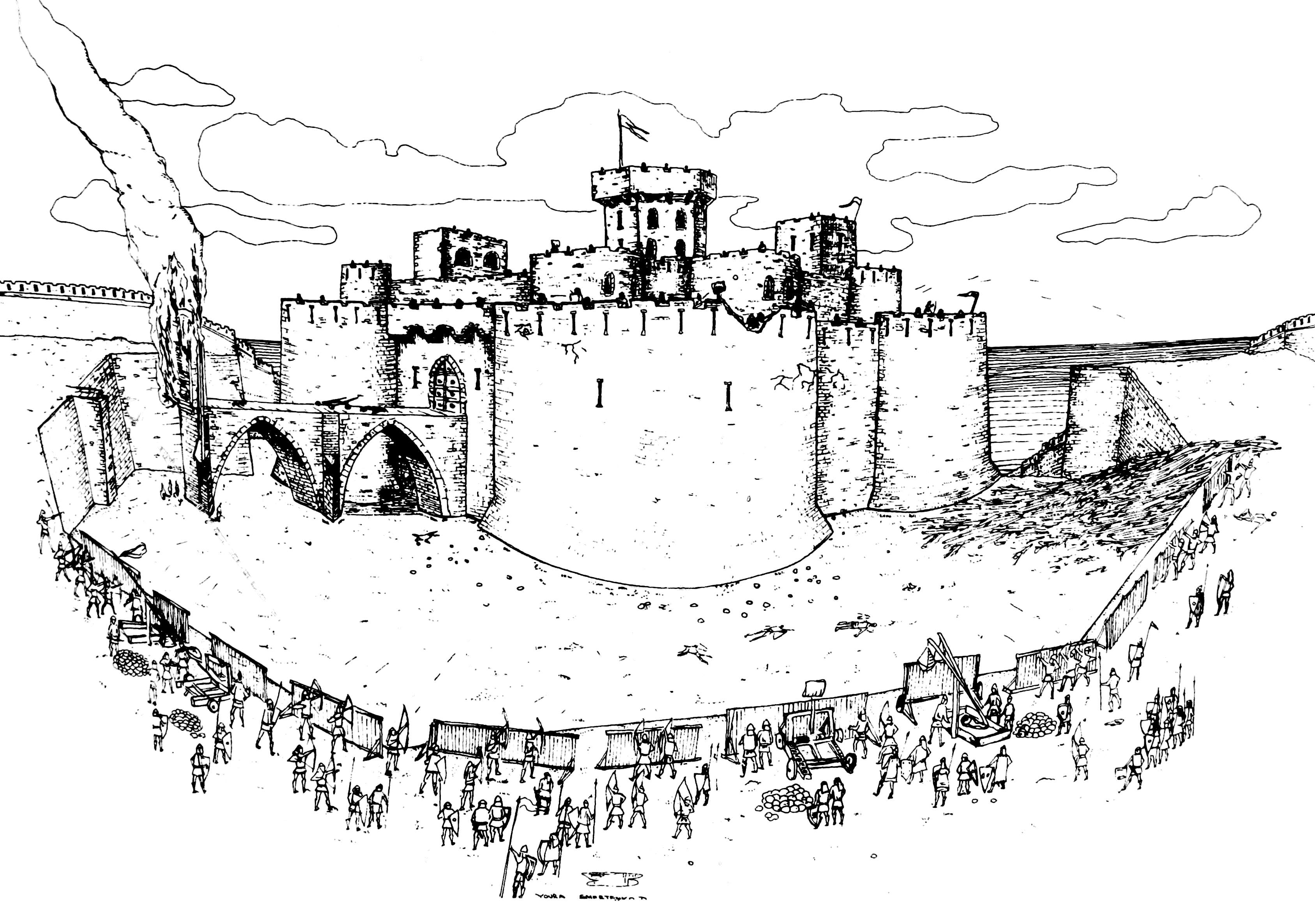
Artist’s rendition of the Mamluk siege

Since then, no locals or conquering forces have made attempts to rebuild the coastal fortress and so it stands today, a bastion of ruin surrounded by a deep dry moat. We then passed the site of the original bridge, long since fallen, and crossed via the “new” land bridge on the bright, paved path.
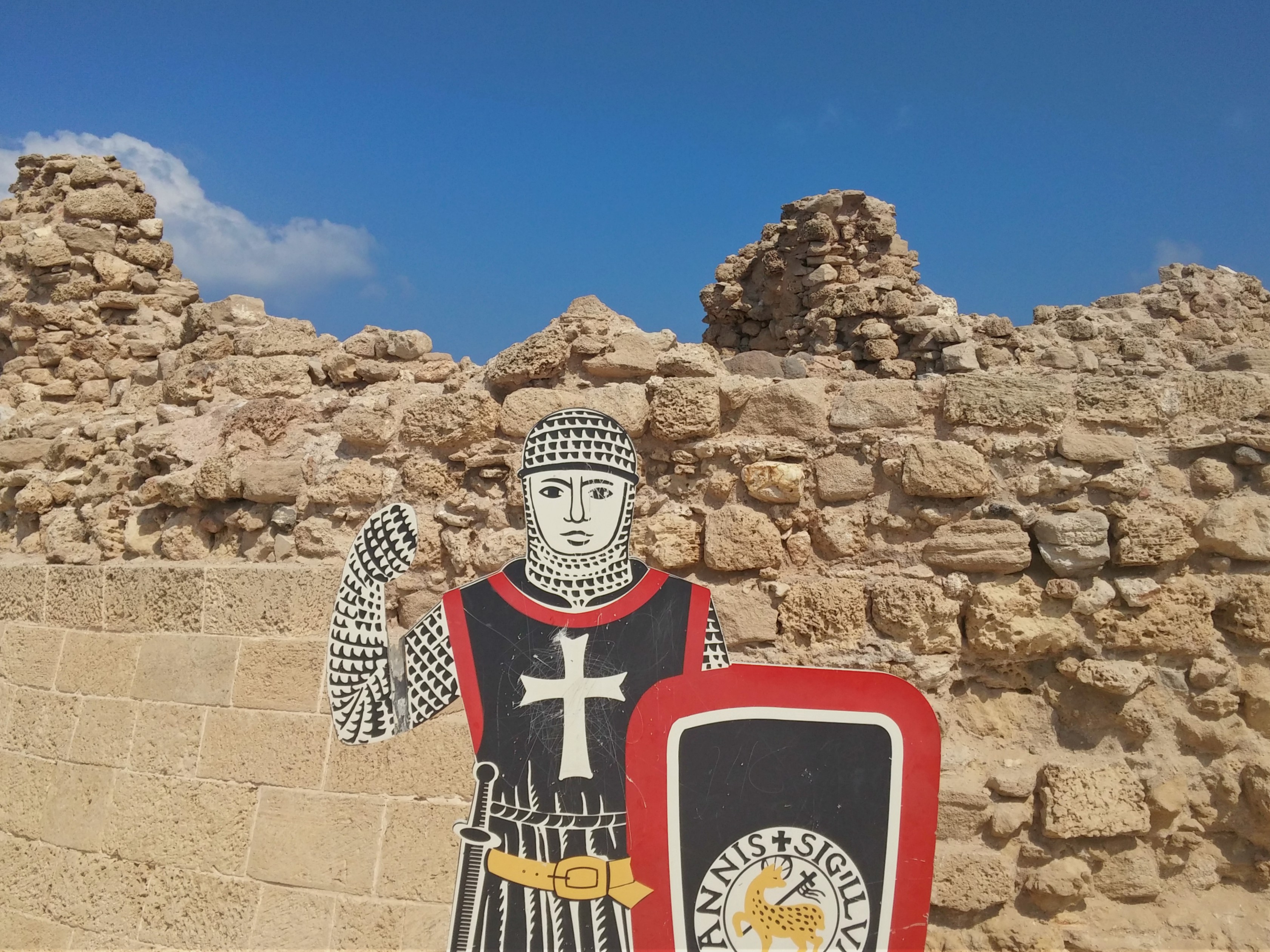
Greetings my lords

A smartly dressed Crusader knight greeted us on approach, bidding us entrance to his home. Inside, we found ourselves in the courtyard of the fortress, surrounded by different rooms. We chose to visit the ground floor of the keep first, and to gaze out towards the sea from within the vaulted room. Continuing on in a clockwise manner, we visited the kitchen next, and then the dining hall and adjacent food-related chambres. I noticed how small the dining room was, say, in comparison to the Crusader castles at Akko and Belvoir.
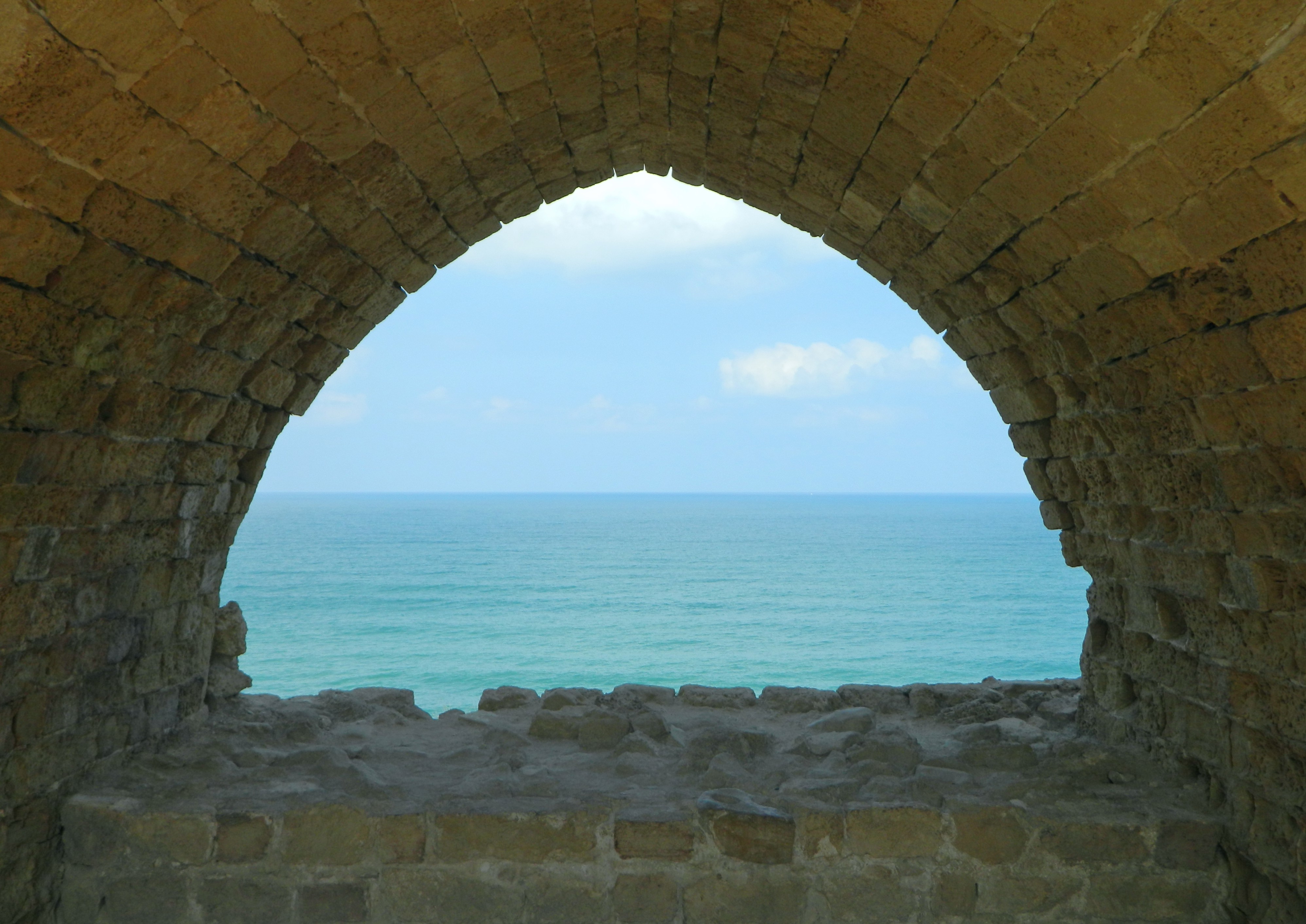
Within the keep

Heading from the north end of the fortress’ interior to the south end, we entered the Burnt Room, named such after the visible burn marks from the Mamluk acts of destruction. Within the rooms at the south end we found many piles of ballista stones, which were used by the knights to counter the siege, as well as marble Corinthian column capitals.
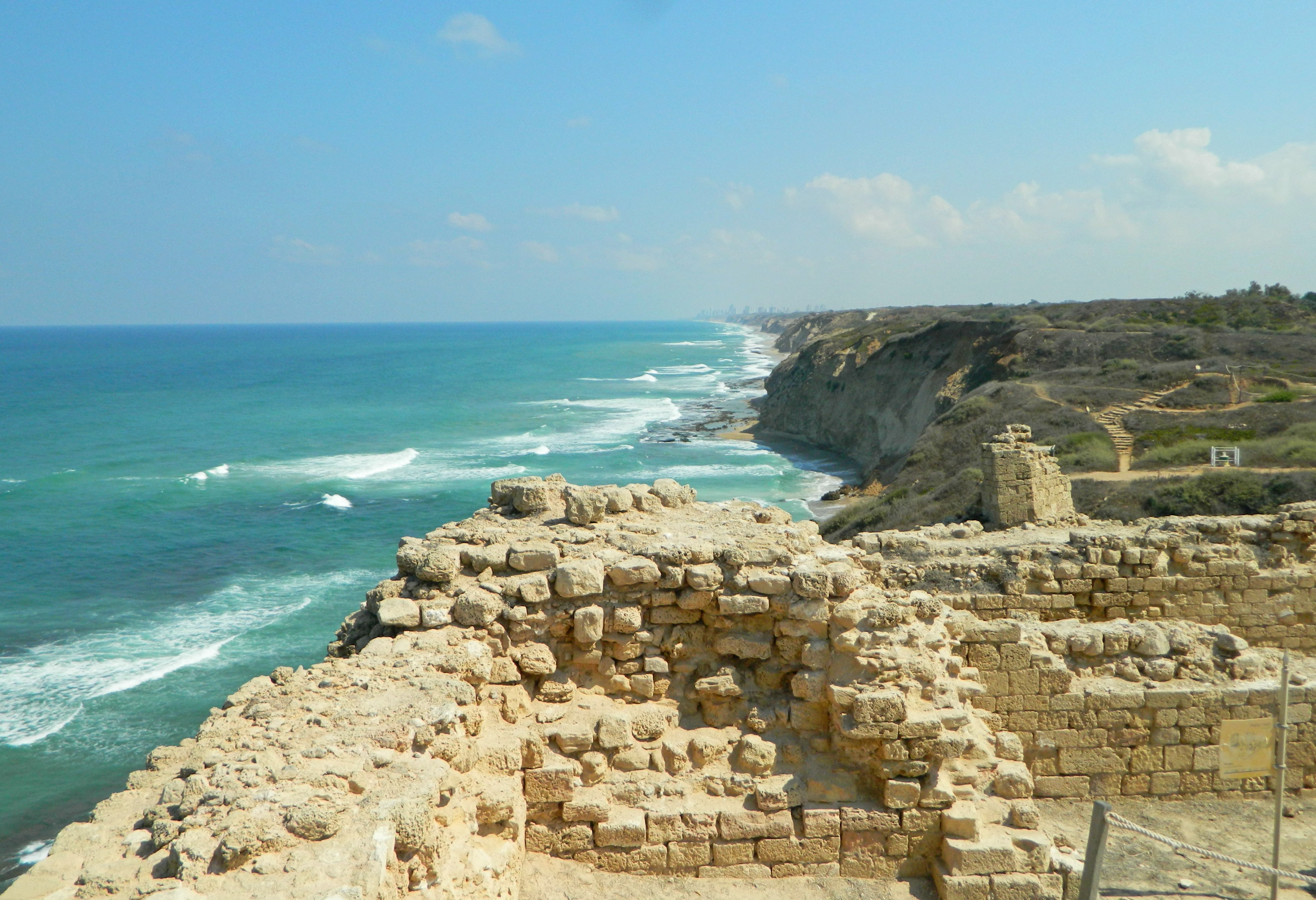
Looking north

We climbed to the highest ruins of the keep and admired the view, looking down at the shore below to see the remains of the Crusader port. After some relaxation time in the shade we left the castle and made our way to the far northern end of the park. There we sat on a bench and talked about life’s complexities, losing a whole bunch of sandwich cookies to the sand below us. We watched the sea and its guests, and the military helicopter that flew over us. At last we took to the path once more and explored an unmarked excavation area with a simple mosaic floor.

Ancient piece of glass

On and around the path we found tons of ancient glass shards, even the rim of a small bottle, as well as an adult antlion flying through the dry vegetation. With that we walked our way back to the park’s entrance and left, briefly exploring the high-tech area of Herzliya before parting ways, bringing an end to yet another successful trip.

A special thank you to the talented Rebecca Zami who has been skilfully editing my blog for the last couple months!
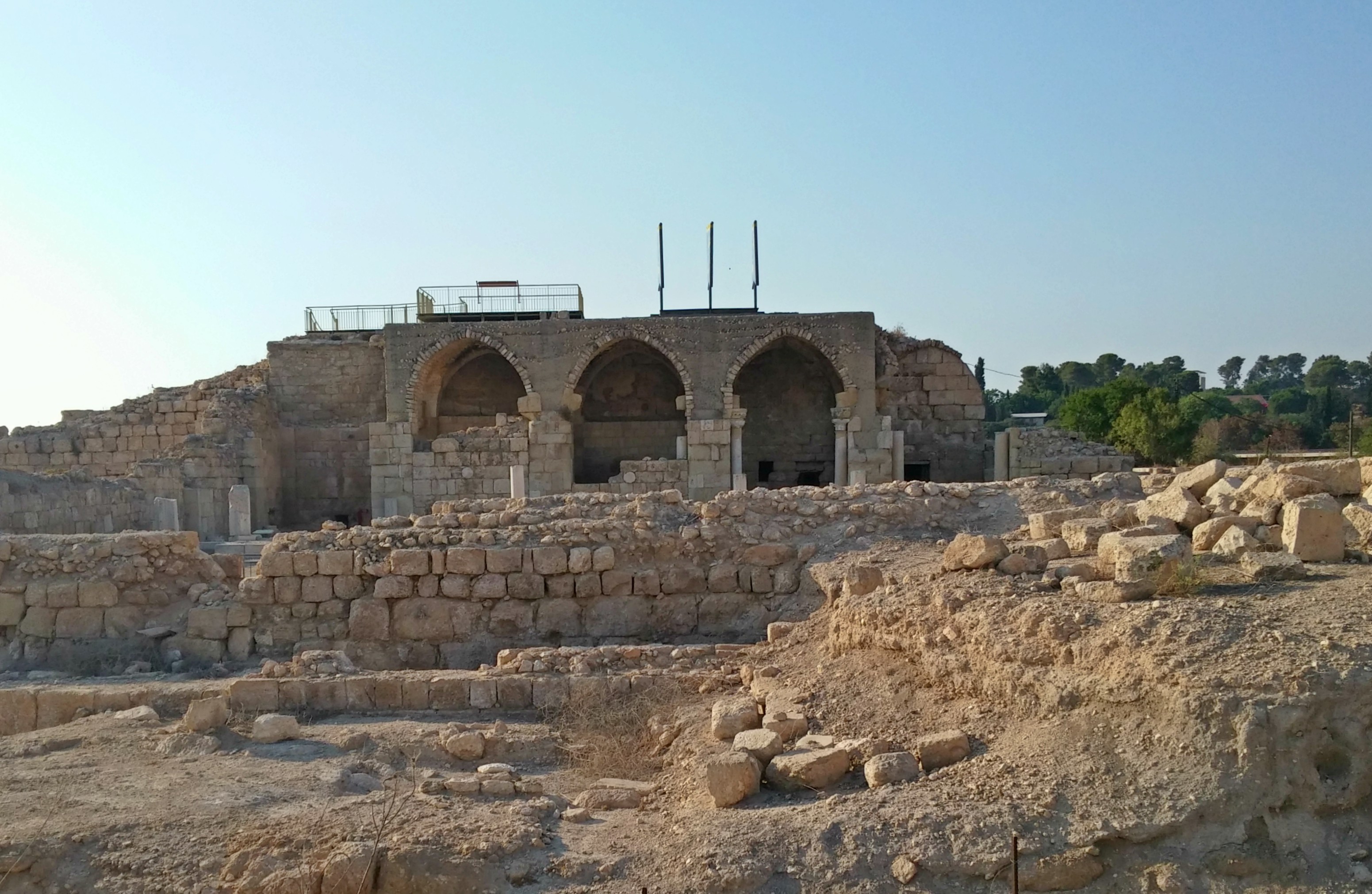
Beit Guvrin: Crusader Castle

In Israel, Judea on September 24, 2017 at 6:20 AM

Whilst participating in Hebrew University’s excavation of Horvat Midras in early August, I took a short trip to the Crusader fortress that I had missed in my previous trips to Beit Guvrin. Since I was staying at the nearby Kibbutz Beit Guvrin, I did not have far to go and set out on my excursion in the late afternoon of my second dig day. On my way out of the kibbutz I stopped to examine the display of ancient millstones and columns that adorn the entrance and then made my merry way to the main road.

Beit Guvrin’s Crusader ruins

Seeing the alluring ruins on the right of me, I looked despairingly at the fence barring my way and walked along Road 35 until I saw a place to slip in. Because the road divides this part of Beit Guvrin from the more expansive national park that includes Tel Maresha, this part has no entry fees. As I entered, I noticed that the Roman amphitheatre was decorated for a concert that evening, and two young Arab men were standing watch. They hollered at me and a curious discourse followed in which I was threatened with my life and then allowed entry–an interesting episode, to say the least. Passing the amphitheatre, which I had already visited twice, I made my way towards the complex that awaited my visit for years.

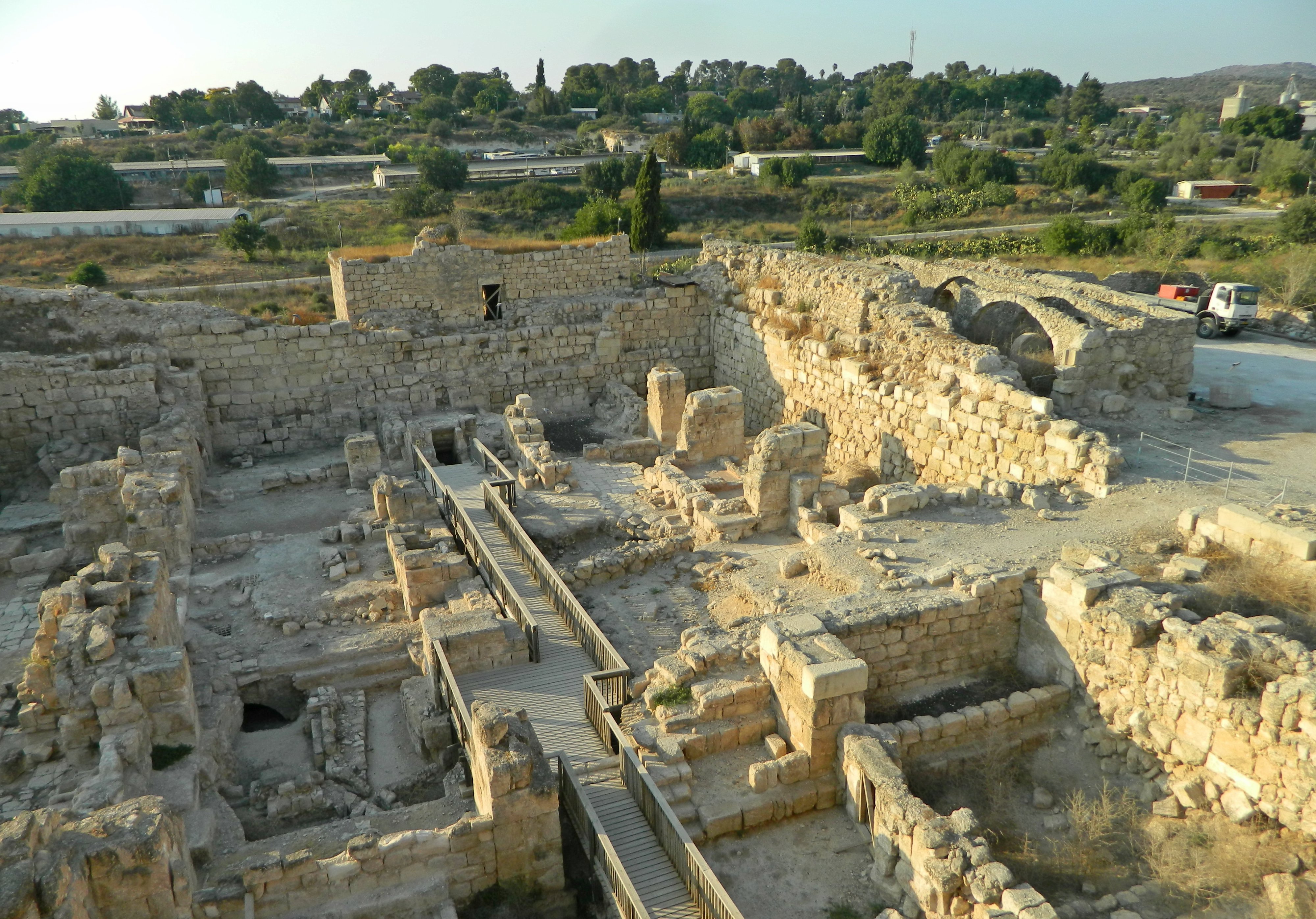
The castle from above

Just to give a brief overview of this part of Beit Guvrin: I was visiting the Roman and Crusader ruins which include a bathhouse, a fortress, and even the remnants of a mosque from the Muslim period. Sometime around the year 200 CE the Romans gave a Greek name to the city, calling it Eleutheropolis (meaning “City of Free Men”). Later, when the Crusaders conquered the Holy Land, they built the Bethgibelin castle atop Roman ruins. The church, built on the south side of the fortress, was converted into a mosque when the Mamluks overthrew the Christian rule in the 1200s.

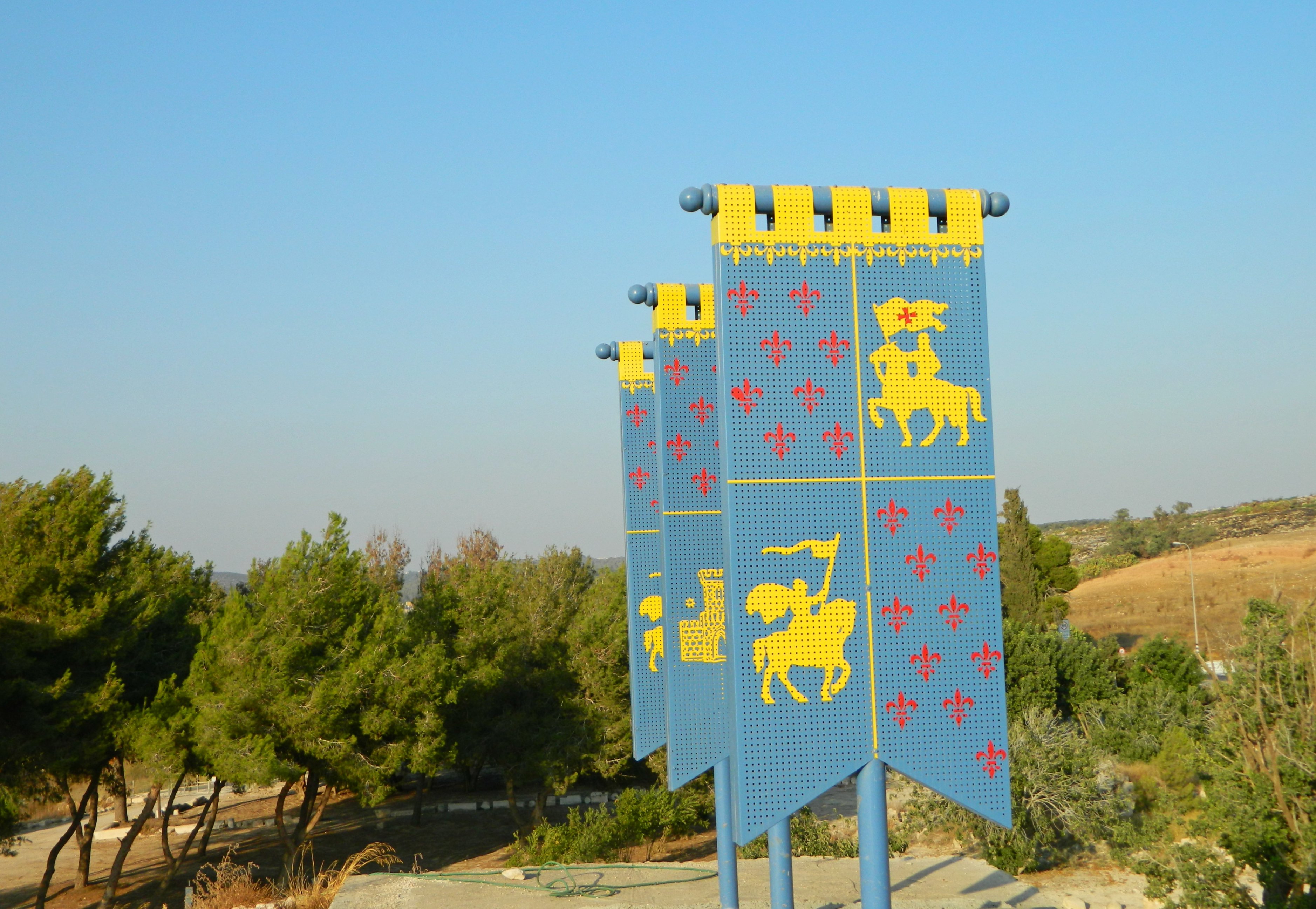
Regal banners

First passing a small agricultural installation I found myself at the columned and vaulted entrance to the fortress area, the aforementioned church/mosque. Standing beneath the tall vaults I noticed the mihrab (Muslim prayer niche) in the southern wall and gazed upwards to admire the Gothic architecture that the Crusaders introduced to the Holy Land.

Looking up at the Gothic construction

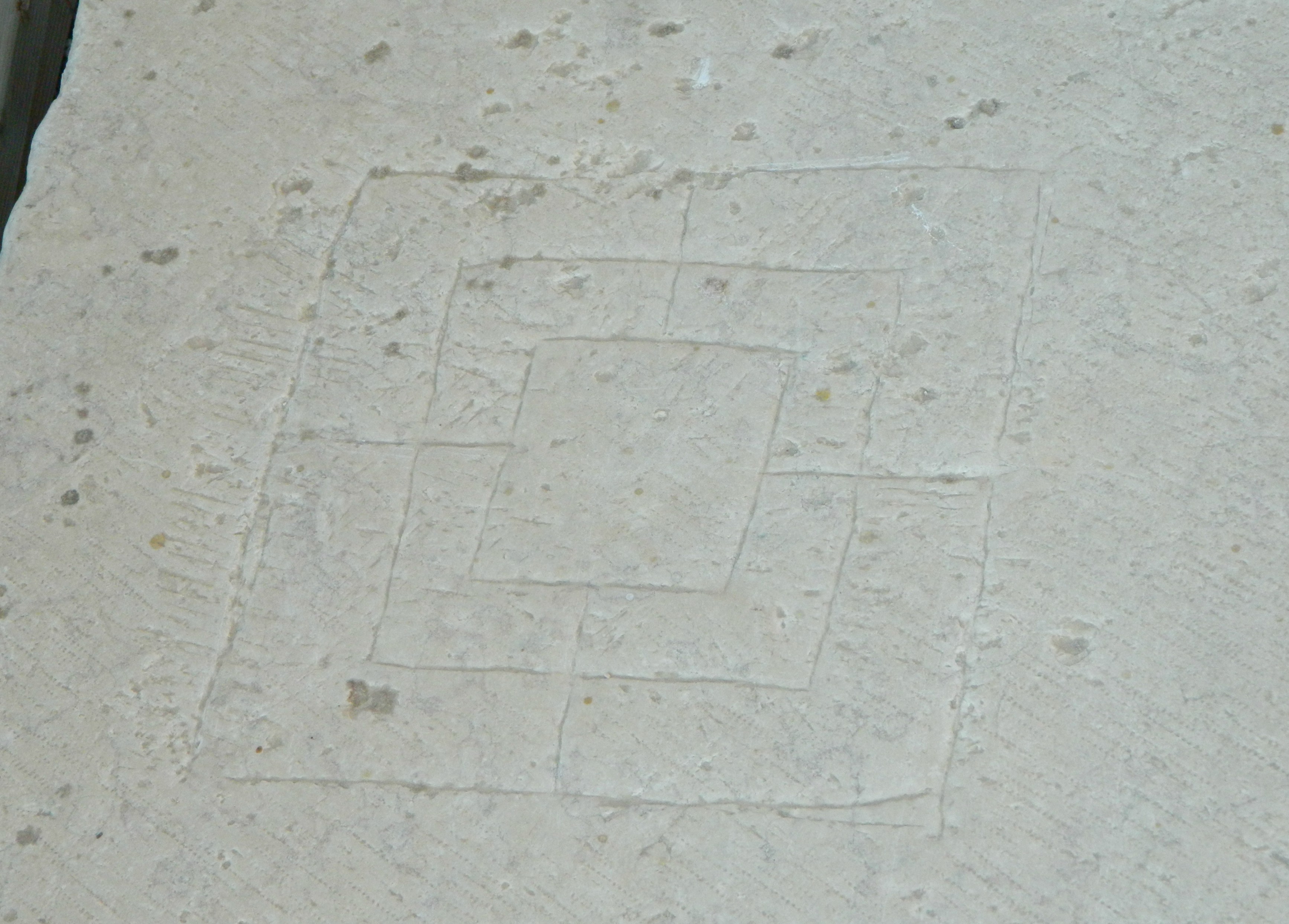
Spotting a narrow staircase built into the fortifications, I made my way up to the roof of the ruined fortress where I had a great lookout over the site. When I had my fill of sweeping vistas I returned to ground level, entering the fortress. Because the site is still being excavated and restored, I basically roamed around freely, examining and photographing as I saw fit. One interesting feature that caught my eye was an etched version of the game Nine Men’s Morris, which has been popular since before Roman times. After very briefly researching this particular specimen, it appears as though this game was scratched into the stone by individuals of the Crusader inclination. I find this glimpse into the past to be very interesting.

Nine Men’s Morris

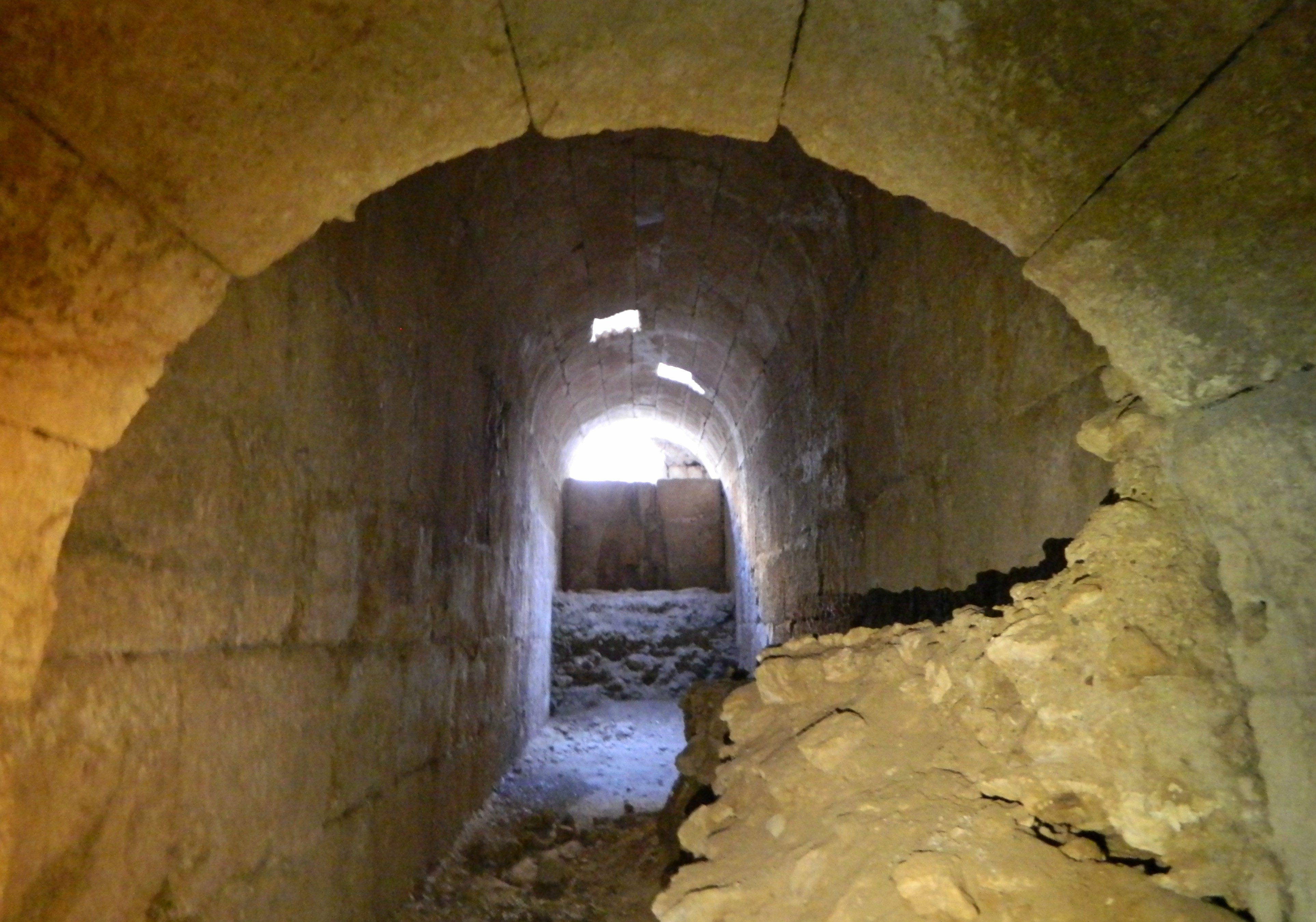
I noted the clay piping, reminding me of Montfort Castle up near my home in the Galilee, as well as many stone creations that I have yet to learn to identify. I circled the inside of the ruined castle, and wondered what a particular gap in the construction was, a veritable hole in the ground. I naturally assumed it was a water reservoir, as is common with fortifications. But I soon found that I was wrong, as there were stairs leading down to a Roman bathhouse. Within its dark, vaulted chambres I found my answer, and gazed up at the sunlight streaming in through the very hole I questioned. Illuminating my path with my cellphone’s flashlight I toured the underground ruins, having a brief run-in with a startled pigeon.

Section of the bathhouse

Leaving the bathhouse, I exited the castle and stumbled into the workplace of the current excavation. I found crates and crates of interesting pottery, and, poking around a wee bit, got myself excited at the possibilities of discovery, for I hope one day to uncover some nifty Crusader finds. With the sun sinking into the horizon, I returned to the path from which I came walking alongside the moat, and exited the park with a wave goodbye to the men-at-watch still camped out at the amphitheatre.

A happy explorer

Before returning to the kibbutz I nipped across the road and explored a long stone building mostly overgrown with vegetation. Inside I found a singular, tunnel-like room with a small mihrab and a lonely minbar (stepped pulpit). I read that this building was later used to store cotton for feeding livestock, but today it’s surely empty, save a mountain of guano in one corner. At last I retraced my steps back to the kibbutz and headed straight for dinner in the delightful blue-framed stone building. My short excursion was over but I had yet another day of adventurous digging at Horvat Midras.

Horvat Midras Archaeological Dig

In Israel, Judea on September 17, 2017 at 7:05 AM

After a week-long break from digging at Tel es-Safi, I found myself volunteering at yet another archaeological excavation, that of Horvat Midras run by the Hebrew University of Jerusalem. Also located in the Judean lowlands, my dig experience at Horvat Midras was actually wildly different than that of Tel es-Safi. For starters, I had dug only Bronze and Iron Age sites thus far this summer whereas Midras is predominantly Hellenistic, Roman and Byzantine. Other differences will become apparent later on in the post, highlighting how interesting archaeology can be.

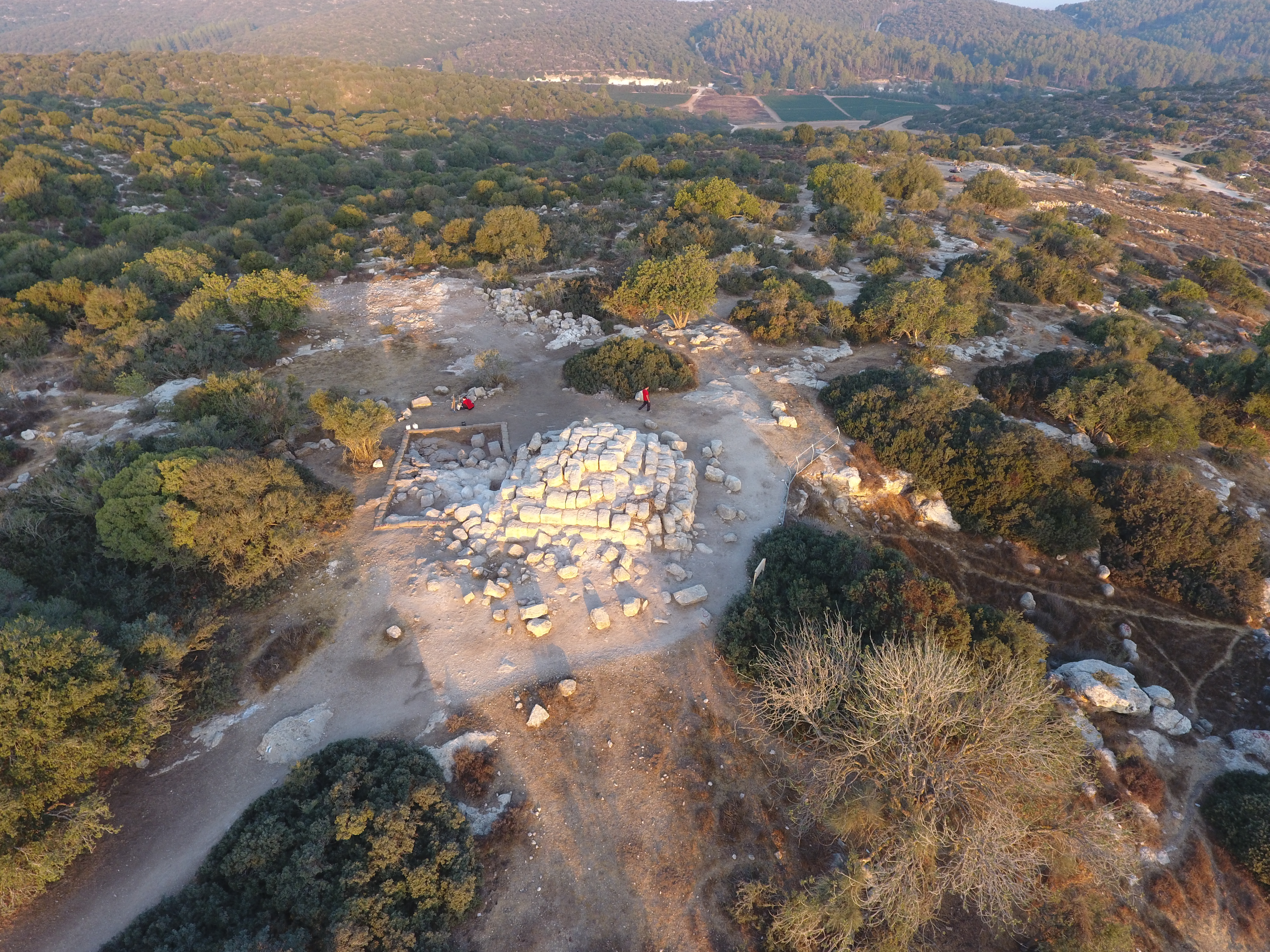
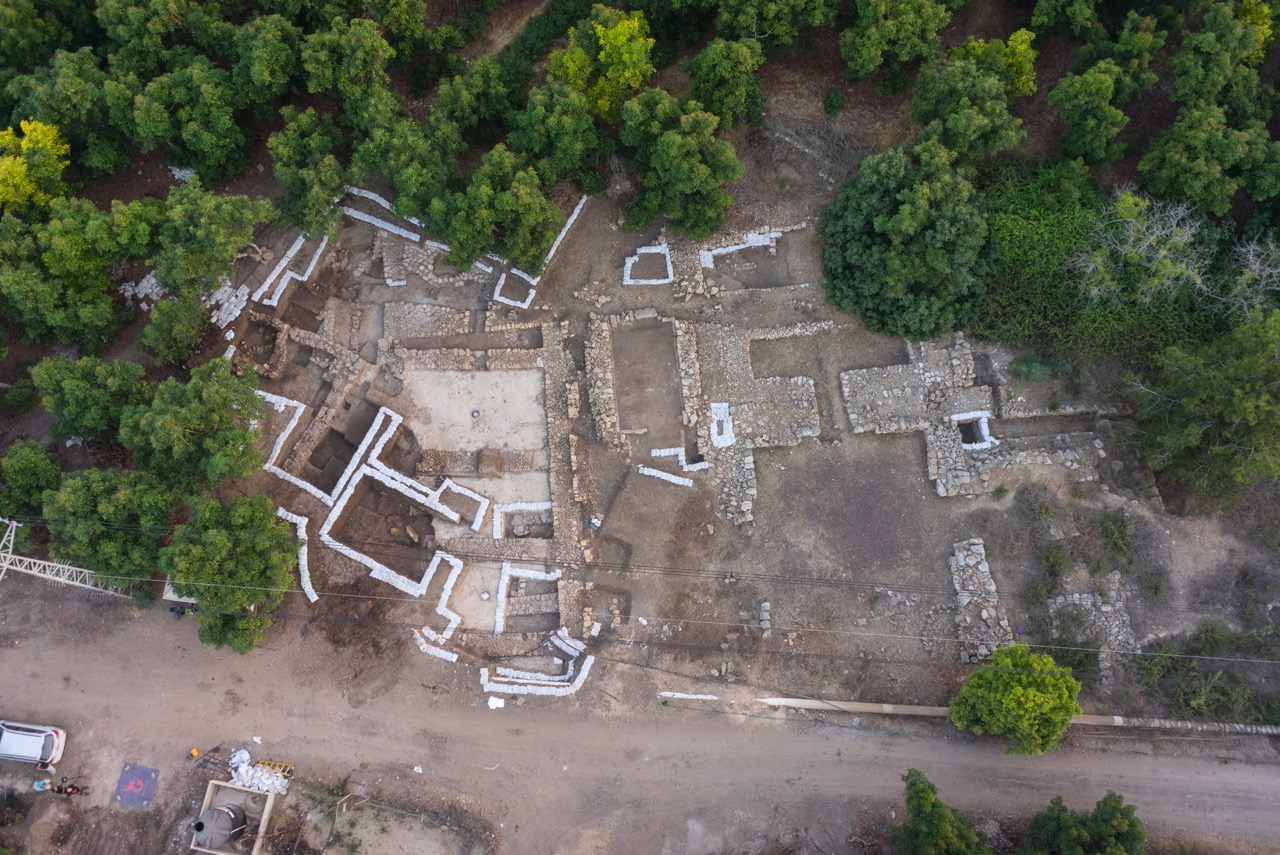
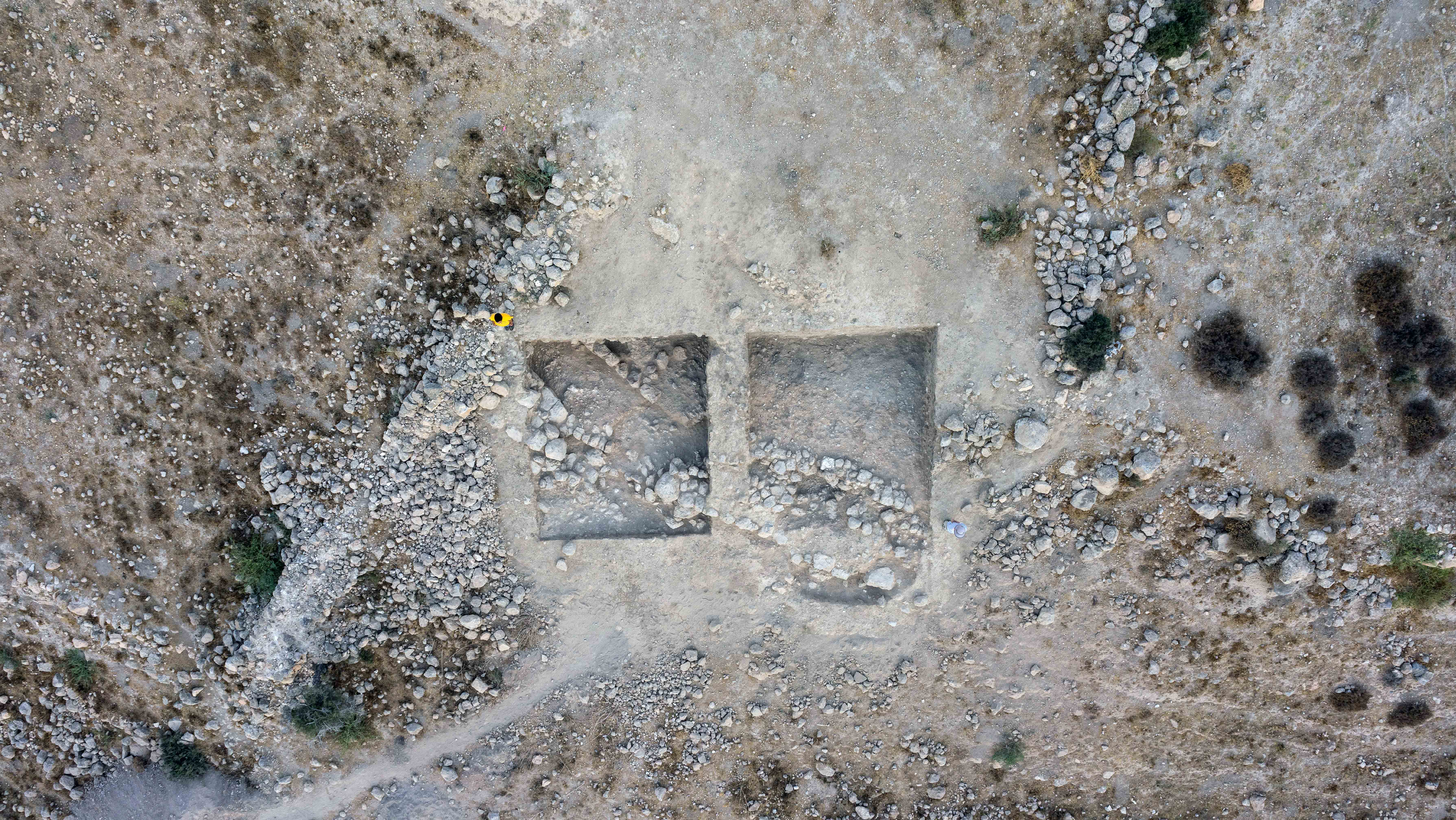
Aerial shot of Horvat Midras’ Pyramid (photo Alexander Wiegmann & Yakov Shmidov)

Late Sunday afternoon I took a train down to Kiryat Gat where I was picked up by the dig director, Dr Orit Peleg-Barkat, and taken to the base camp of the excavation, Kibbutz Beit Guvrin. I had written twice about sites at Beit Guvrin, which can be seen HERE and HERE.

All-purpose building at the kibbutz

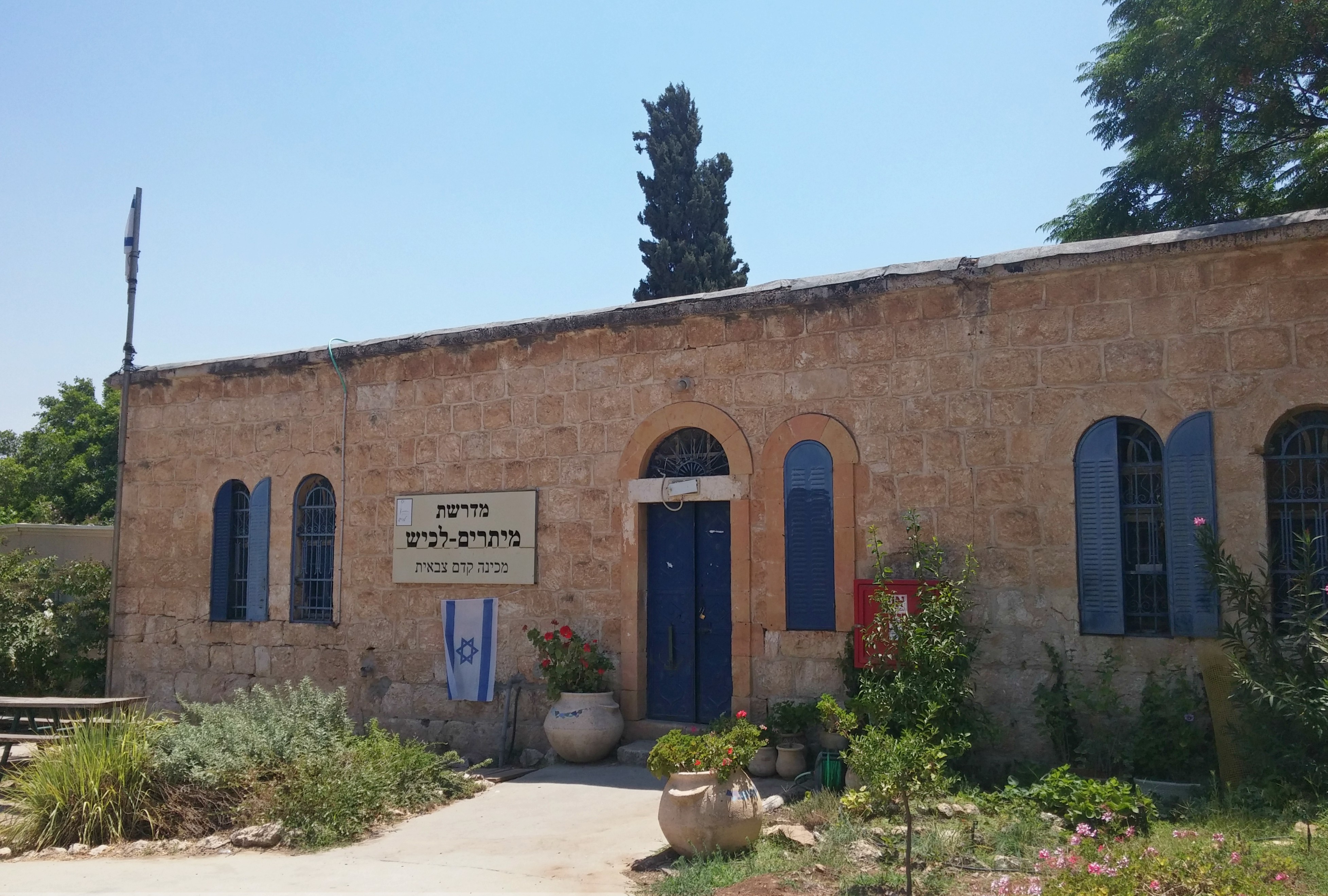
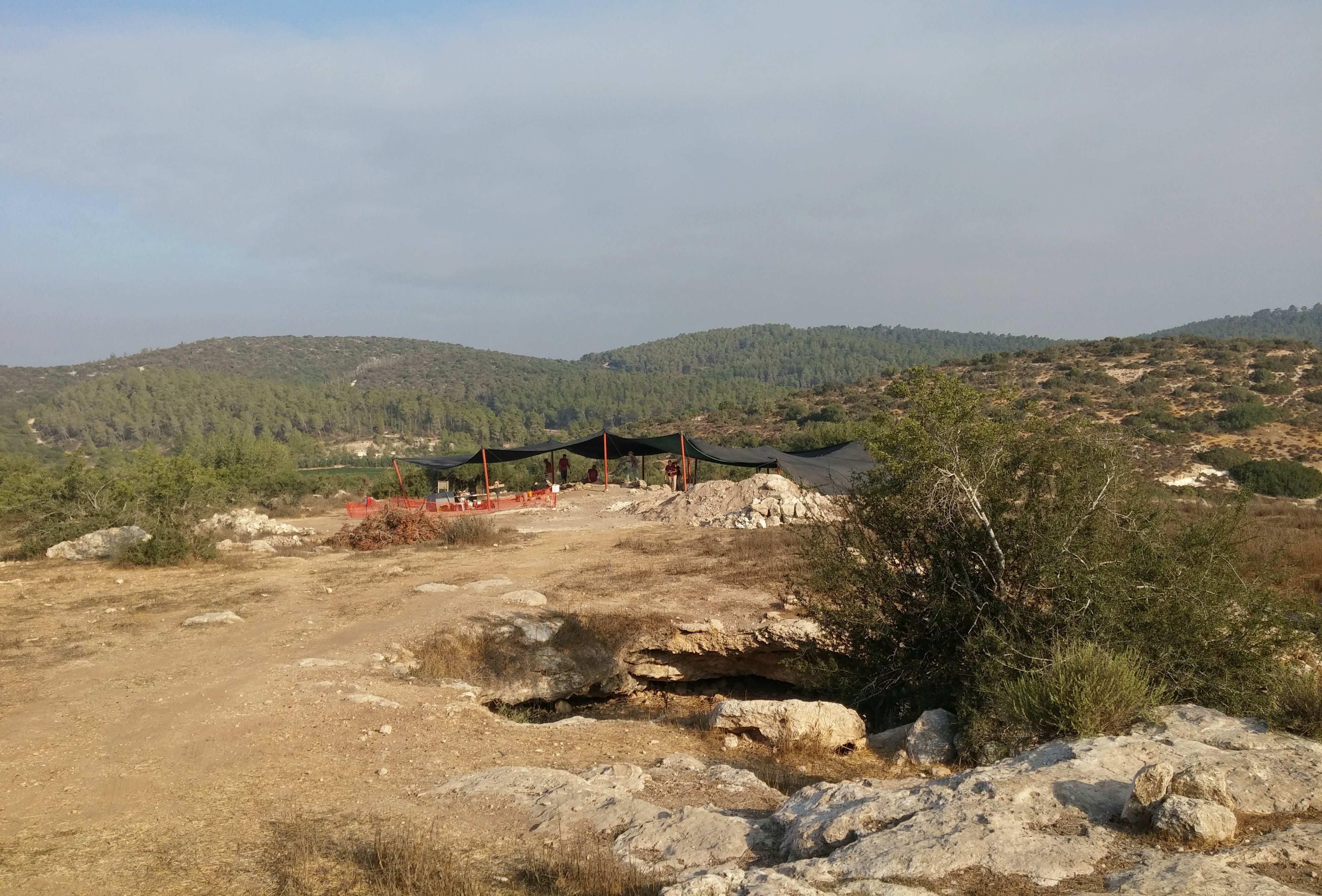
Disembarking at the expedition’s dining room/office building, a beautiful British Mandate structure, we went in for dinner before I settled in my own room in the dwelling building just down the street. Anticipating the next morning at the dig, to a place I’ve never been, I slept just a few hours before waking up, lacing up my new hiking boots and filling up plenty of water to drink later. I snagged a ride with one of the staff members and we pulled up to the dig site, a gentle slope in the Adulam Reserve just off Road 38. I lent a hand getting gear out of the storage container in the dirt parking lot and then waited for my briefing tour by Orit.

Walking up the hill while the moon’s still out

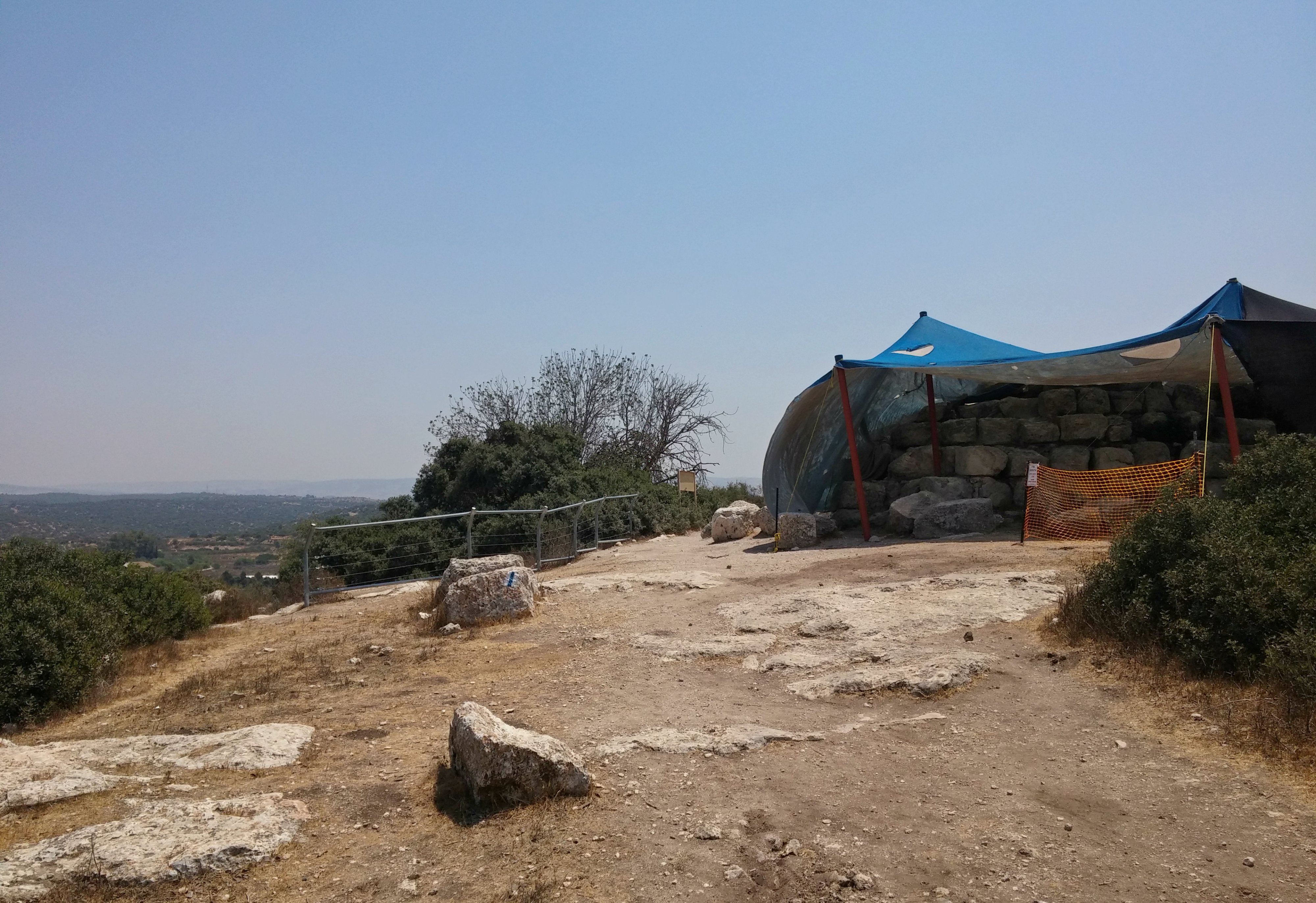
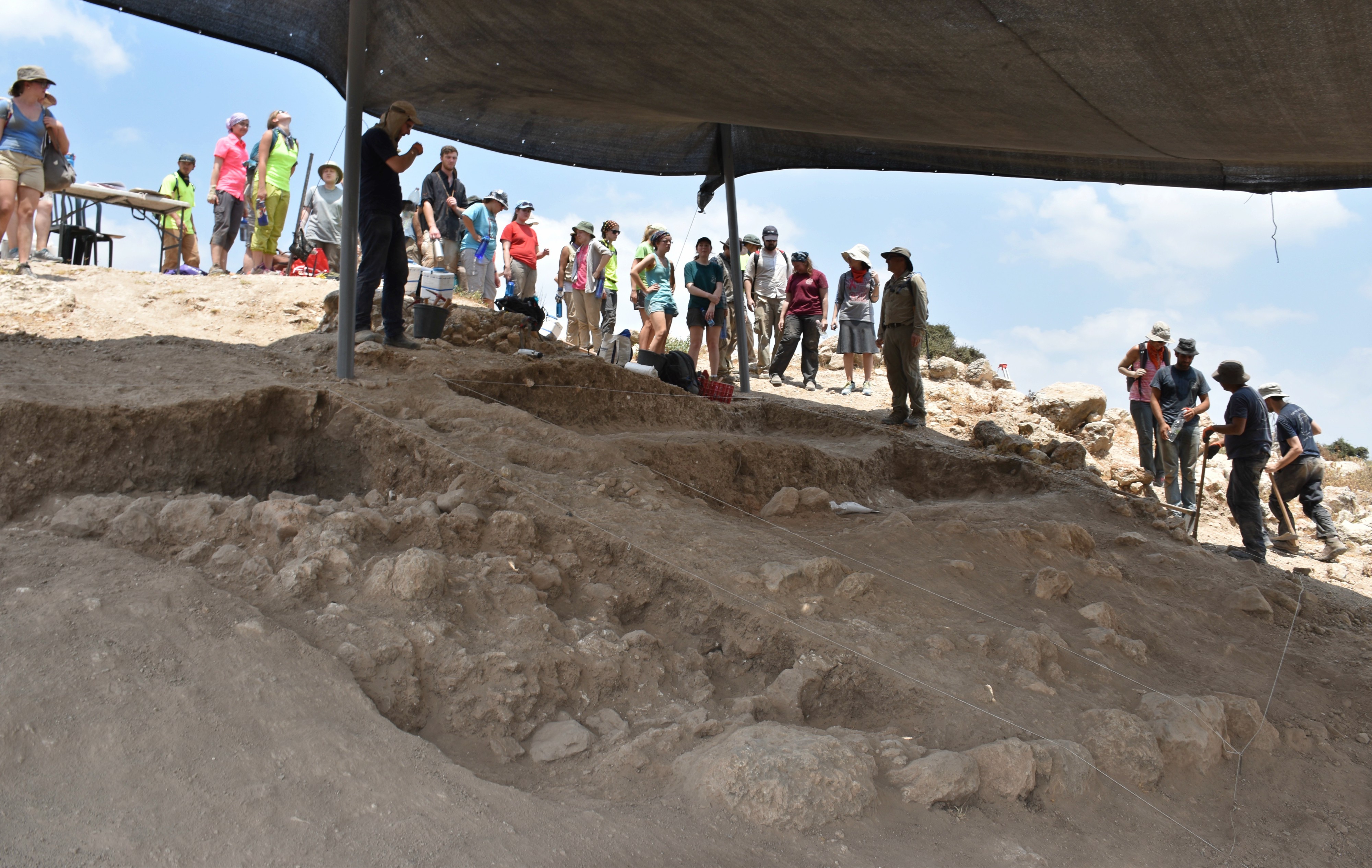
Taking me up the hill, Orit showed me the various areas that they had been excavating over the season, including a site which appears to be a Roman temple. I was to be joining the team at the pyramid, a 10×10 metre edifice of white ashlars, the only structure of its kind in all of Israel. Due to the presence of a burial cave directly below the pyramid, it is believed that the edifice was built as a memorial of sorts. However, it is unknown who built the pyramid, or even if there is another reason for its construction. I was introduced to the team: area supervisors Yodan and Evie from HUJI, a few volunteers from the University of Münster in Germany and a fellow Bar Ilan student of Archaeology. Itamar, my frequent digmate, would be joining us the follow day, but that will have to wait.

Different angle of the pyramid

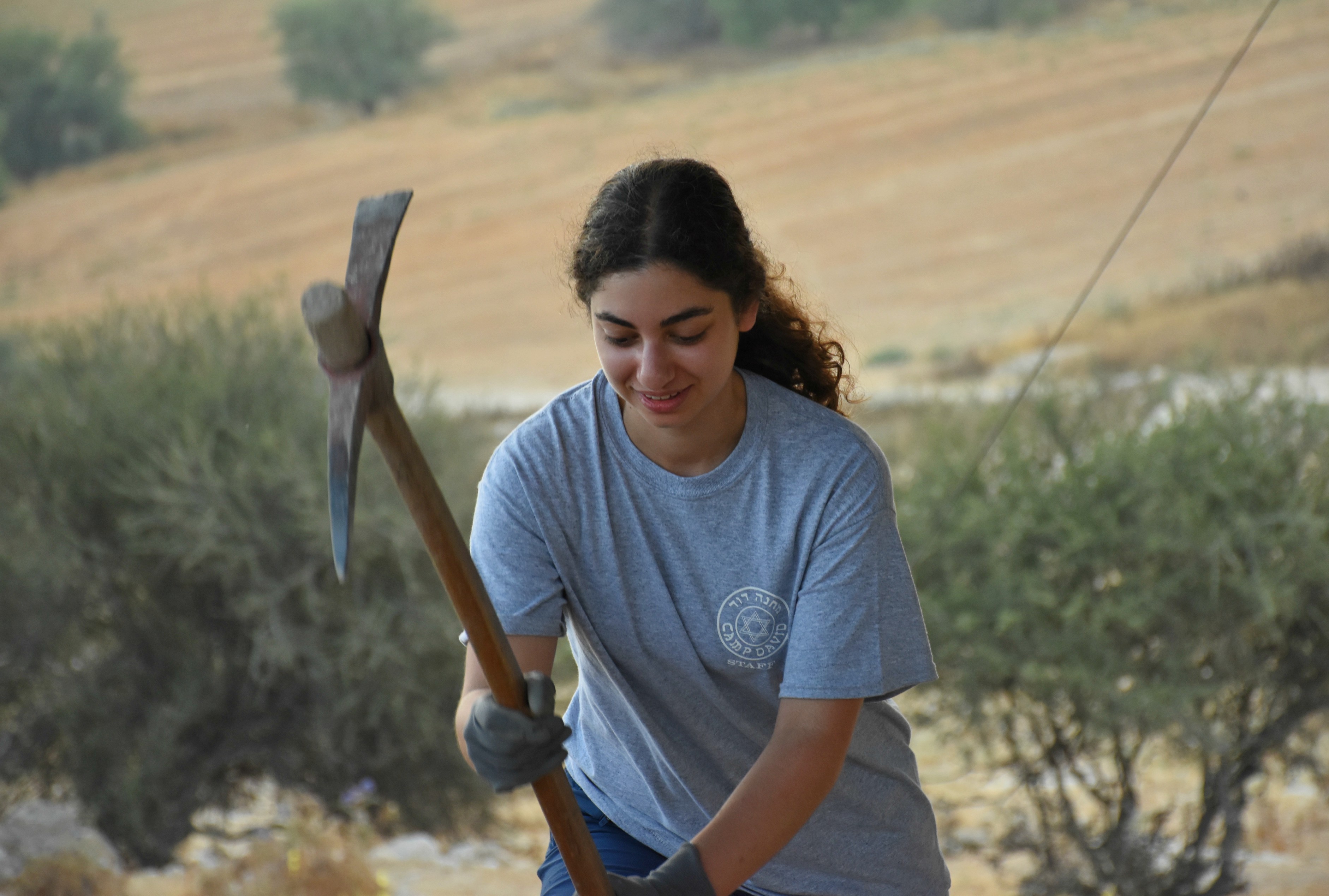
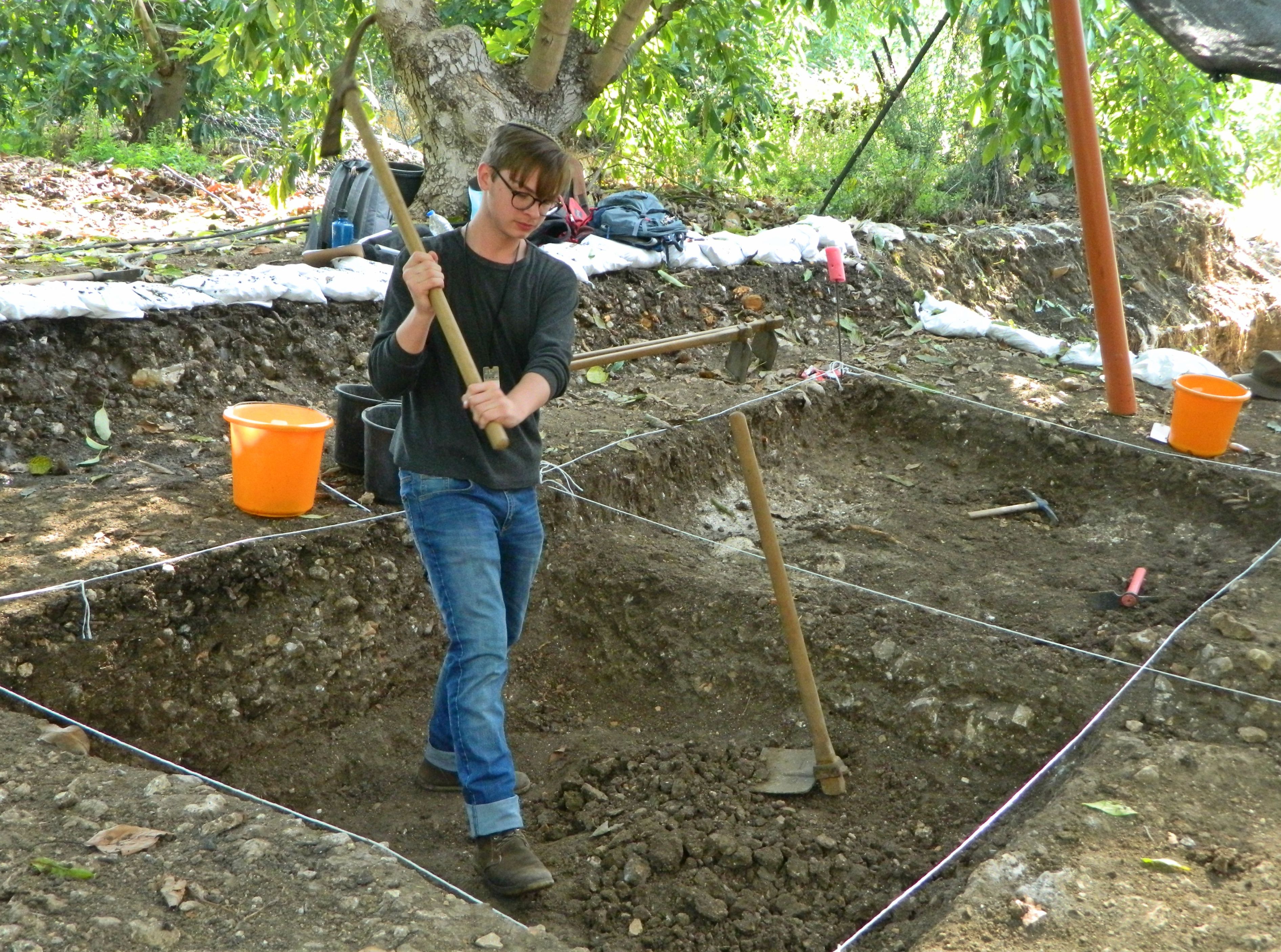
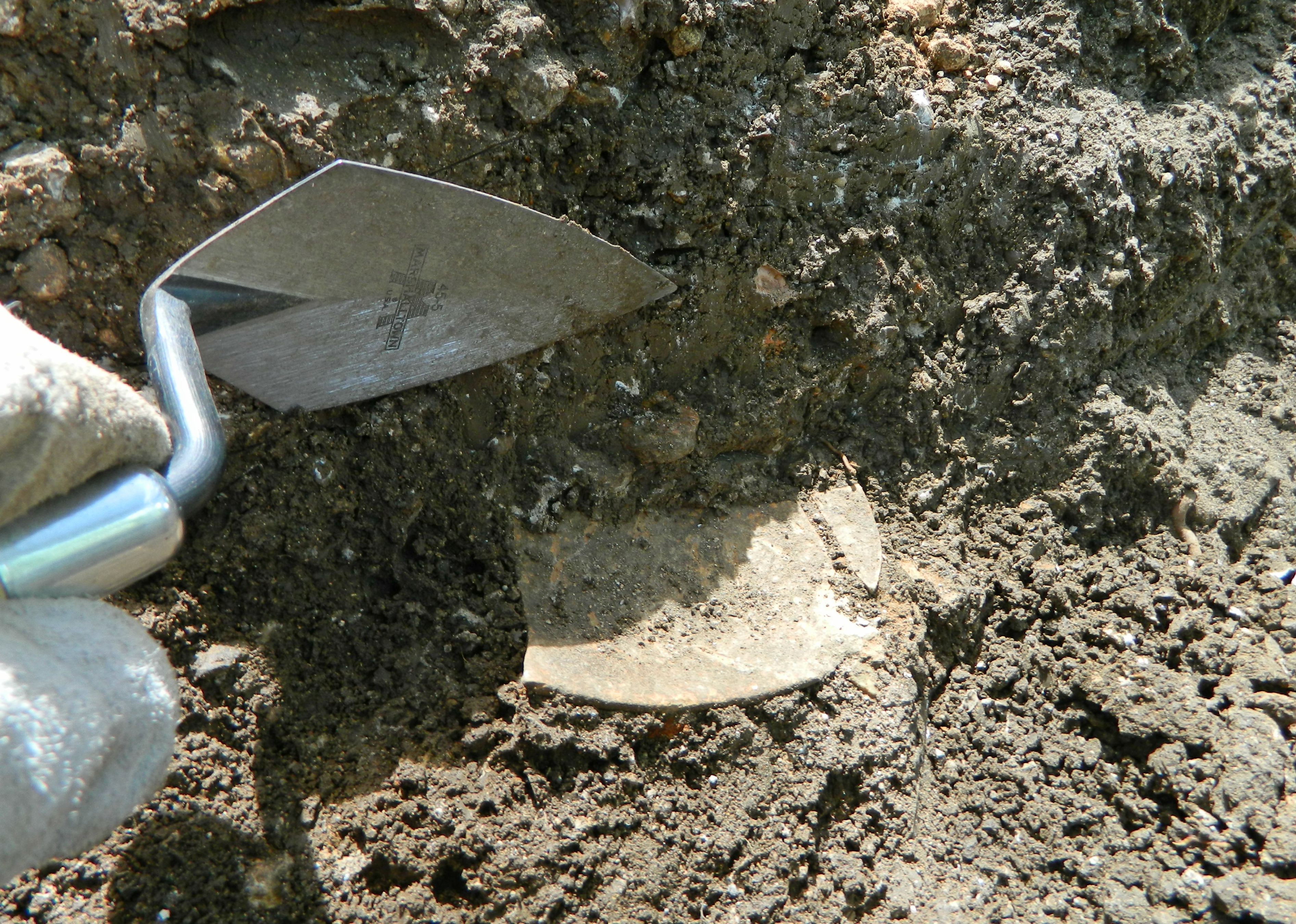
I was directed to help clear off the dirt and vegetation from the exposed pyramid structure, while the sun was still low in the sky and we didn’t need to hide beneath the sunshade like academic cockroaches. Just as I dipped my trowel between two stones to scoop out the refuse, I struck gold. Well, not quite gold, but I did find three coins. Unfortunately, they were modern Israeli coins, the oldest minted in the 1980s and the total value adding up to a measly two shekels (approximately half of an American dollar). At least I got the opportunity to needlessly excite the supervisors before getting back to work. The joke was on me though, because shortly thereafter I was moved back down below the sunshade to chip away at a consolidation of lime that proved difficult to excavate. Thus, I wielded a pickaxe deftly as I chipped the hard lime from between the fallen ashlars of the pyramid. The work was hard and the conditions were cramped, but we needed to get past the stubborn lime to the dirt or bedrock to find the bottom of the pyramid on the northern side. Slowly but surely I worked, filling up buckets of grainy white powder to be discarded nearby. I didn’t chat too much with my German digmates that day, as I was missing my Tel es-Safi crew, but I had an overall good time being a volunteer quarryman.

Horvat Midras

Having worked up quite the appetite by the early afternoon, we drove back to the kibbutz and re-congregated in that fancy building with its blue doors and shutters. We ate lunch as we had eaten dinner the night before, all together at one long table, using shallow bowls to contain our individual portions. Excitement returned the very next morning when Itamar joined us at the site. Climbing up the hill to our trusty pyramid, we were then directed towards a new spot to work in, a chunk of bedrock that had been quarried from and then used as an agricultural installation later on.

Clearing out the quarry and agricultural installation

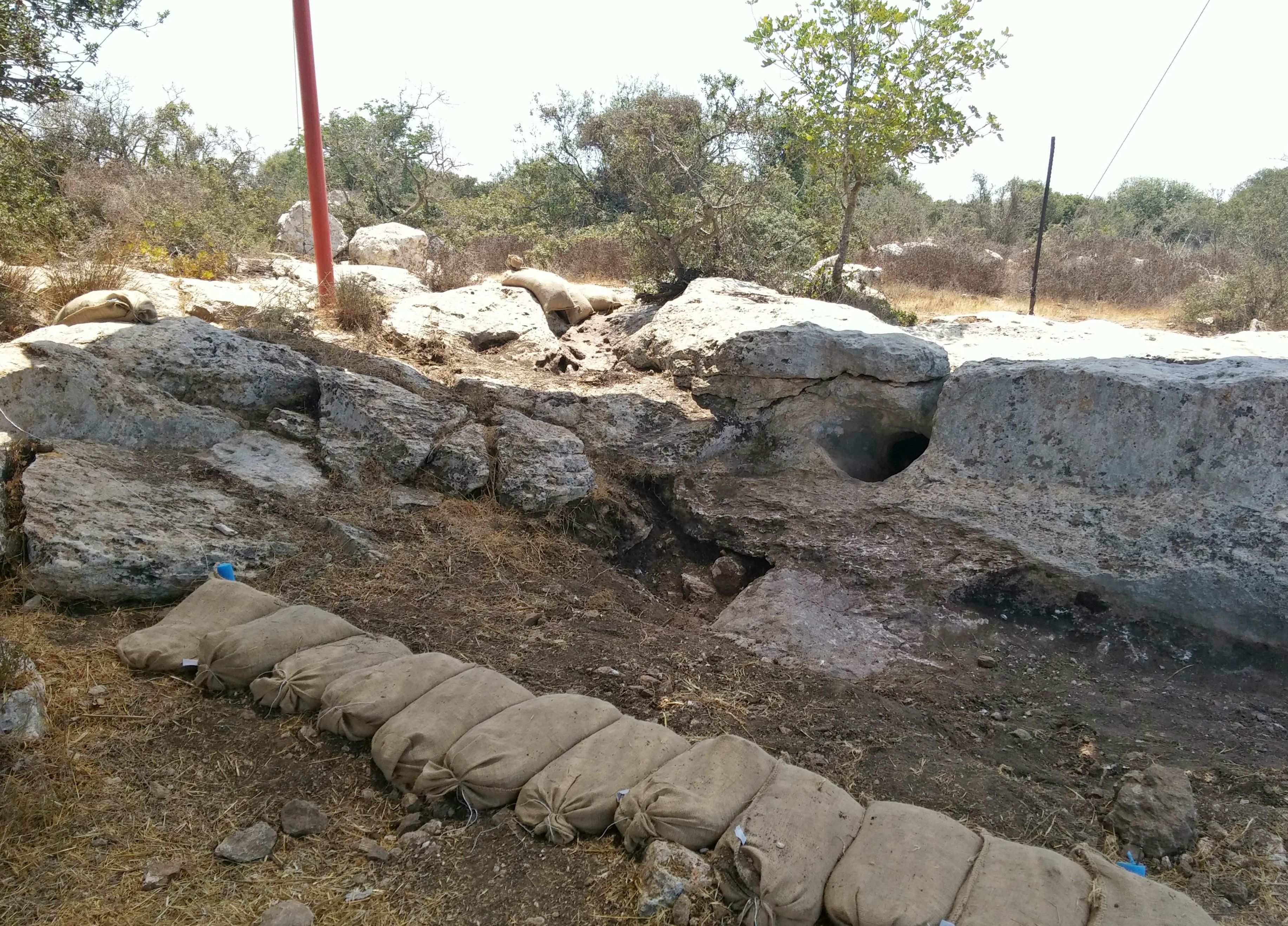
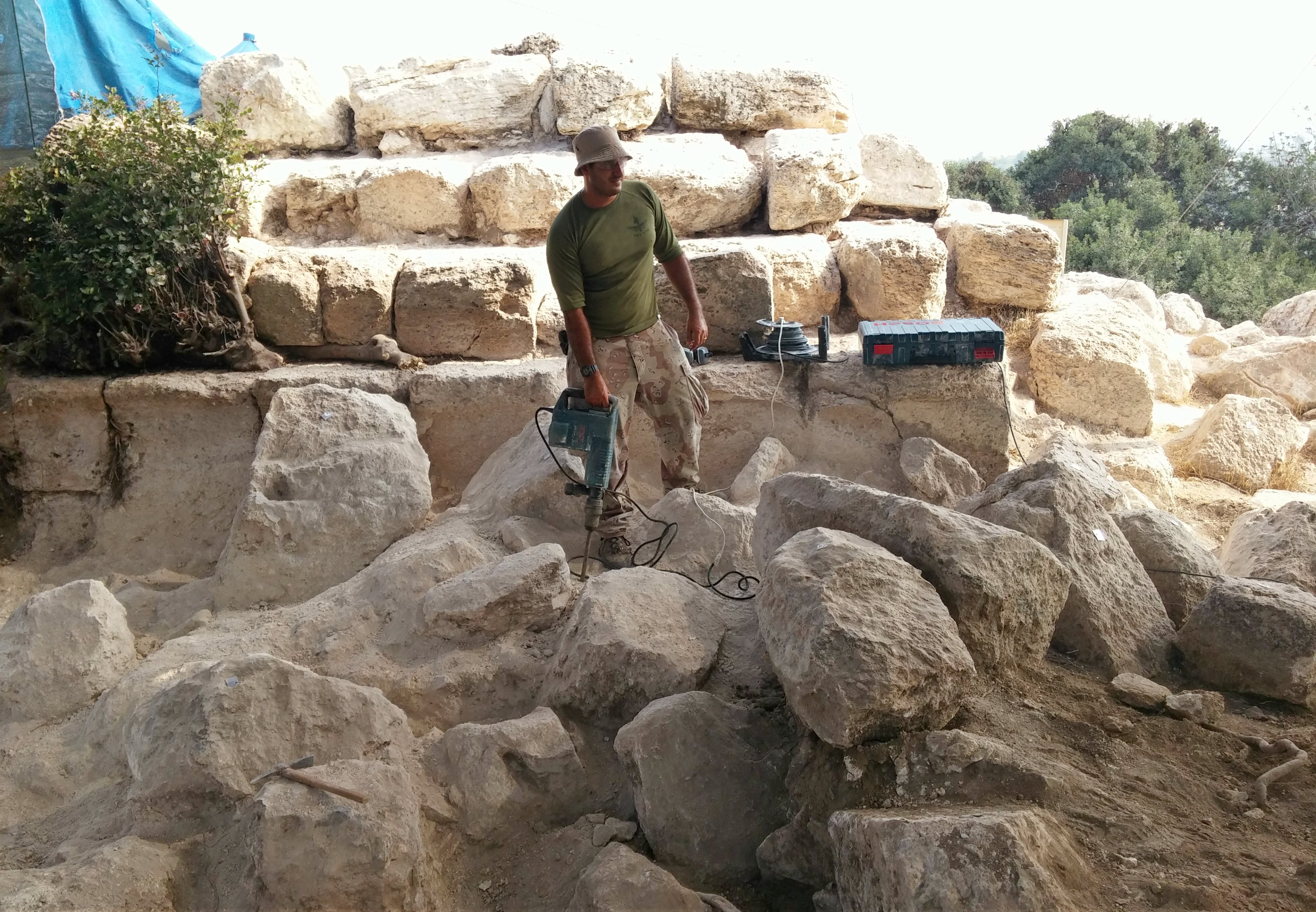
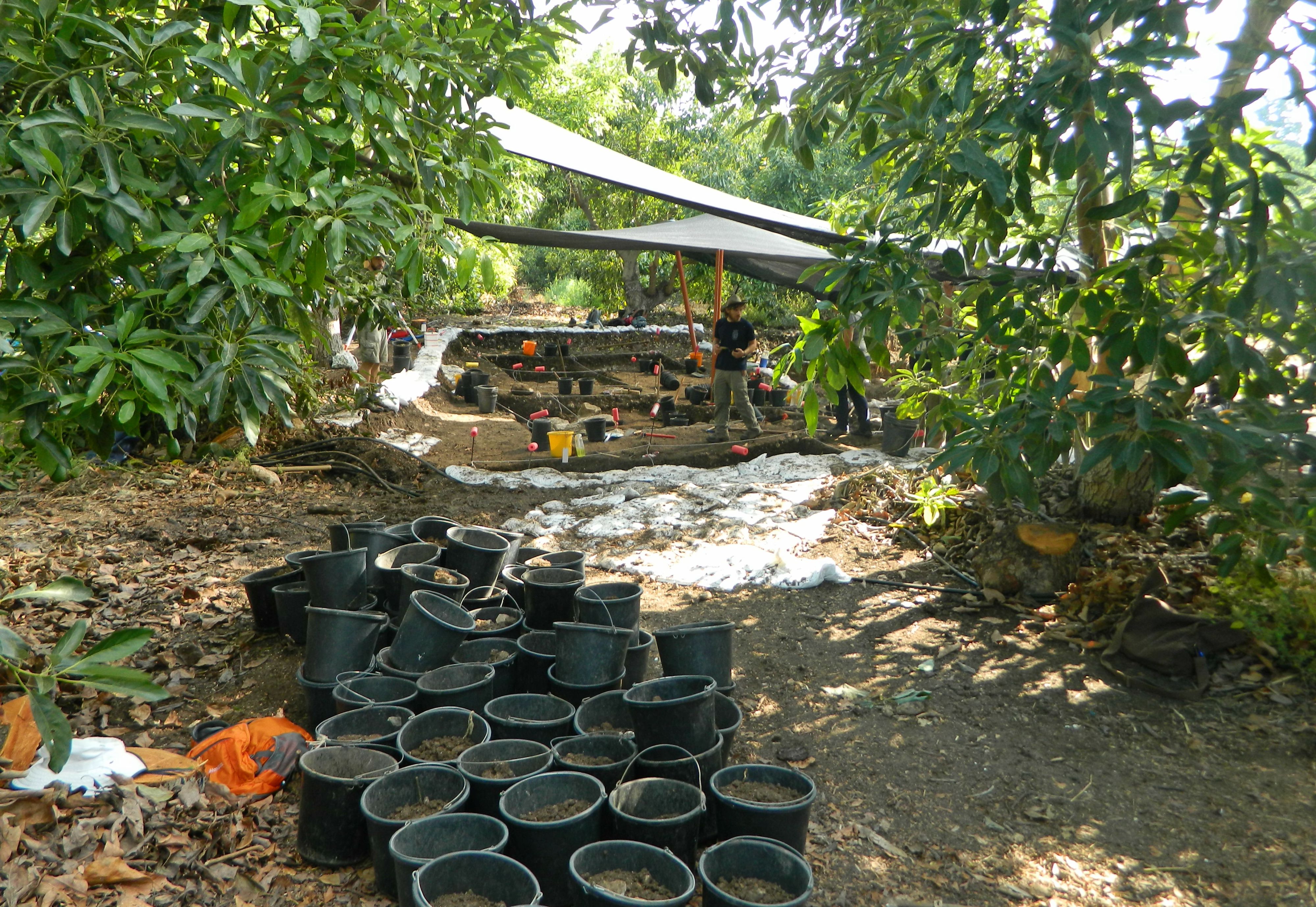
Tasked with clearing the dirt from the rock, we got straight to work and found very little of interest – save for buckets and buckets of earth. Every so often we’d find a small piece of pottery or perhaps a bullet casing (the area had been used for army training in recent history); the lone French volunteer often patrolled from area to area with the metal detector, shouting “boullet! boullet!” whenever he’d find a buried cartridge. Meanwhile, over at the pyramid, help came in the form of a mini jackhammer powered by a portable generator set up nearby to help break up the solidified lime. The staff worked tirelessly on the lime, the noise of power tools filling our ears.

Bringing out the power tools

The day passed by pleasantly, as I had Itamar with me, and when, at last, we wrapped up our efforts for the day, I knew I still had more adventure in me. And so, after lunch I took a short nap and then gathered up what I needed for an excursion to the nearby ruins of Beit Guvrin, beside the Roman amphitheatre, an adventure that I will cover in my next post. Returning to matters concerning Horvat Midras, I returned to the site the following morning for my third and final dig day.

Itamar and I at the pyramid

I continued clearing the quarried agricultural installation and then, at the supervisor’s request, moved over to the dirt area beside the lime buildup. I stood alongside my German digmates and joked as we moved dozens and dozens of dirt away from the pyramid area. We had a grand time, especially when we talked about beer – a shared interest. Another thing that interested me, and perhaps just me, was a blind worm snake that was saved from the ravages of our picks and hoes.

Rescued blind worm snake

Perfect for my scheduling, this third day had a special treat after breakfast, a quick tour of two interesting parts of Horvat Midras that were not under excavation. We followed Asaf Ben Haim, a staff member hailing from HUJI with whom I worked at the Tel Kedesh excavations, as he led us across the hillside to the remains of a Byzantine church.

Asaf Ben Haim showing us the Byzantine church ruins

Next, we headed underground to a special tunnel system that was dug out of the soft rock and used by Jews hiding from the Roman soldiers during the Bar Kochba rebellion around the years 132-135 CE. It turns out that I had actually visited this very tunnel cave back in 2008 when I visited Israel with my Floridian high school, and had assumed that it was actually part of Beit Guvrin’s trove of unique caves. When our short tour ended, I popped on over to two more interesting marked sites along this same hillside: a columbarium cave and a very unique burial cave. The columbarium, a dovecote, is one of many in the region that date back to the Hellenistic and Roman times, but this one has very pleasing niches for holding cute, little doves.

Ancient columbarium

The Roman-era burial cave was even more exciting, with a fascinating “rolling rock” to seal off the tomb’s entrance. Reminiscent of both the awesome necropolis of Bet She’arim and the fantastic adventures of Indiana Jones, I took a few hurried photos before slipping inside to explore the tomb’s interior. Unfortunately, the cave was vandalised some years back and the inner glory is since lost. I did salvage some sense of daring adventure as I climbed out of a different exit from inside the cave, emerging between some bushes a few metres away.

Burial cave with a rolling rock door

With that I returned to the pyramid to continue working and stayed there for the duration of the workday. When we got back to the kibbutz I joined the crew for one last meal and then packed my bags for a bus and then train back to Tel Aviv, bringing yet another exciting archaeological adventure to an end. More information about the dig can be obtained on the Horvat Midras site, found HERE. Coming up next, the short excursion to the Roman and Crusader ruins of Beit Guvrin…

Stalactites Cave & Tel Burna

In Israel, Judea on September 10, 2017 at 1:56 PM

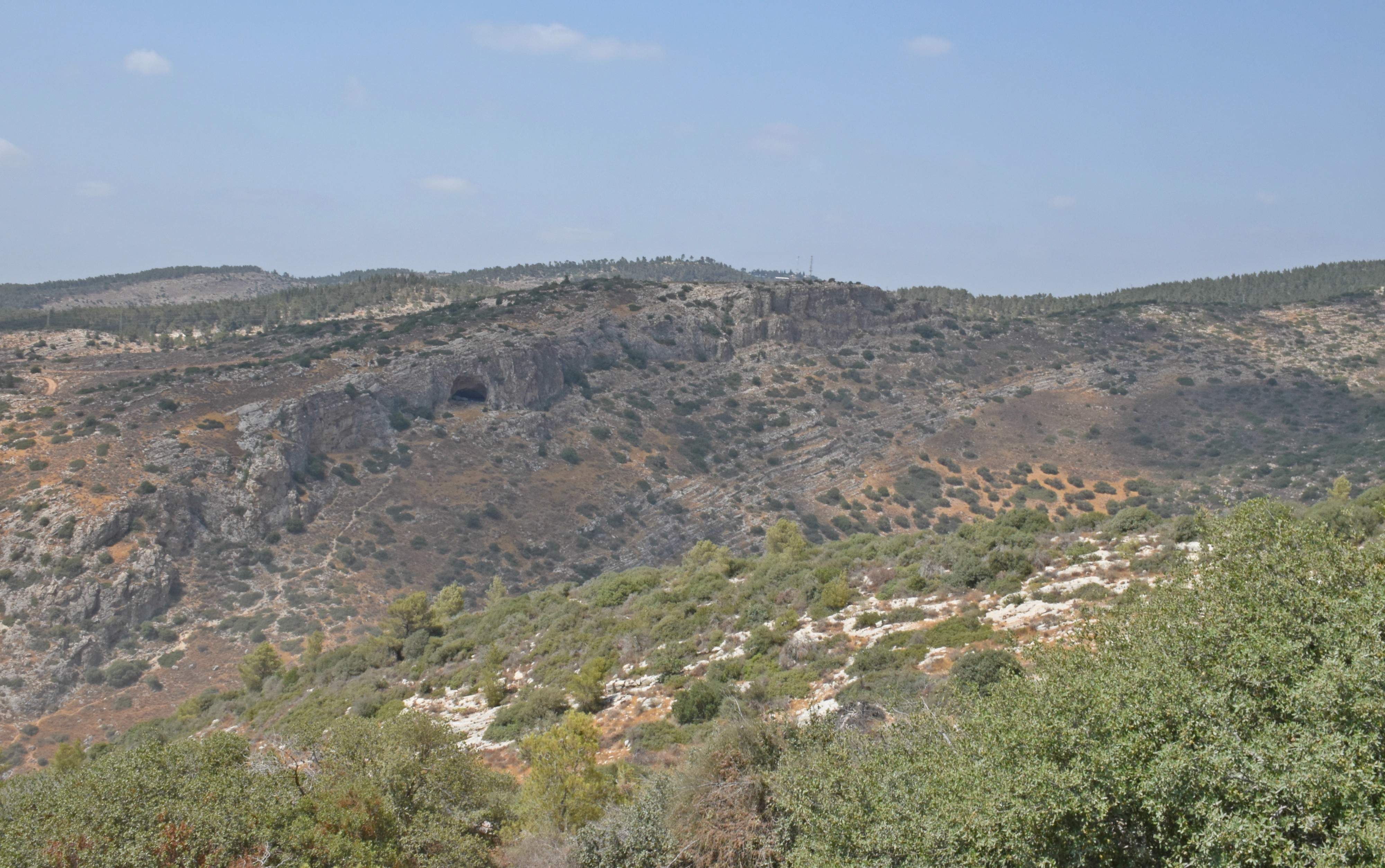
Having already posted about the four weeks at the Tel es-Safi archaeological dig (see parts I and II), this post is dedicated to the two field trips that I took as part of the program. The first trip was at the end of the first week, to a site that I’ve been wishing to visit for quite a number of years, the Stalactite Cave (or, Soreq Cave) near Bet Shemesh.

Outside the Stalactites Cave (photo Rebecca Zami)

Leaving shortly after lunch on Thursday afternoon, the two buses drove the lot of us from our base camp at Neve Shalom to the cave. I was joined by several members of the Area J crew: Itamar, Rebecca, Meredith and Moshe. We disembarked and congregated at the entrance of the national park, and then made our way down the paved mountainside trail towards the cave opening. Stopping at the cave’s entrance, which is basically a door at the end of a short concrete chute underneath the cliff face, we listened to Prof Aren Maeir’s words of explanation about the cave and its discovery.

Within the Stalactites Cave (photo Rebecca Zami)

The cave was discovered accidently amidst quarrying efforts in 1968, opening up an underground realm of fantastic cave growths, called stalactites and stalagmites, that was yet unseen by the Israeli public. Tapping into the cave was risky due to its reliance on a specific environment, and, in efforts to ensure that the cave didn’t get ruined, the authorities closed it for several years. Eventually, having installed a system to regulate humidity, the Stalactite Cave was opened for visitors who continue to flock to the nature reserve in admiration of the otherworldly speleothems (cave growths). I happen to be a great lover of caves, and relish opportunities to go below the surface whenever I can, so I was quite excited to be visiting at last.

Cascades

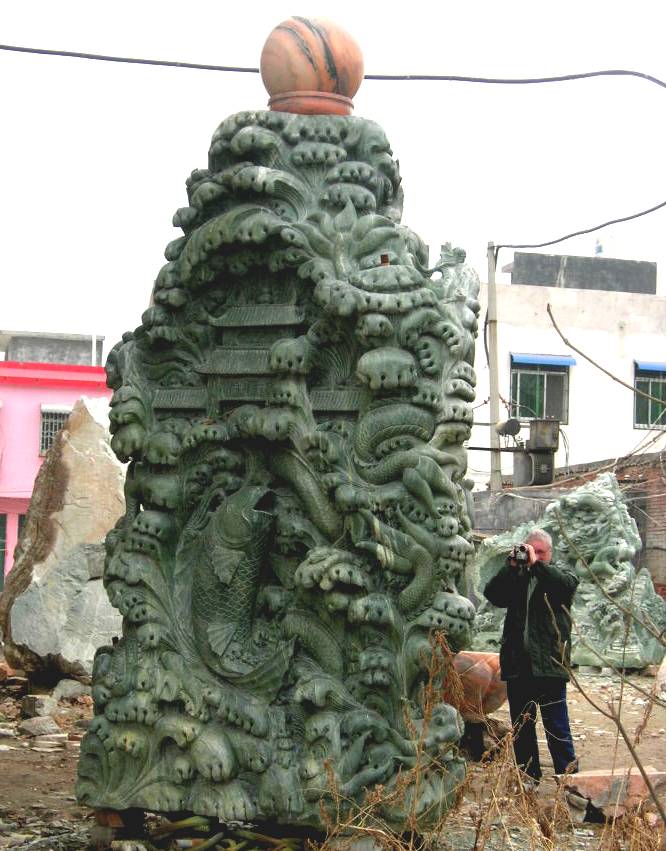
Entering the humid, yet cool cave was incredible. I was unprepared for the size and quantity of speleothems that I was to see. With a total surface area of about 5,000 square metres, the cave was much larger than I had anticipated. An elevated pathway snakes through, affording close-up views at many of the cave’s interesting growths. Our guide gestured here and there, using imaginative names to bring the growths to life, but I prefer to enjoy the natural wonders without someone else’s interpretations. That being said, I do think that this wall of speleothems looks like a Japanese jade carving, similar in style to this one I found online (HERE):

Curious cave growth

One might wonder why the cave is illuminated in coloured lighting, as did I, and the answer couldn’t be simpler. Traditional white lighting brings out blemishes and undesirable aspects, such a the growth of algae, so the coloured lighting not only hides the bad, but brings out the good in giving pieces their own identity. Another cave that I remember being lit with coloured lighting was the Carmel Caves, and at last I know why.

Interesting lighting of orange and purple

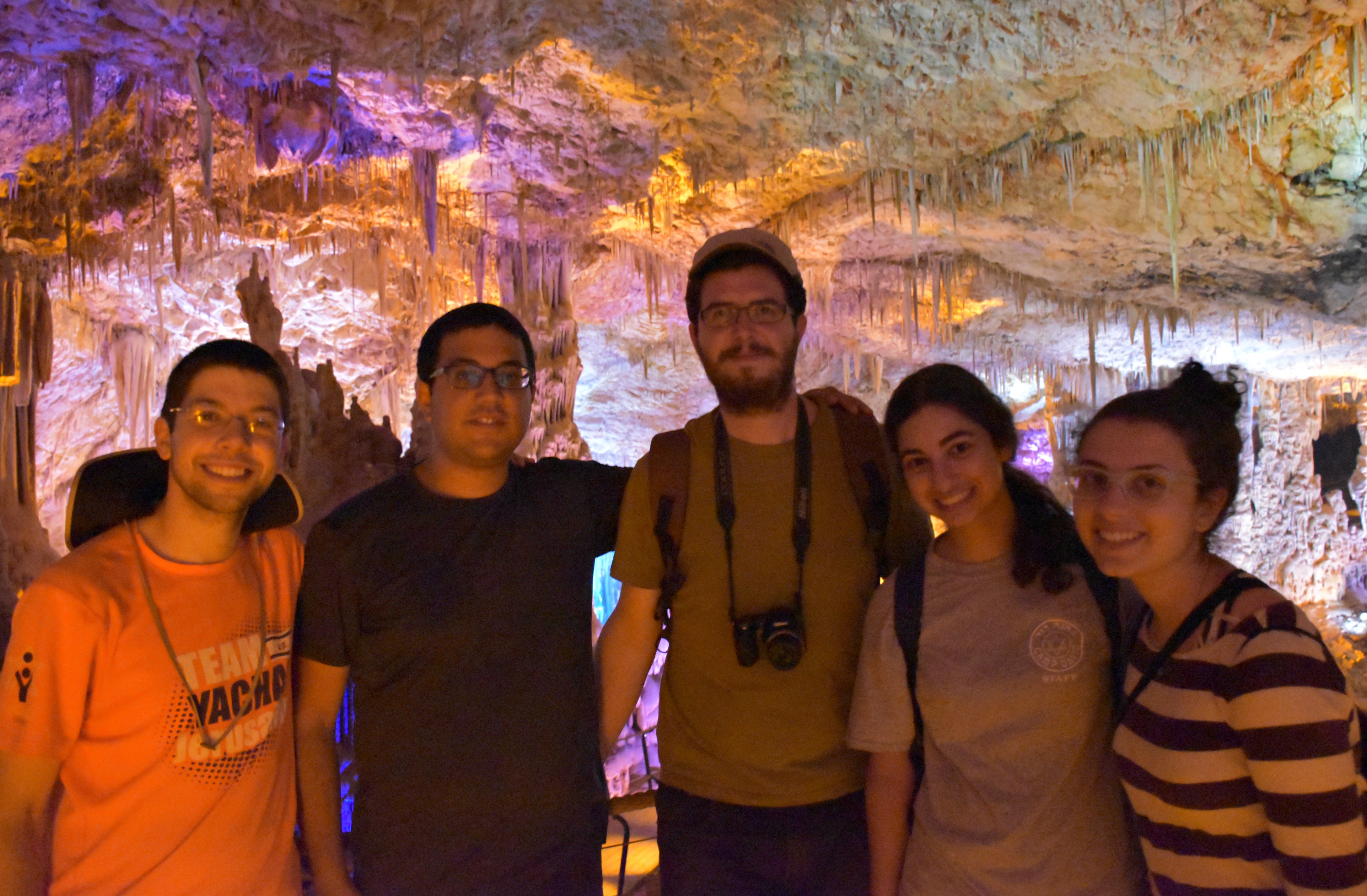
We continued along on the elevated walkway, pausing here and there to admire the mineral magnificence. At some point, the five members from Area J gathered together and were photographed, despite the inferior lighting conditions (the use of a flash is strictly prohibited).

Group photo within the cave

Less than a half hour after we entered the cave we reached the exit and pushed our way through the heavy metal doors to the brightness outside. Congregating once again, this time overlooking the old quarry and the city of Bet Shemesh, we learned a bit more about the history of the cave and then began the climb back up towards the buses. Thus ended the first of our field trips, and it wasn’t until the beginning of the third week that I took another.

Tel Burna

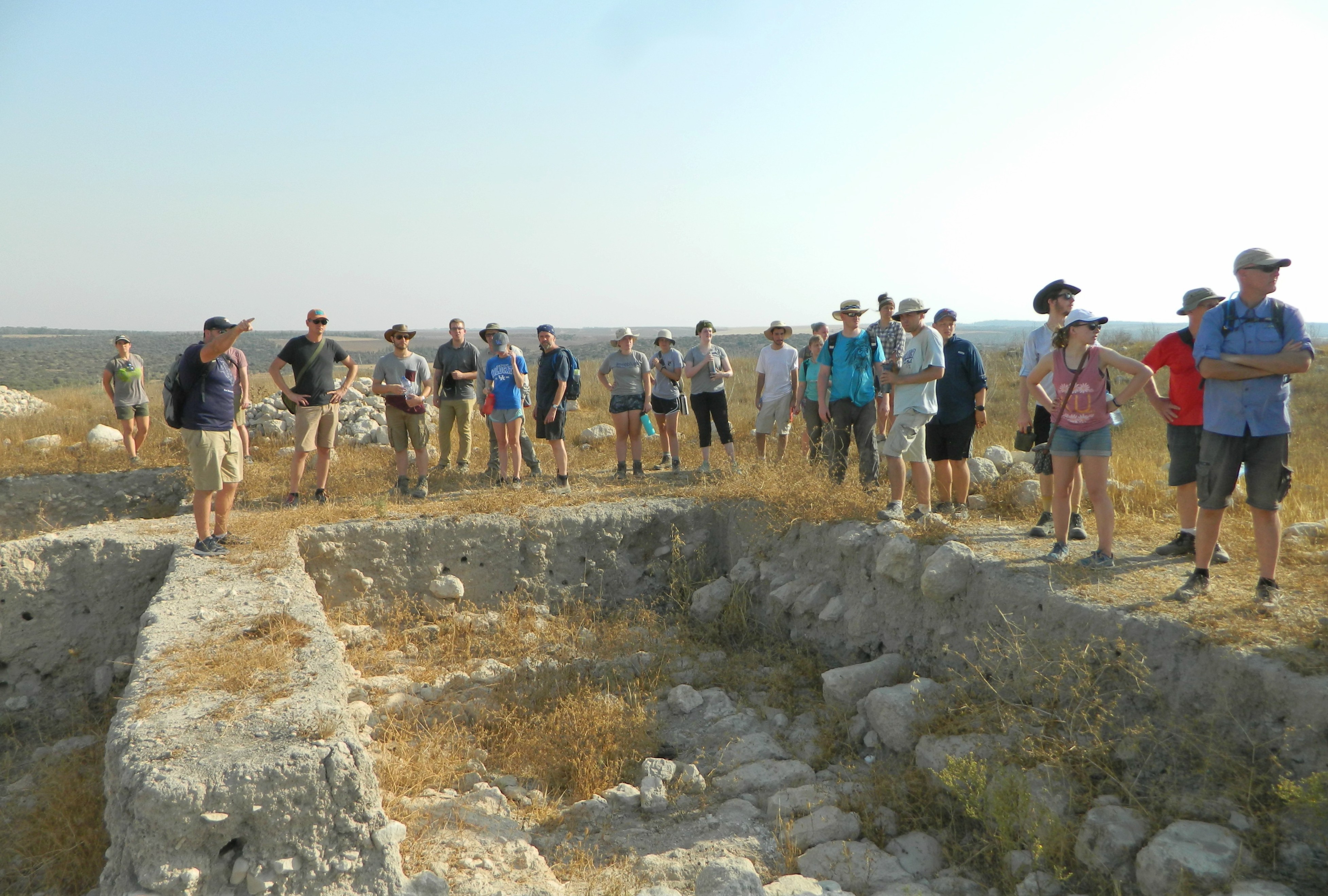
This time we were headed to a nearby archaeological dig, Tel Burna, located just eight kilometres to the southeast. I hadn’t heard of Tel Burna before this summer, but I never like turning down trip opportunities. I tagged along, Ben joining me in brotherly camaraderie. We were just a single bus on this trip, and we arrived at the site to meet our guide, Dr Chris McKinny. An alumnus of Bar Ilan University, Chris is a veteran of the Tel es-Safi expedition and now the a staff member of the Tel Burna dig. Chris led us along the dirt road to climb the tel, the afternoon sun brutally assaulting us from above. Plodding along mindlessly, we tried engaging in conversation to distract ourselves from the misery we put ourselves in. But, after all lows come highs, and we found ourself with a lovely view of the surrounding area. Because Tel Burna is an active dig, there were areas where we had to lift the sunshade that had been lowered mere hours before.

Chris McKinny explaining the excavations

After giving us up-to-date information on his dig’s progress over the last few years, including discoveries of both Late Bronze and Iron Age ruins (with some pretty cool finds), Chris gave us a lesson in local geography, pointing out nearby sites of interest. Due to its location in the Judean foothills, Tel Burna would have been a fortified border city during the Iron Ages; evidence points to the fact that Tel Burna was most likely Israelite, with Tel es-Safi (or, Gath), the Philistine capital, to the northwest.

Identifying nearby sites

Casting our eyes in the direction of Tel es-Safi, some swore that they could see the distinct white chalk patches of the tel off in the distance, but I failed in finding it. Looking to the southeast, past rolling golden fields spotted with hay bales, we spotted with greater ease the iconic apse of the Church of St Anne at Beit Guvrin-Maresha less than four kilometres away. Wrapping up our tour of Tel Burna, we trekked back down the hill and boarded the bus for a long, circuitous ride back to our base camp of Neve Shalom. For those interested in learning more about Tel Burna, the link to their website can be found HERE.

Tel es-Safi Archaeological Dig II

In Israel, Judea on September 3, 2017 at 10:05 AM

Continuing with the third and fourth weeks of the month-long excavating season at Tel es-Safi (see the first post HERE), we returned to Neve Shalom Sunday afternoon and settled into our rooms. My friends Ben and Shani, both from Bar Ilan University’s archaeological program, would be joining us for the week and I knew it’d be a good time. I came loaded with extra beers this week, even some bottles of recent Arx Meles productions (Stoutus III and Belgica Triplus) that Ben and I brewed some months prior. The following morning, at 5am, we boarded the bus for the tel to continue our digging in Area J.

Philistine cities around the region

We had taken down a fair amount of dirt and yet there wasn’t anything of substance in square 100A. Itamar’s square, 100C, had a bunch of rough stone architecture which earned Itamar a fun nickname – the “Stone Whisperer,” due to his quiet demeanor and knack of revealing buried walls. He and Avraham were joined by Shani, whereas Moshe, Rebecca and I gained Ben, with Dr Jill Katz overseeing us all.

Avraham excavating expertly (photo Rebecca Zami)

Once again, the humourous chemistry in our square was infectious and every day saw us doubled over repeatedly with laughter. We even invented an odd game of “Shave, Lick or Massage” (a variation of “Kiss, Marry or Kill”) with the various things that we pulled out of the ground. Related to the game, licking freshly hewn Safi chalk is quite amusing and many powdery pieces were passed around.

Ben laughing while pickaxing (photo Rebecca Zami)

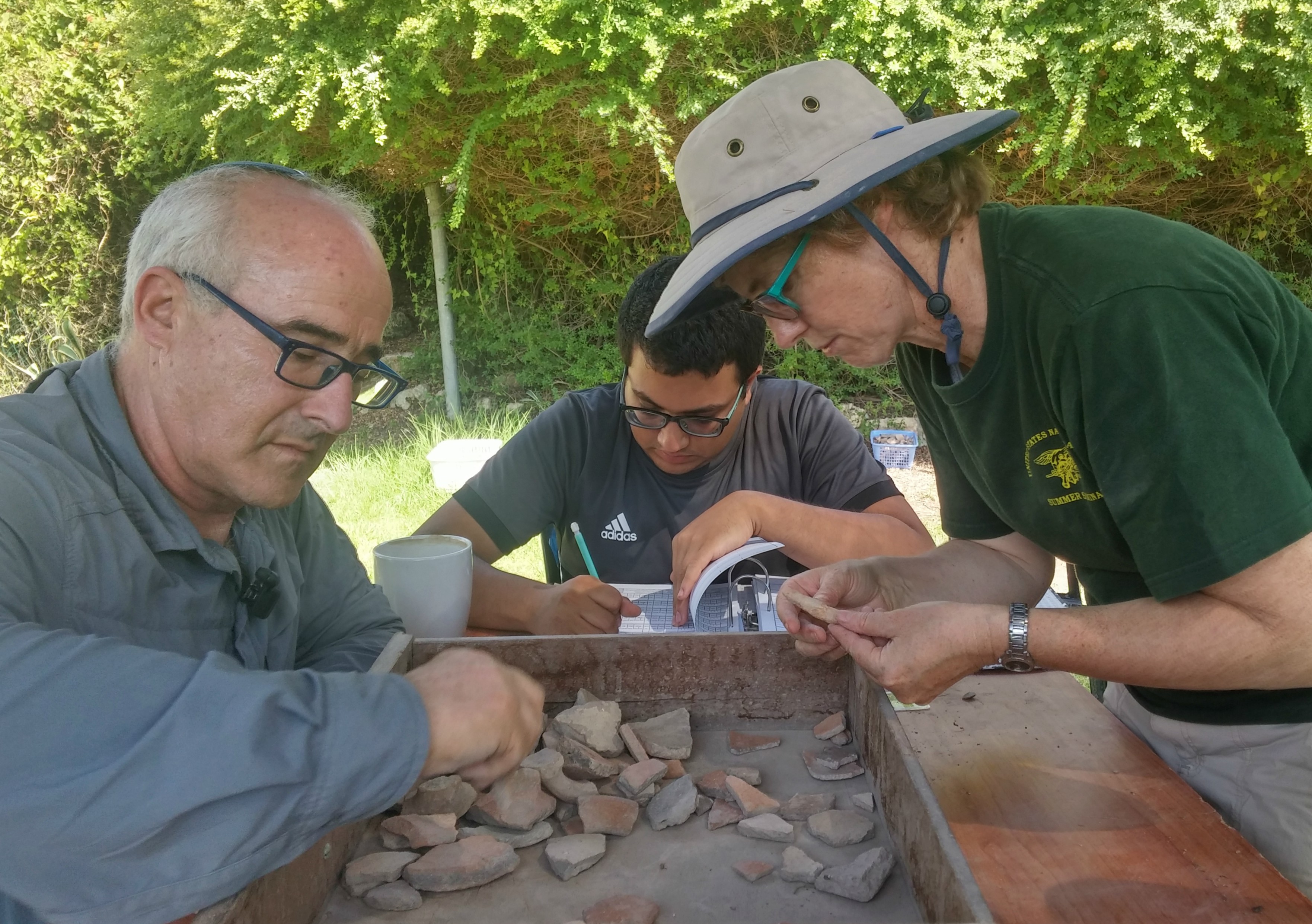
When we weren’t out on the tel digging, laughing and having a good time, we were back at Neve Shalom doing a whole selection of chores. The pottery that’s brought in from the field is first washed outside with brushes, then laid out to dry. Once dry, the pottery gets “read” by various professors in the presence of area staff, and sorted and/or discarded in accordance to its value. We rather enjoyed pottery reading, and looked forward to seeing what interesting potsherds we pulled out of the ground. Once sorted, some of the pottery would be bagged and taken indoors for pottery writing, recording the reference number on the potsherds themselves with a special permanent marker. Later, back at Bar Ilan, some of the pottery gets reconstructed into the vessels that they once were. With a bunch of other tasks to perform each and every day, we never lacked for things to do.

Pottery reading outside

During the third week we were joined by nearly thirty volunteers from Yeshiva University in New York City. It was a bit of a struggle placing so many people in just two squares without having them puncture each other’s back with their pickaxes, but we figured it out. A few of them were sent some metres downhill to clear out a carven vat for pressing grapes, which can be seen here:

Uncovered grape vat (photo Jill Katz)

It was great having so many volunteers to chip in, and we really capitalised on the ability to move a lot of dirt quickly. That day went by especially fast, and the next day greeted us with squares that looked quite different than before. We worked on clearing the dirt down to a uniform level on the western side, and then defining the stone architecture that was becoming apparent on the eastern side of 100A, lining up with the excavated walls in 100C.

Shani scraping skillfully (photo Rebecca Zami)

The third week also saw a short afternoon trip to Tel Burna, another Late Bronze and Iron Age site being excavated some eight kilometres to the southeast. This trip, and the one to the Stalactite Cave near Bet Shemesh, will be covered in the next blog post. At the end of the week we, the “J Crew,” had an evening tasting of the Arx Meles brews, neither of which came out to my liking (or the crew’s liking, for that matter).

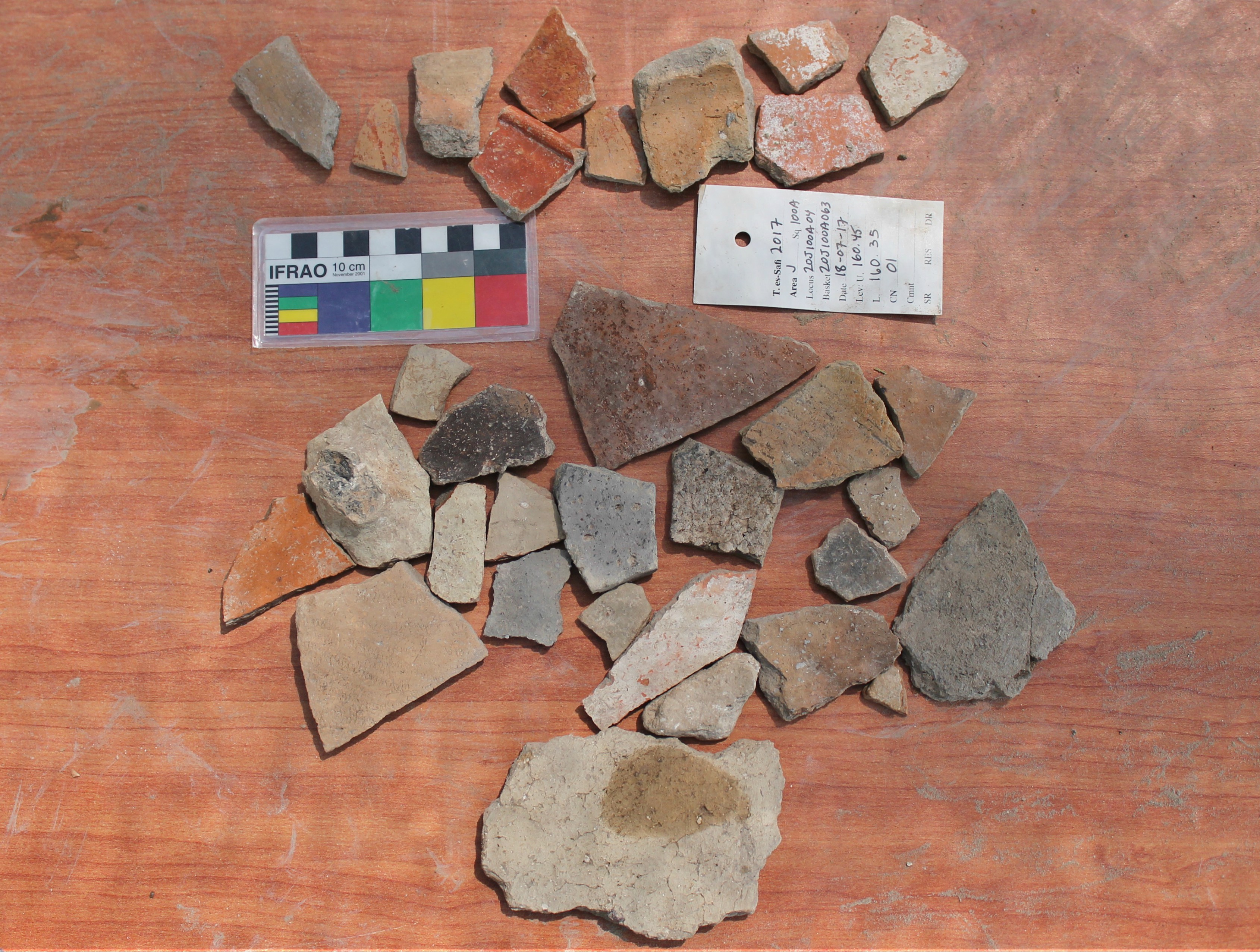
Pottery basket from 100A (photo Jill Katz)

With the week coming to an end we were sad to be losing Ben and Shani, who fit in so nicely with our group dynamics. But then, on Friday morning, while out on the tel, we decided that we’d prolong our bonding time with the two of them.

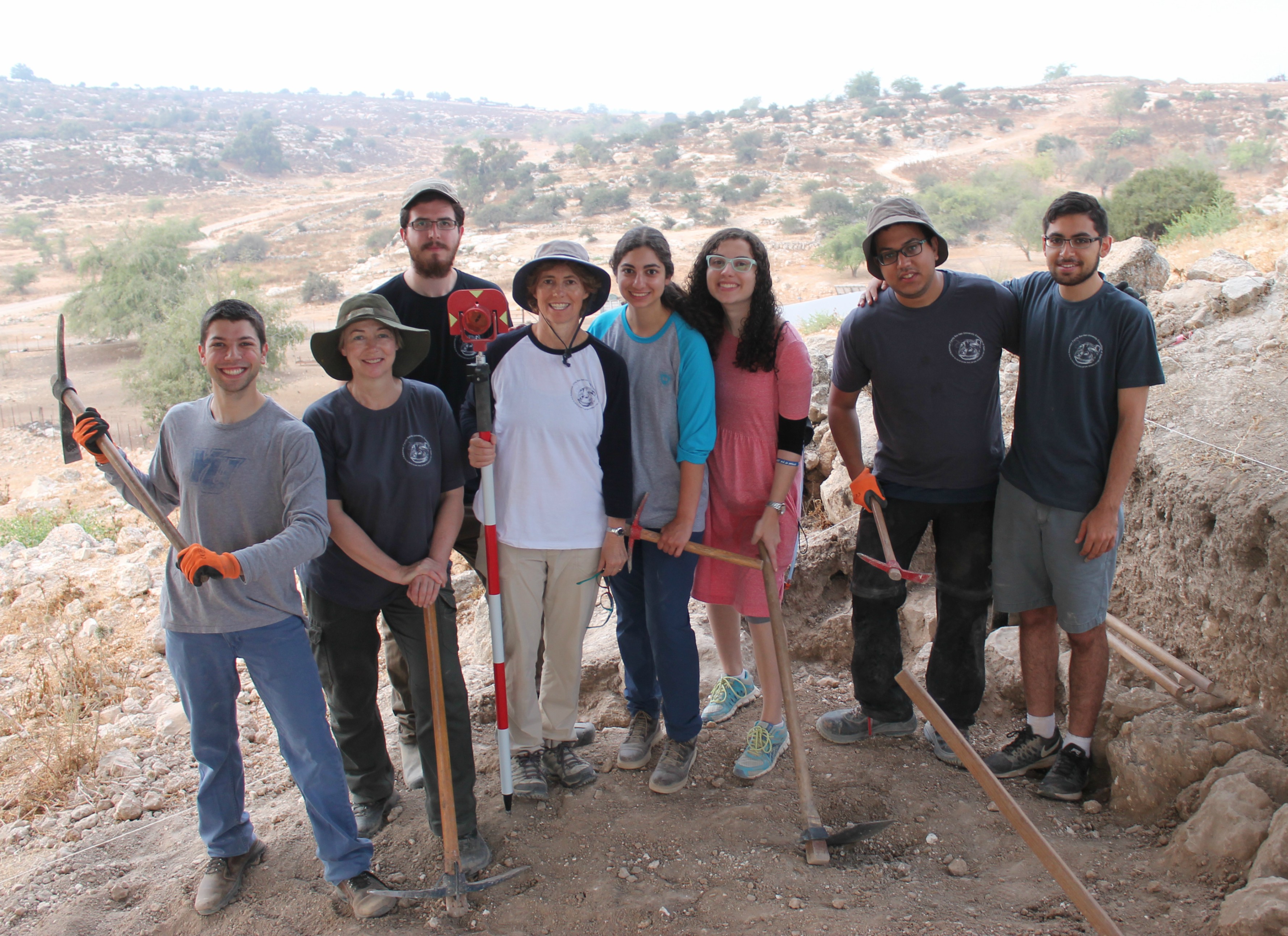
Third week group photo

We decided that we’d all have Shabbat together in Givat Shmuel, and quick phone calls were made. Although it was hastily arranged, Shabbat was a great success and we had a great time eating and bonding together. After Shabbat, while the night was still young, we walked over to Jem’s brewery in neighbouring Petach Tikva and had a few beers with some oily treats. Quite a lovely outing it was, ushering in the fourth, and final, week of the Tel es-Safi dig.

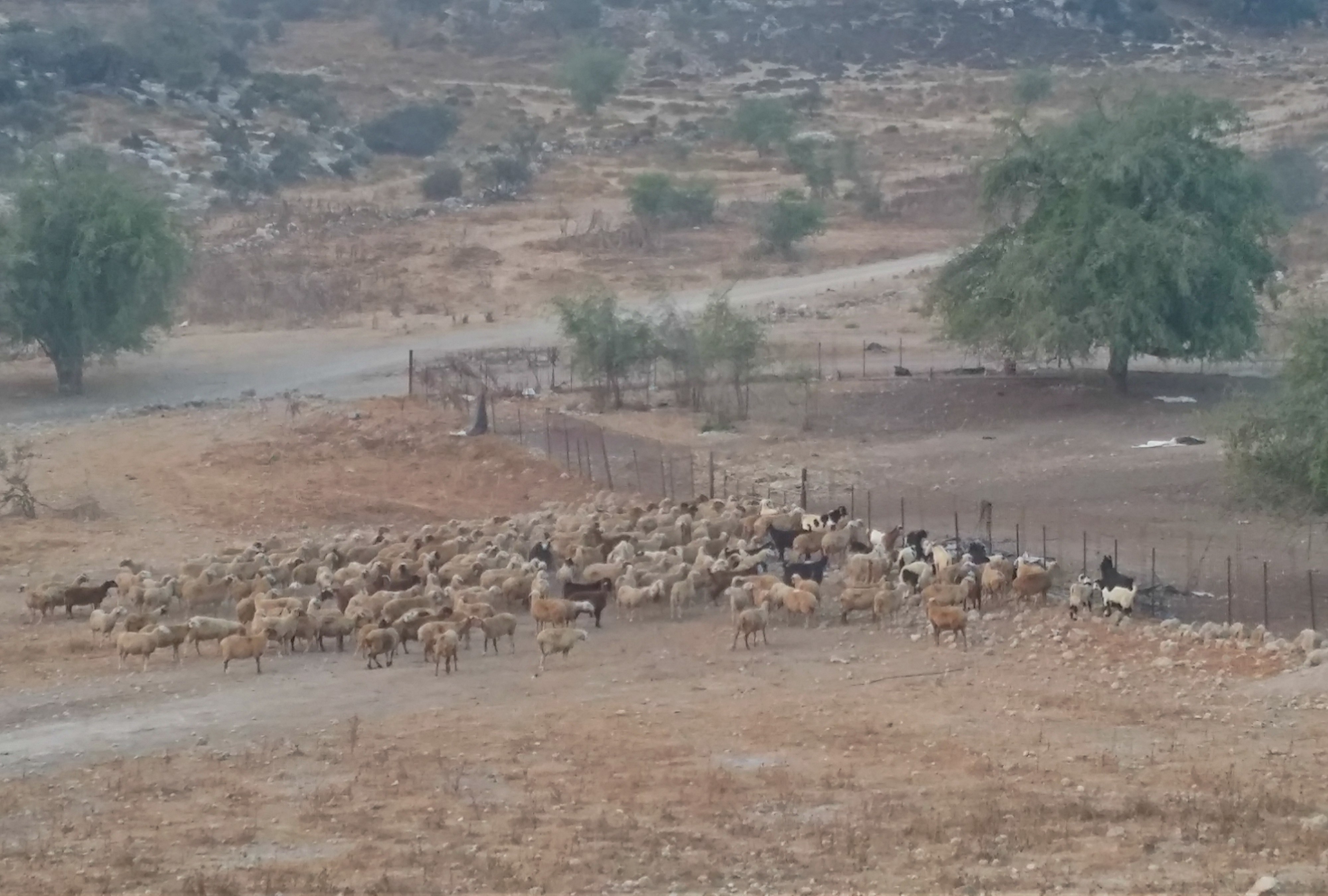
Sheep and goats waiting for breakfast

Down to just six members in total, Area J was ready to be wrapped up. We needed to clean all the stones, make sure the floor surface and baulks were nice and straight, and, last but not least, clear up the surrounding area a tad in preparation for the aerial photography later in the week.

Preparing Area J

We swapped pickaxes and hoes for brooms and dustpans and set ourselves to the tasks at hand. Sweeping and cleaning, but still heavily engaging in hearty laughter, we worked Area J’s final days away. The sunshade was taken down and we saw, for the very first time, the work that we had done in direct sunlight.

Area J from above (photo Aren Maeir)

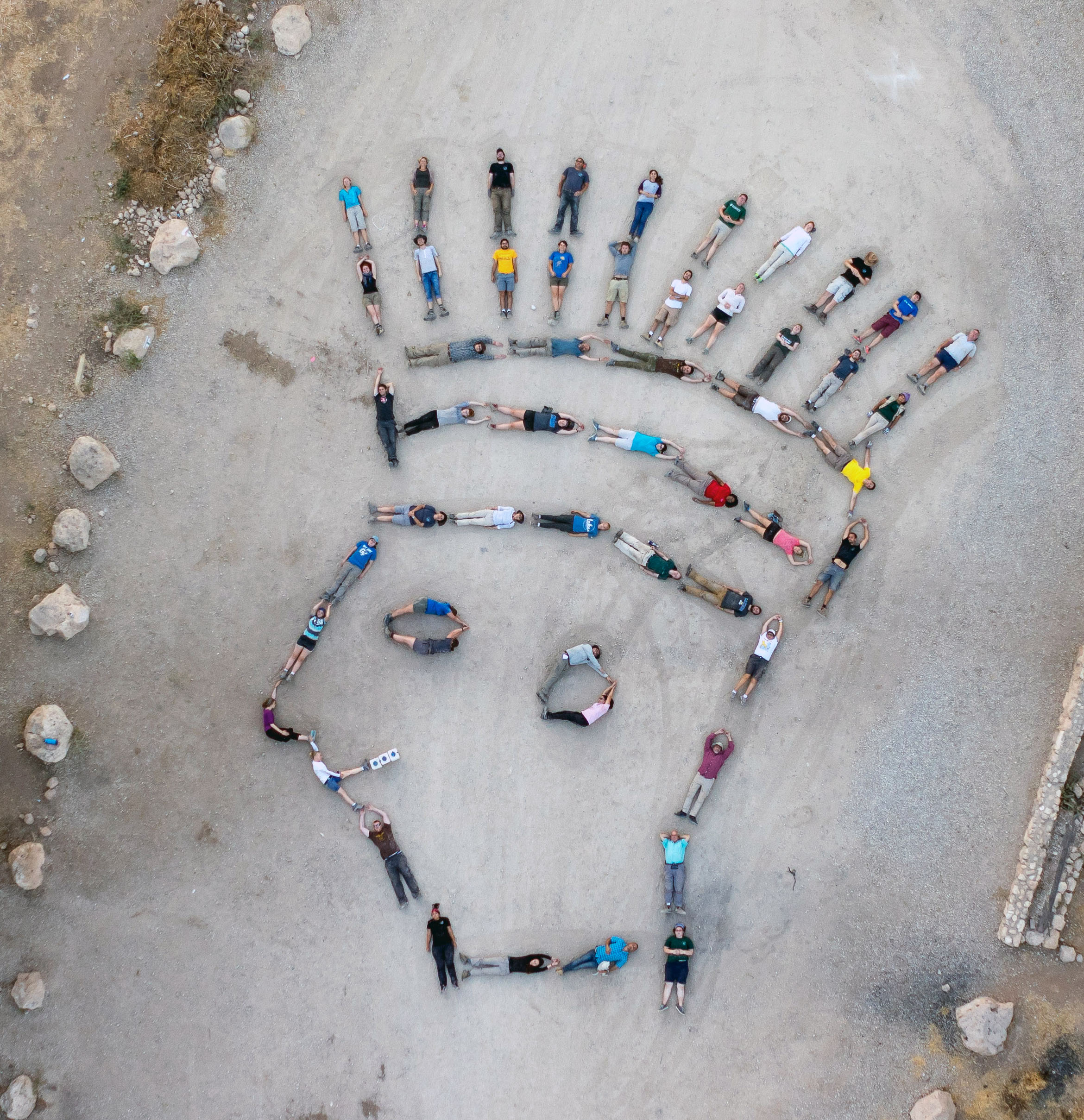
With the oppressive heat and the endless amount of dirt in the air, we toiled away until picture day. That morning we were driven, as usual, to the tel but this time we gathered at the parking area down below beside Area D and got into formation for the annual group photo, done in a unique thematic design. Last year’s was in the shape of a donkey, due to the discovery of buried donkey skeletons over in Area E, but this year’s was a beast of a different nature: a Sea People warrior. Perhaps you can spot me and my digmates in the photo.

Tel es-Safi group photo for 2017 (photo Aren Maeir)

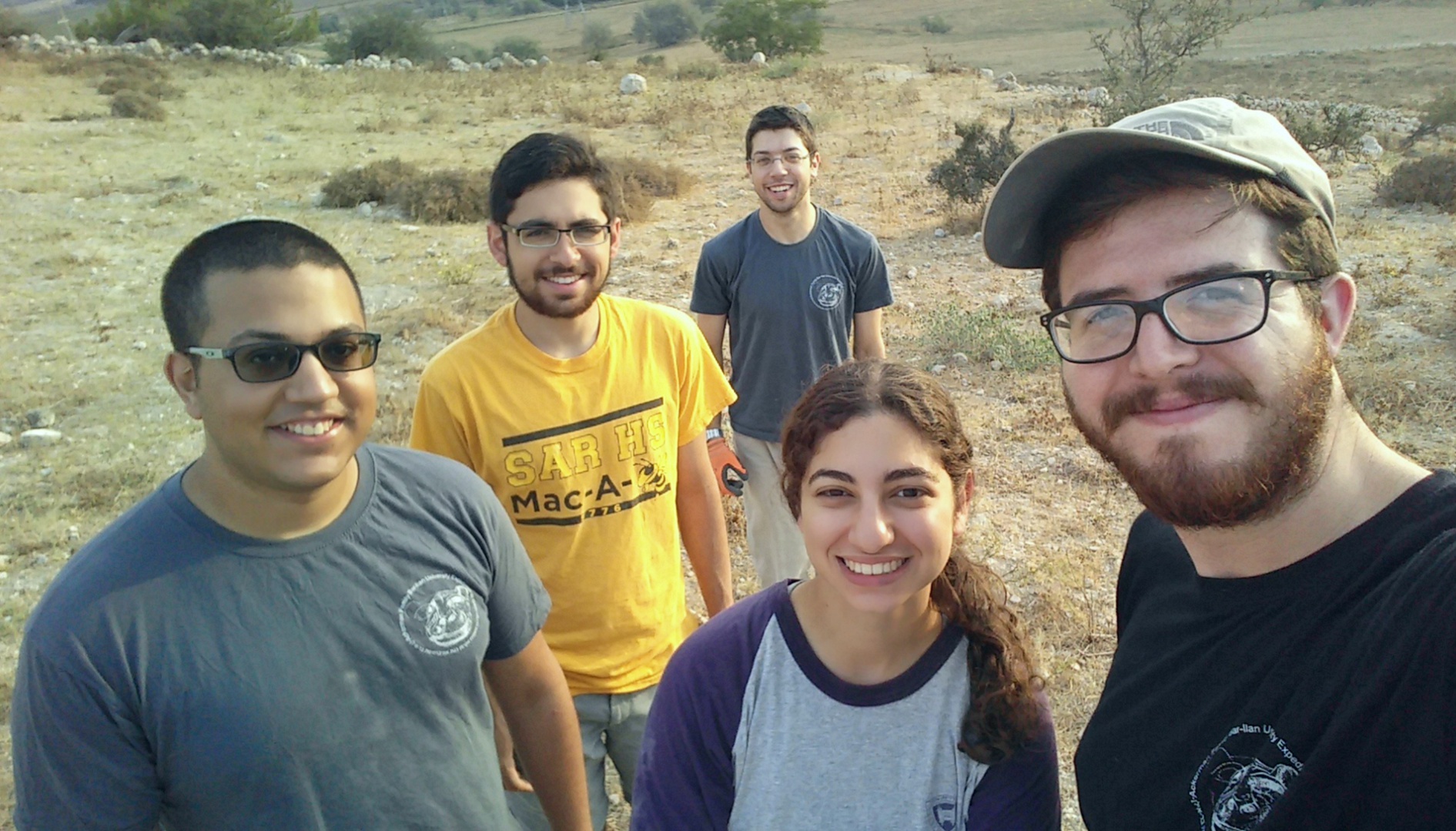
With the drone crew moving over to the excavation areas for aerial shots, we took the hill path over to our beloved Area J to have one last look at our work before covering it with geotech cloth to preserve it. Along the way, after walking through the plentiful cactus groves, we stopped to take a selfie:

Last day on the tel

With the aerial shot done and the squares covered over nicely, we returned to Neve Shalom to put the finishing touches on our archaeological expedition. The New York members of our crew took late night flights that Thursday night after the many parties, and the farewells were sad but somewhat hopeful – some of us plan on meeting again for the 2018 season. We had grown to be quite fond of one another over the month that we spent, and it was strange going back to regular life. Friday morning it was just Itamar and I remaining, and we went our separate ways, but to meet again shortly thereafter at yet another archaeological dig…

More information about Tel es-Safi can be found at Prof Aren Maeir’s blog, found HERE.

Tel es-Safi Archaeological Dig I

In Israel, Judea on August 27, 2017 at 6:20 AM

The first Sunday of July, nearly a week after my day at the Tel Kabri Archaeological Dig, I began my month-long stint at the Bar Ilan University archaeological dig at Tel es-Safi (the Biblical city of Gath) under Prof Aren Maeir. Currently there are only two active excavations, Tel es-Safi and Tel ‘Eton (the lab I worked in last year), yet this year only Tel es-Safi was offered. Since I am working on getting my archaeologist’s licence, I was slated as being the assistant of Dr Jill Katz of Yeshiva University. I was joined by fellow BIU student and friend Itamar Berko and together we served as square supervisors for Jill’s area, the newly opened Area J.

Area J pre-excavation – note the line of stones

Being that this event took place over the course of four weeks, I have decided to cover it in two long blog posts, reporting the events of the first two and last two weeks. A separate blog post will cover two fun field trips that we took, one on the first week and one on the third. But first, a quick summary of Tel es-Safi and its historical and geographical significance.

Area J from above

Located in the Judean lowlands not far from Road 6 and Tel Azeka, Tel es-Safi was once the capital of the Philistine kingdom which included cities such as Gaza, Ashkelon and Ashdod. At that time, in the Iron Age some 3000 years ago, the Israelites established their kingdom further inland, controlling mostly the mountainous regions. The Philistines didn’t get along so well with their neighbours and thus the Israelite Kingdom erected fortified cities (such as Azeka) along the virtual border, in hopes to stave off invasion. Goliath, the villainous giant in the famous biblical story of David and Goliath, hailed from Gath (the city later sheltering David himself at a later point). Eventually, after the Israelite kingdom was split into two, King Hazael of Aram-Damascus made his way southeast and conquered the both of them. Swinging eastward towards the Mediterranean, Hazael then conquered Gath after a siege, critical to the archaeological research of the city.

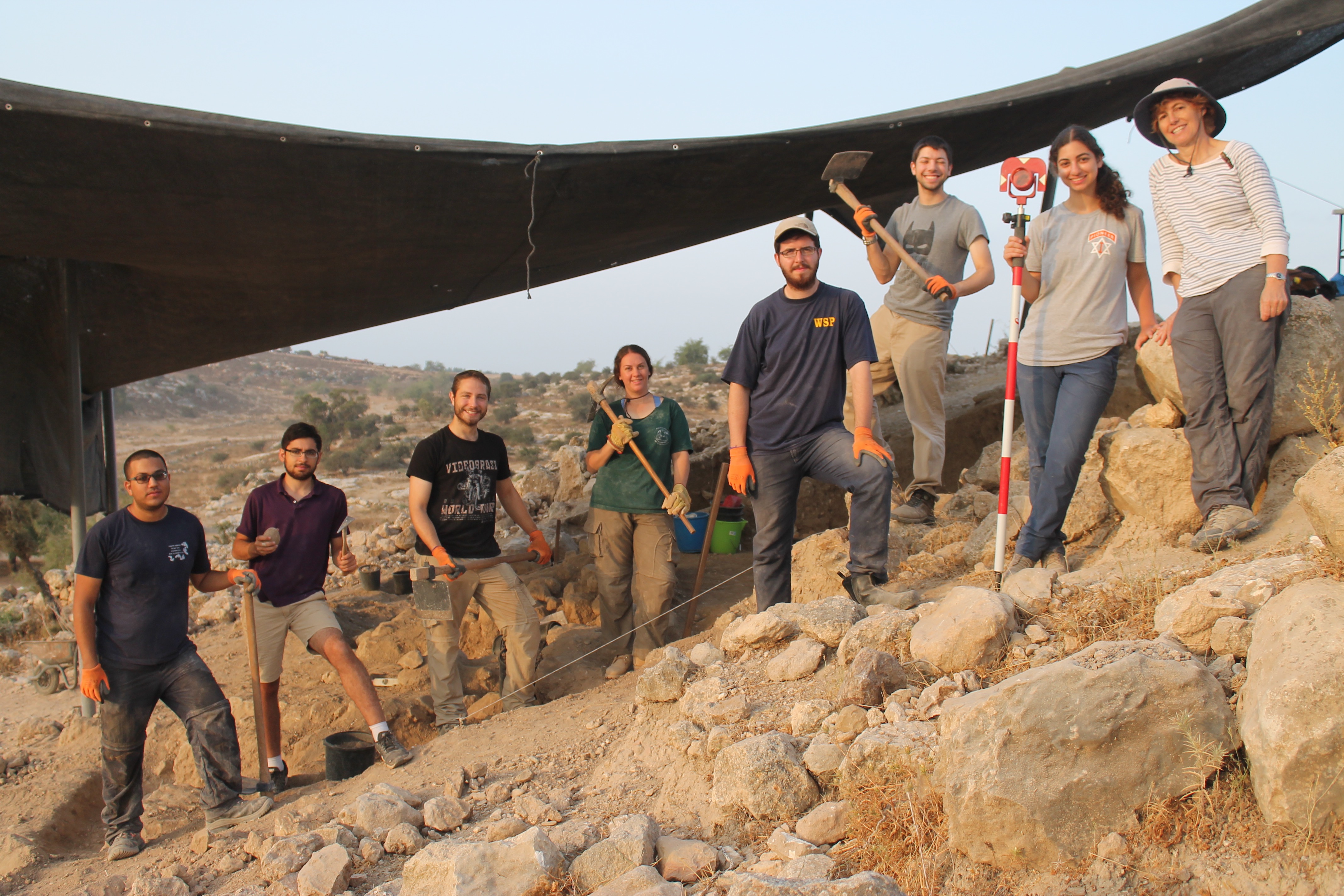
Most of the Area J team

While the Philistines may have been the most famous inhabitants of Tel es-Safi, the goal of Area J was to find the Early Bronze era city wall that encompassed the original upper city. Heavily fortified by the Canaanites, the city was quite large for its time, and it was our job to find the city wall on the eastern slope. The best clue that the Safi think tank used was a straight line of large stones partially exposed following the sensible curvature of a wall. I had gone ahead the Thursday before the dig season began with other staff members to set up the shade tent and establish the borders of our two squares. Because 2017 marks the year that the Upper City excavations will finally be closed after nearly twenty years of digging, this was to be the first and last year for Area J – a rather unusual practice in modern archaeology. Because it rested on our shoulders alone, it was pertinent that we achieve our goals before the end of the season.

Jill our fearless leader

I joined other dig members, from BIU and foreign universities, on the bus to be driven to our home for the next month, Neve Shalom, just a few minutes away from Latrun Junction (and in eyeline of the Crusader ruins of Toron des Chevaliers). Disembarking at the hotel, we mingled in the lobby with the other students and staff members as we waited to receive our room keys. I joined my roommates and we got acquainted with our new home, preparing ourselves for the dig season. Going to sleep early because dig schedule starts early (the bus leaves at 5am), we spent our first night impatiently waiting to break out the tools.

Sunrise from Area J (photo Jill Katz)

The next morning, before the sun’s rays peeked over the horizon, we boarded the bus and were driven to Tel es-Safi some forty minutes away. With dawn breaking, we examined the white chalk-paneled hill as we approached from the north, one bus stopping at the Lower City areas and our bus continuing around the eastern side of the tel to dispense us beside a Bedouin sheep and goat enclosure. From there we took the tools that we needed and walked towards our area, just downhill from Area E, run by Prof Haskel Greenfield of the University of Manitoba. A marked satellite photo of the dig sites can be seen HERE, with Area J just to the right of Area E. The very first day we were a small crew: Jill, Itamar and myself with two YU students, Meredith and Moshe, and a volunteer from South Africa, Suzanne. A third YU student, Rebecca, was en route and joined us shortly thereafter.

Rebecca with a pickaxe

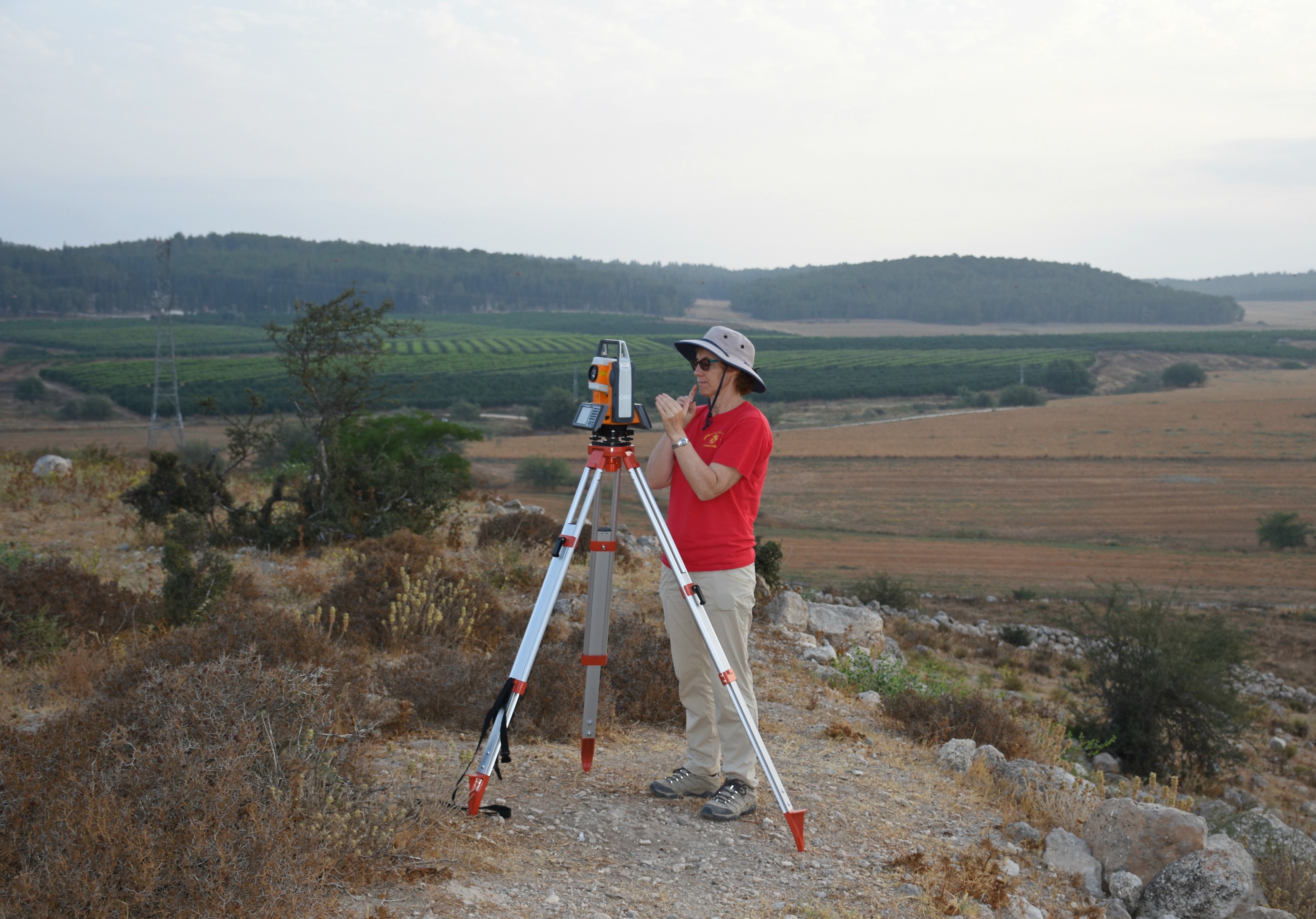
The morning began with Jill’s game plan briefing and, feeling updated, we got straight to work. From setting up the total station to read and register elevation points to clearing out the two squares, we started off on the right foot. Most days started exactly the same way, and we worked efficiently knowing what was expected as we progressed in the dig. The square that I supervised was named 100A and Itamar’s was 100C, side-by-side facing eastward.

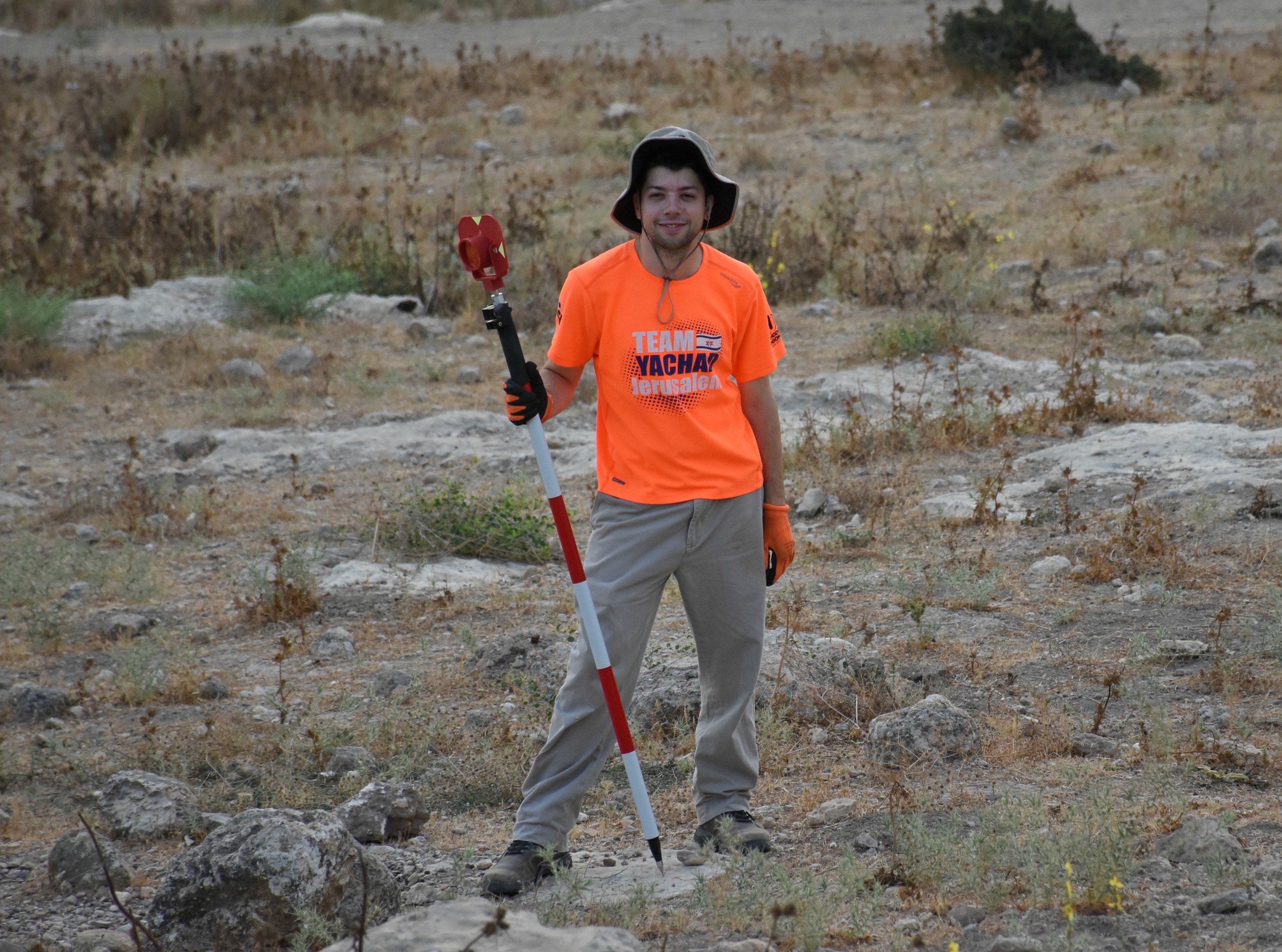
Moshe with the prism (photo Rebecca Zami)

One of the things that really excited me, especially during the first few days, was the incredible birding on the tel. I haven’t much experience exploring the Judean lowlands so I had the pleasure of getting to see some interesting birds (and reptiles) up close. I opened a note on my phone to keep track of the birds, and species that I’d never seen before, including European rollers, which have bright blue feathers, and the little owl which perched on the Bedouin fence below semi-regularly.

Photographing my first little owl

On a trip to the storage container some kilometres away I saw two more new birds: the great spotted cuckoo, which I tracked excitedly to a nearby tree to confirm identity, and a hobby, a small, dark type of falcon. Large flocks of jackdaws would fly overhead every morning and the large short-toed eagles would swing by every so often. In addition, there was a lone white-breasted kingfisher that made an appearance from time to time, and bunch of woodchat shrikes that would hunt from their perches on thorny bushes. Reptilian and amphibian sightings included a bold Schneider’s skink that lived near the breakfast shade, the dried up body of a blind worm snake and a green toad that a girl over at Area E found. All-in-all, rather exciting for a nature lover.

Short-toed eagle

The days came and went and, slowly but surely, we removed the topsoil of the upper sides of the squares, as we were working on a slope. Countless buckets were filled and poured into the trusty wheelbarrow, which, in turn, was dumped countless times over the small ridge just metres away. Every morning we delighted in watching the Bedouin feed his sheep and goats, and we learned to be wary of his attentive and protective dogs. We never failed to find amusement in listening to his donkey bray, the fun noise always ending so anti-climatically.

Itamar holding a piece of a Cypriot milk bowl (photo Suzanne Myburgh)

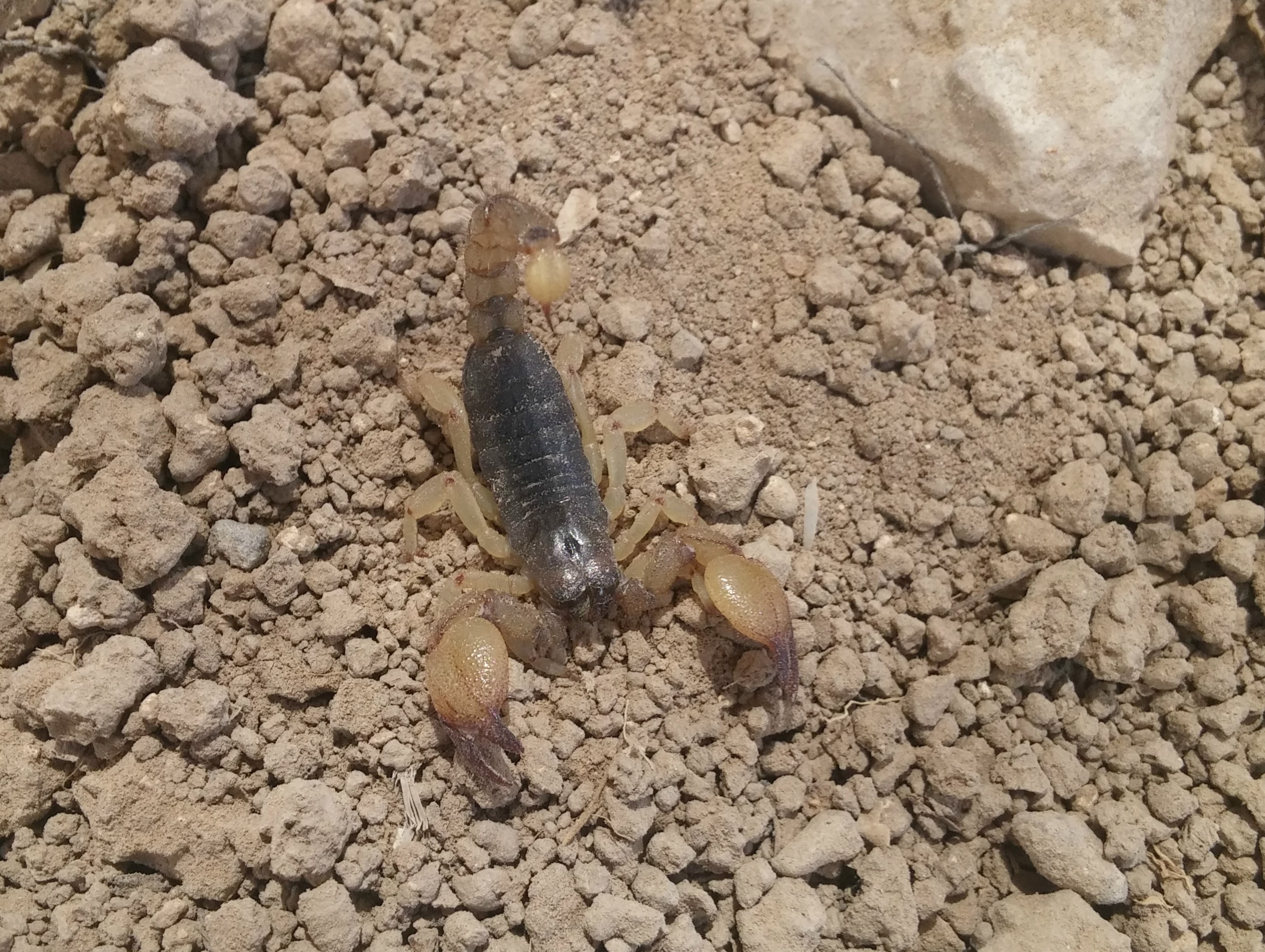
Within a few days, while working around a stubborn stump, we hit treasure – scorpions! When Aren swung by later that morning we told him that we found scorpions and, in response, he jokingly told us that we’d get a beer if we found twenty-five. Needless to say, we surpassed that goal and he came through with a six-pack of beer, which we enjoyed one evening at a special Area J “scorpion party”.

Israeli gold scorpion

The mornings were full of hard work and intense laughter; my square’s chemistry was truly astounding as we humoured ourselves senseless daily. At breakfast, taken just up the tel beside Area A, we’d take a break from the toil and hilarity as we’d feed on the offerings brought from Neve Shalom. Just to make things interesting, Prof Louise Hitchcock would call for breakfast to end with two quotes from The Ten Commandments, telling us “dogs” and “mud turtles” to get back to work. Not long after breakfast we’d have a fruit break, which usually consisted of watermelon and cantaloupe sliced up at Area E.

Suzanne hard at work (photo Jill Katz)

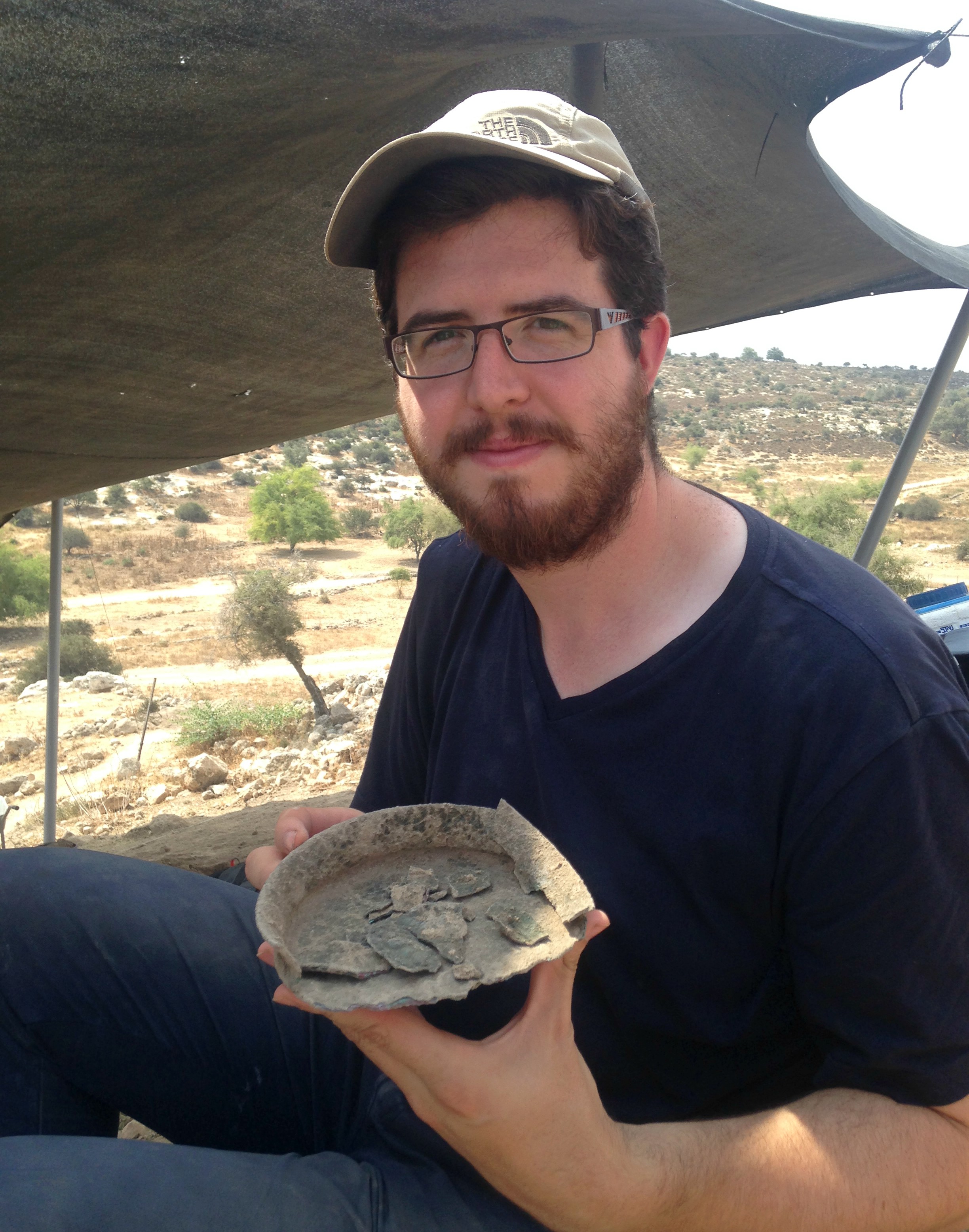
The end of the first week proved interesting as we went on a tour of the Stalactites Cave near Beit Shemesh (to be covered in a different blog post) and spent the night at Ramot Shapira in Beit Meir. The next morning, while scraping the dirt away to define the dirt shelf we had made to work our way down through the topsoil, I made an interesting discovery. My trowel struck metal and, working my way carefully around it, I realised that there was a vessel of sorts laying upright on its side. Because we were still not that far down, it was the general assumption that whatever we found was either modern or old but washed downhill and therefore out of context. So, assuming that it was modern, this largely-intact vessel was removed and examined. When Aren came over he examined the vessel and got visibly excited, telling us that it looks like an bronze bowl of Assyrian or Phoenician design from the Iron Age (3000 years old or so). It got even more exciting when we added that we found a metal disk of the same or similar material with a rosette motif the day before. After the fun in-field talk of ancient metal vessels, we carefully packaged the pieces as instructed and gave them over to Aren to take to a lab in Jerusalem later that day. I recently popped into the Tel es-Safi lab on campus to see if there’s any news on the bowl but, unfortunately, no word yet.

Posing with the bronze bowl (photo Aren Maeir)

With our first week ending on such a high, we were excited to return the next Sunday and be back on the tel early Monday morning. We were joined by a new member, Avraham from Brandeis University, a Safi veteran who was eager to be put to work. Continuing with our excavation, we had other swell finds such as a finger-shaped stone with a hole at the end, a metal pin of sorts and a ceramic spinning whorl. One thing that’s really cool about where we were digging is the huge amount of pottery, a lot of it interesting – with painted Philistine sherds all over, even on the surface. Due to the fact that we were excavating on a slope and had to clear away a huge amount of dirt, there was a lot of work that was pretty ho-hum, made exciting and fun by the incredible “J Crew” (as we sometimes called ourselves).

Meredith manning the sifter (photo Rebecca Zami)

Life back at Neve Shalom usually comprised of us eating heartily, washing/reading/writing on potsherds, fraternising with the other dig members, doing the paperwork of the day’s events in-field, preparing the next day’s top plan and occasionally visiting the pool. There was also a fun activity called “heavy fractioning” which involves sitting in front of a tray of sediment and having to pick through it with tweezers to remove valuable bits such as bone, shell, organic material. During my turn at heaving fractioning, we found a cool miniscule fish jaw complete with teeth and what I believe was a tiny black bead, which I unfortunately lost when I squeezed my tweezers just a tad too much.

Weekly tel tour visitors (photo Rebecca Zami)

The rest of the second week went by quickly and, towards the end of it, we had a farewell party for Meredith and Suzanne who were leaving us. We gave them a parting gift of a discarded potsherd signed by the other “J Crew” members for them to take back to New York and South Africa, respectively. The dig was then halfway over with, but we had two new members coming for the third week and we were excited. To be continued…

Tel Kabri Archaeological Dig

In Galilee, Israel on August 20, 2017 at 7:12 AM

The Monday following my trip to the City of David I found myself back home in Ma’alot and excited for a day at the Tel Kabri Archaeological Dig. My own month-long dig at Tel es-Safi was to start the following week, classes were ending – the timing couldn’t be more perfect. Being that Tel Kabri is just a few minutes from the Mediterranean Sea along Road 89, it was just a few minutes away by car and, even with getting lost and confused, my brother Nissim and I arrived at the dig site unscathed and ready for adventure.

Tel Kabri Archaeological Dig (photo Griffin Aerial Imaging Ltd Skyview Photography Ltd.)

We were greeted by Prof Eric H Cline of George Washington University and other members of the staff and were then introduced to the site. First settled in prehistoric times, the city’s original name is still unknown and eventually became known as Rechov (perhaps one of two cities in the region with that name) under Canaanite rule. The Tel Kabri palace, which was recently discovered, dates to the Middle Bronze era and is the largest of its kind in Israel. Two things that are particularly interesting are the Minoan-style fresco fragments (which indicate cultural influence at such an early age) as well as the vast wine cellar that was found a few years ago. Fast-forward to the Roman era and the city became known as Kabrita which then became el-Kabira in the Early Arab period, names becoming naturally corrupted over time. El-Kabira morphed into al-Kabri, and, in 1949, an Israeli kibbutz by the name of Kabri was founded nearby.

Excavation underway

Today the Canaanite palace and surrounding ruins that have yet to be excavated are surrounded by an avocado plantation. To the northwest is Achziv and Rosh HaNikra and to the southwest is the magnificent port city of Akko and Haifa, all fascinating sites. Finished with our little tour of the dig area, we were introduced to Jim, our to-be square supervisor. He provided us with the necessary tools to work – pickaxes, hoes and trowels – and we settled in the far northwestern corner of the dig site which is named Area D-west Square 1.

Nissim digging away

Our task was a simple one that day, to deepen the square so that it was as deep as the adjacent one. In archaeology it’s important to work on a level plane, so that everything is potentially uncovered at the same time instead of random pits here and there. Due to the fact that the dig site is located in an avocado plantation, the ground is damp from the irrigation and the digging was more or less pleasant.

Scraping away at the baulk for the potsherd

We found small amounts of pottery which went into the specially-marked pottery bucket, as well as a bone fragment, which was placed in Jim’s “schwarma bag” – a cute name for the small paper bags obtained at Israeli street food joints. The bag was properly labeled and in went the bone. Similar procedures were taken to secure flint and shell fragments found in the dirt.

Bag o’ bones

Apparently, on the very first day of the season, an Ottoman coin was found in an adjacent square but unfortunately we found no coins that day. Our square partners, McKay, MJ and Russell, helped pass the time making the labour fun with interesting discussions and funny jokes. The general atmosphere at the dig was very jovial and humourous despite the humid heat, with trance music playing in the background for our enjoyment. Then, when least expected, the call for the bucket brigade would sound out and diggers would form lines outside the dig area bringing full buckets with them. When the buckets of dirt to be discarded became overwhelmingly numerous it was deemed that having a unified effort to dispose of them would be best for morale and efficiency. Thus, the bucket brigade would form and full buckets of dirt would be thrown down the assembly line of diggers until it reached the large dirt hill where the dirt was dispensed.

Awaiting the bucket brigade

Breakfast came and went, as did the fruit break and a surprising moment when staff members appeared out of the trees armed with waterguns and sprayed the sweaty dig crew to liven them up. I was left unsprayed, but my own sweat kept me lively enough. I made contact with the small group of Israelis, led by Dr. Assaf Yasur-Landau of Haifa University, and spoke to them for a bit about matters of academia and archaeology. Other dig members proved to be interesting as well, and the time flew by. It wasn’t long before the dig day was coming to an end and we cleared away all the tools.

Nissim within the square

While we hadn’t found anything too exciting that day, we succeeded in taking the square’s height down a wee bit which would be of help in the following days. We packed up our bags and bid farewell to Eric, Assaf, Matt (our area supervisor), Jim and the others, driving back out of the avocado plantation.

Avocado

The sun was still high in the sky and I still had energy for more adventure so we turned into a small collection of interesting sites just across Road 70. Parking the car under some eucalyptus trees, we got out into the heat and made our way to the ruins of an old flour mill, powered by water channeled in via a small aqueduct which is still preserved.

Old flour mill

We then walked along the aqueduct until we reached the old local Muslim cemetery where painted vehicle hulls are displayed. In 1948, during the War of Independence, the members of Kibbutz Yehiam were holed up and surrounded by Arab forces, in desperate need of support. Supplies and reinforcements were scheduled to be driven in from the Haifa area – yet disaster loomed. Arab forces were waiting in ambush at this cemetery and opened fire on the incoming convoy, effectively stopping it and killing forty-seven Haganah members. We examined the vehicles, even entering one, and then returned to our car to drive back home. Nissim ended up returning to the dig for the remainder of the season, having the time of his life, but I headed back to Givat Shmuel and then to my own university’s excavation, the Tel es-Safi Archaeological Dig. Additional information about the dig and participation options can be found on the Tel Kabri website, found HERE.

University Trip: City of David

In Israel, Jerusalem on August 13, 2017 at 7:29 AM

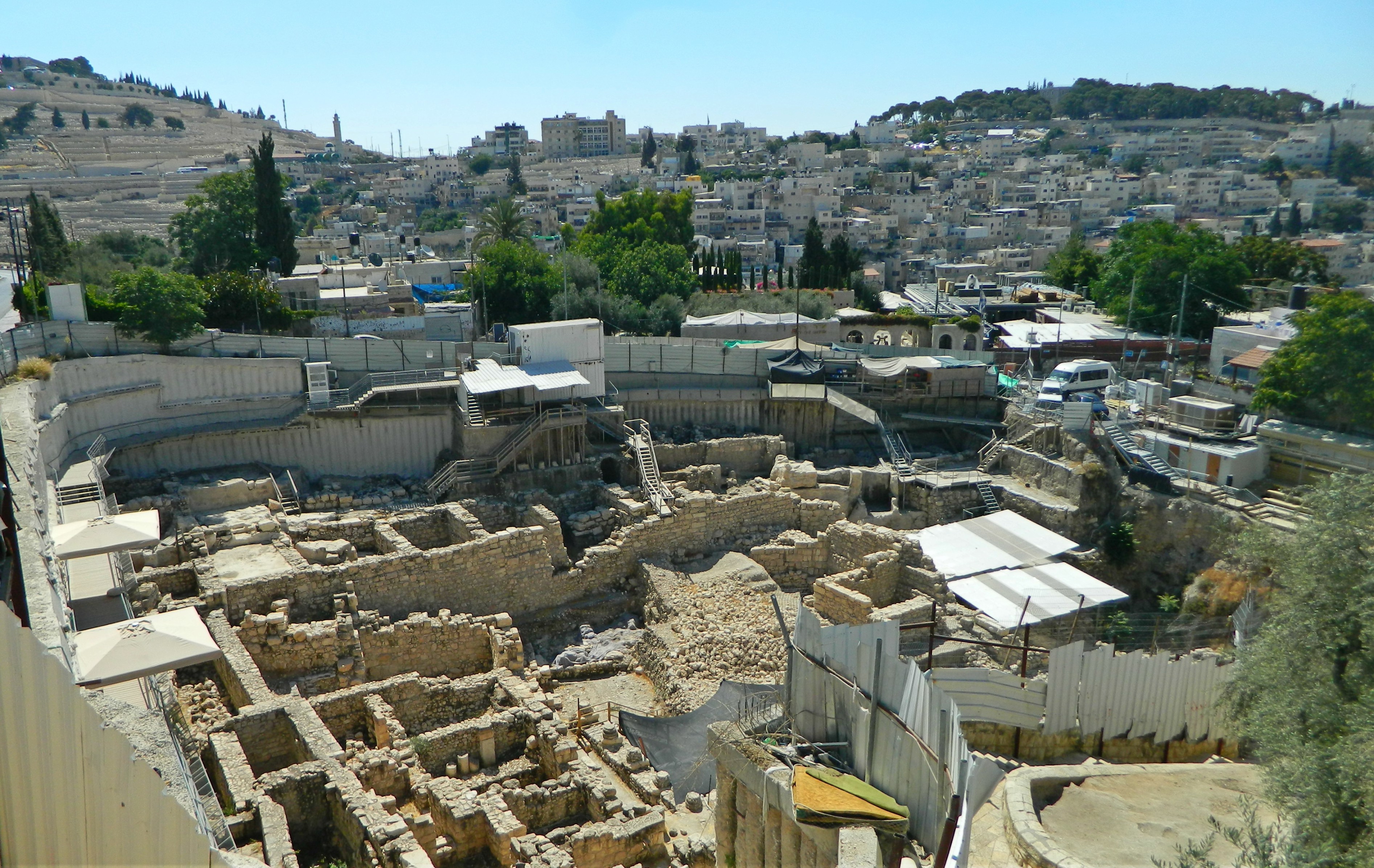
The day following our Bar Ilan University academic tour to “Moshavot” of the Galilee took us on another tour, this time of the famous City of David in Jerusalem – where we all had to meet at the given time. But, my morning was wrought with strange inconveniences, for when I disembarked at Jerusalem’s Central Bus Station and attempted to then board the light rail, I discovered that my RavKav public transportation pass had disappeared – stolen or dropped. It was an hour or so after the prearranged start time for the tour when I was issued a new RavKav and so I made my way to the City of David in hopes of salvaging what I could of the tour. Located just outside the Old City’s walls on the southern side, I elected to walk through the Old City – a pleasant walk. Making my way through the Armenian Quarter, I then passed the small and obscure archaeological park called Gan HaTekuma and I exited the Old City via the Dung Gate next to the Kotel (Western Wall). Turning east, I laid eyes upon the Givati Parking Lot Excavation site for the first time and then continued to the City of David.

Givati Parking Lot excavations

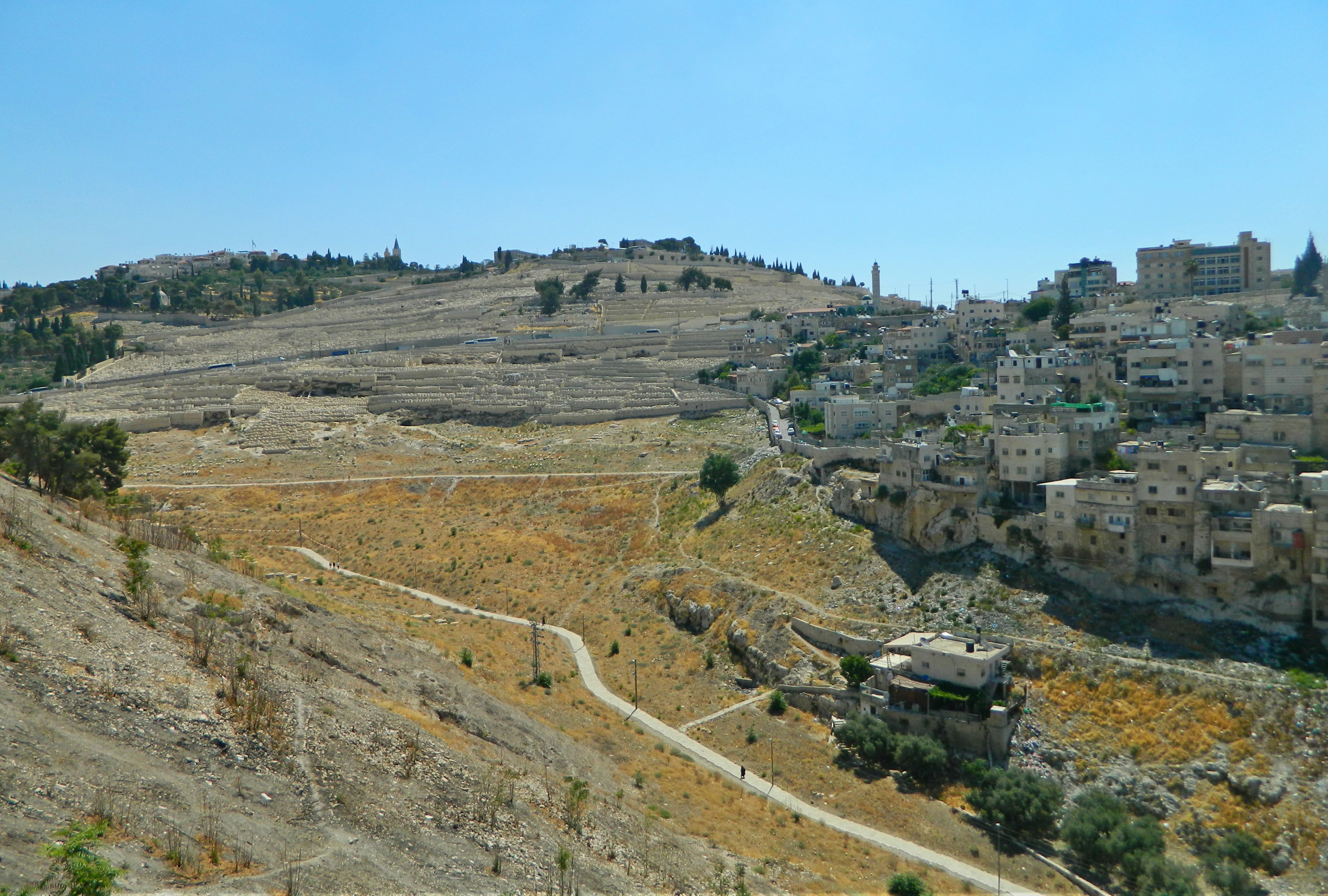
Entering the national park for the first time since 2008, I passed myriads of tourists and approached the ticket counter to explain my predicament that I was part of a group which had already entered. Believing my story, I was given a stamped ticket and allowed into the park – but it took a few minutes of confused wandering before I located my group in the excavation area of the “Large Stone Structure” (suggested to be King David’s palace) beneath the floor of park’s entrance area. I caught myself up as best as I could perusing the signs concerning the important finds uncovered thus far after which I focused my attention on our guide for the day, Dr Eyal Meiron, an expert on the City of David. We briefly inspected the Royal Quarter (Area G), a complex dating to the First Temple period, and then made our way to a nice lookout spot where we stood/sat beneath a sun umbrella to learn more about the city. The city is built on a mountain ridge in a mountainous area with the Arab village of Silwan on the adjacent ridge and the Mount of Olives slightly further away to the northeast.

Lookout towards Silwan and the Mount of Olives

To give a brief summary of the City of David, the excavated region was the original city of Jerusalem before it slowly expanded outward, from the revolutionary expansions of King Hezekiah in the 7th century BCE to its famous city walls of today, built in the mid 1500s by the Ottomans. It is believed that the first walled city was built during the Middle Bronze age, and then passed ownership a few times until King David conquered it in the Iron Age, approximately 3,000 years ago. King Solomon, the son of David, expanded the city and built the First Temple where the Dome of the Rock now stands. A couple hundred years later, after the Jewish kingdoms split, the Assyrians attempted to conquer ancient Jerusalem but failed. The Babylonians, however, succeeded and razed the city to the ground, destroying the Temple as well. In the Hasmonean and Roman times the city experienced a rebirth of sorts, until it was once again destroyed (along with the Second Temple) by the Romans in response to the Great Revolt. Eventually the city limits changed and the City of David, which found itself outside of Jerusalem, was largely forgotten about. Excavations in the late 1800s revealed the forgotten city and since then the City of David has been one of the most important archaeological sites in Israel.

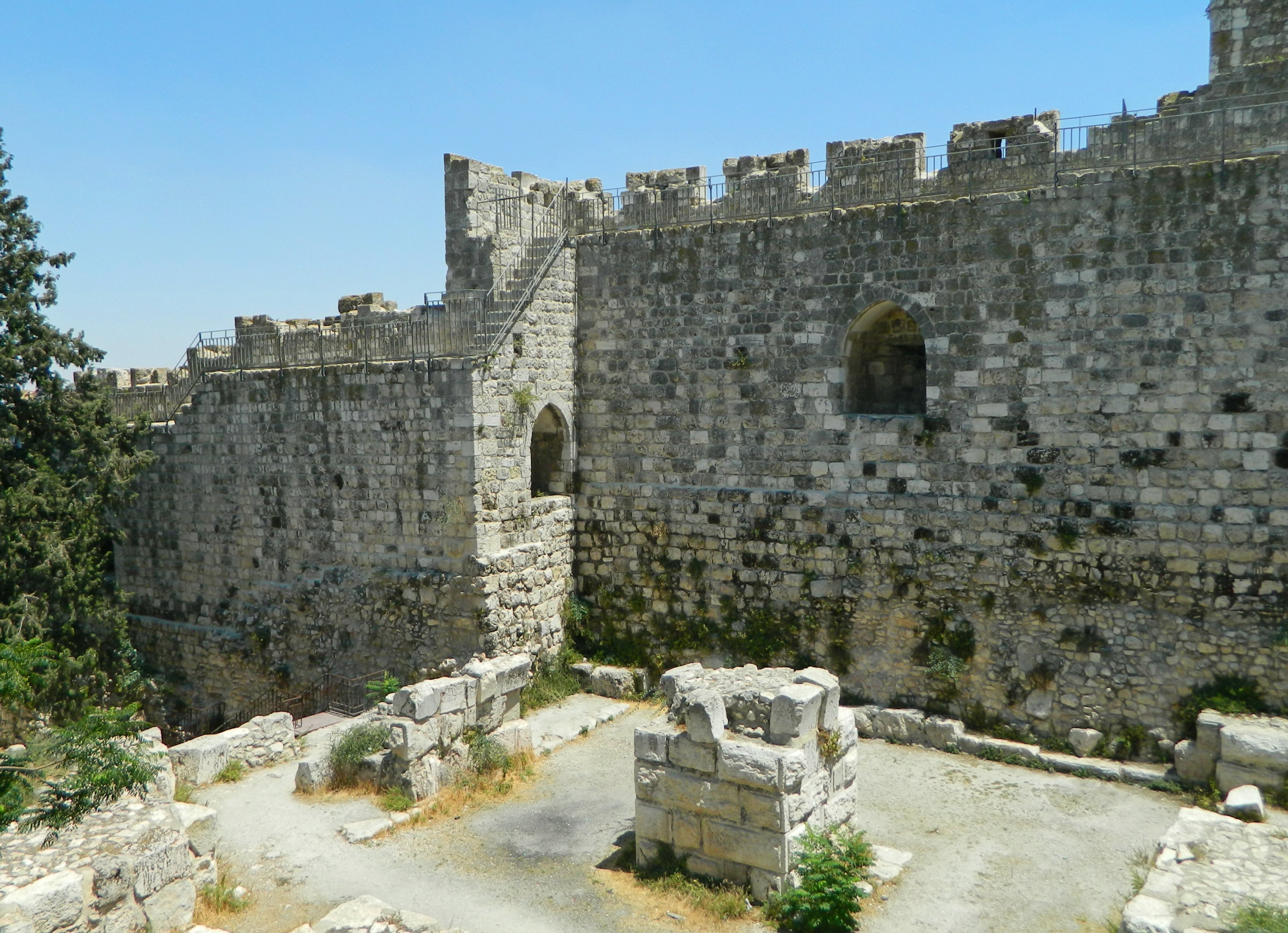
Ottoman wall of the Old City

We left our lookout area to go underground to the Warren’s Shaft System, a carven well in the rock which was believed to be used to draw water from the Gihon Spring. An important part of every city, fresh water was readily available to the inhabitants of the City of David gushing from the Gihon Spring, yet due to its low setting the defensive walls were built excluding the spring. The issue of providing water under times of siege during the Canaanite times was answered first by the Warren’s Shaft System and later by a tunnel and fortified pool which jutted out from the city walls. While we were stopped at the top of the shaft it was curious to note how many of the passing tour guides both knew and admired our guide, who had apparently educated many of them in matters concerning the site.

Dr Eyal Meiron pointing beside the shaft

Continuing along underground along the Secret Tunnel, we reached a large open area which housed the remains of the Canaanite Pool and surrounding fortifications. Walking on metal walkways with the occasional glass panel to view the ruins below, we skirted the excavated area and marveled at the size. Unfortunately, due to the cramped angles and low lighting, none of the photographs that I took properly document the sights that I saw underground. I thus turned to Eyal who has been so kind as to share this illustration of how he imagines the pool and fortifications to have looked during the Canaanite era.

Canaanite pool fortifications (reconstruction: Eyal Meiron, illustration: Leonardo Gurevich)

Emerging into the sunlight for a few brief moments, we quickly headed for the Canaanite Tunnel – one of two parallel passages that cut through the karst bedrock from the Gihon Spring underground to the Shiloah (Siloam) Pool at the far southern end of the City of David. The famous Shiloah (Siloam) Inscription that was found in 1880 towards the end of the other passage, the Hezekiah Tunnel, has been kept in Turkey’s Istanbul Museum after being cut out of the rock wall despite Israel’s repeated requests for its returned ownership. The three-dimensional aspect of our tour makes it somewhat complicated to explain but in essence we were more-or-less heading south and down in elevation from the beginning of the tour till the end. Within the 115 metre long Canaanite Tunnel, we encountered tight squeezes and small amounts of flooding – which I later found out was sewage water!
Within the Canaanite Tunnel

Being as that we chose the shorter, “dry” route through the bedrock, we emerged once again into the blessed sunlight and found ourselves looking at the original walls of Jerusalem – a truly ancient construction.

Walls of ancient Jerusalem

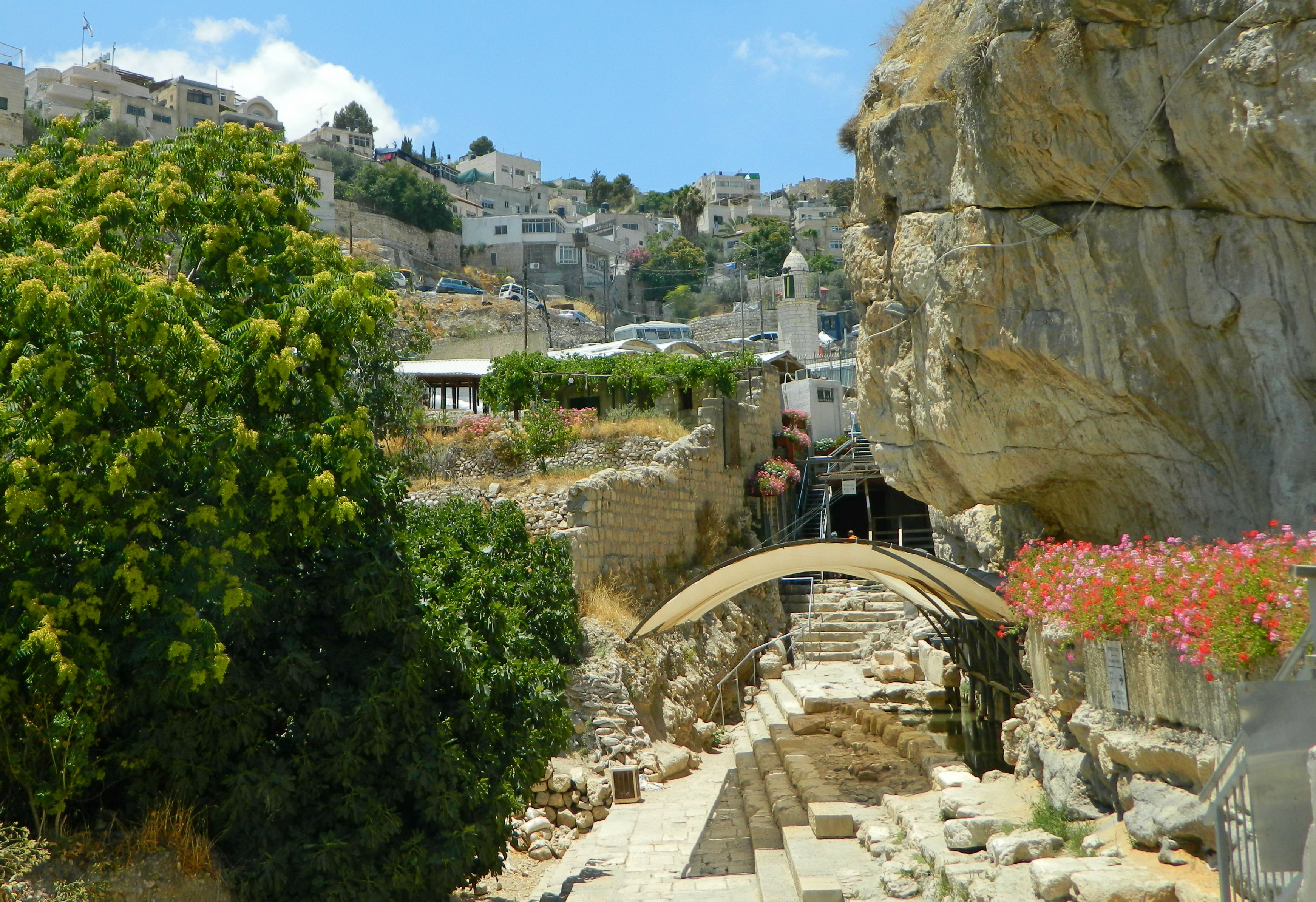
The tour officially ended there but some of us carried on along the cobbled road towards the Shiloah Pool, passing several sites of interest along the way including the Amanah House and the Meyuhas House – some of the first modern Jewish houses outside the Ottoman walls of Jerusalem. Before long we reached the Shiloah Pool and waited there for the shuttle to take us back up to the Old City wall.

The Shiloach (Siloam) Pool

Deposited at the Dung Gate, I thanked my Arab driver and entered the Old City, making my way back along the same road toward the Jaffa Gate. Seeing the Tower of David, and feeling inspired to finally visit this long-overdue site, I quickly learned that I had come too late. Angling for just a little bit more adventure, I contemplated visiting the area where the Hospitaller Knights of Crusades were headquartered but decided against it due to the fact that it was the end of Ramadan and prayers had just let out – I didn’t want to venture off alone through the crowds.

Harpist in Jaffa Gate

Leaving the Old City, I settled with taking a quick visit to a Jerusalem beer and beer supply store where I enjoyed a cold glass of Lindemans Cassis Lambic, a naturally fermented Belgian beer flavoured with blackcurrants – quite tasty and quite refreshing! A short ride on the light rail and I was back on a bus to Givat Shmuel, ending yet another successful adventure.

University Trip: “Moshavot” of the Galilee

In Galilee, Israel on August 6, 2017 at 7:40 AM

The week after visiting Tel Aroma & Mount Gerizim in the Shomron I participated in another academic tour offered by Bar Ilan University’s Archaeology department. This time we were traveling to the north of Israel with Dr Einat HaLevi Attia to examine early “Moshavot” of the Galilee, settlements established in the late 1800s and early 1900s by the first waves of immigrants to the Holy Land. We boarded a tour minibus at the university and made our way to the first site of the day, Kibbutz Merchavia, after a short rest stop in neighbouring Afula.

Merchavia

We sat outside the “Great Courtyard” and learned about Merchavia’s founding in 1911 and their distinct organisational style as being a “co-operative”. Interestingly enough, they created the first dairy in modern-day Israel. Our subsequent tour of the courtyard’s buildings included the “Big House”, the “Produce Granary”, the Haganah Radio Station and later Israeli prime minister Golda Meir’s house. Getting back into the minibus, we then took a very short drive to the edge of the moshav version of Merchavia where admired a large manor built during those formative years and nicknamed the “Castle of the Jezreel Valley” due to its size and position overlooking the valley. Returning to our trusty minibus, we then drove over to where the agricultural establishment of Sejara once stood, founded in 1900. Today the remains are within a military base by the name of Chavat HaShomer (which I visited once several years ago but didn’t see the ruins).

Rose-ringed parakeet inspecting me from above

So, we stayed outside under a large tree and learned about the site before walking over to see Ilaniya, the successor of the Sejara settlement. There we were afforded up-close and plentiful views of the still-existent site – a settlement of one main street lined with agriculturally involved houses. I distracted myself trying to photograph singing goldfinches, but with limited success. Walking to a rooftop lookout, we passed farming equipment on display and then admired a large wall that was originally made with white chalk and then added to with blocks of dark grey basalt. From Ilaniya we got back into the minibus and drove to see a handful of ruined basalt buildings in Poriya, established in 1912.

Basalt ruins of Poriya

From there we took a short break at a strip mall where I purchased a bottle of semi-sweet hard cider for Shabbat and then on to the next site on our list: the Kinneret Courtyard just south of the ruins of Bet Yerach. A rectangular collection of well-kept basalt buildings, the courtyard was founded in 1908 as a defensible frontier close to the Sea of Galilee. We were greeted by our local guide, Asaf, who gave us a hurried yet sincere overview on the early history of the settlement and the difficulties that encumbered the settlers in those times. Inside the exhibits room of the courtyard, located within the old khan (roadside inn), we inspected items that belonged to that era, as well as signs depicting the important figures who played roles in the sites formation.

Kinneret Courtyard

Taking leave of the courtyard, with some noisy kestrels passing overhead, we got back into the minibus to be taken to Degania, which I had already visited in 2012. We met up with our next local guide, witty Moshe, who took us on an interesting tour, including the following site which I had not known about beforehand. Driving alongside the agricultural date groves at the edge of the kibbutz, we reached the place where the first building was constructed in 1909 – at a place once known as Umm Juni. This structure was featured in the famous photo of the settlement members in mostly Arab garb posing that can be seen HERE.

Original structure of Degania

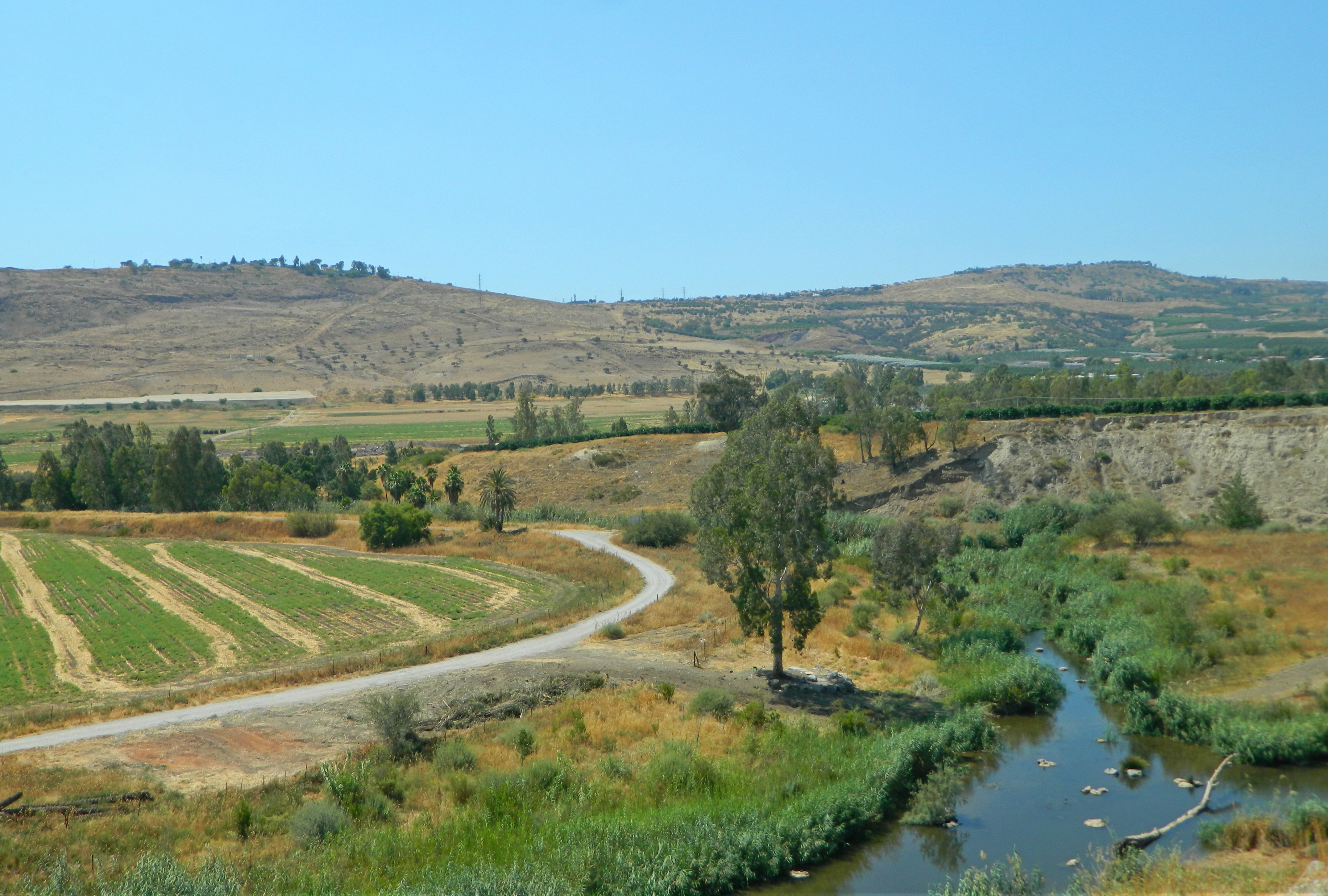
Beyond the structure is a wildly windy lookout overlooking fields and the dry wilderness beyond. Directly below the gentle Jordan River flows, nimble swallows (both barn and red-rumped) darting back and forth in the hot air overhead. I stalked a bird along the basalt rocks only to discover that it was a crested lark, nothing to get too excited over.

Picturesque view from Umm Juni

From there we went to the regular part of Degania, where the courtyard (a common theme this trip) beckons, with its basalt stone structures. Overhead we got glimpses of cormorants flying to and from the Kinneret’s banks, and the occasional goldfinch snacking in a pine tree. We entered the small museum just outside the courtyard’s domain and examined the collection of photographs taken over the years, including a particularly interesting aerial shot with the shadow of the German airplane that took it. I signed the guestbook, plugging my blog shamelessly, and we bid farewell to both Degania and our guide Moshe.

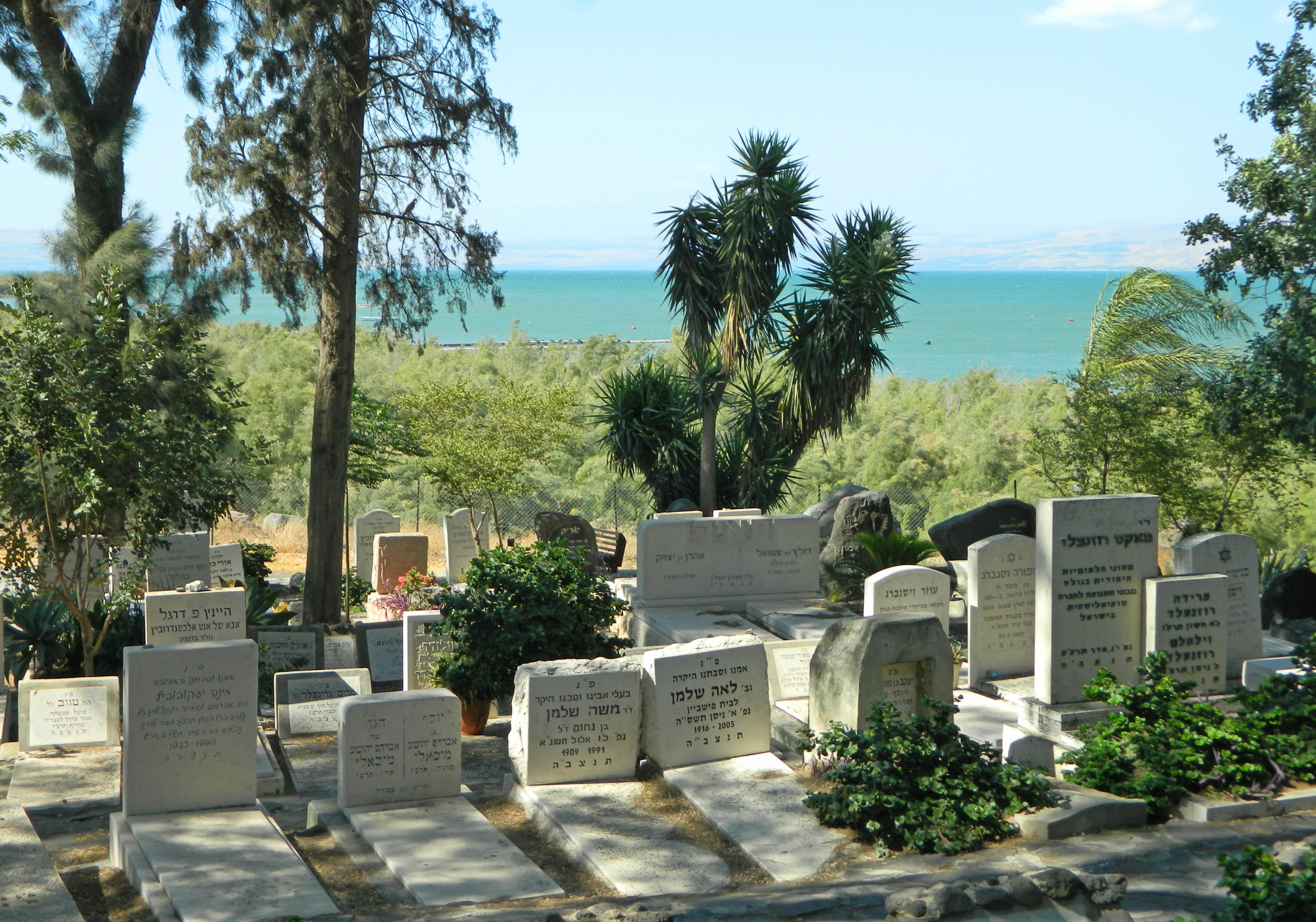
Cemetery beside the Kinneret

We had one last place to visit – a cemetery overlooking the peaceful blue Kinneret. Having discussed so much of the early years, it was time, at last, to see what has become of the valiant members of such noble efforts. We were there to pay our respects, and to have one or two last things to reflect upon before we returned to the urban sprawl of the centre of the country. Leaving the cemetery, we ritually washed our hands and boarded the minibus for the long drive back, another interesting trip under our belts.

University Trip: Tel Aroma & Mount Gerizim

In Israel, Samaria on July 30, 2017 at 3:42 PM

Towards the end of this past semester, before I was distracted by the wonderfully hectic month of archaeological digging at Tel es-Safi (biblical Gath), I took a day-trip with the legendary Dr Dvir Raviv to some cool sites in the Shomron. Another of Bar Ilan University’s Archaeological department’s academic tours, this was one that I had been looking forward to all year – especially after last year’s fascinating trip to the Southeast Shomron with the same Dr Raviv. Our tour bus departed from the university campus in the morning and we made our way to the Shomron, driving through the ever-entertaining Arab village of Hawara and then passing Shechem (Nablus) before entering Itamar where we disembarked at an army post. Gathering around and applying sunscreen, we were briefed by Dvir who told us the plan of the day. Much to our surprise, he pointed to a conical peak a ways away and announced that we were to climb it – for that is Tel Aroma.

Making our way to Tel Aroma – the central peak

We set off expeditiously, making our way down the slope of the low mountain that we were on, and reached the paved road down below in good time. This was an ancient road that crossed the mountains of the Shomron and we walked it to get to a good spot to climb up to the tel. Along the way, we saw planted olive trees, wild carrot in bloom and my first definite sparrowhawk which flew away before I could squeeze off a shot. Leaving the road, we stopped beneath a gathering of almond trees to learn more about the area. As I looked about I noticed that some of the almond shells had been chewed by one of nature’s hungry inhabitants, and upon proposing the identity question to experts, learned that the nuts were eaten by rose-ringed parakeets (an invasive species in Israel).

Chewed and crystalised almond on a stick

Sitting in the welcoming shade, the peaceful sounds of nature surrounding us, we rested, ate, drank and listened to the mini-lecture. When we rose refreshed and began our ascent of the mountain something interesting happened. The leading members of our party had startled a small sounder of wild boars – some adult females and a handful of striped youngsters. I heard my name being shouted and became aware of the wild boars making their escape, passing an old stone structure as they fled downhill.

Wild boars

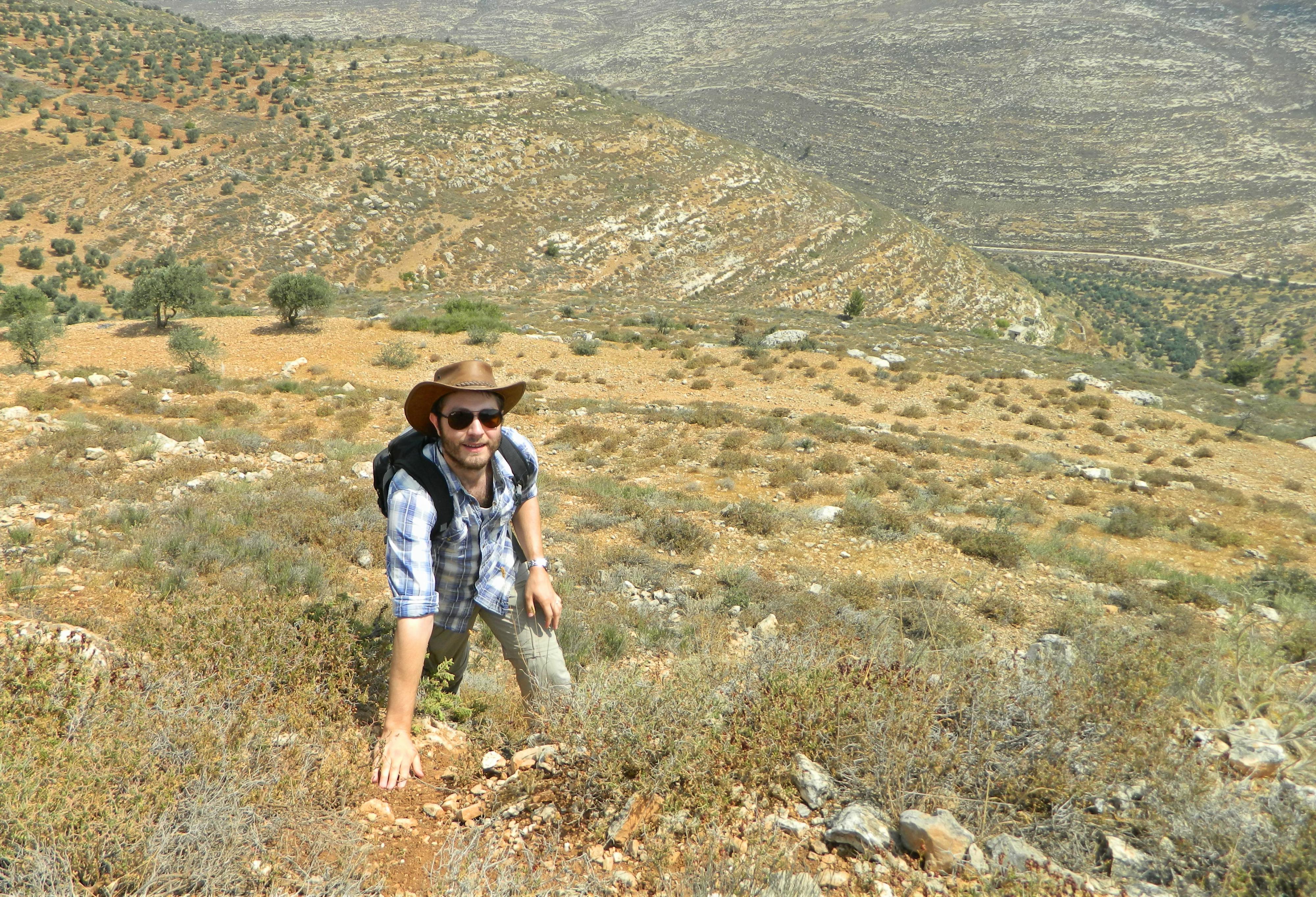
With the brief excitement over we returned to the task at hand, scaling the mountain without the use of a marked trail. Dvir led the way, springing lightly up the slope, and we followed behind dutifully. The going was a little tough, but rather invigorating, and we made great time due to our youthful enthusiasm. I stopped at one point and took this great photo of my friend Ben Yablon climbing behind me.

Ben climbing Tel Aroma

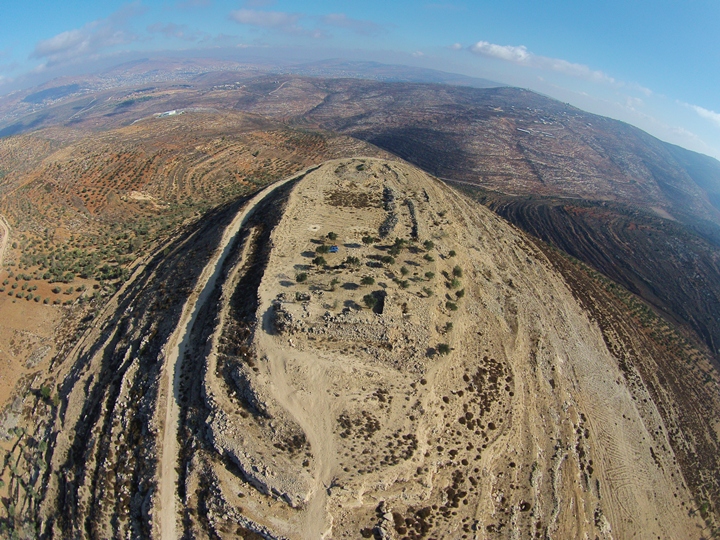
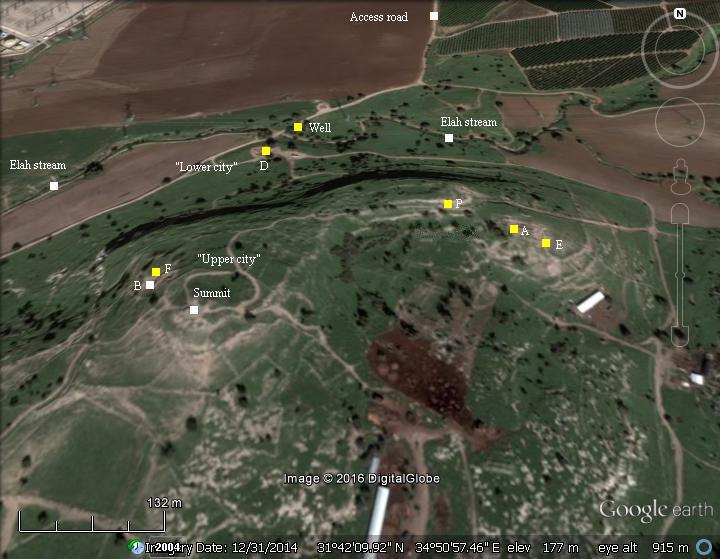
At last we reached the top and we laid eyes on a hewn cistern – the first of many, which look like small caves from the outside. Around the cistern, and across the top of the tel, were large amounts of cut ashlars for monumental construction. With the mountaintop first fortified by the Canaanites, the site’s subsequent history is poorer than so many of Israel’s tels largely due to its remoteness and inaccessible nature. Biblically mentioned only once, the tel is referred to as a stronghold near Shechem and it is not until the Hasmonean period that Aroma’s importance came into play. Being in the land of the Samaritans, which we would see in the second half of the day’s tour, the Hasmoneans conquered Shechem and Mount Gerizim from them and took up fortifications at Aroma and Sartaba further to the east. It was during this time that the fortress was built and immense water reservoirs were carved out of the bedrock. The next, and final, period of importance for Aroma was during the time of Herod around 2000 years ago, when it was refortified to keep control over the Shomron roads.

Tel Aroma from above (photo Biblewalks.com)

We made our way to the southern end of the tel and admired both the view and the ruins. The blue sky around us was alive with energetic swifts (mostly common with one or two alpine thrown in), keeping us company as we explored. Suddenly a strange call was heard and fellow tour member Nesia, a more experienced birder than I, informed me that a bee-eater had flown past – of which I saw but a fast-moving blur. We settled down beneath some olive and fig trees to learn more from Dvir and I found myself promptly distracted by a bird flying about among the rocks far below. Using Nesia’s binoculars and my own camera (even with the inferior digital zoom), I couldn’t figure out exactly what I was seeing. Turning to the experts once again, I was informed that I had seen and photographed a black-eared wheatear (my first). From the same vantage point, this time heard but not seen, was the familiar drumming of a Syrian woodpecker. And lastly, some ravens above a distant mountaintop were spotted and added to the list.

Hasmonean fortress ruin

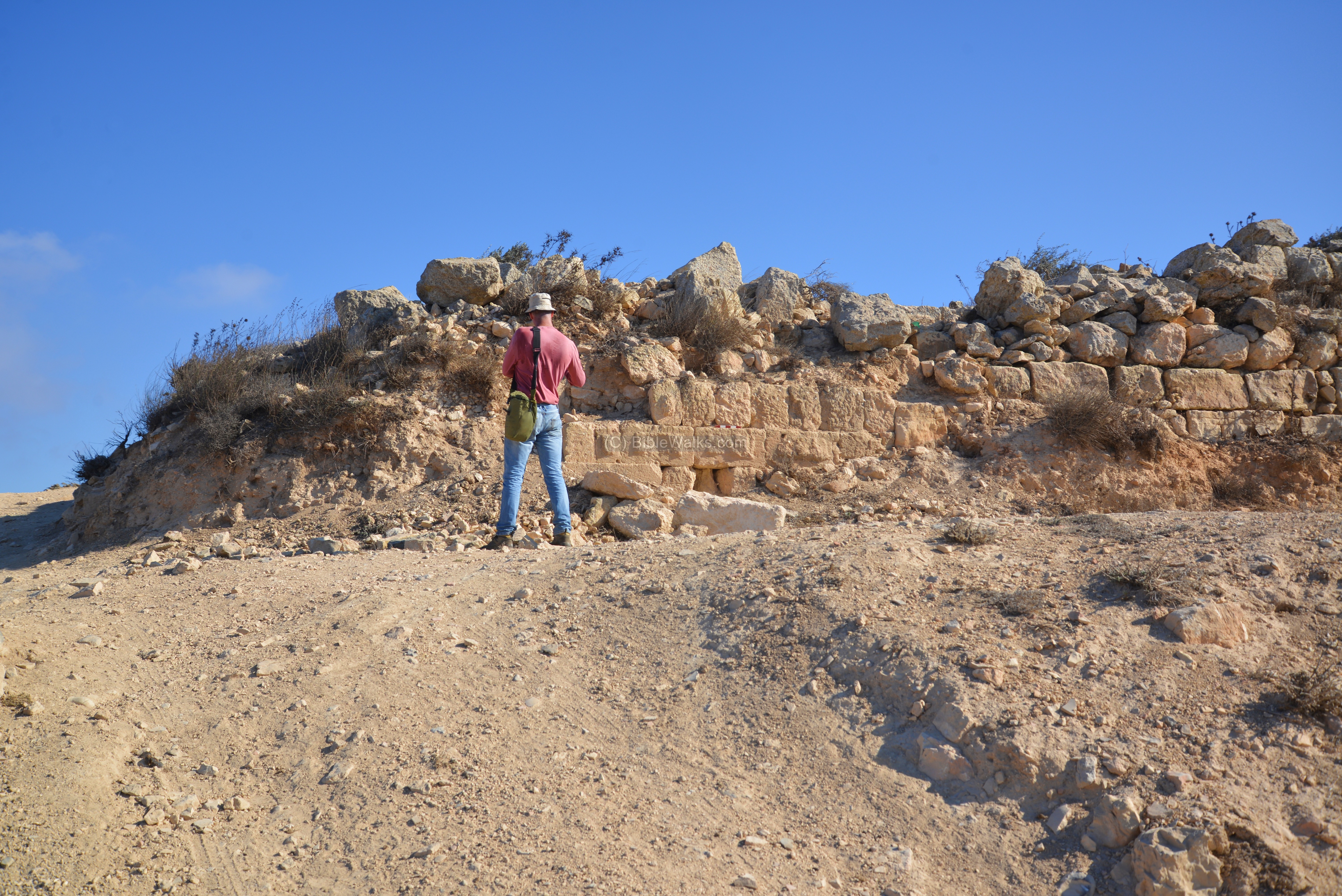
With Tel Aroma never excavated – only having been surveyed – it was sad to see that vandals had destroyed part of a Hasmonean wall that Dvir had found intact only several days prior to our trip. A photo from 2016 of Dvir standing at the wall that had just been destroyed can be seen HERE on Biblewalks, an amazing site which he collaborates with from time to time. He told us an interesting story of his encounter with a band from a nearby Arab village who demanded to know what he was doing, whereas their presence was the one which truly demanded explanations, as antiquity robbing is commonplace in such areas. Leaving the fresh ruination behind, after documentation, we made our way to the line of cisterns along the western side of the tel.

Within the immense cistern

We entered the first of the immense cisterns, lined with plaster to retain water, and marveled at the size. Measuring some 20+ metres long by approximately 10 metres both wide and tall, the cistern was designed to hold a maximum of some 2,500 cubic metres – quite a lot of water! Within the cool dampness of the cistern we learned more about the water system of this and other Hasmonean sites, with comparisons to Sartaba and Herodian Masada (which has even bigger cisterns). Exiting the cistern, we emerged blinking in the bright sun and made our way past the succession of similar cisterns until we reached the northern end, where the barely distinguishable remains of an aqueduct can be seen. At that time a gorgeous swallowtail butterfly floated past me and I spent a few minutes trying to get a good shot but to no avail. We then trotted back down the mountain, heading for the point where we started, but from a different angle. We passed a truly peculiar sight as we walked – a field disturbingly littered with plastic bags, with a fresh delivery drifting over with each fresh gust of wind over a distant garbage pile. Someone said that they spotted a fox but I saw nothing note-worthy until we reached a cool spring with its algae-filled pool.

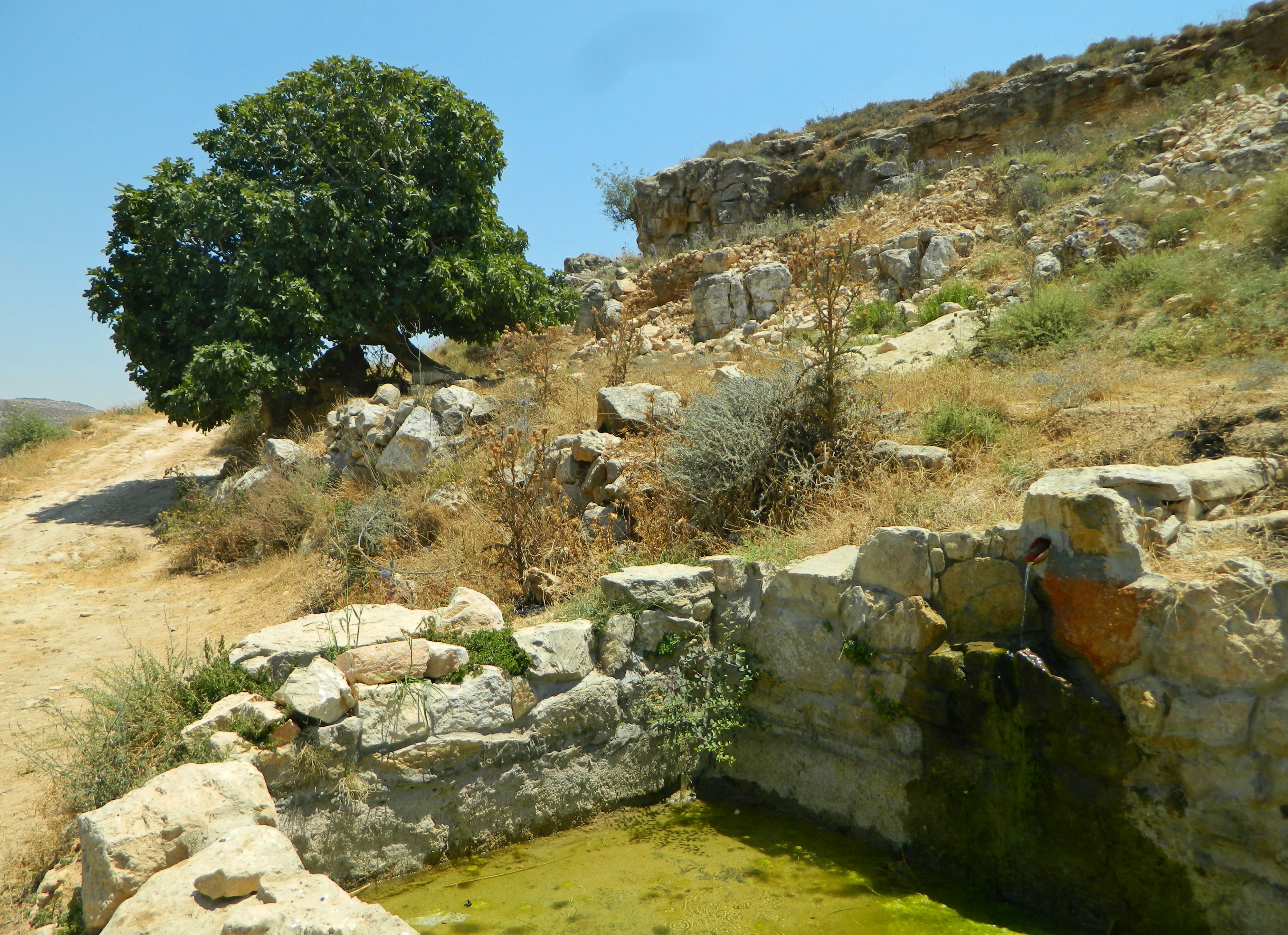
Lovely little spring

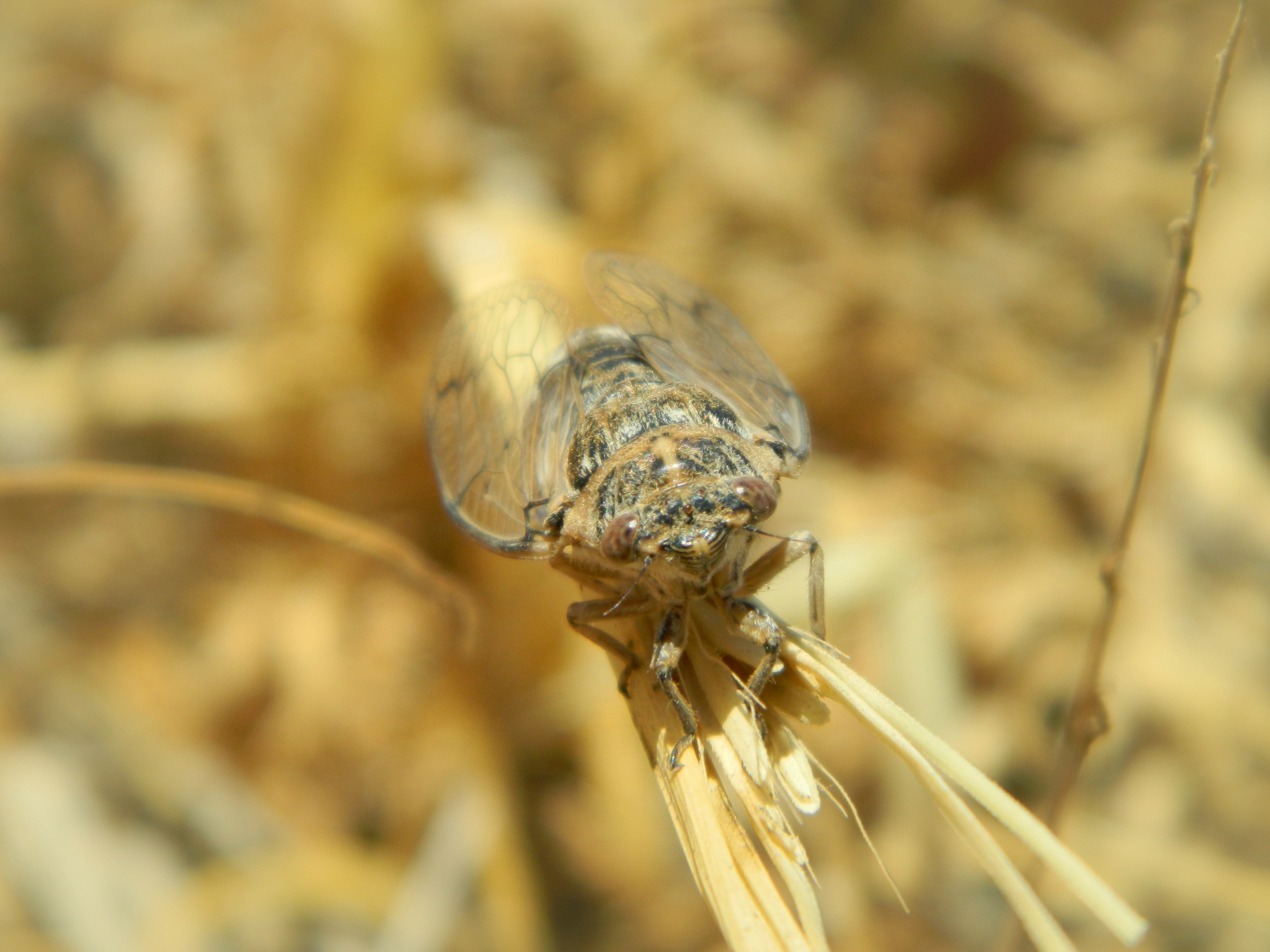
We spent a few minutes at the spring and then carried onward downhill – where I took pause to photograph a very calm cicada that tried deafening me with his calls (cicadas being one of the loudest insects, producing sounds of up to 12o decibels – the same as the report of a shotgun). Note the light-sensing eyes that look like tiny red dots on his forehead between his normal eyes.

Cicada

Dashing our way up the mountain towards Itamar, we boarded the bus hot and breathless, gulping down large quantities of water. But the day was far from over – we had another large site to visit: the ruins on Mount Gerizim overlooking Shechem. Driving back past the southern entrance to Shechem, we drove up Mount Gerizim and turned towards the Samaritan village of Luza – all familiar sights from when I was a soldier stationed in the region. The Samaritans were a sect of Jews that splintered off in antiquity and created their own form of Judaism, replacing several of Judaism’s core foundations with those of their own and naming Mount Gerizim as their holy city in place of Jerusalem. Samaritans have had a history of persecution and intermarriage with the local Arab populations which make them a very interesting portion of today’s Israeli demographic.

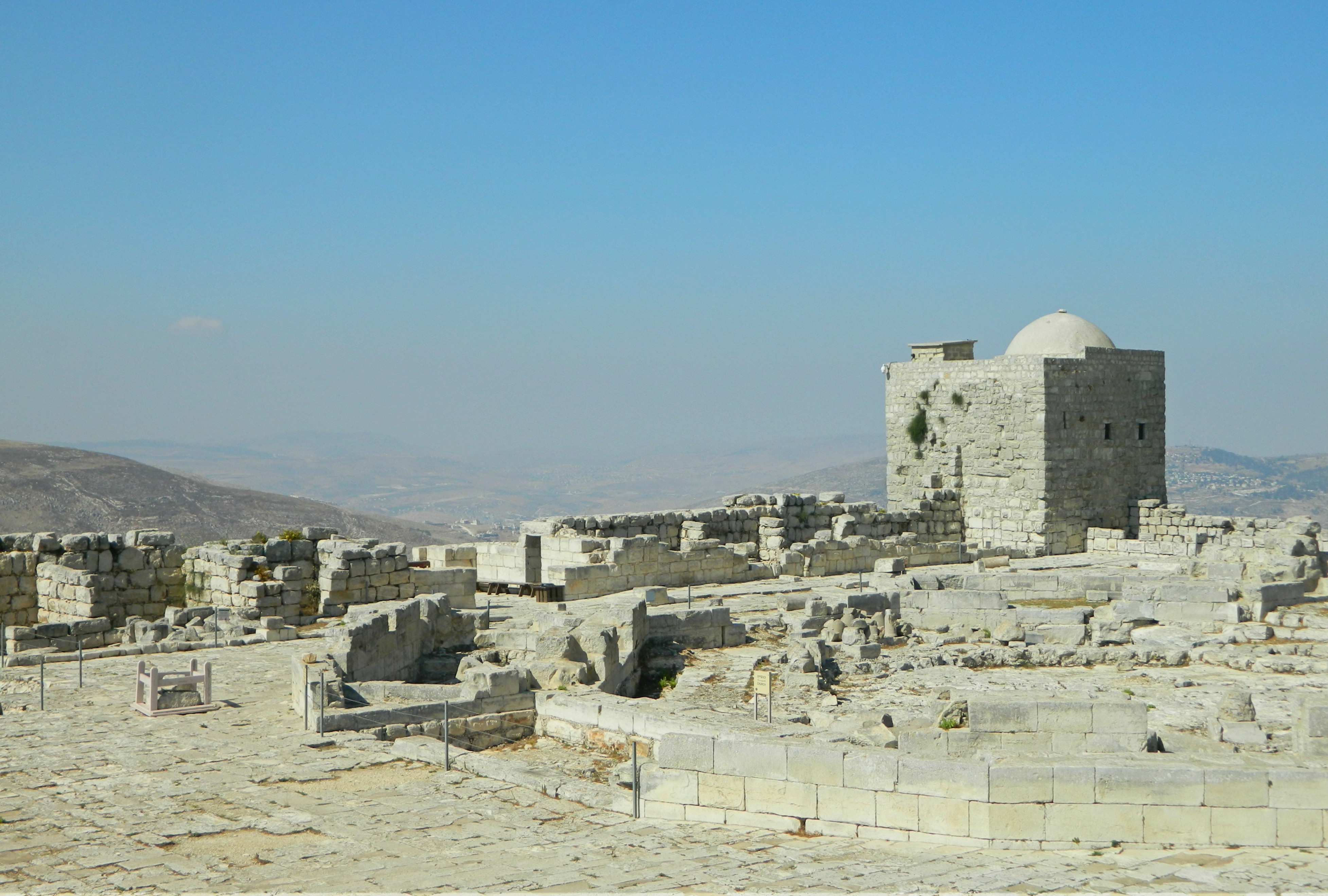
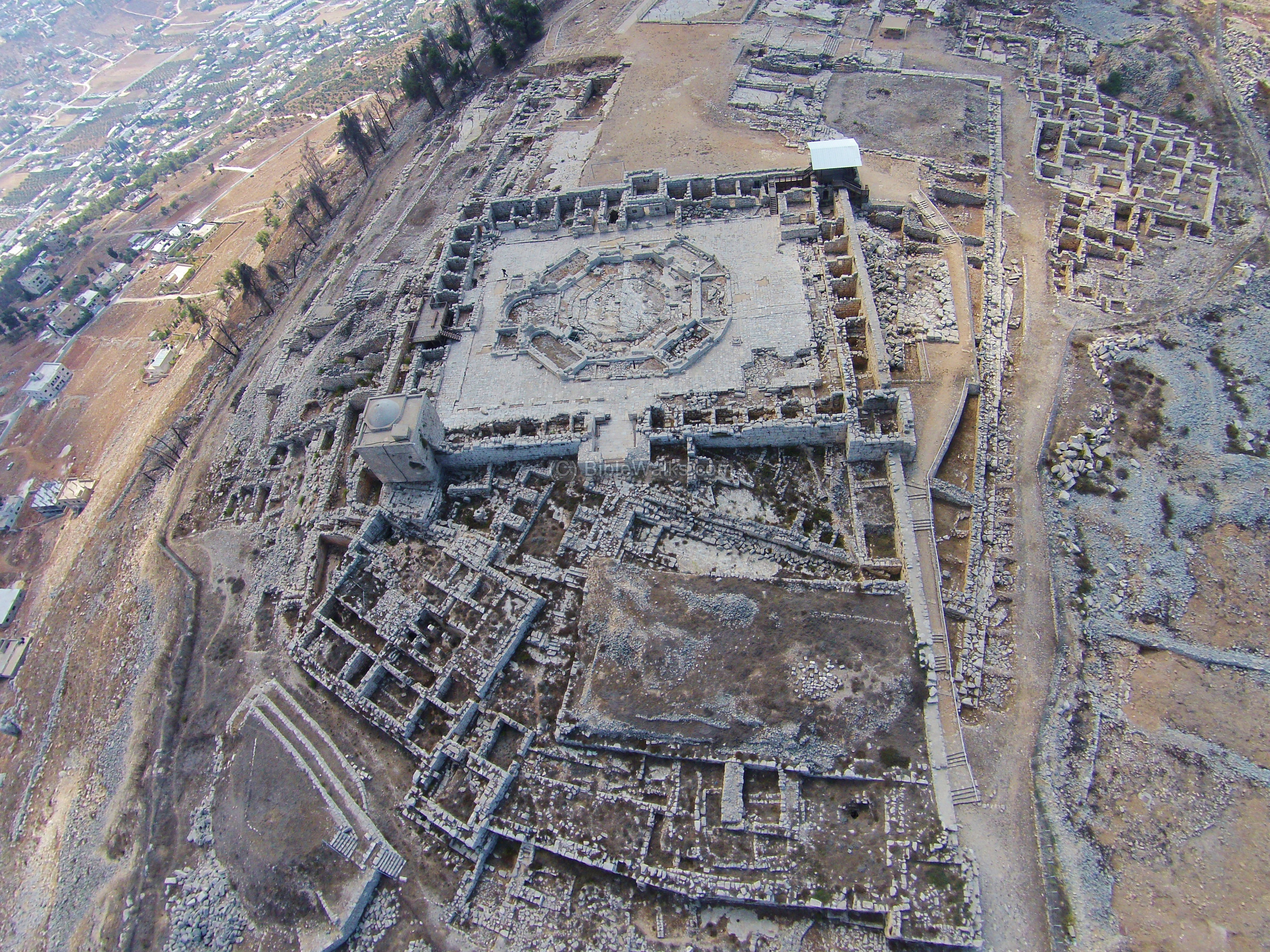
Hellenistic ruins of Mount Gerizim overlooking Shechem

Located on the southern of the twin peaks Gerizim and Ebal, as biblically mentioned, our tour was mostly that of the national park that has recently been established to preserve the ruins (aerial photograph can be seen HERE). Passing through Luza, we entered the park and disembarked to begin our trip. We began by breezing past the plentiful Hellenistic age ruins as we made for the lookout over Shechem and the Byzantine monastery complex. It was rather enjoyable pointing out the various sites of interest far below, including Kever Yosef and several houses of Christian and Muslim worship.

Byzantine monastery and sheikh’s tomb

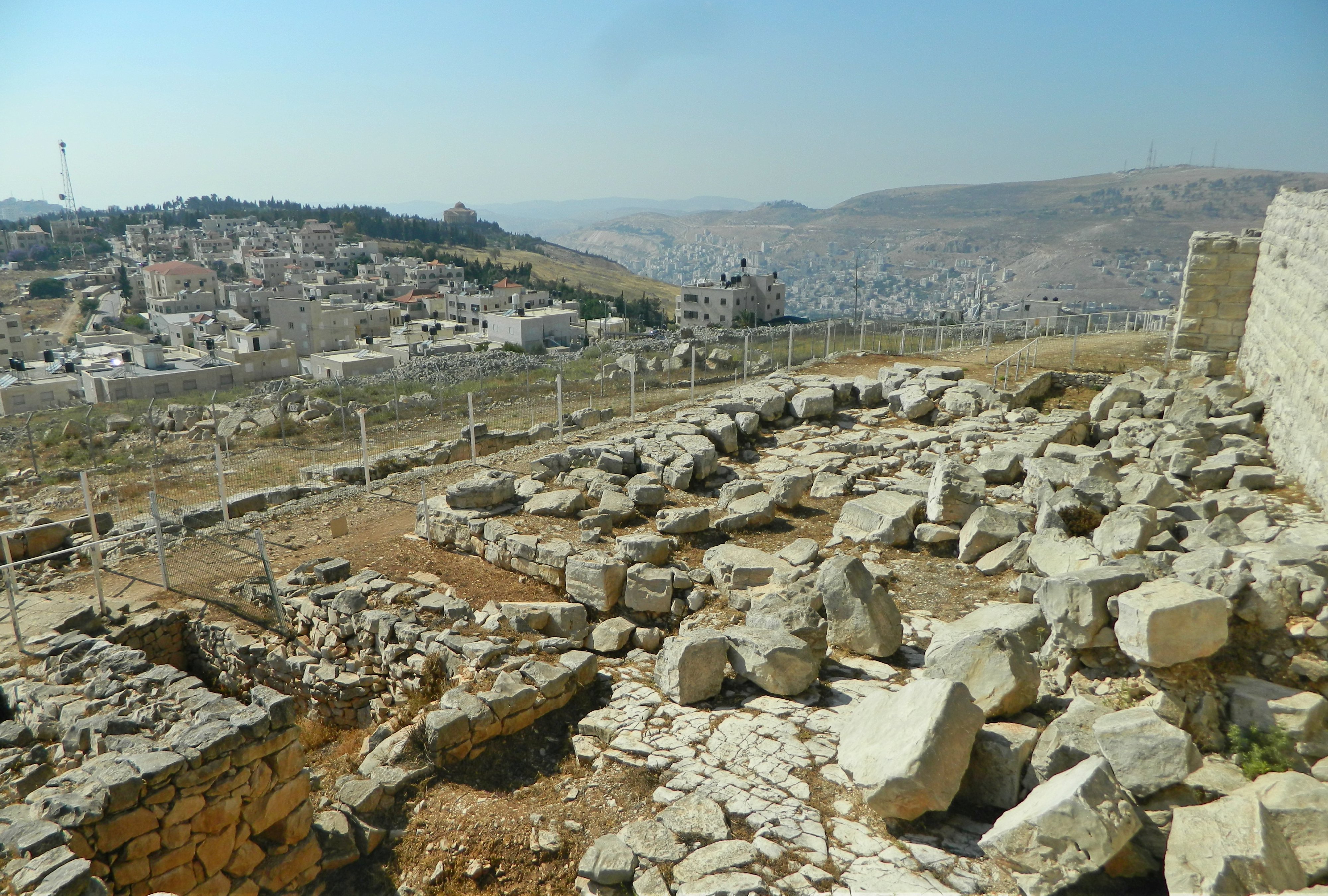
Sitting in the shade beneath the walls of the Byzantine monastery, we learned more about the site from Dvir who prepared us for what we were to see while in the comfort of the shade. Skirting the meagre Persian period ruins, we climbed up into the church complex and gazed about at the Byzantine ruins, with the octagonal church remains in the centre and the sheikh’s tomb built into the northeast corner tower. We admired the fallen architectural details, including Corinthian columns and floor mosaics, as we circled the site. Due to the length of the Tel Aroma part of the trip we were slightly pressed for time and weren’t able to explore too finely all the ruins that were laid out before us.

Mount Gerizim ruins with Luza in the background

It was when we were looking out at the Hellenistic ruins of a mansion that I noticed one of my favourite birds hopping about on the rocks – a male blue rock thrush. Glancing at the rest of the ruins, including some Samaritan holy sites, we headed back for the bus because the park was closing. Thus ended another long but exciting trips to the Shomron with Dr Dvir Raviv, I look forward to next year’s with bated breath!