Israel's Good Name

Archive for the ‘Israel’ Category

Gilgal Refa’im

In Golan, Israel on April 17, 2014 at 4:59 AM

This past Sunday my father and I took a little trip out to the Golan, to visit two sites side-by-side, one of them quite obscure and unknown. This post, the first half of our trip, is about a place called Gilgal Refa’im in Hebrew (or Rujm el-Hiri in Arabic). The literal translation of the site’s Hebrew name is “Wheel of Ghosts”, the word “refa’im” means “ghosts” in Hebrew. These circles of stones, sometimes referred to as the “Stonehenge of the Levant”, can be better appreciated via this aerial photo that I found on Flickr:
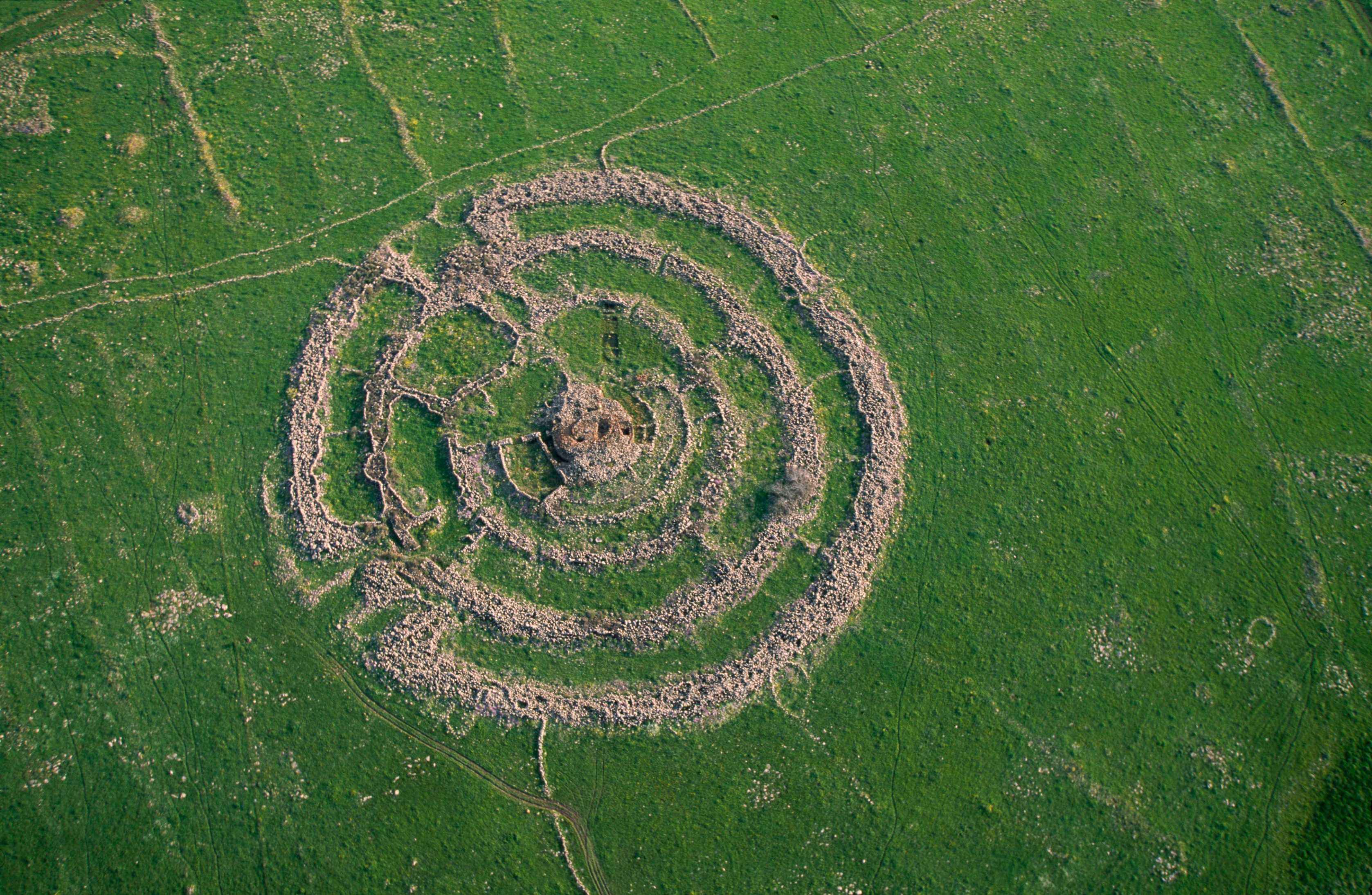
Gilgal Refa'im from above (photo IsraelTourism on Flickr)

Gilgal Refa’im from above (photo: IsraelTourism on Flickr)

An obscure site at least a kilometre away from any paved road, this ancient megalithic monument has been in our sights for years. The last time we searched for it was a few years back and we basically got lost out in the plains of the Golan. This time we planned in advance and, thanks to Google Maps, we knew exactly where to go. We left the house nice and early in the morning and reached the Golan in good time, climbing the elevation via the Bnot Yaakov Bridge, the main crossing point of the upper Jordan River throughout history. Driving on Road 808 south, we skipped the entrance to Gamla National Park (the second half of our trip) and pulled over at a little dirt road. We parked and began the hike to the Gilgal Refa’im, noting the most beautiful spring scenery.
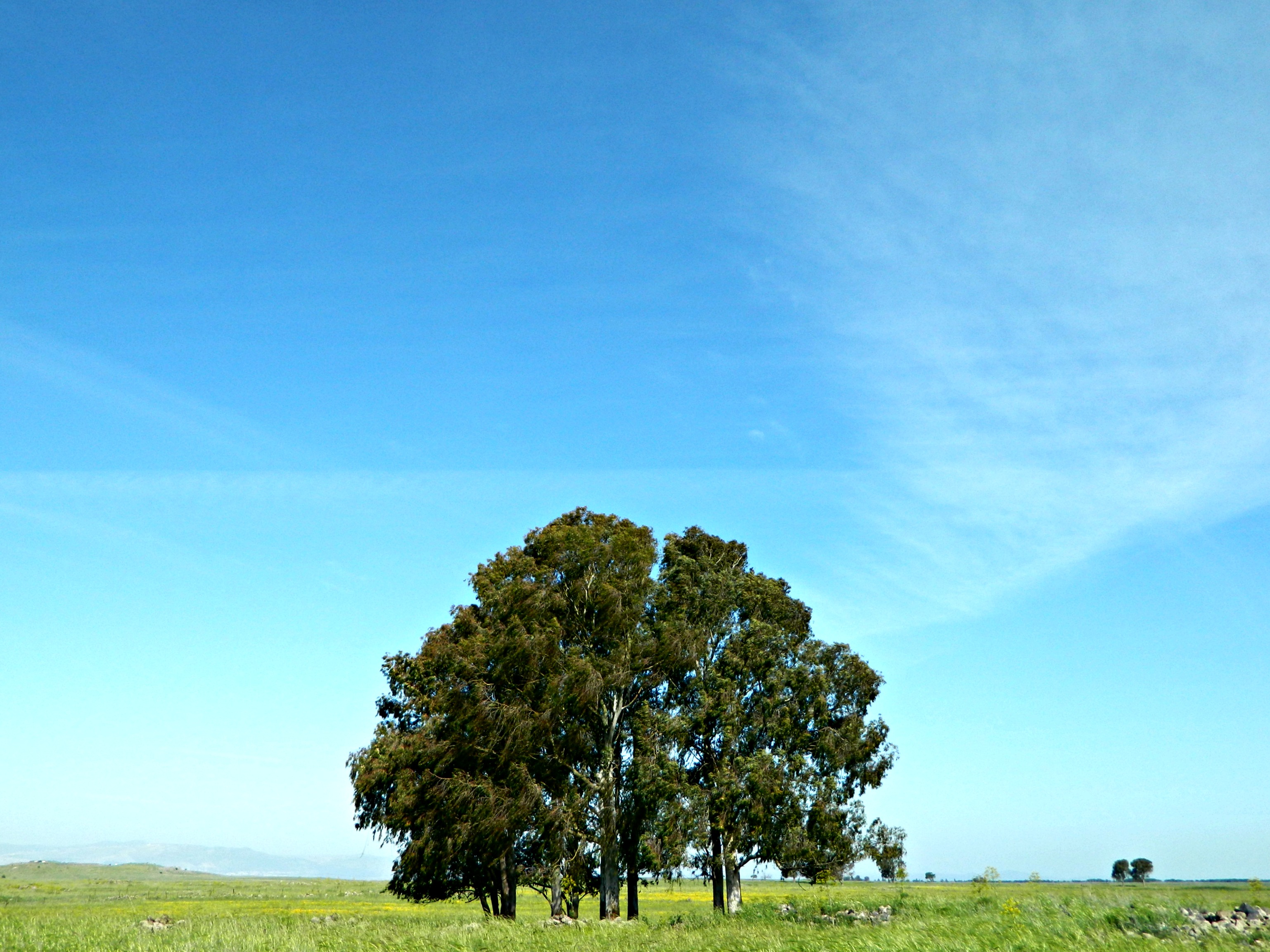
A tree in the Golan

A tree in the Golan

The first thing we noticed while walking was the incredible amount of little rock walls scattered all over. Here is one example, with wildflowers mixed in:
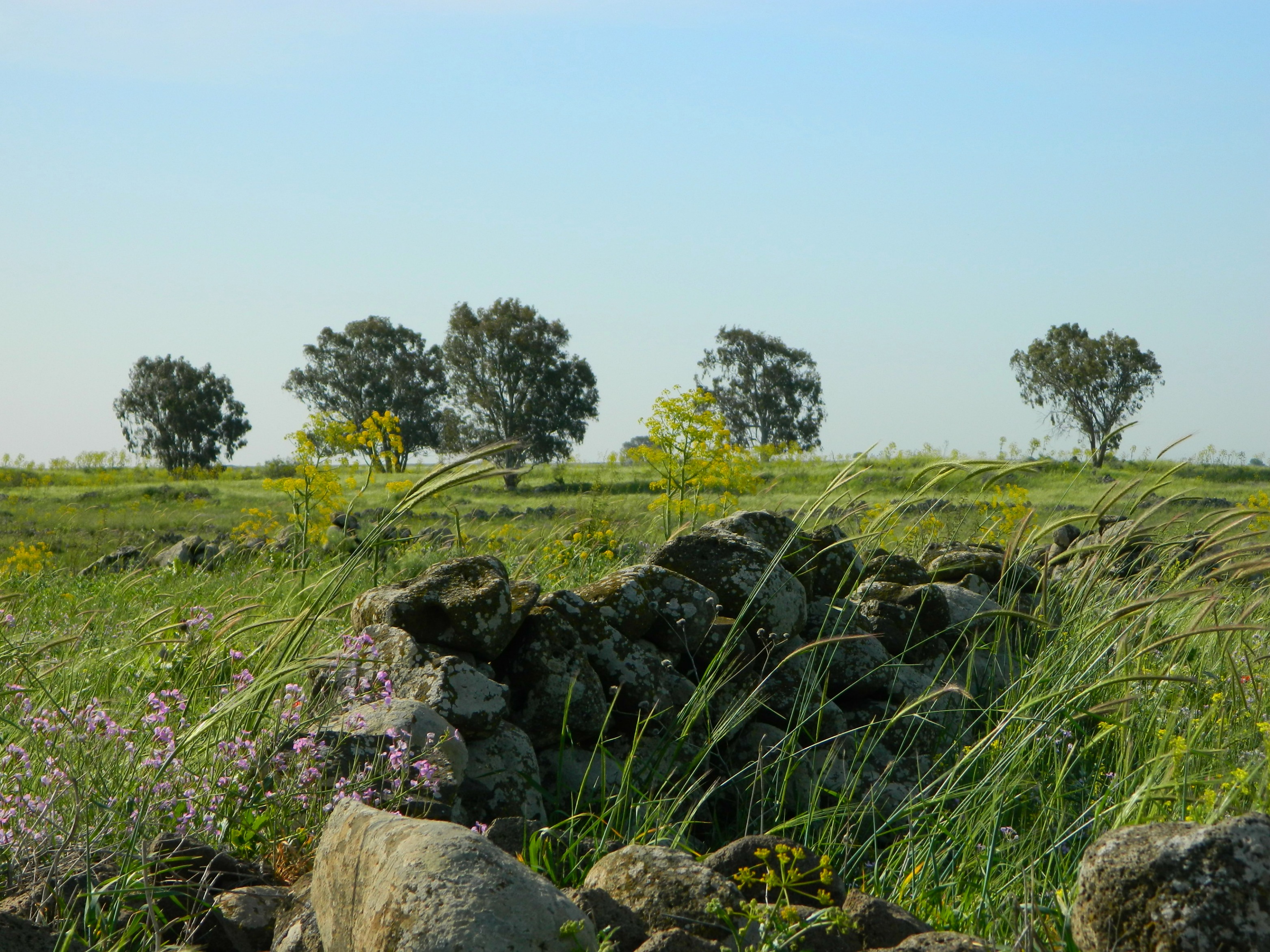
Little stone wall

Little stone wall

After a little while walking on the dirt road, stopping over and over to film and take pictures, we came upon a “hidden” trench-like spot lined with stones and currently filled with water. We surmised that it must be a place to hide tanks, from when the Syrians were entrenched in the area. And, to further solidify this theory, there was an old Syrian bunker just a little ways further.

Possible tank trench

Possible tank trench

Beside this “tank trench” I spotted the most magnificent thistle flower, and on it was a bee and a weird bee-like beetle. The visibility of the pollen was amazing, feast your eyes!
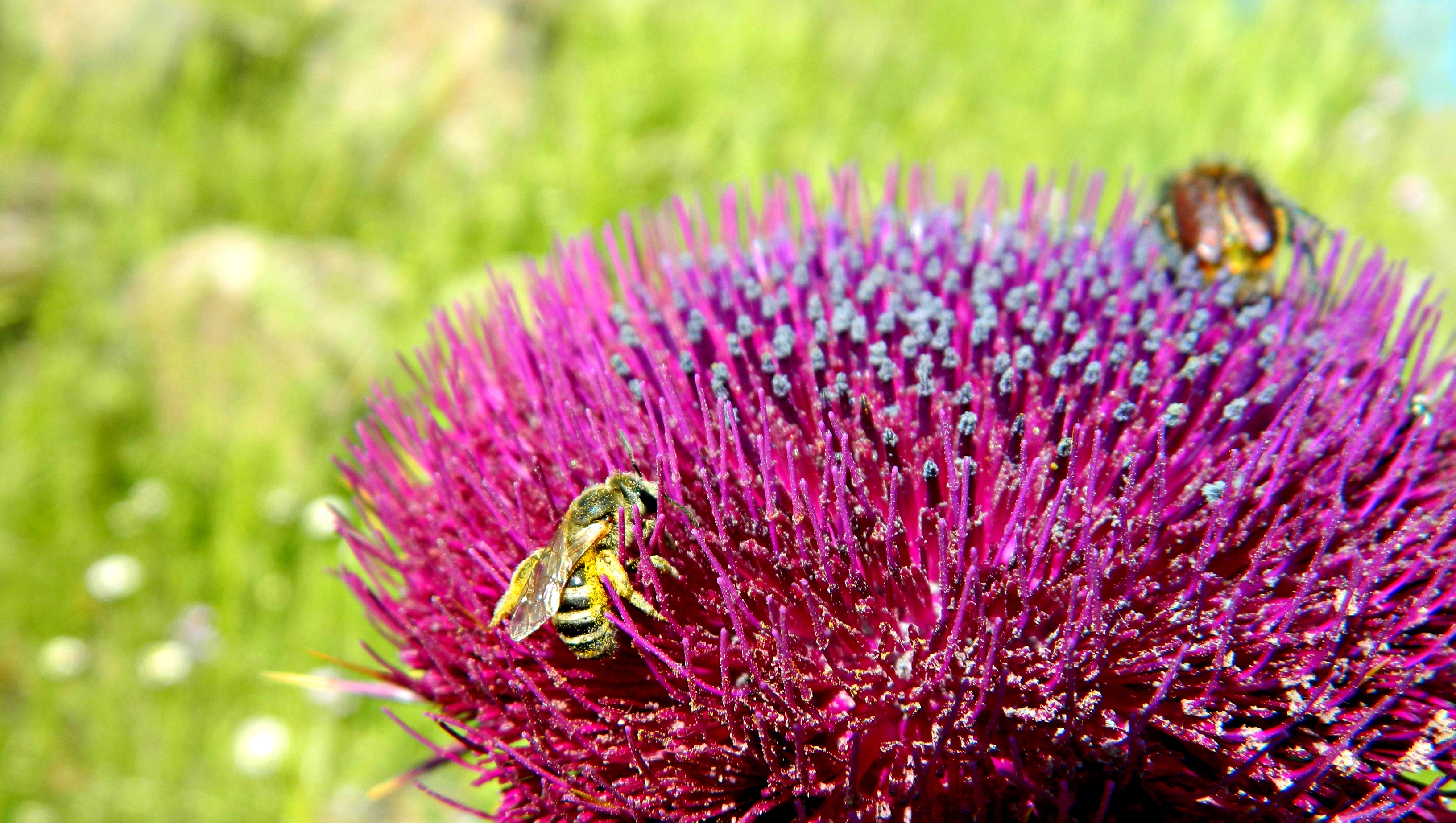
Thistle and bee

Thistle and bee

And, as I mentioned before, there was the Syrian bunker, made up of basalt rocks encaged in wire fencing. We walked up the trail and entered the old bunker.

Old Syrian bunker

Old Syrian bunker

Inside, after descending the sunlit entrance tunnel, it was really dark and so I turned on my phone flashlight to illuminate the gloom. What happened next surprised me. There was a flurry of wings and a little bat flew at my face, and then did an about-turn and flew back into the gloom. Then, again it flew at me, and then turned back. It kept up this back-and-forth so I called for the camera and opened the flash hoping to get a good shot as he approached. It didn’t come out terrible well, but there is no mistaking that little bat flying at the camera (click to enlarge):

The horseshoe bat in the tunnel

The horseshoe bat in the tunnel

We followed the bat into the darkness, using only the phone flashlight to see. I felt like this was a scene from a grim fairytale where we were being led into the dark and foreboding cave, similar to a scene in one of my favourite films, Pan’s Labyrinth, where Ofelia is led by a fairy into the labyrinth. Regardless, we followed the bat blindly through the old tunnels until we came to an exit and then it flew away. Researching Israeli bats I have decided that it was definitely a horseshoe bat, perhaps the Mediterranean specie. Here is a grainy shot of him hanging before disappearing:
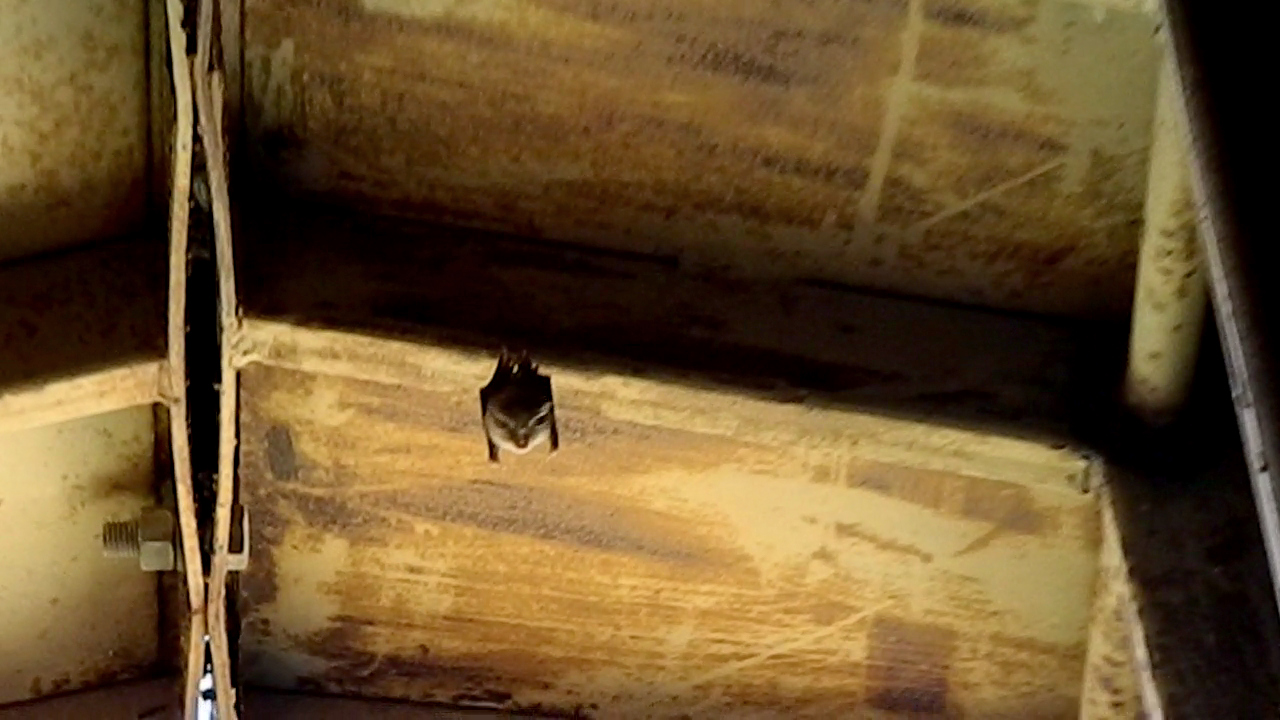
Horseshoe bat at the bunker exit

Horseshoe bat at the bunker exit

Emerging from the bunker at the upper level, where the rooftop trenches and gun turrets are, I once again marveled at the sweeping beauty of the area:

View from the bunker

View from the bunker

Descending from the bunker roof we hit the dirt road again and began to see signs warning soldiers not to shoot at the antiquities. And then, a turnoff and we were approaching the site. Not so visible from eye-level, we crossed the Daliyot Stream and found ourselves, at last, at the outer circle of Gilgal Refa’im. I climbed up to get a shot of the alternating stone walls and wildflowers that ringed the central mound.
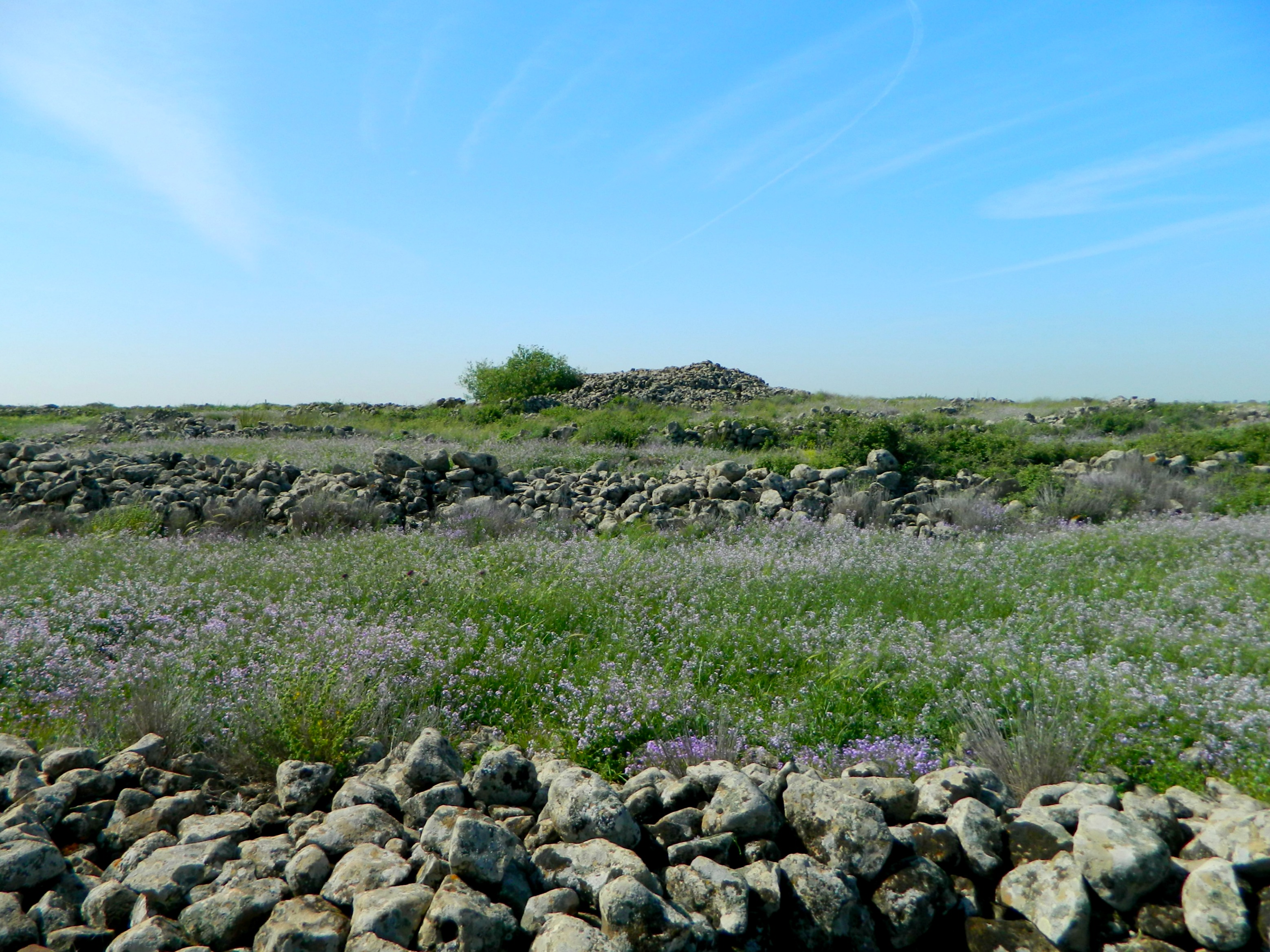
Circles of walls and flowers

Circles of walls and flowers

As we climbed the eight-foot high outer wall, and then the next wall, and the next, I noticed that the rocks were particularly ornamented by lichen, a great amount.

Interesting lichen

Interesting lichen

At last we reached the fifteen-foot high central mound and noticed a pit in the stone pile, but we kept walking around the top, taking pictures of the cool circles which ringed us. According to an Oxford archaeological guide, there are 42,000 stones that make up the entire site. My father suddenly had the idea to step into the pit, and when he did so exclaimed that there was a cave down there.

Looking down into the cave entrance

Looking down into the cave entrance

I followed him, scooting through the narrow passage, and we made ourselves comfortable in the little cave.

Within the little cave

Within the little cave

Whilst enjoying the coolness of this little cave, I figured I should probably look for more info on the site and I found this: Gilgal Refa’im is believed to be either a tomb, a stellar calender, a ritual centre, an observatory or several other theorised places perhaps even created by biblical giants. Basically, nobody knows what this site is for and that definitely adds to the intrigue of the place. If there was one thing I could see in history, if very well might be watching the biblical giants in the Golan – the terrain is just perfect to see giants thundering down the plains. At last we left the comfort of the mysterious little cave and climbed back over the numerous stone rings, heading back to our car.
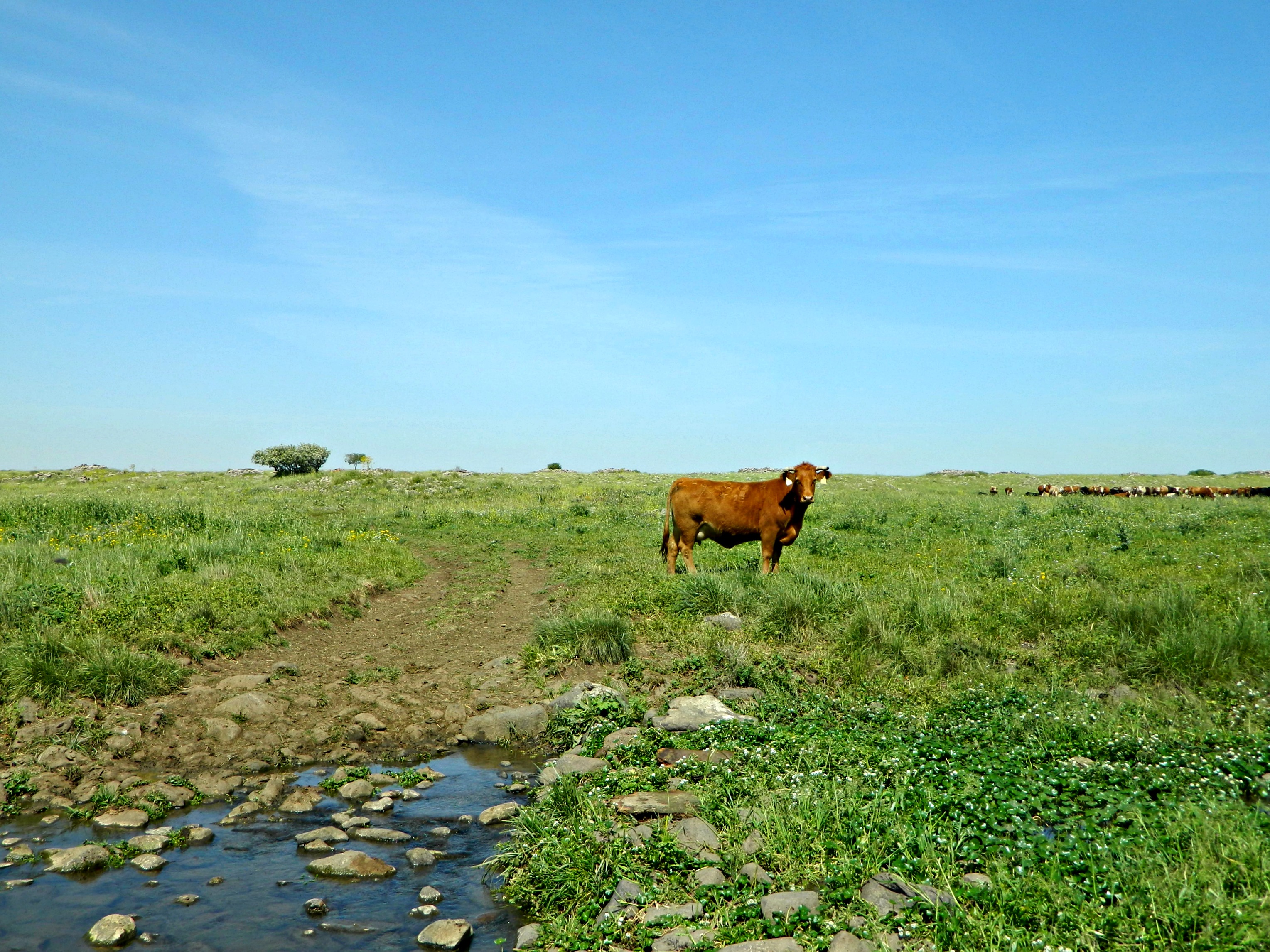
A cow at the Daliyot Stream

A cow at the Daliyot Stream

Next site, Gamla!

Cafarlet

In Coastal Plain, Israel on April 6, 2014 at 5:20 AM

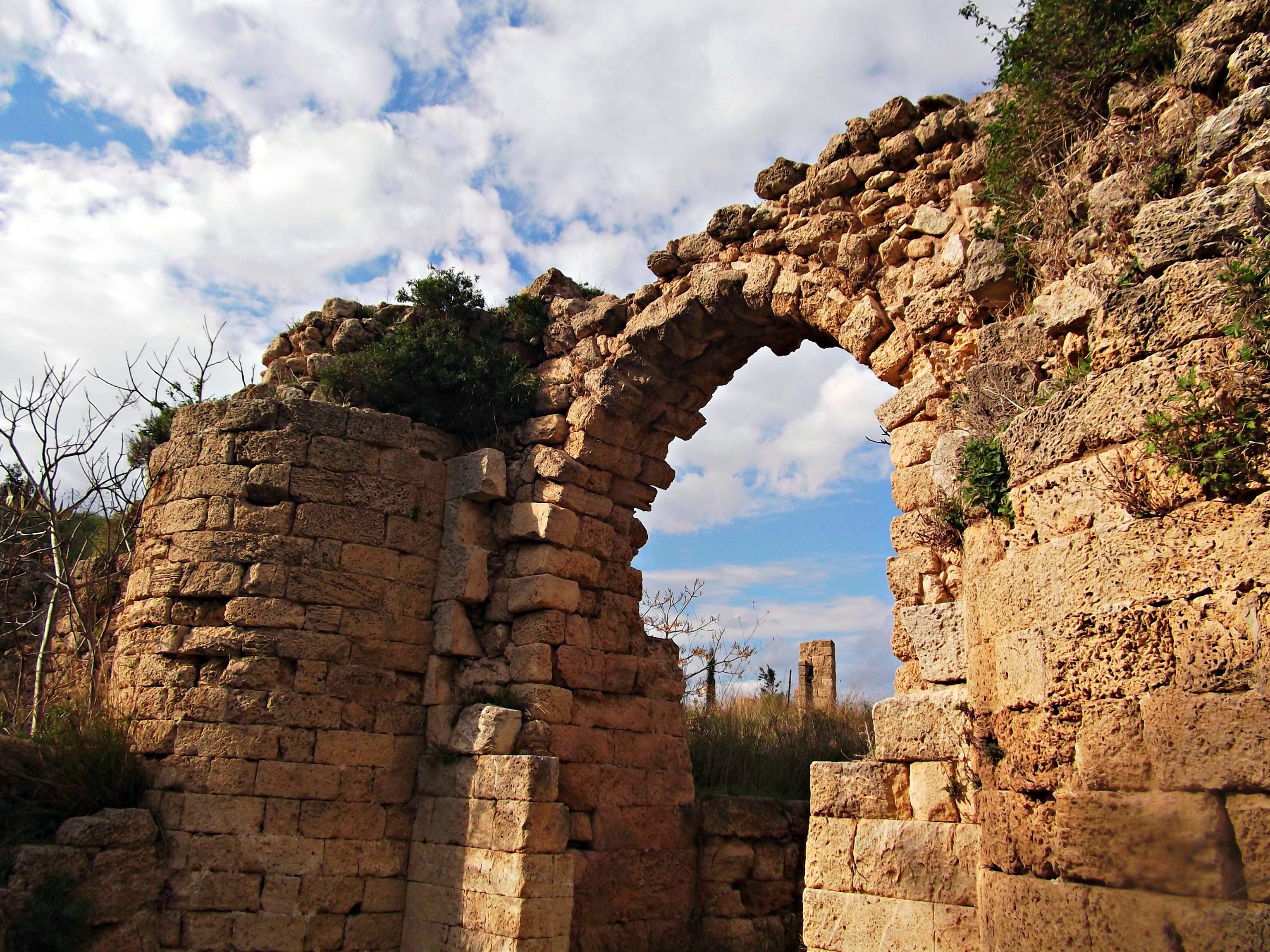
Continuing with my hike from Tel Dor, heading for the Crusader castle Cafarlet (also known as HaBonim Fortress), I first came upon interesting finds while on a hill alongside Road 2, the Coastal Road. Across from some memorial sculpture atop a precipice overlooking the road. I stumbled upon partially concealed remains of an ancient quarry, separated from the rest of the large quarry nearby. I’m assuming the Crusaders must have hewed stones from this sandstone quarry to build the nearby castles.

Just a glimpse of the quarry remains

Just a glimpse of the quarry remains

Some half hour later, after crossing a little cemetery, I laid eyes on the eastern side of Cafarlet, the portion also visible to drivers on Road 2. A little history about the castle itself, Cafarlet was built in the early 1200’s by the Crusader’s Principality of Caesarea and was then given, in a deal, to the Hospitaller Knights in 1213. The other leading Military Order of that time, the Templers, then purchased Cafarlet in 1232 and it remained in their hands until the castle’s capture by the Muslims in 1265. Following recapture by the Latin Christians, Cafarlet was built up again by the Templars and then finally abandoned in 1291 when the Crusades ended and the Crusaders returned to Europe.

Cafarlet from the eastern side

Cafarlet from the eastern side

The Crusader castle, a slightly different build than the typical Latin fortress of its time, was built on the remains of an Arab fortress built in the 700’s built to protect from Byzantine invasion. Even in the time of the Crusades, the Byzantines were a regional superpower, and have been for hundreds of years. Cafarlet was built just a few kilometres from a slew of Crusaders castles (from Château Pèlerin and Le Destroit to the north to Merle and Caesarea to the south) which were strung along the coast, safeguarding the road for pilgrims in the Kingdom of Jerusalem. Approaching the castle I came upon numerous remains which seem to be from an even earlier Roman/Byzantine period of occupation. Here, at the foot of the castle, is a burial cave carved into the rock. When I poked inside I discovered ten hewn crypts with their lids propped up.

A burial cave

A burial cave

Also outside the castle are the remains of Byzantine winepresses, with intricate tile work covering the floor – only visible on the lowest step in this picture:

Ancient tiled winepress

Ancient tiled winepress

Approaching the castle and turning to enter via the southern wall, I looked down to see this interesting stone “foot” at the southeast corner – atypical of the Crusade-era construction in the Holy Land:

Interesting castle construction

Interesting castle construction

And then, I saw it, the grand arched entrance, flanked by rounded bastions, and in I went.

Cafarlet's grand entrance

Cafarlet’s grand entrance

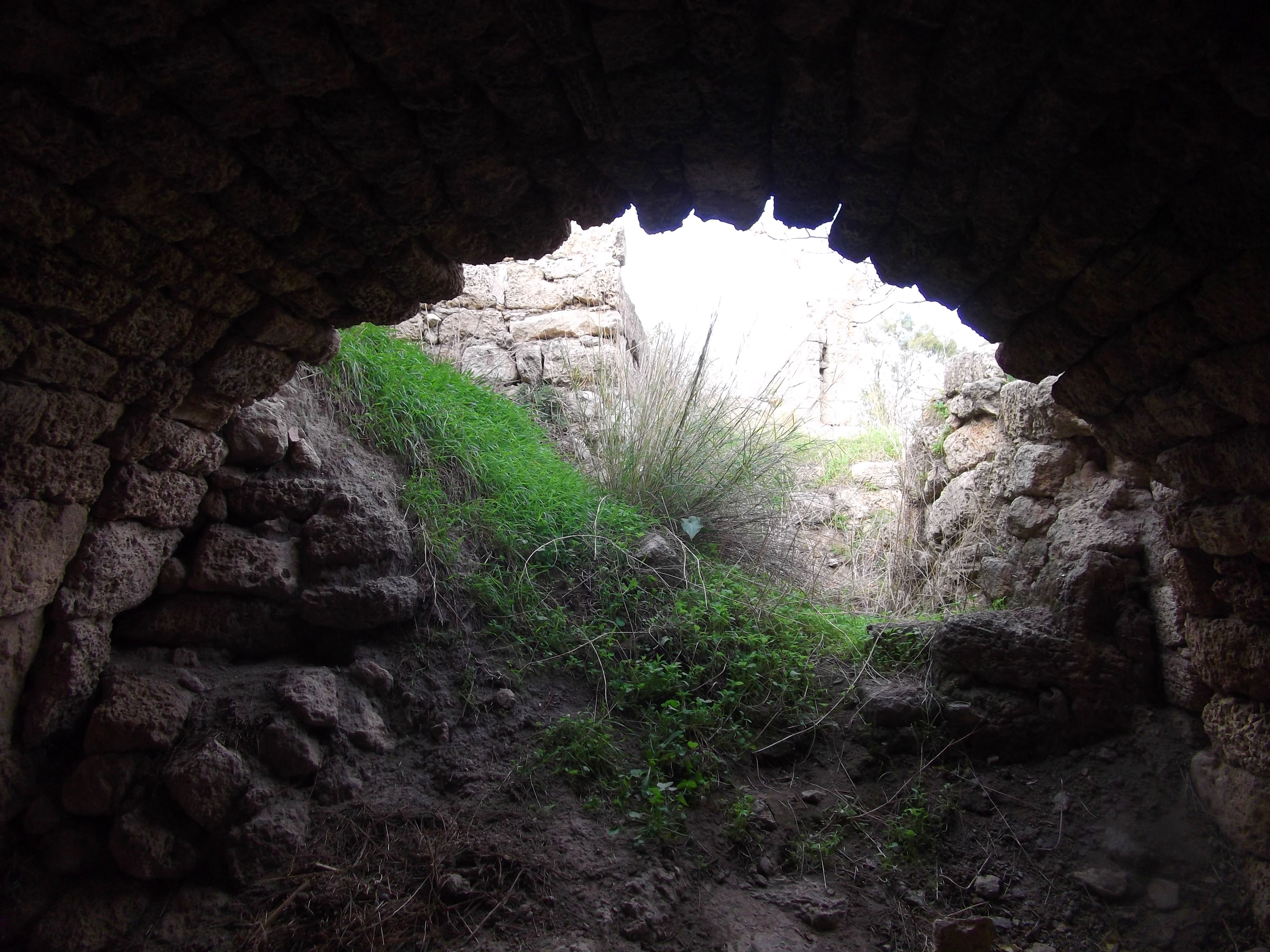
What I first noticed about the interior of Cafarlet is that it’s due for a thorough excavation. For example, on the western side I had entered an arched chamber which was partially filled in with rubble, dirt and grass:

Rubble-filled chamber

Rubble-filled chamber

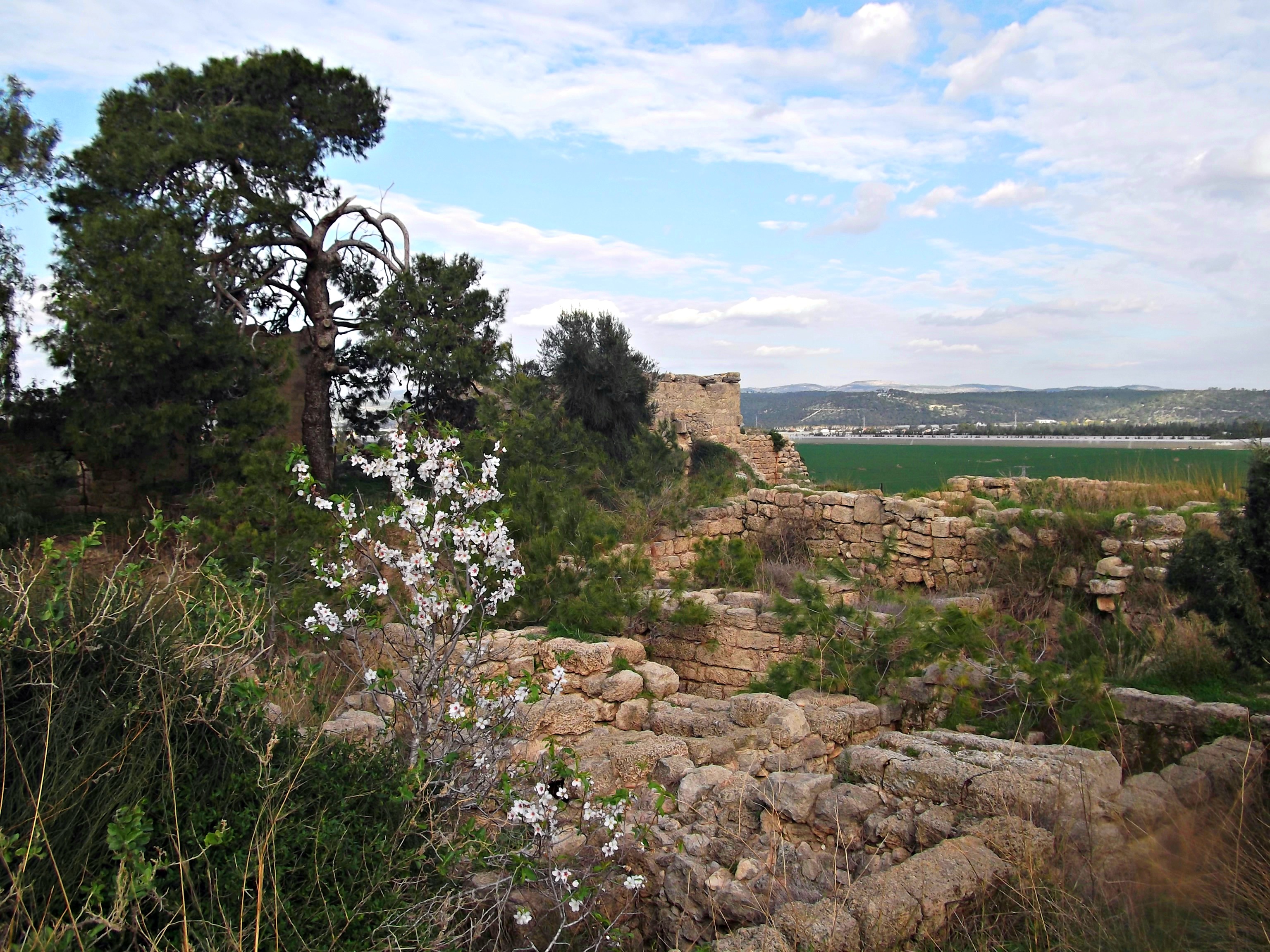
Here, looking northeast towards the centre of the castle, numerous interior walls can be seen, however they are interspersed with small trees in a battle for space:

Beautiful but overcrowded interior

Beautiful but overcrowded interior

A closer look at the partially submerged walls:

Partially submerged walls

Partially submerged walls

Since the castle isn’t in the care of any government body, the site is free to enter and also mildly dangerous. There were numerous locations where I noticed sinkholes and cisterns hidden in the lush grass. Even walking on some of the walls seemed risky in fear of collapse. Crossing over to the eastern side near the arched entry, I felt inclined to explore the large arched chambers such as this one:

Arched room

Arched room

Even finding a painted ladder leaning conveniently on the inner wall of one chamber, I thought I’d have a look around. However, when I put a cautionary foot down on the top step, the rotten wood gave way and I was forced to abandon my plan, as you can see from this POV shot:

A POV shot of Crusader danger

A POV shot of Crusader danger

Deterred from the great rooms on the eastern side, I crossed back over to the western side and found a safer alternative into another arched chamber – old crooked stone steps:

Within another arched chamber

Within another arched chamber

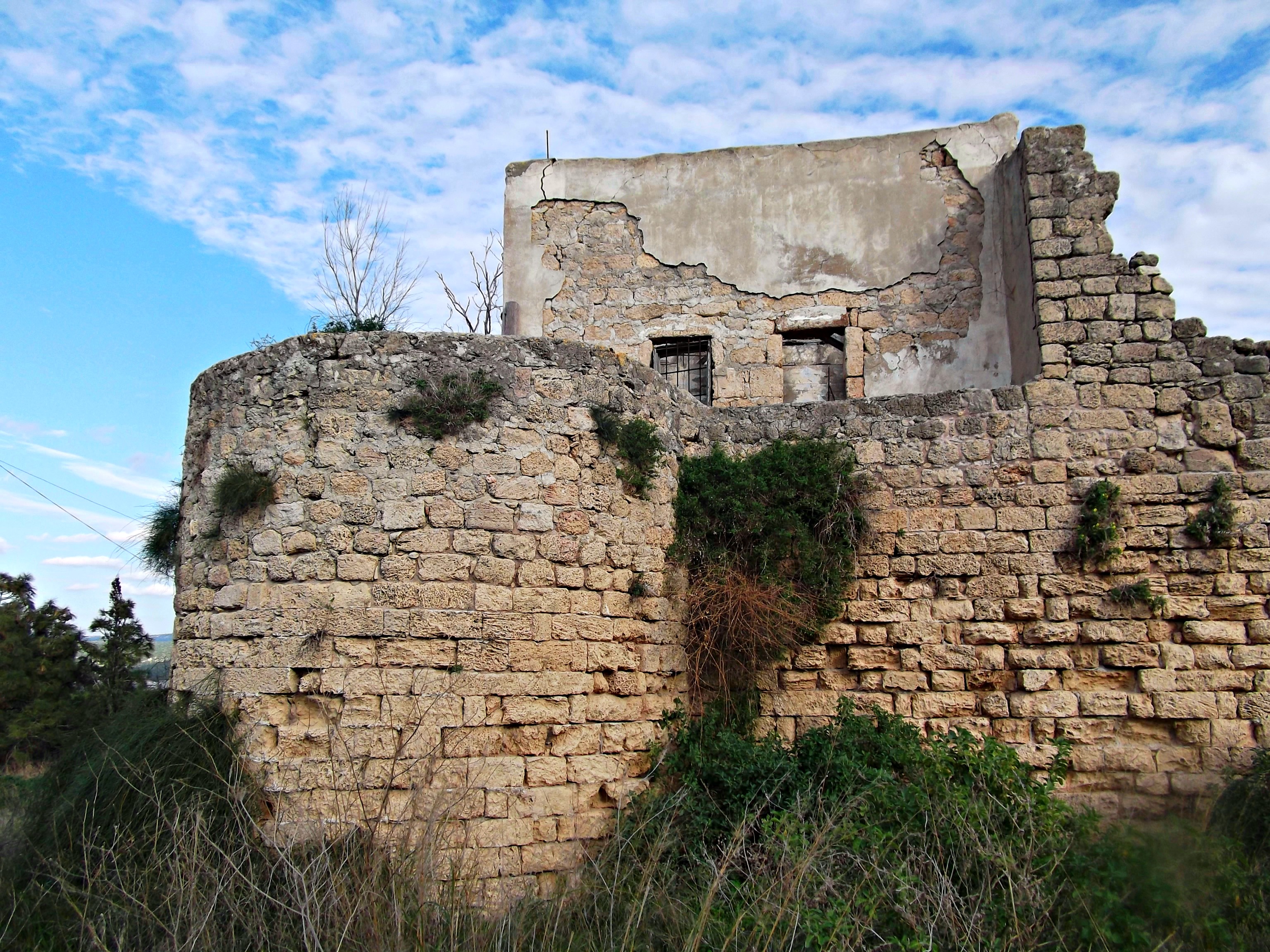
Exploring both that and the adjacent room, I emerged and continued to the northern side of the castle. What I came upon next was surprising. Modern construction had been done and the remains of a house or two, reportedly by Arabs before 1948, are now joined with the ancient Crusader ruins. When I left the castle, and walked along the outer walls on the northern and western sides, the remnants of modern plastering and window frames can be seen. I wonder what will become of those more recent ruins…

The northwest corner

The northwest corner

With that I left the remarkable ruins of Cafarlet, crossing off yet another Crusader ruins on my to-see list and then briefly contemplated a quick visit to HaBonim Nature Reserve before deciding against it and walking the long, grueling journey to the bus stop on Road 4, putting an end to my long and interesting day of coastal exploration.

Tel Dor

In Coastal Plain, Israel on March 30, 2014 at 3:35 AM

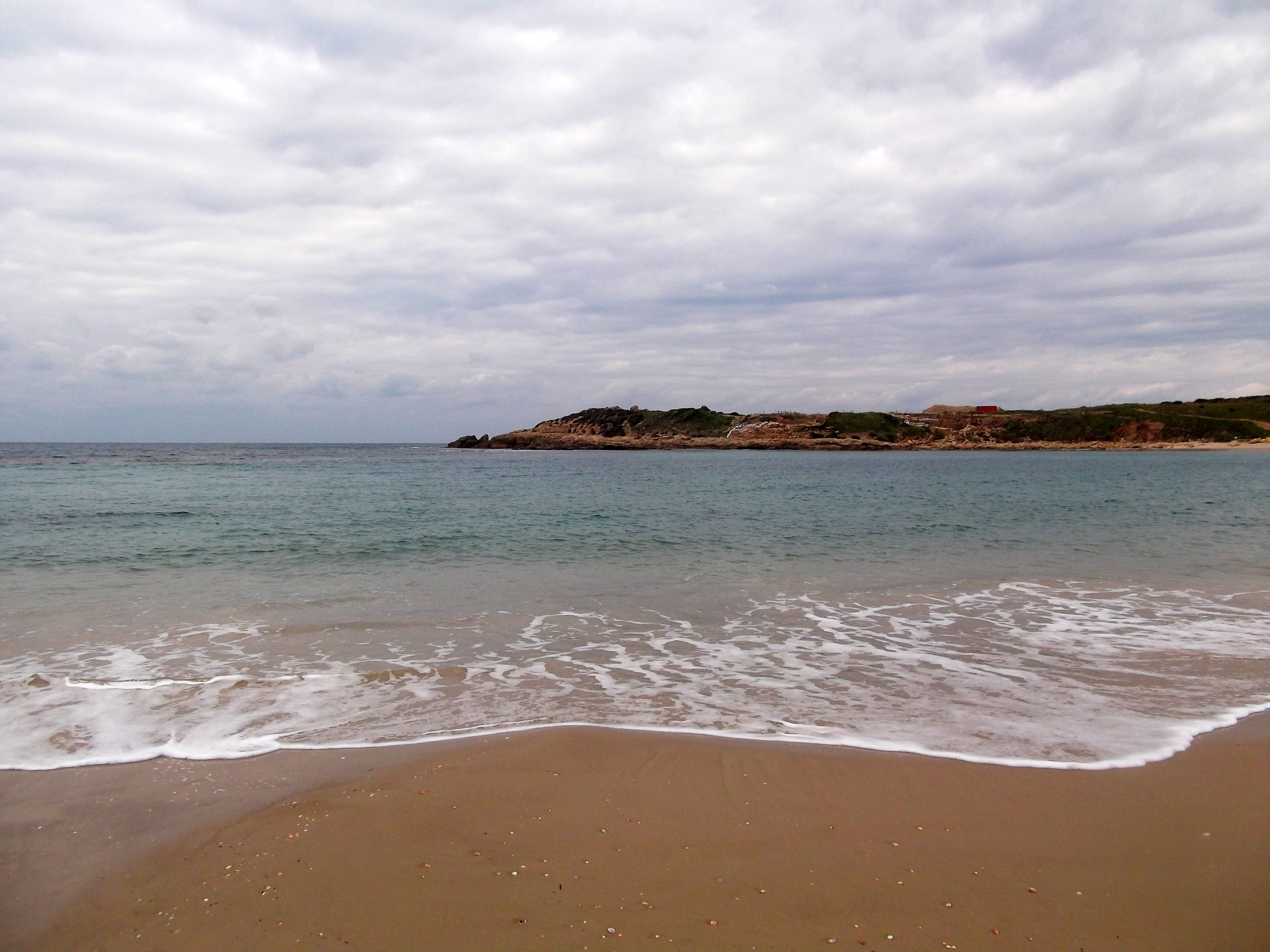
Following my visit to the Carmel Caves at the Nachal Me’arot National Park, I got on a bus heading south and ended up – quite accidentally – at Tel Dor. I had intended to find my way to Cafarlet, an impressive Crusader castle on the side of the Coastal Road (Road 4) but, alas, I overshot and found myself looking at the hilltop ruins of Tel Dor from across a picturesque little bay some 30 kilometres south of Haifa.

Tel Dor from across the bay

Tel Dor from across the bay

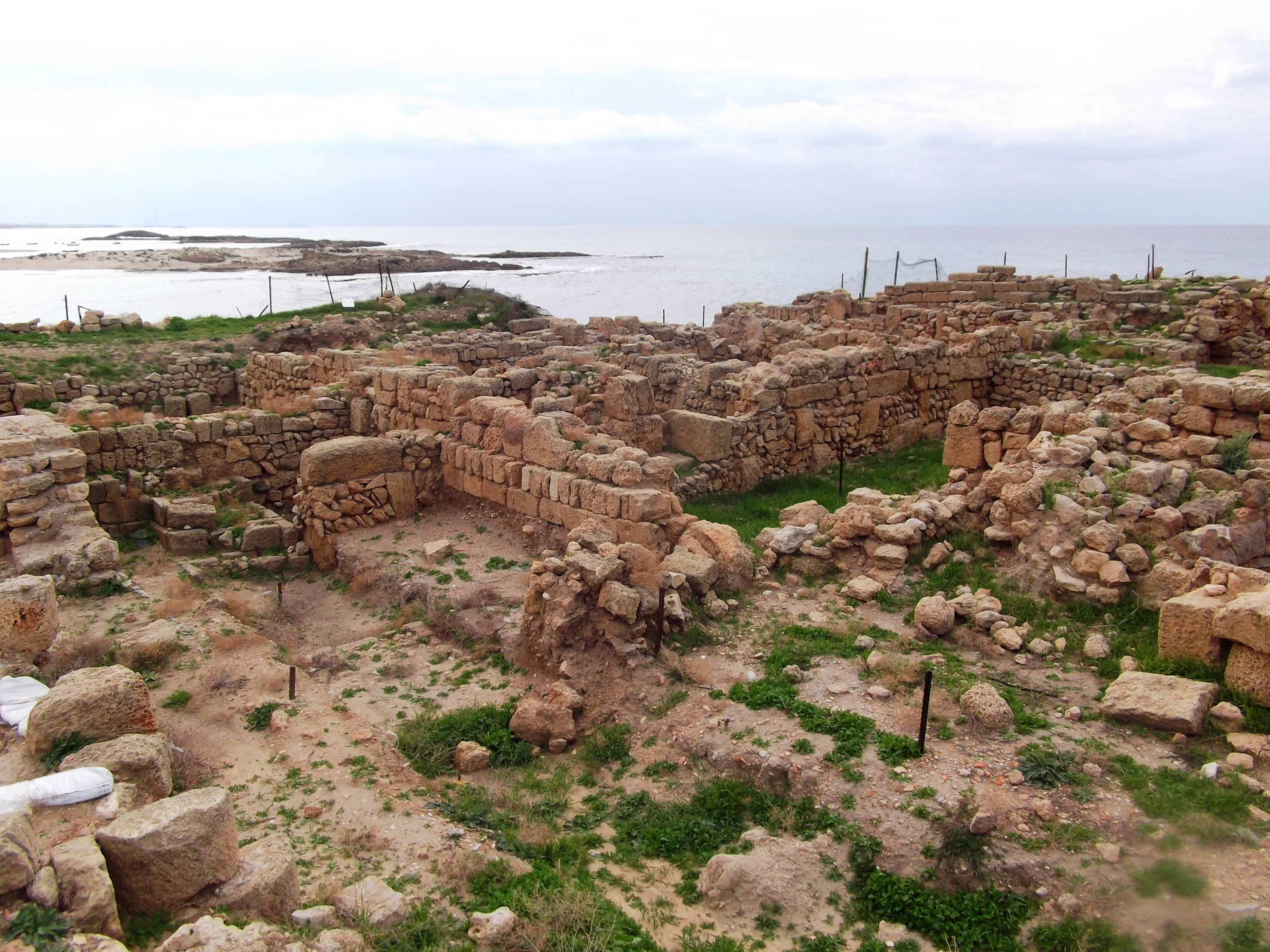
Set in such a beautiful place, nestled between tall coastal grass and the relatively calm Mediterranean Sea, the sun played a frustrating game of hide-and-seek as I toured the archaeological site. Climbing up the tel, I came upon the hilltop remains of the storehouses and public buildings which serviced the port, and the acropolis.

Tel Dor ruins

Tel Dor ruins

Continuing to the end of the small peninsula, I came upon the meagre remains of a small Crusader stronghold, the Merle Castle, built and owned by the de Merle family of French nobility. In 1187, Merle Castle was conquered by Saladin and by the end of the century, the Templars took command of the stronghold.

Merle Castle remains

Merle Castle remains

While the castle ruins are few and far between, there are fascinating rock-cuttings in the bedrock near sea level. Here, a chamber is carved into the porous rock, with several curious entry points:

A chamber cut into the rock

A chamber cut into the rock

And at the far end, where rock and water clash in the harbour area, there are numerous interesting cuttings made, some underwater even. Deep troughs, large squares and more gouged out of the rock, used perhaps by the Athenians as their important port city in the Levant.

Cut rock in the harbour area

Cut rock in the harbour area

After a little snack I turned back to the ruins, looking down at the remains of a large Roman temple which sat at the water’s edge. The Romans built up Dor, or Dora as they called the place (i.e. Doric columns), by Pompey’s lieutenant Gabinus, creating an autonomous port city similar to Gaza and Yafo (Joppa) in those times.

The Roman temple

The Roman temple

When rule was transferred over to King Herod some 2,050 years ago, Dor became overshadowed by neighbouring Caesarea whose harbour was deeper and thereby a better choice for a port. By then Dor became a less important regional city and, excluding the Crusader stronghold and the site of French emperor Napoleon’s camp after retreating from their 30-day siege on Akko in 1799, became a place of the past.

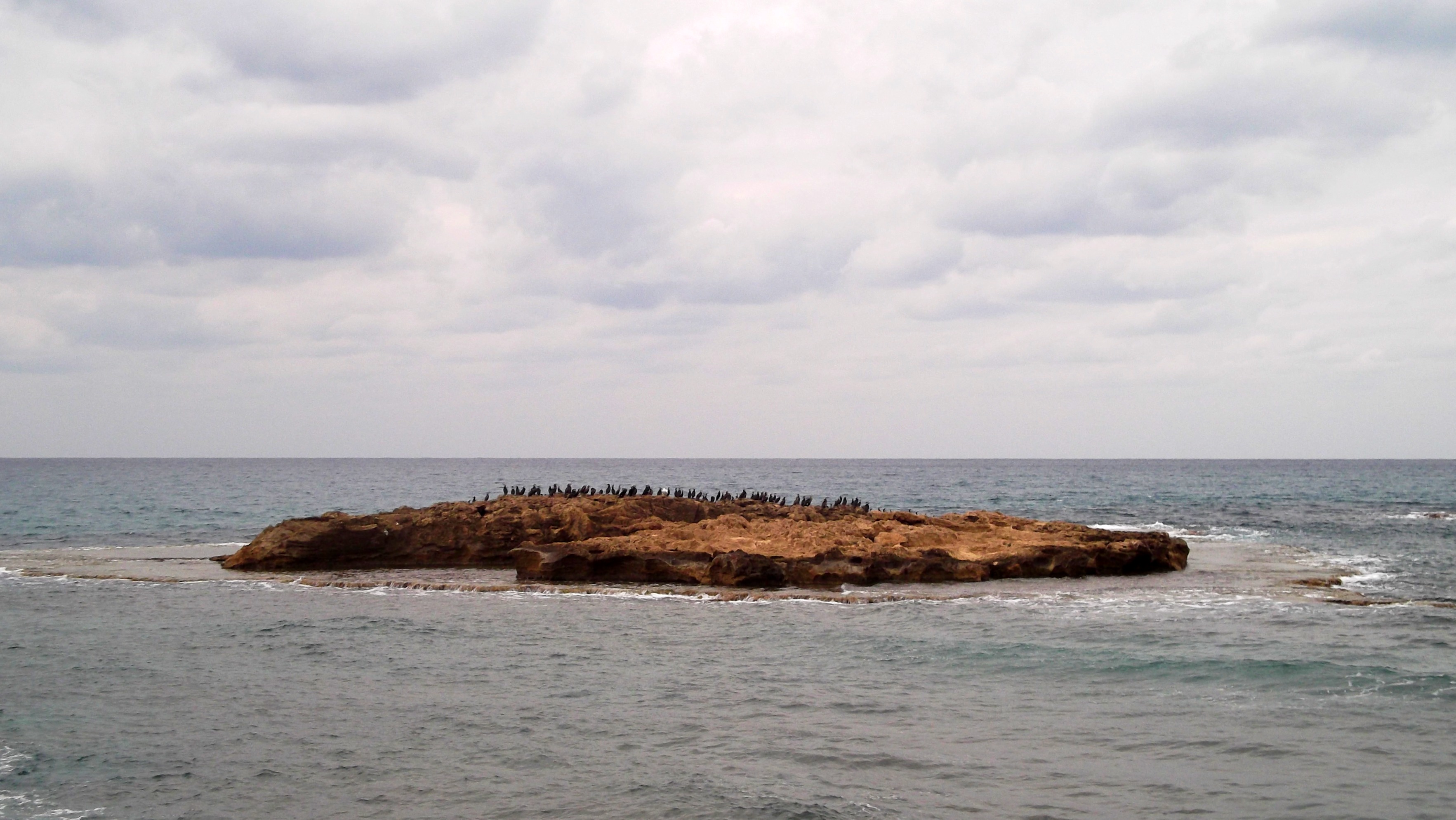
Cool little island flocked with seabirds

Shetafit Island flocked with seabirds

Walking along the coast, the ruins quite literally fallen into the water similar to the ruins of Ashkelon, I passed by the docks and the continuation of public buildings (such as a bathhouse). At the northern end of the site, climbing back up the tel, I retraced my steps and then walked south-east towards the scattered remains of the residential areas of Tel Dor.

Climbing back up the tel

Climbing back up the tel

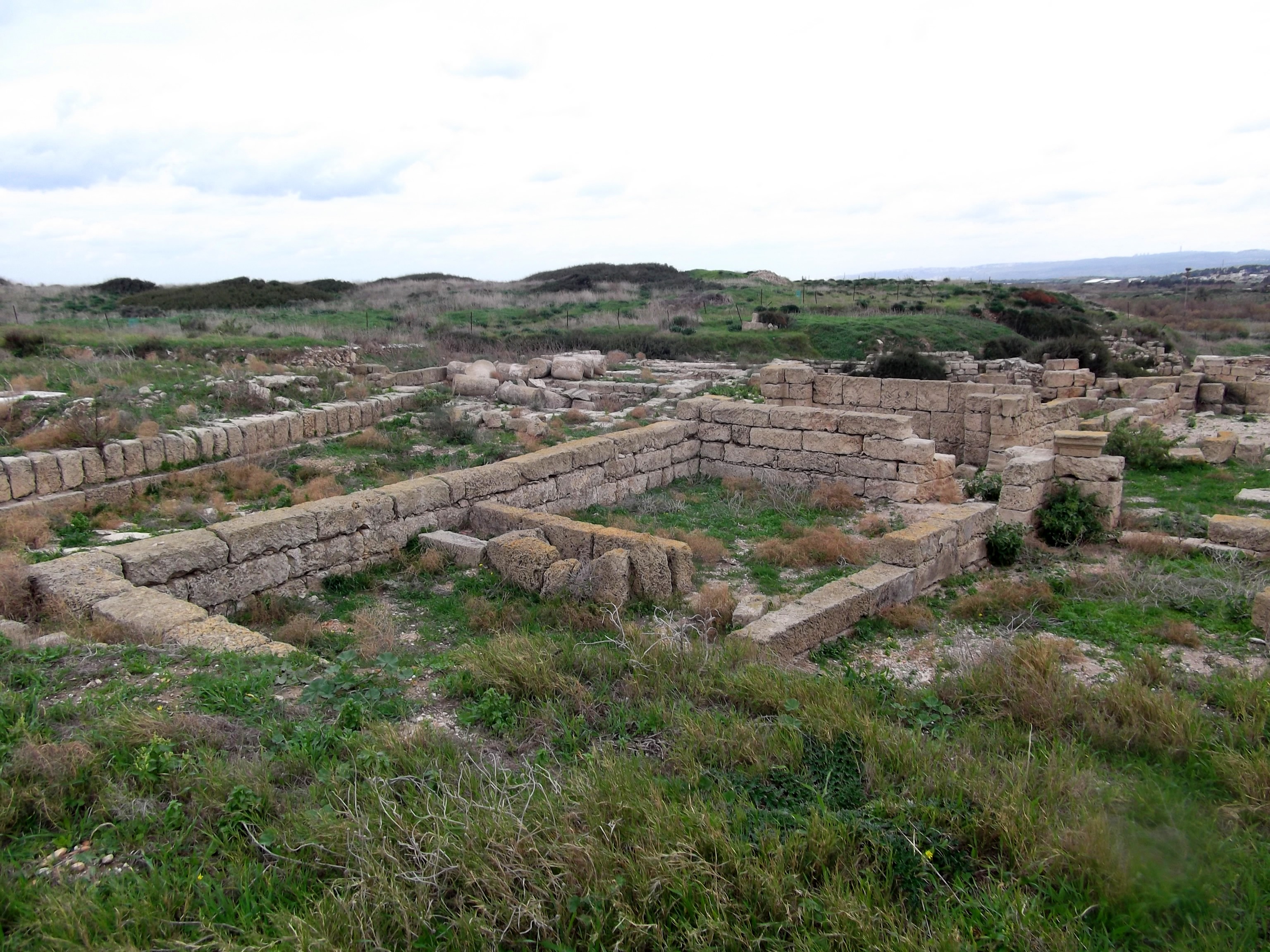
Here is one section of residential area, perhaps from the Roman period:

Residential area

Residential area

Leaving the tel and pressing onwards, heading northbound for the Crusader fortress Cafarlet, or HaBonim. Walking through an abandoned basketball court adorned with graffiti I looked back at Tel Dor and noticed yet another residential area overgrown with vegetation.

Another residential area

Another residential area

Consulting Google Maps on my phone I attempted to navigate my way towards the railway tracks, and then the Coastal Road. However, after getting distracted by marsh-loving birds I found myself on the banks of a fish pond, a small lake. Wandering around the fish ponds and the semi-abandoned agricultural farms of Kibbutz Nachsholim, stopping to bond with some friendly donkeys, I eventually reached the railroad.

Walking through the reeds

Walking through the reeds

Climbing all over the rocky hill where the Coastal Road slices through towards Haifa, not entirely sure where I was to find the fortress, I kept walking and walking… Up next, Cafarlet.

Carmel Caves

In Coastal Plain, Israel on March 23, 2014 at 4:32 AM

Just two days after the day trip to the Upper Galilee with my sister, I arrived on base and was told that I can have the day off. A tad dismayed that I had to travel two hours to get the news, I decided to salvage the day by going on a little adventure along the coast between Atlit and Caesarea – close by and chock-full of interesting sites. The first place I decided to visit was the Carmel Caves, part of a national park I’ve been wanting to see for years and one that I’ve passed by literally hundreds of times. I got a ride from a friend to Atlit Junction and then took a bus the rest of the way. When I reached the Nachal Me’arot (River of Caves) park I could already see the raw cliff sides over the banana fields.

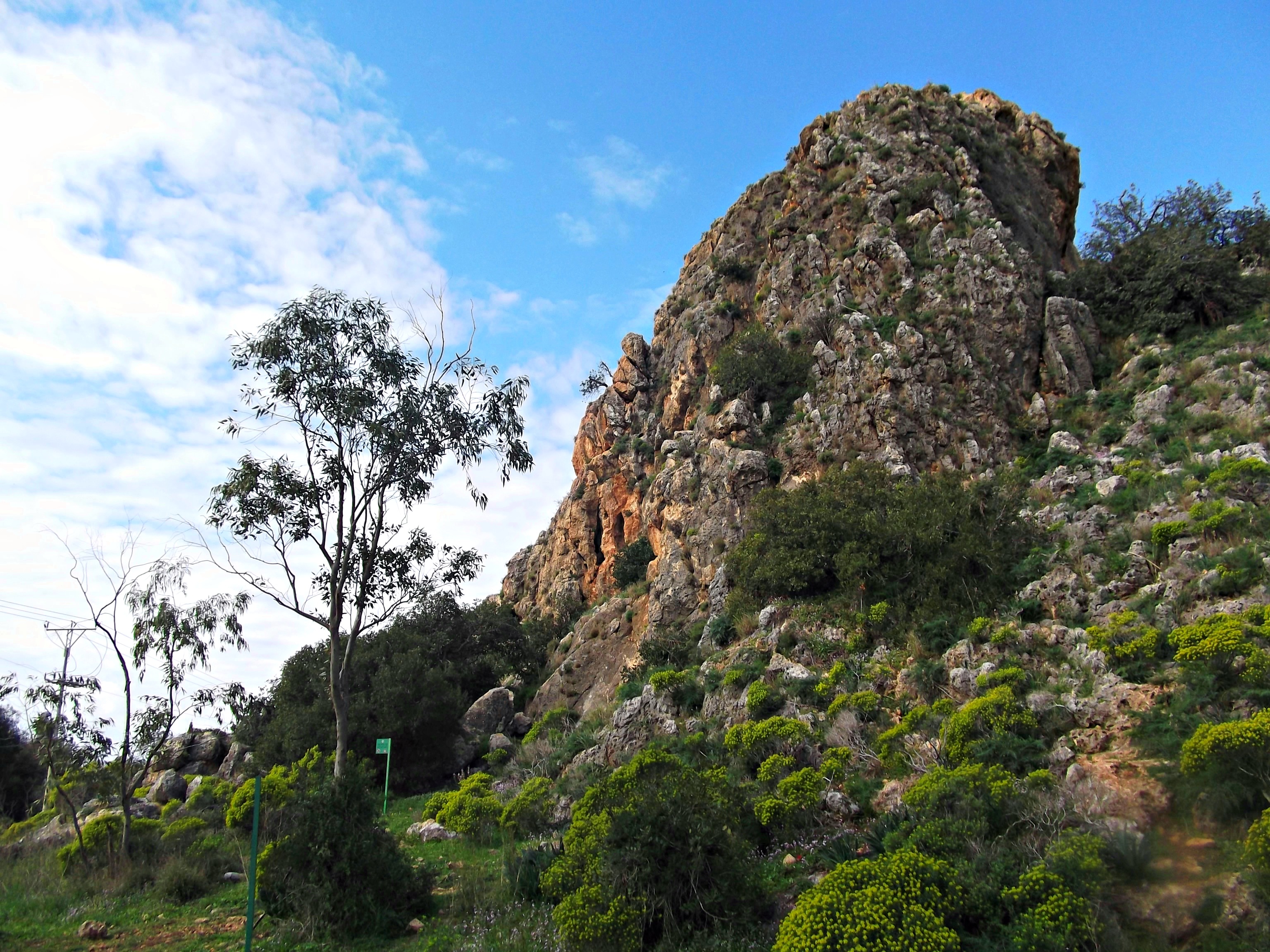
Cliff wall at Nachal Me'arot

Cliff wall at Nachal Me’arot

I entered the park and inquired as to the length of the cave route. To my surprise, the lady behind the counter told me it would take about 45 minutes in total, maximum. To the base of the cliff chunk I went, looking up at this distant section of Mount Carmel. Essentially a large triangle jutting out into the Mediterranean Sea, Mount Carmel is a small mountain range containing several national parks including Nachal Me’arot which slices through the mountain. Climbing up the stairs to the caves, passing by a strange sign warning visitors not to linger on the steps, I reached the first cave, the Tanur Cave.

The tall Tanur Cave

The tall Tanur Cave

A tall, shallow cavern, the Tanur Cave has been excavated and marked off in levels of historical periods. Essentially a chimney cave (“tanur” meaning “oven” in Hebrew), early man settled within its confines to find shelter. The next cave, right beside the Tanur Cave, is the Gamal Cave. Named “camel” in Hebrew, this cave is bell-shaped and has been decorated with plastic cavemen and their few belongings. Outside the cave I noticed a rock with numerous fossils of invertebrates in a large chalky rock, alluding to the flooding presence of water in the region:

Fossils

Fossils

Continuing on along the cliff edge, I headed for the largest of the caves, the Nachal Cave. Here is looking back at the Gamal Cave:

Looking back at the Gamal Cave

Looking back at the Gamal Cave

Entering the Nachal Cave, a 70 metre (230 foot) long tunnel paved and lined with speleothems, better known as cave formation such as stalagmites and stalactites. An audio-only and then audio-visual show played within the cave and the colour theme for illuminating the cave was quite groovy. Here is a little section of cave wall lit up bright red:

Illuminated cave formations

Illuminated cave formations

At the far end of the cave, nearly cut off from the light of day, I sat down to watch the short projected film about the early humans living in the cave. The way they filmed the cavemen, the way the story unraveled reminded me of an interesting 80’s movie called Quest for Fire, a film adaptation of a Belgian novel about three cavemen who travel in search for fire. After the presentation I took this somewhat blurry photo of the way back through the cave – the groovy lights showing us the fascinating interior:

From within the Nachal Cave

From within the Nachal Cave

I think as far as caves in Israel go, my favourite is still the watery tunnel at Nachal Kziv. However, this cave delivered more in regards to stalagmites and stalactites. I have yet to see the Soreq Cave near Bet Guvrin… Upon leaving the Nachal Cave I crossed the dry stream-bed of which the park is named after and approached the opposite cliff wall – the “Finger” Cliff.

The ''Finger'' Cliff

The ”Finger” Cliff

The “Finger” Cliff, as well as some sections of the aforementioned cliff face, are made up of fossilised reefs. Looking up at this jagged rock column I noticed a small cave, visible in the above photo in the cliff wall to the right of the central tree. I climbed up the grippy rocks, similar to walking on the coastline, and entered the little cave. Here is looking out from inside the grotto:

Looking out from the small grotto

Looking out from the small grotto

Not wanting to go on any extended hiking trip at the moment, partly because I was wearing my uniform and partly because I had a day full of sites to visit, I left the park and then took a bus to my next destination, which quite honestly was an accidental find. Up next, the coastal ruins of Tel Dor.

Army Trip: Jerusalem Tour

In Israel, Jerusalem on March 17, 2014 at 4:32 AM

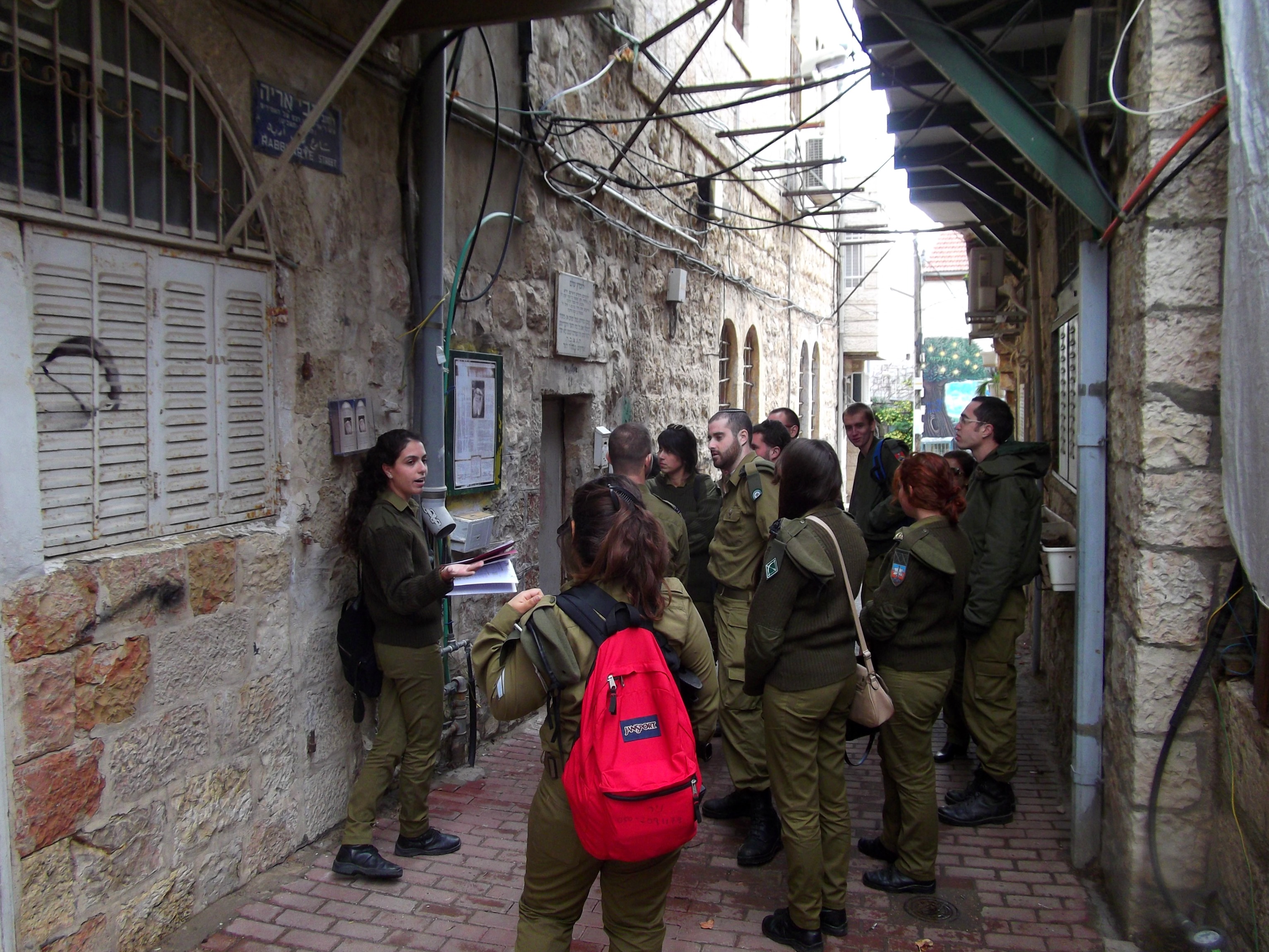
Another break in the traditional chronological format of my blog, this past Monday I went on a unique little educational army trip to the capital city, Jerusalem. As I’m currently attending a Hebrew language crash course, or “Ulpanit”, I was accompanied by a small group of new friends: fellow classmates and teachers alike. Leaving our base near Ben Gurion Airport, we entered the Holy City and began our tour with the old neighbourhoods of Mazkeret Moshe and Zichron Moshe (if I’m not mistaken). Walking through the quiet residential areas we learned the history of these streets, and who lived on them, from our Educational and Youth Corps tour guide.

Outside Rabbi Aryeh Levin's house

Outside Rabbi Aryeh Levin’s house

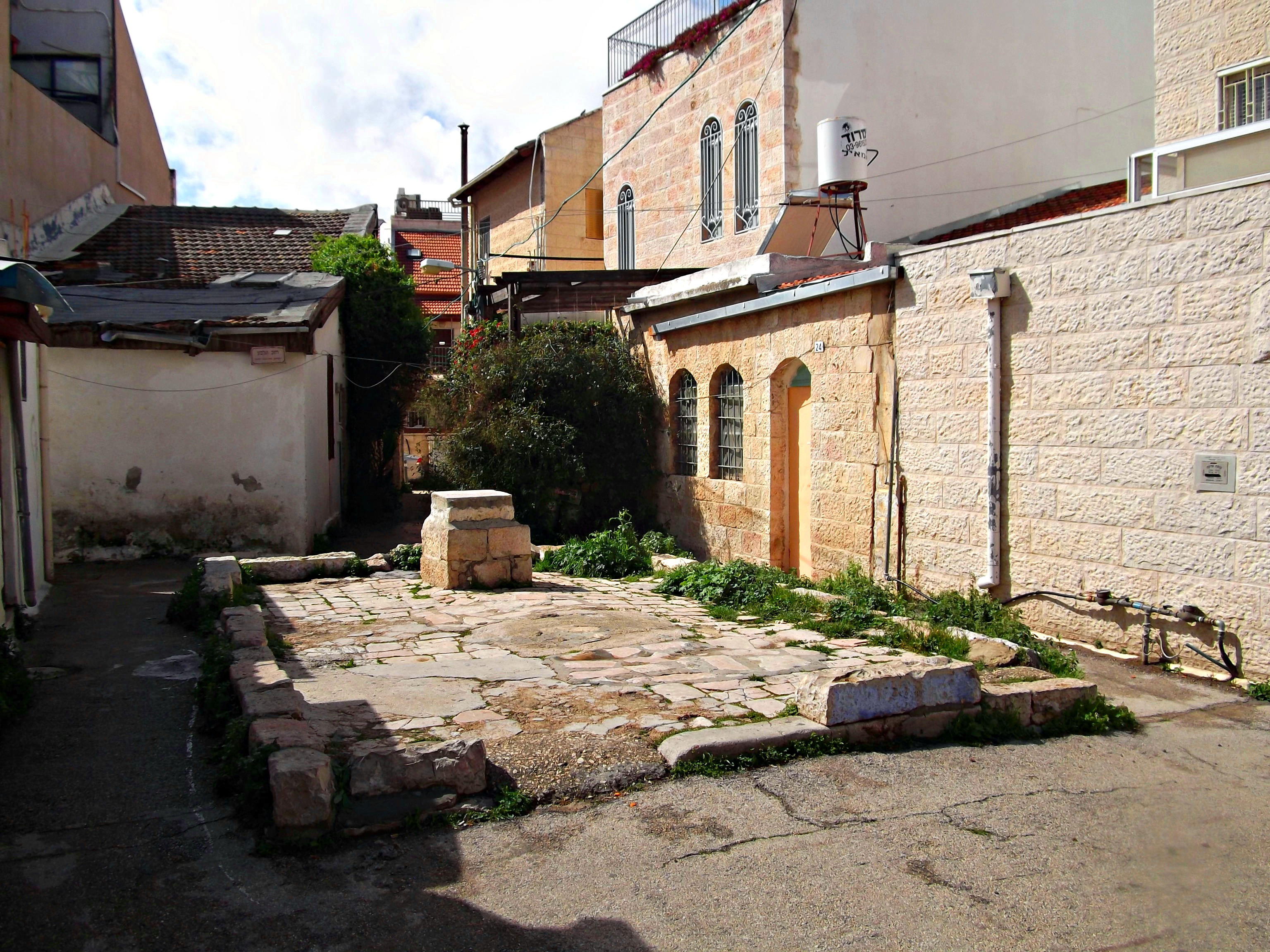
We learned how these neighbourhoods were inhabited after a realisation that there simply wasn’t enough room for the Jews in the Old City. In all the times I’ve been to Jerusalem, including the eight blog posts I’ve written about this holy city thus far, I’ve never seen nor heard about these little neighbourhoods. Then again, there’s a lot I haven’t seen in Jerusalem.

A sealed well

A sealed well

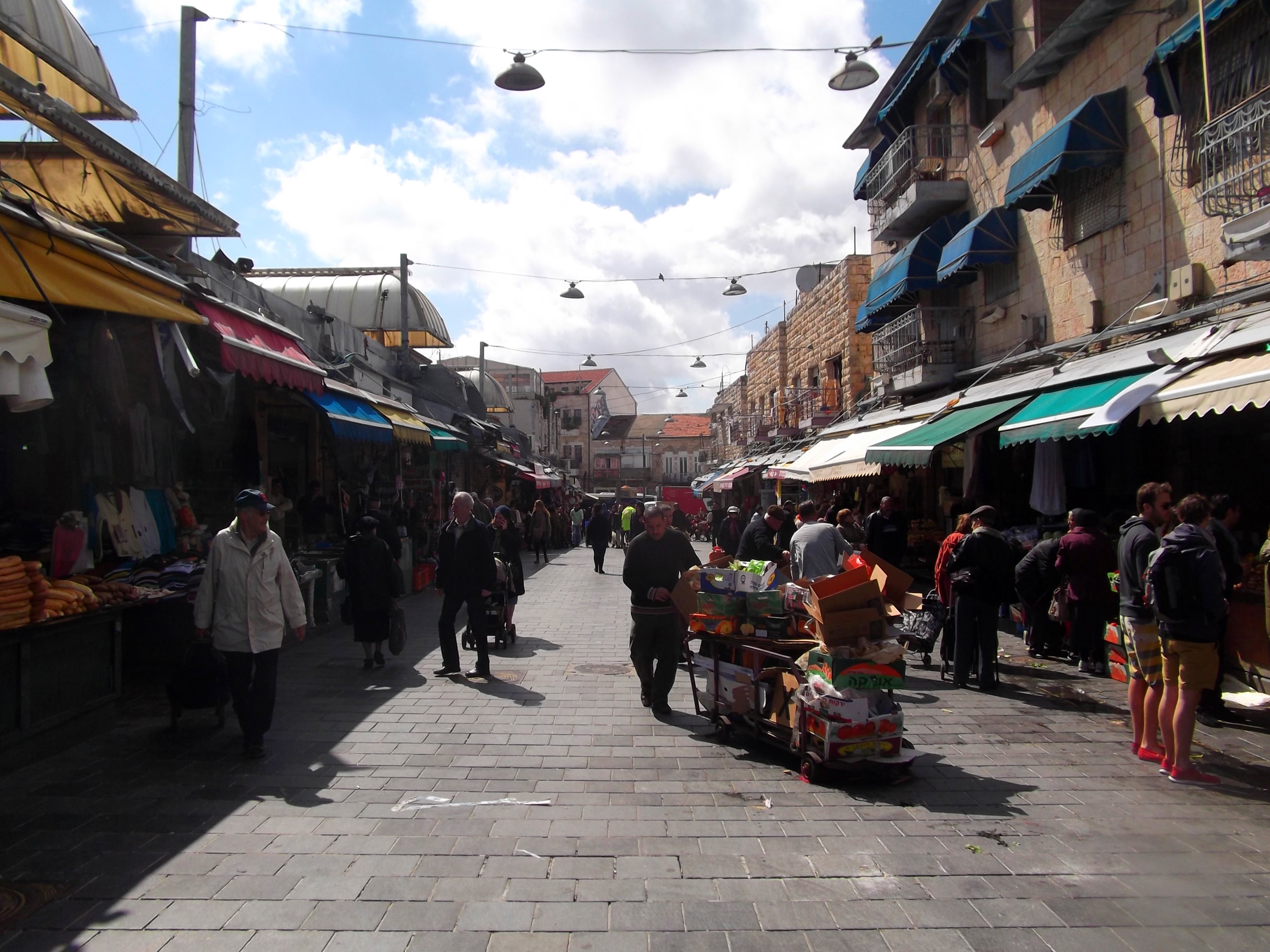
Bordering these neighbourhoods to the north is the famous Machane Yehuda shuk – a large marketplace which really comes to life every Friday. We stopped there for a few minutes and I got a falafel.

Machane Yehuda shuk

Machane Yehuda shuk

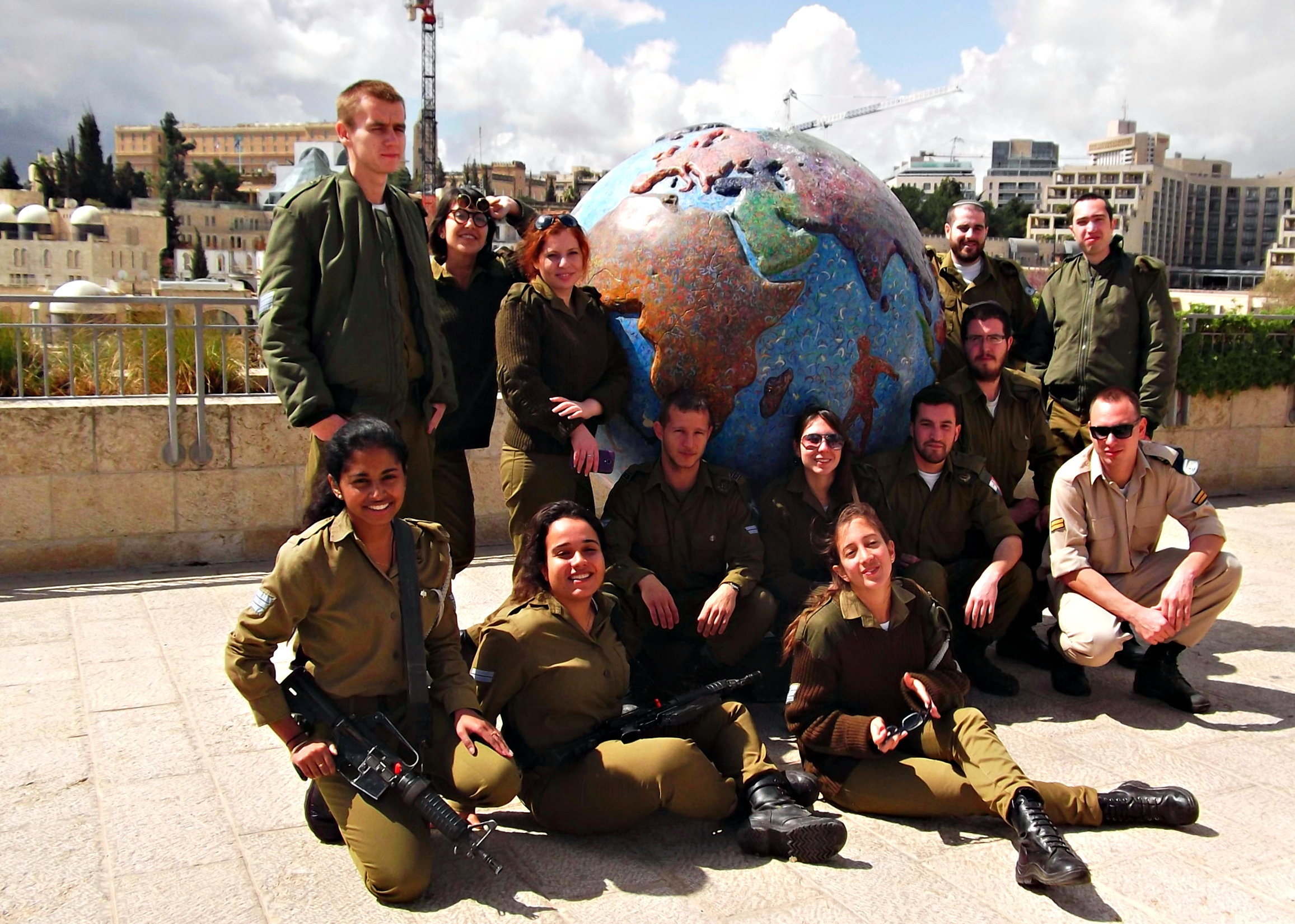
Getting back into our Mercedes-Benz minibus, we headed for the Old City and disembarked near the Jaffa Gate. Outside the walls, overlooking Mamilla Mall, we posed by a globe sculpture, symbolic of our collective status as immigrants.

Class picture

Class picture

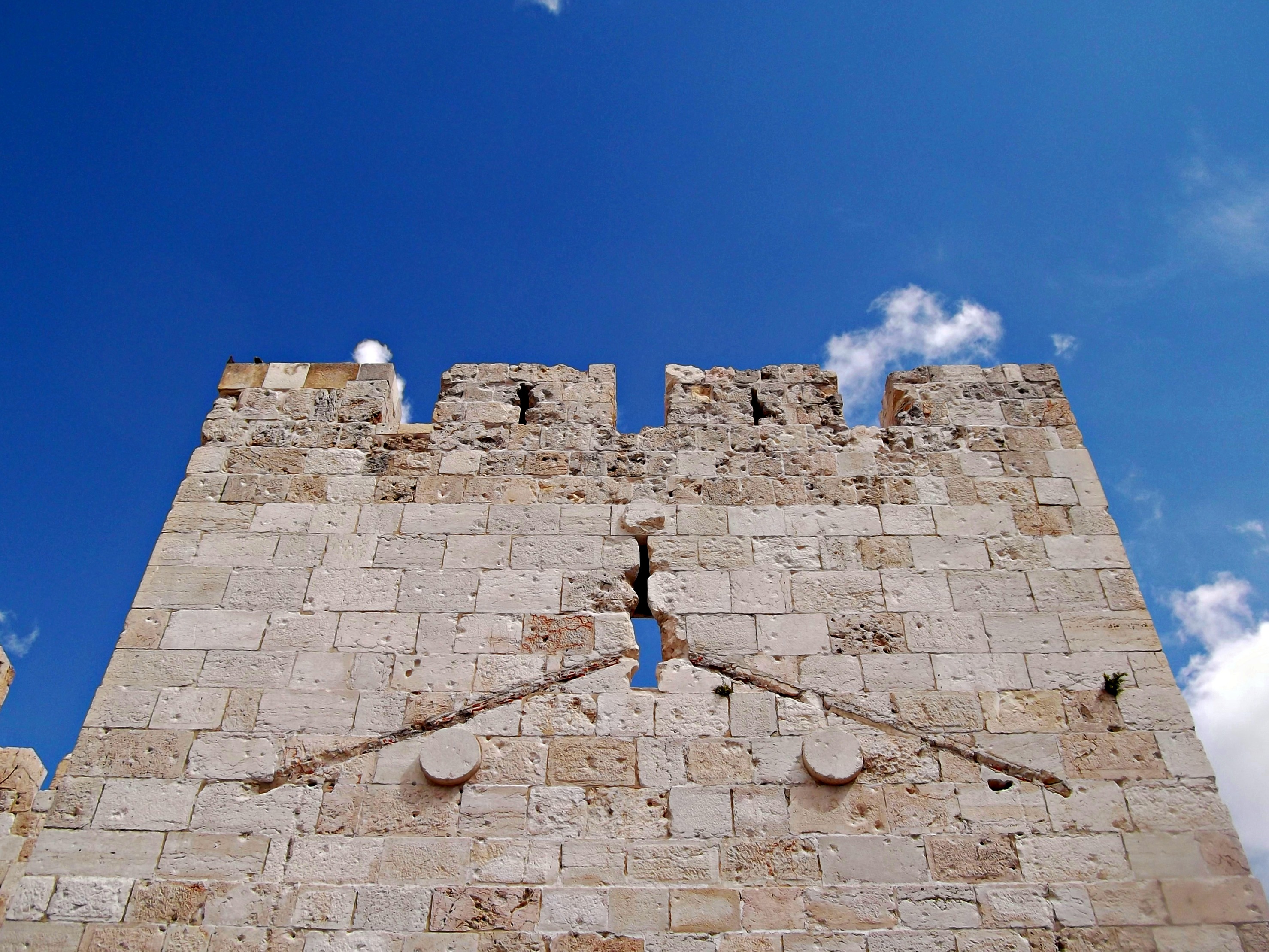
We then continued into the Old City entering via the Jaffa Gate, being told that the angled lines in the stonework below was intended to resemble the roof of a house – a story of homesickness.

Jaffa Gate wall

Jaffa Gate wall

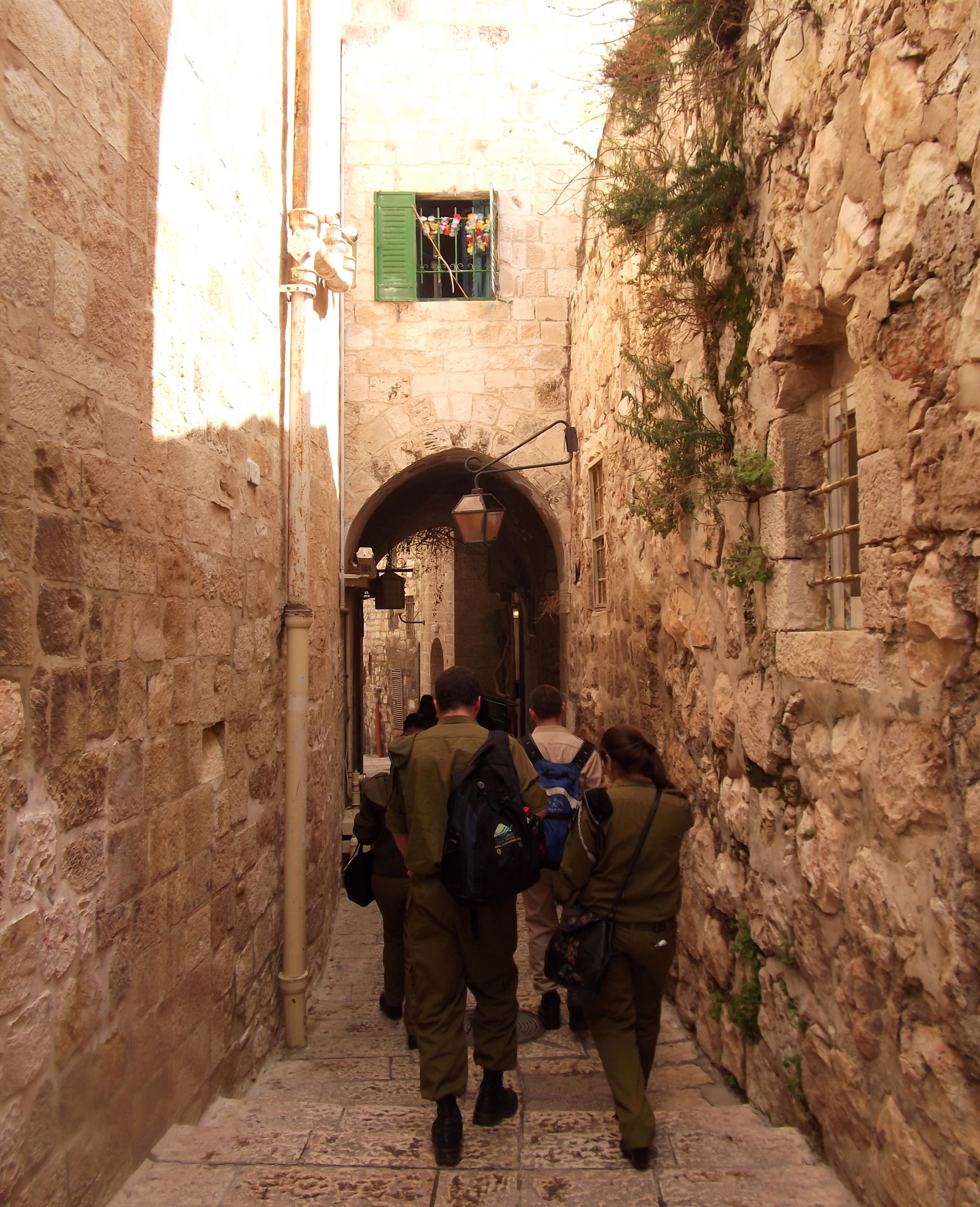
Within the Old City, our guide took us through the Armenian Quarter, snaking our way through narrow corridors and under graceful arches.

Walking through the Armenian Quarter

Walking through the Armenian Quarter

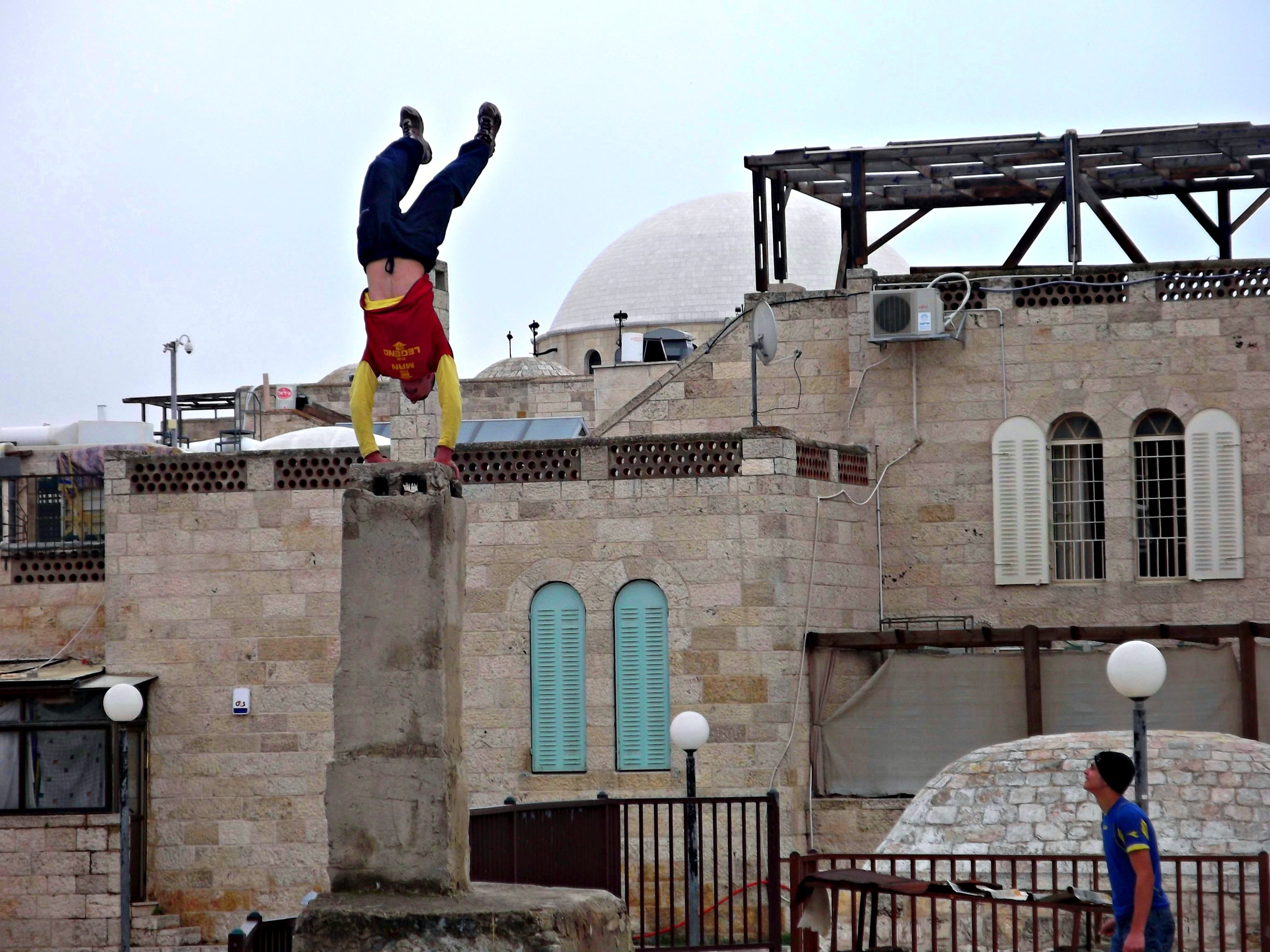
We climbed up onto a large rooftop and I realised that I had already done this exact segment years back when I was in regular Ulpan. We were pointed out the rooftops of various religious buildings around us, including the Dome of the Rock’s golden dome. In middle of our geographical lesson we were distracted by a small group of Arab youth who were leaping about performing some form of amateur parkour before a larger group of tourists.

Arab rooftop parkour

Arab rooftop parkour

Next we found ourselves in the Cardo, the ancient main thoroughfare which was once lined with merchants and traders. Today, only some of the walls, pillars and floor can be seen – a far cry from a bygone glory.

The Cardo

The Cardo

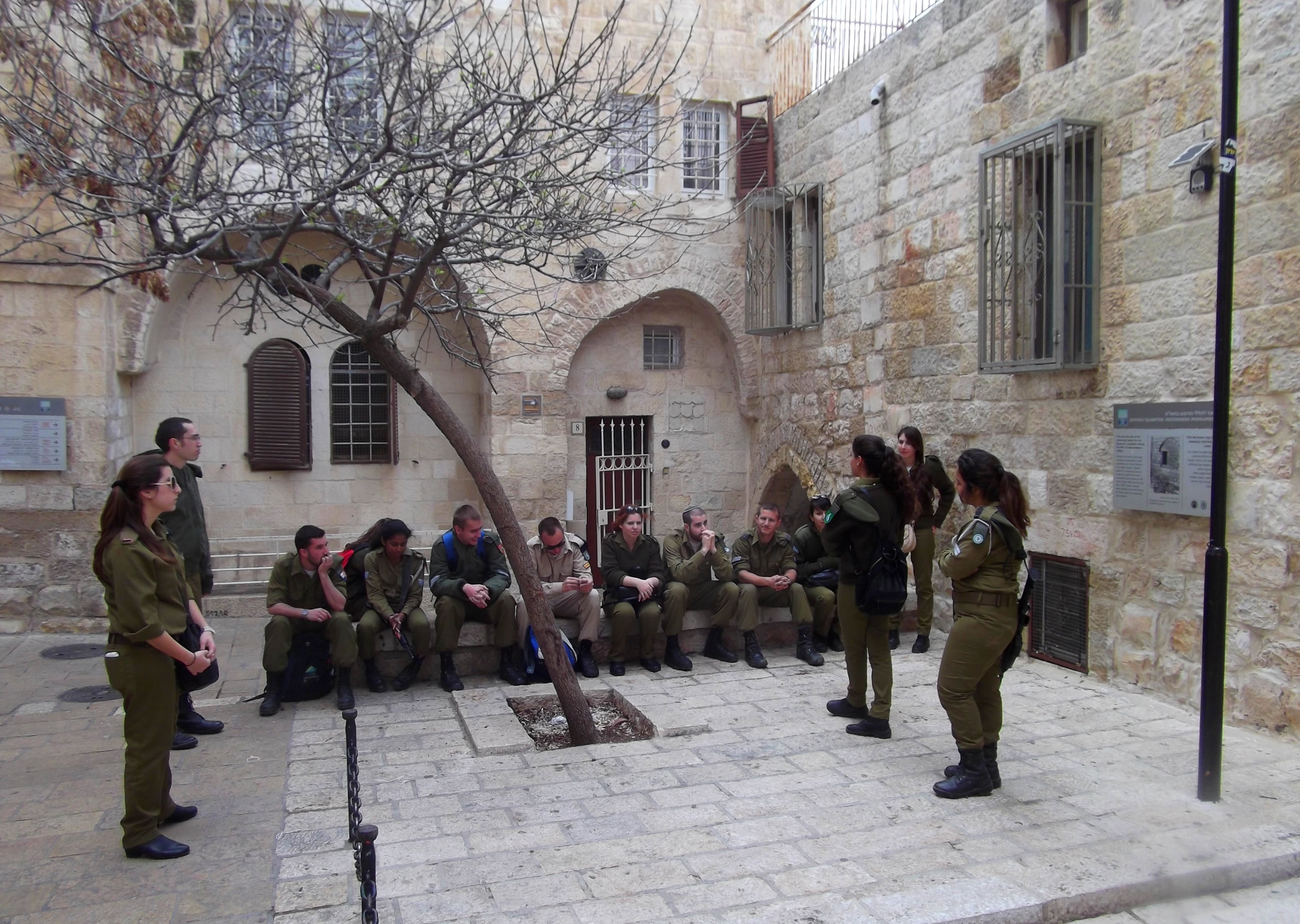
After the Cardo, inching ever closer to the Kotel plaza, we sat down to hear about a memorial hearkening from the days of the Jerusalem’s reconquering. Throughout the raging battles for the Old City during the Six Day War, soldiers and civilians alike fell in battle but were unable to be buried due to the “siege” laid out by the surrounding Jordanian army. With no other options available, the living were forced to bury the dead temporarily within the city. After the paratroopers broke through and reclaimed Jerusalem, the bodies were transferred to cemeteries outside the Old City. A memorial replaced the grave and has remained there to this day, occupying a small corner near the Batei Machseh plaza.

Learning about the memorial

Learning about the memorial

Shortly after we ended up at the Kotel and then headed out to our minibus to be whisked off to lunch at the Israel Air Force’s Talpiot Program cafeteria at the Hebrew University. After lunch we attempted to re-enter the Old City where we ended, at the Kotel, but instead spent a while circling the Old City and driving through East Jerusalem. Eventually we disembarked and entered through the Dung Gate and then descended into the earth for a quick run at the Kotel Tunnel tour.

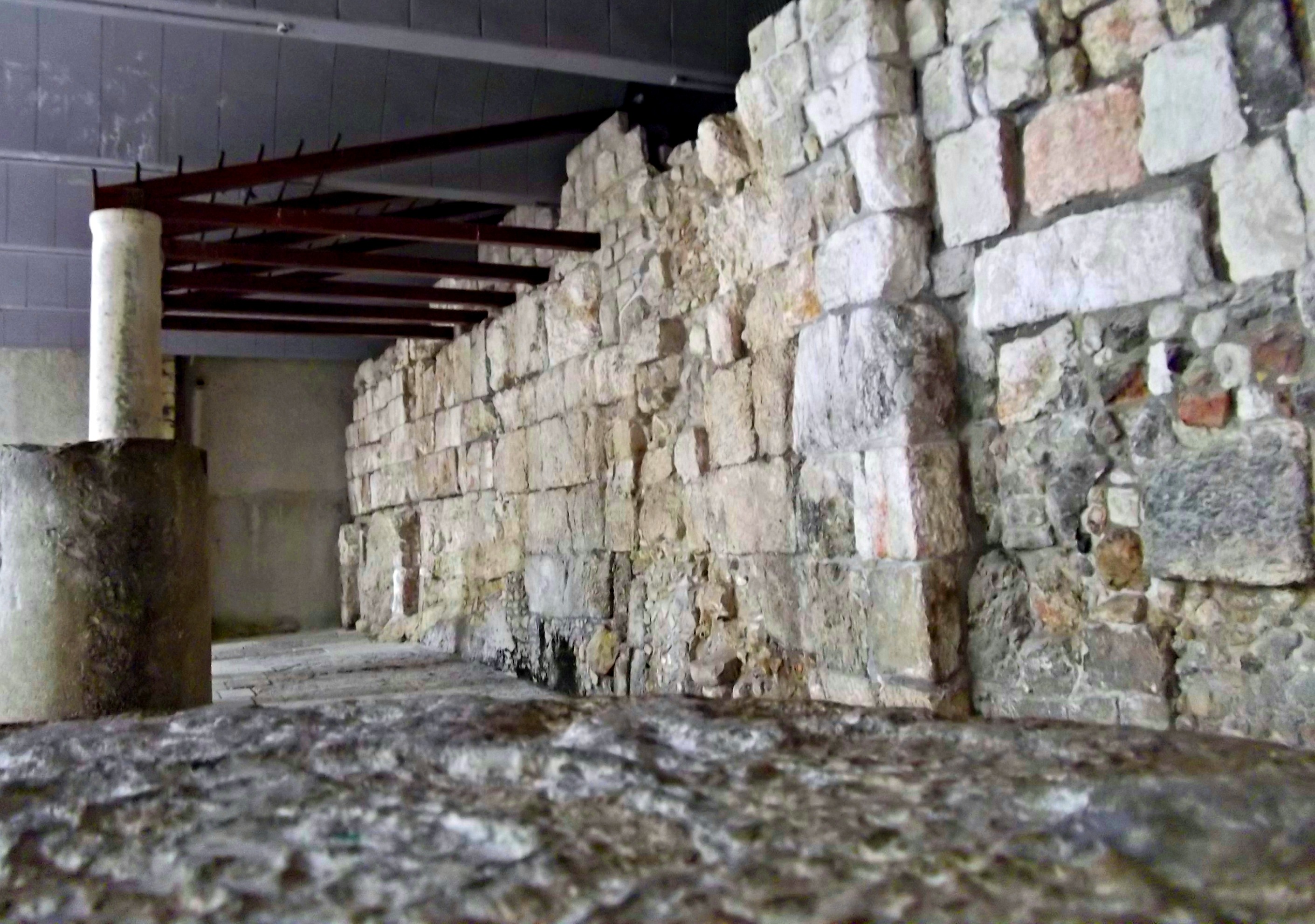
An excavated vault of the Great Bridge from the time of the Temple

An excavated vault of the Great Bridge from the time of the Temple

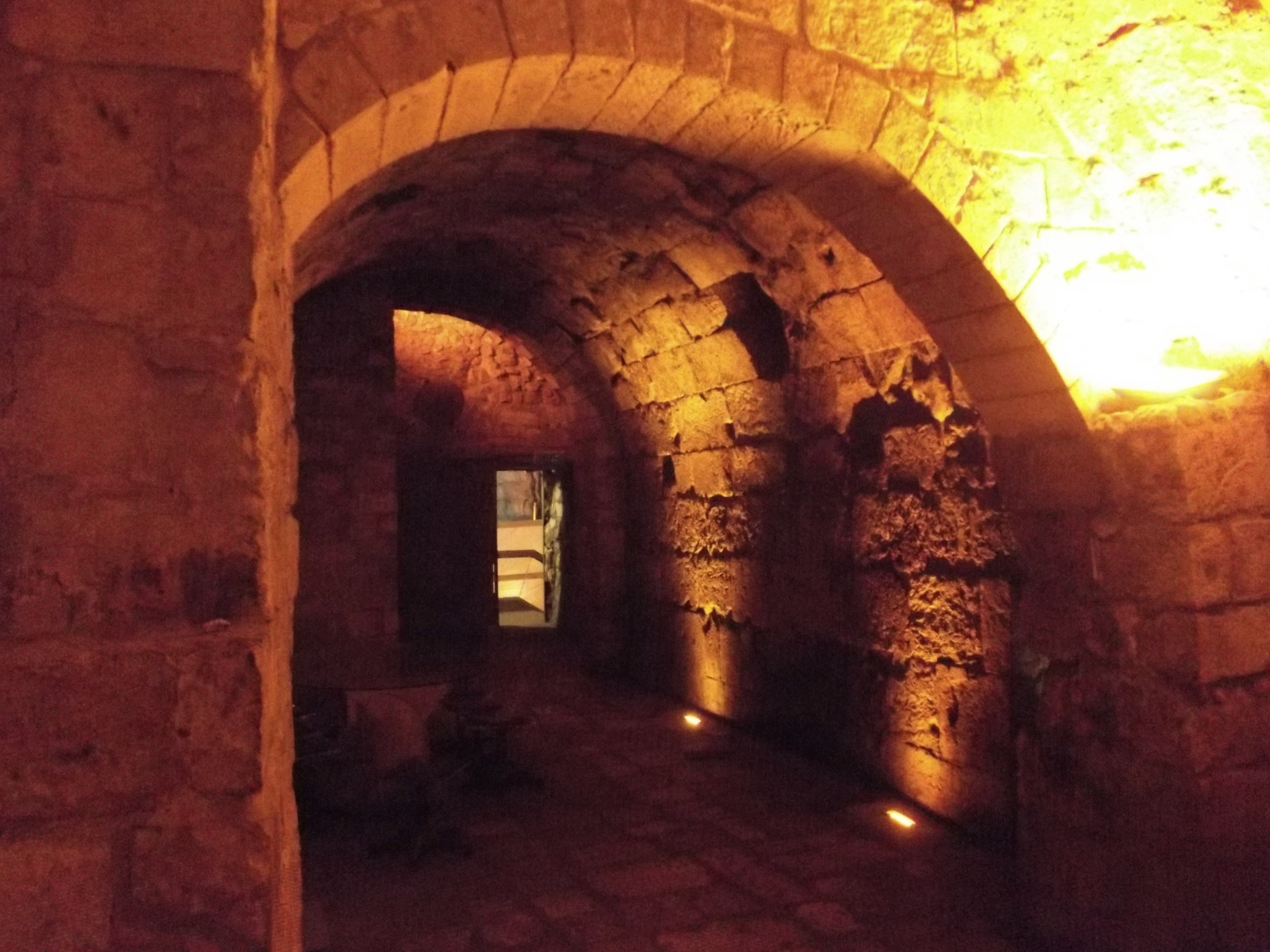
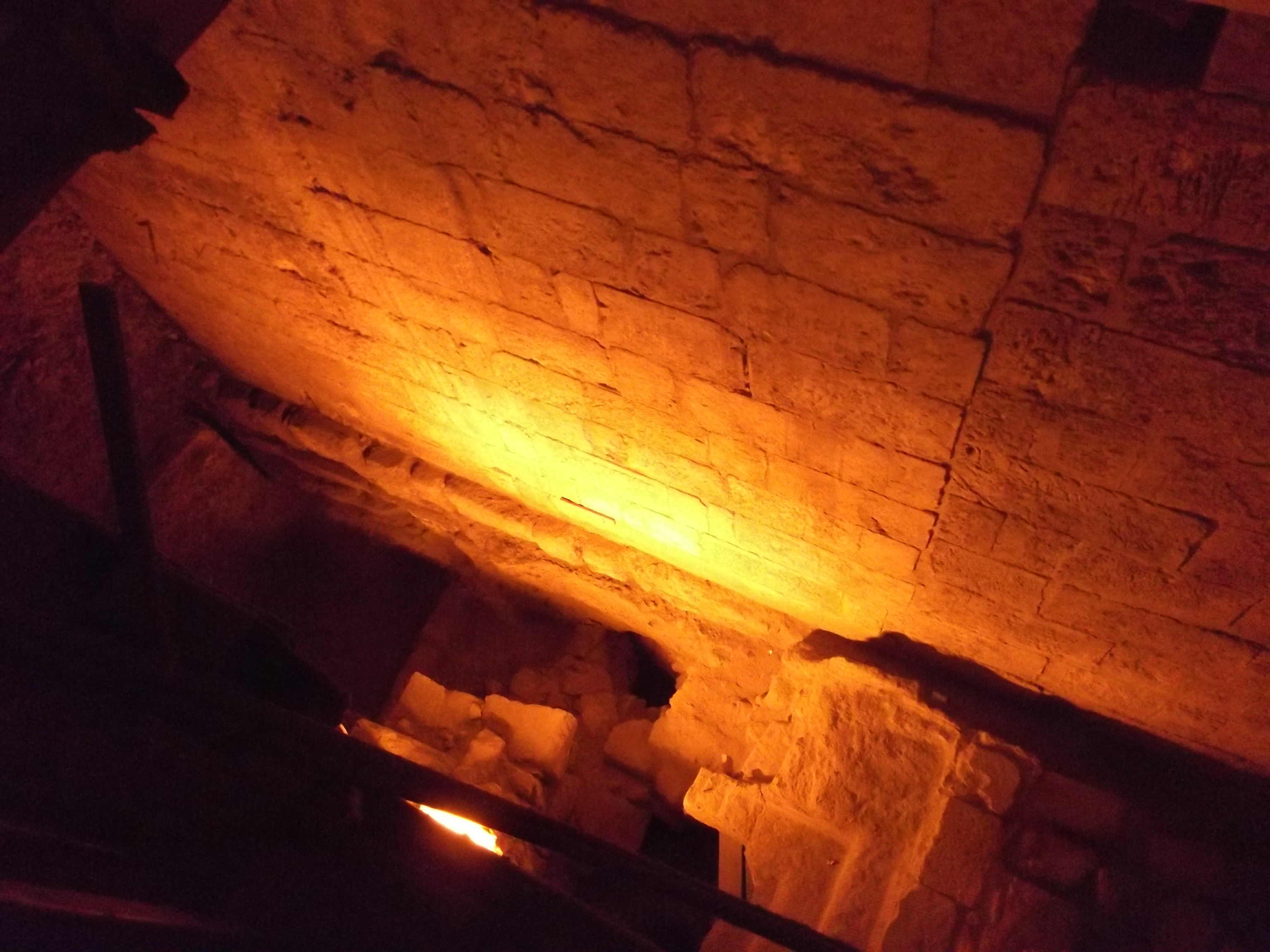
The subterranean excavations are, for want of a better word, fascinating. The incredible richness of the history of the Temple Mount can scarcely be appreciated with just a glance at the prepared archaeological findings. Every little while there is yet another deep plunge into the days of yore, the ancient stonework illuminated in a mellow yellow light.

A deep achaeological pit

A deep achaeological pit

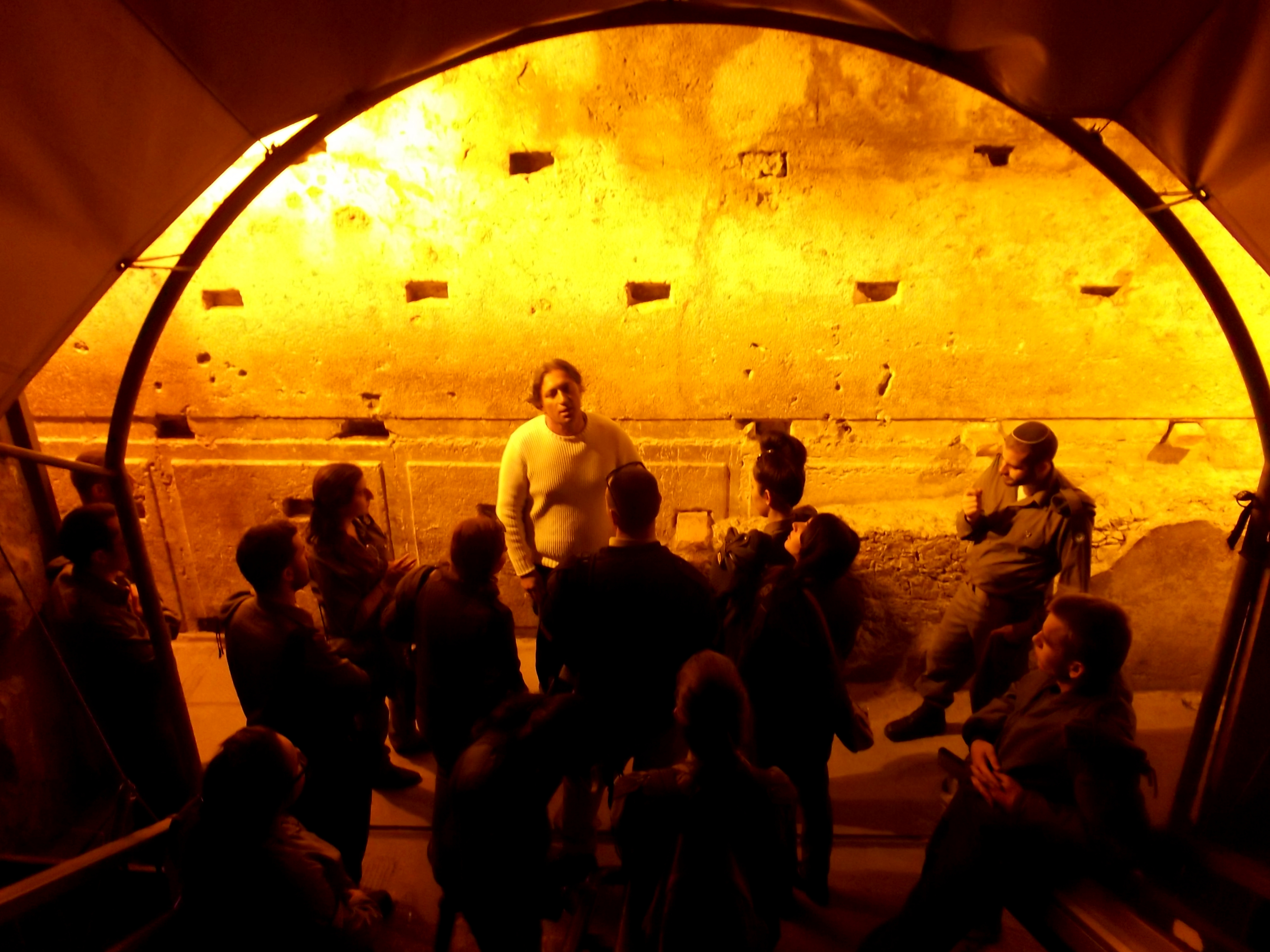
I think I’ve done the Kotel Tunnel tour twice before this trip and yet each time feels new. Our interesting tour guide, replacing the soldier who departed earlier, led us into the long causeway that runs the length of the Western Wall – the full wall, not just the small iconic section seen above ground.

Kotel Tunnel tour

Kotel Tunnel tour

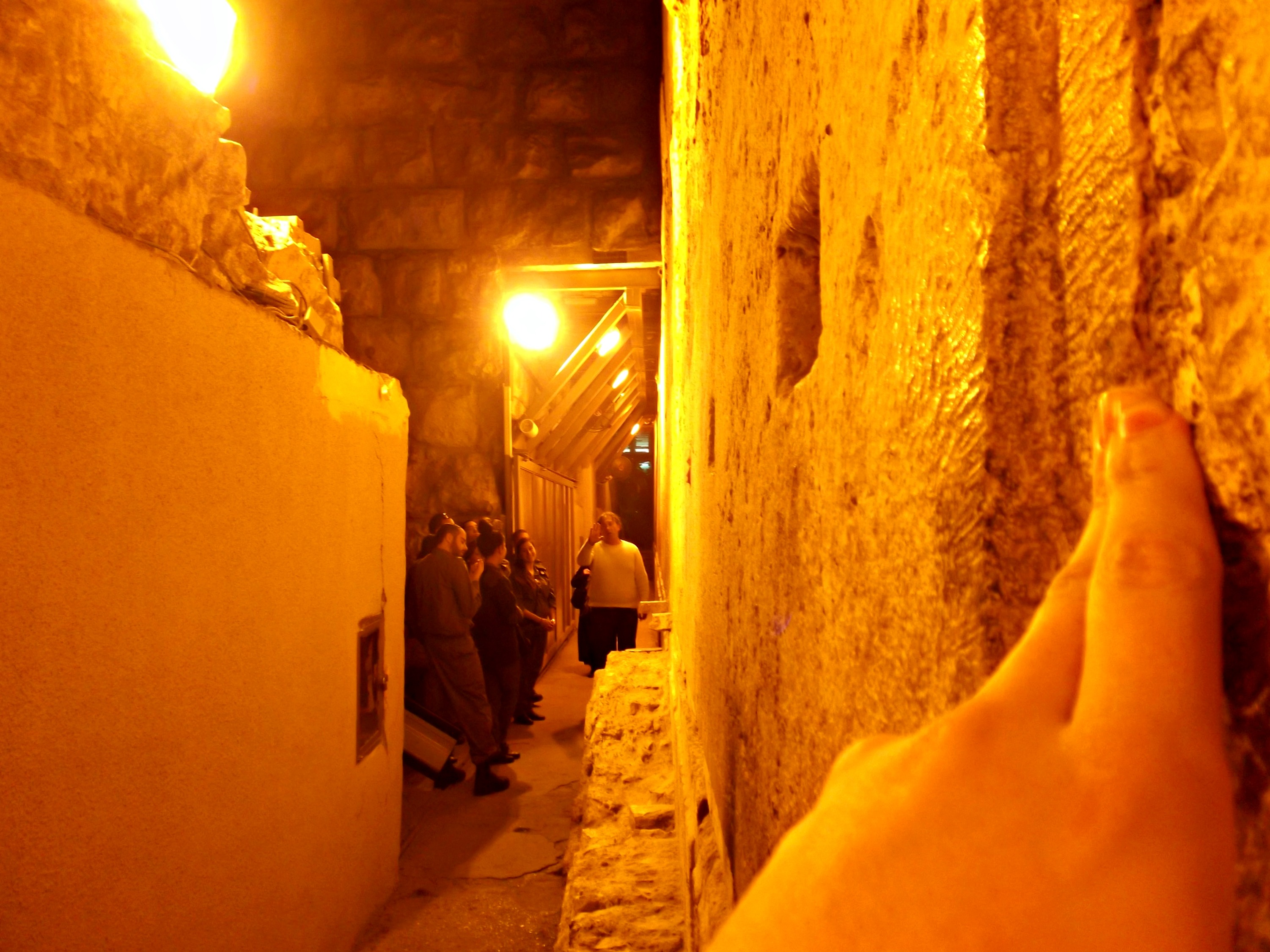
First, we were educated in the fine masonry of the Western Wall – the impeccable and vastly huge ashlars which were laid down and fit nearly perfectly one atop the other. In this picture, the guide and I stood at the two ends of the largest of the building stones which can also be seen above – a block that weighs an immense 570 tonnes (1.25 million pounds):

The length of the 570 tonne stone

The length of the 570 tonne stone

Continuing down the tunnel, hugging the Western Wall, we arrive at the place directly opposite the place where the Holy of Holies once was – a holy place, of course. With that our guide bid us farewell and encouraged us to pray while we were here. Upon prayer completion we headed out of the tunnel, back up the numerous sets of stairs and out into the Kotel plaza. There we photographed and were photographed, even providing excellent photos for a large group of schoolgirls from England. With the sun setting we got into our minibus one last time and headed back to the base. Gotta love free army trips!
Hunin Fortress

In Galilee, Israel on March 9, 2014 at 6:32 AM

After leaving the Manara Cliff we headed just a tad further north, still along the top of the mountain ridge, to the outskirts of Moshav Margaliot where ruins of a Crusader castle are to be found. Called Hunin Fortress today, the small castle was built just after the success of the First Crusade during the years 1106-1107. Then, the castle was referred to as Château Neuf (in French) or Castellum Novum (in Latin).

Southern face of the Hunin Fortress

Southern face of the Hunin Fortress

Lately I’ve been reading a lot about the Crusades, particularly their presence here in the Holy Land, after purchasing the phenomenally written book “The Crusades” by Thomas Asbridge. Unfortunately, even after reading about Château Neuf in the book, I didn’t realise that the Hunin Fortress was, in fact, the same castle. Regardless, this book has really fanned the flames of my interests in history – so much so that I’ve been planning trips to the numerous Crusader ruins yet unseen by my two eyes such as Le Destroit, Belvoir and Château Pèlerin.

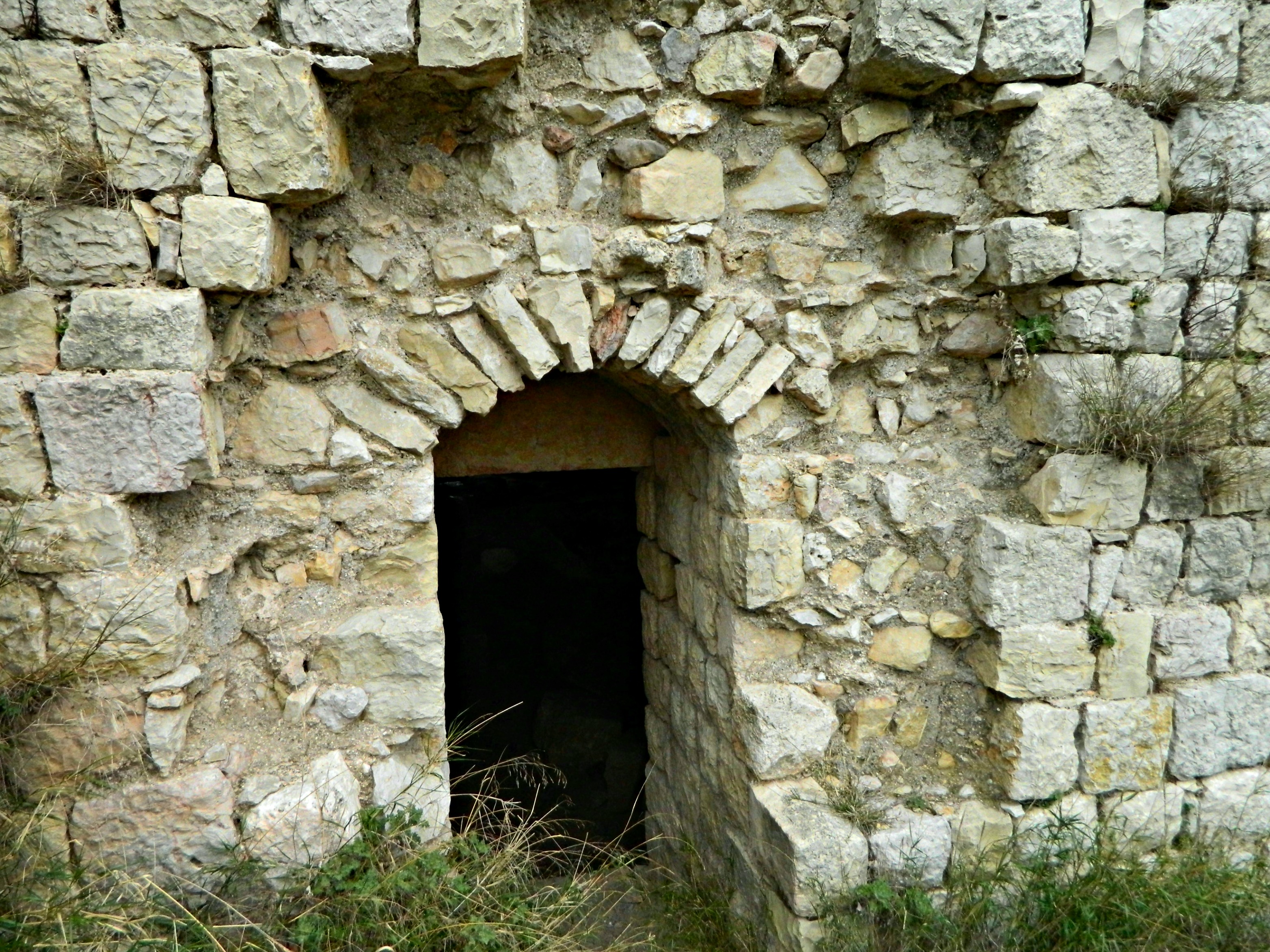
Side entrance

Side entrance

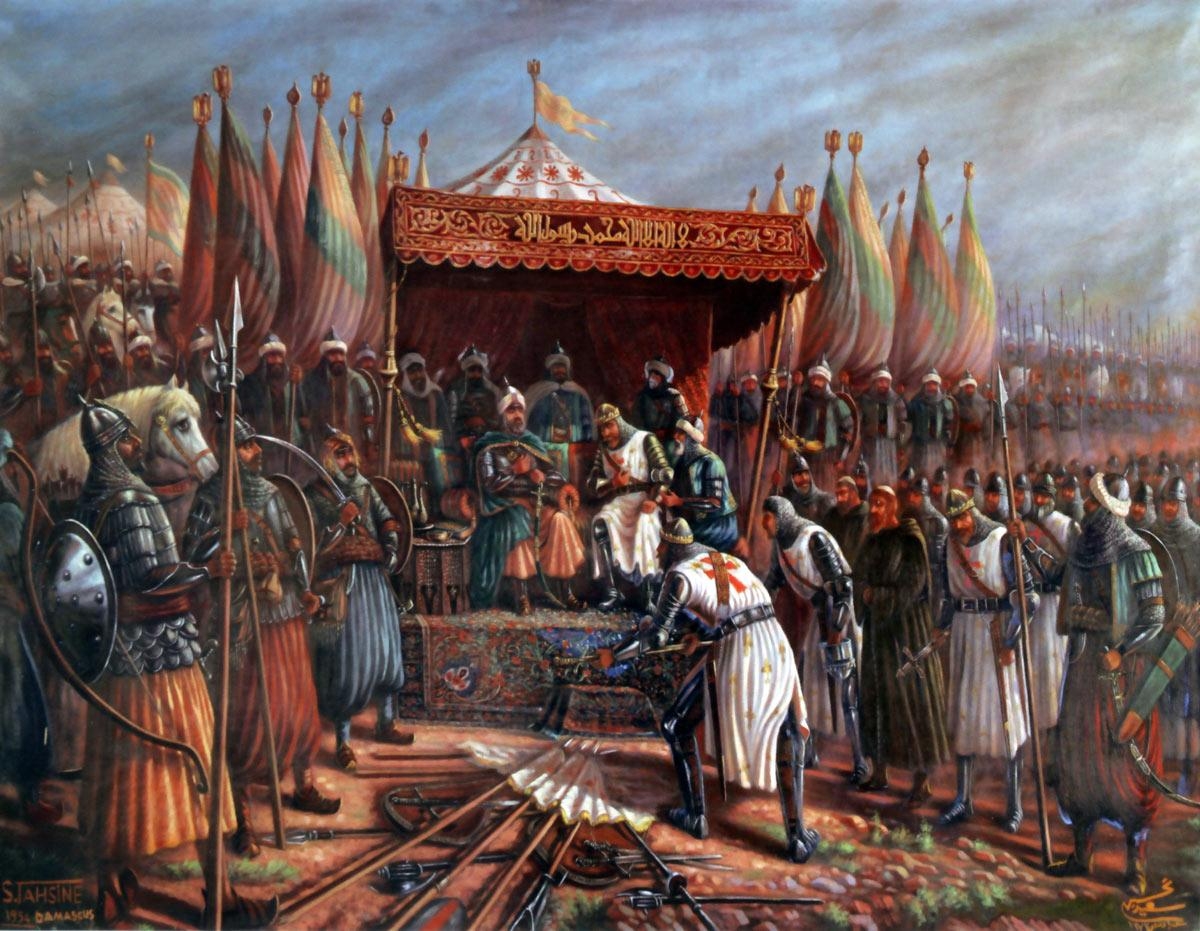
We pulled over at the side of the road and walked right up to the castle, entering via the small side entrance above. Smaller than the castles at Montfort and Yehiam, the structure is in relatively good shape, despite having a traditional history of being conquered and reconquered with sporadic bouts of destruction. The Ayyubid sultan Saladin, the great arch-enemy of the Crusaders, may have made the most headlines in his dismantling of the Latin Christian kingdom but it was his predecessor, Nur al-Din, who actually conquered and destroyed the Hunin Fortress back in 1167. The Crusaders painstakingly rebuilt the castle in 1178 in fear of Saladin who was bent on the ruination of the Crusader Kingdom of Jerusalem but, alas, Saladin ended up conquering and then destroying the castle in the years 1187 and 1218, respectively. In that same year of 1187, Saladin essentially recaptured the Holy Land from the Crusaders after a resounding victory over King Guy of Lusignan and the Kingdom of Jerusalem (as well as several Military Orders of Knights such as the Templars and the Hospitallers) in the decisive Battle of Hattin which actually took place near Mount Arbel. Here is a modern painting by Syrian artist Said Tahsine (1954) depicting the capitulation of the Kingdom of Jerusalem after the battle, a day which eventually led to the capture of the Hunin Fortress:

King Guy surrendering to Saladin

King Guy surrendering to Saladin

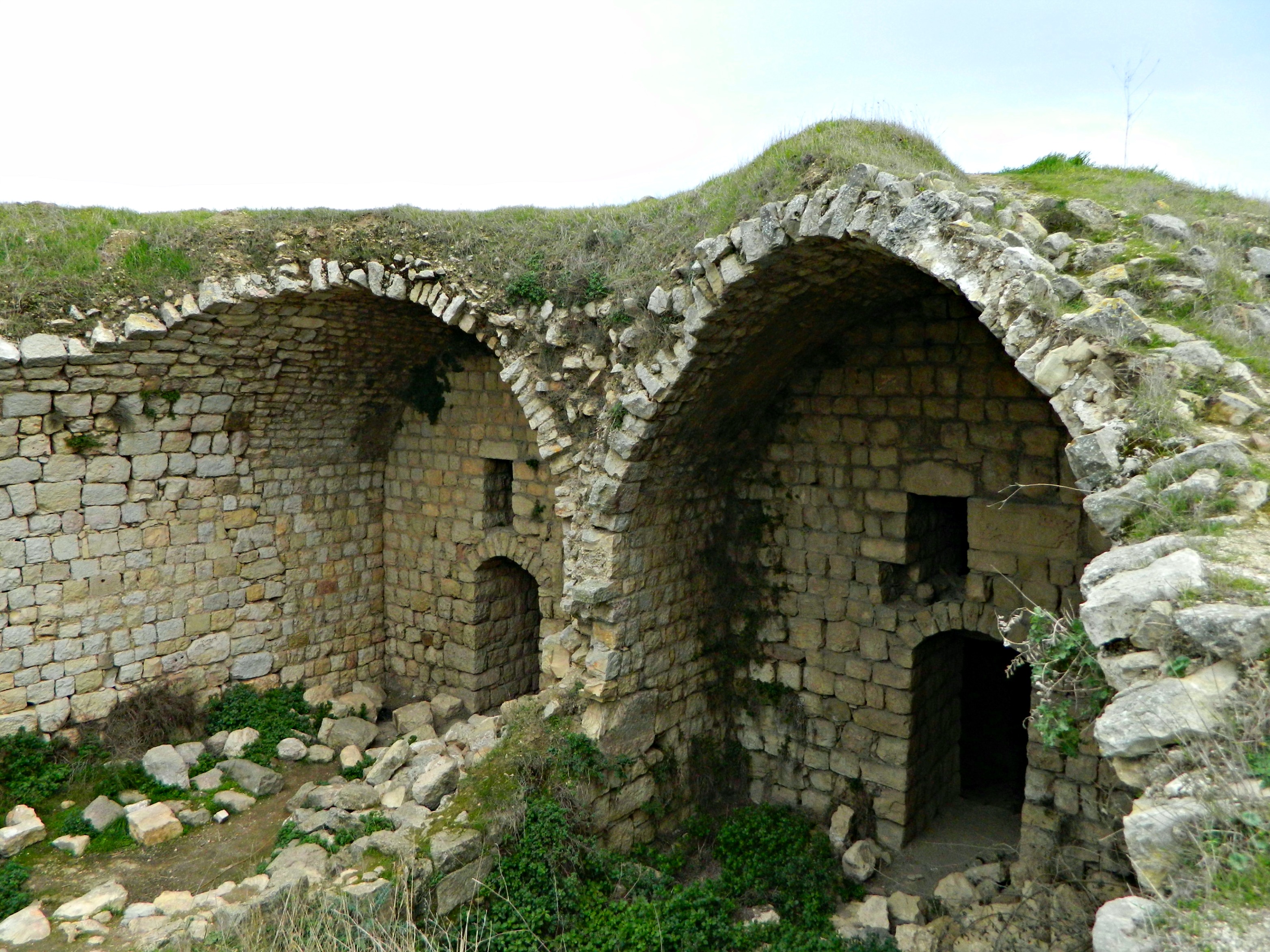
Using the Israel Antiquities Authority’s webpage (and this image within) about the site’s preservation operation, I am able to learn the identities of the unmarked ruins which we explored. The standing remains are the main vaulted structure and the surrounding wall ruins, including a dry moat dug into the rock-bed – which is now largely filled in with vegetation including fig and pistachio trees. The rest of the castle is lost to the ravages of war and destruction but here is the interior of the main room, called the Gates Structure:

The Gates Structure

The Gates Structure

From there, along its northern wall, three halls can be seen – called the Eastern, Central and Western Halls. This is the Eastern Hall, the only one with the vaulted ceiling still intact:

The Eastern Hall

The Eastern Hall

And here are the Central and Western Halls, the ceilings caved in and the ground littered with fallen masonry:

The collapsed Central and Western Halls

The collapsed Central and Western Halls

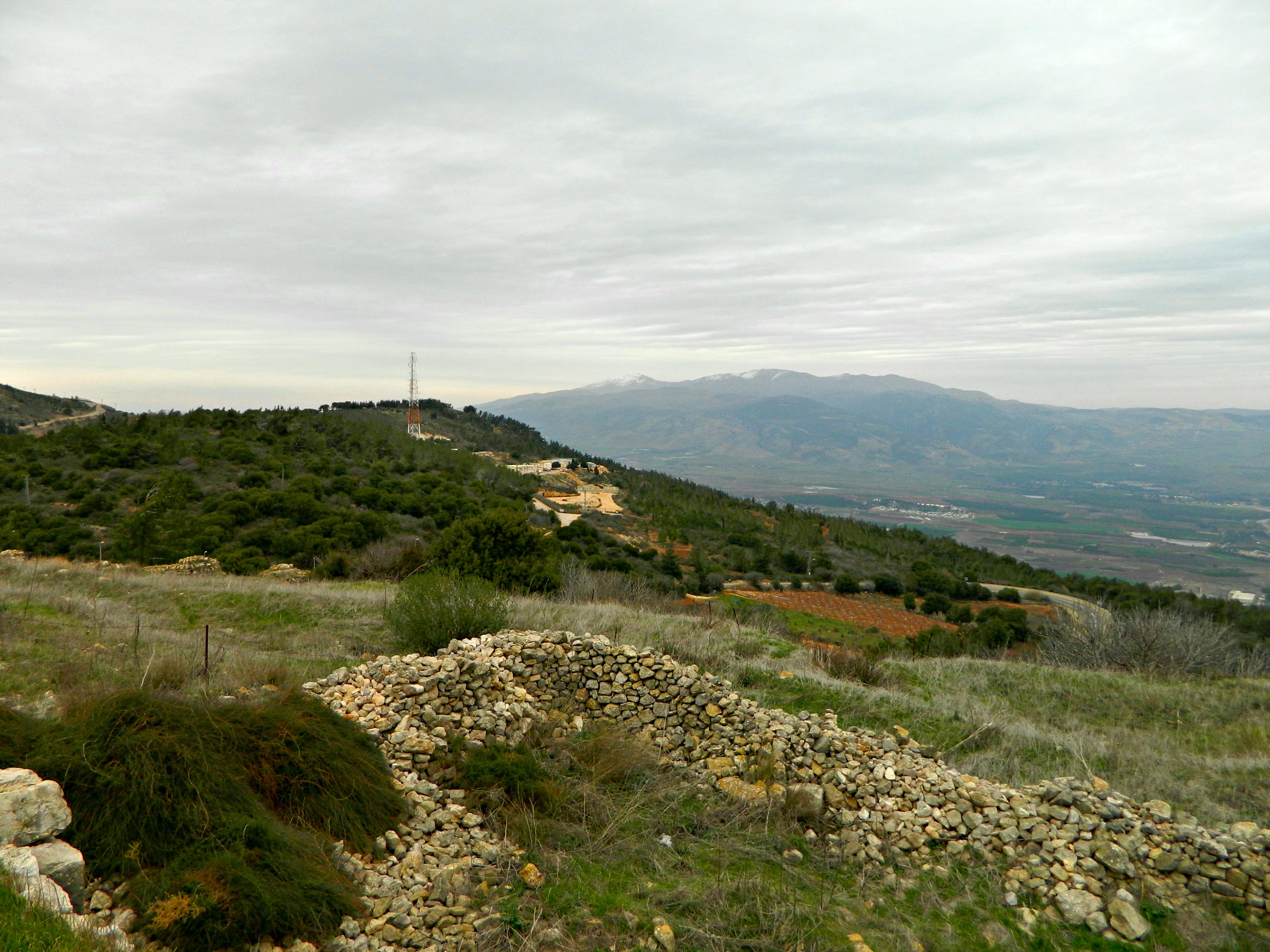
Outside, after leaving the main structure, I climbed up on the grassy roof and looked out towards Mount Hermon – seeing the IDF outpost Mitzpe Adi on the neighbouring hill and the remains of a wall just below:

Wall ruins, Mitzpe Adi and Mountain Hermon in the distance

Wall ruins, Mitzpe Adi and Mountain Hermon in the distance

Climbing back down, we had our last looks and photos and then headed back into the car. We drove down to Tel Hai and Kiryat Shmona and then south down Road 90 – Israel’s longest road spanning the length of the country from Kiryat Shmona to Eilat. Turning left at Machanayim Junction, we pulled into Free Sandwich for some delicious schnitzel sandwiches. Owned and operated by my senior NCO commander and his wife, the little restaurant has my favourite schnitzel sandwiches, with excellent salads to go along – I highly recommend it. After eating we headed home and plans for my next trip began to formulate…

Manara Cliff

In Galilee, Israel on March 2, 2014 at 4:23 AM

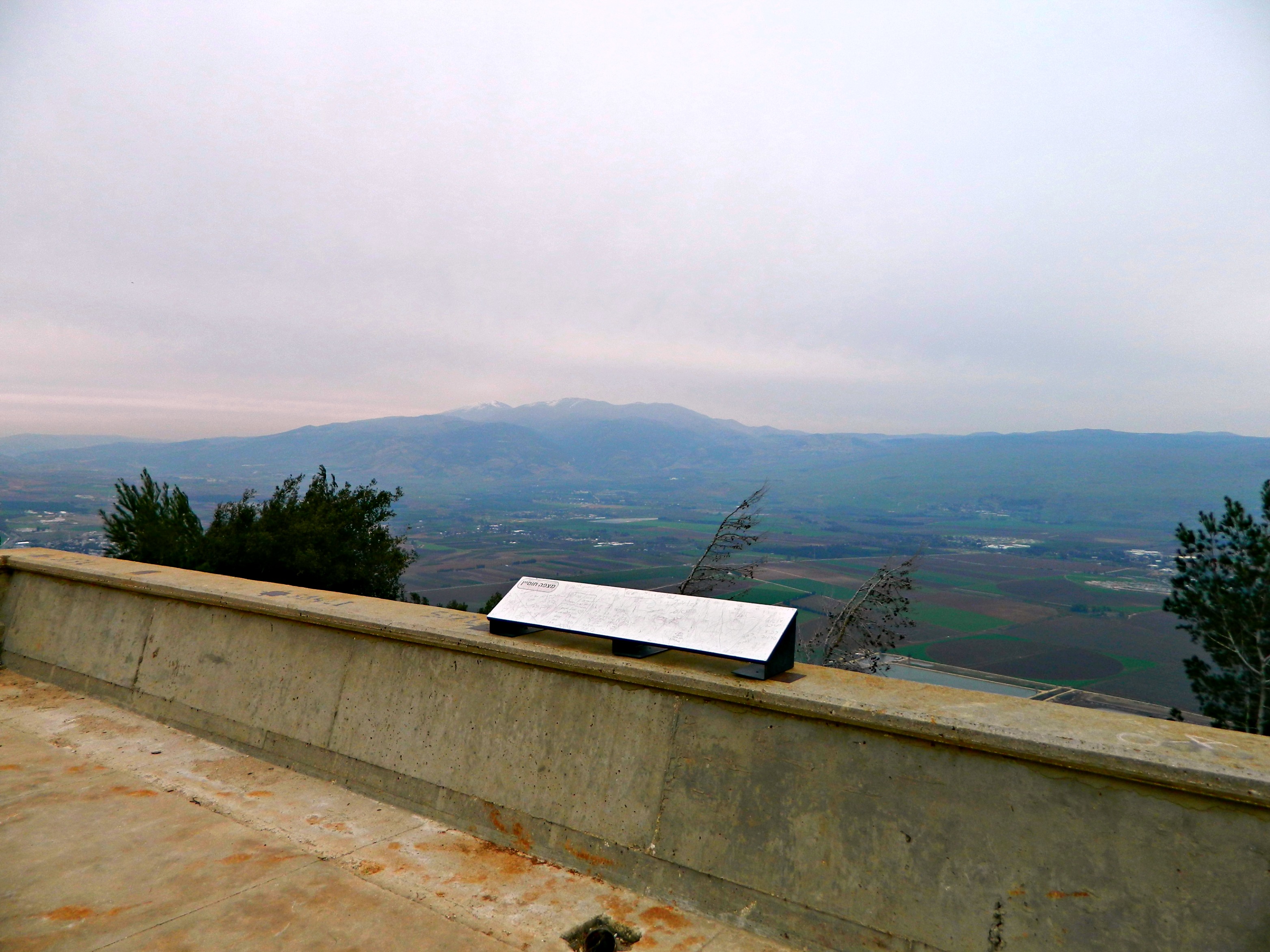
Following our stops at the Galil Mountain Winery and Tel Kedesh, my sister and I arrived at the upper parking lot to Manara Cliff – but not after a little look-see at the Hussein Lookout. Named after fallen Israeli lieutenant colonel Hussein Amar, a battalion commander in the Golani Brigade, the lookout over the Hula Valley was established and dedicated in his memory following his death in battle in 1996.

The Hussein Lookout

The Hussein Lookout

Located on the Naftali Mountains overlooking Kiryat Shmona, Israel’s northernmost city, Manara Cliff offers a great view of the Upper Galilee and Golan area, including Israel’s highest mountain, Mount Hermon. Visiting as we were in the winter, the weather was overcast and the sky looked gloomy. Parking at the upper lot, we entered and found the site pretty deserted – only a few attraction workers and some Yeshiva boys from New York were around. We located the Manara Cliff’s flagship attraction, its cable-car, and waited for it to arrive. The longest cable-car in Israel, at 6,036 feet (1,840 metres – over a mile long!), the ride begins (or ends, depending on where you start) at the top of the 2,460 foot (750 metre) cliff. Since I didn’t get a really great shot of the actual cable-cars, I found one online:

Manara Cliff cable-car (photo by Igor Svobodin, Panoramio)

Manara Cliff cable-car (photo by Igor Svobodin, Panoramio)

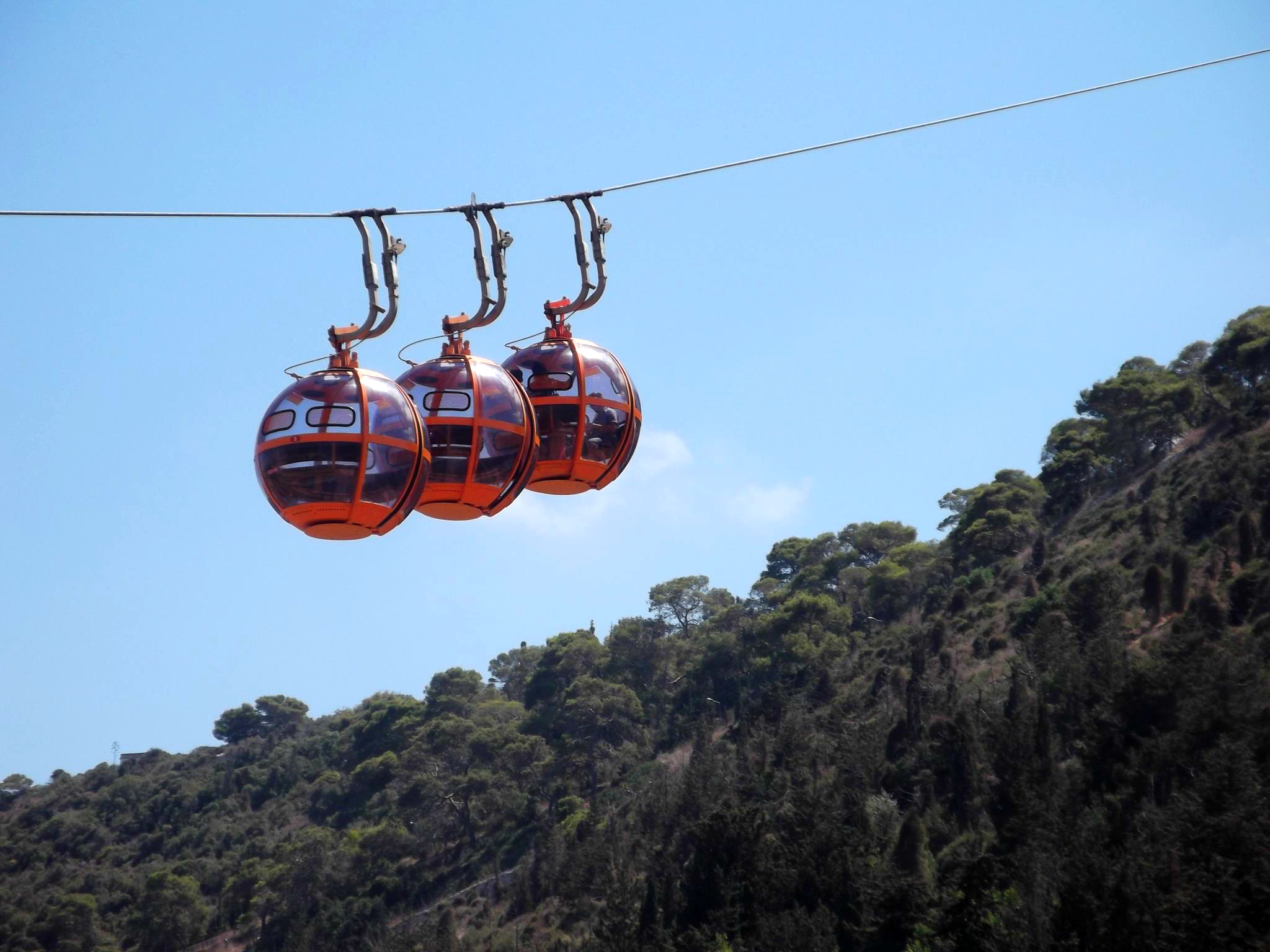
Speaking of cable-car… as far as I know, Israel has just four cable-cars – Rosh HaNikra, Haifa, Masada and Manara Cliff – so that leaves me with just Masada’s to ride now. Despite having ridden the Haifa cable-car up and down the corner of Mount Carmel, where it juts out into the Mediterranean Sea, I haven’t documented it in my beloved blog so here is a photo that I took back in August 2012:

Haifa cable-car

Haifa cable-car

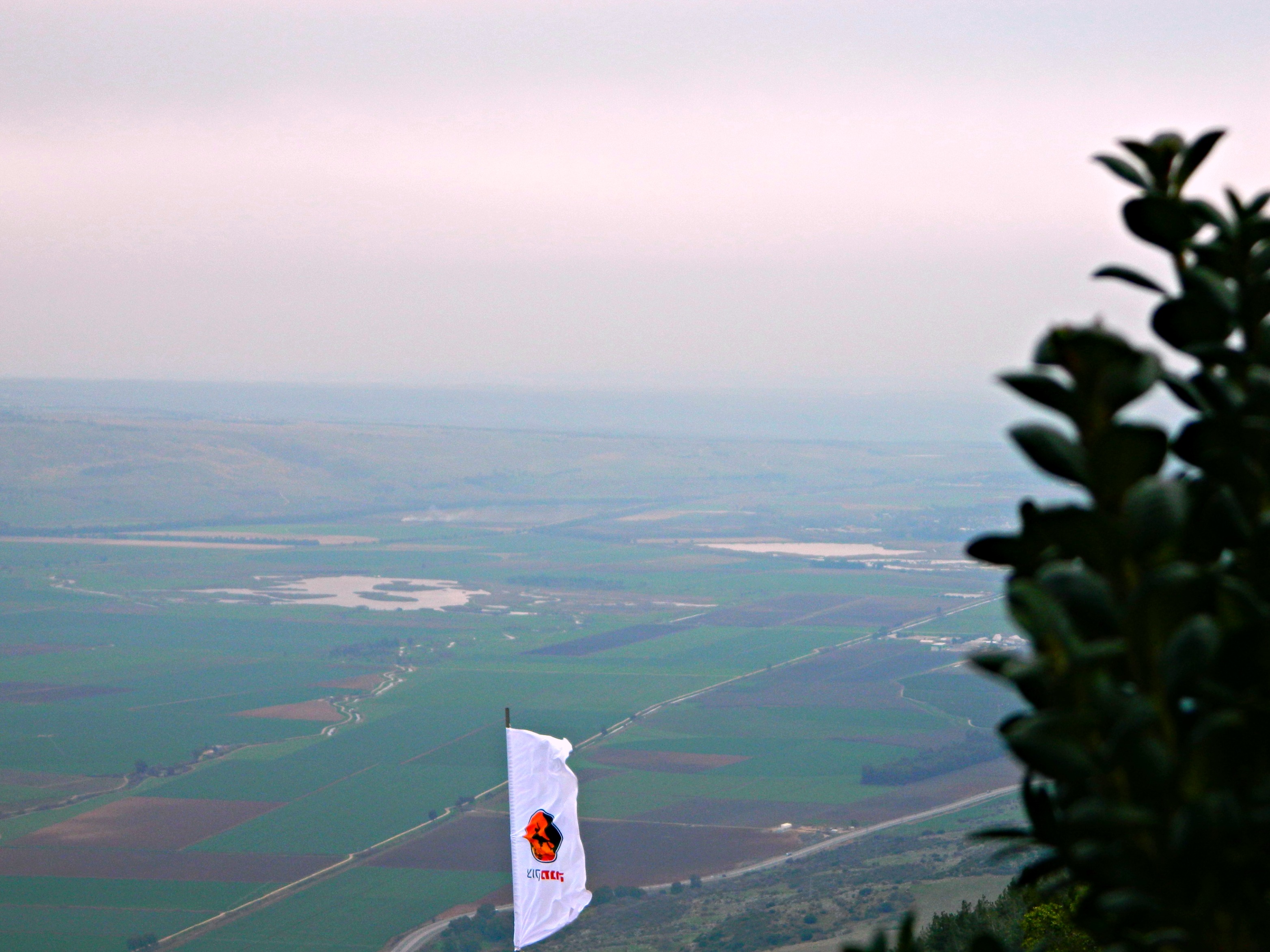
As we waited for the cable-car we took stock of the view, buffeted by the brisk winds. Here is the Hula Valley looking all hazy, far below:

View of the Hula Valley

View of the Hula Valley

When the cable-car made its way to the top we hopped on – quite literally – and down we went. At first we descended quickly but then it slowed down, the majestic beauty sprawled out the scratched glass windows.

The way down

The way down…

Such a long ride it was that there was even a halfway stop, where attractions such as rapelling are to be enjoyed. We stayed put and kept descending until we hit the bottom, basically in Kiryat Shmona – about a ten minute ride. As we dropped down the last hundred feet or so, we watched screaming Yeshiva boys riding these little railed sleds along the gentle mountain slope.

Alpine sledding

“Alpine sledding”

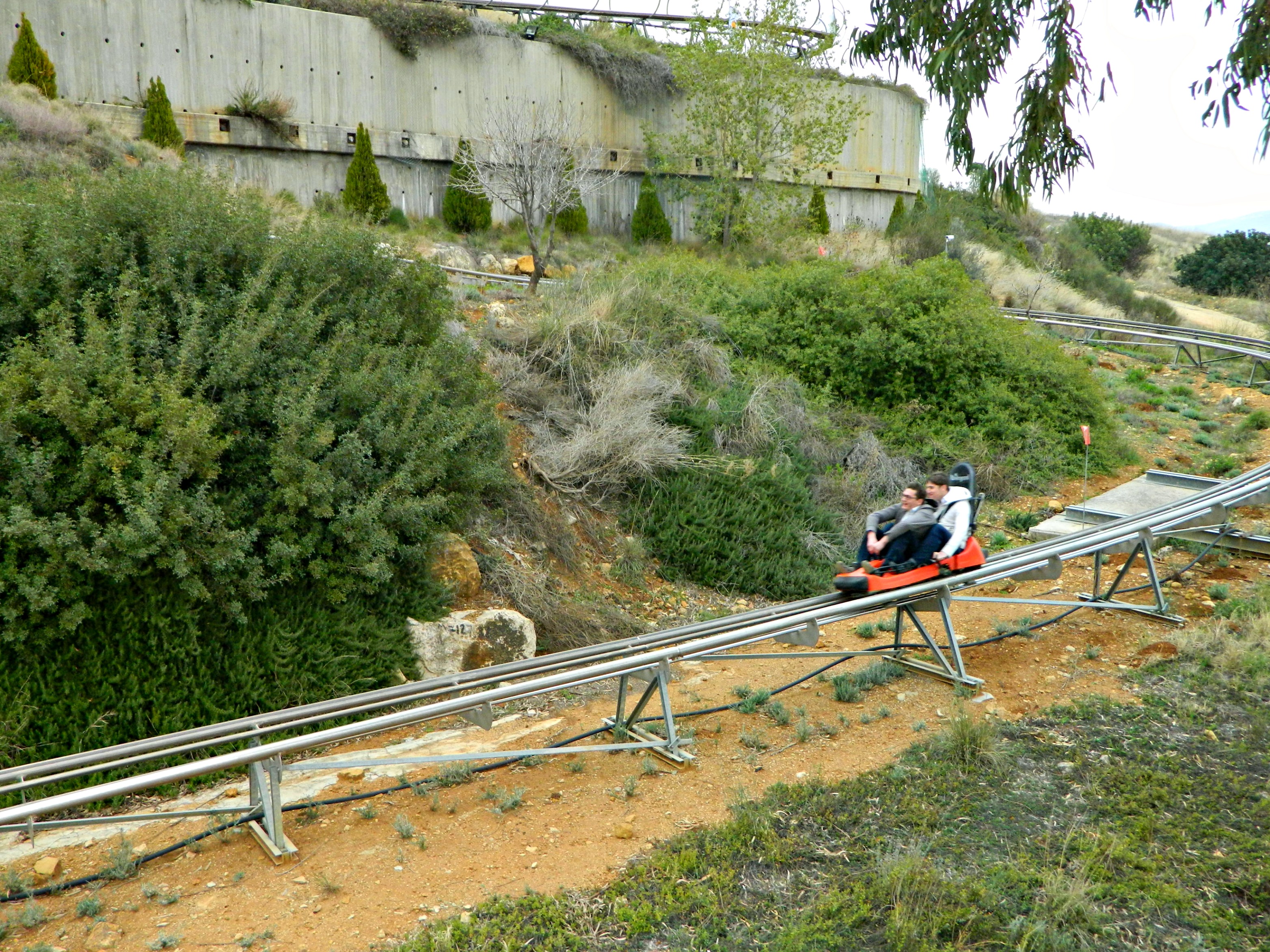
Disembarking, we headed to the ticket office and got tickets for a go at the “alpine sledding”. Seating ourselves comfortably in the little craft, we began our ride. Up, up, up it went, just like a roller coaster… and then the plunge. We whipped around bends and screamed too as we almost flew off the tracks into the jagged rock walls – or so it seemed. About a minute passed from start to finish but it was a good, exhilarating ride. Here is a shot of a particularly picturesque section of the track, the trees and the Naftali Mountain ridge:

Alpine sledding tracks

Alpine sledding tracks

With that checked off we hopped back into the cable-car for the calm ride back to the top. On the way, I noticed something funny, kestrels (small birds of prey related to falcons) perched on the wires, scouring the ground as they rode up and down the cliff, an effortless alternative to hovering in the air searching for prey. At last, we cleared the final ledge of the Manara Cliff and our cable-car slid into the station. We exited and then subsequently exited the park, heading for our next destination – the ruins of Hunin Fortress (or Château Neuf, as the French Crusaders called it).

Tel Kedesh

In Galilee, Israel on February 23, 2014 at 4:20 AM

After visiting the Galil Mountain Winery my sister and I got back into the car and stopped off at Tel Kedesh, a site I mentally marked some time back. Tel Kedesh is the ruins of an ancient Canaanite village on the Israel-Lebanon border. First documented in the times of Yehoshua (Joshua), the successor of Moshe (Moses) who led the Jewish People into the Holy Land, crossing the River Jordan. Kedesh is described as a Canaanite citadel conquered by the Jews and placed in the dominion of the tribe of Naftali. The mountains of the Upper Galilee, where Tel Kedesh is, are called the Naftali Mountains and internationally connected to the Lebanon mountain range from the north.

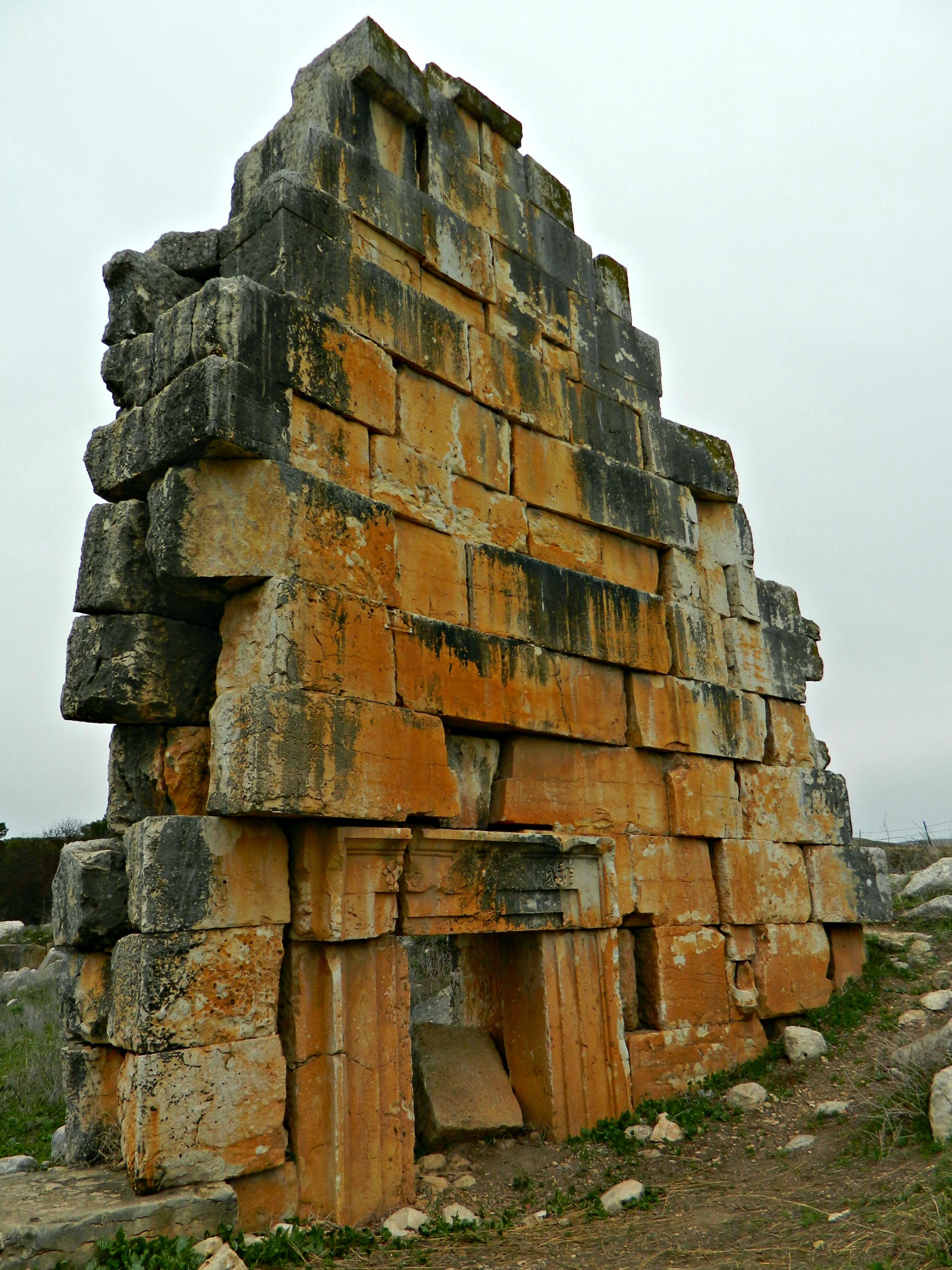
Roman temple wall

Roman temple wall

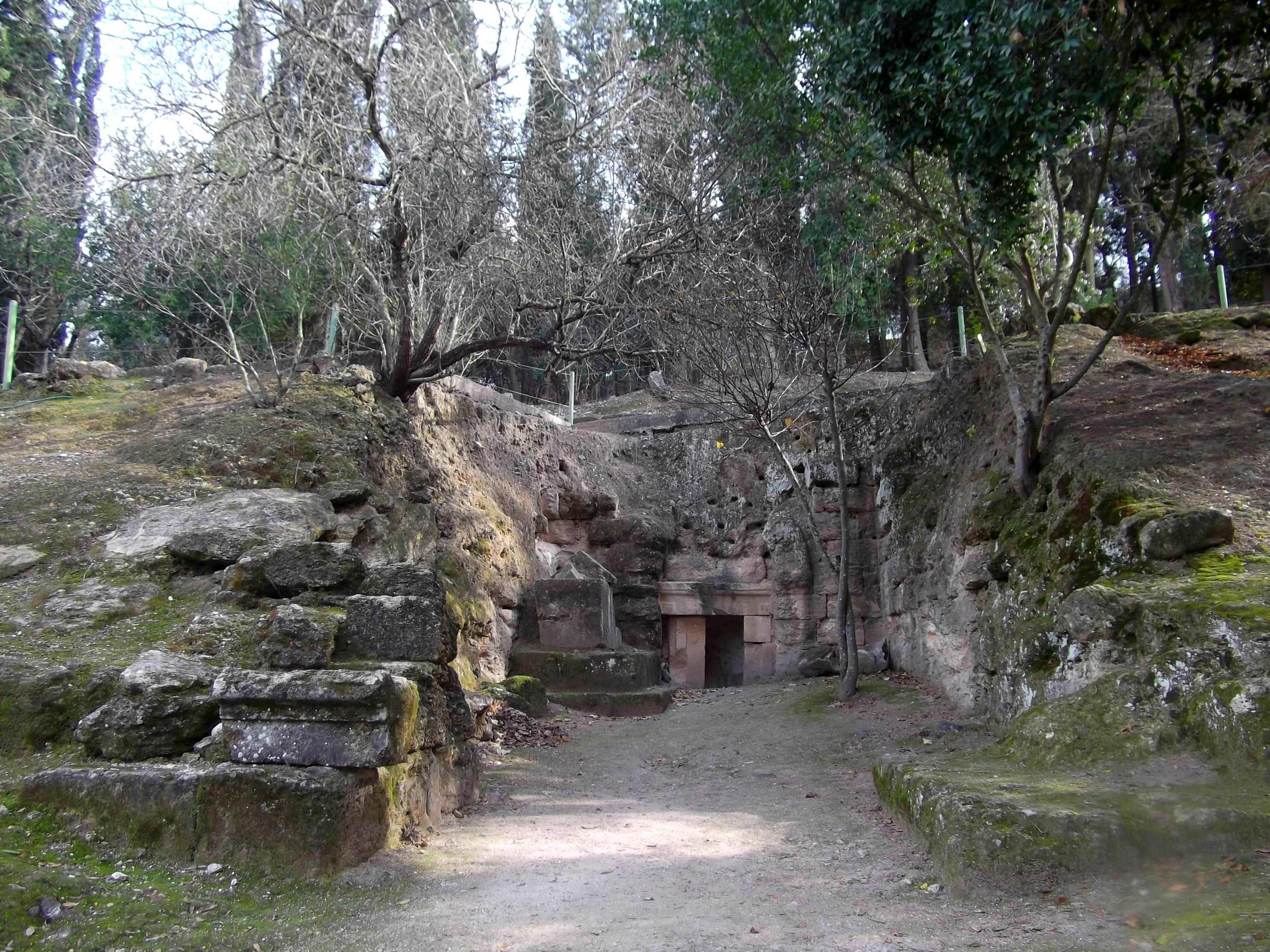
Road 899 cuts through the ancient tell, but the majority of the excavated ruins are to be found on the eastern half, which is where we explored. A small ruins, we first came upon were sarcophagi (stone coffins) and ruins of what once was a mausoleum during the Roman times. Interestingly enough, the mausoleum survived at least in a partial state until it was thoroughly destroyed by local Arab villagers sometime after 1880.

Roman mausoleum ruins

Roman mausoleum ruins

Although ruins from the earlier ages aren’t visible in what we see now visiting the site, Kedesh was mentioned as one of the few “cities of refuge” during the rule of the Israelites, starting with the era of the aforementioned Yehoshua. Later, the Assyrians captured and destroyed Kedesh along with other keys cities in the Galilee, perhaps most notably, Hazor. When I last tried to visit Hazor I was attacked and bitten in the thigh by a dog… One day I shall endeavour to re-visit the ancient site of extraordinary historical importance.

Sarcophagus

Sarcophagus

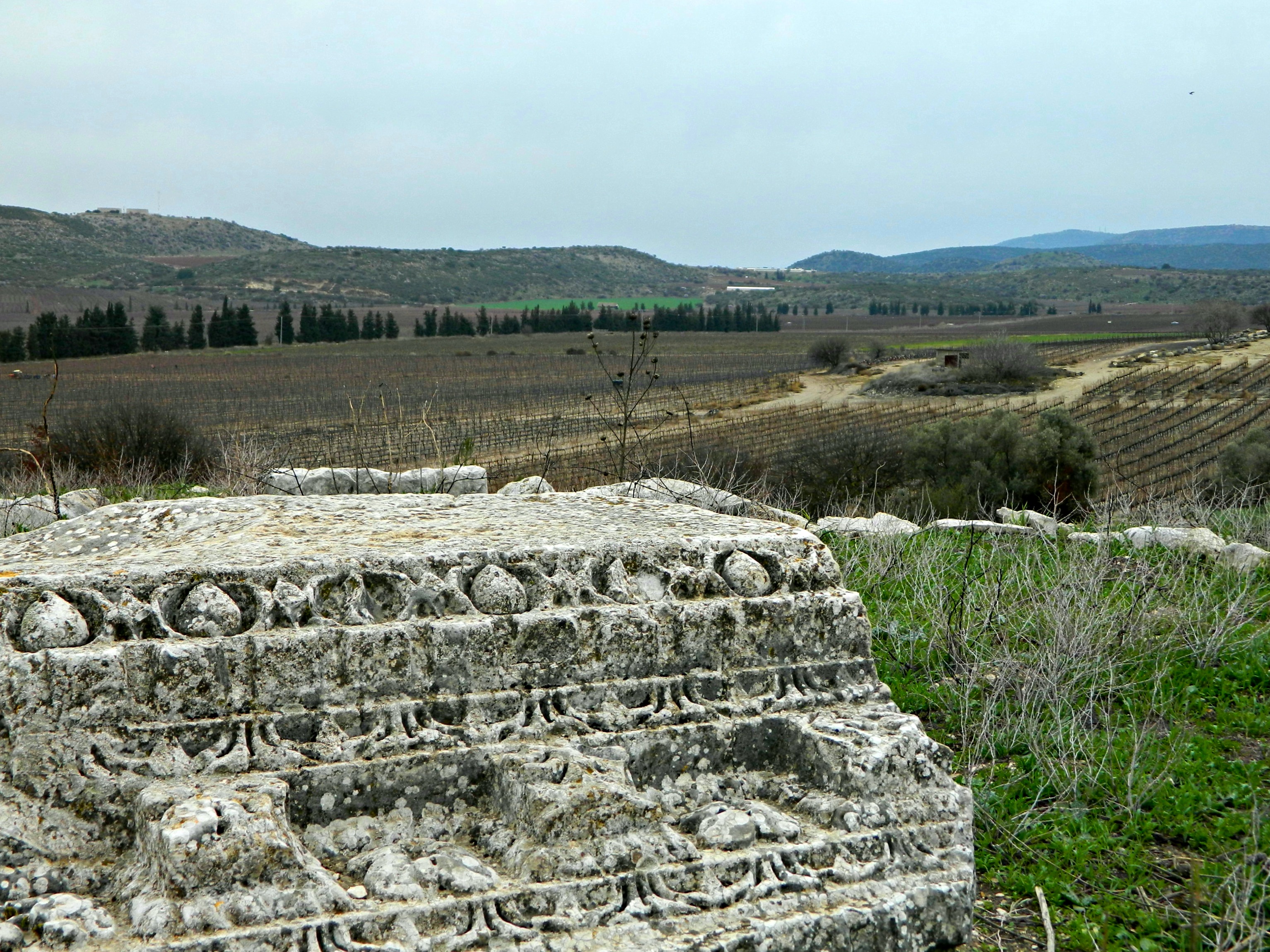
During the Hellenistic period, Kedesh was abandoned after the Jews re-conquered the town from the Greeks. Fast-forward a couple hundred years and Kedesh became known as Cadasa under Roman rule. An important Galilean Roman city, a large temple was constructed and the townsfolk engaged in farming the land, akin to today’s times where vineyards can be seen from the ruins:

Roman temple ruins and grapevines

Roman temple ruins and grapevines

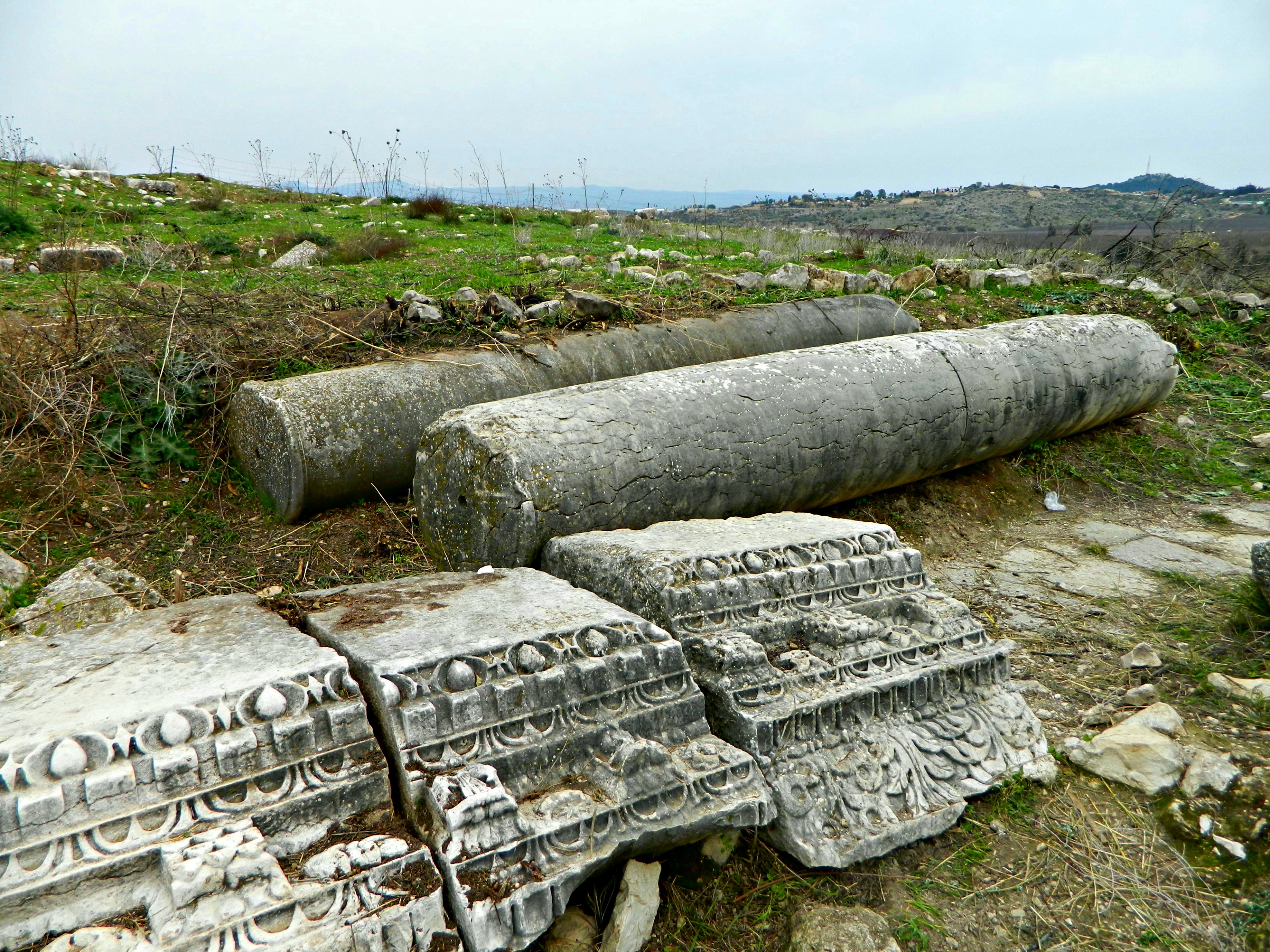
Here are more ruins from the Roman temple, fancy carved stone blocks and pillars:

Ruins of the temple

Ruins of the temple

Slightly unstable, here is what remains of the Roman temple, signs warning of imminent collapse warning all who dare step close:

The remainder of the Roman temple

The remainder of the Roman temple

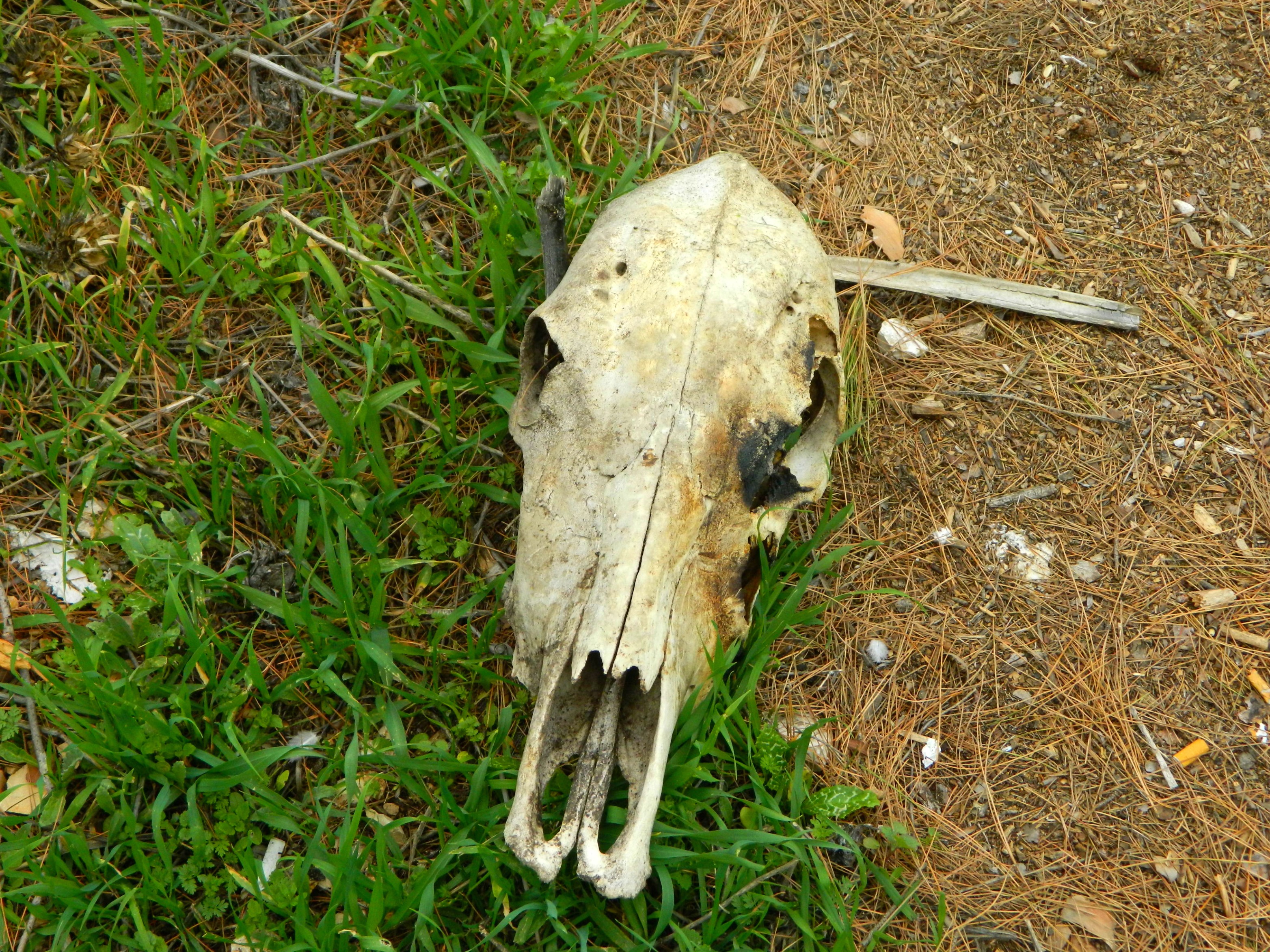
As we were leaving, having explored the eastern half of Tel Kedesh, I noticed this slightly charred cow skull in the grass next to the car. We last found a cow skull years back in the Golan whilst searching for the mysterious ruins of Gilgal Refaim (“Wheel of Spirits”), an ancient megalithic monument composed of circles of stone – and that skull now hangs on the wall next to our backdoor.

Slightly charred cow skull

Slightly charred cow skull

The next stop on our little trip, the cliff and cable-car of Manara Cliff, further up the Naftali Mountains.

Galil Mountain Winery

In Galilee, Israel on February 13, 2014 at 4:28 AM

Recently I took a day off from my exciting army job and went on a little exploring trip with one of my sisters. We got in the car with some snacks and the camera and off we went, to see a variety of interesting sites in the Upper Galilee area. However, our first stop – Galil Mountain Winery – was not in the itinerary but being spontaneous is also fun so we parked the car and went on inside to see some larger-scale wine production (unlike the boutique production of the Saslove Winery).

Galil Mountain Winery

Galil Mountain Winery

We entered the modern-looking winery building, located between Kibbutz Yir’on and the Lebanese town of Yaroun (how weird is that?) less than a kilometre from the Israel-Lebanon border. Just looking at the area on Google Maps, the difference between the Israeli land and the Lebanese land is ridiculous. Technically, Lebanon should be able to become a world contender in fine wines. In the aerial shot below, the little town in the middle is Kibbutz Yir’on with the winery just to the left among the vineyards and the scattered town on the left is the Lebanese Yaroun – the border being quite distinguishable:

Aerial shot of the area

Aerial shot of the area

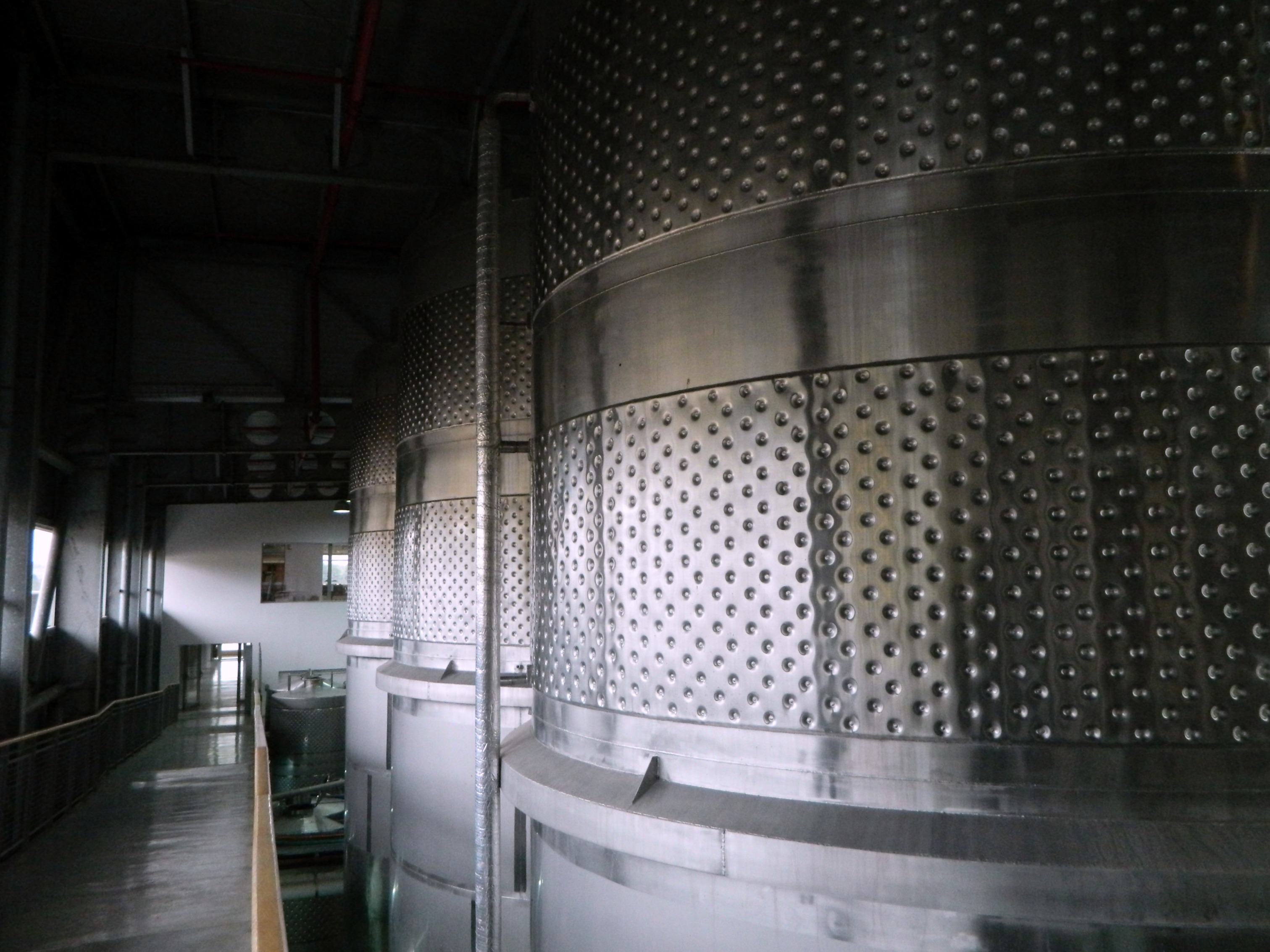
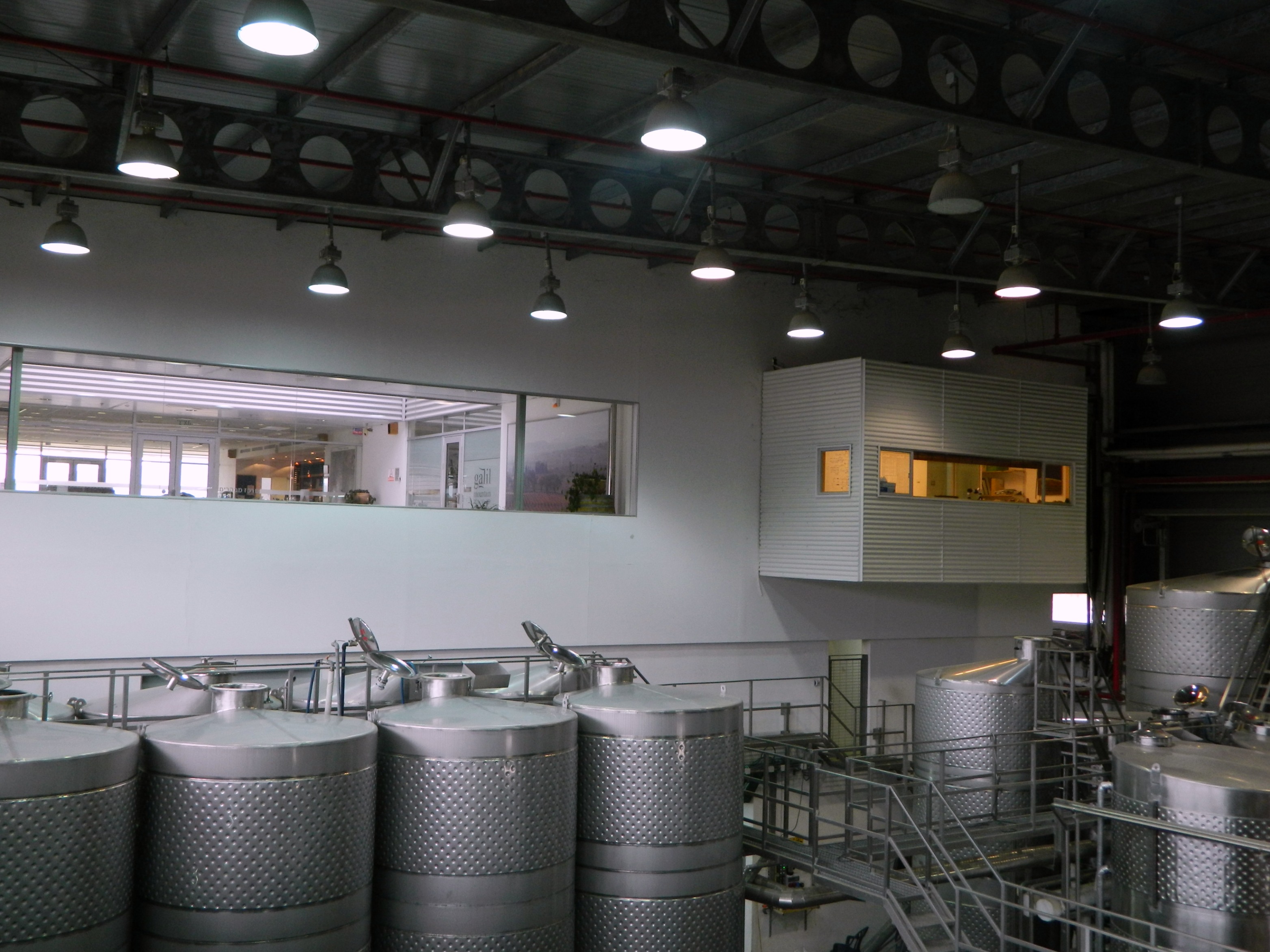
Friendly faces greeted us and before long we handed over some coins and began our tour. Starting with the balcony overlooking rows and rows of grapevines, we then moved over to the front of the building where the freshly picked grapes are fed into the hopper which takes grapes and all into the winery for production, filtering out leaves and vines. Our guide then took us into the production plant where numerous stainless steel drums, vats and pipes turn the mulched grape into a fragrant alcoholic beverage. Since we made wine twice in our basement back in America, we knew the answers to some of the tricky questions she asked about wine production.

Huge stainless steel vats

Huge stainless steel vats

And here is another shot of the production room, looking at the windows of the visitors centre and some office protrusion.

Inside the production room

Inside the production room

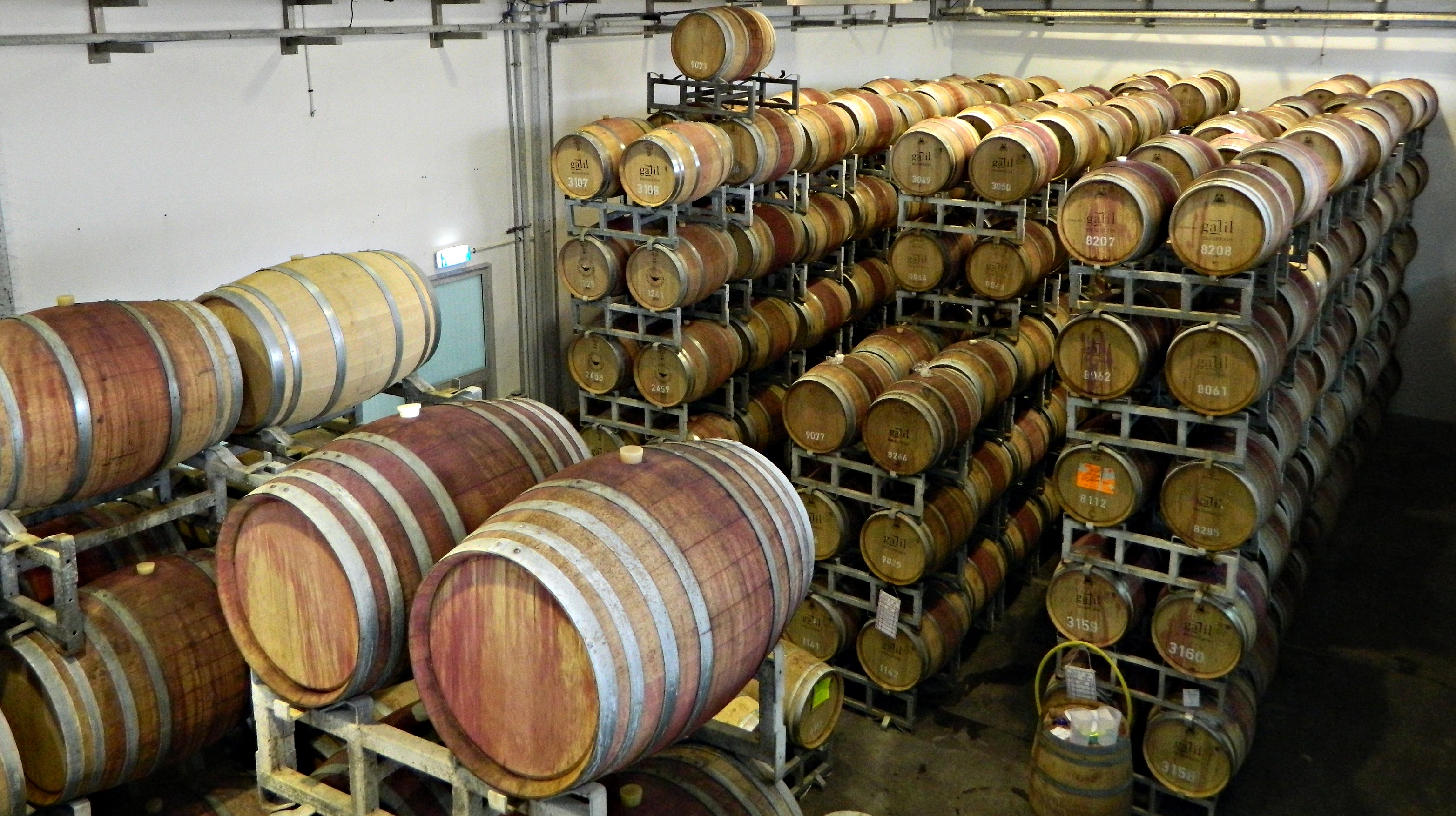
With the fumes of fermentation greeting us with every step we walked into the next room, the barrel room. Here, wine ages in wooden barrels sealed with silicon – all made of French oak if I’m not mistaken:

Barrels of aging wines

Barrels of aging wines

Looping around, we returned to the visitors centre and sat down to watch a short film about the Galil Mountain Winery. Founded in 2000, the winery is jointly owned by Kibbutz Yir’on and the Golan Heights Winery (33% and 67%, respectively). The winery, with vineyards scattered around the Upper Galilee area, produces over one million bottles of wine annually, offering some fourteen blends and varieties. After the video presentation our guide took us into the tasting room where she handed us the wine list and prepared three wines for us to try.

Taste testing the wines

Taste testing the wines

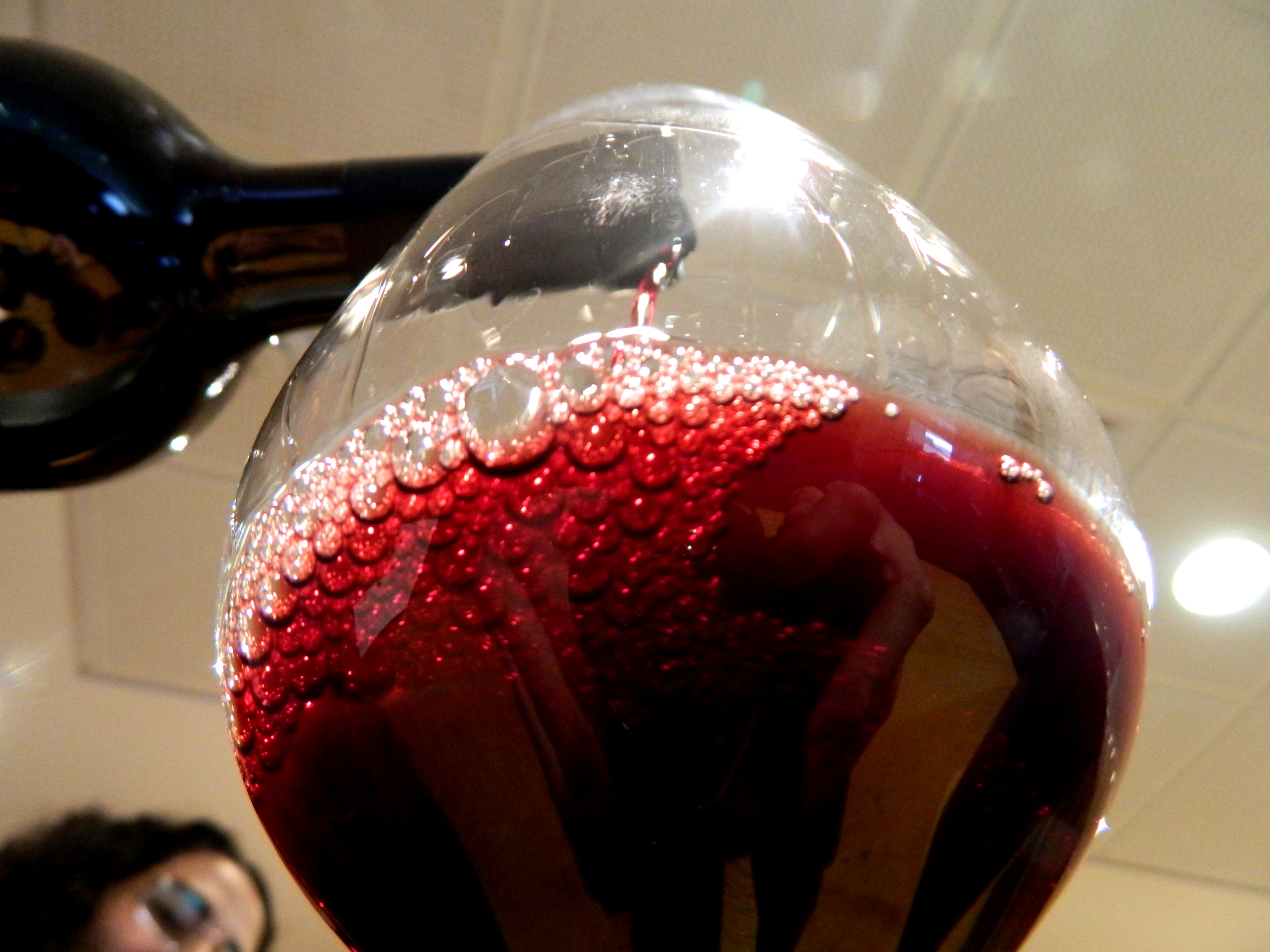
Our first sampling was the Galil Viognier from the local Yiron Vineyard. I had just a small sip, as I’m driving, and we all spoke about the white wine – highfalutin talks about nose and palette. Next, the Galil Mountain Cabernet Sauvignon, my least favourite of the three. And then, the flagship bottle – Yiron. A blend of Cabernet Sauvignon, Merlot and Petit Verdot, this wine was of heavy body and rich palette with berries and toasted oak – and according to them, a slight hint of butter.

Pouring some Yiron wine

Pouring some Yiron wine

When we were done tasting (in my case mere sipping and in my sister’s case downing large quantities of wine – mine and her’s) we bid the Galil Mountain Winery lot “adieu!” and hopped back into the car. Along the road a few minutes later, I took this photo of a vineyard in the low mountains and am attributing it to the aforementioned winery with creative licence.

Vineyards seen from the road

Vineyards seen from the road

Our next stop was Tel Kedesh

Bet She’arim

In Galilee, Israel on February 9, 2014 at 4:34 AM

A while ago – before I got all caught up in my weekly photography challenge “52 Frames” – I took a little visit to Bet She’arim, a magical-looking national park in the Jezreel Valley area near Mount Carmel. I’ve passed it so many times, and had no idea what the park was all about, but when I did end up visiting I was in awe of what I’ve been missing all this time. Clearly one of Israel’s most underrated national parks, Bet She’arim is especially notable for the large necropolis (“city of the dead”) dug out of the limestone bedrock.

A side portal of the cave of Rabbi Yehuda HaNassi

A side portal of the cave of Rabbi Yehuda HaNassi

Starting off at the trailhead near the visitor centre, the first few burial caves were all underground, the entrance dug deep even before the cave was created. With the ancient city ruins of Bet She’arim just a little up the hill, this is where the Jewish inhabitants buried their dead some 2,000 years ago. These are relatively small caves with burial slots, belonging to dignitaries such as the “Head of the Sidonian Synagogue” – albeit not open for visitors. Some of the caves have been ransacked by grave robbers, some still not opened.

The Unexcavated Cave

The Unexcavated Cave

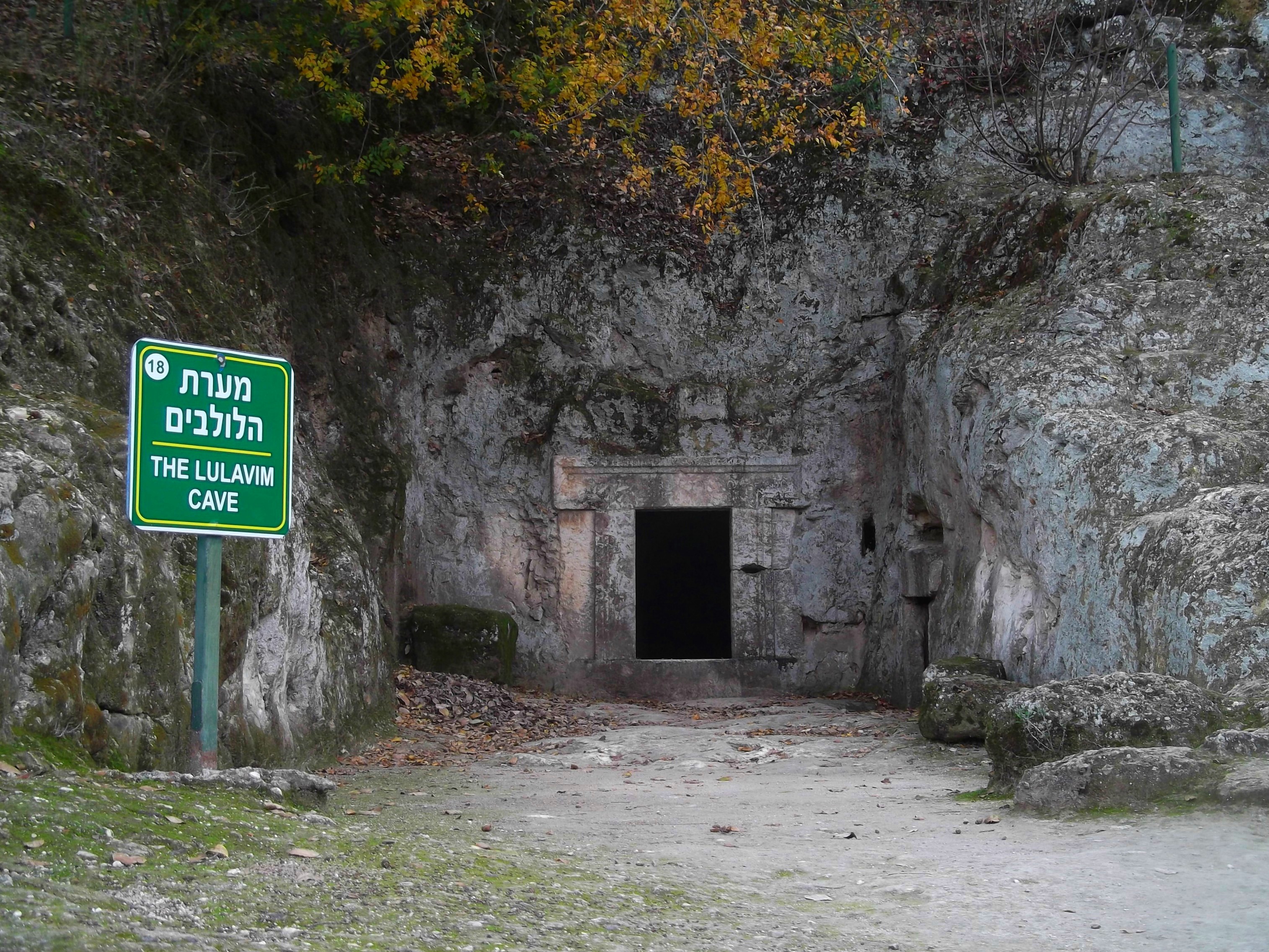
Passing cisterns and “bleachers” carved out of the bedrock, I came upon the “Unexcavated Cave”, “Sarah’s Cave” and the “Cave of the Lulavim (Palm Branches)” – the first cave I was allowed to properly enter.

The Lulavim Cave

The Lulavim Cave

Inside, I found chambers with burial spots dug out of the rock, as seen in the ancient catacombs of Avdat and Cafarlet. The burial cave’s heavy stone door is propped up to the side, off its hinges.

From within the Lulavim Cave

From within the Lulavim Cave

Next there were larger caves, belonging to a variety of personages – from the caves of “Loved One” and the “Cloth Merchant” (named Benjamin son of Julius) to the “vault of Edysius, head of the Council of Elders, a man of Antioch”. Since Jews were forbidden at the time to be buried in Jerusalem, due to oppressive Roman rule, Bet She’arim became the new best place to be laid to rest. Jews from all over the known world came to be entombed in their special caves, the inscriptions written in a variety of languages from Greek to Aramaic and, of course, Hebrew.

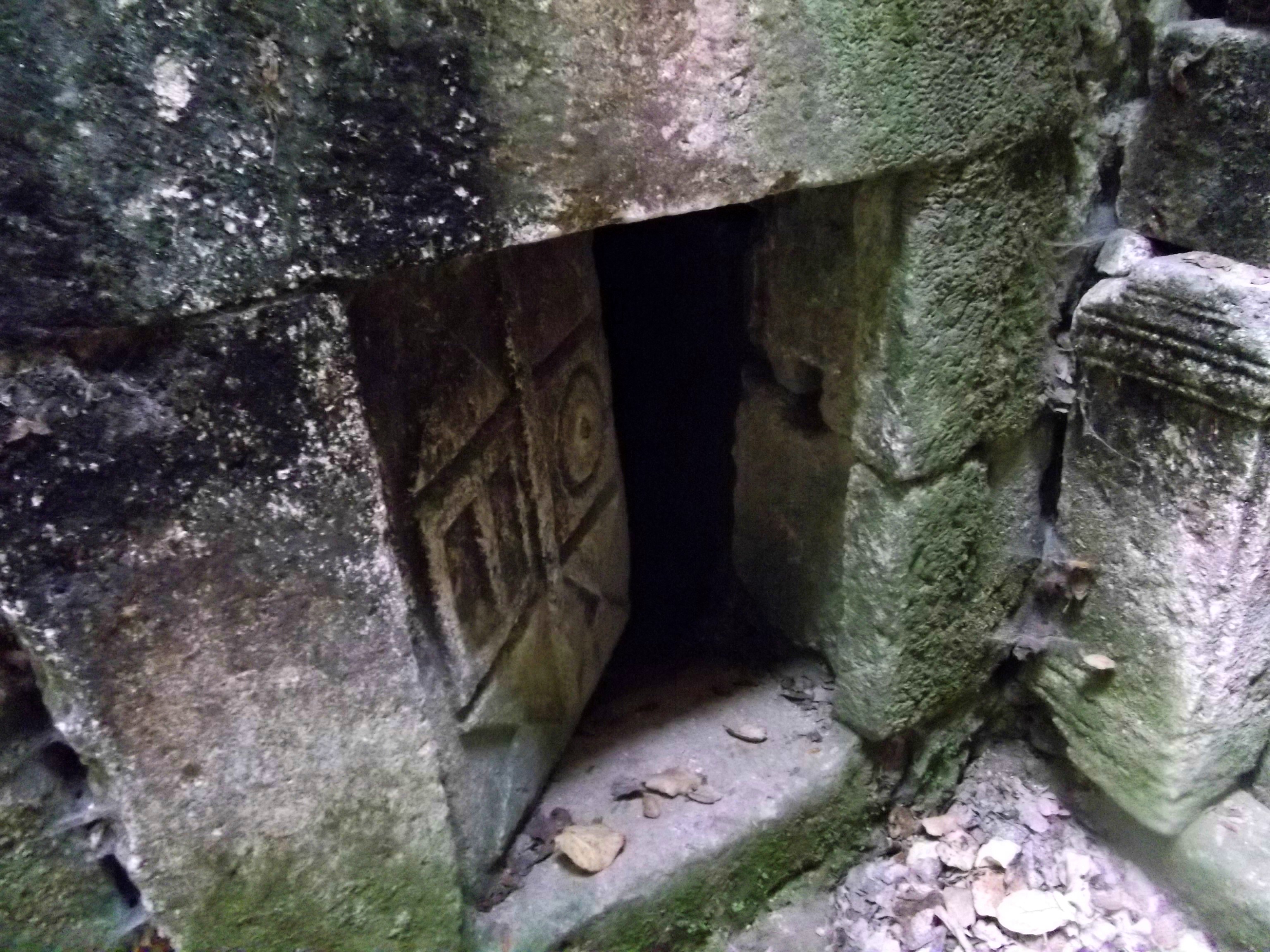
Swinging engraved stone door

Swinging engraved stone door

But the best caves, the choicest catacombs – necropoleis in their own right – are the “Cave of Rabbi Yehuda HaNassi” and the “Cave of the Coffins”:

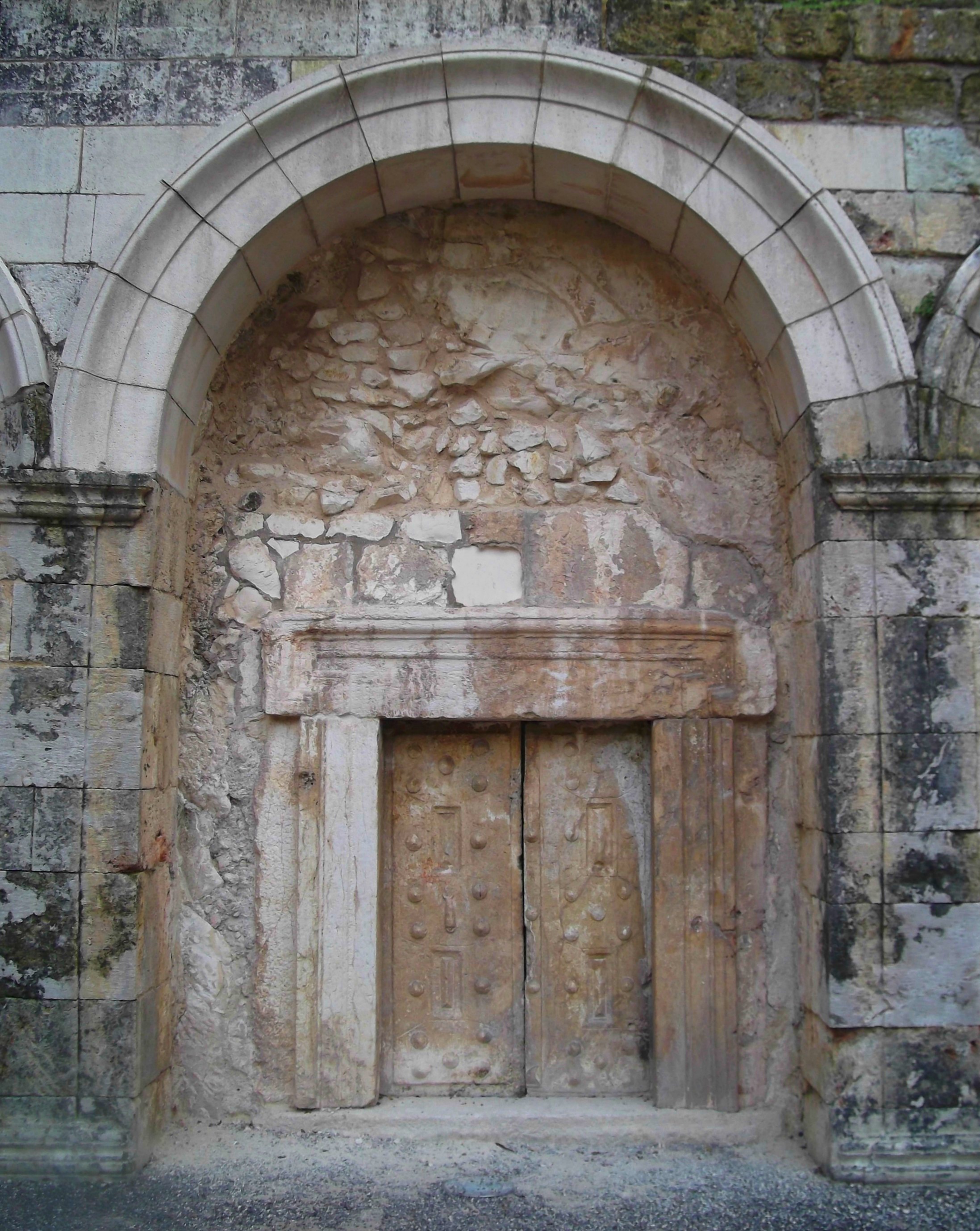
Ornate central door of the cave of Rabbi Yehuda HaNassi

Ornate central door of the cave of Rabbi Yehuda HaNassi

Rabbi Yehuda HaNassi is one of the great leaders of the Jewish People, the “Prince” of the Jews still living in the Holy Land during Roman occupation some 1,800 years ago, just after the death of another renowned leader, Rabbi Akiva. A descendant of King David, Rabbi Yehuda HaNassi took it upon himself to preserve the Oral Law and write down the basics in the form of the Mishnah – the foundation of Jewish Law today. The Sanhedrin (Jewish supreme council) moved around during the tumultuous times following the destruction of the Second Temple in Jerusalem and found itself in Bet She’arim, with Rabbi Yehuda HaNassi at the head of the council. Towards the end of his life, Rabbi Yehuda HaNassi (and the Sanhedrin) moved to Tzippori (Sepphoris) but he always planned on being buried back in Bet She’arim, on land gifted to him by his friend, the Roman Emperor Marcus Aurelius, the last of the “Five Good Emperors”.

Menorah in relief

Menorah in relief

However, Rabbi Yehuda HaNassi specifically requested that he be interred in the ground itself and not in a sarcophagus. Other Jewish notables were buried in the multi-chambered catacomb, including his two sons, Rabbi Gamliel and Rabbi Shimon, and also Rabbi Chanina the Lesser. However grand Rabbi Yehuda HaNassi’s Roman-sponsored catacomb is, the neighbouring “Cave of the Coffins” remains the largest and most magnificent underground tomb at Bet She’arim.

Regal entrance to Cave of the Coffins

Regal entrance to Cave of the Coffins

Spanning 75 metres (246 ft) in both length and width, with corridors leading off to numerous chambers, the “Cave of the Coffins” is enormous. In all the rooms, some 135 coffins were found – many notable sarcophagi with relief markings of birds, bull heads, lions, fish, the iconic Jewish menorah and surprisingly, the figures of Nike – a Greek goddess. When I entered the cool underground tomb, I was flabbergasted at how big it was; how long did it take the builders to create it? Small lights here and there illuminated key locations in the tomb, and in one room I found a ladder that took me up to a small window, light streaming in to show me the masses of painstakingly carved stone sarcophagi. The sheer number of coffins with and without their stone lids was absolutely astounding – I just wonder where all the skeletons are now… Since I couldn’t really capture the location on camera, being dark and all, I can only go on raving about it and hope that you too one day shall visit Bet She’arim for yourself.

Sarcophagus from above

Sarcophagus from above

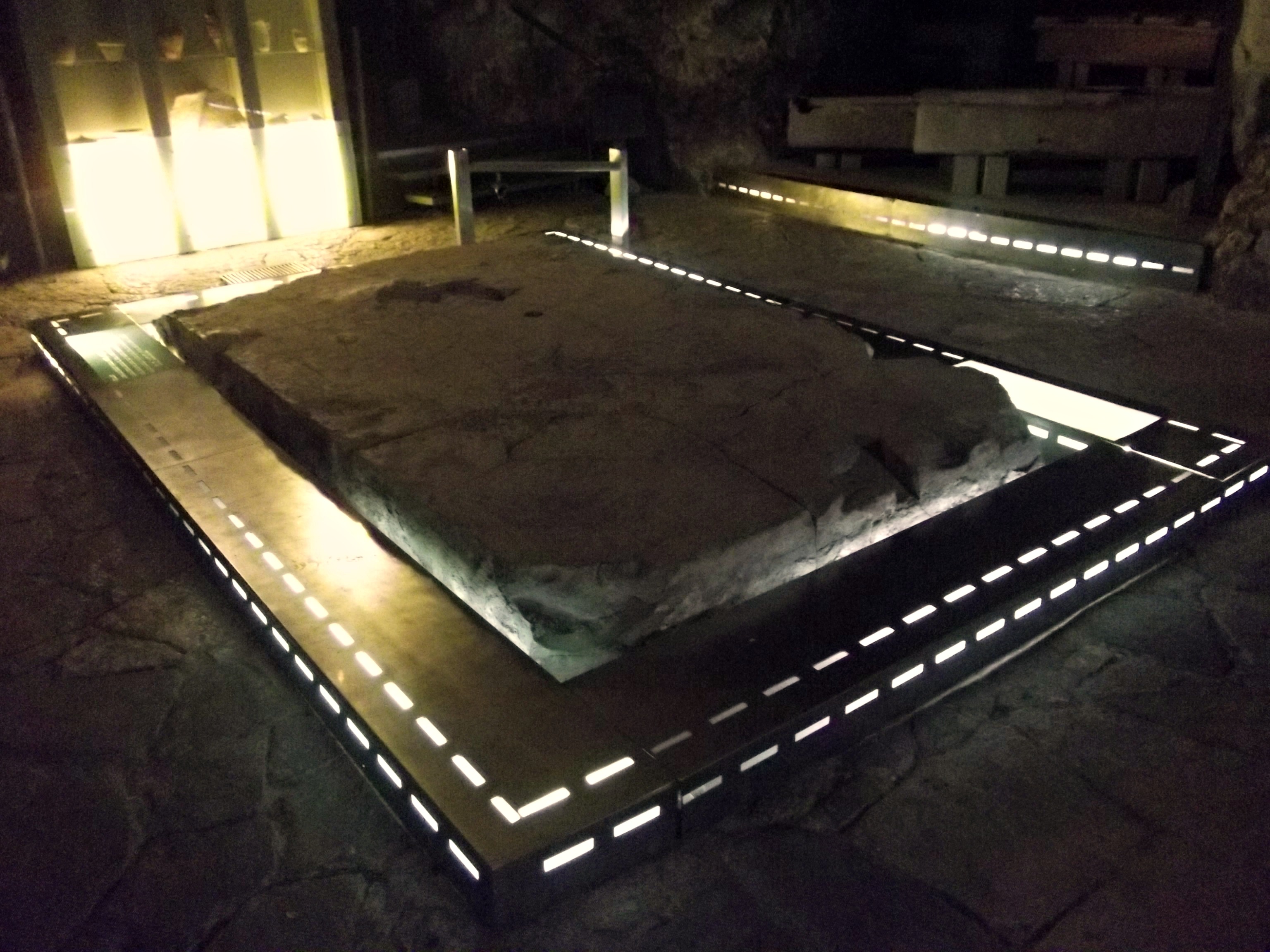
The last stop after exiting the incredible “Cave of the Coffins” was the local museum. Built inside a large cistern that was turned into a glass workshop by the workers back then. With a collection of artefacts from the time, including coins and tin coffins, the museum’s centrepiece is a huge block of glass laying on the floor. Discovered by a bulldozer in 1956, the 9-ton slab was eventually studied and determined as poor quality glass made locally by artisans who cooked the huge batch of raw material at the approximate temperature of 1,900°F (1,050°C) for between five and ten days. When the glass slab didn’t turn out as they pleased, they left it for the bulldozer to find.

A 9-ton block of glass

A 9-ton block of glass

With that I wrapped up my little tour of Bet She’arim’s amazing necropolis saving the ruins of the ancient city nearby for a later date, whenever that may be.