Israel's Good Name

Archive for the ‘Israel’ Category

Arak Masada

In Galilee, Israel on October 6, 2013 at 3:31 AM

After visiting Achziv, we stopped off at Mi’ilya – an Christian Arab village – on our way back home. For a really long time I’ve been wanting to see the Arak Masada factory which was so near.  At last we entered Mi’ilya for this very purpose.  For those unfamiliar with this alcoholic beverage, arak is an anise-flavoured liquor that is quite popular in the Middle East. We turned into one street, drove about, turned back around and I asked directions. We were in the wrong area. We continued and then, after more asking and more searching, we found the factory! Hidden in a fenced area in the industrial section of Mi’ilya, the factory in a modest third of a warehouse, sandwiched between two other industrial operations.
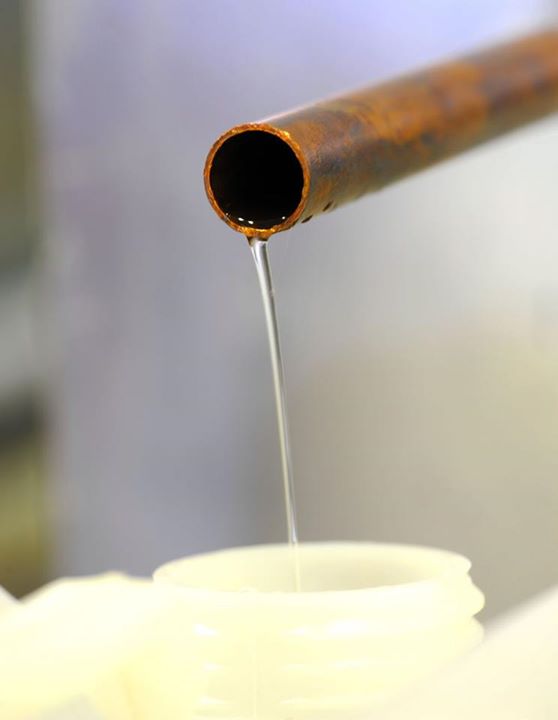
Arak production (courtesy of Arak Masada)

Arak production (courtesy of Arak Masada)

We arrived just after closing and were told to come back. We did, the following morning, one of my sisters also tagging along. I greeted the owners, brothers Wadia and Jeryis Hadid, with “sabach al-chir” (“good morning” in Arabic) and after words of greeting and introduction, Jeryis began to show us around the modest factory.
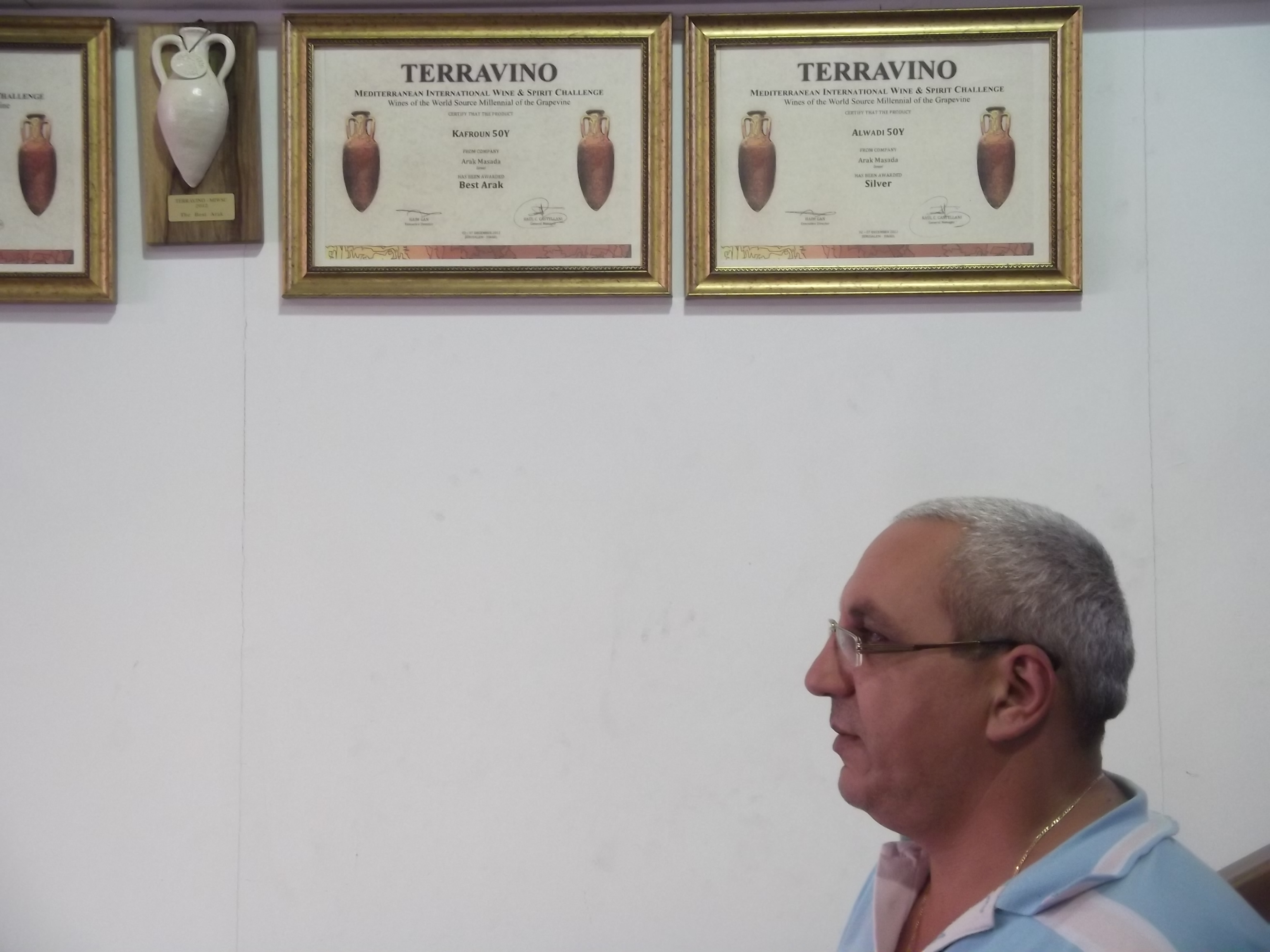
Jeryis Hadid, one of the owners

Jeryis Hadid, one of the owners

The two Christian Arab brothers teamed up with a Lebanese man named Shukri Al-Hayak who, after serving in the Israeli-operated South Lebanese Army, found refuge in Israel after the IDF withdrawal of 2000. The trio then went ahead and began to produce their own arak, based off the Lebanese recipe that Shukri brought with him.
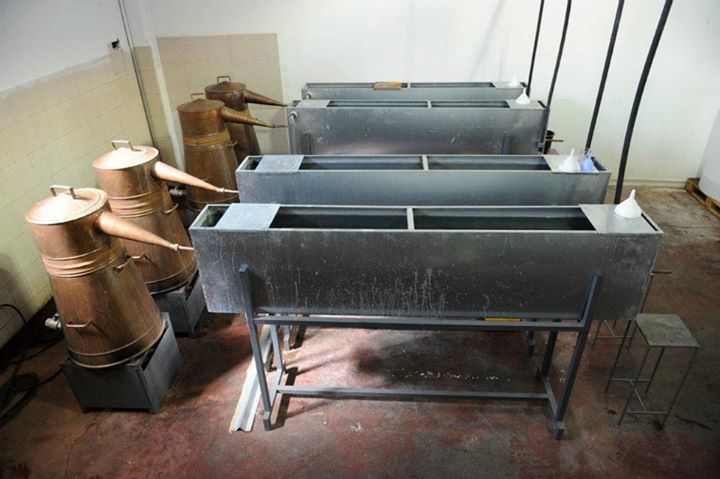
The distillery (courtesy of Arak Masada)

The distillery (courtesy of Arak Masada)

Their arak distilling process goes as follows: First, grapes are poured into vats and stirred for several hours daily. Instead of pressing or squeezing the grapes, the stirring slowly breaks down the grape skin and the juices flow naturally. After twenty-something days in the vat the fermenting grapes are then brought to a boil, the vapourised juice rising up and making its way into the little pipe, as seen below:

Close-up of the copper distillers

Close-up of the copper distillers

The juice then travels along inside a pipe, inside a long vat of cold water, and eventually drains out the far end, and into containers. Anise is then added to the liquid and the distinct taste of arak is born.
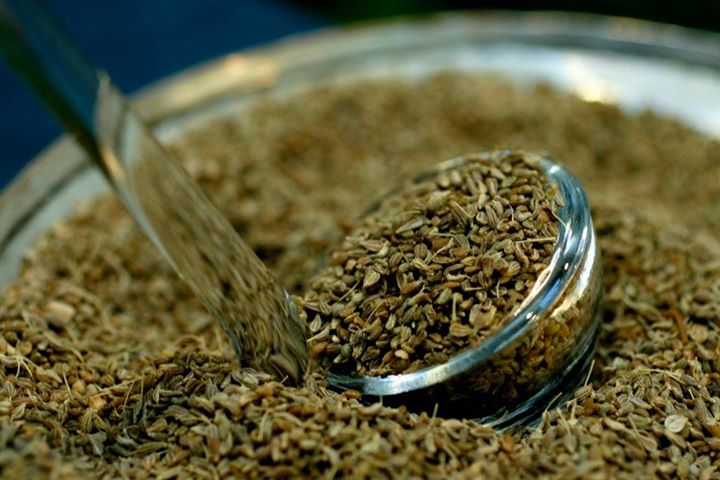
Anise (courtesy of Arak Masada)

Anise (courtesy of Arak Masada)

The arak is then put into large containers and is stored above the bottling station, where a hose is led down to release a whole new batch of ready arak to the market.

Arak waiting to be bottled

Arak waiting to be bottled

Arak Masada makes three types of award-winning araks: Alwadi, Kafroon and Jabalna – and we tried them all. The premium label, Alwadi, happens to be my favourite and while I don’t really like arak, I found the Alwadi to be rather flavourful and not just a powerful mouthful of anise. The Alwadi arak is uniquely triple-distilled and costs nearly twice as much as the others. The Kafroon, the second best, is also flavourful – however in a very different way, and the Jabalna tastes pretty much like regular arak. How the taste varies so much is beyond me, but each label tastes a world of its own in an anise galaxy.

Alwadi Arak

Alwadi Arak

These upcoming weeks are when the grapes are coming in and so, before we left, Jeryis asked us if we wanted to come help with the grapes (they need Jewish workers handling the grapes). I couldn’t attend, due to my demanding army position, but my sister decided to test it out and bottling arak there with a friend. How cool is that, to be able to boast that one once made Lebanese arak in a modest little factory? Definitely my kind of thing…

For those interested in visiting the factory, here is their site (available in Hebrew, Arabic and English).

Achziv

In Galilee, Israel on September 30, 2013 at 3:34 AM

Last week, during Chol HaMoed Sukkot, my father and I took a little trip over to Achziv, a small national park preserving ruins and a little section of tide pools and beach. Despite living here for over four years now, we have never really found this place. There is another beach a bit south which is called Achziv (Banana Beach) and then there is the Betzet Beach a bit north that is open and free all the way up to Rosh HaNikra – where we usually go for a pleasant trip to the Mediterranean Sea.

Achziv Beach

Achziv Beach

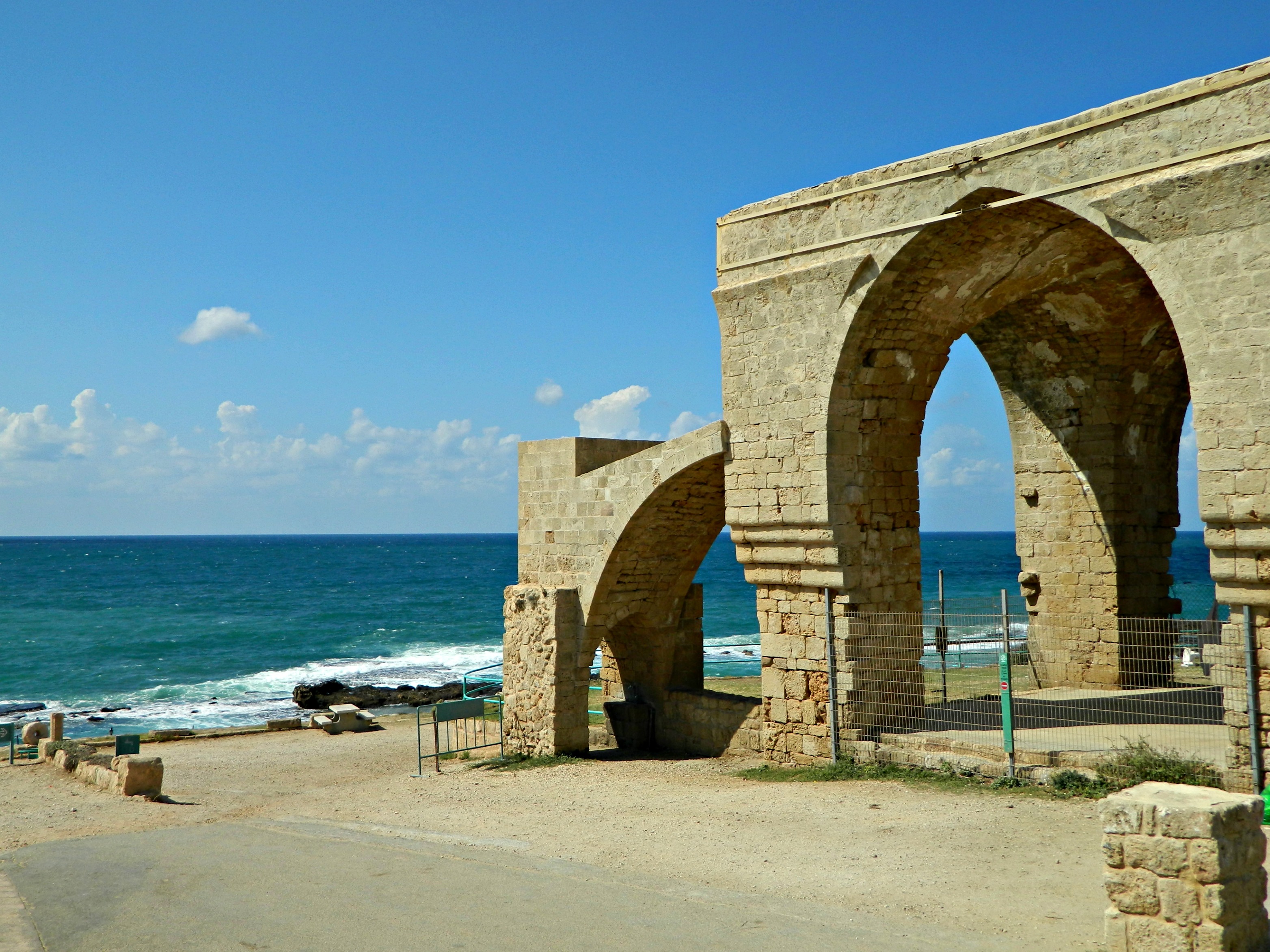
Achziv is the end of the Nachal Kziv (Kziv Stream) which runs from Mount Meron to the Mediterranean, just north of the Achziv park. The Achziv site includes ruins from numerous eras including the Canaanite, Biblical Jewish, Phoenician and Arab. A coastal city, Achziv was utilised by many civiliasations and empires, focusing on its location between Akko and Tyre – both ancient coastal cities.

Elegant ruins on the beach

Elegant ruins on the beach

In the Crusader era (possibly my favourite era of ancient times), in 1104, a fortress was built and called “Casal Humberti”, designed to protect the coastal road leading down to Akko, which was, for a period, the Crusader capital in the Holy Land. A stone tablet with Christian symbols found onsite is now on display at the Louvre in France. In 1256, the Achziv region was leased to the Teutonic Knights who commanded the nearby Montfort, the castle near my house.

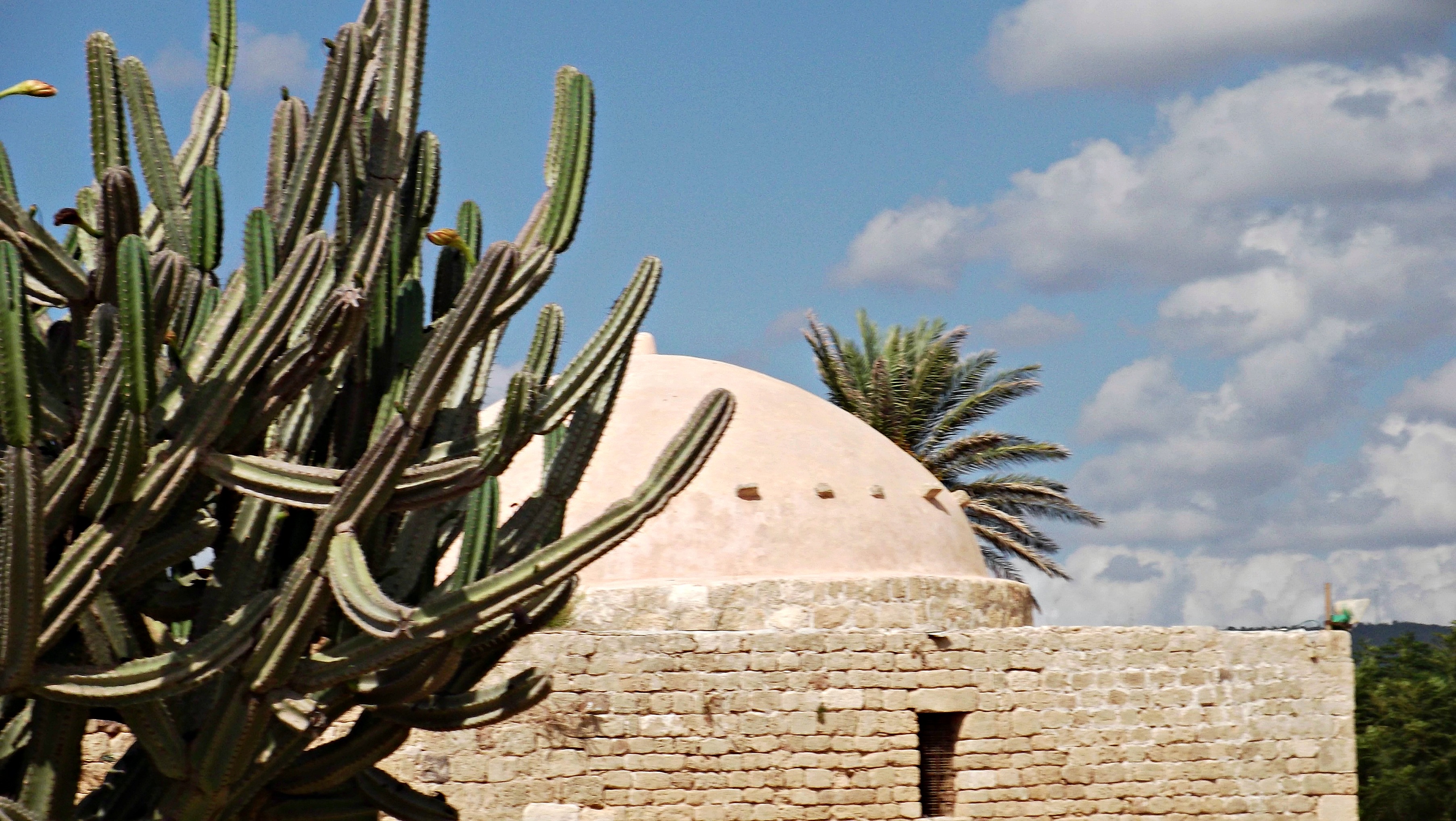
Cactus and mosque

Cactus and mosque

Later, during the Mamluk and Ottoman eras, a village called El-Zeeb was founded and sometime during this time, the above mosque was built. Achziv, or to be more precise, the bridge over the stream just north, saw action in 1946 when the Israeli resistance group, the Palmach, attempted to blow up the bridge in efforts to isolate Israel and prevent neighbouring and the local British armies from advancing and receiving reinforcements by rail. With fourteen Palmach members killed, the Achziv bridge was the only failure in the “Night of the Bridges” operation.

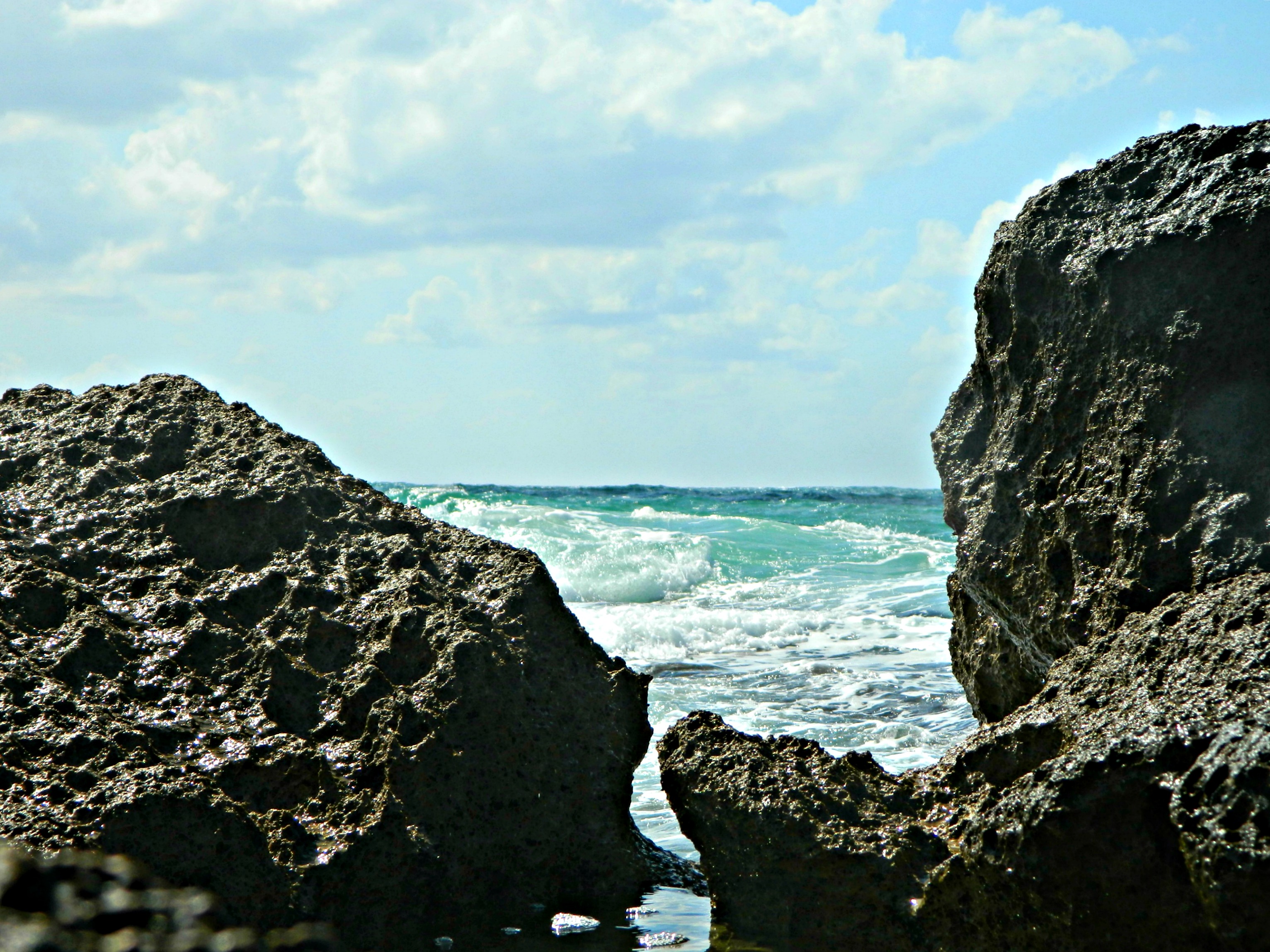
Choppy coastline to Rosh HaNikra

Choppy coastline to Rosh HaNikra

After passing the ruins, we descended to the water and climbed onto the rocks leading to the tide pools and rock shelves. The water was cool and the rocks were uber-grippy, the porous texture a safe surface for walking. However, the rough, craggy rock is very sharp and so falling is ill-advised.

Razor-sharp porous rock

Razor-sharp porous rock

Looking back at the calm swimming area – or shall I say, lagoon – there was a pleasant blend of warm shallow water, soft sand and ancient stone ruins on the shore that makes Achziv Beach quite picturesque:

Swimmers in the lagoon

Swimmers in the lagoon

I scoured the tide pools looking for sea creatures, hoping to find an octopus in particular. Back when we lived in Miami, my father and I took a little trip to the west coast of Florida and I found a small octopus hiding in a conch shell – it was a very cool experience. As I scoured and climbed about, large waves periodically attacked me, dousing me with cool seawater.

The waves sneaking between the rocks

The waves sneaking between the rocks

I found no octopuses, but did pry a little sea snail from a smooth underwater rock. Here I am, crouching in the rocks, inspecting the little marine gastropod:

Crouching in the tide pools

Crouching in the tide pools

Thankfully, this snail was a bold little bugger and he came out of his shell, waving his feelers about – or are they eyestalks? I know land snails and some sea snails have eyestalks, although with this particular snail the shorter appendages on the sides of his “face” look more like functioning eyes – many someone who knows can share his/her knowledge in the comments below.

Interesting little sea snail

Interesting little sea snail

After a little photoshoot with the compliant snail, I replaced him – giving him a great home where he would not be stepped on – and we left the rocks. We explored the ruins, as photographically displayed above, and got back in the car for the next trip location – Arak Masada, a small arak factory in the Christian village of Mi’ilya, just minutes away from my house. That post is next, stay tuned.

A special thanks to Avi Kessner for a little CS5 touch-up.

Renaissance Festival at the Yehiam Fortress

In Galilee, Israel on September 24, 2013 at 8:23 AM

Yesterday we took a little trip down Road 89 to the old Crusader castle, the Yehiam Fortress, for a 2-day Renaissance Festival. Just 15-km from our house, and 10-km from the nearby Montfort Castle, this area of the Galilee was the home base in the Holy Land for Crusaders in the 12th and 13th centuries.

The Yehiam Fortress

The Yehiam Fortress

Built sometime after 1220 by the Teutonic Knights, the fortress was then called Judyn (and then after its destruction, the local Arabs called it Khirbat Jiddin – or “Ruins of Judyn”). Today we call it the Yehiam Fortress and it was at this magnificent ruin that the Renaissance Festival was hosted.
Renaissance Festival logo

Renaissance Festival logo

Now, despite the fact that I grew up in Detroit and the Michigan Renaissance Festival was a pretty big annual event, this was my first time attending a “RenFest.” This event, in Yehiam, ended up being more of a crafts fair set in and around a Crusader fortress with a sprinkling of Renaissance flavour added for good measure. I’m sure that if they hosted it next year at Yehiam, but under expensive American production, it would be far more epic than anything you’d see in the USA.

Metal silhouette against fortress wall

Metal silhouette against fortress wall

First, after parking the car under the watchful gaze of the fortress, we saw a trail heading to the Yehiam Stream. We turned, followed the trail for a few feet and were greeted with a lovely view overlooking the valley of the Yehiam Stream. There was a little stone wall protecting us from the dangers of the abyss but some like to take a ride on the wild side:

Living dangerously

Living dangerously

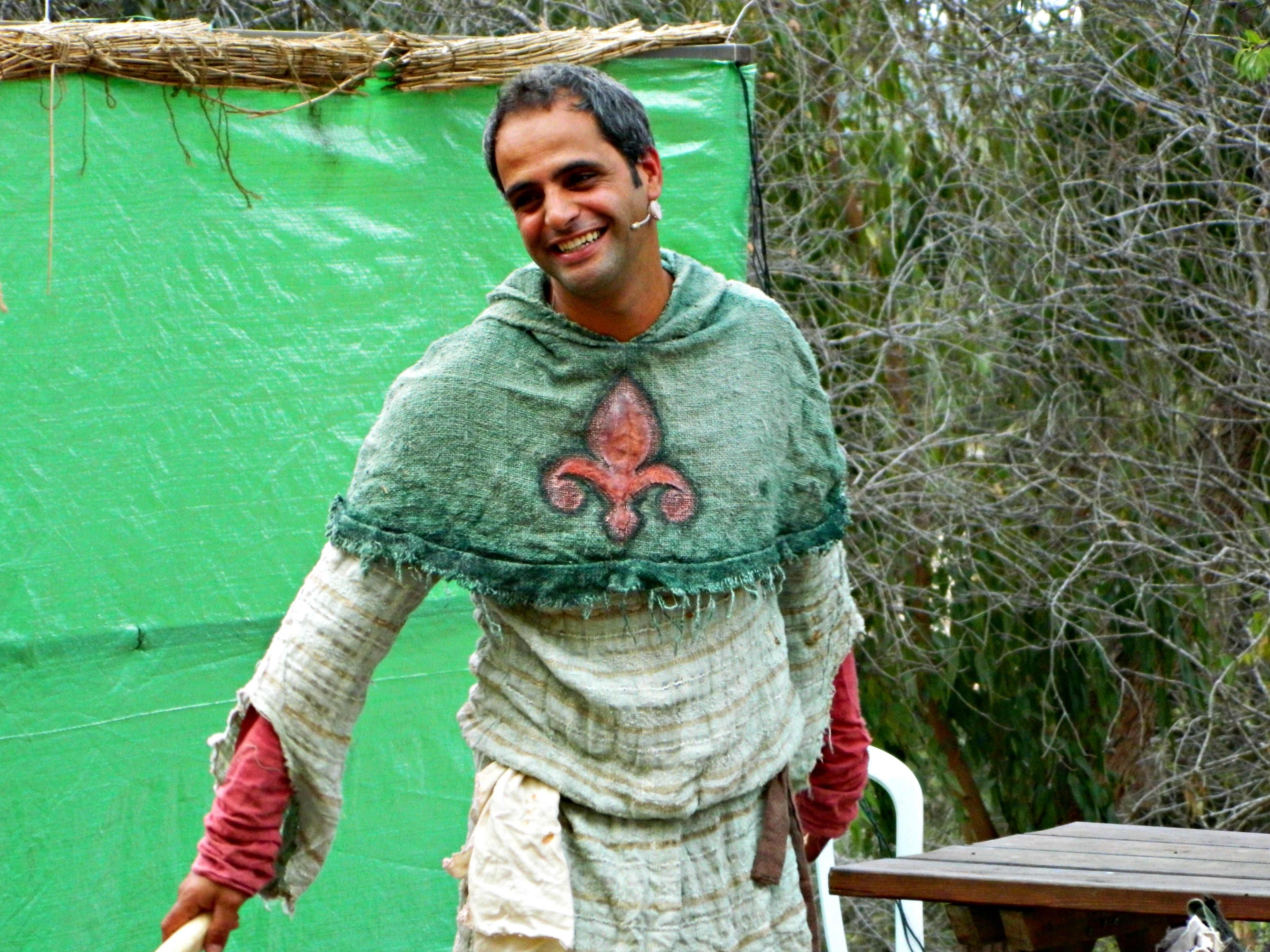
So, after that little detour, we entered the park and meandered through the fortress grounds, passing tables of crafts and various themed products for sale (wooden sculptures, carved toys and musical instruments, edibles, etc). There were also costumed individuals performing on-stage and on the paths. One such performer, a man dressed in a red gown, told me that my unruly beard made me look like a “vilde chaya” (“wild animal” in Yiddish, his words). That was a bit odd but I explained that I was on break from the army and thought it would be fun not to worry about hair length for a few days…

Stage performer

Stage performer

We headed on inside the fortress and saw the end of a musical performance by three musicians and a voice actor, which was actually the main featured concert of the day. The name of the performance can be translated to “The Wonderful Journey to Greek Mythology with Accompaniment of Greek Musical Sounds.” Set on a breezy terrace overlooking the grounds of the fortress, the Yehiam Stream below and the Mediterranean Sea over the gentle green hills.

A glimpse of the grounds

A glimpse of the grounds

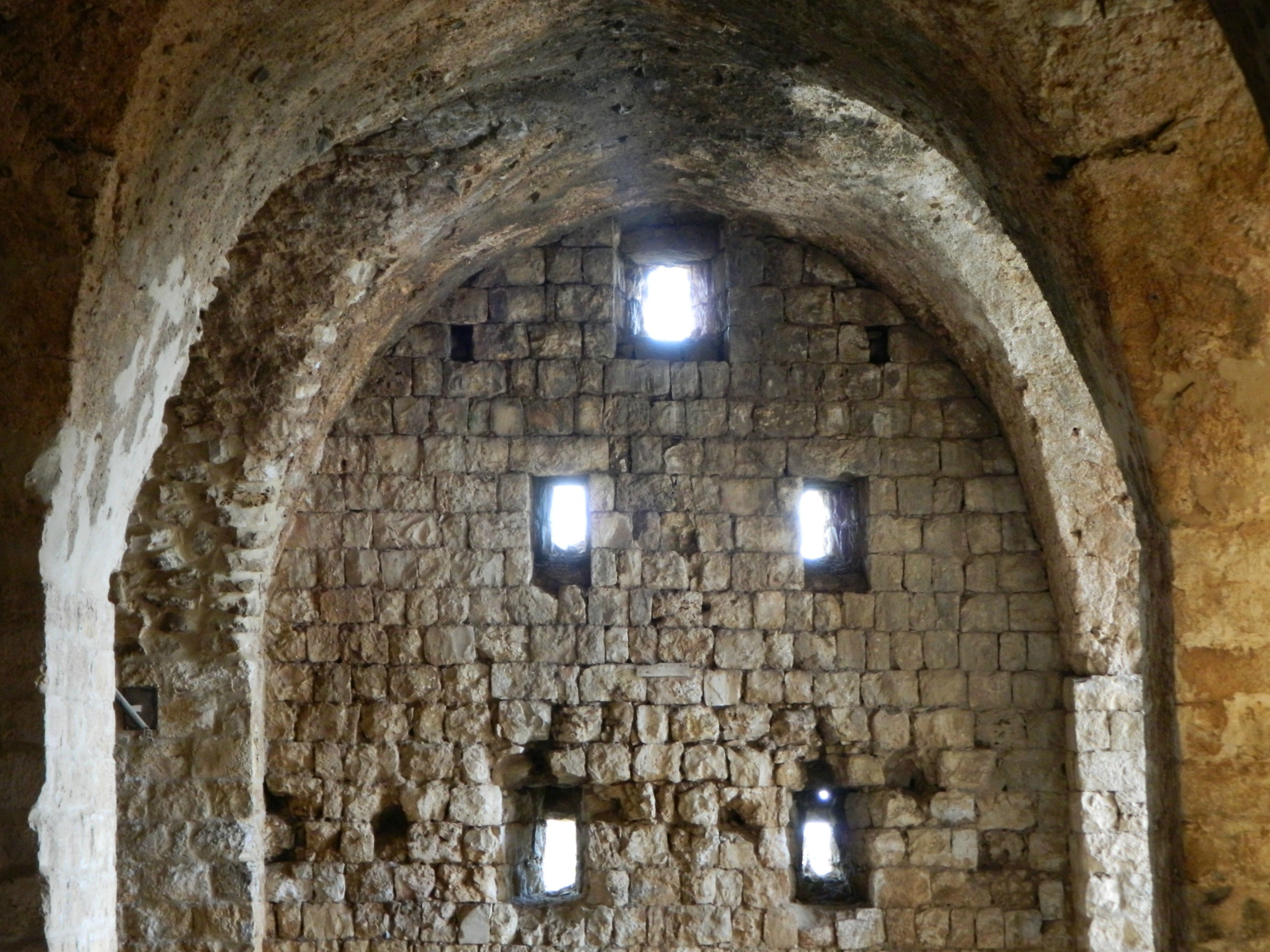
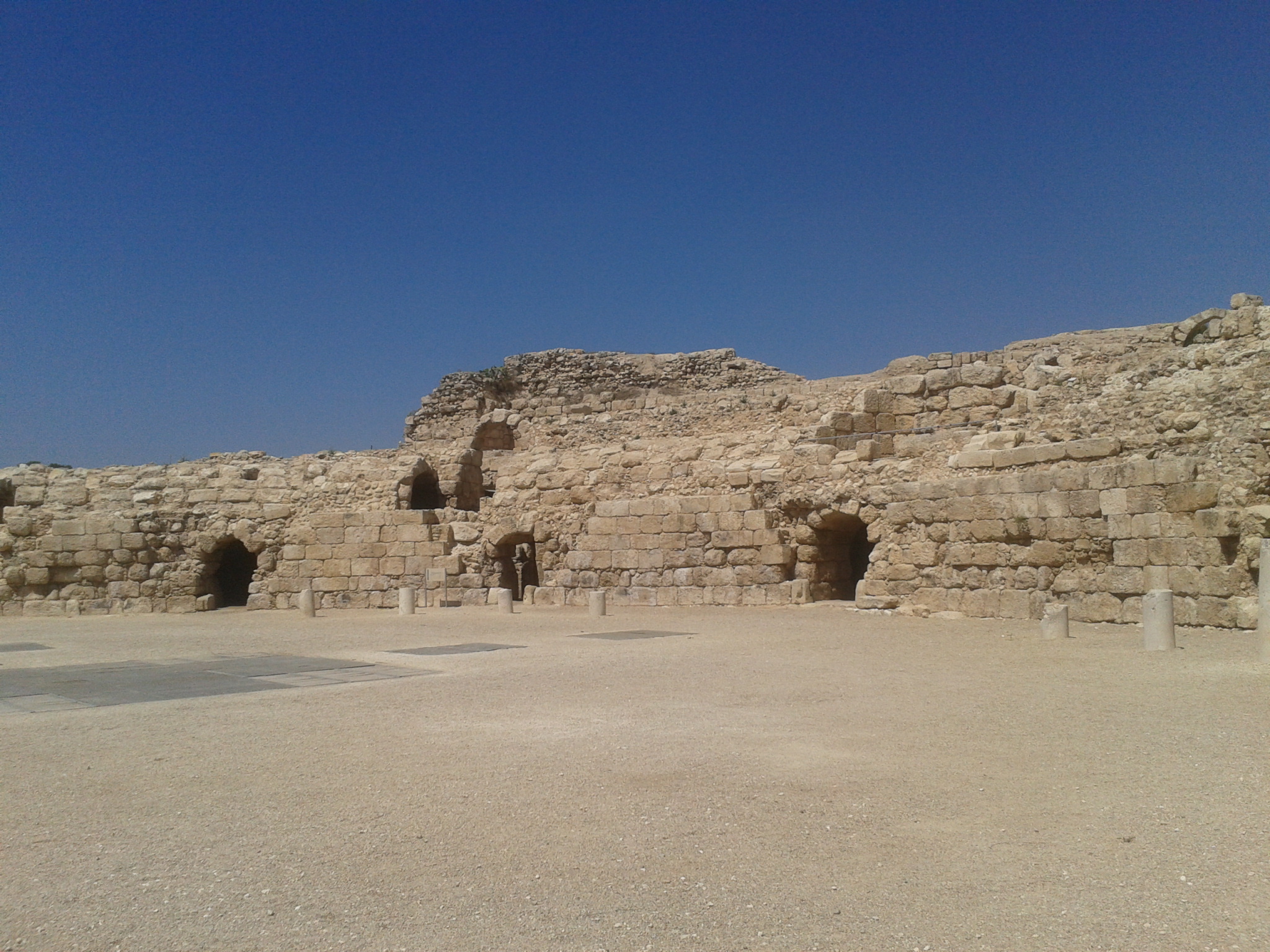
Inside, below the terrace is a great hall with many, many arches, magnificently built by Dahr el-Omar in the 1700s. Here is the southern wall with its array of small windows:

Arched wall with windows

Arched wall with windows

Back outside we stopped by a table bedecked with wine bottles and glasses, the presentation and sales table of Kerem Ben Zimra winery, a new kid on the block. My father sampled the wine, pronounced it “good” or something and we relieved them of two bottles. I think it’s fun visiting wineries and buying wines but sadly, I cannot abide the taste of wine – although there is a really delectable port, Har Sinai by Or HaGanuz winery, introduced to me by a friend, which I rather enjoyed. I personally prefer the world of the micro-brewery, and have a newfound love for stouts (current favourite: Salara Smoked Stout). But, regardless, I love to support these wineries and breweries and so I write about them and link their sites to my blog, so do take a gander.

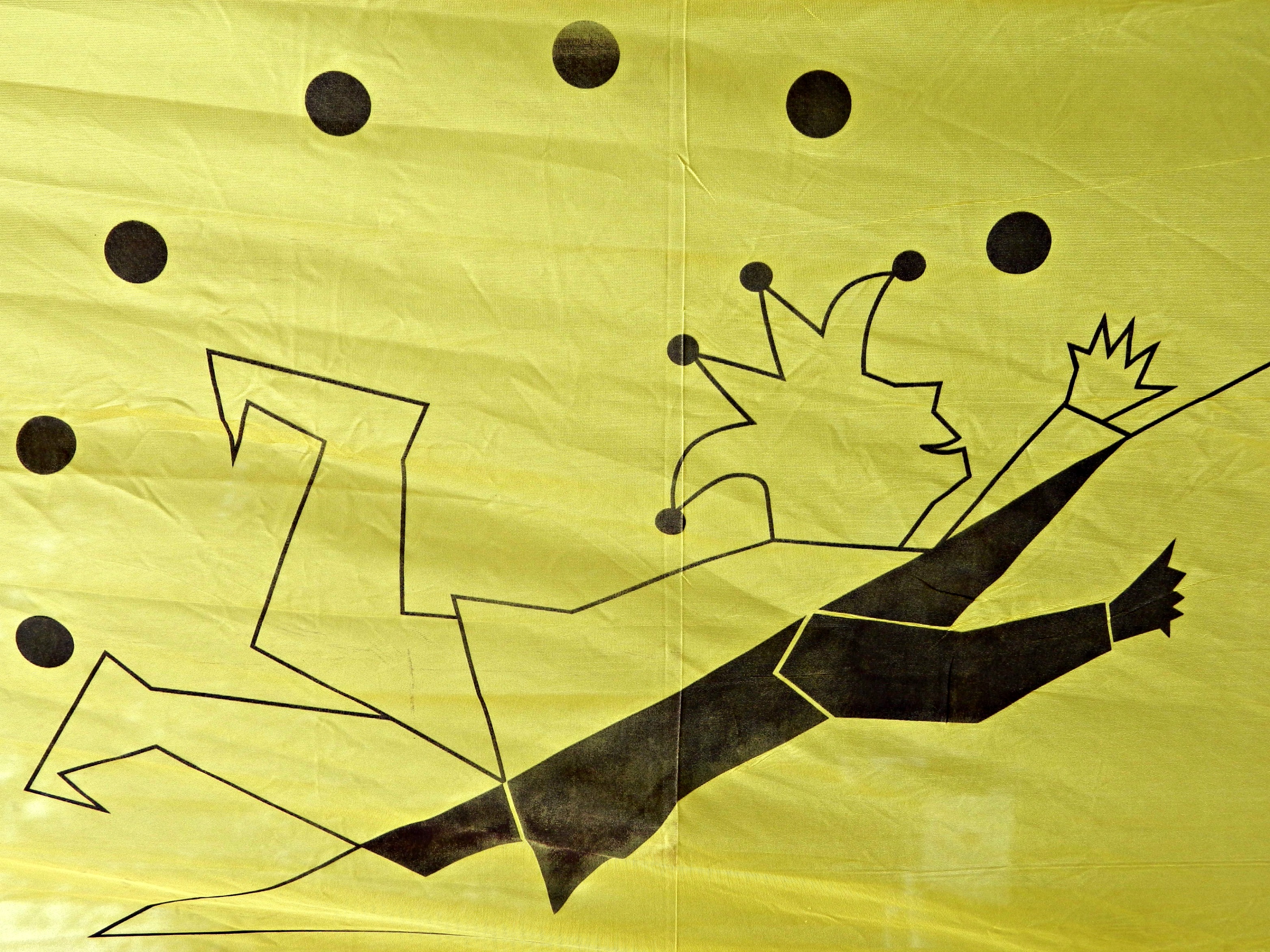
Jester banner

Jester banner

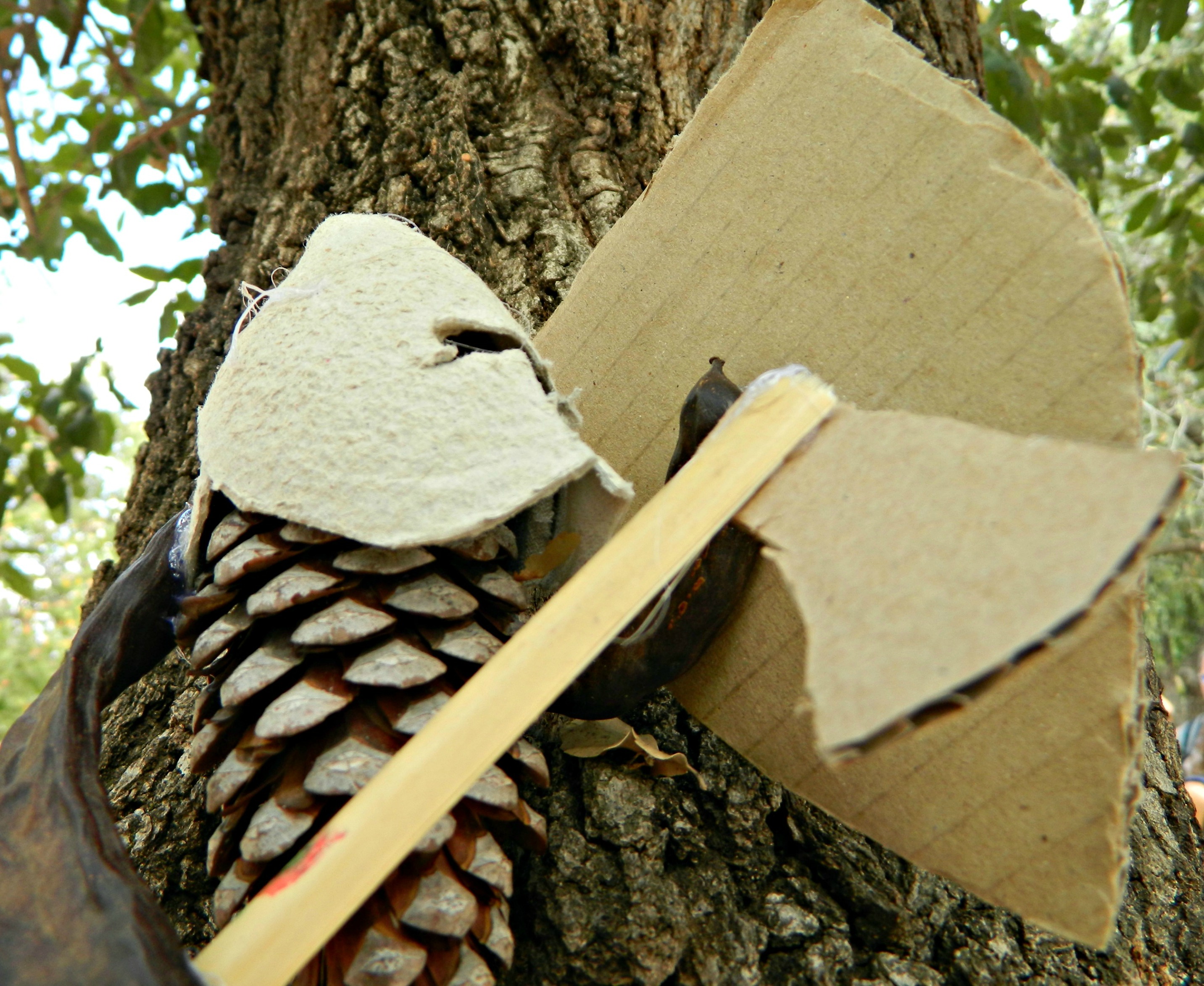
And our last activity, the crafts tables where hordes of children clamored about constructing art out of natural ingredients (and glue from glue guns) which, technically, fits in the “RenFest” setting. Nissim, my little brother, made a superb little knight, see for yourself:

''PineKnight''

”PineKnight”

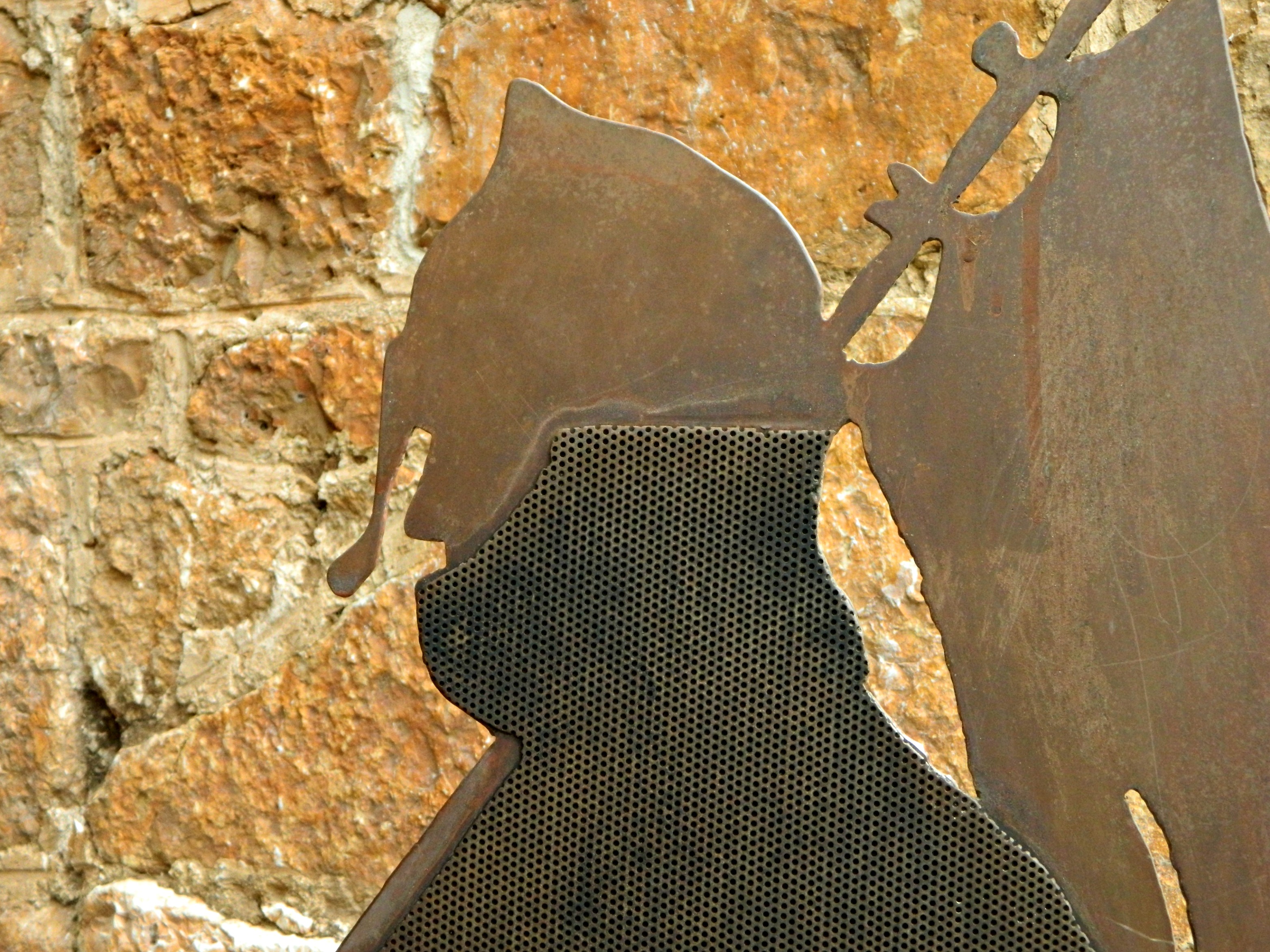
Bringing this post to a close, here is a photo I needed to include simply because I love the rich colouring and the metalwork, a Crusader soldier bearing a flag of sorts:

Crusader soldier

Crusader soldier

Caesarea

In Coastal Plain, Israel on August 11, 2013 at 4:44 AM

Last week, en route to an army meeting I had, some members of my family and I stopped off at the iconic Caesarea, a place I’ve never been to in the four plus years I’ve lived here in Israel. Caesarea, named such by Herod in tribute of the Roman Emperor Augustus Caesar, was originally built some 2,100 years ago. The ruins that are seen today are mostly from the Roman, Byzantine and Crusader eras (as are much of Israel’s antiquities). We started our tour at the ancient Roman aqueduct which supplied water to the city’s inhabitants from springs at the foot of Mount Carmel to the north.

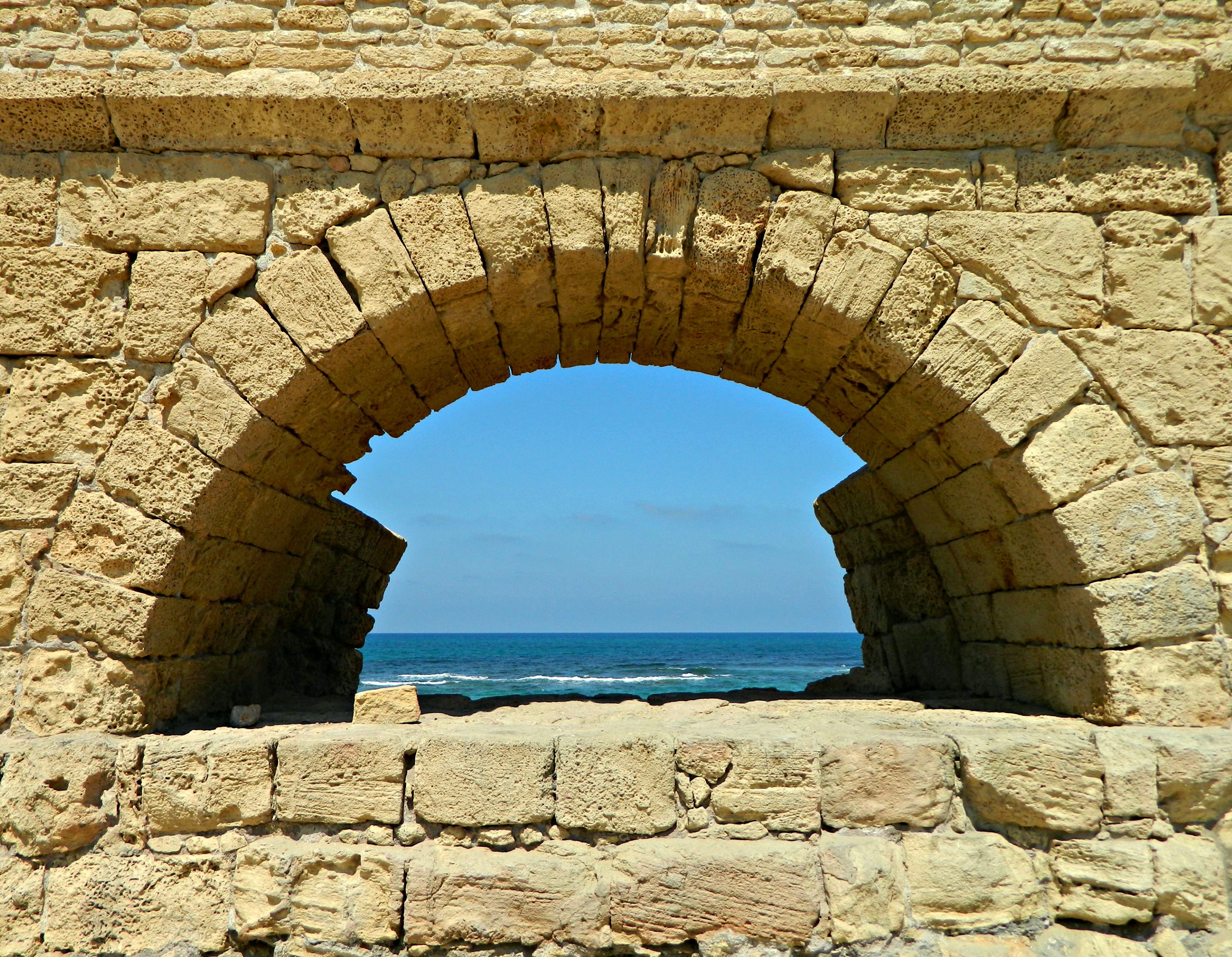
The end of the aqueduct

The end of the aqueduct

The aqueduct can be visited for free, unlike the rest of the Caesarea National Park, and is found on the beach just north of the park. When we were there it was hard to get pictures without people in them as there were tons of people sunbathing in the sand and picnicking in the arches.

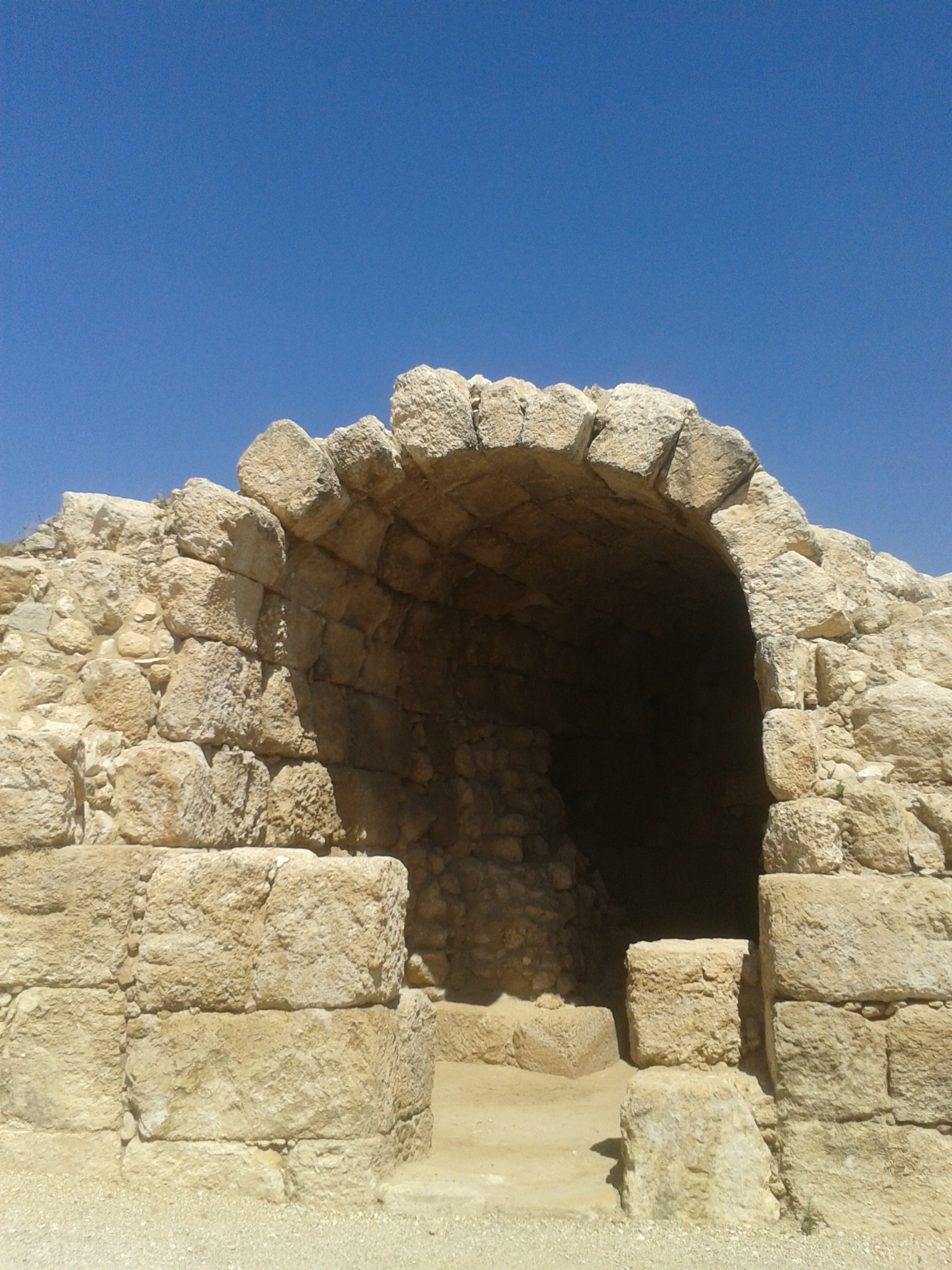
Aquedect arch

Aquedect arch

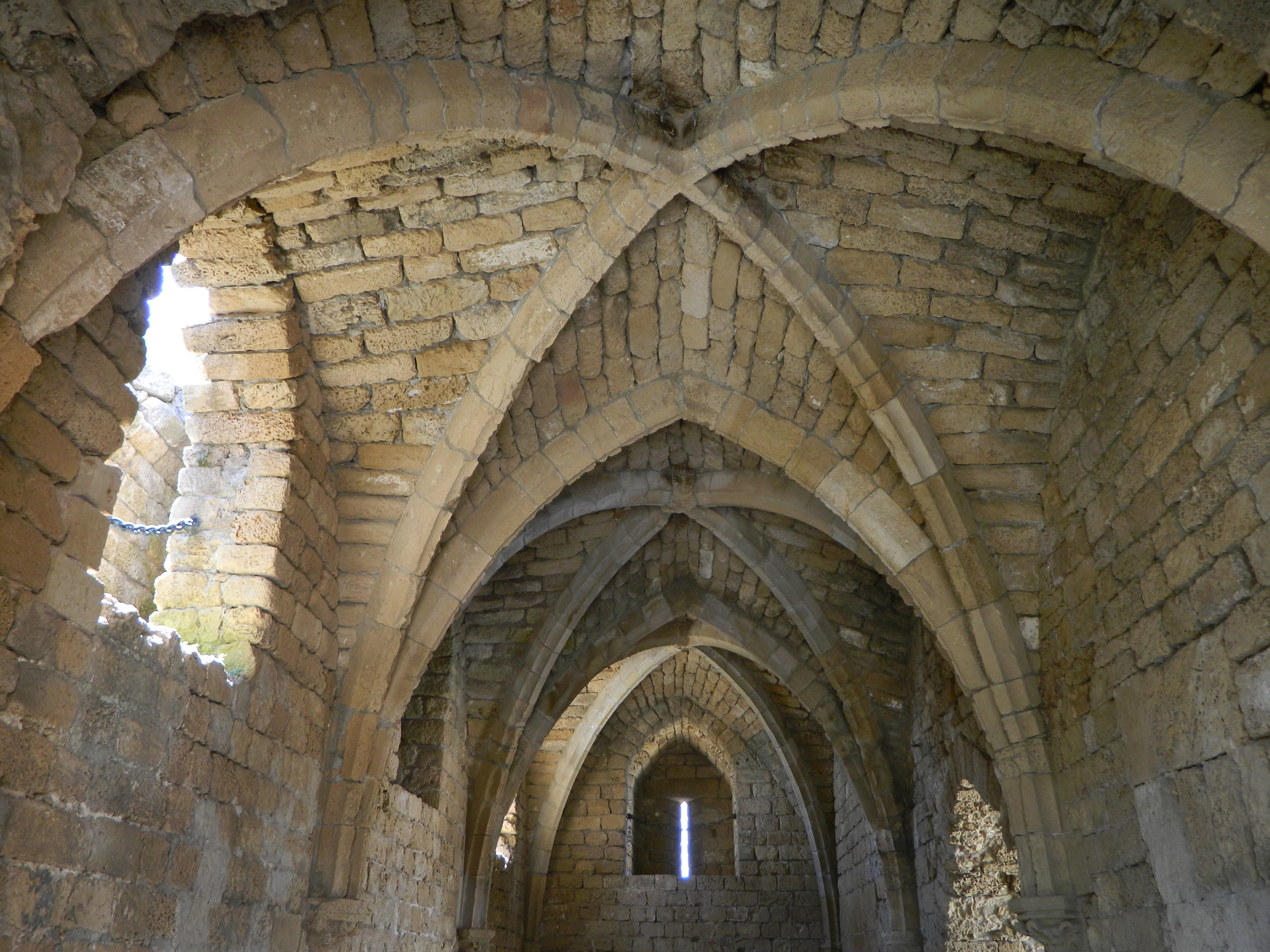
After the aqueduct we continued on to the actual park. Since we have a family park pass, only I had to be paid for and I had my uniform on so we got a discount. The first ancient building we walked into had a magnificent ceiling. Turns out that this particular structure was built by the Crusaders – Louis IX, King of France, of the Sixth Crusade, to be exact – and is called “Gothic-European military architecture.”

Complex arched ceiling

Complex arched ceiling

And this is the building from the outside, nowhere near as impressive looking:

Gothic-European military architecture

Gothic-European military architecture

As we walked along the rows of ruins, we were somewhat taken back by the over-abundance of commercialism. There were so many restaurants and the like, most built to look like period buildings, that it felt weird as an archaeological site. One interesting site, which wasn’t very old – Ottoman era (late 1800s), is the Bosnian mosque minaret:

Bosnian mosque minaret

Bosnian mosque minaret

Just south of the minaret we crossed through a gate in the Crusader fortified wall and walked the bridge over the moat – all this fortified by King Louis IX of the Sixth Crusade. The area we stepped into was the Roman area, the city ruins, the huge arena of King Herod’s Hippodrome and more. After passing a marble tub, where some family members posed, we came across a “Mithraeum” which is described as a vault turned into a house of worship for the cult of Mithras. This particular vault had a hole in the ceiling which let a sunbeam down onto an altar, contributing to Mithraic beliefs of an “unconquered sun.”

A ''Mithraeum''

A ”Mithraeum”

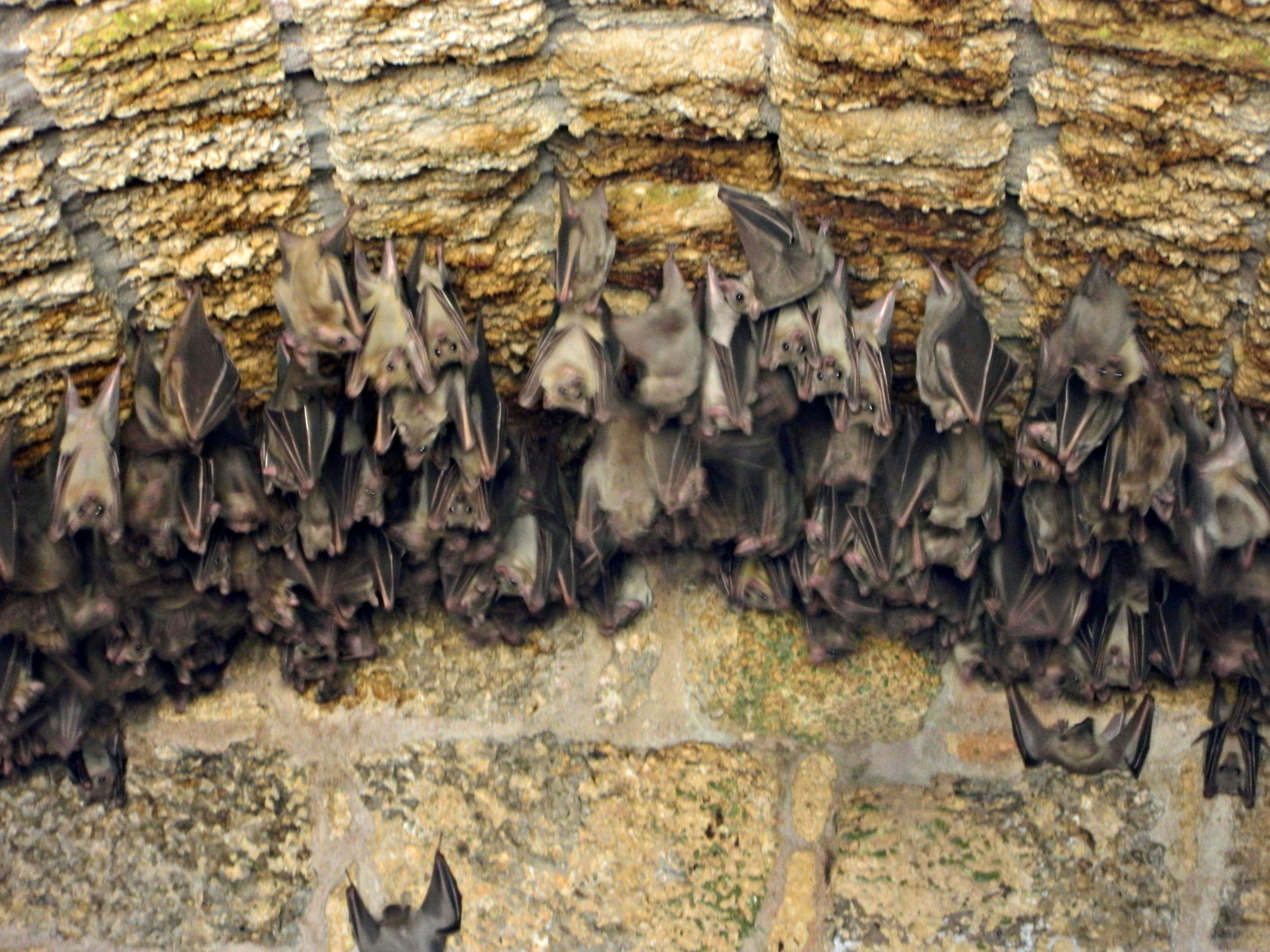
Alongside the “Mithraeum” were other, unassociated vaults and at the far end of one was a colony of roosting fruit bats. The tunnel was long and dark and flash wouldn’t have helped so I tried my best by stabilizing the camera. Here is the best I got of the bats:

Fruit bats in the back of a vault

Fruit bats in the back of a vault

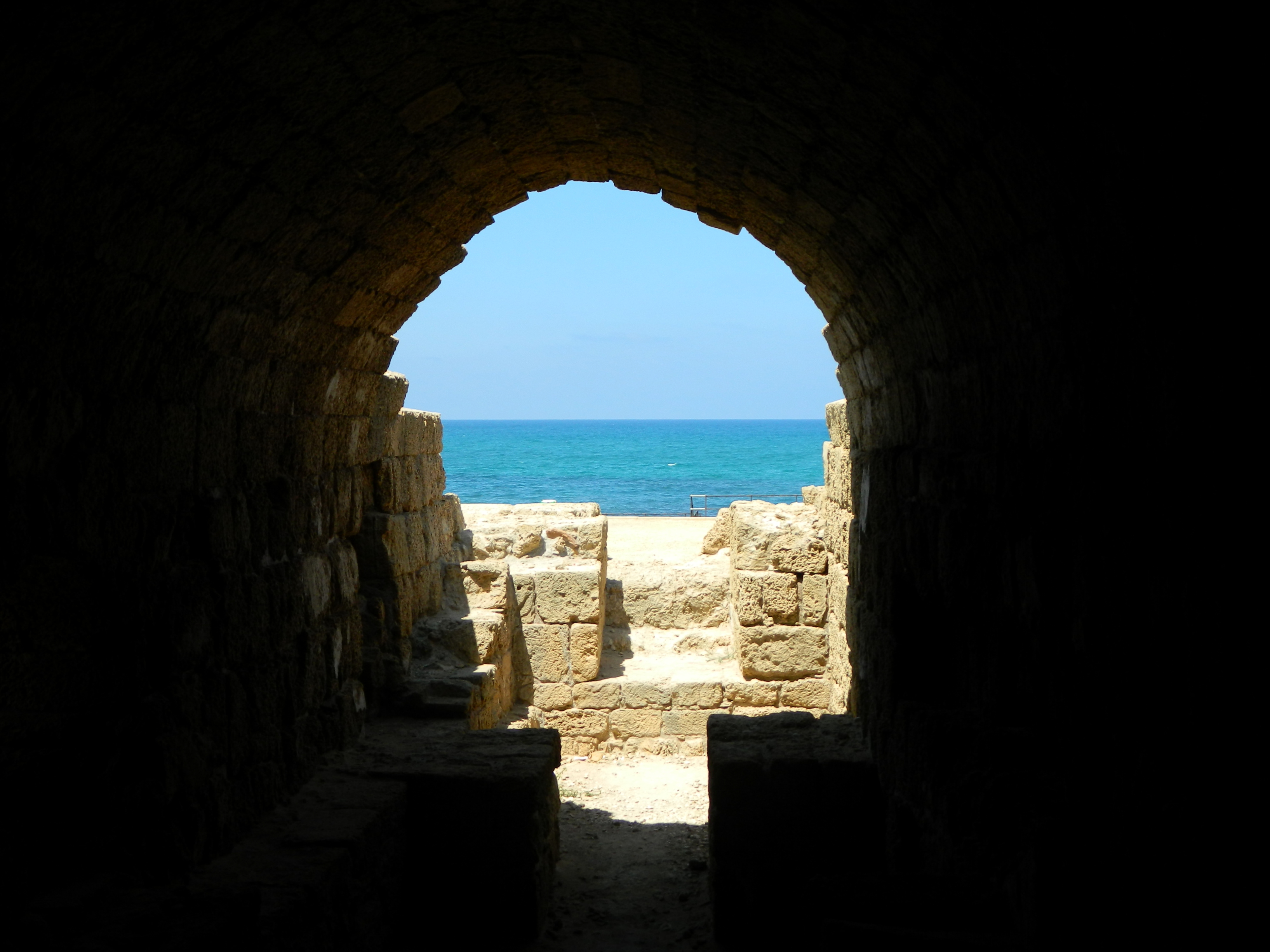
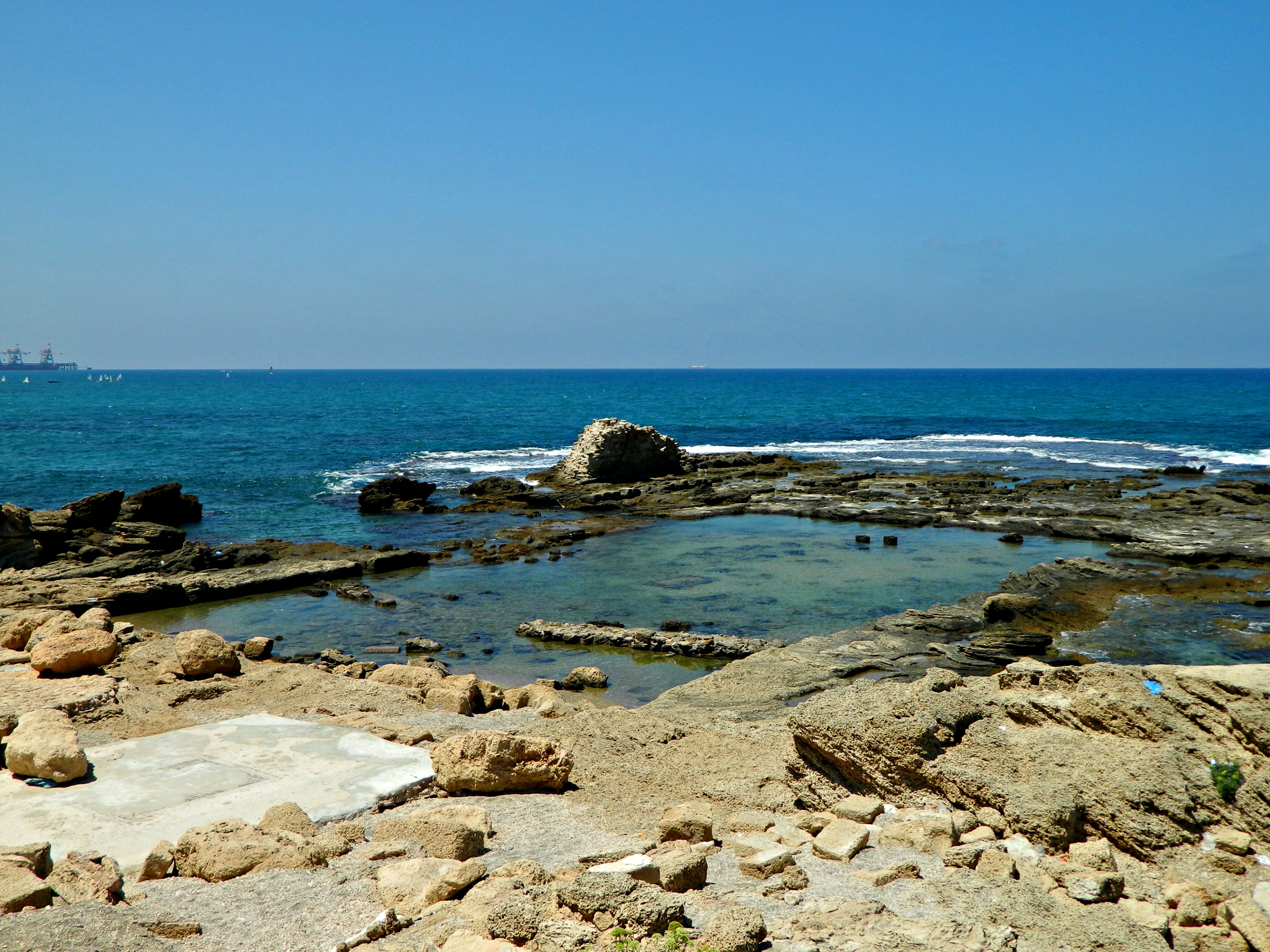
At another dark tunnel I was able to enter from the back and thereby a nice photo opportunity was handed to me; the Mediterranean Sea through the Roman ruins:

Through the ruins at the sea

Through the ruins at the sea

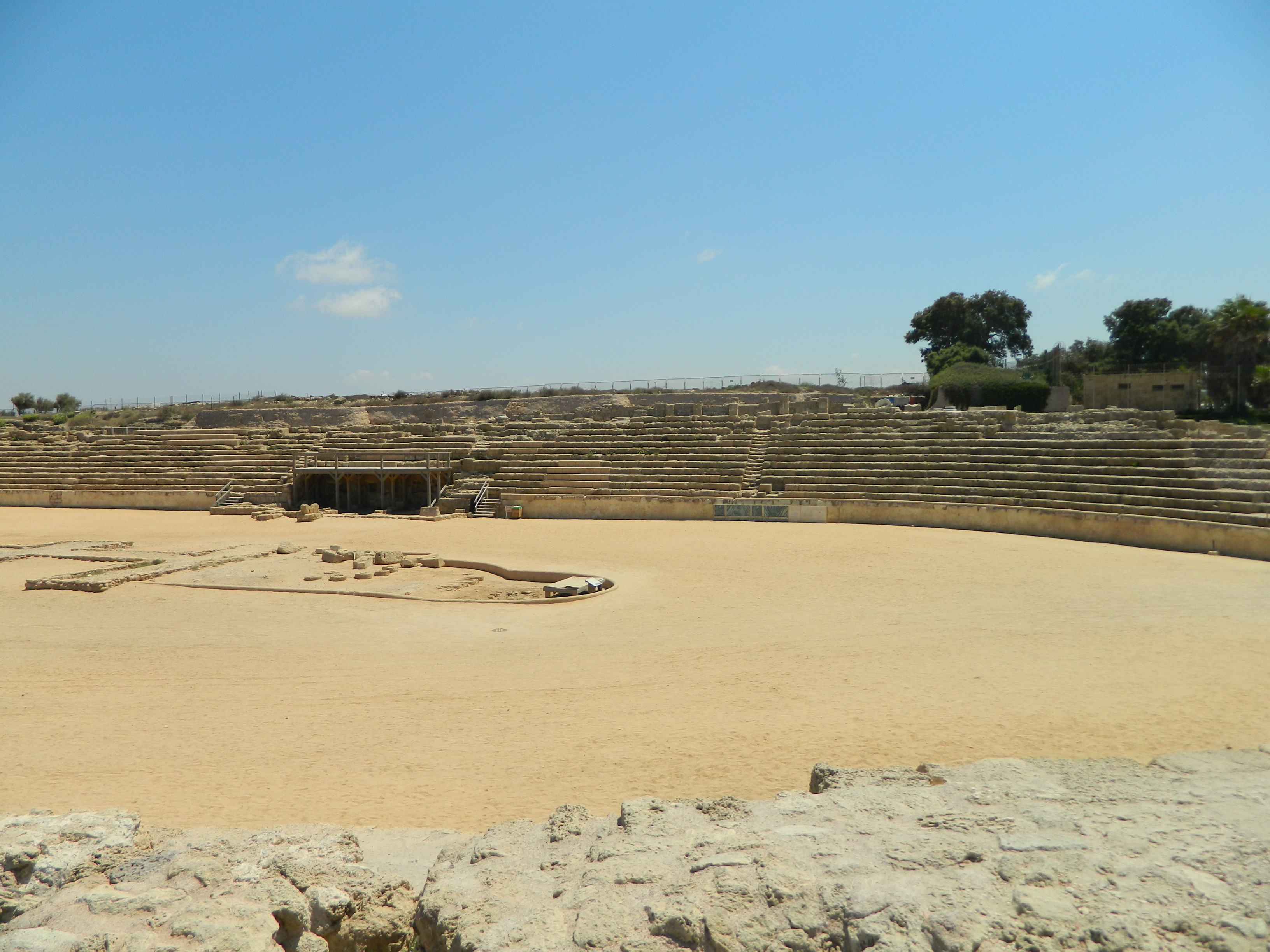
Before long we were walking the sandy grounds of the Hippodrome where Romans and locals, nobles and farmers, would gather to watch horse and chariot races. Here is a shot of the circular section of the Hippodrome from Herod’s Palace at the far end of the arena:

King Herod's Hippodrome

King Herod’s Hippodrome

And a depth shot, illustrating the length and showing how close the Mediterranean Sea was. It is said that for re-enacting naval sequences they would flood the Hippodrome…

The length of the Hippodrome

The length of the Hippodrome

At the end of Herod’s Palace there is a large rectangular cut-out in the stone, this was a decorative pool he had made. This is my new dream pool!

The decorative pool from Herod's Palace

The decorative pool from Herod’s Palace

After Herod’s Palace we went over to the Roman Amphitheatre which looked like it was being set up for a concert (lots of high-profile concerts are, in fact, held at this amphitheatre). Not dwelling too long on the amphitheatre, and needing to get to my meeting, we wrapped up our visit and were on our way.

Nachal Kziv

In Galilee, Israel on July 24, 2013 at 3:43 AM

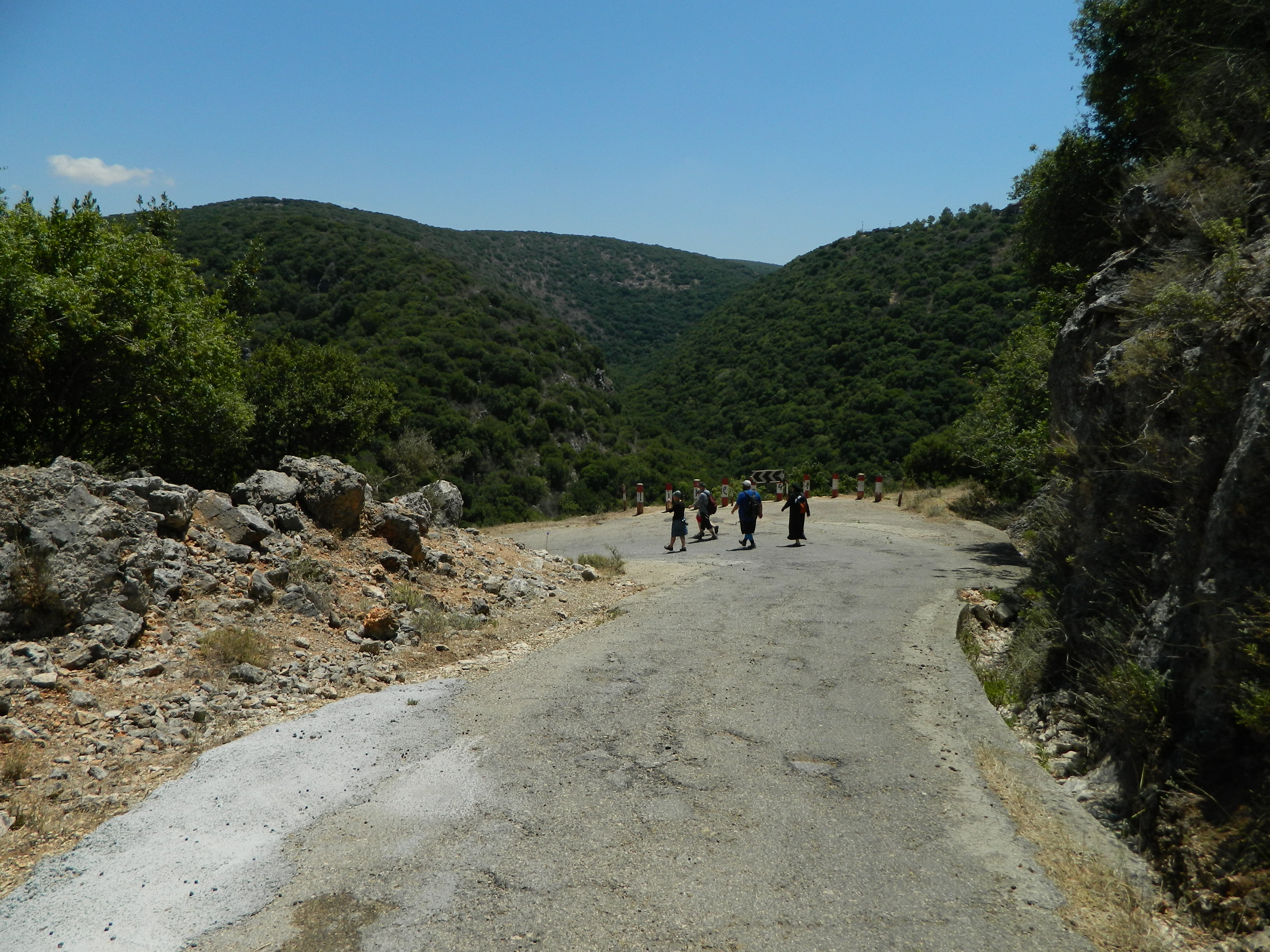
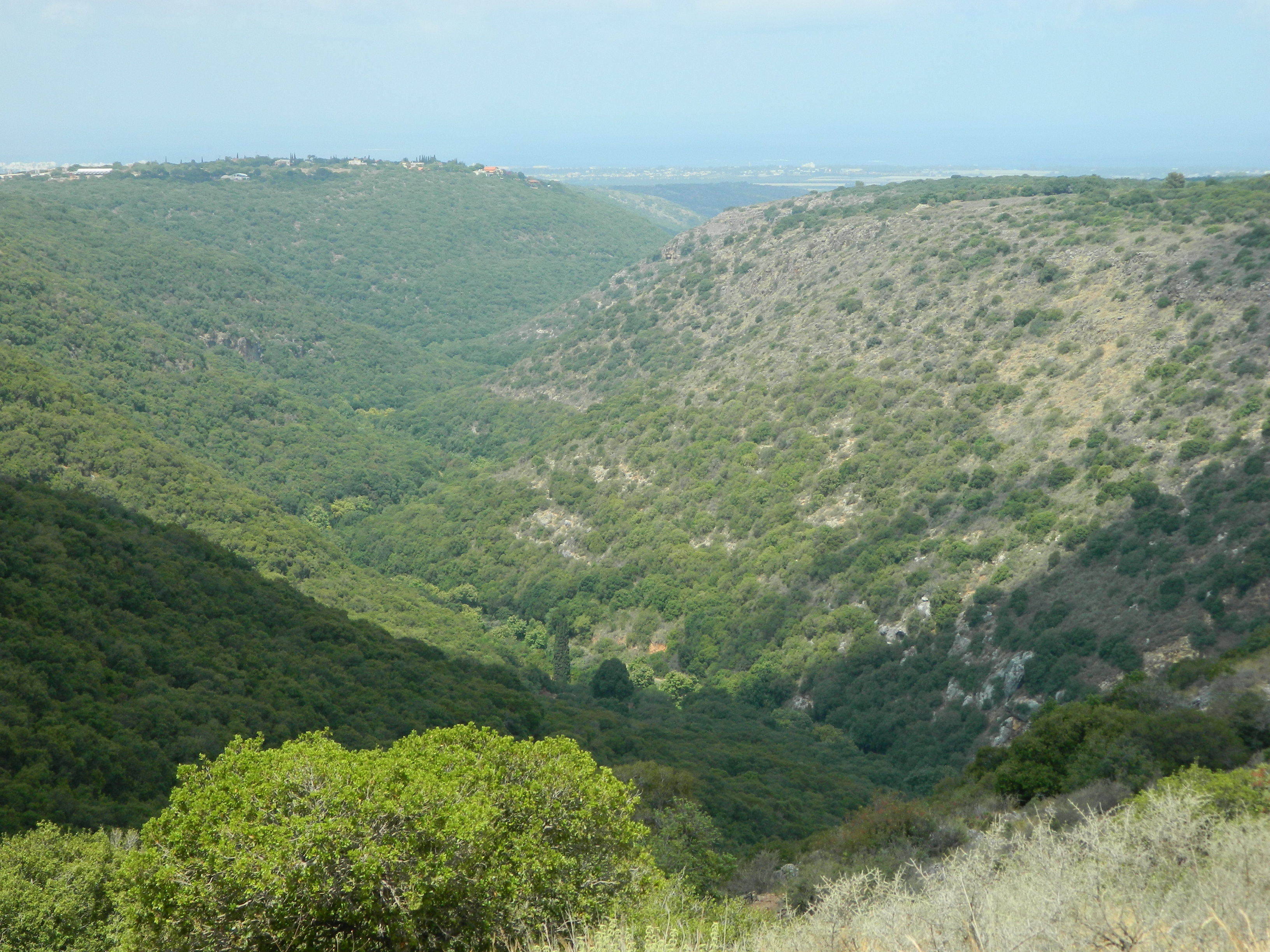
Back on the Fourth of July, before I got bogged down with army and other work, I partook in a small hike in Nachal Kziv, a nature reserve at the outskirts of Ma’alot. Also in attendance, in our little expedition, were some family members and some family friends – including the talented photographer Mandy Detwiler. We drove to the Zeitim neighbourhood, parked our cars and began walking the long winding way down to the stream-bed, where the trail is.

The road going down to the stream

The road going down to the stream

Nachal Kziv actually starts near Mount Meron, but due to the fact that it is a perennial stream, that area dries up in the summer months. The area that we hiked, from Ma’alot towards the Mediterranean Sea, is rehabilitated by a pumping station which uses water from underground springs. The water in Nachal Kziv is really clean and just about every time I hike there, I take the opportunity to fill up my water bottle for the continuation of hydration on the walk.

The gentle Nachal Kziv

The gentle Nachal Kziv

So, in due time we were at the stream-bed and passing the pumping station, some old Crusader building and the beginning of the stream (as it looks above). One of the day’s objectives was to find some geodes, or tapuchai eliyahu. I have never found one, nor did I know what to look for, but our family friends knew the secrets. So, after we had crossed over some of the little bridges, crossing back and forth over the little stream, we found a good spot to search.

The trail and the stream

The trail and the stream

I followed the masters and eventually found my first geode. And then my second, and then my third. Before long I was finding geodes all over the rocky banks of the stream. If you too seek out geodes, be sure to scour the ground for ball-like rocks that have a brain-like surface. When you pick up the rock, it should feel heavy – to be sure, crack it open and you will see the crystal insides.

A geode

A geode

I cracked open one of the geodes I found but was unable to capture the inner beauty so I turned to Mandy for help. Here is the gorgeous crystal interior:

Inside of a geode (courtesy of Mandy Detwiler)

Inside of a geode (courtesy of Mandy Detwiler)

After pillaging the stream-bed for geodes, loading some choice ones into my backpack, we continued with our hike, occasionally stopping to photograph nature’s beauty.

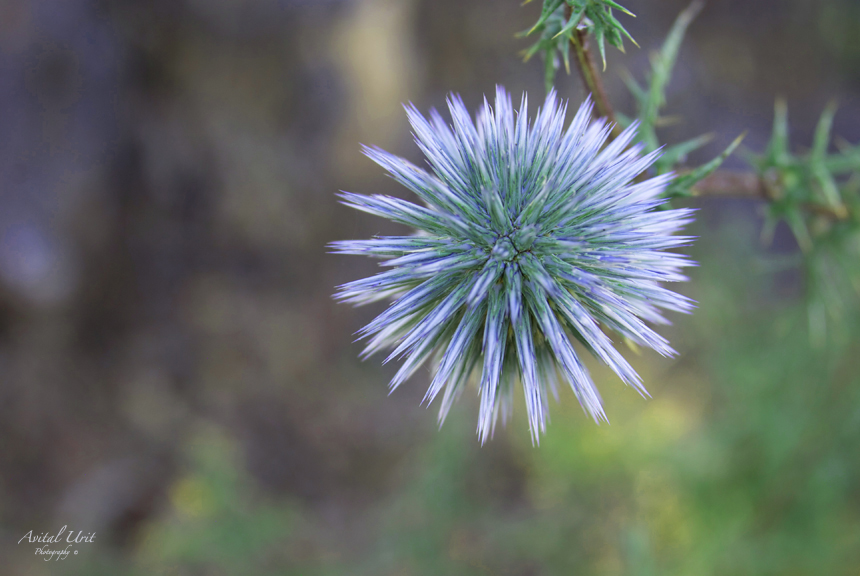
Thistle (courtesy of Mandy Detwiler)

Thistle (courtesy of Mandy Detwiler)

Along the way we passed by the Ein Tamir cave, spring and pools complex – my favourite section of Nachal Kziv. I love squeezing into the slit of a cave, stooping and crawling my way down the long windy tunnel. With icy cold water covering the floor of the cave, the going is terribly fun and being submerged chest-deep in the cold water, with no outside light, is just too awesome to be put to words. This time, however, we passed the cave and the pools and continued on.

Ein Tamir cave tunnel entrance (courtesy of Mandy Detwiler)

Ein Tamir cave tunnel entrance (courtesy of Mandy Detwiler)

Shortly thereafter, after repeatedly crossing the stream back and forth at the whim of the trail markers, we made it to a cool spot where one of the banks was a rock wall. It was remarkably green there and the lighting was poor, thus the photo came out a tad greener than it really was, to the naked eye:

Nachal Kziv with rock wall

Nachal Kziv with rock wall

In that area, some members of our expedition had a run-in with the supernatural… Reports of tapping on the heads of fellow party members made our short melon-eating break all the more exciting. I didn’t have my head tapped, but there is a place just a bit further down that has a different energy about it. I can’t say I am too in-touch with energy detection but the world is much larger and much more complex than how we see it at face-value. At this point we decided to turn back, and not to continue on for what would be hours longer (we hadn’t even reached Montfort Castle). So we headed back, walking beneath the magnificent stone cliffs as seen here:

Cliff walls along Nachal Kziv

Cliff walls along Nachal Kziv

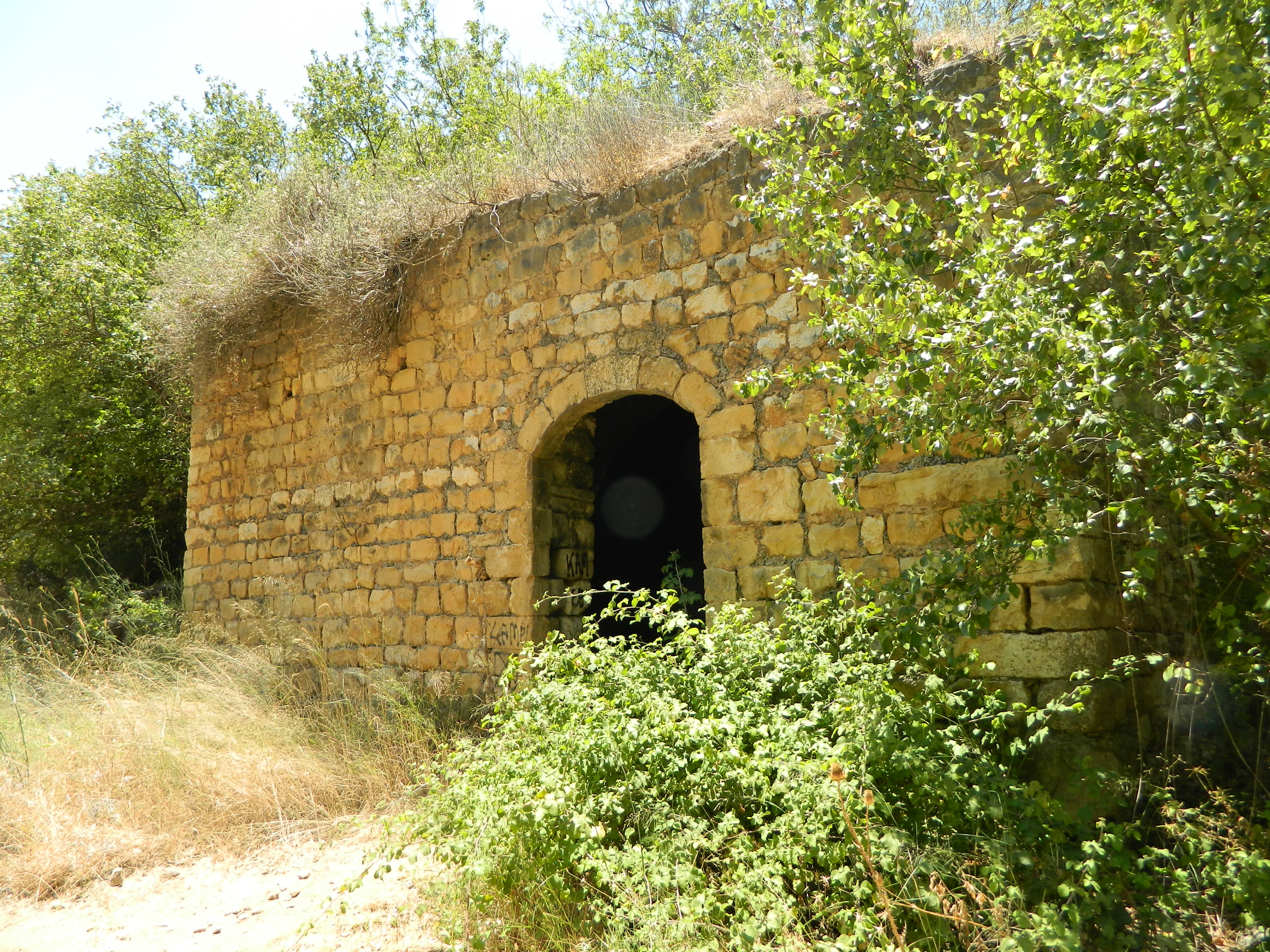
On the way back, kind of close to the pumping station, I stepped into the old Crusader inn that rests empty at the side of the trail:

A Crusader inn

A Crusader inn

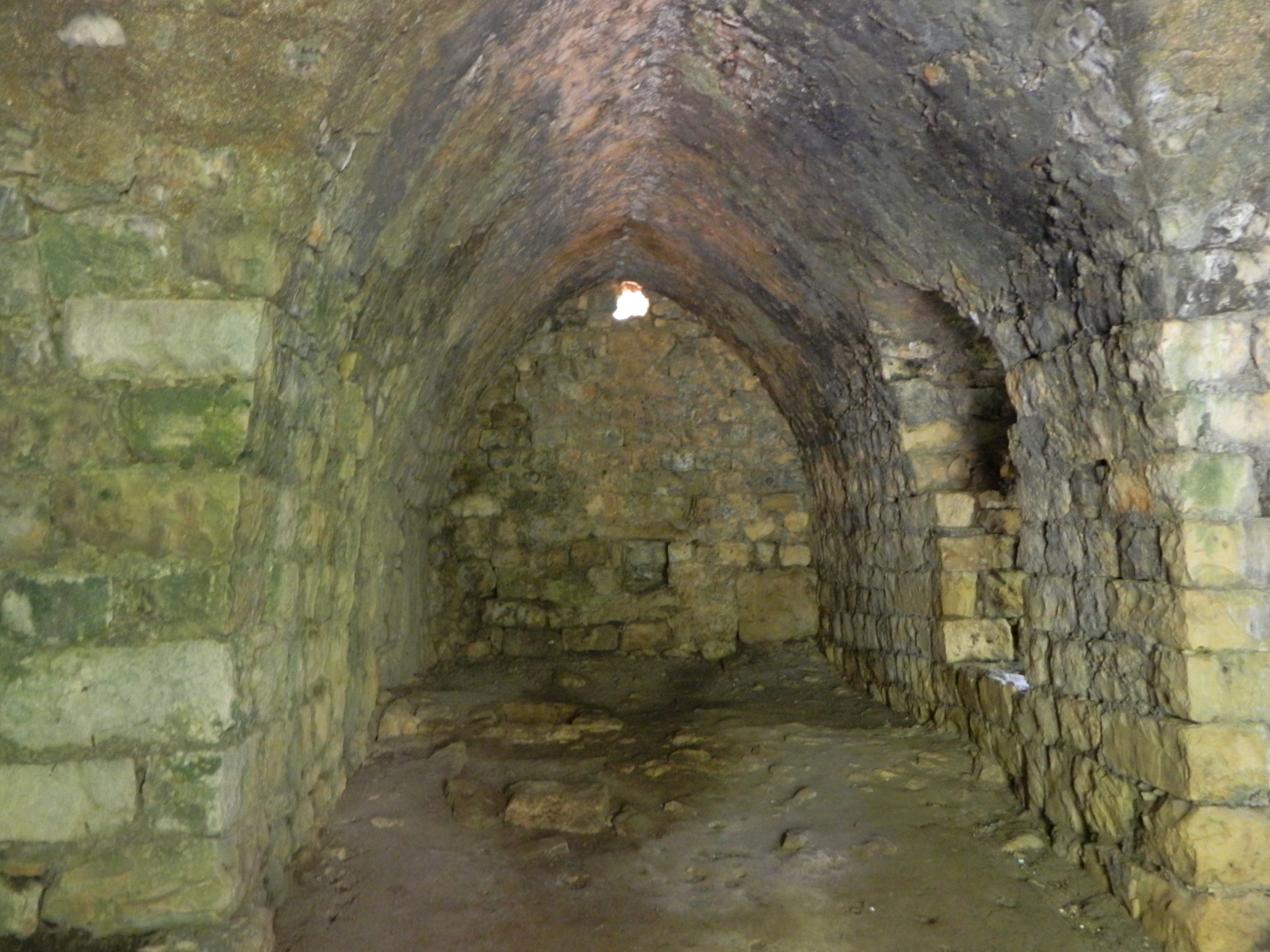
And a look at the arched interior:

Inside the Crusader inn

Inside the Crusader inn

After that it was a quick walk to the pumping station and then a somewhat grueling hike back up the mountain, following the long windy road we took down. At last we made it to our cars, said our farewells and headed home – where I emptied the heavy geodes from my bag and placed them in the living room.

Until next trip!

Beit Guvrin Amphitheatre

In Israel, Judea on July 7, 2013 at 4:43 AM

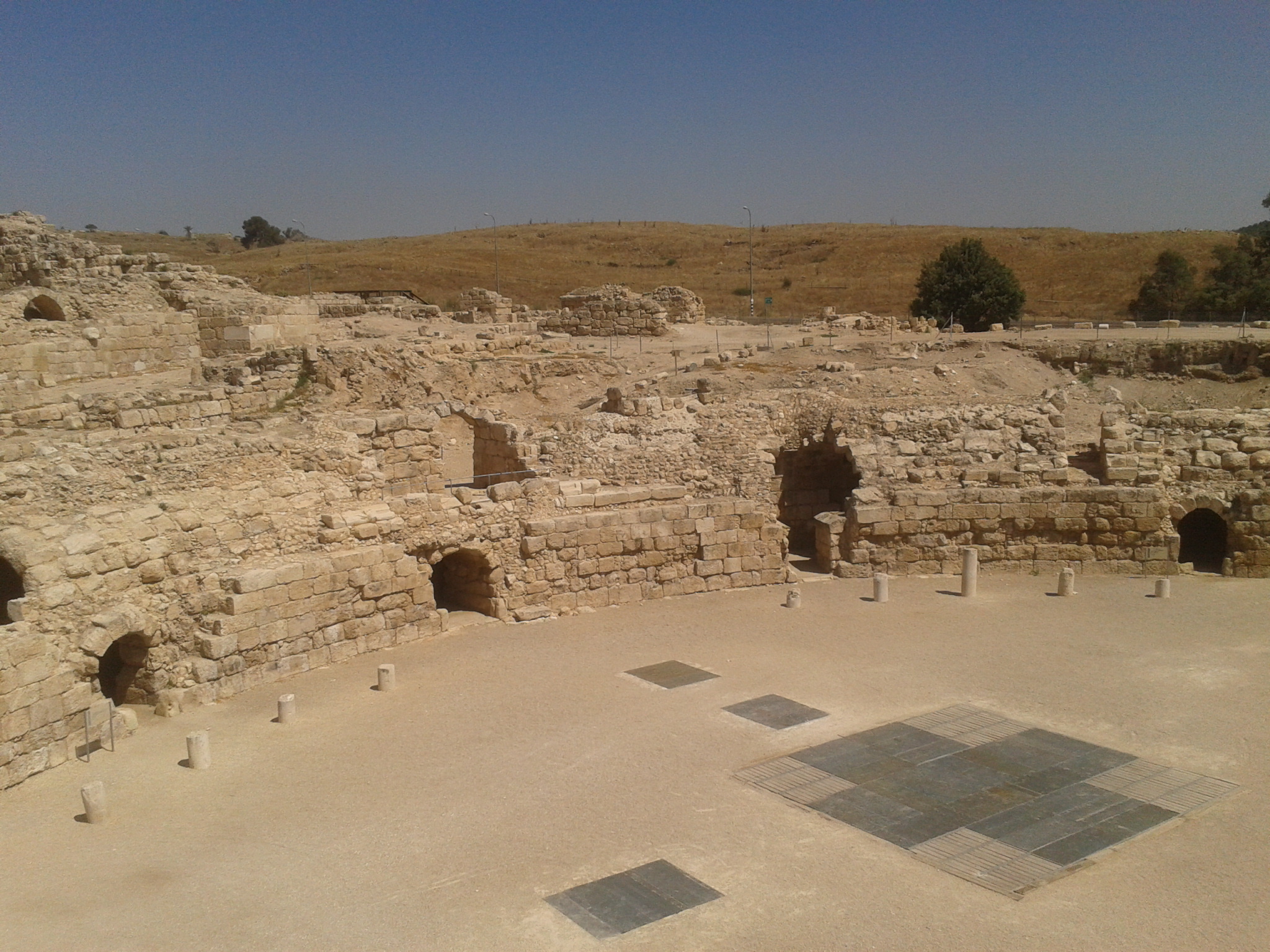
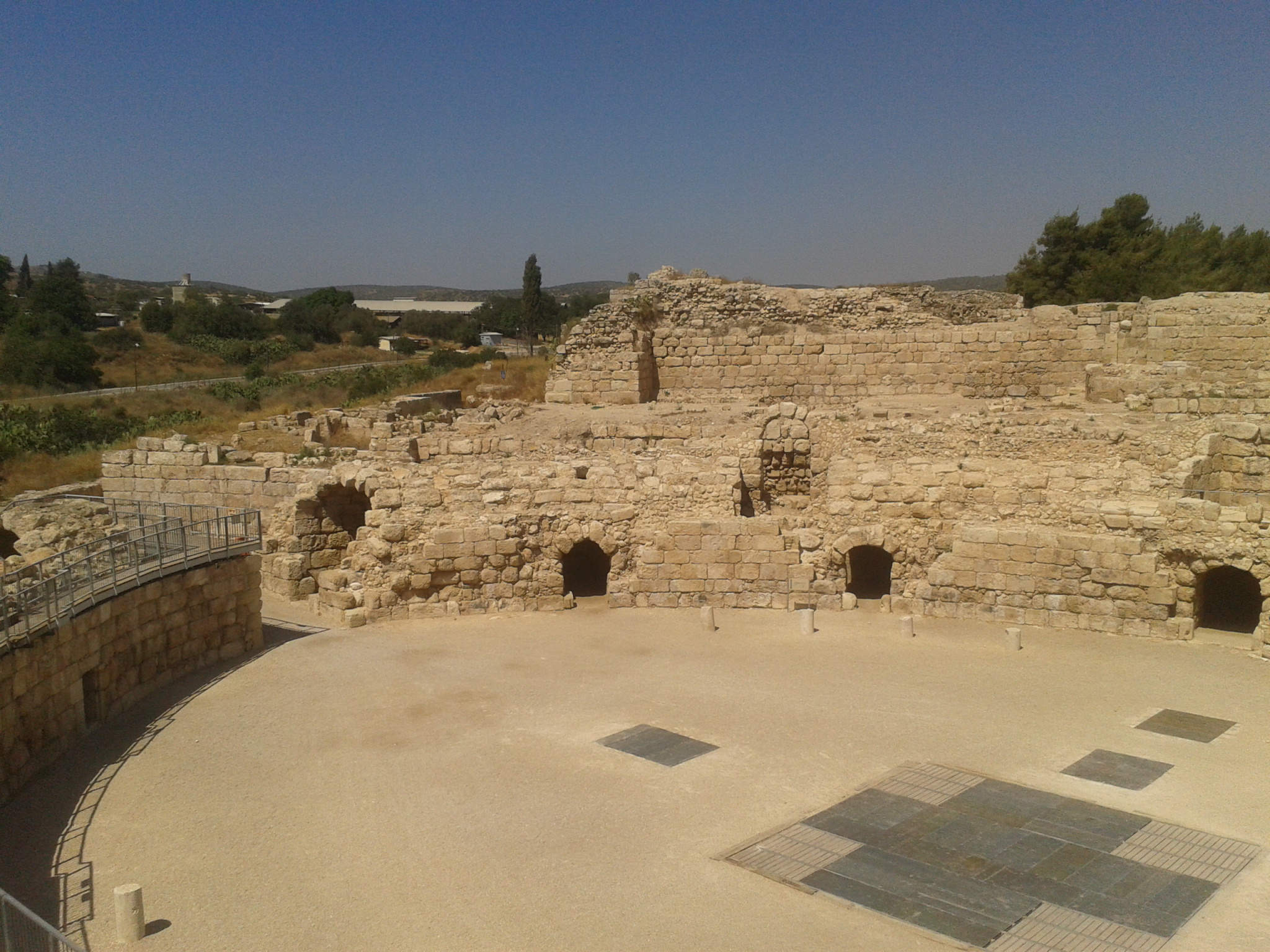
One day last week, while on the job, I took the liberty of re-visiting a place I had last seen in early 2008. I was on a senior year of high school trip to Israel and one of the places we visited was the Beit Guvrin National Park. One of my favourite sites that we saw on our trip was a Roman amphitheatre, the likes of which I had never seen in my life. Like something out of a movie –  on our trip we re-enacted scenes from Gladiator – the amphitheater left quite an impression on me and since moving to Israel I have been eager to revisit the place. It was only about a year ago that I actually confirmed exactly where we went back in 2008 (we were so tired on our trip that we slept everytime the bus took us places, making it hard to know exactly where we were for future reference). So, you can imagine my happiness getting the chance to explore the amphitheatre once again, this time in uniform, and with a gun.

My shadow over the railing

My shadow over the railing

I must say, I did feel this sensation while I was there, this sensation of Jewish pride. Built during the time of Bar Kochba’s rebellion, the amphitheatre was intended to keep the local Roman garrison entertained and content, with bloodsports and the like. So here I was, a Jewish soldier standing on the ruins of the mighty Roman Empire, watching not bloodsports but my own shadow, hearing not screams of tortured violence but the sound of peaceful traffic. I could have stayed there a lot longer.

Amphitheatre grounds

Amphitheatre grounds

A little history about the site, the Beit Guvrin – Maresha National Park contains a whole lot more than just a Roman amphitheatre. Some of the park’s sites include ancient cemeteries, a large columbarium (dovecote), caves and ruins of all sorts – all ranging from 2,400 to 1,800 years old. The amphitheatre is actually across the road from the main park area and may be visited free of charge. The park’s boundaries incorporate the ancient cities of Maresha and Beit Guvrin. A city that has been settled by many of the ancient kingdoms, Maresha was re-conquered from the Greeks by the Hasmoneans and was finally destroyed by the Parthian Army from Northeast Iran. After that, a new Jewish city – Beit Guvrin – rose from the ruins. Some 65 years after Bar Kochba’s rebellion against the Romans, Emperor Septimus Severus had the city renamed to Eleutheropolis (“City of the Free”) and built up the city, as the Romans did best. The Jewish population moved back and the city flourished. During the Byzantine era Beit Guvrin became important to the Christians and thus churched were built. Fast-forward to the Crusader times and the city was a small fortified hub. In recent times, the Egyptian Army controlled the area until the IDF took it back in 1948 and now it is a National Park.

Amphitheatre tunnel

Amphitheatre tunnel

This post, however, is just about the Roman amphitheatre as I did not have a chance to visit the full park. According to historical researchers, the amphitheatre was used to house fights between gladiators, slaves and wild animals – the beasts being contained under the amphitheatre until “showtime.” Built to house some 3,500 spectators, I can imagine a scene on a hot summer day where a relentless gladiator, wearing dented metal armour and swinging a heavy broadsword, slashes out at a confused lion or tiger – which actually lived in Israel back then – while the crowd of rowdy Roman soldiers cheered on, goading the combatants to fight… and fight some more.

Amphitheatre side 1

Amphitheatre side 1

Amphitheatre side 2

Amphitheatre side 2

As one can see in the above photos, there is a whole complex of ruins which sadly I didn’t have the time to explore (neither did I explore them back in 2008) as I was literally “on the job.” One such piece in the ruinous jumble is a large Roman bathhouse which contained several rooms and impressive arches. After the Romans, during the Byzantine era, the amphitheatre was supposed to have been used as a market. And when the Crusaders took over, a fortress was built atop it all. But, as history has shown us time and time again, each ancient superpowers fell one-by-one and all we have left is a fun archaeological site which I’d love to visit again, whenever I get the chance.

White Night in Tel Aviv

In Israel, Tel Aviv on July 4, 2013 at 9:07 AM

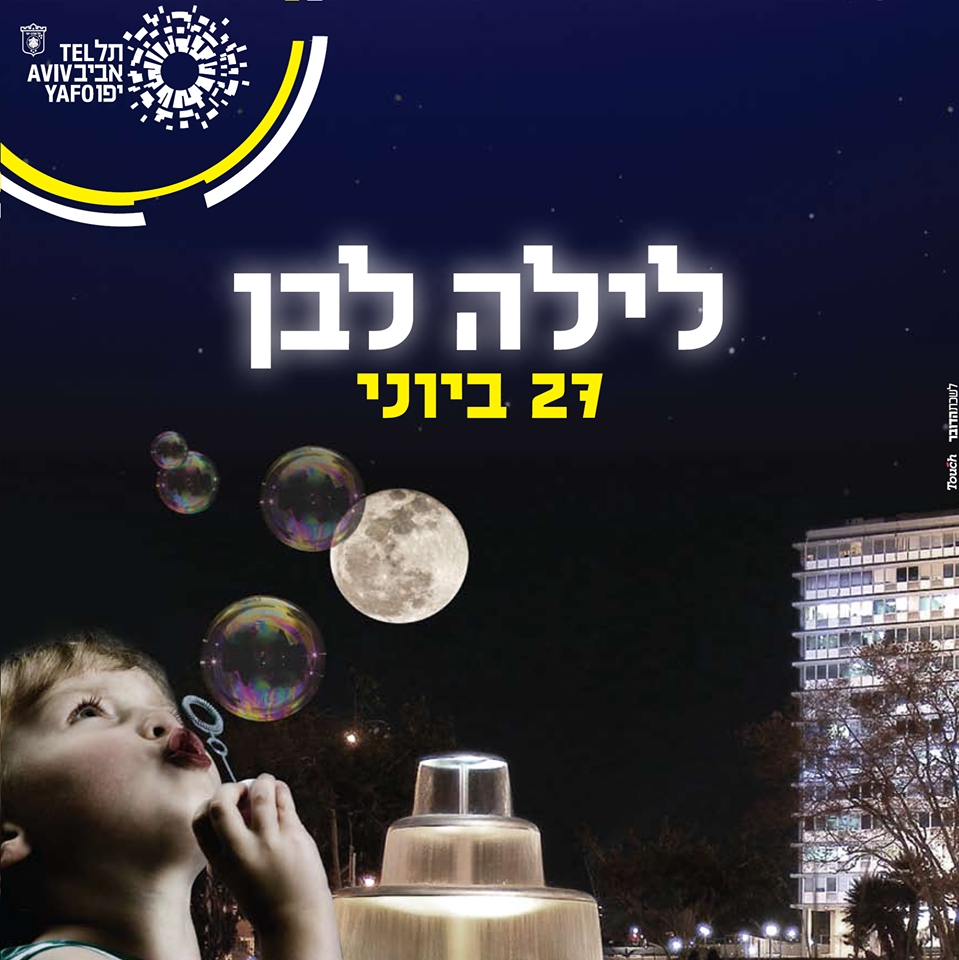
Thursday night, after the hike to Montfort Castle, I headed on down to Tel Aviv to partake in the annual “White Night” celebration. Held every year for the past nine years, “White Night” was established to commemorate the UNESCO decision to include Tel Aviv (“the White City”) as a World Heritage Site. Adding a play on words, “white night” is also an Israeli term for staying up all night long, which is dutifully carried out by both the residents of Tel Aviv and from people the world over joining in on the celebration. Traveling in uniform for the free public transportation, I arrived in Tel Aviv’s Arlozorov Station just after 8pm. I boarded a bus for Yafo (Jaffa) and got off just after the clock tower, a city landmark.

White Night

White Night

Entering the flea market area, I was immediately enveloped in the merry-making atmosphere. The streets were alive with music, lights and happy people. I stopped to watch the various street performers and small-time musicians as they entertained the people. Since I was in uniform and had an SLR camera hanging from my neck, many assumed I was a military photographer – always good when you want to get in close for a shot. I experimented plenty with the camera, trying to get the best photos in each setting, but without a manual shutter, nighttime photography is hard!

Musicians on the street

Musicians on the street

Rhythmic drumming

Rhythmic drumming

Mime

Mime

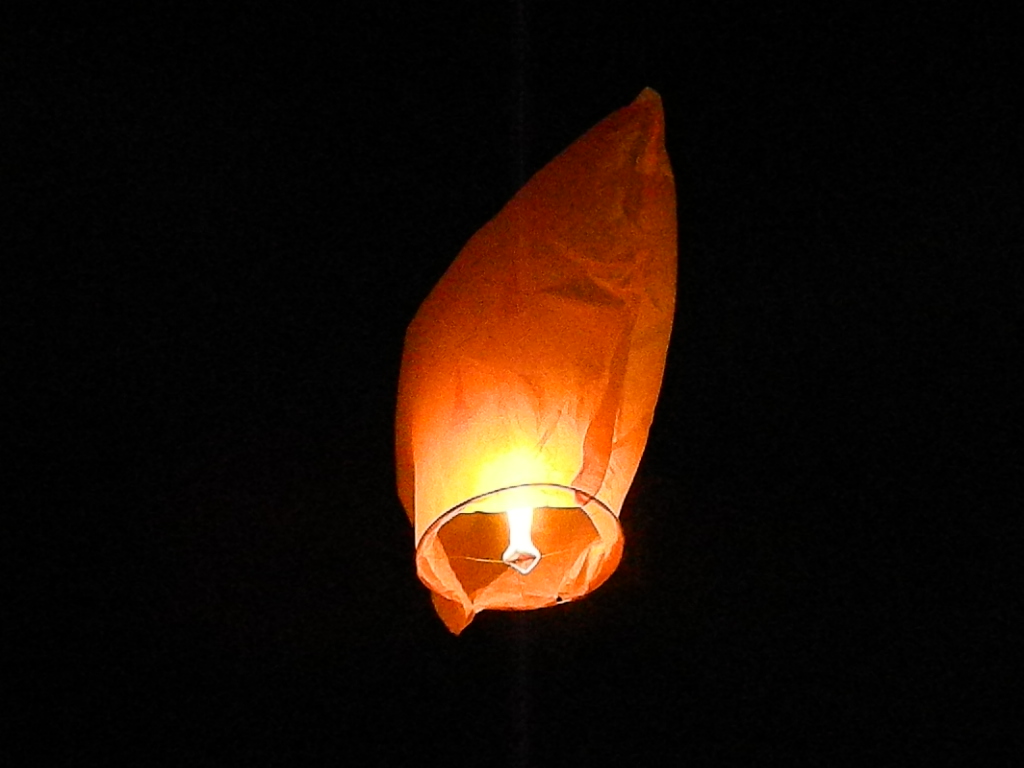
As I circled and criss-crossed the flea market I caught a glimpse of what looked to be a fireball hovering in the inky sky (there happened to be a great moon out as well). Later I discovered a little crowd watching a few people hold up a hot air balloon-like object. A bag of sorts, shaped like a heart, with a nice fire going on at the bottom – like a hot air balloon. Someone said something about how we should have peace and the heart balloon was released. Here it is, as it took flight:

Fire in the sky

Fire in the sky

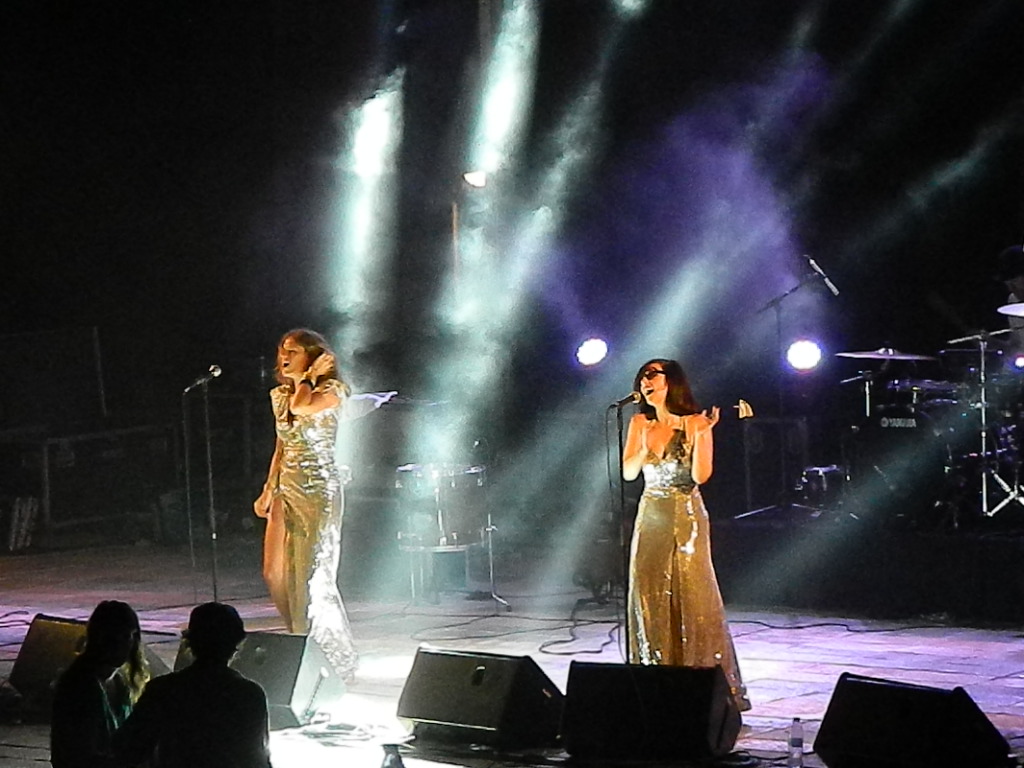
Not wanting to miss all the evening’s concerts, I abandoned the flea market celebrations and was handed a new energy drink – great time to have promotional freebies! I made my way to Gan HaPisga (Park of the Peak, I suppose would be the best translation). There I caught the tail-end of a performance by The Bridgettes. I have never heard of them – they hail from France, nor was I really interested in their music but it was fun trying to photograph the show.

The Bridgettes

The Bridgettes

As the concert came to a close, and no more performances were to follow – why did they start so early?! – I headed into the Old City area of Yafo for some photos.

Jaffa Old City

Jaffa Old City

Jerusalem Gate, Jaffa Old City

Jerusalem Gate, Jaffa Old City

Eventually I found myself at Jaffa Port, a popular hangout. There I was treated to more musicians and mimes and even found a place to change my clothes. No longer in uniform, I popped into a bar that looked very much alive, The Container. There I ordered the new Goldstar Unfiltered beer and headed back out to continue my explorations. For a nighttime hangout, Jaffa Port is quite nice – I particularly enjoyed the fishy smell of the nets from the day’s fishing.

Inside The Container

Inside The Container

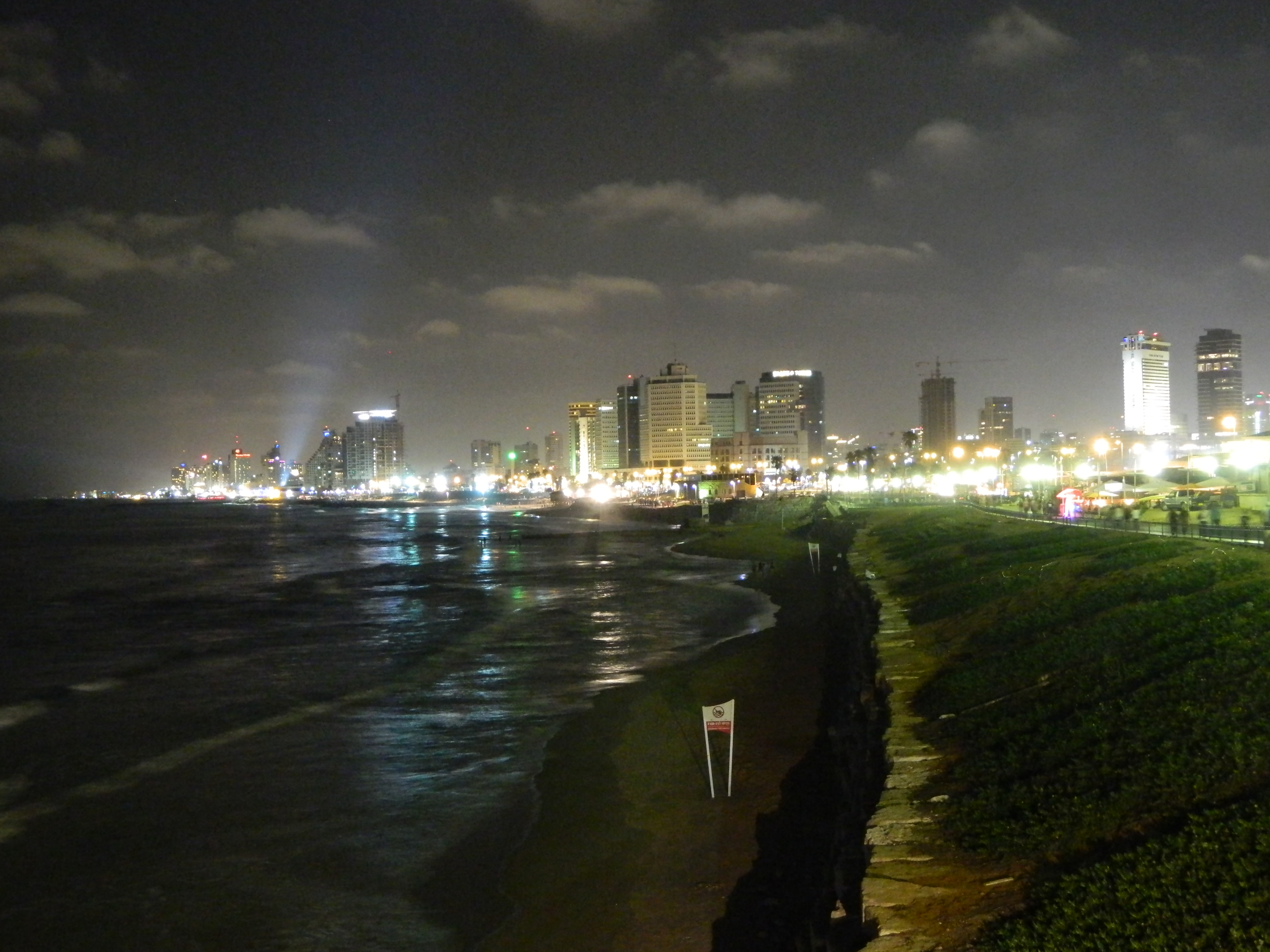
With so many people eating, I was dismayed to only find two places with kosher food. One place basically only served hummus so I chose the other, an interesting little joint seemingly family operated. There I ordered a simple falafel and sat down to eat my midnight snack. As I sat there, Israel’s seven Harley Davidson motorcycles drove by, followed by a police car whose driver must have been deaf. After my little meal I took to the boardwalk and experimented with the different camera settings, capturing Tel Aviv in various lights:

Tel Aviv 1

Tel Aviv 1

Tel Aviv 2

Tel Aviv 2

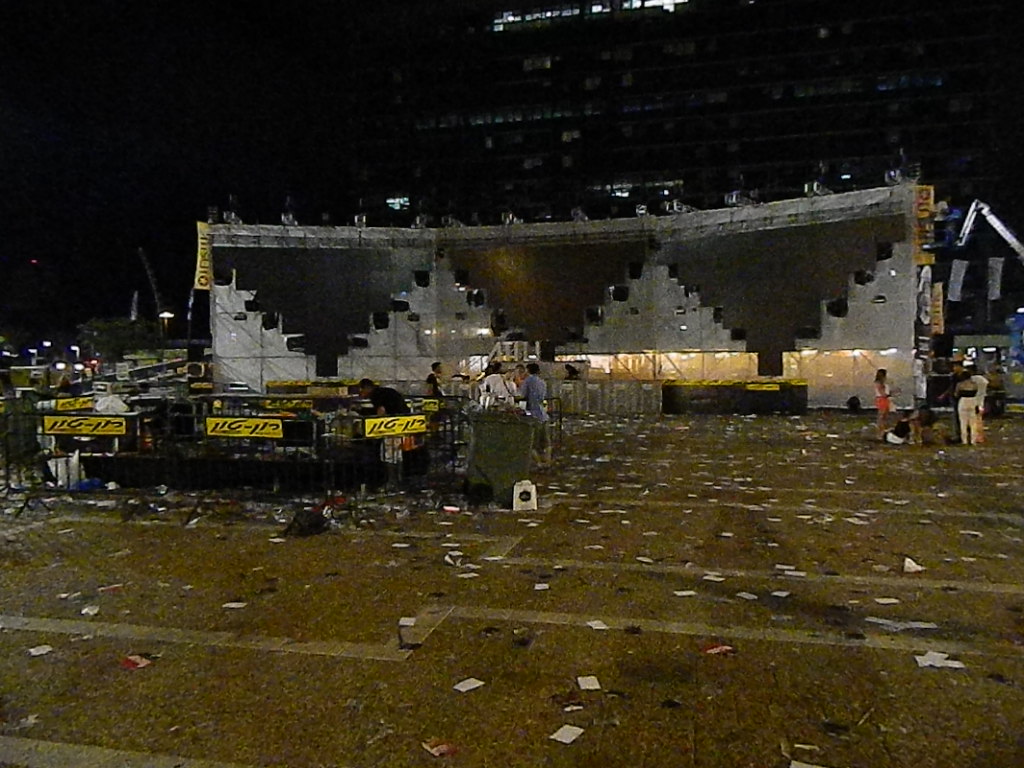
Continuing on along the boardwalk, I left Yafo and entered Tel Aviv proper. At first the boardwalk was filled with people of all ages but as I headed further and further north, the “old people” disappeared and I found myself in a vast sea of youth. Walking around in little clusters, thousands upon thousands of teens were crowding the boardwalk, calling out to one another like an immense flock of birds. The sheer quantity of young people – like I’ve never seen before – and the watchful presence of police officers were good signs of an adventure. Convinced that there must be some sort of White Night event nearby, I stopped and asked a loitering American what was going on. He was equally clueless but was eager to find the White Night events I was seeking so we paired up and hit the boardwalk, eventually heading to Rabin Square. Along the way I found out that this young man, Dan, was also from Seattle (where I was born) and that he just finished his Birthright trip. All we ended up finding on the boardwalk was some odd dance event so we headed into the city for Rabin Square. When we got there it felt like the aftermath of a storm. People milling about aimlessly, garbage strewn all over the place, event crews dismantling skeletal structures – all sure signs that we missed the party.

Post-apocalyptic Rabin Square

Post-apocalyptic Rabin Square

What we did in fact miss was something called a headphone concert (or something like that). Basically everybody with a smartphone can get a particular app and join in on the concert via headphones or earbuds. Sounds kinda odd but I’m sure it’s pretty funny watching a couple hundred people, standing together enjoying a concert with no music in the air, like something out of The Twilight Zone. Having missed the party at Rabin Square, Dan and I decided to loop back to the boardwalk, but via Dizengoff and Rothschild. We stopped off at a little pub for a little rest and I enjoyed a pint of Guinness – stouts are the best! But we never made it to the boardwalk. On some random street we bumped into some random Israelis and had a long chat. Turns out one of the events I thought could be found on the boardwalk was actually not even in Tel Aviv. Eventually 3:00 turned into 4:00 and then the sun came up. With the streets in a post-apocalyptic state, empty except for garbage and overly tired people trying to make their way home, we decided to call quits on our adventure. With my uniform back on I caught a really early bus and then an early train and was back home pretty tired and somewhat disappointed at how White Night ended.

Daybreak at a random street corner

Daybreak at a random street corner

Moral of the story: unless you want to wander around Tel Aviv aimlessly all night, I suggest that if you want to enjoy White Night, wrap it up shortly after midnight because after that it’s pretty dead. The end.

Montfort Castle

In Galilee, Israel on June 30, 2013 at 4:51 AM

This past Thursday, having received a day off due to my hard work in the army, I went out with my father for a late morning hike to a local favourite: Montfort Castle. An old Crusader castle, just off Nachal Kziv (Kziv Stream), Montfort is one of my favourite historical sights in Israel and it’s so close to my house! Grabbing some trivia off Wikipedia, Montfort Castle is just 10 miles from the Lebanese border and probably about a mere three miles from where we live.

Castle area from the tower

Castle area from the tower

Sometime in the 1100s, after the First Crusade, the De Milly family received the land and built the castle, as well as a water mill down the mountain. An irregular Crusader-era castle, it was built at first to sustain an agricultural estate. Later, when Saladin reconquered the land for the Muslims, the castle fell into their hands. When King Richard the Lionheart led the Third Crusade in 1189, the castle was returned to the De Milly family who, in turn, sold it to the Teutonic Knights from Germany. They renovated the castle and after a falling out with the Knights Templar and Hospitaller, they left the then-capital Akko (Acre) and set up shop at Castle Montfort. The Teutonic Knights expanded the castle and turned it into a magnificent building, the pride of their order. In 1271, after repeated attempts, the Mamluks, under Baibars, besieged and conquered the castle, allowing the Teutonics to leave peacefully. Since then the castle has simply fallen apart, but it is still magnificent, and its location is superb.

Looking out to the Mediterranean

Looking out to the Mediterranean

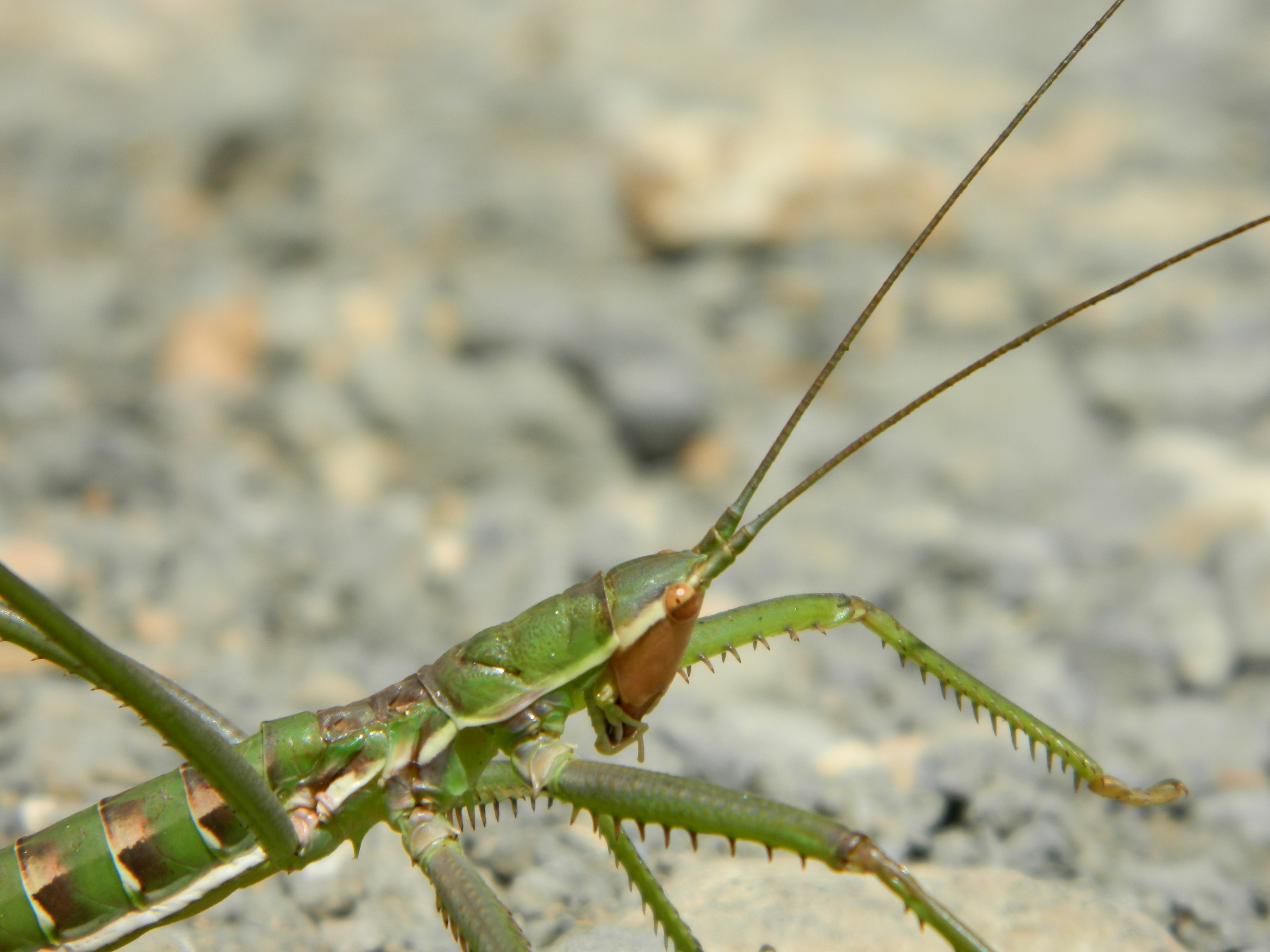
My father and I started our hike on the wilderness side of Mi’ilya and Mitzpe Hila (Christian and Jewish villages, respectively). In the early stages of the walk we encountered a very large insect, which I believe is a Phasmid (or stick insect). Regardless of what he is, he made a great model for photography:

Large insect on the trail

Large insect on the trail

Shortly after, the trail dipped and we trotted down the mountain. A pleasant walk, especially with mild weather, the going was good and before long we heard the sounds of fellow hikers. Having come from a high elevation, we were hiking basically across from the castle, just having to go down and back up to enter. Other hikers were down below, walking the Nachal Kziv trail, along the stream.

The trail down below, running along Nachal Kziv

The trail down below, running along Nachal Kziv

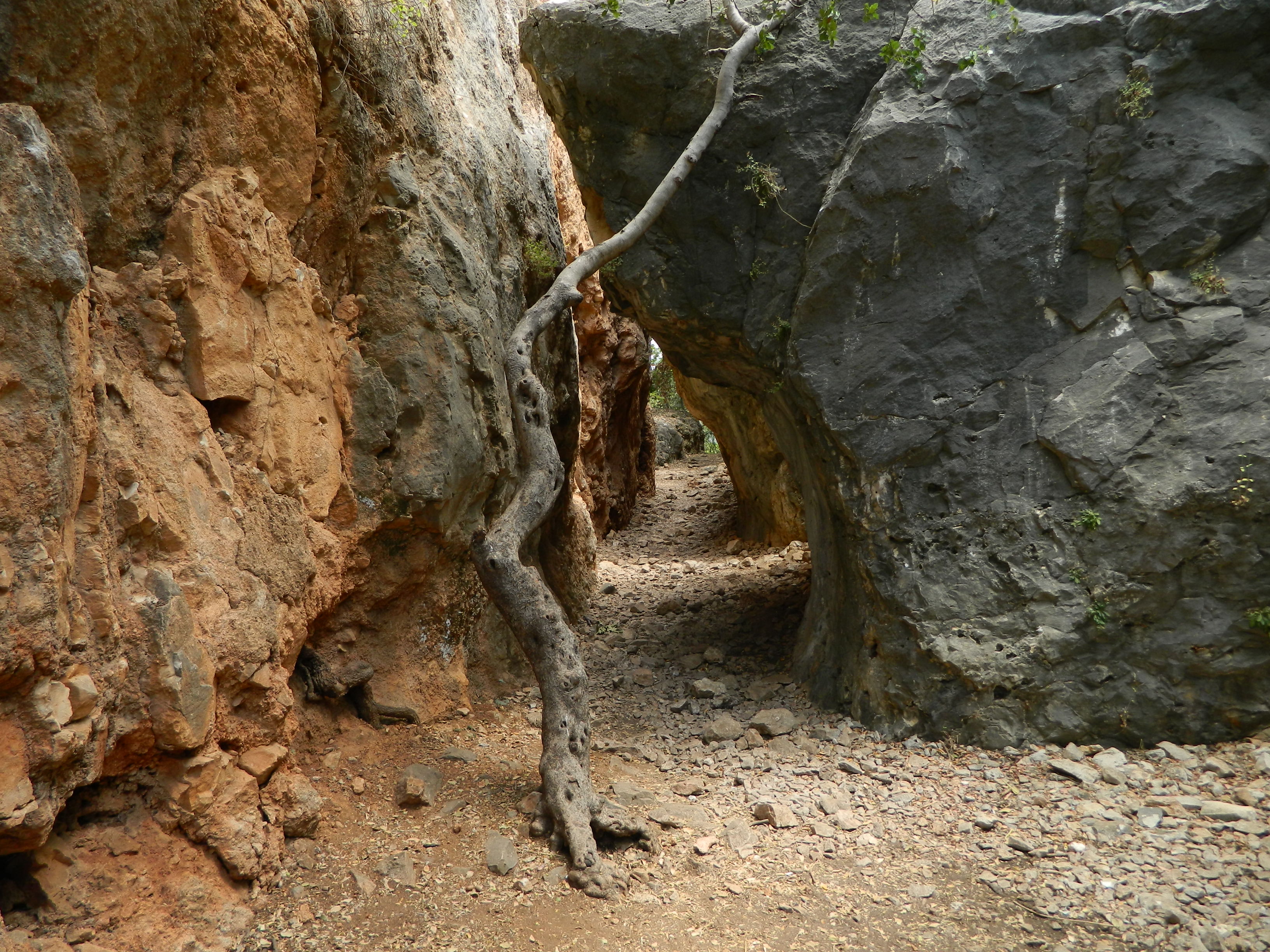
Just before climbing the last bit up to the castle itself, there is a great little pass between two boulders. I’d say that they are more “parts of the mountain” than boulders but that just sounds weird.

Through the crack...

Through the crack…

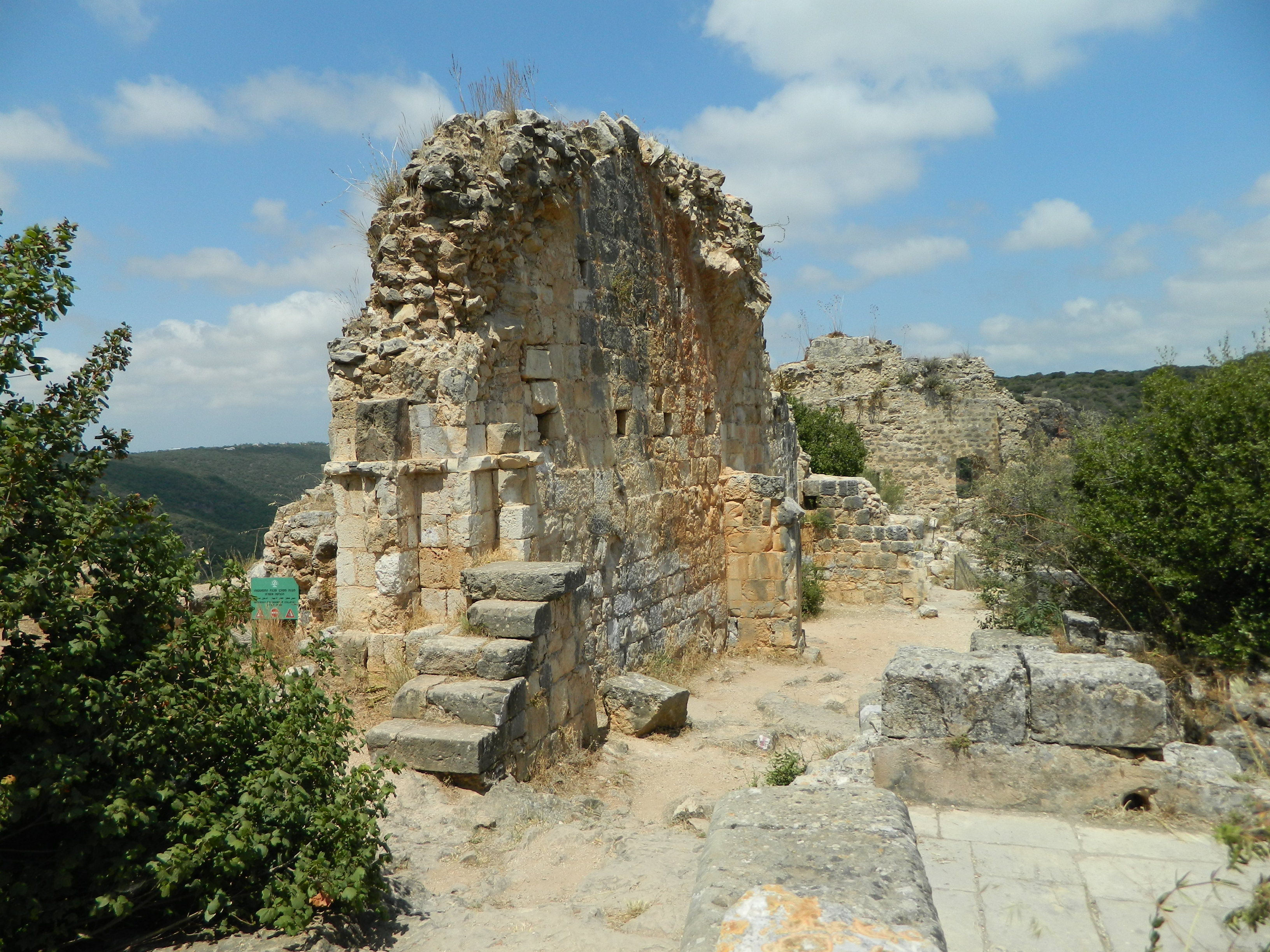
While perhaps not as noble and expansive as the Hopitaller Castle of Akko, the Nimrod Fortress of the Upper Golan or the nearby Teutonic Castle of Yehiam, the Montfort Castle strikes me as most fascinating. Up in the castle, there are many levels and areas to explore. From the highest tower to the low arched chambers there are many greats places to be photographed. Here is a large standalone wall in the middle of the castle:

Castle remnant

Castle remnant

Here are two doorways to the left side of that great wall, each a different build:

Castle doorways

Castle doorways

Climbing the old stone steps to the highest tower of the castle, the open-air room would make the perfect observatory for stargazing or nighttime photography (something I’d really like to do). Here is one of the two wall chunks that has survived the test of time:

Up on the tower

Up on the tower

We stayed up there for a few minutes, watching the tiny people walking the trails down below, and then continued on the the western side of the castle. There, passing through a great wall, the breeze was phenomenal. Coming off the Mediterranean Sea and channeled through the gentle Galilean mountains, the wind hits the castle with a cool crispness that sweaty hikers find most desirable. First, the wall that blocks the wind:

The wall that blocks the wind

The wall that blocks the wind

And here, a thick Crusader pillar amongst the rubble where the wind hits best:

A thick pillar, where the wind comes in strong

A thick pillar, where the wind comes in strong

At the north-western corner, separate from the main castle building, is a perfect guard tower, reminding me of the rook in the game of chess:

Lower guard tower

Lower guard tower

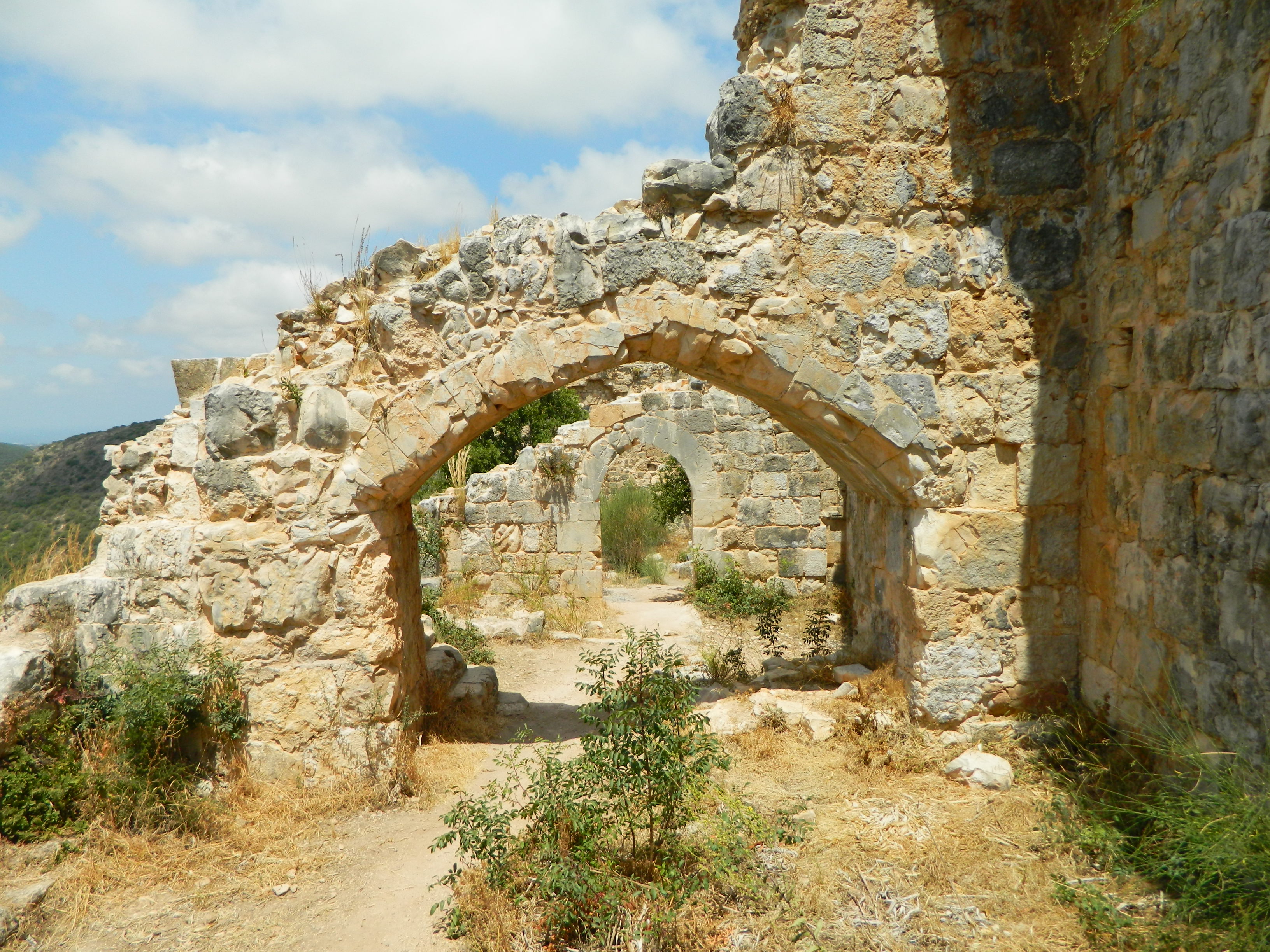
And beside the guard tower, the area under the thick pillar, large arched chambers can be entered. I’ve heard that these rooms were either stables, barracks or dining halls, but whatever they are, their previous use is not evident:

Arched chambers

Arched chambers

Going downhill, heading for the stream, we came across the water mill that was one of the fundamental pieces of the agricultural estate that the De Milly family created. The last time I entered the mill, from around the side, I had an unfortunate run-in with some plant that enjoyed piercing my pants and injecting plant venom into my poor legs. So this time I was a tad wary and decided to enjoy the mill from afar, as you can too:

The mill

The mill

Just a few feet from the mill is the stream, which due to the dry part of the year, wasn’t as full as I usually see it. However, thanks to the bountiful winter rains, the stream wasn’t too dry. First we waded in, then my father laid down in the cold water, the little fish venturing closer and closer. While we relaxed in the refreshing water, the sun got more and more intense. Fearing sunburn, I dried off and took the liberty of filling up my water bottle from the spring water, something I usually do.

The refreshing Nachal Kziv

The refreshing Nachal Kziv

We then climbed back up to the castle, skirted it and fell back onto the trail that headed to where we parked the car. The way back was definitely on the harder side, and I was very glad to be seated, at last, in an air-conditioned car for the five minute drive back to the house.

Up next, that very night’s “White Night” in Tel Aviv, an annual event.

Army Trip: ”Battalion Race”

In Coastal Plain, Israel on May 19, 2013 at 4:43 AM

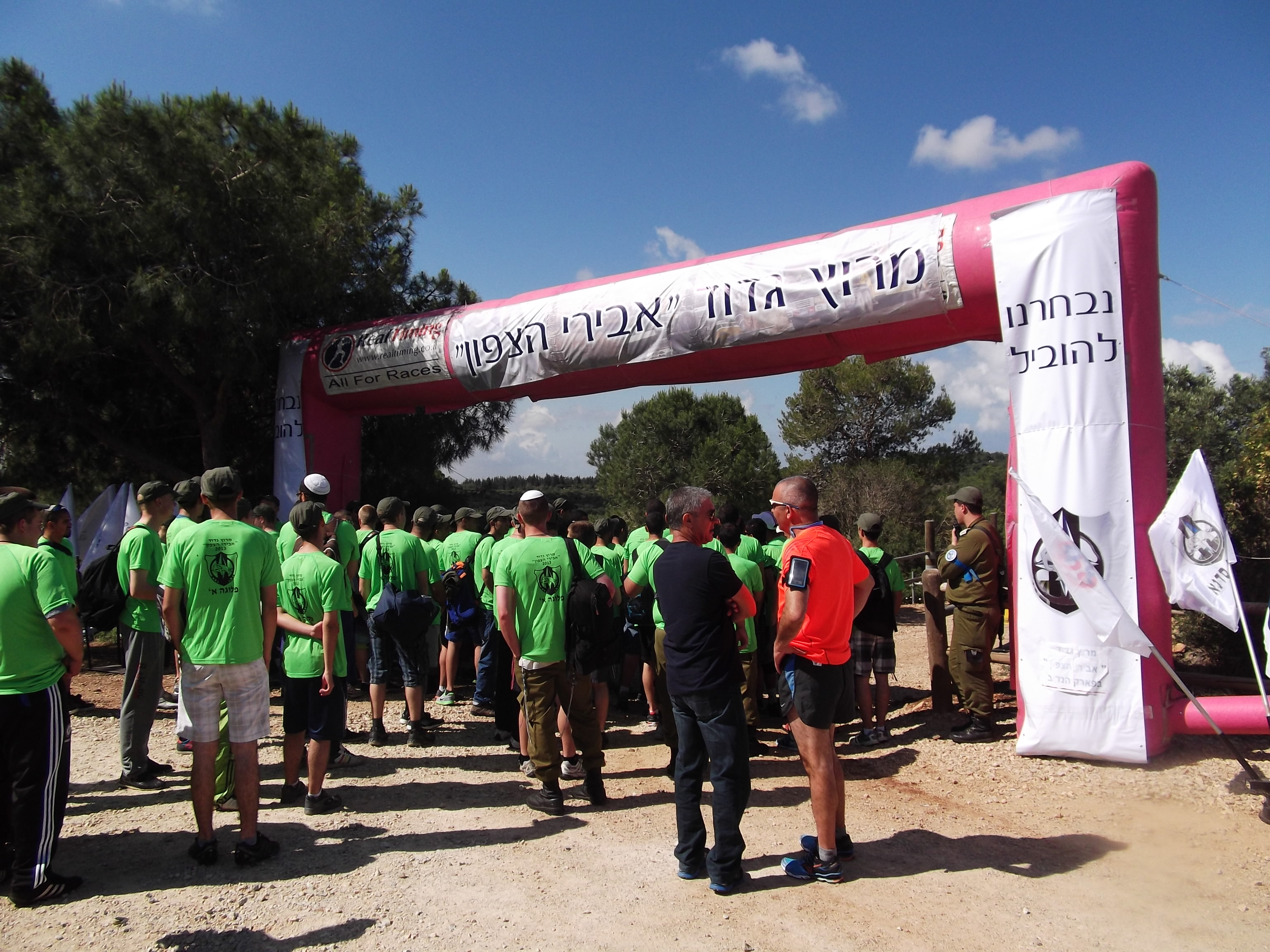
This past Thursday, the day after the short holiday of Shavuot, a good chunk of our battalion, 6910 “Northern Knights”, was treated to a day of sports and activities. The main feature of the day was a “battalion race” where all five companies in the battalion got different coloured t-shirts and participated in a big race. The destination was the Ramat HaNadiv park just outside of Zichron Ya’akov. The morning started off quite cool and refreshing, a gentle breeze in the air.

Perfect day for a run

Perfect day for a run

Before the run, when all the battalion was gathered around, the base commander (a lieutenant colonel) and the commander of all three truck driving bases (a colonel) gave little speeches, two army photographers snapping away on the sidelines. Before long, my green-shirted company (active-service truck drivers) was called up and we gathered at the starting line:

The starting line

The starting line

The signal was given and off we went, running the marathon. Here are some photos of other people running, the black-shirted “Command” company here:

Runners

Runners

Runners up the hill

Runners up the hill

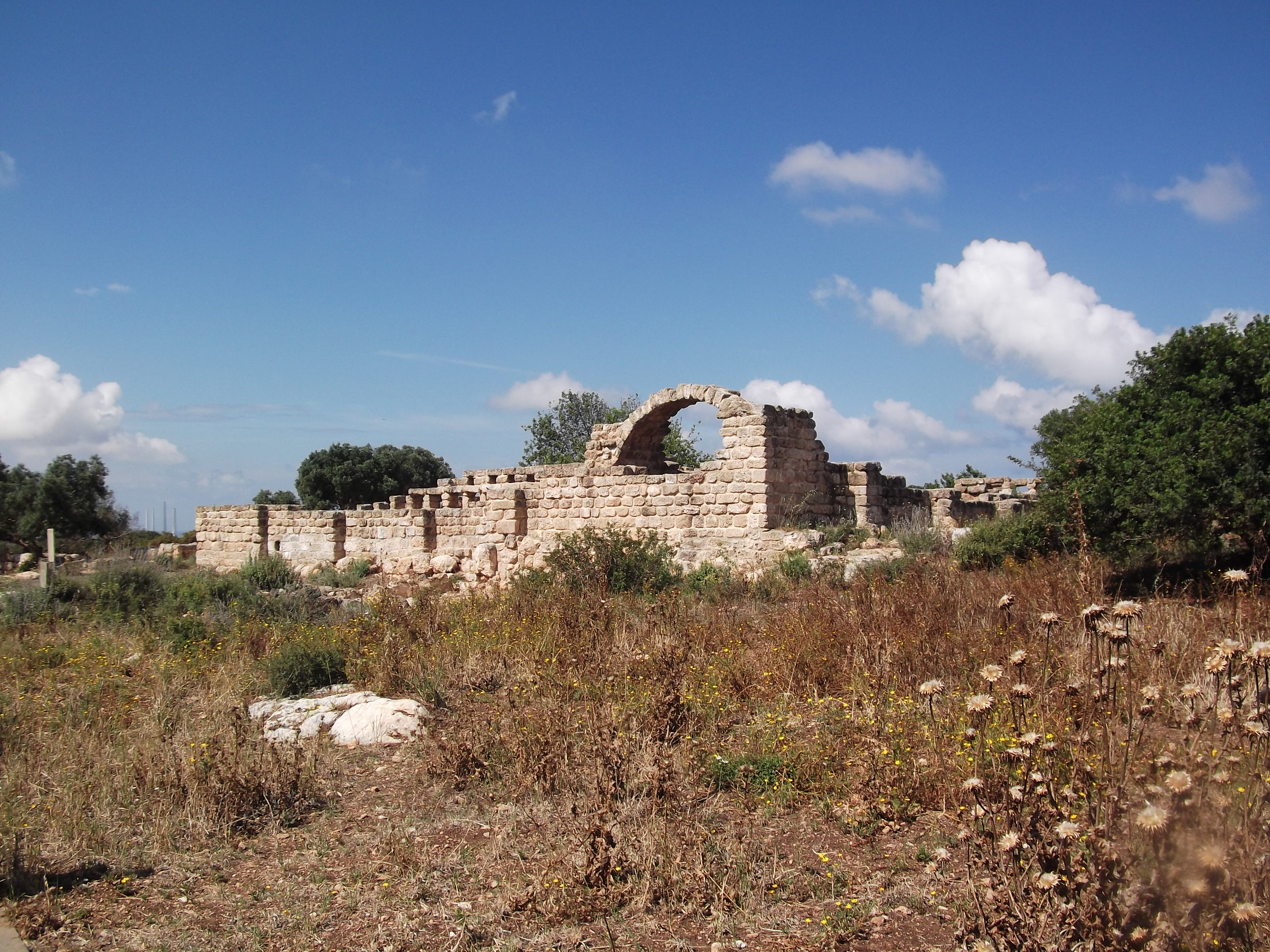
Before too long, a friend and I stopped at some ruins we were passing at the side of the trail. We decided to ditch the race and explore the antiquities. It was a wise decision, nothing like a good look at the past. This particular building, known as the Mansur El-Aqab ruins, was basically a Byzantine-era farmhouse belonging to Jews with some other bits and pieces from the Crusader times. It’s a pretty extravagant farmhouse, I’d say.

Mansur El-Aqab ruins

Mansur El-Aqab ruins

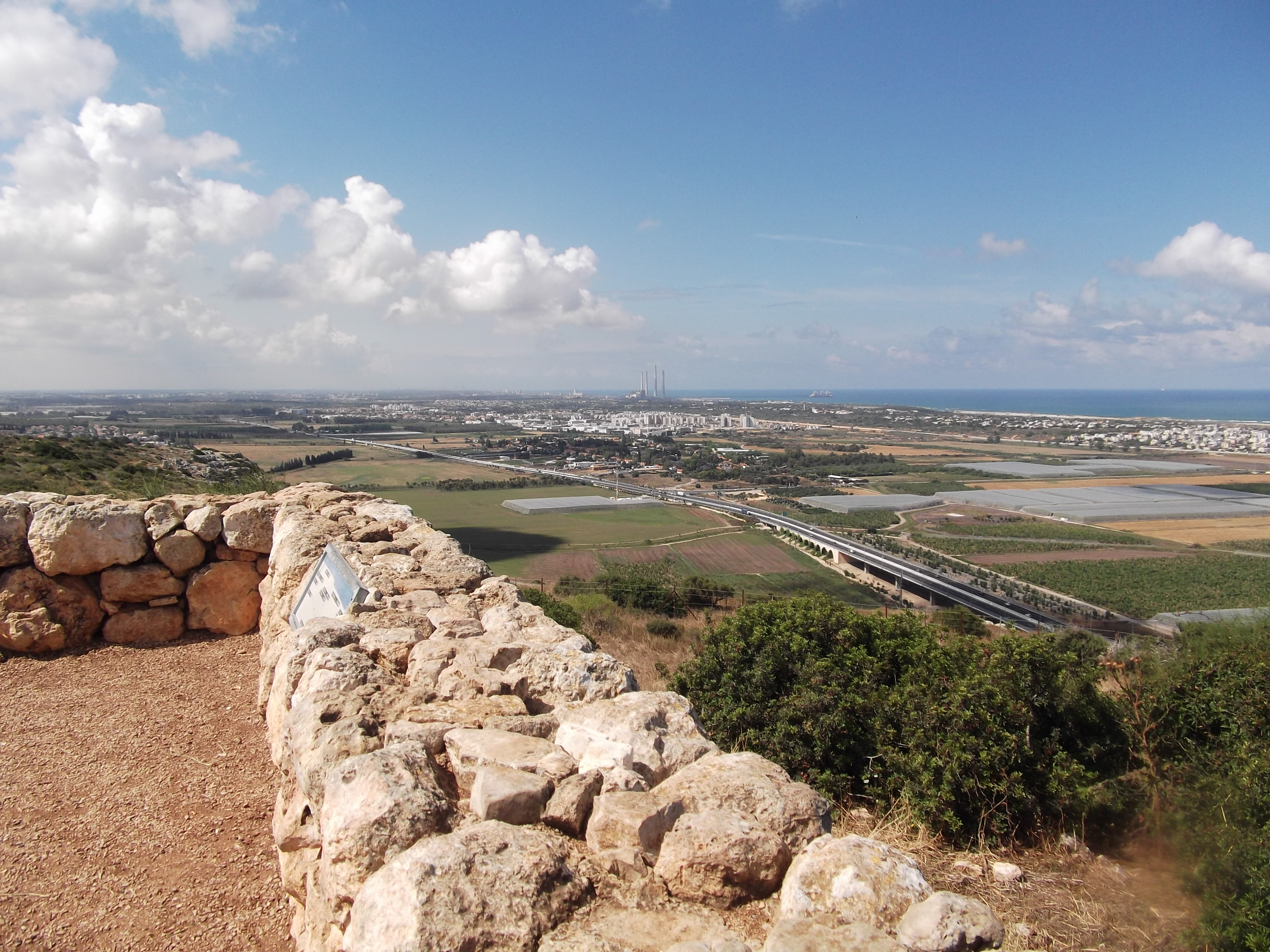
We first headed to what we saw was an observation area, the Mediterranean Sea and the coastal plains clearly visible from far away. The view was incredible. My two favourite parts were the train passing by far below (it made me want to film a western movie) and watching a hovering kestrel hunt (raptors are amazing to watch, especially when they are flying so close by).

Observation cliff

Observation cliff

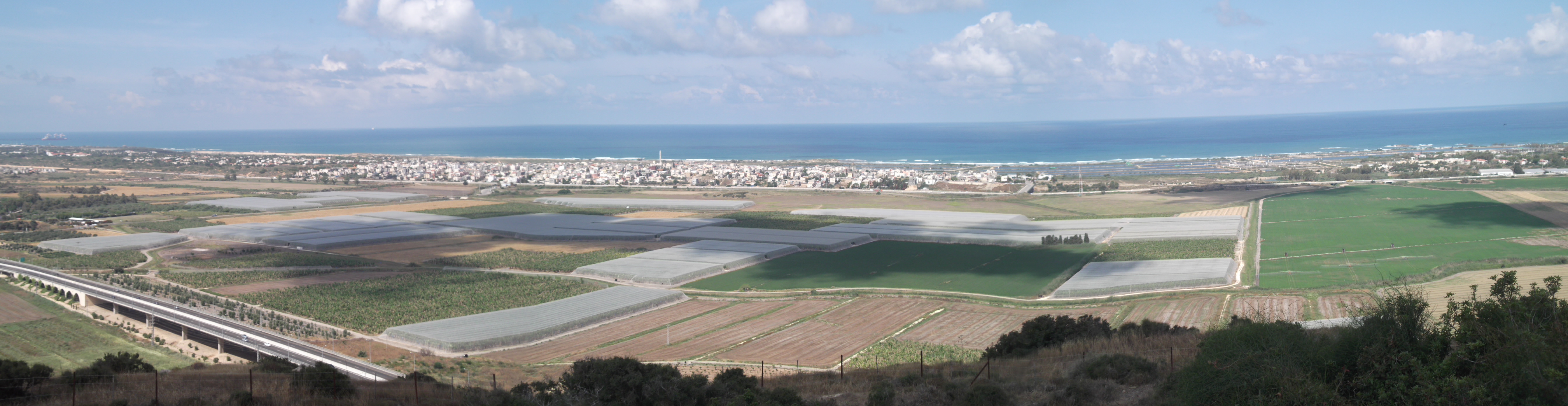
Here is a panoramic photo of some of the view, those dark patches are cloud shadows:

Panoramic of the view

Panoramic of the view

And here am I, enjoying the incredibly serene view:

Enjoying the view

Enjoying the view

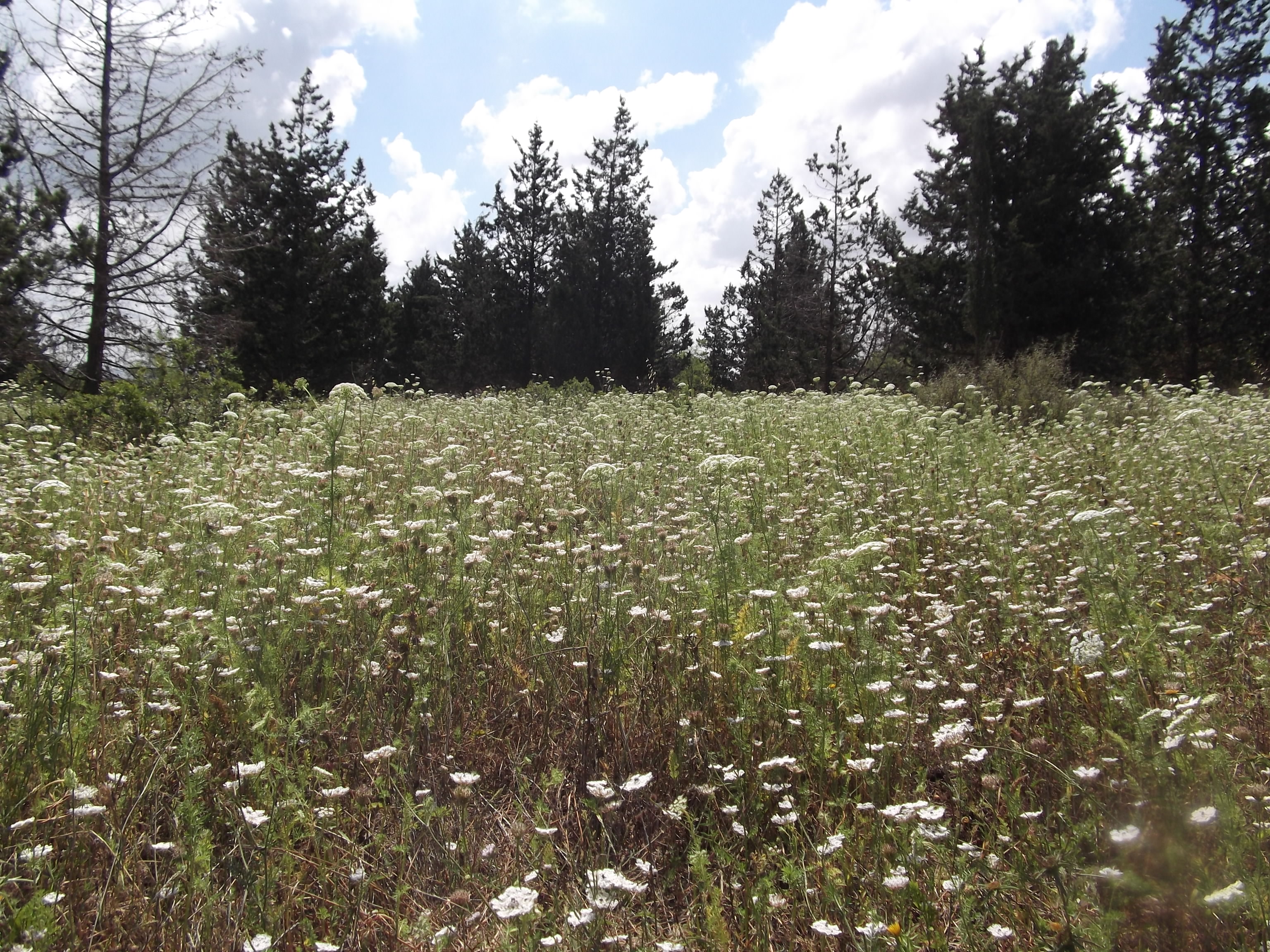
After a good, long break we hit the trail again, heading back to the finish line (which was the start line as well, the route being a looped one). On the way I snapped a photo of this little clearing area. The delicate lace flowers of the Queen Anne’s lace combined with the bold pines, clouds and blue sky made for a very interesting look.

Field of Queen Anne's lace

Field of Queen Anne’s lace

We made it back to where the rest of the battalion was lounging, having basically missed the rest of the race. The soldiers were waiting for the BBQ to finish up, and in the meantime little cereal bars were available, and then when the wait got longer, out came boxes of popsicles. But we waited patiently, a dozen or so soldiers putting on tefillin while they waited – which was nice to see. Eventually the food was ready and an extensive buffet was opened up. We helped ourselves and upon completion of lunch, engaged in some activities with park staff. After the activities we were hustled into the gardens of the park, where we spent the bulk of our time last army trip to this particular park:

Walk through the gardens

Walk through the gardens

As we walked the sun seemed to get more and more fierce, and as I sit here now typing, a nasty sunburn adorns the back of my neck. We were led to a grassy area where a darbouka drumming session was being held, presumably for us yet I saw civilians chiming in as well so it could have been the park’s idea. I seized up a fancy darbouka and made semi-rhythmic noises to accompany the wall of darbouka thumps that filled the air. Next we kind of milled about and then escaped to sit in the shade in peace. Some time later we headed onto the buses from which we came and were driven to a gym where a little battalion ceremony was held. The most interesting part of the ceremony was two Israeli Arab soldiers from my company who went up to the mics to deliver a custom Hebrew rap about our base, and our company in particular. The interesting part was when my company commander, a major, hopped on the “stage” and joined in on the rap… that was interesting to see.

That’s all for now, folks. Until the next adventure, whenever it may be!

Castra & the Atlit ”Illegal” Immigration Camp

In Coastal Plain, Haifa, Israel on April 2, 2013 at 6:10 AM

On the second day of Chol HaMoed, somewhat well-rested from the previous day’s trip to Tel Dan, we headed out in the very opposite direction, destination: Castra and Atlit (just south of Haifa). First site, coming out of the Carmel Tunnels (which feel way longer in a car than in a bus) was the Castra museums. Located within a mall, there are two “museums”: a Doll Museum which, in many display cases, recite the history of the Jewish people, and the Archaeological Museum which showcases the finds of Khirbet Castra’s excavations. Khirbet Castra lays on the western slopes of Mount Carmel and was an important settlement during the Byzantine period. Artefacts found in the area can be traced back to all different periods, due to the great location of the area.

Old ceramic piece from Castra

Old ceramic piece from Castra

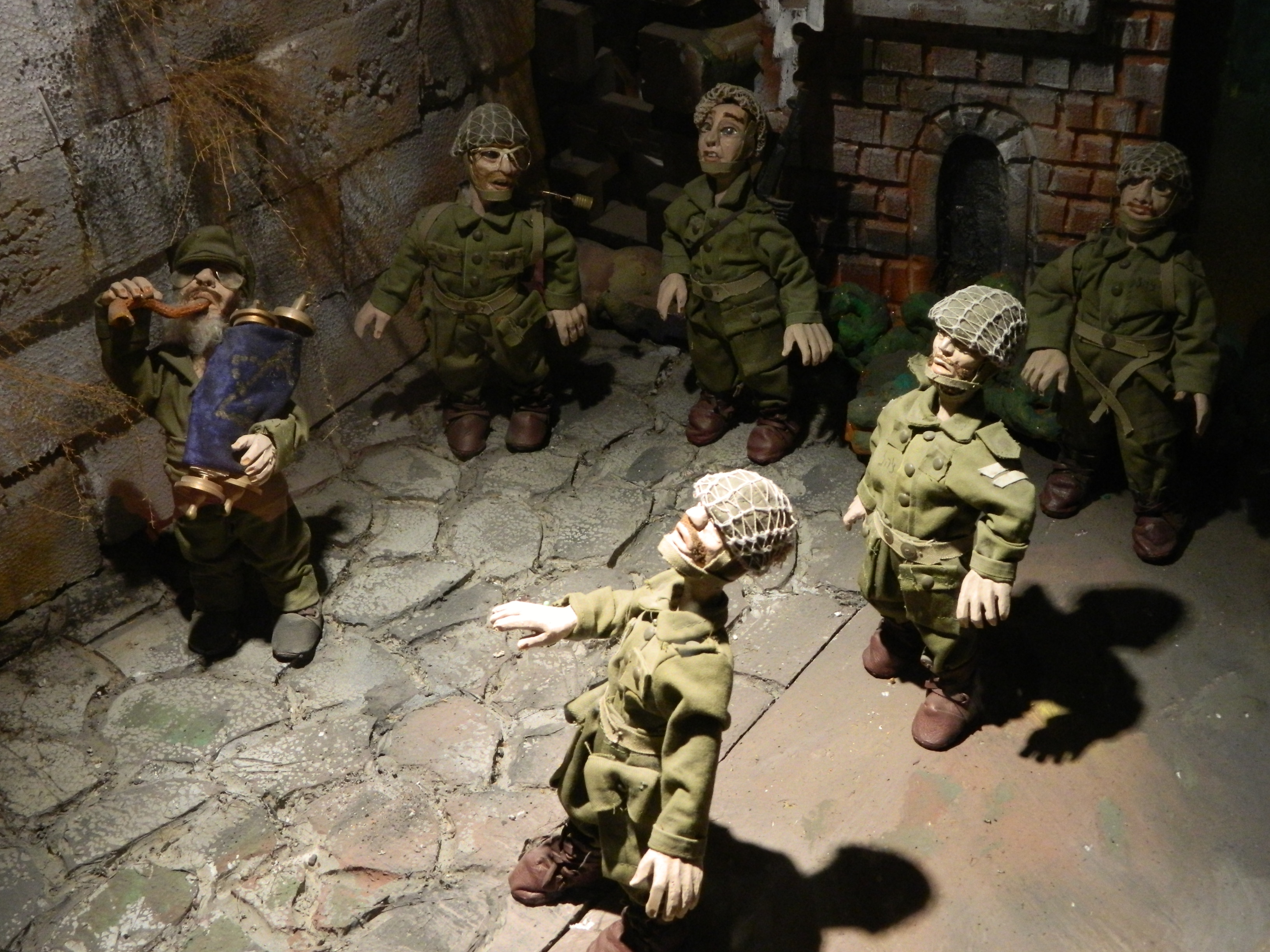
Rather small museums, but free of charge, there isn’t too much to share but here is a nice scene from the Doll Museum – the 1967 recapture of the Kotel, a great time in recent Jewish history:

Doll depiction of the 1967 recapture of the Kotel

Doll depiction of the 1967 recapture of the Kotel

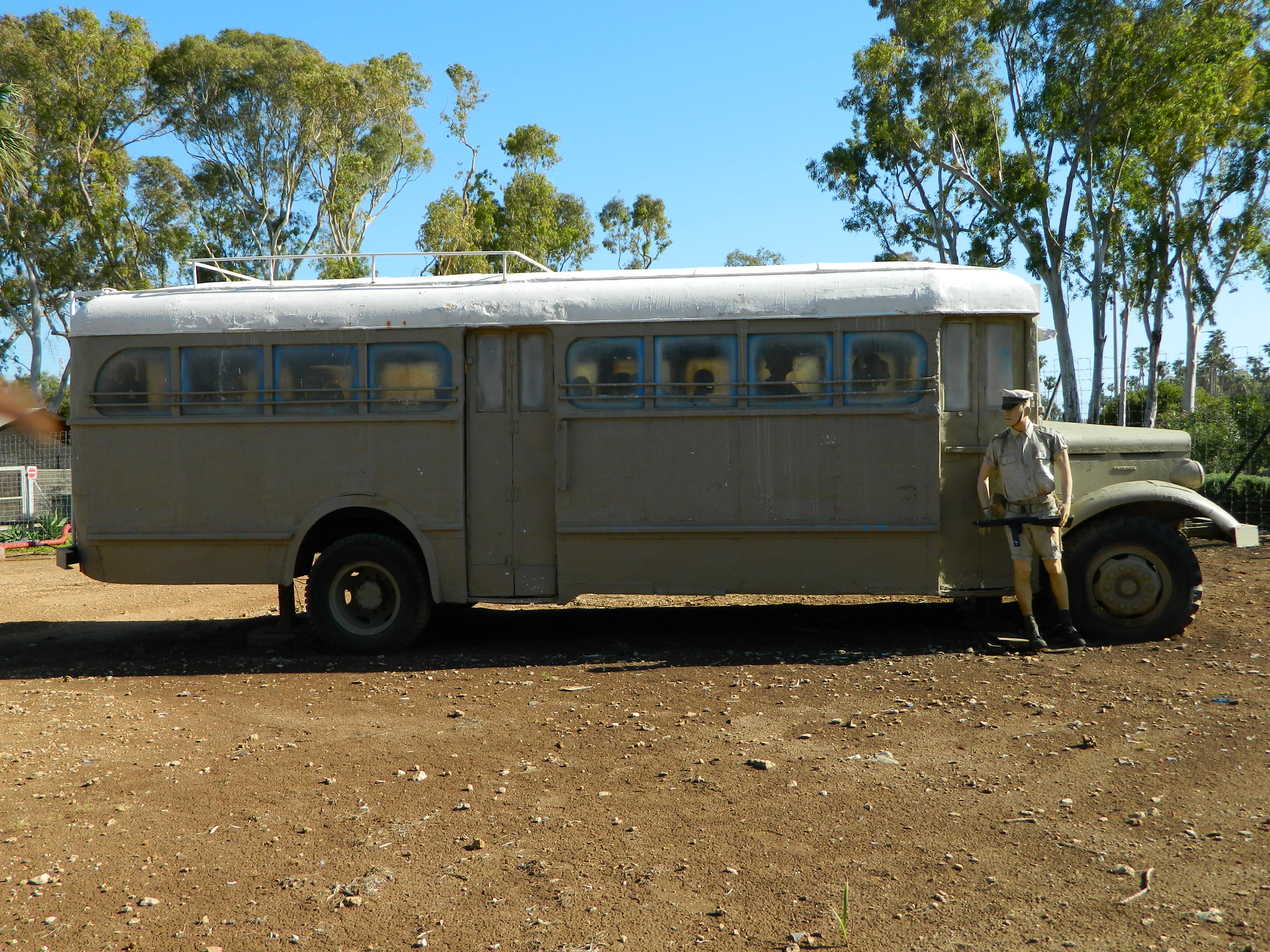
After the Castra Mall museums we continued south and took a little stop at my base. We weren’t allowed in, well I was, but it gave my family a glimpse of what some of the army life is like – a glimpse. After the base, we continued on south to Atlit, on a road that I’ve driven on so many times. At the entrance to Atlit, just across from the gas station we fill our trucks up at, is the Atlit “Illegal” Immigration Camp. Being that I pass it so often while army driving, I’ve been waiting and waiting to get inside. With the tour starting shortly, we hopped on in. The first site on the tour, a prisoner transport bus with a British army guard:

Transport bus and guard

Transport bus and guard

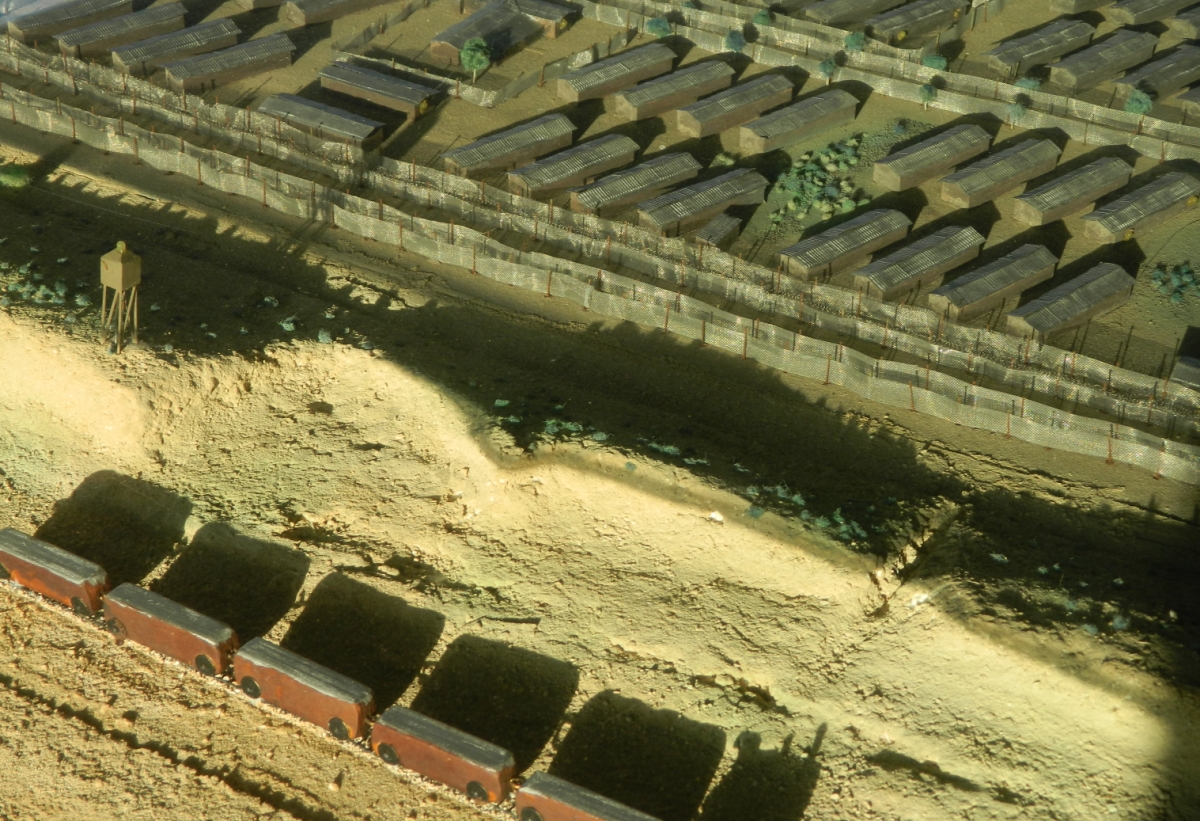
To relay a brief overview of the site, the Atlit camp was built in the late 1930s by the British to hold the refugees flooding in from Europe, before, during and especially after the war. After stopping the clandestine immigration ships out at sea, the British would often detain the wannabe immigrants and so the camp at Atlit began its years of service. With new people continuously coming, the British would let people go from time to time. Here is a aerial model of the camp and the train tracks, with the guard towers on the low sandy hill in between:

Model of the camp

Model of the camp

One famous incident took place at the camp. One night, after two days deliberation, the Palmach sent fighters into the camp to release everyone. Yitzhak Rabin, the prime minister who was assassinated, was one of the commanders of the Palmach strike force that liberated the camp. With the operation a success, the British devised a detaining method out of the Palmach’s reach – detainment camps in Cyprus. An island off the coast of Turkey and Syria, the British opened up camps and brought the wannabe immigrants in by the thousands. But before the opening of the Cyprus camps, the Jewish immigrants were brought, often by train, to the camp at Atlit. Here is a photograph of children who survived the Holocaust being “transferred” from German camps to British camps in 1945:

Children that survived the Holocaust...

Children who survived the Holocaust…

First thing first when entering the camp. Segregation, showering and delousing with DDT in the shower house:

The shower house

The shower house

An interesting fact, which I learned on Wikipedia, is that some of the German Templars from Haifa (from the German Colony), who supported the Nazis, were detained in the Atlit camp before being deported. I cannot imagine it was very nice for the Templars and the immigrant Jews living together in the camp. Speaking of living, here is one of the surviving buildings from the living quarters:

Exterior of the living quarters

Exterior of the living quarters

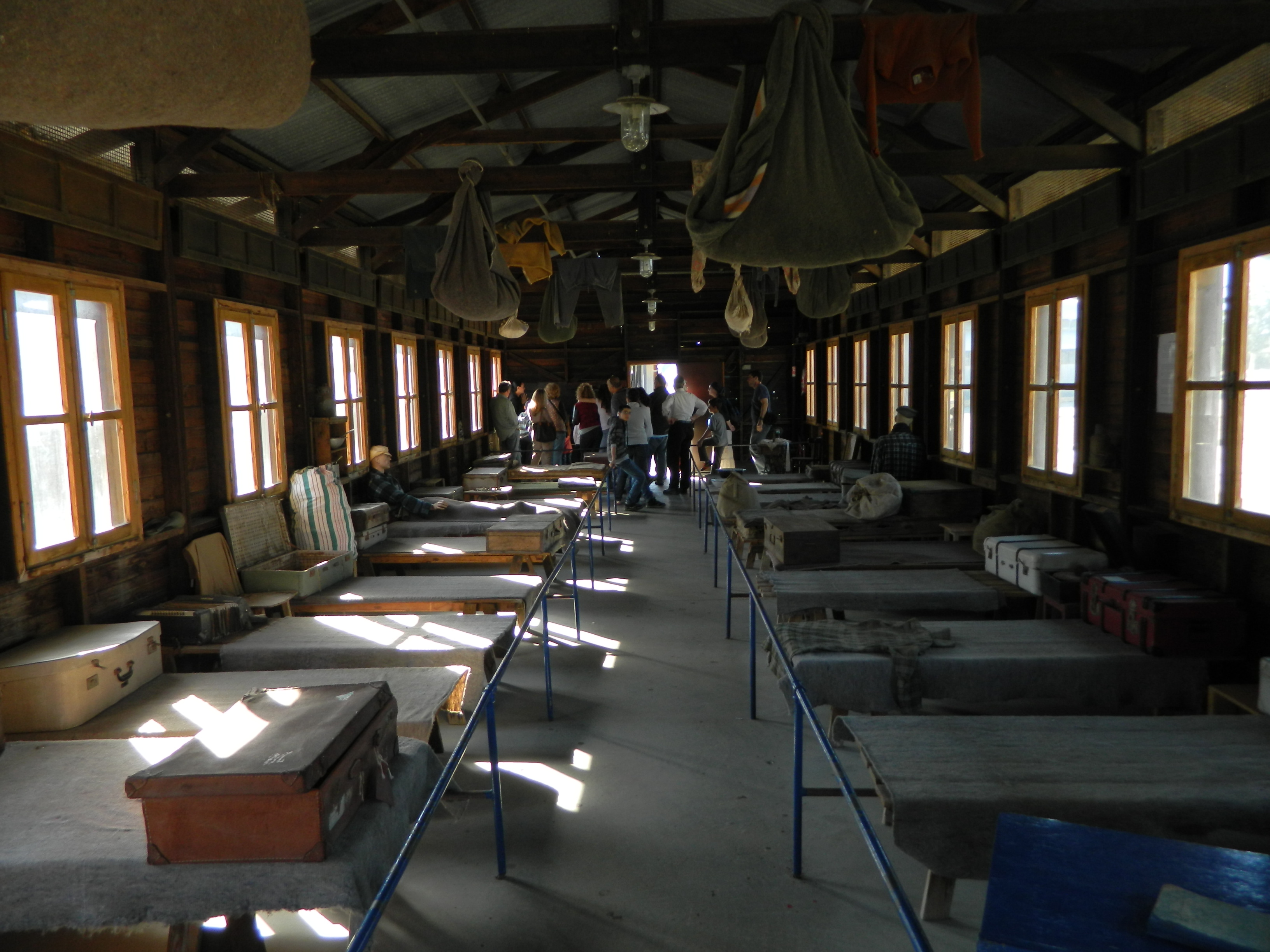
And inside the living quarters. In the photo, the restoration attempts, there are just 20 beds, usually there were about 40 and in times of maximum capacity there were 70 beds per building!

Living quarters

Living quarters

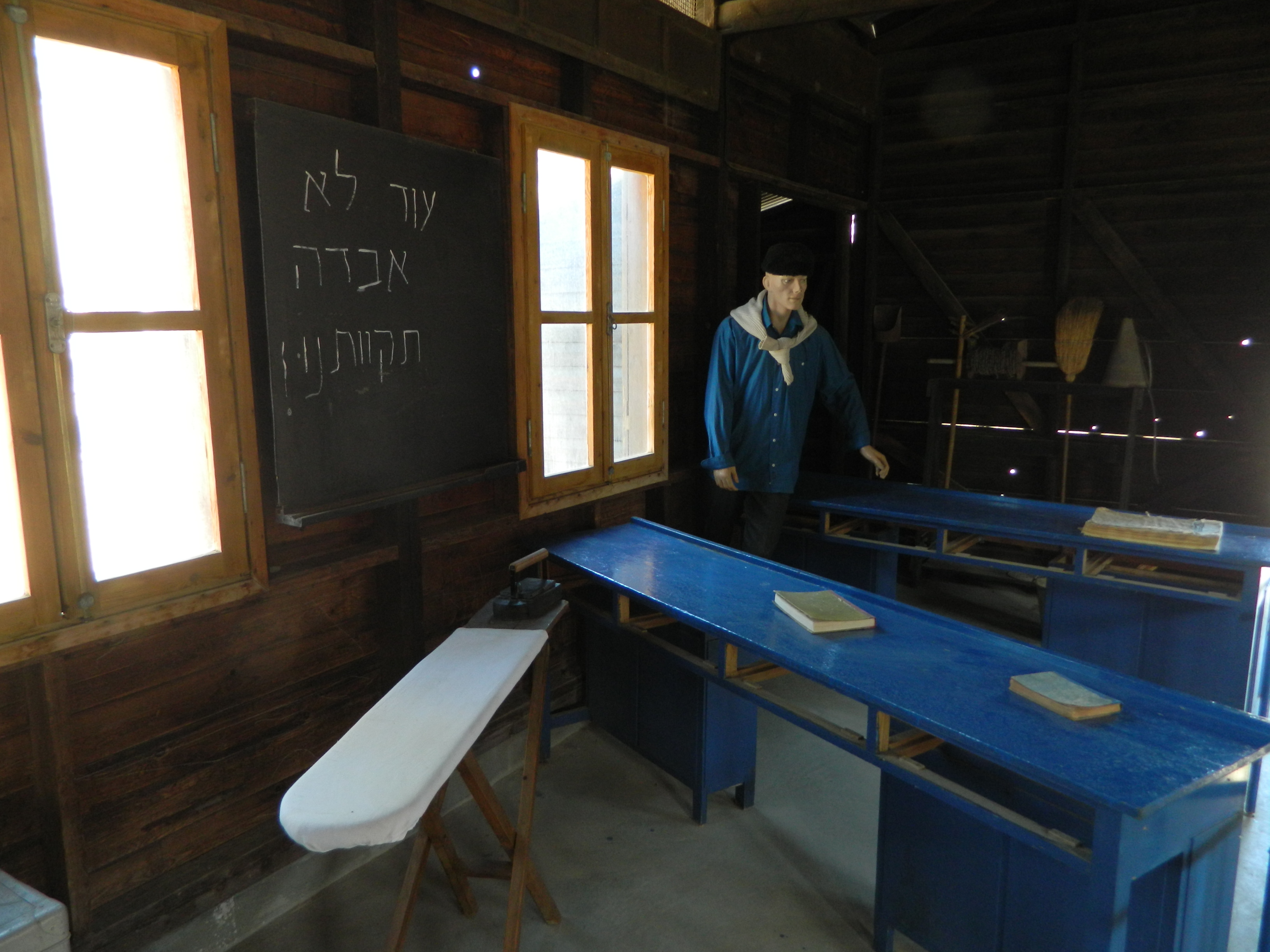
And in the corner of the living quarters, an area dedicated to teaching. Mostly there were impromptu instructors teaching the Hebrew language to the immigrants but I’m sure other subjects were thrown in as well.

The teaching corner

The teaching corner

The tour guide took us next to a room with a screen. We all sat down and she stood at a podium and asked us as a group if we knew anyone that spent time in the camp. A woman, sitting beside my mother, spoke up and told the guide to search for a “Shimon Gelles” on the computer. When the search was complete, and Gelles’ face was staring down at us from the screen, the woman announced that Shimon Gelles was none other than her father. There was a murmur in the air and she told us a little bit about his trip, adding that she hadn’t known what month he arrived on the shores of the Holy Land, but now did due to the scraps of info beside Shimon’s face on the screen. When she was done the guide told us the story of one man, a book illustrator, who drew scenes from his trip across Europe, down to the bottom of Italy and onto a clandestine immigration ship. Then there were drawings of the British warships stopping them and then being sent off to be detained. Next site on the tour, the “Galina”, a small ship carrying “illegal” immigrants:

The ''Galina''

The ”Galina”

The rescue story of the ship, if I understood it correctly, was a tale unto its own. In the late 90s the ship was brought from Latvia to England, where it sat for some time doing restorations to make it seaworthy again. Then, in 2006, the “Galina” was towed by a Dutch fishing ship all the way from England to the coast of Israel. It sat in the Tel Aviv port area for a while whilst the Second Lebanon War broke out. A missile struck the factory commissioned to turn the old ship into what we see today and therefore work was delayed. Finally, a few years ago, the finished ship was laid to rest in the Atlit camp. The insides of the ship have been reconstructed into a display piece including screens, models and effects – with very special attention to detail! Here are two nice rooms, the communications room and the bridge:

Communications room on the ''Galina''

Communications room on the ”Galina”

The bridge on the ''Galina''

The bridge on the ”Galina”

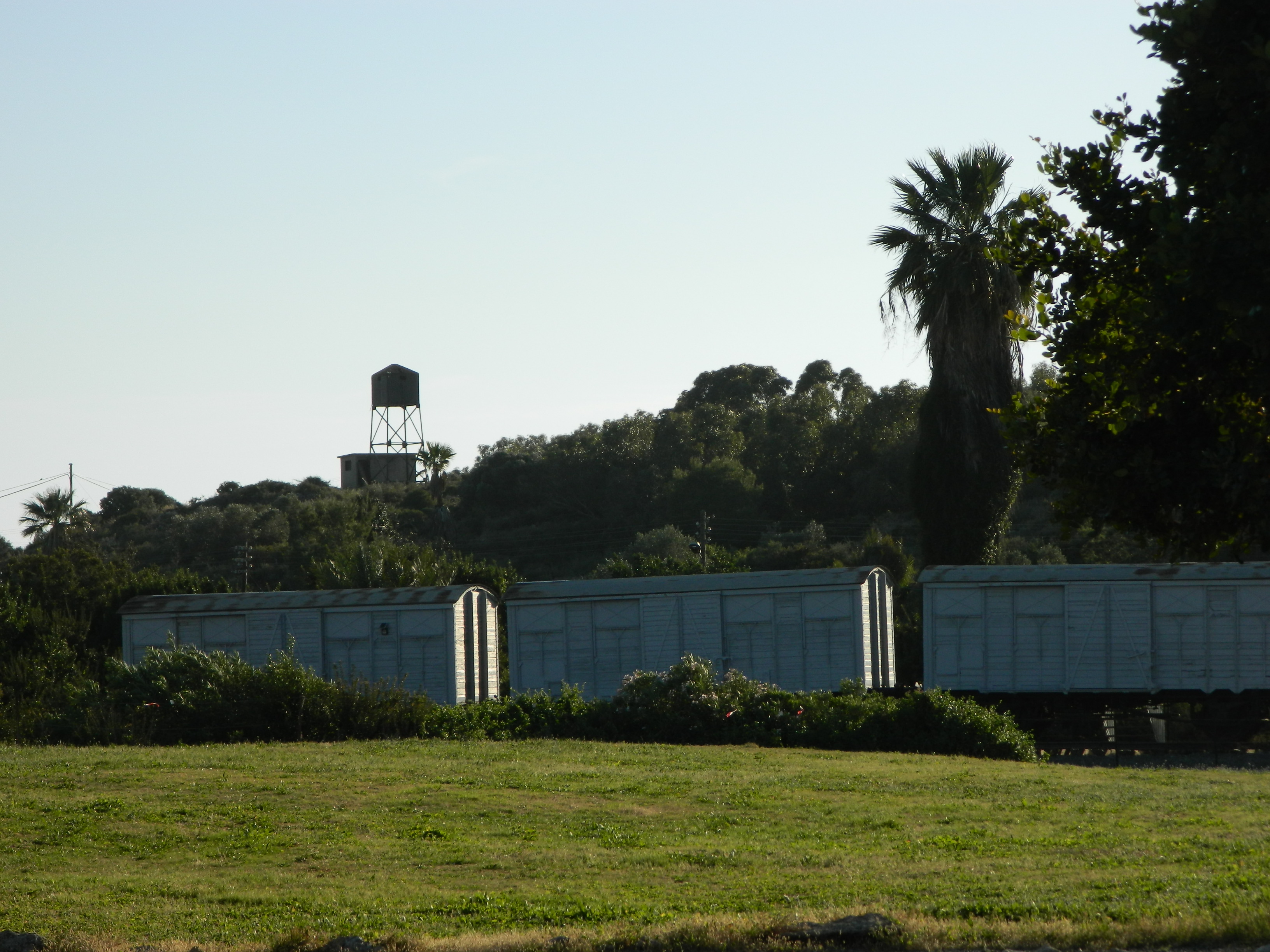
At the end of the tour I broke free from the group and took photographs of the guard towers and train cars. Here is one beautiful pictorial representation of both tower and train:

Guard tower and train

Guard tower and train

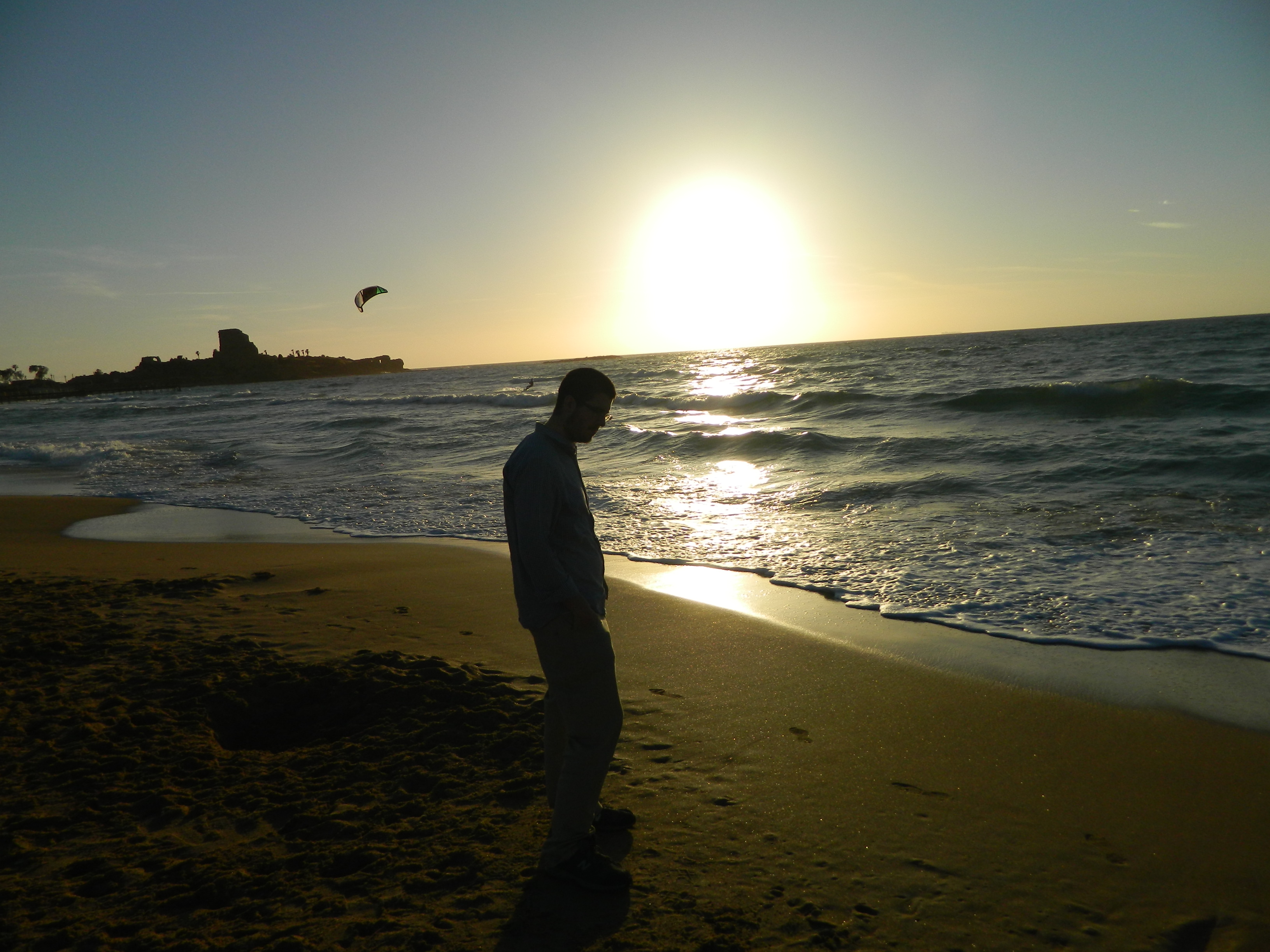
After leaving the site we drove to the coast, attempting to visit the Atlit Fortress (also known as Chateau Perelin). We got as close as the Shayetet 13 base entrance, where the guards told us that the fortress was inside the base and that we were not allowed in. Being that Shayetet 13 is the Israeli version of Navy SEALs, that makes sense – if we weren’t all allowed into my base, all the more so… So, we stopped at the beach area and spent a few minutes in the chilling winds and the waning sun, the Atlit Fortress silhouetted in the background:

Sunset at the coast in Atlit

Sunset at the coast in Atlit

Well, this may be my last post for a spell. Vacation ends when Pesach does, so it’s in the hands of the army to provide me with blogging content!