Israel's Good Name

Archive for the ‘Israel’ Category

Tel Dan

In Galilee, Israel on March 31, 2013 at 6:45 AM

On Wednesday, the first day of Pesach Chol HaMoed, we took a (partial) family trip to Tel Dan, an ancient city on a nature reserve way up in the Upper Golan. Belonging to the Tribe of Dan, this northern city was known under a variety of names throughout the generations: Laish, Leshem and Dan. Located beside Banias, the Dan River park is quite lush and green, coupling it nicely with the ancient ruins.
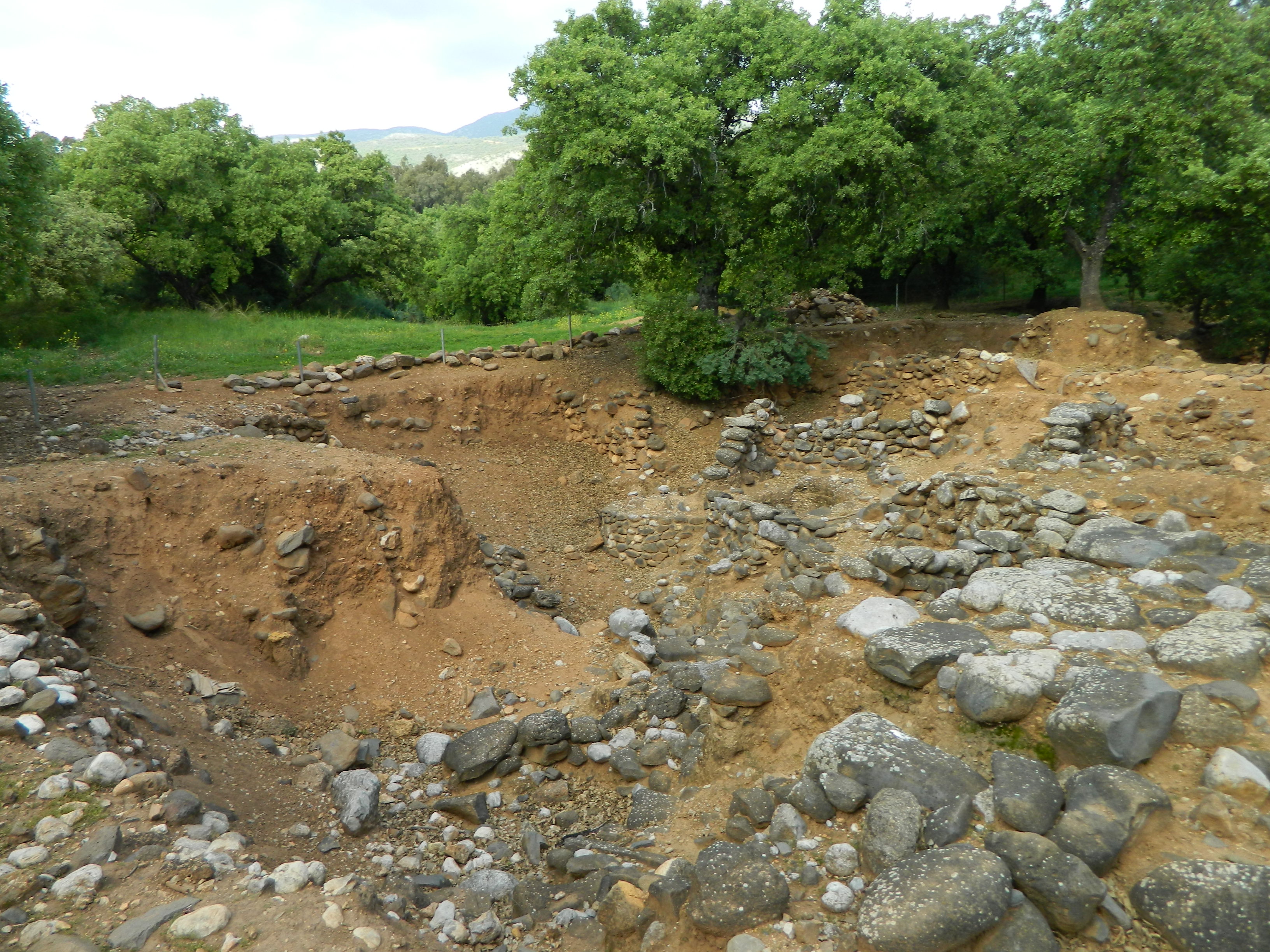
Excavated ruins of Tel Dan

Excavated ruins of Tel Dan

Melted ice flowing down from Mount Hermon, together with gushing cold water from underground springs, the Dan River joins two other small streams to form the Jordan River. Within the park itself one sees a trickling spring transform into a rushing stream, perfect for rafting and kayaking.

The Dan River

The Dan River

We took the long trail, which included stops at the Israelite Gate and the “High Place” where idol worship went on during the kingship of Jeroboam ben Navat, who ruled the first Israelite Kingdom of Israel for 22 years, following the split between Israel and Judah. Bringing along a new camera, this one featuring 21x optical zoom, I was keen on photographing plants and animals which come out great with a DSLR camera. Being that I was in a nature park, the opportunities were abound.
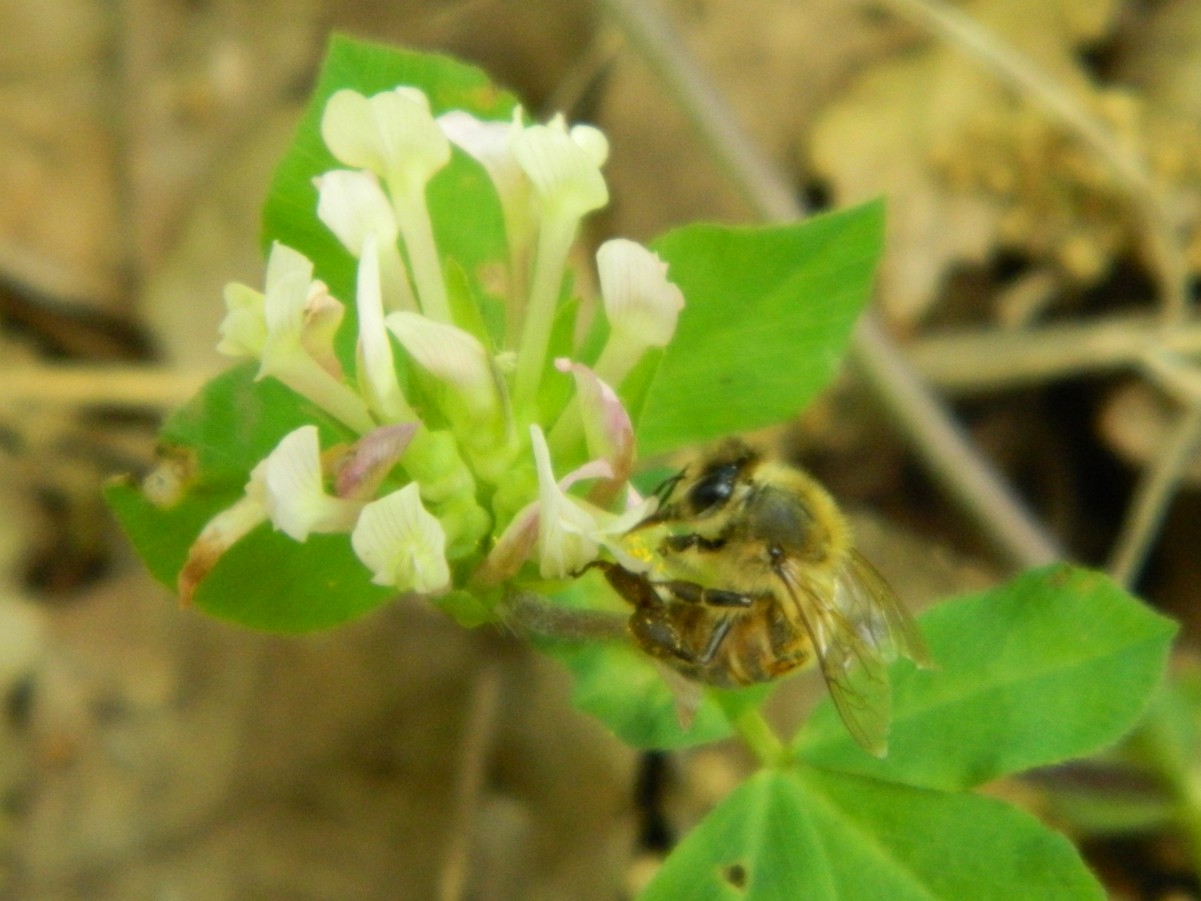
Close-up of a bee on a flower

Close-up of a bee on a flower

I also played with zoom and focus, using the great landscape to capture deep photographs. Here, a lichen-covered rock, belonging to an ancient wall in the Israelite Gate, and the rolling levels of trees in the background:
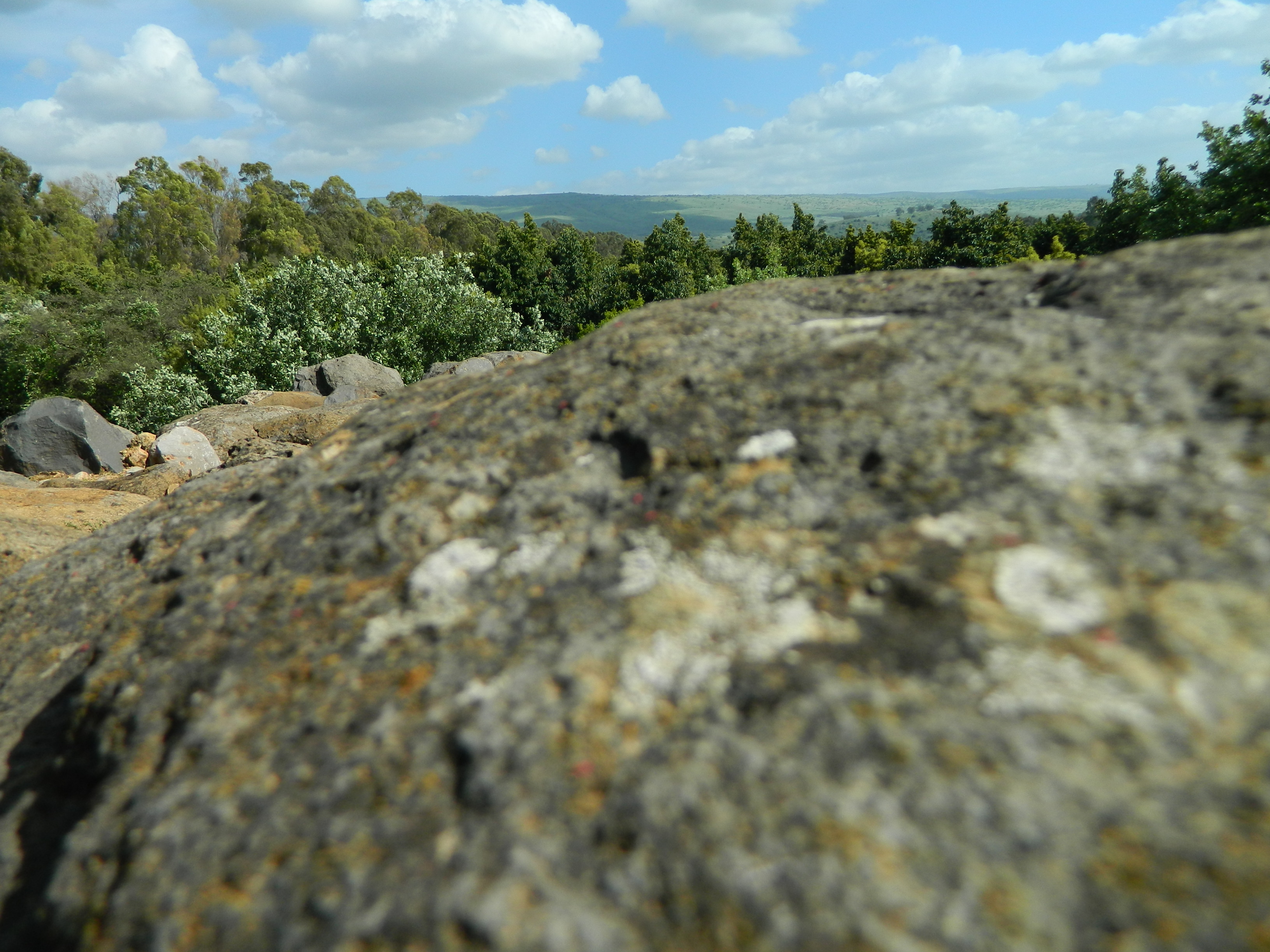
Lichen-covered rock and the green beyond

Lichen-covered rock and the green beyond

When we approached the High Place, a man came up to us and asked us if we knew the history. We chimed in as he began to tell over the despicable tale of the Israelite king introducing idols into the area, slaughtering animals to the idols just feet away from where we stood. He was royally miffed and was pleased to know that we too knew the tragic Biblical tale. Here is a cistern from beside the altar which may have been used to hold blood (from the sacrifices) or wine (from the libations):

Stone and plaster cistern

Stone and plaster cistern

In more modern times, the area was used by the IDF to secure the northern area of the Golan. Here is a shot of the nearby Lebanese town of Arab el-Luweize (I wonder whose cows those are…):
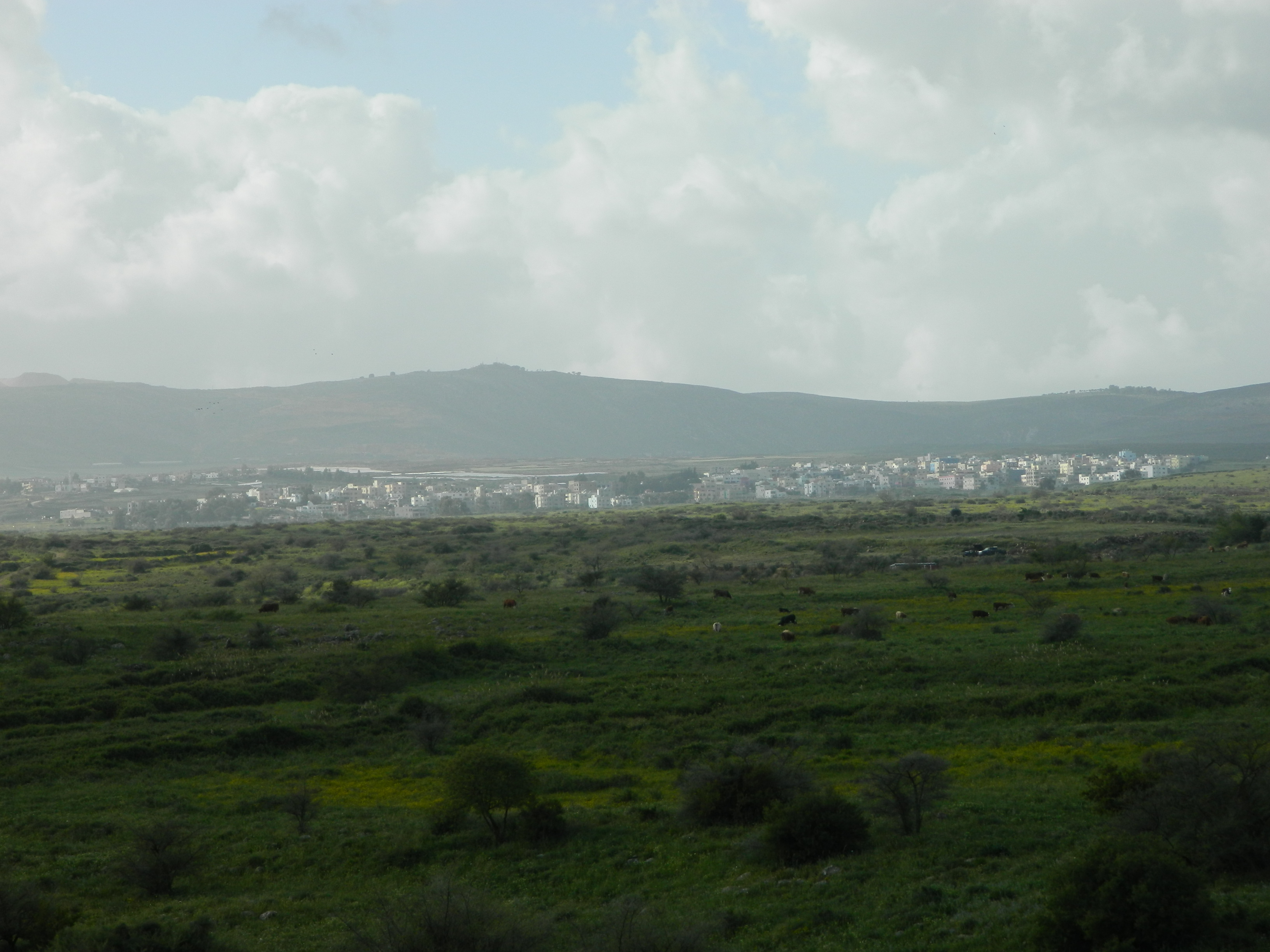
Lebanese town of Arab el-Luweize

Lebanese town of Arab el-Luweize

With the Lebanese to the north-west and the Syrians to the north-east, a bunker was built into the hill beside the “High Place”.  Here the trenches can be seen, with odd frame pieces every few feet. The peak in the distance is Mitzpe Ramta, with Mount Hermon on the far side (not visible):
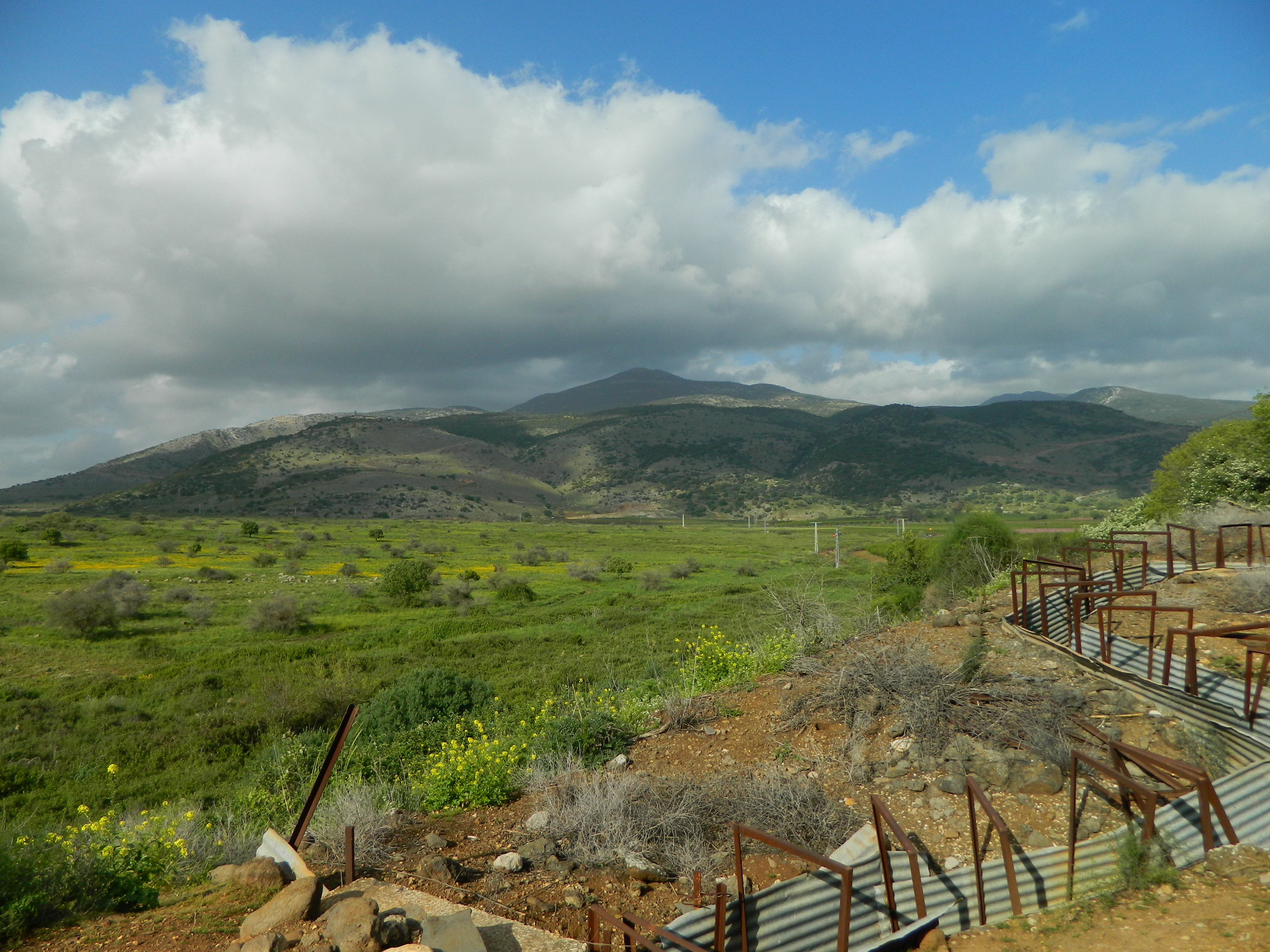
Greenery, trenches and Mitzpe Ramta

Greenery, trenches and Mitzpe Ramta

And here, thanks to the 21x optical zoom, a rusted Syrian tank from the Six Day War in 1967 can be seen, way off in the distance:
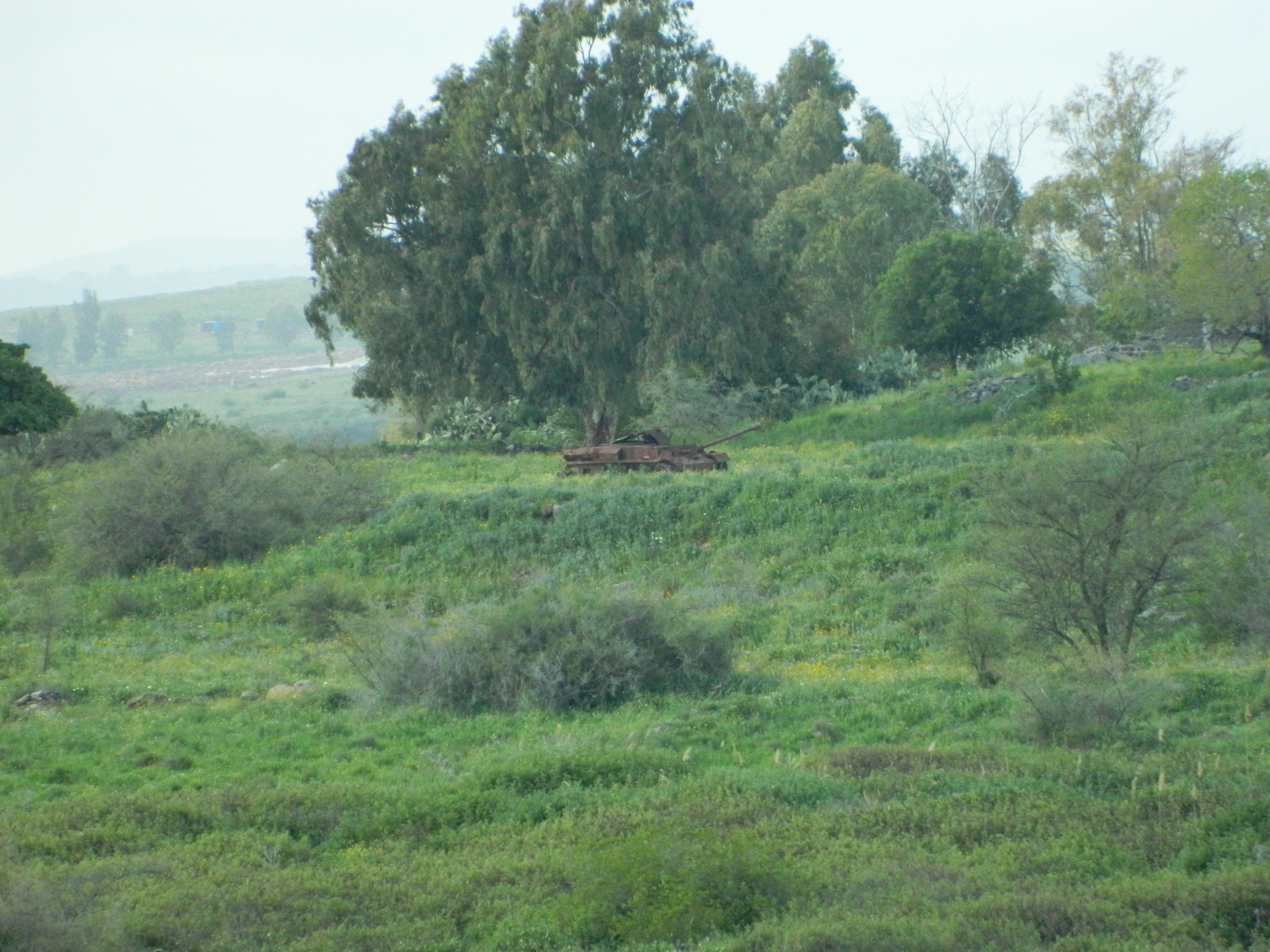
A rusted Syrian tank

A rusted Syrian tank

Descending into the trench, I entered the bunker and crouched behind the mount for the .50-calibre machine gun, looking out at the lush green fields:

The view from the bunker

The view from the bunker

After a nice picnic beside the alter, we continued on with the hike, turning back to the Dan River. But first, a shot of the Israelite Gate area, not too far away from a stone throne:

Walls from the Israelite Gate area

Walls from the Israelite Gate area

Back at the parking lot, I found a large ant which became my model for macro-photography. This ant was very elusive and nary a good photo was taken of the minuscule beast. This is the best shot, I hope to capture better and more in upcoming adventures.

Elusive ant

Elusive ant

Day 2 of Chol HaMoed (next post): Castra and the Atlit “Illegal” Immigration Camp!

Eretz Israel Museum

In Israel, Tel Aviv on March 28, 2013 at 10:44 AM

Continuing on with my museum spree, following the trips to the Diaspora Museum and the Palmach Museum, my next stop was the Eretz Israel Museum of Tel Aviv (not to be confused with the Israel Museum in Jerusalem – which happened to have been visited by Barack Obama and entourage on the very day I was at the Tel Aviv museums). The largest of the three museums, the Eretz Israel Museum showcases numerous different exhibitions, each somewhat related to the Holy Land. This was the first museum that charged me an entrance fee, but I was still impressed by how far I’d gone without spending money. In I went, to explore the numerous attractions. Having seen so much, and having so many great photographs to share, I’ll just breeze through the multitude of museum pieces.

The new coming out of the old - Tel Qasile ruins and the towers of Tel Aviv

The new coming out of the old – Tel Qasile ruins and the towers of Tel Aviv

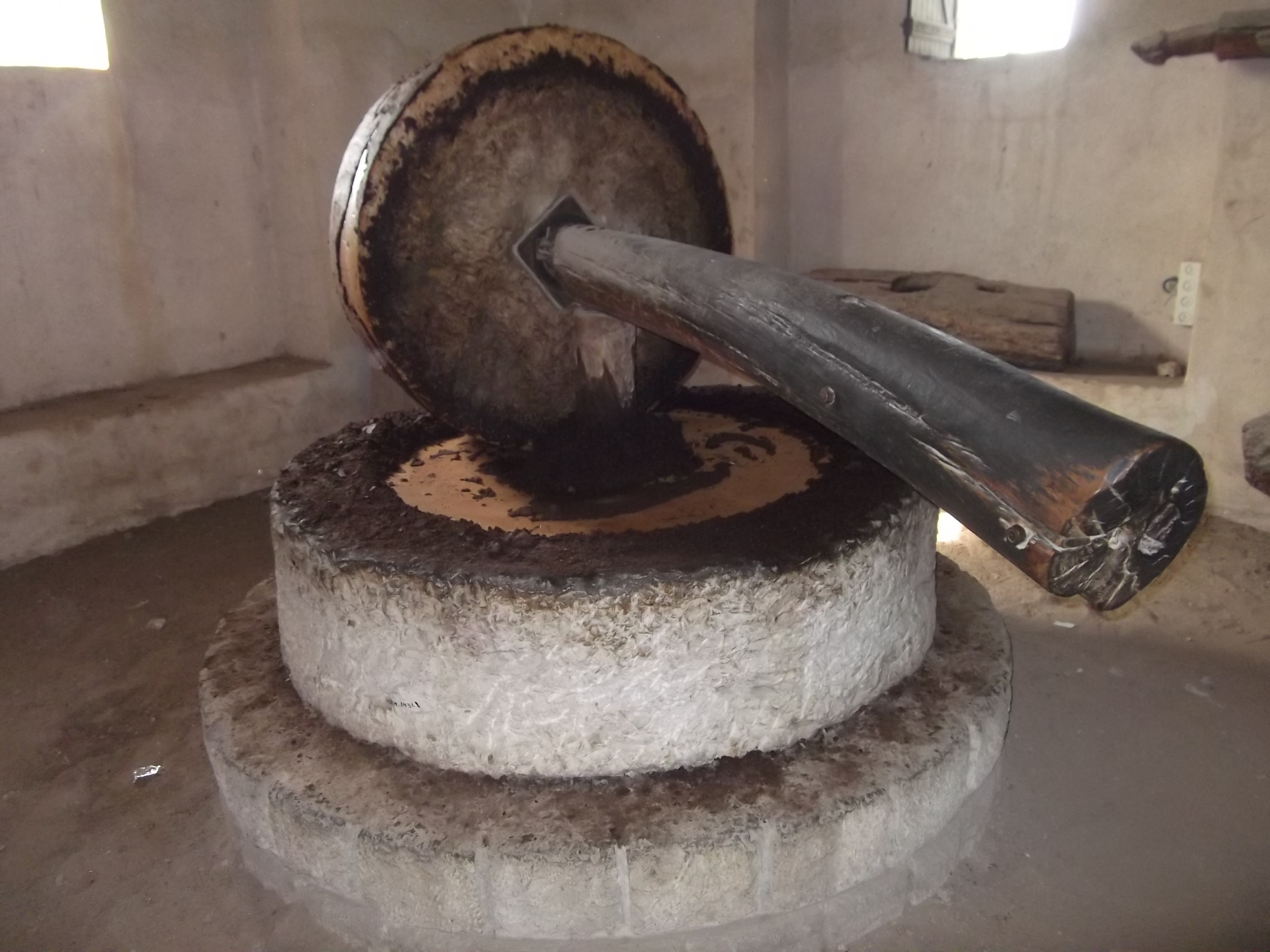
First on the path I chose was the Planetarium. There was a chain blocking the entrance so I gave a holler. A man came out and told me it was closed, and not to worry because it was geared towards children anyway. I shrugged and continued on my way, finding a recreated olive press next. Coming from the home of the olive oil, the Galilee, olive presses – new and old – are not a foreign sight.

Olive press machine

Olive press machine

After passing a flour mill, powered by a mini-aqueduct, and a fancy building exhibiting large amounts of beautiful Judaica (officially known as the Ethnography and Folklore exhibition), I approached the dusty Tel Qasile ruins. An archaeological site on the Yarkon River, the ruins are said to be the remains of a Philistine port city. While I was trying to capture that snazzy shot up above, a giant insect caught my attention. It was a locust, a straggler from the huge swarm that invaded the country a few weeks ago. I was surprised at the size of it, and whilst attempting to photograph the behemoth, lost him to the wind.

Tel Qasile excavations

Tel Qasile excavations

After the ruins, I headed over to a exhibition called “Man and His Work”, presenting the tools and trades of mankind throughout the ages. Outside, a manifestation of human livelihood was arranged as if it were a marketplace. Rows of niches, each containing a different trade, displayed the many industries found in the olden days.

Workshops of man

Workshops of man

Entering into a building called the The Rothschild Center, I found several collections and mini-museums. The first was befitting for the building, an exhibit by the name of “The Land of the Baron”, following the life of Baron Edmond Benjamin James de Rothschild. Instrumental in the eventual restoration of the Holy Land, the Baron was avidly interested in buying land and starting settlements. One of these is the picturesque Rosh Pina; and here is the original property plan:

Plans for Rosh Pina

Plans for Rosh Pina

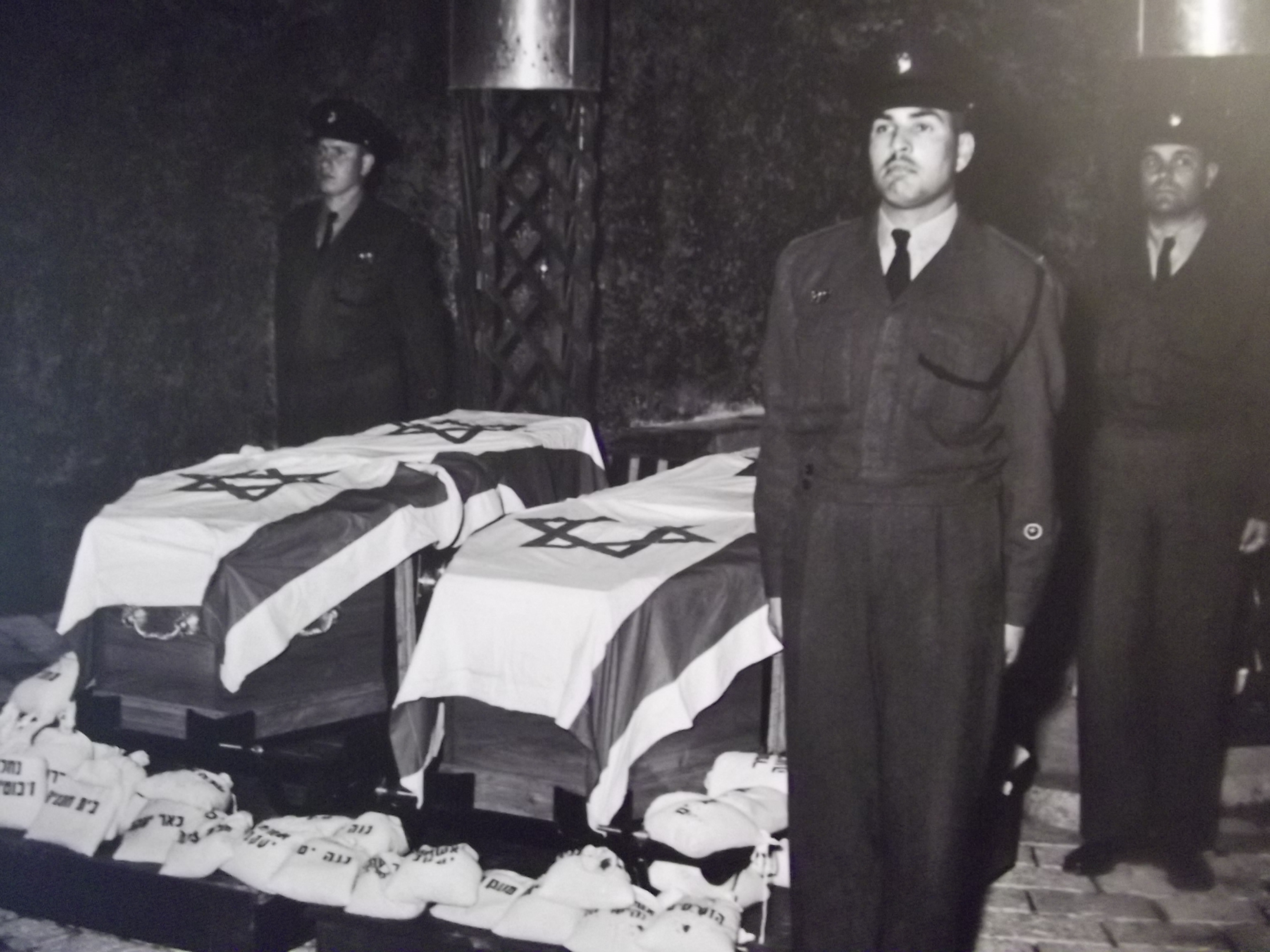
I had written about the Baron some months back when I covered an army trip I took to Ramat HaNadiv, where the Baron was finally laid to rest. Here is a photograph from that memorable day in April 1954:

Laying the Rothschild couple to rest at Ramat HaNadiv

Laying the Rothschild couple to rest at Ramat HaNadiv

After the immersion into the Rothschild family history and the mark they left on the Holy Land, I found an interesting photograph staring down at me from a wall – a photograph by Ethiopian-born Benny Vodo (or Woodoo):

Benny Vodo photograph

Benny Vodo photograph

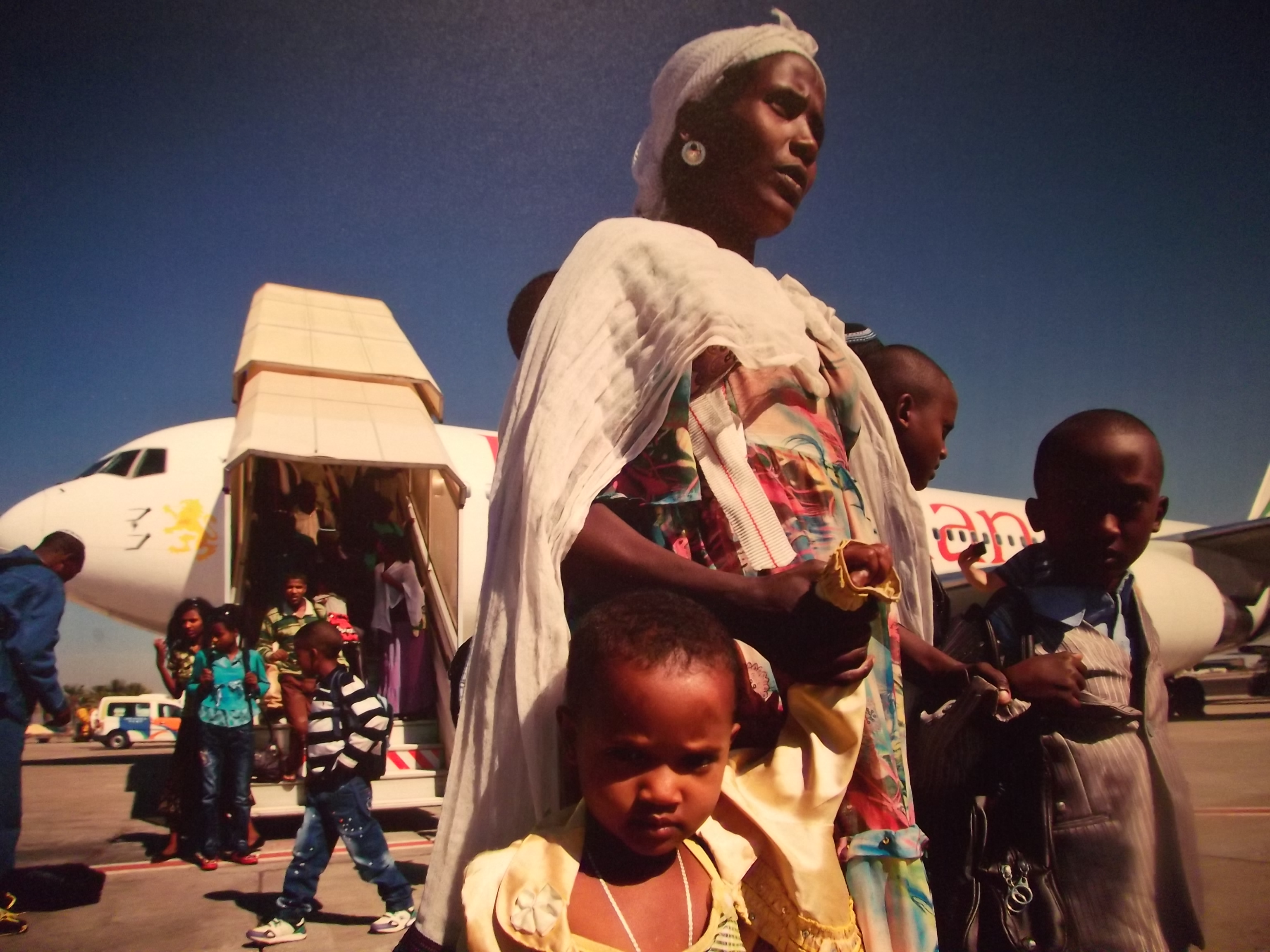
In theme with the photograph, there was a large temporary exhibit called “Ethiopia, A Land of Wonders”. Within the walls I found a history colourful and rejoicing, the story of a people who returned to their roots. I have several Ethiopian friends and I must say, their stories can be quite interesting. Here is a photograph of an Ethiopian Jewish family finally arriving to the Holy Land:

Ethiopian olim coming off the plane

Ethiopian olim coming off the plane

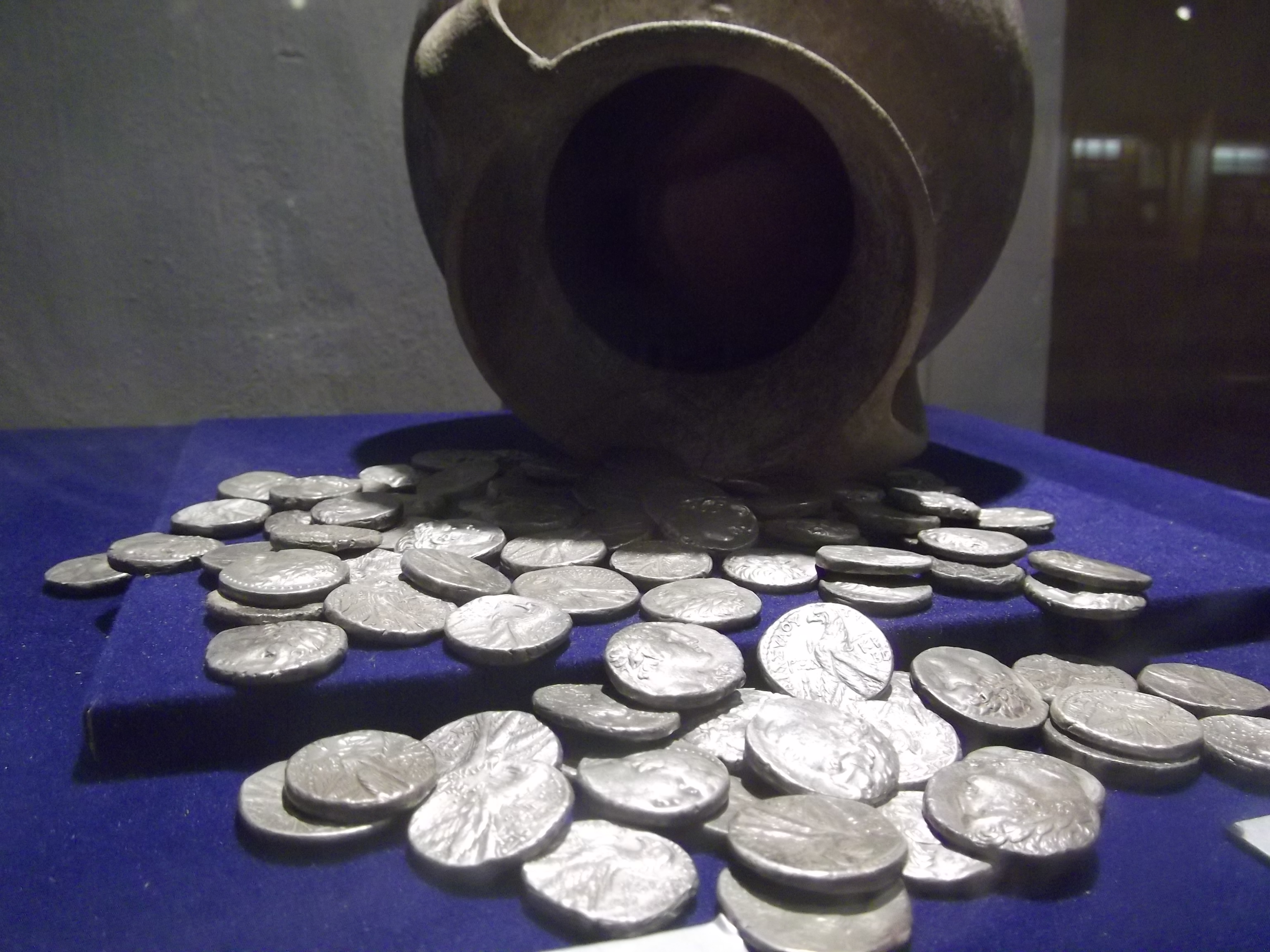
On to the next couple of exhibitions, the Valero Bank and the history of currency was quite interesting. The first Jewish bank to open in recent times in the Holy Land, the Valero Bank was founded by Jakob Valero in 1848, just inside the Jaffa Gate in Jerusalem’s Old City. A family comparably, in a smaller scale, to the Rothschilds, the Valeros held power and authority in their environs and the bank thrived. Dealing with currency, here are two interesting pieces:

Turkish coin die, 1900s

Turkish coin die, 1900s

Tyrian shekels from the Ussfiyeh hoard

Tyrian shekels from the Ussfiyeh hoard

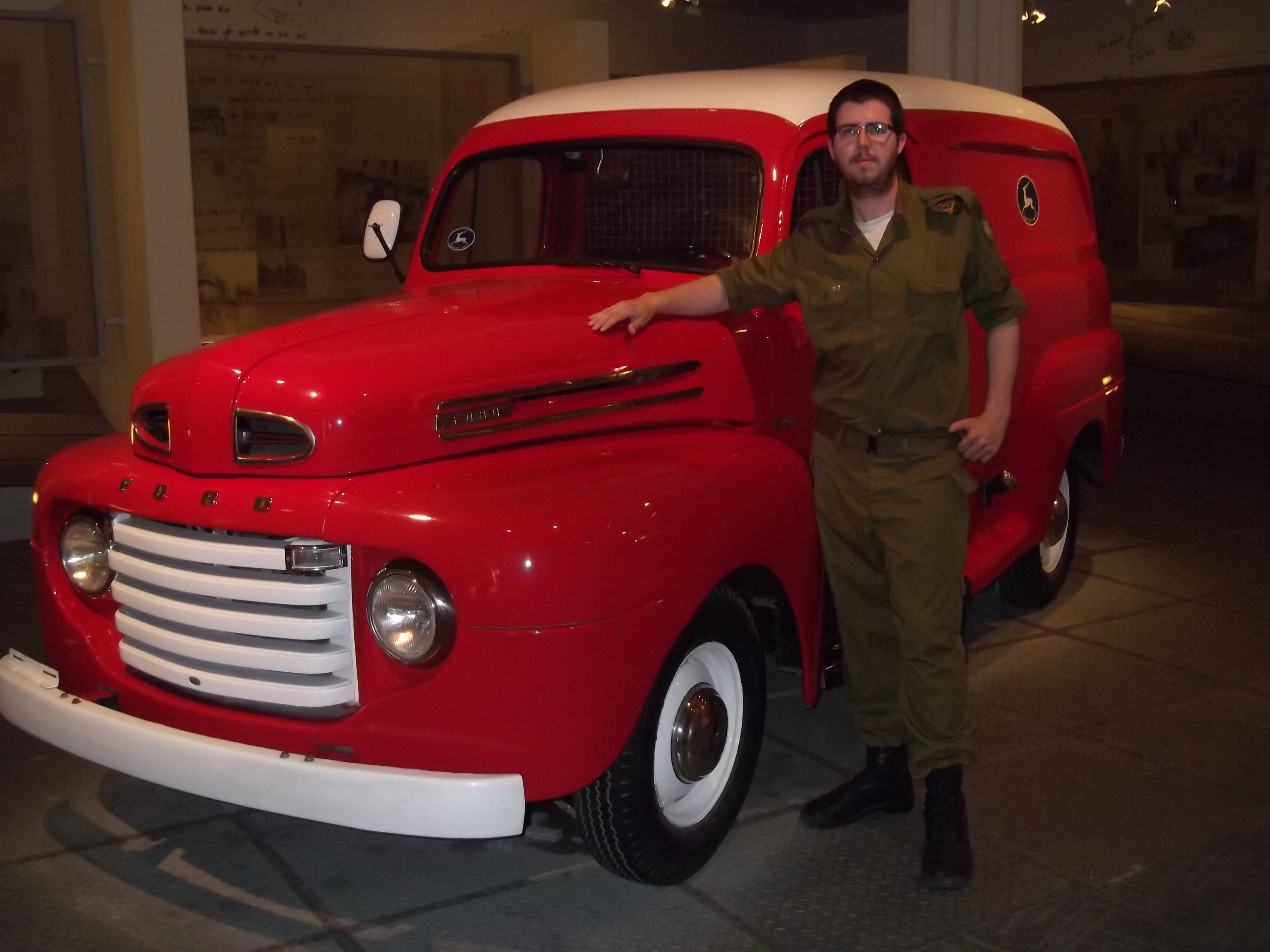
What came next was an exhibition that caused me great joy – The Alexander Museum of Postal History & Philately. I used to collect stamps when I was a kid, a collection less dear than my coin trove, but yet this tasteful, modern-looking revelation of the Israeli Postal Service (something most people don’t think twice about) could spark interest in anyone. One gem is the eyebrow-raising requirements for the position of postman in the Turkish Empire: one must be “a hero – tall and broad of shoulder – his weapon slung in his belt, and a steel rod in his hand, sow[ing] fear wherever he went…”. Another is a post office box which explicitly states that there shall be no mail headed for Kiryat Chaim (I cannot fathom the reason why Kiryat Chaim cannot get mail). And here, an early-age “Doar Yisrael” mail-truck, with yours truly, posing for the friendly guard who offered to take my photo:

The old postal truck and I

The old postal truck and I

And then, to finish off, a selection of wonderful old photographs, coming from two collections. First, a coloured photo from the “Images from the Land of the Bible”:

Camel caravans crossin the Yarkon River estuary, 1933

Camel caravans crossin the Yarkon River estuary, 1933

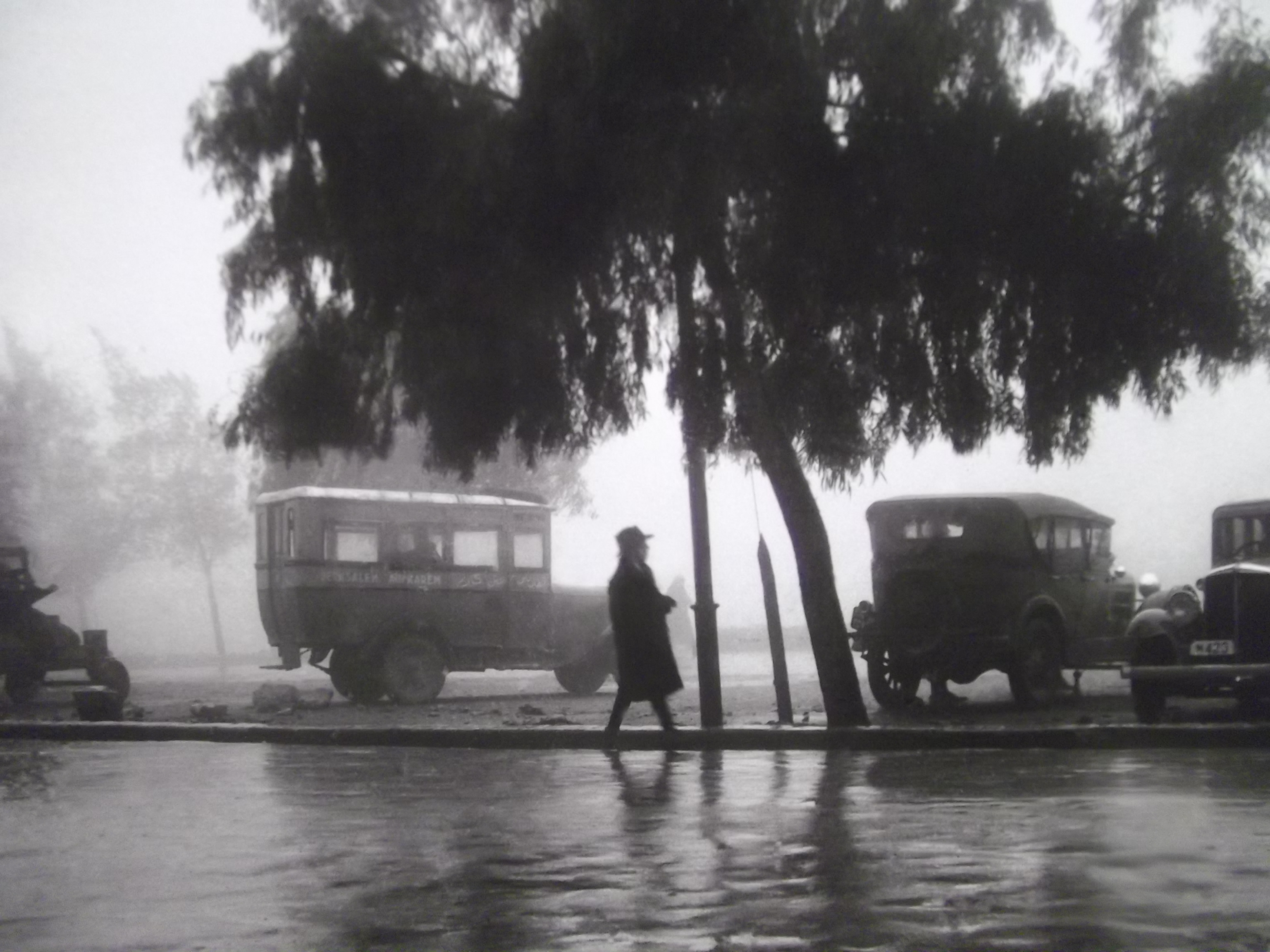
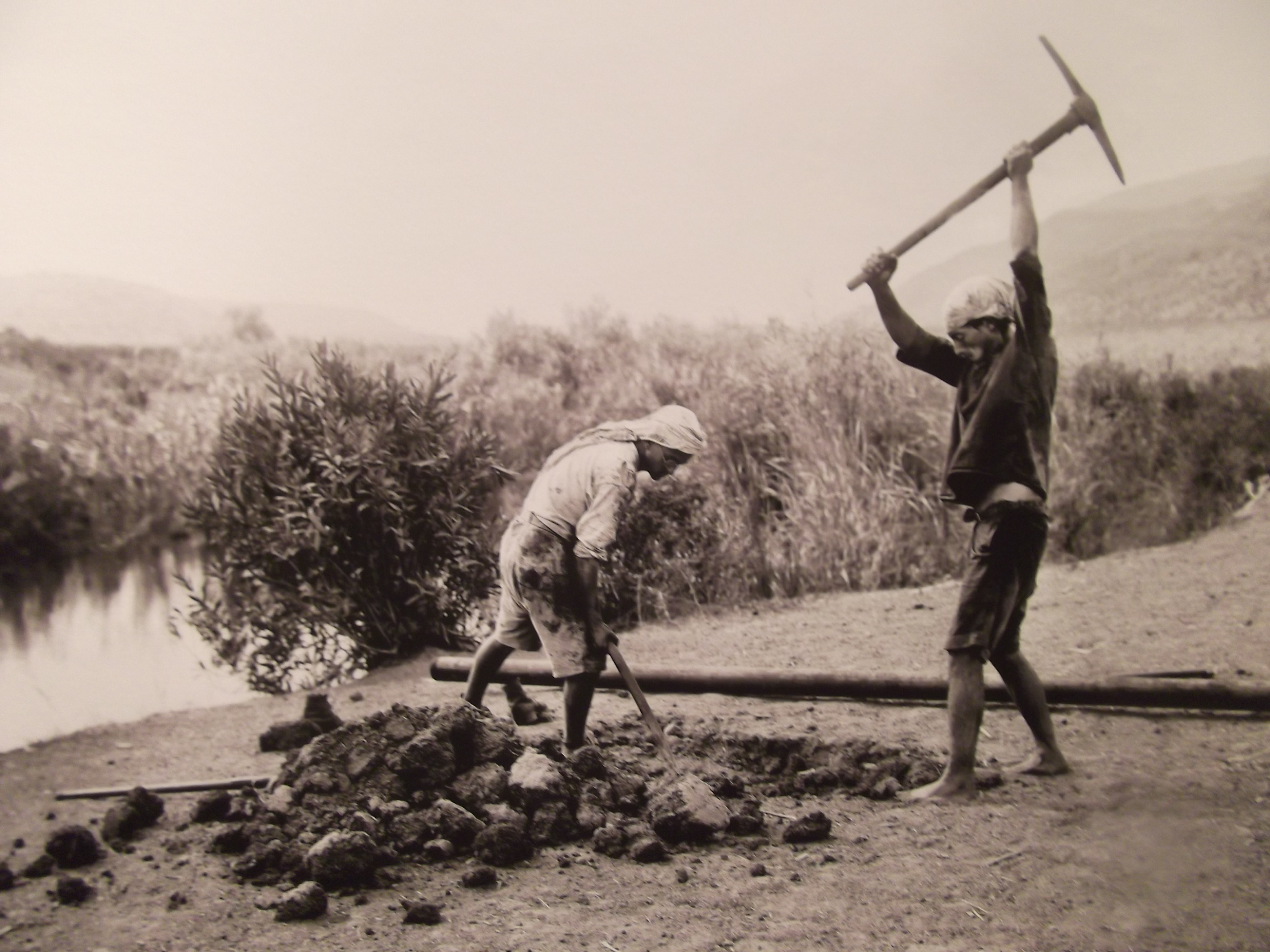
And now, some amazing photographs from the talented Zvi Oron-Orushkes, who upon being honourably discharged from the British military, was appointed by High Commissioner John Chancellor in 1929 to be the official photographer for the British government in Mandate Palestine. Despite being Jewish, and being involved in Zionism, Zvi was able to photograph from all sides of the diplomatic die, capturing a little bit of everything. Here are three of my favourite photographs from the collection (which opened the day I visited the museum):

A drippy day

A drippy day

A zeppelin above the King Daviv Hotel, Jerusalem, 1929

A zeppelin above the King Daviv Hotel, Jerusalem, 1929

Draining the swamps of Yagur, 1930s

Draining the swamps of Yagur, 1930s

Well, that just about covers it, if really briefly. Again, the Eretz Israel Museum is so vast, with such a large assortment of exhibitions and collections, as well as the permanent buildings and Tel Qasile ruins, that one blog post would just run on and on and on. So, let this be a wrap. More trips, and more posts, coming soon!

Palmach Museum

In Israel, Tel Aviv on March 25, 2013 at 9:14 AM

Heading to the Eretz Israel Museum, coming from the Diaspora Museum, I found myself asking directions from a friendly guard. A few steps later, I turned around and noticed that the guard was guarding the Palmach Museum entrance, a museum I have always wanted to visit. The Palmach was the fighting force of the Haganah, the lead Jewish organisation in the British Mandate during the 1920 – 1940 period, and was originally established in cahoots with the British Army to help defend the Holy Land against the expected Nazi invasion. When Erwin Rommel (the “Desert Fox”), and his Afrika Corps, were defeated at El Alamein, Egypt, the British decided that the Palmach was no longer needed and attempted to disarm them. Realising the great benefits of having an army, the Haganah kept the Palmach alive, working on the sly. In 1947, the Palmach’s brigades were instrumental in the War of Independence and became the backbone of the Israel Defence Forces (IDF) once independence was declared.

The Palmach in training

The Palmach in training

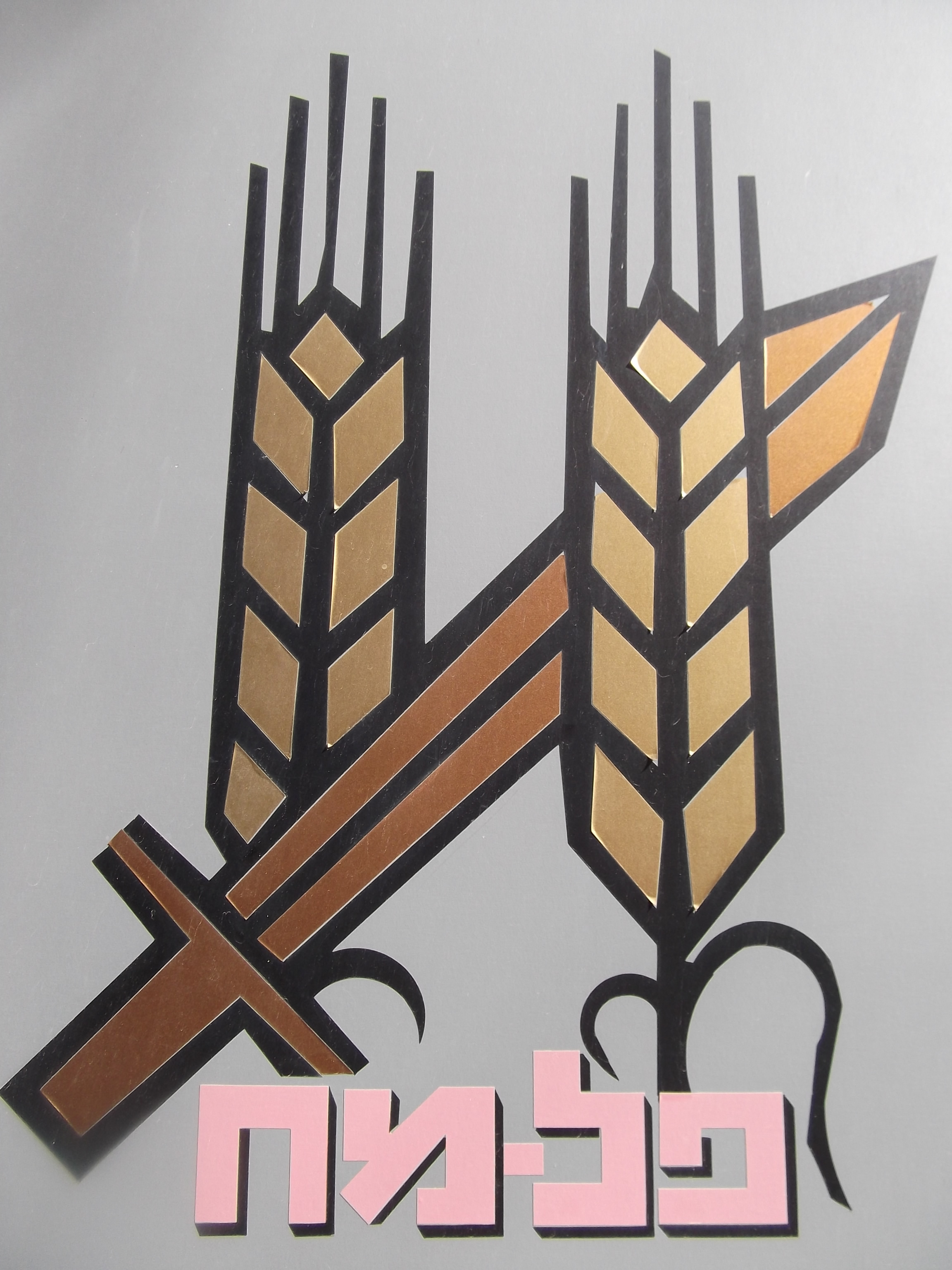
Believing in early Zionist fundamentals, Palmach members engaged in both farm-work and military training, being extremely useful to the struggling Jews in those difficult times. Thus, the symbol of the Palmach is a sword framed by two stalks of wheat:

The Palmach logo

The Palmach logo

I entered the museum and requested admittance. The front desk informed me that, under most circumstances, admittance to the museum was done by reservation only. However, since I was in uniform (and people in uniform look like they know what they are doing and are often left to their own devices, which is pretty handy) and I was alone, they told me that I could join the next group that was starting in 25 minutes. What makes the Palmach Museum very unusual is that there aren’t any artefacts, it’s an experiential museum – a tour incorporating well-made sets and archived footage, linked together with a reenactment film taking the visitor on a journey through the seven years of the Palmach. Here’s a scene from the tour, a connecting path showing the training of the Palmach members in the rocky desert terrain.

''Palmach members training''

”Palmach members training”

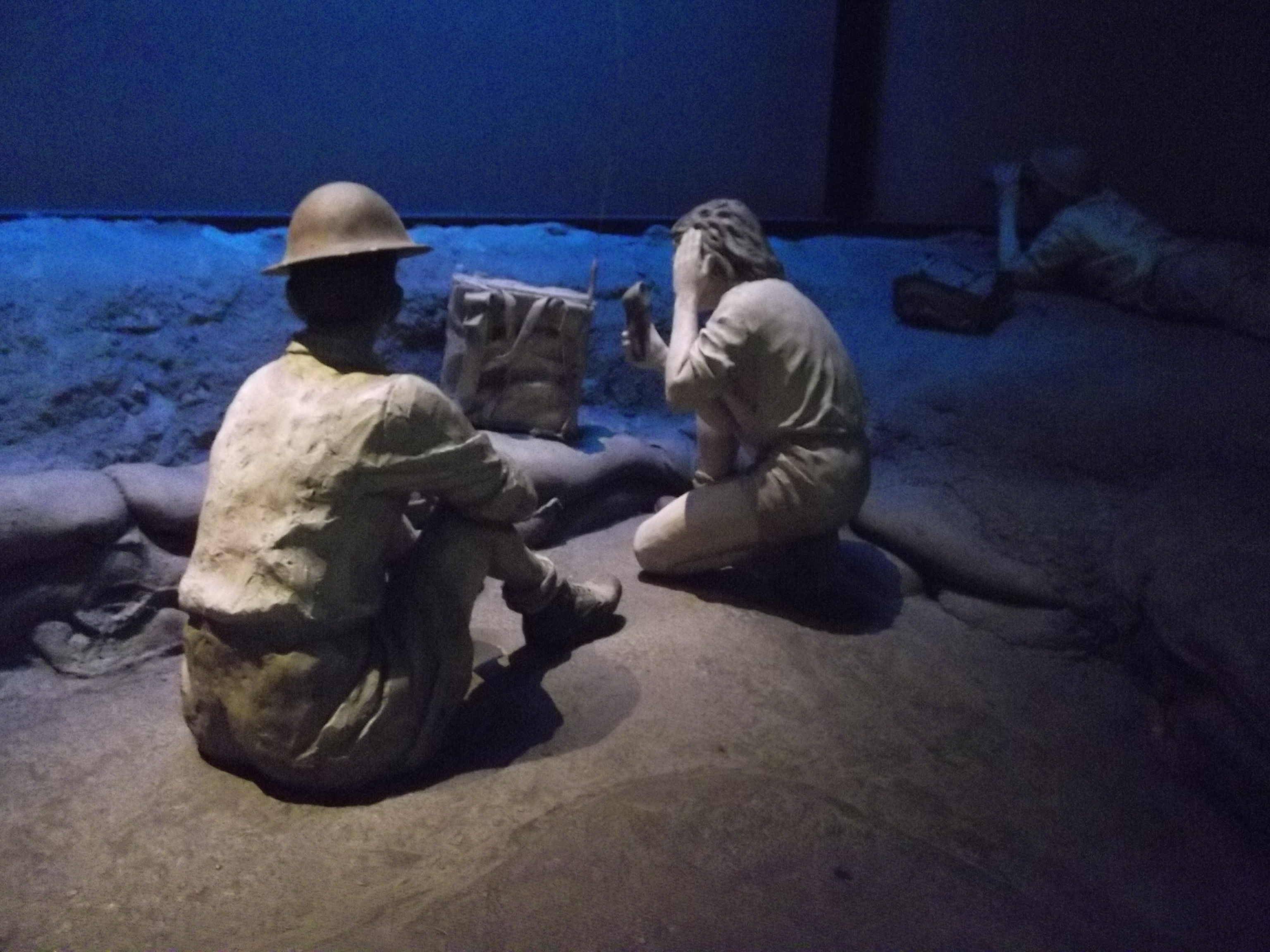
My favourite set was the very first one, however I was unable to photographically capture it. A scene from early 1940s Tel Aviv, the set looked like a WWII-era Paris street corner, minus the Nazis. Even an “old-timey” bicycle was leaning against a metal guard rail, in front of a café’s large picture windows. The tour was given by a soldier girl and everybody had little translation machines that they held to their ears; most of the tour were Spanish speakers, with a handful of English speakers. I opted for the original Hebrew audio to accompany my visual experience, and was happy with my decision. The Palmach group on-screen, represented by modern-day actors and actresses, took us on a path that led to their eventual deployment in the War of Independence, after secret operations and capture by the British. Here is a sculptural depiction of Palmach soldiers using a radio during the war (with ammunition at a premium, desperate Palmach members had sometimes turned to rocks to help fend off the enemy):

''Palmach members in battle''

”Palmach members in battle”

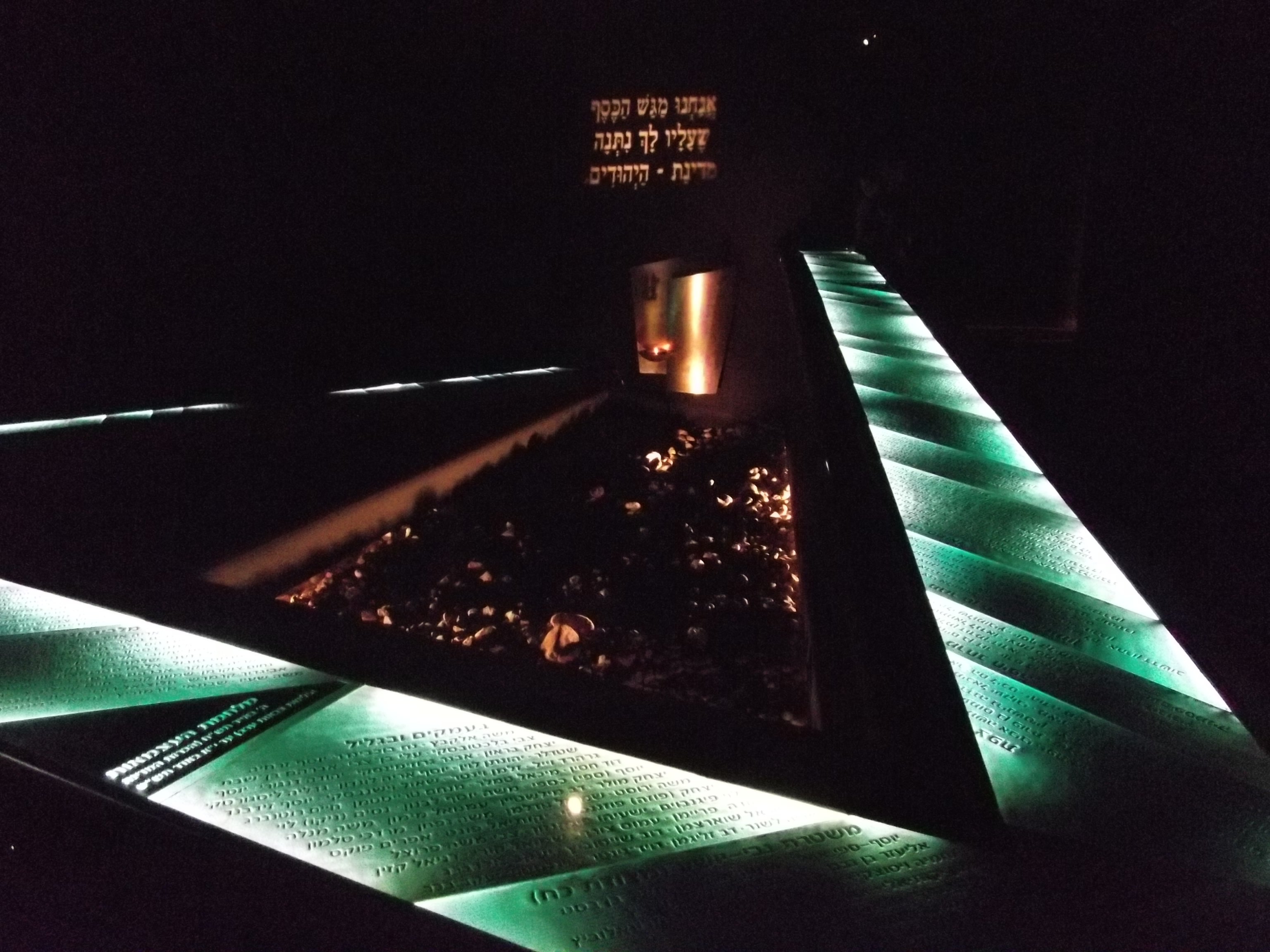
The tour, which is 90-minutes long (including a 25-minute film), begins and ends at the memorial room, which commemorates all the Palmach fighters who lost their lives in the struggle for the Jewish State.

Palmach memorial

Palmach memorial

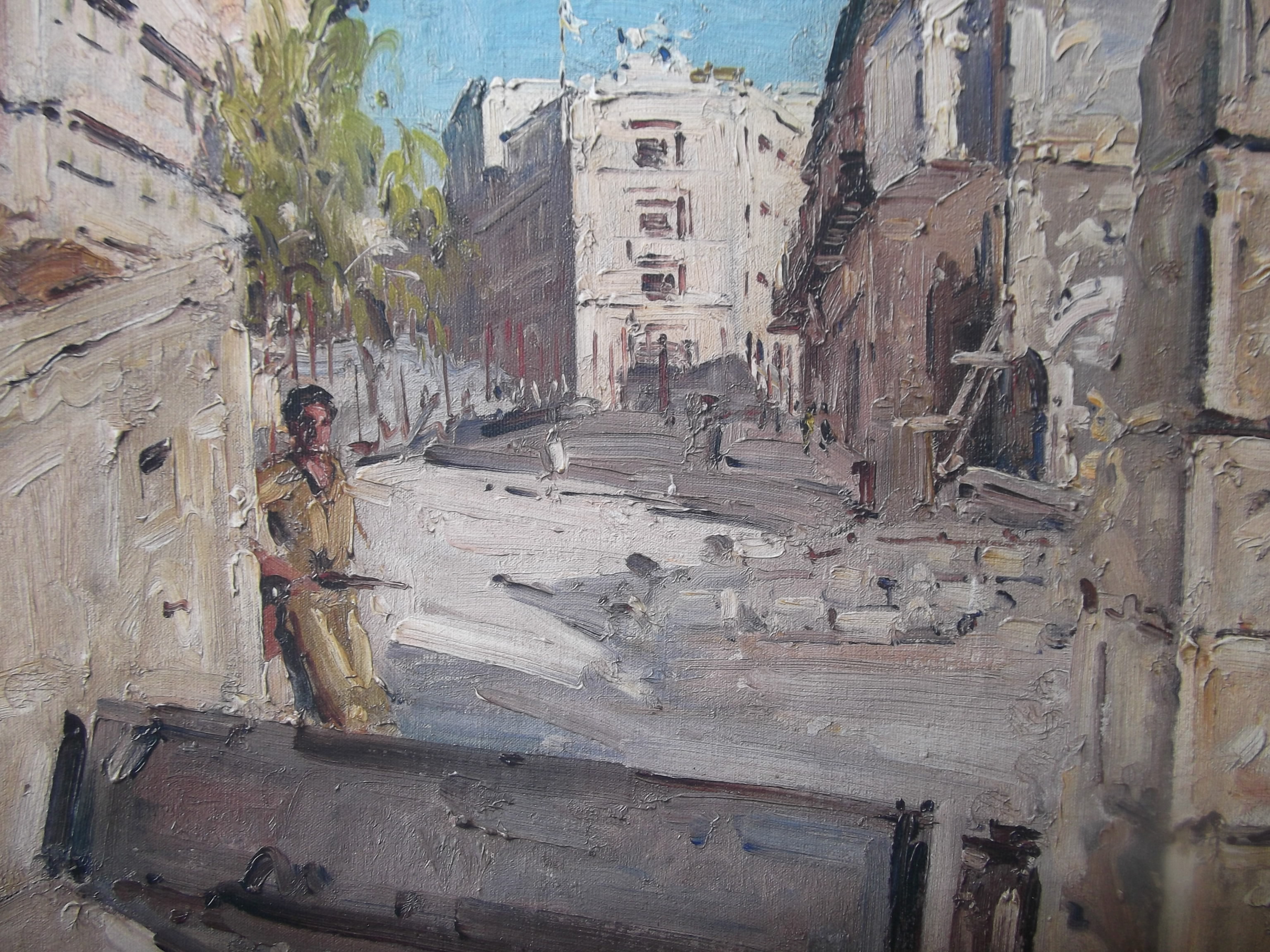
After the tour I asked the soldier who led the tour if there, by any chance, was more to see. She replied in the affirmative and took me to a room that houses drawers, hundreds of drawers. Inside each drawer is a binder with information on a Palmach member. Some drawers are larger than others, and upon opening, reveal more than just a binder. In one particular large drawer I flipped through a 1941 calender book and held an old pipe – memorabilia that once belonged to the Palmach member, presumably donated by the family. I found it very interesting and would have liked to spend a long time exploring the drawers, however, there was more to see. The next room the guide took me to was the photo collections room, dozens of photo albums divided by brigade, location and operation. I flipped through some and saw that the Palmach took far more photographs than I had ever imagined, even aerial footage. That particular room, the vast collection of photo albums, is not included in the museum’s admission fee; rather it is free to all. Who can pass up such an opportunity?

Great painting detailing a blockaded street in the 1940s

Great painting detailing a blockaded street in the 1940s

After flipping through some albums, I bid my thanks and farewell and headed out, walking in the direction of the next museum on my list – the Eretz Israel Museum.

Diaspora Museum

In Israel, Tel Aviv on March 24, 2013 at 6:38 AM

Last week I began something I had quite nearly forgotten about, vacation. Having passed my army truck driving course, I was able to secure some much desired vacation days and, to celebrate, I went to Tel Aviv to browse some museums. With two museums on my radar, I was psyched and departed early in the morning, taking the train down to Tel Aviv. In order to secure free transportation (one of my favourite things about the army), I wore my full “dress” uniform for the day. My first stop after disembarking from the train was the Diaspora Museum in the Tel Aviv University campus. Focusing on the saga of Jewish life throughout the Diaspora, the museum showcases important historical events as well as the day-to-day life of the exiled Jew.

The Diaspora Museum in the Tel Aviv University campus

The Diaspora Museum in the Tel Aviv University campus

I stepped up to the front desk and asked for an admission ticket, reaching into my pocket for some money. The kind people behind the desk told me that the museum was free to soldiers, and that it was the least they could do for “those who guard us while we sleep”. I confessed that I don’t really guard them, but yes, I do my fair share of guarding so I guess I’m entitled. I think it’s funny how there are some soldiers who barely do anything (I know one who serves a few hours a week) and then you have those in intense combat programs who go home once every 28 days, yet to most people a soldier is a soldier – at least I’m in the middle of the spectrum. Anyway, I waltzed on in without paying a agura and that pleased me. The first thing I saw as I began walking through the exhibitions was a recreation of the south panel of the Arch of Titus in Rome, the “spoils of war”:

Replica of the Arch of Titus

Replica of the Arch of Titus

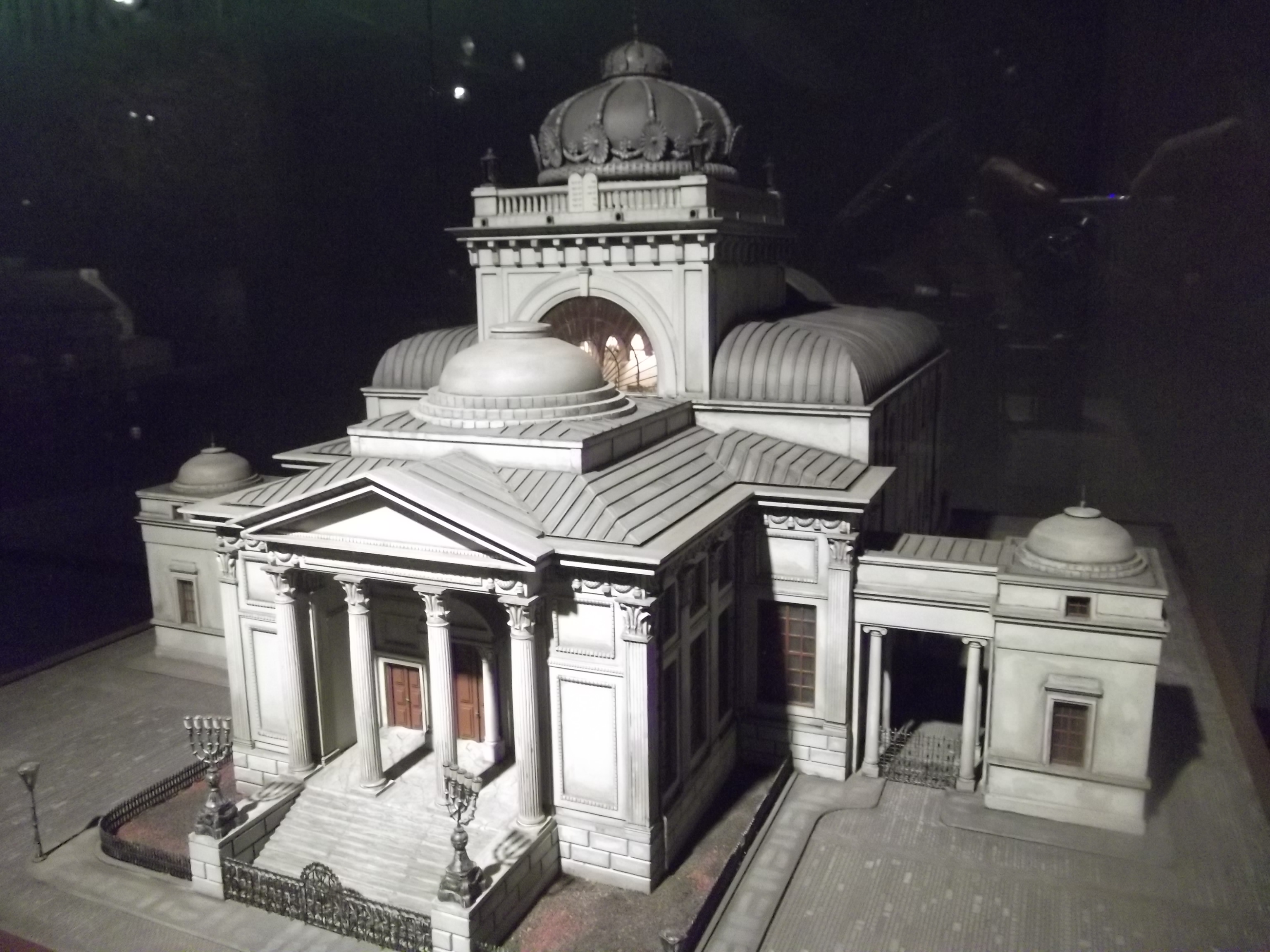
The first interesting collection, that I really enjoyed, was a series of models of synagogues from around the world (from Cochin, India to Amsterdam, Holland and more). The craftsmanship is superb and many feature a cutout in the building which reveals the gorgeous interior. Some of the buildings, built so many years ago, are masterpieces and sadly, many have fallen to ruins. Here’s a really decadent one from Europe (Hungary, if I recall correctly):

Superb synagogue model

Superb synagogue model

After reveling in the minute accuracy of the models, I carried on and enjoyed more models of historic moments and places. The one drawback of the Diaspora Museum is that a lot of their displays are actually replicas, with the originals being in other museums. Due to the fact that the Diaspora is trying to convey a message, showing the trails of Jewish history whilst living in the Diaspora, the importance is in the appearance, not the value and uniqueness of each piece. So, to compensate, the museum has so many wonderfully done models, of all different materials. Here’s one of my favourite, a model of the final moments in the Spanish court before Ferdinand and Isabella signed the law that started the infamous Inquisition:

The final moments in the Spanish Court before the start of the Inquisition

The final moments in the Spanish Court before the start of the Inquisition

Another great model is of the Cairo Geniza (a geniza is where holy articles, scrolls and books are kept when they are worn out and no longer in use, often buried after some time). Built into the attic of the Ben Ezra Synagogue in Fostat (old Cairo) back in the year 882, the Geniza contained hundreds and hundreds of years of papers, books and scrolls. In the late 1800s, the contents of the Geniza began to appear around the world, now divided up to museums and collections. As there are estimated to be some 300,000 manuscripts, the Diaspora Museum does have a little handful of them on display. Here, the Geniza:

Model of the Cairo Geniza

Model of the Cairo Geniza

One particular model/recreation is full sized, the Rashi Chapel in Worms, Germany. Built in 1624, the Chapel was built onto the existing Worms Synagogue, where Rashi (Rabbi Shlomo Yitzhaki, a famous medieval French rabbi and scholar, pioneer of commentary on the Bible and Talmud) studied in his youth.

Replica of The Rashi Chapel in Worms, Germany

Replica of The Rashi Chapel in Worms, Germany

Another exhibit that I found to be interesting was a 12-part collection of the modern-day Israeli citizen. Each of them coming from a different land, and each a different trade, these twelve individuals are a slice of the life here in Israel – a rainbow of colours and background, a palette of traditions and legacies. Towards the end of the main museum house, at the end of the dark hallway, was a cutout of a menorah with an artsy image of Israel behind it – symbolism, I believe, of a paradisaical Land of Israel reached only by the use of the menorah, the symbol of the Temple, the ideal Jewish connection to religious life.

The Holy Land through the menorah cutout

The Holy Land through the menorah cutout

With that I walked out and found the temporary exhibition “Threads of Silk – The Story of Bukharan Jewry”, which was interesting and colourful. After that, I ran through an art gallery and then headed outside. Finding a kosher place to eat, I grabbed a grilled pizza sandwich and hurried through the vast campus, headed for the next museum – the Eretz Israel Museum.

Army Trip: Mount Herzl

In Israel, Jerusalem on March 3, 2013 at 5:18 AM

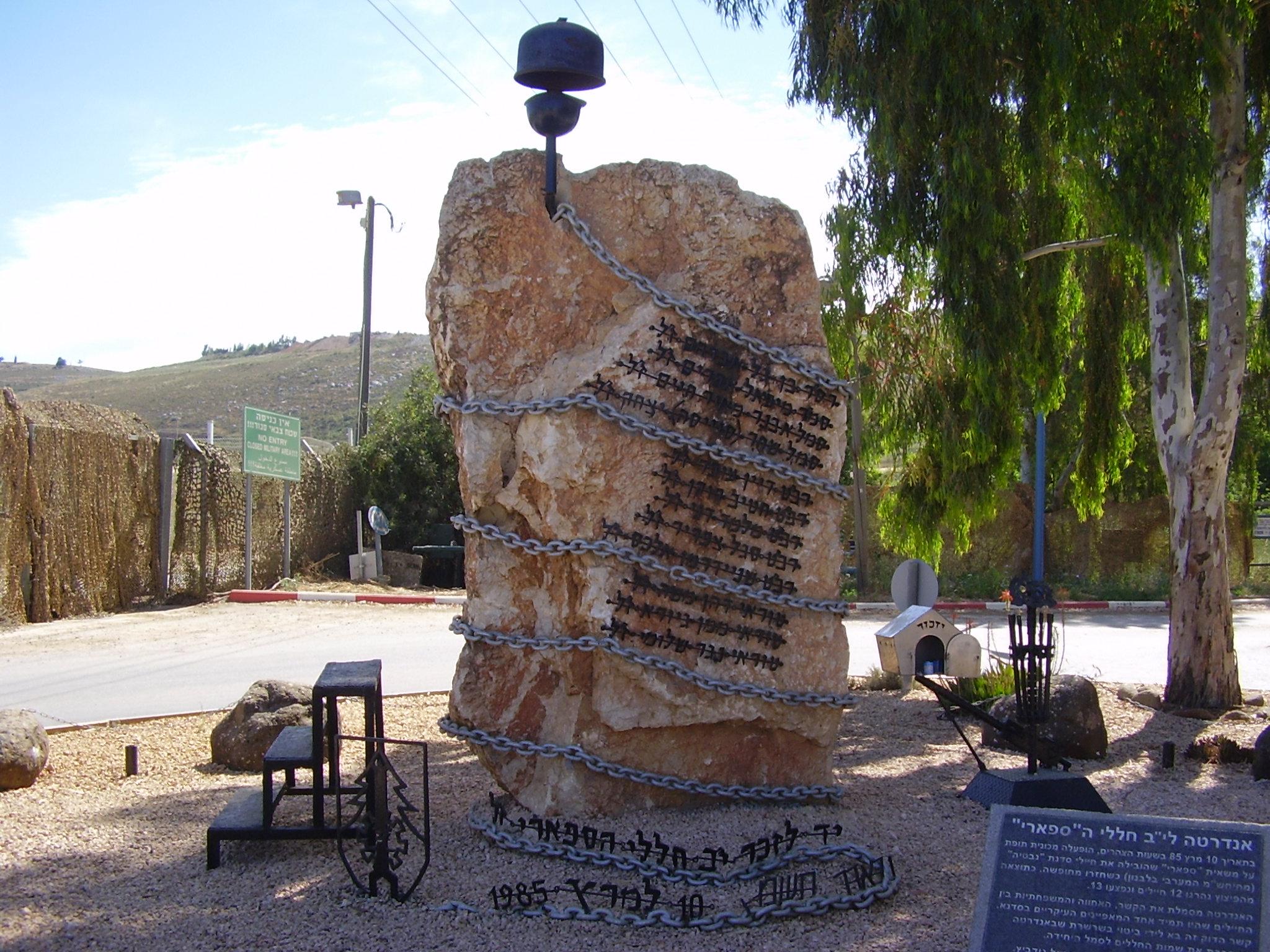
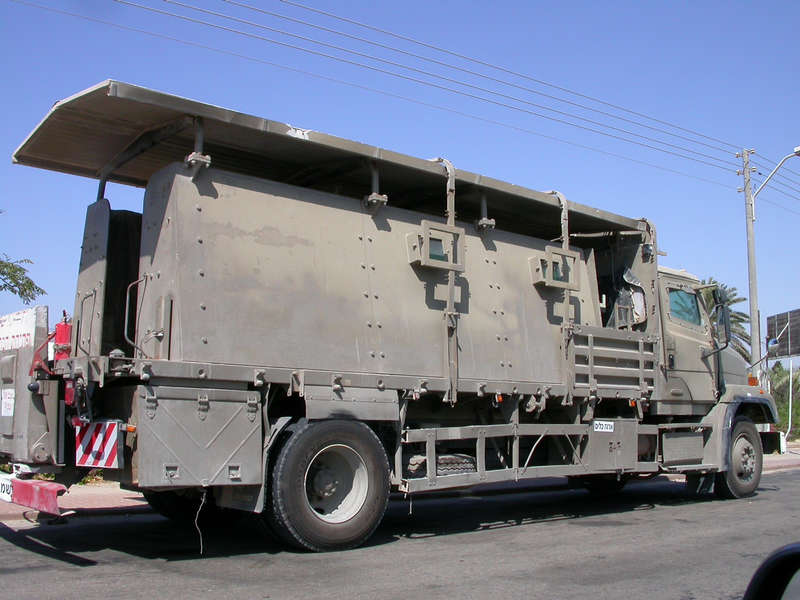
Sometime in the middle of this past week I was taken on a little trip to the holy city of Jerusalem. The objective of the trip was one of honour, to attend the memorial of a fallen soldier. This soldier, by the surname of Avner (I am reluctant to divulge his full name without permission from the family), was a truck driver from my Logistics base, Tirah (“Northern Knights” 6910 battalion). A reservist returning for duty during the First Lebanon War, Sergeant Avner left Tirah base driving a “Safari” truck. For those who know their history, there was an “incident” known as the “Safari Disaster” where twelve soldiers were killed and fourteen were injured. The story, featuring our Sgt. Avner as the truck’s driver, goes as follows.

The Safari Disaster Memorial in Metula

The Safari Disaster Memorial in Metula

It was Sunday afternoon, March 10, 1985, and Sgt. Avner began his day at the Tirah Logistics base, as his older brother told me before the memorial service. His mission was driving his “Safari” troop carrier truck, loaded with combat soldiers dressed for battle, from the border town of Metula to the Lebanese village of Marjayoun. Already over the border, the convoy he was in encountered a red Chevrolet pickup. The driver of the pickup waited as the convoy passed, looking mighty friendly until he blew his car up – just as Sgt. Avner’s “Safari” was driving by. The huge explosion sent the seated soldiers flying through the air, and even windows back in Metula were shattered from the shock wave. As mentioned above, the death toll was severe. Speaking of explosions, an aquaintance of mine who served in the Combat Engineering Corps, related to me stories about the unassuming force of an explosion’s shock wave. With plenty of experience with explosives, this particular soldier would be an authoritative figure, as would anyone after blowing up piles of old mines – after removing them cautiously from the ground.

''Safari'' truck

”Safari” truck (not my photo)

Oddly enough, I had never heard of the “Safari Disaster” and was thereby quite intrigued when hearing a brief overview of the story during the ride. Being a representative of the IDF, to pay respects to our fallen heroes, is an experience that should be cherished – in fact, my CO knew I’d be interested and thus sent me along. After the pleasant drive from the base to Jerusalem, we – a handful of soldiers and an officer – drove through neighbourhoods that I recognised yet, despite my frantic crowd-scanning, I did not see anyone I knew. At last we arrived at the Mt. Herzl military cemetery and disembarked from the vehicle. We buffed our boots to a mild gleam and put on our berets, waiting patiently for the family and friends to amass.

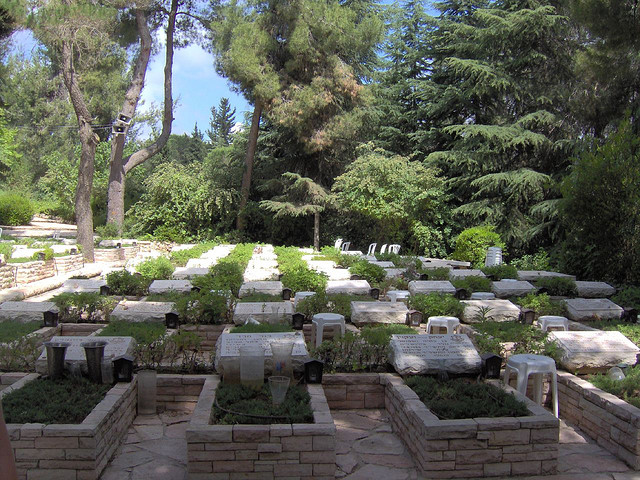
Military cemetery

Military cemetery

At last we entered the cemetery and headed for the plot belonging to Sergeant Avner. Standing a bit off to the side, the small group of us stood respectful and silent as the service began. A military man led the memorial, his deep voice lending to the somberness of the situation. As I looked around me, at the people – of wildly different appearances, at the gravestones, and at the peaceful surroundings, I wished I could whip out my camera and capture, somewhat, some of the experience. However, as a representative of the IDF, and, in particular, of my battalion, the photography would be breaking rank, and unprofessional. A few people said a few short words, a slightly choked kaddish was said and before long we were departing. But I had not had my fill. I happened to have noticed one of the attendees speaking Hebrew with an American accent (oh, how we stick out!) and so I approached her. After offering her a tissue, which she refused, I asked her about her connection to the family. She, as it turns out, is a sister-in-law of Sgt. Avner. I asked her about him and she told me that he was killed shortly after her wedding…

Mount Hertzl (photo by joshuapaquin, Flickr)

Mount Hertzl (photo by joshuapaquin, Flickr)

One thing that I found very interesting, and in fact took the time to mention it to a friend, is the sameness of the graves in a military cemetery. Soldiers, officers and even chiefs-of-staff are all buried in the same manner, all with the same headstone. Just a few plots over from Sgt. Avner was a Lieutenant Colonel – the rank of a battalion commander. We suggested that the ranks were only considered “important” for the living, because beneath the rank, beneath the uniform, lies an human – and a Jewish soul. Who’s to say who deserves more honour when all is said and done?

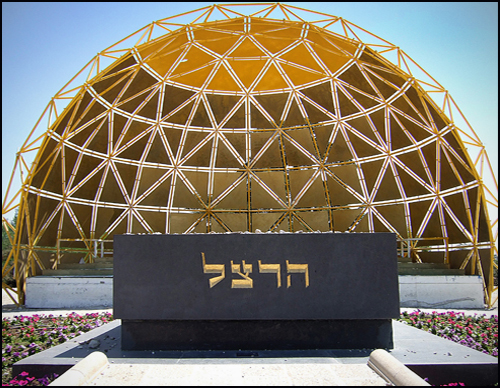
Herzl Memorial

Herzl Memorial (Flickr)

In the various sections of the cemetery, there were all sorts of memorials and such which I would have loved to have looked at. Who can resist such a intense glimpse into the past, into the blood-soaked history of modern-day Israel? Alas, such is the way of the free man – to gaze around at ease – however, I was on a “mission” and had to be on my way. Hopefully one day I shall return, on shall we say, a happier occasion.

Army Trip: Lehi Museum & The Olympic Experience

In Israel, Tel Aviv on January 13, 2013 at 5:20 AM

Almost as soon as I returned to my base after Shabbat we were told that we were going on another trip – educational, mind you – with the destination being a secret. I wasn’t feeling my best on the morning of the trip but I tagged along nonetheless and in the end was glad to have done so. Still not knowing where we were headed, I finally overheard my commanding officer ask the bus driver if he knew how to get to the Lehi Museum in Tel Aviv, somewhere I’ve been wanting to go for a while now.

Lehi

Lehi

Whether the driver knew how to get there or not, approximately two hours later we were walking through the streets of Tel Aviv headed for the Lehi Museum, located in an obscure building in the Florentin neighbourhood. The fascinating part about the seemingly odd location of the museum is that it contains the apartment of Lehi’s founder and leader Avraham “Yair” Stern, his final home before he was murdered by undercover British policeman on February 12th 1942.

Avraham "Yair" Stern, founder of Lehi

Avraham “Yair” Stern, founder of Lehi

Stepping further back in time, Lehi was founded in 1940 as a resistance group against primarily the British Mandate government, which according to Lehi was the biggest hitch in the plans for a Jewish homeland. Far more radical than the other groups (such as Haganah and Etzel), Lehi was also known as the “Stern Gang” and carried out numerous attacks on both the British troops and international diplomats, earning themselves hefty bounties offered by the British government. At the museum I learned that, in the hands of the British, many of the captured members of Lehi were sent to various countries in Africa as expulsion, including Kenya and Sudan, once it became clear that local imprisonment wasn’t enough of a deterrent. One story that our guide told us was of two Lehi operatives who were captured and kept in a local prison. The two men decided that they would blow themselves up, along with as many British soldiers as possible, on the day of their execution. With copious amounts of ingenuity, they constructed a grenade inside of an orange, lining the inner walls of the peel with shrapnel. However, much to their dismay, a rabbi offered to be with them at the gallows so they had no choice but to scrap their plan lest they blow up the rabbi as well. So, the night before their would-be hanging, the two Lehi operatives stood together, orange grenade against their chests, and ended their lives.

Mock-up of the orange grenade

Mock-up of the orange grenade

On the top floor of the museum is the aforementioned apartment where Avraham Stern was killed. Kept exactly as it was some seventy years ago, the room’s only modern accessory is a flat-screen TV which depicts the story of his assassination in A/V form. I’ve always wondered when visiting cities with historical significance as to the previous “happenings” that may have occurred at that location fifty, a hundred, or even 2,000 years ago. I’m sure there are hundreds of people living in Tel Aviv who own apartments once used as safe houses and meeting rooms by the Palmach or Etzel, for example, who spend their whole lives never knowing what incredible stories the walls could tell should they be granted the power of speech. However, despite the Zionist glory and grandeur, Lehi was definitely not exempt from human losses and this remembrance room located beside Avraham Stern’s old room portrays the fallen from Lehi’s ranks:

Rememberance room for the fallen Lehi members

Rememberance room for the fallen Lehi members

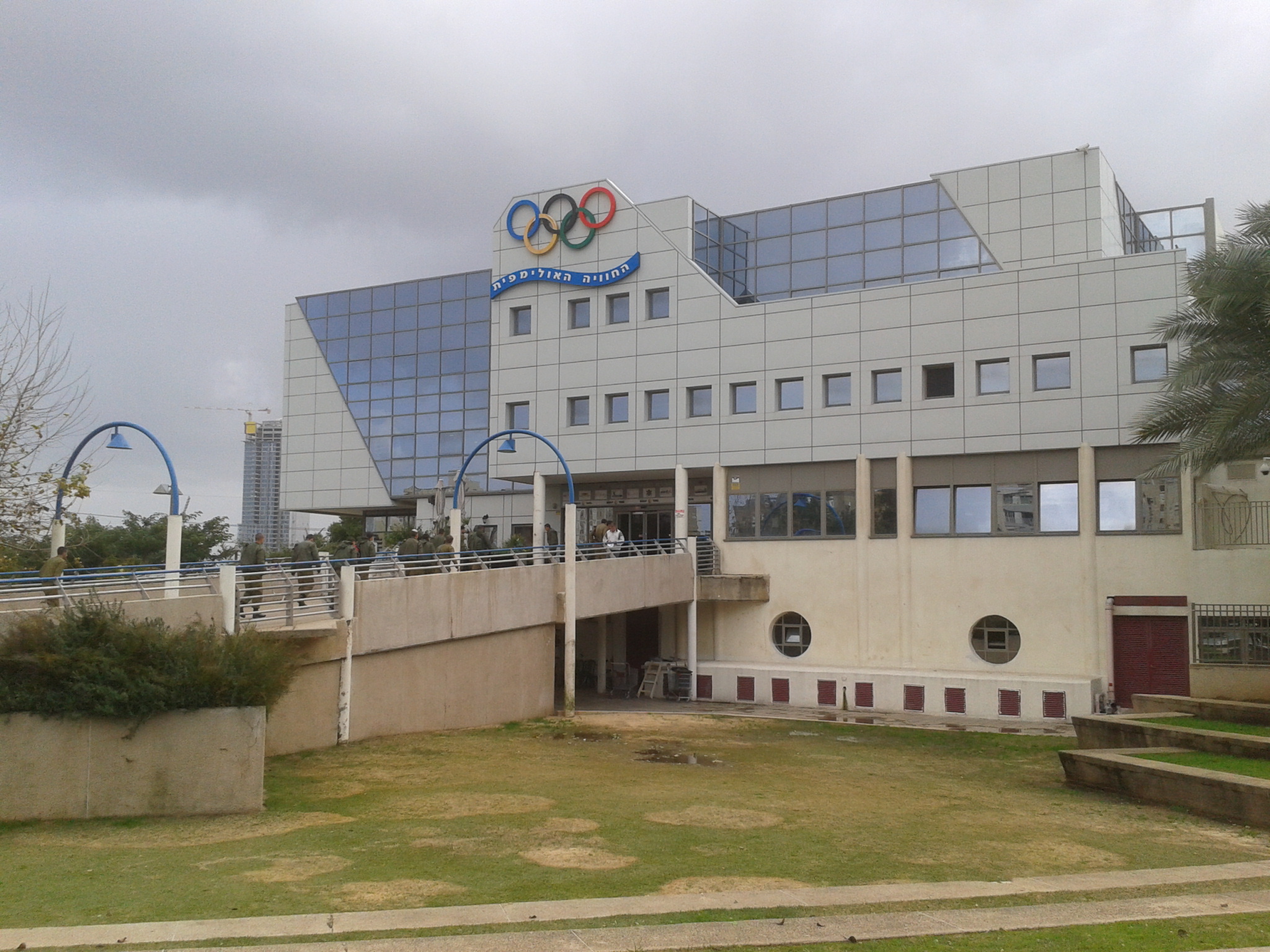
As soon as our tour was over we were given a few minutes to poke about and then we were rushed out. From the museum we walked through the streets of Tel Aviv, in some of the strongest wind I’ve ever encountered, until we boarded our tour bus. I thought that our trip was over and that we were heading back to base but I was wrong… Next destination: The Olympic Experience:

The Olympic Experience

The Olympic Experience

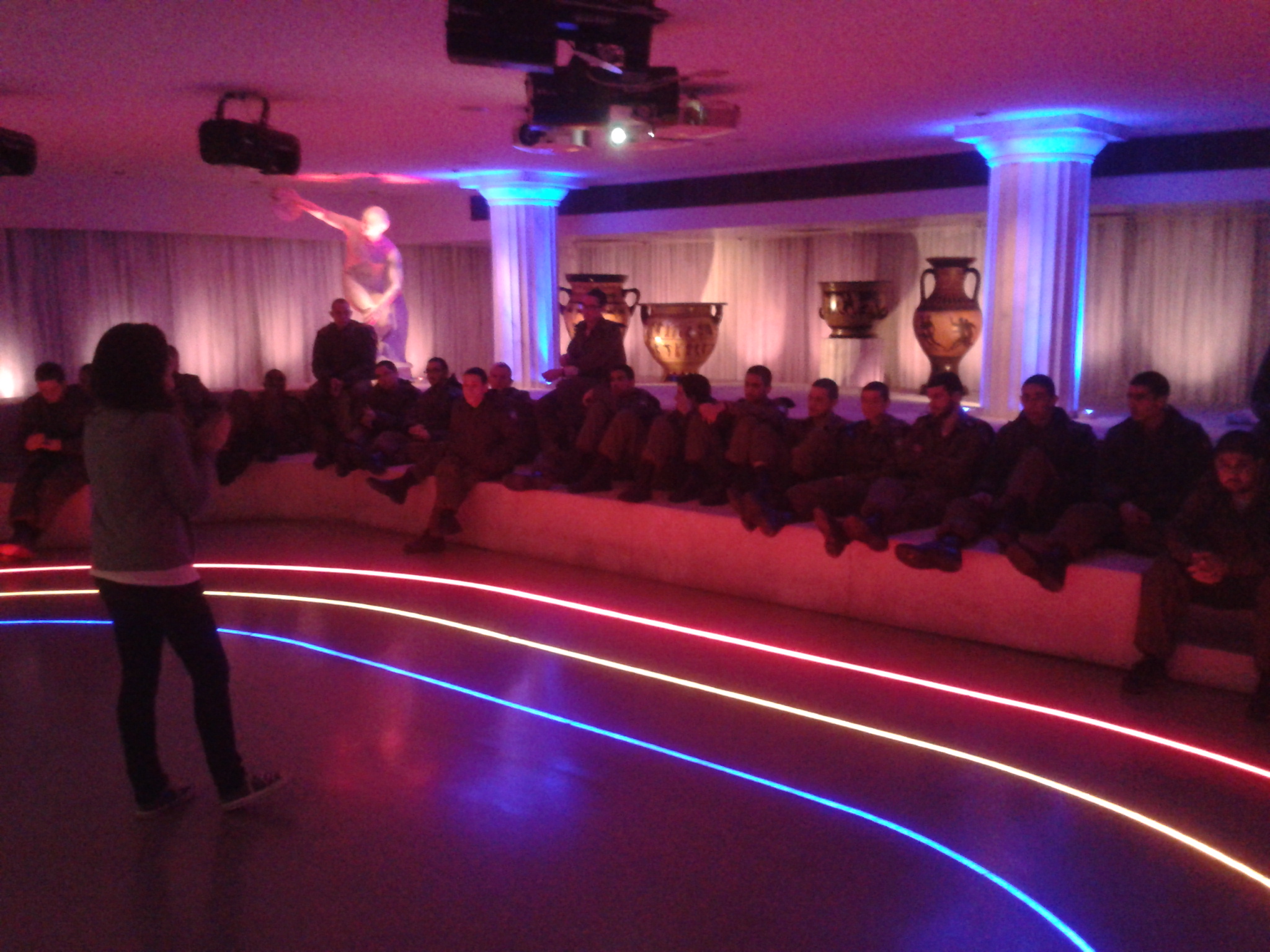
Just to firmly announce my beliefs – something I tend not to get into on this blog, I am fundamentally against the Olympics. I don’t agree with the whole idea, especially its Hellenistic founding, and I think that every time Israel participates in the modern Olympics the outcome is more bad than good (ie BBC scandal of 2012, Munich Massacre of 1972, etc). That being said, I still must hand it to the designers of The Olympic Experience for creating a very interesting showcase – particularly the audio-visual presentation, which is state-of-the-art.

An interesting screen

An interesting screen

There were some notable parts, which I enjoyed, such as the video about the Munich Massacre which included an interview with Esther Roth-Shachamorov who was one of the female athletes representing Israel that year. Our guides were quite enthusiastic about the Olympics and several of us tried the hands-on activities, as if to compare oneself to the physically prepared bodies of the athletes that participate in the Olympics.

Learning about the early days of the Olympics

Learning about the early days of the Olympics

However, despite the glamour of the Olympics and the ultra-modern design of the “Experience”, the topic didn’t appeal to me much so I am at a loss as to what to write. If the Olympics does, in fact, interest you, then by all means, go check this place out. But if you share in my beliefs, perhaps you’d agree that the Lehi Museum was the highlight of the day.

Until next trip (which at this rate may be this week)!

Army Trip: Canada Centre

In Galilee, Israel on January 6, 2013 at 5:22 AM

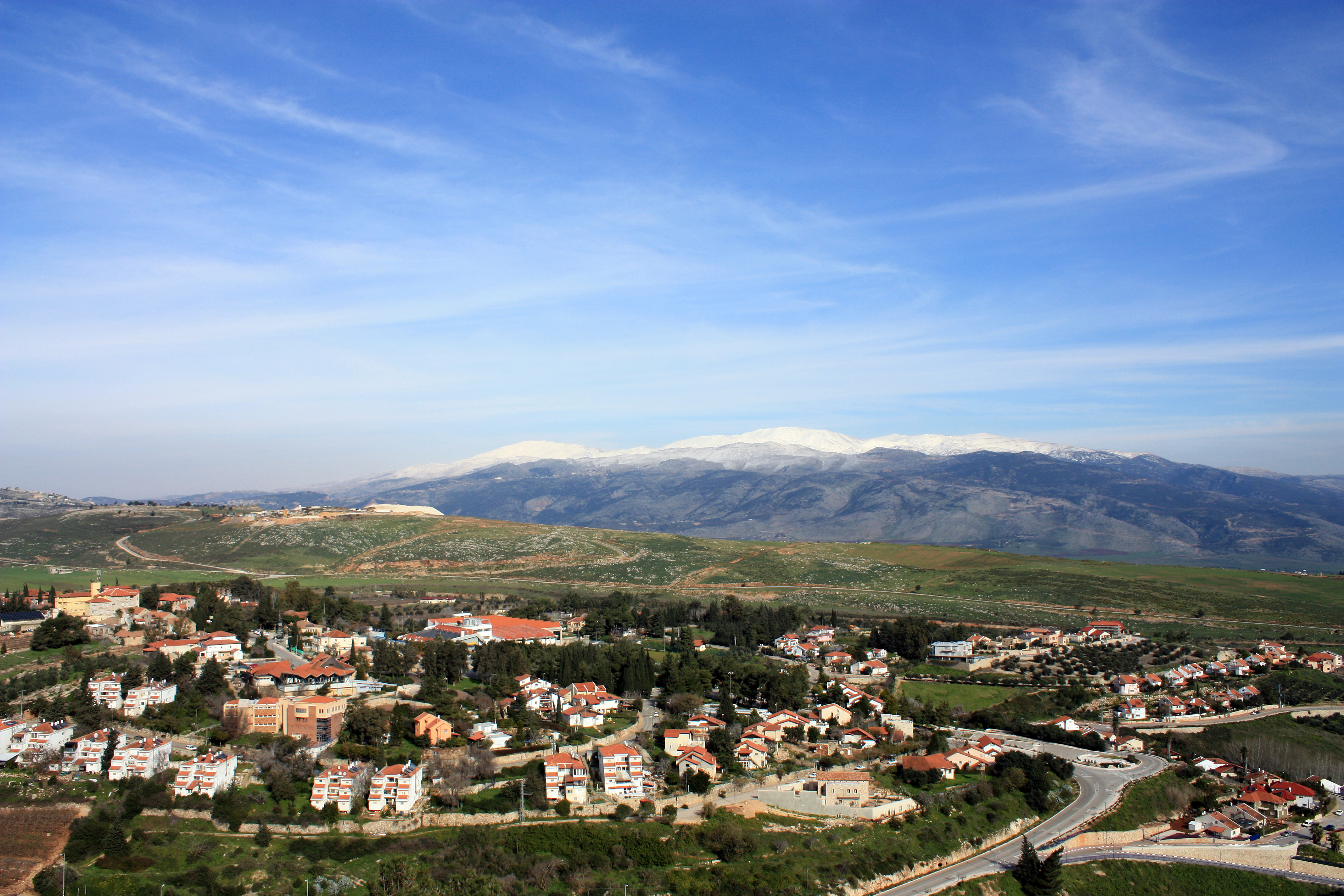
This past week I was taken, quite unexpectedly, on yet another Army trip. This adventure was to the oddly-named Canada Centre in Metula, a recreational centre most famous for its ice skating rink. Being on the very border with Lebanon, near the now-closed border crossing “Good Fence”, Metula is the farthest north I have been yet – just a wee bit further north than the Nimrod Fortress. While everyone agrees that Metula is amazingly picturesque, we were mostly indoors enjoying the attractions at Canada Centre.

Metula with Mt Hermon

Metula with Mt Hermon

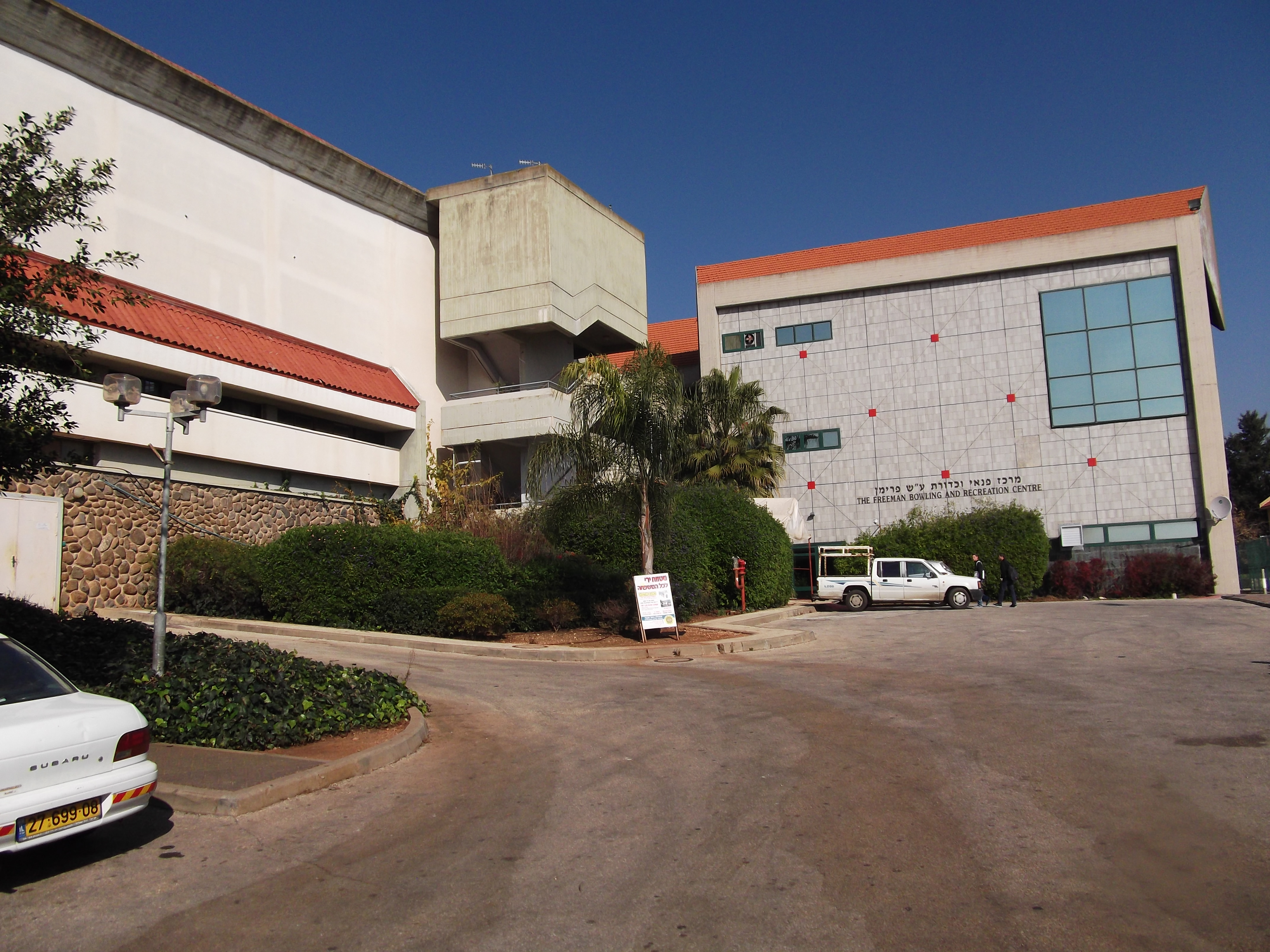
As it was a large chunk of my base’s population all visiting the Canada Centre at once, we basically took the place over and had a great time doing so. For some reason, perhaps not to overwhelm the locals, we dressed in civilian clothing and only a handful of us brought guns.

Canada Centre

Canada Centre

When we got inside, getting our hands stamped as we did, my two American friends and I embarked on a mission to find some food. We only found Pringles so we went swimming, and since I didn’t really want to go swimming I sat on the side and guarded my friends’ possessions. After swimming we had some Army lunch and then headed for the famous, Olympic-sized ice skating rink.

A Zamboni ice resurfacer on the rink

A Zamboni ice resurfacer on the rink

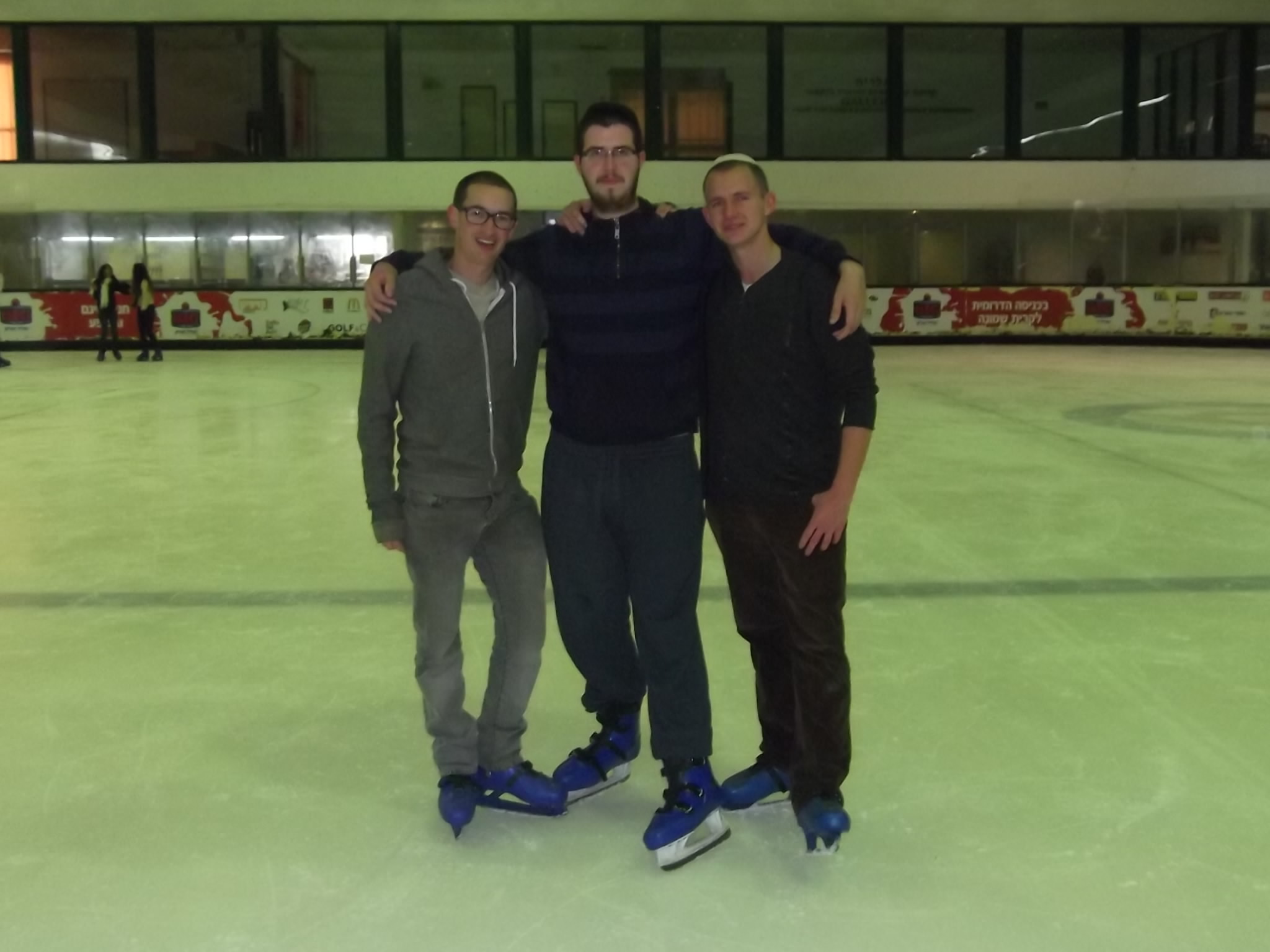
As soon as I strapped on those beginner skates I was just itching to get on the ice. With probably close to ten years spanning the gap between my last ice skating experience and this one, I gingerly stepped onto the gleaming ice, my hand clutching the wood wall at my side. My two friends are, simply put, better ice skaters than me but after a few cautious loops around the rink I detached myself from the wall and began to make steady progress. I must say, having to help a Russian learn to ice skate makes for good jokes but there were some Bedouins who, despite being semi-nomadic herders, were surprisingly agile on the ice. Before long I was slicing through the hordes of people and, without falling even once the entire time, enjoyed a quick game of tag with my friends.

On the ice with my American friends

On the ice with my American friends

After ice skating we were quickly ushered into a basketball court where a comedy troupe from the Army entertained us with jokes, skits and songs. Once that was done we were hustled back onto our Volvo tour buses and headed back to our base in the Haifa area. This has got to be one of the shortest blog posts I have written, especially within the last year, but despite the fact that all I really did of interest was skating, it was an army trip and it was a great time.

Until the next sporadic trip!
Army Trip: Ramat HaNadiv

In Coastal Plain, Israel on December 30, 2012 at 5:32 AM

After more than two months of army duty, having completed basic training and already well into the driving course, my fellow soldiers and I were treated to a “break from the schedule” and enjoyed a day trip to the Ramat HaNadiv memorial park. The trip was intended to give us a taste of driving on unfamiliar roads as well as providing us with a little bit of fun, tied in with history and education. With each driving instructor giving each of his soldiers a turn at the wheel, we took a really long and roundabout way to Ramat HaNadiv (coming from the Haifa area). I drove a nice hour-long stretch and then handed the wheel over to the next soldier. When we, at last, arrived to the park, there was a BBQ going and we were given a brief explanation of the site by our immediate commanding officer. After that we were released into the park to explore and enjoy while the food preparation finished up.

Some of the gardens

Some of the gardens

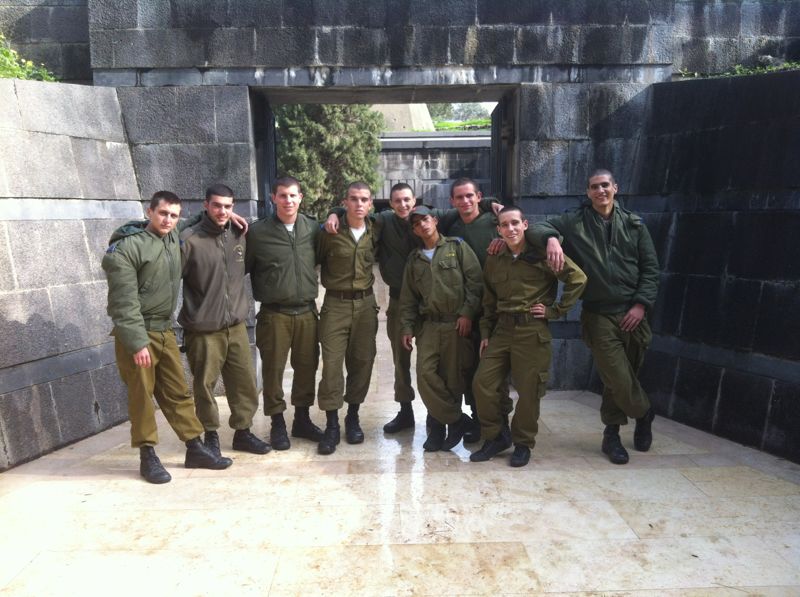
As we walked through the park we took group pictures and individual pictures, posing in the well-maintained gardens. Had I known about this trip when I was last at home I would have made sure to bring a camera but the trip was spontaneous (at least from our side) and I was forced to engaged in photography with a 5-MP phone camera – some of the pictures coming out remarkably well.

Vegetation

Vegetation

To give a little background about the site, Ramat HaNadiv is a small nature park just outside of Zichron Yaakov established as a memorial gardens for the Baron Edmond James de Rothschild and his wife, who were both buried in a crypt on location in 1954. The Baron and his wife had been previously buried in Paris in 1934 and 1935, respectively, but were re-interred in Israel on land purchased by them some time before. Ramat HaNadiv translates into “Heights of the Benefactor”, an ode to the Baron’s nickname which was earned through many years of donations and assistance to the Jewish settlers during the first few Aliyahs.

Sundial

Sundial

The Baron Rothschild is the same baron as the one who was instrumental in founding Rosh Pina, a town established in 1882 beside Tzfat (blog post about Rosh Pina, mentioning the Baron, found here).

Engaged in thought...

Engaged in thought…

One of the things that makes Ramat HaNadiv a unique place is the variety of flora, of all different varieties. It was told to us towards the tail end of our walk that Ramat HaNadiv contains the largest amount of endangered plant species in all of Israel.

Flora

Flora

Mid-way we came across a sign to “The Crypt” and followed it. There we found an impressive stone courtyard with narrow pools of koi fish and outside a handful of us posed, myself not included:

Some of us outside the courtyard to the crypt

Some of us outside the courtyard to the crypt

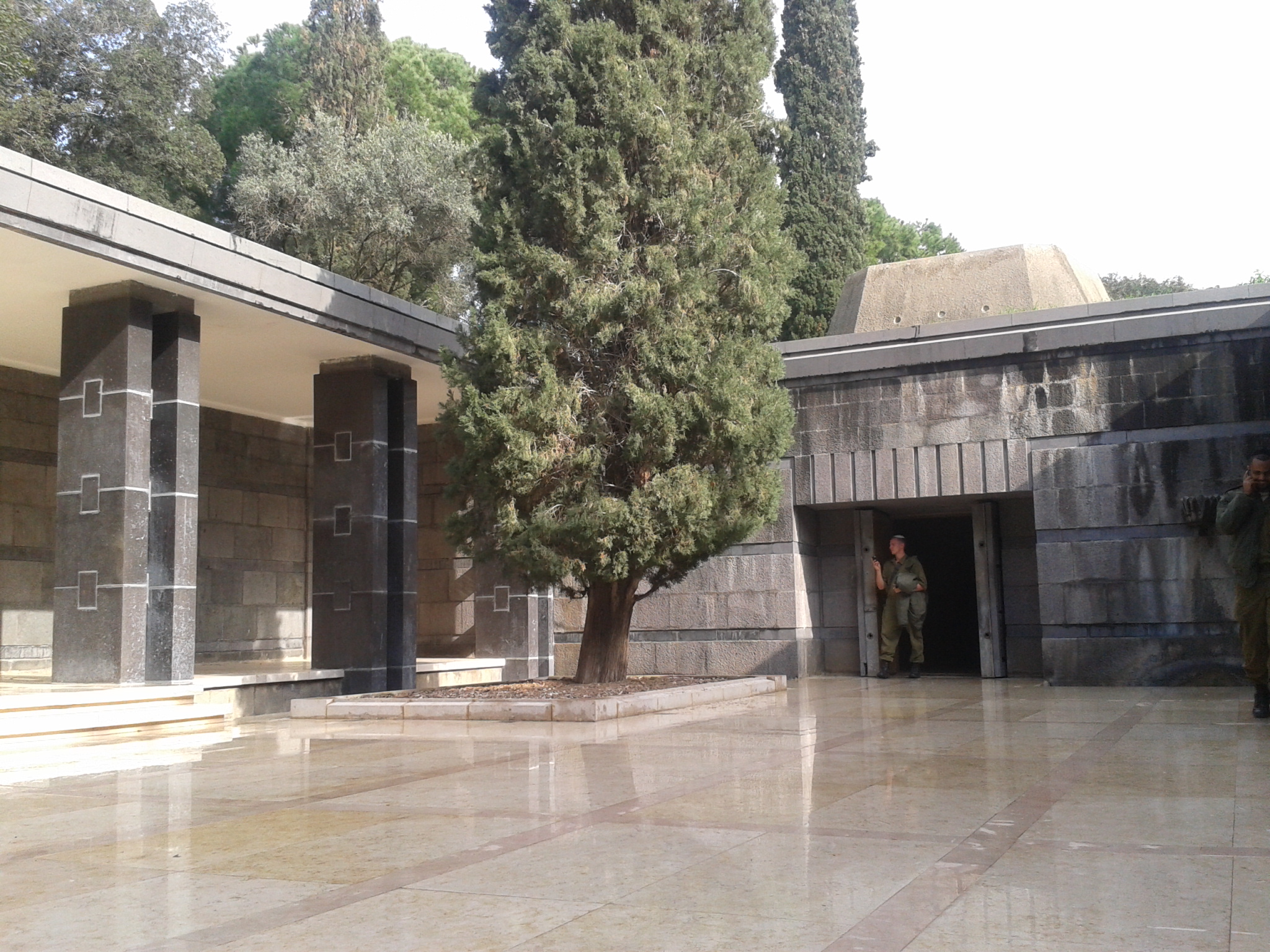
And a view of inside the courtyard:

The courtyard outside the crypt

The courtyard outside the crypt

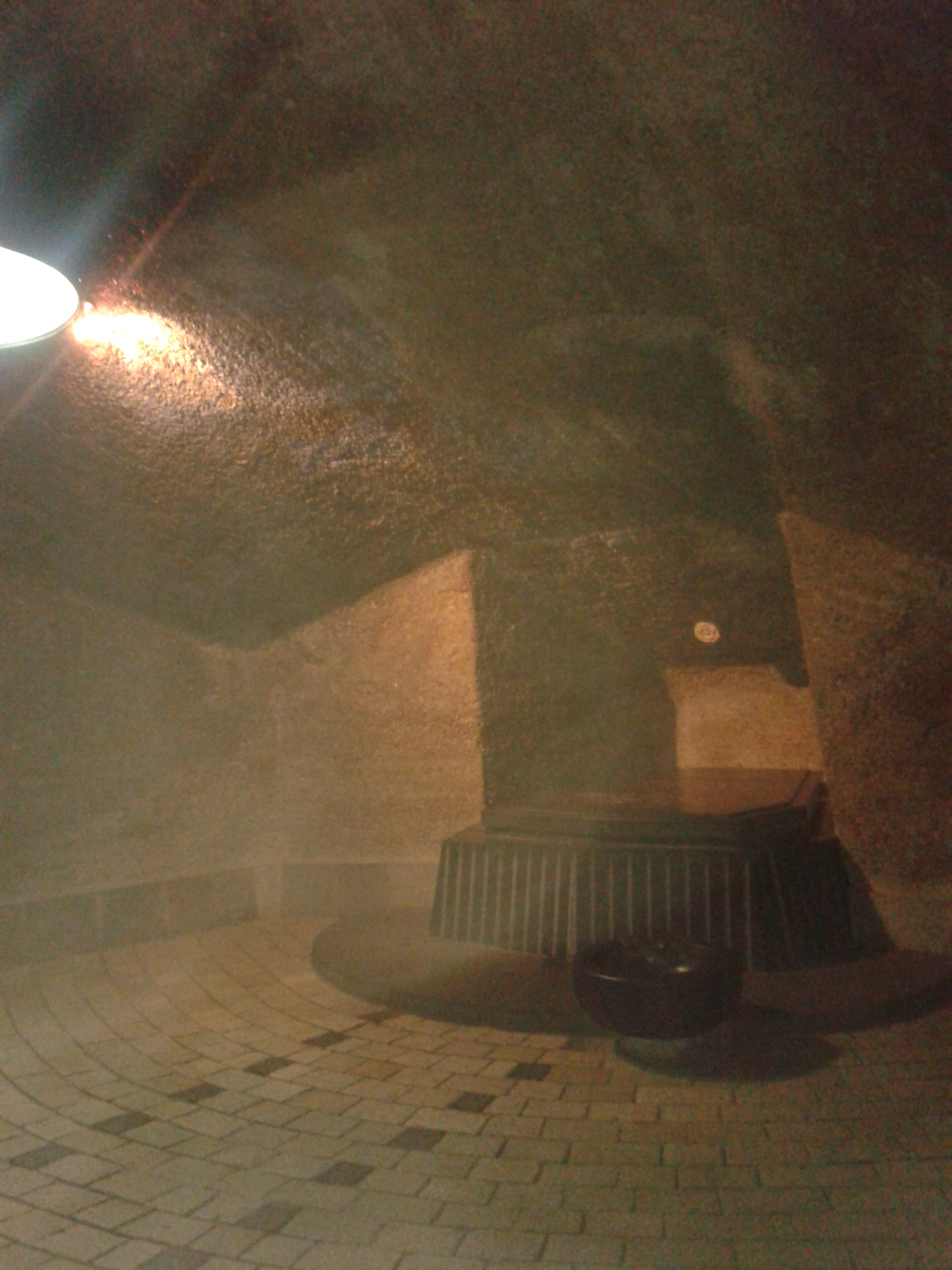
Once through the heavy doors, I entered the crypt and walked down to the burial room where the remains of the Baron and his wife are now held:

Inside the crypt

Inside the crypt

Emerging from the underground cavern, I branched off from the group with two friends and began to explore more, despite the constant update that the food was ready and everyone was heading back to eat. In the end I’d say that our actions paid off as we got to see a larger portion of the gardens and ended eating as well when we finally got back to the picnic grounds. There was even a family of mongoose that ventured out of the bushes to examine us and our victuals. Back in the park, here is the Cascade Garden:

The Cascade Garden

The Cascade Garden

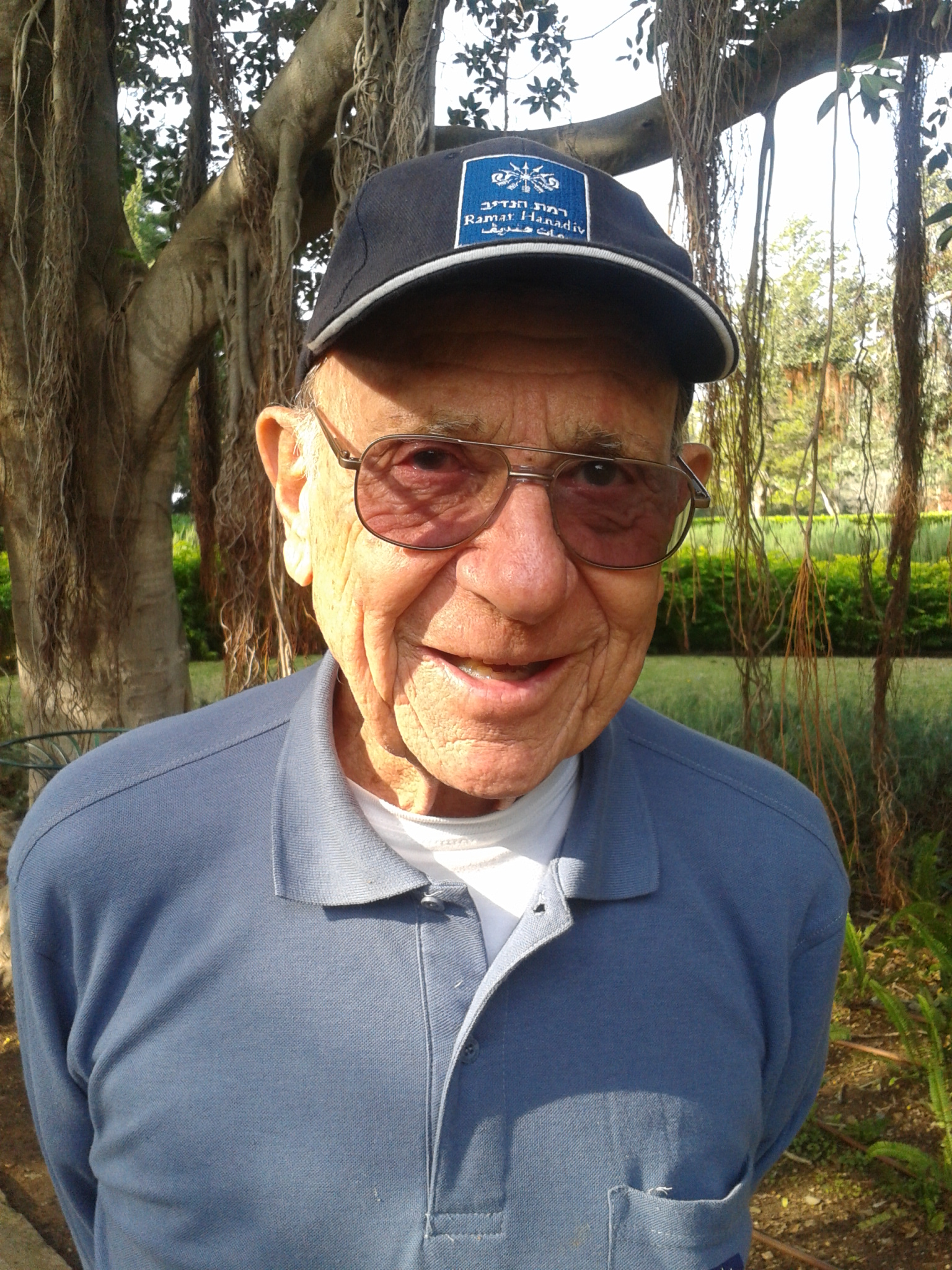
As we continued on, just after the Fragrance Garden, we bumped into an elderly gardener who noticed we were speaking English. He introduced himself as Sydney and gave us a thorough lecture on the water absorption complications of the ficus tree. An experienced gardener, having decades of horticultural experience under his belt, Sydney filled our minds with interesting facts and tidbits, sharing some of his knowledge with us.

Sydney the Gardener

Sydney the Gardener

Had we had more time at our disposal I would have liked to have heard more about the site, but at last he told us that we should be on our way and so I promised that if I come back I’d have to snare him into giving me a tour. Looking at the Wikipedia page about Ramat HaNadiv I see that there are several archaeological digs that I missed and those demand to be seen!
Until next time, whenever and wherever that may be!

Army Trip: IDF History Museum, Yad VaShem & Ammunition Hill

In Israel, Jerusalem, Tel Aviv on November 11, 2012 at 6:22 AM

During the course of the army, no matter how long one serves, he or she is going to be taken on a variety of trips around Israel. Many of these trips are to historical locations, others are culturally oriented and some are just random trips. This past week, still in basic training, we had the opportunity of visiting three interesting sites: the IDF History Museum in Tel Aviv, Yad VaShem Holocaust museum and Ammunition Hill both in Jerusalem. Due to the fact that I am in basic training, photography was difficult so I have culled most of the following photos from the Internet. The first of these trips was to the IDF History Museum in Tel Aviv, a museum I’ve been wanting to visit for some time now.

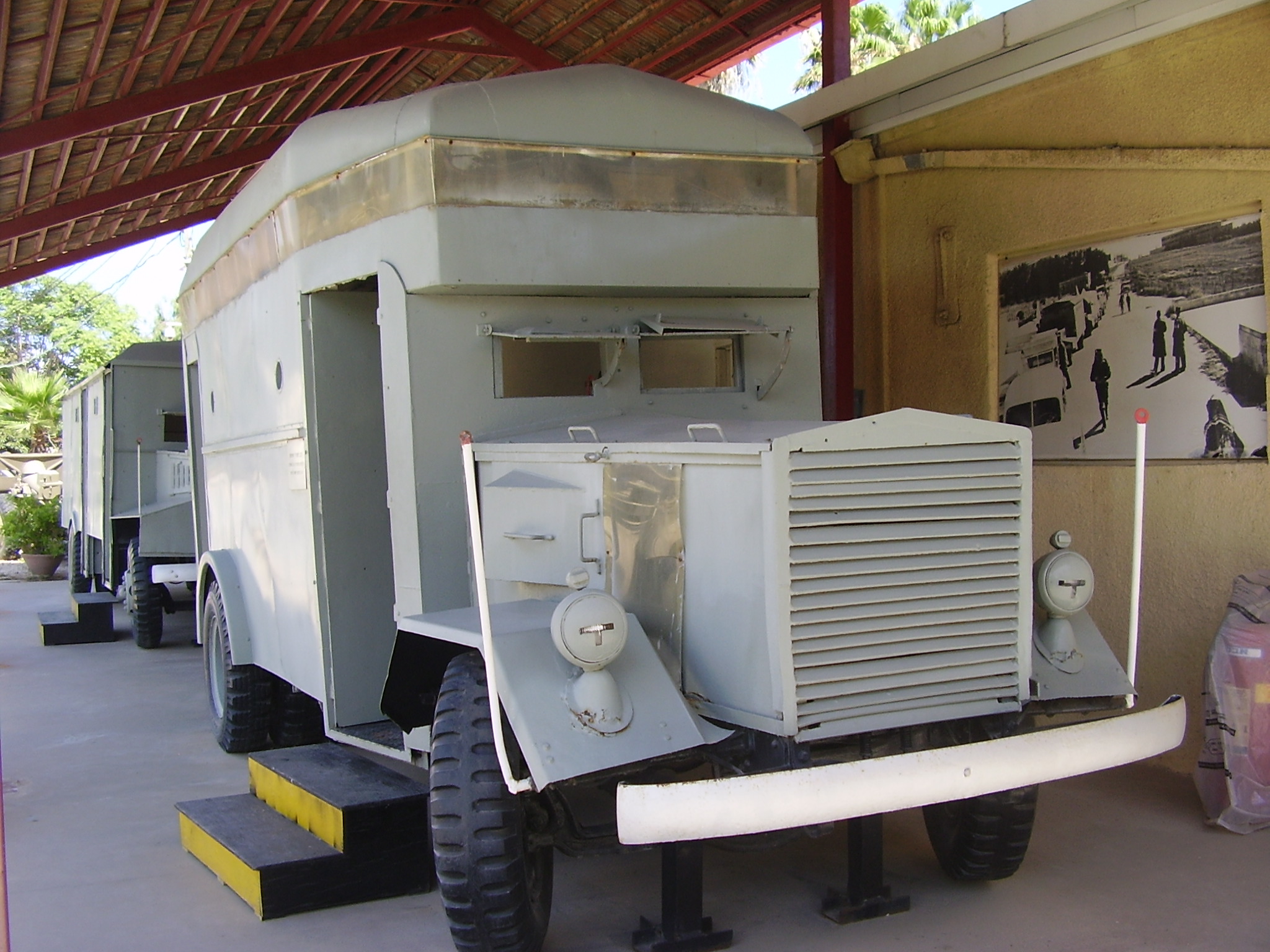
Armoured buses

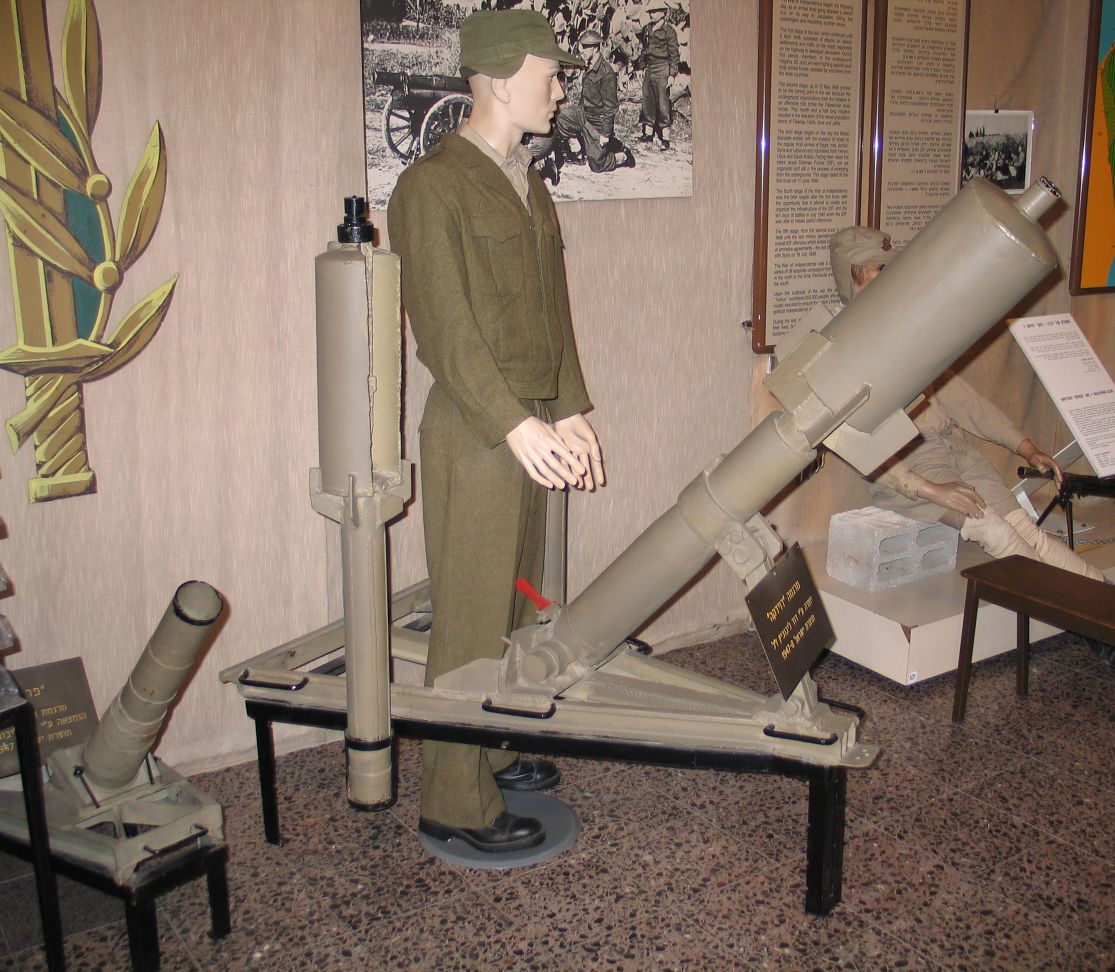
We toured several exhibits of the large museum accompanied by a knowledgeable docent. Our platoon of 27 soldiers and four commanders/commanding officer was joined by similar numbers from two other army bases, the Central and Southern counterparts to our Northern base. We strolled through the museum’s grounds en masse, observing the numerous military artifacts.

Willys Jeep from the War of Independence

As we went from building to building, the docent relayed many interesting stories and historical tidbits which I found to be quite interesting. I would have gladly stayed much longer, to properly enjoy the museum but I was just a pawn on someone else’s schedule so I was limited to what was offered.

Museum display

We were rushed out of the museum prematurely and had to return to our respective bases but I plan on going back and catching up on what I’ve been remiss on seeing all these years that I’ve been here.

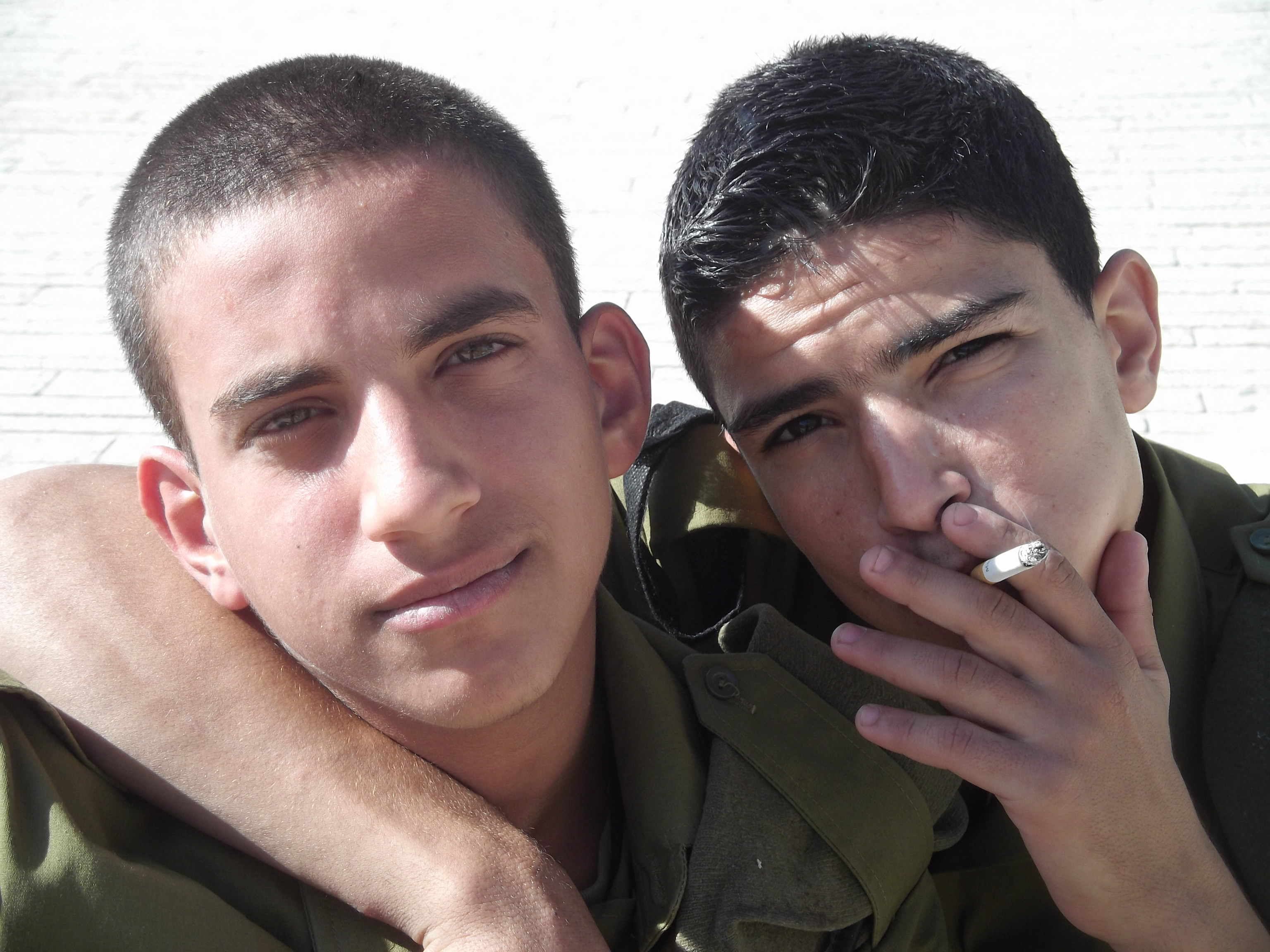
The next trip we took was to Jerusalem where we visited two sites, well really it was 1.5 due to time constrictions, and then headed back to the base. The most famous Holocaust museum, Yad VaShem, was first and there we had a great guide who zipped about from exhibit to exhibit pointing out the poignant details and shedding light on the great tragedy that many people don’t know much about. To clarify that last sentence, there are a few Bedouins and Druze sprinkled into our ranks, some of them volunteers and others conscripted along with the Jews. Here are two Muslim Bedouins from my platoon, the one on the left is quite the jester and told me after I took his photo that I can tell my parents I took a picture of an Arab. Speaking with a heavily accented Hebrew, that remark was quite humorous and we all laughed, some more awkwardly than others.

Two Muslim Bedouins in my platoon

Once inside the museum I was pleasantly surprised to see how much interest some of the Arab soldiers were taking in the sad tale of carnage and destruction. One particular Bedouin was quite engaged in the terrible stories the guide told us, but he wasn’t the only gentile in the building. Walking slightly behind us was an Italian admiral, his sidekick senior officer, an Italian non-com and the Israeli party of a naval captain, a lieutenant and a seaman taking pictures. This entourage was quite interesting to watch and I had to ask my commander which navy the foreigners were hailing from.

Yad VaShem memorial (Photo: Adam Jones, Flickr)

Despite the fact that this was my second time in Yad VaShem, I had an interesting experience. An American woman came over to us and seeked out an English speaker. Once I was her captive audience she began to tell me about how her father recently passed away and that after his death she found pictures and letters that pointed her past to the Holocaust, something she didn’t know beforehand. She showed me the photos of her family members and then ran off, not wanting to get too separated from her tour group.

Break time outside Yad VaShem

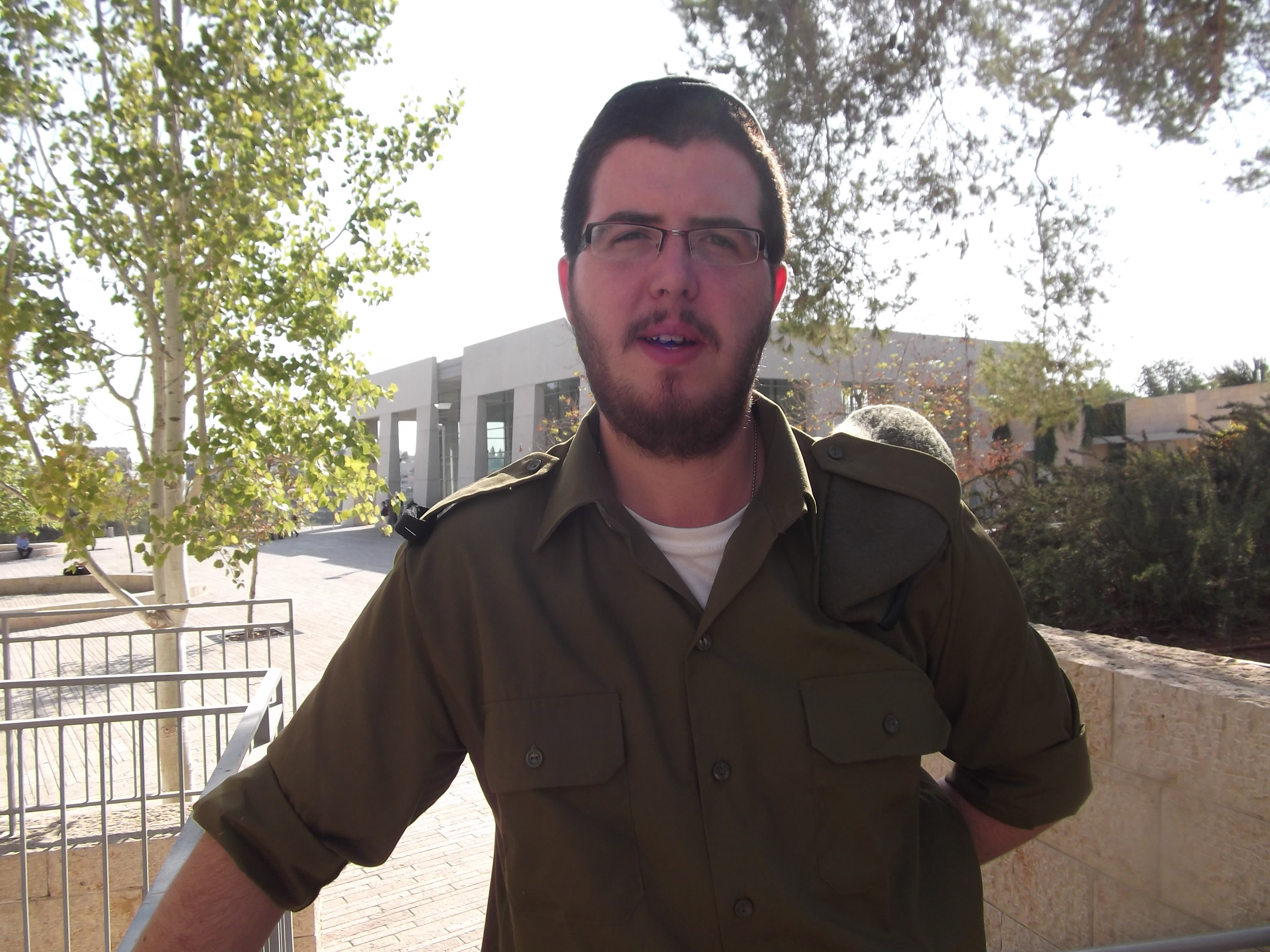
After the museum tour we went out and had lunch. During that time I took the liberty of getting a photo of me with my “dress” uniform on (there are two types of uniforms: dress and work):

Standing at Yad VaShem

After Yad VaShem we headed over to Ammunition Hill, an important battle site which helped secure the full re-capture of Jerusalem during the Six Day War in 1967. Due to time constraint we only got to see the interactive video about the war and the battle that took place below our feet. Having already seen the actual site (and not the video) when my Yeshiva here took us to Jerusalem, I was satisfied. However, I must say, the video presentation at Ammunition Hill is absolutely amazing, a work of art.

Ammunition Hill (Photo: Simnatic, Flickr)

As the video played lights and lasers danced on a large metal topographical display of 1967 Jerusalem. The fierce battles between the Israeli and Jordanian forces were shown out in full colour, the Israeli blue gradually conquering the Jordanian red. As we watched the light-created tanks climb up hills and enter the populated areas we looked up and saw actual footage from the battles for Jerusalem. The full excellence of the presentation is hard to put on paper, so to speak, so I strongly recommend a visit.

Tank from the battle (Photo: Simnatic, Flickr)

After quickly rushing back to our special white army bus, the non-com who brought us drove us back to our base for an early bedtime – something to look forward to in the army!

Leket Picking in Nahalal

In Galilee, Israel on October 10, 2012 at 1:03 PM

Yesterday, which happened to have been Isru Chag for us living in the Holy Land (and still Sukkot for those living in the Diaspora), a special trip to collect “leket” for people in need was arranged. Leket is, to be short and sweet, grain or produce that the farmer drops, accidentally, in the field which is then abandoned for the poor people to gather. There are certain Rabbinical laws that define what leket exactly is, for example if the farmer was pricked by a thorn while harvesting wheat and consequently drops the sheaves or produce from his hand, he can gather them back up and does not have to leave them for the poor. So, in today’s times there is a noble organisation that takes the initiative to collect this leket and dole it out to those in need. This organisation is aptly named Leket Israel:

Leket Israel logo

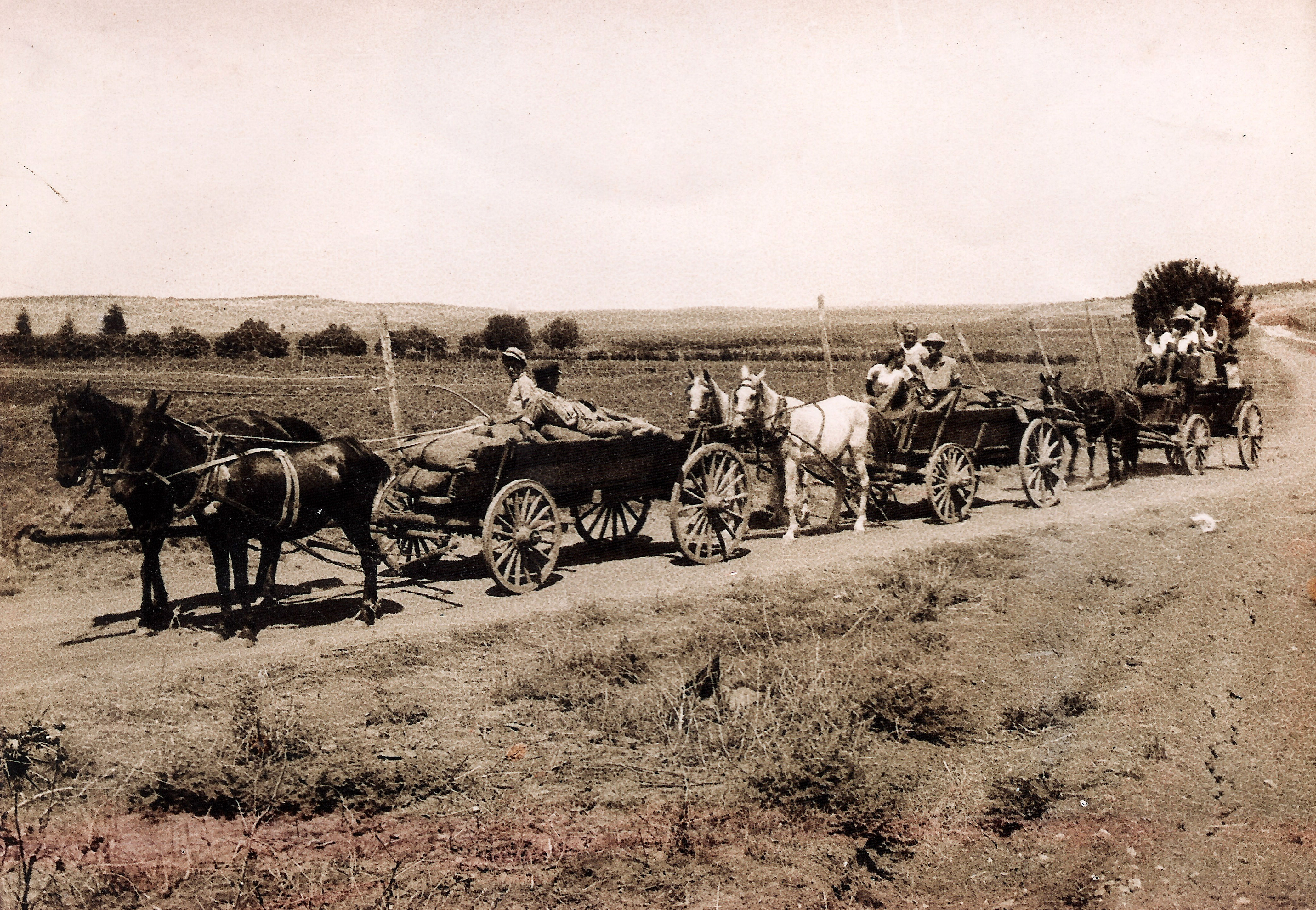
Our morning leket gathering trip was coordinated by Nefesh B’Nefesh and the clincher that secured my agreement to partake was due to the fact that this trip was to take place in Nahalal. Located between Nazareth and Mount Carmel, in the lush Jezreel Valley, Nahalal was founded in 1921 and was Israel’s first moshav. Having recently read Yael Dayan’s biography about her father, Moshe Dayan, and having read all about Nahalal in the early days when Yael Dayan was a child, I figured it would be interesting to see this famous moshav in person, and to actually work the land, no less.

Nahalal in 1921 – the first settlers arriving

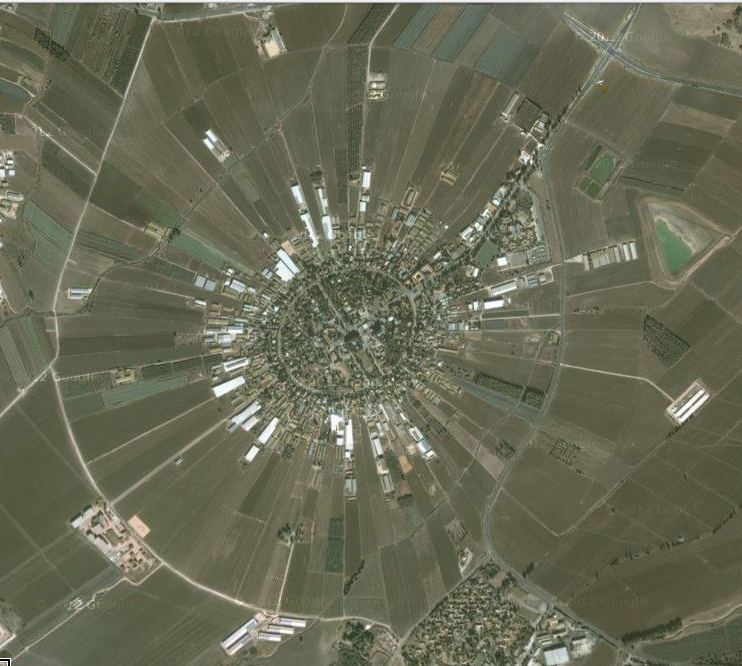
One of the things that makes Nahalal so famous is the circular shape in which it was built up; the families’ houses occupying the centre of the circle with their tracts of land stretching out behind, so that each family had a livelihood. Here is an aerial view of Nahalal these days, taken from Google Maps, and the field where we picked yesterday is in the lower left corner.

Nahalal

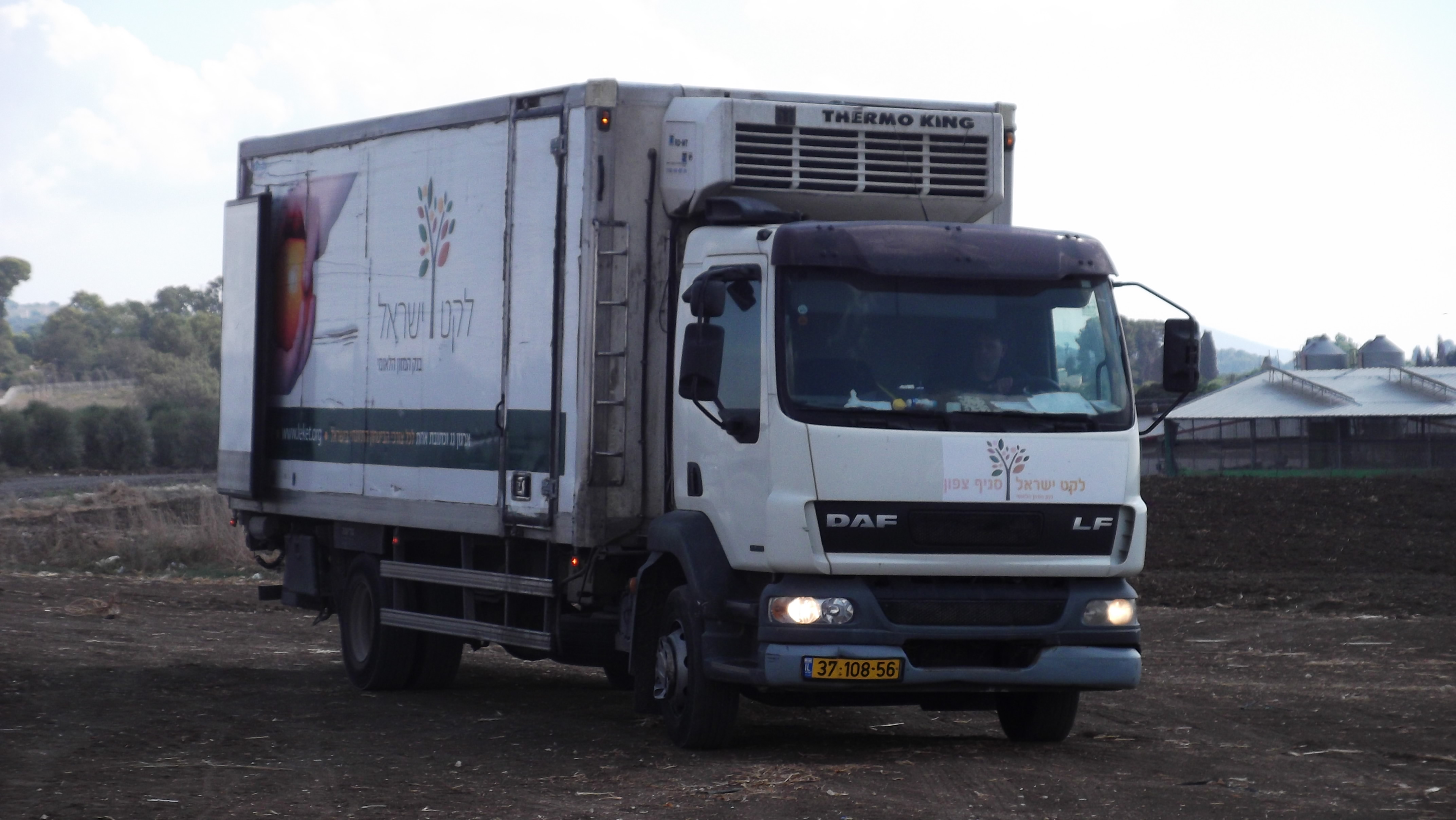
As we all gathered at the field, some coming by car and some by special transport scheduled for this event, a Leket Israel truck followed us and parked, ready to pass along all that we would pick:

Leket Israel truck following us

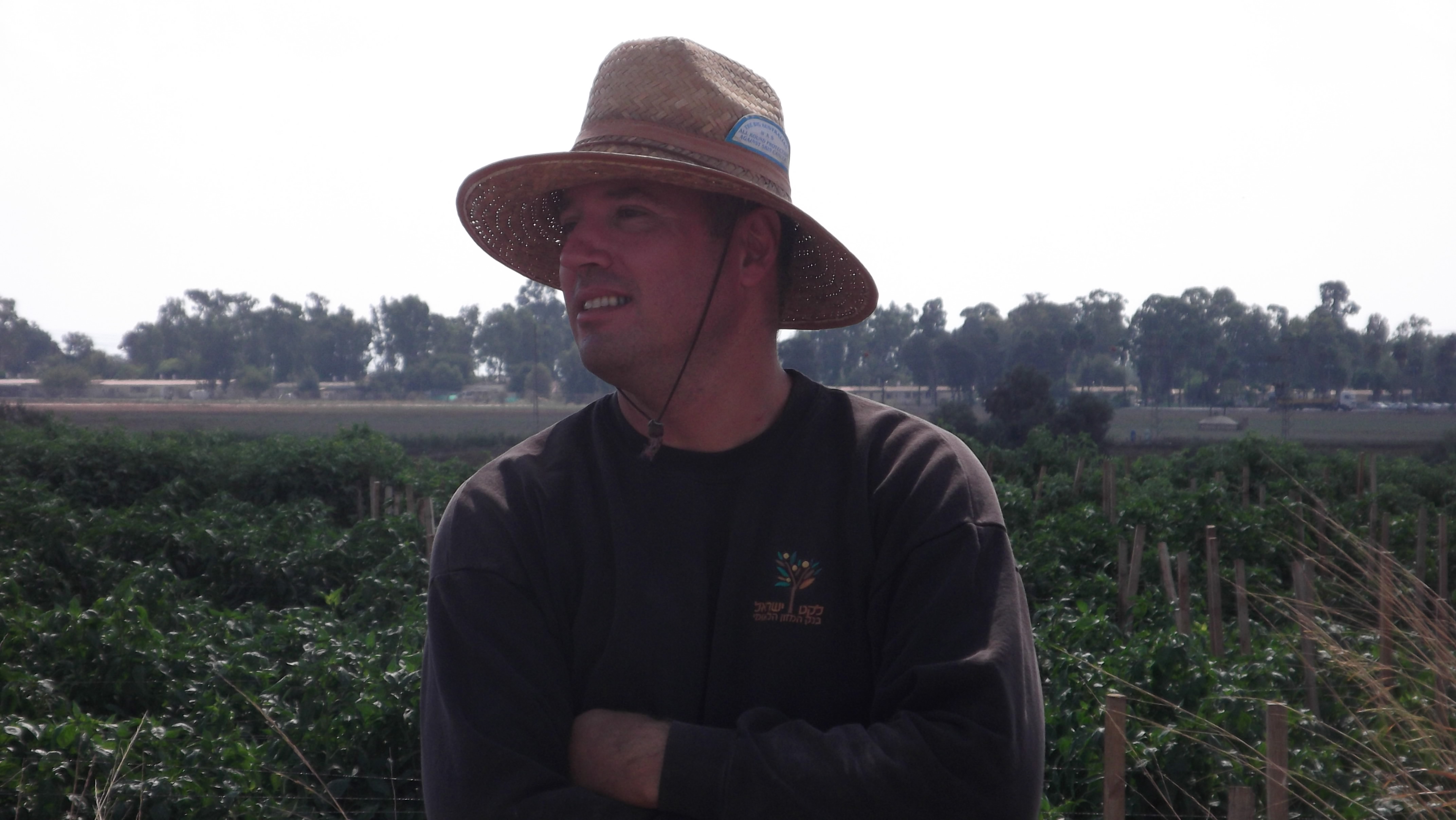
Now, just to put things into perspective, all of us that gathered there came as volunteers (even paying for transportation) and yet we had not a clue as to what we were going to be picking. We passed tomatoes and beets before stopping at what seemed to be an empty field, furrowed and littered with tawny dead vegetation. There, Ran, the Leket Israel representative hailing from Kibbutz Mizra, explained to us that we were to pick onions and that the crop of choice varies as to the supply and demand.

Ran of Leket Israel

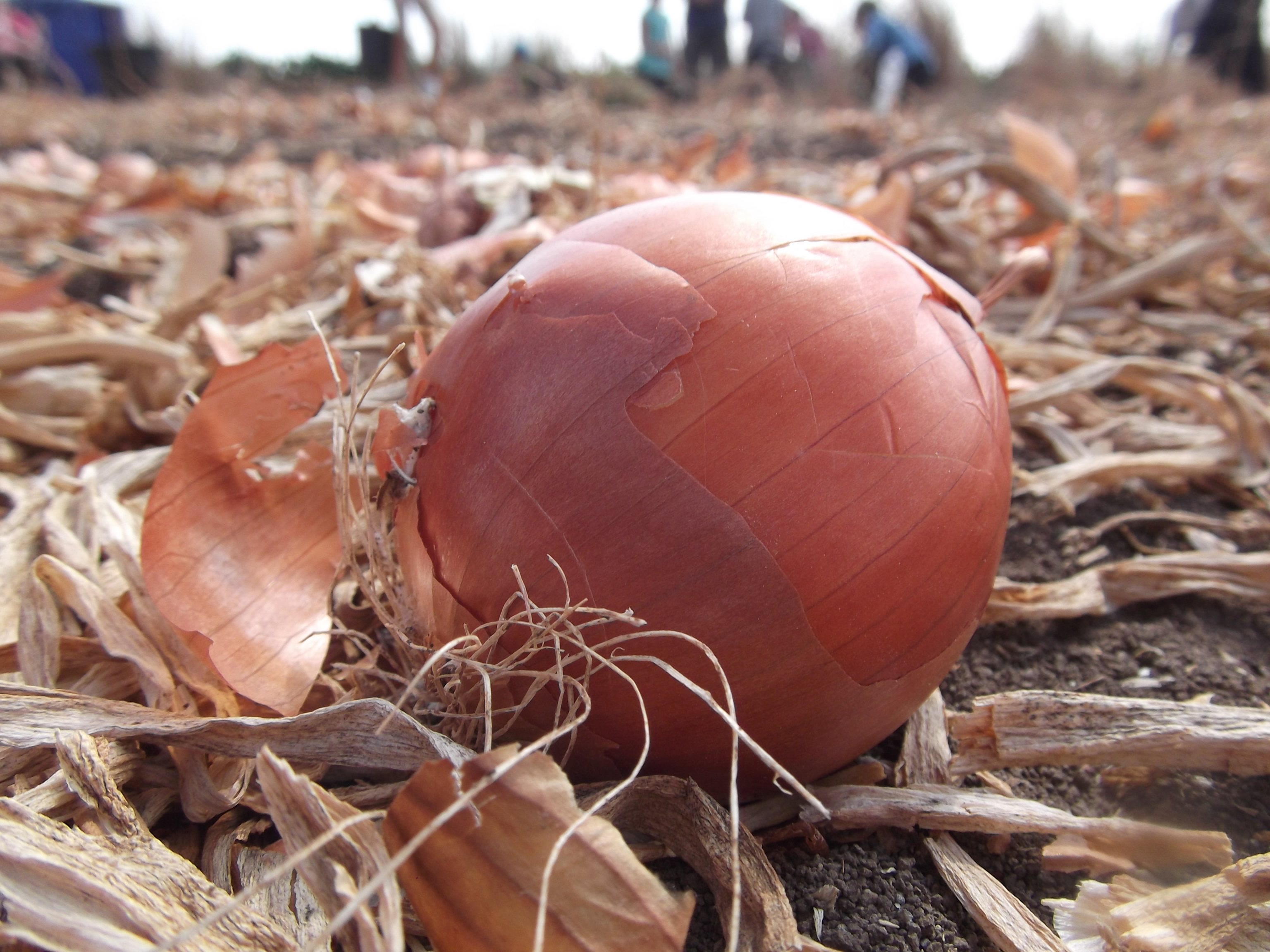
He proceeded to kneel in the dirt and pull onions out of their semi-buried state and demonstrate which onions were to be discarded and which were to be placed into the bucket. Once we were briefed he turned us loose, handing buckets all around. Here is a fine specimen of an onion that I picked, note my fellow pickers in the background:

An onion in the field

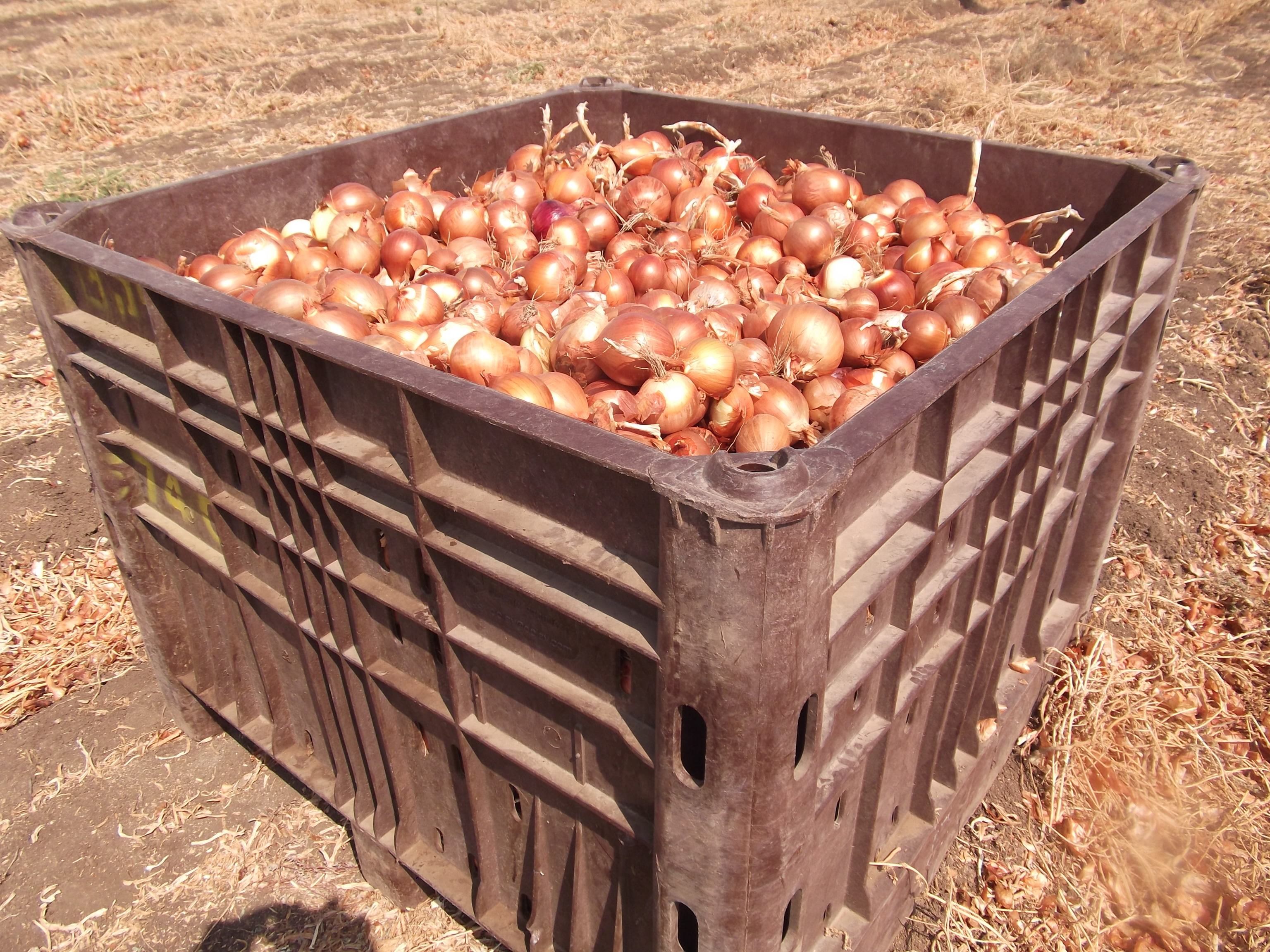
As we toiled in the field, chatting and making new acquaintances, the clock hands spun around and the buckets were repeatedly emptied into the large plastic crate. Here is the first crate that we filled, estimated by some to be at least 50 bucketfuls of onions:

First crate

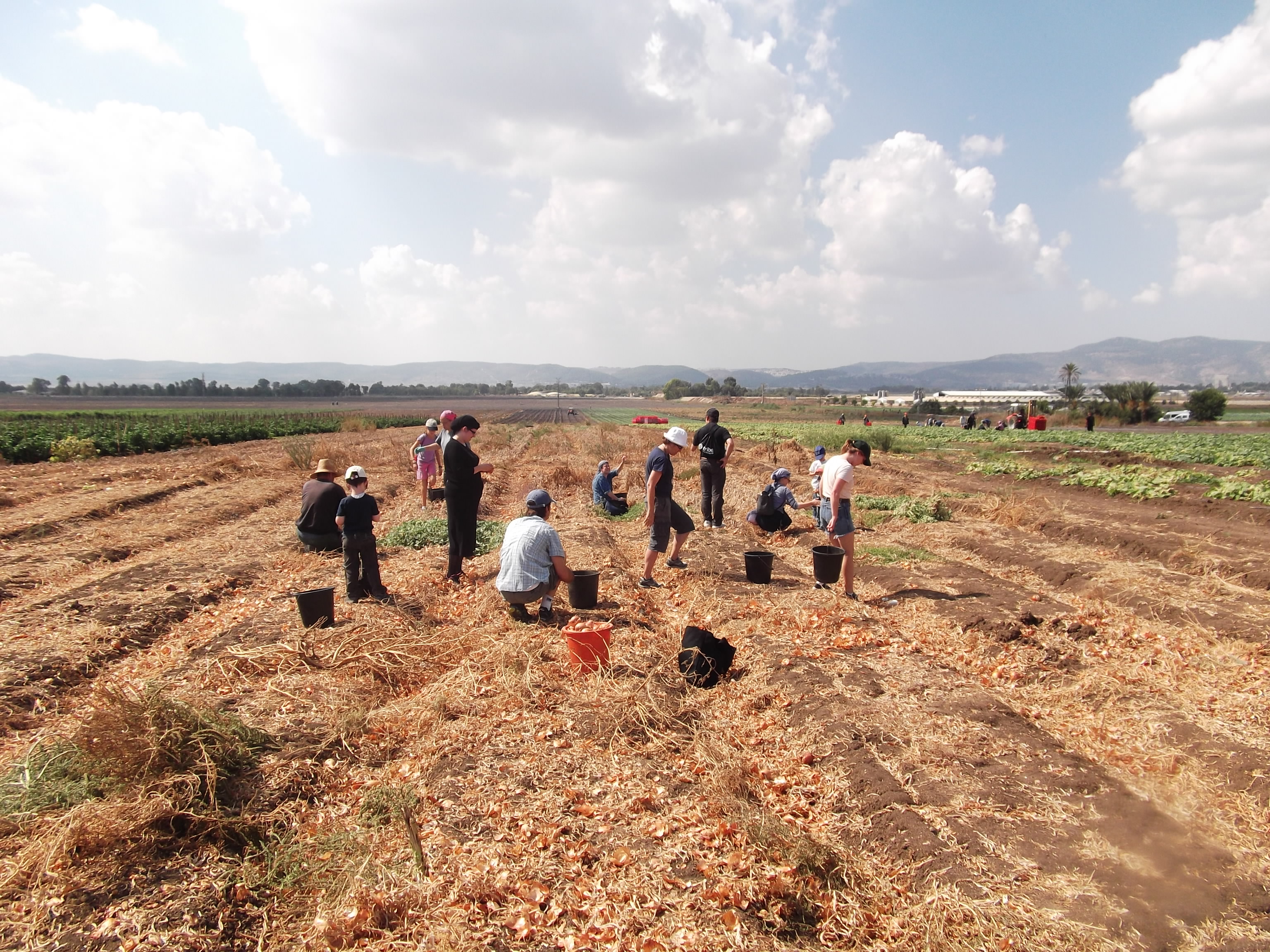
But after the first crate we were merely warmed up, our clever little party of thirty or so individuals began to ferociously attack the dry, cracked land, producing onion after onion and dispensing them into the correct containers. The sun and clouds played hide-and-seek while us mortals toiled in the fields, having a grand old time.

The group gathering

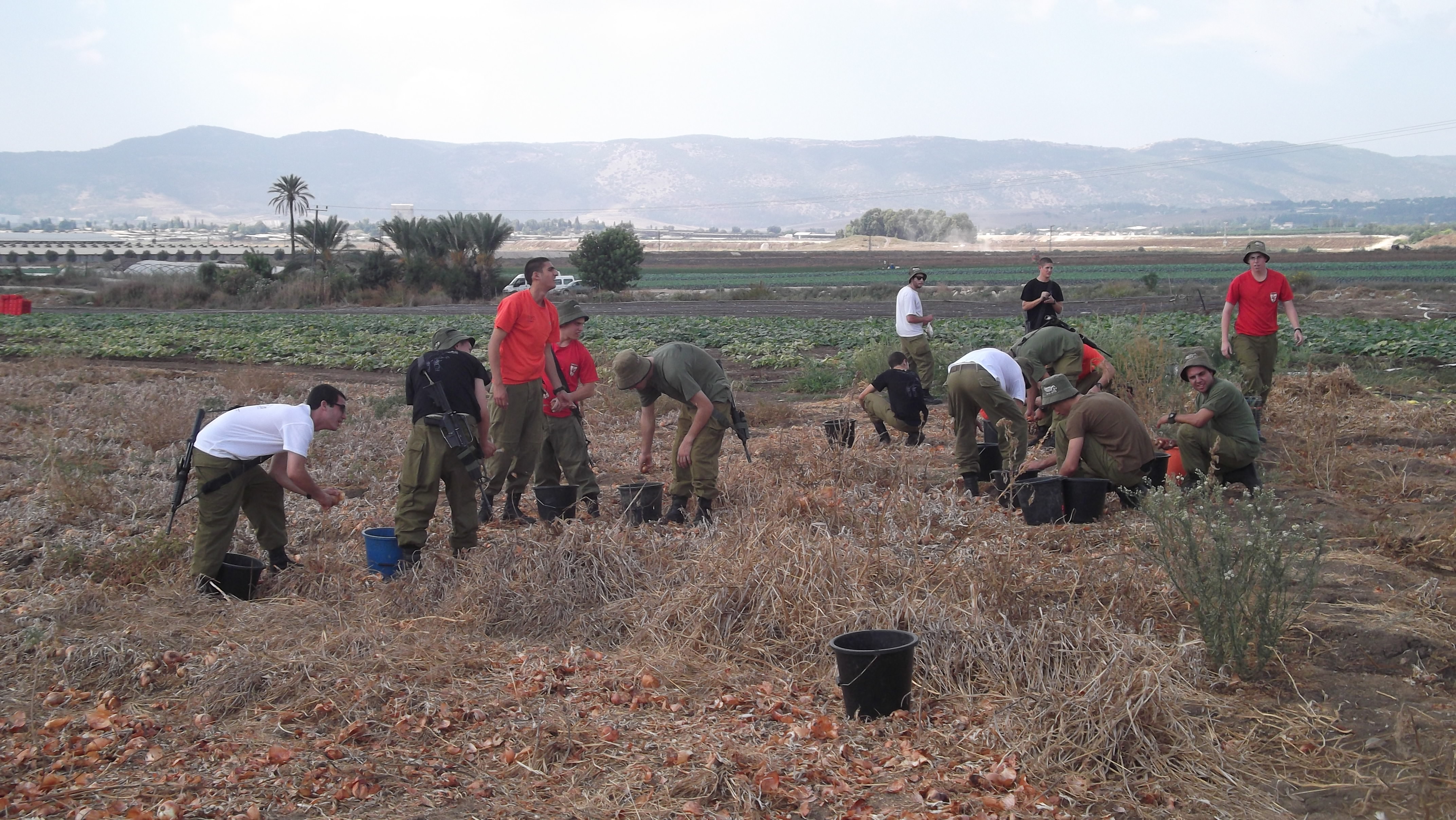
At last the NBN crew called a mandatory break and passed out fruit and cups of water. We stood around and were taken by surprise as a group of armed soldiers traipsed by us and began gathering onions as well. We watched as they stacked their guns and got down on the ground to fill buckets for Leket Israel. With all the goodness that I see streaming from the IDF’s many fingers, I feel glad that I am, at last, going to join their ranks.

Soldiers picking onions

I approached the soldiers and learned of their location in the army. They belong to a unique unit somewhat attached to the Artillery Corps but mostly operate with Infantry. They are responsible for sending unmanned gliders out into the battlefield for real-time surveillance and even carry the gliders dismantled on their backs. I do not know what this unit is called but it sounds rather interesting, plus they knew how to pick onions, always a good skill:

A soldier picking for Leket Israel

After several hours of picking onions, I personally had filled countless buckets and there were a bunch of full crates. Someone from NBN called back our special transport and we all gathered around to hear a summary of the morning’s efforts. Ran announced to us that we had picked an estimated 900 kilograms of onions (that’s 1,980 lbs, close to a ton). He then told us that 300 families, estimated, would be enjoying the fruits of our labour and that we did a great job. We then returned to our vehicles, feeling good that we helped so many, and I got myself a taste of farming in the Holy Land. I hope that when I’m in the army I get to go leket picking again. Time will tell, I suppose.

More information about Leket Israel can be found HERE.