Israel's Good Name

Archive for the ‘Israel’ Category

O’ Jerusalem

In Israel, Jerusalem on July 31, 2012 at 6:20 AM

Yesterday marked the first day of my little trip down south, a four day excursion to see new things and do new things – at least while I am still a civilian. The day’s destination: Jerusalem! However, getting to Jerusalem is a journey in and of itself – the early waking, the peach cobbler breakfast, the train ride to Tel Aviv, the getting situated, the train (or bus, I usually take the bus) to Jerusalem, etc. I reached Tel Aviv in good time, as indicated by this dingy clock in the train station:
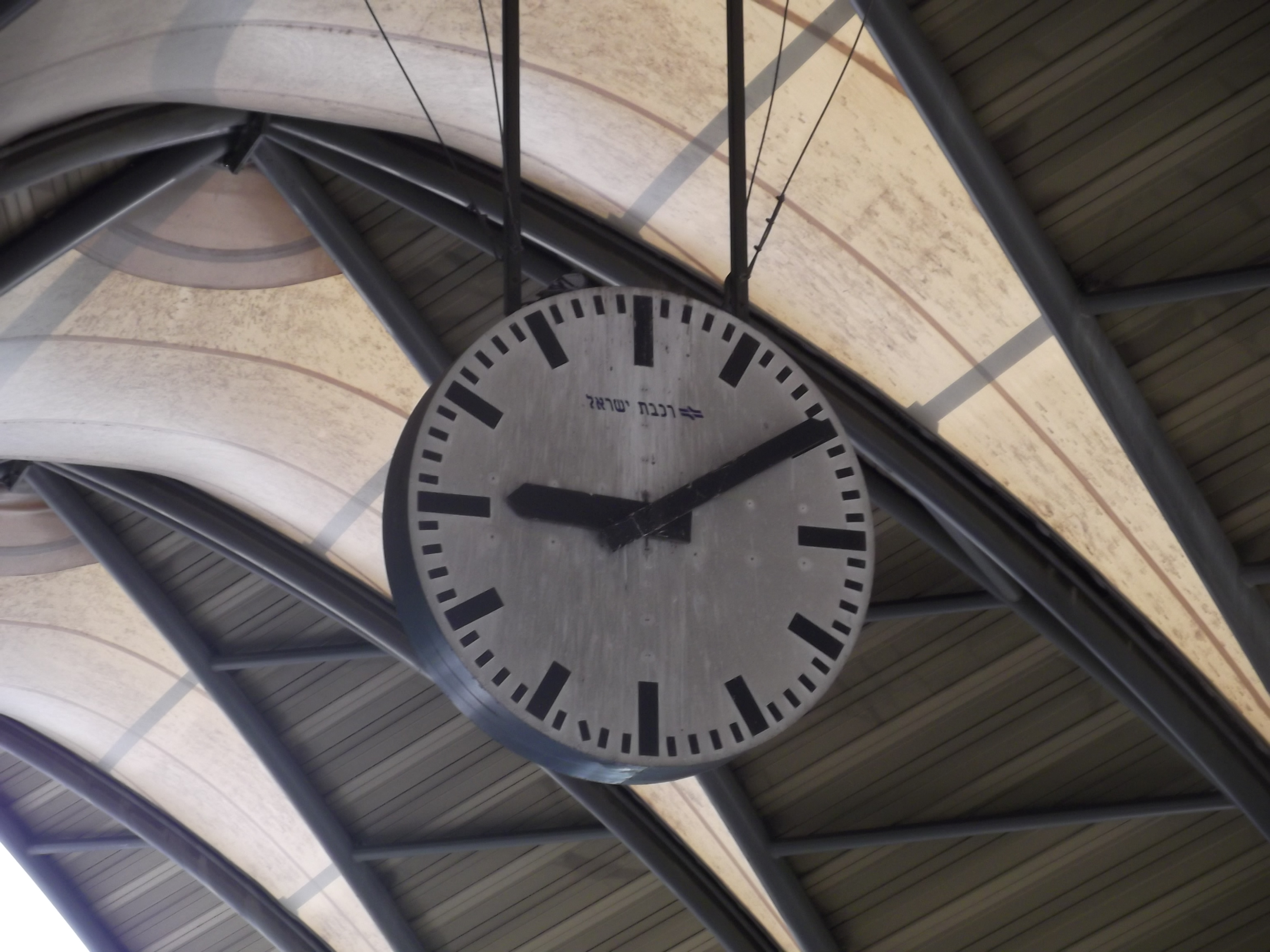
Dingy railroad clock

As soon as I boarded the Jerusalem-bound train in Tel Aviv, I leaned back and peered out the window, ready to see what I’ve been missing each time I chose the Tel Aviv-Jerusalem bus line instead. It was the tumultuous rise and fall of the mountains just outside of Bet Shemesh, and the Soreq River that runs beneath the train, crossing under a sturdy bridge. It was truly scenic. The only downside to the train ride was that I ended up in somewhere known as “Malcha Mall” (the official name to the mall is Jerusalem Mall) – in southwestern Jerusalem. The biggest mall in the Holy City, Malcha has tons of places to shop in and eat at but it is not near any of the places I initially wanted to visit. So I bought my falafel lunch, ate it and hit the road, heading for the Central Bus Station. The first thing I did was buy a ticket to the Jerusalem Light Rail, the electric train that runs through some areas of the Holy City. This was my first time riding it… and I rode it to the Jaffa Gate of the Old City.
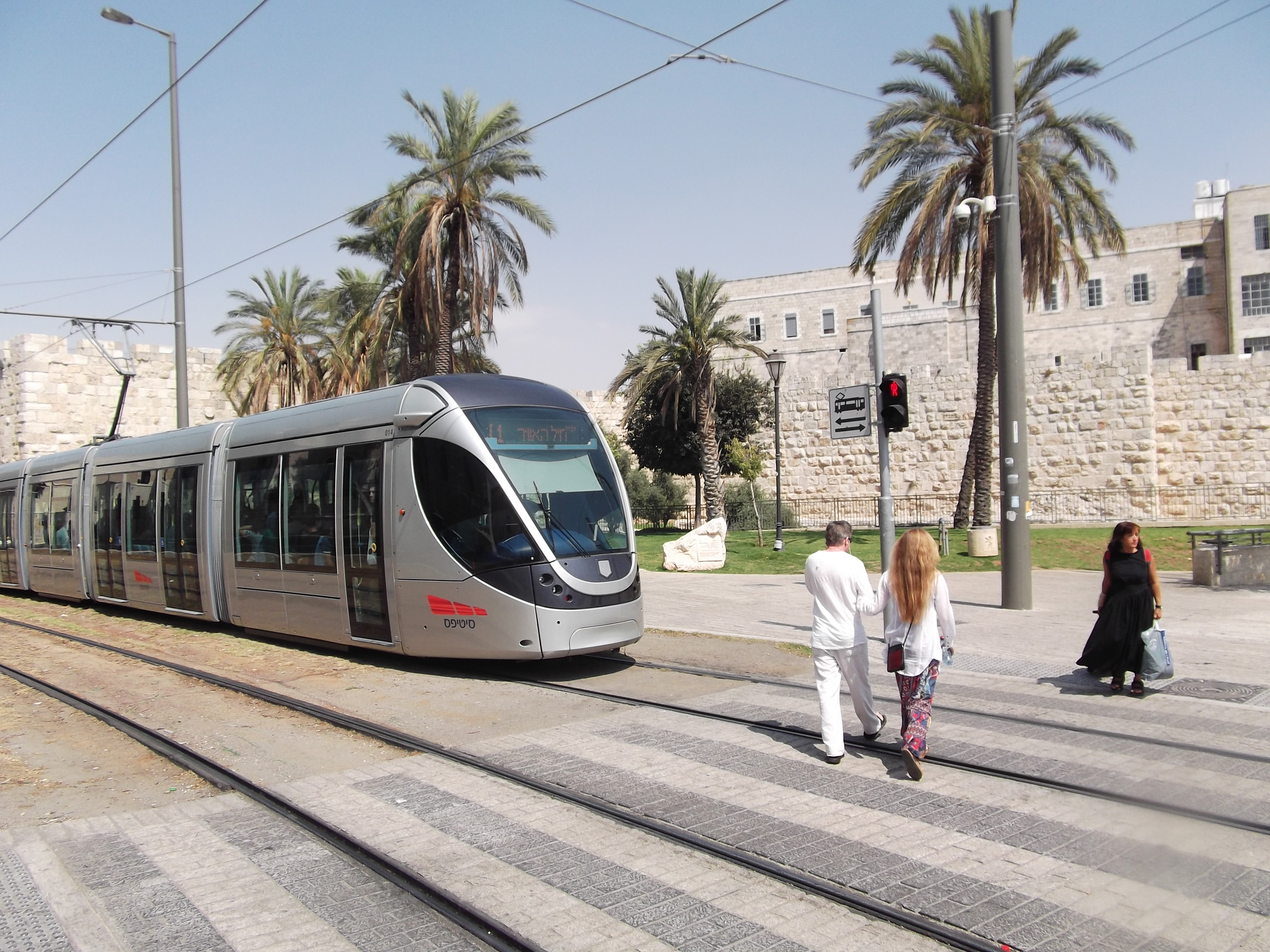
The Jerusalem Light Rail passing by the Old City walls outside of Jaffa Gate

There, approaching the Old City I couldn’t help but lose myself in a photographic frenzy – I snapped and snapped, this is the best that came out (I’m not sure why the sky looks so grey):

The majestic walls and towers of the Old City

Once inside the Old City I headed for the Israel Ministry of Tourism information office and was directed to the correct location to purchase a ticket to walk the ramparts. Something I’ve always wanted to do, the Ramparts Walk turned out to be very rewarding but at the same time, very tiring. I climbed the stairs with excitement and began my walk – a totally different perspective on the Old City unfolding before my eyes.
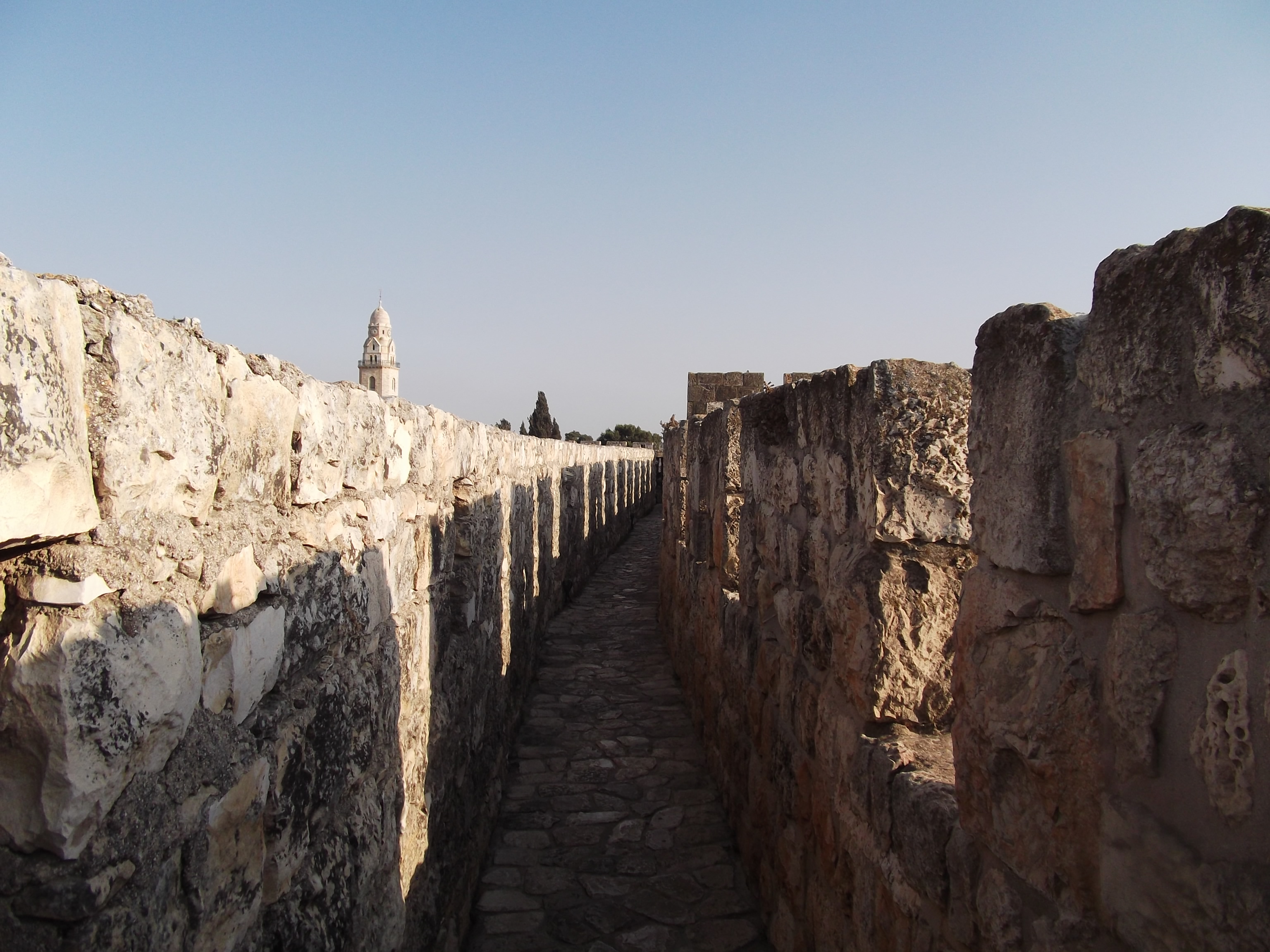
Walking the narrow ramparts

As the city walls continued, the walk became harder and harder – the uneven surfaces and the intense stairways not helping much. The soldiers who historically roamed the walltops, throughtout the generations, must have been made of sterner stuff. Regardless, the views from the wall really does change how the Old City looks (click on: map). Here, just above the Damascus Gate, I sit and observe:

Sitting in a defence niche just above the Damascus Gate and the Arab peddlers below

All this was just the northern side – the Ramparts Walk is actually comprised of a longer northern walk and a shorter southern walk. At the end of the northern walk, where the Lion’s Gate on the eastern wall is, we (I had picked up some fellow wall-walkers along the way and impressed them with my “knowledge” in the tourism field) reached an observation point – the end of the line. To our surprise and enjoyment, the muezzins started up and pretty soon there were fasting Muslim men and women making their way to the mosque, urged on by the song of the muezzin. Here is a short video clip of the experience:


After watching for a few minutes we turned back and descended all the way back at the Herod’s Gate (be sure to consult map). With my water bottle long dried up in the hot Jerusalem sun, I advanced on a peddler/shopkeeper who sold large bottles of water. The Arab merchant informed me that since I do not speak Arabic… he cannot sell me anything. Fun!
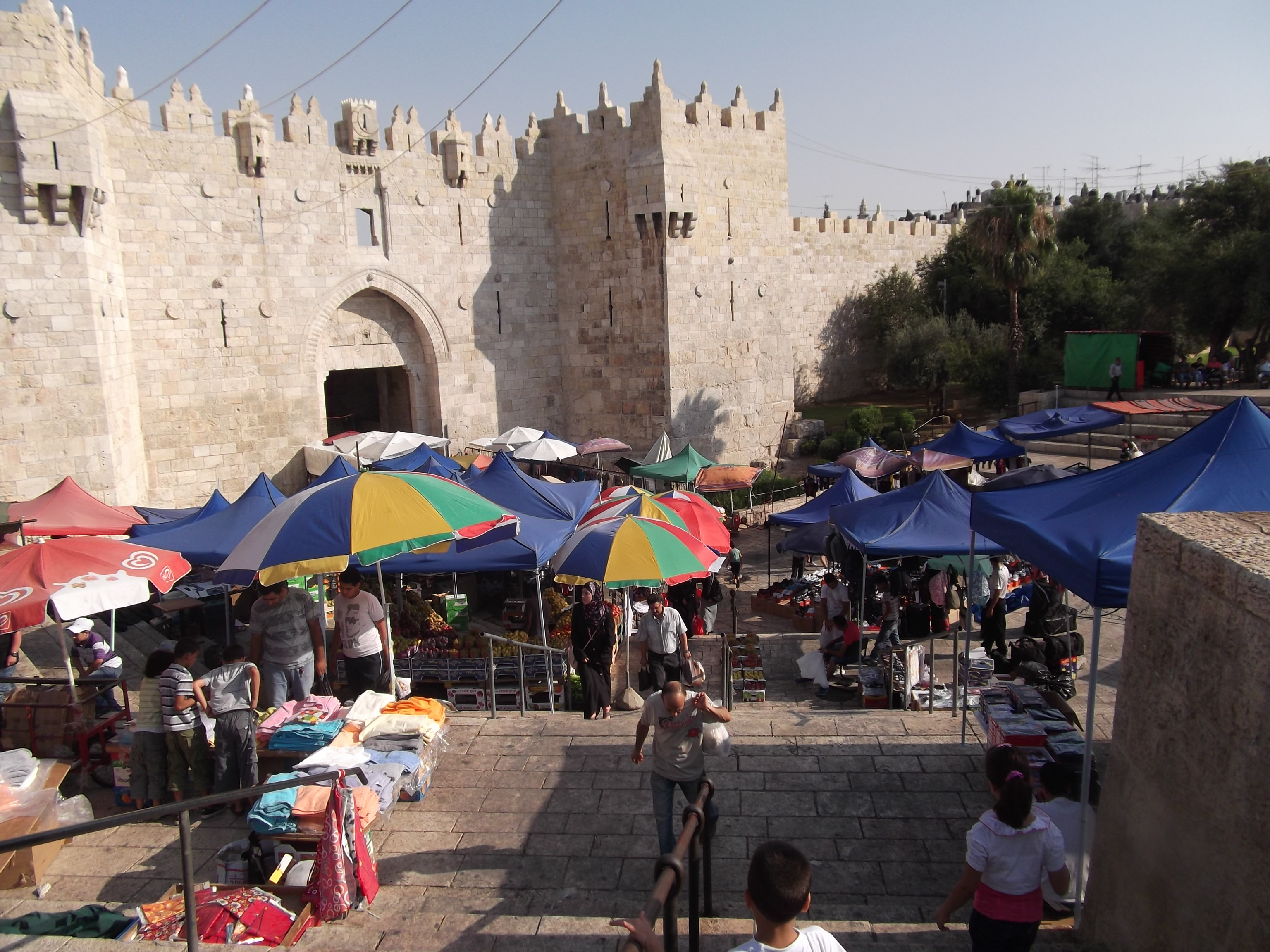
One of the many Arab souks in and around the Old City

After finding an alternate water source and parting ways with my new companions, I headed for the second half of the Ramparts Walk, the southern side. Here, just at the beginning, the Tower of David:

The Tower of David

And here, just a little bit along the way, a pictorial show-piece, looking more like old time Bavaria than the Old City:

A peculiar section of the Old City

After descending at the Dung Gate, basically having done 80% of the total wall walk (all that was offered) and taking somewhere beyond the three-hour mark, I headed inside the City for an obligatory visit at the Kotel. Here, in all its splendour and glory, the Kotel:

The Kotel

After the Kotel is when things started getting hairy. With the sun setting rapidly, a few friends of mine wanted to meet up closer to the “centre of town” so I was determined to hop on one of the buses and meet them there. In spite of my iron resolution, no buses seemed to come – and even the taxis became elusive as the mainly-Muslim drivers wanted to head home to eat their Ramadan dinner. Finally, after some thirty minutes of waiting and meandering from bus stop to bus stop, a bus – no, THE bus – came. I was oh-so fortunate to be included on the bus, albeit the guy who has to watch out that when the doors open he doesn’t fall out. I felt like I was on those crowded Indian trains where the passengers hang from wherever they can.

A sea of black hats separated me from the bus driver

As I made my way out of Jerusalem, after some quality time with my old friends, I snapped this shot of the Jerusalem Bridge of Strings where both people and the light rail make use of the arc over the traffic. (Sadly, night-time photography is usually ill-received by my camera):

The Jerusalem Bridge of Strings

Back in Tel Aviv, nearing midnight, I happened to have missed the last bus offered to the area I needed and was then forced to share a taxi with some other Tel Avivians to get back to my hosts. Always an adventure!
Saslove Winery

In Galilee, Israel on July 12, 2012 at 6:34 PM

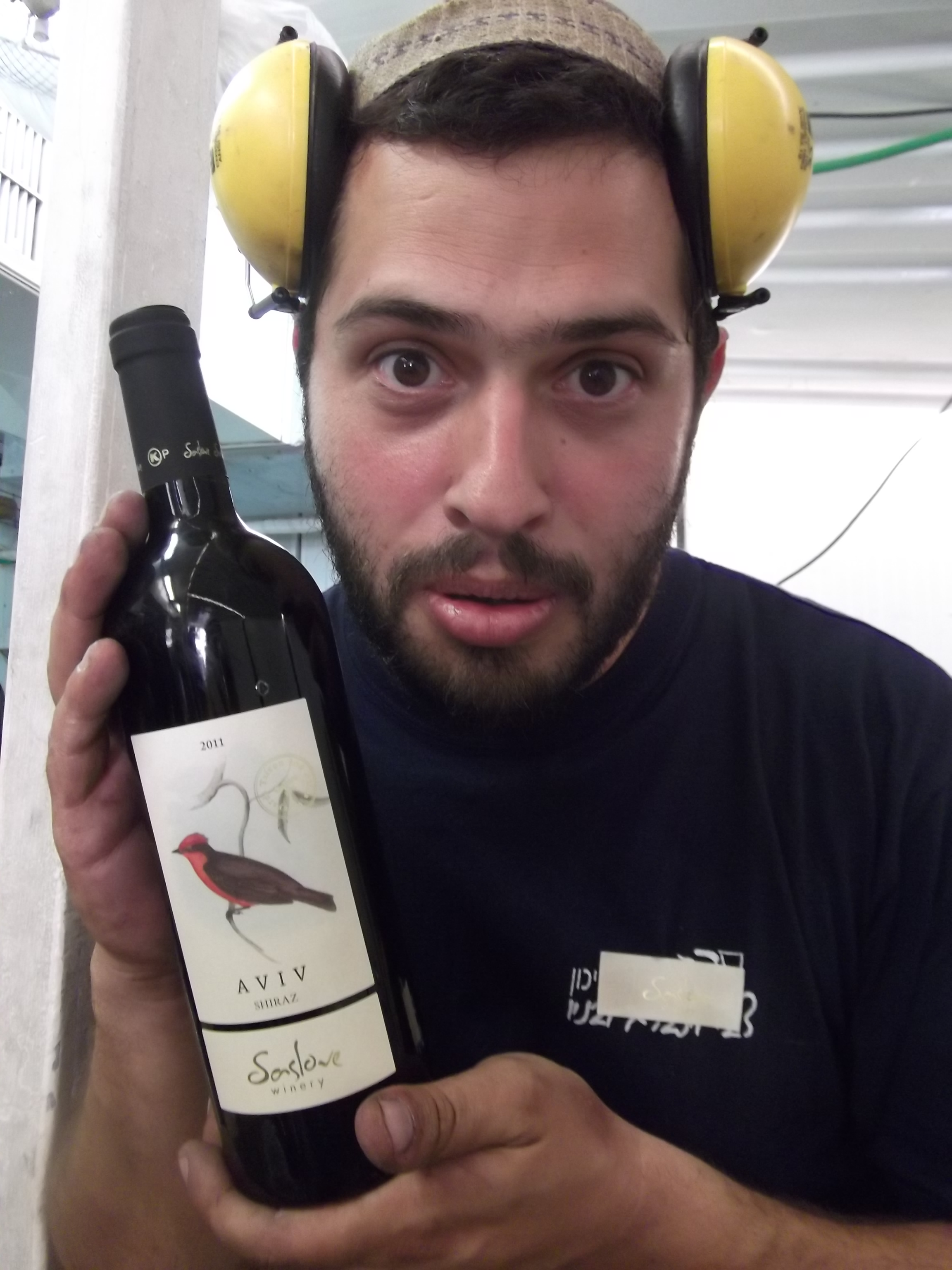
First and foremost let me apologise for being negligent in my blogging – nearly two full months have gone by empty of interesting content. I hope to remedy this with a post about a lovely little boutique winery that I had the pleasure of touring, thanks to friend Dovid Bloom who works with the bottling crew. Here is Mr. Bloom, presently a freshly bottled sample of Aviv 2011 Shiraz:

Dovid Bloom – striking a silly pose

The winery featured today is the Saslove Winery, founded by Barry Saslove (formerly of Canada). The production and bottling is done in Zuriel, just minutes away from Ma’alot – within eyesight even. However, the vineyards are mostly on the other side of Mount Meron, in the Eastern Galilee, where the air is dryer and the climate is more suited for fruits of the vine, all at an average of 800 metres above sea level. Here is a photo of one of the vineyards, at Kerem Ben Zimra:

Saslove Vineyard (credit: saslove.com)

Getting back to the Western Galilee, we drove along the windy highway and arrived at the winery, greeted by Dovid Bloom. He began by taking us inside and showing us the bottling, explaining the steps as the bottles trudged past on the conveyor belt. First, of course, someone has to load the empty bottles into the machine:

Loading the empty bottles into the machine

The bottles are then rinsed and nitrogen is shot into them, then the wine is piped in. In an adjacent building the wine is stored in huge metal vats (it should be noted that the top-of-the-line Saslove wines are aged in wood barrels), here is an unglamourous glimpse:

Huge metal wine vats

After the bottles are filled, a cork is pneumatically forced into the open neck of the vessel. Dovid opened the doors so that photographic efforts would yield a more favourable result. Yes, there is no flash reflections disturbing the shot but I’d still say it is a mess of glass, metal and wine. The bottles in the background are those attached to the wine-spouting nozzle, the bottle headed to the right in the foreground is about to be corked:

The inner workings

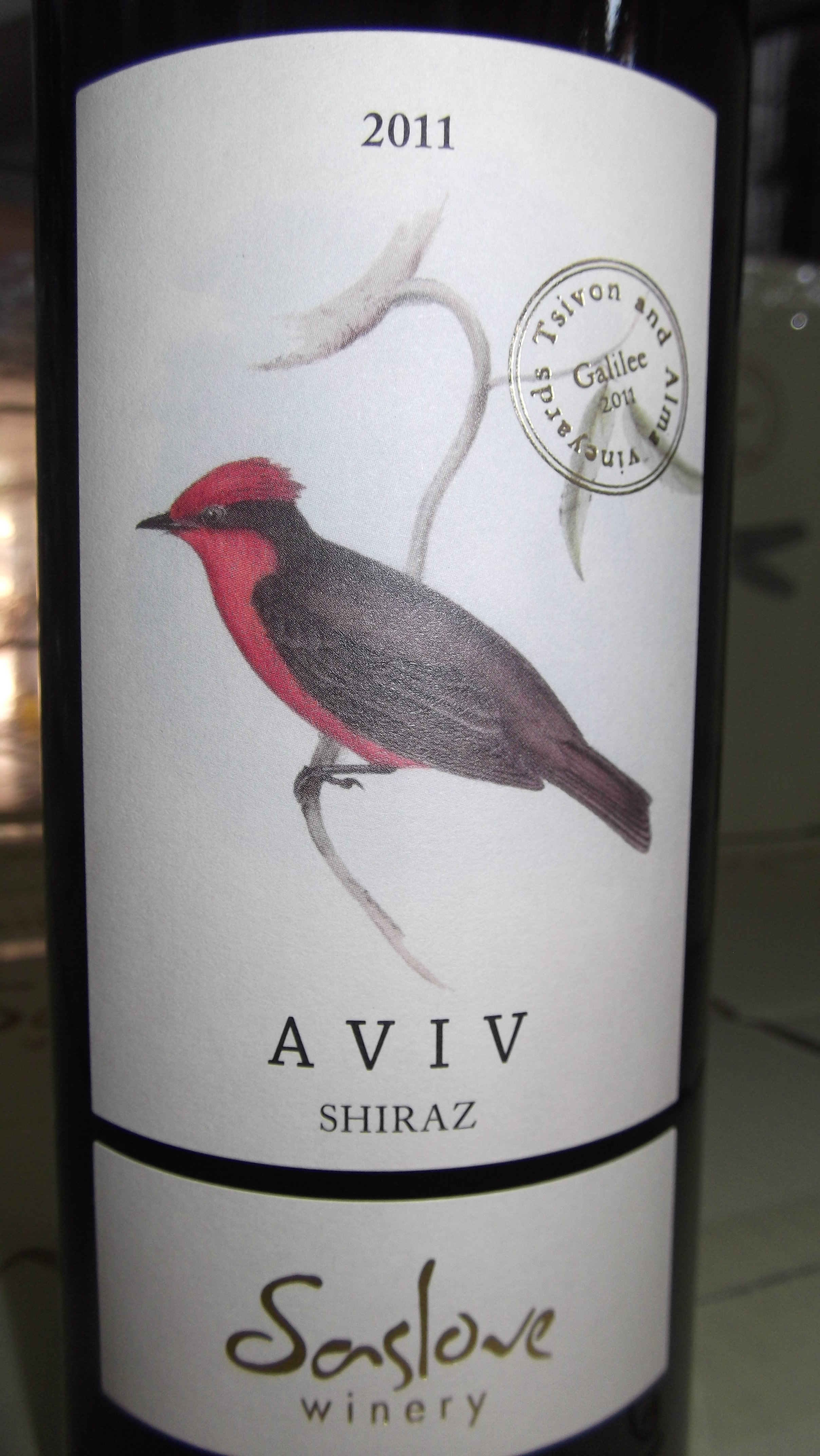
After the corking comes the labeling and boxing. The labels are particularly beautiful at this winery although it seems as though every winery and brewery I visit has a great sense of style (Malka Beer and Adir Winery come to mind).  Just look at this label!

Aviv 2011 Shiraz label

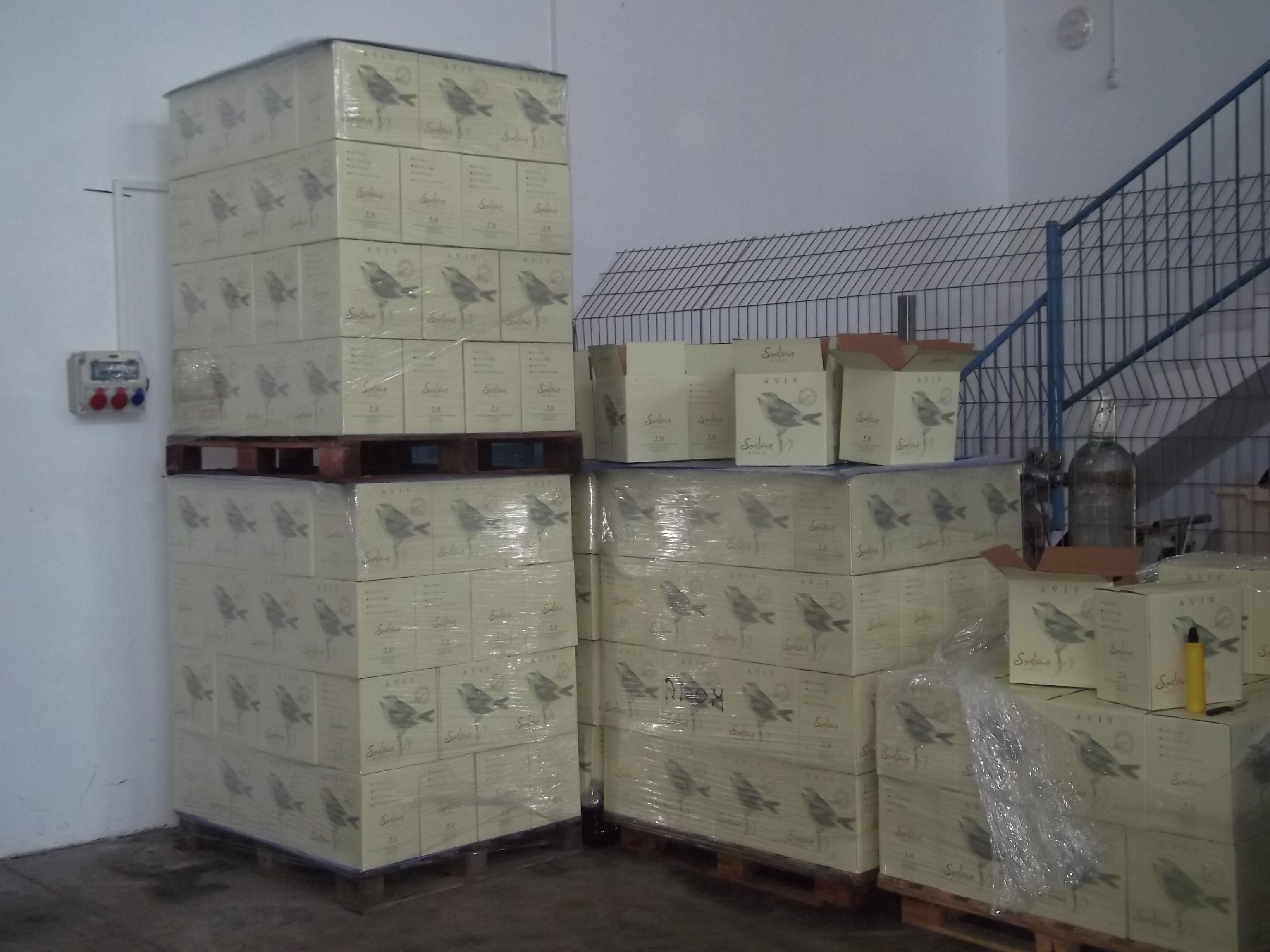
And after the bottles are boxed and those boxes are sealed, a pallet of full boxes is brought back into the warehouse containing the wine vats and joins the others, ready for shipping. At 2,000 bottles an hour, if I remember correctly, this was just the start (we visited in the morning):

Waiting to be shipped out

Just after photographing the pallets as seen above, the proprietor and winemaker, Barry Saslove, began talking to us. He went into great depths explaining how the climate and geographical location of the Eastern Galilee made it, in his opinion, one of the best places in the world to grow grapes. Being an expert in the field, knowing that the fertile low mountains would yield great crops, Barry staked his claim and now runs a distinguished boutique winery. A French wine authority named the Saslove Winery one of the top 100 wineries in the Mediterranean, of just three in Israel.

Barry Saslove speaks to us

Eventually, as all impromptu tours go, we broke apart, thanked the correct personages and made it to the car. Due to the fact that we visited the factory, and not the visitor centre which is in another village. we didn’t do any tasting or buying. Maybe one day… But as we leave, one last parting shot:

The ”factory” of the Saslove Winery

Visitor Centre info: http://saslove.com/en/visitors_center.php

Industry in the Galilee Panhandle

In Galilee, Israel on May 21, 2012 at 1:13 PM

Sunday the 20th of May was a big and important day. For all of us in Israel, Sunday marked “Yom Yerushalayim” – a day celebrating our re-conquering of the Jordanian-occupied Jerusalem back in 1967 – and less importantly, it was the day we took a trip to the Galilee Panhandle. The sole purpose of our trip (“our” being my parents and I) was to procure some shoes at the Naot factory store. However, thanks to some advertising cards we found, our trip was expanded to a full-blown day of exploration. First, the factory:

Teva Naot factory

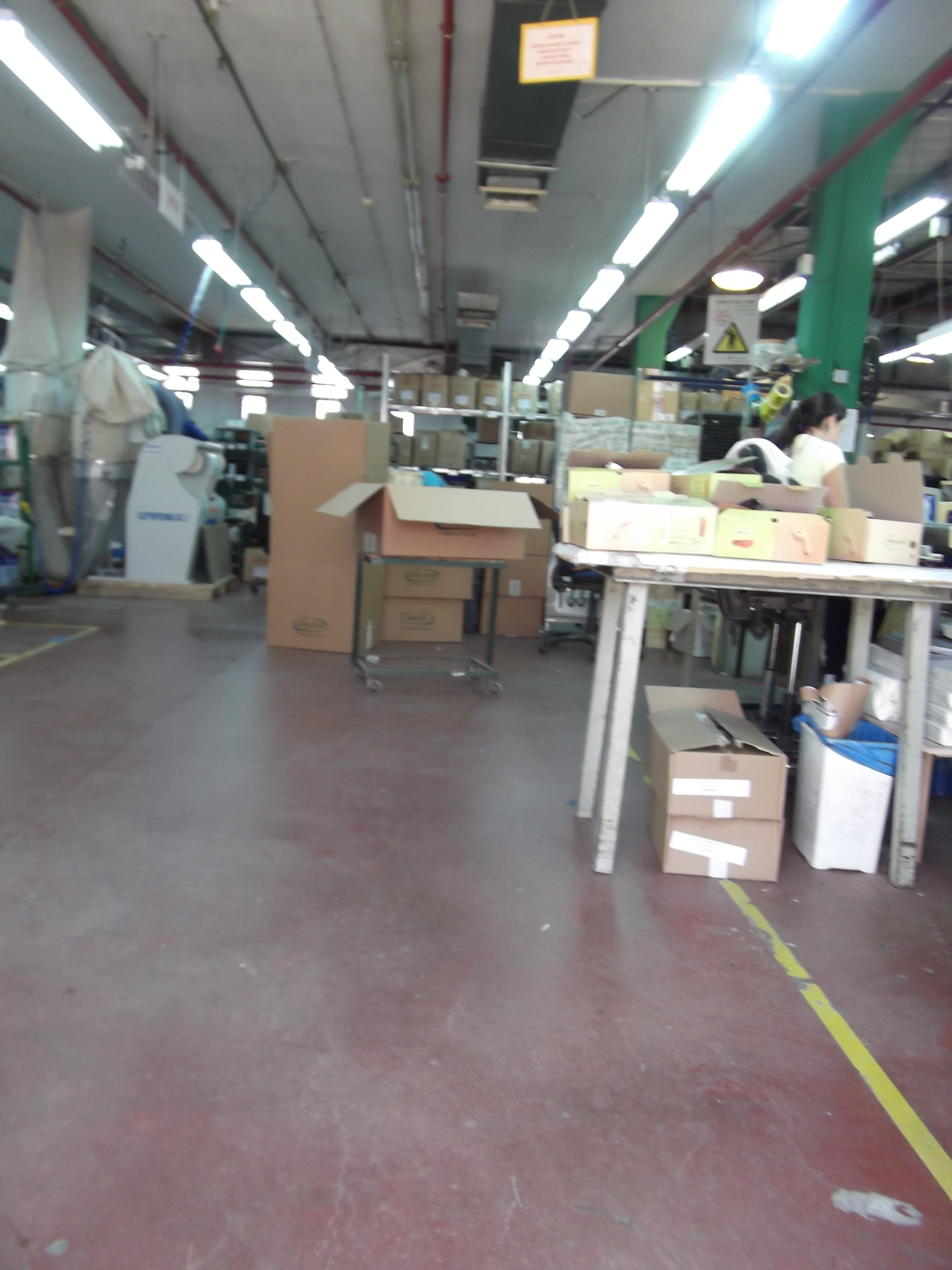
It was a lovely day and the shoe selections were also good. I was not looking for shoes so I browsed and then took my browsing skills outside. I wanted to look inside the factory but only one door was open. The entry was filled with boxes so there wasn’t much to see. I decided to play it sneaky and followed a forklift. He headed for the other entrance, one blocked with those thick plastic flaps, and I attempted to get a picture. My efforts weren’t really paid off so I had to slip my camera between the flaps and take a discreet photograph, “point-and-shoot” at it’s truest form. Not a great shot but here it is:

Sneaky picture of the factory floor

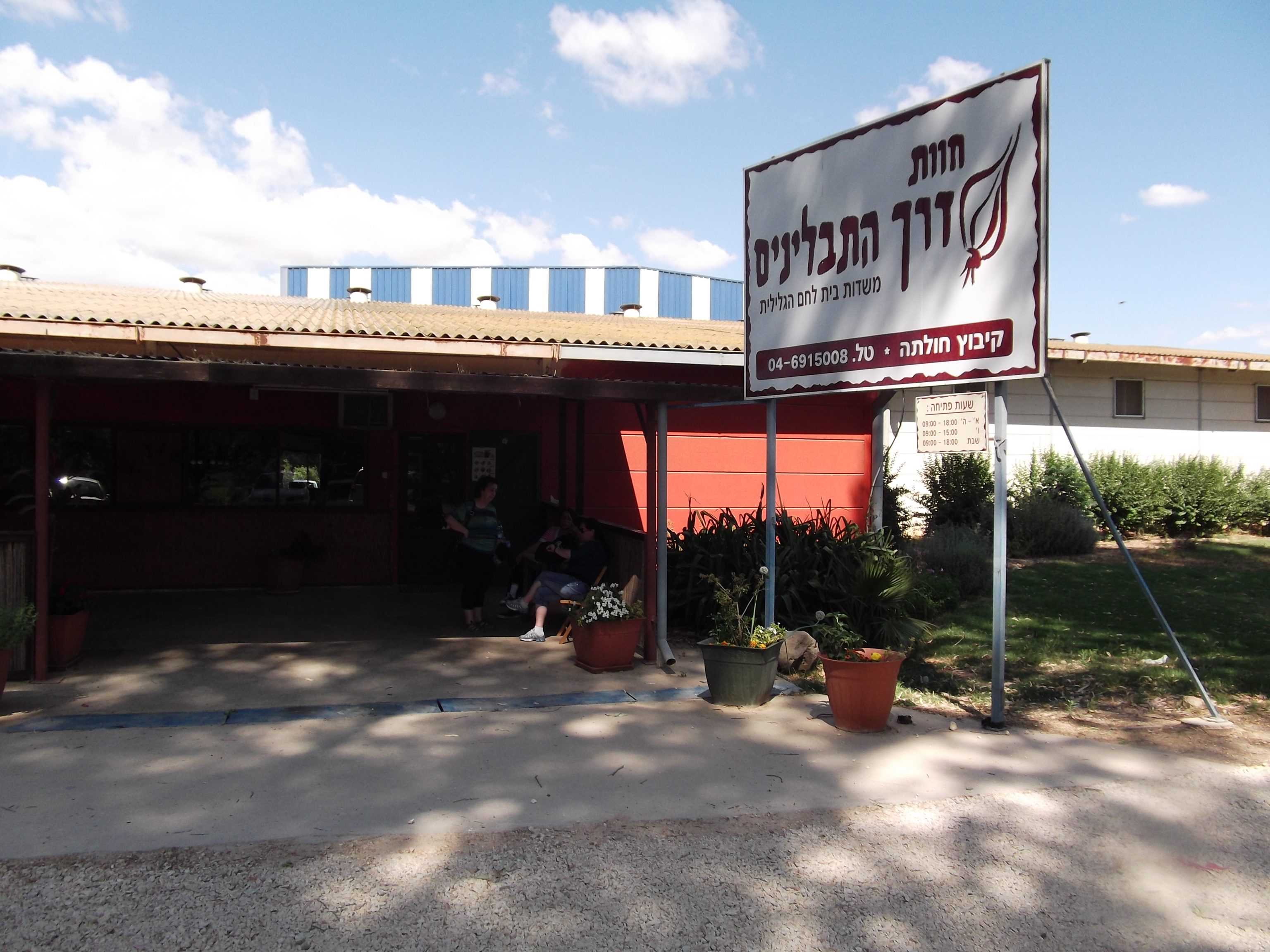
What makes this humble factory so interesting is that Teva Naot is Israel’s biggest exporter. Making over a million pairs of shoes every year, some 3,000 every day, with sales in over 6,000 locations around the world it is a fair chance that you have footwear from this very factory. Teva Naot’s product line includes the iconic Teva sandals, Naot shoes (very similar to Birkenstock) as well as Source sandals – very popular in Israel. Tons of people make their way up north to shop in the factory store, including us. But our adventures didn’t stop at the Teva Naot complex, after we bought the shoes we needed we picked up some advertising cards and saw two interesting sites that were in our return journey’s path. The first one was the low-key Derech HaTavlinim (Spice Trail) store:

The spice store

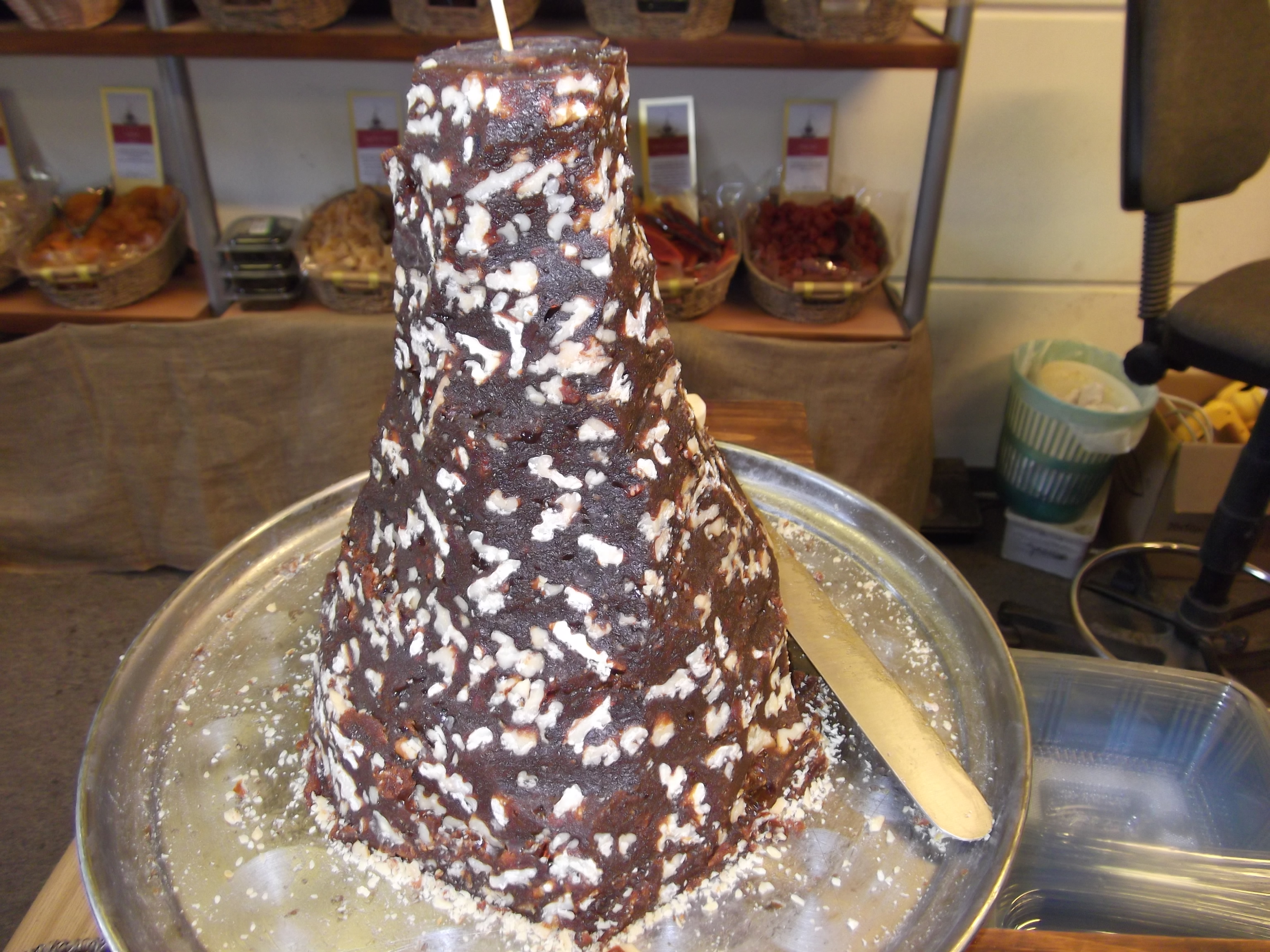
When we entered the store we were greeted by lovely smells and began to look around. We were handed a basket and a marker to properly label the spices we were to pick out. With over 200 types of spices and blends, there was much to see. Some of the most interesting products included the “schwarma” made out of apricot paste and walnuts. The girl behind the counter shaved off some for us to try – I didn’t fancy it too much.

Apricot and walnut ”schwarma”

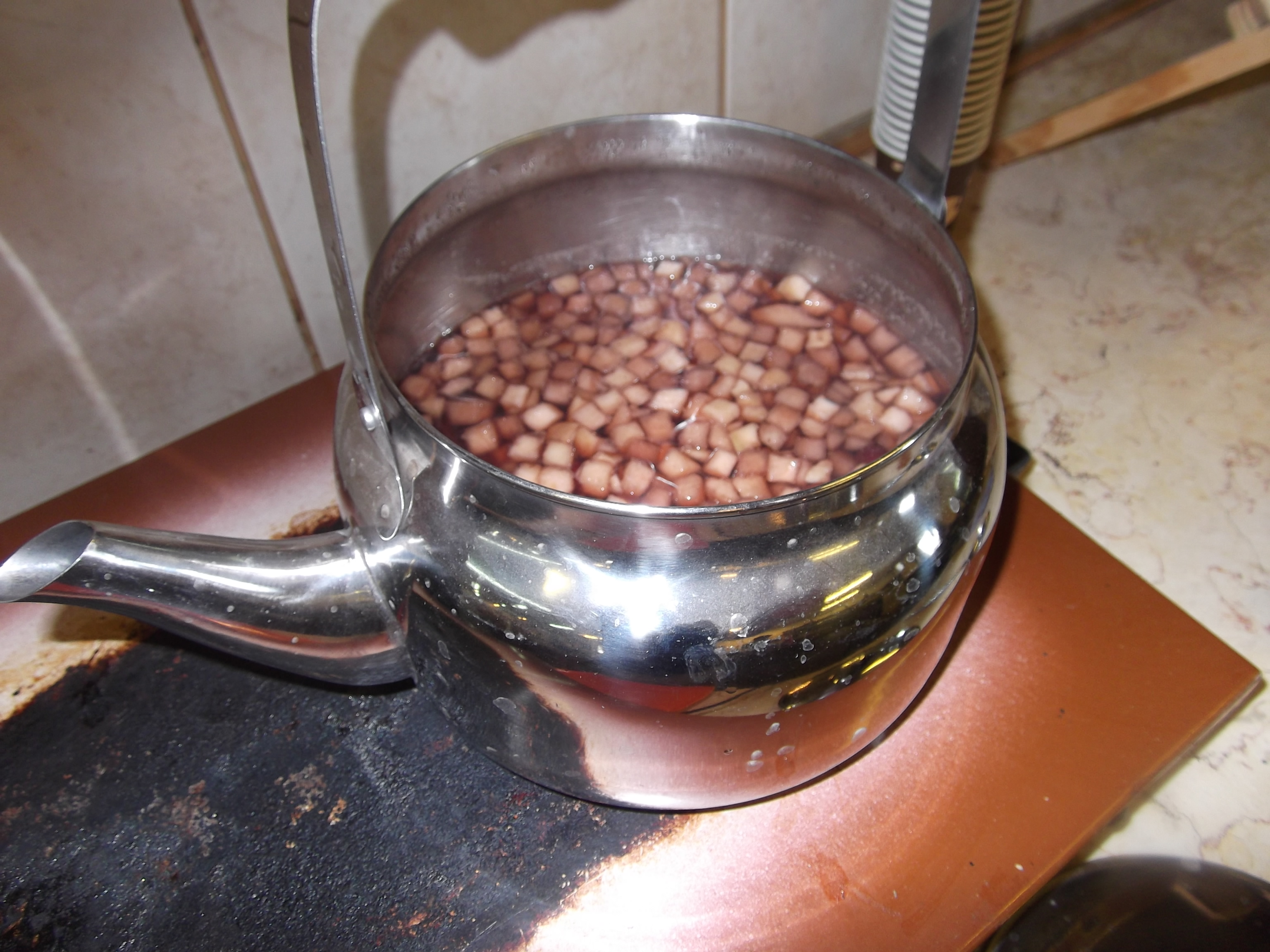
The halva beside the “schwarma” was magnificent – all four varieties: chocolate chip, coffee, vanilla and pistachio. One of the workers approached us with little cups of apple cinnamon tea which smelled delicious. Here is the rest of the tea, just look at those little cubes of dried apple:

Tea for the customers

From the hawaij to the Sicilian onions mix to the assorted fruity teas, there was so much to see, so much to smell. The first thing I sampled from the stock was this very unique black sea salt:

Black sea salt

There was also lemon sea salt and smoked sea salt but the black one was the weirdest to eat. As I stood there I imagined I was eating coal and that amused me. After more tea was drunken and more halva was sampled, we gathered up our purchases and headed out. Our next stop was the Meister Vineyards, of Rosh Pina. As we left the highway and maneuvered through the dirt roads that skirted the vineyard, we approached an interesting cluster of building and equipment. This huge dog was standing guard and greeted us peacefully:

Sentinel

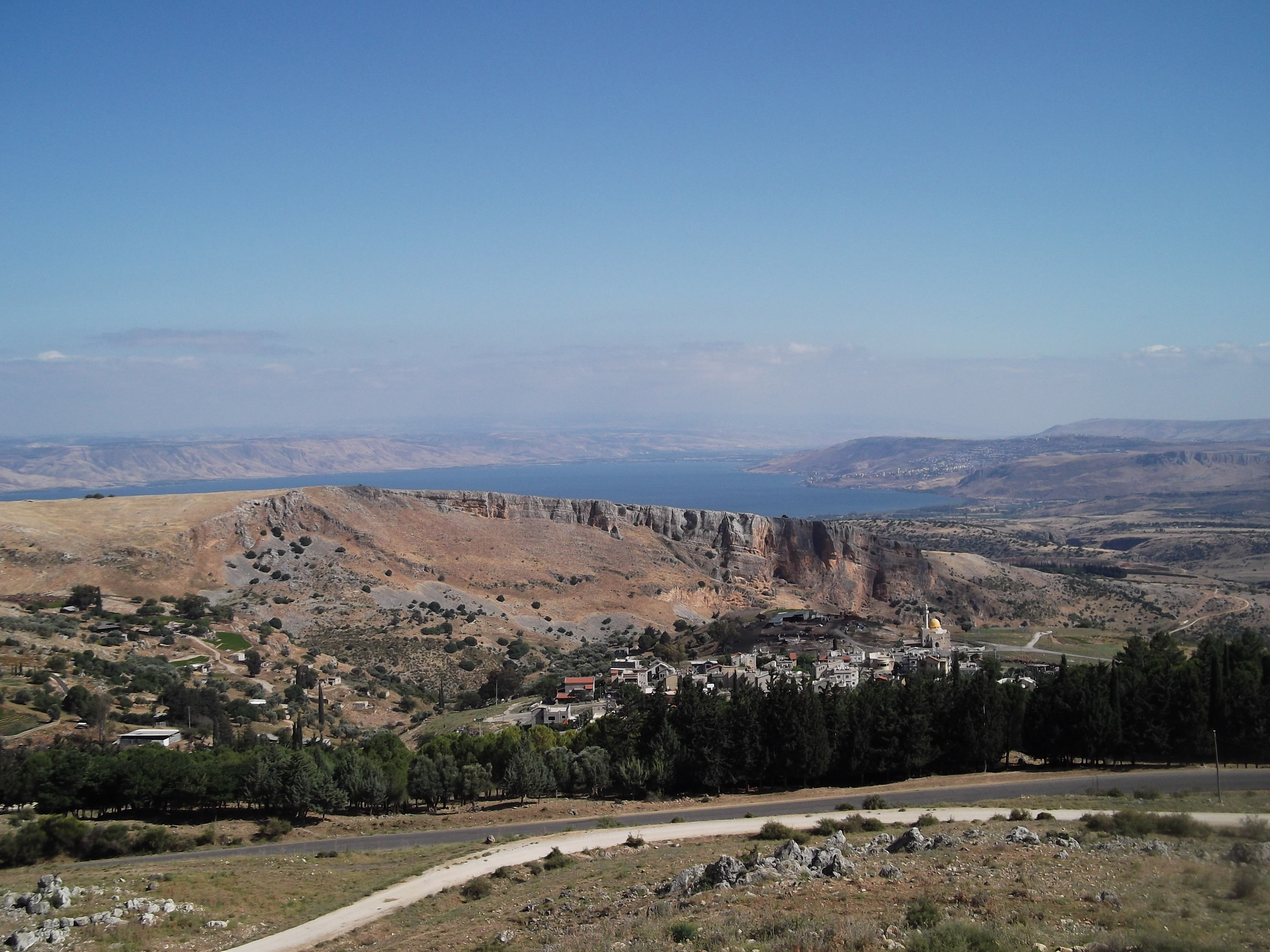
We looked around but the only signs of life were of the canine variety. Apparently they closed prior to our arrival so we had no choice but to turn back. But all was not lost, upon crossing the bridge that connects the vastly different Upper Galilee and Galilee Panhandle, we stopped the car and got out for a look. Here it is, the beautiful Kinneret with the mountains and trees surrounding it:

Looking down at the Kinneret

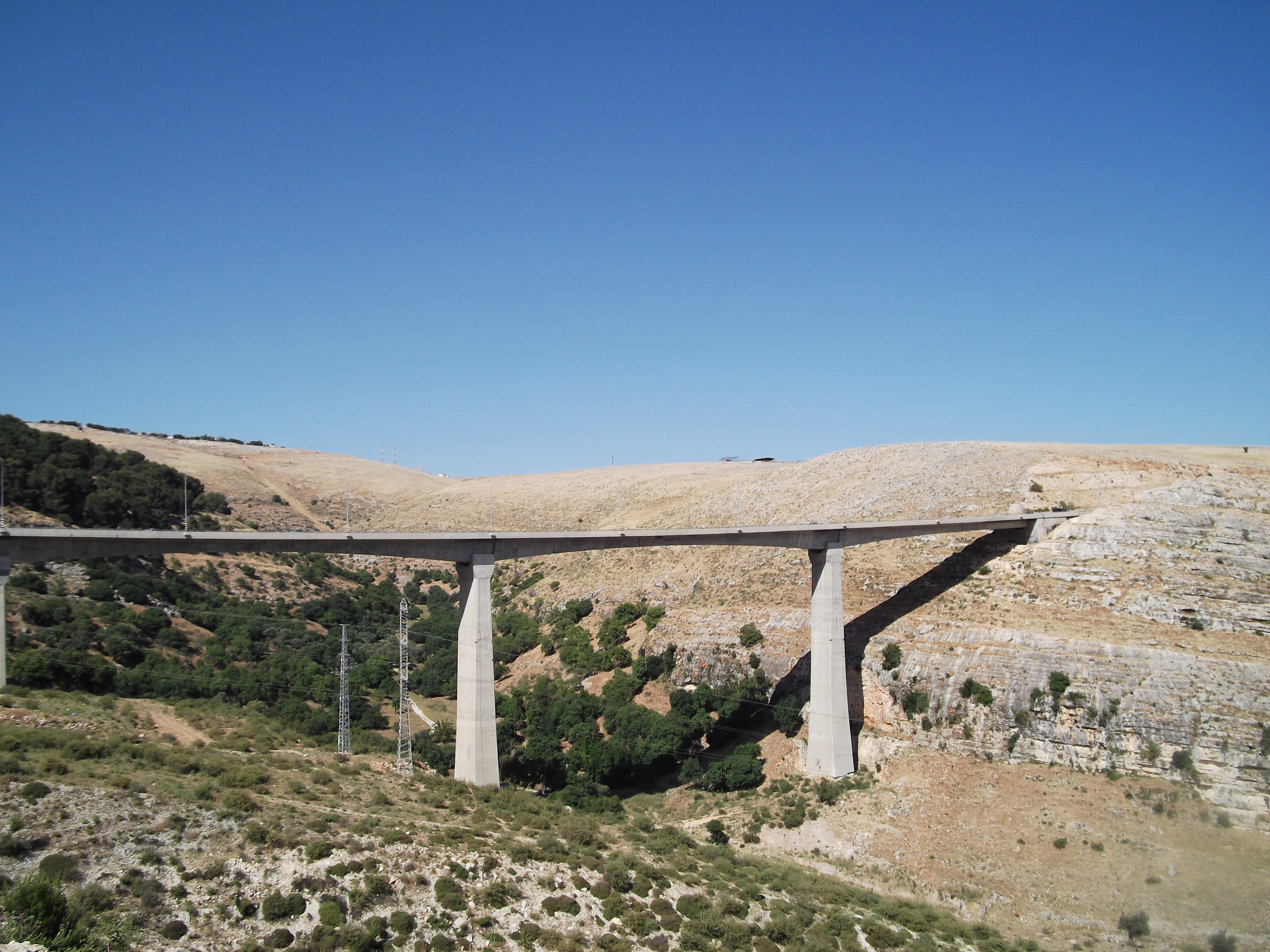
And here is the bridge behind us:

The bridge that spans a change in the land

And of course, a panoramic of the beauty (click to enlarge):

From the golden hills of the Panhandle to the forest near Tzfat

An adventure well done!

Kibbutz Degania

In Galilee, Israel on May 7, 2012 at 4:02 PM

Continuing with the adventures of May 3rd, following a few hours spent at the Hamat Gader resort, this post focuses on Israel’s first kibbutz, Degania. Founded in 1910, the kibbutz celebrated its 100 year anniversary just two years ago. That was the year I first visited Degania, on a Yeshiva trip. So I returned to cover it for Tourist Israel and to catch up on my lacking historical knowledge in regards to the early days of Israel’s rebirth. Here is the first house of Kibbutz Degania where everyone lived together in the early 1910s:

The original first house

My adventures first started at the Gordon House museum where I was greeted with locked doors and nobody around (kind of like a “Twilight Zone” episode). I read online that the museum was open until 3 PM but that website was last updated in 2001 so the information was outdated. I was crushed and decided to find someone who could open the museum for me, at least for a few minutes. At last I found living people and I asked them for help. They gave me a phone number to call and after a confusing conversation the woman agreed to come open the museum for me. I explained that I was a journalist and she gave me a tour, and didn’t even charge me admittance.

One of the Gordon House museum buildings

The most interesting of the three separate exhibitions of the Gordon House was the Natural History exhibit. The others were the History of Kibbutz Degania and the Ancient History of the Lower Kinneret Area. In the Natural History exhibit there are tons of stuffed and preserved animals ranging from birds to snakes and to a leopard skin that once belonged to a leopard which was killed nearby after eating one of local’s sheep. Here is a diorama of the wildlife found in the Lower Kinneret area:

Kinneret diorama

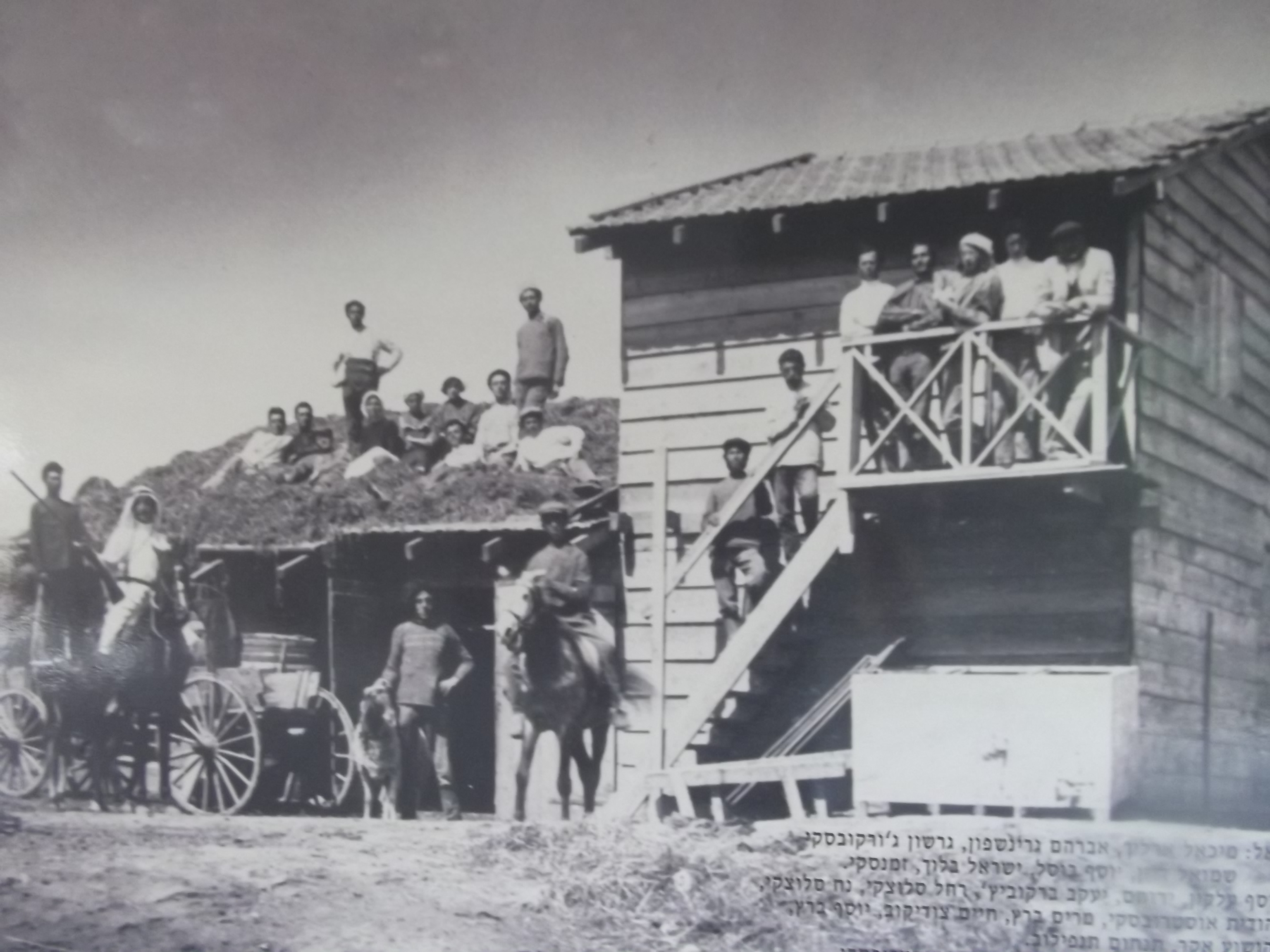
We continued on through the exhibitions, going from building to building. There were all sorts of interesting pictures from the early days when they worked the fields and had guards riding around on donkeys or horses to protect the workers and the crops. At first, in the earliest stage, the kibbutz was just a large house where everyone lived in together (some 10 people or so), a series of small building holding sheep, cows, chickens, supplies and a blacksmith workshop all build in a square and enclosed by a wall and then there was the dining room and kitchen in a separate building. The kitchen area is now converted into another small museum which just covers the history of Degania. Here is an old photo of the early settlers building the stables and cowshed:

Building the stables and cowshed back in the early 1910s

Today, the main house is now an office of sorts (all I saw was lots of paperwork) and the other building which once hosted livestock now contain various other offices and even a nice light restaurant. I had a few minutes until I had to find my bus out on the main road so I went in and bought a Coke, in a glass bottle. I sat outside and sipped, batting flies away as I listened to two couples (one local, one tourists from Spain) and their cheery banter. It was a lovely place to sit and relax and I was reluctant to leave. But the bus waits for no man so I gathered up my belongings and bid farewell. On my way out of the kibbutz I took this picture, the old farm equipment which once conquered the land now rests on display, the would-be rusty parts now decorated with paint:

Old farm machinery

I then exited the kibbutz and sat down at the bus stop across the road. It was a hot afternoon and the flies seemed to swarm relentlessly. The cars and trucks whizzed by and a young corporal sat down across from me, her large suitcase gleaming in the sun. I asked her if she too was headed for Teverya (Tiberias) and she was. Her reply was in English and before long I was privy to the facts that she was Canadian, a lone soldier and living here in Kibbutz Degania, not far from the original “plaza.”  Eventually our bus came and we parted ways, I headed for Tzfat and she for her army base down in the Negev. It was a long and quite enjoyable day but I was pleased to finally arrive home.

Hamat Gader

In Golan, Israel on May 6, 2012 at 11:44 AM

The morning of May 3rd started at 4:45 AM for me. I was to embark on a trip to the far side of the Kinneret (also known as Sea of Galilee) for some fun in Hamat Gader and Degania, covering them for Tourist Israel. Hamat Gader, the subject of this post, is a remarkable place encompassing thermo-mineral springs, a crocodile farm, parrot shows and other interesting attractions. After travelling to and through Tzfat and Teverya (Tiberias), using three separate bus companies, I finally made it to Hamat Gader. It was just about 10:00 AM and I headed straight for the crocodile farm.

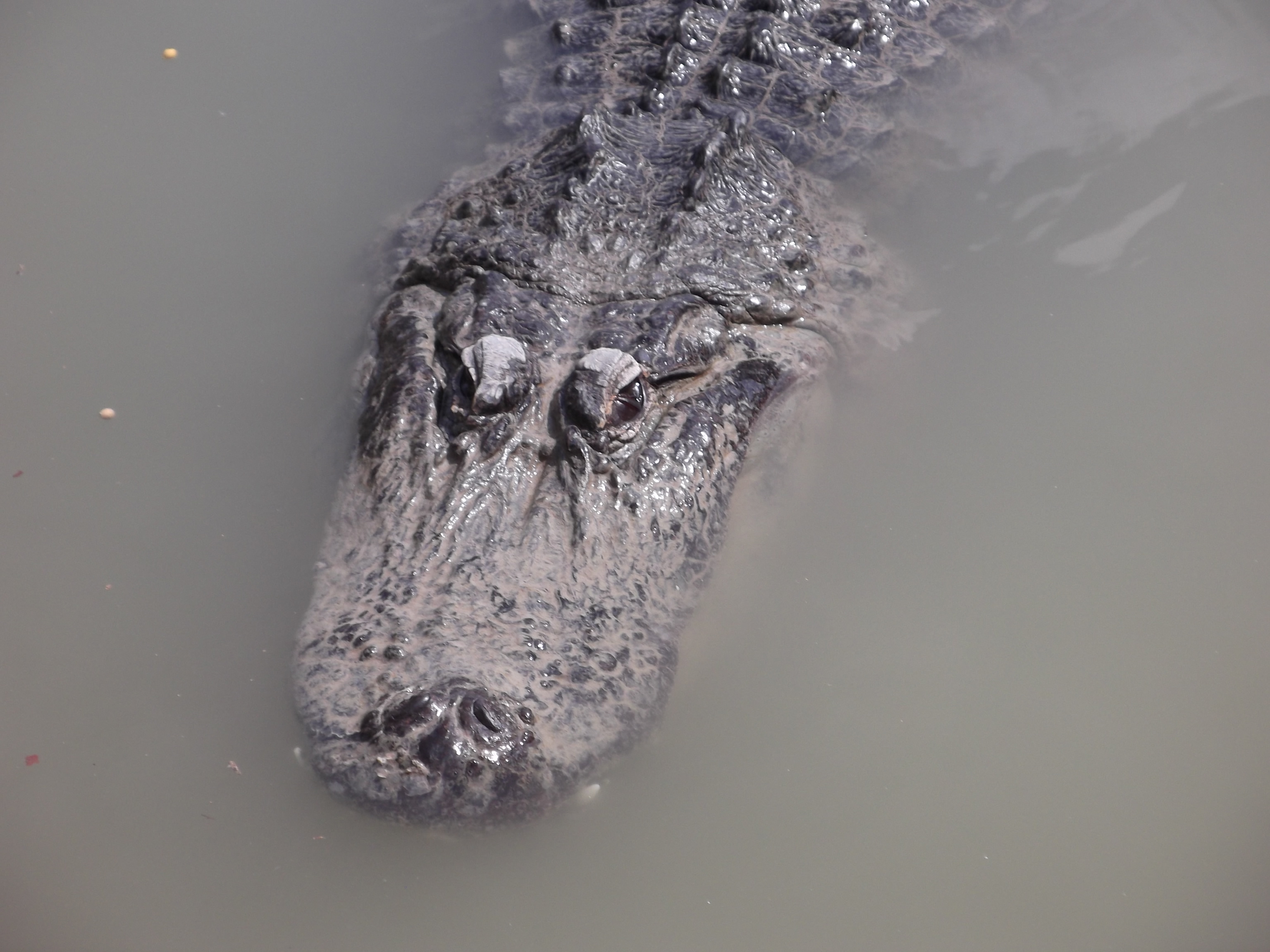
American Alligator

But before the crocodiles, alligators and the endangered Indian gharial were in view, a small petting zoo and mini wildlife preserve were to be seen. I browsed through the selection, giving each species a minute of my time. From the olive baboons to the meerkats, from the small herd of Indian axis deer (chital) to the 8-metre/26-foot long reticulated python named Monica, I saw them all. There were even some hideous Madagascar hissing cockroaches, which hiss by forcing gas through breathing pores in their bodies, for those that find them to be interesting (not me). I made a mental note to be in the vicinity for the parrot performances which were called for 11:00. Then I found the alligators and crocodiles. They were tons of them, about 200 in all if the listed numbers are correct. Hamat Gader has the largest crocodile farm in all of the Middle East (I guess that Egypt is either considered Africa or they don’t keep farms).

Alligators sunning

After exploring the whole crocodile farm, from the segregated areas for the young Nile crocodiles to the wide open areas for the grown-up alligators (above), I made my way through the small aviary and to the parrot show. The music was too loud but the show was entertaining. The trainer introduced the parrots, macaws and whatever else they were to us and they performed various tricks. It was hard getting good pictures of the parrots at work but here is one of a macaw riding a tricycle:

Macaw riding a tricycle

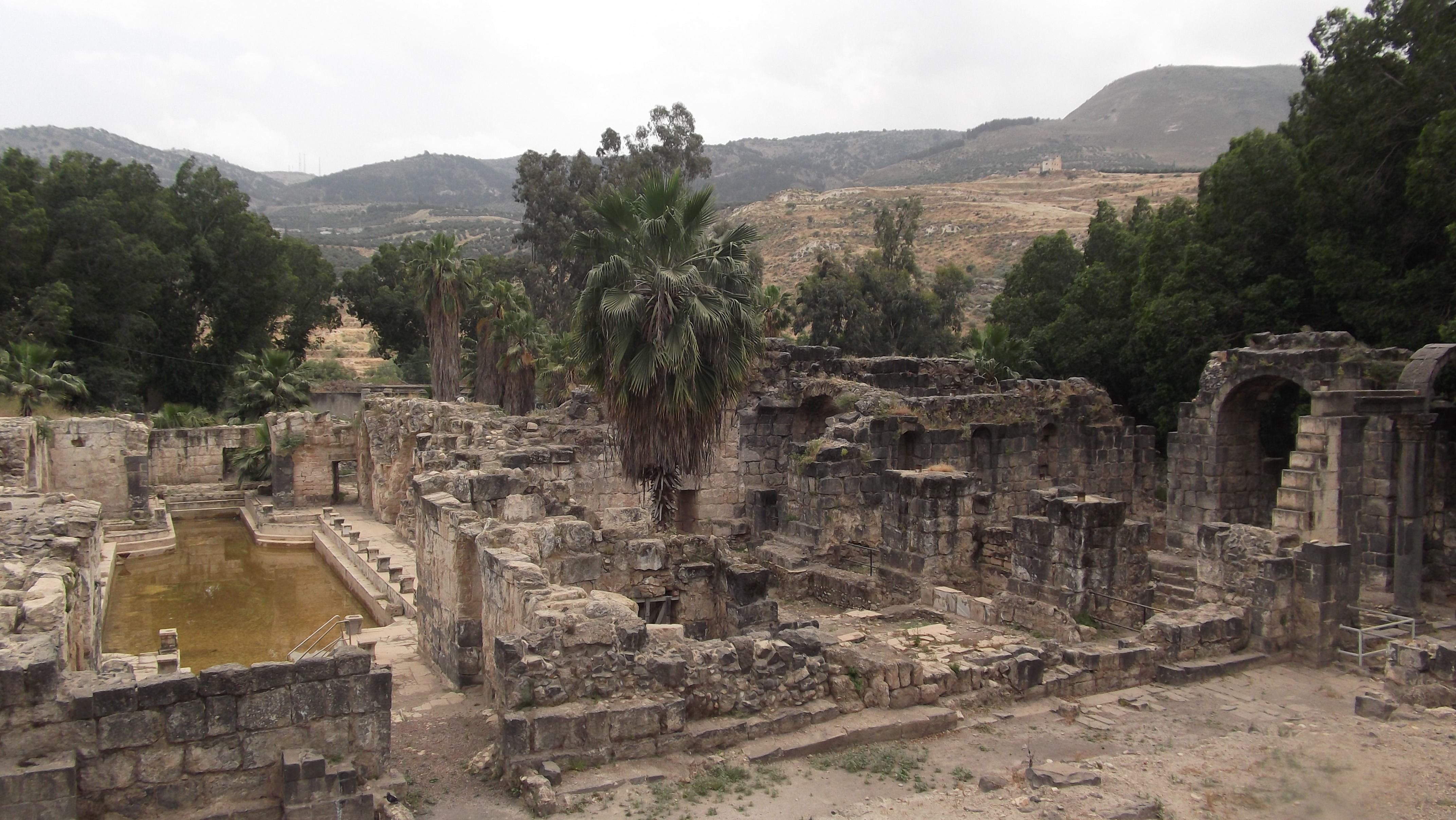
The tricks were more interesting than the parrots speaking which, to be honest, sounded pretty bad through the mic, but the show was a fun 15 minutes of parrot antics. After the show I meandered around, taking a few pictures of the partially collapsed Roman amphitheatre and the picnic grounds with the lovely blooming flora. From there I headed to the highlight of the attraction, the hot thermal springs. The Hamat Gader resort is situated in a little valley between the Golan mountains and Jordan’s mountains over the Syrian-African rift where a volcanic history has developed into a whole bunch of hot mineral springs which gush an outstanding 600 cubic metres of water every hour. These springs have been exploited since Roman times when they too created a resort of such as can be seen today on the way to the springs:

Ruins of the Roman hot springs

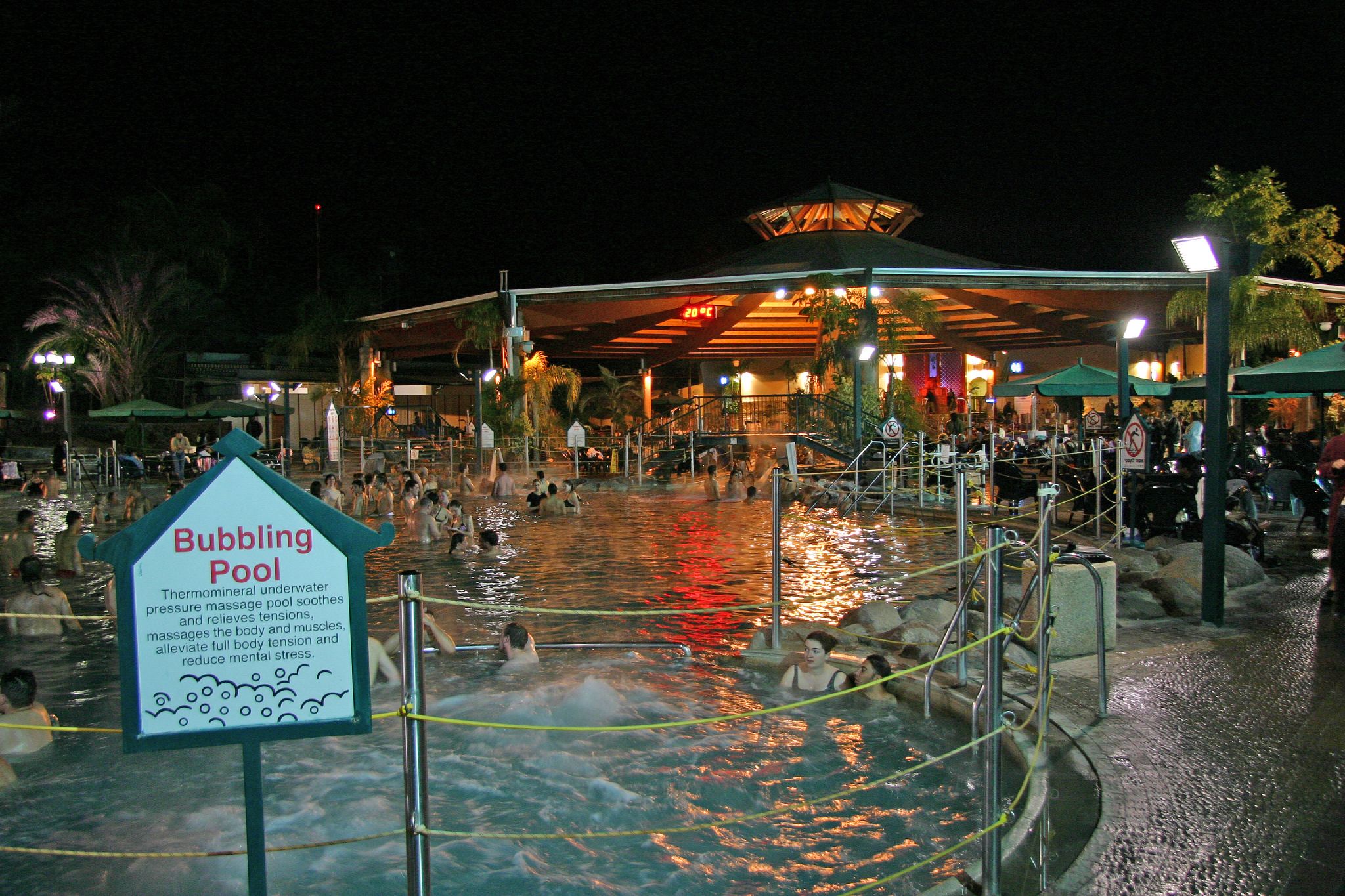
The springs itself are divided up into a bunch of separate pools, some in the sun, some shaded and some indoors. When I got a locker and put on my bathing shorts I headed first for the indoor one. It was so hot I couldn’t believe people actually liked going in. I’m not sure, the water is either 42 or 52 degrees Celsius (108 or 125 degrees Farenheit) – either way, there was a warning on the wall not to exceed ten minutes in the water at once. I stayed about seven and then fled (is that what lobsters feel like?). The outdoor sunny pool was a cooler temperature but still a hot thermal spring. I eventually made my way to the shaded section and sat comfortably with one of the jets attacking my back. For those who have never been around thermal springs, they smell really strange (borderline bad) but eventually I got used to the odor. I didn’t really get a good photo of the pools so I had to find this one on Flickr, I know its a nighttime shot but it still gives an accurate description of the area.

Hamat Gader thermal pool at night (courtesy of InfinitelyDigital on Flickr)

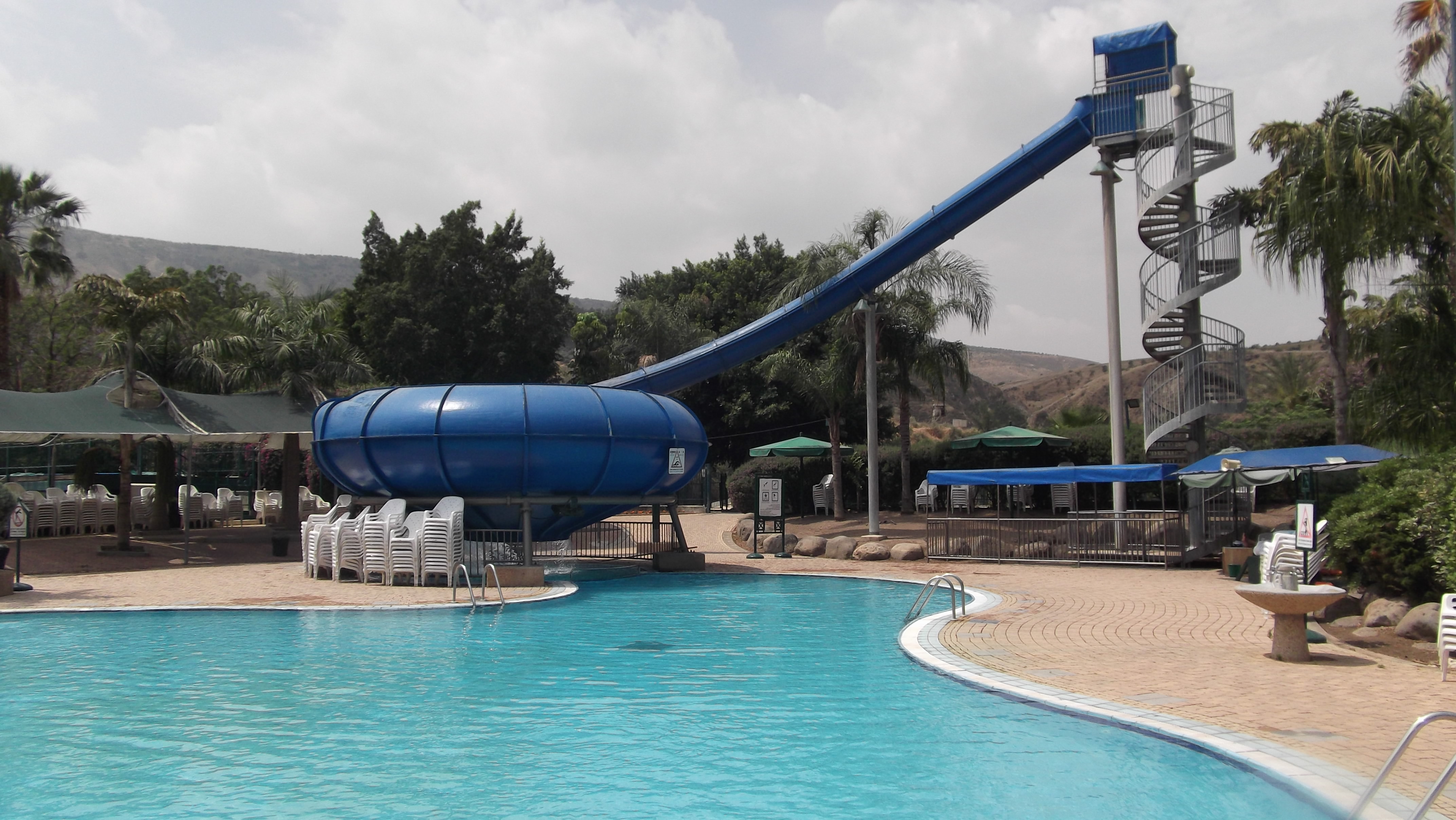
After enough soaking in the hot thermal waters I walked on over to the “Splash” pool, taking an interestingly placed elevator. The most noticeable part of the “Splash” pool in the huge blue waterslide. I read the sign, removed my glasses and began to ascend. The lifeguard asked me if I swim and I assured him that I do. When I got to the top of the 30-foot (or more) slide I braced myself and plunged into the dark tunnel, the water rapidly propelling me downward. At first it was fun but then I went sailing into the air. I couldn’t imagine why I’d be sailing in a tunnel but when I landed I was in a circular watery funnel, trying my best to first breathe and then position myself for the inevitable drop, or “Splash.” But I didn’t have enough time to position myself and I was unceremoniously dumped into the deep water pit. The whole latter part of the ride took me off-guard so I must have looked like an idiot as I surfaced and tried to make my way out. I asked the lifeguard if I looked like an idiot and he said “Yes.” Jeez.

“Splash” water slide

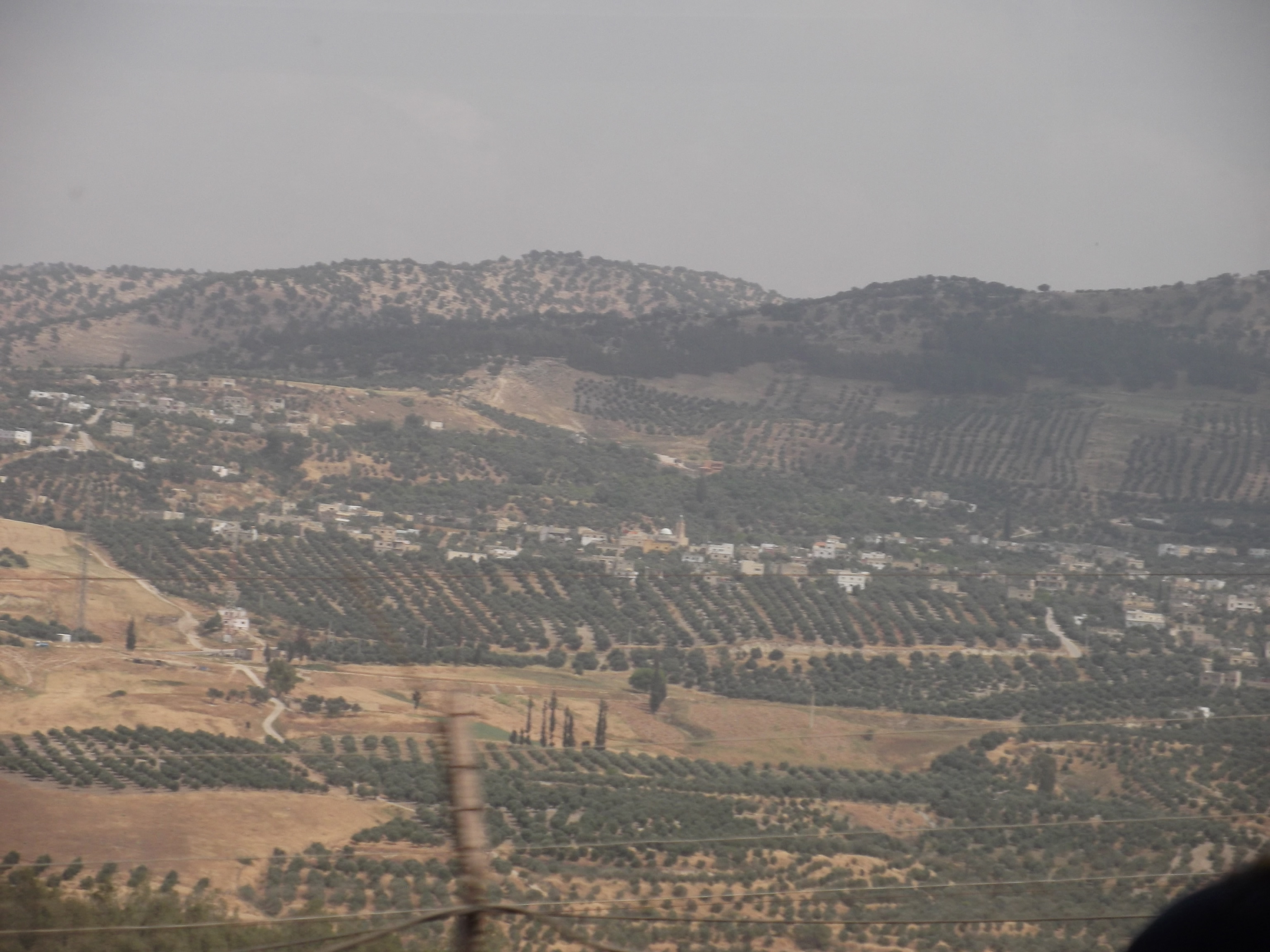
I could have gone on again, now knowing what was to be, but once was enough and I languished in the shallows as other people plummeted down the slide. Once I had seen all and done all in the Hamat Gader resort I was ready to move onwards, to my next location, Kibbutz Degania. But no, I was stranded until the bus was to leave so I loitered about, fully dressed and drying. When the bus finally did leave Hamat Gader I sat across from some soldiers. With help from one of the soldiers I learned that what we were looking at out our windows was, in fact, Jordan. When I then saw a Jordanian van driving along their border road an odd feeling struck me. Here we are, two wildly different nations and yet we drive side-by-side with just a barbed wire fence between us… and even after so many wars between Israel and Jordan, here we are now, at peace and just living our lives, each and every one of us. It was a slightly profound moment, but I was awoken from my reverie as the bus stopped at Kibbutz Degania.

Snapshot of Jordan from the bus window

To be continued…

Shavei Tzion

In Galilee, Israel on April 29, 2012 at 3:27 PM

Today’s adventures landed us in the small, old moshav of Shavei Tzion, just minutes from Nahariya. We were headed for Regba, a shopping centre where we usually find clothes, and decided to visit the Mediterranean Sea briefly. We drove through Shavei Tzion and got out of the car to walk along the beach, pretty sure this was all we were going to do there. But we were wrong, we ended up finding all sorts of interesting things! But first, the beach:

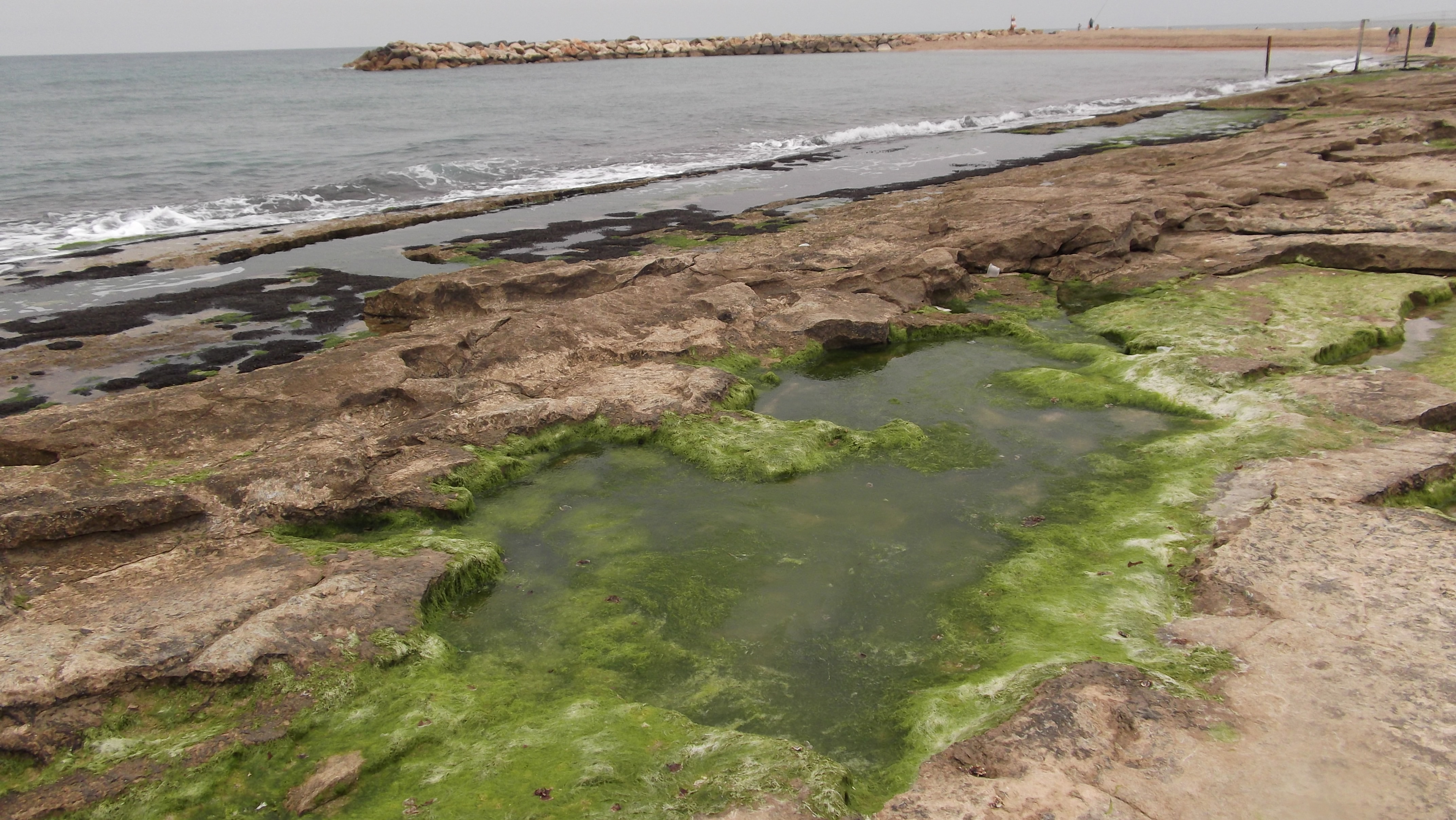
Interesting beach

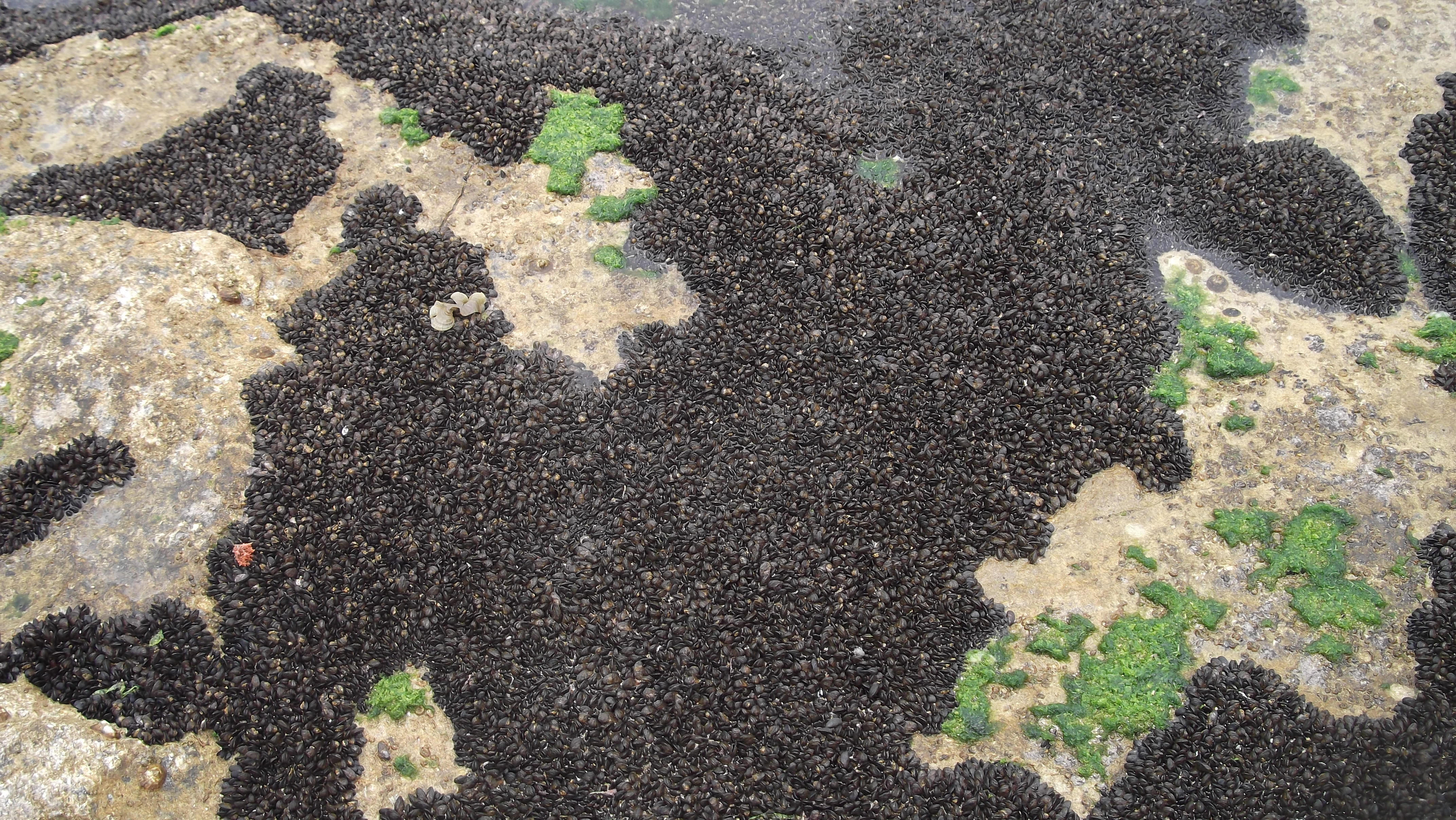
Tiny shellfish

To find the reported mosaic excavation which we had read about some months back, we had to leave the beach and ask around. After questioning a bunch of people, and getting wildly conflicting answers, we finally were pointed in the right direction. It was to be found along the beach, 100 metres or so from the waterline and just a little further north than where we parked originally. Returning to the beach, we walked along a very nice path, the sandy area blossoming with wildflowers:

Wildflowers at the beach

At last we found the mosaic, a reconstruction of what once was a Byzantine church built some 1,500 years ago. The mosaics were uncovered and reconstructed in 1955 and to this day remain open and unguarded.

Restored mosaic part

Close-up of the restored mosaic

And there were other levels of the old church, apparently built in two stages, which were in a greater state of disrepair. Here is a photo, the weeds fighting for space among the tiny colourful stones:

Mosaic ruins

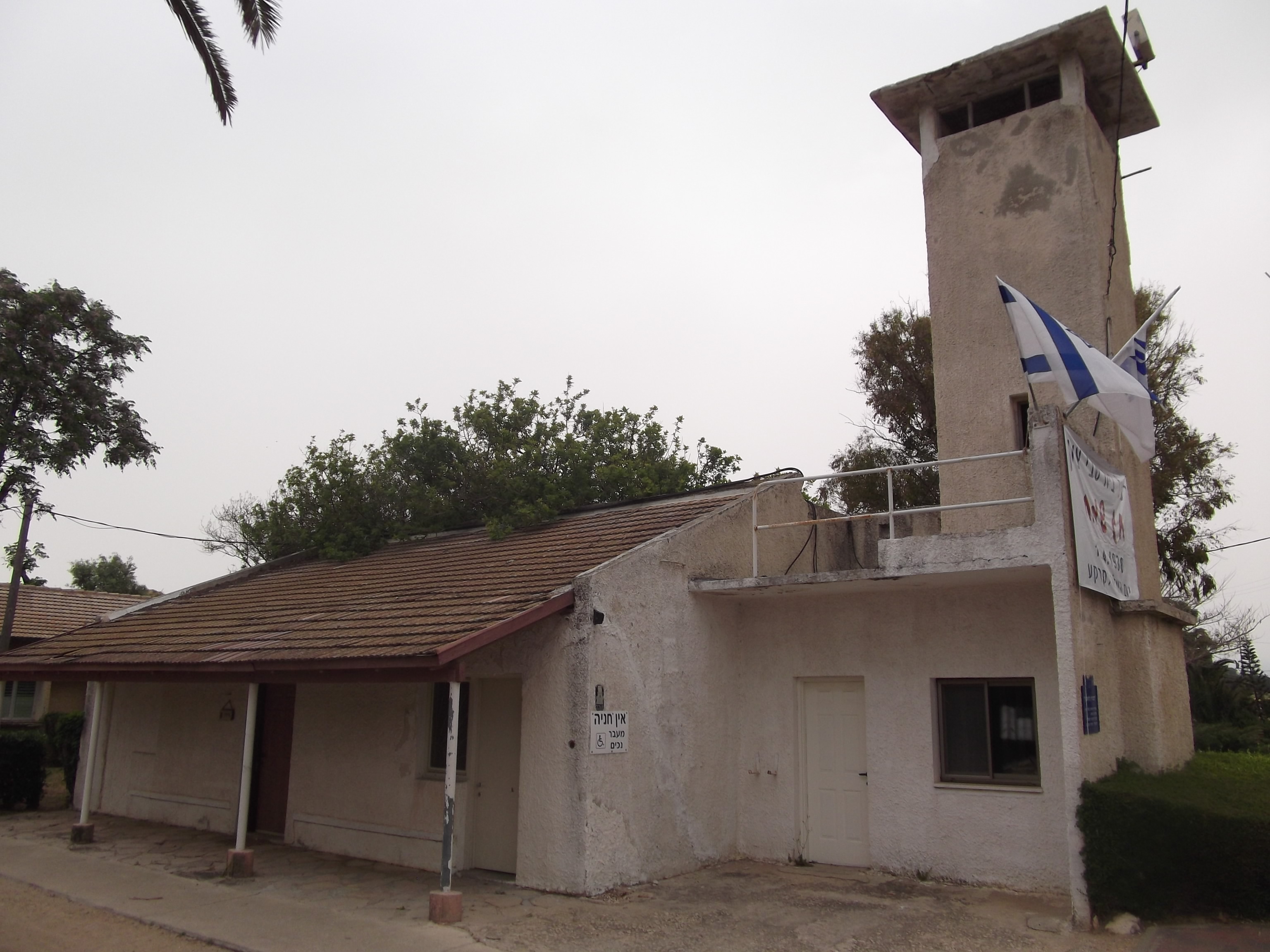
After we picked through the wildflowers and examined the stone mosaics, we got back into the car and headed out of the moshav. On the way we stopped so that I could take a picture of Shavei Tzion’s first building – a guard tower, which is now used for storing local archives:

The archives building

As I examined the building from the outside I saw an elderly man reading a piece of mail. I approached him and asked if the building was now a museum of sorts. He answered that the building now held the archives of the moshav and if I wanted, he could open it up and show me around. I had no idea what to expect but usually good things come to those inquisitive and patient so I waved the car over and introduced the old man, Uri Gefen, to my family. He opened one of the doors and showed us the old photographs and the old maps of the moshav. He explained to us that Shavei Tzion was founded by a group of Jews who fled from Rexingen, Germany during the turmoils of Europe in those days. The brave group established the collective moshav in 1938, just minutes away from another German settlement, that which is Nahariya. Uri Gefen went on to tell us how he came to Israel back in 1943. He was a child in Poland and when the Russians conquered his area, he and other children fled south to Uzbekistan and Afghanistan. They then made it to Tehran, Iran and were therefore known as the “Tehran Children.” Leaving Iran they travelled the Indian Ocean until the made their way up the Red Sea and to the Suez Canal. From there they took a train through Sinai and made it to the Holy Land, safe and sound. In today’s world, such a long and winding journey would be ridiculous – after all, Israel just a flight or two away from everywhere!

Uri Gefen, the local archiver

Uri Gefen told us something fascinating that I must share. As I mentioned earlier, the Jewish settlers of Shavei Tzion were from the German city of Rexingen, they lived there for hundreds of years, among the local Christian population. During one of the Crusades, many of Rexingen’s Christians headed south to the Holy Land to free it from the hands of the Muslims, as everybody knows. Not every Crusader came back, many fell in battle and many left marks wherever they went. Fast-forward to the 20th Century when the Jewish inhabitants of Rexingen headed south to the Holy Land, to settle it, they found themselves in the Galil, an area much influenced by the Crusaders so many years ago. During excavations, the Jews previously of Rexingen found Crusader ruins and remains, and those Crusaders were from none other than Rexingen as well! “The finger of G-d,” said Uri Gefen. I’m inclined to agree.

After much talk we bid the helpful archiver farewell, thanking him over and over for his interesting insights into the history of Shavei Tzion. But before we left, we stopped at the old Bet Knesset (Synagogue) – a building duplicated from the settlers’ counterpart back in Germany. Sadly the door was locked… but redemption came in the words of an Arab cleaning woman. She told us where to find the keys and then reminded us that we needed to return them when we were done. We assured her we would and opened the synagogue. Here is what we saw, definitely of Germanic design:

Bet Knesset (Synagogue)

It was an amazing little trip, from the raw beauty of the beach to the poignant stories from the archiver, but the clock was ticking and we had shopping to do. We got into our car and drove away… but as new people, with new thoughts and perspectives on the incredible miracles that have happened throughout the generations.

Namer Caves

In Galilee, Israel on April 24, 2012 at 2:22 PM

This morning my father and I took a trip to the Namer Caves, just a short distance from Keshet Cave (covered twice now in this blog). The Namer Caves and the Namer Stream are named “namer” (Hebrew for “tiger”) due to the numerous stories of tigers roaming the area back in the early 1900s. We parked at the lower parking area for the nearby Keshet Cave and slipped into the wooded hillside on the opposite side of the Namer Caves. The trail down was marked in green and it headed for the dry Namer Stream (also known as Wadi Namer). The walk down was pretty but we were walking in the wrong direction, the trail markings not guiding us the right way.

One of the caves, but not the one we were headed to

At some point walking downhill we noticed a strange white man-made structure off in the distance on the riverbed. I suggested it was a tent but when we finally hit rock-bottom and we walked along the river, still headed the wrong way but following the trail markers, we saw what it was. Scattered over the riverbed were crushed cars, a bunch of them, some in worse shape than others but all were old and abandoned. We didn’t, and still don’t, know why they are there or from whence they came, but here is one of them:

One of the crushed cars

Whilst walking we realised that we were heading further and further from where we wanted to be, so we took a left swing and started up the mountain. For some reason there was a trail marking indicating that we had stumbled into a valid trail but we soon lost the “official” trail and began to do our own trailblazing. The hike uphill wasn’t too bad – except when I grabbed a slim tree trunk and felt unseen thorns entering and exiting my skin. I gave a gasp and examined my hand, sure to find beads of crimson blood, but there was none. Eventually, we reached the ridge of the mountain alongside the one with the caves, opposite of where the car was parked.

Looking East from the mountain ridge

It was beautiful, breezy and fun walking along the ridge, making our way to the caves. My father repeated “Trails are overrated” several times and we just happened to see another, faded, trail marker. I’m not sure if they changed the trail’s route but where we were looked very unmarked. There were rustlings in the bushes and birds of prey, eagles and kestrels, wheeling both above us and below, predatory eyes hunting the riverbed.

Making our way through the rocks

At last we reached a place where we could see the caves, their wide mouths gaping open. We tried to map out a way to the caves, with little luck.

Trying to descend to the caves

We ended up turning back a bit and dropping down on the rocks, working carefully from rock to rock. Thankfully, the rock was of a volcanic nature and thus provided sharp edges but incredibly grippy surfaces. Finally, we reached one of the caves:

The cave with the bats

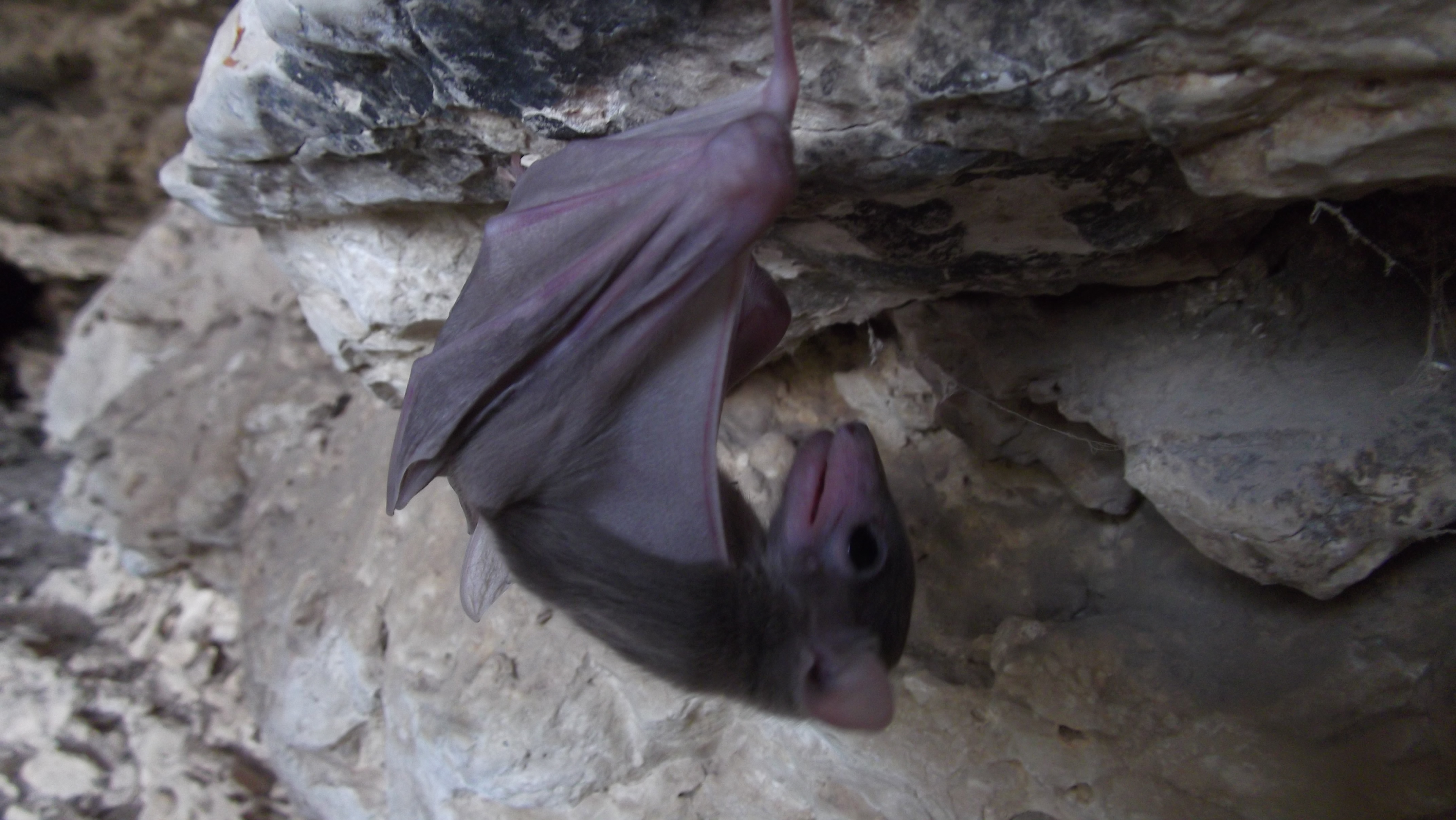
This cave contained fruit bats, lots of them, but historically it was rumoured to be used by Byzantine monks as a place of seclusion – we only saw bats. When we entered the cave the bats began to fly around and make loud noises (for echolocation and communication purposes, no doubt). Here is a short 14-second video of them flying about and “squeaking” (with some human audio thrown in as well):


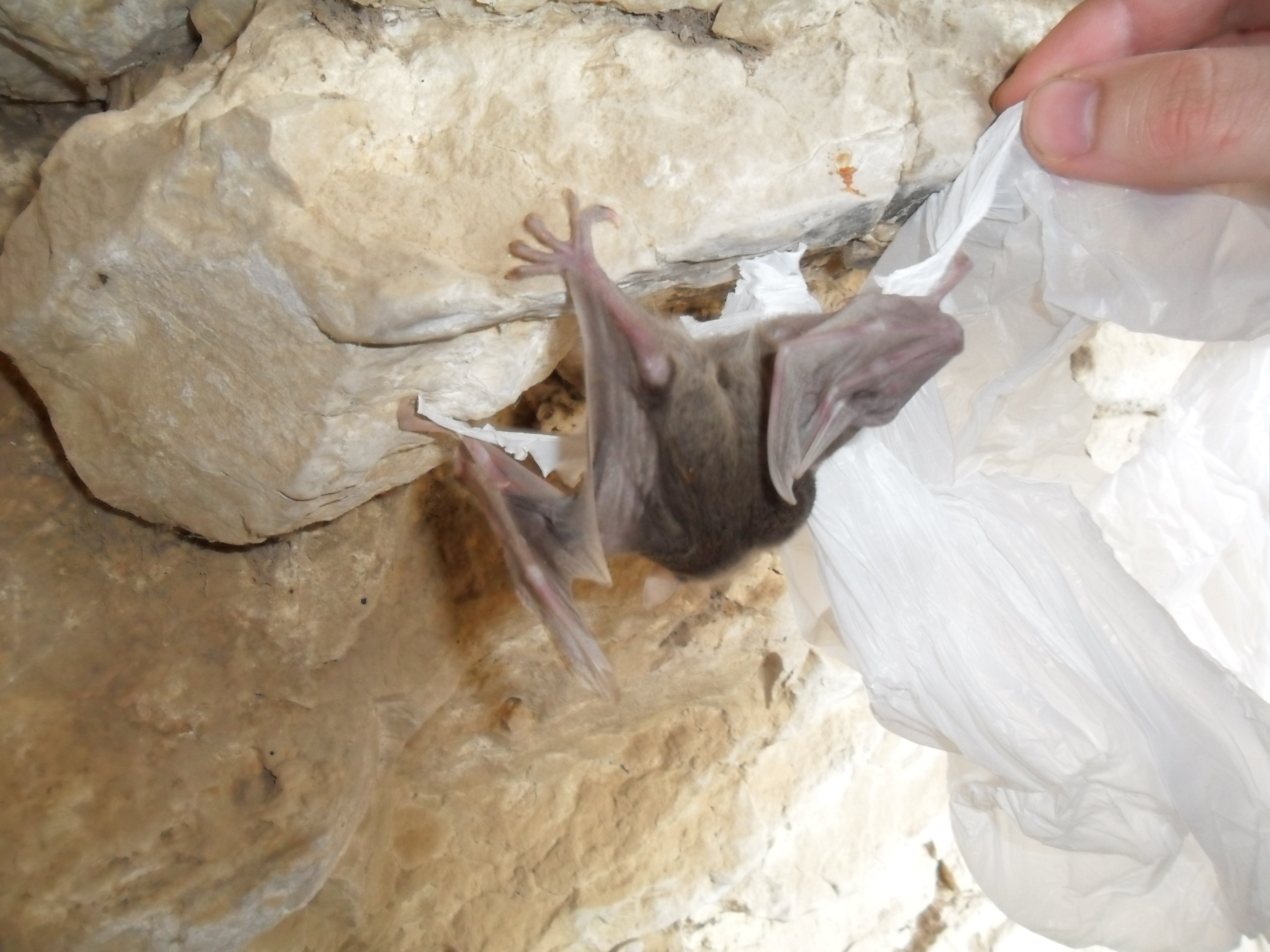
Suddenly one of the baby bats plummeted downward and landed near us, his small furry body shivering and squeaking rapidly. We felt pity and assumed he was going to die where he fell… but he didn’t, and he won’t.

Fallen baby fruit bat

I seized the moment and got a plastic bag out of the backpack. I lifted him up, his wings and feet gathering in the bag (and my fingers) and attempted to release him on a rock overhang. It took some work and some encouragement but before long his little feet and wing claws were fastened to the rock and immediately, his future looked brighter. Here are some pictures of the rescue operation:

Putting the baby fruit bat back on a bat-surface

Baby fruit bat awaiting its mother

There was a flurry of wings and his mother, I presume, flew right past him. She was homing in on the baby’s squeaks and made repeated passes until she pinpointed his location. In a valiant swoop she found the baby and grabbed the wall below it. She hustled the baby onto her stomach and, once the baby was secure, took flight and returned to her roost at the cave ceiling. I saved a bat – does that make me Batman?

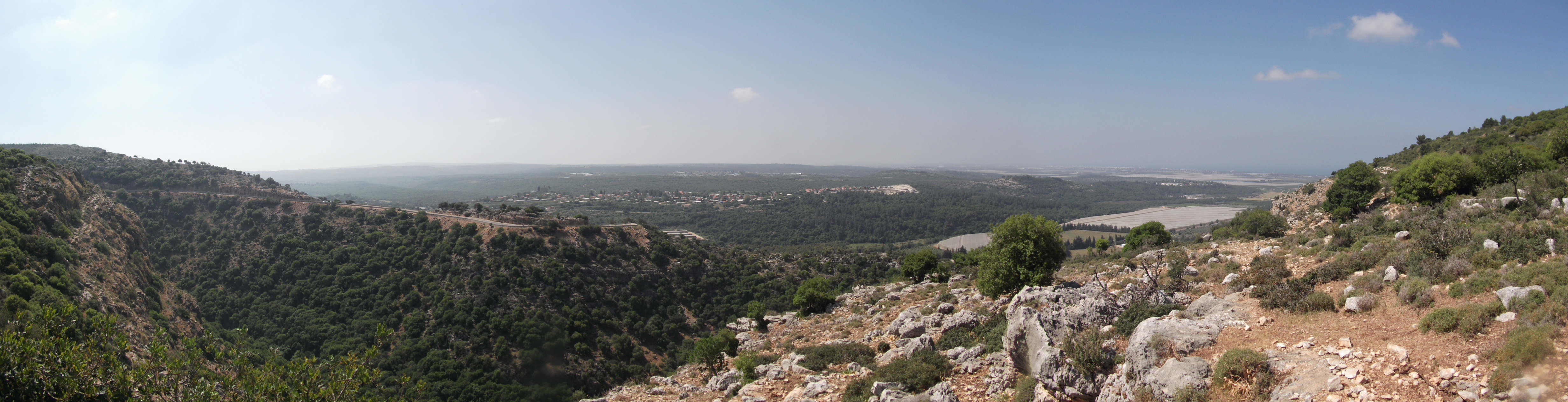
After more cave exploration and not finding anything else interesting, definitely not the stalagmites and stalactites that were supposed to be in the Namer Caves, we headed back down the mountain/cliff. We reached the river and began our tedious, rocking-hugging ascent to the road. Once we did that, and I finished the last of my water, we began the walk back to the car, having made a huge circle – going up and down mountains most of the time. We reached the car and helped a couple from Beit Shemesh figure their Keshet Cave trip out. But, before this blog post ends, here are two panoramics of the lovely scenery: The first is from the road looking at the bold cliff face that we walked over heading to the caves on the left side of the far mountain. The second was taking from the ridge right above/beside the bat cave, looking at the road and the lovely Western Galilee (click to enlarge).

Panoramic of the cliff face

Panoramic from the cave cliff

Next time I do hope I find the cave with the stalagmites and stalactites!

Pesach (Part 2)

In Galilee, Israel on April 16, 2012 at 9:30 AM

Continuing with the festivities of Passover (Pesach), here is a brief account of Wednesday – our last trip day:

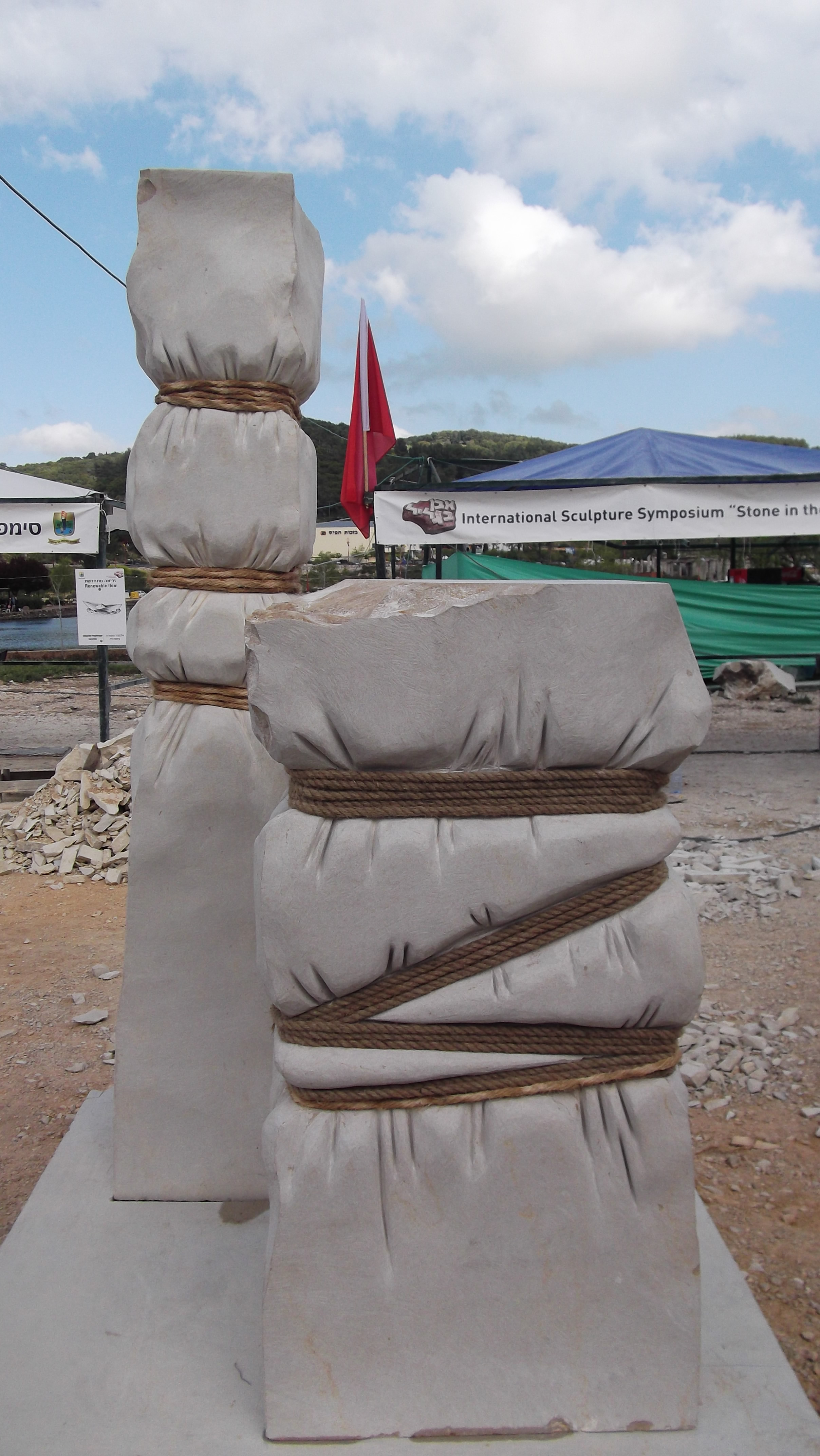
The morning started pleasantly enough but then the clouds rolled in from the West and the rain began to pitter-patter. Our hopes of making it to the last day of the Ma’alot Stone in the Galilee Symposium were seemingly dashed. The much-anticipated Ehud Banai concert was also hanging in limbo… But then the rain stopped and the sun came back out. The concert was already rescheduled to be held at the Heichal Tarbut of Ma’alot – that same beautiful performance hall that hosted the Lahakat Droz and Dudu Tassa concerts that I wrote about some time back (here). We drove down to the lake and found that the festivities were somewhat closed down and although the sculptures were finished and standing erect for inspection and approval, the long line of boothes that wrapped partway around the lake were mostly closed and abandoned. So we examined the sculptures.

''Cyclic Growth'' by Annabella Claudia Hofman (Italy)

I cannot make up my mind as to which sculpture appealed to me the most – every year I seem to have the same problem. Some of them are downright dastardly, but there are always a few that I like, at least marginally. Here is another sculpture worth mentioning – this one was the topic of social commentary, the Chinese oppression of the Chinese people:

''Captured Stone'' by Liu Yang (China)

There were other nice sculptures which weren’t adequately captured by my camera including a pomegranate/grenade (the same word in Hebrew) and one resembling waterfalls. But there were other areas of the festival beckoning, including the peaceful garden area where picnickers flock:

The peaceful part of Lake Monfort

Of course the paddle-boats and kayaks were in operation, endlessly circling and criss-crossing the placid little lake. But it was in this peaceful section, away from the hum of commercialized vacationing, that we loitered in.

In the gardens area of Lake Monfort

Upon return to the house we ate and got ready for the free concert of Ehud Banai which was to start at 8:00 PM, he-who-comes-first-gets-in-until-capacity-style. We drove down at about 8:15, not thinking that it would be too full – there is the general lackadaisical approach to scheduled times and the fact of the venue-change that might not have been known to all – but we were wrong, very wrong. My sister and I stood outside in the chilly night air, waiting for the front doors to open. But they weren’t, and the clock was ticking. Eventually, after so many people lost heart and returned to their houses, the side door was opened and all who remained outside made their way indoors. It was some time later, after standing fruitlessly at the inside door, hearing the faint music inside, that the purge began. Security guards and officials began to tell everyone to leave, that the concert had already begun and that there was no chance they were getting in. I was standing at the door, wearing the exact clothes as the picture above this paragraph so one of the guards asked if I was guarding/working in the building. I nodded “no,” and then nodded “yes” very excitedly but he already saw me confirming my capacity as a guest/wannabe concert goer. During the purge we simply sat down on one of the many couches strewn about the room and waited it out. By then there were only some thirty-odd people still clinging on to the hope that they would be admitted. Eventually a benovelent guard opened one of the doorways and allowed people to stand in the doorway, barely seeing but indeed hearing the concert within. Here we were, looking like a lame group that couldn’t manage to get in:

Hearing the concert from the outer room

But eventually, some two and a half hours after we arrived at the building, one of the guards hand-selected us for admittance. The system they had was for every person that left, a person would be allowed in. There are only 495 seats in the auditorium and they claimed that nearly 800 people were crammed inside. The guard cleared a tiny path for us and we were semi-literally flung into the dark room. We were glad and made our way to a decent level where we were able to see the concert.

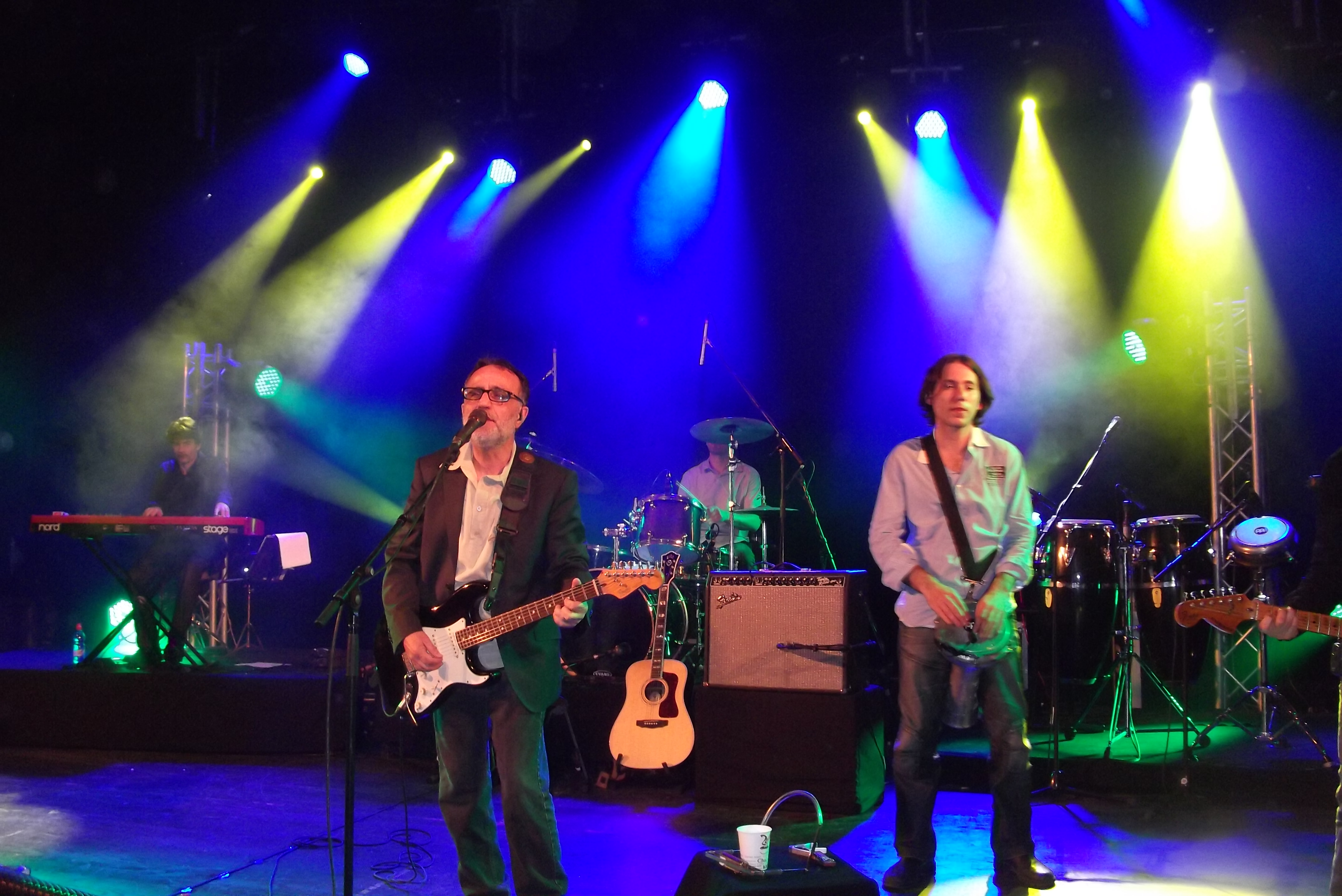
Ehud Banai Concert 1

But after some time, and some of the crowd thought the concert was over, we made our way closer to the stage. Ehud Banai came back out and began the longest encore I’ve ever heard.

Ehud Banai Concert 2

Now, just to give a brief explanation as to who this singer is, Ehud Banai is an Israeli legend. In 2005 Ynet had a poll asking Israelis who they thought were the greatest Israelis ever. Ehud Banai merited to be #28 on the list, beating out old Prime Minister Yitzhak Shamir and Israel’s most decorated soldier (now turned Leftist saboteur) Ehud Barak. Beginning his musical career in the London Underground after his military service, Ehud Banai rose to become a music icon in Israeli society. Had I known his music beforehand I would have had a greater appreciation for his concert but I knew that despite my ignorance, there were millions who would have come in my place, so I’d better enjoy myself. Towards the very end of his show we made our way to the stage itself, and I reached out to touch it, just to say that I touched the stage at an Ehud Banai concert. Here he is, the man of the hour, Ehud Banai, up close and personal:

Ehud Banai

And that concert concluded the festivities of Chol HaMoed, Thursday was a day of cooking and preparation for the end day of Pesach, and the subsequent Shabbat.

Pesach (Part 1)

In Galilee, Haifa, Israel on April 15, 2012 at 11:00 AM

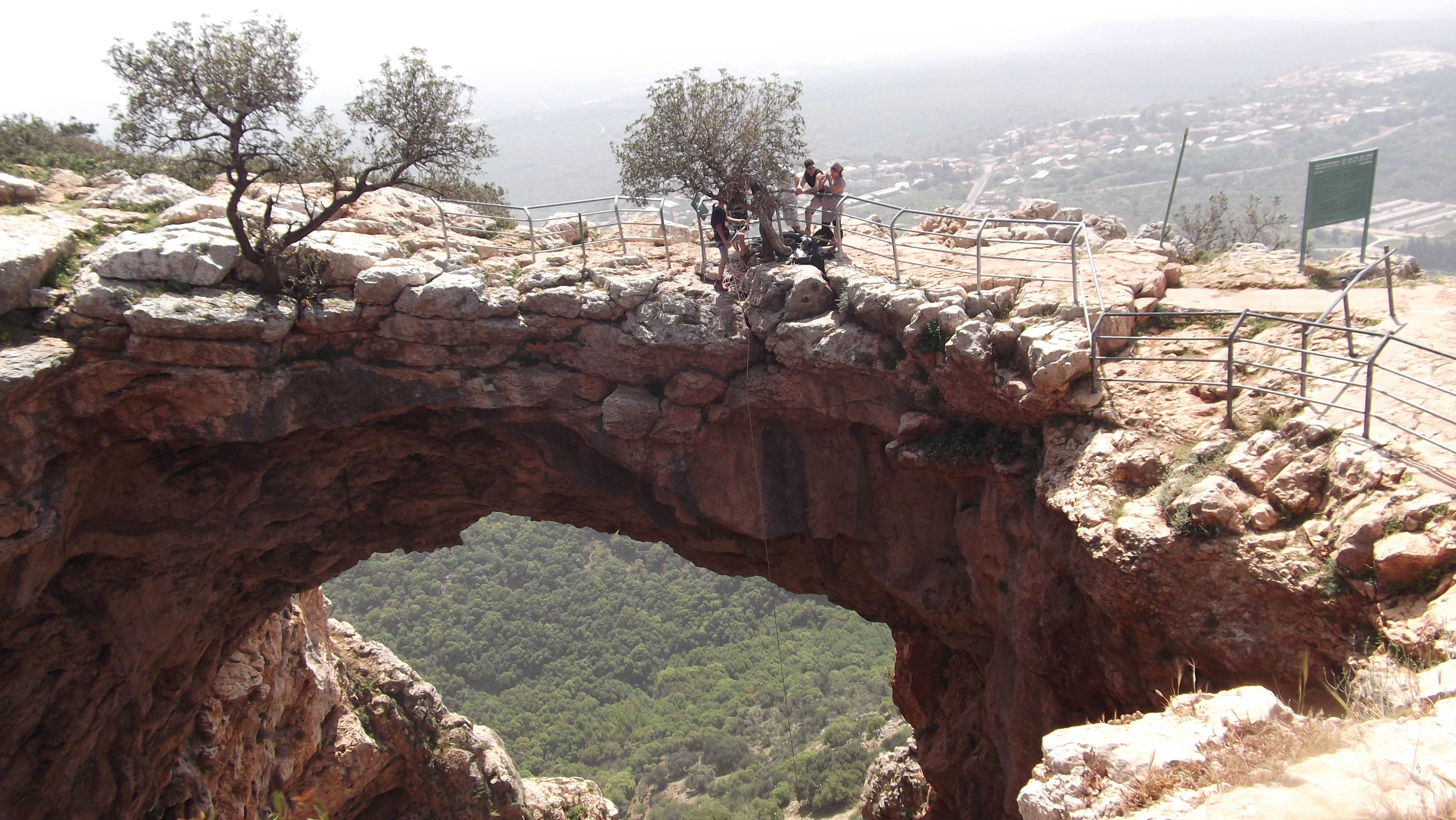
This is the first of two blog posts about the week of Passover (Pesach) that just passed us. Pesach started on Shabbat but the blog-related fun began during Chol HaMoed, starting with Sunday. Late Sunday morning we headed out to Keshet Cave, found along the Israel-Lebanon border and just a few minutes away from the Mediterranean Sea. I’ve already been to Keshet Cave, and even wrote a small post about it, but this time we went as a whole family. To reiterate, the Keshet Cave is actually a large natural arch over a shallow cave and dropping down cliff-like to the forested land below.

Keshet Cave's natural arch with the rappel rope dangling

Both times we saw Extreme Israel groups doing some sort of rappelling action. They have the easy drop to the cave floor and the scary swing under the arch rappelling which we did not get to see – had we gotten there some thirty minutes earlier we would have seen screaming people as they swung under the arch. Other than the great view and hiking trails down below, there is not much to do up on the arch, unless you are doing extreme sports – but there were tons of people. Here is a panoramic from the cliff edge – looking down on the lovely green forests:

Panoramic from the cliff edge

On Tuesday we took a longer and more extensive trip, to Haifa, with the Tikotin Museum of Japanese Art as our first and foremost destination. Part of Bank HaPoalim’s subsidized Pesach trip plan, the Tikotin museum was just one of the many museums and attractions free for all to come and see. So, along with thousands of other Israelis, we took to the road and sought out free attractions. I didn’t think that the Tikotin museum would be very populated, mostly due to the fact that it is a specialized museum and isn’t a hotspot for children.

Inside the Tikotin Museum

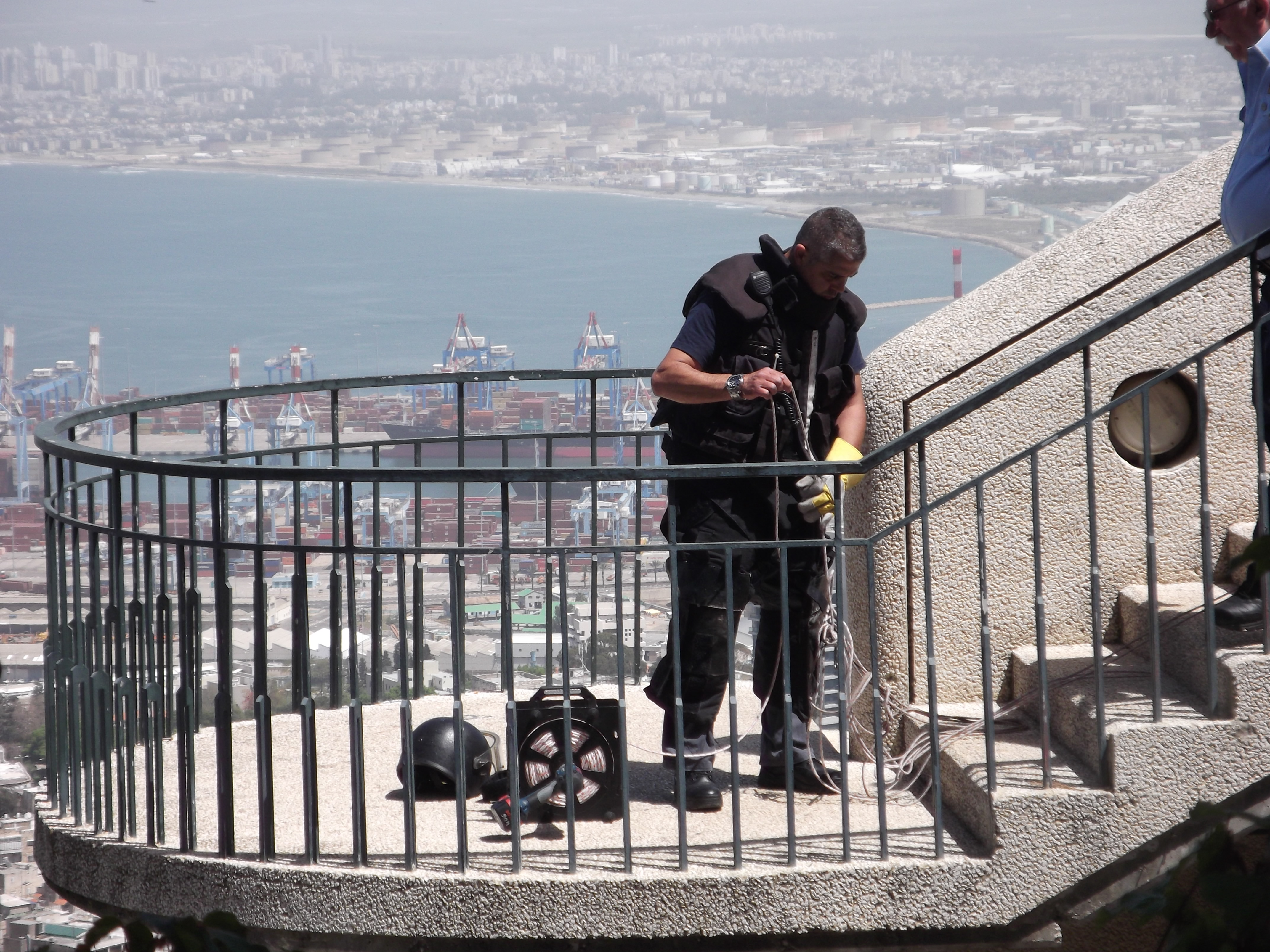
But I was wrong, the museum was pretty full and there were even free tours being assembled (in Hebrew) for further explanation and description of the museum’s collection and history. In my opinion, the samurai sword collection was by far the most interesting exhibit in the museum, the paper fans, prints, paintings, ceramics and artwork were less interesting but displayed elegantly. The museum itself was partly designed by a Japanese architect with shoji screens as walls and doors leading to the outdoor garden courtyard. Interestingly enough, the Tikotin museum is the only Japanese museum in the entire Middle East, with a collection numbering over 7,000 pieces. There is also an extensive Japanese library but that wasn’t open during the time we were in Haifa. After our museum visit, we walked over to the Louis Promenade (just minutes from the museum) and basked in the glorious view. But our experience was hindered by a suspicious package that made the police shut the area down. We had to wait for the bomb-disposal team to come out and secure the suspicious package. It wasn’t long before the expert verified that the package was simply an abandoned backpack and the area was reopened to the public. Here are two pictures of the ordeal – just look at that view!

Police removing suspicious package

Bomb disposal one-man team

After we finished at the Louis Promenade we continued on over to the Haifa Zoo, another place I have already been to (and wrote about) but for the family it was new and special.

A coati in the Haifa Zoo

The zoo was far too populated to properly view the animals in their habitats but we tried and covered about 40% of the zoo, passing through the throngs of joyous people, some clutching children, some clutching lunches and some clutching the cages, trying to coax the animals into action. When I took my solo trip to the zoo back in January the zoo was nearly desolate but I had missed one area and that was the waterbirds:

Haifa Zoo waterbirds

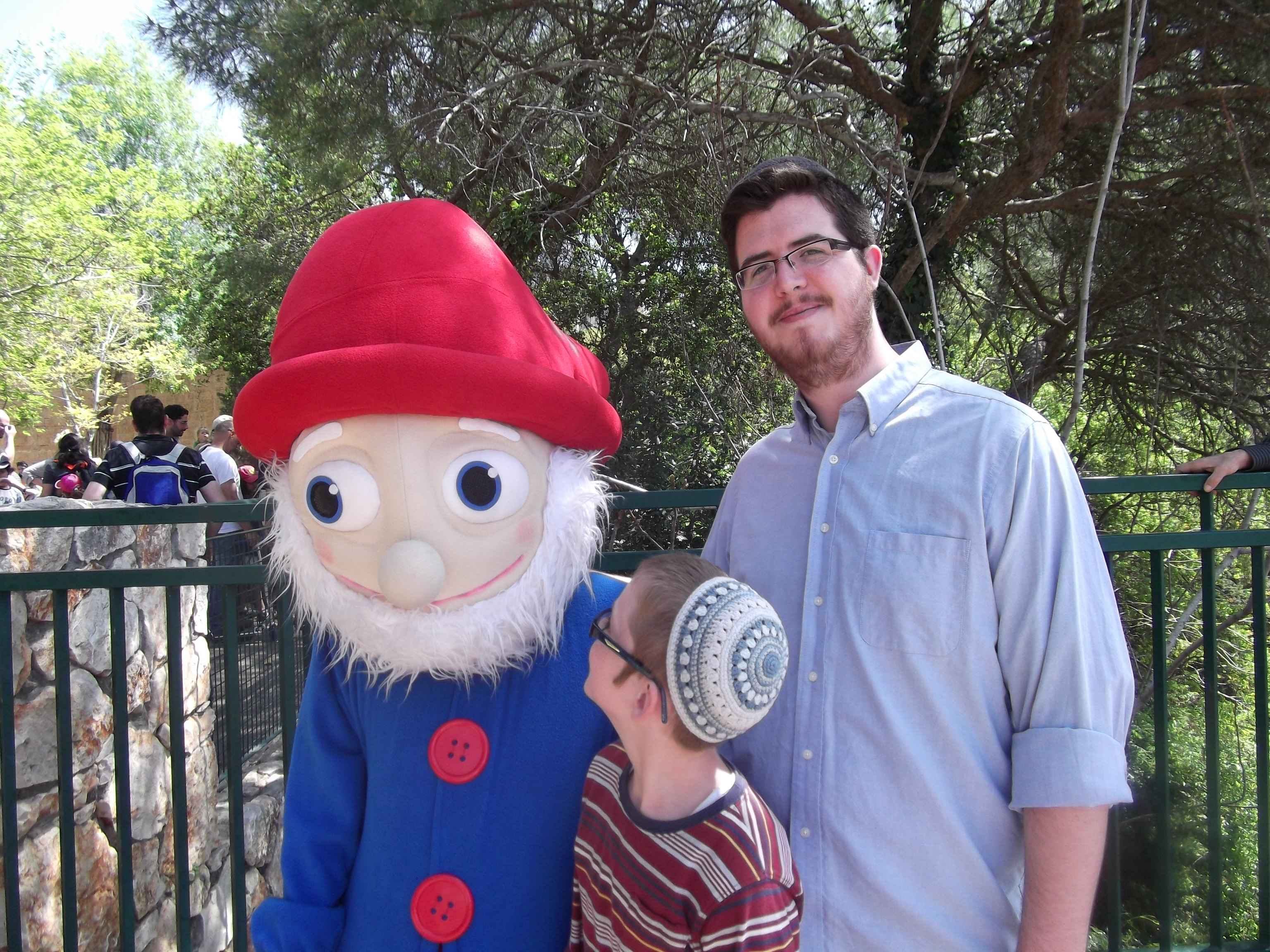
As we tried to make our way to the exit, escaping the milling, exhausted crowd, we happened upon the Bank HaPoalim mascot. We saw another one at the Tikotin Museum but this individual was more willing when it came to photography.

Posing with Nissim and the Bank HaPoalim mascot

After the harrowing escape from the zoo we headed back to the car and enjoyed some lunch: rice cakes with cheese, honeydew, potato chips, Coca-cola and popcorn. That is a concise summary of our first two outing days. The next post will address Wednesday and the experiences had on that day.

Mount Bental

In Golan, Israel on March 29, 2012 at 11:48 AM

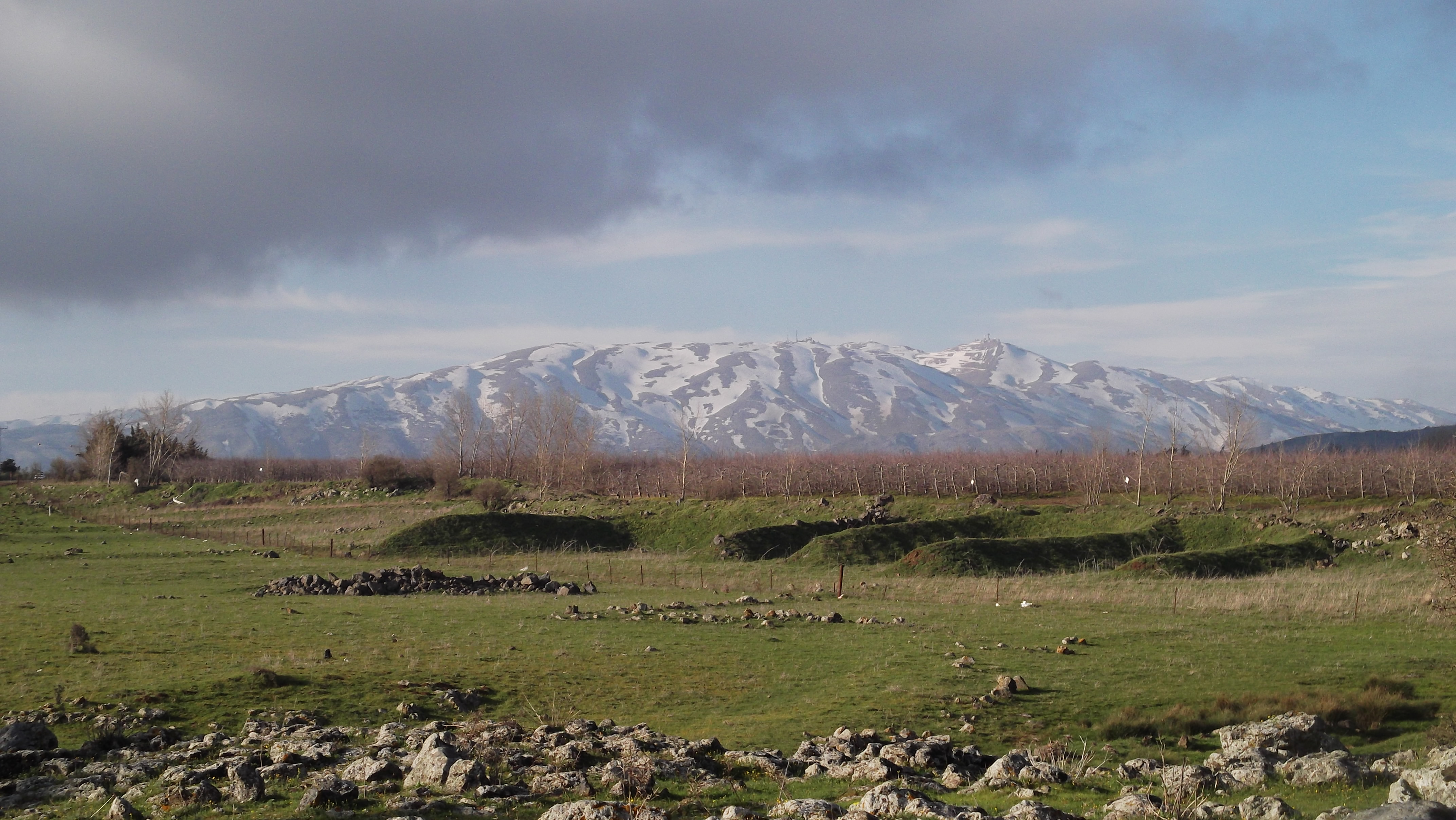
The third leg of the day’s adventures in the Golan with Boruch Len: Mount Bental. Following our fun back at Nimrod Fortress and the waterfalls of Banias and Sa’ar, we turned South and drove through some Druze and Jewish villages. We spotted the wind turbines which have now become a sort of landmark in that area of the Golan. At one point we stopped the car and got out to capture pictures of the majestic Mount Hermon, Israel’s highest peak. Here is my shot:

Mount Hermon from the road to Mount Bental

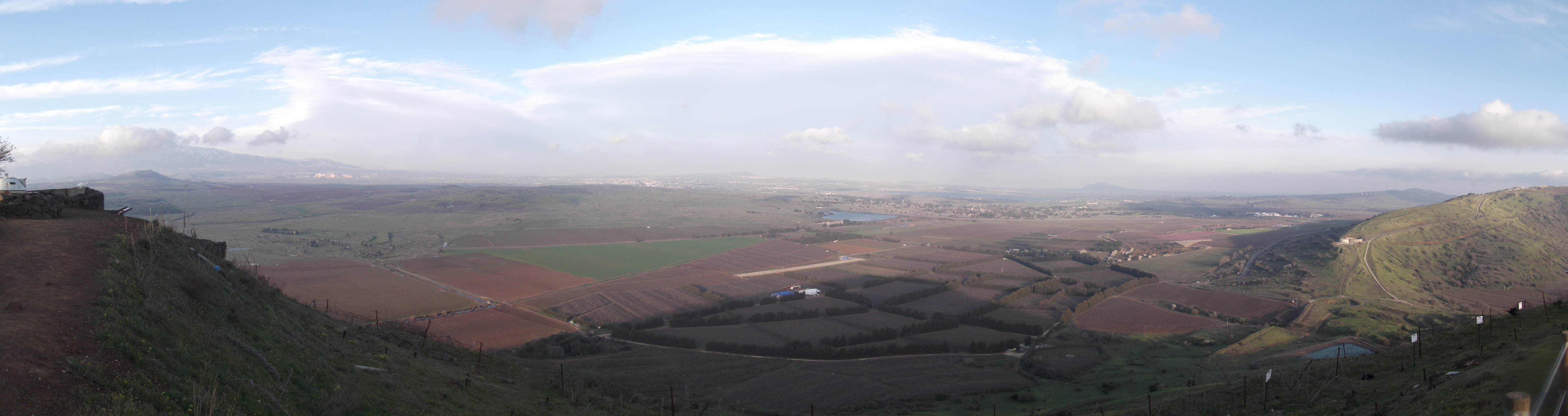
The drive up the mountain was far shorter than I had thought it would be and before long we were just minutes away from Coffee Anan (which really means both Kofi Annan the UN Secretary-General and “Coffee [of the] Clouds” – I don’t know if they had both in mind when naming the cafe). Along the way there were some interesting Dutch sculptures of welded metal and a section of a bunker. On the peak of the mountain we had an incredible view of the whole Golan from Mt. Hermon (which had gotten an inconvenient cloud-wrapping during our ascent) to the Hula Valley to the Israeli-Syrian frontier. Here is a panoramic shot of the valley area stretching out to Syria (click to enlarge, as always):

The valley all the way to Syria

Mount Bental was the site of an important battle when conquering the Golan from the Syrian forces. Today, the bunkers atop the mountain have been mostly cleared out but are accessible to all. We ventured on in, glad to be wielding flashlights, and had a look around the deep old bunker. I was really fascinated by the bunker’s corridor walls which are strikingly similar to those in the Israeli movie Beaufort which was actually filmed at the Nimrod Fortress.

Underground bunker corridors

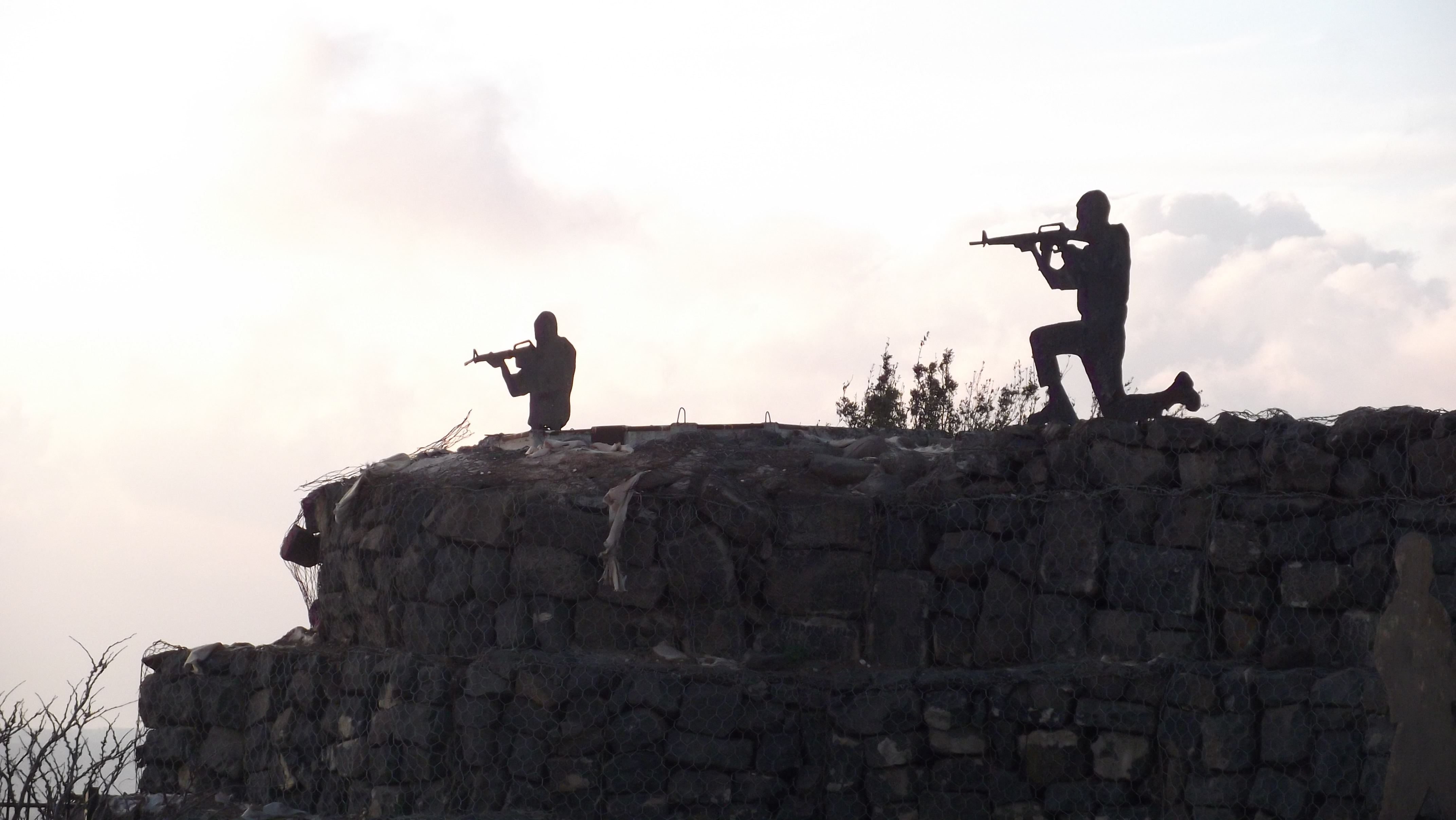
There is nothing cooler than walking through something that has been definitively used in a war for Israeli freedom – I just love it! And to see the bare wooden beds still left inside… and the old batteries left behind… and the old communication equipment – fascinating! When we emerged on the other side of the bunker area we saw these metal soldier silhouettes, a 2D representation and reminder of what this mountain once was and what significance it held:

Mountain-top bunker

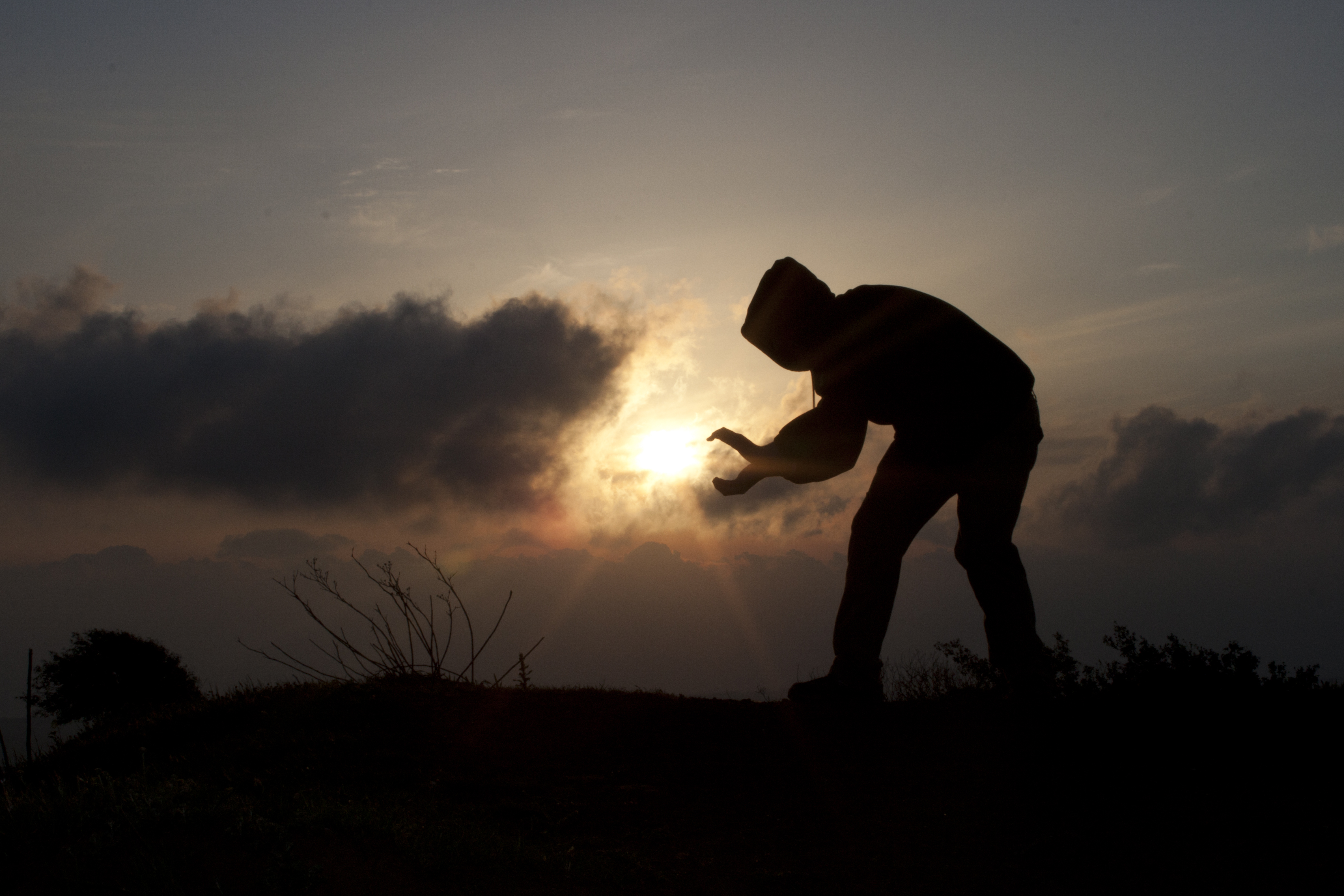
So after we absorbed the blood and tears of history we waited a short while for the clouds to pass over Mt. Hermon. But they were stubborn and thick and refused to leave, so we left instead. We drove to the far side of the mountain-top parking lot and rejoiced in the setting sun. When the clouds permitted us, we tried doing trick photography but the wind was also out to get us. As I would pose I would be blown over by the fierce, freezing blasts of cold air that reign dominant on mountain-tops. This is the best we got of me trying to hold the sun:

Trying to do trick photography with the setting sun (courtesy of Boruch Len)

But with a setting sun comes a sunset (obviously) and sunsets are quite often remarkably beautiful. Looking out from Mount Bental, the low, fertile Hula Valley down below, the sunset was just breathtaking. The colours in the sky were to be envied upon! Here is a panoramic I shot of the gorgeous sunset, with photographer Boruch Len on the very far right side of the picture, doing the same thing I was:

Sunset over the Golan

And so concludes an amazing day – a day action-packed with history (both ancient and recent), adventure, scenery and natural beauty. But of course, I was still way out in the Golan, nowhere near home. It was another two hours (by car, taxi, bus and feet) until I was home. That was a day I’d love to re-experience!