Israel's Good Name

Archive for the ‘Israel’ Category

The Sa’ar Falls & Banias

In Golan, Israel on March 28, 2012 at 11:31 AM

Continuing on after the previous stop at the Nimrod Fortress with my photographer friend Boruch Len, our next stop on our little tour of the Upper Golan was the Sa’ar Falls. We sought it out after seeing a picture of it posted on the Tourist Israel Facebook page (here), and eventually found what we were looking for. We parked the car and got out, asking an ice cream vendor for popsicles and directions. To our surprise, the paradise from the picture was just minutes from the road – by foot. It is actually possible to drive off the bridge and into the river… and then down the waterfalls.
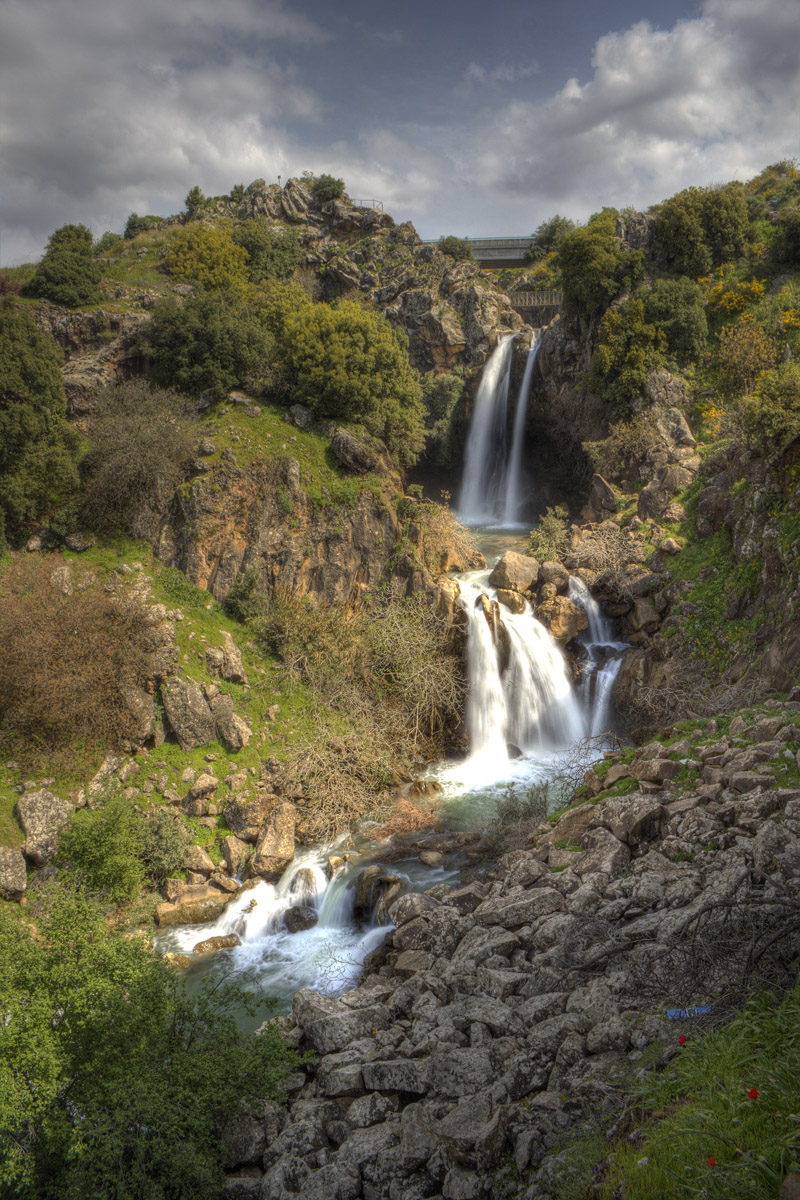
Sa'ar Falls (courtesy of Boruch Len)

We stood on the bridge and watched the first waterfall, our popsicles not quite melting in the warm Spring weather. I was impressed with the torrid rush of cold water that misted daintily up at us but I knew from the roar that there was something even better below us. So we walked away, got into the car and parked on the other side of the bridge where a full view of the three falls was available. I watched the water for some time as Boruch fiddled with his camera, walking from place to place trying to get perfect shots (like the one above). I was content with snapping just a few, knowing that in truth, you need to actually be on location to truly appreciate it. But of course, I took a short panoramic, encompassing the Nimrod Fortress, Mount Hermon, the low mountains and hills leading up through the wilderness and fields to the jagged Sa’ar Falls:

Small panoramic of the falls with Nimrod Fortress on the left

And Boruch, with his professional CS5 photo-stitching feature, created this narrower panoramic of the Sa’ar Valley looking North (this was photographed not at the Sa’ar Falls but on a road heading South):

Sa'ar Valley (courtesy of Boruch Len)

After spending a nice, leisurely time skirting the falls’ cliff-edge and watching the scores of tourists and school-children enjoying the same beautiful spot, we got into the car and continued on to Banias. We pulled into one of the Banias park entrances and got out to see Pan’s Cave, ruins of what once was a large Greek temple complex built in honour of Pan. Today not much remains of what once was the Temple of Augustus, the Court of Pan and the Nymphs, the Temple of Zeus, the Court of Nemesis, the Tomb Temple of the Sacred Goats and the Temple of Pan and the Dancing Goats. But what lasted was the name of Pan: “Banias” is an Arabic corruption of the word Panias or Paneus, referring to the Greek god Pan.

Pan's Cave

While we were “shooting the cave” we were disturbed by loud wailing and chanting. I set off to identify the source of this loud noise and found a group of Japanese men and women seated on the ground in some little piece of land right at the banks of the Hermon Stream. I couldn’t figure who they were at the time but I did film their strange behaviour. They started to draw a small crowd, and a tour guide waved me over. He explained that they are disciples of Juji Nakada, a Japanese spiritualist who had a strong belief about a connection between the Jews and the Japanese. Nakada “saw the Jews as mystical saviors whose redemption would ensure the political and military, as well as spiritual, salvation of the Japanese.”
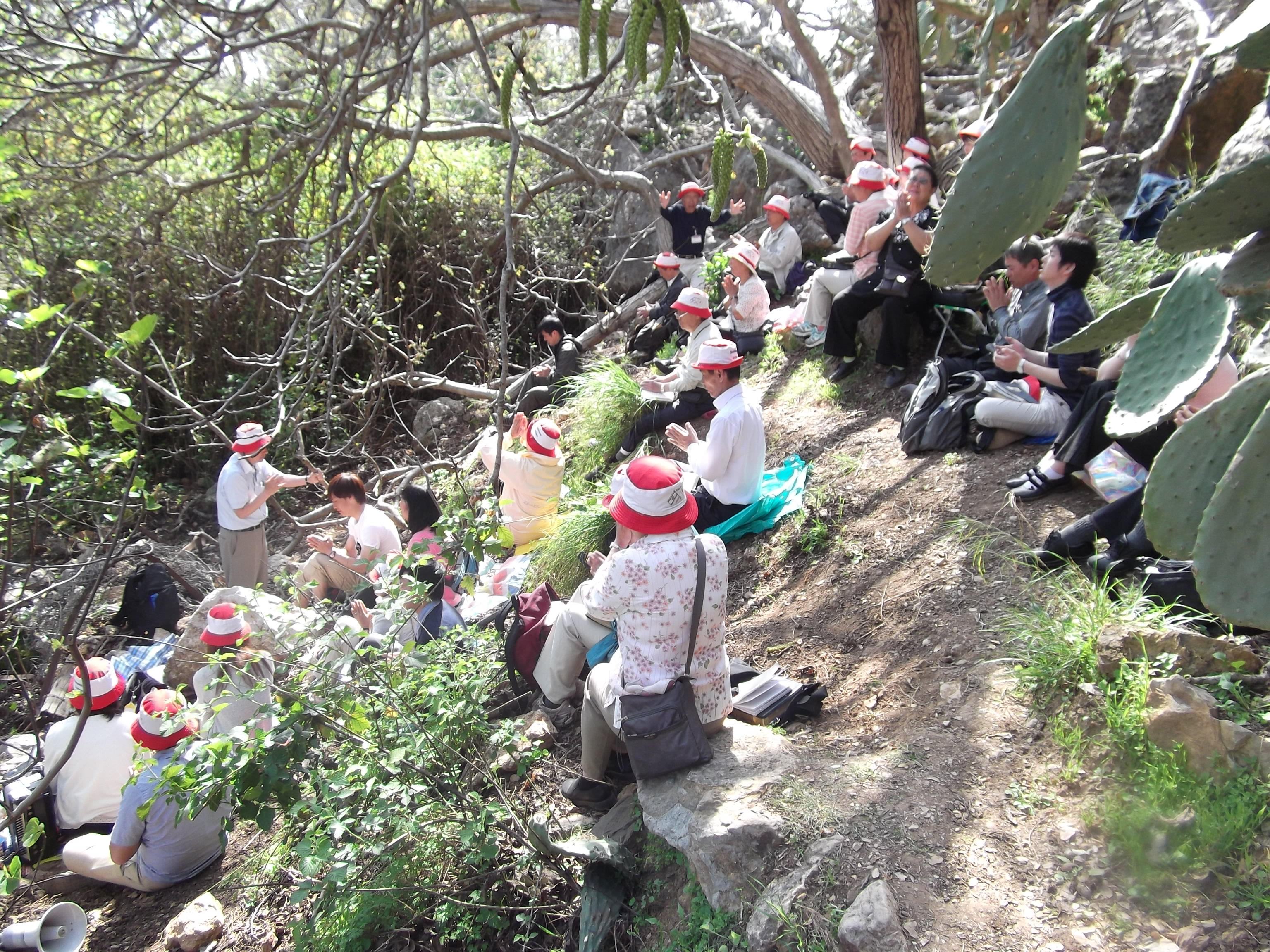
Japanese group - healing and chanting on location

We then continued on to the Roman Bridge and the old flour mill, only minutes away down the Hermon Stream. It is truly amazing to see such history all over, even the ancient flour mill which still stands today and is theoretically fully operational. There is a Druze pita stand just outside the mill but apparently the flour comes from a more commercial source.
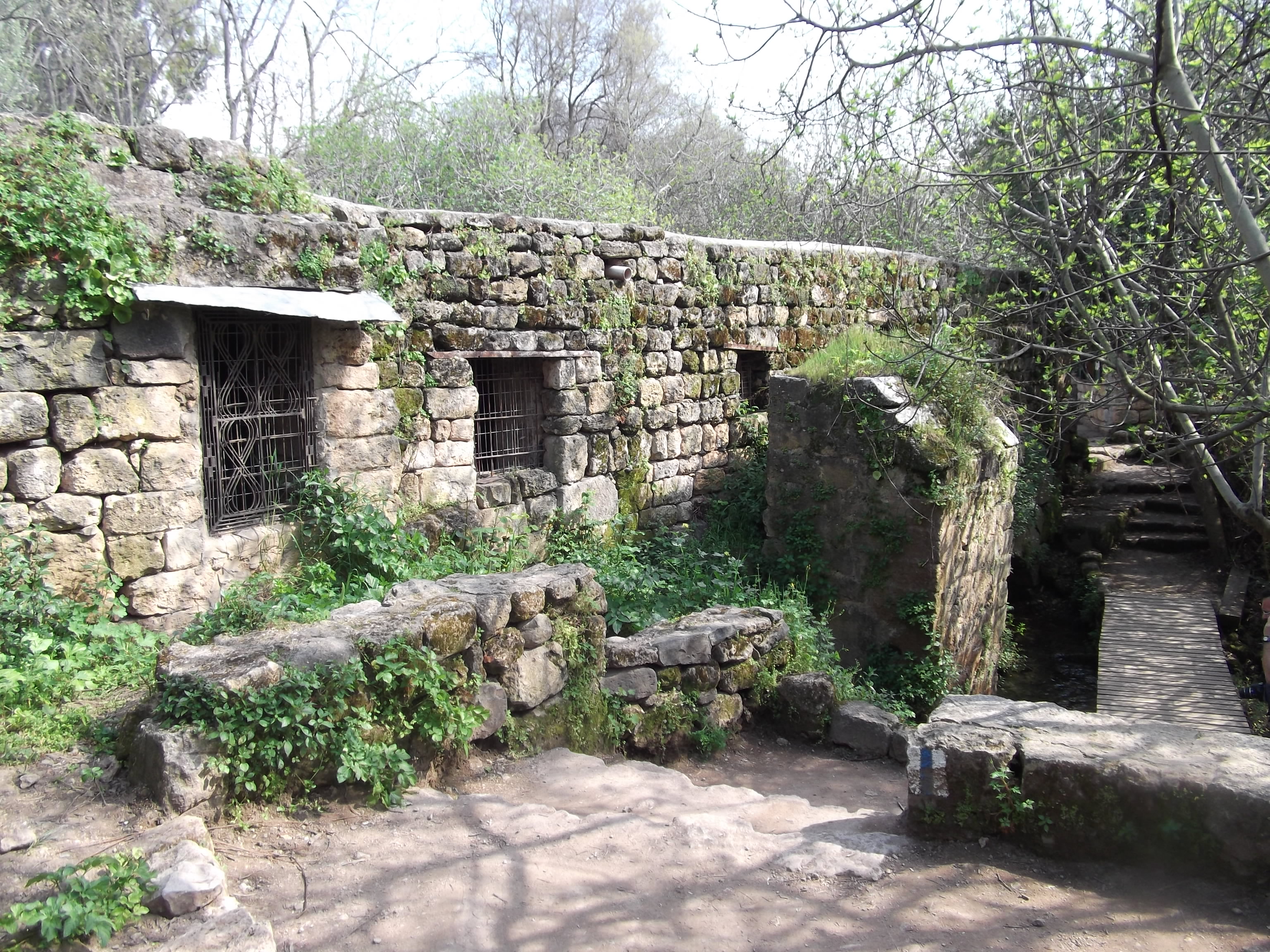
Old flour mill

After the flour mill we turned back and made our way to the car. We hit the road and found the park entrance that is beside (and above) the Banias waterfall, the largest waterfall in Israel. There we were to make our way down a gorge gashed into the lush green land and find the roaring white Hermon Stream as it pounds its way down from Hermon mountains and to the Kinneret (Sea of Galilee).
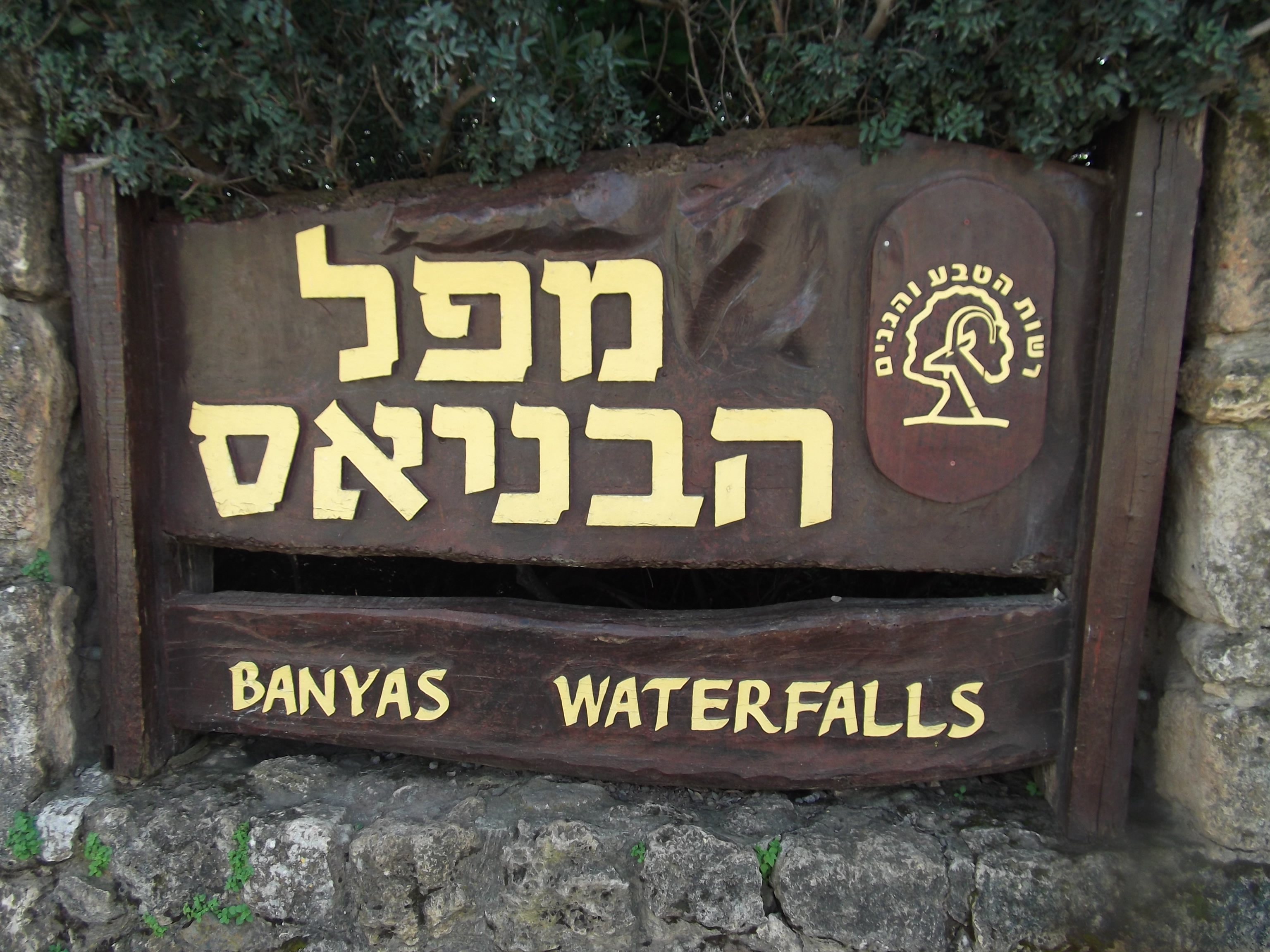
Banias Waterfall sign

The walk down was beautiful, affording me a great panoramic of the land which was so nice and green after so much rain this winter. Here it is:
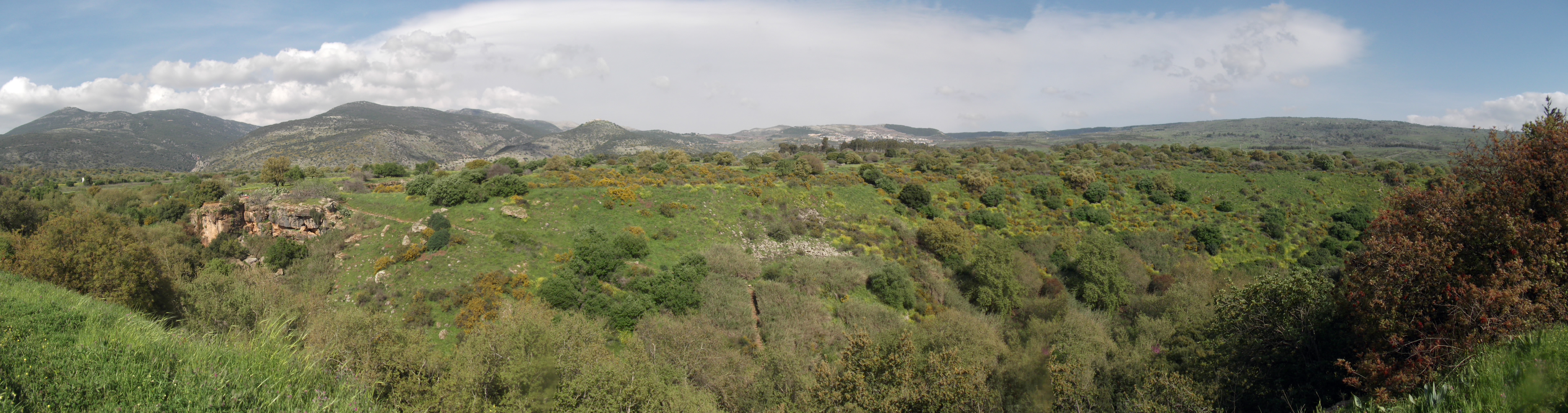
Panoramic of the Banias forest above the waterfall

The way down to the waterfall is exceptionally clever. They built a suspended bridge along the basalt and travertine stone walls of the gorge leading down to the water. While we walked on the platform the white water below us crashed and roared. As we approached the waterfall we saw what we had come for. The waterfall is 33 feet high and buried deep within the rocky gorge, the fast-flowing water forced to spray the thrilled viewers. Within just a few seconds I was in danger of getting really wet. Boruch went down on the rocks at the edge of the stream and shot this great picture:

Banias Falls (courtesy of Boruch Len)

Soon to be posted: Mount Bental

Nimrod Fortress

In Golan, Israel on March 27, 2012 at 6:10 PM

Yesterday, I went, for my very first time, to the Upper Golan. I accompanied Boruch Len, a master of photography, and we set forth to explore (and document) some of the Golan’s grandeur. The first place on our list was the huge Nimrod Fortress, an old castle built over a 46-year span in the mid 13th century by the local ruling Arabs (construction was started by the nephew of Saladin – the arch-enemy of the Crusaders). The Nimrod Fortress happens to be the largest Crusade-era fortress/castle in Israel and was used in the filming of the Academy award-nominated film Beaufortreplacing the actual Beaufort castle which is in Lebanon, out of reach for Israeli filmmakers. Just to point out, this was a trip heavily influenced by photography – however, the weather made consistent photography tricky. The clouds and sun played their games throughout the day and so the following pictures will appear as if taken on separate days but have really been simply subjected to finicky weather.

The West portion of the fortress

We started the tour just minutes after a large group of school-children so we decided to circle the fortress in reverse. That decision ended up reaping rewards as each place we went to was even more fascinating than the last. In the first hour or so, we walked up from the West side (where parking is) to the East side – the higher but less intricate section of the castle. The East side was the part first built and gave us a great view of the high mountains surrounding, and obscuring, Mount Hermon. Here we saw a glimpse of Hermon, the snow already melting:

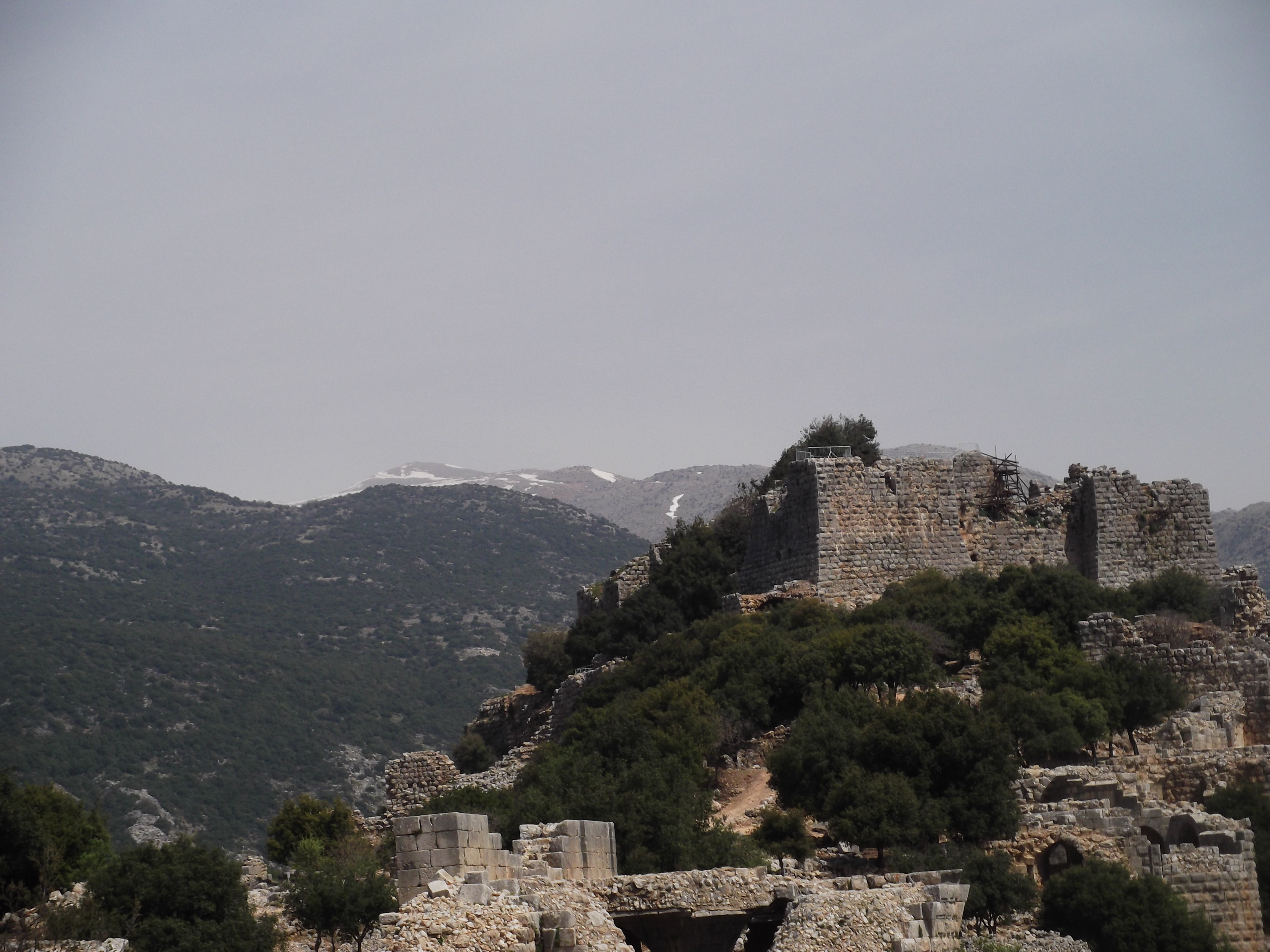
The highest part of the fortress with the snowy Hermon in the back

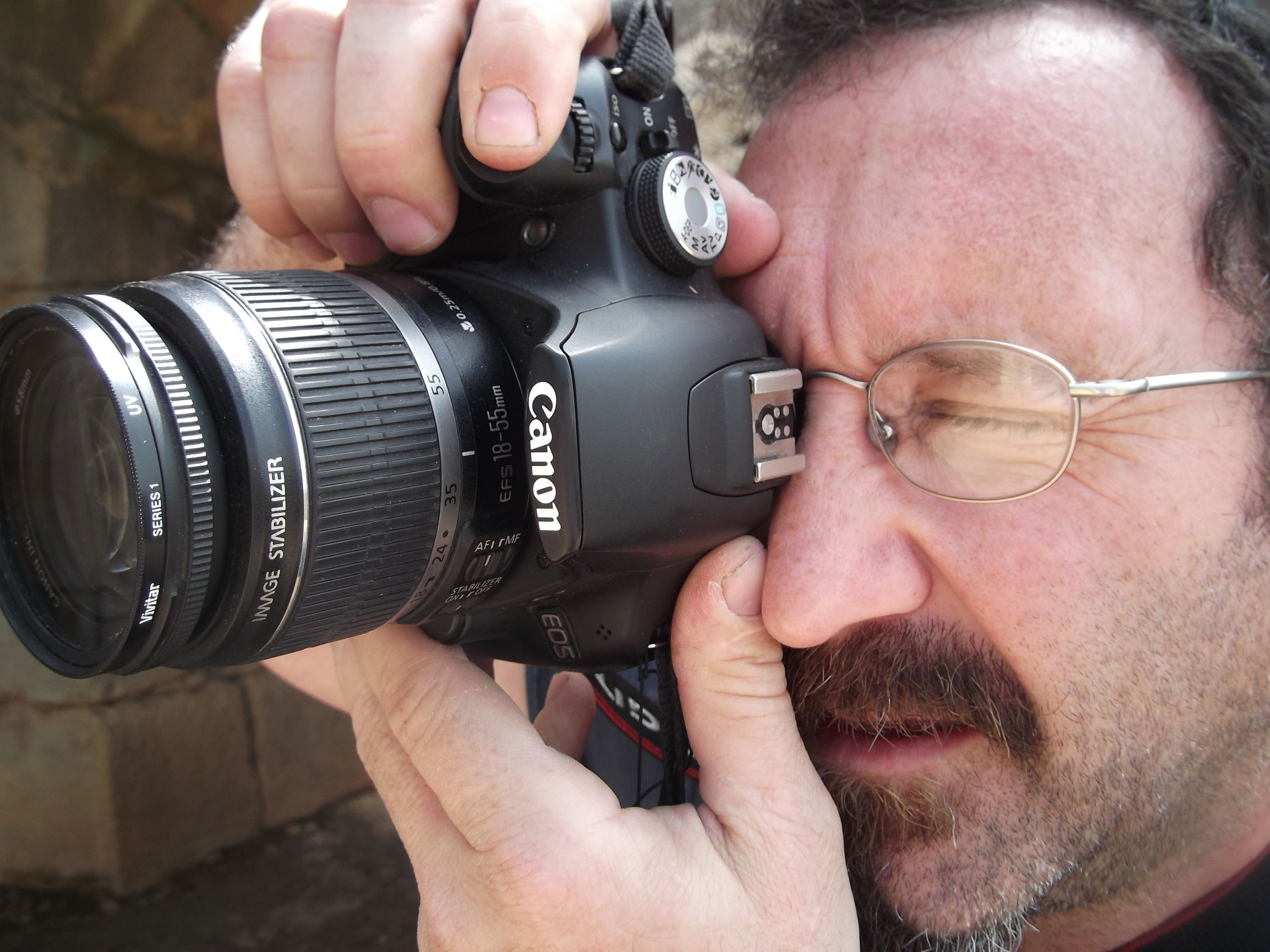
Descending to the “dip” of the fortress, we found a few interesting rooms, each one better than the next. The old, thick stone outside walls had tons of “archery ports” – with those slits for shooting down on invaders. We spent many minutes snapping pictures of the various angles, trying to capture the best photo possible – each with our respective cameras (Boruch Len – fancy SLR with multiple lenses / me –  run-of-the-mill-but-kinda-heavy-on-the-features Fujifilm digital camera).

Boruch Len "on the job"

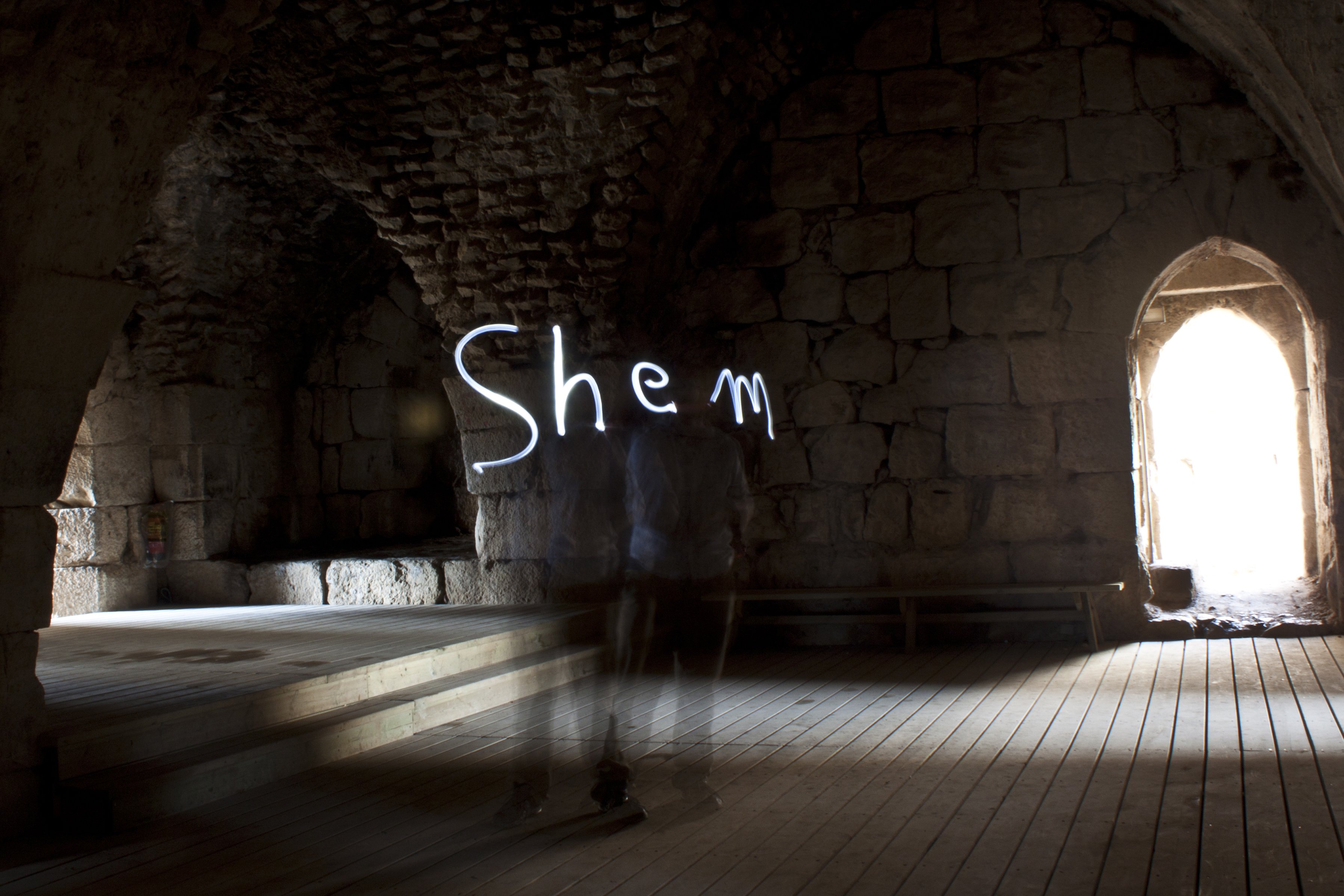
So, you can imagine the amount of pictures that were taken, with all the beautiful stone walls, doorways, columns and arches. But the coolest photography we did had little to do with the actual location. In the grand ceremonial hall, found in the Keep on the Western side, we did something called “light painting.” What it is: With the fancy SLR camera, the shutter can be left open for some time and through a process of photographic magic, only some things are retained in the final picture. One of those things is light. So, Boruch whipped out some flashlights and we took turns writing our names/initials in the air with the light. I tried over and over but my first attempt remained the best, here it is:
Painting my name with light in the ceremonial hall (courtesy of Boruch Len)

As can be seen in the picture, the camera retained two ghostly appearances of me. I’d have to be constantly moving for the words to appear without my body showing as well. Nonetheless, it was great fun and it made me want to buy an SLR camera. Maybe I will one day… Returning to the fortress, the ceremonial hall was not the only thing interesting on the West side. Soon we came across the Large Reservoir, alive in a flurry of chirping and cooing birds.

The Large Reservoir (courtesy of Boruch Len)

Again, we spent a very long time, photographing the birds and the room. On our way out of the reservoir, I spotted a lone koi fish, swimming sadly in the green water. I wonder how it got there – some prankster? Another cool place was this tiny spiral staircase that was blocked off with rope. We hopped the rope and ventured down, the end result wasn’t too exciting but the stairs were neat. Naughty, I know – but Boruch has a press pass of sorts so we had a partial reason to be there. On our way back up to the towers on the West side of Nimrod Fortress, we found ourselves with more grand views. Here is a panoramic that I took, facing the towers on the West side (click to expand):

Panoramic looking West

And before I end this post, the first of three that will cover this exciting day, here is a picture of me posing in a beautiful stone doorway – a proof that I was there:

Me in a doorway (courtesy of Boruch Len)

Soon to be posted: Banias & the Sa’ar Falls

Rosh Pina

In Galilee, Israel on March 20, 2012 at 2:50 PM

Two days ago, Sunday to put a name to it, I travelled to both Tzfat (Safed) and Rosh Pina. The Tzfat leg of the journey was covered in yesterday’s post (here) so today’s post will address the lovely little city of Rosh Pina.

Rosh Pina (and Hazor)

When the bus pulled into Rosh Pina, and I had made my way to a large city map, I sought out the old neighbourhood. There, in the oldest part of town, are the quaint, charming houses and buildings that draw tourists and locals alike, as flowers attract bees. I asked a local youth how long it takes to walk up the mountain to the old neighbourhood (as bus routes do not extend that far) and he told me it was a ten-minute walk. He was wrong. It was more like a twenty-minute walk… and uphill. But, the walk was more enjoyable that one would expect. Along the sidewalk the city council of Rosh Pina installed various maps and pictures, set in stone, and often accompanied with descriptive and biblical text. It sure made the walk pleasant – that and the magnificent view of the Western Golan area including Har Chermon (Mt. Hermon). Before too long I was in the old neighbourhood, and feeling a combination of confusion and peacefulness. There, to my right, was a house and a garden… and a sign that said Blues Brothers Pub. I could hear strange bird calls coming from the house, and the yard around it, so I ventured through the gate. What I found was very strange and despite the many people milling about, nobody questioned my presence.

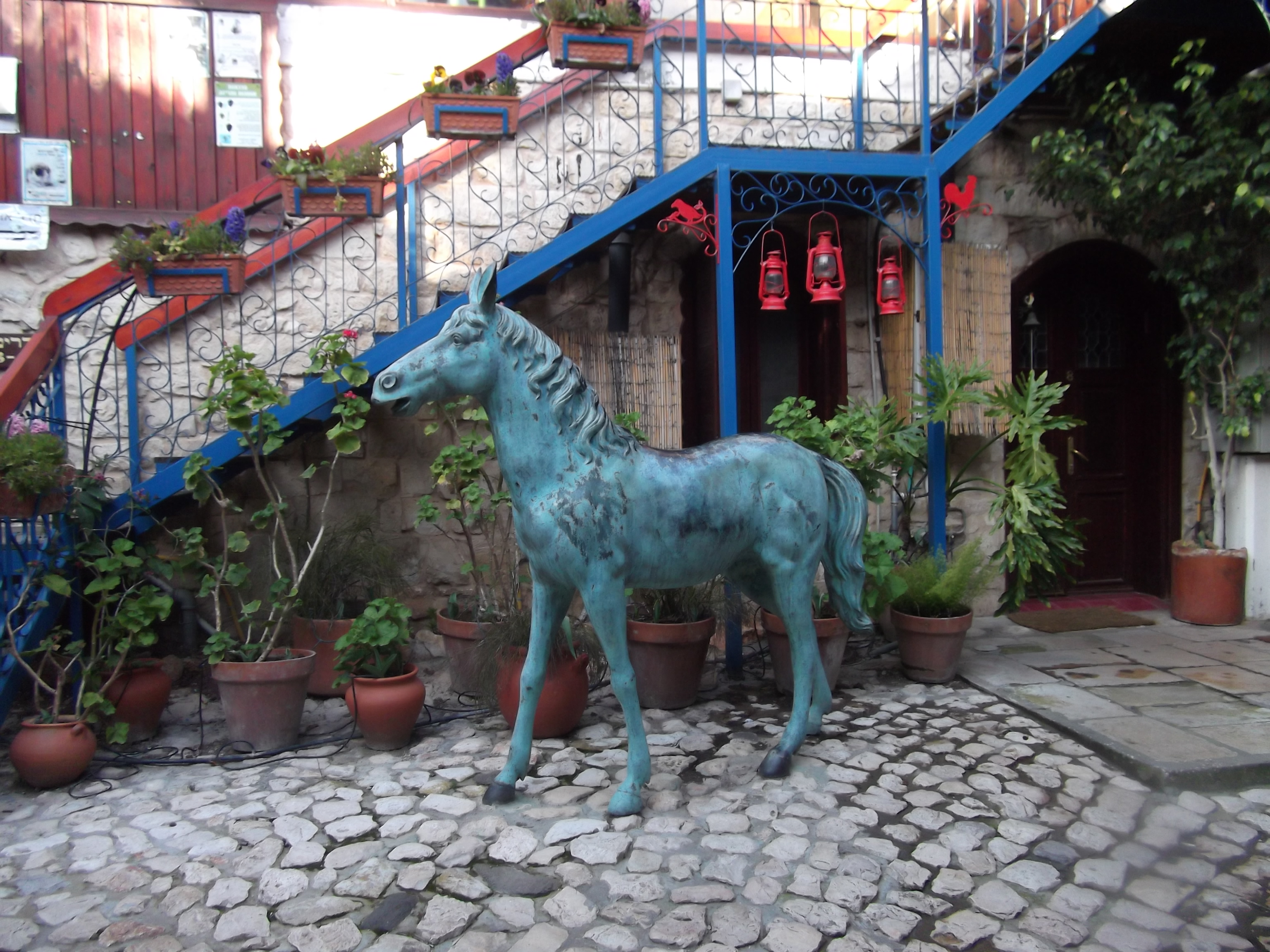
From the courtyard next to the Blues Brothers Pub

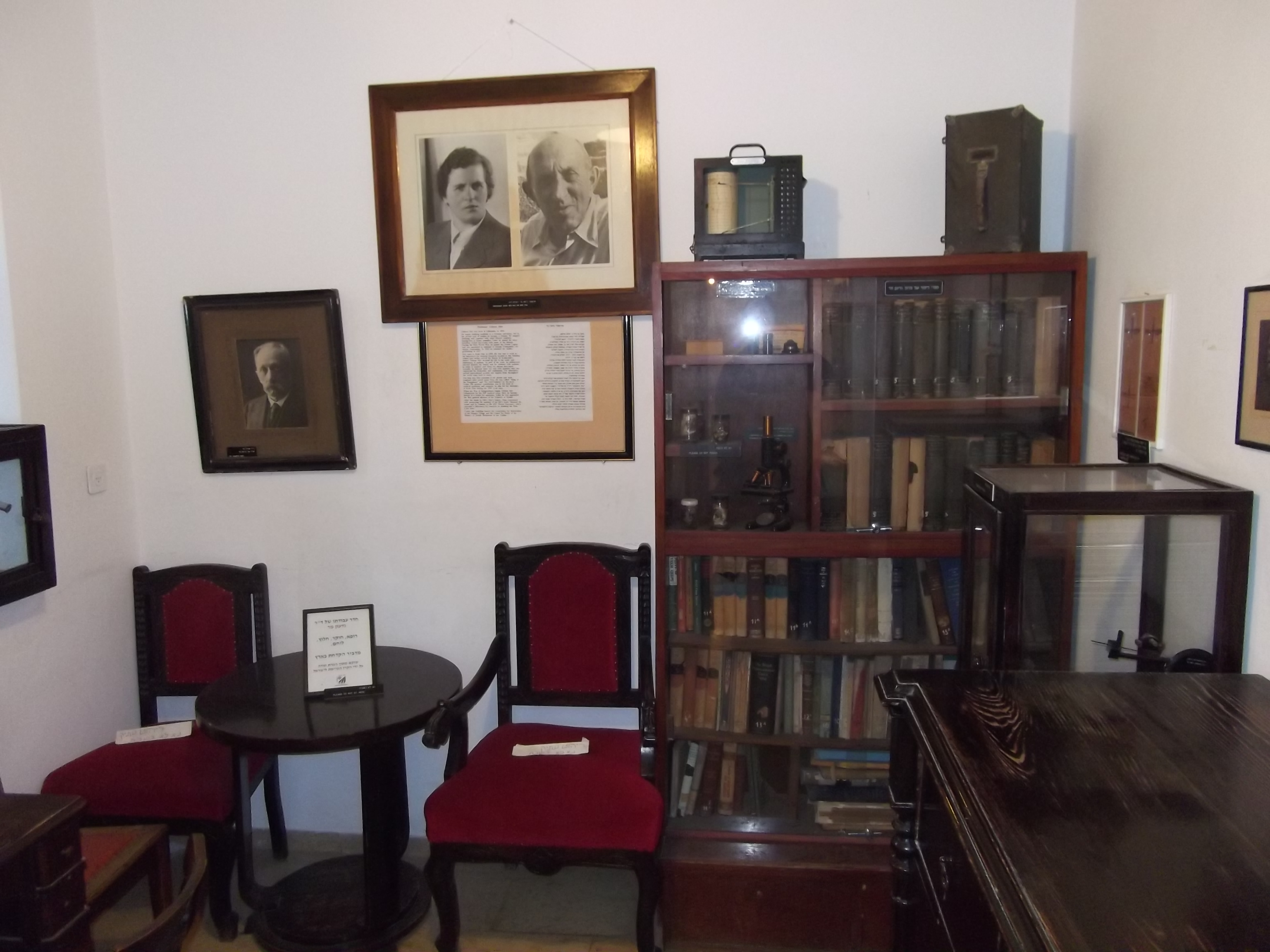
I sat down on a rocking chair made of wood and rocked, watching the people run about – some in a dither. After thoroughly exploring the complex; the pool, the sauna, the bird cages filled with brightly-coloured tropical birds, the animal pens containing chinchillas and other small furry creatures, the pub and the pool hall (which were both closed), I stopped a man who was darting about and asked him to identity the place I was in. He replied in one short simple Hebrew word that answered everything: Tzimirim. A tzimir is like a bed & breakfast just not always having breakfast featured. The tzimirim are usually, if not always, privately-owned and managed and are a popular for both tourists and locals looking to get away from their hectic city lives. I gave a nod of understanding, thanked him and left. My next stop was the Baron’s Gardens, but I only spent mere minutes there. I returned to the main street and asked directions to the “tourist attractions.” What I found next was the Mer House, a house given to Professor Gideon Mer by the Baron Rothschild (who founded Rosh Pina) as an office for the Professor to work on discovering a solution to the malaria plague that troubled those living in the area of the swampy Hula Valley (which I have also done a post on, here).

Professor Mer's office

After a look around I went into the next building and entered a room which was playing a video about Rosh Pina’s history. When the video ended and the lights were turned on I saw that I was standing among a tour group of sorts. I tagged along, lagging in the back, eager to see where they went next. After some time I caved in to my curiosity and asked one of the young men where they were from. And his answer: Bar Ilan University (in Tel Aviv). So, I continued tagging along as they continued on to the next few sites, the old cemetery and the Shlomo Ben Yosef cave, a memorial to several fallen soldiers. The students, and their professors and teachers didn’t seem to mind my presence, neither did the guard, so I persisted. At last, when I revealed myself as a journalist looking for the tourist attractions in Rosh Pina, one of the students (and the guard) suggested that I speak to the mustached professor. I did, and he accepted me warmly into his fold, telling me to join them in their tour. The next site we went to was the old synagogue in Rosh Pina, the first public building in the development to be built by the Baron Rothschild.

The old synagogue of Rosh Pina

Professor Yossi Katz of Bar Ilan University, the one who legitimized my place in the group, spoke for some time and even pointed me out, telling me to write down what he was saying! The synagogue’s ceiling was very unique – painted with scores of small clouds – and the feel was very European. Outside, in the dark of night, we continued to the next (and possibly final) stop of the Rosh Pina tour: the Nimrod Lookout. Named after a local young man named Nimrod who fell in battle during the Second Lebanon War (in 2006), the lookout boasts incredible views and built-in binoculars. Had it been day I would have had an easier time seeing the distant cities and villages. As we gathered around a guest speaker, who was none other than the father of Nimrod, I realised that my bus (the last one of the day) was leaving in an hour from Tzfat and I still had to get a bus out of Rosh Pina. So I left it a hurry, wanting to hear the man’s fascinating story but also not wanting to be stranded out in middle of “nowhere.” I was in such a hurry that I resigned myself to literally running down the mountain to the main road where the malls are. I spent nearly twenty-minutes pounding my feet down the road, nearly unable to stop. When I reached the bottom I felt nearly ill from the violent burst of exertion that transpired. Thankfully the bus I needed pulled up nearly immediately and I was on my way back to Tzfat, feeling sweaty and strange. I got off in Tzfat and boarded my bus back home to Ma’alot. When I got off the bus in Ma’alot I found that my feet were not operating normally. I could not lift my feet using my feet muscles, so every step I took ended in a stamp. It felt weird but the walk was short. Today, sitting here writing this post, my legs are still sore… but the beauty of Rosh Pina was worth it. Here today’s beauty, as seen from the main street in Rosh Pina:

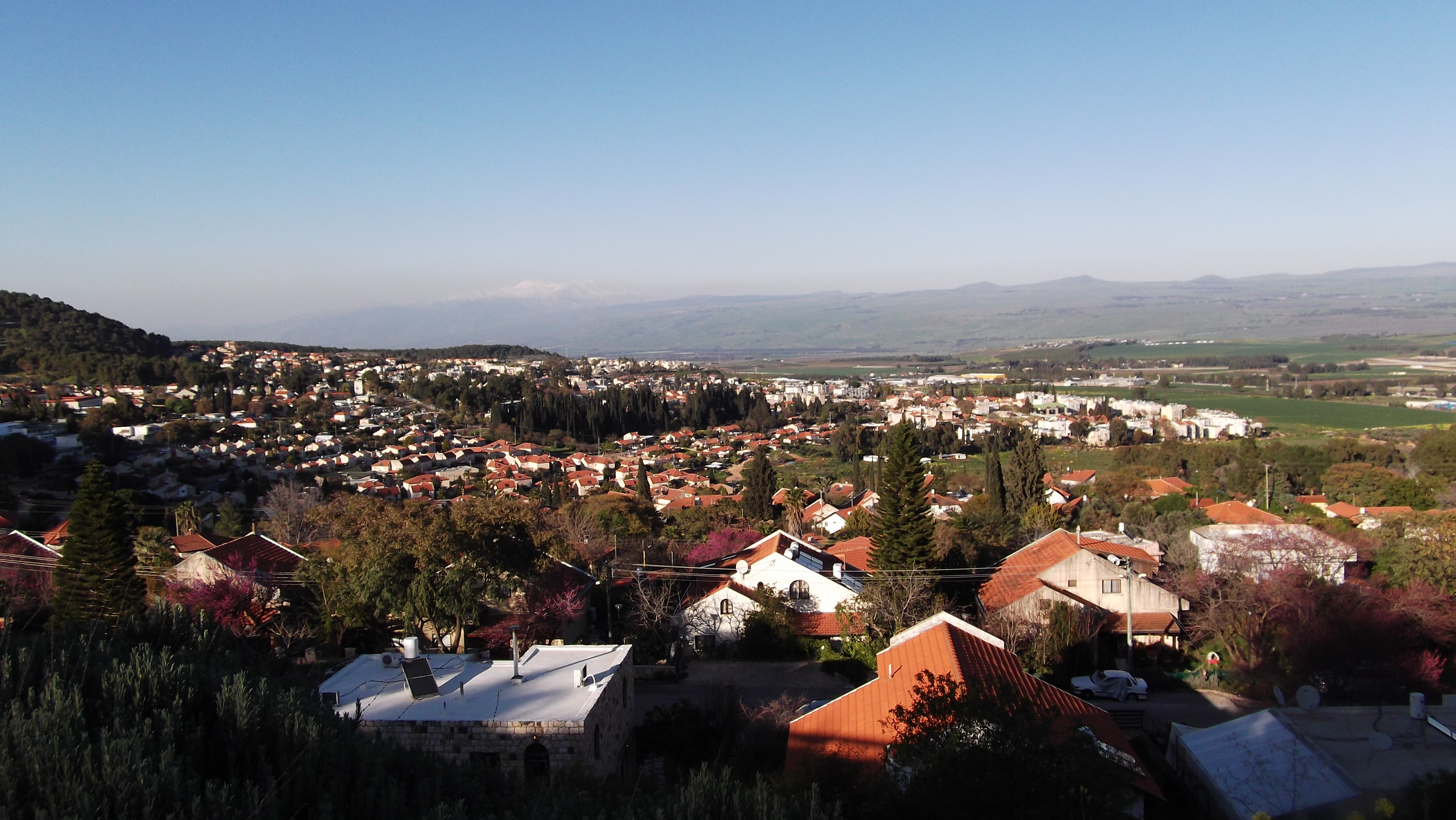
View to Mt. Hermon from Rosh Pina

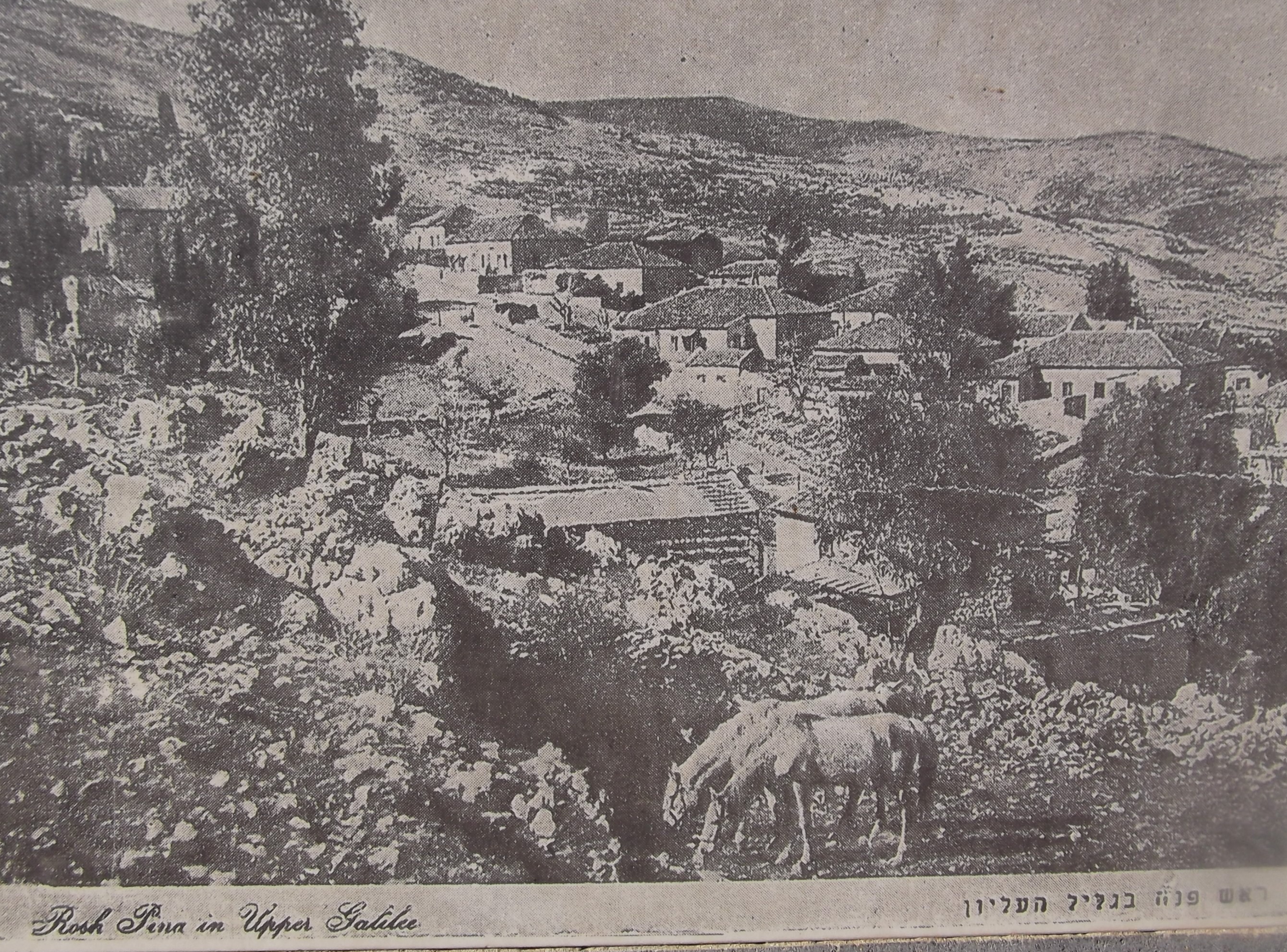
And here is what Rosh Pina looked like way back when, when the settlers grew crops of tobacco and bathed in the public bathhouse every Friday (no date given – featured on a stone part of the sidewalk historical presentation):

Rosh Pina of old

Tzfat (Safed)

In Galilee, Israel on March 19, 2012 at 7:10 PM

Yesterday I went to both Tzfat (Safed) and Rosh Pina, neighboring cities, and had a really interesting time. This post will contain the Tzfat portion of the trip and tomorrow’s post will be of Rosh Pina.

Tzfat from above, looking down on the Artists' Quarter

Tzfat from above, looking down on the Artists' Quarter

I got off the bus in Tzfat’s central bus station and hopped on another bus to the Old City. I walked down the wide, stone stairs that opens up into the famed Artists’ Quarter. This was to be my first destination in Tzfat. I’ve been to Tzfat before but never really took the time to explore the Artists’ Quarter and to really “snoop around.” This was my chance. At first, I stepped into the two large collective art galleries that are in the large open area where tour buses park. As soon as I had my share of the large galleries of finished products, I left and continued to the narrow stone road which hosts the multitudes of artists working and displaying their craft. My first encounter was an elderly artist wearing a soldier’s beret. He is a micro-calligrapher and after showing me his prints, I decided to buy one. He thanked me and told me I was his first customer of the day. I smiled and continued along the narrow street. My next stop was the art gallery of Michel Elkayam and he was in middle of painting the Kotel (Western Wall):

Michel Elkayam painting the Kotel

I was mesmerised at his painting skills and watched as he did the unlikely. You have to be an artist to add red to the large golden dome that covers the Temple Mount. He splashed red and I groaned inside, slowly but surely it looked nearly real. I watched him for at least ten minutes, getting to know a bit about his artistic history. But, I had to move so move on I did. The next place of real interest was the Canaan Gallery where locals recreated the historical weaving business that the Spanish Jews introduced after their expulsion from Spain in 1492. I spoke to one of the weavers, a young woman by the name of Liz Levy who was weaving a beautiful scarf on a loom:

Liz Levy weaving a scarf

When I asked her if she liked her job she replied that “you can’t weave if you don’t like it” which basically answered my question. I don’t know if I like weaving but I doubt I could make a scarf like that! I thanked her and continued on my way, stopping into the handy Tourist Board for maps, pamphlets and advice. The Tourist Board was better than I had imagined it would be – there was a seating area, albeit rickety, and a mini-museum with underground excavations that showed what the early Tzfat city looked like. The woman behind the desk (who I later found out was Laurie Sendler Rappaport, coordinator of the Livnot U’Lehibanot program and aunt of an old school friend of mine) told me a story about two old men, grandfathers with their families, meeting together at the checkout counter of one of the galleries along the street and finding out that they were two long-lost brothers separated during the Holocaust. I then gathered up my new belongings and stepped across the street to the Lahuhe Original Yemenite restaurant where authentic Yemenite flatbreads are pan-fried with cheese, vegetables and schug. I spoke to the man behind the counter, Yosef David Azoulay and decided to interview him for a new project I am working on called the Children of Israel. What I aim to do is provide foreigners with a realistic look at the average Israeli. Being a country so rich in ethnicities and cultures, there is no “average” per se but I am attempting to provide a plethora of Israeli citizens to give people a better feel for what Israelis are like in appearance and thought. This man, Mr. Azoulay, was my first “victim”:

Yosef David Azoulay, cook at Lahuhe Original Yemenite restaurant

While I was interviewing him a trio of Russian ladies came in with a Russian-Israeli tour guide. They ordered the lahuhe “sandwich” and glasses of local red wine. Towards the end of my interview, which kept getting interrupted by the steady flow of tourists and customers, the Russian-Israeli tour guide got up and asked me what I was doing. I told him that I was a journalist and he translated for the women. They all gave nods of understanding – why else would I be standing like a fool with a legal pad and recorder? – and one of the ladies stood up. She said that she is also a journalist and that she works for Moscow News Agency… then she took a picture of me! I was surprised that someone took a picture of me doing my job, but hey, I remember taking pictures of an Argentinean documentary cameraman in South Beach, Florida. After that strange occurrence, and after concluding my interview, I continued to my next destination of the day, the Safed Citadel:

Safed Citadel's Crusader ruins

It was a pleasant walk and the wind’s intensity probably tripled once I approached the peak of the mountain that Tzfat is built on and around. The Safed Citadel is the highest point in the city (at least 3,000 feet above sea level) and contains Crusader ruins, a park and an IDF memorial monument. Here is what it looks like entering the park area (no, the picture is not distorted, it really looks all wavy like this):

Memorial Park

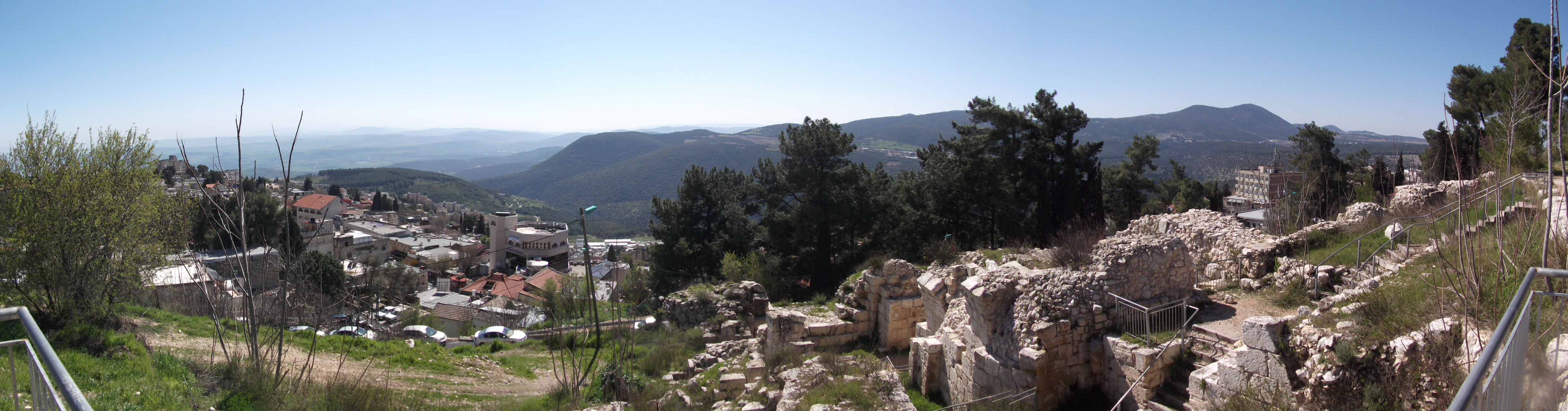
I stood up by the IDF monument and ate an orange, saying “hi” to the French couple who were finishing up with their picnic. How they picnicked in that wind is beyond me… But wind aside, the view is fabulous! Here is a panoramic (what else?) picture of the view that was before my eyes – the Artists’ Quarter down below, the faraway hills and mountains of the Galil including Mt. Meron to the right, and the Crusader ruins directly below (the Kinneret or Sea of Galilee was also visible but was not capture in the picture):

Panoramic from the Safed Citadel

When I was finished with my orange I headed back down the mountain to the Old City where I got some lunch and made my way to the bus station. There I boarded a bus destined for Hazor with Rosh Pina, my next destination, just fifteen minutes away. Rosh Pina was an interesting story but it will have to wait ’till tomorrow.

The Bahai Gardens & Madatech

In Haifa, Israel on February 14, 2012 at 11:56 PM

On Monday I went, once again, to Haifa for my Tourist Israel gig. I had two big destinations, the Bahai Gardens and Madatech National Science, Technology and Space Museum. I had to drop off a letter at the City Museum so I made my way towards the gardens going up the German Colony. I feel like I know that particular area of Haifa better now that I may never get lost there again – getting lost can have its upside… Anyhow, I found a hapless pilgrim of the Bahai faith and mercilessly interrogated him on the bus routes to the main gate where the Bahai Gardens’ official tours are given. He gave me what I needed and I released him. I waited at the bus stop for what seemed to be an eternity, constantly checking the time because the last tour is at 12 o’clock noon and it was already 11 something.

Bahai Gardens - Shrine of the Bab

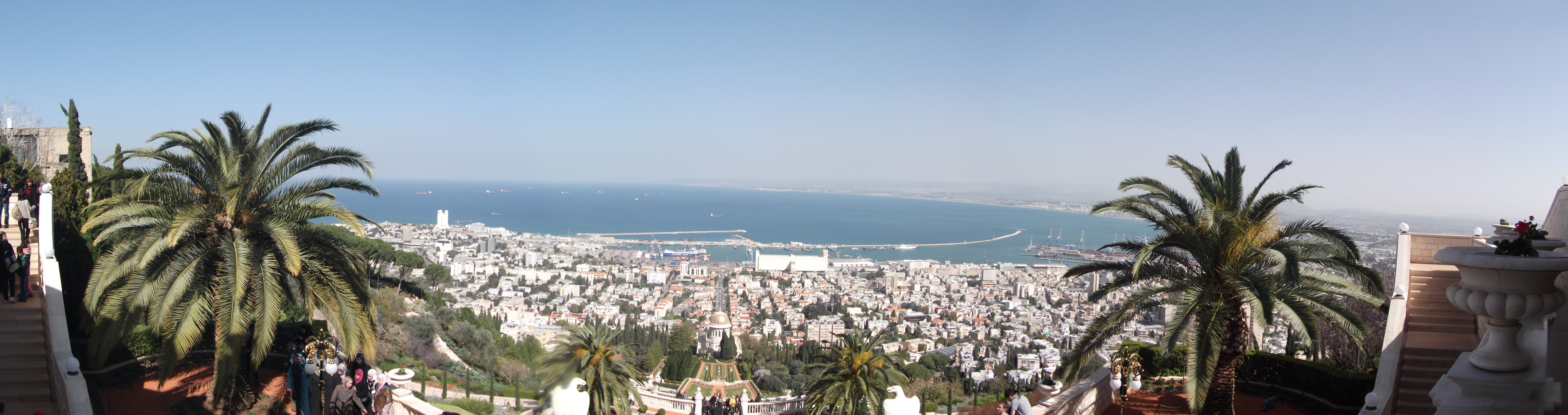
At last the bus pulled up and I climbed aboard. I settled down and noticed a couple holding an English Haifa city map so I asked them if they were tourists. She was, he wasn’t. They told me that they too were headed to the Bahai Gardens to I told them that I’d tag along. On the bus the young woman, a Brazilian visiting Israel with an Israeli male companion, decided she’d have a little snack. She took out a nut with shell intact (not sure what type of nut it was but it had a pretty tough shell) and placed it on the floor of the bus, then she stepped on it. The crunch was loud and her male friend look horrified as everybody watched her messy up the floor with shards of shell and crumbs of nutmeat. She later resorted to manual cracking of the nut and was thus spared of any further embarrassments. When we reached the upper section of the gardens, where the free tours are given, we got off out bus and took pictures at the upper observation terrace. Turns out that when I was on the Louis Promenade some weeks back I was only several hundred feet from the Bahai Gardens’ main gate. Here is a panoramic picture I took of the bay and land down below (click to see it enlarged):

Panoramic from the Bahai Gardens

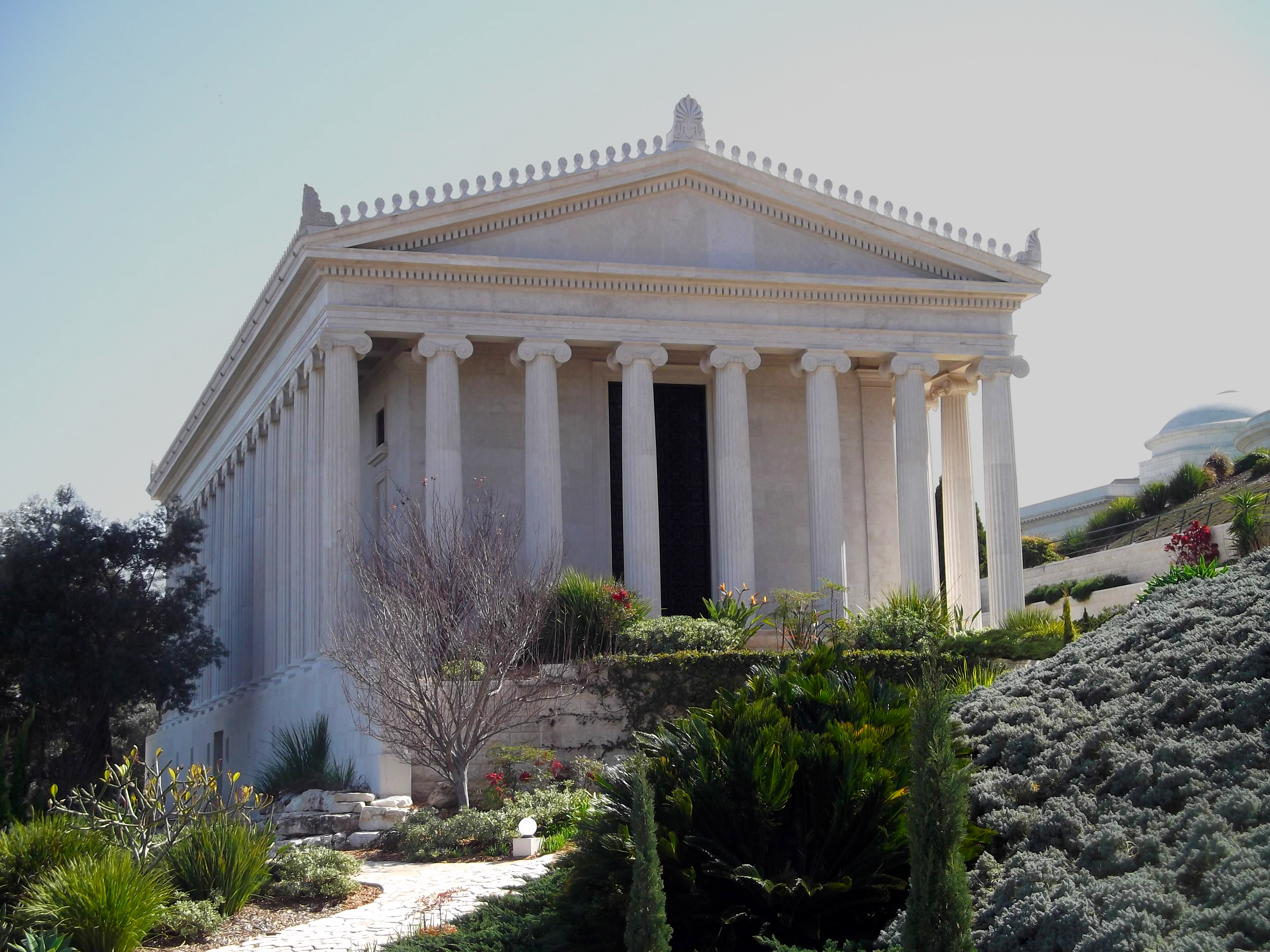
After the picture taking and the gazing-out-at-the-view-whilst-chatting, we headed over to the tour group gathering area and were signed up and checked for weaponry. I was included in the young lady’s party so the guides think I am from Brazil and the couple thinks I am an undercover journalist – whatever! We started the copious walking that is the tour while stopping every once in a while to listen to the guide tell us about the Bahais and the gardens that was built on the land bought by the early Bahai followers. Today there is an amazing 7 million Bahais and they aren’t even allowed to live in Israel, their holiest place on Earth. The good thing about the Bahai is that they are respectful of the wishes of Israel, knowing that Israel doesn’t allow missionaries and thereby forbidding it amongst themselves. That’s a kind gesture in the world we live in today. Anyway, on the tour we passed by the large and impressive structure that is the Bahai Archives Library, I was wondering what these buildings were when looking down at them from the Louis Promenade – now, thanks to the tour guide, I know.

Bahai Archives Library

After the 45 minute walking tour there was a 20 minute video offered but I declined. I had to leave my new friends behind as they stayed for the video. I then exited the gardens, following the guards directions, boarded a bus and got off near my next destination: the Madatech National Science, Technology and Space Museum.

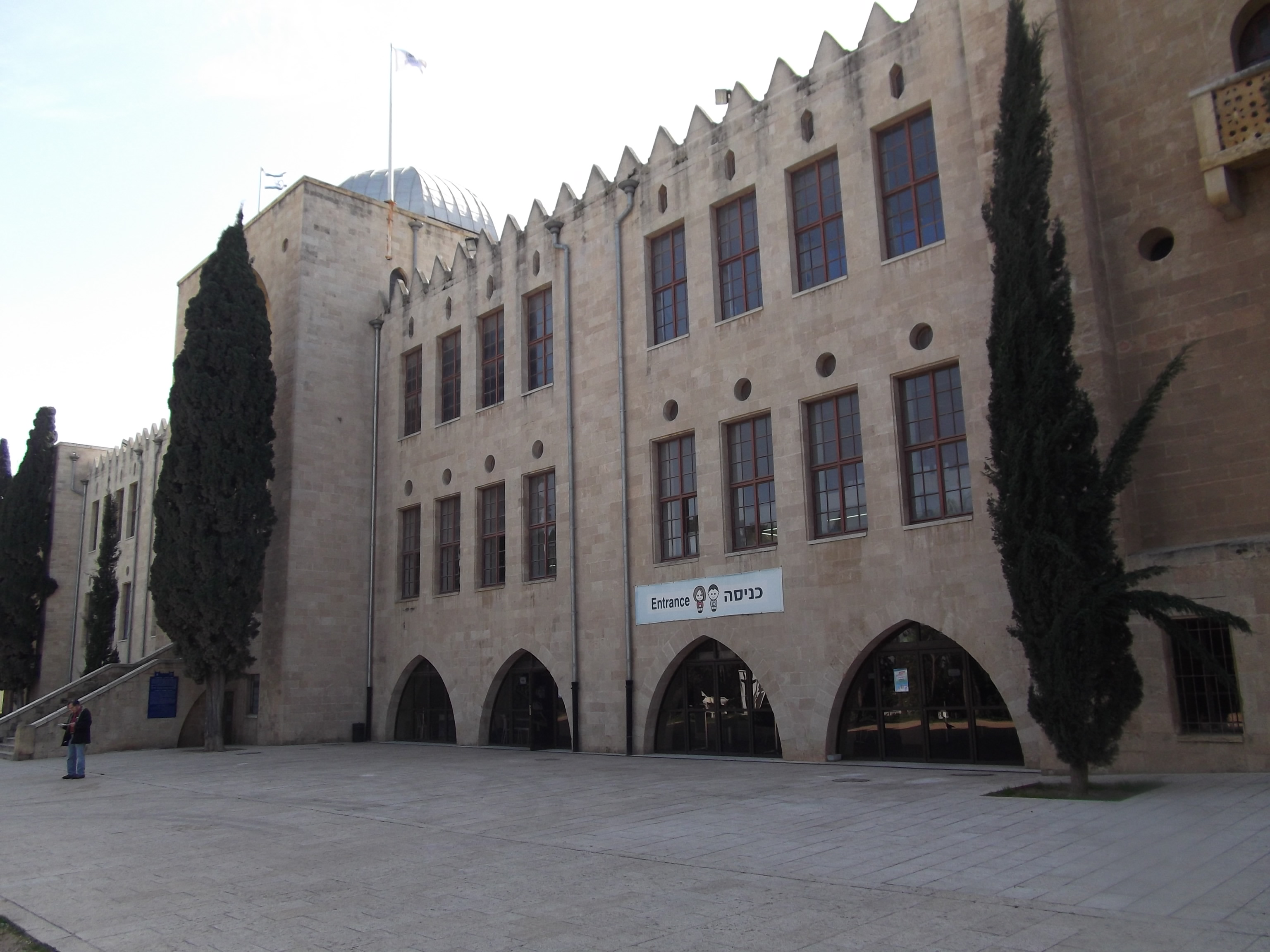
The Madatech building

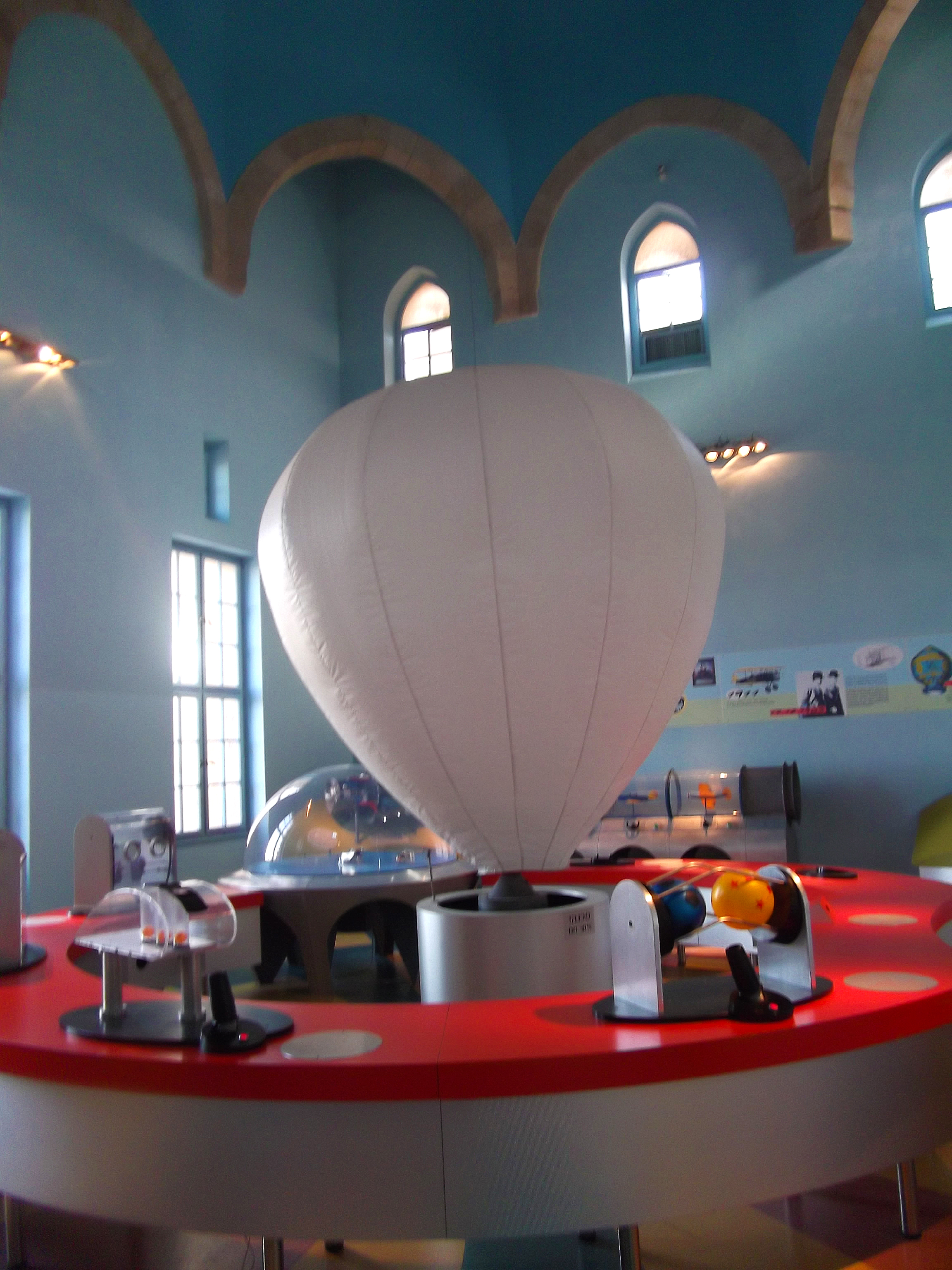
The Madatech building is what used to be the old Technion building, built sometime in the 1910s. Even Albert Einstein came to visit back in 1923 and planted a palm tree which is still outside the building to this day. In the 80s the museum was established in the building and it is a magnificent structure. However, once inside, I was a bit puzzled about the Madatech Museum. The bottom floor exhibitions, just beside the front desk, seemed lonely and small. I couldn’t help but wonder why the admission fee was so steep (75 shekel for adults – but just 10 shekels for olim chadashim within their first year in Israel) for such a museum. However, when I continued on up to the first floor I was pleasantly surprised to find much, much better exhibits. One of my favourite on the first floor has got to be the Einstein Hall (Ilan Ramon Exhibition) where personal belongings of Ilan Ramon, Israel’s first astronaut, were found after the tragic disaster of the Columbia space shuttle back in 2003. Included in the finding were CDs given to him by local Israeli artists, remnants of his Israeli Air Force flag, a page of his diary which miraculously survived and other small items. Another notable room on the first floor is the Green Energy exhibition where pressing buttons turns on solar power, wind power and water power, each activating its perspective energy source and illuminating small lights to show how the power is generated. The second floor was even better with exhibits such as Magical Science – scientific breakdown of classic magical tricks (yes, I enjoyed having my weight distributed on a bed of nails), the Optical Illusions room and the Aviation Hall. Here is part of the Aviation Hall:

Madatech - Aviation Hall

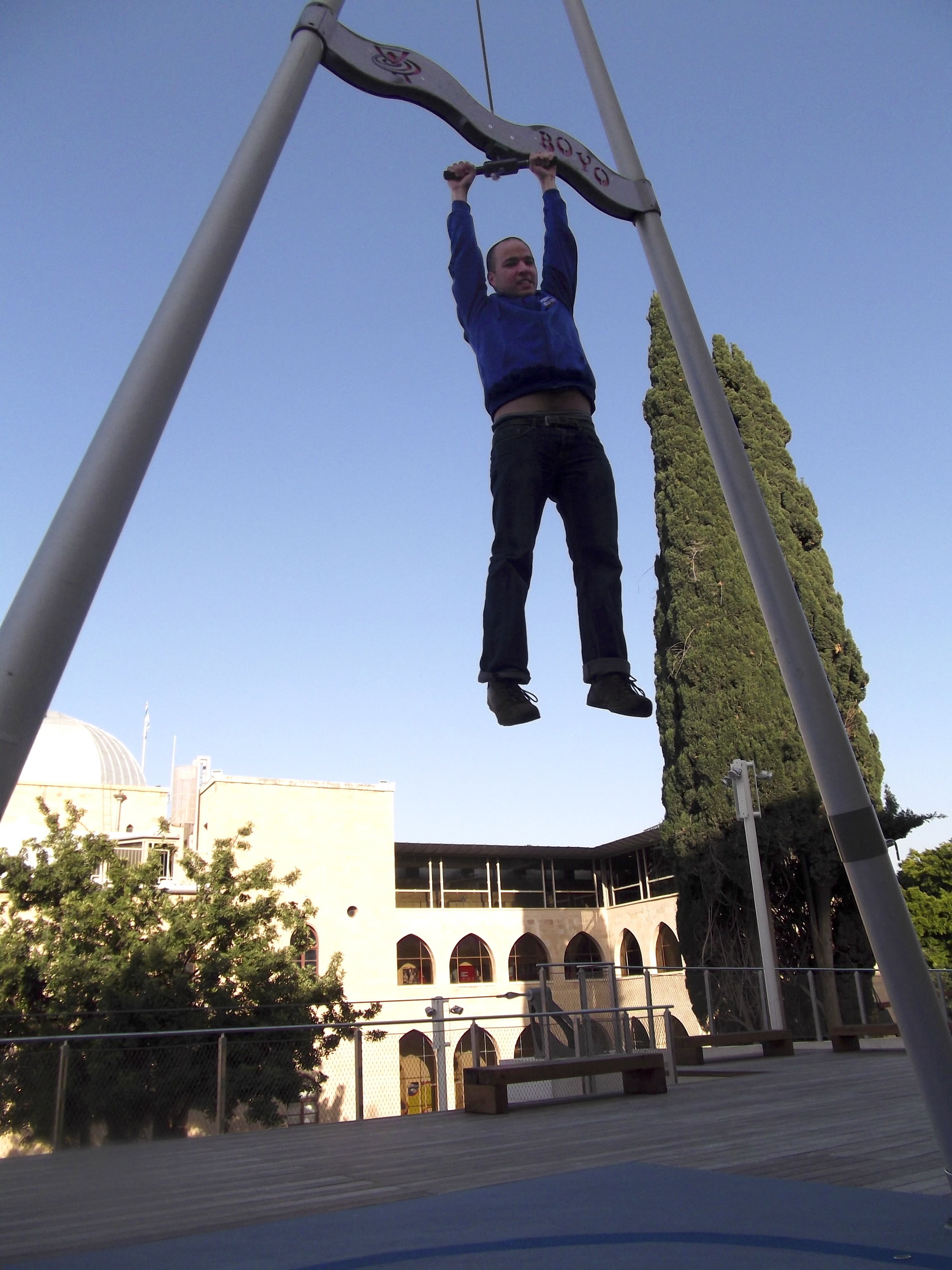
The Dark Room was also of particular interest to me because I found the phosphorescent wall and the plasma ball to be exquisitely entertaining. And of course, who can resist the mirrors in the Mirrors Hall? After some two hours spent inside I found out that there was an outdoor area as well. I had not been mentally prepared for this museum’s enormity as I thought it was supposed to be “not as big as one would hope.” Needless to say, it was plenty big for me. Once I’d made my way to the outside Noble Energy Science Park I found several interesting items. One was a retired Israeli Air Force F-21 Kfir warplane, another was a helicopter-like creation that requires pedaling and pumping to “take flight.” I was a tad too large to comfortably pedal – my knees were trying to crush my rib-cage. But shortly I was assisted by a worker of the museum who showed me his “flying” skills and then led me to the next activity. This one was called the Boyo – a human yo-yo – and he showed me how to hold on, pull while dropping to one knee, stand up and let the recoil of the rope pull one up. I attempted to reach the 4 metre (13 feet) launch but I wasn’t experienced and I landed on an angle, losing the necessary force to reach the top. I tried over and over and he tried helping me but my arms got kinda sore so I gave up.

Boyo (Human Yo-Yo)

The museum guy also took me to another of Madatech’s features, the Sports Science building with all sorts of energy-sapping activities to be experienced. There I karate-chopped a foam block measuring the speed of my chop. I got 90-something kilometres per hour but I’m guessing I could have gotten more but my arms were a tad sore from the Boyo bouncing. I also raced wheelchairs but the empty seat beside me put no effort into the race so I stopped racing and relaxed instead. When I was done in the Sports Science building I realised that I was at Madatech for nearly 3 hours and wondered why there wasn’t anywhere to nap… After leaving I meandered around the area, dropped some change into a street musician’s case as he broke out into a oldies (1920s-40s) tune – putting a skip in my step, and then boarded a bus to the Cinemall where I got a falafel and a train to Nahariya. At Nahariya I hopped on a bus and arrived home. To Haifa again next time, or elsewhere?

(Thanks again to Boruch Len of Legacy Photography for Adobe CS5 picture touch-ups!)

Haifa II

In Haifa, Israel on February 8, 2012 at 2:59 PM

On Monday I went to Haifa again. The reason I have been frequenting Haifa is for this nifty little gig I got writing for Tourist Israel, and Haifa is being covered by myself. I still have future trips planned for that large coastal city so be prepared to know a lot about Haifa. Once I had alighted from the train at the Mercaz HaShmona station next to the Port of Haifa I walked several blocks until I reached the German Colony of Haifa. The German Colony is a small area nestled between the Baha’i Gardens and the Port of Haifa. It was built up in the late 1860s by German Templars – not the Templar Knights who ruled Castles Monfort and Yehiam back in the times of the Crusaders. One of the old buildings, this one the historic Templar Community House built back in 1869, now houses the City Museum of Haifa.

City Museum

Within the walls of the recently restored building I found interesting content – not what I had initially expected for a City Museum. This museum was filled with everything of Haifa’s cinematic past, from old film reels to ticket stubs to blueprints of Haifa’s early movie-houses. I am a bit of a cinemaphile so I found it fascinating to see what played at the Armon Theatre’s opening night (The Merry Widow, an Oscar-winning musical comedy from 1934). I enjoyed examining the old tickets, seeing how the currencies changed over the years to what we know now as the New Israeli Shekel. Sitting in the small mock-up theatre watching old Israeli movie commercials and trailers from old classics brought me back in time to the Golden Age of the Silver Screen. After I had thoroughly browsed all the old letters, showtimes, invitations and pictures I bid farewell to the museum’s receptionist, gathered up my papers and headed outside.

Armon Theatre

Next stop walking up the German Colony was meant to be the Baha’i Gardens but when I asked a pair of American pilgrims they showed me that public visiting hours were only until noon and I had spent too long in the City Museum. So, I stopped into the Haifa Tourist Board office and asked for bus directions to the Clandestine Immigration and Navy Museum, found directly below Elijah’s Cave (as previously mentioned in my first “Haifa” post). I got directions, hopped on a bus and made my way to the museum. Now, I have already been to the Clandestine Immigration and Navy Museum but it was still a treat going again. Easily my favourite Israeli museum as of yet, the Clandestine Immigration and Navy Museum has fascinating exhibits both hands-on and the traditional artifacts-in-a-glass-case kind.

Clandestine Immigration and Navy Museum sign

When I got to the museum the tinted glass door was locked. I was dismayed as it was clearly opening hours and I could think of no reason why they should be closed. As I was about to turn away in frustration I heard a key in the door and two guards emerged. One asked me for ID and I handed over my Teudat Zehut (Israeli ID card). He examined it and looked under the card suspiciously so I asked him why the heightened security. He answered that it was coming from the Ministry of Defence and yes, his uniform said “Ministry of Defence” on it. I thought it was strange as the Navy runs the museum, can’t they find some able-bodied seamen to guard the museum door? The guards let me in and I paid my admission fee. I stowed my coat and extra stuff in the designated spot and found the used book stack, books mostly revolving around military offered for sale to visitors. The first book I picked up surprisingly was exactly the type of book I like; Israeli forces in their constant struggle for peace in this wartorn region of the Middle East. Not only was this book, Israel vs. Jibril, the ideal book for me, it was also signed by the author, Samuel M. Katz, as a personalised gift to retired Major-General Ami Ayalon (previous head of the Shin Bet and the Israeli Navy). I quickly gave the book to the soldier behind the desk, even though nobody was likely to buy it in my absence, and continued into the museum.

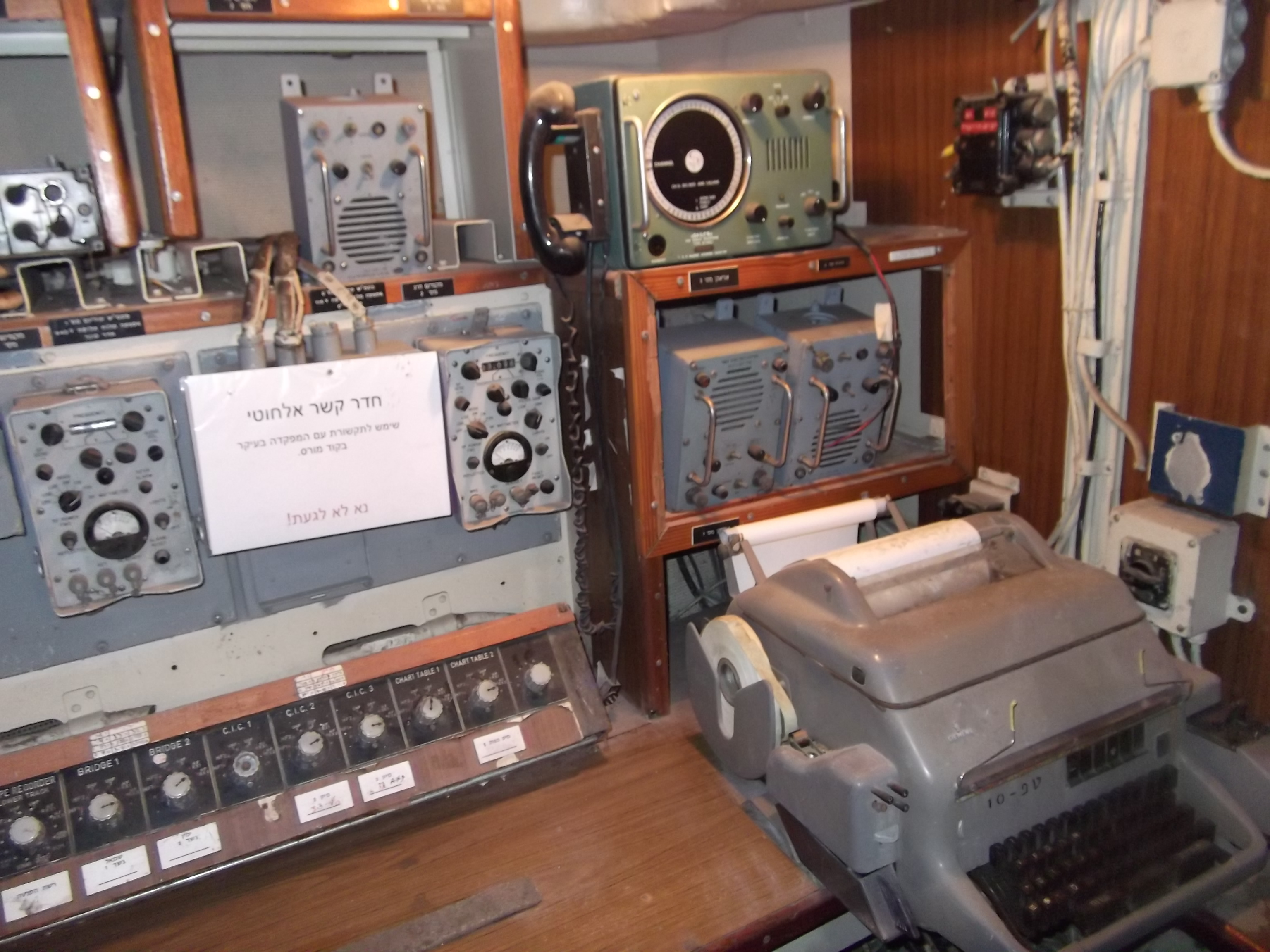
Communications Room on the INS Mivtach

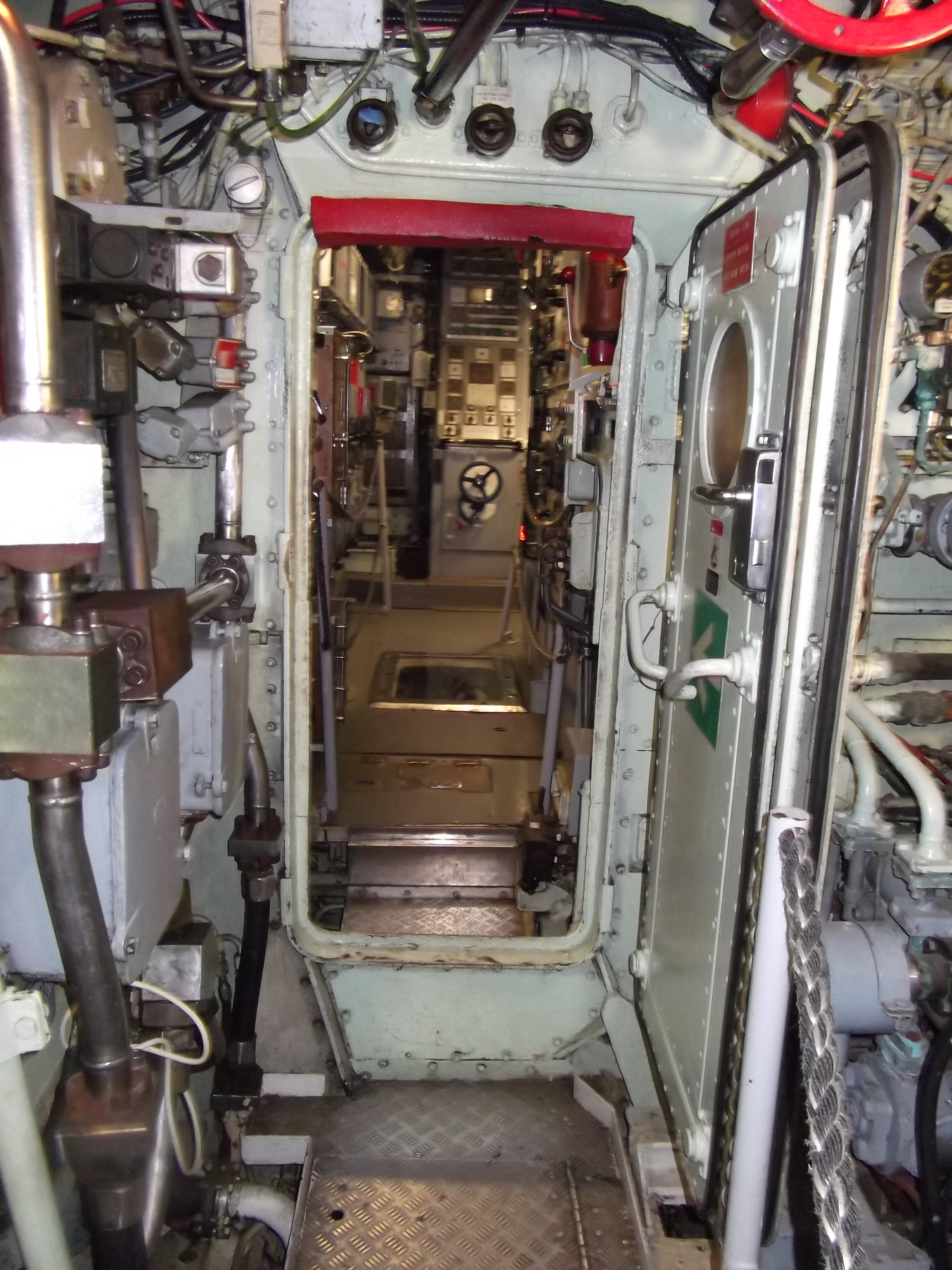
After reading about all the fascinating war heroes of the Israeli Navy, including the Squadron 788 and their patrols of the Kinneret under Syrian MiG fighter jet and artillery fire was almost too much to bear at once. I reckon I could spend several days in the “History of the Navy” exhibit. Outside, there are dozens of naval guns, missiles, torpedoes, old ship parts and several intact boats, ships and submarines. Available for internal exploration are the INS Mivtach missile boat, the INS Gal submarine and the “Af Al Pi Chen” immigration ship. The Navy did an outstanding job on the recreation of maritime feel with commands and authentic noises found on such vessels.

Within the INS Gal

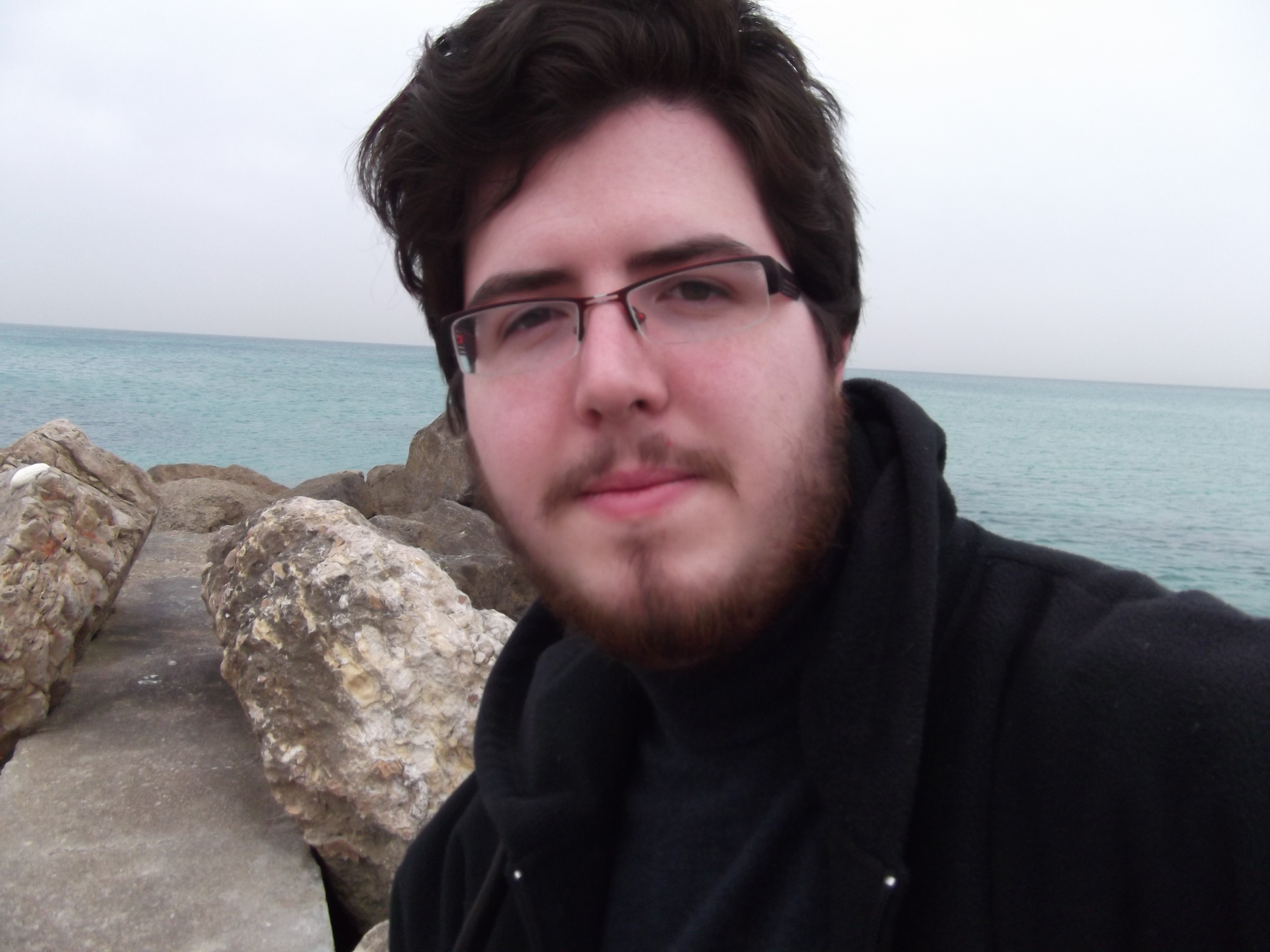
I must say, if one lives in Israel (or is coming to visit), and one has not yet been to the Clandestine Immigration and Navy Museum, it is well worth it. I am reluctant to reveal all of the many unique features of this museum as I truly believe everybody should visit it at least once, to better understand the miracles we experienced as a people in the last 60-something years here in the Land of Israel. After the museum, some 2 hours after I was admitted, I walked to a bus stop and boarded a bus in the direction of Hof HaCarmel, the beaches of Haifa. Monday was a very windy day but there were no waves, oddly enough. When I had navigated the maze of underground tunnels and passages, I made my way to the beach and nimbly jumped my way to the far end of the rocky pier outcropping jutting out into the Mediterranean Sea.

Me on the rocky pier

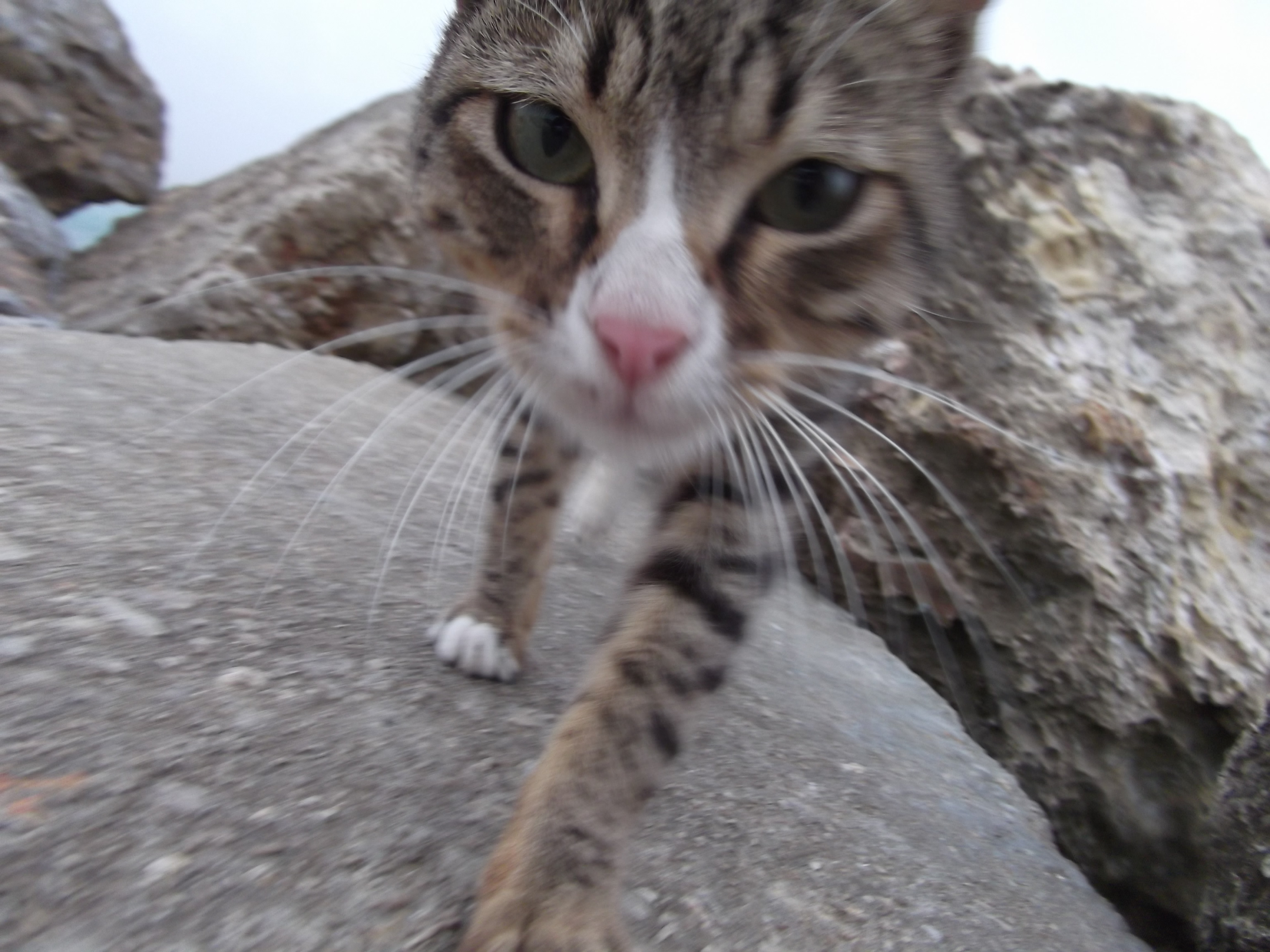
Also on the pier was an overly-friendly cat that was very eager to befriend me, trying to cull some food out of me as his end-game.

Feline friend

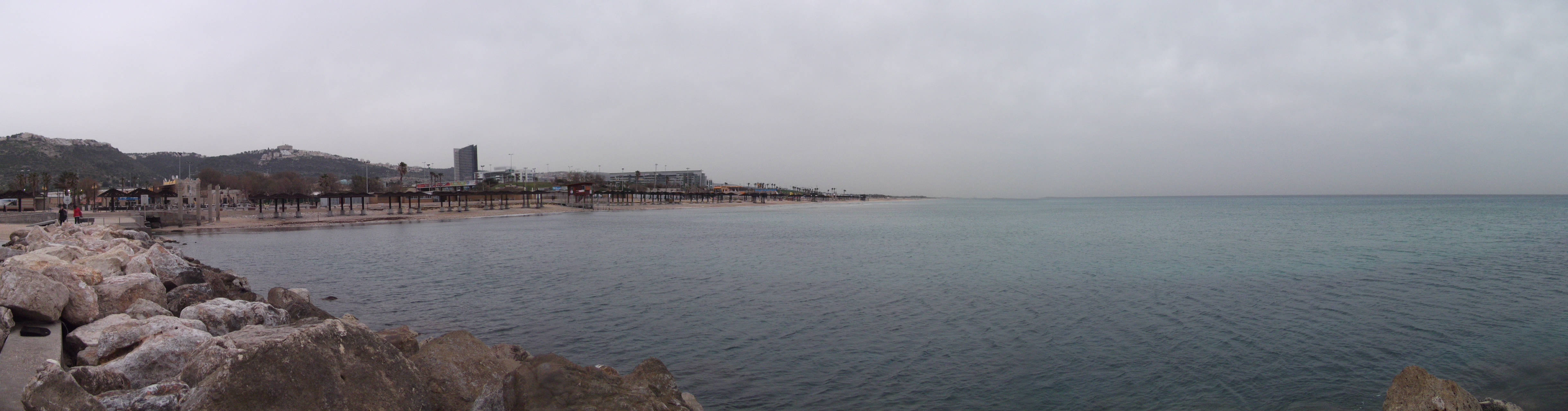
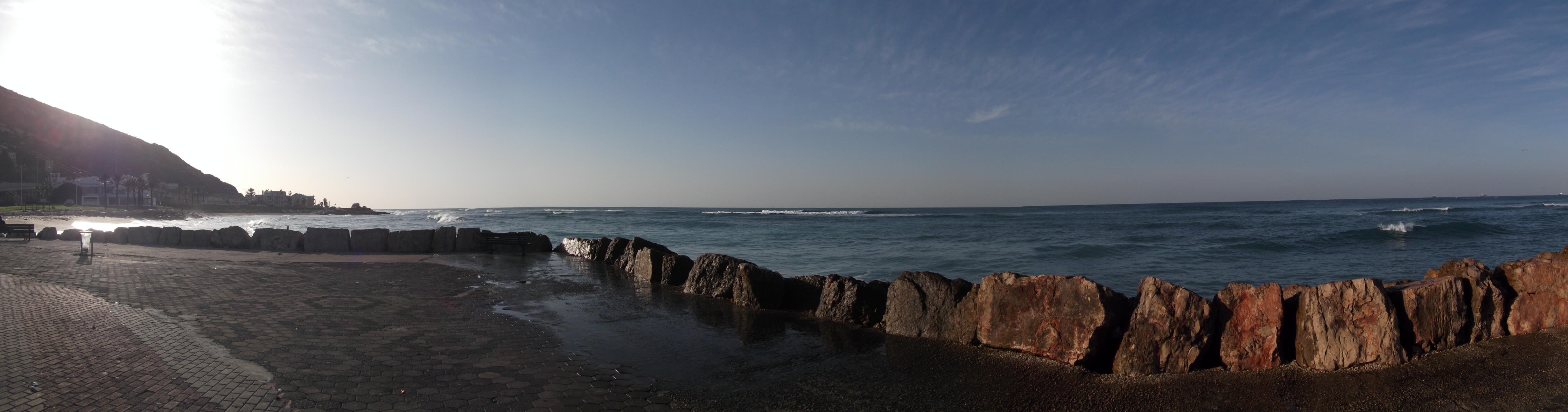
Of course, no post is completely satisfactory without a panoramic picture:

Panoramic of the Coast looking South

As a final word – a joke, as quoted from an old British napkin now held in a glass case in the Clandestine Immigration and Navy Museum;  “Old sailors never die… they just get a little dinghy.”

(Thank you to Boruch Len for photo editing – Mr. Len is a fabulous photographer whose pictures can be seen here. Also, for those inclined to learn more about what there is to do in Israel, please visit Tourist Israel’s website here – you may even stumble upon a page that I wrote up!)

Haifa Educational Zoo

In Haifa, Israel on February 1, 2012 at 9:49 PM

Yesterday I went to Haifa and I had one of the best times yet in that large coastal city! At first I stopped off at Kiryat Motzkin to interview someone for an article I am working on but before long I was back on the train headed for Downtown Haifa. When I got off the train at Mercaz HaShmona I had to walk swiftly through the light yet very cold rain to get to Paris Square, the lowest stop of the Carmelit Underground Train. When I set eyes on the little subway I immediately loved it.

Carmelit Underground Train - Paris Square

For me it felt like an amusement ride, going up the mountain in a snug tunnel sitting in a retro-looking train car with luridly painted tiles decorating each stop. No expert on subways, this may have been the first time I have ridden one, I delighted myself watching the stone walls of the tunnel whip by mere inches from the window. At one point I got a little queasy as I was watching the wall but looking downward. When the tiled floor of the next stop came rushing up at me a wave of confused nausea swept through me and made me look away. As I looked away I remembered my wonderful time in Orlando, FL, at the Universal Studios Amusement Park. Eight minutes after the tiny train left Paris Square we reached the end of our ride and I rode up the escalator to find myself in earshot of my next destination – the focal point of the day, the Haifa Educational Zoo.

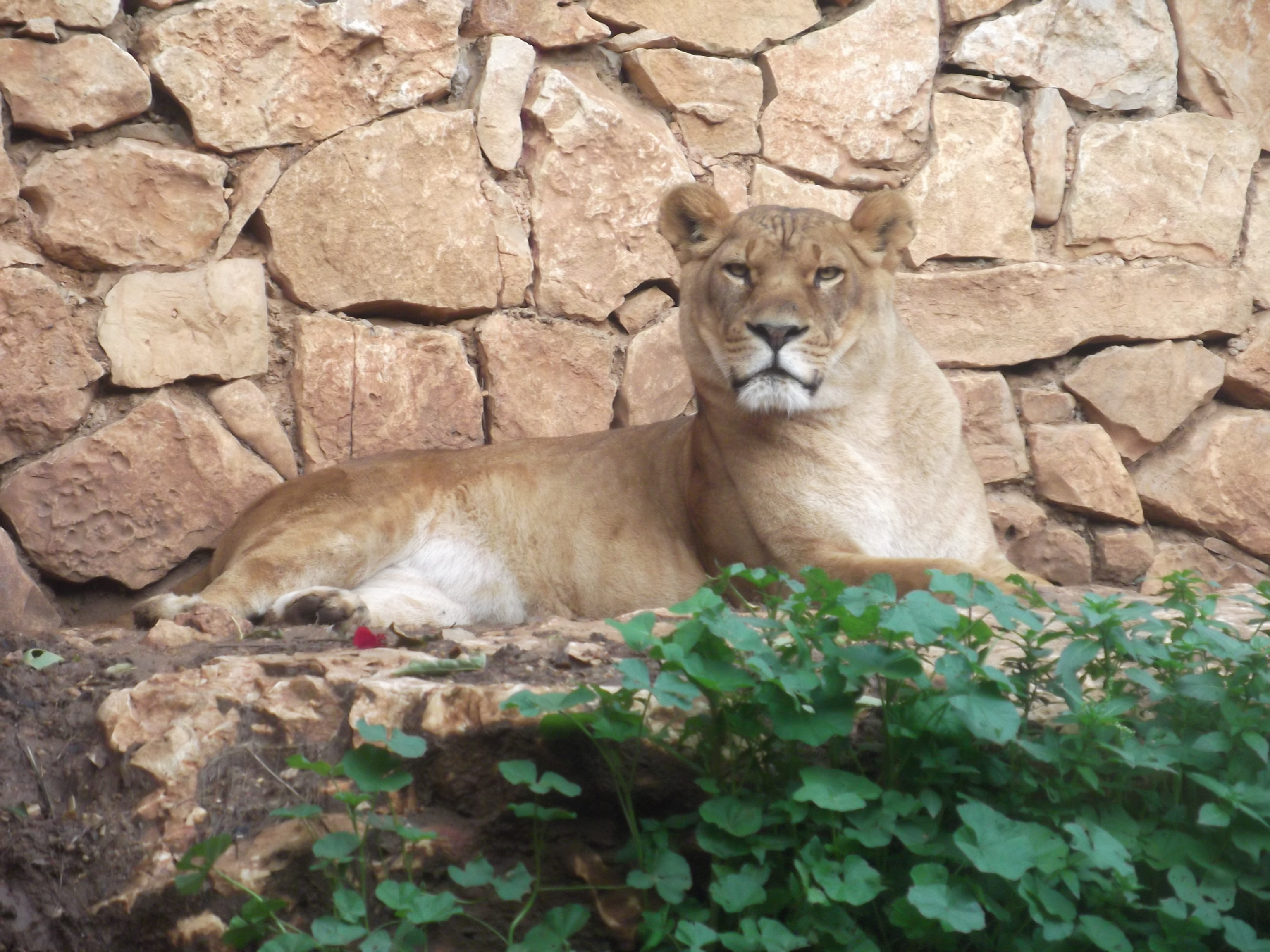
Lion - Haifa Educational Zoo

I purchased my ticket and entered the world of exotic animals, the joyous laughter of the security guard trying his broken English on me mixing in with the noises of the animal kingdom. It was a slow day at the zoo, winter and rain attributing to that, and I was mostly alone as I peered at the animals in their habitats. I felt like a little child, ooh-ing and aah-ing at the animals. I was fascinated at the immense size of the sleeping Bengal tiger and wished that the Nile crocodile would move some instead of dozing in the water. At one point I heard someone singing and when I got closer, and into view, I saw a zookeeper singing softly to a huge white cockatoo. The bird loved it but the man stopped when he say me and told the bird to go ahead and dance. The bird followed the man’s instructions and danced gaily on the trees inside his enclosure. Other birds didn’t seem as friendly – one large eagle owl stood still and watched me walk by, his wise head turning slowly to a point where most chiropractors would have fainted away.

Eagle owl

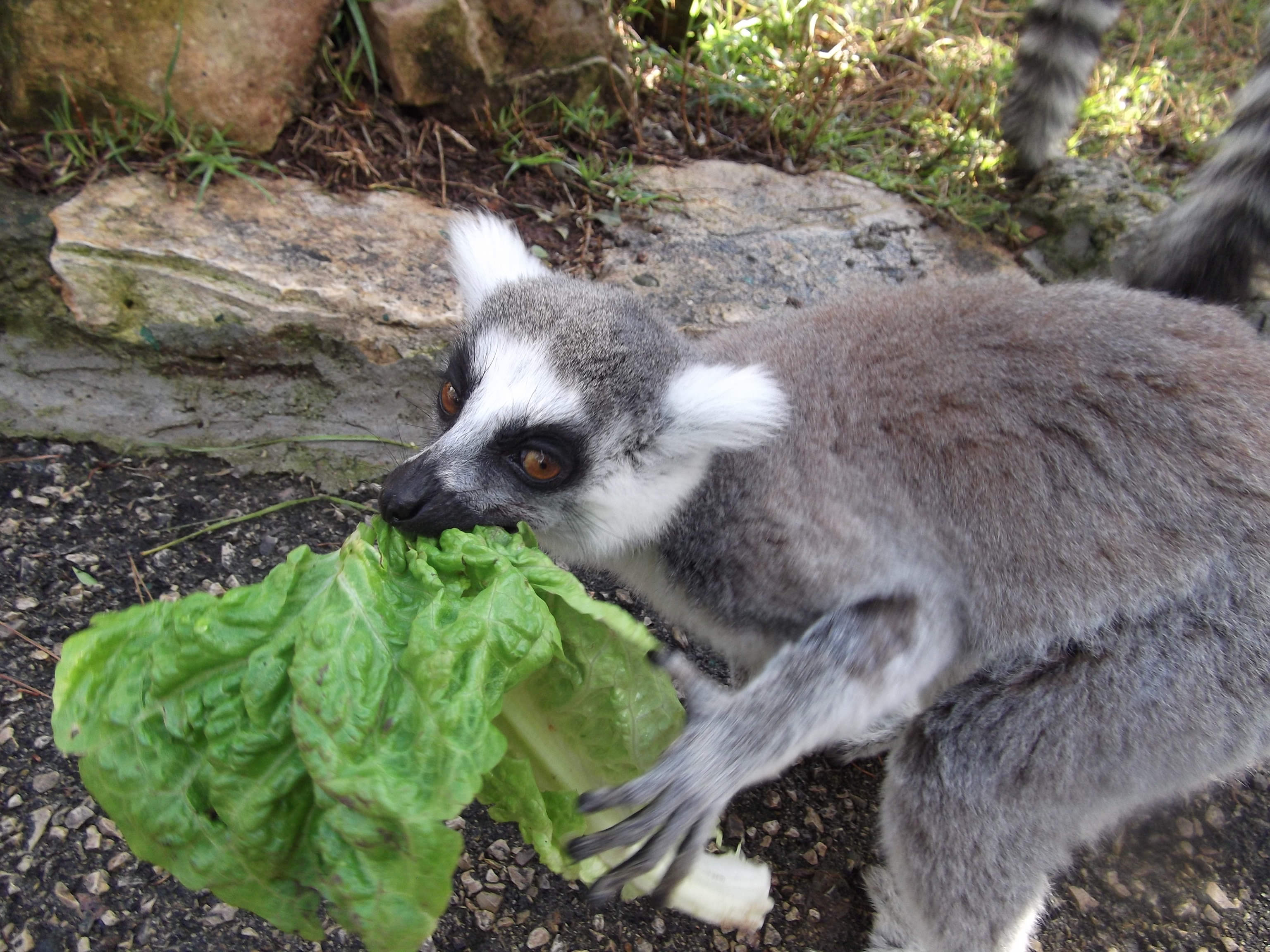
One part I really enjoyed was the lemurs. I had just examined the capuchin monkeys as they leaped around and was surprised to see the lemurs adopting a sunning position. They broke away from the huddled line that kept them warm in the chilly winter breeze and began to sit with their arms spread out.  Then they each did something amazing. Each one turned his head to make sure he was not blocking another lemur’s sun-rays. It was fascinating. Several minutes later I bumped into two zookeepers who were heading to the lemurs to feed them. I asked if I was allowed in and they agreed, even though the official lemur visiting hours were already over. At the gate one of them said that I was a rabbi and I told them that no, I am not a rabbi. That was interesting. Once inside, among the chipper little lemurs, I asked them if they liked there job and they said that even though they spent 90% of the time cleaning, this was the best job in the world.  They looked like they meant it.

Lemur eating lettuce

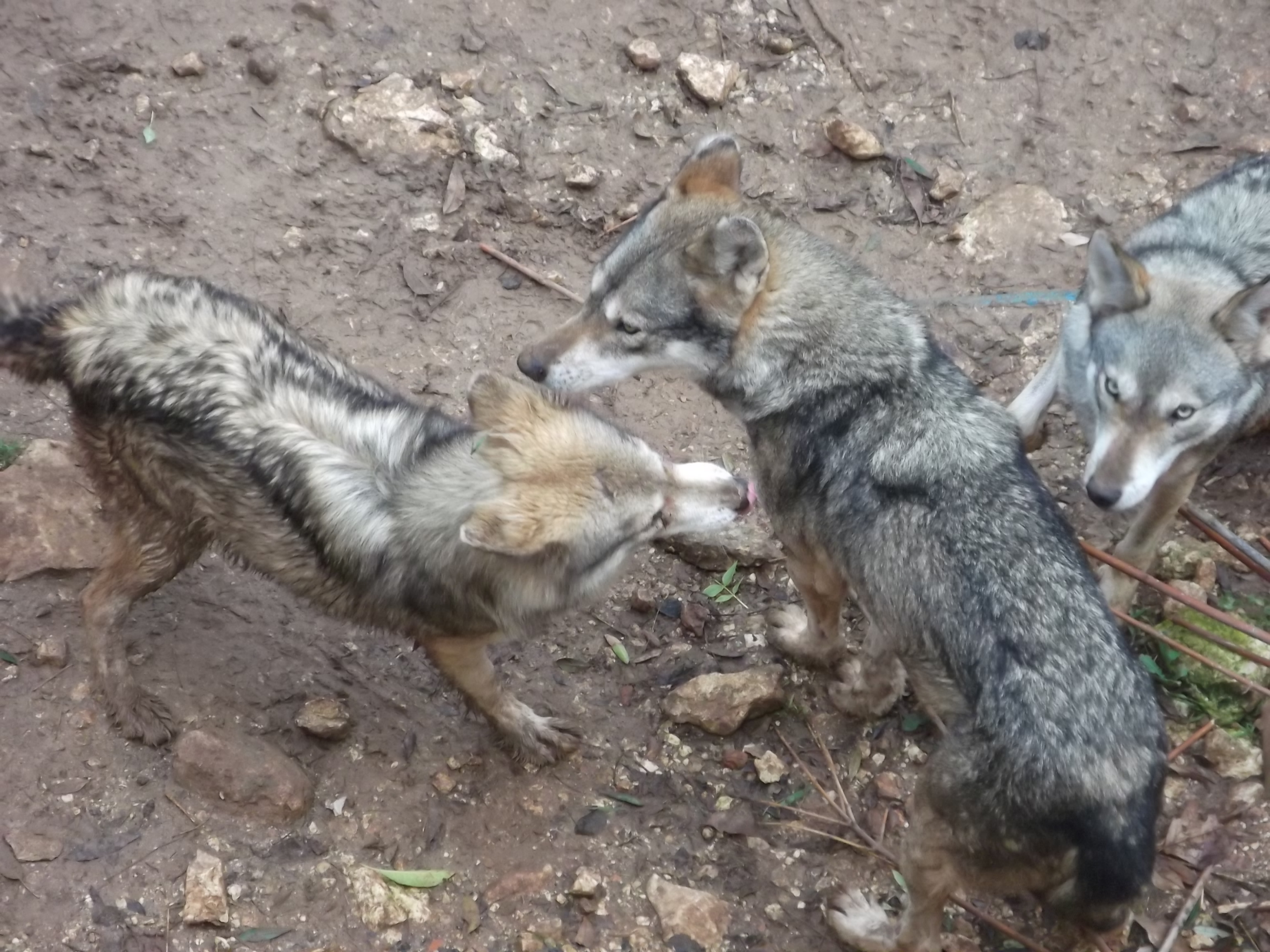
After the lemur feeding I continued alone along the path. I was amazed to watch the lions eat – they had some huge leg bone or something – especially when I heard a bone crack. The male lion looked shabbier than the two female lionesses but after four weeks of rain and mud – this January being Israel’s rainiest recorded month, who can blame him. It made me laugh because to me he looked like a sad clown with his black lips and his eyes all muddy. After the lions came a huge Syrian brown bear in a huge enclosure but he was feeling sluggish so I kept going. The wolves, Israeli wolves also known as Arabian wolves, were having a good time howling and playing with one another.

Israeli wolves at play

Along with the wolves there were numerous foxes and other animals found locally in Israel such as camels, ibexes, wild boars, caracals, porcupines, jackals and the rare Persian fallow deer which I saw once during a hike in Nachal Kziv. Also found in Israel, the Griffon vulture, a huge bird that some people may recognise from The Jungle Book movie. Towards the end of the path, after the reptile building which I will explain shortly, there was a humorous sight. In one habitat there were dwarf mongooses and a large desert tortoise. The mongooses sat on top of the tortoise and even took their food up, sitting on the tortoise and using its shell as a table/chair combo. It was cute. Now, the reptile building, a climate controlled structure with places for lizards and snakes including pythons, vipers, boas, anacondas and a Nile monitor lizard. I was surprised at how big the anacondas were even though the ones in the zoo were far smaller than the behemoths that exist out there.

Green Python

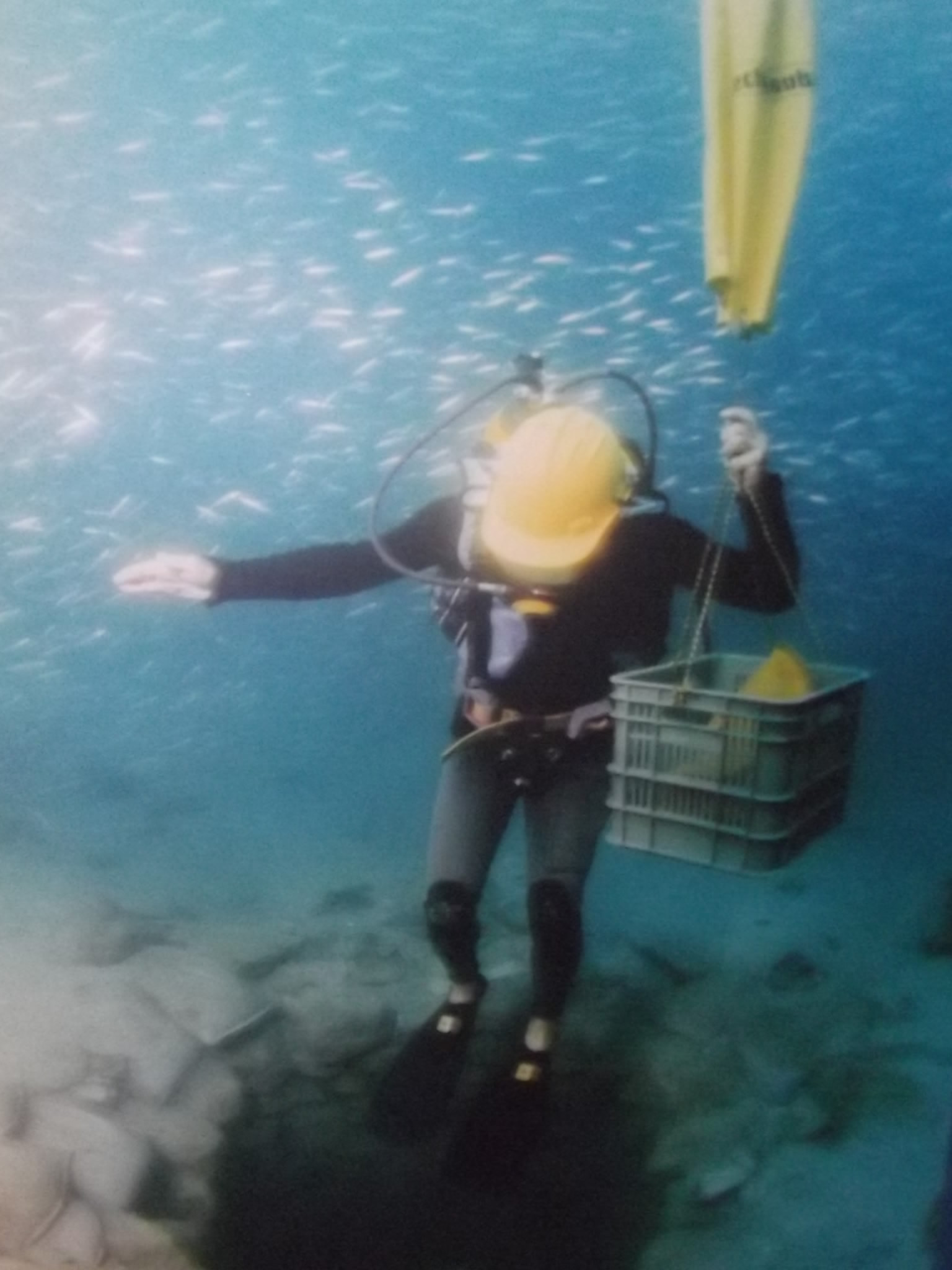
Close to the reptile building I found the Prehistory Museum which I thought was a separate entity but it isn’t, it’s part of the zoo’s educational experience. Inside I found mostly run-of-the-mill findings from excavations such as skeletons and broken pottery pieces but there was one thing that did stand out. Some years back divers did underwater research uncovering submerged villages off the coast of Haifa and Atlit (just south of Haifa). In one place they found a freshwater well and divers entered the well to explore. This photograph shows the diver entering the well:

Diver entering well off the coast of Atlit

After leaving the zoo I made my way to the Louis Promenade, a beautiful, serene place to be alone with the fantastic view of Haifa, Haifa Bay, the Krayot, Akko, Nahariya and Rosh HaNikra off in the far distance. On clear days one is able to see Mt. Hermon in its snowy splendour. Here is a panoramic shot of the view:

Looking down from the Louis Promenade

As I looked down I was tracing a small dark object far below as it made its way around the little seawall and into the port. The wake was odd and I know the Israeli Navy’s submarines are docked in Haifa port so I think it may have been one of Israel’s Dolphin submarines. If it was, cool, if not, it was still cool. If I would have had a telescope or a pair of binoculars it would have been better but I think that the view from the Louis Promenade is the best I have seen in all of Israel. So here’s to Israel, the loveliest place in the world!

A Hilulah

In Galilee, Israel on January 13, 2012 at 12:04 PM

This motzai Shabbat, and Sunday until sundown, is the hilulah of both Rabbi Yaakov Abuhatzeira, the grandfather of the famed Baba Sali, and the Rambam (Maimonides). A hilulah is the Sephardi way of saying yartziet, the marking of the date of one’s passing from this world. So, 132 years ago (in 1880), Rabbi Yaacov Abuhatzeira, also known as the Abir Yaacov, passed away. To this date, congregations the world over celebrate his life and hold feasts in honour of his name. And yes, the bet knesset (synagogue) next to my house held a feast as well, but on Thursday night for convenience sake.

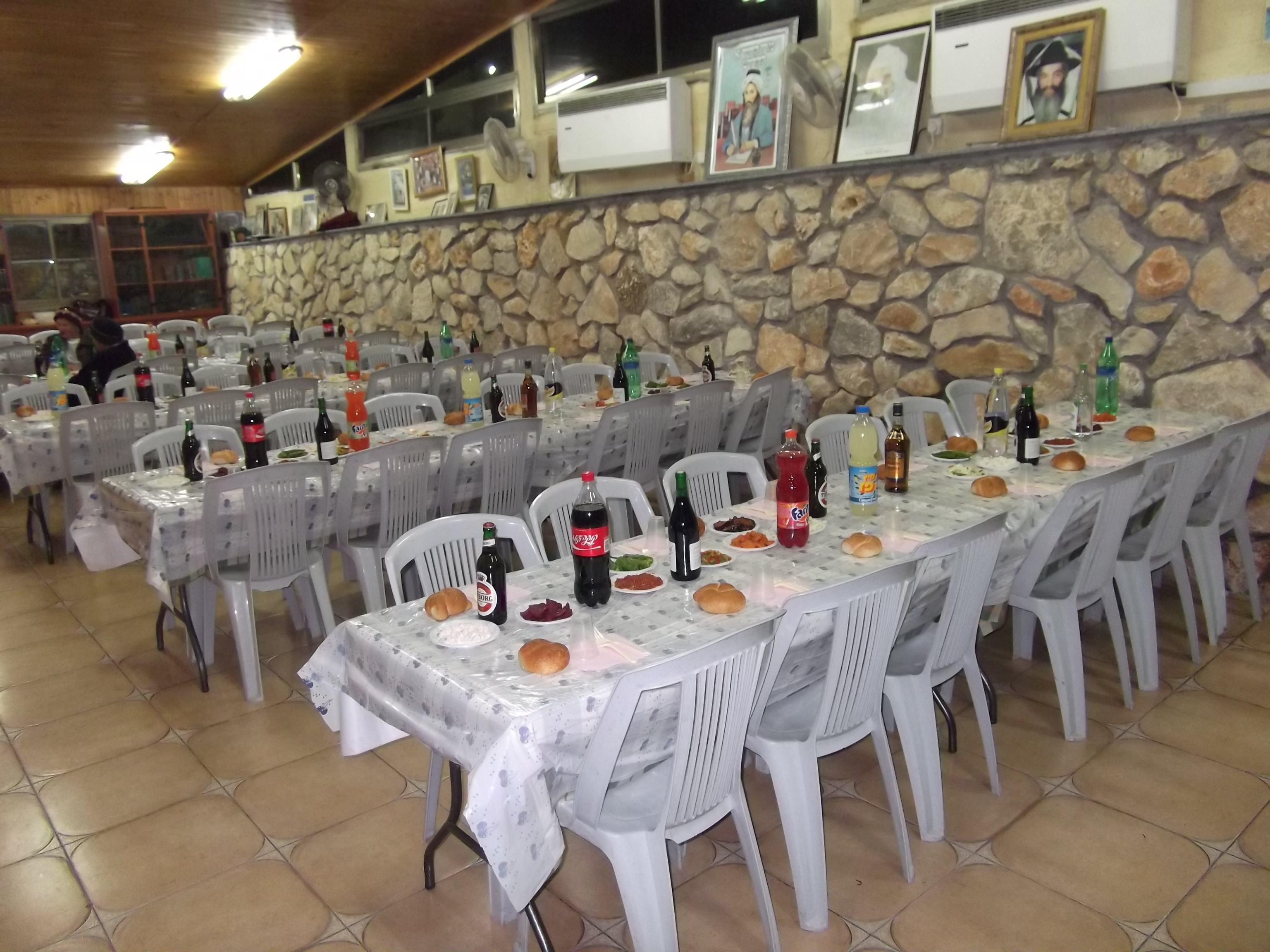
The set tables

Bet knesset Eli Cohen, the synagogue next to my house, was built in the late 60s by the Moroccan immigrants who founded Ma’alot in the 1950s. The name Eli Cohen is a famous one in Israel as he was a spy legend. Eli Cohen worked his way into the upper echelons of the Syrian government and military and gave them bad advice to provide an edge for the Israeli soldiers during wartime. One of the notable tricks he played on the Syrians was convincing them to plant trees next to every bunker they had in the Golan area and in Syria itself. By planting trees under the ruse of provide shade for the Syrian soldiers, Eli Cohen had marked the Syrian defence for every Israeli soldier. He ended up getting caught, quite accidently by the KGB, and was hanged by the Syrian government in 1965. More can be read here: http://www.saveisrael.com/martyred/elicohen.htm

Eli Cohen

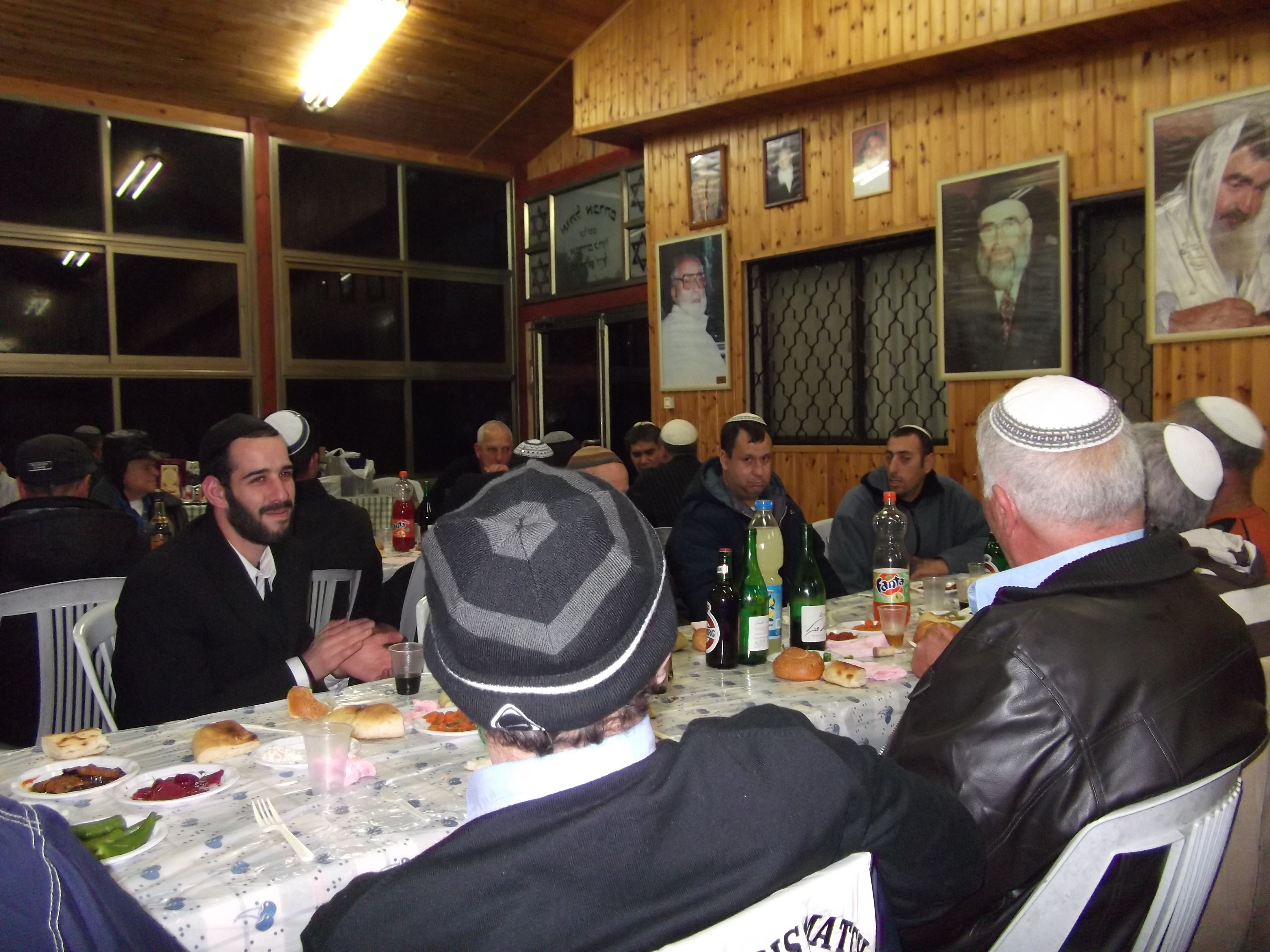
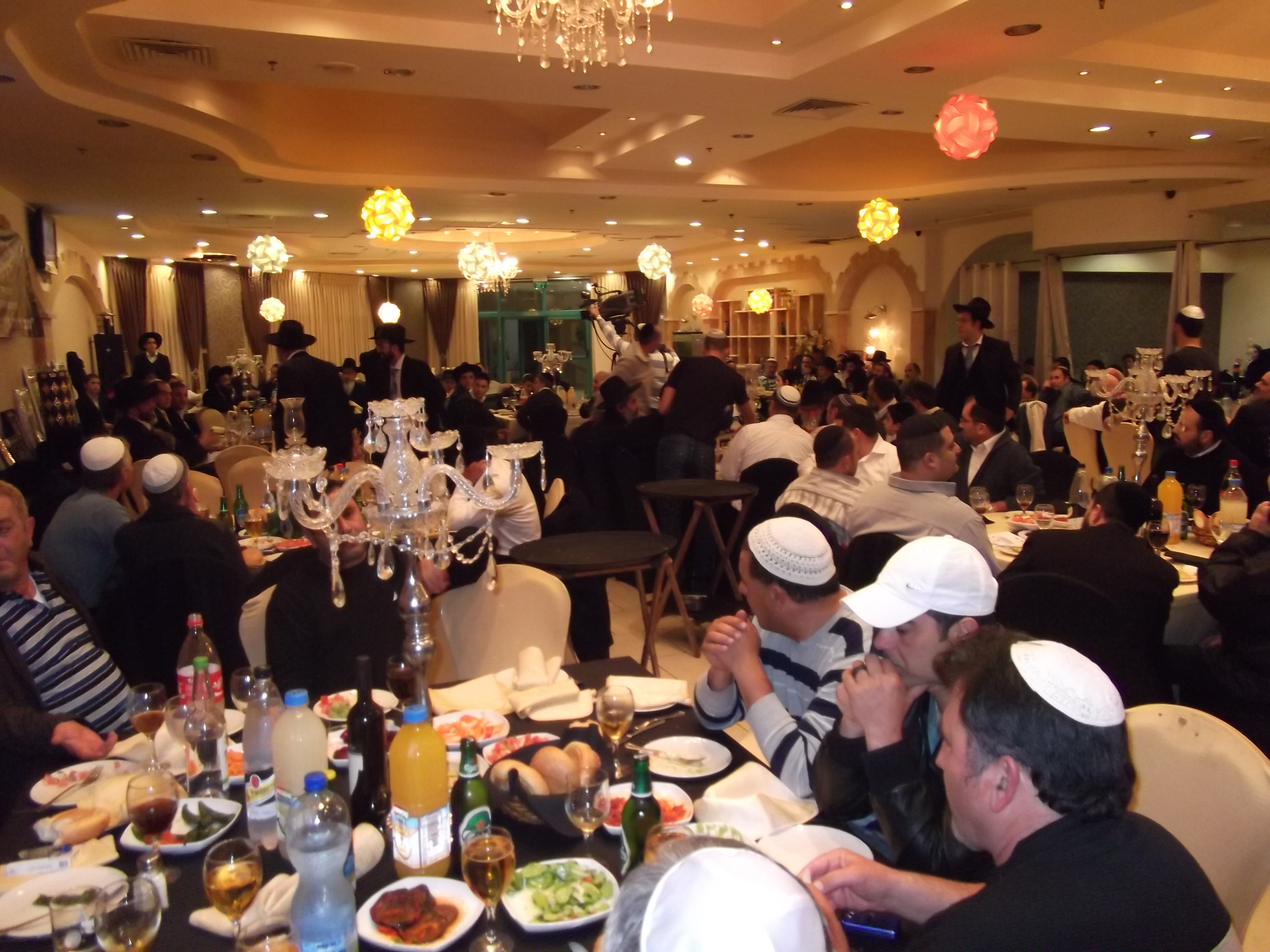
So it was in the large room that was added on to the original building that was the location of the feast. Photos and drawings of Rabbis from both the “old country” and of Israel itself line the walls and the mood is set for a glimpse back to the past. I had left the house, along with my little brother Nissim, thinking I was late, but I wasn’t. I stopped along the way to help my neighbor Guy bring speakers to the bet knesset and when we got there the event hadn’t even started. But when it did start, and the people – many of them new friends of mine – gathered in from the torrential rain outside to eat large triangles of lechem beit (“house bread” made at local bakeries and pizzerias) with salads from roasted eggplant to matboucha, this is what it looked like:

My table

Some of the other tables

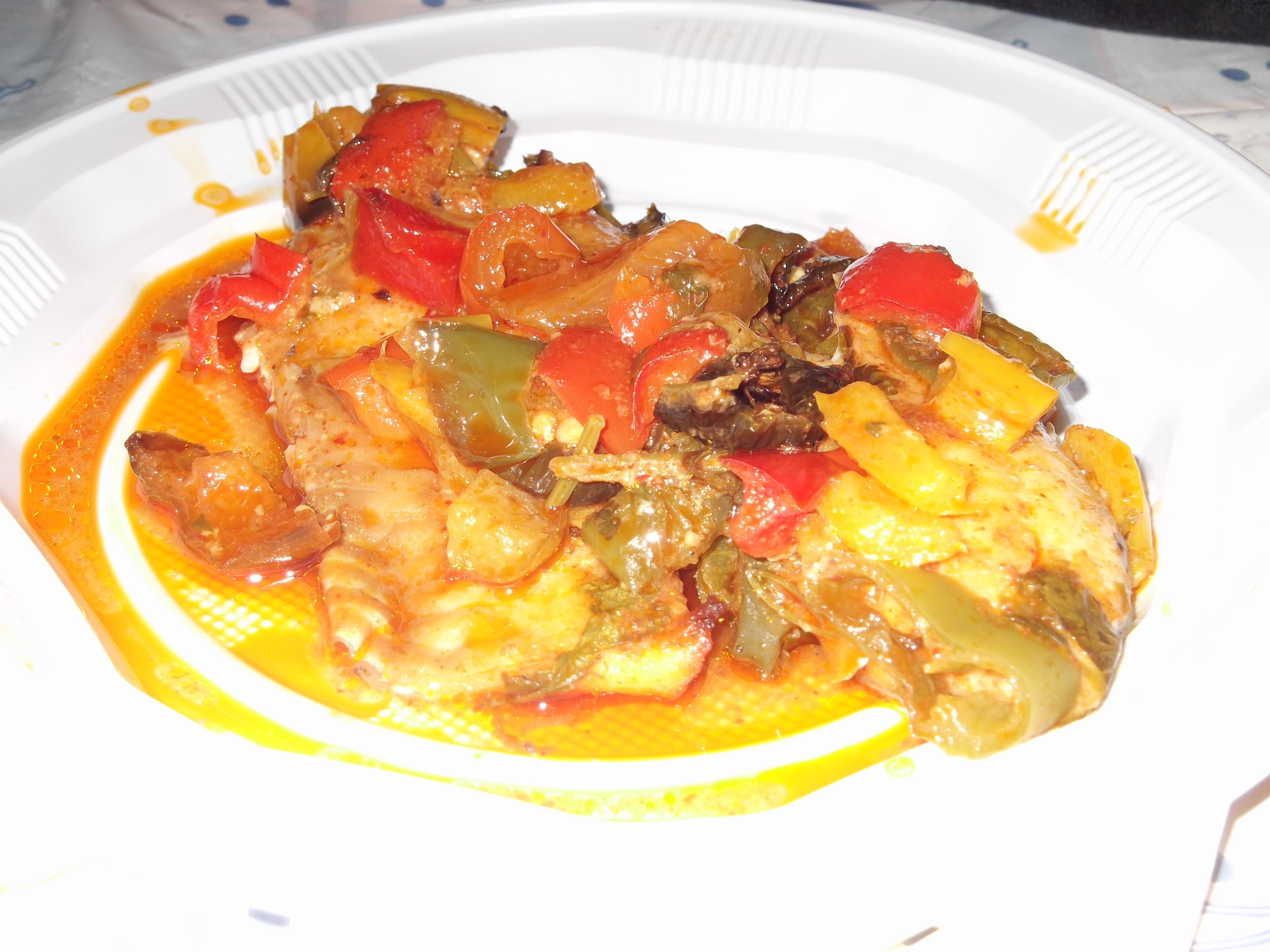
It would be wrong to leave out two of the Moroccan staples that adorn every feast of festivity, the Moroccan fish and the bottle of arak. When the Moroccan fish was brought out I was eager to take a picture of it but, alas, mine wasn’t so aestetically pleasing so I snapped a shot of Yehuda Uzan’s fish across from me:

Moroccan fish

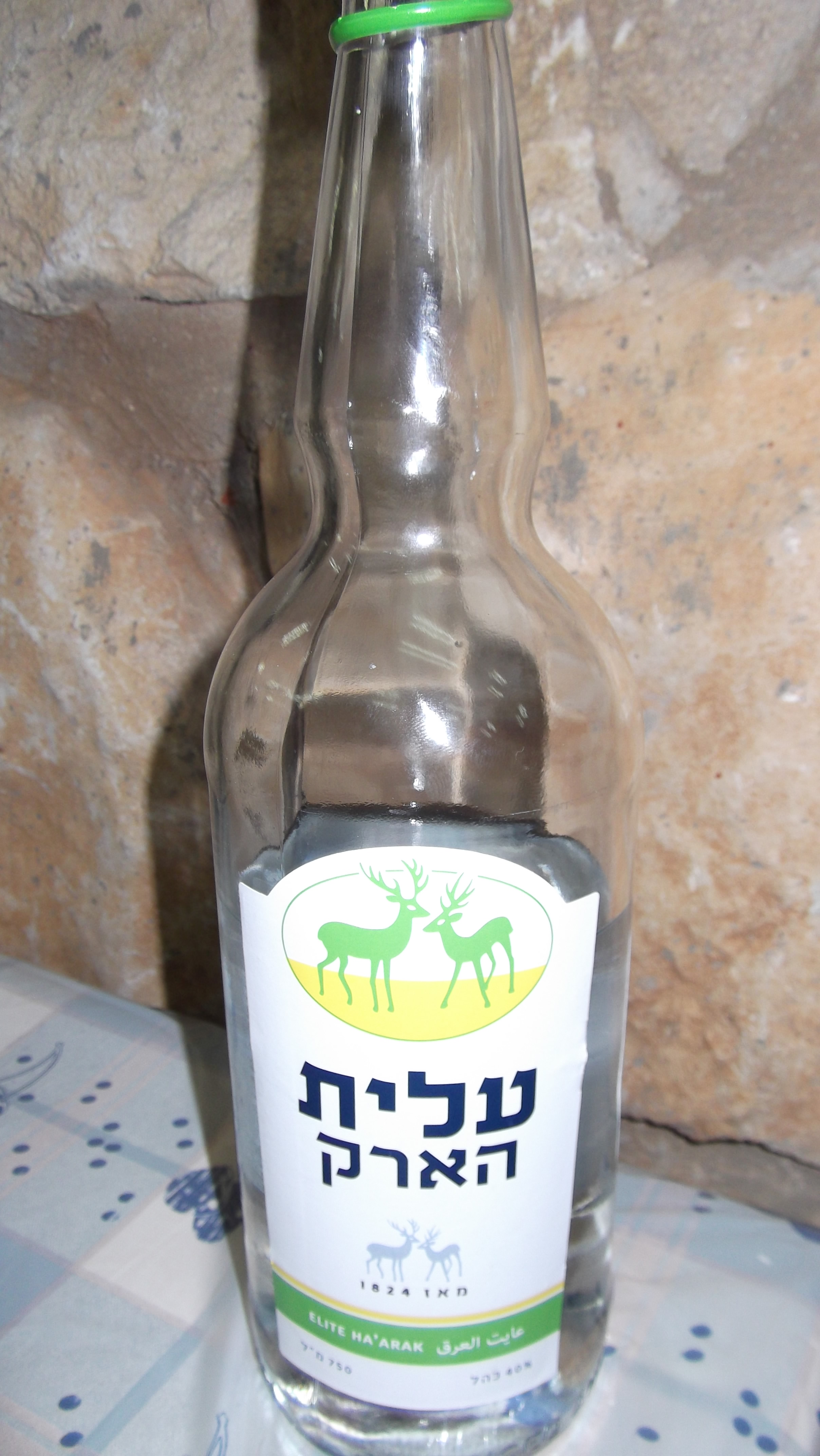
And of course, the numerous bottles of arak – an anise-flavoured liquor famous in the Middle East but virtually unknown to many Americans. I actually snatched this bottle of arak from a neighbouring table as our bottle’s label had gotten ripped:

Arak - the preferred drink of the Moroccan

And of course, no feast in honour or in memory of someone can be held without some words being said. At this particular event, HaRav Meir Sayag and Rav Gil Ben Shoshan, an previous neighbor of ours, graced our meal with stories about Rabbi Yaacov Abuhatzeira. After the speeches we continued the meal with rice, potatoes, meat, chicken and schnitzel, sipping down arak, beer, soda, water and cheap whiskey. As we ate, members of the bet knesset auctioned off various Judaica objects “in the merit of” the Baba Sali, Rabbi Yaacov Abuhatzeira and the Rambam. When that was finished, Shimon Cohen, one of the backbones of the bet knesset, handed out candles to all, for us to light in our own houses in merit of Rabbi Yaacov Abuhatzeira and the Rambam.

Rabbi Yaacov Abuhatzeira

While we listened to the mixture of ethnic Israeli music and Moroccan Arabic songs about the Baba Sali and hilulahs in general I felt saddened that sharing this experience will be sans audio so I switched my camera over to video mode and took a little 180 degree spin, capturing a fraction more of the event. And here it is, hosted by YouTube, for all to see and to be a part of:

Next year I look forward to attending this hilulah again, maybe in Nahariya where the Abir Yaacov’s illustrious descendants carry on the family heritage, but, until then, I have a candle to light this Motzai Shabbat.

Haifa

In Haifa, Israel on January 10, 2012 at 10:31 PM

Today I had the obligation of being in Haifa, at the beckoning of the IDF. I left my house, travelled to Haifa via bus and train and attended my meeting. Afterwards, I decided to go on a little adventure… Here it is, a textual and pictorial account of my small journey down Mount Carmel. First, the bustling Haifa Port as seen from the Memorial Park next to the Iriya (City Hall) and the IDF Recruitment Centre:

The Port of Haifa

After snapping some shots of the park and the port down below I popped on over to the Iriya. There I was told to head West down the mountain if I wanted to see museums and such. I did so and on my way, walked by the old District Courthouse of Haifa established back in 1932:

The old District Courthouse of Haifa (1932)

From there I continued westward, slowing going down the the mountainside. After exploring a small “artists house” filled with modern-day small-time local artists’ work, most of them paintings, and then finding a historical house called the Gefen House, I found this unique act of nature:

A tree growing out of a wall at the Gefen House

Continuing on my way, I noticed a beautiful little garden with a bunch of small orange trees filled with bright oranges. I was wondering why there was a tiny little garden midst the large urban area and then, some twenty paces later, I saw the rest of the garden… the famous Baha’i Gardens. I figured I’d venture over and have a look so that’s exactly what I did. This marble fountain was quite peaceful and I knelt (oops) to take a picture of it:

Baha'i Gardens marble waterfall

As I went up to the next terrace I found a disappointingly tall metal fence with a locked gate. I waiting until one of the guards came up, with a tourist in tow, and unlocked the gate for her. I asked the guard if I too could explore the locked area and he said no, you are not a pilgrim. And no, I am not a pilgrim, so I left… but not without taking a picture of what the pilgrim what going to see:

Baha'i Gardens looking up from the lowest terrace

I then found the Tourist Information Centre and went inside, eager to learn more about the places available to a casual tourist like myself. There, a kind middle-aged woman helped me map out the next part of my journey and, after extensive talks, gifted me with an oldish map of the Coastal Region from Binyamina to Rosh HaNikra. The map was printed in 1990, the year I was born, and it reminds me of an old National Geographic in style and colour tone. After I had thanked the lady, having a definitive route penned out on another map, I headed down the long Allenby Street. After buying a water bottle, I passed by this interesting building, obviously quite a modern one:

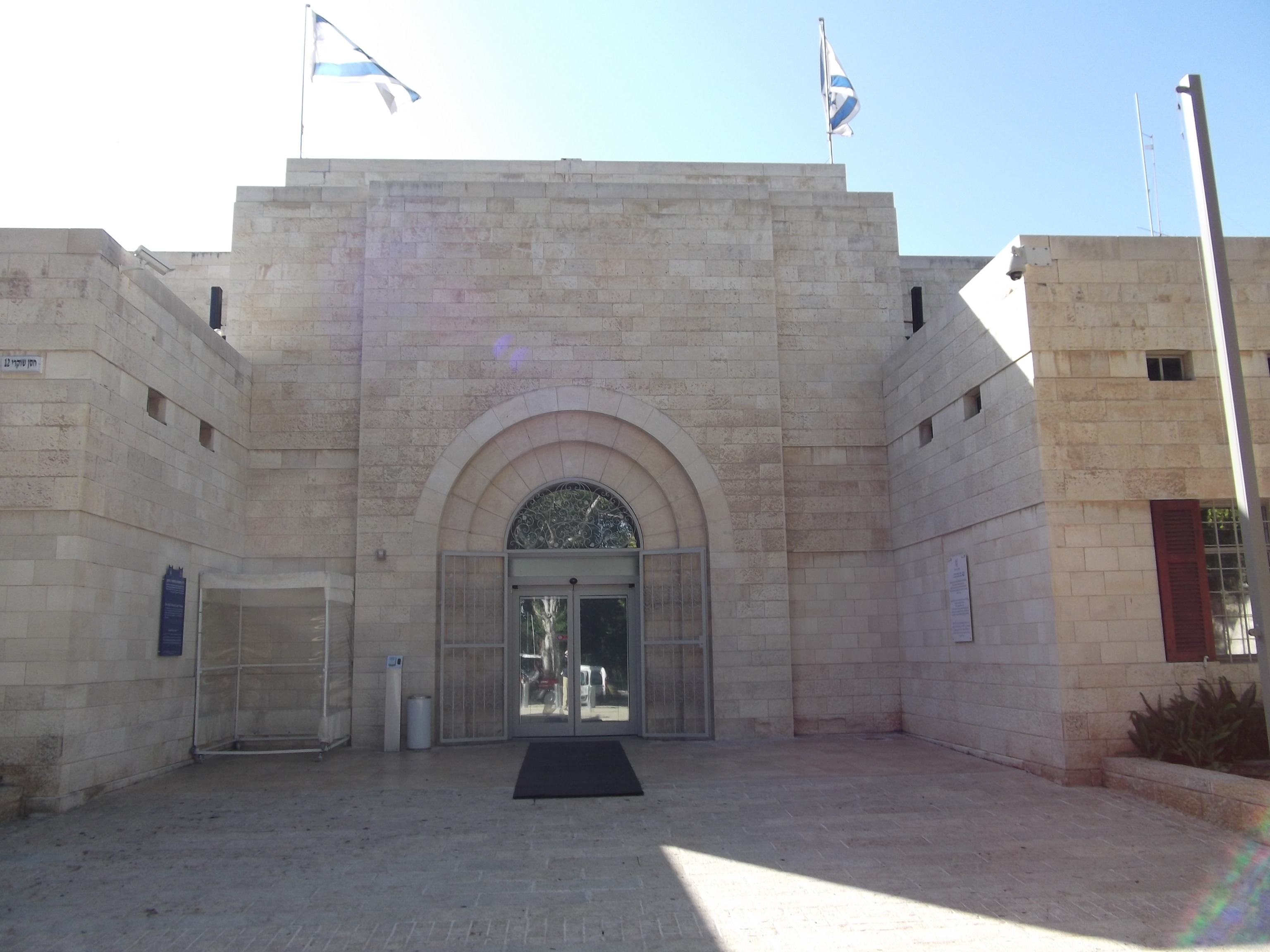
Interesting building with Canadian and British flags waving outside

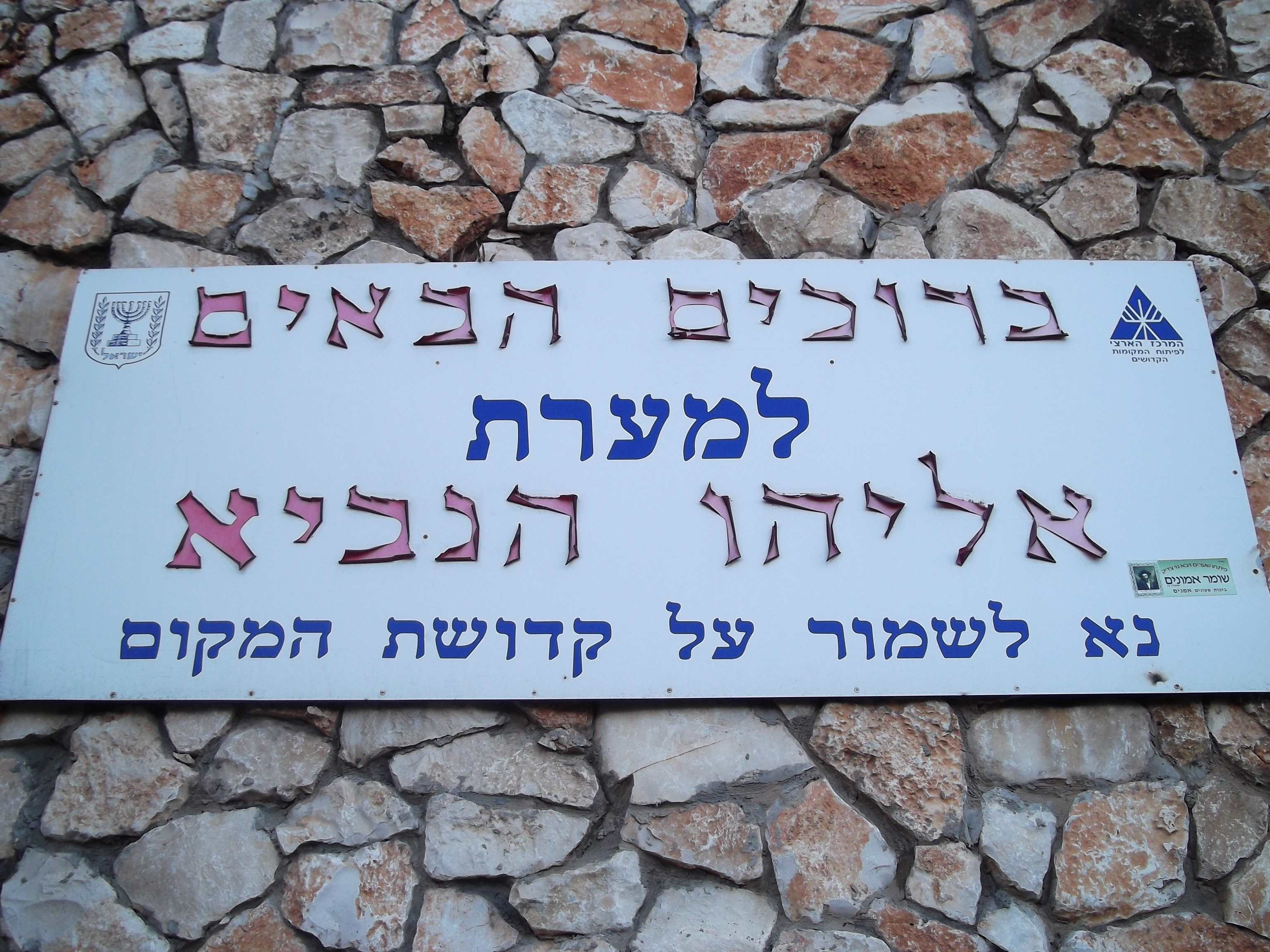
From that building onward there was not much to photograph, save the oddly placed red VW Karmen Ghia with the special licence plate and an “auto” sticker from Denver. Twenty to thirty minutes after I had left the Tourist Information Centre I reached my destination: Elijah’s Cave (the cave that Eliyahu HaNavi hid in and used during his “duel” with the worshippers of Ba’al). Unbeknownst to us at the time, we had been just minutes from the cave when we visited to wonderful National Maritime Museum sometime two years ago. Here is one of the welcome signs, this one situated on the road where a series of staircases takes one up to the cave:

Welcome to the Cave of Eliyahu Ha'Navi

When I had reached the complex of old stone buildings built in and around the cave I was greeted by a kind old man who blessed me. I then went into the cave where donors have turned the place into a special location for prayer:

A section of the cave

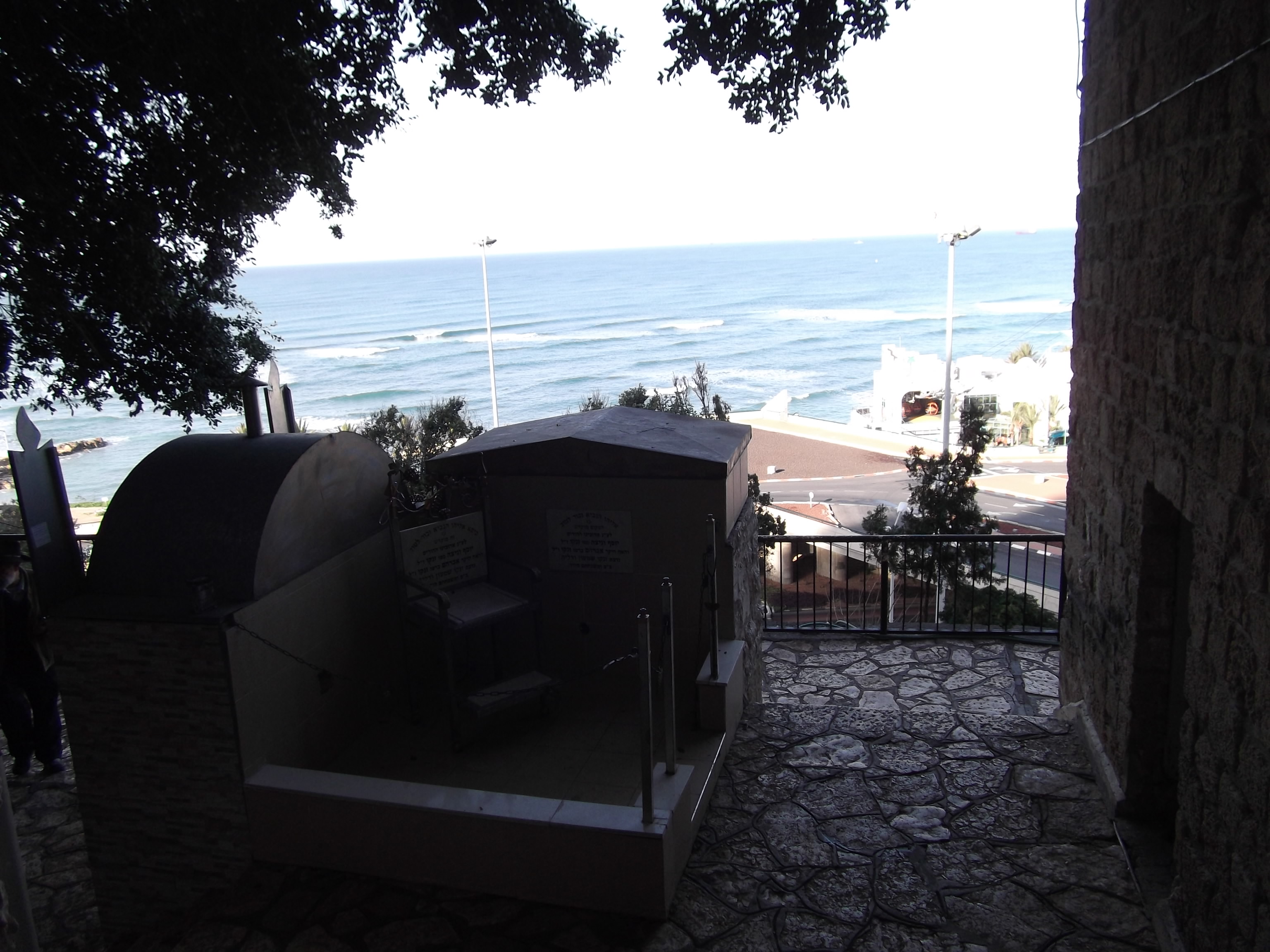
After exploring the cave I turned around to leave and this is what I saw, a wonderful view and even better in person:

Looking down from the cave to the Mediterranean Sea

And here is more of the complex, exactly what is in the buildings eludes me:

More of the Cave complex

Descending the mountain, the Clandestine Immigration and Navy Museum’s outdoor displays become more and more visible. Here is a small ship retired from the Israeli Navy (the ship is open for touring within the museum – admission free for olim in their first year):

An old Navy ship from the Clandestine Immigration and Navy Museum

I then headed for the water and walked along the Bat Galim Promenade enjoying the damp sea breeze and the hot Mediterranean sun. Of course, as have been evident in most of my recent blog posts, there was a feeling of need for some panoramic footage. Here are two panoramics, taken as I stood in one spot, looking from side to side of the visible Mediterranean Sea (click to enlarge):

Looking West

Looking East

On the rocks that form a mini-seawall stood fisherman with immense fishing rods. I had the pleasure of watching one of the fishermen catch a fish, the myriads of huge beach cats lounging around just waiting for a snack. Here is one of these fishermen, sadly he did not catch anything while I was there:

A man fishing with the huge cargo ships in the distance behind him

When I had left the Promenade I continued to hug the coastline, walking along the beautifully shaded streets, and came across the official land entrance to the Haifa Port. Here it is, in all of its humble importance as the main gateway to the Holy Land by sea, the Haifa Port entrance (where a guard carrying an automatic rifle whistled sharply at me to not take any further pictures):

Welcome to Haifa Port

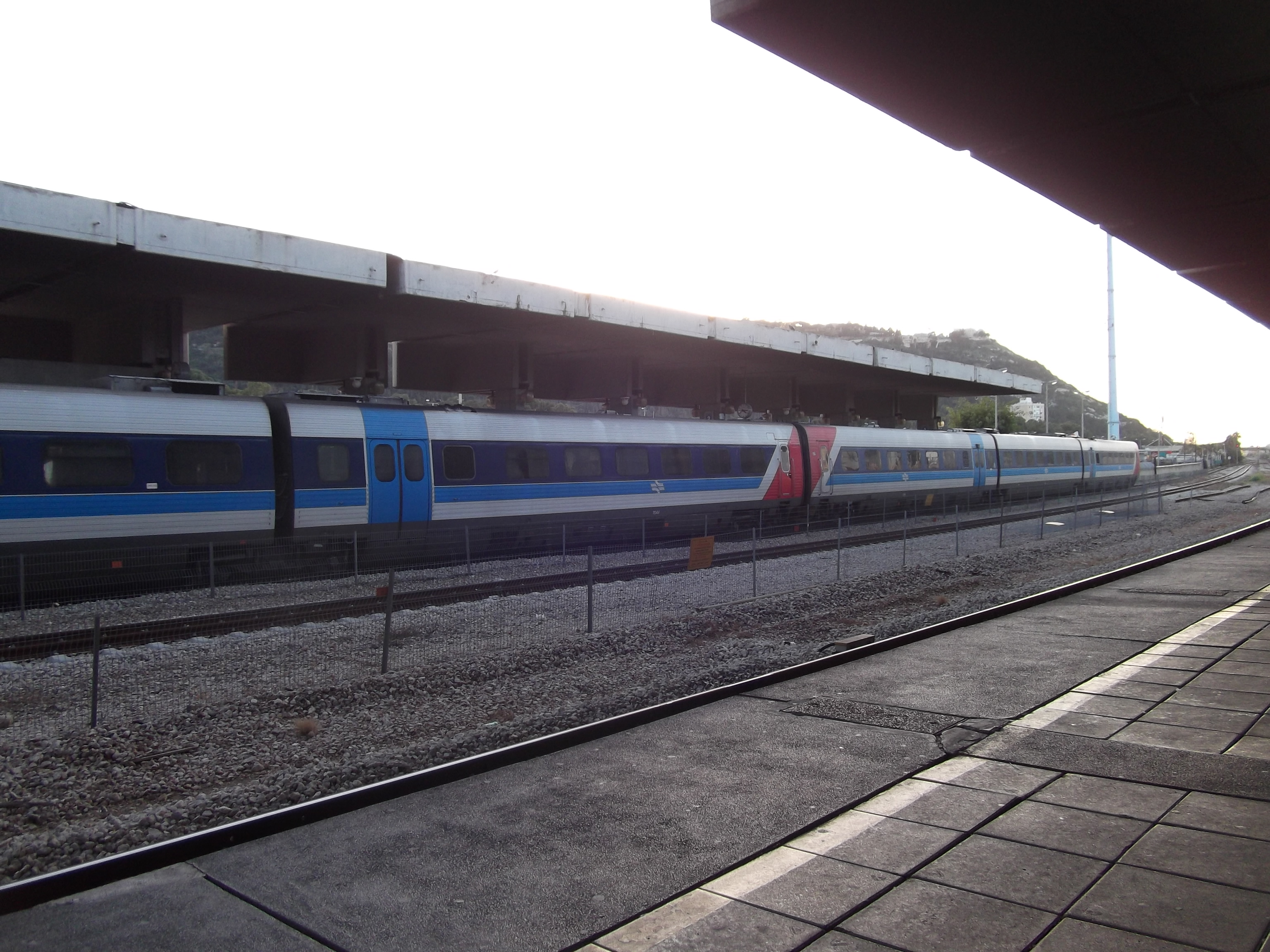
When I had successfully snuck away, camera in hand, I tried to find the Bat Galim train station to get back home. I ended up going the wrong way, consulted a passing soldier as to the current route and was shown, with much enthusiasm, the right way to go. I made it to the train station where I sat and “bugged out”, waiting for the train. In my idleness, I decided to snap a picture of the train on the other side of the tracks, being boarded for a Southbound journey, and to claim this as my train that I took (creative licence being taken advantage of here):

Taking a train home

The ride was pleasant and before too long I was home. ‘Till next time!

Chanukah (Part 2)

In Galilee, Israel on January 2, 2012 at 1:01 PM

Continuing with Chanukah…

On Sunday night one of the local kollels was hosting an event at the Heichal HaOsher and I attended, along with my father (and we nabbed reserved seats). The celebration was being thrown to honour the several members of the kollel who recently took a huge test of Halacha (Jewish law) to become Rabbis. The test was administered by the Rav of Ma’alot, HaRav Yitzhak Vaknin shlita and I believe the son of the Rishon Lizion HaRav Ovadia Yosef shlita was involved as well. Local dignitaries were present and seated at the dias. The event was opened with the lighting of the chanukiah (menorah):

Getting ready to light the menorah on the dias

A short video was shown of the kollel and the various activities within including the work with the local youth and the local synagogues. After the video several speakers had their turn with the mic; the mayor, the rav of the Ma’alot Rabanut, a local synagogue rabbi who also serves as a judge on the Rabbinic Court in Haifa, and others.

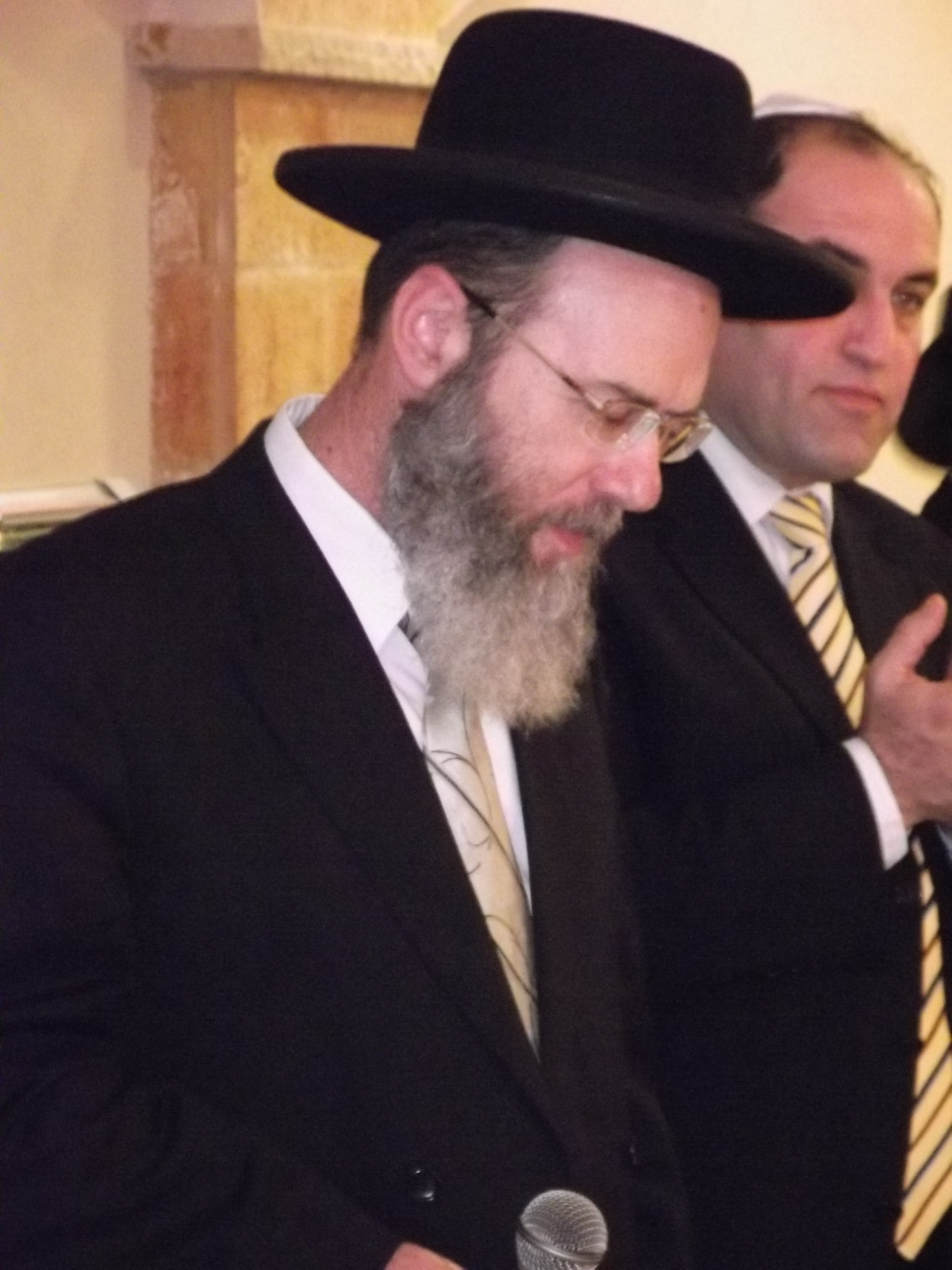
HaRav Meir Sayag, head of the Maalot Rabanut

HaRav HaDayan Yagoda getting ready to speak

City official Arkady Pomeranets speaking

Of course, as with all events at the Heichal HaOsher, there was live music. This time a local singer by the last name of Peretz sang for us. I have seen and heard him before in an Andulusian concert also held in Ma’alot sometime in 2010.

A local singer

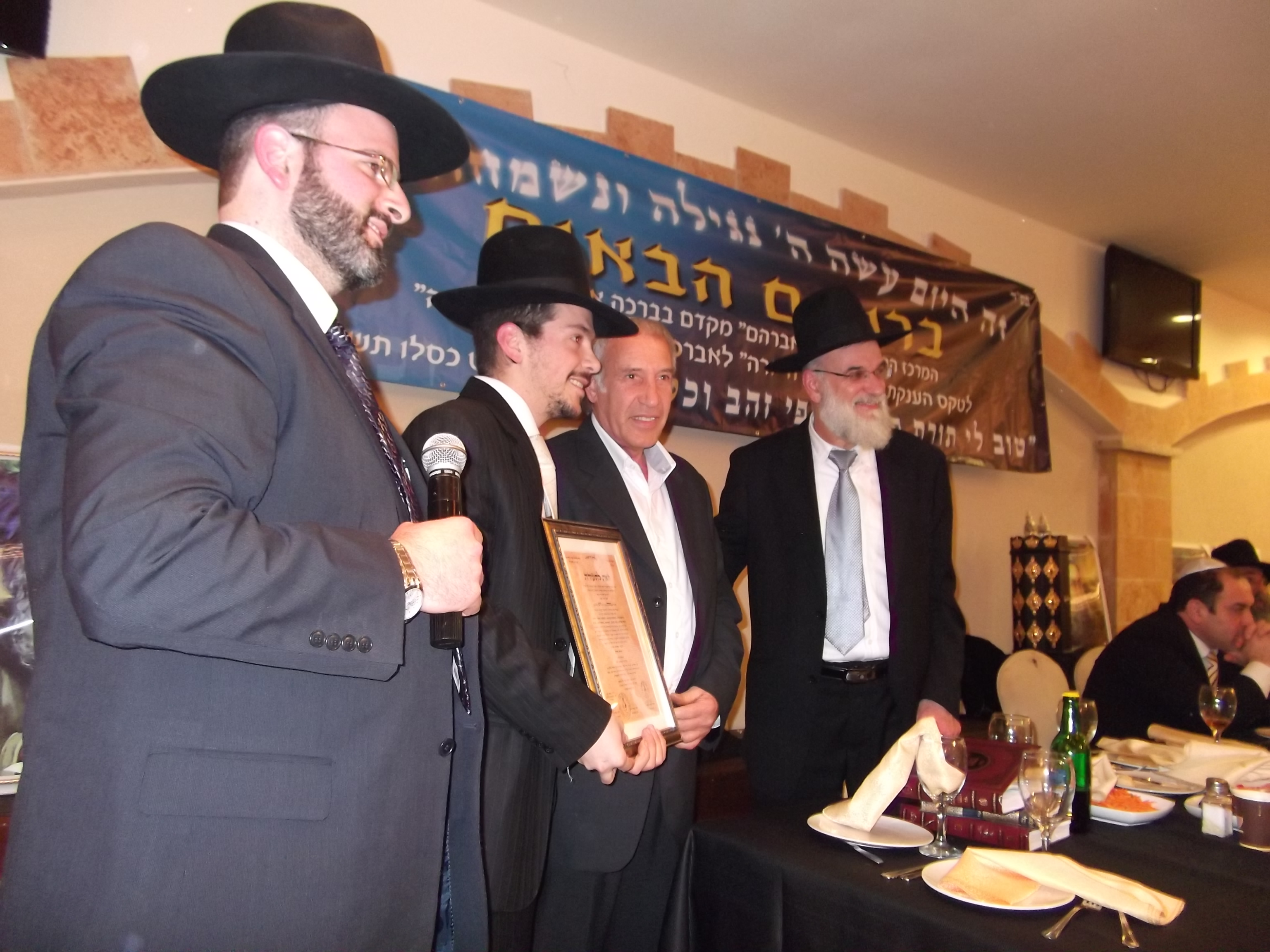
After the speeches the diplomas were given out. Many of those who bought the honour of delivering the diploma were family members of the particular avreich (young married man in kollel), as seen here, the Rosh Kollel, the avreich, his father and the Rav of the Ma’alot Rabanut:

A kollel member receiving his diploma from a sponsor

After the due honour was doled out and the hugs and handshakes were completed there was a bit of a fundraiser. Just a bit. I did not take many pictures of the fundraising and actually left early but here is a shot I took of the seated crowd, well, part of the crowd:

Partial view of the men's section

And that sums up Sunday.

Tuesday, the 7th day of Chanukah, we went to explore the vineyards of the Naftali area on the border of Lebanon. There we found a place called Adir Winery and Dairy. A clean-cut white building alongside several factory installments beckoned to us. Naturally, we went inside.

The winery side

There we found some wine. Lots of bottles of award-winning wine. A man behind the counter by the name of Yossi Rosenberg, who happens to be the managing director, explained to us what we needed and wanted to know. In the earlier years of Israel Yossi’s family from Europe and the Ashekenazi family from Turkey settled in Kerem Ben Zimra and raised their families there. In the 1980s and 1990s the families built up the Adir vineyards, a joint project. They also decided to raise goats and thereby led them to creating the Adir Dairy.

The dairy side

Here is Yossi Rosenberg talking to us about his and his family’s history with the vineyards and the various wines they produce:

Talking with Yossi Rosenberg

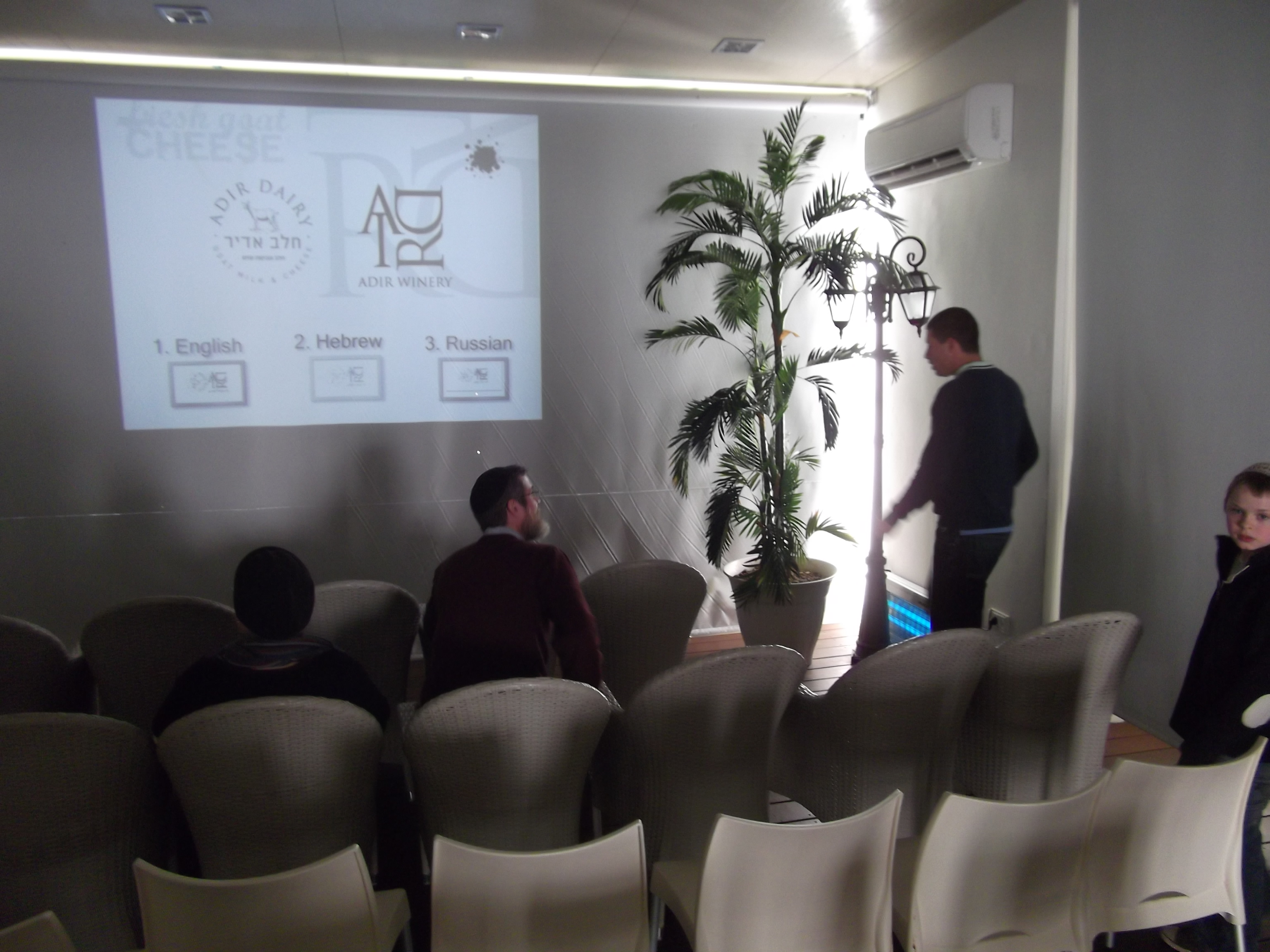
As with many visitor centres, this one had a short film about the production and founding of the winery and dairy. We went into the room that divides the winery and dairy sides and sat down, ready to watch the English version. This particular video, voiced over in English by Paul Gluck, is available on YouTube so that you can watch it as well in the comfort of your own home: http://www.youtube.com/watch?v=2uj9SJXWUjY

Getting ready to watch a short film about the wine and dairy productions

After the film we snuck over to the dairy side and sampled from the several goat cheeses on the counter.

Snacking on the goat cheeses

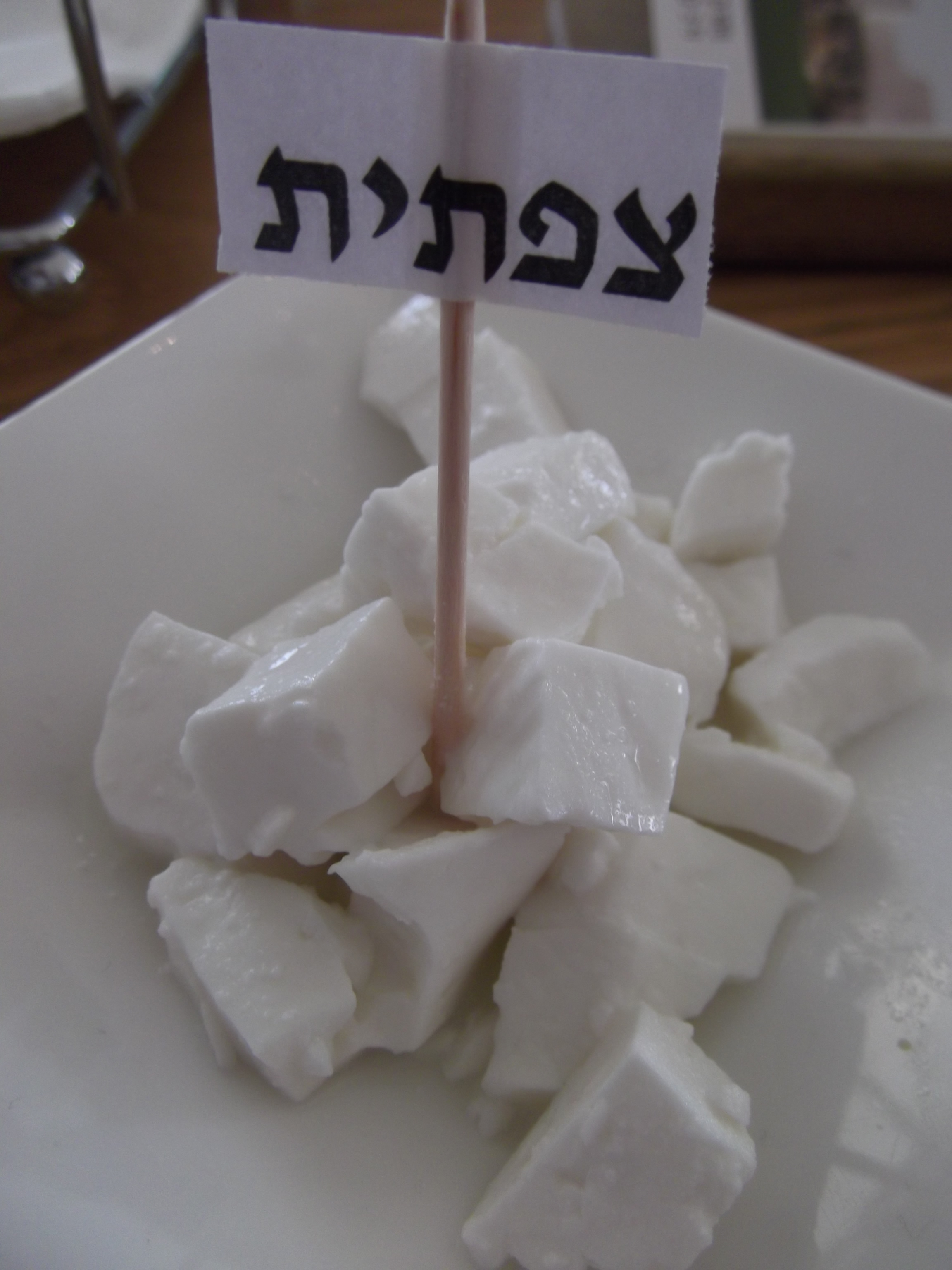
And here was my particular favourite, the Tzefatit cheese, the style originating from Tzfat (Safed) just a few miles away.

Tzefatit cheese

Even though I liked the Tzefatit cheese the most, we didn’t buy it. We got two hard cheeses and a feta. From the freezer of the dairy we selected two pints of goat milk ice cream, one chocolate and one cherry. The chocolate one was better but there was a goaty taste to the ice cream despite the chocolate additive. Before we left we bought a bottle of port, which we have yet to open.

While in the area we explored both the small village of Kerem Ben Zimra and the nearby historical areas. Here we drove by an old watchtower looking over the hill to Lebanon:

Old watch tower

Also found throughout the Galilee are graves, ancient tombs erected for important historical figures. Prophets from the Bible and Rabbis from the Roman times can be found buried side-by-side on the side of the road, in some village or perhaps in small caves, always distinguishable by bright blue “kabbalistic” paint. On this particular Tuesday we found 3 kevers (graves) in one small patch of land. Here is the grave of Rabbi Elazar ben Arach who lived in this area nearly 2,000 years ago:

The grave of R' Elazar ben Arach

And here, the grave of Rabbi Yossi HaKohen:

The grave of R' Yossi HaKohen

And the third of the trio, the grave of Rabbi Elazar ben Azaria, who in his days was rather wealthy. Rabbi Elazar ben Azaria may sound familiar because he is, in fact, mentioned in the Pesach Hagada. He was sitting with Rabbi Eliezer, Rabbi Yehoshua, Rabbi Akiva and Rabbi Tarfon in Bnei Brak…:

The grave of R' Elazar ben Azaria

Of course, while in the area with my camera I could not help but take yet another panoramic picture. Here it is, the rolling hills of Northern Israel (click to enlarge):

Panoramic shot of the rolling hills

There it is, the eight days of Chanukah told in a tale of words and pictures. Next Chanukah is just 12 months away!