Israel's Good Name

Archive for the ‘Israel’ Category

Chanukah (Part 1)

In Galilee, Golan, Israel on January 1, 2012 at 7:19 PM

Part of this past week and part of the week before it was the holiday of Chanukah, 8 days of joyous celebration over our salvation from the Greeks some 2,300 years ago. This year we did some stuff and took some trips. Here is a brief overview of what happened and where… And what we ate. Here are sufganiot (doughnuts) that my sister Esther made for us to eat the first night of Chanukah:
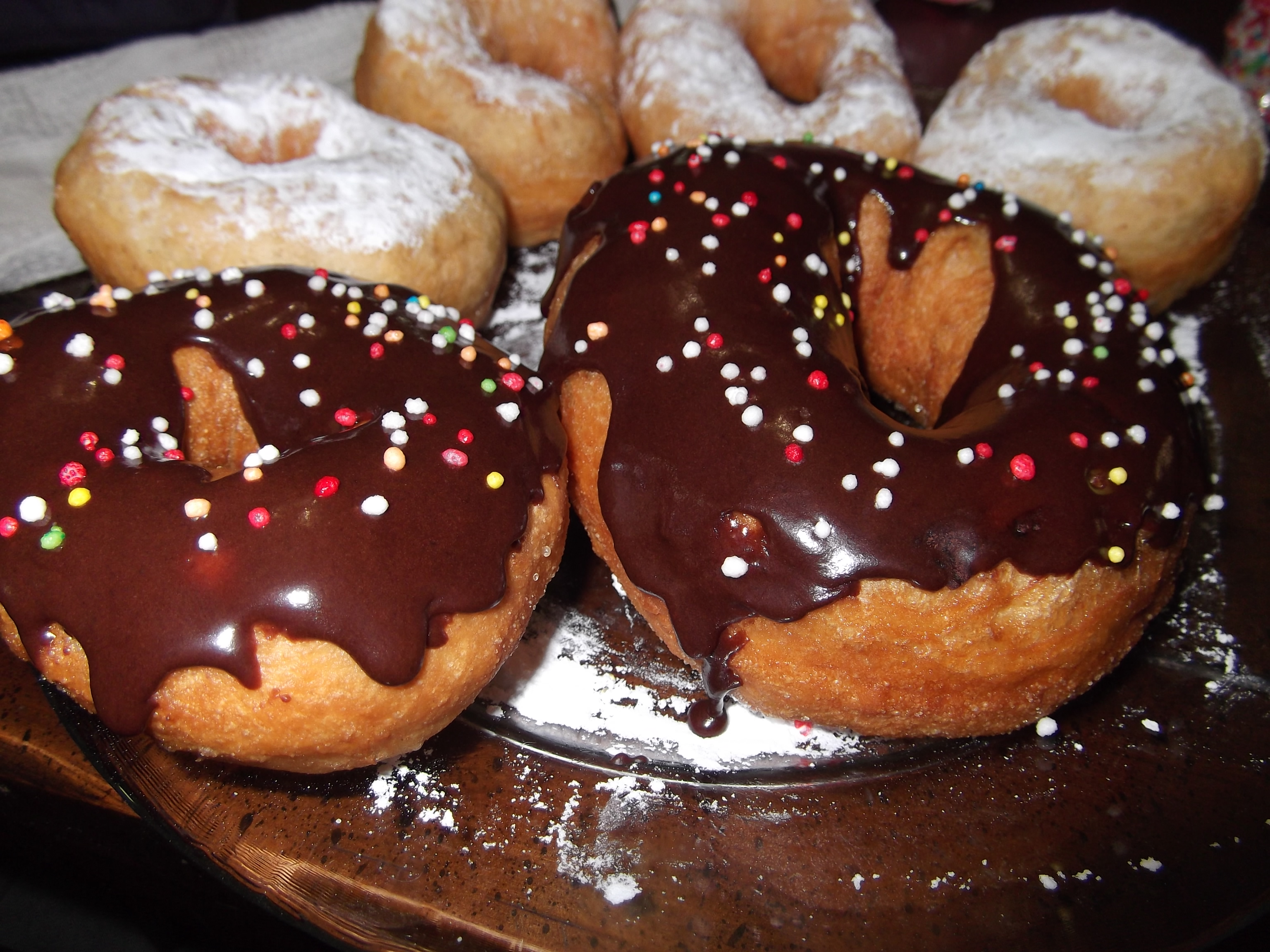
Doughnuts

The first trip we took, on Thursday – the 2nd day of Chanukah, was to the Golan, in search for something known as dolmens,  an ancient stone structure built as either tombs or landmarks and found from Ireland to Israel to Korea. These dolmens are often huge and in large groups but the ones we saw were kind of isolated from the large group in Gamla National Park. Israel’s dolmens are made out of basalt and are covered in lichen.

Ancient dolmen

But before we found the dolmens we were driving out in the flat plains of the Golan looking for a large circular formation of low stone walls built thousands of years ago. Despite our relentless searches we were unable to locate the circles we wanted but we did find plenty of ancient low stone walls that told us we were in the right area.

Ancient walls that run through the open fields

But to say that we found only the ancient walls and dolmens would not be true, we also stumbled upon new structures, those belonging to the IDF. Here is a recently abandoned army base where dozens of empty, rusted ammunition cases were scattered about:
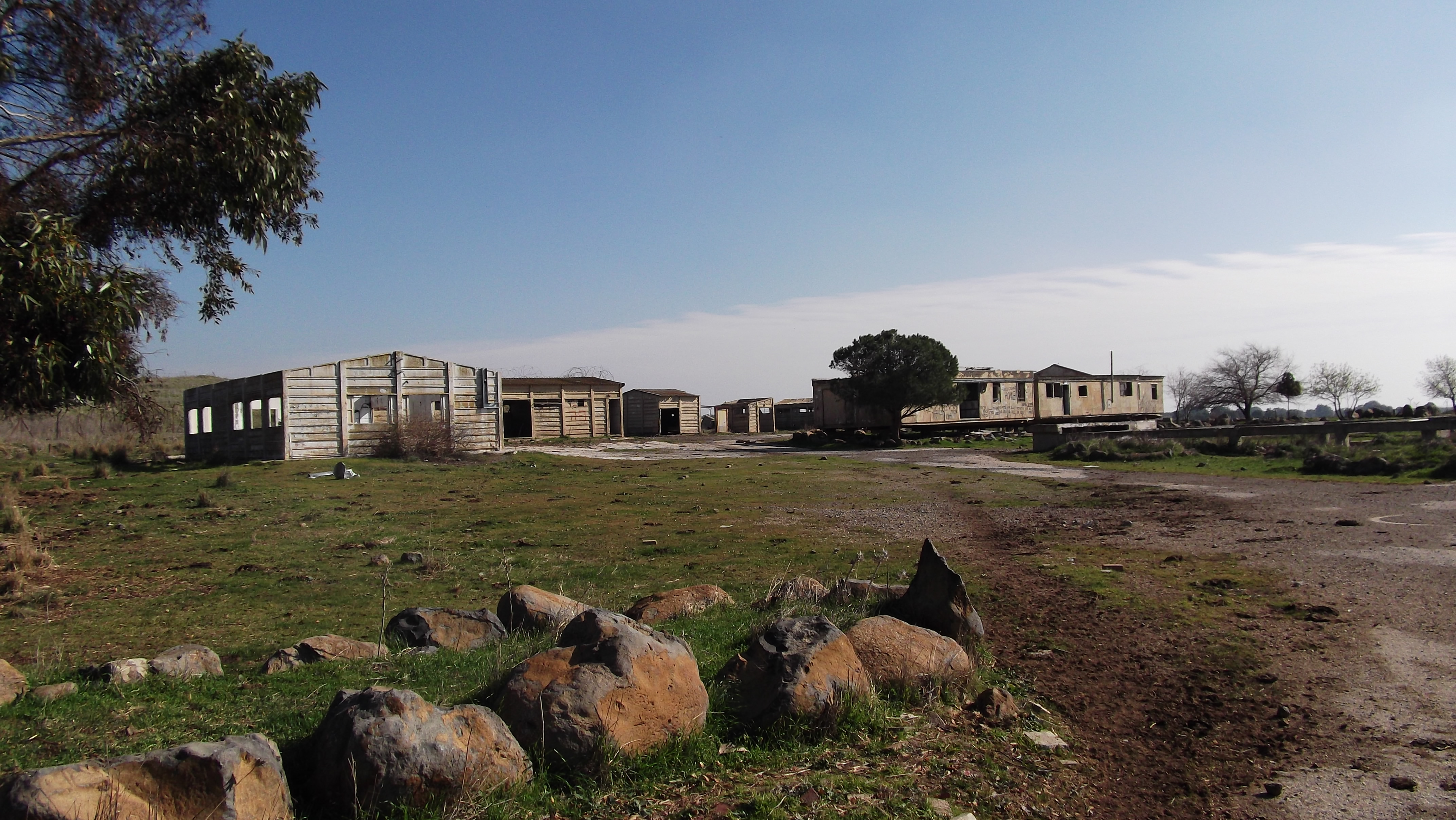
An army base recently abandoned

And here, on the side of the road, is a military bunker/trench of sorts with small rusted metal storage cabinets inside:

Army bunker and trench

Leaving the flat region of the Golan we found ourselves at the Bet Saida Vista overlooking the Kinneret (Sea of Galilee) and the Jordan River area north of it, including parts of Gamla. Here is a panoramic shot of the view (click to enlarge):
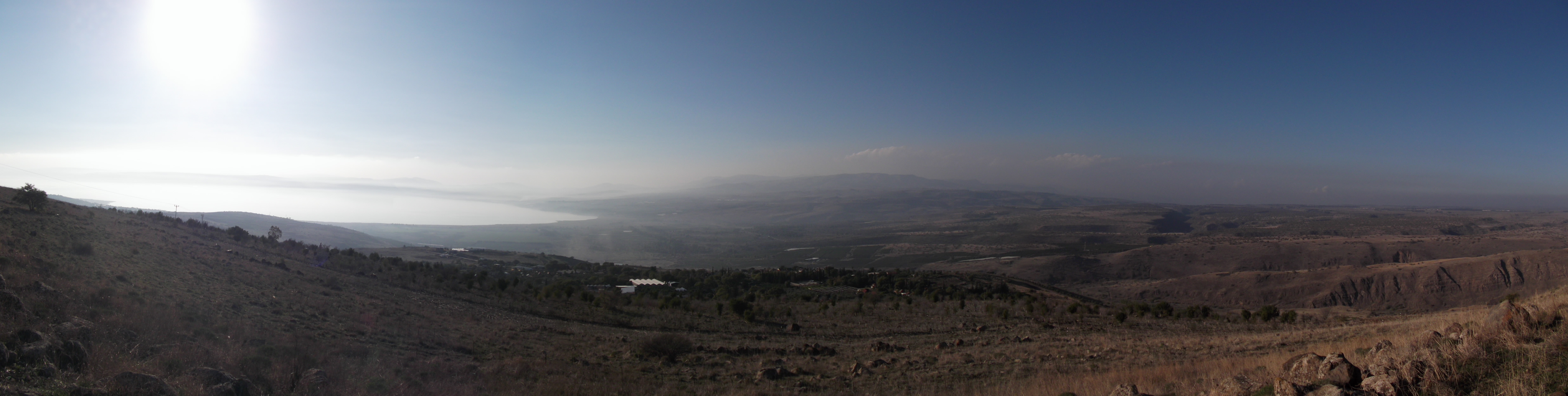
From the Kinneret to Gamla

That was Thursday.

Sunday, the 5th day of Chanukah, was another day full of adventure. We headed slightly south past Karmiel to the Johncolad chocolate factory. This particular chocolatier hails from New Zealand and now lives in the South African-founded Moshav Manof. His name is John Alford and this is a brief look at the chocolatey adventure we had.
Johncolad logo

When we first walked in John looked at us and told us that he recognises us. My father than explained to him that we had once come to buy chocolates and take the tour that is offered. In fact, my father even wrote a blog post that included our previous trip to Johncolad and here it is: http://aliyahlift.wordpress.com/2010/10/31/g-stands-for-golan-galil-and-gourmet-pt-1/

After we all figured out what’s what and where’s where we decided to buy some chocolates. I asked if we were getting a tour but he told us that we have already seen the tour so I decided not to pursue the issue. Here is John lining up the packs of chocolate:
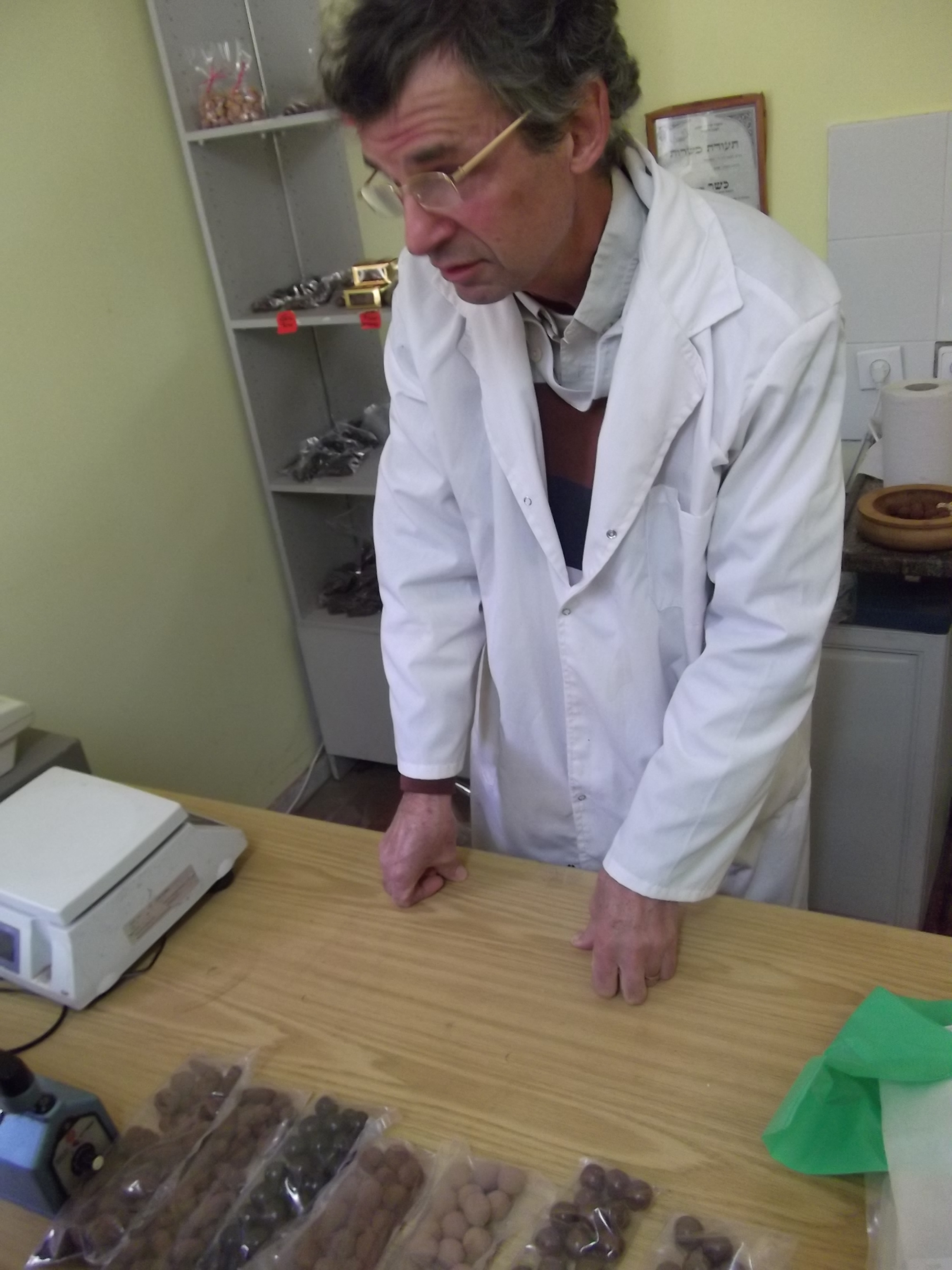
John Alford selling us his chocolates

Even though we were not treated to a tour of the chocolate making I snuck back and snapped some shots of the resting machinery:
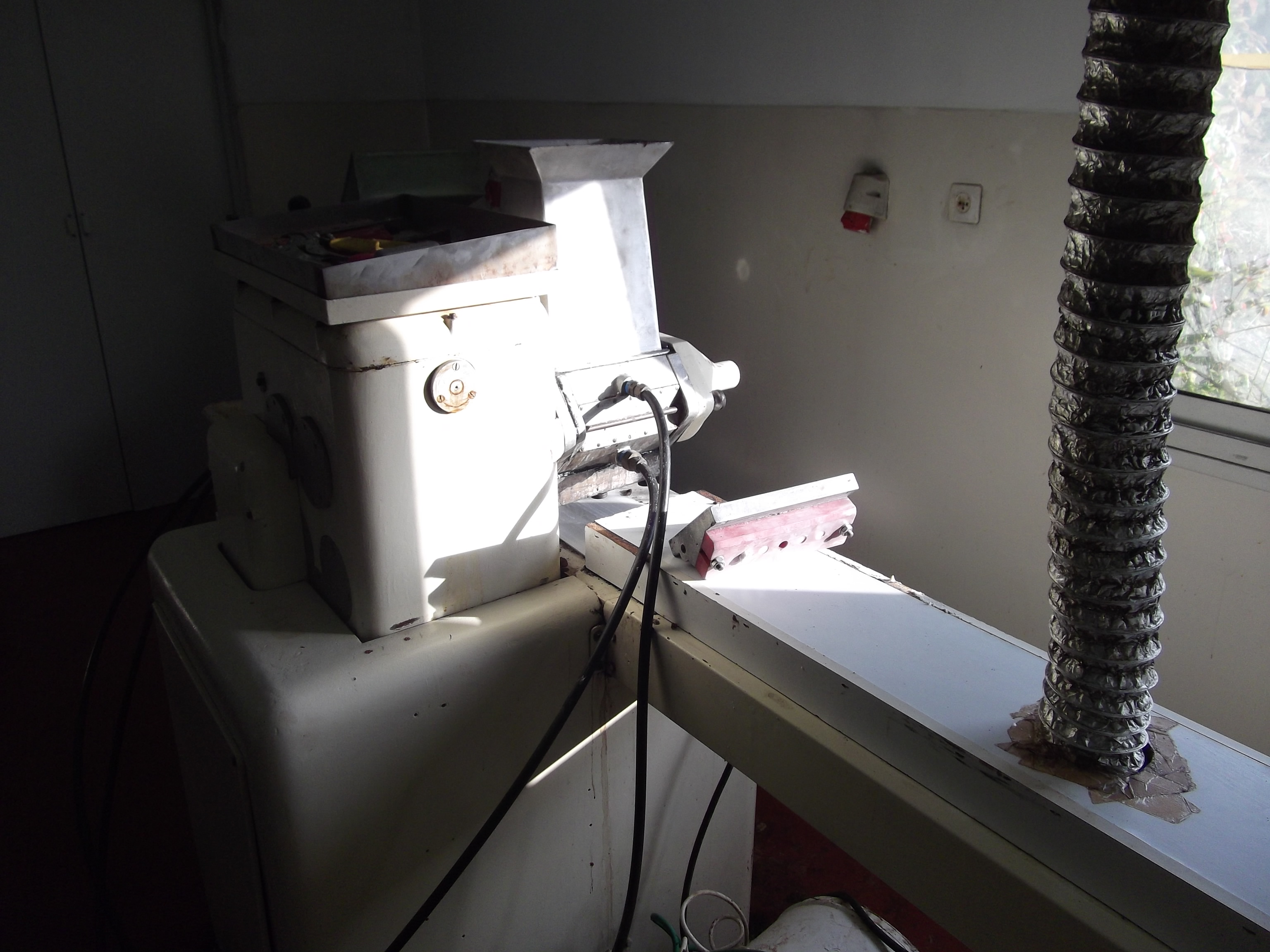
Chocolate making machine
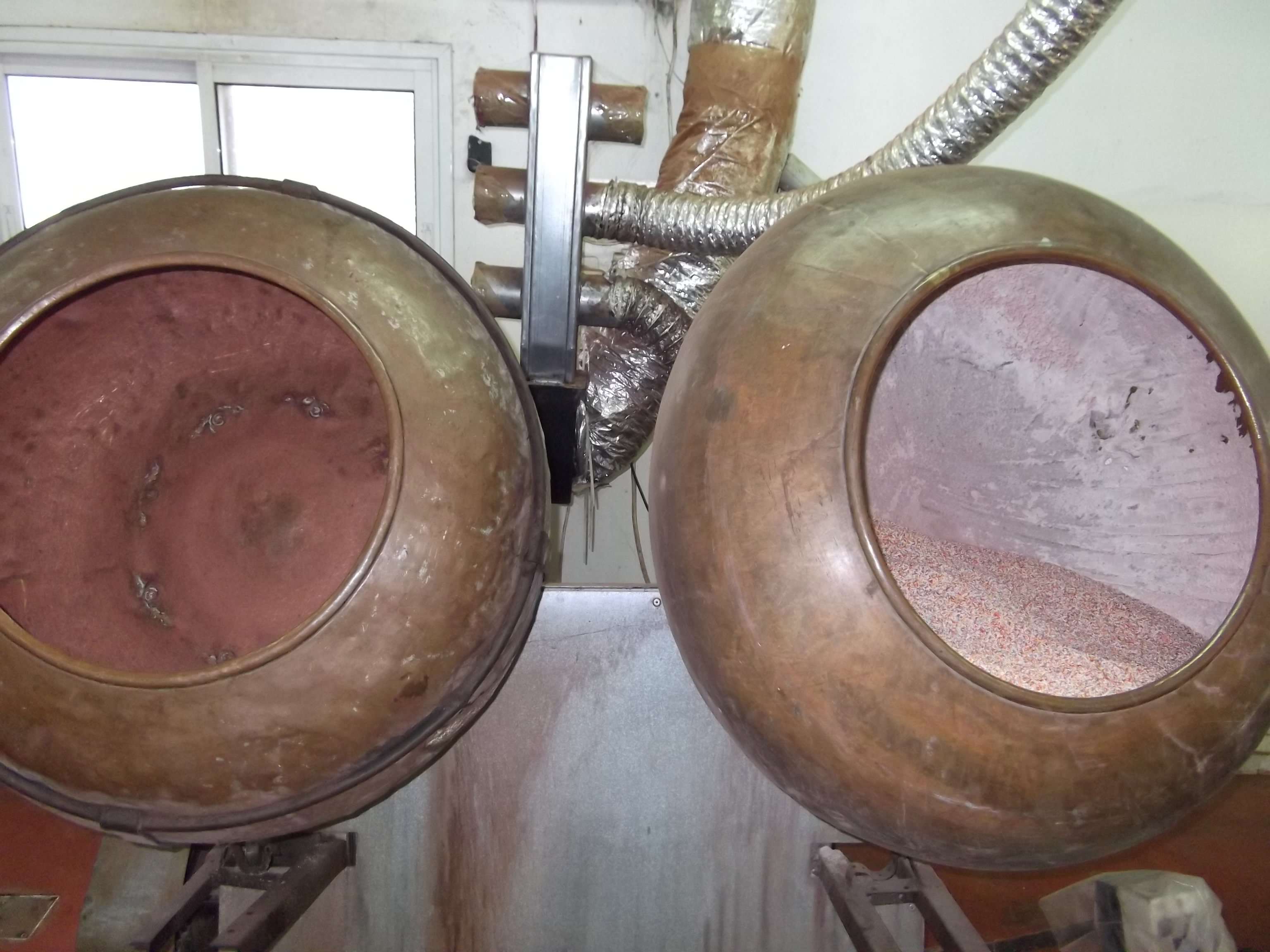
Drums for nonpareils and powdered cocoa

As I peered inside the right drum I spotted a stray chocolate ball, all covered in nonpareils and looking down-right delicious:

A chocolate ball hidden on a bed of nonpareils

After we had purchased our chocolates and chatted enough with John we headed out the door. On the way, chest-high on the wall next to the door, I once again caught sight of one of my favourite features in the Johncolad establishment… A plaque from the Israeli Navy thanking John for his tour of the Johncolad factory:
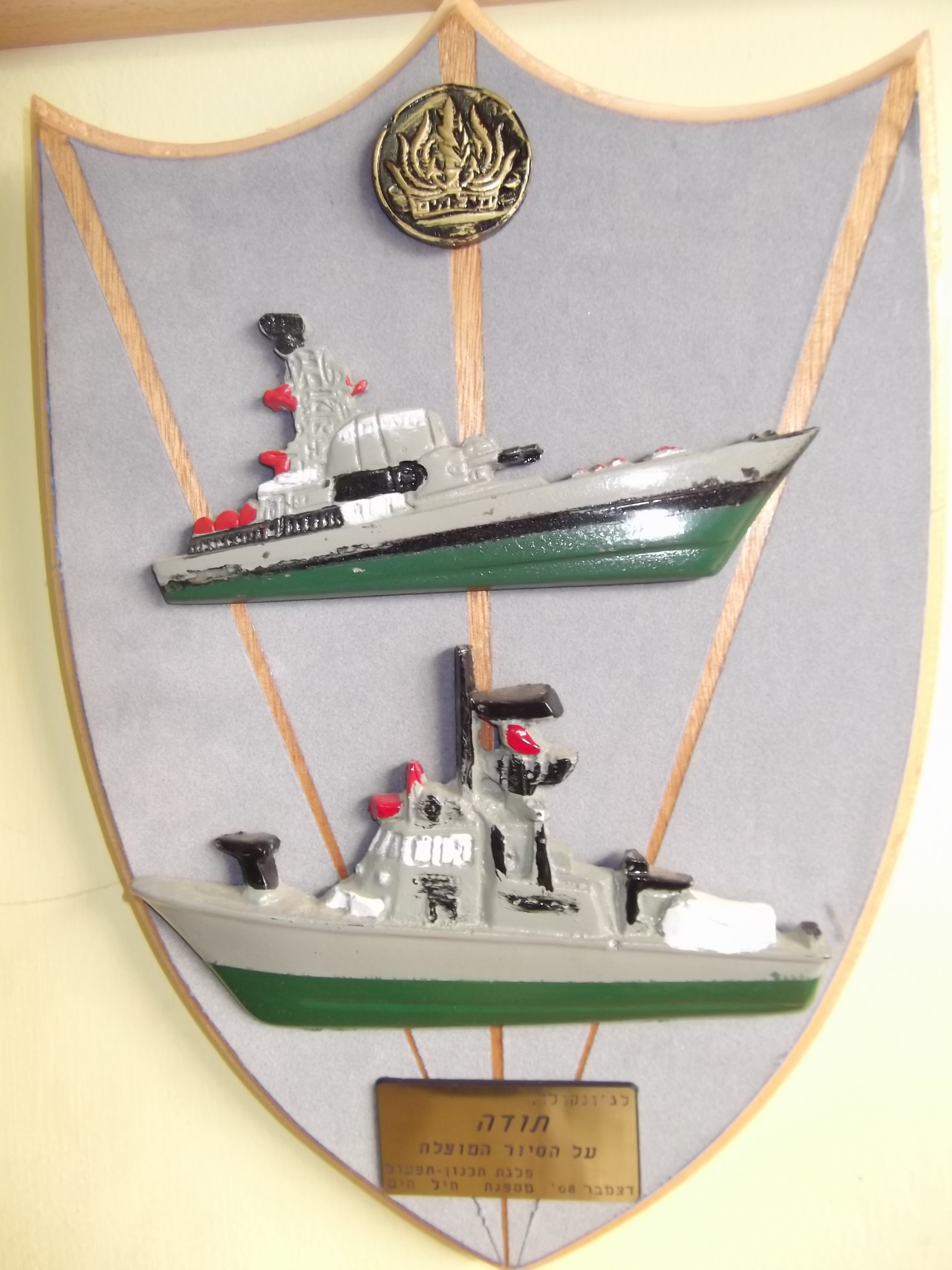
Thank you plaque from the Israeli Navy

And, as a final touch of Manof, as we drove out, this was the view that greeted us. The stretch of land reaching the Haifa Bay, with the historic Mount Carmel as a long backdrop. Doesn’t get much better than this:
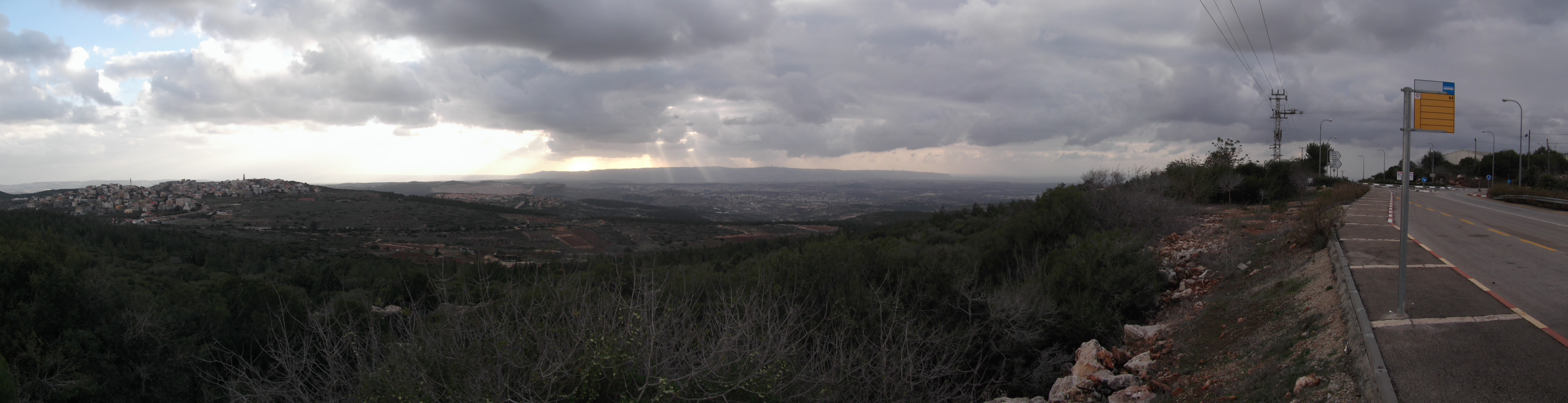
Panoramic shot of the land looking south toward Mt Carmel

And that was Sunday day. Sunday night and the rest of Chanukah will be presented in the next post.

Cookies, Pitas and History

In Galilee, Israel on December 18, 2011 at 8:43 PM

Today we drove out to the Industrial Area of Ma’alot in search for what we believed was a cookie bakery. What we found was a cookie factory. A factory with an impromptu tour that sparked a few hours of factory tours and historical exploration.

Cookie factory

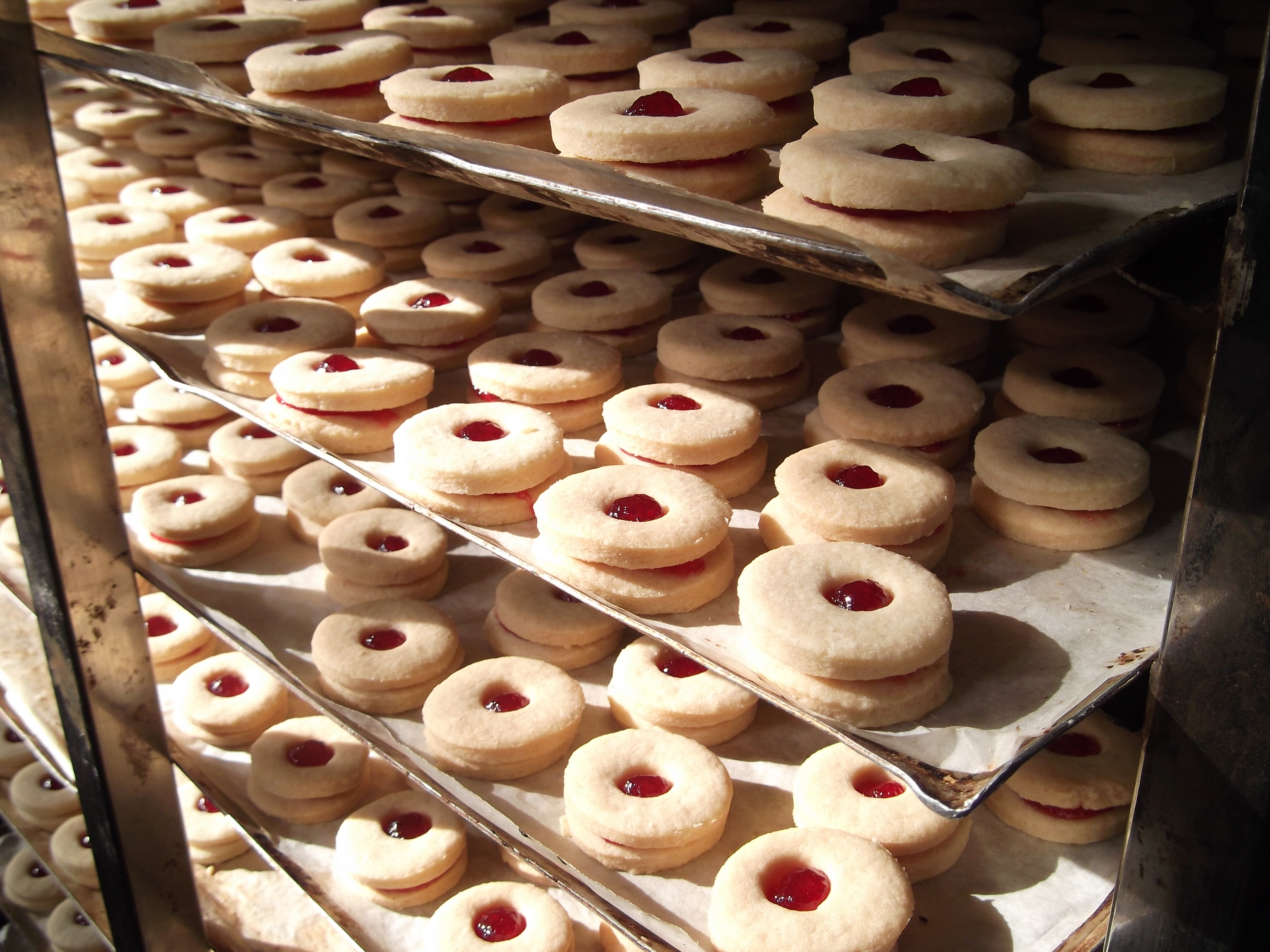
First, the man who let us in put us in the hands of Gili, who turned out to be the wife of the owner. She took us on our tour, after we had donned our sanitary hair-nets, showing us the process of making cookies. The cookies being made were small sugar cookies with a jam filling. Here they are finished and ready for baking:

Pretty little cookies all ready for baking

Here are some of the notable, interesting stages of the process that is the making of the petite, decorative cookie. A worker rolls the cookie dough over circle cutters:

Cookie cutting the industrial way

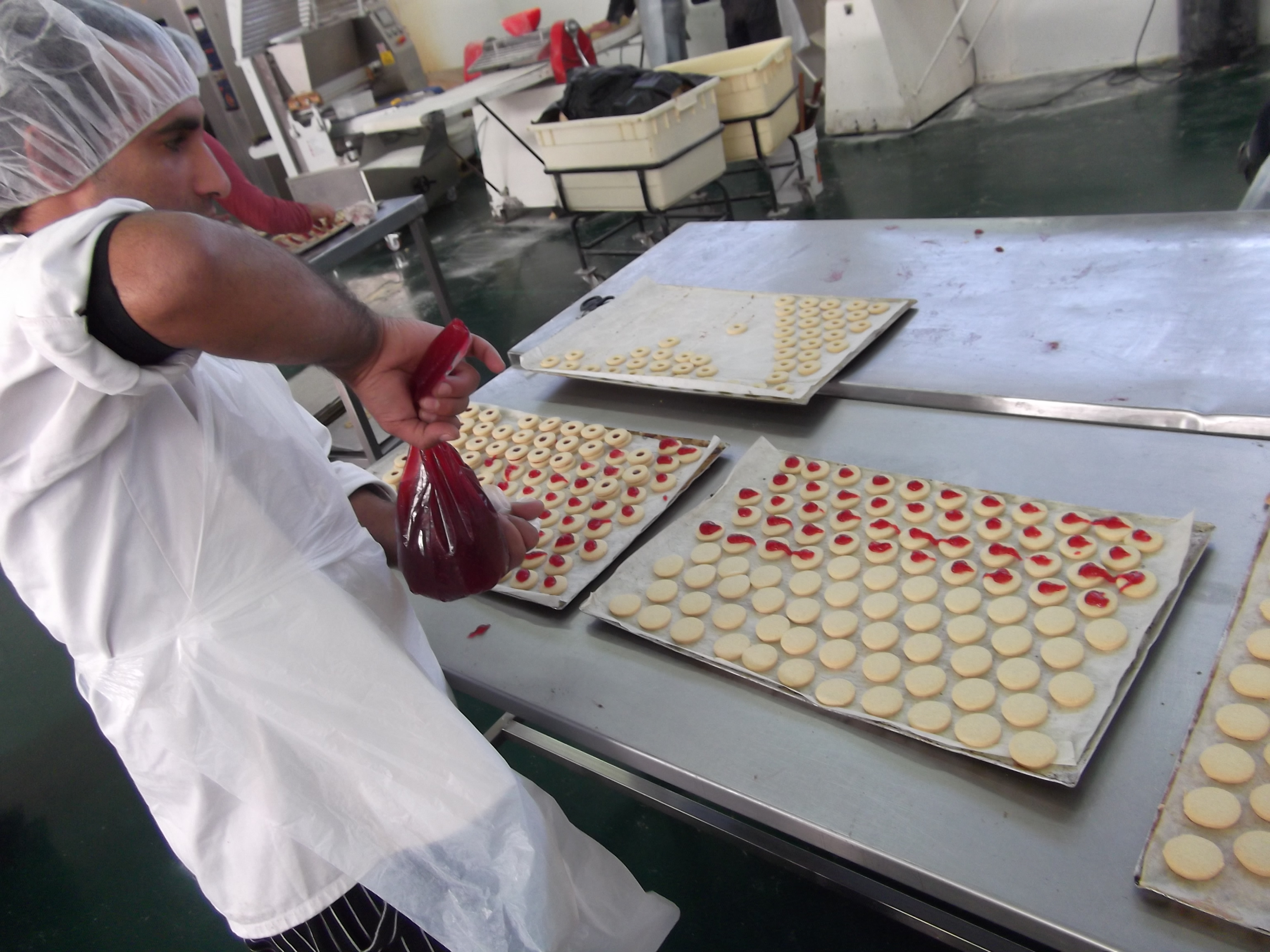
And here the cookies are being constructed, a solid disk being prepped with a dallop of fruit-flavoured jelly to then be finished off with a cookie “ring” on top:

The construction of the cookie

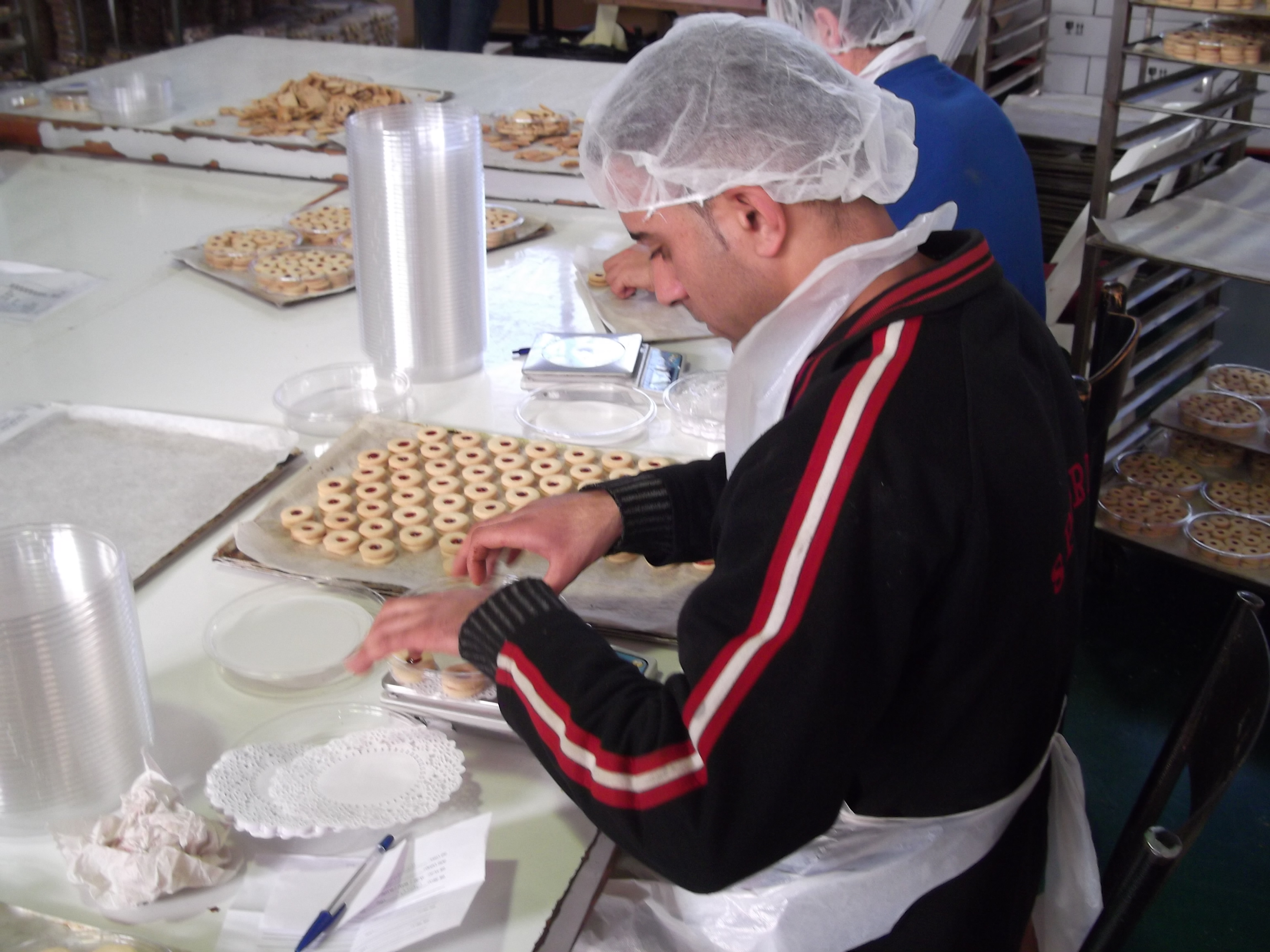
Once the cookies are baked they are taken to another room where they cool off and wait to be packaged. Here one of the packaging workers puts the cookies in plastic containers with a doilie to separate the layers:

Packaging the cooled cookies

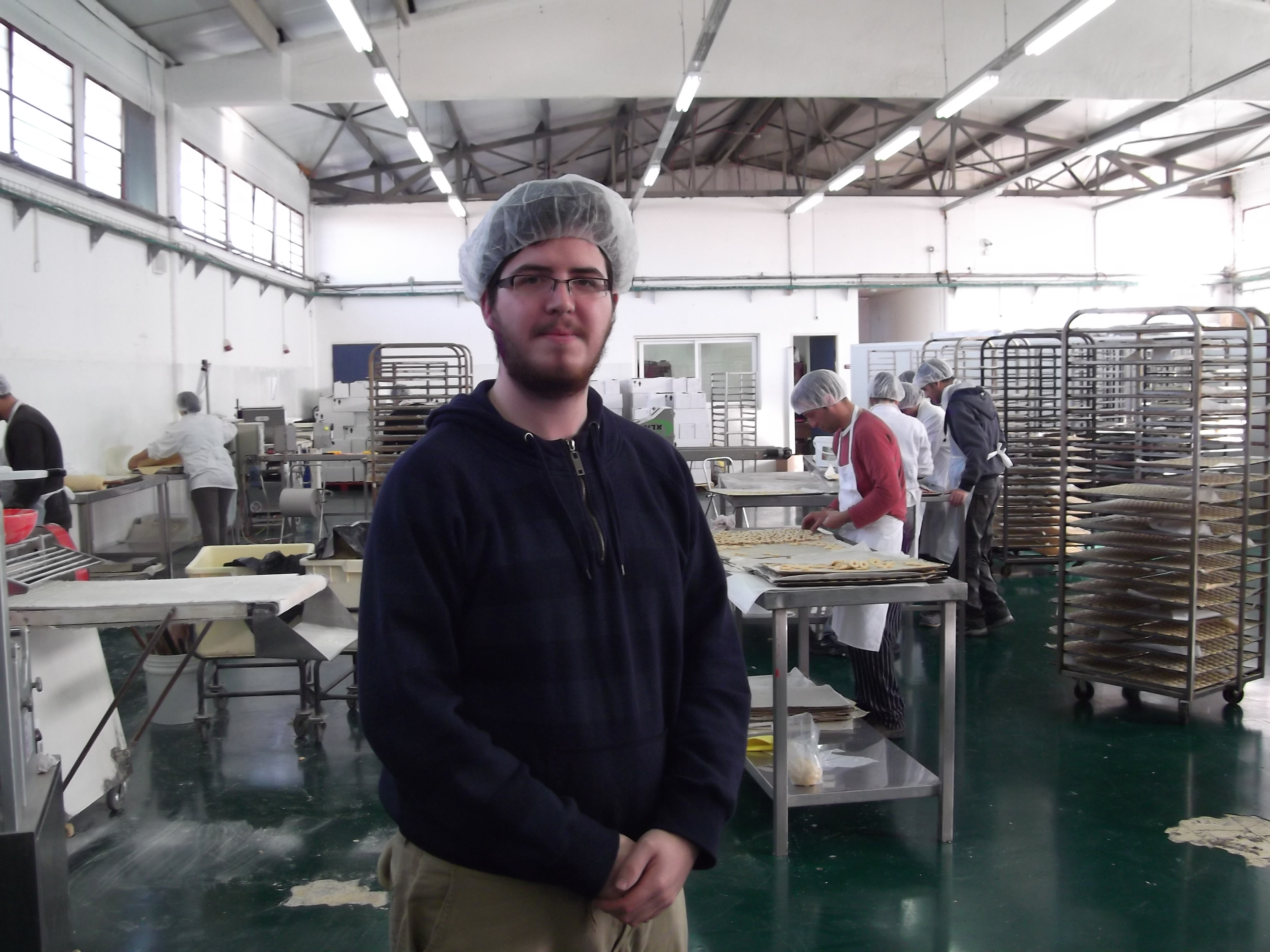
After we had seen the numerous stages and the 15-20 workers furiously cranking out cookies (1,000+ packages per day), we took some more pictures. Here I am, hair-net on and hands secure and out of the cookies:

Posing in the cookie factory

When we had seen enough, and enough pictures were taken we bid farewell to Gili and attempted to leave. She called us back and told us not to forget about the hairnets, telling us we might look silly walking around with them on. I risked it and poked my sanitary head into several other factories located in the vicinity. Nobody seemed to mind. But I minded that we hadn’t gotten any baked goods yet (we didn’t really wanna buy a package of cookies because we have eaten those cookies so many times before). I suggested that we seek out another bakery, a kosher Lebanese bakery in the nearby village of Mi’ilya (population 3,000). We drove to the Christian village and found the bakery, which turned out to be a factory as well:

Door sign for the Lebanese Bakery

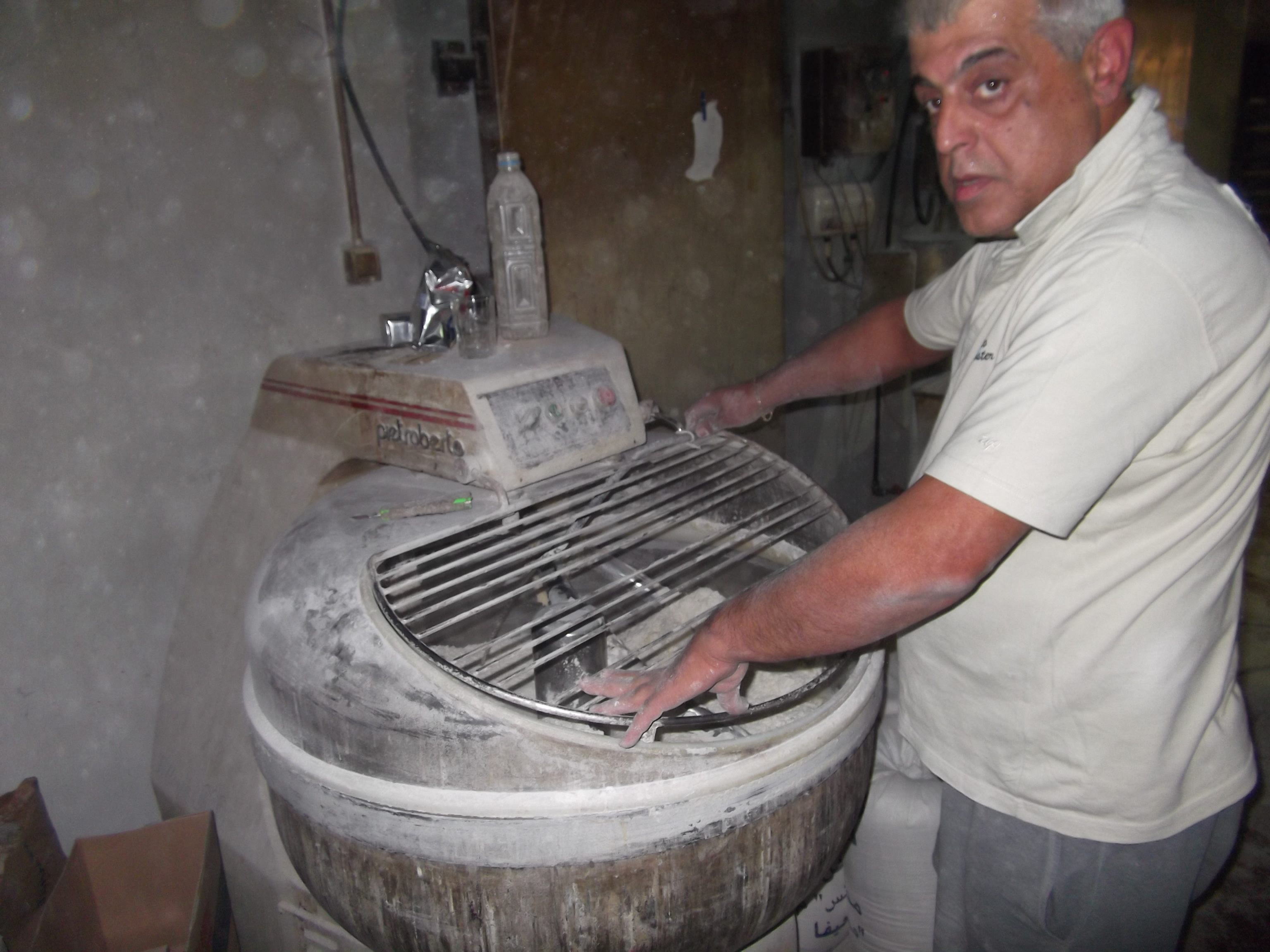
Inside the pita factory we shuffled around in the flour-covered room and had some brief dialogue with a man there who seemed agreeable to our desire to explore the place. A man named John, the professed owner of the factory, allowed us to poke our noses nearly everywhere we wanted to. Here one of the men working there operates the dough mixer:

Manning the mixer

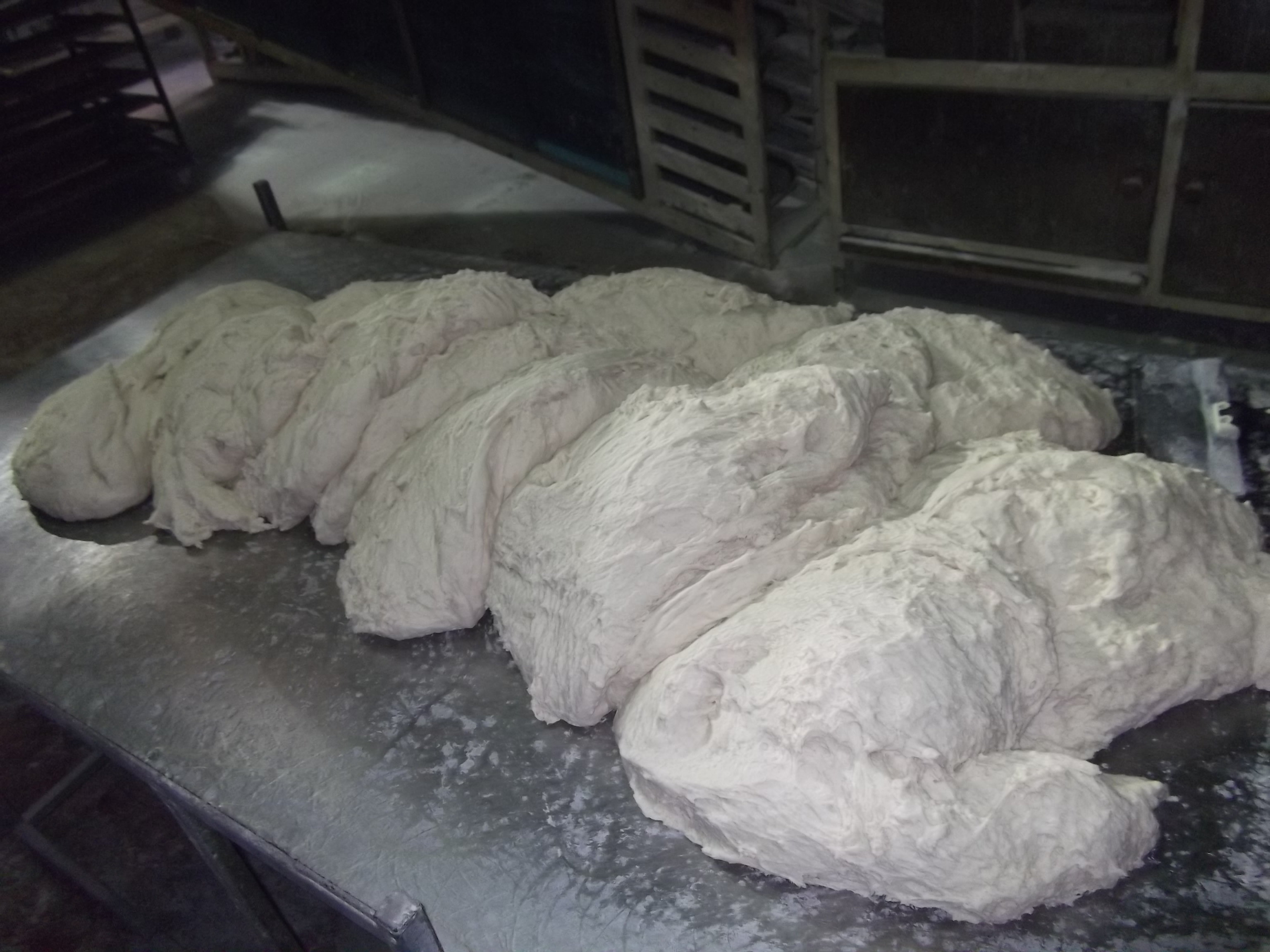
After the dough is mixed, it is then placed on a large table in the centre of the open area for rising:

Rising dough

As per the next stage, the first man we talked to showed us a machine that makes small balls of dough to expedite the process. Here the machine, which was imported special from Lebanon, is hard at work pumping out dough balls:

The Lebanese dough-ball-making machine

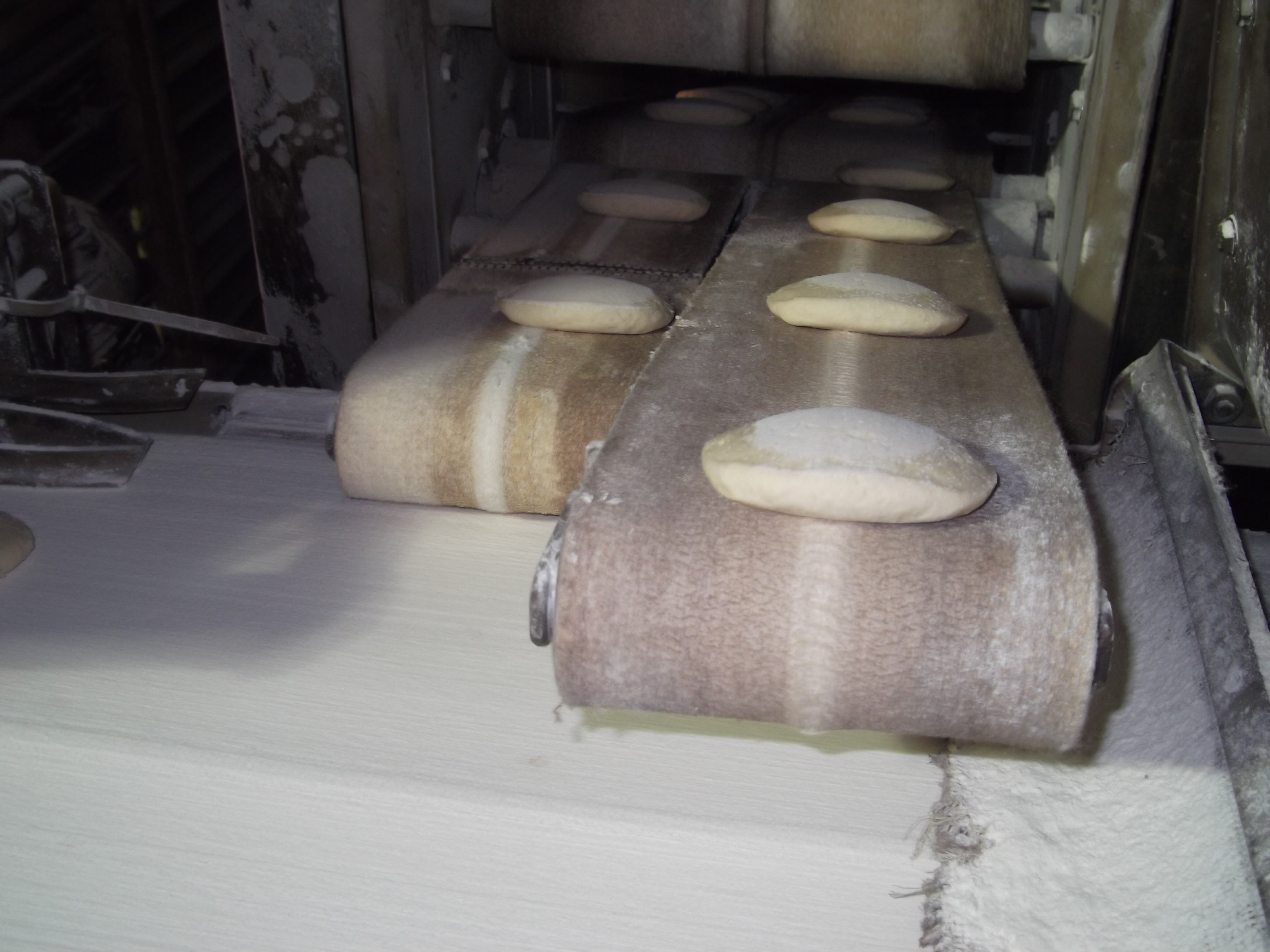
Once the dough balls are on their way, they get flattened and gradually turned into large flat disks. Here the disks are still in the flattening process as they travel around the room:

Small pita disks

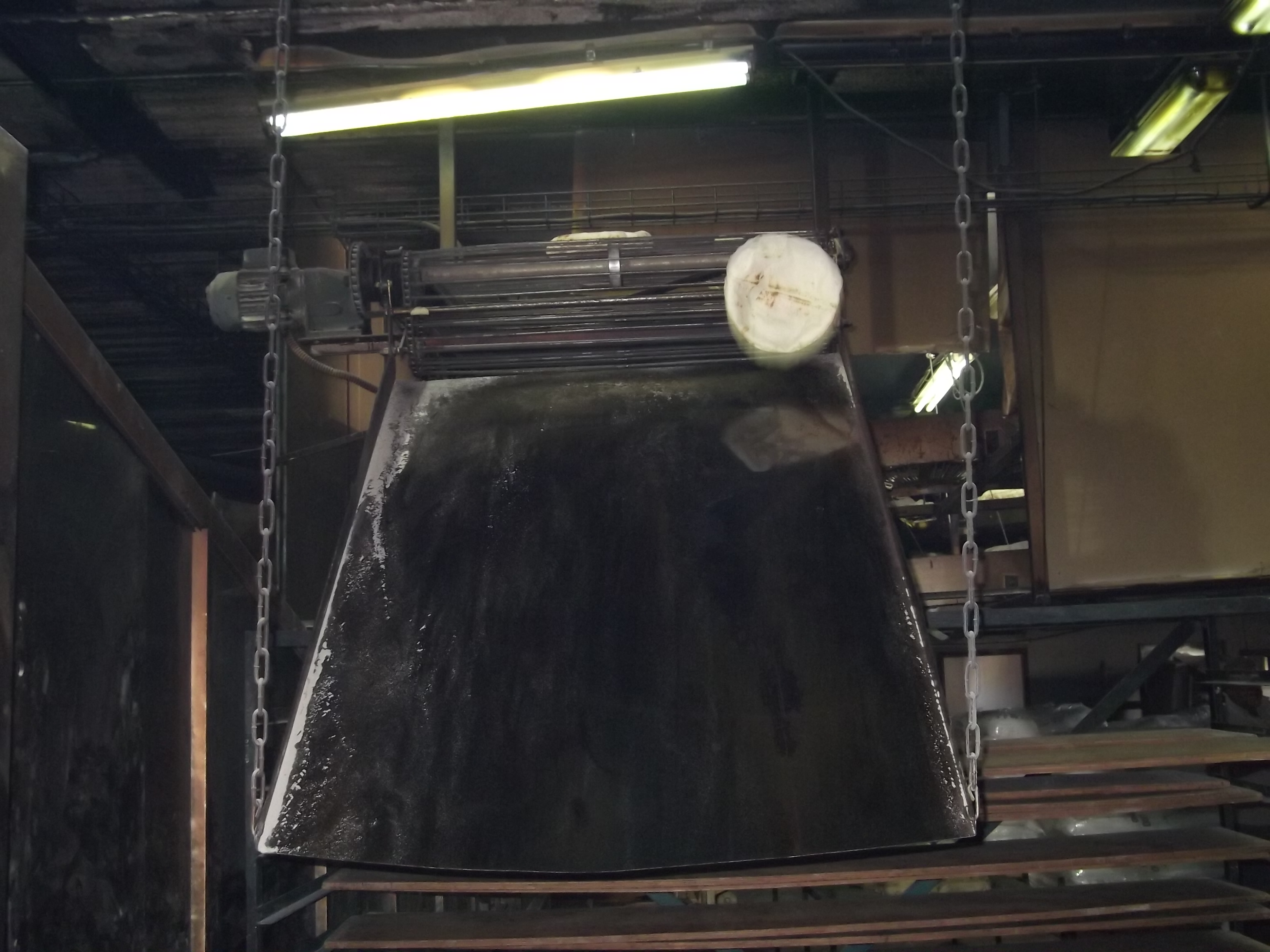
Once the disks have been flattened near paper-thin they are moved on the conveyor belt back and forth allowing them to slightly rise before the baking. After the dough disks have sufficiently risen they are passed through the tremendous furnace which made the entire room almost unbearably hot. John didn’t like people getting close to the oven but he allowed me to photograph it up close with his supervision. Here it is, the disks blown up into balloons of hot air bouncing out of the furnace:

Pita balloons escaping the flames

After the dramatic baking, the pitas are again on a long track of conveyor belts as they cool and deflate, now boasting a handy pocket that can be filled with all sorts of foods. This part of the process I found to be very cool as the air was all floury and the sun was sneaking in.

Pitas deflating high up on conveyor belts

And here the cooled pitas come bounching down for bagging. The bagging women specifically asked me not to photograph them so the end of the process will forever be a mystery for you, o’ reader.

Cooled pitas coming down for bagging

Oh, and John handed us a free bag of fresh pitas “for the road”!

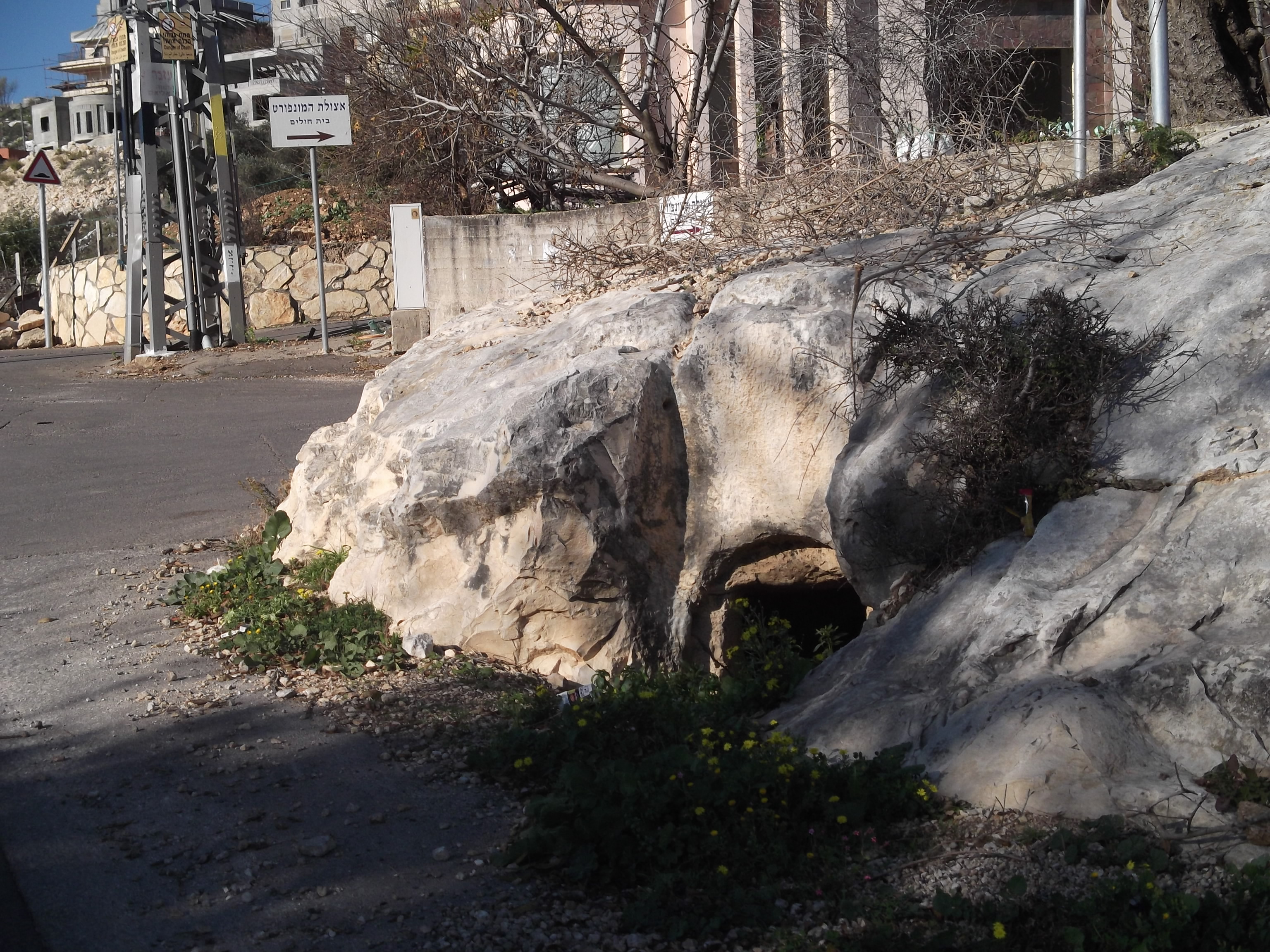
While we were in Mi’ilya we also stumbled upon ancient tombs hollowed out of solid chalk bedrock on the side of the road. The sign stated that the graves were from the Byzantine era (330-634 CE) and have been slightly damaged by water piping. Here is the most visible cave, clearly seen from the road:

The burial cave on the side of the road

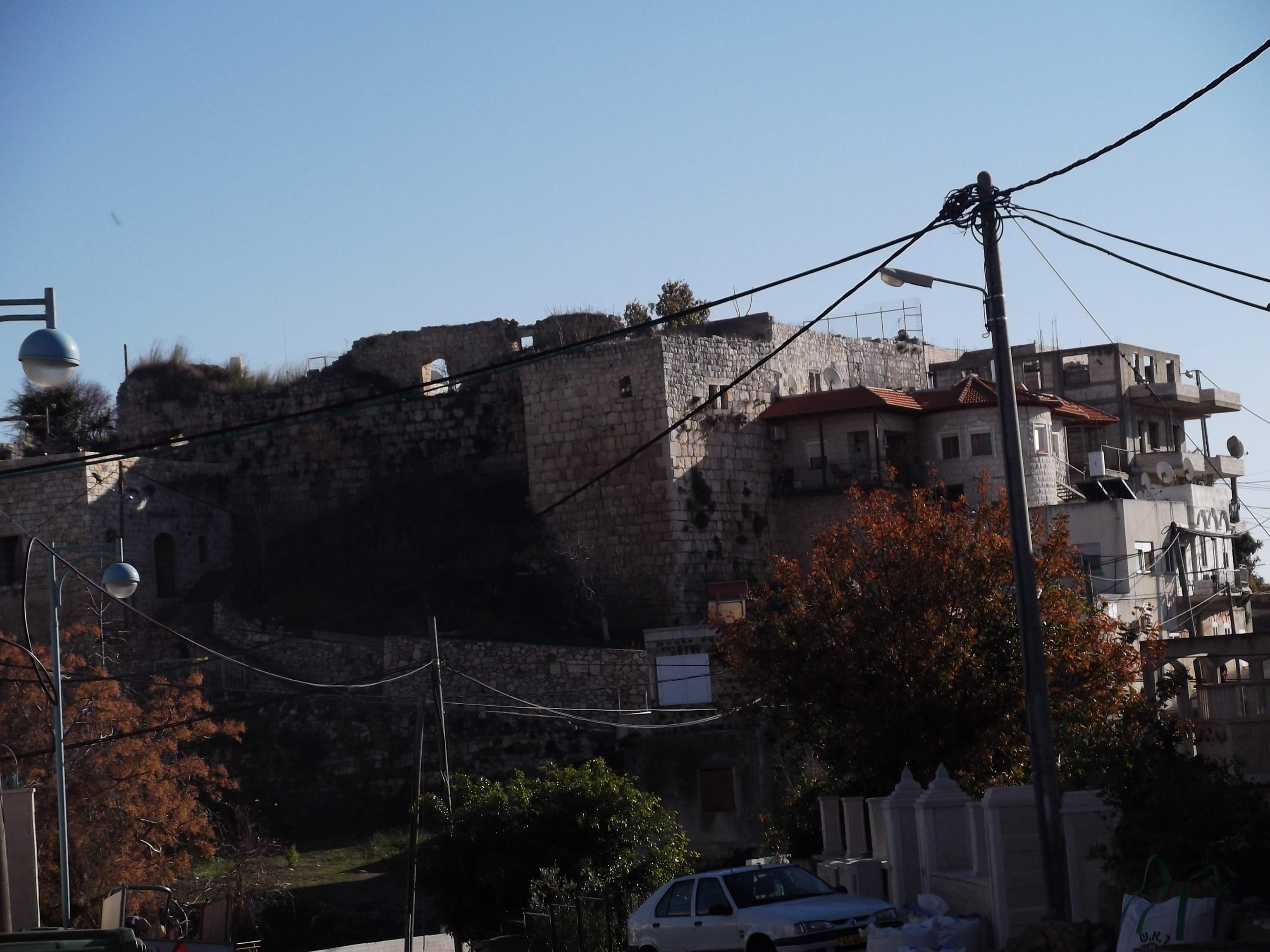
Not only are there ancient burial caves in Mi’ilya, there is also a Crusader castle called King’s Castle when Mi’ilya was known as Castellum Regis. The castle was built sometime around 1160 CE when King Baldwin III of Jerusalem gave the Galilee region to a crusader in Haifa. It was only a matter of years before the castle was conquered by Saladin. King’s Castle and Monfort Castle nearby were then both acquired by the Teutonic Knights of modern-day Germany but by that time the bigger and more impressive Monfort Castle made King’s Castle less important. Here, local residents built their house using the ruined castle’s walls as well:

King's Castle from the north

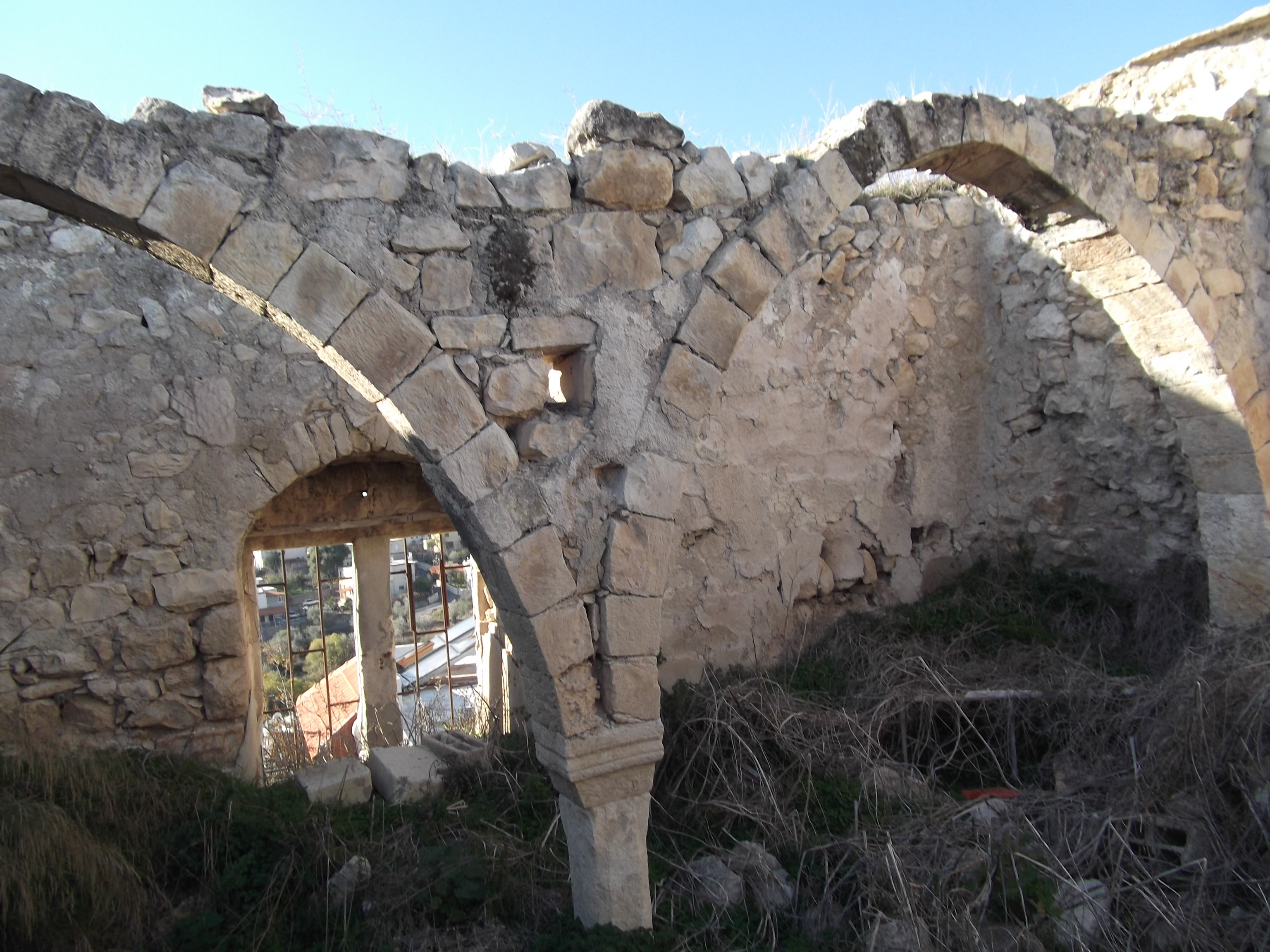
Once we had parked next to the house as far up as we could, we got out and climbed into the remains of the once noble Crusader castle. Today the site is neglected and grown over but the classic arches and windows live on:

Arches within the ruins of King's Castle

Windows and doors

We had to abandon our explorations prematurely due to school letting out but one day we should come back… with a metal detector! Who knows, maybe a knight in rusted armour is buried beneath the rubble…

Rocking the Galilee

In Galilee, Israel on December 2, 2011 at 12:58 PM

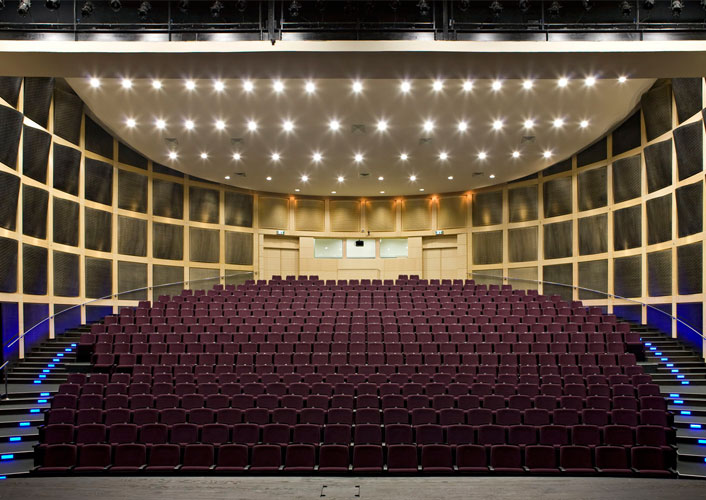
Due to the popular Israeli DocAviv, a documentary film festival, and its special Galilean branch, DocAviv Galil, several concerts have been offered to the people and they were all free! This blog post is about the two concerts of this week, Lahakat Droz on Wednesday night and Dudu Tassa on Thursday night. Both held in Ma’alot’s beautiful new Heichal Tarbut (Performing Arts Centre):

Ma’alot’s beautiful Heichal Tarbut

Concert 1: The performance of Lahakat Droz (Hebrew for Band of Droz – Droz meaning “stairs” in Moroccan Arabic) was called for 8:00 PM Wednesday evening with several short documentaries shot/produced in the Ma’alot area to be shown before it. I arrived fashionably late, found a seat in the lower section and settled in for some documentary works of film. The short film that was playing when I came in and the subsequent one were of little interest to me but the third one was wonderful. It was about an old man living in Kibbutz Kabri who made aliyah when he was in his teens or twenties from Iran. Throughout his life he had a fascination for filming and had dozens, if not hundreds, of film reels from back in Iran and the early kibbutz life in Kabri. A woman began investigating his work and they set out to watch the reels and to relive the days of old. Throughout the documentary, snippets of the old man’s film reels were shown, including the establishment of the banana farms outside of Nahariya. It was a wonderful film. Then, before the concert itself, a short film of Lahakat Droz was shown. We learned all about the founding of the band and the various members and methods involved, including the various things that inspired them in their music making. Once the band’s movie was finished a short break was announced to allow the band to set up. I headed outside after taking a botched-up panoramic picture of the auditorium. There, in the lobby of the building, next to the cafe, I found the woman from the documentary about the old man from Kibbutz Kabri. I told her that I loved her show and she thanked me and was pulled away by the official people of the DocAviv Galil to either receive or watch someone receive some award or something. After a few more minutes of milling about, finding some friends and saying “hi”, we all headed back into the auditorium for the concert.

Lahakat Droz

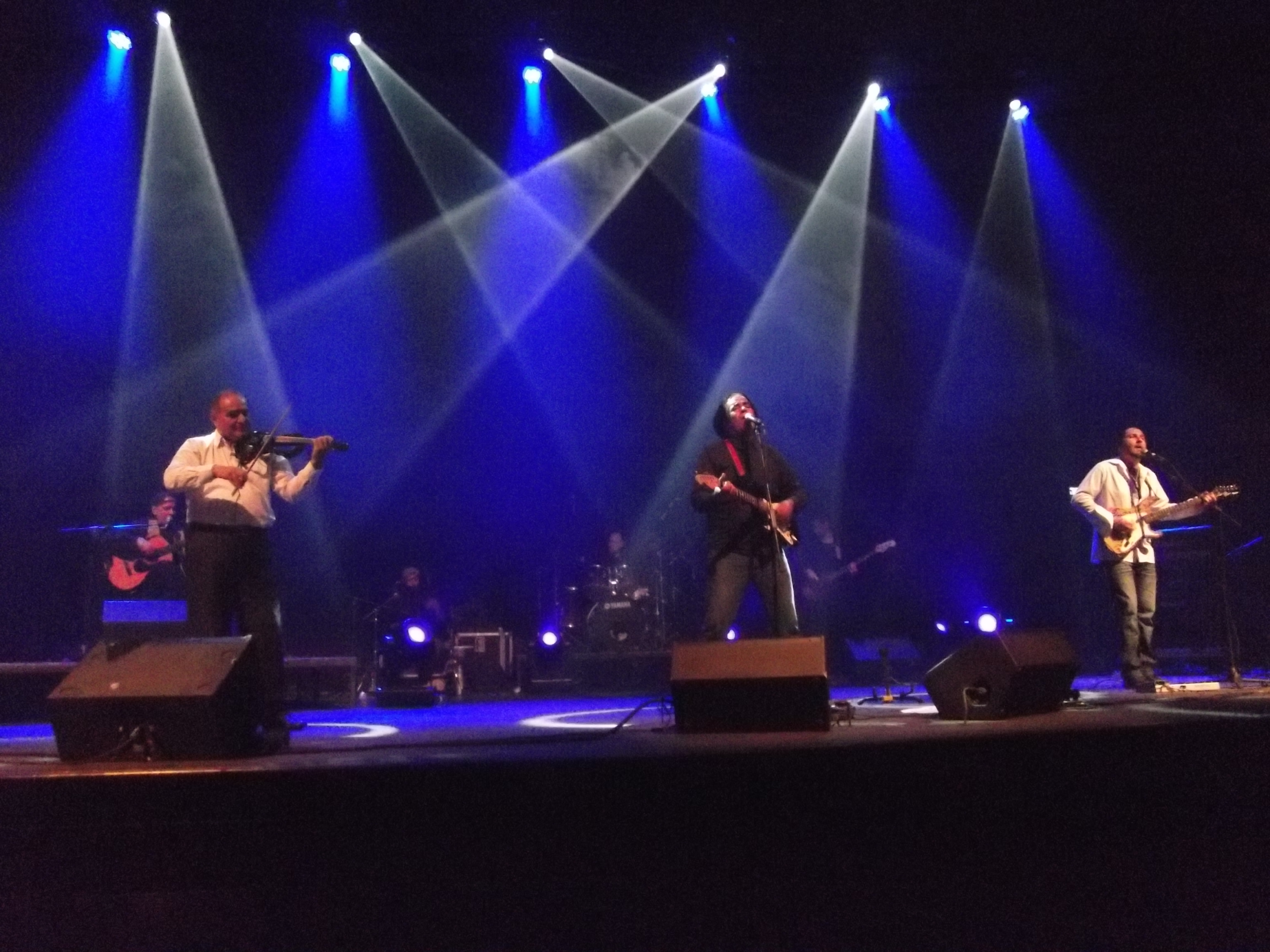
Lahakat Droz is a local band founded in Ma’alot with most of its members living in the Ma’alot area. The lead singer, Itzhik Alul, and his brother on the acoustic guitar began playing at least 20 years ago, spending their time in bomb shelters strumming away the days, fine-tuning their skills. I found it fascinating that the bomb shelters they played and practiced in are located just a few minutes from my house.

Lahakat Droz 2 (note the crisp spotlights)

The music that they played was music from the heart, lyrics and musical notes lovingly released into the smoky air and throbbing the tiny bones in the audience’s ears with a wholesome, ethnic-rock feel. I loved every minute of it and I’m sure the several hundred people in attendance with me felt similar as I saw them all singing along. The violinist, a Druze from Bet Jaan named Marzuq Harb, played fabulous Middle Eastern solos.

Marzuq Harb, the violinist of Lahakat Droz

The concert was over too soon, but when it was over everybody agreed that the concert was a smashing success. I shook the hand of the lead singer’s brother, thanked him and then looked around outside in the lobby for CDs to buy. I didn’t find any. But there is a YouTube link to one of their songs being performed elsewhere: http://www.youtube.com/watch?v=zagwNdPeO7c

Concert 2: Dudu Tassa’s concert was Thursday evening prefaced with a personal documentary titled Iraqinroll (i.e. Iraq-n-roll) a play on words between his rock music and his grandfather’s musical history in Iraq, the successful Daoud Al-Kuwaiti. Unfortunately, the documentary had a fee and since we came late we did not enter until it was over. In the half hour or so that we had to wait I bumped into the guitarist from the previous night’s band, Kfir Ohayon of Lahakat Droz. We spoke for about 15 minutes where we discussed his band, our mutual friends and other chatty topics. Then the doors were opened to all and we went our separate ways into the auditorium. We found seats in the third row from the stage, surprisingly, and the mayor got up to say a few words.

Mayor of Ma’alot Shlomo Buchbut giving an opening word to Dudu Tassa’s concert

The mayor stepped down and the musicians stepped in. The very first song that he sang was the one I have grown to like after finding it on YouTube several days before the concert, and here it is, for you to like too. Presenting “Eize Yom” by Dudu Tassa featuring Jonny Greenwood of Radiohead: 

The music that followed was all new to me and the people loved it. There were at least 400 people in attendance, at least 70% of them 25 and younger. It was loud and fun.

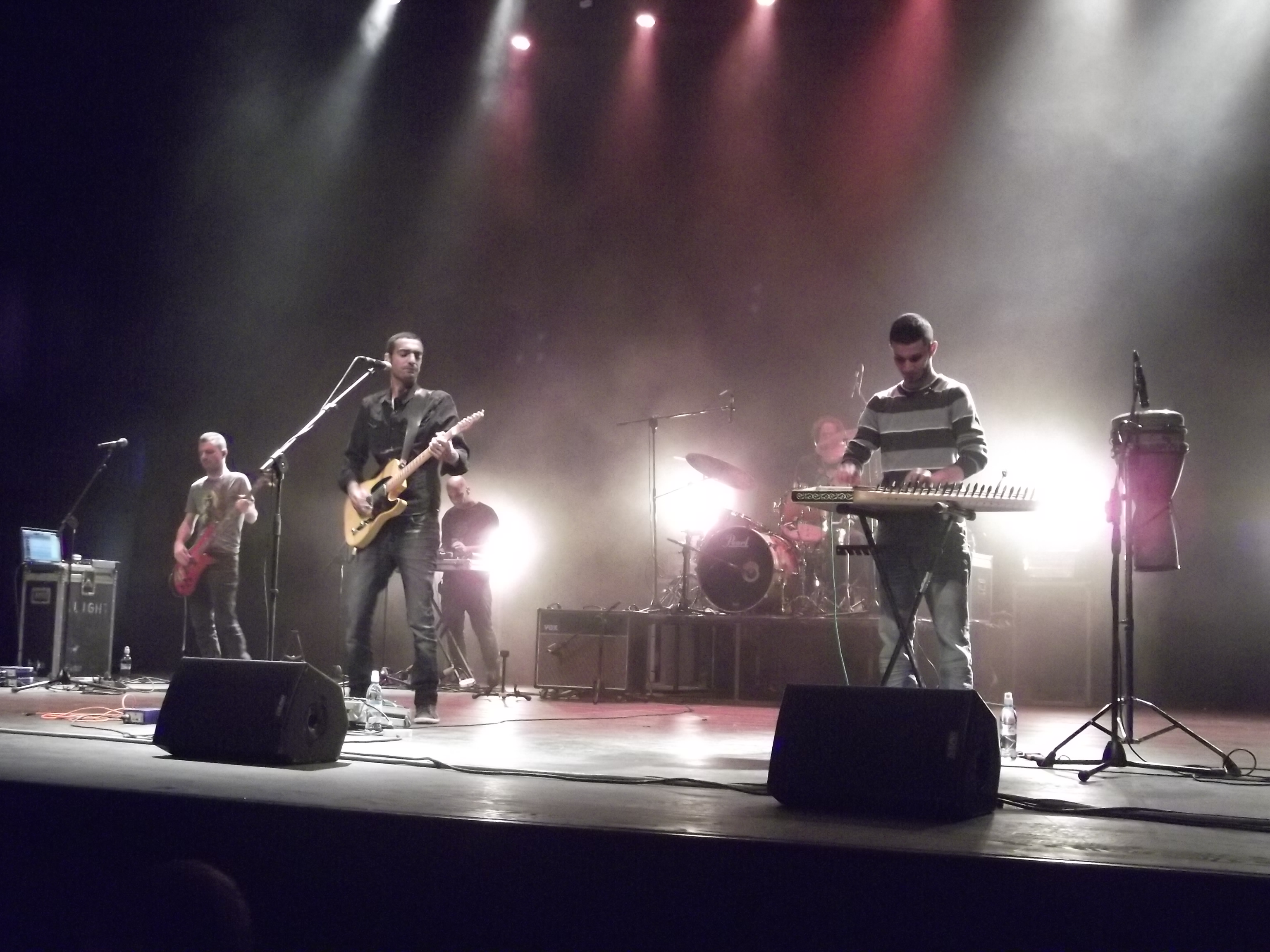
Dudu Tassa and band

Dudu rocked on his guitar and crooned out his songs in both Hebrew and Moroccan Arabic, the heavy drum pounding behind him and the enthusiastic bass player to his right kept us in sync. The lad to his left was on a Qanun-like instrument, plucking at the taut wires with fingers capped in metal. It was quite an authentic touch to the Israeli rock music that he was belting out.

Dudu Tassa on stage

Towards the end of the concert his music picked up pace and people left their seats to crowd around the stage. It was fun. When the concert was over I did not get the opportunity to thank the performers and headed out to leave. I am looking forward to next year’s DocAviv Galil and the slew of free concerts that will no doubt be available. Time to keep my eyes peeled on the posters around town!

The Olive Harvest (Part 2)

In Galilee, Israel on November 25, 2011 at 10:39 AM

This blog post is a continuation of this one – the actual harvesting of the olives: https://israelsgoodname.wordpress.com/2011/11/10/the-olive-harvest-part-1/

Yesterday evening we went to the Druze olive press – bet baad in Hebrew – in the ancient village of Pekiin. I had called ahead to check to make sure they were open and crushing olives – they were. When we got there, just a short drive from Ma’alot, there were Druze abound with hundreds of kilos of olives in large sacks. I had brought along the small box of olives I had picked from the trees in our backyard and set my stock down on a small stool.

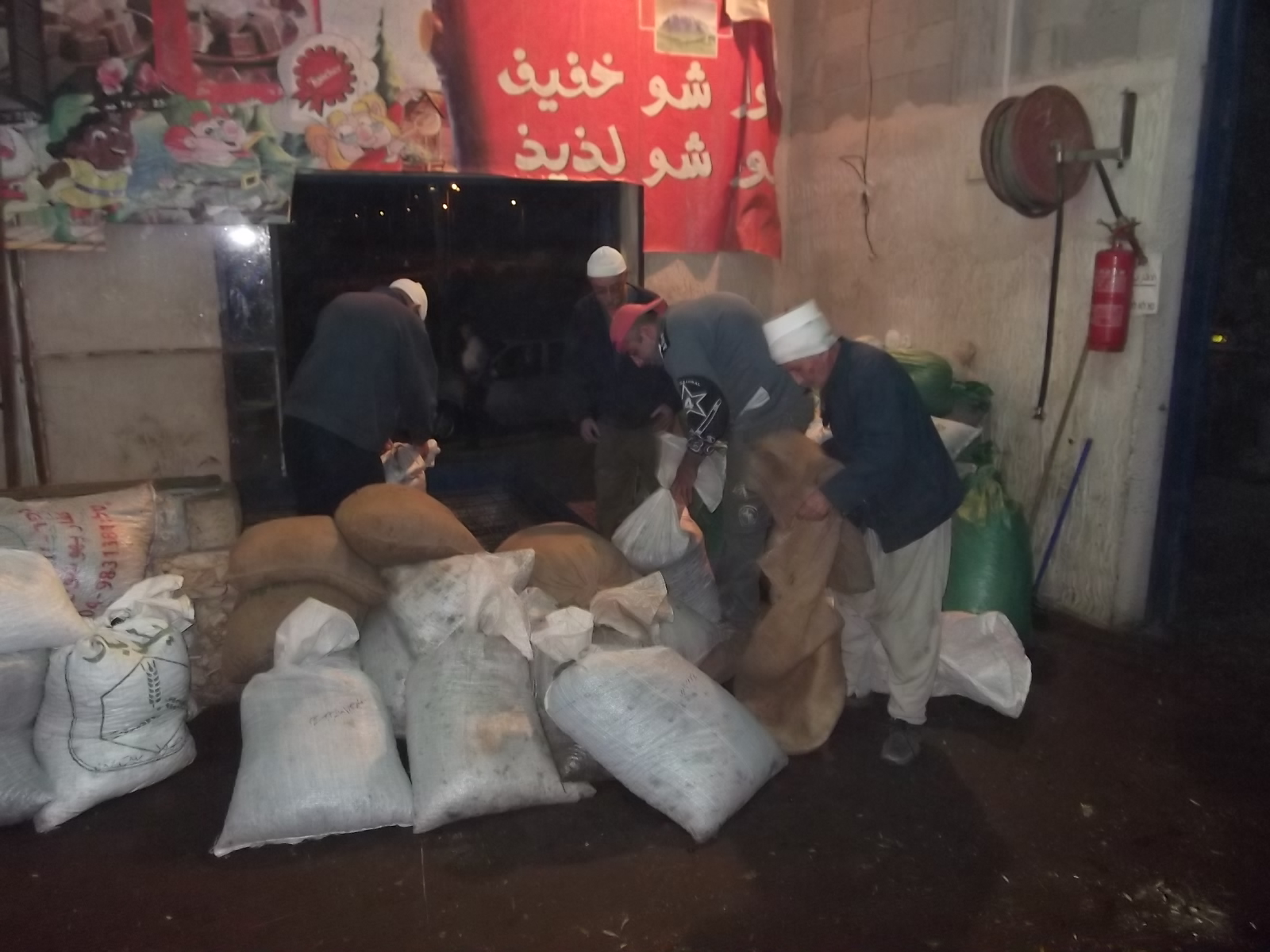
Druzi men unloading huge sacks of olives

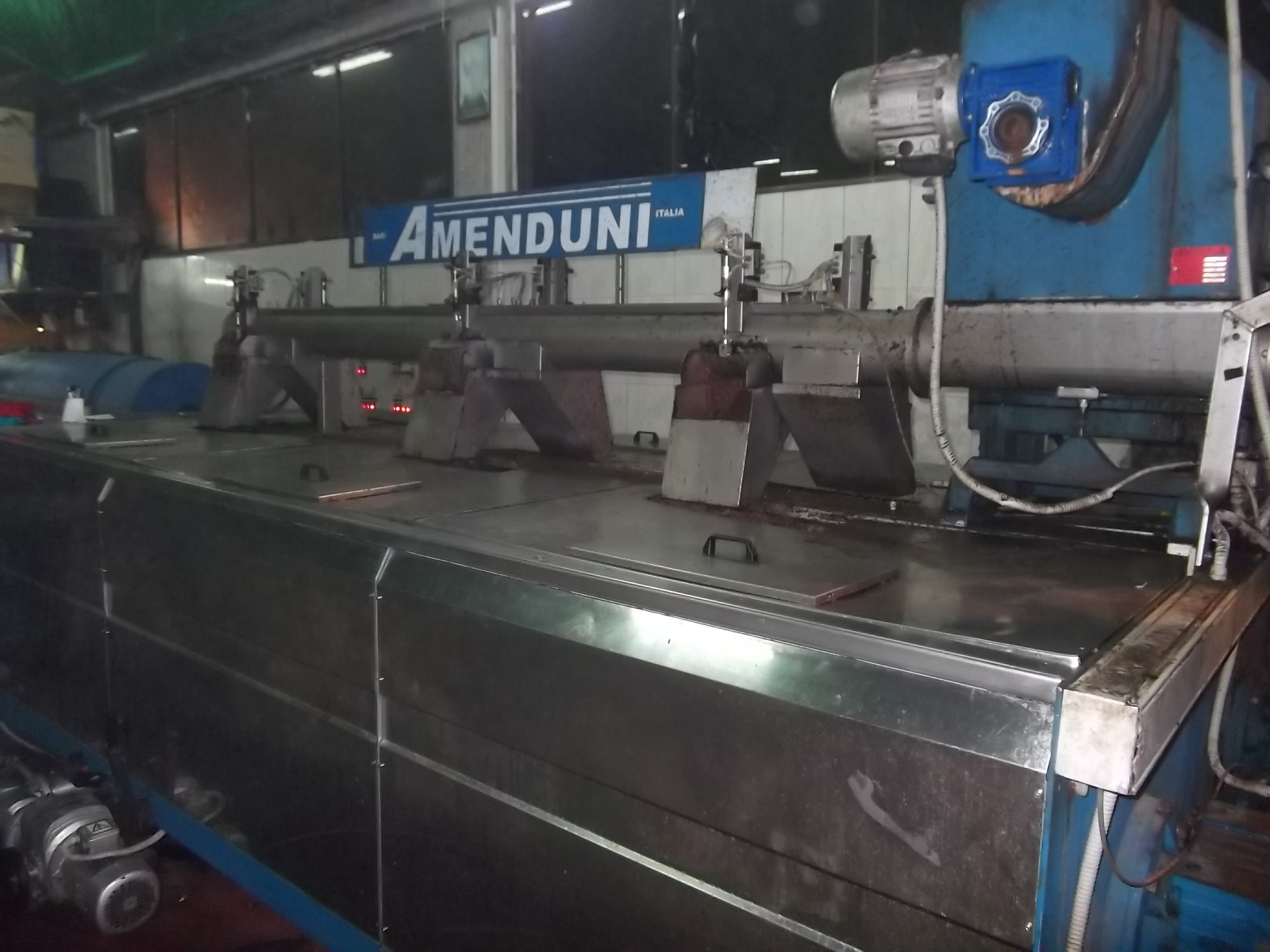
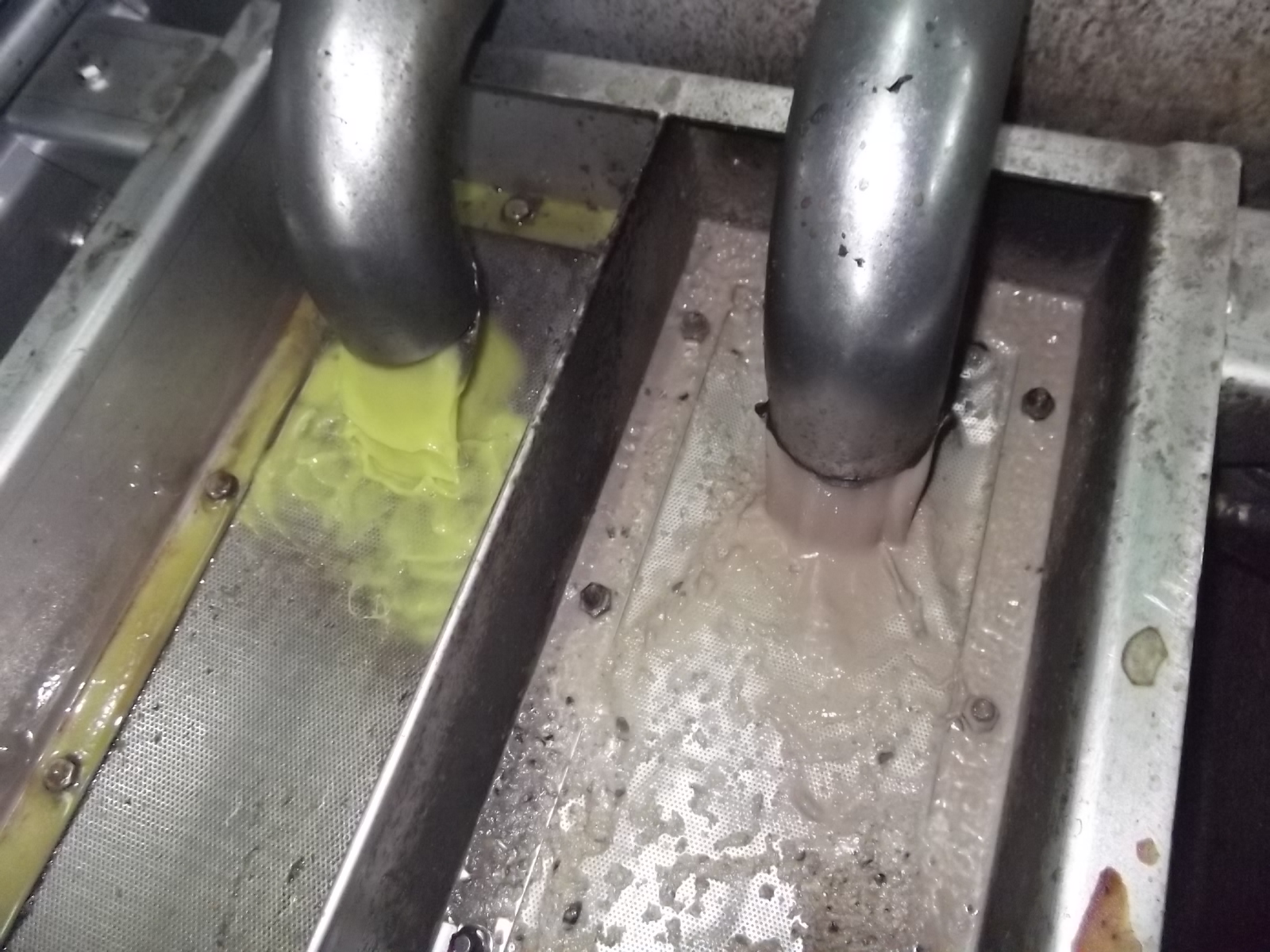
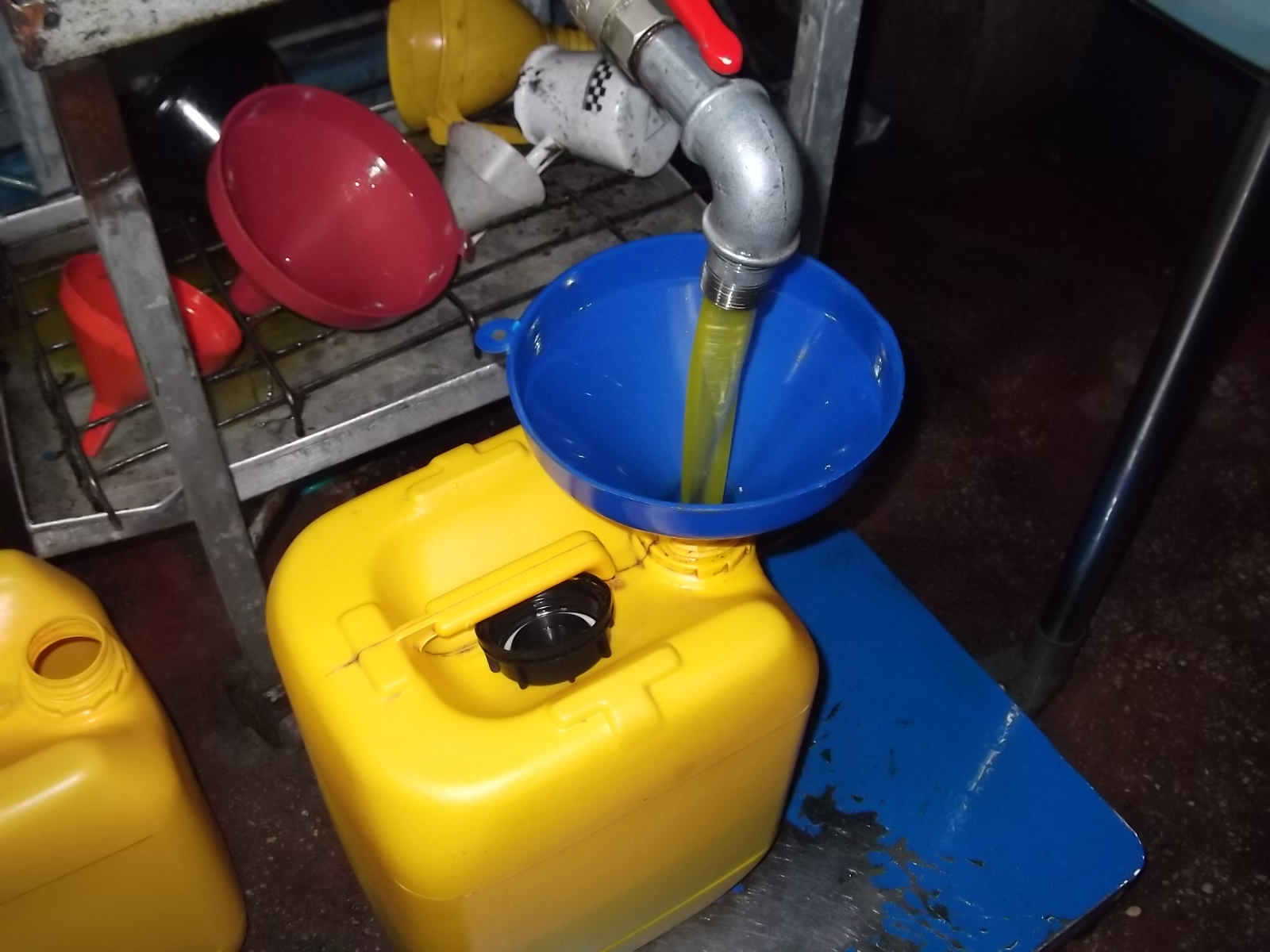
As we watched the numerous Druzi men unloading the sacks of olives into the hopper on the floor we were deafened by the din of the harvest in full-swing. The olives piled high waiting for the first machine to be turned on. Once on, the olives are lifted up on a conveyor belt and are cleaned in the washing machine. Nice and clean, the olives are then taken into the crusher where they are churned within a great rectangular machine. The olive pulp is separated for other uses and the watery oil is transferred into the next machine where the pure olive oil is skimmed off. The water goes one way and the oil goes to the next stage – filtration. The pure, golden-green olive oil is then dispensed through large vats into the waiting oil canisters and jerry-cans. The full containers are then put on a scale for weighing and are then carted off – ten percent of olive oil going to the bet baad’s owner.

The process in pictures:

The olives going up the conveyor belt and into the washer

The washed olives going into the crushing machine

The huge pressing machine

Olive oil to the left and the murky water to the right...

Pure olive oil coming out of the spout and going into the jerry-can

Here is a panoramic picture of most of the warehouse – from the olive unloading at the far right, the washing between the pillar and the fireplace, the crushing between the fireplace and the faux leather armchair, the filtering behind the yellow oil containers and the bottling all the way in the distant corner on the far left. (Click on it to see it enlarged)

Panoramic picture of the olive press

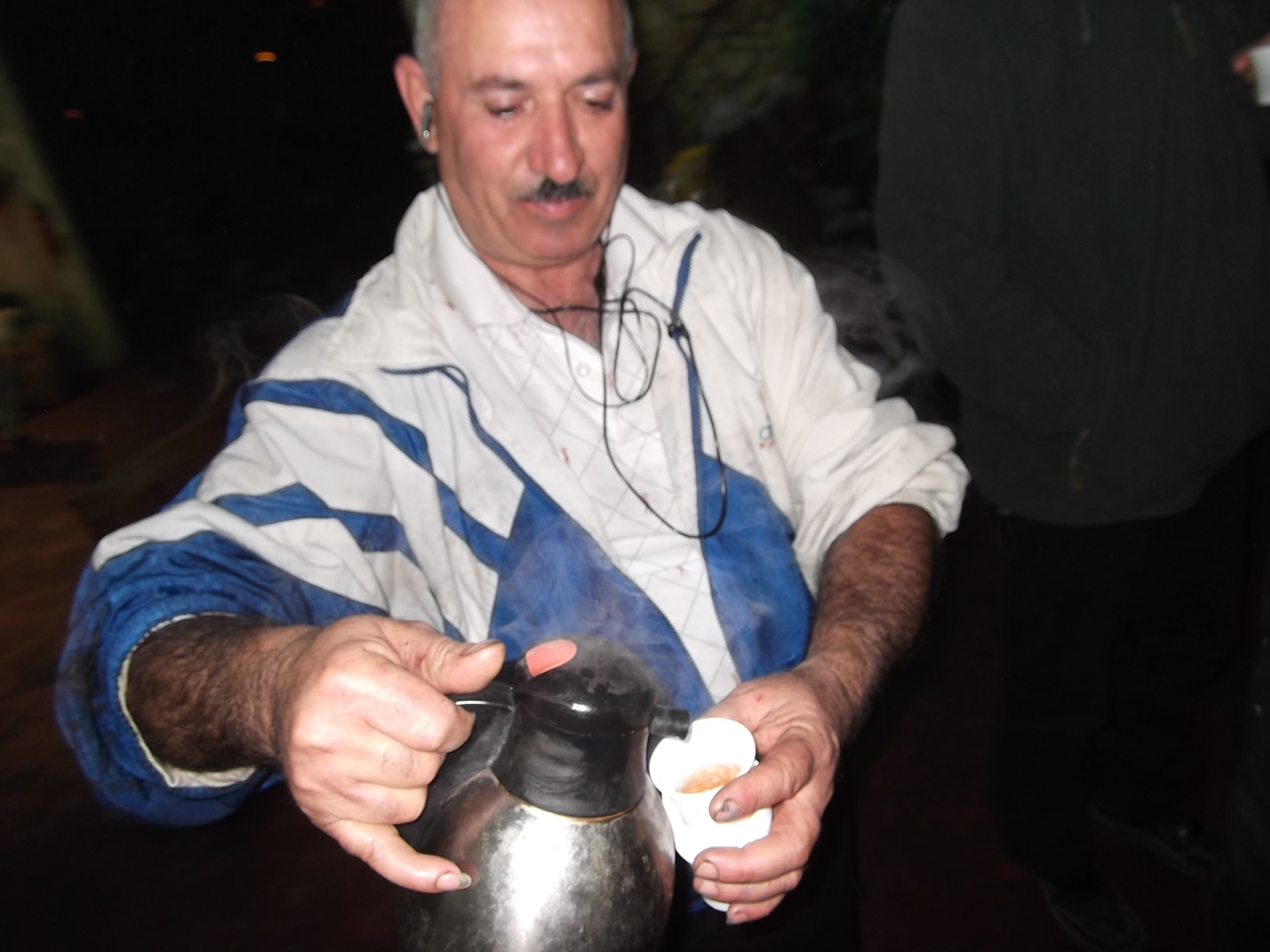
My small crop was not processed right away – I had to trade my 16 kilos of olives for 50 shekels of oil bottled the previous day. Our business was first opened with small cups of tea poured by the owner:

Amir the owner pouring tea for me

Here is my crop and the oily result… well, in lieu of the actual result:

My 16 kilograms of mostly Souri olives

Bottle of olive oil I accepted for my olives

The small store set up within the warehouse had special tasting for the oils freshly pressed and of course, bottled oils of all varieties and qualities – all local stock.

The store and the taste testing

Before we left, another huge load of olives came – a long night of olive pressing for those guys!

Another van stuffed with olives!

Hula Valley: The Way of the Crane

In Galilee, Israel on November 24, 2011 at 1:41 PM

Yesterday we took a trip to the Hula Valley – a large, flat, marsh-like area between the Naftali Mountains which borders Lebanon to the west and the mountains of the Golan which borders Syria to the east. Every year an astonishing number of 500 million birds migrate through the valley, an equally astonishing 390 different species. The migration has turned the Hula Valley into a bit of an international event, especially among avid bird-watchers. Tourists come and pay nearly $2,000 to attend a week long event including bird-watching, night-time bird-watching, scientific conferences and bird ringing. For the locals there is just a 3 shekel entrance fee.

Welcome to Agamon Hula!

We walked towards the Agmon Lake at first, crossing the Jordan River which has been reconstructed as of late. In the 1930s the Hula Valley was a malaria-ridden patch of land filled with birds and water buffalo. Eventually the land was drained and canals were dug to contain and control the waters, especially the abundance of melted snow that runs down Mount Hermon in the spring. Today the land is nice and fertile with water reservoirs and several small lakes which are more than enough for the migrating birds and to support the agriculture of the Hula Valley.

Jordan River

Tourists...

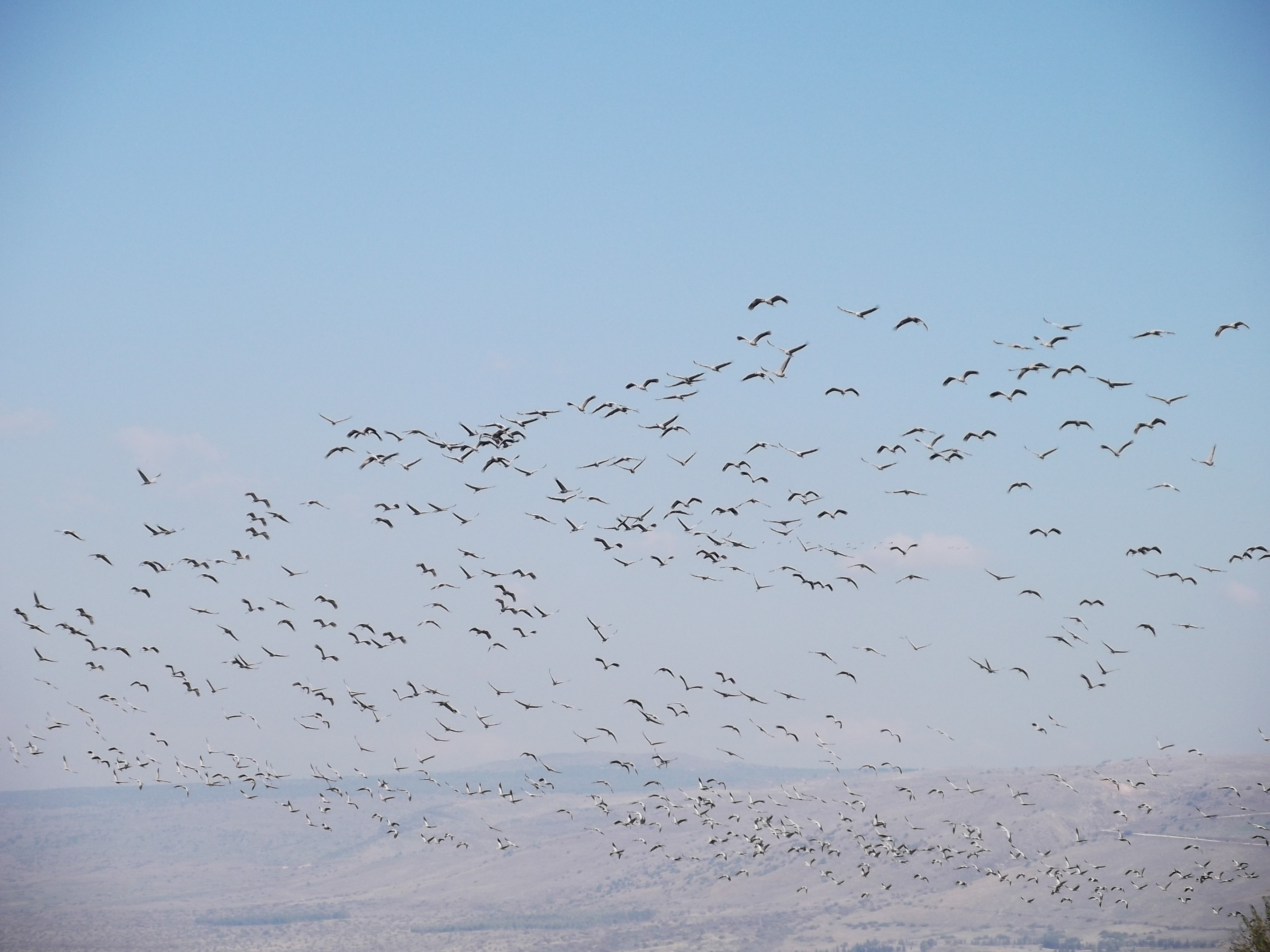
The chief migrating bird is the common or Eurasian crane. 100,000 cranes fly every year from Russia headed down to Africa to spend the winter. However, a quarter of these cranes winter in the Hula Valley and are thus a threat to the crops so food is supplied to them costing about 2 million shekels per year. The 3 shekels paid at the park’s entrance helps lighten the burden of the feeding costs. These cranes are both huge and noisy and fill the air with loud honks and hoots.

Common Crane

Cranes in flight

Lots of cranes in flight

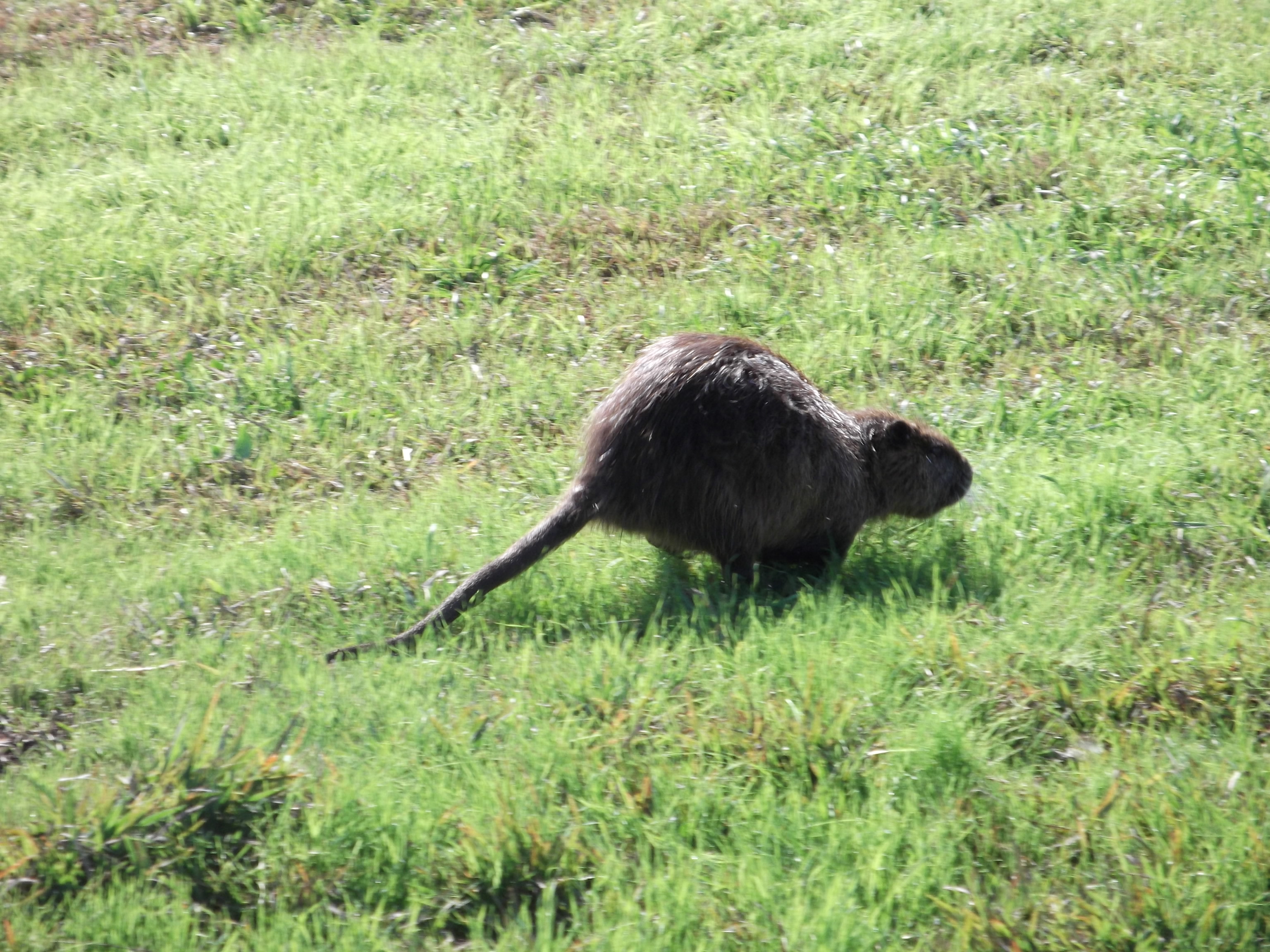
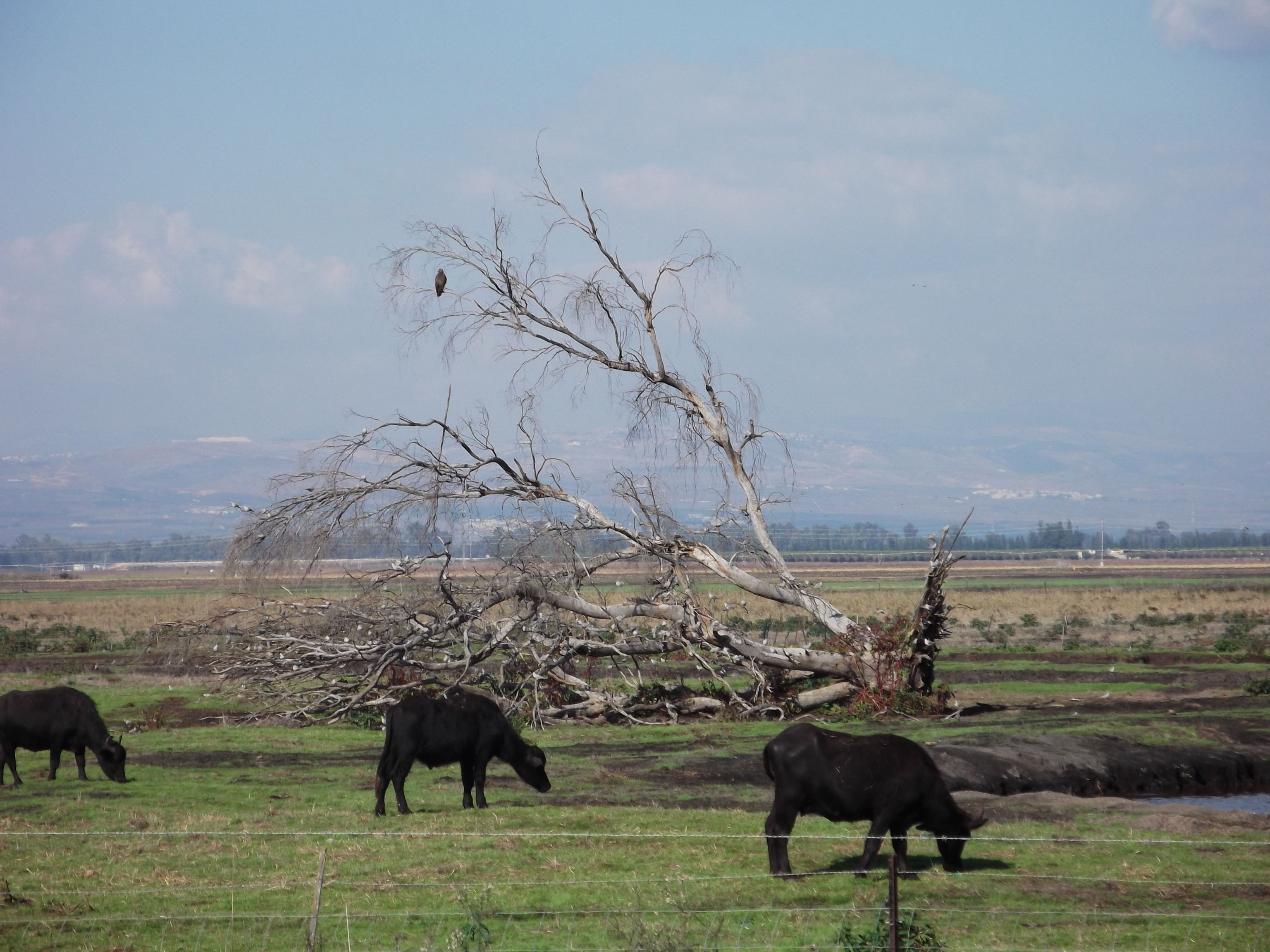
Other bird species include herons, ibises, raptors such as eagles, kestrels and harriers, ducks, pelicans, storks and hundreds of other waterfowl. But it is not only the birds that populate the valley. There are nutrias and water buffalo and both live in and around the marsh. The nutrias were introduced from South America in attempts to raise a pelt business but the furs were not so needed in Israel due to the mild Mediterranean climate. They were let loose and now live in the rivers and canals of Northern Israel. The water buffalo were native to the land and were often domesticated for farm work. In the time of the British Mandate water buffalo lived freely in the Hula Valley marshes, today they have become slightly domesticated and live in the marsh but in designated areas.

A nutria running away from me

Water buffalo and an eagle perched on the tree

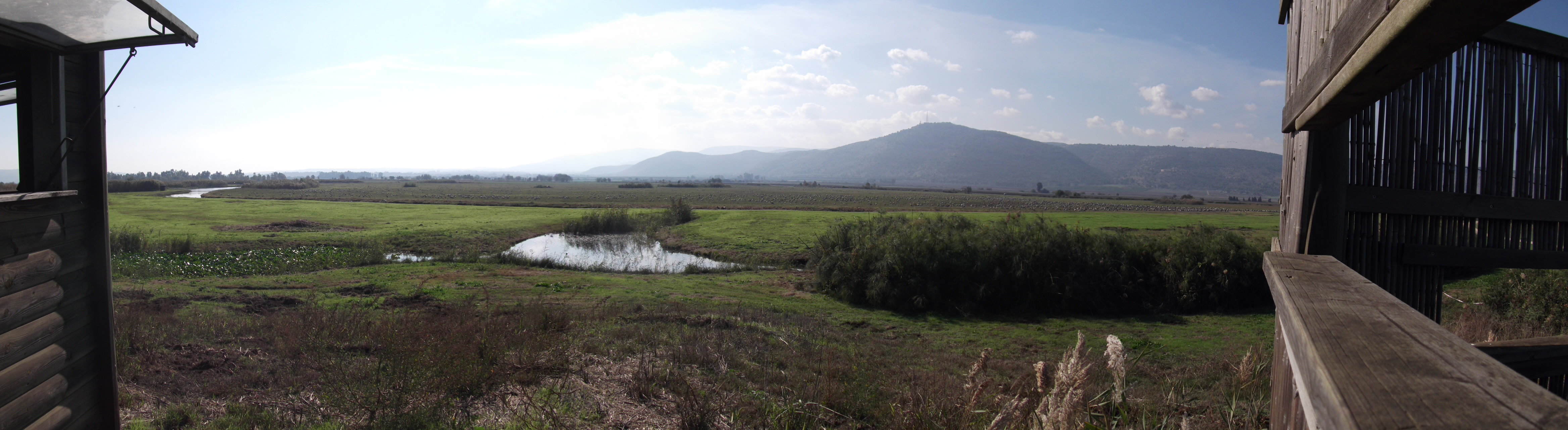
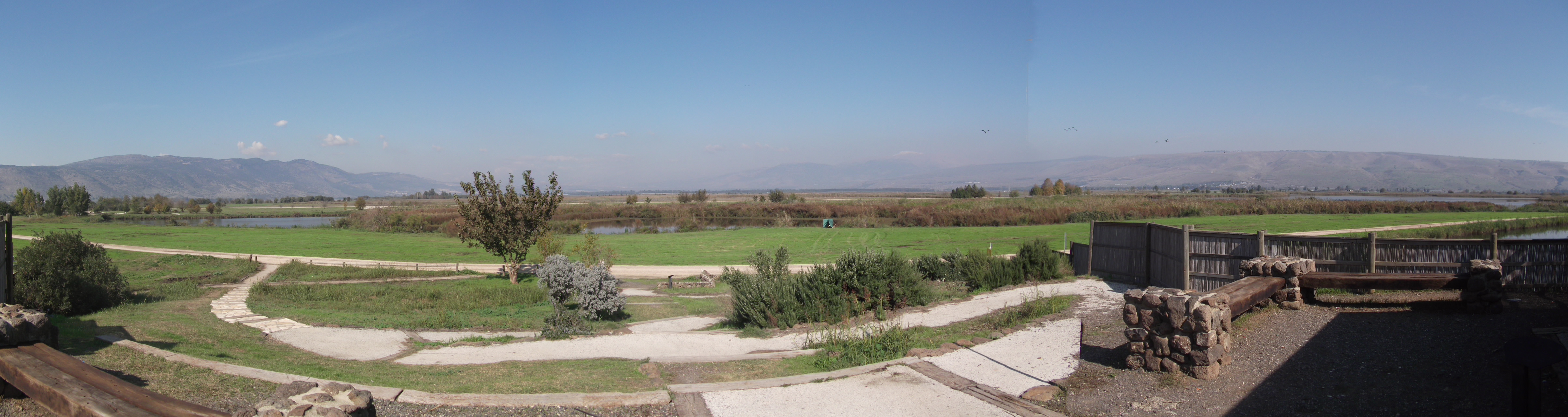
As I took pictures of the wildlife and the beautiful area in which they found their food and rest I couldn’t help but take panoramic pictures as well. Here are two panoramic photographs of the area taken outside the Crane Observatory:

Panorama looking South-West

Panorama looking North

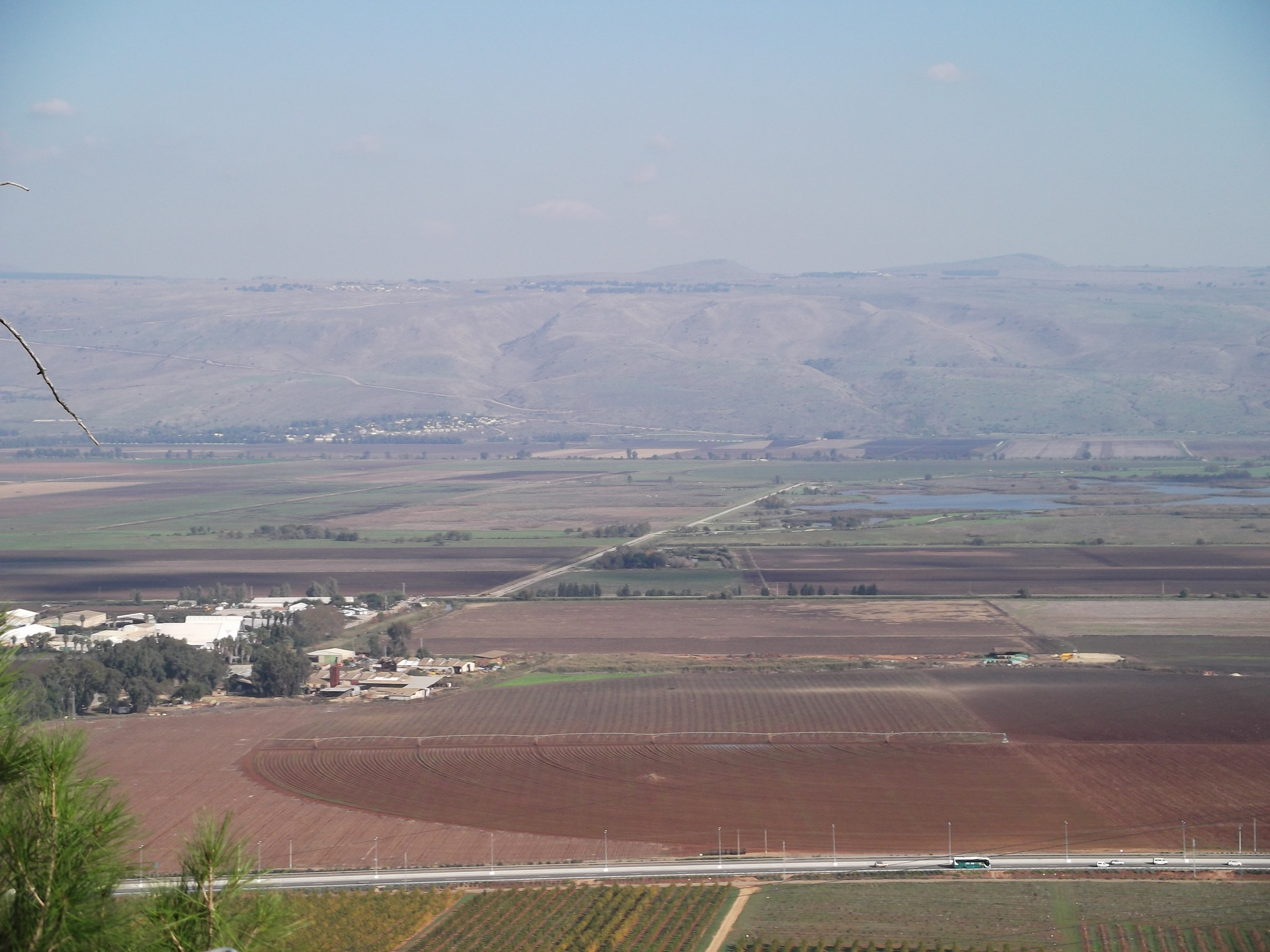
On the way home we drove up the Naftali Mountains. Midway up my father stopped the car and I snapped this photo of the Hula Valley from the open car window. The collection of buildings on the front left are some belonging to the Hula Lake/Agmon Lake nature preserve. The long white road is what we mainly walked on as we crossed the reserve. The dark strip and most of the green and brown just beyond the buildings belongs to the migrating cranes and of course, the lakes are Hula and Agmon. Beyond the lakes is the continuation of the Hula Valley proper and the mountains that form the lovely background are those of the Golan plateau.

Hula Valley from the road in the Naftali Mountains

With all that we’ve seen and done in the Hula Valley, we have only just touched upon the full experience. One day I hope to go back and stay for a night tour to watch the jungle cats and the owls hunt. One day… maybe next year.

Hecht Museum

In Haifa, Israel on November 20, 2011 at 7:56 PM

Last week I was in Haifa on Army business. Once I finished with what I needed to do at the Army office I had plenty of time to explore Haifa. My mother suggested that I go to the free Hecht Museum in Haifa University. I agreed and hopped on a bus that slowly meandered its way up Mount Carmel and into the University. I got off the bus and called the museum for precise directions. I eventually found it.

Hecht Museum entrance sign

Once inside I browsed around finding several different sections. The first I visited was one of archaeological finds of the many groups that settled both within the Land of Israel and the surrounding area. The Egyptians, the Phoenicians and the Canaanite tribes were heavily portrayed.

The area dedicated towards local archaelogy and the Egyptians

There was an area that blended into the times of King David and his son Solomon and their business dealings with the Phoenician city of Tyre. Tyre had a monopoly on a purple dye that they discovered and introduced to the world, keeping the “recipe” a secret. When King Solomon built the First Temple the Phoenician’s purple dyed wool was used. Here we see that the more base parts of human life were taken care of in this find from the City of David, Jerusalem:

Toilet found in the City of David

The museum also had extensive displays on hunting in “ancient” times and a site breakdown of a camp someone found on the banks of the Kinneret where a group of people hunted and fished and buried their dead. I was a little weirded out to see two coffins of dog skeletons in clay coffins… But at least it wasn’t a human on display. There was another section on the Conquest of the Galilee where the Jews were being forced into an area of Israel between modern-day Maalot (where I live) and just on the other side of the Kinneret. The Romans were slowly taking over the land irregardless of the bravery of Bar Kochba and his defence.

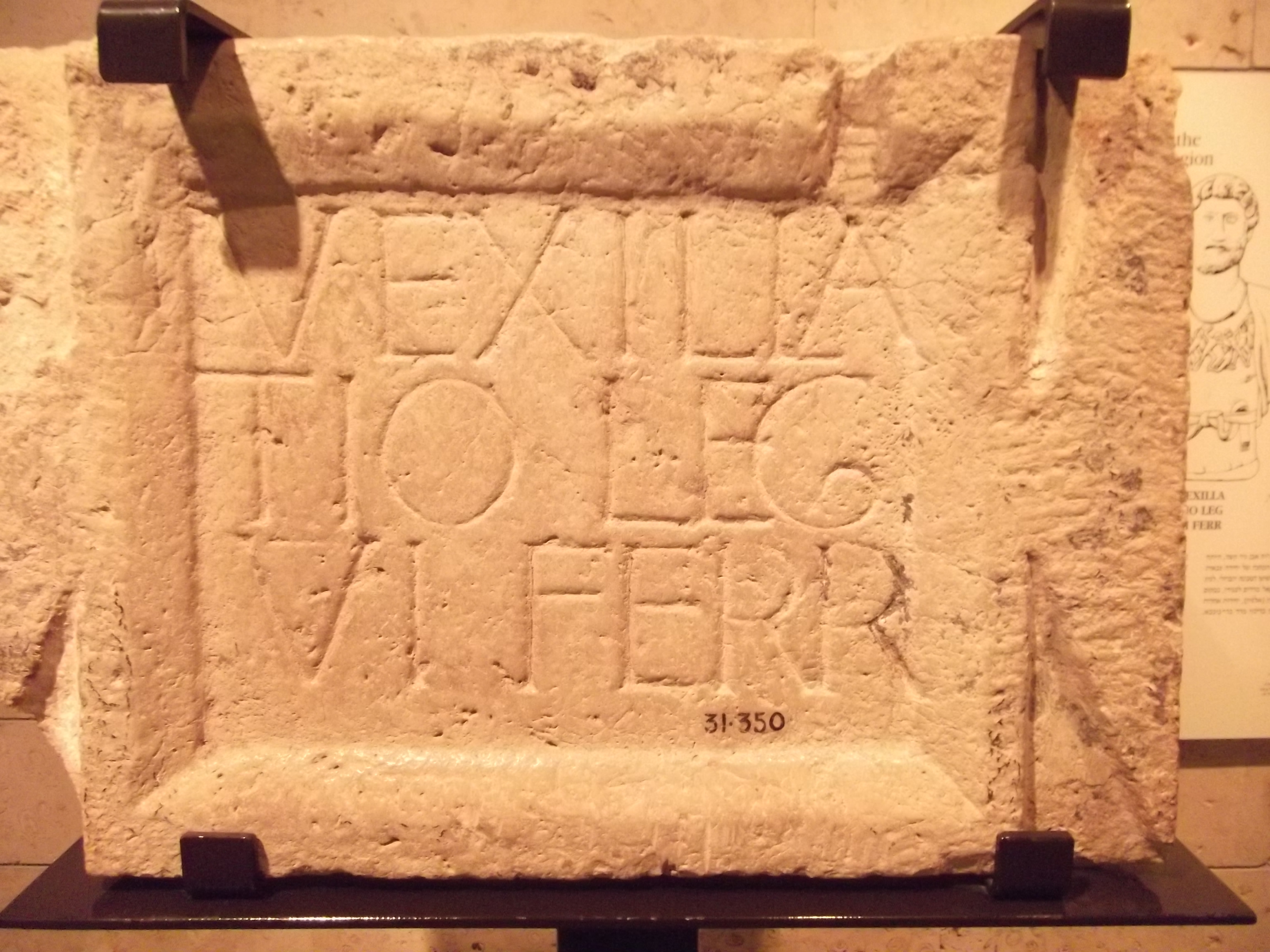
A stone marker that attests to the presence of the Roman 6th Legion

Remains of metal scale armour probably used by a Roman soldier

As the  Romans had a lot to do with Jerusalem’s history there were tons of Roman and Roman-inspired archeaological finds in the special Jerusalem section. But during the dark Roman era there was a glimmer of light — Herod and his rebuilding of the Temple. This was a chunk of a door or something that was carved specially for Herod’s Jerusalem:

Herodian chunk of carved stone

Near the Jerusalem section there were ancient toys, tools and instruments including gold leaf jewelry. This is a mirror made of copper that when polished well was used by the women of old:

Ancient copper mirror now crusted over

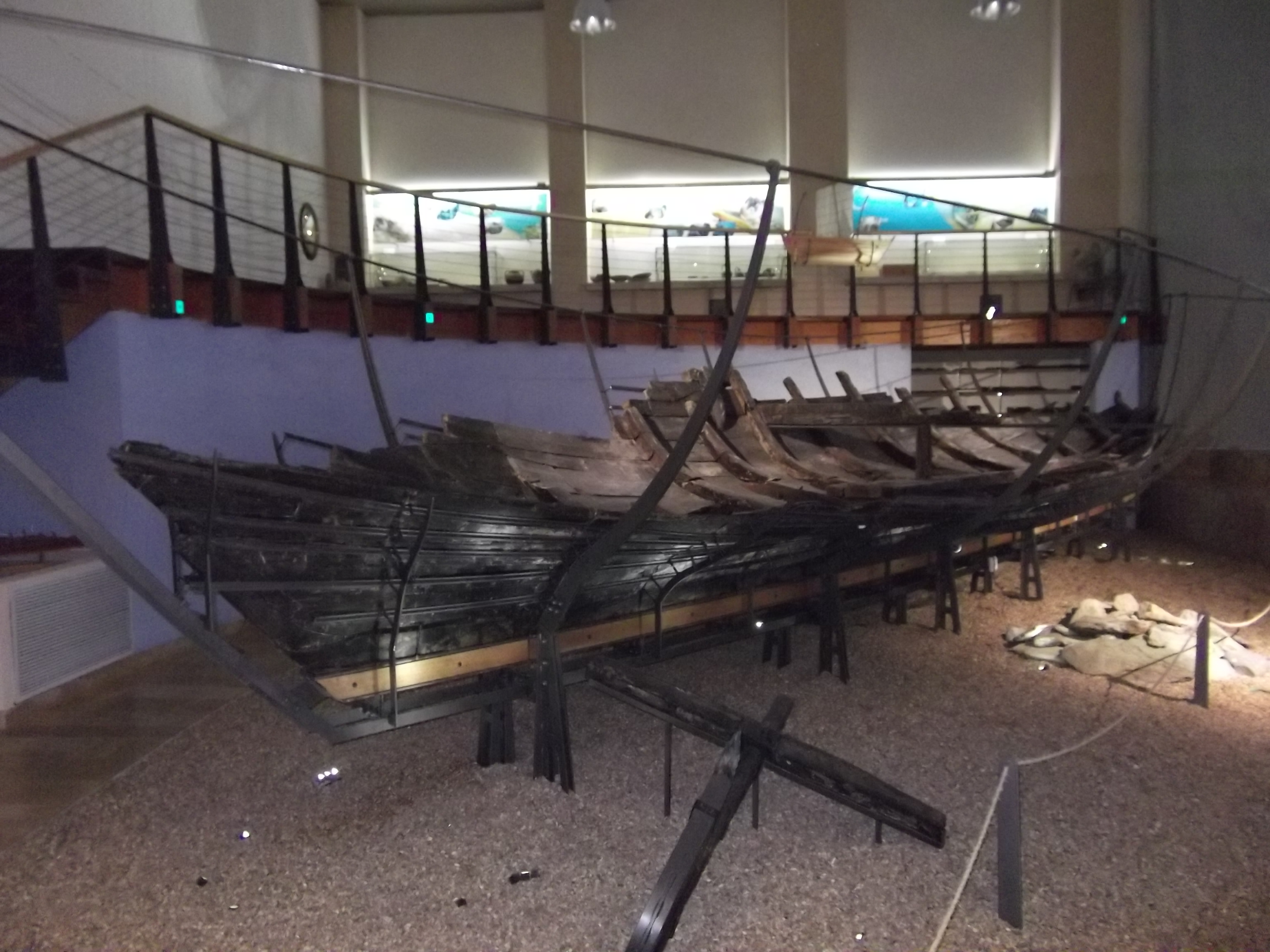
Through a doorway I found another, slighty different archeaological display. A Phoenician boat was found off the coast of Akko and resurfaced. The wood was preserved by layers of sand and the ballast stones that spilled out of the cargo. Very carefully the ancient ship was restored and rebuilt to the best they were able and now it sits high up on Mount Carmel looking out north towards what was once Phoenicia.

Phoenician boat skeleton

The museum also features an art gallery with a special section of art painted by artists who passed away in the Holocaust. All in all the museum was quite informative and best of all, it was free so feel free to go there too… http://mushecht.haifa.ac.il/Default_eng.asp

The Olive Harvest (Part 1)

In Galilee, Israel on November 10, 2011 at 7:57 PM

This time of year, the crisp autumn with the chilled nights and the cool yet sun-baked days, is an important time of year for anyone in the olive oil business. Last year I harvested a percentage of olives from the olive trees in our backyard. We had taken the olives to Peki’in, a nearby Druze village, and handed in our box of picked olives in return for some “homemade” olive oil pressed and bottled right there in the warehouse. This year I thought I’d step it up a bit and get even more olives. Here is the story.

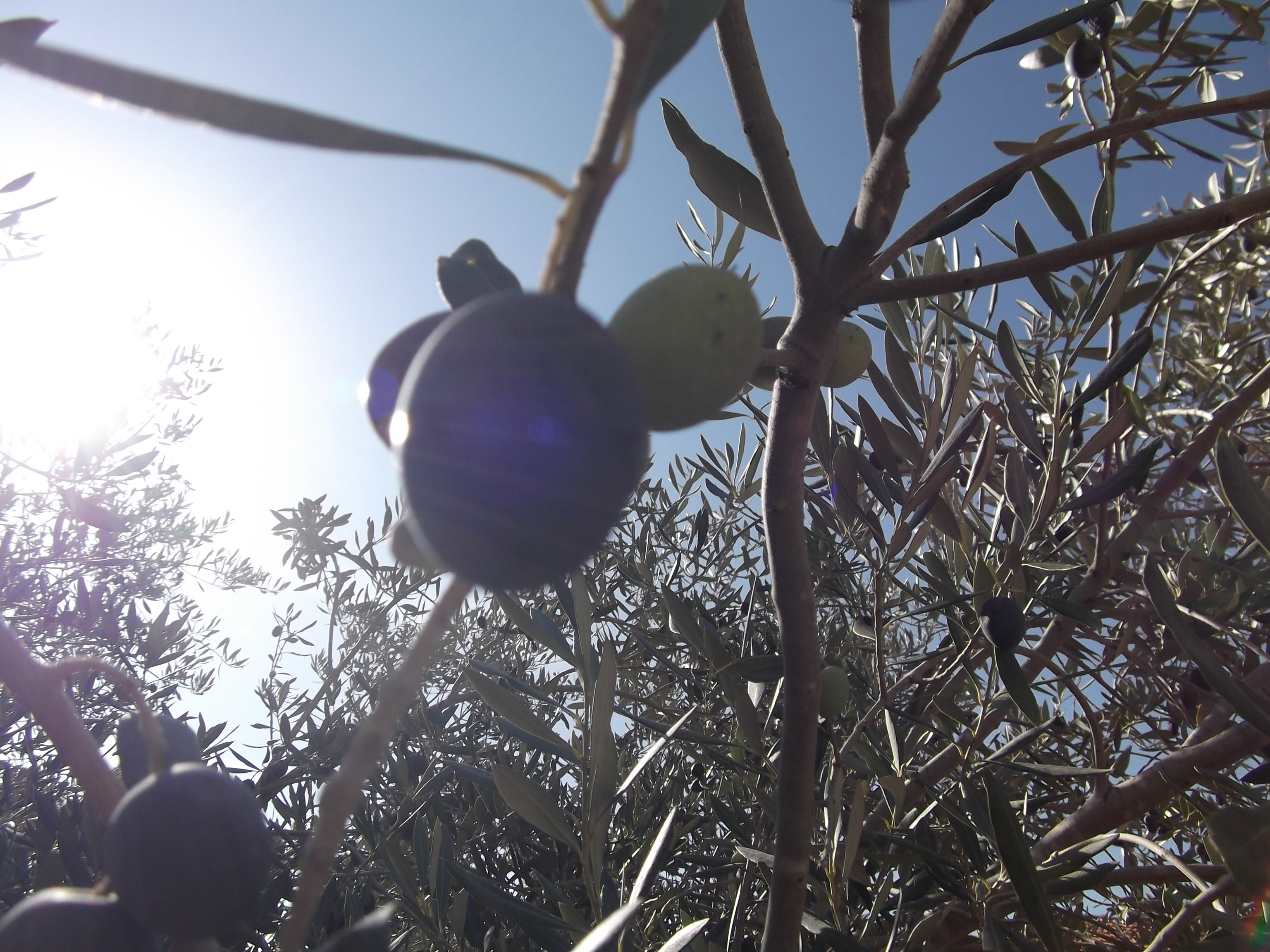
Olives... From the backyard!

In our backyard there are two olive trees of different varieties. One is of few leaves and has large olives easy to collect and after a bit of internet research I think it is the Barnea olive cultivar or the Souri olive cultivar. The other has tons of leaves and has tiny olives that host all sorts of insects and spiders, the exact cultivar I have not found online. The classic way to harvest olives, and the way the Arabs do here, is by spreading a sheet or tarp out under the tree and then beating the branches with sticks, knocking the olives to the ground. Once the olives are on the ground the sheet is gathered up and the olives are bagged or put into some sort of container. I tried the beating method last year and was not pleased. Having to sort through all the leaves, twigs, nasty wrinkled olives and the hundreds of spiders to gather the crop of olives was not a happy experience so this year I went really hands-on. Choosing primarily the tree with the large olives I browsed through the branches hand-picking the juicy olives. It is an enjoyable task and one devoid of spider bites… Usually.

Picking some olives

As soon as I have relieved the chosen tree of its fruit, hopefully in a few days, I shall take them down to Peki’in’s Druze olive press to get them pressed and made into olive oil. That will be Part 2 of The Olive Harvest.  Until then the olives high up on the treetop continue to bake in the sun even as I stand on the porch roof reaching out to pluck them and drop them into my bucket.

Olives baking in the Mediterranean sun

Time to head outside and continue picking!

Keshet Cave

In Galilee, Israel on October 16, 2011 at 6:54 PM

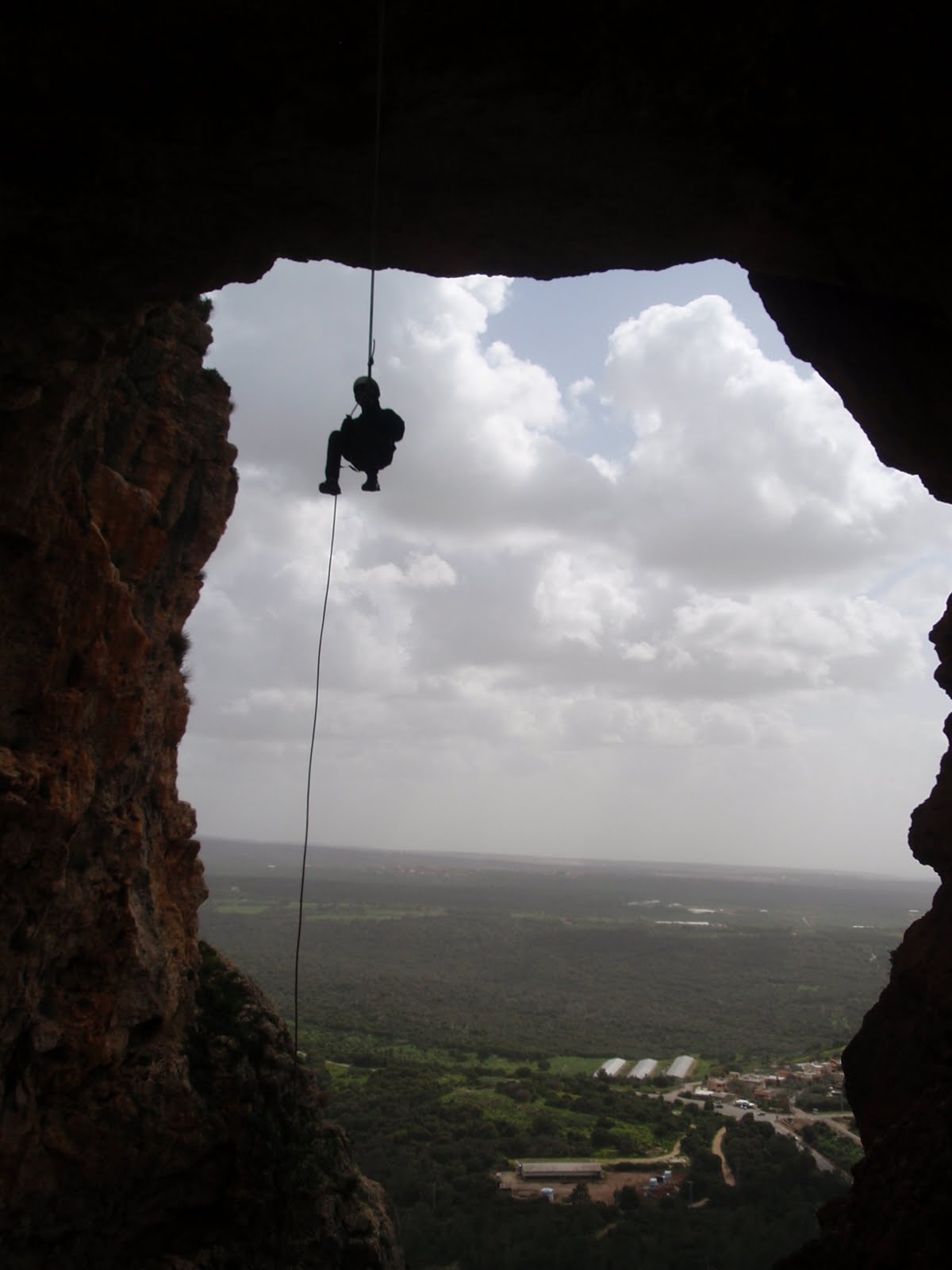
Today, the first real day to vacation on Chol HaMoed, we went to Keshet Cave, a unique shallow cave offset by a huge stone arch on the border with Lebanon. There were a surprising number of vacationing people there, teeming all over the rocks, jostling for space with the random herd of goats that meandered through, grazing leisurely. But, when we finally made it to the famous arch, this is what we saw:

The arch and the cave below it looking out over the low hills of the Western Galilee

An Israeli guy came about the same time as we did and began setting up to go rappelling off the arch. That was quite exciting until a tour group called “Extreme Israel” (or something like that) came and set up an even cooler rappelling site. The guide helped the eager teens into the web of ropes and carabiners and instructed them on the descent. As the small crowd watched the “daredevils” drop into the abyss, several spectators asked how much it would cost for them to participate in the rappelling. The price for a free-fall drop on the side of a mountain is 70 NIS, something I may have considered doing with friends.

Rappelling off the arch and into the cave

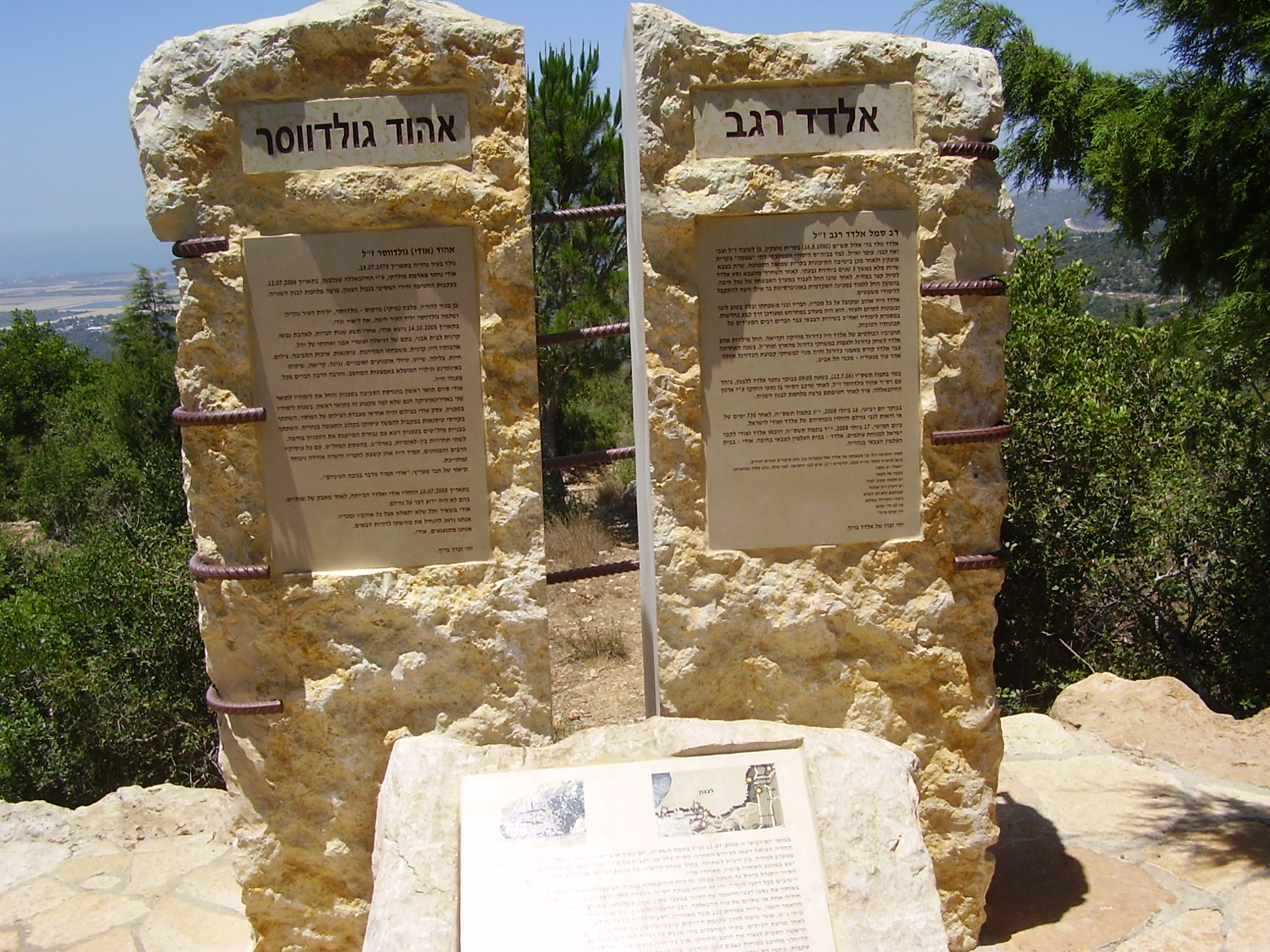
Once we’d seen enough of the xtreme sports we left the cliff edge and found a memorial for the kidnapped and slain soldiers Eldad Regev and Ehud Goldwasser who were captured by Hezbollah back in 2006 in the general area of the Keshet Cave. I have been to the kever (grave) of Ehud Goldwasser in Nahariya when going for the Yom HaZikaron tekes (ceremony) so now I have covered two of the bases of the history behind the tragedy.

The memorial of Eldad Regev and Ehud Goldwasser in the park

Hopefully Gilad Shalit will be returning soon.

Rosh HaShana

In Galilee, Israel on October 3, 2011 at 6:13 PM

This post is one that differs slightly from the norm. But, I hope everyone enjoys it nonetheless.

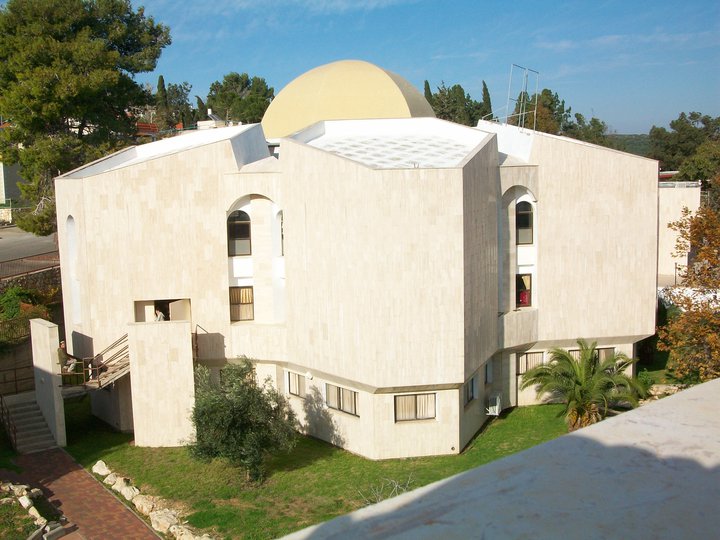
This past week and weekend contained the two days of Rosh HaShana (New Year) on Thursday and Friday and the subsequent Shabbat. During this stretch of holy days I prayed mostly at the Hesder Yeshiva of Ma’alot along with family and friends. The beauty of praying at the Yeshiva lie in the choices of so-called ethnic forms of prayer. Within the walls of the Yeshiva there were three choices; Ashkenazi (European with heavy German influences), Sephardi (Middle Eastern and North African) and Temani (Yemenite). I stuck to the Sephardi one but ventured into the room of the Yemenites to both bask in the ancient traditions brought straight from Yemen and to say “hi” to my Yemenite friends.

Yeshivat Hesder Ma'alot

What makes the Yemenite prayers so special is the unique pronunciation of the words as well as the traditional form of prayer which has been chanted out for thousands of years. To give a taste of how Yemenite pronunciation of the Hebrew words differs from the pronunciations of the Ashkenazi and Sephardi worlds here is a video that I found on YouTube of a 6 year old boy living in Israel who has learnt from his parents and teachers the traditional method of reading Hebrew: http://www.youtube.com/watch?v=PUz_7vvs4Ew

The sounds of the Yemenite pronunciation is only made better when the one reading it is a hardcore Yemenite. There was one member of the congregation who was dressed in clothing of yesteryear, remarkably similar to the dress of this Yemenite Jew from the late 1800s, mini-turban and all.

Yemenite Jew from the late 1800s

The most vocal of all the members has already been mentioned in my blog in the “An Israeli Wedding” post. He is the soldier in fatigues dancing “The Special Yemenite Dance” (as can be seen here: https://israelsgoodname.wordpress.com/2011/08/17/an-israeli-wedding/ ). Just recently he also moved into the house next to ours making us neighbours as well.

Here are some more YouTube videos of the unique Yemenite tongue:

Religious school in Yemen:

Yemenite chazan (cantor) reading prayers: http://www.youtube.com/watch?v=3fPoA-vQLbs

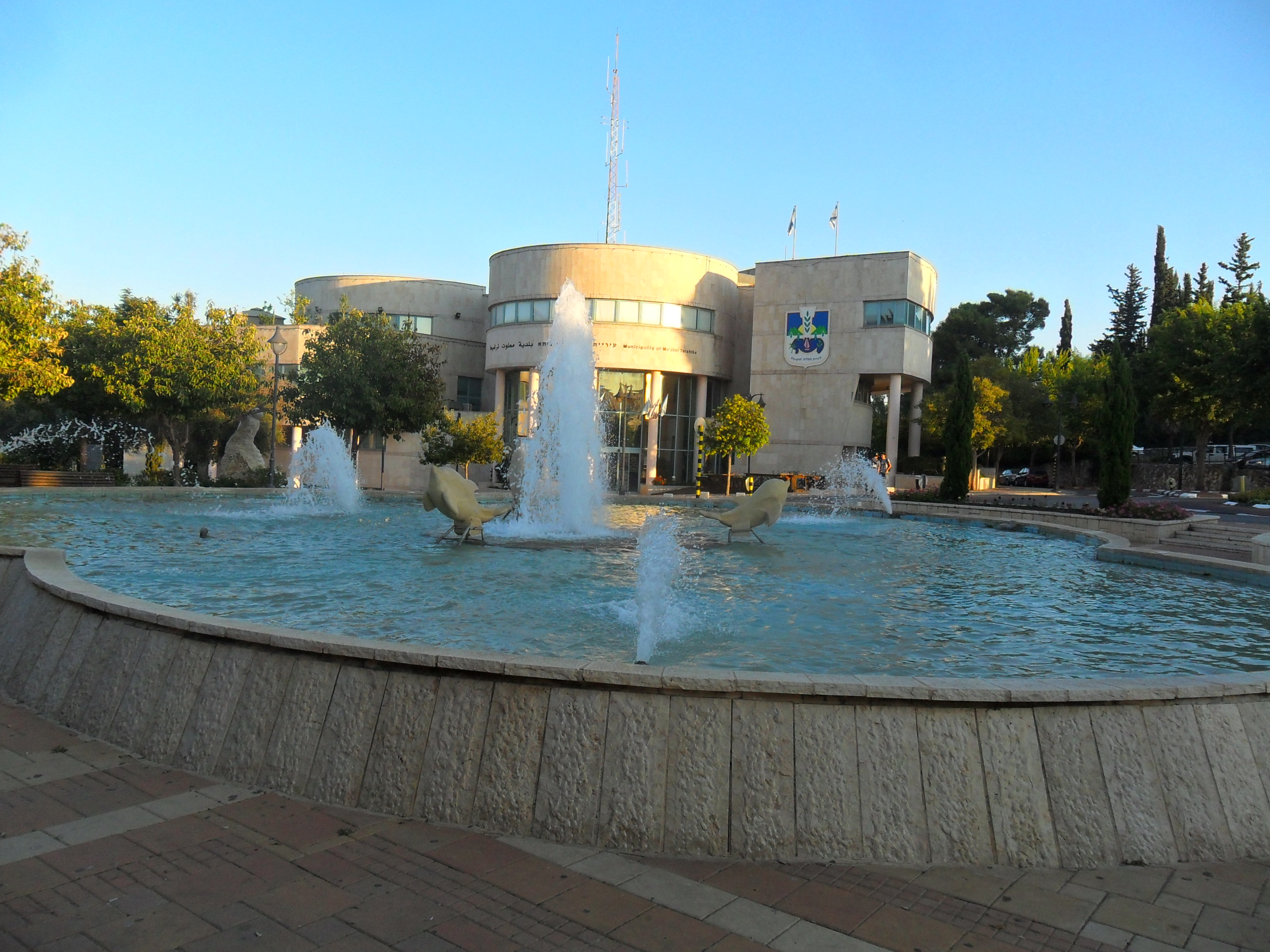
Now, not only was my holiday made special by the Yemenites whom I fraternised with I was also fortunate to stumble upon a local Ma’alot tradition of doing tashlich by the fountain across from the Iriya (City Hall). Tashlich is, for lack of better words, a symbolic approach to ridding oneself of sins by casting them into the water. Usually, or preferably, done on Rosh HaShana itself the residents of Ma’alot who live within walking distance sojourn together to meet in a large crowd to cast sins into the cascading waters. In the two years I have lived here I had not known of this event and just happened to go there while walking and talking with friends. Hidden gems, I say.

The fountain by the Iriya

On a side note, the dolphins in the centre of the fountain are none other than results of the Ma’alot Stone in the Galilee Symposium which I have wrote about before (see https://israelsgoodname.wordpress.com/2011/09/11/maalots-stone-in-the-galilee-symposium-archive/ and from TouristIsrael who published a slightly edited version of my blog post http://www.touristisrael.com/stone-in-the-galilee-at-lake-montfort-maalot/2422/)

Ma’alot’s Stone in the Galilee Symposium (ARCHIVE)

In Galilee, Israel on September 11, 2011 at 5:18 PM

Every year Pesach time Ma’alot hosts the renowned Stone in the Galilee Symposium at the Lake Monfort. An event capturing the attention of sculptors the world over, the Stone in the Galilee Symposium has been an active part in the Israeli activities calender since 1992. Not only do sculptors vie for the first place award, they also compete to have their work of art placed in the most prestigious parts of the city. After the event the sculptures are placed throughout Ma’alot, along the boulevards and walking paths as well as adorning the numerous kikars (traffic circles) and fountains. This past event, Pesach of 2011, is the feature of this post.

Tanya Preminger's "Sky and Earth" 2008

For a few weeks the ten or so selected contestants hammer, saw, chisel and sand the huge blocks of stone given to them at the start of the contest. Every year there is a different theme and the artists shape the stone to something that they see fit with the theme of the year. Often the artist will employ other materials to add to the sculture such as rusted metal, tile bits and other stone in order to create their masterpiece.

Roy Givati's sketches (Photo: Ayelet Dekel)

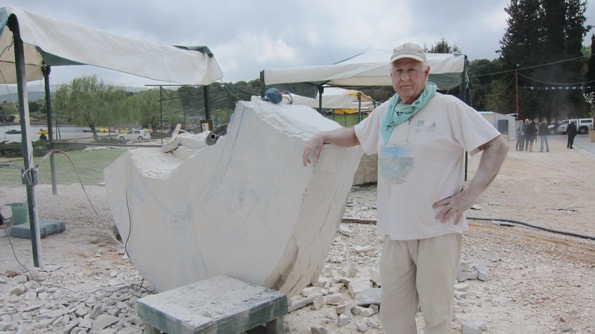
Many of the artists come from overseas and stay nearby in order to participate in the event that ends with public viewings and the votes from the artistic judging commitee responsible for the awards and placements throughout the city. During the few days of Chol HaMoed the sculptors are nearly finished with their work and the myriads of tourists, locals, friends and family members come to inspect and admire the works in progress. Additionally, surrounding the lake there are kiosks and activity booths for the visitors to engage themselves in as well as boating on the lake. In a similar theme to the professional sculpting, several soapstone and pumice carving stations where children (and adults) can make their own necklaces or mini-sculptures to bring home.

Even Pele soapstone necklace activity

Here are some of the sculptors and their works of art from this past symposium:

Jamal Hassan with "Waltz Dance" (Photo: Ayelet Dekel)

Igal Miron with "Swing" - the smooth side (Photo: Ayelet Dekel)

Every contestant hopes to have the sculpture that is to be placed opposite the City Hall in the center of a large fountain. This past year a trio of dolphins were erected in the fountain, a truly fit piece with the jets of water shooting up into the mountain air and splashing back down among the dolphins. Here is another sculpture that currently resides along one of the main roads in Ma’alot.

Random sculpture along the road

Another six months until next event so here are some conditions and criteria for the 2006 Symposium: http://www.maltar.org.il/even15eng/news/conditions.htm

For further reading please visit the wonderful blog post of Midnight East: http://www.midnighteast.com/mag/?p=11730