Israel's Good Name

Archive for the ‘Negev’ Category

Ben Gurion: Life and Death

In Israel, Negev on December 3, 2013 at 8:59 AM

Last week I spent a few days in the desert down south, driving my army truck around and going on adventures in my spare time. One day I was fortunate enough to have many, many hours of spare time and visited numerous interesting sites, among them two national parks. The first stop was Sde Boker, the little Negev kibbutz where David Ben Gurion – Israel’s first Prime Minister – staked his claim and settled down.
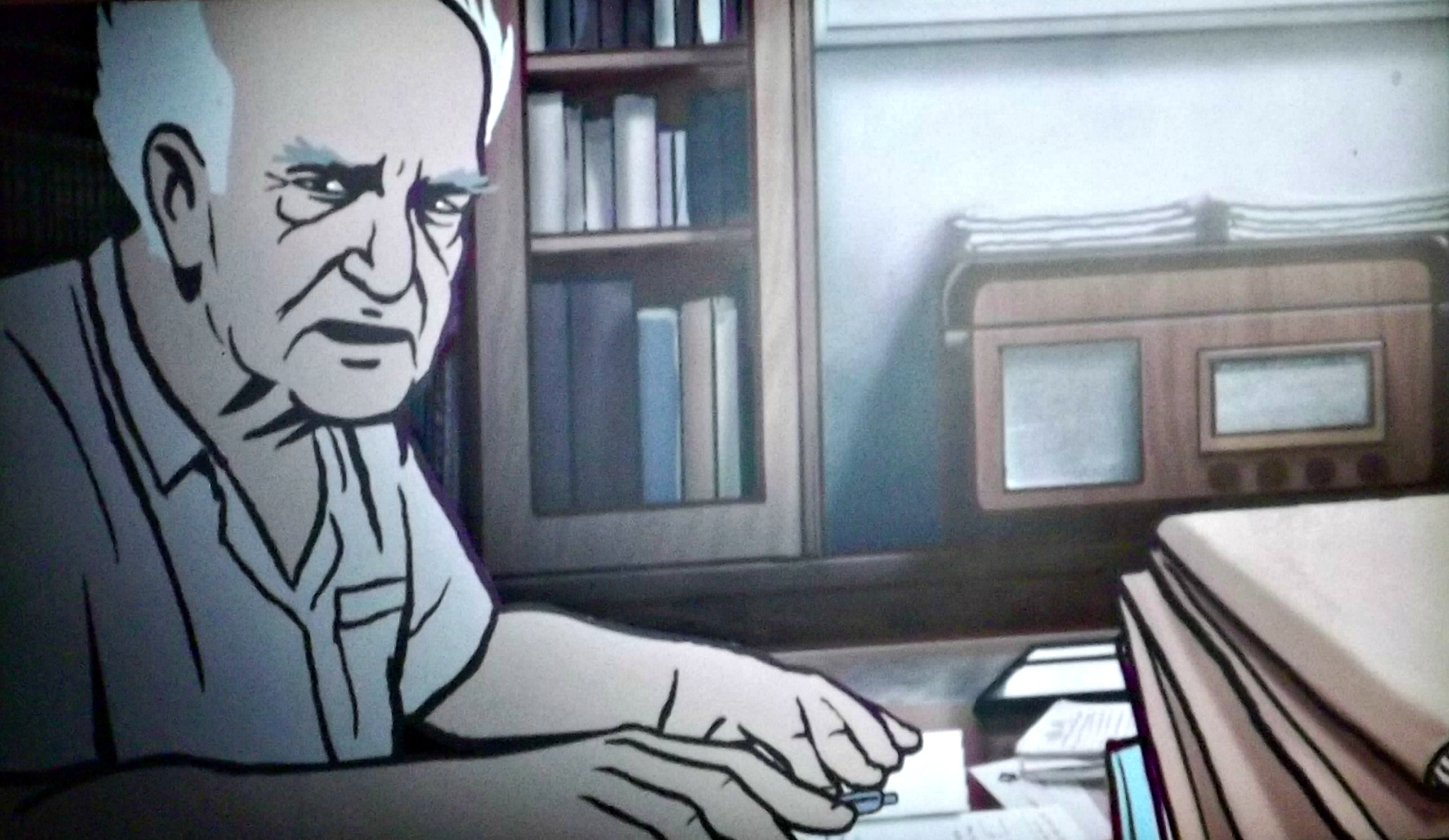
Animated David Ben Gurion

Animated David Ben Gurion

I parked outside the kibbutz and walked over to the historical site, Ben Gurion’s little house. Within the property, belonging to the kibbutz, I found a winery store and then various huts leading up to the front office. In two of these huts I found screens, and attempted to watch the animated film depicting David Ben Gurion’s life but, alas! the computer shut down mid-screening and so I temporarily abandoned the video presentations. Composed of superb animation, which reminded me of the “The Adventures of Tintin” TV show, and a richly accented English voice, I really enjoyed the video (screenshot above).
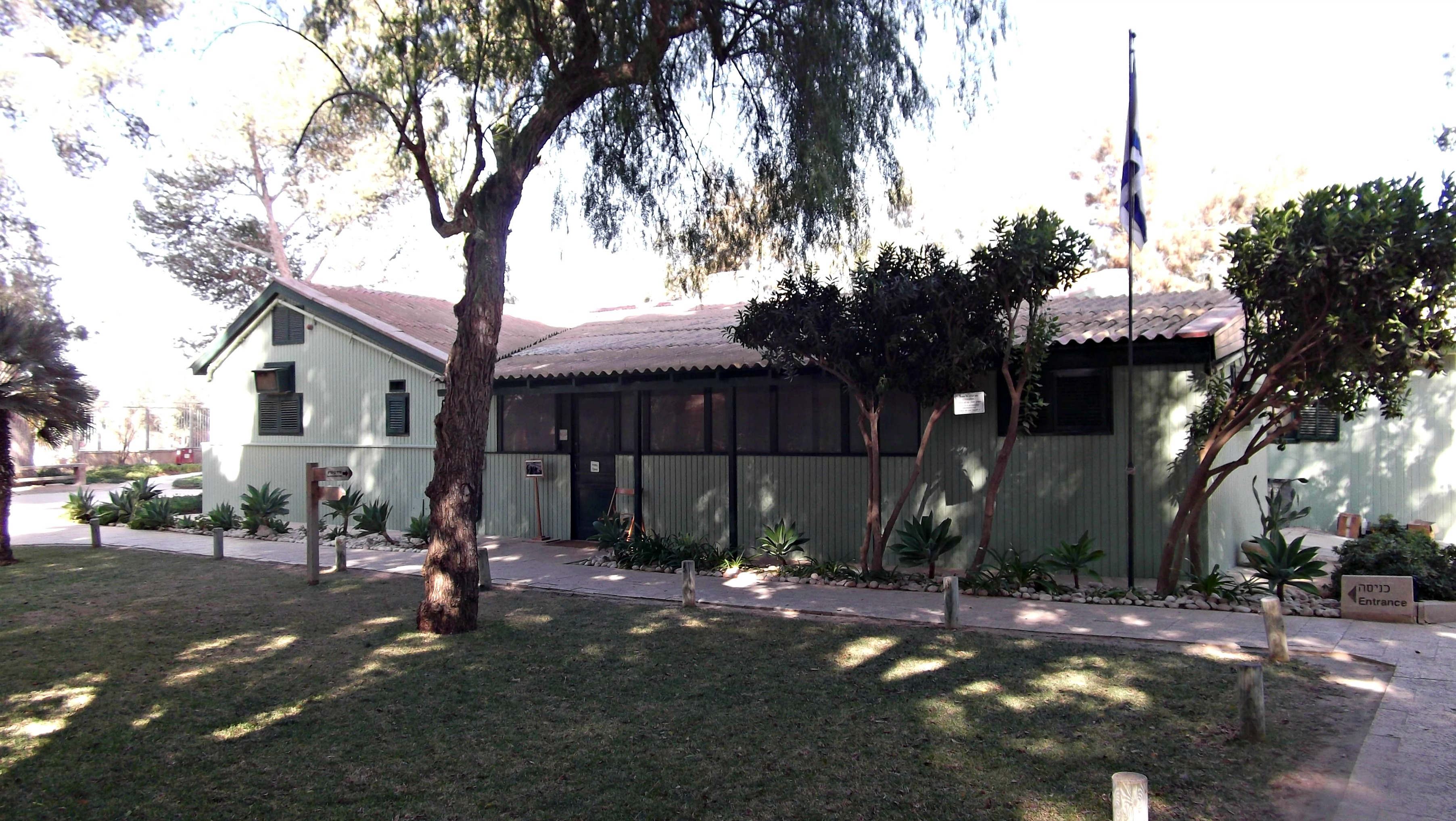
The Ben Gurion residence

The Ben Gurion residence

A brief synopsis on a pretty influential life, David Ben Gurion (originally David Grün) – often referred to as the “founding father of Israel” – was born in Poland (Czarist Russia) in 1886 and immigrated to the Holy Land in 1906 where he began working on settlements. By 1915 Ben Gurion was expelled by the reigning Ottoman Empire and made his way to the United States, there further aligning himself with Zionism. In 1918 he enlisted in the British Army’s Jewish Legion and returned to the Holy Land. In 1935 he was elected Chairman of the Jewish Agency and on May 14, 1948 announced the establishment of the State of Israel. Becoming the fledgling country’s first Prime Minister, Ben Gurion switched between politics and living quietly on Kibbutz Sde Boker, in the above house.
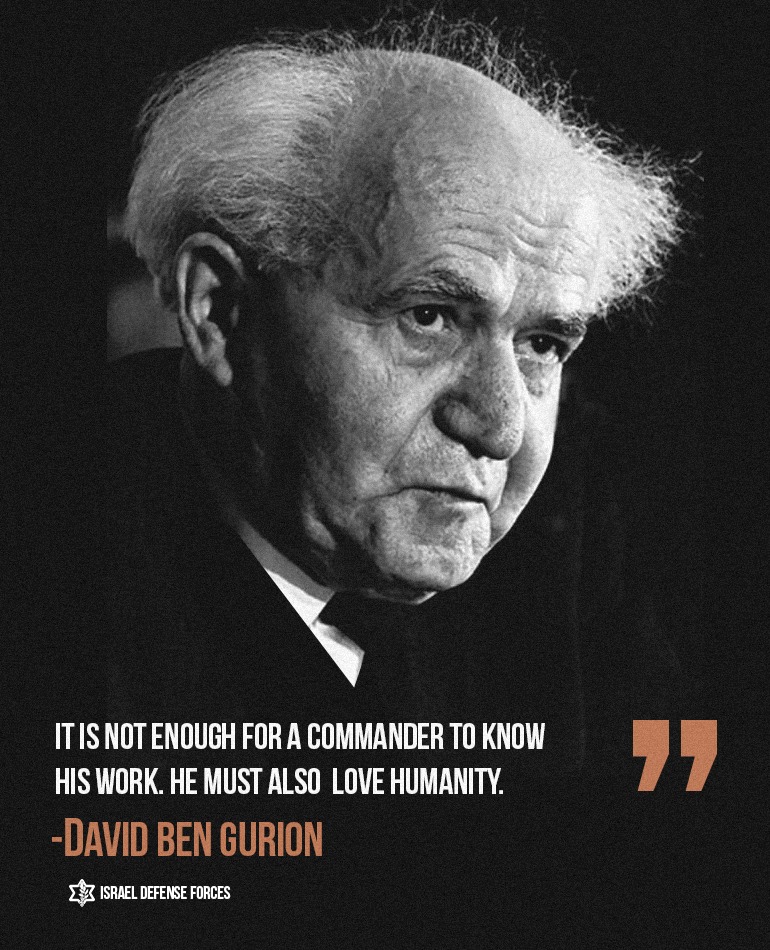
David Ben Gurion and quote

David Ben Gurion and quote

I entered the little green wooden house – left exactly as it was back then – and looked around, starting with the living room. An informational plaque on the wall explained the identity, and sometimes origin, of the various items and knick-knacks placed throughout the little room. I felt like I was in an Israeli version of Greenfield Village.
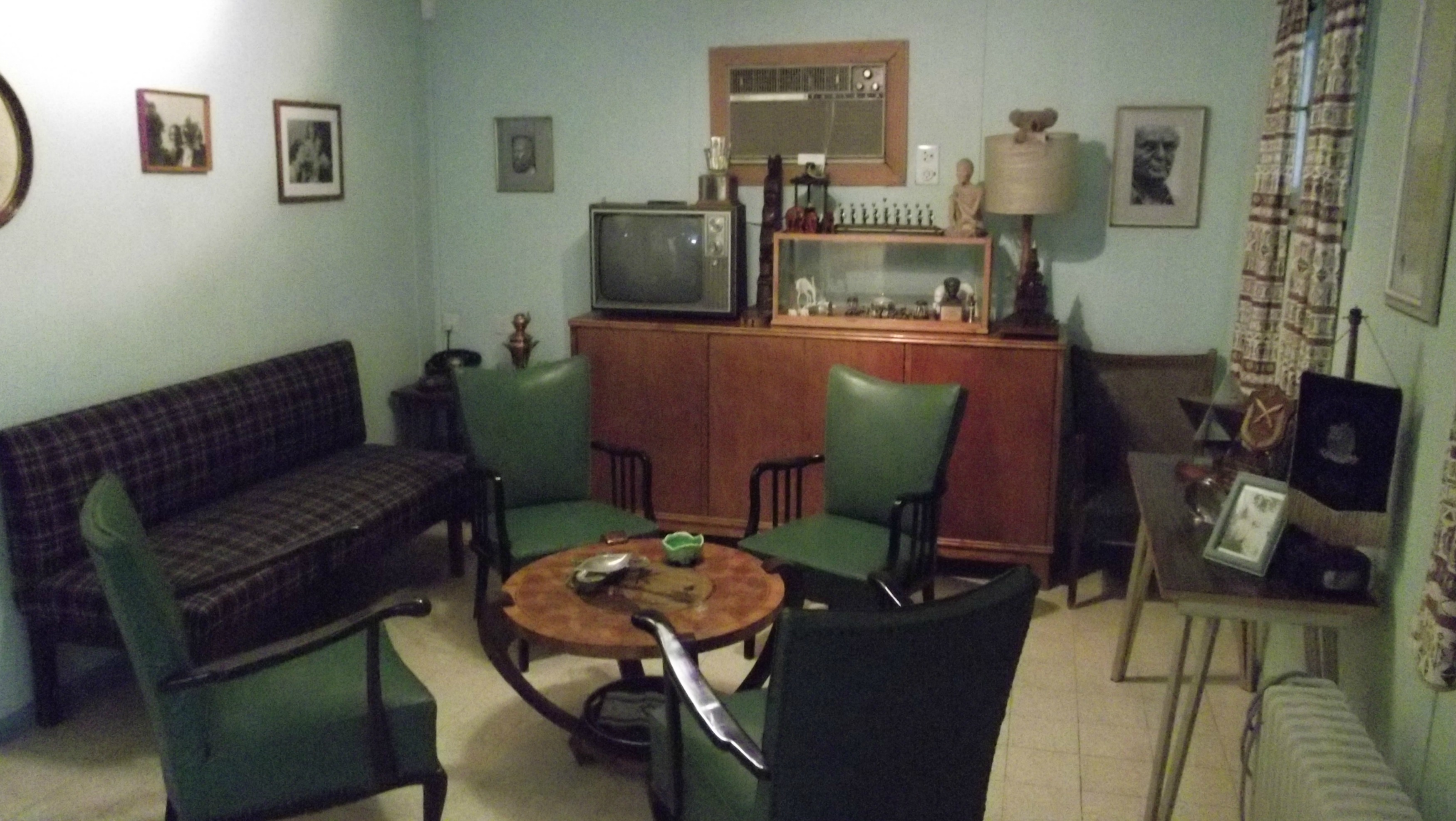
The Ben Gurion living room

The Ben Gurion living room

After inspecting the living room, bedrooms, library, kitchen, bathroom and outside yard of the Ben Gurion residence I met up with a docent, likely a member of the kibbutz. He insisted on returning my entrance fee, seeing that I came alone and I behaved myself so nicely. Despite my persistent refusal he managed to slip the coins into my pocket and so I gave up and then asked him for advice. Being a local, this man instructed me on where to go next – Ben Gurion’s burial place at Midreshet Ben Gurion. His instructions were good and sound, and I slipped my truck into a great parking spot at the national park’s entrance:
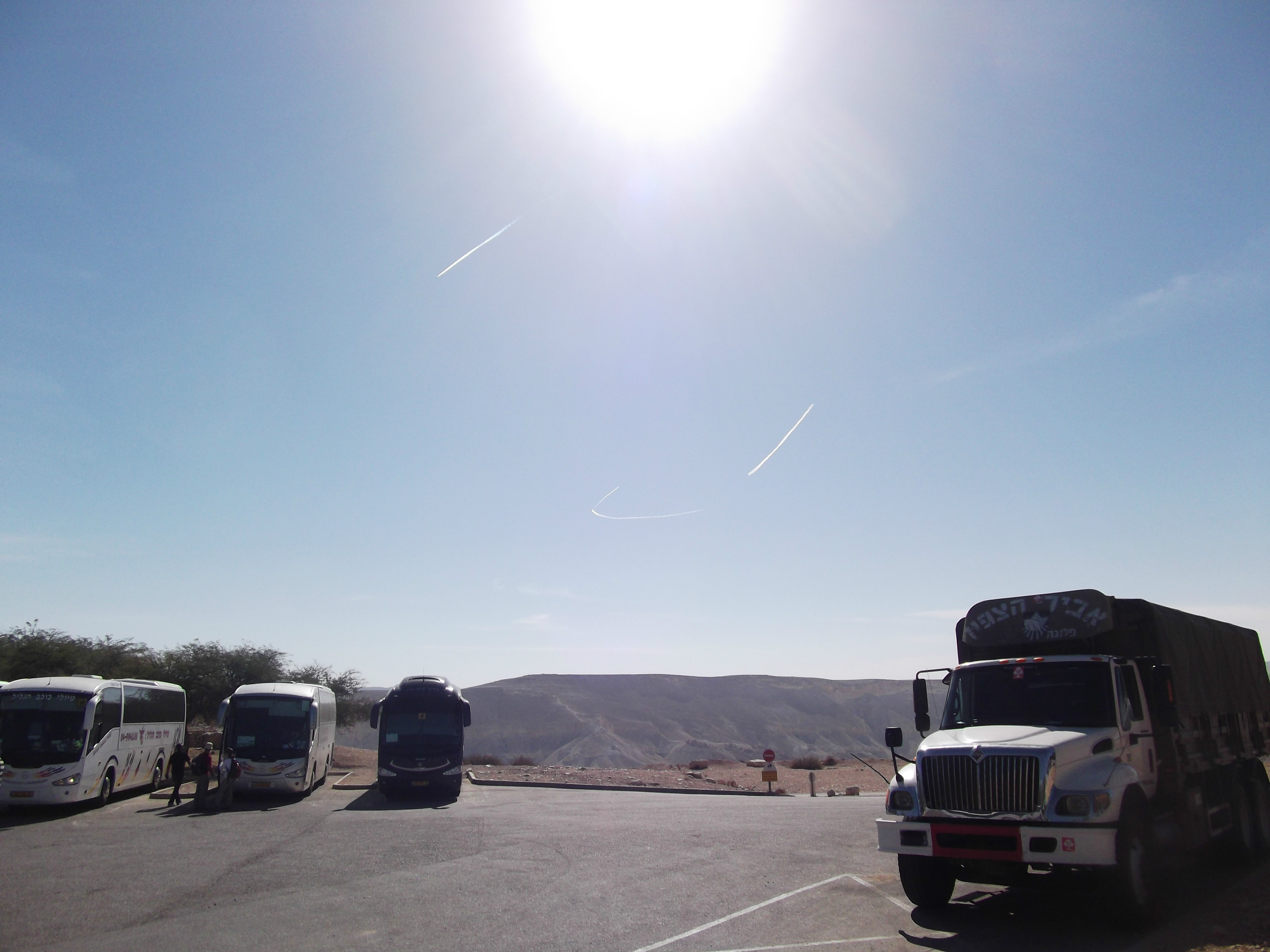
Parked truck

Parked truck

I walked through the well-designed park path and made my way to the burial spot, where my guide back in Sde Boker told me that I would see one of the best views in the Negev. Entering the plaza, I did see an incredible view – one that could easily pass for an alien planet:
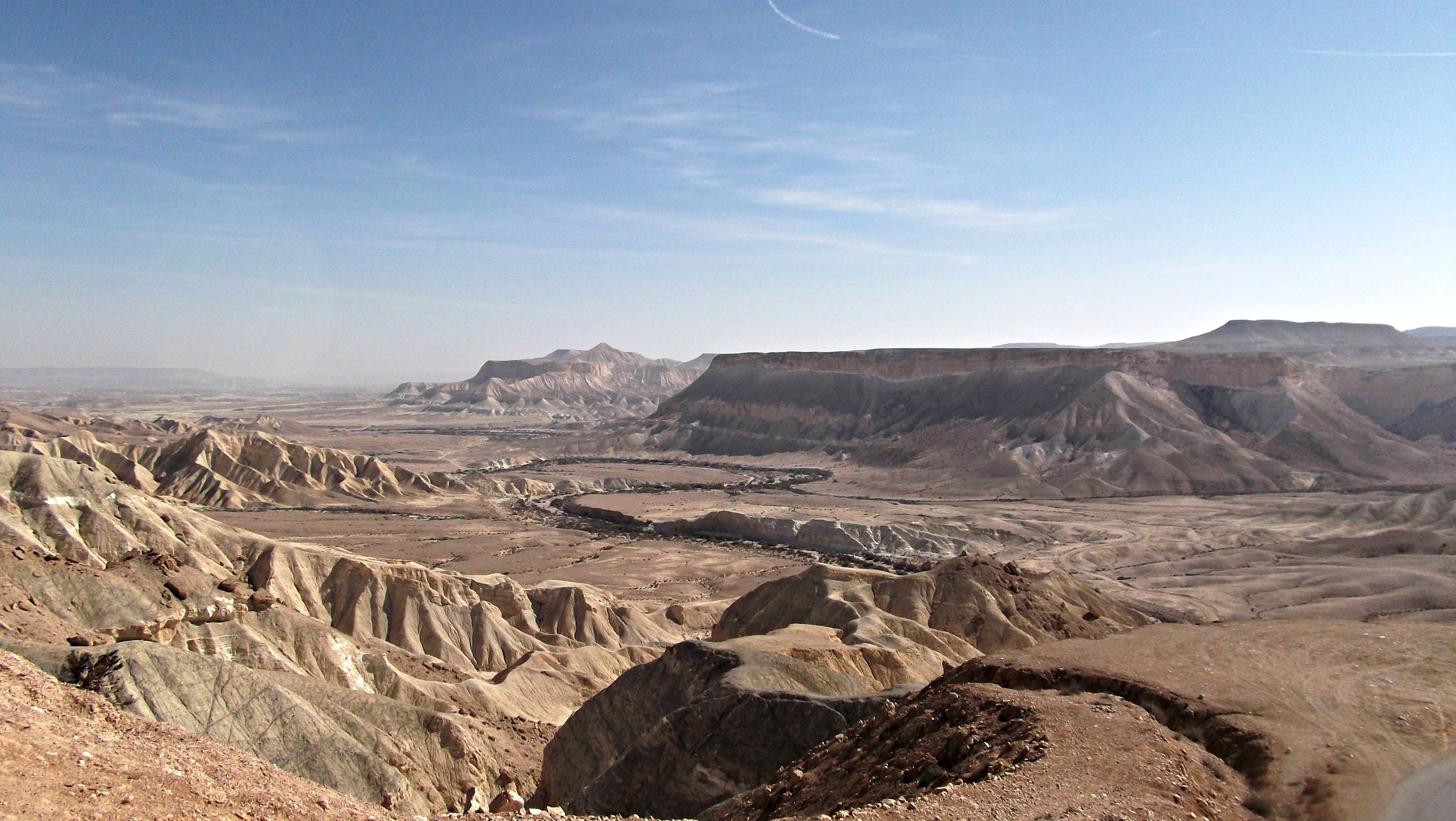
View from the plaza

View from the plaza

And here is a panoramic which includes a wider shot of the intense desert view and the windy road heading down to Ein Avdat, another national park:
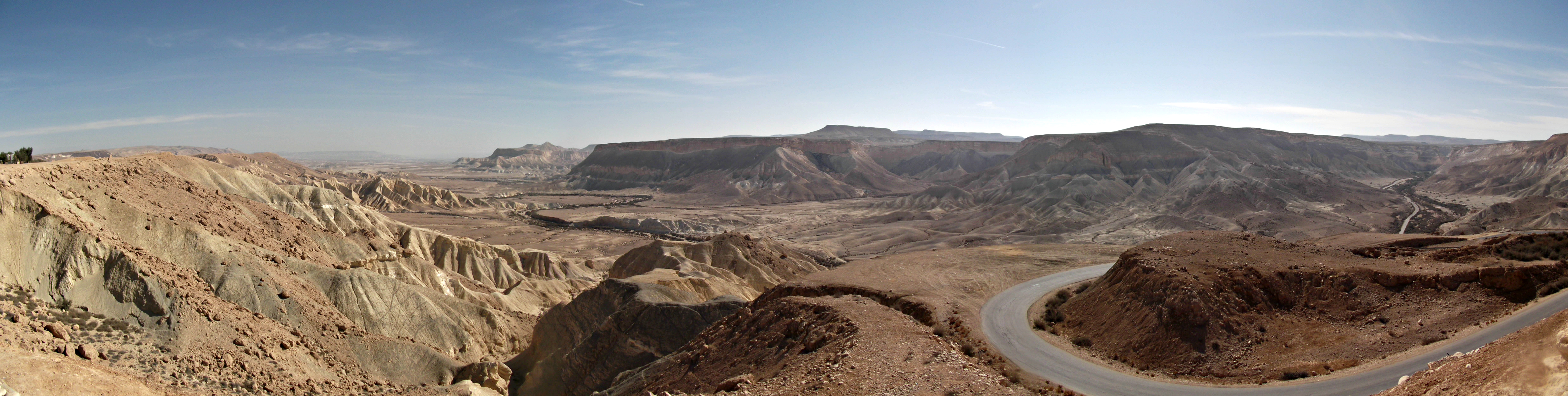
Panoramic view

Panoramic view

I stood and photographed for a while and then began to look around. I noticed that an army unit was getting an official tour and asked them which unit they were. The answer: “Oketz“, the IDF elite canine unit. Cool. Next. two IAF fighter jets did a screaming flyby, passing not too far over our heads and definitely capturing our attention. On their return trip, heading back to the wilderness, I tried capturing them on camera but it came out blurred.
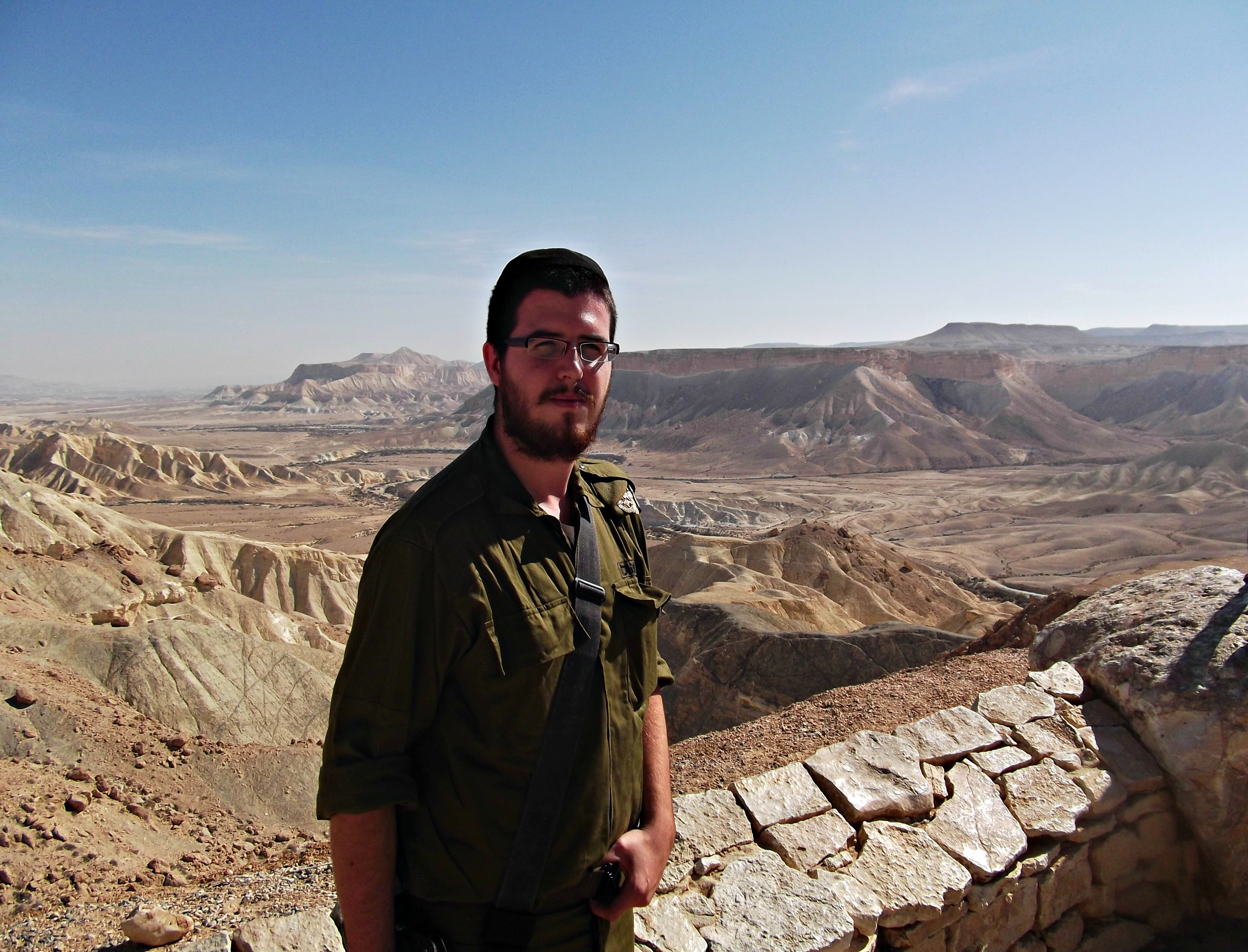
The casual tourist

The casual tourist

David Ben Gurion died in 1973, immediately after the Yom Kippur War, and was buried with minimal fanfare and no eulogies (as requested). Here is David Ben Gurion’s gravestone, looking out over the Negev which he so loved, resting alongside his wife who passed away back in 1968:
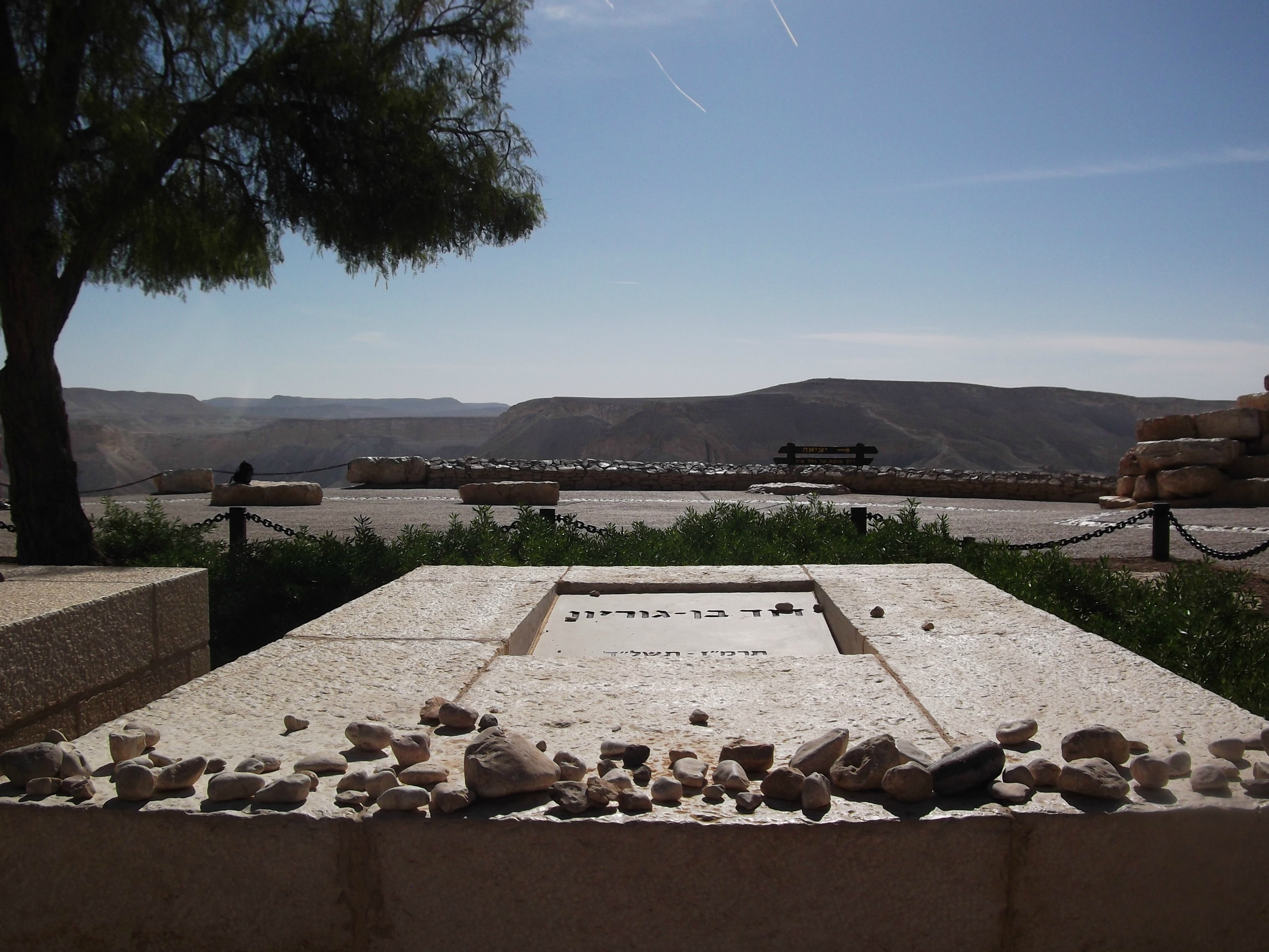
David Ben Gurion's grave

David Ben Gurion’s grave

As I headed back down the pleasant stone and shrubbery walkway, lined with trees, I stopped and became aware of a presence. Glancing to my right I started, for I saw an ibex watching me. I’ve never come across an ibex in the “wild” and was a tad on the startled side. But then I came to my senses and began to use my camera, capturing the friendly beast for you to see – the Nubian ibex:
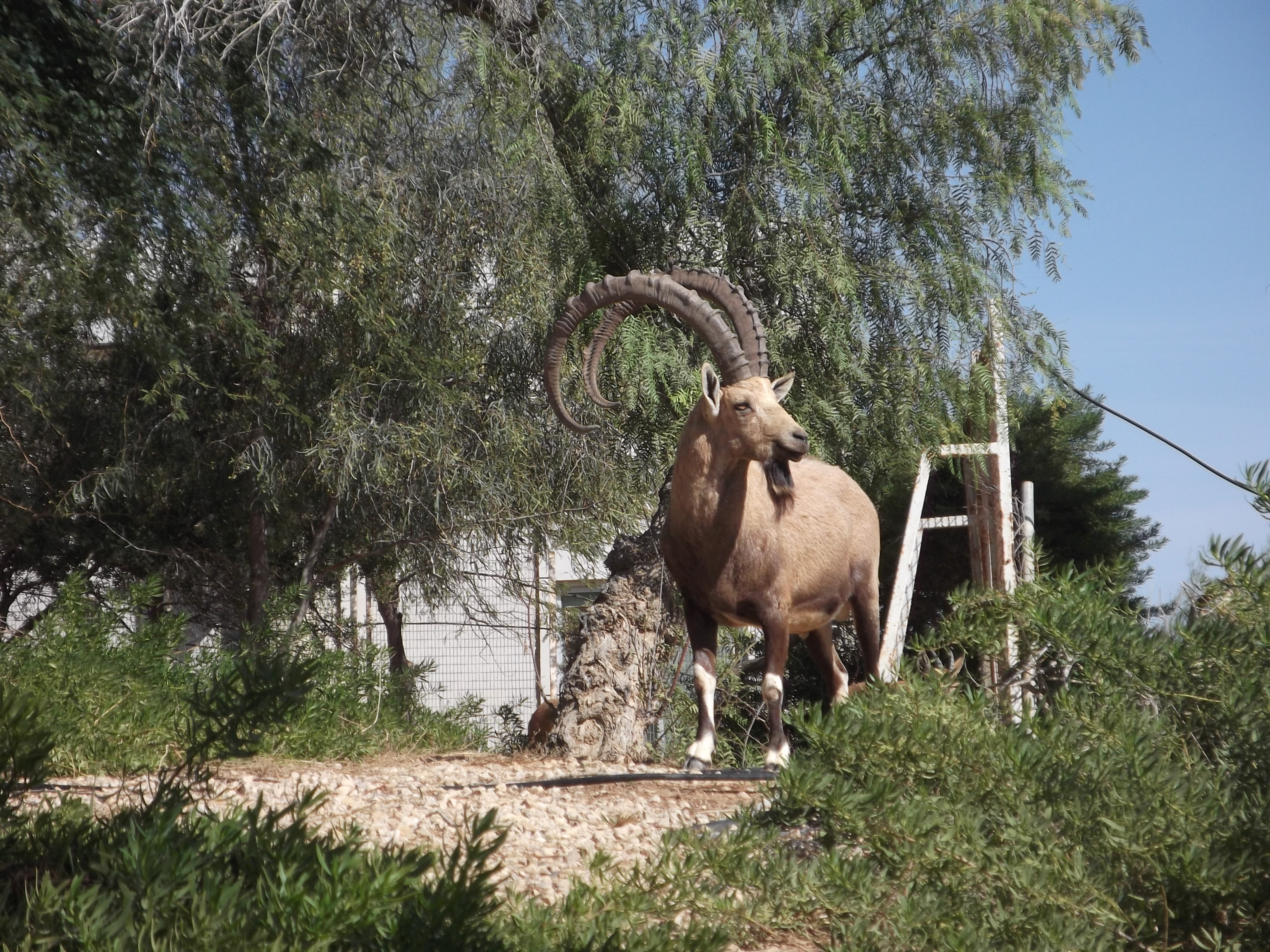
An ibex

An ibex

As I left the park, headed for my next destination – the national park Avdat – I took this photo of this pleasant green area, a break in the yellowish tan of the Negev desert:

Midreshet Ben Gurion

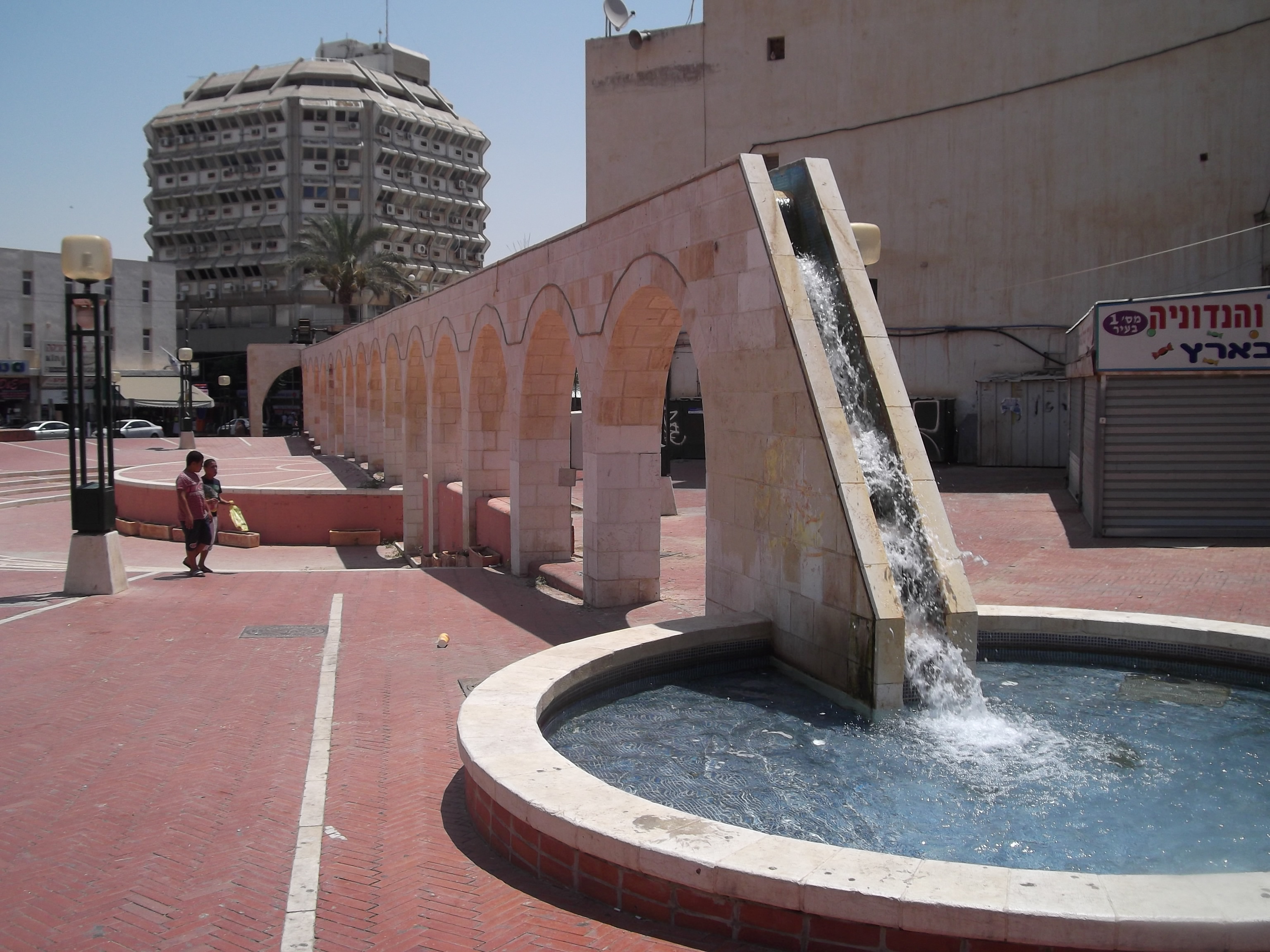
Midreshet Ben Gurion

Be’er Sheva

In Israel, Negev on August 1, 2012 at 7:03 AM

Today, the second day of my much anticipated trip, I headed way down south to the Negev city of Be’er Sheva. Having never been further south than Bet Shemesh, this was a true change is climate and landscape. When I got off the train and met my friend Ofir, who was my local guide for the day, I couldn’t help but notice the extreme dry heat that gusted from every direction like an oven. Outside, we passed by Bedouins, native of the Negev, who dressed very differently than the Muslim, Christian and Druze Arabs that I see all the time in the north. Sadly, I didn’t get any photographs of them. But I did get a picture of this street that, to me, was marvellously reminiscent of Miami – but in the old Turkish town area known as the Old City:

Street in the Old City of Be’er Sheva

As we walked through the Old City, the crumbling Ottoman-era stone walls visible on nearly every corner, Ofir pointed out all the places of interest, including this – water in the desert:

Running water in the desert city – the marvels of ancient engineering

After a little while spent roaming the streets in the blazing sun, with temperatures clearly surpassing 100° Fahrenheit, we ducked into a little café by the name of Lola where I ordered an iced coffee. It was fun because I never, ever, go to coffee-houses. Shortly after our coffee break we headed back outside and found ourselves in front of Beit Ha-Ful, a restaurant. Both of us hungry, we went on in and Ofir promised to get me this special food – I wasn’t quite sure what he intended at the time. The man behind the counter did some deft scooping and arranging-within-the-pita movements and then surfaced, asking me if I wanted lemon and charif (spicy – a generic term for something paste-like, spicy and made from peppers). He spooned in a little salt, much to my curiousity, and then added the lemon and charif. Next, to further propel my confusion and curiousity, he mashed up everything inside my pita. Then he asked if I wanted salads in my sandwich as well – I chose some chopped cucumber (somewhere along the line hummus was added in too). I took my completed sandwich from the man, waited for Ofir to get his and then took our mysterious culinary loot to our table. I examined my pita, noting the contents, and took a bite. What I was eating was beans and hard-boiled egg that had been mashed into one lovely, smooth, lemon-y and spicy entity. Here is what it looked like before I started eating:

Ful in a pita at Beit Ha-Ful

If you think this sounds kinda gross… trust me, it is remarkably tasty. Here my sandwich is again, in an advanced stage of its short life:

Partly devoured ful in a pita

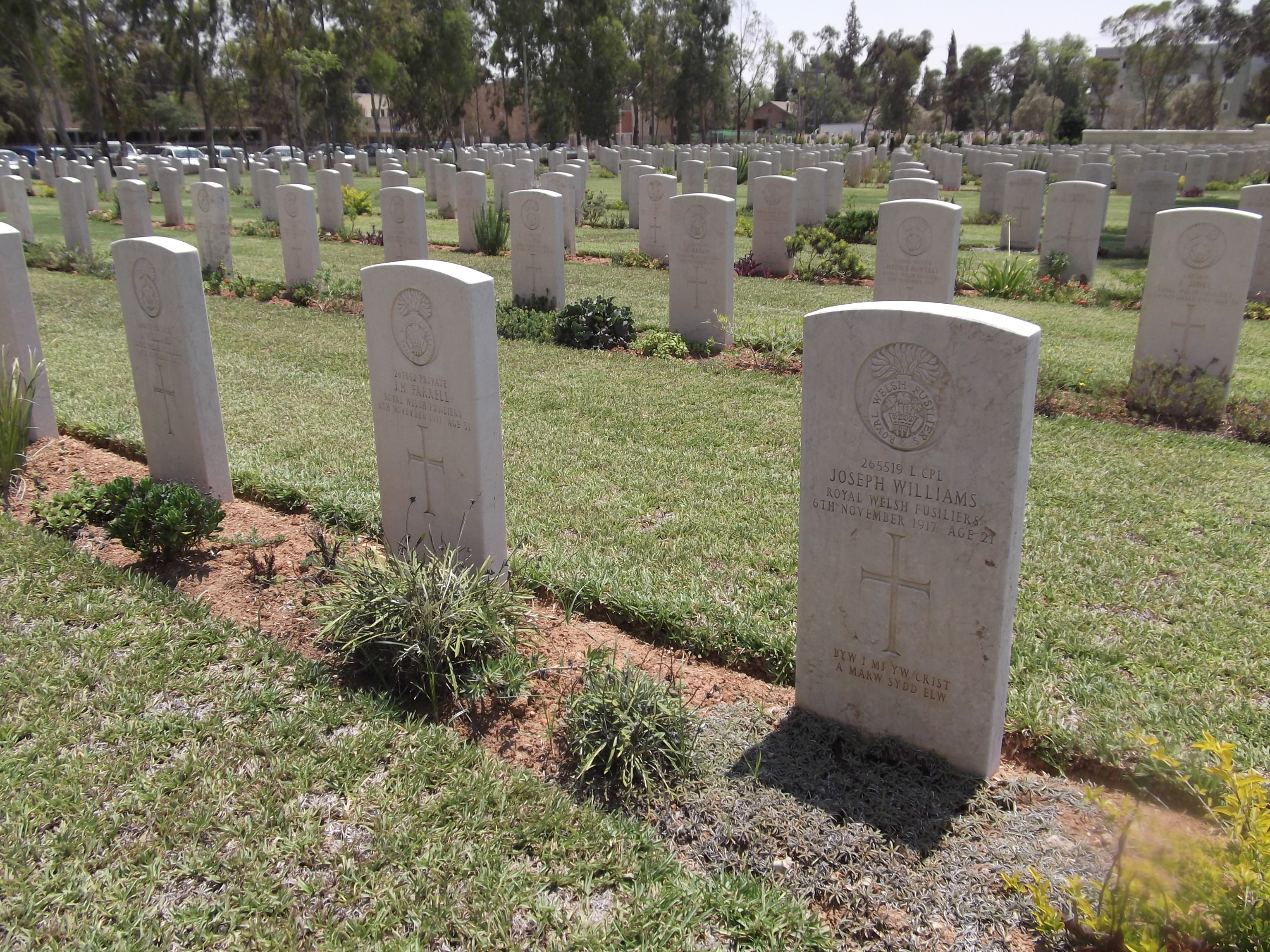
After we finished our pitas and the complimentary falafel balls given to us, we took ourselves back into the afternoon sun and kept looking at cool things. The two museums in the area were both closed, in fact most things in Be’er Sheva worth visiting are being worked on now. But, the old WWI-era British cemetery was open. The final resting place for probably hundreds of soldiers who died for the British Empire is just smack in middle of a residential area in Be’er Sheva. I had fun imagining the British great-grandchildren of some of these fallen soldiers telling someone that his/her great-grandfather died during the Great War and was buried not in France or England… but in southern Israel. Makes for a great story, I suppose.

WWI-era British cemetery

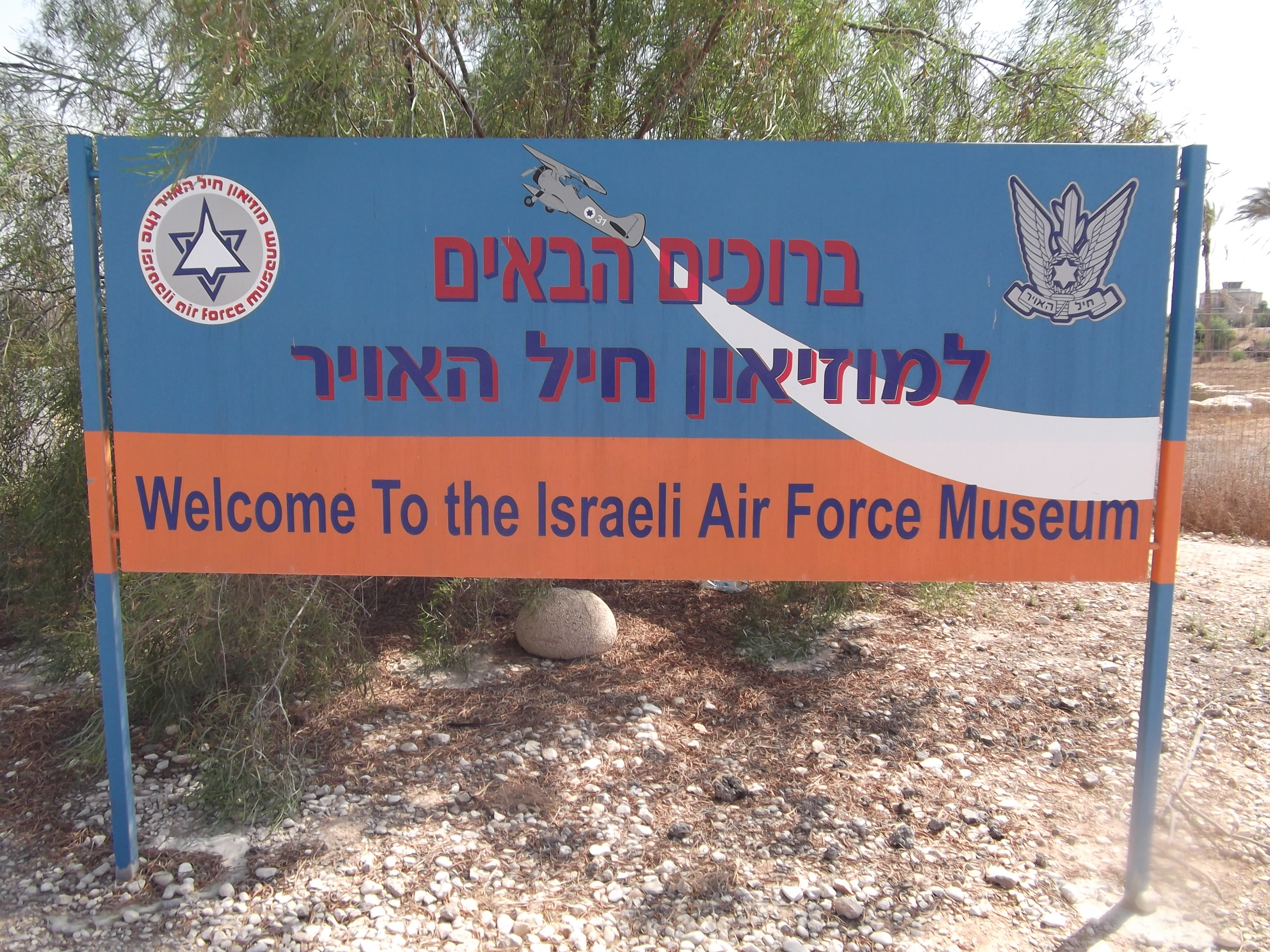
After seeing the cemetery we went up to Ofir’s apartment for some cold water and relaxation in the coolness of man-made shade. Ofir checked the times for our next stop, the Israeli Air Force Museum “just outside” of Be’er Sheva and we headed out for the bus at the appropriate time. Getting off the bus in what would seem to be wilderness if not for the large presence of military buildings and the planes flying circles over our heads, we made our way to the museum.

Welcome to the Israeli Air Force Museum

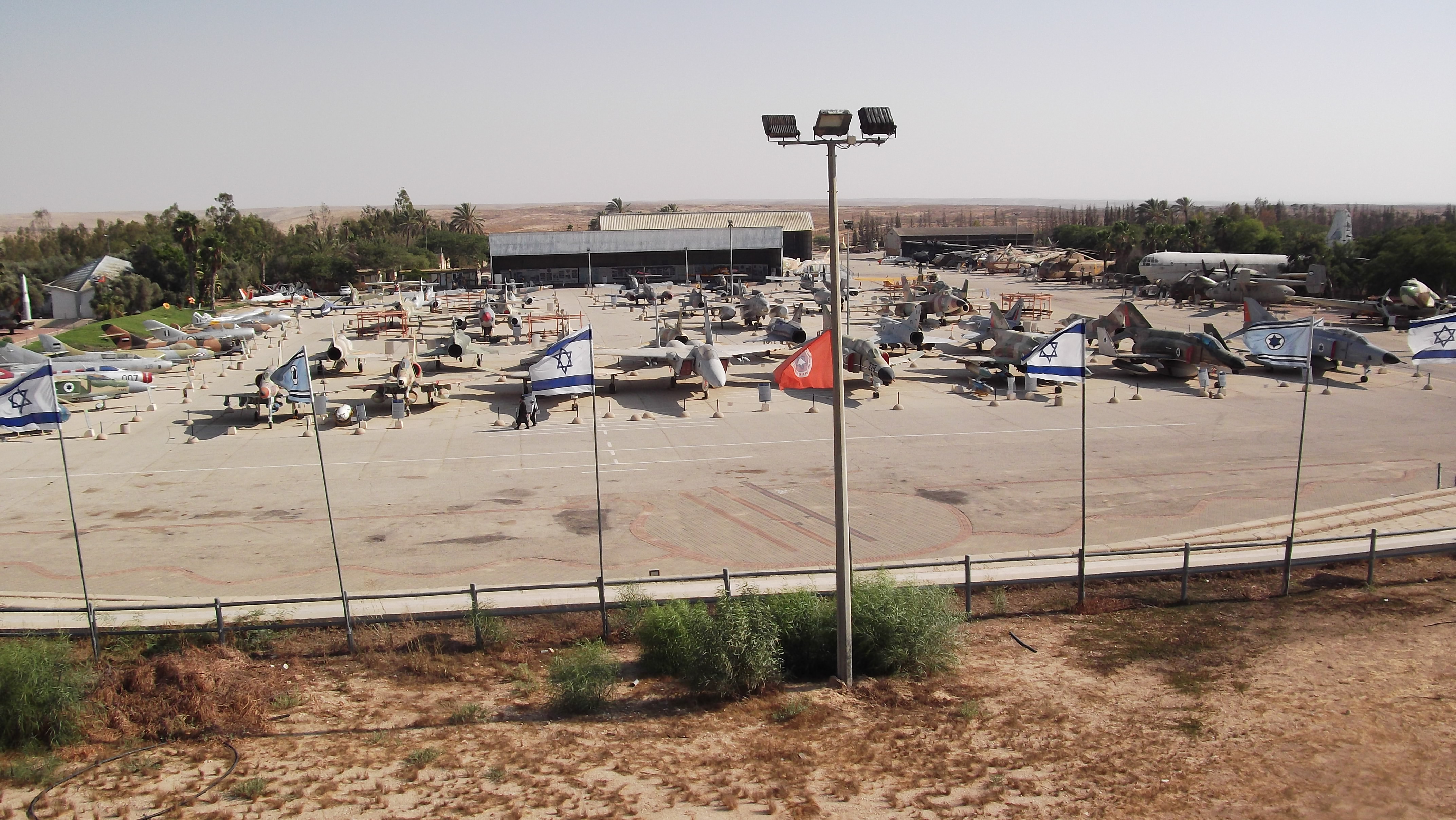
Having paid admission, we were let in by the IAF soldiers and we started our exploration of the museum. Obviously revolving around aircraft, most of the museum is actually outdoors – parked planes “on the tarmac” or in open hangars. The “Old to New” jet fighter exhibit has 150 different warplanes order chronologically – from the WWII-era Spitfire which Israel used in the 1948 war to the modern-day F-15 which is still in use today.

An Israeli F-4 Phantom

Part of the experience outdoors, other than the relentless desert sun, was made 0h-so real by (1)the IAF training planes circling overhead, and (2)the IDF/IAF gunfire in one of the bases just across the main road. The sounds, together with the visuals, really helped create an experience – that and the fact that my friend is an avid plane enthusiast. Getting back to the aircraft, some of the stories behind the planes were known to me from books. This Syrian MiG-17 has a story which almost sounds too “unfortunate” to be true:

A Syrian MiG-17 which accidentaly landed in Israel

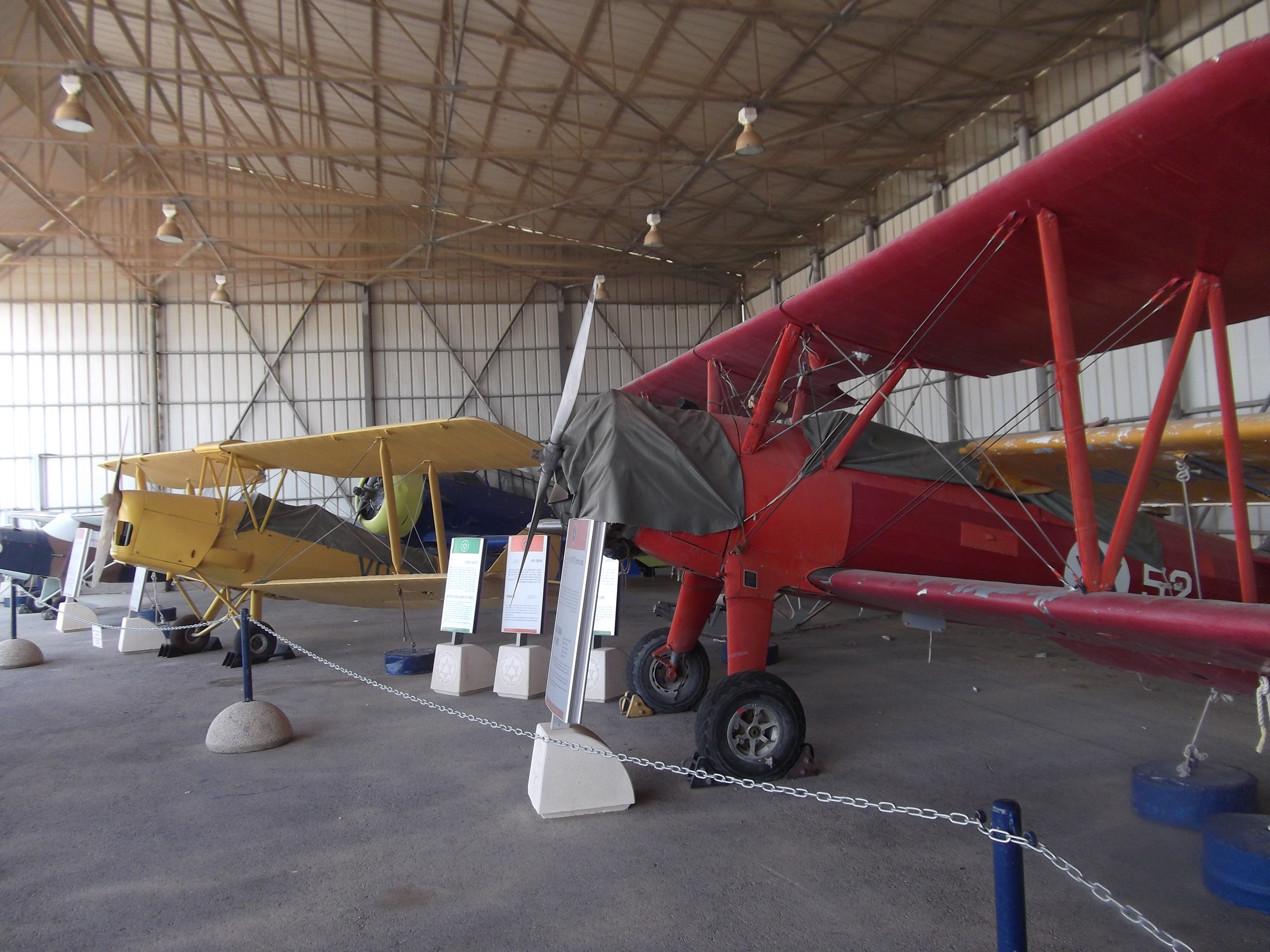
Accidentally landing in Israel and then having to surrender the plane must have been very nerve-wracking for the Syrian pilot. But then again, simply flying one of the older planes in the IAF’s history is probably nerve-wracking as well, presenting the biplanes of old:

Old propeller planes in a hangar

Some of the planes, a very small percentage, are open for sitting in but the ones that looked interesting had long passed by when I noticed the discreet ladders offering their services at the sides of the planes. Blame it on the heat and the sun. I did, however, sit inside the helicopter that hosted Begin and Sadat, leaders of Israel and Egypt respectively, as they flew to a military command centre in Be’er Sheva to sign the peace treaty in 1979. That was interesting.

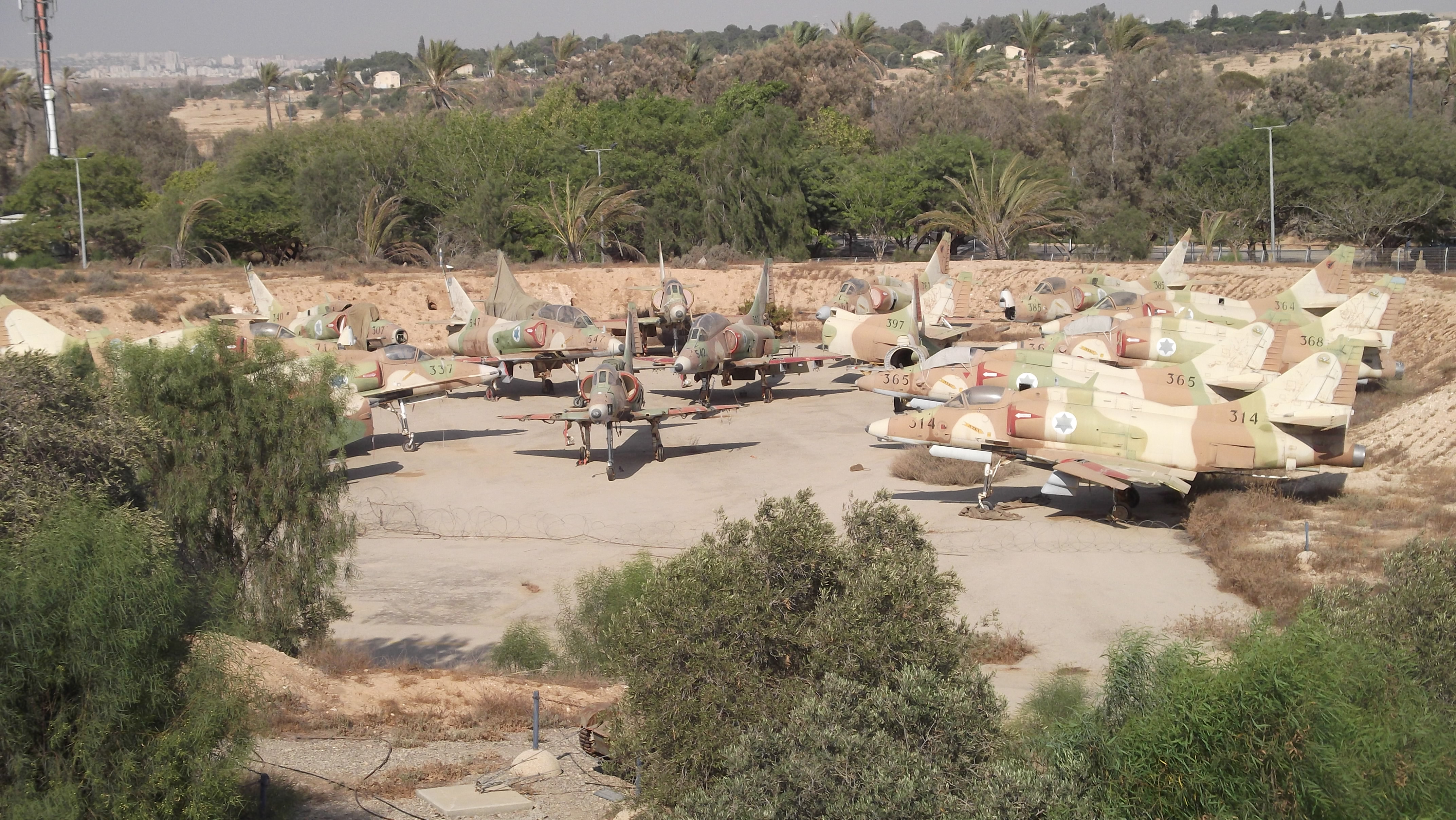
Old Israeli fighters that have been decommissioned

On of the other interesting findings was the hang glider that was used by a Syrian-based terrorist to fly into Israel, in the Golan, and raid an sleeping army base in the dead of night. I had read the story in the book I bought from the Navy Museum in Haifa back in February (as can be seen here, in this old post: Haifa Again). Now knowing the story, it was both fascinating and chilling to see the exact hang-glider sitting in a hangar seemingly detached from the blood-drenched history that it helped make. If only aircraft had the power of speech…

The bulk of the aircraft on display

Towards the end, we climbed into a dormant Boeing jet and watched a short film about the history of the IAF – with the comforting air conditioning cooling down the plane’s interior. It also should be noted that this museum offers extremely cold water on the far end of the main display lot so, should you go visit, you’ll know ahead of time to be liberal with your water. So, after about two hours of so, we had seen all the aircraft there was to see and had read about more incidents then we could remember and so we headed out, back out to the main road. The training planes had ceased for some time, and apart from the sporadic staccato of gunfire, it was hot and silent in the great desert expanse. Back in Be’er Sheva, I said my good-byes and thank yous to my friend, Ofir, and continued on to the train station where I boarded a train for Tel Aviv. As a parting shot, the perfect indication of a day growing old, here is sunset from the train, hastily photographed as the well-tended crops below whip by the windows:

Sunset from the train

Now that was a nice day trip. It’s good to have finally entered into the vastness of the Negev, if only just to see a city. Hopefully one day I will visit all that there is to be seen way down there (including the famous Ramon Crater and Eilat) but for now I have Tel Aviv to focus on. Until tomorrow!