Israel's Good Name

Tel es-Safi Archaeological Dig II

In Israel, Judea on September 3, 2017 at 10:05 AM

Continuing with the third and fourth weeks of the month-long excavating season at Tel es-Safi (see the first post HERE), we returned to Neve Shalom Sunday afternoon and settled into our rooms. My friends Ben and Shani, both from Bar Ilan University’s archaeological program, would be joining us for the week and I knew it’d be a good time. I came loaded with extra beers this week, even some bottles of recent Arx Meles productions (Stoutus III and Belgica Triplus) that Ben and I brewed some months prior. The following morning, at 5am, we boarded the bus for the tel to continue our digging in Area J.
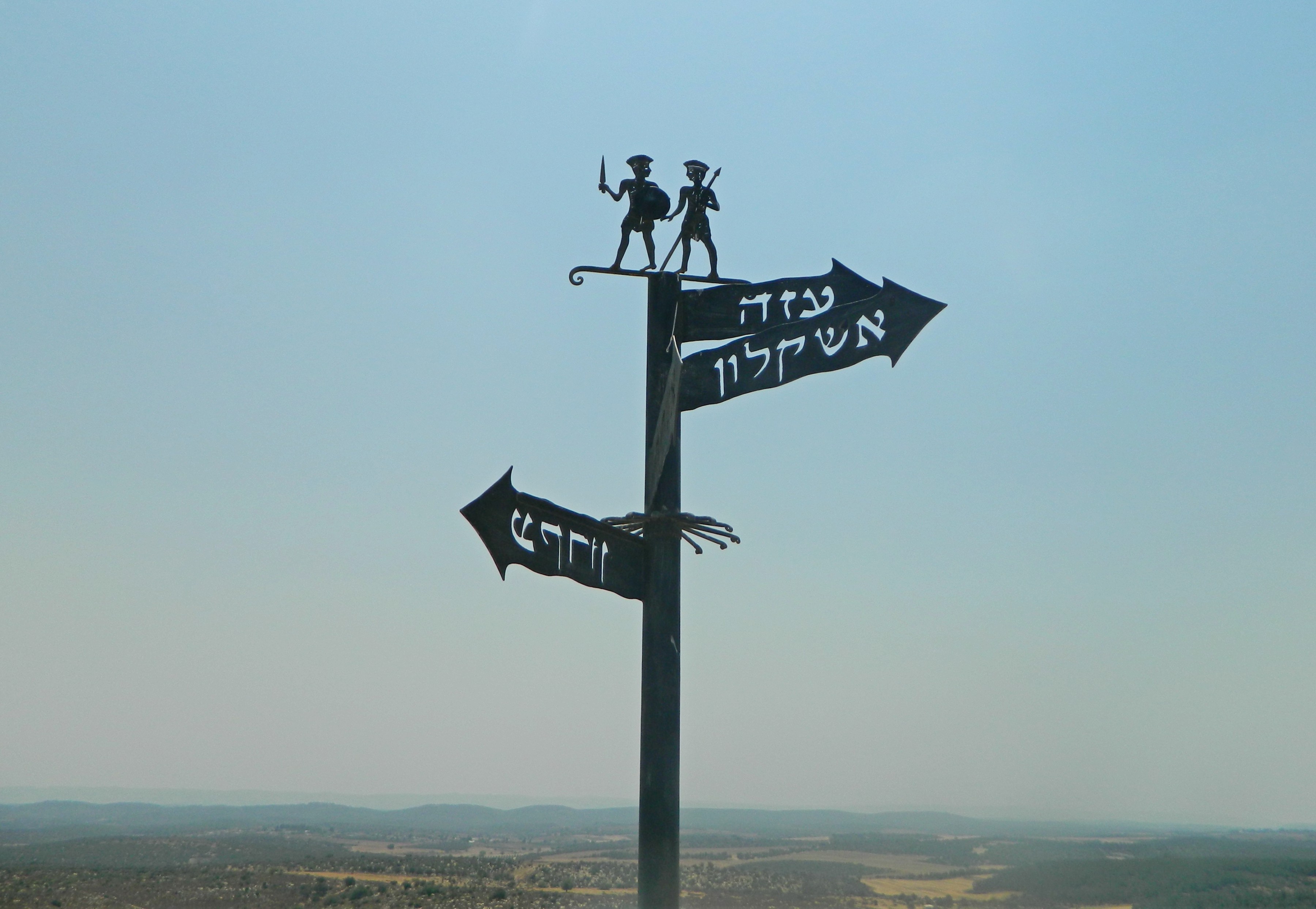
Philistine cities around the region

We had taken down a fair amount of dirt and yet there wasn’t anything of substance in square 100A. Itamar’s square, 100C, had a bunch of rough stone architecture which earned Itamar a fun nickname – the “Stone Whisperer,” due to his quiet demeanor and knack of revealing buried walls. He and Avraham were joined by Shani, whereas Moshe, Rebecca and I gained Ben, with Dr Jill Katz overseeing us all.

Avraham excavating expertly (photo Rebecca Zami)

Once again, the humourous chemistry in our square was infectious and every day saw us doubled over repeatedly with laughter. We even invented an odd game of “Shave, Lick or Massage” (a variation of “Kiss, Marry or Kill”) with the various things that we pulled out of the ground. Related to the game, licking freshly hewn Safi chalk is quite amusing and many powdery pieces were passed around.

Ben laughing while pickaxing (photo Rebecca Zami)

When we weren’t out on the tel digging, laughing and having a good time, we were back at Neve Shalom doing a whole selection of chores. The pottery that’s brought in from the field is first washed outside with brushes, then laid out to dry. Once dry, the pottery gets “read” by various professors in the presence of area staff, and sorted and/or discarded in accordance to its value. We rather enjoyed pottery reading, and looked forward to seeing what interesting potsherds we pulled out of the ground. Once sorted, some of the pottery would be bagged and taken indoors for pottery writing, recording the reference number on the potsherds themselves with a special permanent marker. Later, back at Bar Ilan, some of the pottery gets reconstructed into the vessels that they once were. With a bunch of other tasks to perform each and every day, we never lacked for things to do.
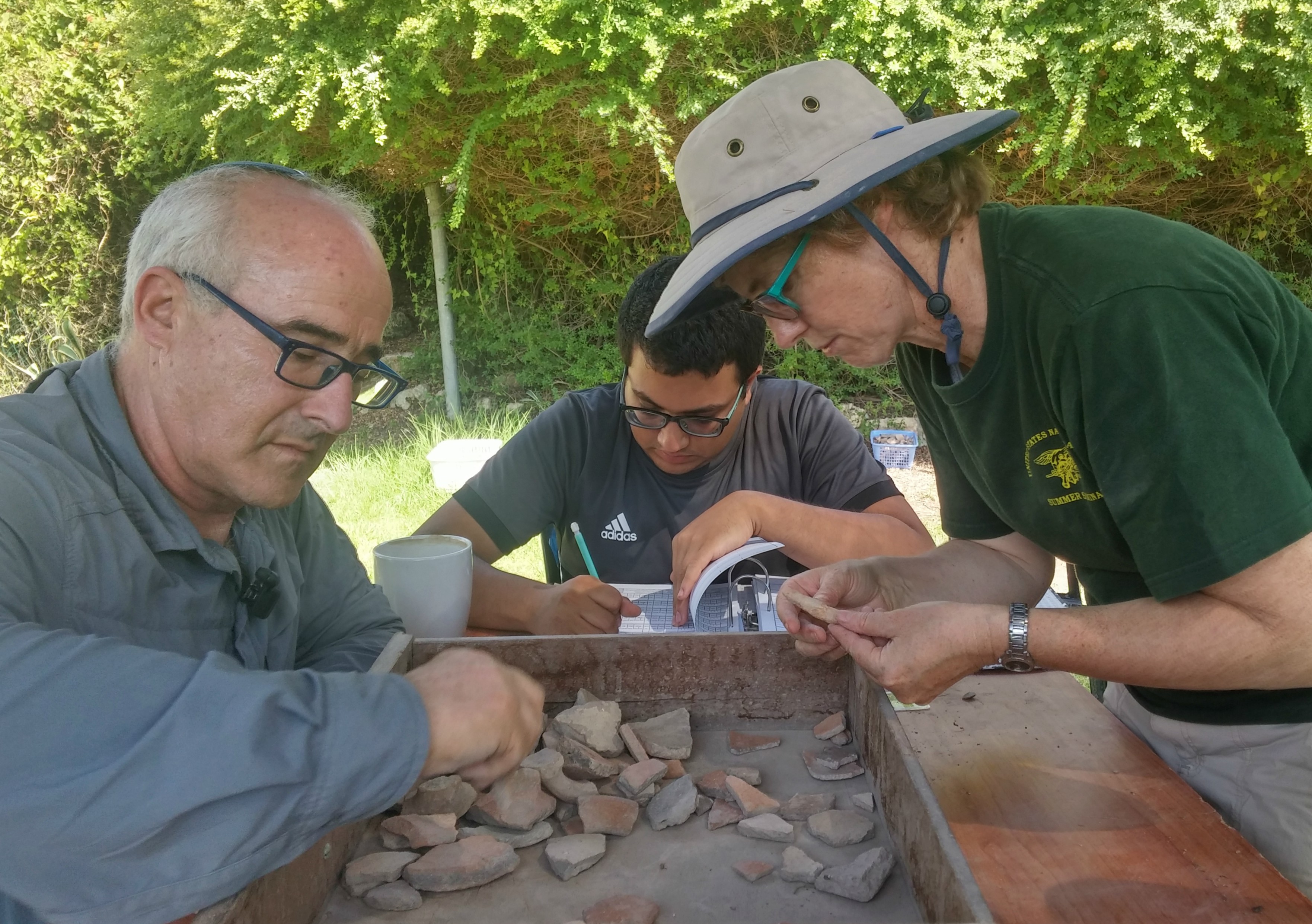
Pottery reading outside

During the third week we were joined by nearly thirty volunteers from Yeshiva University in New York City. It was a bit of a struggle placing so many people in just two squares without having them puncture each other’s back with their pickaxes, but we figured it out. A few of them were sent some metres downhill to clear out a carven vat for pressing grapes, which can be seen here:

Uncovered grape vat (photo Jill Katz)

It was great having so many volunteers to chip in, and we really capitalised on the ability to move a lot of dirt quickly. That day went by especially fast, and the next day greeted us with squares that looked quite different than before. We worked on clearing the dirt down to a uniform level on the western side, and then defining the stone architecture that was becoming apparent on the eastern side of 100A, lining up with the excavated walls in 100C.

Shani scraping skillfully (photo Rebecca Zami)

The third week also saw a short afternoon trip to Tel Burna, another Late Bronze and Iron Age site being excavated some eight kilometres to the southeast. This trip, and the one to the Stalactite Cave near Bet Shemesh, will be covered in the next blog post. At the end of the week we, the “J Crew,” had an evening tasting of the Arx Meles brews, neither of which came out to my liking (or the crew’s liking, for that matter).
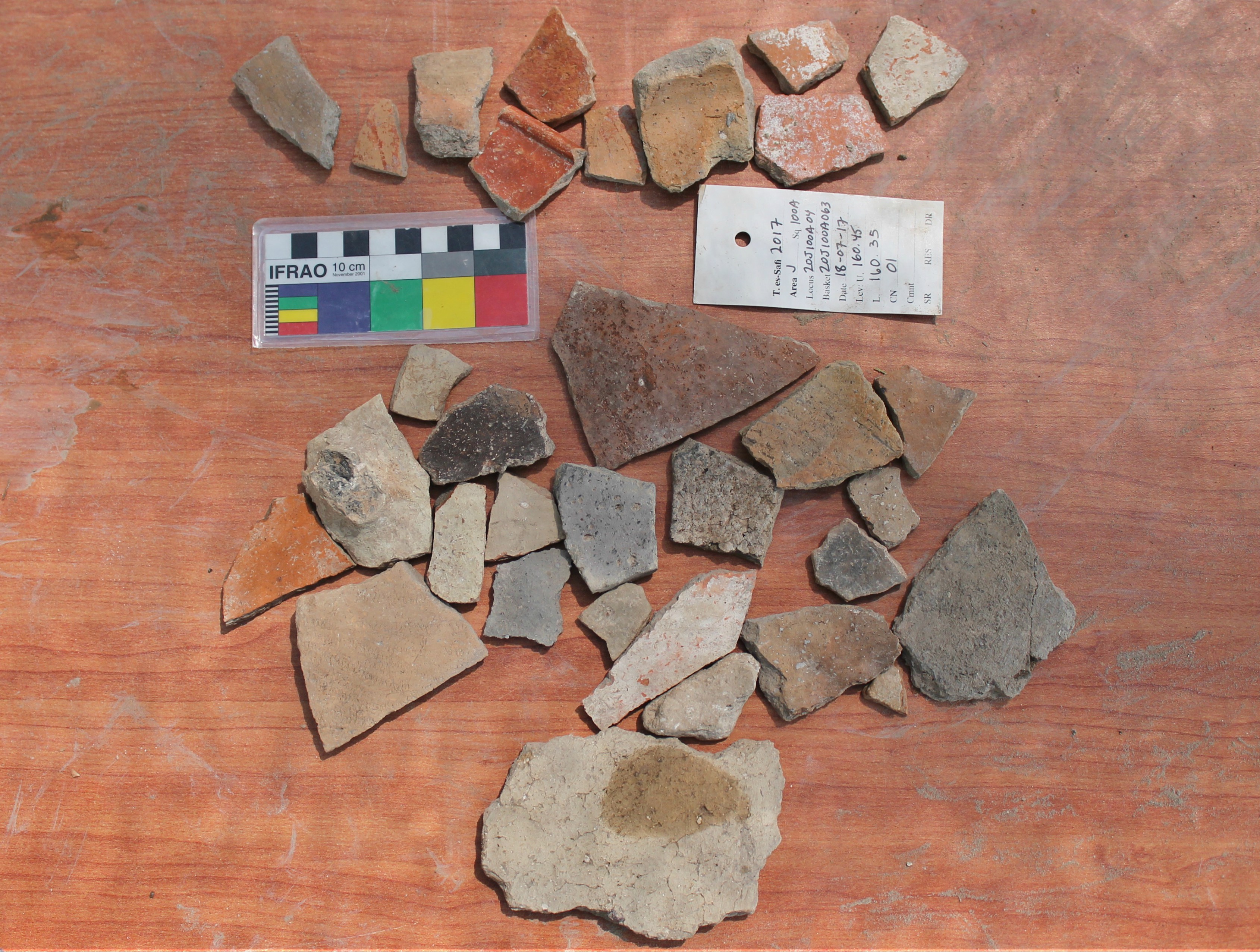
Pottery basket from 100A (photo Jill Katz)

With the week coming to an end we were sad to be losing Ben and Shani, who fit in so nicely with our group dynamics. But then, on Friday morning, while out on the tel, we decided that we’d prolong our bonding time with the two of them.
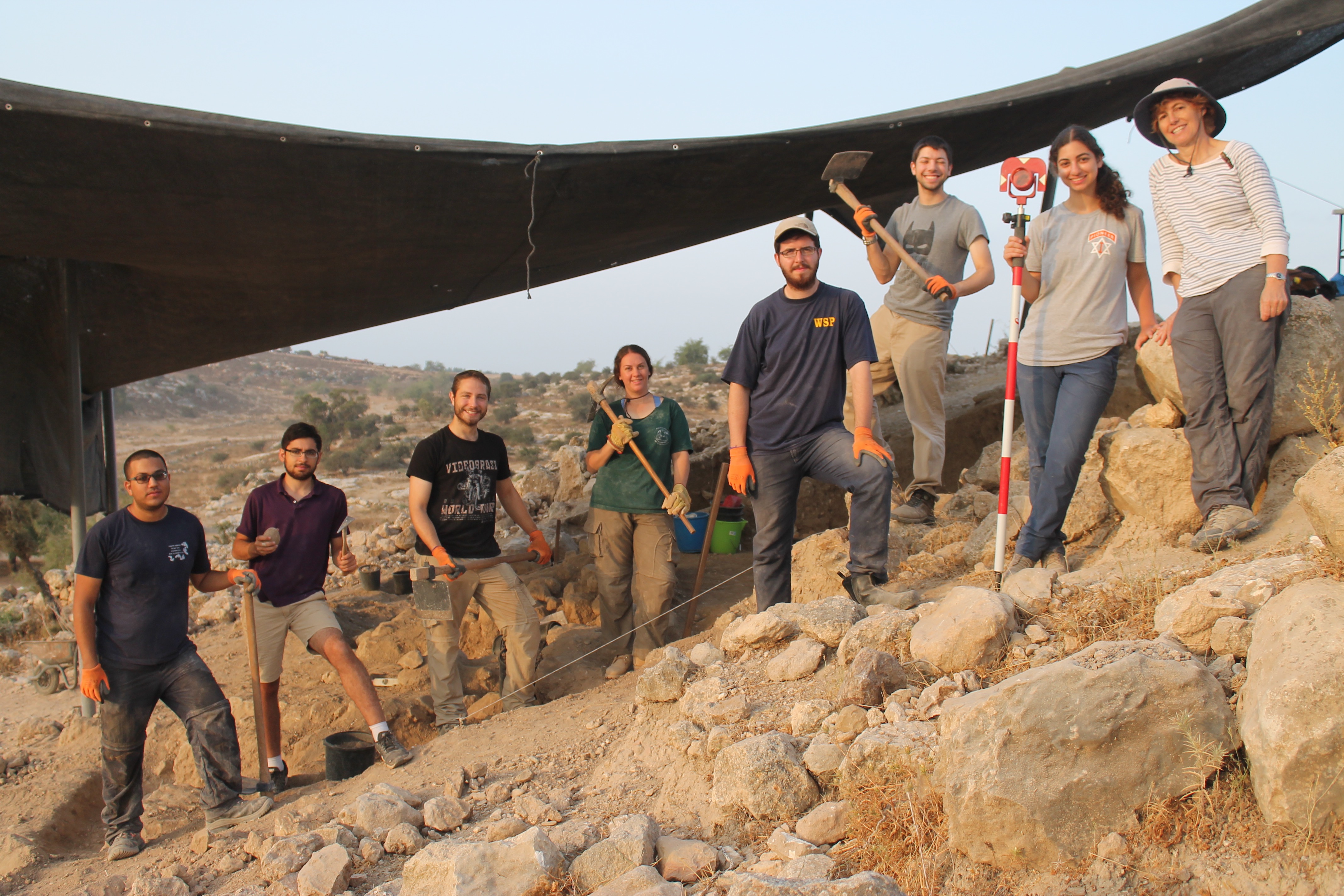
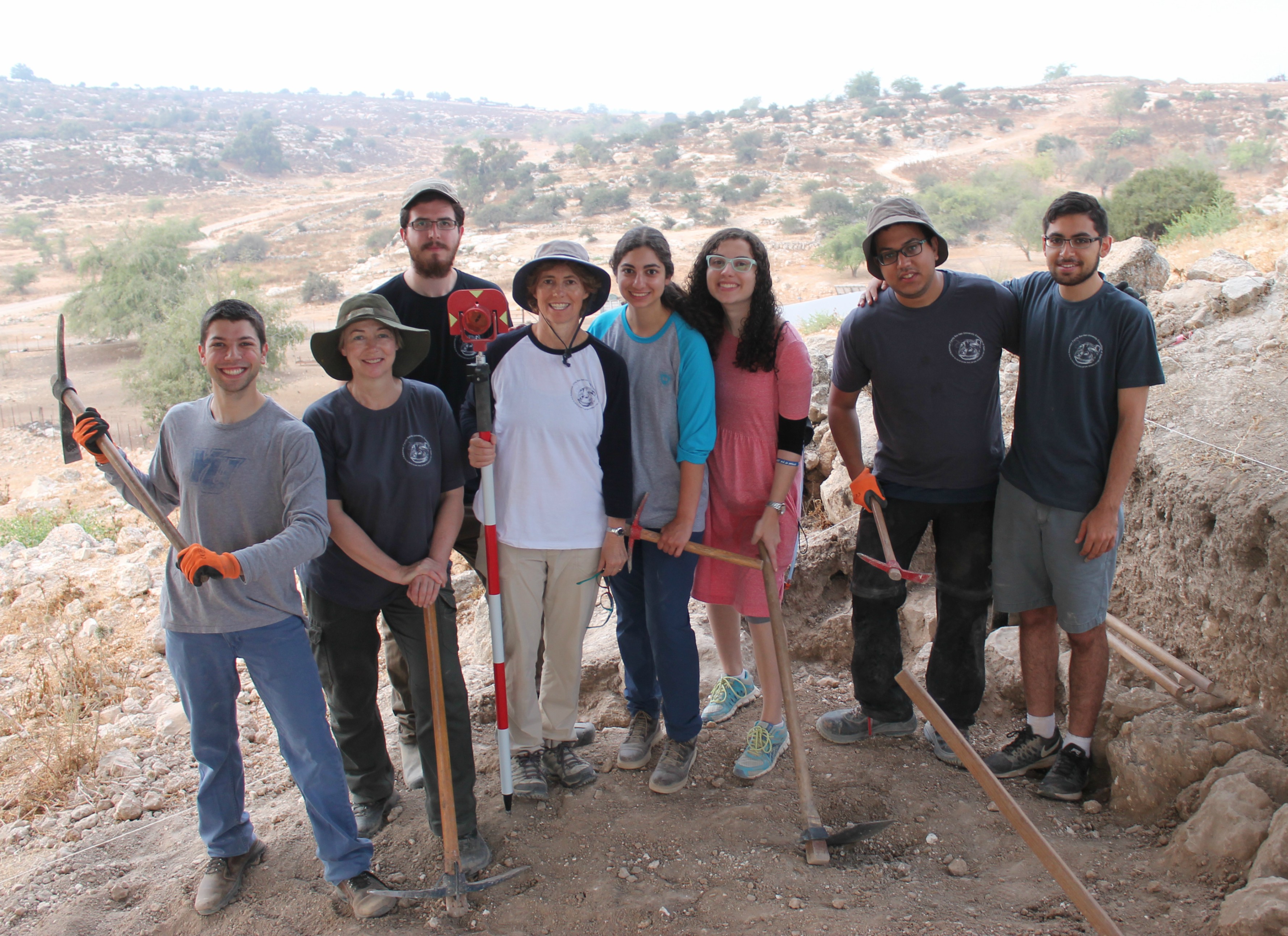
Third week group photo

We decided that we’d all have Shabbat together in Givat Shmuel, and quick phone calls were made. Although it was hastily arranged, Shabbat was a great success and we had a great time eating and bonding together. After Shabbat, while the night was still young, we walked over to Jem’s brewery in neighbouring Petach Tikva and had a few beers with some oily treats. Quite a lovely outing it was, ushering in the fourth, and final, week of the Tel es-Safi dig.
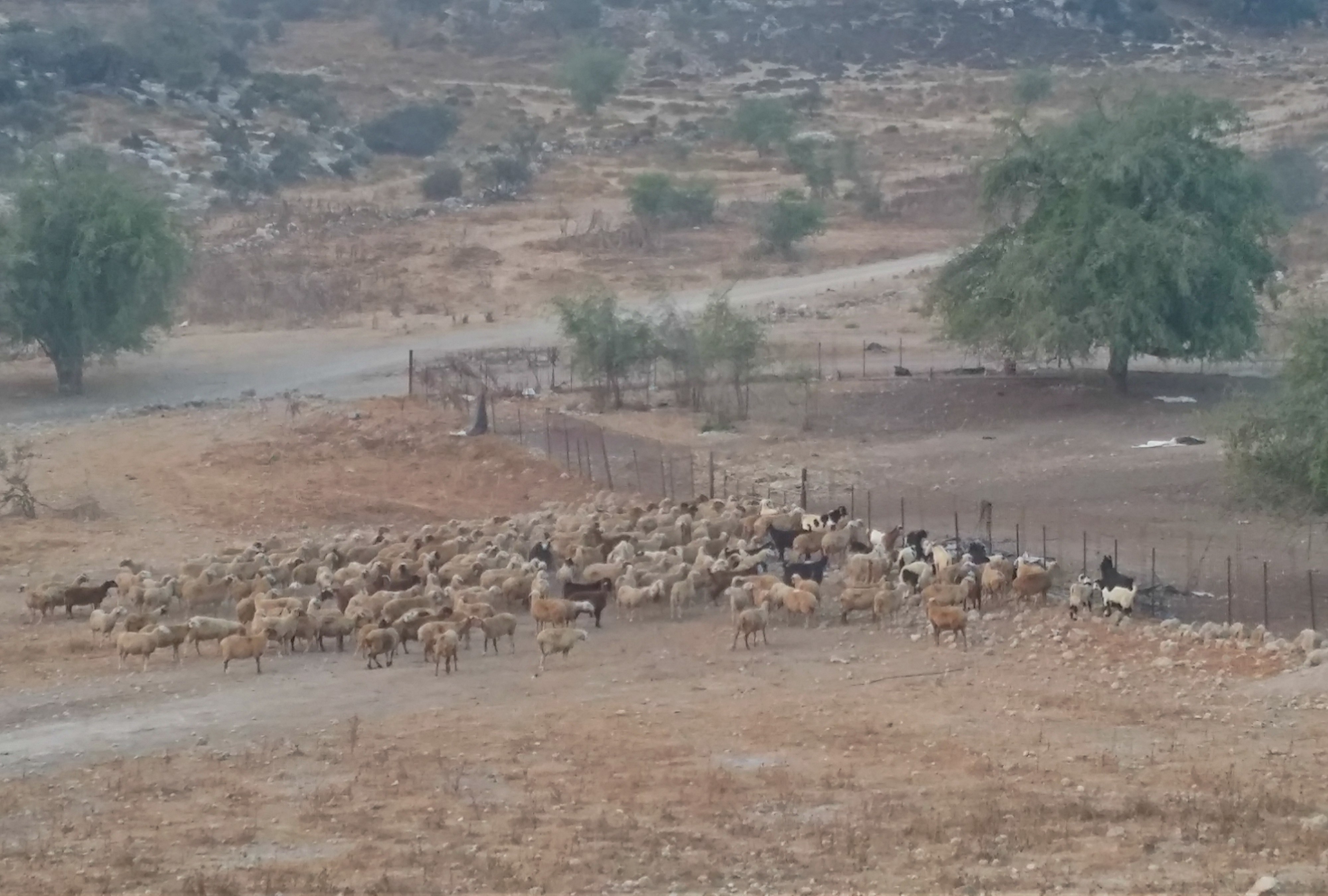
Sheep and goats waiting for breakfast

Down to just six members in total, Area J was ready to be wrapped up. We needed to clean all the stones, make sure the floor surface and baulks were nice and straight, and, last but not least, clear up the surrounding area a tad in preparation for the aerial photography later in the week.

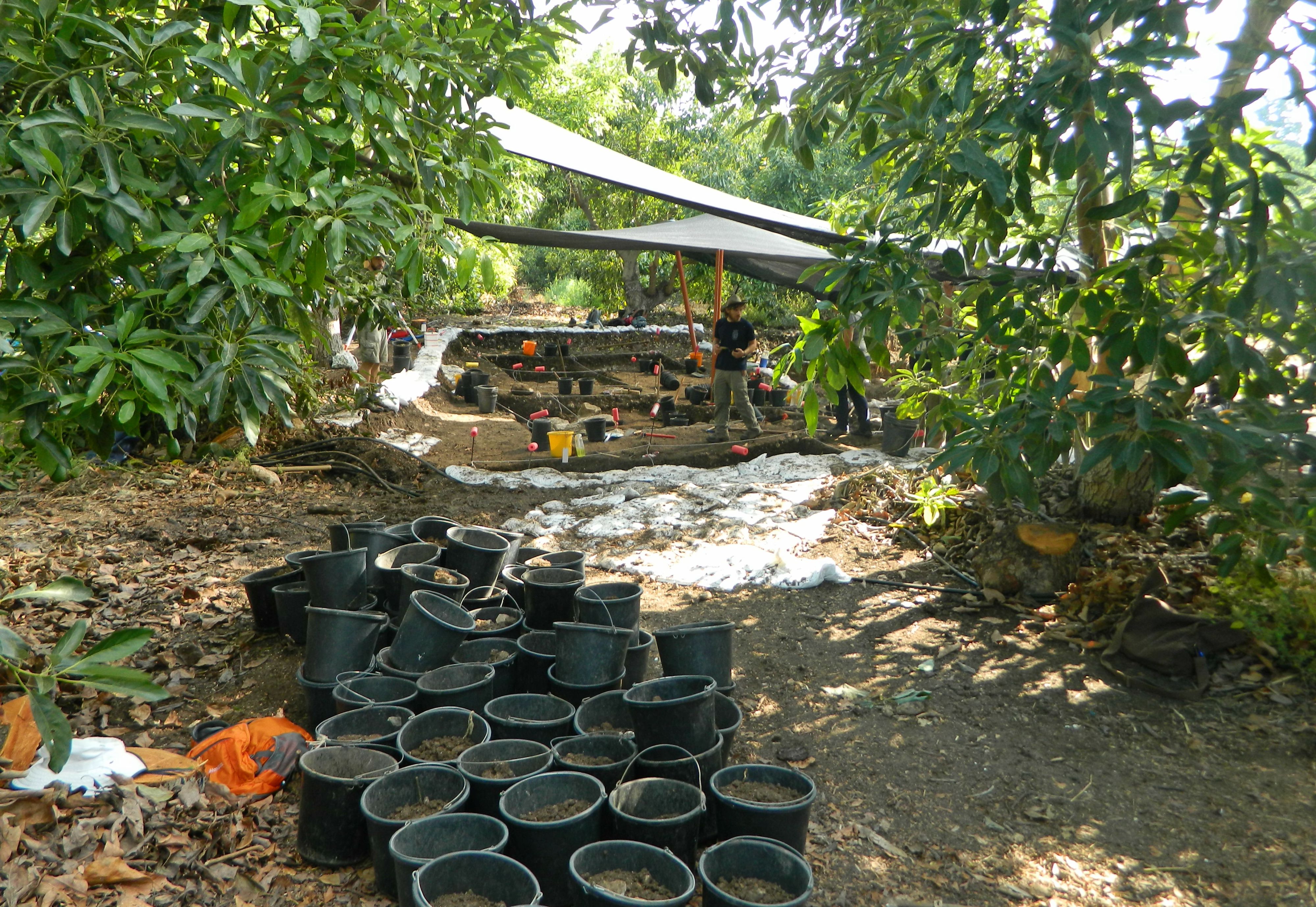
Preparing Area J

We swapped pickaxes and hoes for brooms and dustpans and set ourselves to the tasks at hand. Sweeping and cleaning, but still heavily engaging in hearty laughter, we worked Area J’s final days away. The sunshade was taken down and we saw, for the very first time, the work that we had done in direct sunlight.
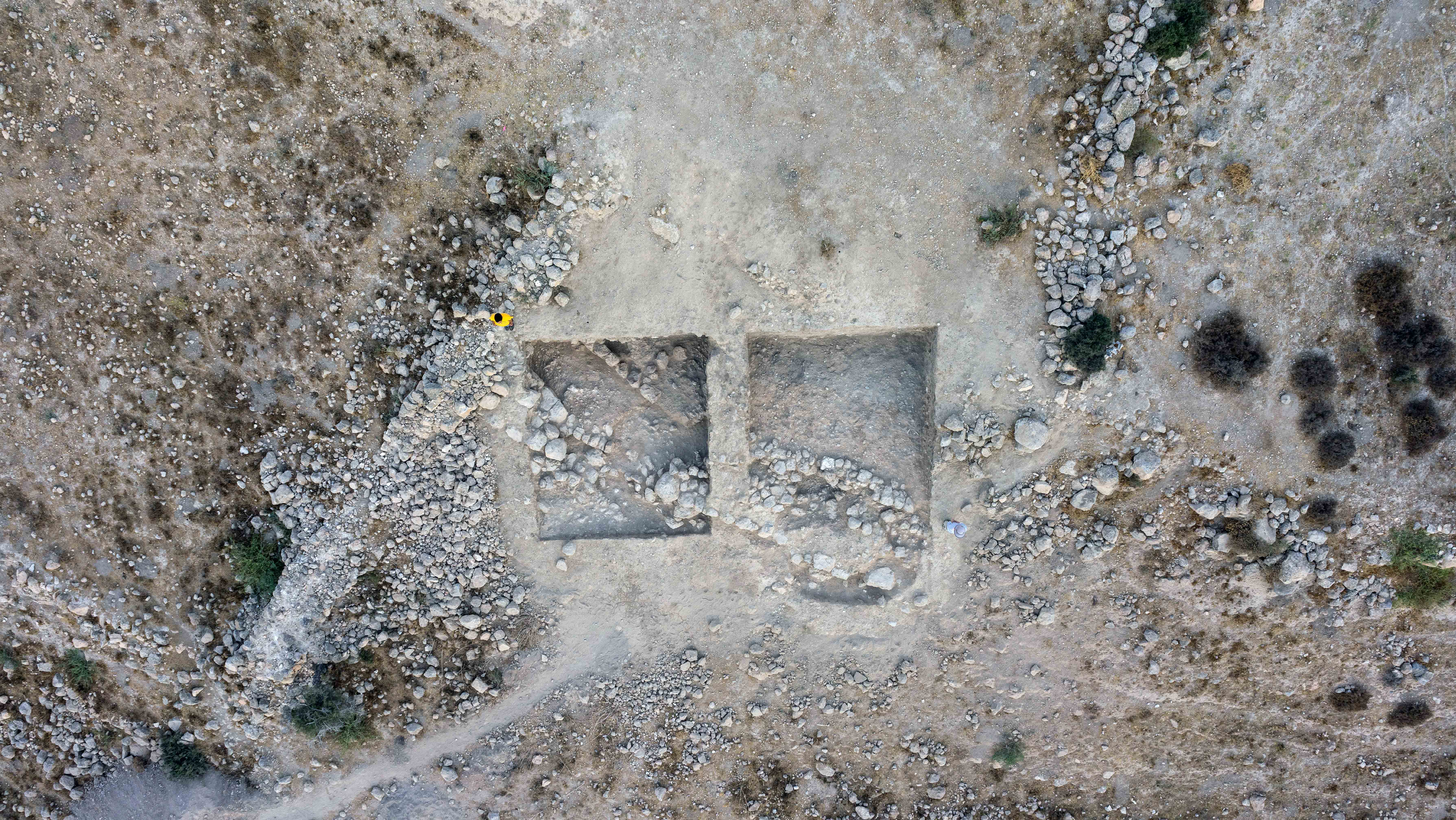
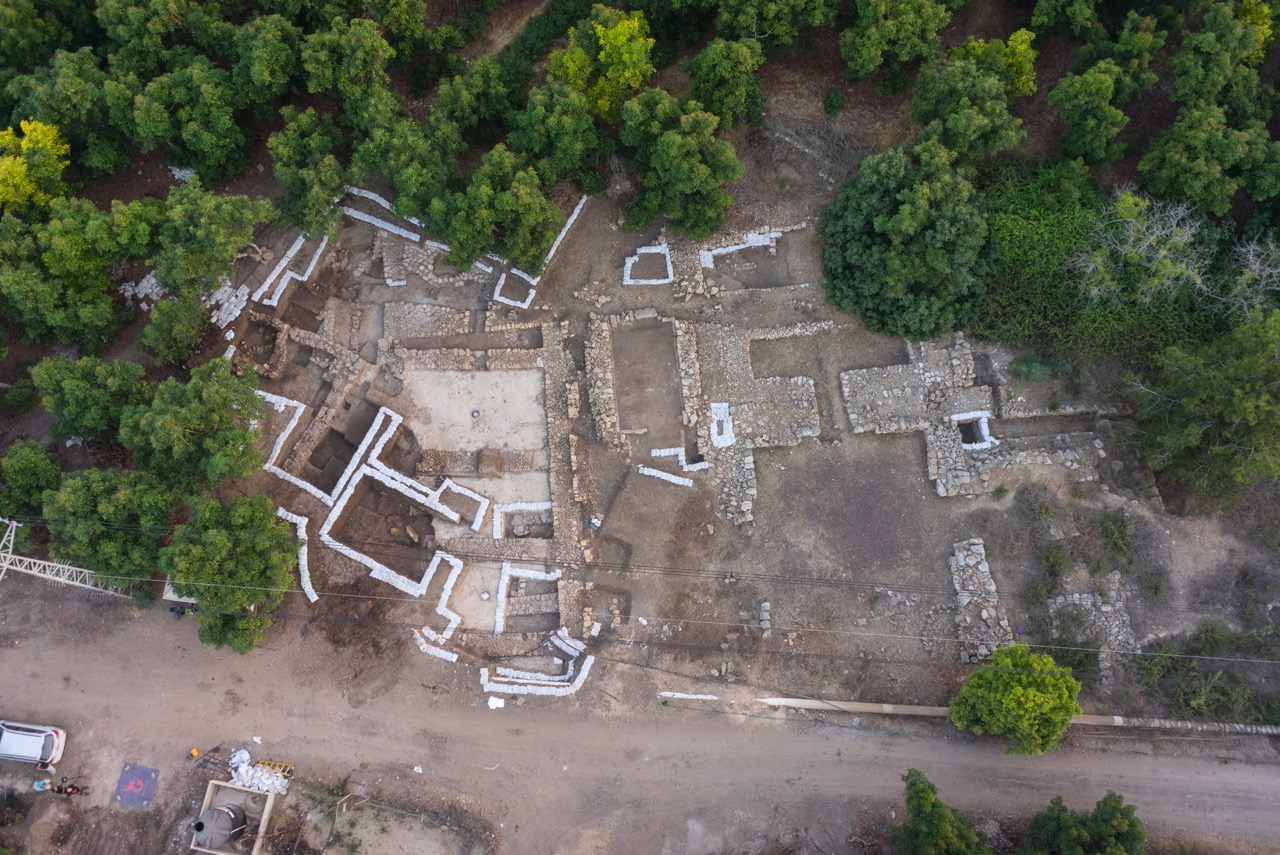
Area J from above (photo Aren Maeir)

With the oppressive heat and the endless amount of dirt in the air, we toiled away until picture day. That morning we were driven, as usual, to the tel but this time we gathered at the parking area down below beside Area D and got into formation for the annual group photo, done in a unique thematic design. Last year’s was in the shape of a donkey, due to the discovery of buried donkey skeletons over in Area E, but this year’s was a beast of a different nature: a Sea People warrior. Perhaps you can spot me and my digmates in the photo.
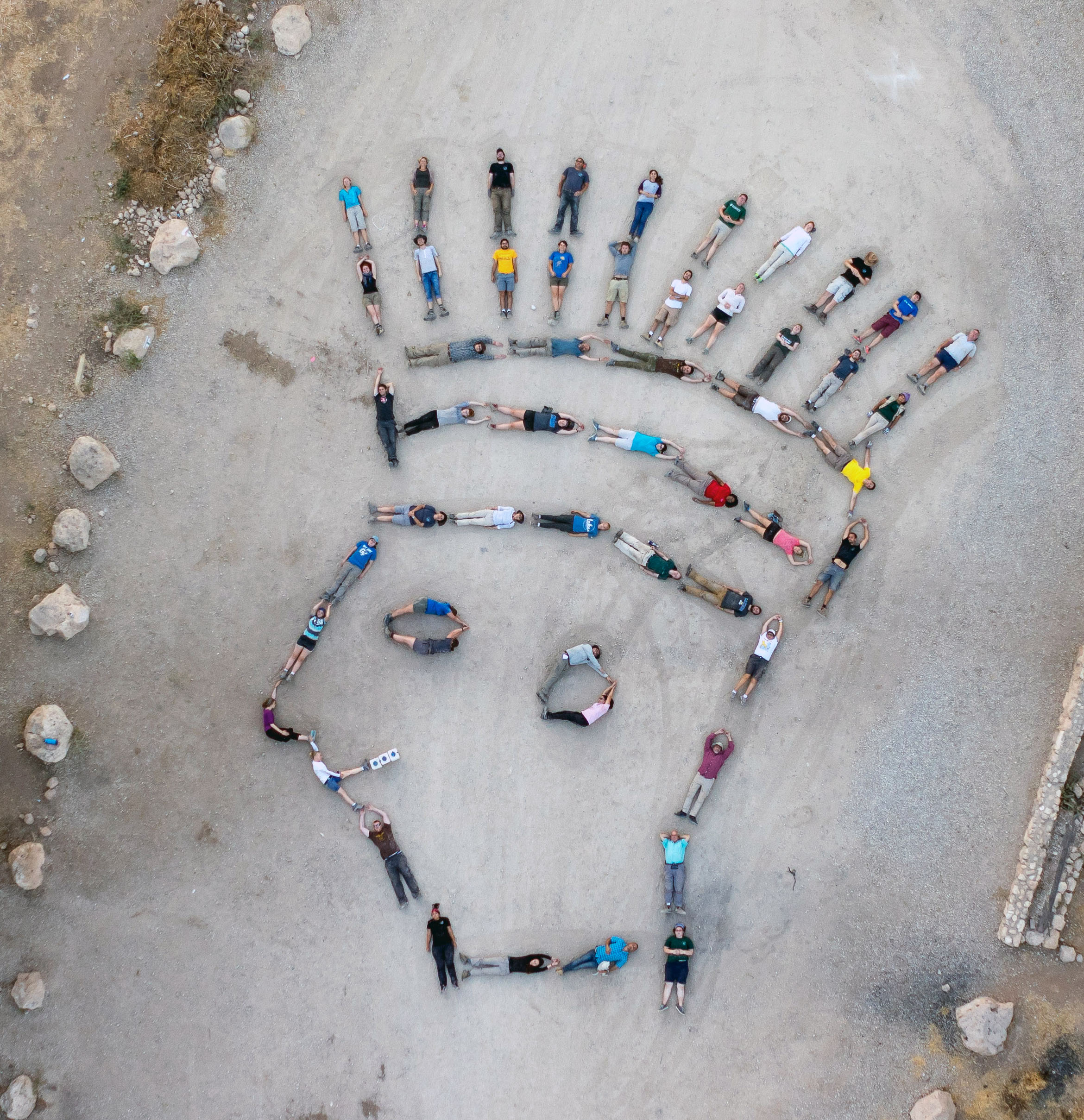
Tel es-Safi group photo for 2017 (photo Aren Maeir)

With the drone crew moving over to the excavation areas for aerial shots, we took the hill path over to our beloved Area J to have one last look at our work before covering it with geotech cloth to preserve it. Along the way, after walking through the plentiful cactus groves, we stopped to take a selfie:
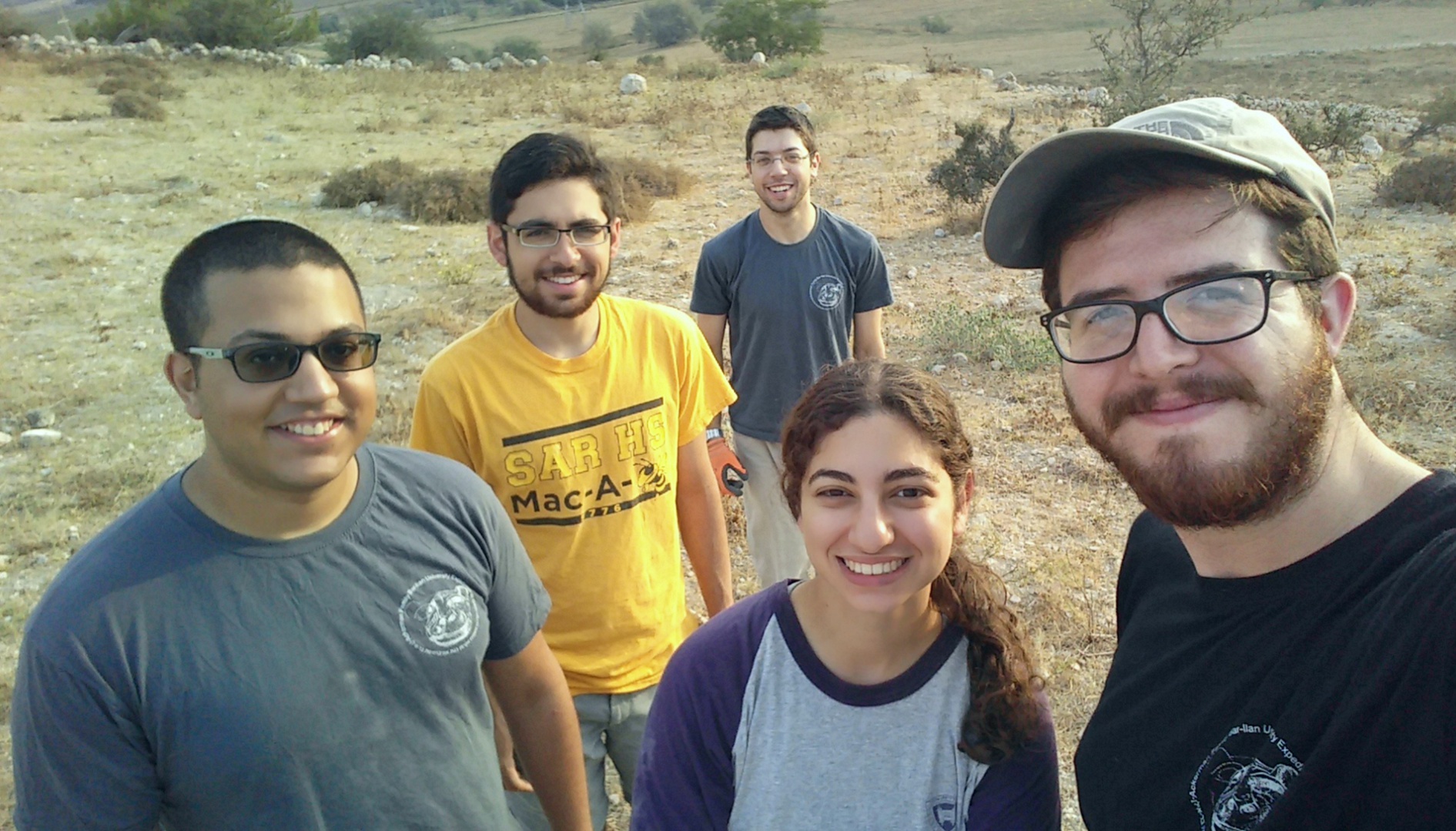
Last day on the tel

With the aerial shot done and the squares covered over nicely, we returned to Neve Shalom to put the finishing touches on our archaeological expedition. The New York members of our crew took late night flights that Thursday night after the many parties, and the farewells were sad but somewhat hopeful – some of us plan on meeting again for the 2018 season. We had grown to be quite fond of one another over the month that we spent, and it was strange going back to regular life. Friday morning it was just Itamar and I remaining, and we went our separate ways, but to meet again shortly thereafter at yet another archaeological dig…

More information about Tel es-Safi can be found at Prof Aren Maeir’s blog, found HERE.

Tel es-Safi Archaeological Dig I

In Israel, Judea on August 27, 2017 at 6:20 AM

The first Sunday of July, nearly a week after my day at the Tel Kabri Archaeological Dig, I began my month-long stint at the Bar Ilan University archaeological dig at Tel es-Safi (the Biblical city of Gath) under Prof Aren Maeir. Currently there are only two active excavations, Tel es-Safi and Tel ‘Eton (the lab I worked in last year), yet this year only Tel es-Safi was offered. Since I am working on getting my archaeologist’s licence, I was slated as being the assistant of Dr Jill Katz of Yeshiva University. I was joined by fellow BIU student and friend Itamar Berko and together we served as square supervisors for Jill’s area, the newly opened Area J.

Area J pre-excavation – note the line of stones

Being that this event took place over the course of four weeks, I have decided to cover it in two long blog posts, reporting the events of the first two and last two weeks. A separate blog post will cover two fun field trips that we took, one on the first week and one on the third. But first, a quick summary of Tel es-Safi and its historical and geographical significance.

Area J from above

Located in the Judean lowlands not far from Road 6 and Tel Azeka, Tel es-Safi was once the capital of the Philistine kingdom which included cities such as Gaza, Ashkelon and Ashdod. At that time, in the Iron Age some 3000 years ago, the Israelites established their kingdom further inland, controlling mostly the mountainous regions. The Philistines didn’t get along so well with their neighbours and thus the Israelite Kingdom erected fortified cities (such as Azeka) along the virtual border, in hopes to stave off invasion. Goliath, the villainous giant in the famous biblical story of David and Goliath, hailed from Gath (the city later sheltering David himself at a later point). Eventually, after the Israelite kingdom was split into two, King Hazael of Aram-Damascus made his way southeast and conquered the both of them. Swinging eastward towards the Mediterranean, Hazael then conquered Gath after a siege, critical to the archaeological research of the city.

Most of the Area J team

While the Philistines may have been the most famous inhabitants of Tel es-Safi, the goal of Area J was to find the Early Bronze era city wall that encompassed the original upper city. Heavily fortified by the Canaanites, the city was quite large for its time, and it was our job to find the city wall on the eastern slope. The best clue that the Safi think tank used was a straight line of large stones partially exposed following the sensible curvature of a wall. I had gone ahead the Thursday before the dig season began with other staff members to set up the shade tent and establish the borders of our two squares. Because 2017 marks the year that the Upper City excavations will finally be closed after nearly twenty years of digging, this was to be the first and last year for Area J – a rather unusual practice in modern archaeology. Because it rested on our shoulders alone, it was pertinent that we achieve our goals before the end of the season.

Jill our fearless leader

I joined other dig members, from BIU and foreign universities, on the bus to be driven to our home for the next month, Neve Shalom, just a few minutes away from Latrun Junction (and in eyeline of the Crusader ruins of Toron des Chevaliers). Disembarking at the hotel, we mingled in the lobby with the other students and staff members as we waited to receive our room keys. I joined my roommates and we got acquainted with our new home, preparing ourselves for the dig season. Going to sleep early because dig schedule starts early (the bus leaves at 5am), we spent our first night impatiently waiting to break out the tools.

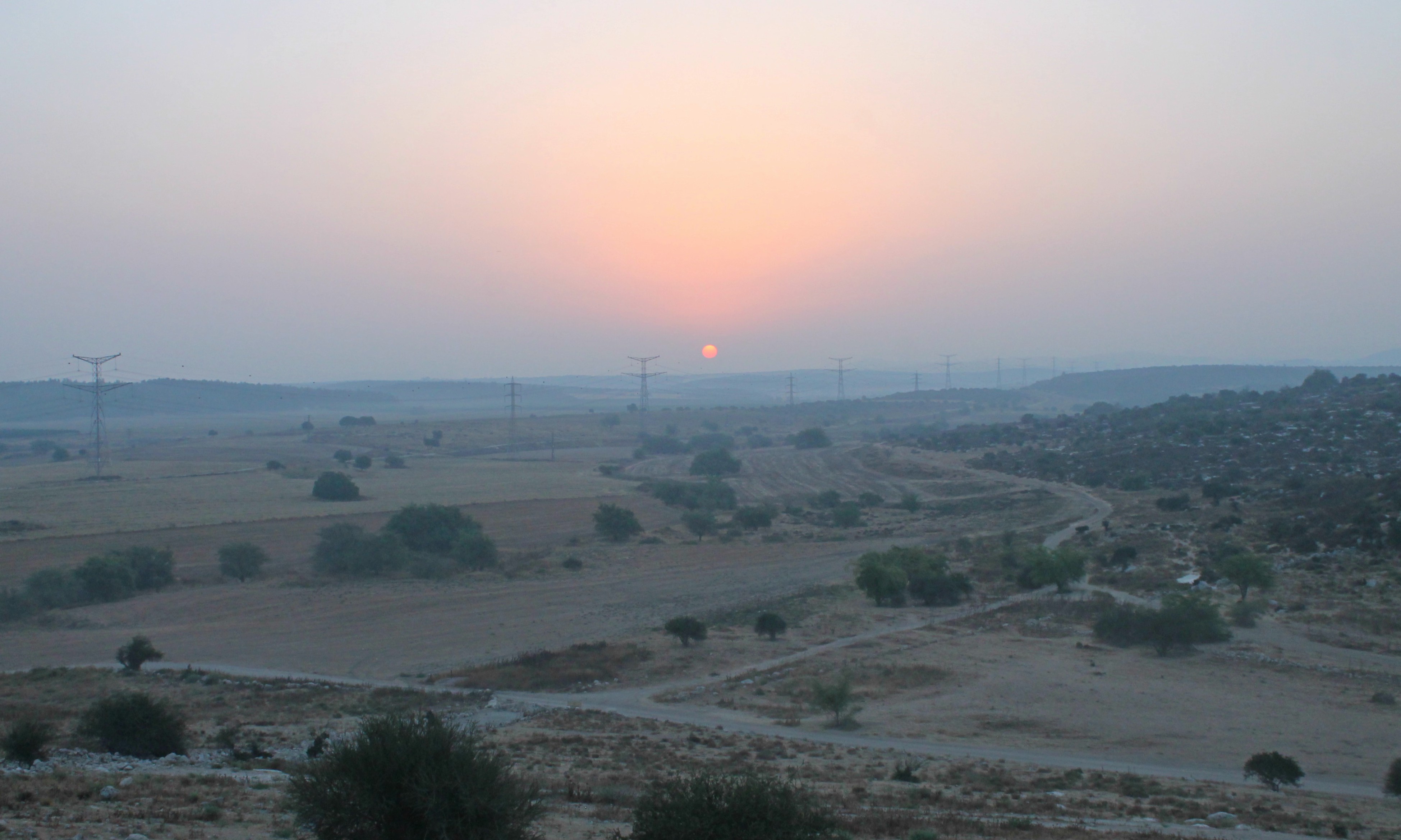
Sunrise from Area J (photo Jill Katz)

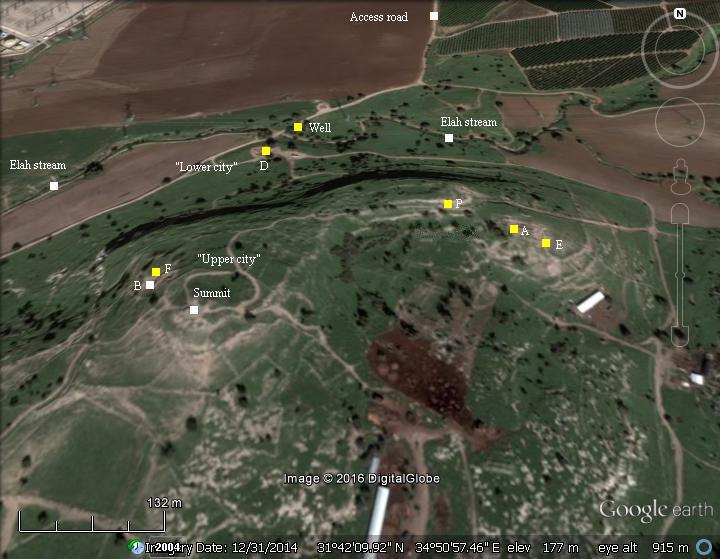
The next morning, before the sun’s rays peeked over the horizon, we boarded the bus and were driven to Tel es-Safi some forty minutes away. With dawn breaking, we examined the white chalk-paneled hill as we approached from the north, one bus stopping at the Lower City areas and our bus continuing around the eastern side of the tel to dispense us beside a Bedouin sheep and goat enclosure. From there we took the tools that we needed and walked towards our area, just downhill from Area E, run by Prof Haskel Greenfield of the University of Manitoba. A marked satellite photo of the dig sites can be seen HERE, with Area J just to the right of Area E. The very first day we were a small crew: Jill, Itamar and myself with two YU students, Meredith and Moshe, and a volunteer from South Africa, Suzanne. A third YU student, Rebecca, was en route and joined us shortly thereafter.

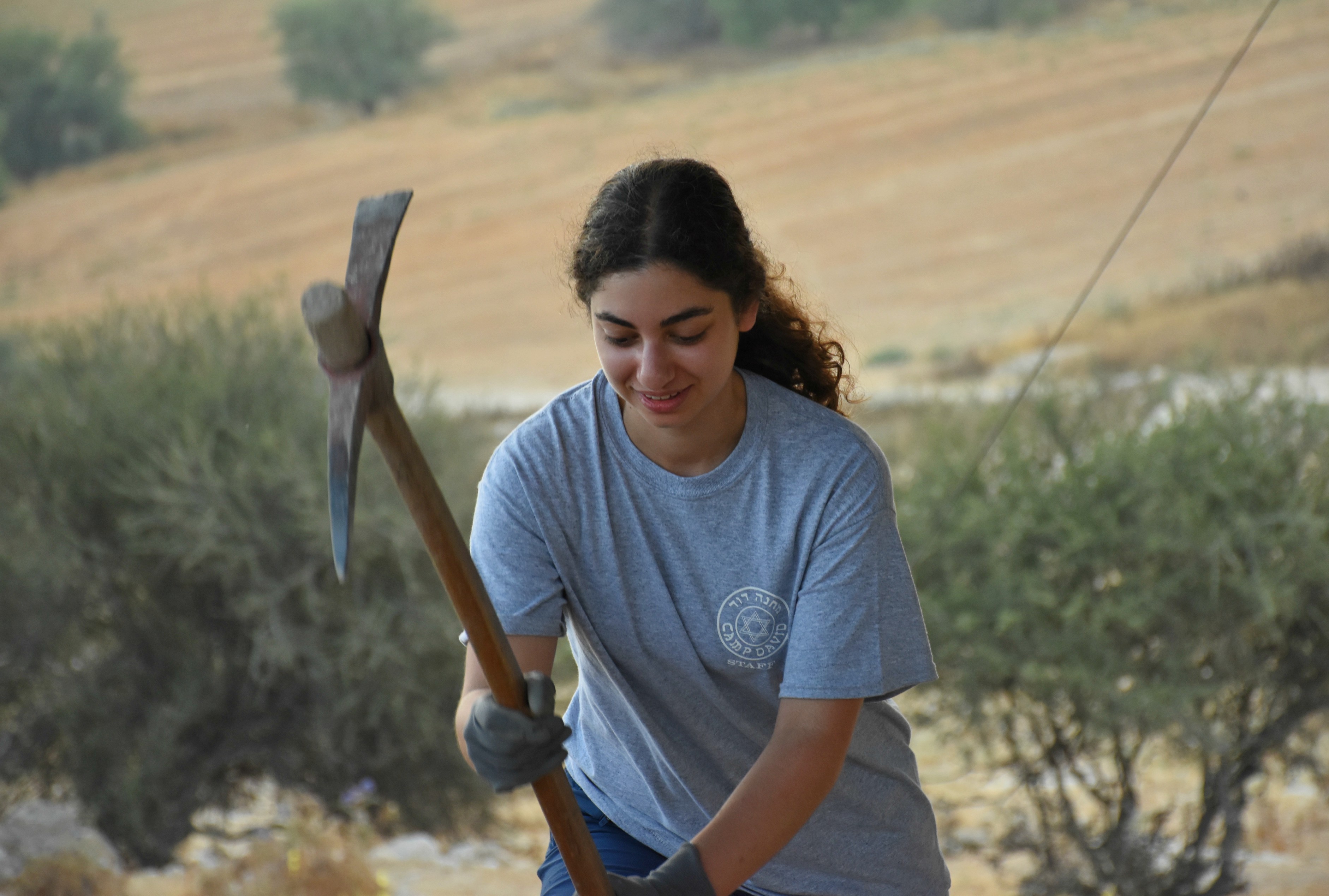
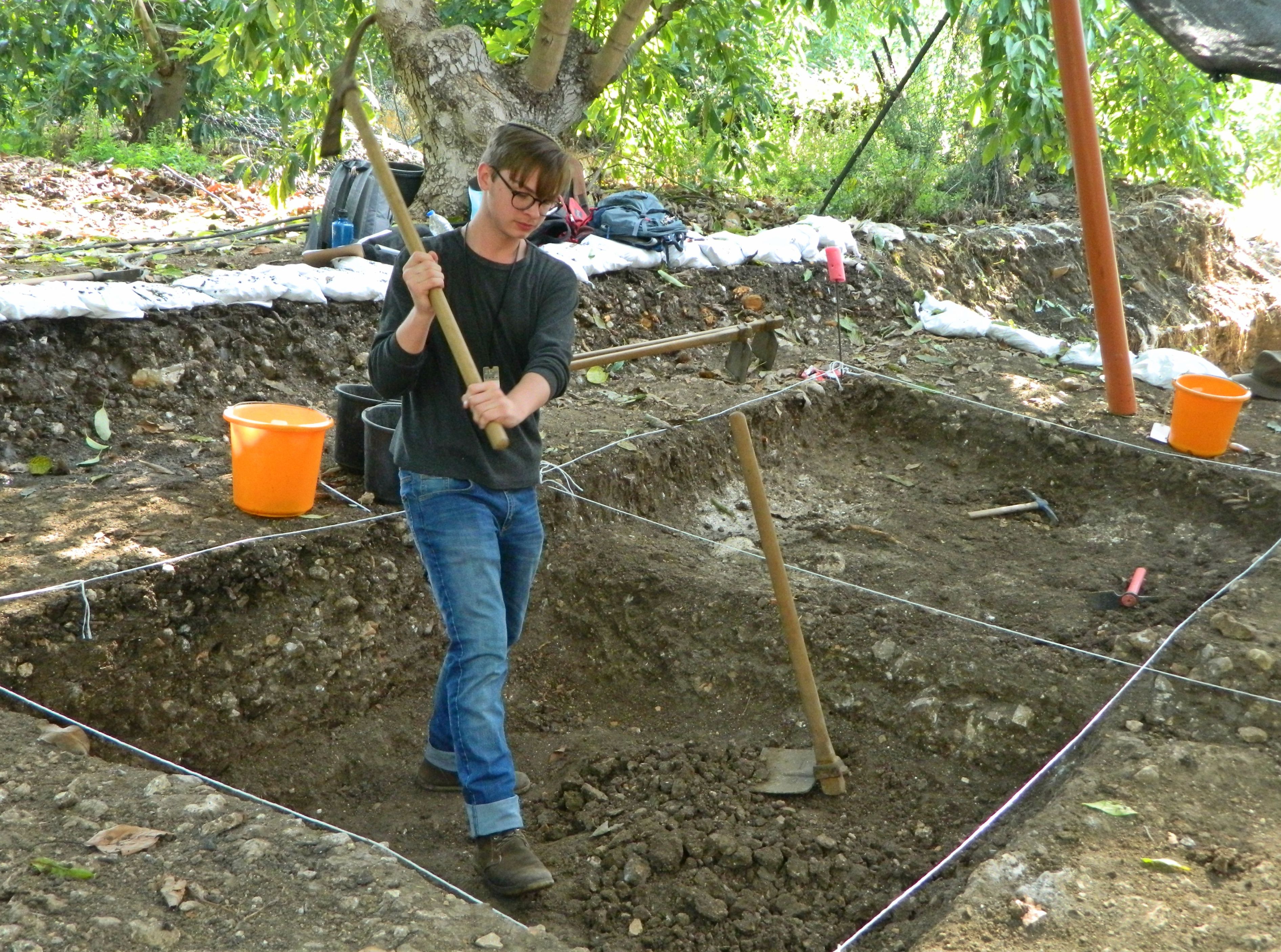
Rebecca with a pickaxe

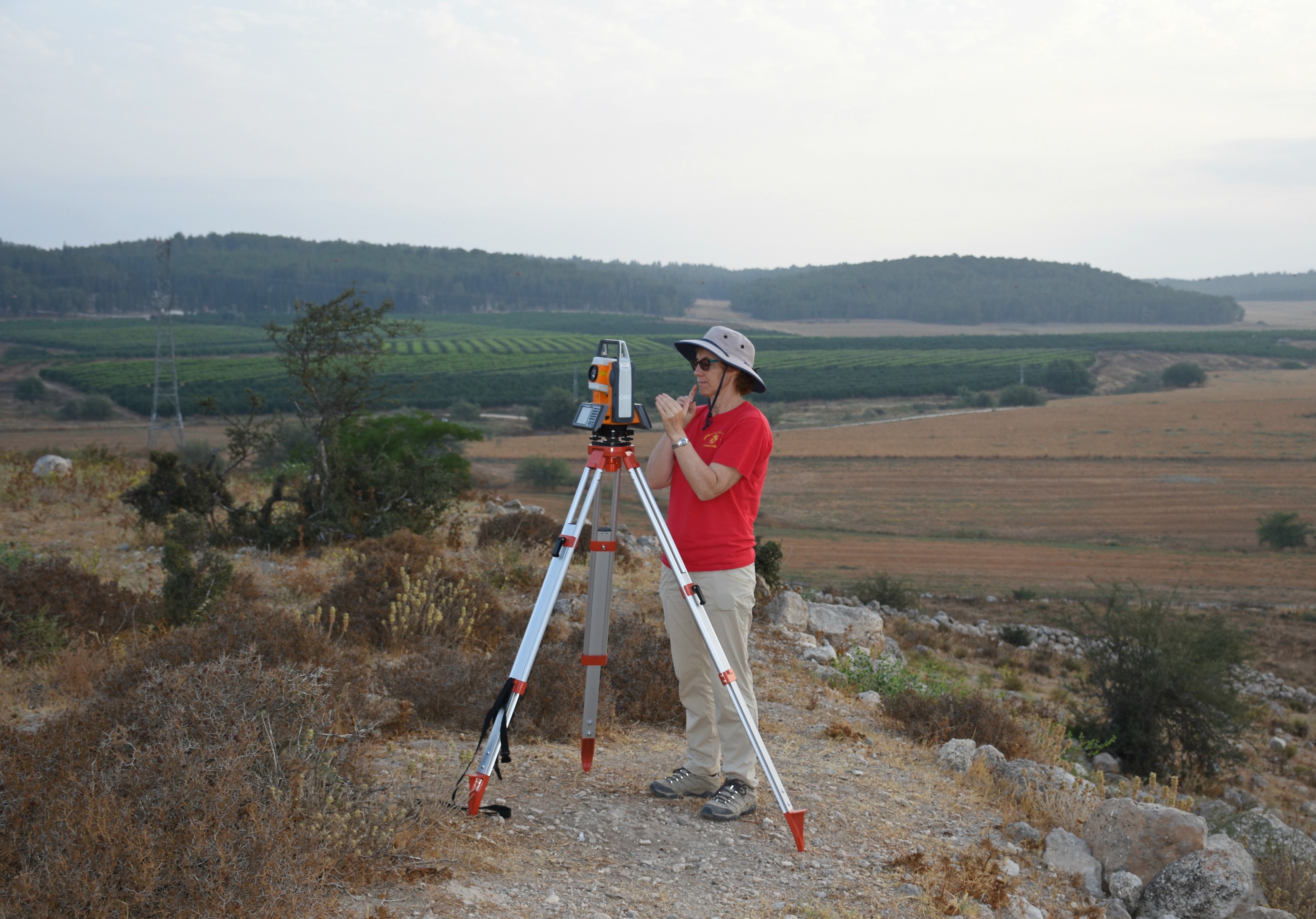
The morning began with Jill’s game plan briefing and, feeling updated, we got straight to work. From setting up the total station to read and register elevation points to clearing out the two squares, we started off on the right foot. Most days started exactly the same way, and we worked efficiently knowing what was expected as we progressed in the dig. The square that I supervised was named 100A and Itamar’s was 100C, side-by-side facing eastward.

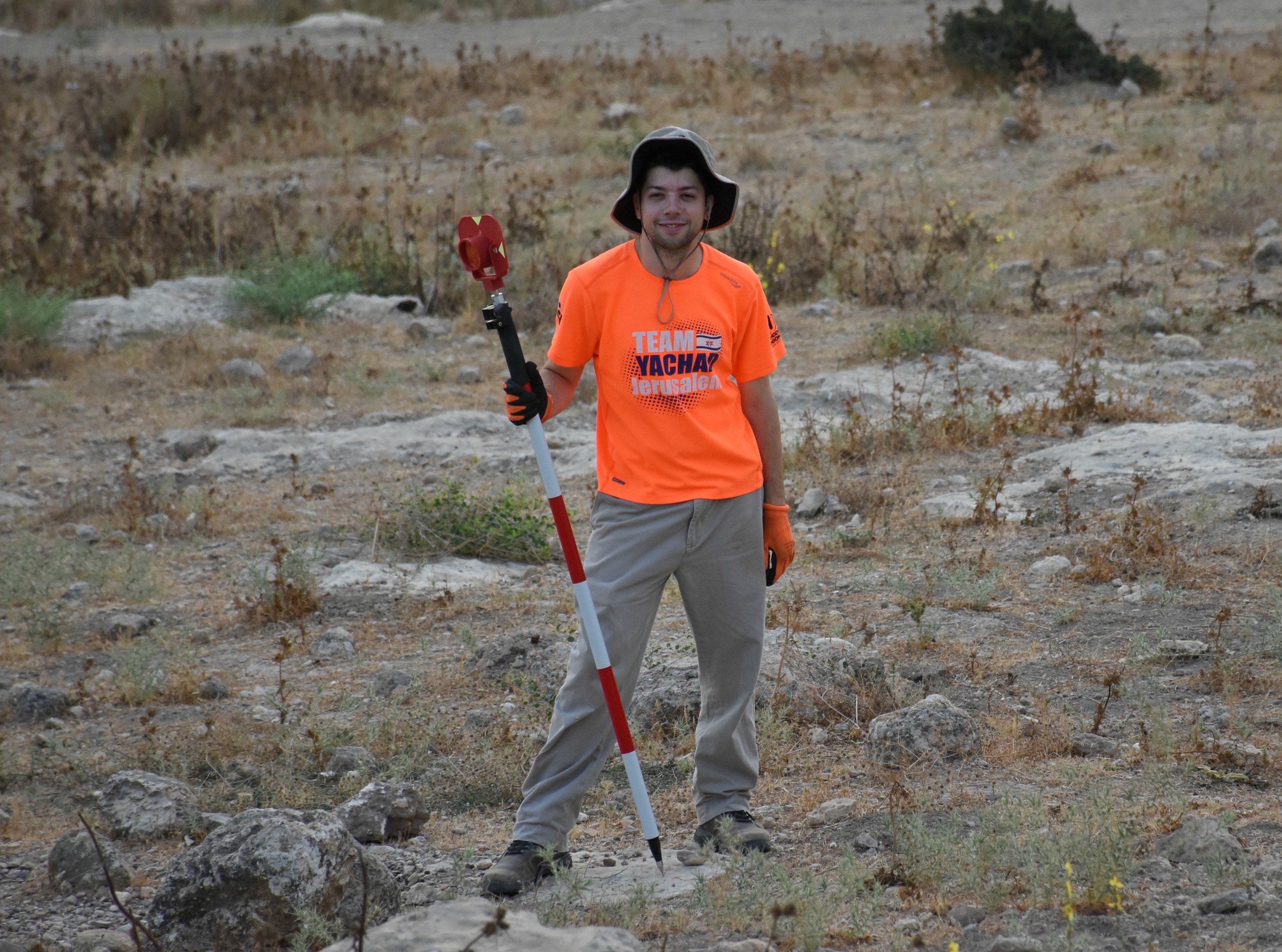
Moshe with the prism (photo Rebecca Zami)

One of the things that really excited me, especially during the first few days, was the incredible birding on the tel. I haven’t much experience exploring the Judean lowlands so I had the pleasure of getting to see some interesting birds (and reptiles) up close. I opened a note on my phone to keep track of the birds, and species that I’d never seen before, including European rollers, which have bright blue feathers, and the little owl which perched on the Bedouin fence below semi-regularly.

Photographing my first little owl

On a trip to the storage container some kilometres away I saw two more new birds: the great spotted cuckoo, which I tracked excitedly to a nearby tree to confirm identity, and a hobby, a small, dark type of falcon. Large flocks of jackdaws would fly overhead every morning and the large short-toed eagles would swing by every so often. In addition, there was a lone white-breasted kingfisher that made an appearance from time to time, and bunch of woodchat shrikes that would hunt from their perches on thorny bushes. Reptilian and amphibian sightings included a bold Schneider’s skink that lived near the breakfast shade, the dried up body of a blind worm snake and a green toad that a girl over at Area E found. All-in-all, rather exciting for a nature lover.

Short-toed eagle

The days came and went and, slowly but surely, we removed the topsoil of the upper sides of the squares, as we were working on a slope. Countless buckets were filled and poured into the trusty wheelbarrow, which, in turn, was dumped countless times over the small ridge just metres away. Every morning we delighted in watching the Bedouin feed his sheep and goats, and we learned to be wary of his attentive and protective dogs. We never failed to find amusement in listening to his donkey bray, the fun noise always ending so anti-climatically.

Itamar holding a piece of a Cypriot milk bowl (photo Suzanne Myburgh)

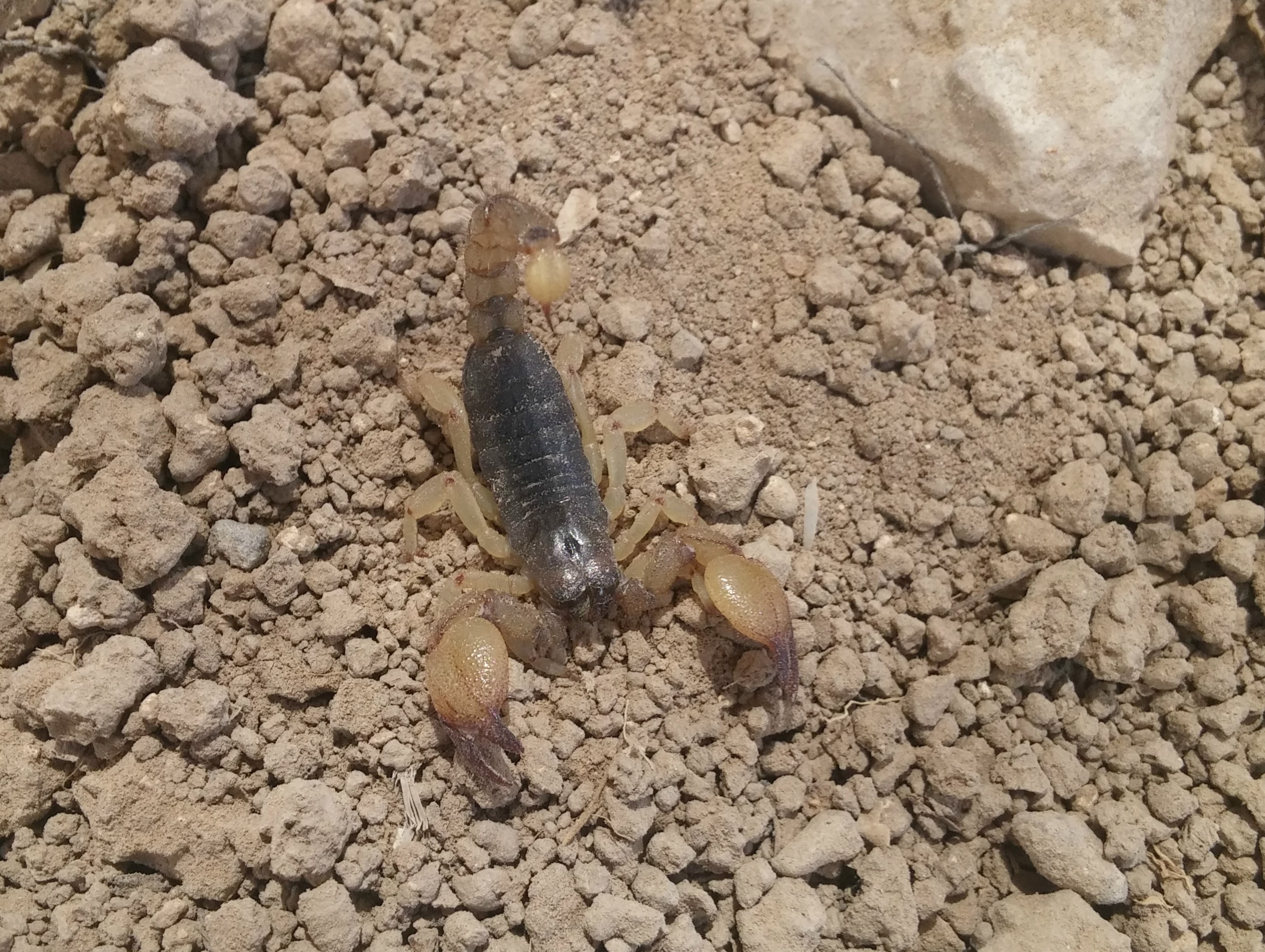
Within a few days, while working around a stubborn stump, we hit treasure – scorpions! When Aren swung by later that morning we told him that we found scorpions and, in response, he jokingly told us that we’d get a beer if we found twenty-five. Needless to say, we surpassed that goal and he came through with a six-pack of beer, which we enjoyed one evening at a special Area J “scorpion party”.

Israeli gold scorpion

The mornings were full of hard work and intense laughter; my square’s chemistry was truly astounding as we humoured ourselves senseless daily. At breakfast, taken just up the tel beside Area A, we’d take a break from the toil and hilarity as we’d feed on the offerings brought from Neve Shalom. Just to make things interesting, Prof Louise Hitchcock would call for breakfast to end with two quotes from The Ten Commandments, telling us “dogs” and “mud turtles” to get back to work. Not long after breakfast we’d have a fruit break, which usually consisted of watermelon and cantaloupe sliced up at Area E.

Suzanne hard at work (photo Jill Katz)

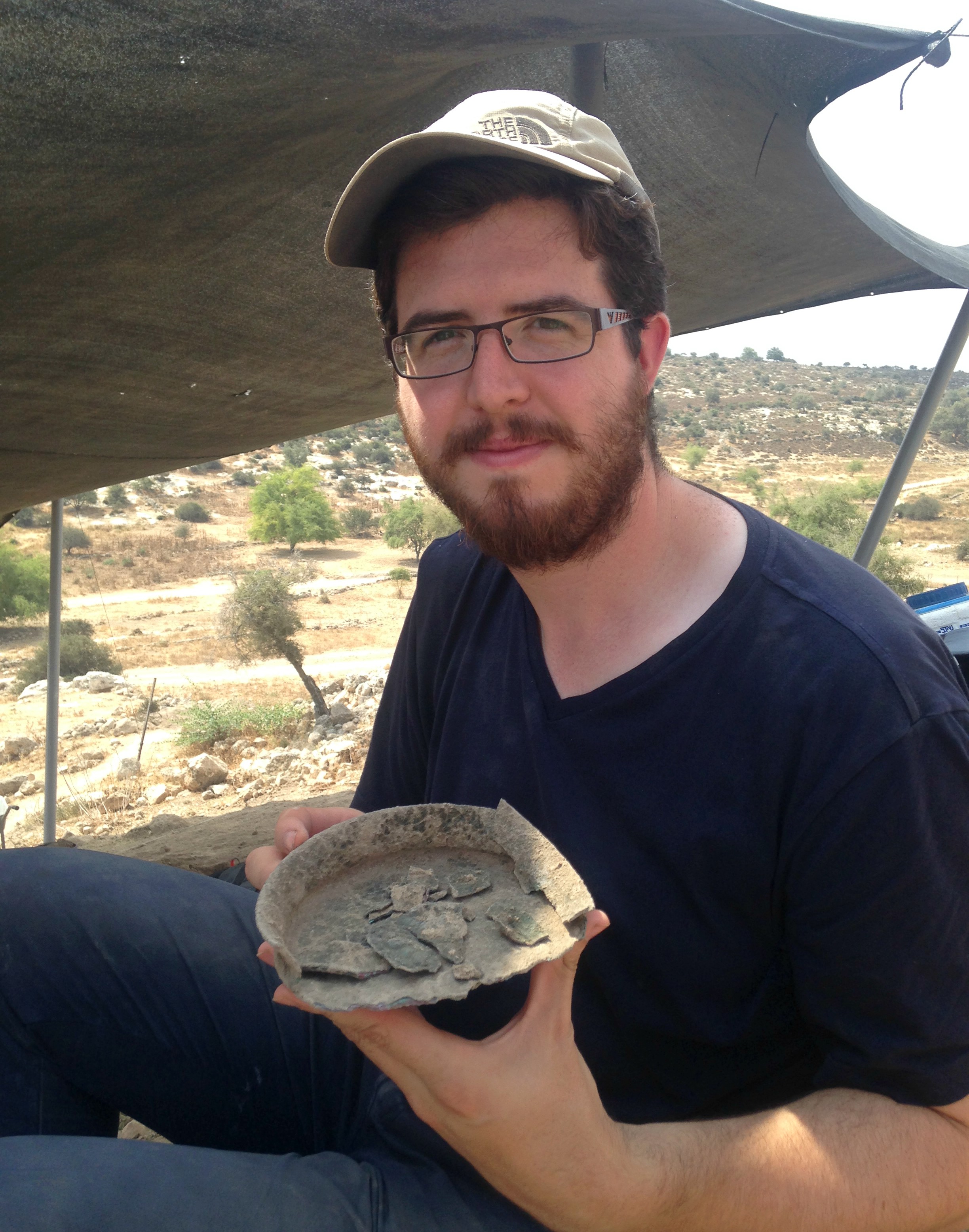
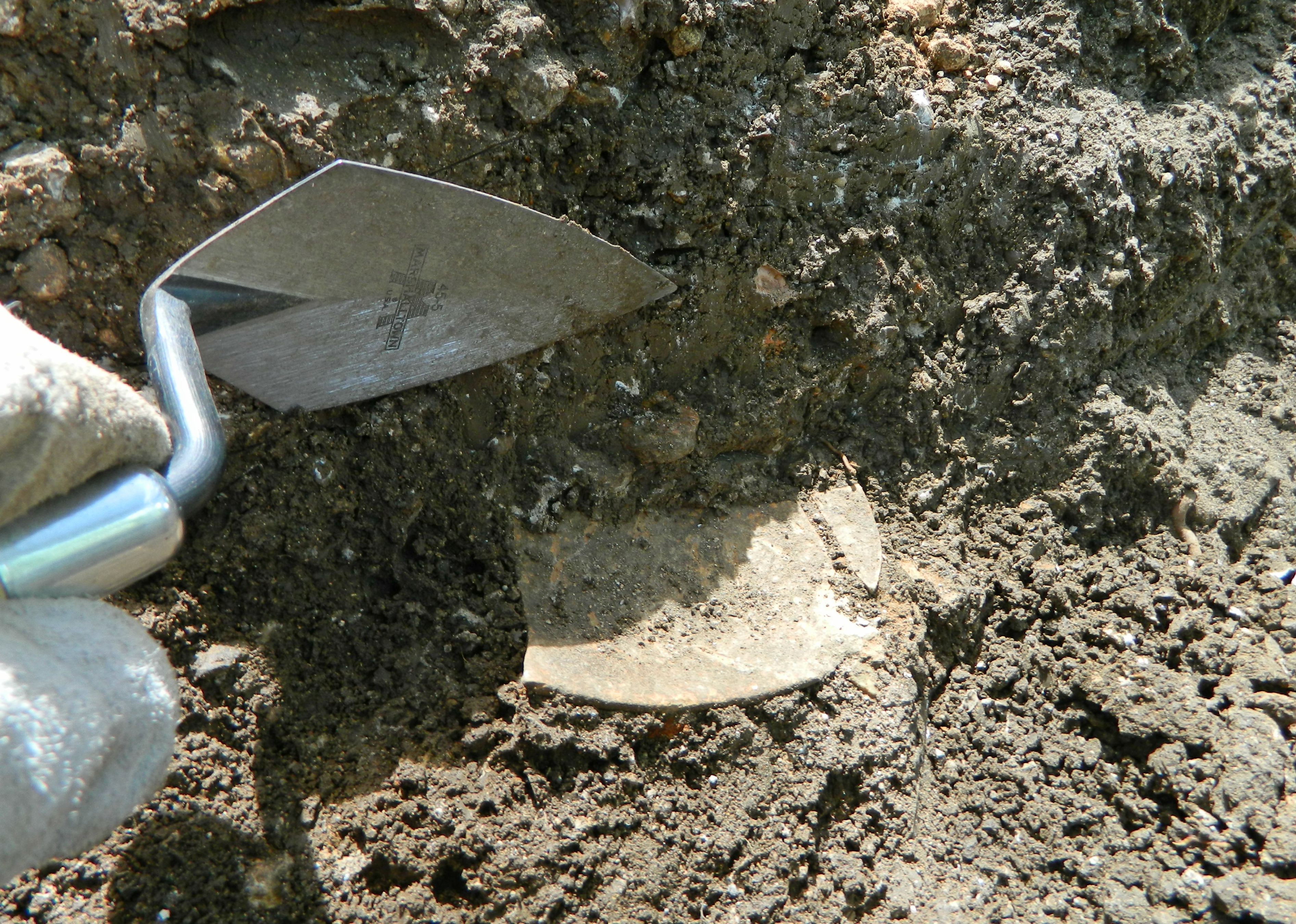
The end of the first week proved interesting as we went on a tour of the Stalactites Cave near Beit Shemesh (to be covered in a different blog post) and spent the night at Ramot Shapira in Beit Meir. The next morning, while scraping the dirt away to define the dirt shelf we had made to work our way down through the topsoil, I made an interesting discovery. My trowel struck metal and, working my way carefully around it, I realised that there was a vessel of sorts laying upright on its side. Because we were still not that far down, it was the general assumption that whatever we found was either modern or old but washed downhill and therefore out of context. So, assuming that it was modern, this largely-intact vessel was removed and examined. When Aren came over he examined the vessel and got visibly excited, telling us that it looks like an bronze bowl of Assyrian or Phoenician design from the Iron Age (3000 years old or so). It got even more exciting when we added that we found a metal disk of the same or similar material with a rosette motif the day before. After the fun in-field talk of ancient metal vessels, we carefully packaged the pieces as instructed and gave them over to Aren to take to a lab in Jerusalem later that day. I recently popped into the Tel es-Safi lab on campus to see if there’s any news on the bowl but, unfortunately, no word yet.

Posing with the bronze bowl (photo Aren Maeir)

With our first week ending on such a high, we were excited to return the next Sunday and be back on the tel early Monday morning. We were joined by a new member, Avraham from Brandeis University, a Safi veteran who was eager to be put to work. Continuing with our excavation, we had other swell finds such as a finger-shaped stone with a hole at the end, a metal pin of sorts and a ceramic spinning whorl. One thing that’s really cool about where we were digging is the huge amount of pottery, a lot of it interesting – with painted Philistine sherds all over, even on the surface. Due to the fact that we were excavating on a slope and had to clear away a huge amount of dirt, there was a lot of work that was pretty ho-hum, made exciting and fun by the incredible “J Crew” (as we sometimes called ourselves).

Meredith manning the sifter (photo Rebecca Zami)

Life back at Neve Shalom usually comprised of us eating heartily, washing/reading/writing on potsherds, fraternising with the other dig members, doing the paperwork of the day’s events in-field, preparing the next day’s top plan and occasionally visiting the pool. There was also a fun activity called “heavy fractioning” which involves sitting in front of a tray of sediment and having to pick through it with tweezers to remove valuable bits such as bone, shell, organic material. During my turn at heaving fractioning, we found a cool miniscule fish jaw complete with teeth and what I believe was a tiny black bead, which I unfortunately lost when I squeezed my tweezers just a tad too much.

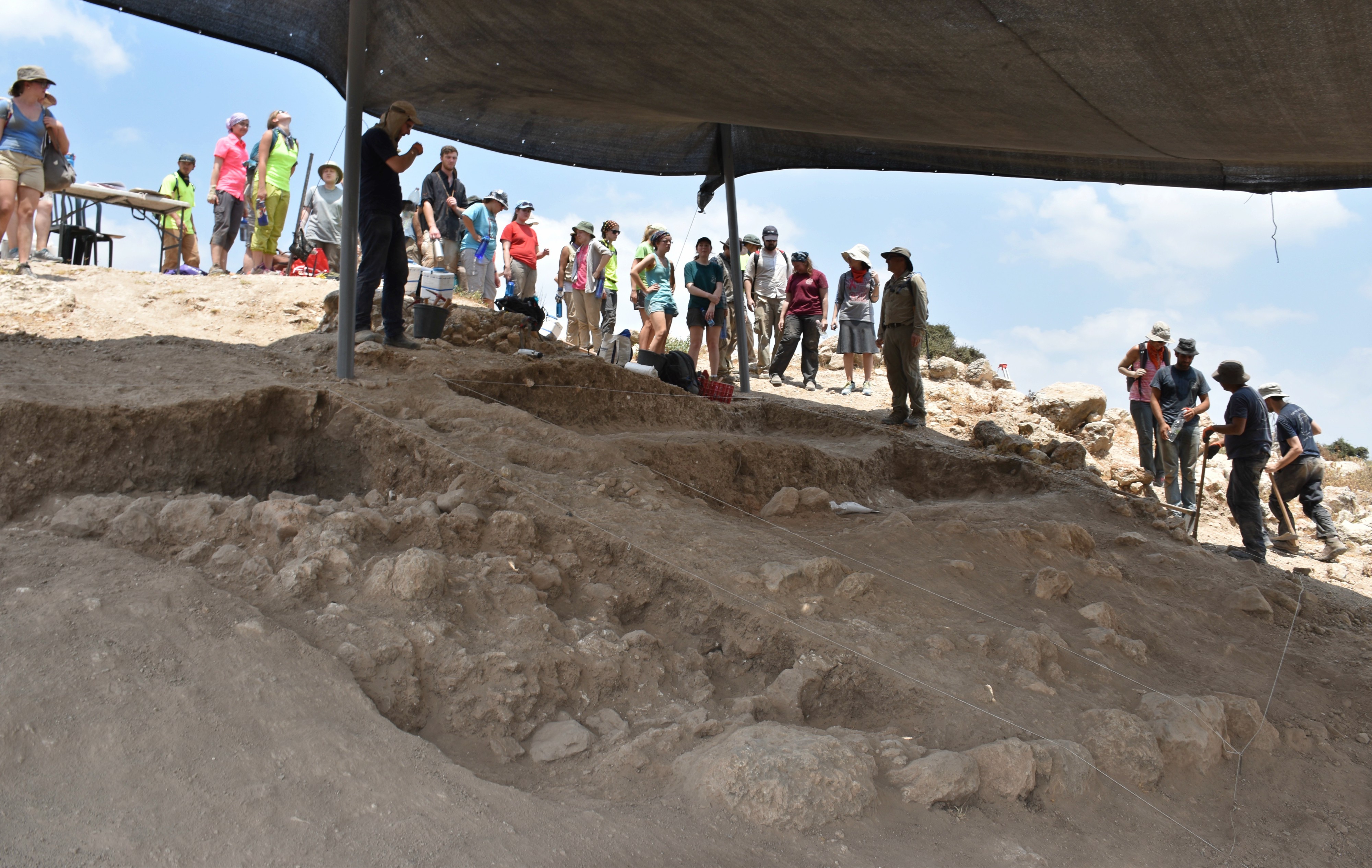
Weekly tel tour visitors (photo Rebecca Zami)

The rest of the second week went by quickly and, towards the end of it, we had a farewell party for Meredith and Suzanne who were leaving us. We gave them a parting gift of a discarded potsherd signed by the other “J Crew” members for them to take back to New York and South Africa, respectively. The dig was then halfway over with, but we had two new members coming for the third week and we were excited. To be continued…

Tel Kabri Archaeological Dig

In Galilee, Israel on August 20, 2017 at 7:12 AM

The Monday following my trip to the City of David I found myself back home in Ma’alot and excited for a day at the Tel Kabri Archaeological Dig. My own month-long dig at Tel es-Safi was to start the following week, classes were ending – the timing couldn’t be more perfect. Being that Tel Kabri is just a few minutes from the Mediterranean Sea along Road 89, it was just a few minutes away by car and, even with getting lost and confused, my brother Nissim and I arrived at the dig site unscathed and ready for adventure.

Tel Kabri Archaeological Dig (photo Griffin Aerial Imaging Ltd Skyview Photography Ltd.)

We were greeted by Prof Eric H Cline of George Washington University and other members of the staff and were then introduced to the site. First settled in prehistoric times, the city’s original name is still unknown and eventually became known as Rechov (perhaps one of two cities in the region with that name) under Canaanite rule. The Tel Kabri palace, which was recently discovered, dates to the Middle Bronze era and is the largest of its kind in Israel. Two things that are particularly interesting are the Minoan-style fresco fragments (which indicate cultural influence at such an early age) as well as the vast wine cellar that was found a few years ago. Fast-forward to the Roman era and the city became known as Kabrita which then became el-Kabira in the Early Arab period, names becoming naturally corrupted over time. El-Kabira morphed into al-Kabri, and, in 1949, an Israeli kibbutz by the name of Kabri was founded nearby.

Excavation underway

Today the Canaanite palace and surrounding ruins that have yet to be excavated are surrounded by an avocado plantation. To the northwest is Achziv and Rosh HaNikra and to the southwest is the magnificent port city of Akko and Haifa, all fascinating sites. Finished with our little tour of the dig area, we were introduced to Jim, our to-be square supervisor. He provided us with the necessary tools to work – pickaxes, hoes and trowels – and we settled in the far northwestern corner of the dig site which is named Area D-west Square 1.

Nissim digging away

Our task was a simple one that day, to deepen the square so that it was as deep as the adjacent one. In archaeology it’s important to work on a level plane, so that everything is potentially uncovered at the same time instead of random pits here and there. Due to the fact that the dig site is located in an avocado plantation, the ground is damp from the irrigation and the digging was more or less pleasant.

Scraping away at the baulk for the potsherd

We found small amounts of pottery which went into the specially-marked pottery bucket, as well as a bone fragment, which was placed in Jim’s “schwarma bag” – a cute name for the small paper bags obtained at Israeli street food joints. The bag was properly labeled and in went the bone. Similar procedures were taken to secure flint and shell fragments found in the dirt.

Bag o’ bones

Apparently, on the very first day of the season, an Ottoman coin was found in an adjacent square but unfortunately we found no coins that day. Our square partners, McKay, MJ and Russell, helped pass the time making the labour fun with interesting discussions and funny jokes. The general atmosphere at the dig was very jovial and humourous despite the humid heat, with trance music playing in the background for our enjoyment. Then, when least expected, the call for the bucket brigade would sound out and diggers would form lines outside the dig area bringing full buckets with them. When the buckets of dirt to be discarded became overwhelmingly numerous it was deemed that having a unified effort to dispose of them would be best for morale and efficiency. Thus, the bucket brigade would form and full buckets of dirt would be thrown down the assembly line of diggers until it reached the large dirt hill where the dirt was dispensed.

Awaiting the bucket brigade

Breakfast came and went, as did the fruit break and a surprising moment when staff members appeared out of the trees armed with waterguns and sprayed the sweaty dig crew to liven them up. I was left unsprayed, but my own sweat kept me lively enough. I made contact with the small group of Israelis, led by Dr. Assaf Yasur-Landau of Haifa University, and spoke to them for a bit about matters of academia and archaeology. Other dig members proved to be interesting as well, and the time flew by. It wasn’t long before the dig day was coming to an end and we cleared away all the tools.

Nissim within the square

While we hadn’t found anything too exciting that day, we succeeded in taking the square’s height down a wee bit which would be of help in the following days. We packed up our bags and bid farewell to Eric, Assaf, Matt (our area supervisor), Jim and the others, driving back out of the avocado plantation.

Avocado

The sun was still high in the sky and I still had energy for more adventure so we turned into a small collection of interesting sites just across Road 70. Parking the car under some eucalyptus trees, we got out into the heat and made our way to the ruins of an old flour mill, powered by water channeled in via a small aqueduct which is still preserved.

Old flour mill

We then walked along the aqueduct until we reached the old local Muslim cemetery where painted vehicle hulls are displayed. In 1948, during the War of Independence, the members of Kibbutz Yehiam were holed up and surrounded by Arab forces, in desperate need of support. Supplies and reinforcements were scheduled to be driven in from the Haifa area – yet disaster loomed. Arab forces were waiting in ambush at this cemetery and opened fire on the incoming convoy, effectively stopping it and killing forty-seven Haganah members. We examined the vehicles, even entering one, and then returned to our car to drive back home. Nissim ended up returning to the dig for the remainder of the season, having the time of his life, but I headed back to Givat Shmuel and then to my own university’s excavation, the Tel es-Safi Archaeological Dig. Additional information about the dig and participation options can be found on the Tel Kabri website, found HERE.