Israel's Good Name

University Trip: Northwest Negev

In Israel, Negev on December 18, 2016 at 1:44 PM

Two week ago, on Wednesday, I had an exciting day brewing my first beer – a slightly smoked stout – with my friend Ben from university. Riding on that high come Thursday morning, we then headed off on a university trip to several sites in the northwest region of the Negev led by Dr Shawn Zelig Aster. The first order of business after a quick stop at Beit Kama junction was a lookout across the road from Rahat, the large Bedouin city in the Negev.
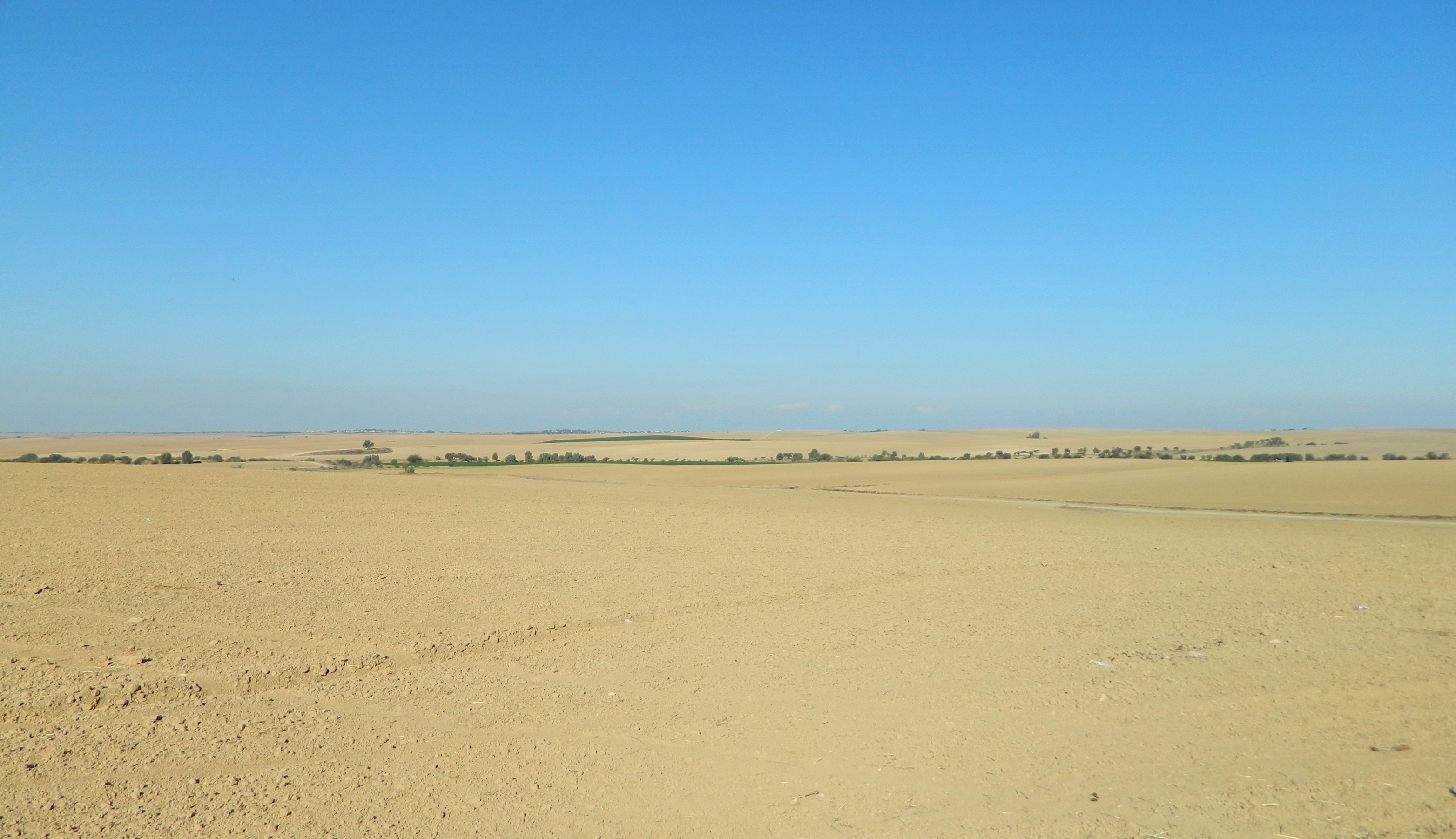
Contrast of yellow dirt and blue skies

Contrast of yellow dirt and blue skies

The tour bus took a nice dirt road to the edge of a field, located not far from the old British Rider Police Station which I visited in the post The Negev: Roadside Attractions. From there we had a view of Tel Sera in the distance, an ancient Egyptian, Philistine and Israelite site of mostly agricultural importance, as well as its proximity to Gaza, a major coastal city. Looking about at the expanses of yellow dirt, I spotted movement off in the distance and it wasn’t long before I had a crested lark on the screen of my camera. Next, a darkling beetle made an appearance and the reassuring presence of black kites wheeling overhead – a common sight.
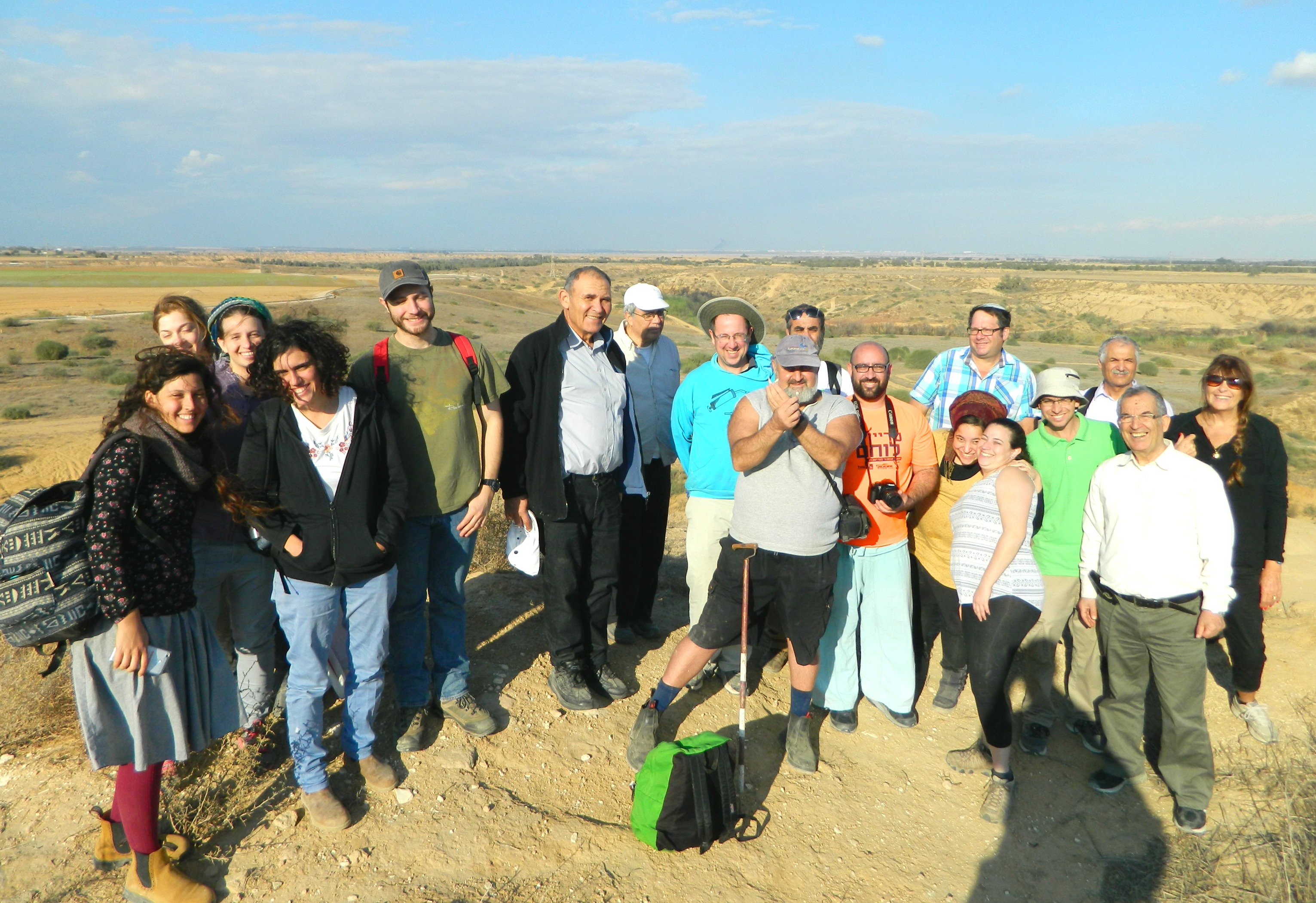
Group photo

Group photo

Moving on, we then pulled into a dirt road on the far side of Tel Sera for get a lay of the land and then crossed Road 25 to enter KKL/JNF’s Nachal Gerar park where we walked to the next tel on our list (a tel being an archaeological mound of layered human settlement). As I’ve become more and more interested in birding, my eyes scanned the area as I spotted various species in Nachal Gerar including stonechats, a Syrian woodpecker, a great tit, my first ever black redstart and some sort of sandgrouse in flight, to name just the highlights.
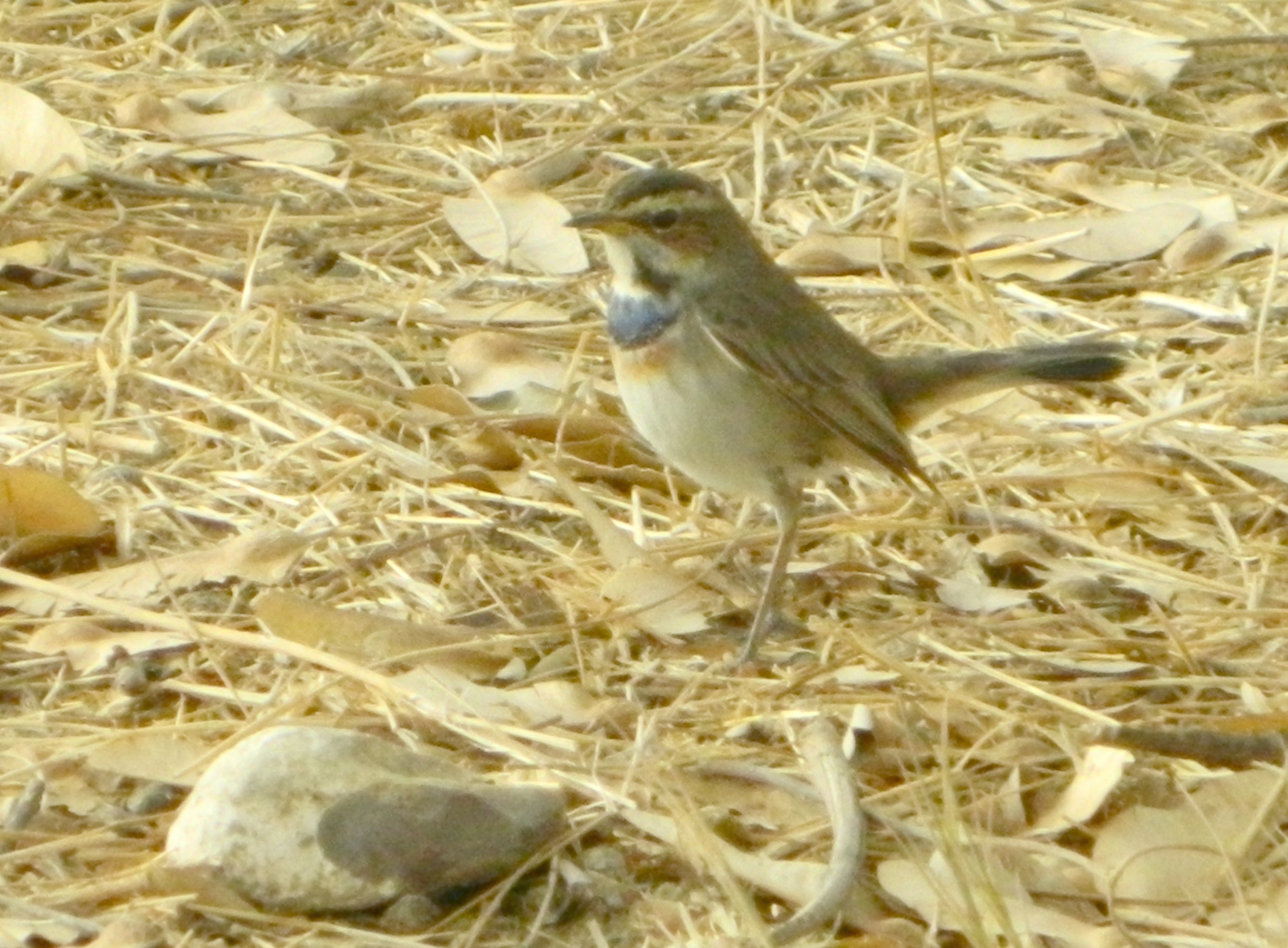
Bluethroat

Bluethroat

Getting back to the archaeological aspect of the trip we climbed up Tel Haror, a Bronze Age site which also goes by the names Tel Abu Hurairah (literally “Father of the Kitten”) and the famous Biblical Tel Gerar, a story of well-digging and Philistine peace pacts. The remains of a mud-brick temple, built some 3500-4600 years ago, have been uncovered for humanity’s viewing pleasure.

Mud-brick wall at Tel Haror

Mud-brick wall at Tel Haror

Atop the hill is the remains of a recently-destroyed mausoleum believed by the local Bedouins to be the grave of the aforementioned Abu Hurairah, a companion of Islam’s Muhammad; buried around the site are the unmarked graves of Turkish soldiers who fell in battle during WWI.

Tel Sharuhen

Tel Sharuhen

Heading back down to the bus, we were then driven to Nachal Besor, a park with a Jurassic Park feel to it in terms of flora and topography. With Tel Sharuhen (or Tel el-Farah) being our next destination, we drove through the alternating lush streambed and the sandy badlands of Nachal Besor for ten minutes or so, a rather bumpy ride. At last we arrived at the foot of Tel Sharuhen and I spotted a bird far off perched atop a bush – a great grey shrike.

Your humble servant (photo Ogen Drori)

Your humble servant (photo Ogen Drori)

We read about the ANZAC trail named after the Australian and New Zealander troops who, during WWI, traveled this route on their way to conquer Be’er Sheva and then Gaza from the hands of the Ottomans. Finished with the recent history, we climbed the tel to learn about the ancients: Canaanites, Egyptians and Israelites.

Remains of what might have been the city gate

Remains of what might have been the city gate

Partway up the hill, remains of what seems to be the city gate area constructed of mud bricks is clearly visible. At the western end of the tel is some remains of another structure of mud bricks partially buried in the dirt. A bit of scratching around at a burnt corner revealed interesting findings: broken animal bones and pieces of flint which were likely used to cut meat, remains of an ancient kitchen frozen in time.

Ancient kitchen at Tel Sharuhen

Ancient kitchen at Tel Sharuhen

It was there that we tasted from the saltbush identified by one of the members of our party. At the northern end of the tel, a great expanse of interesting land including loess badlands was to be viewed and appreciated.
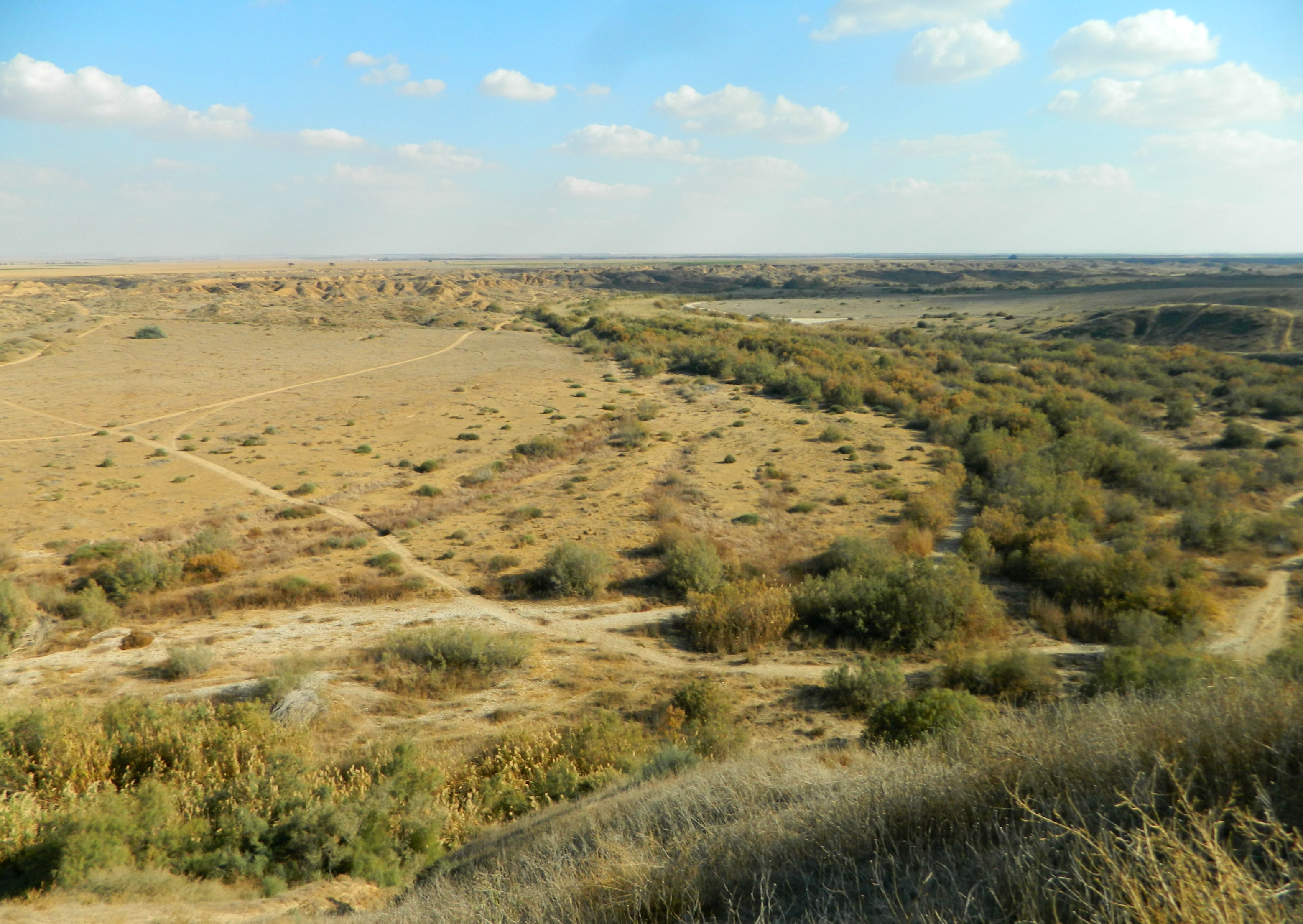
Nachal Besor

Nachal Besor

Whilst walking atop the tel, the broken rim of a carved stone vessel caught my eye and when I took it to experts at BIU the following week, I was told that it might very well be from the Second Temple period (2,000 years ago) – a fun find!
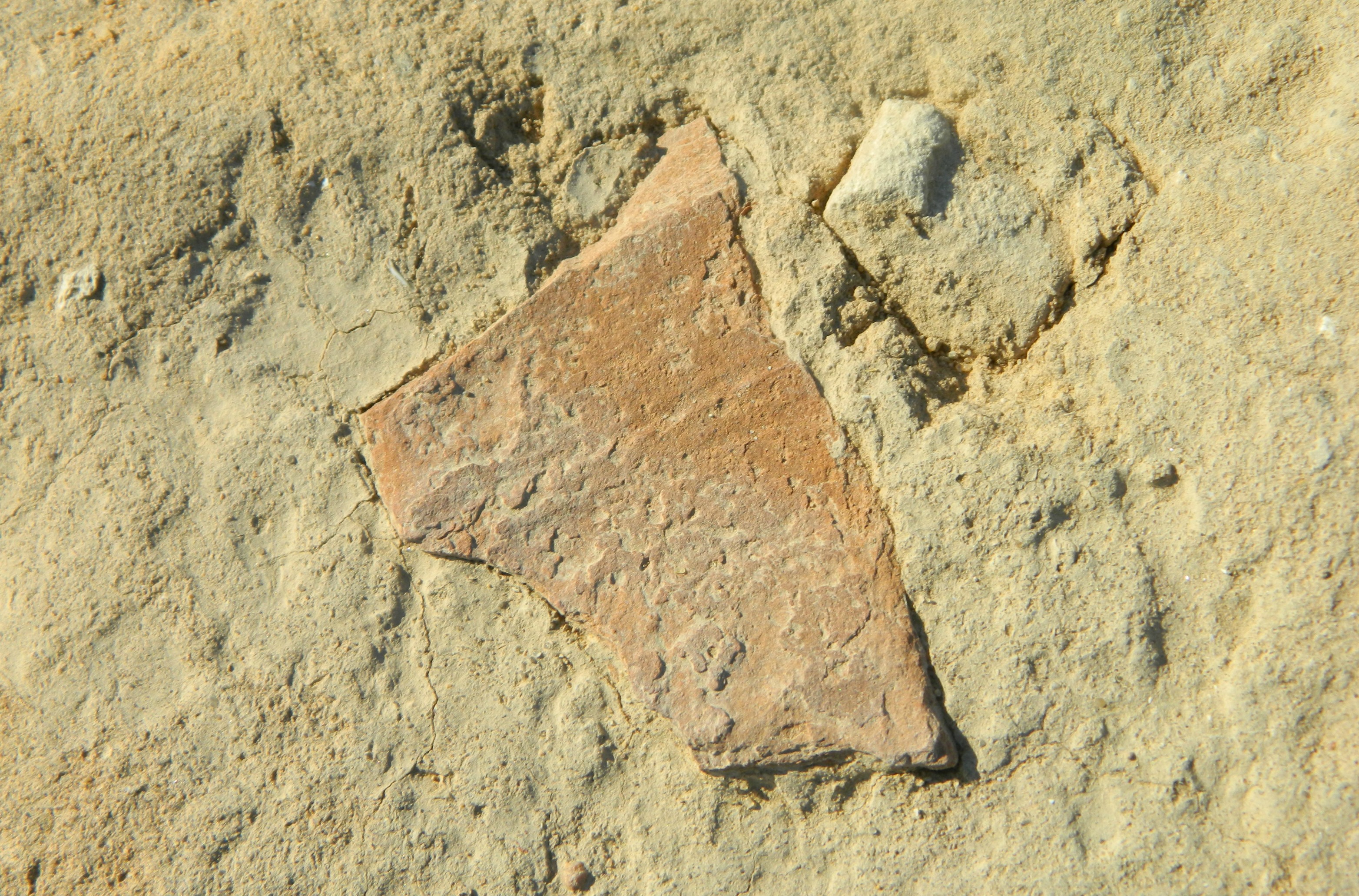
Potsherd stuck in the dirt

Potsherd stuck in the dirt

As exciting as our finds were, there was a schedule to keep and so our bus took us to our final destination: Tel Gamma (or Tel Jemmeh). Located just three kilometres southwest of where I stationed as a soldier during Operation Protective Edge (see blog post HERE), it was an unusual feeling revisiting the area under such different circumstances.

Stormy skies

Stormy skies

With storm clouds darkening the skies, we hurriedly climbed the steep tel and surveyed our surroundings, including Nachal Besor to the north.
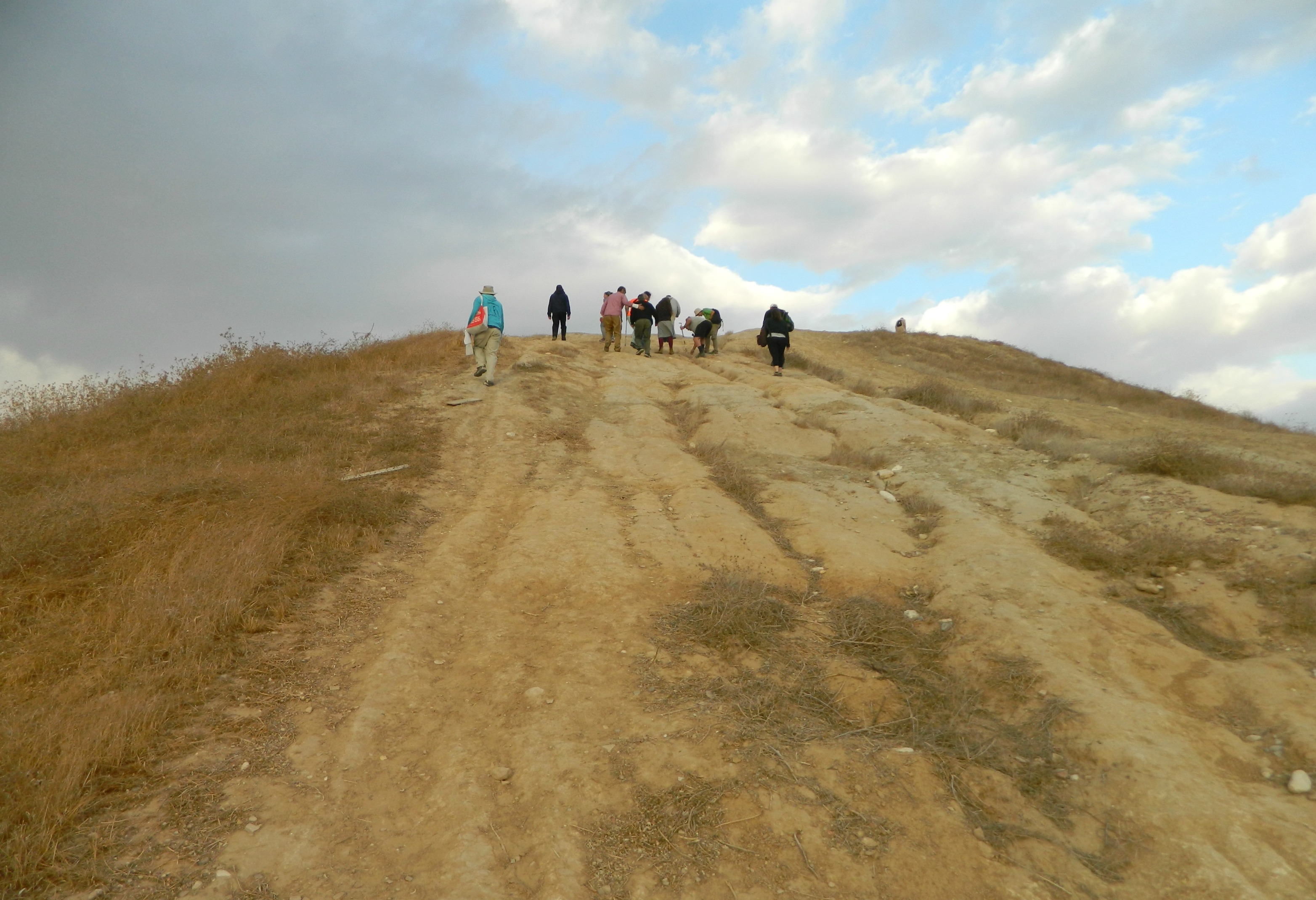
Tel Gamma the Steep

Tel Gamma the Steep

Archaeological digs uncovered remains that pointed to the Egyptians, Philistines and even the Assyrians who conquered the area some 2,700 years ago. With broken pieces of ceramic vessels and bones littering the excavated area, we couldn’t help but give the burnt wall area a quick surface scratching, revealing some rather large and impressive bones.

Wall-scratching at Tel Gamma

Wall-scratching at Tel Gamma

At last rain began to trickle down and so we headed back to the bus, our tour of the northwest Negev coming to an end. Just to recap, these were ancient cities that were mostly abandoned long, long ago – before the time of Alexander the Great, to give perspective. Also, to simplify my narrative of our trip, there are many interesting historical and archaeological anecdotes that would delight some readers, but, alas, I aim to keep all readers adequately entertained.

Raindrops on the window

Raindrops on the window

With that been said, there is little material evidence of the cities’ prior glory and might to be seen with the naked eye; it takes a bit of imagination to envision what these sites once were.
University Trip: Tel Azeka & Khirbet Qeiyafa

In Israel, Judea on November 27, 2016 at 6:51 AM

Just over a week ago, the Land of Israel and Archaeology department of Bar Ilan University launched its first “academic tour” of the semester, and I tagged along enthusiastically. Our destinations were two predominantly Biblical (Iron Age) sites in the Judean foothills: Tel Azeka and Khirbet Qeiyafa. Leaving the university campus in the morning via minibus, we took a brief pit stop at Elah Junction before continuing on to our first site, Tel Azeka located in Park Brittania.

Hellenistic palace of Tel Azeka

Hellenistic palace of Tel Azeka

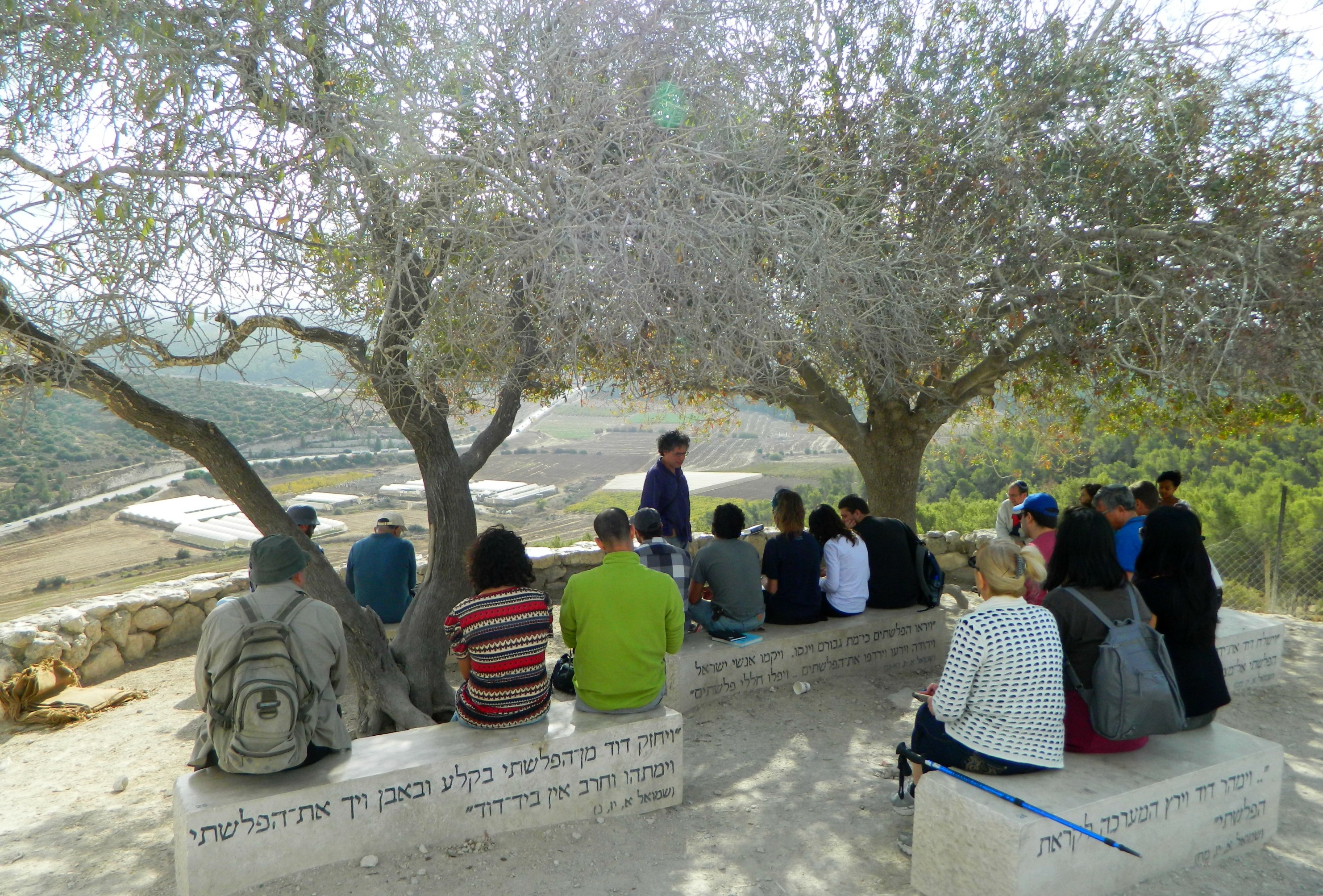
Parking at the foot of Tel Azeka, we walked up the large mound from the south and crossed it to the eastern side, stopping under the Pistacia trees at the David and Goliath Lookout to enjoy the view of Emek HaElah (or, Elah Valley) where the legendary battle between David and Goliath took place.

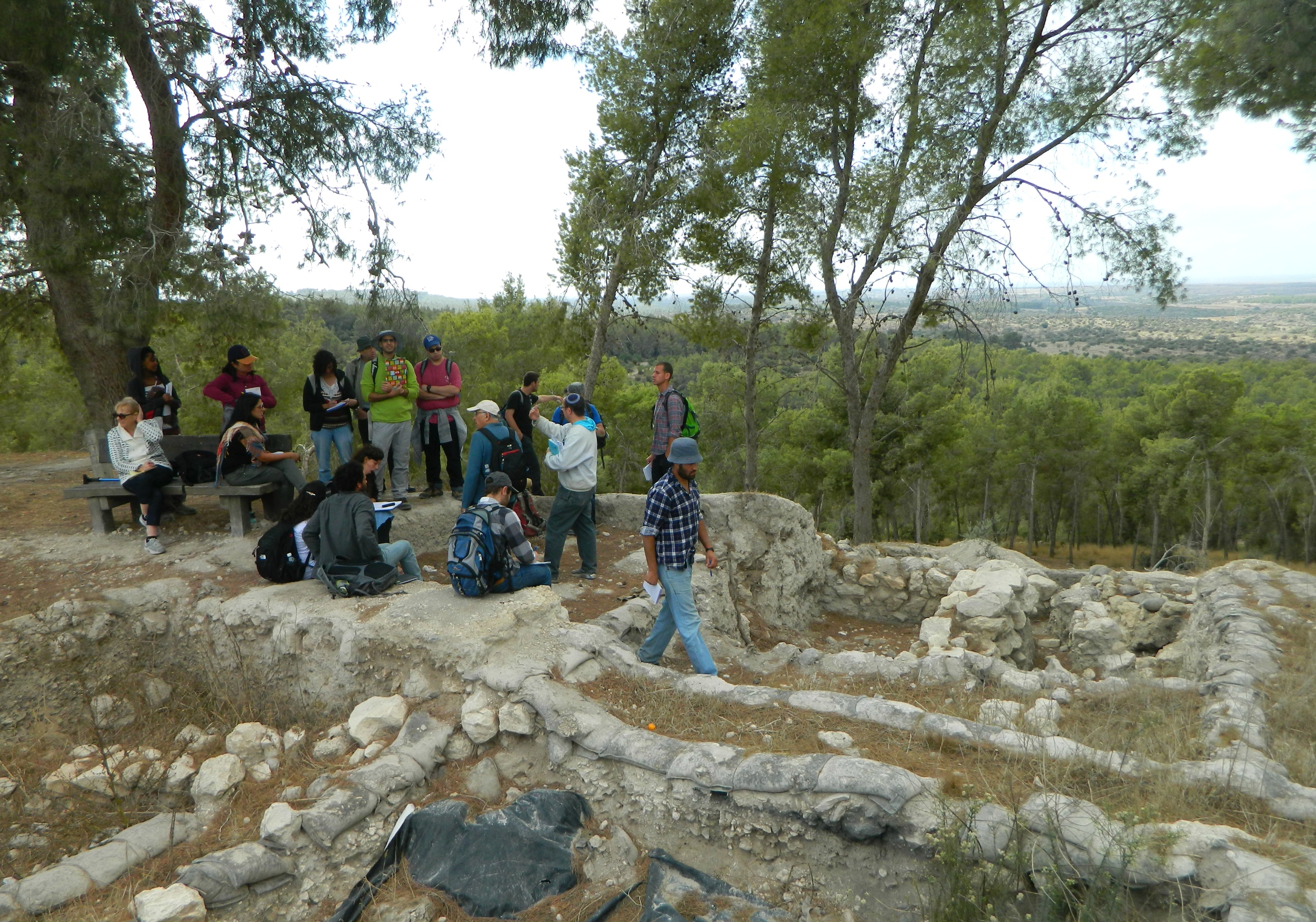
Listening to Dr Oren Ackermann at the David & Goliath Lookout

Listening to Dr Oren Ackermann at the David & Goliath Lookout

The first order of the day was an overview of the area from a topographical perspective, delivered by Dr Oren Ackermann. With the help of field maps and a compass or two, we were instructed in the many ways of topography, navigation and geographical orientation. As we sat in the shade I kept an eye out for wildlife down below – I was rewarded with sightings of a European robin, stonechat, kestrel and a whole lot of noisy Eurasian jays at Tel Azeka alone.

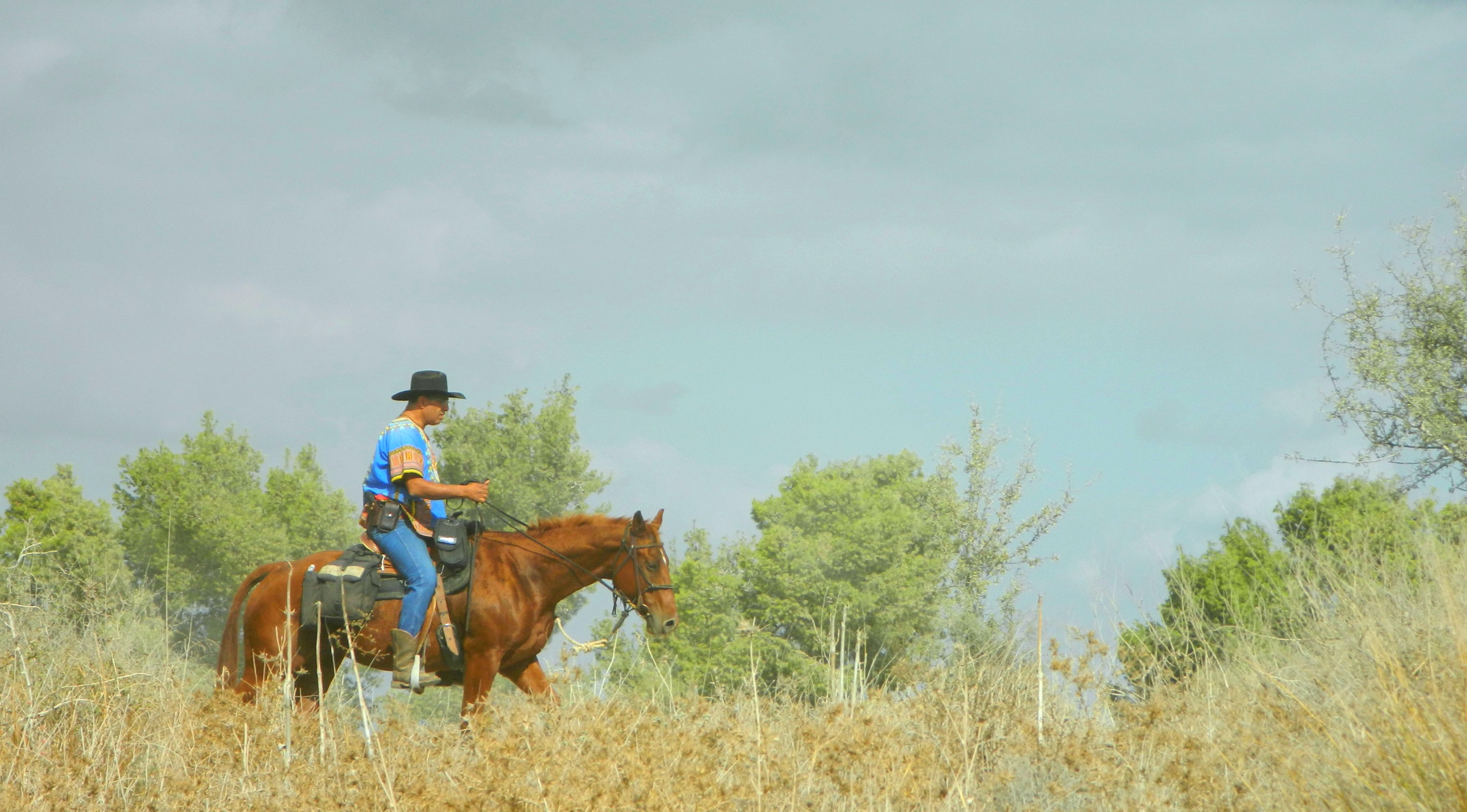
Unidentified horseman

Unidentified horseman

A brief history of Tel Azeka: First inhabited some 3500 or so years ago, the site is first mentioned in Biblical sources as a city conquered by Yehoshua (Joshua) – an epic tale involving hailstones and slaughter. Later, Azeka is mentioned as being part of the Israelite fortress line defending against the Philistines from the southwest. Being as that Emek HaElah is the natural entry-point into the Judean foothills region, hilltop cities were built and fortified to repel invaders. However, these bastions didn’t stop Sennacherib and his Assyrian army from conquering the Israelite cities all the way up to Jerusalem, including Azeka. The next superpower, the Babylonians, laid siege on Azeka and conquered it shortly before laying waste to Jerusalem. With the Jewish return to the Holy Land in the Persian period, Azeka was rebuilt and resettled, undergoing a name change in the Byzantine era; from Azeka to Caper Zacaria. Sometime thereafter the city was abandoned and fell to ruins, only to be discovered by PEF surveyors and archaeologists in the late 1800s. Over one hundred years later, archaeologists from Tel Aviv University began modern excavations – the next dig season set for July 2018 (see HERE).

Listening to Dr Shawn Zelig Aster at the Assyrian siege batteries

Listening to Dr Shawn Zelig Aster at the Assyrian siege batteries

Returning to the narrative, we then stepped over the edge of the lookout to examine the unusually steep Assyrian siege batteries excavated out of the gravelly sides of the tel. From there we headed to the southern side and looked at the old city wall ruins of the Late Bronze to Iron Age period, before Israelite reign, under the shade of tall pine trees.

Late Bronze-Iron Age dated city walls to the south

Late Bronze-Iron Age city walls to the south

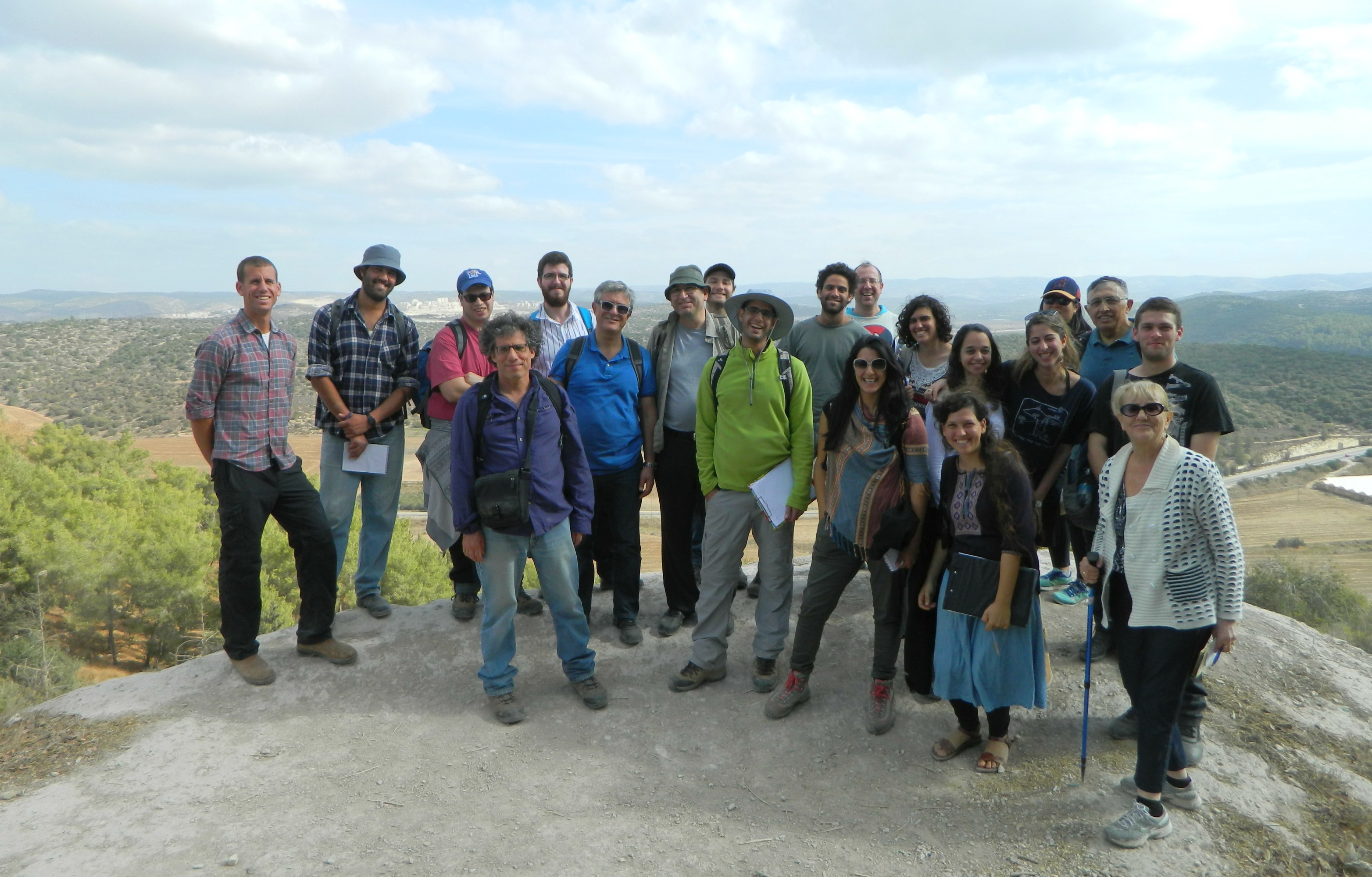
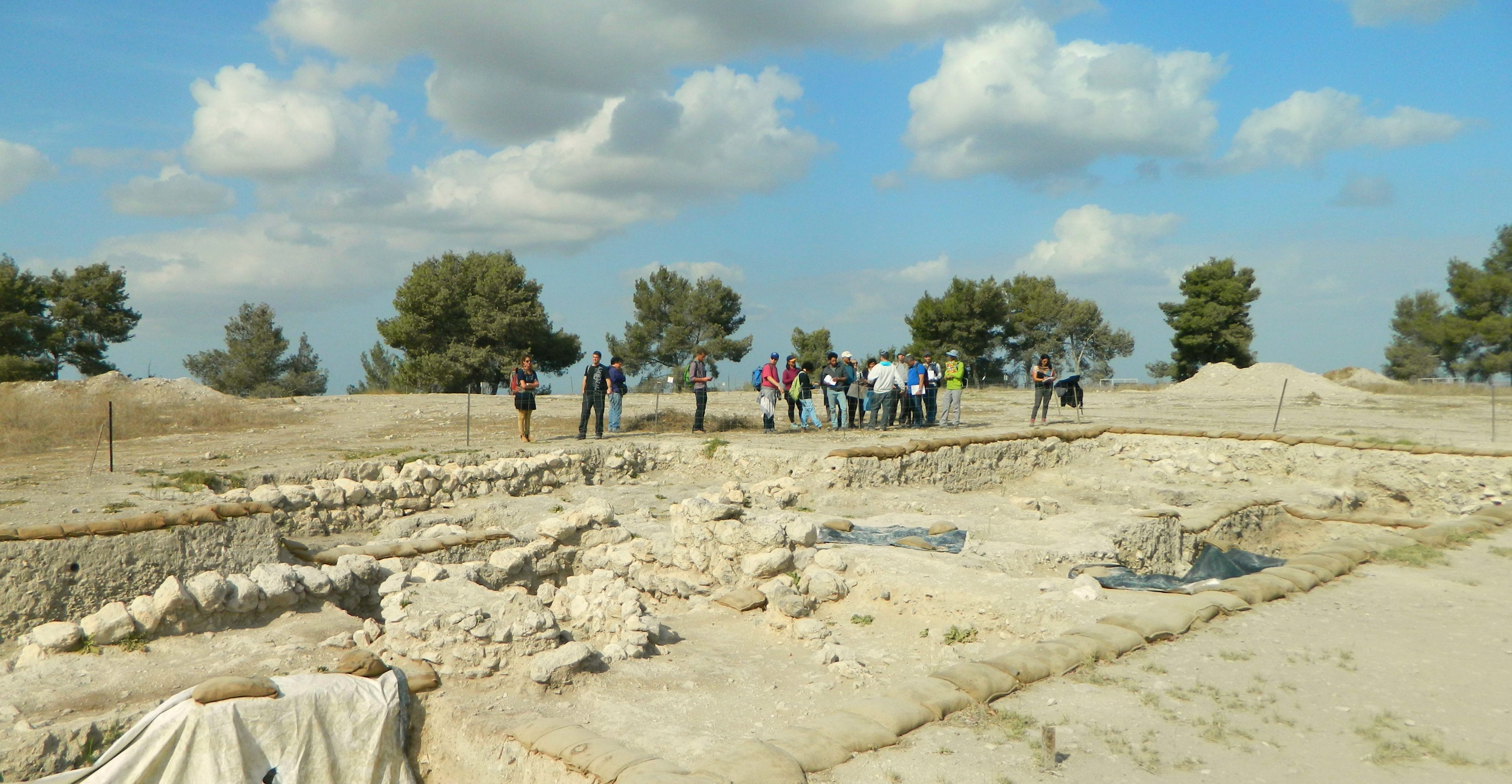
Looping around the west side, we then stood at the edge of another open excavation, the Hellenistic palace. And from there we headed back over to the east side to take a group photo.

Group photo on Tel Azeka

Group photo on Tel Azeka

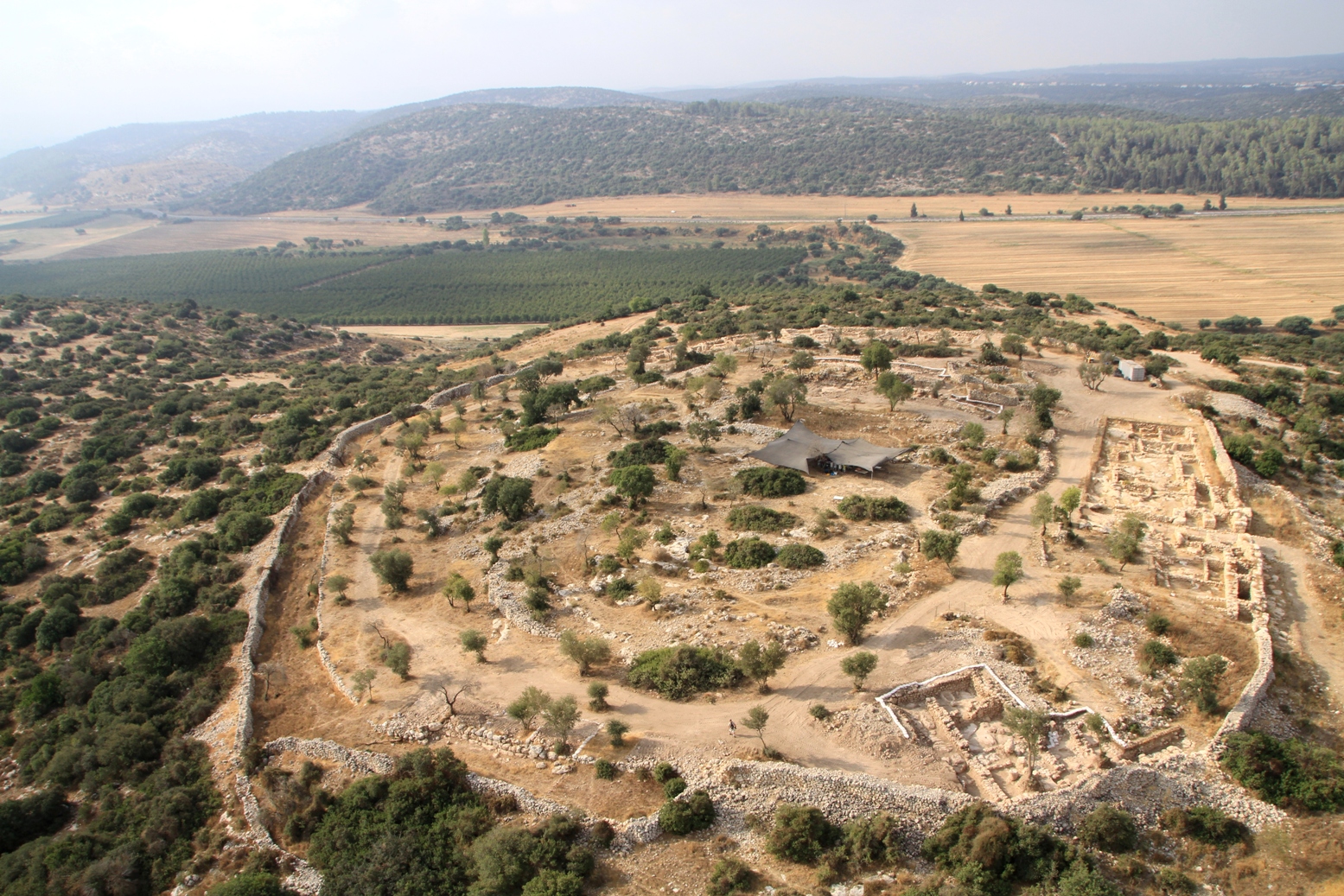
Leaving Tel Azeka, we were then driven to the start of a dirt road not far below the tel, across Road 38, where we were to walk on foot to our next site: Khirbet Qeiyafa (debatably also known as Shaaraim, meaning “Two Gates”). Mostly disregarded by surveyors in the 19th and 20th centuries, the site was identified as an important fortified city in 1992 and 2001, and most recently excavated between 2007-2013 by the Hebrew University under Professor Yosef Garfinkel and Saar Ganor of the Antiquities Authority. I had the honour of digging with these fine archaeologists six or so months ago at Khirbet Arai, located some seventeen kilometres southwest of Qeiyafa.

Aerial view of Khirbet Qeiyafa looking south (photo Skyview)

Aerial view of Khirbet Qeiyafa looking south (photo: Skyview)

To give an even briefer historical overview, Qeiyafa was a Biblical city, same as Azeka, perhaps the largest city in the area at the time. The findings of a second gate, facing south overlooking Emek HaElah, seemingly solidified the theory that Qeiyafa was the Biblical city of Shaaraim. In the Hellenistic period the site was fortified, with the addition of smaller fieldstones to enlarge the city walls. The Roman and Byzantine periods saw continued settlement, yet sometime afterwards the ancient city fell to disuse and was only scattered stone heaps until recent years.

Double wall circling Qeiyafa

Double wall circling Qeiyafa

And so it was that our group of academics and students alike sat under the shade of an olive tree to hear about the recent excavations. Getting back up on our feet, we examined the four-chambered western gate and then took a slow loop within the city perimetre, pausing here and there for educational purposes. I was gazing about at the ruins around me when I saw the briefest of glimpses of a bird that I’ve never seen before. All I needed was that glimpse to identify a male blue rock thrush from the bird guide I carry around everywhere – an exciting spotting for me, even if I was unable to photographically capture the moment.

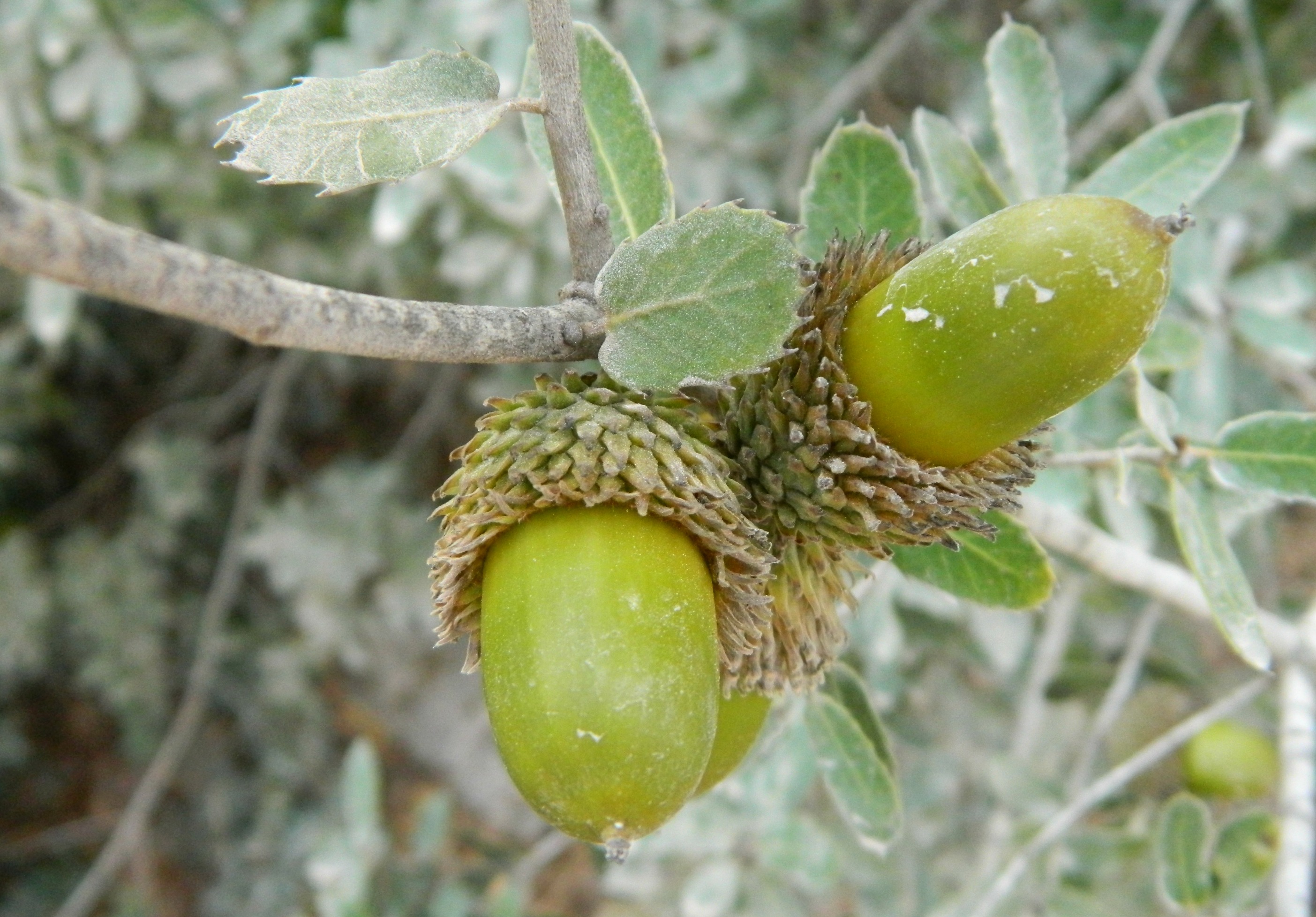
Dusty acorns

Dusty acorns

Finishing up where we started – the western gate – I found a bitter almond tree and tried to feed my friends cyanide-rich nutmeat, but they all refused. We boarded the minibus and drove through intermittent traffic back to the university, successfully culminating the first archaeology trip of the semester.

Tel Kedesh Archaeological Dig

In Galilee, Israel on November 1, 2016 at 12:51 PM

Exactly two weeks ago, during Chol HaMoed of Sukkot, I took my brother Nissim to an archaeological dig at the nearby Tel Kedesh. Located on the Old Northern Road north of Tzfat in the Naftali Mountains of the Upper Galilee, Tel Kedesh is just approximately 700 metres from the Lebanese border. I had visited half of the site two-and-a-half years ago with my sister (blog post linked in the first sentence).

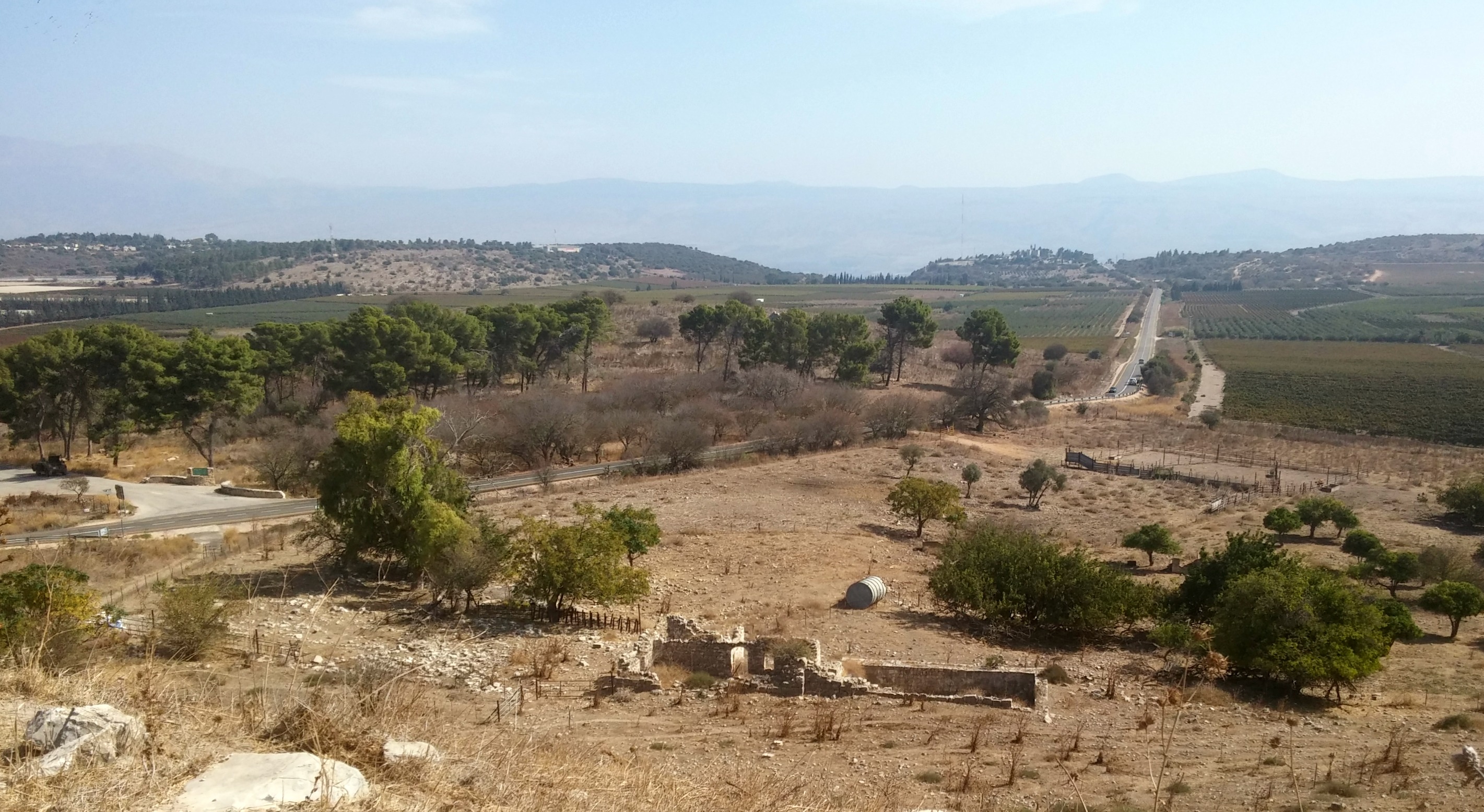
The view to the east

The view to the east

But this time I was to explore the half I hadn’t known about at that time, and to contribute to an excavation under the auspices of Dr Uri Davidovich, Ido Wachtel and Roi Sabar of the Hebrew University. This was to be my second archaeological dig, the previous one also under the behest of the Hebrew University at Khirbet Arai near the city of Kiryat Gat.

RTK surveyor under the bitter almond tree

RTK surveyor under the bitter almond tree

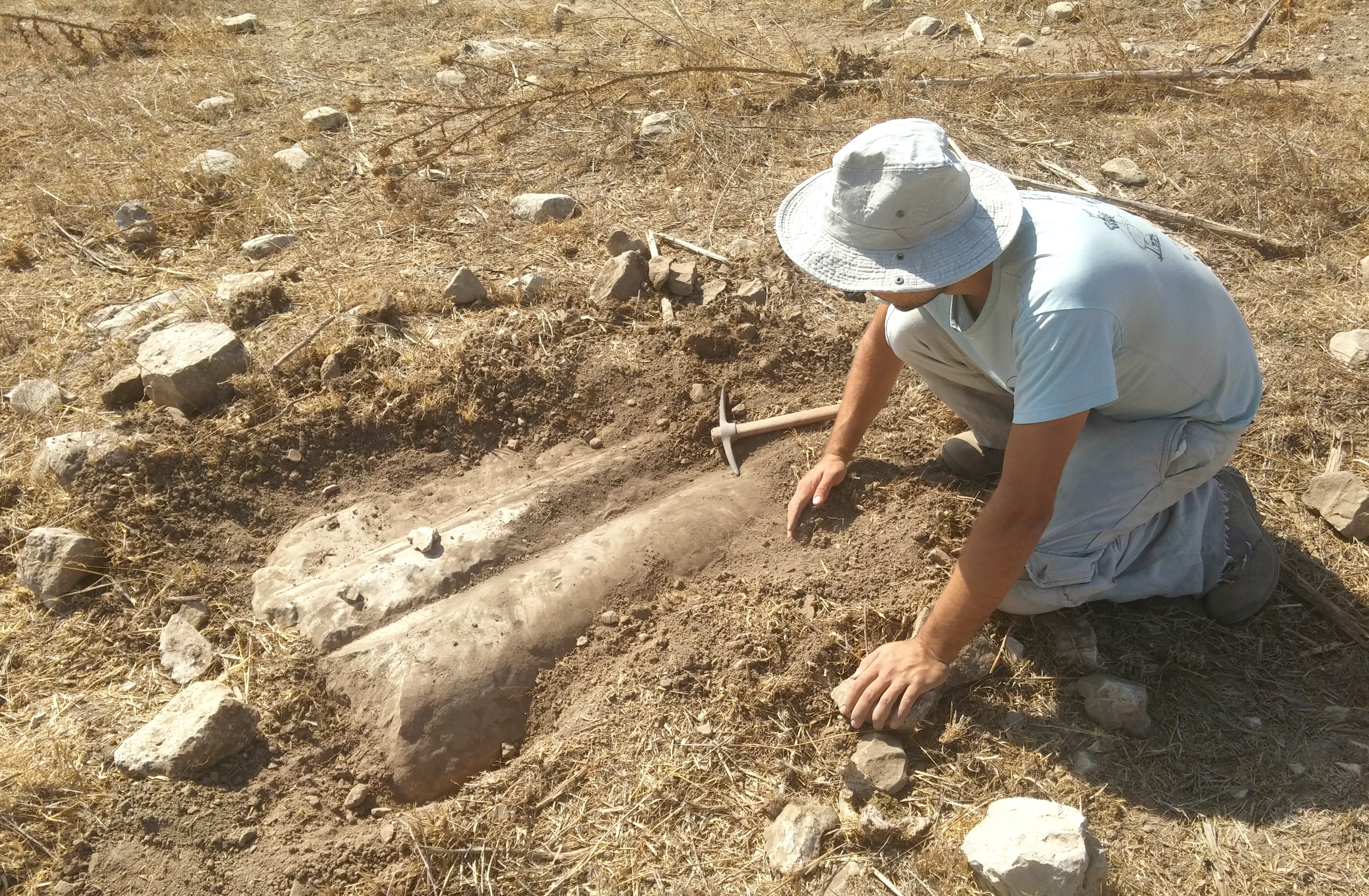
I had emailed the team in advance and so when we arrived on-site in the morning, they already knew that I was a student of Archaeology at Bar Ilan University. Our group of archaeologists, students and volunteers gathered in the Tel Kedesh park parking lot and received our briefing before taking the necessary equipment up to the dig site on the northern mound of the hill. On my second trip up, I stopped to watch Asaf Ben Haim uncover what looks to be a architrave and/or frieze of an important Roman building, located on the path to the dig site.

Asaf uncovering Roman ruins

Asaf uncovering Roman ruins

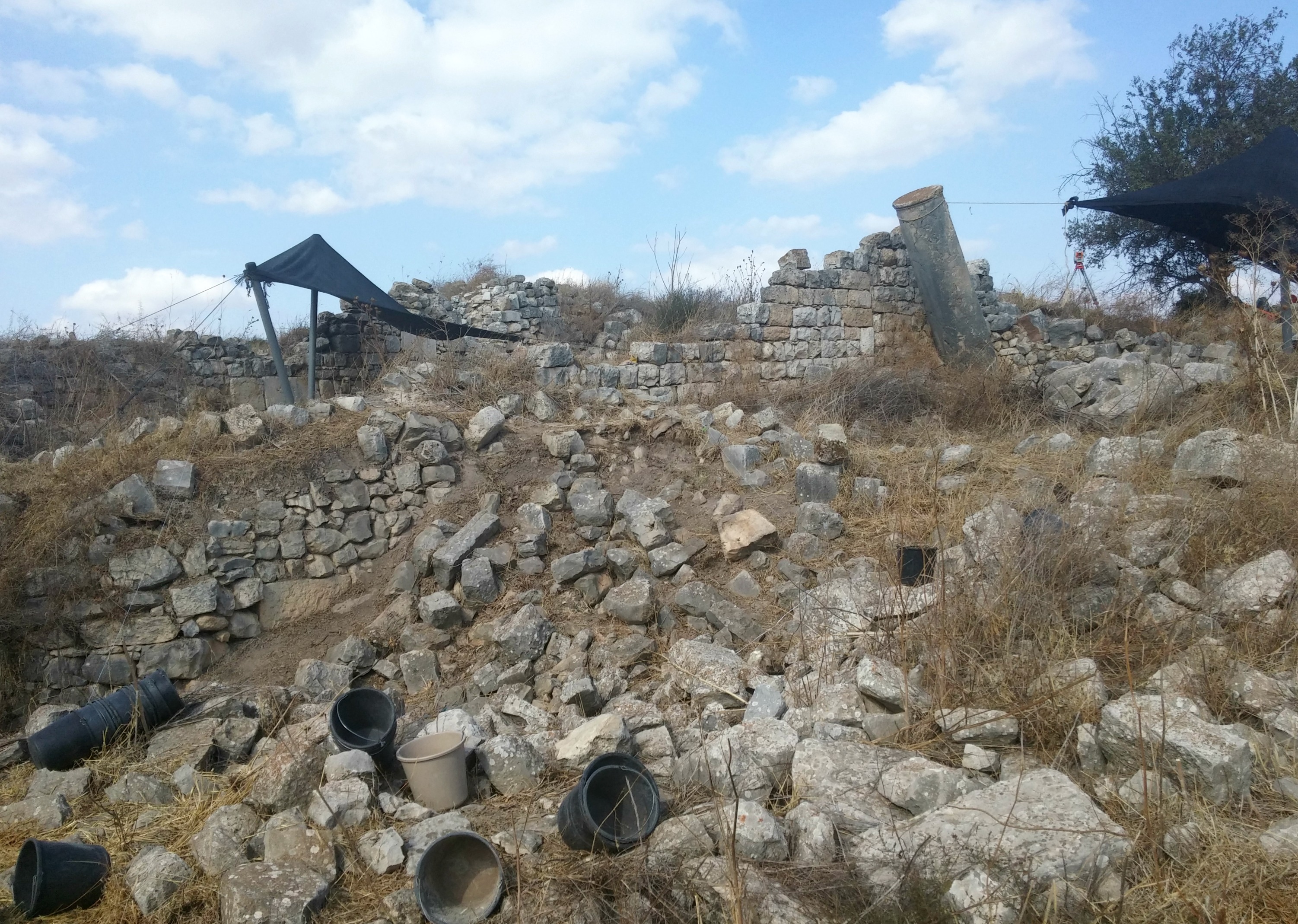
As I watched him tear up the dry earth I saw what looked to be a tarantula near his hand – but no, this was a camel spider, not a true spider but a true fright! Pelicans soars in unison overhead as the sun climbed, the site slowly being turned into an archaeological excavation. As it was the very first day of the dig, in a place never excavated before, there was a lot of surveying, plotting and photo-taking to be done. At last three “squares” were decided upon – one inside the ruins of a building and two adjacent to the eastern wall of that building. The leaning column and large ashlars (Roman-looking) made this site a good place to start.

Ruins amongst the dead vegetation

Ruins amongst the dead vegetation

To give a brief synopsis of Tel Kedesh’s history: Originally a fortified Canaanite city, the Israelites took it over and eventually made it a “City of Refuge” (alongside Shechem and Hevron on this side of the Jordan River). Later, the Assyrians captured and destroyed Kedesh along with other keys cities in the Galilee, perhaps most notably, Hazor. The Greeks, and subsequently the Romans, took up occupation renaming the city Cades. Excavations of a Hellenistic administrative building on the southern mound were done recently by the University of Michigan’s Kelsey Museum of Archaeology. An Arab village named Kadas was established, built upon the Roman remains, and was abandoned in 1948. Remains of British rule include two pillboxes along the road to the west and a Tegart fort under the name Yusha or Metzudat Koach to the east. The Hebrew University archaeological team has its eyes set on Roman ruins so we had to clear away the dry/dead vegetation and fallen stones.

Clearing away the fallen rocks

Clearing away the fallen rocks

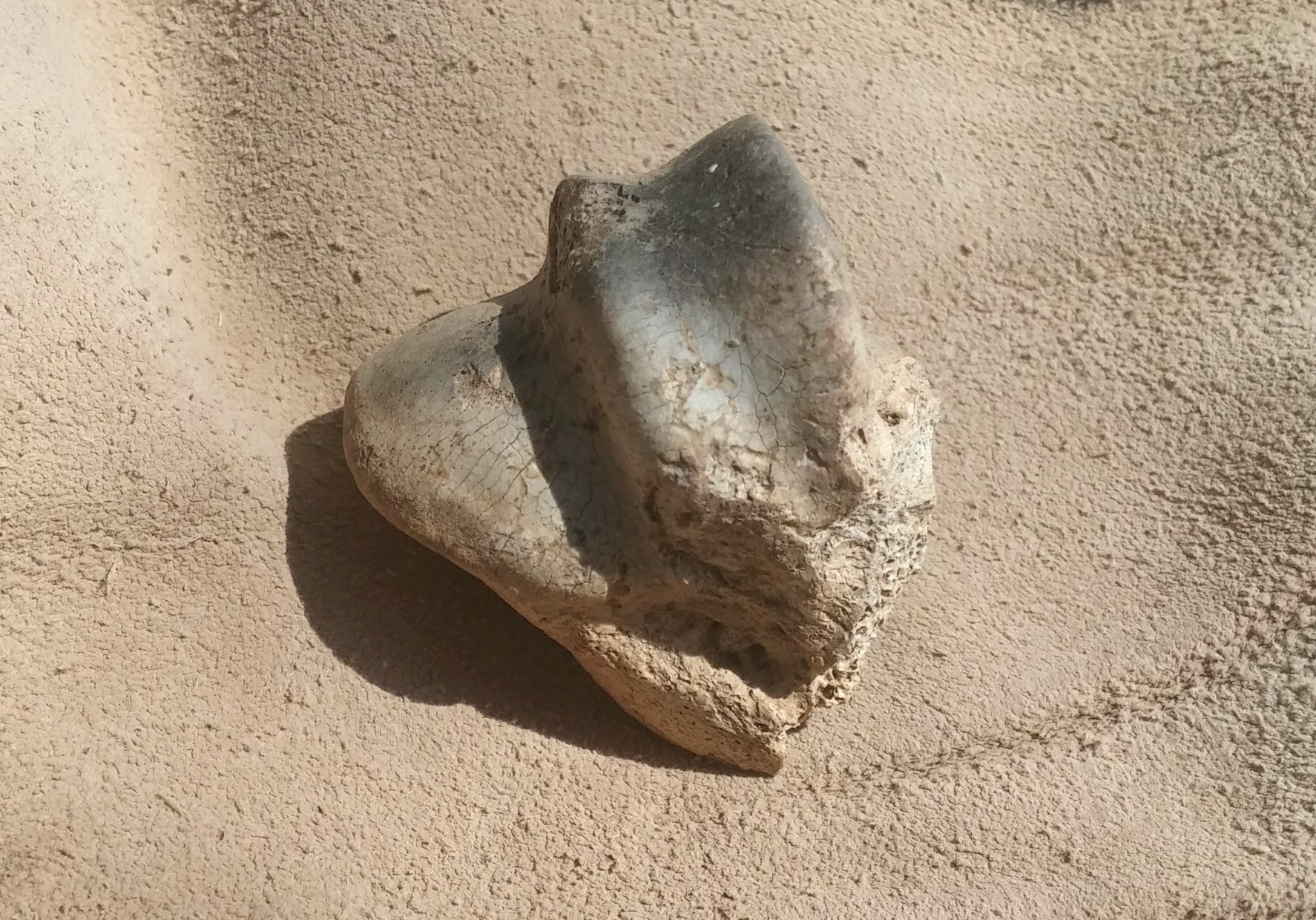
Whilst clearing vegetation I found a bone in the dirt and took it to be examined – it seems to be a scorched sheep knee bone. It was the first find of the day, stashed away in a bucket soon to be filled with more bones, lots of potsherds and even a Roman metal clothespin of sorts.

What appears to be a scorched sheep knee-bone

What appears to be a scorched sheep knee-bone

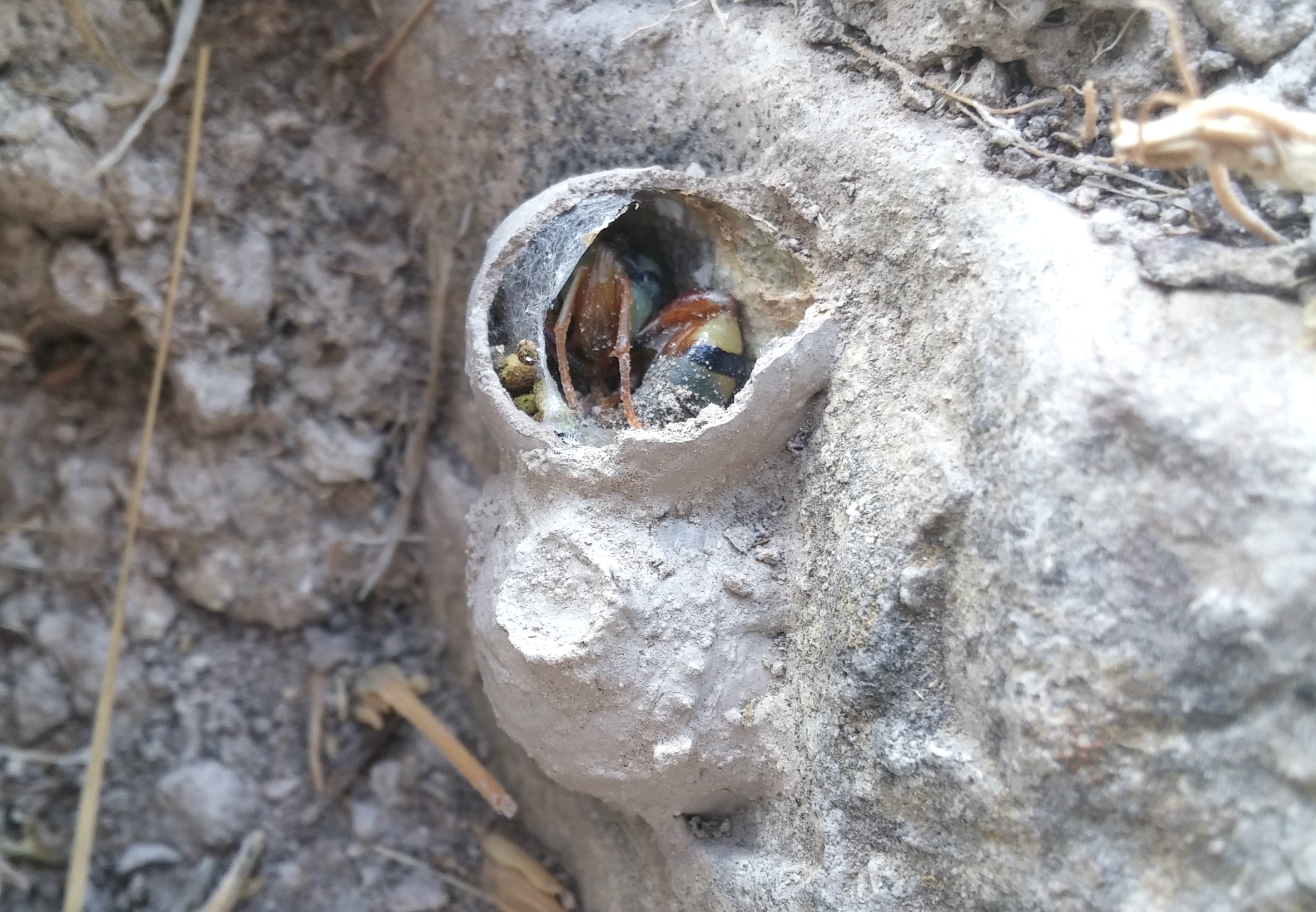
Even while at an archaeological dig I cannot help but be curious as to the flora and fauna to be seen. I spotted what looked to me like a good ten or so black kites wheeling overhead, the droppings of a porcupine (which I have yet to see in Israel), two clay capsules holding wasps in their late stages of development and my first sighting of a few Sardinian warblers popping in and out of the dry undergrowth.

A potter wasp Inside its development clay capsule

A potter wasp inside its development clay capsule

When lunch break came around I sat under a bitter almond tree and decided to have a taste. I don’t recall ever eating a bitter almond; the taste is just like amaretto albeit much more bitter, hence the name. Bitter almonds have forty-two times the amount of cyanide than the normal sweet variety which means that fifty or so bitter almonds can provide a lethal dose of cyanide poisoning.

Cracking open some bitter almonds

Cracking open some bitter almonds

After the lunch break I left the square of rock clearing and joined my brother under the field shade-tent in his square. He was wielding a small pick, clearing dirt and small rocks from alongside the base of a wall. I grasped a larger pick and we went to town on the earth and rocks of the square, clearing out a nice corner.

Nissim digging in his square

Nissim digging in his square

With the sun slowly slipping off to the western horizon the productive workday came to an end and after making our way back down the hill, we took a quick look at the ruins at the eastern mound.

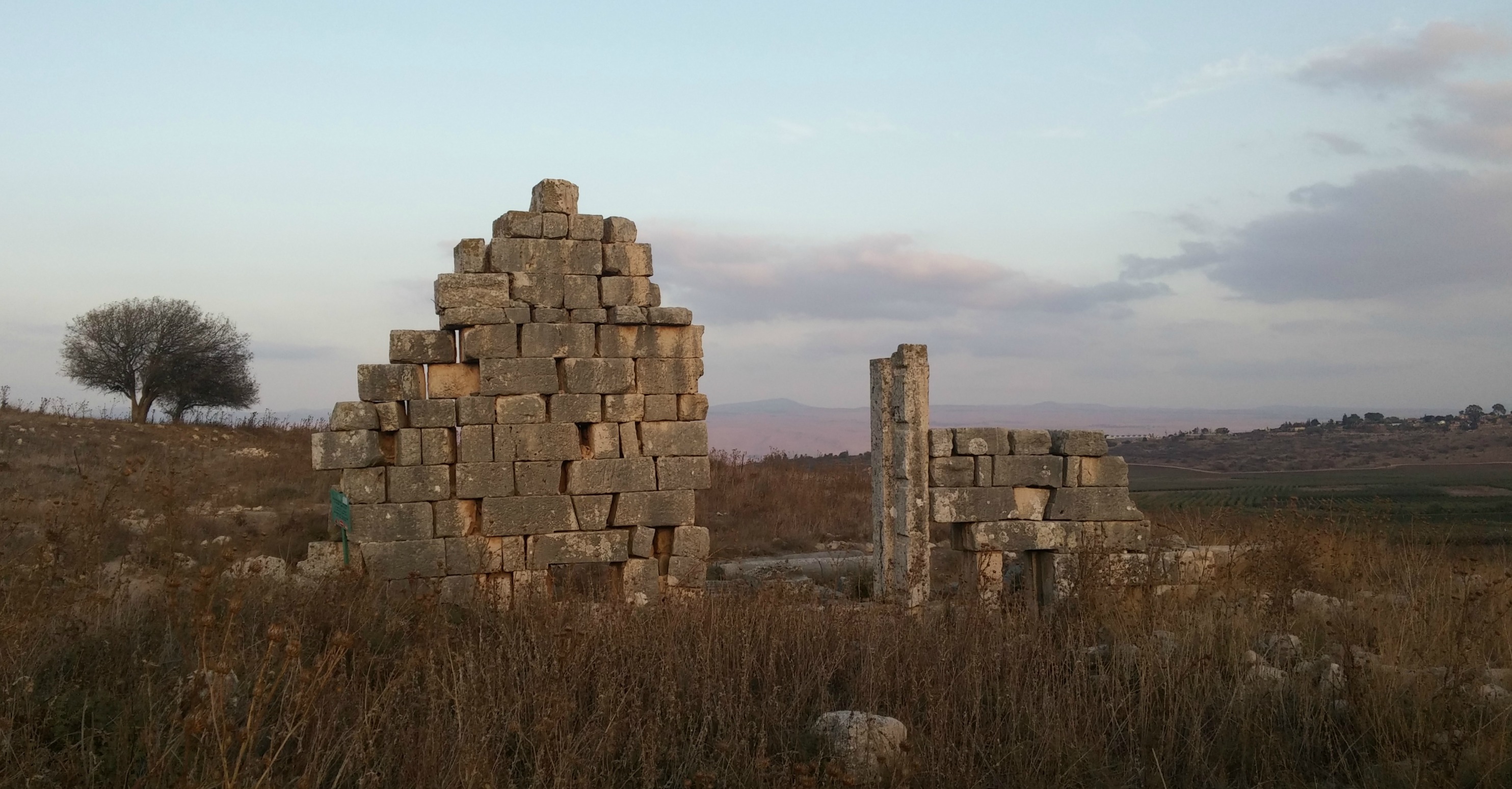
Ruins of a Roman temple

Ruins of a Roman temple

Getting back into the car we drove back home, tired but happy to have been among the first to break ground on a new excavation site. If anything is ever found in that part of Tel Kedesh, we’ll be able to boast that we were there the very first day.