Israel's Good Name

Berry Picking in the Shomron

In Israel, Samaria on November 22, 2023 at 1:27 PM

Back in late June, which now feels like eons ago, we had another family outing. For the past year or two, Bracha had been yearning to go fruit picking but for one reason or another, it just hadn’t come to fruition. That was the case until June, when she had seen recommendations of a berry picking place called Bikurei Shiloh, located next to Shiloh in the Shomron (Samaria).
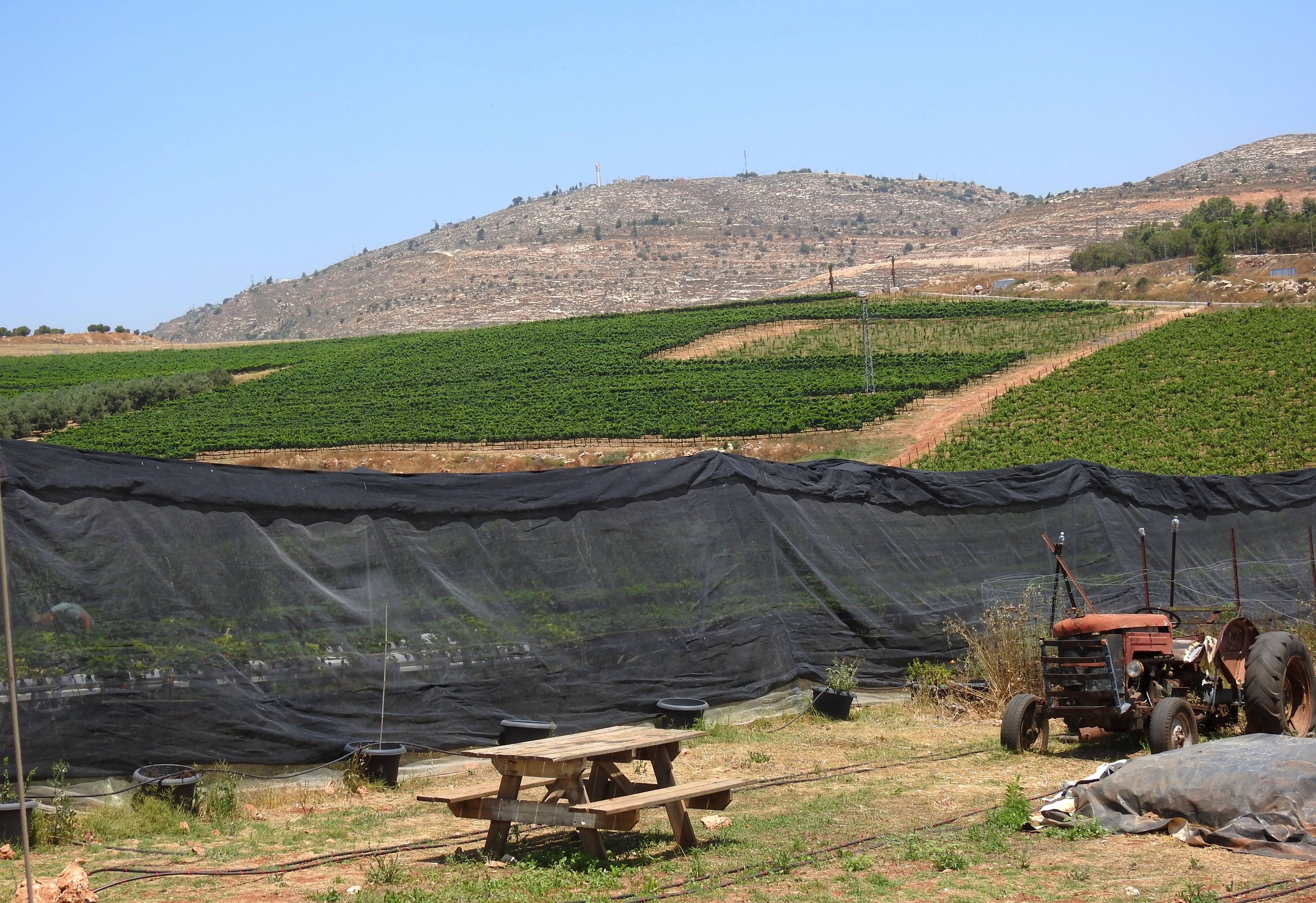
Bikurei Shiloh backdropped by grapevines

Bikurei Shiloh backdropped by grapevines

Tragically, just two days before our scheduled trip, four Israelis were killed in a terror attack just 3.5 kilometres up the road outside of Eli. It was uncomfortable to push through with our plans, but we were as determined as ever not to let terrorism alter our lives (a recurring theme in Israel, sadly). As we drove by the site of the attack, we saw a small grouping of people and what seemed to be a makeshift memorial surrounded by waving flags.
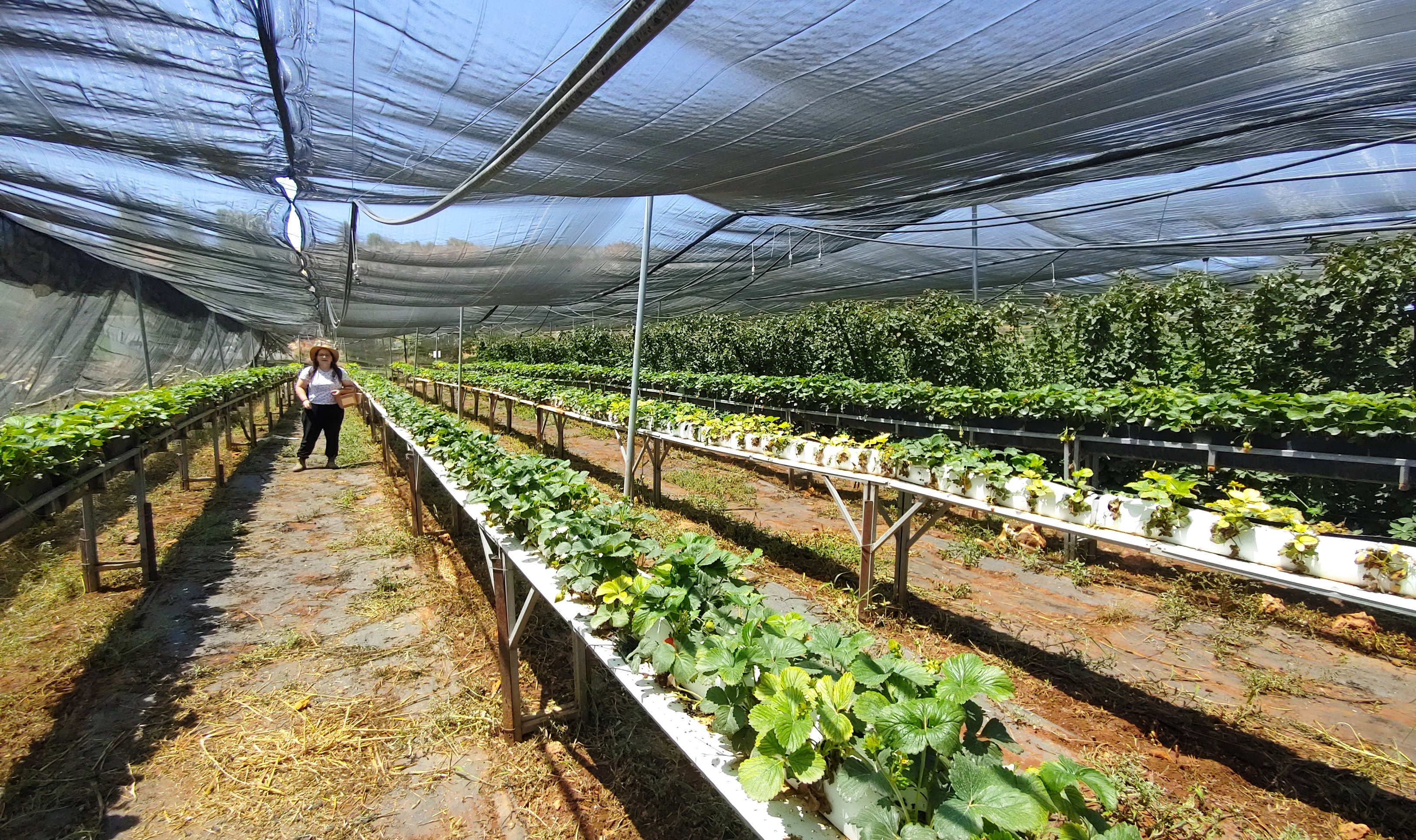
Rows and rows of berry plants

Rows and rows of berry plants

It was already late in the morning when we pulled into the parking lot, the U-pick site nestled between ancient Shiloh and Nachal Shiloh, both of which I had visited back in September 2017. We entered, receiving small baskets and instructions, and then made our way to pick some berries. Our options for the day were strawberries, raspberries and blueberries – the plants located in long netted rows, protecting them from the elements and pests.
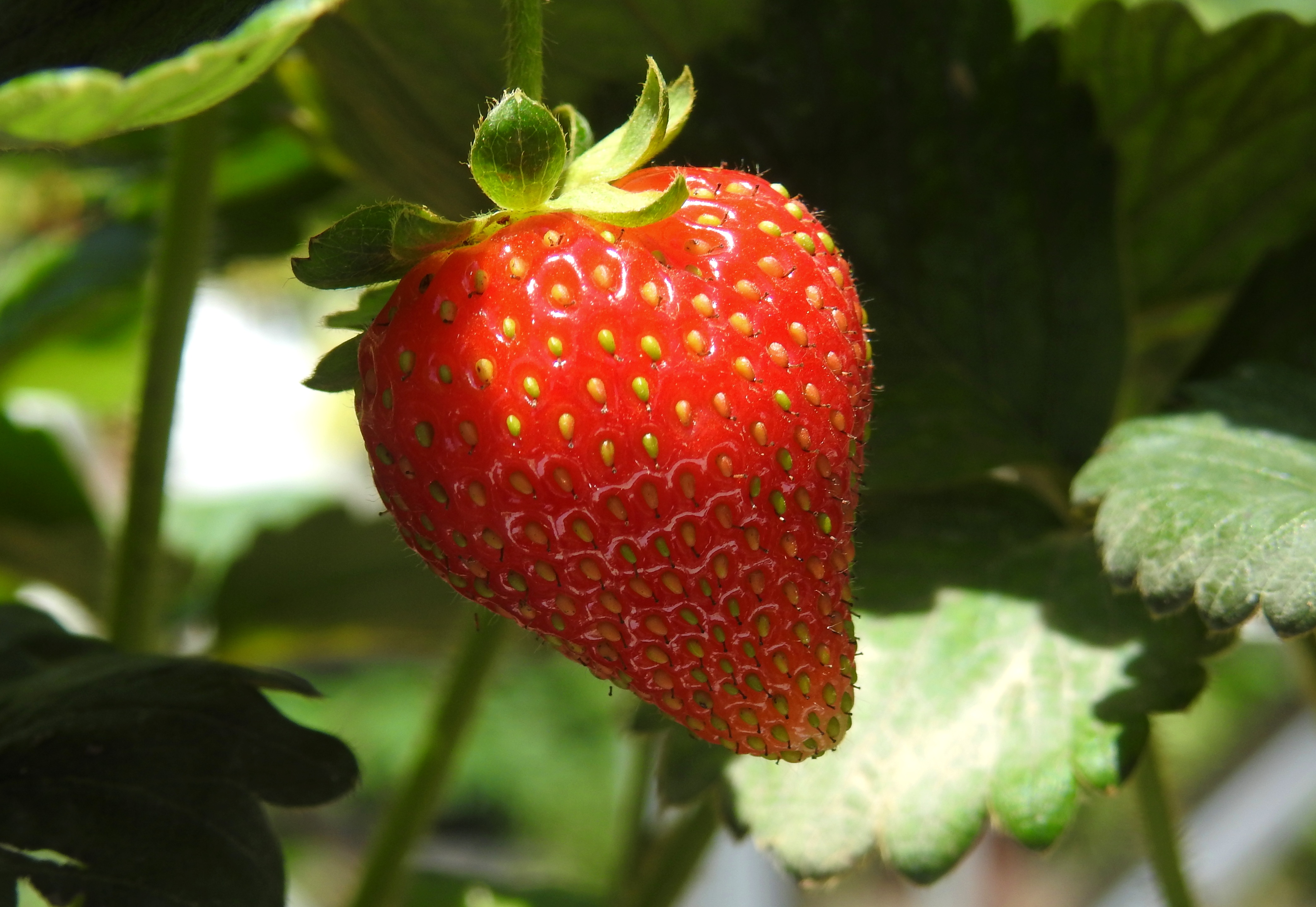
Strawberry in the sun

Strawberry in the sun

We started with the strawberries, which were on the cusp of being perfectly ripe. Thus, we had to scour the leafy plants in search for the choicest plump red fruit. I was wearing 10-month old Amir in the baby carrier, which allowed him to also grab at the dangling berries with his pudgy little hands. As an added perk, at that point in time, strawberries were probably his favourite food.
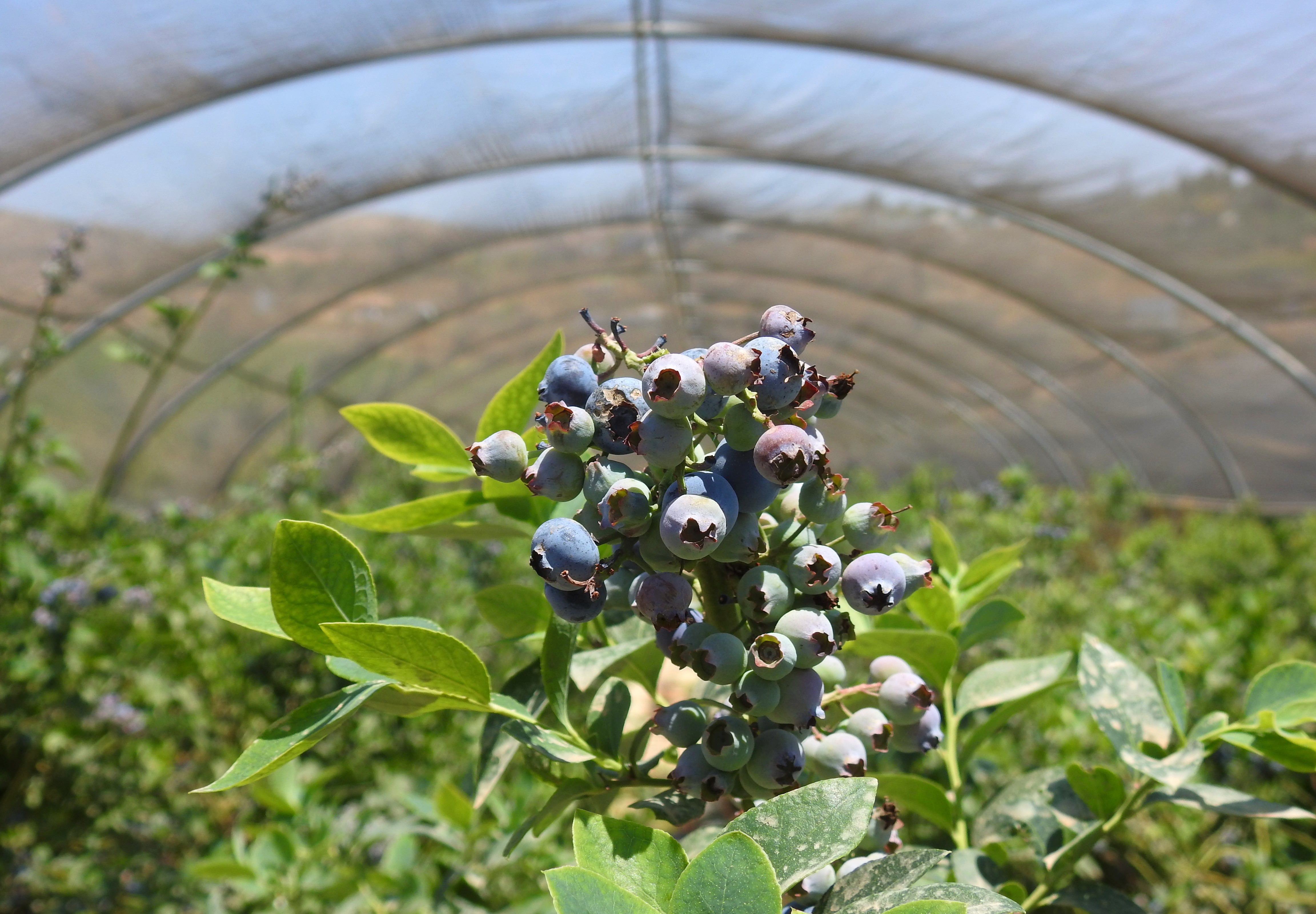
Blueberries galore

Blueberries galore

After a few handfuls of strawberries, we decided to move on to the next berry of choice: blueberries. Entering a separate netted area, we stepped into blueberry heaven. For any strawberry that was lacking, there were thousands of blueberries to make up for it. So much so, that we hardly had to go anywhere to pick all the blueberries we’d want. But we walked around, browsing the berry bushes, choosing only the choicest dark blue orbs. For, as it is known, the darker the berry, the sweeter the juice.
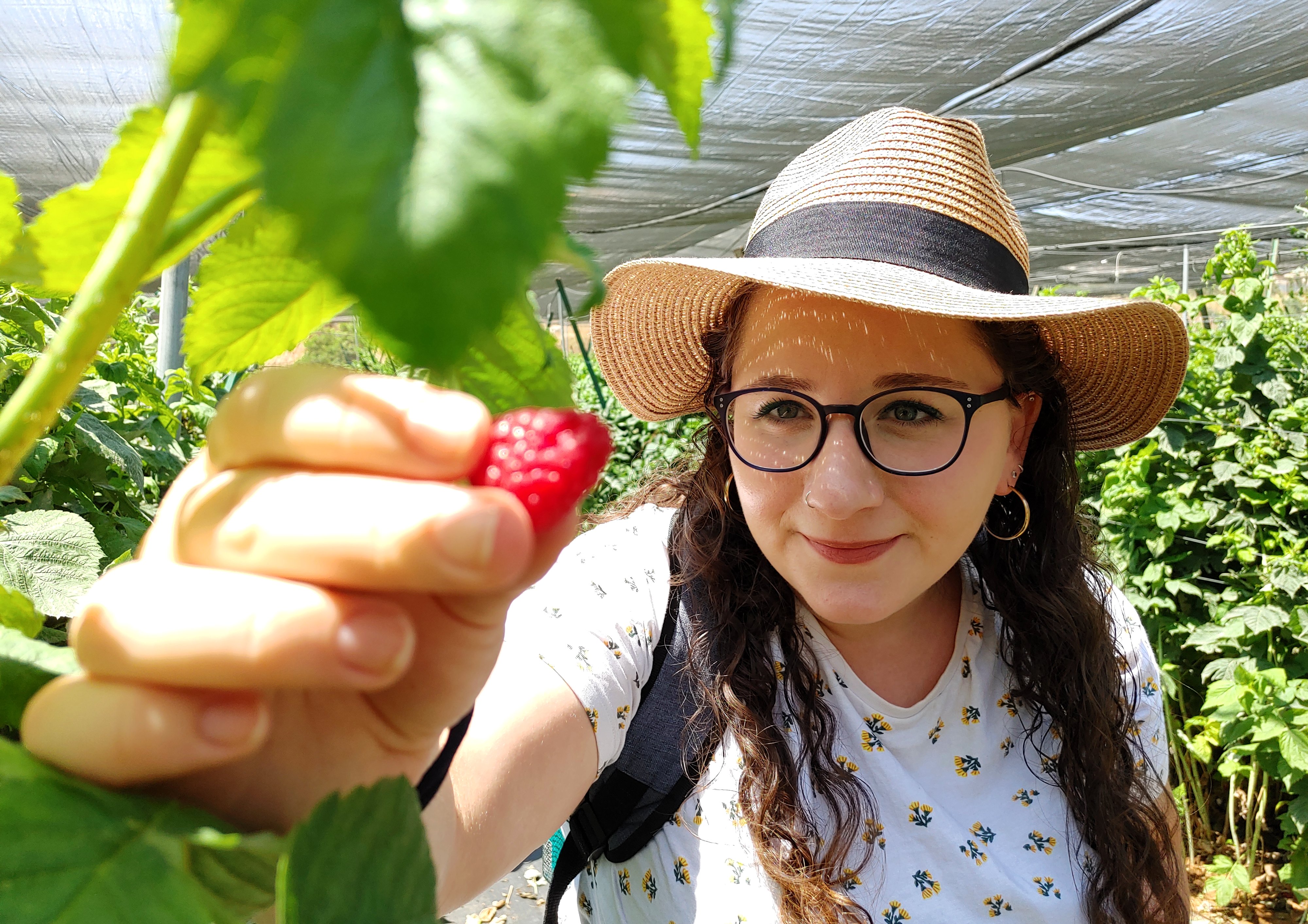
Bracha finding a choice raspberry

Bracha finding a choice raspberry

As per the raspberries, those were less abundant than the blackberries but, when ripe and juicy, exploded merrily in our mouths. When we had finished picking all the berries that we desired, both to eat on site as well as those to take home, we decided to stop for a picnic lunch.
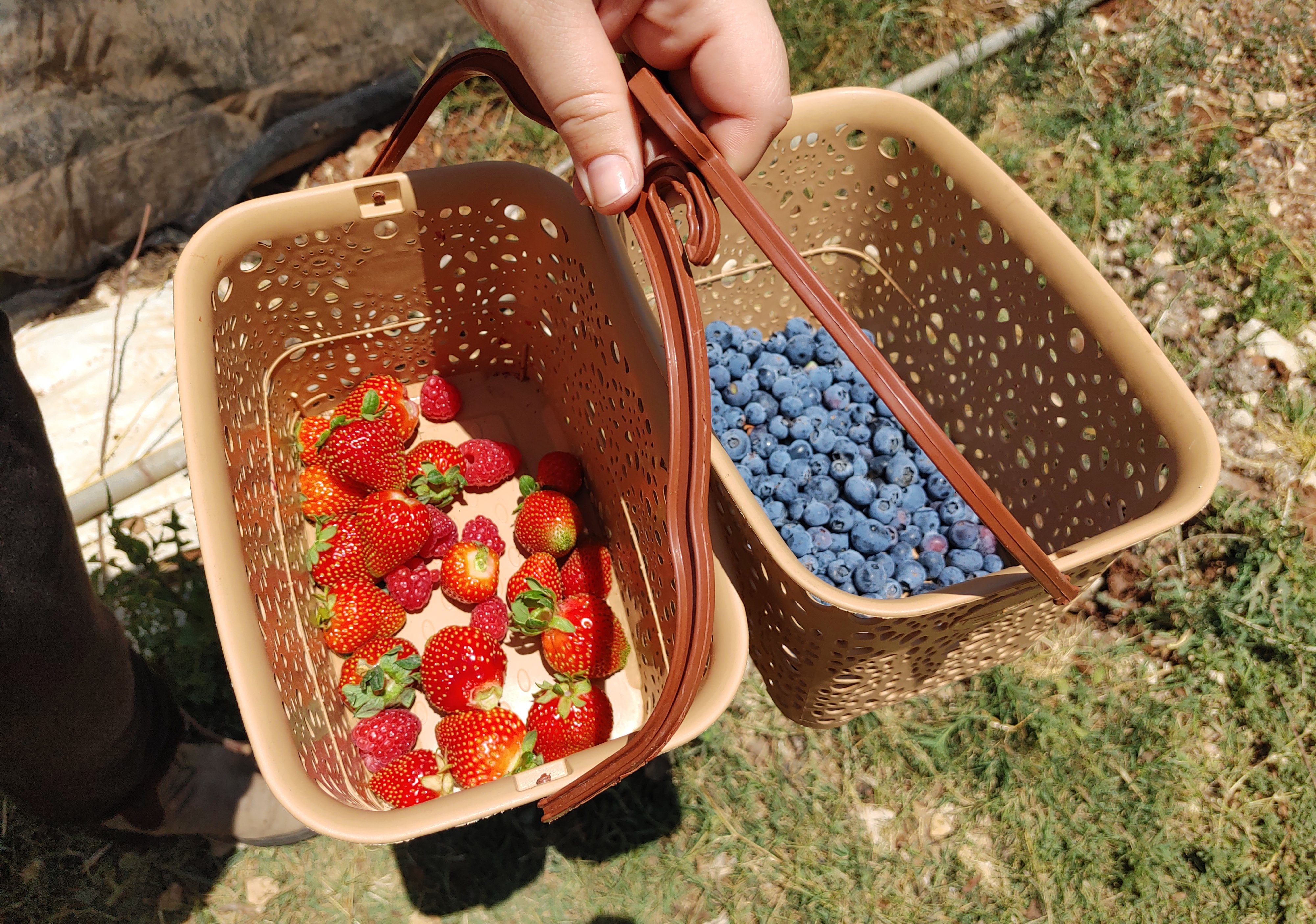
Some berries for the road

Some berries for the road

Wisely, we had picked up some rolls and sliced deli meat, making perfect sandwiches to enjoy in the shade of the olive trees. I sat in a hammock, Amir in my lap, all three of us happily munching away.
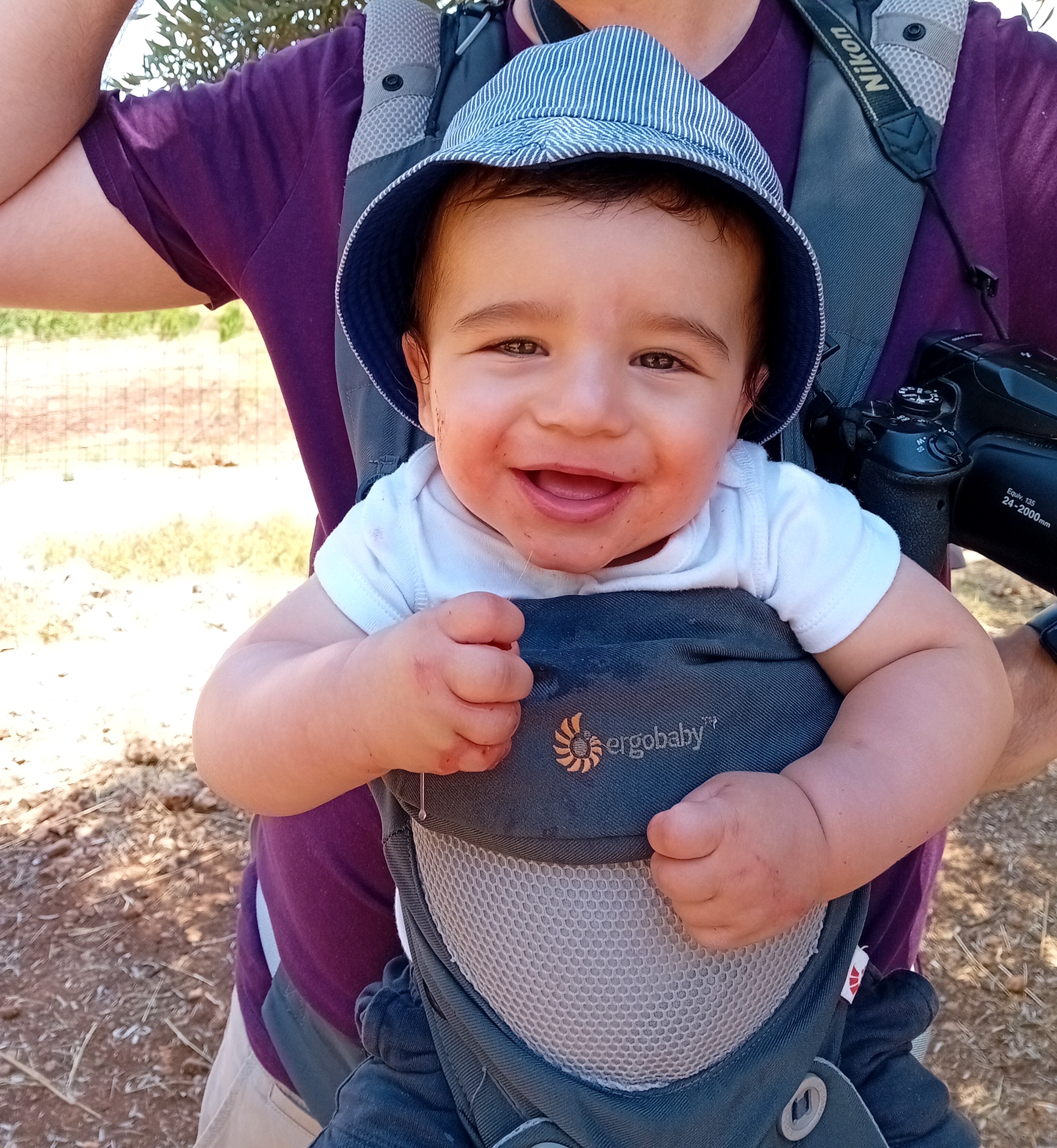
Berry bliss

Berry bliss

However, our adventure was not over yet. After we had paid for our berries and completed the journey back home, Bracha decided to make a blueberry pie. It was the perfect, and most decidedly sweet, way to end yet another family outing.
Northwest Negev: Birding Tour

In Israel, Negev on August 31, 2023 at 6:48 AM

A week after our family trip to Ma’ayan Harod, I went on my lonesome on a guided birding tour in the northwest region of the Negev desert. Nearly eight years have passed since my last guided birding tour, a trip to the Hula Valley with birding expert Lior Kislev, and I felt that the time had come to treat myself again. However, it needed to be a tour that I couldn’t do easily alone, something that required the use of a guide.

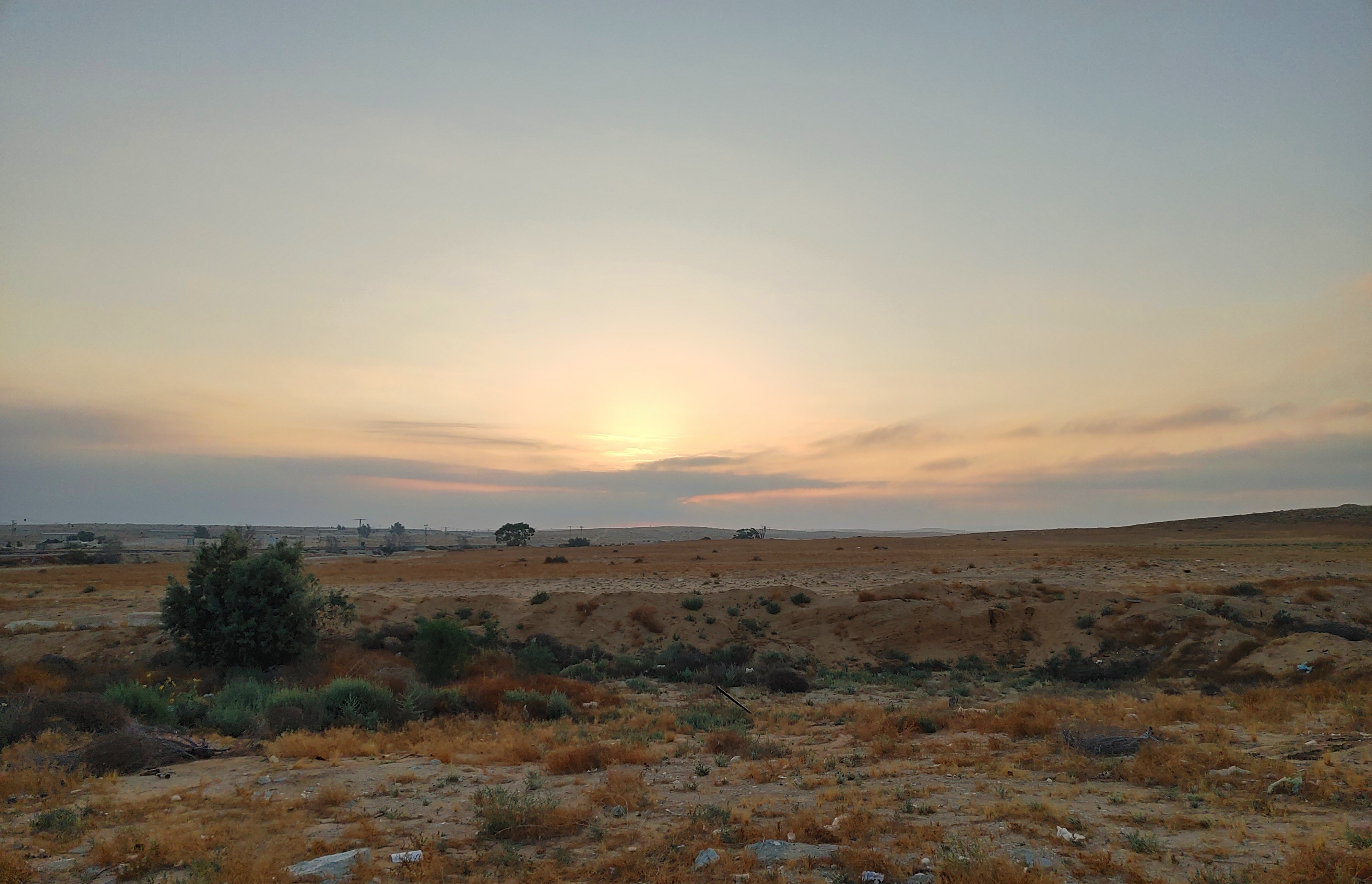
Sunrise over the desert

Sunrise over the desert

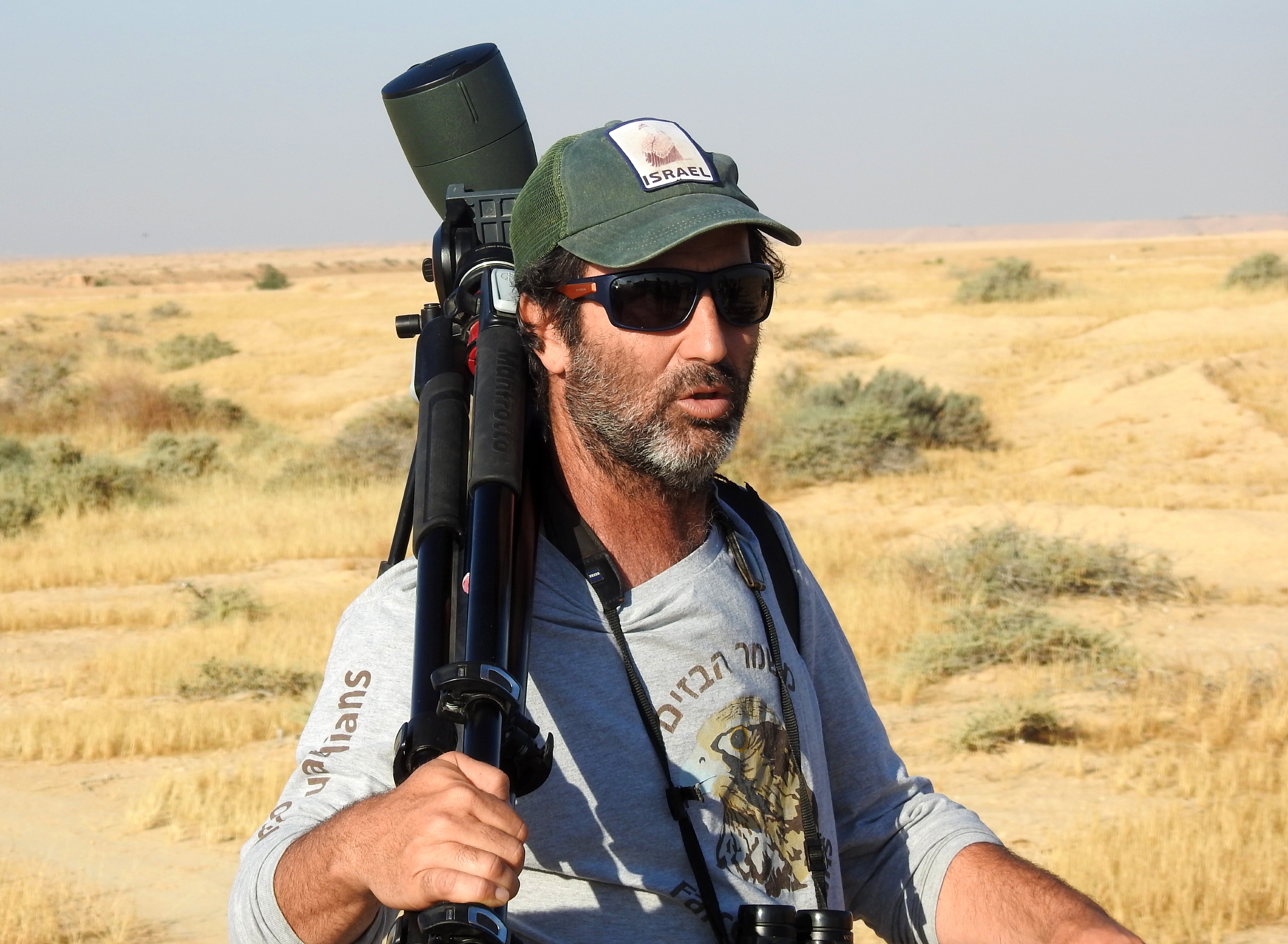
Thankfully, I had just the opportunity when I saw a guided tour being advertised that fit my criteria perfectly – a birding excursion in search of sandgrouse, led by the region’s expert Meidad Goren, director of the Ramat HaNegev Birding Center. I had never seen sandgrouse before, and the tour promised to attempt finding 3-4 species of them, all “lifers” for me.

Birding tour guide Meidad Goren

Birding tour guide Meidad Goren

I left Givat Shmuel in the wee hours of the morning, driving south past Be’er Sheva and down into the northwest Negev. We met up in the Nizzana region, more specifically the Kzi’ot gas station, at 6:00 AM and made introductions – the group numbering fifteen or so birders and birding enthusiasts. Meidad gave us a more detailed itinerary, informing us that the sandgrouse show was only going to start in a few hours, and outlining our target species for the interim.

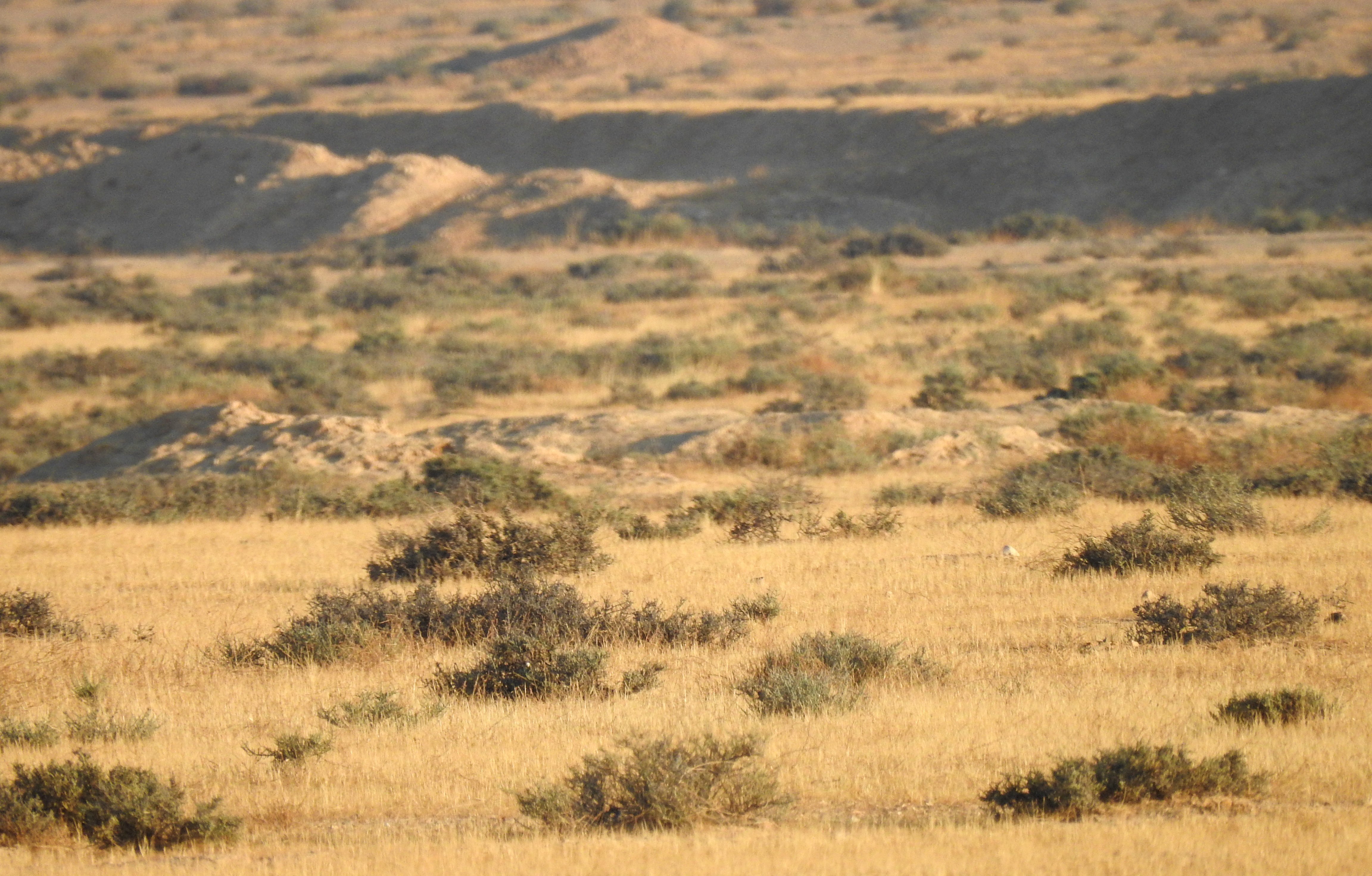
Cream-coloured courser habitat

Cream-coloured courser habitat

We were to drive along the nearby old Mandatory road until we reached a choice location where cream-coloured coursers are known to be. This excited me, as this was another species which I had never seen before. We got in our cars and drove off to the old road, and even the drive yielded exciting sightings. First, we saw a cape hare seated peacefully – a potentially decent picture, had I reacted sooner (this being my first daytime sighting of a cape hare). Alas, it bounced off into the distance and we continued the drive.

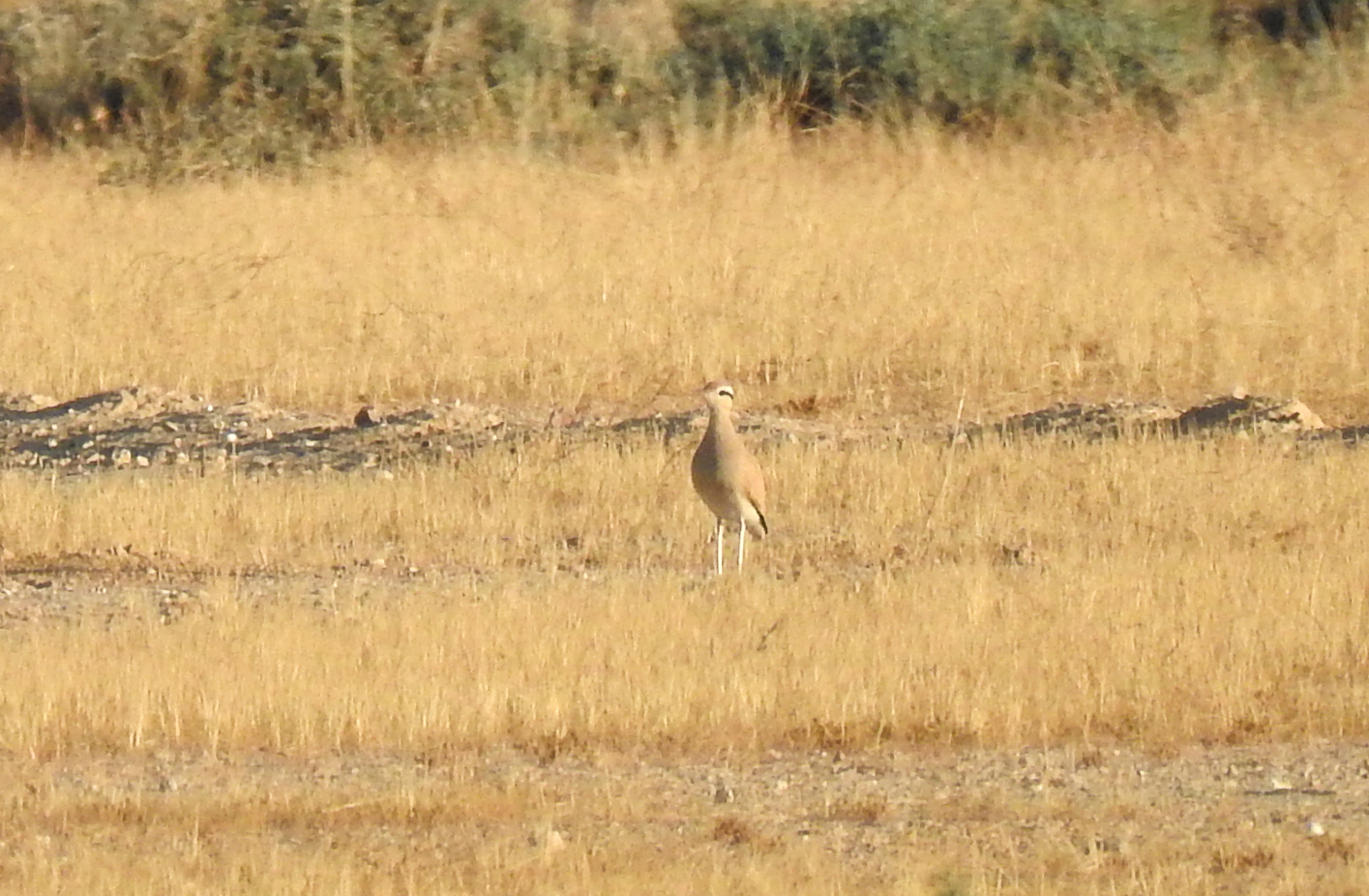
Closing in on my first cream-coloured courser

Closing in on my first cream-coloured courser

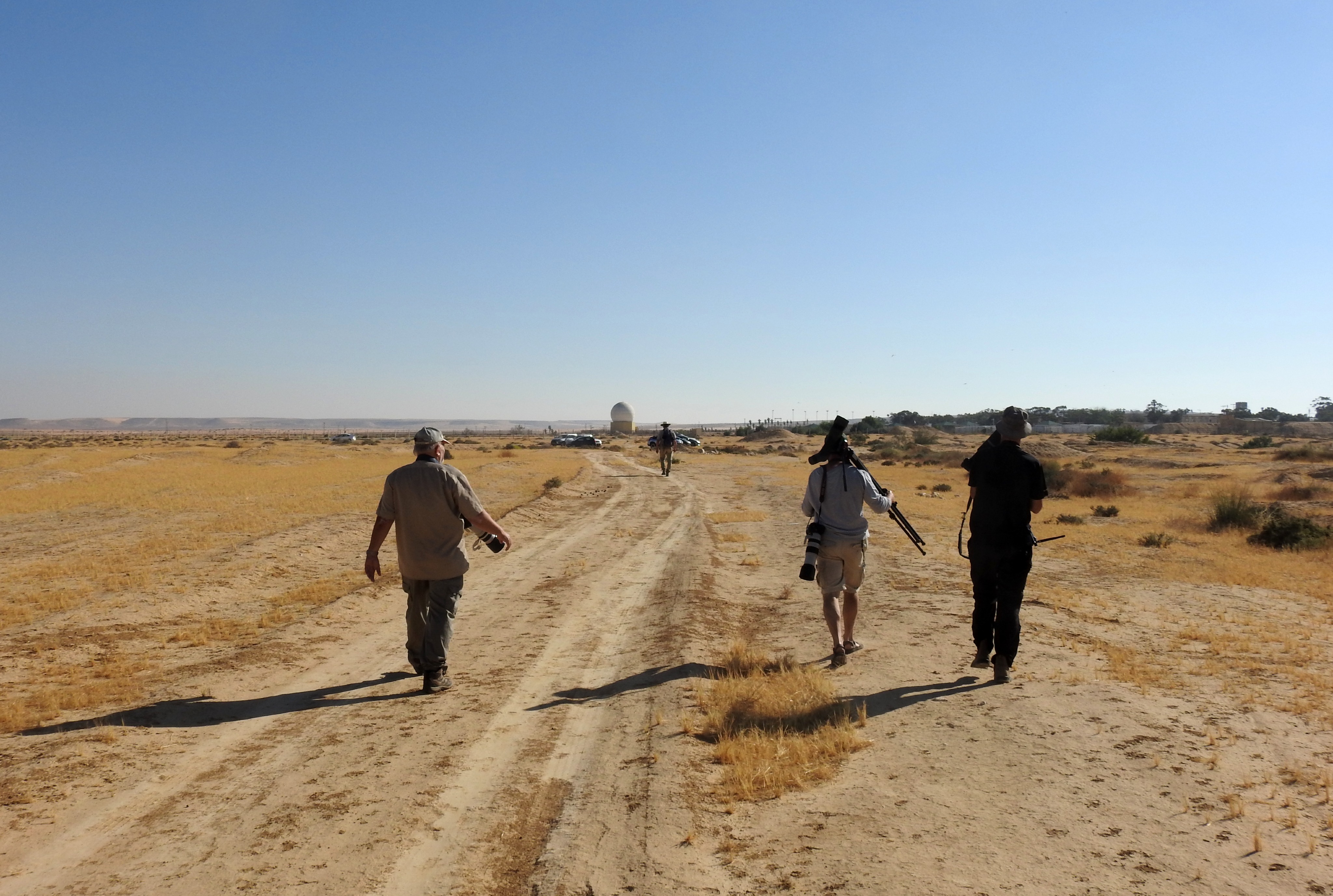
We saw a lone dorcas gazelle and before long we parked and disembarked, most members of the tour wielding binoculars, cameras and spotting scopes – or varied combinations thereof. Scanning the grassy land to the north of us with his scope, it wasn’t long before Meidad closed in on one cream-coloured courser, an elegant desert wader. It was an exciting moment for me as I snapped my first photo, deciding already that this trip was already a success.

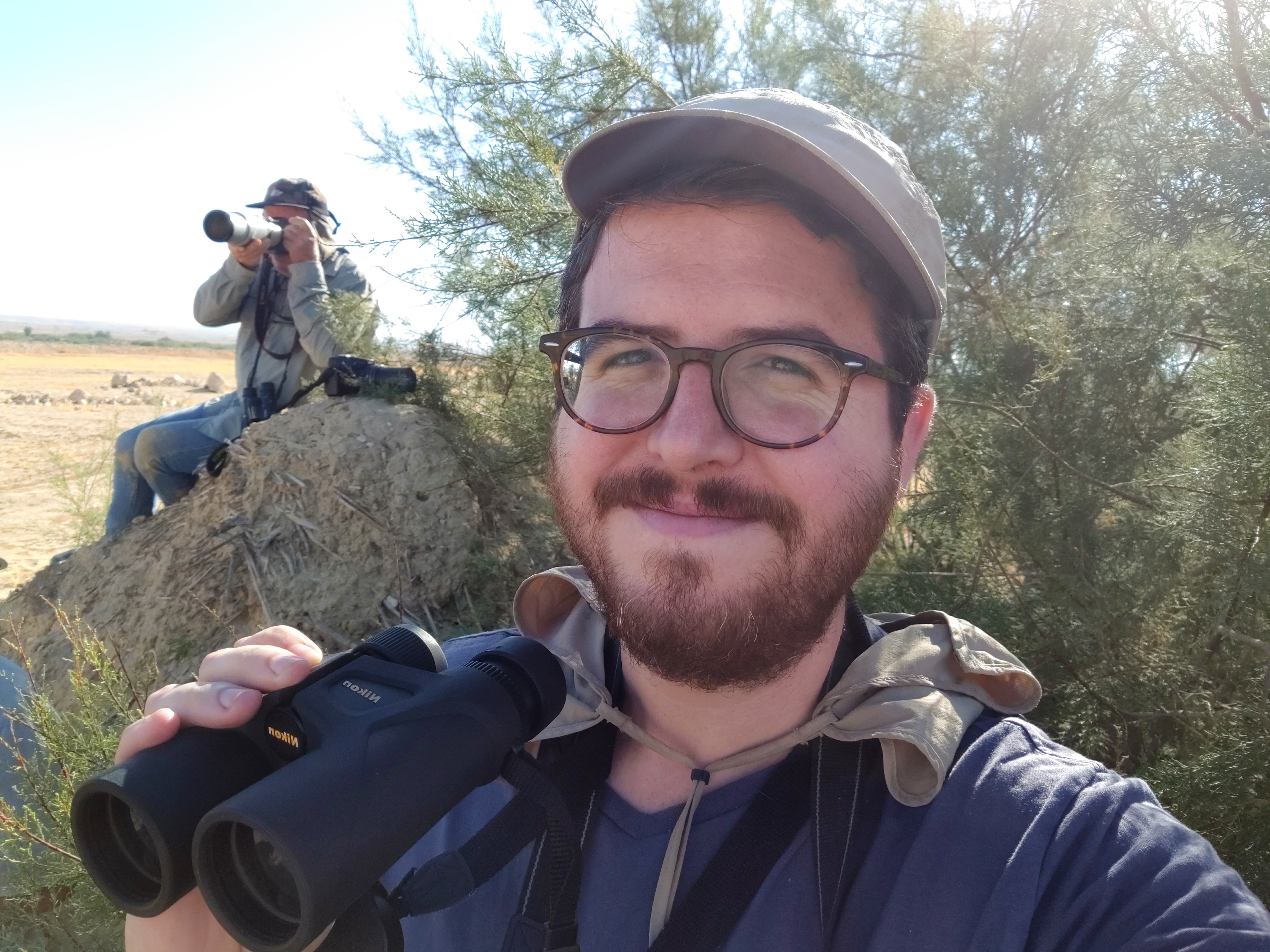
Satisfaction

Satisfaction

Shortly thereafter, another few coursers were spotted, on both sides of the road. A juvenile mourning wheatear and a few brown-necked ravens completed the scene of arid tranquillity. I thanked Meidad for introducing me to the coursers, and told him that I’d love to see more desert birds, species which I had yet to see. Arabian babblers came up, some of the tour members seeing one or two on our drive down the Mandatory road. I tried my hardest to spot one on the return journey, but alas, none were seen, and only a family of chukars darkened my path.

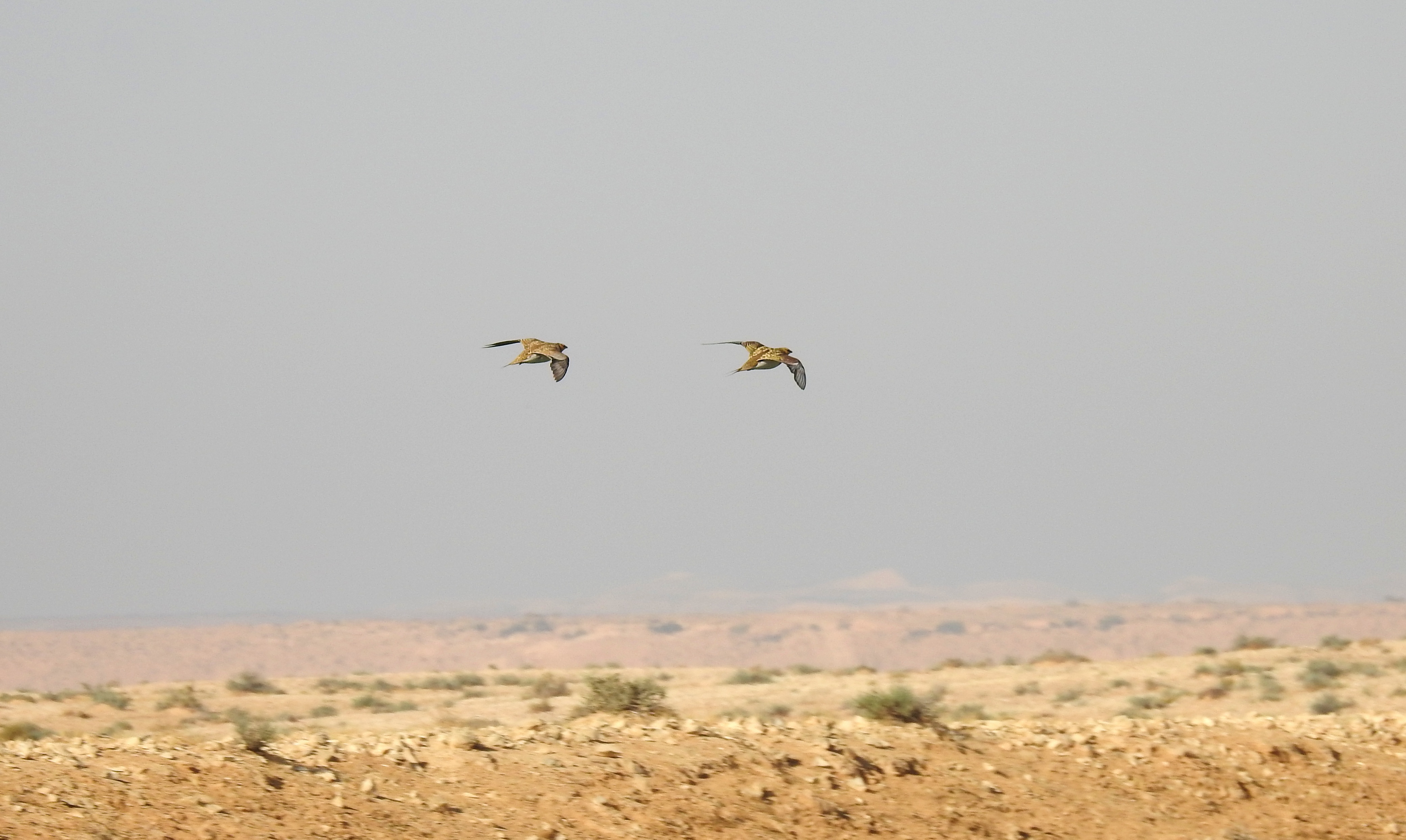
A pair of pin-tailed sandgrouse zipping by

A pair of pin-tailed sandgrouse zipping by

Our next destination was the Nizzana military base water treatment pools, located alongside the Mifrasit military training base. Here, droves of sandgrouse fly in daily from their desert habitat to replenish themselves from the stagnant pools of water. Interestingly enough, the breeding adults (the males in particular) absorb water in their chest feathers and fly back to their thirsty chicks who aren’t yet ready to make the flight with the rest of the flock.

Everyone focusing on the sandgrouse

Everyone focusing on the sandgrouse

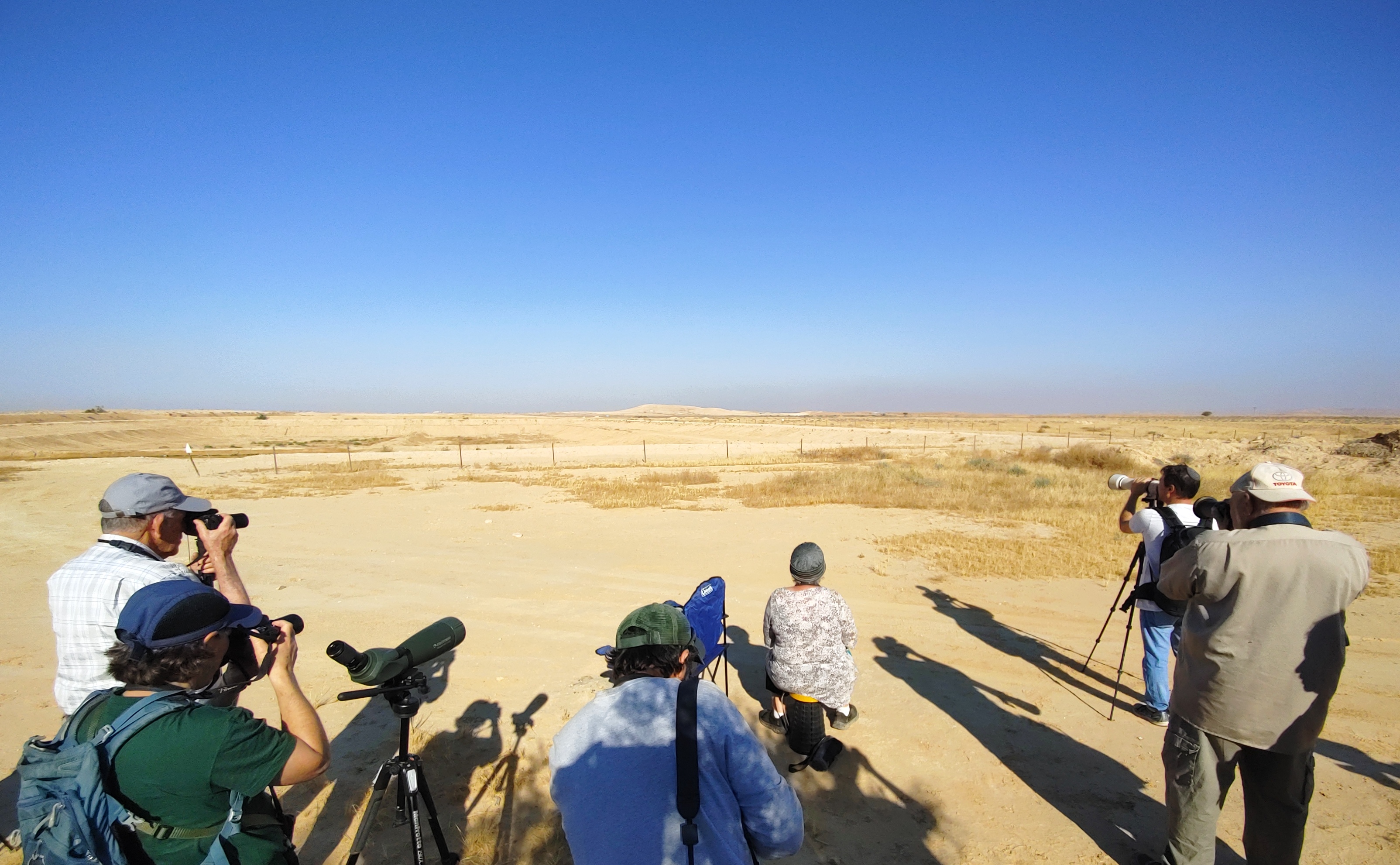
We gathered as a group in the mottled shade of a short evergreen tree and waited for the incoming sandgrouse. There were feral pigeons and other less-desirable birds flying about, distracting us from our mission. But then came the chirping coos of a single incoming spotted sandgrouse, scouting the waterhole before the flock arrived. It disappeared before we could find it in the clear blue skies, and before long more flight calls were heard.

Spotted sandgrouse making an appearance from a distance

Spotted sandgrouse making an appearance from a distance

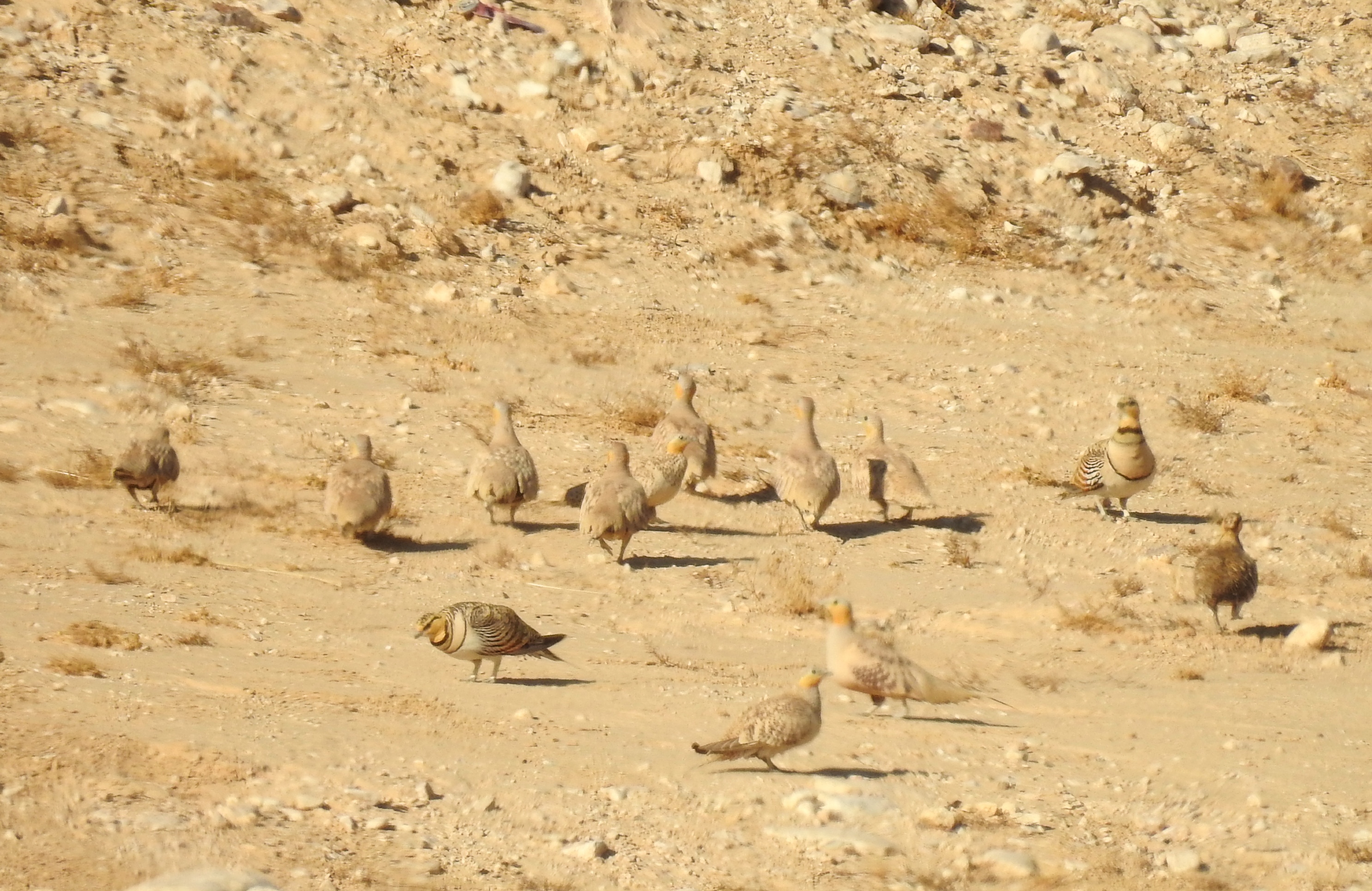
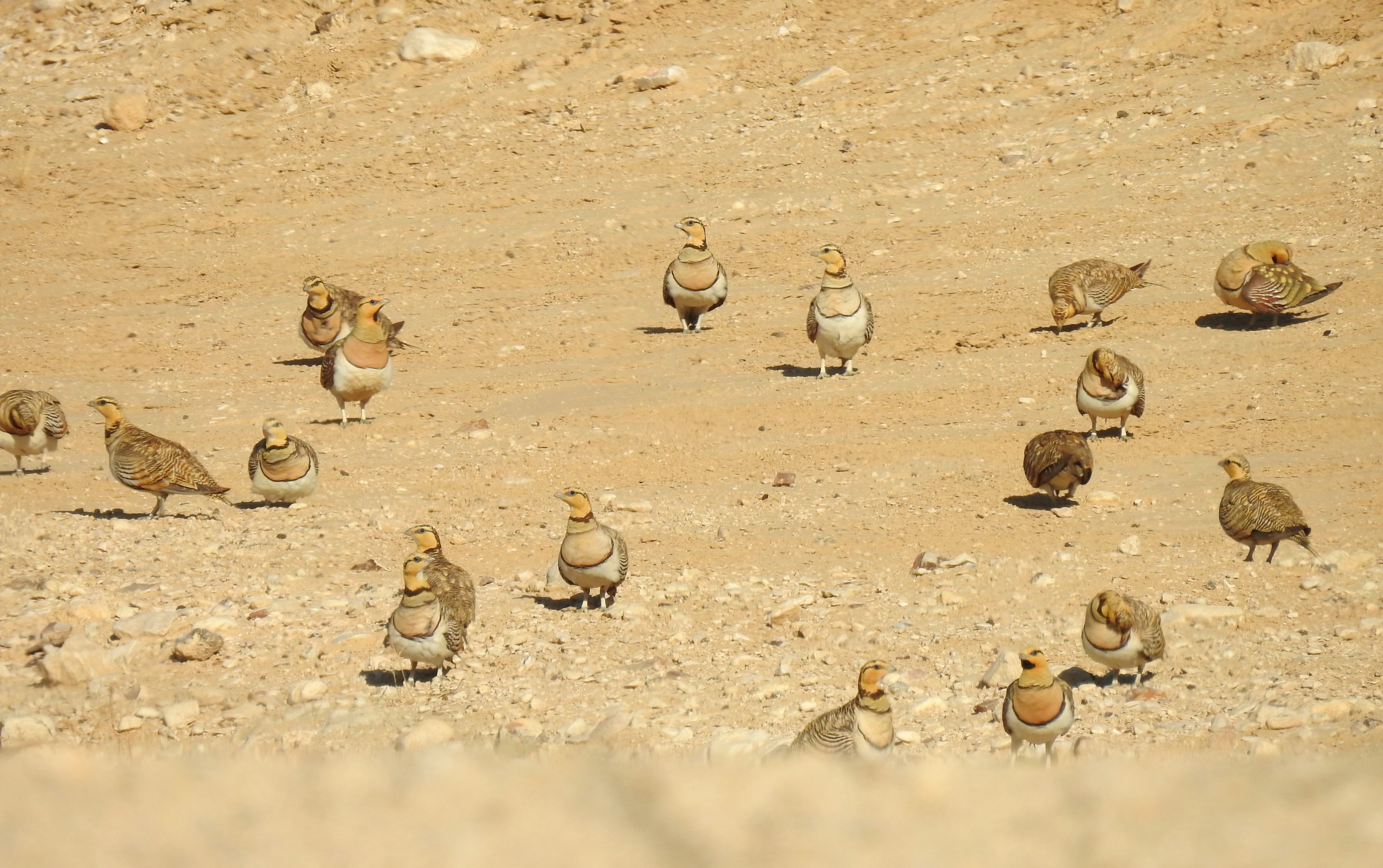
The spotted sandgrouse circled the dismal pool before slowly dropping down to waddle to the water’s edge. Sandgrouse are cautious birds, so we did our best to stay as still and inconspicuous as we could, allowing them to drink safely. The spotted sandgrouse were then joined by their cousins, the pin-tailed sandgrouse – an even more attractive bird.

A small flock of pin-tailed sandgrouse

A small flock of pin-tailed sandgrouse

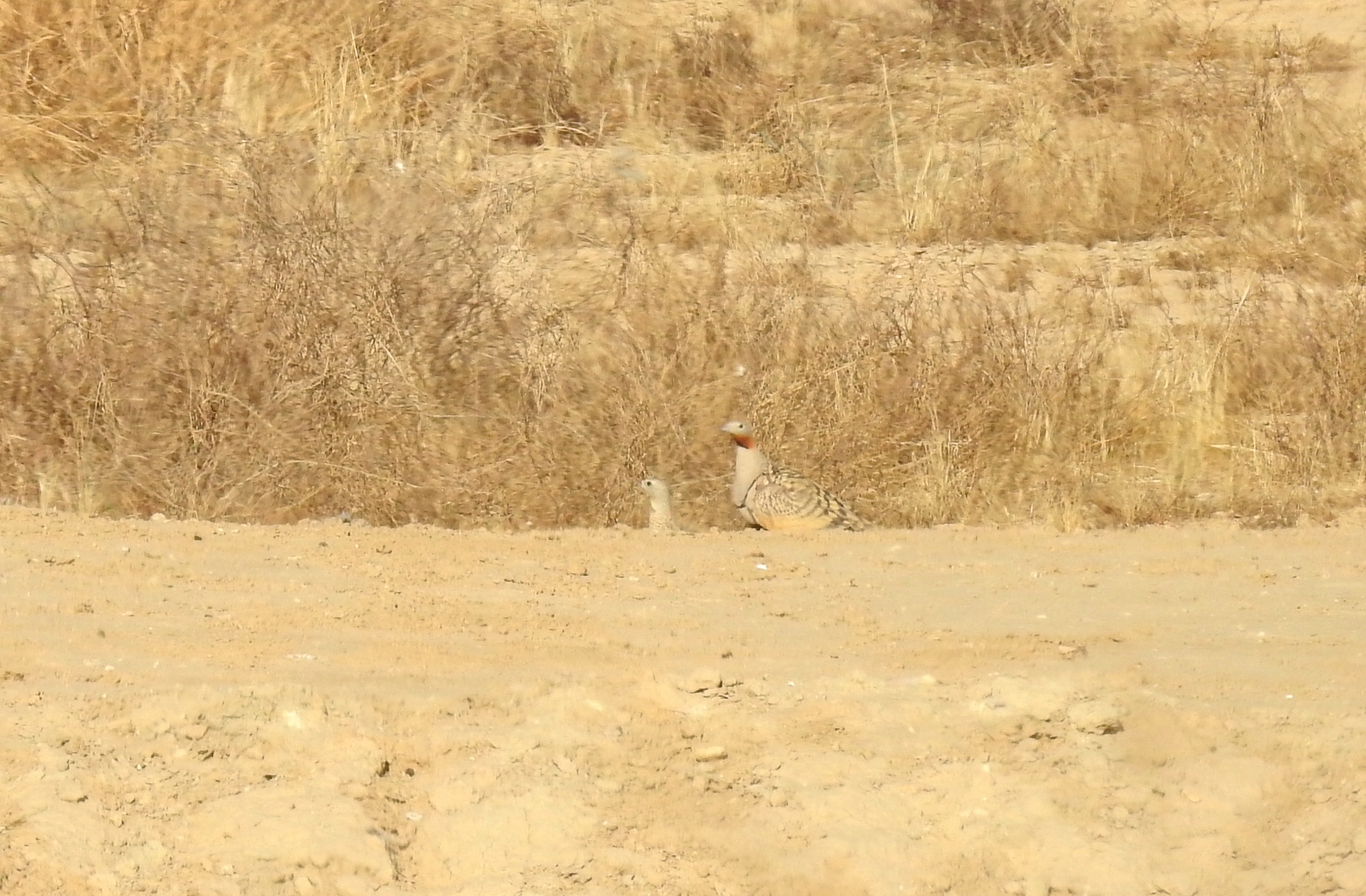
We watched and watched as small flocks of both species came and went, the air filled with flapping wings and exotic sounds. A pair of scrub warblers flitted by us, landing briefly on a nearly pile of sticks. Some brown-necked ravens patrolled nearby as well, never coming in for a tempting warm sip of grey water. Then, when we couldn’t imagine the scene any more entertaining, a pair of black-bellied sandgrouse came down to drink as well.

A pair of black-bellied sandgrouse

A pair of black-bellied sandgrouse

This made three new species of sandgrouse, none of which I had ever seen before. What’s interesting about this region is that it is a small overlap of four sandgrouse species, with one species living only in the southern Arava. In the past few decades, the sandgrouse population plummeted and then rose again, the future for these delicate, desert-living birds always filled with doubt.

The end of a successful tour

The end of a successful tour

We spent a good hour or so with the sandgrouse, and then the sun began to really beat down as the morning progressed. Before we left, we saw an alpine swift zipping speedily over the pools, taking tiny sips from the water. It was the end of the tour, but we left with more than just a few “lifers” and an unnecessary amount of photos. We left with a better understanding of the fragile ecosystem in the desert, coupled with the persistent need for undisturbed water sources. This knowledge made us hopeful for the future, so that our children and grandchildren can also enjoy the sandgrouse shows.

More information about Israel’s sandgrouse population can be found HERE, in an article written by Meidad Goren.

Ma’ayan Harod

In Galilee, Israel on July 14, 2023 at 6:23 AM

A little over a month ago, before summer’s oppressive heat sank in, Bracha planned a fun day for the three of us. She planned it all in advance, and surprised me with the main destination the evening prior. We were to be visiting Ma’ayan Harod, a small national park which somehow had escaped unnoticed by me and, thus, was quite the welcome surprise.

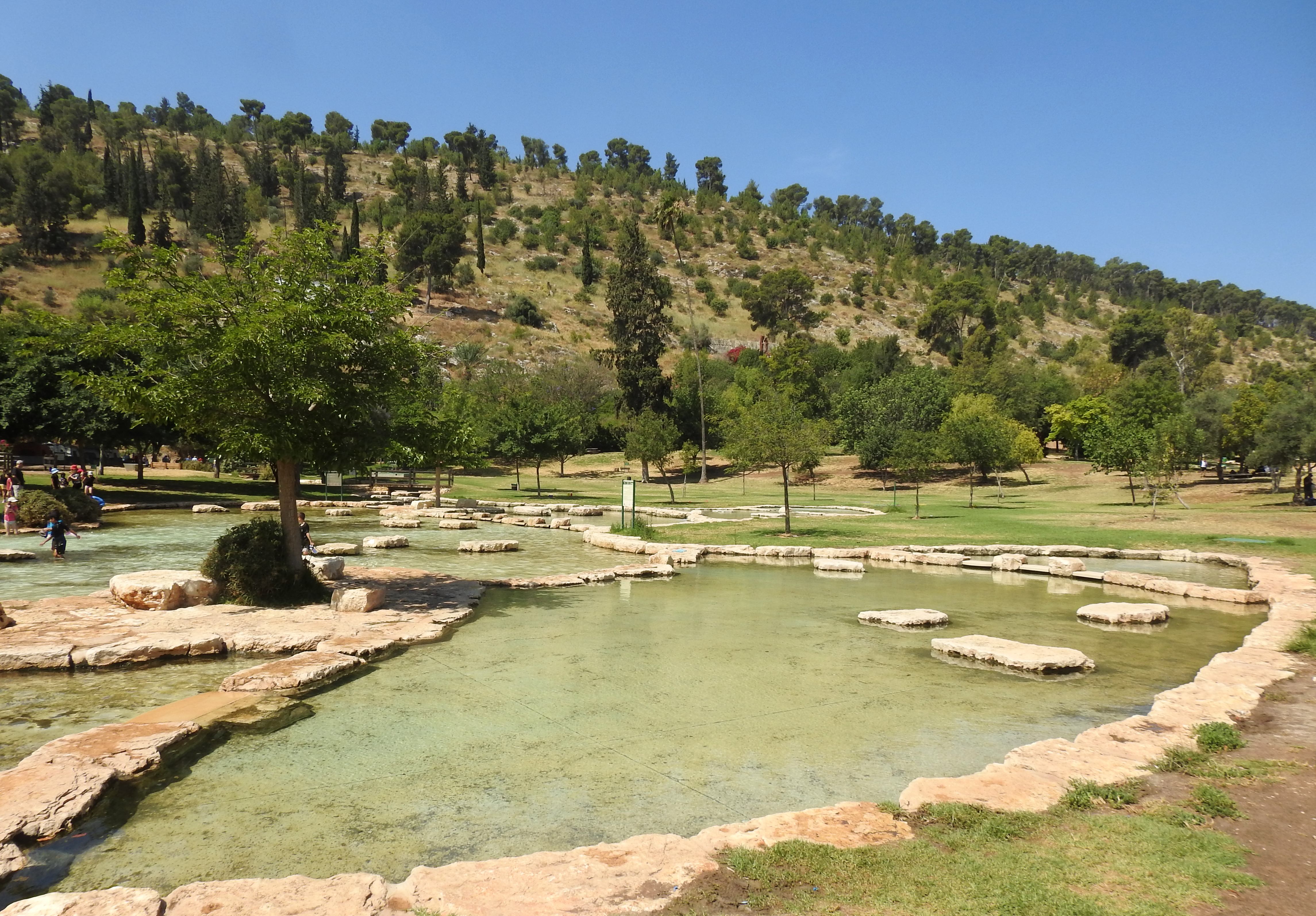
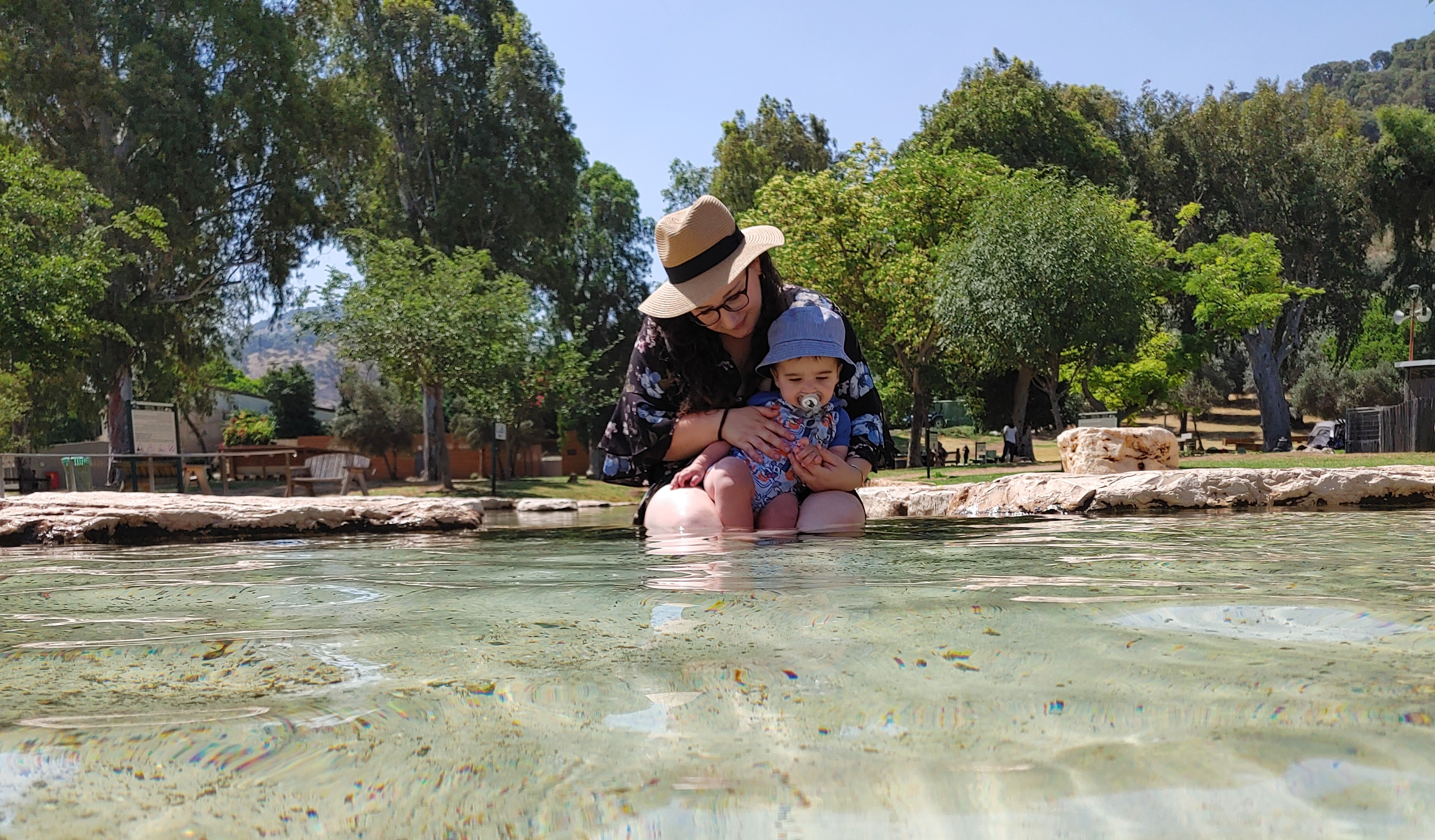
The gentle pools of Ma'ayan Harod

The gentle pools of Ma’ayan Harod

We packed ourselves up in the morning and headed out nice and early, hoping to beat both the heat and the crowds. It wasn’t too long before we were driving through the beautiful Jezreel Valley, and then past my military reserves base just outside of Afula, and then to the spring-dotted land shadowed by Mount Gilboa.

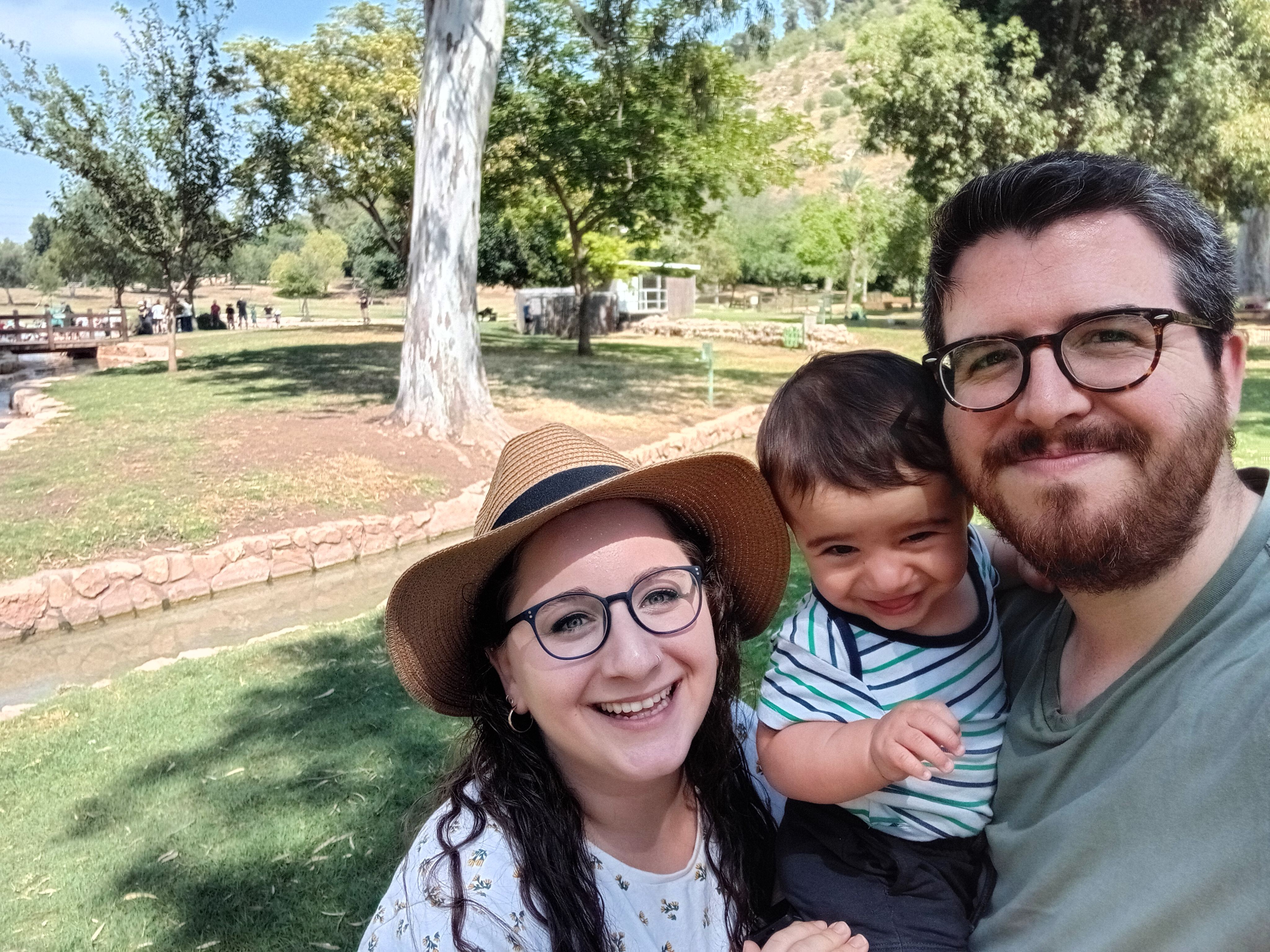
A family outing at Ma'ayan Harod

A family outing at Ma’ayan Harod

Arriving, we parked and examined the park pamphlet, noticing that there were only a few things to see – primarily, the spring and pools of Ma’ayan Harod. However, despite the park’s simplicity, there is something special about this place, also known as Ayn Jalut. This was the site of an incredible, history-making battle fought between the invading Mongols and the then-rulers, the Mamluks.

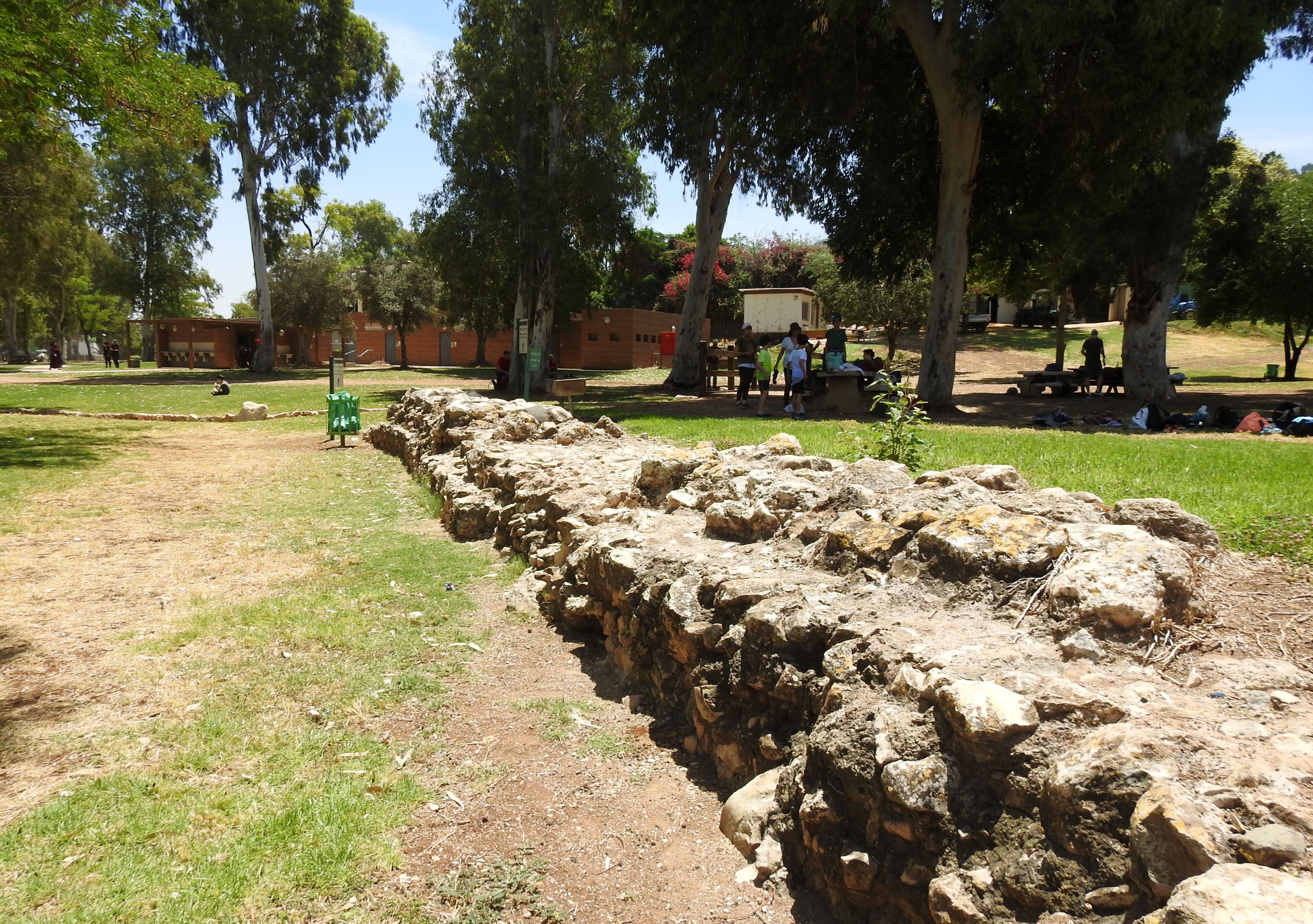
Remains of the ancient aqueduct

Remains of the ancient aqueduct

This crucial battle stemmed the tide of Mongol invasion, and likely created chaos amongst the local population – something that I touched upon in a forthcoming article I co-authored last year. Along with the battle at the Horns of Hattin, which took place less than thirty kilometres to the north, the battle at Ayn Jalut is one of the most iconic medieval battles to take place in the Holy Land. Thus, I was more than intrigued to be exploring this new site.

Introducing Amir to the cool spring water

Introducing Amir to the cool spring water

However, when visiting the park, the spring water-filled pools are, without doubt, the main attraction. We took a quick look around, saw that the pools were being temporarily vacated, and decided that we’d start our visit with a splash. We changed quickly, and then introduced ourselves to the cool spring waters. Amir was decidedly unimpressed and, quite understandably, had a bit of difficulty getting acclimated to the water. But when he did, we were all filled with joy.

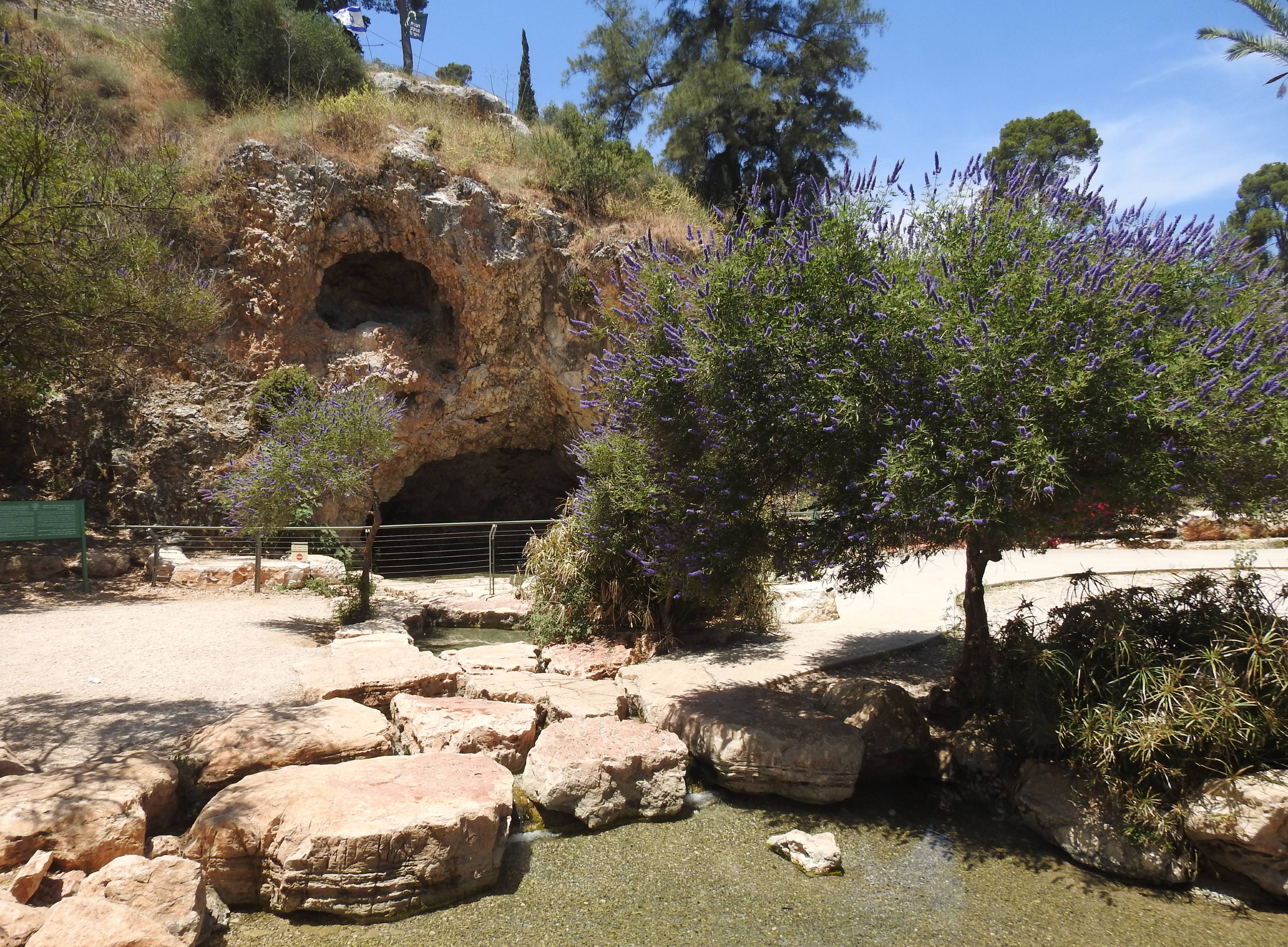
Gideon's cave

Gideon’s cave

Thankfully, we were able to have all of the pools to ourselves, despite the fact that there were school children visiting in droves. When we had splashed around enough, we got back out, found a nice shaded spot under some trees and had a little picnic. The food perked Amir right up, and before long we were exploring some more.

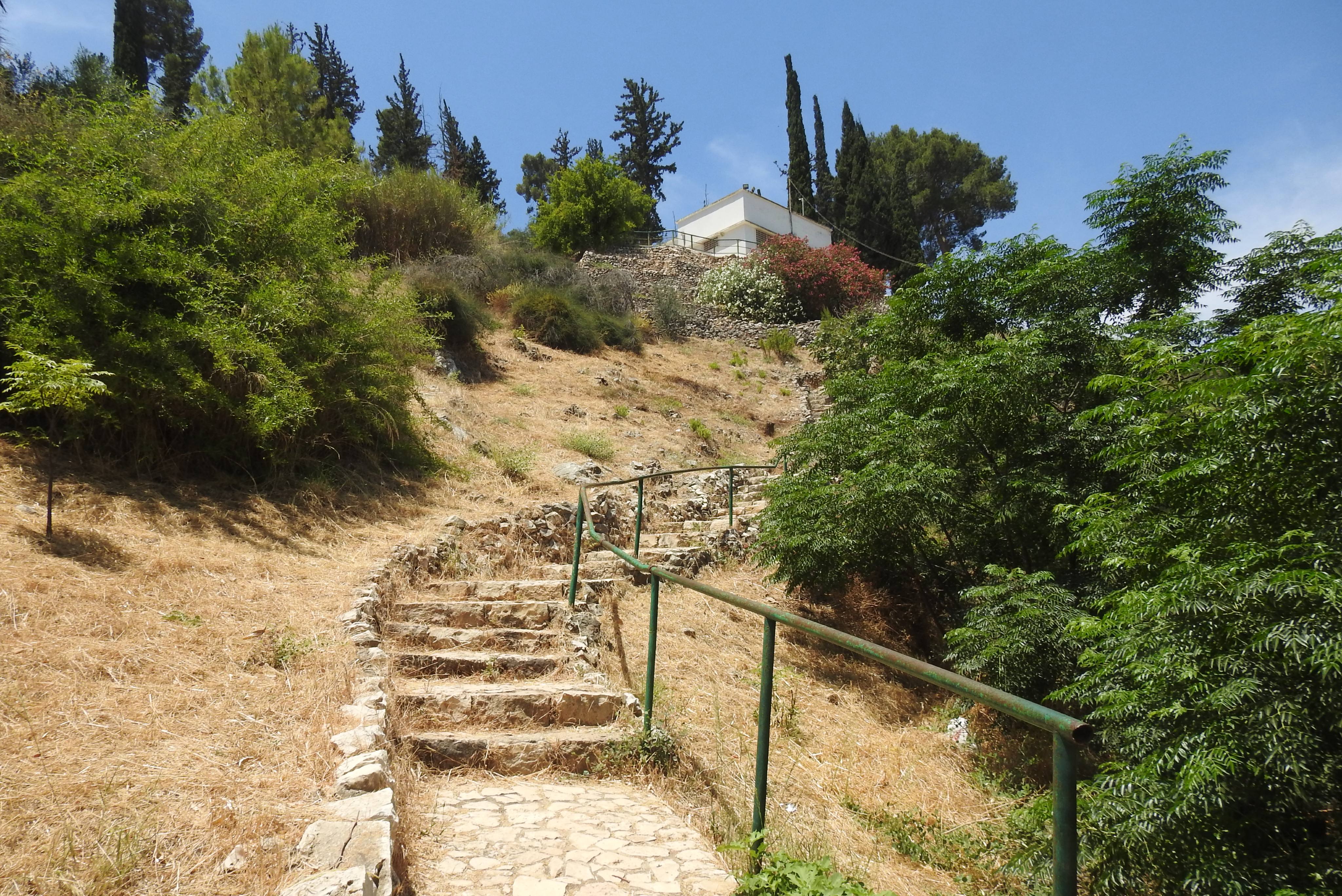
The path up to the Hankin house and tomb

The path up to the Hankin house and tomb

Not far from where we had eaten was the remains of an ancient aqueduct, sunken into the grassy topography and hardly noticeable to the untrained eye. Backtracking the spring water’s flow took us to a small, shallow cave where fresh water gurgled out enthusiastically.

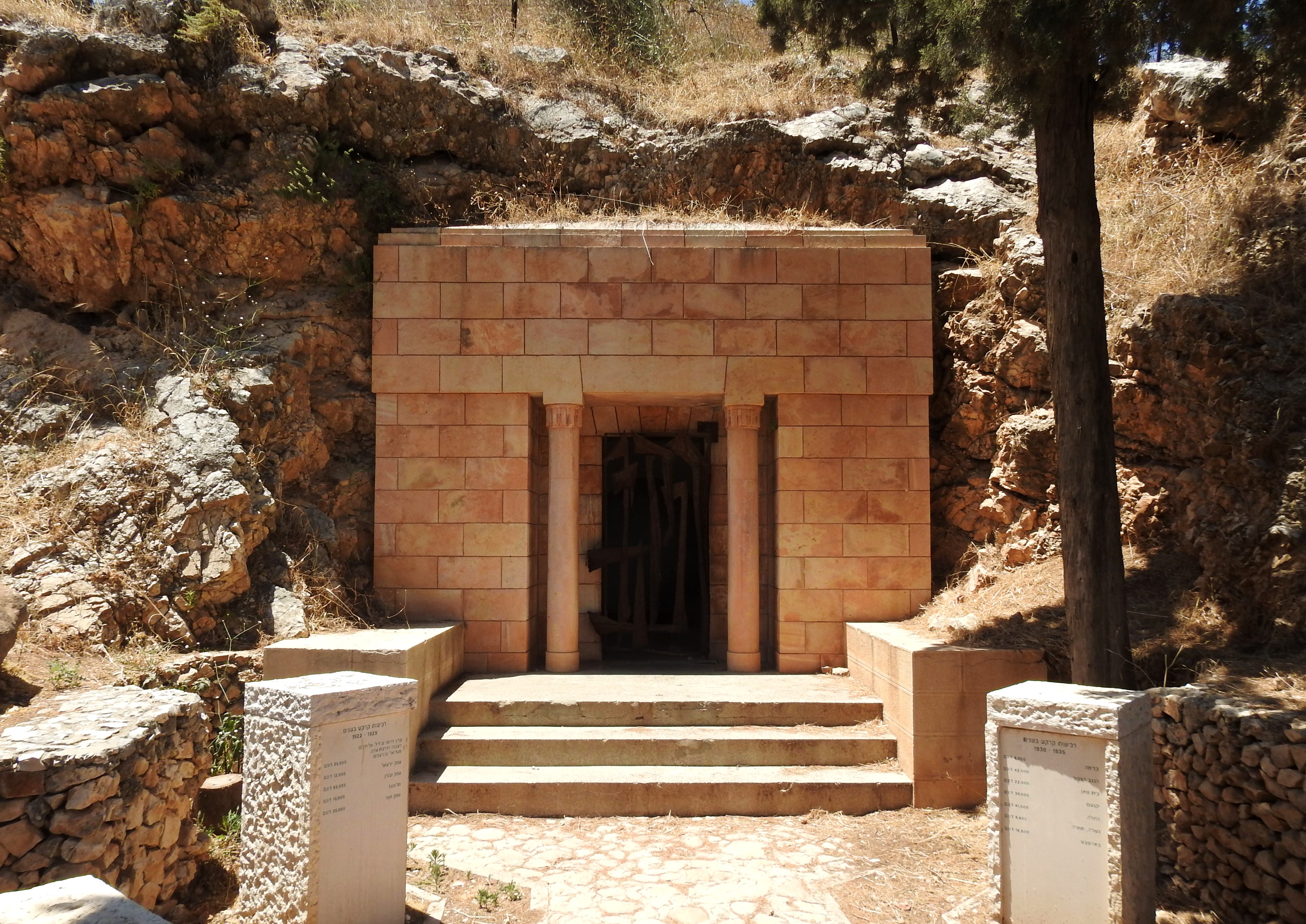
The Hankin tomb

The Hankin tomb

This is said to be Gideon’s cave, referencing the biblical story of the Israelite leader who tested his troops by the manner in which they drank – again, believed to be this very spring.We saw a group of religious tourists re-enacting this event, a study in human behaviour.

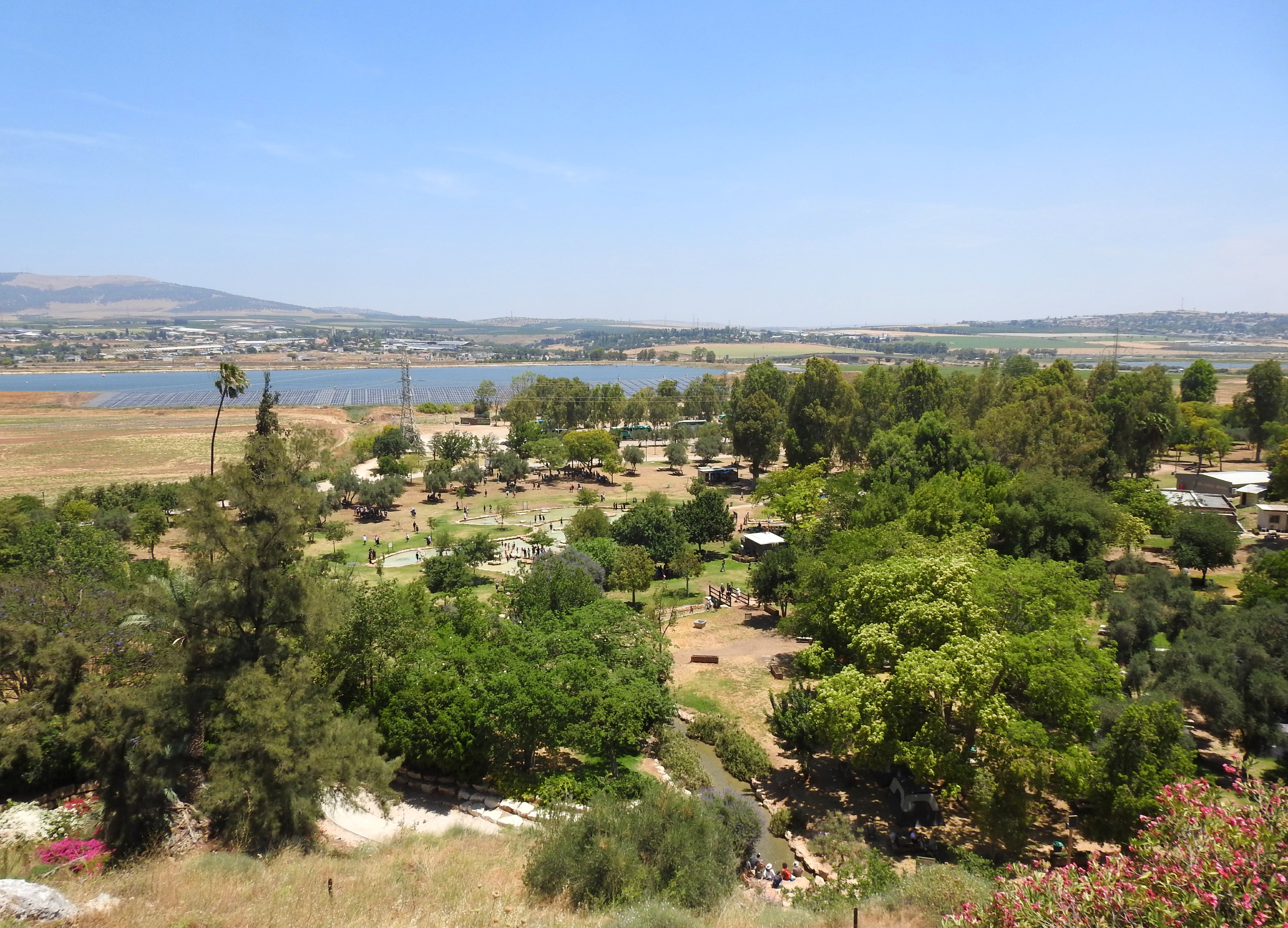
Looking down at the park and surrounding area

Looking down at the park and surrounding area

Next, I decided to pop up the small slope that served as the backdrop to the beautiful park to see the few sites that were marked on the map. Alas, all there was to see was the joint tomb of Yehoshua and Olga Hankin, pioneers of local settlement in the early 1900s, and their humble Bauhaus house. Unfortunately, the house itself was locked and, as such, I was unable to properly explore it. Heading back down the slope, and marvelling at the view, I rejoined Bracha and Amir and we made our way out of the park.

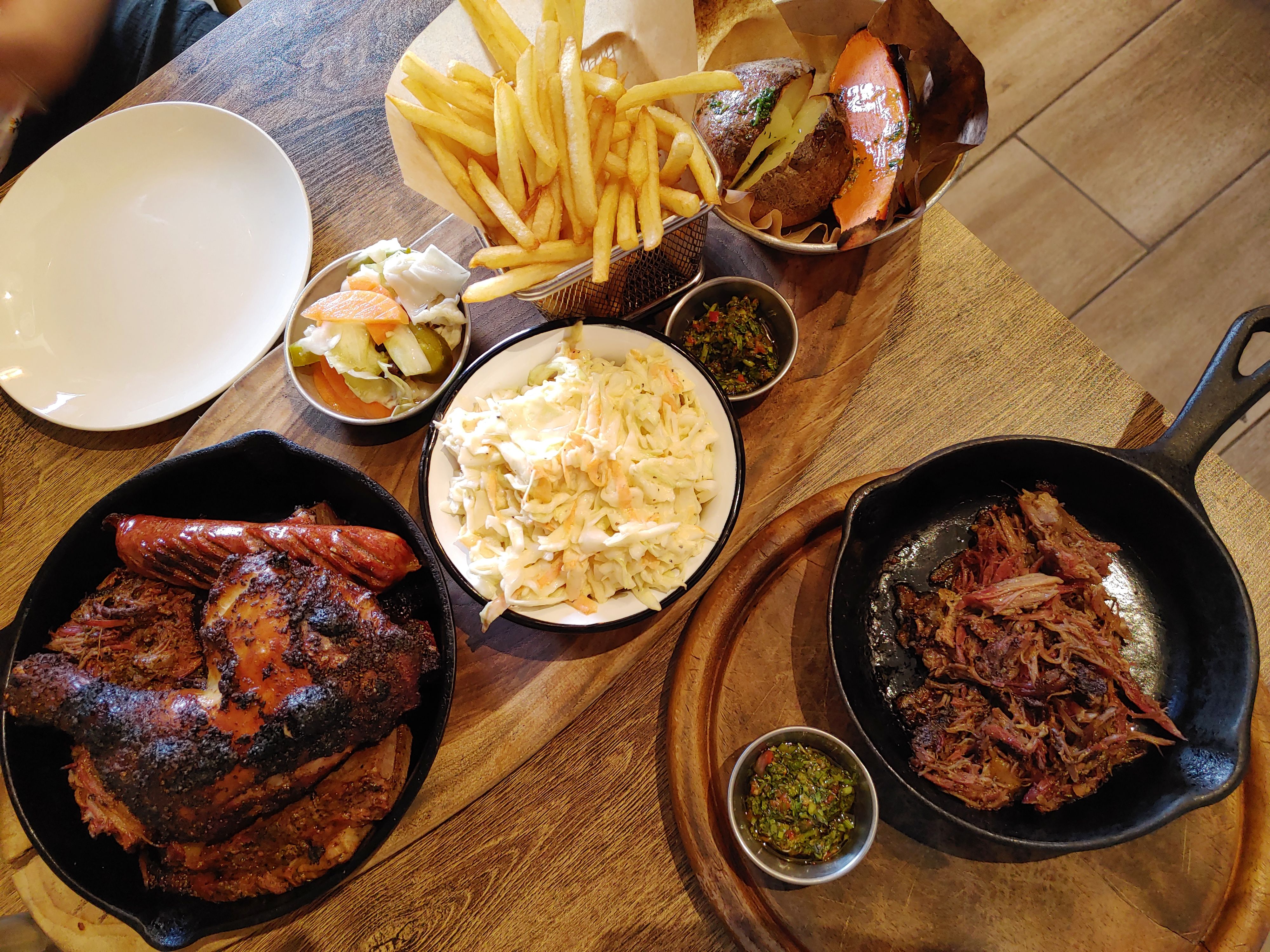
Slow-cooked meats and sides at Brisket Bar

Slow-cooked meats and sides at Brisket Bar

Yet, the day was not over as Bracha had planned an interesting lunch for us at a restaurant called Brisket Bar, a highly-praised bastion of slow-cooked meats. Indeed, the fine selection of meat was incredibly tasty and very deserving of the praise we’ve heard, as the three of us can attest to. From there we drove home, happy and with the feeling of a day well spent.