Israel's Good Name

Archive for 2025|Yearly archive page

Israel Aquarium

In Israel, Jerusalem on December 31, 2025 at 3:23 PM

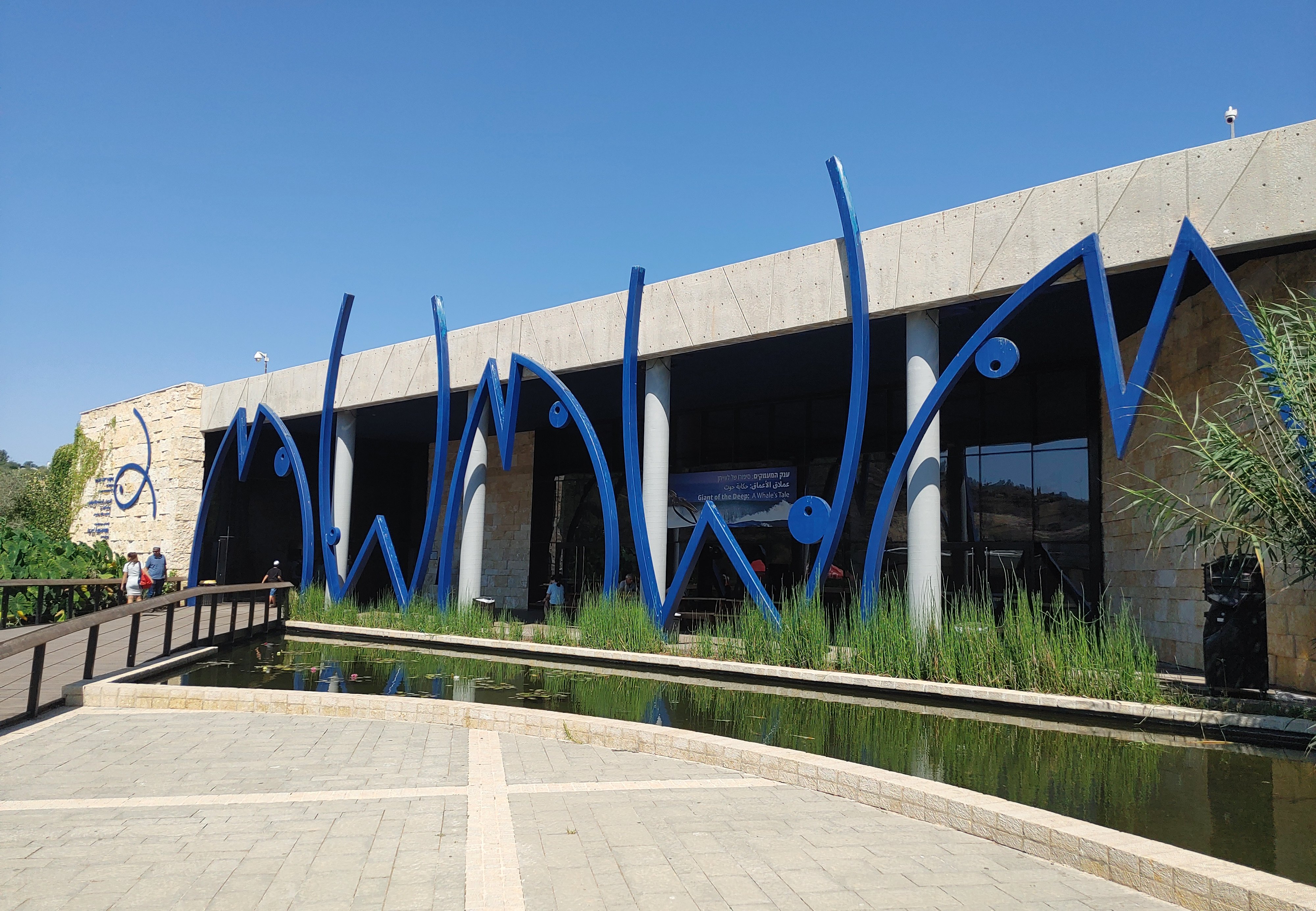
At the end of July we took a family trip to Jerusalem, with our main goal to visit the Israel Aquarium. Both the aquarium and the neighbouring Biblical Zoo counterpart have been on our lists for a while, but we rarely make it to Jerusalem ever since Amir was born. As such, we hyped up the trip quite a bit and were rather eager to go. Despite it being summer, we found parking quite easily outside the complex and within minutes we were buying tickets and heading inside. The cheery ticket checker recommended that we start our tour with a visit to the butterfly house and gardens, an unusual addition to an aquatic attraction. 

Israel Aquarium

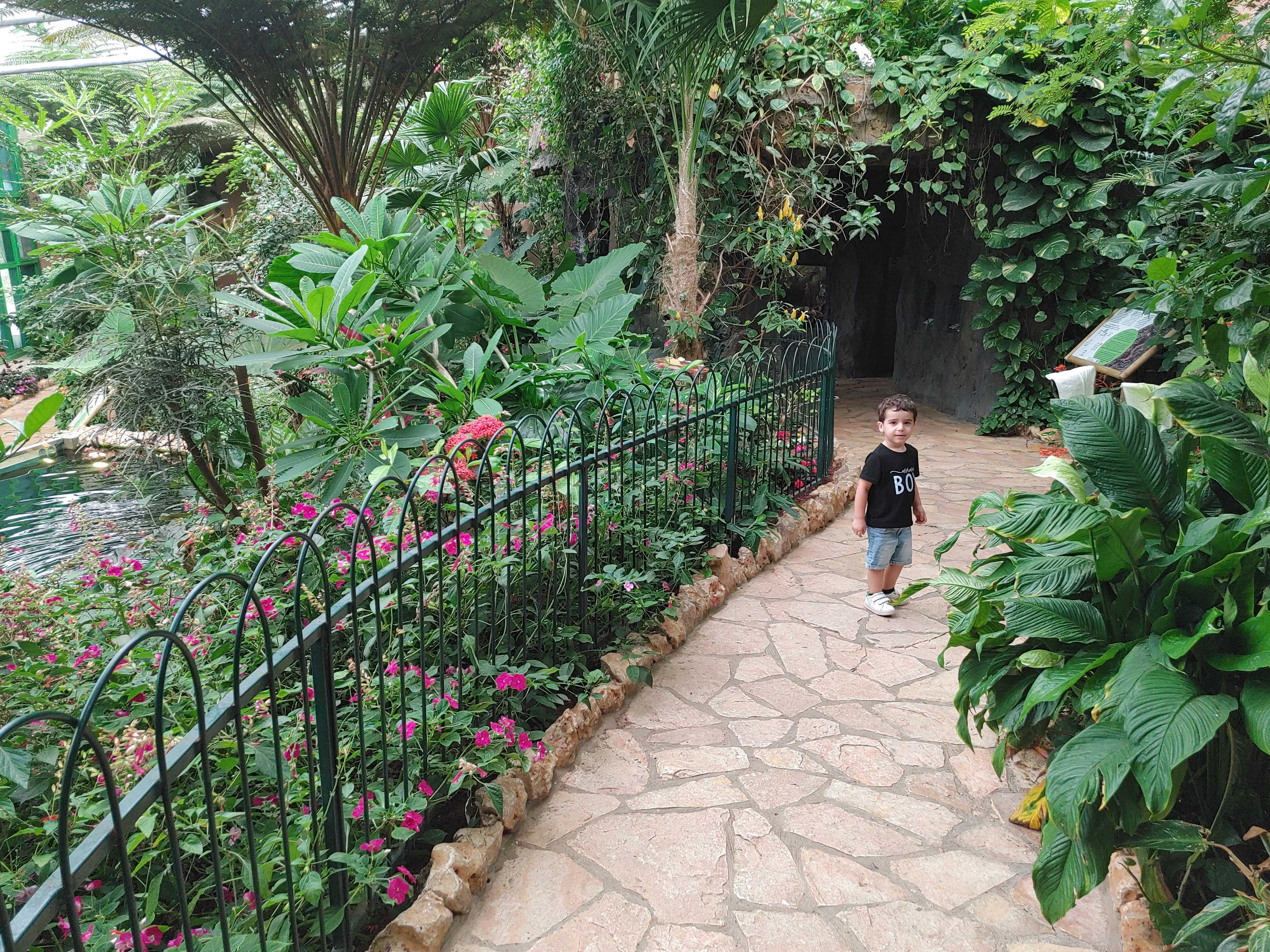
Passing through the double doors, we were dumbfounded by the size of the butterflies flapping languidly around us. Huge navy and cobalt wings operated in synchrony as the large blue morpho butterflies, native to Central America, fluttered around us. Amir was tempted to try and catch them, but we led by example and observed only. There were a handful of other species as well, flying or resting along the attractive “jungle” path. Overall, the butterfly addendum was an unexpected but welcome addition to our trip itinerary.

Amir in the butterfly gardens

Moving on to the main attraction, we left the butterflies and entered the main building which houses the aquarium. Darkness enveloped us, as did the dozens of other visitors who shared in our experience. Huge fish tanks greeted us as we passed into the first exhibit, filled with countless specimens of wriggly sea creatures all wiggling about in their aquatic environs.

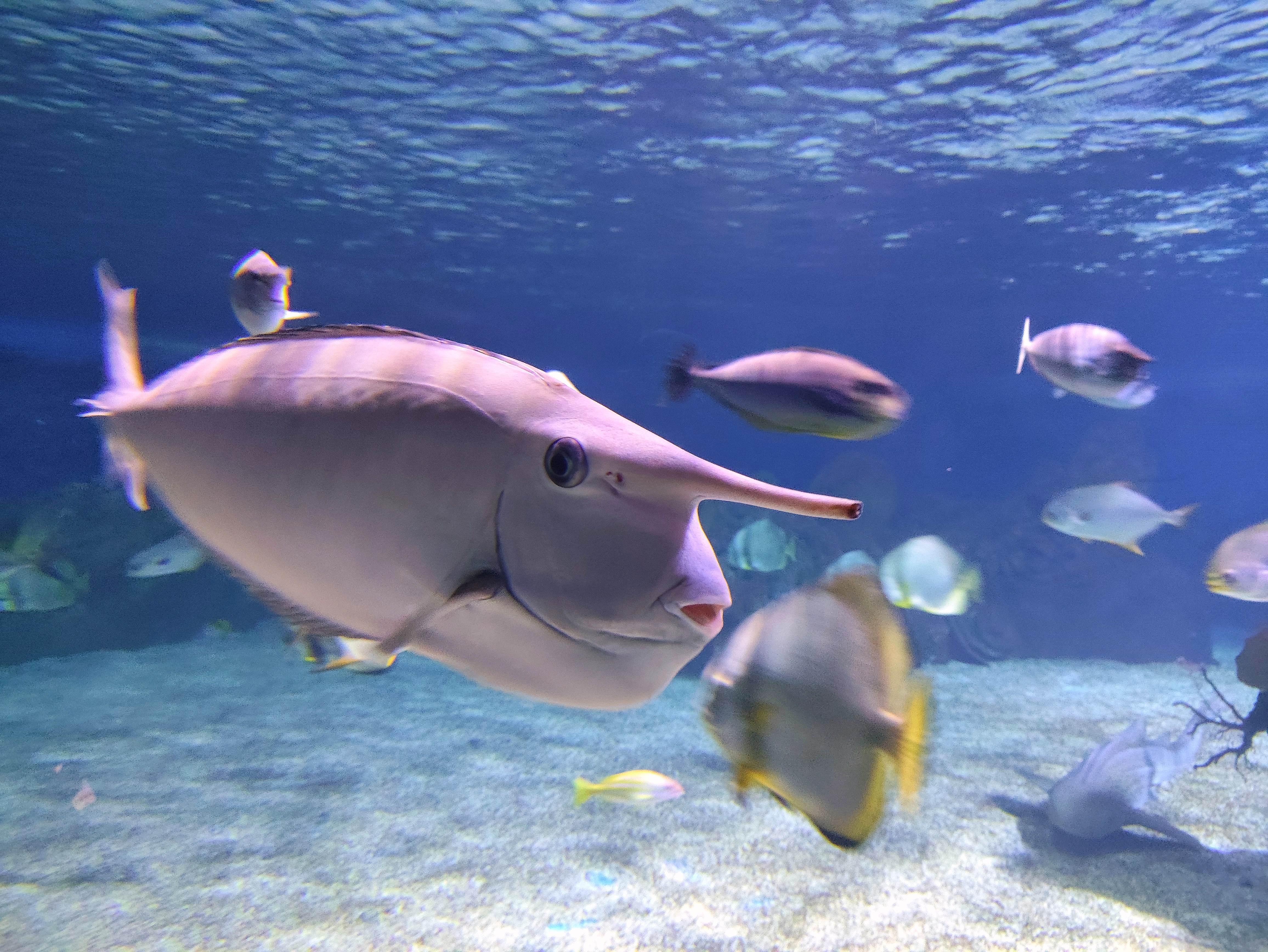
Odd unicornfish

I appreciated how each exhibit followed a particular theme, all focusing on the fishy elements. That first gallery was dedicated to the four “seas” of Israel – the Mediterranean, Red, Dead and the Sea of Galilee – each with its marine life. I was pleasantly surprised to learn about the Dead Sea toothcarp, which can’t live in the intense salinity of the lake itself, but rather lives in the desert streams that feed into the Dead Sea.

Futile attempts at getting a cool picture of the Dead Sea toothcarp

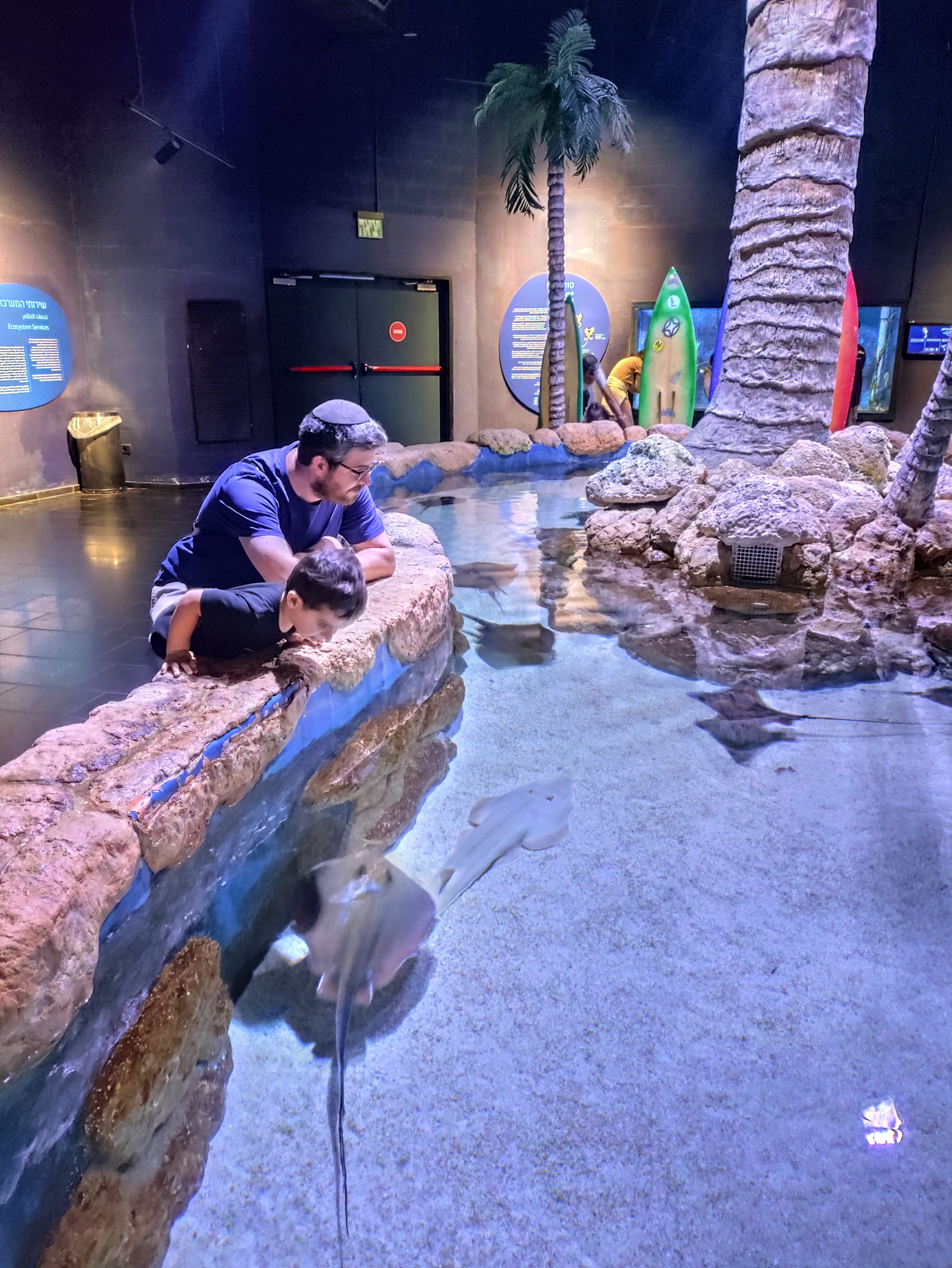
Naturally, much of the fish featured are native to the Mediterranean, so a few of the subsequent exhibits focused on Israel’s western seaboard. There was also an exhibition about fish in the Suez Canal, which has had an ecological impact on the Mediterranean with invasive species swimming over from the Red Sea. Within the darkened halls of illuminated tanks, fish of all varieties, sea horses, a one-armed sea turtle and a pool of rays and guitarfish really fleshed out the collection.

Amir and I examining the ray pool

There were a few aquarium tanks that were designed to look more realistic, matching the habitat’s general appearance with paint and sculpted rocks. The Mediterranean coast tank even featured choppy waters, mimicking the natural movement of the sea. I quite enjoyed this, feeling like I was looking at a living diorama, but ultimately the photographs failed to convey the joyous sensation.

At one with the fish

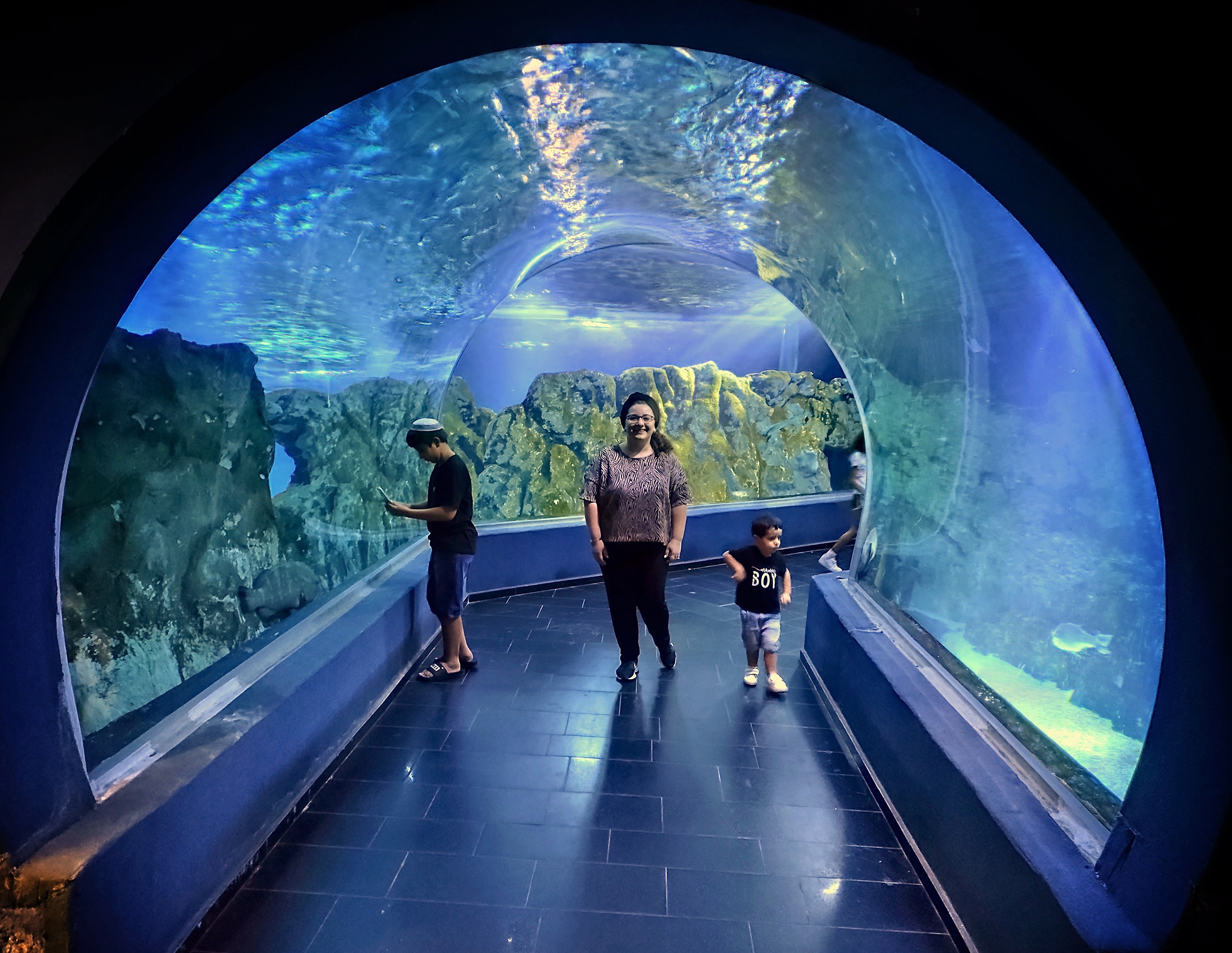
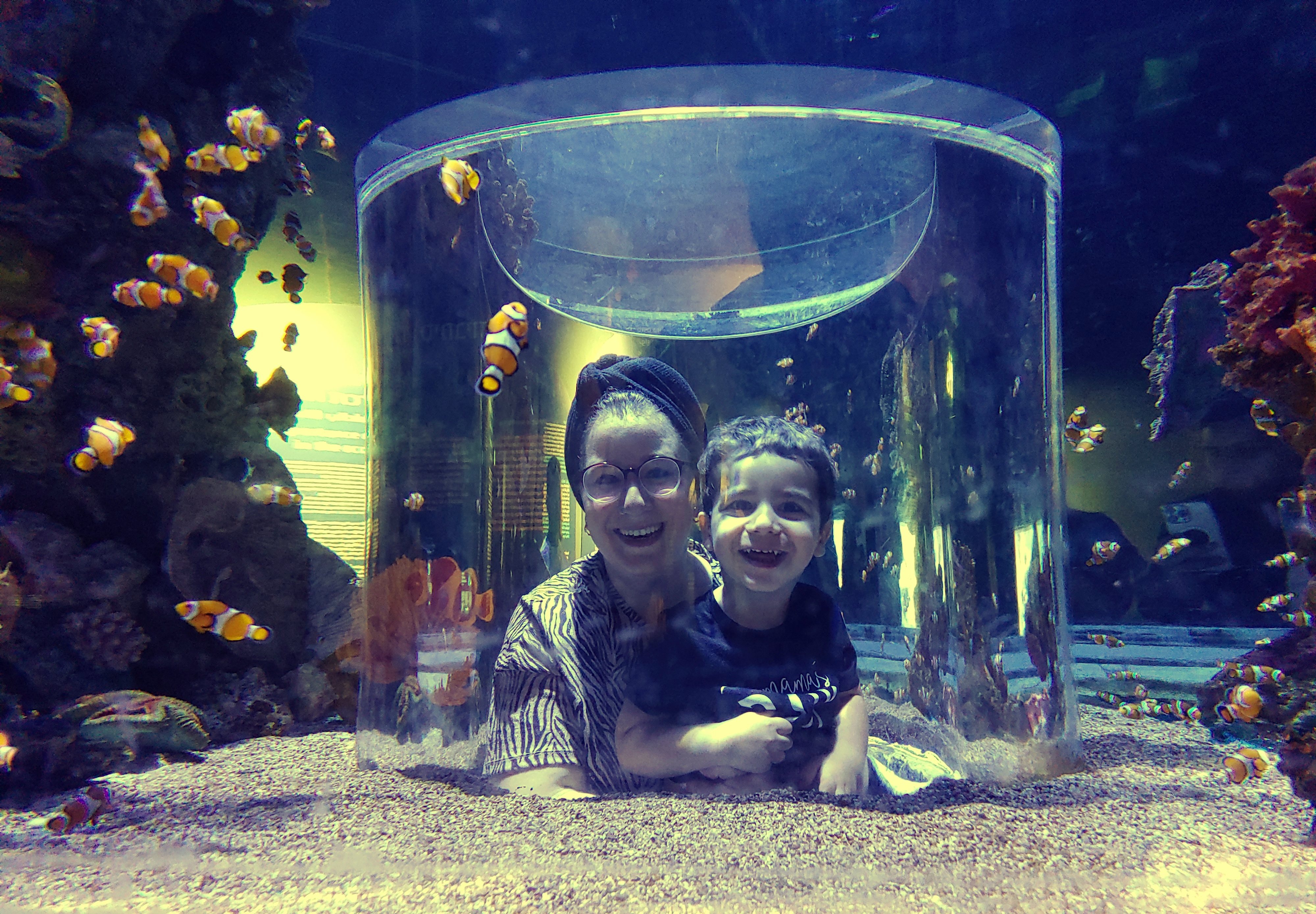
Speaking of dioramas, there were several exhibits which had special tanks featuring tunnels which allowed visitors to view the fish from the inside. These were naturally very popular with the children, so I had to be quite patient to get a picture of Bracha and Amir posing “underwater” with the fishy friends. The tank’s “actinic” blue lighting takes some getting used to in person, and some efforts to balance out when editing the photos (of which I’m not entirely satisfied by).

My favourites

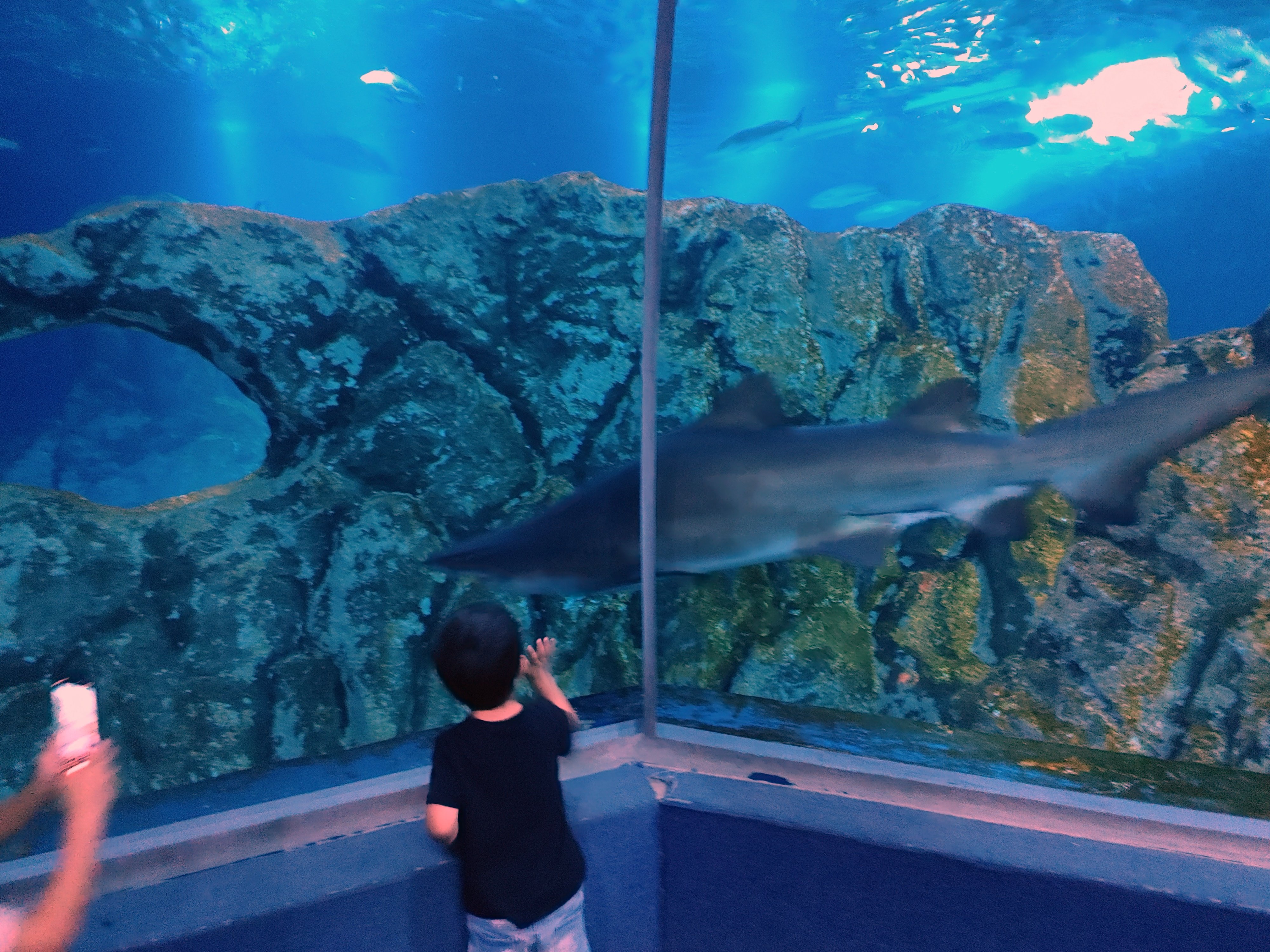
And then there were sharks! We reached a glass tunnel walkway under a big tank where sharks passed over, swiftly and with the fluidity apt for such apex predators. Amir tried befriending one shark, which appears to be a sand tiger shark, but it swam off without as much as a passing nod. Unfortunately, I didn’t see any signs identifying which shark species were in the large tank, but the marvels of technology today greatly helps.

Amir befriending a shark

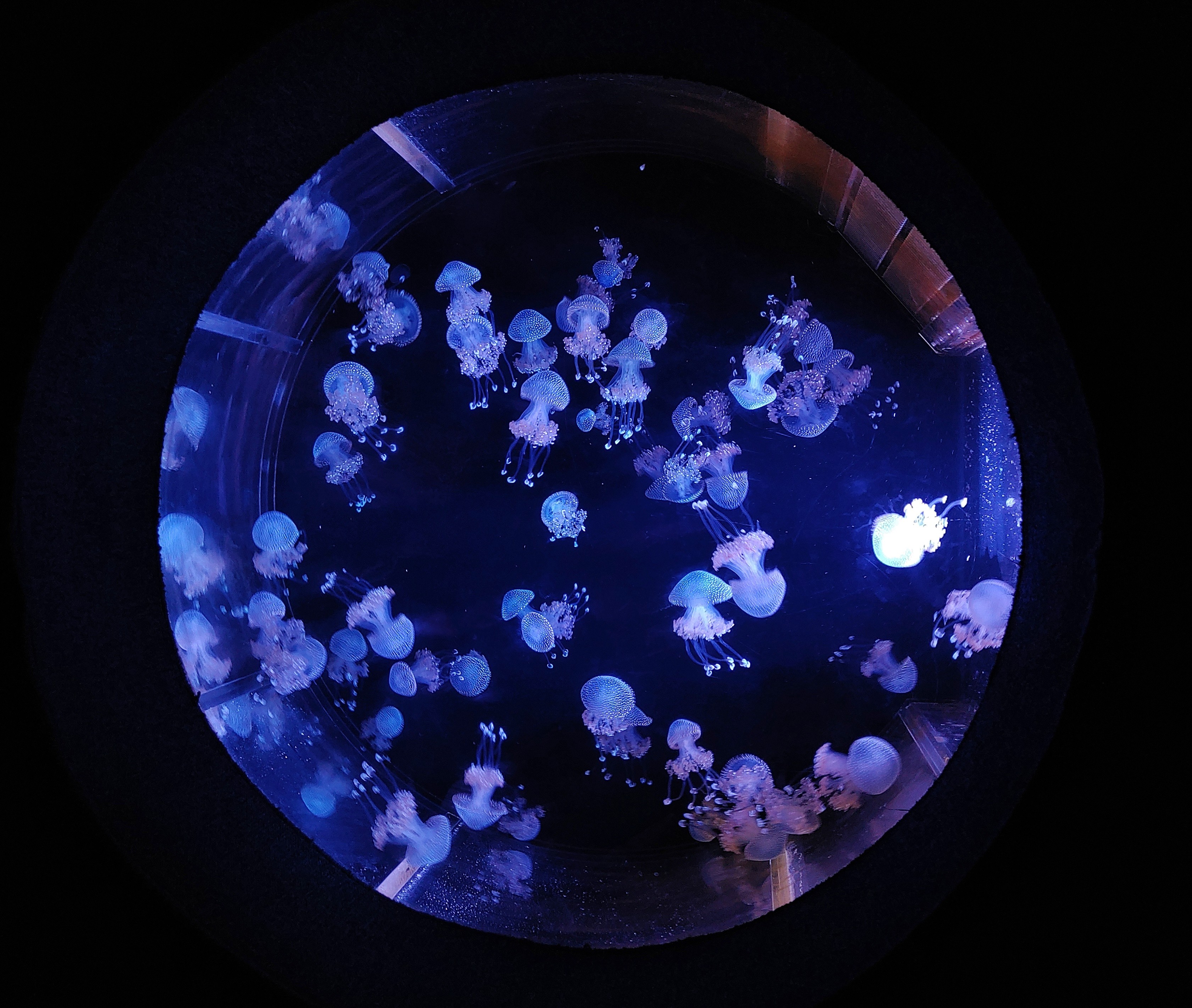
Around the corner we found a huge glass panel and stadium seating where people can sit and watch the wildlife as if it was a film in the cinema. We sat for a few minutes and had a bite to eat before continuing on to see some jellyfish. In fact, I was quite surprised at how many jellyfish the aquarium has, all drifting about in their little colourful tanks. Some like the moon jellies and Australian spotted jellyfish certainly made for easy, artsy photography.

Jellyfish galore

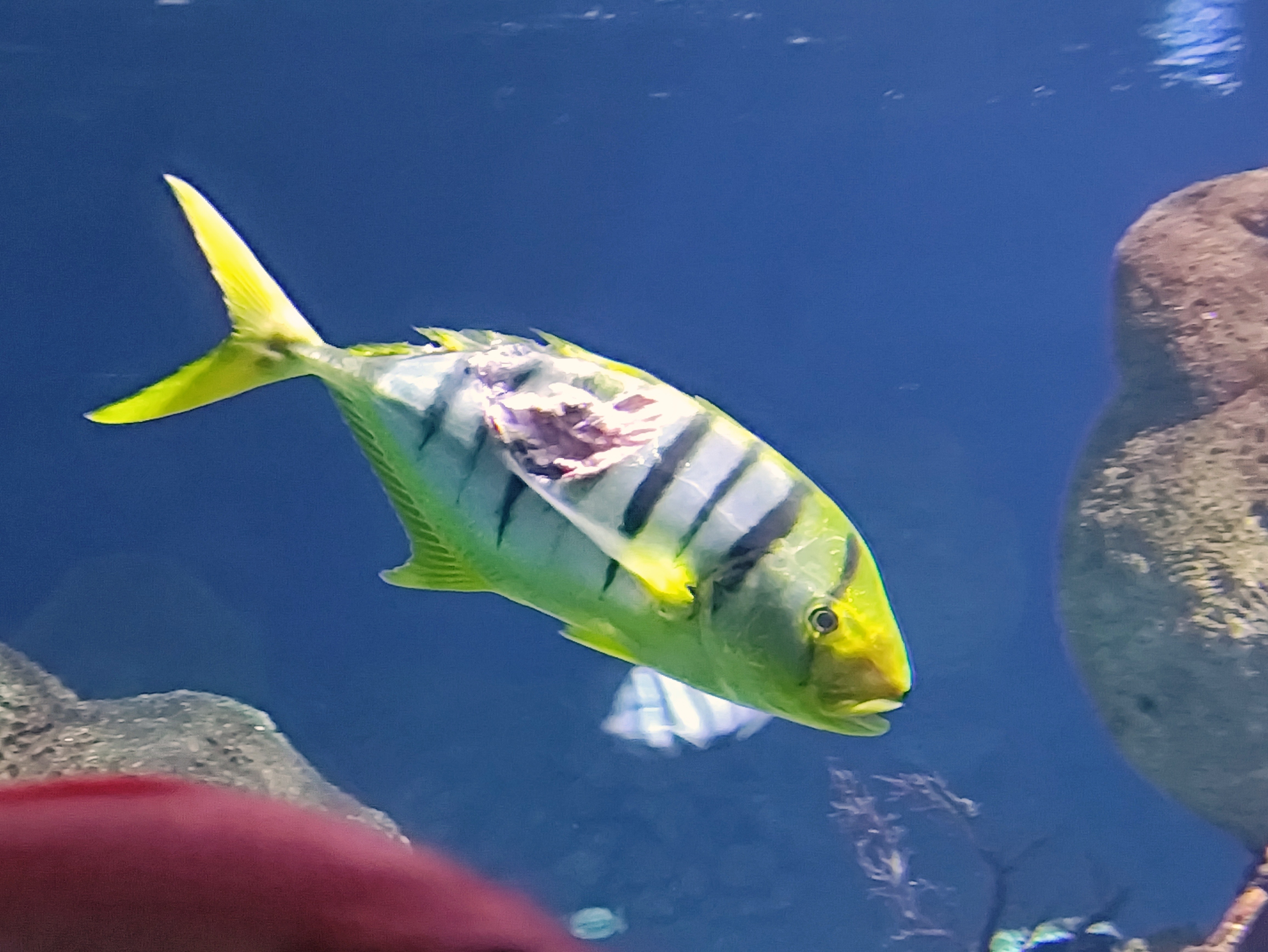
I would be amiss if I did not mention the fish-related art installations that decorated the entrance and exit of the aquarium circuit. There was even a little information regarding kashrut and kosher fish, for hungry visitors looking for a cheeky bite to eat in the darkened exhibits.

Someone bit this golden trevally

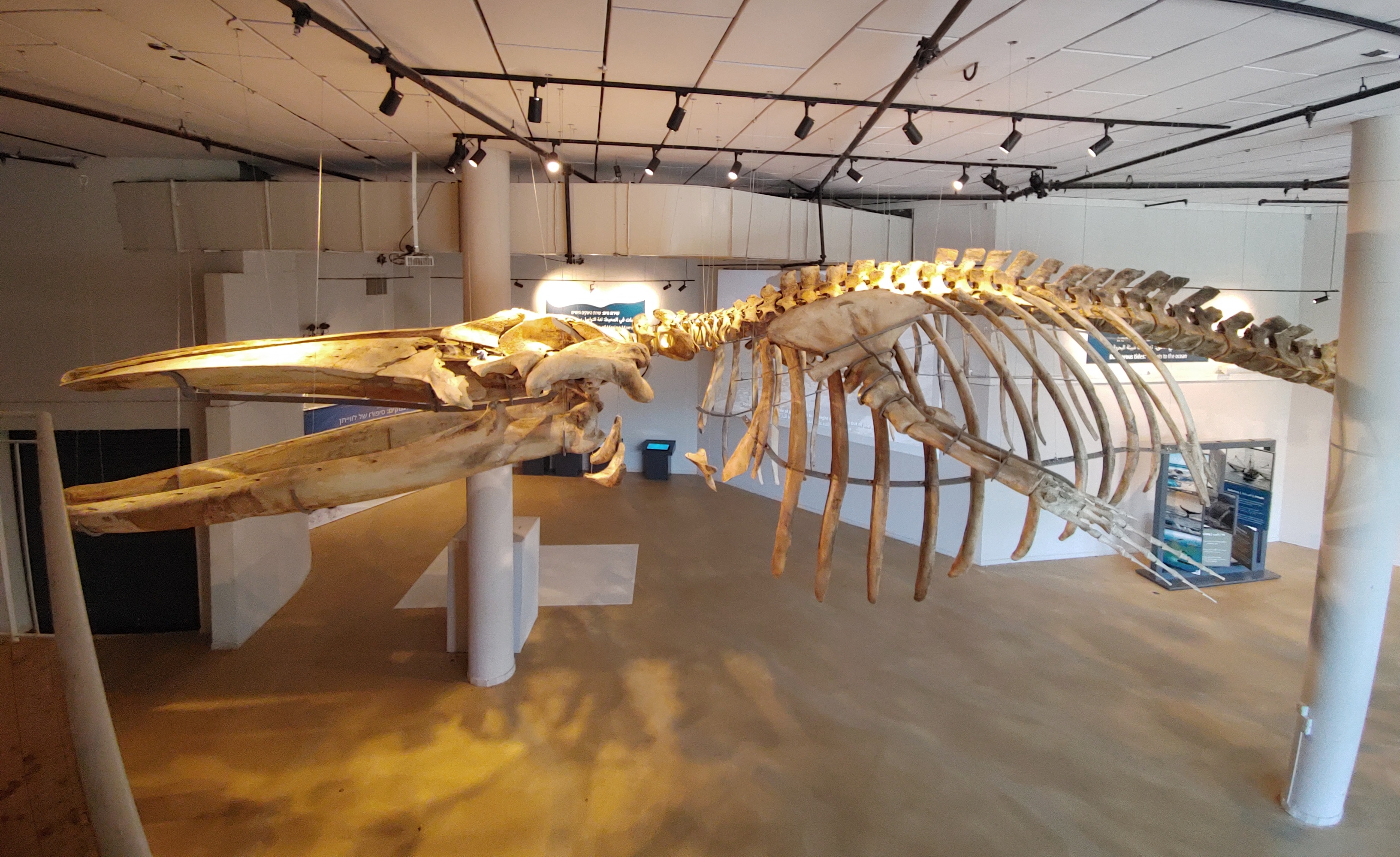
As we were leaving the building, I noticed that there was a side exhibit dedicated to the suspended skeleton of Sandy, a dead fin whale that washed ashore back in 2021. The huge skeleton, measuring 17.5 metres (57 feet), made the room feel small – and an elevated platform was needed to be able to get a good look at the alien-looking skull bones.

Fin whale skeleton hanging on display

When I climbed back down, we gathered our belongings and made our way out of the aquarium, feeling happy to have seen this long-awaited site. We then drove to get some lunch at one of Jerusalem’s acclaimed pizza shops and then the drive back home to Elkana at the edge of the Shomron.

Qesem Cave Archaeogical Dig

In Central Israel, Israel, Samaria on December 23, 2025 at 8:29 AM

The summer of 2025 turned out to be quite productive in the adventure category, even with an intensive two-week war with Iran disrupting the flow. A mere week after my nature trip with Adam Ota to the Sharon Beach Nature Reserve, I found myself on another adventure, and much closer to home. On one morning’s commute, I happened to notice that excavations were being renewed at the famous Qesem Cave, a groundbreaking archaeological site discovered in 2000 that sheds light on prehistoric life in the Levant. A quick Google search put me in contact with Dr Ella Assaf, director of the excavations on behalf of Tel Aviv University, and arrangements were made for me to join the team as a volunteer one day in mid-July. Thankfully, Qesem Cave is only approximately 7 kilometres from my house, and thus an easy drop-off for Bracha on her way to work.

Qesem Cave excavations

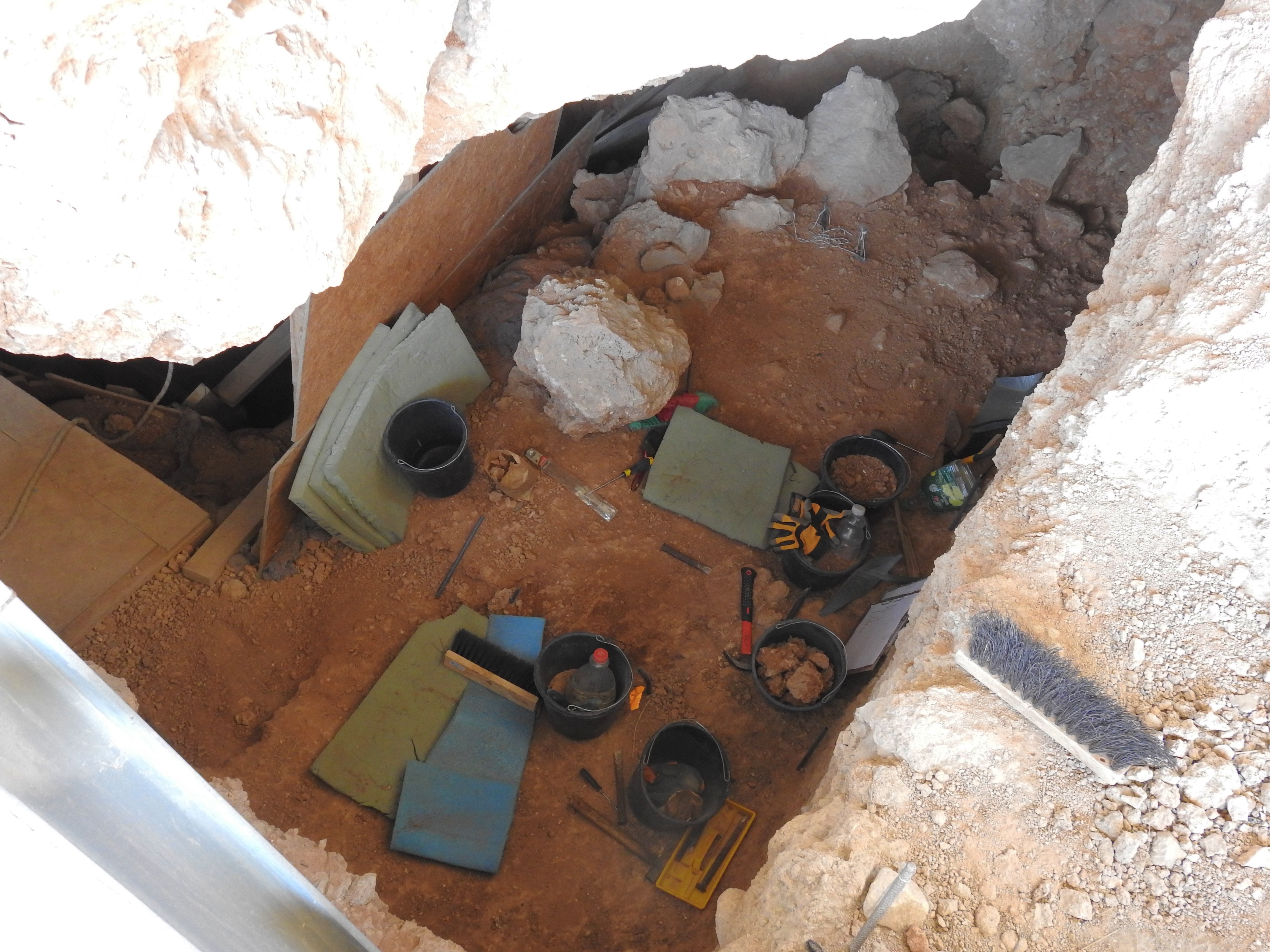
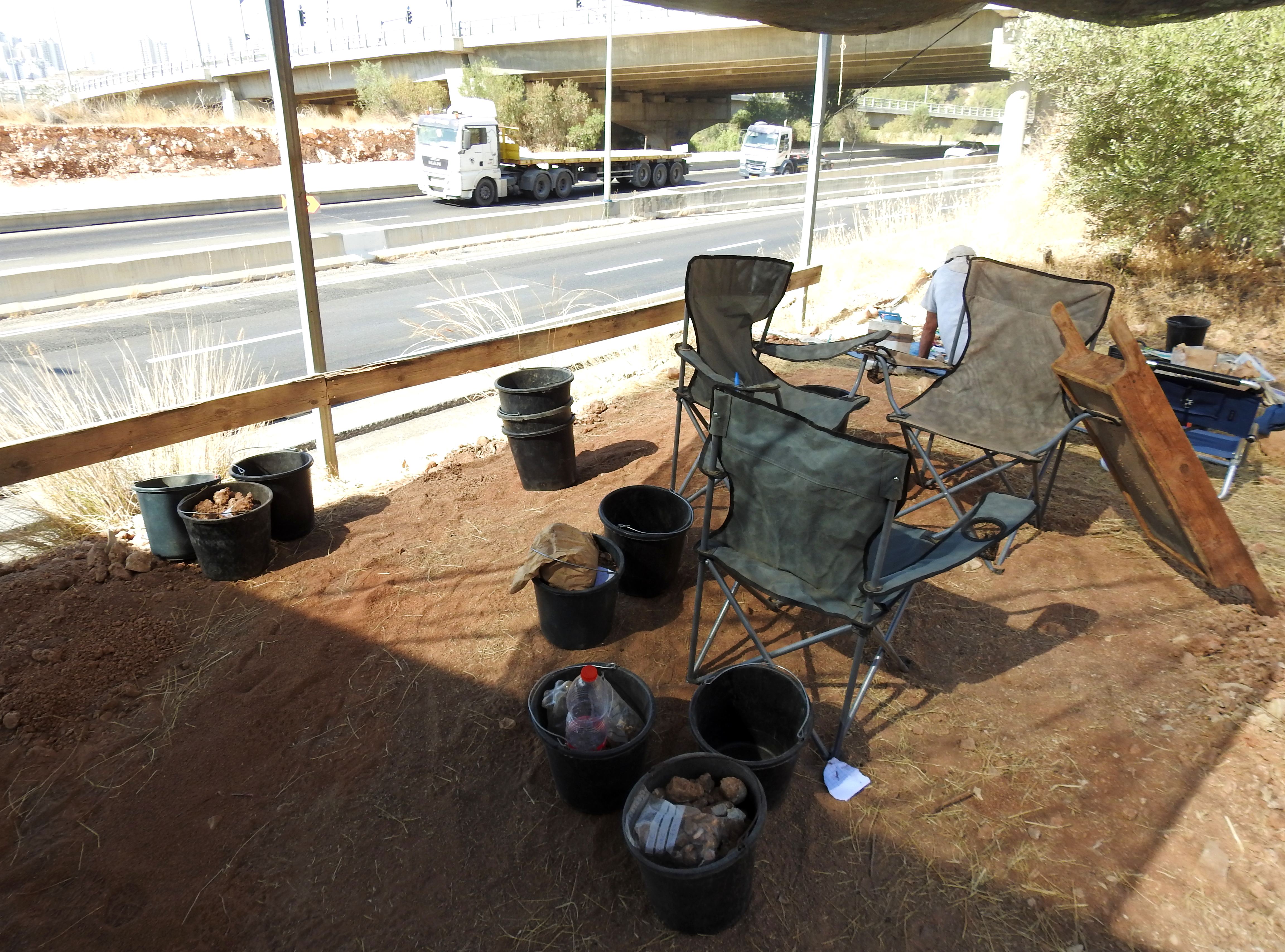
One wouldn’t necessarily expect such an important archaeological site to be flush up against busy Road 5, the main artery connecting the Mercaz (or, Central Israel) with the Shomron (Samaria), yet it is. The cave itself was discovered when roadworks were underway, and that led to the road taking a bit of a turn to avoid the ancient, protected site. Today, the cave is housed in a large steel cage where a small team can toil away comfortably – as long as the honking is kept to a minimum. Entering the complex from the east, I found a small team of archaeologists, students and volunteers working quietly. First, I was directed to Ella who greeted me and gave me a little tour of the site.

Looking down at an excavation shelf

While the term “cave” insinuates an underground cavern, Qesem Cave has been reduced to more of a pit. Construction on Road 5 had torn into the roof and initial chambers of the ancient cave, which had already been filled with soil thousands of years ago. Thus, what exists today is simply the excavated sections of the exposed cave interior, or the remains thereof.

Qesem Cave in 2001 (photo Gopher et al 2005*)

Research had learned that the cave was initially settled during the Lower Paleolithic, the stone tools aligning with the Acheulo-Yabrudian culture complex. Recent academic papers have focused on shaped stone balls being used as tools for smashing bones for marrow consumption – certainly an interesting pursuit. Unfortunately, with my academic interests focused on the medieval period, I frankly know little of prehistory and its culture beyond what I had learned in my BA coursework.

Back in the caves

After the short tour of the small dig site, it was time for some breakfast with the hardworking team. Having a gander at the table of food, I found bread, cheeses, cut vegetables, honey and jams, and some nice little borekas filled with either spinach or eggplant. I made myself a little plate and chatted with the friendly Tel Aviv University students as we feasted in unison. 

Ancient horse tooth scraped out of the earth

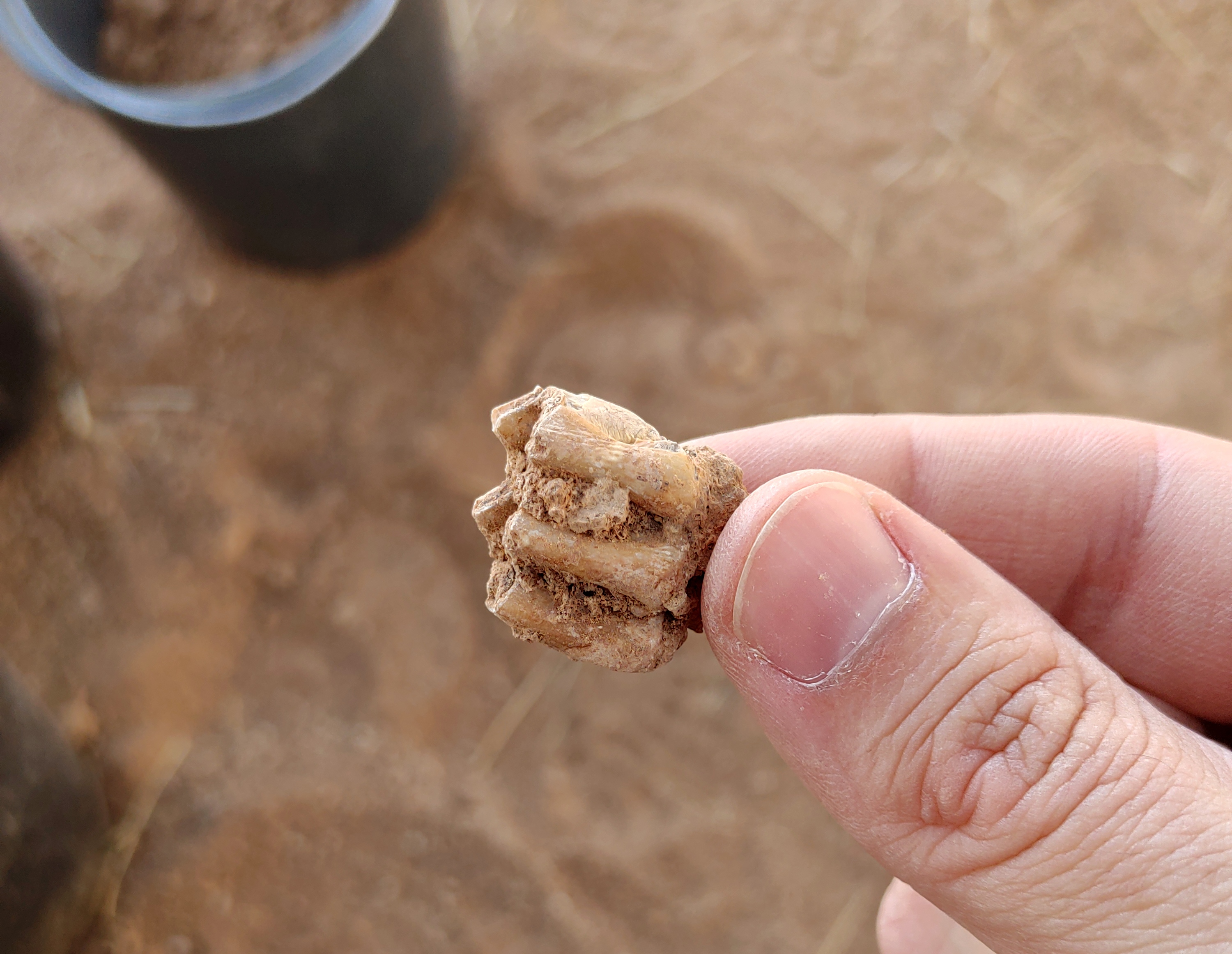
When breakfast fizzled out it was time for me to earn my keep. Ella handed me off to a young man who was working on sifting the excavated soil. Since I was volunteering on the last full day of the season, actual digging was kept at a minimum so that all of the finds could be properly processed. This being a prehistoric excavation, with soil that filled the cave so long ago, meant that each scoop of dirt might contain something important for research. So, doing our due diligence, we sifted buckets of dirt and picked our way through the larger pieces, pulling out bone fragments, shards of flint and the occasional tooth that belonged to a horse or similar ungulate species. It was an interesting experience, somewhat reminiscent of the sifting work we had done at the Tel es-Safi excavations in 2017 and 2018.

Time for some sifting and washing

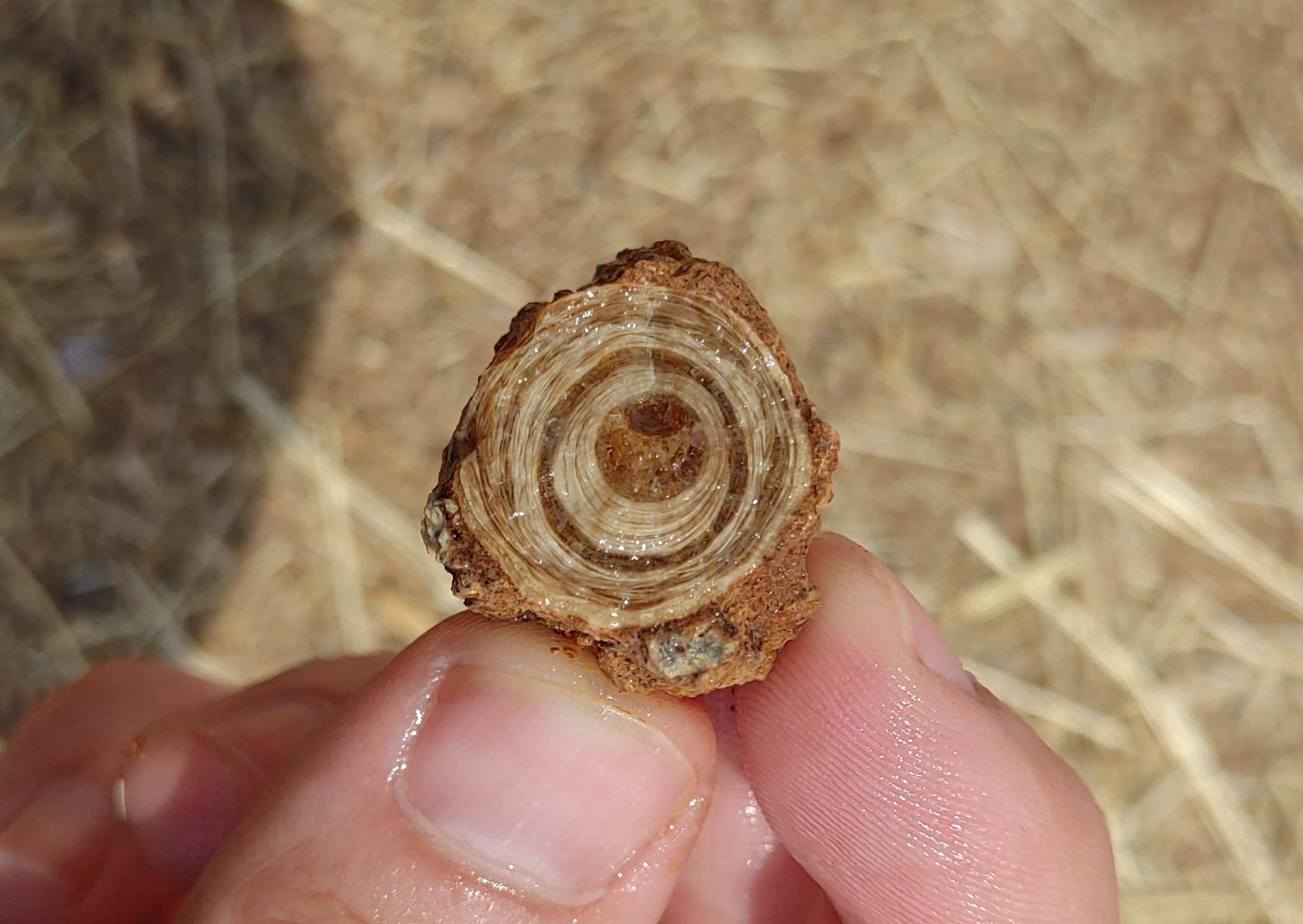
After some time, I was redirected to assist a young woman who was washing stones and bones that had been extracted from the cave. Sitting uncomfortably on the uneven ground, we emptied buckets of dirty rocks into a large sieve and washed them in a bucket of muddied water. Working quickly, we did a preliminary cleaning and laid the stones and bones out to dry on newspapers. Some of the flint rocks were quite beautiful but it was one rock with a pattern of concentric circles that really caught our eye – alas, my geology knowledge is lacking.

Interesting find

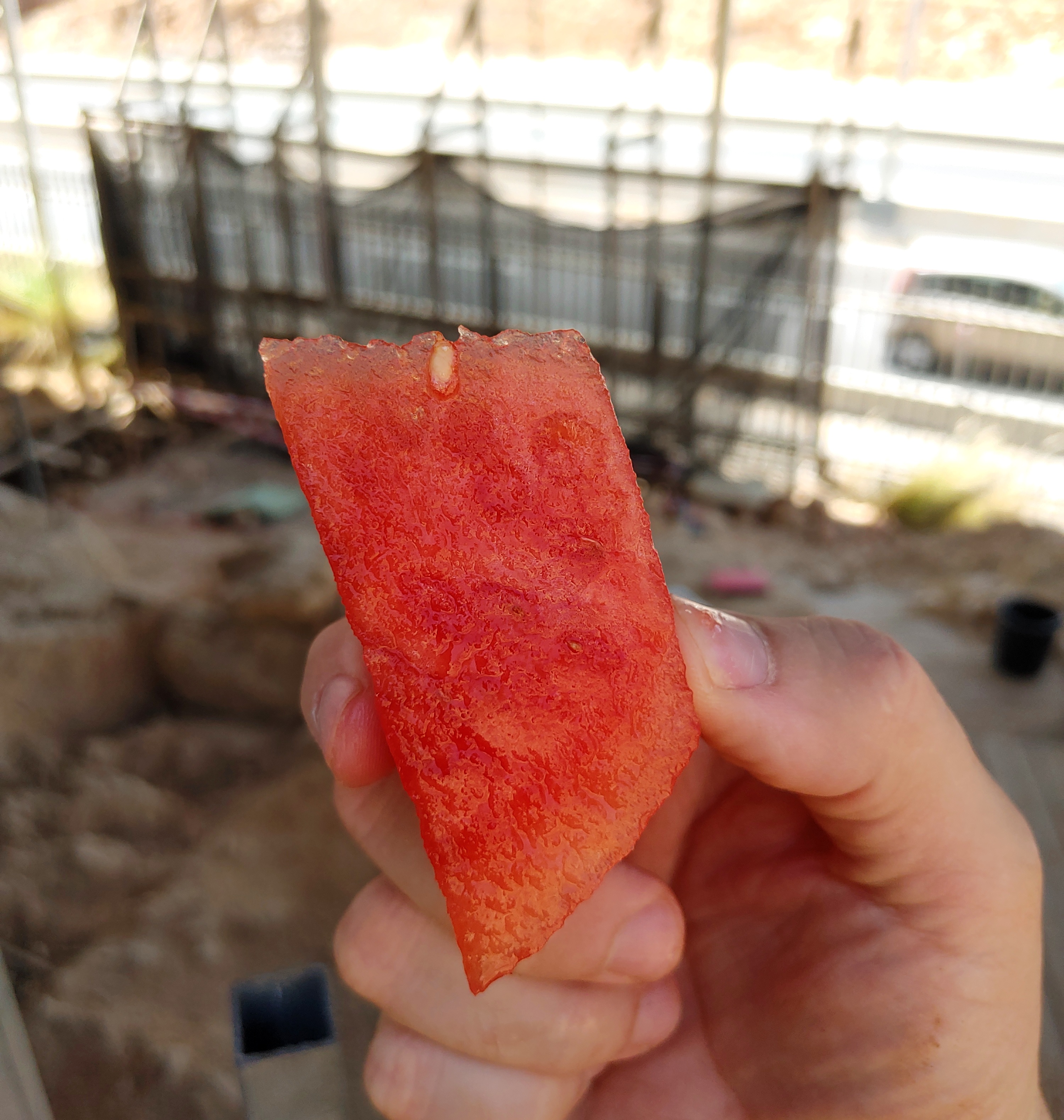
Getting up from the artefact washing, we broke into a juicy watermelon – the quintessential summertime archaeological excavation snack. Upon having our fair share of the sweet fruit, I shifted back into a sifting role and enjoyed sitting in a chair once again. That went on for twenty minutes or so, and included a visit by some representatives of the Israel Antiquities Authority, until it was time to start packing up.

Quintessential excavation snack

Ella led a short tour for her diligent team, moving from dig site to dig site within the small cave’s confines and summarising the season’s efforts. With that we gathered up all of the relevant tools and supplies and made our way back to the parked cars along the 5. I nabbed a ride with one of the senior volunteers, who graciously dropped me off at Qesem Junction, where I took a bus back home.

*Gopher, A., Barkai, R., Shimelmitz, R., Khalaly, M., Lemorini, C., Hershkovitz, I. & Stiner, M., 2005, “Qesem Cave: An Amudian Site in Central Israel”, Journal of the Israel Prehistoric Society 35, p. 71.

Sharon Beach Nature Reserve

In Central Israel, Coastal Plain, Israel on November 12, 2025 at 1:57 PM

In the beginning half of July, fellow adventurer Adam Ota and I finally embarked on a trip we had planned since before the brief war with Iran at the end of June. Naturally, due to the circumstances, our rekindled adventures had to be put on hold, until further notice. So it was with much anticipation that we got into our respective motor vehicles and met at the destination of our choosing, the Sharon Beach Nature Reserve.

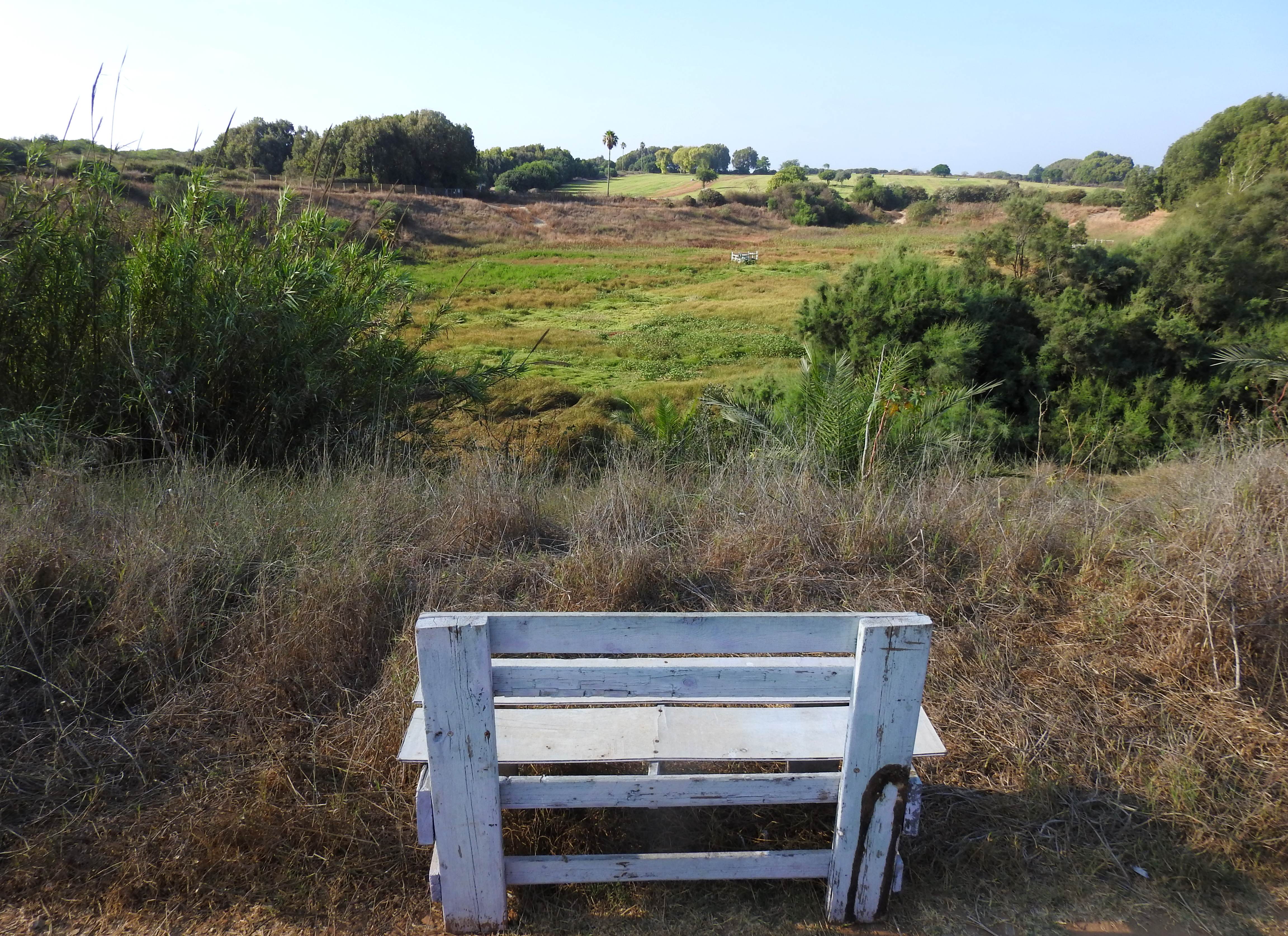
Looking out over the dried pond

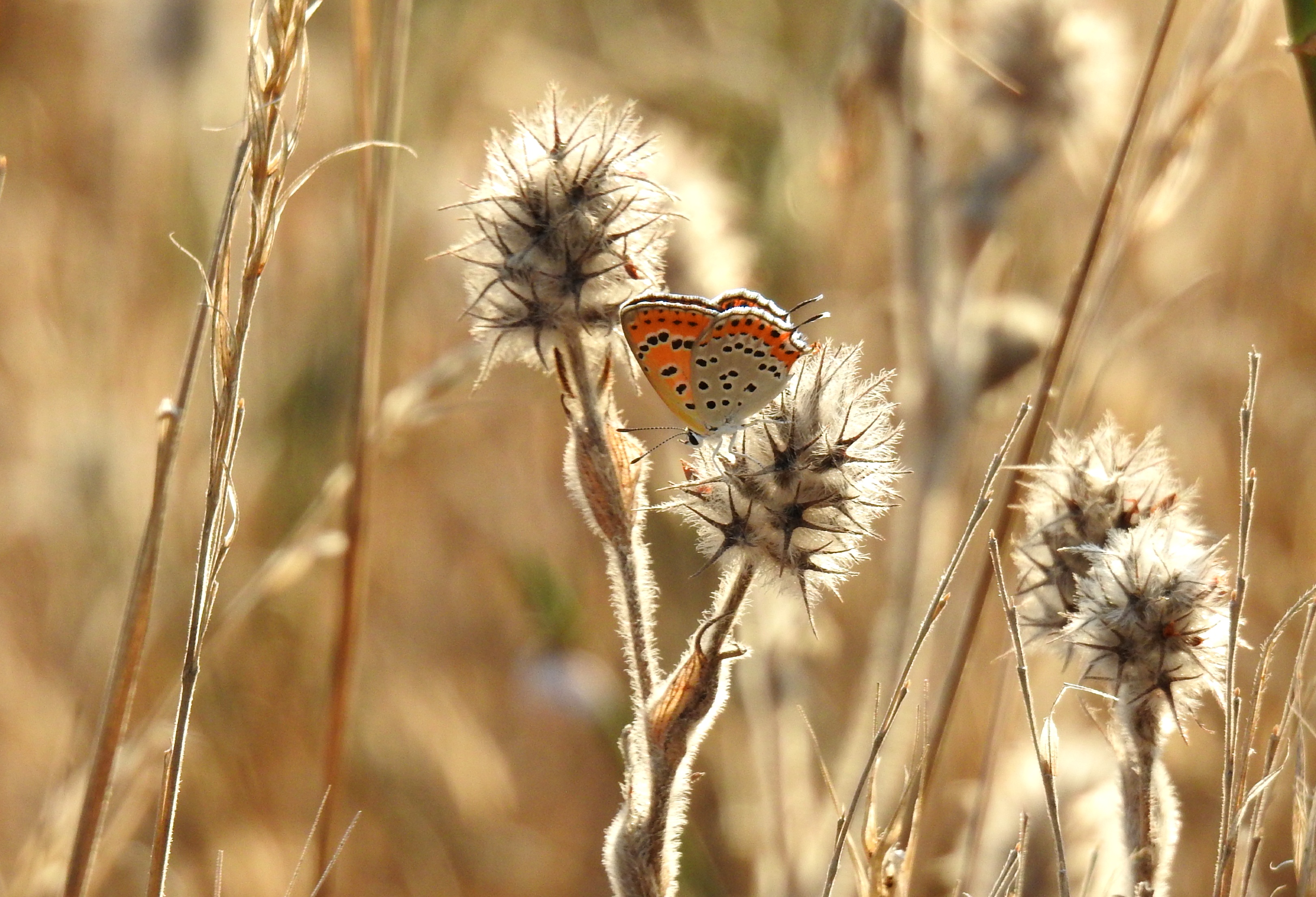
Much thought went into picking this location: it wasn’t terribly far away for either of us; neither of us had visited the place prior; and it was reported to have some sand dunes on the kurkar clifftops which could very well provide some fun creatures that, ordinarily, we would have to travel some distance to see. We met up in Kibbutz Ga’ash at the dirt parking lot about two hours before sunset and began to explore our surroundings, starting with the butterfly-rich vegetation beside a dried pond. There wasn’t much else to see there, so we navigated our way to the nature reserve entrance through a kibbutz perimeter fence.

Lesser copper butterfly

We took a liking to the place almost immediately, the calm sand paths crisscrossing the coastal foliage. It reminded us of other places that we had been before, such as the dunes at Yavne – a popular haunt of old. The faunal diversity wasn’t in its prime that late afternoon, with just a white-breasted kingfisher and the distinct calls of a turtledove.

The hidden pond

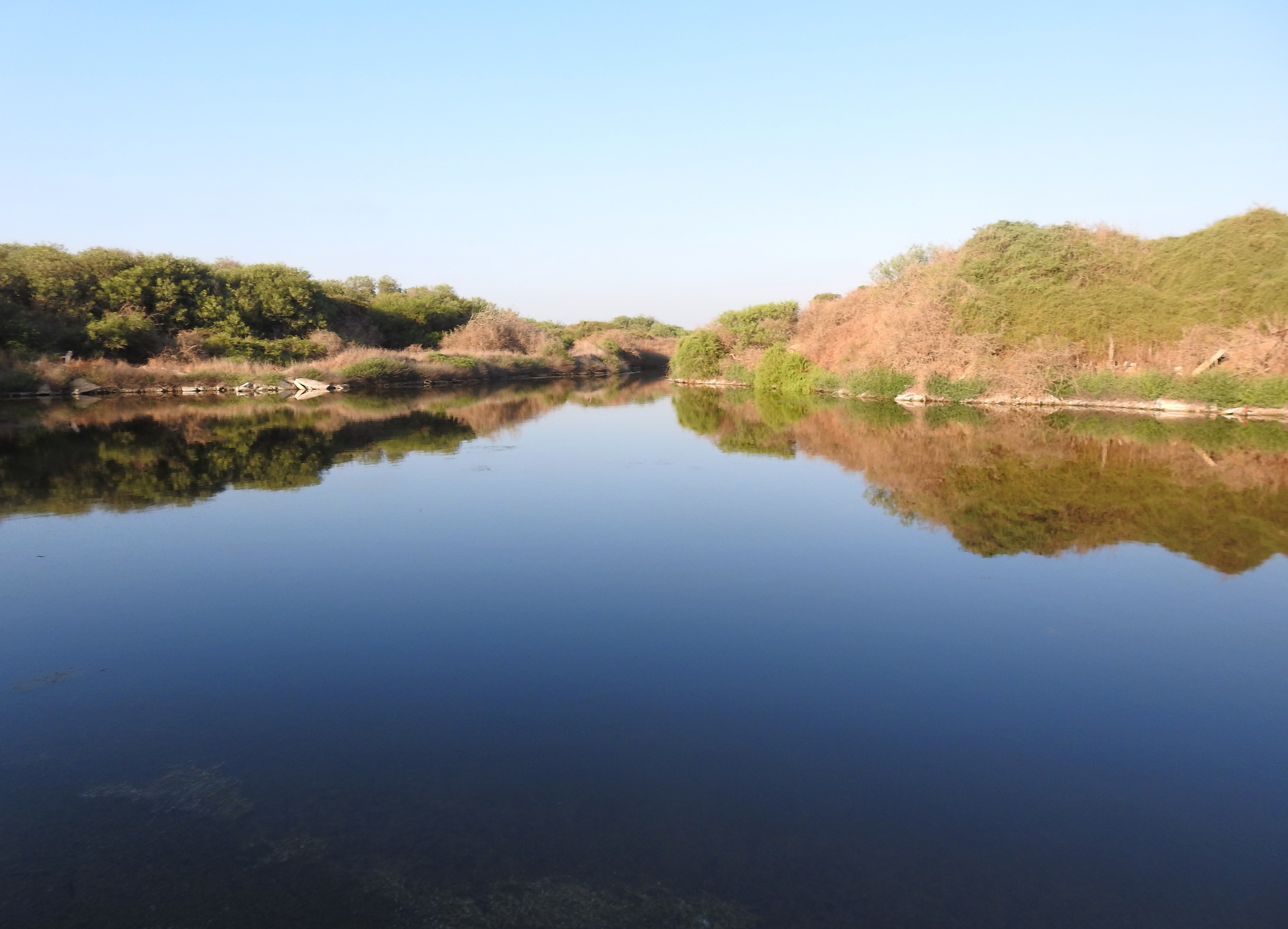
But then the path led to a hidden U-shaped pond, and biodiversity got more interesting. The western half of the pond opened up before us like a page out of a romanticised Victorian adventure novel. A lone stilt chided us noisily as we intruded on the cloistered paradise, warning the other waterfowl of our sudden, and rather undesired, appearance.

Israel National Trail

A handful of startled sandpipers flew away, as did the noisy stilt, leaving us to explore the quaint little pond in relative isolation. Much to our surprise, the “beach” part that we walked into was not made of sand or pebbles, rather a morbid collection of old, decaying snail shells. Thousands, if not millions, of tiny white shells formed an attractive-looking area, at least until closer scrutiny. But overall, the pond was delightful and I fantasised about bringing a trailcam to see what kind of fauna is wont to visit. Maybe one day…

Such a majestic sight

From the hidden pond we explored the kurkar ridge, making our way to the stabilised dunes overlooking the Mediterranean Sea. After a nice look at the coastline stretching out below us, we left our vantage point up on the cliff and continued exploring the sandy trails. At some point, we found ourselves on the Israel National Trail, the tri-coloured trail marker signs rusted from the salty sea breeze.

Artsy and unedited

With not much to see from a faunal point of view, we decided that we should spend the bulk of the remaining daylight exploring a bit inland. This proved to be a wise decision as we encountered some jackals as soon as we reached an abandoned golf course beside the kibbutz’s cemetery. Our further explorations didn’t fully justify our deviation from the nature reserve, so we headed back to the coastal cliff to watch the sunset.

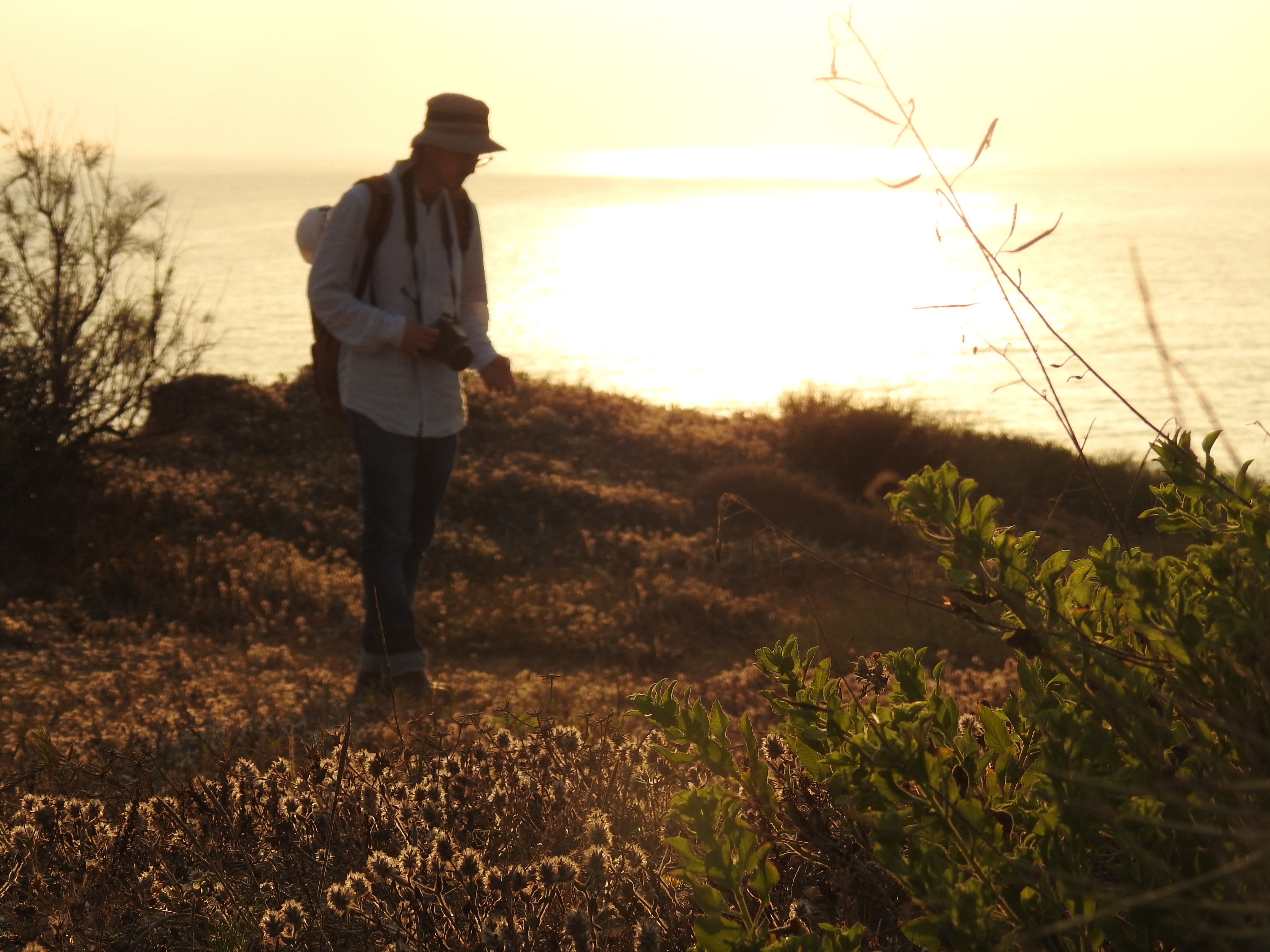
Sweaty and taking in the sunset (photo Adam Ota)

As expected, the sunset scenery was quite picturesque from on high. The kurkar cliffs that line the coast, a sharp rise in elevation rising up to 50 metres from the narrow strip of beach. In fact, two weeks after our adventure the Israel Nature and Parks Authority issued a warning about falling cliff chunks endangering visitors to both beach and cliff.

Being careful near the cliff edges

While we stood on high, looking out over the expanse, we noticed that there were two young men fully disrobed, lounging languidly in the warm sand. It was quite an unexpected sight, but perhaps they were just confused as to where the official nudist beach is – actually a bit further up the coastline.

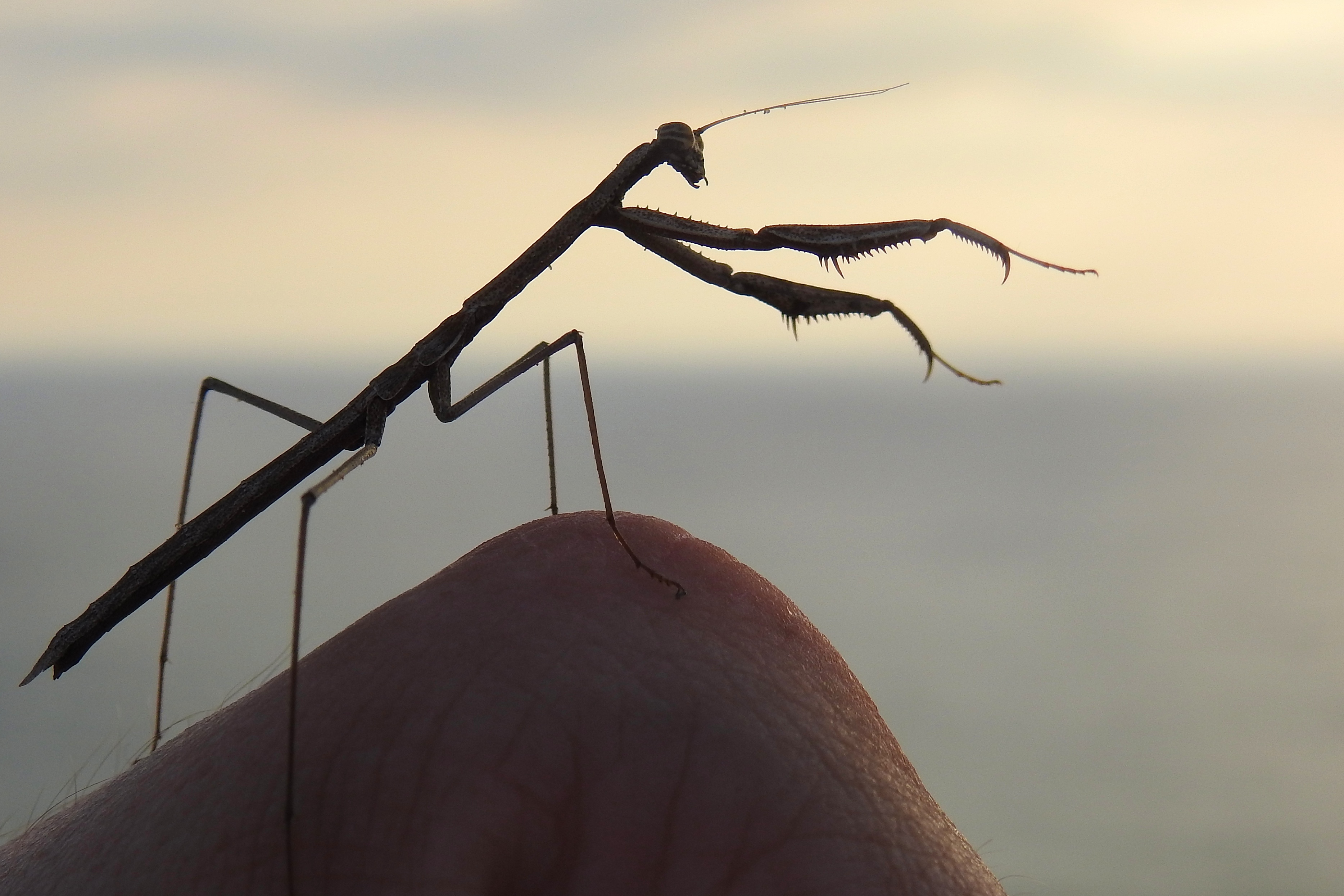
Eremoplana infelix mantis

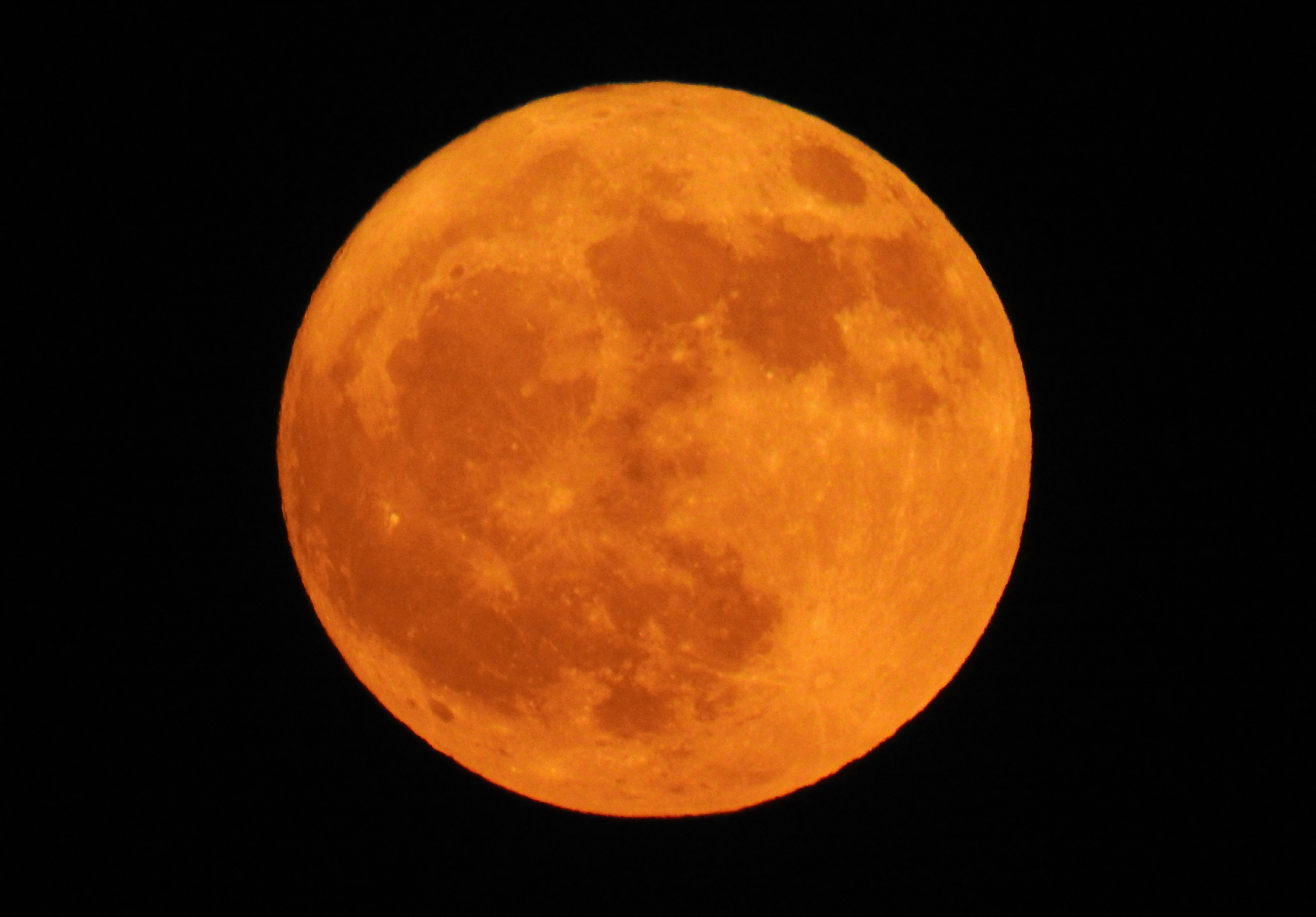
A full moon slowly rose behind us, and while we waited impatiently for darkness to settle, we shared a snack of some mini kabanos sausages. Once sufficiently dark, when the creatures of the night were presumed to have left their hidey-holes, we flicked on our flashlights and began traipsing around. I decided to start with the UV flashlight, its purple-blue light dancing over the sand and vegetation underfoot. It kind of felt like cheating as I spotted one scorpion after another with the greatest of ease. These were presumably all African fattail scorpions, but none of the evening’s specimens allowed for a good enough photo required for proper identification.

Gorgeous moon coming up over the eastern horizon

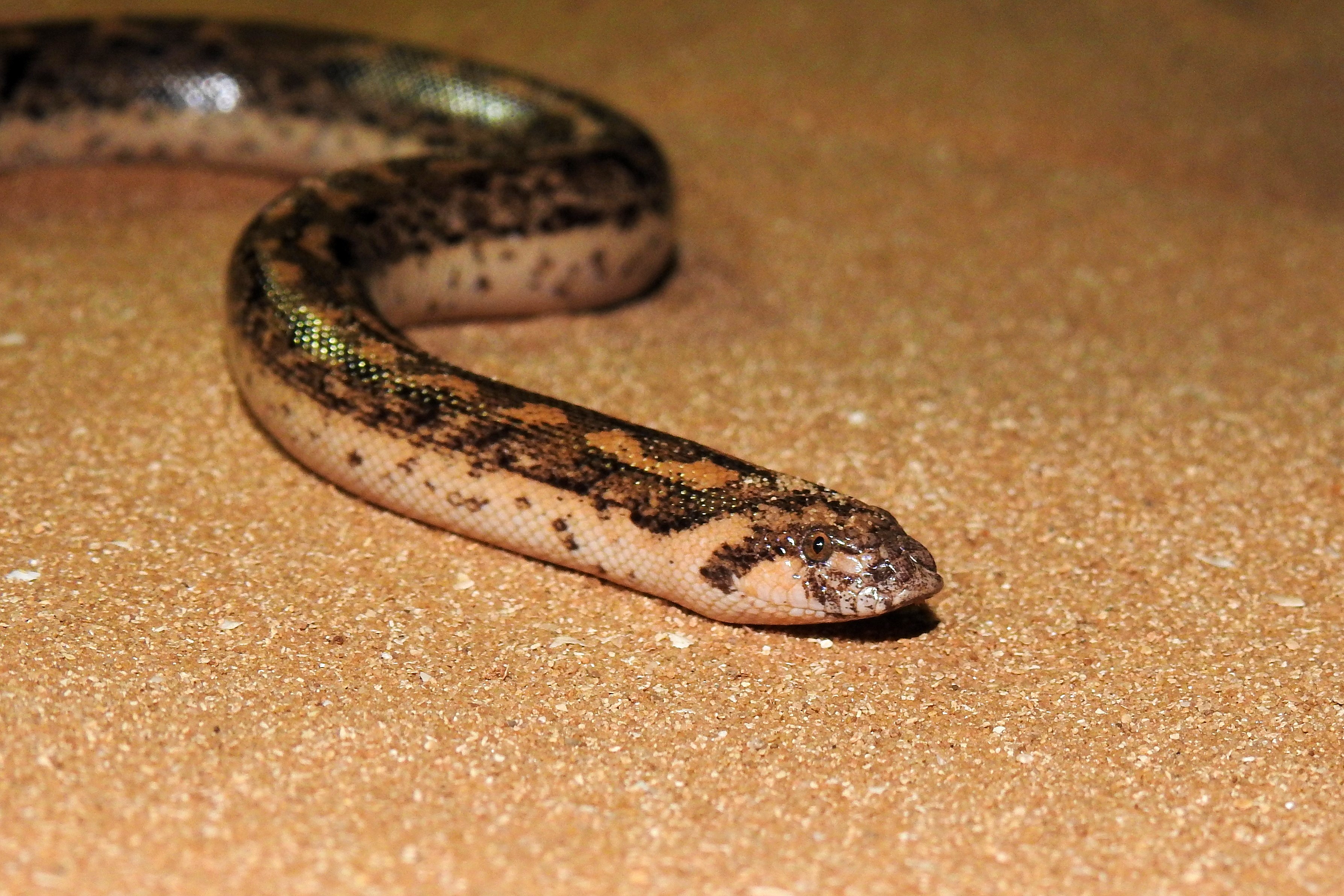
While I was finding scorpions, Adam slipped off another way with his regular flashlight. Suddenly there was a cry and Adam told me to come quickly – he had found a snake! This was no ordinary snake, it was a nicely-sized javelin sand boa, a snake species that we had been keen on seeing for years and years. Despite being relatively common, each and every attempt of ours failed and it became a source of frustration for us. Now, thanks to Adam’s keen eyes, a beautiful sand boa was now laying peacefully in the sand before us, waiting for us to get our fair share of photos.

A javelin sand boa!

While some of Israel’s snakes are venomous and all should be regarded as potentially dangerous without proper knowledge in identification, the javelin sand boa is a very mild mannered member of the boa family (related to anacondas and other constrictors), and not dangerous to humans in the slightest.

A closer look at the javelin sand boa

After a quick photo shoot, we put the sand boa down and let it escape into the shifty sand. It was quite amazing watching it slither so efficiently into the sand, making us wonder how many more sand boas were safely buried around us. Elated with this finding, we kept on searching for more wildlife, and found not very much for the next while.

Sea daffodil jutting out into the darkness

It was only once we started heading back for the cars that we found a Middle East tree frog in the parking lot, most unexpectedly. There was also a wedding taking place at the event hall adjacent to the lot, which filled the warm summer night air with the sound of music.

Middle East tree frog relaxing in the parking lot

Before bringing the trip to an end, Adam suggested we take one last look at the butterfly-rich vegetation beside the dried-up pond that we had explored in the very beginning. It turned out to be an excellent idea, as we found countless tree frogs all over the thorny thistle plants. It was decided there and then that a return trip was needed, but sometime later on in the winter, or wet season. Hopefully that can happen this winter, but, as always, time will tell.

Dead Sea Night Birding

In Dead Sea, Israel, Jordan River Valley on August 7, 2025 at 11:36 AM

Despite my increasingly busy life, I still consider birding to be one of my primary hobbies, albeit woefully neglected at times. In Israel, summer is regarded as the doldrums for birding, sandwiched between spring and autumn migration and lacking the wholesome verdancy of the wet winter season. However, that doesn’t mean that the land is wholly devoid of birds, one just needs to know where to look.

Grateful to be out exploring again (photo Adam Ota)

I saw that the Israel Birding Club had advertised an early June night birding tour to the Judean Desert around the Dead Sea, which is a known hotspot for some very special species of wildlife. One of the presumed target species is the Egyptian nightjar, one of three nightjar species that can be readily found in Israel. I had seen the most widespread species, the European nightjar both in Jerusalem and in Givat Shmuel, but the other two species remained elusive. This is not for want of trying, I had taken a stab at looking for Egyptian nightjars (and more) during the Eilat trip that Adam and I took back in 2019. That said, finding nightjars out in the open in the dark can be a bit difficult, so some professional guidance was certainly welcome.

Transitioning into the desert (photo Adam Ota)

Reaching out to Adam once again, we settled our plans and headed out in the late afternoon with a few stops in mind. We cut through the Shomron on Road 5, which later turns into 505, and began our descent into the desert. Thankfully, there was a roadside lookout which gave us the opportunity to take in the rural view, and the distinct mountaintop of Sartaba (Alexandrium). But with daylight counting down, we hurried back into the car and made our way down to Road 90 – Israel’s longest road which stretches from Metula until Eilat.

Delightful little green bee-eater (photo Adam Ota)

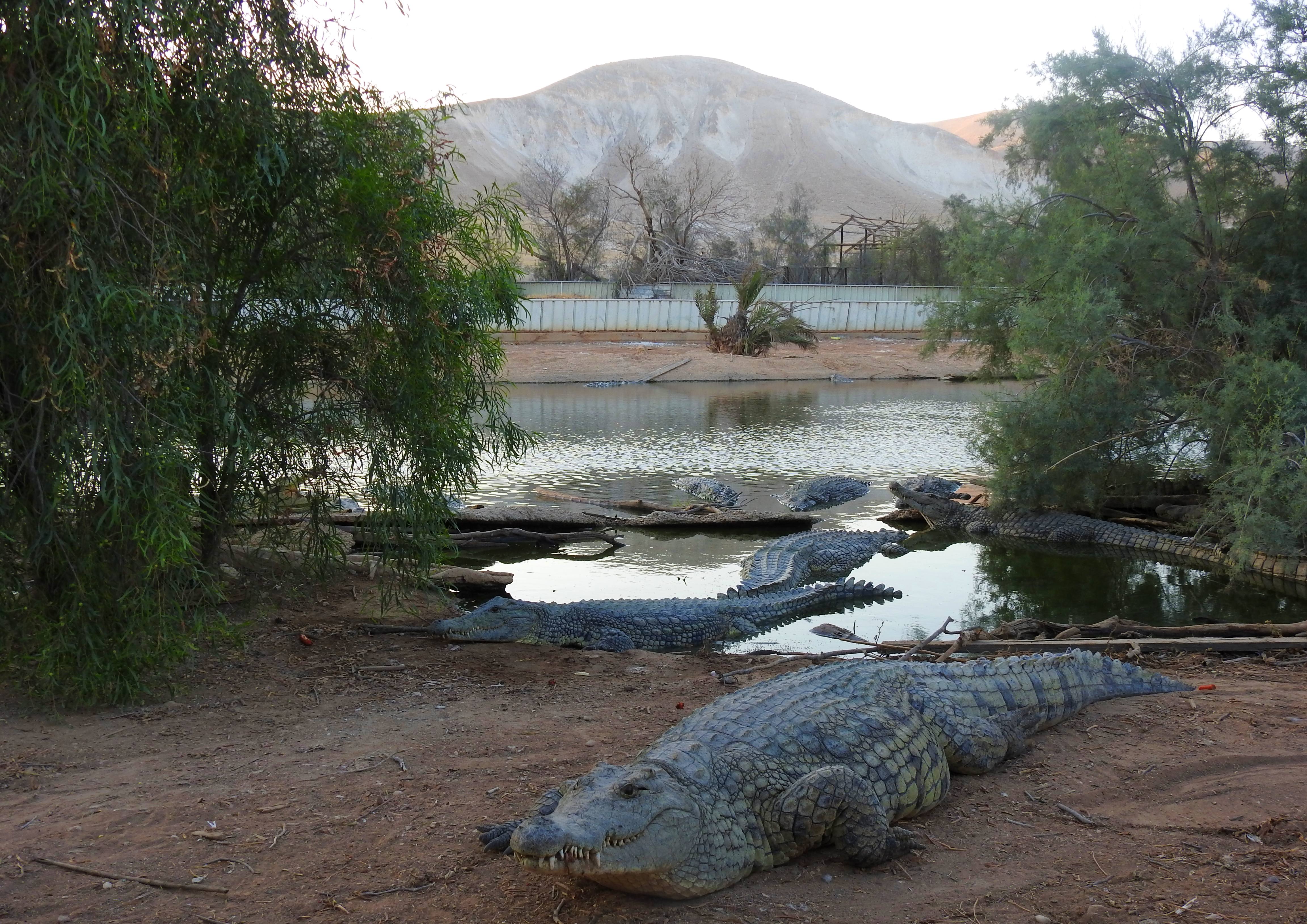
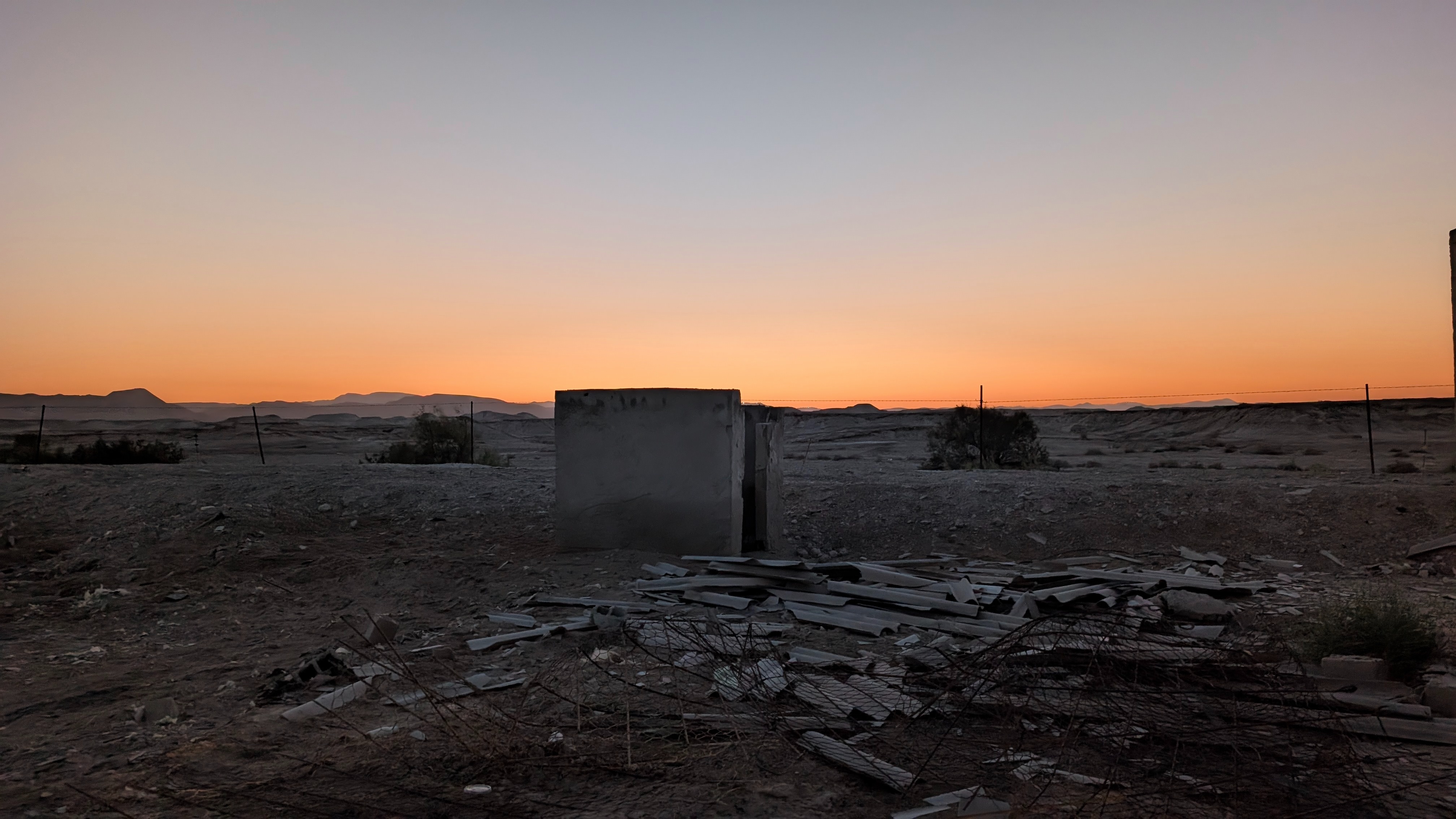
Our first real stop of the adventure was at an unassuming rest stop near Paza’el, where a hidden attraction can be found. Just south of the gas station, there is an old, abandoned complex surrounded by a fence – which happens to be breached in more than one place. This was a large crocodile farm, founded in the late 1980s as a tourist attraction, was closed during the First Intifada and then intended to be used to produce lucrative crocodile skin. Once laws were passed in 2013 banning the production of leather from such a designated protected species, the owner gave up and abandoned the project due to lack of funds. So now, twelve years later, hundreds of Nile crocodiles lurk in and around a small pond inside the complex, waiting for nothing but time itself.

Reptilian friends at the abandoned crocodile farm

Now just as an anecdotal sidenote, whilst drafting this blog post on my commute, I paused writing one morning with the previous sentence – and I had considered writing it a little differently, ending with “waiting for nothing but death.” Little did I know, that on that very morning there was an operation spearheaded by various governmental bodies to get rid of this “issue” at hand – namely, the culling of all 262 remaining crocodiles. Apparently, after numerous ideas were floated over the years, this seemed to have been the last resort. I was understandably shocked, but relieved that, at the very least, I was able to see this site before its bitter end. It had been somewhere on my figurative to-visit list ever since I had seen aerial drone photographs shared on Facebook by a young lad named Yair Paz (I can’t seem to relocate the post, but some other enchanting aerial footage can be seen HERE).

Monstrous croc lurking in the waters (photo Adam Ota)

We entered through a breach in the fence, passing some excited youths along the dusty path, and began to survey our surroundings. I was amazed at the dense concentration of crocodiles slumped on the dirt banks of the small, murky pool. Conjuring up vivid terminology torn from the pages of the likes of HP Lovecraft, these cold-blooded reptiles certainly played the part of ancient foul beasts as they skulked motionless and ominously in the fetid waters, only their bewitching eyes tracking our moves. We took some pictures and marveled at the sights we were seeing – such an unexpectedly rewarding experience.

You will surely be missed

Headed back into the car, we drove south down the 90 until we reached Almog Junction, where the tour was meeting up. Daylight was fading fast as we introduced ourselves to the birding guide, Yotam Bashan, and received the briefing on where we were going and what we were anticipating to see. As expected, we started in search of Egyptian nightjars, driving out to some salty, dry watermelon fields outside of Kalya. I hadn’t thought much about it at the time, but a big concentration of caves up on the craggy cliffside to the west of the fields are heavily featured in my thesis research. Alas, I did not get any sufficient photos of the adjacent cliffs before we were plunged into nightfall.

Sunset at the fields of Kalya (photo Adam Ota)

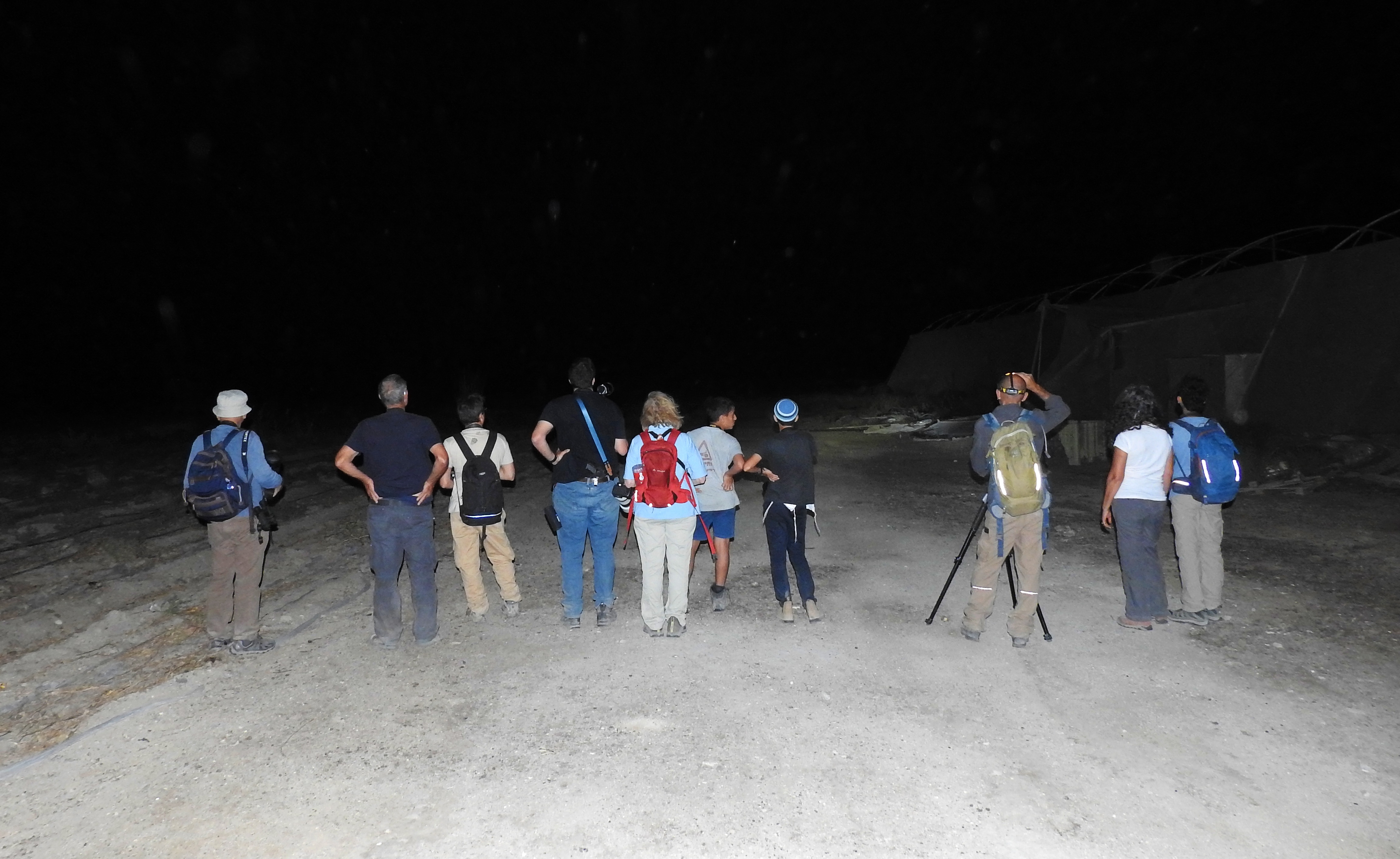
Lights from the Jordanian side of the Dead Sea glittered over the placid waters as we began our hunt for nightjars. Several high-powered flashlights were employed to make our searches easier. It was explained that the best way to find the nightjars was by shining a bright light around, and looking out for glints in the darkness returning said light. Sure enough, it worked and before long there was a slight glint on the dirt road far up ahead, and it flew off before we got much closer.

Using a spotlight to find nightjars

Sometimes, the glints were generated from trash and debris, such as soda cans, but sometimes it was the real deal. We crept up on several nightjars, most of them taking flight before we had a chance to take any decent pictures. Since neither of us have proper DSLR/mirrorless cameras, we had an even bigger challenge. Interestingly enough, my best photograph of an Egyptian nightjar from that evening was of one doing a close flyby.

Egyptian nightjar flyby

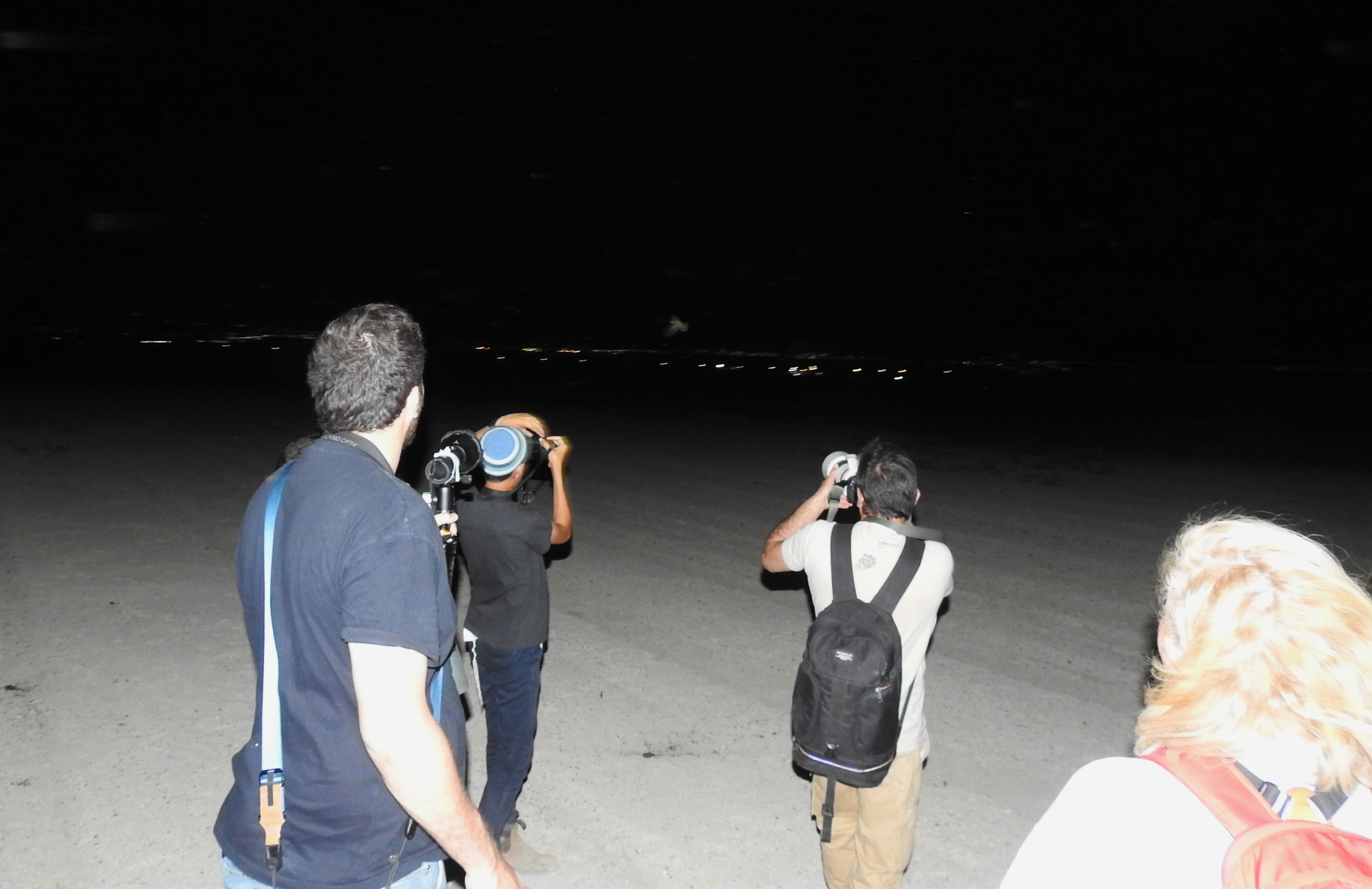
Our guide had beckoned these curious feathered friends with vocal calls broadcast over a small, portable speaker. When a nightjar fluttered by to examine, we all rushed through our camera buttons and tried desperately to get some snazzy pics. Photographic evidence aside, it was quite a surreal experience standing out in the dark in a dusty field, eerie calls playing over and over, ghostly bird shapes swooping around us – sometimes surprisingly close.

Scrambling to get a shot of a flying nightjar

While the focus was clearly on the majestic nightjars, there were other creatures lurking out in the darkness. We spotted some stone curlews, mountain gazelles, a fox and perhaps a jackal too. When we had felt relatively satiated by our viewings, we walked as a group back to our cars and drove down a dark agricultural road to some nearby date palm plantations. Now, the focus shifted to something a little more familiar, the pallid scops owl. While this was to be my first sighting of this localised species, I had a number of fond memories of the bird’s relative, the Eurasian scops owl (THIS being my best picture to-date). Similar to the Egyptian nightjar, I had briefly searched for a pallid scops owl while down in Eilat and the Arava, as they can periodically be found sleeping in acacia trees.

Pallid scops owl tucked into a date palm

We entered the rows of hefty date palms, a rip-roaring game of lights and shadows happening all around us as our torches flickered about. The calls of the nightjar, still echoing in our ears, could be heard faintly off in the distance fields. Before long, after some tramping through fallen vegetation, Yotam spotted an owl. He directed us swiftly, guiding our hushed whispers towards an illuminated patch just below the arched fronds. Lo and behold, my very first pallid owl, its minuscule body tucked neatly in the tree’s rough undercarriage.

Photographing the pallid scops owl

The owl posed pleasantly enough, changing positions once or twice before we decided that it was time to move on. Another owl or two were spotted, sometimes just a brief pale flurry as it disappeared into the darkness. We learned more about the owl, its interesting nesting techniques and the research that had gone into Israel’s population in recent years. With that, we climbed back into our vehicles and continued through the agricultural area until we turned back onto the 90 and drove south. Our next destination was a collection of agricultural fields and greenhouses by the saltmarshes of the Dead Sea.

Time to find some Nubian nightjars

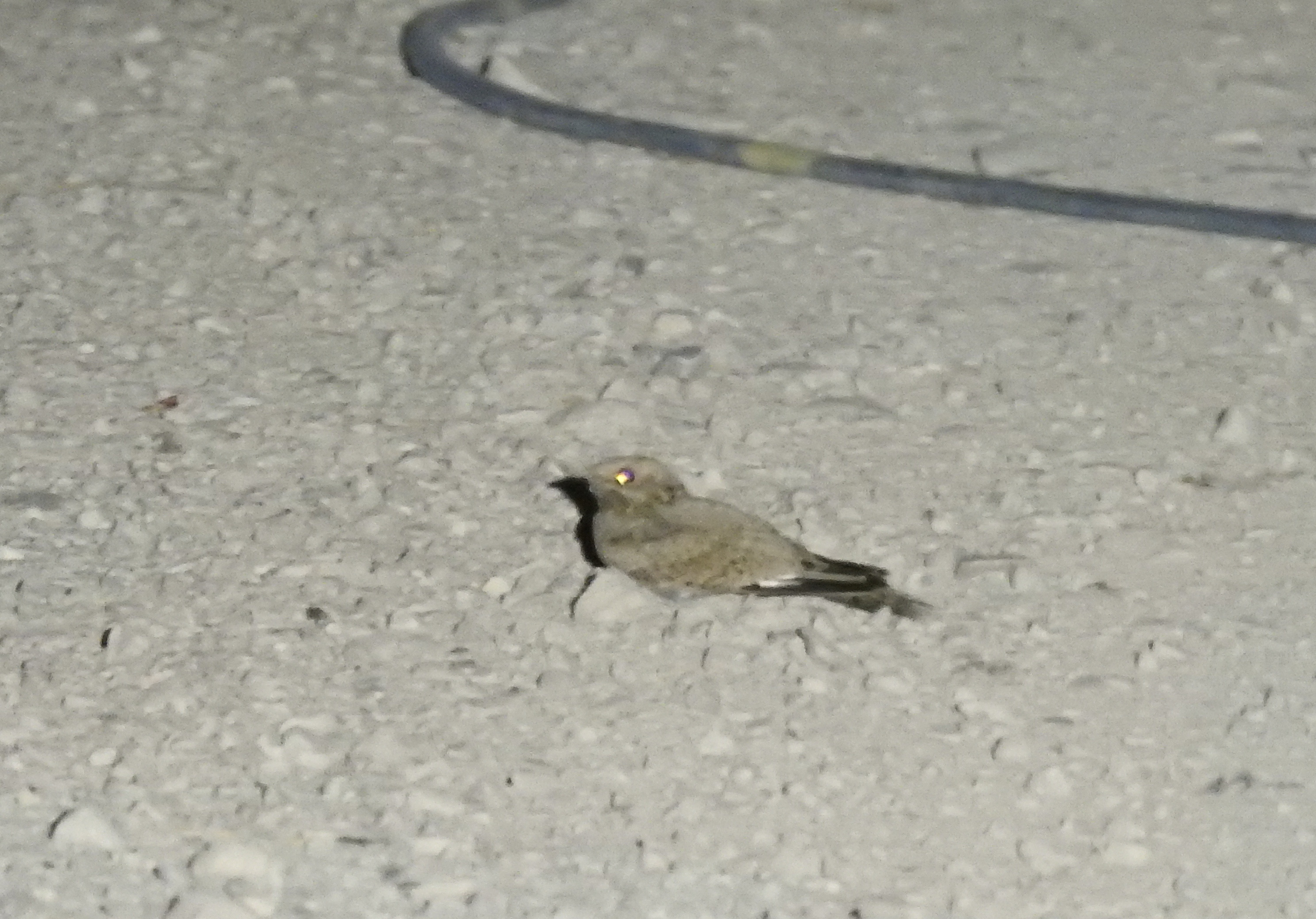
We parked offroad near Nachal Qumran and began preparing for the search for an even more elusive Caprimulgus species, the Nubian nightjar. This species is smaller and has a more ruddy complexion, with small white wings flashes that make it easy to distinguish from its more pale relative. But, before we had the chance to properly mobilise, air raid sirens went off in the distance, and on some of our mobile devices. An incoming missile was detected, sent by our staunch Houthi fans in Yemen, and so we took shelter the best we could. Crouched in anticipation, I suddenly saw some flashes of light high up in the sky to the southeast, undoubtedly shrapnel from the intercepted missile. A few minutes later, when the danger had passed, we resumed operations and gathered up around our guide.

Nubian nightjar resting on the gravel road

The search went exactly the same way as it had in the watermelon fields of Kalya, beams of lights strobing through the hot, dusty air. Thankfully, Nubian nightjars were available and we got plenty of sightings both on the ground and in the air, swooping as they hunted moths and other winged delicacies – as goatsuckers do. There was even one moment where one nightjar landed tantalisingly close to some of the tour members, but unfortunately for me, the angle and topography made photography a nightmare. Eventually, as we made our way back to the cars, a ranger from the Nature and Parks Authority came by to check out who we were. He said that he has been extra-vigilant lately with suspicious figures roaming around the Dead Sea shores, especially after some gun smugglers from Jordan were recently apprehended. With that, we buckled ourselves up and began the long drive back to our respective homes, pleased with the successes of our valiant efforts – and for me, three new “lifers” to add to my life list.

Lookouts of the Western Shomron

In Israel, Samaria on July 22, 2025 at 3:25 PM

This past Yom Haatzmaut, or Israeli Independence Day, we took the opportunity to visit some old friends living a bit deeper into the Shomron (Samaria). It was a lovely morning, the first of May, as we got into the car and left our home in Elkana, driving south past the Crusader castle Mirabel and Mazor Mausoleum before turning back into the Shomron. Our friends, the Yablons, lived at the time in a small, up-and-coming yishuv by the name of Kerem Re’im, nestled in a cluster of Jewish settlements about 7 km northwest of Ramallah.
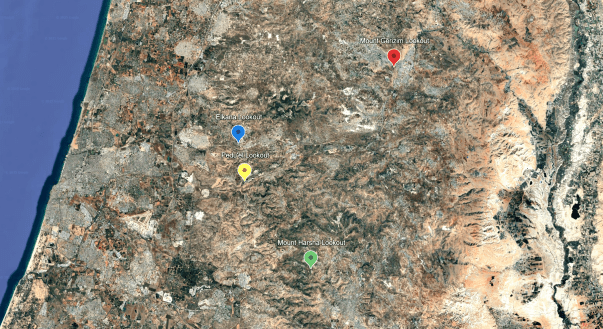
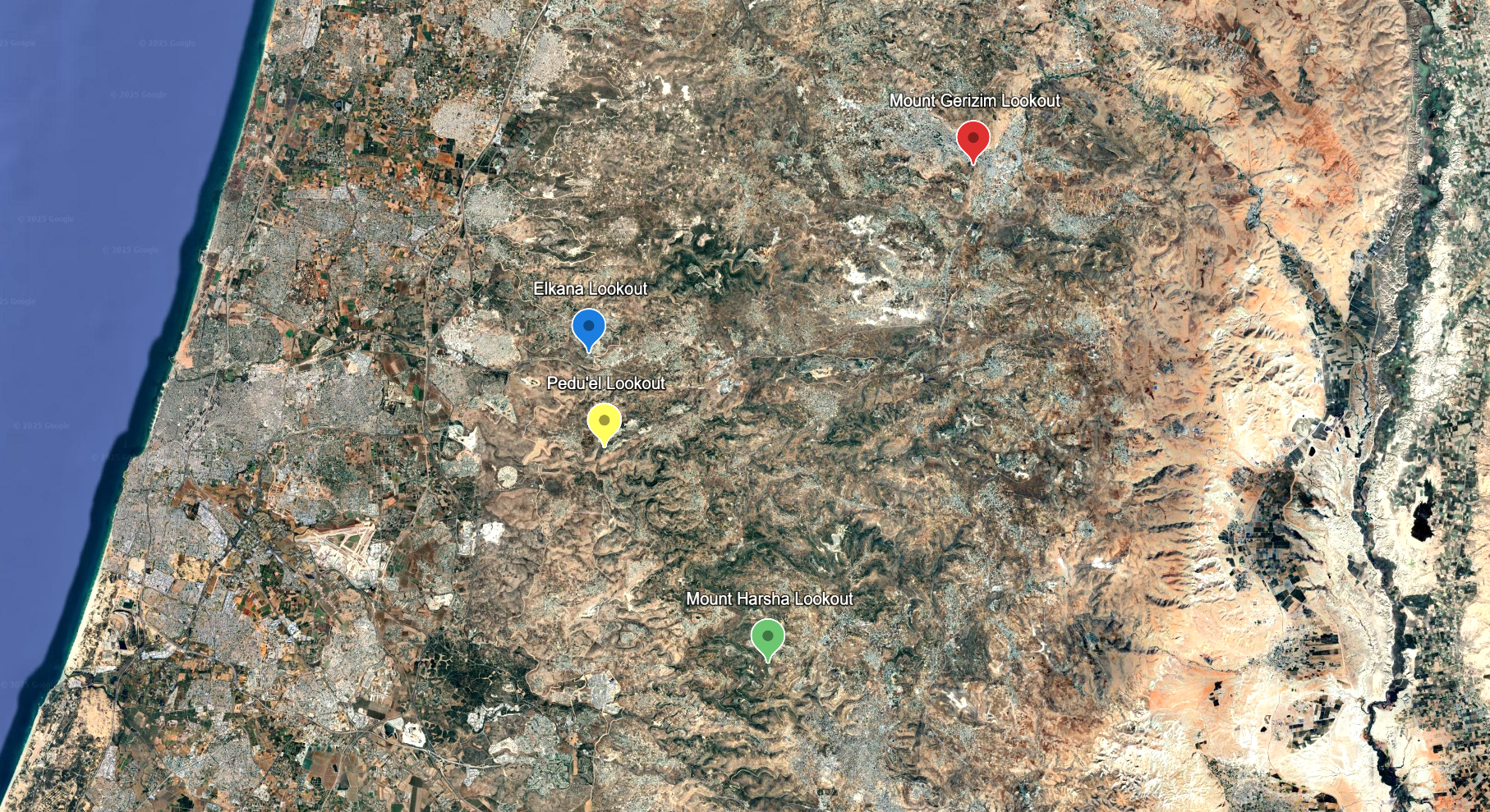
Map of the lookouts

Passing a checkpoint or two, we reached the small enclave and made our way to their house. Meeting up with Ben and Miriam, and their three kids, was a nice reunion celebrated with pita, spreads, cookies and strong black coffee. We examined our options and decided to have a short drive over to the nearby mountaintop, which overlooks Kerem Re’im and can be seen from their front door. Getting back into the car, it was a nice and windy drive up Mount Harsha – familiar in part from my stint in military reserves.
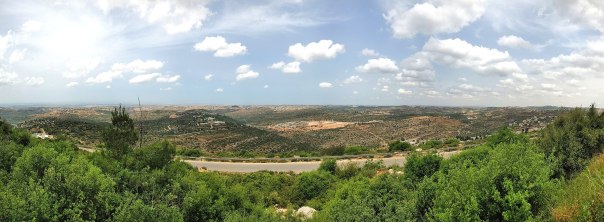
Panoramic view from Mount Harsha looking north

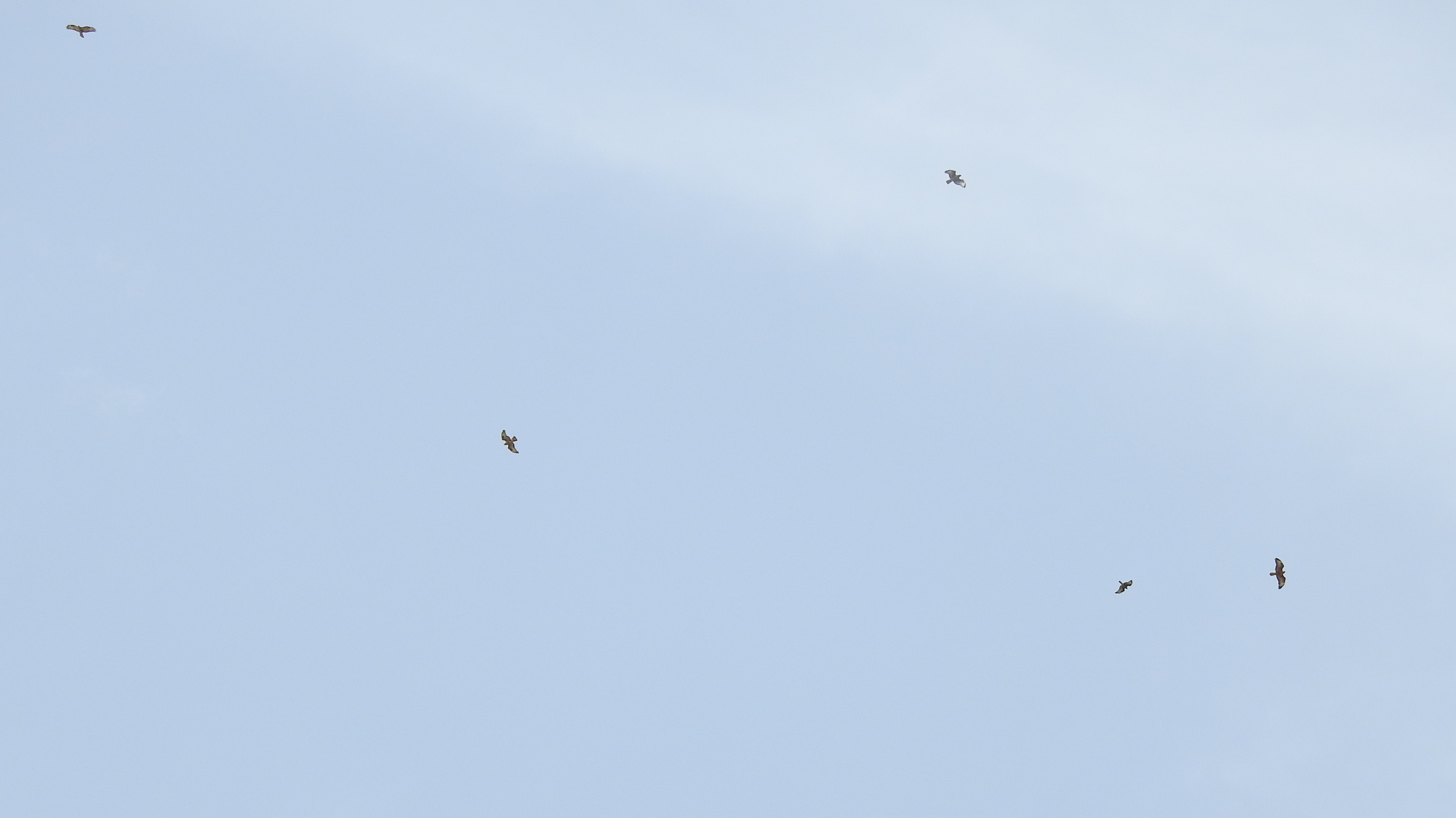
Atop the mountain is a small community which was established rather recently, in 1999. At the northern edge of Harsha is the lookout which is approximately 740 metres above sea level. It provides excellent views of the surrounding countryside and more, depending on weather conditions and visibility. As exciting as that seems, my attention was drawn elsewhere – to the sky! Dozens of birds of prey were zipping along the strong winds, heading northeast as they migrated back to Eurasia.

A bit of raptor migration overhead

For raptors passing through Israel, spring migration usually takes place further east than it does in autumn, which generally made it difficult for me to witness. Now, I was darting my eyes left and right as I spotted dark figures coursing through the cloudy skies, wings tucked as they soared past. I saw some steppe buzzards, honey buzzards, black kites, lesser-spotted eagles, short-toed eagles and at least one steppe eagle.

Posing atop Mount Harsha

After an agreeable look around, we headed back to the cars to drive down to a local spring, Ein Harsha. It was directly downhill on the southern side of the mountain, the winding road leading us to some fruit trees and an open area to park.

The Yablon child-juggling act

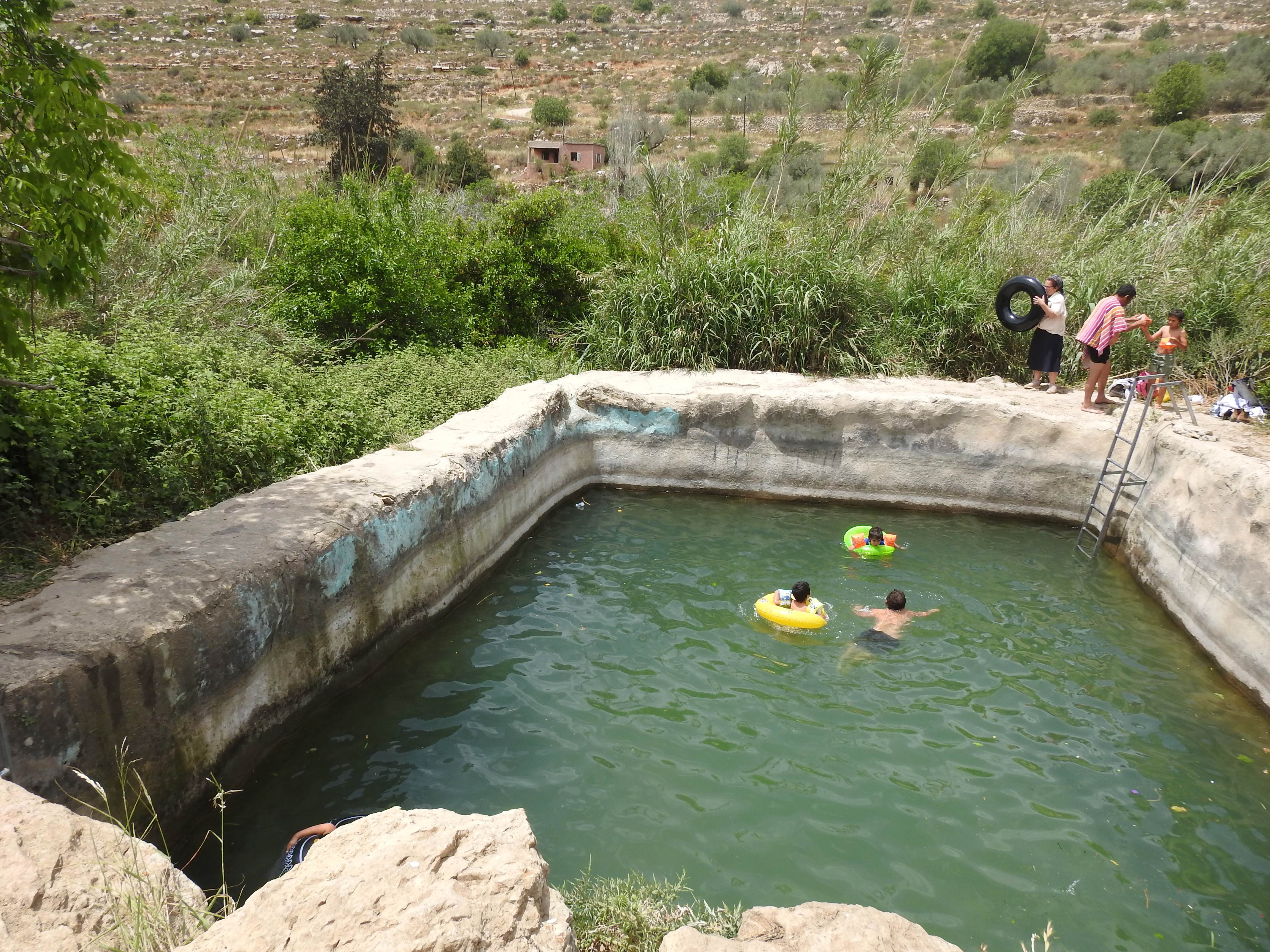
We hadn’t come properly attired for a dip in the spring, nor is that something that ever appeals to me too much, so we had a bit of a gander and enjoyed watching other families splash about gleefully. The spring itself gushes out from the cliffside, obscured from view, and empties into a large concrete basin. Fixed ladders allow swimmers to enter and exit freely, no matter how much water there is at any given moment.

Ein Harsha

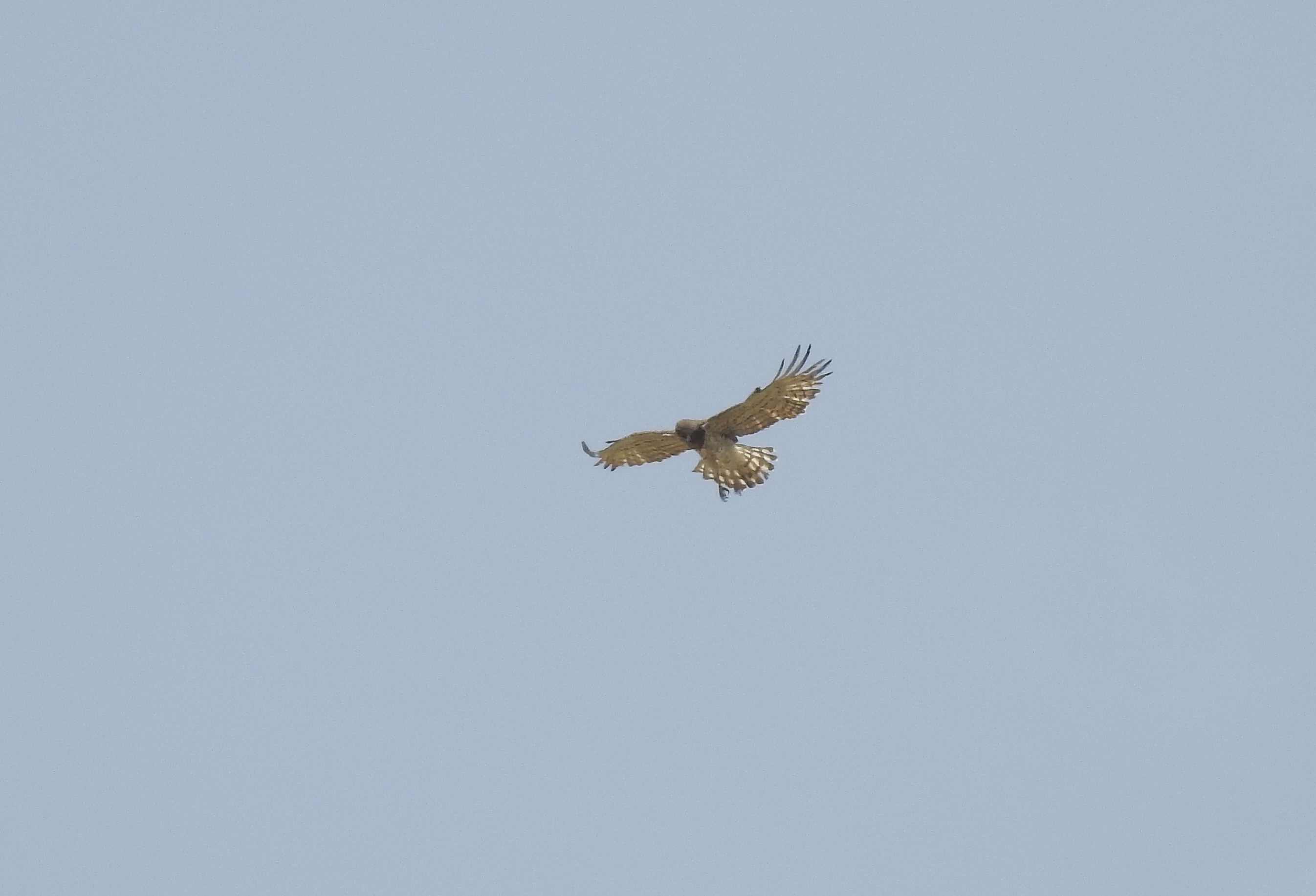
Overlooking the spring, I noticed some interesting construction projects which appeared to have been abandoned. A bit of research on AmudAnan told me that this was a housing project for then-PA leader Arafat’s security forces, funded by the EU and abandoned when the funds ran out, one way or another. As I looked up at these structures, I saw bee-eaters and a hovering short-toed eagle hunting in the distance.

Short-toed eagle looking for prey

We tried a local freshly-picked clementine, which proved to be inedibly sour, and then got back into the cars to drive back to Kerem Re’im for the barbecue. While Ben manned the grill, I cracked open one of our old homebrews that we had made together back in Givat Shmuel under the Arx Meles branding. It was a barleywine brewed back in January of 2019, clocking in at an impressive 12.1% ABV. I can’t say that I particularly enjoyed revisiting the potent ale, but it was a fun experience and I wonder what time will do to the other bottles waiting in storage.

Tasting the old barleywine

The barbecue was delicious, a smorgasbord of grilled meats and side dishes, and we ate to our hearts’ content. Finishing off with a chocolate chip cookie or two, I headed outside with Amir for him to play and noticed that I could see – and photograph – the lookout of Mount Harsha from outside the Yablon residence, nearly 1.6 kilometres away as the crow flies.

Mount Harsha lookout from Kerem Re’im (1.59km away)

When we drove home, we passed by the cliffs under Pedu’el, alongside Nachal Shiloh before it drains down into the coastal flatland and becomes a tributary of the Yarkon. I felt quite inspired by the previous lookout, so much so that we formulated a plan to go back again the following day, this time to the Israel’s Lookout at Pedu’el (which I had already been to two or three times before).
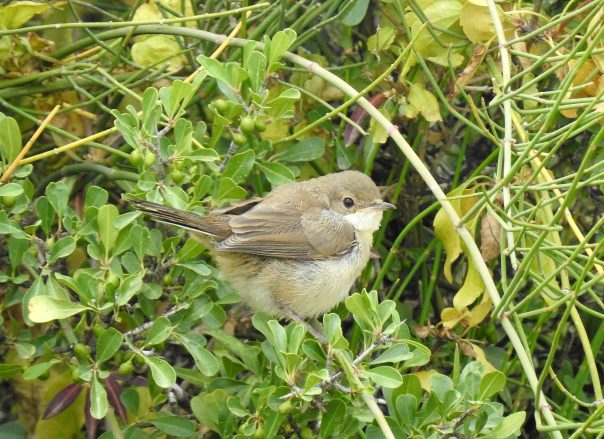
Juvenile Sardinian warbler

The very next day, a calm and relaxing Friday, we got out and drove to Bruchin, one of the nearby towns that is close from a geographical sense, but requires quite a drive to physically get there. Bruchin, as I remember it from my army days, was quite a fledgling community and had quite the small settlement vibe to it. Now, an extensive housing project has transformed Bruchin into a much-desired locale for young, orthodox families. With the housing came civil infrastructure, including the popular Hillel’s cafe, which was our first stop for the day.

Some hollyhock backdropped by Deir Balut

We ordered some food and drink for the three of us, delighting myself with the most fantastic balsamic-glazed caprese croissant. It sang into my gullet, each bite more decadent than the last, begging to enslave me to the unsuspecting artisan who crafted the choice morsels. Anyway, once we finished our brunch, we drove on over to the far end of Pedu’el, overlooking the central coastal region of Israel.

Family selfie at Pedu’el’s lookout

This lookout (approximately 380 metres above sea level) has become more popular in recent years, so much so that there is a paved trail with informational signs and even a coffee cart café just outside the entrance. We joined the throngs of visitors, Friday being a national day off for most of the workforce. I was pleased to see the recent developments, and marveled once again at the lovely view. Although, this time, a new landmark jumped out at me. It was none other than the almost-completed Protea assisted living facility, whose behemoth structure rises up from the residential houses of Elkana. 
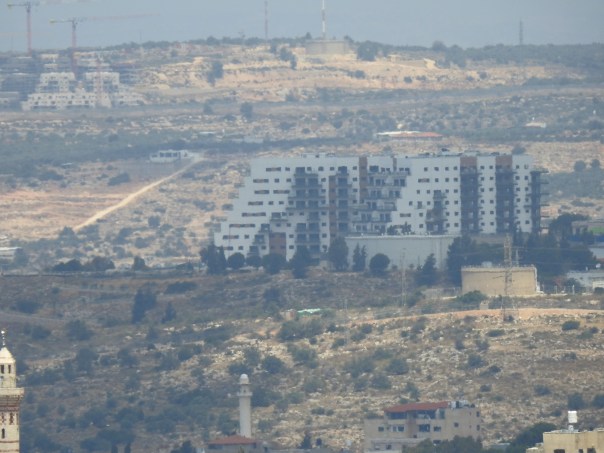
Elkana as seen from Pedu’el’s lookout (5.6km away)

While the photo certainly captured the Protea building, unfortunately, the Elkana lookout (to be discussed soon) is mostly out of frame – just the winding path up, and a bit of the gazebo is visible right above the gleaming minaret on the far left side of the picture. But, we enjoyed taking photos and walking about the crusty bedrock on the gentle slope to the precipice.

Bracha and Amir having a closer look

Similar to the day before, there was a bit of migration activity – mostly a few buzzards and short-toed eagles. We sat together on the porch swing, rocking ever so gently, as we chatted and admired the views of Deir Balut and the Tel Aviv skyline. The Samaritan monastery ruins of Deir Qal’a were off to the left of us, just a short hike away, but I had already visited the site before.

Mount Harsha from Pedu’el’s lookout (15.84km away)

As we were heading back, still needing to prepare for Shabbat that evening, I realised that I was looking at a familiar mountaintop way off to the southeast. I steadied my camera’s 83x optical zoom and zeroed in on the three short antennas cresting the rounded peak 15.84 kilometres (nearly 10 miles) away. Sure enough, I had spotted Mount Harsha and, although not visible at this distance, the lookout where we had stood the day before. I was overjoyed, and ecstatically shared my discovery with my family, and then with the Yablons once I transferred the photo to my phone.
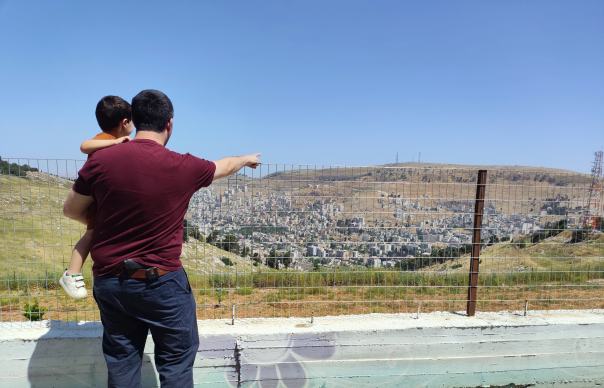
Pointing out Joshua’s Altar on nearby Mount Ebal

Ending on a high note, we headed back home and resumed our daily lives, until the following Friday. Inspired by our own adventures, and eager to see the famed Har Bracha tehina factory, we got back into our car and drove off in the direction of Shechem (Nablus). Just before we reached the city entrance, we turned left and drove up Har Bracha (or Mount Gerizim). We drove through the Samaritan village and then parked outside the factory. Sadly, the workers are all off on Fridays, so we couldn’t have a production tour, but we managed to buy some wholesale tehina from the big boss and relegated ourselves to enjoying the view atop Mount Gerizim. First we looked towards the northwest, where the urban sprawl of Nablus creeps up the opposing mountain, Mount Ebal. Although I have yet to visit Mount Ebal, there is a famous archaeological site at the very top, believed to be Joshua’s altar from the biblical book of Joshua (8:30–35).
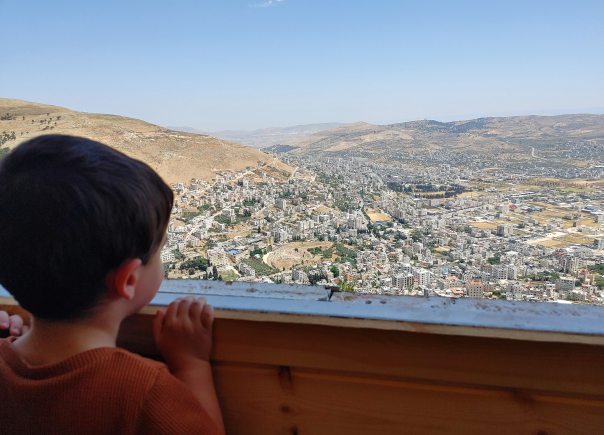
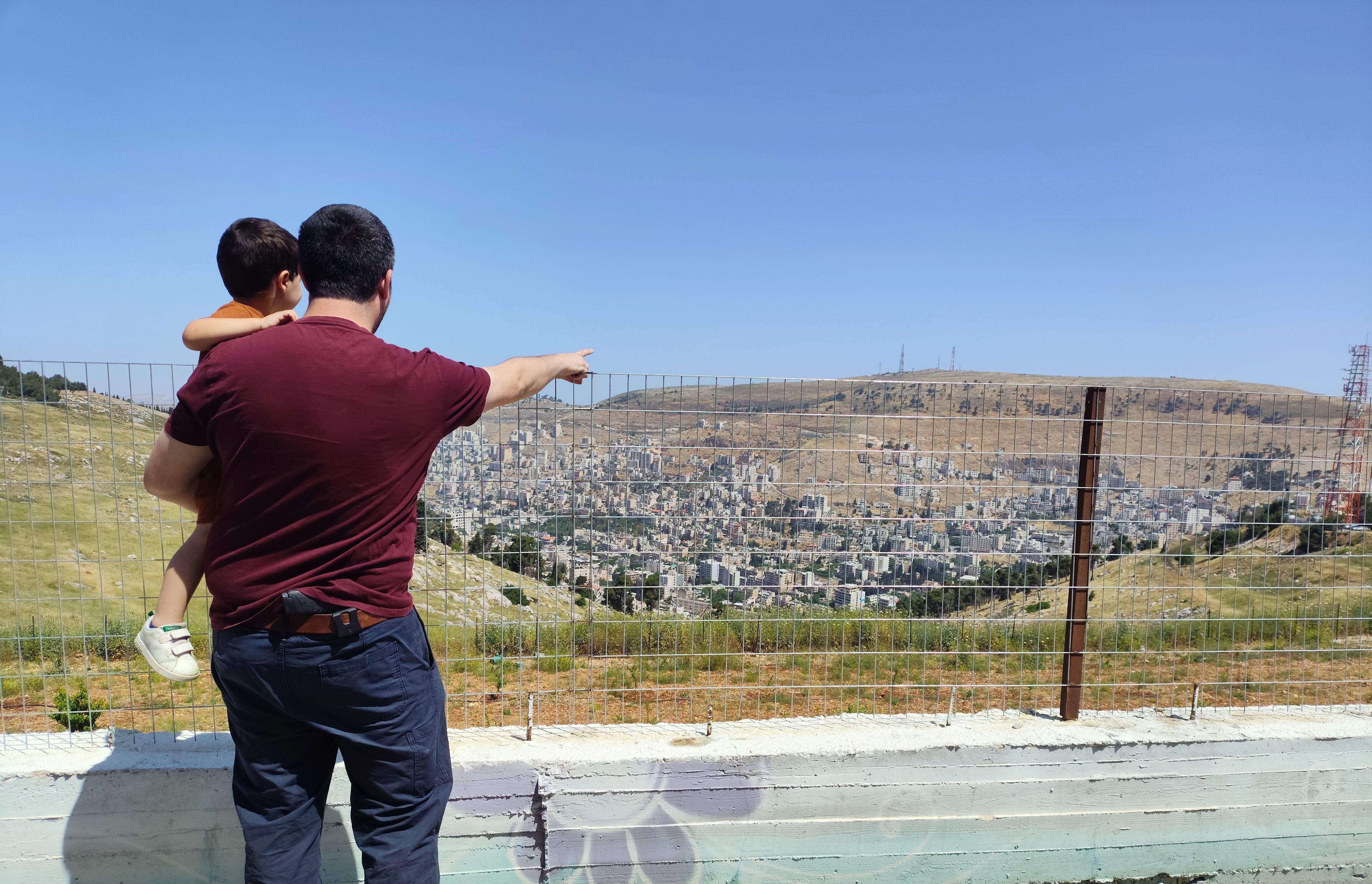
Amir looking out over Shechem (Nablus)

Next, we popped over to Mitzpe Yosef, a mighty fine lookout around 800 metres above sea level, boasting views of Shechem and the Samarian landscape beyond. I had visited the IDF outpost adjacent to the lookout several times during my army service, and remembered the place quite fondly. I enjoyed pointing out the various landmarks in Shechem down below, most notably the ancient Tel Balata and Kever Yosef, where the biblical character Joseph was believed to have been buried.
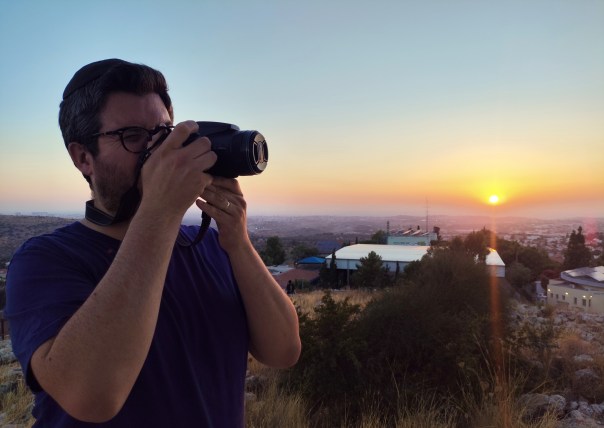
Practicing my photography skills

I don’t think that we can truly count Mitzpe Yosef as one of the lookouts of the Western Shomron, but Elkana’s lookout certainly does fit the geographical qualification. Generally, when we would go out for a walk on Shabbat afternoons when the weather was better, we either walked around the security fence (near where I had affixed my trailcam in recent months) or up to the lookout. Since every time we had journeyed up to said lookout was on Shabbat, I never had the opportunity to take any pictures – particularly troubling when once we saw some breathtaking cloud iridescence, which just begged to be photographed.

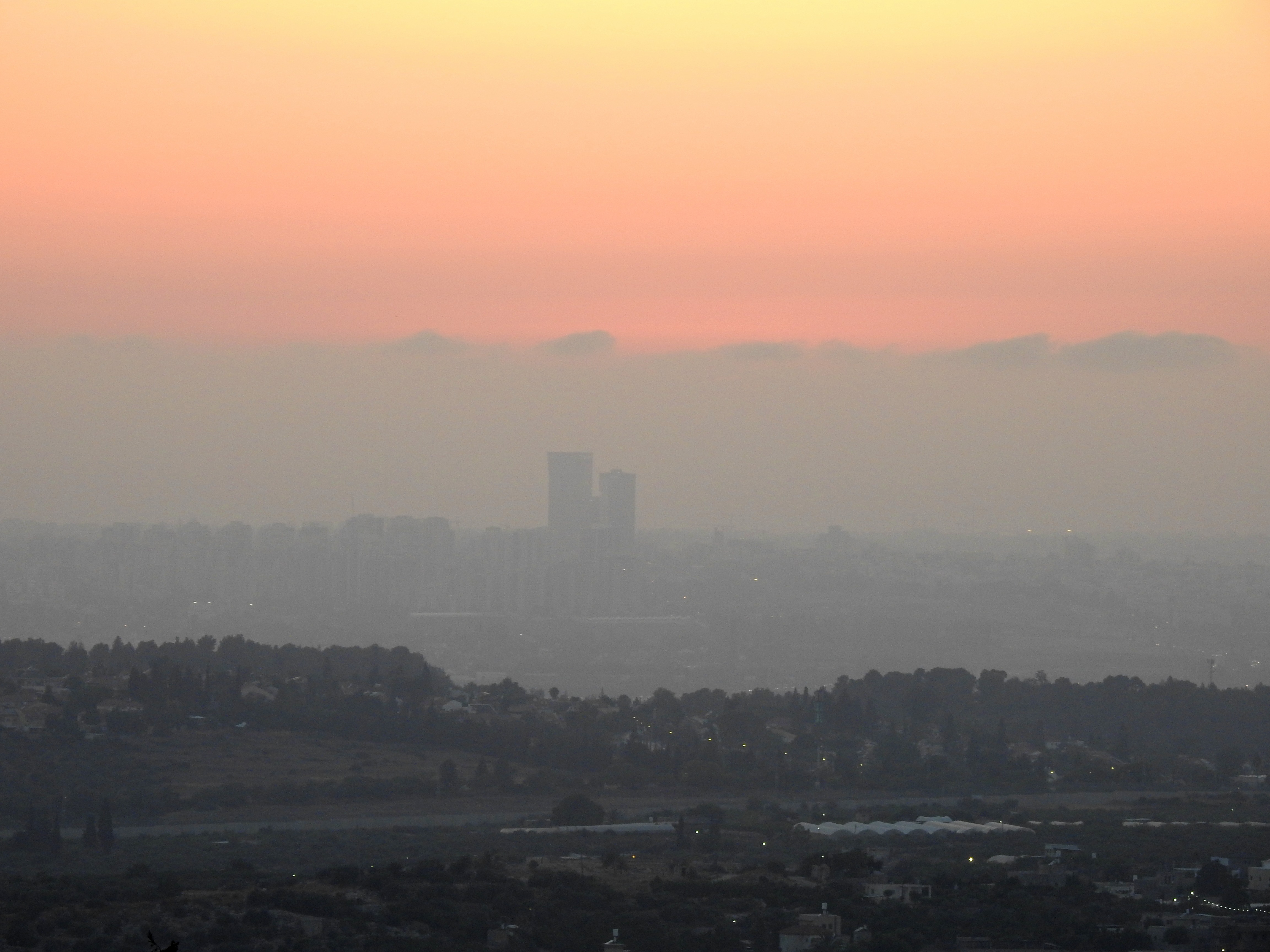
Tel Aviv skyline from Elkana’s lookout

Either way, since we frequent the lookout, I figured it was only fair to include it in this blog post. So, we planned a nice picnic dinner for late afternoon on Thursday, the 12th of June. We greeted the other visitors – including one young man who had a camera set up on a tripod – and settled down for our delicious spaghetti, watching the sun slowly make its way down towards the Levantine coastline.

Layers of pastel beauty

Every now and again I took some photos, hoping to capture a good representation of the nice views we had, albeit being only approximately 290 metres above sea level. From the lookout, one can see as far north as the Hadera power station on the coastline, where sharks frequent. Yet, to the south, I couldn’t quite make out Pedu’el’s lookout, and failed to get any photo of it.

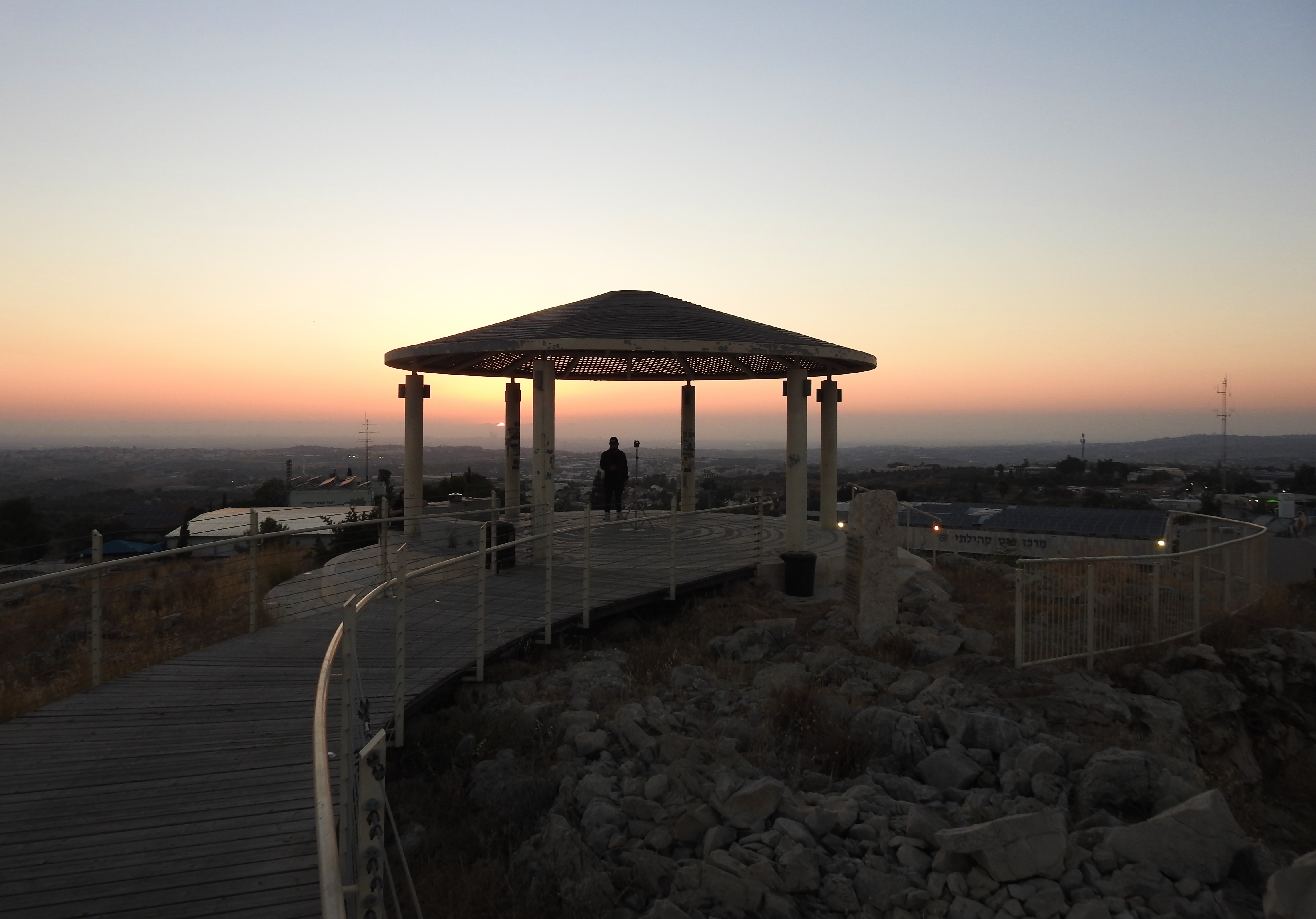
The gazebo lookout at Elkana

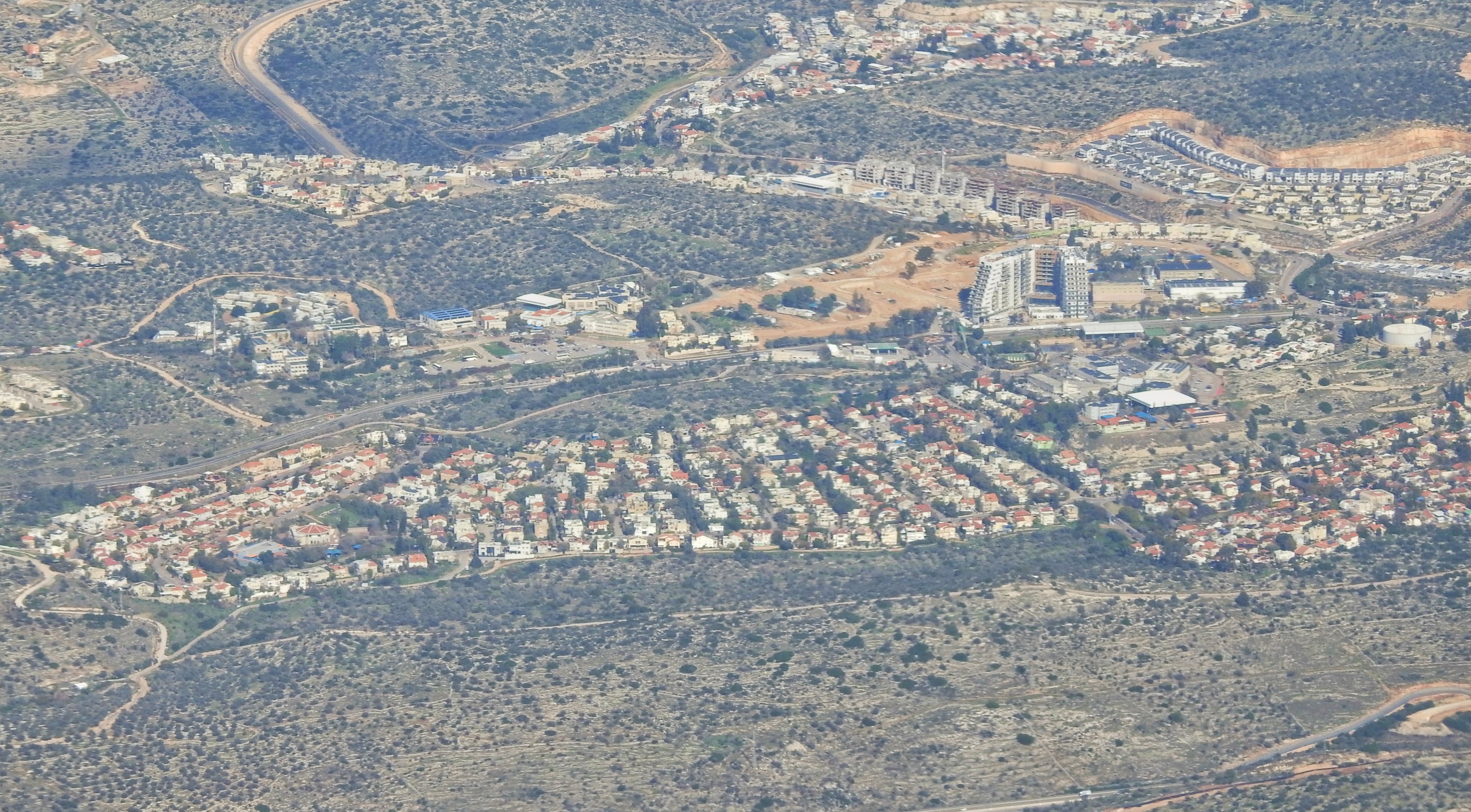
That said, I did manage to take a photo of Elkana when flying over, coming back from our little family vacation to Rome in the beginning of February (trip album HERE). When zoomed in, the lookout’s gazebo can be spotted to the left of the giant water tank on the far right side of the photo. Months later, I’m still quite impressed that I was able to get such a clear photo through the thick glass of the airplane window, and considering the speed of a jet in descent.

Elkana from the airplane window

Back at the lookout, Amir and I climbed about the rocky terrain around the gazebo, and ventured towards the old Jordanian military bunker which used to be manned with Jordanian soldiers, facing the old border to the west. In fact, Elkana itself is built on conquered military ground, the current local council building being an old Jordanian police station and/or army outpost.
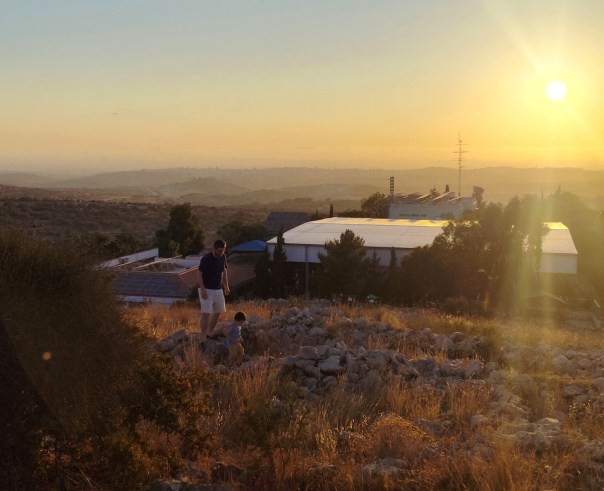
Exploring the Jordanian bunker area

When sunset came, I was taken back by the beauty, and pleased that I was finally able to capture the rich, warm oranges that painted the horizon. Snapping away furiously, I tried my very best to capture both the lookout itself, and the magnificent culmination of yet another day.
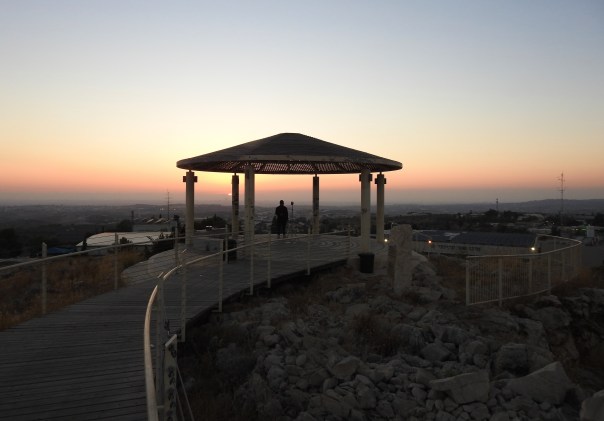
Sunset at Elkana’s lookout

Later that night, we were woken to chaotic alarms coming from our phones, eventually learning that the IDF had launched a full-fledged military operation against the Iranian regime. I was happy that we were able to have that moment of peace as we basked in the sunset, since the next two weeks were a tumultuous turn of events. From dashes to the local bomb shelter (where we met the young photographer from the lookout) and sleepless nights to the morale-boosting reports of our successes in both military and diplomacy, and then back to the tragic news of Iranian missiles landing in densely-populated cities, causing twenty-eight senseless deaths.