Israel's Good Name

Archive for the ‘Central Israel’ Category

BIU Campus Birding Tour

In Central Israel, Israel on February 5, 2017 at 9:06 AM

The week before last, Bar Ilan University’s campus chapter of the Society for the Protection of Nature in Israel (SPNI) offered a free birding tour. Naturally, I went along, and experienced the unexpected, much to my satisfaction. Being that BIU’s campus is situated in a very urban area, tucked between Ramat Gan, Bnei Brak and more, I wasn’t expecting to see anything other than what I see on a semi-frequent basis walking around. In due time we were introduced to our birder tour guide, Shuki Cheled, and we set off to explore the campus, with its overcast skies.
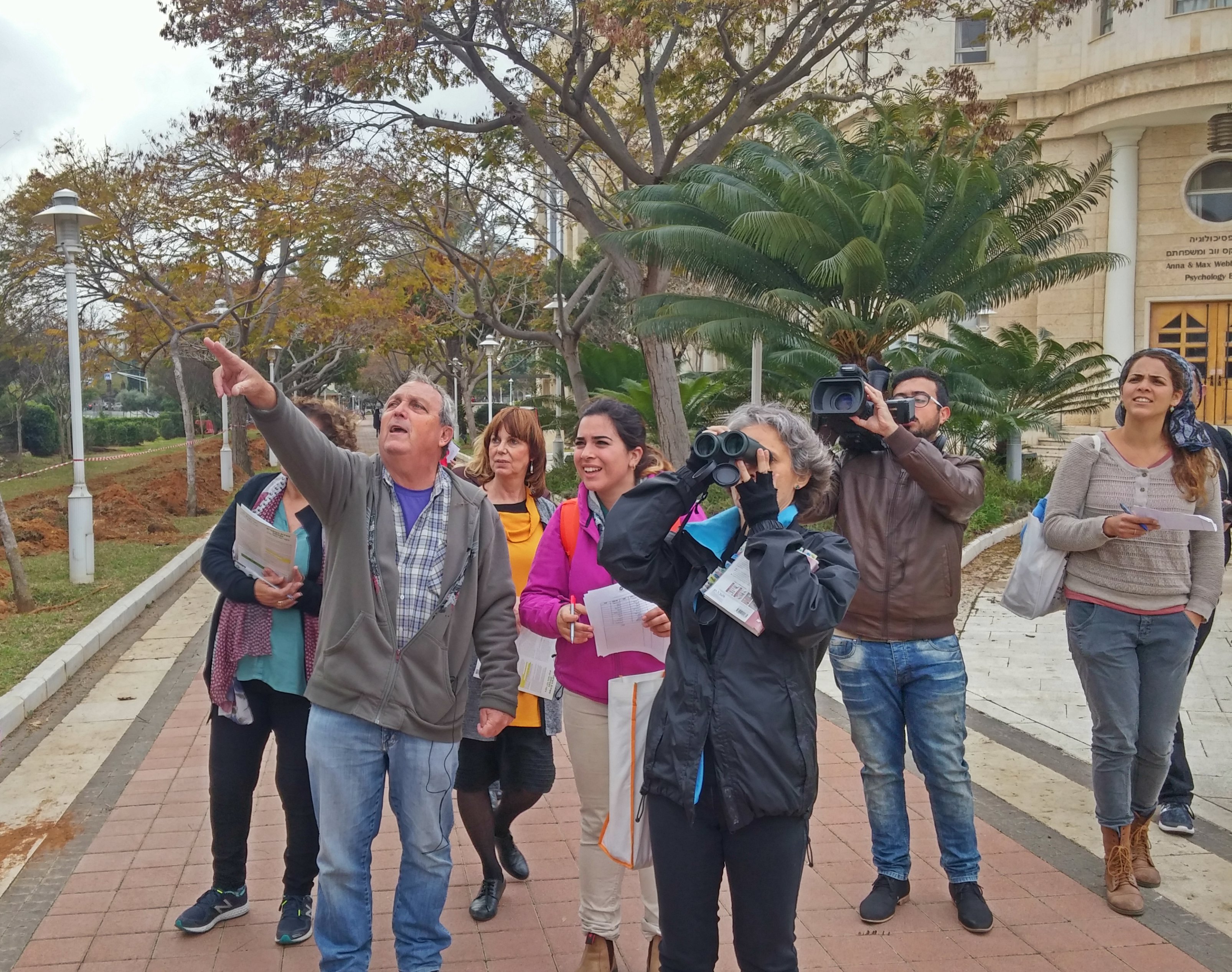
Birding outside the Psychology building

Birding outside the Psychology building

While some of us were equipped with cameras and binoculars, Shuki used just his eyes and ears to identify birds in the vicinity. At first pickings were poor, with common and invasive species such as hooded crows, laughing doves, house sparrows and common mynas. But then, a few stonechats were spotted, posing as they do, and then an uncharacteristically-bold hoopoe – Israel’s national bird.
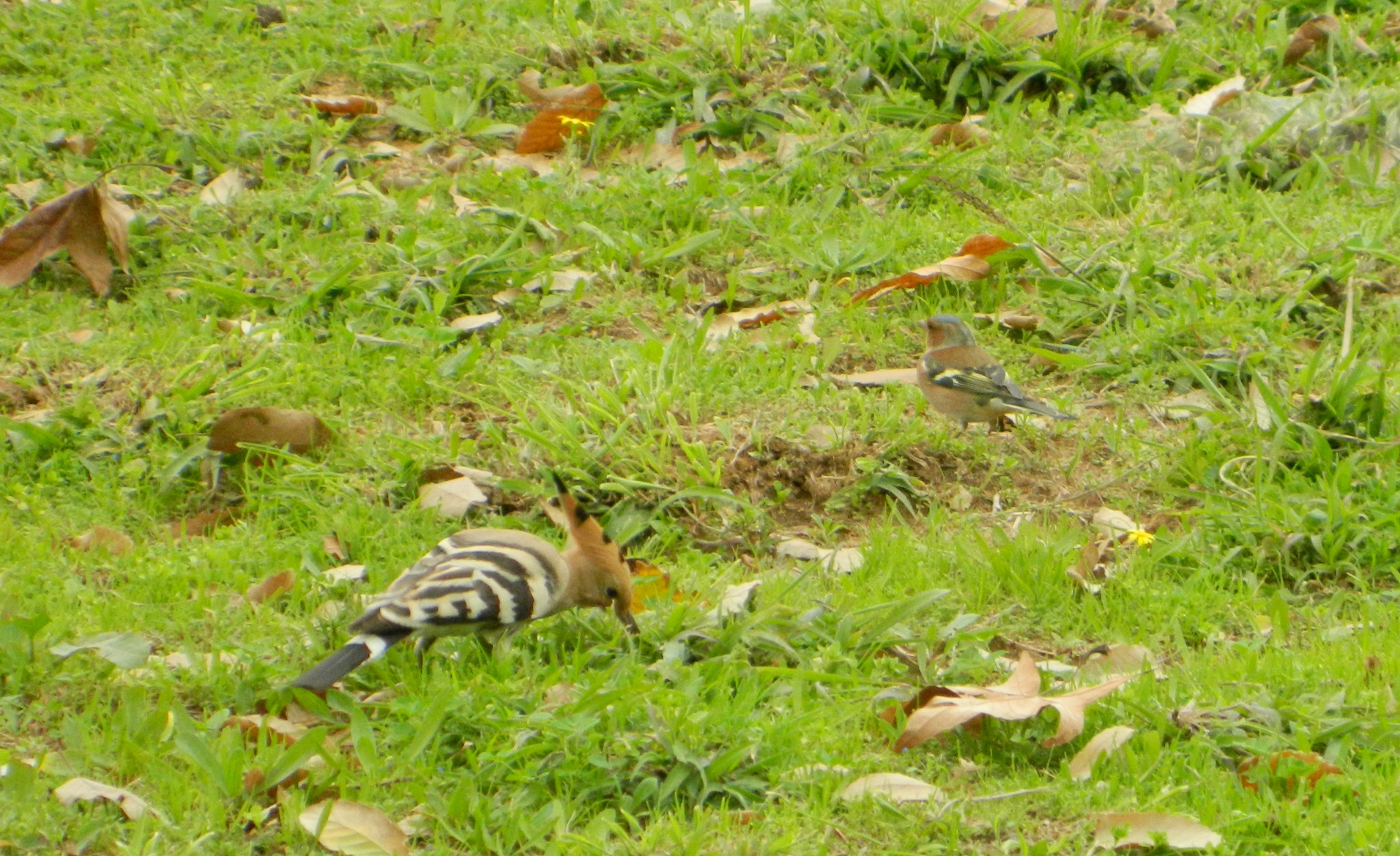
Hoopoe & Chaffinch

Hoopoe & Chaffinch

Pausing at the Brain Research Centre, we spotted an unusual species perched on a rock some ten or so metres away. Shuki seized binoculars and I ventured into risky digital zoom to discover what was determined to be a dunnock (or hedge warbler, as I’ve heard from my Hula Valley Birding Tour experience). Flitting restlessly overhead was a chiffchaff, a tiny bird weighing only about seven grams (or .30 oz). I was able to catch him taking a tiny break on the trunk of a palm tree:
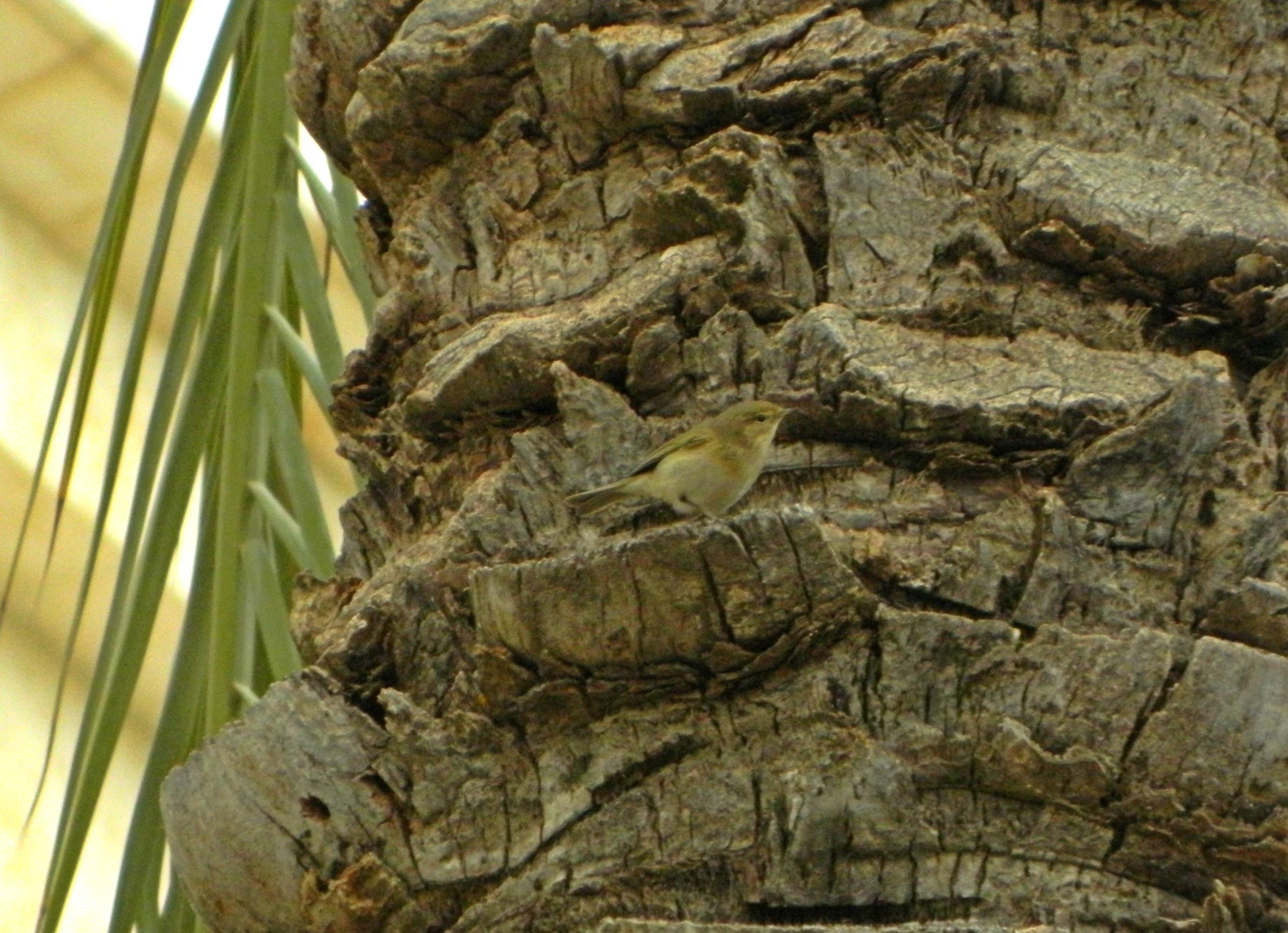
Chiffchaff

Chiffchaff

Entering the Dahan park, with its fruit trees and flowing water, we were greeted by a number of bird species. Highlights included chaffinches, greenfinches, monk parakeets and small flocks of starlings – a seemingly simple bird, but with stunning plumage up-close. While the group exchanged birding thoughts and observations I nipped over to an orange tree and picked a juicy orb, which turned out being exceedingly tart.
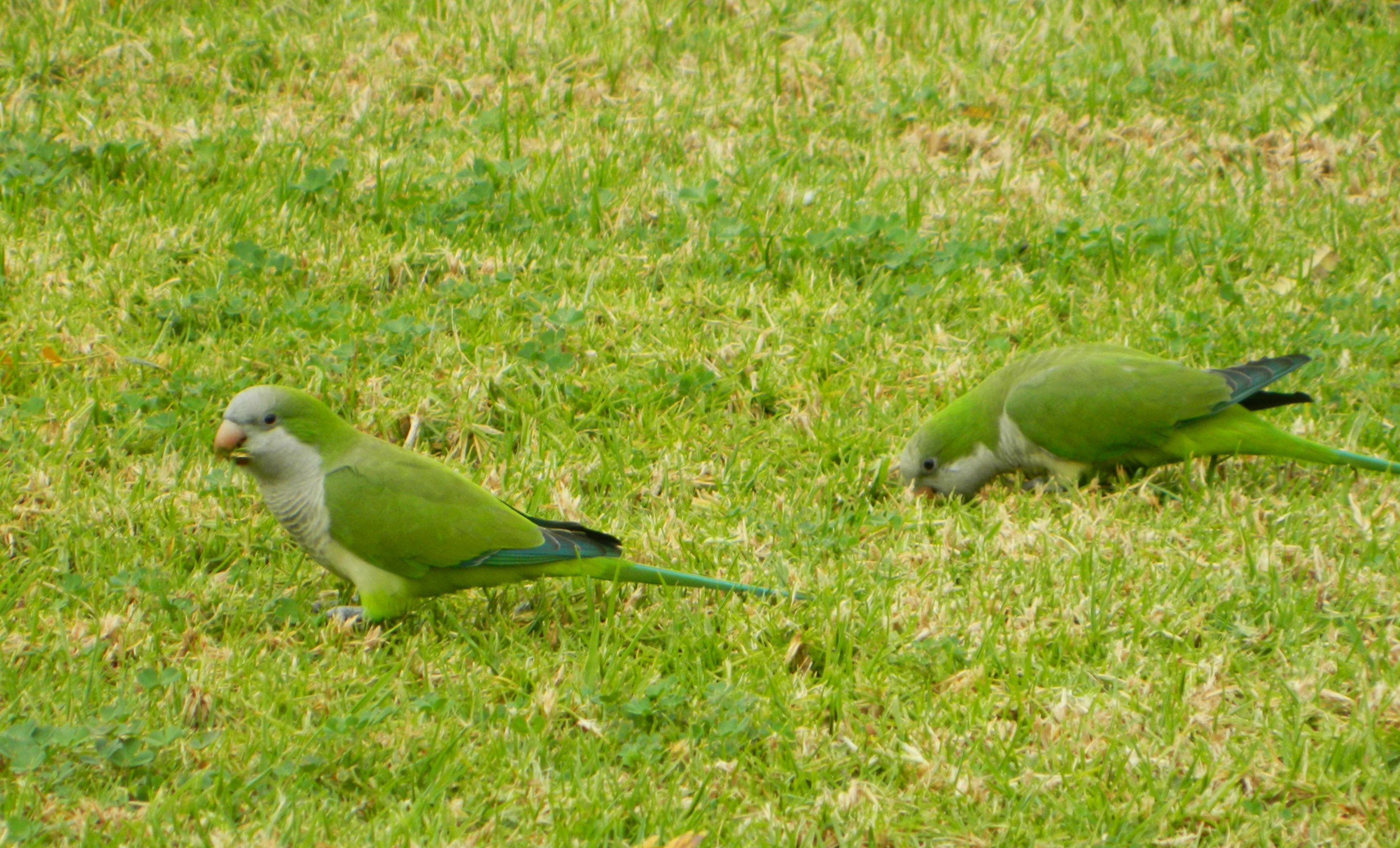
Monk parakeets

Monk parakeets

With the tour reaching its hour-long time limit, the official tour ended and only a few stayed on with Shuki, including your truly. But first, an amazing photo capturing a wide range of activities and emotions by Faith Baginsky.
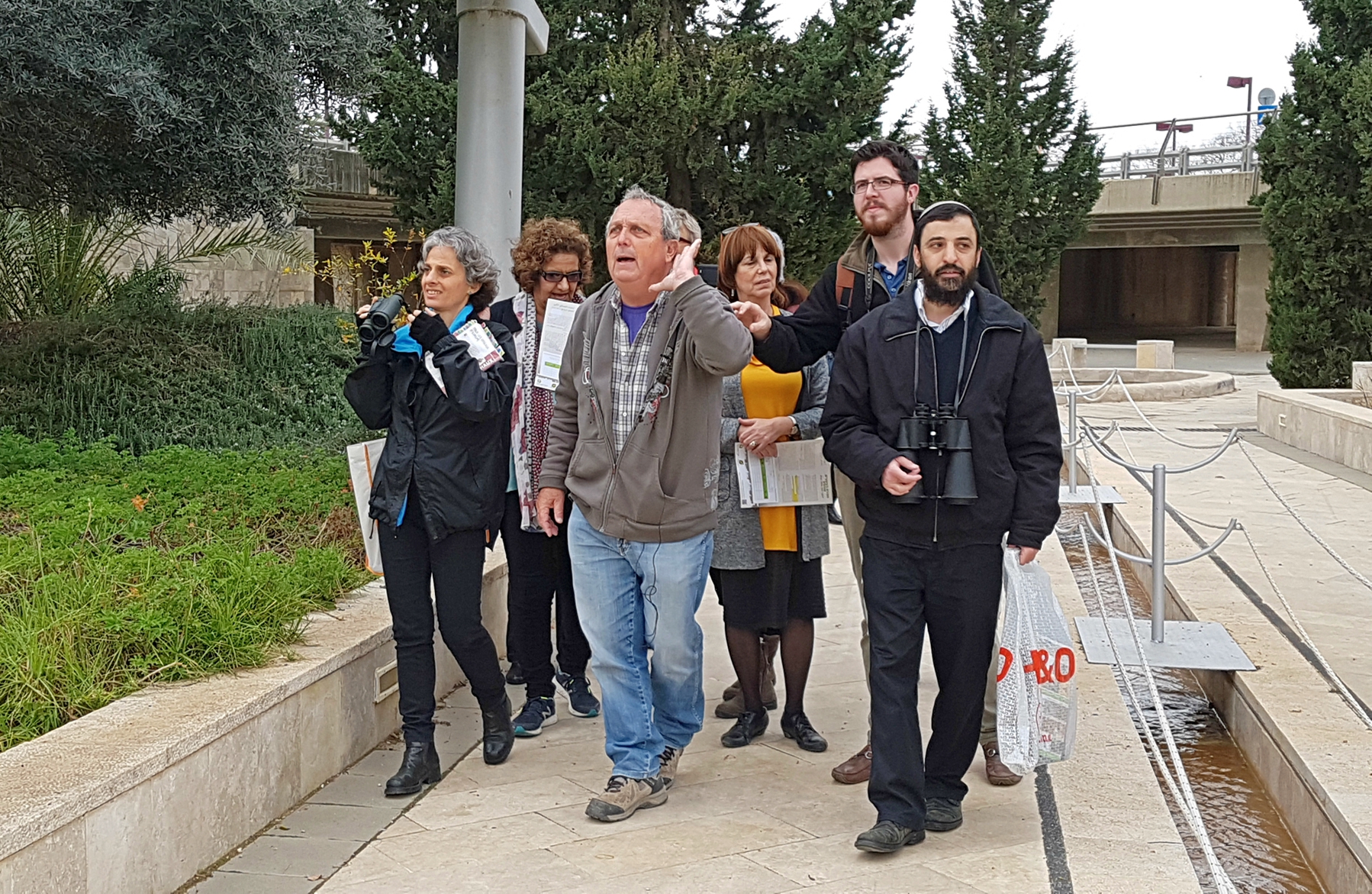
Hark! (photo Faith Baginsky)

Hark! (photo Faith Baginsky)

We next paused at the gravelly parking area in the Engineering and Technology regions, spotting a group of jackdaws (which I automatically assumed were “boring” hooded crows). Next, taking a few steps forward, I flushed out a whole bunch of stone curlews who were standing mere metres away yet completely camouflaged. Here I caught one trying to hide behind a lamppost:
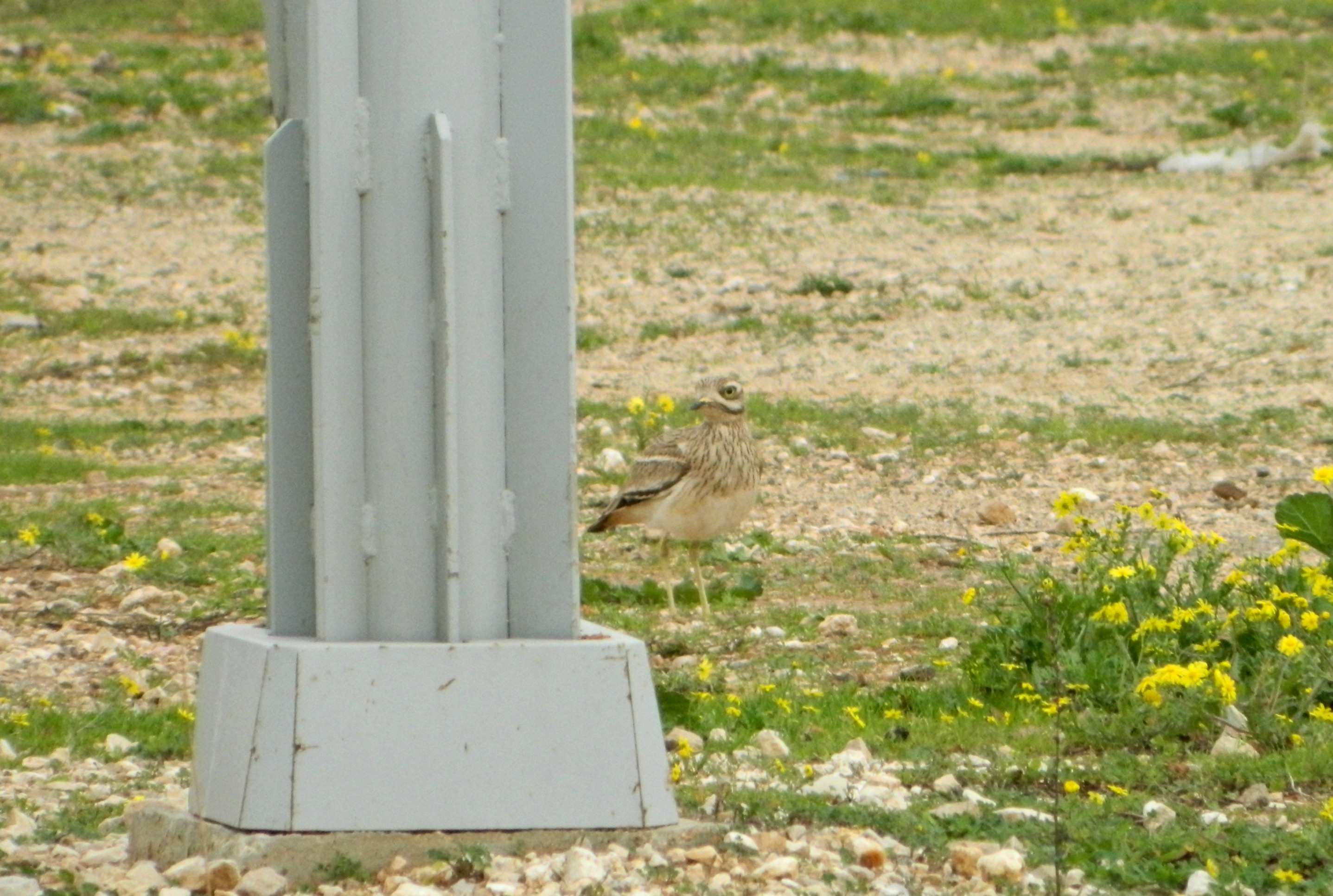
Stone curlew

Stone curlew

Continuing along the campus road, we saw a whole assortment of birds I would have never noticed beforehand, despite the fact that I consider myself an amateur birder. Standing behind some tall bushes we were able to watch chaffinches (the males have really nice plumage) and hoopoes from an eye-level vantage point. Then, as the tour continuation was coming to an end we saw what seemed to be Spanish sparrows and then another invasive species from India, the vinous-breasted starling, far less prevalent than its cousin, the common myna. I was able to procure this stellar photograph of the starling perched on a barbed wire fence by fellow tour participant Ami Vardi.
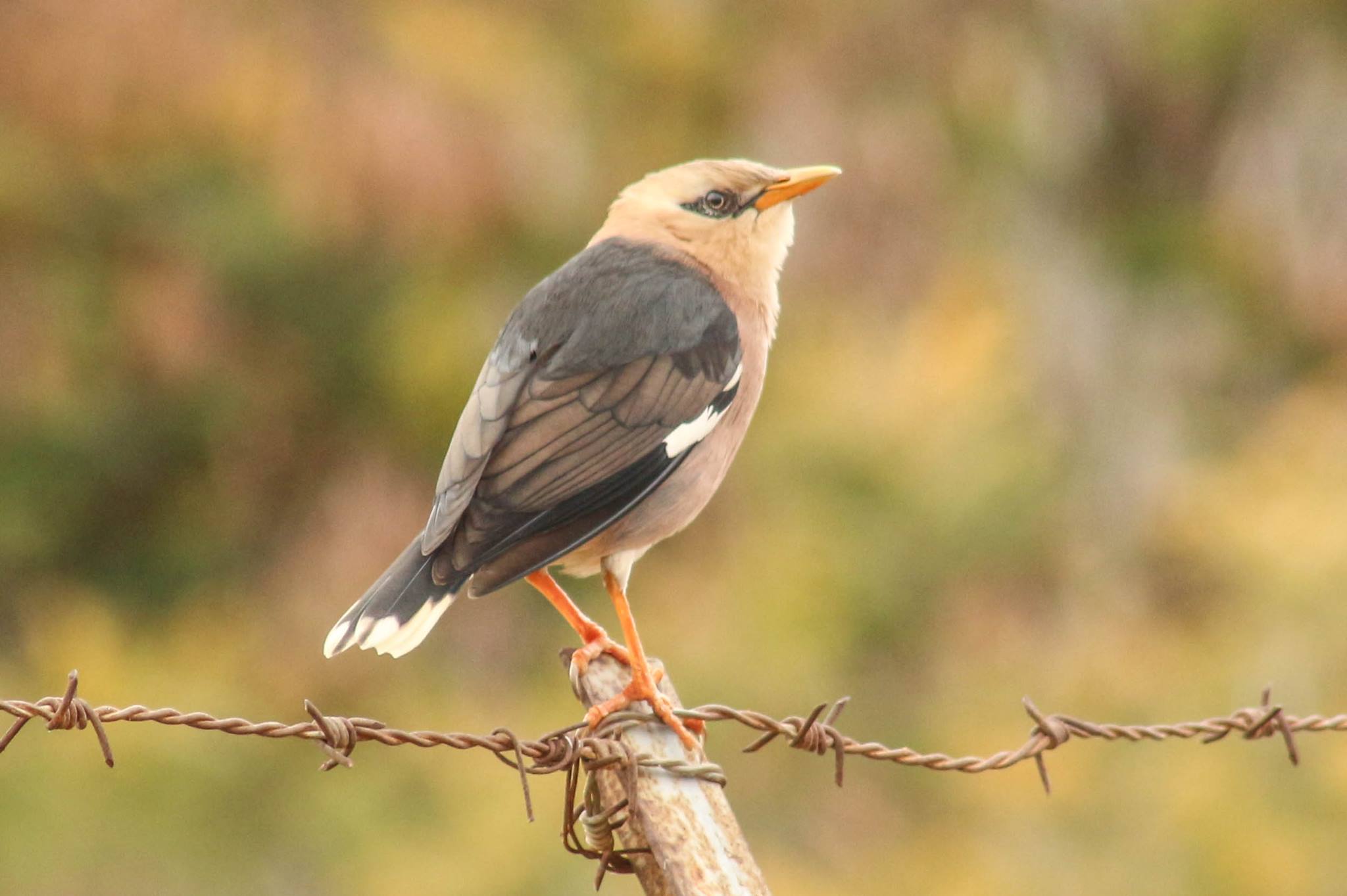
Vinous-breasted starling (photo Ami Vardi)

Vinous-breasted starling (photo Ami Vardi)

The overcast skies had darkened and the first drops of rain began to fall upon us, threatening our birding equipment. Content with the twenty-something species we’d seen and identified, I bid farewell to the remaining members and set off to my next activity of the day, bottling my latest batch of beer, IPAeus I.
video

Shortly after the writing of this blog, a video of our birding tour was publicised by the Bar Ilan University Spokesman office, just click on the photo above or see the video HERE.
 

University Trip: Ancient Modi’in

In Central Israel, Israel on January 8, 2017 at 10:55 AM

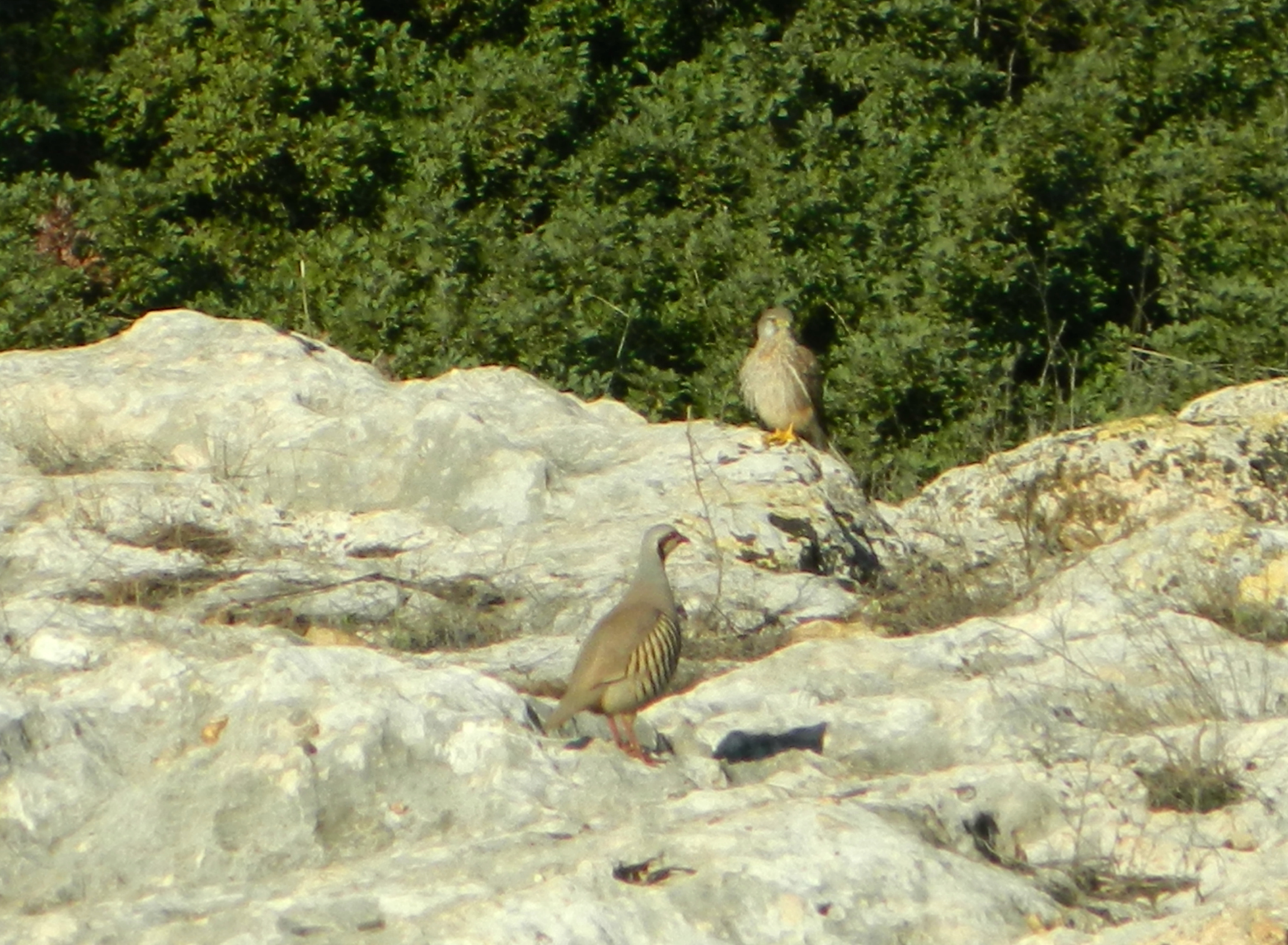
Two weeks ago, right in the middle of Chanuka, we took an Archaeology trip to the Modi’in area in search for ancient Modi’in as well as other sites of interest in the vicinity. Leaving the university by tour bus in the morning, we were driven to our first destination, a place known as Kivrei HaChashmonaim (or, Graves of the Maccabees) just off Road 443 across from the modern city of Modi’in. Disembarking, I looked around my surroundings and spotted a chukar (type of partridge) running up a large rock, stopping near the top before another bird and then flying away in the opposite direction. Due to the great distance, only when I looked at my camera screen did I notice that the other bird was a kestrel (I had assumed it was another chukar). A great way to start off a trip!

Chukar meeting a kestrel

Chukar meeting a kestrel

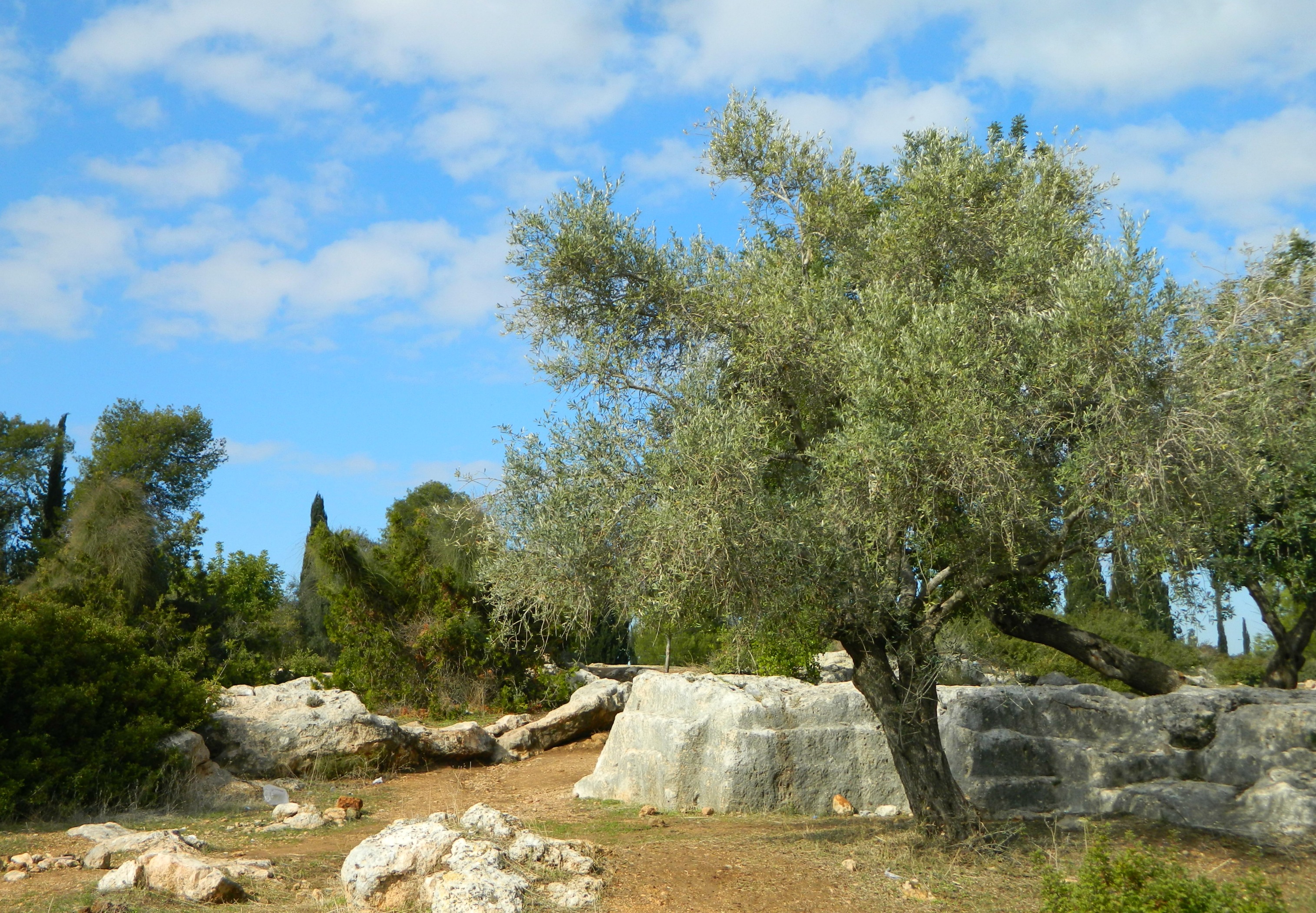
From there we headed down a nice trail towards Nachal Modi’im where we stood near some olive trees to hear from our tour leader, Dr Eyal Baruch, about the first possible choice of ancient Modi’in’s location. Across the stream from us, and over the security fence and patrol road (of the Green Line), was the Arab village of al-Midia.

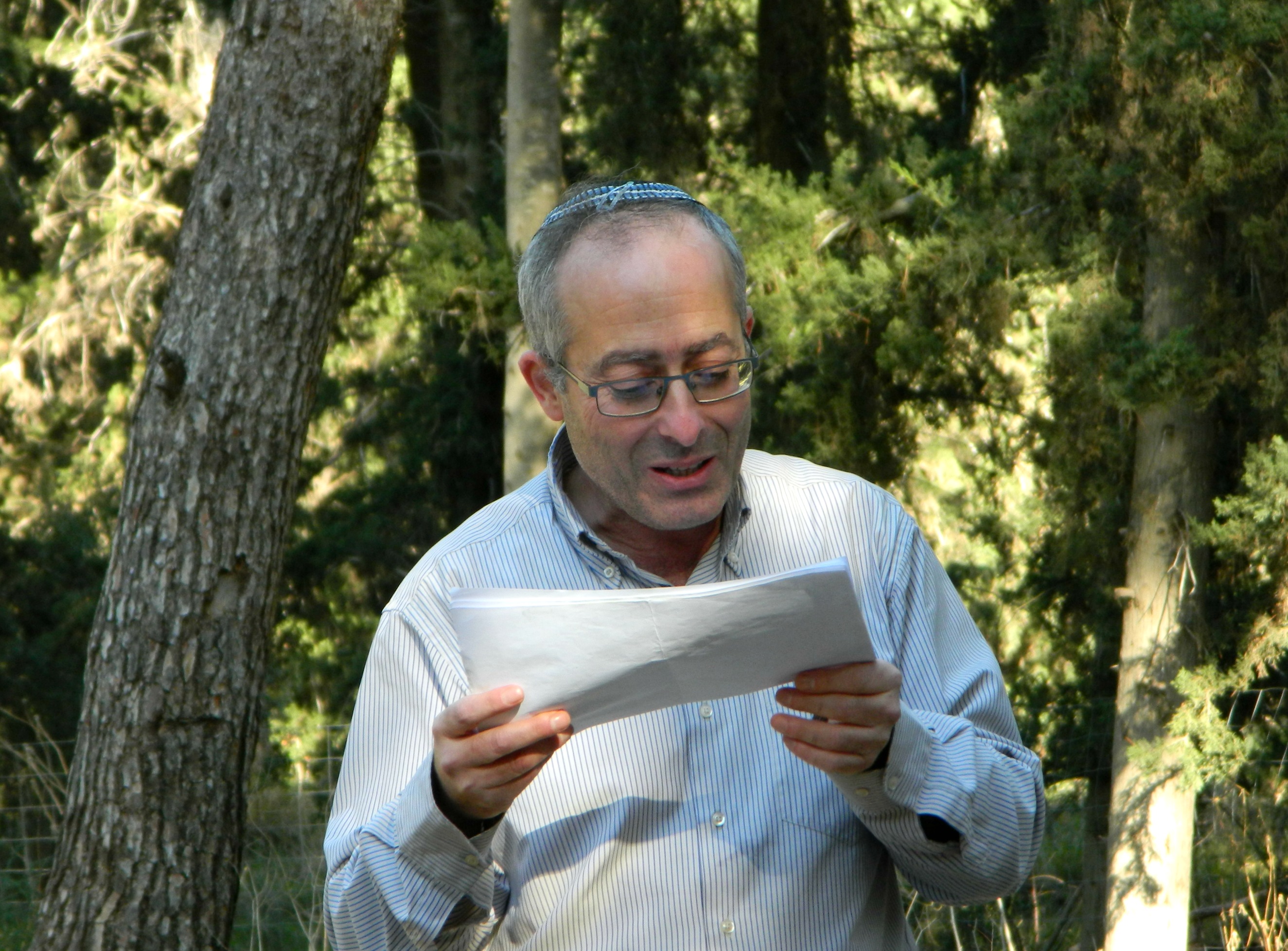
Dr Eyal Baruch of Bar Ilan University

Dr Eyal Baruch of Bar Ilan University

One of the ways to help locate ancient sites is to examine the local traditional Arabic name (be it a village, wadi or mountain) – if the name means nothing in Arabic, there’s a fair chance that the name is just a corruption or adaptation of an earlier name. In this case, the name “al-Midia” can easily be perceived as a corruption of the name “Modi’in”. Unfortunately, from an archaeological standpoint only surveys of al-Midia were taken.

Persian cyclamens a'bloom

Persian cyclamens a’bloom

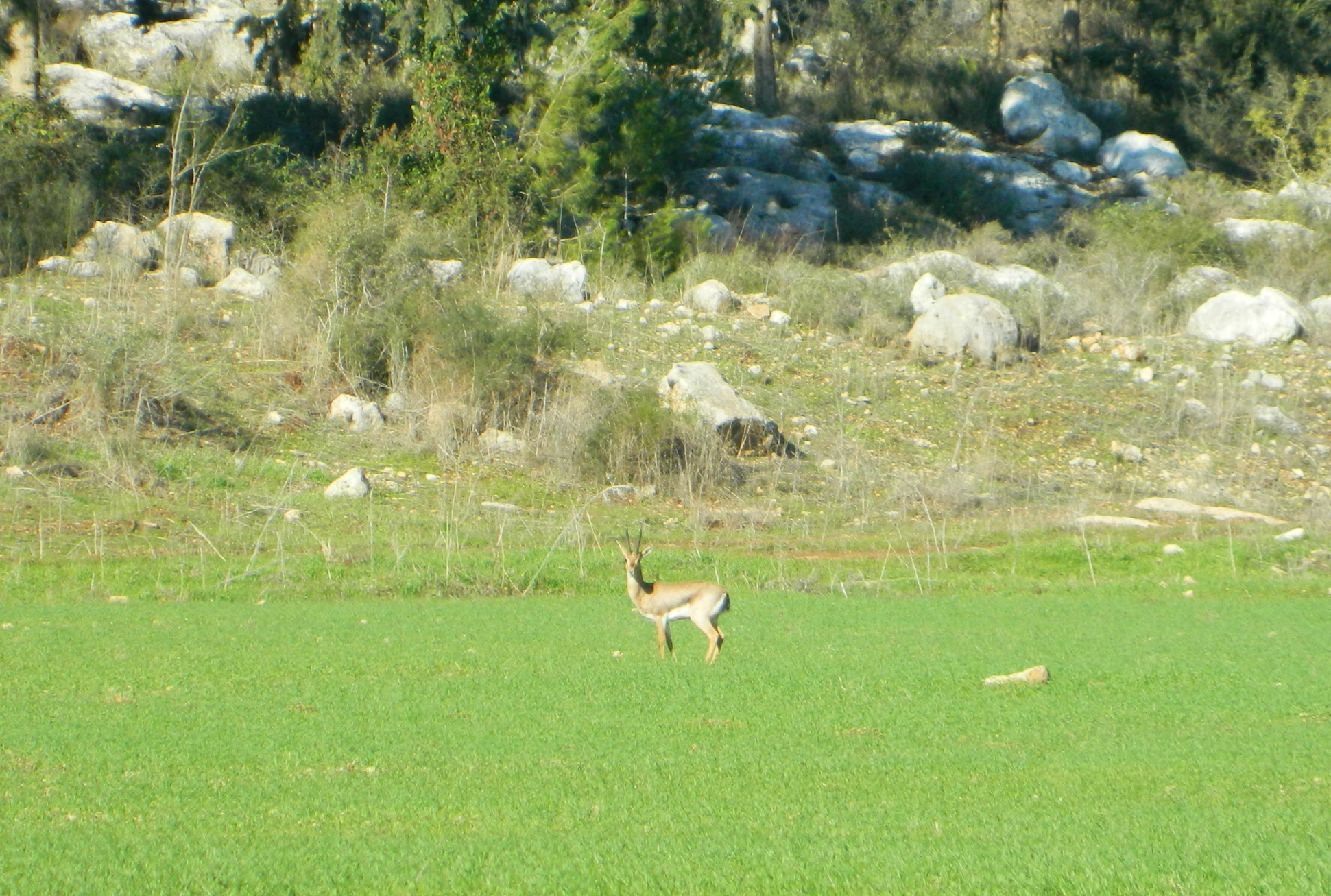
From our vantage point to al-Midia we walked back towards the bus and then down another path to our next destination: Horvat HaGardi. Along the way, I spotted something moving quite a ways off in a field. At the great distance, it was hard to make out what it was – perhaps a dog, or two large birds standing next to each other? Activating the camera, I was soon in the possession of several photographs of a particularly handsome gazelle snacking on the lush grasses.

A gazelle off in the distance

A gazelle off in the distance

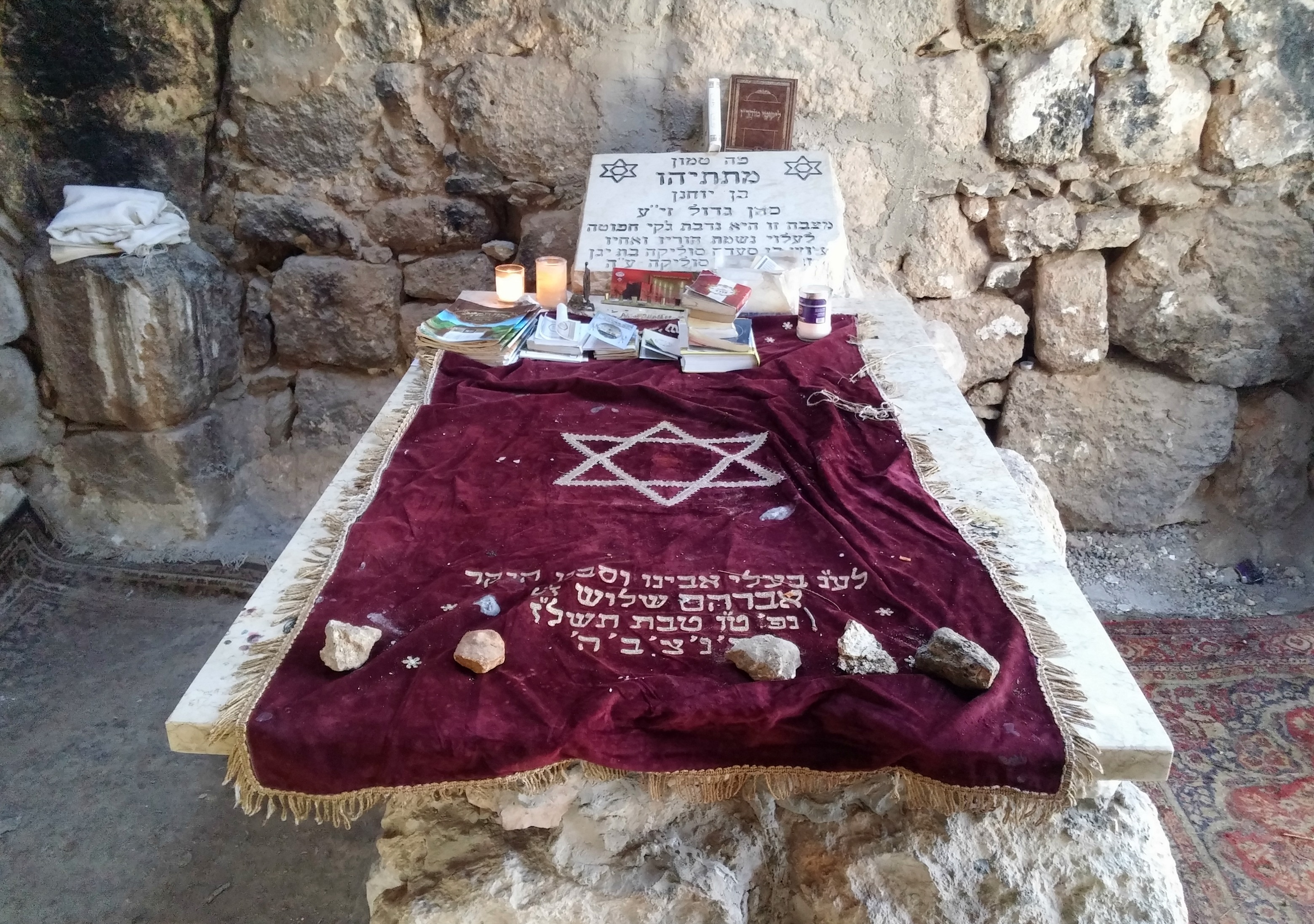
What I saw next intrigued me greatly – a mossy domed structure hidden amongst the pine trees. We were then informed that the site is the Tomb of Sheikh Gharbawi, despite the modern tomb markings labeling the site as the kever of Matatyahu (of Chanuka fame).

The Tomb of Sheikh Gharbawi

The Tomb of Sheikh Gharbawi

Still intrigued, I conducted a bit of research of my own, spanning the times from the late 1800s with a PEF-published “Archaeological Researches in Palestine” by French archaeologist Charles Clermont-Ganneau to a forum discussion dated 2010 on a random Haredi news-site. What sealed the deal for me that this was a Muslim building was the cemented-in mihrab (prayer niche) that can be seen over the tombstone – the mihrab being on the southern wall, pointing south to Mecca.

Kever labeled Matatyahu - note the mihrab

Kever labeled Matatyahu – note the mihrab

However, one can still argue that the structure was later built by Muslims over the pre-existing kever of Matatyahu, for ground penetrating radar and other scientific tools have revealed a cave of sorts under the domed building, extending southward beyond the building. Regardless, there is more to Horvat HaGardi than just this building – and we were still on the quest to identify the legitimate Graves of the Maccabees. French archaeologists in the late 1800s discovered ruins of a building which seemed to fit the description given in Maccabees I, the ancient book of Chanuka. Unfortunately, a mosaic floor with a glaringly obvious Christian cross was uncovered, bringing the building’s date to the Byzantine era.

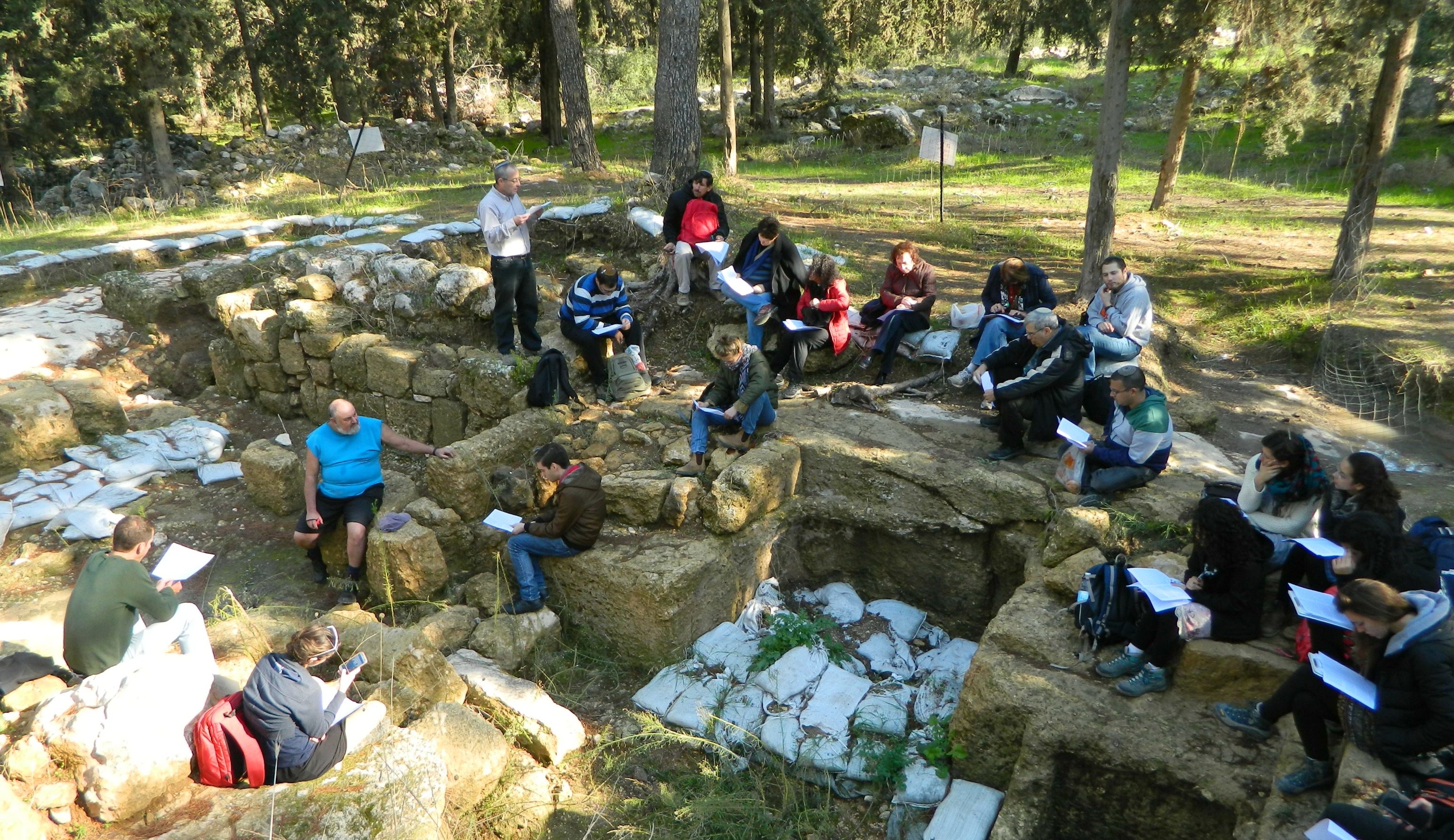
Reading from Victor Guérin at the ruins of the Byzantine monastery

Reading from French archaeologist Victor Guérin at the ruins of the Byzantine monastery

And so, we continued on to the next site on our list, pausing to look at a broken piece of pottery which seems to be have been marked by the potter with three lines.

Marked pottery

Marked pottery

Up next was the modern day war memorial for fallen soldiers during the War of Independence in 1948, a memorial which pays a tribute to the Graves of the Maccabees with its seven pyramids (as described in Maccabees I). From there we passed several small sites of interest such as ancient walls and water cisterns before we reached the burial caves found on the shoulder of Road 443 during construction.

Roadside burial caves

Roadside burial caves

Within these two caves are numerous burial niches which are typical of ancient Jewish burial – see, for example, the Jewish necropolis (or “city of the dead”) at Bet She’arim, a most fascinating place! Inside, finds included ossuaries (chests for the permanent storage of human bones) etched with Jewish names such as Shimon, Sarah and Rachel. Pottery finds helps date the site from the Hasmonean period (i.e the Maccabees) until the middle of the Roman Era – seemingly a perfect fit for the Graves of the Maccabees except that it doesn’t match the textual description.

Quarry for huge stone covering-blocks

Quarry for huge stone covering-blocks

Our final possible site in the area was what is currently marked as the Graves of the Maccabees, personal and coupled burial niches carved out of the bedrock with huge stone covers. These graves were known as Qubur al-Yahud (or “Grave of the Jew”) by the local Arab population, seemingly a fitting match. However, no matter how impressive the graves are, they are unlikely to be the graves of Jews such as the Maccabees. Excavated stone crypts don’t fit the typical Jewish fashion, which means that these are most likely the burial sites of non-Jews dated to the Byzantine Era.

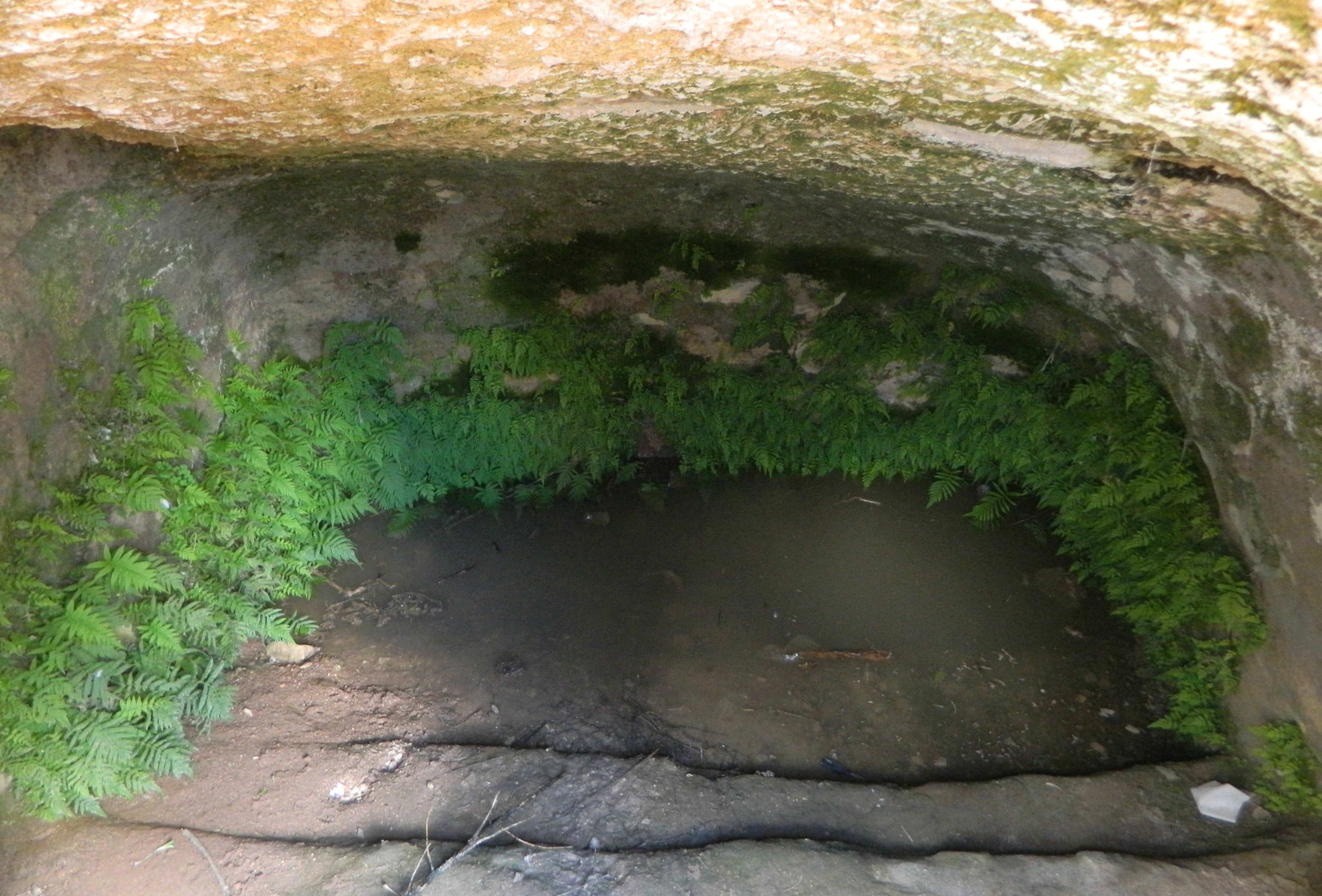
Within Umm al-Umdan's fern-lined mikva

Within Umm al-Umdan’s fern-lined mikva

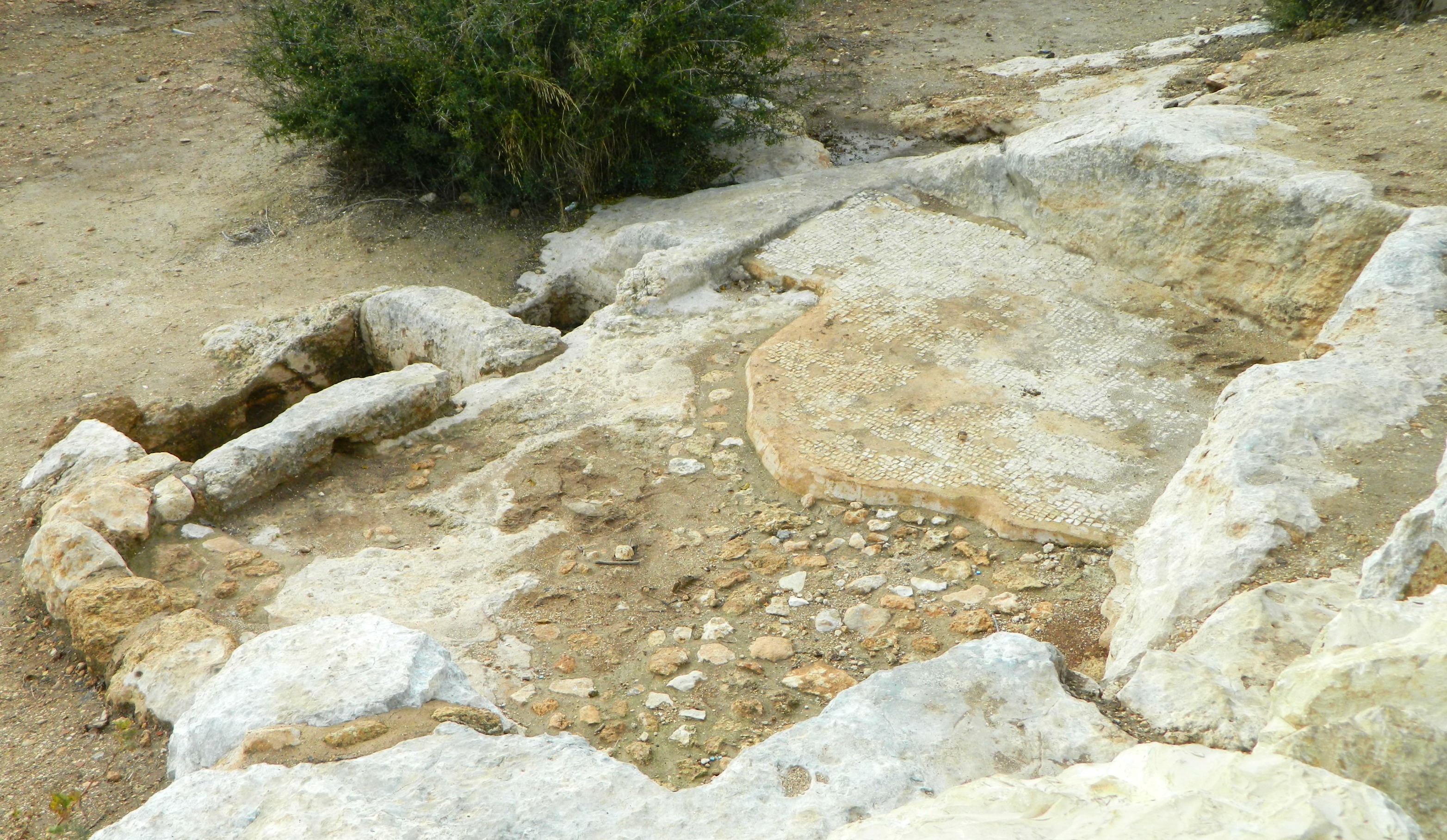
Returning to the matter of ancient Modi’in, we hopped back on our bus and were driven to the southwestern corner of modern-day Modi’in where ruins of a Second Temple-era village were recently excavated. The site, called Umm al-Umdan, is the host of an ancient synagogue, believed to be the earliest one yet having been built long before the destruction of the Second Temple by the Romans. We toured the synagogue, the mikva (ritual bath), the dwelling houses and winepress carved into the rock with a mosaic pressing floor. Perhaps this was the site of ancient Modi’in, or perhaps not.

Mosaic floor of Umm al-Umdan's winepress

Mosaic floor of Umm al-Umdan’s winepress

At Umm al-Umdan I didn’t forget to keep an eye out for birds and was rewarded with a multitude of sunbirds (one even ringed), a pied wagtail, stonechats, kestrels and my first chaffinch. But the best sighting was not avian but that of a juvenile conehead mantis which had wandered onto Dr Eyal Baruch’s shoulder. I took him for a quick photoshoot, which he thoroughly enjoyed!

Juvenile conehead mantis

Juvenile conehead mantis

And with that our tour of the Modi’in area was over, and we were driven back to BIU to enjoy the rest of Chanuka (and to read up on all these fascinating things).

Special thank you to Itamar Berko for paying more attention than I during the tour and helping me fill in the information gaps!

Har HaTayassim & Latrun

In Central Israel, Israel on September 4, 2016 at 3:40 PM

Several months ago we celebrated Israeli Independence Day, a commemoration of the Declaration of Independence on May 14th, 1948. Two days prior to that we took a Mechina (a university preparatory program that I was attending) trip to Har HaTayassim, a memorial site located just outside of Jerusalem.

Plane crash memorial

Plane crash memorial

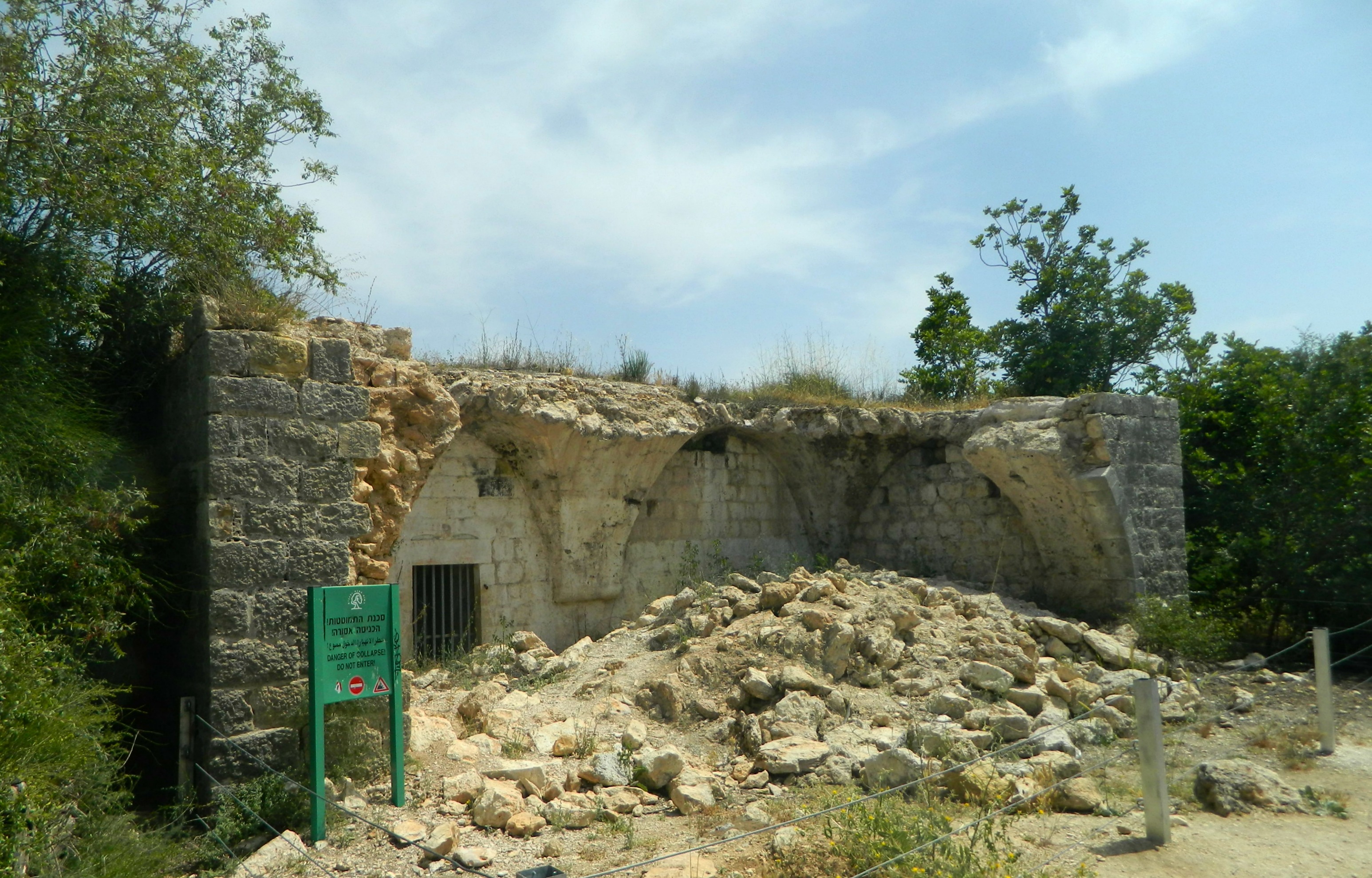
In the days predating the Declaration of, and subsequent War for, Independence, a tragic story happened over the Judean Hills. Unfortunately, even though our tour was guided, there were far too many attendees and thus I found it difficult to absorb all the information that was given. We walked along a dirt trail from stop to stop, accompanied by families of the fallen airmen, active-duty IAF personnel including pilots and other interested groups of individuals. We did chance upon these interesting ruins, of which I know absolutely nothing.

Ruins in the area of Har HaTayassim

Ruins in the area of Har HaTayassim

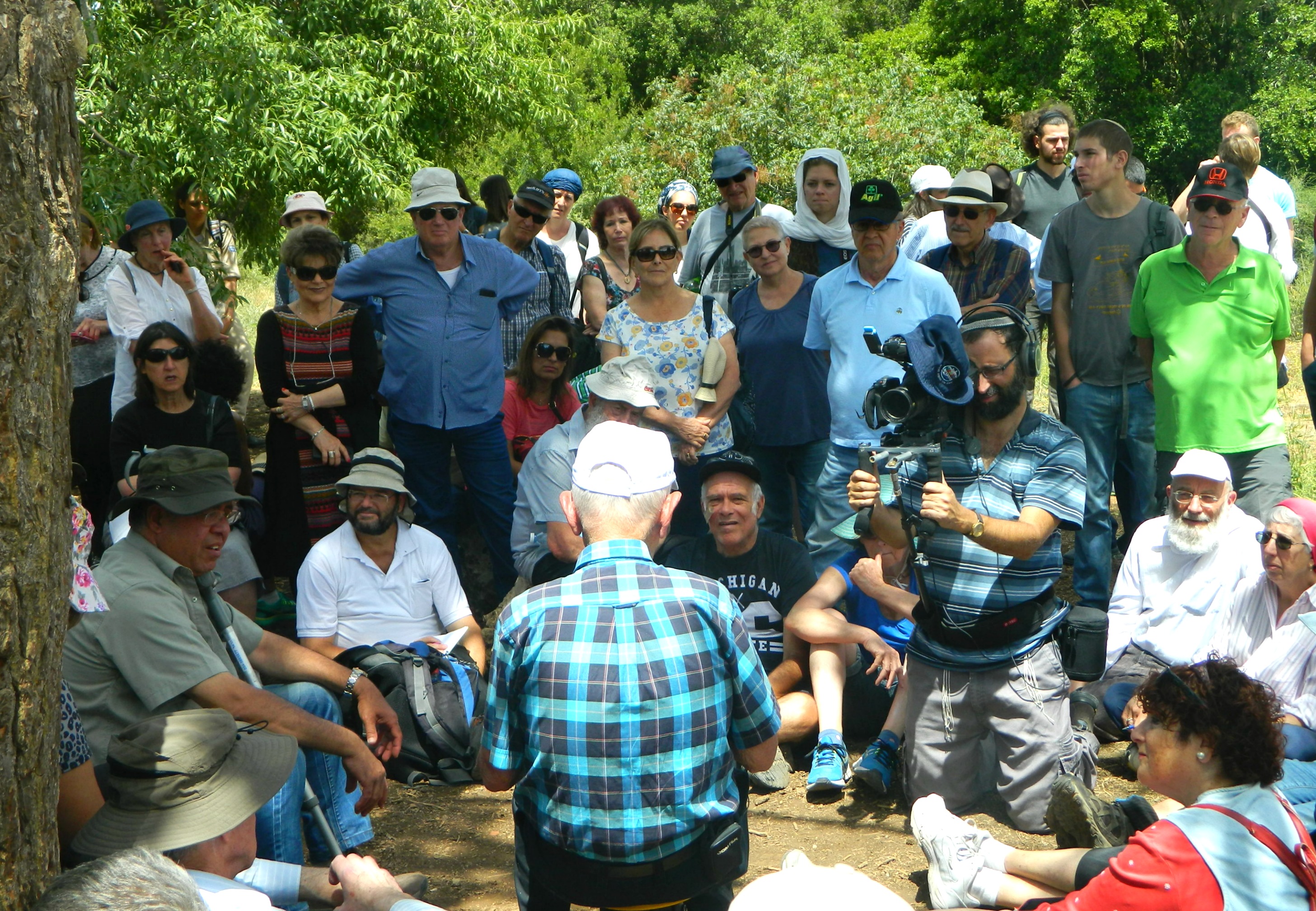
After passing a lovely lookout over the gentle, and nicely wooded, Judean foothills we reached a clearing and gather under a large tree. An elderly man, who turned out to be an old Palmach fighter, spoke of his experience in the years before and during the War for Independence.

Crowding around to hear an old Palmachnik speak

Crowding around to hear an old Palmachnik speak

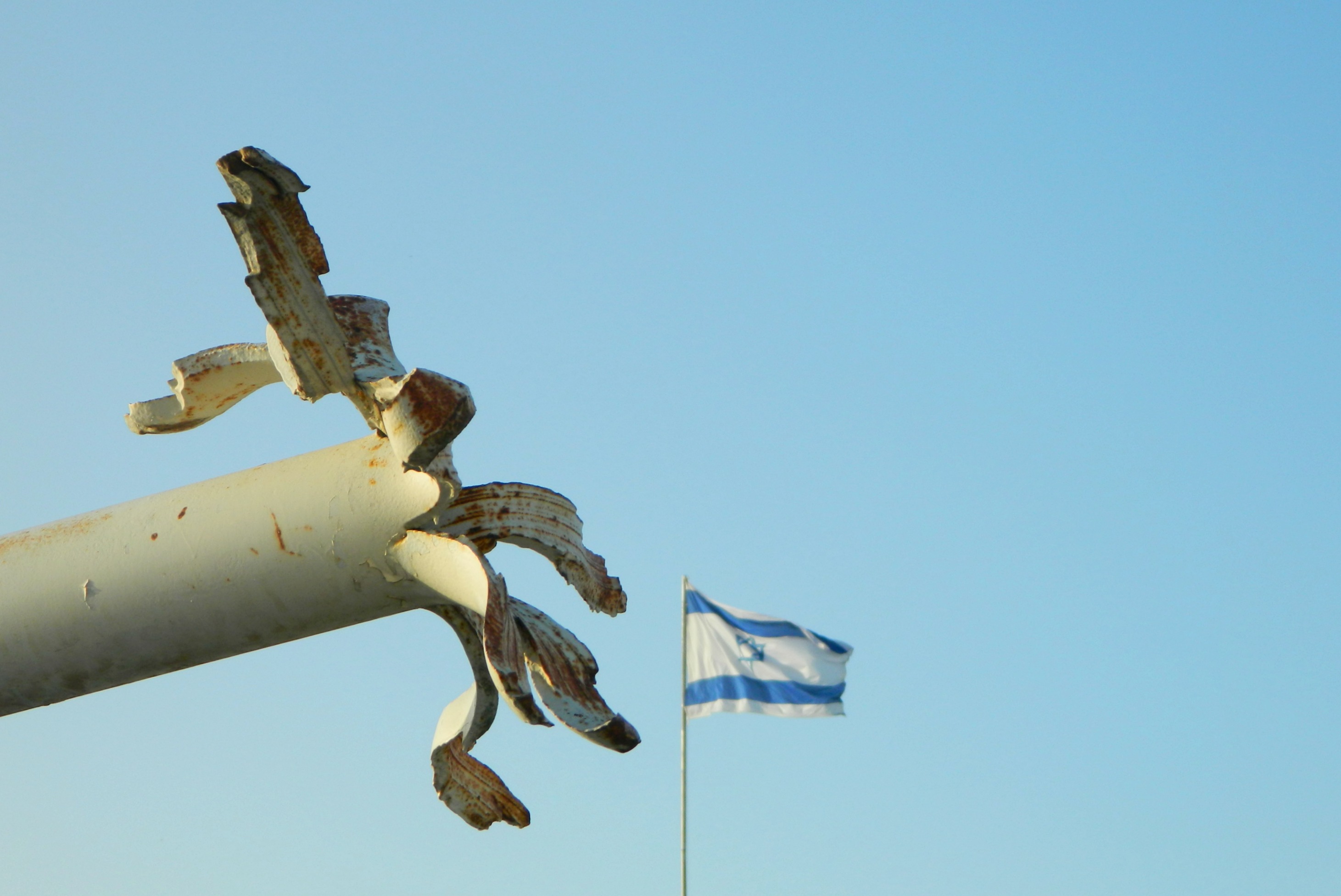
From there we departed and continued to the site of the memorial (pictured above), nestled in a small lot between houses. There we heard the story from family members of one of the fallen airmen, one of the women running the Mechina among them.

Splayed cannon with flag

Splayed cannon with flag

The next day we went to Latrun in the afternoon – to Yad L’Shiryon, a memorial and museum of the Armoured Corps. In the grounds outside the museum’s gates was a multi-faceted military exhibition with weapons, vehicles, technological gadgetry and more on display, complete with uniformed soldiers to give explanations and wow children. Entering the museum, I walked up and down the rows of armoured vehicles seeing specimens such as the Renault R-35, Marmon-Harrington Mk IVF, M48A3 Patton and, of course, the Israel Merkava tanks. Looping around the perimetre, I approached the impressive Tegart fort which crowns the hilltop and climbed the stairs to the top.

View of the exhibitions from atop the Tegart fort

View of the exhibitions from atop the Tegart fort

Leaving the fort, I encountered the memorial wall with the names of all the fallen Armoured Corps soldiers. I spent a few minutes there out of respect and then turned to leave. Passing a tour group it suddenly dawned on me that the names of the soldiers who were killed in the mortar attack on our field camp during Operation Protective Edge in 2014 were probably on that wall (for the war story see HERE). I scoured the most recent names and my eyes fell upon their names listed one after the next; Meidan, Niran and Adi. A grim feeling set in which lasted the rest of the day, bringing personal meaning to the bitter purpose of Yom HaZikaron which was to start at sundown. We slowly made our way to the outdoor theatre where the large memorial ceremony was to take place and found seats next to the booths where live translations were to be given in a multitude of languages.

The ceremony begins

The ceremony begins

The evening began with a military honour guard mounting the stage in preparation for the Yom HaZikaron siren. Next, the mother of Ezra Schwartz (a American teenage volunteer who was killed by a terrorist) went up and lit the memorial torch.

Torch lighting

Torch lighting

Following that, politician and chairman of the Jewish Agency Natan Sharansky gave a short speech about being a gulag prisoner in Siberia and finding hope in the story of Yoni Netanyahu, brother of the Israeli Prime Minister who was killed in a commando raid in Entebbe, Uganda. The current number of fallen IDF soldiers was then announced – 23,447. Wreathes were then laid by various dignitaries and guests and then the Yizkor prayer was said.

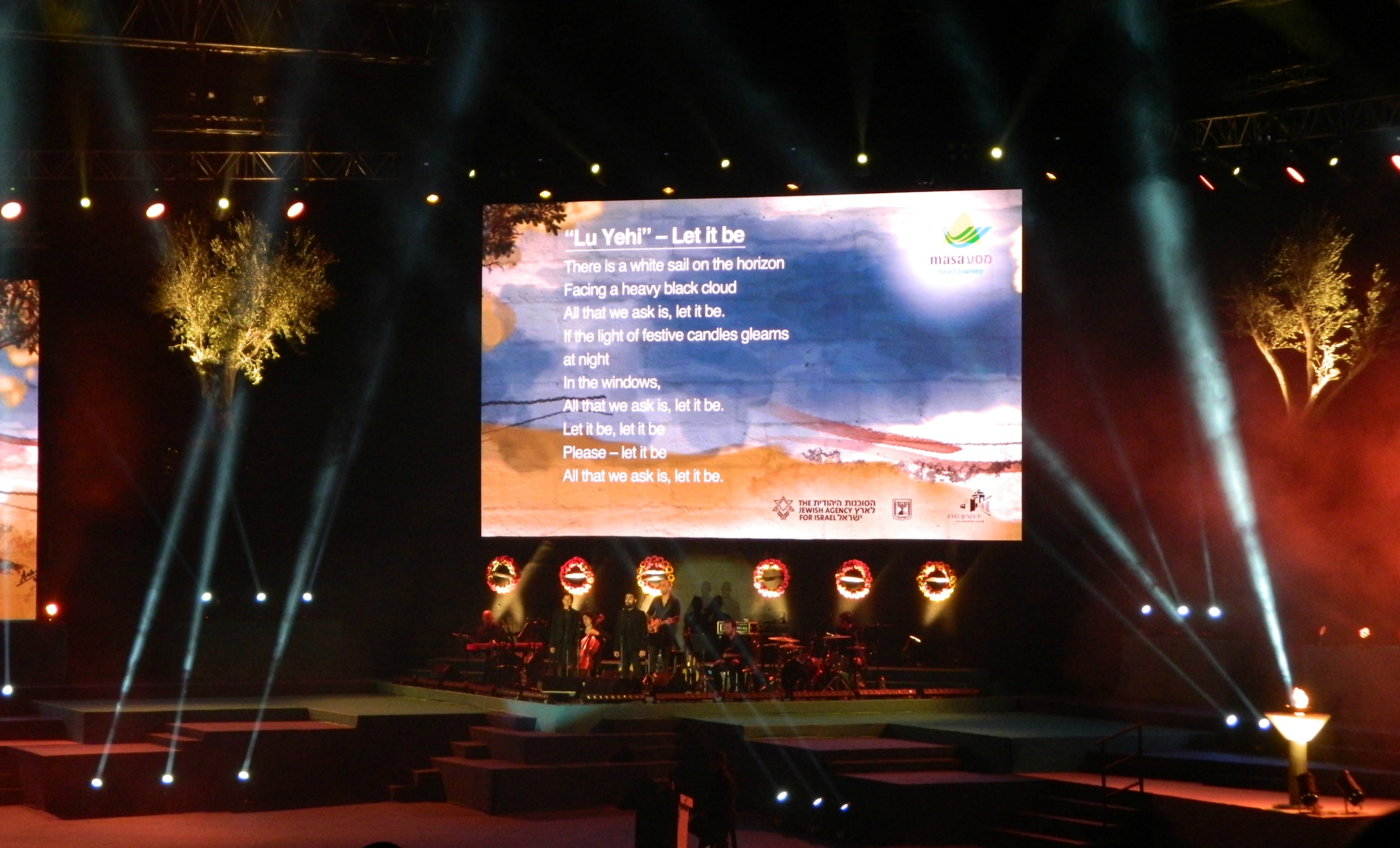
''Lu Yehi'' with the wreathes

”Lu Yehi” with the wreathes

The ceremony highlighted six individual stories of fallen soldiers (plus Ezra Schwartz) with speeches given by family members and then a song played by the band on stage. There was one particularly interesting story of a Sgt Yohan Zarbiv where the photo of him was the last one taken, his camera being mostly destroyed in an explosion several hours later while on duty in Lebanon. Another sad testimony was that of two brothers who both fell in battle, one in 1998 and one in 2010 – the emotionable song “Katonti” by Yonaton Razel was then played. The evening ended with a summary of the legacies of those who fell and the crowd then dispersed in relative silence, affected emotionally by the displays of bitter loss and mourning. Our group gathered around and returned to our bus for the ride back to the university, the end of a thought-provoking evening.

Yarkon National Park

In Central Israel, Israel on July 5, 2015 at 4:53 AM

Following my visit to Migdal Afeq (Mirabel) and then Tel Afeq (Antipatris), I continued on to the Yarkon National Park – the source of the Yarkon River. Being that Tel Afeq is a part of this park, I was able to just slip out the back gate and walk through a field to visit the Yarkon section. Parallel to the trail is a canal which helps direct spring water to the start of the Yarkon, which eventually drains into the Mediterranean Sea some 28 kilometres (17 miles) downstream, at the northern end of Tel Aviv proper.

Map of Tel Afeq (Antipatris) and Yarkon National Park

Map of Tel Afeq (Antipatris) and Yarkon National Park

Along the way I stopped at the water lily ponds where various fish, including catfish, and waterfowl live – the one egret I saw flew off when I got too close. Camera ever-ready, I also scoured the ponds for coypu and mongooses along the water’s edge, but didn’t see any.

Fish in a water lily pond

Fish in a water lily pond

After the lily ponds is the industrial Yarkon pumping station of the Mekorot water company, which has a visitors centre open for groups (free). Supplying the whole Mercaz area of the country with water, the bulk of the Yarkon’s water discharge goes to the pipelines for agricultural and domestic consumption. Only a surprising 0.2% of the springs’ water flows into the Yarkon River – from a total of 200 million cubic metres of water a year.

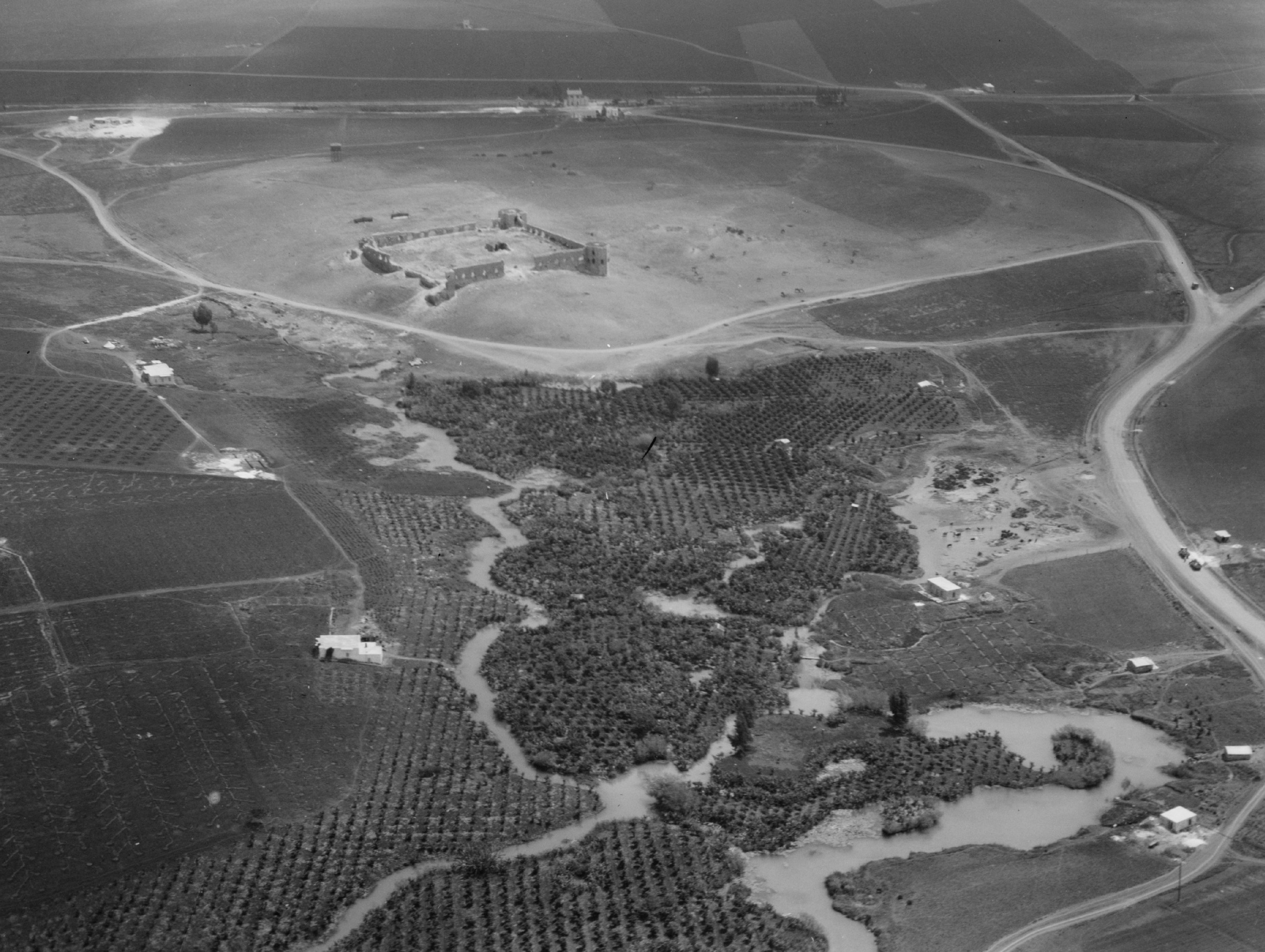
The Yarkon springs with Tel Afeq from the early to mid-1900's (photo: Library of Congress)

The Yarkon springs with Tel Afeq from the early to mid-1900’s (photo: Library of Congress)

The water from the Jordan River, which originates in the Upper Galilee’s springs and the annual winter runoff from the mountains (especially Mount Hermon), flows into the Kinneret (Sea of Galilee) which acts as a natural reservoir. A percentage of that water is then pumped up at the Sapir Pumping Station not far from Capernaum, and then sent along its south-bound path via pressure pipes and the Jordan Canal. Passing several reservoirs, pumping and filtration stations and canals, the water then makes its way to the Yarkon pumping station where the waters are mixed and sent to either the Tel Aviv area or further south to provide the Negev with water. The whole infrastructure is very interesting and was an incredible undertaking and learning all about this actually inspired me to read up on aquifers and water sustainability on my train ride home.

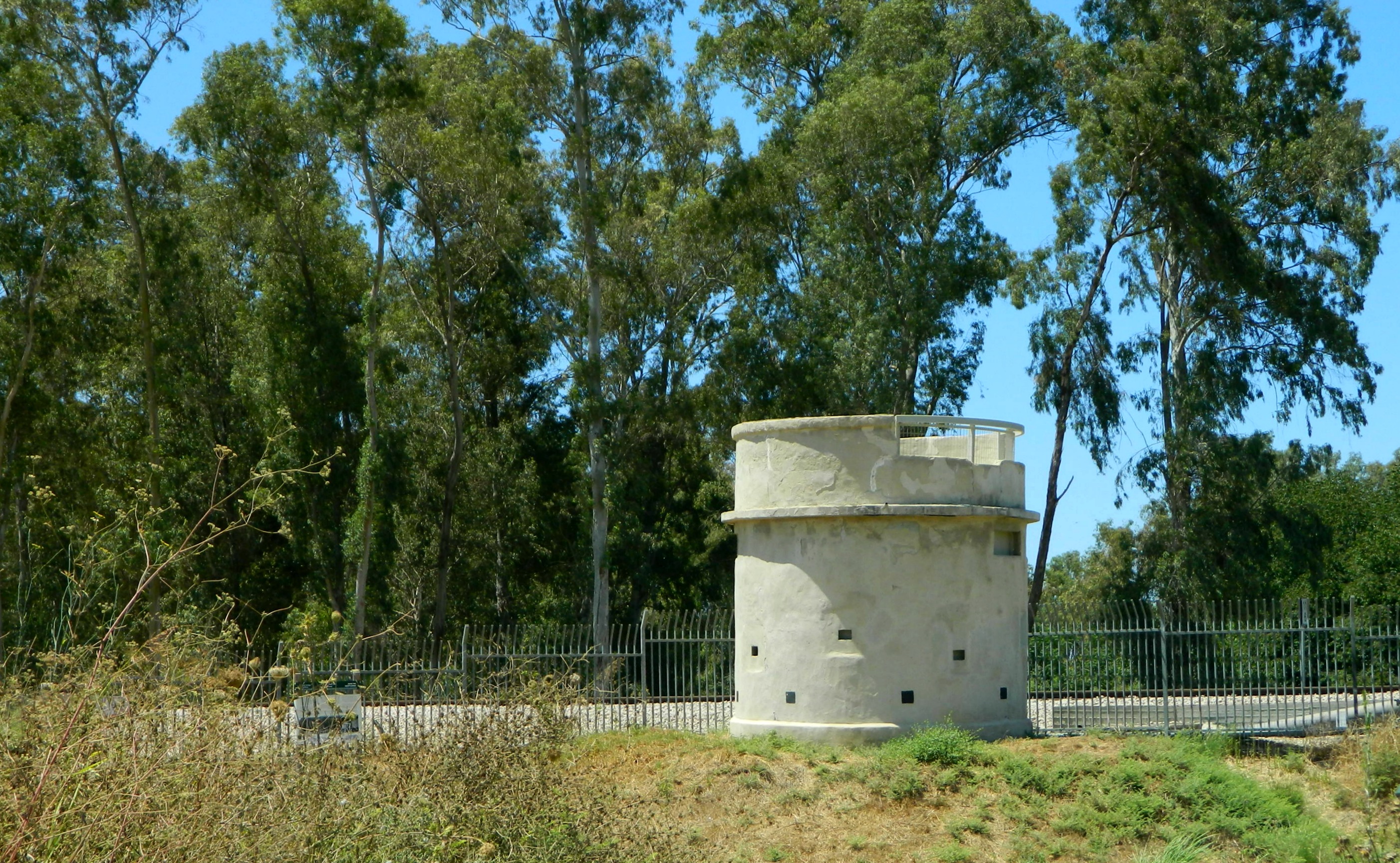
British pillbox

British pillbox

Just beyond the pumping station is the back entrance to the Yarkon park, bordering the south side by still-operational train tracks, with the trail passing under an old bridge. Built in the early 1920’s, the railroad was an important regional development, helping the farmers of nearby Petach Tikva to send citrus harvests to Yafo (Jaffa) for export. In the mid to late 1930’s the British were forced to build a pillbox to guard over the tracks and the bridge from Arab attacks. Today the pillbox is vacant, but the trains thundering by were numerable to say the least.

Passenger train crossing the bridge

Passenger train crossing the bridge

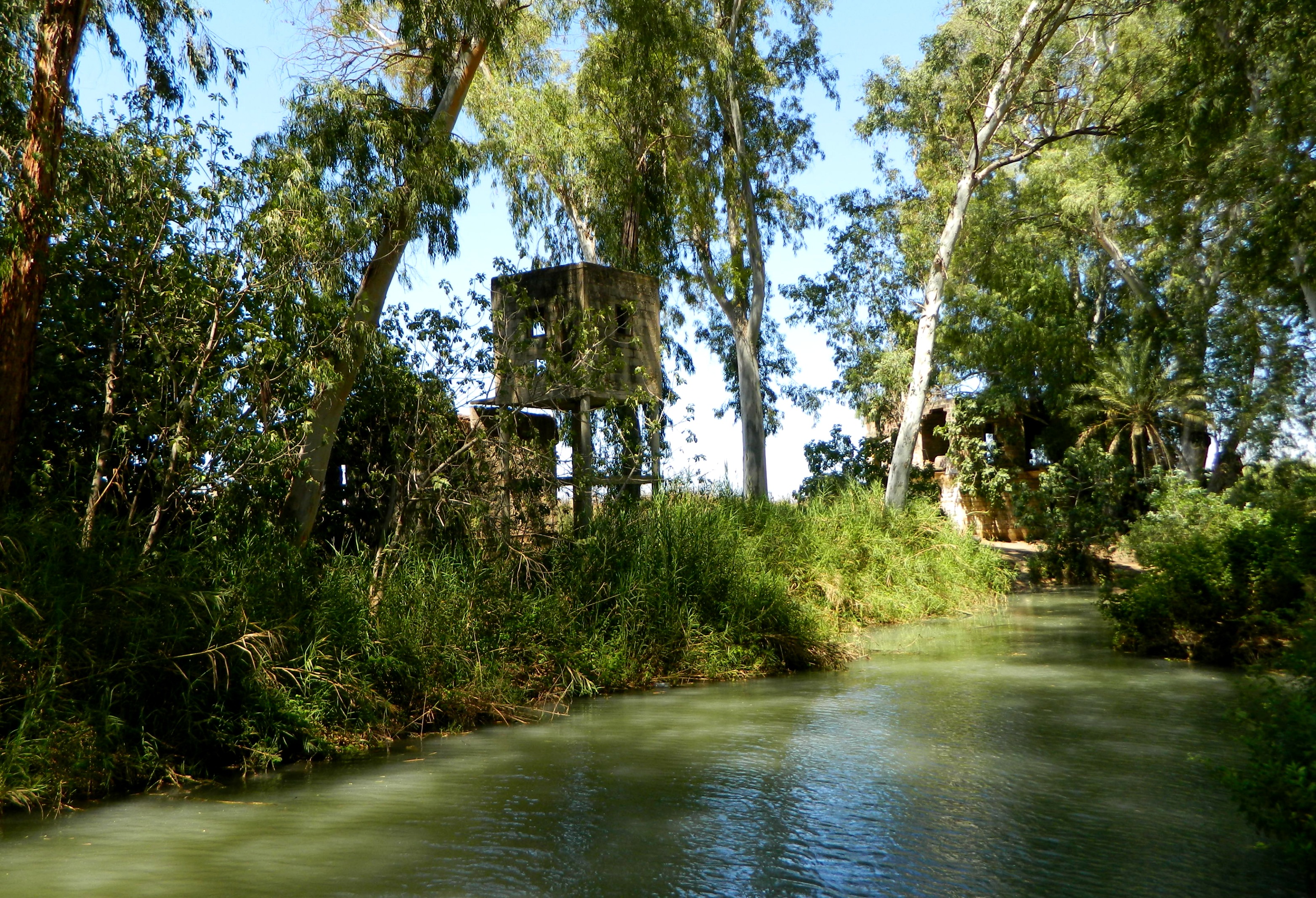
Entering the Yarkon section, I began by walking along the fledgling river and then laid down for a spell to read the park pamphlet I had received earlier and to enjoy the quiet nature resuming life all around me. I scoured the tall eucalyptus and bald cypress trees overhead, hoping to spot a sleeping owl (without success) and then turned my attention to a fish mulching about in the pondweed and hornwort. Following the meandering river, I next came upon two ruins from the Ottoman era along the river bank – a house and a pump structure.

Ottoman house and pump structure along the river

Ottoman house and pump structure along the river

I then looped around the northern end of the park and temporarily left the park via the “Romantic Trail” to go see the Concrete House which was the very first building in Israel to be built of reinforced concrete. Walking on a dirt path next to the Baptist Village I came upon the remains of a concrete house with rebar clearly visible. I naturally assumed that this was the Concrete House marked on the map, took pictures and returned to the park. However, I had stopped at the wrong place, the real Concrete House being some 700 metres (2,300 feet) further along the trail – 0h well. Back at the park, I next visited the al Mir flour mill, one of the largest old mills in the country which operated thirteen pairs of millstones during the Ottoman era.

The al Mir flour mill

The al Mir flour mill

With a quick stop at the Yarkon bleak pool, I was unable to find any of the endangered Yarkon bleak fish in the murky waters and so continued on to the last of the park’s sites: the Qa’sar farm. The farm was originally owned by an Egyptian man in the early to mid-1800’s and then sold to Salim Qa’sar of Jaffa who, in turn, sold it to the Baron Rothschild in 1895 for the benefit of Jewish farmers. Seeing just four stone walls remaining, I made friends with three nice donkeys while I waited for a ride from a gracious park worker to the nearby train station.

Friendly donkeys at the Qa'sar farm

Friendly donkeys at the Qa’sar farm

And that is the end of my exciting trip to some very interesting sites in the centre of the country, a region I hardly explore. Next adventure here I come!

Tel Afeq (Antipatris)

In Central Israel, Israel on June 28, 2015 at 4:45 AM

After leaving the site of my previous blog post, Migdal Afeq (Mirabel), I found myself at the bus stop on the main road just outside of Rosh HaAyin, heading for my next location: Tel Afeq (Antipatris). The summer heat was rather getting to me so I made a quick decision and flagged down a taxi to take me to the nearby national park of Tel Afeq.

Binar Bashi fortress at Tel Afeq

Binar Bashi fortress at Tel Afeq

Dropping me off at the picnic areas, I took the shaded tables as an opportunity to dip into the pastries I had bought earlier that morning in Ramat Gan. It was then that I noticed that my third destination of the day, Yarkon National Park, was actually considered a joined park with Tel Afeq and that the two of them were somewhat connected by a trail through some fields. And so I started my explorations at the dry rain pond and headed for the Roman cardo.

Antipatris' cardo

Antipatris’ cardo

Along the cardo, an ancient main street, I came upon an odeum (a small Greek and Roman theatre building) and then a memorial for the 41 Jewish lives lost to the Alexandroni Brigade is offensive attacks on the Iraqi forces entrenched at both Tel Afeq and the Migdal Afeq area in 1948.

Roman odeum

Roman odeum

Historical remains on the tel extend back to the Chalcolithic period with notable ruins from the Egyptian/Canaanite times and the Roman era. Biblical Aphek is mentioned as well, having been the location of the Philistine camp during two disastrous battles with the Israelites, resulting in the Philistines capturing the Aron (or, Holy Ark of the Covenant). In the Greek period a city by the name of Pagae (“Springs”) was founded, just one of many in a historical timeline, all coveting control over the important Via Maris trade route. Herod created the city of Antipatris, named after his father, during his rule of the Holy Land in the Roman era. Antipatris as he knew it, filled with Jews, was destroyed by Vespasian during the Great Revolt some fifty-odd years later.

Binar Bashi seen from the air in the early 1930's (photo: Library of Congress)

Binar Bashi seen from the air in the early 1930’s (photo: Library of Congress)

Next along the cardo is the Roman forum and then the crown of the tel – the impressive Ottoman fortress known as Binar Bashi.

The southwest tower

The southwest tower

Built between 1572 and 1574, Binar Bashi was the first really important development on Tel Afeq since the existence of Antipatris. During the Crusader period, the land was part of a gift parceled out to Balian of Ibelin by King Fulk of Jerusalem, with castle Mirabel being the regional stronghold. Tel Afeq was reduced to a district estate for the knights of the House of Ibelin. Binar Bashi (originally called Pinar Basi in Turkish, meaning “Head of the Springs”) was a fortified khan commissioned by the son of Suleiman the Magnificent.

Turkish soldier watching me from the window

Turkish soldier watching me from the window

I was rather impressed with the standing of the fortress, especially the octagonal southwest corner tower. As I reached the northwest tower I spotted a raptor sitting on the ruined wall a little ways away. The bird you see below is none other than a steppe buzzard and minutes later he took off and was immediately heckled midair by some crows. Thank you master ornithologist Yoav Perlman for identification, for I am hopeless at Old World raptors.

Steppe buzzard

Steppe buzzard

Returning to the stony ruins, I walked around the excavated and restored remains of what once was an Egyptian governor’s palace lording over the Canaanite royal city after the Egyptian conquest of the Holy Land (which culminated in their victory at Tel Megiddo). The size and quantity of Egyptian-era winepresses at Tel Afeq suggests trade significance for importing wine to the Nile Delta area.

Egyptian governor's palace

Egyptian governor’s palace

Leaving the fortress and its blisteringly hot and mostly unshaded courtyard, I then walked over to the British pumping station complex. Pockmarked by bullet holes in the concrete walls, this building was used by Iraqi soldiers, and subsequent to local victory, by Israeli troops during the War for Independence. Built in the 1930’s, this pumping station was used to provide water for Jerusalem, as well as other local cities, sending the water to the water station in Latrun. With the Yarkon springs being the second most prosperous source of fresh water (after the springs at Tel Dan in the north), the British tapped into it and so do we – the discharge rate being some 200 million cubic metres a year.

British water pumping station

British water pumping station

Looping around the water station, I walked along the slightly overflooded rain pool and enjoyed myself photographing the incredible lush view and the plentiful waterfowls.

Spying on a grey heron through the plants

Spying on a grey heron through the plants

Ready to move on to the next destination, I said farewell to the pied kingfisher near the back gate of the park and began my walk through the adjacent fields alongside the springs and streams at the source of the Yarkon.

Pied kingfisher

Pied kingfisher

Next stop: Yarkon National Park!

Migdal Afeq (Mirabel)

In Central Israel, Israel on June 21, 2015 at 4:18 AM

This past Thursday I went on a three-pronged trip while down in the centre of the country. I began my adventure in Ramat Gan, just outside of Tel Aviv, buying pastries and an iced coffee before hopping on a bus out of the city. I then took another bus which dropped me off near the entrance of Rosh HaAyin, a city bordering the Shomron (Samaria), where I walked a little ways through a construction site, heading for the Crusader castle of Mirabel.

Migdal Afeq (Mirabel)

Migdal Afeq (Mirabel)

Known as either Migdal Afeq or Migdal Tzedek nowadays, the national park is named for either the nearby Biblical Aphek or the Bedouin sheikh al-Sadiq, respectively. I climbed the hill and approached the castle from the south, walking the dirt road. This aerial photo of the castle was taken by Biblewalks, and they graciously allowed me to use it in my post (see also the aerial video tour HERE):

Migdal Afeq from above (photo: Biblewalks)

Migdal Afeq from above (photo: Biblewalks)

I had heard from a friend that the site was under construction and closed to visitors, and hoped that there would be nobody there when I arrived, but, there was, in fact, a lone man holding watch over the ruins.

Inside the castle courtyard

Inside the castle courtyard

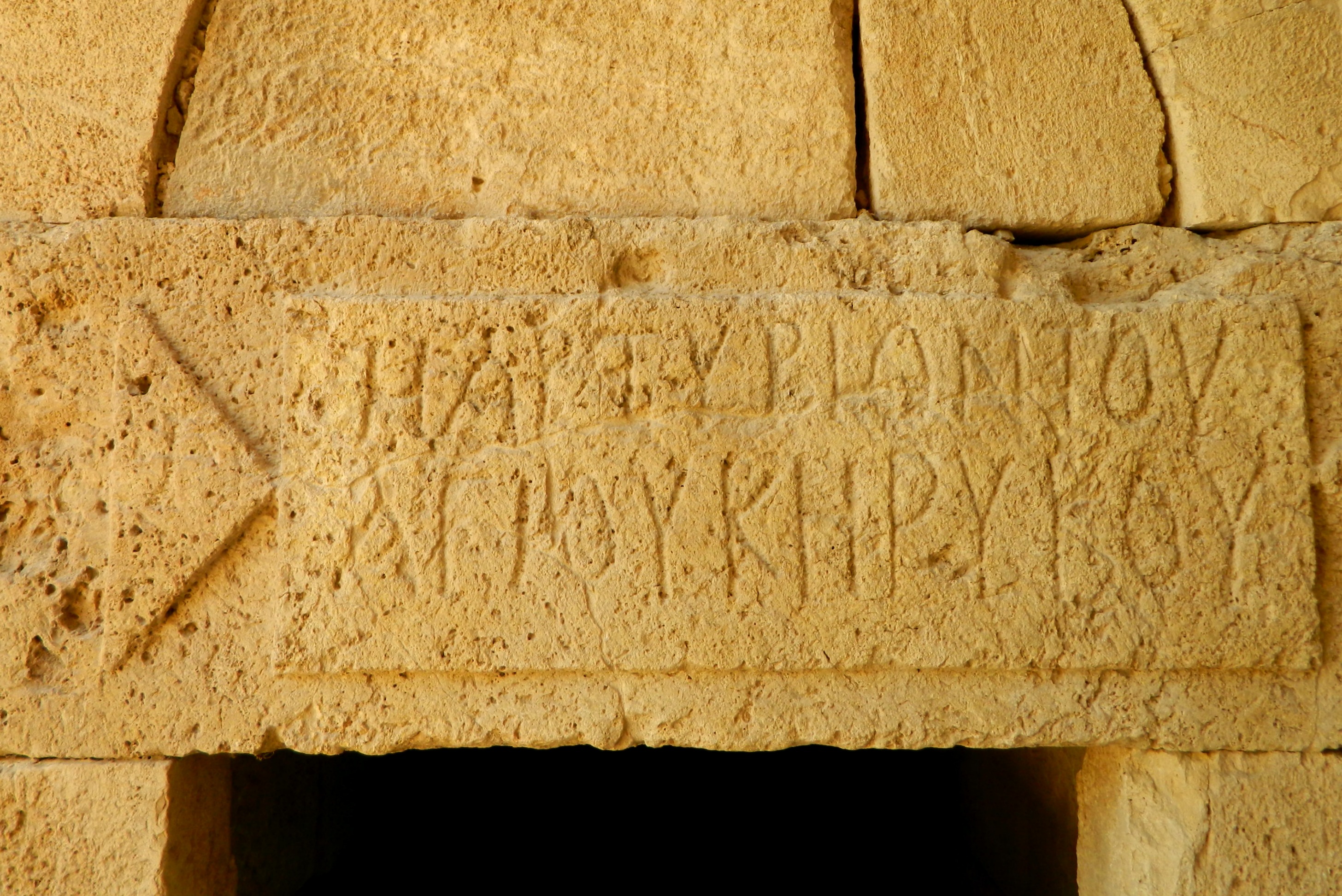
I passed the scaffolding-decorated walls and entered the castle’s interior. The following conversation was short and successful with the man returning to sit in a doorway, leaving me to explore Mirabel unhindered. The first thing to really catch my eye was a large lintel stone inscribed with Greek lettering delineating a Byzantine church.

Greek-inscribed lintel

Greek-inscribed lintel

Migdal Afeq served an important role in protecting the ancient trade route from Egypt to Syria, known as the Via Maris. However, whatever stood at Migdal Afeq in those times was only ever a satellite to the much more important Tel Afeq, just a few kilometres to the northwest (although not to be confused with Tel Afeq at Ein Afeq between Akko and Haifa). During the Roman period a Jewish village existed, and during the Great Revolt, was destroyed by Cestius Gallus and the 12th Legion.

Israeli flag flying proud

Israeli flag flying proud

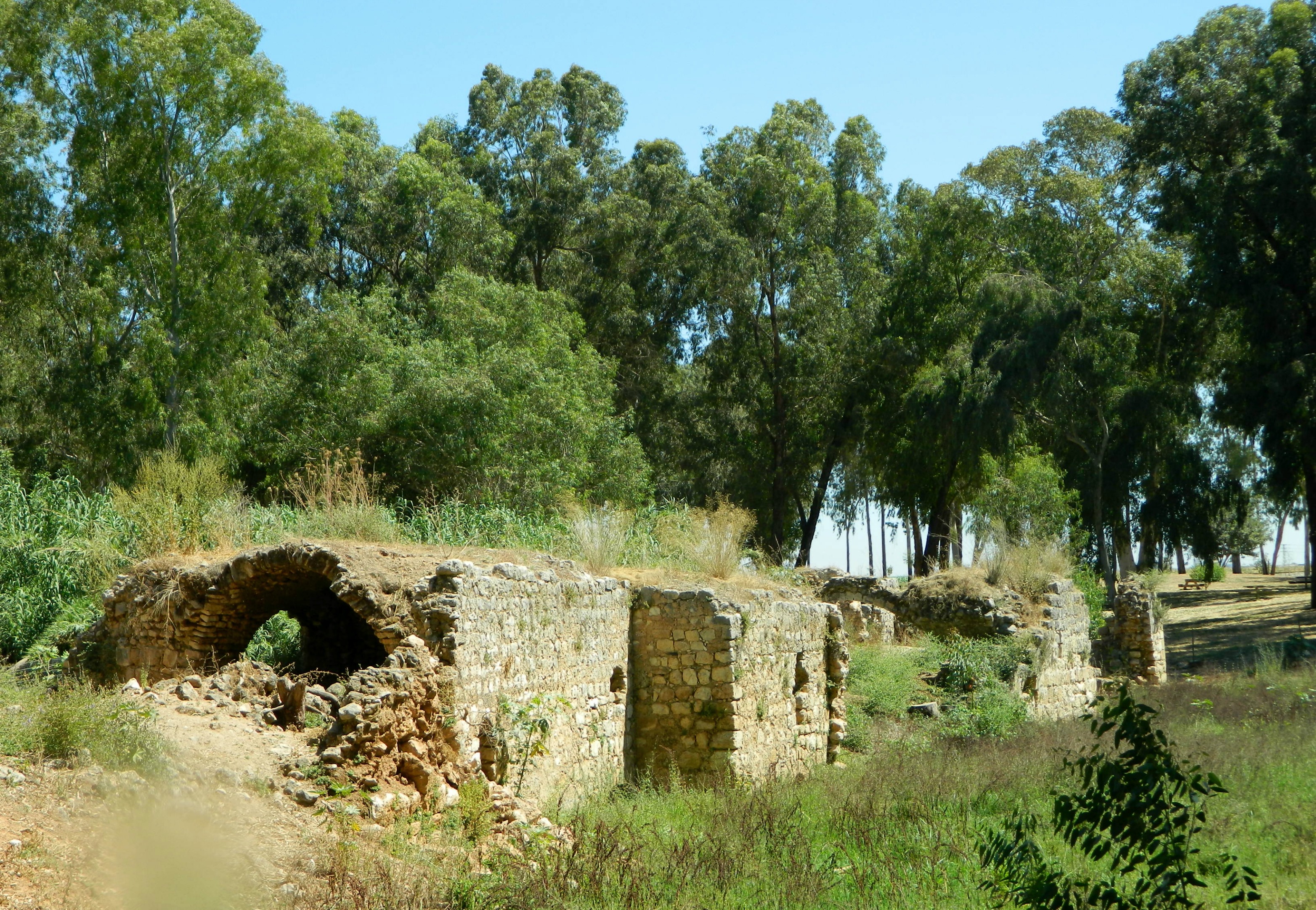
In Crusader times the castle known as Mirabel was constructed after the land was gifted to Balian of Ibelin, the founder of the Ibelin dynasty, by King Fulk of Jerusalem. Interestingly enough, Ibelin is just a corruption of the ancient Jewish Yavne and to this day there is an Arab village near Haifa called I’billin and I wonder if it’s not named after the once-powerful Frankish family. Mirabel was captured by Saladin’s brother in 1187 and the castle was used by the Ayyubid forces until 1191 when Saladin ordered the castle destroyed in preparation for the Third Crusade. Most of the ruins seen today were built by the Ottomans, although some parts (including the keep seen in the photo below) are original Crusader construction – identifiable by the larger ashlars used in building.

The Crusader keep flanked by arched Ottoman rooms

The Crusader keep flanked by arched Ottoman rooms

In the 1800’s, Bedouins settled around the fortress and called their village Majdal al-Sadiq, named after their leader whose domed tomb surrounded by other graves still stands on an adjacent hill.

Sheikh al-Sadiq's tomb

Sheikh al-Sadiq’s tomb

When I was finished exploring the site, being careful around the construction areas, I asked the watchman when he imagined the archaeologists would arrive. I waited around for a bit, taking the time to explore the outside of the castle, passing what seemed to be a water cistern just outside the castle wall. One interesting thing that I saw was this set of old lime kilns with an old quarry in the background. Apparently, the limestone quarried from here was used to build the white stoned-buildings of old Tel Aviv from the 1920’s through the 1940’s.

Old lime kilns with quarries in the background

Old lime kilns with quarries in the background

Returning to the castle’s interior, I greeted some arriving men only to find out that they were the construction crew and their foreman. Just blending in to the environment I was able to learn a little about the reconstruction process of ancient castles.

The healing process

The healing process

At last, I fretted over time lost waiting for the archaeologists to show so I left, headed for the second site on my day’s itinerary: Tel Afeq (Antipatris)

Weizmann Institute of Science

In Central Israel, Israel on December 7, 2014 at 4:22 AM

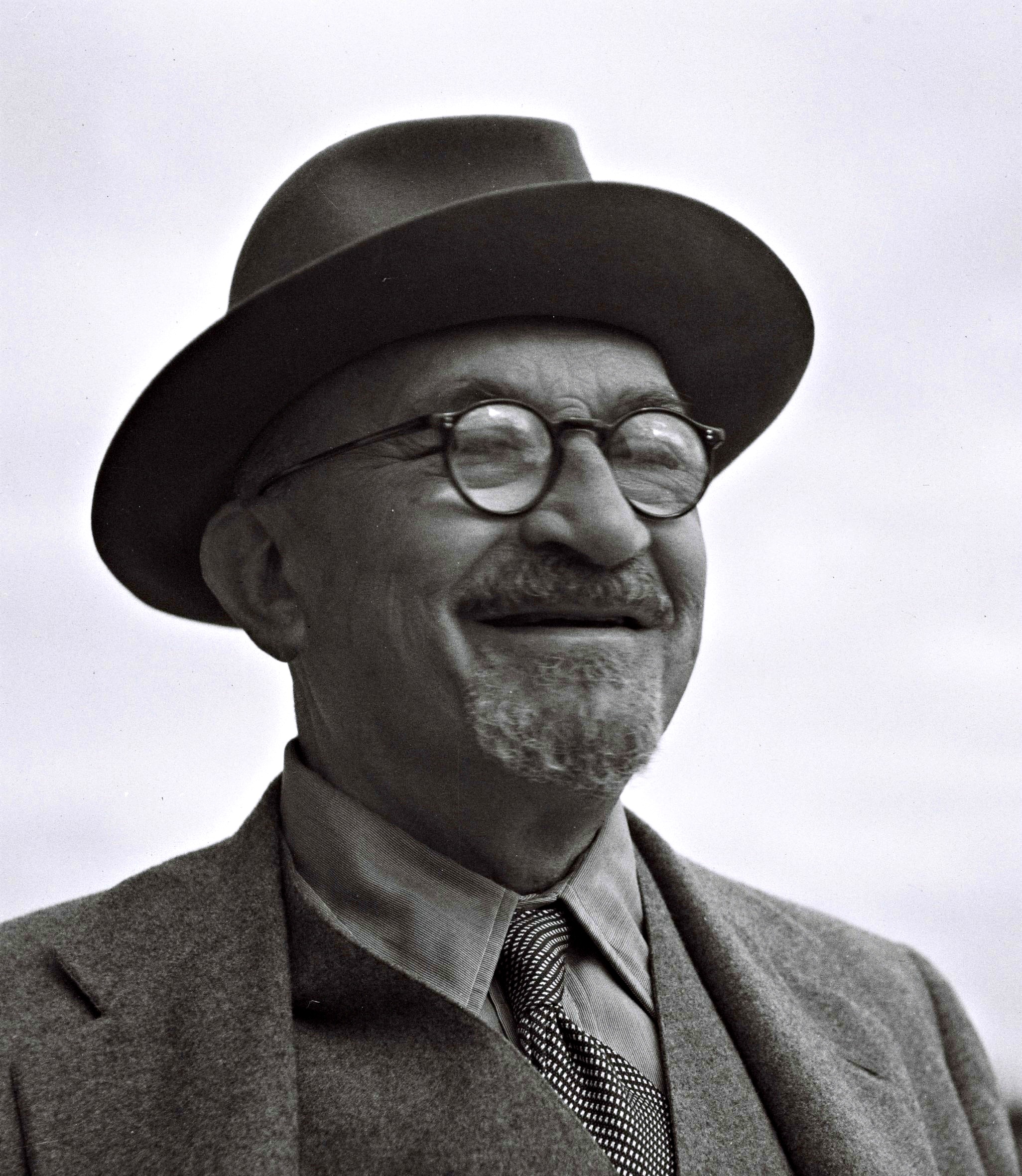
The day after visiting Mount Meron I took a bus and a train down to visit a friend in Rechovot. This friend, Levi Burrows, went to high school with me in Miami and invited me down to tour the Weizmann Institute of Science with him. I graciously accepted and met him at the institute’s gates under heavy rainfall. We sought shelter in his studio apartment before setting out to explore the interesting campus grounds. The Weizmann Institute of Science was established in 1934 by Dr Chaim Weizmann, a biochemist and statesman – the first president of Israel (1949-52).

Chaim Weizmann

Chaim Weizmann

Designed to be a light unto the nations, this institute was a breakthrough in the fledgling Israeli culture of academics. We started with the Levinson Visitor Centre with its maps, written guide and short video presentation about the institute and its scientific achievements. Maps in hand, we began our self-guided tour of the campus and stopped first at the Jubilee Plaza.

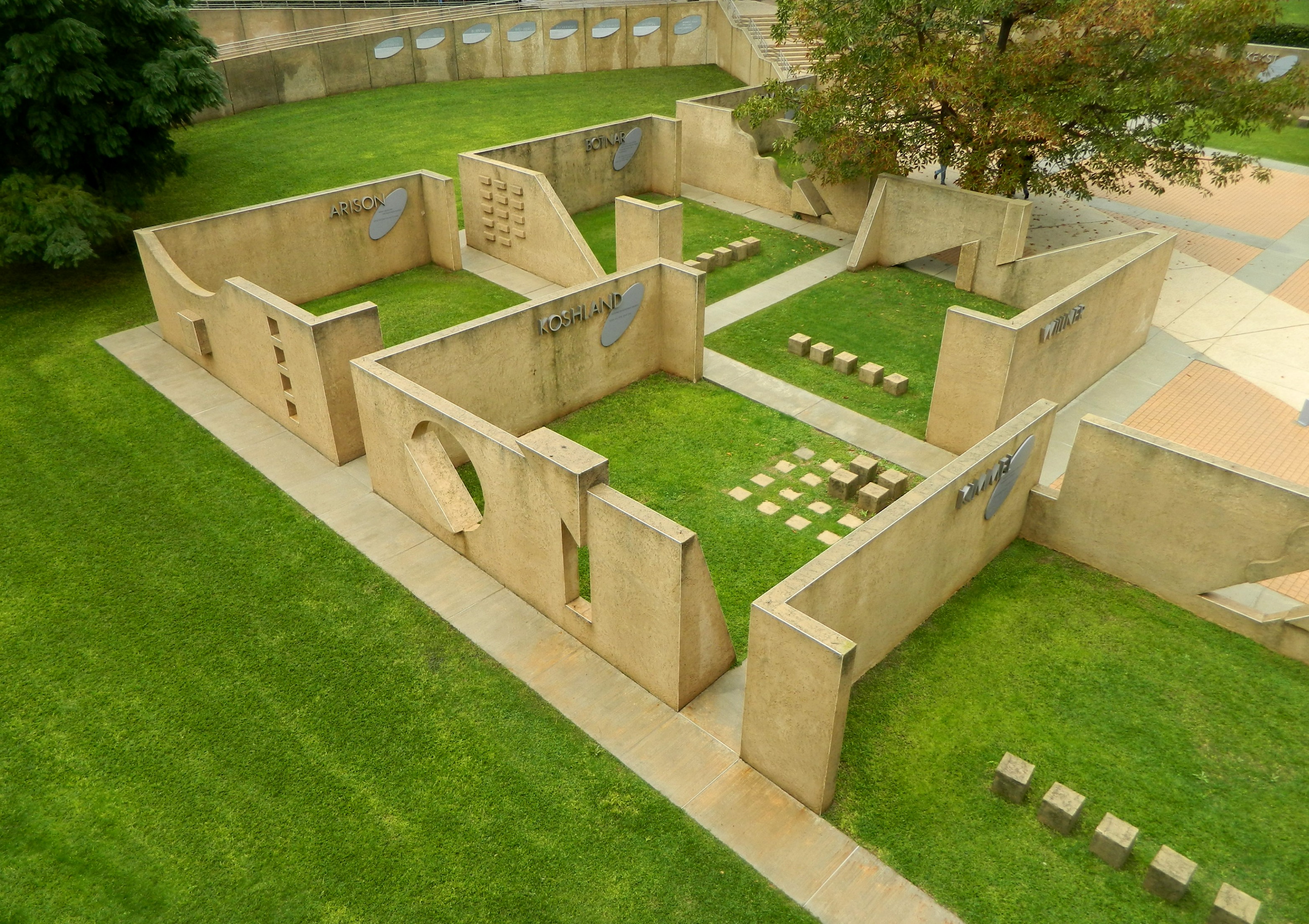
The Jubilee Plaza

The Jubilee Plaza

We took a moment to examine our location and the plaza’s geometric beauty before bee-lining towards the institute’s most iconic structure, the Koffler Accelerator – a particle accelerator for nuclear research.

Koffler Accelerator (photo: Wikipedia)

Koffler Accelerator (photo: Wikipedia)

Unfortunately, we were unable to gain entrance to climb to the top, despite the fact that the facility is currently inactive.

Artistic approach to the Koffler Accelerator

Artistic approach to the Koffler Accelerator

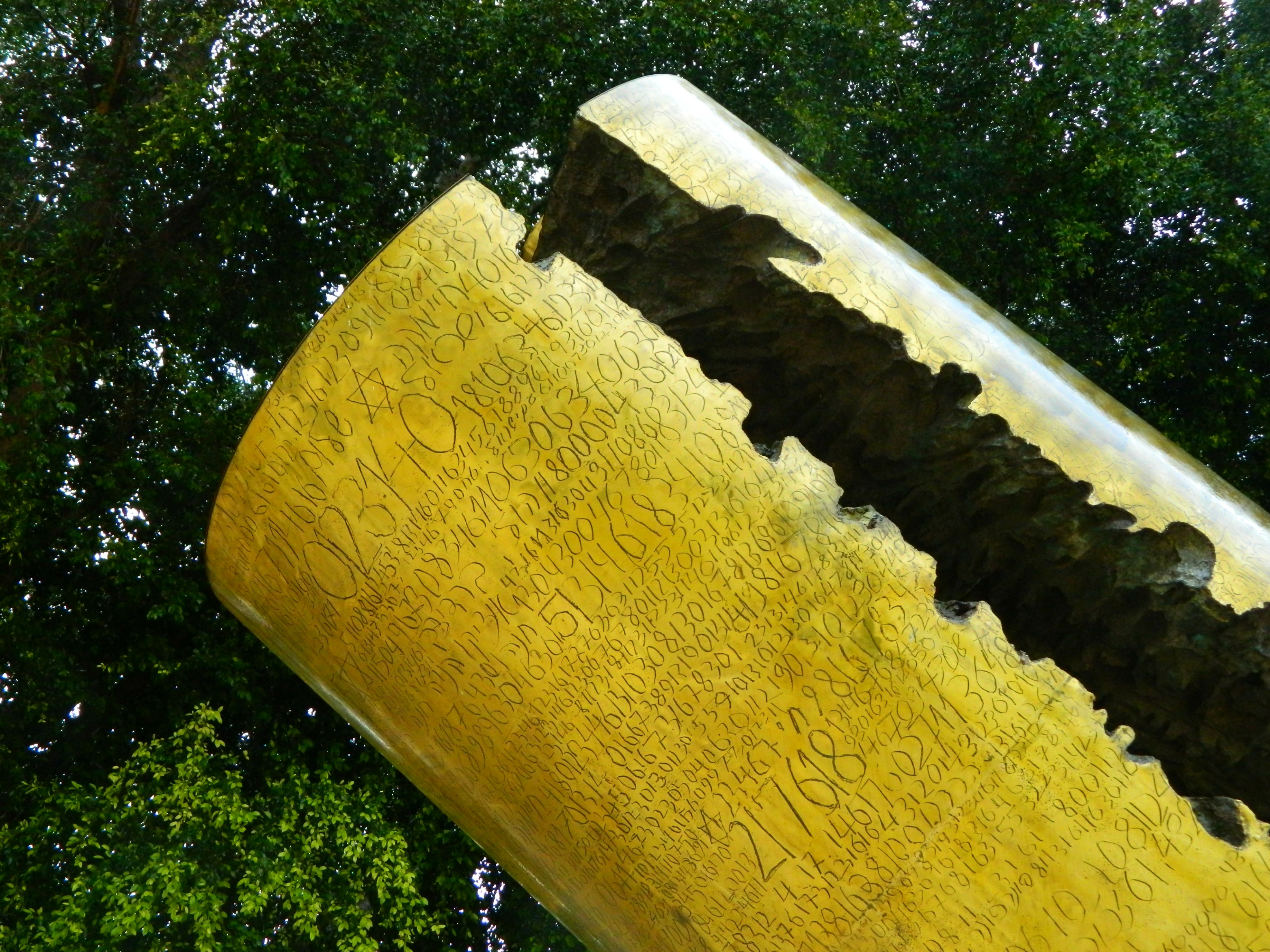
Moving on, we got caught in yet another downpour and took shelter at the plasma laboratory. There, standing beneath an awning with a nice view of countless helium gas balloons, we enjoyed a tough little grapefruit we had picked up just a few minutes prior. Not just filled with buildings and scientists, the campus also has an extensive tree collection, with ID numbers affixed to each trunk. Grapefruits seemed to be quite common, which nourished us on our exploratory tour. When the rain died down we headed for the quieter eastern side of the campus and came upon the interesting Memorial Plaza with its Holocaust memorial sculpture, and then the gardens of the Weizmann estate.

Holocaust memorial sculpture

Holocaust memorial sculpture

Walking the wet, meandering paths, we first encountered the grave of Chaim and Vera Weizmann. Chaim passed away at age 77 in 1952 and his wife Vera fourteen years later at age 84. Their tomb was specially designed as a cenotaph in memory of their son Flight Lt Michael Oser Weizmann who was shot down as an RAF fighter pilot during World War II and immortalised in a tombstone of missing soldiers.

Chaim and Vera Weizmann's grave

Chaim and Vera Weizmann’s grave

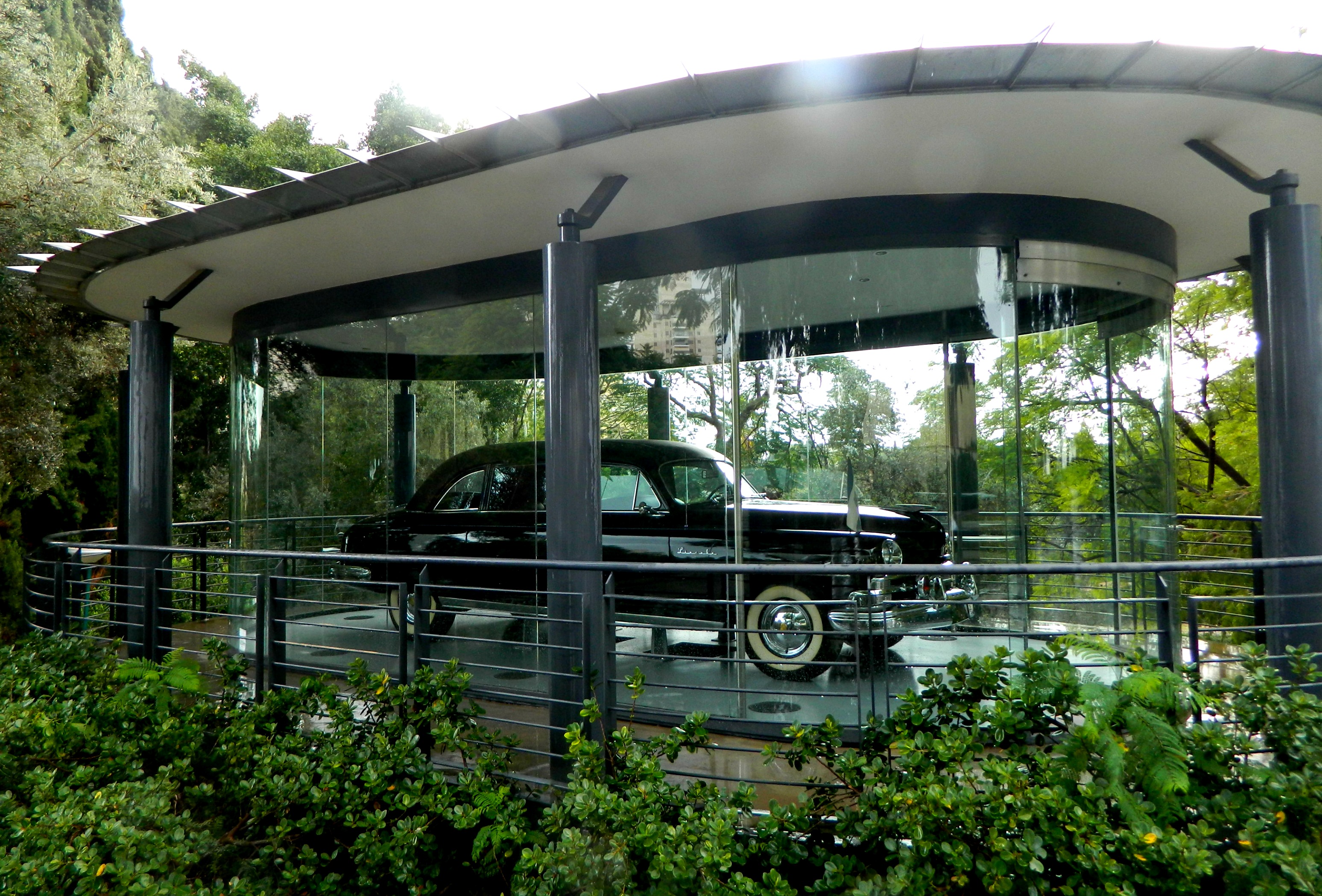
Just after the grave we found the Weizmann presidential car, a custom Lincoln Cosmopolitan sent as a gift from Henry Ford II in 1950.

Weizmann's custom Lincoln Cosmopolitan

Weizmann’s custom Lincoln Cosmopolitan

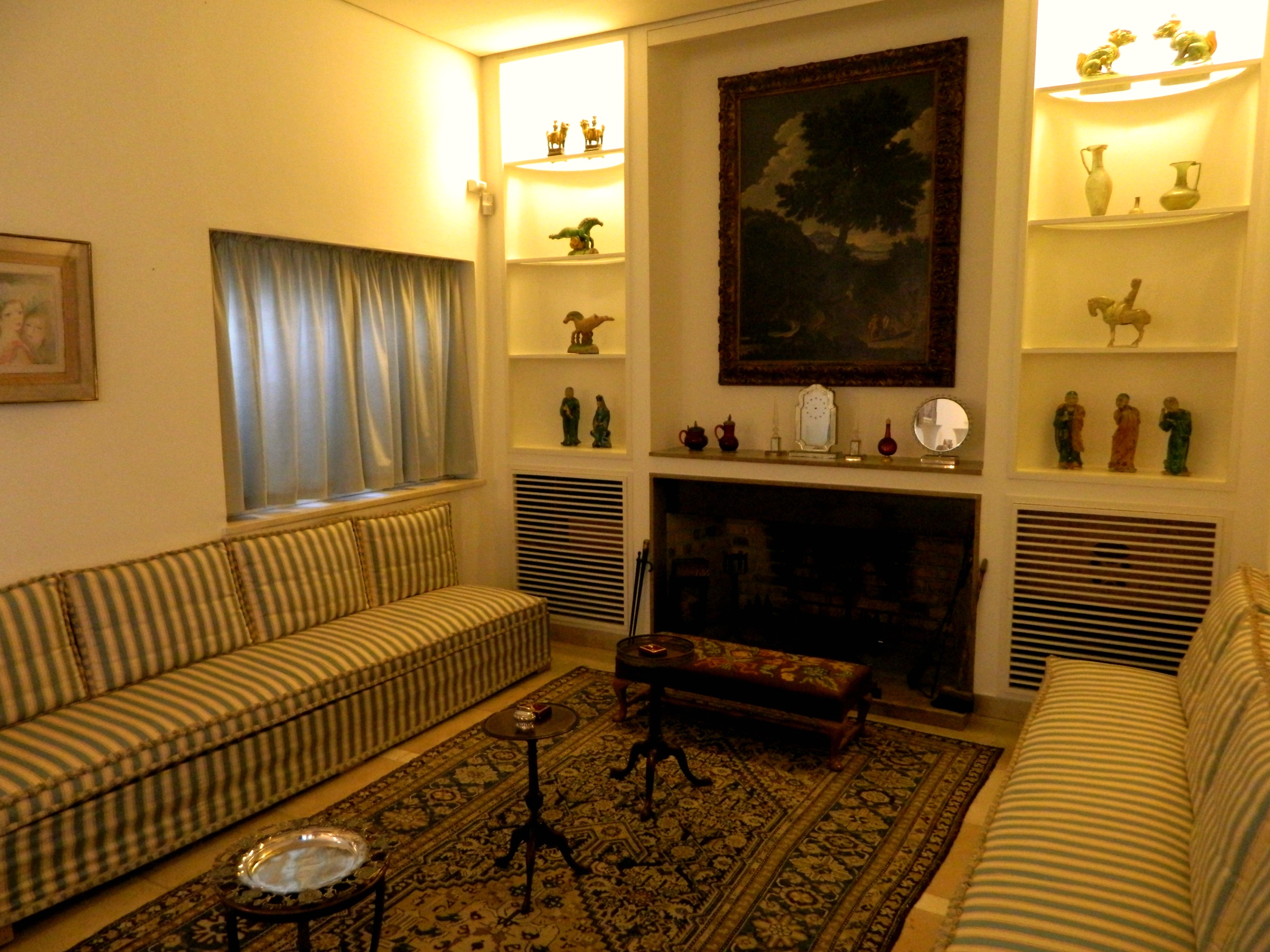
The rain began to come down again as we made a mad dash for the Weizmann House. Comfortably dry inside, we received our handheld audio guides and began the tour of the house, starting with the foyer. An architecturally unique house, designed by Erich Mendelsohn, there are several points of interest: the high porthole windows, the thick walls filled with cork and sawdust, and the prominent circular staircase.

Inside the Weizmann House

Inside the Weizmann House

After exploring the house we sat down to watch a 10-minute summary of Chaim Weizmann’s life and then headed out to continue our tour of the campus. We made an unnecessarily long loop around the edge of the grounds and stopped to pick another grapefruit.

Levi picking a grapefruit

Levi picking a grapefruit

We ate the grapefruit as we dodged scattered rain showers and talked about important things. At last, after a quick look at the heliostats field and a large sundial we made it to our next major destination, the Clore Garden of Science. Due to the unfavourable visiting conditions (i.e rain), we received a small discount and entered the outdoor science museum. Somewhat similar to Madatech in Haifa, built in the historic Technion building, this hands-on science museum is actually the only one of its kind in the world, with nearly eighty exhibits.

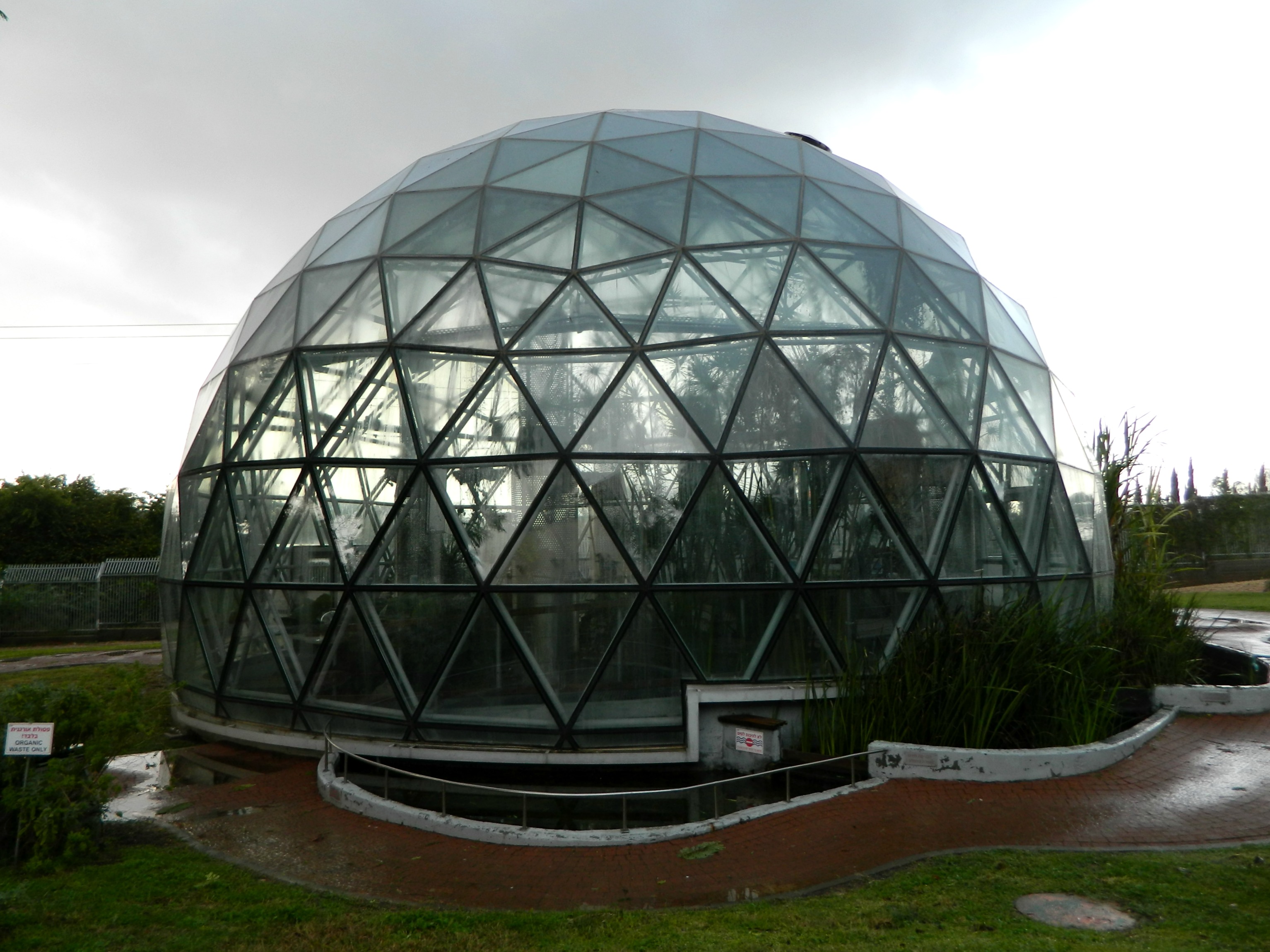
EcoSphere

EcoSphere

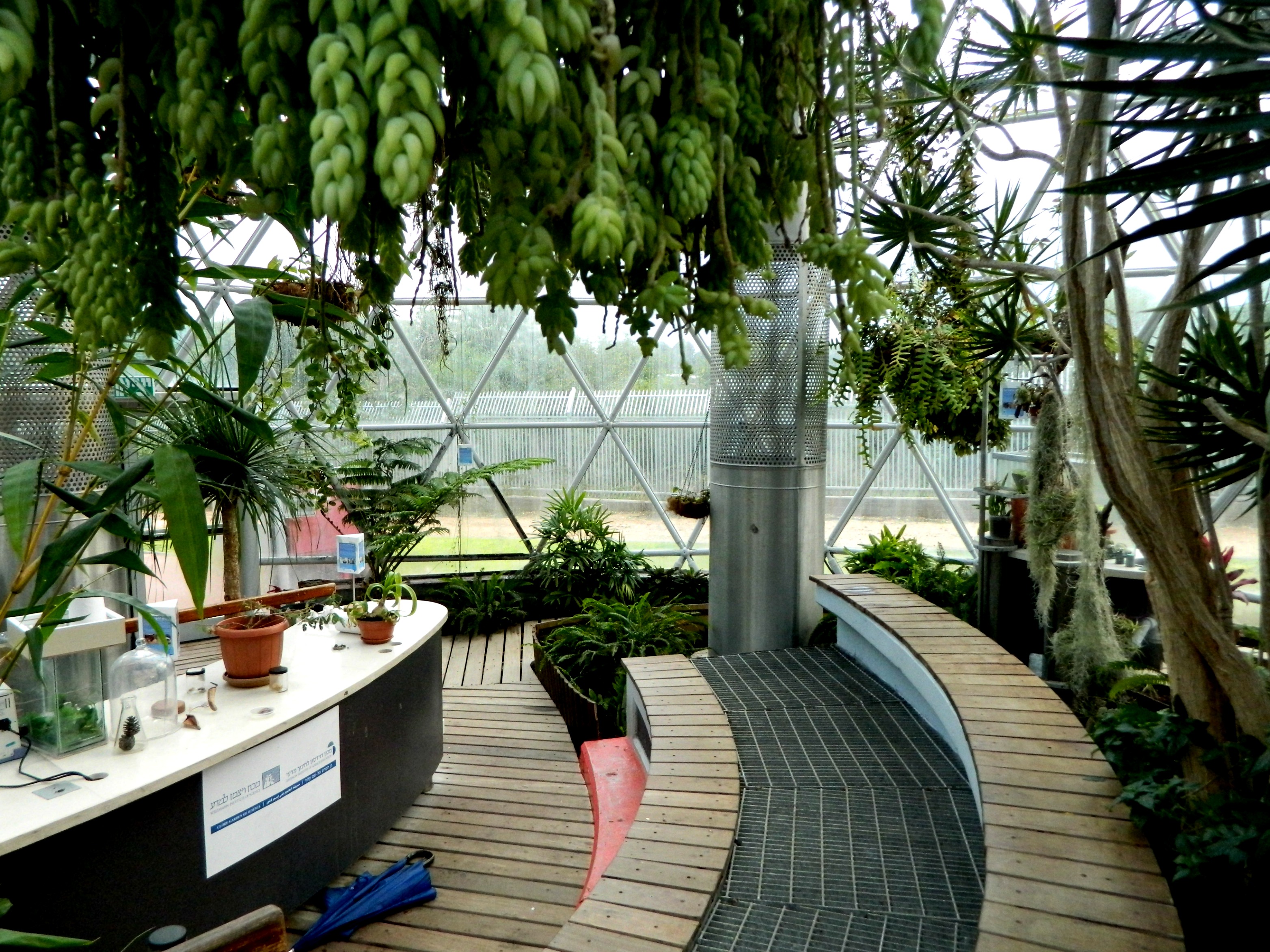
Due to the rain, some features didn’t work (for lack of sun) and some were locked (for safety) but there were some interesting things to see and try. Two things that I really wanted to see were the 360° rainbow and the solar furnace but, sadly, I didn’t see either in action. We did enjoy ourselves with the Pipes of Pan, the sound mirrors and the Archimedes’ Screw. At one point we chased down some employees to open the indoor exhibitions and the EcoSphere (a geodesic dome) and, respectively, had a creepy time at the brain exhibition and a cool time with echo amplification.

Experimenting with echo amplification

Experimenting with echo amplification

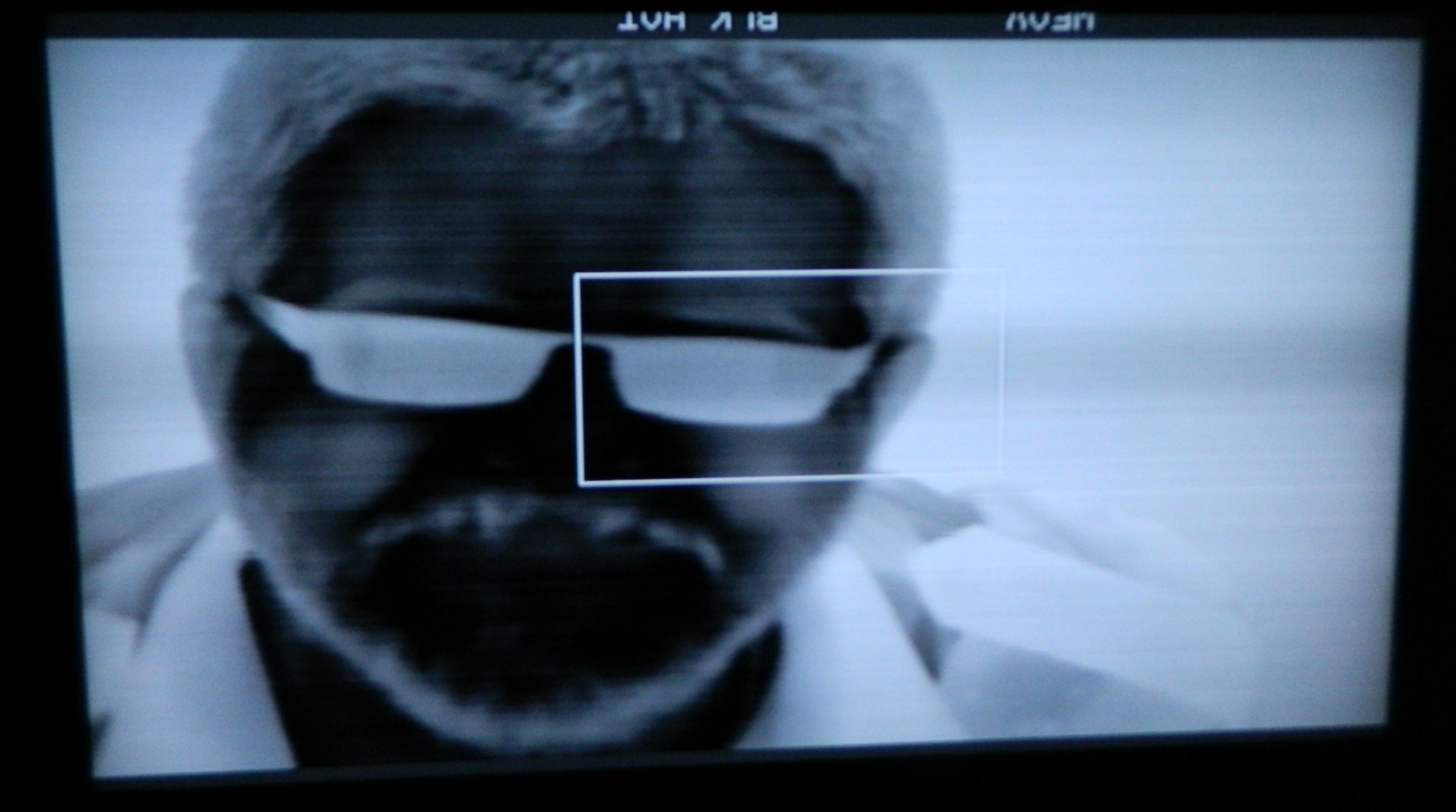
There was also a thermal camera which certainly gives a different look on life.

A thermal version of me

A thermal version of me

When we were sure that we’d seen and tried everything we left the science park and looped back to the more populated western side of the campus, passing the original campus building (also designed by Erich Mendelsohn) and the well-designed library. As the sun began to set we left the campus and got schwarmas to eat on the town then had a beer back at the apartment and called it a day. It rained when I first came and it rained as I left but all-in-all an enjoyable day was had, plus I got to hang out with my old friend Levi.