Israel's Good Name

Archive for the ‘Coastal Plain’ Category

Sharon Beach Nature Reserve

In Central Israel, Coastal Plain, Israel on November 12, 2025 at 1:57 PM

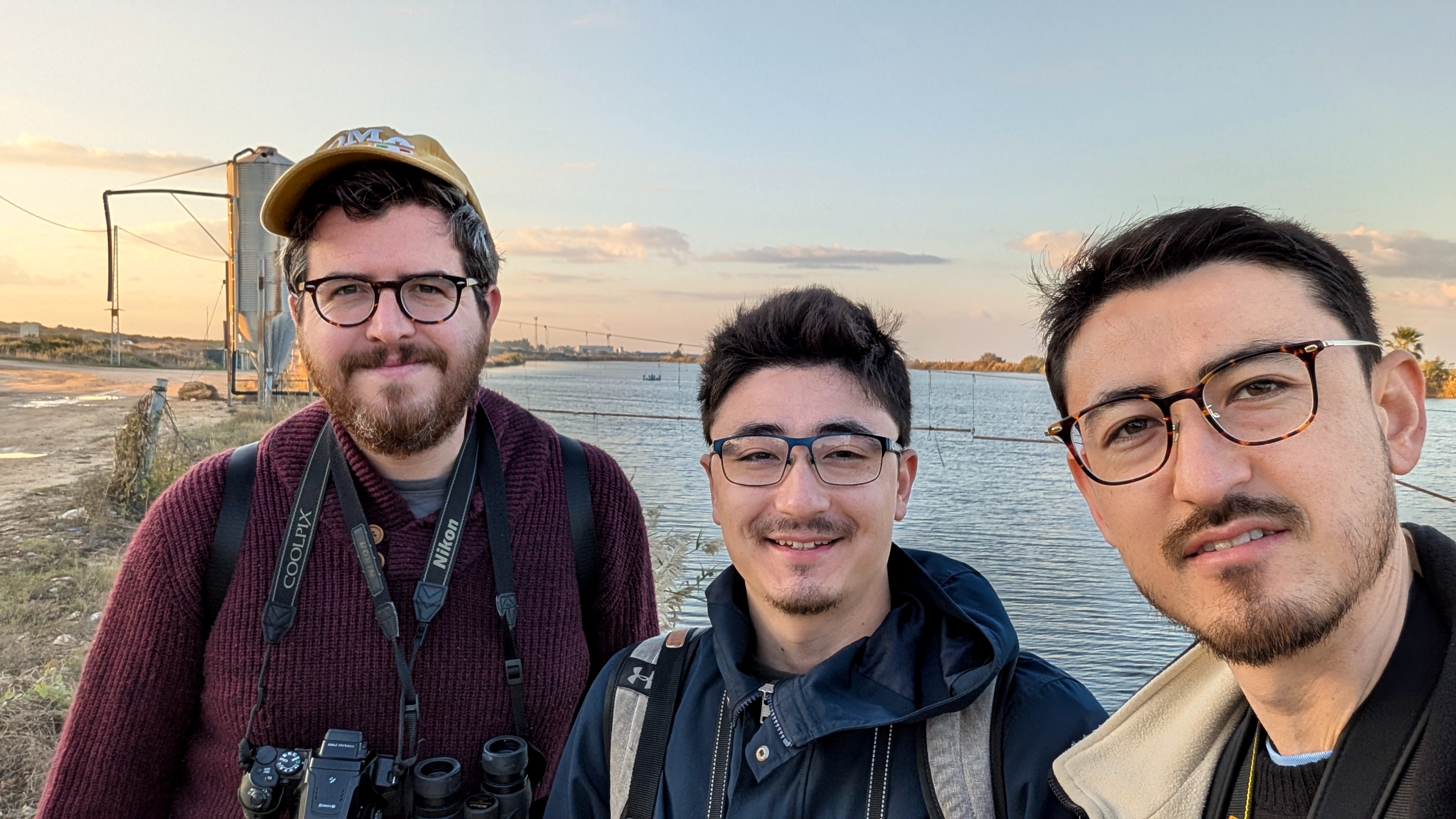
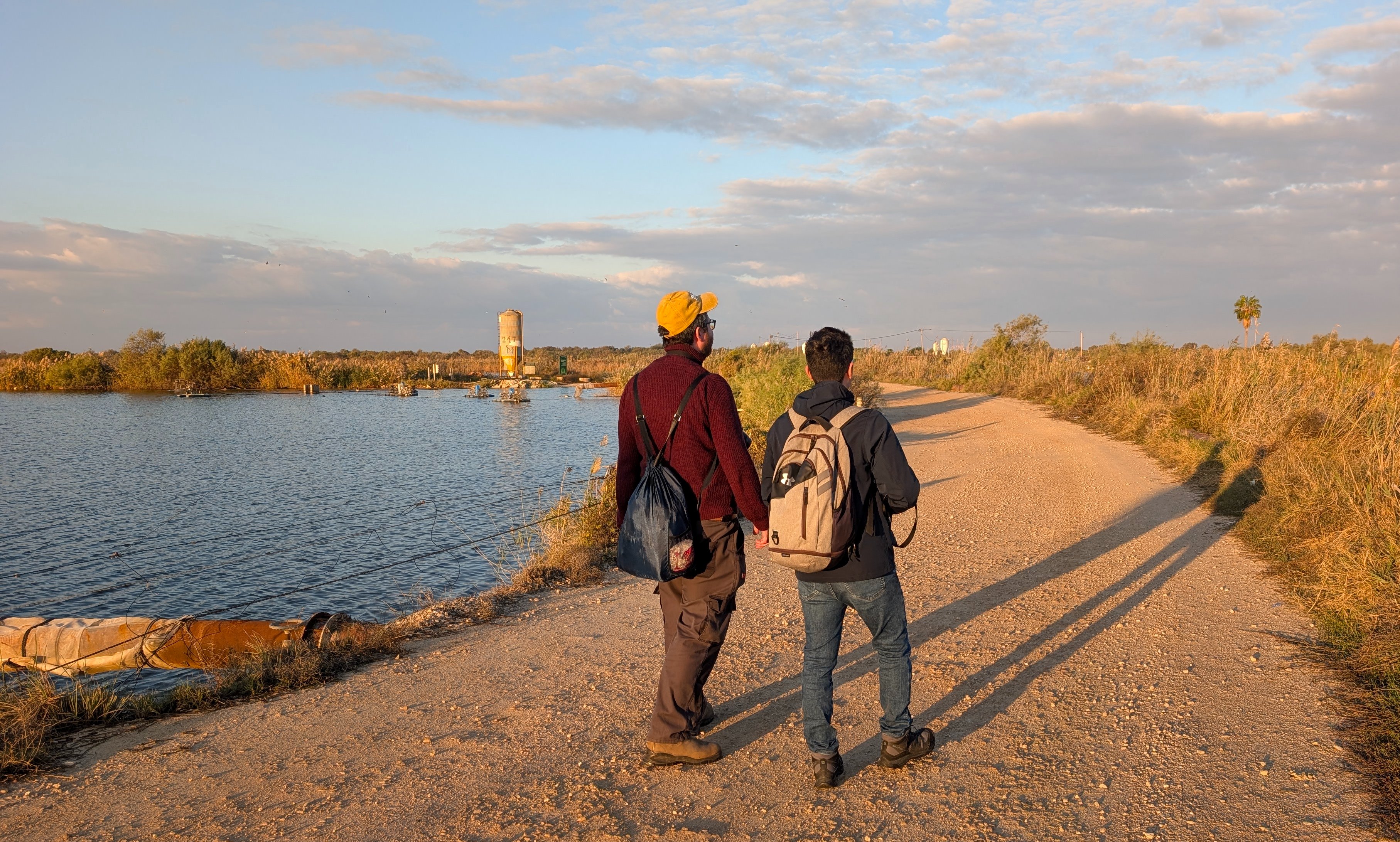
In the beginning half of July, fellow adventurer Adam Ota and I finally embarked on a trip we had planned since before the brief war with Iran at the end of June. Naturally, due to the circumstances, our rekindled adventures had to be put on hold, until further notice. So it was with much anticipation that we got into our respective motor vehicles and met at the destination of our choosing, the Sharon Beach Nature Reserve.

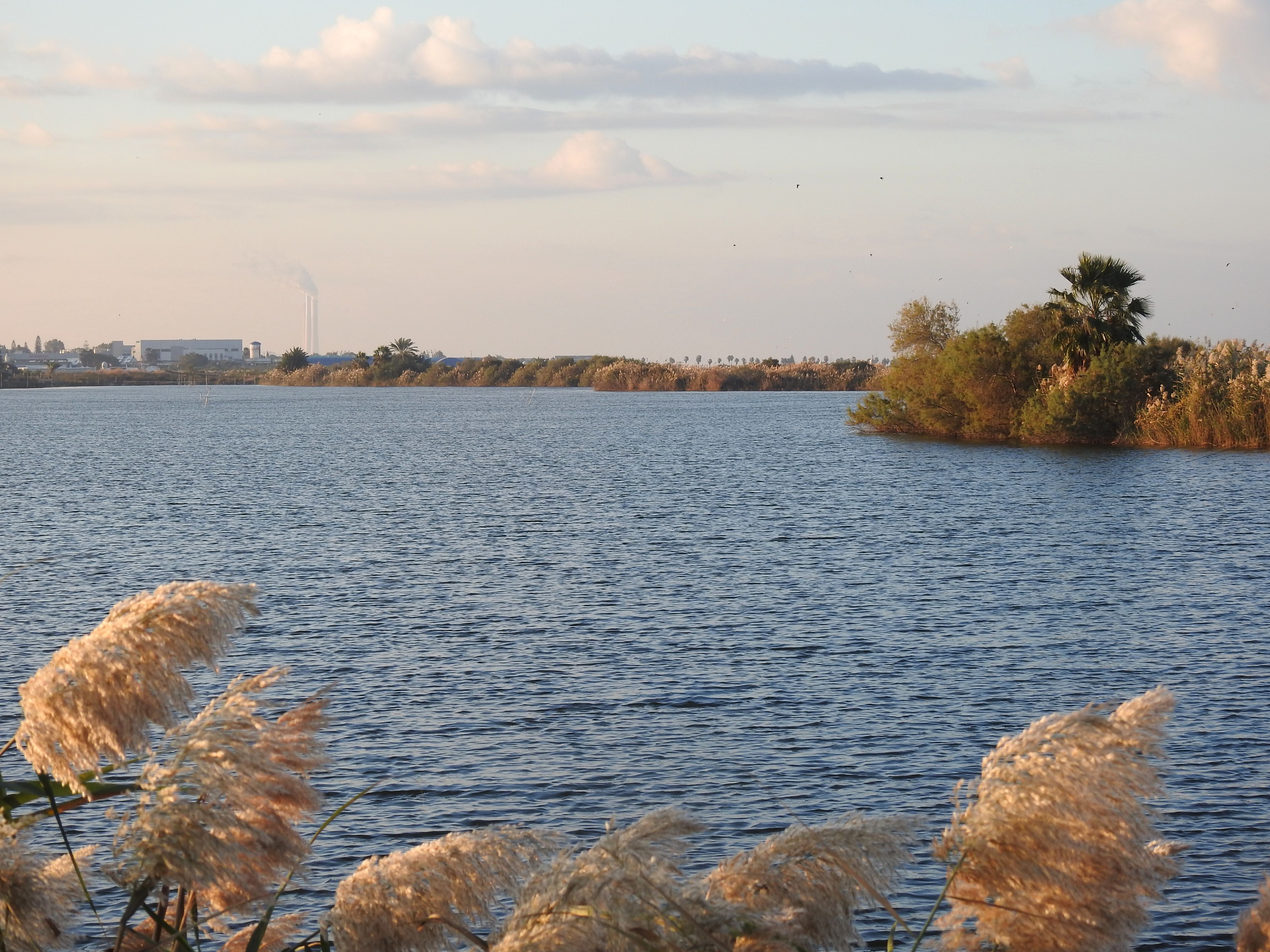
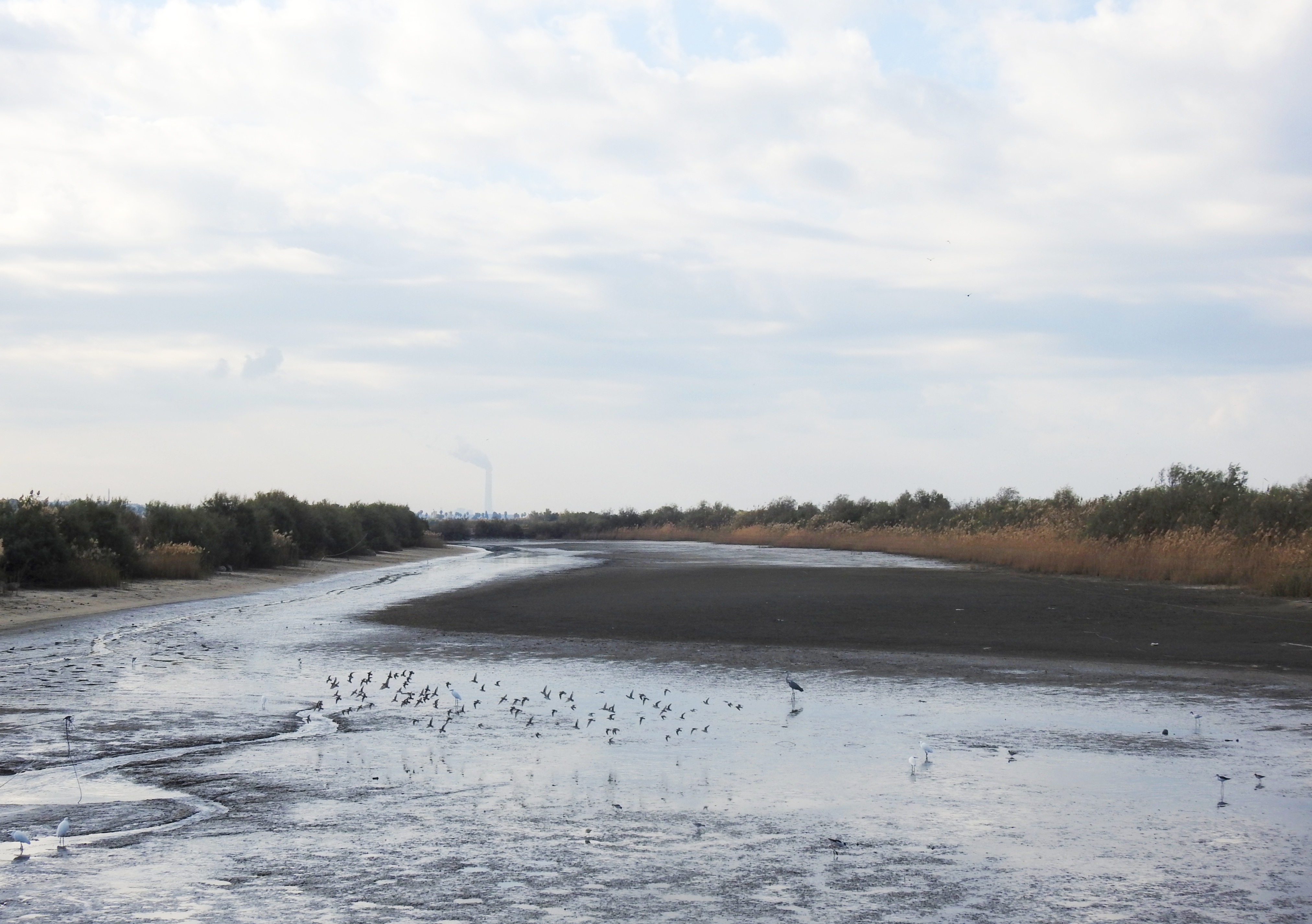
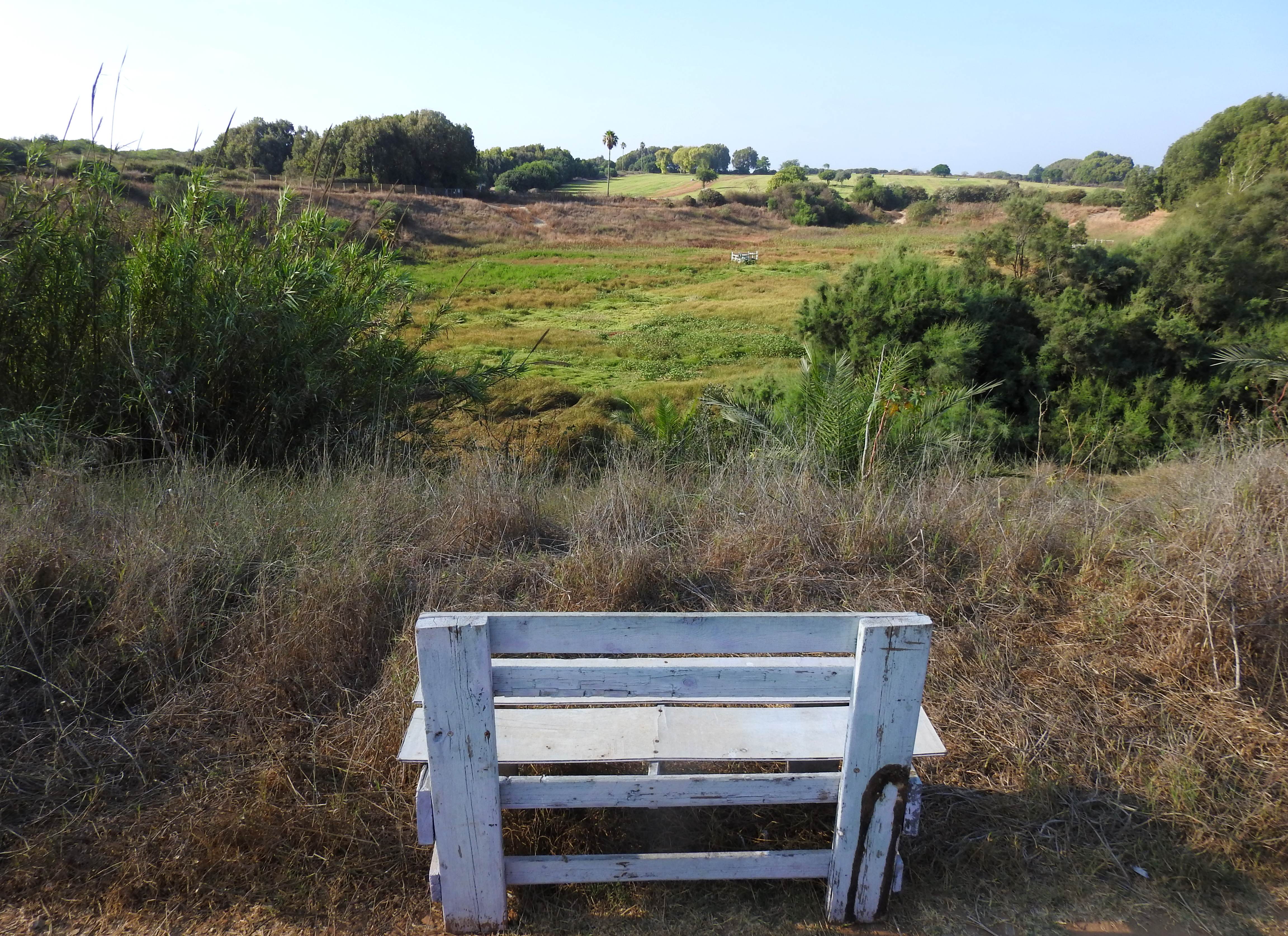
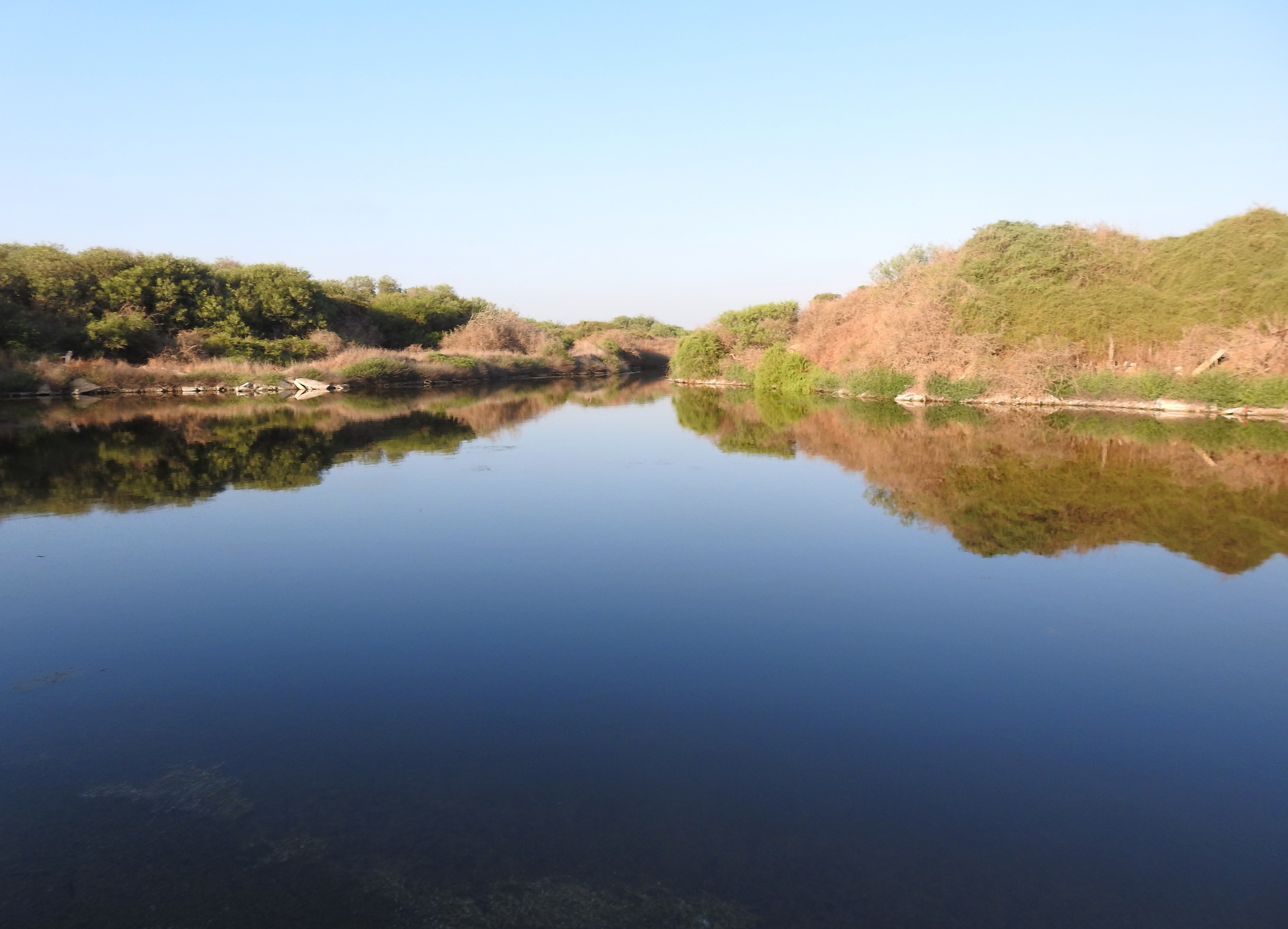
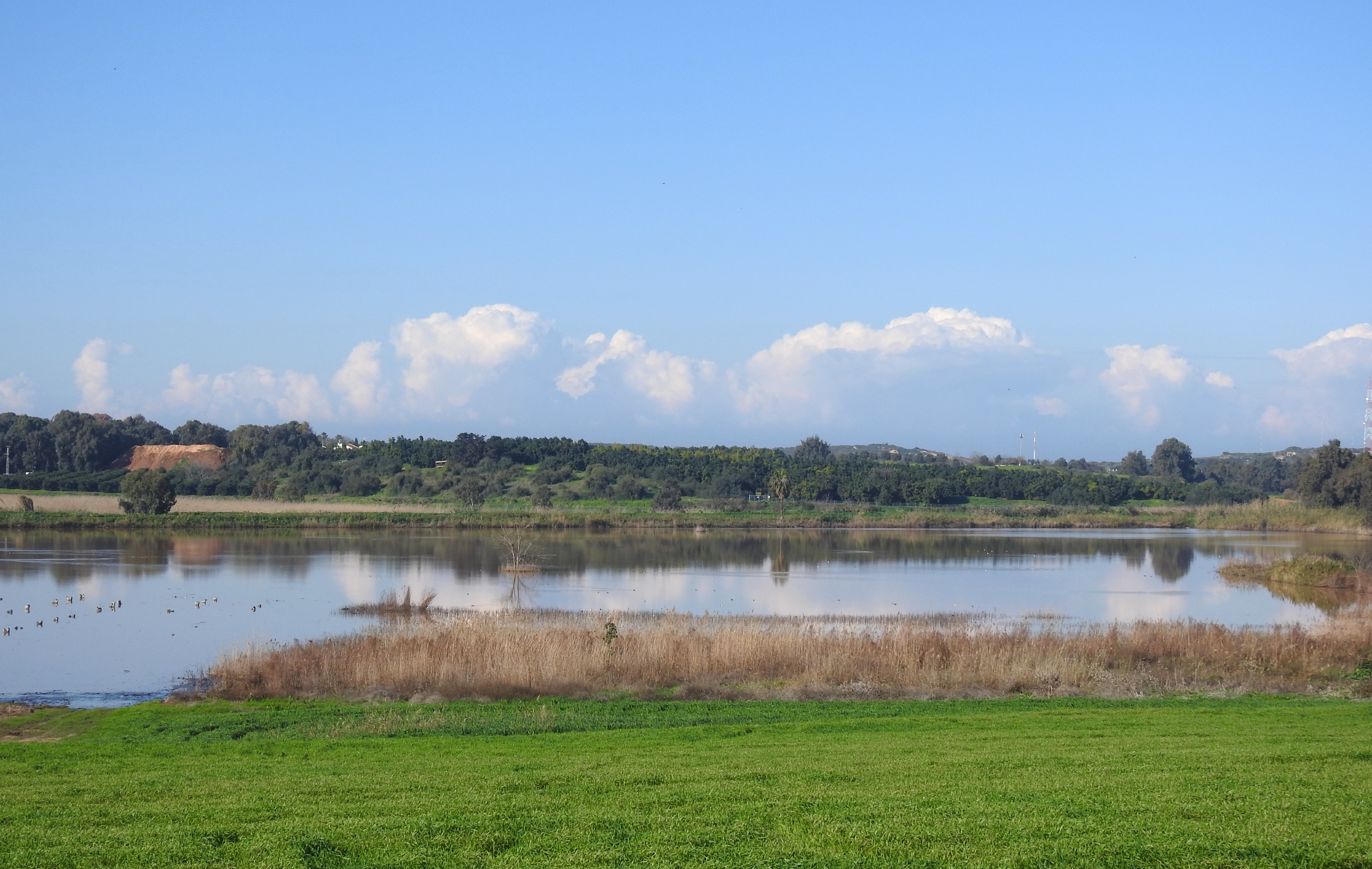
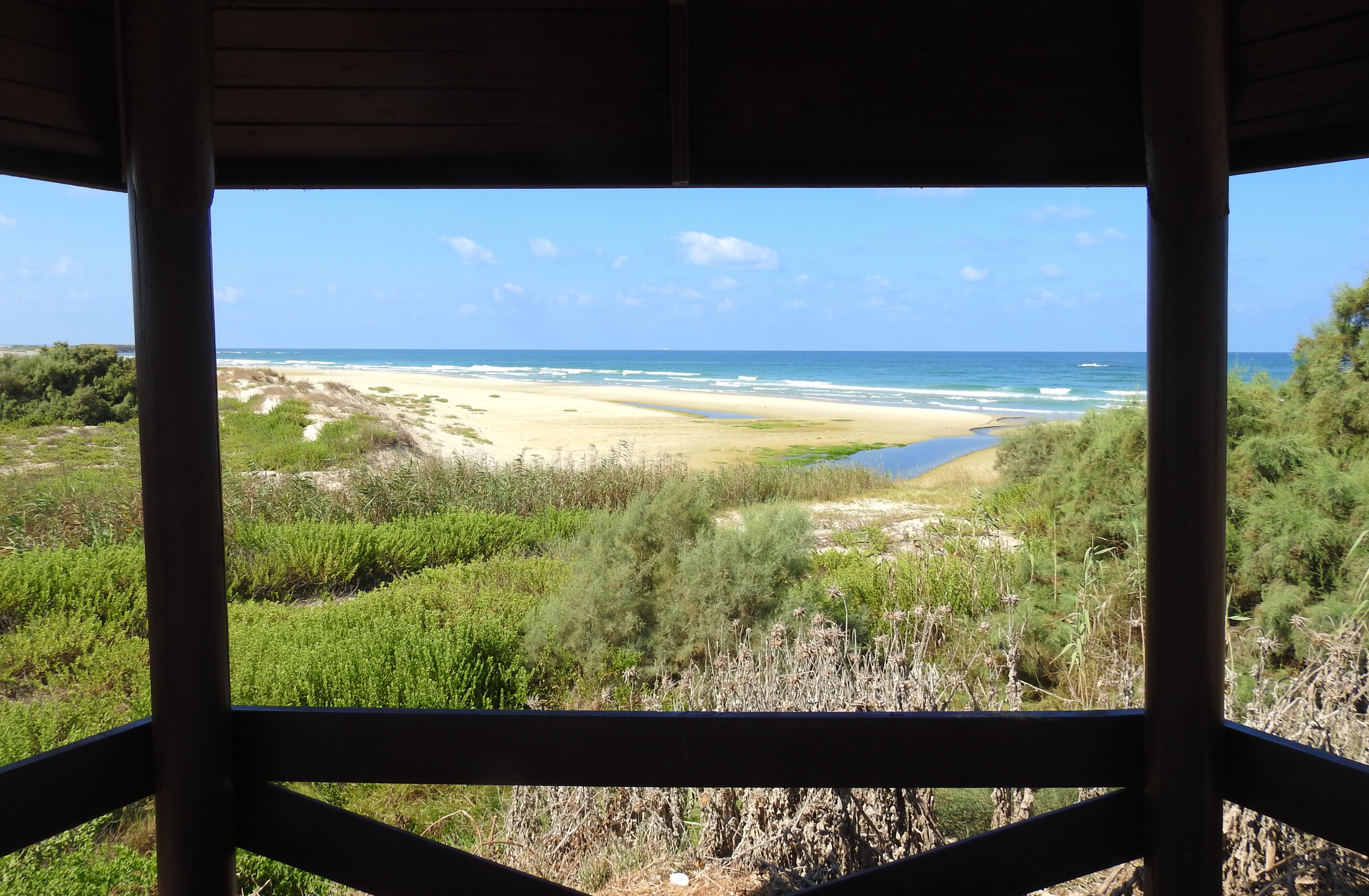
Looking out over the dried pond

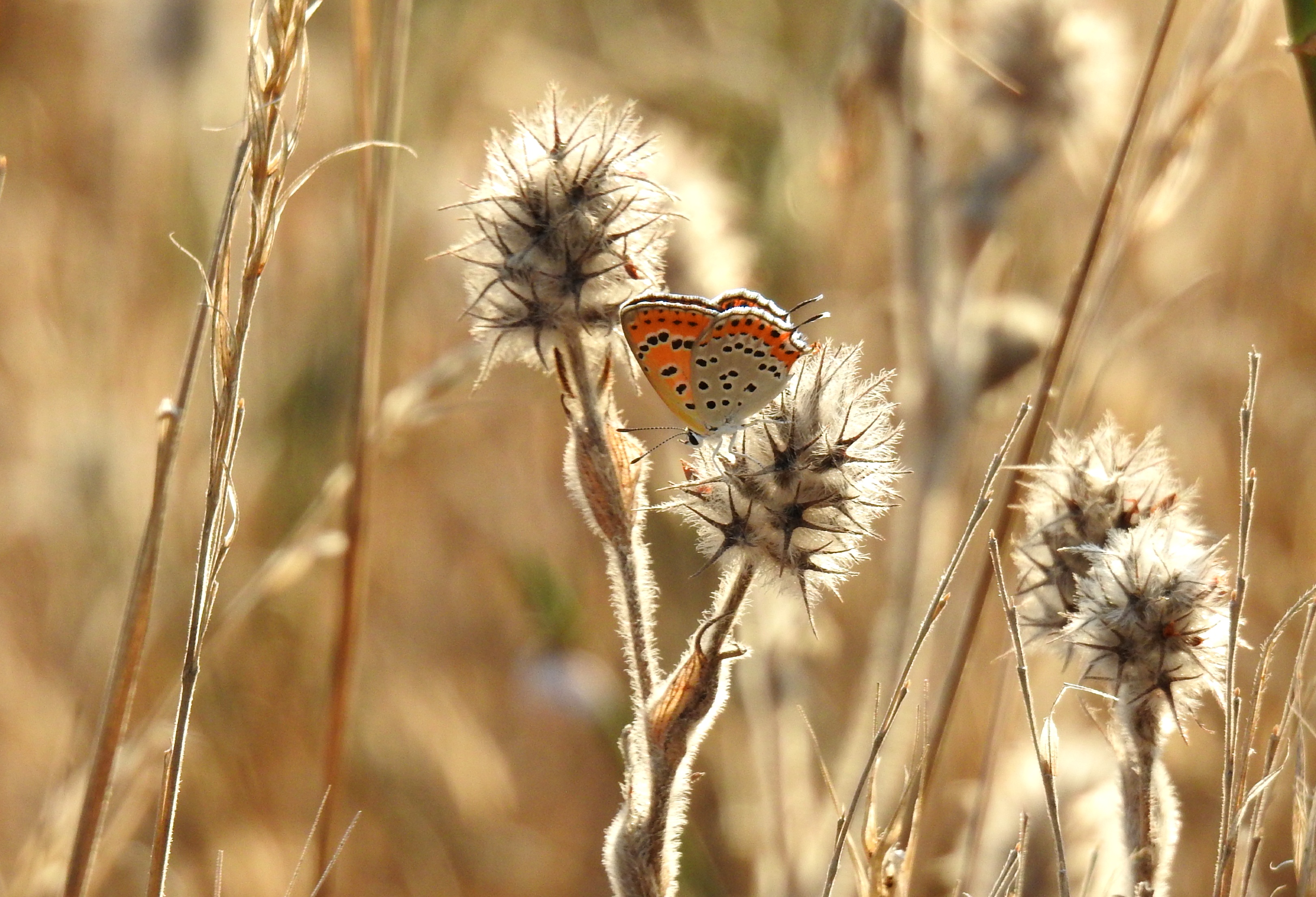
Much thought went into picking this location: it wasn’t terribly far away for either of us; neither of us had visited the place prior; and it was reported to have some sand dunes on the kurkar clifftops which could very well provide some fun creatures that, ordinarily, we would have to travel some distance to see. We met up in Kibbutz Ga’ash at the dirt parking lot about two hours before sunset and began to explore our surroundings, starting with the butterfly-rich vegetation beside a dried pond. There wasn’t much else to see there, so we navigated our way to the nature reserve entrance through a kibbutz perimeter fence.

Lesser copper butterfly

We took a liking to the place almost immediately, the calm sand paths crisscrossing the coastal foliage. It reminded us of other places that we had been before, such as the dunes at Yavne – a popular haunt of old. The faunal diversity wasn’t in its prime that late afternoon, with just a white-breasted kingfisher and the distinct calls of a turtledove.

The hidden pond

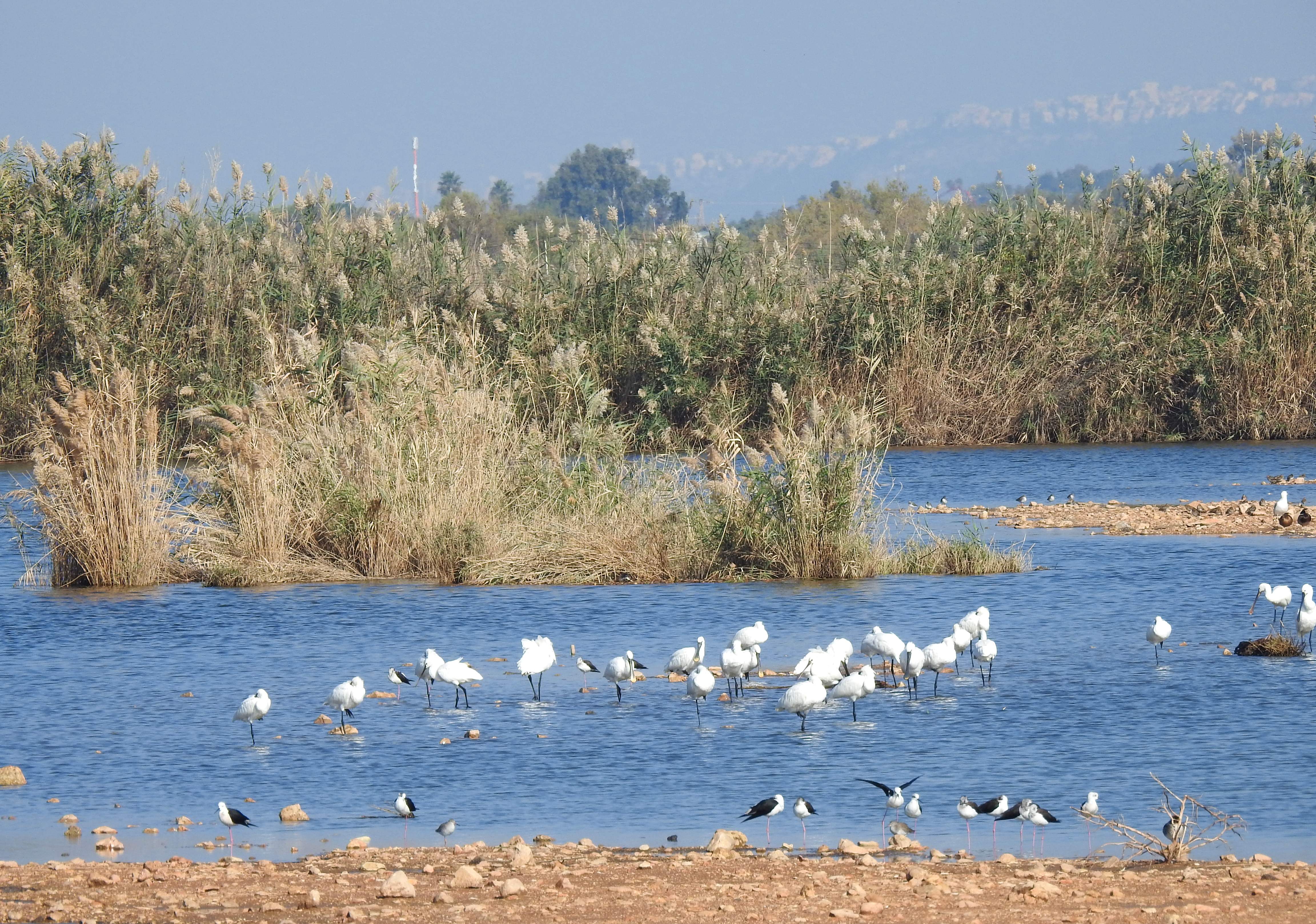
But then the path led to a hidden U-shaped pond, and biodiversity got more interesting. The western half of the pond opened up before us like a page out of a romanticised Victorian adventure novel. A lone stilt chided us noisily as we intruded on the cloistered paradise, warning the other waterfowl of our sudden, and rather undesired, appearance.

Israel National Trail

A handful of startled sandpipers flew away, as did the noisy stilt, leaving us to explore the quaint little pond in relative isolation. Much to our surprise, the “beach” part that we walked into was not made of sand or pebbles, rather a morbid collection of old, decaying snail shells. Thousands, if not millions, of tiny white shells formed an attractive-looking area, at least until closer scrutiny. But overall, the pond was delightful and I fantasised about bringing a trailcam to see what kind of fauna is wont to visit. Maybe one day…

Such a majestic sight

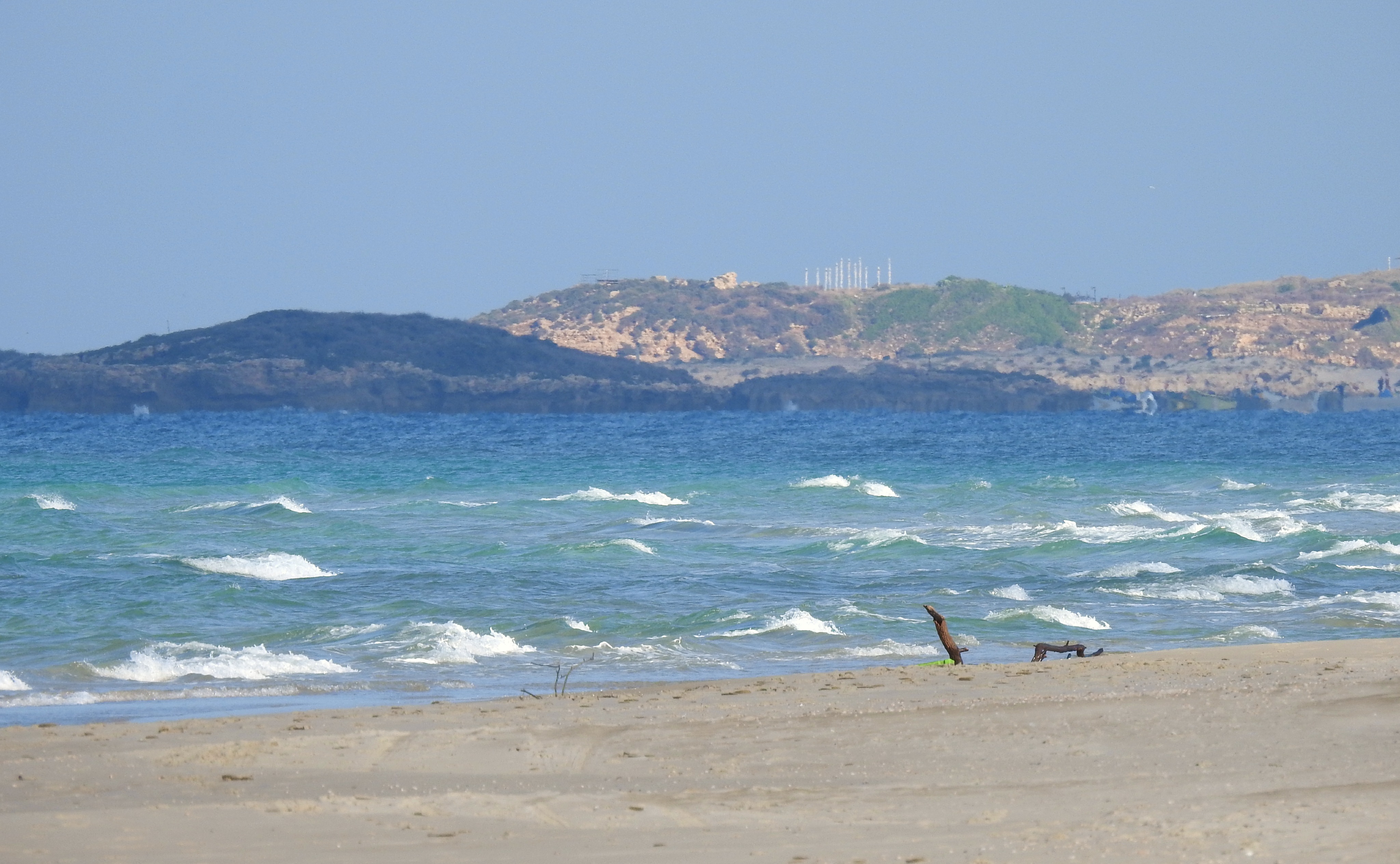
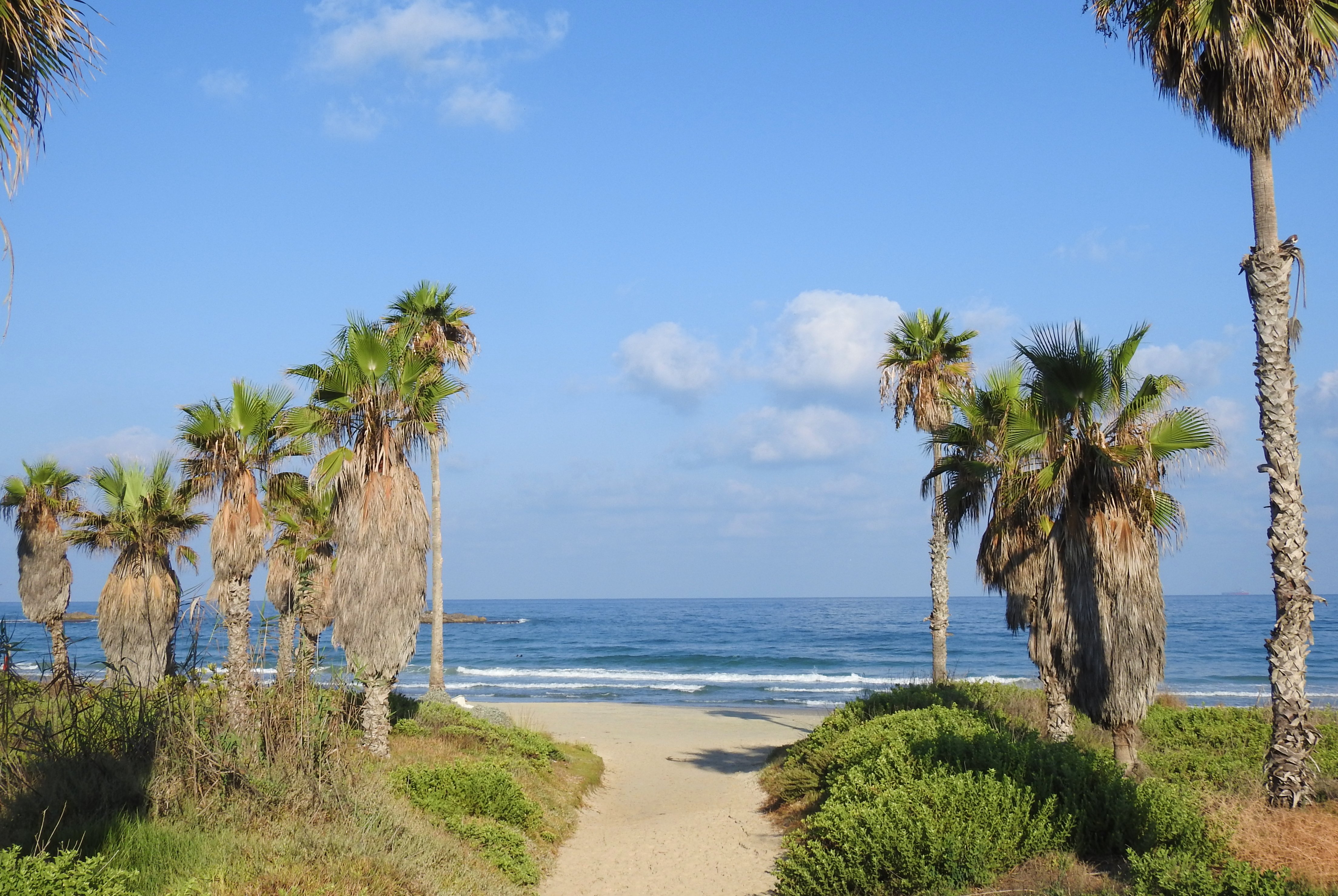
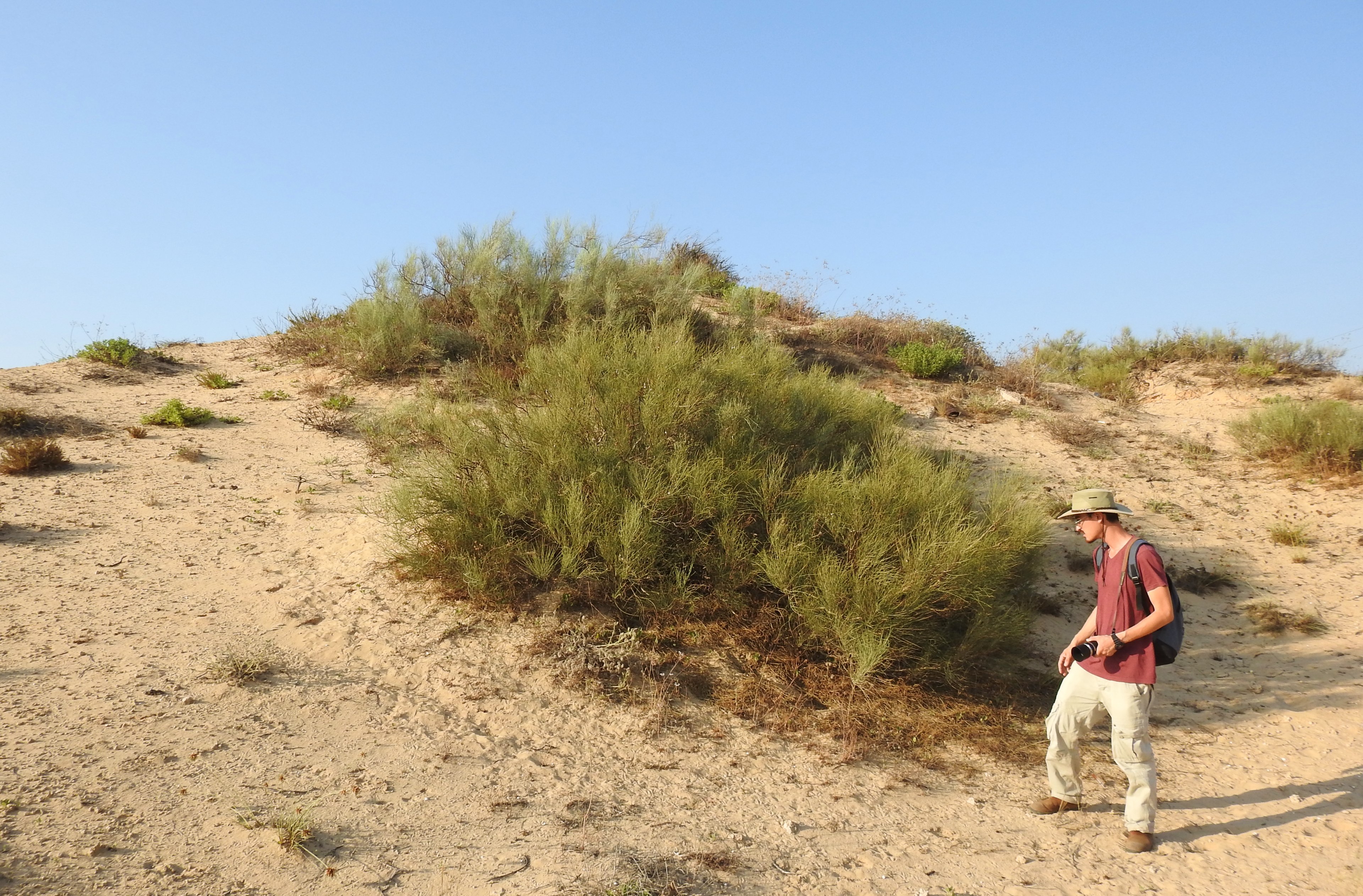
From the hidden pond we explored the kurkar ridge, making our way to the stabilised dunes overlooking the Mediterranean Sea. After a nice look at the coastline stretching out below us, we left our vantage point up on the cliff and continued exploring the sandy trails. At some point, we found ourselves on the Israel National Trail, the tri-coloured trail marker signs rusted from the salty sea breeze.

Artsy and unedited

With not much to see from a faunal point of view, we decided that we should spend the bulk of the remaining daylight exploring a bit inland. This proved to be a wise decision as we encountered some jackals as soon as we reached an abandoned golf course beside the kibbutz’s cemetery. Our further explorations didn’t fully justify our deviation from the nature reserve, so we headed back to the coastal cliff to watch the sunset.

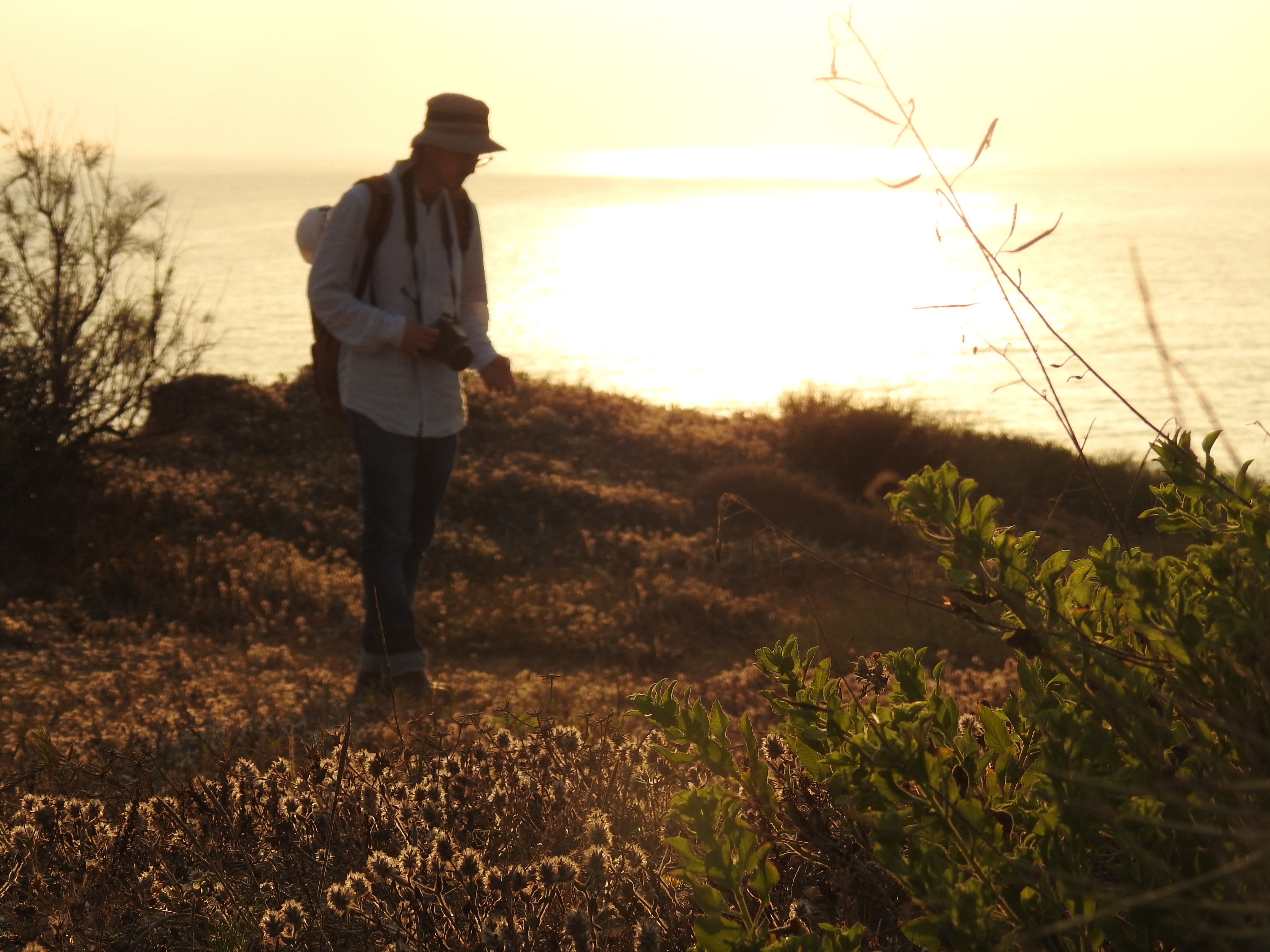
Sweaty and taking in the sunset (photo Adam Ota)

As expected, the sunset scenery was quite picturesque from on high. The kurkar cliffs that line the coast, a sharp rise in elevation rising up to 50 metres from the narrow strip of beach. In fact, two weeks after our adventure the Israel Nature and Parks Authority issued a warning about falling cliff chunks endangering visitors to both beach and cliff.

Being careful near the cliff edges

While we stood on high, looking out over the expanse, we noticed that there were two young men fully disrobed, lounging languidly in the warm sand. It was quite an unexpected sight, but perhaps they were just confused as to where the official nudist beach is – actually a bit further up the coastline.

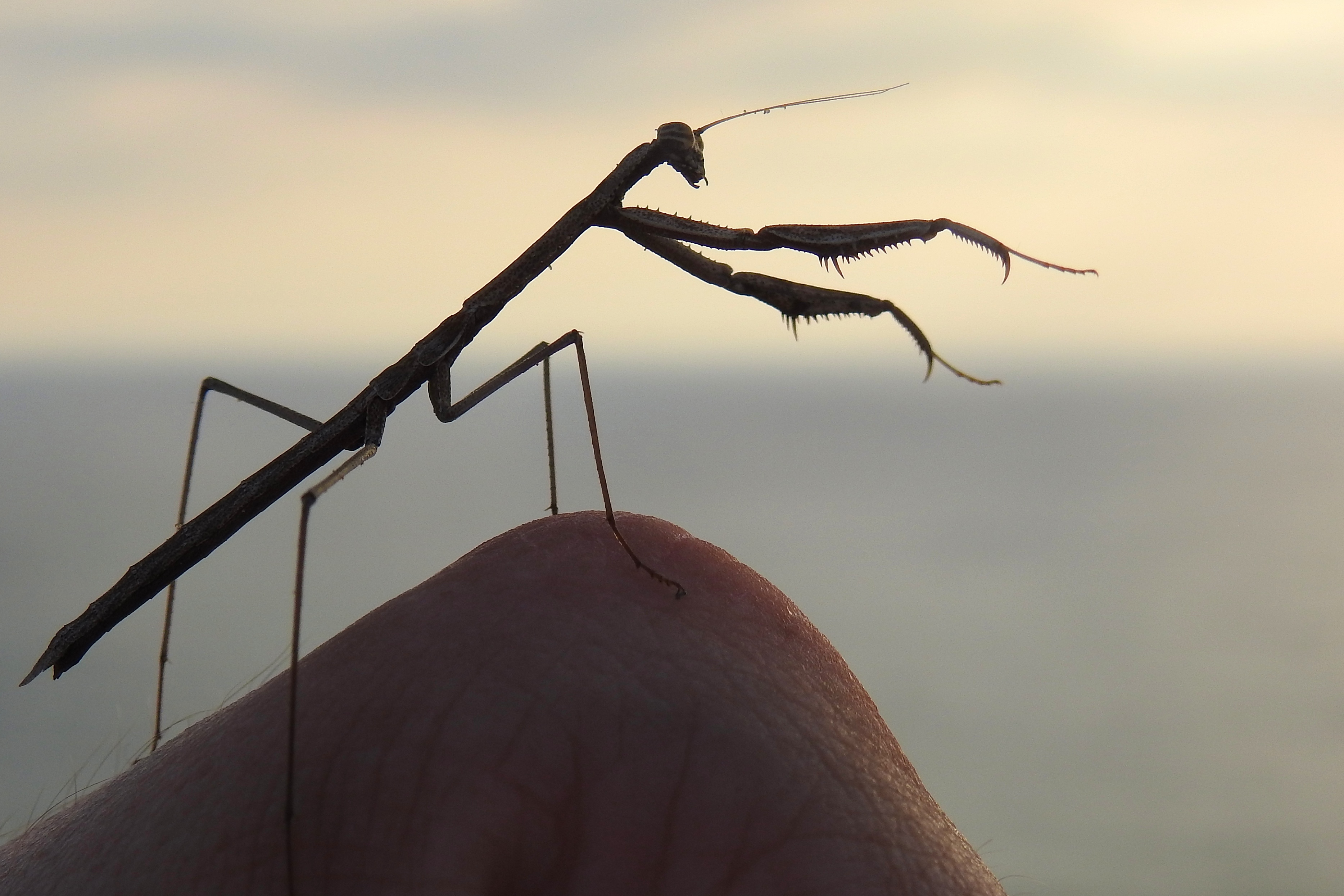
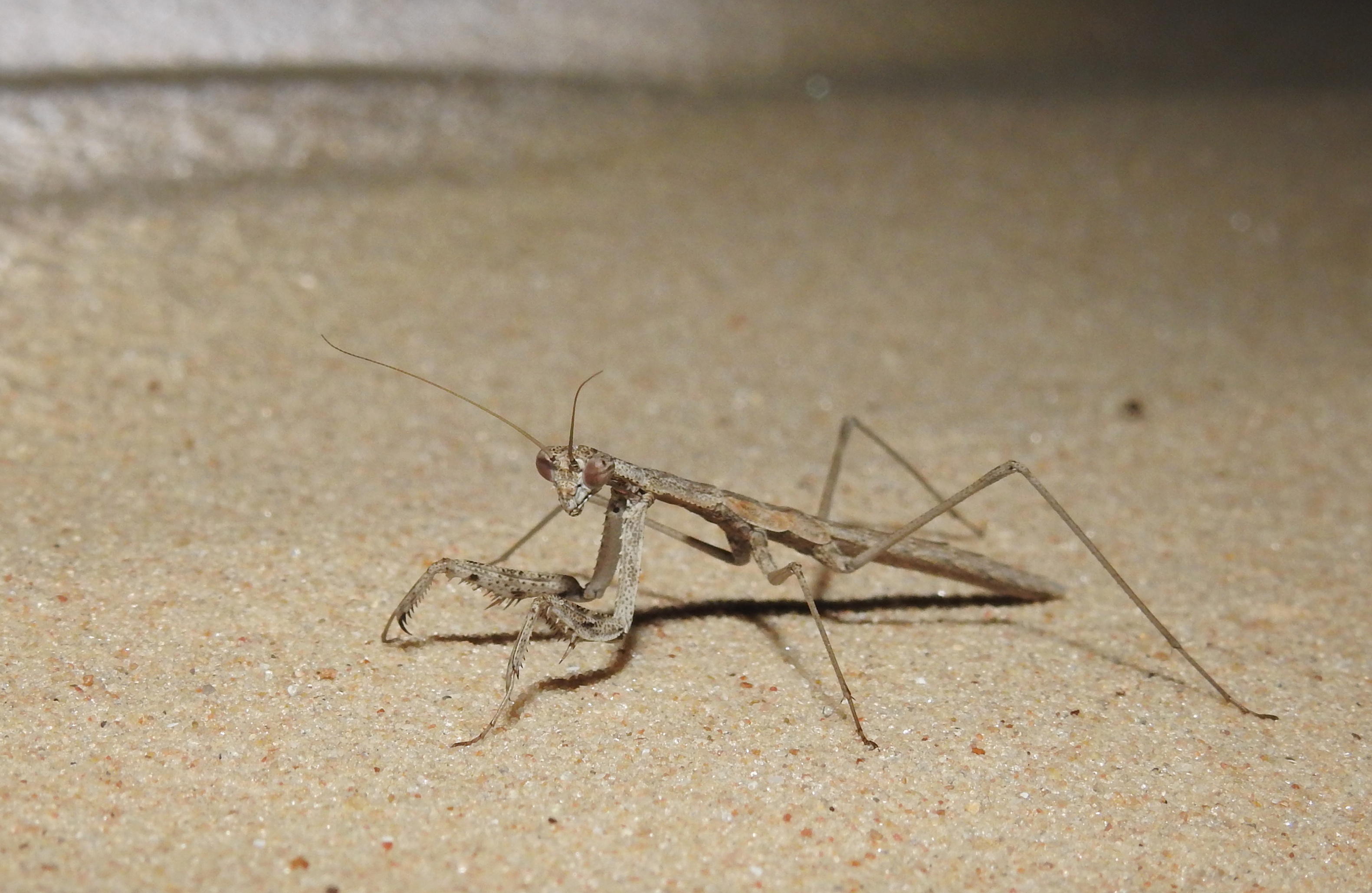
Eremoplana infelix mantis

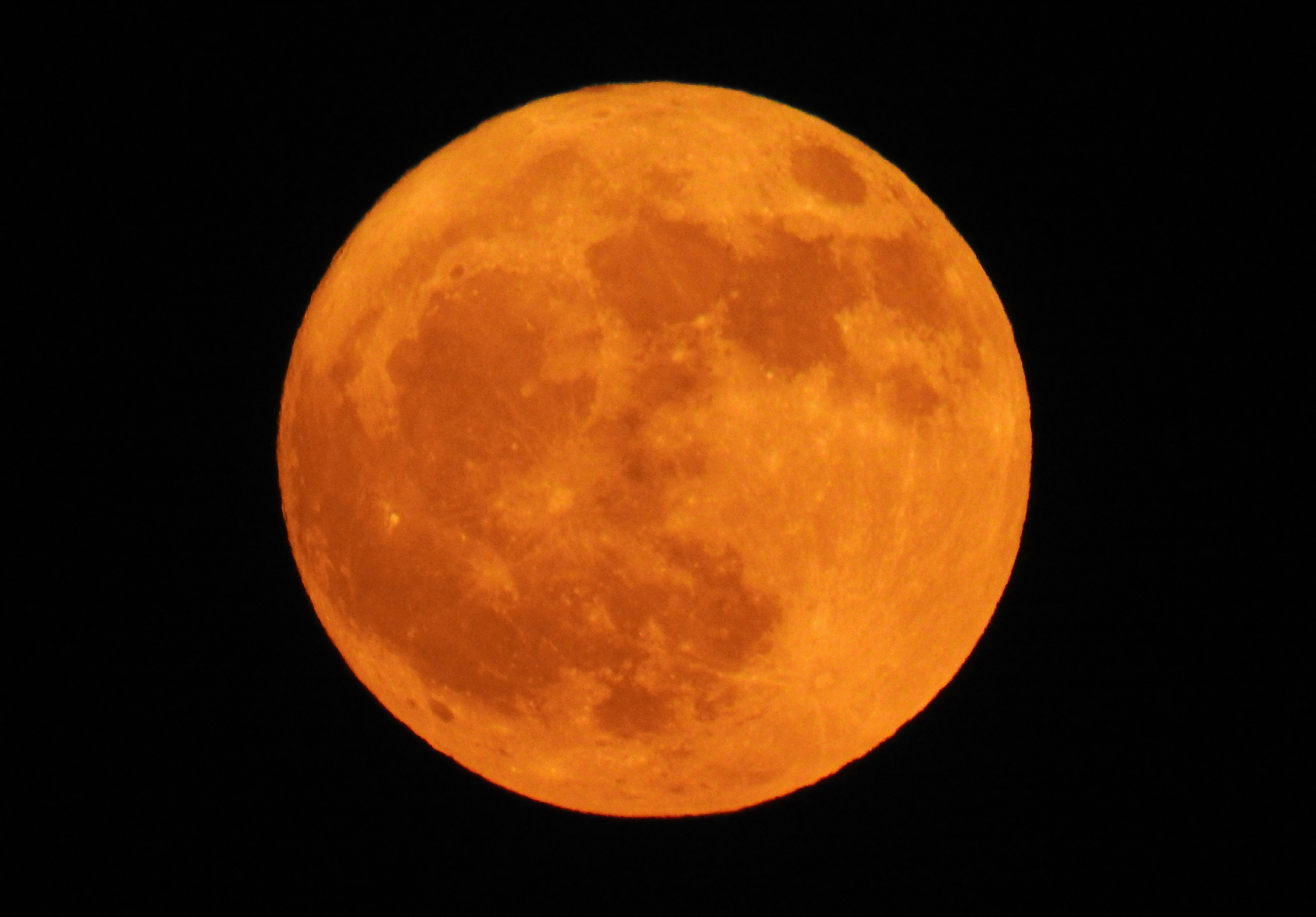
A full moon slowly rose behind us, and while we waited impatiently for darkness to settle, we shared a snack of some mini kabanos sausages. Once sufficiently dark, when the creatures of the night were presumed to have left their hidey-holes, we flicked on our flashlights and began traipsing around. I decided to start with the UV flashlight, its purple-blue light dancing over the sand and vegetation underfoot. It kind of felt like cheating as I spotted one scorpion after another with the greatest of ease. These were presumably all African fattail scorpions, but none of the evening’s specimens allowed for a good enough photo required for proper identification.

Gorgeous moon coming up over the eastern horizon

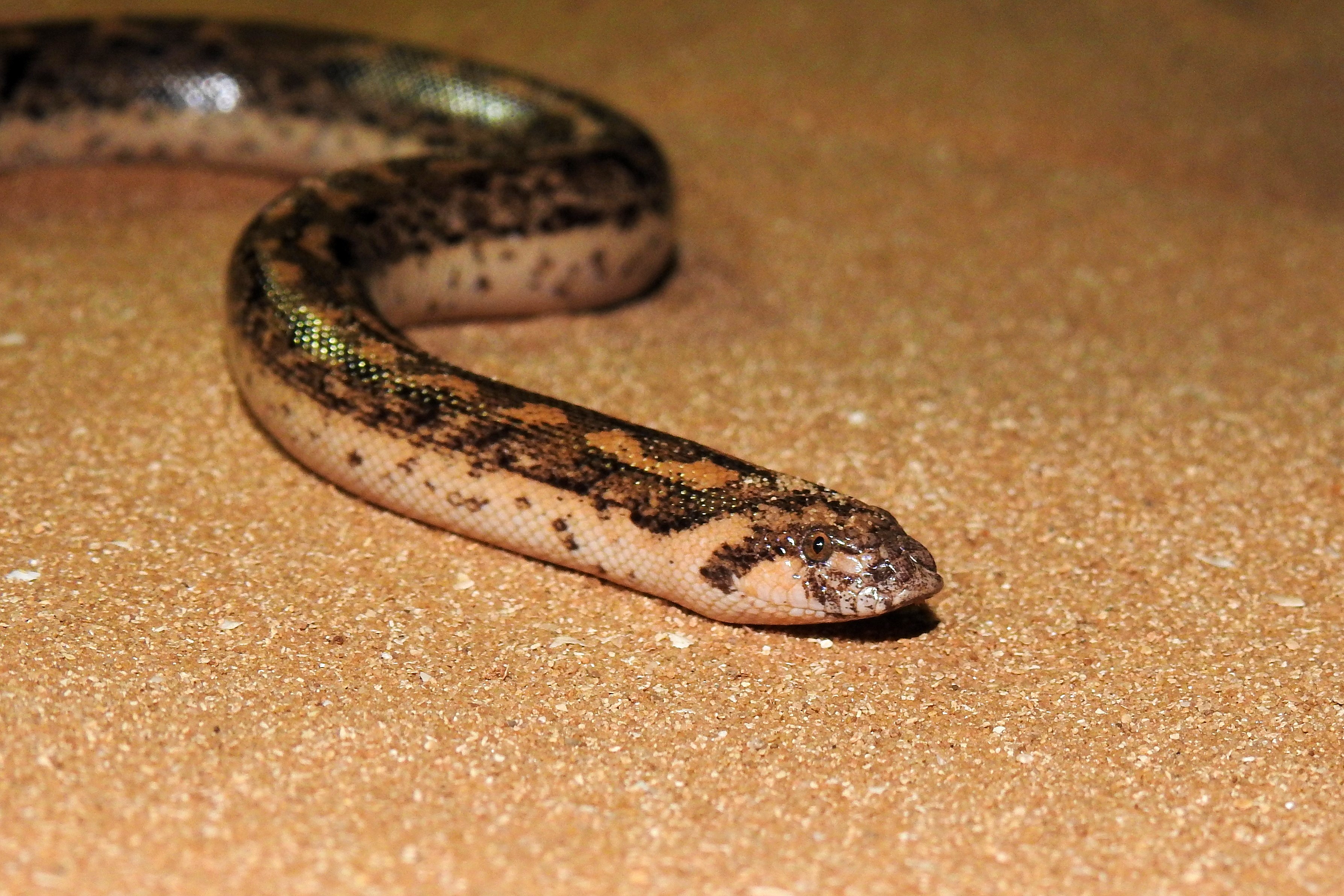
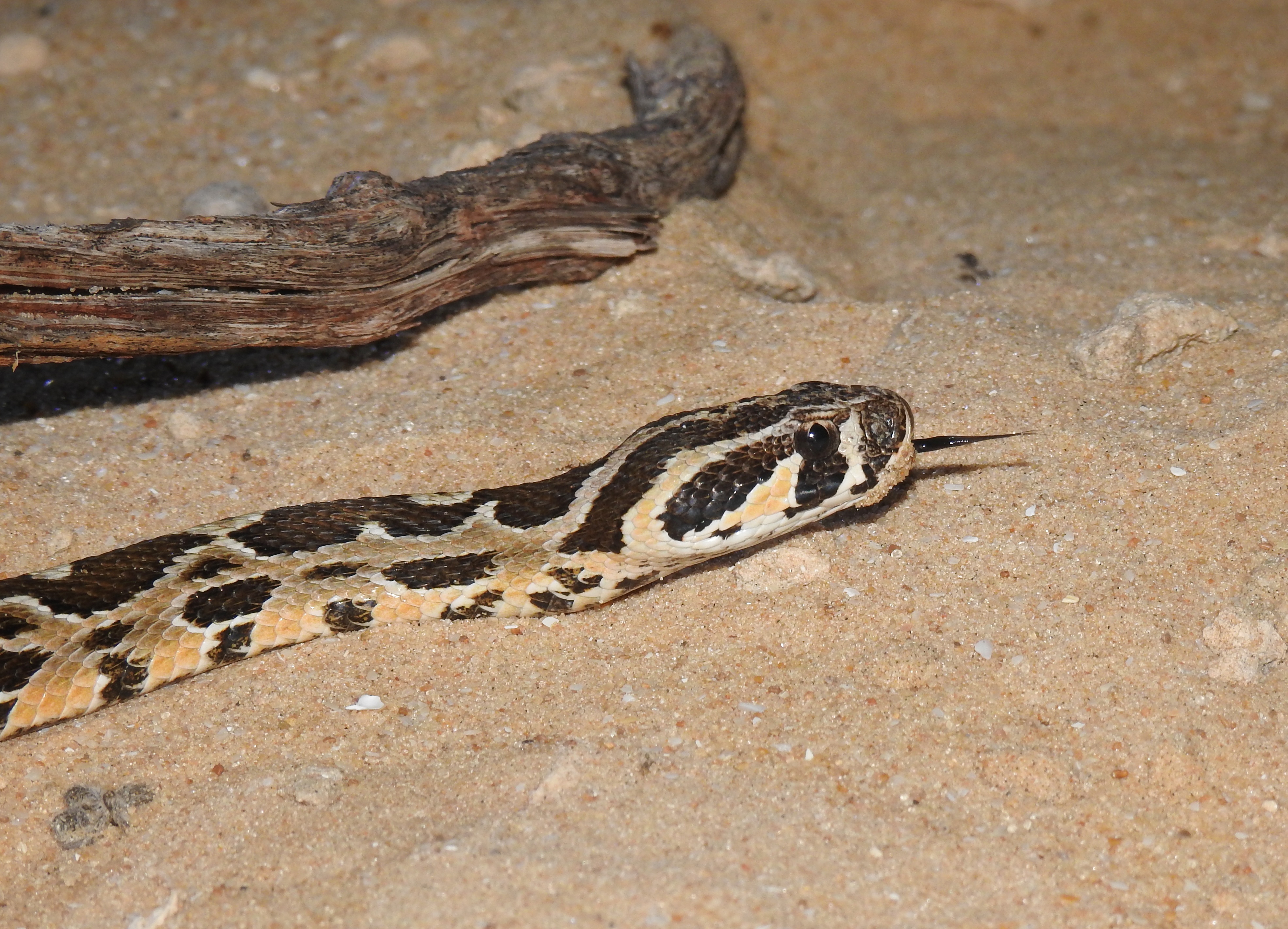
While I was finding scorpions, Adam slipped off another way with his regular flashlight. Suddenly there was a cry and Adam told me to come quickly – he had found a snake! This was no ordinary snake, it was a nicely-sized javelin sand boa, a snake species that we had been keen on seeing for years and years. Despite being relatively common, each and every attempt of ours failed and it became a source of frustration for us. Now, thanks to Adam’s keen eyes, a beautiful sand boa was now laying peacefully in the sand before us, waiting for us to get our fair share of photos.

A javelin sand boa!

While some of Israel’s snakes are venomous and all should be regarded as potentially dangerous without proper knowledge in identification, the javelin sand boa is a very mild mannered member of the boa family (related to anacondas and other constrictors), and not dangerous to humans in the slightest.

A closer look at the javelin sand boa

After a quick photo shoot, we put the sand boa down and let it escape into the shifty sand. It was quite amazing watching it slither so efficiently into the sand, making us wonder how many more sand boas were safely buried around us. Elated with this finding, we kept on searching for more wildlife, and found not very much for the next while.

Sea daffodil jutting out into the darkness

It was only once we started heading back for the cars that we found a Middle East tree frog in the parking lot, most unexpectedly. There was also a wedding taking place at the event hall adjacent to the lot, which filled the warm summer night air with the sound of music.

Middle East tree frog relaxing in the parking lot

Before bringing the trip to an end, Adam suggested we take one last look at the butterfly-rich vegetation beside the dried-up pond that we had explored in the very beginning. It turned out to be an excellent idea, as we found countless tree frogs all over the thorny thistle plants. It was decided there and then that a return trip was needed, but sometime later on in the winter, or wet season. Hopefully that can happen this winter, but, as always, time will tell.

Poleg Marshes

In Central Israel, Coastal Plain, Israel on October 27, 2022 at 4:11 PM

At times, updates on this travel blog become a rarity, usually when life gets busy, keeping me otherwise occupied. This past lull in posts is no different. After nine long months, on September 10th, my dear wife Bracha gave birth to our precious firstborn son, Amir. He is a handsome young fella who keeps his parents busy during the days, and sometimes awake during the nights. I’m sure that sometime soon he, too, will join in on some memorable and, perhaps even bloggable, adventures.

Our first sight of the Poleg marshes

Our first sight of the Poleg marshes

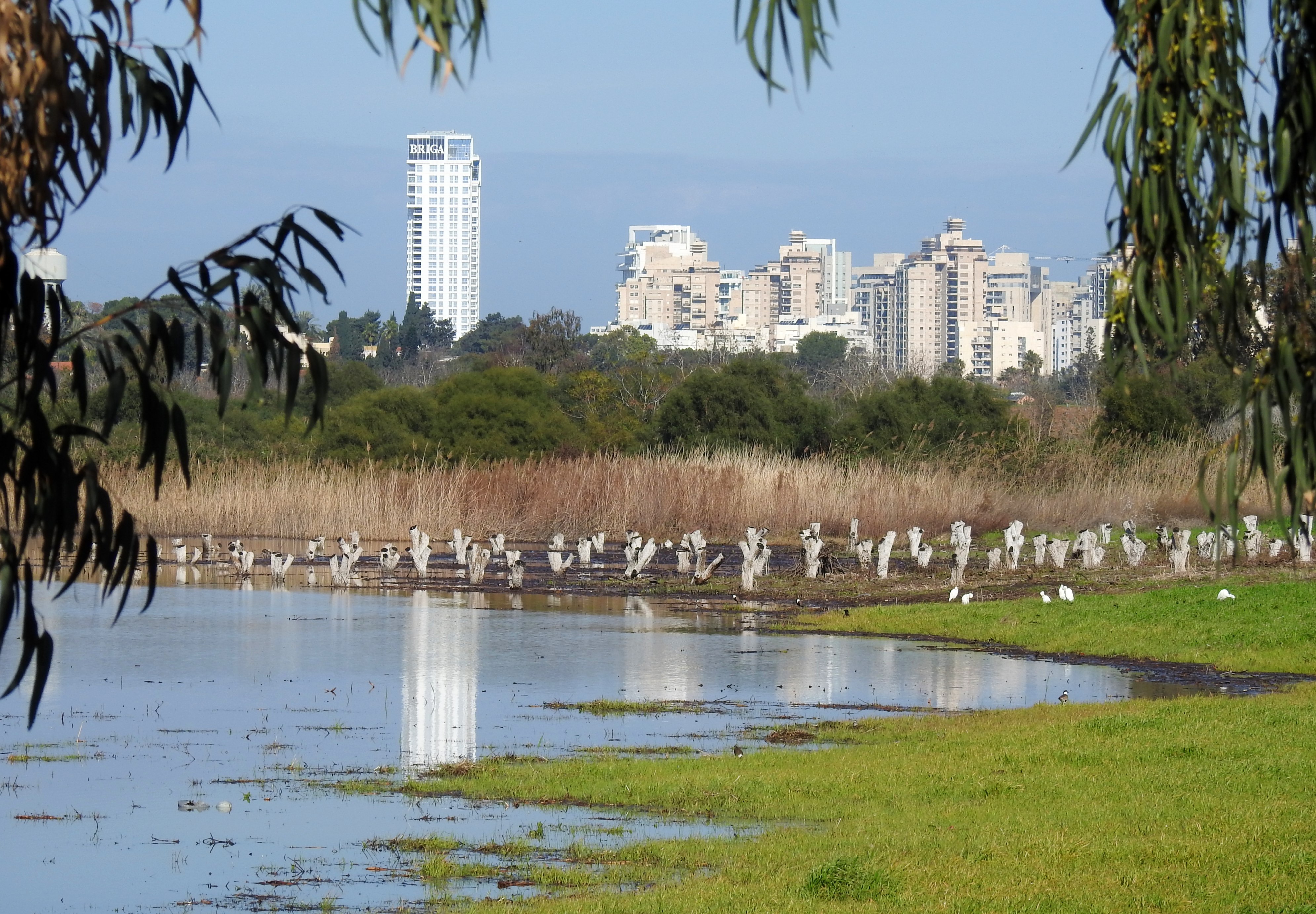
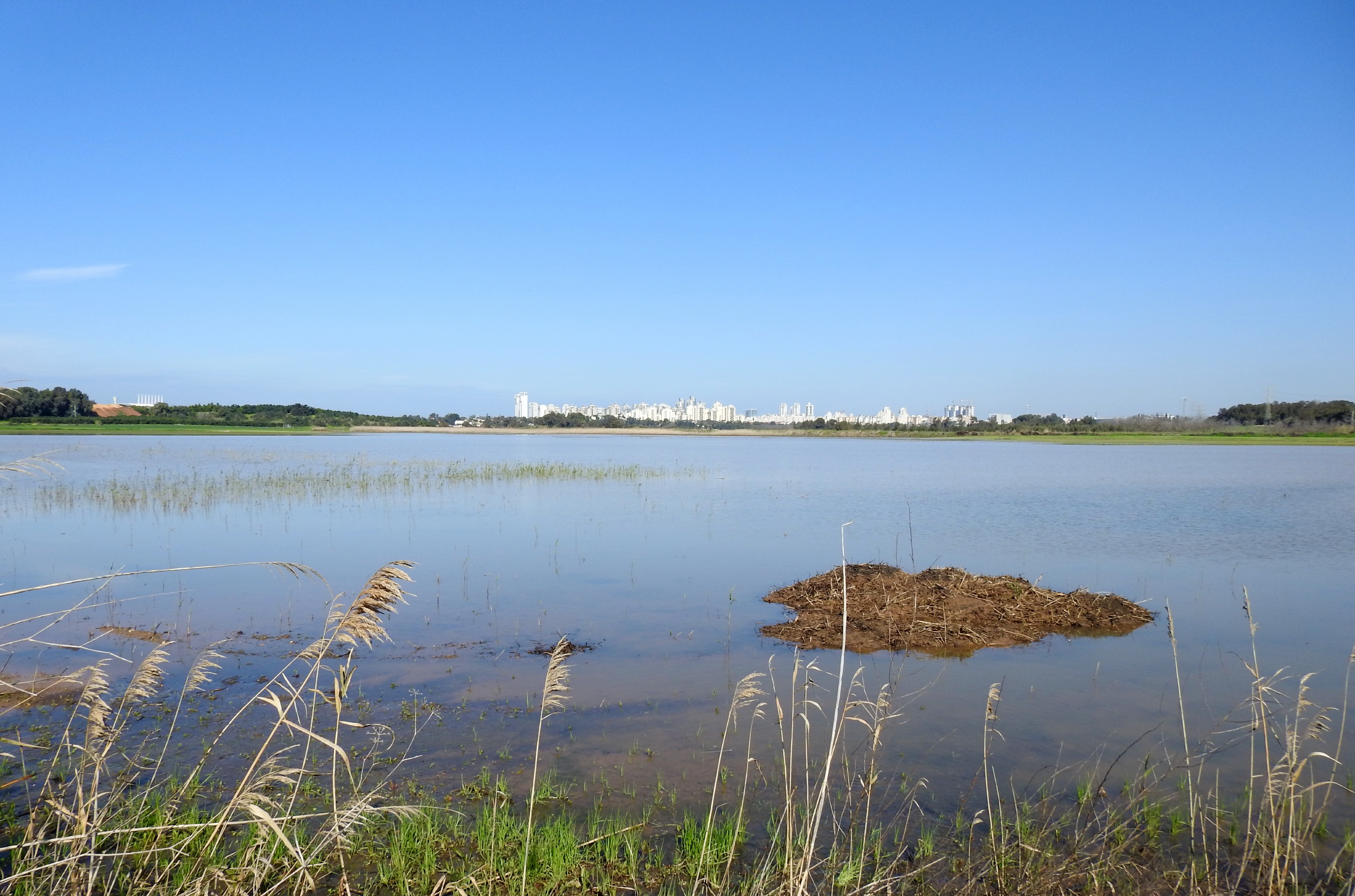
However, not writing blog posts as of late is certainly not for want of what to write. Harkening back to the end of January, when the winter’s plentiful rains had essentially flooded the country, fellow adventurer Adam and I decided it was time to visit some seasonal wetlands. There had been much commotion about one particular site which began to attract birders in the preceding months, and we felt an uncontrollable urge to explore the site as well. Located just south of Netanya is the open wetlands of the Poleg Marshes.

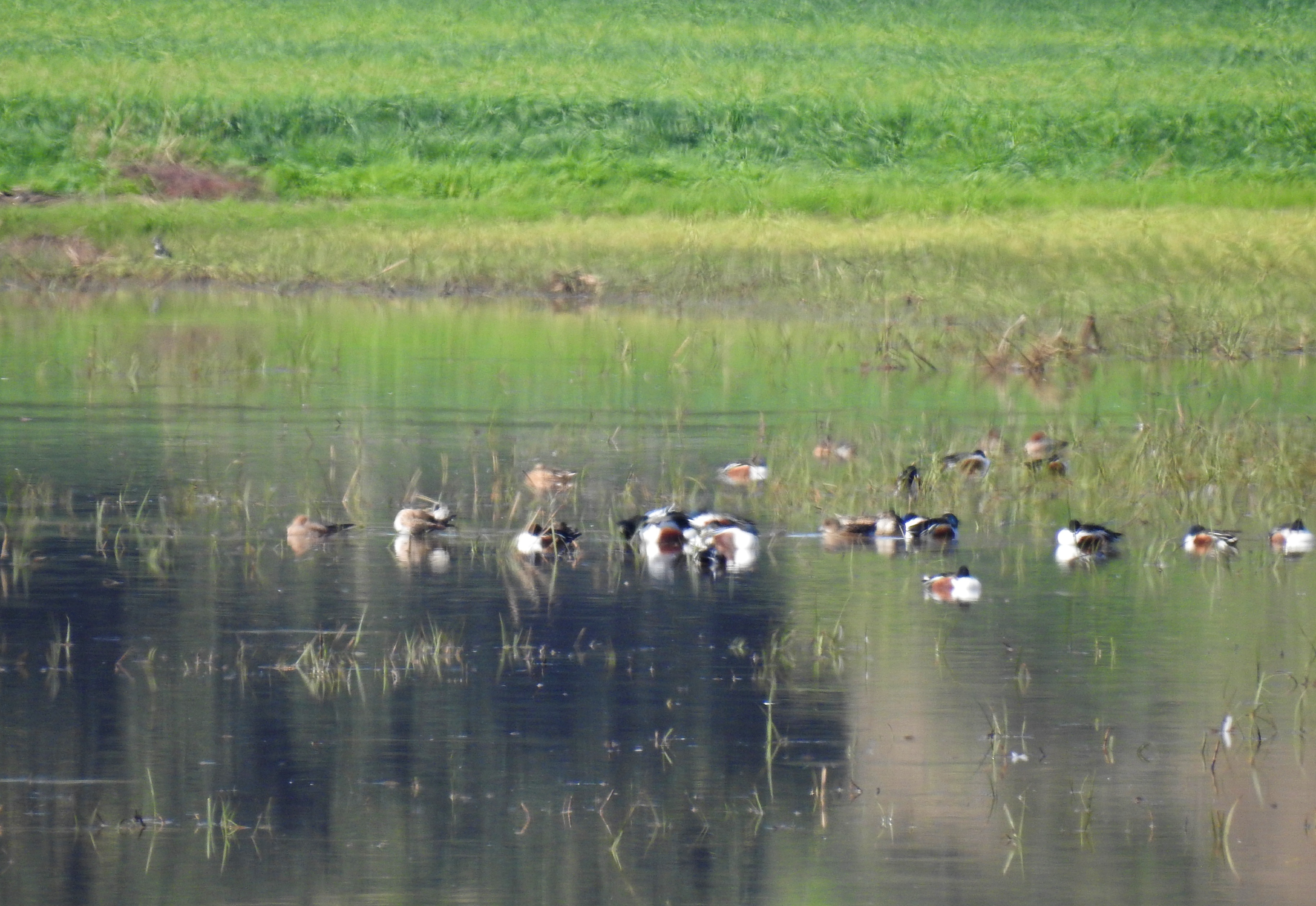
Resting waterfowl

Resting waterfowl

Still vehicular-less back then, we bussed to a nearby junction and walked our way to nature. It wasn’t long before we crossed a bridge into the natural area, and noticed a sign announcing Poleg Forest, surrounded by a whole slew of peeling eucalyptus trees. Yonder, just beyond the so-called forest was the first body of water – a large flooded area that formed a picturesque pond.

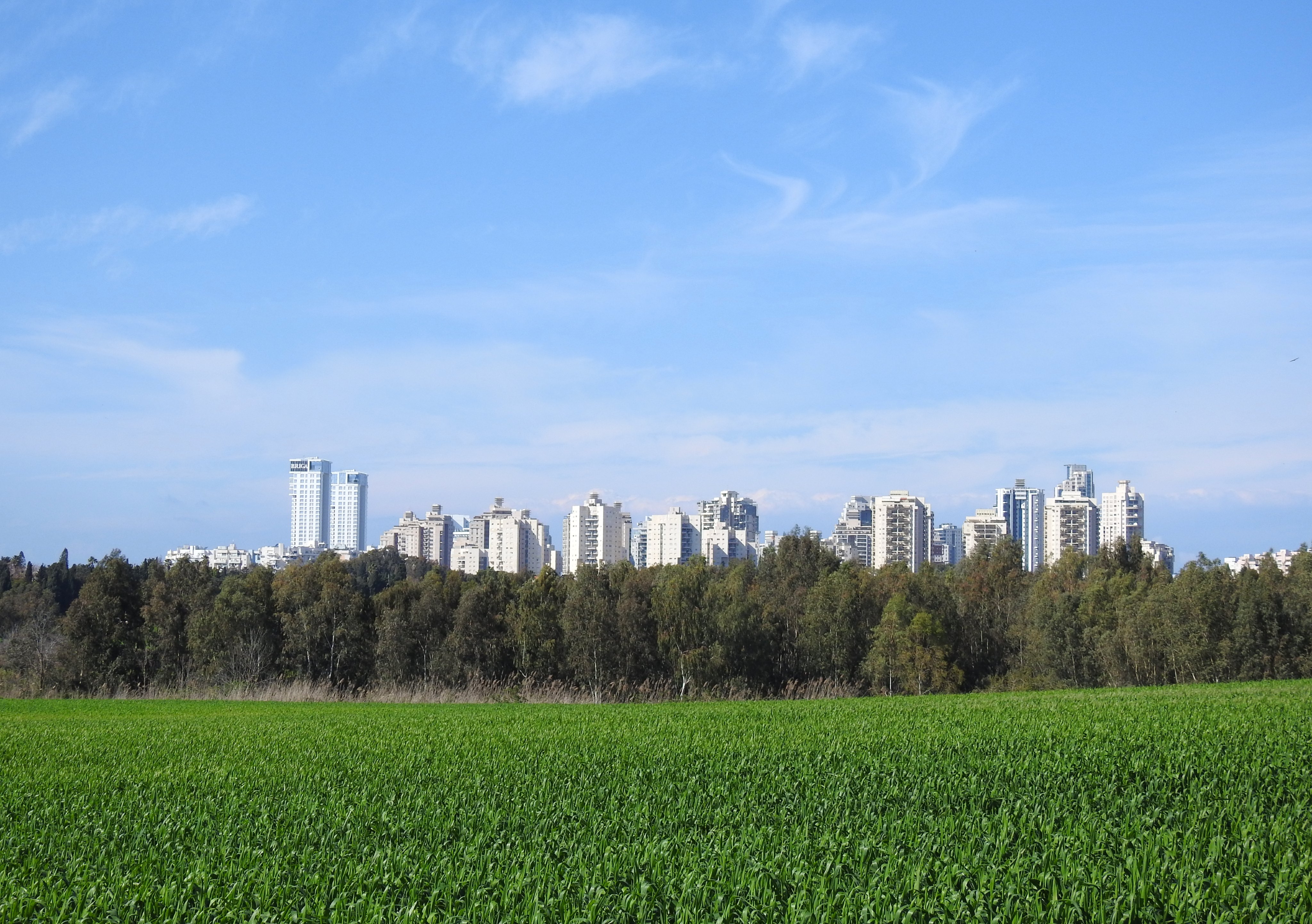
The marsh backdropped by Netanya

The marsh backdropped by Netanya

Scanning the water and waterline with both binoculars and camera, we were not disappointed. A good number of ducks were both traversing the pond, and dabbling along the edges. We identified a few species, including gadwalls, pintails, wigeons, shovelers, mallards and teals. A lone common buzzard sat pensively on some denuded branches, and a variety of songbirds flitted about here and there.

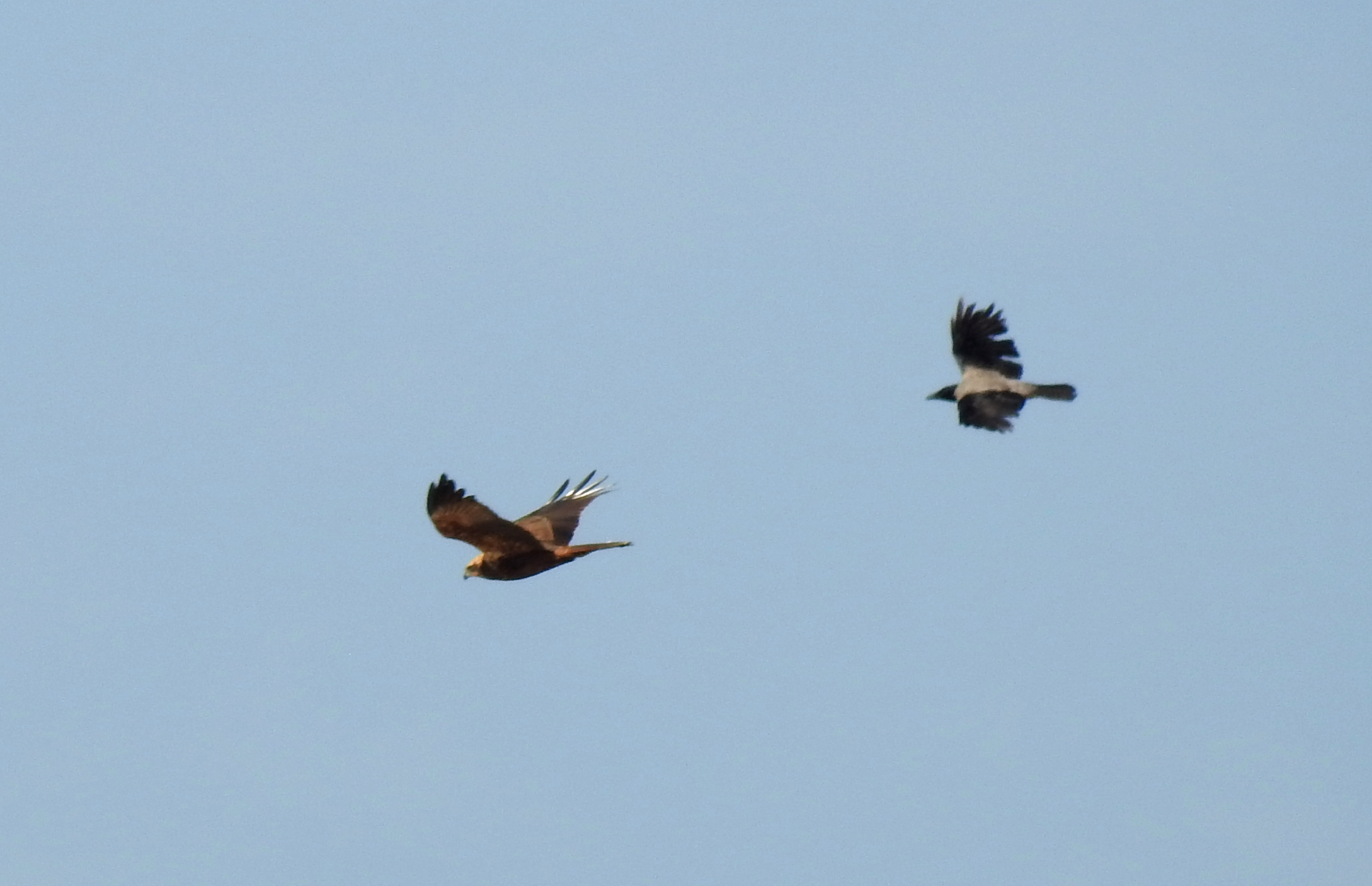
A hooded crow terrorising a marsh harrier

A hooded crow terrorising a marsh harrier

We continued down the muddy trail, dodging puddles and cyclists as we kept our eyes and ears peeled for signs of wildlife. A marsh harrier materialised overhead, as did a flock of rooks and a valiant robin, singing from the low trees. Up ahead was a large flooded field, hosting a variety of birdlife including waders such as northern lapwings, wood sandpipers and a black-tailed godwit.

The tranquil flooded field

The tranquil flooded field

It was tranquil watching the birds dip and dab in the shallow waters, largely ignoring our presence from the safe distance that we were. The only disturbances were trains that came thundering by, blowing their ear-piercing whistles in hopes to keep us off the tracks. These very tracks, built on an elevated ridge, split the marshland in twain, the water joined by culverts, underground aquifers and, most naturally, Nachal Poleg.

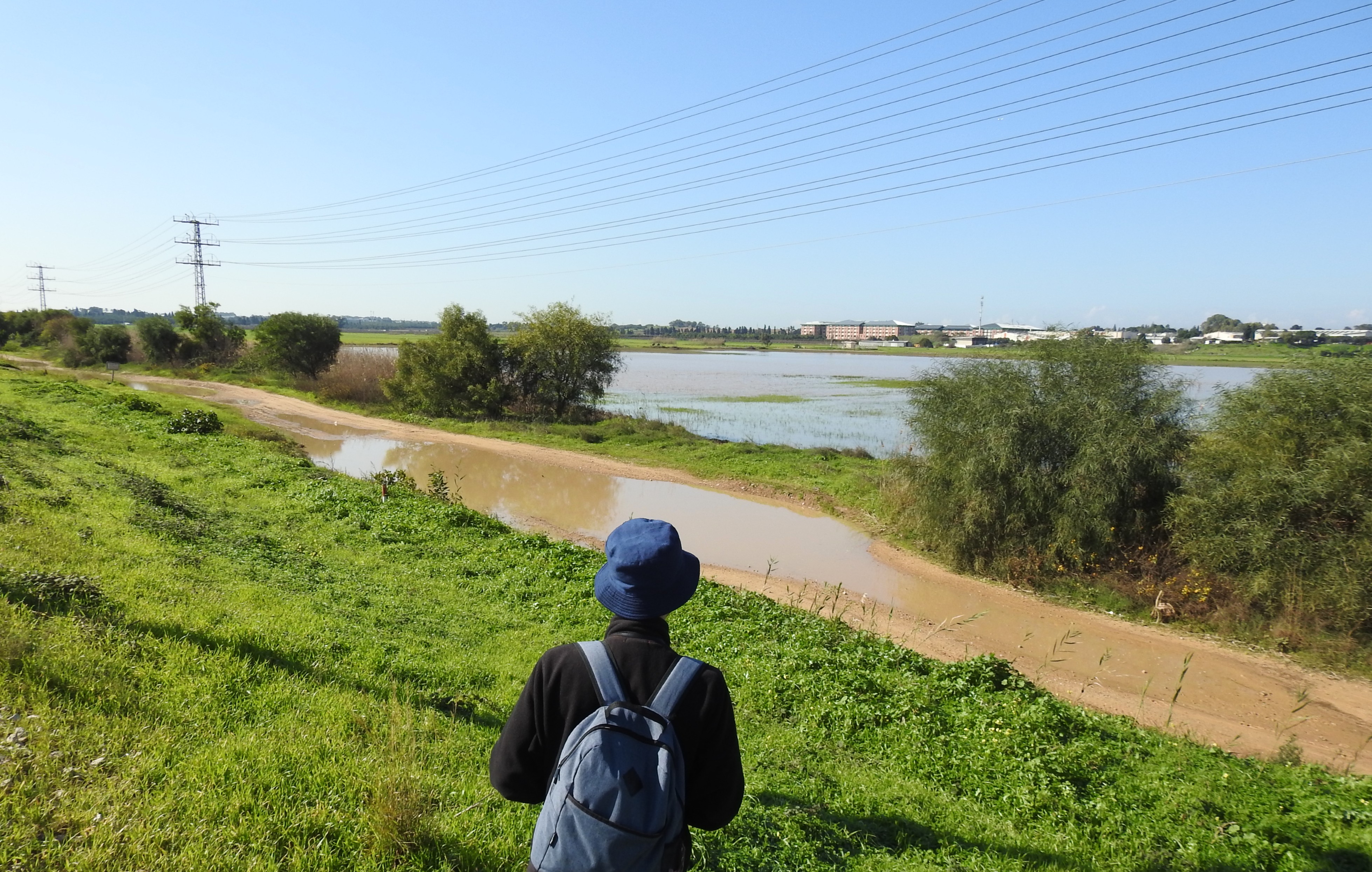
Walking along the train line ridge looking southwest

Walking along the train line ridge looking southwest

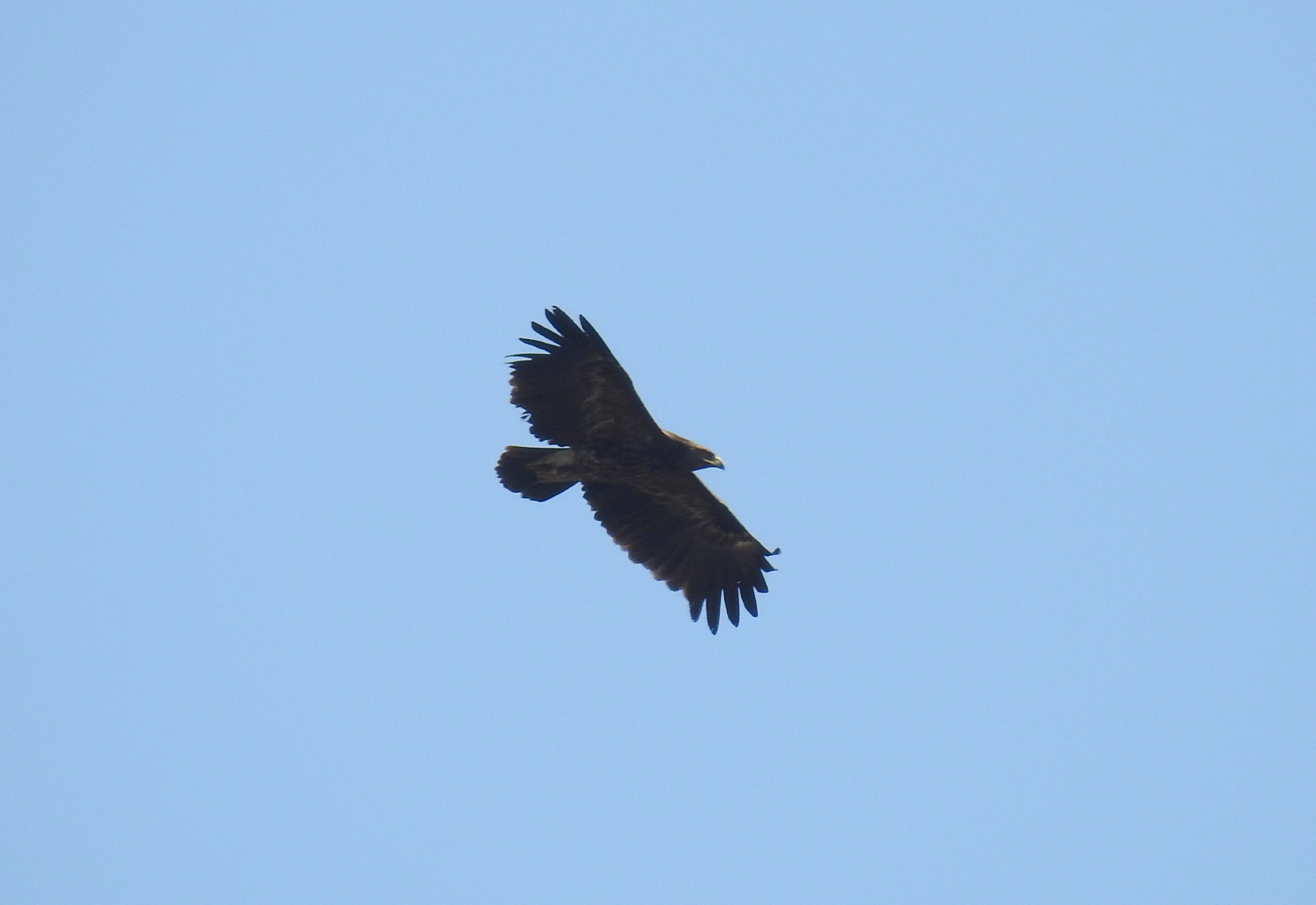
After seeing a small flock of skylarks feeding in the lush, wet grass, we crossed over the tracks to see the other – eastern – side of the marsh. Lo and behold, our efforts and wet feet were rewarded by a number of raptors, both perched and flying, before us. First, a greater spotted eagle swung by, and then a few more marsh harriers. A peregrine falcon whizzed by too, far too fast for me to photograph successfully.

Greater spotted eagle

Greater spotted eagle

Back on the western side, Adam decided to take a long look at the marsh water, hoping he could find some interesting molluscs or aquatic insects. I took the opportunity to wander off on a dirt road that traversed the flooded field.

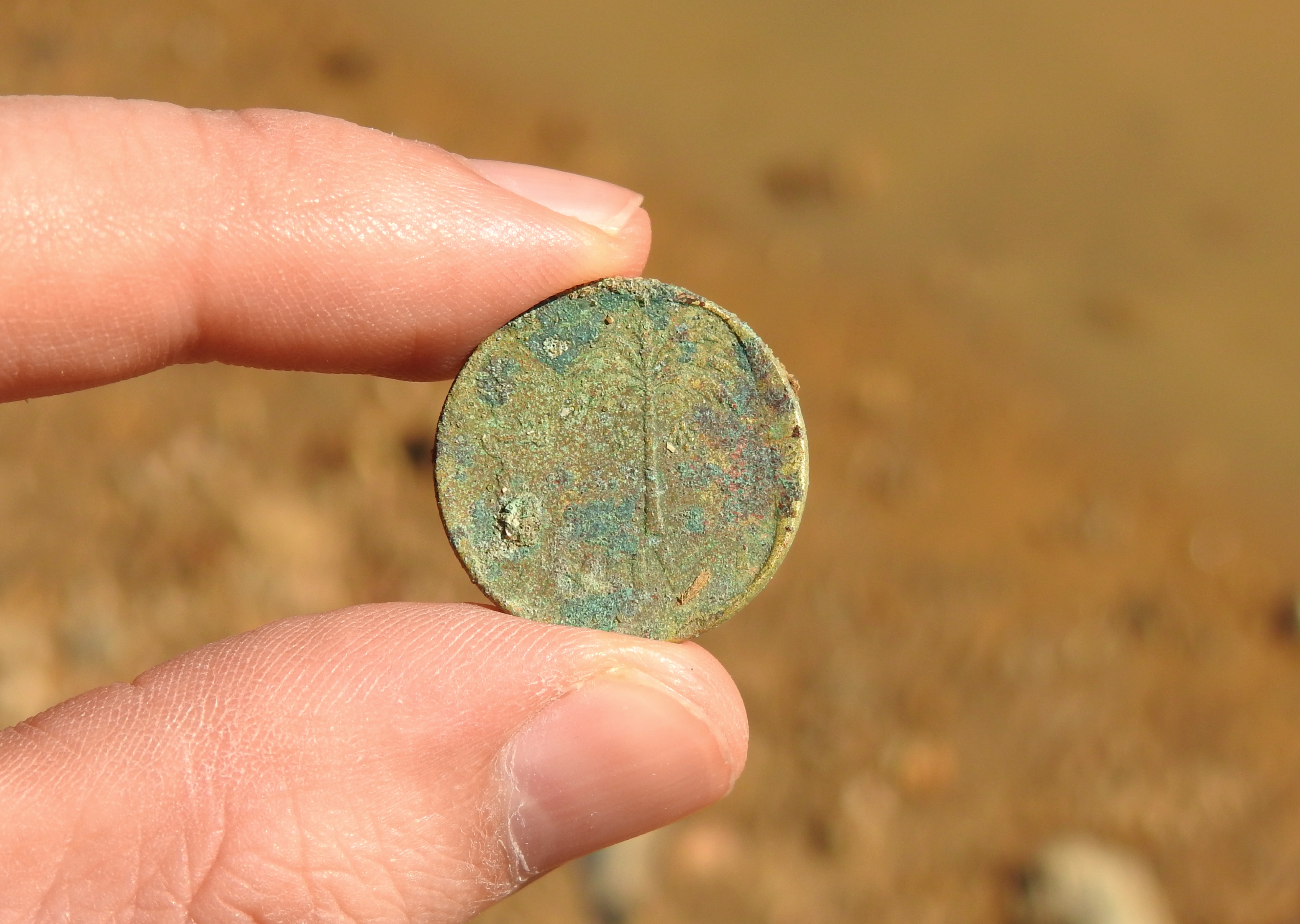
Some old Israeli coin

Some old Israeli coin

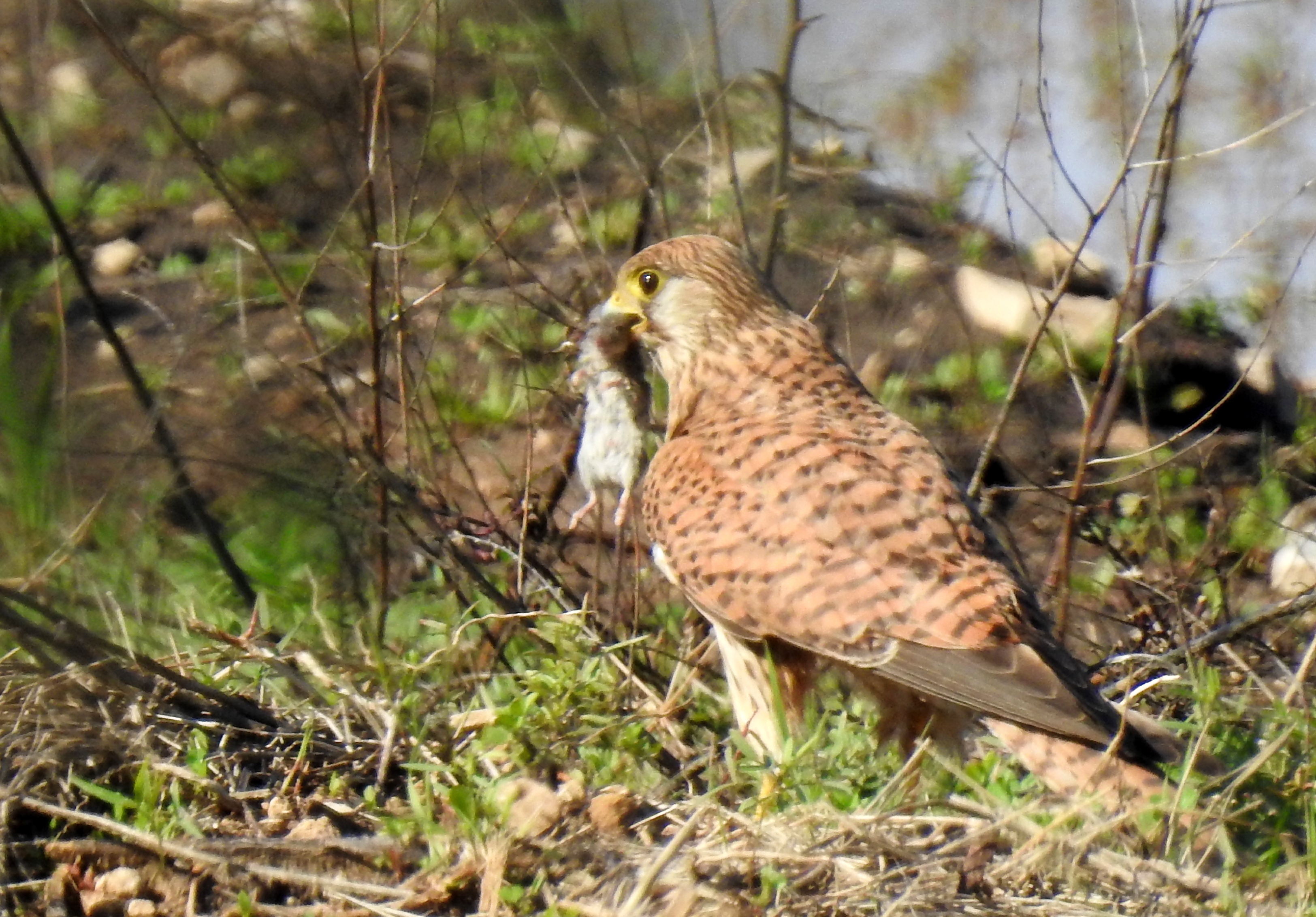
Upon finding an old, oxidised Israeli coin, I felt inspired to keep walking. Much to my excitement, I chanced upon a female kestrel catching a mouse – if only I was able to get some proper photographs of the moment.

Friends at play

Friends at play

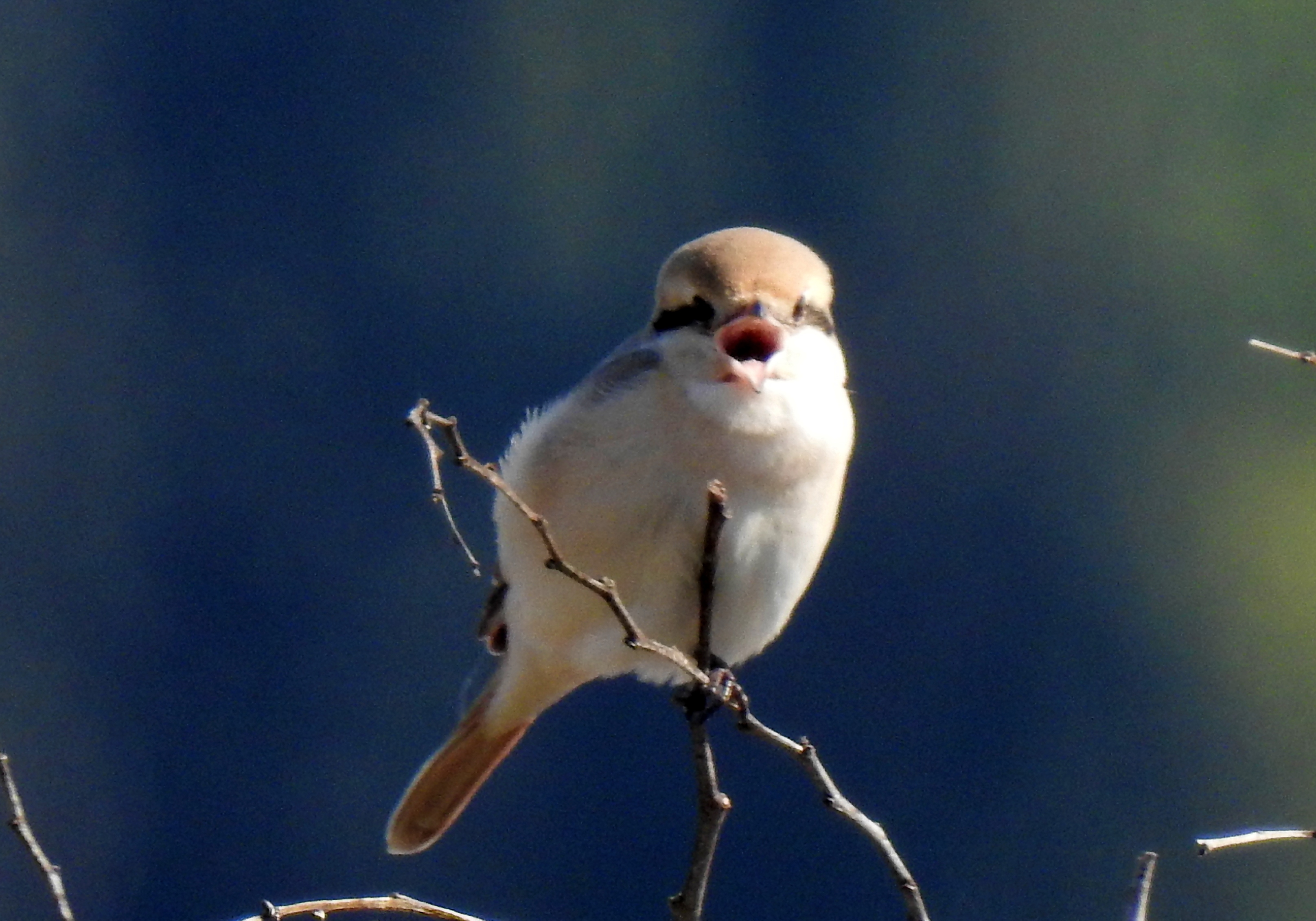
Some time passed before we crossed over once again to the eastern side, and so we enjoyed watching the wildlife carrying on before us. The herons squabbled in the channel, some Spanish sparrows clung nonchalantly to waving reeds, and some black-headed gulls passed overhead. Then, a shrike popped into view and revealed itself to be a moderately rare isabelline shrike – one which had been previously reported upon in local birding circles.

The isabelline shrike

The isabelline shrike

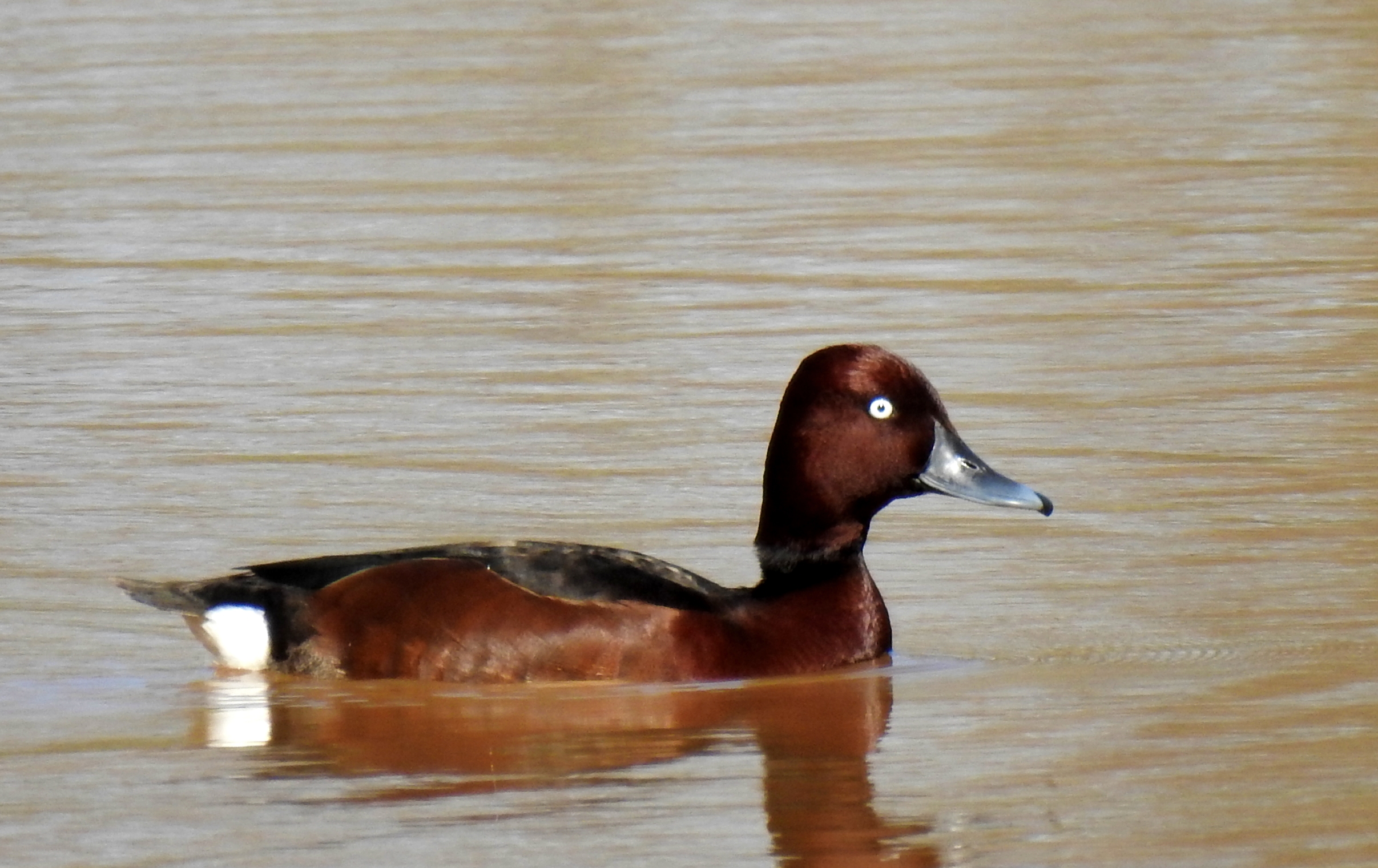
Looping back, walking back from whence we came, we crossed back over Nachal Poleg and made our way to the first flooded area we had seen. From there we followed a trail going north, and passed by a small nut grove, where handfuls of chaffinches were milling about. The trail continued westward, encircling the pond from the north. A few ferruginous ducks, spotted in gaps between the bushes, were an excellent addition to the day’s figurative checklist.

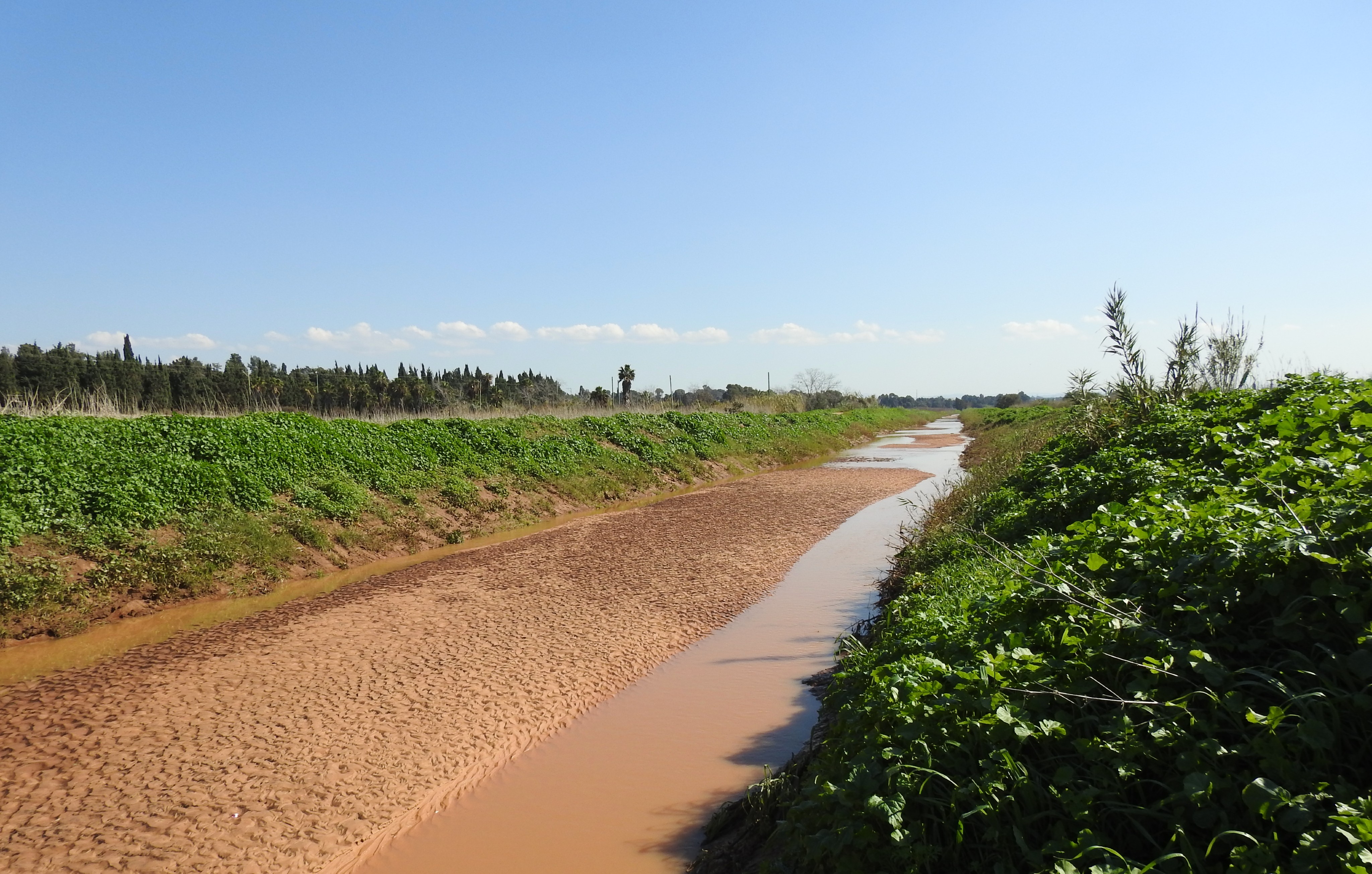
Muddy Nachal Poleg

Muddy Nachal Poleg

We scampered around the sludgy flooded bits, exploring the marsh’s northern extents. There wasn’t too much to see, but it was adventurous and that is what mattered most. When we had sufficiently wet our boots, we turned back around and began the hike back to a bus stop, this time choosing one further along the road to the north.

Ferruginous duck floating by

Ferruginous duck floating by

One thing about the Poleg marshes which interests me so much is the fact that this area, similar to others along the coastline, is essentially a basin in the sandstone bedrock infrastructure. With the coast being hemmed by a kurkar ridge, the winter’s rainwaters and surface runoff makes its way to the sea only to be trapped by the impervious ridge. This essentially turns the land east of the ridge into a seasonal marsh, which, throughout history, had hampered settlement opportunities.

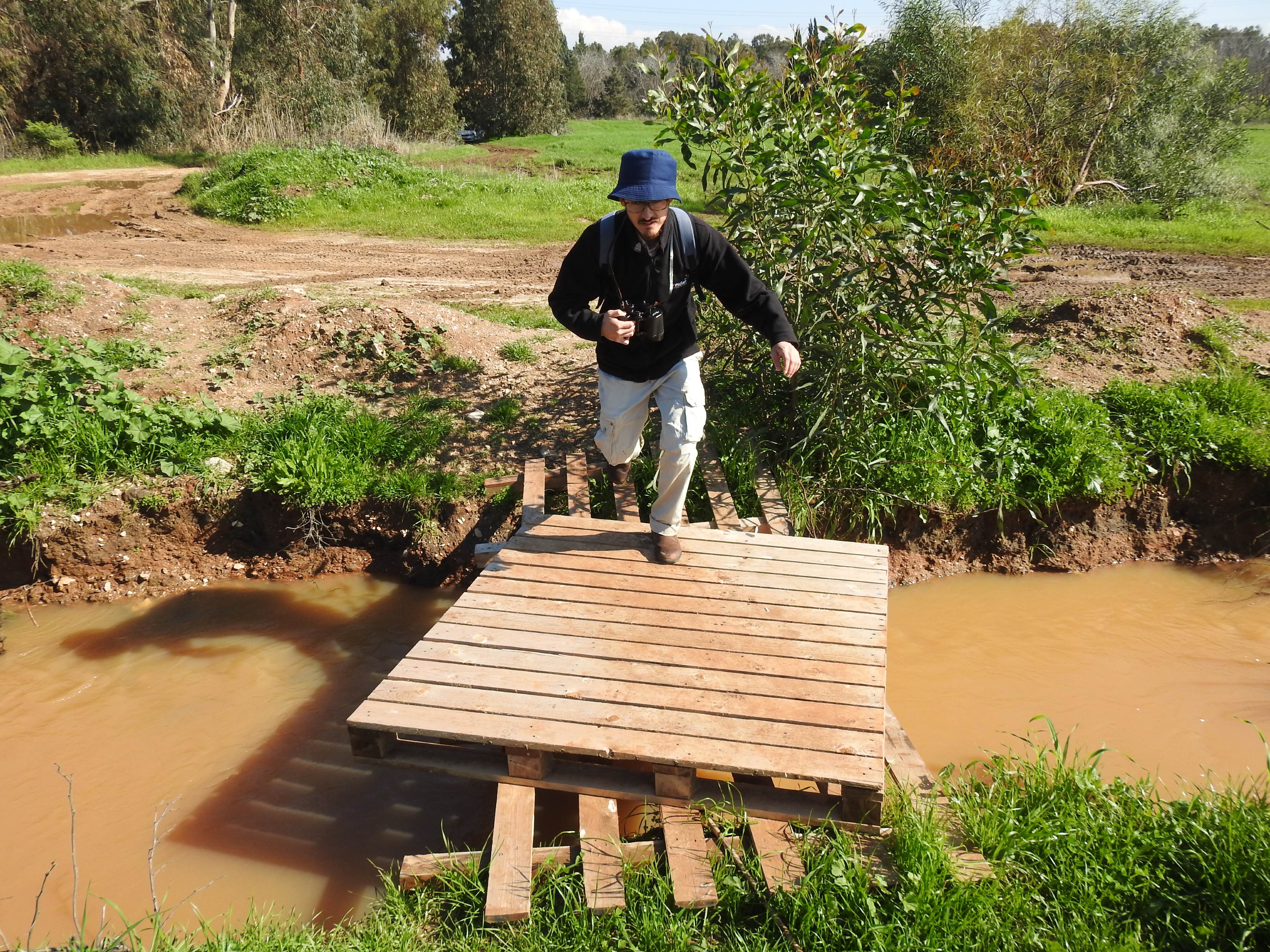
Practicing safe crossings

Practicing safe crossings

In efforts to alleviate the backed-up waters, a hole in the ridge along the course of the stream was carved out in ancient times. The Romans improved upon the structural work, and the site became known as Sha’ar Poleg in recent times. However, other neighbouring coastal regions still remained flooded. About ten kilometres to the south, in modern day Herzliya Pituach, the Byzantines had actually hewn an underground drainage passage in the ridge, thereby draining that area too.

Our final views before boarding the bus back home

Our final views before boarding the bus back home

While this trip only really focused on the marsh, I still hope one day to be able to get a closer look at both of these man made engineering feats of old. But, for now, I just have the memories from this episode and an excellent video produced by Kan (see HERE), which explained the water saturation issue that I had outlined above, as inspiration for future adventures.

Qaqun

In Coastal Plain, Israel on August 24, 2021 at 2:41 PM

In the beginning of June I was fortunate to embark on yet another adventure with my friend Avner Touitou, fellow Medievalist and MA student at BIU. Following our theme of visiting lesser-known Crusader sites, such as Khirbet Luza, Ashdod Sea Fortress, Le Destroit and others, this trip focused on the old Crusader ruins of Qaqun. Yet, after Avner picked me up from a pre-designated junction, we had a few places to visit before we made our way to the ruined castle.

Qaqun fortress

Qaqun fortress

Our first destination was Nachal Alexander, which I already visited in 2018 and 2019, but this was Avner’s first time. We took a temporarily redirected route along the Israel National Trail from the mouth of the stream towards Khirbet Samara, a house built in the end of the 19th century by the Samara family of Tulkarem in order to oversee their watermelon fields in the nearby land. From there we continued on to Mikhmoret, a coastal moshav, where we enjoyed the warm waters of the Mediterranean. From there we headed to get lunch at the chic Haoeh Bacafe café, in Kfar Haroeh, a moshav named after the late Rabbi Kook of religious-Zionist fame.

Having a bit of lunch

Having a bit of lunch (photo Avner Touitou)

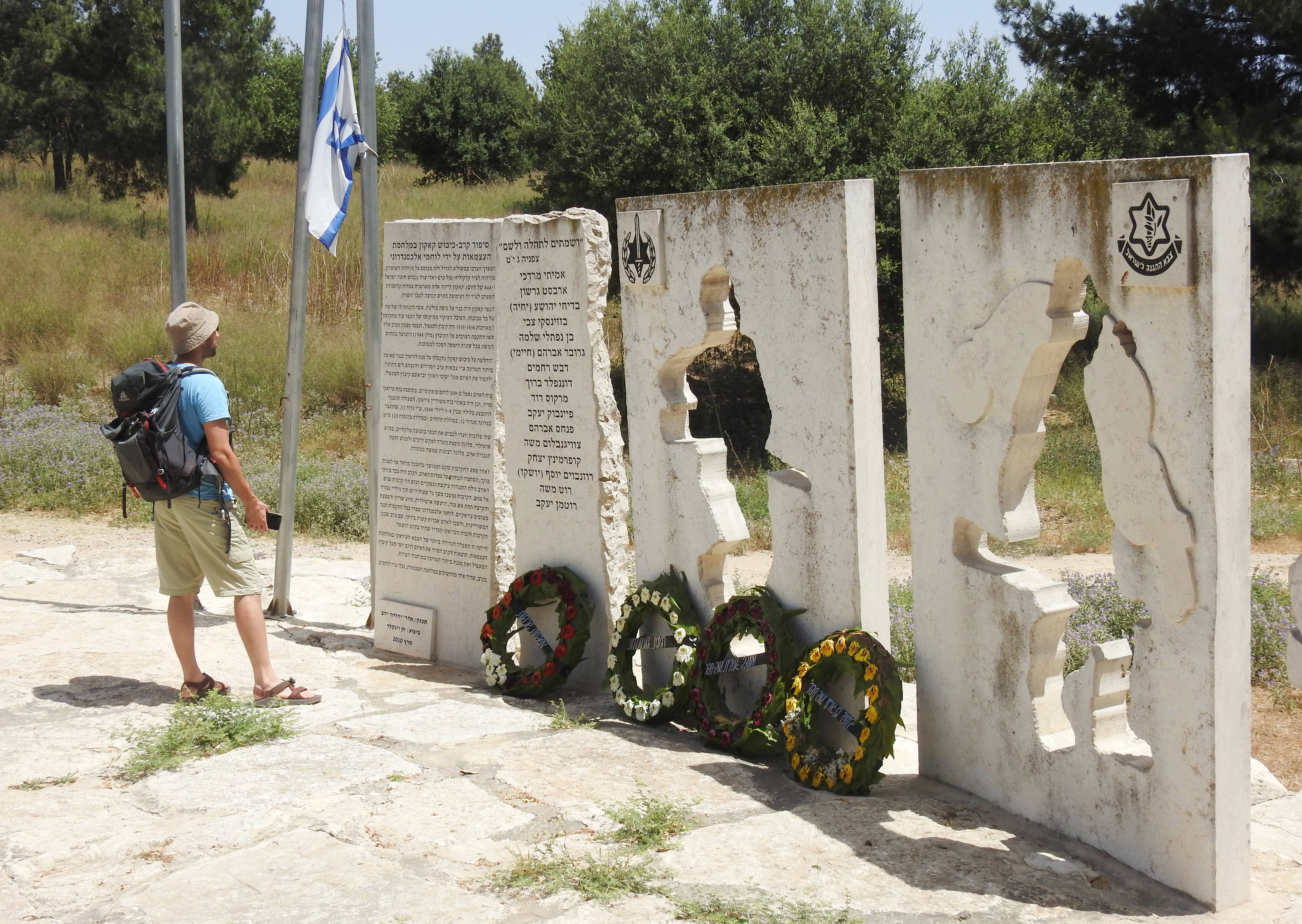
After some artisanal pizza and iced coffee with ice cream we gathered ourselves up and made our way to the star destination of the day, the Crusader ruins of Qaqun. Upon parking, we made note of a large war memorial dedicated to the 1948 battle for Qaqun. The Alexandroni Brigade attacked, conquered and then held off a small army of approximately 200 local Arab troops, as well as Iraqi tanks and infantry. It was a bloody battle; it was the greatest Iraqi loss in the war, and sixteen Israeli soldiers were killed as well. We read the story as inscribed on the memorial stone, paid our respects and then began our ascent of the fortress-crowned hill.

The Battle for Qaqun monument

The Battle for Qaqun monument

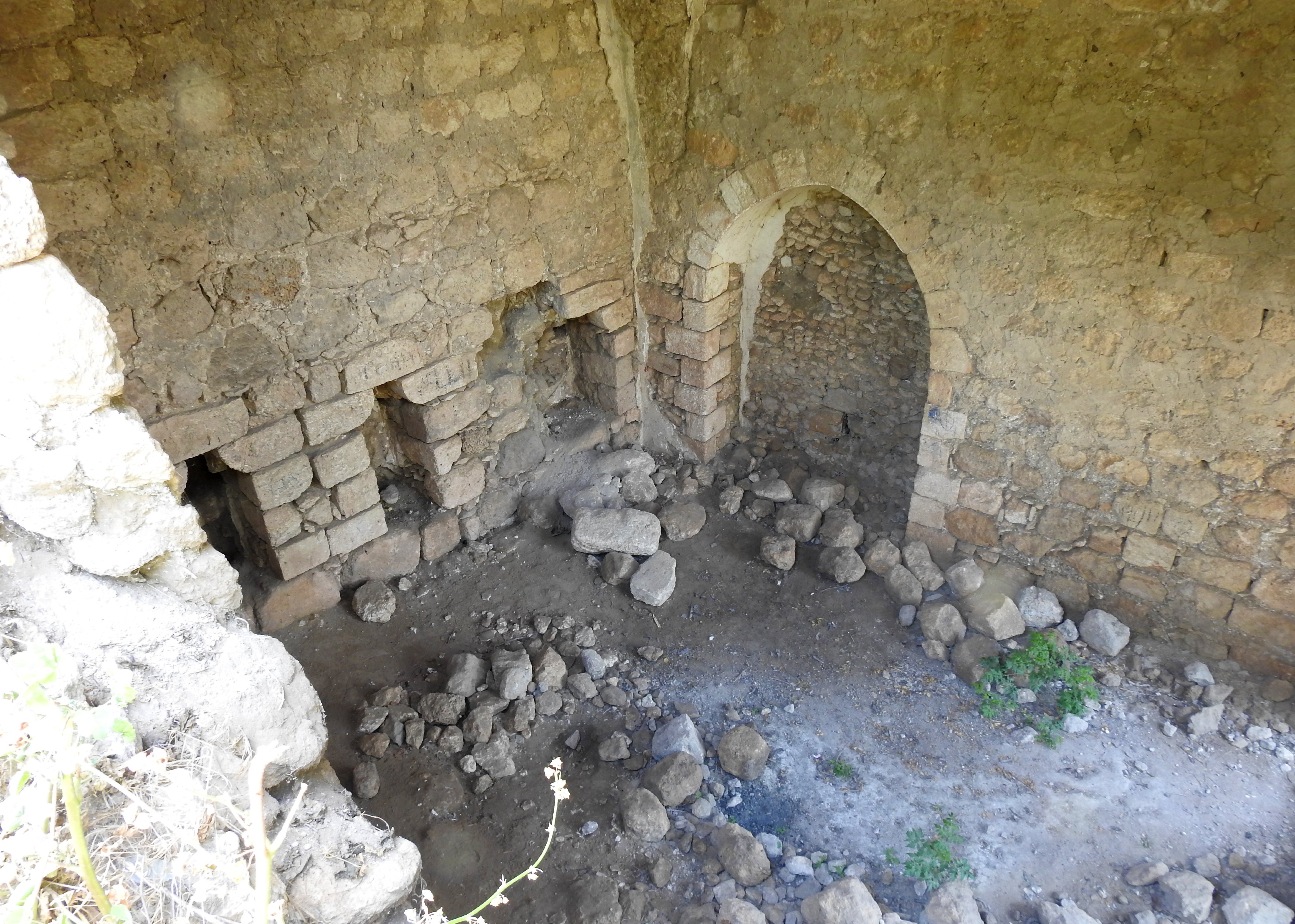
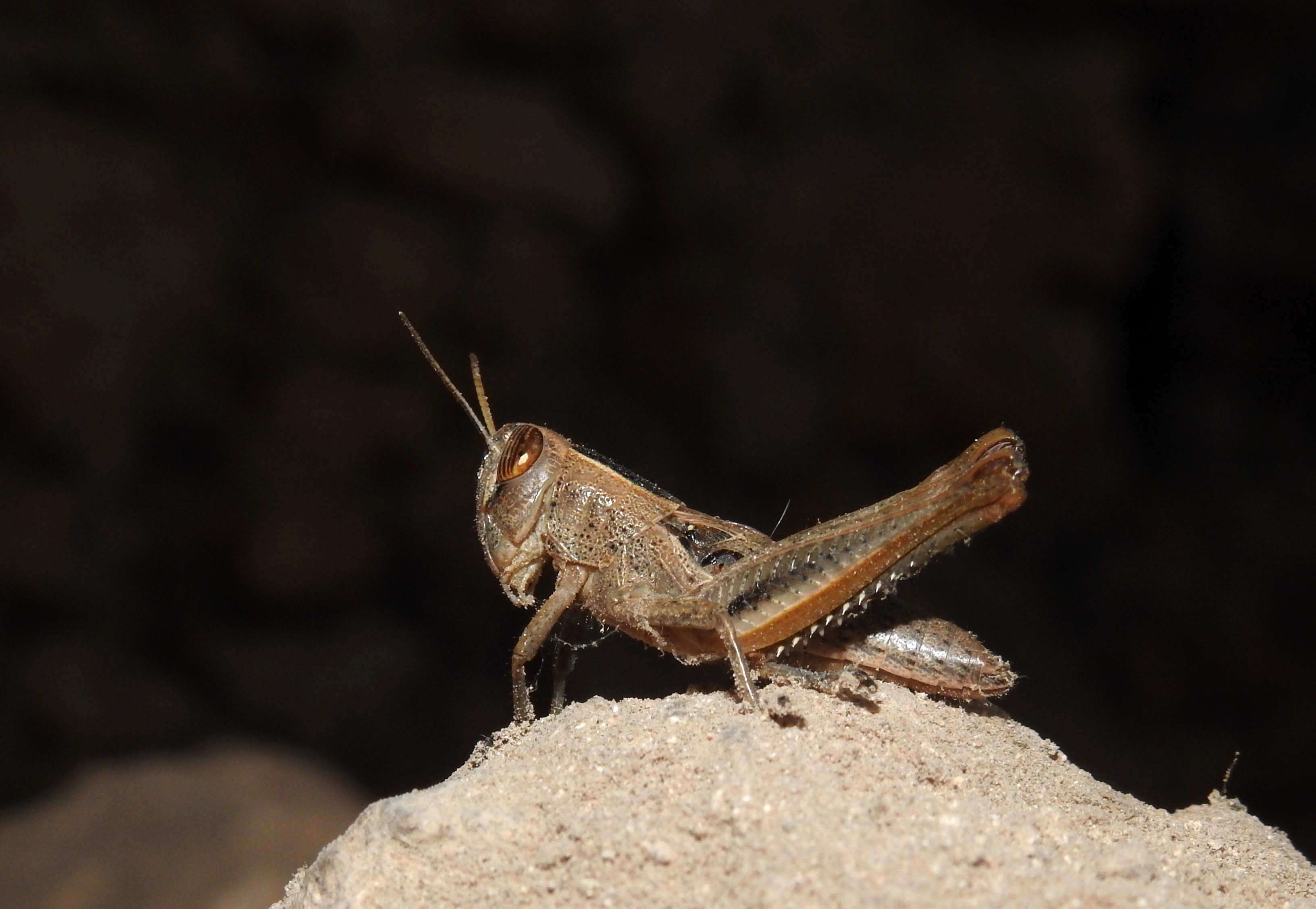
The first structure we came across was what is believed to have been a mosque, a two-story stone building which was built where a church once stood. Inside, we found a nice square room complete with a mihrab, a prayer niche in the wall facing Mecca, and three smaller niches of unknown purposes. A fruit bat skeleton and a lone grasshopper – which posed beautifully for me in the dark room – were the only other life forms of interest within the structure. With the main attraction up ahead, we climbed out of the mosque ruins and made our way to the fortress just a few dozen metres away, passing a buzzing beehive tucked into a recess in the ashlar wall.

Peering into the church/mosque

Peering into the church/mosque

Aided by the excellent, if brief, overview of the fortress from Pringle’s fantastic handbook entitled Secular Buildings in the Crusader Kingdom of Jerusalem, we digested the relatively brief history of Qaqun. While remains from earlier periods have been found on-site, the Crusader fortress was first mentioned in 1123, and then referenced again in 1253 as being controlled by the lord of Caesarea. Just twelve years later it was conquered and refortified by Baibars, of Mamluk fame.

A calm grasshopper within the ruined church/mosque

A calm grasshopper within the ruined church/mosque

A subsequent attempt to recapture it by King Hugh of Cyprus and Prince Edward of England failed, and the fortress remained in Mamluk hands, becoming a regional headquarters to replace the role of nearby Caesarea. The exceptional and trustworthy BibleWalks website shed more light on the later history, stating that Qaqun was the site of a desperate battle between the defending Ottomans and the French military expedition under Napoleon in 1799, which resulted in a French victory. The fortress saw violence and destruction again in 1834 when a local uprising was quelled by the Egyptian Governor Ibrahim Pasha.

Fine Crusader masonry

Fine Crusader masonry

Most recently, the site was surveyed in 1983 by the aforementioned Pringle, and then, in 2007, the Israel Antiquities Authority (or, IAA) launched a conservation project to clean up and somewhat reconstruct the fallen ruins. Naturally, Avner and I fantasized about excavating the fortress ourselves, and we discussed where we would start and what we thought we might find where. But first, before we entered the impressive stone structure, on a wood platform that overlooked the green fields to the east, there was another sign about the 1948 battle with a more in-depth look at the fallen Israeli soldiers.

Remains of the fortress' outer walls

Remains of the fortress’ outer walls

Turning to the ruins, we entered the fortress via a narrow opening in the thick stone walls. Within, we found an overgrown “secret garden” scenario, where the ruins themselves were often hard to see. We scoured the inner chambers, and wondered out loud what lies buried deep below the surface buildup. The two-story interior had been reduced to one uneven layer, but the tops of the arched rooms below still showed, offering glimpses to hidden and long-forgotten chambers filled with decades, and even centuries, of dirt.

Within the ruined fortress

Within the ruined fortress

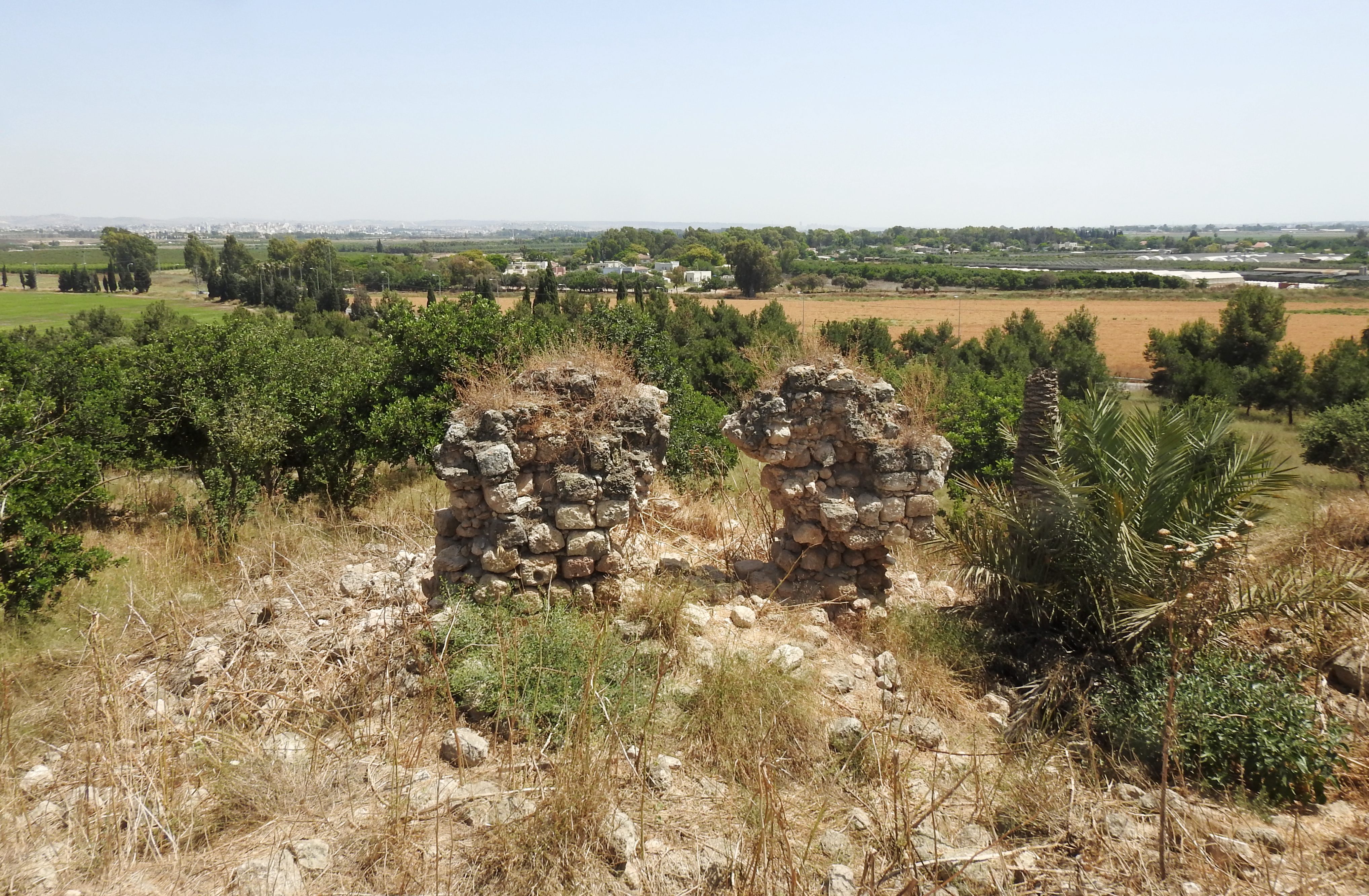
One notable addition to the sturdy stone construction was a ceramic pipe connecting between the two floors. According to BibleWalks, this pipe served as an archaic telephone of sorts – providing a way for people within the fortress to communicate with each other in an easier, more efficient way. I wonder if the ceramic pipes in Montfort Castle, another Crusader ruin, were installed for the same purpose. At any rate, we continued on through the interior and exited via a small staircase that took us to the outside, this time at the north side of the building. We found that the entire western side of the fortress – a series of large vaulted rooms – was a relatively inaccessible mess of displaced stone blocks and more overgrown vegetation.

The western side of the fortress

The western side of the fortress

With that our tour of Qaqun was essentially over, so we headed back down the hill to Avner’s parked car. Scouting the area around us, we briefly contemplated making a quick detour to check out the lone standing Crusader fortress wall at Khirbet Bergth (or, Bourgata), but decided not to due to the developing traffic on the main roads. So, we made our way back down to our respective homes, bringing an end to yet another successful Crusader-themed adventure with Avner Touitou.

Tel Abu Shusha & Nearby Sites

In Coastal Plain, Israel on November 22, 2020 at 10:58 AM

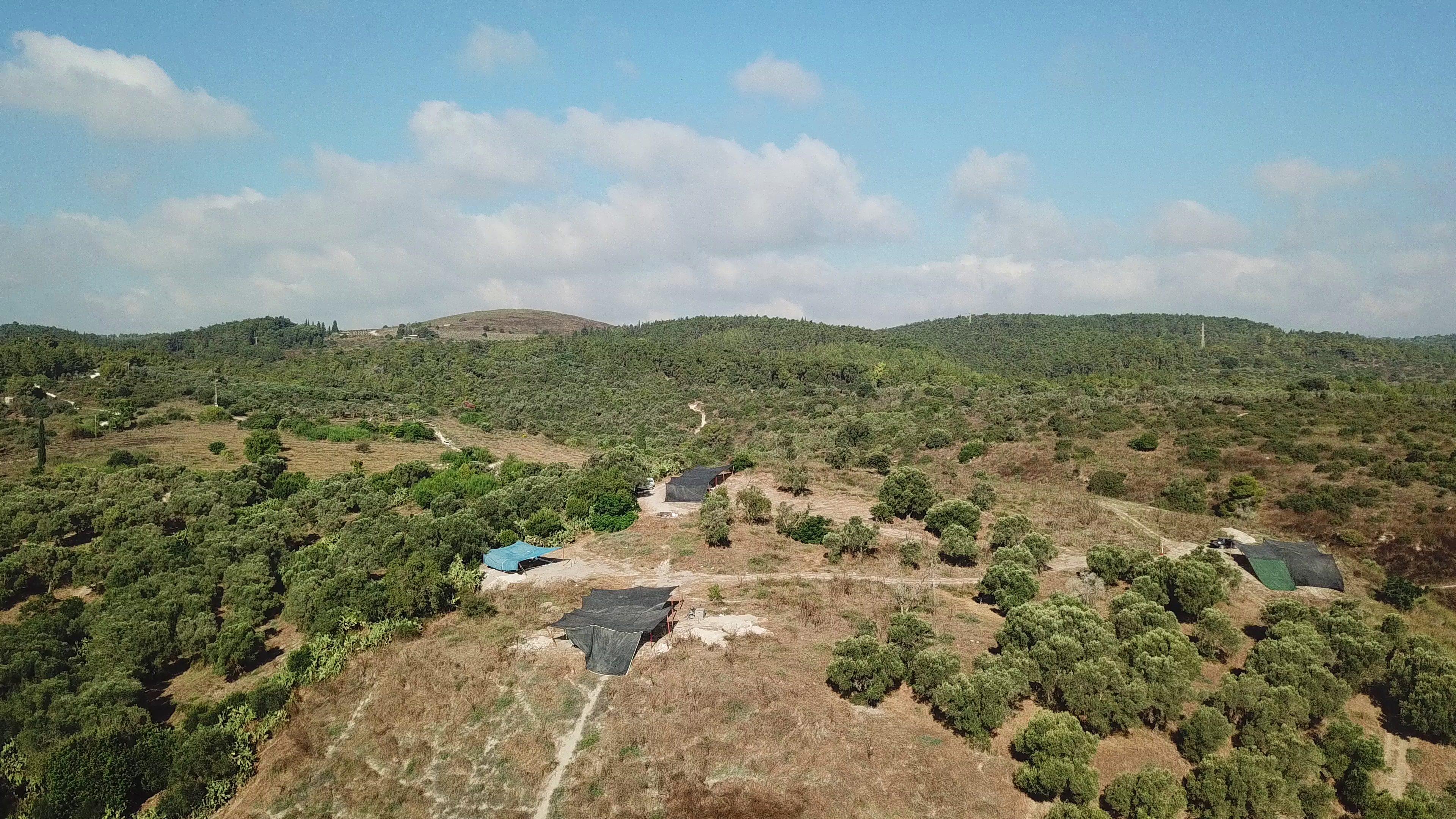
My next wild adventure took place in the end of August, when I visited the Tel Abu Shusha excavations with my friend Avner Touitou. With the annual Tel es-Safi excavations canceled due to coronavirus, our department ended up opening a brand new dig under the direction of Dr Avner Ecker. This dig, Tel Abu Shusha, is located at the western end of the Jezreel Valley, in the Ramat Menashe park on the southeastern slopes of the Carmel range. This site has been identified as Geva/Gaba, mentioned by both Egyptian pharaoh Thutmose III and Roman-Jewish historian Josephus.

Tel Abu Shusha excavations (photo from drone footage filmed by the expedition)

Eager to have the chance to make a promotional video for my department, I put in all the right calls and we were expected to arrive at the site Thursday morning, towards the end of the first week of digging. I met up with Avner and we drove up to the tel, not knowing exactly where to find the crew. We wandered around a wee bit, under the watchful eyes of a kestrel and alpine swifts, until at last we found the first of the three tented dig spaces. It was joyous reuniting with old friends, as it is the members of our shared department that were the sole excavators this season – due to the exhausting coronavirus regulations.

Avner and Yaniv, an area supervisor

It was an unusual feeling visiting an archaeological excavation without feeling that I need to be physically working. I’ve been to so many digs, as academic fieldwork, volunteering and even for pay, yet this was the first time I was just a visitor, a spectator with a touristy camera. Immediately I began filming and taking pictures, already anticipating the finished video, as Avner caught up with the area supervisor. I soon found out that if one was to view all three excavation sites from above, this was the one facing north (the others facing east and southeast). The students were eager to show us that they were excavating above an exposed wall of crooked ashlars, of which they are trying to reach from above.

View of the Jezreel Valley to the east

We gradually moved on to the second dig site, a tented area overlooking the expansive Jezreel Valley, a patchwork of brown, green and blue. More friends awaited us and we joyously chatted as we examined the team’s progress in their excavated squares. It was while I was taking in the majestic view that my birder eyes spotted something fantastic. In the distance, nearly eye-level over the fields below, I could make out a handful of soaring raptors searching for prey. I took some photos to confirm that these were, in fact, short-toed eagles – about ten of them – ever so faintly visible to the naked eye. I then noticed that there were some nature photographers in cars in the valley, likely waiting for an eagle to swoop down for a kill.

The crew working hard to clear away the topsoil

Minutes and minutes of digital film were recorded as we then moved over to the central staging area tent, where communal activities such as eating and congregating are done. There we met Dr Ecker, who was delighted to see us, as well as an archaeology-loving patron named Dotan who helped fund this first season. While Dr Ecker ran off to attend to some director duties, we continued on to the third of the dig areas, the one facing southeast. This is the largest of the three and comprises two tented areas, under the supervision of yet another friendly face.

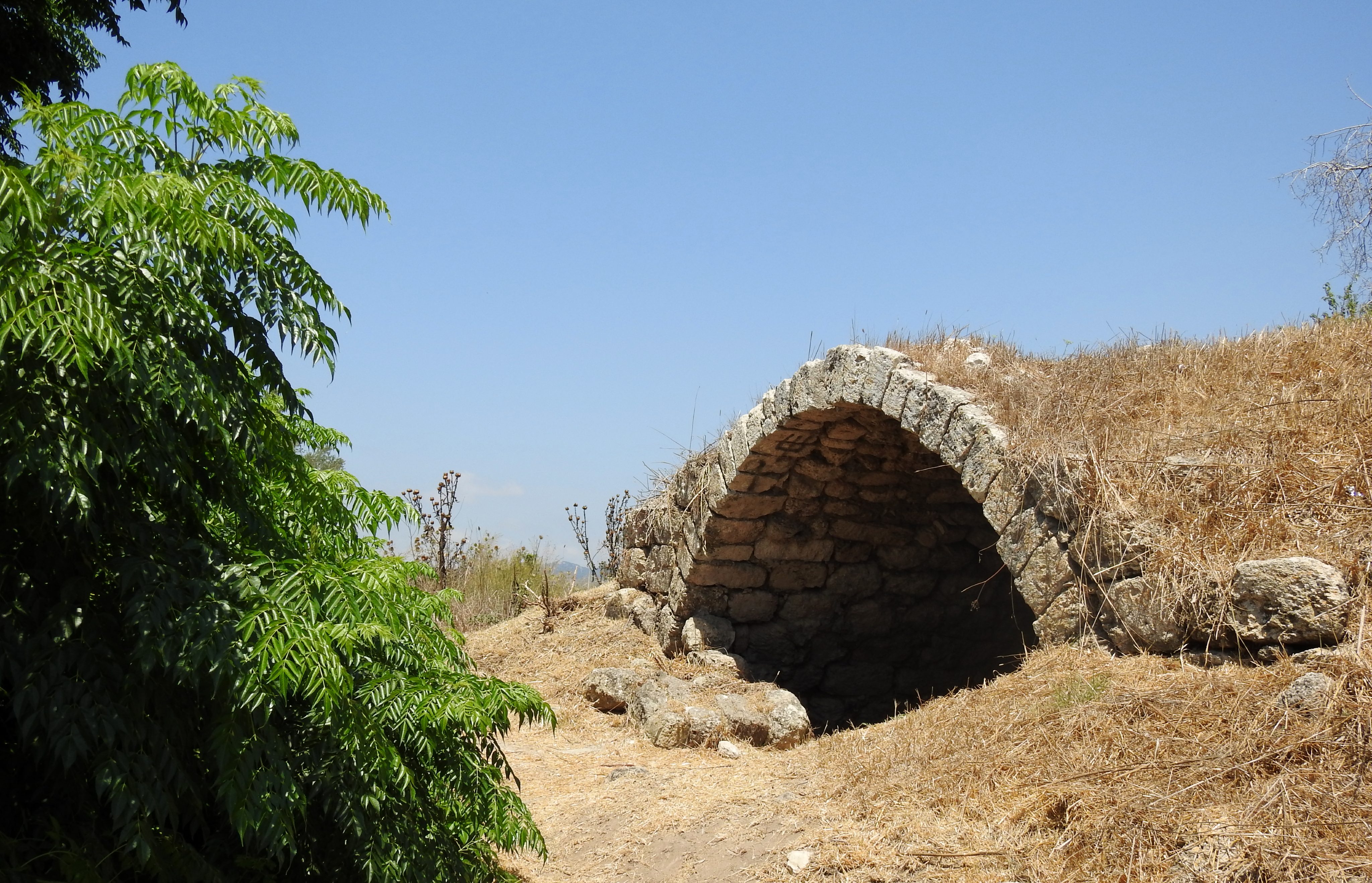
Vaulted structure atop the hill

We passed a small vaulted structure which forms a little hill between the communal tent and this area, and to the best of my knowledge, the exact history behind it is yet to be known. We explored this final area, learning more about the work being done as I poked around here and there making sure I was getting good footage. Although we were visiting just the first week, the team was making excellent headway and I look forward to seeing a report on the season whenever it shall be released. As far as excavations go, this one struck all the right chords: location, weather (breezy), interest and the most important, friendship.

Noam is another of the area supervisors

In fact, when we were finished with our visit we almost felt bad leaving as we were having such a nice time. We were greatly impressed with what we had seen, and we hoped to ourselves that the team finds something truly exciting to help push that happy feeling over the edge. Alas, we had a few more places in the area that we wanted to check out, so we bid farewell and made our way back to Avner’s car. Now would be the perfect time in the retelling of this tale to share the video I edited:

Next on our list was a nearby cave, known as the Palmach Cave as it served as a training site for some of the Palmach’s secret paramilitary units, but unfortunately it appeared to be closed without a prior reservation. We were also hoping to visit a nearby spring, to dip in cool waters, but that too seemed less available in our immediate vicinity. Determined to salvage our plans, we decided to first get lunch (schnitzel baguettes) in nearby Yokneam and then to formulate a new plan of action.

Be’er Tivon (or Tivon Well)

Satiated and ready to move on, we decided to visit a tiny watering hole that I first encountered in the army, Be’er Tivon (or Tivon Well). It was a bit of an adventure trying to reach the pit, with a small anti-cow electric fence and then the moody cows themselves, but at last we made it. However, when we gained entrance to the tiny structure – quite literally the size of a prison cell – we saw that the water was rather dirty with mud, and quite possibly contaminated by the friendly cows’ waste. Regardless, we decided to skip the dip and instead headed back to the car, past the cows and the electric fence.

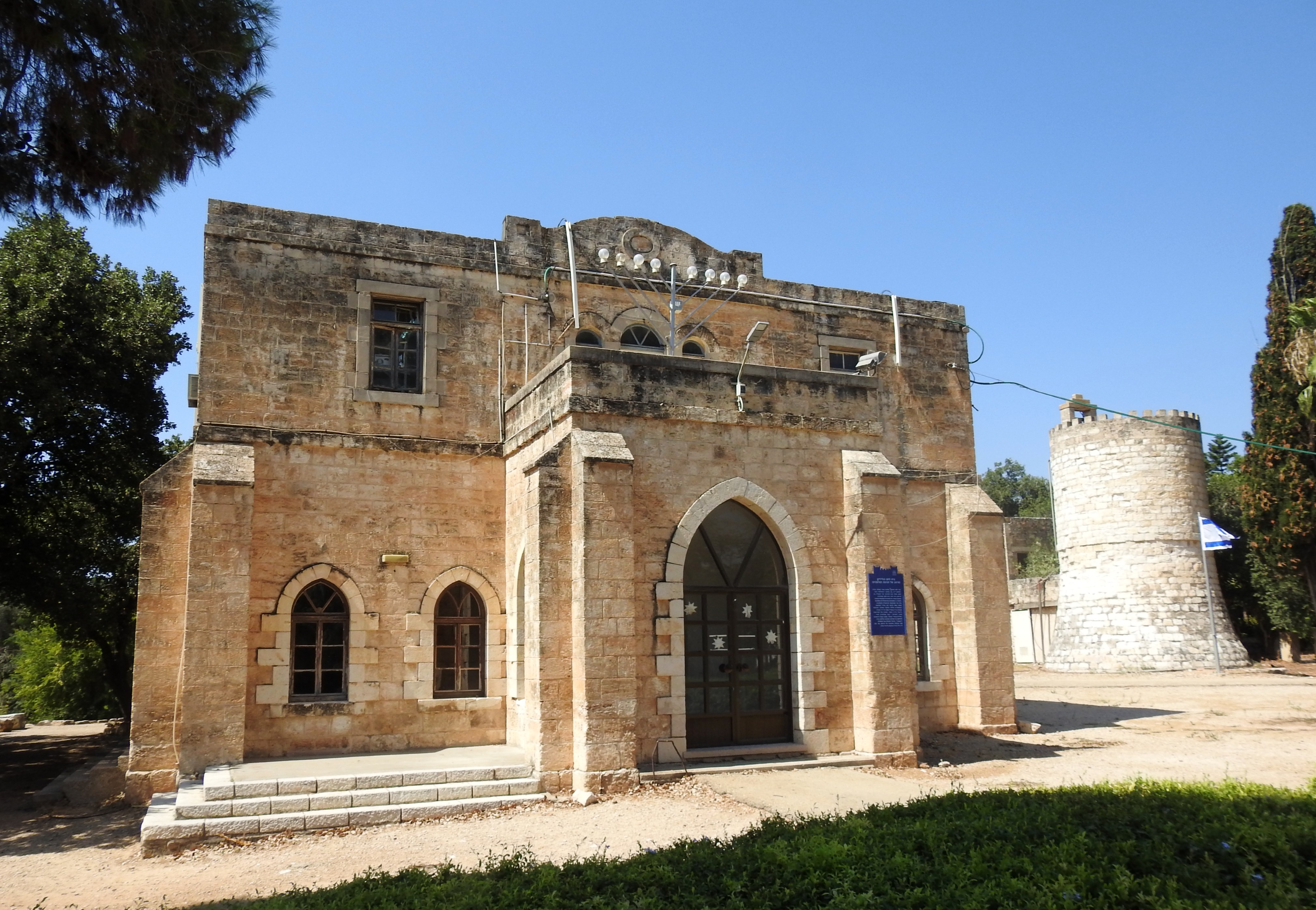
“The House of the People” in Bethlehem of Galilee

Since we were so close, Avner decided to show me two places that he’s known for years (he also works as a tour guide). While I had heard of them, I had never actually been, thus this was the perfect opportunity for him to give me a quick tour of some key sites in Alonei Abba and Bethlehem of Galilee, two moshav villages established side-by-side in 1948. We started in Bethlehem of Galilee, originally a Roman and Byzantine village, which saw a revival in the 1890s when German Templers purchased the land and built stately stone houses for their colony. Alonei Abba was another Templer colony, founded in 1907 and named Waldheim. Both these colonies were cleared during WWII, the German residents expelled by the ruling British Mandate government due to their partial support of the Nazis.

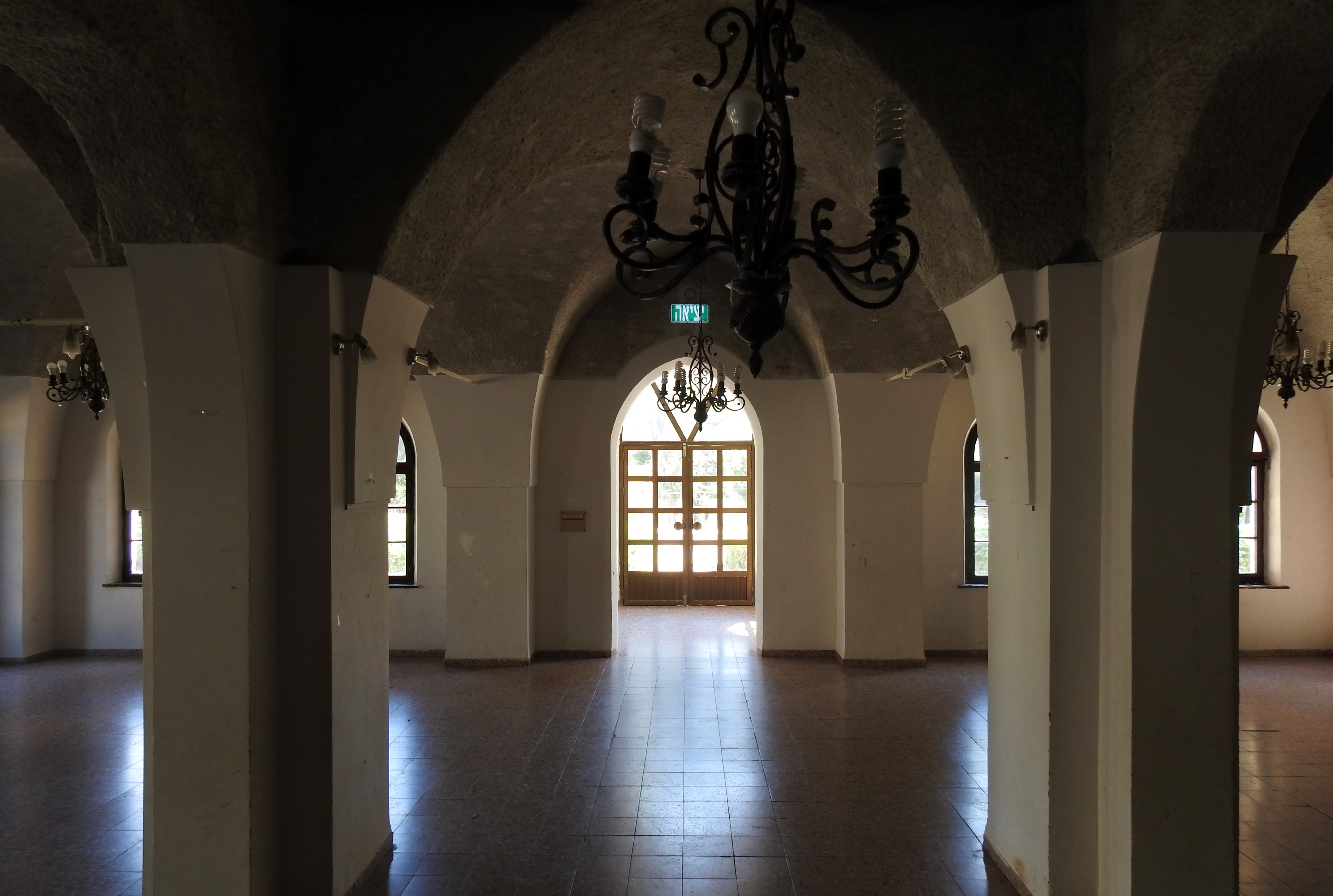
Lovely architecture inside

Avner took me directly to a grand stone Templer building which is known as “The House of the People”, which was fortunately open. We entered and had a look around, seeing old moshav-life pictures hanging from the wall of this public building. Adjacent to this building is another Templer structure, an ordinary stone building with a large, round, crenellated stone tower. We did not check to see if we could enter, but rather admired it from a distance and returned to the car to continue our tour.

The Waldheim church in Alonei Abba

We drove through the moshav, impressed by the stone architecture and the large trees which formed a dense canopy over the main street. Our next destination was Alonei Abba, and Avner knew just where to go. Within minutes we were parked beside a large stone church building, of an architecture style that smacks of simplified neo-Gothic, that was originally built in 1916. I got out, took some pictures and, with that, we headed out – not failing to admire the stone houses of Waldheim as we went. I’m sure that next time I visit these two quaint locations I’ll have more to expand upon.

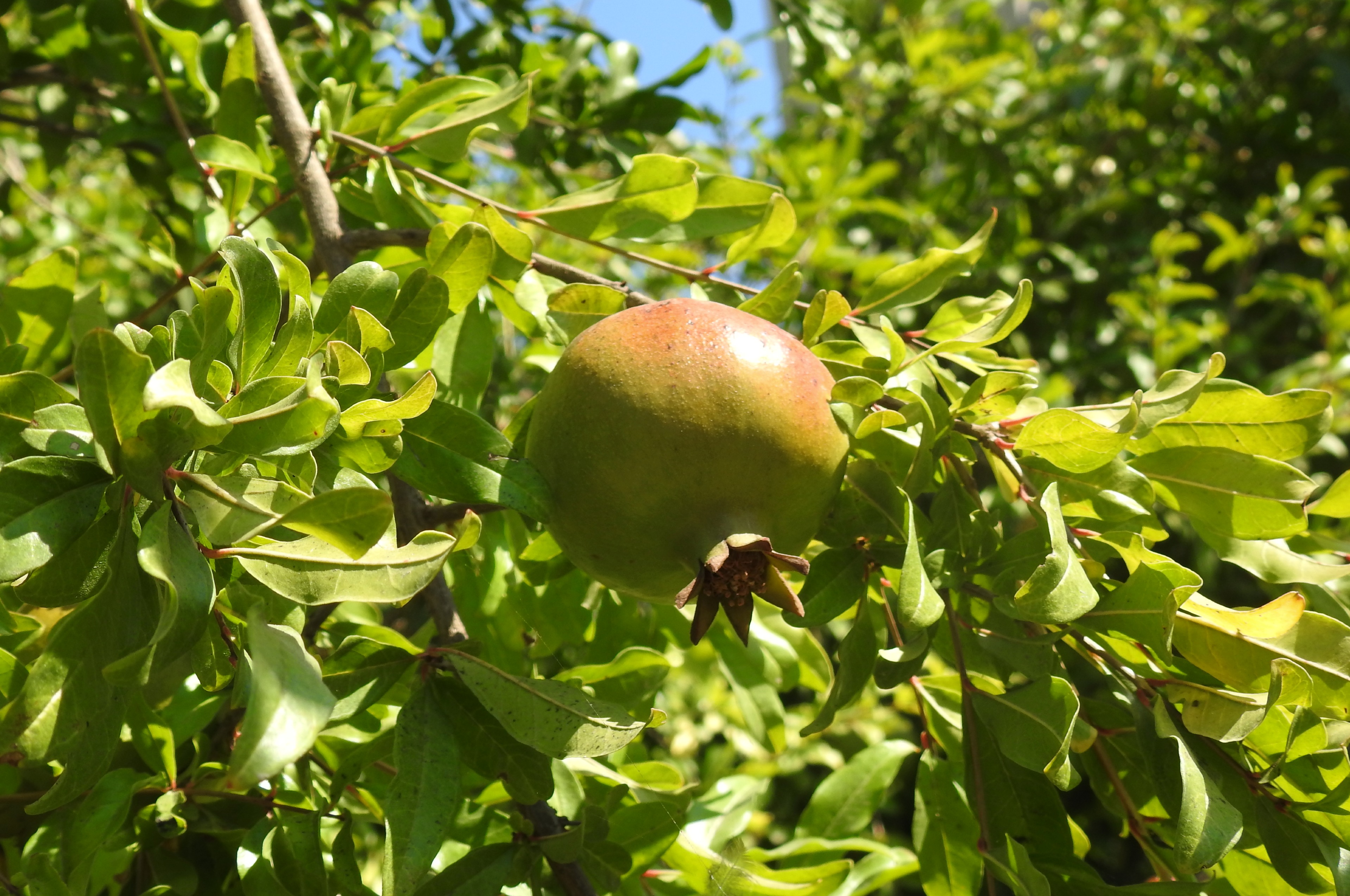
Pomegranates growing in Alonei Abba

Our next destination wasn’t planned, but rather decided upon in the course of discussion. I had mentioned that I had visited the magnificent necropolis of Bet She’arim back when I was a soldier, yet never visited the famous Alexander Zaid monument which is visible from the main road passing by. Avner insisted that we take a quick look, yet, we too were stymied and realised that we had made some wrong turns. Instead, we paused to look at the ancient synagogue ruins which I had missed in my trip back in February 2014.

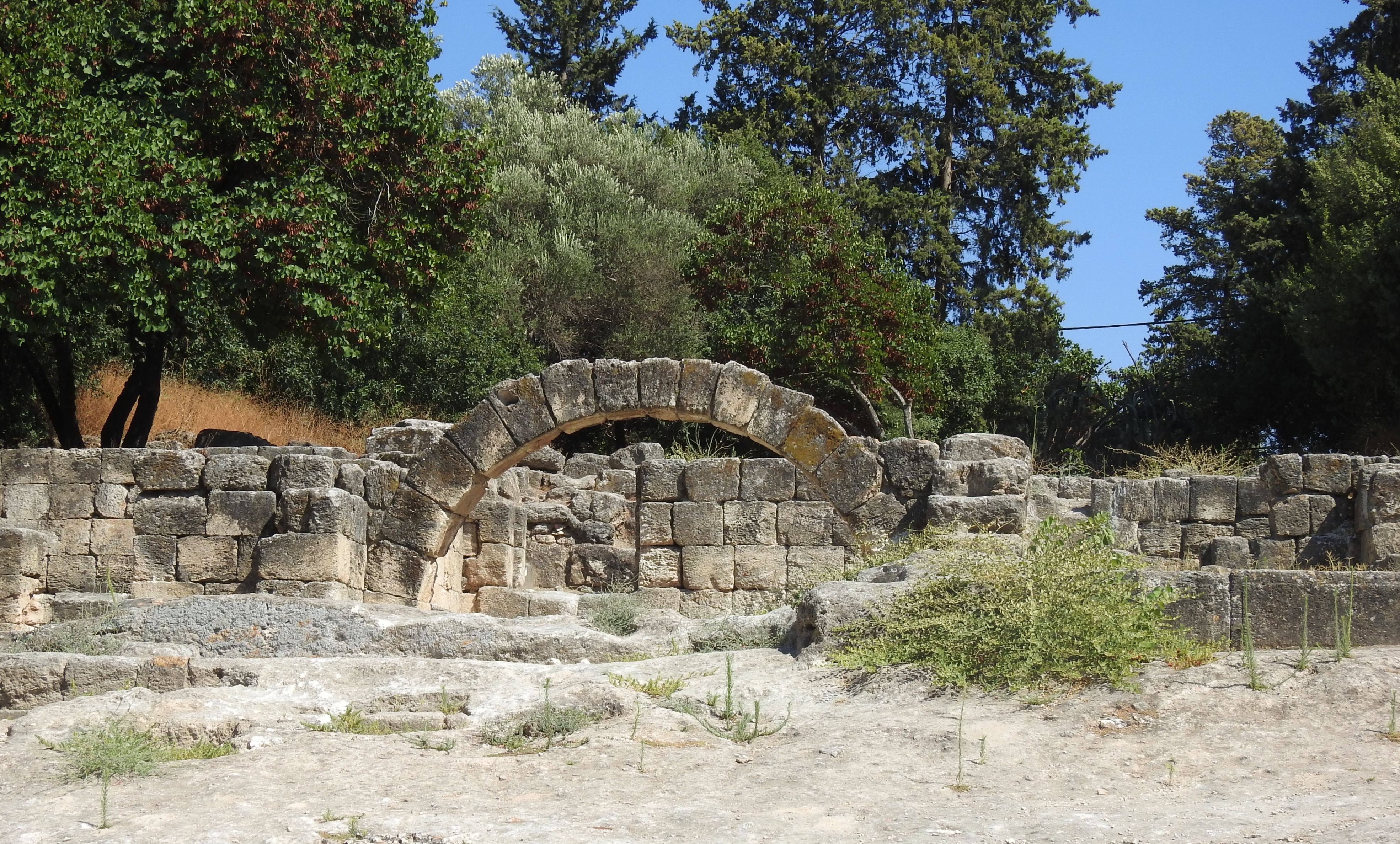
Bet She’arim’s ancient synagogue

Getting back on the road, we decided to make one last stop before heading back, to take a quick look at Tel Zariq. It was getting quite late and time was truly running out on this day trip, but who can say no to the inviting sound of an abandoned Medieval village. What made this even more fascinating was the fact that the village was inhabited by soldiers who originated from Turkmenistan of old, and were experts in raising horses specifically for military cavalry purposes. In 1948, the village was abandoned due to the nearby battles during the War for Independence and, if what I read is correct, the villagers moved to Jenin.

Nothing to see on Tel Zariq

As exciting as this all sounds, our brief visit was a lot less riveting. Trusting the GPS to lead us to the marked site of the old village took us into thick, streamside woods of fig trees and strong vines. Strangely enough, there were quite a lot of people in this woods, in various stages of relaxation. Adults, youths and even children were scattered on empty patches of land, and on the various fallen logs and stumps, for reasons we couldn’t quite understand. Nobody seemed to acknowledge our presence, and nobody was in any danger, so we just slithered our way out of the thick undergrowth and looked around some more.

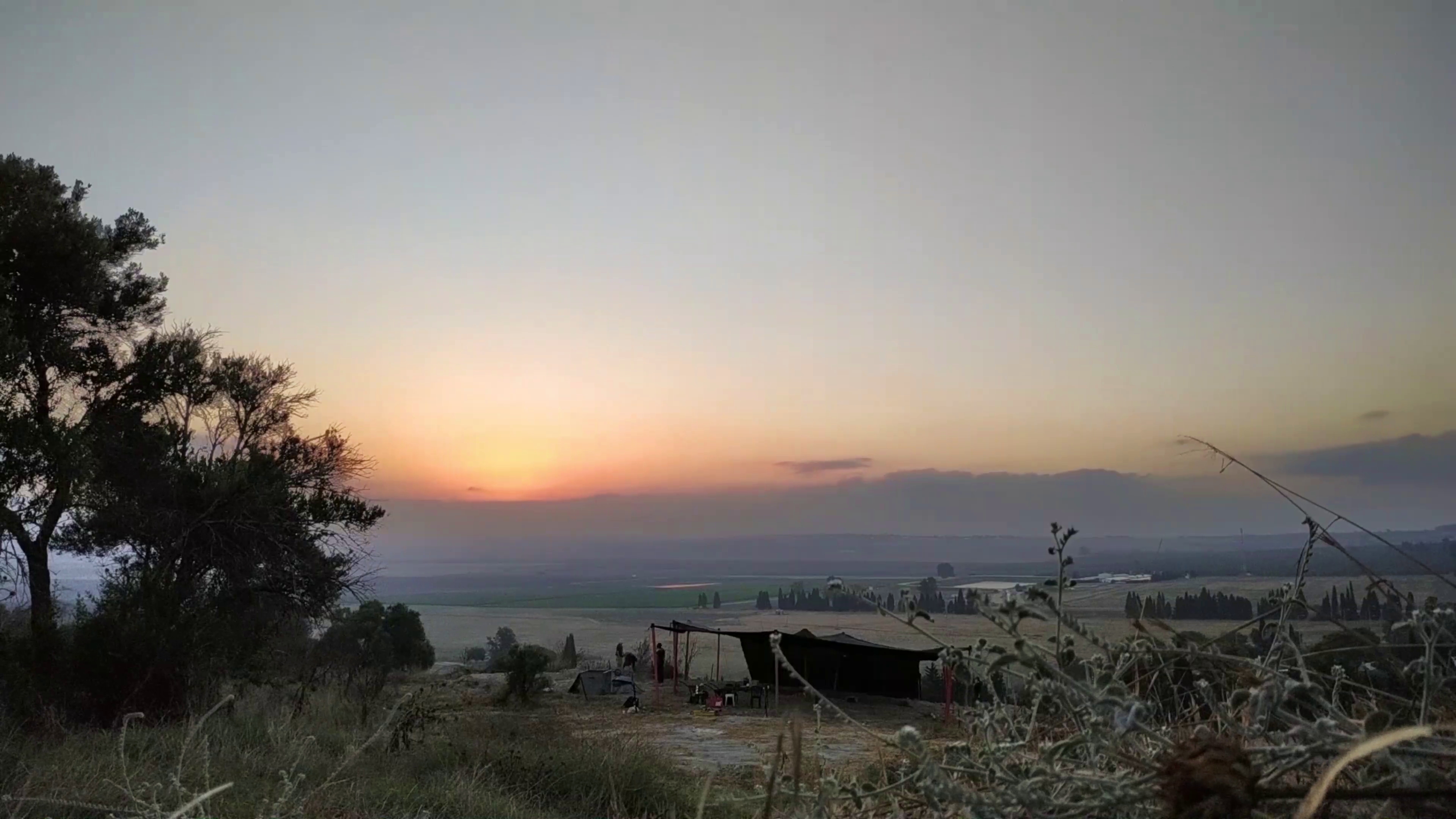
Sunrise at Tel Abu Shusha (photo from timelapse footage filmed by Esther Mellet)

Save for some broken concrete and some sun-bleached animal bones, there really wasn’t much for us to see at face value. Disheartened, yet overall satisfied with the day’s adventures, we began the long drive back to our respective homes, already hoping to plan another exciting outing.

Ashdod Sea Fortress

In Coastal Plain, Israel on August 16, 2020 at 12:09 PM

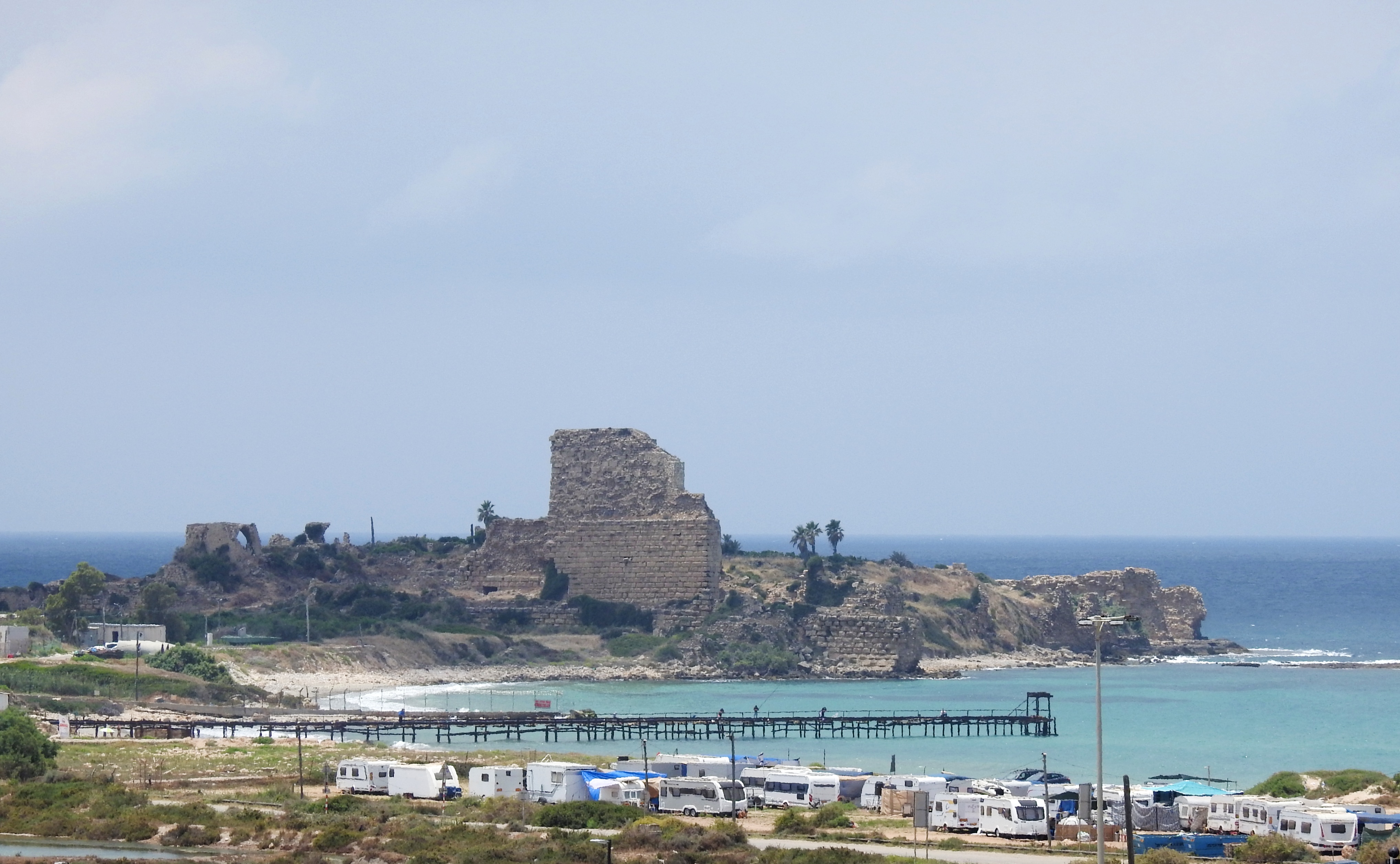
A month or so ago I went on a third Crusader ruins trip with my friend and fellow Medievalist, Avner Touitou. After visiting Khirbet Luza and other sites in the Jerusalem area in December, and then Le Destroit and other central coastal sites in June, it was time to visit the southern coastal site of the Ashdod Sea Fortress, also known as the Ashdod-Yam Fortress. Avner picked me up in the morning and we drove straight down to Ashdod, eager to see this fascinating coastal castle right on the sandy beach. I was surprised at myself that I had never gone to explore this most intriguing site, having somehow mistaken it with the Yavne Yam Fortress which I did indeed explore back in March of 2018. As such, it was high time to visit this Ashdodian fortress, and our timing was impeccable.

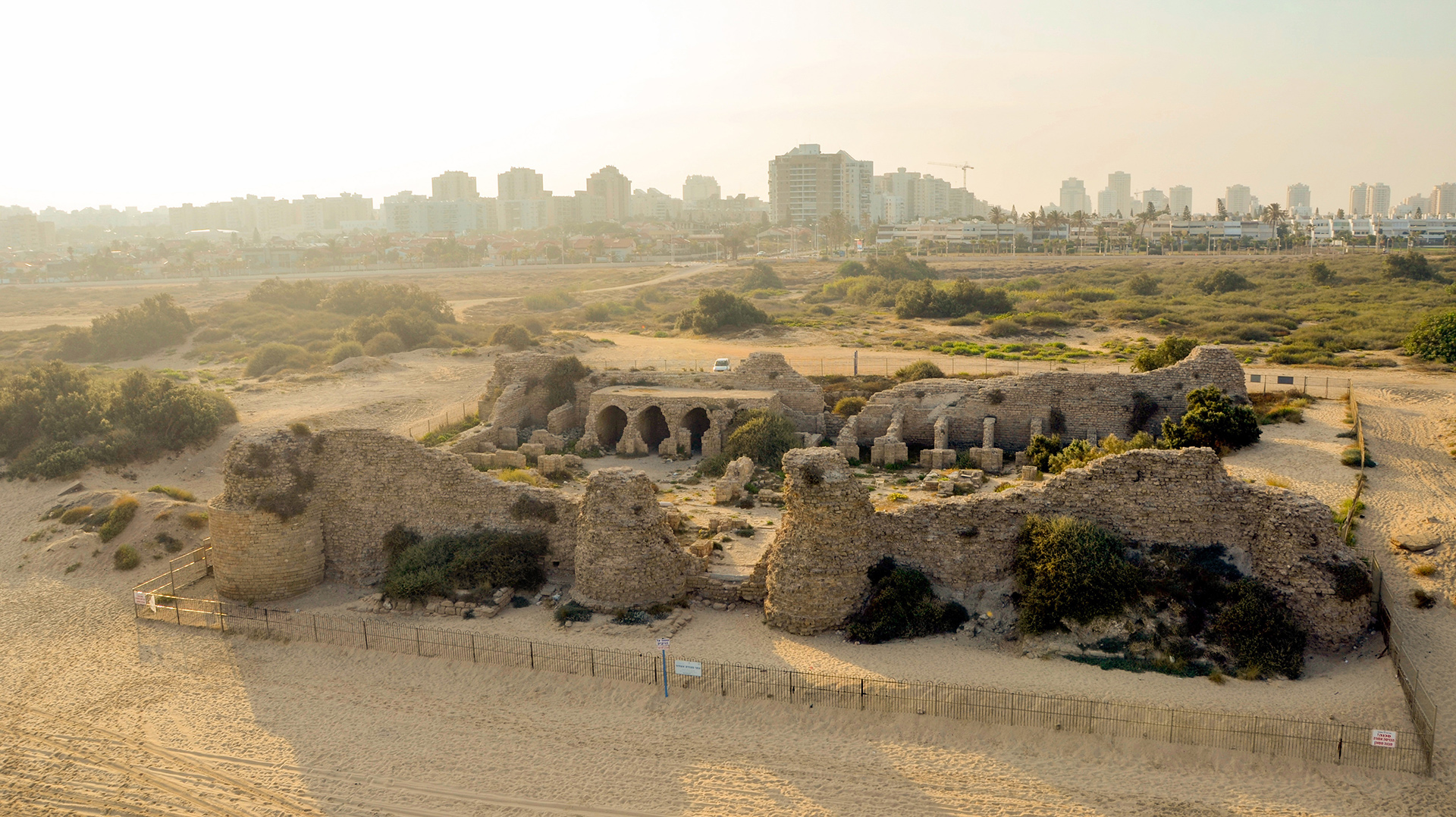
Ashdod Sea Fortress from above (photo Ashdod Municipality)

Little did we know but when we arrived on-site there was a little surprise awaiting us. This ancient fortress, wind-whipped and swept over by centuries of drifting sand, had undergone a facelift in recent months. In fact, the newly fixed-up site was reopened to the public a mere month prior to our visit, and looks very well taken care of. While I was rather looking forward to exploring the charming natural-looking ruins with the deep sand drifts, it was also pleasing to be able to examine the ruins in their new state of organised upkeep, harkening to the days of old when the castle was in operation.

Within the fortress

Spraying on some much-needed sunscreen, Avner and I approached the newly fenced-in site and gained entrance. We began our exploration of the site via modern steps over the low northern wall – the original main entrances facing both east and west out to sea. This impressive beachfront property was first constructed as Minat al-Qala in the Early Arab period, sometime around the end of the 600s, on the foundations of Byzantine ruins. Its purpose was to be a part of a string of coastal fortresses aimed to ward off a Byzantine invasion-by-sea and seemingly served its masters well.

Seeking shade in a vaulted chambre

Following a devastating earthquake in 1033, the destroyed fortress was abandoned and only resettled in the Crusader period. Refortifying the castle in 1153, the Crusaders renamed it Castellum Beroart or Castrum Beroardi. Oddly enough, information about this fortress is extremely hard to come by, and despite scouring numerous books as well as the usual online database searches, I still know very little. Apparently the ruined Arab castle was gifted to a Frankish nobleman by the name of Beroart, although he himself isn’t mentioned in any surviving records from the time. According to researcher Joshua Prawer, as published in 1958, the castle belonged to the “Duchy of Ashkelon” (or Ascalon) and was situated on the border with Yavne, or Ibelin. While this certainly is a fun fact, I wish there was more historical information available about the enigmatic fortress.

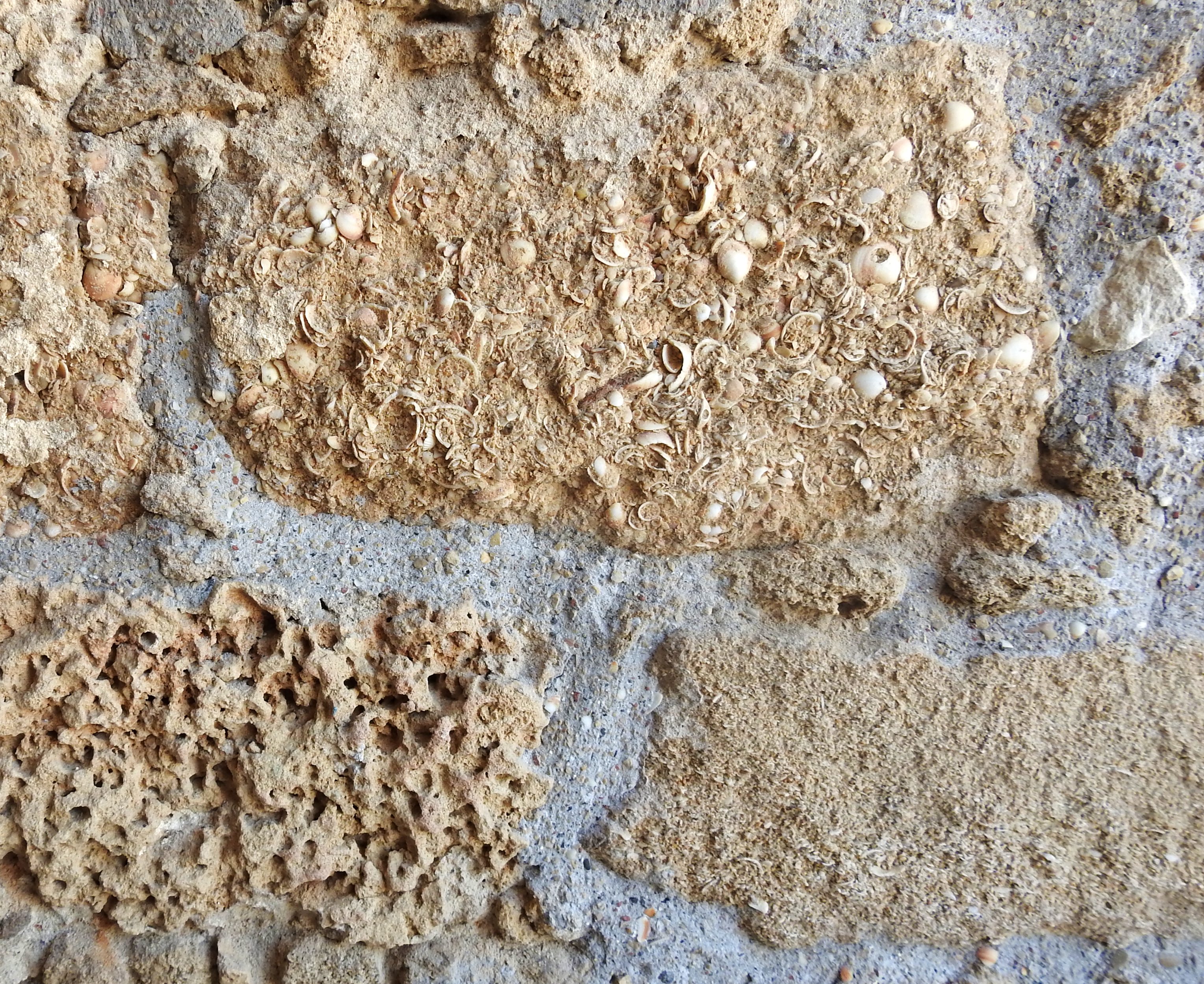
Three vastly different building materials

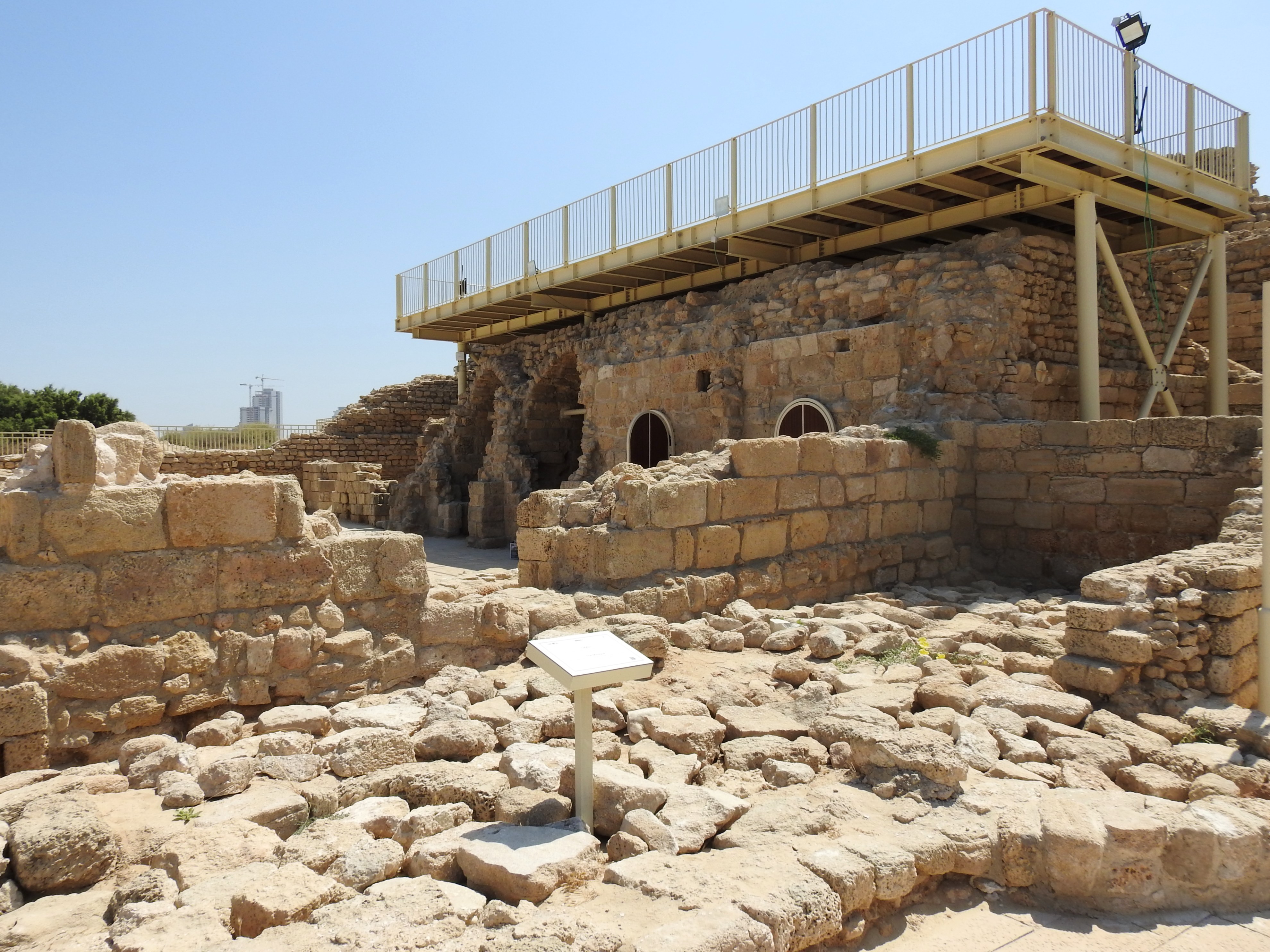
What naturally seized my attention were the vaulted rooms on the eastern side – a shape that serves as a lovely reminder of Gothic architecture. A closer look at the weather-worn building blocks, even within the chambres, revealed such a diverse variety of material quality. Three random ashlars, divided by mere mortar, were so vastly different from one another: the first looked like countless bivalve shells pressed together, sandy adhesives somehow keeping it all together; the second was shell-free, but a very porous, sponge-like eroded block of sandstone; the third was a host of tiny shell fragments, held together by sandy material to form a relatively uniform-looking block, albeit textured wildly. Needless to say, this ashlar inspection kept us greatly entertained for a brief period of time.

The mosque ruins within the fortress

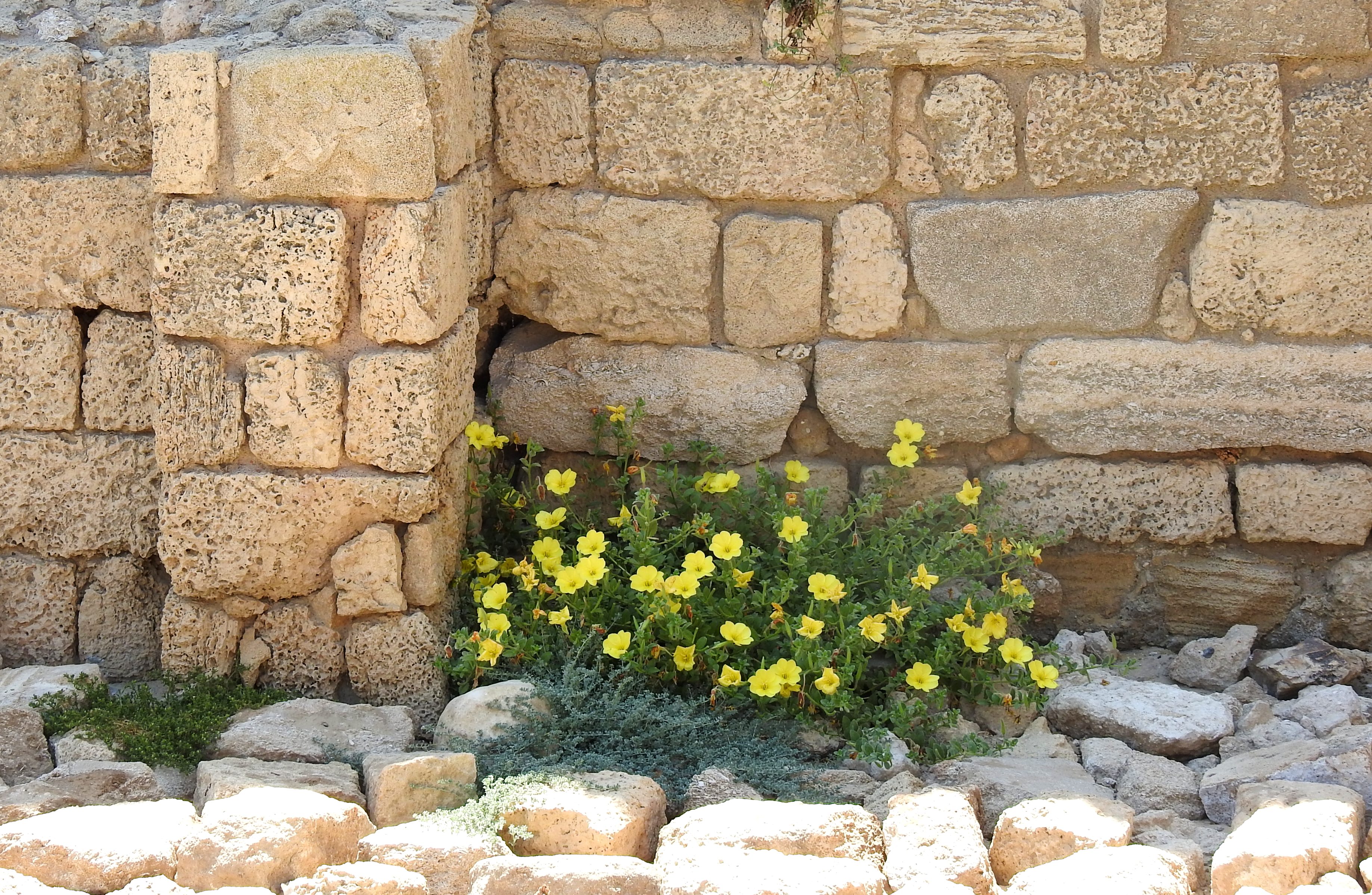
Wandering around the fortress, we took note of several of the architectural features, including the bathhouse and the mosque, which featured a mihrab and covered courtyard. Yellow-blossomed evening primrose decorated the old mihrab floor, a common wildflower on the coast. Next, we found the narrow stone staircase which took us up to the modern observation platform. What pleased me greatly was the realisation that there was another staircase mirroring our own – in fact, the main structure layout was nearly symmetrical and therefore righteously pleasing to the critical eye.

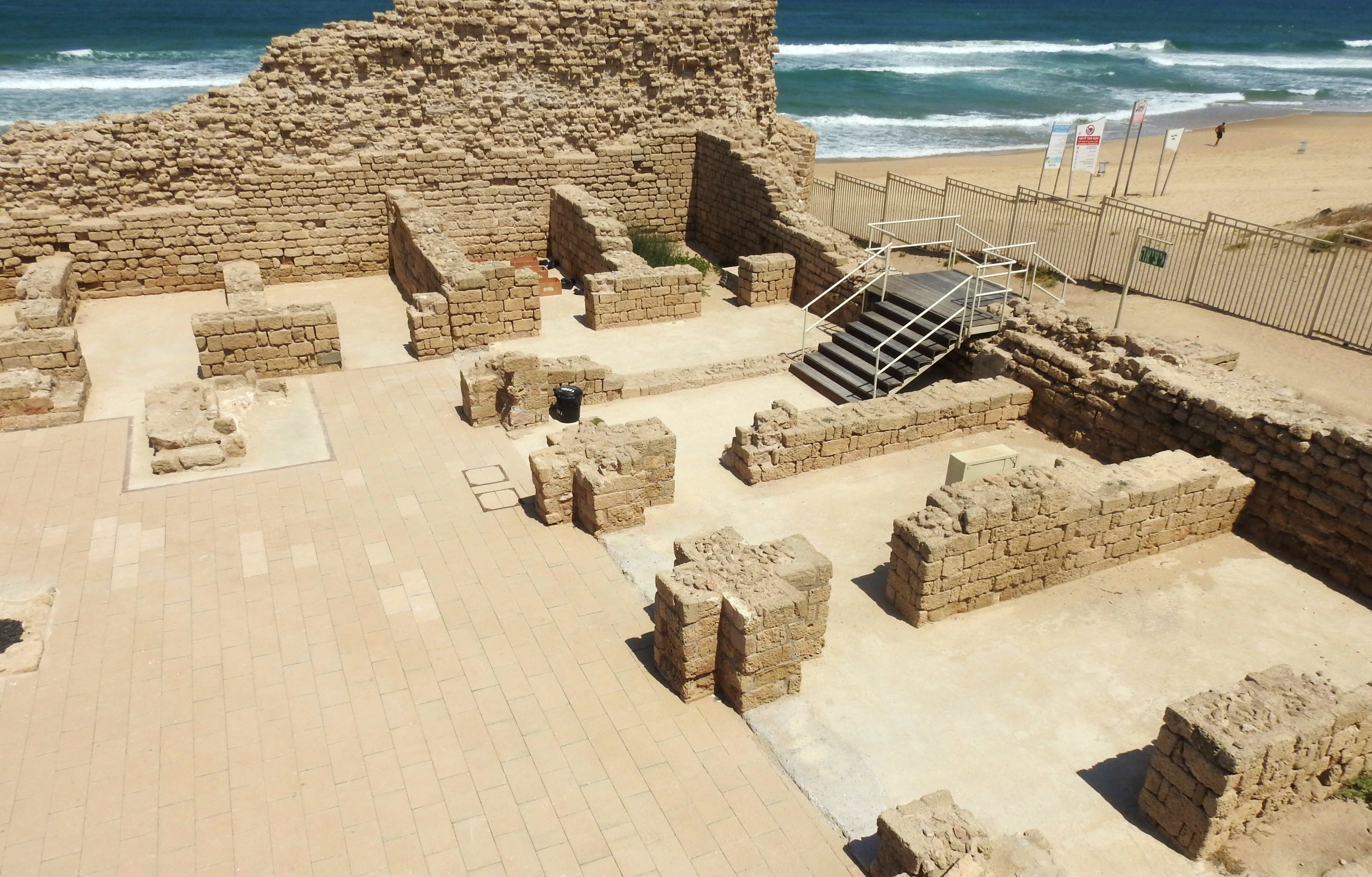
Looking down at the encroaching waves

Up top, looking out over the castle floor, we imagined what it would be like to live there back in Crusader times, keeping a watchful eye out for seagoing vessels. The gentle waves crashed on the surf just tens of metres away from the fortress’ front door, which made us wonder what the sea level was back then – something that was actually researched on-site back in 2012-13 (see HERE). There was something downright magical about the correlation between castle and sea that I had never yet felt; whereas many fortifications are built on the coast, almost all are building atop natural ridges, such as Arsuf, or pre-existing city foundations, such as Akko.

The northwest corner

Spellbound as we may have been, the sun’s unforgiving rays forbade us from standing much longer on the shadeless platform and seeking refuge became an utmost importance. We trotted back down the stone stairs to the welcoming shade below and enjoyed reading about the castle’s structure, a symetrical 40×60 metre rectangle crowned with eight towers. We explored the exterior eastern wall and were pleased to see fine masonry that has suffered far less from the ravages of the coastal winds. Examining the craftsmanship of Crusader ashlars is always a joyous pastime, especially when cryptic mason’s marks can be found. Unfortunately, perhaps due to weathering, we were to find no such marking on any of the hewn sandstone ashlars.

Avner inspecting the golden arches

Our exterior walk brought us around to the seaside front of the castle, where we gladly re-entered the charming building. We finished up our little tour with closer looks at the wells and drainage pipes, as well as a handful of marble columns resting on their sides. There were some structures that were unidentifiable and an area that is believed to be the dining hall. Feeling like we saw all that we could, we exited via the northern wall and wandered into the nearby trees to change into bathing suits.

Evening primrose along the eastern wall

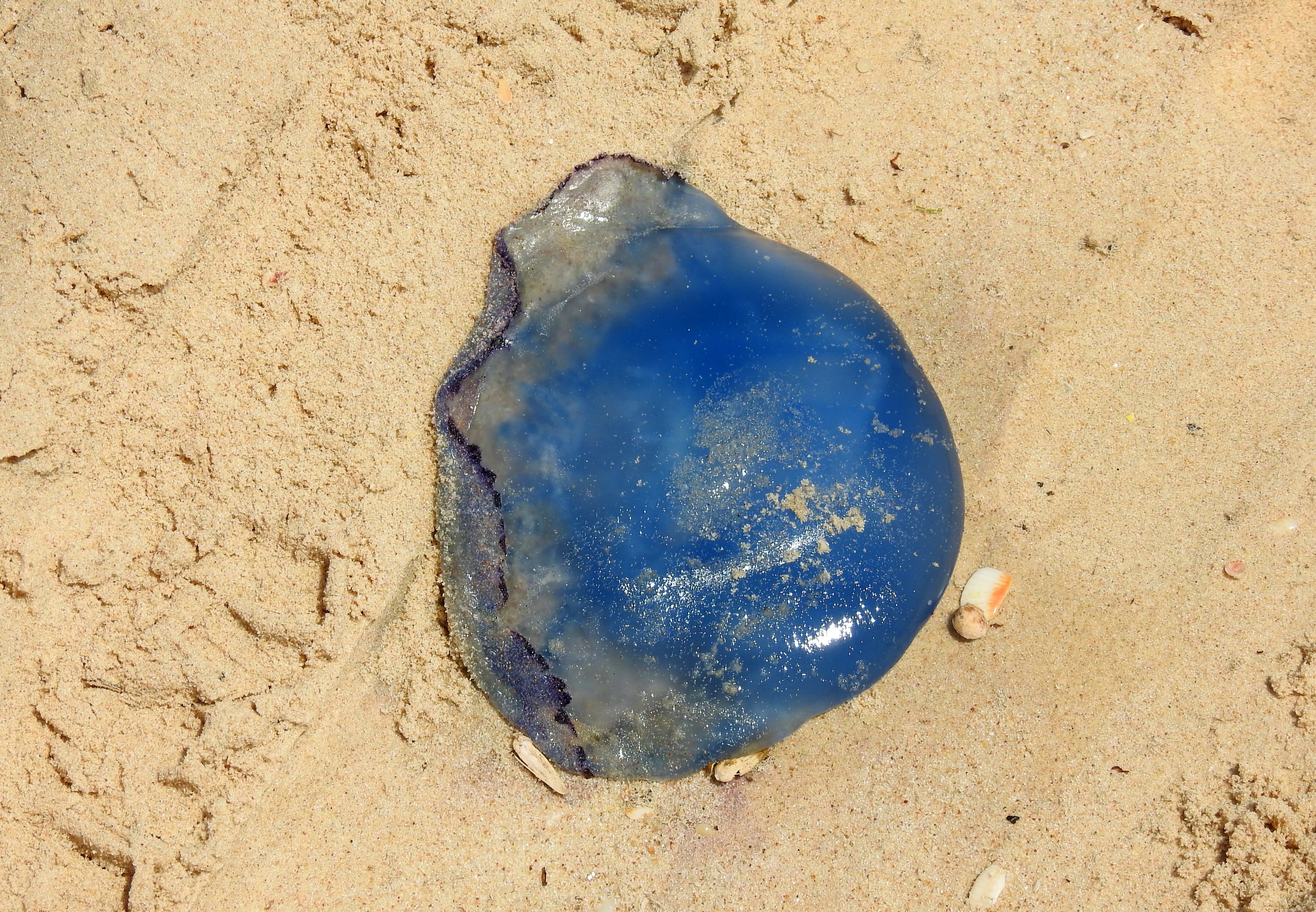
With the cool sea waves crashing so tantalisingly close we had no option but to enter the waters, jellyfish be damned. Sure enough, just like our last trip, the sea was full of jellied bodies with dangling stingers trawling the moving waters around them. However, there was one quite noticeable difference: whereas last time they were nomad jellyfish, this time there were two other species taking the limelight. The gaudier of the two was the barrel jellyfish (Rhizostoma pulmo), with its strikingly blue body and mediocre stinging capabilities, and the other was the floating bell jellyfish (Phyllorhiza punctata), a drab brown with little white dots and a weak stinger. Even though these species have less potent stingers, there were still some nomad jellyfish in the water, and consequently we were stung, although we do not know by which of the three.

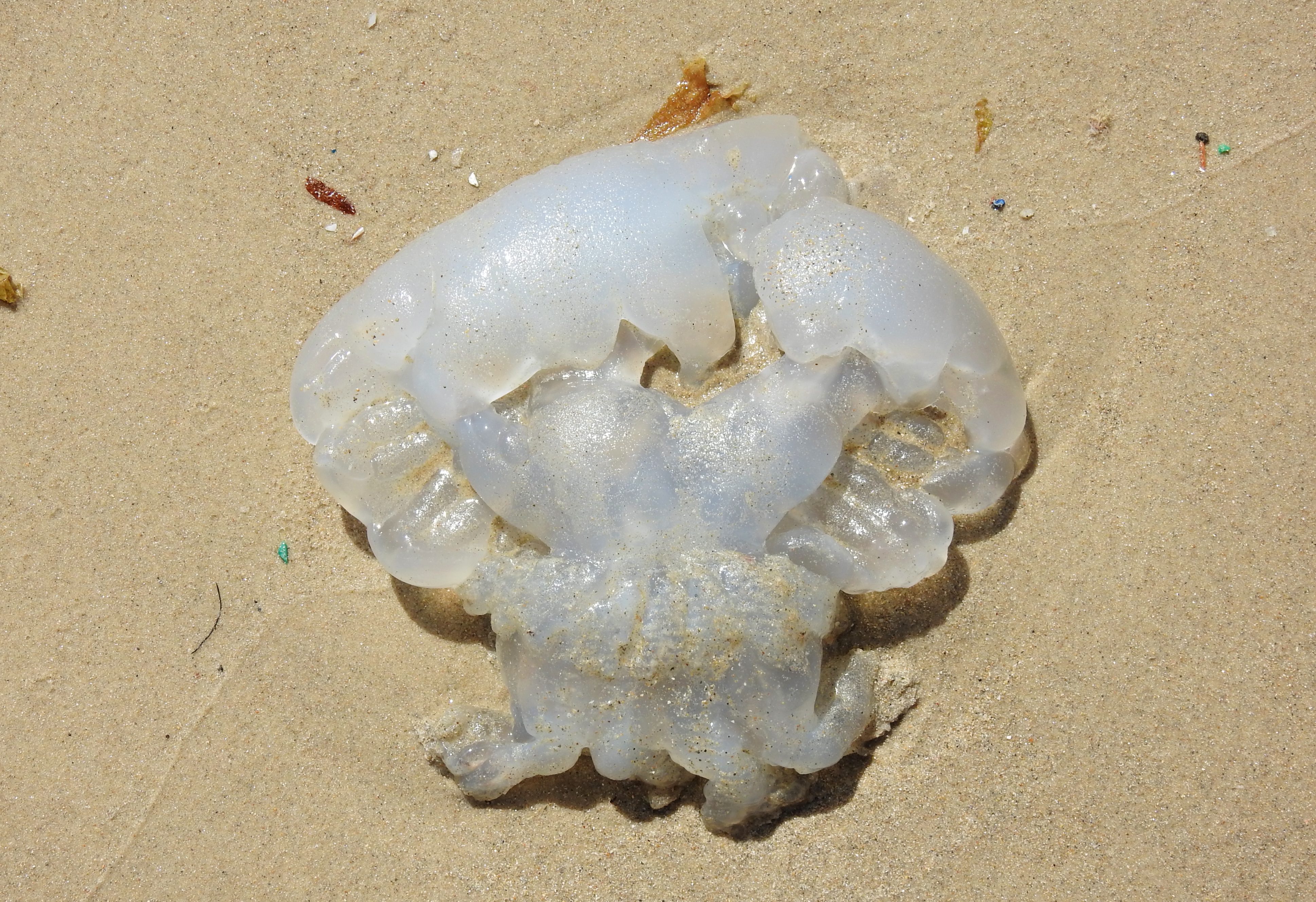
A beached barrel jellyfish

A particularly amusing jellyfish episode occurred once we had left the jellied waters and were in the process of air-drying. Good Mr Touitou was in the midst of talking when suddenly he felt something unusually solid in his shorts’ left pocket. He reached in and pulled out the most unexplainable object – a chunk of jellyfish flesh, seemingly of the nomad variety. I laughed heartily at the unusual site yet, unfortunately, I forgot to take a picture.

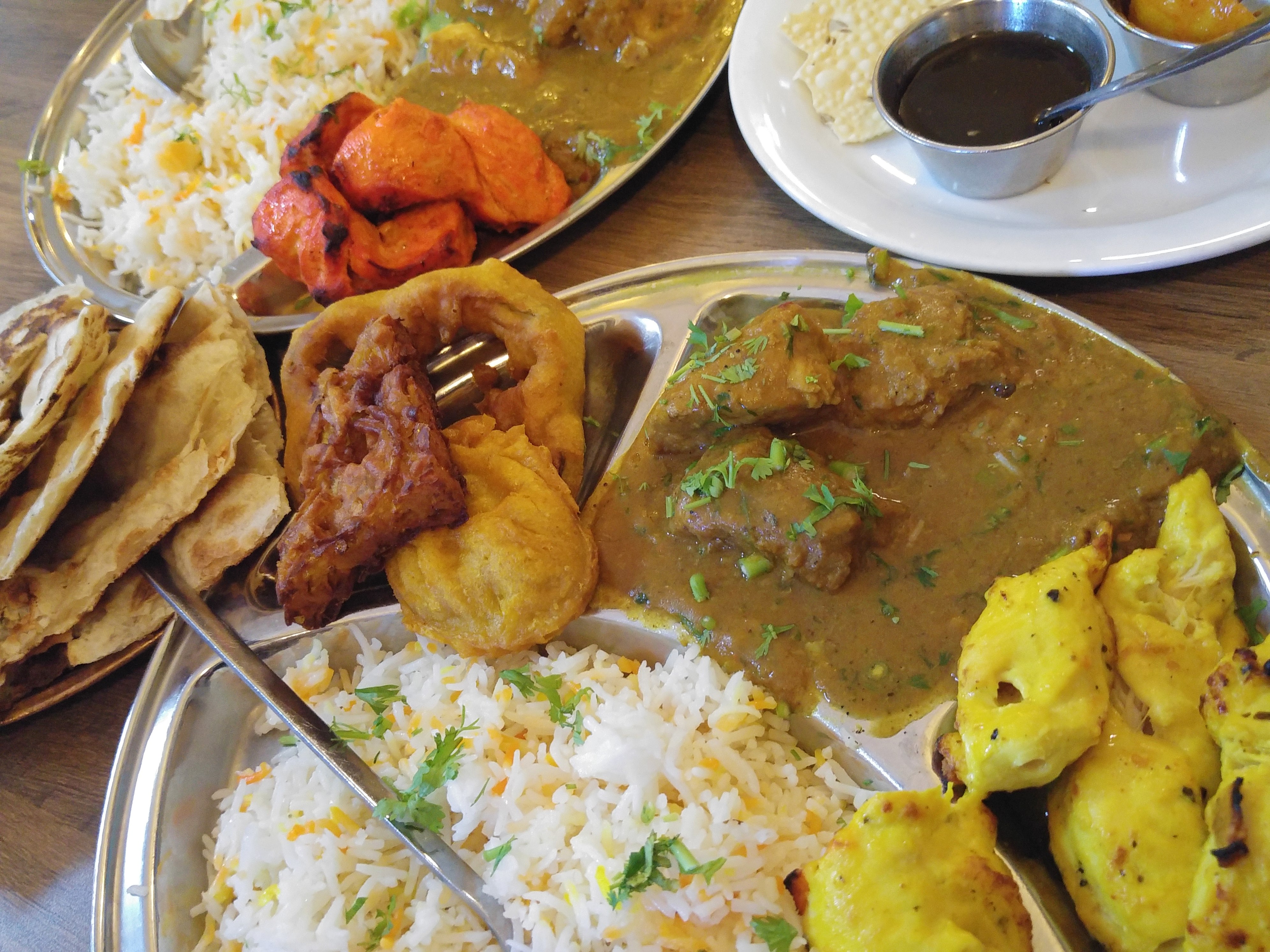
Indian food galore!

We headed back to his car and decided that it was time to eat lunch. He had intentions of finding a brewery but, as we soon found out, open breweries can be hard to find sometimes. We settled on scouring Ashdod for an interesting eatery and chanced upon Namaste, an authentic Indian restaurant located inside the whimsical Blue Castle on the boardwalk. Neither of us had ever been to an Indian restaurant so it was an interesting experience for us both. I particularly enjoyed eaten bites of tender skewered chicken with the delicious naan bread, and recommend it wholeheartedly.

Avner approves of Indian-made Kingfisher beer

Satisfied with our delicious ethnic lunch, we got back into his car and decided to drive over to the Yavne Yam fortress at Palmachim Beach for a quick gander. However, the parking fare was rather steep especially considering the fact that we only wanted to spend a few minutes there so we left feeling dejected. There wasn’t any other Crusader site in the area that came to mind so we figured we’d bring the thus-successful trip to an end. A quick attempt to visit the nearby Ariel Sharon Park, a repurposed garbage dump, proved a failure as the guard insisted that they had closed for the day a mere eighteen minutes prior to our arrival. Feeling just a tinge more dejected, we culminated our excursion with intentions to plan another trip soon, which we did with great gusto.

Le Destroit

In Coastal Plain, Israel on July 19, 2020 at 4:05 PM

Just last month, as the Ministry of Health sanctions and guidelines regarding the coronavirus outbreak were loosening up, I went on a nice little trip with a nice friend. Similar to our trip back in December 2019, when we visited Khirbet Luza and other Crusader ruins, this time Avner Touitou and I had similar intentions. Still struggling with thesis ideas for our MAs in Crusader Archaeology, we figured that going about and actually visiting some lesser-known ruins might help spark an idea that would lead towards something useful.

Chateau Perelin jutting out into the sea

Whereas last trip we focused on the Jerusalem area, this time our attention was turned a little north, to the Atlit region, where the Kingdom of Jerusalem came to an end. The focal point of our planned trip was the ruined fortress of Le Destroit, which neither of us had ever been to. Interestingly enough, I had passed it hundreds of times during my army service, and had actually attempted to even visit it, however unsuccessfully. At last, thanks to Avner’s gung-ho spirit and vehicular capabilities, the visit to Le Destroit was to become a reality.

Approaching the old stables

Avner picked me up outside our apartment in the morning and we made our way posthaste up Roads 4 and 2 towards our destination. We had some more Crusader sites picked out, as well as a spot for lunch, but Le Destroit was first and foremost. Some forty minutes later we pulled up outside the small nature preserve, officially called the Karta Ruins Nature Reserve, just outside of Atlit. Accordingly, the ruins goes by several names including Karta/Qarta, Districtum and Khirbet Dustray, as explained in various archaeological sources that I examined whilst writing this blog post.

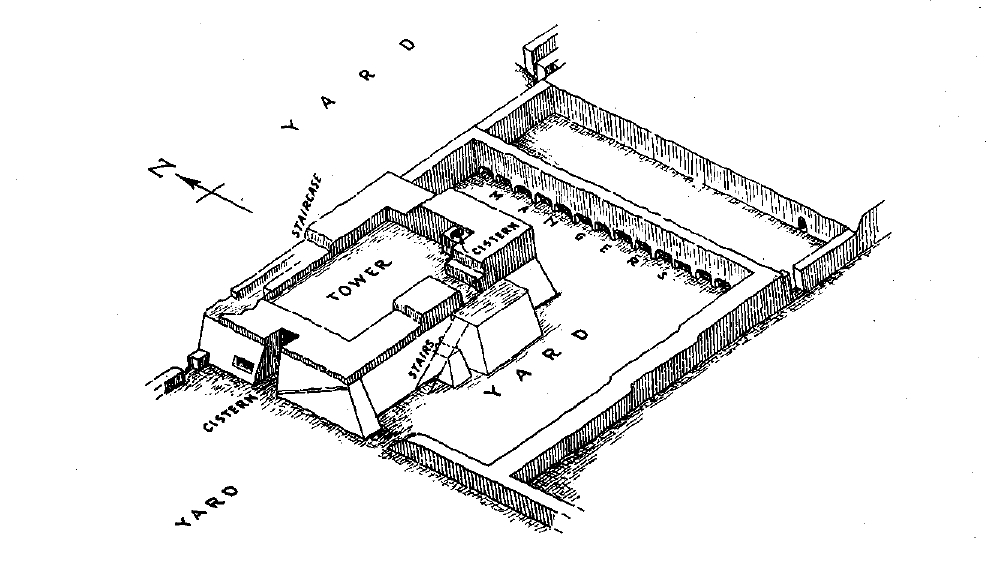
Le Destroit layout as drawn by J Dikijian

Le Destroit was built sometime in the 1100s, following an incident where King Baldwin I was attacked and wounded by highway robbers along the coastal road. The exact location of the Crusader fortress is between two deep passes cut east-west in the sandstone ridge, just along the coastal road, which provided a perfect hideout for robbers to leap out from, catching their victims unawares. Thus, in efforts to safeguard the roads for the benefit of all travellers, the Crusaders erected this small fortress as a watchtower.

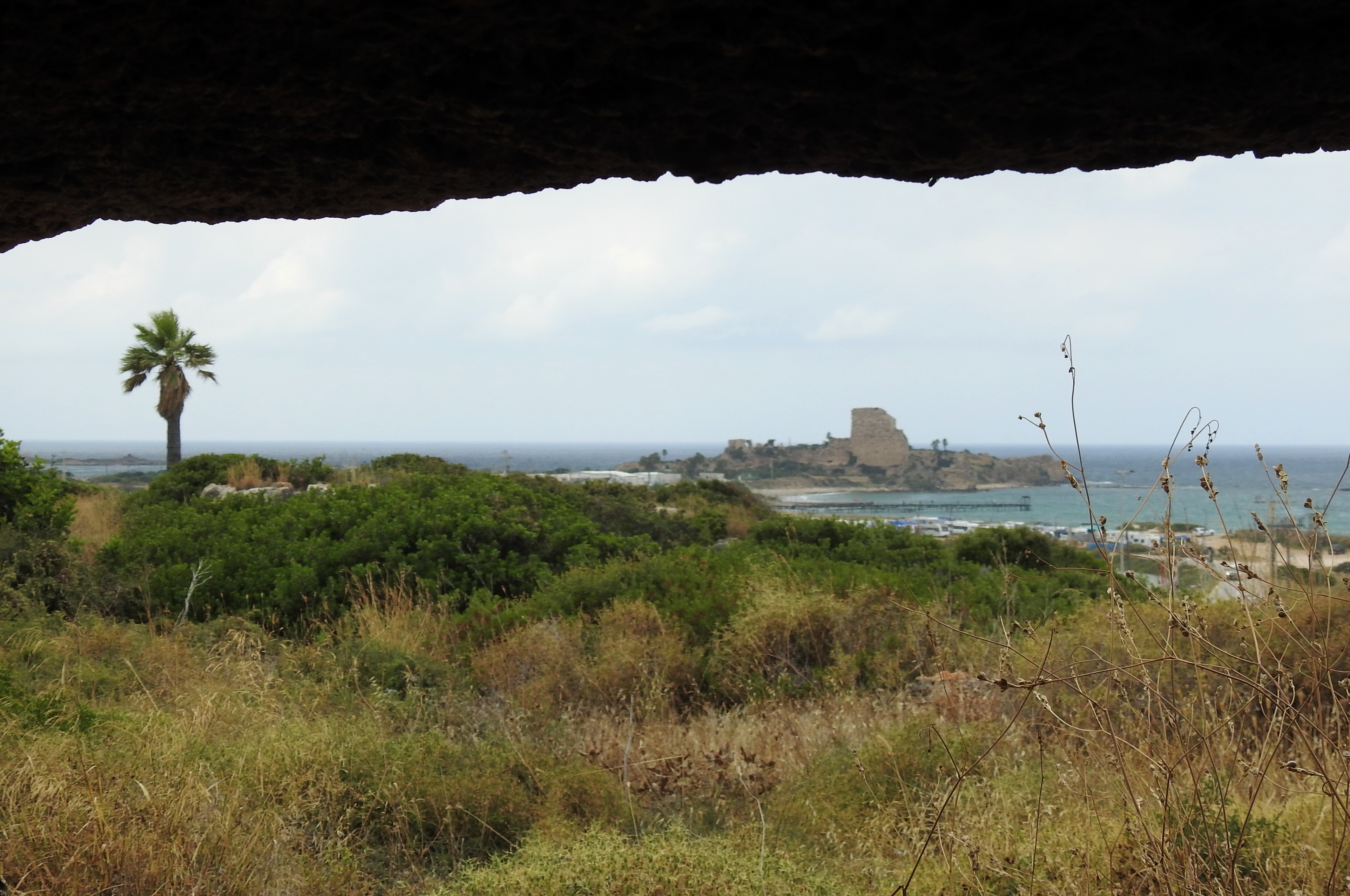
Looking at at Chateau Perelin from within the stables

Interestingly enough, the Crusaders themselves were the ones to destroy it, for when they built the grand Chateau Perelin at Atlit as a regional base, they were concerned that someday the Muslims would use the smaller fortress as a defensive position against them. Surely enough, the Muslims did arrive within that decade, and their leader the Ayyubid sultan Al-Mu’azzam Isa razed the rest of Le Destroit to the ground, not leaving very much for us happy visitors to see.

Avner examining the hewn sockets

Avner and I explored the sandstone ridge, examining the small cave-like stables that was hewn not far from the fortress itself. From within the windows we had quite the lovely view of Chateau Perelin’s ruins, jutting out into the blue Mediterranean Sea. Continuing along the forged trail, we arrived at the northern side of the fort, and took stake of our surroundings.

The eastern side of the tower with its hewn moat

A small hewn moat was clearly visible on the east side, so we climbed up atop the rock podium from the northwest corner. Not really knowing what to expect, we were slightly surprised that there wasn’t much more than the literal base of the original construction. In the southeast corner we found a small cistern, fenced off and containing just a little bit of water. With not much to see below our feet, we focused on enjoying the sprawling seaside view and picturing what it was like to be here in Medieval times.

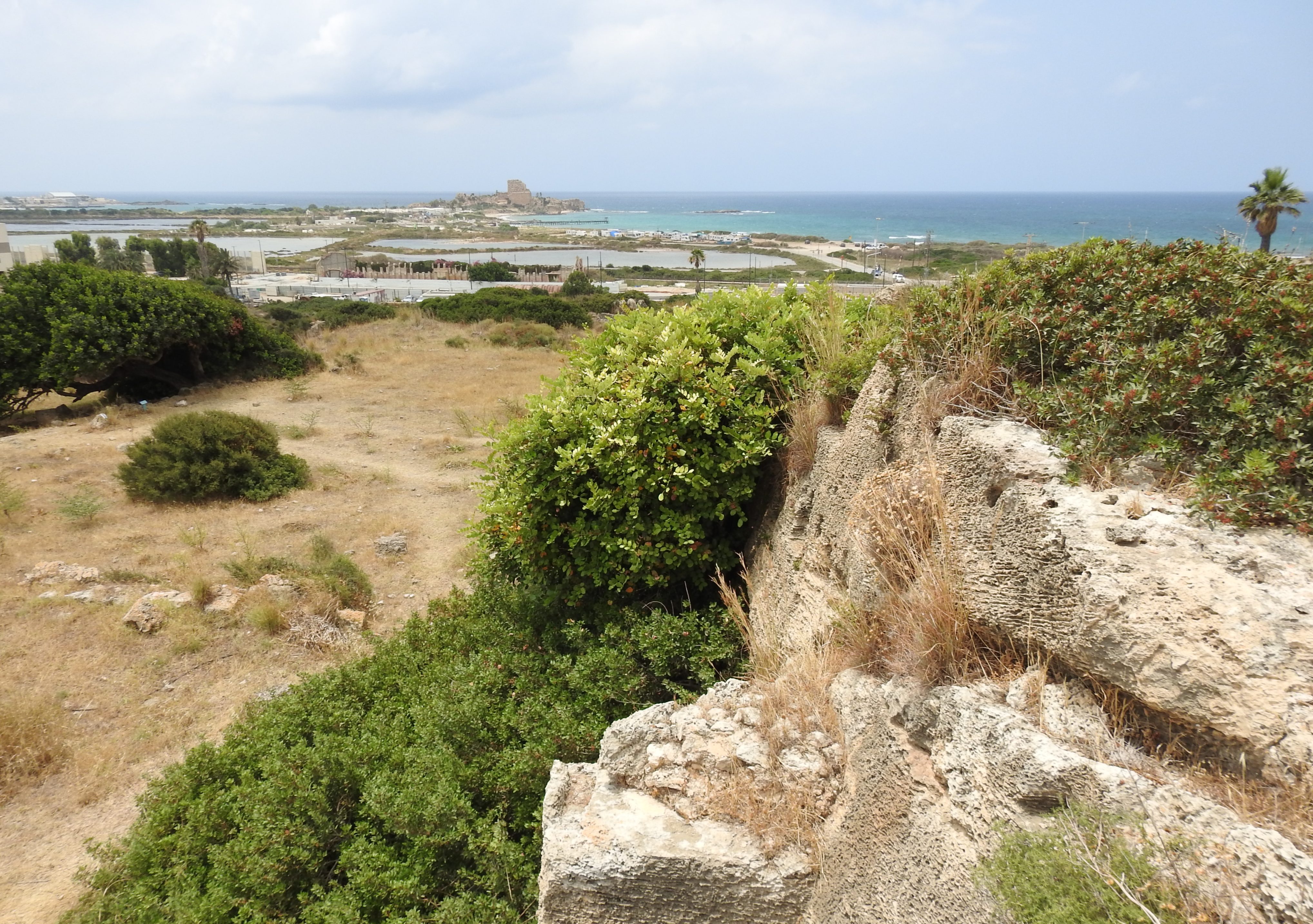
Looking back from whence we came

Consulting the Wikipedia entry for the fortress, we learned that an interesting ancient inscription was found nearby. We descended and gave the southern and eastern walls a good lookover, admiring the construction of the manger on the eastern side.

Looking out to sea

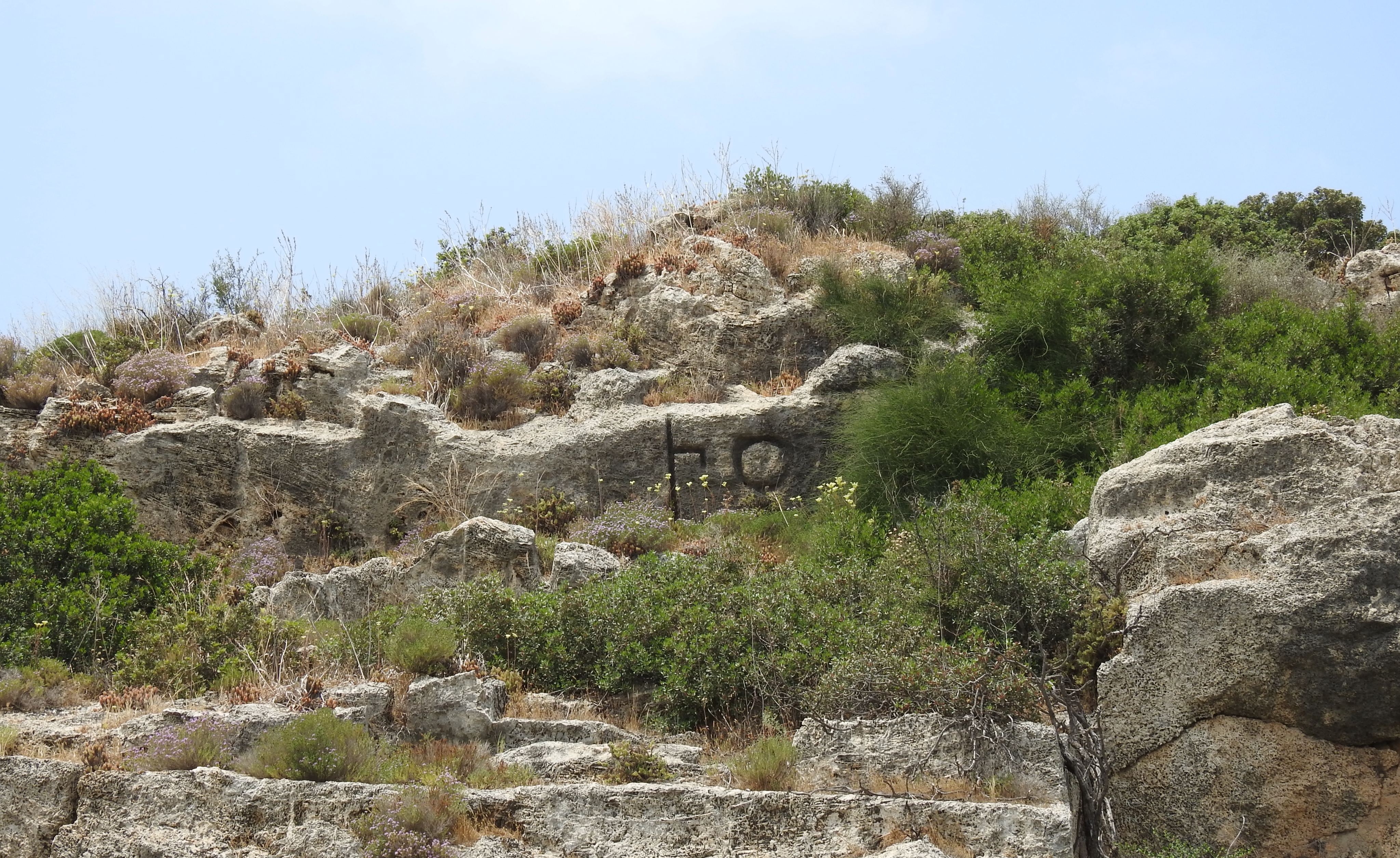
Dropping down from the elevated sandstone ridge, we scanned the rock walls from the east, looking for the cryptic letters. Much of the rocky area around the fortress was used to quarry sandstone ashlars for construction, so we knew to look for the more natural patches.

Ancient inscription in the rock wall

At last, lo and behold! Clearly cut letters carved out of the rock face! We stood below it, admiring and wondering how someone found it, until we were ready to move on.

A closer look at the carven letters

Taking one of the passes, hewn east-west out of the sandstone ridge, we made a loop back to the marked trail, returning to the fortress. Along the way we encountered what is believed to be a guard booth, also hewn from sandstone.

Avner inspecting the guard booth

Making our way back to the car, I had a quick gander at the closest fishpond (or whatever the body of water serves as) and then we decided that it was time to go to the beach. We entered HaBonim Beach into the Waze navigation system and set a course which ended up taking us on dirt roads through fields and alongside banana greenhouses, providing loads of befuddled entertainment as we wondered if we’d ever get there. At last, after too long in the open fields, we arrived at a small parking area and disembarked.

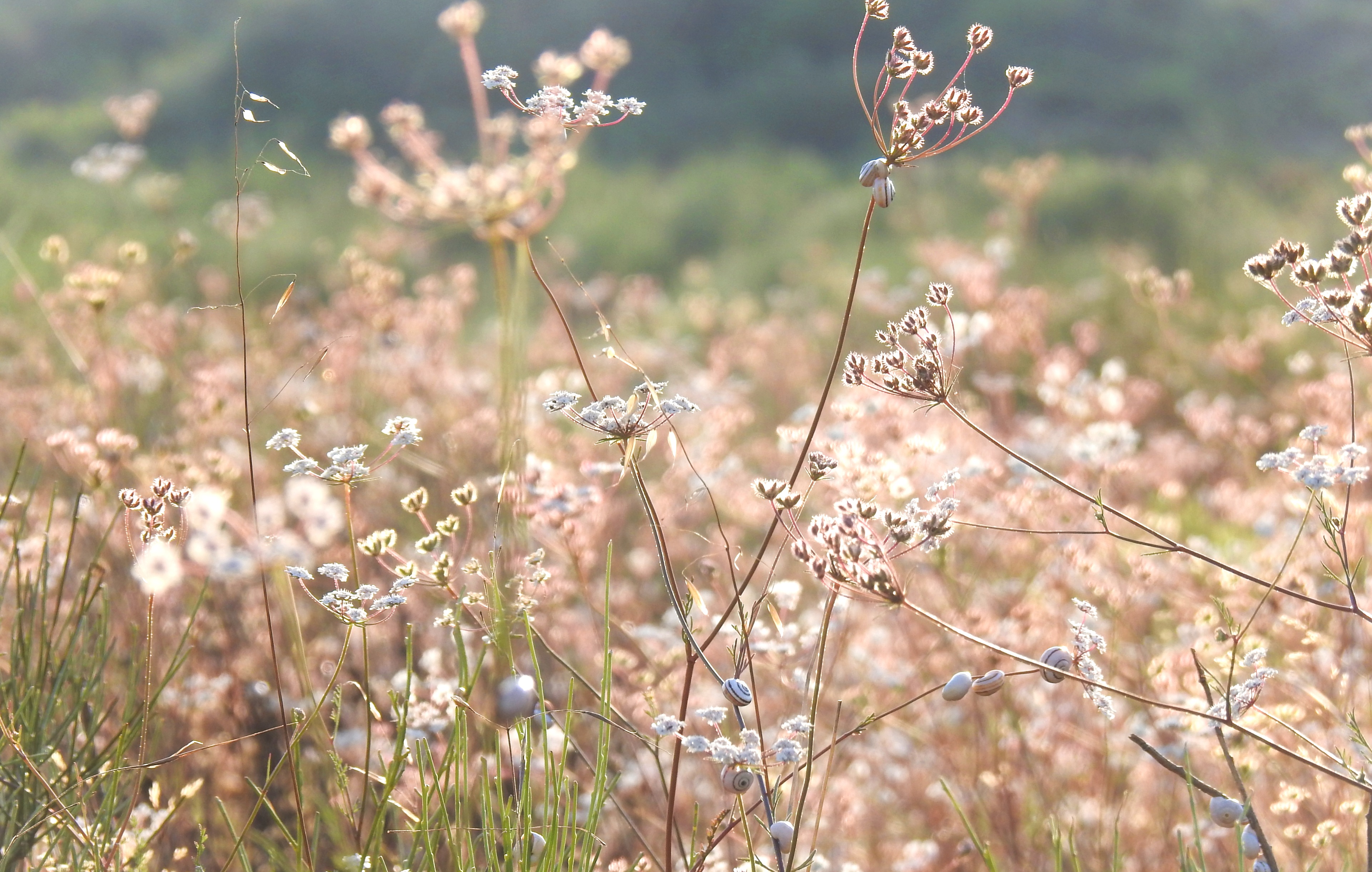
Sea of white Queen Anne’s lace

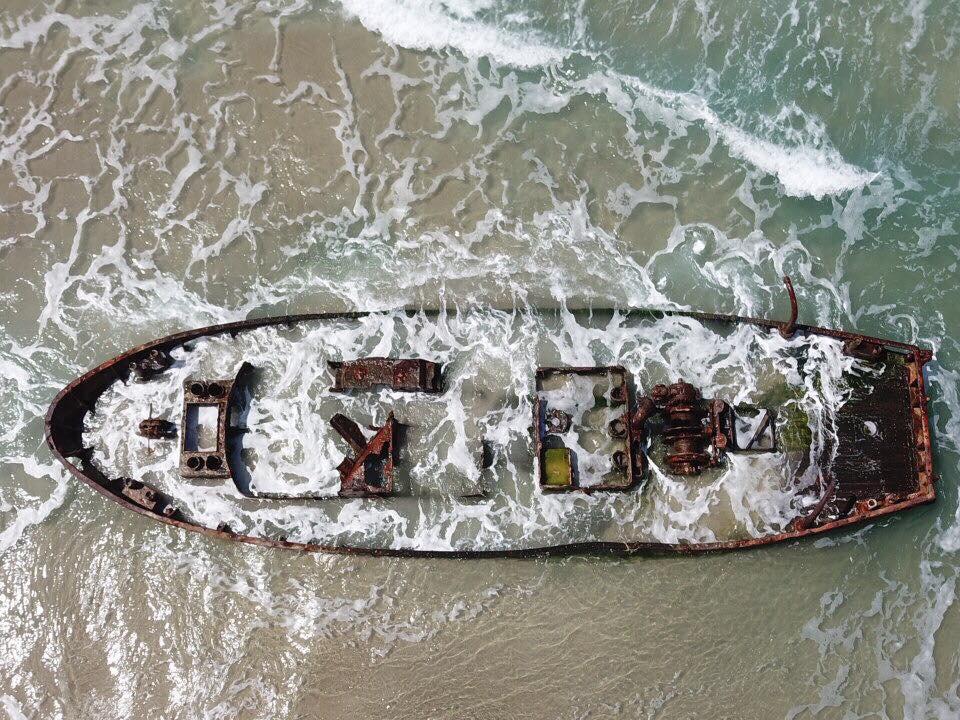
Heading straight for the sea, passing a small tributary which would empty into the sea had there been more water, we made two interesting discoveries. The first was that we had landed exactly where the “famous” shipwreck is, the subject of innumerable sunset photographs, which turned out to actually be quite small. Where I had always envisioned a small ship, of impressive proportions, there lay a small boat which was a bit underwhelming. A little research revealed that this boat is believed to be a Turkish cement-carrying ship that somehow sunk, but in fact it seems that it was an Israeli fishing boat named “Netz” that sank during a storm in 1970. The boat was left in situ, and has slowly decomposed, but more pictures can be seen HERE, on an interesting Hebrew blog. Also, a very neat aerial shot can be seen HERE.

Sunken fishing boat at HaBonim

The second discovery was the presence of countless jellyfish washed up on the shore, belonging exclusively to the species nomad jellyfish (Rhopilema nomadica). This species has infiltrated the Mediterranean Sea, having migrated via the Suez Canal. Large and usually a semi-translucent white, these jellyfish have become quite an issue every summer and whilst we were not pleased to see their presence, we weren’t completely deterred. Slathered with sunscreen we braved the potential of stinging jellyfish and entered the surf bravely. Sure enough, we each began to feel the stings and while we could usually see them drifting about, the repeating waves concealed them and it was inevitable that we should feel their jellied tentacles. True, the sensation is unpleasant, but in all fairness it’s not that bad, so we stayed in the water and just tried to avoid the jelly beasts as they drifted aimlessly around us, their trailing stingers ever-dangling in search for prey.

Nomad jellyfish washed ashore

When we were done enjoying the beach we packed up and headed back to the car, noting paragliders and common terns sharing the crisp blue skies above us. There was another Crusader site that we wanted to take a quick look at, so we drove back out into the dirt roads which eventually led us to our destination, Tel Dor. In 2018, I had excavated for a day at Tel Dor (see HERE), and I remembered the developing discoveries concerning the small Crusader fort atop the precipice overlooking the ancient harbour.

The lovely colours of summer on Tel Dor

Merle, or Merla Templi in Latin, was a small castle of which, unfortunately, very little is known. It is believed to have been built sometime before 1187, the year that marked the fall of the first Kingdom of Jerusalem, and likely served as a lookout of sorts. Of the ruins, there was a small tower that survived until 1895, and today there’s some ghastly modern concrete marring the ancient construction.

Merle under excavation (photo from August 2018)

We parked outside the beach area and made our way to the small fort ruins, passing loads of beach-goers and some more washed up jellyfish. The tel was very unlike how I last remember it, the coastal vegetation covering the previously-exposed ruins from a myriad of time periods. Standing atop the ruins of Merle, I struggled to make sense with what I remembered from the active excavation, but, alas, the ruins are altogether quite underwhelming.

Archaeologists chipping away at Merle’s history (photo from August 2018)

We left without a sense of satisfaction, having not really understood any more about the old castle than we could have from glancing at the archaeology books. The hour was late and we had grown hungry in the full midday sun. Avner had researched a lovely place to eat at in nearby Zichron Ya’akov, so we drove over and parked the car somewhere in the chic town centre.

Common kestrel searching for prey

The lack of tourists, due to the coronavirus sanctions, definitely gave the touristy town a bit of a deserted feeling, and to top that off, the restaurant Avner had found was decidedly closed. So, ravenous in a small town, we scoured the cobbled streets in search for good eats. At last we decided on a simple sandwich shop called HaNadiv, where I ordered a schnitzel baguette and a cold bottle of American Budweiser (a recent import to Israel which Avner had not yet tried).

Schnitzel baguette and a Budweiser

When we finished our meal, which was downright delectable, we got back into the car and headed back down south. Avner dropped me off and rerouted to his own house, parting with solemn promises to take another Crusader-themed trip in the near future – which we did!

Ma’agan Michael

In Coastal Plain, Israel on January 6, 2020 at 10:54 AM

Still catching up on adventures from this past summer, this post will focus on a nice morning birding trip to the seaside kibbutz of Ma’agan Michael. I was accompanied by Adam Ota, veteran adventurer and friend, to engage in as much interesting birding as possible. There had been reports of a rare migrating red knot, a shorebird that ordinarily lives thousands of kilometres away, and my intrigue was piqued. I had never been to Ma’agan Michael, and this sounded like the perfect opportunity to scope it out.

Welcome to paradise: Ma’agan Michael

Adam and I departed from Givat Shmuel early in the morning, and bussed our way to the train in Tel Aviv. We were then taken to Binyamina, where we had a bit of a wait till the kibbutz-destined minibus would show up. Not wanting to waste valuable time, we relented to birding the nearby fields but didn’t see anything of interest save a whole bunch of Eurasian jays.

Black-crowned night heron watching us walk by

At last we arrived at the kibbutz and made our way seaward, noting that we’d be reaching the fishponds first. Ma’agan Michael boasts some 1,600 dunams of fishponds, used to raise carp, mullet and other fish for the commercial market. We passed dozens of kibbutz members, visitors, joggers and more as we neared the ponds. Knowing that there would be birds to see, we had to fight the urge to linger and pressed on towards the beach.

Common terns at surf’s edge

Along the way we saw dozens of terns, gulls, herons and egrets – the usual fishpond inhabitants. At last we reached the beach, the glorious stretch of sun-kissed sand dotted with racing shorebirds, terns, tufted ghost crabs and more. There was a small flock of common terns near the surf, so after walking southward a bit, we settled down for a bit to watch them and to take pictures.

HaYonim Island

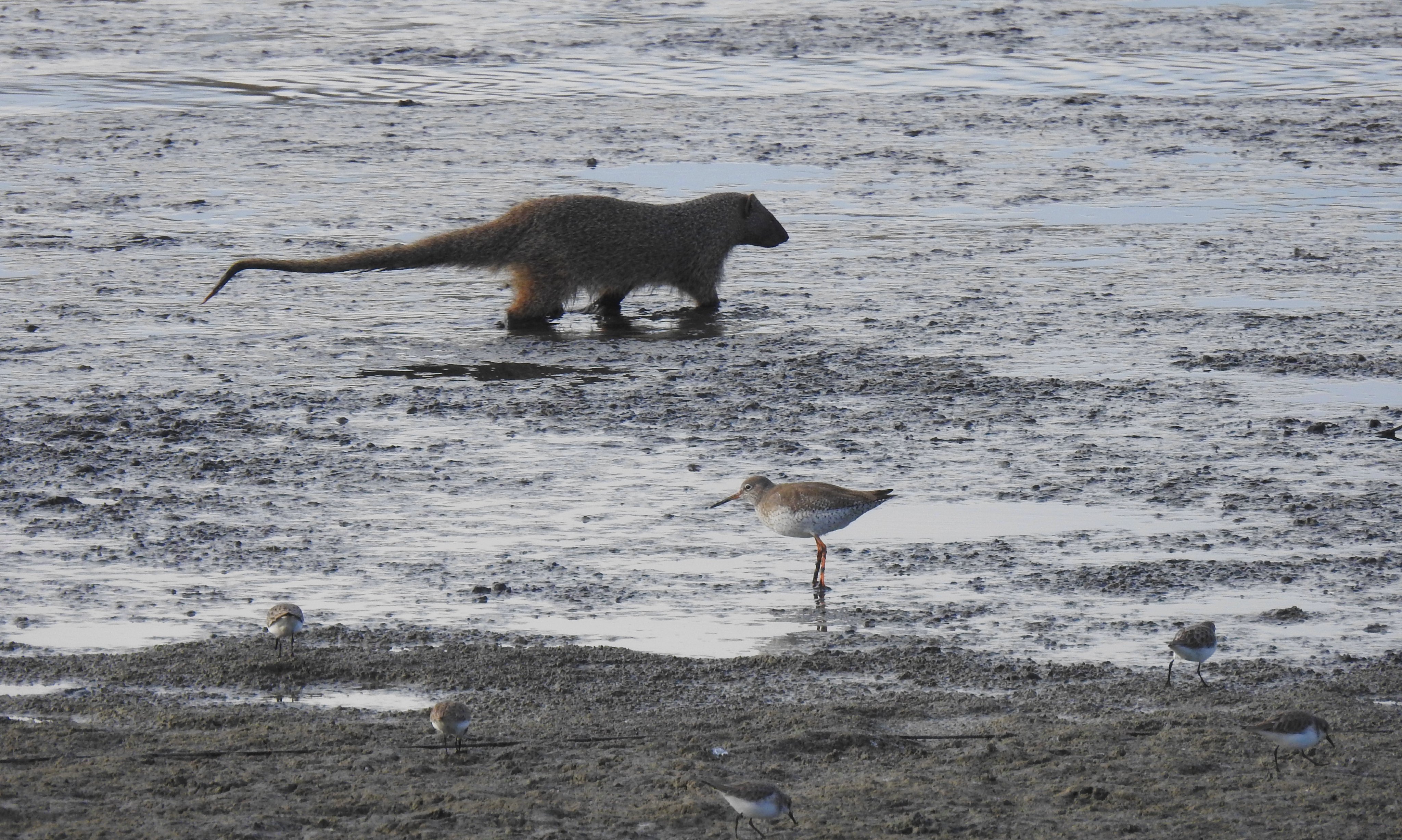
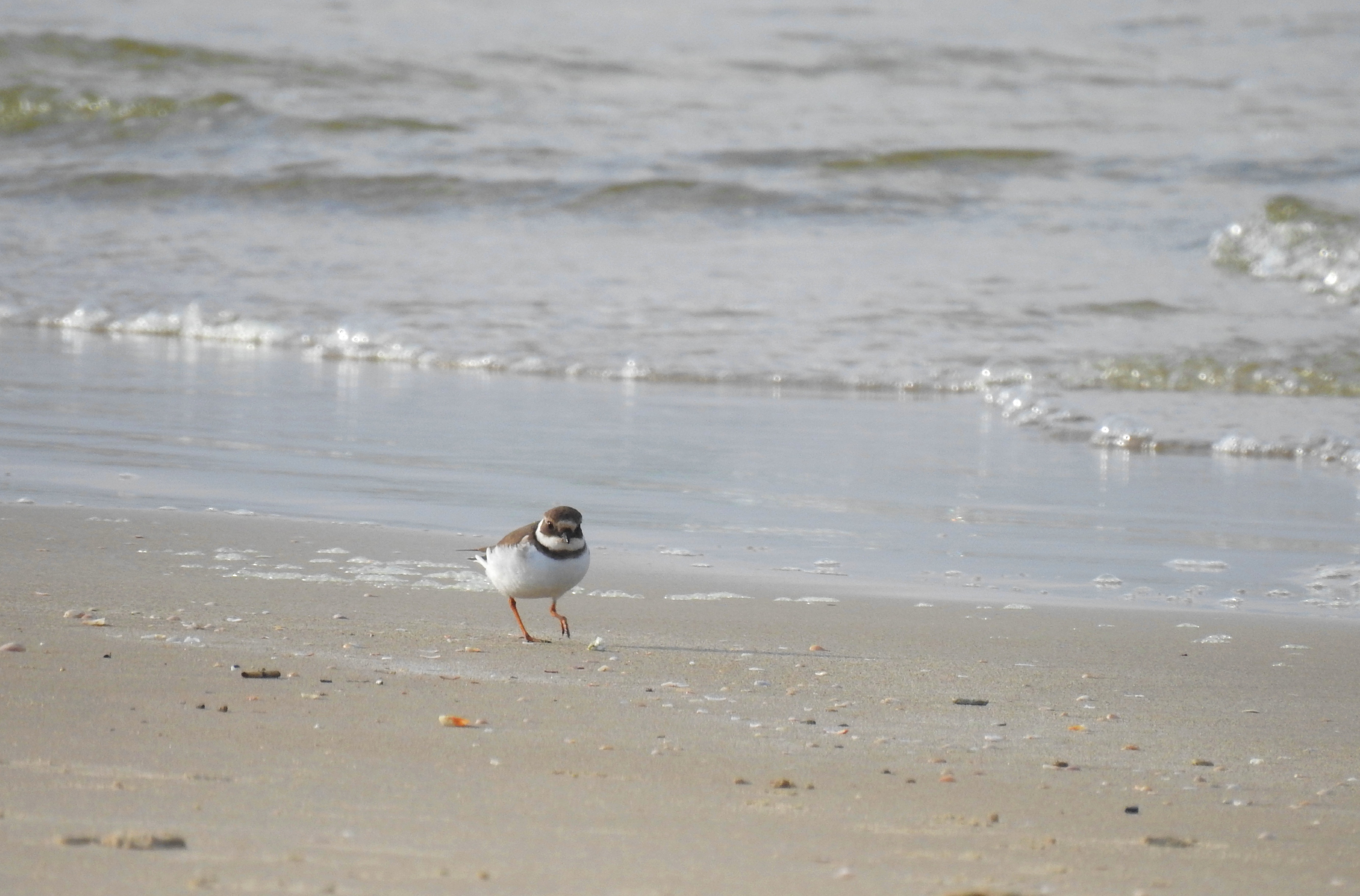
We scanned the neighbouring HaYonim Island, where many pigeons, gulls, terns and more were congregated. There were hopes to see a curlew or a whimbrel, both of which were sighted close to our visit, but we found neither. However, we did see a nice amount of waders, such as sandpipers and plovers. Also, a slinking Egyptian mongoose passed by at the edge of the bushy vegetation that borders the sandy beach.

Sneaky Egyptian mongoose

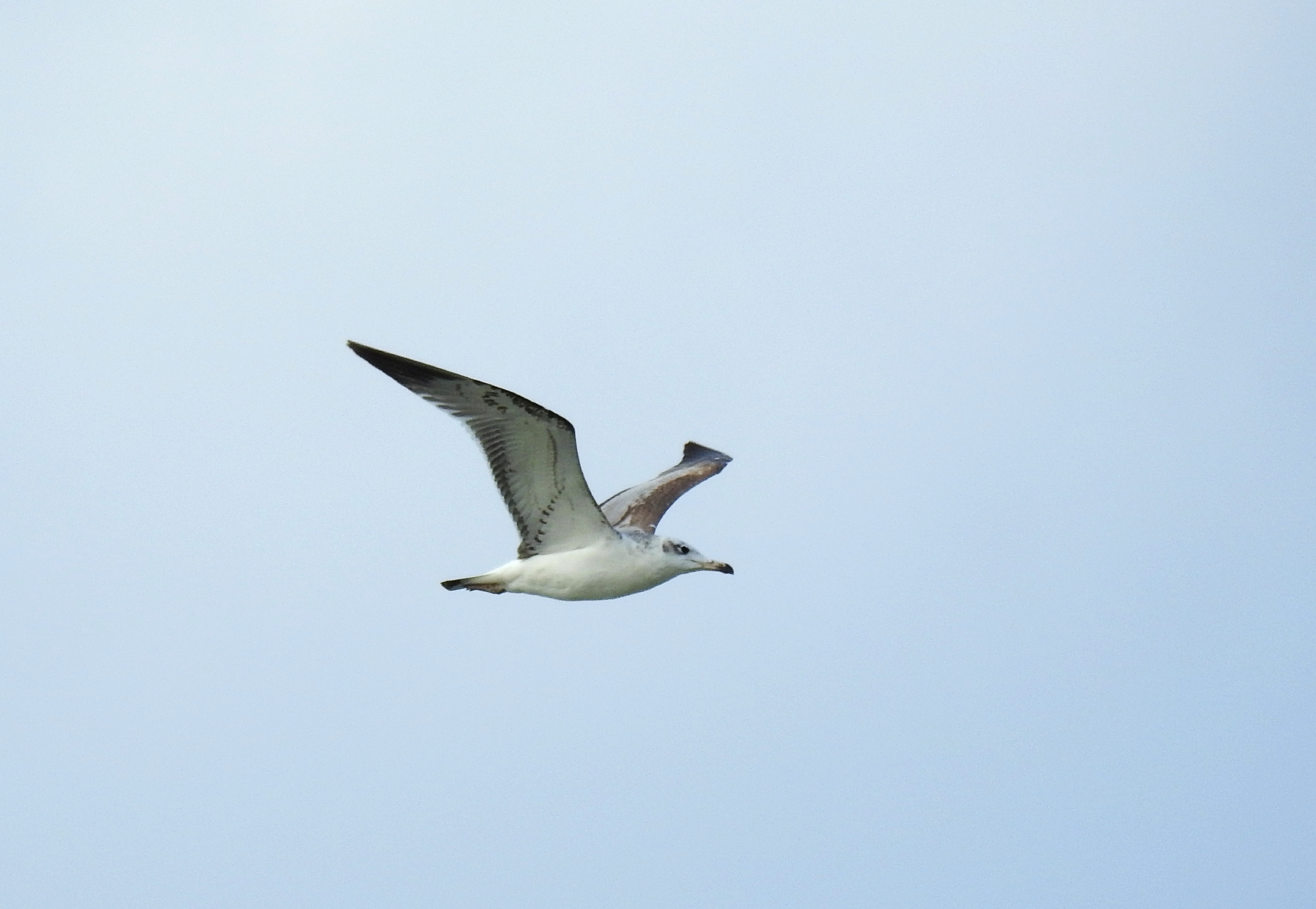
Before long we reached a calm drainage tributary where even more waders were gathered. Hundreds of photographs were taken, and a good handful of species were seen. Some couple hundred metres further south were congregations of gulls, but with the aid of my 2000mm lens I was able to see that most, if not all, were the standard stock of Armenian and yellow-legged gulls.

Gulls and shorebirds everywhere

When the sun was starting to get to us, and we felt like it was time to head back – the long way – we turned westward and found a wooden gazebo perched at the edge of the nearest fishpond. Making our way through the brush, we reached the blessed shade and relaxed, still keeping an eye out for cool birds.

Adam on the search

Truly, a squacco heron was standing at the edge of the pond, a lovely find. Lovely as it were, what Adam pointed out next was even lovelier: a golden jackal had popped into view down below in the thick grasses alongside the nearest tributary.

Birding from the gazebo

There were ducks and songbirds, and the usual terns and gulls, but it was rather fun watching the tributary from an elevated position. Once our humanly presence was no longer in sight, there was an influx of birds that gathered at the water’s edge, and it allowed us to watch with ease.

Birding Ma’agan Michael’s fishponds

But, we couldn’t spend all day in the gazebo, so we gathered up our belongings and struck a path towards the kibbutz, walking between the fishponds. We saw more of the same, and plenty of dead, dried and disfigured fish scattered everywhere in a grotesque, foul manner. As we were leaving my camera’s battery decided that it had had enough, and fritzed out. Fortunately, I was able to capture 99% of our adventure with the camera, and to celebrate the good timing, here is probably my favourite photo from the day, a lone black-winged stilt in the company of a few ruddy turnstones:

Black-winged stilt standing guard

Back in the kibbutz, Adam and I realised that we had quite a wait for the next bus, and decided to look around a bit. We found the local mini-market, and bought popsicles to help beat the heat – I wisely chose a delicious Häagen-Dazs macadamia nut brittle ice cream bar. While waiting for the bus we schemed all about how I’d propose to my now-fiancé, Bracha Berman, which went rather well back in late August. Our bus arrived and we made our way back to the train station where we parted ways for the weekend, bringing yet another adventure to a successful close.

Rishon LeZion Dunes

In Central Israel, Coastal Plain, Israel on August 18, 2019 at 8:09 AM

The long hot months of summer are usually relatively uneventful in terms of bloggable content, yet exceedingly busy in other aspects of life. Thankfully, birding is particularly dry in Israel during the summer, and there is then less distractions to get in the way of the necessities. However, when the sun sets there is a whole new kind of distraction, found just a bus or two away, and that is the lure of the dune.

Sunset over the Rishon LeZion Dunes

Last year was the first time I had explored coastal sand dunes at night, and a series of adventures were enjoyed by myself and my trip companion Adam. We had explored the majority of the Holon Dunes, and had seen a great number of fascinating wildlife species, but there is always more. This summer, just as the bird sightings tapered off, we decided to give a new dune area a try. This was none other than the Rishon LeZion dunes, located between the Superland amusement park and a large military base, which we visited for the very first time on June 10, 2019.

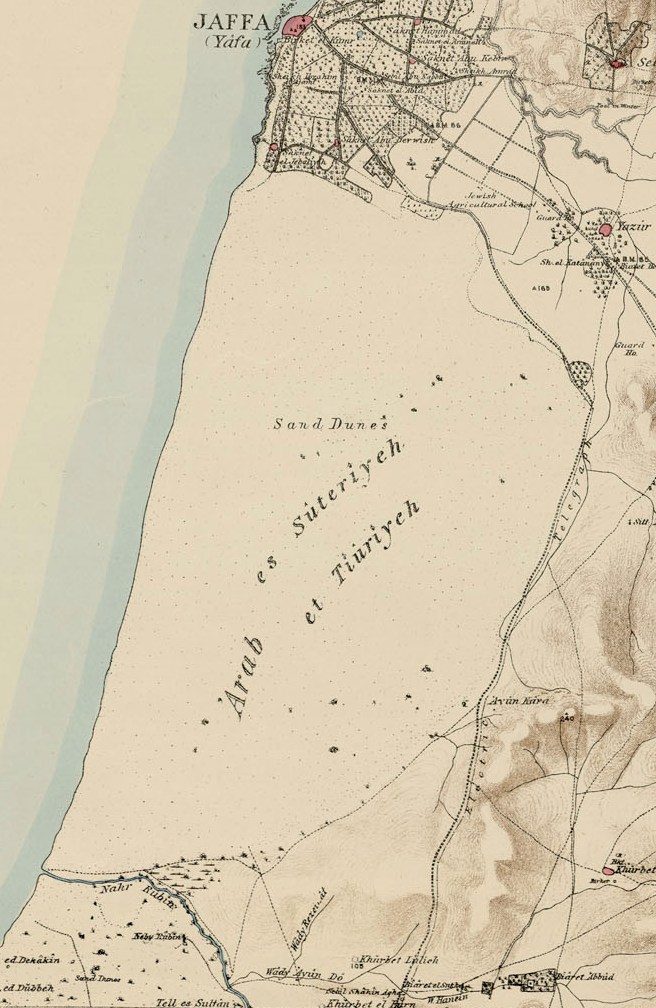
Old dune map

We set out from Givat Shmuel in the afternoon, hoping to scope out the area before darkness fell. Our goal was to map out an area that would be prime for finding interesting creatures of the night, with our ultimate goal being serpents. Despite finding plenty of tracks, we hadn’t seen any snakes in the Holon Dunes, and this failure was scratching at us from deep inside. We needed snakes like we needed water, and armed with our new powerful LED flashlights, we were confident that this summer we’d have results.

Scoping out the dunes before dark

Our bus dropped us off at an area that we had believed to be dunes, but is now a vast construction site. Even so, there was some excitement because we nearly immediately found a dead shrew on the pavement near the bus stop. We realised that now we had a bit of a walk to reach any dunes, so we set off and made our way away from the construction. Turning south onto a side road we soon found an area that seemed suitable to our needs. A quick venture into the bush, and we found plenty of signs of wildlife.

Gerbil tracks

Since it was still day there was a good number of birds to be seen, mostly swifts, swallows, stone curlews, bee-eaters and the ever-present mynah. But there were plenty of tracks in the loose sand, including those of tortoises and gerbils which we are always glad to see. As we advanced into the dunes we caught sight of another happy sight – three mountain gazelles prancing about. Just as the gazelles caught sight of us and began to run away, a large flock of chukar partridges also escaped our presence. It was loud and chaotic, the happy sounds of nature protecting itself.

Backlit dune flowers

We realised that this is where we wanted to explore that night, and calculating the time until nightfall, made a decision to go check out the nearby Lake Nakik. It wasn’t too far away, even on foot, and we enjoyed the walk as it afforded photographic opportunities of bee-eaters, juvenile chukars and other birds. Before long we reached the small lake, and found that it was nearly empty. Just one little egret was wading near the shore, darting his spear-like bill into the shallow waters in attempts to catch minnows.

Little egret fishing at golden hour

Sometimes less is more, and having just this one bird to focus on let me take full photographic advantage. With the golden reflection from the setting sun and the dying leaves above, there was a special beauty that just begged to be noticed. We watched the egret catch a few fish and fly away in search for a better spot. With little else to see we turned back and made our way to the dunes once again, passing the attractions of Superland.

Nothing to see here at the lake

I’m very partial to the cascading shades of colour that sunsets paint the skies with, and to couple it with some wind-swept sand dunes just brings me so much joy. We entered the sandy region, walking along some well-worn footpaths and met the gazelles once again. The sun slowly sank over the horizon and we took out our nighttime gear, eager for the real fun to begin.

Mountain gazelle against a backdrop of Rishon LeZion

The first wildlife sighting of the night was a Rivetina sp. praying mantis, which dashed about on the rippled sand as fast as he could. Just as I was finished photographing it, Adam shouted out that there was an owl passing overhead. I looked up as quick as I could and confirmed that an owl – probably either barn or long-eared – was indeed flying over us. It was a shame that I missed the photo opportunity and I looked down at the shameful mantis with a look of sadness.

Rivetina sp. praying mantis

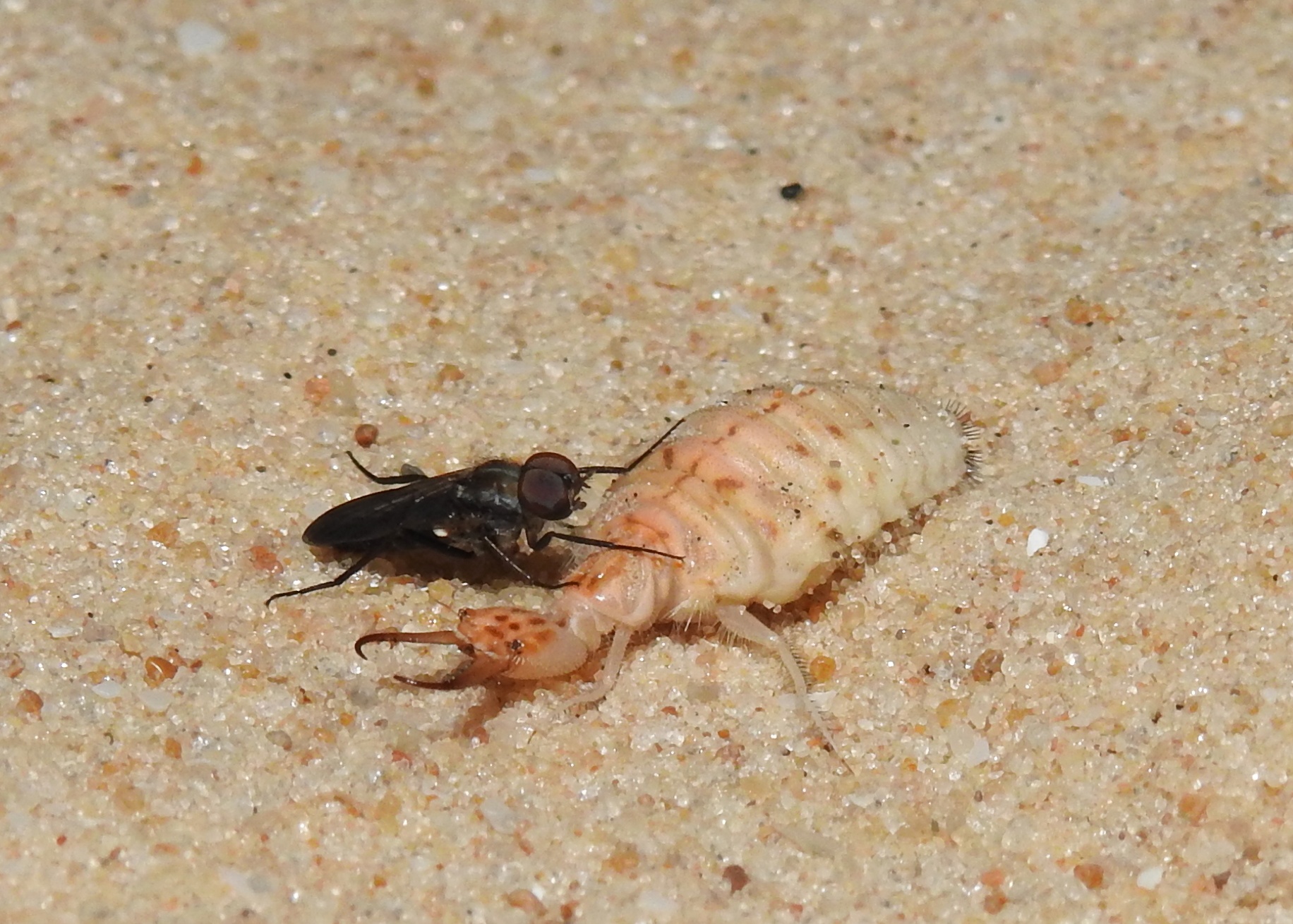
The next exciting find was a dung beetle, but not an ordinary dung beetle. This particular one was stuck somehow, flailing his arms and legs as he tried to keep moving. When I moved him I saw something absolutely fascinating. A large antlion nymph had captured the dung beetle in its iconic conical pits, and was in the process of feeding on the injured beetle. Already exposed, I took this opportunity to take some nice photographs of the antlion nymph, just as a fly came by to investigate.

Antlion nymph getting a massage

Next, Adam exclaimed that a snake had surprised him, and had disappeared into a wide bush. I dashed over to help find the snake, but alas it was gone and we have no way of definitively identifying it. So, we carried on with a fresh energy, hoping to find another snake. Our next find was an African fattail scorpion, venomous and on the prowl for food. We see dozens of these every time we explore the Holon dunes, so we took a few pictures and continued along.

African fattail scorpion

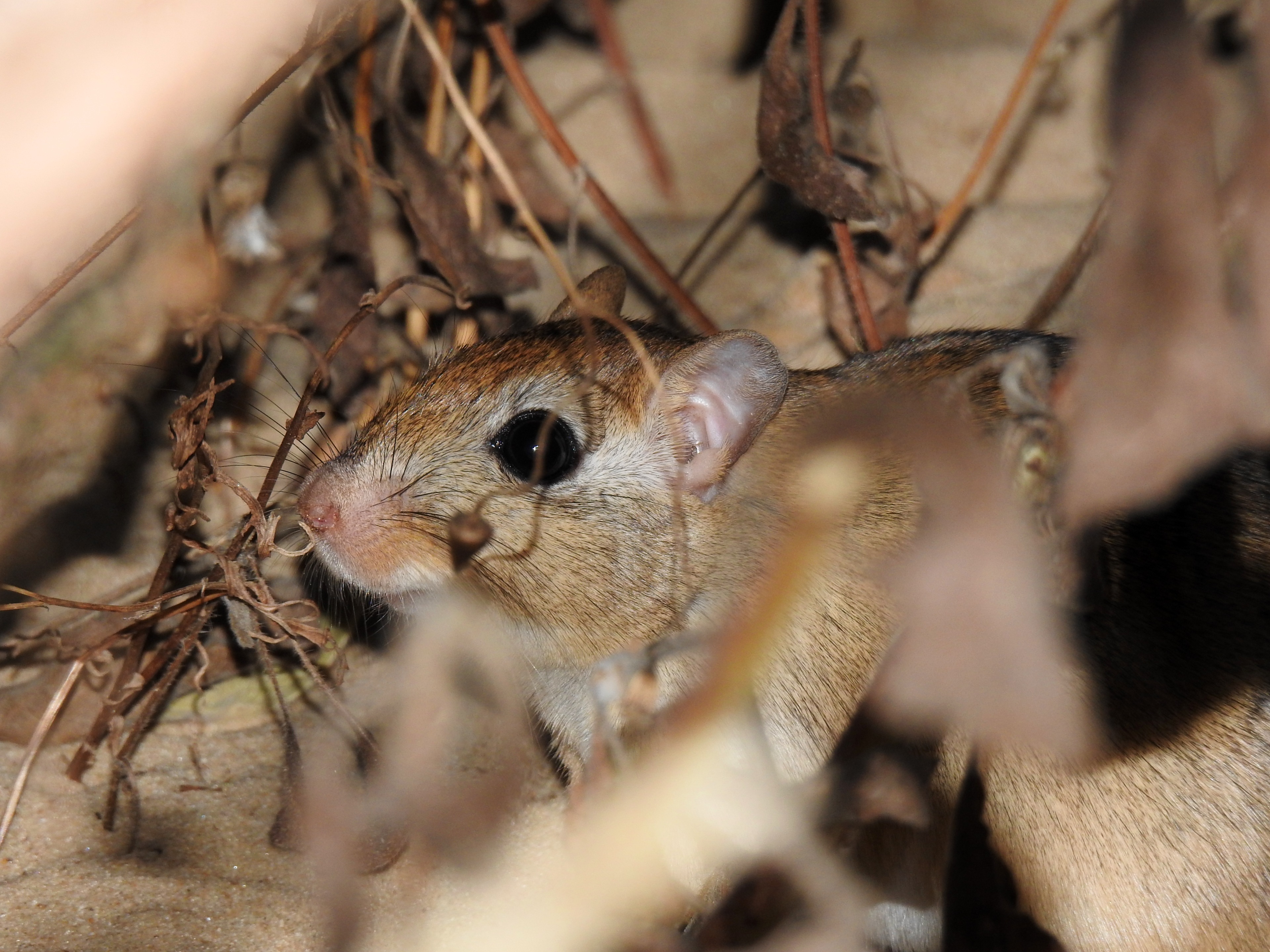
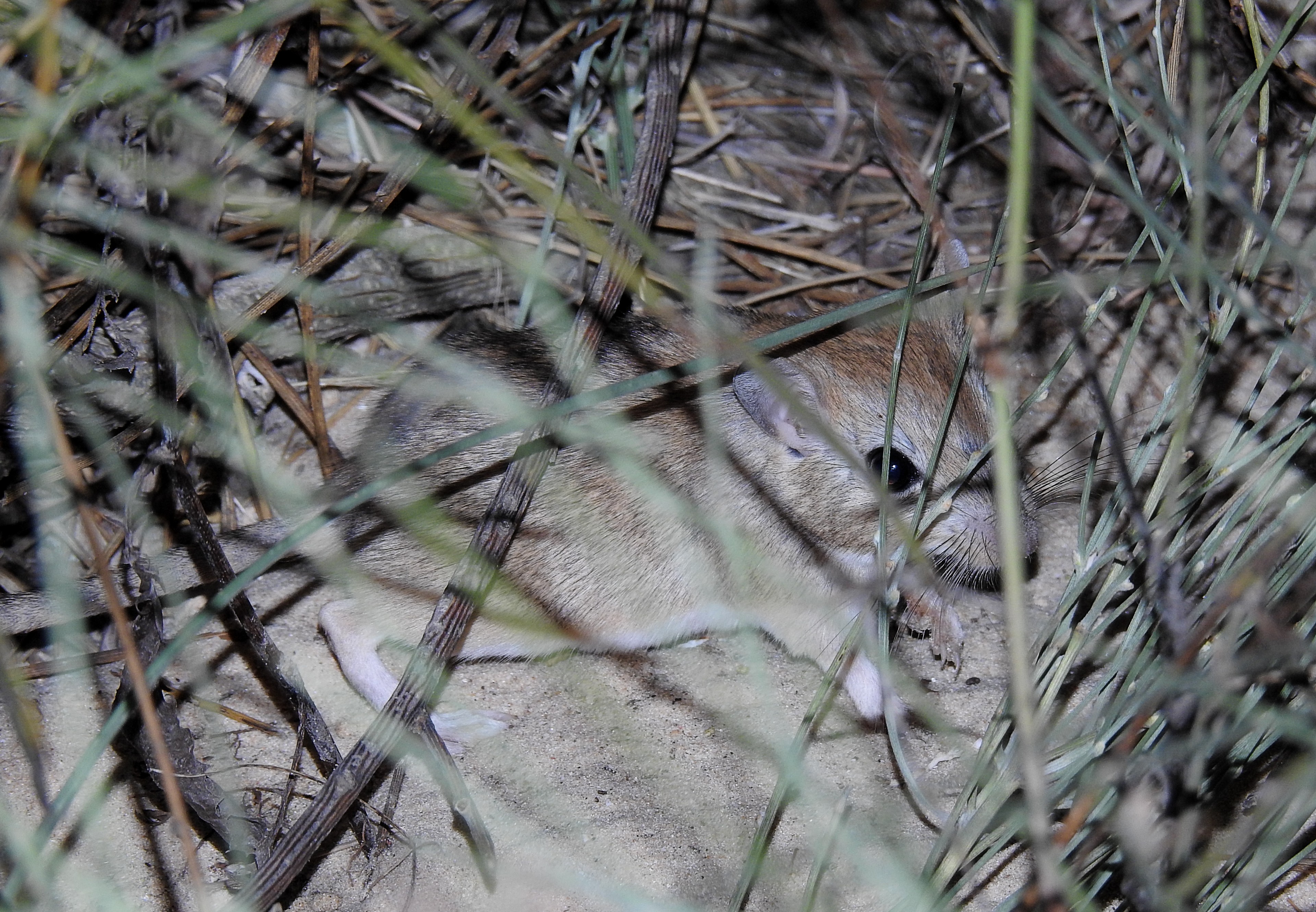
We crested sandy dunes and rummaged in the vegetation filled valleys between then, searching for something interesting. It was the quick sounds in the bush that alerted us, and then the glimpse of something small and brown dashing for cover. We had stumbled upon a huge bunch of Tristram’s jird lairs, underground dens with numerous tunnels. To our satisfaction, several of them felt rather comfortable around us and getting semi-decent photographs wasn’t an insurmountable task.

Perfect focus on a Tristram’s jird

That basically summed up our trip, as we had to get some buses back to Givat Shmuel. But, we had determination to come back and try again, which we did exactly one month later, on July 10th. This time we knew where to go in advance, and headed straight for the prime dune area, skipping over the empty Nakik Lake.

The beauty of the dunes at dusk

We arrived at the dunes at golden hour, about an hour before nightfall. We were greeted by frisky crested larks, a white-breasted kingfisher and a male mountain gazelle – likely the same one as last time.

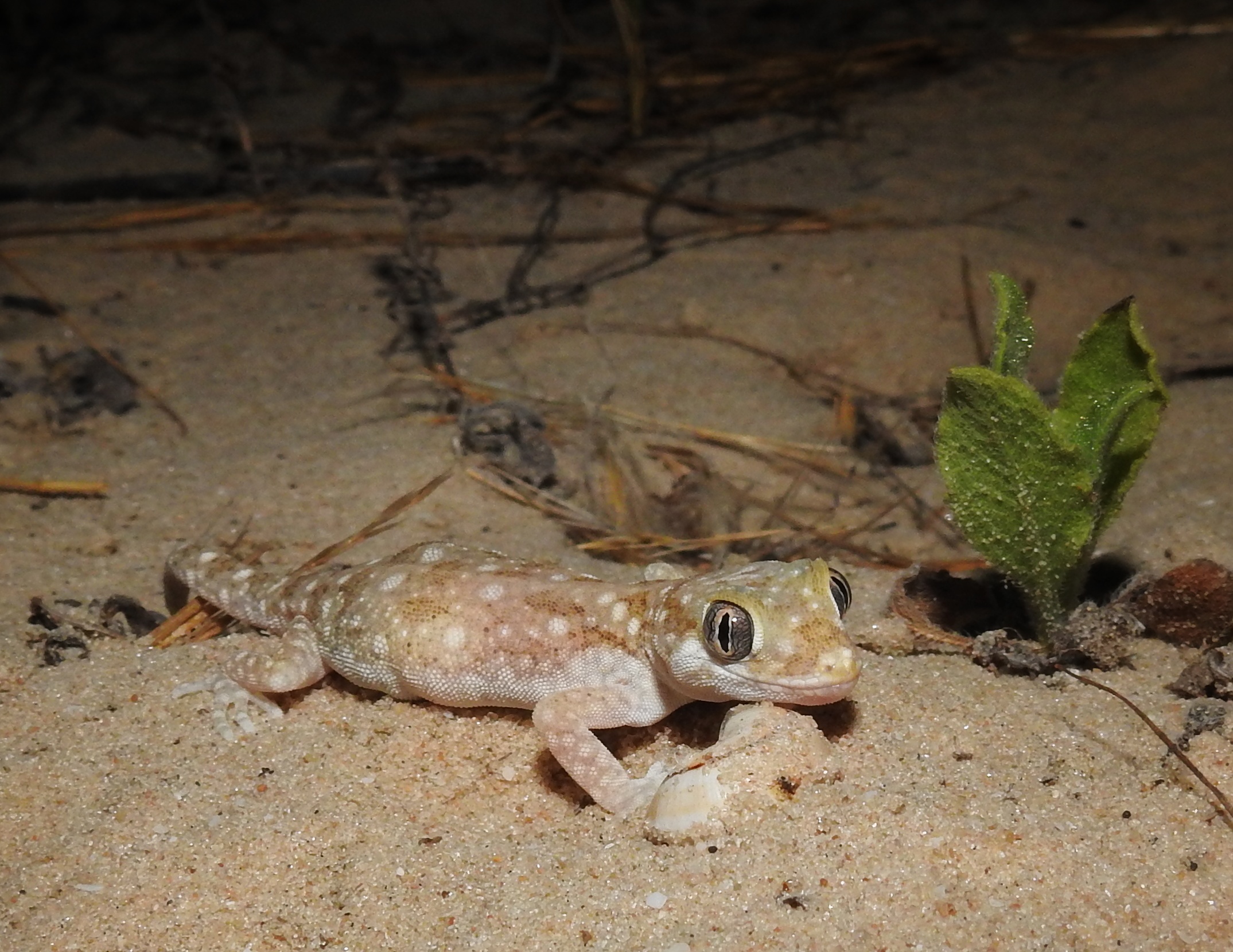
Elegant gecko

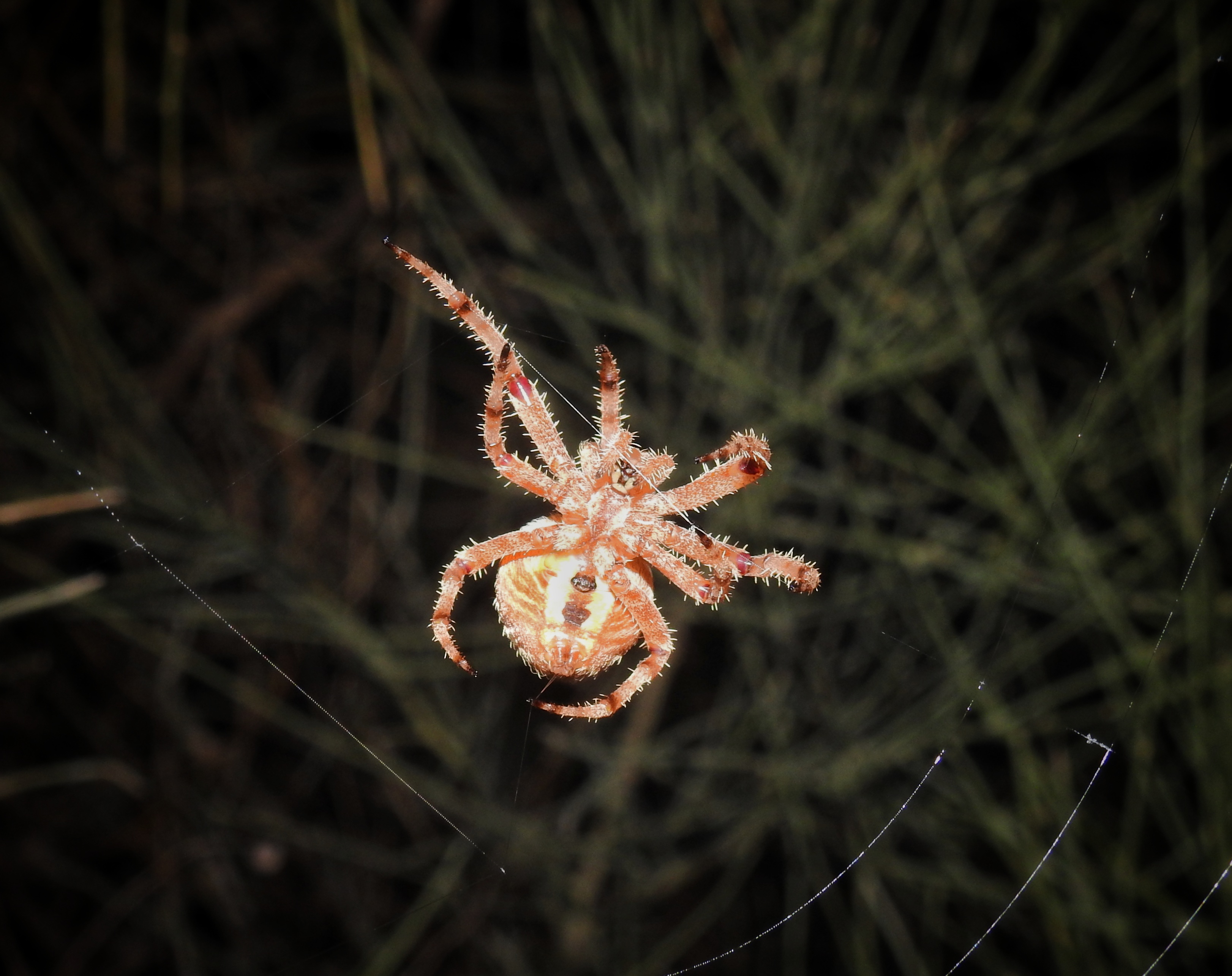
Our explorations once nightfall began led us directly to a bunch of Tristram’s jirds, as well as an elegant gecko. From there is continued to be relatively normal, with just a lot of jirds and a female lobed agriope spider. We had become to give up hope, wondering why we couldn’t find any snakes no matter how hard we looked. I mumbled a prayer, hoping that it’d help in finding just one serpent. At this point any snake would be a blessing.

White-spotted silky field spider

We were on our way out of the dune area, walking the long way through some trees. There was a constant rodent presence, mostly jirds but a rat or mouse here and there as well. We took as many pictures as we could, hoping to get a cool shot of these fun rodents. Then we both saw a blur of movement and a jird vaulting itself into the air, leaping up in a most ridiculous way. It was a quick blur of greyish-brown fur, but then we saw it – the reason why it leapt.

The hunting viper

Just below the low branches of a bush was a medium-sized viper, who had just struck out at the jird. We didn’t know if its deadly fangs made contact with the gymnastic rodent, but we were spellbound. Adam hurriedly told me to take pictures, and I snapped away as fast as I could. The viper was a bit far from us, a good 5-6 metres or so and I had to make sure the flash lit it up properly with the branches in the way.

Tristram’s jird hiding in the foliage

We crept closer, hoping to get a good look at the viper. The air was alive with the rush of danger and excitement, and we knew that we needed to play it smart. Unfortunately it was a little skittish and slithered off under the bush’s foliage when we got close. Still, we were spellbound and couldn’t help but exclaim over and over how exciting that was. It was still in our thoughts when we crested yet another dune, not far from the access road.

Juvenile viper

As I was scanning for snake tracks, Adam shouted out that he found another viper! I dashed over, my hiking boots sinking into the soft sand as I ran, and was elated to see a smaller viper just laying beneath a bit of vegetation. This was perfect, we were able to get close – safely! – and get all the pictures we ever wanted. Both vipers had the same colour pattern, which is the most common morph in Israel, but the size difference was quite noticeable in the field. This second viper was a juvenile and was relatively calm as we crowded it with our lights and cameras.

Face to face with a viper

We wanted to stay with it all night, but we knew that we all needed to part ways. We humans had a bus to catch and the viper was probably hoping for some peace and quiet. So we took one last picture and headed off, leaving the precious viper all alone on the dune.

One last photo of the dunes at dusk

Grabbing a bus to Tel Aviv, we made it back to Givat Shmuel in relatively good time. As I approached my place I caught notice of a microbat making passes under a strong floodlight, nabbing insects that were drawn to the light. It took a few tries but at last I got a semi-decent picture, decent enough to confirm that it was indeed a Kuhl’s pipistrelle – a common bat in Israel. This sealed quite an excellent nighttime adventure, but our next dunes trip was to be back at Holon, this time with Adam’s youngest brother in tow.

Nachal Alexander

In Coastal Plain, Israel on March 6, 2019 at 10:45 AM

In the beginning of February I had the opportunity of visiting Nachal Alexander with the school where I work. I had been to a select area of Nachal Alexander twice before, and have even written about it (linked above), but this time I was to be exploring the length the stream and thus a blog post is most warranted.

Nachal Alexander spilling into the sea

Being that it was a school trip, and that the school is a relatively large one with approximately 1,000 lads, the experience was going to be a bit different than ordinary, and I naturally anticipated seeing less wildlife. However, when the buses dropped us off near the mouth of the stream I could immediately see a handful of gulls as well as songbirds and knew it’d be interesting nonetheless.

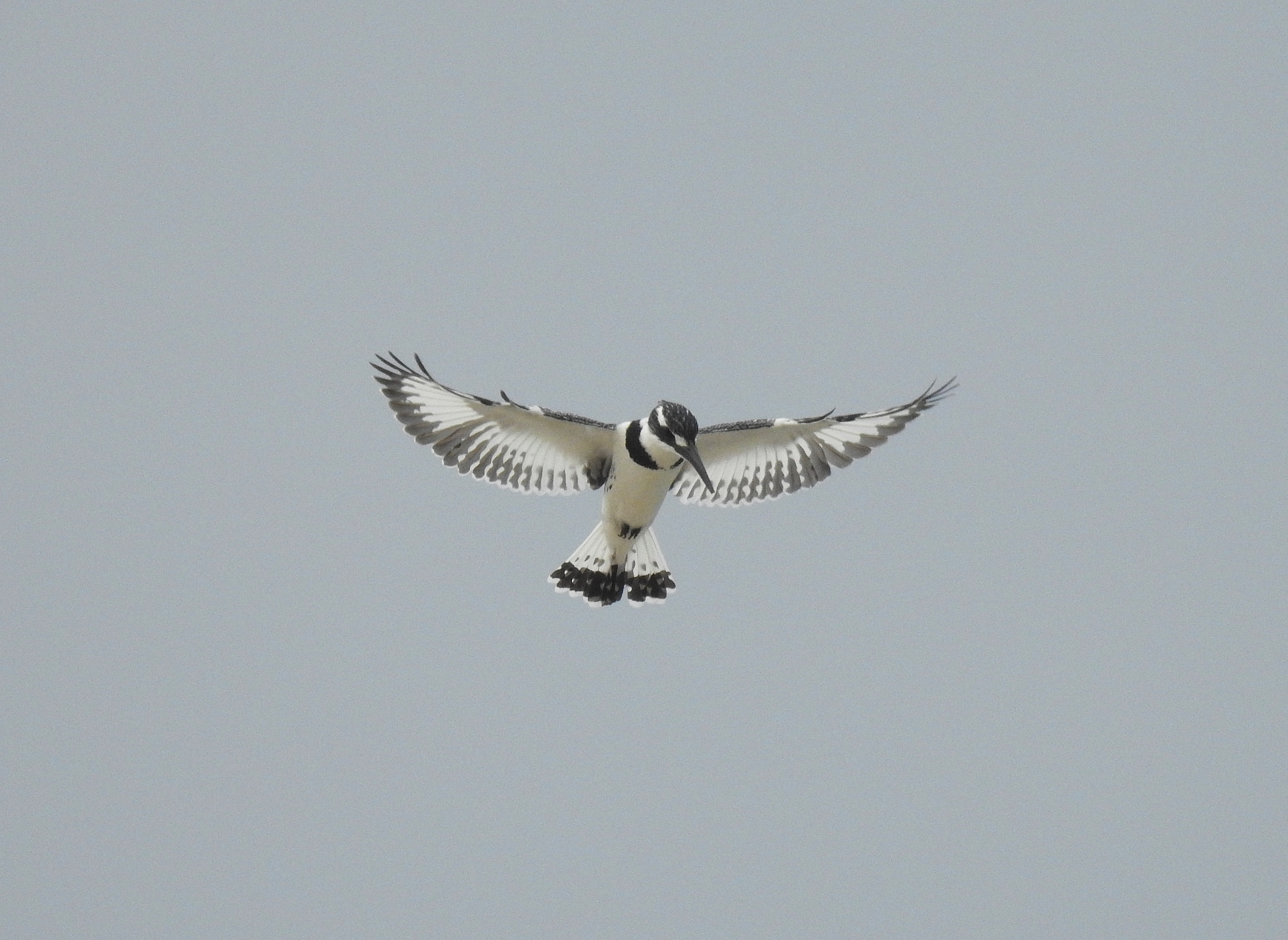
Pied kingfisher

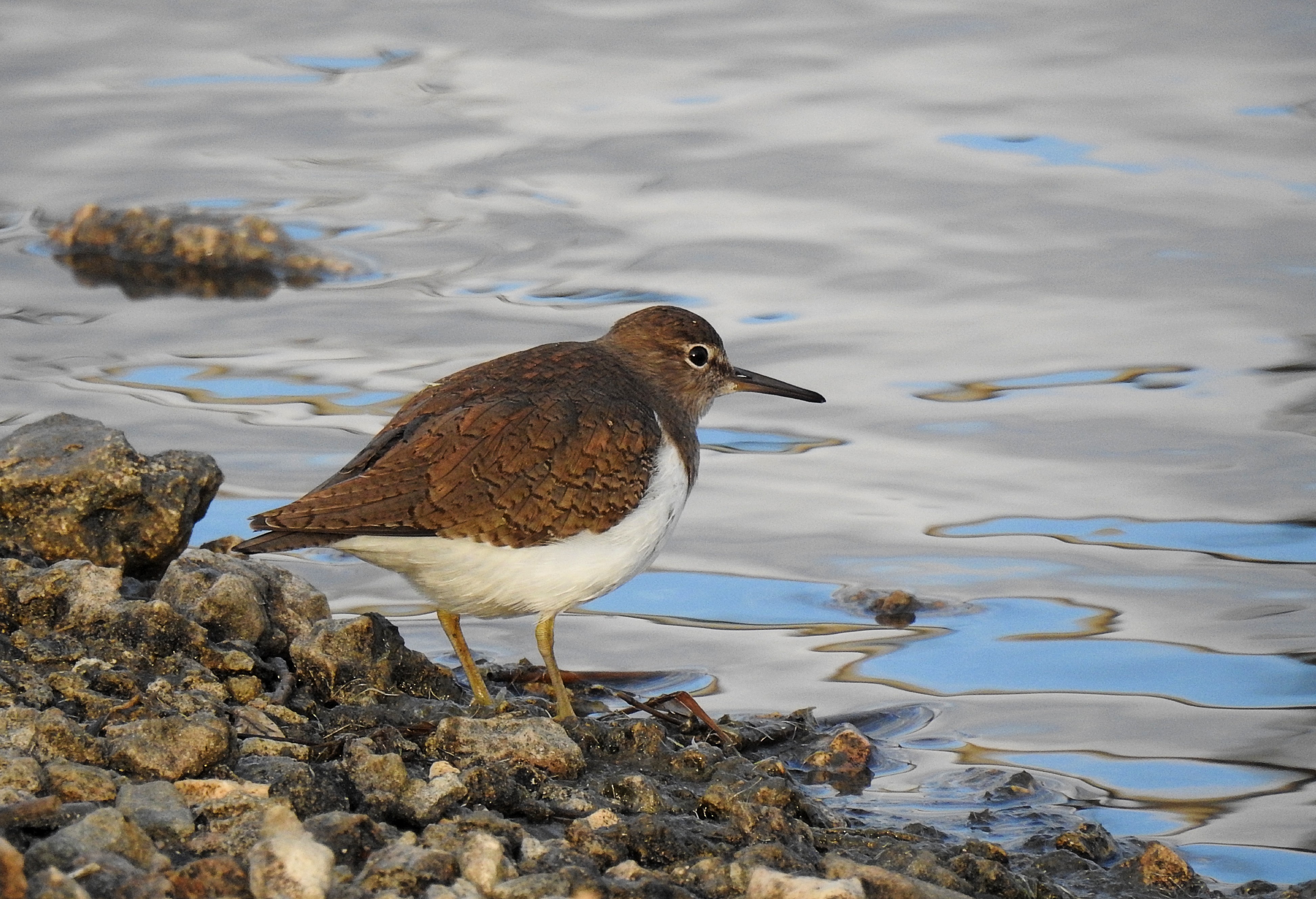
The educational staff and the lads lined the streambanks near where it reached the sea, and I took this opportunity to wander off a wee bit to see if I could find any waders. I did quite well, and found a greenshank, a common sandpiper, a little stint and a beautiful slender-billed gull standing on a ridge of washed-up seashells.

Slender-billed gull

A few more birds and then it was off to the trail with a handful of straggling lads and other staff members. We walked alongside the stream and as soon as I had the opportunity to break free from the noises of the group I did, and was rewarded for my efforts by an interesting sighting. Two cattle egrets were prowling the trail ahead of me, and within minutes of each other, each of the caught poisonous centipedes and wolfed them down with great gusto.

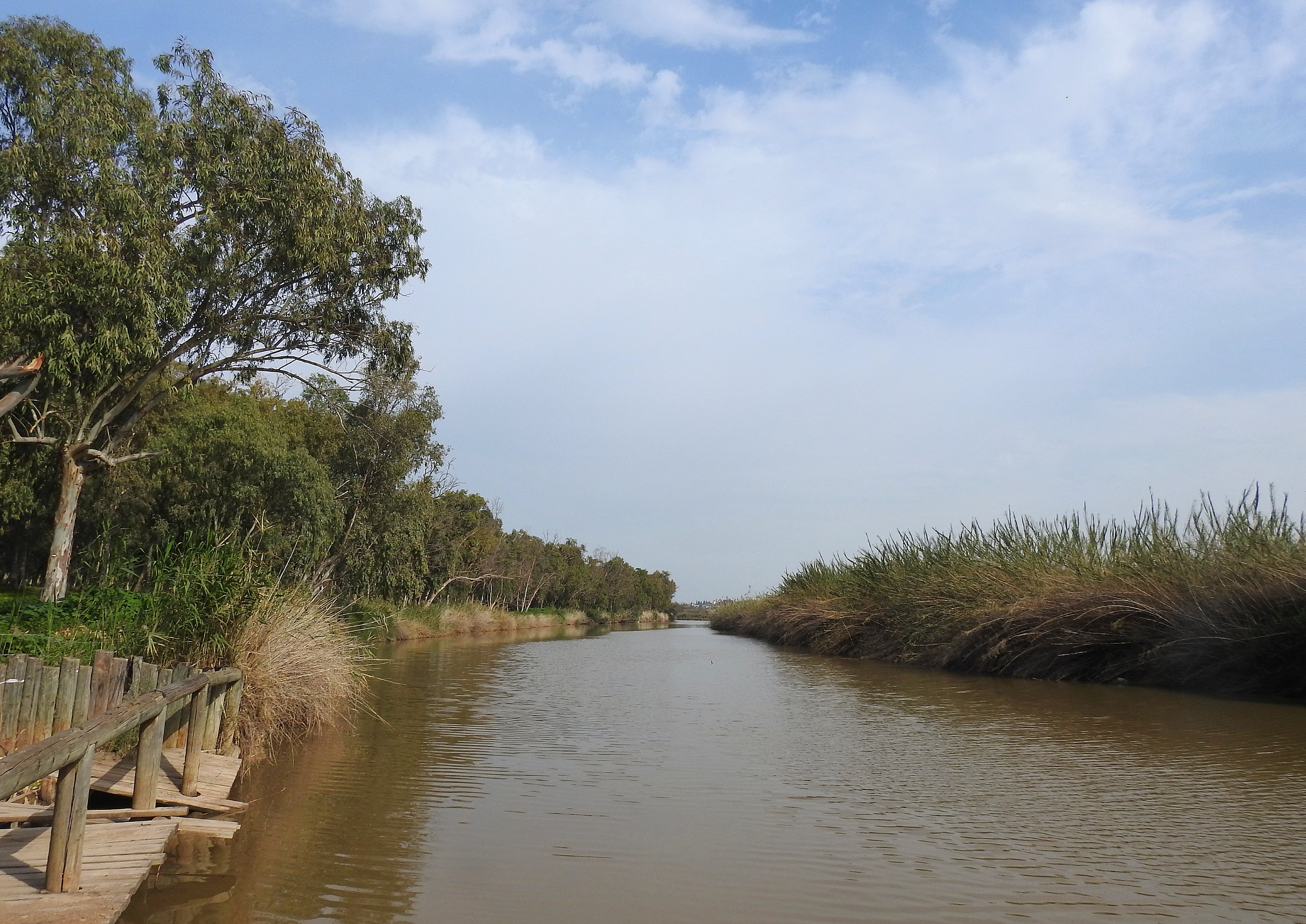
Nachal Alexander

Dozens of greater cormorants came to view, some flying overhead and some in the stream’s languid waters, as well as a few moorhen. A brief break in a wooded area provided me sightings of a chiffchaff, black redstart and a reclusive-yet-noisy European robin.

Khirbet Samara

Before long I had reached the ruins of Khirbet Samara, a house built in the end of the 19th century by the Samara family of Tulkarem in order to oversee their watermelon fields in the nearby land. Climbing up the kurkar ridge to the ruins provided a closer look at the cut-stone house and its arched buttresses. Up top I was able to enjoy the view of the surrounding area, and of Nachal Alexander down below.

Holy hawksbeard growing on a buttress

Taking a set of stairs down the opposite side of the ridge brought me to a field of wildflowers, harbingers of spring. I was most excited to see clumps of coastal iris, a particularly dark flower that attracts photographers more than bees. I wanted to spend more time with the irises, as I find it particularly challenging to photograph wildflowers, but I knew that I was the very last one in our group and I had to catch up with the others.

Coastal iris

I continued along the stream, following the Israel National Trail as I encountered small flocks of cormorants perched high up on eucalyptus trees. I walked and walked, not letting myself get too distracted, until I reached train tracks. Continuing on with the trail, I then saw a peculiar sight: a Boeing-Stearman biplane painted blue and yellow passed overhead. I attempted to look up the plane’s N-number, the international registration number, but my search attempts on the FAA’s website turned up empty.

Boeing-Stearman biplane

Eventually, after seeing some corn buntings – also harbingers of spring – I arrived at the famous bridge where the African softshell turtles congregate. Since I’ve already written about this experience before, I shall resume with the continuation of the trail alongside the sluggish stream.

Early spring colours

We walked and walked, passing countless eucalyptus trees, plentiful cormorants and a few handfuls of black-headed gulls flying high up in the sky. Every so often there would be a sign informing us of our progress, and of the stream’s rehabilitation efforts over the years. An hour or so after we left the bridge we arrived at another bridge, and then to the grand feast put out by the school kitchen staff.

The final stretch

The next hour or two was dedicated to feasting on chicken skewers, fries, mini baguettes, salad and more as the entire school trickled into the feasting field slowly. Just as the last people were receiving their portions the skies opened up and rain began to pitter-patter on heads and shoulders. Thankfully the buses had arrived and, after cleaning up our trash, we piled in to be taking to Kfar HaRoeh for the rest of the day’s activities.

Tel Dor Archaeological Dig

In Coastal Plain, Israel on November 4, 2018 at 9:37 AM

Harkening back to the warmer days of summer, this post chronologically follows the one-post summary of the month-long excavation season at Tel es-Safi. Finished with the Bar Ilan University dig, the members parted ways – some to see each other again next year, and some not. I was beginning the period of summer exams at BIU, which is always a dreary two months, so when the opportunity to attend the Tel Dor Archaeological Dig presented itself, I was quite excited to join.

Tel Dor (photo Department of Archeology at the University of Haifa)

My brother Nissim had excavated the previous year at Tel Kabri, and this year found himself attached to the Tel Dor crew, so I had yet another reason to attend. Joining me on this day of volunteering was Rebecca Zami, a two-year veteran of Tel es-Safi, who had just finished up a week of lab research at BIU. We set out in the early morning from Givat Shmuel and made our way north by way of public transportation. Nissim and a staff member found us at the junction closest to Tel Dor, and we made a quick stop at the Mizgaga Museum for some supplies before heading to the tel.

Ancient temple beside the dig site

I had already visited Tel Dor a couple time before, but each time I’m taken aback by the great beauty of the ancient site. To see the excavated ruins on the hilly ground overlooking the sparkling Mediterranean Sea is delightful. As such, I was eager to get more acquainted with the city, and the ongoing archaeological excavations. Rebecca and I presented ourselves to Alex and the rest of the on-site senior staff, a blend of representatives from Hebrew University, Haifa University and Boston University. During breakfast, we received from field supervisor Alex of BU a quick overview of the site, the area we were to be digging in and the people involved.

Ancient ruins of Tel Dor

Our first task, after getting our gloves on and equipping ourselves with the necessary tools for the job, was to clear away a “robber’s trench” beside a Classical column base (which the team dubbed “Colin”). Just to elaborate, a “robber’s trench” is a void in a wall where the original stones were removed from, not quite as exciting as it might have sounded. We were introduced to the junior staff member attached to this area and began the task at hand. After a month at Tel es-Safi’s Area Y, where we found barely any pottery, it was exciting to find large sherds just hiding centimetres below the visible layer of dirt.

Getting ready to excavate the robber’s trench

Rebecca and I scraped and scraped at the loose brown earth, filling up buckets of both pottery and dirt. We had even found some shell fragments and a few plain tessera (small cubed mosaic stones), but nothing too exciting. Before long some more volunteers showed up, and we were re-purposed to a more physically demanding task. There was a monumental Hellenistic wall complete with a surviving edge of thick plaster that had been built up during the Roman period. Due to the fact that the Roman addition was situationally unimportant, we were tasked to remove the stack of dirt-lined stones that composed the later wall piece.

Nissim working on the Roman wall

This job seemed more exciting, and after just a few minutes we realised that it truly was. We scraped the dirt from between the stones, loosening them as well as revealing tons of potsherds, and then extracted the stones for Nissim to carry off to a dumping pile. While potsherds are generally the most common find for archaeologists, we had gone so long without finding much that each piece found in this Roman wall was cause for excitement. To make it even better, there was even sherds of interesting typologies to be found, such as Eastern Sigilata A and black-figure attic ware.

Black-figure sherd

Working hard on the wall justified a quick trip to the other area under excavation when dig co-director Prof Assaf Yasur-Landau came by with a small group of dig members. I had met Assaf at Tel Kabri the previous year, but this year he was heading up the underwater excavations at Tel Dor – a truly exciting-sounding endeavour. We caught up with him just as he was leading his dive crew on a tour of the excavation just a couple metres to the west of us. This was the site of the Crusader fortress Merle, whose meagre remains had never been fully excavated. Due to my interest in Crusader archaeology, it was quick fascinating to see the excavated progress made on the ancient fortress – something I look forward to seeing in its published form.

Merle fortress under excavation

Rejuvenated from our little informative break with Prof Yasur-Landau, we returned to our south-facing wall and continued to work on the Roman stones. For those excited by the natural world, we found several murex shells, used for thousands of years to produce the finest dyes. To this day there are researchers (including Prof Zohar Amar of BIU) who seek to unlock all the secrets of this ancient dye methodology, and a room dedicated to it in the aforementioned Mizgaga Museum. Dor was one of the principal sites for this dye production, especially during the years of Phoenician rule (Dor was their southernmost city). Unfortunately, none of the murex shells that we found we intact enough to warrant preservation, but they were still exciting to find.

Hellenistic monumental building in the left foreground

Just after noon, when we were coming down on the stubborn lower levels of stones in the wall, we were told that it was time to quit. There were scores of dirt buckets to be emptied and loads of tools to be stowed away. It was sad not being able to finish clearing the Roman wall, but it was getting quite hot out with the midday sun beaming down upon us. We collectively emptied the buckets, stowed the tools and parted ways. My brother was leaving with the rest of the crew, so Rebecca and I took off on our own and walked the scenic way to the museum.

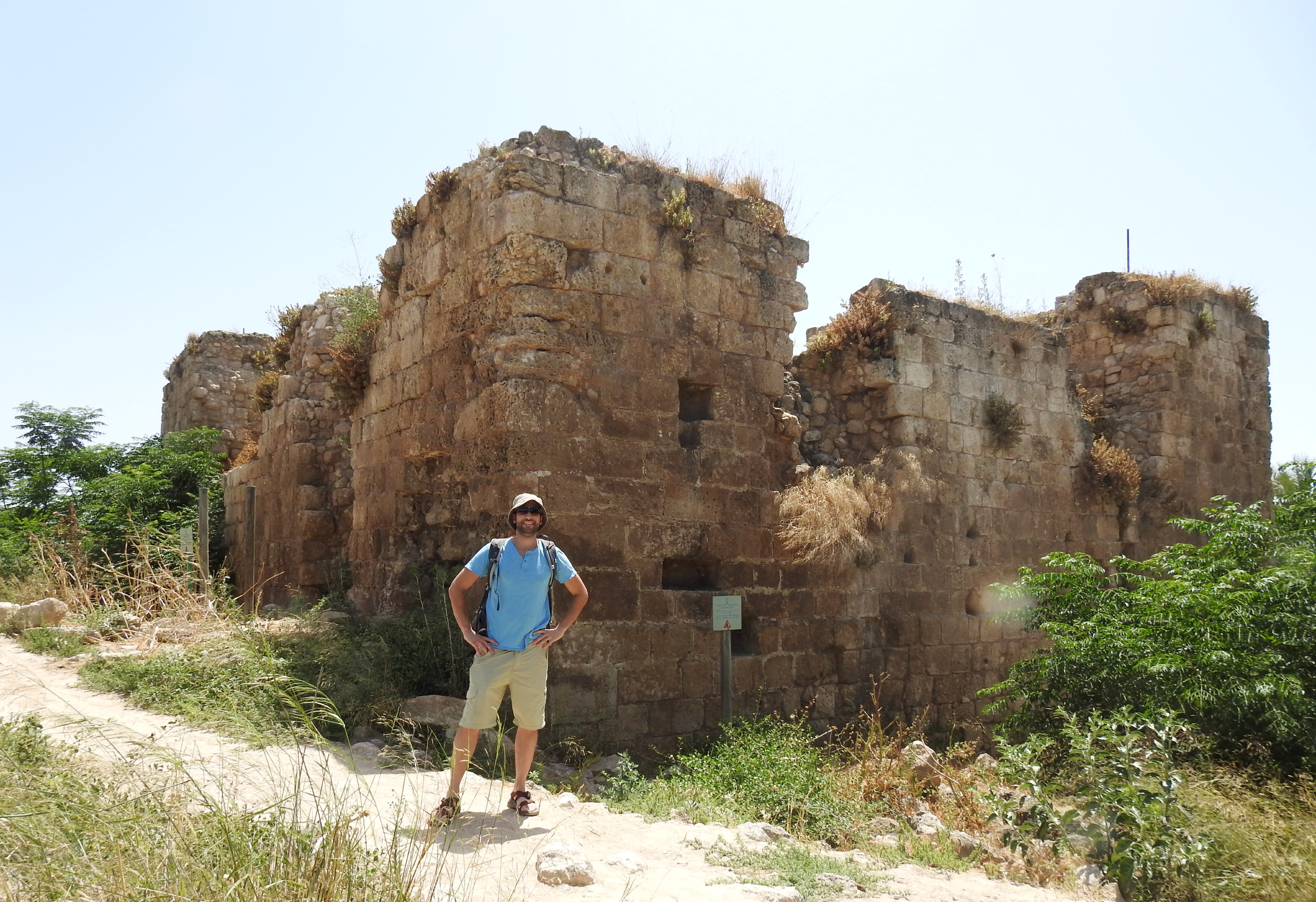
Yours truly

An hour or so later we started heading back to Givat Shmuel, stopping off at the southern edge of Haifa for lunch before boarding the south-bound train. It was a long day, but a very exciting one, and I’m very thankful to have gotten the opportunity to excavate such a cool site. I wonder what next year will have in store…

Rebecca pointing to the dig site as we left

For more information on the Tel Dor Archaeological Dig, check out their site HERE.