Israel's Good Name

Archive for the ‘Galilee’ Category

Ma’alot’s Stone in the Galilee Symposium (ARCHIVE)

In Galilee, Israel on September 11, 2011 at 5:18 PM

Every year Pesach time Ma’alot hosts the renowned Stone in the Galilee Symposium at the Lake Monfort. An event capturing the attention of sculptors the world over, the Stone in the Galilee Symposium has been an active part in the Israeli activities calender since 1992. Not only do sculptors vie for the first place award, they also compete to have their work of art placed in the most prestigious parts of the city. After the event the sculptures are placed throughout Ma’alot, along the boulevards and walking paths as well as adorning the numerous kikars (traffic circles) and fountains. This past event, Pesach of 2011, is the feature of this post.

Tanya Preminger's "Sky and Earth" 2008

For a few weeks the ten or so selected contestants hammer, saw, chisel and sand the huge blocks of stone given to them at the start of the contest. Every year there is a different theme and the artists shape the stone to something that they see fit with the theme of the year. Often the artist will employ other materials to add to the sculture such as rusted metal, tile bits and other stone in order to create their masterpiece.

Roy Givati's sketches (Photo: Ayelet Dekel)

Many of the artists come from overseas and stay nearby in order to participate in the event that ends with public viewings and the votes from the artistic judging commitee responsible for the awards and placements throughout the city. During the few days of Chol HaMoed the sculptors are nearly finished with their work and the myriads of tourists, locals, friends and family members come to inspect and admire the works in progress. Additionally, surrounding the lake there are kiosks and activity booths for the visitors to engage themselves in as well as boating on the lake. In a similar theme to the professional sculpting, several soapstone and pumice carving stations where children (and adults) can make their own necklaces or mini-sculptures to bring home.

Even Pele soapstone necklace activity

Here are some of the sculptors and their works of art from this past symposium:

Jamal Hassan with "Waltz Dance" (Photo: Ayelet Dekel)
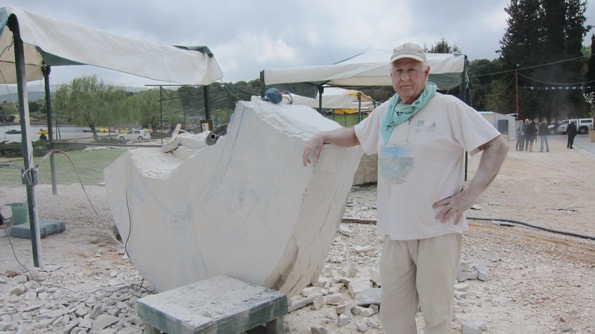
Igal Miron with "Swing" - the smooth side (Photo: Ayelet Dekel)

Every contestant hopes to have the sculpture that is to be placed opposite the City Hall in the center of a large fountain. This past year a trio of dolphins were erected in the fountain, a truly fit piece with the jets of water shooting up into the mountain air and splashing back down among the dolphins. Here is another sculpture that currently resides along one of the main roads in Ma’alot.
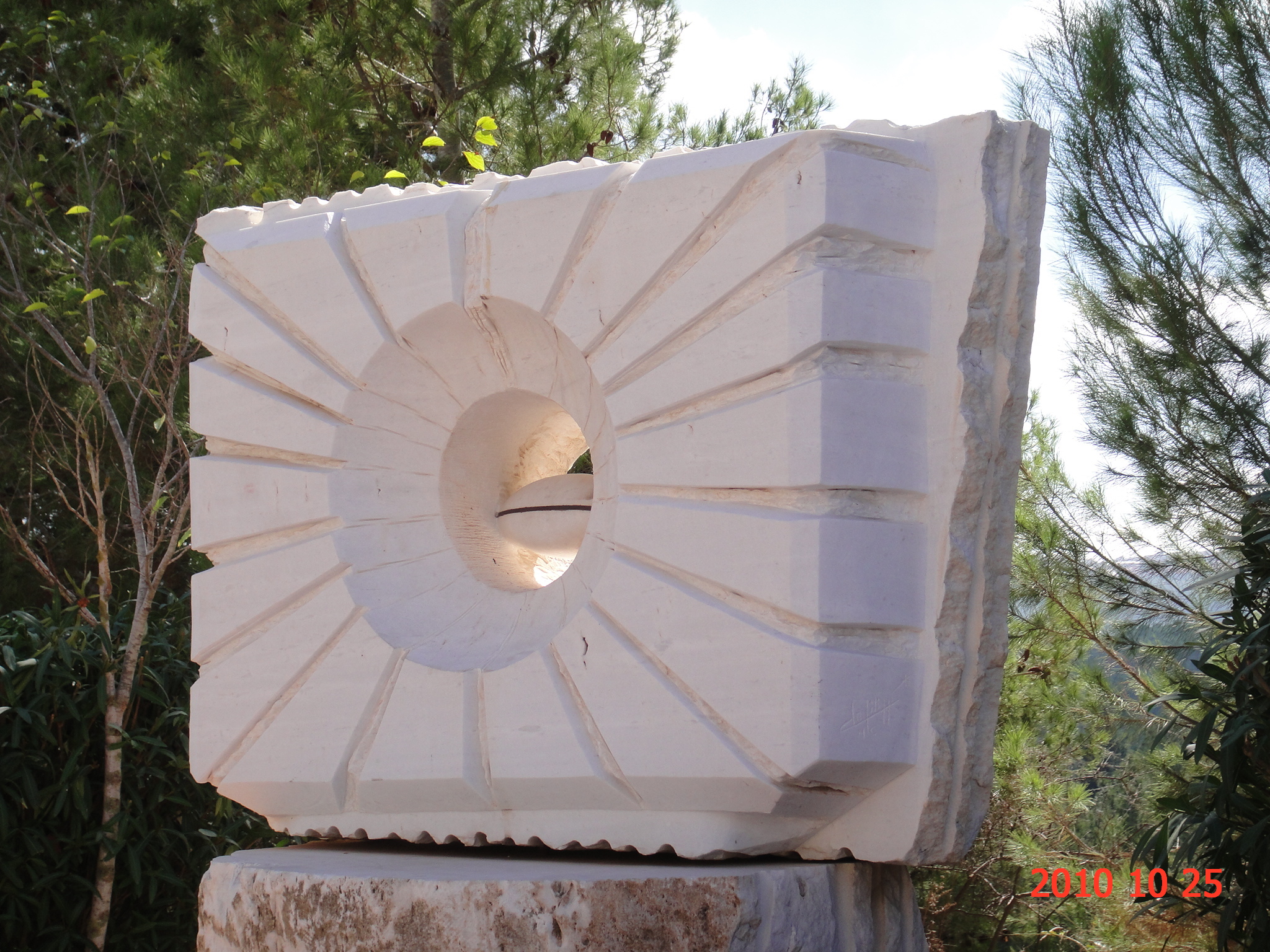
Random sculpture along the road

Another six months until next event so here are some conditions and criteria for the 2006 Symposium: http://www.maltar.org.il/even15eng/news/conditions.htm

For further reading please visit the wonderful blog post of Midnight East: http://www.midnighteast.com/mag/?p=11730

Kobi Peretz in Ma’alot

In Galilee, Israel on August 31, 2011 at 3:56 PM

Last night, Kobi Peretz, a Mizrachi pop star in Israel, came to grace us with song and music in an event sponsored by some government organization and arranged by the City Hall of Ma’alot. This event is timed to be the “End of the Summer” festivity, in particular, for all the school children returning to their studies. Held in a park at the first entrance of Ma’alot it is easily accessable for all residents of all the surrounding villages. As a flashback, last year there was a slightly different themed show in where there were local musical performances and a slew of stand-up comedians, many of them from Israel’s top comedy shows.

Welcome

I arrived a little late as I had just come back from an Army meeting in Haifa but as soon as I went through security I knew I had not missed any of Kobi Peretz. Another singer, this one a winner of “Kochav Nolad” (“A Star is Born” – the Israeli equivilant to “American Idol”), was crooning away for the still assembling audience. People were buying pizza, popcorn, drinks and other snacks in preparation for the highlight of the night. Soon after, the “Kochav Nolad” star stepped down and a dignitary from the City Hall spoke and gave thanks to those bodies at work, trying to provide the citizens of Ma’alot, Tarshicha and the surrounding villages with a BOOM that would end the summer.

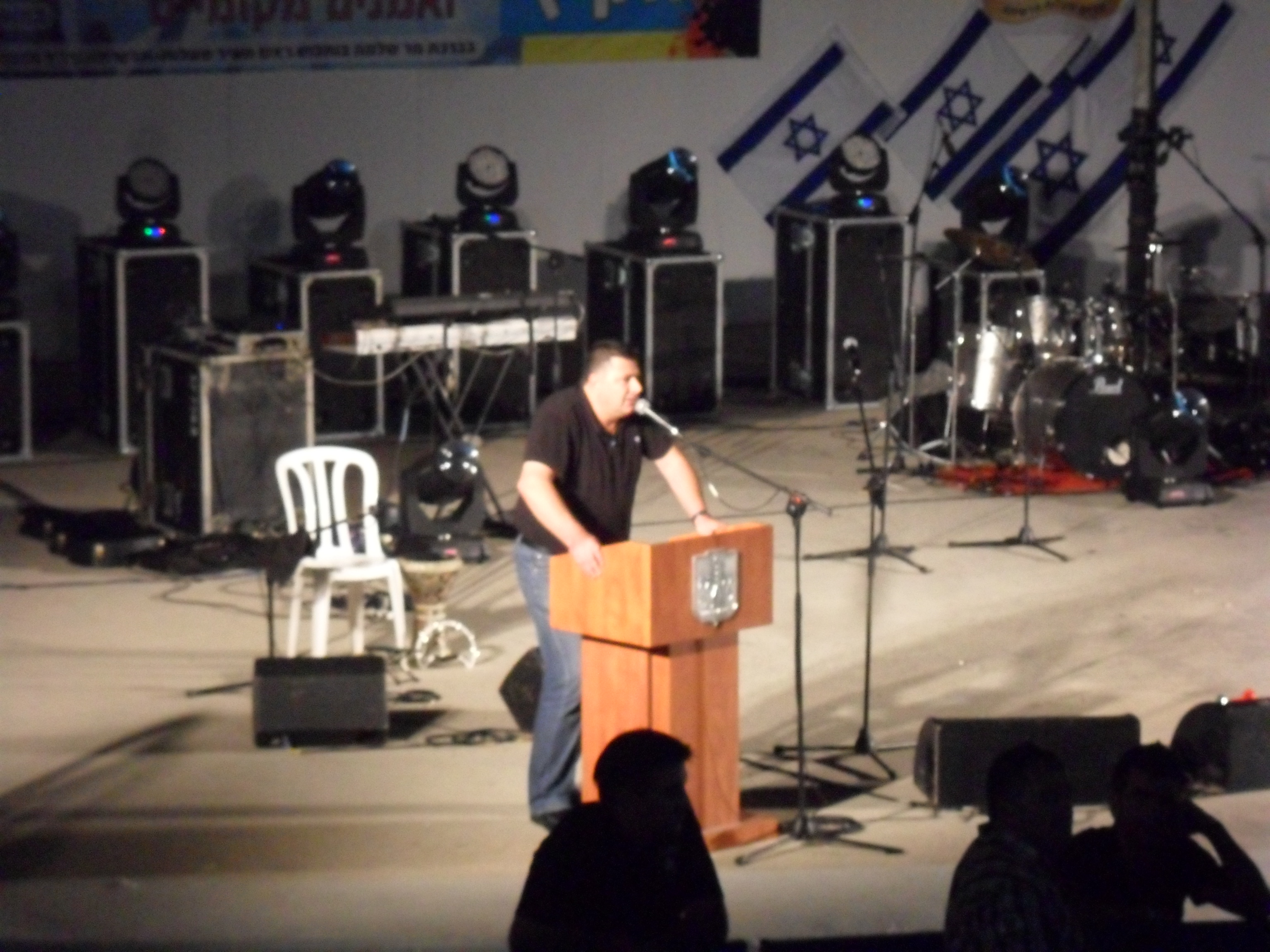
Short speech by an official from the mayor's office

As soon as the formalities and introductions were cleared Kobi Peretz was announced. Blue lights and thick smoke obscured the musicians as they sat down and began the hype. A few minutes later Kobi Peretz’s silhouette could be seen through the smoke as he advanced on the myriads of excited youngsters. And then it began… the concert of Kobi Peretz.

Concert snapshot

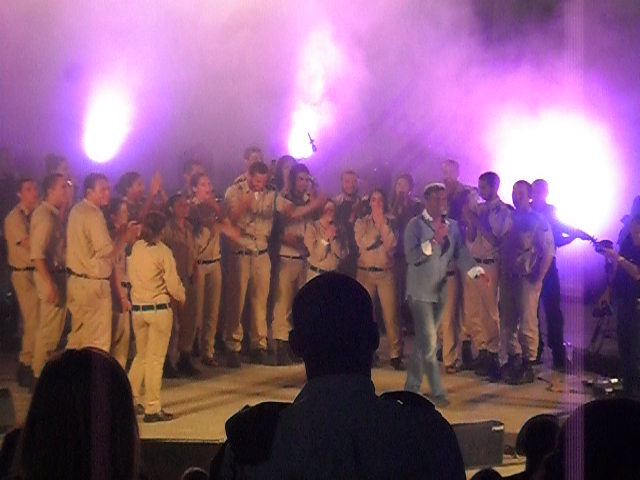
The first song came and went, Kobi Peretz went from side to side giving high-fives and whatever else it is that singers do at the front row. He then announced that there was a unit in the crowd from the IAF (Israeli Air Force) and asked them to come onstage with him. They did so, quite happily if I might add.

Kobi Peretz onstage with a unit from the Air Force

The crowd of at least 1,000 strong went on and on, singing with Kobi Peretz and the soldiers as he passed the mic around to them.

A partial view of the crowd

The soldiers stayed onstage forever until one of the security details hinted for them to walk off. People gave them thumbs-up as they walked back to their seats, each of them a star for a moment. Of course, Kobi Peretz also did stuff with the citizen attendees, he held a baby onstage and donned a scarf from one of the world’s soccer teams (sports eludes me so I do not know which team it was). There was also two children/teens in wheelchairs so he made a special effort to excite them too. With one he went over and gave a blessing that she should be up and dancing soon to which hundreds of people said “Amen” to. The other Kobi went up to him and spoke words of encouragement and sang a song special for the handicapped child/teen. The following picture was taken right at the wheelchair with Kobi Peretz making merry in front of the boy.

Kobi Peretz breaking a sweat to please the crowd

One of the funniest parts of the concert was when he wanted to sing his hit song “Yachad” (featuring Ishtar Alabina). The problem was that Ishtar wasn’t there and she sings in both Arabic and English in the song. He asked the crowd if there was anyone who knew all of the words, including the Arabic ones. People said they did and Kobi picked one. He stuck the mic in the girl’s face and had her sing one of Ishtar’s stanzas. To me it sounded good but Kobi decided that it sounded more like Chinese to him but “it was all good.” He then called up one of his back-up singers and the two of them did the duet in proper Hebrew, Arabic and English. (Although I wouldn’t call myself a Kobi Peretz fan I do like the “Yachad” song.)

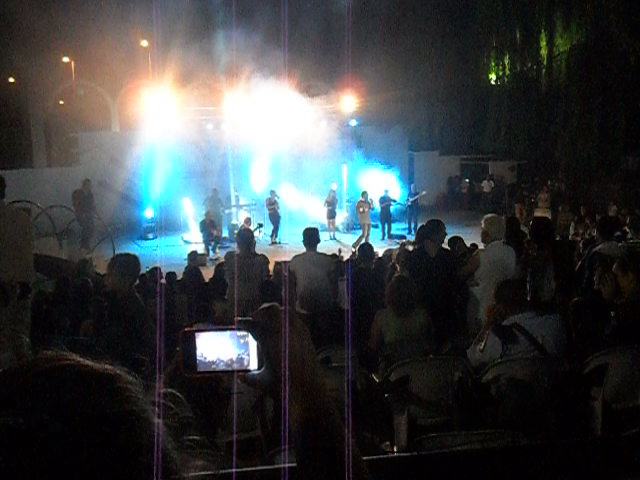
A view of the concert from further back

The concert went on for another 45 minutes or so and Kobi Peretz bid the crowd a good night. I was surprised at how abrupt the show ended but what can I do about it? I then made my way back home, a decent 10 minute walk. For all those interested in hearing what Kobi Peretz sounds like here is a random clip from YouTube:  http://www.youtube.com/watch?v=TgvsP8ih1ug

An Israeli Wedding

In Galilee, Israel on August 17, 2011 at 10:28 AM

Last night two friends of mine got married, and to make it better they married each other. I had met the Adam the chatan (groom) in Yeshivat Hesder Ma’alot as he was a “chutznik” from LA and through him I met Batel the kallah (bride), also of Ma’alot. We would hang out and make BBQs and talk about the future. They decided to get married in August of 2011 although he was already enlisted in the Army and she was in University. We all waited for the day where these two would be wed, and that day was yesterday.

 I took a bus to Karmiel, where the wedding was to be held, and decided to walk to the hall from the bus stop (not a far walk). On the way I met Adam and got a ride with him to the wedding hall. This was to be his first visit to the building due to his Army schedule so he needed help with the directions. Luckily, I had brought along the invitation envelope which has a map of the relevant area of Karmiel on the back. We found the place and got out eager to see what was inside.

 As usual, with Israeli/Mizrachi events, the hall is one of curious colouring. Lights of blue, red and purple allowed us to see the event in a festive way. And unlike the weddings I have been to in the US, here it is fairly casual, by dress and by decorum.

 Batel, the kallah, was already there with her family taking pictures so they stuffed Adam into a room as not to see his bride. My friends and I stayed with him awhile and brought him food from the appetizer buffet. This was my first Israeli/Mizrachi wedding but I had previous experience with the traditional appetizer buffet course so I made my way through the room with my plate, with success. There was, as Mizrachi tradition does all but dictate, a schwarma and falafel guy ready with pitas cut in half. There was a sushi station from which I did not partake. There were multiple meat stations and a parve (neither dairy nor meat) ravioli station. And of course, an open bar with multiple beverages of both the alcoholic variety and the non-alcoholic variety. In due time a scotch and soda was ordered and presented in a fine glass tumbler.

Adam before the ceremony with friends

 After about an hour most of the guests were present and had had their share of the buffet food. Adam was allowed out for a brief reprise while Batel was stashed somewhere. After a few more minutes of dilly-dallying, the groom was led out and came back when the kallah was ready, escorted by song and dance provided for by his family and friends.

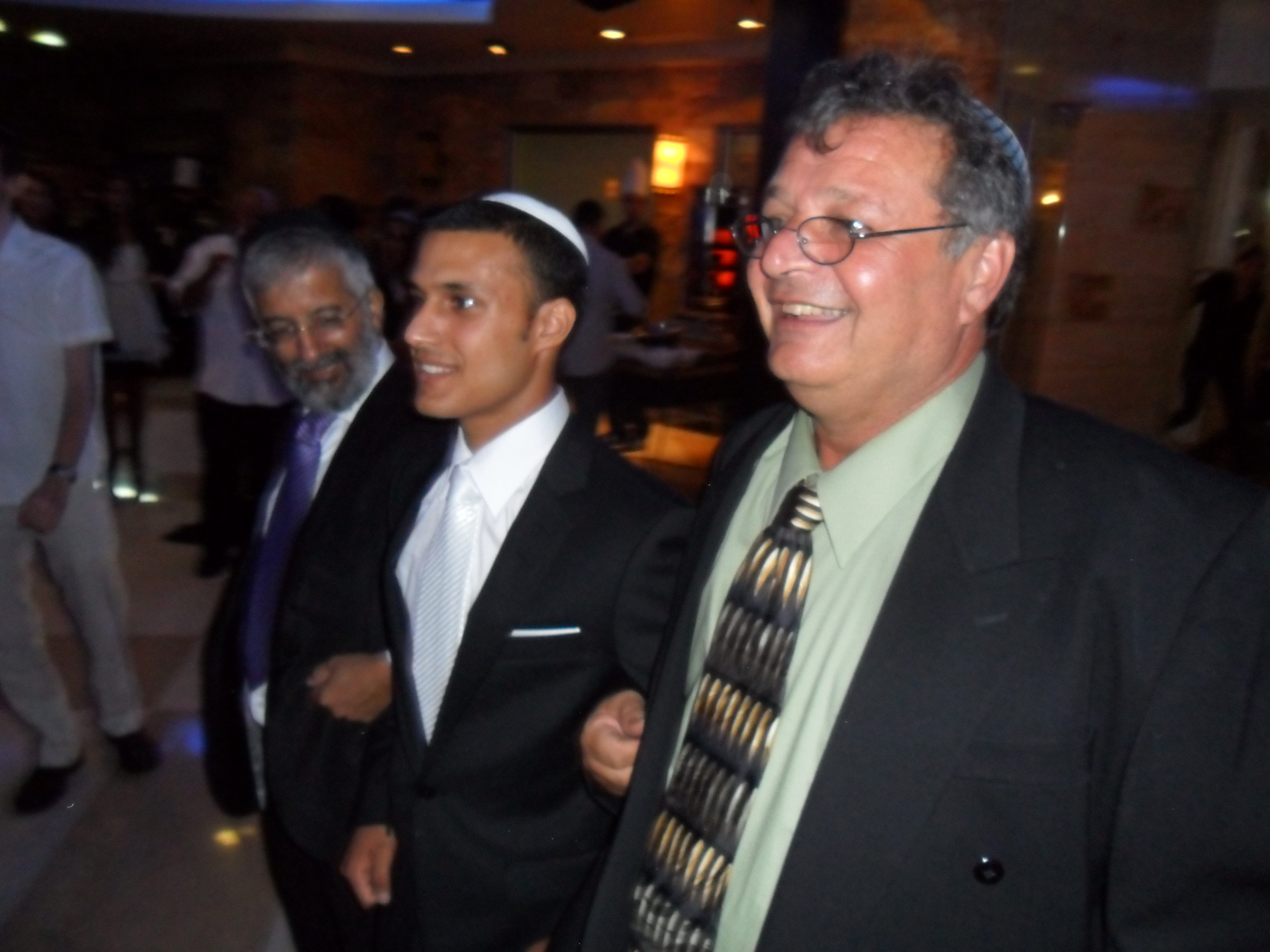
Adam being escorted by his father and father-in-law

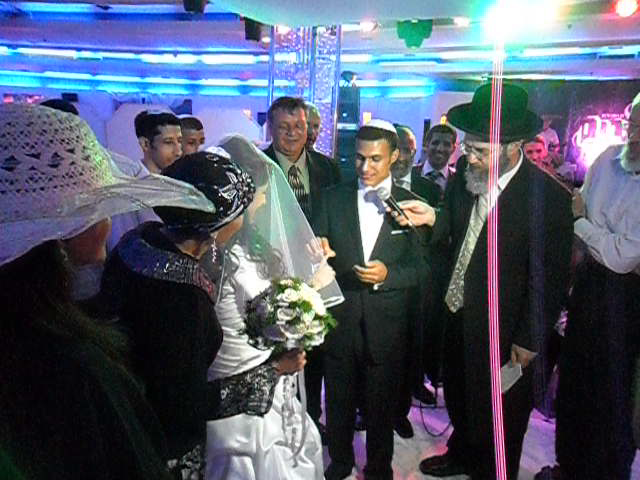
He was taken to the bride who was seated amongst her family and friends (this part was divided by gender), he lifted her veil to assure that yes, she was Batel, the girl whom he wished to wed. His father and father-in-law to be then took his under the chupah (wedding canopy) where he stood and awaited Batel who was, in turn, brought by her mother and mother-in-law to be. The rabbi, Harav Yagoda, a dayan (judge) in Haifa and an esteemed community rabbi in Ma’alot, stood with the young couple and their parents and began the ceremony.

Batel’s uncle Suleiman read the ketubah (a special Jewish prenuptial agreement – mandatory) and two witnesses signed it.

Batel's uncle Suleiman reads the ketubah


The reading and signing of the ketubah

Then Adam put the ring on Batel’s finger signifying his marriage to her, in front of two official witnesses who testified that the simple gold ring is worth at least a peruta (ancient coin worth about 25 cents USD).

Adam puts the ring on Batel's finger

Blessings were then said, all seven of them, by family and family friends.

One of the blessings is recited by the Rav of the Ulpana

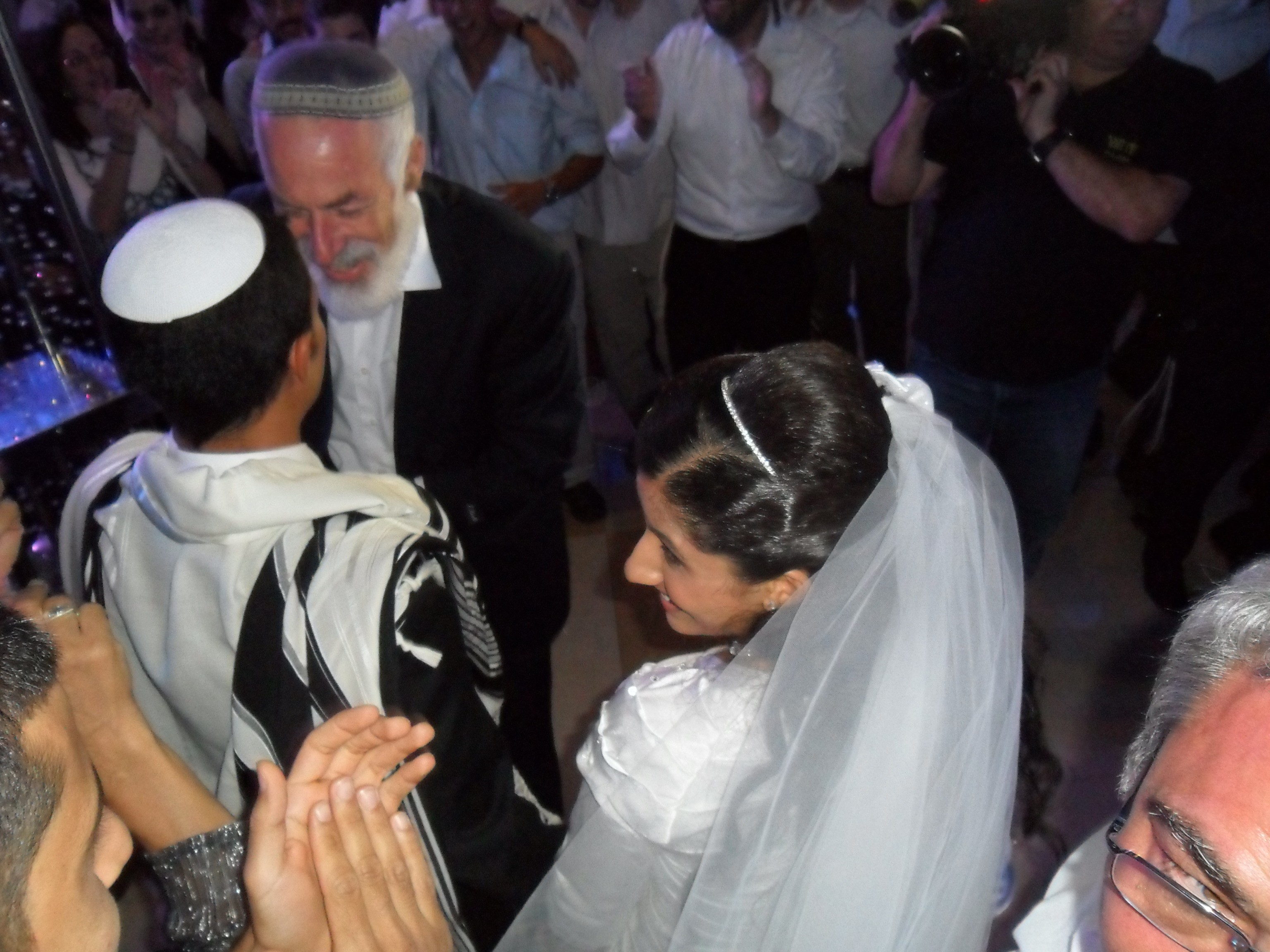
After the blessings Adam then broke the glass, a tradition stemming from the destruction of the Temple in hopes to remind ourselves that even in the greatest moment in one’s life he is still without the Temple of God. Everybody clapped and sang as the young couple were then escorted out to the yichud room, the final stage of marriage.

The newly married couple waits as Adam is blessed by his rabbi from the Yeshiva

The guests all sat down for the first course to be served. I selected something with lamb. It turned out to be ground lamb in a filo dough wrapper with a side of mashed sweet potatoes and leaves. There were also numerous Israeli salads on the table with a big plate of hummus and warm bread. A whiskey and coke sat to the upper left side of my plate opposite the wine glass. Sometime later Adam and Batel emerged from the yichud room to sit down and eat.

Adam and Batel leaving the yichud room

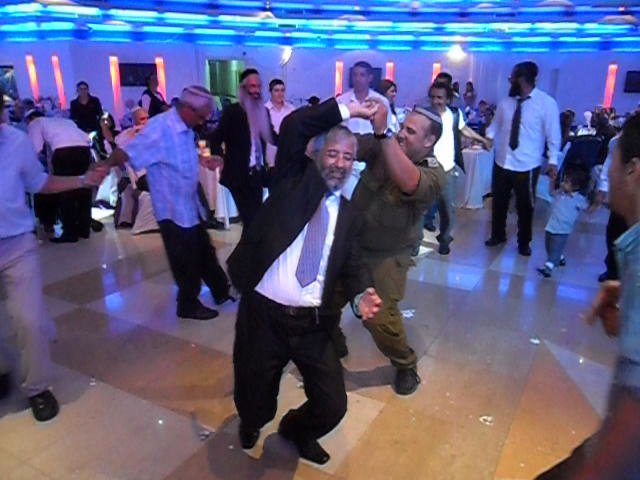
What followed was dancing and merry-making with the chatan and kallah paraded around like the true celebrities they were that night. At one point Yemenite music was played by the band and Batel’s father and a family friend in fatigues, also Yemenite, began the special Yemenite dance (at least that’s what I call it).

The Special Yemenite dance

Among the merry-makers were Batel’s brothers, many of them quite athletic. They did flips and basic break dance moves as well as some synchronized leaping thing that was most enjoyable to watch.

One of Batel's brothers doing acrobatics as to make merry for the couple

More song, more dance and more food made their appearances as the night grew long. I needed to get back to Ma’alot somehow so I was forced to leave a little early to catch a ride with some family friends. However, this was the first time I have attended one of my peer’s weddings and I was overfilled with new memories and a warm special feeling for the happy new couple. May they be zocheh (merited) to build a happy and successful home in Israel!


Fruit Wine in Kibbutz Ga’aton

In Galilee, Israel on July 25, 2011 at 11:44 AM

This is the second part (although first chronologically) of our trip yesterday. Kibbutz Ga’aton is just next to Yehiam and is named after the small river Ga’aton which drains out from the low mountains of the Western Galilee, down the Ga’aton Street in Nahariya and into the Mediterranean Sea.

We had researched about this wine maker just briefly before leaving the house and had to ask for directions once inside the kibbutz. A kind “native” told us to follow him and led us to a humble, ivy-covered building.

The winery

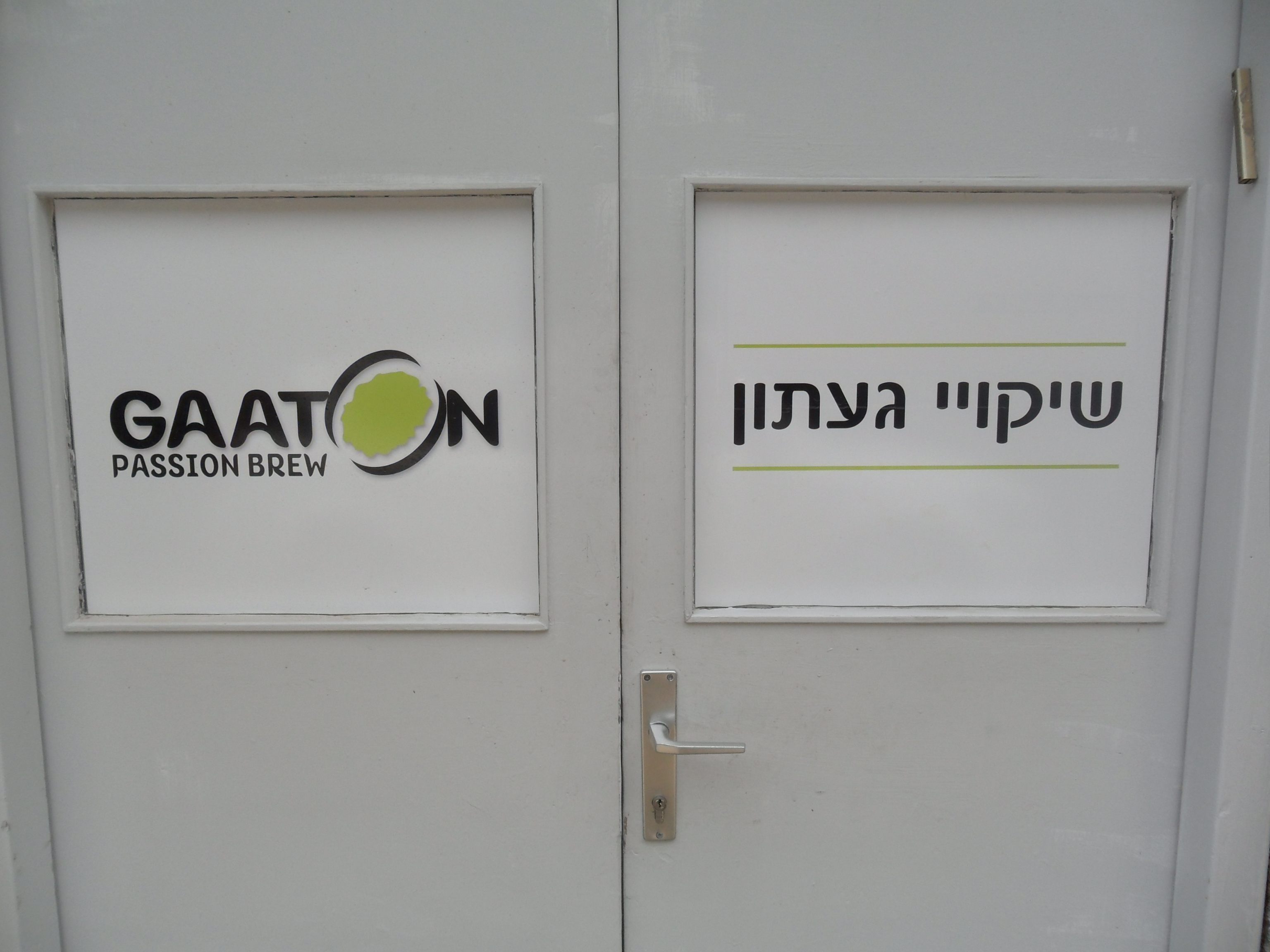
A sign on the front door displayed the winery’s name and logo, a symbol of its first creation, the passionfruit wine.

Front doors

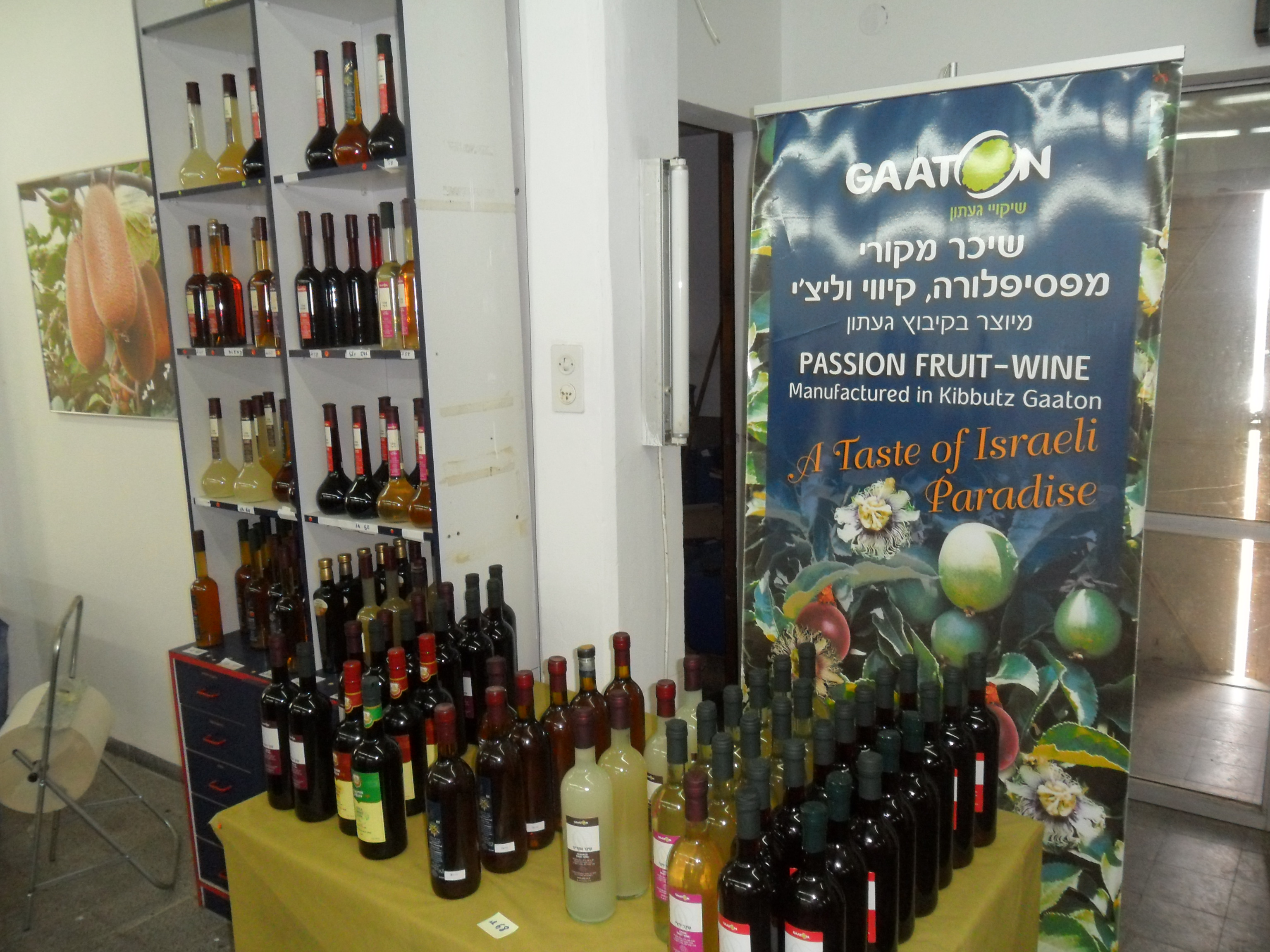
We were eager to open the doors and escape the smell of the cows, sheep, chickens or whatever it was the provided us with the odour that assailed our nostrils so vigorously. Once inside, the delicious smell of passionfruit cleared through us and we eagerly sought out the management. To our intrusion, the management whose name is Gideon happily broke off from his duty and began to give us his short tour and story… And he said it in English. Gideon showed us to his main room where he had a few bookshelves displaying the goods, the fruit of his labour.

Display bottles

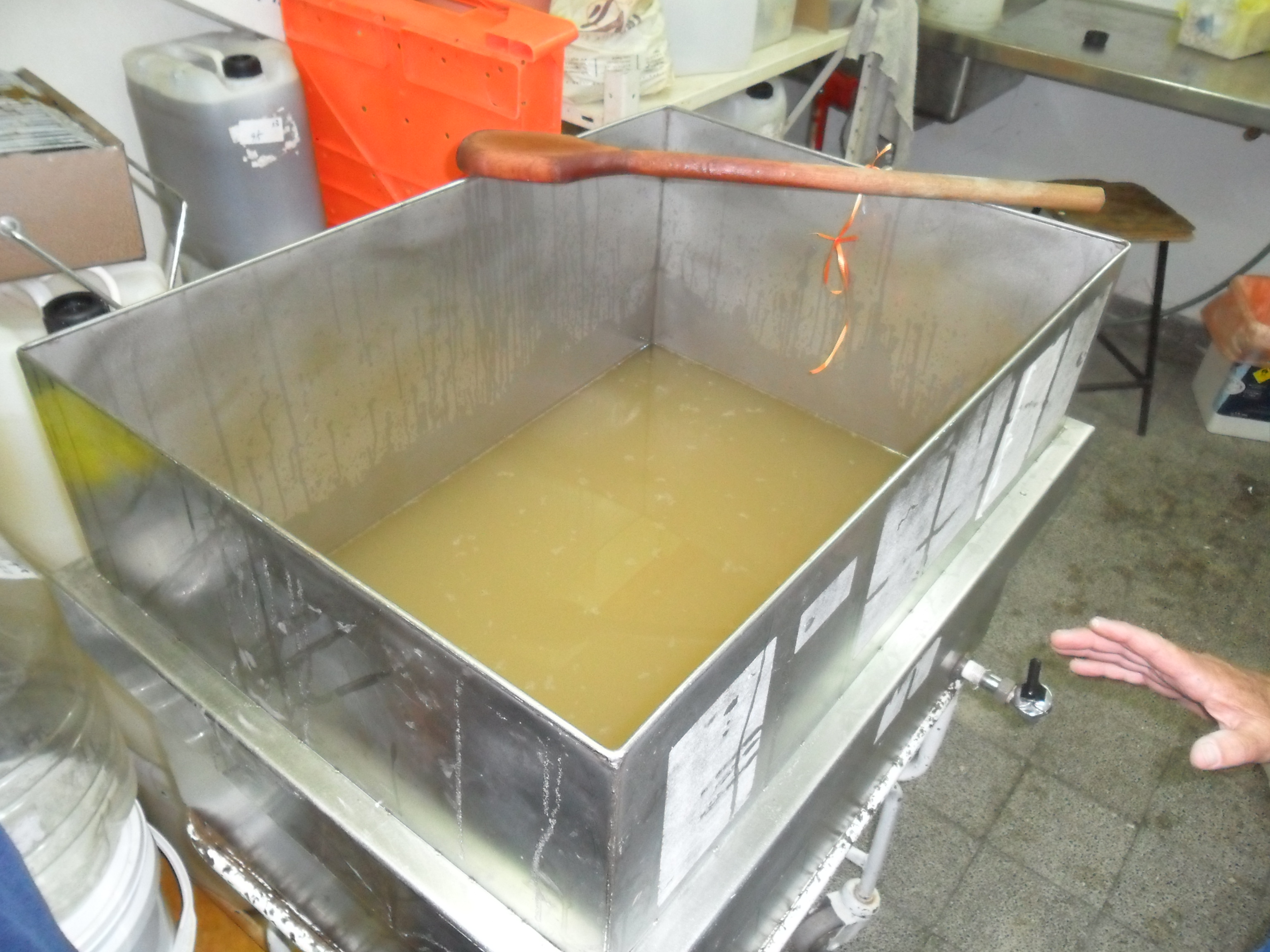
Next Gideon asked us if we wanted to see what he was currently making, a passionfruit wine (the one we smelled when we came in). He took us to his “kitchen” and showed us the vat of passionfruit juice.

Vat of passionfruit

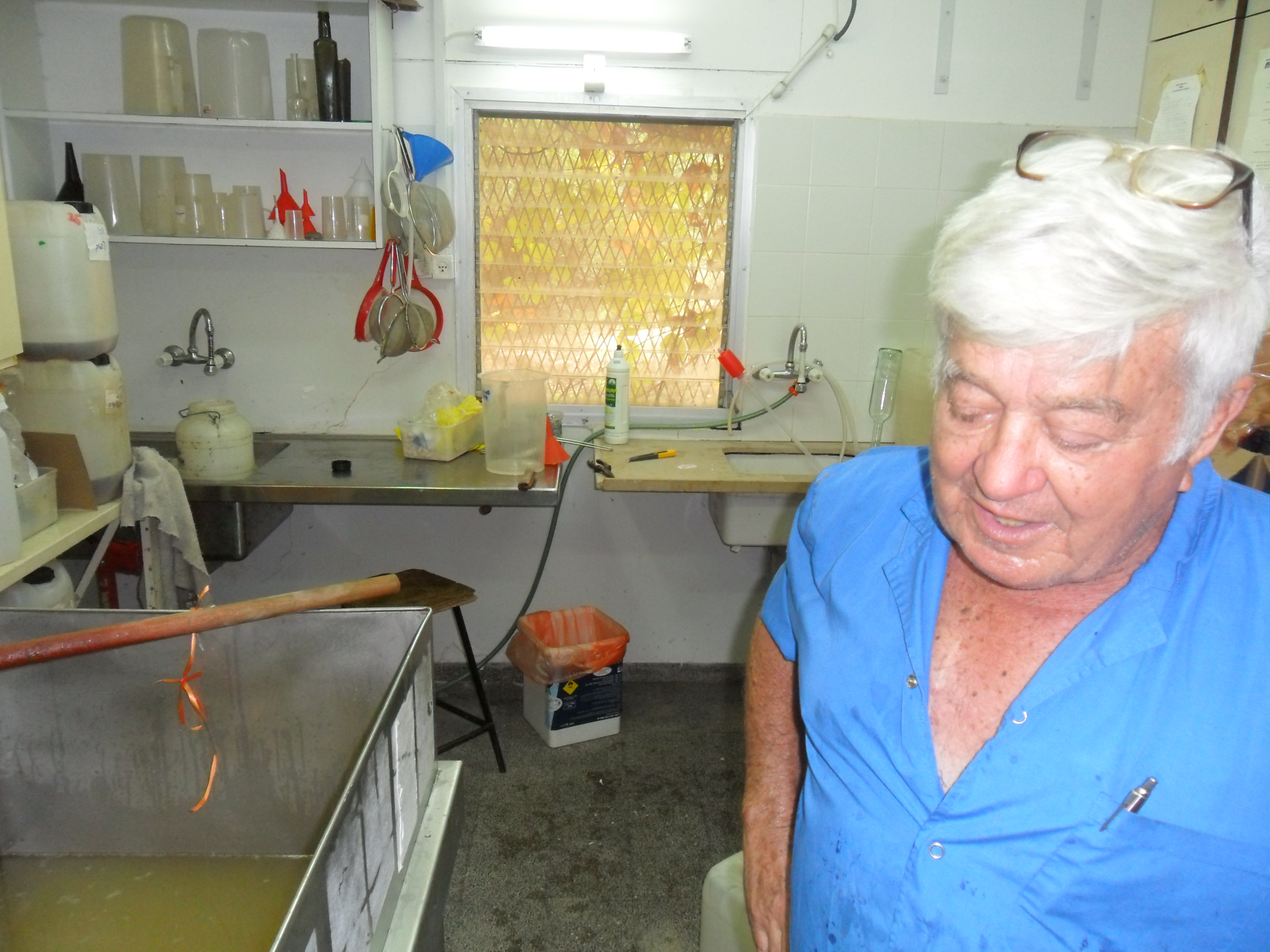
He stood there as we inspected his workroom and told us how he used to be an orchard-grower. Now he is retired and decided to make fruit wines as a sort of profitable hobby. But he likes to keep things small. A few years ago he shipped pallets of wines to England, France and the USA but he prefers to sell locally.

Gideon speaks

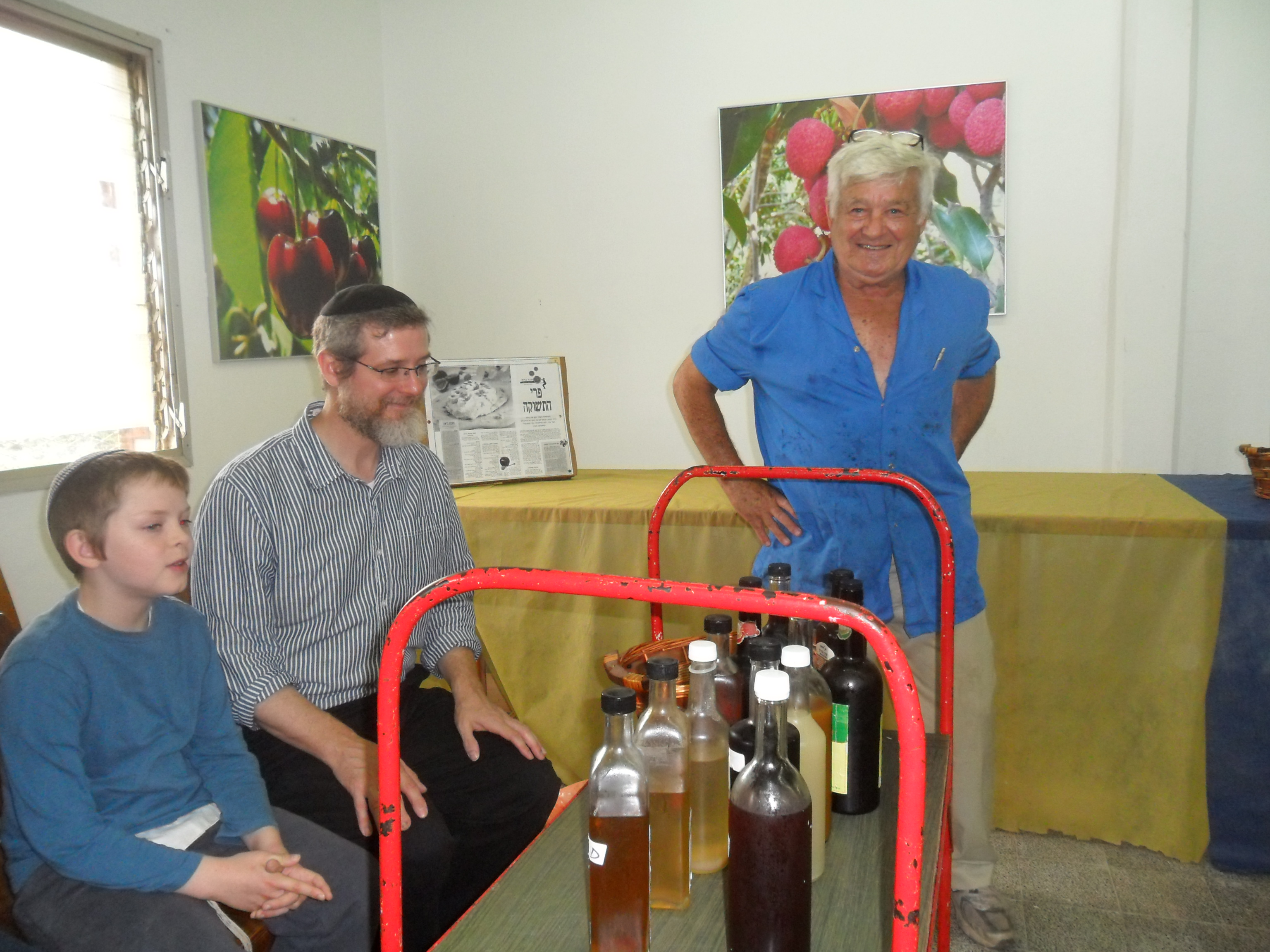
After a few minutes he took us back to the main room where he offered us to try samples. We were waiting for this! He sat us down and wheeled out a cart with a bottle of each of his wines; passionfruit, cherry, pomegranate, lychee, almond, honey apple, honey orange and some blends.

Sample time!

Gideon then walked away and continued with his work. Shortly after, while we were still sipping on the numerous alcoholic beverages before us at our own little open bar, another family came in and he began the tour over again, in Hebrew. In conclusion, I liked the pomegranate wine the most and the honey wines the least.

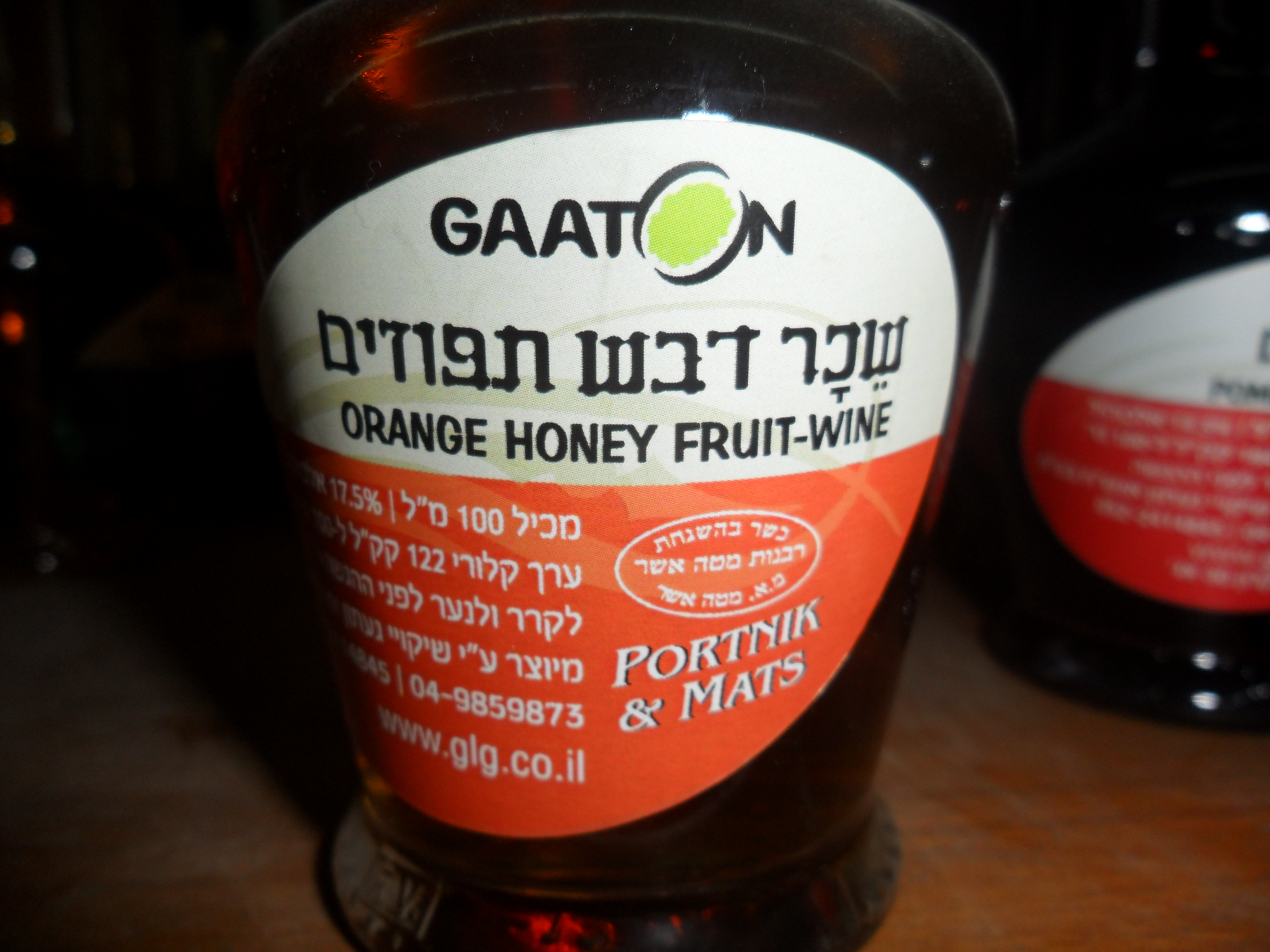
Orange Honey wine

We purchased a few bottles, and one to give as a gift to a family we know who just moved into a new house. Gideon wishes us a safe drive back and showed us how to get out, and that is when we went to Yehiam and the Malka Beer plant (see previous post).

Malka Beer

In Galilee, Israel on July 24, 2011 at 5:46 PM

Today we took a two-pronged trip. We first headed to Kibbutz Ga’aton where we toured a tiny fruit wine factory. That story will be in the next blog post. This post is about the second part of our trip; to Kibbutz Yehiam where we chanced upon an amazing micro-brewery. Here is our story:

Entrance to Yehiam

We entered Yehiam and drove around. After some driving we got out and looked about. There was an odd aroma similar to that of potato chips. Curiosity got the better of me and I followed the amazing smell around a building to a nice big wooden deck. An open door beckoned and I went in to find a micro-brewery humming away by the name of Malka Beer (Beera Malka which means Queen Beer in English).

Malka Beer

Inside, master brewer Omri was boiling the grain in some sort of process that makes the beer. He had it straining into small buckets and then would decant the boiled beer into another vat. Although he spoke a decent English, we didn’t get the detailed rundown as to how they go about making the beer.

Here are some pictures of the beer brewing process that he explained:

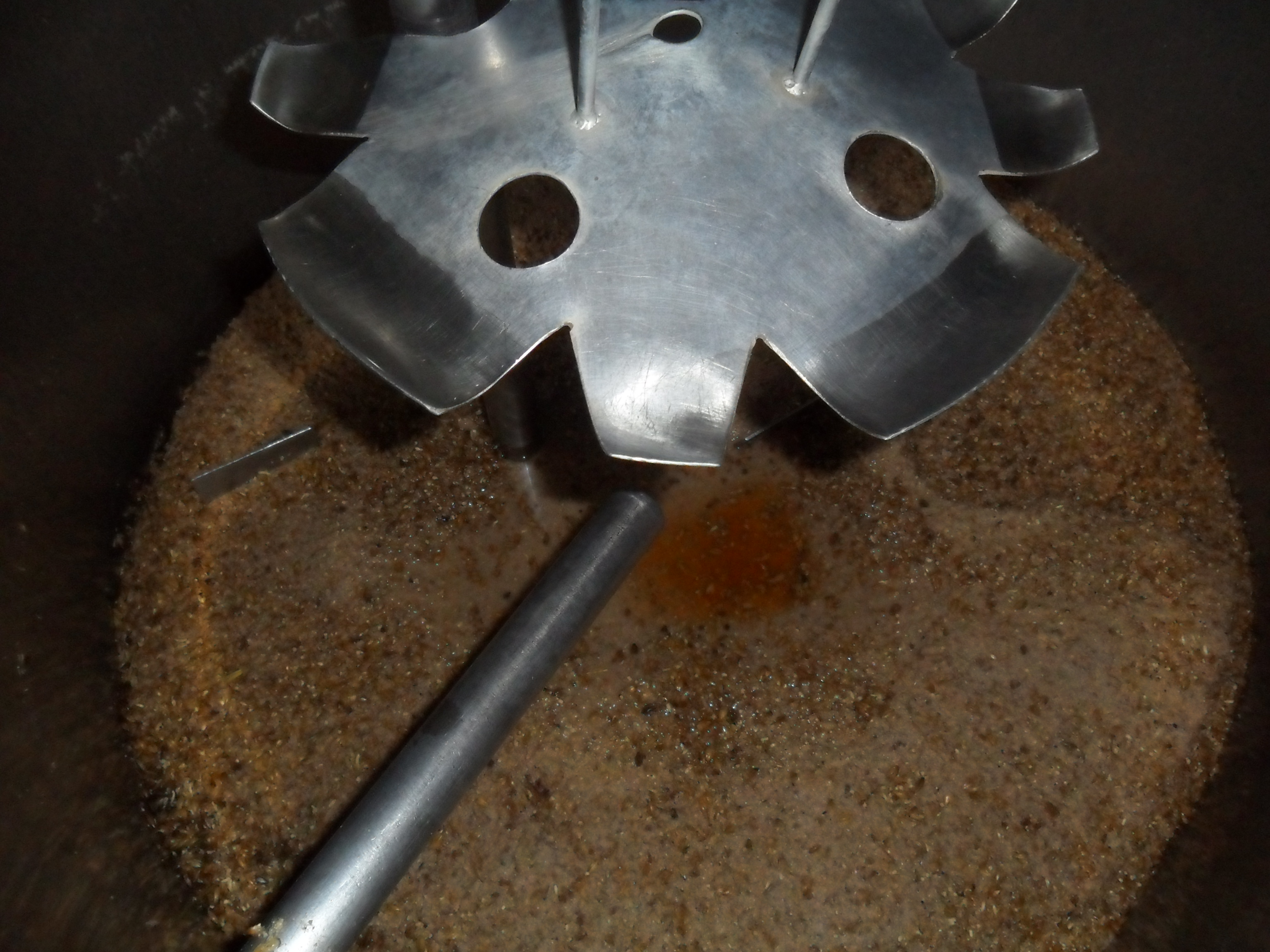
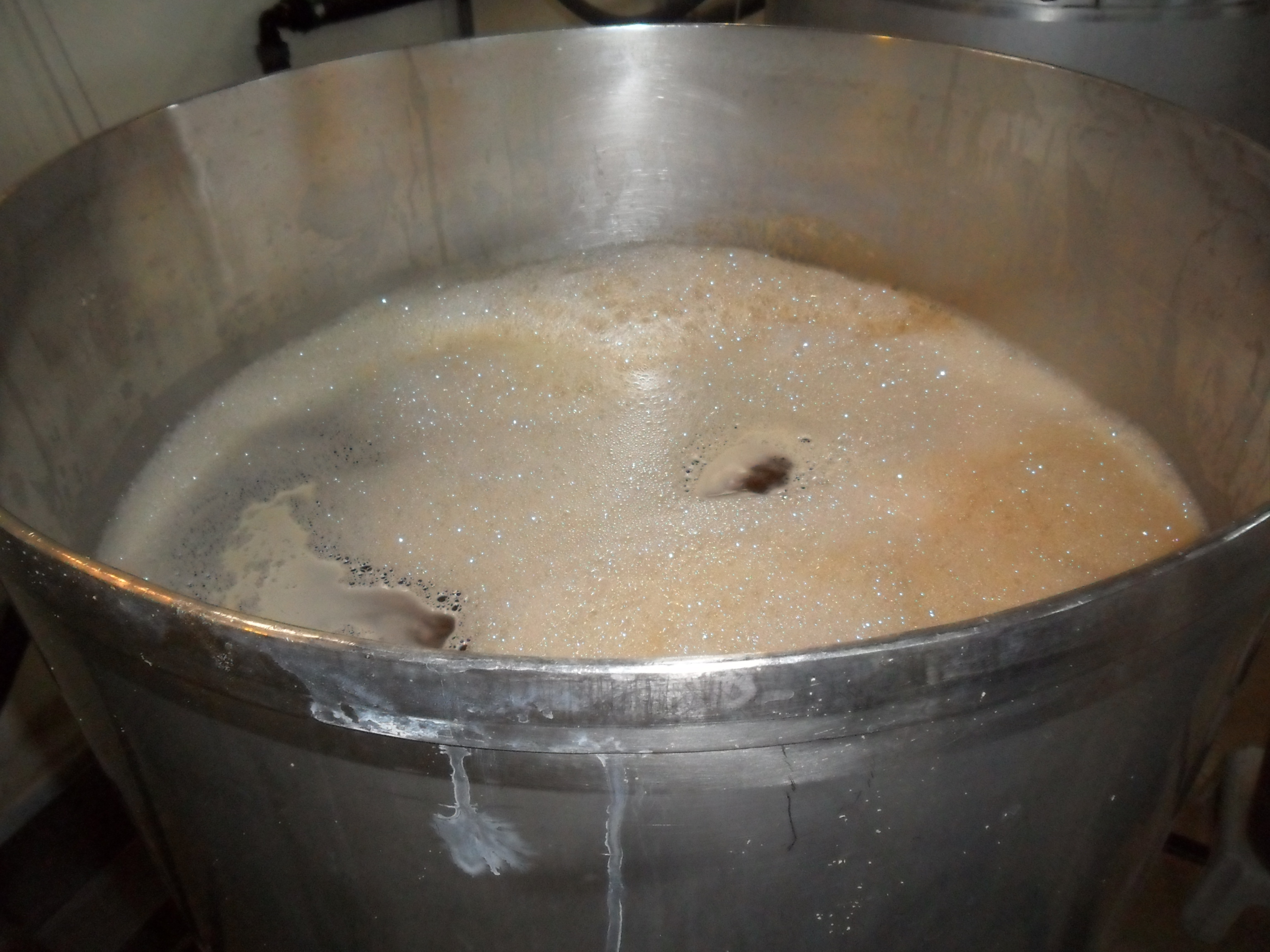
Boiling beer and grain

The vat of strained beer

Omri taking the strained beer from the vat with the blue piece on top and pouring it into the vat with the liquid inside

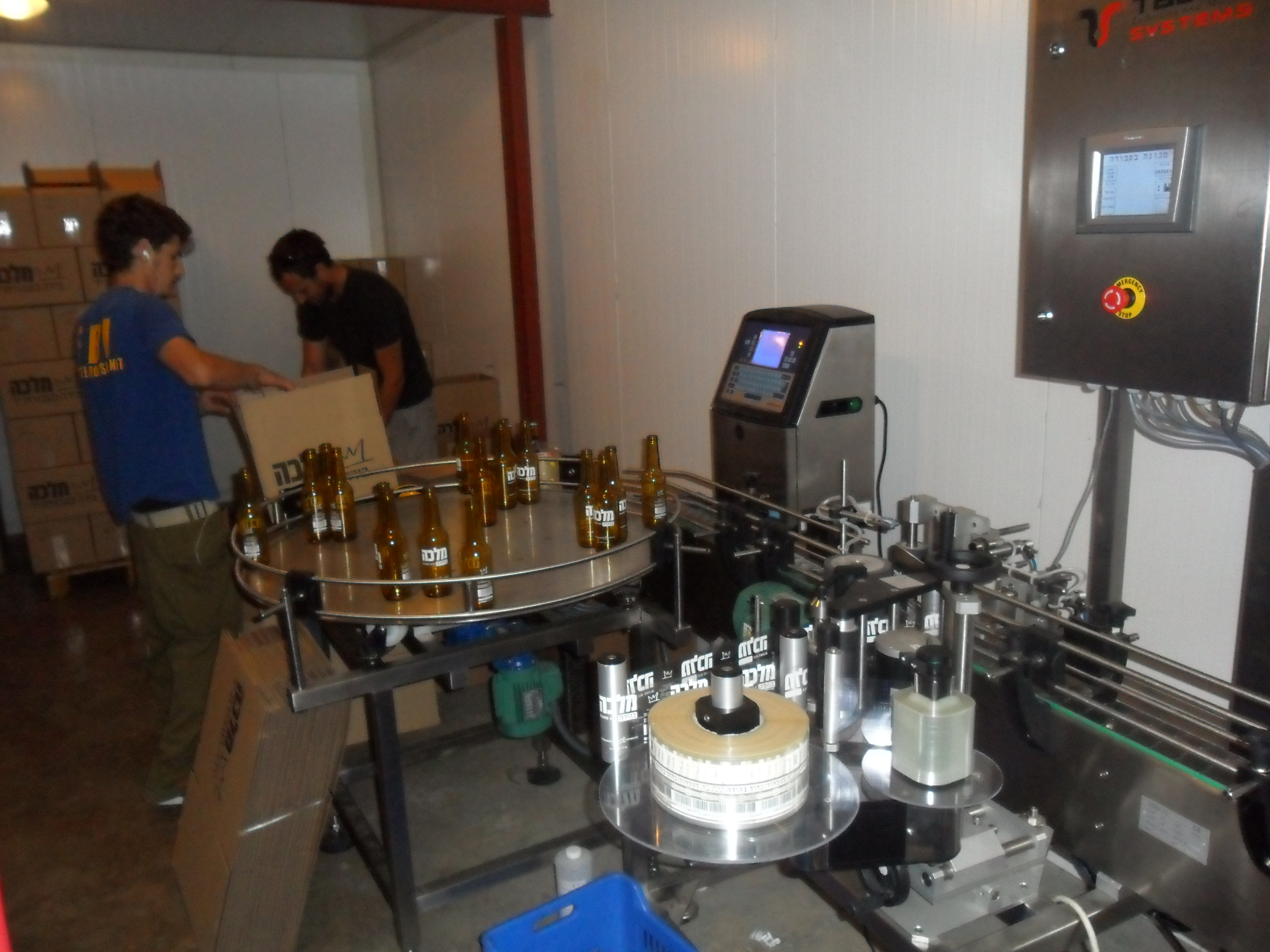
The bottling was done in a side room. A young man, who helped us take pictures, is inside sorting through empty bottles and putting them somewhere, for reasons that I do not know.

The bottling room

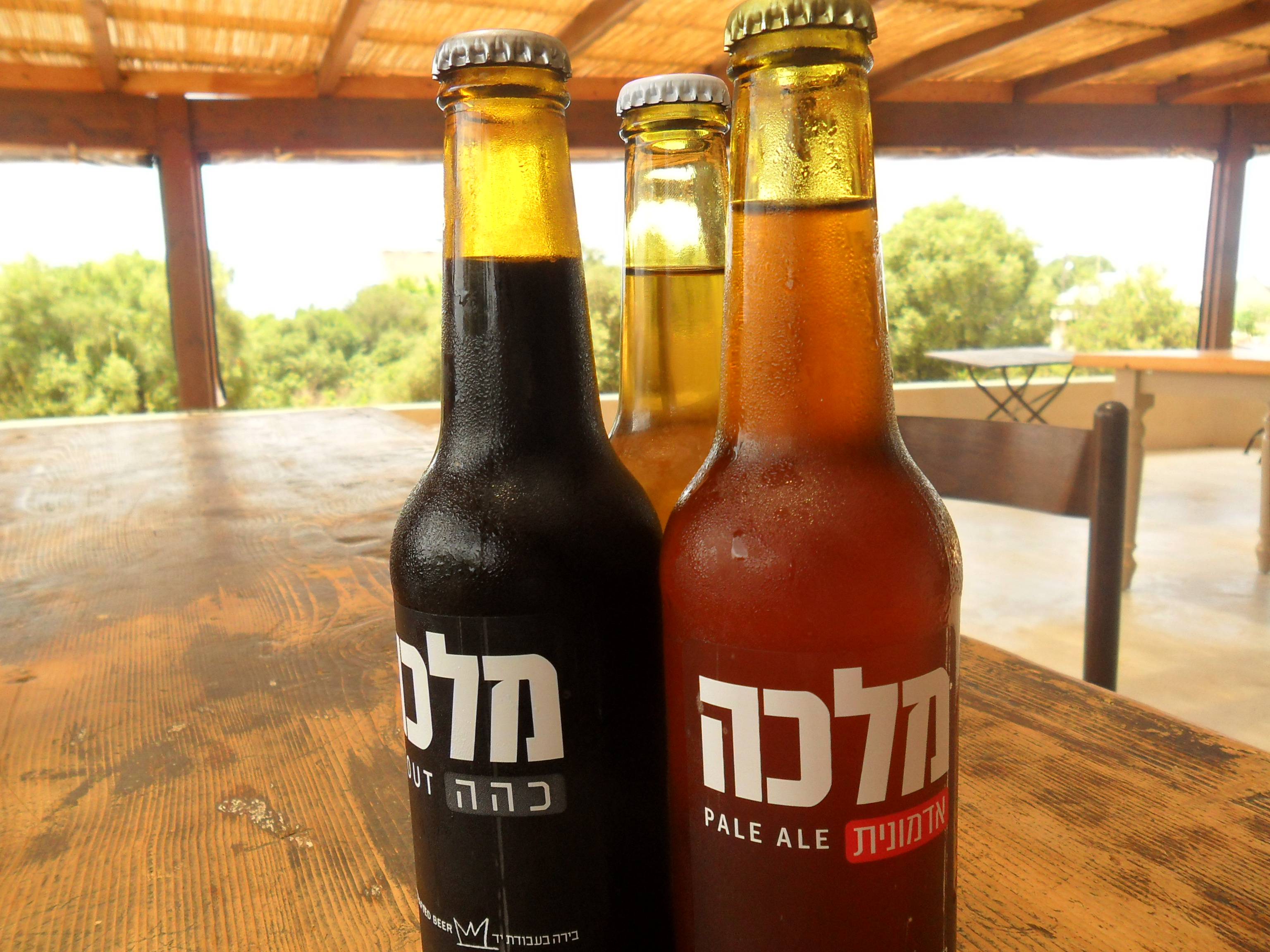
We asked the owner, Assaf Lavi (who speaks a fabulous English), if we could try some beer. He was kind enough to go into the little bar they have and find us a bottle of each of the three; Irish Stout, Pale Ale and English Lager, for us to try. We stepped outdoors onto the deck and sat down around a rustic table for some beer sampling.

The three beers

Assaf brought out glasses and poured us each a generous serving, letting us taste from his stock of cold goodness.

Assaf pouring the rich Irish Stout into eager glasses

As we sat in the cool shade, sipping the cold beer and commenting on the richness, the freshness and the taste, Assaf told us about how he began doing this. He is in the process of selling his current, older equipment and opening a larger plant for wider distribution. For us it didn’t matter, as long as his new factory is still within a 15 minute drive, we’d be happy.

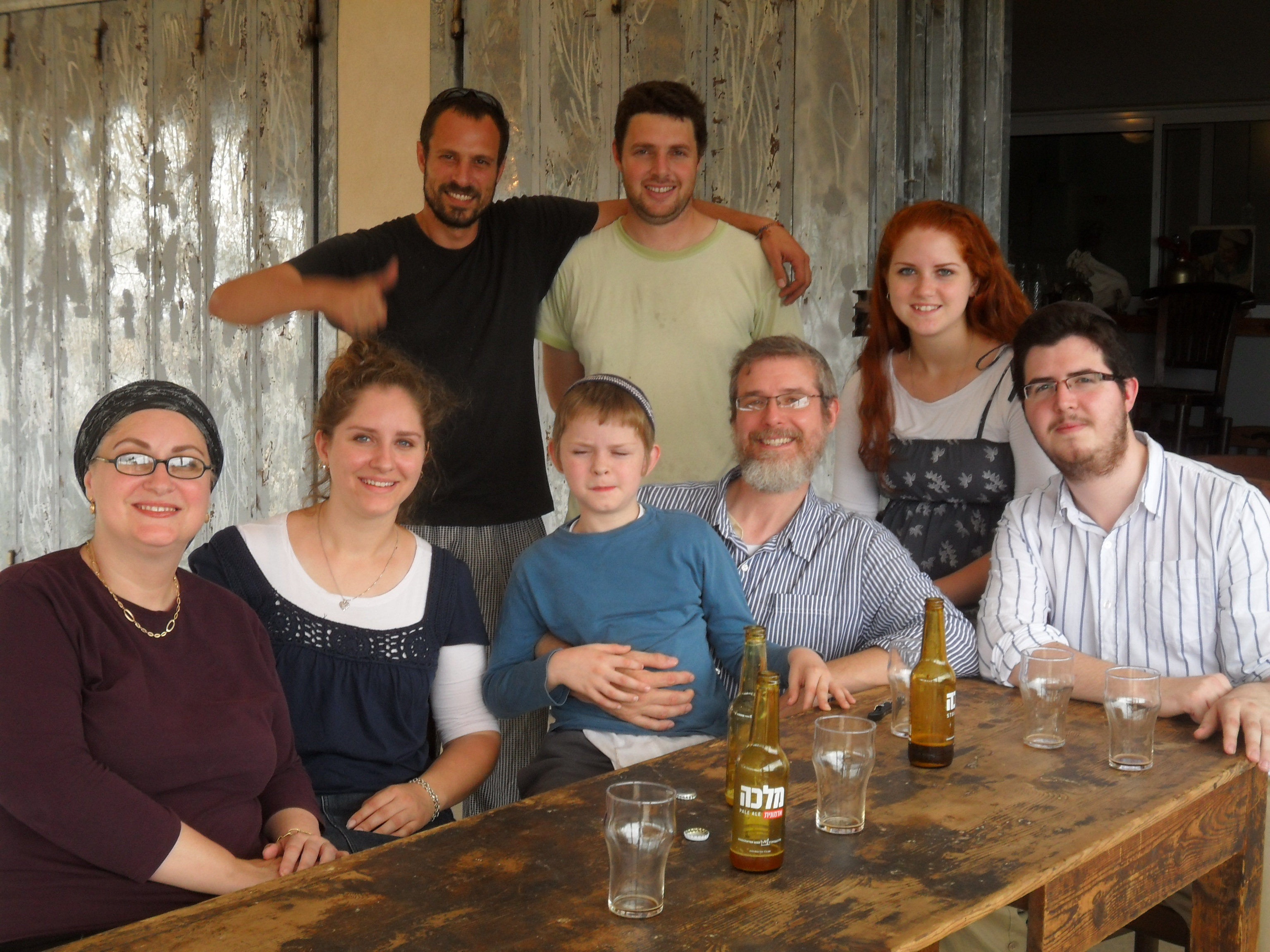
Once all was said and done, and the beer was (almost) all gone, we gathered around for a group picture. The master brewer came out from his toils, a smile plastered on his face as the bottling lad snapped the picture:

Group photo

We then placed an immediate order for 24 bottles; 12 Irish Stout and 12 Pale Ale. Assaf went inside and filled a box for us, another sale for another happy customer.

Our case of beer

But that was not the end. I snuck back inside the plant one last time and snapped a picture of Omri hard at work. Now this is what a “beermeister” looks like:

Omri the Master Brewer

If you’d like to see more about Malka Beer, here is the website: http://malkabeer.co.il/

Truly a good beer!

Nachal Amud

In Galilee, Israel on July 17, 2011 at 11:07 PM

Today we took a trip to Nachal Amud, a 15-mile long river between the Meron Mountains and Tzfat (Safed).  A popular attraction for hiking and camping, the river was declared a nature reserve in 1972. We parked and showed our yearly membership pass before continuing down to the main trail.

Park's trail entrance

After a little bit of walking, the sun scorching but the wind blowing sufficiently upon us to keep us at a reasonable temperature, we came upon an abandoned building. After reading the pamphlet it became clear to us that this building was the old British Mandate police headquarters for the area back in the 1930s.

British Mandate police building

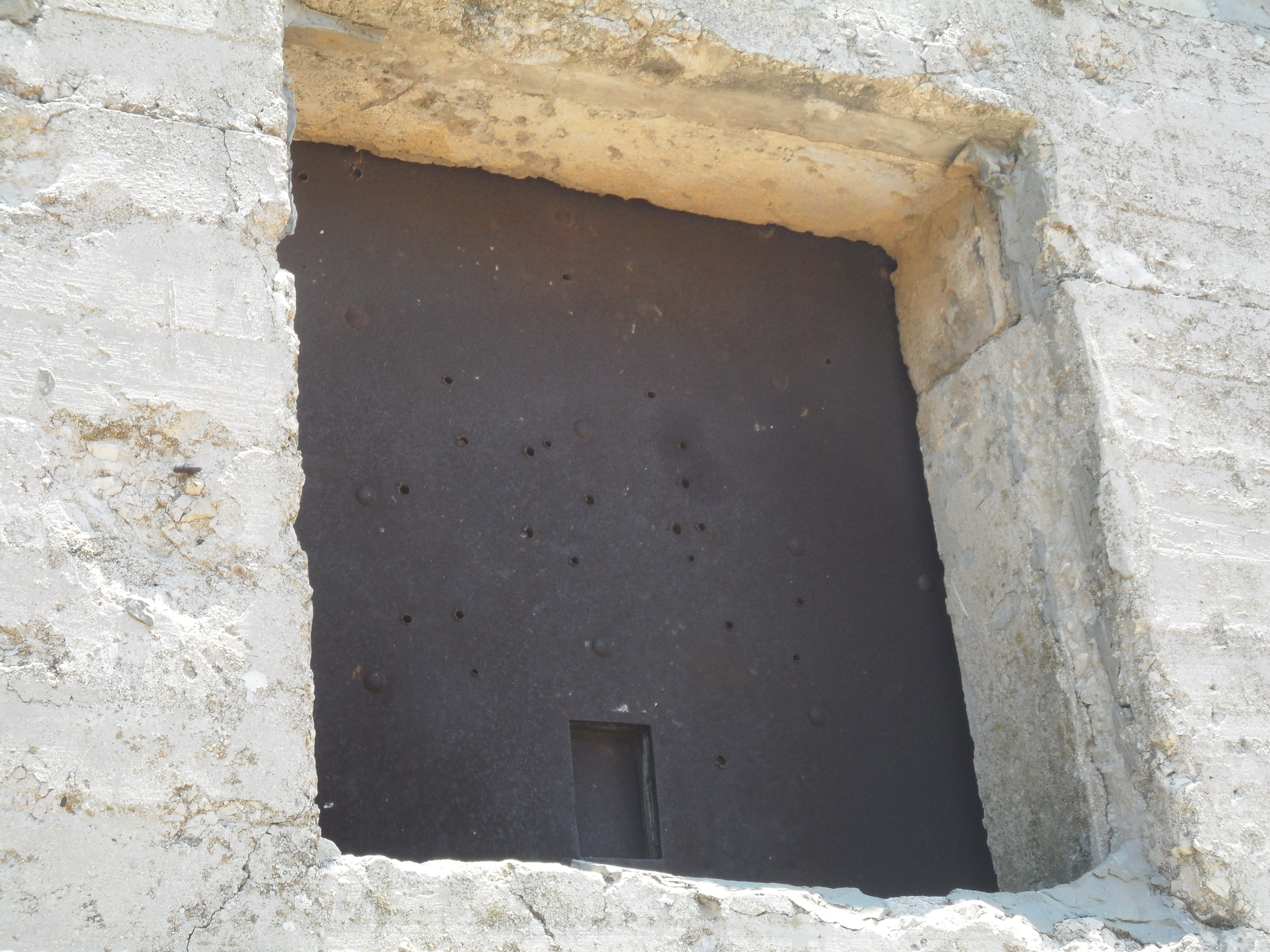
The south side of the structure was riddled with bullets from some previous battle(s) as were the metal plates that swung down to protect the open windows.

Bullet-riddled window guards

Turning away from the ruins, we headed west to make our descent to the river. This is the view of the Meron Mountains, the highest peaks in all of Israel outside of the Golan.

Meron Mountains

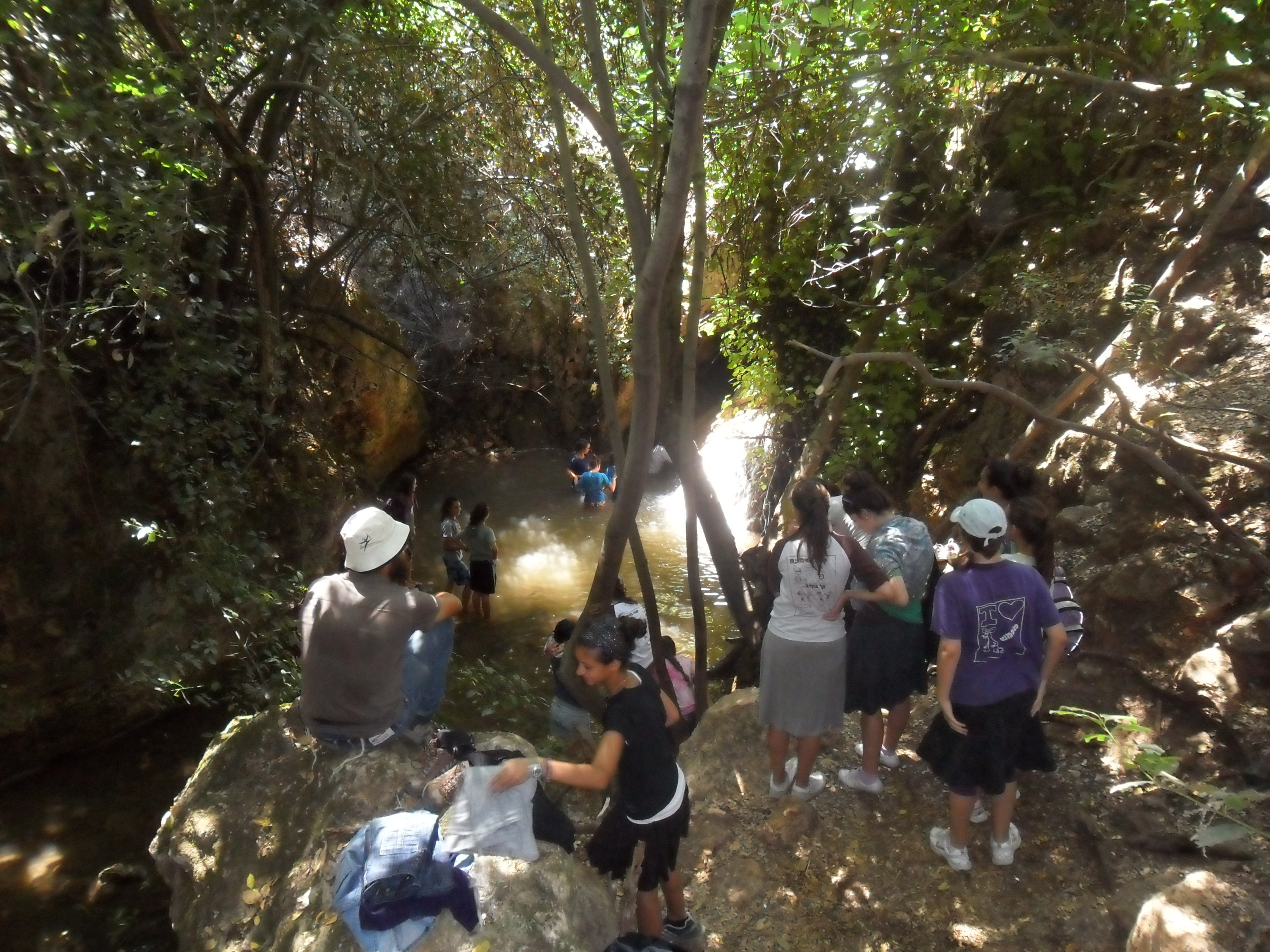
As we approached the water, screams of joy could be heard. We encountered an enormous group of young teens who’d come out to hike and to enjoy the river’s many swimming holes. Here was one that had a waterfall which was illuminated by a direct beam of sunlight (as visible in picture).

Swimming hole with waterfall

Leaving the swimming holes and walking on a slightly higher altitude, we came across a series of old building and structures along with a narrow and surprisingly long aqueduct that brought water to the higher area. The buildings comprised a complex known as the Sheik’s House. It was very nicely built with an orchard and a vineyard on the downward slope back down to the river.

A large basin for bathing or swimming (now a protected salamander breeding place)

Along the path, still in the area built up by some mysterious Sheik, there are these too. The fountain may be more modern, I do not know. As for the arched structure, that may have been a stable or even rooms to sleep or eat in.

Fountain

Arched structure possibly rooms or a stable

As we cleared through the numerous archaic structures, many of which have been overgrown with vegetation, we began the uphill ascent back to the parking lot. The path was far more grueling than we had imagined but for a time the view was great. Here, in the distance, in the famous city of Tzfat (Safed), on a mountaintop between the two hills closer to us.

The ancient city of Tzfat (Safed)

An additional piece of trivia: Archaeologists have done some searching in the area of Nachal Amud after someone in 1925 chanced upon historical findings dating back supposedly thousands of years. We didn’t see anything. Maybe next time!

Yehiam Fortress (ARCHIVE)

In Galilee, Israel on June 23, 2011 at 10:30 AM
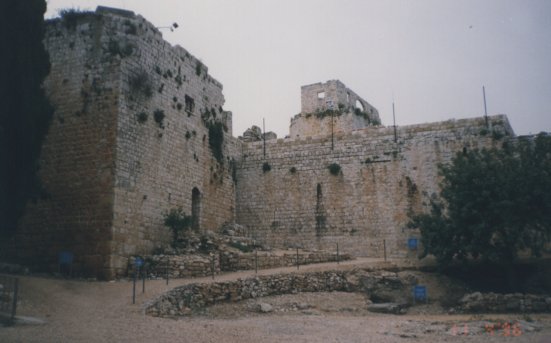
(April 26, 2011) Today we took a trip to a local ruins, Yehiam fortress (known by the Arabs as “Khirbat Jiddin” and by the Crusaders as “Judyn”).

Yehiam Fortress

It is found between Ma’alot and the Mediterranean Sea. It neighbors the famous Monfort Castle and was built on the remains of a Roman fort. Yehiam fortress was then built up by the Crusaders and called “Judyn”.

Montfort Castle (nearby)

The Teutonic Knights of Germany reinforced Judyn but lost the castle to the Mammeluke Sultan, Baybars, in 1265. Local ruler, Sheik Mahd el-Hussein rebuilt parts of it about 500 years later and then in 1738 it was taken over by Dahr el-Omar a Bedouin sheik who ruled the Galilee in his time. In 1946, Jews from the village of Yehiam used the aged castle as a fortress against the onslaught of Arabs.

Yehiam fortress - a bunker made by the Jewish fighters from the village of Yehiam during the War of Independence (circa 1948)

An IDF operation relieved the villagers and now the site is preserved as a National Park.

We toured the castle, both the grounds and the tower that overlooks the surrounding area for miles. Many parts are still in ruins and overgrown with foliage but some areas have been cleared and restored to a setting resembling the early days of the castle. There is a beautiful reception area built in 1700s by Dahr el-Omar which is currently used for tourism.

Yehiam fortress - Large reception area (built by Dahr el-Omar in the 1700s)

Here are some more pictures of the fortress, a structure home to three of the world’s biggest religions.


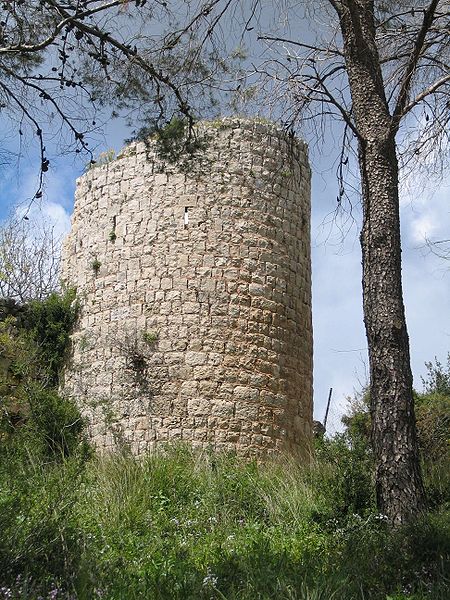
Yehiam Fortress - the tower

Yehiam Fortress - partly sunken rooms


Yehiam fortress - Main gate (built by Dahr el-Omar in the 1700s)

Yehiam Fortress is just one of the crusader ruins nearby. The Galil was the centre of operations for the Crusaders when they were holed up in Akko (Acre) unable to press further south to Jerusalem.

More castles, forts and buildings to be explored!

Ghetto Fighters Museum (ARCHIVE)

In Galilee, Israel on June 21, 2011 at 6:41 PM

(May 2, 2011) Today (Yom HaShoah) my father and I took a trip to the Ghetto Fighters Museum just a few miles away, off the coast. Admission was free and we picked up a hitchhiker on the way out of Maalot. He decided to tag along to see the museum and we drove. At 10:00 AM, as we were driving through Nahariya, the siren went off, the alarm reminding us of the Holocaust. We pulled over, as did EVERYBODY else and got out of the car. We stood still, as all of Jewish Israel did, and thought about the Holocaust. After the minute or so the siren turned off and we continued to the museum.

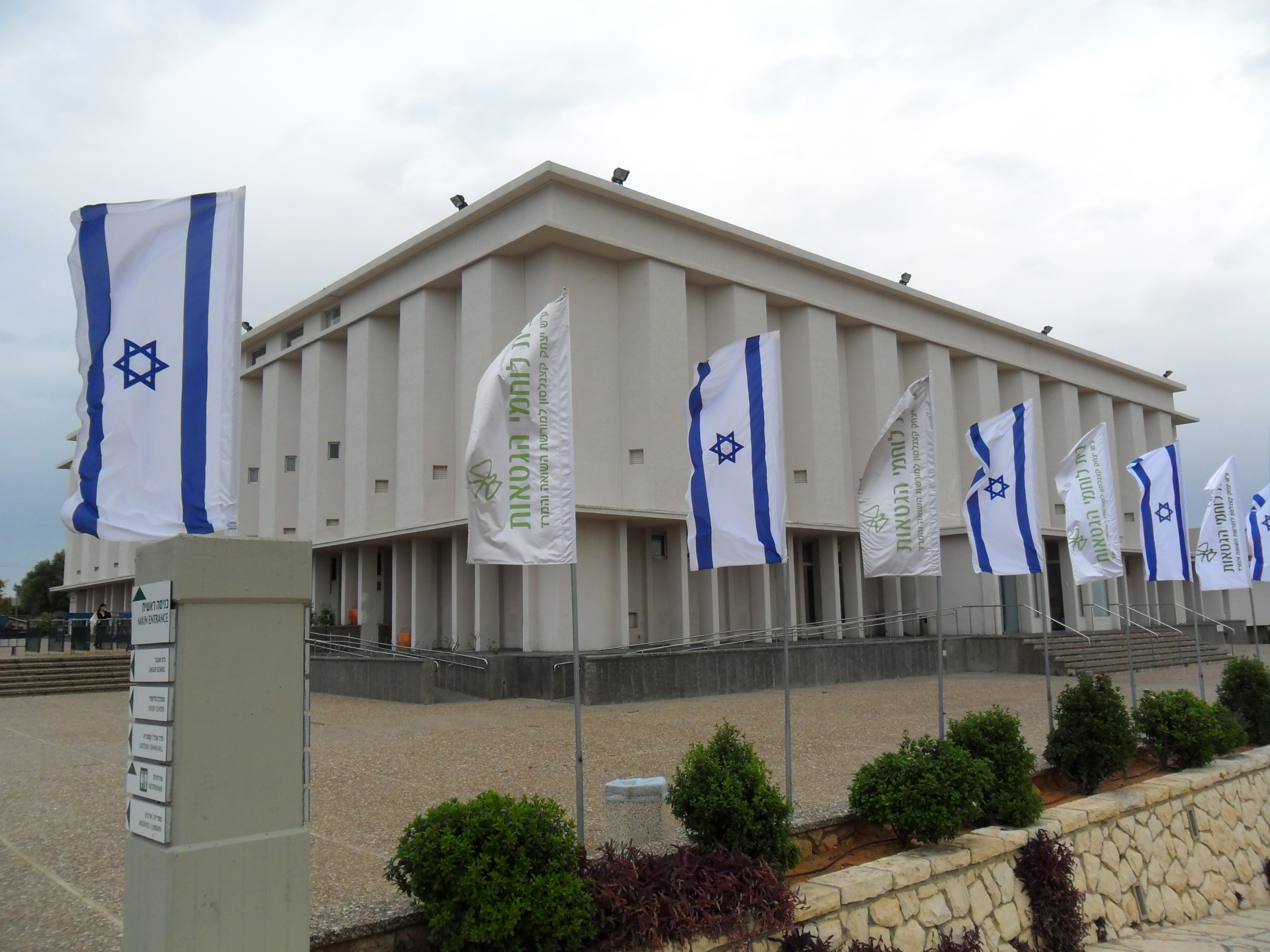
Ghetto Fighters Museum

The museum was built in 1946 or something, the first Holocaust museum in the world. It was founded by, I believe, Dutch “partisans” who came to Israel after the war. They built a kibbutz next to a large (14 kilometres long) aqueduct built during the Hellenistic period.

Hellenist-age aqueduct

The museum is composed of many floors each dedicated to different Holocaust related concepts (ie partisans, Dutch underground, concentration camps, righteous gentiles, records & testimonies).

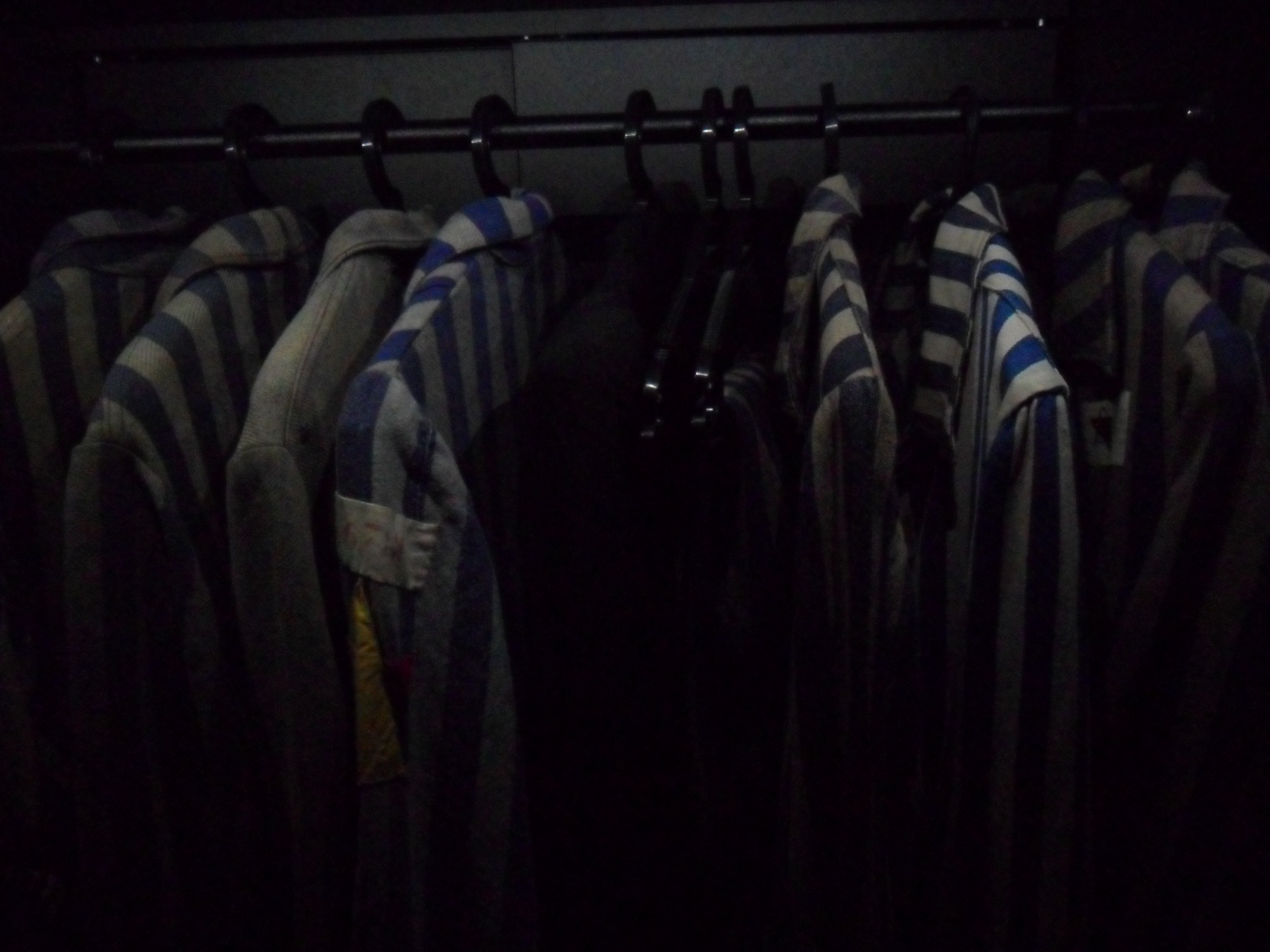
Concentration camp prisoner uniforms

There was a thing on the wall that tallied up the total death count of World War II. It totalled to over 55 million people killed, 6,141,000 being Jews. Wow!

Total tally of WWII - 55,600,000 people

Among the museum’s numerous collections was the bulletproof glass box that Adolf Eichmann stood in for his trial after his capture in Argentine.

Eichmann's trial box

Additionally there is a strangely shaped Children’s Museum which is for anybody but children. Eerie and built with a artistic design meant to send shivers down one’s spine, the Children’s Museum is a bit haunting, perhaps a bit too haunting. After a few hours we concluded our informative trip, our tag-along disappeared and we went home.

Later that evening, Chief of Staff General Benny Ganz came for a ceremony outdoors in the amphitheatre that in between the museum and the aqueduct. We were not in attendance but maybe next year…

Yom HaZikaron (ARCHIVE)

In Galilee, Israel on June 19, 2011 at 12:28 PM

(May 9, 2011) My father and I went to Nahariya today to the military cemetery for the ceremony of Yom HaZikaron. There was the honour guard and the shooting into the air and the soldiers of all ranks swarming the site along with the many families who had a loved one buried there.

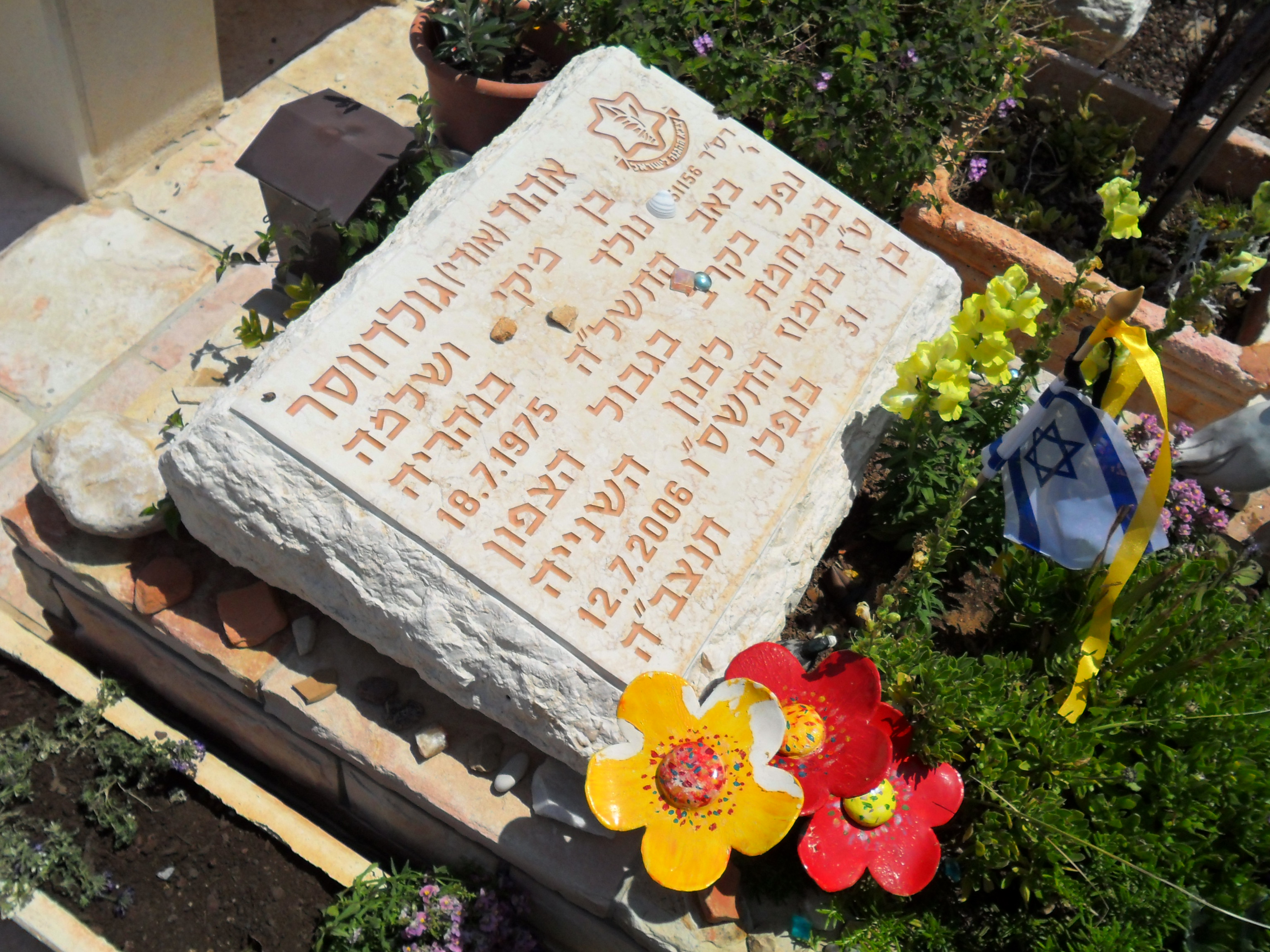
This is the kever (grave) of Ehud Goldwasser the soldier who was captured and killed by terrorists along the border with Lebanon. He lived in Nahariya so he was buried there, one of the freshest graves.

Ehud Goldwasser

The most recent grave, in the same row as Ehud, was a Russian immigrant soldier who died in the fire on Mt. Carmel near Haifa this past winter.

We stopped by a grave from 1948 where an old woman originally from Transylvania was telling people – in English – about her older brother who was killed in Tarshiha (of Ma’alot-Tarshiha) as he and his unit provided cover for the other soldiers. He was also sieged at Yehiam (the castle I wrote about a few weeks ago) where as the people say, an Arab herder brought them a cow to eat for Pesach.

This was my Yom HaZikaron experience, tomorrow only happiness with Yom HaAtzmaut!

Bar & Bat Mitzvah: Mizrahi Style

In Galilee, Israel on June 17, 2011 at 6:18 PM
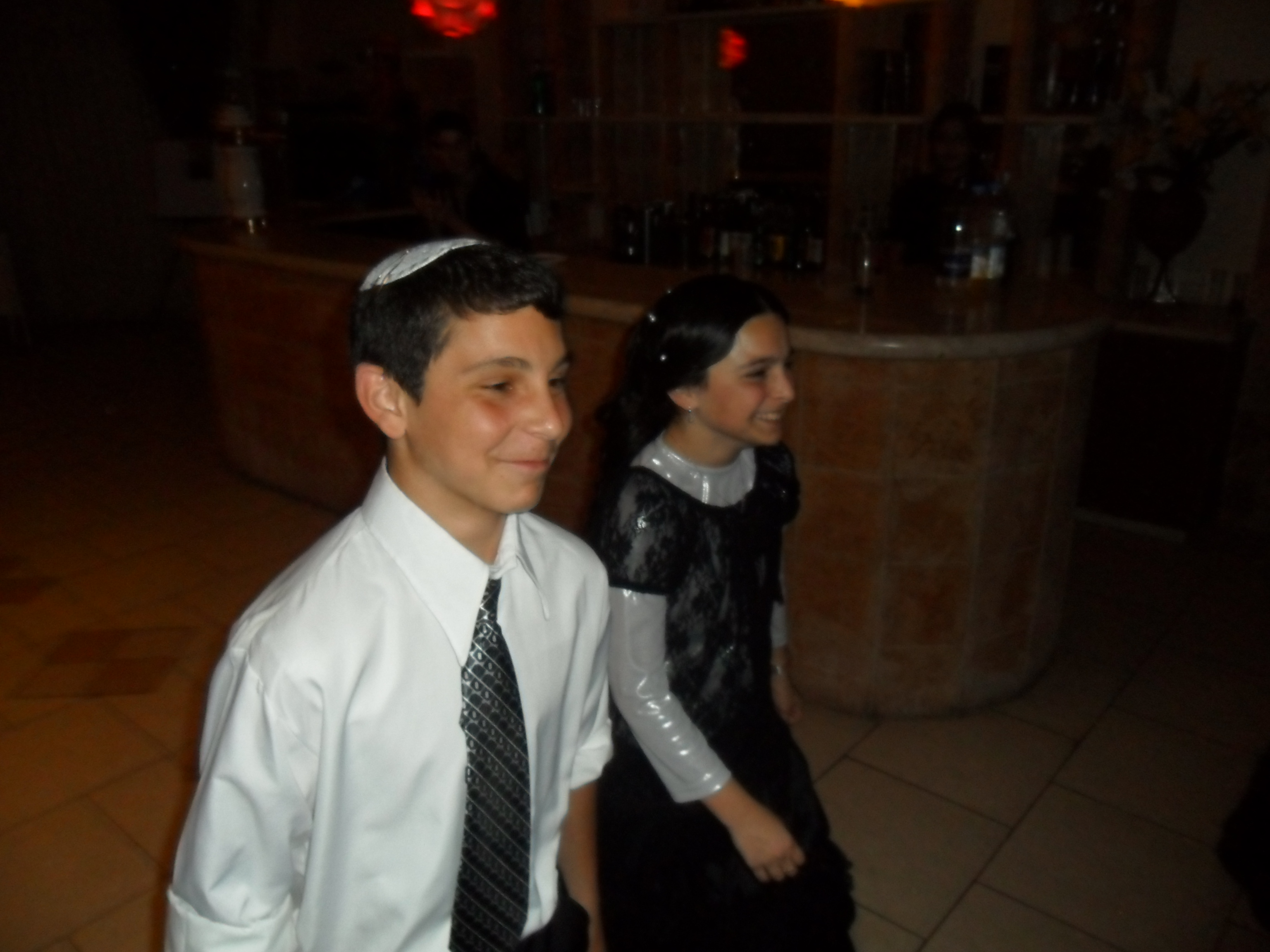
Last night our neighbors (the ones who are sharing our new duplex) had a Bar & Bat Mitzva party for their son and daughter.

The kids of honour

It was at the catering hall near our house and started at 7:30PM (ended at 12:00+AM). There were approximately 200 people in attendance and it was a traditional Moroccan/Mizrahi party, not something you would typically see in the US.

The hall of ceremony and feasting

The way these parties usually work it that there is a large appetizer buffet table (this one included roast and even a small schwarma). Some time after they cleared the dishes the waiters brought out fish and other light food as the next course. I had a nice serving of Moroccan fish – tasty! Again, some time later, there was the main course. A large bowl-like thing warmed by candles underneath was placed on the table filled with grilled chicken, steaks and lamb chops. I sampled some of each. By this time the camera battery was dead, sadly. There was potatoes and rice and many side dishes along with tons and tons of salads served throughout the evening. For dessert there were molten lava cupcakes (or whatever they are called) and watermelon and cantaloupe slices.

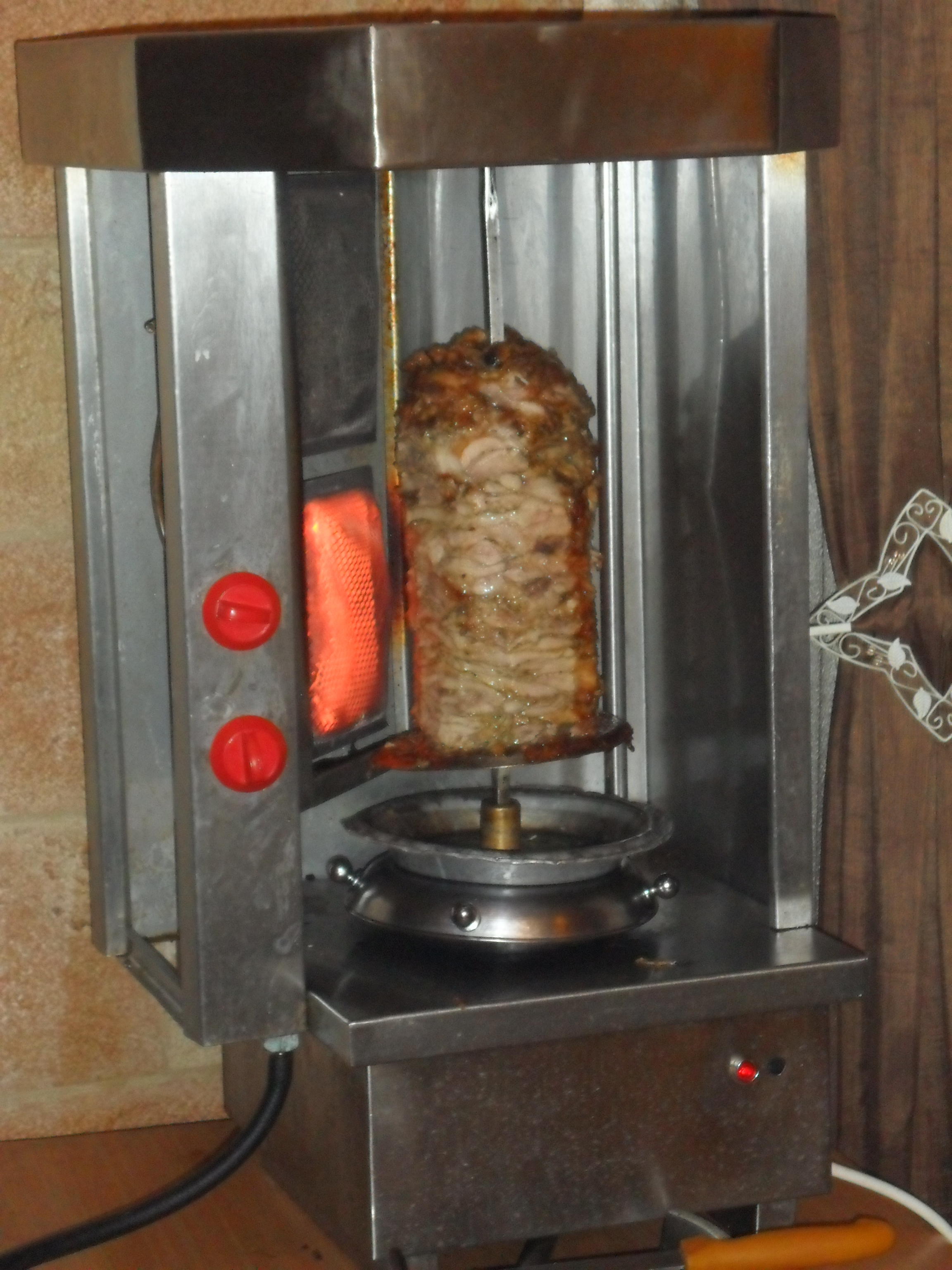
Mini-schwarma

A photographer went around taking pictures of people and surprised us all by coming back later with our pictures cut into magnets to bring home as souvenirs (along with the standard bencher)!

One of our magnet pictures

All in all, it was a great party that lasted forever and oh, yeah, I got from the open bar a scotch & soda and a whiskey & coke, always fun! I love open bars!

Enjoying myself

Till later,
Shem Tov