Israel's Good Name

Archive for the ‘Israel’ Category

Sharon Beach Nature Reserve

In Central Israel, Coastal Plain, Israel on November 12, 2025 at 1:57 PM

In the beginning half of July, fellow adventurer Adam Ota and I finally embarked on a trip we had planned since before the brief war with Iran at the end of June. Naturally, due to the circumstances, our rekindled adventures had to be put on hold, until further notice. So it was with much anticipation that we got into our respective motor vehicles and met at the destination of our choosing, the Sharon Beach Nature Reserve.

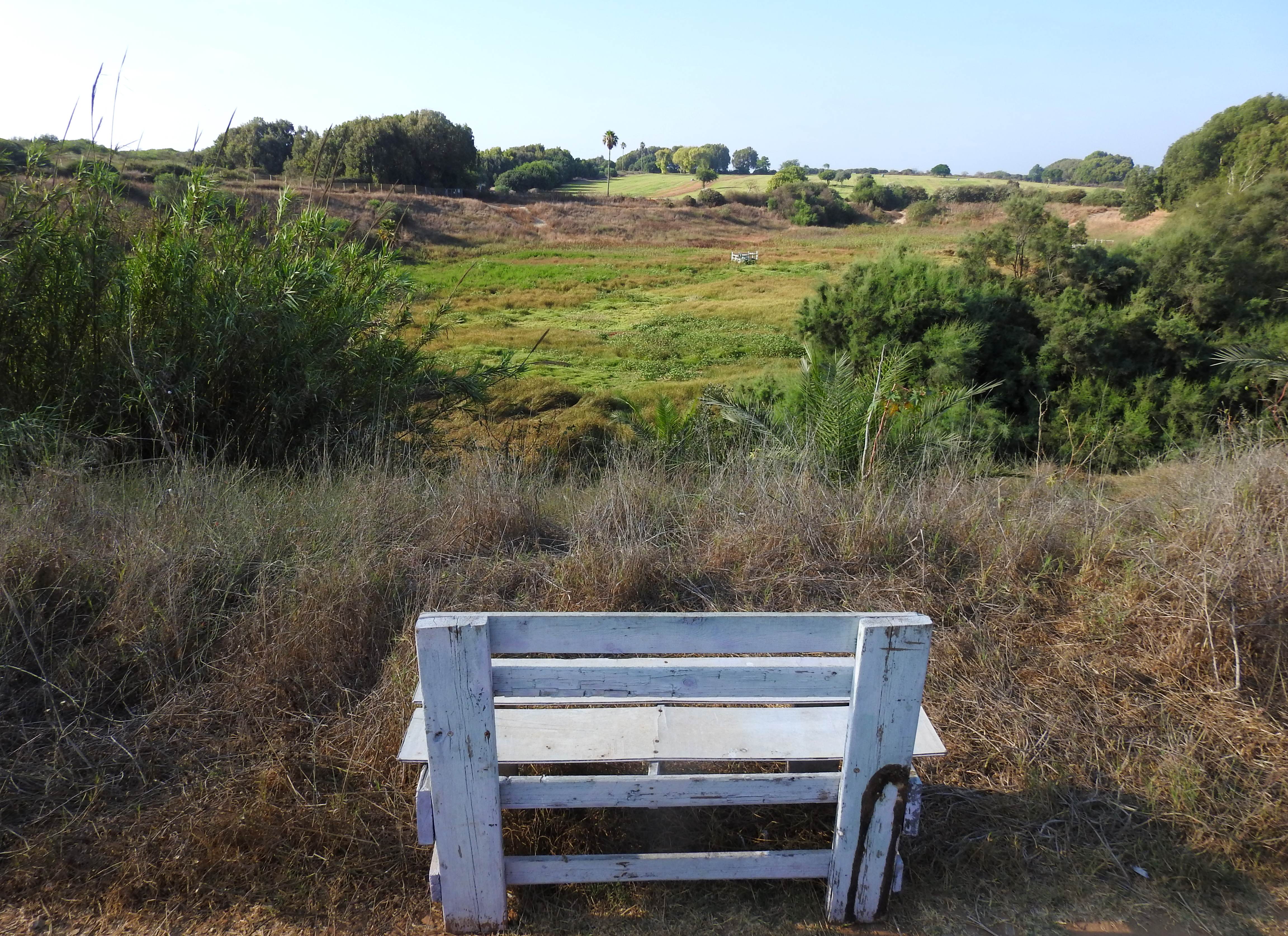
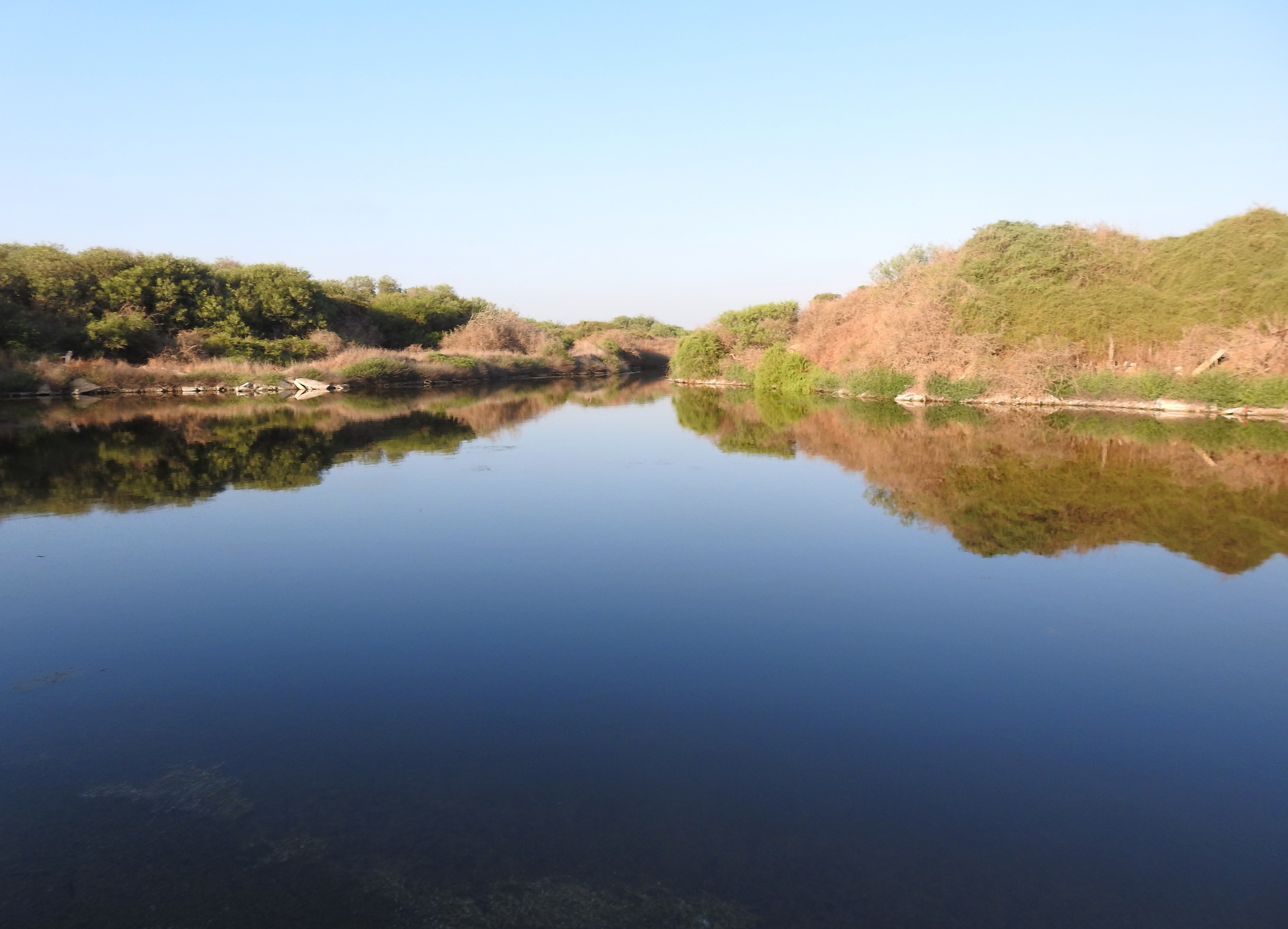
Looking out over the dried pond

Much thought went into picking this location: it wasn’t terribly far away for either of us; neither of us had visited the place prior; and it was reported to have some sand dunes on the kurkar clifftops which could very well provide some fun creatures that, ordinarily, we would have to travel some distance to see. We met up in Kibbutz Ga’ash at the dirt parking lot about two hours before sunset and began to explore our surroundings, starting with the butterfly-rich vegetation beside a dried pond. There wasn’t much else to see there, so we navigated our way to the nature reserve entrance through a kibbutz perimeter fence.

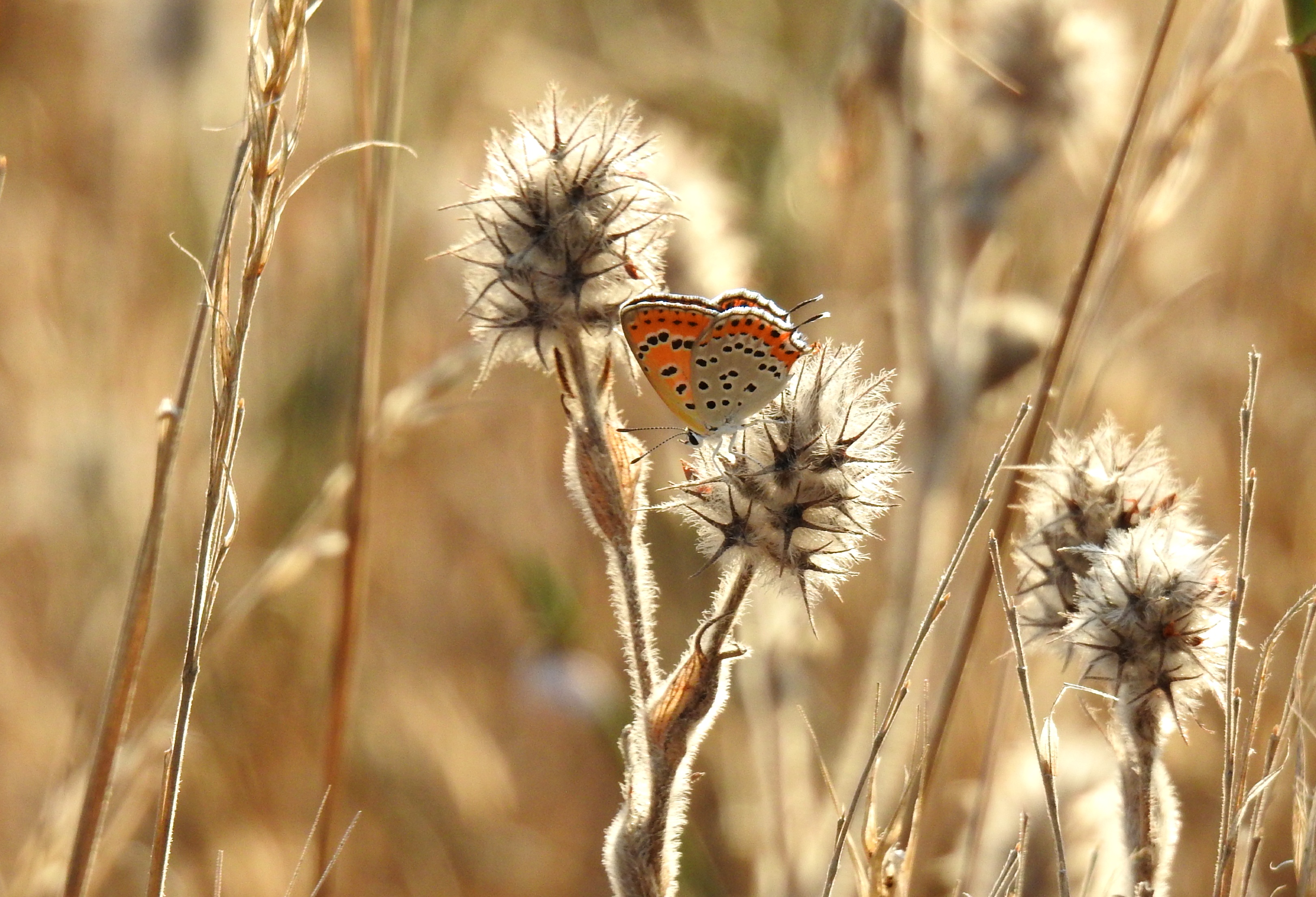
Lesser copper butterfly

We took a liking to the place almost immediately, the calm sand paths crisscrossing the coastal foliage. It reminded us of other places that we had been before, such as the dunes at Yavne – a popular haunt of old. The faunal diversity wasn’t in its prime that late afternoon, with just a white-breasted kingfisher and the distinct calls of a turtledove.

The hidden pond

But then the path led to a hidden U-shaped pond, and biodiversity got more interesting. The western half of the pond opened up before us like a page out of a romanticised Victorian adventure novel. A lone stilt chided us noisily as we intruded on the cloistered paradise, warning the other waterfowl of our sudden, and rather undesired, appearance.

Israel National Trail

A handful of startled sandpipers flew away, as did the noisy stilt, leaving us to explore the quaint little pond in relative isolation. Much to our surprise, the “beach” part that we walked into was not made of sand or pebbles, rather a morbid collection of old, decaying snail shells. Thousands, if not millions, of tiny white shells formed an attractive-looking area, at least until closer scrutiny. But overall, the pond was delightful and I fantasised about bringing a trailcam to see what kind of fauna is wont to visit. Maybe one day…

Such a majestic sight

From the hidden pond we explored the kurkar ridge, making our way to the stabilised dunes overlooking the Mediterranean Sea. After a nice look at the coastline stretching out below us, we left our vantage point up on the cliff and continued exploring the sandy trails. At some point, we found ourselves on the Israel National Trail, the tri-coloured trail marker signs rusted from the salty sea breeze.

Artsy and unedited

With not much to see from a faunal point of view, we decided that we should spend the bulk of the remaining daylight exploring a bit inland. This proved to be a wise decision as we encountered some jackals as soon as we reached an abandoned golf course beside the kibbutz’s cemetery. Our further explorations didn’t fully justify our deviation from the nature reserve, so we headed back to the coastal cliff to watch the sunset.

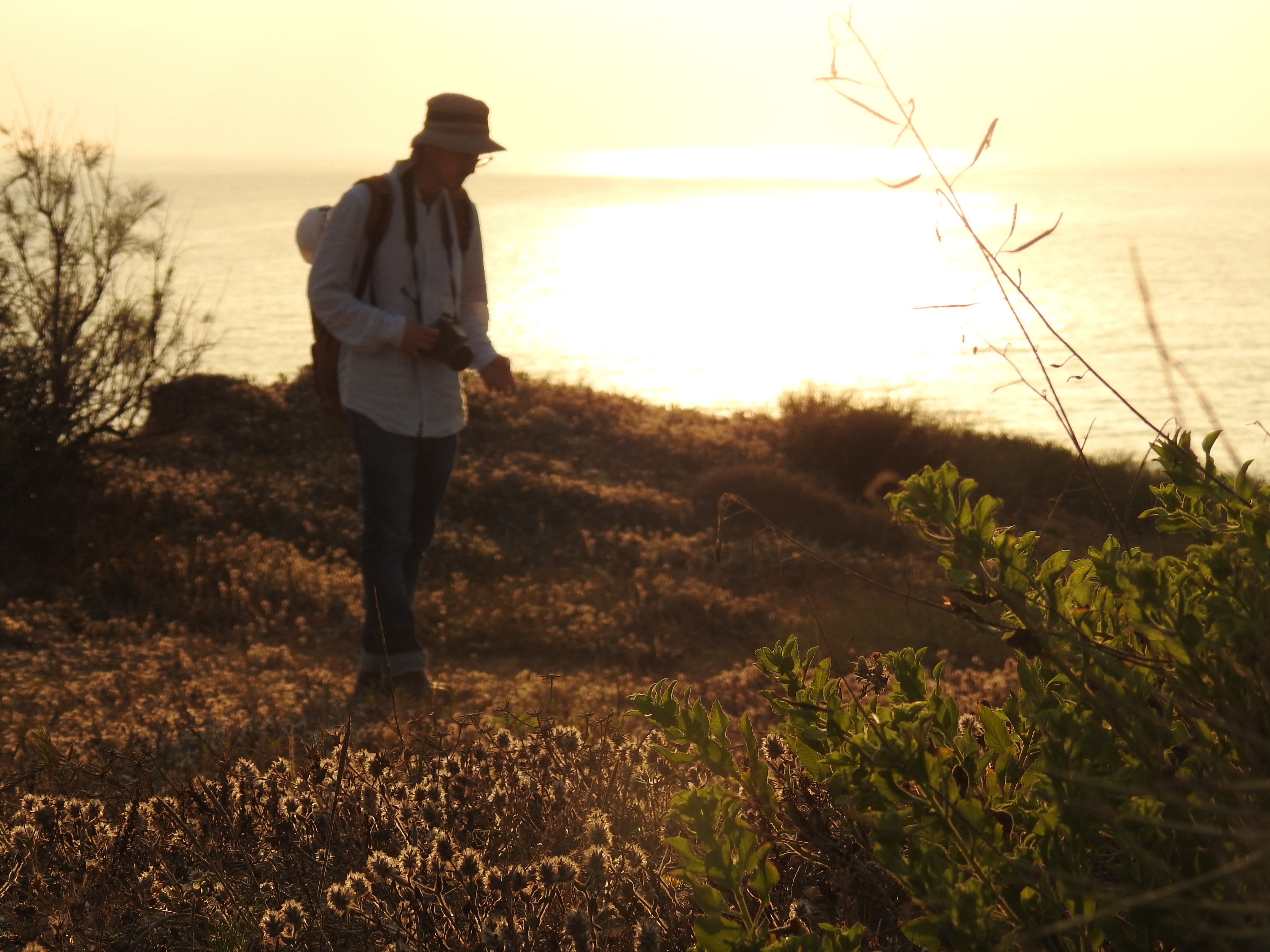
Sweaty and taking in the sunset (photo Adam Ota)

As expected, the sunset scenery was quite picturesque from on high. The kurkar cliffs that line the coast, a sharp rise in elevation rising up to 50 metres from the narrow strip of beach. In fact, two weeks after our adventure the Israel Nature and Parks Authority issued a warning about falling cliff chunks endangering visitors to both beach and cliff.

Being careful near the cliff edges

While we stood on high, looking out over the expanse, we noticed that there were two young men fully disrobed, lounging languidly in the warm sand. It was quite an unexpected sight, but perhaps they were just confused as to where the official nudist beach is – actually a bit further up the coastline.

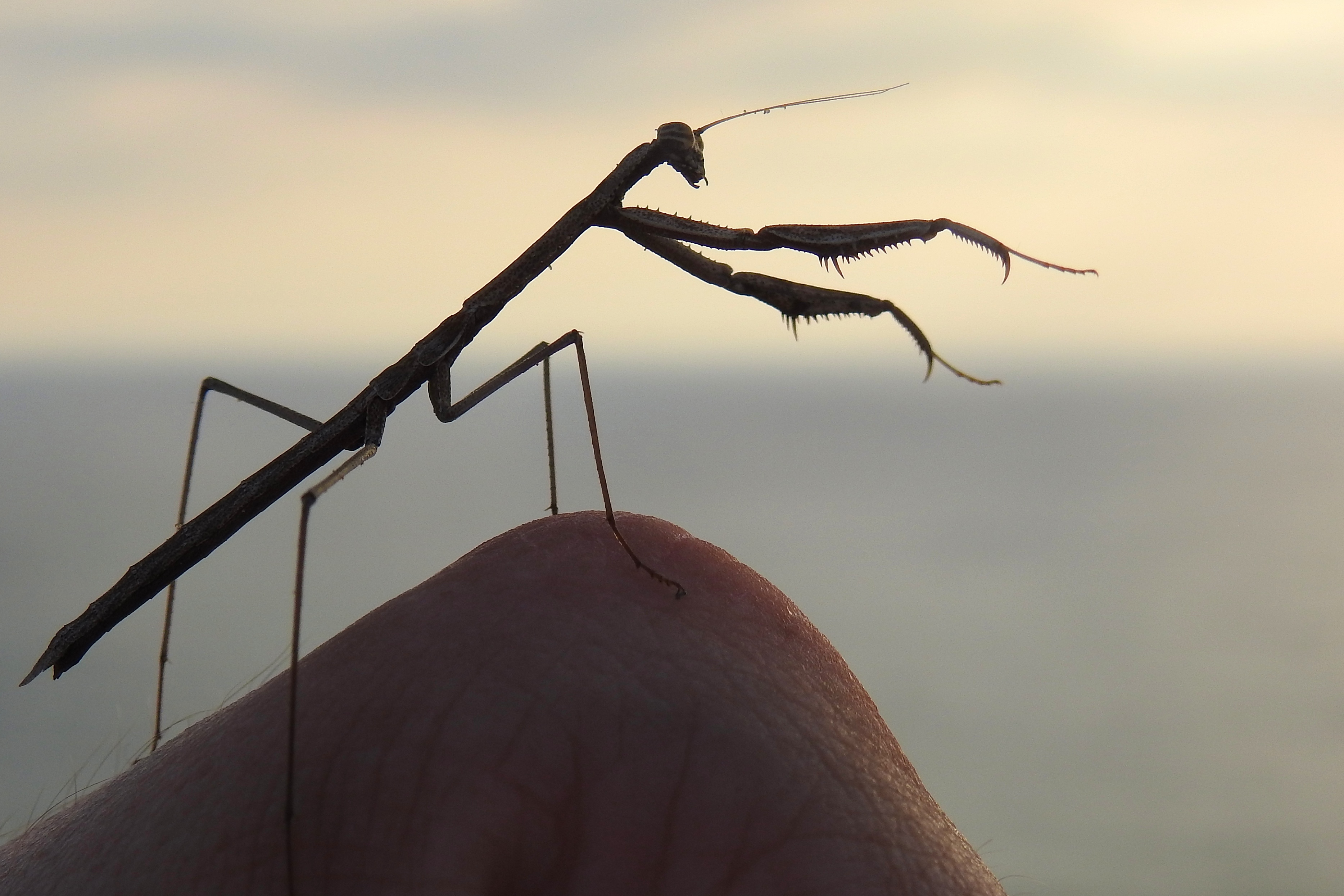
Eremoplana infelix mantis

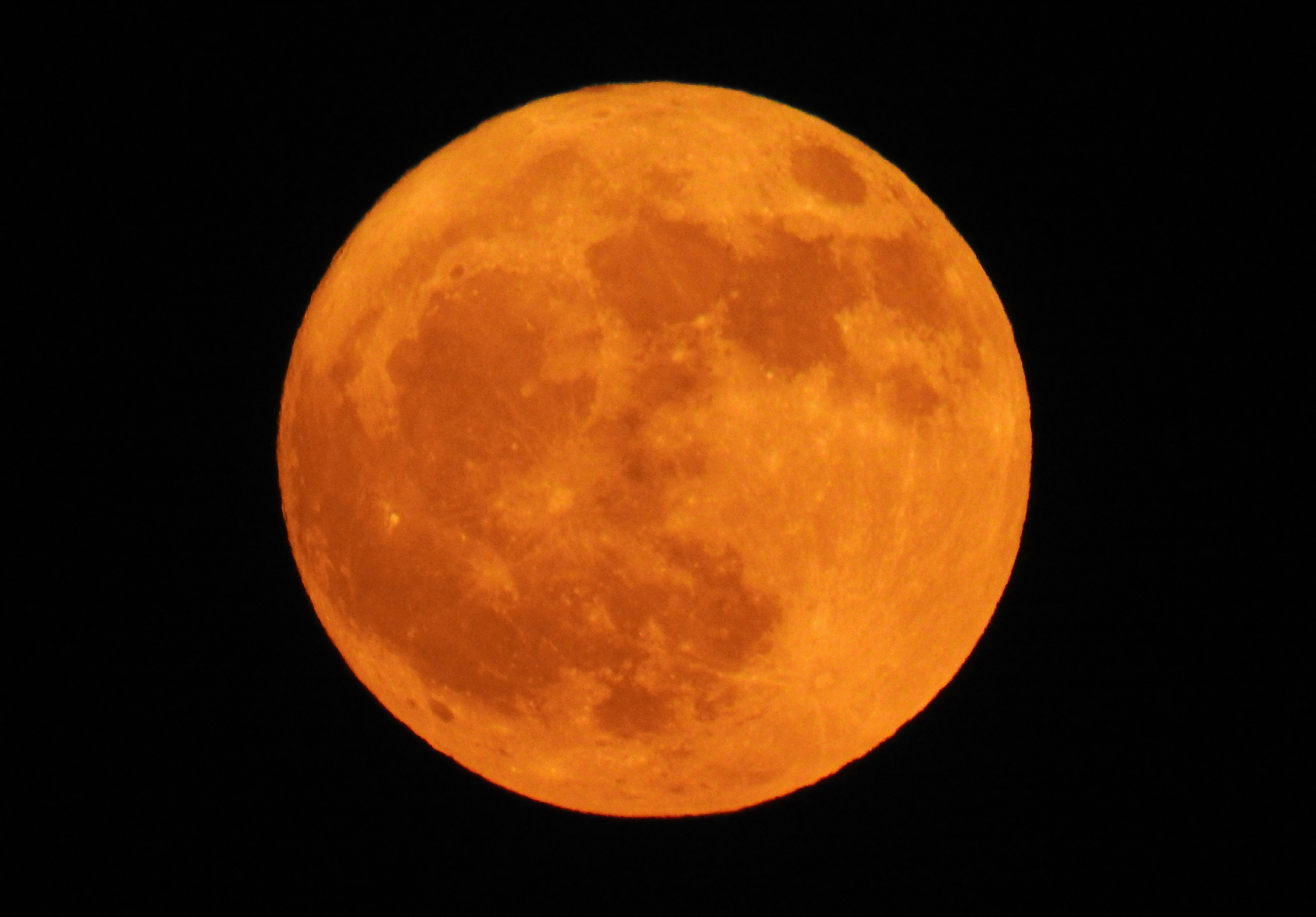
A full moon slowly rose behind us, and while we waited impatiently for darkness to settle, we shared a snack of some mini kabanos sausages. Once sufficiently dark, when the creatures of the night were presumed to have left their hidey-holes, we flicked on our flashlights and began traipsing around. I decided to start with the UV flashlight, its purple-blue light dancing over the sand and vegetation underfoot. It kind of felt like cheating as I spotted one scorpion after another with the greatest of ease. These were presumably all African fattail scorpions, but none of the evening’s specimens allowed for a good enough photo required for proper identification.

Gorgeous moon coming up over the eastern horizon

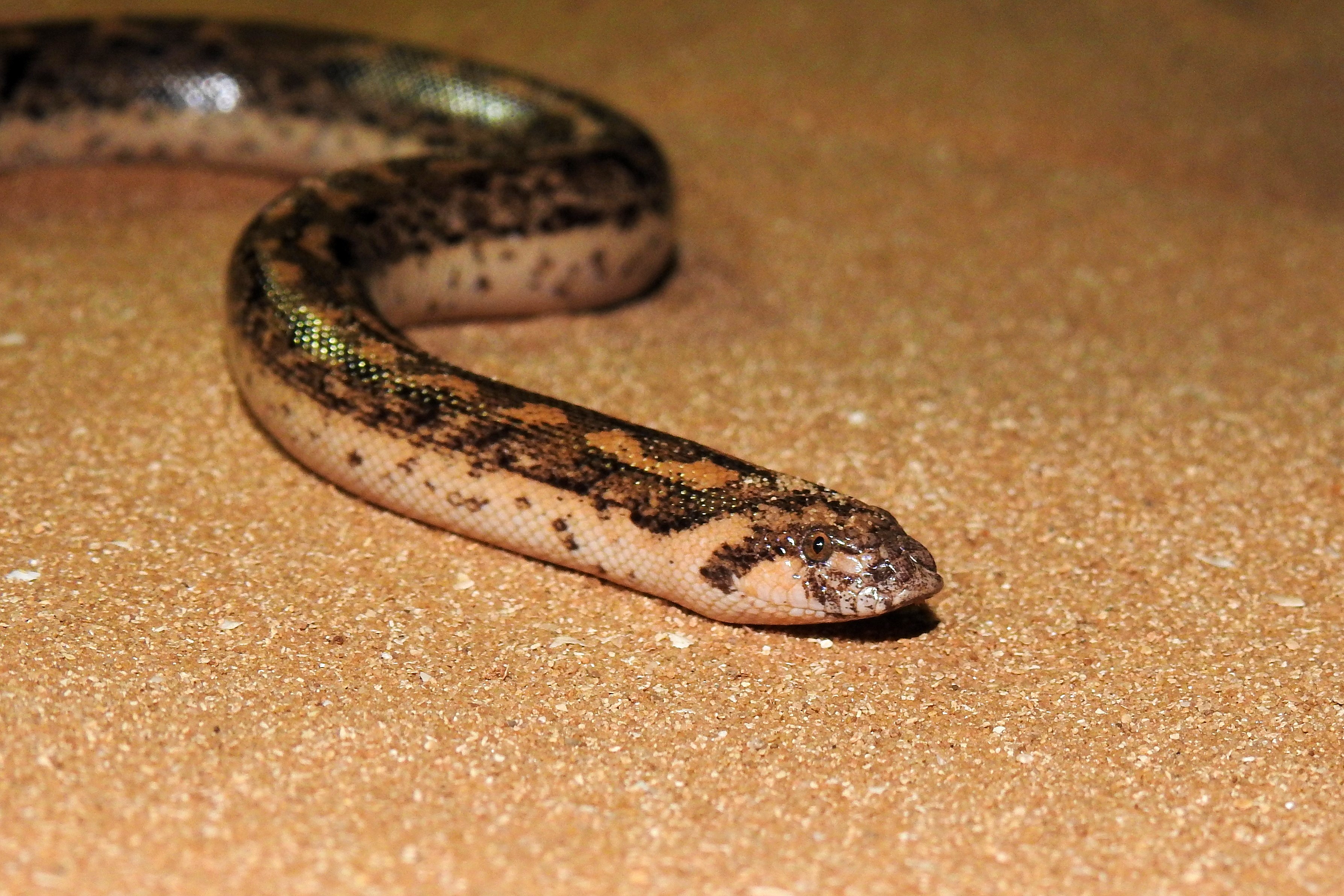
While I was finding scorpions, Adam slipped off another way with his regular flashlight. Suddenly there was a cry and Adam told me to come quickly – he had found a snake! This was no ordinary snake, it was a nicely-sized javelin sand boa, a snake species that we had been keen on seeing for years and years. Despite being relatively common, each and every attempt of ours failed and it became a source of frustration for us. Now, thanks to Adam’s keen eyes, a beautiful sand boa was now laying peacefully in the sand before us, waiting for us to get our fair share of photos.

A javelin sand boa!

While some of Israel’s snakes are venomous and all should be regarded as potentially dangerous without proper knowledge in identification, the javelin sand boa is a very mild mannered member of the boa family (related to anacondas and other constrictors), and not dangerous to humans in the slightest.

A closer look at the javelin sand boa

After a quick photo shoot, we put the sand boa down and let it escape into the shifty sand. It was quite amazing watching it slither so efficiently into the sand, making us wonder how many more sand boas were safely buried around us. Elated with this finding, we kept on searching for more wildlife, and found not very much for the next while.

Sea daffodil jutting out into the darkness

It was only once we started heading back for the cars that we found a Middle East tree frog in the parking lot, most unexpectedly. There was also a wedding taking place at the event hall adjacent to the lot, which filled the warm summer night air with the sound of music.

Middle East tree frog relaxing in the parking lot

Before bringing the trip to an end, Adam suggested we take one last look at the butterfly-rich vegetation beside the dried-up pond that we had explored in the very beginning. It turned out to be an excellent idea, as we found countless tree frogs all over the thorny thistle plants. It was decided there and then that a return trip was needed, but sometime later on in the winter, or wet season. Hopefully that can happen this winter, but, as always, time will tell.

Dead Sea Night Birding

In Dead Sea, Israel, Jordan River Valley on August 7, 2025 at 11:36 AM

Despite my increasingly busy life, I still consider birding to be one of my primary hobbies, albeit woefully neglected at times. In Israel, summer is regarded as the doldrums for birding, sandwiched between spring and autumn migration and lacking the wholesome verdancy of the wet winter season. However, that doesn’t mean that the land is wholly devoid of birds, one just needs to know where to look.

Grateful to be out exploring again (photo Adam Ota)

I saw that the Israel Birding Club had advertised an early June night birding tour to the Judean Desert around the Dead Sea, which is a known hotspot for some very special species of wildlife. One of the presumed target species is the Egyptian nightjar, one of three nightjar species that can be readily found in Israel. I had seen the most widespread species, the European nightjar both in Jerusalem and in Givat Shmuel, but the other two species remained elusive. This is not for want of trying, I had taken a stab at looking for Egyptian nightjars (and more) during the Eilat trip that Adam and I took back in 2019. That said, finding nightjars out in the open in the dark can be a bit difficult, so some professional guidance was certainly welcome.

Transitioning into the desert (photo Adam Ota)

Reaching out to Adam once again, we settled our plans and headed out in the late afternoon with a few stops in mind. We cut through the Shomron on Road 5, which later turns into 505, and began our descent into the desert. Thankfully, there was a roadside lookout which gave us the opportunity to take in the rural view, and the distinct mountaintop of Sartaba (Alexandrium). But with daylight counting down, we hurried back into the car and made our way down to Road 90 – Israel’s longest road which stretches from Metula until Eilat.
Delightful little green bee-eater (photo Adam Ota)

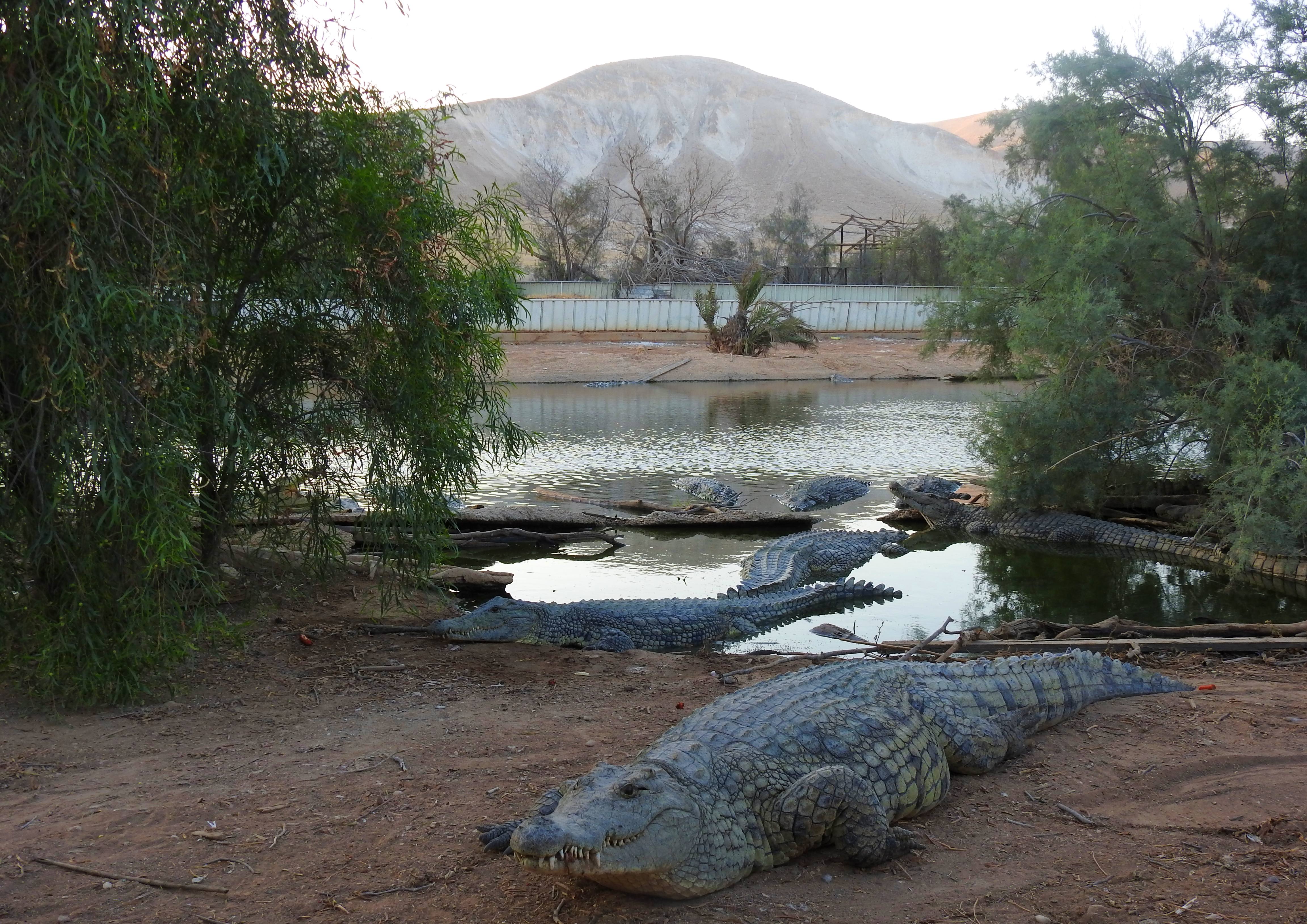
Our first real stop of the adventure was at an unassuming rest stop near Paza’el, where a hidden attraction can be found. Just south of the gas station, there is an old, abandoned complex surrounded by a fence – which happens to be breached in more than one place. This was a large crocodile farm, founded in the late 1980s as a tourist attraction, was closed during the First Intifada and then intended to be used to produce lucrative crocodile skin. Once laws were passed in 2013 banning the production of leather from such a designated protected species, the owner gave up and abandoned the project due to lack of funds. So now, twelve years later, hundreds of Nile crocodiles lurk in and around a small pond inside the complex, waiting for nothing but time itself.

Reptilian friends at the abandoned crocodile farm

Now just as an anecdotal sidenote, whilst drafting this blog post on my commute, I paused writing one morning with the previous sentence – and I had considered writing it a little differently, ending with “waiting for nothing but death.” Little did I know, that on that very morning there was an operation spearheaded by various governmental bodies to get rid of this “issue” at hand – namely, the culling of all 262 remaining crocodiles. Apparently, after numerous ideas were floated over the years, this seemed to have been the last resort. I was understandably shocked, but relieved that, at the very least, I was able to see this site before its bitter end. It had been somewhere on my figurative to-visit list ever since I had seen aerial drone photographs shared on Facebook by a young lad named Yair Paz (I can’t seem to relocate the post, but some other enchanting aerial footage can be seen HERE).

Monstrous croc lurking in the waters (photo Adam Ota)

We entered through a breach in the fence, passing some excited youths along the dusty path, and began to survey our surroundings. I was amazed at the dense concentration of crocodiles slumped on the dirt banks of the small, murky pool. Conjuring up vivid terminology torn from the pages of the likes of HP Lovecraft, these cold-blooded reptiles certainly played the part of ancient foul beasts as they skulked motionless and ominously in the fetid waters, only their bewitching eyes tracking our moves. We took some pictures and marveled at the sights we were seeing – such an unexpectedly rewarding experience.

You will surely be missed

Headed back into the car, we drove south down the 90 until we reached Almog Junction, where the tour was meeting up. Daylight was fading fast as we introduced ourselves to the birding guide, Yotam Bashan, and received the briefing on where we were going and what we were anticipating to see. As expected, we started in search of Egyptian nightjars, driving out to some salty, dry watermelon fields outside of Kalya. I hadn’t thought much about it at the time, but a big concentration of caves up on the craggy cliffside to the west of the fields are heavily featured in my thesis research. Alas, I did not get any sufficient photos of the adjacent cliffs before we were plunged into nightfall.

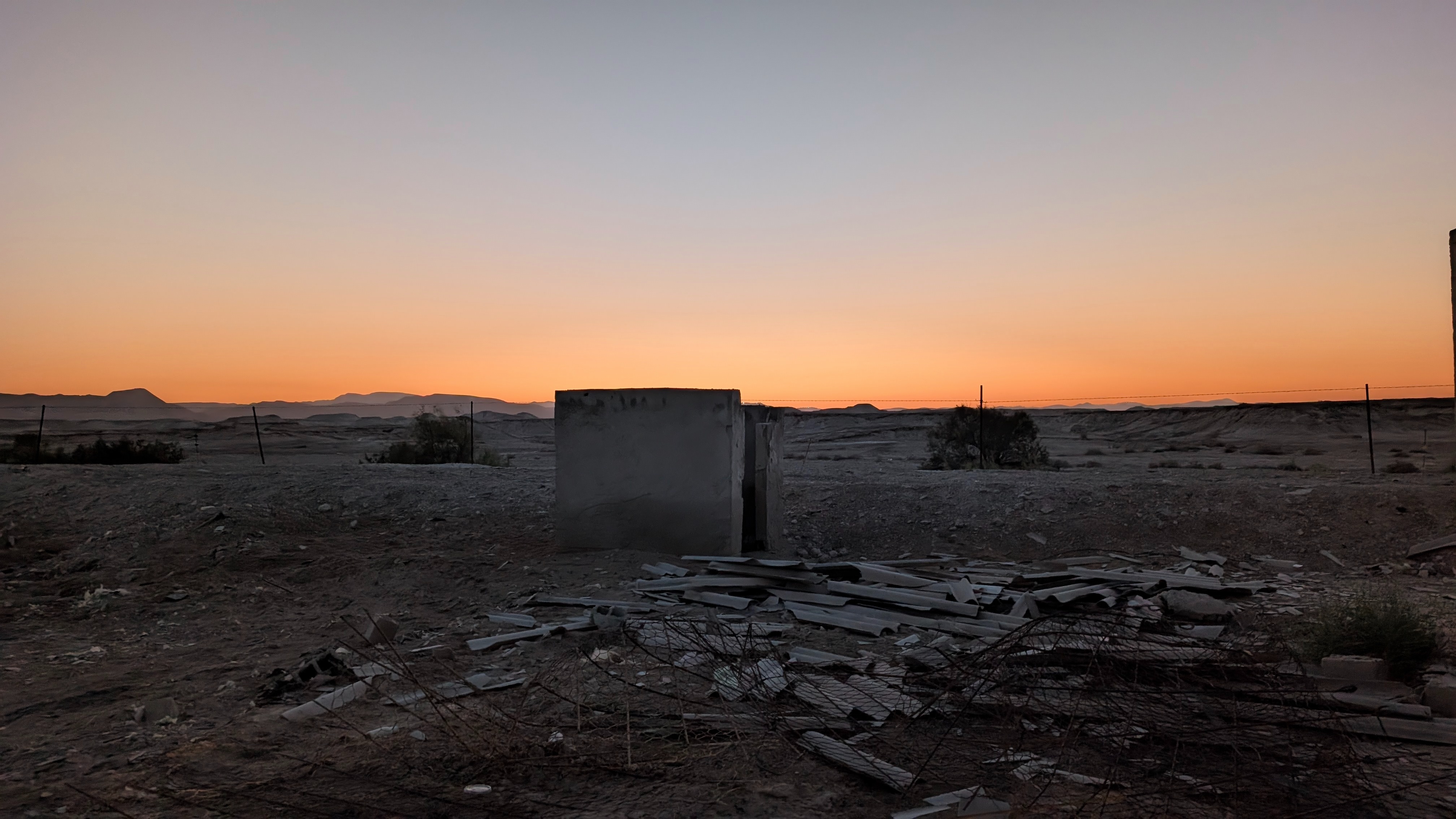
Sunset at the fields of Kalya (photo Adam Ota)

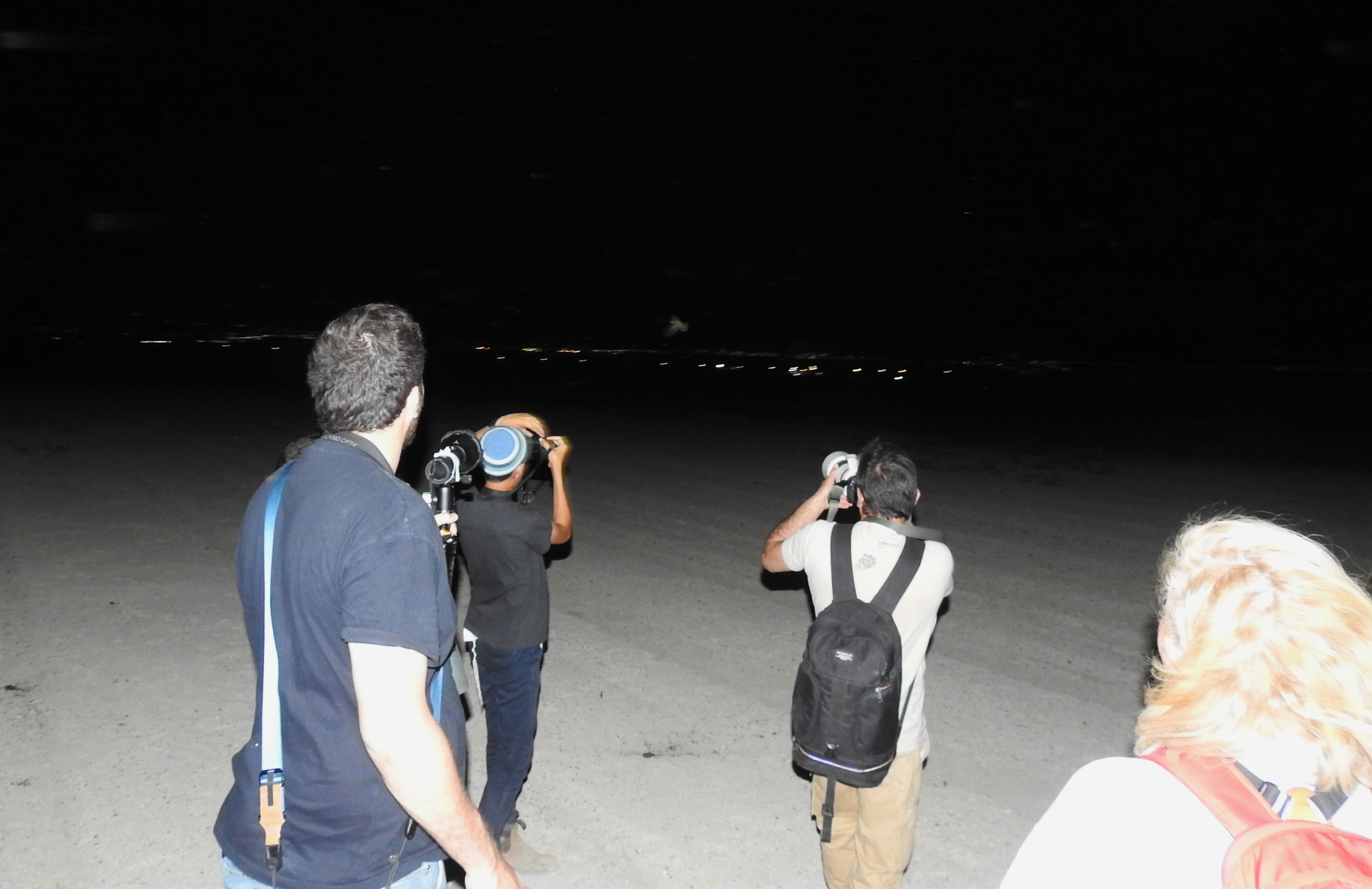
Lights from the Jordanian side of the Dead Sea glittered over the placid waters as we began our hunt for nightjars. Several high-powered flashlights were employed to make our searches easier. It was explained that the best way to find the nightjars was by shining a bright light around, and looking out for glints in the darkness returning said light. Sure enough, it worked and before long there was a slight glint on the dirt road far up ahead, and it flew off before we got much closer.
Using a spotlight to find nightjars

Sometimes, the glints were generated from trash and debris, such as soda cans, but sometimes it was the real deal. We crept up on several nightjars, most of them taking flight before we had a chance to take any decent pictures. Since neither of us have proper DSLR/mirrorless cameras, we had an even bigger challenge. Interestingly enough, my best photograph of an Egyptian nightjar from that evening was of one doing a close flyby.

Egyptian nightjar flyby

Our guide had beckoned these curious feathered friends with vocal calls broadcast over a small, portable speaker. When a nightjar fluttered by to examine, we all rushed through our camera buttons and tried desperately to get some snazzy pics. Photographic evidence aside, it was quite a surreal experience standing out in the dark in a dusty field, eerie calls playing over and over, ghostly bird shapes swooping around us – sometimes surprisingly close.

Scrambling to get a shot of a flying nightjar

While the focus was clearly on the majestic nightjars, there were other creatures lurking out in the darkness. We spotted some stone curlews, mountain gazelles, a fox and perhaps a jackal too. When we had felt relatively satiated by our viewings, we walked as a group back to our cars and drove down a dark agricultural road to some nearby date palm plantations. Now, the focus shifted to something a little more familiar, the pallid scops owl. While this was to be my first sighting of this localised species, I had a number of fond memories of the bird’s relative, the Eurasian scops owl (THIS being my best picture to-date). Similar to the Egyptian nightjar, I had briefly searched for a pallid scops owl while down in Eilat and the Arava, as they can periodically be found sleeping in acacia trees.

Pallid scops owl tucked into a date palm

We entered the rows of hefty date palms, a rip-roaring game of lights and shadows happening all around us as our torches flickered about. The calls of the nightjar, still echoing in our ears, could be heard faintly off in the distance fields. Before long, after some tramping through fallen vegetation, Yotam spotted an owl. He directed us swiftly, guiding our hushed whispers towards an illuminated patch just below the arched fronds. Lo and behold, my very first pallid owl, its minuscule body tucked neatly in the tree’s rough undercarriage.

Photographing the pallid scops owl

The owl posed pleasantly enough, changing positions once or twice before we decided that it was time to move on. Another owl or two were spotted, sometimes just a brief pale flurry as it disappeared into the darkness. We learned more about the owl, its interesting nesting techniques and the research that had gone into Israel’s population in recent years. With that, we climbed back into our vehicles and continued through the agricultural area until we turned back onto the 90 and drove south. Our next destination was a collection of agricultural fields and greenhouses by the saltmarshes of the Dead Sea.

Time to find some Nubian nightjars

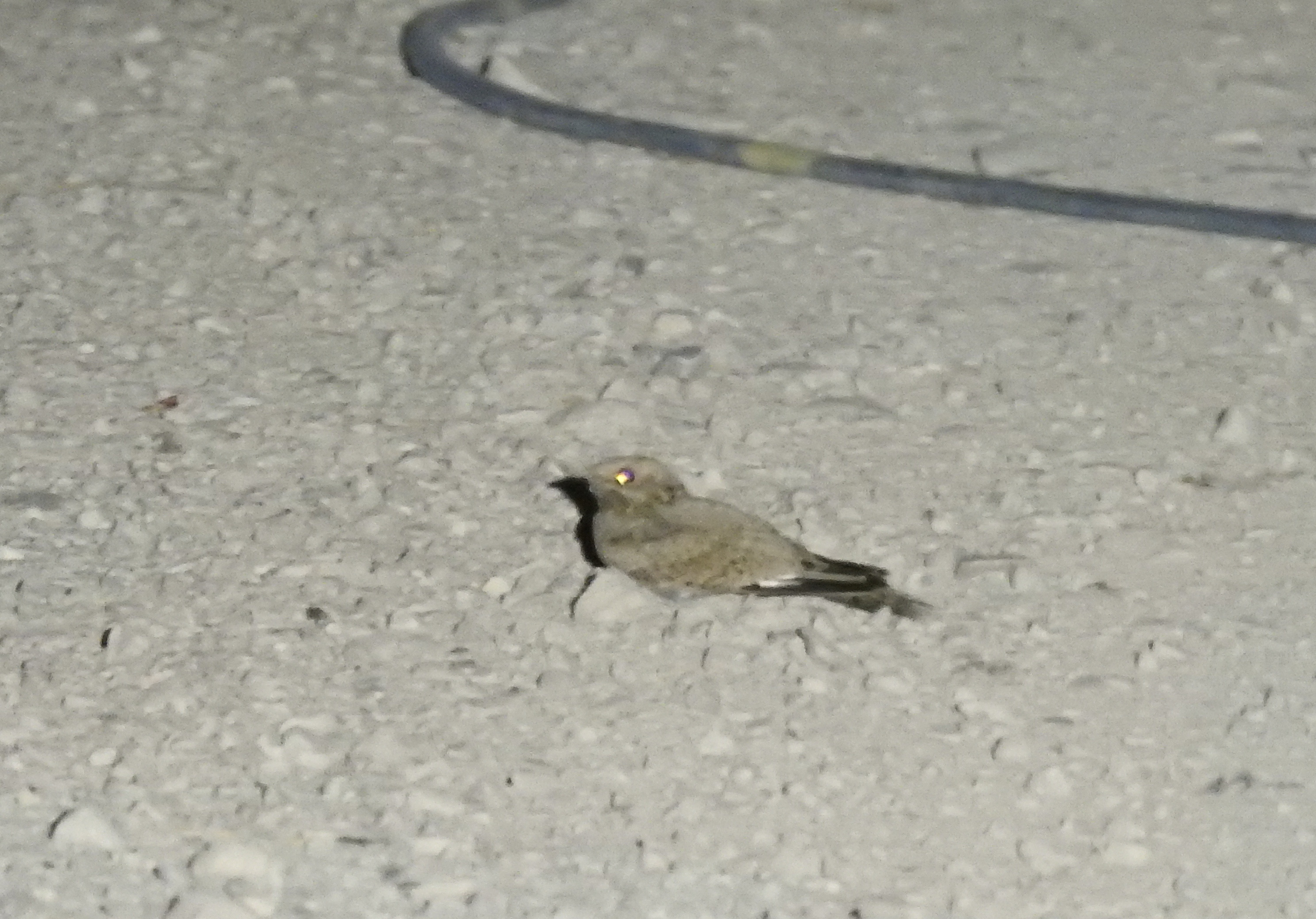
We parked offroad near Nachal Qumran and began preparing for the search for an even more elusive Caprimulgus species, the Nubian nightjar. This species is smaller and has a more ruddy complexion, with small white wings flashes that make it easy to distinguish from its more pale relative. But, before we had the chance to properly mobilise, air raid sirens went off in the distance, and on some of our mobile devices. An incoming missile was detected, sent by our staunch Houthi fans in Yemen, and so we took shelter the best we could. Crouched in anticipation, I suddenly saw some flashes of light high up in the sky to the southeast, undoubtedly shrapnel from the intercepted missile. A few minutes later, when the danger had passed, we resumed operations and gathered up around our guide.

Nubian nightjar resting on the gravel road

The search went exactly the same way as it had in the watermelon fields of Kalya, beams of lights strobing through the hot, dusty air. Thankfully, Nubian nightjars were available and we got plenty of sightings both on the ground and in the air, swooping as they hunted moths and other winged delicacies – as goatsuckers do. There was even one moment where one nightjar landed tantalisingly close to some of the tour members, but unfortunately for me, the angle and topography made photography a nightmare. Eventually, as we made our way back to the cars, a ranger from the Nature and Parks Authority came by to check out who we were. He said that he has been extra-vigilant lately with suspicious figures roaming around the Dead Sea shores, especially after some gun smugglers from Jordan were recently apprehended. With that, we buckled ourselves up and began the long drive back to our respective homes, pleased with the successes of our valiant efforts – and for me, three new “lifers” to add to my life list.

Lookouts of the Western Shomron

In Israel, Samaria on July 22, 2025 at 3:25 PM

This past Yom Haatzmaut, or Israeli Independence Day, we took the opportunity to visit some old friends living a bit deeper into the Shomron (Samaria). It was a lovely morning, the first of May, as we got into the car and left our home in Elkana, driving south past the Crusader castle Mirabel and Mazor Mausoleum before turning back into the Shomron. Our friends, the Yablons, lived at the time in a small, up-and-coming yishuv by the name of Kerem Re’im, nestled in a cluster of Jewish settlements about 7 km northwest of Ramallah.

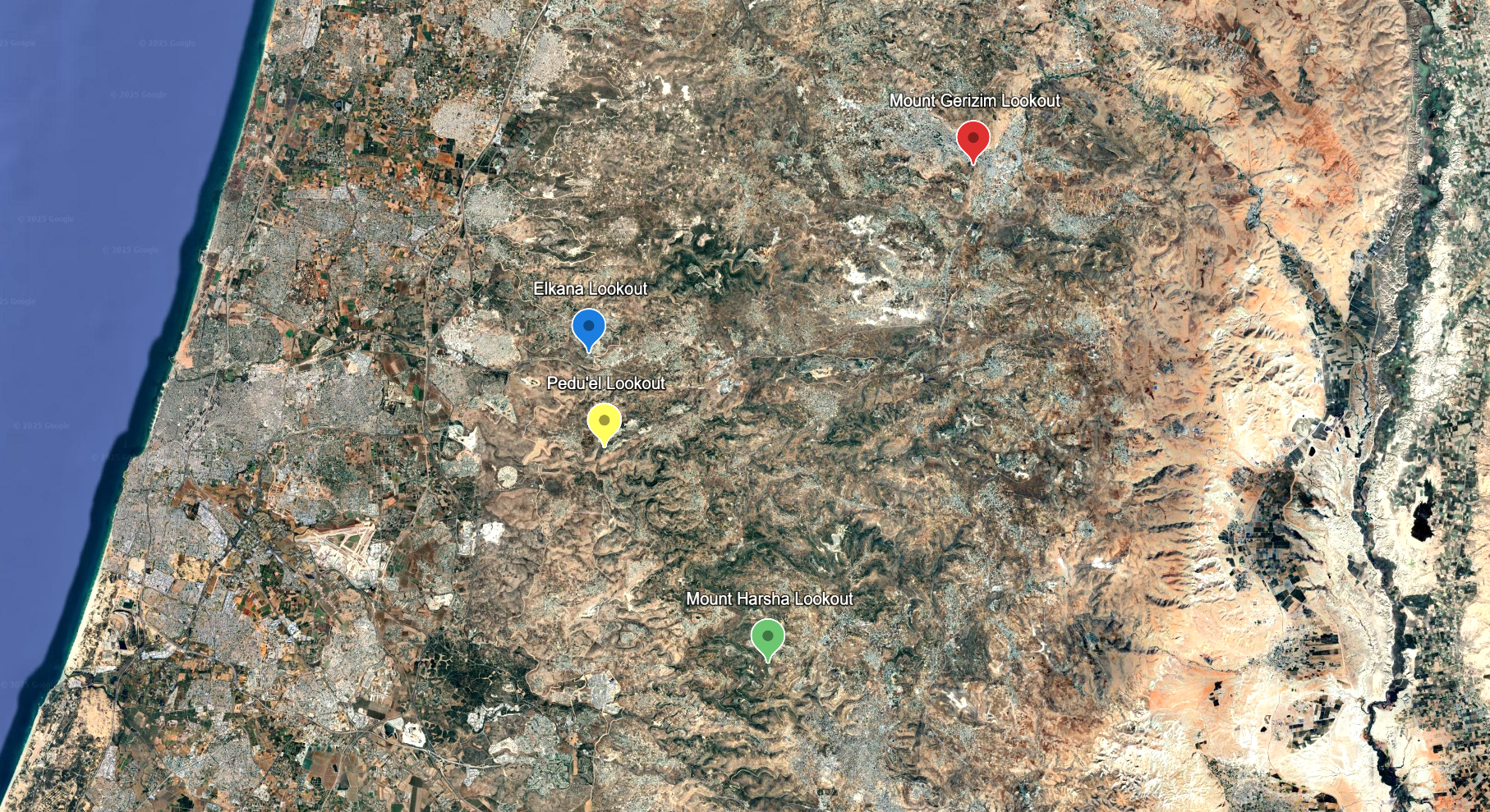
Map of the lookouts

Passing a checkpoint or two, we reached the small enclave and made our way to their house. Meeting up with Ben and Miriam, and their three kids, was a nice reunion celebrated with pita, spreads, cookies and strong black coffee. We examined our options and decided to have a short drive over to the nearby mountaintop, which overlooks Kerem Re’im and can be seen from their front door. Getting back into the car, it was a nice and windy drive up Mount Harsha – familiar in part from my stint in military reserves.

Panoramic view from Mount Harsha looking north

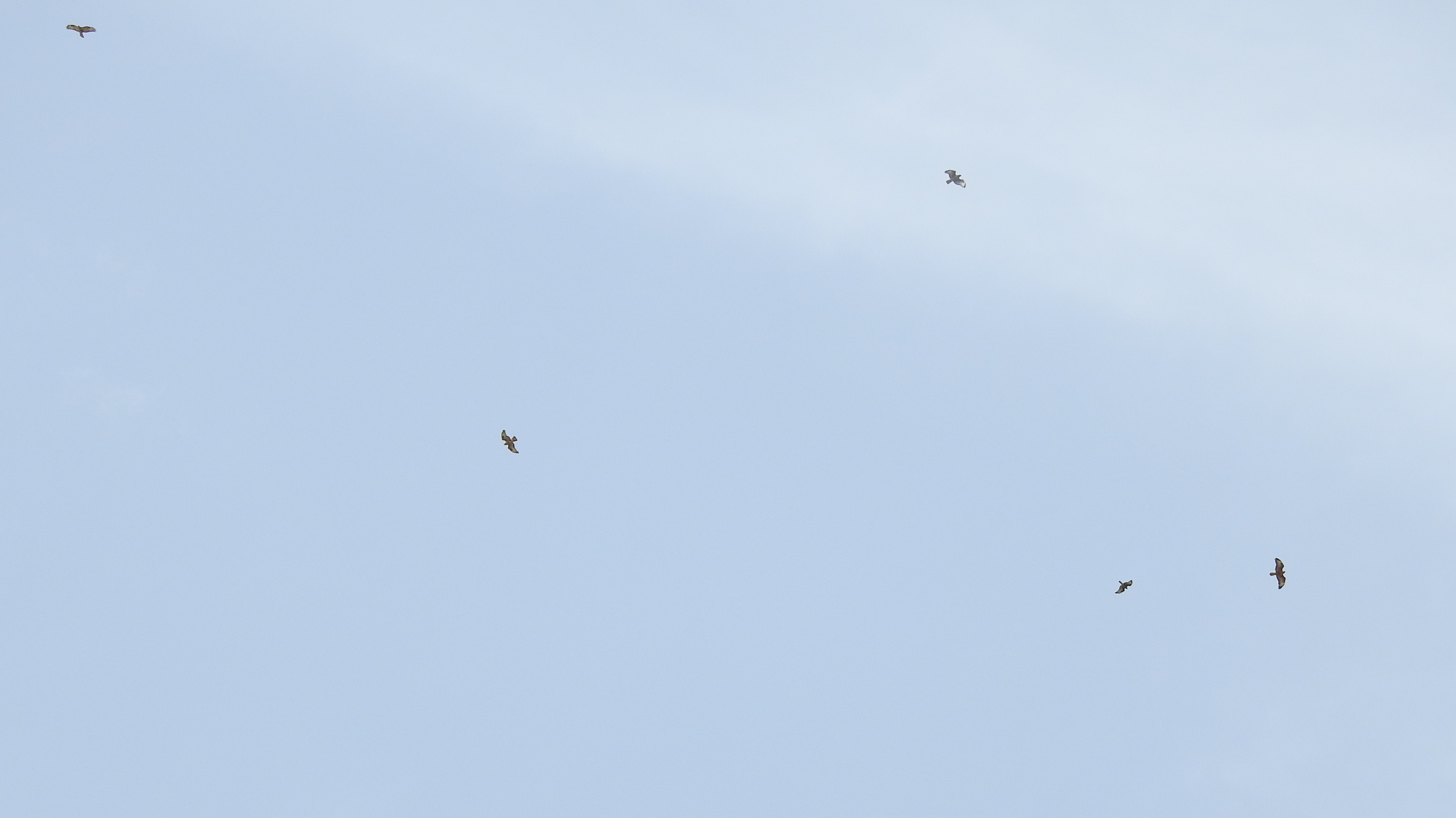
Atop the mountain is a small community which was established rather recently, in 1999. At the northern edge of Harsha is the lookout which is approximately 740 metres above sea level. It provides excellent views of the surrounding countryside and more, depending on weather conditions and visibility. As exciting as that seems, my attention was drawn elsewhere – to the sky! Dozens of birds of prey were zipping along the strong winds, heading northeast as they migrated back to Eurasia.

A bit of raptor migration overhead

For raptors passing through Israel, spring migration usually takes place further east than it does in autumn, which generally made it difficult for me to witness. Now, I was darting my eyes left and right as I spotted dark figures coursing through the cloudy skies, wings tucked as they soared past. I saw some steppe buzzards, honey buzzards, black kites, lesser-spotted eagles, short-toed eagles and at least one steppe eagle.

Posing atop Mount Harsha

After an agreeable look around, we headed back to the cars to drive down to a local spring, Ein Harsha. It was directly downhill on the southern side of the mountain, the winding road leading us to some fruit trees and an open area to park.

The Yablon child-juggling act

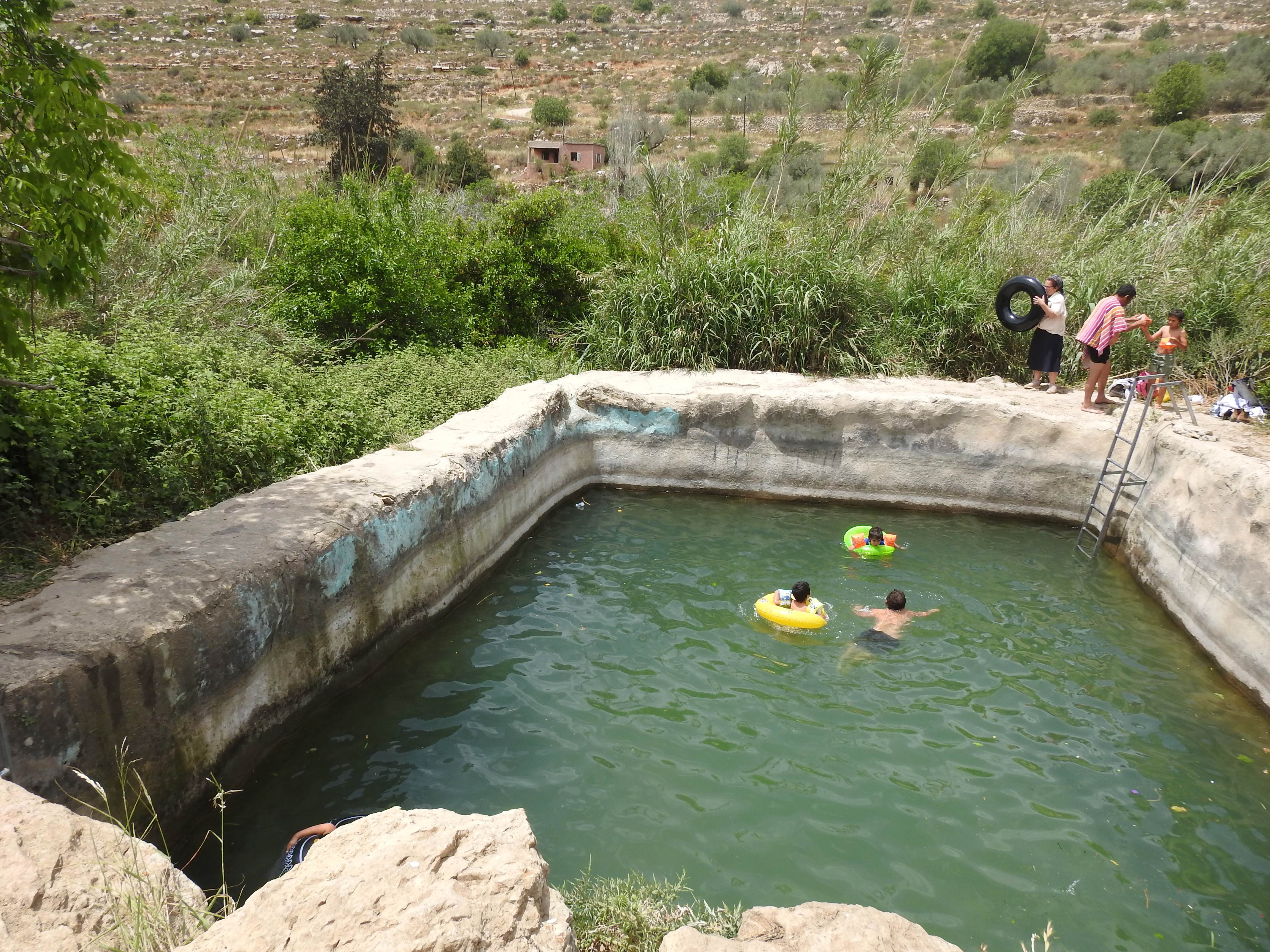
We hadn’t come properly attired for a dip in the spring, nor is that something that ever appeals to me too much, so we had a bit of a gander and enjoyed watching other families splash about gleefully. The spring itself gushes out from the cliffside, obscured from view, and empties into a large concrete basin. Fixed ladders allow swimmers to enter and exit freely, no matter how much water there is at any given moment.

Ein Harsha

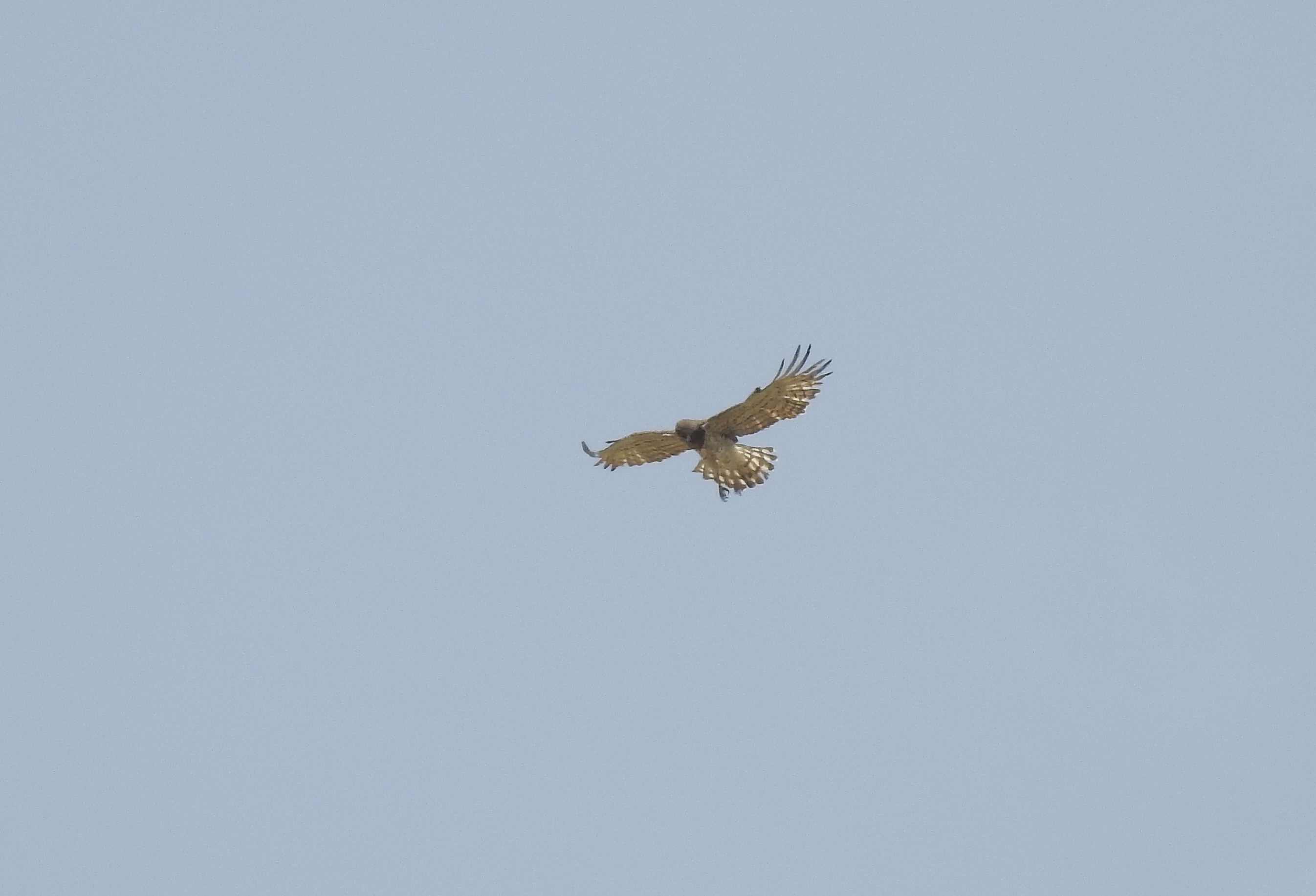
Overlooking the spring, I noticed some interesting construction projects which appeared to have been abandoned. A bit of research on AmudAnan told me that this was a housing project for then-PA leader Arafat’s security forces, funded by the EU and abandoned when the funds ran out, one way or another. As I looked up at these structures, I saw bee-eaters and a hovering short-toed eagle hunting in the distance.

Short-toed eagle looking for prey

We tried a local freshly-picked clementine, which proved to be inedibly sour, and then got back into the cars to drive back to Kerem Re’im for the barbecue. While Ben manned the grill, I cracked open one of our old homebrews that we had made together back in Givat Shmuel under the Arx Meles branding. It was a barleywine brewed back in January of 2019, clocking in at an impressive 12.1% ABV. I can’t say that I particularly enjoyed revisiting the potent ale, but it was a fun experience and I wonder what time will do to the other bottles waiting in storage.

Tasting the old barleywine

The barbecue was delicious, a smorgasbord of grilled meats and side dishes, and we ate to our hearts’ content. Finishing off with a chocolate chip cookie or two, I headed outside with Amir for him to play and noticed that I could see – and photograph – the lookout of Mount Harsha from outside the Yablon residence, nearly 1.6 kilometres away as the crow flies.

Mount Harsha lookout from Kerem Re’im (1.59km away)

When we drove home, we passed by the cliffs under Pedu’el, alongside Nachal Shiloh before it drains down into the coastal flatland and becomes a tributary of the Yarkon. I felt quite inspired by the previous lookout, so much so that we formulated a plan to go back again the following day, this time to the Israel’s Lookout at Pedu’el (which I had already been to two or three times before).

Juvenile Sardinian warbler

The very next day, a calm and relaxing Friday, we got out and drove to Bruchin, one of the nearby towns that is close from a geographical sense, but requires quite a drive to physically get there. Bruchin, as I remember it from my army days, was quite a fledgling community and had quite the small settlement vibe to it. Now, an extensive housing project has transformed Bruchin into a much-desired locale for young, orthodox families. With the housing came civil infrastructure, including the popular Hillel’s cafe, which was our first stop for the day.

Some hollyhock backdropped by Deir Balut

We ordered some food and drink for the three of us, delighting myself with the most fantastic balsamic-glazed caprese croissant. It sang into my gullet, each bite more decadent than the last, begging to enslave me to the unsuspecting artisan who crafted the choice morsels. Anyway, once we finished our brunch, we drove on over to the far end of Pedu’el, overlooking the central coastal region of Israel.

Family selfie at Pedu’el’s lookout

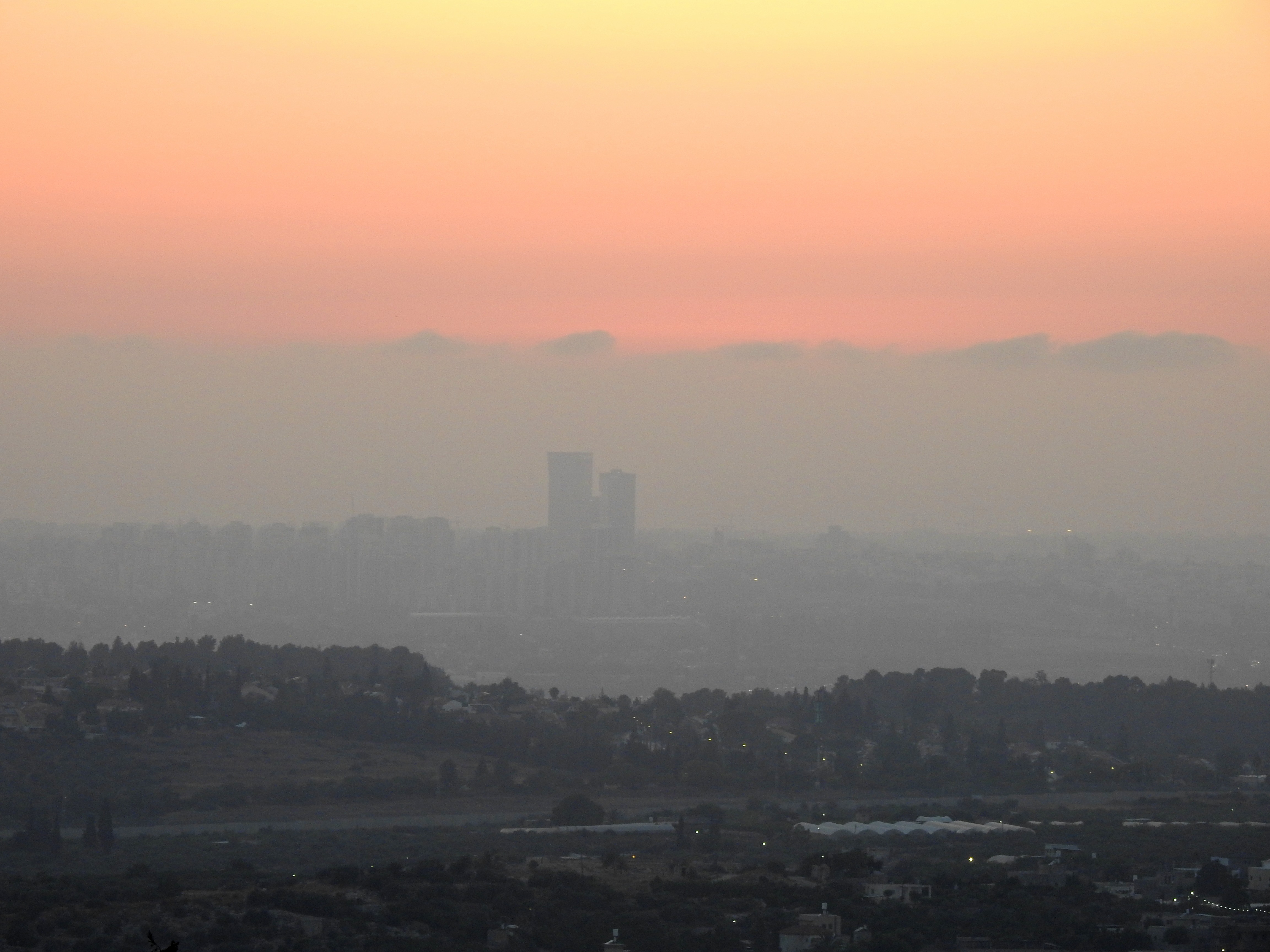
This lookout (approximately 380 metres above sea level) has become more popular in recent years, so much so that there is a paved trail with informational signs and even a coffee cart café just outside the entrance. We joined the throngs of visitors, Friday being a national day off for most of the workforce. I was pleased to see the recent developments, and marveled once again at the lovely view. Although, this time, a new landmark jumped out at me. It was none other than the almost-completed Protea assisted living facility, whose behemoth structure rises up from the residential houses of Elkana. 

Elkana as seen from Pedu’el’s lookout (5.6km away)

While the photo certainly captured the Protea building, unfortunately, the Elkana lookout (to be discussed soon) is mostly out of frame – just the winding path up, and a bit of the gazebo is visible right above the gleaming minaret on the far left side of the picture. But, we enjoyed taking photos and walking about the crusty bedrock on the gentle slope to the precipice.

Bracha and Amir having a closer look

Similar to the day before, there was a bit of migration activity – mostly a few buzzards and short-toed eagles. We sat together on the porch swing, rocking ever so gently, as we chatted and admired the views of Deir Balut and the Tel Aviv skyline. The Samaritan monastery ruins of Deir Qal’a were off to the left of us, just a short hike away, but I had already visited the site before.

Mount Harsha from Pedu’el’s lookout (15.84km away)

As we were heading back, still needing to prepare for Shabbat that evening, I realised that I was looking at a familiar mountaintop way off to the southeast. I steadied my camera’s 83x optical zoom and zeroed in on the three short antennas cresting the rounded peak 15.84 kilometres (nearly 10 miles) away. Sure enough, I had spotted Mount Harsha and, although not visible at this distance, the lookout where we had stood the day before. I was overjoyed, and ecstatically shared my discovery with my family, and then with the Yablons once I transferred the photo to my phone.

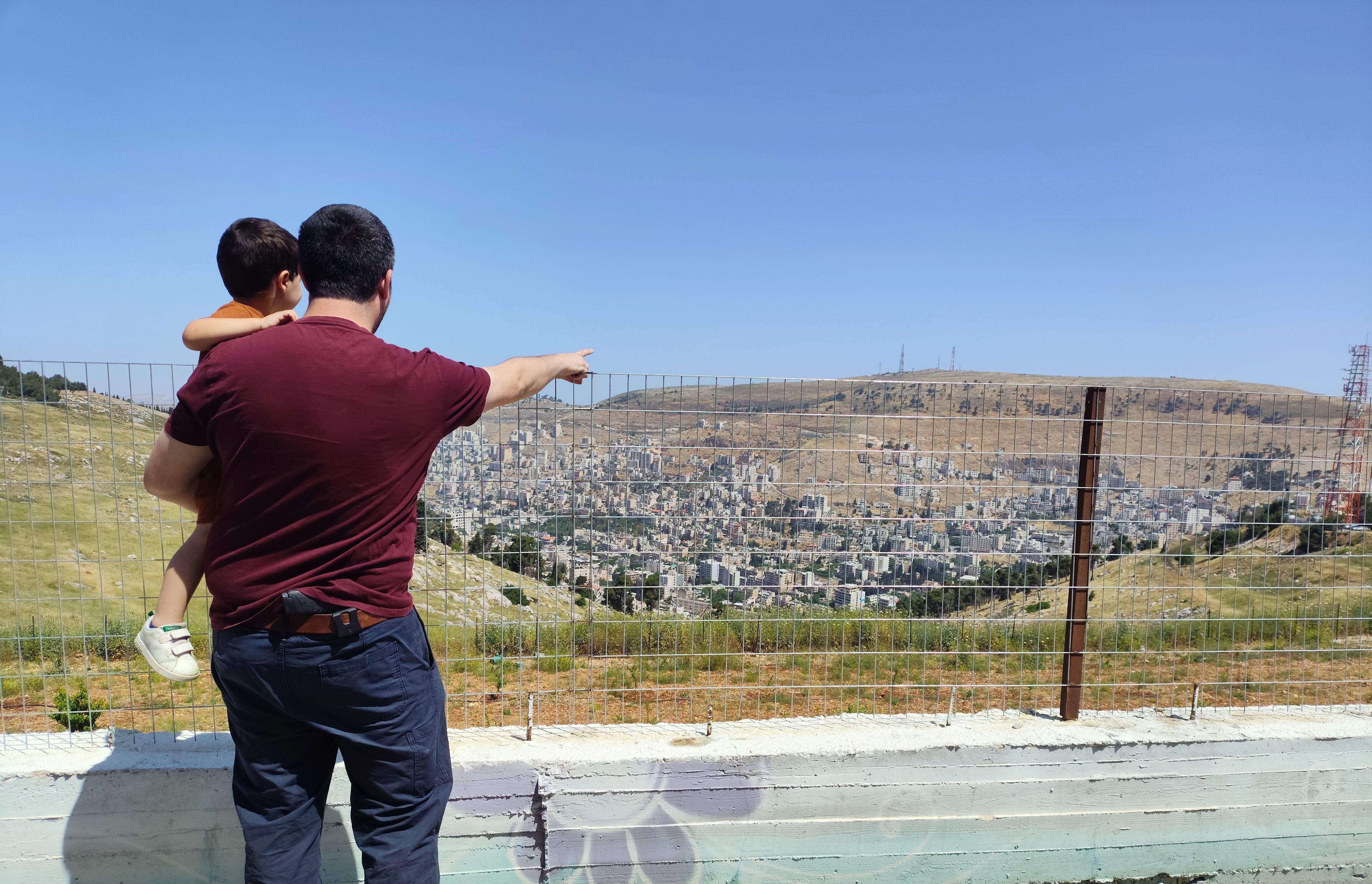
Pointing out Joshua’s Altar on nearby Mount Ebal

Ending on a high note, we headed back home and resumed our daily lives, until the following Friday. Inspired by our own adventures, and eager to see the famed Har Bracha tehina factory, we got back into our car and drove off in the direction of Shechem (Nablus). Just before we reached the city entrance, we turned left and drove up Har Bracha (or Mount Gerizim). We drove through the Samaritan village and then parked outside the factory. Sadly, the workers are all off on Fridays, so we couldn’t have a production tour, but we managed to buy some wholesale tehina from the big boss and relegated ourselves to enjoying the view atop Mount Gerizim. First we looked towards the northwest, where the urban sprawl of Nablus creeps up the opposing mountain, Mount Ebal. Although I have yet to visit Mount Ebal, there is a famous archaeological site at the very top, believed to be Joshua’s altar from the biblical book of Joshua (8:30–35).

Amir looking out over Shechem (Nablus)

Next, we popped over to Mitzpe Yosef, a mighty fine lookout around 800 metres above sea level, boasting views of Shechem and the Samarian landscape beyond. I had visited the IDF outpost adjacent to the lookout several times during my army service, and remembered the place quite fondly. I enjoyed pointing out the various landmarks in Shechem down below, most notably the ancient Tel Balata and Kever Yosef, where the biblical character Joseph was believed to have been buried.

Practicing my photography skills

I don’t think that we can truly count Mitzpe Yosef as one of the lookouts of the Western Shomron, but Elkana’s lookout certainly does fit the geographical qualification. Generally, when we would go out for a walk on Shabbat afternoons when the weather was better, we either walked around the security fence (near where I had affixed my trailcam in recent months) or up to the lookout. Since every time we had journeyed up to said lookout was on Shabbat, I never had the opportunity to take any pictures – particularly troubling when once we saw some breathtaking cloud iridescence, which just begged to be photographed.

Tel Aviv skyline from Elkana’s lookout

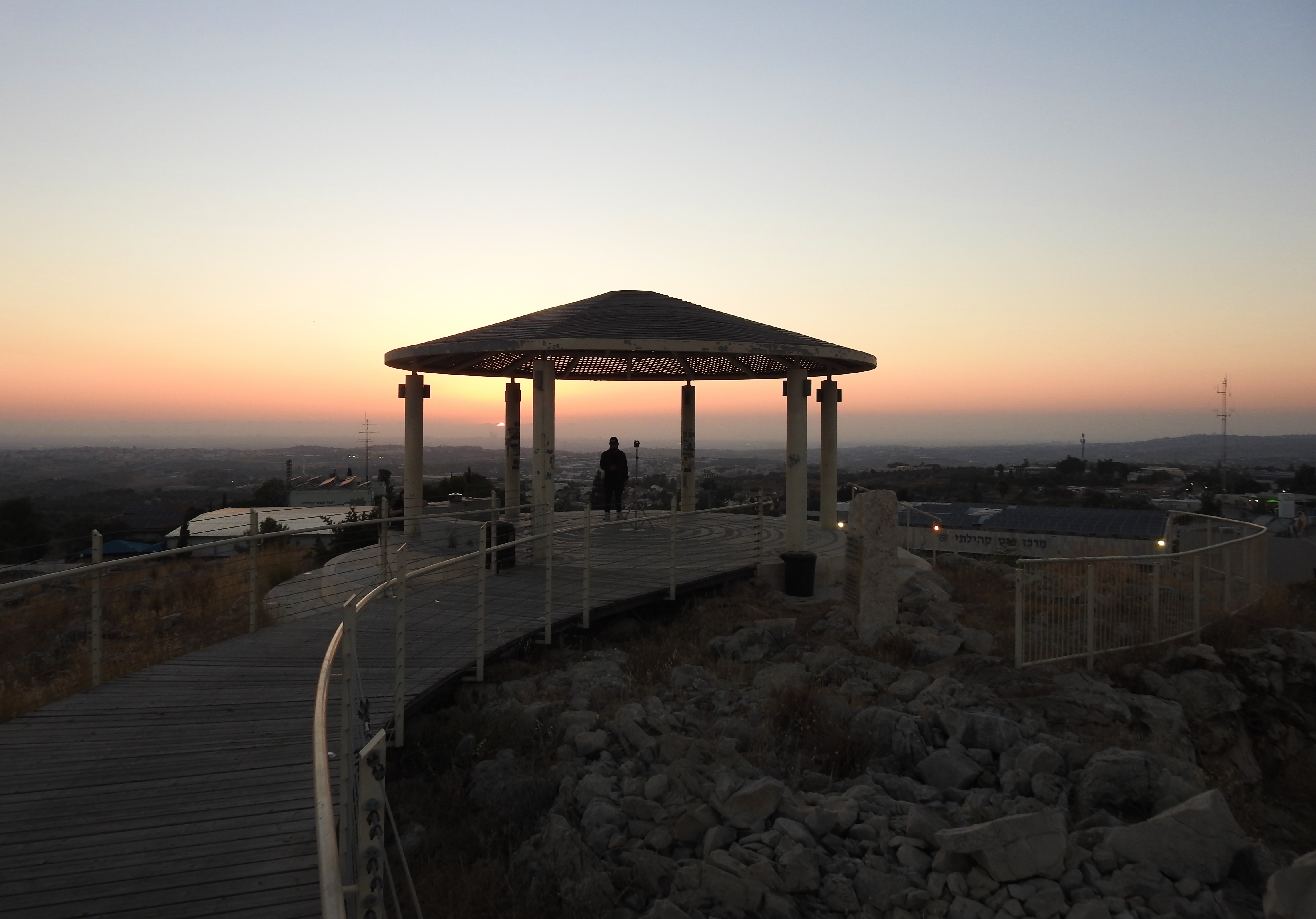
Either way, since we frequent the lookout, I figured it was only fair to include it in this blog post. So, we planned a nice picnic dinner for late afternoon on Thursday, the 12th of June. We greeted the other visitors – including one young man who had a camera set up on a tripod – and settled down for our delicious spaghetti, watching the sun slowly make its way down towards the Levantine coastline.

Layers of pastel beauty

Every now and again I took some photos, hoping to capture a good representation of the nice views we had, albeit being only approximately 290 metres above sea level. From the lookout, one can see as far north as the Hadera power station on the coastline, where sharks frequent. Yet, to the south, I couldn’t quite make out Pedu’el’s lookout, and failed to get any photo of it.

The gazebo lookout at Elkana

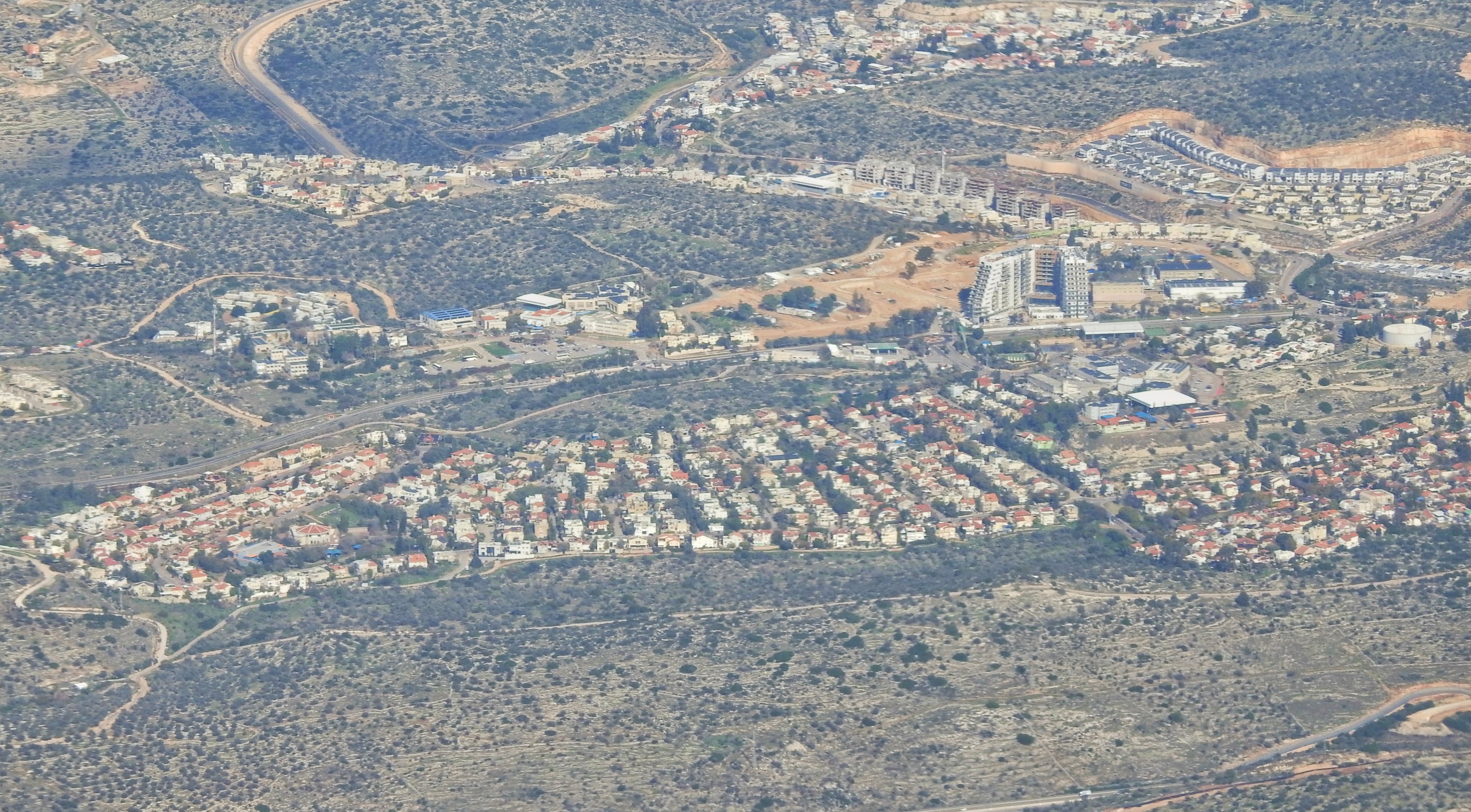
That said, I did manage to take a photo of Elkana when flying over, coming back from our little family vacation to Rome in the beginning of February (trip album HERE). When zoomed in, the lookout’s gazebo can be spotted to the left of the giant water tank on the far right side of the photo. Months later, I’m still quite impressed that I was able to get such a clear photo through the thick glass of the airplane window, and considering the speed of a jet in descent.

Elkana from the airplane window

Back at the lookout, Amir and I climbed about the rocky terrain around the gazebo, and ventured towards the old Jordanian military bunker which used to be manned with Jordanian soldiers, facing the old border to the west. In fact, Elkana itself is built on conquered military ground, the current local council building being an old Jordanian police station and/or army outpost.

Exploring the Jordanian bunker area

When sunset came, I was taken back by the beauty, and pleased that I was finally able to capture the rich, warm oranges that painted the horizon. Snapping away furiously, I tried my very best to capture both the lookout itself, and the magnificent culmination of yet another day.

Sunset at Elkana’s lookout

Later that night, we were woken to chaotic alarms coming from our phones, eventually learning that the IDF had launched a full-fledged military operation against the Iranian regime. I was happy that we were able to have that moment of peace as we basked in the sunset, since the next two weeks were a tumultuous turn of events. From dashes to the local bomb shelter (where we met the young photographer from the lookout) and sleepless nights to the morale-boosting reports of our successes in both military and diplomacy, and then back to the tragic news of Iranian missiles landing in densely-populated cities, causing twenty-eight senseless deaths.

Casel des Plains

In Central Israel, Israel on December 29, 2024 at 2:51 PM

While woefully missing out on bloggable adventures as of late, this past week I was off from work due to the Christmas holiday and did a bit of adventuring on my lonesome. It started with a drive down to Matash Ayalon for some convenient, and guaranteed, quality birding – a known hotspot for wintering duck species, which never fails. I was pleased that I chose this site, as I was able to tick off another new bird species – a reed bunting, an uncommon bird which appeared before me on a bare tree for a good minute or so. But, this post is not about my short birding trip, nor the bit of shopping that I did afterwards, but rather the meagre remains of an old Crusader castle that I happened to visit.

Casel des Plains

Casel des Plains

I had just finished shopping in Holon when I had a look at Google Maps to see what interesting places I had bookmarked for later perusal. Much to my surprise, there was a Crusader castle just a few minutes away in Azor, a site that I had plumb forgotten about in recent years. Truthfully, I had to do a bit of research before writing this post as my knowledge was lacking. Parking just outside of the municipal archaeological park, which contains Casel des Plains’ ruins and more, I made my way up to explore the tiny urban oasis.

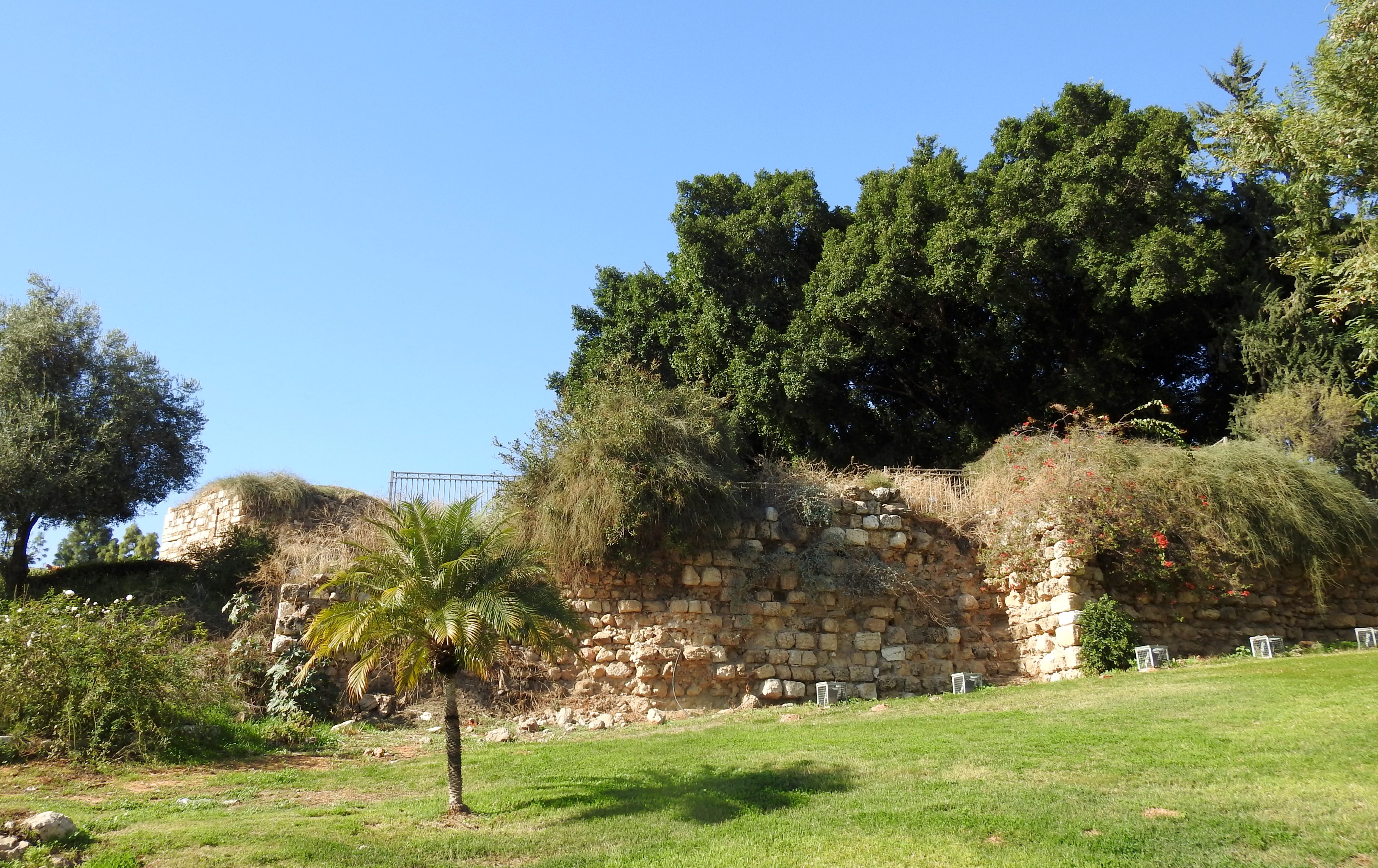
The fortress' enclosure walls

The fortress’ enclosure walls

From my understanding of the site, I passed some overgrown castle enclosure walls as I climbed Tel Azor before laying eyes on the fortress tower. Modern flags waved at me as I sized up the stout structure, taking a few pictures before encircling the remains. Casel des Plains (also referred to as Chateau du Plains and Casellum Balneorum) was built alongside the village of Yazur seemingly sometime during the 1100s by Crusaders, following their success and establishment of the Kingdom of Jerusalem. In 1191, the fortress was destroyed by the Ayyubid emir Saladin and subsequently refortified by the Templars later that year. In 1192, the castle was believed to have been the base of operations for Richard the Lion-hearted, one of the leaders of the Third Crusade, who abandoned the site when Saladin reappeared. Orders were then given by the emir to dismantle the fortress and that was the end of that.

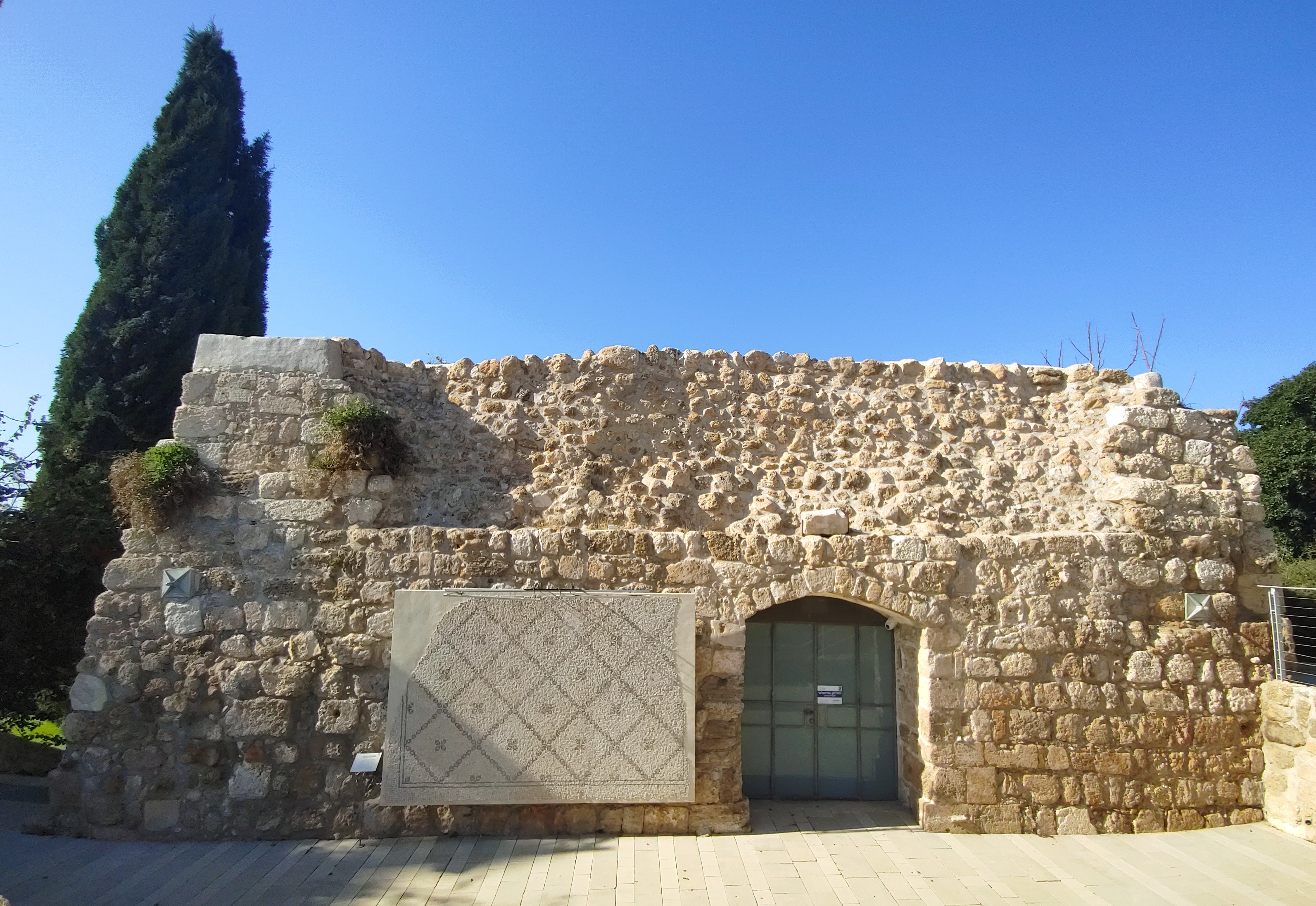
The Ottoman mosque building and displayed Byzantine mosaic

The Ottoman mosque building and displayed Byzantine mosaic

I admired the sturdy masonry and made my way to what looked like another part of the Crusader fortress. Yet, this structure was erected only in the Ottoman period, and served as a mosque. Today, it houses a local archaeological museum, which, unfortunately, is only open on Friday mornings. Eking out all that I could of my impromptu visit, I had a cheeky peek-in through the grated side door, and took a few pictures of the displayed artefacts. I sure would have liked to have had a bit of a closer look, but had to make due with my poor timing.

Inside Azor's archaeology museum

Inside Azor’s archaeology museum

The mosque structure also featured a sizable Byzantine mosaic, which was discovered just a bit further south on Tel Azor during salvage excavations in 2011-2012. The preliminary excavation report, published by the archaeologists on behalf of Israel’s Antiquities Authority, suggests that the mosaic may have belonged to a Byzantine church. Perhaps unconnected, a beautifully constructed church was periodically reported at Azor/Yazor by travelers and clergymen in the centuries following the fall of the Crusader fortress.

The archaeological garden

The archaeological garden

Looping back around, I admired a display of agricultural artefacts that make up the tel’s archaeological garden (created in 2008). A variety of stone presses, used to crush olives and grapes for their valuable juices – some of which were found in the region – posed plainly in a simple sequential layout. I gave them each a moment or two, and headed for Casel des Plains tower’s arched doorway. Inside, looking through the locked barrier, I found cases of soft drinks and construction materials. Surely, a better place could be sourced for so banal an existence.

Looking at the entrance of Casel des Plains

Looking at the entrance of Casel des Plains

While looking more closely, I noticed that there is what looks to be a marble column serving as a doorstep, as well as a drainage system within the wall to the left of the thick doorway. So, unable to enter the tower and explore more, I began my way back down the small tel. I passed a small patio area with a burnt-out coffee cart, which looked like it had been permanently abandoned there following the fiery incident.

We musn't forget the reed bunting

We musn’t forget the reed bunting

Great ficus trees shaded me as I had one last look at the fortress’s enclosure walls, and then I was off. I made a short detour to a highly-recommended hummus joint in Petach Tikva, where I enjoyed a dish of roasted chestnut-topped hummus, and headed homeward-bound.

A Dead Sea Retreat

In Dead Sea, Israel on August 28, 2024 at 2:33 PM

At last, it has finally happened, I have been lower than ever before and have floated in the buoyant waters of the Dead Sea. It is true, I have visited the Dead Sea before, and I have driven or been driven past it more times than I can count, but for one reason or another, I had yet to actually enter the famous salted waters.

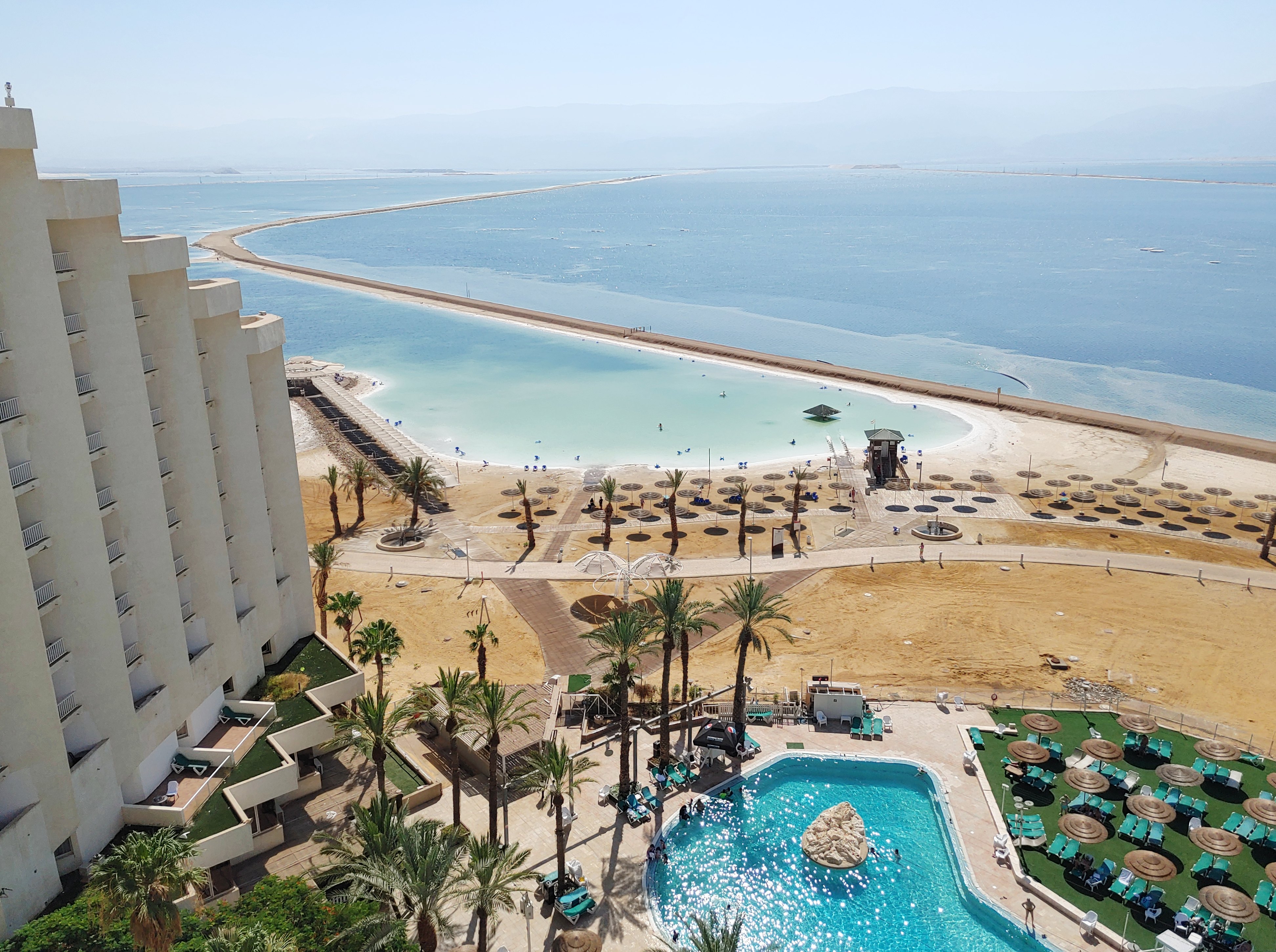
The Leonardo Club hotel

The Leonardo Club hotel

This all happened in the beginning of July when Bracha, Amir and I went for two nights at the Leonardo Club hotel on the banks of the Dead Sea. We hadn’t been on a proper vacation since before Amir was born back in September 2022, and so plans were made, this time incorporating our little toddler. We booked a suite and drove down on the chosen Sunday morning, crossing the tedious urban-patched centre of the country before entering the desert and beginning the descent just past Arad. The windy mountain road took us into the Dead Sea basin, passing through craggy desert cliffs and open expanses of desolate terrain. At last, we could see glimpses of the rich blue-green water down below, awaiting our arrival.

Feasting followed by more feasting

Feasting followed by more feasting

We reached the hotel and parked the car, eager to check in and have lunch. Due to the time of year, this is peak season at resort hotels and the place was packed. We jostled with the crowd of excited vacationers until we comfortably sat down for a tasty meal which included kubbeh, meatballs, roasted vegetables and grilled pita arayes. Suddenly, there was a great roaring sound and several fighter jets (F-15s, from the looks of it) blasted by at a relatively low altitude. Considering that the Dead Sea is currently about 439 metres (or 1440 ft) below sea level, I wonder how their instrument panel reports their flight altitude… At any rate, these intense flybys continued over the next two days, a constant reminder of the terrible war which we had temporarily escaped.

Within the suite

Within the suite

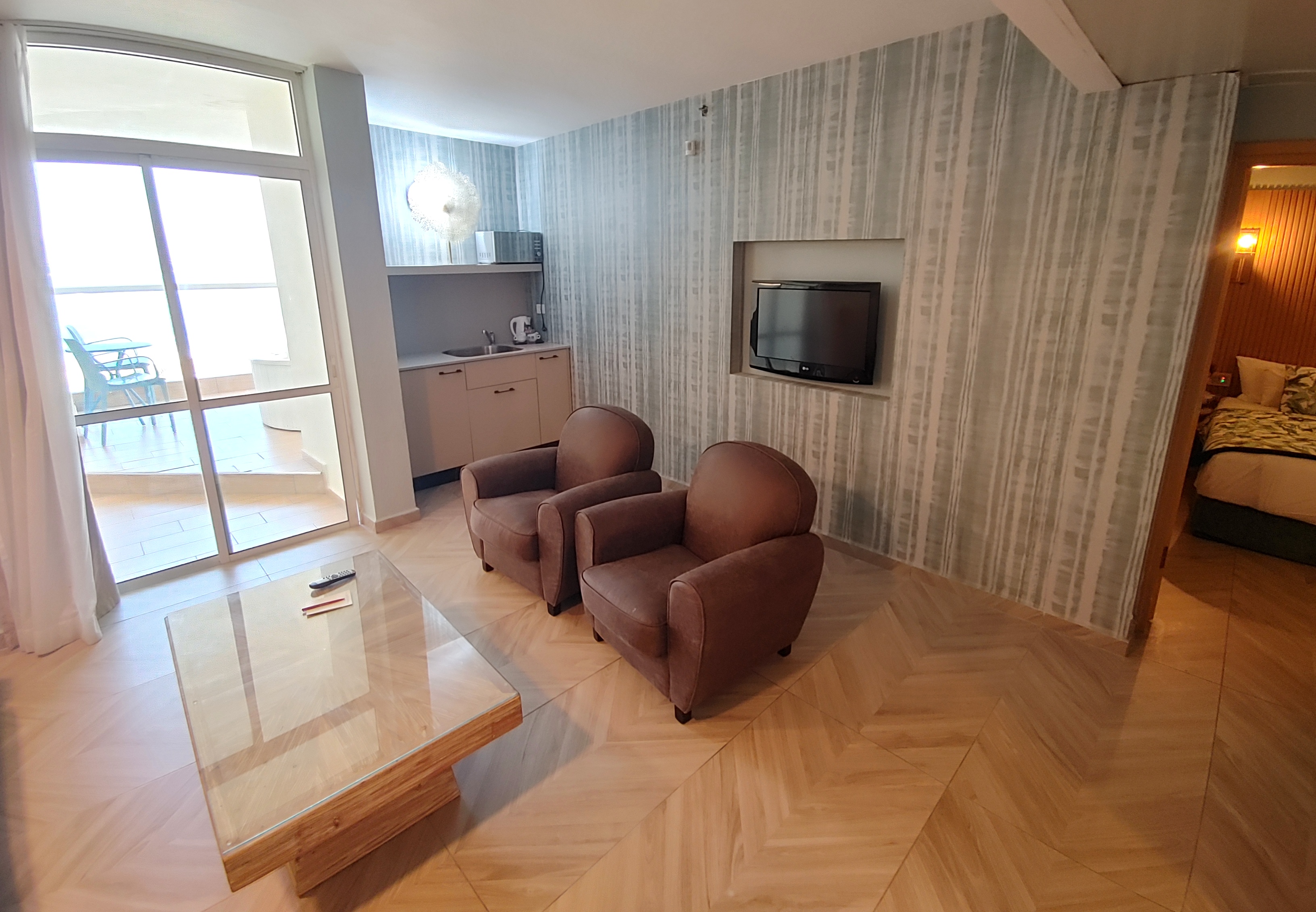
After lunch we checked out our suite on the fourth floor and were overjoyed to see that there was a jacuzzi on the balcony, and a sweet view of the hotel pool, beach and sea below. After a short rest peppered with the notable whistling of the Tristram’s starling, we went down to explore the amenities. Amir found the children’s room where endless hours of toys and games were to be enjoyed, if he had his way. We diverted him to the pool, where the crowd was thickest, and attempted to have a family experience. But, with the loud music and general over-stimulation, the pool idea didn’t pan out as intended. We made our way back inside and then, after a trip or two to the open bar, headed back up to wrap up in fuzzy hotel robes.

Hot but happy

Hot but happy

Dinner was even more delicious than lunch, featuring chicken shawarma, steaks and a colourful variety of desserts. We explored some more after dinner, and headed back up for Amir to have an early bedtime (having largely missed his afternoon nap due to the drive). Bracha and I relaxed and, for reasons unknown, whipped out Ratatouille on my laptop. After a restorative night’s sleep, we headed down for breakfast and some more explorations of the hotel’s amenities. We checked out the solarium on the tenth floor, which was just a blinding maze of white walls and floor tiles, and then went back down to our suite to get ready for the pool. Amir marvelled at the views from the hallway windows, looking down at the bus stops, roads and Dead Sea fault escarpment which wraps jaggedly around the sunken basin.

View from the hotel rooftop

View from the hotel rooftop

The pool was largely the same as the day before, but this time the waterslides were open. Bracha is a lover of slides, watery or dry, and she dashed up the tower to plunge down the slippery trough with a shrill cry of excitement. As I waited to photograph her speedy descent, a flight of four F-16 fighter jets screamed by, never giving me enough warning for a proper photo (well, I had also forgotten my camera at home – quite uncharacteristic of me).

Entering the Dead Sea

Entering the Dead Sea

From the waterslides we migrated to the hotel’s private Dead Sea beach which was thankfully quite empty. Bracha and Amir settled down in beach chairs as I took my first-ever plunge, or, more accurately, bob, into the silky, salty water. My feet sank deeply into the bright white salt that crystallises plentifully below the water’s surface, and I felt the warm embrace of the intensely salinated liquid. About ten paces in, I sat down and naturally bobbed back up, tilting on to my back. For those who have visited before, this may sound unremarkable, but for me the experience was akin to weightlessness.

Documenting my first time in the Dead Sea

Documenting my first time in the Dead Sea

I marvelled at the buoyancy and went back ashore to get my phone to properly document the experience (I even took a video, which can be seen HERE). The bright green-tinted water and copious amount of crystallised salt captivated me, taking me into a world of fantasy. I felt confused by my acquaintance with medieval reports of the Dead Sea, which generally portrayed the natural wonder in the most unhappy way. For reference, Ludolph von Suchem toured the Holy Land in 1350 and described the Dead Sea as such: “it has a most unbearable and evil stench, wherefore when the wind blows it poisons all the country round about.”

A chunk of natural salt from the seabed

A chunk of natural salt from the seabed

Sure, there are no longer chunks of jet black bitumen floating about and the water has become a bit processed, if saltier with recent evaporations, but the description also seems like a personal attack. I certainly had quite the opposite impression of the fascinating salt lake. With these thoughts in mind, I bobbed about some more and then paddled my way to shore to rejoin my patient family. We made our way back to the suite and changed for lunch, a feast of grilled chicken, french fries, meatballs and more.

Making the most of the balcony

Making the most of the balcony

Amir had a short nap while Bracha and I resumed our watching of Ratatouille, and then we changed once again and went down to the amenities. I had a quick visit to the hotel’s spa where I sampled the jacuzzi, “Dead Sea pool” and dry sauna – building up the need to go back into the cooling pool. This time, with the crowds thinned, Amir was more agreeable and we all enjoyed the pool together. We visited the open bar and had some of the cake set out daily, and before long we were headed back to our suite for some rest and a change for dinner.

Sunset at the resort

Sunset at the resort

Dinner was exciting, partly due to the spread of carved meat, corn empanadas, burgers and more, and partly due to the hushed rumours of a small mouse having been spotted near the desserts. No doubt this mouse was the little chef masterminding all of the delicious food that we had been enjoying, nothing else fits the Pixar-influenced narrative. By dinner’s end, the sun was already beginning its descent, painting the sea and arid cliffs beautiful pastel shades of pink. We gathered again in the suite for a calming and unwinding family soak in the balcony jacuzzi, with a fighter jet-peppered sunset. Amir got a wee bit scared of the jets, the ones inside the big tub, but overall it was a nice experience. Bedtime came and we finished Ratatouille in due time, cozying up for our last night at the resort hotel.

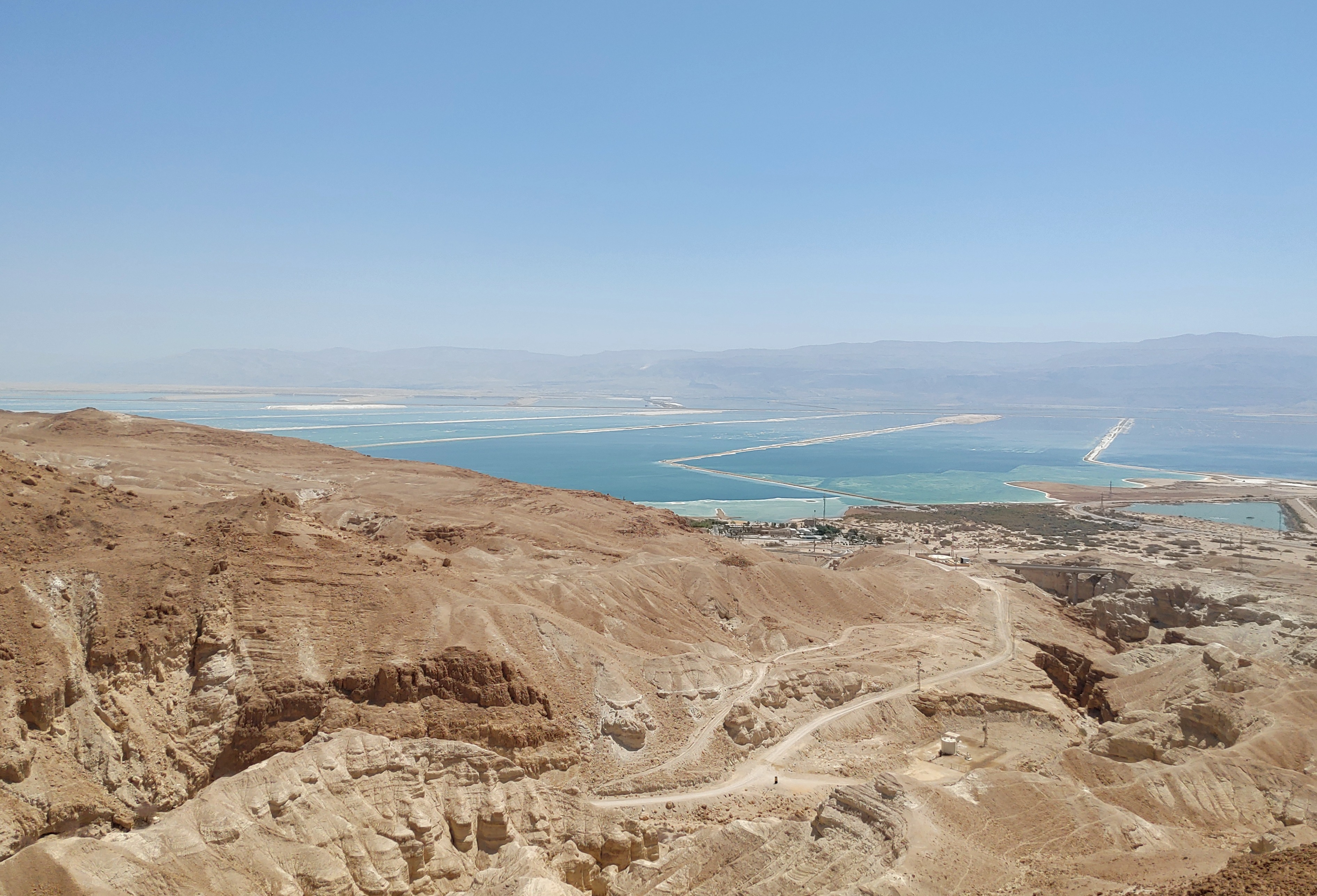
The desert mountains and the Dead Sea yonder

The desert mountains and the Dead Sea yonder

The next morning, after coffee and a spot of breakfast, we gathered up our belongings and made the transition to check-out. We packed up our car and began the drive to the nearby Zohar fortress, a medieval fort built on an island outcropping within a seasonal streambed. The drive became a bit too off-road and perilous for some, so I mentally bookmarked the site to be revisited at a later date. For now, a view from above would suffice. Thankfully, two lookouts have been properly designated along the cliff road that exits the Dead Sea basin, and so we were able to get nice views of the fortress below and the general surrounding area.

Wrapping up a lovely vacation

Wrapping up a lovely vacation

For being just two hours away by car, this vacation felt, in a sense, like we were transported to another world. It was enjoyable for what it was and felt like a perfect boost in our busy lives, even busier shortly thereafter with our recent move to the small town of Elkana at the western edge of the Shomron.

Yodfat Monkey Park

In Galilee, Israel on August 7, 2024 at 1:46 PM

A few months ago, at the end of April, we went up north to celebrate the last day of Pesach (Passover) with my parents, the owners and operators of Aliyah Lift Shipping – helping fellow olim (immigrants) make their move to Israel. Friends Adam and Vered Ota joined us for both the drive and the holiday, a cause for celebration in its own right. To break up the 2+ hour drive up to Ma’alot, and for the enjoyment of us all, we had a stop at the recommended Yodfat Monkey Park.

Squirrel monkey

Squirrel monkey

I had heard about the site from both my sister Esther and a mate at work, and felt particularly keen to see how young Amir would react. We packed up our luggage for the holiday, scooped up the Otas and made our way up north along the Mediterranean coastline. It was a nice drive into the hinterland and through the Lower Galilee. Before long we turned into Yodfat, a moshav named after an ancient Jewish town whose destruction by the Romans was well-documented by the venerable historian Josephus.

Entering the Yodfat Monkey Forest

Entering the Yodfat Monkey Forest

Somehow, despite being an important archaeological site, the ruins of ancient Yodfat have escaped me, an oversight which will one day be rectified. But, for now, our destination was a playful monkey park with oodles of other furred and feathered creatures to gawk at. We joined the multitude of cars parked outside along the access road and walked into the park, where I bumped into an old acquaintance who served with me in the army a decade or so ago.

Capuchin monkey having a snack

Capuchin monkey having a snack

Gaining entrance, we were stripped of our bags and of any and all food products – lest the monkeys rob us blind. We were duly warned not to feed the monkeys and not to touch their soft brown fur, but photography was allowed. It wasn’t long before we saw our first small squirrel monkey speeding along the thick trees, the first of many monkeys to be seen that day.

Captivated by the water jet

Captivated by the water jet

These monkeys were the foundation of the park, a 30-dunam natural oak forest to which squirrel monkeys were first introduced in 1976. This was added to the preexisting small zoo which had been created for the children of Yodfat. Then, in 1990, the park became a wildlife sanctuary with a belief that the animals should be treated as well as one would people who sought refuge.  

Admiring the bare-eyed corella

Admiring the bare-eyed corella

As we walked, chickens and peacocks meandered around alongside us, a recurring theme throughout the entire park, their distinct calls titillating Amir and encouraging him to emulate them. After seeing some farm animals and a mara rodent or two, we headed for the enclosure where the squirrel monkeys can be fed by paying visitors. We purchased a small container of mealworms and situated ourselves so that the hungry squirrel monkeys could climb up onto us for a quick snack. One bold monkey scampered up Amir and I and helped himself to a few writhing mealworms (see the short video HERE). Another monkey finished off the rest of them from Bracha’s patient, out-stretched hand.

Adam and Vered

Adam and Vered

Walking along the park’s trail, we gazed upon mountain goats, coatis and what I believe was a llama. Some of the animals are in enclosures while some roam the park freely, mingling with the human visitors. We took a short break at the small café and Bracha bought Amir a plush monkey toy as a souvenir – this monkey is now named Monkey and spends most of its days behind bars in Amir’s cozy crib. With that, we continued along, passing parrots and parakeets, ducks and swans, and a number of other feathered friends. Adam and Vered played with the encaged cockatoos whilst we let Amir admire the black swans, an Australian species – not unlike Adam.

So many birds to see

So many birds to see

At last, we arrived at the enclosures where the other monkey species are kept. We entered a chain-link tunnel that passes through the capuchin monkey yard and took photos of one another. There were some lemurs and some rabbits of sorts and then the trail came to an end, a gate leading us back out into the real world. We said goodbye to our primate friends and reclaimed our stroller and bags. There was a nice picnic table that was available, giving us a pleasant place to enjoy some lunch before getting back into the car for the rest of the drive to Ma’alot.

Two of my favourite primates

Two of my favourite primates

Overall, it was an enjoyable experience and certainly worthwhile as an activity to do with children. I think, considering my deep appreciation of nature, it will always feel hard to fully enjoy parks where animals are in enclosures – parks and zoos alike. There is certainly an argument to make for wildlife conservation, and some rescued animals (to say nothing of those born into captivity) need a safe place to live without being physically able to return to the wild. But, a cage is still a cage, and I will forever have a higher appreciation for being able to see an animal free in its natural habitat.

Twitching Eilat and the Arava: Day II

In Eilat, Israel, Negev on July 29, 2024 at 9:26 AM

Following the resounding success of day one, my birding adventure to Eilat and the Arava resumed early in the morning at the Melio Hotel. I packed up my belongings, checked out and headed over to the crown jewel of Eilat birding, the International Birding and Research Center of Eilat. I had written about the site when I first visited back in early 2019 accompanied by my friend Adam Ota (see HERE), and I was eager to return.

Little green bee-eater

Little green bee-eater

The first few minutes were exciting, with Noam Weiss (the director) spotting a crested honey buzzard circling over the Jordanian border. Then things got a little slower, and none of the targeted species seemed to be around. I explored the newer sections of the park, and saw a few nice birds, but nothing to really write home about.

Morning at the IBRCE

Morning at the IBRCE

Slightly dejected, I decided not to waste too much time and headed for the next hotspot – a few football (formerly soccer) pitches not far away. I was hoping to find a pair of lesser white-fronted geese, which were would-be lifers, who were hanging around in the grass with some local Egyptian geese. Much to my added dismay, that morning happened to be when there was maintenance work being done on the fields and no geese were to be found.

Flamingos in Eilat

Flamingos in Eilat

Slumping about, I made an accidental turn and found myself in a scrappy bit of land that was being used to discard construction material. To my delight, there was a little wagtail with a nice yellow head darting about in the rubble – a citrine wagtail, another expected lifer. My spirits soared as I watched the graceful bird, and then resumed my tour of the fields, finding a handful of grazing water and red-throated pipits

Preening flamingos

Preening flamingos

Driving around the area between the canal and the salt ponds, I spotted an osprey being mobbed by some Indian house crows. Thankfully I was able to pull over to take some pictures as it perched for a minute on a street light. To date, that was my closest encounter with an osprey, and my best picture as well.

A perched osprey

A perched osprey

When I was done exploring that area, I drove over to Omer’s sandwich restaurant to pick up a nice schnitzel baguette for lunch, to be eaten at the shorebird lookout at KM 20’s salt ponds. I sat in the car and watched the scores of flamingos, waders, ducks and terns that congregated at the famous site. There was nothing of particular interest to me there, but it was nice to revisit a familiar site. So, when I was done with my lunch, I made my way to Kibbutz Samar where another special bird or two were to be expected.

A picturesque blackstart

A picturesque blackstart

Back in 2019, Adam and I attempted to find one of the local black scrub robins that lives in the kibbutz, but with no success at all. We had zeroed in on their famous haunt, the kibbutz “jungle” but nothing remotely black, scrubby or robin-like was to be found that day. I was determined to search again, this time armed with a few additional tips from fellow birders.

Spotting the imperial eagle off in the distance

Spotting the imperial eagle off in the distance

Finding myself back at the so-called jungle, a small copse of trees and shrubs with a shaded clearing inside, I begin with a search of the perimeter. I was distracted by other birds fluttering about here and there, including Spanish sparrows, a redstart and some blackstarts. Suddenly, I saw a large bird of prey soaring against the mountain backdrop to the east, and I recalled the reports of an adult imperial eagle wintering in the vicinity of Samar. I snapped off a couple of photos and confirmed that it was, indeed, the imperial eagle that I had hoped to see. Despite birding on and off for nearly ten years, I hadn’t much luck with imperial eagles (and Adam neither). All of my sightings were of individuals either black specks streaming across the sky in active migration or dark lumps perched on distant power pylons.

Imperial eagle inbound

Imperial eagle inbound

This beautiful specimen was soaring gracefully through the clear desert air, gliding its way towards me. When the eagle finally disappeared, I refocused my attention on the elusive black scrub robins and continued my perimeter scan. There was a brief moment where something that looked like the tail of one, distinct in size and markings, popped into a bush beside me – but it was far too quick to process properly. I looped around and then entered the “jungle”, ready to be pleasantly surprised. Not quite what I was hoping for, there was a man napping on a mattress inside the cave-like clearing, probably scaring off all the birds.

The black scrub robin posing nicely for me

The black scrub robin posing nicely for me

I made another loop of the copse and, when I re-entered, the man was gone. In his place was a black scrub robin, hiding behind a plastic chair. I froze, and slowly reached for my camera. The scrub robin took a hesitant hop towards me, and then disappeared behind the mattress. I gasped, and sidestepped, readying my camera for the moment when the bird would reappear. The drama was quite unnecessary because, once I relaxed, the black scrub robin bounced around happily, appearing, disappearing and reappearing again on the mangrove-like branches.

Lovely layers looking to the east

Lovely layers looking to the east

I was elated, this was yet another lifer – and a hard-earned one, at that. With that positive energy coursing through my veins, I decided it was time to have another go at the challenging birding at Nachal Hemda (KM 94). Driving back up Road 90, I pulled over at exactly the same spot as the day prior, and got out with determination and optimism. I scanned the scrubby streambed for that desirous black dot, and with that failing, I focused on other potential sightings.

Dorcas gazelle at Nachal Hemda

Dorcas gazelle at Nachal Hemda

A dorcas gazelle surprised me as I began to traverse the streambed, netting a semi-decent shot of the timid antelope. This visit, I changed tactics and walked up until KM 95 before looping around and following the streambed to the west. There wasn’t much to see at KM 95, but walking back down on the western side of the road, I suddenly felt things come into play. I could see what appeared to be a black dot back down towards the KM 94 marker, but about 100 metres to the west.

A black dot of a rare basalt wheatear

A black dot of a rare basalt wheatear

It was an eager and fast hike as I homed in on what I hoped was the rare basalt wheatear. If that wasn’t enough, a greater hoopoe-lark appeared out of nowhere in front of me, pacing along the pebble-covered land. I was torn and excited and took pictures with one eye cast towards the basalt wheatear. The greater hoopoe-lark was a lifer, and considered to be a “sensitive species” on eBird, so that there are no public sightings on the platform.

Greater hoopoe-lark as the sun sets

Greater hoopoe-lark as the sun sets

The hoopoe-lark zipped off and I resumed my hike, tracking down the basalt wheatear. Unfortunately, as I got closer, it got further and eventually I had to give up. I didn’t watch to harass the poor bird, being rare and all, and the sun was beginning to set. I still had quite the drive to get back home, and a short hike to get back to the car parked on the other side of the highway.

Mother and child

Mother and child

As I was getting to the car, I noticed a few dorcas gazelles on an arid strip of land to the west. I noticed quite symbolically that there was a mother and child present in the small herd. They looked out at me as I took their picture, perhaps representing my own wife and child who were figuratively looking out at me, expectant of my return that evening. With that happy thought, I revved up the dependable 1.8L VTEC engine and launched myself up onto the long black stretch of asphalt, heading nowhere but home.

Twitching Eilat and the Arava: Day I

In Eilat, Israel, Negev on July 23, 2024 at 8:12 AM

Turning back the clock to October 7th of last year, the world as we know it took a tragic and heinous detour. I shan’t dwell on the much-discussed events of that terrible day, but the very next day I was called up for emergency military reserve duty – myself and hundreds of thousands of reserve soldiers like me. I spent the following two months or so in a few sections of the country, bouncing back and forth from my home base near Afula to my first station in Be’er Sheva, and my second station at the nearby Tel HaShomer base complex. Alas, during my service, I was minorly injured with a bulging disc in my lower back and was subsequently released from duty. I spent two weeks recuperating, and then returned to my job – certainly an easier transition from military to civilian life than many others have.

White-crowned wheatear

White-crowned wheatear

It was while I was stationed down south that I had a strong urge to have a vacation, to escape for a spell and ideally overseas. That didn’t pan out, but, knowing that I could use a breather, Bracha came up with an attractive alternative. There had been an influx of several interesting bird species further down south, mostly in the Arava and Eilat areas. This would be the perfect opportunity to combine a breath of fresh air with some twitching and quality birding, something that has been hard to come by in the last year or two. In birding nomenclature, the term “twitching” is used to describe one’s pursuit of specific, generally rare, bird species.

Dawn in the Uvda Valley

Dawn in the Uvda Valley

Once the dates were set, I began to do my research – this involved scouring eBird’s checklists and hotspots, reading up on fellow birders’ reports on social media and keeping close tabs on the location updates of some high value targets. I mapped out a series of sites that I could visit over a two day period, optioning in alternate travel plans that would be determined or tweaked in real time. I had a flexible itinerary and a few side missions to attend to in Eilat, including picking up a new laptop that I was ordering (may my trusty old one rest in peace).

My first Asiatic wild asses

My first Asiatic wild asses

With the preamble finished, the adventure began in the wee hours of the morning (approximately 2:45 AM) with a 300-kilometre drive down south to the Uvda Valley, my first destination hotspot. The drive was enjoyable, inky black as I entered the desert regions, and bitterly cold. First light was just cracking through as I turned into the Uvda Valley, and I pulled over on the side of the quiet desert road. The cold penetrated through my layers of clothing as I waited patiently for the light to strengthen. I could make out a few Asiatic wild asses not far off, my very first sighting of this horse species, as well as a few dorcas gazelles. At last, with adequate lighting and stiff fingers, I was able to scan my surroundings and photograph freely.

My first pied wheatear

My first pied wheatear

I took some photos of several species of wheatears, some of them being “lifers” – the term used by birders to indicate the first time seeing a specific species of bird. Wandering about and admiring the crisp desert scenery, I was joined by a handful of other birders who similarly wandered about alongside the road. As I looped back around towards where I had parked the car, I saw an irregular wheatear fly by and noticed that the other birders had taken a keen interest in it. Sure enough, it was a rare pied wheatear – one of the four highly sought-after rarities to grace the region over the winter months.

Exploring the drier parts of Uvda Valley

Exploring the drier parts of Uvda Valley

Having chatted a bit with my fellow bird enthusiasts, I took off again to roam about and find more target species. I walked along Nachal Hayyun’s dry streambed and kept my eyes peeled for more interesting species – not only birds. Unfortunately, despite being a hotspot for Arabian wolves, I didn’t merit in seeing any that day. I did, however, see a number of other lifers, which filled me with a deep feeling of joy. As I was watching a few hooded wheatears flutter about with some of their taxonomic relatives, I suddenly noticed a small flock of small brown birds feeding in a swath of grass to my left.

Record shot of my first Temminck's lark

Record shot of my first Temminck’s lark

I was seized with excitement as I documented yet another lifer that morning, this time the beautiful, if demure, Temminck’s lark. Hoping to get a better angle, where the morning sun would not backlight the birds, I made a wide circle and then they all flew away. I was saddened, this too is true, but happy that I happened to notice them in the first place. Another high-profile rarity that had been spotted earlier in the month along the streambed was the Menetries’s warbler, but I was unable to find it no matter how hard I tried.

Nachal Hemda (or KM 94)

Nachal Hemda (or KM 94)

Not wanting to leave this vibrant valley paradise, but knowing that there was much more to be seen, I urged myself back into the car and headed for Road 90. I was headed for another birding hotspot, the roadside streambed of Nachal Hemda, known as KM 94 – being at the 94th kilometre marker from the start/end of the road at Eilat. Since it wasn’t the weekend, and the site being an active IDF firing zone, my birding activity was limited to the vicinity of the paved highway.

Open desert expanses at Nachal Hemda

Open desert expanses at Nachal Hemda

I pulled over near the kilometre marker and parked on the hard, dry soil, spotting a single dorcas gazelle which had the indecency of dashing off before I could get a decent photo. Scanning the streambed’s low shrubbery, I was predominantly in search of one prominent species – the globally rare basalt wheatear. While currently floating between the status of species or subspecies, the basalt wheatear is both very rare and very cryptic. The main population is believed to live in the basalt desert of northern Jordan, with individuals making their way down to the Arava every couple of years.

Terrible shot of a desert wheatear

Terrible shot of a desert wheatear

Overall, wheatears are relatively easy birds to spot – they perch conspicuously on rocks or bushes and generally stick to the same area for enough time to get acquainted. Basalt wheatears in the Arava are even easier, their jet black plumage easily noticed in the drab, yellow-brown environs. However, no matter where I looked, there was no tell-tale black dot to be seen – in fact, there were hardly any birds at all. My morale dipped a bit as I failed to find other target species, and the hot desert sun was making my birding a bit uncomfortable. I wasn’t entirely disappointed because there was a small flock of spotted sandgrouse and yet another lifer, desert wheatears, so who was I to complain. I gathered up my hopes and dreams and headed back to the car, ready to try another of my pre-planned hotspots.

Nachal Ketura

Nachal Ketura

I drove back down Road 90 until I reached Nachal Ketura where I pulled over and parked along the highway. This time, I was in a construction site of sorts, but I had to leave the car and focus on the mission at hand. I needed to find my next target lifer, the rare Menetries’s warbler, which I had failed to find earlier that morning at Uvda Valley. Thankfully, throughout the trip I was able to receive tips and updates from fellow birders, some going so far as to telling me exactly where to look. I hiked a short distance to the dry streambed, dotted with shrubs and acacia trees, and began my searches.

Nice little green bee-eater pausing for a picture

Nice little green bee-eater pausing for a picture

In stark contrast to Nachal Hemda and its overall lack of avian fauna, Nachal Ketura was brimming with bird life. Rock martins and little green bee-eaters dipped to and fro overhead while blackstarts and bluethroats flitted anxiously in the bushes. I stalked around the small trees, one hand clutching my binoculars and one grasping my ever-ready camera, waiting for a warbler to come into view. It was the calls that gave it away, sounds that I had listened to in preparation for this important moment. I zeroed in on a small grouping of small trees and stood stock still, waiting for the grand reveal. My patience paid off and a graceful warbler fluttered into view. It dropped down to the ground and strutted about, looking like a Sardinian warbler but acting like a bluethroat. I watched it hungrily with my binoculars, looking for all of the right identification marks to confirm its ID, and thus, my photo op was missed. It was the only rare lifer of my trip that I failed to get a photo of.

Enjoying a milkshake at Yotvata

Enjoying a milkshake at Yotvata

Excited that my excursion was off to such a great start, I decided that it was time to cool down in celebration with a short stop at the renowned Yotvata visitor centre. Yotvata is famous for their milk and dairy production and the visitor centre boasts sweet dairy treats from chocolate milk to ice cream. I helped myself to a milkshake, a delicious beverage which is sorely missing in my day-to-day life, and had a look around the touristic complex.

The peaceful lagoon

The peaceful lagoon

It was finally time to head down to Eilat where even more potential lifers awaited, one patiently bobbing about in a small lagoon just off North Beach. This was the rarest of the rare birds that winter, a first for Israel and an overall humdinger of a sighting. I speak of the Pacific diver, a bird that predominantly lives in the northern Pacific, and of which one has made its way all the way to Eilat. Another easy tick for most twitchers, the diver spent a month or two in the lagoon area, swimming about leisurely and snacking on the small fish that it caught.

The exciting moment captured in the moment

The exciting moment captured in the moment

Sure enough, it was an easy target and I found the Pacific diver bobbing sleepily in the gentle current, the late afternoon sun gleaming through its half-closed eyelids. There was a great feeling of ecstasy as I watched the graceful bird paddle its way around the little lagoon, the bustling resort town setting providing near comedic subtext.

Israel's first Pacific diver

Israel’s first Pacific diver

I wondered how many people around me, and surely all those looking out the hotel windows nearby, had any idea that this bird made its way all the way from Alaska, or some equally remote region of the north Pacific. How many of them knew that this was the very first of its species to have been spotted here in Israel. Surely some people noticed the attention it was getting, and I later saw a short clip that was filmed for national TV (and this delightful video on YouTube).

Looking over at Jordanian Aqaba

Looking over at Jordanian Aqaba

I walked on over to North Beach, just a few minutes away, and looked for some interesting birds and mammalian species. I saw some terns, gulls and some commercial airplanes, but nothing truly captivated my attention – certainly no Houthi cruise missiles. With the sun slowly setting, I made my way back to the car and turned my focus to the other aspects of my trip. I picked up my new laptop, which was a great purchase, and then off for some dinner, light shopping and an early night’s sleep. My initial dinner plans hadn’t been researched well enough, so I ended up just having a nice falafel around the corner from the Melio Hotel, an inexpensive hotel which served my needs perfectly. After an action-packed day, with over 18,000 steps recorded by my smartwatch, a nice warm shower and a good night’s sleep was the perfect ending.

Te’omim Cave

In Israel on April 14, 2024 at 8:21 AM

Resuming in the delayed narration of my life, or perhaps, more accurately, some adventurous highlights therein, the saga picks up on October 3rd – a mere four days before life took a sudden and tragic detour. It was an unassuming Tuesday, one that I had taken off from work to go on a family outing during the holiday of Sukkot, and our plans were quite simple. Since beginning my research on the usage of caves in the medieval periods, one particularly accessible cave – the Te’omim Cave – remained at the forefront of my mind, thoughts and plans always lingering, waiting for the perfect opportunity to see the cave with my very own eyes.

Enjoying a family outing

Enjoying a family outing

At last, the opportunity presented itself and we planned a family outing to go hike to the cave, to see what was there to be seen. Timing was quite essential, as the cave is physically fenced off during the winter months to keep the local bat population, engaged in a quasi-hibernation, unbothered by human visitors. Packing water, snacks, my binoculars, camera and a few trusty flashlights, we drove down to the area of the cave, located just a few minutes outside of Bet Shemesh.

The trailhead

The trailhead

Many goals were set out for this trip, the primary one being to explore the tantalizing cave and to have a rewarding family experience. But there was also a photo contest at play, where amateur and professional photographers alike submit nature photos taken during a select 48-hour period – and I was unfortunately at work for the first of the two days. This meant that, no matter the circumstances, if I wanted to participate, I had to take a worthy photograph on the Te’omim Cave outing. Alas, I did not win – the photo below was the best I could muster, taken on the walk from the main road (near where we parked) to the cave park entrance.

My entry into the photo contest - a juvenile red-backed shrike

My entry into the photo contest – a juvenile red-backed shrike

While researching the cave itself, and poring over assemblages of medieval ceramics found within, I had become quite familiar with the layout. So, quite naturally, my anticipation grew as we began the official hike towards the cave, having exchanged pleasantries with the park rangers at the entrance. Amir was just over a year old, and not yet ready to hike on his own, so I wore him in the baby carrier, with my camera and binoculars nestled safely to the sides.

Climbing up the rocky path

Climbing up the rocky path

Bracha set the pace as we hiked the dusty trail, passing scores of sweaty hikers who had just come from the direction of the enchanting cave. As the elevation climbed, albeit gently, the trail became a bit more challenging, with slippery bedrock and well-worn handrails. We scampered over the rocks, pausing briefly here and there to take a few pictures, and continued on our way.

Loads of people outside the cave

Loads of people outside the cave

At last, having travelled less than a kilometre, we reached the cave and were shocked to see the masses of people sprawled about – some seeking shade, some picnicking and some queued up to enter the cave. Duly, we joined the growing line and awaited our turn to gain entrance into the beckoning yawn cracked into the planet’s surface. Whilst patiently waiting, a little surprise made itself our way – none other than the parents and sister of Miriam Yablon (who made a guest appearance in the posts about Sachne and Park HaMaayanot).

The railed path snaking through the cavern

The railed path snaking through the cavern

Once the madding crowd thinned some, and a shadow replaced the harsh sun on the guano-encrusted wood railings, we found ourselves within the cave’s large entrance hall. The wood railings provided direction, taking us deeper into the drippy cave, to the point that the sun’s most valiant efforts couldn’t penetrate the inky darkness.

Speleothems inside the cave

Speleothems inside the cave

Despite the urge to recoil from the sensation of mysterious liquids and slimes on the bannisters, I clutched tightly, keeping Amir safe as he dangled before me up against my chest. My relatively powerful flashlight’s beam danced upon the glistening cave walls, illuminating a grungy world built of speleothems and fallen rocks – the result of eons of erosive moisture.

Attempting to portray the cave's internal dimensions

Attempting to portray the cave’s internal dimensions

I’ve always enjoyed the cool-but-clammy embrace of life underground, and look back fondly at the times that I have spent in the various subterranean recesses that I’ve become acquainted with (especially Murabba’at Cave 2 in the Judean Desert, Alma Cave in the Galilean mountains and the burial caves at Tel Goded). However, with a small and potentially somewhat frightened child in stow, a prolonged visit wasn’t going to work too well. So, to maximise my time within the cave, I deposited Amir back to his mother at the cave entrance, and dashed back into the darkness, trying earnestly not to slip and soil myself on the mucky pathway.

Some of the many fruit bats dangling from the cave ceiling

Some of the many fruit bats dangling from the cave ceiling

There was the ever-present sound of innumerous Egyptian fruit bats squeaking in their lofty roosts up above, tucked into colonies along the hall’s ceiling – which peaks at about ten metres. The bats taunted me as I groped through the darkness, relying on my single flashlight to find my way through the damp cavern. The pathway followed a zigzag course, passing closely to the northern wall, and eventually ended at a platform beside a placid hewn pool of water.

The hewn pool at the end of the trail

The hewn pool at the end of the trail

While the cave was first explored in the name of science in 1873, it was none other than one of my department professors, Boaz Zissu (featured in a handful of my more adventurous posts from 2017-2019), who made some of the most remarkable discoveries with his teams of researchers, deeper within the cave’s passages. Over the years of cave surveying, he and his teams had found staggering evidence of human presence during the Bar Kokhba rebellion against the Romans some two thousand years ago. In addition to stashed weapons, they found three hoards of ancient coins that had presumably been stashed there towards the end of the fateful war, the owners most likely not having survived, leaving the coins to be forgotten for ages.

Leaving the enchanting cave

Leaving the enchanting cave

Alas, on a simple hiking trip and surrounded by families and the like, I couldn’t galavant to my liking in search of the semi-hidden passages. I resolved to take a good number of photos, the best my camera can do in the darkness, and rejoin my family who had begun to unpack a small picnic on the rocks outside the cave. Once we had adequately rehydrated and refueled, we packed ourselves up again and began the hike back towards the car. It was a family day, meant to be enjoyed to its fullest, so we decided to also get some delicious schwarma wraps in Bet Shemesh before taking the drive back home.

Lod Mosaic Centre

In Central Israel, Israel on March 1, 2024 at 9:29 AM

It was the final day of August last year and I had taken the day off from work. Coordinating with Bracha’s plans to go shopping for Amir’s first birthday, which was to take place in one week’s time, I decided on a spontaneous trip with the little boy. We were to visit the newly opened Lod Mosaic Centre, built to house none other than the famous Lod mosaic which was painstakingly unearthed starting in 1996.

Father-son outing

Father-son outing

I had visited neighbouring Ramla back in 2017 with Adam Ota, and we had attempted to see all the main sites of interest, but the city of Lod had always escaped me. This was to be my first real visit to Lod, strangely enough, and I noted that there was even a playground just outside the centre – perfect for entertaining Amir even more.

Inside the museum

Inside the museum

We arrived at the museum, entered and began our self-guided tour. At first, I was surprised at how small the place was (reminiscent of Beit Alpha national park), but it made perfect sense. The building was simply covering the site of the famous mosaic, which had been removed, restored, internationally displayed on tour, and finally replaced to the very earth it called home since the late Roman period some 1,750 years prior. There is really no need for a bigger building.

Gazing out at the spectacular work of art

Gazing out at the spectacular work of art

Passing some fragmented mosaics on display, we made our way through the tastefully-lit central room (or atrium, in this case) where the main mosaic is located. The museum structure mimics a typical upper class Roman villa, a recreation of sorts of the house that once existed on site. We gazed out at the vast central floor, covered in an intricate collection of mosaic motifs and patterns, and tried to take it all in.

DIY mosaic tables

DIY mosaic tables

Amir was at that transitional age between crawling and cruising, so I let him down to explore as I took pictures and read the display signs. The focal point of the giant mosaic intrigued me most, being a montage of exotic and mostly African mammals posed together in a manner somewhat reminiscent of The Lion King. I pointed out the tiger to Amir, who was overall quite familiar with the striped beast, but I don’t think he quite caught on to my helpful intentions.

Amir playing with the mock mosaic tiles

Amir playing with the mock mosaic tiles

Perhaps what was more relevant for him was the DIY mosaic tables where trayfuls of small colourful tiles were to be placed in efforts to create mock mosaics. This was geared towards children and had innumerous choking hazards, so, naturally, Amir wanted to give it a try. Carefully, and under my supervision, he had a try at making his own mosaic as well.

A closer look at the magnificent handiwork

A closer look at the magnificent handiwork

Returning to the ancient masterpiece at our feet, we looped around to the far end of the floor mosaic and completed our circumnavigation with an appropriate amount of approving nods and low murmurs of admiration at the magnificent handiwork seen before us. We then popped outside into a small courtyard where another floor mosaic awaited us. While this one was far less preserved, it was only to be expected as this courtyard was identified as the original Roman villa’s peristyle courtyard. Albeit damaged, we were still able to make out some of the scenes described in the medallion-patterned layout.

The outer courtyard

The outer courtyard

Also featured outdoors was a chronological overview of Lod overall, ranging from the prehistoric Neolithic period until modern times. Naturally, I took particular interest in the Crusader period, which unfortunately was the only time period listed not to feature any artefacts on display. I settled for a collection of ancient ceramic vessels of other time periods and a neat Scottish military beret pin from the British Mandate period. One final exhibit caught my eye, and that was an interesting cabinet of drawers tucked into the far corner. Within, each drawer represented a different layer (or stratum, as it is known in archaeology) in the sample soil. This gave a very hands-on representation of archaeological work, and the expected results as one digs deeper and deeper into the past. Even with my hands-on knowledge of archaeology, I felt that this exhibition really hit the nail on the proverbial head and applauded the designers.

Outside the Lod Mosaic Centre

Outside the Lod Mosaic Centre

We finished our educational trip in the small playground outside, where Amir played a bit and enjoyed a sandwich for lunch. There was of course still more to see nearby, and I was fortunate enough to pick up a map and some tourist literature, but those sites will simply have to wait for another day.