Israel's Good Name

Archive for the ‘Israel’ Category

University Trip: Ancient Modi’in

In Central Israel, Israel on January 8, 2017 at 10:55 AM

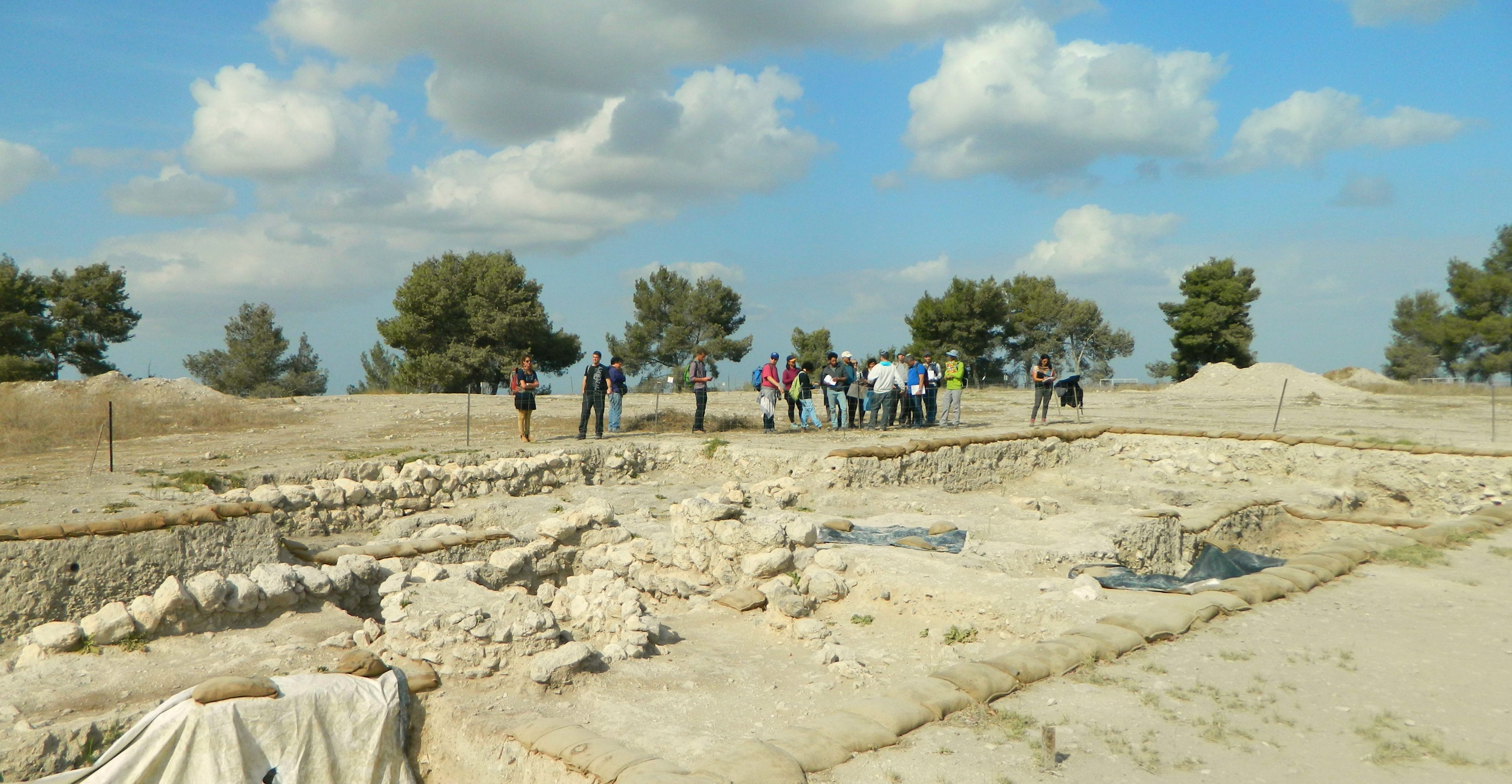
Two weeks ago, right in the middle of Chanuka, we took an Archaeology trip to the Modi’in area in search for ancient Modi’in as well as other sites of interest in the vicinity. Leaving the university by tour bus in the morning, we were driven to our first destination, a place known as Kivrei HaChashmonaim (or, Graves of the Maccabees) just off Road 443 across from the modern city of Modi’in. Disembarking, I looked around my surroundings and spotted a chukar (type of partridge) running up a large rock, stopping near the top before another bird and then flying away in the opposite direction. Due to the great distance, only when I looked at my camera screen did I notice that the other bird was a kestrel (I had assumed it was another chukar). A great way to start off a trip!
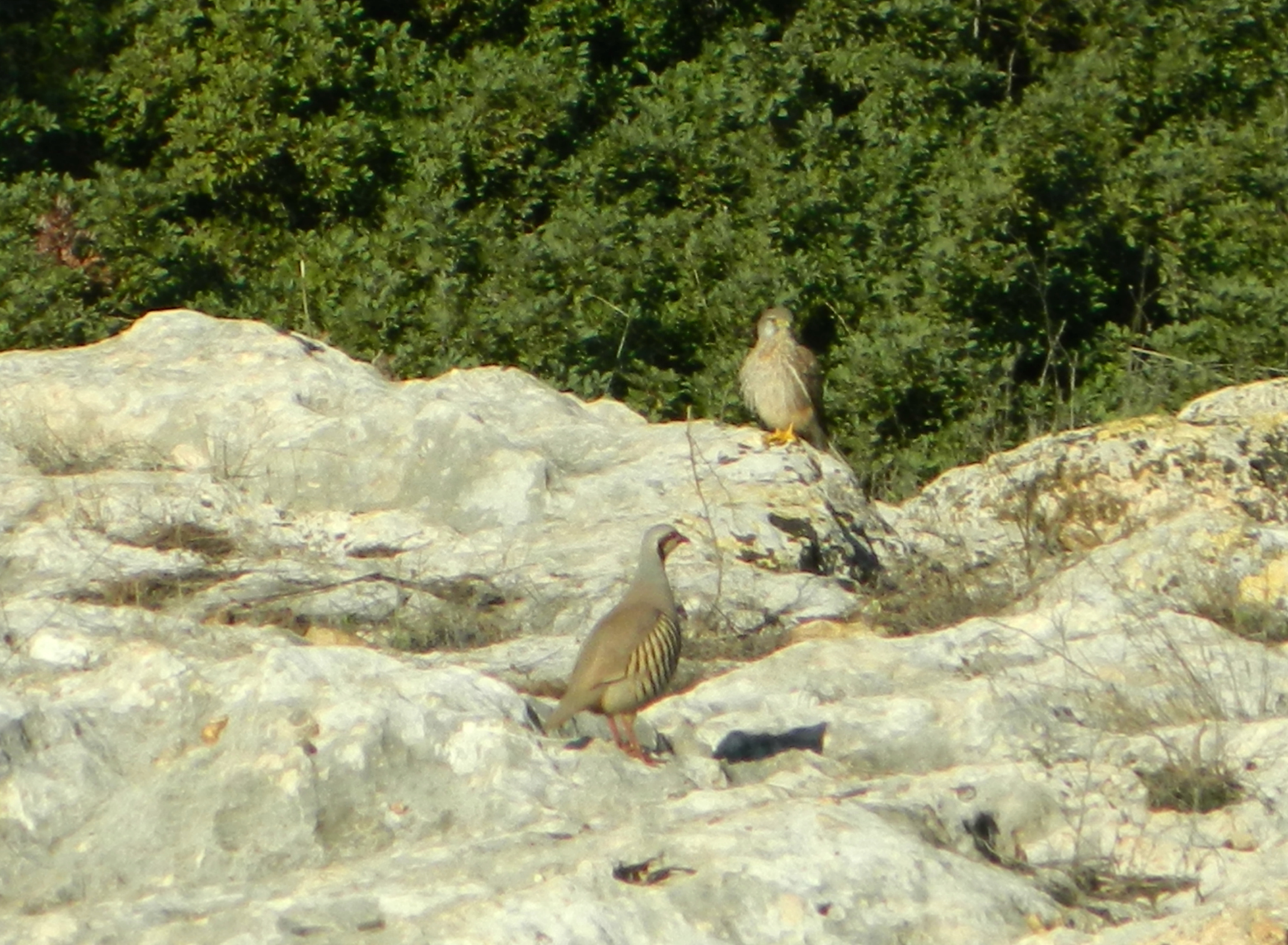
Chukar meeting a kestrel

Chukar meeting a kestrel

From there we headed down a nice trail towards Nachal Modi’im where we stood near some olive trees to hear from our tour leader, Dr Eyal Baruch, about the first possible choice of ancient Modi’in’s location. Across the stream from us, and over the security fence and patrol road (of the Green Line), was the Arab village of al-Midia.
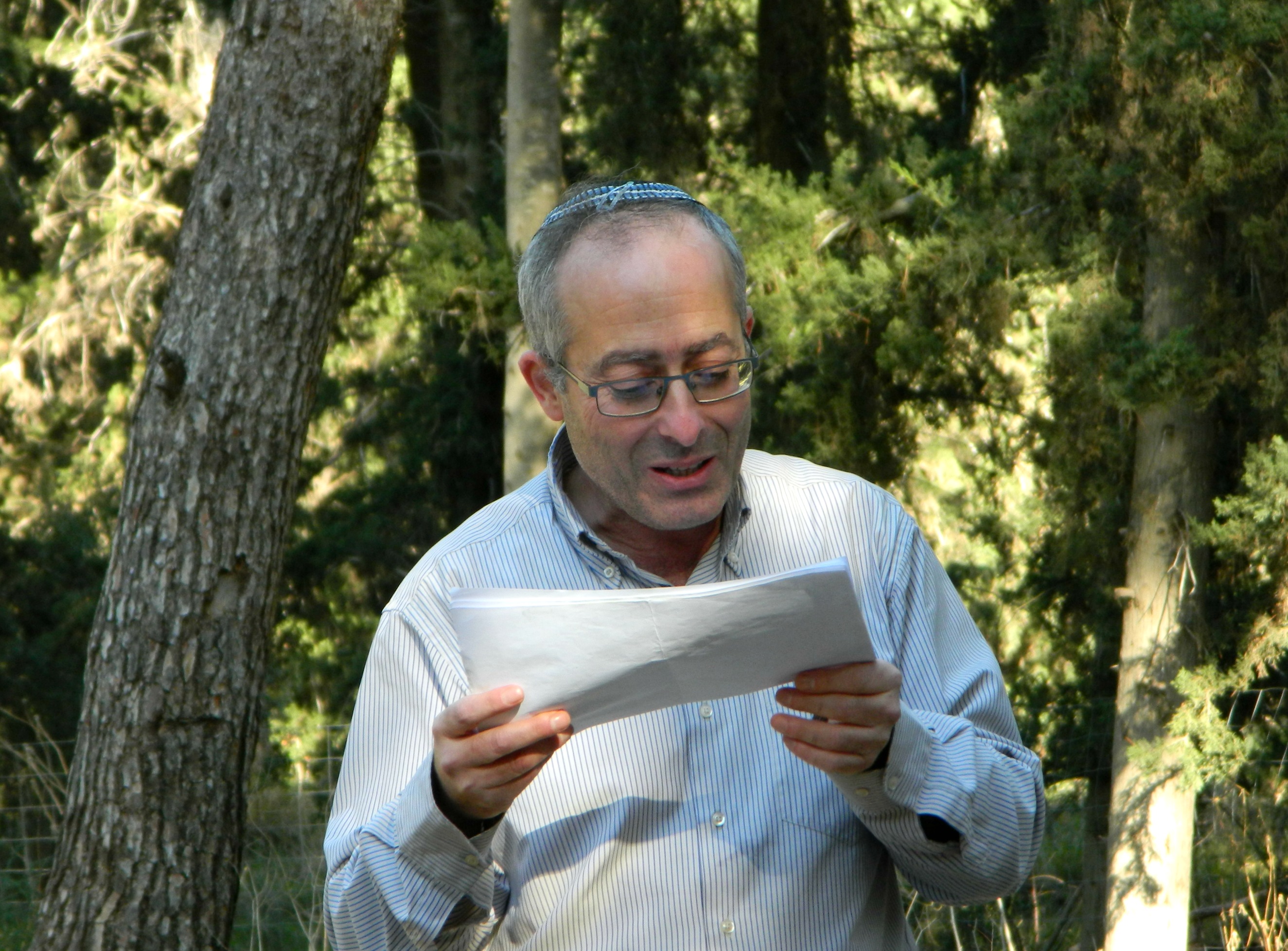
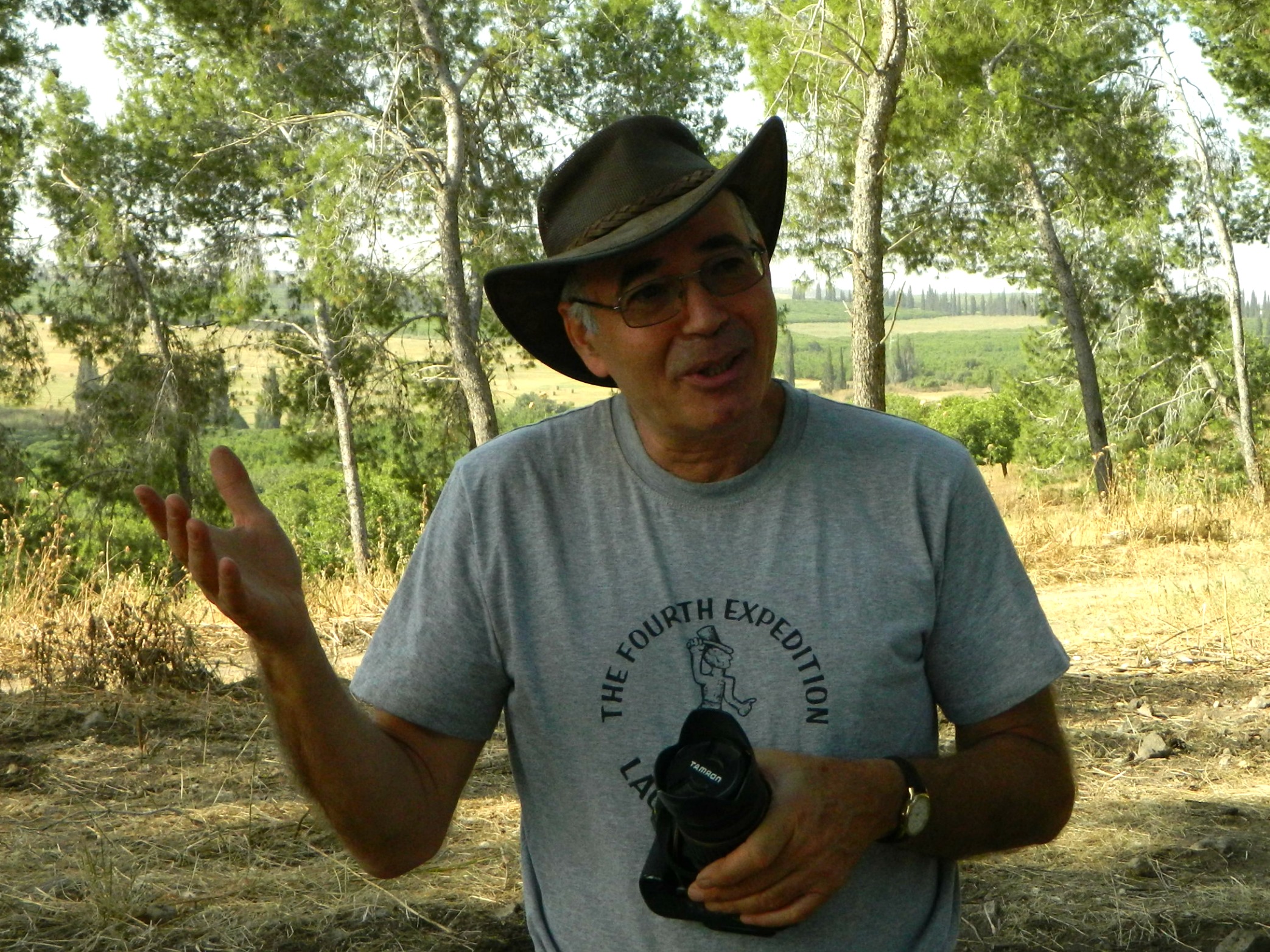
Dr Eyal Baruch of Bar Ilan University

Dr Eyal Baruch of Bar Ilan University

One of the ways to help locate ancient sites is to examine the local traditional Arabic name (be it a village, wadi or mountain) – if the name means nothing in Arabic, there’s a fair chance that the name is just a corruption or adaptation of an earlier name. In this case, the name “al-Midia” can easily be perceived as a corruption of the name “Modi’in”. Unfortunately, from an archaeological standpoint only surveys of al-Midia were taken.

Persian cyclamens a'bloom

Persian cyclamens a’bloom

From our vantage point to al-Midia we walked back towards the bus and then down another path to our next destination: Horvat HaGardi. Along the way, I spotted something moving quite a ways off in a field. At the great distance, it was hard to make out what it was – perhaps a dog, or two large birds standing next to each other? Activating the camera, I was soon in the possession of several photographs of a particularly handsome gazelle snacking on the lush grasses.
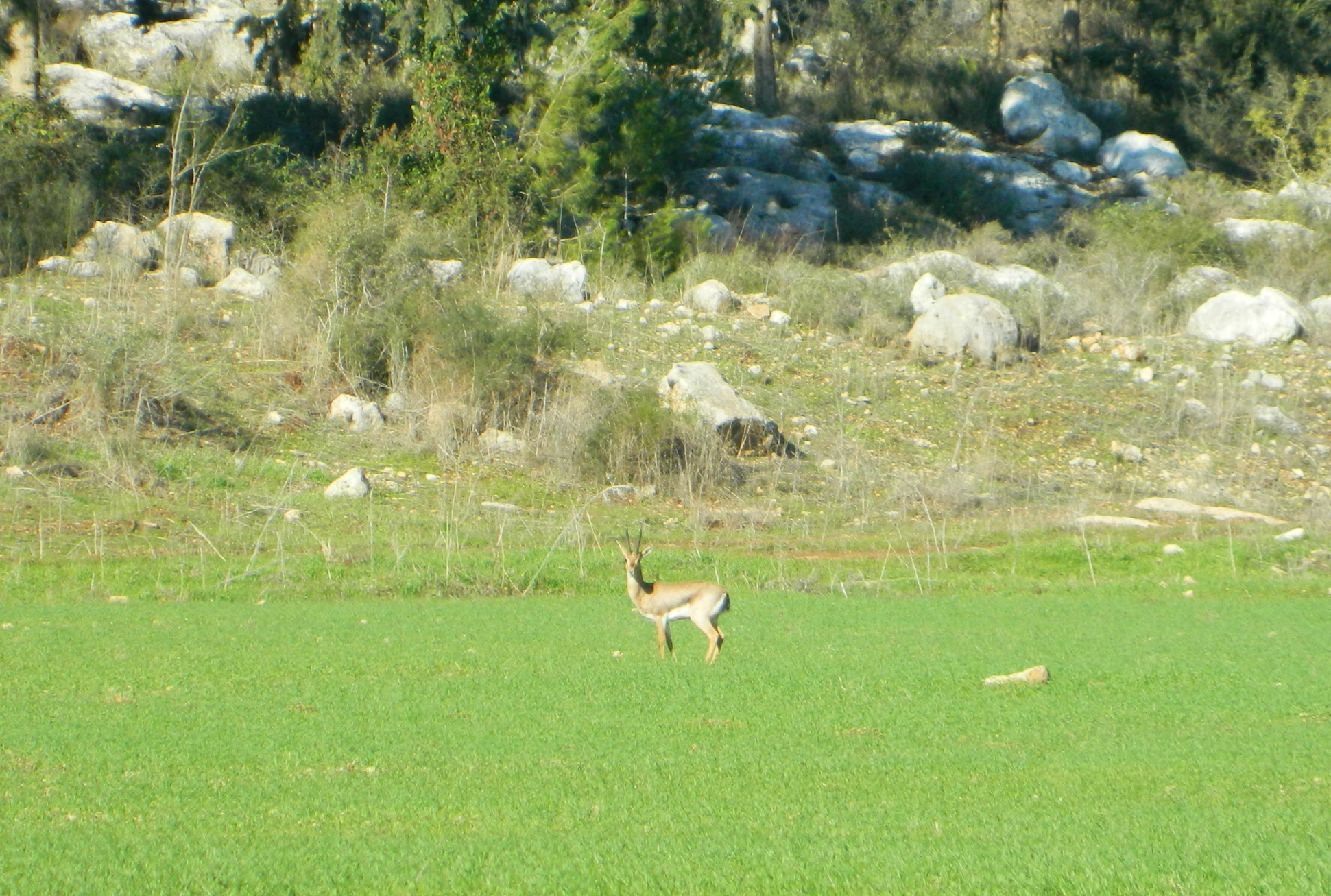
A gazelle off in the distance

A gazelle off in the distance

What I saw next intrigued me greatly – a mossy domed structure hidden amongst the pine trees. We were then informed that the site is the Tomb of Sheikh Gharbawi, despite the modern tomb markings labeling the site as the kever of Matatyahu (of Chanuka fame).

The Tomb of Sheikh Gharbawi

The Tomb of Sheikh Gharbawi

Still intrigued, I conducted a bit of research of my own, spanning the times from the late 1800s with a PEF-published “Archaeological Researches in Palestine” by French archaeologist Charles Clermont-Ganneau to a forum discussion dated 2010 on a random Haredi news-site. What sealed the deal for me that this was a Muslim building was the cemented-in mihrab (prayer niche) that can be seen over the tombstone – the mihrab being on the southern wall, pointing south to Mecca.
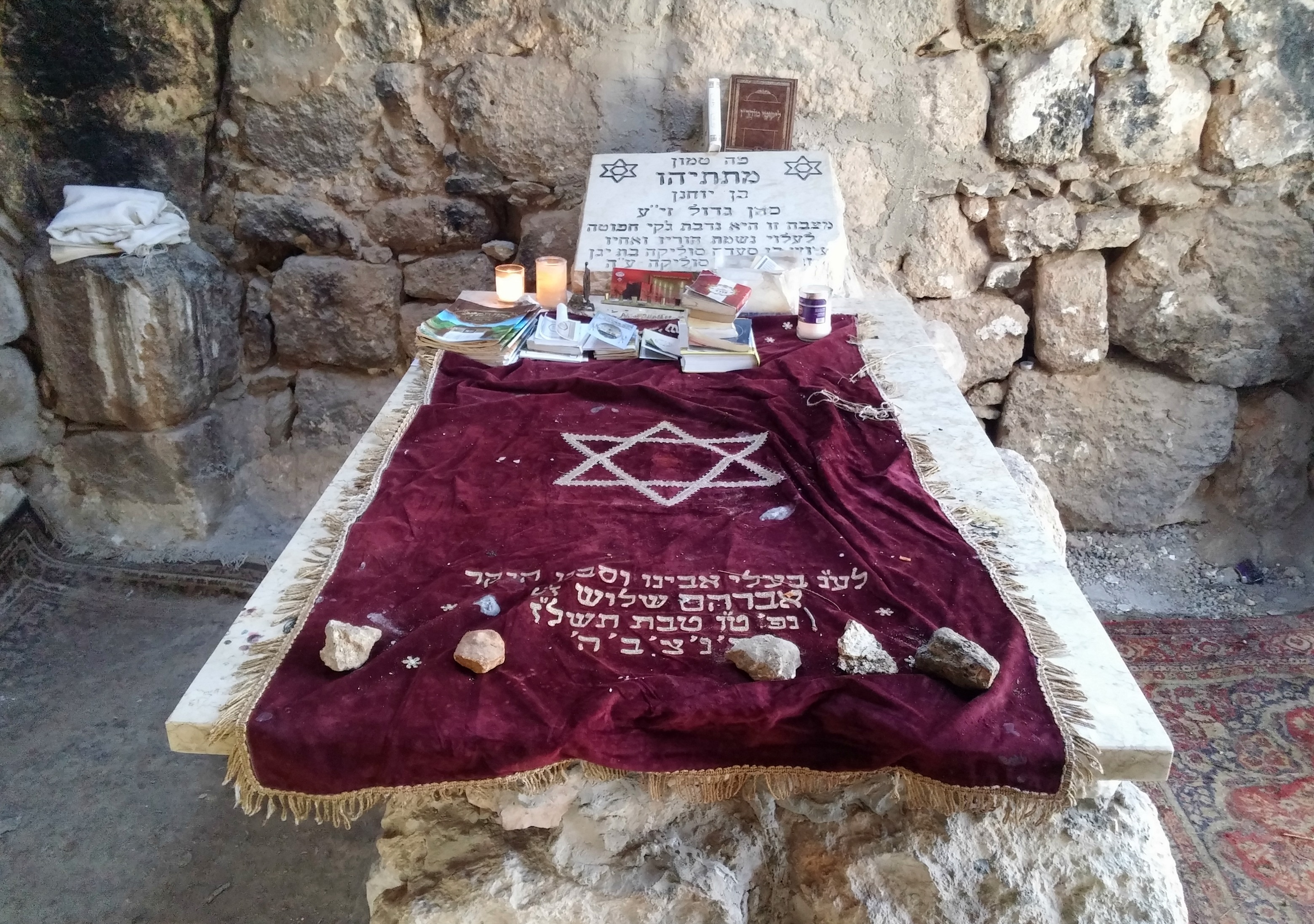
Kever labeled Matatyahu - note the mihrab

Kever labeled Matatyahu – note the mihrab

However, one can still argue that the structure was later built by Muslims over the pre-existing kever of Matatyahu, for ground penetrating radar and other scientific tools have revealed a cave of sorts under the domed building, extending southward beyond the building. Regardless, there is more to Horvat HaGardi than just this building – and we were still on the quest to identify the legitimate Graves of the Maccabees. French archaeologists in the late 1800s discovered ruins of a building which seemed to fit the description given in Maccabees I, the ancient book of Chanuka. Unfortunately, a mosaic floor with a glaringly obvious Christian cross was uncovered, bringing the building’s date to the Byzantine era.
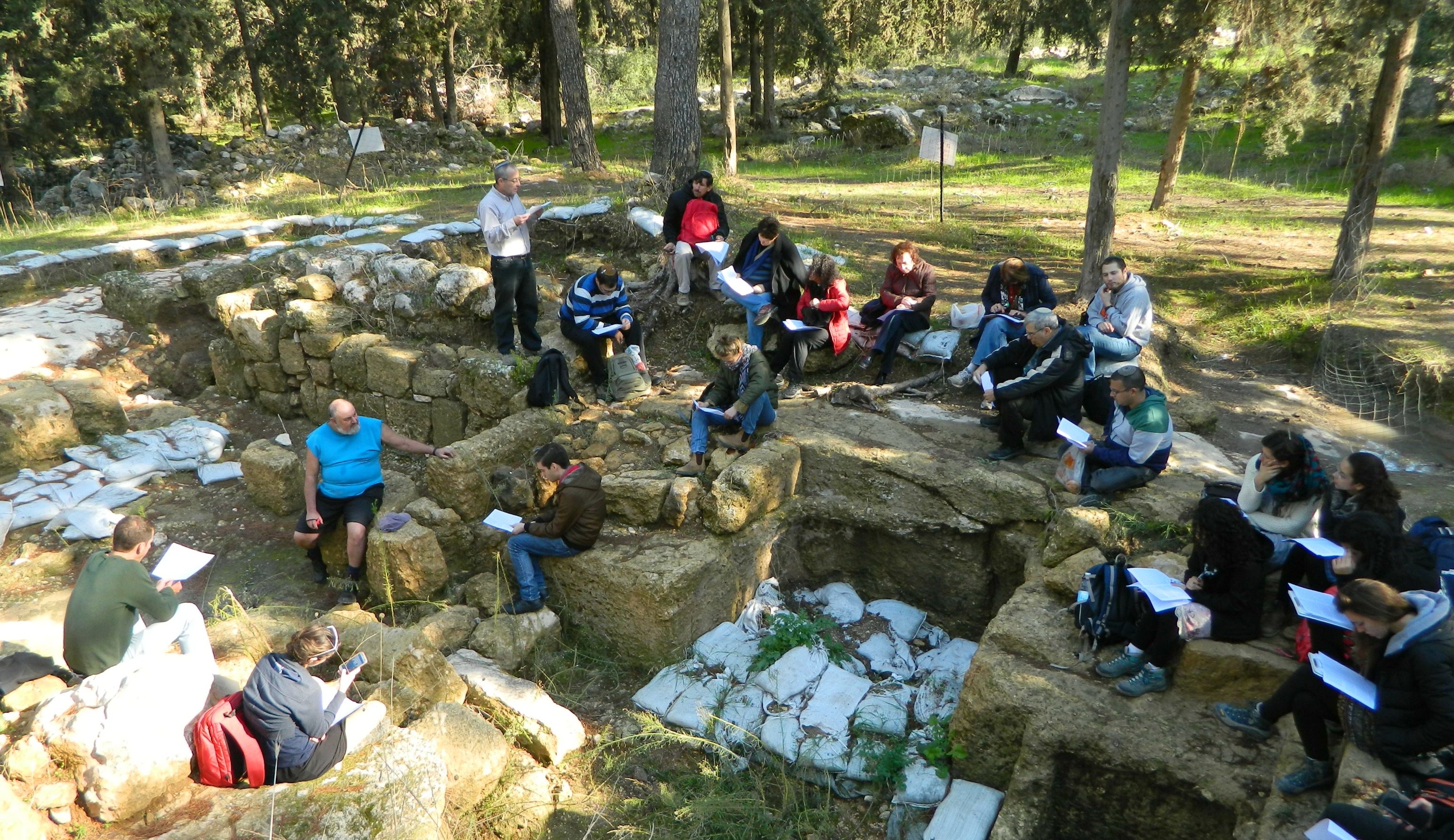
Reading from Victor Guérin at the ruins of the Byzantine monastery

Reading from French archaeologist Victor Guérin at the ruins of the Byzantine monastery

And so, we continued on to the next site on our list, pausing to look at a broken piece of pottery which seems to be have been marked by the potter with three lines.

Marked pottery

Marked pottery

Up next was the modern day war memorial for fallen soldiers during the War of Independence in 1948, a memorial which pays a tribute to the Graves of the Maccabees with its seven pyramids (as described in Maccabees I). From there we passed several small sites of interest such as ancient walls and water cisterns before we reached the burial caves found on the shoulder of Road 443 during construction.

Roadside burial caves

Roadside burial caves

Within these two caves are numerous burial niches which are typical of ancient Jewish burial – see, for example, the Jewish necropolis (or “city of the dead”) at Bet She’arim, a most fascinating place! Inside, finds included ossuaries (chests for the permanent storage of human bones) etched with Jewish names such as Shimon, Sarah and Rachel. Pottery finds helps date the site from the Hasmonean period (i.e the Maccabees) until the middle of the Roman Era – seemingly a perfect fit for the Graves of the Maccabees except that it doesn’t match the textual description.
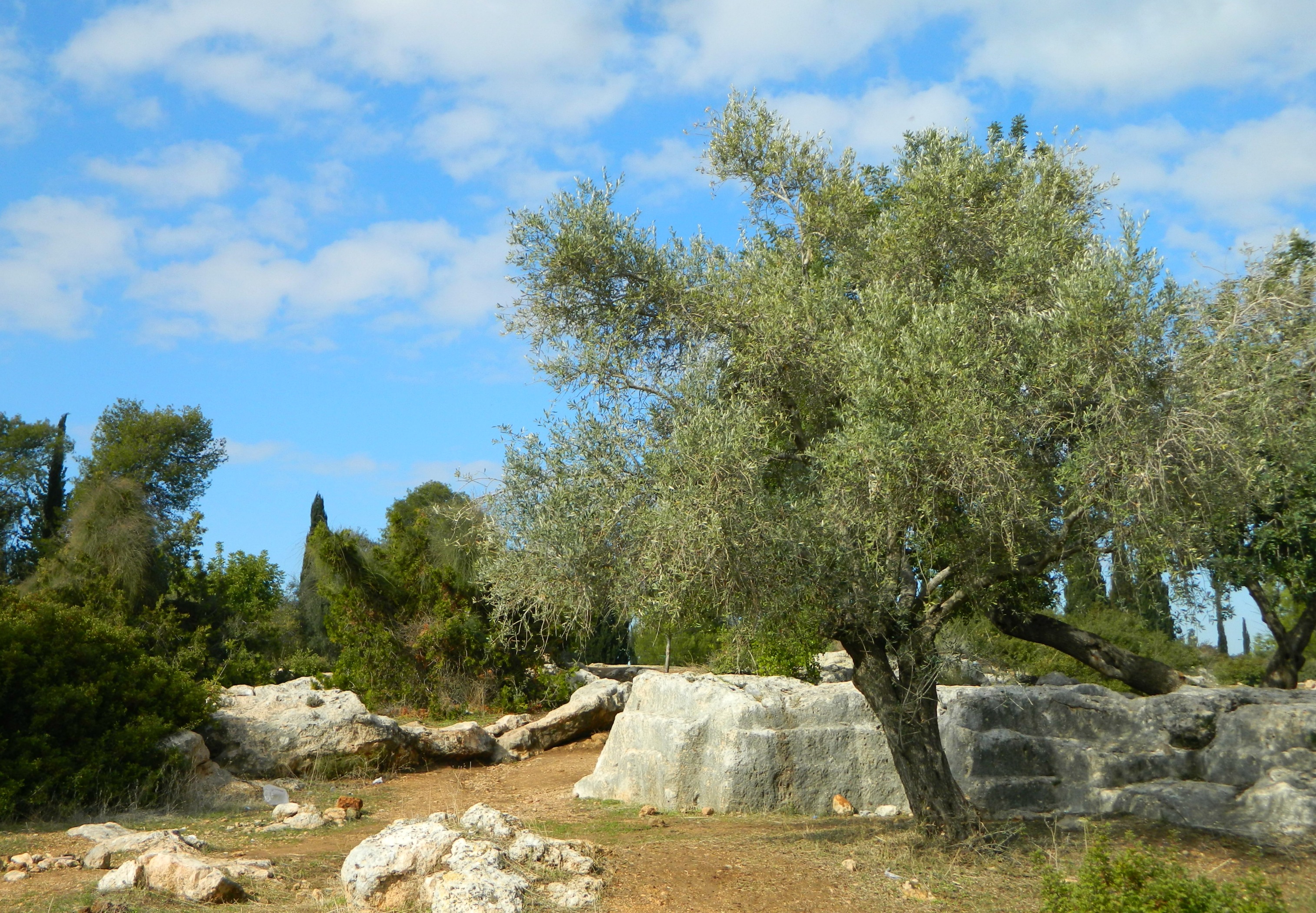
Quarry for huge stone covering-blocks

Quarry for huge stone covering-blocks

Our final possible site in the area was what is currently marked as the Graves of the Maccabees, personal and coupled burial niches carved out of the bedrock with huge stone covers. These graves were known as Qubur al-Yahud (or “Grave of the Jew”) by the local Arab population, seemingly a fitting match. However, no matter how impressive the graves are, they are unlikely to be the graves of Jews such as the Maccabees. Excavated stone crypts don’t fit the typical Jewish fashion, which means that these are most likely the burial sites of non-Jews dated to the Byzantine Era.
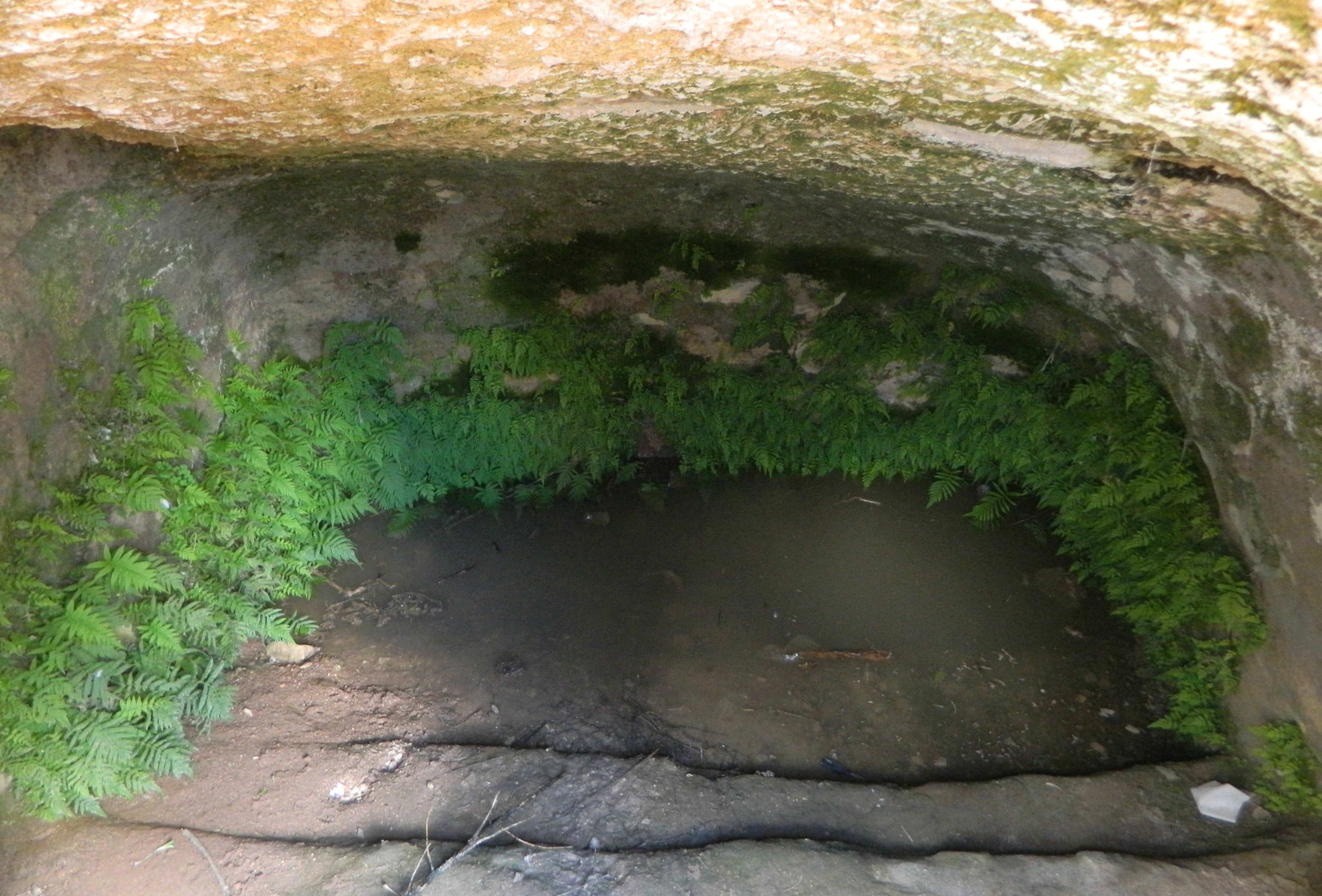
Within Umm al-Umdan's fern-lined mikva

Within Umm al-Umdan’s fern-lined mikva

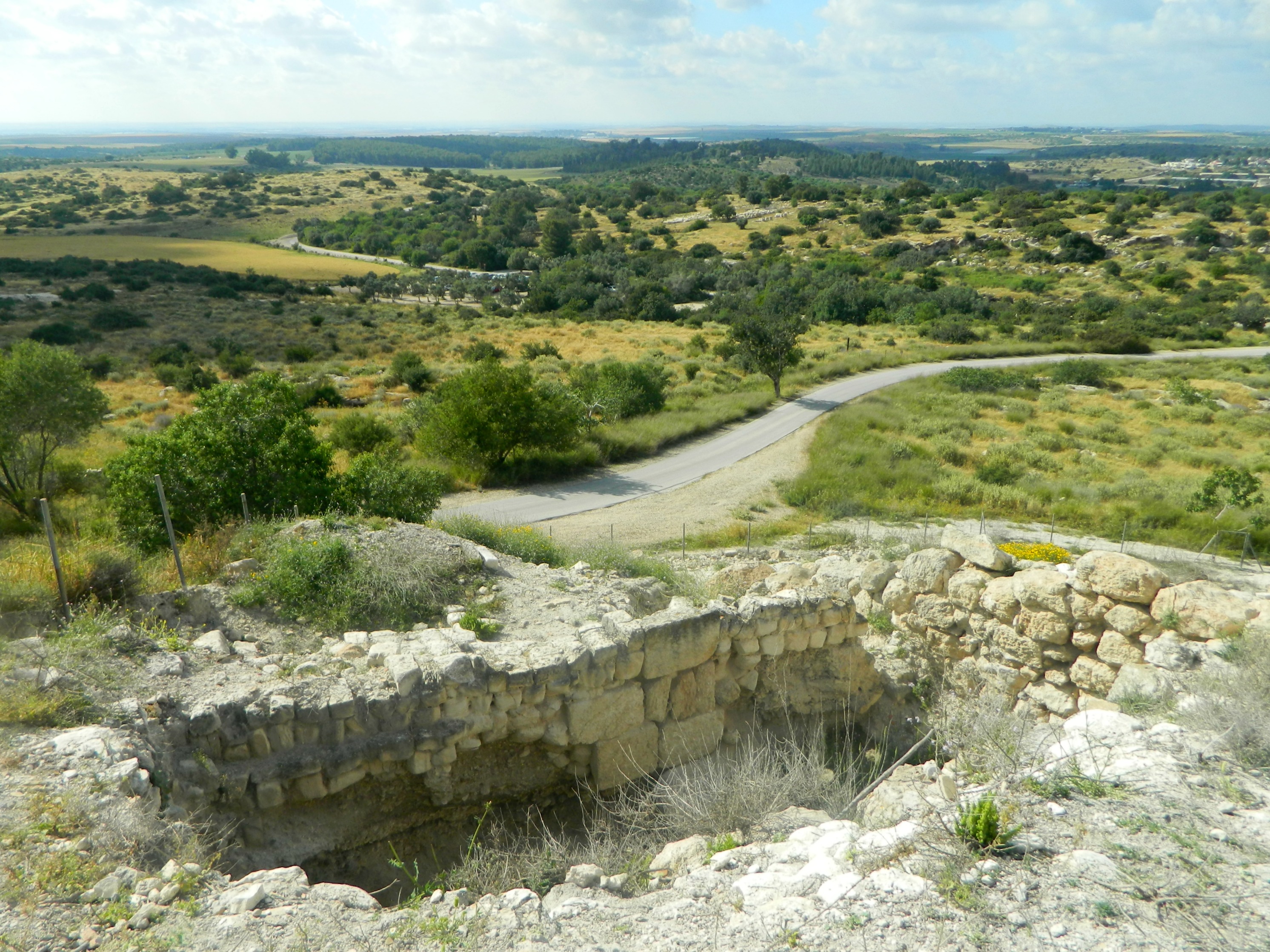
Returning to the matter of ancient Modi’in, we hopped back on our bus and were driven to the southwestern corner of modern-day Modi’in where ruins of a Second Temple-era village were recently excavated. The site, called Umm al-Umdan, is the host of an ancient synagogue, believed to be the earliest one yet having been built long before the destruction of the Second Temple by the Romans. We toured the synagogue, the mikva (ritual bath), the dwelling houses and winepress carved into the rock with a mosaic pressing floor. Perhaps this was the site of ancient Modi’in, or perhaps not.
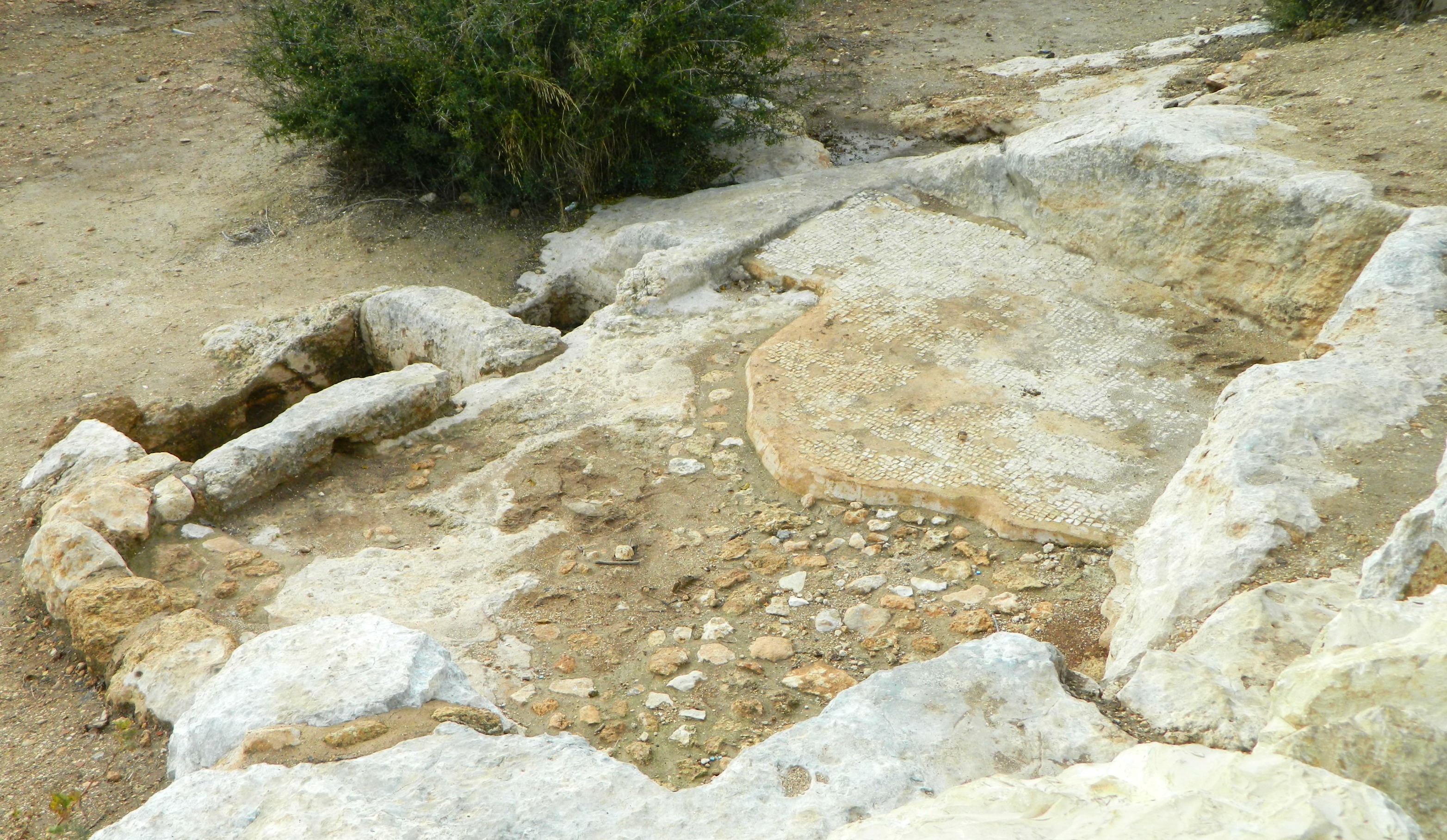
Mosaic floor of Umm al-Umdan's winepress

Mosaic floor of Umm al-Umdan’s winepress

At Umm al-Umdan I didn’t forget to keep an eye out for birds and was rewarded with a multitude of sunbirds (one even ringed), a pied wagtail, stonechats, kestrels and my first chaffinch. But the best sighting was not avian but that of a juvenile conehead mantis which had wandered onto Dr Eyal Baruch’s shoulder. I took him for a quick photoshoot, which he thoroughly enjoyed!

Juvenile conehead mantis

Juvenile conehead mantis

And with that our tour of the Modi’in area was over, and we were driven back to BIU to enjoy the rest of Chanuka (and to read up on all these fascinating things).

Special thank you to Itamar Berko for paying more attention than I during the tour and helping me fill in the information gaps!
University Trip: Northwest Negev

In Israel, Negev on December 18, 2016 at 1:44 PM

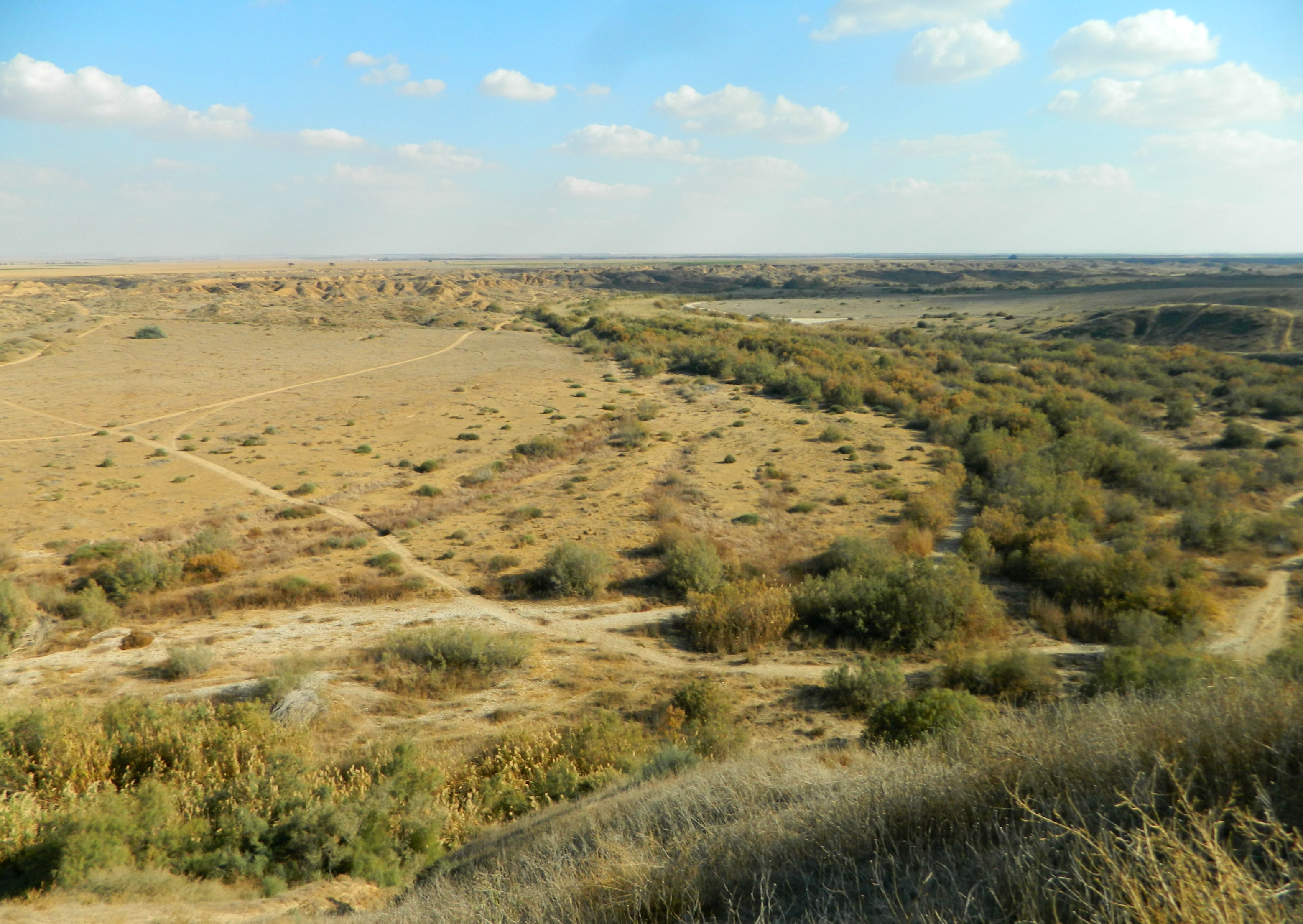
Two week ago, on Wednesday, I had an exciting day brewing my first beer – a slightly smoked stout – with my friend Ben from university. Riding on that high come Thursday morning, we then headed off on a university trip to several sites in the northwest region of the Negev led by Dr Shawn Zelig Aster. The first order of business after a quick stop at Beit Kama junction was a lookout across the road from Rahat, the large Bedouin city in the Negev.

Contrast of yellow dirt and blue skies

Contrast of yellow dirt and blue skies

The tour bus took a nice dirt road to the edge of a field, located not far from the old British Rider Police Station which I visited in the post The Negev: Roadside Attractions. From there we had a view of Tel Sera in the distance, an ancient Egyptian, Philistine and Israelite site of mostly agricultural importance, as well as its proximity to Gaza, a major coastal city. Looking about at the expanses of yellow dirt, I spotted movement off in the distance and it wasn’t long before I had a crested lark on the screen of my camera. Next, a darkling beetle made an appearance and the reassuring presence of black kites wheeling overhead – a common sight.

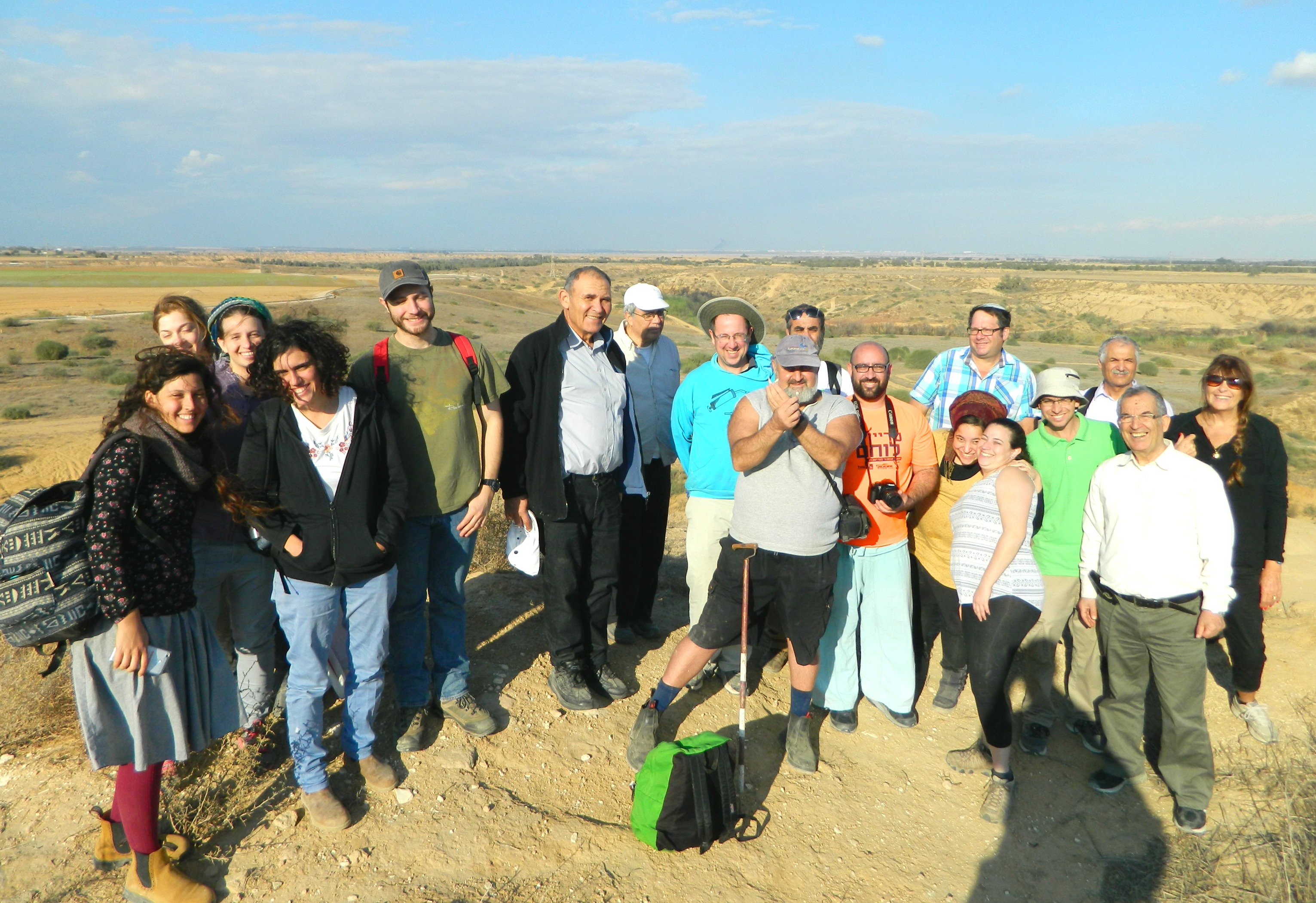
Group photo

Group photo

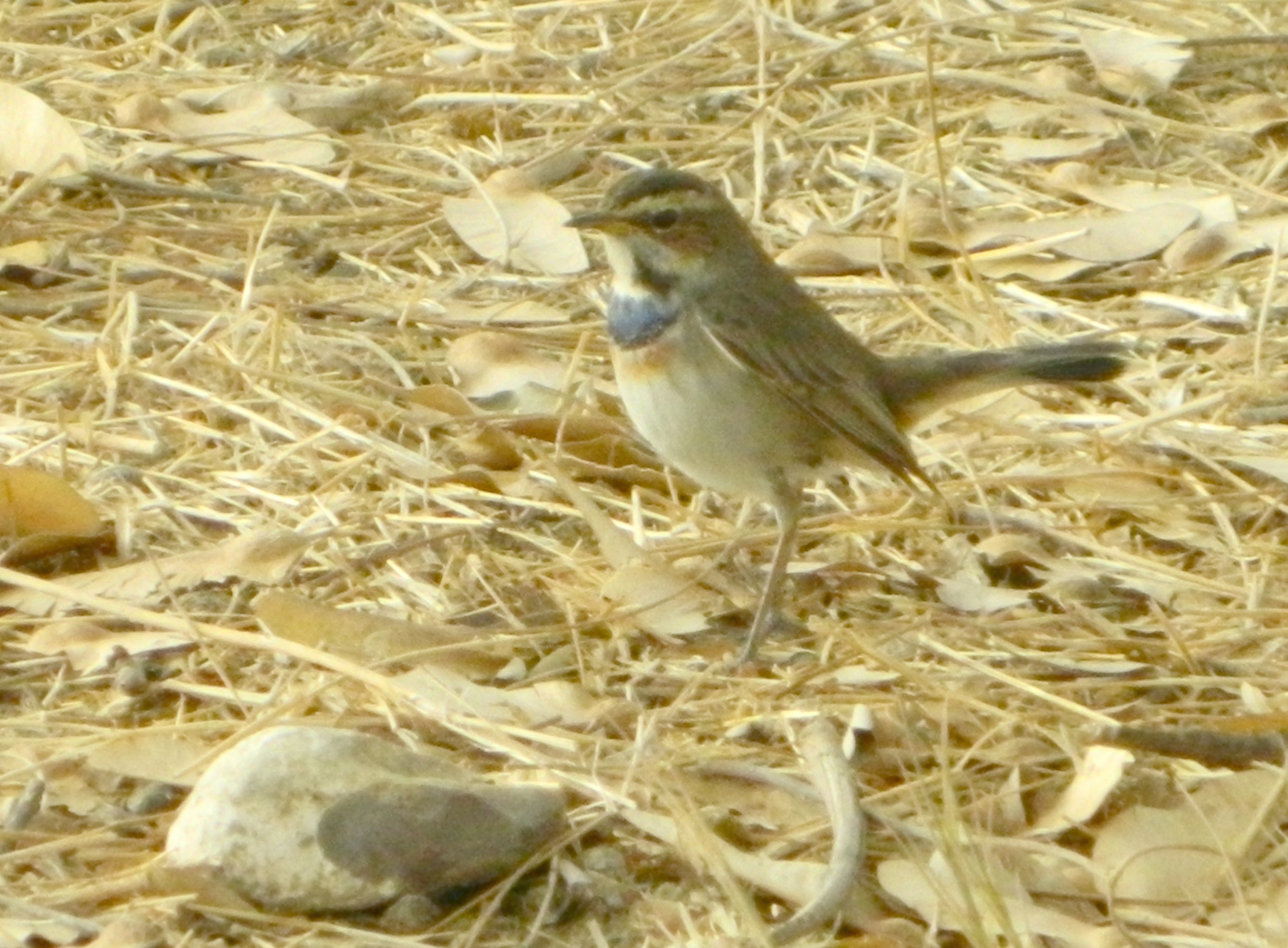
Moving on, we then pulled into a dirt road on the far side of Tel Sera for get a lay of the land and then crossed Road 25 to enter KKL/JNF’s Nachal Gerar park where we walked to the next tel on our list (a tel being an archaeological mound of layered human settlement). As I’ve become more and more interested in birding, my eyes scanned the area as I spotted various species in Nachal Gerar including stonechats, a Syrian woodpecker, a great tit, my first ever black redstart and some sort of sandgrouse in flight, to name just the highlights.

Bluethroat

Bluethroat

Getting back to the archaeological aspect of the trip we climbed up Tel Haror, a Bronze Age site which also goes by the names Tel Abu Hurairah (literally “Father of the Kitten”) and the famous Biblical Tel Gerar, a story of well-digging and Philistine peace pacts. The remains of a mud-brick temple, built some 3500-4600 years ago, have been uncovered for humanity’s viewing pleasure.

Mud-brick wall at Tel Haror

Mud-brick wall at Tel Haror

Atop the hill is the remains of a recently-destroyed mausoleum believed by the local Bedouins to be the grave of the aforementioned Abu Hurairah, a companion of Islam’s Muhammad; buried around the site are the unmarked graves of Turkish soldiers who fell in battle during WWI.

Tel Sharuhen

Tel Sharuhen

Heading back down to the bus, we were then driven to Nachal Besor, a park with a Jurassic Park feel to it in terms of flora and topography. With Tel Sharuhen (or Tel el-Farah) being our next destination, we drove through the alternating lush streambed and the sandy badlands of Nachal Besor for ten minutes or so, a rather bumpy ride. At last we arrived at the foot of Tel Sharuhen and I spotted a bird far off perched atop a bush – a great grey shrike.

Your humble servant (photo Ogen Drori)

Your humble servant (photo Ogen Drori)

We read about the ANZAC trail named after the Australian and New Zealander troops who, during WWI, traveled this route on their way to conquer Be’er Sheva and then Gaza from the hands of the Ottomans. Finished with the recent history, we climbed the tel to learn about the ancients: Canaanites, Egyptians and Israelites.

Remains of what might have been the city gate

Remains of what might have been the city gate

Partway up the hill, remains of what seems to be the city gate area constructed of mud bricks is clearly visible. At the western end of the tel is some remains of another structure of mud bricks partially buried in the dirt. A bit of scratching around at a burnt corner revealed interesting findings: broken animal bones and pieces of flint which were likely used to cut meat, remains of an ancient kitchen frozen in time.

Ancient kitchen at Tel Sharuhen

Ancient kitchen at Tel Sharuhen

It was there that we tasted from the saltbush identified by one of the members of our party. At the northern end of the tel, a great expanse of interesting land including loess badlands was to be viewed and appreciated.

Nachal Besor

Nachal Besor

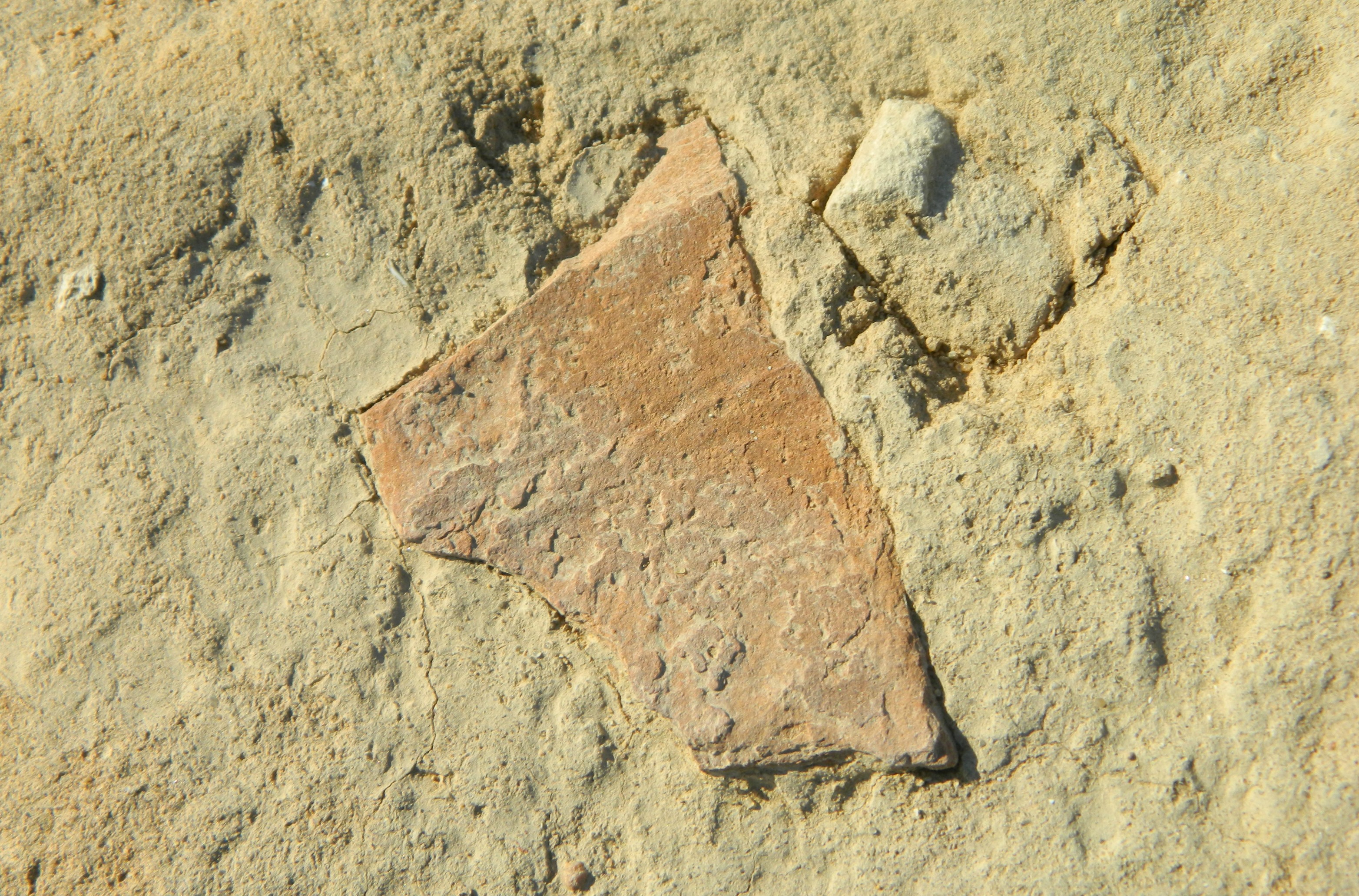
Whilst walking atop the tel, the broken rim of a carved stone vessel caught my eye and when I took it to experts at BIU the following week, I was told that it might very well be from the Second Temple period (2,000 years ago) – a fun find!

Potsherd stuck in the dirt

Potsherd stuck in the dirt

As exciting as our finds were, there was a schedule to keep and so our bus took us to our final destination: Tel Gamma (or Tel Jemmeh). Located just three kilometres southwest of where I stationed as a soldier during Operation Protective Edge (see blog post HERE), it was an unusual feeling revisiting the area under such different circumstances.

Stormy skies

Stormy skies

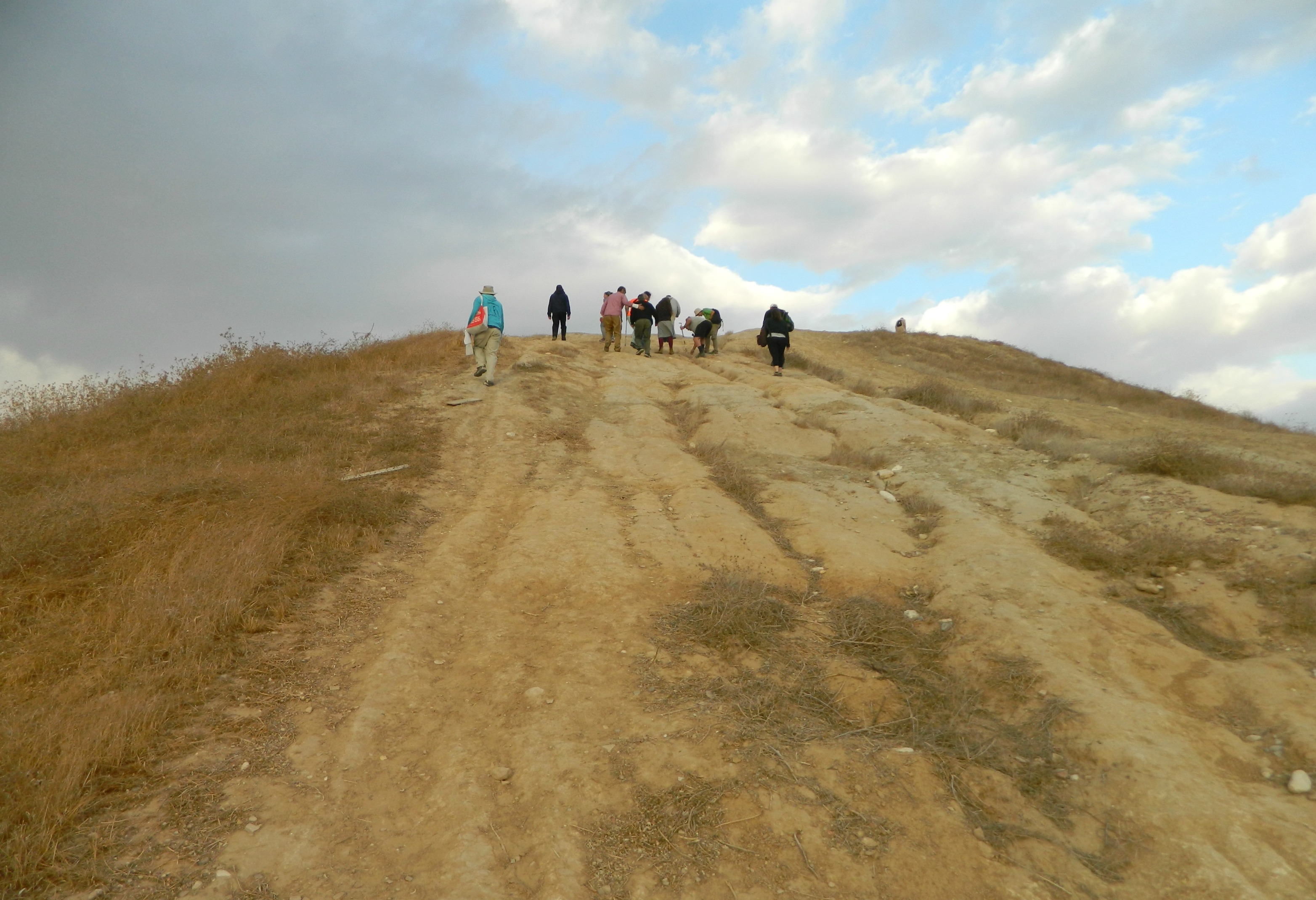
With storm clouds darkening the skies, we hurriedly climbed the steep tel and surveyed our surroundings, including Nachal Besor to the north.

Tel Gamma the Steep

Tel Gamma the Steep

Archaeological digs uncovered remains that pointed to the Egyptians, Philistines and even the Assyrians who conquered the area some 2,700 years ago. With broken pieces of ceramic vessels and bones littering the excavated area, we couldn’t help but give the burnt wall area a quick surface scratching, revealing some rather large and impressive bones.

Wall-scratching at Tel Gamma

Wall-scratching at Tel Gamma

At last rain began to trickle down and so we headed back to the bus, our tour of the northwest Negev coming to an end. Just to recap, these were ancient cities that were mostly abandoned long, long ago – before the time of Alexander the Great, to give perspective. Also, to simplify my narrative of our trip, there are many interesting historical and archaeological anecdotes that would delight some readers, but, alas, I aim to keep all readers adequately entertained.

Raindrops on the window

Raindrops on the window

With that been said, there is little material evidence of the cities’ prior glory and might to be seen with the naked eye; it takes a bit of imagination to envision what these sites once were.

University Trip: Tel Azeka & Khirbet Qeiyafa

In Israel, Judea on November 27, 2016 at 6:51 AM

Just over a week ago, the Land of Israel and Archaeology department of Bar Ilan University launched its first “academic tour” of the semester, and I tagged along enthusiastically. Our destinations were two predominantly Biblical (Iron Age) sites in the Judean foothills: Tel Azeka and Khirbet Qeiyafa. Leaving the university campus in the morning via minibus, we took a brief pit stop at Elah Junction before continuing on to our first site, Tel Azeka located in Park Brittania.

Hellenistic palace of Tel Azeka

Hellenistic palace of Tel Azeka

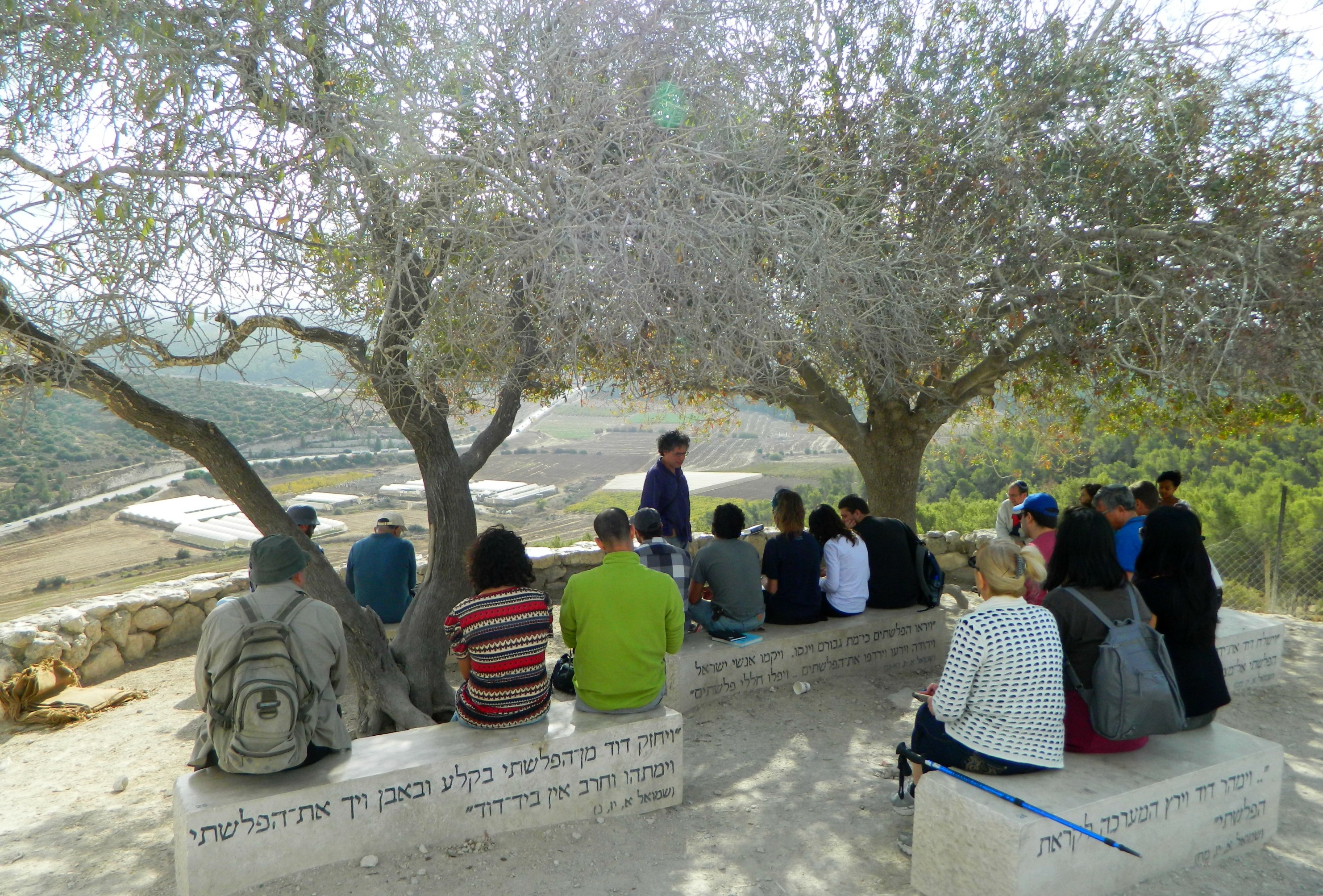
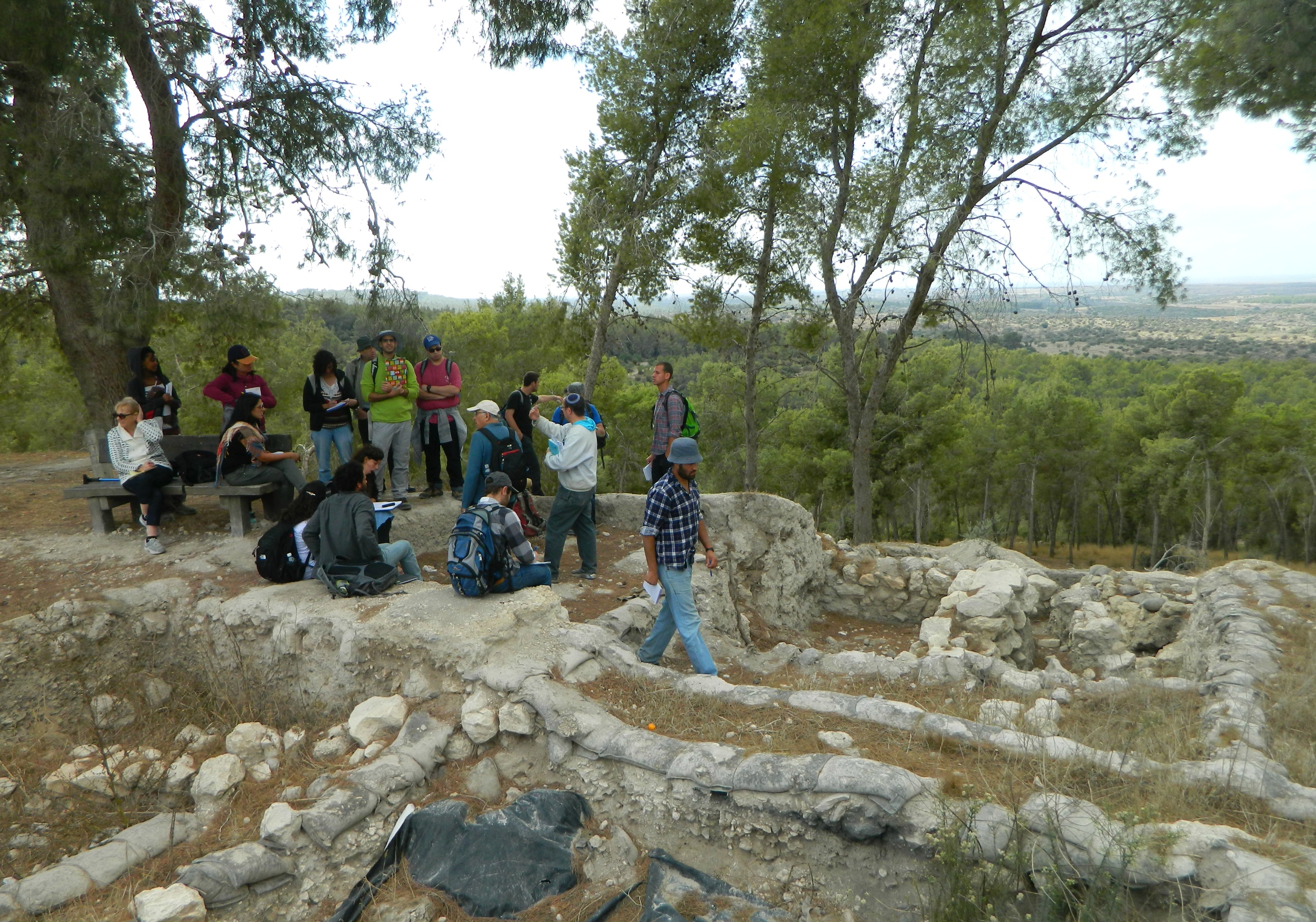
Parking at the foot of Tel Azeka, we walked up the large mound from the south and crossed it to the eastern side, stopping under the Pistacia trees at the David and Goliath Lookout to enjoy the view of Emek HaElah (or, Elah Valley) where the legendary battle between David and Goliath took place.

Listening to Dr Oren Ackermann at the David & Goliath Lookout

Listening to Dr Oren Ackermann at the David & Goliath Lookout

The first order of the day was an overview of the area from a topographical perspective, delivered by Dr Oren Ackermann. With the help of field maps and a compass or two, we were instructed in the many ways of topography, navigation and geographical orientation. As we sat in the shade I kept an eye out for wildlife down below – I was rewarded with sightings of a European robin, stonechat, kestrel and a whole lot of noisy Eurasian jays at Tel Azeka alone.

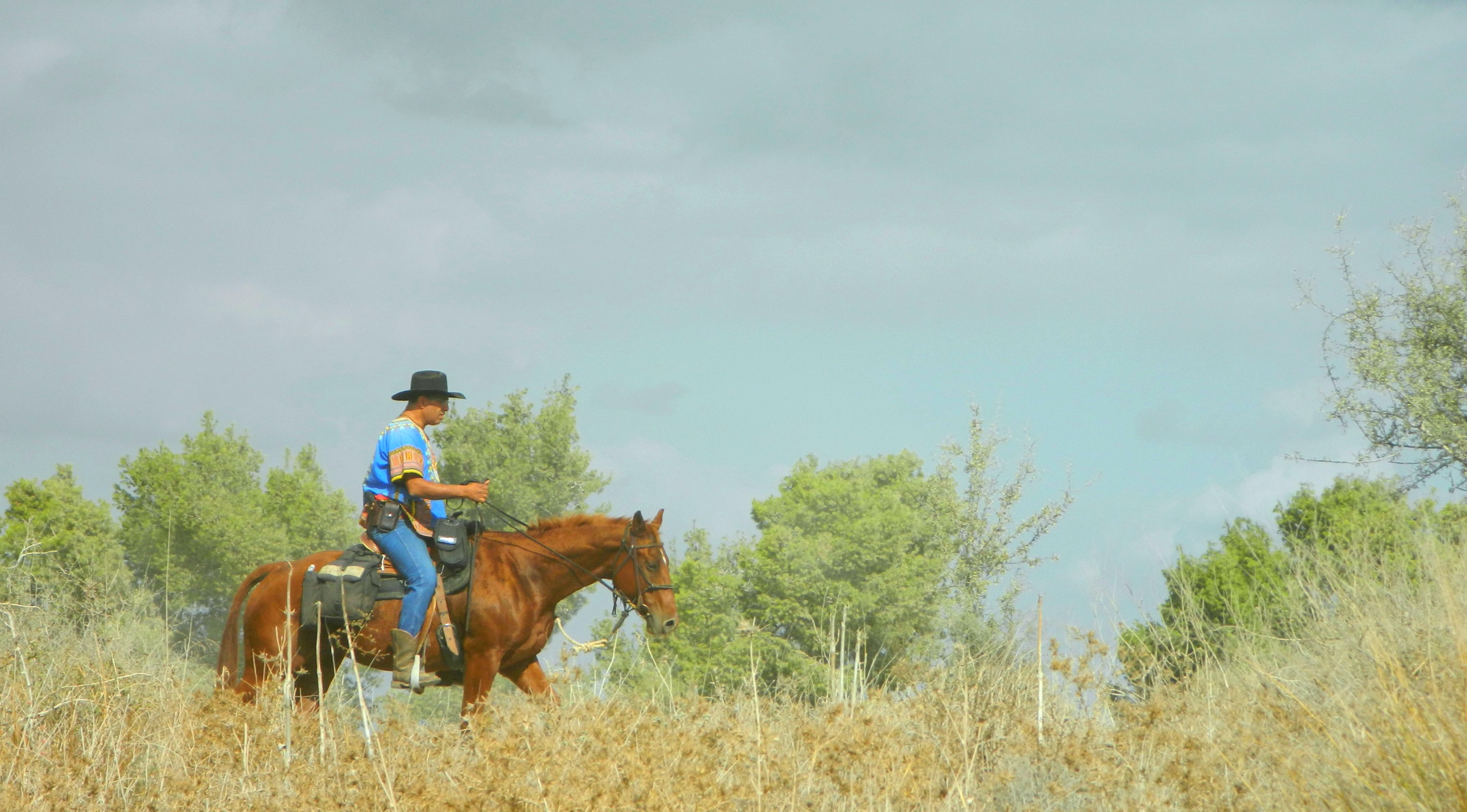
Unidentified horseman

Unidentified horseman

A brief history of Tel Azeka: First inhabited some 3500 or so years ago, the site is first mentioned in Biblical sources as a city conquered by Yehoshua (Joshua) – an epic tale involving hailstones and slaughter. Later, Azeka is mentioned as being part of the Israelite fortress line defending against the Philistines from the southwest. Being as that Emek HaElah is the natural entry-point into the Judean foothills region, hilltop cities were built and fortified to repel invaders. However, these bastions didn’t stop Sennacherib and his Assyrian army from conquering the Israelite cities all the way up to Jerusalem, including Azeka. The next superpower, the Babylonians, laid siege on Azeka and conquered it shortly before laying waste to Jerusalem. With the Jewish return to the Holy Land in the Persian period, Azeka was rebuilt and resettled, undergoing a name change in the Byzantine era; from Azeka to Caper Zacaria. Sometime thereafter the city was abandoned and fell to ruins, only to be discovered by PEF surveyors and archaeologists in the late 1800s. Over one hundred years later, archaeologists from Tel Aviv University began modern excavations – the next dig season set for July 2018 (see HERE).

Listening to Dr Shawn Zelig Aster at the Assyrian siege batteries

Listening to Dr Shawn Zelig Aster at the Assyrian siege batteries

Returning to the narrative, we then stepped over the edge of the lookout to examine the unusually steep Assyrian siege batteries excavated out of the gravelly sides of the tel. From there we headed to the southern side and looked at the old city wall ruins of the Late Bronze to Iron Age period, before Israelite reign, under the shade of tall pine trees.

Late Bronze-Iron Age dated city walls to the south

Late Bronze-Iron Age city walls to the south

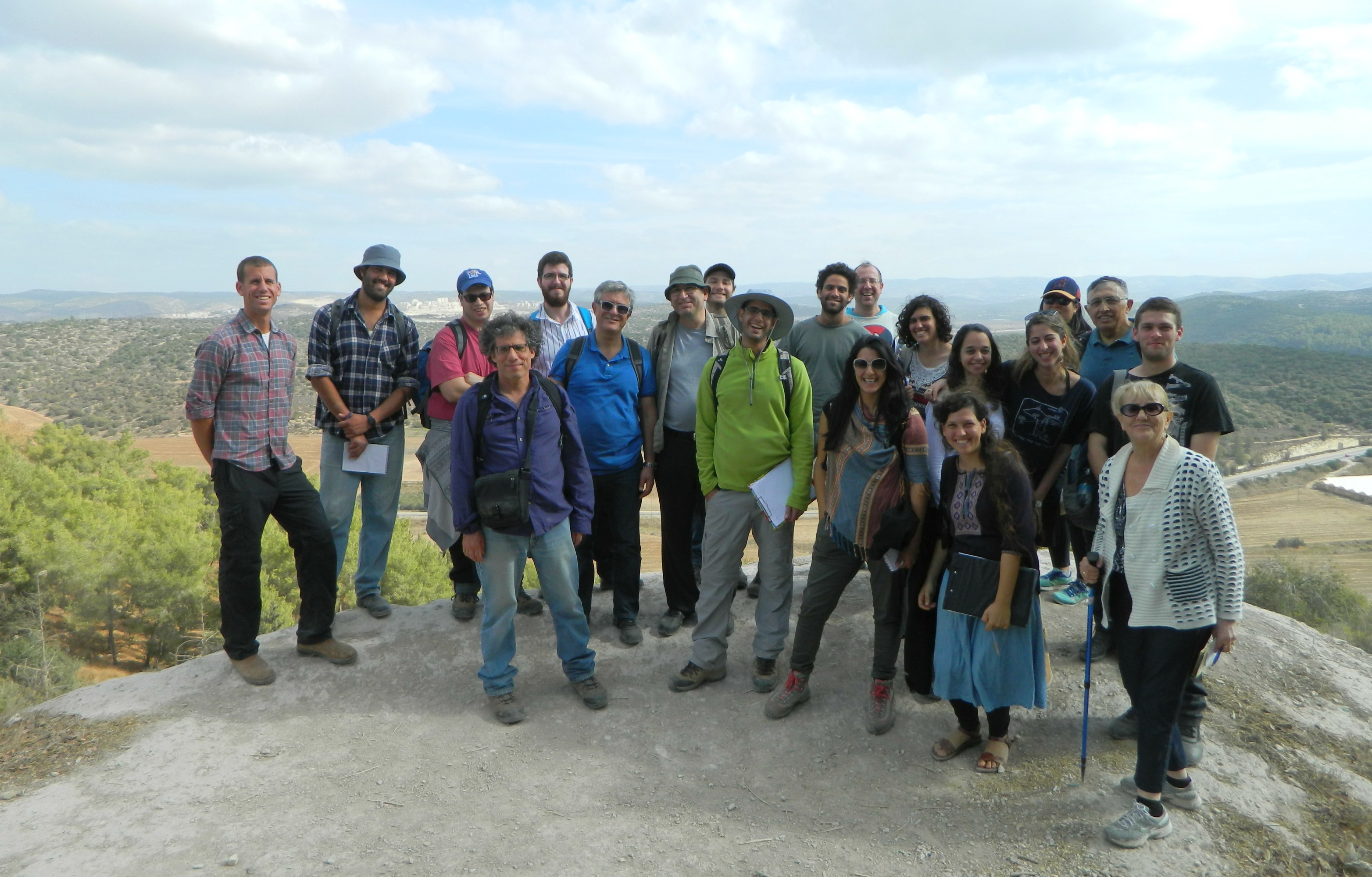
Looping around the west side, we then stood at the edge of another open excavation, the Hellenistic palace. And from there we headed back over to the east side to take a group photo.

Group photo on Tel Azeka

Group photo on Tel Azeka

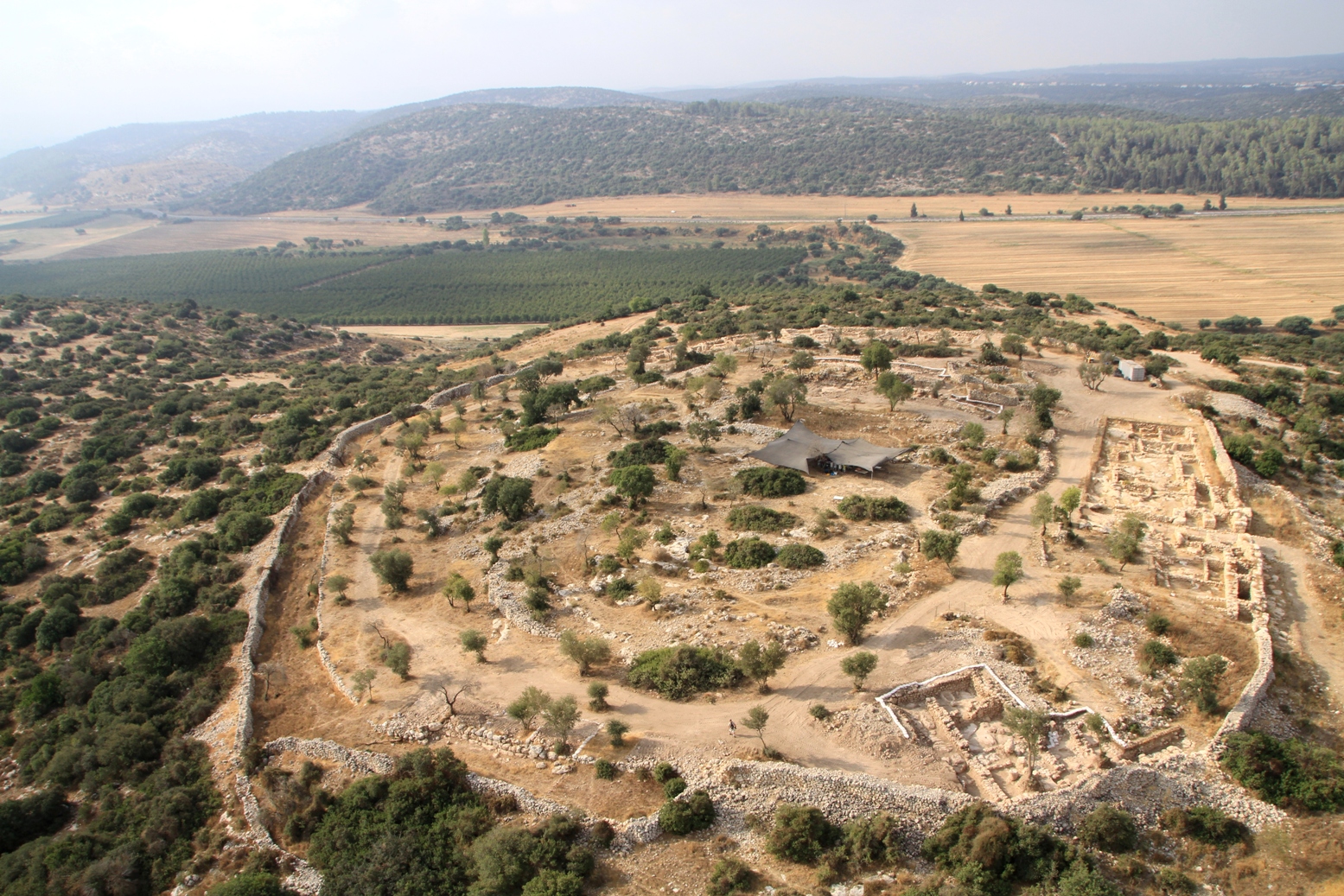
Leaving Tel Azeka, we were then driven to the start of a dirt road not far below the tel, across Road 38, where we were to walk on foot to our next site: Khirbet Qeiyafa (debatably also known as Shaaraim, meaning “Two Gates”). Mostly disregarded by surveyors in the 19th and 20th centuries, the site was identified as an important fortified city in 1992 and 2001, and most recently excavated between 2007-2013 by the Hebrew University under Professor Yosef Garfinkel and Saar Ganor of the Antiquities Authority. I had the honour of digging with these fine archaeologists six or so months ago at Khirbet Arai, located some seventeen kilometres southwest of Qeiyafa.

Aerial view of Khirbet Qeiyafa looking south (photo Skyview)

Aerial view of Khirbet Qeiyafa looking south (photo: Skyview)

To give an even briefer historical overview, Qeiyafa was a Biblical city, same as Azeka, perhaps the largest city in the area at the time. The findings of a second gate, facing south overlooking Emek HaElah, seemingly solidified the theory that Qeiyafa was the Biblical city of Shaaraim. In the Hellenistic period the site was fortified, with the addition of smaller fieldstones to enlarge the city walls. The Roman and Byzantine periods saw continued settlement, yet sometime afterwards the ancient city fell to disuse and was only scattered stone heaps until recent years.

Double wall circling Qeiyafa

Double wall circling Qeiyafa

And so it was that our group of academics and students alike sat under the shade of an olive tree to hear about the recent excavations. Getting back up on our feet, we examined the four-chambered western gate and then took a slow loop within the city perimetre, pausing here and there for educational purposes. I was gazing about at the ruins around me when I saw the briefest of glimpses of a bird that I’ve never seen before. All I needed was that glimpse to identify a male blue rock thrush from the bird guide I carry around everywhere – an exciting spotting for me, even if I was unable to photographically capture the moment.

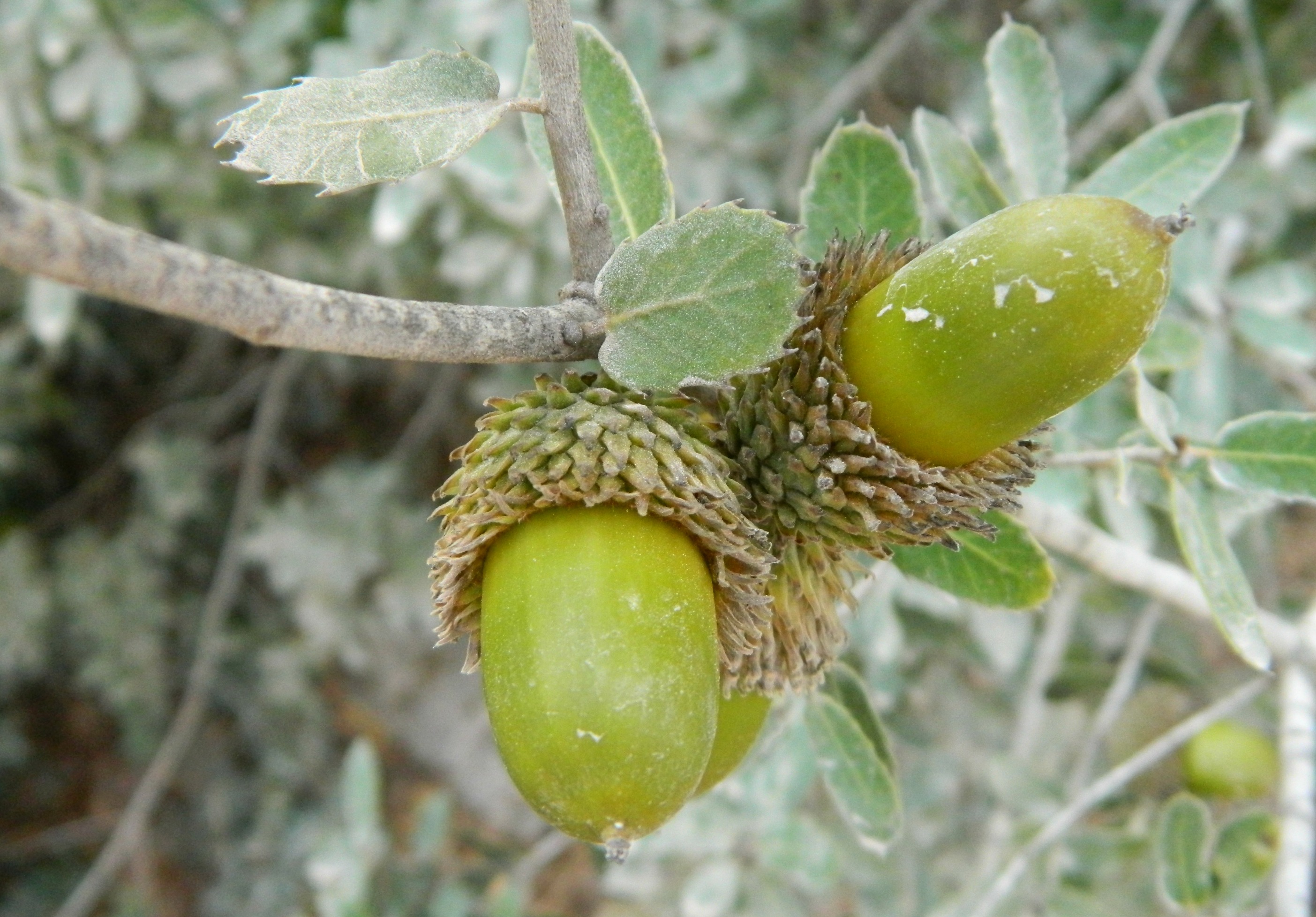
Dusty acorns

Dusty acorns

Finishing up where we started – the western gate – I found a bitter almond tree and tried to feed my friends cyanide-rich nutmeat, but they all refused. We boarded the minibus and drove through intermittent traffic back to the university, successfully culminating the first archaeology trip of the semester.

Tel Kedesh Archaeological Dig

In Galilee, Israel on November 1, 2016 at 12:51 PM

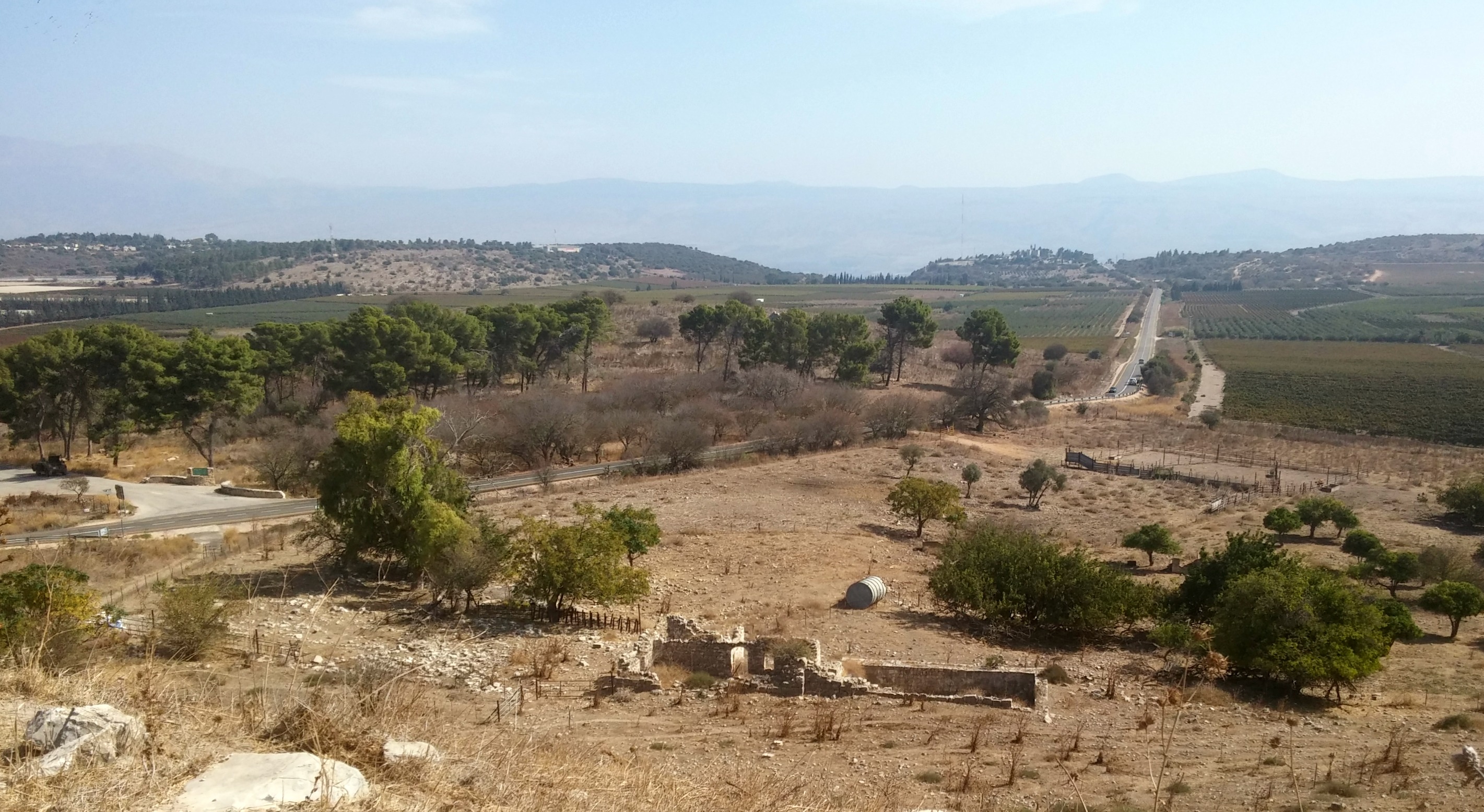
Exactly two weeks ago, during Chol HaMoed of Sukkot, I took my brother Nissim to an archaeological dig at the nearby Tel Kedesh. Located on the Old Northern Road north of Tzfat in the Naftali Mountains of the Upper Galilee, Tel Kedesh is just approximately 700 metres from the Lebanese border. I had visited half of the site two-and-a-half years ago with my sister (blog post linked in the first sentence).

The view to the east

The view to the east

But this time I was to explore the half I hadn’t known about at that time, and to contribute to an excavation under the auspices of Dr Uri Davidovich, Ido Wachtel and Roi Sabar of the Hebrew University. This was to be my second archaeological dig, the previous one also under the behest of the Hebrew University at Khirbet Arai near the city of Kiryat Gat.

RTK surveyor under the bitter almond tree

RTK surveyor under the bitter almond tree

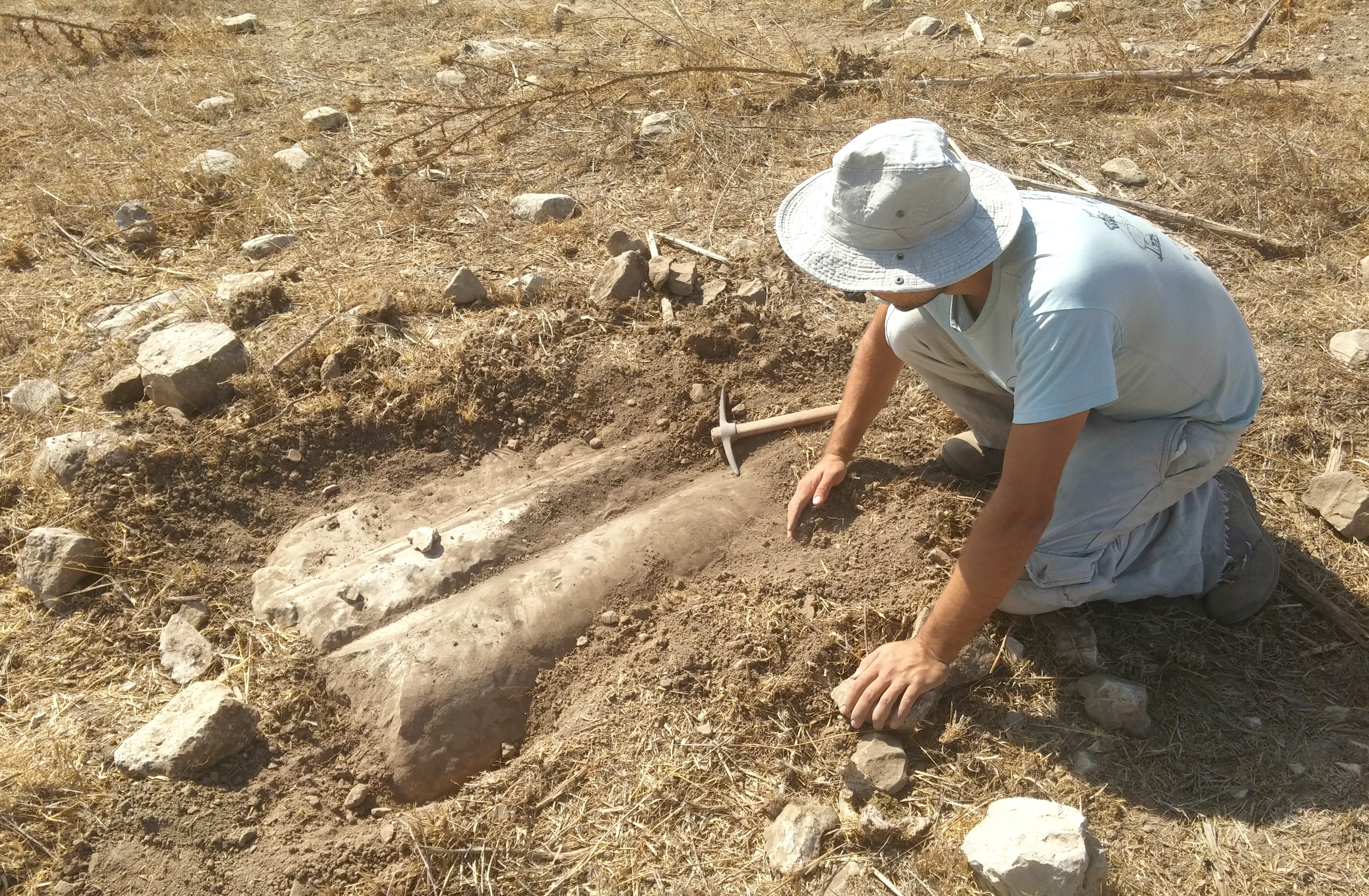
I had emailed the team in advance and so when we arrived on-site in the morning, they already knew that I was a student of Archaeology at Bar Ilan University. Our group of archaeologists, students and volunteers gathered in the Tel Kedesh park parking lot and received our briefing before taking the necessary equipment up to the dig site on the northern mound of the hill. On my second trip up, I stopped to watch Asaf Ben Haim uncover what looks to be a architrave and/or frieze of an important Roman building, located on the path to the dig site.

Asaf uncovering Roman ruins

Asaf uncovering Roman ruins

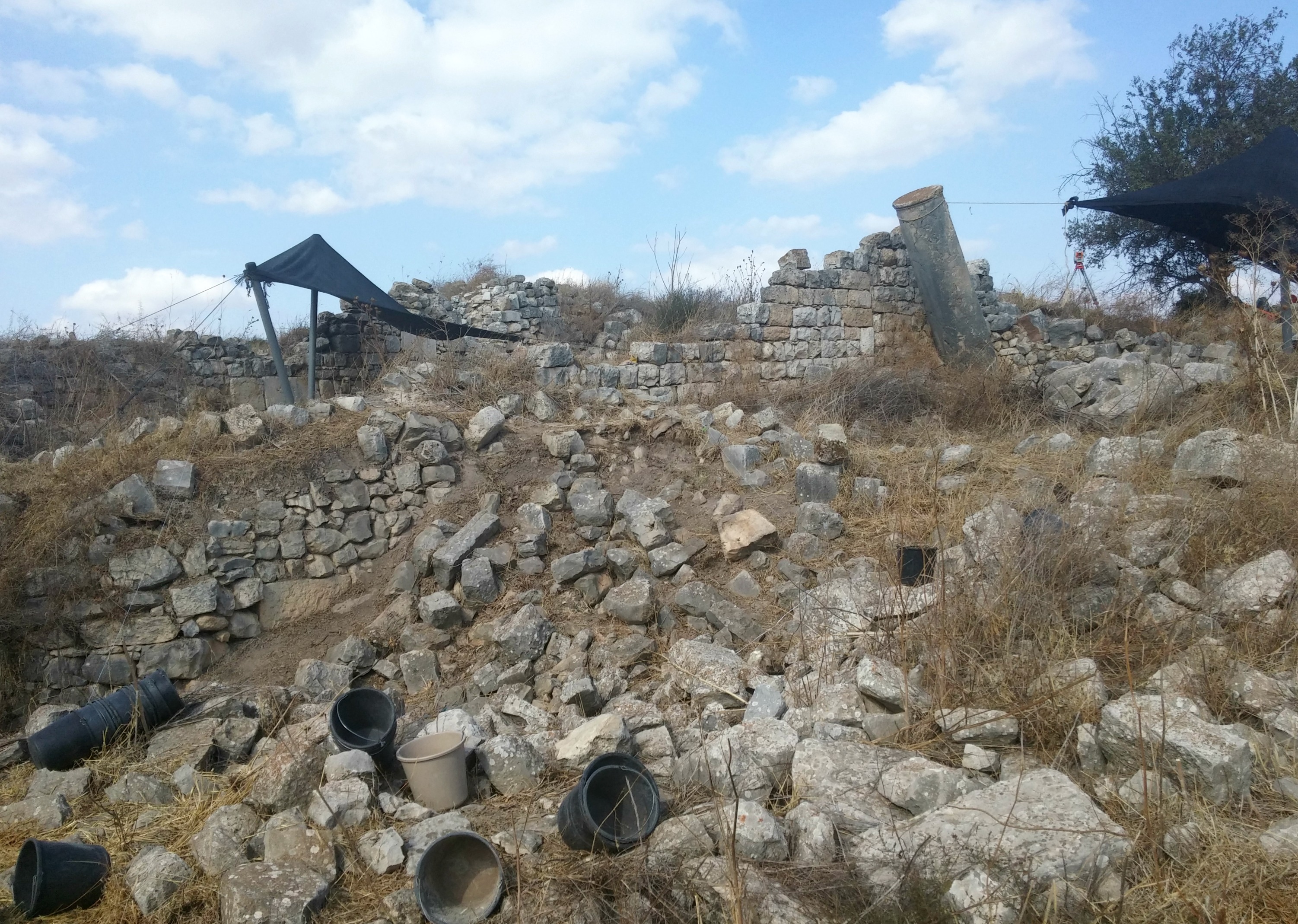
As I watched him tear up the dry earth I saw what looked to be a tarantula near his hand – but no, this was a camel spider, not a true spider but a true fright! Pelicans soars in unison overhead as the sun climbed, the site slowly being turned into an archaeological excavation. As it was the very first day of the dig, in a place never excavated before, there was a lot of surveying, plotting and photo-taking to be done. At last three “squares” were decided upon – one inside the ruins of a building and two adjacent to the eastern wall of that building. The leaning column and large ashlars (Roman-looking) made this site a good place to start.

Ruins amongst the dead vegetation

Ruins amongst the dead vegetation

To give a brief synopsis of Tel Kedesh’s history: Originally a fortified Canaanite city, the Israelites took it over and eventually made it a “City of Refuge” (alongside Shechem and Hevron on this side of the Jordan River). Later, the Assyrians captured and destroyed Kedesh along with other keys cities in the Galilee, perhaps most notably, Hazor. The Greeks, and subsequently the Romans, took up occupation renaming the city Cades. Excavations of a Hellenistic administrative building on the southern mound were done recently by the University of Michigan’s Kelsey Museum of Archaeology. An Arab village named Kadas was established, built upon the Roman remains, and was abandoned in 1948. Remains of British rule include two pillboxes along the road to the west and a Tegart fort under the name Yusha or Metzudat Koach to the east. The Hebrew University archaeological team has its eyes set on Roman ruins so we had to clear away the dry/dead vegetation and fallen stones.

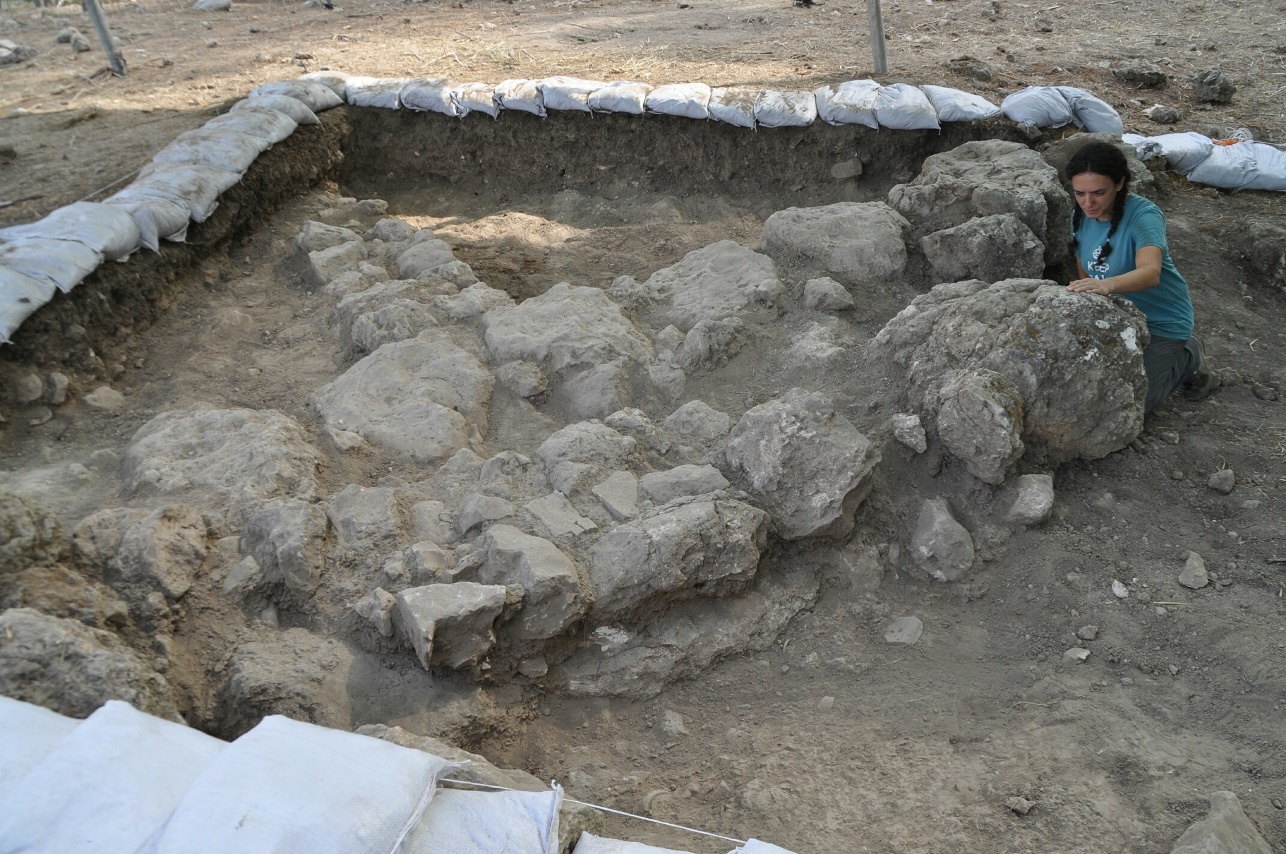
Clearing away the fallen rocks

Clearing away the fallen rocks

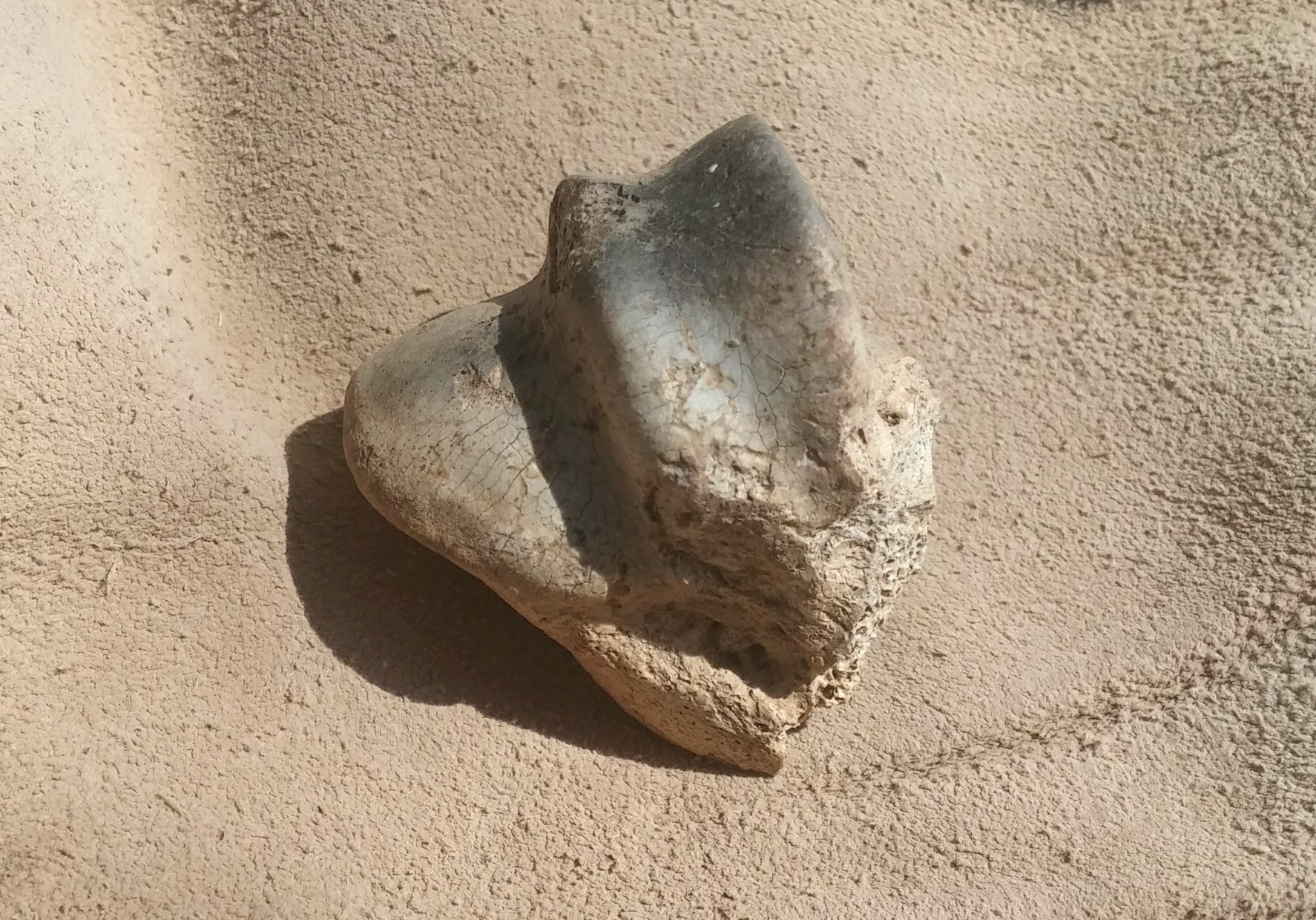
Whilst clearing vegetation I found a bone in the dirt and took it to be examined – it seems to be a scorched sheep knee bone. It was the first find of the day, stashed away in a bucket soon to be filled with more bones, lots of potsherds and even a Roman metal clothespin of sorts.

What appears to be a scorched sheep knee-bone

What appears to be a scorched sheep knee-bone

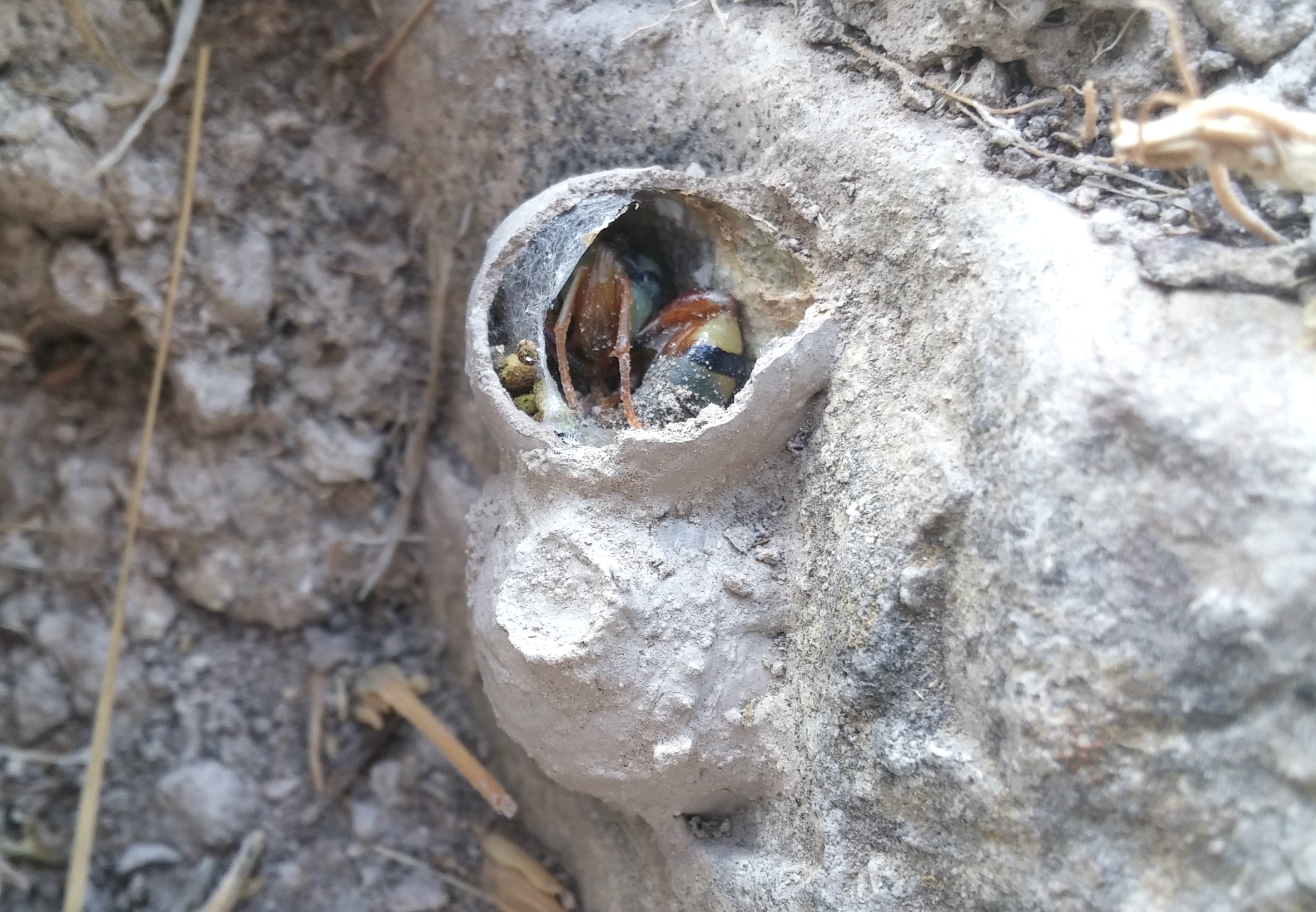
Even while at an archaeological dig I cannot help but be curious as to the flora and fauna to be seen. I spotted what looked to me like a good ten or so black kites wheeling overhead, the droppings of a porcupine (which I have yet to see in Israel), two clay capsules holding wasps in their late stages of development and my first sighting of a few Sardinian warblers popping in and out of the dry undergrowth.

A potter wasp Inside its development clay capsule

A potter wasp inside its development clay capsule

When lunch break came around I sat under a bitter almond tree and decided to have a taste. I don’t recall ever eating a bitter almond; the taste is just like amaretto albeit much more bitter, hence the name. Bitter almonds have forty-two times the amount of cyanide than the normal sweet variety which means that fifty or so bitter almonds can provide a lethal dose of cyanide poisoning.

Cracking open some bitter almonds

Cracking open some bitter almonds

After the lunch break I left the square of rock clearing and joined my brother under the field shade-tent in his square. He was wielding a small pick, clearing dirt and small rocks from alongside the base of a wall. I grasped a larger pick and we went to town on the earth and rocks of the square, clearing out a nice corner.

Nissim digging in his square

Nissim digging in his square

With the sun slowly slipping off to the western horizon the productive workday came to an end and after making our way back down the hill, we took a quick look at the ruins at the eastern mound.

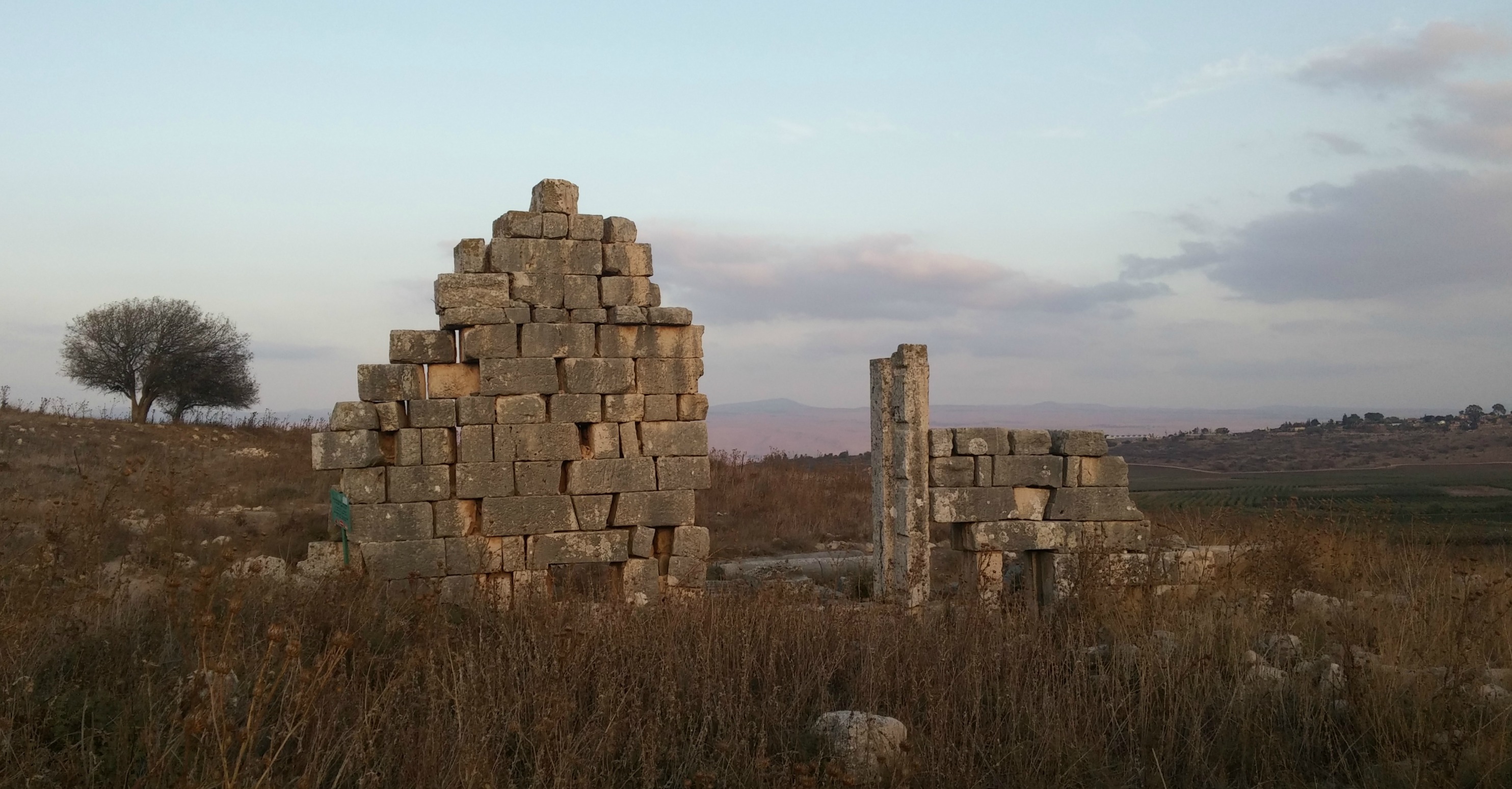
Ruins of a Roman temple

Ruins of a Roman temple

Getting back into the car we drove back home, tired but happy to have been among the first to break ground on a new excavation site. If anything is ever found in that part of Tel Kedesh, we’ll be able to boast that we were there the very first day.

Alma Cave

In Galilee, Israel on October 9, 2016 at 5:46 AM

A year and a half ago, while home after my several military adventures in the Golan, I went on an “extreme” trip with my old army friend Nechemya. As we share an interest in caves, I had selected a certain cave to be the subject of our adventure – Alma Cave. Located just north of Tzfat (Safed) beside the Jewish community of Alma and opposite the Circassian village of Rehanyia, the cave is a short hike from the main road. Parking the car near some cow-sheds, we gathered up all our necessary gear in two backpacks and struck out for the trail.

Nechemya taking some pictures

Nechemya taking some pictures

With a general lack of trees in the area, it was relatively straightforward where we needed to go, especially with a satellite picture to guide us. Flanked by Hatzor Stream and the mountain ridge above it, we traversed a marshy seasonal stream and climbed to higher ground. What amazed me was the quantity of cow bones, mostly bleached white from sun exposure – however there was one particularly grotesque sheep carcass in early to mid stages of decomposition.

Humble exterior of Alma Cave

Humble exterior of Alma Cave

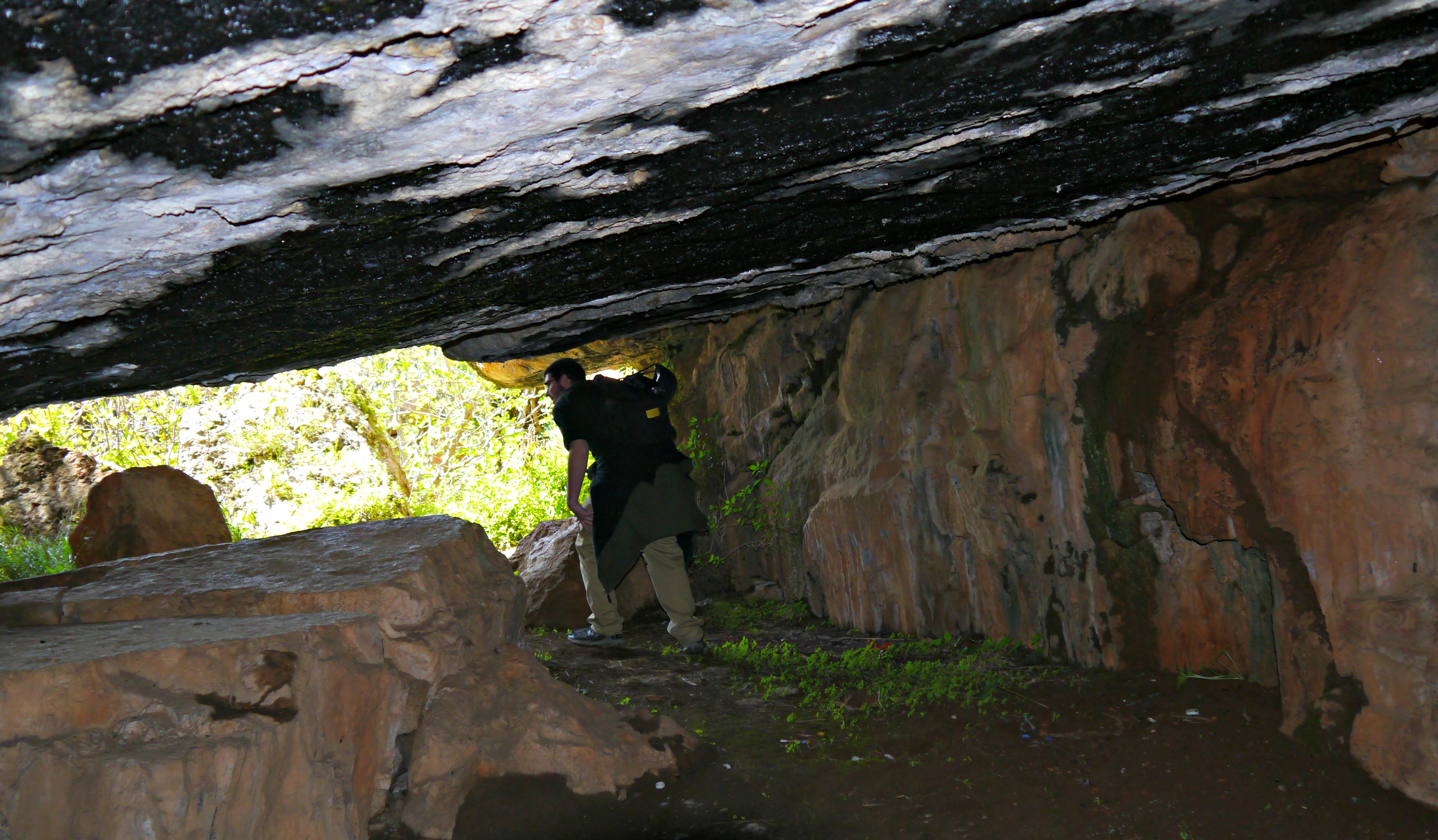
After the short walk we descended a bit to the large rocky karst patch of land where the cave’s mouth was hidden. Finding the slow descent into the opening cavern, we used the metal handles and fig branches to navigate downwards.

From within the first small cave

From within the first small cave

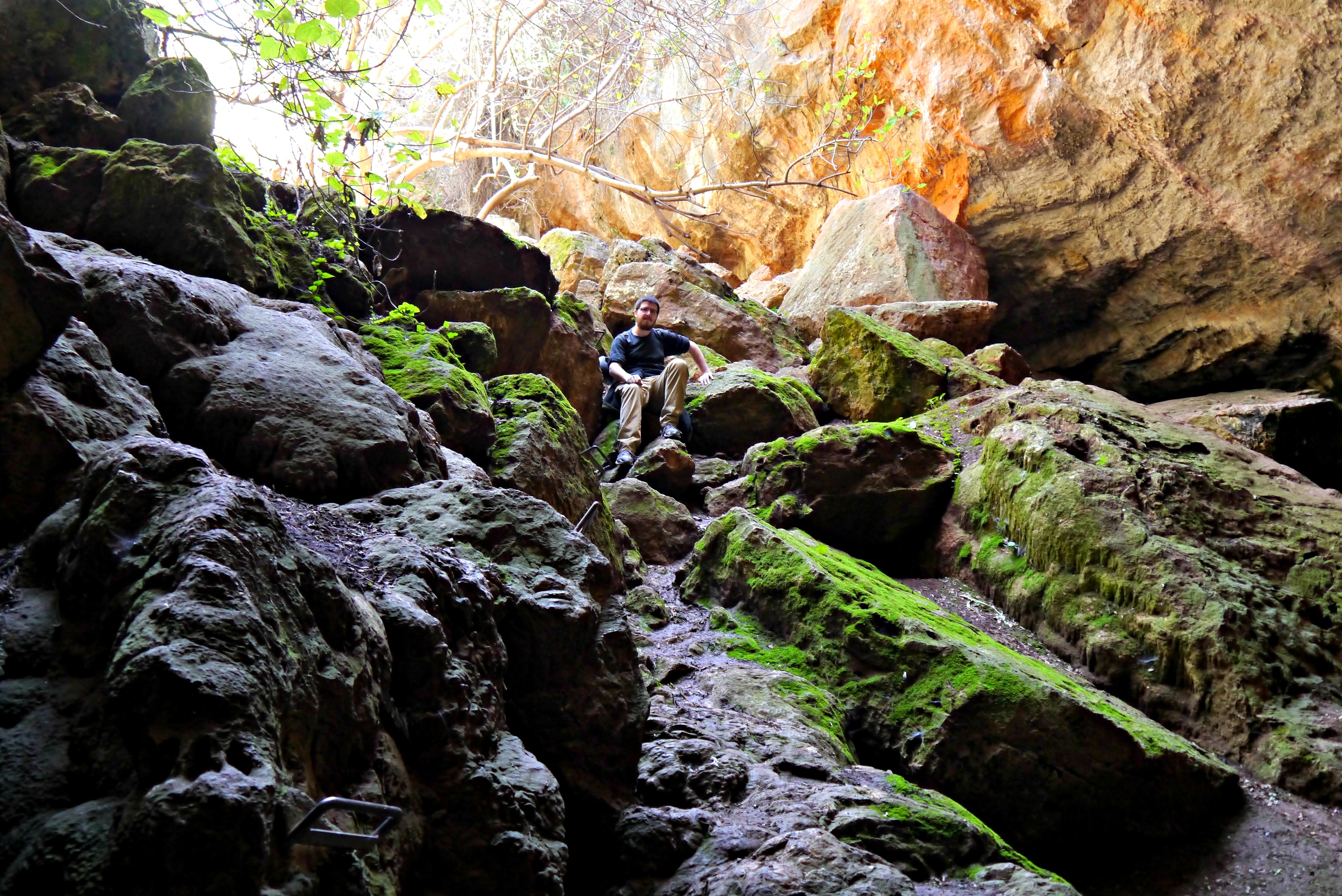
Passing a small side cave beautifully adorned with dry speleothems, we reached the cave’s impressive entrance cavern.

Sitting in the entrance cavern

Sitting in the entrance cavern

With the cave located on a geological line between the Dalton and Alma plateaus, the gathering water seeps down and erodes the soft rock, creating the labyrinth of cracks, fissures, tunnels and underground chambers.

Alma Cave's vertical survey

Alma Cave’s vertical survey

While we marveled at the size of the entrance hall, we had a quick bite to eat and prepped our gear. In addition to the mandatory headlamps, we brought helmets, an emergency flashlight and extra batteries as well as a whole bunch of climbing rope in case we needed to rappel deeper into the bowels of the cave.

Ready to descend

Ready to descend

But, perhaps most excitingly, Nechemya brought a GoPro camera and affixed it to the top of his helmet to properly document the spelunking. Zipped up warm and ready to go, we used the metal handles planted in the rocks to drop down into the cave’s dark continuation. We turned around in the darkness, illuminating an underground world with our headlamps. Following the white reflective markers, we began the approximate 500 metre journey to the bottom of the cave. The deeper we got, the damper it got and we were dripped on by the cave’s mineral-rich water deposits.

A cave drop

A cave drop

Sticking to the marked route, we passed many side chambers and tunnels which filled us with intrigue. Legends run wild with Alma Cave –  stories of hundreds of thousands of graves, an endless interior and more – in fact, the cave is also known as the Babylonian Cave and the Abyss Cave.

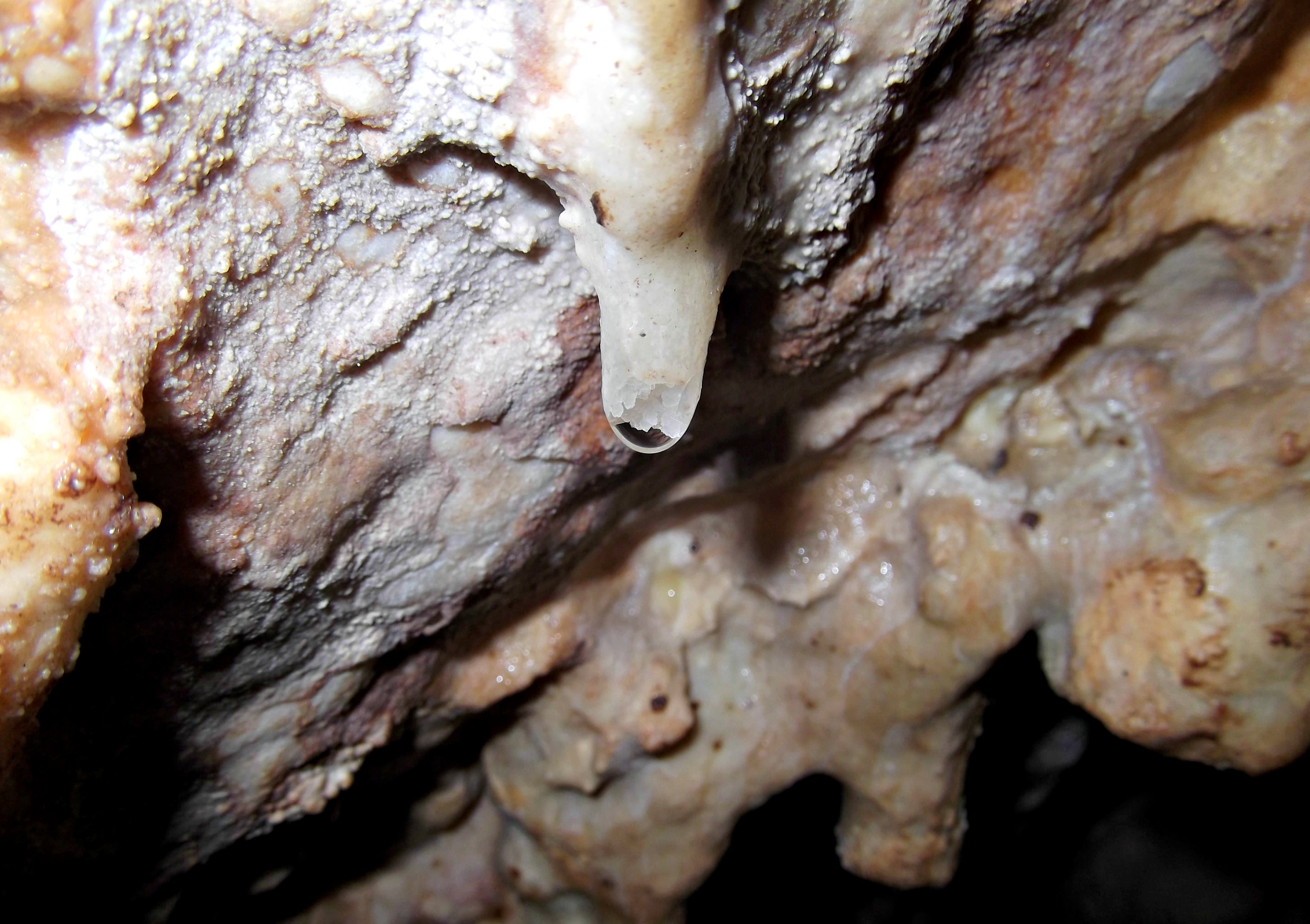
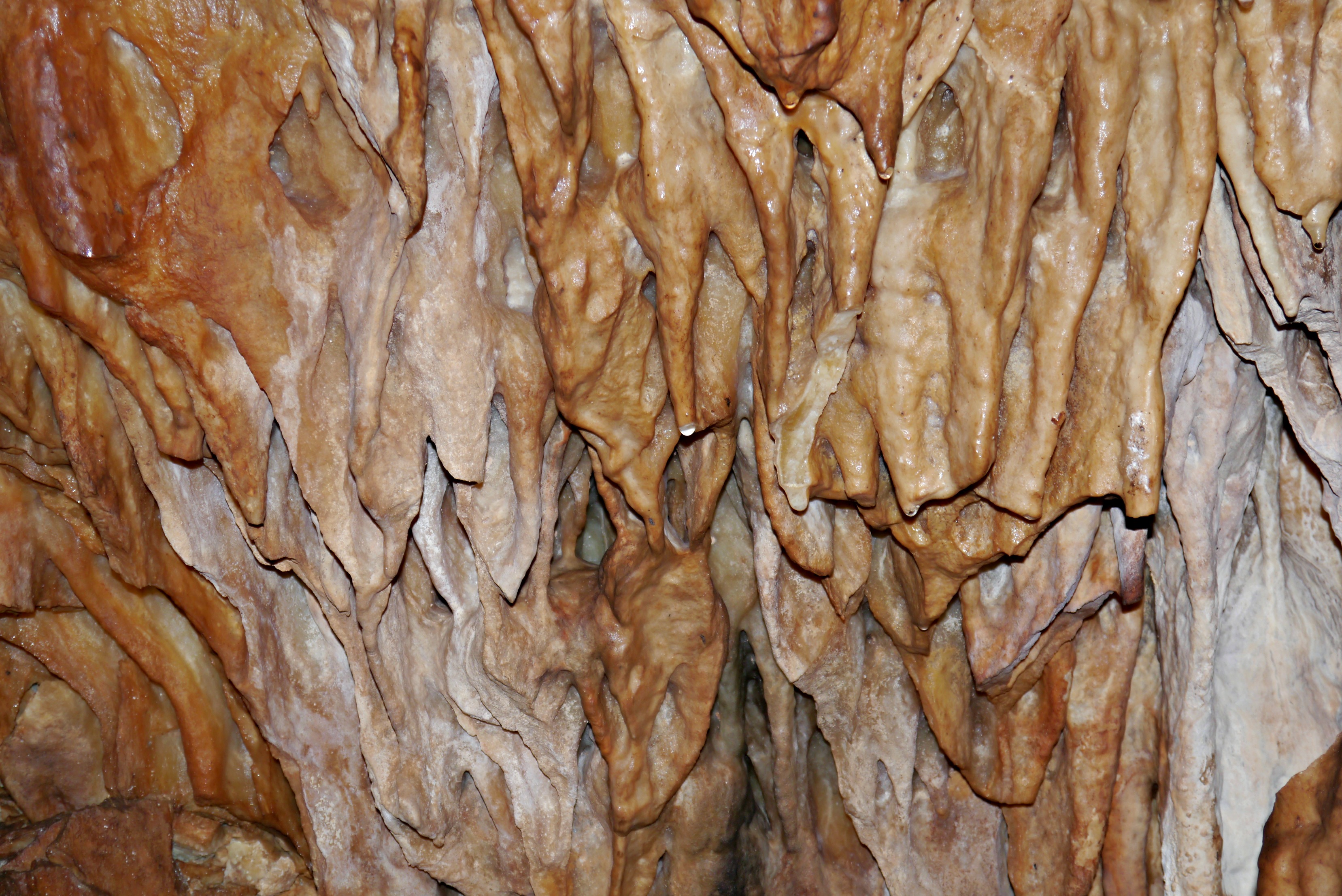
Cave growths

Cave growths

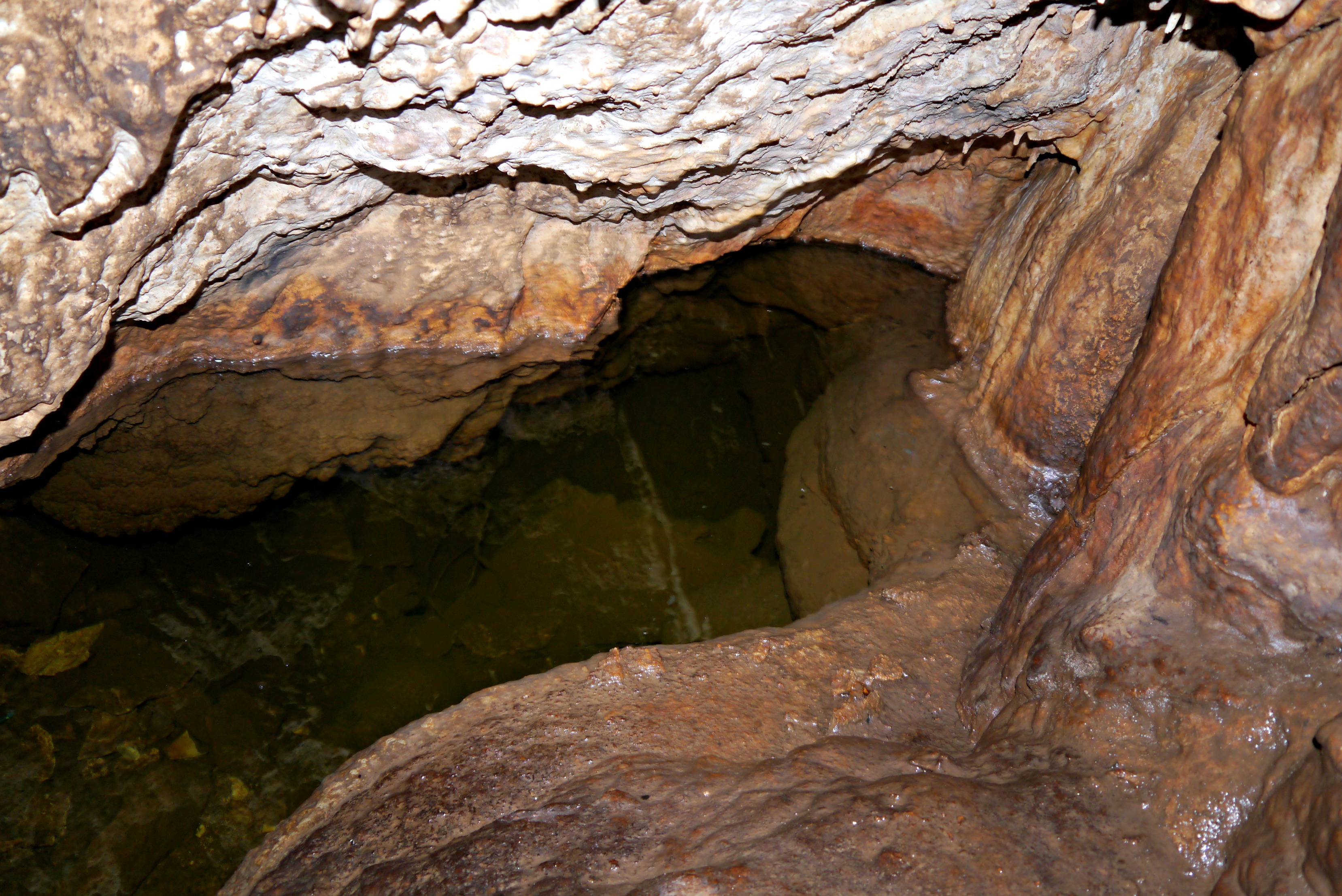
Plunging even deeper into the ground, the rocks we stepped on were found to be slick with mud, hazardous in their own right. After an hour or so of descent we finally reached the blue sign marking the end of the line, but we were not going to let that stop us. We slid down a wet slope, beside a rather large cave growth, and found the little underground spring of crystal-clear water.

Underground spring

Underground spring

At this point we were some 105 metres (345 feet) below the surface but we saw that there was still room to go further. And so we did, sliding down another couple metres before deciding to turn out the lights and sit in the cool darkness for a spell.

Sitting at the near bottom of the cave

Sitting at the near bottom of the cave

Once the chill set in, as we were rather far underground, we decided it was time to leave the cold clammy embrace of the cave’s lowest marked chamber and to strike for the surface. The way up was far faster and easier than the descent, and we spend more time peering into side chambers and tunnels, wondering where they led to.

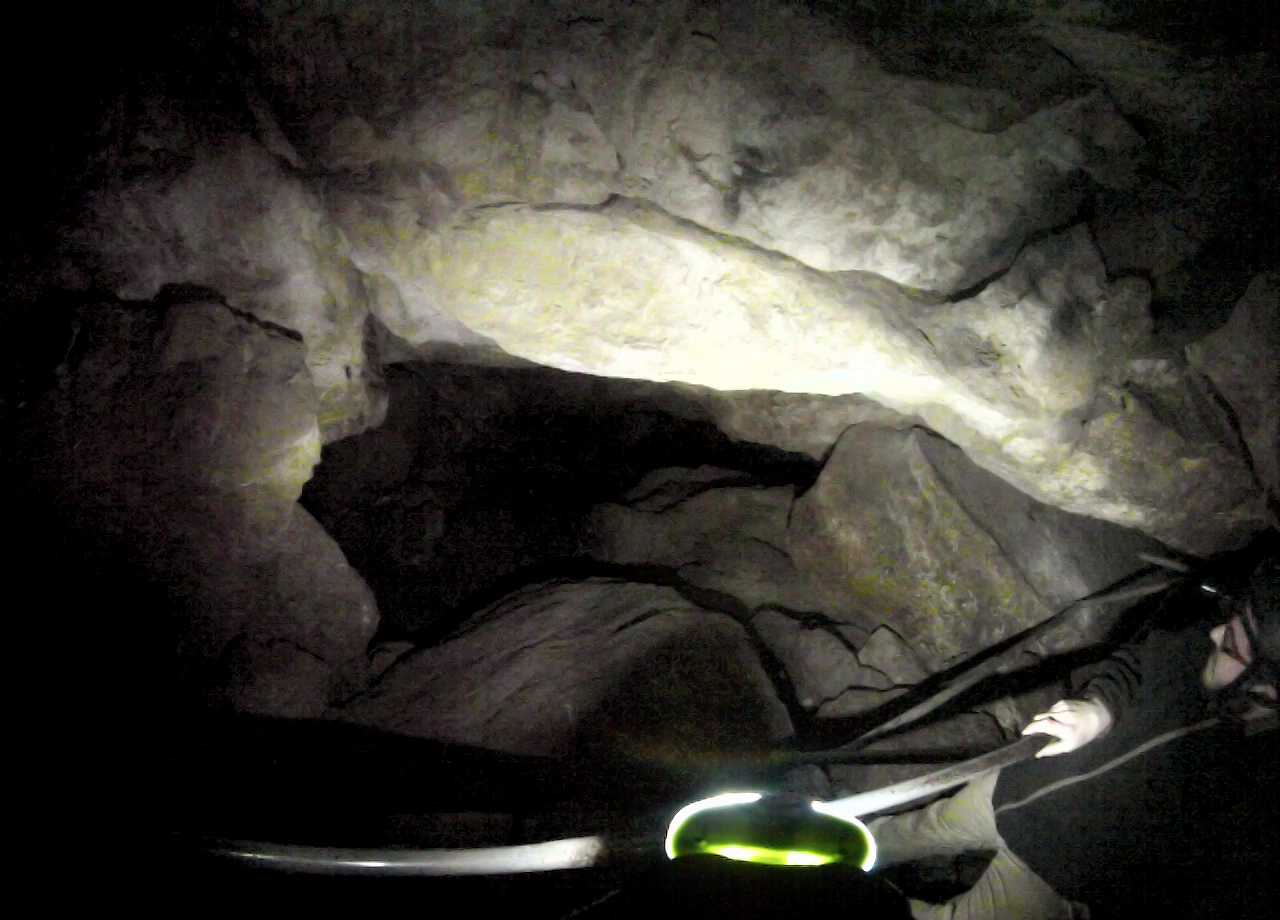
Looking down a pit - a GoPro screenshot

Looking down a pit – a GoPro screenshot

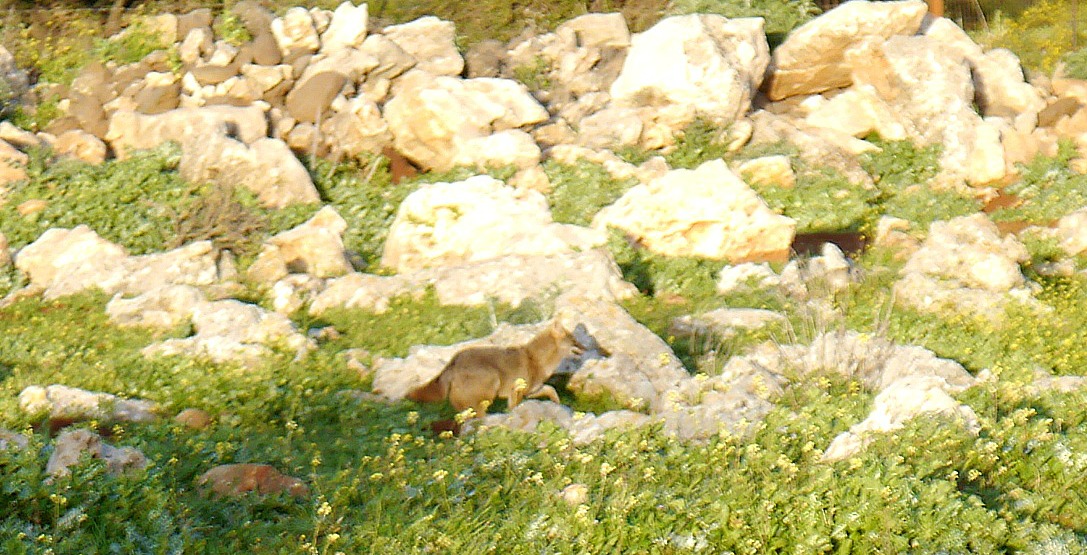
It was only on the ascent that we successfully got GoPro footage, although unfortunately it came out rather “tunnel-vision-like” with the sole headlamp on Nechemya’s helmet providing light. So I went through the approximate 43 minutes of underground footage, which was a sizable 3.76 GB, and decided that I couldn’t be bothered trying to make a video of it. When we at last reached the surface, we repacked our equipment and belongings, to the sounds of the cooing and flapping of pigeons in the background. Equipment stowed, we climbed out of the entrance cavern and sprawled on the soft green grass to enjoy the warmth of the sun on our cold bodies. I was laying on my back with a jacket sleeve over most of my eyes when I saw a furry beast trot by just metres in front of me. I lurched up with a cry as I watched the unsuspecting jackal run for cover. Leaping up with Nechemya’s camera in my hand I pursued the jackal, seeing the rest of his pack converge to the north. Watching their movements, I raced across the top of the hill to cut them off to the northeast. Just as I suspected, five or six jackals ran by and I was able to get this semi-decent photo of one in my ambush.

Jackal running by

Jackal running by

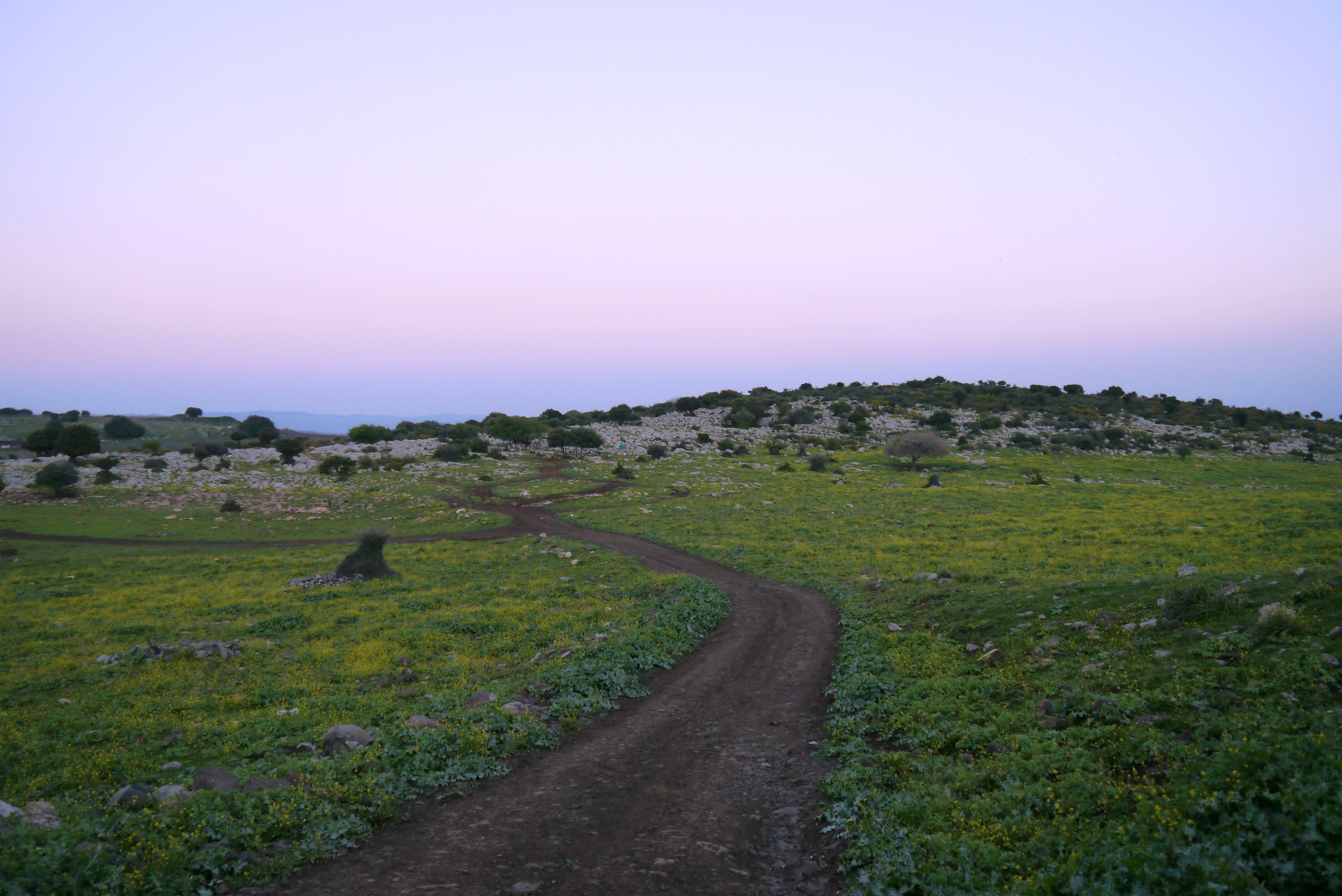
I soon lost track of the jackals and returned to Nechemya where we had a quick bite to eat in the quickly setting sun. Walking back the way we came, I nabbed the two bleached cow skulls that we had passed earlier and we got back to car at dusk.

Leaving Alma Cave at sunset

Leaving Alma Cave at sunset

Driving the road back to Tzfat I dropped Nechemya off and got his photos and GoPro footage for my blog, so yes, many of the photos are accredited to him. Looking forward to more adventures…

Korazim

In Galilee, Israel on September 11, 2016 at 6:32 AM

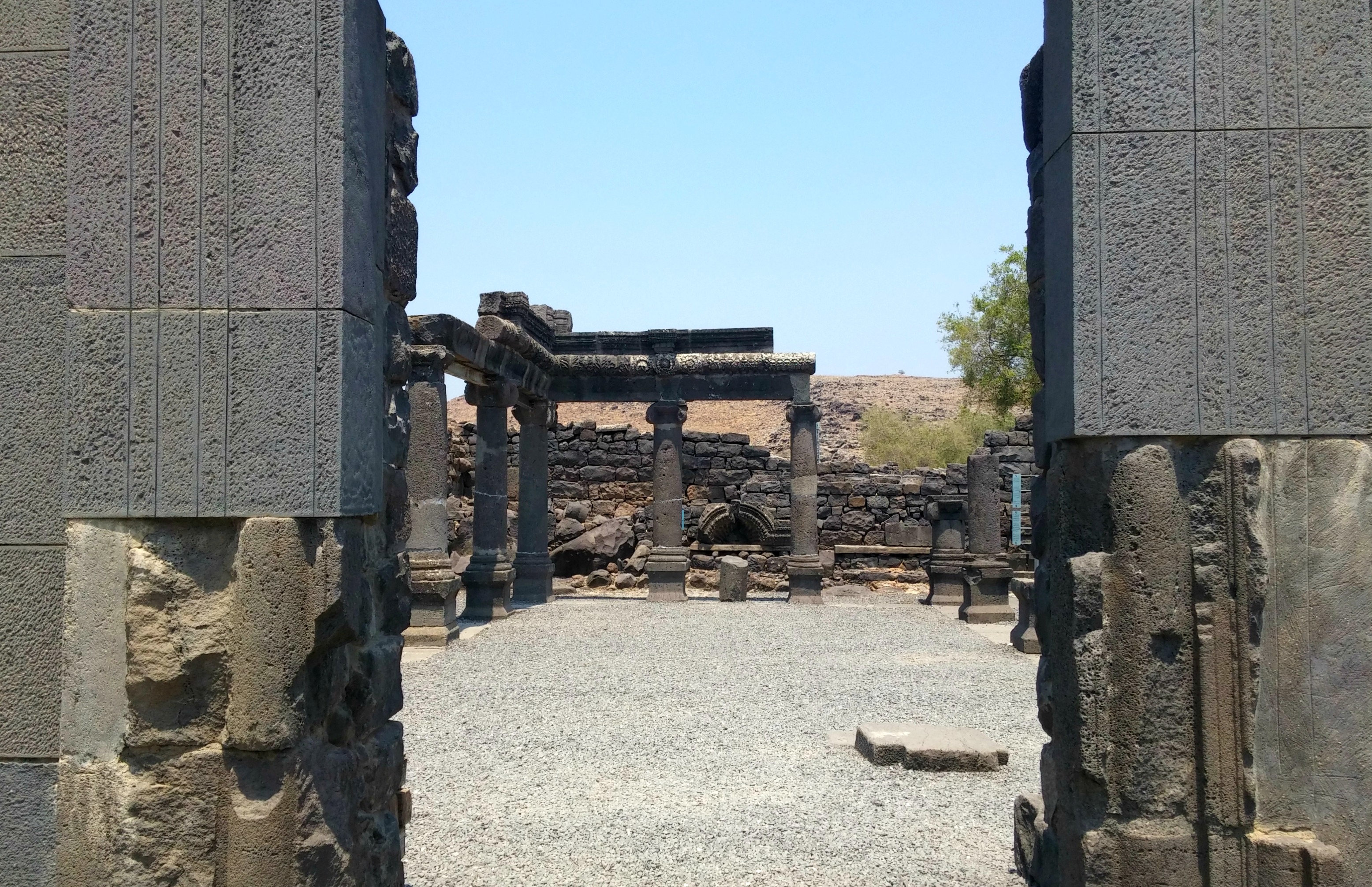
About a month ago or so I visited the ancient city of Korazim, located just north of the Kinneret (or Sea of Galilee). It was a scorching day yet we persevered and toured the black basalt ruins, taking shelter under the scattered trees as we passed from site to site. We started on the paved trail passing the ruins of houses and then the ancient mikva (ritual bath) on the right-hand side with more ruined houses on the left. Shortly we reached the central attraction of the park, the ancient synagogue.

Peeking inside the ancient synagogue

Peeking inside the ancient synagogue

Korazim was founded in the 1st or 2nd century CE, around the time that most Galilean synagogues are dated (following the destruction of the Second Temple by Titus and his Roman legions). Jewish sources note Korazim as a place with good wheat while Christian sources mention the city as cursed, destined to be destroyed – which it was by an earthquake.

Multiple arches

Multiple arches

Most of Korazim’s ruins date to the 3rd and 4th centuries CE and the town was slowly restored in the following centuries. Settlement was resumed towards the end of the Crusader period, although on a much smaller scale. Archaeological excavations of Korazim began in 1905 and were taken up again intermittently throughout the century, the last taking place in 1983 before the park was opened to the public.

Classic Galilean-style synagogue

Classic Galilean-style synagogue

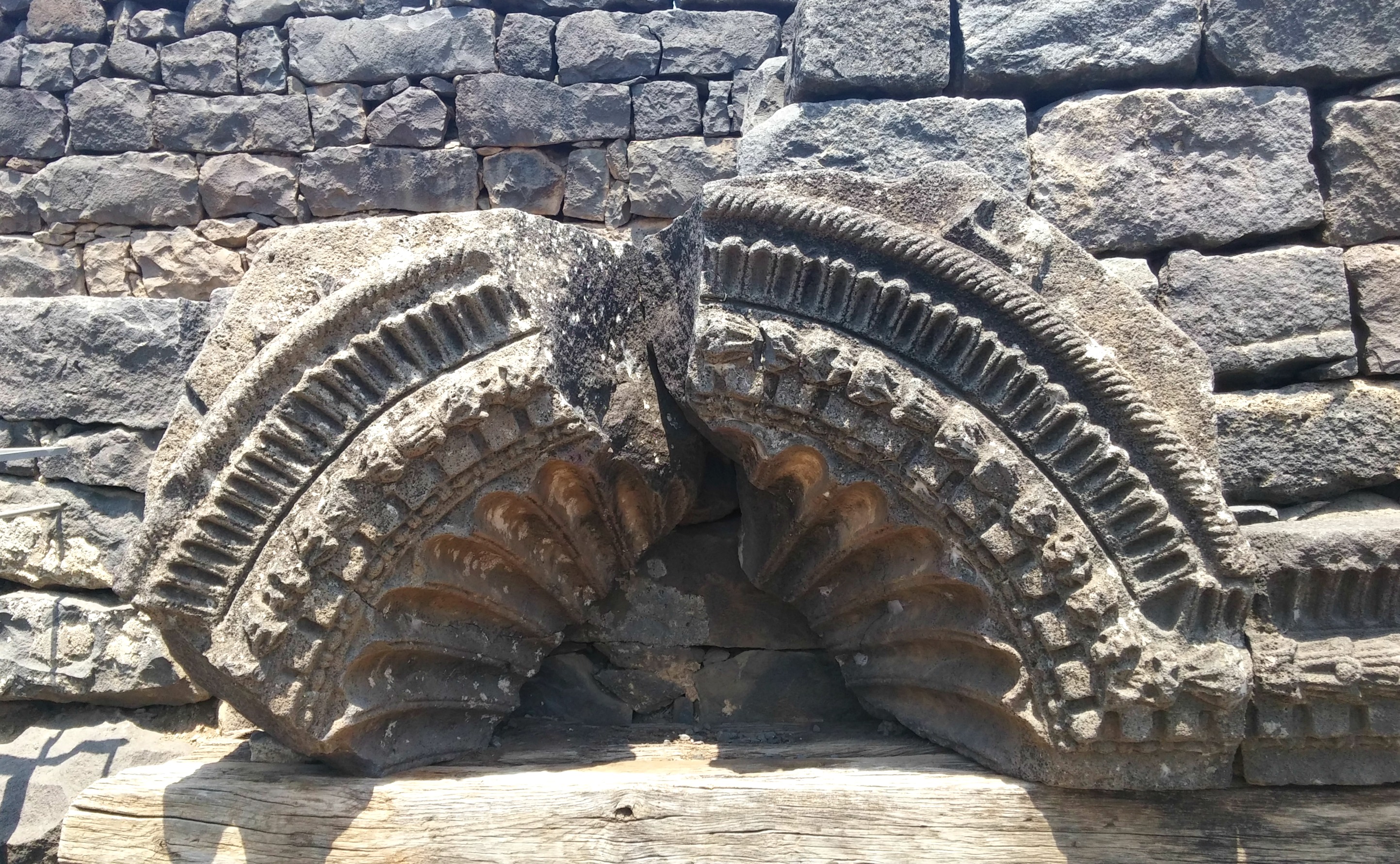
I had a university class about the late Roman and Byzantine eras and ancient synagogues were discussed. I learned the identifying characteristics of a Galilean synagogue and was pleased to be able to point them out as I explored Korazim’s ancient house of prayer. Some interesting features were the carved ornamentations in the building’s interior, the large basalt columns and a replica of the “Seat of Moses”, the original being held in the Israel Museum.

Broken conch decorative piece

Broken conch decorative piece

Leaving the ancient synagogue we took a short break under a nearby tree, refreshing ourselves with a water bottle. As we sat on a stone wall, nature resumed around us. Agamas scrambled around on the tree branches and various small songbirds flitted about; warblers and graceful prinias. In the skies beyond the tree’s foliage I identified a little swift for the first time, and then shortly thereafter what looked to be a flycatcher of sorts flying low over the basalt ruins.

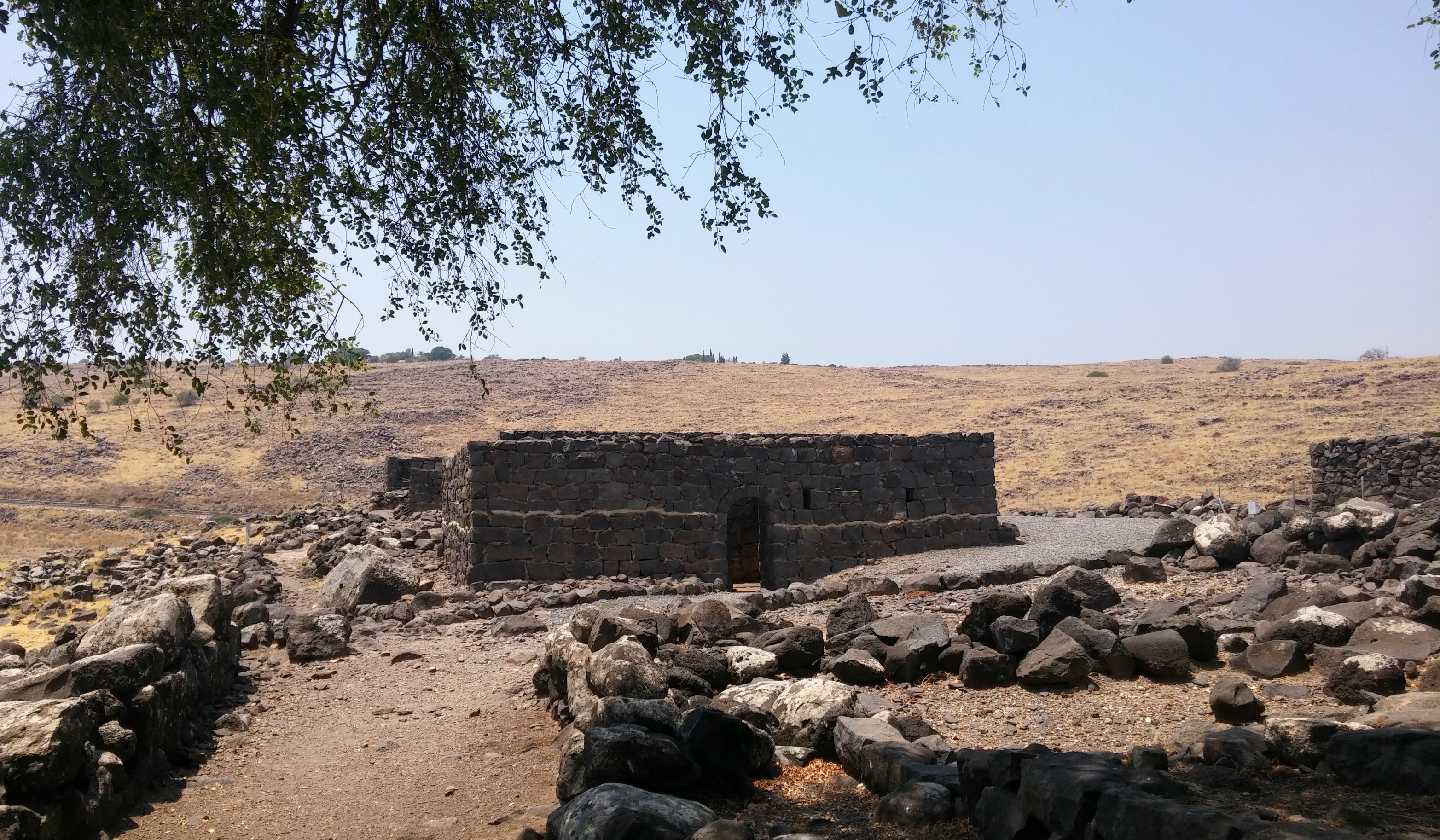
Basalt ruins of Korazim

Basalt ruins of Korazim

Excited with my birding finds we continued along the path to the western quarter of the city, to the ancient oil press. Korazim might have been known for its wheat production but all ancient Galilean cities partook in the production of olive oil as well. This particular oil press is built of basalt, as is the rest of the city.

Inside the olive oil press

A relatively small national park, we then headed past the southern quarter of houses and looped around the central quarter of housing with a paved courtyard. From there it was the path back to the parking lot. Driving out, we saw the scant ruins of more Korazim houses on the hillside opposite the road – the northern quarter. Continuing on Road 8277 we then reached the Kinneret and turned onto Road 87 passing Capernaum before turning onto Road 90 – Israel’s longest road. Our next destination was the Yigal Alon Centre in Kibbutz Ginosar.

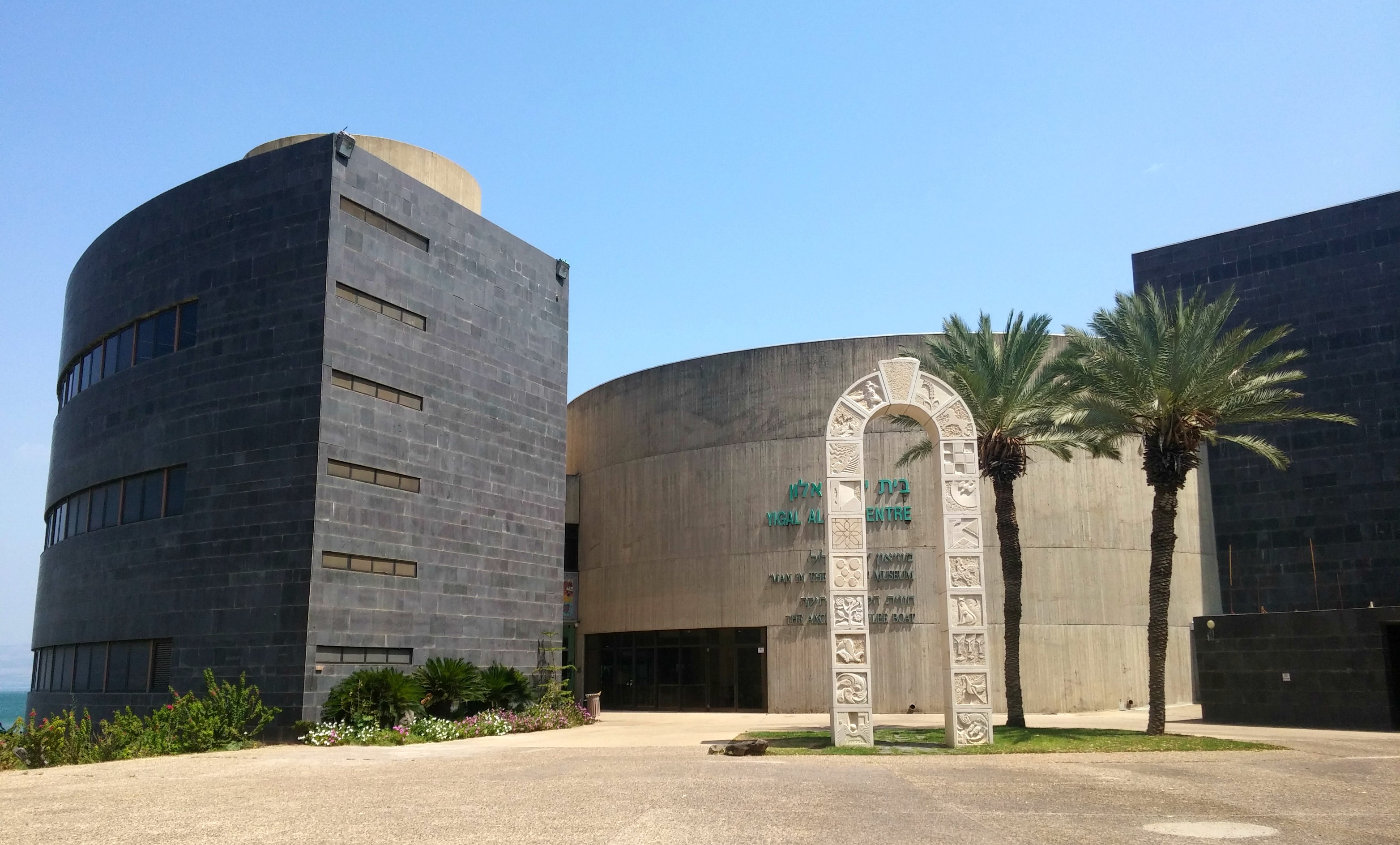
The Yigal Alon Centre

The Yigal Alon Centre

Inside the Yigal Alon Centre is the house of the Man in the Galilee museum and the Ancient Galilee Boat, also known as the Jesus Boat. We gained entrance and began by looking at the preserved 2,000-year-old fishing boat on display. In 1986 the Kinneret suffered a drought and the waterline receded, allowing the wooden boat to be found buried in the mud. A great restoration process was undertaken and the boat was chemically treated to extend its longevity, then presented to the public years later.

The Ancient Galilee Boat

The Ancient Galilee Boat

One of the things I found most interesting about this fishing boat with unknown origins was the breakdown of woods used in its construction. The bulk of it was made of Tabor oak and cedar with the addition of these following woods, to mention a few: carob, Aleppo pine, sycamore, willow and Atlantic terebinth. From the darkened room that holds the boat we then explored the Man in the Galilee museum. With just a few actual antiques on display I found the museum to be underwhelming but enjoyed riding up the Nechushtan-Schindler elevator and seeing the view of the Kinneret from the centre’s roof.

A view of the Kinneret

A view of the Kinneret

Wrapping up at the museum we ended the day of adventures, ticking these two sites off my to-see list.

Har HaTayassim & Latrun

In Central Israel, Israel on September 4, 2016 at 3:40 PM

Several months ago we celebrated Israeli Independence Day, a commemoration of the Declaration of Independence on May 14th, 1948. Two days prior to that we took a Mechina (a university preparatory program that I was attending) trip to Har HaTayassim, a memorial site located just outside of Jerusalem.

Plane crash memorial

Plane crash memorial

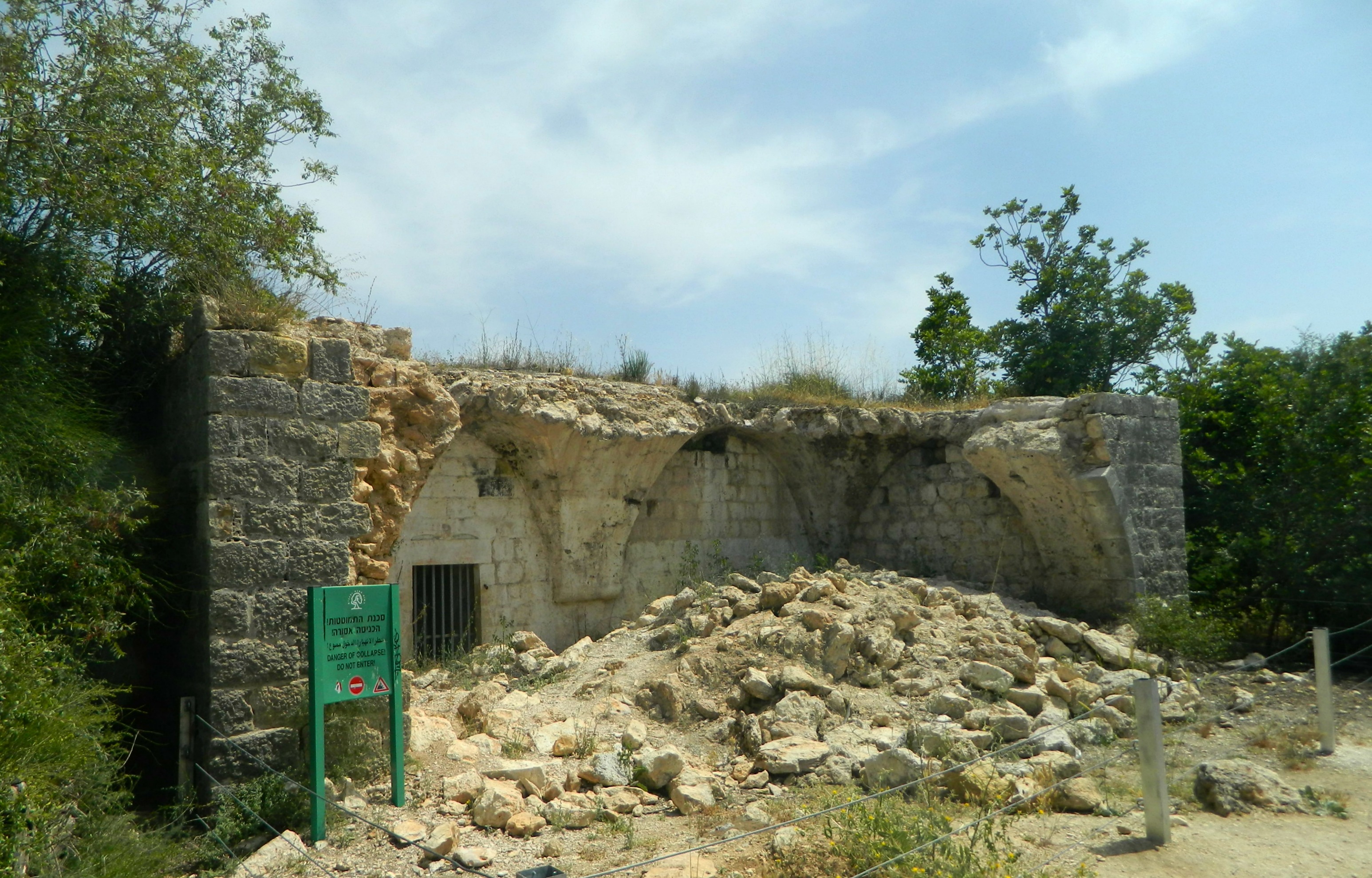
In the days predating the Declaration of, and subsequent War for, Independence, a tragic story happened over the Judean Hills. Unfortunately, even though our tour was guided, there were far too many attendees and thus I found it difficult to absorb all the information that was given. We walked along a dirt trail from stop to stop, accompanied by families of the fallen airmen, active-duty IAF personnel including pilots and other interested groups of individuals. We did chance upon these interesting ruins, of which I know absolutely nothing.

Ruins in the area of Har HaTayassim

Ruins in the area of Har HaTayassim

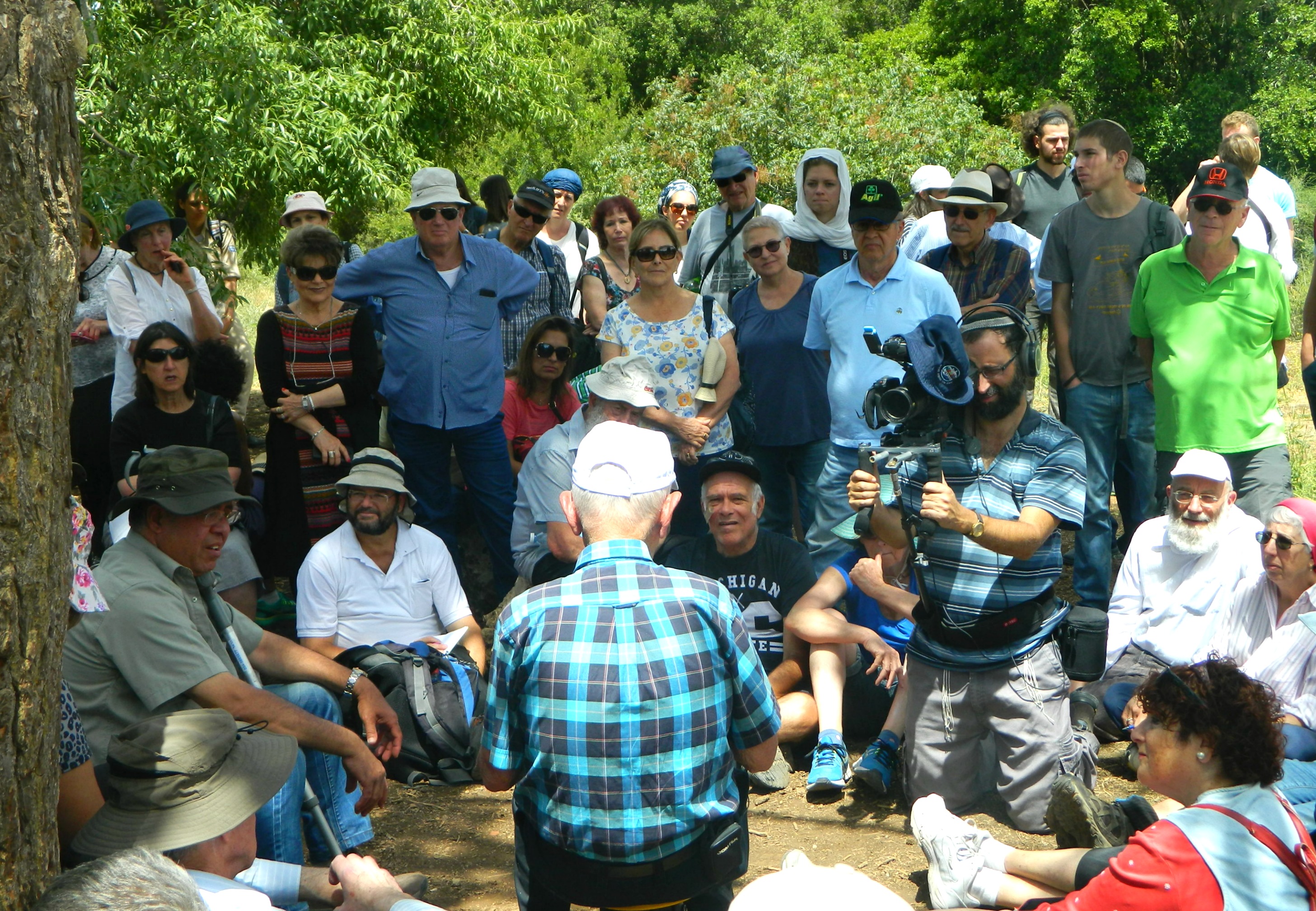
After passing a lovely lookout over the gentle, and nicely wooded, Judean foothills we reached a clearing and gather under a large tree. An elderly man, who turned out to be an old Palmach fighter, spoke of his experience in the years before and during the War for Independence.

Crowding around to hear an old Palmachnik speak

Crowding around to hear an old Palmachnik speak

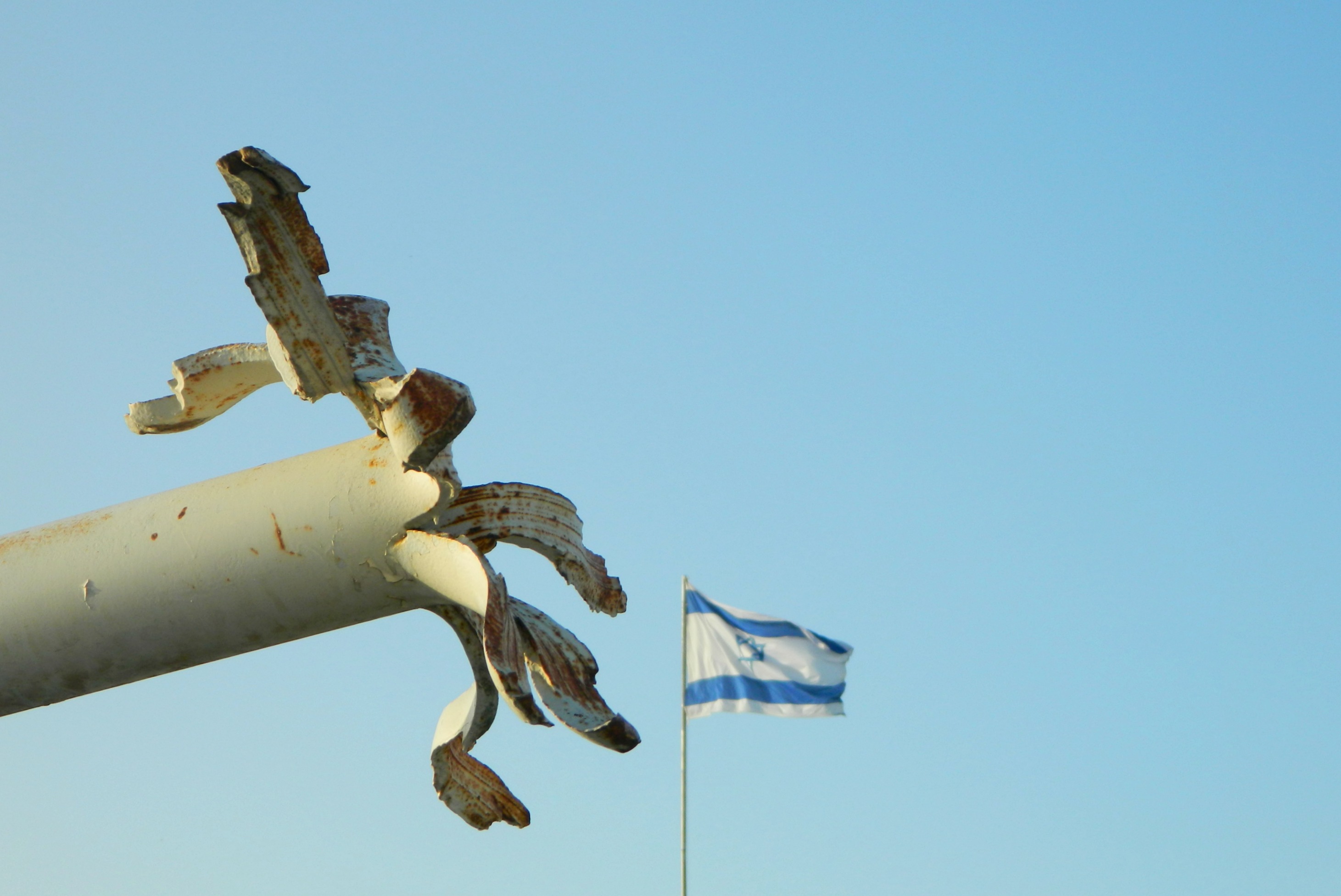
From there we departed and continued to the site of the memorial (pictured above), nestled in a small lot between houses. There we heard the story from family members of one of the fallen airmen, one of the women running the Mechina among them.

Splayed cannon with flag

Splayed cannon with flag

The next day we went to Latrun in the afternoon – to Yad L’Shiryon, a memorial and museum of the Armoured Corps. In the grounds outside the museum’s gates was a multi-faceted military exhibition with weapons, vehicles, technological gadgetry and more on display, complete with uniformed soldiers to give explanations and wow children. Entering the museum, I walked up and down the rows of armoured vehicles seeing specimens such as the Renault R-35, Marmon-Harrington Mk IVF, M48A3 Patton and, of course, the Israel Merkava tanks. Looping around the perimetre, I approached the impressive Tegart fort which crowns the hilltop and climbed the stairs to the top.

View of the exhibitions from atop the Tegart fort

View of the exhibitions from atop the Tegart fort

Leaving the fort, I encountered the memorial wall with the names of all the fallen Armoured Corps soldiers. I spent a few minutes there out of respect and then turned to leave. Passing a tour group it suddenly dawned on me that the names of the soldiers who were killed in the mortar attack on our field camp during Operation Protective Edge in 2014 were probably on that wall (for the war story see HERE). I scoured the most recent names and my eyes fell upon their names listed one after the next; Meidan, Niran and Adi. A grim feeling set in which lasted the rest of the day, bringing personal meaning to the bitter purpose of Yom HaZikaron which was to start at sundown. We slowly made our way to the outdoor theatre where the large memorial ceremony was to take place and found seats next to the booths where live translations were to be given in a multitude of languages.

The ceremony begins

The ceremony begins

The evening began with a military honour guard mounting the stage in preparation for the Yom HaZikaron siren. Next, the mother of Ezra Schwartz (a American teenage volunteer who was killed by a terrorist) went up and lit the memorial torch.

Torch lighting

Torch lighting

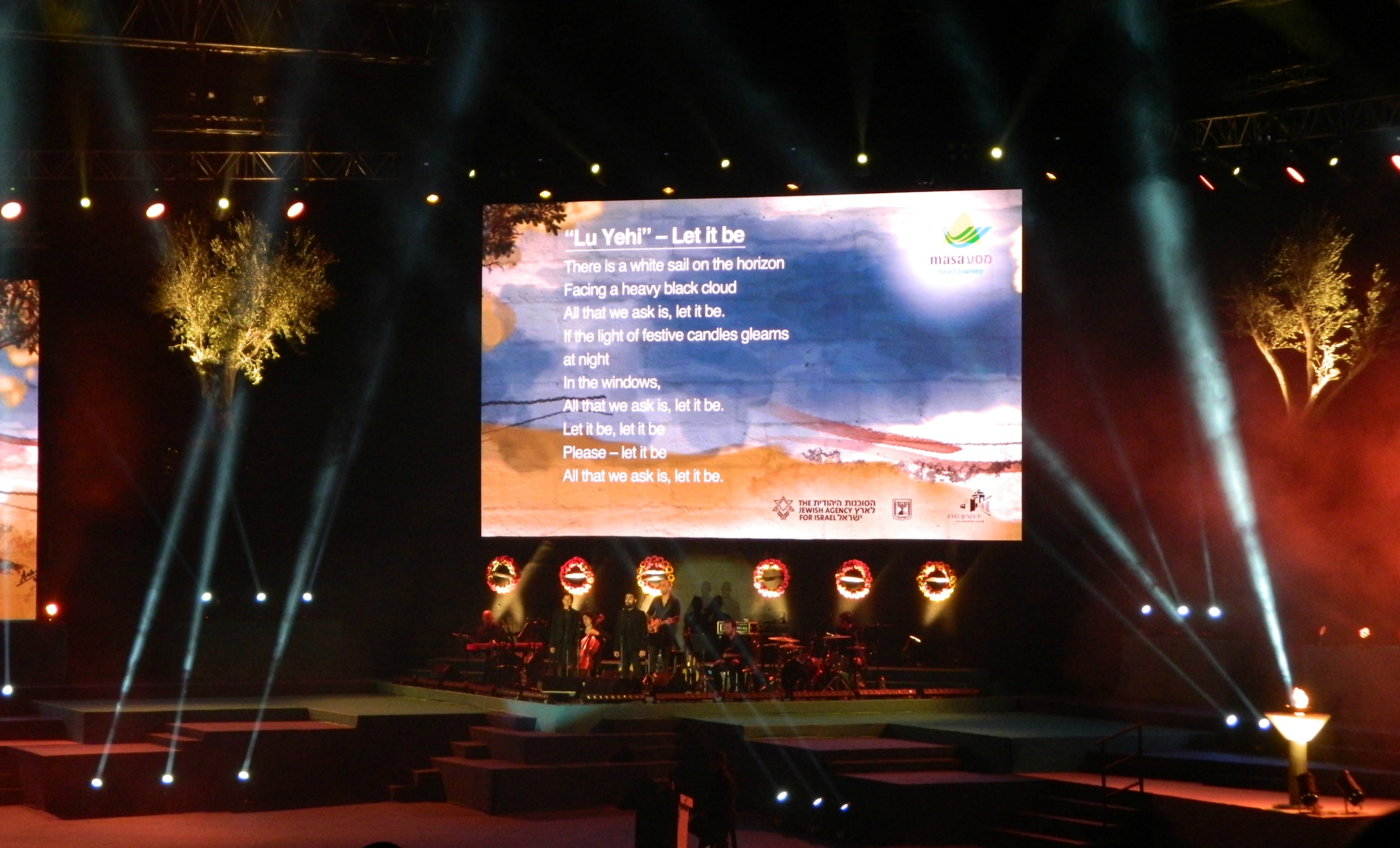
Following that, politician and chairman of the Jewish Agency Natan Sharansky gave a short speech about being a gulag prisoner in Siberia and finding hope in the story of Yoni Netanyahu, brother of the Israeli Prime Minister who was killed in a commando raid in Entebbe, Uganda. The current number of fallen IDF soldiers was then announced – 23,447. Wreathes were then laid by various dignitaries and guests and then the Yizkor prayer was said.

''Lu Yehi'' with the wreathes

”Lu Yehi” with the wreathes

The ceremony highlighted six individual stories of fallen soldiers (plus Ezra Schwartz) with speeches given by family members and then a song played by the band on stage. There was one particularly interesting story of a Sgt Yohan Zarbiv where the photo of him was the last one taken, his camera being mostly destroyed in an explosion several hours later while on duty in Lebanon. Another sad testimony was that of two brothers who both fell in battle, one in 1998 and one in 2010 – the emotionable song “Katonti” by Yonaton Razel was then played. The evening ended with a summary of the legacies of those who fell and the crowd then dispersed in relative silence, affected emotionally by the displays of bitter loss and mourning. Our group gathered around and returned to our bus for the ride back to the university, the end of a thought-provoking evening.

University Trip: Caesarea & Nachal Taninim

In Coastal Plain, Israel on July 10, 2016 at 6:57 AM

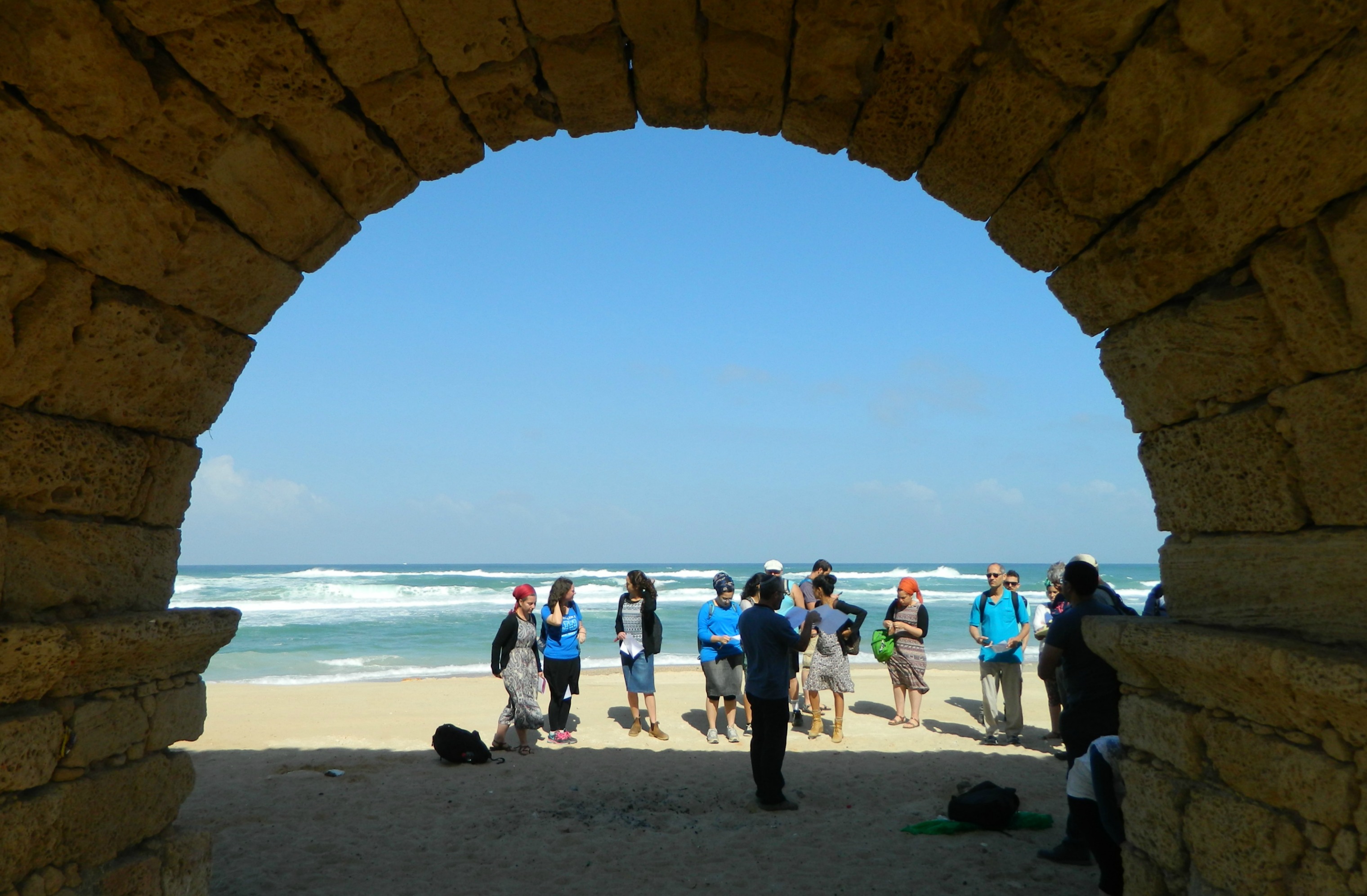
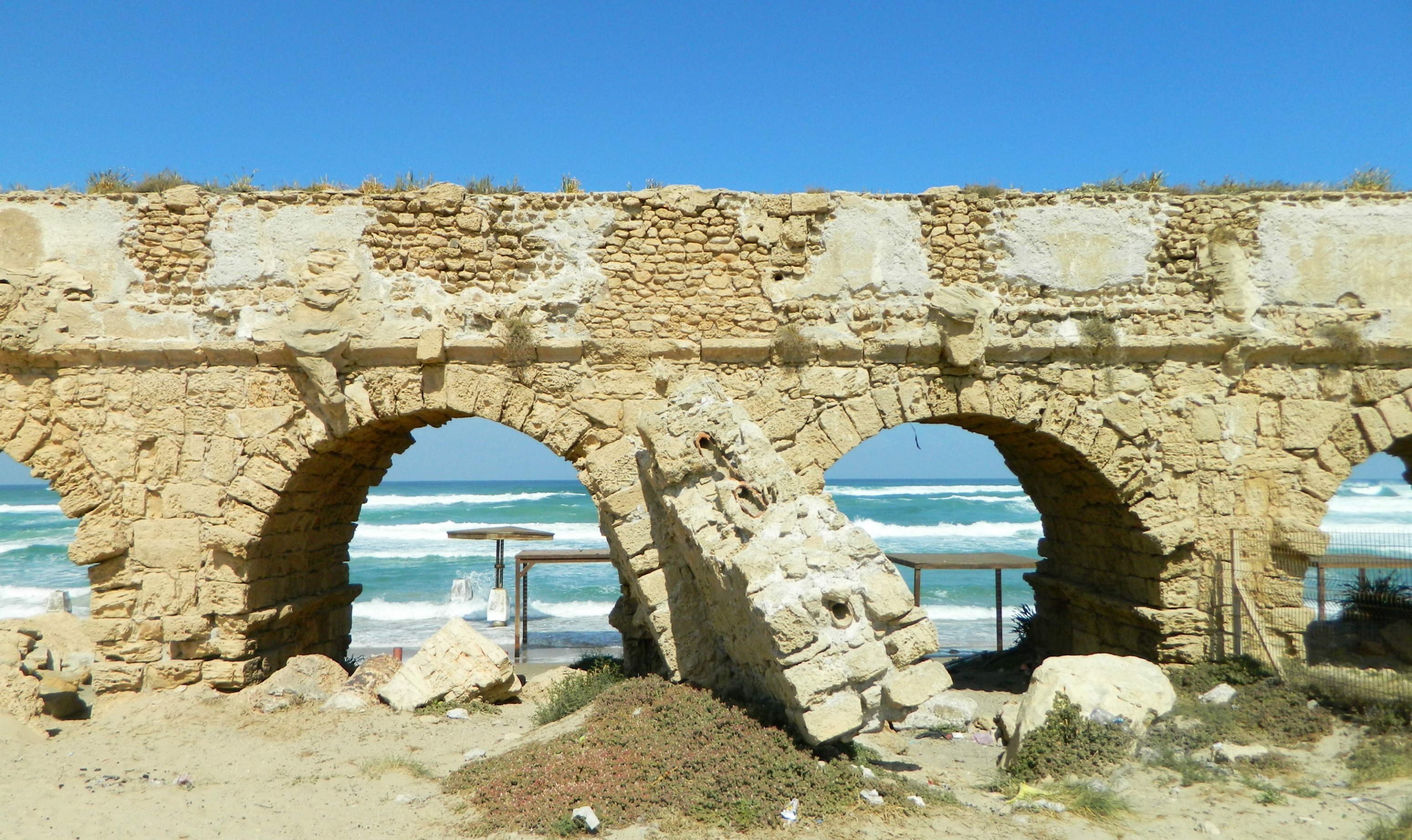
Two months or so ago I joined fellow archaeology students on a tour of Caesarea and the further ends of its iconic aqueduct. Boarding the bus at Bar Ilan University we drove up north to the national park and began our tour overlooking the surf in relatively comfortable morning weather. After a fantastic video (reminiscent of my favourite childhood computer game, Civilization III) summarised the historical successions of the ancient Roman city, we popped on over to the aqueduct remains on the coast.

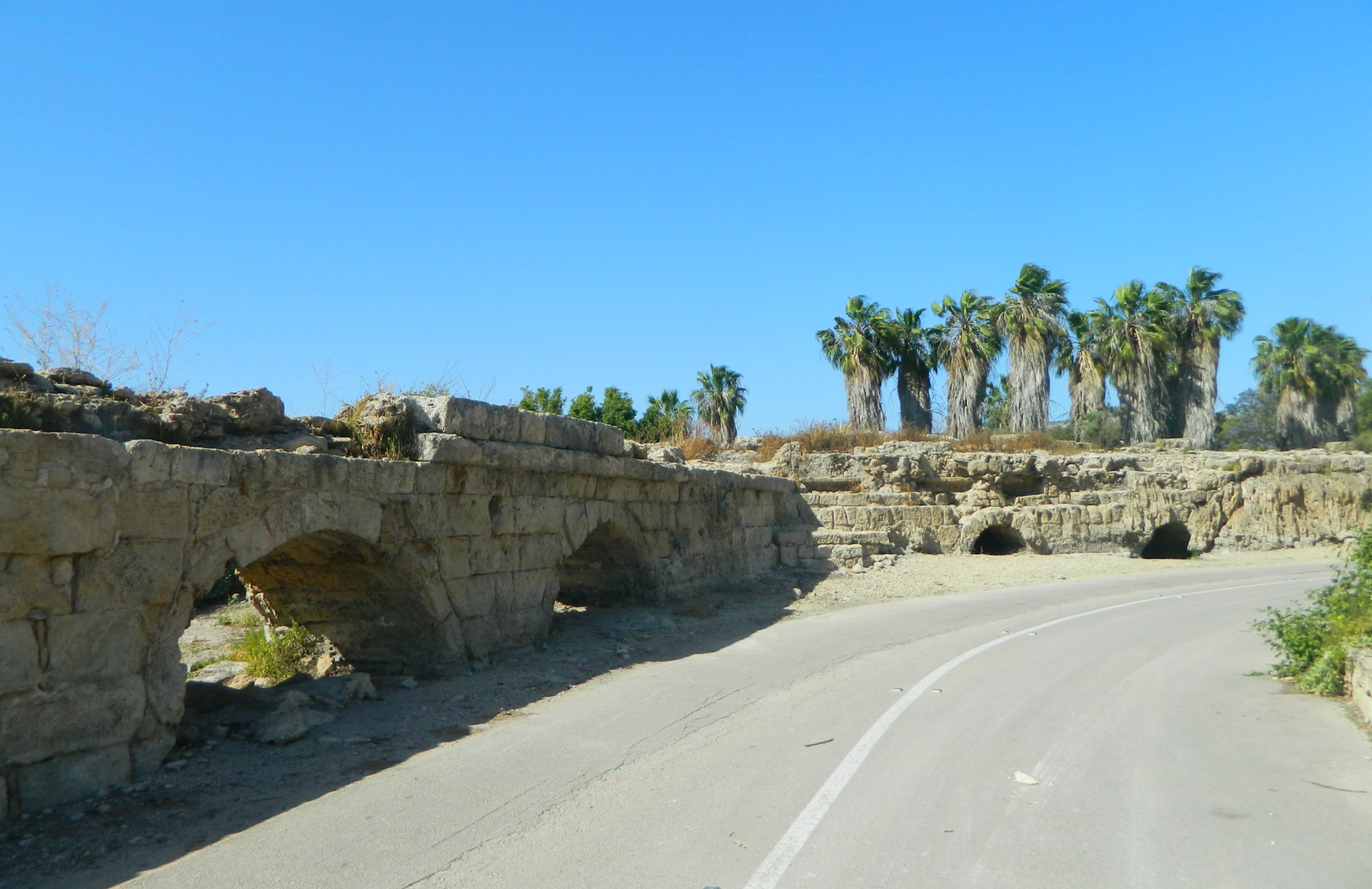
Caesarea's iconic aqueduct by the sea

Caesarea’s iconic aqueduct by the sea

In one of my courses we spent a class or two learning about this particular aqueduct, of which there are actually three subsequent water systems – Roman construction by both Herod and Hadrian built side-by-side and then Crusader on top. Bringing water in from springs near Zichron Ya’akov, the aqueduct supplied the Roman city Herod built in the name of Roman Emperor Augustus Caesar, his sovereign leader.

Aqueduct feeds

Aqueduct feeds

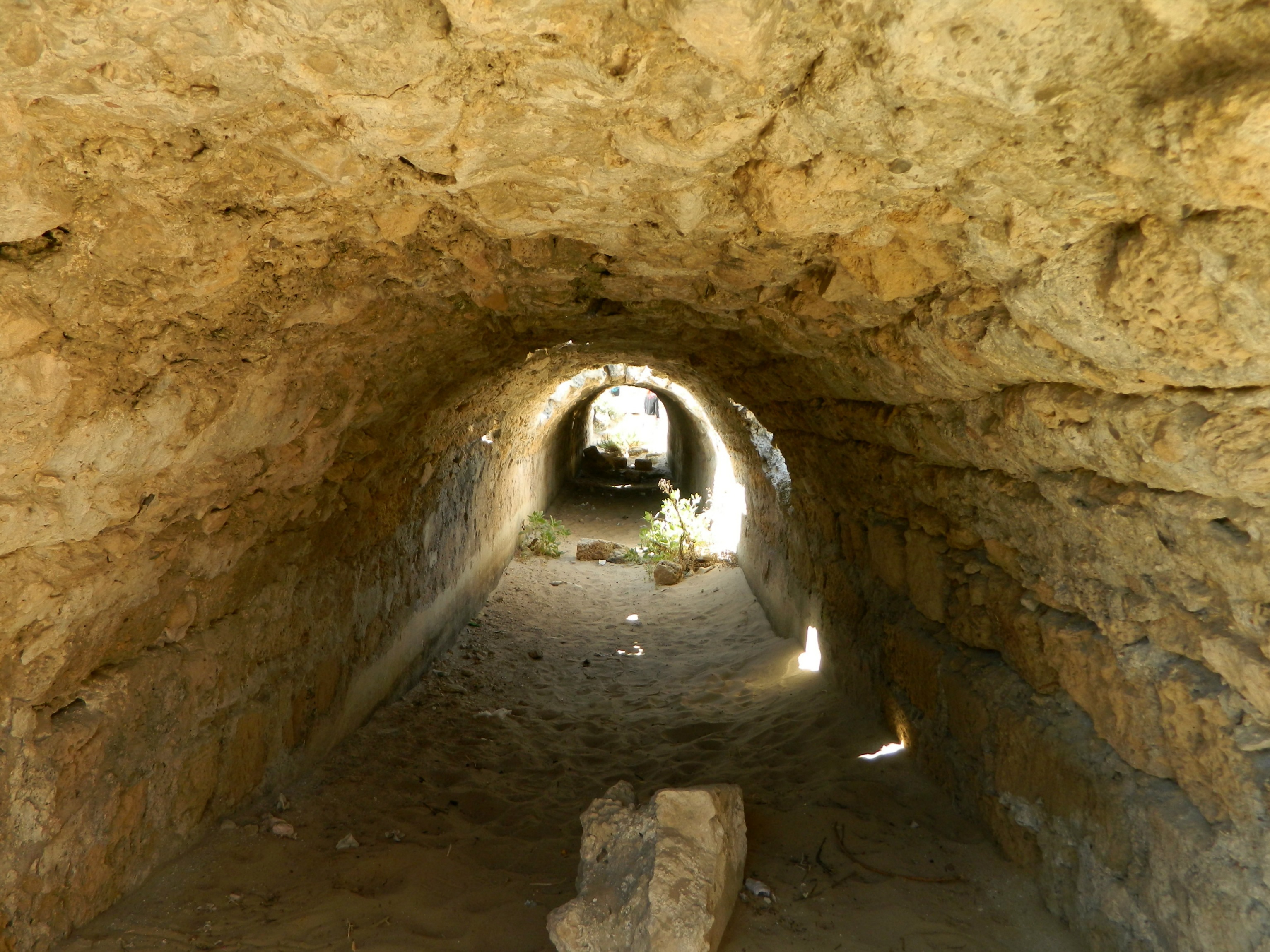
Examining the varied constructions from an academic standpoint, we then walked along the beach to see the engraved plaque stones marking the building and dedication of the aqueduct. We then walked to the lesser known smaller aqueduct, built during the Byzantine times, which brought water from the marshes several kilometres north – a project that was abandoned before it finished.

Within the smaller, Byzantine aqueduct

Within the smaller, Byzantine aqueduct

We climbed up into the aqueduct and crouch-walked our way a bit through the water tunnel before continuing on southward towards the ancient city ruins of Caesarea. The walk was a bit of a doozy but along the way I found the base of an amphora washed up ashore, one of many pottery finds.

Amphora base and a footprint in the sand

Amphora base and a footprint in the sand

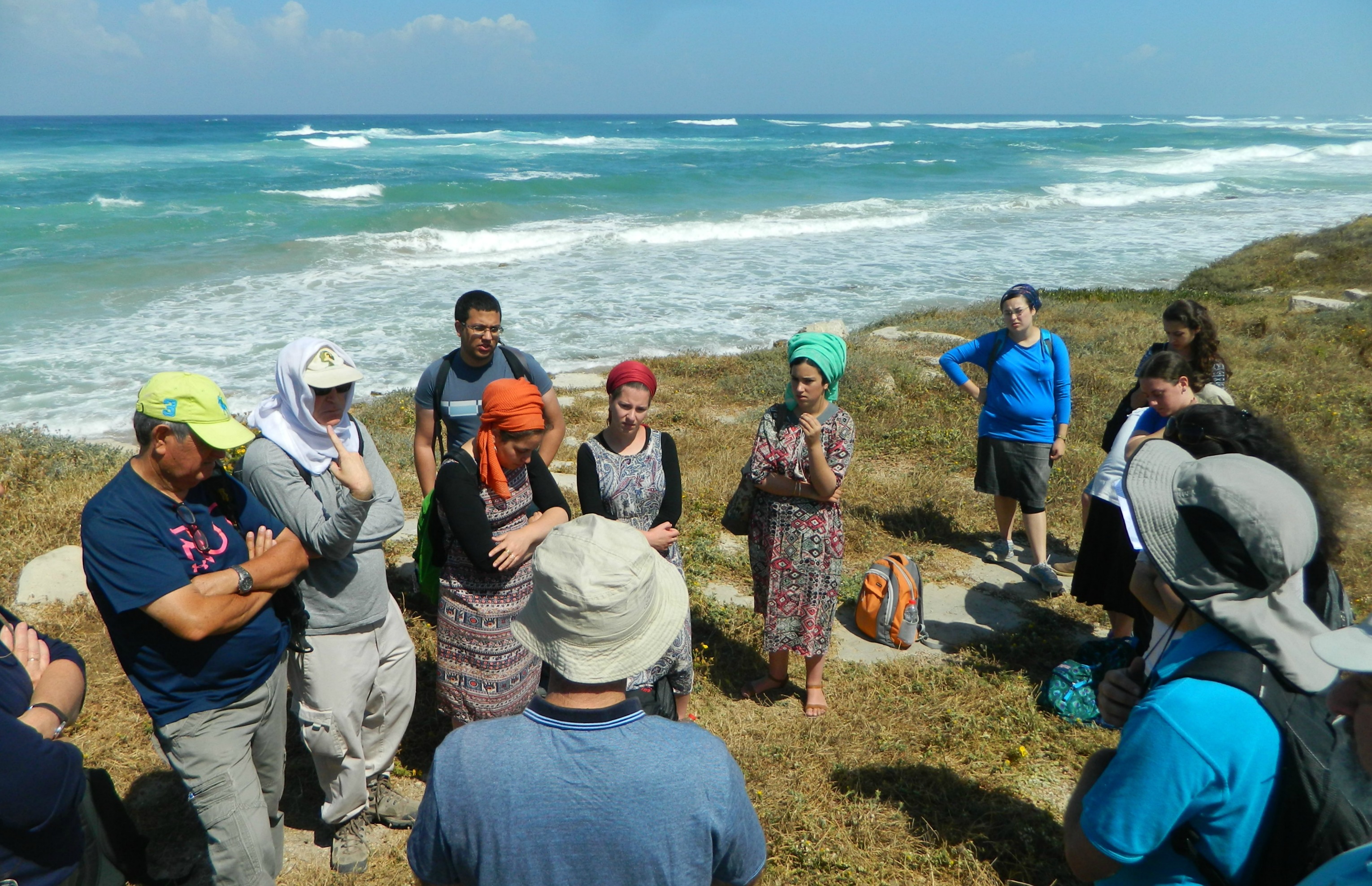
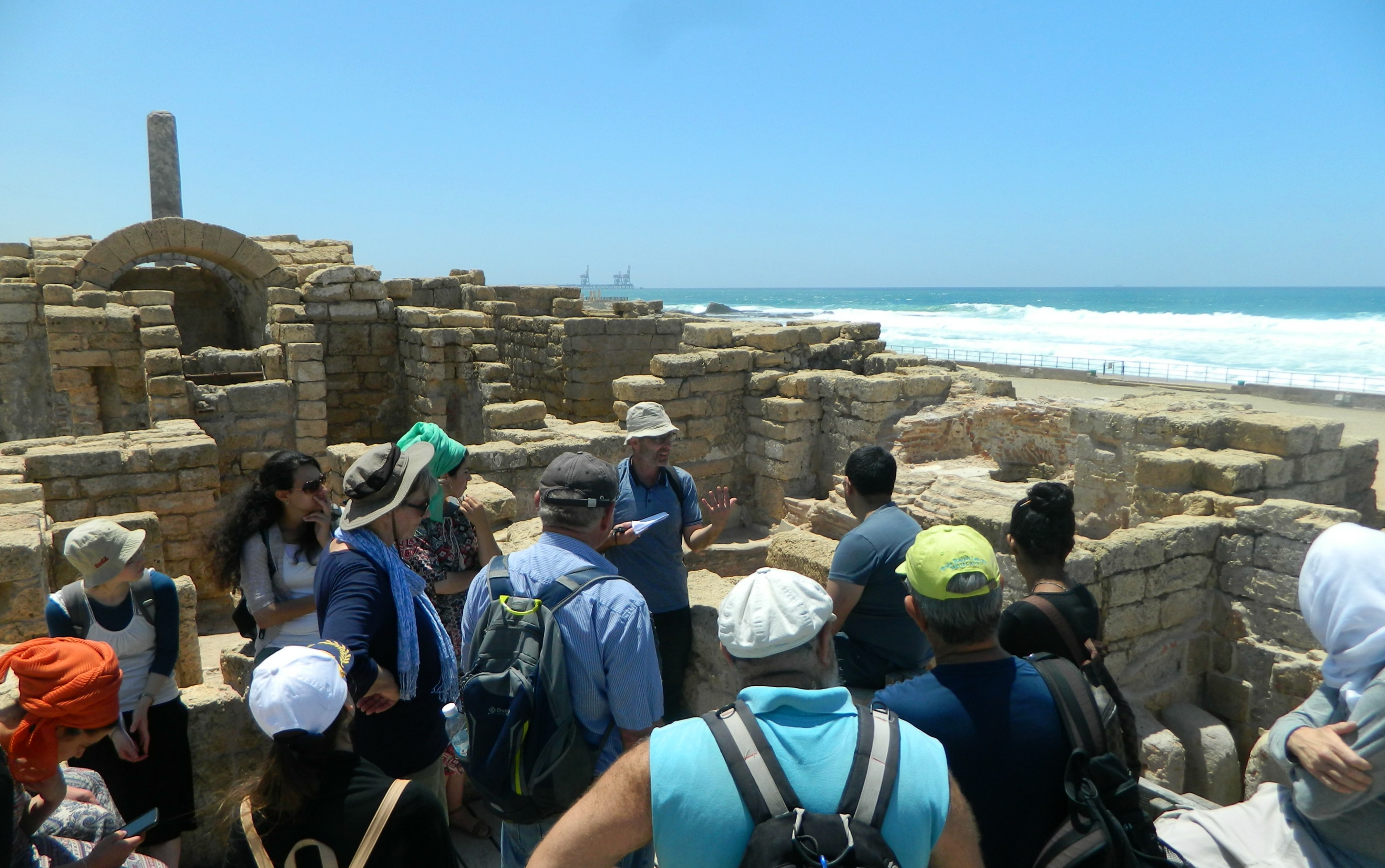
We stopped just before the northern city wall from the Roman era and listened to a brief lecture looking over the surf.

Lecture over the surf

Lecture over the surf

As we stood in the hot sun listening I noticed a few pied kingfishers hovering above the surf, a bird I love watching.

Pied kingfisher

Pied kingfisher

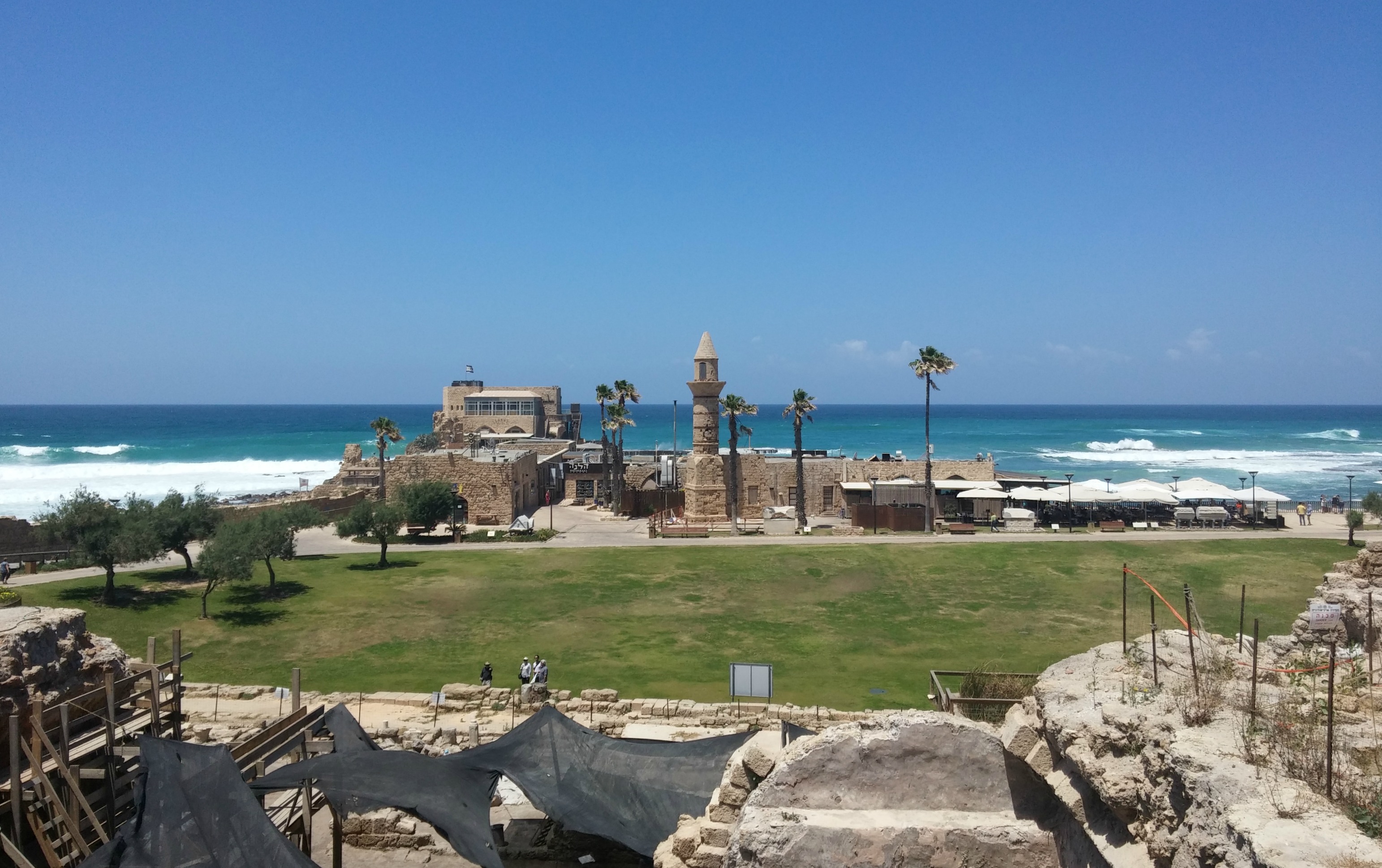
Once through the northern gate we passed ruins and a small sampling of a mosaic floor, one of many in Caesarea. Crossing the Crusader-era moat and sloped city wall, we shortly entered the heavily-commercialised city centre – transformed into a tourist trap with restaurants and shops. We took a break from walking and had lunch just outside of the Roman nymphaeum – a public fountain with its statue of a Roman goddess.

Crusader harbour from the higher Herodian port

Crusader harbour from the higher Herodian port

Walking over to the Crusader port, we passed temples and various administrative buildings and climbed the Roman citadel to look down on the ancient harbour, watching another fabulous animated film about the harbour area. In one of the local buildings we came across the exhibit for the gold coin trove that was discovered in the spring of 2015 by scuba divers underwater – the largest hoard of gold coins found yet in Israel.

Fatimid coins of pure gold found underwater

Fatimid coins of pure gold found underwater

Heading inland we watched some ongoing archaeological dig and restoration work of the Herodian harbour vaults while looking down at the Crusader citadel and neighbouring Bosnian mosque minaret. Continuing ever southwards we entered the Roman bathhouse complex and marveled at the marble pillars and extensive tiled floors.

Within the Roman bathhouse complex

Within the Roman bathhouse complex

Looping back a bit, we entered the long dirt-floored hippodrome, a Grecian stadium for horse races. Passing the Mithraeum and other public buildings we reached the far end of the hippodrome and ventured over to see the meagre remains of Herod’s palace, built jutting out into the Mediterranean Sea.

Meagre remains of Herod's seaside palace in Caesarea

Meagre remains of Herod’s seaside palace in Caesarea

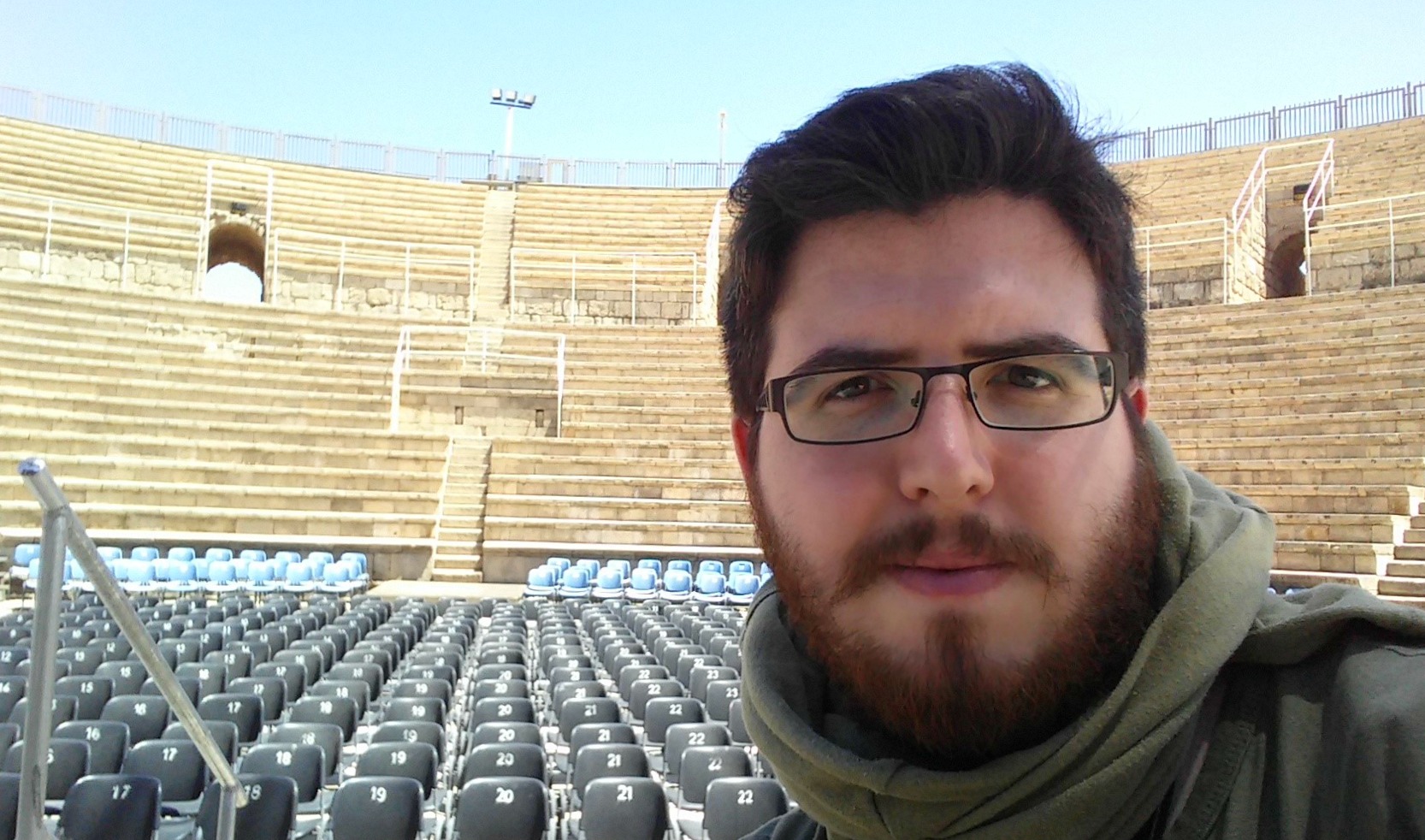
From there we headed straight for the Roman theatre which, as wonderfully preserved and lovingly reconstructed as it is, continues to provide entertainment for the populus as a premier location for concerts. I took the liberty of snapping a photograph of myself sitting on the stage.

Caesarea's Roman theatre and I

Caesarea’s Roman theatre and I

Despite the length of our tour thus far, we were nowhere near finished. Boarding the bus we were then driven to Nachal Taninim, the marsh area which supplied the water for the smaller of the two aqueducts entering Caesarea from the north.

Manmade water channel carved out of the bedrock

Manmade water channel carved out of the bedrock

The name Nachal Taninim, which literally means Stream of Crocodiles, originates from the now-extinct population of crocodiles that lived in the stream and marsh’s brackish water. Thought to have been originally imported for entertainment by the Romans from nearby Egypt, the last crocodile was killed by the British approximately 100 years ago. In the 300s CE, a city was established on the banks of the stream under the name Crocodopolis – my favourite ancient city name.

Byzantine waterworks at Nachal Taninim

Byzantine waterworks at Nachal Taninim

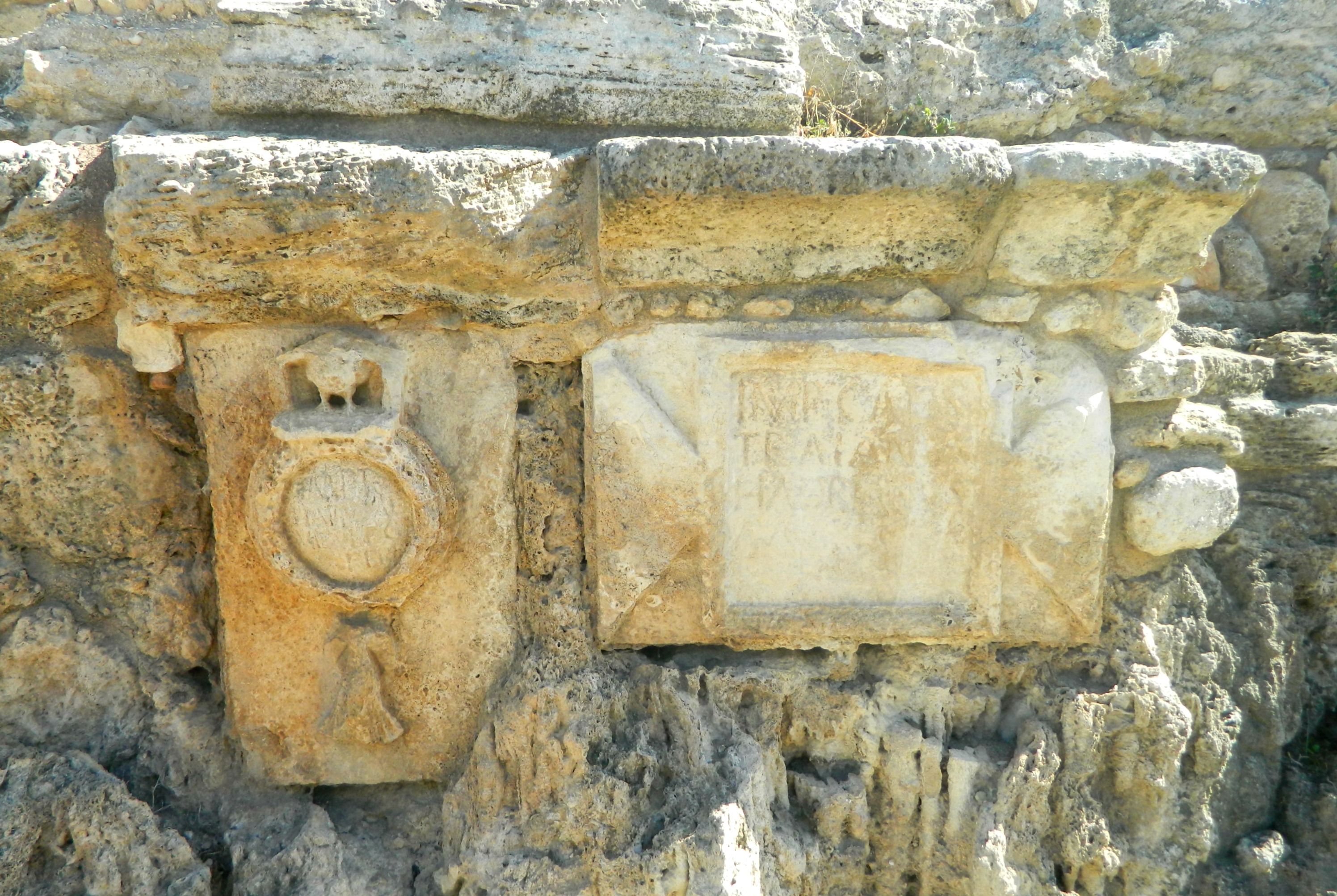
The Byzantines took the large marshy area and built dams and a regulatory system to control water flow, in efforts to power mills. A park ranger took us to the dam and showed us how the reconstructed waterworks was used in ancient times – the simple power of water always amazes. We spotted crabs and frogs in the water, and several waterbirds as well, as we made our rounds through the national park. From Nachal Taninim we boarded the bus to see one last sight, the Roman aqueduct bend at Beit Hanina which includes a dedication plaque etched into stone.

Dedication words and mark of the Tenth Legion

Dedication words and mark of the Tenth Legion

We finished up the long day-trip with a wall along the top of the aqueduct, admiring the clay piping laid into the rock. From there the aqueduct continues into the modern Arab village of Jisr al-Zarka and then along the coast where we started the day.

The bend in the Herodian aqueduct

The bend in the Herodian aqueduct

We headed back to BIU sunburnt but having had a wonderful time exploring the much-discussed ruins with the professors, looking forward to the next trip.

Khirbet Arai Archaeological Dig

In Israel, Judea on May 29, 2016 at 11:45 AM

During Chol HaMoed Pesach, several weeks ago, I was told by my friend Itamar about the Khirbet Arai archaeological dig in the Judean lowlands, not far from Beit Guvrin and Kiryat Gat. I traveled down to Beit Shemesh the day prior and we went out to see The Jungle Book in theatres the evening before the dig – a great film. The day of the dig arrived and we were driven to the site, passing historical sites such as Tel Beit Shemesh and Emek HaElah where the iconic battle between David and Goliath took place.

Aerial view of the dig site (photo Khirbet Arai Expedition)

Aerial view of the dig site (photo: Khirbet Arai Expedition)

Now, the mound seen in the aerial photo above in the entire dig site but I only ended up working in the squares to the back left of the hillock, just along the tree line (click on the photo to enlarge). While the excavation site was being set up for the day and the camping volunteers were getting up, I wandered off a bit to explore my surroundings, photographing some jackdaws as well as the view of the Judean foothills.  To fully paint the scene, the weather was dry and very hot with gusts of hot wind blowing in from the southeast, perfect for a day outdoors. Looping back round to the dig site I found this crooked warning sign:

Beware of the archaeologists up ahead!

Beware of the archaeologists up ahead!

The Khirbet Arai Expedition is run by the Hebrew University of Jerusalem, under the watchful eye of Professor Yosef Garfinkel, one of Israel’s premier experts in Biblical Age archaeology. Fortunately, Professor Avraham Faust from Bar Ilan University – my boss in the lab where I work – came to visit and I was able to tag along with him and Saar Ganor from the Israel Antiquities Authority to hear a pretty extensive review of the excavations and findings.

Professor Yosef Garfinkel

Professor Yosef Garfinkel

I began the day’s work by helping with labeling cleaned potsherds for future vessel reconstruction, something I have plenty of practice in working in the Tel ‘Eton Archaeological Lab back in BIU.

Philistine pottery found on-site (photo Khirbet Arai Expedition)

Philistine pottery found on-site (photo: Khirbet Arai Expedition)

Once we finished with the pottery bits we had lunch and then got back to work, this time I joined the diggers working in a particular square uncovering walls from either the 9th Century BCE or the 12th Century BCE, I cannot recall which was which. The periods are Late Bronze, Early Iron and Iron II – if I am using the terms correctly (I’m still a student) – which are the Judges and Kings periods of Israelite rule.

A square similar to the one I worked in (photo Khirbet Arai Expedition)

A square similar to the one I worked in (photo: Khirbet Arai Expedition)

Prof Garfinkel has already done extensive excavations in nearby Lachish and Qeiyafa, larger sites from the same period which guarded over the Nachal Lachish, an important road in the region. As Khirbet Arai has only been subjected to test and minor digs thus far, we were glad to make headway into the areas we were uncovering. Due to the sensitive nature of new reveals in both the academic and tourism world, I was forbidden to take photos of key findings and of the dig site itself but was graciously given permission to use released photos courtesy of the Khirbet Arai Expediton.

Bone that I dug out of the ground

Bone that I dug out of the ground

As I scraped around in the dirt between two emerging stone walls, I kept count of the potsherds I was finding – but lost track after thirty or so. All in all I estimate that I personally unearthed some 40-50 pottery pieces as well as what looks like a broken rib bone and some burnt brick material with small amount of concentrated carbon. It’s assumed that there must have been a raging fire which left burnt traces in the pottery and the brick, possibly fires of destruction and ruin – oh how I wish I had a time machine!

Bits of carbon from an ancient fire

Bits of carbon from an ancient fire

Noam, our square supervisor, was fun to work with and he showed us a broken flint tool and other oddities that he found on his side of the square, as well as answering the many questions that I had. Unfortunately, I blundered in my mission and was told by the Professor that I had committed an “archaeological disaster” by digging too deep alongside the wall stones, perhaps breaking the floor strata. We learn from our mistakes and at least now I know what not to do on my next dig.

Itamar and I after a long day at the dig

Itamar and I after a long day at the dig

Towards the end of the day we closed the dig site and worked on washing some pottery, another thing I have experience in, while the washed potsherds from the day before went to the pottery reading to determine their value and usage, the rest of which was dumped alongside the dirt and stones removed from the site. I sat beside Prof Garfinkel and discussed the site with him, learning of Luke Chandler’s blog where more photos and more information can be found (see post ONE and post TWO). Another interesting fact that I gleaned was that ancient sites from this particular time period are often identified by the animal remains found. Philistine sites have been documented as containing up to 20% swine of the bones found while Jewish sites have 0% swine bones, as the pig is not a kosher animal and thus ignored by the Israelites. Finished with the pottery washing, I got a ride partway home, washing and freshening up in Netanya’s train station, before making it the rest of the way home for a good night’s sleep.

University Trip: Beit Guvrin – Maresha

In Israel, Judea on May 22, 2016 at 5:41 AM

A month or so ago I received an invitation to attend a special farewell ceremony for Professor Emeritus Amos Kloner of Bar Ilan University. Already in his mid-seventies, Prof Kloner finished his lecturing last semester and was being honoured for his work at one of the most famous places he helped bring to life: Beit Guvrin – Maresha.

Beit Guvrin's iconic Bell Caves

Beit Guvrin’s iconic Bell Caves

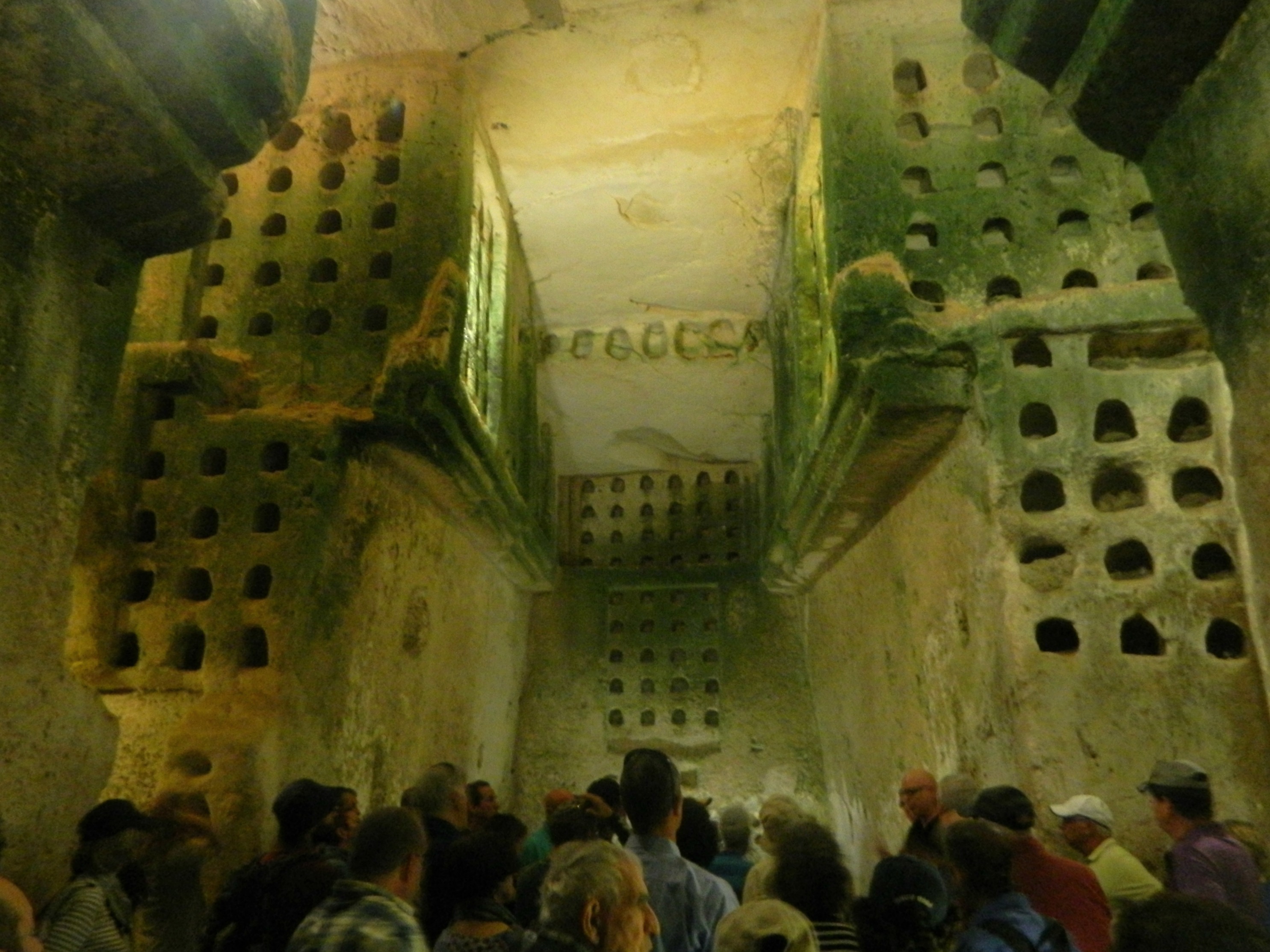
I had visited Beit Guvrin – Maresha on my 12th grade graduation trip to Israel and haven’t been back to explore since, aside from a short visit to the Roman amphitheatre located nearby (HERE). And so it was on a pleasant Thursday afternoon that I boarded a bus with other university members and we made our way to the national park. Because of Prof Kloner’s renown, the event was co-hosted by the Israel Antiquities Authority and the Israel Nature and Parks Authority in conjunction with BIU. Within the park we followed the evening’s mapped itinerary, starting with the fascinating ancient underground columbarium, or dovecote, with its capacity for thousands of  pigeons or doves.

Inside the columbarium

Inside the columbarium

Due to the region’s soft, chalky bedrock, there are hundreds and hundreds of caves – some natural and the others man-made. To give a brief synopsis of the local history, a fortified city by the name of Maresha is Biblically mentioned as a Jewish city until the times of the Babylonian king Nebuchadnezzar II who exiled its inhabitants. Abandoned Maresha was then occupied by the Edomites until the time of Alexander the Great when the city became the home of retired Greek soldiers. Enter the Maccabean Revolt, Pompey, Julius Caesar and then Herod and the city was destroyed in the power struggle.

Uncovered ruins at the edge of Tel Maresha

Uncovered ruins at the edge of Tel Maresha

Still in the Roman period, the small Jewish settlement of Beit Guvrin nearby became a regional replacement of Maresha and was named Eleutheropolis by the Romans after being conquered by Vespasian. Uncharacteristic of Holy Land cities, the ancient history ends with the Romans, save a few scattered instances of settlement throughout the following two millennia. As we climbed out of the columbarium I bumped into future tour guide Haike Winter and her friend – always fun to see familiar faces in unlikely places.

Lecture within the olive press cave

Lecture within the olive press cave

The next site on the map was the water cistern and olive press, both carved into the soft rock underground, where we heard a brief lecture on theories regarding Greek influence and involvement during the time of Alexander the Great. Climbing out, we continued on to mount Tel Maresha, where a guest lecturer hailing from Caesarea came to speak. There we stood gazing at the lay of the land, listening to the pastoral sounds of a flock of sheep passing down below.

Lecture on Tel Maresha

Lecture on Tel Maresha

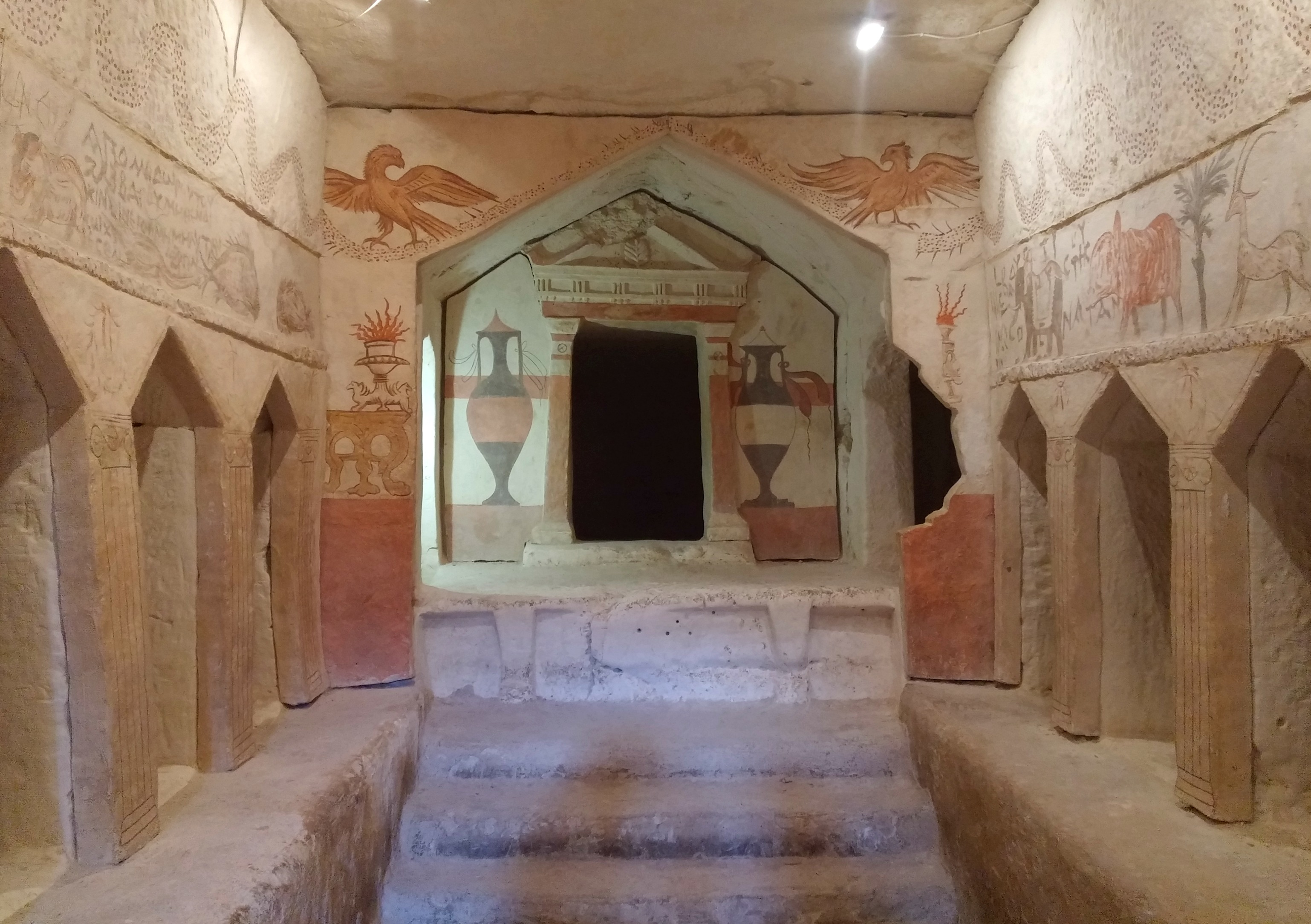
The next place we visited was the famous Sidonian burial cave with its imaginative paintings, known as the Apollophanes Cave, a place I remember from my trip in 2008.

Sidonian burial cave

Sidonian burial cave

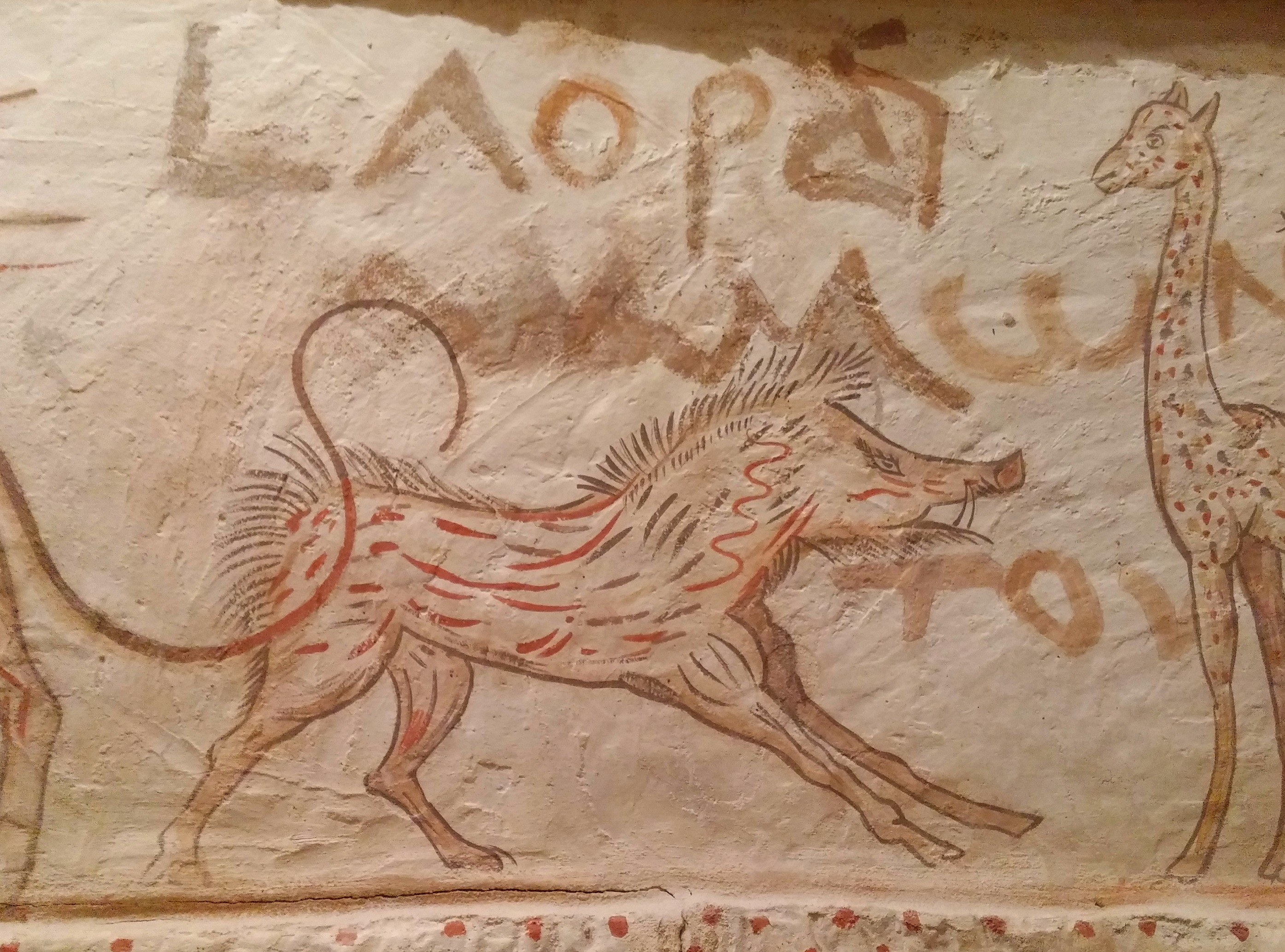
I was overjoyed to see the painting of a wild boar alongside other wild animals such as antelopes, giraffes, elephants and more. Ever since my run-ins with the ferocious and savage swine in both Nachal Kziv and Nachal Ga’aton I have been excited to see inanimate representations in ancient art.

Wild boar on the wall

Wild boar on the wall

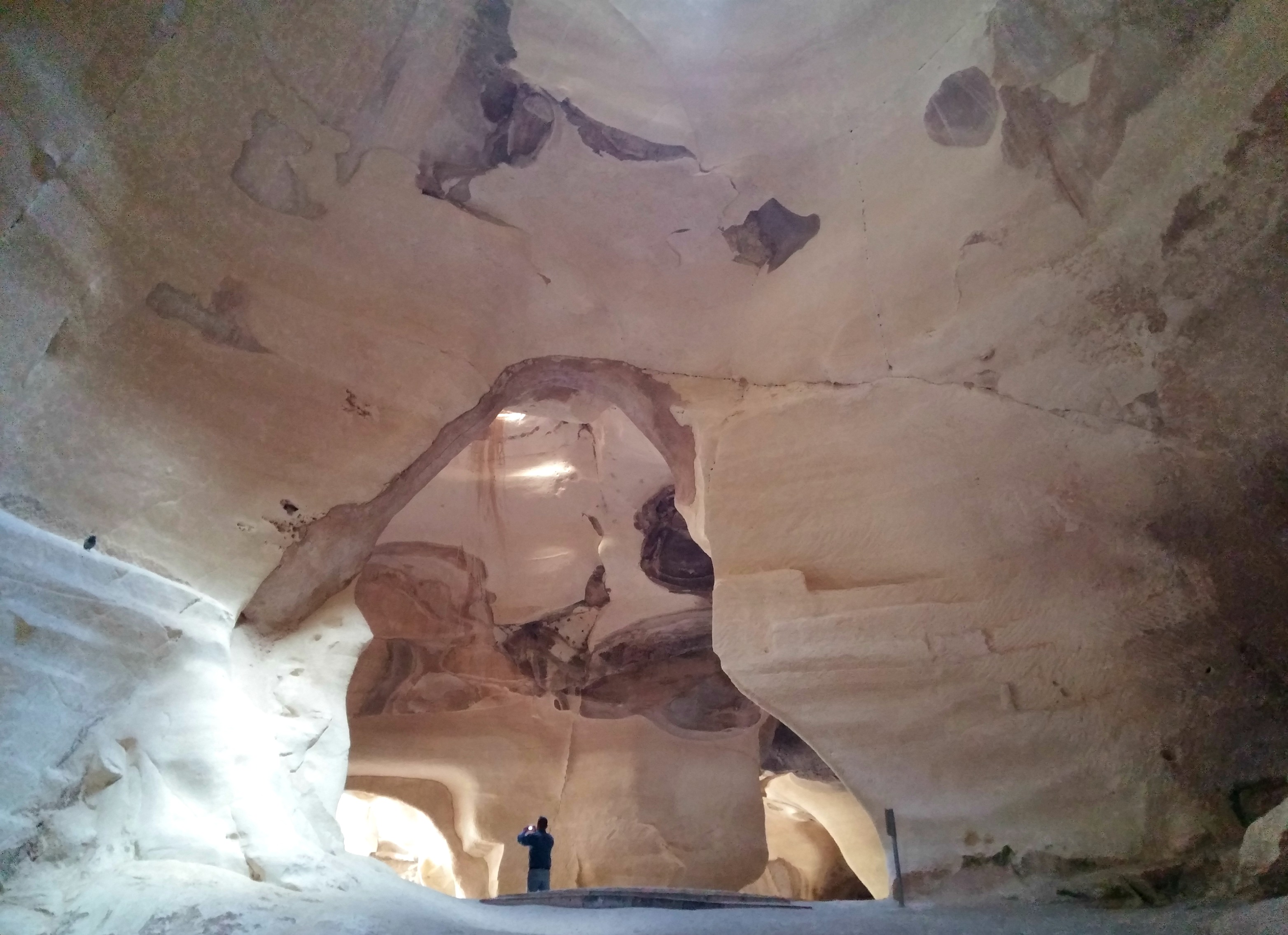
From the Sidonian burial cave we boarded the buses to visit the famous Bell Caves where the ceremonially academic evening of lectures was to take place. Food and beverages were served yet I preferred to photograph jackdaws and to then visit the Bell Caves before the crowds arrived. During my 2008 visit we neglected to visit the Bell Caves so I was duly impressed to see the huge chambres, hewn from soft chalk, to be used mainly as quarries during the Byzantine era.

Inside one of the caves

Inside one of the caves

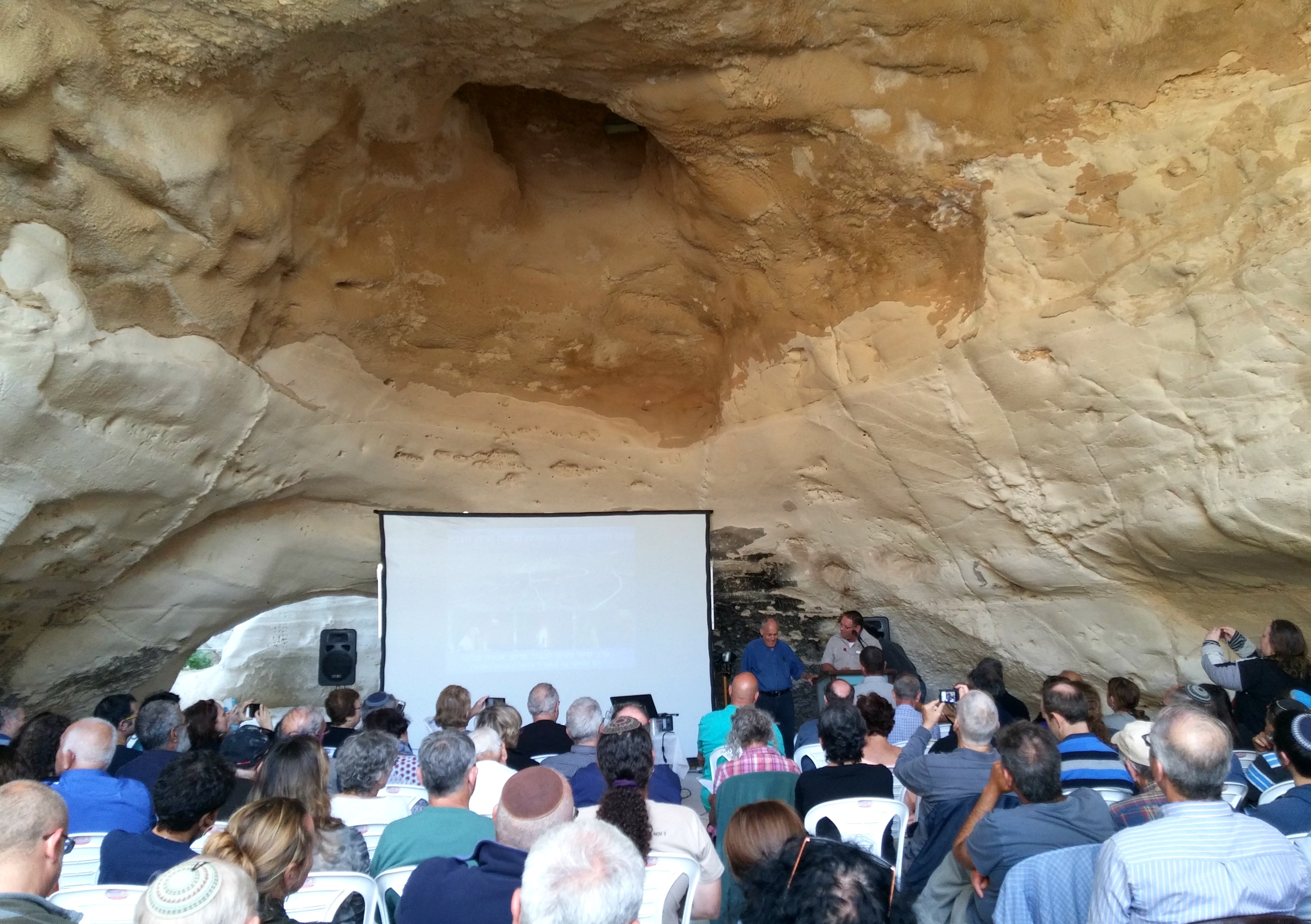
There were a few other people wandering around the caves as well and I used them in my pictures for perspective, to gauge the height of the large bell-shaped caves. When I had completed my subterranean tour I joined the rest of our group at a nearby cave where chairs and a screen were set up for lectures. Settling down next to my friend Itamar, I listened to the speeches and took notes on what everyone spoke about. Dr Tsvika Tsuk of the Israel Nature and Parks Authority spoke about being a soldier and finding a sarcophagus, and then the story of the recent victory getting UNESCO to recognise Beit Guvrin – Maresha as a World Heritage Site.

Speeches within the cave

Speeches within the cave

Dr Ian Stern of Archaeological Seminars told us about interesting findings such as items used for magic and ancient cultist practices. Dr Adi Erlich from Haifa University showed us slideshows of clay idols or figurines found locally, putting emphasis on one particular idol of Cybele – unusual to see in the Holy Land as Cybele was an Asia Minor deity. Prof Esther Eshel from BIU provided us with knowledge on ancient documents found inscribed on clay tablets while our department head Prof Boaz Zissu gave us a general historical and archaeological overview about Maresha, showing us fascinating pictures from the early 1900’s.

Inside the Sidonian burial cave from the early 1900's (cropped photo Library of Congress)

Inside the Sidonian burial cave from the early 1900’s (cropped photo: Library of Congress)

Prof Gideon Avni of the Israel Antiquities Authority told us stories of grave robbers, destruction and discoveries of graves in the necropolis and then the star of the evening, Prof Amos Kloner, got up to give his address. With that the evening concluded and we took our bus back to Bar Ilan University for a good night’s sleep.