Israel's Good Name

Archive for the ‘Israel’ Category

Tiberias

In Galilee, Israel on July 19, 2015 at 6:07 AM

Nearly a full year ago, shortly before going on the wine tour (starting with the Tishbi Winery in Zichron Ya’akov), I went on a day trip to Tiberias (also known as Tverya) with my father. Although being a very important city historically, and just a short drive away, Tiberias hadn’t been at the top of my lists and has therefore been neglected for far too long. However, I shall now right that wrong and regale the tale of our journey.

Tiberias in the 1920's

Tiberias in the 1920’s

We started out early in the morning, grabbing some borekas and a sfinj (Moroccan doughnut) from the local Peace Bakery. We stopped once along the way, just minutes from Meron, at some ancient graves of Jewish sages, which dot the Galilee with their mystical blue domes. Shortly thereafter, we were driving along the Kinneret (Sea of Galilee) on Israel’s longest highway – Road 90 – and we entered Tiberias from the north. Searching for the visitor information centre in the Old City, we parked and went to pay for parking at the designated machine. When we returned, a parking violation ticket was sitting on the windshield and so we went on a merry chase demanding justice, for our ticket and the parking slip we purchased were time-stamped at the same time, to the minute. We ended up in a government office where we filled out a form protesting our fine and with that hiccup taken care of, started our tour of Tiberias.

The visitor centre building with ruins of an ancient synagogue

The visitor centre building with ruins of an ancient synagogue

Picking up information at the visitor centre, which is actually housed inside old ruins of an ancient synagogue – one of the city’s thirteen mentioned in the Talmud, we started our walk around the Old City. Right beside the parking lot is the Court of the Jews, the first modern Jewish community founded in 1740 during the era of the Bedouin ruler Daher al-Omar. Surrounding this cobblestone square are a handful of synagogues and yeshivas of various antiquity. The oldest, the Etz HaChayim Synagogue, was built in 1742 by Rabbi Chaim Abulafia of Smyrna and was a major centre for religion in the region for many years. Due to Tiberias’ location on a faultline, the city was wracked numerous times by violent earthquakes, and in 1934 a great flood ravaged Tiberias, permanently reshaping its coastline.
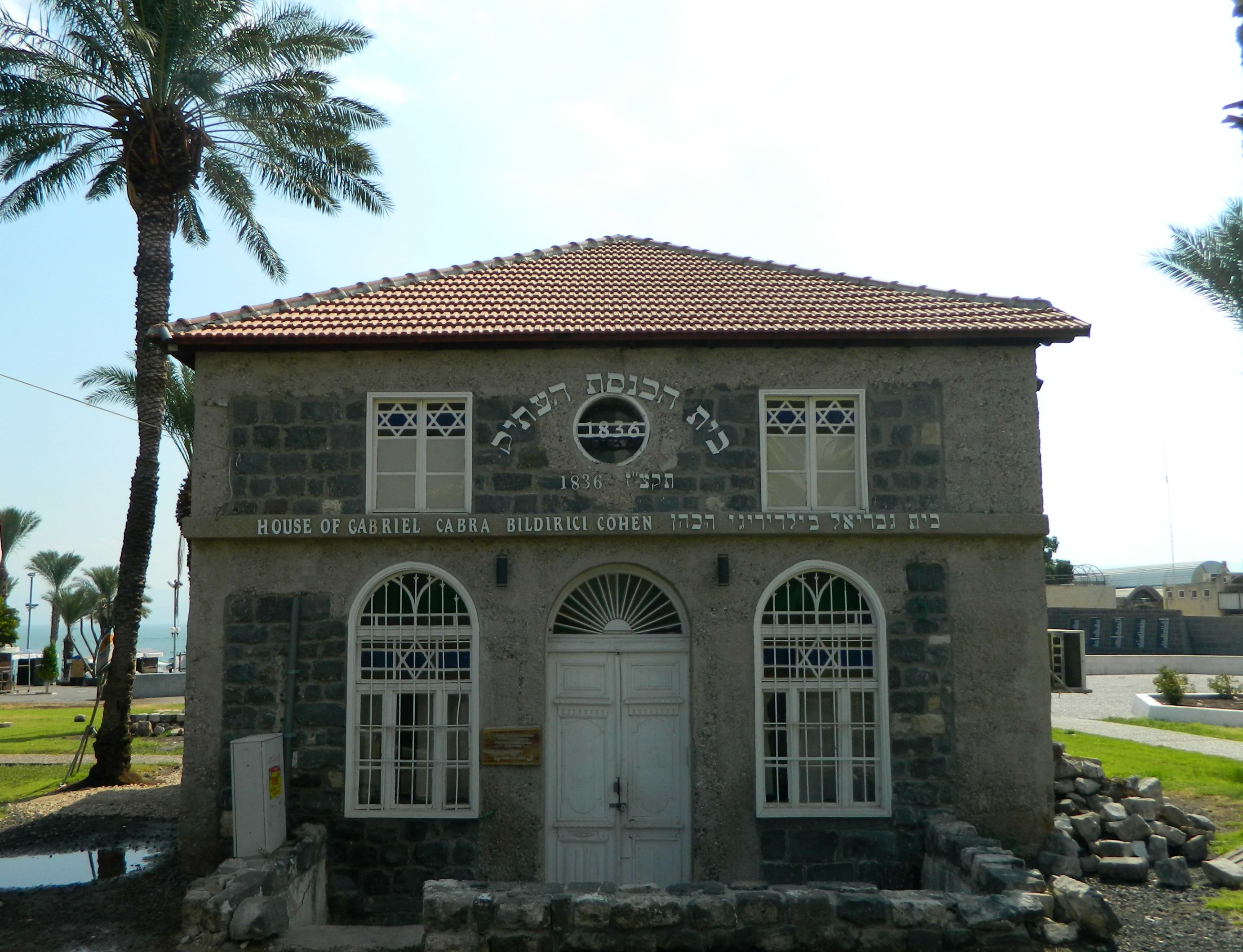
The Old Synagogue from 1836

The Old Synagogue from 1836

Beyond the synagogue is the gate of the Crusader fortress, a wooden bridge crossing over an empty moat, with the old Jewish quarter now covering the remains of the Crusader fortress. During the Crusader times, the city changed hands a few times before the Mamluks finally drove the Franks permanently out five years after stopping the Mongol invasion some thirty kilometres southwest of the city. Reaching the waterfront, we walked along the boardwalk watching the boats sail against the hazy backdrop of the low mountains on the Golan side of the Kinneret.

Southern end of the Old City with Mount Berniki in the background

Southern end of the Old City with Mount Berniki in the background

With the water level of the Kinneret being a national concern, Israel’s water company Mekorot installed a water level surveyor on the boardwalk to publicly display the current level. Last post (Yarkon National Park) mentioned how most of the country gets its water, and it’s at the Kinneret where the artifical journey begins. Now it is the summer, Israel’s dry season, so the water level reports are mostly the gradual evaporation of the Kinneret but during the winter and spring, the water levels rise dramatically after heavy storms and there is actually a Twitter account dedicated to reporting the water levels throughout the year: @kinbot.

Mekorot water level surveyor

Mekorot water level surveyor

With the current levels being “below red lines”, it is hard to imagine the flood of 1934 which destroyed a good portion of the city, and there are even markers today which show just how far the water reached on the walls of the lakeside buildings. We peeked into the Tiberias Rowing Club and then passed the Greek Orthodox Monastery whose leaning corner tower has become quite an icon in the Old City. Visiting the rocky, and surprisingly littered, beach we then walked back towards the heart of the city alongside the old Crusader wall (rebuilt by Daher al-Omar), enclosing the city from the south, under the shade of beautiful orange-blossomed royal poincianas.
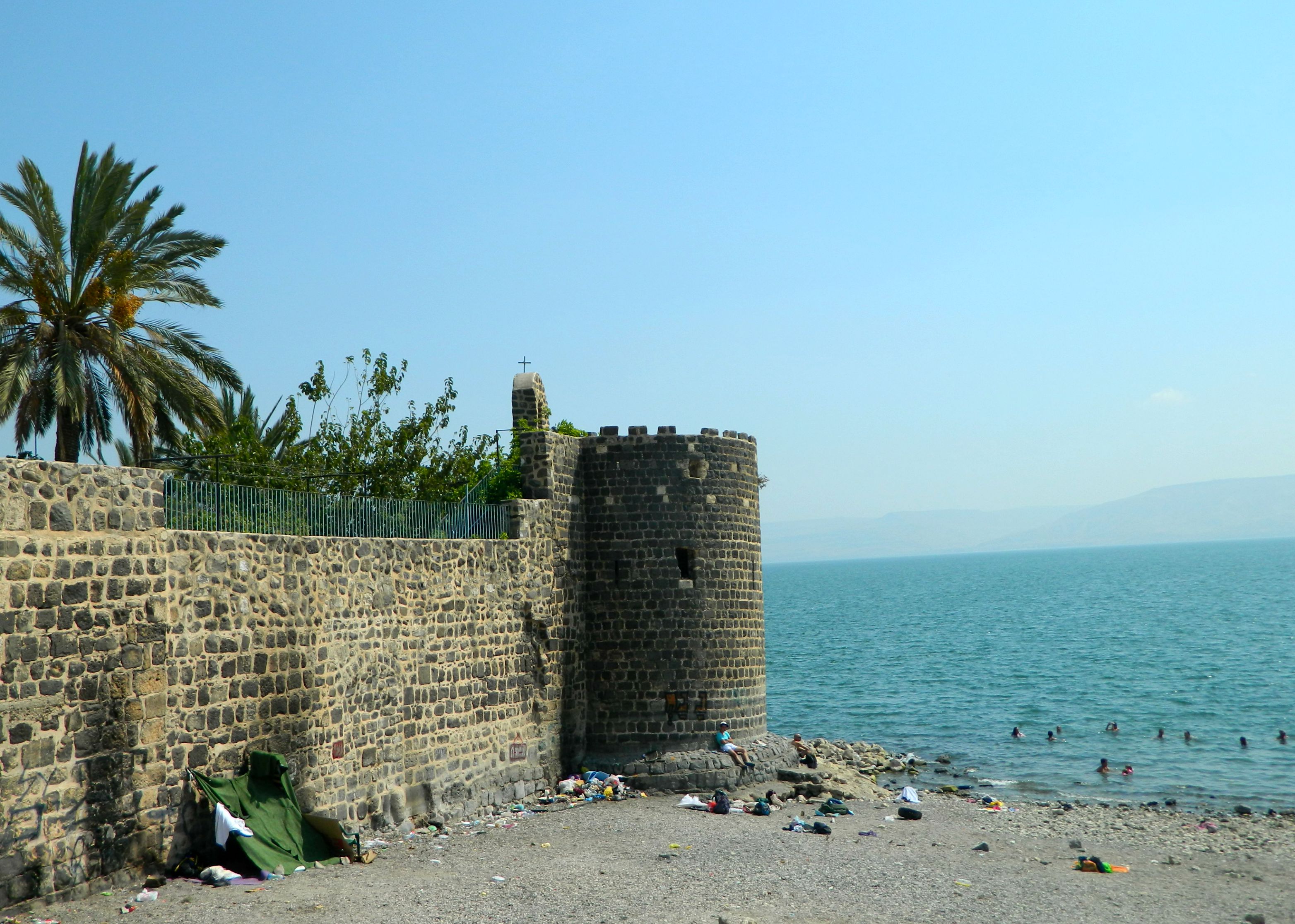
Tiberias' Leaning Tower

Tiberias’ Leaning Tower

In the shadows of numerous hotels, we found our way to the abandoned al-Omari mosque, hidden behind a strip of closed storefronts. A local informed us that the city plans to renovate the area and make it more of an attraction; I wonder if the mosque will get similar treatment.

al-Omari mosque

al-Omari mosque

We continued heading north, walking among the dark grey stone buildings until we reached the Saraya. A large Ottoman government building, sarayas can be found in several old Israeli cities including Tzfat (Safed) and Akko, where the regional commands was located. Tiberias’ Saraya is two floors; the upper being the governor’s residence and office while the lower floor contained jail cells and stables for the Ottoman postal service. Slightly further north is the Fortress built by Daher al-Omar’s son with its impressive tall basalt walls and round corner towers.

Tiberias Fortress

Tiberias Fortress

When we were done looking around the fortress area, and we were sure we saw everything of interest in the Old City, we returned to the car for the second leg of our Tiberias trip – coming next!

Yarkon National Park

In Central Israel, Israel on July 5, 2015 at 4:53 AM

Following my visit to Migdal Afeq (Mirabel) and then Tel Afeq (Antipatris), I continued on to the Yarkon National Park – the source of the Yarkon River. Being that Tel Afeq is a part of this park, I was able to just slip out the back gate and walk through a field to visit the Yarkon section. Parallel to the trail is a canal which helps direct spring water to the start of the Yarkon, which eventually drains into the Mediterranean Sea some 28 kilometres (17 miles) downstream, at the northern end of Tel Aviv proper.

Map of Tel Afeq (Antipatris) and Yarkon National Park

Map of Tel Afeq (Antipatris) and Yarkon National Park

Along the way I stopped at the water lily ponds where various fish, including catfish, and waterfowl live – the one egret I saw flew off when I got too close. Camera ever-ready, I also scoured the ponds for coypu and mongooses along the water’s edge, but didn’t see any.

Fish in a water lily pond

Fish in a water lily pond

After the lily ponds is the industrial Yarkon pumping station of the Mekorot water company, which has a visitors centre open for groups (free). Supplying the whole Mercaz area of the country with water, the bulk of the Yarkon’s water discharge goes to the pipelines for agricultural and domestic consumption. Only a surprising 0.2% of the springs’ water flows into the Yarkon River – from a total of 200 million cubic metres of water a year.

The Yarkon springs with Tel Afeq from the early to mid-1900's (photo: Library of Congress)

The Yarkon springs with Tel Afeq from the early to mid-1900’s (photo: Library of Congress)

The water from the Jordan River, which originates in the Upper Galilee’s springs and the annual winter runoff from the mountains (especially Mount Hermon), flows into the Kinneret (Sea of Galilee) which acts as a natural reservoir. A percentage of that water is then pumped up at the Sapir Pumping Station not far from Capernaum, and then sent along its south-bound path via pressure pipes and the Jordan Canal. Passing several reservoirs, pumping and filtration stations and canals, the water then makes its way to the Yarkon pumping station where the waters are mixed and sent to either the Tel Aviv area or further south to provide the Negev with water. The whole infrastructure is very interesting and was an incredible undertaking and learning all about this actually inspired me to read up on aquifers and water sustainability on my train ride home.

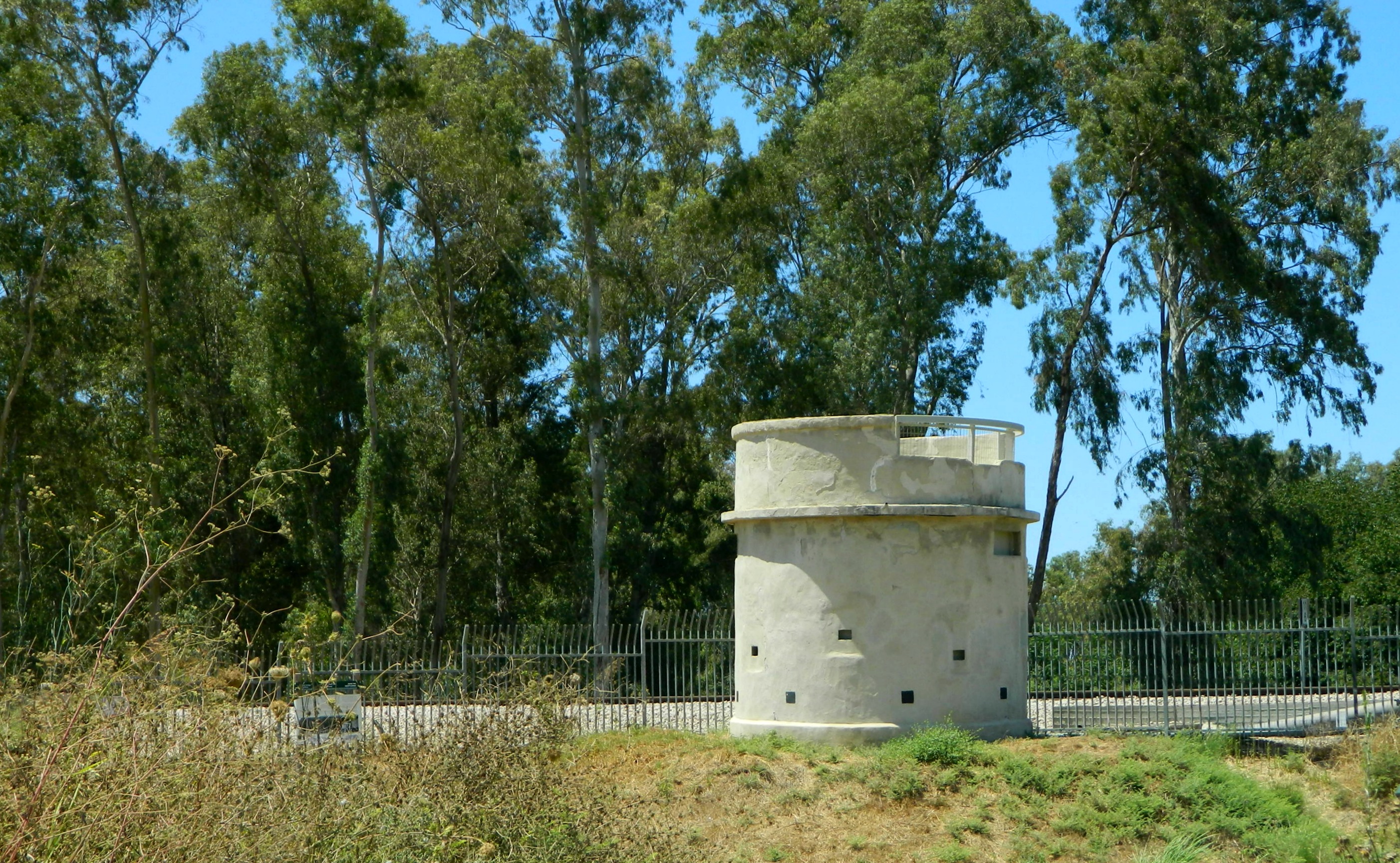
British pillbox

British pillbox

Just beyond the pumping station is the back entrance to the Yarkon park, bordering the south side by still-operational train tracks, with the trail passing under an old bridge. Built in the early 1920’s, the railroad was an important regional development, helping the farmers of nearby Petach Tikva to send citrus harvests to Yafo (Jaffa) for export. In the mid to late 1930’s the British were forced to build a pillbox to guard over the tracks and the bridge from Arab attacks. Today the pillbox is vacant, but the trains thundering by were numerable to say the least.

Passenger train crossing the bridge

Passenger train crossing the bridge

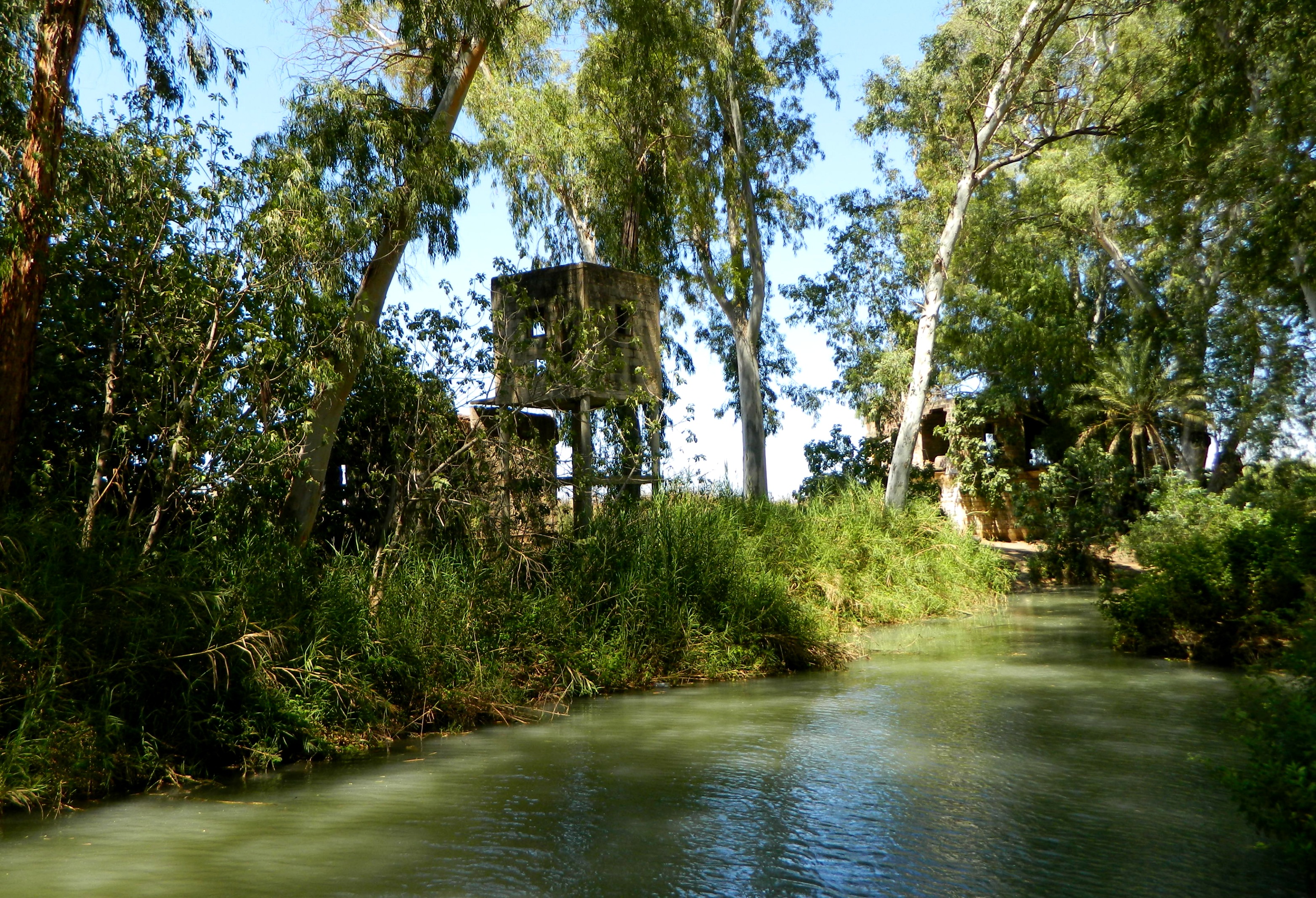
Entering the Yarkon section, I began by walking along the fledgling river and then laid down for a spell to read the park pamphlet I had received earlier and to enjoy the quiet nature resuming life all around me. I scoured the tall eucalyptus and bald cypress trees overhead, hoping to spot a sleeping owl (without success) and then turned my attention to a fish mulching about in the pondweed and hornwort. Following the meandering river, I next came upon two ruins from the Ottoman era along the river bank – a house and a pump structure.

Ottoman house and pump structure along the river

Ottoman house and pump structure along the river

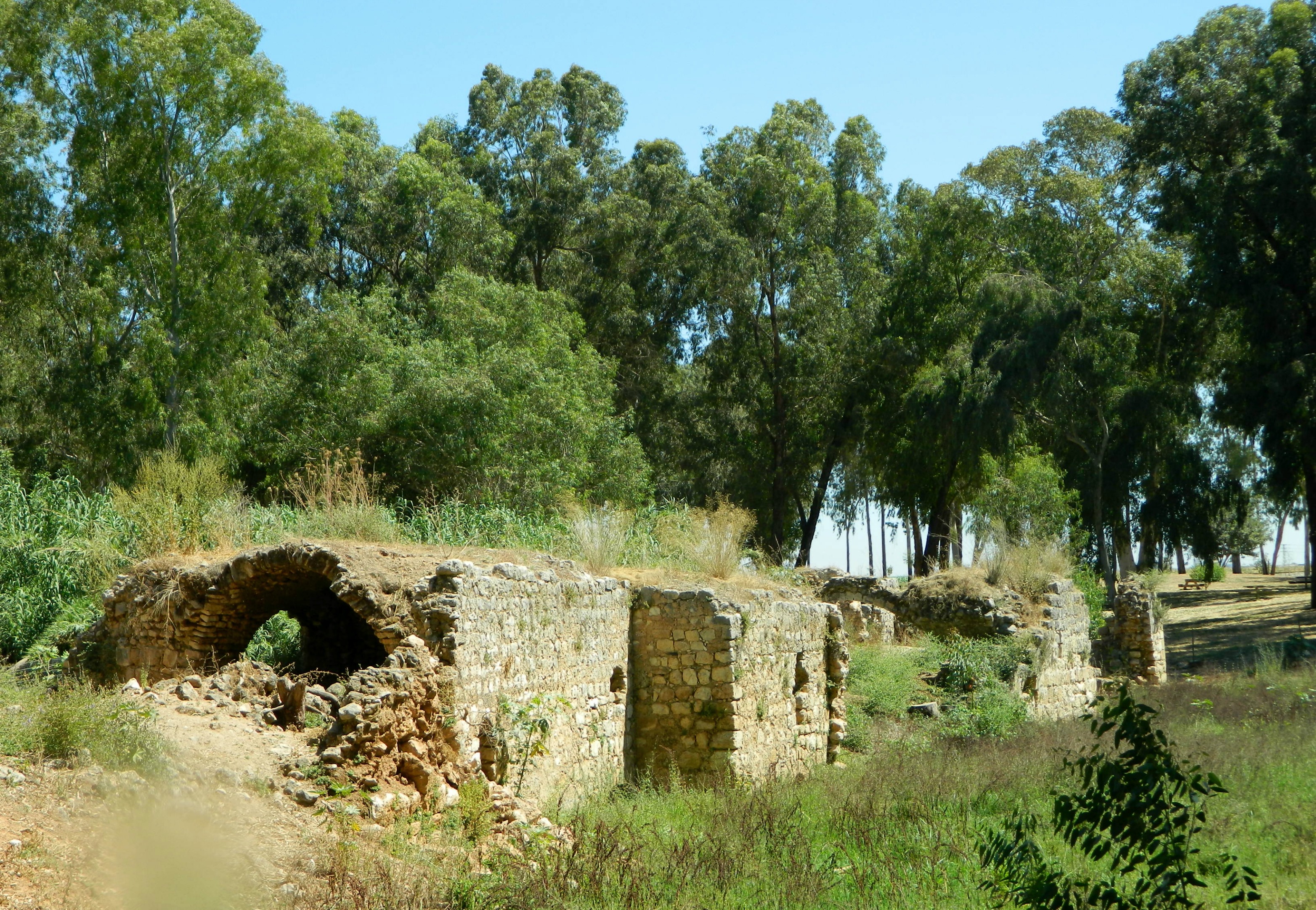
I then looped around the northern end of the park and temporarily left the park via the “Romantic Trail” to go see the Concrete House which was the very first building in Israel to be built of reinforced concrete. Walking on a dirt path next to the Baptist Village I came upon the remains of a concrete house with rebar clearly visible. I naturally assumed that this was the Concrete House marked on the map, took pictures and returned to the park. However, I had stopped at the wrong place, the real Concrete House being some 700 metres (2,300 feet) further along the trail – 0h well. Back at the park, I next visited the al Mir flour mill, one of the largest old mills in the country which operated thirteen pairs of millstones during the Ottoman era.

The al Mir flour mill

The al Mir flour mill

With a quick stop at the Yarkon bleak pool, I was unable to find any of the endangered Yarkon bleak fish in the murky waters and so continued on to the last of the park’s sites: the Qa’sar farm. The farm was originally owned by an Egyptian man in the early to mid-1800’s and then sold to Salim Qa’sar of Jaffa who, in turn, sold it to the Baron Rothschild in 1895 for the benefit of Jewish farmers. Seeing just four stone walls remaining, I made friends with three nice donkeys while I waited for a ride from a gracious park worker to the nearby train station.

Friendly donkeys at the Qa'sar farm

Friendly donkeys at the Qa’sar farm

And that is the end of my exciting trip to some very interesting sites in the centre of the country, a region I hardly explore. Next adventure here I come!

Tel Afeq (Antipatris)

In Central Israel, Israel on June 28, 2015 at 4:45 AM

After leaving the site of my previous blog post, Migdal Afeq (Mirabel), I found myself at the bus stop on the main road just outside of Rosh HaAyin, heading for my next location: Tel Afeq (Antipatris). The summer heat was rather getting to me so I made a quick decision and flagged down a taxi to take me to the nearby national park of Tel Afeq.

Binar Bashi fortress at Tel Afeq

Binar Bashi fortress at Tel Afeq

Dropping me off at the picnic areas, I took the shaded tables as an opportunity to dip into the pastries I had bought earlier that morning in Ramat Gan. It was then that I noticed that my third destination of the day, Yarkon National Park, was actually considered a joined park with Tel Afeq and that the two of them were somewhat connected by a trail through some fields. And so I started my explorations at the dry rain pond and headed for the Roman cardo.

Antipatris' cardo

Antipatris’ cardo

Along the cardo, an ancient main street, I came upon an odeum (a small Greek and Roman theatre building) and then a memorial for the 41 Jewish lives lost to the Alexandroni Brigade is offensive attacks on the Iraqi forces entrenched at both Tel Afeq and the Migdal Afeq area in 1948.

Roman odeum

Roman odeum

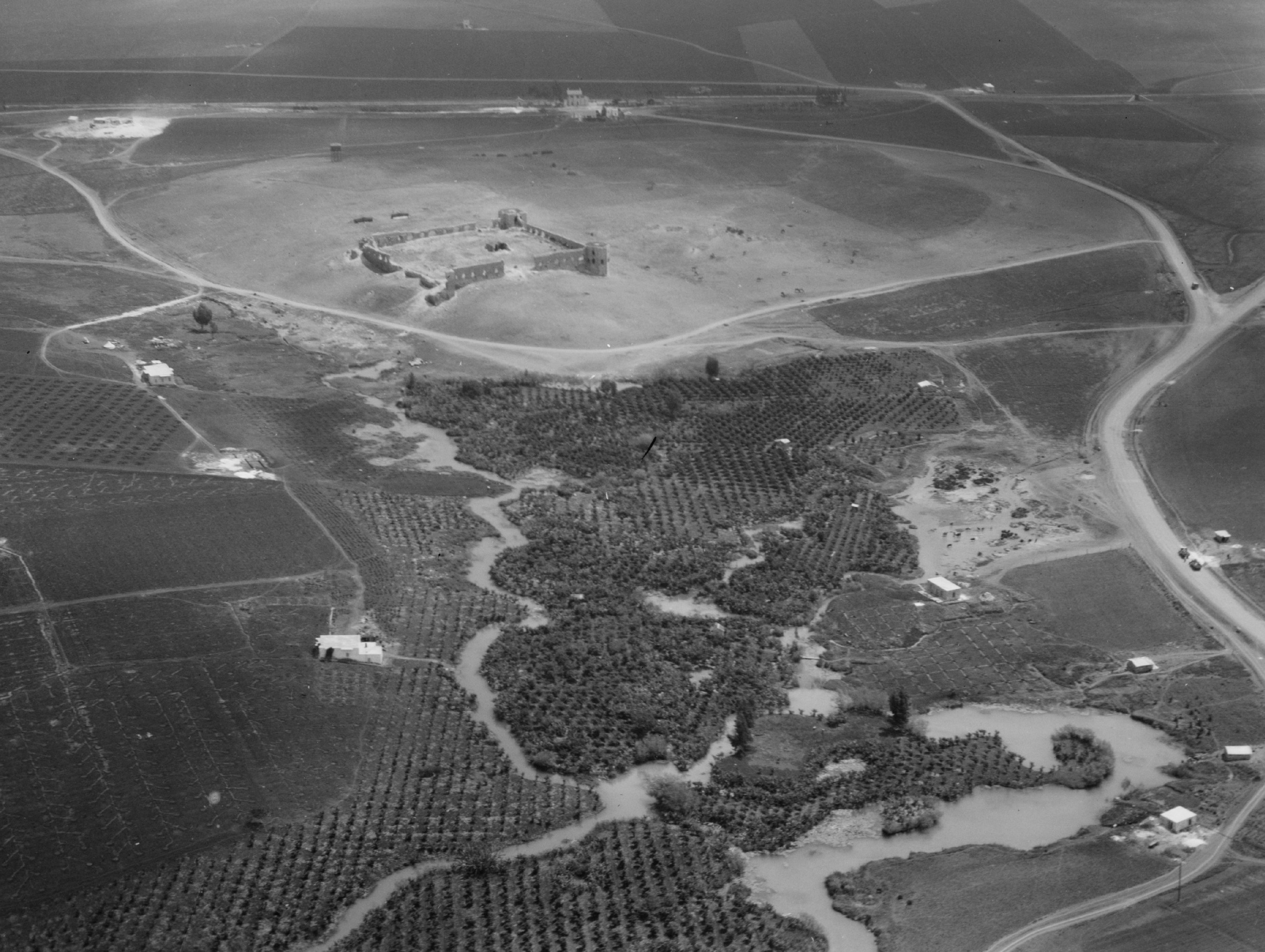
Historical remains on the tel extend back to the Chalcolithic period with notable ruins from the Egyptian/Canaanite times and the Roman era. Biblical Aphek is mentioned as well, having been the location of the Philistine camp during two disastrous battles with the Israelites, resulting in the Philistines capturing the Aron (or, Holy Ark of the Covenant). In the Greek period a city by the name of Pagae (“Springs”) was founded, just one of many in a historical timeline, all coveting control over the important Via Maris trade route. Herod created the city of Antipatris, named after his father, during his rule of the Holy Land in the Roman era. Antipatris as he knew it, filled with Jews, was destroyed by Vespasian during the Great Revolt some fifty-odd years later.

Binar Bashi seen from the air in the early 1930's (photo: Library of Congress)

Binar Bashi seen from the air in the early 1930’s (photo: Library of Congress)

Next along the cardo is the Roman forum and then the crown of the tel – the impressive Ottoman fortress known as Binar Bashi.

The southwest tower

The southwest tower

Built between 1572 and 1574, Binar Bashi was the first really important development on Tel Afeq since the existence of Antipatris. During the Crusader period, the land was part of a gift parceled out to Balian of Ibelin by King Fulk of Jerusalem, with castle Mirabel being the regional stronghold. Tel Afeq was reduced to a district estate for the knights of the House of Ibelin. Binar Bashi (originally called Pinar Basi in Turkish, meaning “Head of the Springs”) was a fortified khan commissioned by the son of Suleiman the Magnificent.

Turkish soldier watching me from the window

Turkish soldier watching me from the window

I was rather impressed with the standing of the fortress, especially the octagonal southwest corner tower. As I reached the northwest tower I spotted a raptor sitting on the ruined wall a little ways away. The bird you see below is none other than a steppe buzzard and minutes later he took off and was immediately heckled midair by some crows. Thank you master ornithologist Yoav Perlman for identification, for I am hopeless at Old World raptors.

Steppe buzzard

Steppe buzzard

Returning to the stony ruins, I walked around the excavated and restored remains of what once was an Egyptian governor’s palace lording over the Canaanite royal city after the Egyptian conquest of the Holy Land (which culminated in their victory at Tel Megiddo). The size and quantity of Egyptian-era winepresses at Tel Afeq suggests trade significance for importing wine to the Nile Delta area.

Egyptian governor's palace

Egyptian governor’s palace

Leaving the fortress and its blisteringly hot and mostly unshaded courtyard, I then walked over to the British pumping station complex. Pockmarked by bullet holes in the concrete walls, this building was used by Iraqi soldiers, and subsequent to local victory, by Israeli troops during the War for Independence. Built in the 1930’s, this pumping station was used to provide water for Jerusalem, as well as other local cities, sending the water to the water station in Latrun. With the Yarkon springs being the second most prosperous source of fresh water (after the springs at Tel Dan in the north), the British tapped into it and so do we – the discharge rate being some 200 million cubic metres a year.

British water pumping station

British water pumping station

Looping around the water station, I walked along the slightly overflooded rain pool and enjoyed myself photographing the incredible lush view and the plentiful waterfowls.

Spying on a grey heron through the plants

Spying on a grey heron through the plants

Ready to move on to the next destination, I said farewell to the pied kingfisher near the back gate of the park and began my walk through the adjacent fields alongside the springs and streams at the source of the Yarkon.

Pied kingfisher

Pied kingfisher

Next stop: Yarkon National Park!

Migdal Afeq (Mirabel)

In Central Israel, Israel on June 21, 2015 at 4:18 AM

This past Thursday I went on a three-pronged trip while down in the centre of the country. I began my adventure in Ramat Gan, just outside of Tel Aviv, buying pastries and an iced coffee before hopping on a bus out of the city. I then took another bus which dropped me off near the entrance of Rosh HaAyin, a city bordering the Shomron (Samaria), where I walked a little ways through a construction site, heading for the Crusader castle of Mirabel.

Migdal Afeq (Mirabel)

Migdal Afeq (Mirabel)

Known as either Migdal Afeq or Migdal Tzedek nowadays, the national park is named for either the nearby Biblical Aphek or the Bedouin sheikh al-Sadiq, respectively. I climbed the hill and approached the castle from the south, walking the dirt road. This aerial photo of the castle was taken by Biblewalks, and they graciously allowed me to use it in my post (see also the aerial video tour HERE):

Migdal Afeq from above (photo: Biblewalks)

Migdal Afeq from above (photo: Biblewalks)

I had heard from a friend that the site was under construction and closed to visitors, and hoped that there would be nobody there when I arrived, but, there was, in fact, a lone man holding watch over the ruins.

Inside the castle courtyard

Inside the castle courtyard

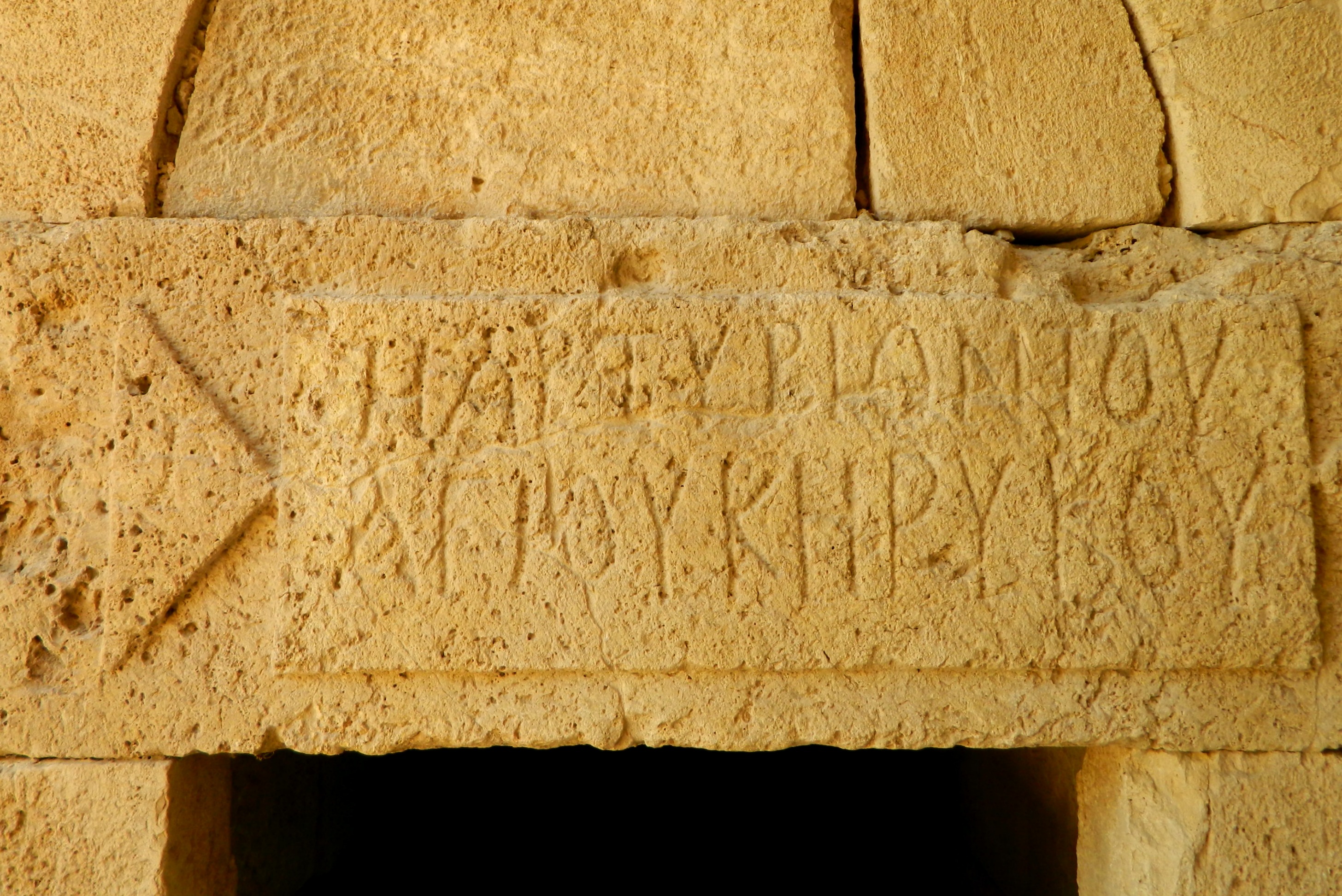
I passed the scaffolding-decorated walls and entered the castle’s interior. The following conversation was short and successful with the man returning to sit in a doorway, leaving me to explore Mirabel unhindered. The first thing to really catch my eye was a large lintel stone inscribed with Greek lettering delineating a Byzantine church.

Greek-inscribed lintel

Greek-inscribed lintel

Migdal Afeq served an important role in protecting the ancient trade route from Egypt to Syria, known as the Via Maris. However, whatever stood at Migdal Afeq in those times was only ever a satellite to the much more important Tel Afeq, just a few kilometres to the northwest (although not to be confused with Tel Afeq at Ein Afeq between Akko and Haifa). During the Roman period a Jewish village existed, and during the Great Revolt, was destroyed by Cestius Gallus and the 12th Legion.

Israeli flag flying proud

Israeli flag flying proud

In Crusader times the castle known as Mirabel was constructed after the land was gifted to Balian of Ibelin, the founder of the Ibelin dynasty, by King Fulk of Jerusalem. Interestingly enough, Ibelin is just a corruption of the ancient Jewish Yavne and to this day there is an Arab village near Haifa called I’billin and I wonder if it’s not named after the once-powerful Frankish family. Mirabel was captured by Saladin’s brother in 1187 and the castle was used by the Ayyubid forces until 1191 when Saladin ordered the castle destroyed in preparation for the Third Crusade. Most of the ruins seen today were built by the Ottomans, although some parts (including the keep seen in the photo below) are original Crusader construction – identifiable by the larger ashlars used in building.

The Crusader keep flanked by arched Ottoman rooms

The Crusader keep flanked by arched Ottoman rooms

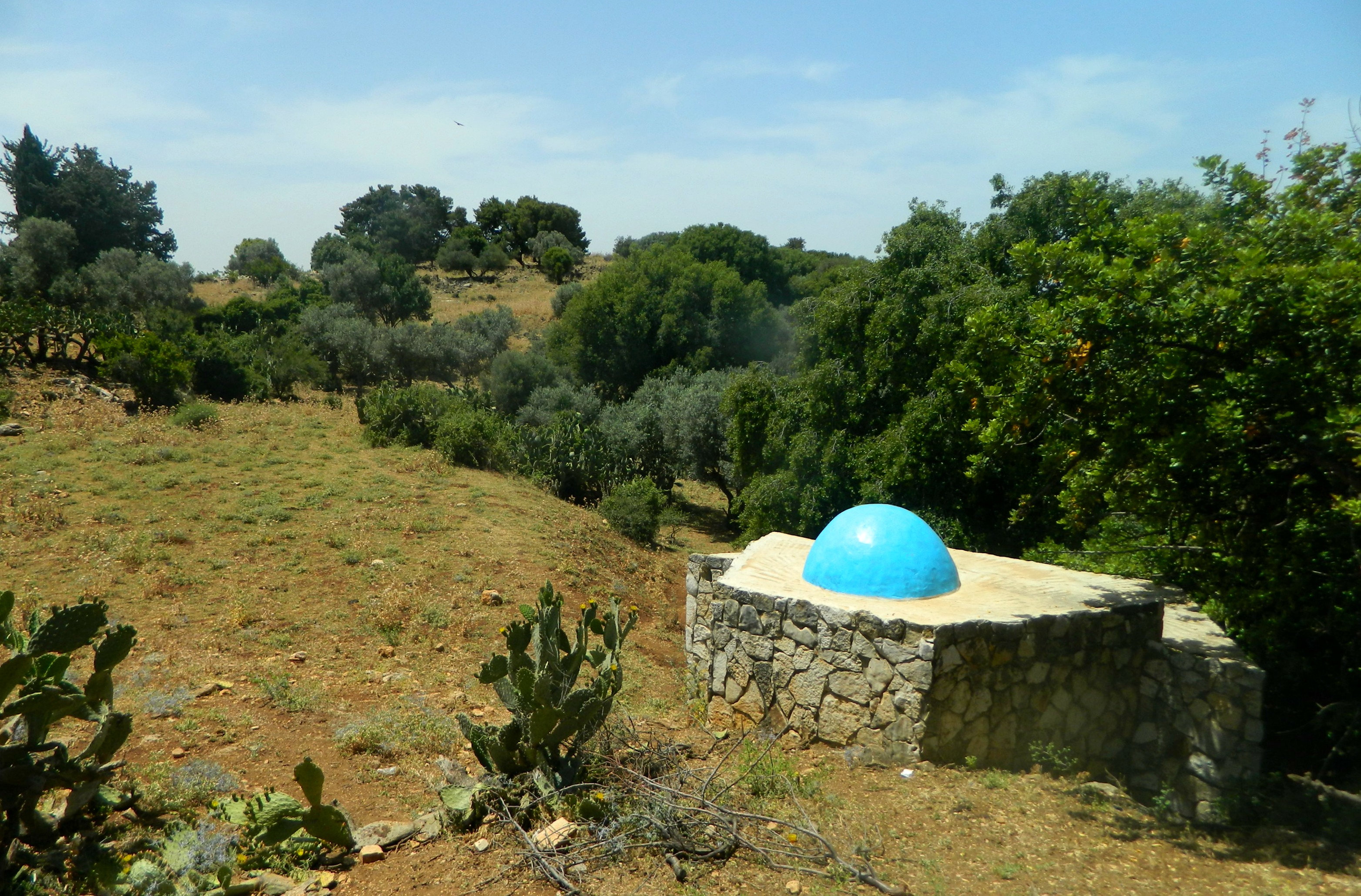
In the 1800’s, Bedouins settled around the fortress and called their village Majdal al-Sadiq, named after their leader whose domed tomb surrounded by other graves still stands on an adjacent hill.

Sheikh al-Sadiq's tomb

Sheikh al-Sadiq’s tomb

When I was finished exploring the site, being careful around the construction areas, I asked the watchman when he imagined the archaeologists would arrive. I waited around for a bit, taking the time to explore the outside of the castle, passing what seemed to be a water cistern just outside the castle wall. One interesting thing that I saw was this set of old lime kilns with an old quarry in the background. Apparently, the limestone quarried from here was used to build the white stoned-buildings of old Tel Aviv from the 1920’s through the 1940’s.

Old lime kilns with quarries in the background

Old lime kilns with quarries in the background

Returning to the castle’s interior, I greeted some arriving men only to find out that they were the construction crew and their foreman. Just blending in to the environment I was able to learn a little about the reconstruction process of ancient castles.

The healing process

The healing process

At last, I fretted over time lost waiting for the archaeologists to show so I left, headed for the second site on my day’s itinerary: Tel Afeq (Antipatris)

Outskirts of Parod

In Galilee, Israel on June 14, 2015 at 4:53 AM

The other week I took a bus to Karmiel one morning and then another bus heading east to Kibbutz Parod. I had a whole slew of places to visit and explore, starting with a megalithic mound known as Jethro Cairn (or Gal Yitro, in Hebrew). Approximately 500 feet (150 metres) long and 66 feet (20 metres) wide, this crescent-shaped pile of lichen-spotted rocks made news last year when findings were announced by Hebrew University PhD student Ido Wachtel, naming it older than the Pyramids and Stonehenge, as seen HERE in an article by Live Science.

Jethro Cairn from above

Jethro Cairn from above

Believing the site to be a monument consecrated to the pagan moon god Sin, there is also a religious connection to the Druze people who live locally in the Galilee and Golan. Historically, if a Druze had trouble making the annual pilgrimage to the shrine of al-Nabi Shu’ayb (what they believe is the Biblical Jethro’s tomb located not far from Mount Arbel), he would make do with visiting Jethro Cairn. Starting from the fragrant pine forest along the road, I climbed up the hill in search for the cairn. Up and up I went, even crossing through an inconvenient barbed wire fence – the first of many to hamper my explorations that day. At last I reached the large mound of rocks, and walked the entire length of the crescent, taking in the view including a Tegart fort in the distance to the east.

Jethro Cairn with the Tegart fort far off to the upper left

Jethro Cairn with the Tegart fort far off to the upper left

That irksome barbed wire fence even found its way cutting across the cairn. When I reached the other end I found an easier way down the hill and made my way to the dry streambed of Nachal Tzalmon. Following the trail I passed the access road to Parod and found a sign naming the path as the Parod Falls Trail, with a series of things to see. Starting with a small aqueduct I came across two keverim (graves) of sages: R’ Nechemya HaAmusi and R’ Yishmael.

Kever of R' Yishmael on the banks of the stream

Kever of R’ Yishmael on the banks of the stream

Both having lived in the Roman period when the Second Temple was destroyed, these Tannaim likely lived in the nearby ancient Jewish villages that I came to see. After some quick prayers I carried on, walking along the stream which, at this time of year, only had small puddles of water between the numerous tiny would-be falls. I passed two caves, ancient agricultural terraces and an ancient flour mill before reaching a gate on a dirt road. Climbing it, I turned out of the stream’s valley to hike up a hill to the west – Tel Be’er Sheva of the Galilee. Not to be confused with Tel Be’er Sheva in the Negev, this hill in the Galilee was once the home of a vibrant Jewish village prior to the Great Revolt against the Romans. And so I fought my way through the thorns and brambles, the hill’s peak coming ever closer. At last I reached the top and after surveying the peak, realised that the remains were hardly anything to be seen, just meagre wall bits beside a cow carcass.

Meagre wall ruins of Tel Be'er Sheva

Meagre wall ruins of Tel Be’er Sheva

As I made my way towards the southern slope of the hill I found this mysterious insect that I haven’t yet identified, which I had seen and mentioned on my last post, Nachal Ga’aton.

Mysterious insect

Mysterious insect

Walking down the southern side proved to be much nicer and I even found an interesting crystal nodule that caught my eye by glinting in the sun. At the near-bottom of the hill I found a pit that was partially closed off with fence and barrels, and, when I went inside turned out to be a necropolis with so many bones (and even a mummified puppy). Escaping the cistern of death, I then explored the nearby Ottoman-era vaulted building of unknown purposes.

Inside the Ottoman structure

Inside the Ottoman structure

Finished with that hill, I crossed Nachal Tzalmon once again and attempted to visit another kever or two as well as the ruins of Kfar Hannania on the opposing slope. Believed to have been a just a support satellite of the fortified Be’er Sheva during the Great Revolt, eventually the populations settled in the more convenient location of Kfar Hannania, abandoning the strategic hilltop. Heading for a few visible rock walls I encountered a barbed wire fence that was too difficult to get through. I continued along the fence heading south, along the natural curve of the hill, but eventually gave up and walked back to Road 85. Crossing at the junction, I paid a visit to the keverim of R’ Abba Khalafta and his sons, R’ Yossi and R’ Shimon.

Keverim of R' Abba Khalafta and sons

Keverim of R’ Abba Khalafta and sons

There I met the friendly caretaker who offered me cold water and drove me over to a nearby group of keverim, sparing me from the walk in the heat. I first visited the kever of R’ Eliezer ben Ya’akov – a very interesting two-floored grave with a shallow cave where people light memorial candles. Next I walked up and nearly missed the kever of R’ Ya’akov – just a few blue painted rocks beneath a small tree covering a tiny cave. Just a few feet further I entered the mausoleum of R’ Chananya ben Akashia and his family and students.

Kever of R' Chananya ben Akashia

Kever of R’ Chananya ben Akashia

I spent a little while there and then left, passing some stone wall ruins of Kfar Hannania before reaching the bus stop that I needed to take me back to Karmiel and then back home.

Nachal Ga’aton

In Galilee, Israel on May 17, 2015 at 5:26 AM

Last week’s adventures took me to the nearby Nachal Ga’aton, a small stream that starts seasonally between Mi’ilya and Meona and drains into the Mediterranean in the heart of Nahariyah. Being that Meona and Mi’ilya are neighbors with Ma’alot here in the Galilee, my father easily dropped me off in Meona and I began my 13-kilometre hike in the industrial section of the town. Eager to leave the rank smell of chicken coops behind me, I skipped some interesting little things to see, hurrying along on the paved road. It was when passing a mushroom manufacturing plant that I finally got on the Nachal Ga’aton trail (marked blue). Immediately descending into the woods, the trail followed the dry Marva stream (below Tel Marva) until it reached the dry Nachal Ga’aton.

The trail crossing with a dry Nachal Ga'aton

The trail crossing with a dry Nachal Ga’aton

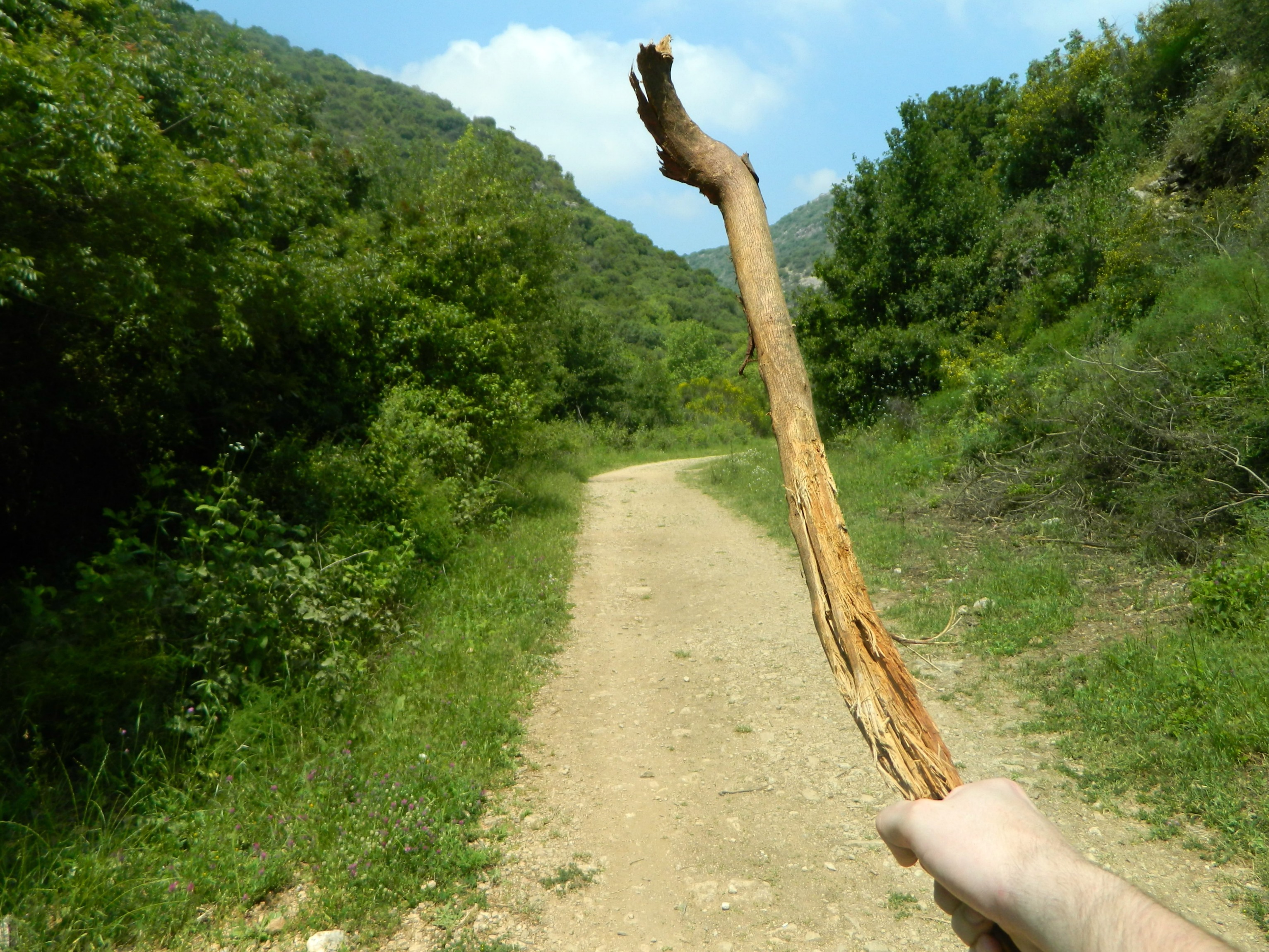
The hike was rather uneventful until suddenly I spotted a wild boar in the bushes up ahead. It was nosing around in the leaves and didn’t notice me. I began to quake in my shoes, considering my options. Making a snap decision I took a few silent paces back and then strode forth with a false sense of confidence, making sure to make ample noise. Pretending like I didn’t notice the beast worked rather well, and, after a gut-churning grunt/snort, the wild boar dashed up the gentle slope, followed by four other boars. Seizing the opportunity, I found myself a nice stick to be my protective companion. A few minutes later I crossed paths with an elderly man holding a huge club – no doubt his tried-and-true boar crusher.

What looks like an old wall in the woods

What looks like an old wall in the woods

Continuing along the dry rock-filled streambed I spotted yet another wild boar. Due to the fact that I walk rather quietly (a practice harkening back to my youth when I chased whitetail deer in Michigan’s bountiful nature parks), and the fact that I was upwind, I always see the wild boars before they detect me. I stepped back a few paces and began filming the boar edging into the woods when, suddenly, I spotted two striped piglets on the trail headed my way. Backing up away from the advancing piglets, not wanting the mother to spot me and think bad thoughts, I kept going further and further back – and the curious little squeakers kept coming.

A curious wild boar piglet

A curious wild boar piglet

There were some noises in the bush and the piglets left me. Waiting a good five minutes or so, I figured it was now safe to continue – but just as I passed I saw a boar just mere feet from me in my peripheral. It just grunted as I walked by, and my heart skipped some beats in fear. Resorting now to dragging my stick on the ground beside me, making plenty of noise, I next reached a clearing with many large eucalyptus trees and picnic tables. It was there that I had lunch, and continued on in the direction of some nearby springs, reaching the beautiful Ga’aton ruins with ease.

Ga'aton ruins overgrown with grass and wildflowers

Ga’aton ruins overgrown with grass and wildflowers

It’s at these ruins that Nachal Ga’aton finally sees some water and beside the bridge is a little pool perfect for children.

Bridge over Nachal Ga'aton

Bridge over Nachal Ga’aton

As it is spring- the season of growth, the ruins were overrun with tall grass and wildflowers and I was slightly apprehensive of running into a snake or two – and being that this wasn’t my first time visiting the ruins, I was content with visiting just one building.

Ga'aton ruins

Ga’aton ruins

The ruins were most recently a Ottoman farmhouse owned by the Sursuqs of Lebanon (one of Beirut’s aristocratic Christian families) having been built on old Crusader remnants. Climbing to the second floor of one building, I found a nice place to sit and look out at the ruins below – watching a kestrel fly about searching for prey.

Kestrel in the tree

Kestrel in the tree

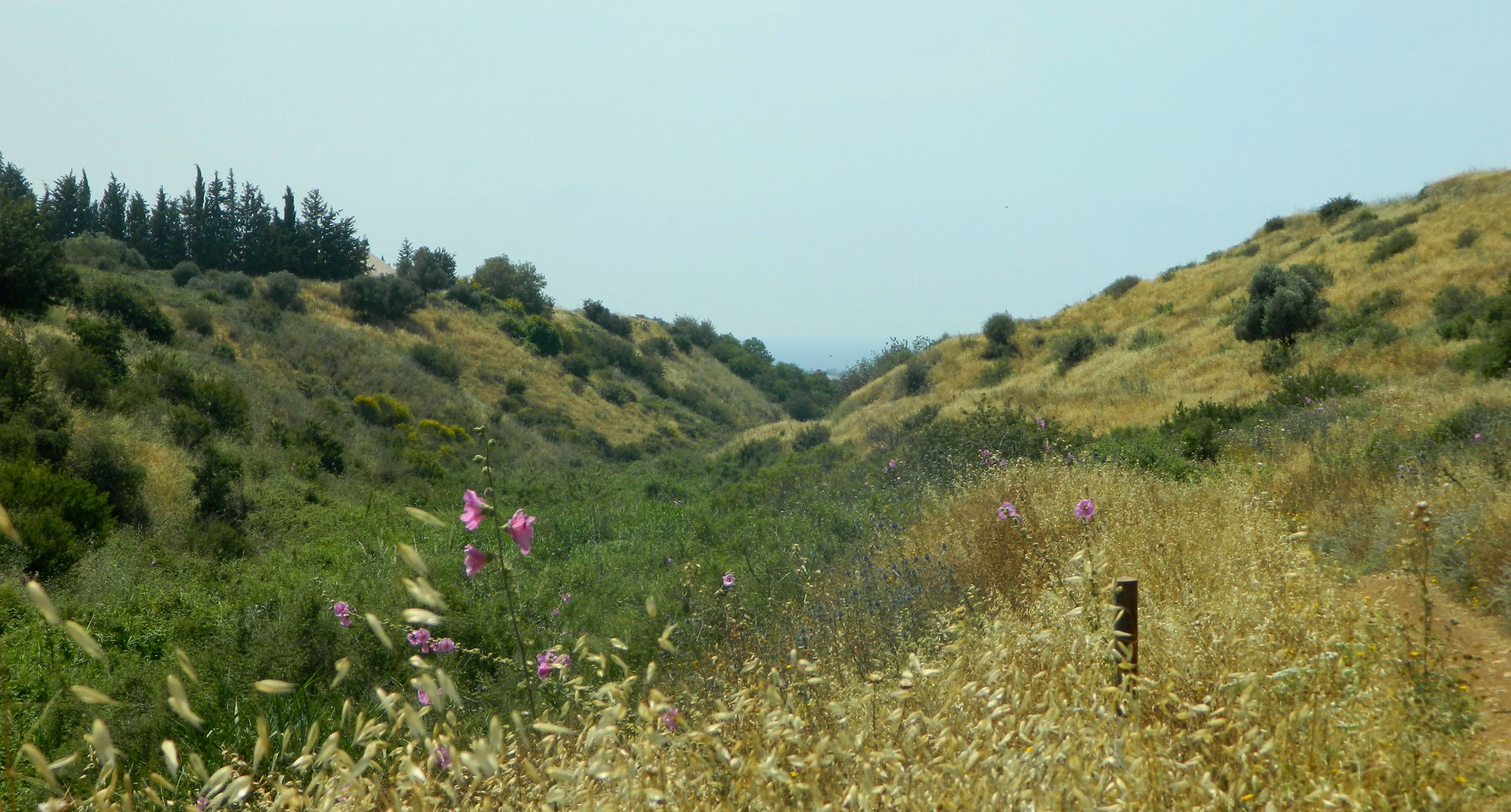
After sitting for a spell, I took up my walking stick and left the ruins, walking along the now watery Nachal Ga’aton. When I hit Road 8833 (the road to Yehiam and Ga’aton), I turned right towards the large quarry and then took the bike trail in the direction of Kabri – still walking parallel to Nachal Ga’aton. It was on this nice bike trail that I saw an enormous grasshopper, almost mistaking it to be a small bird. Heat waves rose up on the trail before my eyes, and the hollyhocks added a nice splash of colour to the various shades of brown and green looking out to the sea.

Hollyhocks among the green and brown to the sea

Hollyhocks among the green and brown to the sea

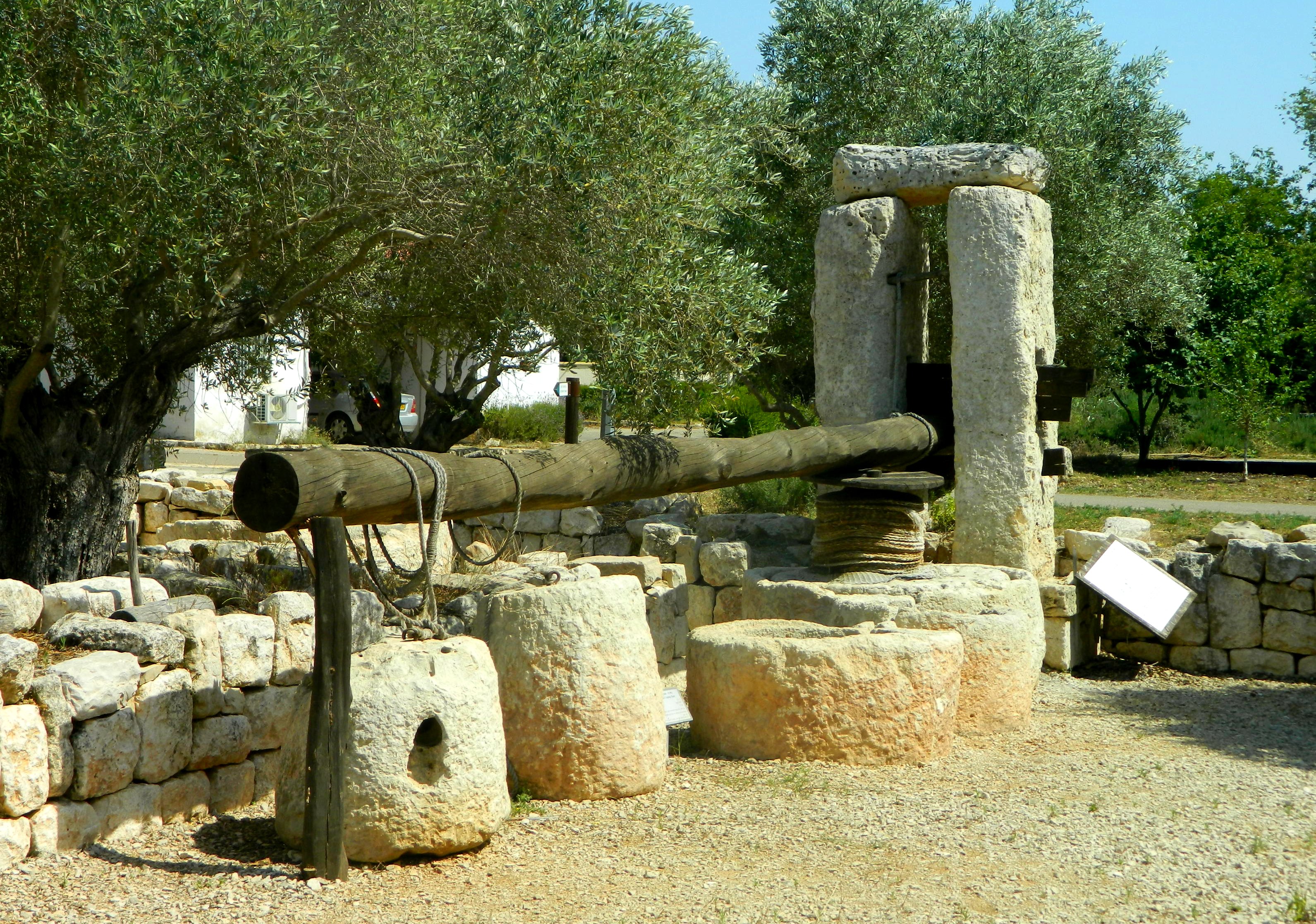
Soon I reached netted banana fields flanking the trail, and then, just half a kilometre from Road 70 and the Kabri Junction, I came upon the Western Galilee Regional School and swung north on the access road to visit the last two things on my mental checklist. The first was the KKL-JNF Kabri Archaeological Park, which is free to visit although they prefer prior reservations. Inside I found three themes of artefacts: olive oil, corn and wine. The largest is the olive oil section, with many grindstones and presses from different time periods and locations including a reconstructed Roman-era olive oil press from the Zabadi ruins just 5.5 kilometres north near the Old Northern Road.

Zabadi olive press

Zabadi olive press

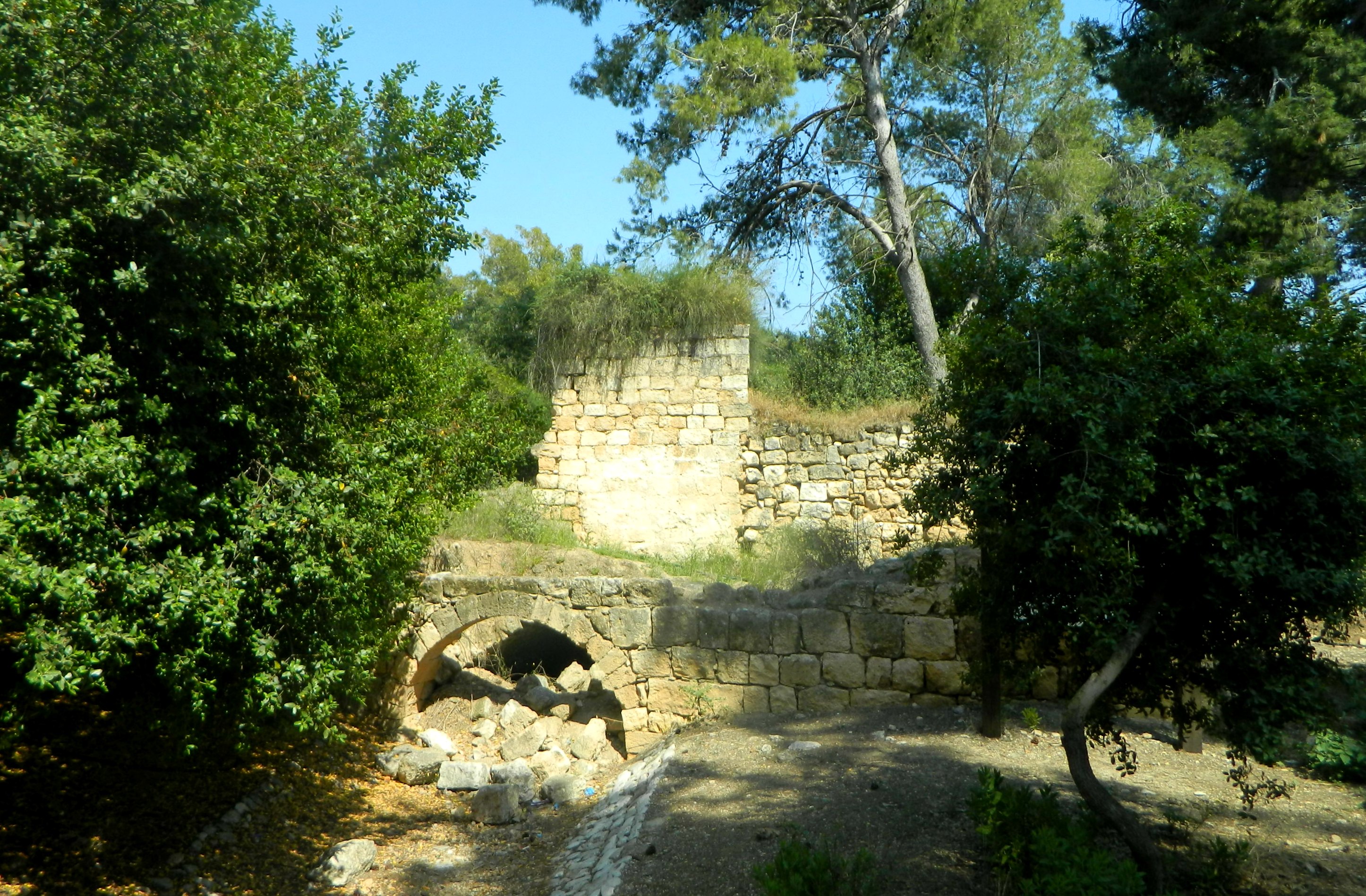
Then there are four types of corn grinders starting with the archaic saddle quern and then the most modern rotary hand mill likely introduced to the area by invading Roman soldiers. And finally, a winepress from the Tanach period excavated at the foothills of the Gilboa range near the Jordan River Valley. Using giant blades and diamond-toothed chainsaws, KKL-JNF and the Antiquities Authority were able to extract the 24-ton behemoth from the bedrock and transport the intact winepress to the park to be exhibited. I think it would be cool if they bottled and sold wine made from the press, or at least had hands-on activities on-site. When I finished at the archaeological park I went across the access road to the remains of an ancient flour-mill which likely used water from the stream to power the grindstones.

Ancient flour mill

Ancient flour mill

Nachal Ga’aton keeps on flowing all the way to Nahariyah, slicing through the centre of the city and then empties into the Mediterranean but I wrapped up my trip where I was, taking the bus back home – my first time paying for public transportation since being released from the army.

Nachal Kziv III

In Galilee, Israel on May 10, 2015 at 4:30 AM

Last week, in attempts to ensure I take at least one bloggable trip a week, I turned to my own backyard – Nachal Kziv. While this is my third post (after I and II) about this beautiful stream that snakes across the Western Galilee, the focus of this trip wasn’t really the stream itself but rather the sites on the flanking mountains and cliffs above. And so, I set out in the late morning from the Zeitim neighbourhood of Ma’alot, walking the winding paved road down to the stream.

A patient dragonfly at Nachal Kziv

A patient dragonfly at Nachal Kziv

I had an optimistic feeling that I’d see some interesting animals – ideally the Persian fallow deer, which I’ve only seen once before. I reached the water at Ein Ziv and passed the Crusader mill, walking along the stream. After crossing the stream once, I spotted somethings dark and foreboding up ahead on the trail. They spotted me just moments after I had spotted them, and the wild boars stepped out to size me up.

Wild boars on the trail

Wild boars on the trail

If perhaps to set the dangerous scene properly – man vs nature – an unseen wolf began to howl nearby. Knowing that I was doomed if I were to continue as is, I backed up out of eye-line and found a hefty stick to wield, just in case.

My hefty stick for defense against wild boars

My hefty stick for defense against wild boars

When I returned to where the wild boars were, I found that they had disappeared into the woods. Phew! I had avoided a frightening confrontation… Now, just to clarify, wild boars are the absolute worst animal to run into while hiking in Israel. While not inclined to attack you, the wild boar is certainly self-assured that it could put a mere human in his place – and at a maximum weight of some 300 kilo (660 lbs), their opinion is justified. The ones I came across, including those pictured above, are relatively medium-sized females. Some more frightening facts about the wild boar is that they can upturn rocks weighing 45 kilo (100 lbs), they can run 40 km/h (25 mp/h) and they can just jump to the height of 140-150 cm (4.5-5 feet) in the air – plus they have large canine teeth, which grow into wicked tusks on the males. The wild boars in Israel have no real natural predators, other than the wolf, which could probably only take down a juvenile boar. While most wild animals in Israel run away when they see humans, these wild boar first stood their ground and then issued a threatening rumble which sounded exactly like any subsonic noise portrayed by a troll in the movies.

A meeting of trails

A meeting of trails

Slightly on-edge, I continued on with my hike on the easy gravel trail until I reached the sign marking the black trail to Abirim Fort and turned to climb the mountain. A far more rugged trail, I was occupied with my progress when suddenly I heard a very loud rumble/snort of a wild boar (or many wild boars) very close by, far too close for comfort. I immediately dashed for a tall rock where I would stand my ground in relative safety. I could hear the boar(s) and I was sure they could hear me (and my panicking heart) but I could not see them. I strained my eyes, looking through the underbrush and among the large rocks – nothing. After a few minutes had passed, I inched over to a tree and climbed it before announcing my presence. With no bone-chilling swine calls echoing my own shouts, I felt reassured that I was back to being alone and continued up the mountain, tightly gripping my hefty stick.

The black trail up the slope

The black trail up the slope

It wasn’t for another twenty minutes or so of uphill hiking that I had my next wild boar encounter. At this point I was getting rather tired of being scared and when I spotted these wild boars I took some quick photos before running off to hide once detected, including this one of little piglets nursing beyond the foliage:

Piglets nursing from the mother boar

Piglets nursing from the mother boar

I tripped over some random wire in the grass as I found my new high ground and waited for these wild boars to either attack me or disappear. Thankfully, they vanished and I was able to continue on to the clearing where the blue trail for the Temple Cave started. Feeling a sense of déjà vu as I hiked back downhill, just on the adjacent slope, I marveled at the familiar sight of Ma’alot over the canopy of mountain green.

Ma'alot in the distance

Ma’alot in the distance

I then came upon a fork in the trail, and correctly took the left path after checking with my phone’s GPS. As I walked the precarious trail overlooking the Nachal Kziv path down below, I noted that I had not seen a single person on my entire hike thus far – and then the sloped field of the cave came into view.

The field before the cave

The field before the cave

I found the explanatory sign and looked up at what I came to see – a life-size carving of a Roman soldier on the cliff wall.

The Man on the Wall

The Man on the Wall

Only rediscovered in 1985, this “Man on the Wall” is believed to be over 2,000 years old and mystery shrouds its origins. Beside this fascinating find is the multi-chambered Temple Cave, which I entered to find a burnt ceiling and a powder floor.

From within the Temple Cave

From within the Temple Cave

There was also a lone bat, which disappeared, but I found no history or backstory of the cave, nor the origin of its name. After a quick little picnic next to the cave I began the return trip to the clearing, spotting wild boars – yet again – on the trail far below.

Standing outside the Temple Cave entrance

Standing outside the Temple Cave entrance

I reached the clearing without incident and then continued back on the black trail towards Abirim Fort. Having been going downhill, then uphill, then downhill, then uphill over and over, it was a relief to be on a relatively flat trail. At last I reached a sign for Abirim Fort and somehow missed the side trail to the ruins, continuing on towards the end of the trail. Turning back, I located the white trail and entered a thicket of small trees, shrubs and large rocks in search for the ruins. I got lost remarkably quickly and it took a very long time for me to find Abirim Fort. When I did finally spot the large light grey ashlars, I climbed up and enjoyed my achievement.

Abirim Fort

Abirim Fort

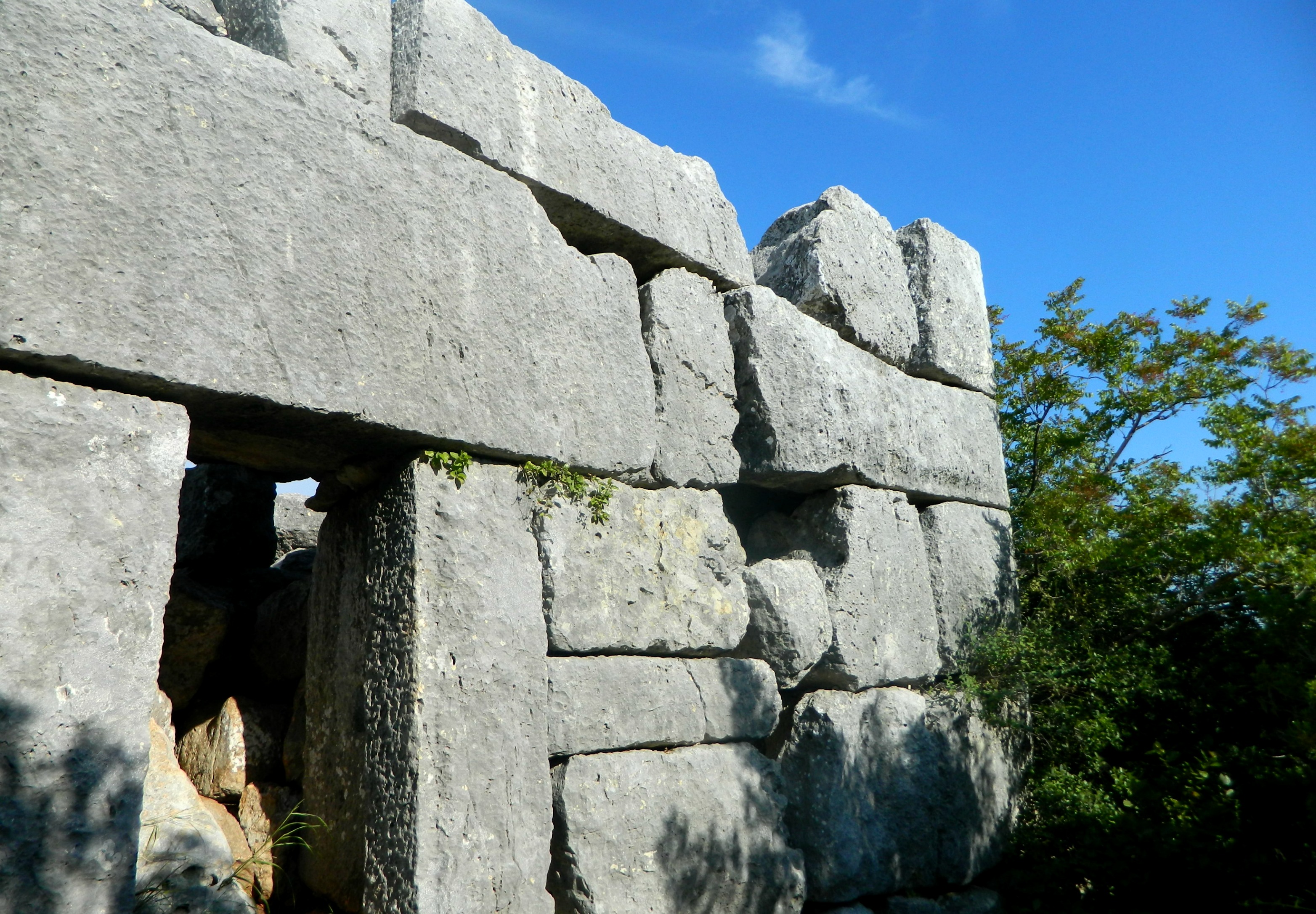
Long thought to simply be a fortified Crusader farm, the structure is now believed to have originally been a Roman mausoleum – due to its huge stones and small door.

Front wall and door of Abirim Fort

Front wall and door of Abirim Fort

Attempting to leave the fort, I got lost once again in the impossible thicket. I fell back on survival instincts and battled the endless branches and thorns – forcibly tunneling my way out through the relentless vegetation. At last I emerged on the black trail and reached the road with ease, where I waited for my parents to retrieve me – thanks parents!

Biriya Forest

In Galilee, Israel on May 3, 2015 at 4:37 AM

Last week my parents and I took a little drive over to the Biriya Forest with two main destinations in mind. However, due to the Galilee being absolutely filled with interesting things to see, the drive turned into a full-fledged day trip. Our first stop was the Shamaya and Avtalyon mikve (ritual bath) and we then turned eastward at Meron Junction and stopped at the roadside kever (grave) of R’ Benaiah the Amora and unnamed others who lived during the 200’s CE. We lit some memorial candles and had a quick prayer before continuing on with our “kever hopping” of Tannaim and Amoraim (Jewish sages from approximately 20 CE to 500 CE living in the Land of Israel and Babylonia). Our next stop was just around the bend at a trail entrance of Nachal Amud, the hillside kever of R’ Kruspedei the Amora (likely “ϰρασπδον” in Ancient Greek) who’s mentioned several times in the Zohar.

Kever of R' Kruspedei the Amora

Kever of R’ Kruspedei the Amora

We then took the backwoods road to the agricultural community of Kadita, stopping off at the kever of R’ Yossi ben Ya’akov, one of the disciples of the great R’ Shimon bar Yochai. In fact, the domed room on the right is known as the Idra Zuta, where Rashbi taught his final Kabbalistic teachings to his students on his deathbed.

Kever of R' Yossi ben Ya'akov and the Idra Raba

Kever of R’ Yossi ben Ya’akov and the Idra Zuta

After more candle lighting and praying we got back in the car and continued to the kever of R’ Tarfon, one of the most famous Tannaim who lived in the era of Bar Kochba’s revolt against the Romans. Beside the stately grave is a huge wild pistachio tree known fondly as the “Tree of Mercy”.

Kever of R' Tarfon with the Tree of Mercy stretching out overhead

Kever of R’ Tarfon with the Tree of Mercy stretching out overhead

Leaving Kadita and heading back to Road 89, we turned into the Biriya Forest at Ein Zeitim Junction. Once again leaving the main road, we found ourselves on one of the many scenic forest routes and paused for a quick look-see at Ein Gever spring.

Ein Gever spring

Ein Gever spring

Next we paused to admire the grove of pistachio trees in KKL-JNF’s Pistachia Valley, followed by the first of our main destinations: the Nevoraya Synagogue. Built sometime in the 100’s CE, the synagogue served the Jewish villagers on and off for some 600-700 years, with three known stages of construction. Discovered in 1861, the excavations began in 1905 and today the site was lovingly reconstructed and presented with informational plaques and even interactive activities.

Nevoraya Synagogue

Nevoraya Synagogue

At the bottom of the slope to the west we found the joined kever cave of R’ Eleazar of Modi’in and R’ Ya’akov of Nevoraya. Being the uncle of Bar Kochba, R’ Eleazar HaModa’i took part in the rebellion against the Roman governor Quintus Tineius Rufus and his troops at Beitar – however it is believed that Bar Kochba suspected his uncle’s allegiance and, subsequently, had R’ Eleazar killed (the tragic story can be read HERE on Wikipedia).

Kever cave of R' Eleazar of Modi'in and R' Ya'akov of Nevoraya

Kever cave of R’ Eleazar of Modi’in and R’ Ya’akov of Nevoraya

Leaving the cool burial cave we drove up the adjacent hill in search for an ancient lime kiln. We didn’t see it from the car, but found a nice lookout of Ein Nevoraya spring where the sounds of the frogs croaking below was surprisingly loud. I took a short video of the spring with the frogs that you can see HERE.

Ein Nevoraya spring

Ein Nevoraya spring

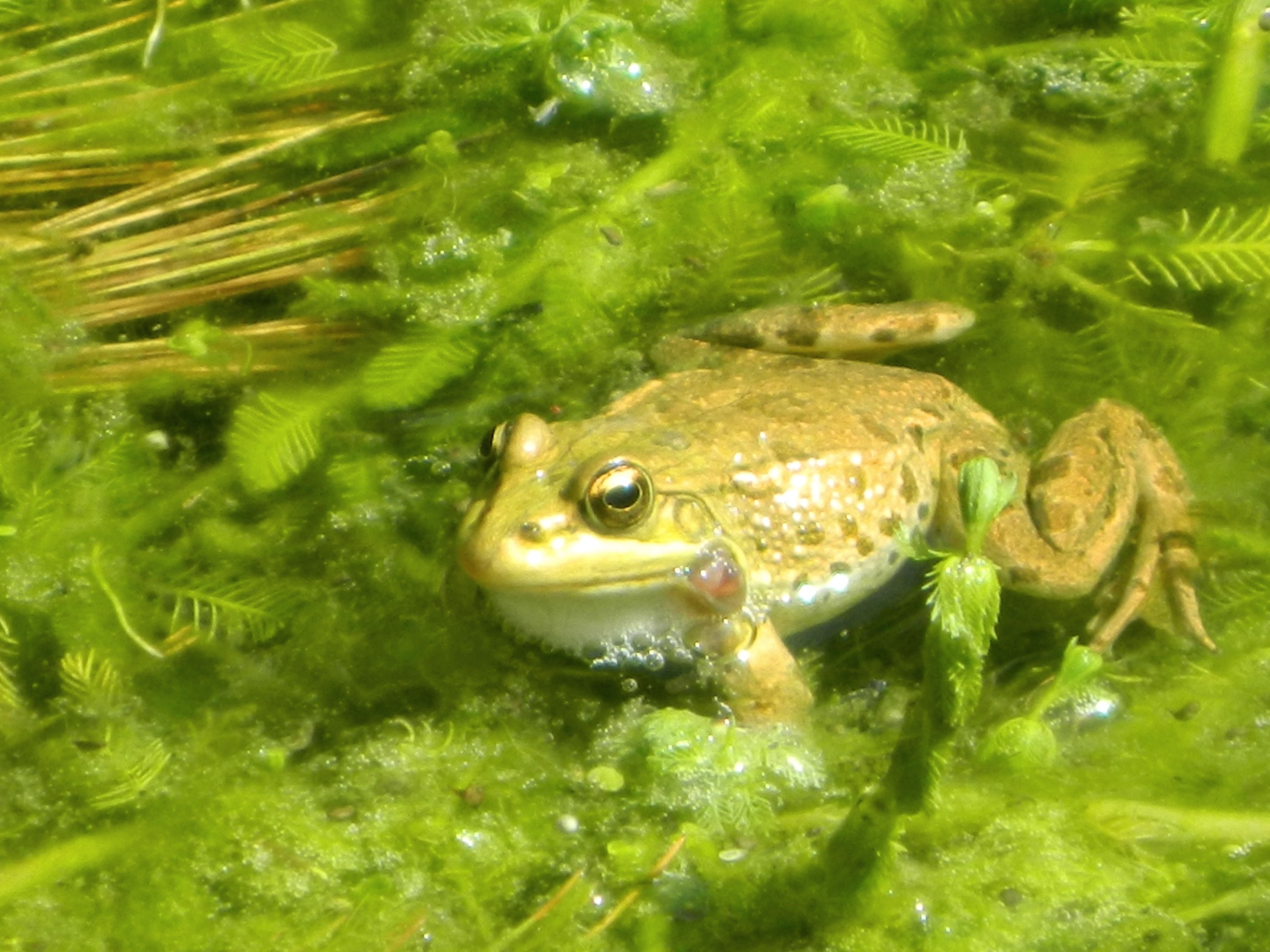
Descending the hill we stopped briefly at the spring where I just stood and took multitudes of photos of the multitudes of frogs.

Pond frog in Ein Nevoraya

Pond frog in Ein Nevoraya

From there we made a bee-line for Amuka, our second main destination. Home of the kever of R’ Yonaton ben Uziel, Amuka is famous for being the place where single adults come to pray for a spouse. So, I did that there.

Kever of R' Yonatan ben Uziel in Amuka

Kever of R’ Yonatan ben Uziel in Amuka

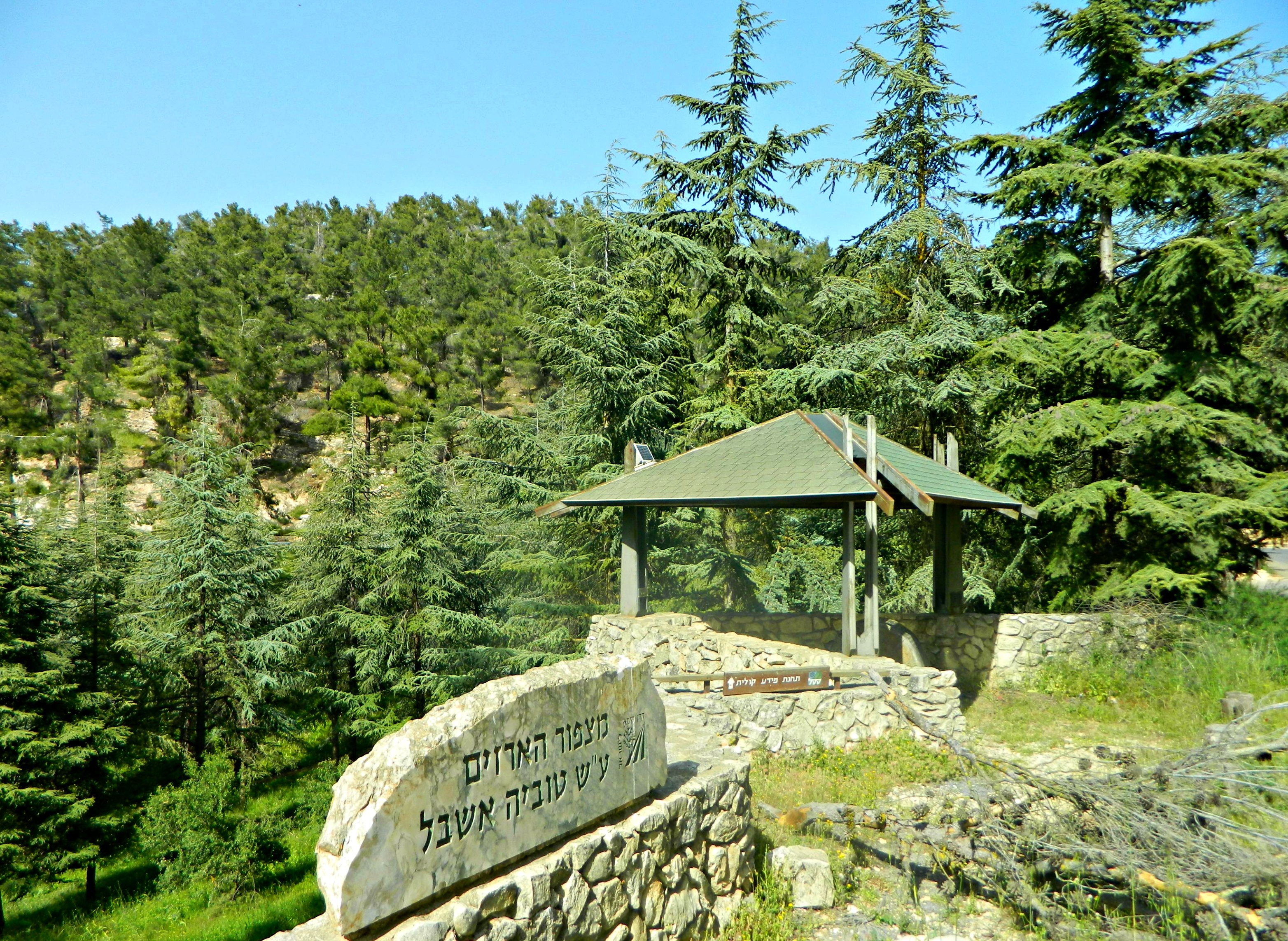
On the way back home, so to speak, we stopped at the KKL-JNF Cedar Lookout and listened to the nice audio info station presentation describing the surrounding pine tree forest.

KKL-JNF's Cedar Lookout

KKL-JNF’s Cedar Lookout

And, last but not least, a visit to the Biriya Fortress – a place I’ve wanted to visit for quite some time now. Back in 1945 Jewish settlers under the mantle of the Palmach took the mountaintop and built the fortress as a defence post and waystation for Jews immigrating from Syria. It wasn’t long before the British had a say in the matter and took the fortress from the Palmach. After a valiant attack/protest, the British relented and the fortress became a symbol of success and perseverance.

Biriya Fortress

Biriya Fortress

While we were there, a drama school was filming a little something about Nicanor and the Romans, and we had to scurry about from room to room – ending off with a grand view from the main tower of the outlaying Biriya Forest and even the Hula Valley far out in the distance.

Chastellet (Jacob’s Ford)

In Galilee, Golan, Israel on April 26, 2015 at 5:16 AM

This past week I was released from the IDF after serving two and a half interesting years – but this post is not about that. Nearly a year ago I had the day off from my army duties, and to take advantage, my parents and I took a little drive over to the Jordan River, just a few minutes east of Tzfat and Rosh Pina. We pulled over just before the B’not Ya’akov (Daughters of Jacob) Bridge, a historically strategic crossing point between the Galilee and the Golan. Just a few feet before the sign welcoming drivers to the Golan, we turned onto a dirt road and parked just outside our destination: the Crusader fortress of Chastellet.

Chastellet's northwestern wall

Chastellet’s northwestern wall

At the crossing point, also known as Jacob’s Ford (Vadum Iacob in Latin), a fortress was built in 1179 by the Crusaders under King Baldwin IV, the “Leper King”, to assert power over the region – preventing a Muslim invasion and putting pressure on the Ayyubid stronghold of Damascus. With such strategic importance attached to the project, the king moved his seat of government to the building site, his men working alongside the Templars.

Chastellet from the sky (photo: Wikipedia)

Chastellet from the sky (photo: Wikipedia)

Frantic at this regional game-changer, the Muslim sultan Saladin offered a bribe of 100,000 dinars for the Christians to abandon their efforts. When his bribe was refused, and the castle was already considered complete and in the hands of the Templars, Saladin gathered up a small army and began a siege of the newly-built Chastellet. The castle’s battle-hardened garrison fiercely defended their vantage point and the siege was called off when a knight named Rénier de Maron killed one of Saladin’s leading emirs with a well-aimed arrow.

Grasshopper

Grasshopper

Several months later, having defeated the Crusaders at Marjaayoun Valley in Lebanon (just north of Nachal Iyun), Saladin once again attacked Chastellet. Knowing that King Baldwin was camped not far away in Tiberias, Saladin decided to rush the castle, hoping to overrun it with his force superior in number. A vicious battle ensued and the Christians, numbering over 1,000, were ultimately defeated.

My mother posing at the castle's western wall

My mother posing at the castle’s western wall

While researching this castle online I came upon this reenactment of the bloody battle on the National Geographic channel: “Epic Battle”. After the victory, Saladin ordered that the walls be torn down and, to this day, the site was utterly abandoned and thereby well-preserved. Only earthquakes in 1202, 1759 and 1837 resulted in the meagre walls to be shifted in their places.

Earthquake-cracked walls

Earthquake-cracked walls

Archaeologists have uncovered full skeletons of fallen Crusaders and the castle’s water cistern is said to hold hundreds of dead Crusader corpses. When we visited we saw no skeletal hands reaching up through the dry dirt, but perhaps if we were to start digging, we would. Starting from the northwest corner we walked the rim of the castle ruins, pausing here and there to admire and photograph. When we finished looking at the castle, we headed down and had a brief staring contest with a particularly aggressive-looking cow and then walked down to the riverbank.

The Jordan River gently flowing by

The Jordan River gently flowing by

We found a nice shaded spot to sit in the river, under Chastellet, and relaxed in the Jordan’s cold, watery embrace. As I saw in the Golan Archaeological Museum in Qatsrin, part of an elephant’s remains was unearthed not far from where we were – closer to the bridge and on the Golan side of the river. With that we dried off in the hot June sun and got back into the car for the drive back home.

Old Northern Road

In Galilee, Israel on April 20, 2015 at 4:21 AM

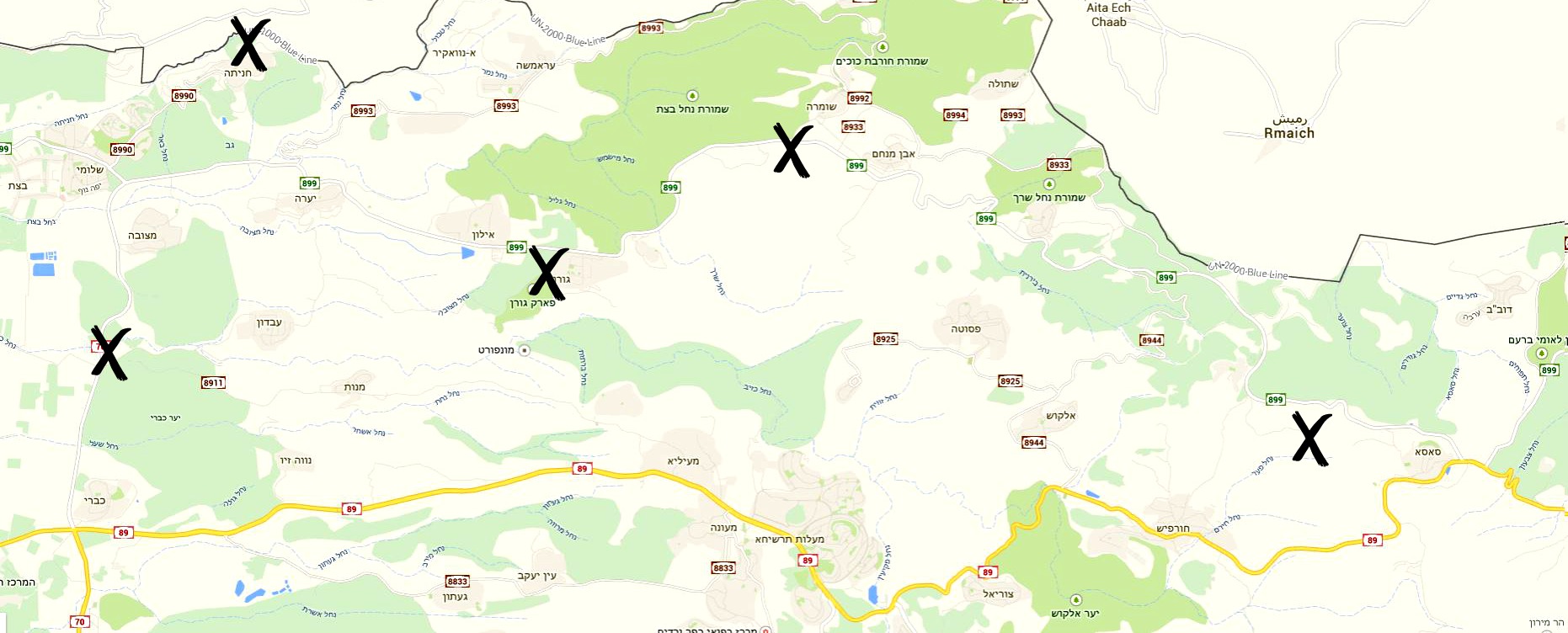
On the third day of this Pesach’s Chol HaMoed I planned a trip for my family to a series of interesting sites along the Old Northern Road (also known as Road 899) which hugs the Israel-Lebanon border. With intentions on eating lunch somewhere along the way, we packed a nice picnic, including fruits and snacks, cold drinks, a pan of matza lasagna and even a bottle of chilled white wine. Leaving Ma’alot, we headed in the direction of the Mediterranean Sea but turned right at Kabri Junction to reach the Old Northern Road.

X marks the spots

X marks the spots

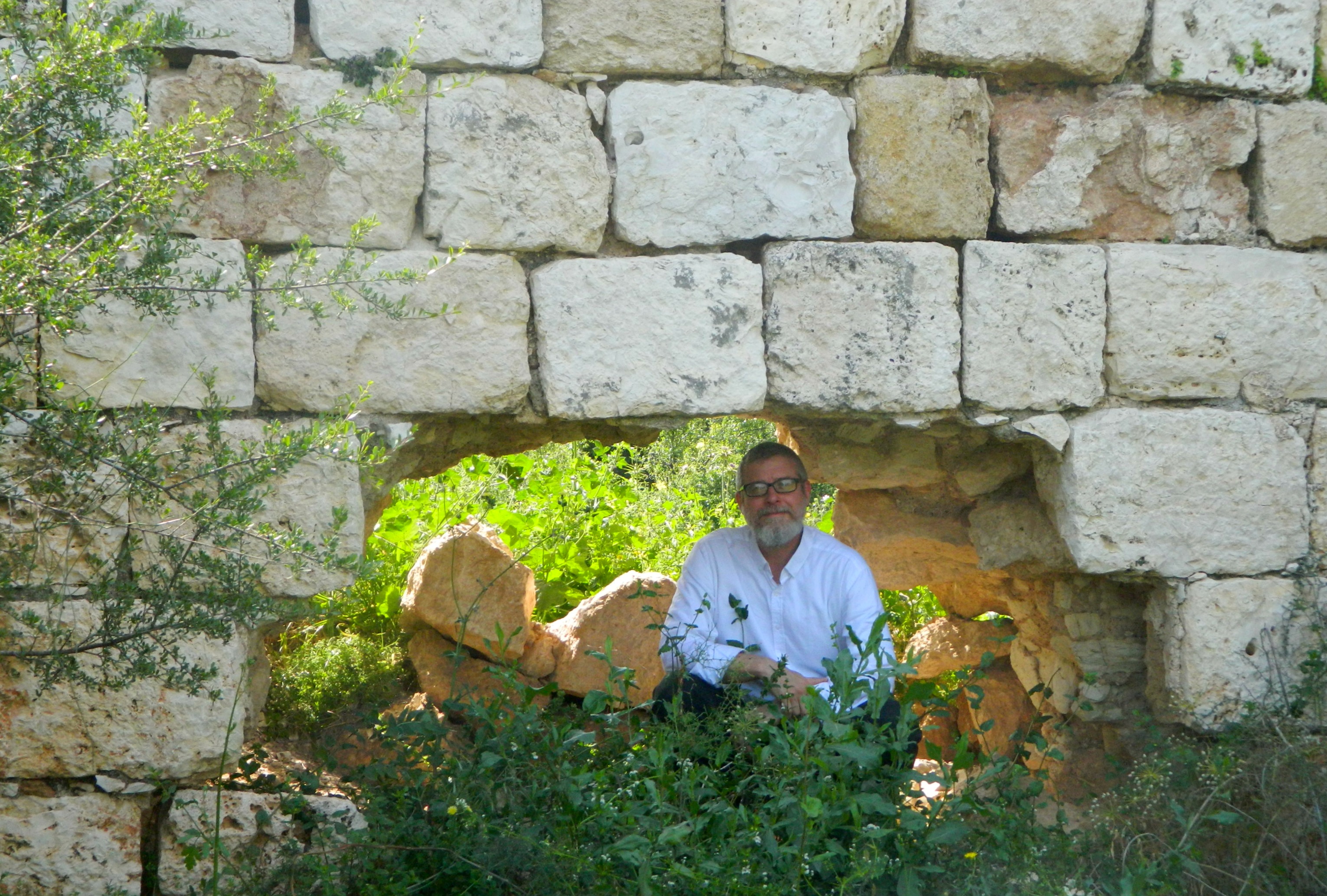
Our first stop was just up ahead, ruins at the junction of the road to Manot. The site, aptly named Manot ruins, was relatively easy to find and we only suffered a few thorn pricks and the incredible burning sensation gifted to us by a mysterious spiky plant. Walking through the wildflowers, we first came across the Crusader sugar press, carved into the bedrock, which supplied cane sugar (a great commodity at the time) to Europe, making them rich and valuable. Just beyond it we found the thick walls of the fortified farmhouse from the Roman and Byzantine periods.

My father at the Manot ruins

My father at the Manot ruins

Getting back into the car, we drove through the town of Shlomi to reach Kibbutz Hanita, where we had two destinations. We enjoyed the winding route up the mountain and parked beside a wonderful children’s park with wooden play structures. The whole family took part in the fun and only after we accidentally ventured into the kibbutz’s dining room did we regain focus and find the Tower and Stockade Museum.

Tower and Stockade Museum

Tower and Stockade Museum

Housed in a stone building which was built on the remains of a Byzantine church, and had since served a variety of purposes, the museum chronicles the founding of Hanita and the pioneering concept of “tower and stockade”. During the Arab Revolt in the late 1930’s, the Jews developed a quickly constructed way to settle down in an area otherwise overrun with dangerous Arab raiding parties. And so, some fifty-seven “tower and stockade” settlements were created over a four-year period – including Shavei Tzion. Hanita was established in 1938 but at its time was a great feat, as the climb to Hanita was rather difficult and would leave them all unprotected. So the Lower Camp was created and at daybreak on March 21st, the huge procession began – protected by the Haganah and the “Notrim”. Clearly a success story, the museum displays numerous artefacts and photographs from the time, as well as some other curiosities such as a leopard skin illustrating the last known Arabian leopard in the region who was killed by a hunter in 1965 near the nearby Namer Caves. Being as though the museum was built within a historical building, it’s logical that there would be an archaeological wing as well. Most of the findings, including coins, weapons and plenty of mosaics, came from in and around Hanita including this impressive depiction of a wild boar:

Wild boar mosaic

Wild boar mosaic

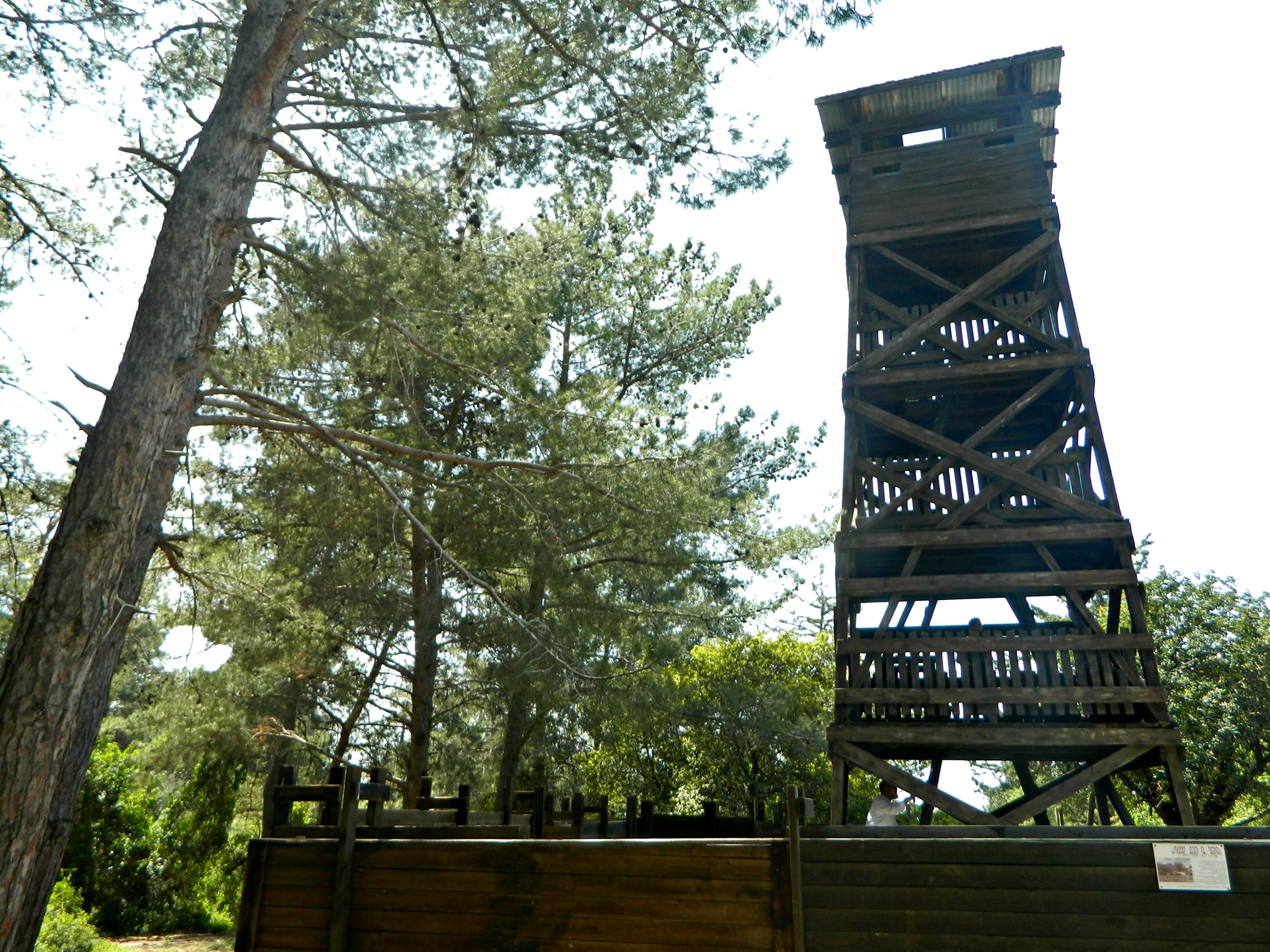
Leaving Hanita, we stopped off at this replica of the tower and stockade that the kibbutz members once called home.

A tower and stockade

A tower and stockade

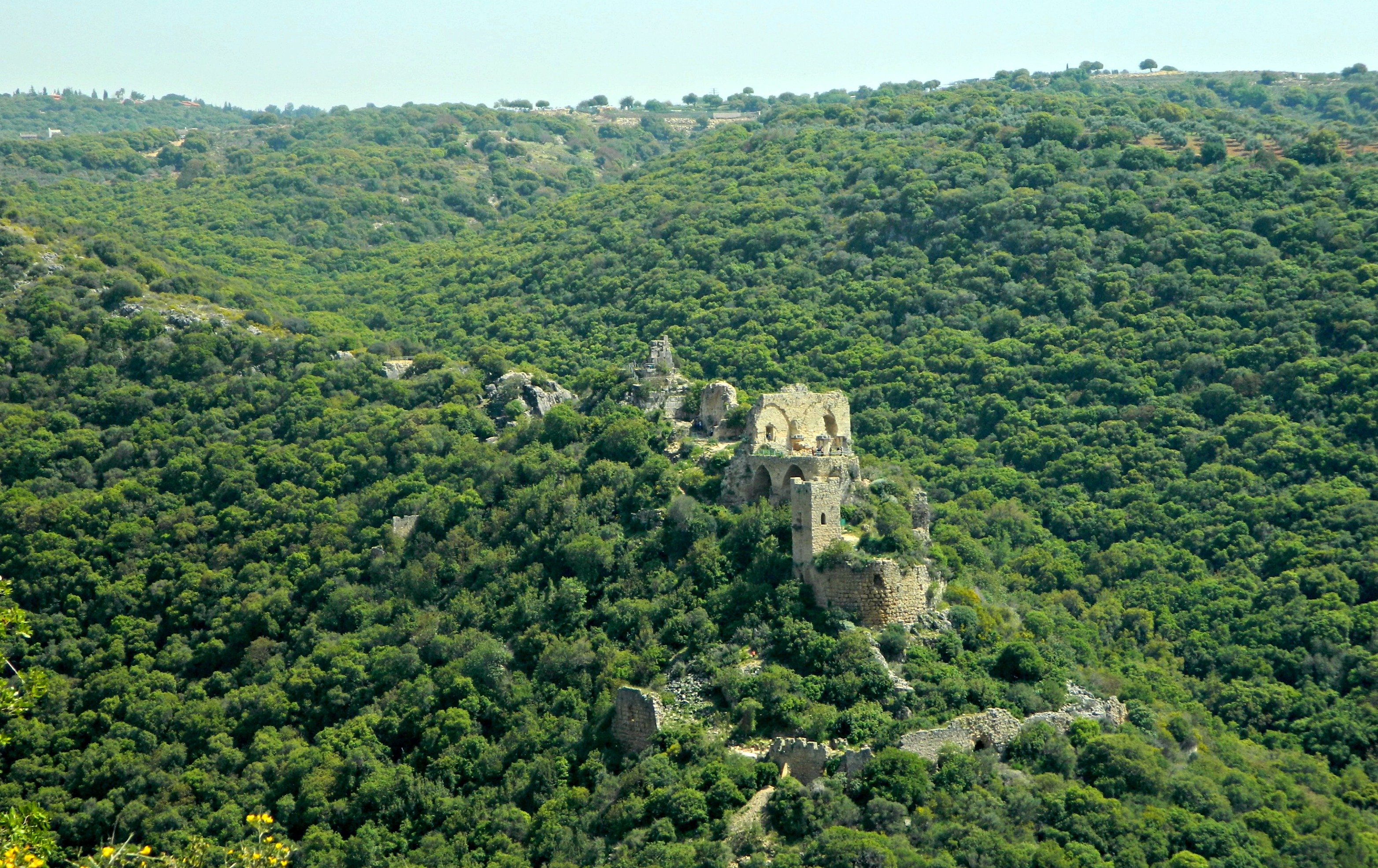
Now driving on the Old Northern Road, we turned into Goren Park for a nice view over Nachal Kziv and Montfort Castle as well as a place to picnic. We found a shaded spot beneath some pines and broom bushes and dined – sadly, the one thing we forgot was the corkscrew for the wine.

Montfort Castle

Montfort Castle

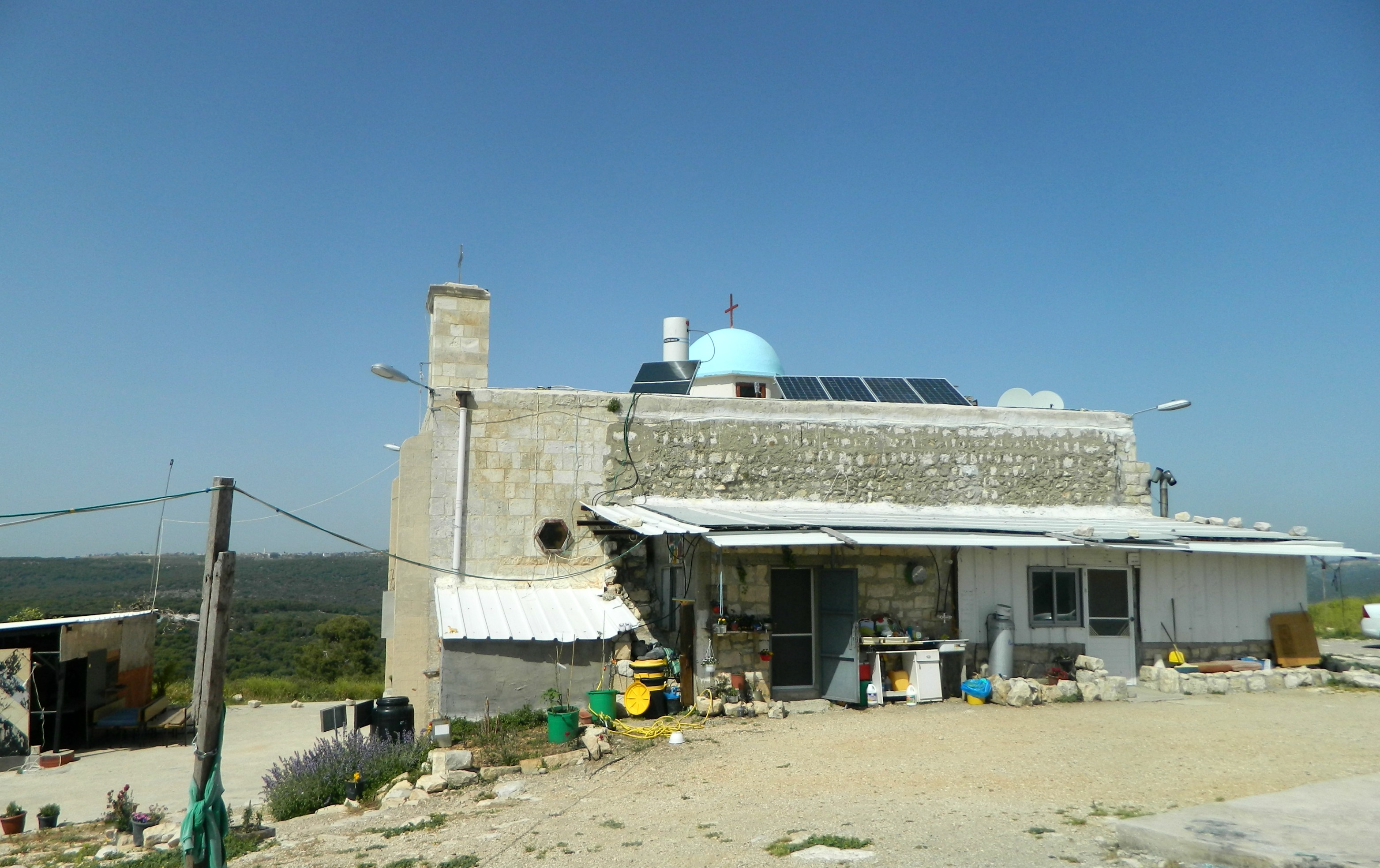
Taking the scenic park road back to the 899, we missed two ruins sites I had originally intended on visiting. Continuing, we then pulled over on the side of the road opposite Shomera for a little climb up a hill to see Iqrit. All that remains of an Arab village that once was is their church and cemetery.

Iqrit church with house

Iqrit church with house

The locals, seated around a picnic table, expressed their great sorrow and frustration at having been relocated to other Arab cities and villages in Israel, with only a few left behind to care for the church, living in a lean-to house with outhouses in the back. All in all, interesting little operation they have going there. After the trot back down the hill we attempted to see the Tegart fort of Matat but we found it behind the fences of a military base, so we continued on. Our final stop was just to take photos from the top of Mount Adir, a gentle mountain reaching 1,008 metres above sea level. There is a short peak trail, but we stopped just shy of the military base and looked down at Druze village of Hurfeish.

View from Mount Adir

View from Mount Adir

With that, we drove back to the 899 and then headed home leaving the Sasa-Koch stretch of the Old Northern Road for a later date.