Israel's Good Name

Archive for the ‘Israel’ Category

Weizmann Institute of Science

In Central Israel, Israel on December 7, 2014 at 4:22 AM

The day after visiting Mount Meron I took a bus and a train down to visit a friend in Rechovot. This friend, Levi Burrows, went to high school with me in Miami and invited me down to tour the Weizmann Institute of Science with him. I graciously accepted and met him at the institute’s gates under heavy rainfall. We sought shelter in his studio apartment before setting out to explore the interesting campus grounds. The Weizmann Institute of Science was established in 1934 by Dr Chaim Weizmann, a biochemist and statesman – the first president of Israel (1949-52).
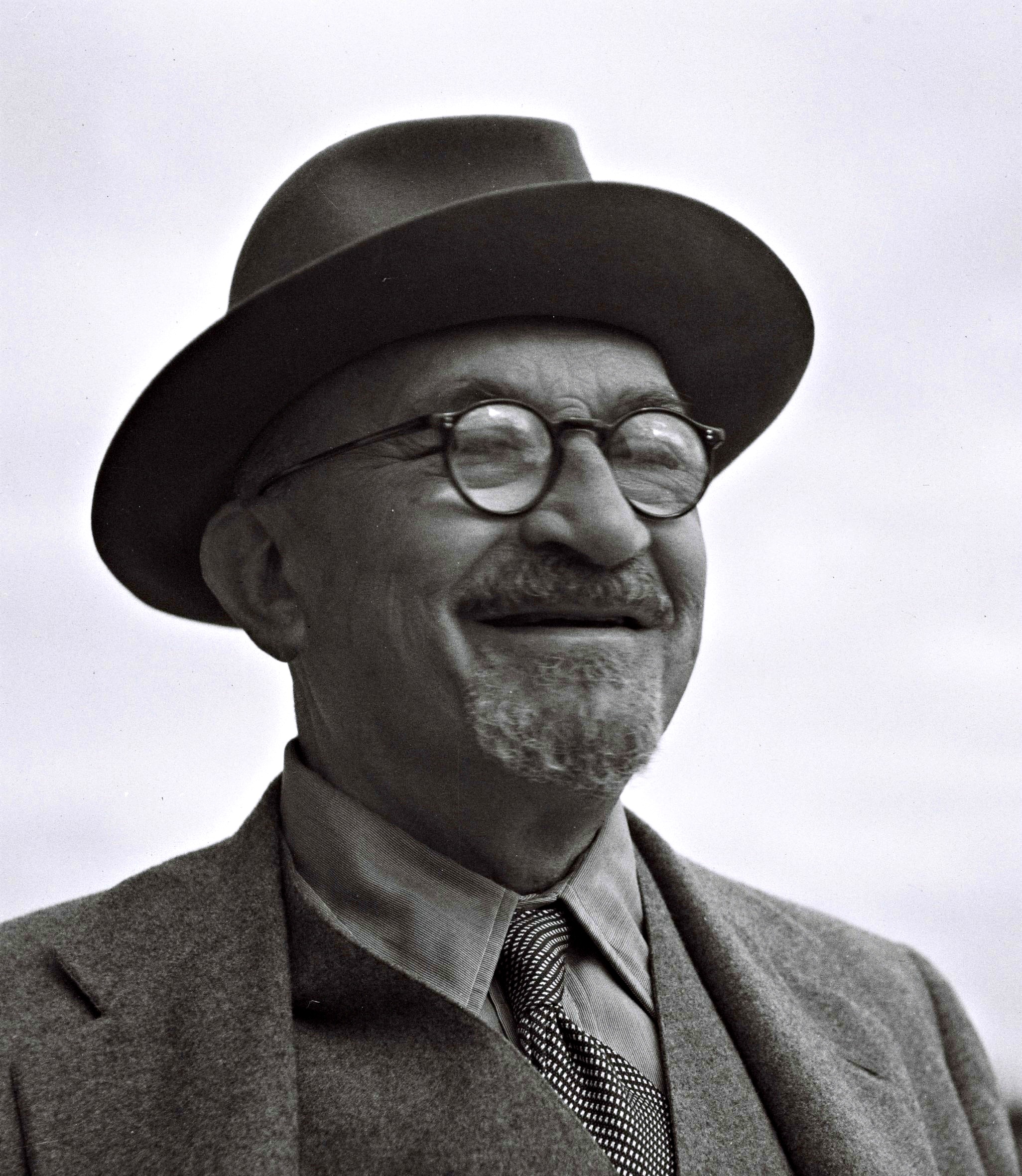
Chaim Weizmann

Chaim Weizmann

Designed to be a light unto the nations, this institute was a breakthrough in the fledgling Israeli culture of academics. We started with the Levinson Visitor Centre with its maps, written guide and short video presentation about the institute and its scientific achievements. Maps in hand, we began our self-guided tour of the campus and stopped first at the Jubilee Plaza.
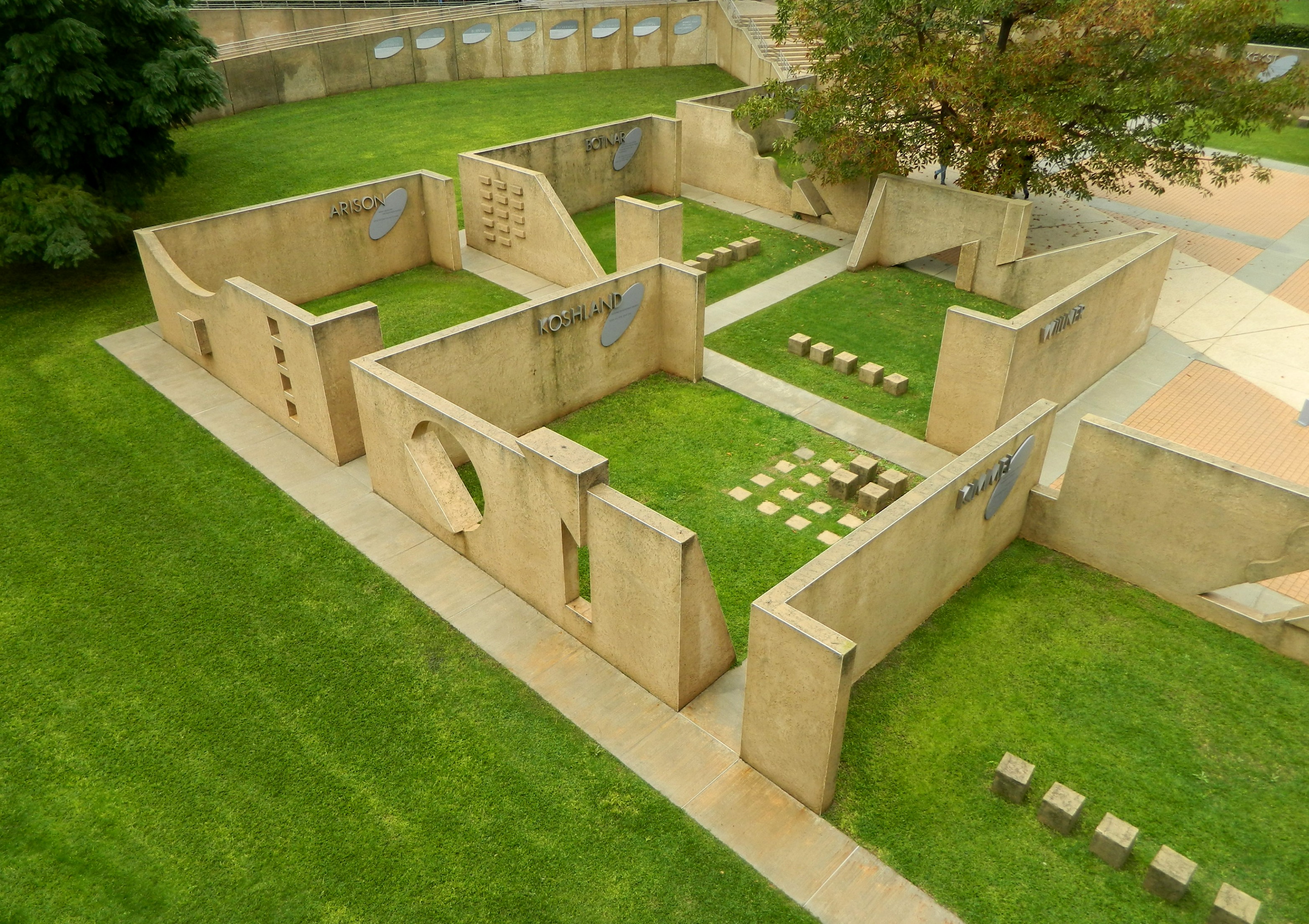
The Jubilee Plaza

The Jubilee Plaza

We took a moment to examine our location and the plaza’s geometric beauty before bee-lining towards the institute’s most iconic structure, the Koffler Accelerator – a particle accelerator for nuclear research.

Koffler Accelerator (photo: Wikipedia)

Koffler Accelerator (photo: Wikipedia)

Unfortunately, we were unable to gain entrance to climb to the top, despite the fact that the facility is currently inactive.

Artistic approach to the Koffler Accelerator

Artistic approach to the Koffler Accelerator

Moving on, we got caught in yet another downpour and took shelter at the plasma laboratory. There, standing beneath an awning with a nice view of countless helium gas balloons, we enjoyed a tough little grapefruit we had picked up just a few minutes prior. Not just filled with buildings and scientists, the campus also has an extensive tree collection, with ID numbers affixed to each trunk. Grapefruits seemed to be quite common, which nourished us on our exploratory tour. When the rain died down we headed for the quieter eastern side of the campus and came upon the interesting Memorial Plaza with its Holocaust memorial sculpture, and then the gardens of the Weizmann estate.
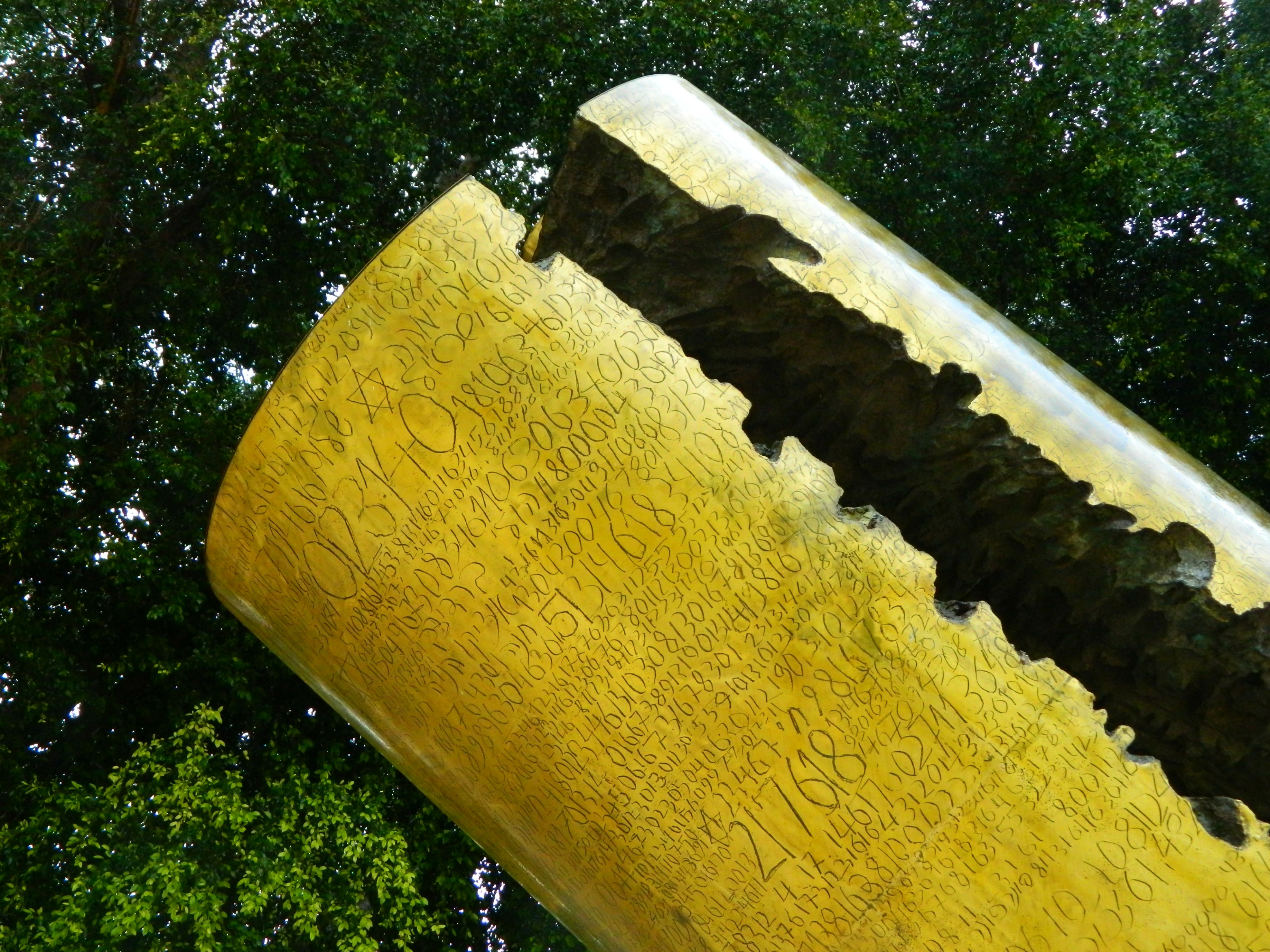
Holocaust memorial sculpture

Holocaust memorial sculpture

Walking the wet, meandering paths, we first encountered the grave of Chaim and Vera Weizmann. Chaim passed away at age 77 in 1952 and his wife Vera fourteen years later at age 84. Their tomb was specially designed as a cenotaph in memory of their son Flight Lt Michael Oser Weizmann who was shot down as an RAF fighter pilot during World War II and immortalised in a tombstone of missing soldiers.

Chaim and Vera Weizmann's grave

Chaim and Vera Weizmann’s grave

Just after the grave we found the Weizmann presidential car, a custom Lincoln Cosmopolitan sent as a gift from Henry Ford II in 1950.
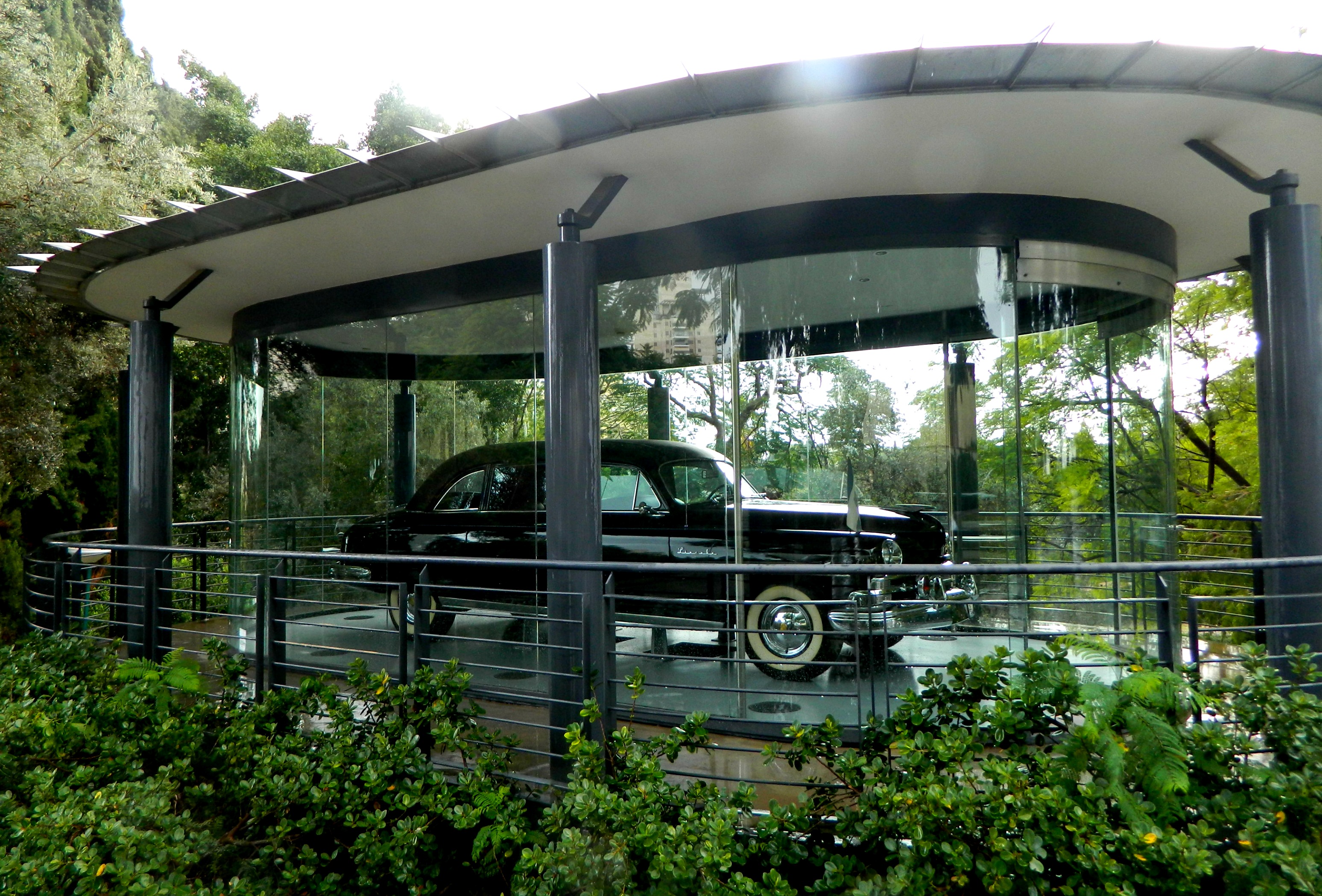
Weizmann's custom Lincoln Cosmopolitan

Weizmann’s custom Lincoln Cosmopolitan

The rain began to come down again as we made a mad dash for the Weizmann House. Comfortably dry inside, we received our handheld audio guides and began the tour of the house, starting with the foyer. An architecturally unique house, designed by Erich Mendelsohn, there are several points of interest: the high porthole windows, the thick walls filled with cork and sawdust, and the prominent circular staircase.
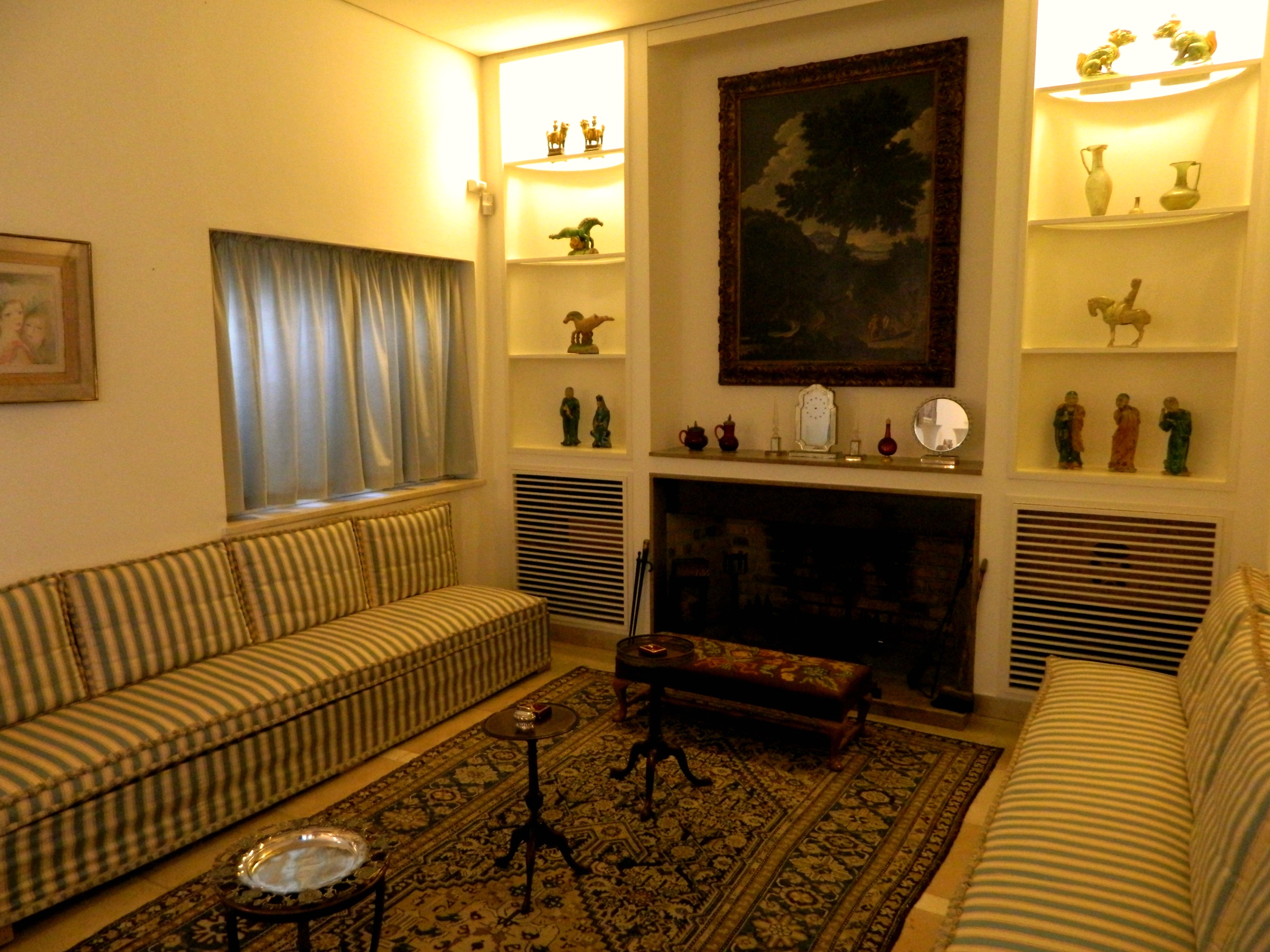
Inside the Weizmann House

Inside the Weizmann House

After exploring the house we sat down to watch a 10-minute summary of Chaim Weizmann’s life and then headed out to continue our tour of the campus. We made an unnecessarily long loop around the edge of the grounds and stopped to pick another grapefruit.

Levi picking a grapefruit

Levi picking a grapefruit

We ate the grapefruit as we dodged scattered rain showers and talked about important things. At last, after a quick look at the heliostats field and a large sundial we made it to our next major destination, the Clore Garden of Science. Due to the unfavourable visiting conditions (i.e rain), we received a small discount and entered the outdoor science museum. Somewhat similar to Madatech in Haifa, built in the historic Technion building, this hands-on science museum is actually the only one of its kind in the world, with nearly eighty exhibits.
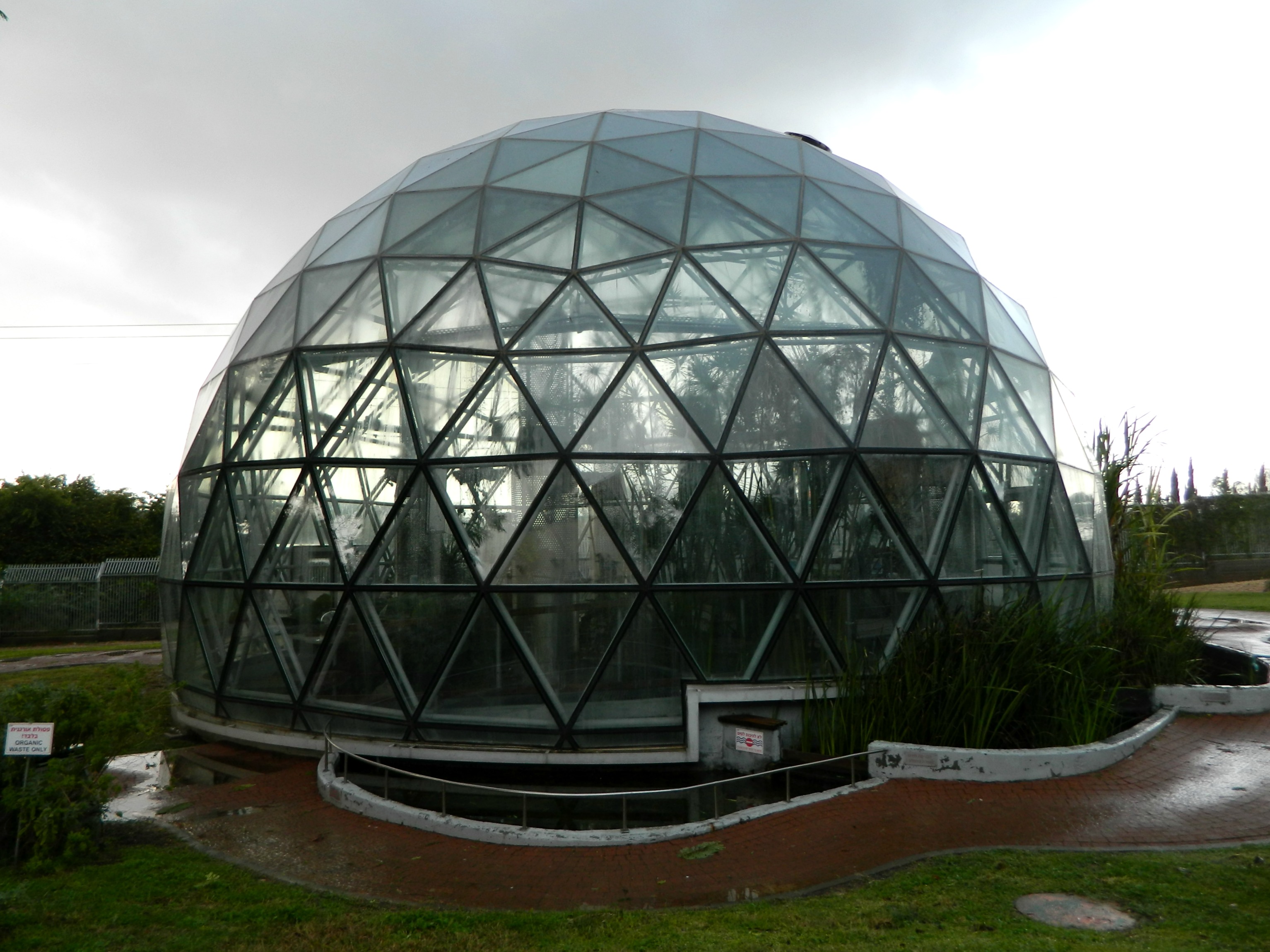
EcoSphere

EcoSphere

Due to the rain, some features didn’t work (for lack of sun) and some were locked (for safety) but there were some interesting things to see and try. Two things that I really wanted to see were the 360° rainbow and the solar furnace but, sadly, I didn’t see either in action. We did enjoy ourselves with the Pipes of Pan, the sound mirrors and the Archimedes’ Screw. At one point we chased down some employees to open the indoor exhibitions and the EcoSphere (a geodesic dome) and, respectively, had a creepy time at the brain exhibition and a cool time with echo amplification.
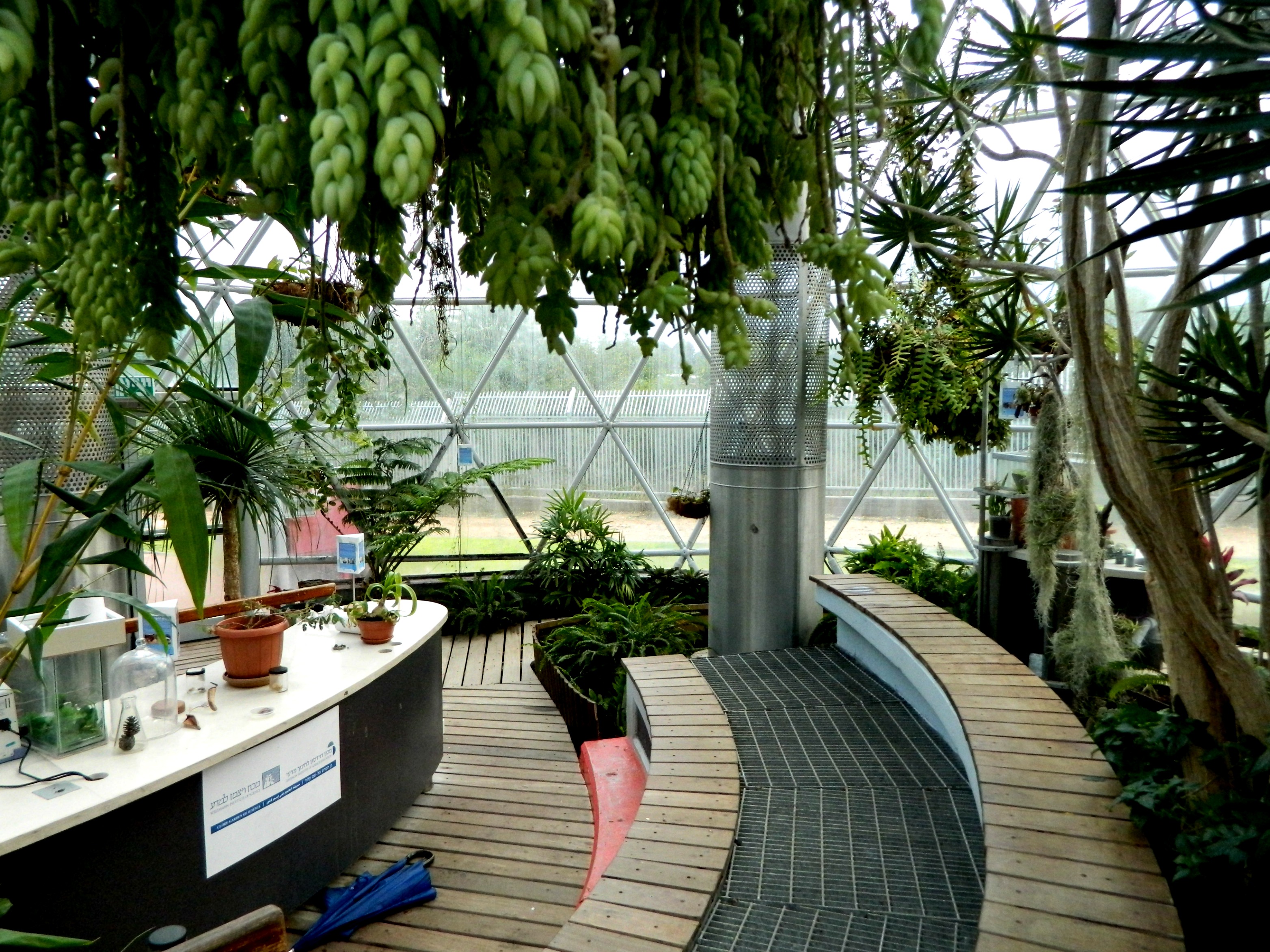
Experimenting with echo amplification

Experimenting with echo amplification

There was also a thermal camera which certainly gives a different look on life.
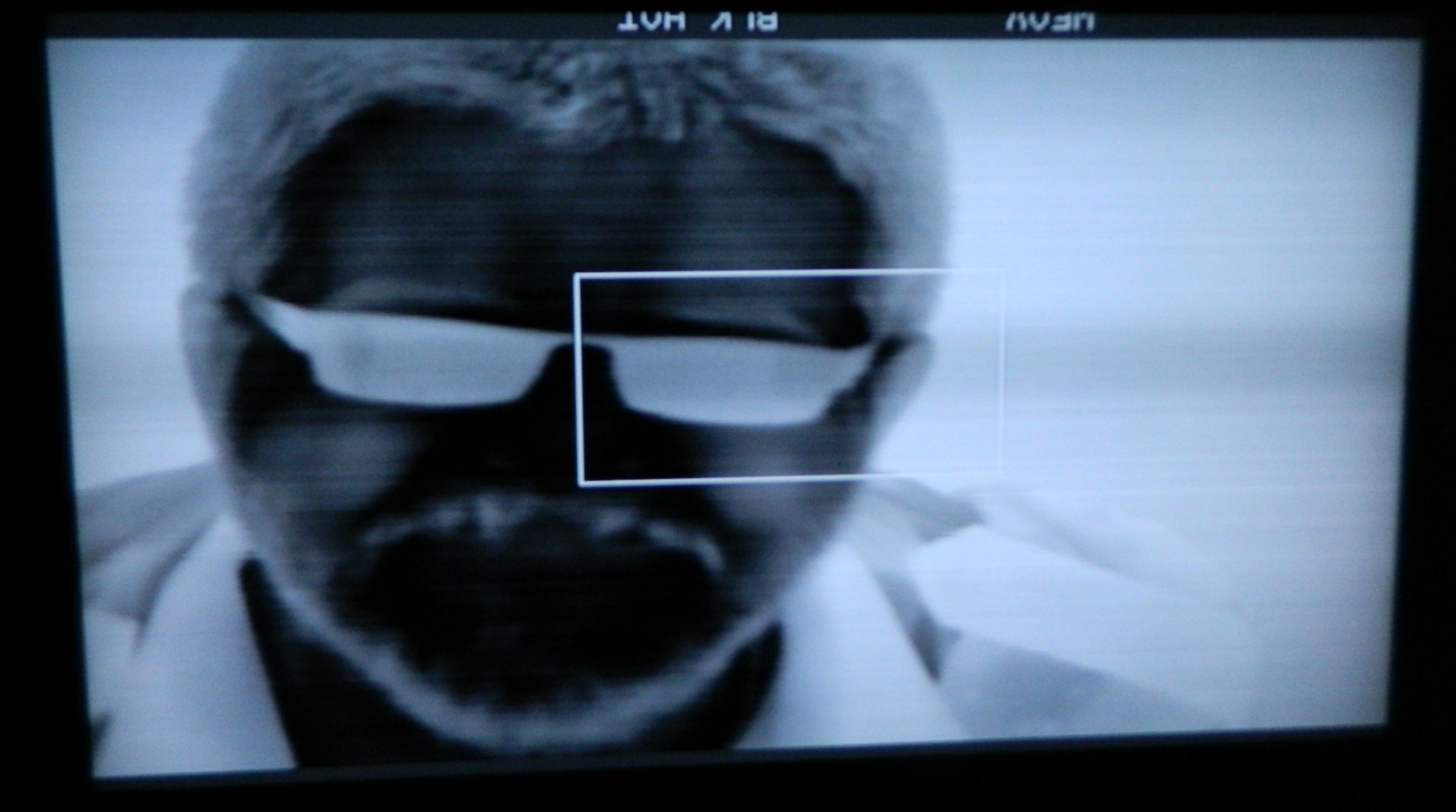
A thermal version of me

A thermal version of me

When we were sure that we’d seen and tried everything we left the science park and looped back to the more populated western side of the campus, passing the original campus building (also designed by Erich Mendelsohn) and the well-designed library. As the sun began to set we left the campus and got schwarmas to eat on the town then had a beer back at the apartment and called it a day. It rained when I first came and it rained as I left but all-in-all an enjoyable day was had, plus I got to hang out with my old friend Levi.

Mount Meron

In Galilee, Israel on November 30, 2014 at 4:29 AM

This past Tuesday my parents and I took a little drive over to the nearby Mount Meron, the highest peak in the Galilee, to hike the peak trail. Turning off Road 89 in the direction of the Meron Field School, we stopped to take a little look at the Hamama Ruins. These arched structures are from the Ottoman Period and can be found throughout the area. In fact, we passed one on the drive home and I know of another one at the access road to Nachal Kziv from Ma’alot’s Industrial Area.

Hamama Ruins

Hamama Ruins

Mount Meron reaches up 1,208 metres (3,963 ft) in elevation, surrounded by smaller Galilean mountains, and actually affects the weather and rainfall. On the road up, we pulled over so that I could take a photo of the the mountain from a somewhat stately angle.

Mount Meron

Mount Meron

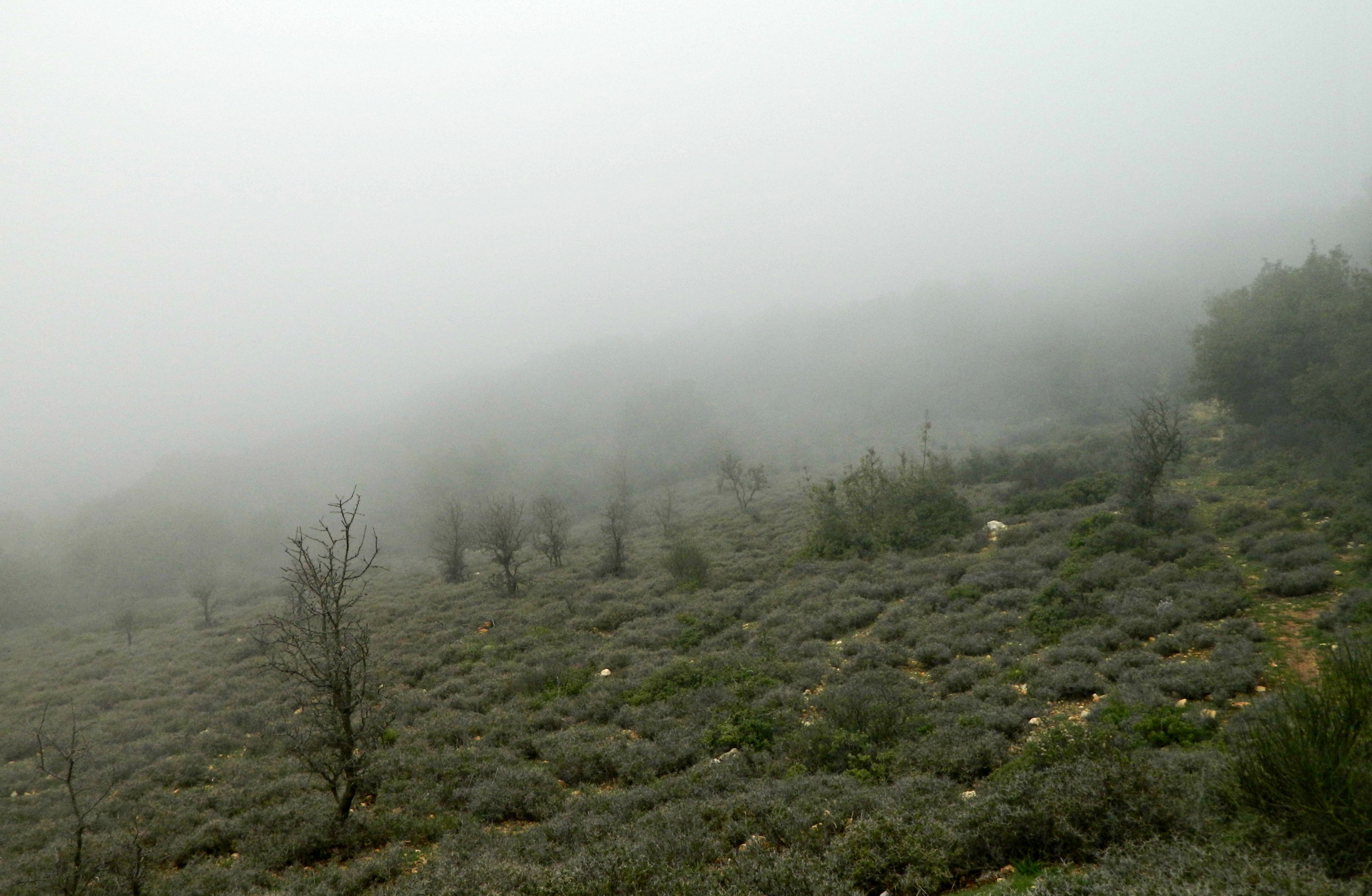
We continued driving up until we reaches the peak parking lot and disembarked, ready to get our hike on. The first things we noticed was the nippy chill and the fact that we were standing inside a cloud. What looks like fog in this picture is actually a low cloud, and the interesting flora on the slope made for a unique vista.

Cloudy mountain slope

Cloudy mountain slope

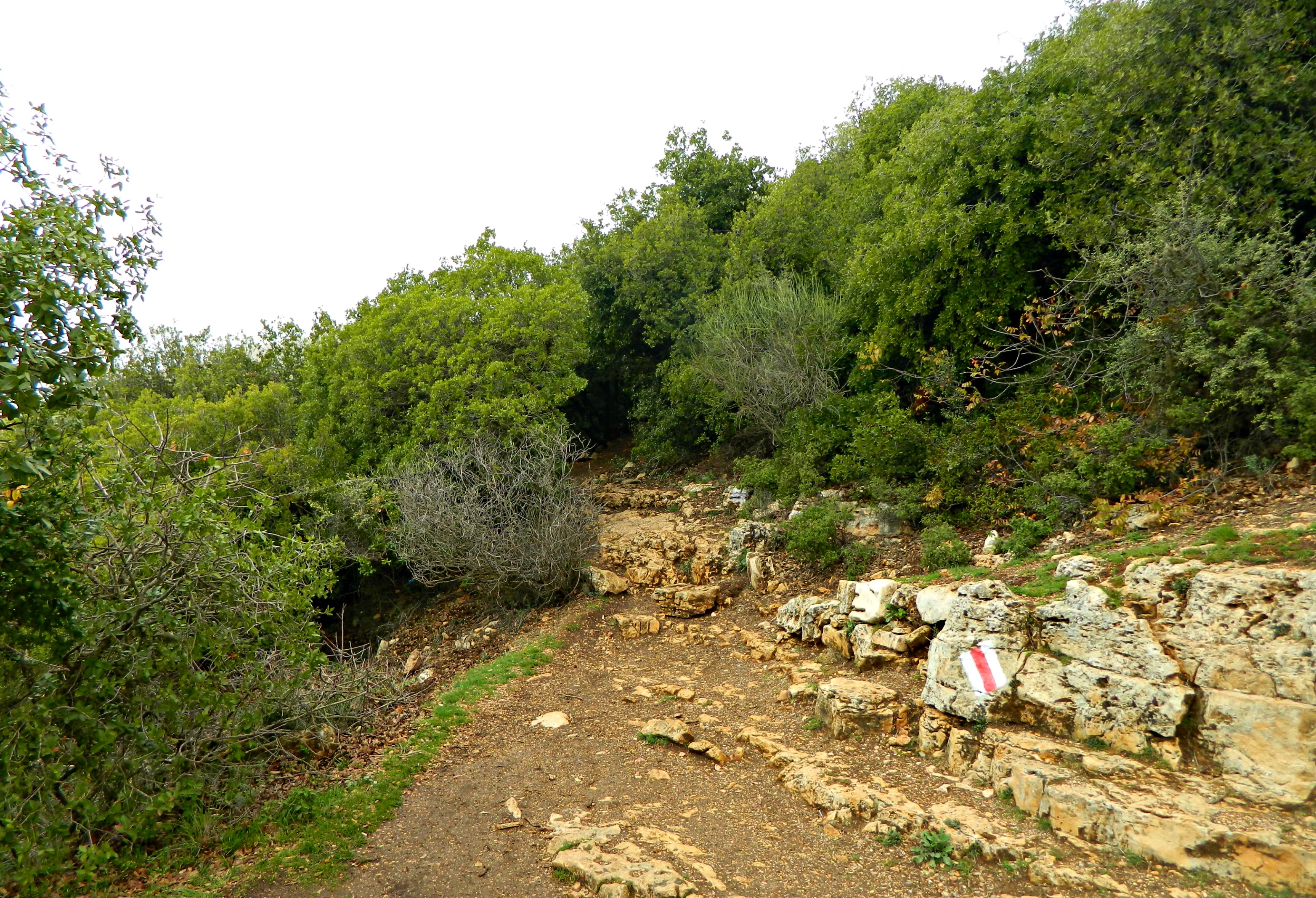
Crossing the access road, we began the circular trail around the peak. There is a military base at the very peak and the trail wraps around it, marked as both the peak trail and the extensive Israel National Trail (which begins at Tel Dan and ends in Eilat, approximately 1,000 kilometres long). Thankfully, the peak trail is just a mild 2 kilometres long – perfect for families. Before long we reached the first observation point, looking out to the east. Although it was too cloudy to see anything, the sign mentioned that one can see Mount Hermon, Mount Bental, Safed as well as the Kinneret (Sea of Galilee) – pretty impressive.

The trail continues...

The trail continues…

Continuing along, we ran into some soldiers doing camouflaged training or something, some very interesting plants and this cool-looking mossy tree:

Interesting moss growth

Interesting moss growth

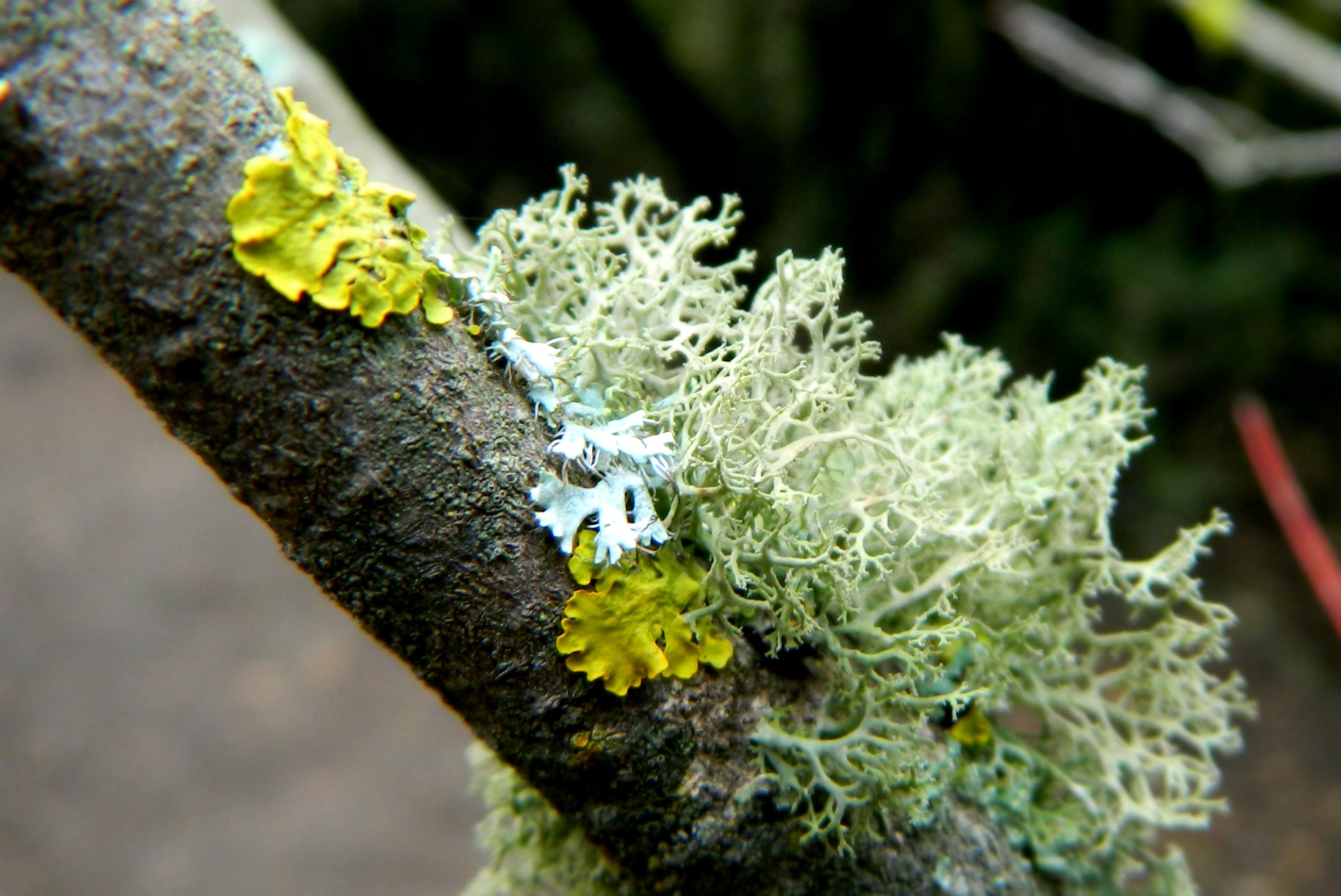
And looking even closer on a different branch, here is lichen and moss growing side-by-side, byproducts of the damp environment:

Lichen and moss

Lichen and moss

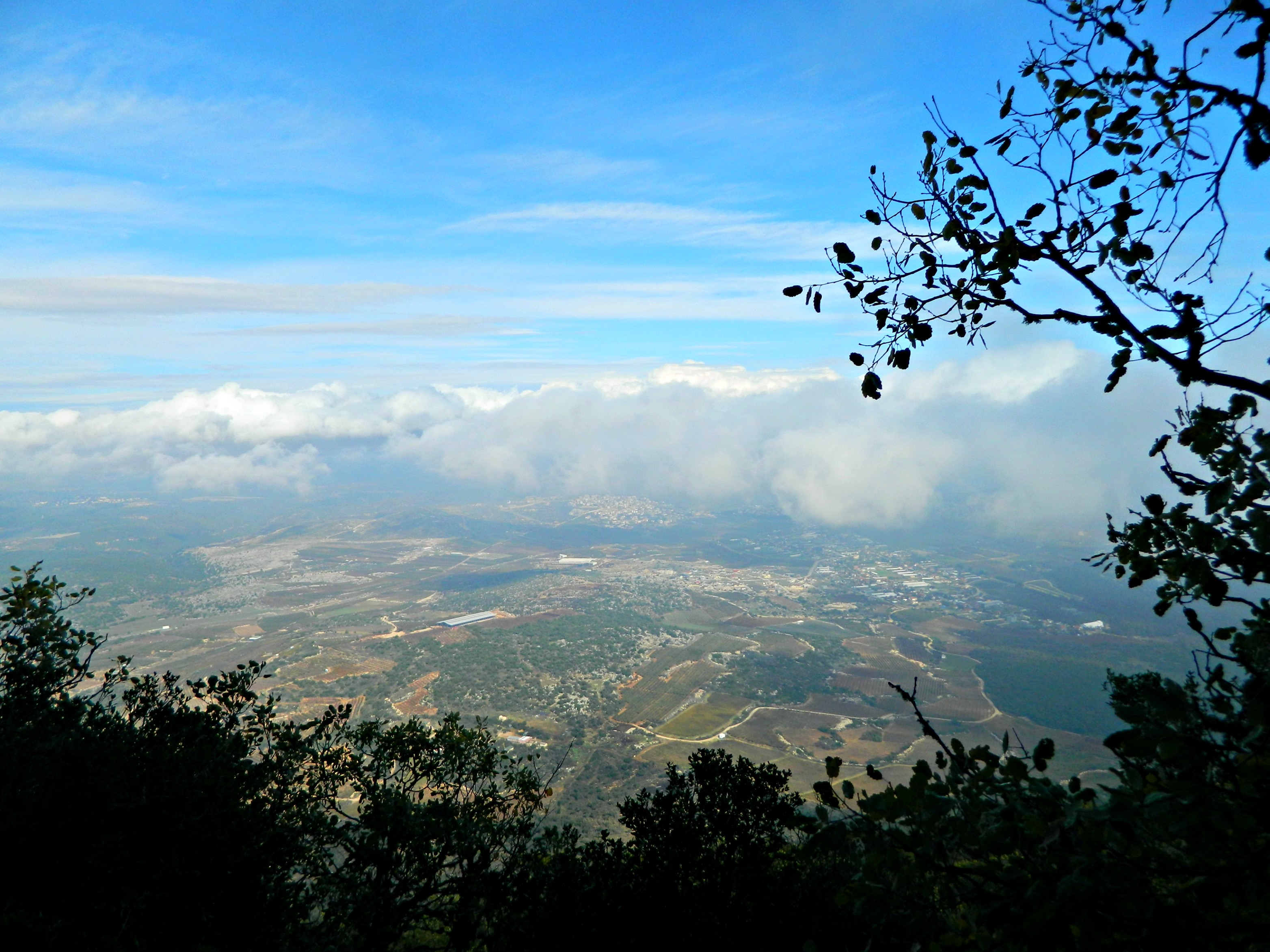
Next we reached the Lebanon Lookout with a view of Manara Cliff, Yir’on, Yesha Fortress and Lebanese towns of Bint Jbeil and Rmeish. The visibility from this observation point was remarkably better, although limited to just a few kilometres. What amazed me most was seeing the rolling clouds beneath us, similar to being on a plane and looking out the window.

View to the north

View to the north

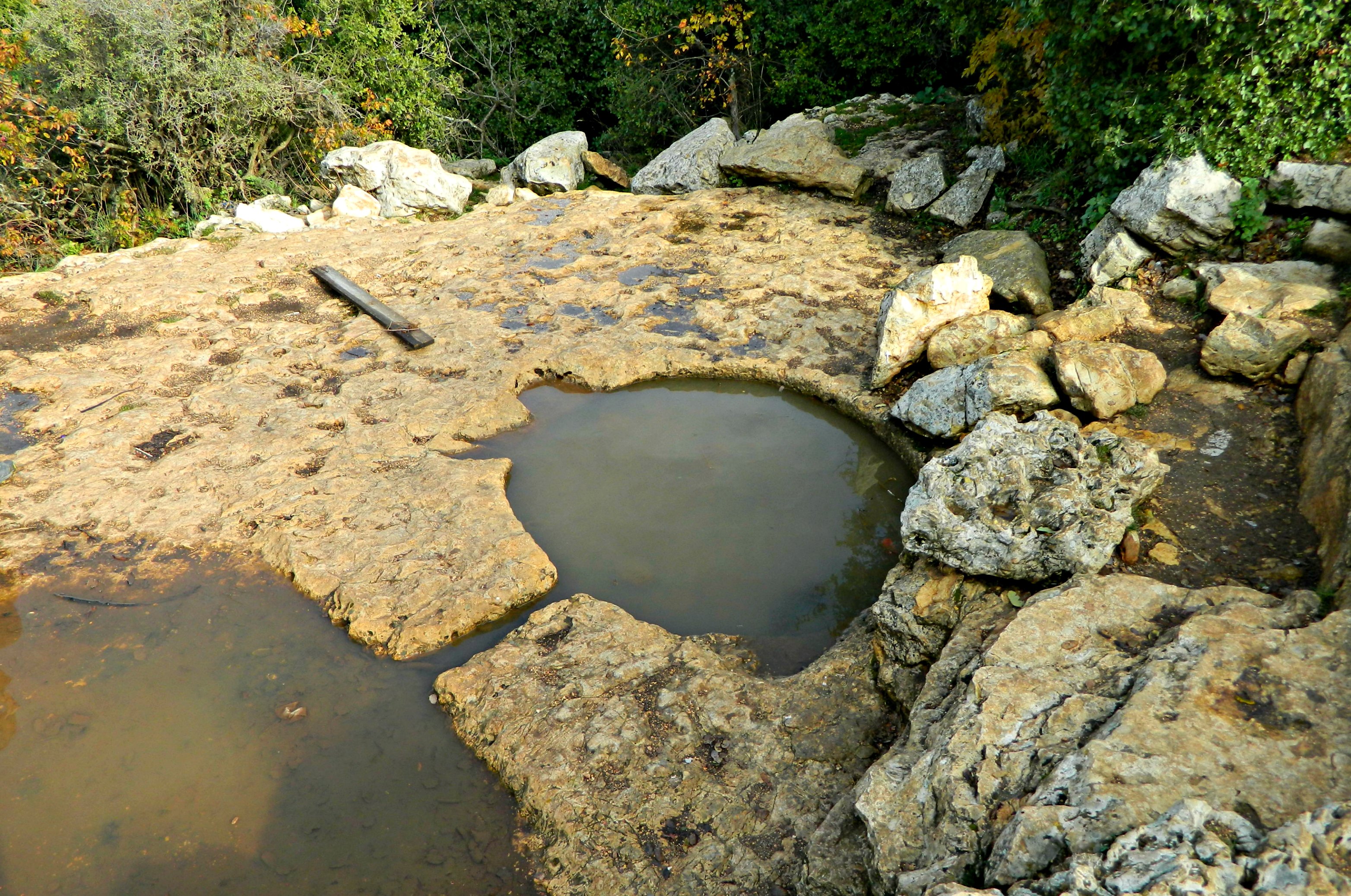
Just a wee bit along the path we came across the remains of an ancient winepress cut into the mountain bedrock. The grapes would be manually crushed on the left while the juices would flow into the carved cistern on the right. Today, muddy water replaces grape juice and fire salamanders use this pool as a breeding sanctuary (these salamanders are more often associated with Tel Dan). We watched as the tiny salamander tadpoles swam around the murky pool, but trying to capture them on camera proved to be tricky.

Ancient winepress now salamander pool

Ancient winepress now salamander pool

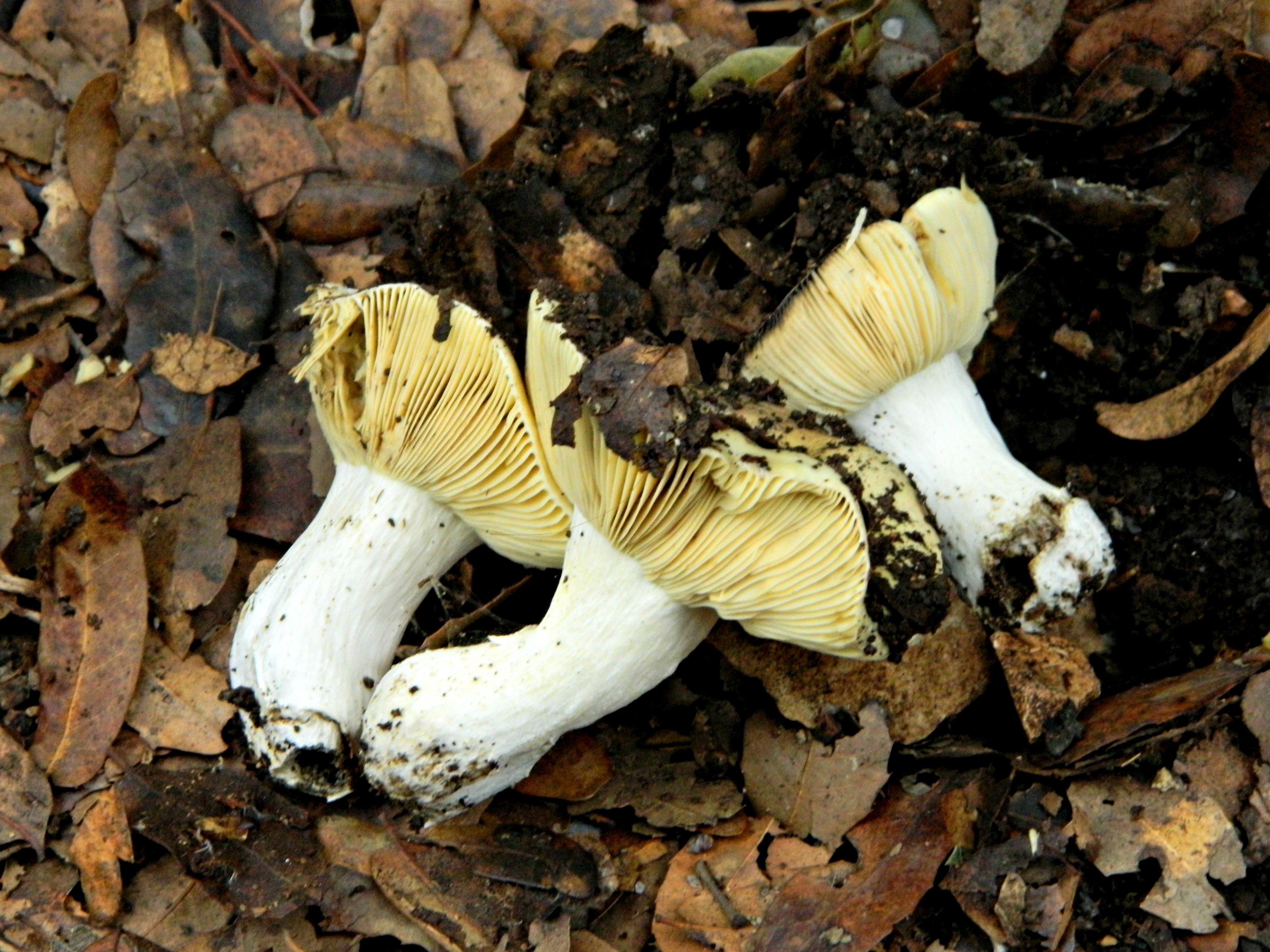
Moving on, we spotted sections of the soft topsoil where wild boars had turn up in search for goodies (perhaps mushrooms and truffles). Right beside a feeding area we saw these mushrooms untouched, patiently awaiting demise in the jaws of a wild boar:

Wild mushrooms

Wild mushrooms

The third, and final, observation point is the southern/western one – views of Mount Tabor, the Gilboa Mountains, Haifa University, Mount Carmel and Ma’alot. This side was heavily clouded and we could only see the closest ridge. Although just below the lookout is Beck’s Ruins, the story of an unfulfilled dream to build a Jewish settlement atop Mount Meron. Back in 1831, Rabbi Israel Beck immigrated to the Holy Land and settled in Safed owning a printing press. When Safed suffered a disastrous earthquake in 1837, he turned to the Egyptian governor Mohammad Ali to build on Mount Meron with ten other Jewish families. Within two years, due to hostile Turkish overlords and hard rural living, the settlement was abandoned and the Beck family moved to Jerusalem.

Beck's Ruins

Beck’s Ruins

Shortly thereafter the trail reached the road and the clouds became quite dense. It was very agreeable walking through the cloud, seeing the mist whip by with the brisk wind. We continued on to the car and ended up getting rained on as we got further down the mountain, below the clouds. Fascinating stuff, I say!

Mitzpe Oded & Kever Yosef

In Israel, Samaria on November 24, 2014 at 4:59 AM

The following two places are found in the heart of the Shomron (also known as Samaria) and I had the pleasure of visiting both on the same day. Due to the fact that I often do the night shift for the Safaron driving, I took a lazy Wednesday afternoon to visit nearby archaeological ruins in the town of Yakir. The military outpost Yakir, where I usually serve, is just a few minutes walk from my destination, Mitzpe Oded.

Sunny at Mitzpe Oded

Sunny at Mitzpe Oded

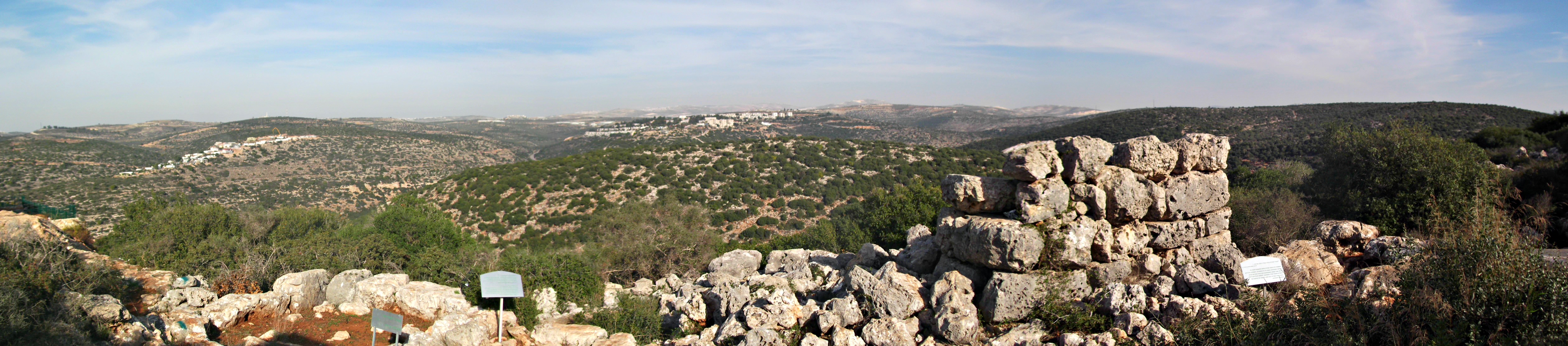
Mitzpe Oded was founded as an outlook in memory of Oded Fink who died of illness at age 30, a man with an appreciation for the land of Israel, its beauty and heritage. The outlook provides a view of the towns of Karnei Shomron, Immanuel and Yitzhar as well as the famous Biblical twin peaks of Mount Gerezim and Mount Ebal in the far distance and Nachal Kana running directly below. The second portion of this blog post, Kever Yosef, is located in the city of Shechem which is between Mounts Gerezim and Ebal, some 16 kilometres (10 miles) away as the crow flies.

Panoramic view from Mitzpe Oded

Panoramic view from Mitzpe Oded

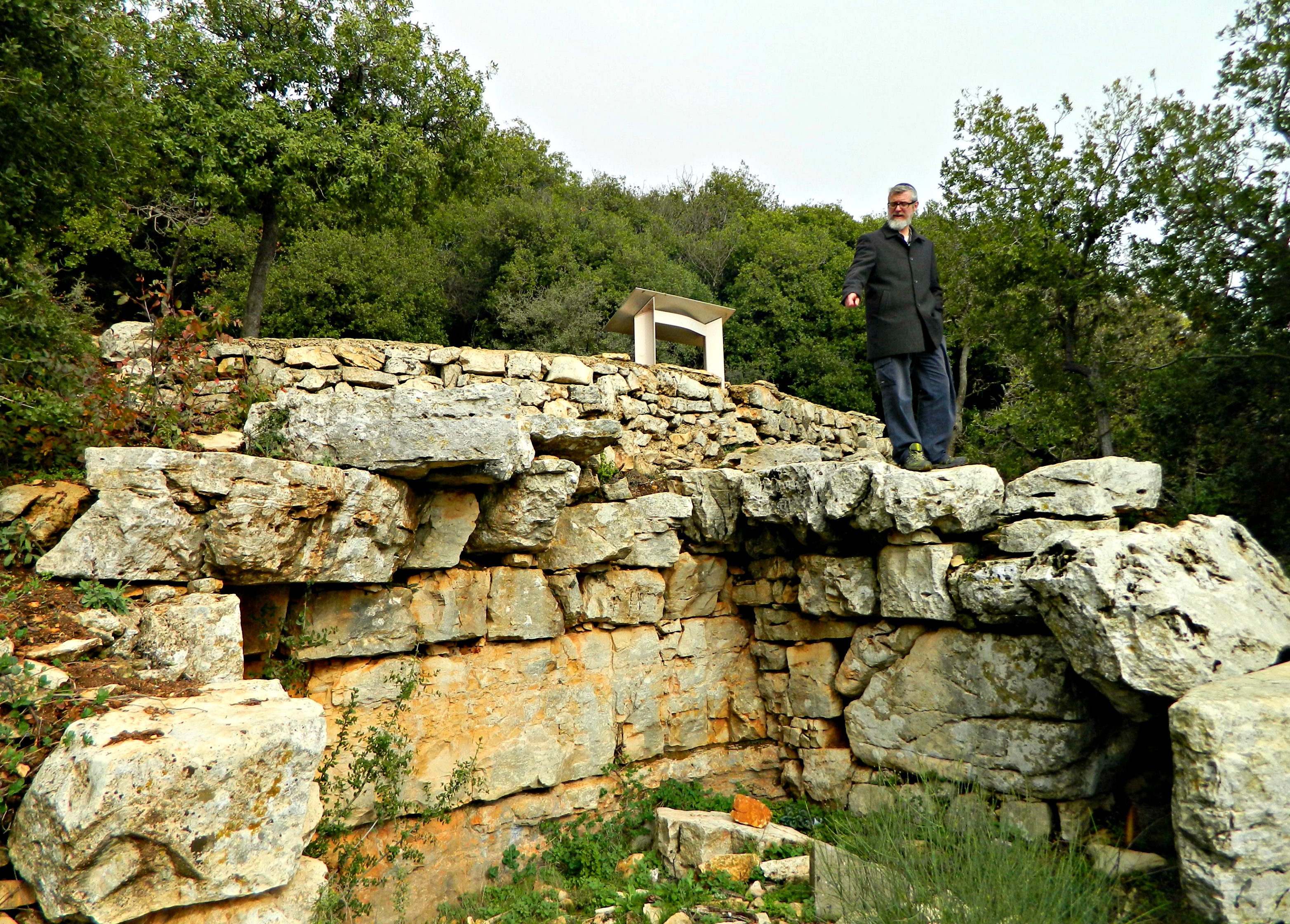
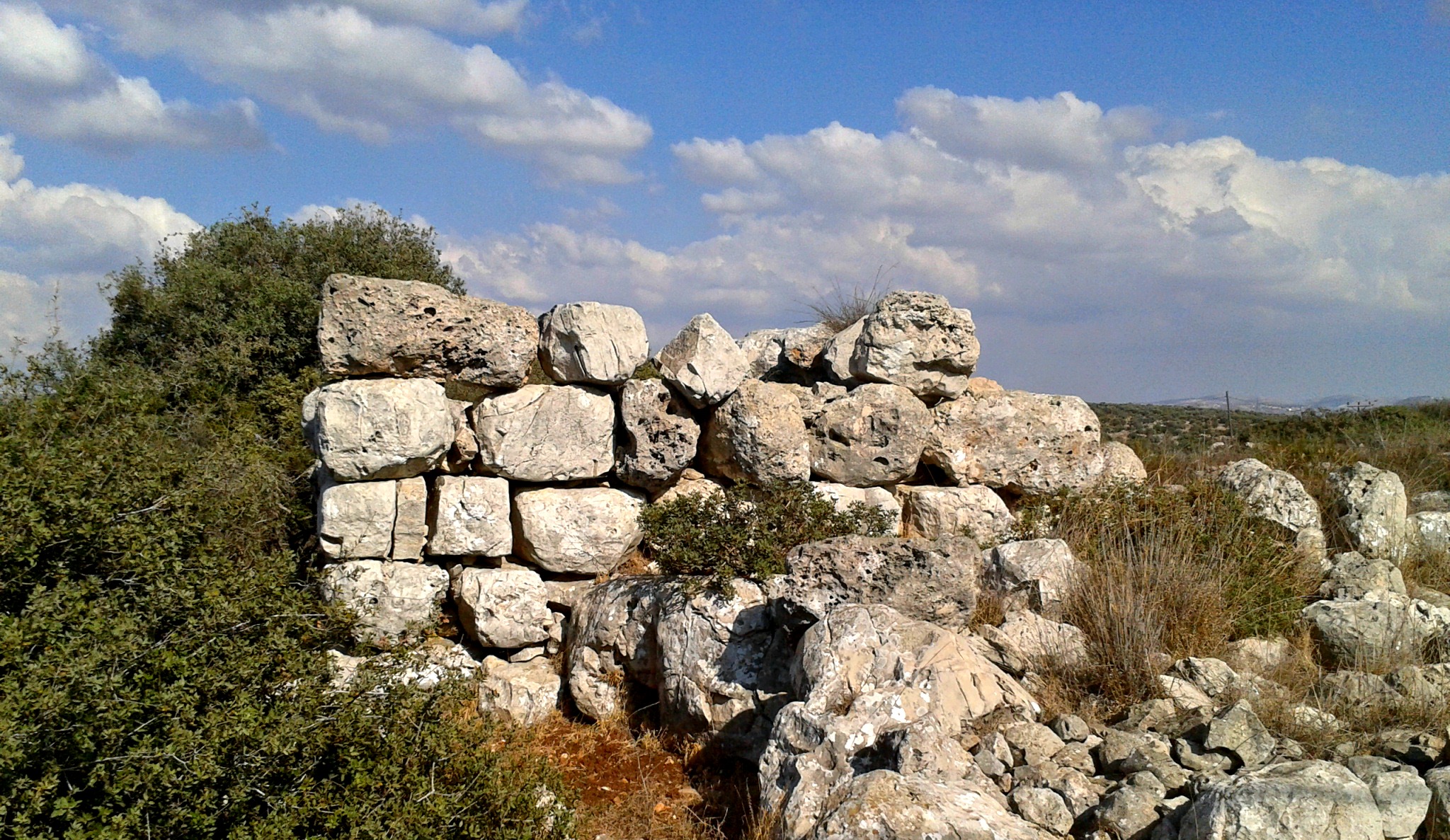
The first ruin I saw as I approached the lookout was a six-foot tower rectangle of rough ashlars, as can be seen above. The sign declared the structure as a “shomera” which is the Biblical name for an agricultural watchtower and was comprised of two levels – the lower of stone blocks and the upper a wooden hut. Here is another agricultural watchtower that is unmarked and unkempt right outside the entrance of Yakir Outpost. I had been wondering what it was ever since I had first laid eyes on it, now I know.

Ruins outside Yakir Outpost

Ruins outside Yakir Outpost

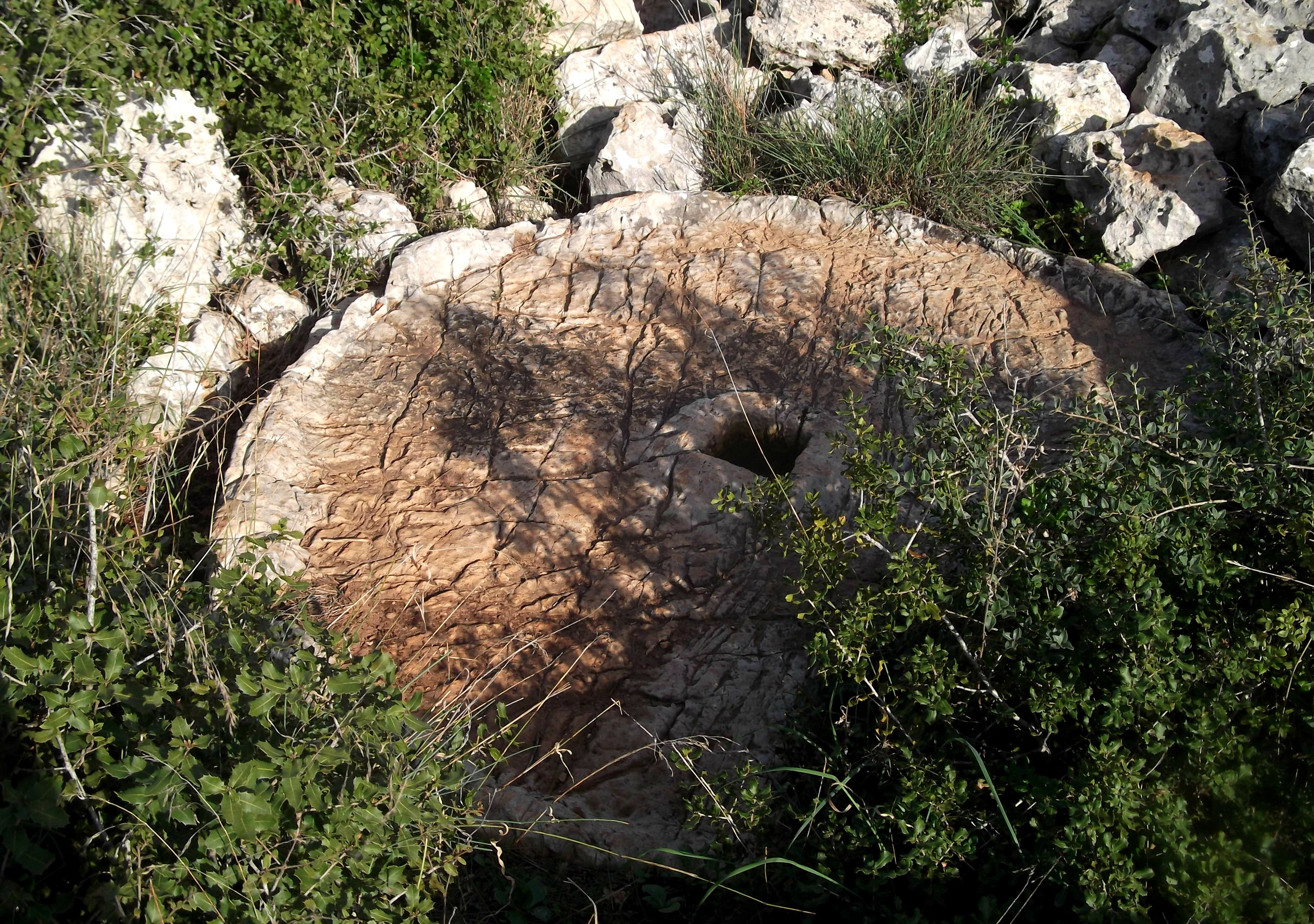
Beside the agricultural watchtower at Mitzpe Oded is a unique textured millstone that was used for coarse wheat and barley grinding. The grain would be ground into a coarse flour used for porridge, as well as for sacrificial purposes.

Unique millstone

Unique millstone

To the north of the millstone there is the base of a square structure and then a confusing little trail down the slope of the mountain. I ventured down a bit, didn’t see anything fascinating and headed back to the outpost. Later on that evening I got a series of calls and found myself driving the Safaron armoured truck to Tapuach Junction for a fun (and not classified) operation. I was to be working with Border Police in Shechem (Nablus) as that night was predestined to be the night when the IDF allows Israeli visitors to Kever Yosef (Joseph’s Tomb) located in the heart of Shechem.

“Tomb of Joseph at Shechem” (1839) by David Roberts

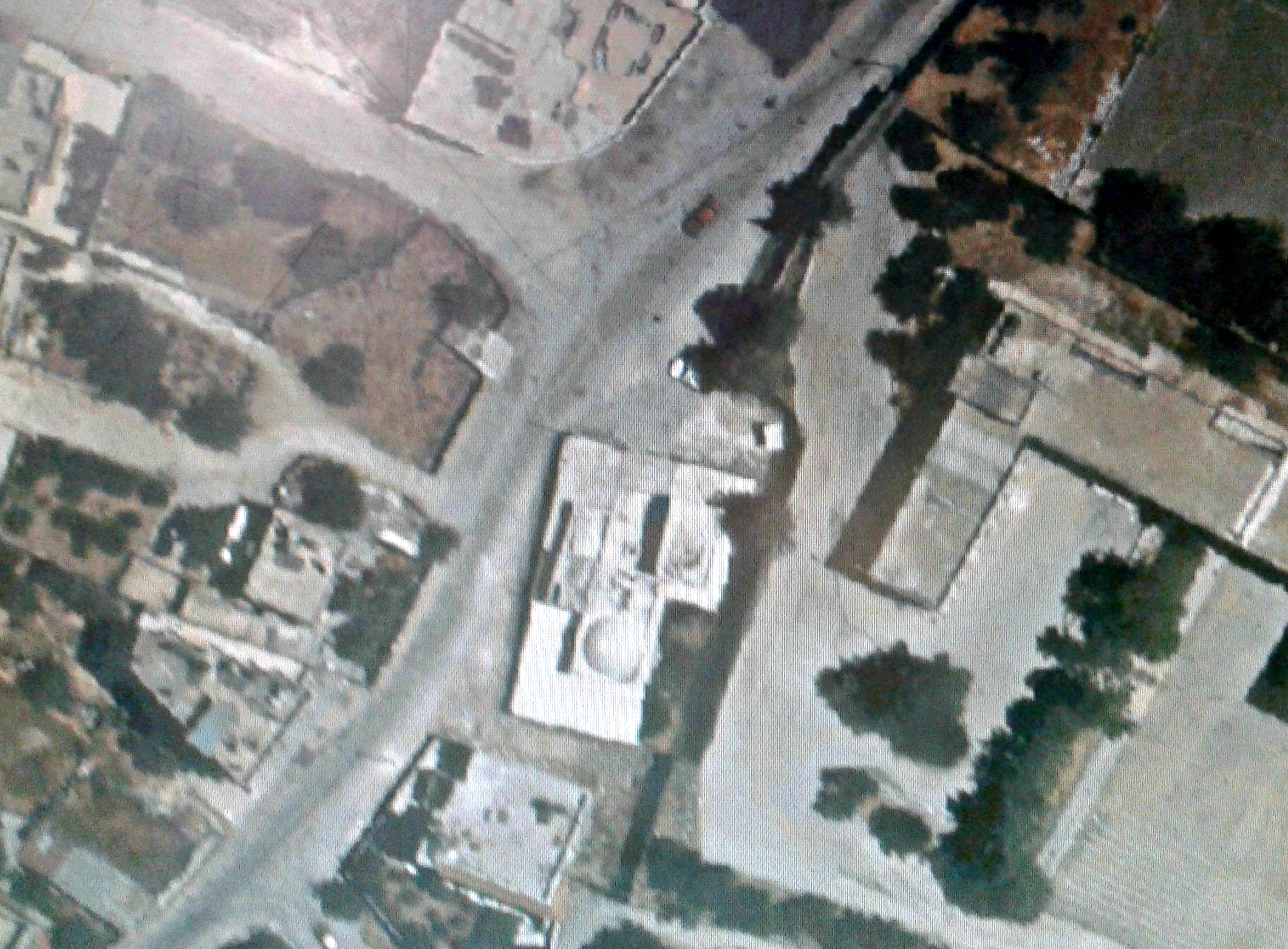
While today’s Kever Yosef doesn’t look quite like it did back in 1839, it’s now a white-domed structure over the tomb with a few side chambers and a yard surrounded by a tall fence. In this aerial view, the white complex of Kever Yosef is quite distinguishable:

Aerial view of Kever Yosef

Aerial view of Kever Yosef

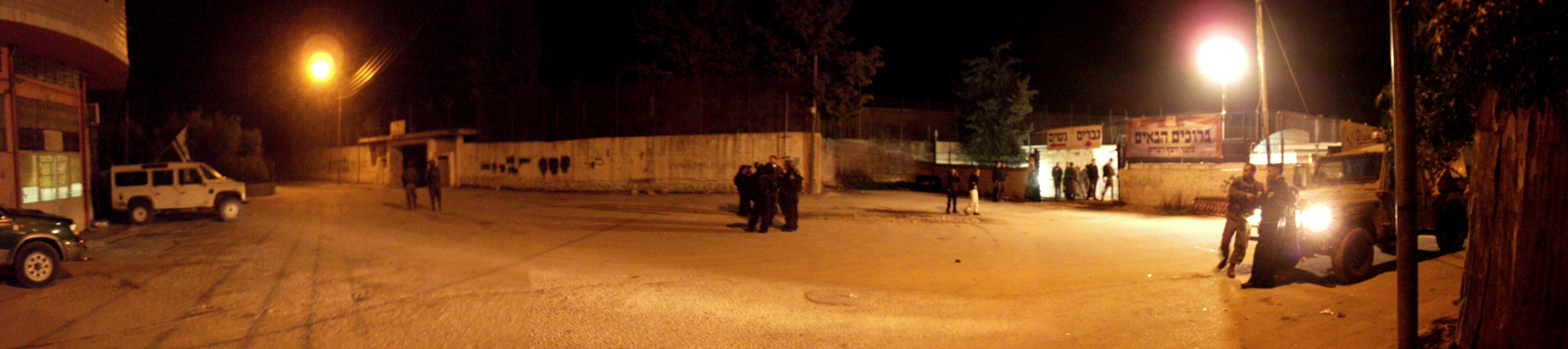
Driving in one of many armoured military convoys, we entered the city and headed for Kever Yosef on the edge of the Balata refugee camp. I was a little surprised that we didn’t get any stones thrown at us, but figured we’d probably get stoned later on that night. I parked my large vehicle blocking the north-west access alley (see map) and with the entire plaza area locked down and secure we prepared for the busloads of visitors. This was all an eye-opening experience for me and I enjoyed every minute of it. In this panoramic of the “plaza” area just outside the tomb complex, the buses come from the street on the left side while behind me and to the right are completely secured and blockaded by soldiers and military vehicles. I was fortunate enough to partake in the inner circle of defence, so I was able to visit the site rather easily.

Panoramic of the plaza in front of the complex

Panoramic of the plaza in front of the complex

The first batch of buses came and the visitors streamed into the complex, eager to seize a prime praying location as close to the tombstone as possible. Eventually I made my way into the domed chamber but the sheer multitude of people discouraged me. Someone offered me a memorial candle to light, and so I did, lighting it in a niche that had crude swastikas scrawled on the concave wall. The history of Kever Yosef is pretty hairy, and despite considered a holy site for Muslims, finds itself the victim of destruction and hate crimes. I’m not sure how the situation usually is during these late-night visits, but that night was extremely quiet.

Memorial candles

Memorial candles

After about 90 minutes or so, the visitors were herded back onto the buses so that the second batch could come. In between groups, there was a nice quietness about the place and I was able to take a photo of the site without people being in my way.

Kever Yosef

Kever Yosef

The second busloads arrived and I was distracted by a man who fell as he made his way from the bus to the tomb and needed mild medical attention. As the paramedic bandaged him up, the injured man told us that he himself was at once the director of MADA Jerusalem (Israeli version of the Red Cross) during the Yom Kippur War before being sent down to the Sinai to treat injured soldiers. The stories that the “average Joe” on the street has are absolutely fascinating here in Israel, with its extremely short and volatile history. After the second batch of visitors were whisked away, and all the dressings and signs were taken down from the complex, I entered the tomb chamber and was pleasantly surprised to see this raw, yet fresh, look at such a rich historical tomb:

The bare tomb

The bare tomb

When the last of the soldiers and Border Police were aboard their armoured vehicles, we drove back out of the troubled city of Shechem, fully expecting an onslaught of rocks and worse. Again, we passed through unscathed. I’m still astounded at the fact that despite having entered many Palestinian villages and cities, I’ve never once got even as much as a stone thrown at me – what are the odds? Anyhow, such is life in Israel’s “Wild West” and I hope I get more chances to have blog-compatible experiences so that I can document them here.

A Taste of Mountain Biking

In Galilee, Israel on November 16, 2014 at 4:46 AM

This past Friday I went on a poorly-planned biking trip with my Manchunian friend Jonathan Kemp. Borrowing a mountain bike and a helmet the evening prior, we set out at 7am for a two-hour bike ride. Despite having grown with bicycles, riding them all the time, I hadn’t ridden a bike in over four years. The last time was when I rode with my best friend Bernie a one direction ride from Ma’alot to Nahariya – about an elevation drop of 500 meters (1,640 feet) – mostly downhill and on the main road. So with my weak biking muscles, I mounted my bike and followed Jonathan (a far more seasoned biker) out of Ma’alot and over to the nearby town of Meona (across Road 89 from Mi’ilya).

Our bike route

Our bike route

We entered Meona and turned off the street where the sign instructed, to the bike trails. We stopped to switch on the forward suspension (for off-road use) and began the comfortable pedaling on the dirt roads of the farm industrial area. Pretty soon we were riding along the Ma’alot Forest and then passed the sign for the nature reserve of Tel Marwa. We passed some cows, and a bull that made me feel uneasy, and then I spotted a mongoose making a dash for cover. We reached Ein Ya’akov and crossed Road 8833, just following the trail. What’s funny is that I told Jonathan that the trail is along Nachal Ga’aton but looking at the map, we never came close.

Bike trail marker

Bike trail marker

Just past the road we entered a pastoral little field and saw the proud ruins of Yehiam Fortress (or as the Crusaders called it, Judyn). Here I posed with the ruins in the distance:

Posing with Yehiam Fortress in the background

Posing with Yehiam Fortress in the background

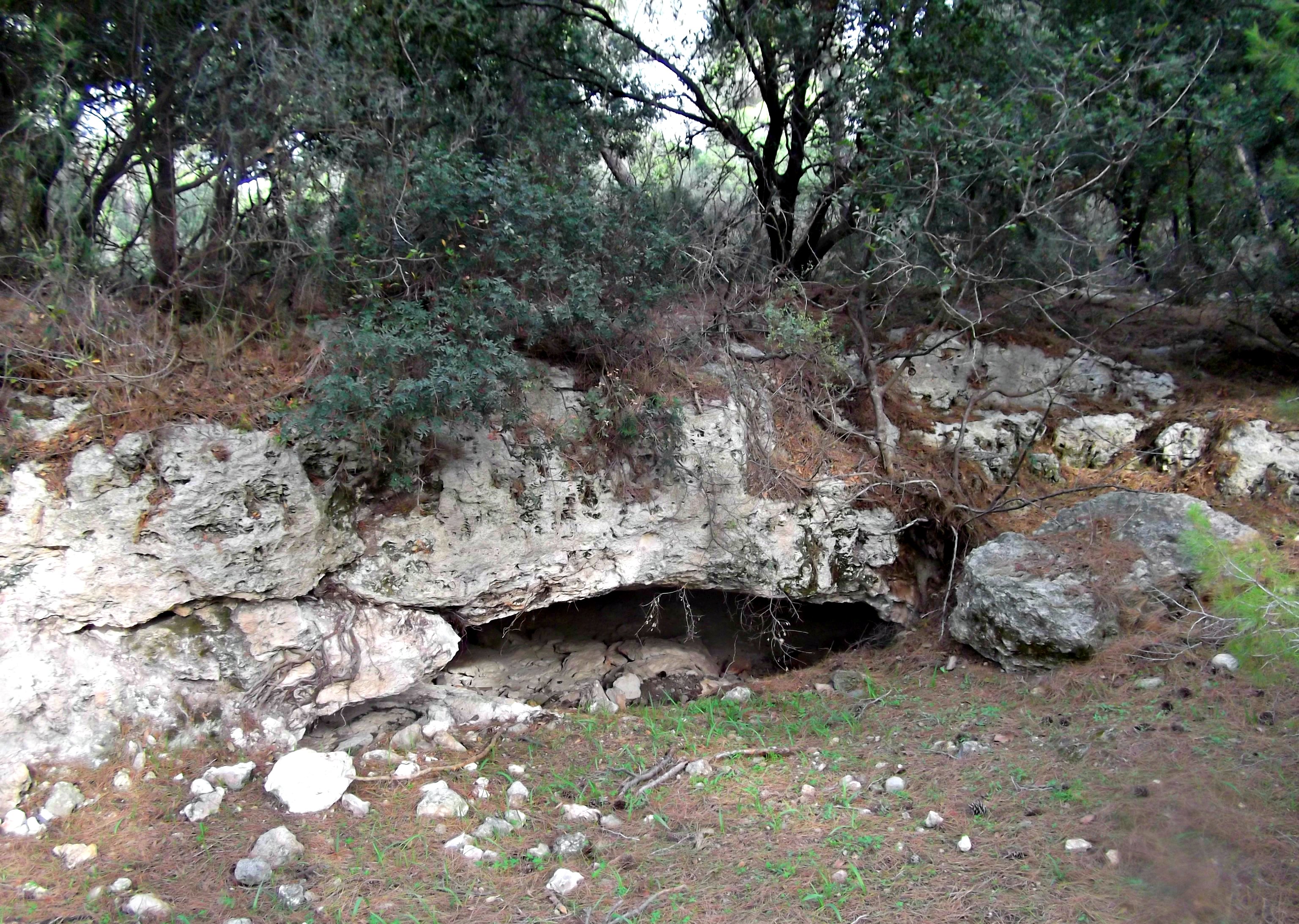
Entering what we’re calling Yehiam Forest, the trail immediately became more difficult. Growing up in Detroit, I’ve never had the opportunity to go actual mountain biking so this was new to me. I clutched the handlebars safely as I navigated the really narrow winding trail, avoiding potentially dangerous rocks and trees. Weaving back and forth as we rolled downhill through the pine trees, we passed by some serious bikers and then arrived at a little flat area with a small cave at the side. Not wanting to press on too far with our time constraints, we decided that this was a good place to turn back.

The little cave

The little cave

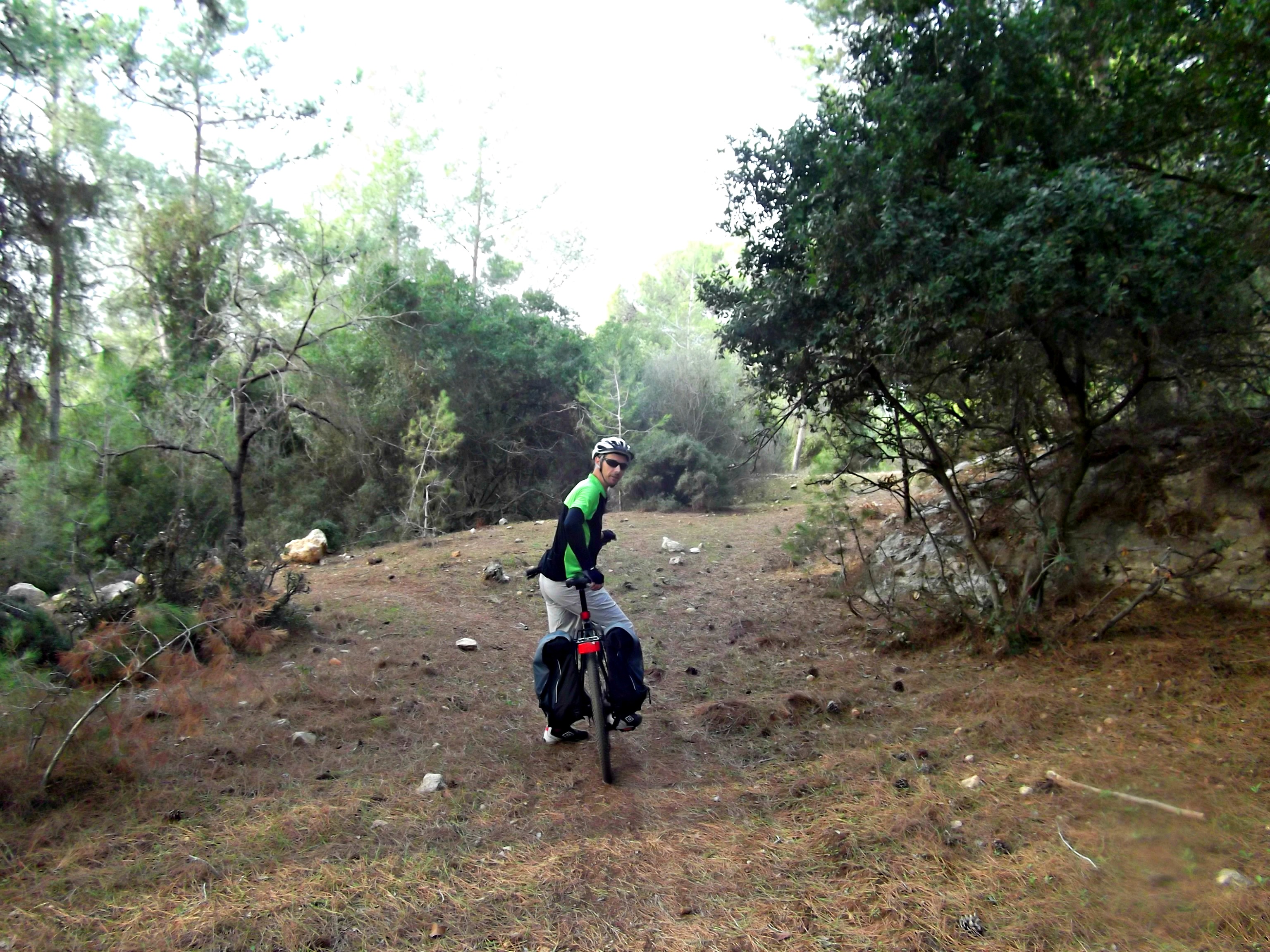
Had we just another half-hour or so each way, I’m sure we could have reached Yehiam and perhaps actually have a cold pint at Malka Beer. Turning around and heading back uphill proved to be a bit of a challenge, at least for me. I huffed and puffed as I churned those bike pedals on low gear while Jonathan just zipped on up ahead.

"Come along now..."

“Come along now…”

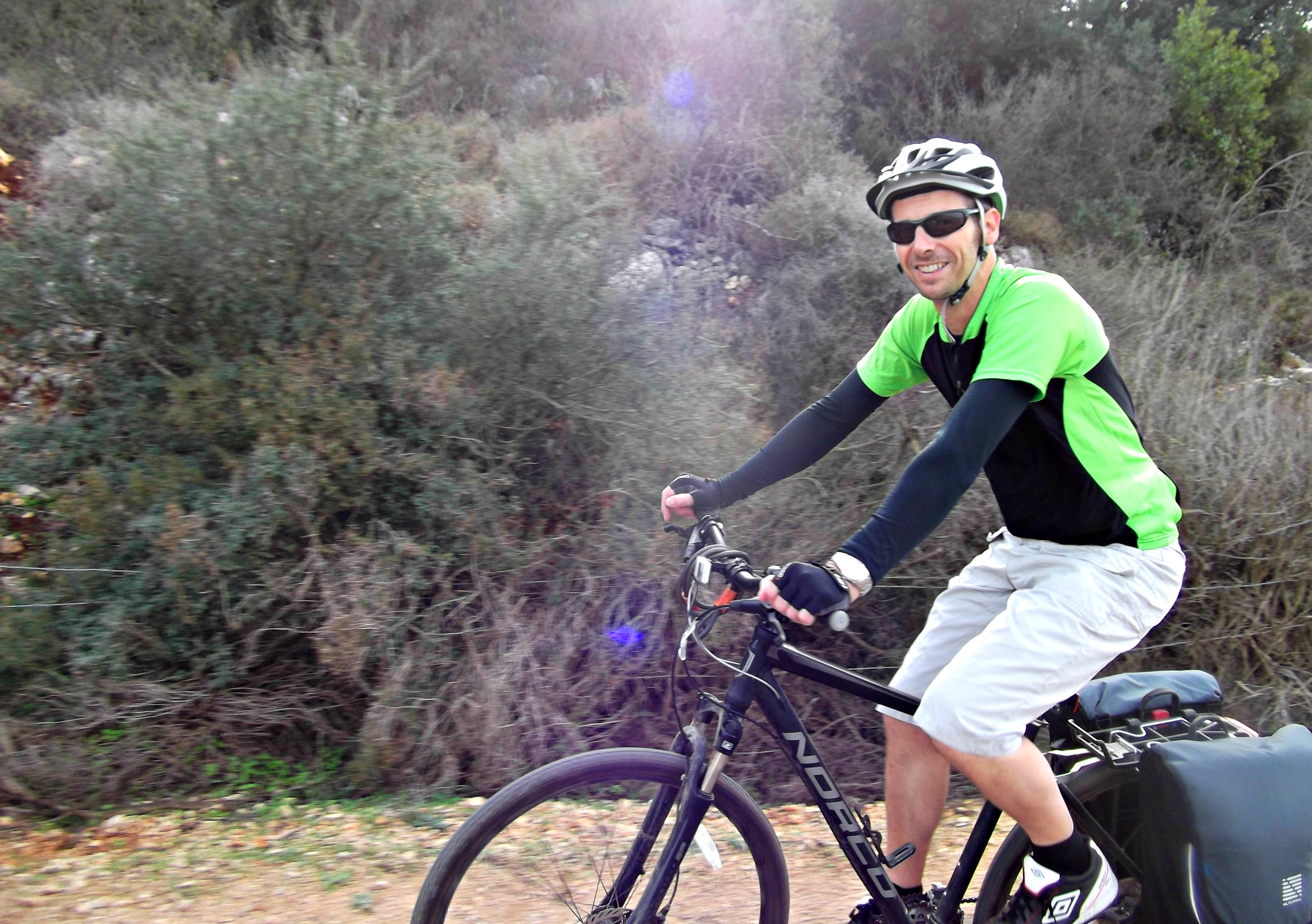
Eventually we made it out of the forest and began the easier uphill ride back across Road 8833 and past Ein Ya’akov. At a safe section of the trail, I pedaled on ahead and took a photo of Jonathan in his element:

Jonathan Kemp

Jonathan Kemp

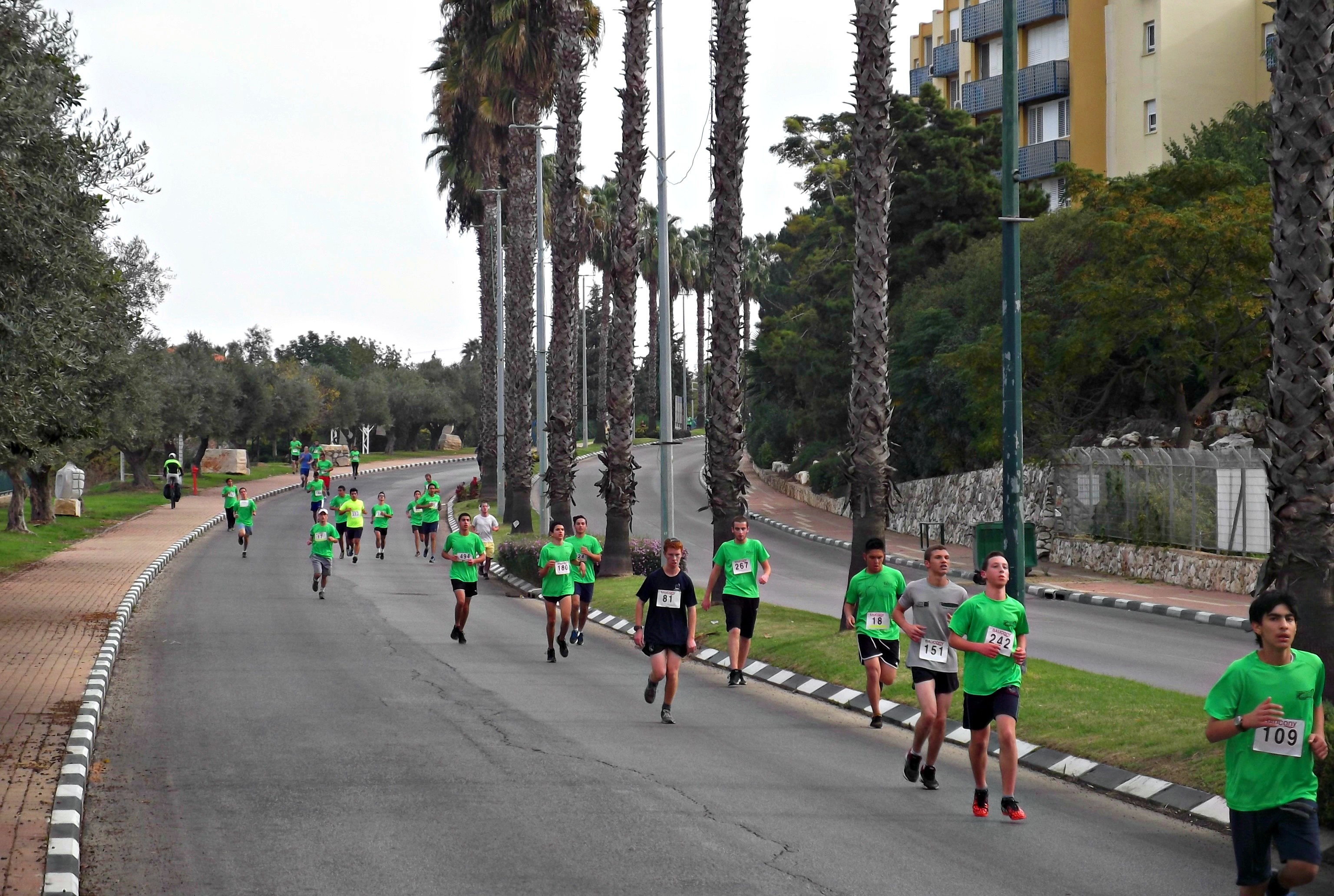
Attempting to wimp out several times along the way back uphill, but prodded along, I congratulated myself on reaching Meona – the end in sight. Riding along Road 89, we made the uphill push past Tarshicha and into Ma’alot. When we entered Ma’alot we noticed that the police had blocked the street off and wondered why. Straining uphill, we saw why – Ma’alot’s 1st annual run was scheduled that very Friday.

Runners

Runners

I’m thankful for all the runners passing by as it gave me a distraction from my achy thighs as I slowly pedaled my way towards my house. That’s my one gripe about mountain biking – however fun it is rolling downhill, the exact amount of misery will be experienced on the way back up. Finally we finished our two-hour loop and I dismounted; plans for another ride in the makings.

Hula Valley Nature Reserve

In Galilee, Israel on November 9, 2014 at 4:26 AM

Last week I took my sisters on a short trip to the Hula Valley Nature Reserve, located between the Naftali Mountains, the Golan Heights, Lebanon and the Kinneret (Sea of Galilee). Having already been to the other Hula Valley park, called Agamon Hula, I figured it would be nice to see the official national park. With my last Hula blog post being about the crane migration, as linked previously, this post will be focused more on life in the marsh year-round. We arrived at the park where I renewed my extremely cheap soldier’s year pass and set up for a little picnic looking at the wetlands.

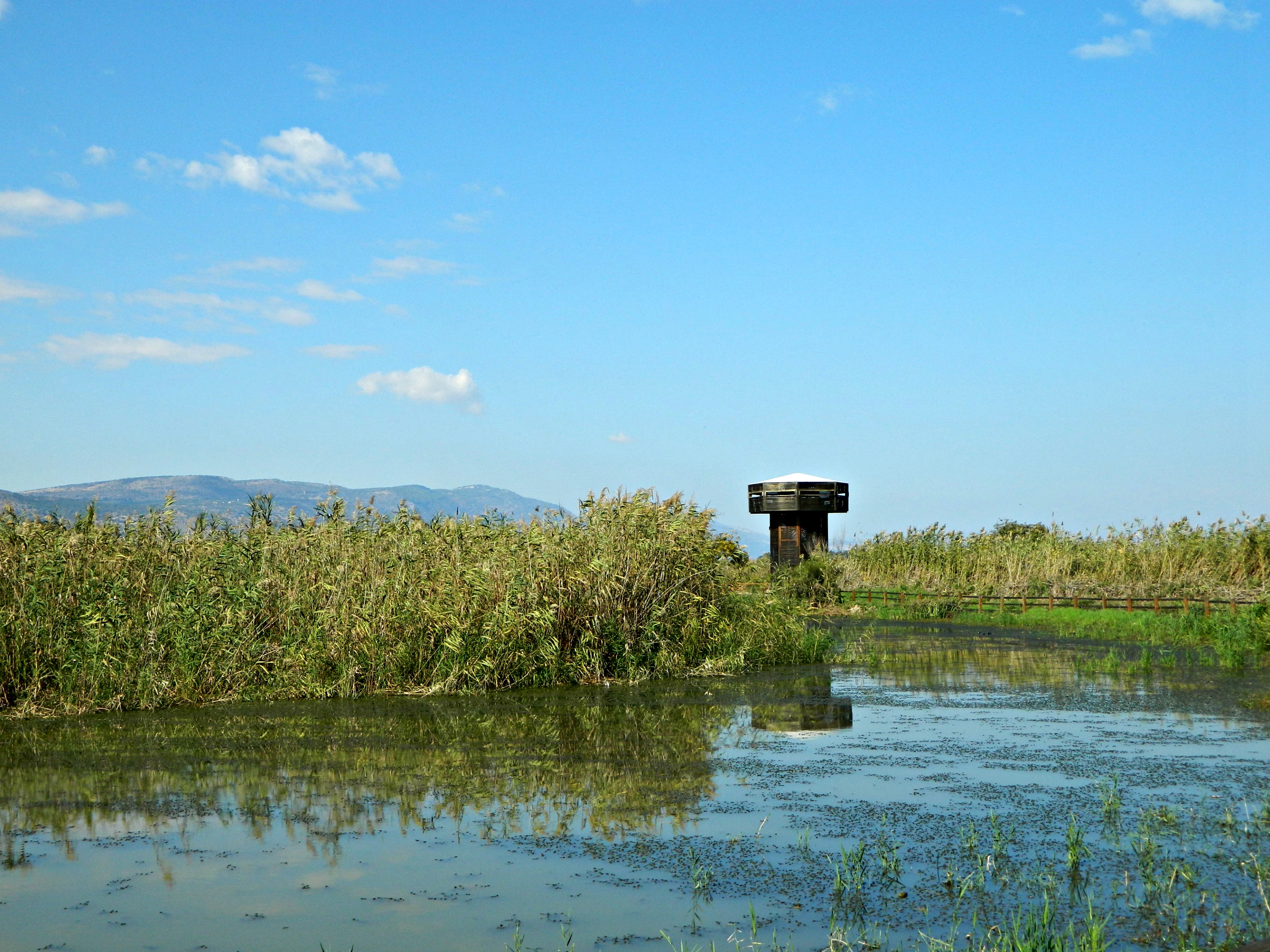
Hula Valley observation tower

Hula Valley observation tower

Deciding to first visit the Oforia visitors centre and then walk the trail, we sat down for a 3D video in English about the Hula Valley and the bi-annual bird migration. With all sorts of sensory additives to the video (including jabs in the back, gusts of cold air and a simulated rat in the aisles hitting everyone’s legs), the 3D film was a hit. Because we chose the English version we had to wait to see the diorama presentations of stuffed birds and mammals in the Hebrew-only section of the visitors centre.

Dragonfly

Dragonfly

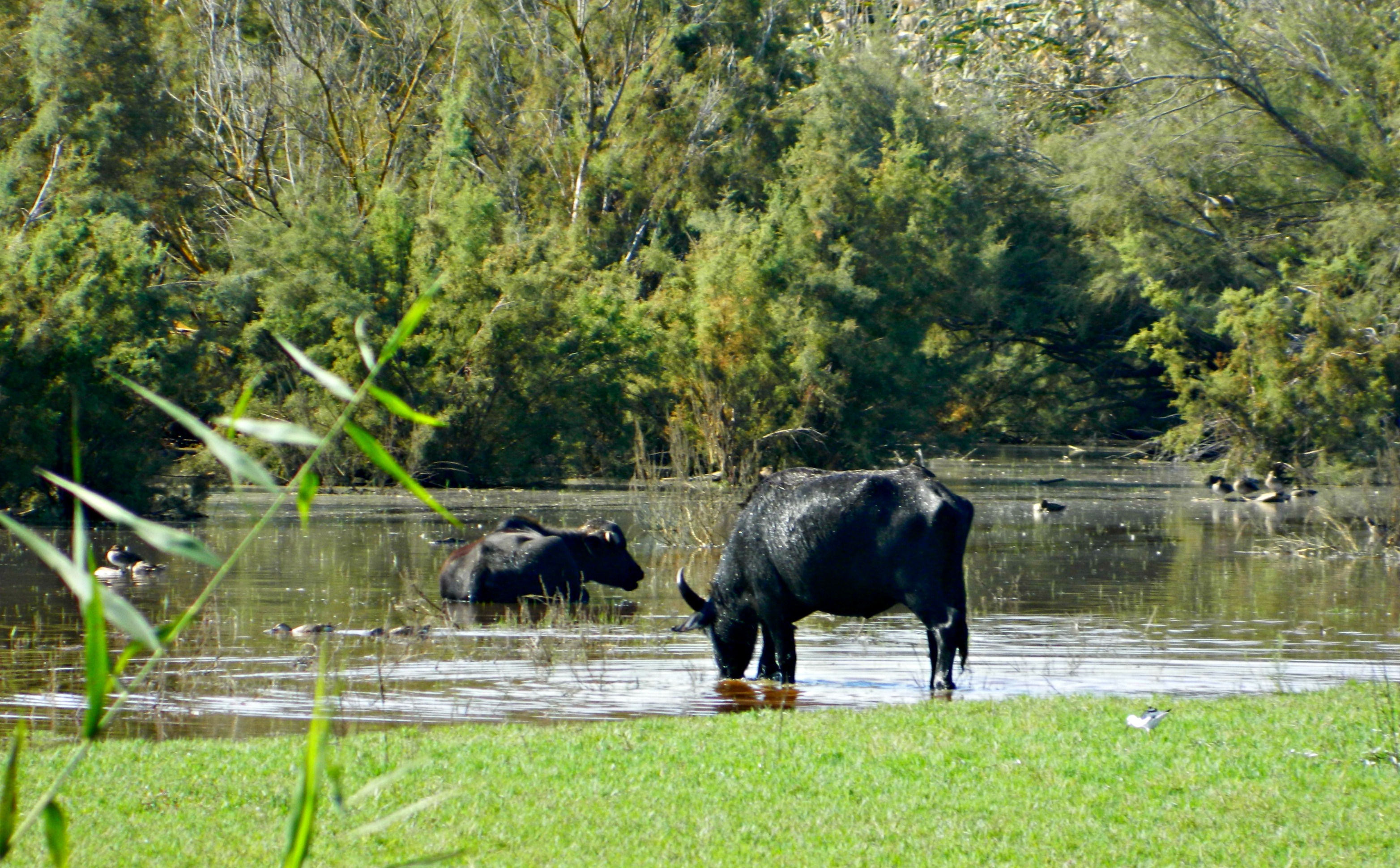
We then hit the trail and stopped almost immediately to watch the large catfish swimming beneath the bridge. Very similar to the marsh at Ein Afeq between Akko and Haifa, I already knew what to expect in the fauna department but there were a few surprises such as the white-throated kingfisher with its dazzling blue back. Within a few minutes we spotted water buffalo way out in the marsh, looking content in the cool waters.

Water buffalo

Water buffalo

Walking along the water, watching coots, ducks, water buffalo, kingfishers, turtles, catfish and more in their natural habitat, we shortly arrived at the wooden observation tower. Up top we looked out the slit and watched the birds down below, the coots, cormorants and pelicans. I even spotted a kingfisher hover and dive into the water after its prey. Now, despite the fact that some 500 million birds make their way from Europe/Asia to Africa this time of year, we saw just a handful of migratory birds. When we visited Agamon Hula on November 23rd 2011 we saw thousands of common cranes as well as hundreds of other migratory birds. It was a bit odd seeing the marsh so empty.

Cormorants on a dead tree

Cormorants on a dead tree

Leaving the observation tower we continued on the loop trail and walked a section of bridge through some very strange marsh vegetation, or as one sister said “Dr Seuss plants”. Bright green, large, round tufted balls of plant – surely something to be seen in a Dr Seuss book.

Walking through Dr Seuss land

Walking through Dr Seuss land

We then approached the floating bridge which looks out to the larger body of water in the reserve, where we watched pelicans paddle around, the neighbouring Golan in the background.

Pelicans and the Golan

Pelicans and the Golan

From the moment we entered the covered floating bridge, I immediately thought it looked like some sort of wooden space ship corridor. If you click on this picture, a screenshot from the sci-fi classic 2001: A Space Odyssey, I think you’ll agree.

In the floating bridge

In the floating bridge

After the floating bridge we looped back round and passed many, many turtles and this nutria eating its way through the marsh. Despite being an alien species, nutrias add quite a nice visual touch to Israeli wetlands.

Nutria eating its way through the marsh

Nutria eating its way through the marsh

Finished with the trail we headed back and left the park, happy to spend the day in such a beautiful and photogenic place but slightly disappointed not to see the bird migration in person. Perhaps next time…


Israel Railway Museum

In Haifa, Israel on October 26, 2014 at 4:38 AM

To celebrate my two-year anniversary with the IDF, and because I had a convenient ride, I took a little trip to the Israel Railway Museum in downtown Haifa. Having been on my to-see list for several years now, the train museum was even more interesting than I had imagined it would be. Located at the old railway station of Haifa East, the museum incorporates both the remains of the Ottoman train station that was built as an important rail hub in the Holy Land and remnants of the local train history leading up to today.

Israel Railway Museum

Israel Railway Museum

The first local train line opened up by the Ottomans between Jerusalem and Jaffa in 1892. Throughout the next few decades, the trains began to criss-cross the country and offered transportation to cities such as Damascus in Syria, Amman in Jordan and El Qantara in Egypt. At the time, the Hedjaz Railway ran pilgrims making hajj from throughout the Ottoman Empire to Islam’s holy cities Mecca and Medina in the Hedjaz region of today’s Saudi Arabia. Haifa East was a station for the Jezreel Valley branch of the Hedjaz Railway, most of those tracks now lost to history.

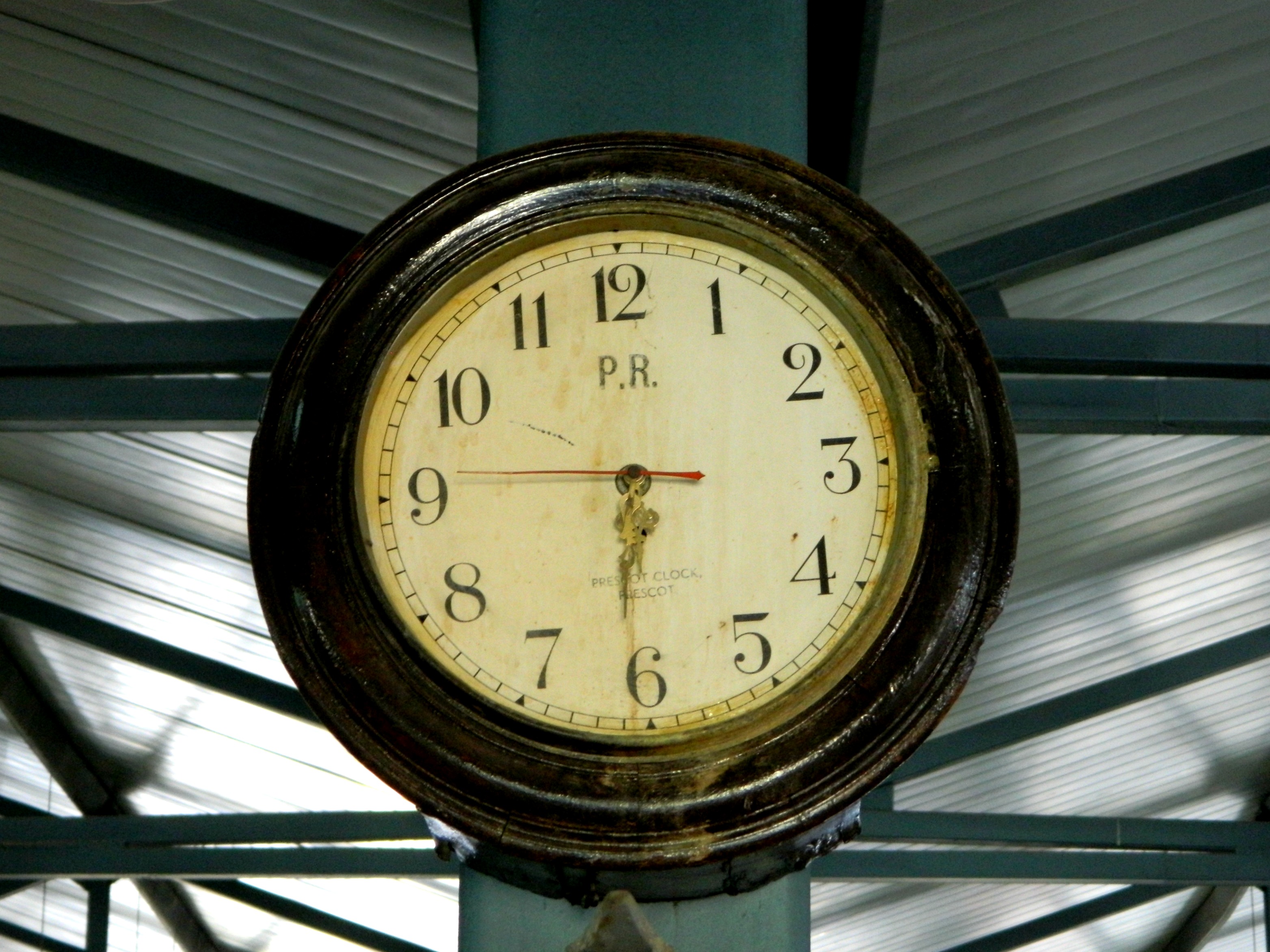
Old train station clock

Old train station clock

During World War I, the tracks were used by both sides: the Germans and Turkish to move troops and supplies and then at the end of the war by the British to ferry injured soldiers as the Germans and Turkish were expelled. Interestingly enough, the British actually bombed the Afula station which headed for Transjordan – which brings to mind The Train. After the Great War, the British ran Palestine Railways and luxury coaches were added to the standard passenger and freight trains. In the 1930’s, during the time of “The Disturbances”, Arabs would sabotage the trains and train-tracks in protest of both the Jews and the British. Rolling concrete bunkers were used to patrol and protect the tracks, the British soldiers armed with guns and ready for trouble.

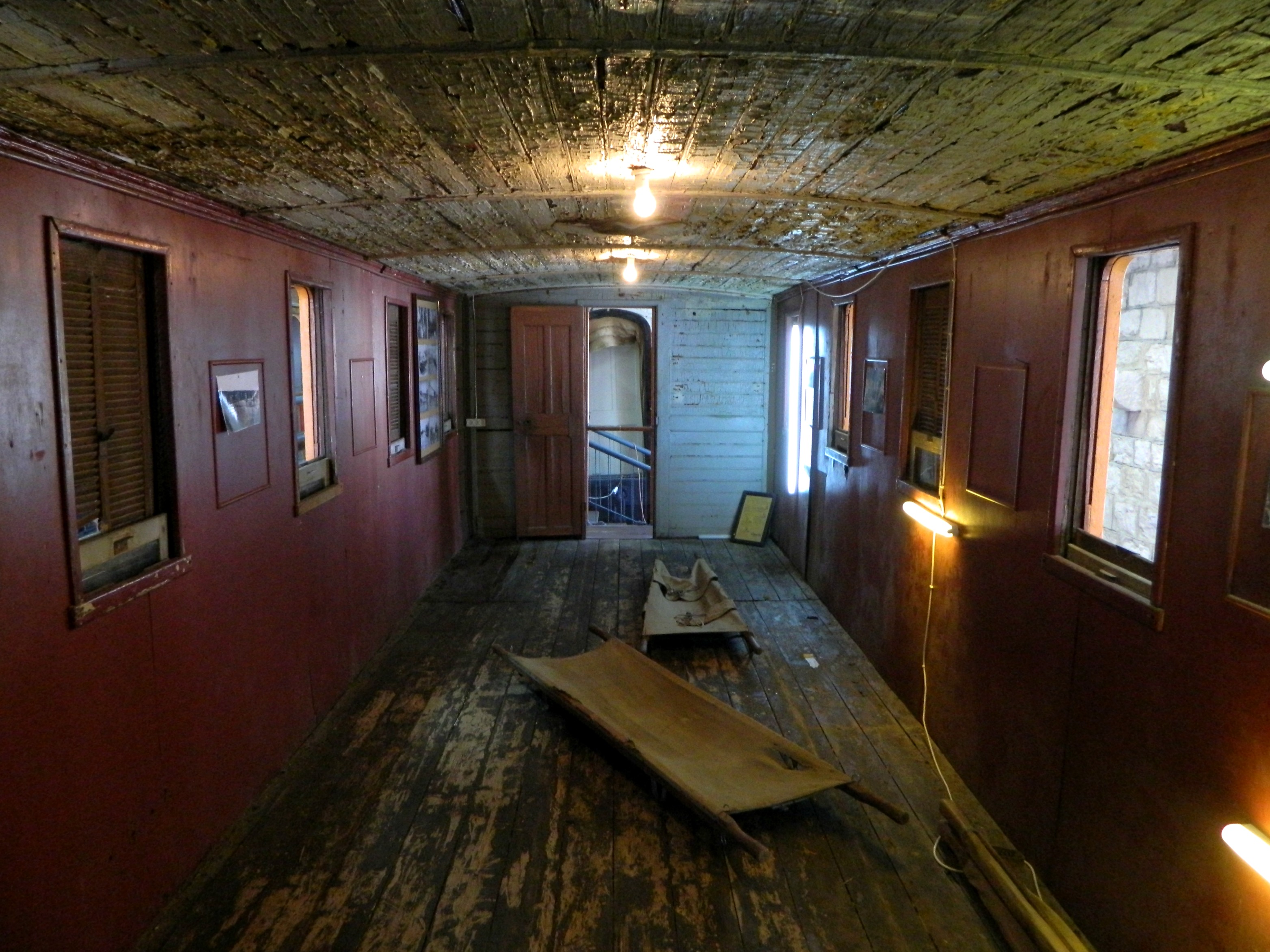
1893 ambulance coach from WWI

1893 ambulance coach from WWI

After World War II, when the Jews struggled for independence the British trains became targets as both military sabotage and then, with the British leaving, to prevent the neighbouring Arab armies from invading Israel via rail (such as the bridge near Achziv). The trains were also used by the British to transport Jewish refugees from the ports and beaches where they landed from sea to the Atlit “Illegal” Immigration Camp. Once independence was established, the train lines were restricted to just safe Israeli stations and as the fledgling country developed and grew, Israel Railways incorporated captured and purchased train cars and engines. Today the trains are a crucial part of public transportation and I myself have ridden the train to all ends, north and south.

Halt!

Halt!

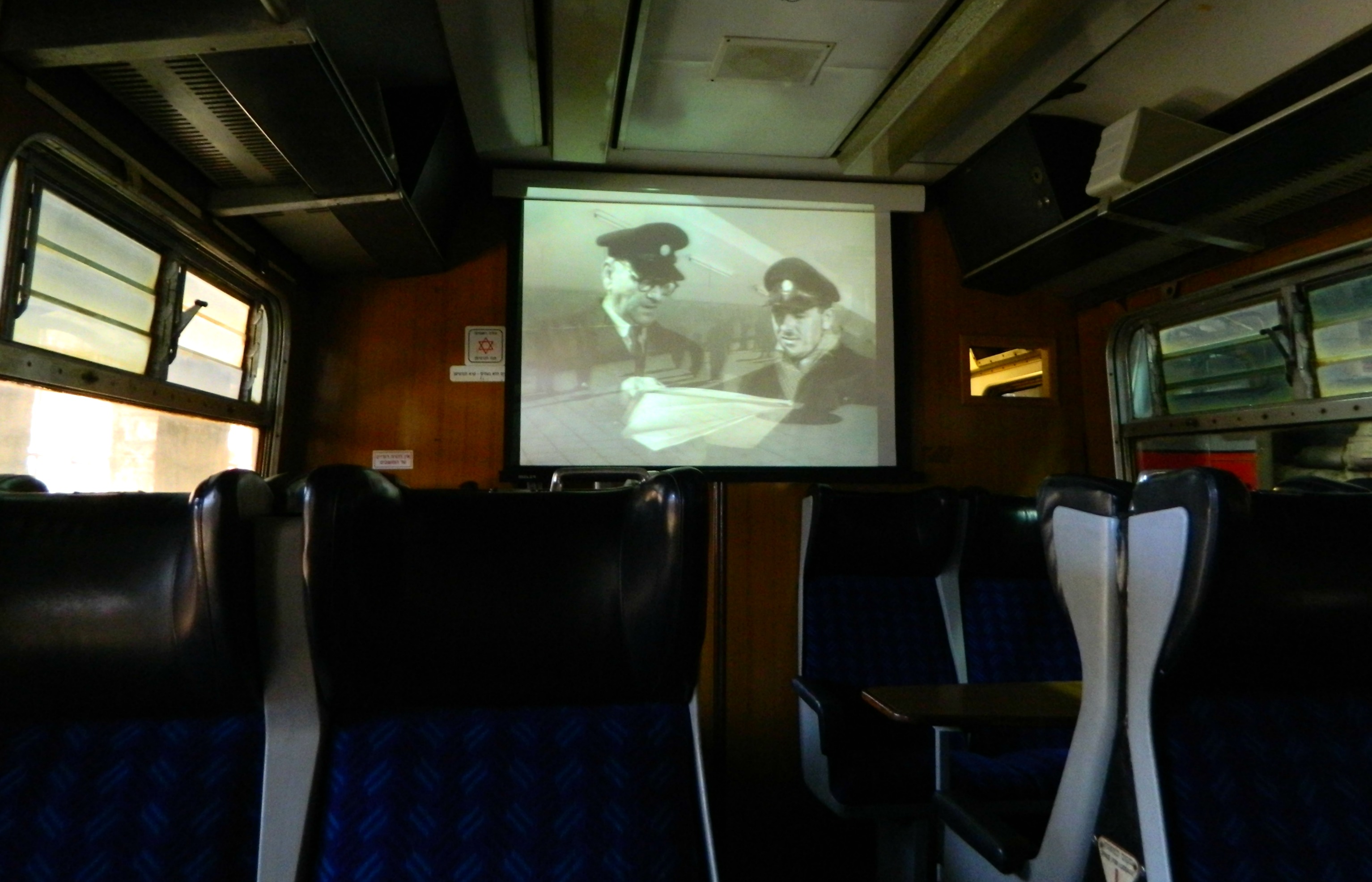
With the Holy Land’s train history covered, I shall now describe my visit. Paying the discounted soldier’s entrance fee, I was immediately directed to Coach no. 688, a British-built passenger car from 1970, where a short film was to be played. Sitting down in a normal coach, I watched a old black-and-white film about the transition from steam locomotives to diesel engines – interesting.

Watching the short film

Watching the short film

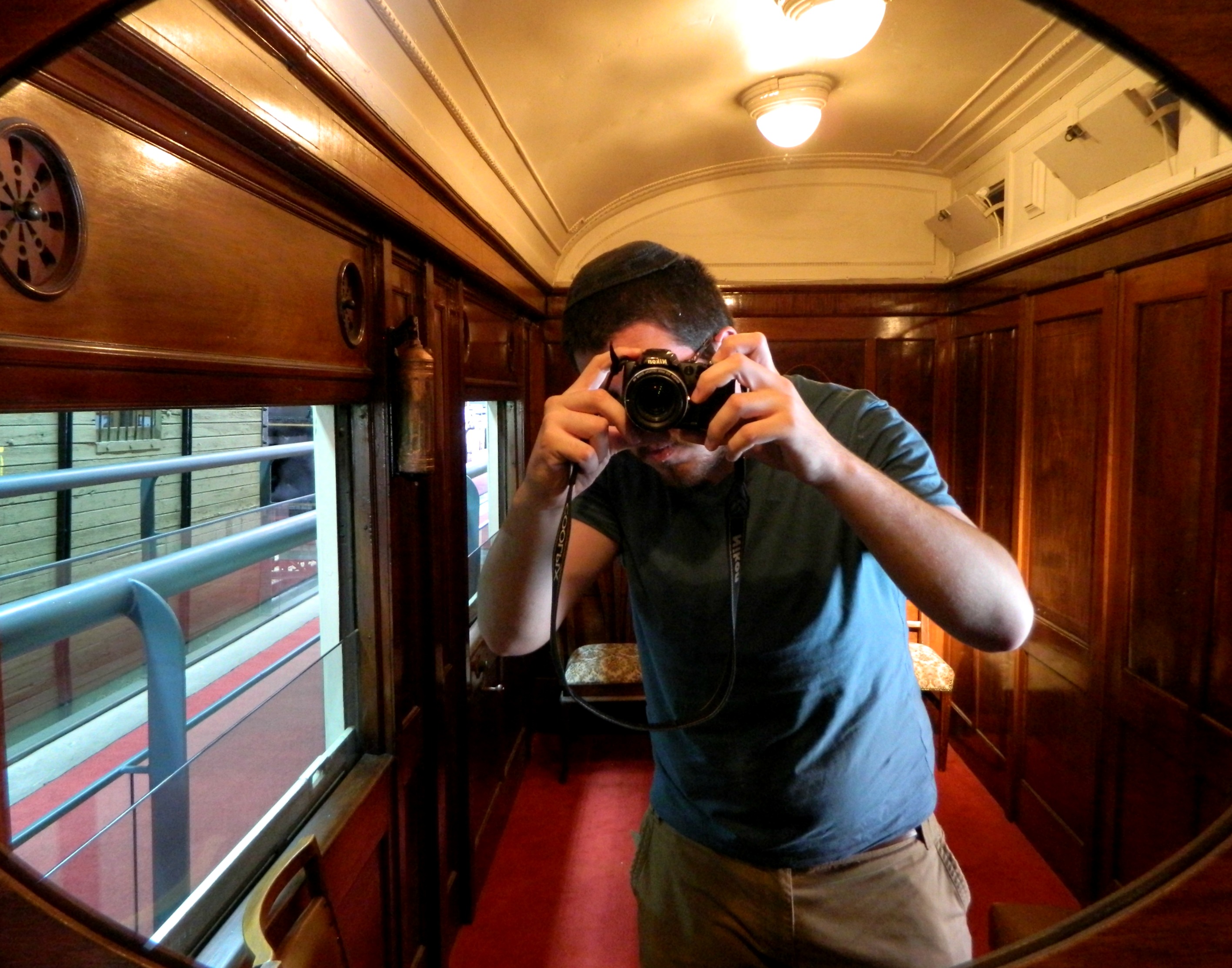
Disembarking, I began my self-guided tour of the various train cars and engines, including a 1902 Class 0-6-0 locomotive from Krauss, Germany and an 1893 passenger coach built by Baume et Marpent in Belgium and used by the British in WWI to evacuate wounded soldiers to Egypt. But my favourite train car was the luxurious Saloon coach no. 98 built by Birmingham RC&W Co. of England, used as a day saloon from 1922 till 1929 and then as a night saloon from 1929 till the mid-1960’s.

Enjoying myself in the luxurious saloon

Enjoying myself in the luxurious saloon

From the moment I entered the narrow wood-paneled corridor, I felt like I was living the classic Poirot murder mystery Murder on the Orient Express, albeit all by my lonesome.

British saloon coach

British saloon coach

Stepping outside, I examined the numerous trains on the many sets of tracks of Haifa East. The concrete bunker car from the 1930’s, which I mentioned above, was pretty interesting. Being that the modern train-line runs past the museum, it was interesting to note the contrasts of train types throughout the years. A particularly shiny and new-looking Israel Railways train was “parked” a few tracks over from the furthest museum piece, I wonder when that will enter circulation…

Coming from the east

Coming from the east

There was such a colourful view looking westward over the tracks, with the trains, the trees, the orange rooftops and of course, the wonderfully blue sky:

Heading to the west

Heading to the west

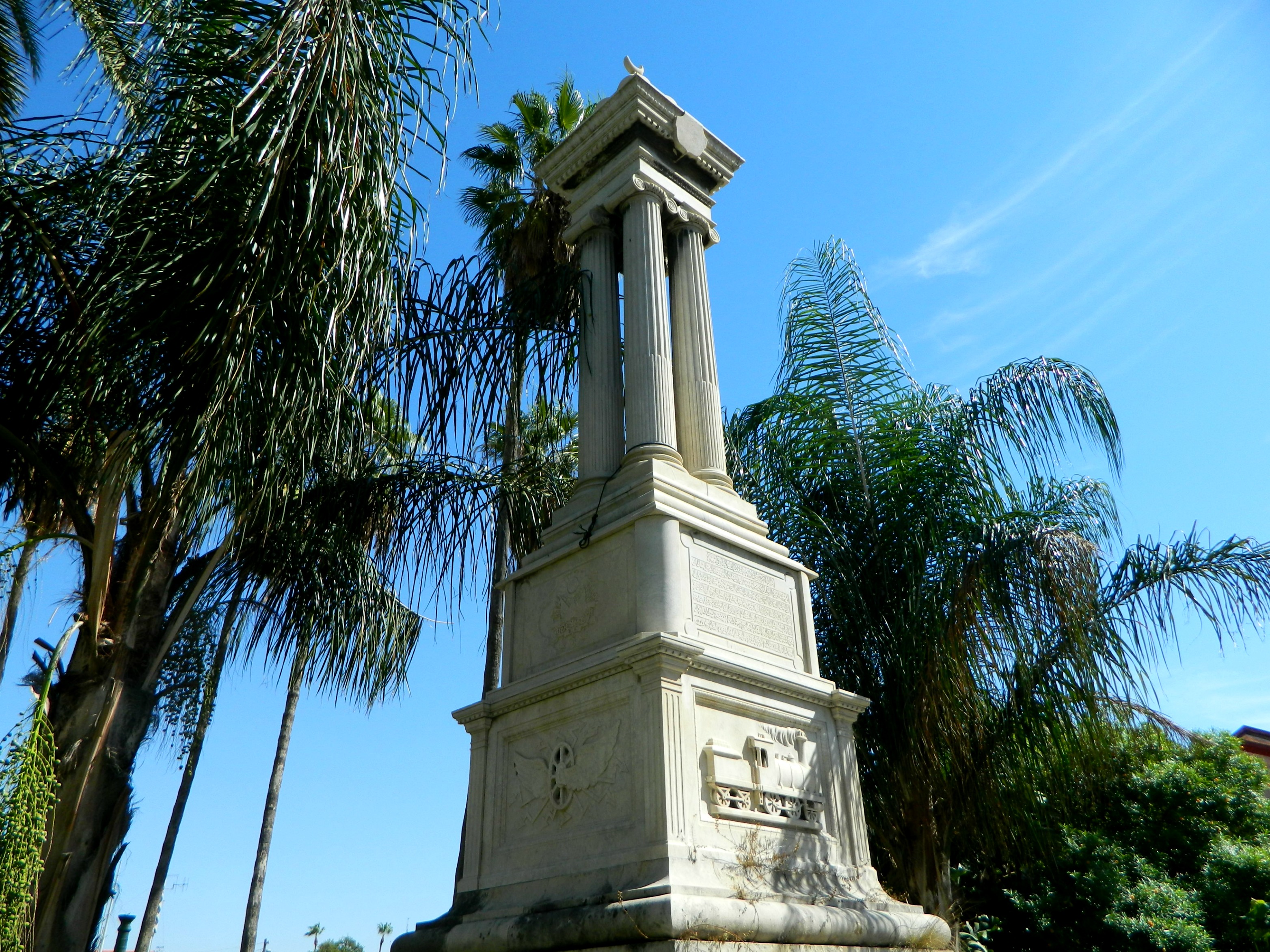
Finished with the outdoor section, I crossed back over the red metal bridge from where I came and entered the museum’s small exhibits building. Within, I saw innumerable documents, photographs, old tickets, stamps, work tools and models. With my father coming for me, I just breezed through, eyeballing only the most interesting pieces in the main room and the two antechambers. Leaving the museum, I spotted the Turkish monument erected in 1905 for the opening of the railroad station just outside the front gate:

Turkish monument from 1905

Turkish monument from 1905

In summary, the Israel Railway Museum is definitely worth the visit, all the more so for children and train enthusiasts.

Jordan River Valley

In Israel, Jordan River Valley, Judea on October 21, 2014 at 6:44 AM

This past Sunday, my father and I drove down to Bet Shemesh and Ashdod for shipping-related work, hoping to have a little fun as well. Leaving early in the morning in the rain, we chose the desert route – border-hugging Road 90 from Tzfat down to Jericho and then Road 1 through Jerusalem. Stopping momentarily in Bet Shean we had a large flock of pelicans pass overhead; the bird migrations in full force this time of year.

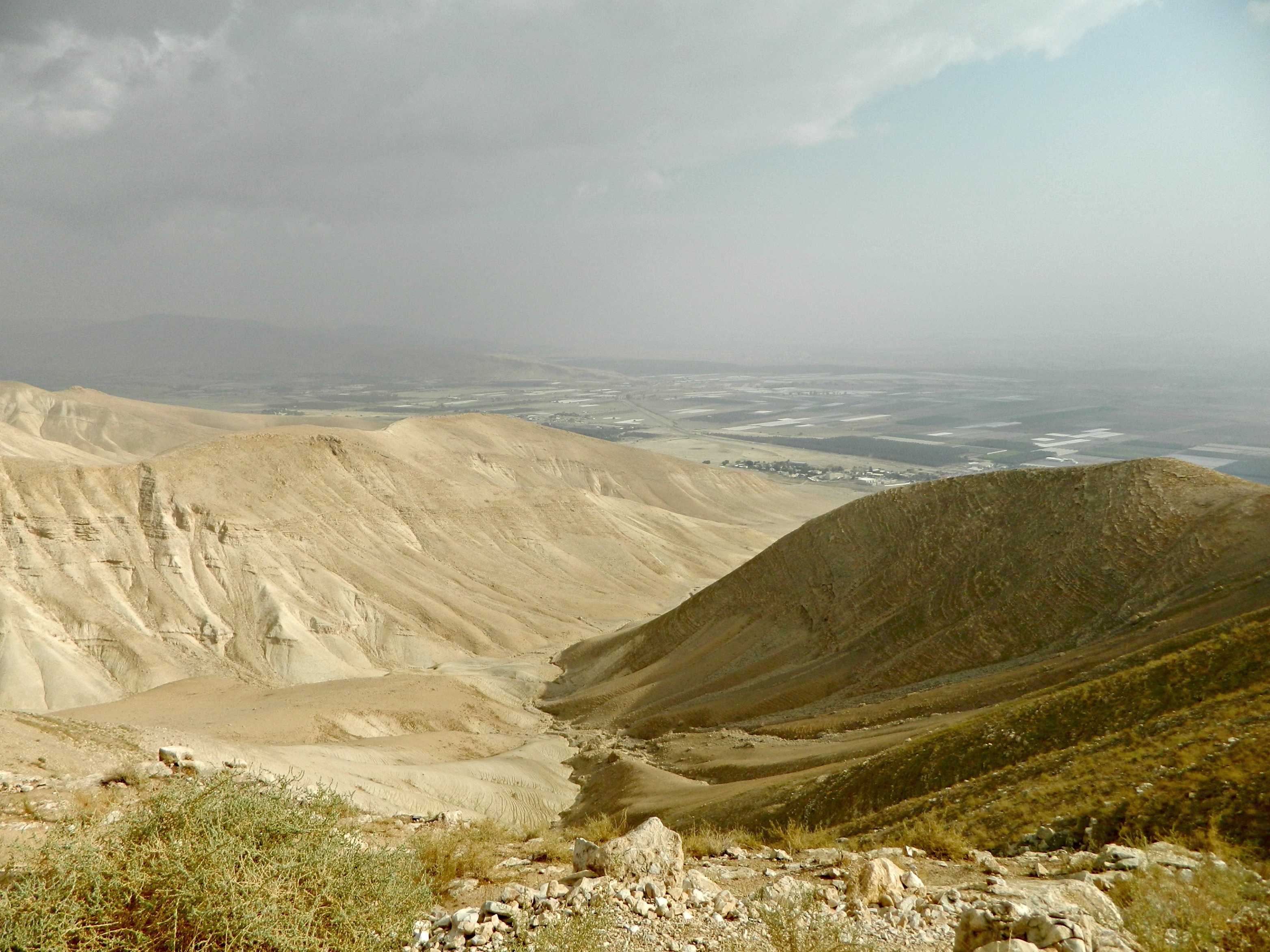
Looking down towards the Jordan River Valley

Looking down towards the Jordan River Valley

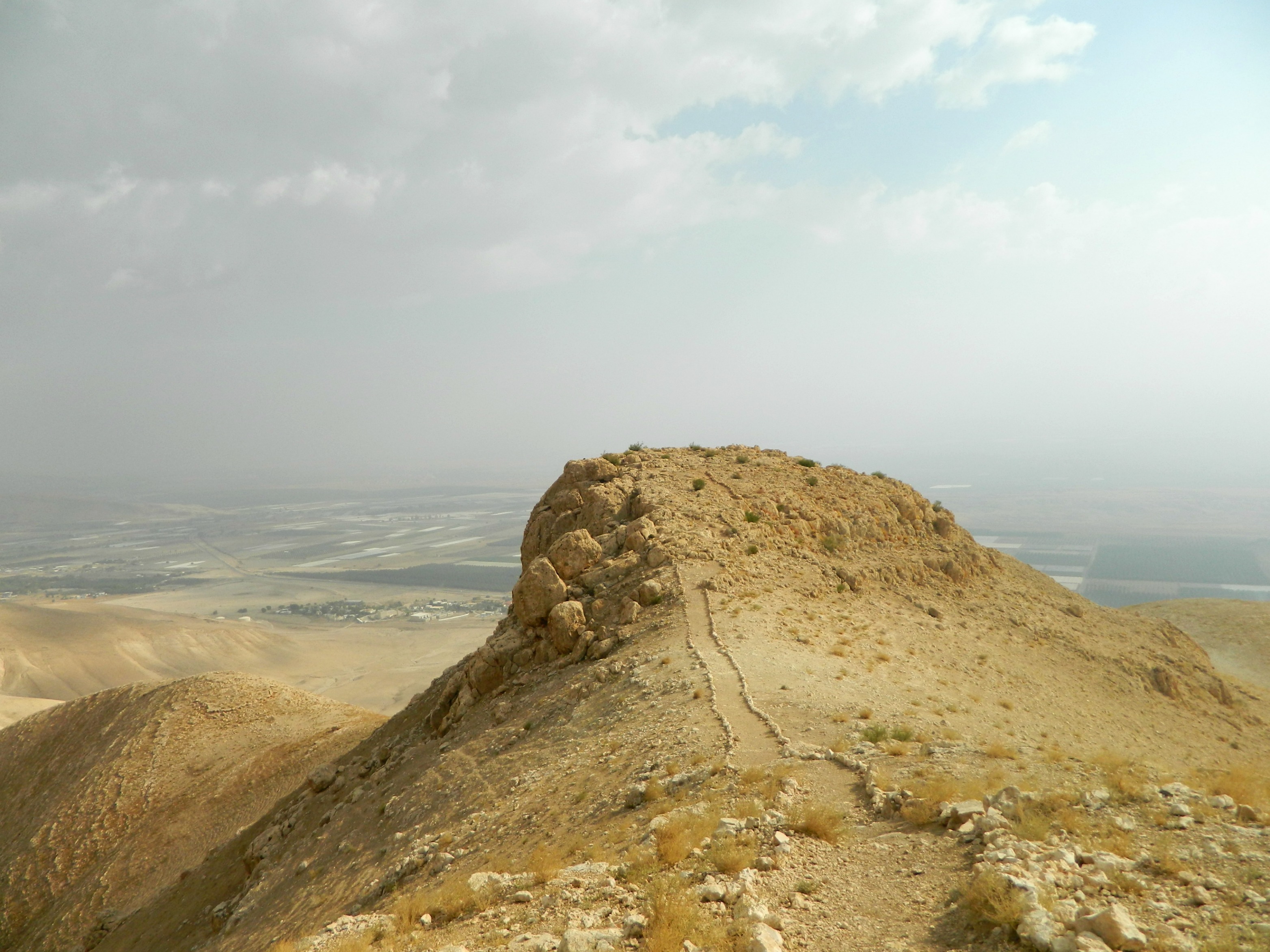
Our first stop was intended to be the mountaintop fortress of Sartaba (Alexandion) just before Road 505’s junction and after a wrong turn into a town, we were directed to a single-lane road that took us winding up the adjacent mountain. There, after parking, we found a desolate army outpost and a trail leading out to a rocky horn that I assumed was Sartaba.

Rocky horn - not Sartaba

Rocky horn – not Sartaba

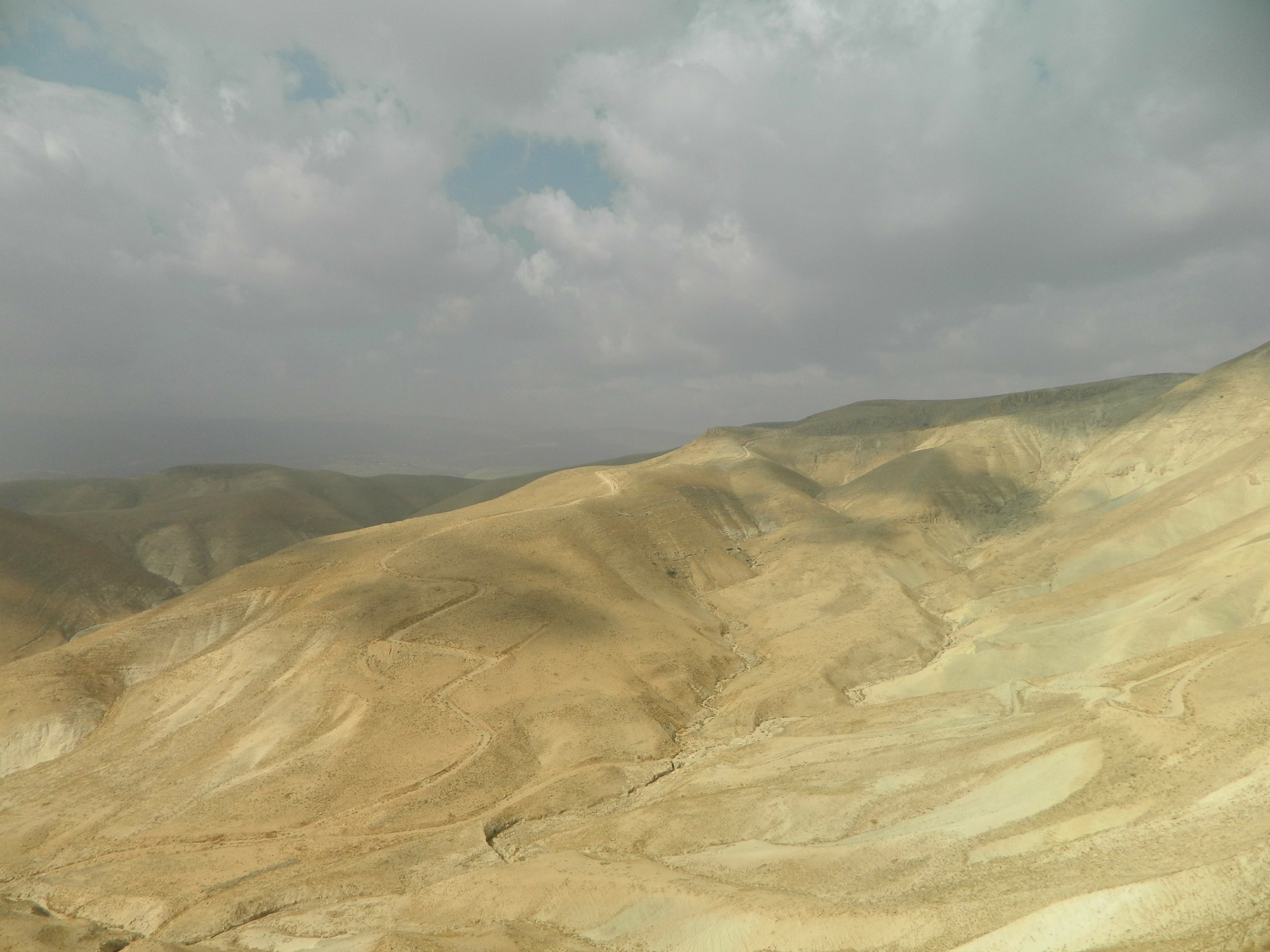
Up on the horn, gazing out at the Jordan River Valley, I activated my phone’s GPS and discovered that the actual site was a few kilometres west from where we were standing. As you can see here, the dirt road snaking up the mountainside leads to Sartaba, looking down from where we were beside the army outpost.

The winding road to Sartaba

The winding road to Sartaba

As we looked out at the stormy clouds and the barren mountainous landscape, my father decided to see if he could roll a rock all the way down the mountainside. After the first rock crashed down into the dry streambed below, we saw small figures running away from the single-rock avalanche. I called out to my father to look at the birds running down there, assuming they were chukars or some desert quails, and then zoomed in on them with the camera. The 25x optical zoom was not enough and so I entered the iffy realm of digital zoom. I snapped and prayed, having a hard time seeing the colour-camoflauged creatures down below. Checking the display scene, I found myself looking at not birds, but gazelles:

Gazelles down below

Gazelles down below

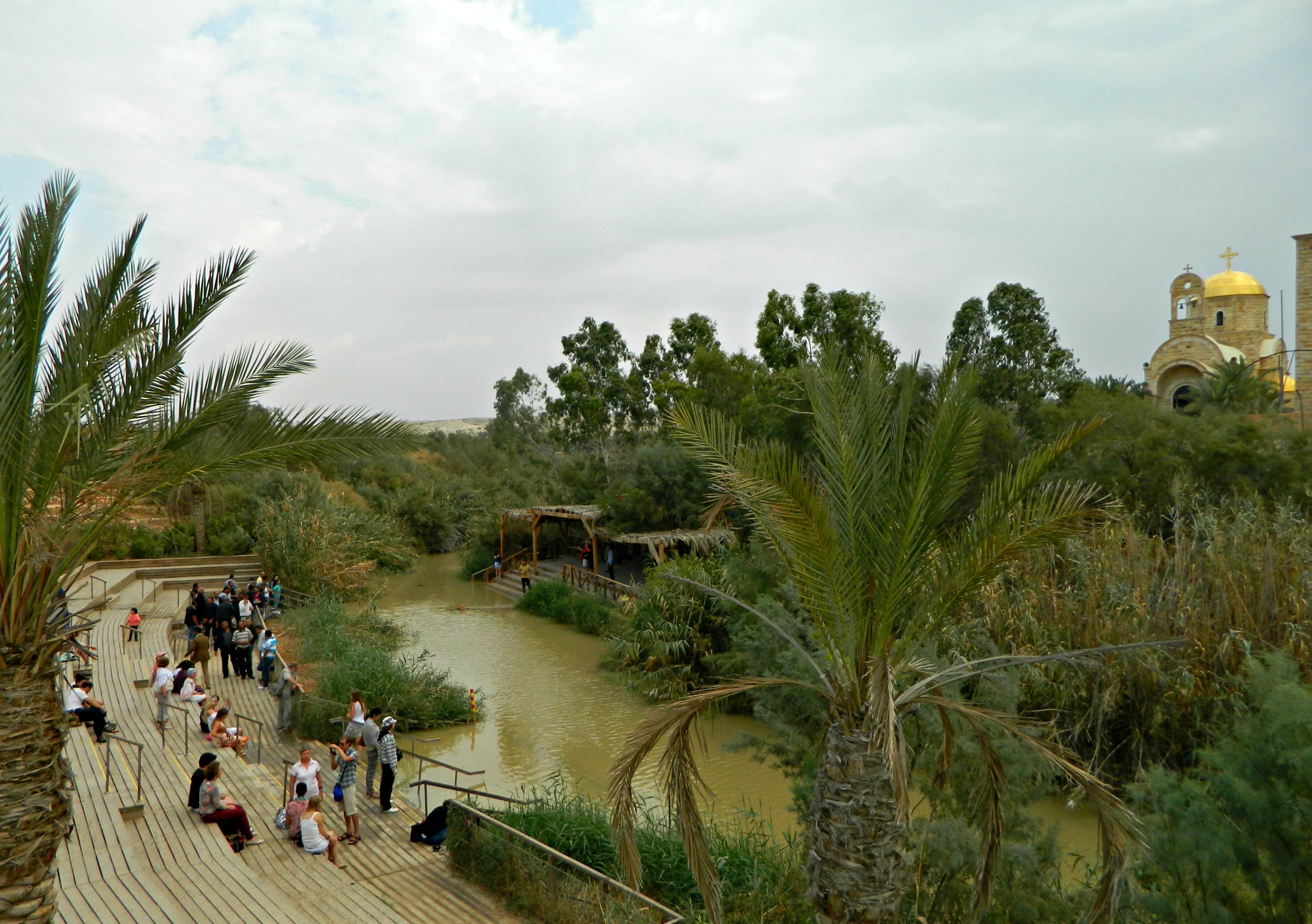
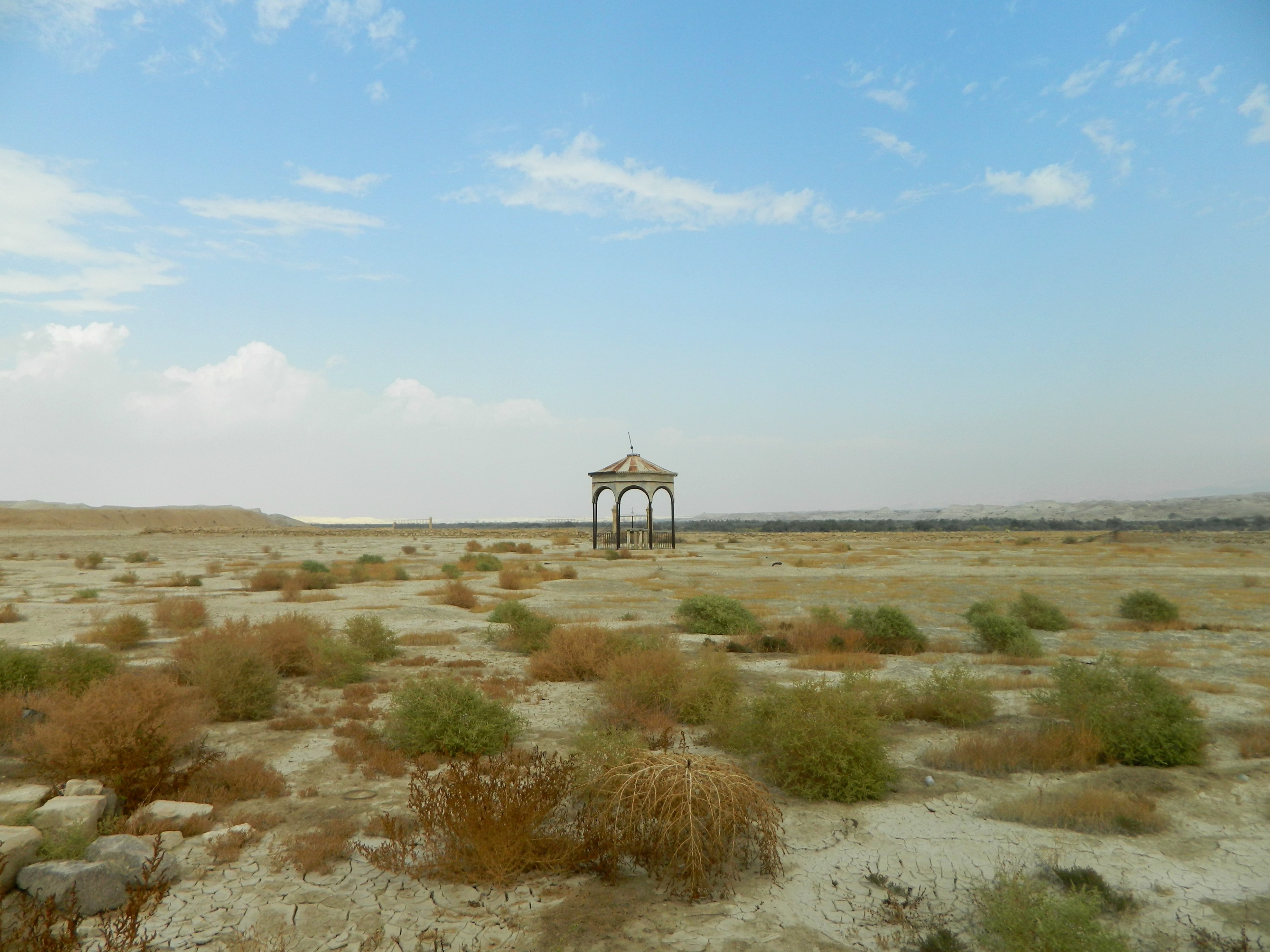
Returning to the car, we attempted to drive to the real Sartaba but the road was too precarious and we do not have a 4×4. So, we returned to Road 90 and tried from a different access point. More rugged terrain suitable only for a 4×4. So, in summary, any attempt to reach Sartaba either requires a 4×4 vehicle or a very long hike up and around a mountain. Continuing down Road 90, we stopped next at a site known as Qasr al-Yahud (Arabic for “Castle of the Jews”) which is a spot along the Jordan River famous for several reasons. When the Jews crossed the Jordan River entering the Holy Land thousands of years back, as documented by the Bible, they crossed “opposite Jericho” and so tradition has it that this is the very spot where the waters stood in a pillar for the Jews to cross into the Land. Later, it is believed that this is where Eliyahu (Elijah) the Prophet ascended to the heavens after crossing the Jordan with Elisha.

Qasr al-Yahud - Israel and Jordan

Qasr al-Yahud – Israel and Jordan

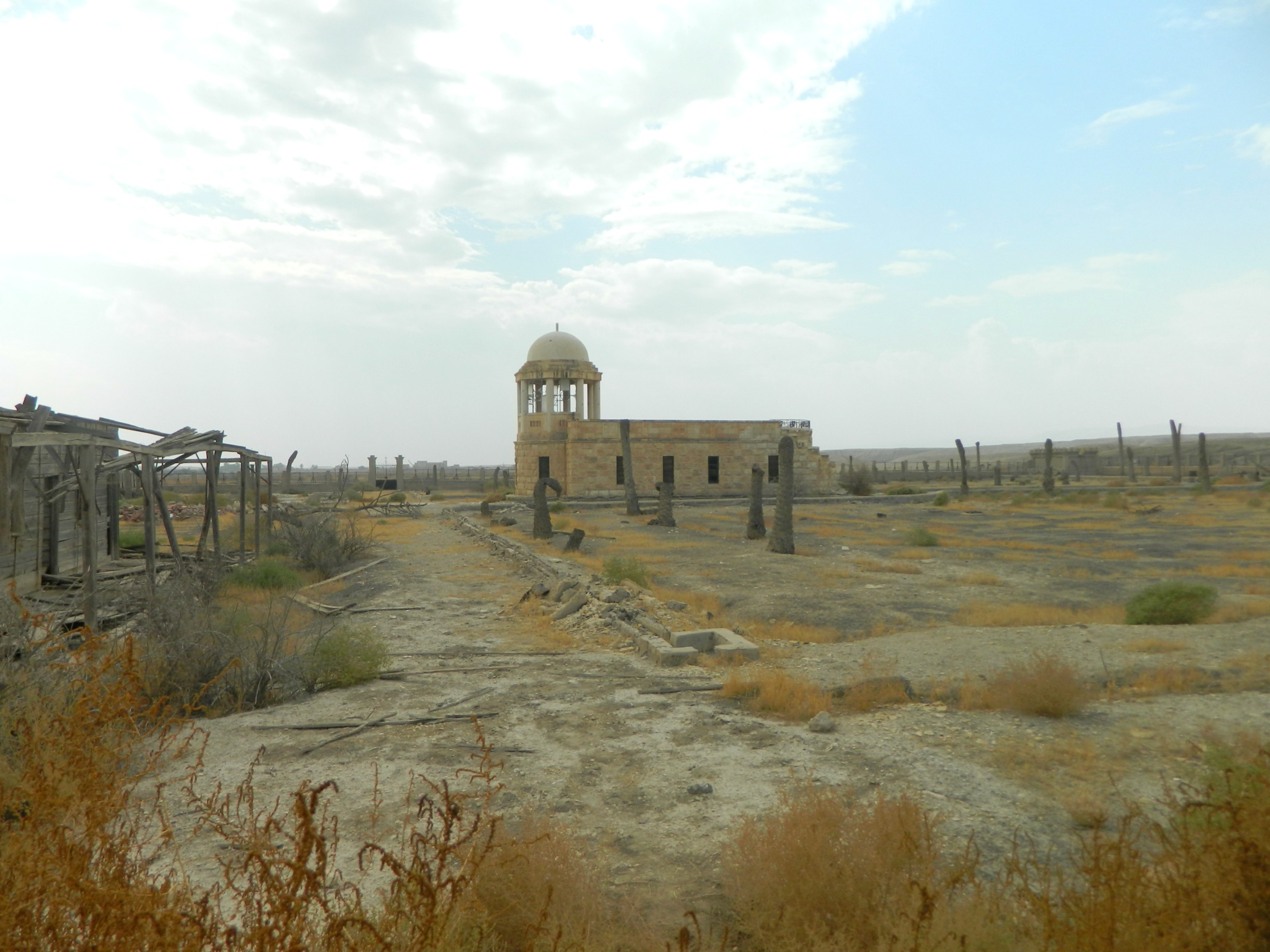
But today’s tourists are mostly Christians who come to Qasr al-Yahud to baptise in the waters of the Jordan, a holy site harkening back to the dawn of Christianity. As far back as the Byzantine era, churches and monasteries were built along the banks, these being the lowest churches in elevation on Earth. These monasteries often served as safe havens for Christian pilgrims during times of Arab rule. The oldest monastery is St John’s which was rebuilt during the Crusader period on ruins from a Byzantine-era church. During Ottoman rule, when there was easy access for pilgrims, many Christian orders came and built their own monasteries. Earthquakes in 1927 and 1956 severely damaged the monasteries and after the Six Day War in 1967, the area became a closed military zone.

An abandoned Franciscan chapel

An abandoned Franciscan chapel

In the following decades, the monasteries became refuges for terrorists crossing the border and so the IDF was forced to set mines around the partially ruined buildings.

A minefield

A minefield

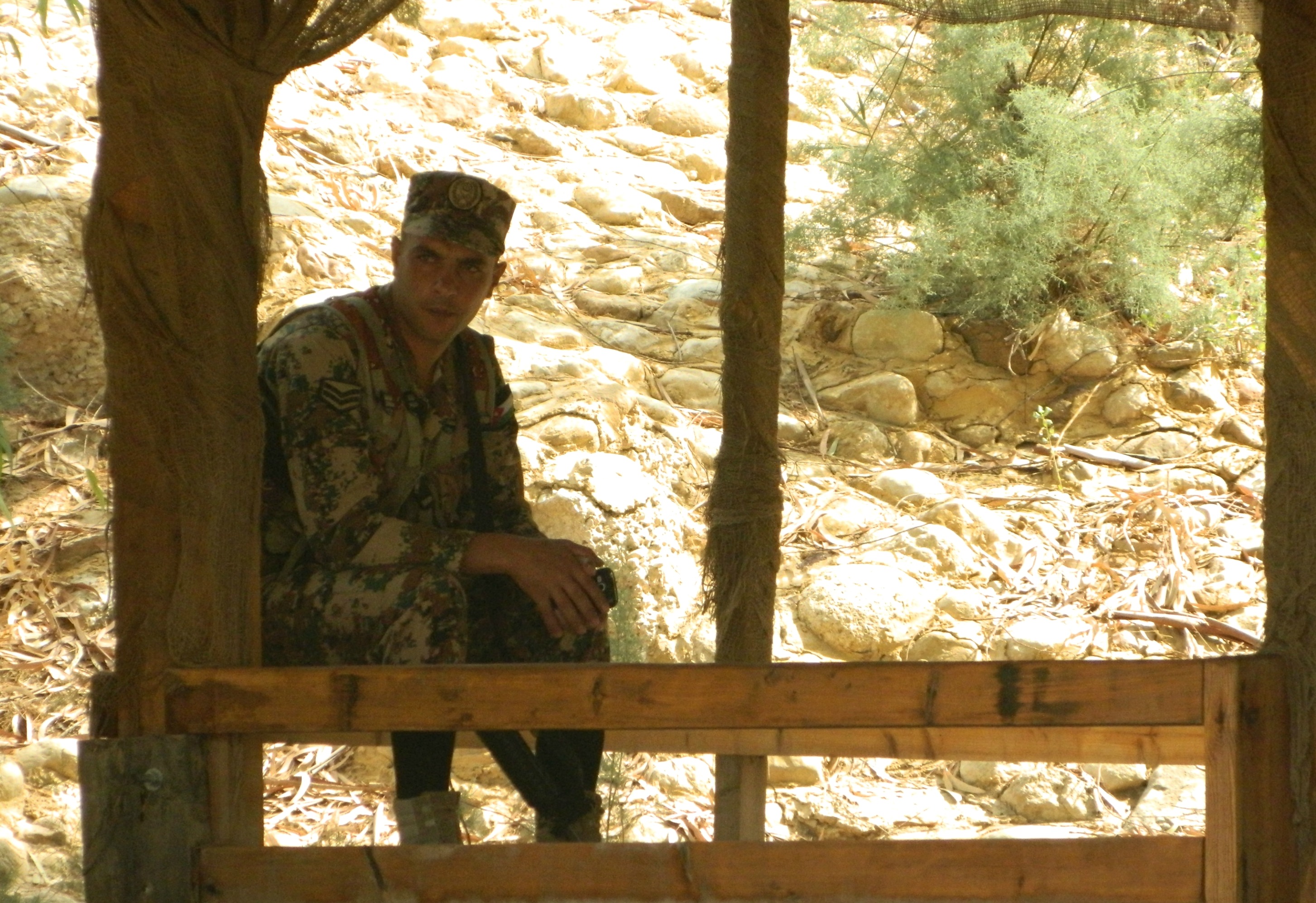
Now, at times of peace with Jordan, the site is open to visitors but several of the monasteries are still minefields and fenced off. When we visited, there were two Israeli soldiers and one Jordanian soldier guarding the border – a mere thirty feet or so of muddy water, where several pilgrims were in the water in white tunics.

Jordanian corporal keeping watch on the border

Jordanian corporal keeping watch on the border

After Qasr al-Yahud we kept driving until we reached the Beit HaArava Junction. There, we turned onto a small road to see the remnants of the original settlement of Beit HaArava (1939-48). At the end of the road we saw a few ruined houses, but they were on the other side of the security fence. We also saw a sign to the first potash plant which was in operations from 1925 till 1948. Getting back to the main road, we turned onto Road 1 to Jerusalem and took a two-minute detour to photograph Nabi Musa, the Muslim shrine and mosque for what they believe is the burial place of Moshe (Moses).

Nabi Musa

Nabi Musa

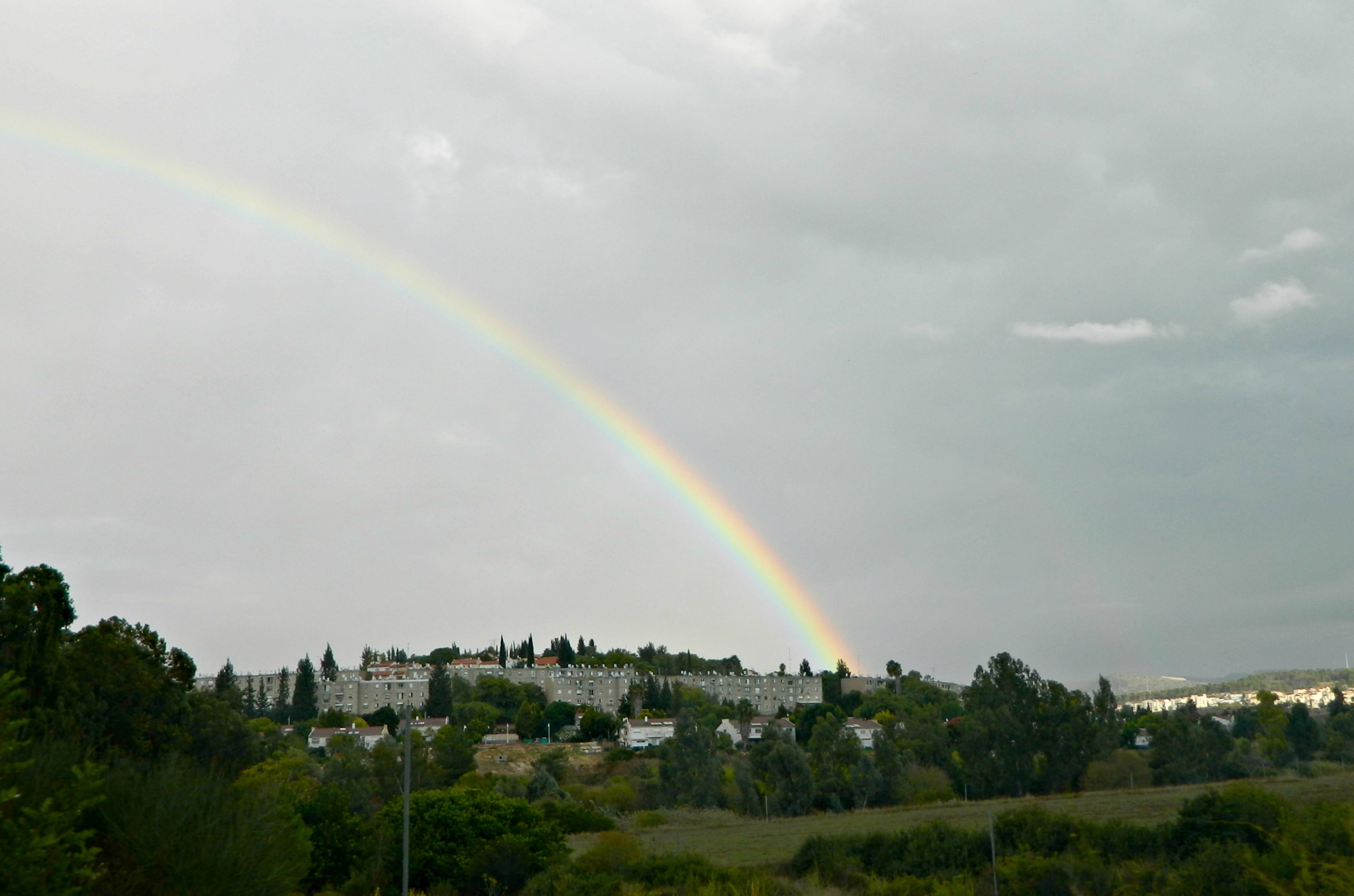
Pressed for time, we abandoned plans to visit the Kotel in Jerusalem and instead had a quick visit with family friends in nearby Ma’ale Adumim and then headed for Bet Shemesh to get the work done. When we left Bet Shemesh, heading for the port of Ashdod, this magnificent rainbow appeared in the sky:

Rainbow over Bet Shemesh

Rainbow over Bet Shemesh

After dinner in Ashdod, we took the labourious drive home via Road 6 – Israel’s longest toll-road and arrived home sometime after 9pm.

Sadot Winery

In Galilee, Israel on September 18, 2014 at 9:54 AM

With three wineries visited and sixteen wines tasted, we continued on with our wine tour. The four of us – Joel, Les, myself and our tour guide Yakov – popped on over to Sadot Winery, nestled in Sde Ya’akov just across the road from the fascinating Bet She’arim National Park. The newest winery on our tour, this estate winery is only in its second vintage.

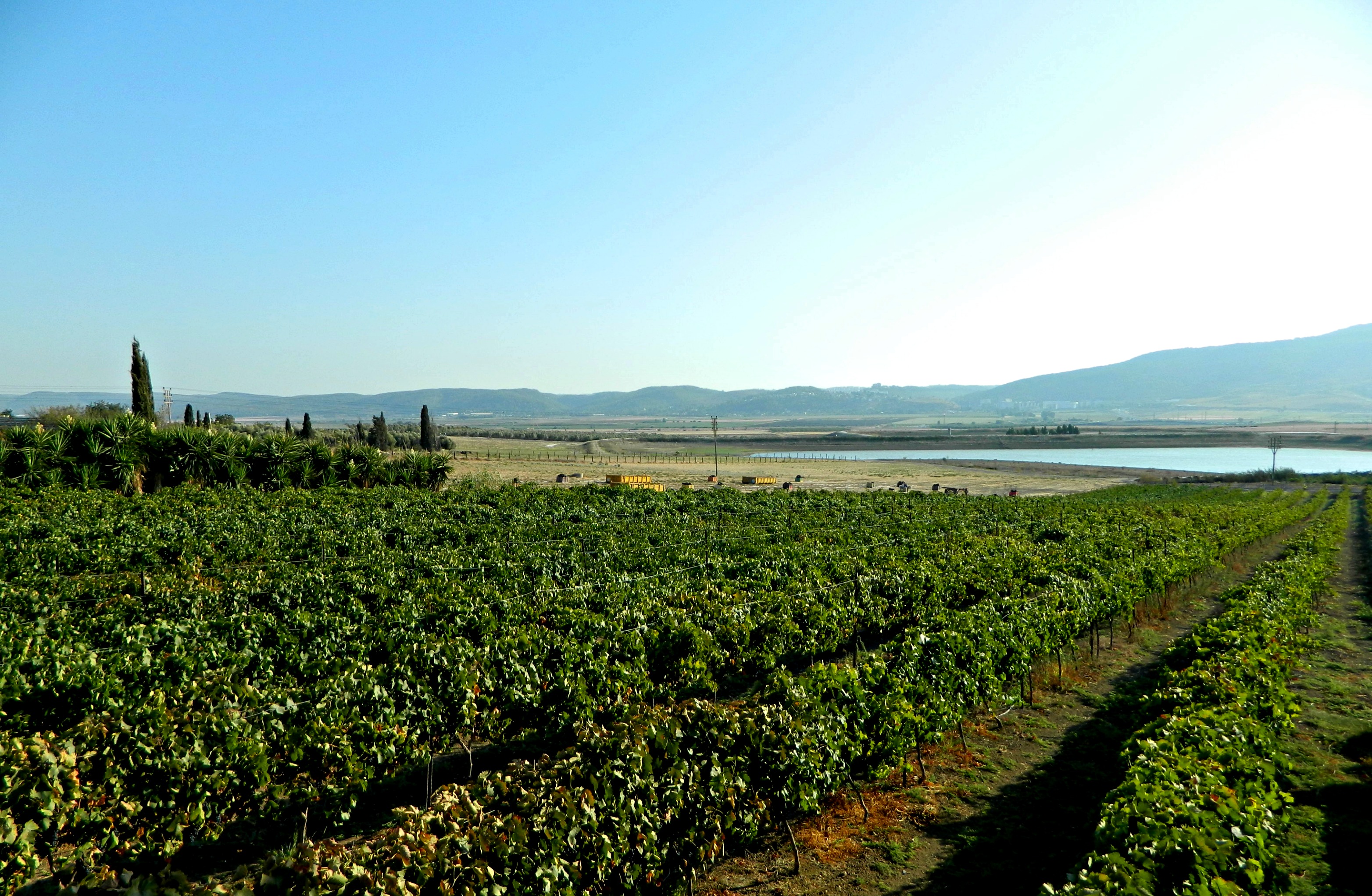
The picturesque vineyard at Sadot Winery

The picturesque vineyard at Sadot Winery

Meeting up with Ro’i, the winery owner, we started with a look at his vineyards, sampling from two grape varieties. Even though the grapes are hanging lush on the vine, Ro’i is waiting for the perfect sugar levels before he harvests. What defines his winery as an estate winery is the fact that all his wines are made with grapes grown on the estate, definitely giving us the full behind-the-scenes.

Fruit of the vine

Fruit of the vine

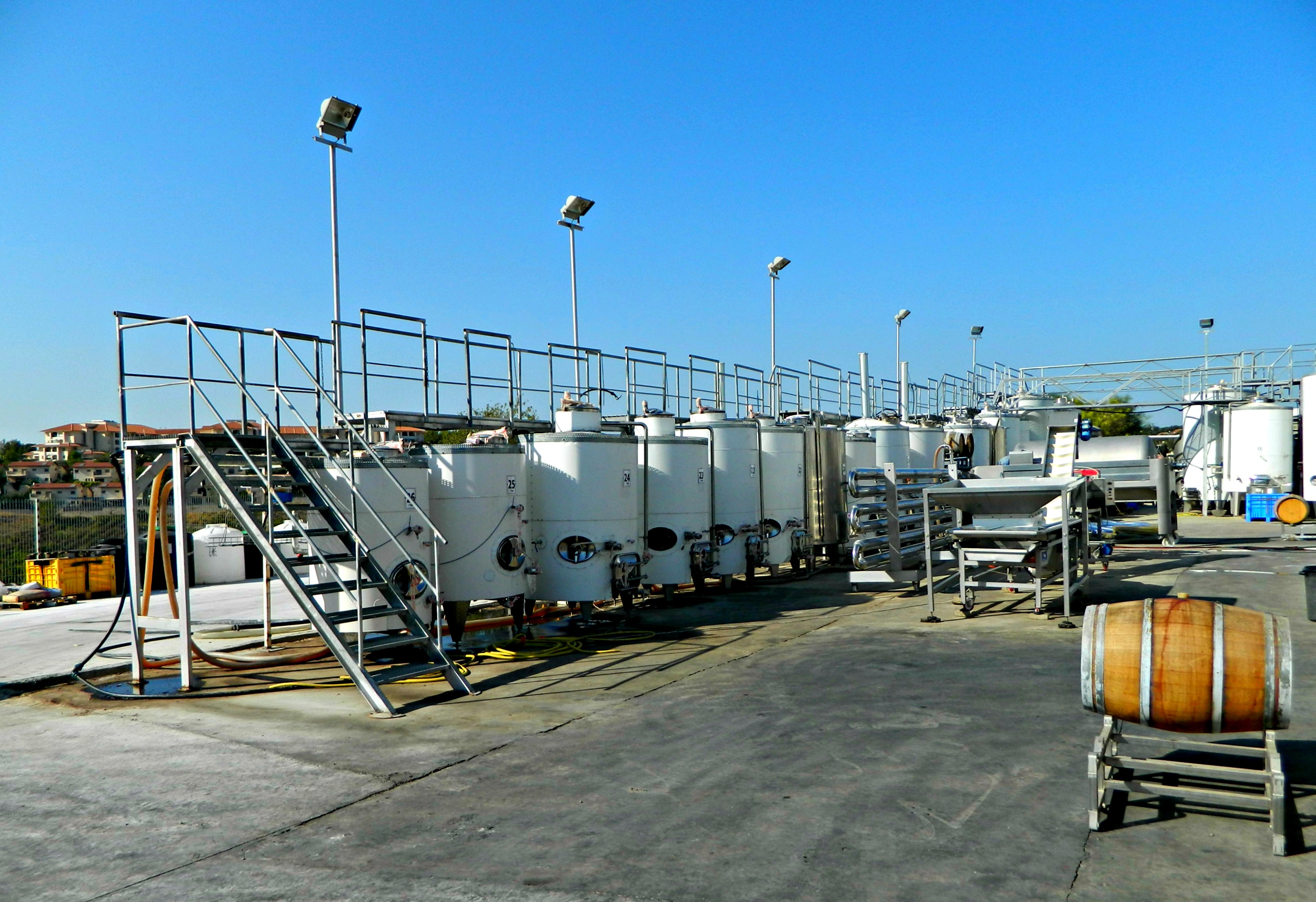
After snacking on some grapes we headed down to his workshop and his rooms. Using a clever, yet simple, concrete structure, the winery’s various stations and the new deck is all in one spot, overlooking the vineyards, a water reservoir and the distant Mount Carmel. Ro’i showed us his latest batches, one just starting the fermentation process, kept in large temperature-controlled metal casks. Using little stepladders, Les and I poked our heads into the casks to examine the crushed grapes.

Peering into the cold cask

Peering into the cold cask

Moving on to the next station, Ro’i showed us the barrel room where his vintages are aging and his freshly picked grapes were waiting. And then, to the storage room where the finished bottles are waiting. With that, we headed up to the deck and made ourselves comfortable. Ro’i brought up his four wines and several bottles of cold water – the first winery to offer such a luxury.

Enjoying some Rosé

Enjoying some Rosé

We started with the Muscat Canelli and then, after some cold water and some discussion, tried the Rosé. After more water and more discussion, Ro’i poured us some Shiraz Tempranillo. And then, finally, the Syrah. After trying the superb Syrah Reserve at Tulip Winery, I saw the potential in this younger vintage. There was that same focused feel on the middle of the tongue, just a little larger – the general consensus was that the Sadot Winery Syrah just needed a little more alone time to fully mature and pack that wonderful punch. All I know is that if I were to ever make a wine that good, I’d be singing my own praises.

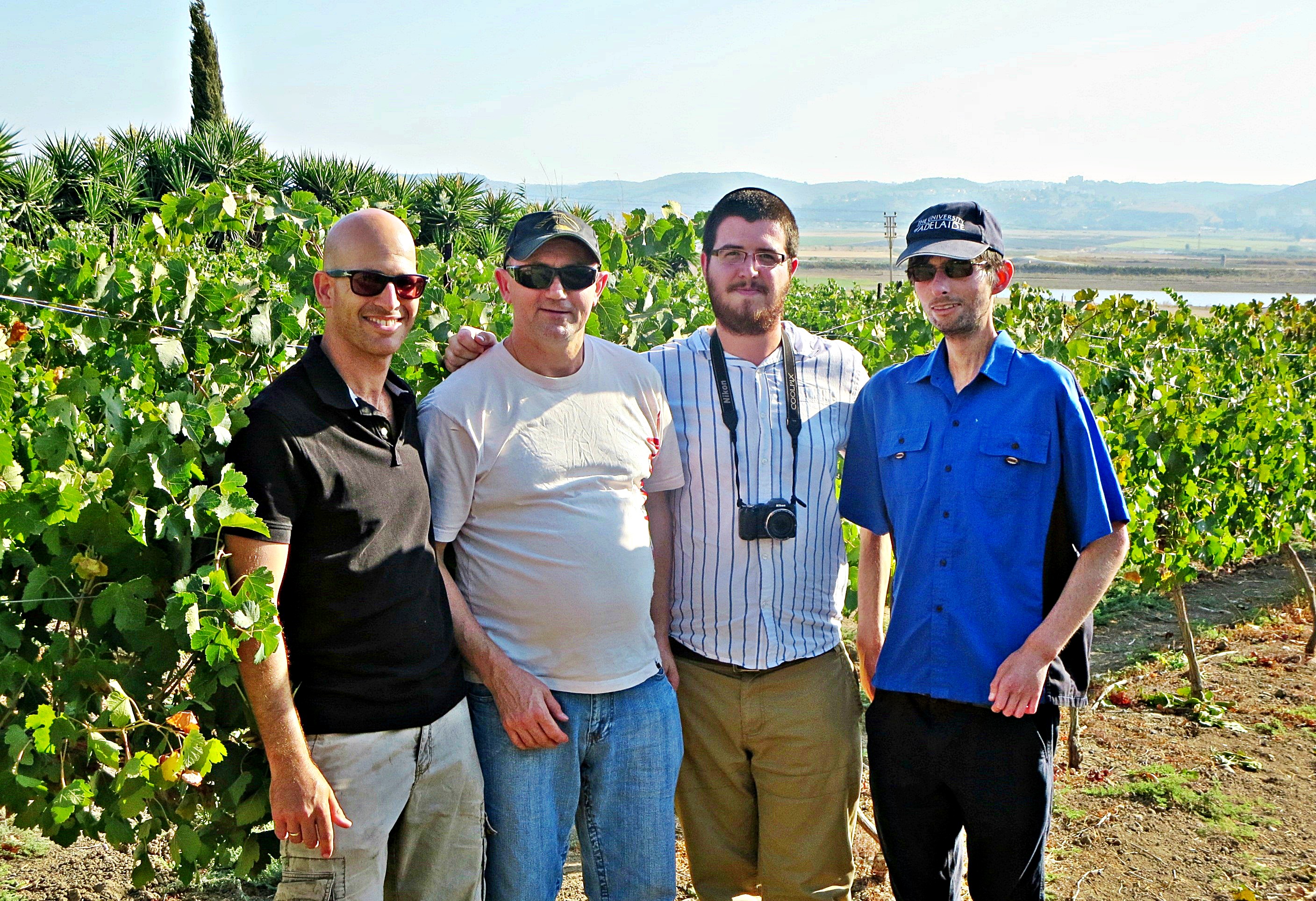
Ro'i and us (photo: Yakov Feder)

Ro’i and us (photo: Yakov Feder)

Finishing up our twentieth wine of the day, we thanked Ro’i, got back into the car and had a pleasant drive back to the hotel in Tel Aviv. As we drove we discussed the wineries and the wines. Each winery stood out on their own in some way or another, and their wines were a testament of hard work and fortune here in Israel’s magnificent wine country. This wine tour has really inspired me in the field of wines and I look forward to visit more and more wineries.

Tulip Winery

In Galilee, Israel on September 14, 2014 at 4:20 AM

With half our wine tour over and nine wines tasted, the four of us – Joel, Les, myself and our tour guide Yakov – headed over to the Tulip Winery to taste seven of their wines. We entered the visitor centre, sat down at the bar and settled in for some serious tasting. But before we tasted the wines, Lital (customer relations manager and our guide) explained to us the importance of the winery and the local village.

Tulip Winery

Tulip Winery

Kfar Tikva (Hope Village) is where this boutique winery calls home, and it is in this village where adults with special needs can become an active part of a community. A groundbreaking endeavour, this village breathed life and hope into those less fortunate and the winery was created with similar passion – producing a “wine that loves people”. Focusing on the good, Tulip Winery was founded in 2003 to bring together the love of people and the love of wine – providing opportunity for those with special needs to realise their potential.

Wine production

Wine production

With this unique factor, the winery takes on a different air – an extra meaning in the increasingly popular wine production. With numerous wine types, producing 220,000 bottles annually, Tulip Winery is the embodiment of hope and success and we were honoured to sample from their vintages. The first wine we tried was the White Tulip, a blend of Gewurztraminer and Sauvignon Blanc. Next, the White Franc and then we moved over to the reds.

Lital sharing some white wine

Lital sharing some white wine

The first of the reds was the Espero with its very appealing label. Following that was the Mostly Cabernet Franc, with a little bit of Merlot blended in. Despite that we visited after closing, Lital took the time to enjoy the wines with us and it was at this winery that I really voiced my thoughts on bouquet and taste. The strong aroma of blackberries, the hint of peach or pear – and what was that, lychee? I really had a marvelous time discussing the wines with Lital and Yaakov, with Joel and Les chiming in.

Talking with Lital

Talking with Lital

We then tasted the reserve wines, the Cabernet Sauvignon Reserve and the Syrah Reserve. I was quite impressed with the Syrah Reserve and according to the winery’s website it is considered to be one of the three best Syrahs in Israel. After being aged 18 months in French oak barrels, the flavour was rich and clean. I gave my taste note as “focused on the centre of the tongue” and there really was a difference between this and the previous reds which filled the mouth.

Tulip wines

Tulip wines

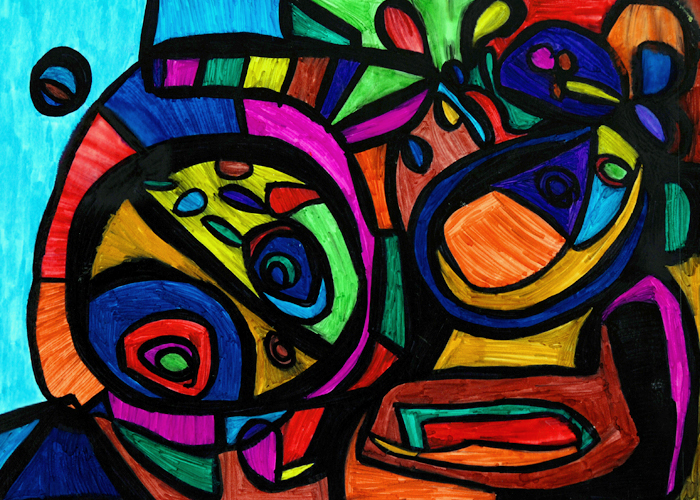
We finished off with their flagship wine, the Black Tulip. A blend of four grapes and aged 24 to 30 months in French oak barrels, this was a superb wine. Even the modern art label had a story: an art contest with the name “Don’t Label Me!” where the winner was used for the flagship wine’s label. The actual artwork is framed and hanging on the wall in the visitor centre.

Black Tulip artwork

Black Tulip artwork

After tasting seven wines, we talked some more, a bottle was purchased and we headed out, thanking our wonderful guide for the wonderful experience over and over. In my words, the tasting wasn’t: “Here, what do you think?”  It was: “Here, what do we think?”. All in all, my favourite winery of the wine tour. Next: Sadot Winery

Jezreel Valley Winery

In Galilee, Israel on September 10, 2014 at 4:45 AM

Continuing on with our wine tour, the four of us – Joel, Les, myself and our tour guide Yakov – drove over to the second stop, the Jezreel Valley Winery. Established in 2011, Jezreel Valley Winery is an Israeli start-up boutique winery, located in Kibbutz Hanaton. We entered the winery, met Ma’ayan our guide and started with a small tour of the wine-making process.

Ma'ayan explaining the machinery

Ma’ayan explaining the machinery (photo: Yakov Feder)

Just outside the visitor centre room is the labeling and packaging station and then beyond it outside is the initial grape receiving area. We were told that on the previous day one of the grape harvests came in and the winery was abuzz in production, separating and preparing the grapes for fermentation. Growing exponentially with each year, and with the help of some new machinery, the boutique winery is on its way into becoming a real powerhouse in the boutique wine industry.

Yehuda Nahar (co-founder) at the labeler

Yehuda Nahar (co-founder) at the labeler

Our next stop was the barrel room where French oak barrels filled with aging wine, stacked five-high, lined the sides. Recycling some used barrels from larger wineries for their reds – beneficial in keeping oak tastes down – we spotted some familiar names in the Jezreel Valley barrel room. Returning to the visitor centre room, we sat down to try some wines – first up, the Chardonnay. When the bottles came out, one thing that really impressed me was the design of the labels – a nice blend of rustic and modern, and a cute usage of the Hebrew punctuation on the English letters.

Jezreel Valley's barrel room

Jezreel Valley’s barrel room

Following up with the Rosé, my favourite from Jezreel Valley, this was a wonderfully chilled, beautifully coloured wine with strong fruit aromas and tastes. Our third and final taster, the Redblend, a blend of Carignan, Argaman and Syrah grapes. It was with this wine that I noticed something interesting. I didn’t detect this in the initial sniffing, but when just a few drops remained, a wood smell began to develop. It got stronger and stronger, which I had assumed was due to my constant swirling – “opening the wine”. When I asked Yehuda, the co-founder, he suggested it was the wine warming up, releasing the wood aroma. Whatever the answer is, this prompted me to “up my game” in reading the wines via their bouquet.

Ma'ayan pouring the Rose

Ma’ayan pouring the Rose

Thanking Ma’ayan and Yehuda, we head out for our next stop: Tulip Winery