Israel's Good Name

Archive for the ‘Israel’ Category

University Trip: Northern Golan

In Golan, Israel on June 24, 2018 at 7:26 AM

A week after my two-day trip to the Golan, Bet Shean Valley and Agamon Hefer I took yet another university trip to the Golan. With so many Golan posts coming out in relative succession, it can be slightly confusing as to which is which. This post is the counterpart to the Southern Golan post, a further look at the geology and topography of the Golan as a region. Our guide was Mr Moty Rubinstein, an octogenarian lecturer in my department, and together we set out in the morning from the Bar Ilan University campus.
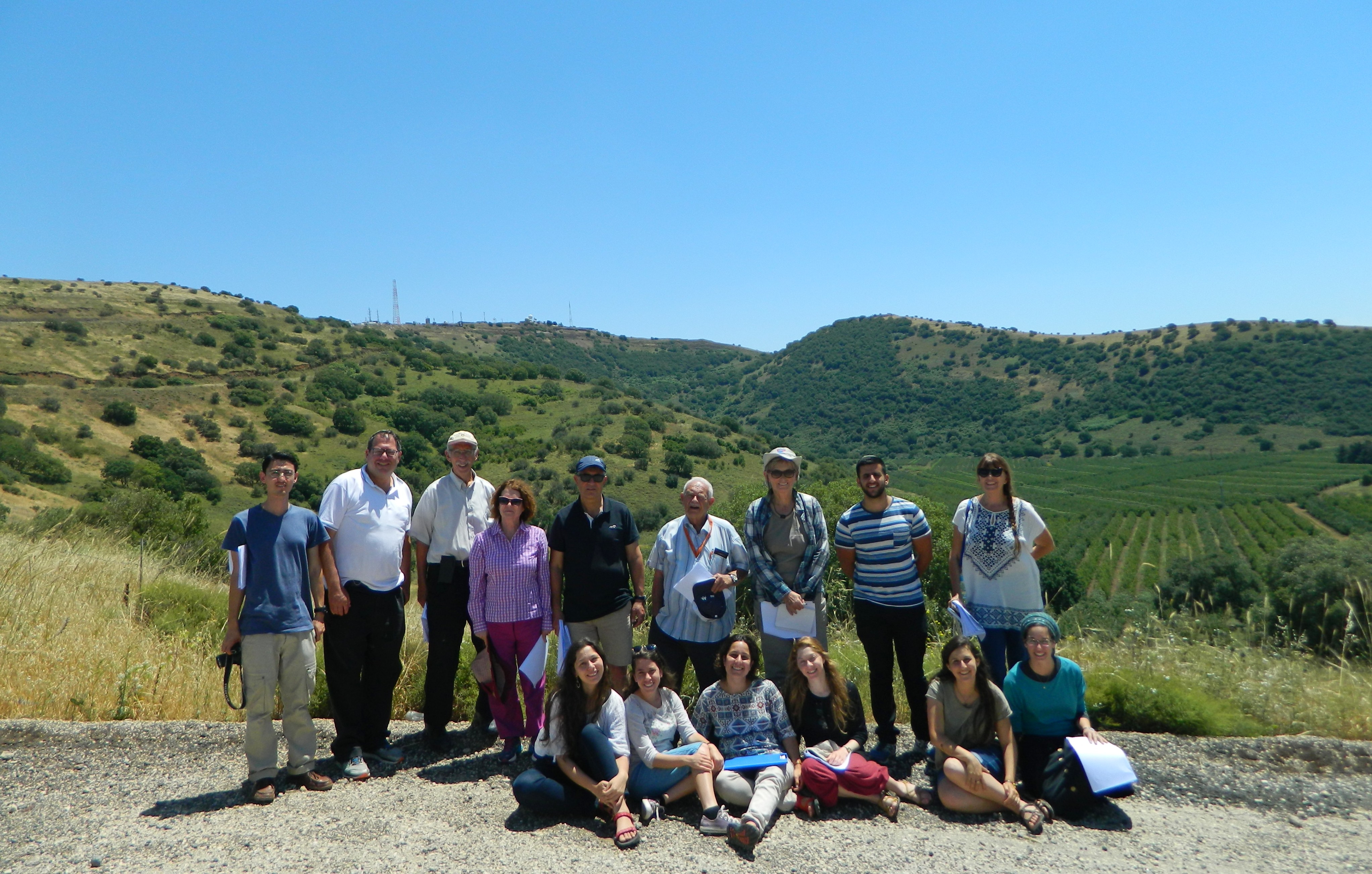
Group photo

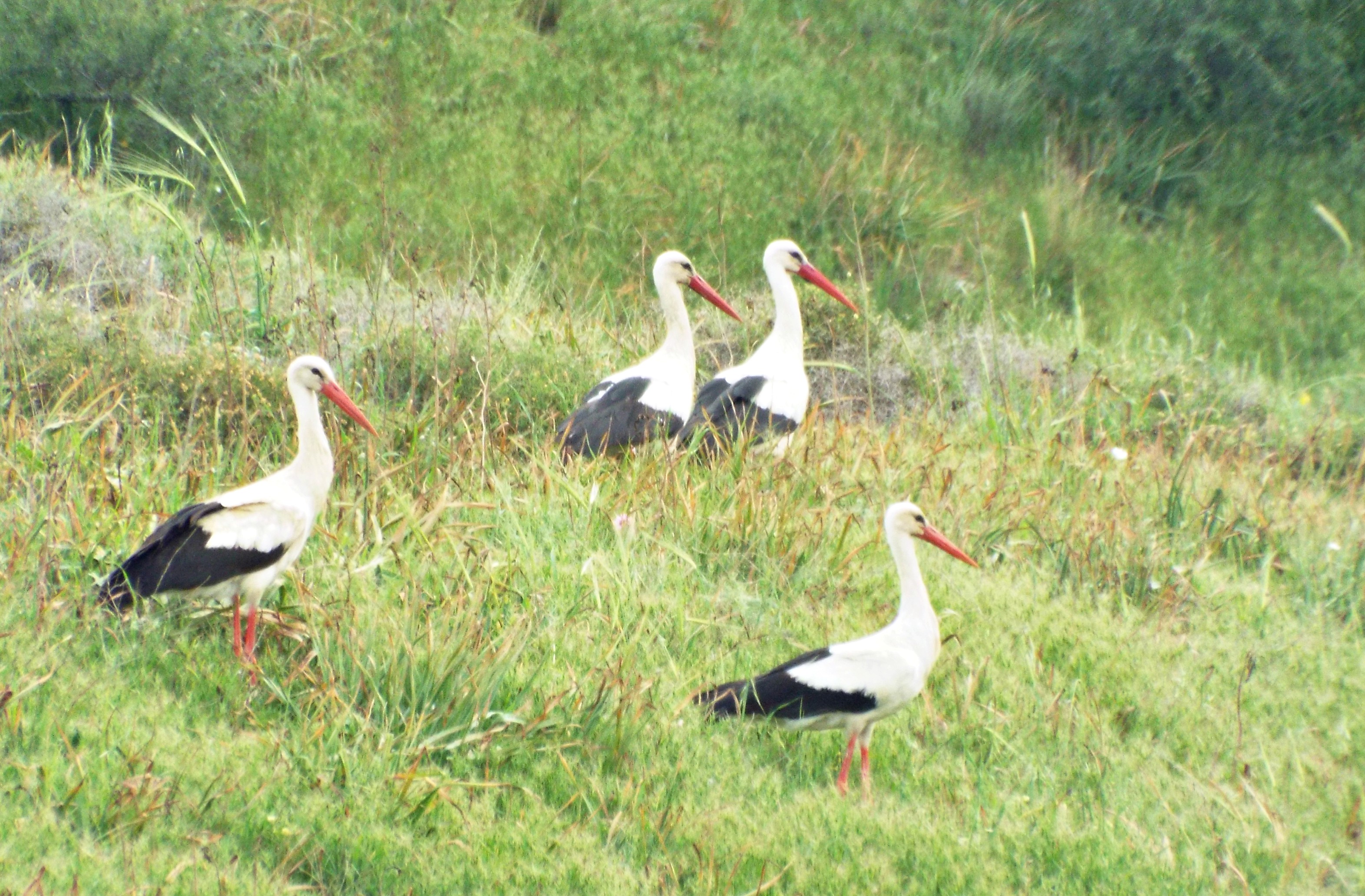
We took a brief stop along Road 6, where members of our party sampled from the fruits of a ficus tree, inspiring an Indian tourist to follow suit much to our amusement. As we progressed further north, we began to see interesting birds from the tour bus windows. The frequently-mentioned Adam was present, so I had who to bird-talk with as we pointed out white storks and kestrels. Climbing into the Golan, via Road 91 towards the old customs house, we noticed several buzzards sitting on the boulders that dot the grassy land.
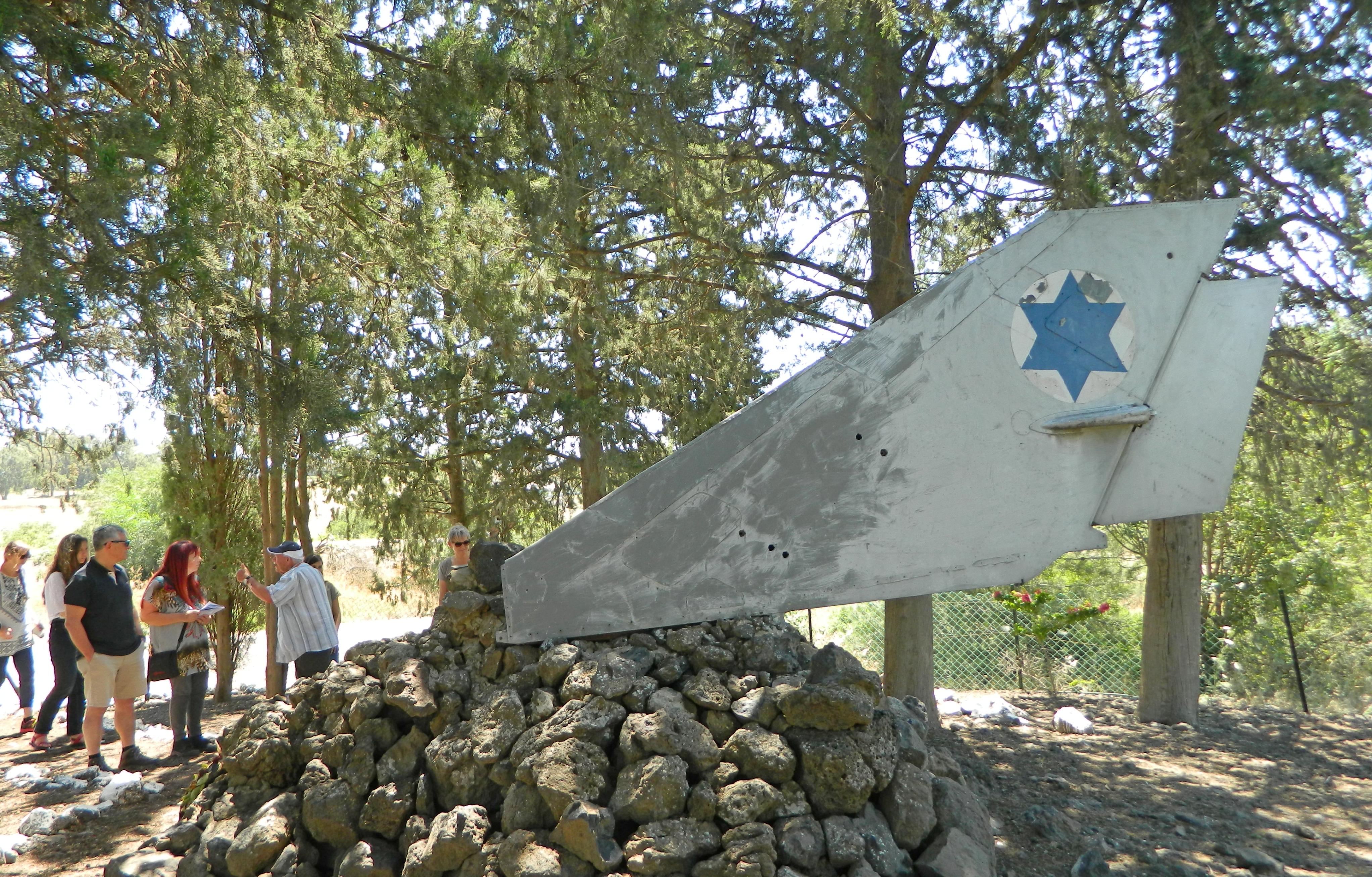
Otniel Shamir Memorial

Pulling into the tourist area of Katzrin, the so-called capital of the Golan, we learned about the basalt formations in nearby Nachal Meshushim, where hexagonal pillars of rock line a nicely sized pool – a popular destination for hikers. From there we drove a few minutes away to a memorial site outside of Moshav Kidmat Tzvi, dedicated to the memory of Captain Otniel Shamir, a fighter pilot who was shot down by the Syrians during the Six Day War.
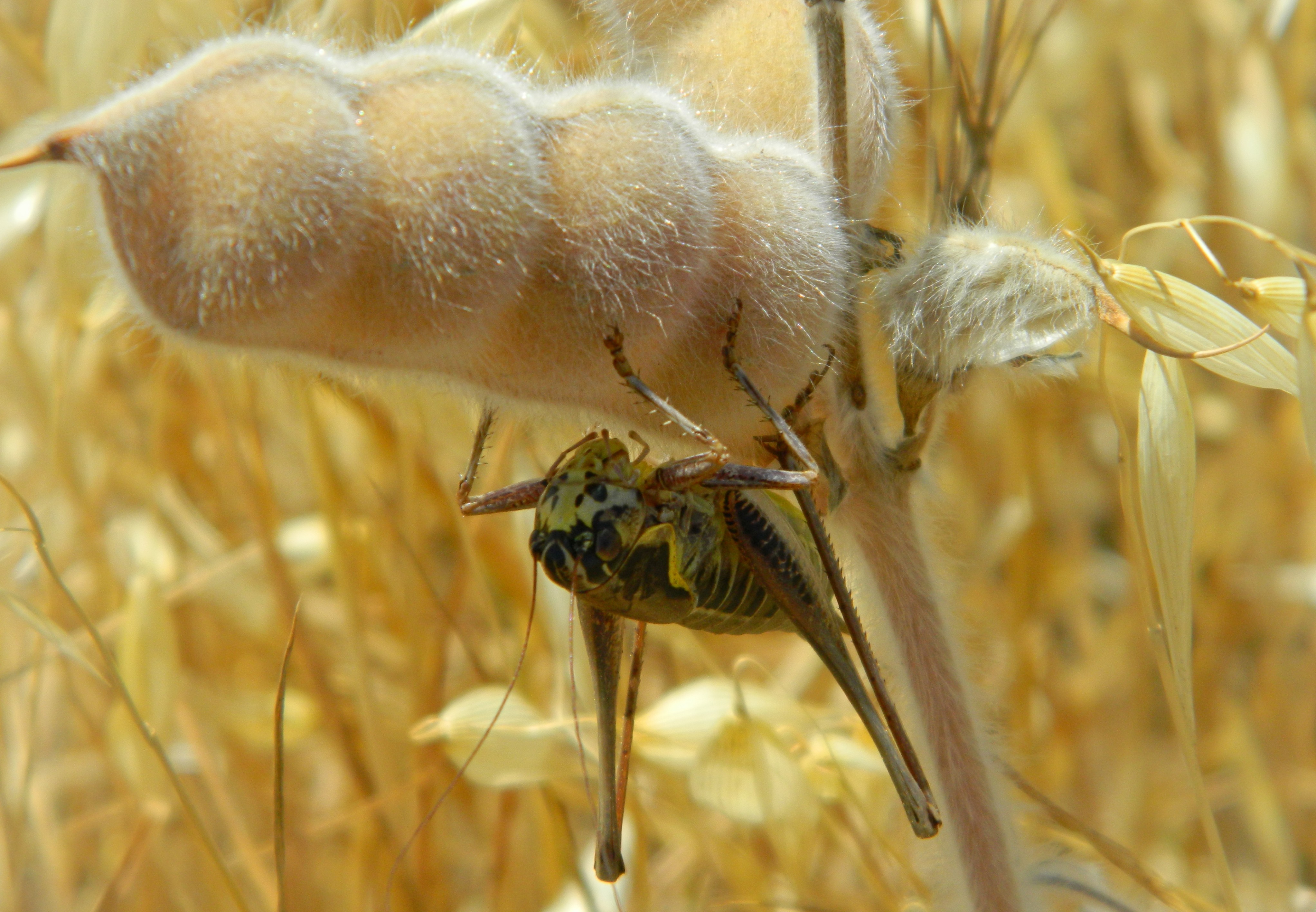
Grasshopper on a lupine pod

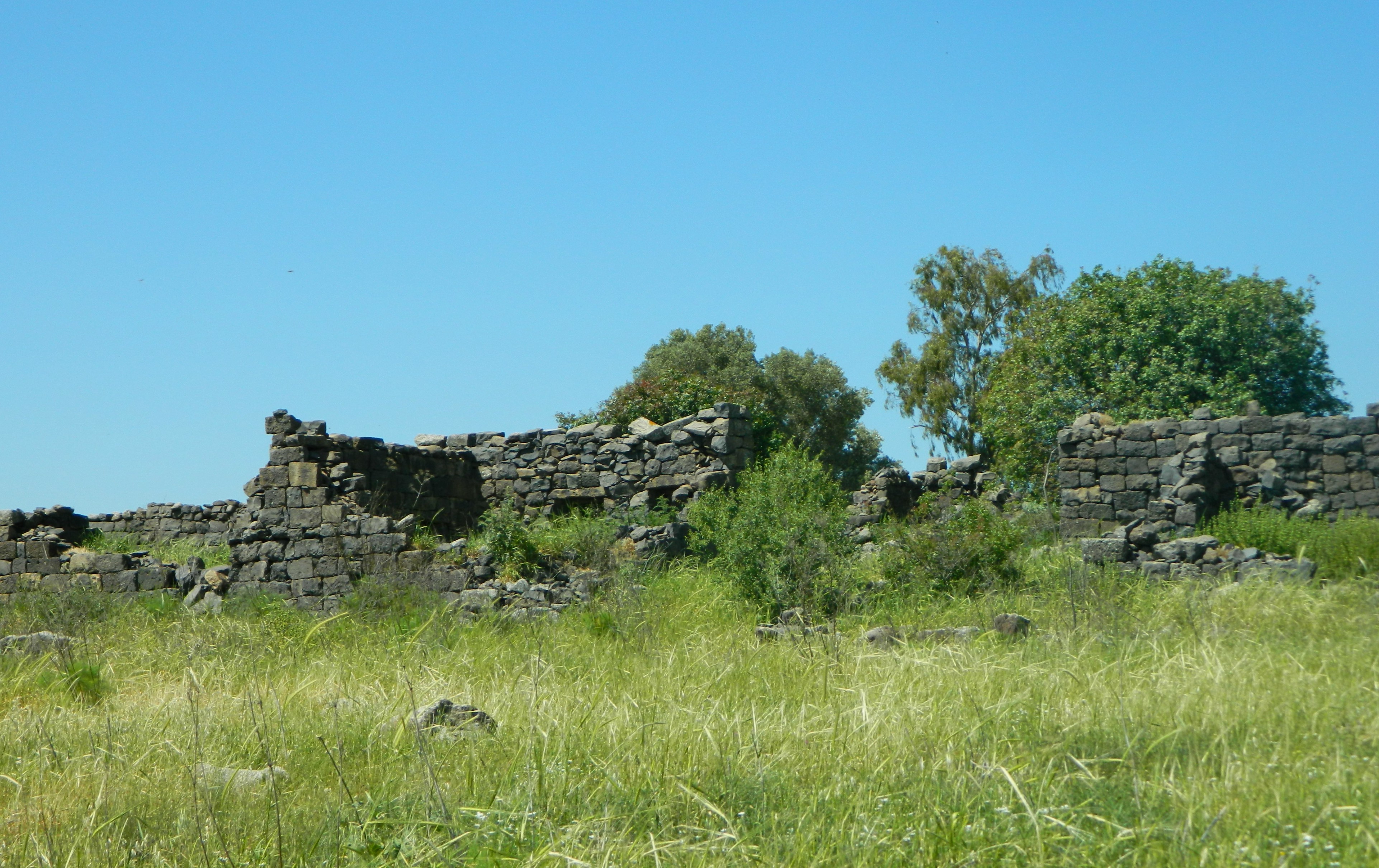
After spending some time at the memorial, and learning more about the story behind it, we moved on, passing the ruins of Nafakh, and pulled over on the side of the road near the access road to Quneitra, a border city in the UNDOF Zone between Israel and Syria. These interesting roads are familiar to me from when I was a Safaron driver in the army; those were very interesting times. We disembarked at the side of the golden grassland and examined our topographical surroundings.
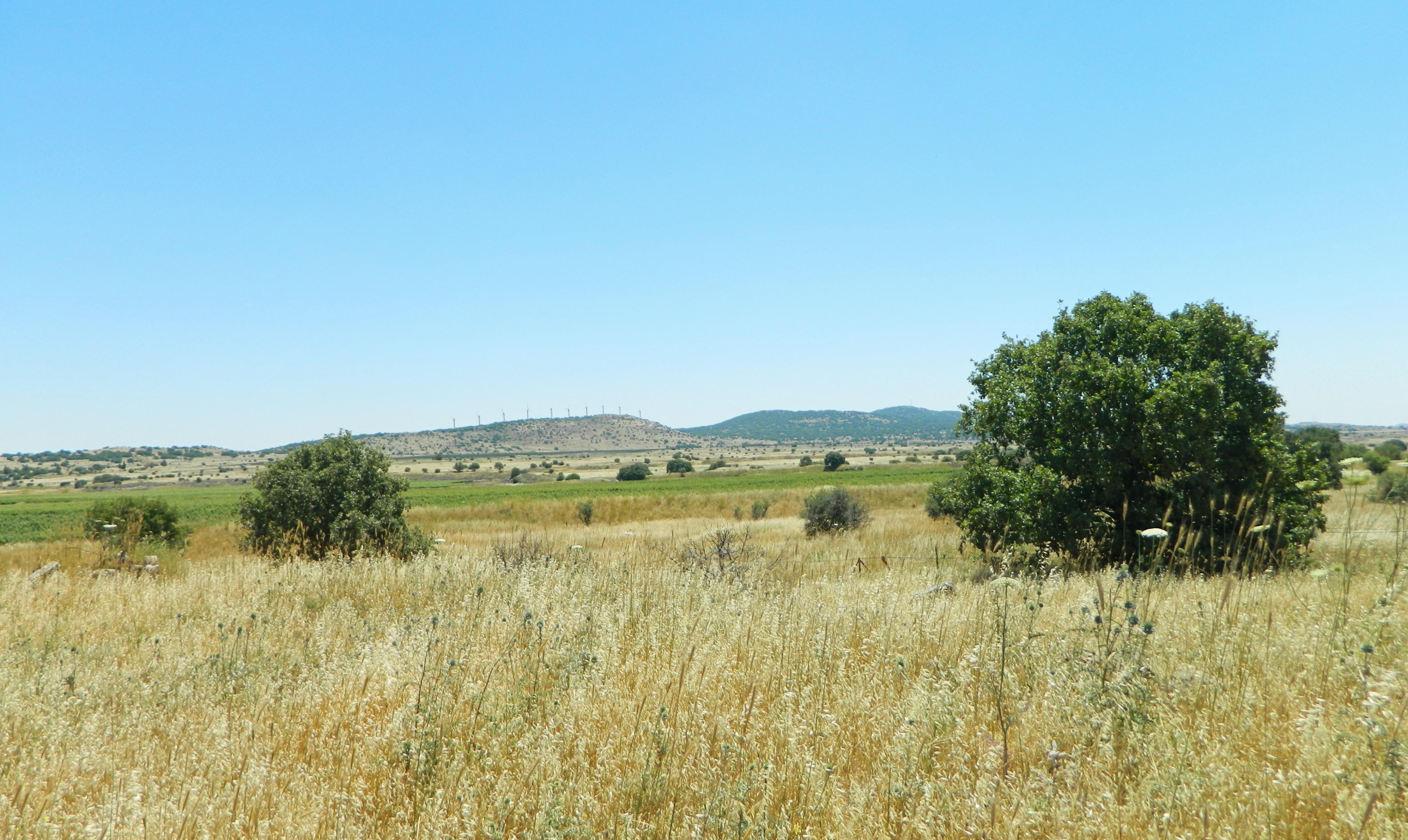
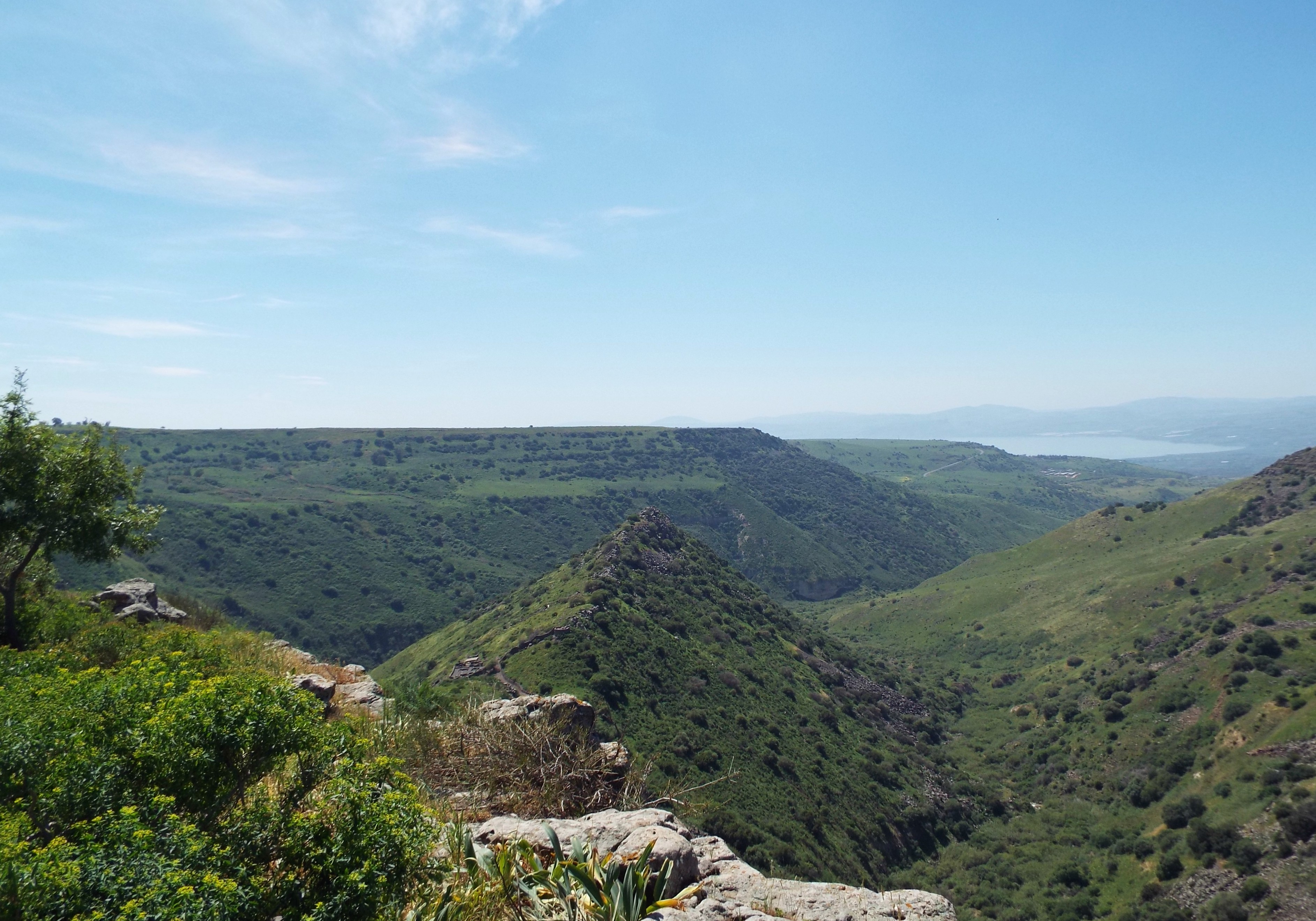
Golan landscape

From there we drove down Road 98 for a few minutes just to look at the giant wind turbines atop Mount Bnei Rasan, the object of contention between green energy activists and those focusing on the countless avian deaths caused by the spinning blades. Our guide pointed out the small hills dotting the relatively flat landscape, with several large ones making quite the change in topography.
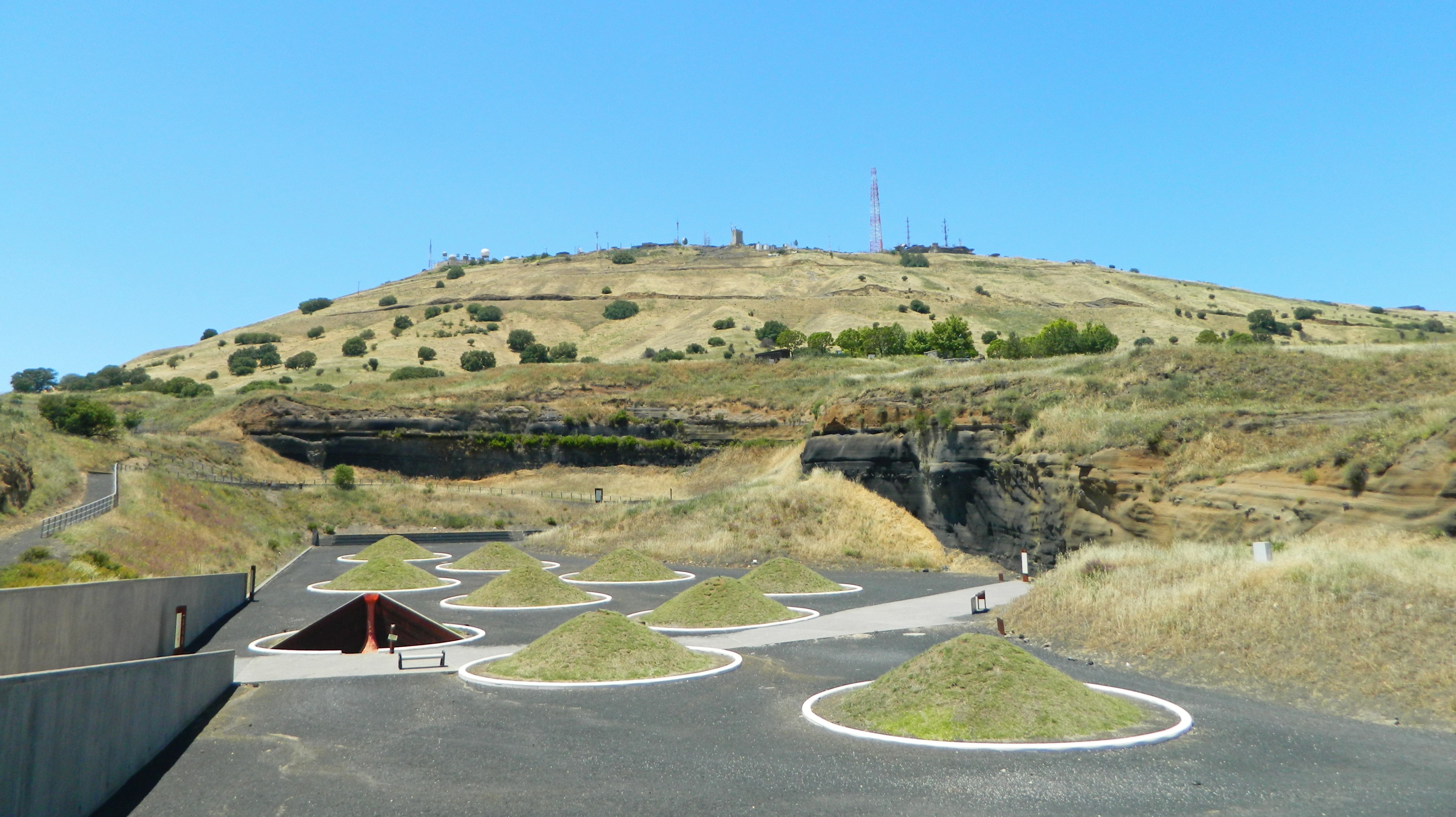
Golan Volcanic Park

Turning back around, we headed up north a wee bit and stopped off at the Golan Volcanic Park at the foot of Mount Avital. There, we immediately saw some European rollers, their bright blue and orange plumage making them unmistakeable as they flew back and forth in front of us. Within minutes we realised that they are nesting in tunnels carved out of the porous volcanic rock walls. As we toured the site, examining the different types of volcanic rock and learning more about volcanic activity and its role in shaping the land around us, I got slightly distracted with the birds. First, some kestrels lured me away from my group and then a very vocal common whitethroat, a type of warbler, entranced me with his melodious song as he flew from bush to bush. Then, satisfied with my whitethroat experience, I noticed a pair of woodchat shrikes perched on a nearby fence, chasing away anything that approached, including a surprised Eurasian jay which made quite a hasty escape.
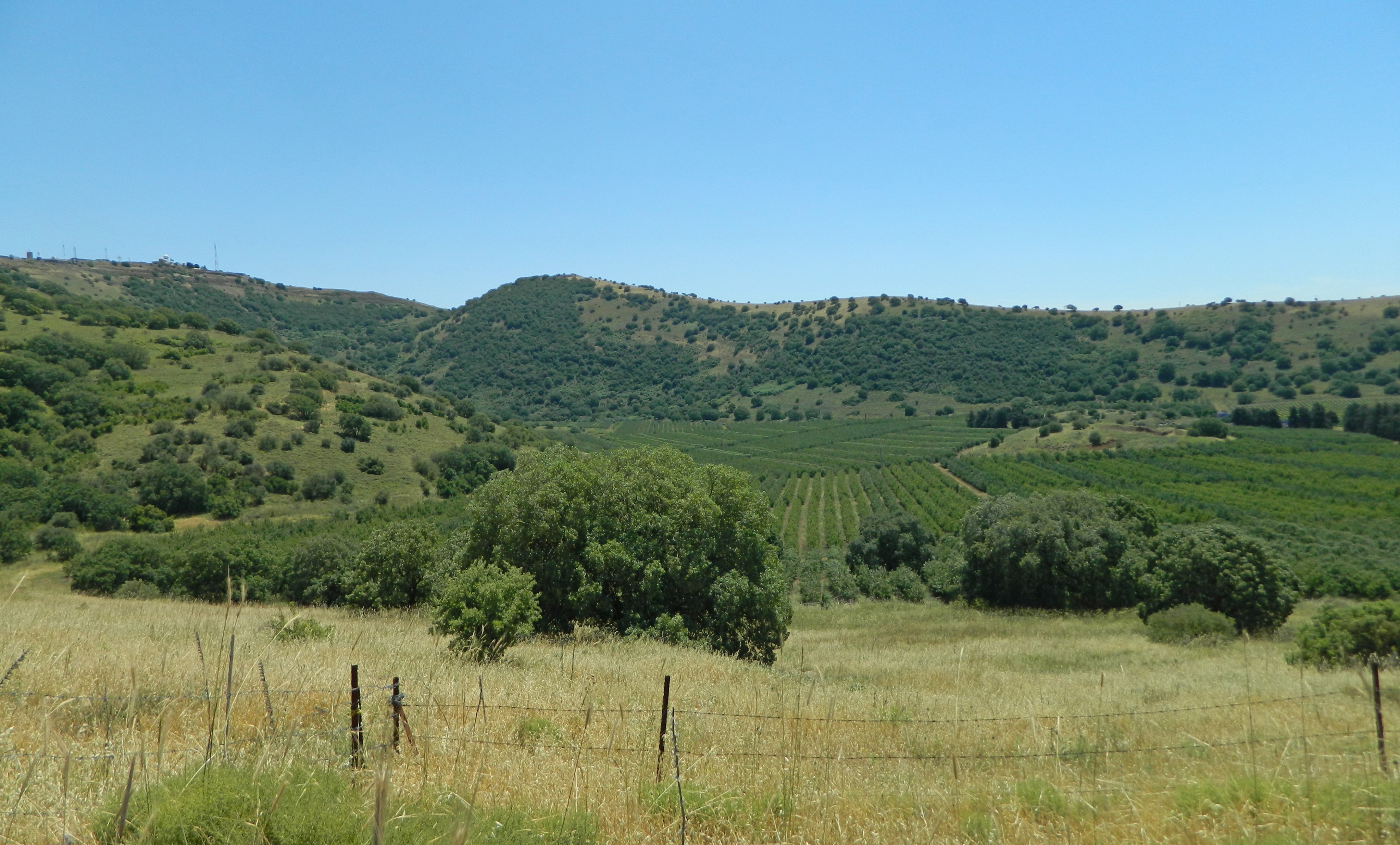
Mount Avital

When we finished with the park we drove up to Mount Avital and parked at a spot where we could get out and see the volcanic crater caused when the extinct volcano erupted ages ago. The green slopes were dotted with small trees and shrubs and the basin was occupied by a vineyard, whose story was related to us by our knowledgeable guide. The distinct call of the corn bunting filled our ears and another roller passed by overhead, nearly allowing me to get a decent photo.
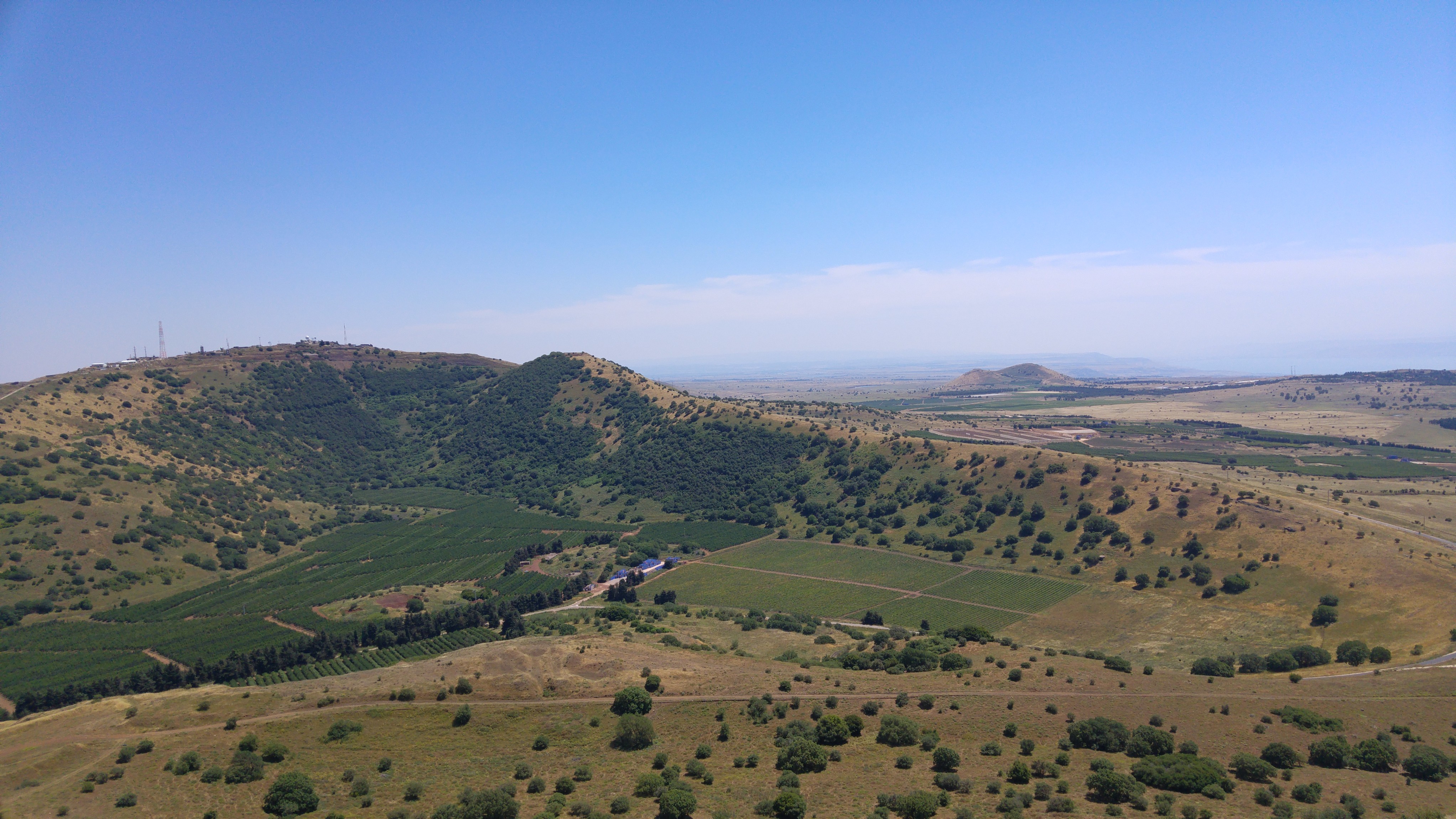
View of Mount Avital from Mount Bental

Getting back into the bus we drove over to the neighbouring mountain to the north, Mount Bental. Famous for its bunkers, observation points and uniquely-named cafe, the mountain draws a large amount of tourists, so much so that there are actually signs on the peak written in Chinese. We stood at a nice vantage point next to the parking lot, looking out at Mount Avital and a destroyed rusty tank down below. After briefly looking out over the western side we made out way to the summit, 1165 metres above sea level. I bypassed the famous Coffee Anan, named after UN Secretary General Kofi Annan, and made my way to the observation point where tourists were gathered looking out over Syria.
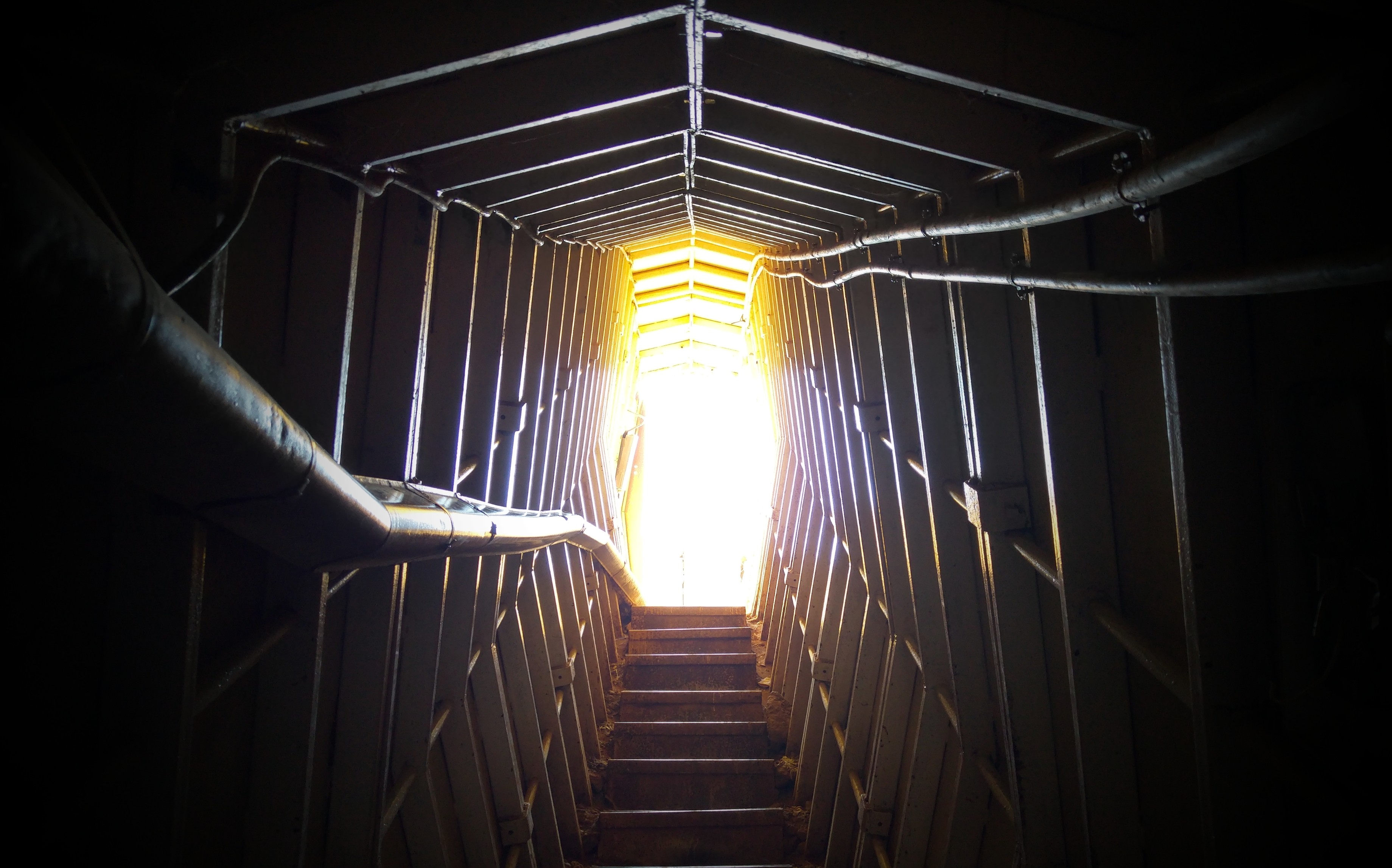
Within the military bunkers

Having seen this sight a number of times over the past few years, I moved onto into the underground bunker complex, hoping in the offchance that there was an interesting bat or two not scared off by the visitors. All I found was a fly, but I took its picture as if it was the coolest thing in the world. Reemerging into daylight I found myself looking at two blue-capped UN officers. Recalling my times in the army, I decided it’d be fun to strike up a conversation.
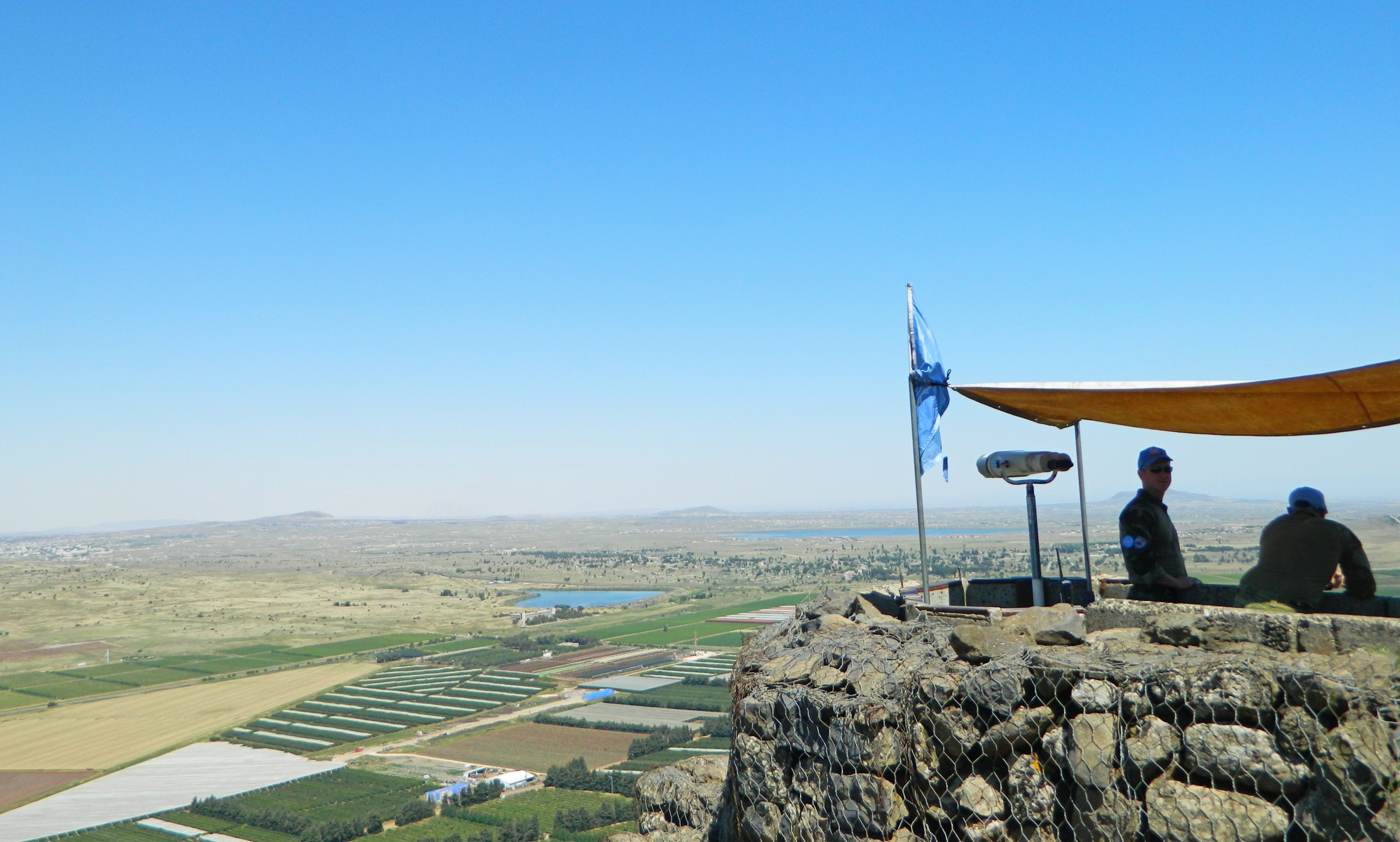
UN observation post

The two officers, one Irish and one Australian, told me all about their service and their origins, enriching my knowledge. Adam joined me, grilled the officers with some of his own questions, and then we moved on. Our group was heading back down the mountain to the next site: the Big Joba.
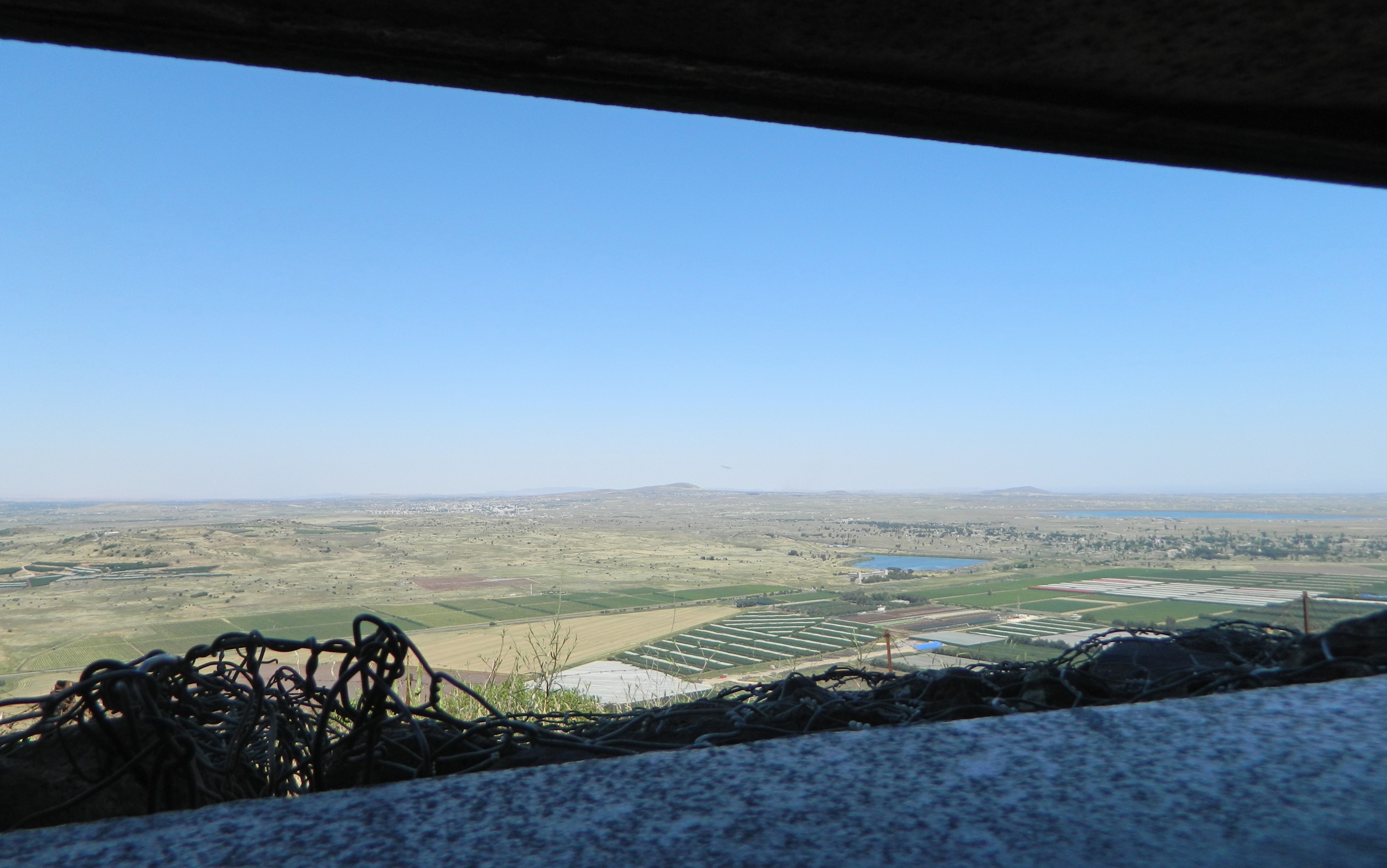
View of Syria

Located in the Odom Forest just several kilometres north of Mount Bental, the Big Joba is the largest of a series of local geological features in the form of a concave dome. Hard to capture photographically, unless photographed aerially, the pit is 250 metres across and sixty metres deep. We walked a short paved trail through the trees until we reached the joba.
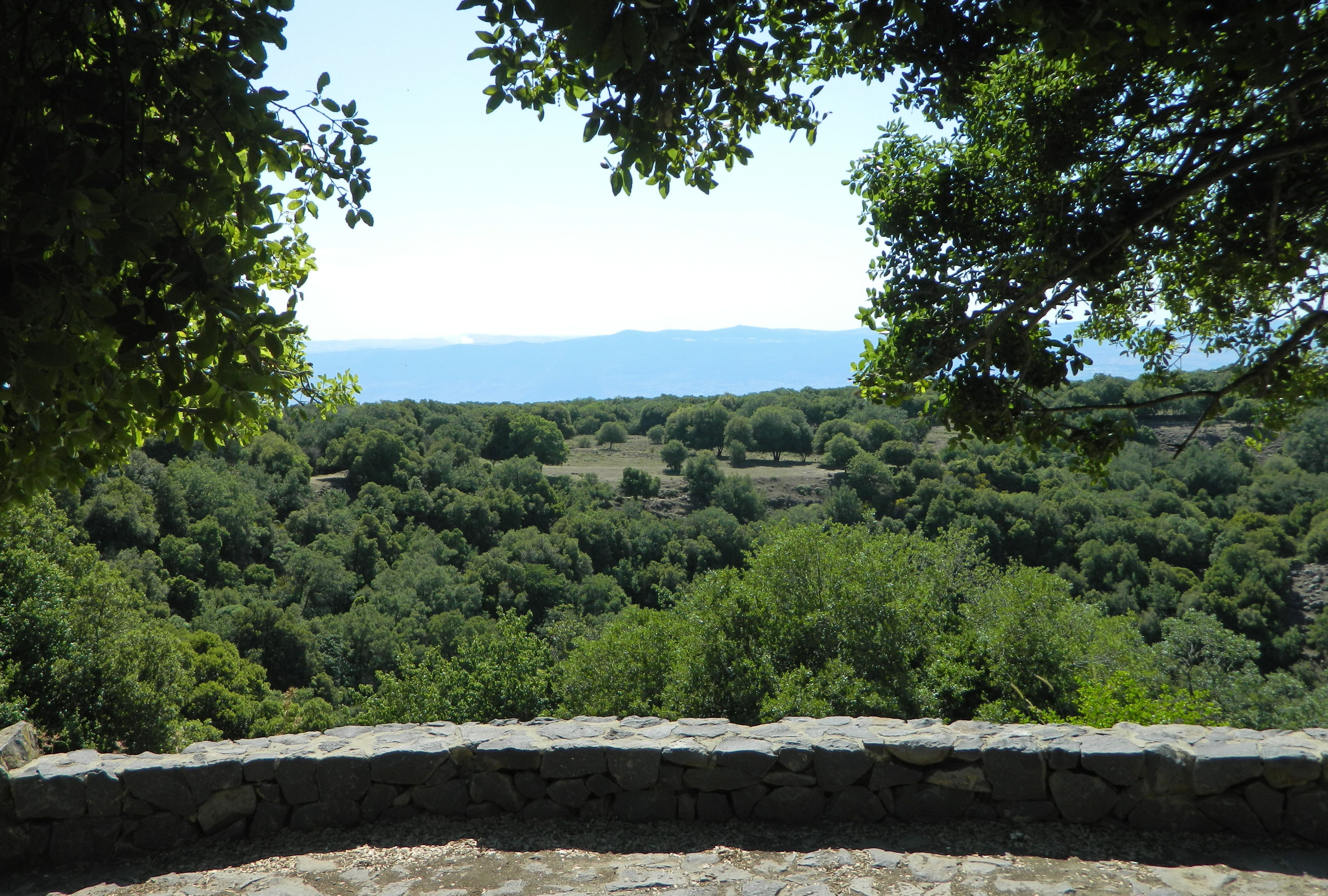
Looking at the Big Joba

Again, I had hoped to find some wildlife, but birding in the woods in quite challenging with all the trees and leaves, so I was prepared to give up after seeing just one interesting lizard. But then, as we were sitting at the edge of the joba, Adam motioned to me to look at the treeline above the crater. Sure enough, a steppe buzzard was wheeling his way upwards into the thermals and we were fortunate to catch him before he disappeared.
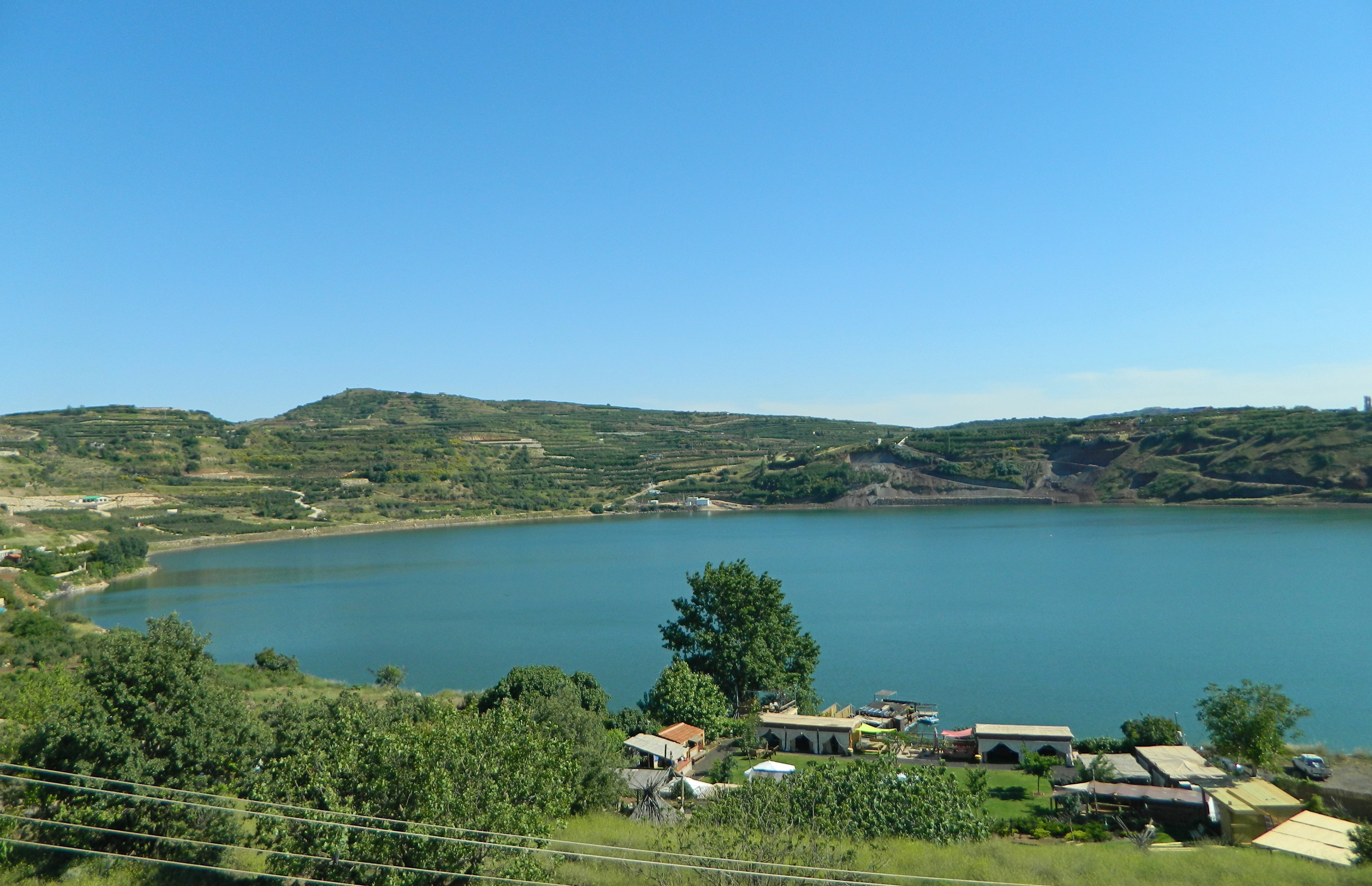
Birkat Ram

Getting back into our tour bus, we drove further north until we arrived at the Druze village of Mas’ade (not to be confused with the ruins of Masada) and Birkat Ram, a crater lake fed by an underwater spring and rainwater. We stood in a parking lot overlooking the nice blue lake and then something special caught my eye. Among the barn swallows perched on the nearby power lines were a handful of house martins – my first time seeing them!
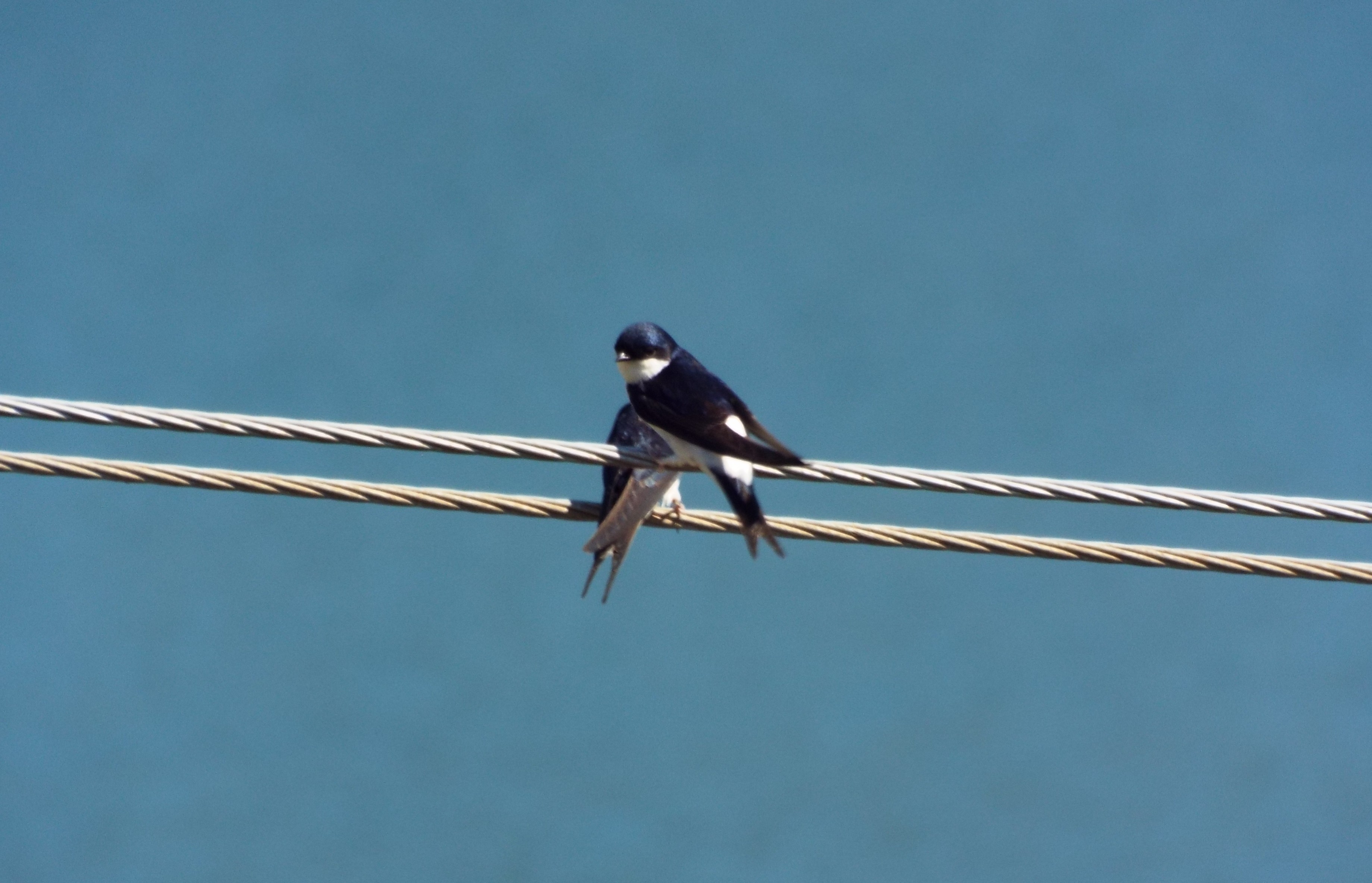
House martin (photo Adam Ota)

Ending the trip on that high, at the foot of Mount Hermon, we got back into our bus for the long drive back to the university tired but happy and looking forward to the next adventurous trip.
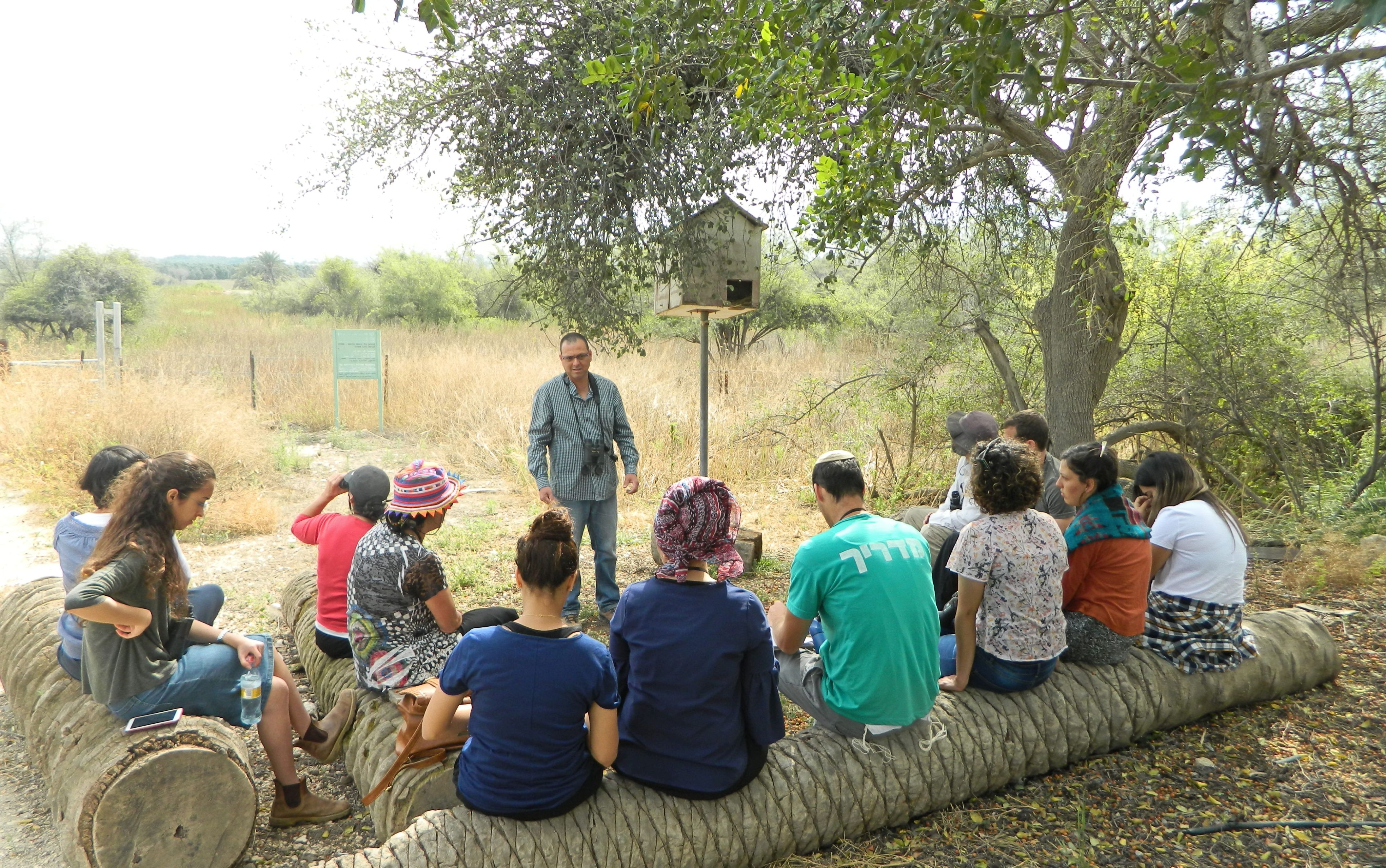
University Trip: Bet Shean Valley & Agamon Hefer

In Coastal Plain, Galilee, Israel on June 17, 2018 at 5:23 AM

Continuing on from the previous post, about the Golan and Bet Shean Valley, we woke up early in the morning in Kfar Rupin. Our adventures began after breakfast when we headed over to the fields to check the rodents traps. Our guide, Dr Moshe Natan, had checked them at dawn, and had released one of the two trapped animals – a hedgehog. The other trapped animal was none other than a common mouse, which leaped to his freedom as soon as the trap was opened.

Learning about nests

Packing up, we boarded our tour bus to be driven over to the next site of the day: Tel Saharon. Located just a few minutes outside of Kfar Rupin, the area we were headed to was right beside the old bird ringing station. Looking around, we were able to make out several common species, as well as three black kites swirling over the nearby fields. We sat down beside a nesting box and learned about the pigeon chicks hidden inside.

A baby pigeon

The sight of a booted eagle overhead excited us, especially due to the fact that it might be the same one we saw at the very beginning of the previous day. Flying alongside it was a steppe buzzard, a rather common bird of prey in the dry season. Closer to us, I noticed a small bird dancing around a nest, singing loudly. With the aid of my binoculars and camera I was able to identify it at a male Dead Sea sparrow – my very first time seeing this species.

Dead Sea sparrow preparing its nest

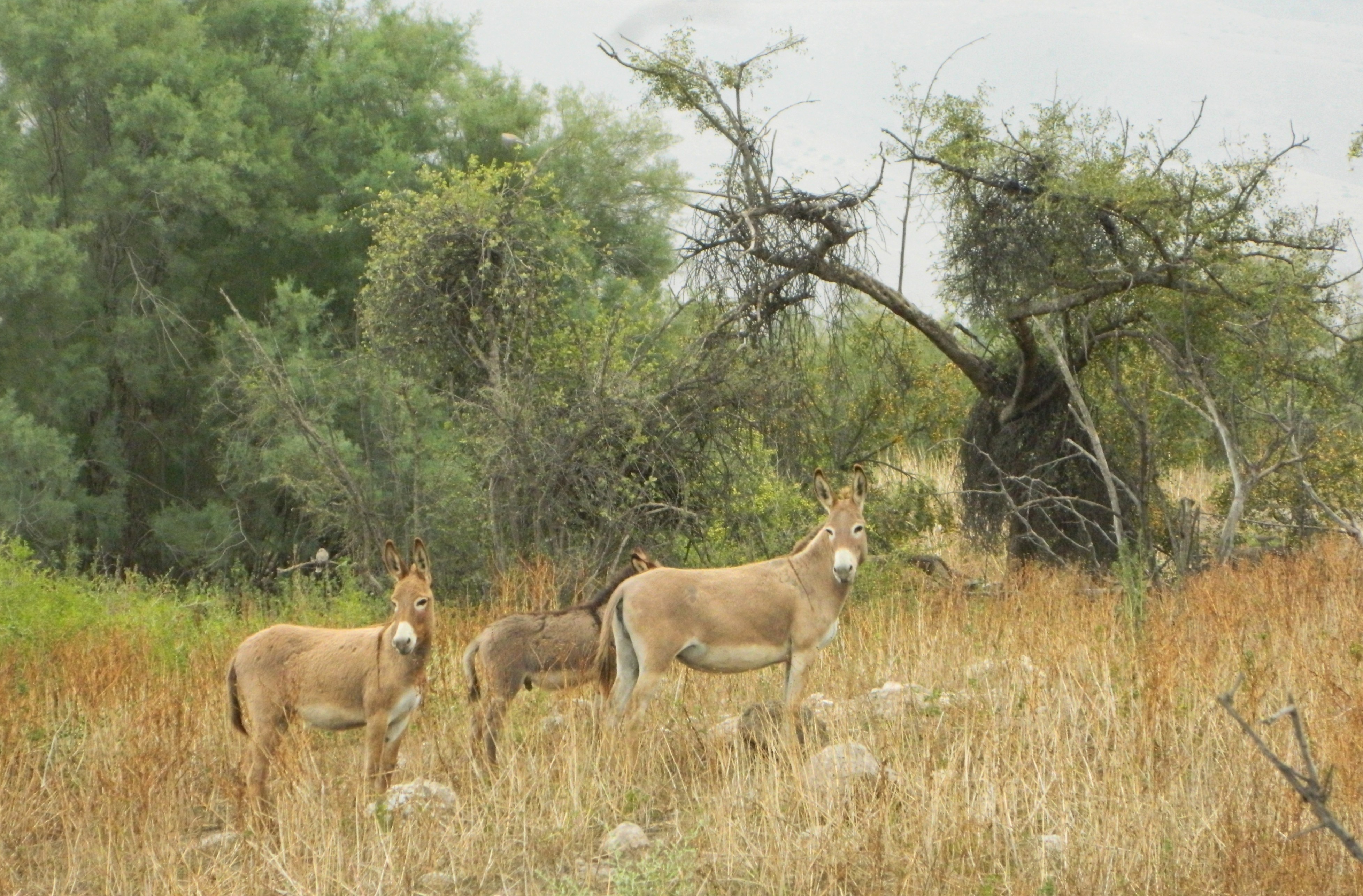
As fascinating as we found the energetic little sparrow, we had more to explore, and set off to do just that. Climbing the gentle elevation, we found a herd of donkeys, a single golden jackal that slinked off as we approached.

Donkeys on Tel Saharon

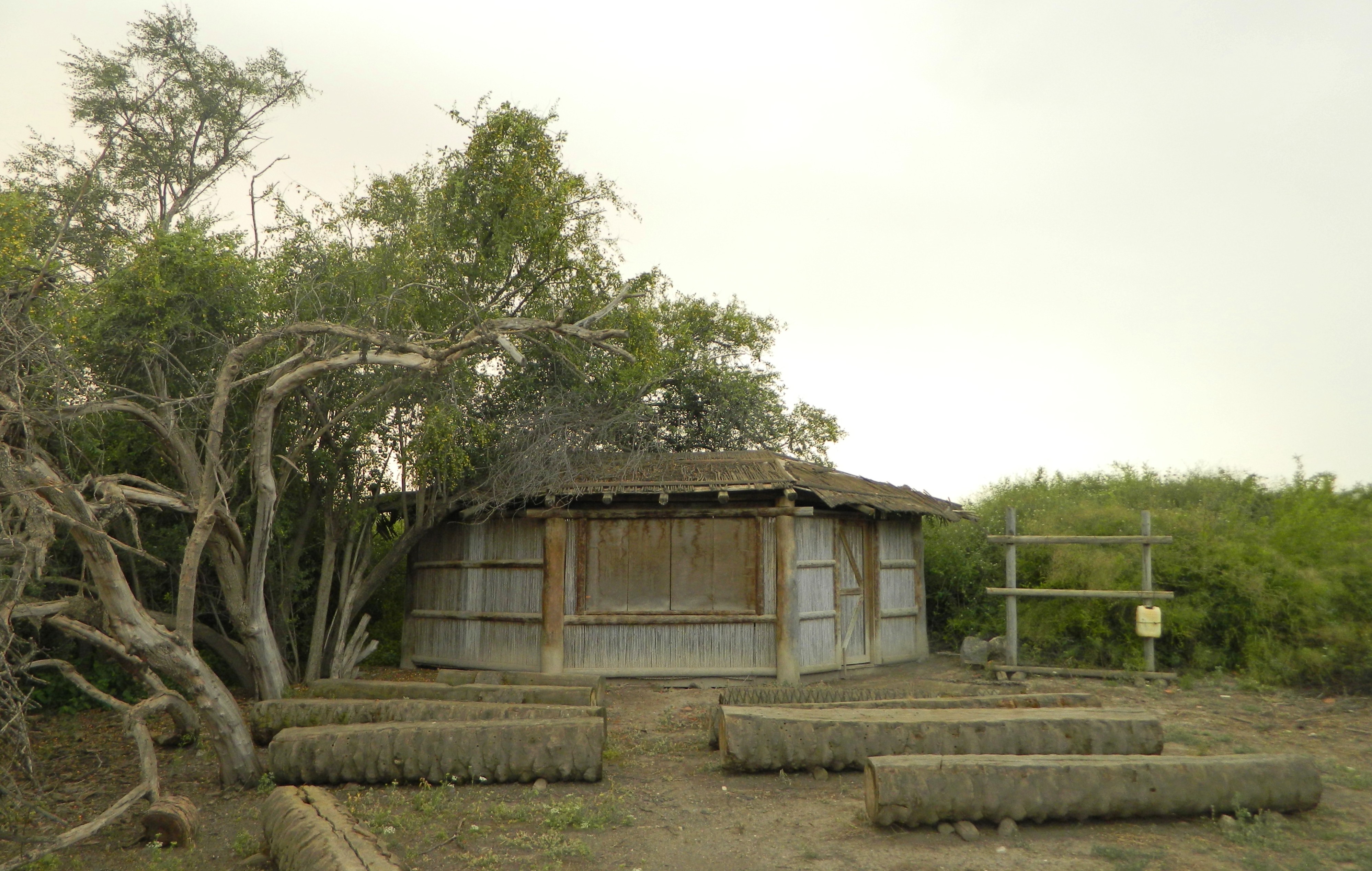
There wasn’t much to see on the tel, but we did venture down to the spring which provided a small amount of water that gathered in a nearby pool. A quick look at the old ringing station, which looks like it could be revitalised as a cool bar, and we were off to the next site.

The old bird ringing station

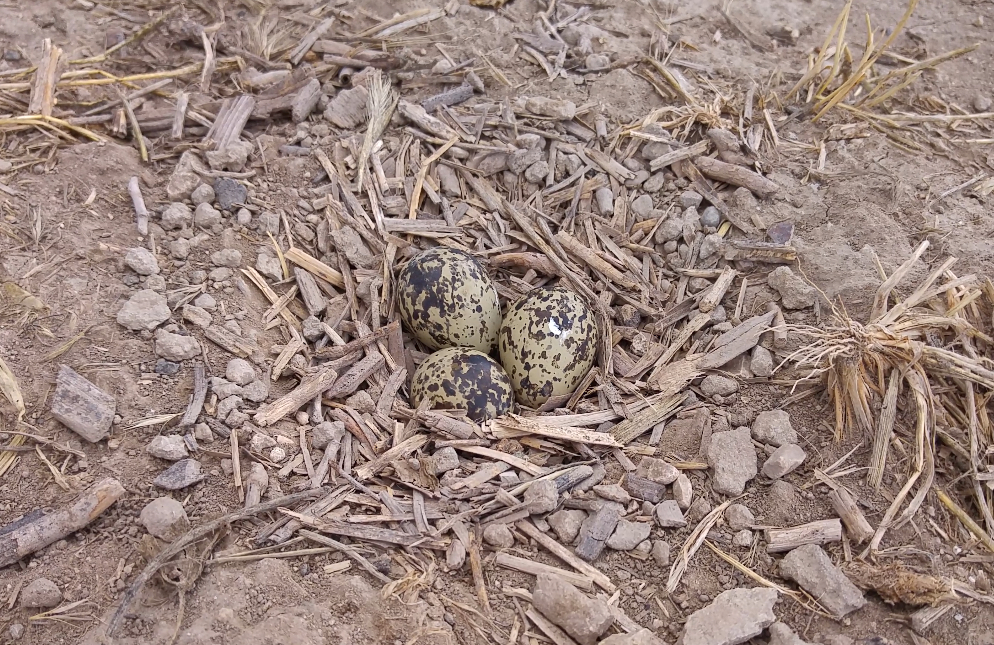
Traveling only few kilometres away, our guide stopped the bus at a particular spot beside large alfalfa fields. There, at the edge of the field, was a pair of spur-winged lapwings and a hidden nest. Laying a small clutch of eggs in a scraped out depression on the bare ground, lapwing nests are incredibly hard to locate. Even the eggs themselves are spotted in a way that provides excellent camouflage. But, all this was no match for the experienced eyes of our guide; we stood around and studied the nest, the parents watching from a safe distance.

Spur-winged lapwing eggs

Before we left the nest with its three mottled eggs we spotted a mountain gazelle quite a distance away in the alfalfa field. The tour bus then took us to our next destination, located quite a ways away: Nachal Alexander. We were heading over to see the famous African softshell turtles which have made the polluted stream famous as well. Disembarking at the stream, we walked over and gazed at the large turtles with their funny faces.

African softshell turtle

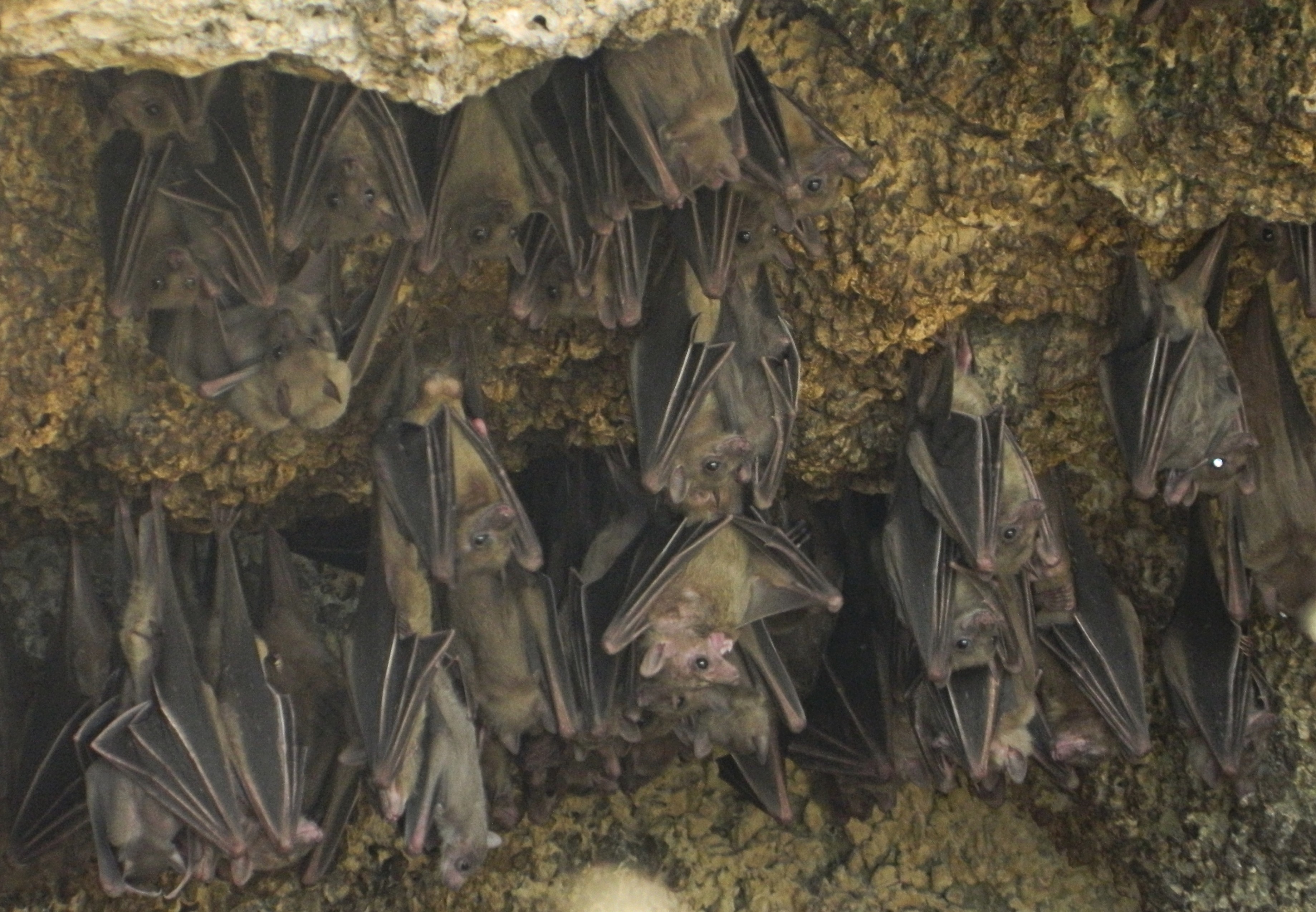
Some time later we paid a short visit to the nearby sandy breeding grounds of these turtles, fenced off to ensure the safety of the next generations. Another short drive and we were examining a tiny cave across the road from Bitan Aharon, a tiny moshav in the Hefer Valley. A colony of Egyptian fruit bats had made this cave their home; one of the bats looking particularly cute with its baby clinging to its stomach fur.

Egyptian fruit bats in a cave

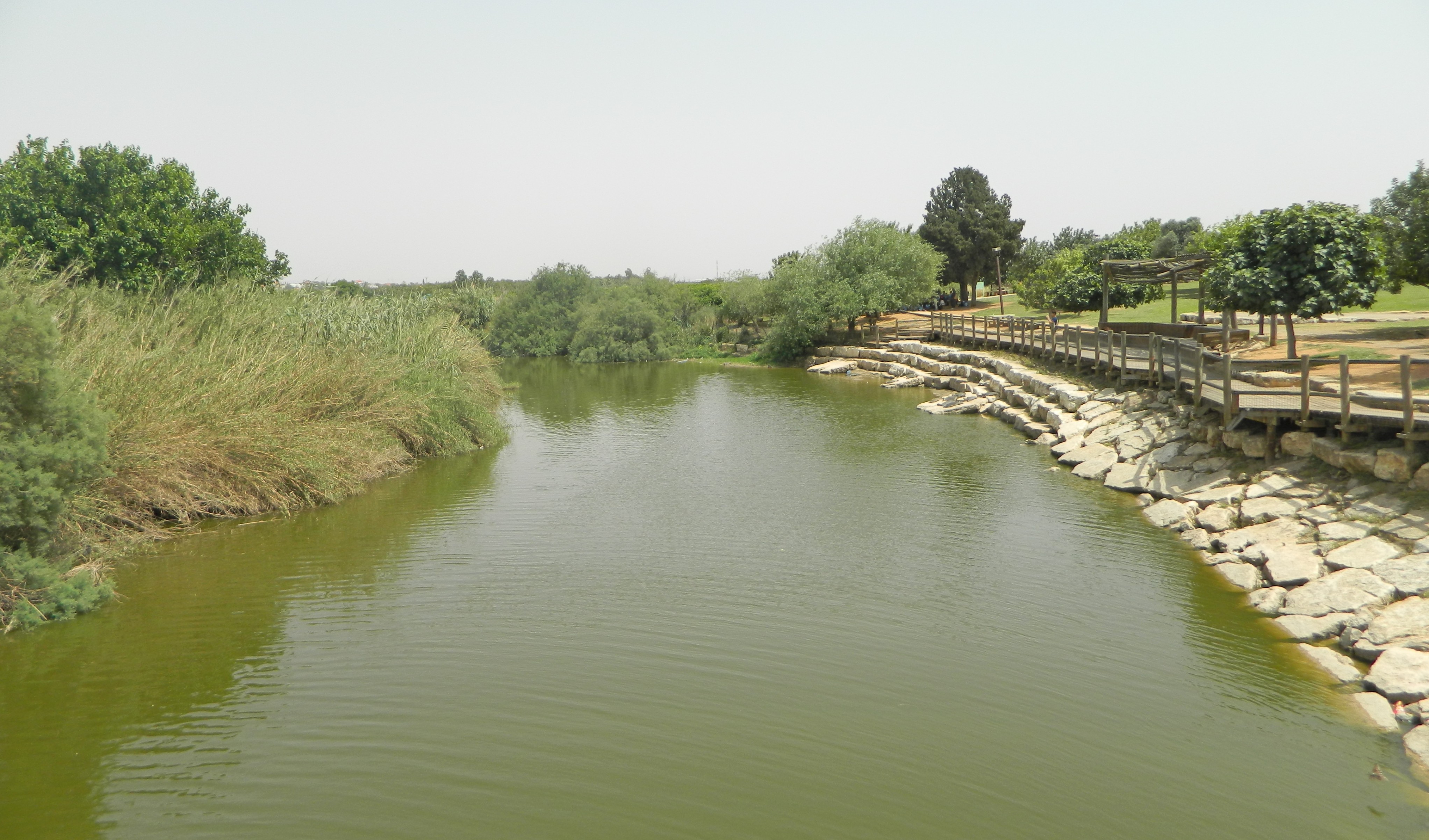
Taking a break from wildlife, we had a group lunch at one of the Hummus Eliyahu branches that have opened up all over Israel in the past couple years. I enjoyed a delicious bowl of creamy hummus and tehina, eaten with warm pita and a garlic-lemon sauce. When we were satisfied we continued, heading over to the lush wetlands of Agamon Hefer. At the site, we crossed over Nachal Alexander and gathered at a blind looking out at the lake.

Nachal Alexander

We were joined by a group of elderly folks, including a rather spritely 93-year-old woman who began to give us life lessons. She told us about how she was one of the Children of Tehran, fleeing war-ravaged Europe after the Holocaust, and how we should live our lives to the fullest. While she was talking I couldn’t help but notice a marsh harrier and short-toed eagle fly by.

Looking for wildlife

Continuing on the circular trail around the lake, we stopped at the next blind and spied on some pied kingfishers diving for fish. A squacco heron fished silently from a small marsh area right beside us, and the sounds of European bee-eaters filled the air above us as we moved on. Walking a hundred feet or so behind the group, I noticed a purple heron stalking its way through the tall grass, and a black-shouldered kite perched on a power line.

Squacco heron

Examining a particularly marshy area, our guide swiftly pointed out an adult little bittern sneaking its way around, seeking out tasty fish. I had only seen my first bittern two weeks prior, at the Hula Valley, and it had been a juvenile, so this was a cool sighting. Another purple heron was hiding nearly flawlessly in the tall grasses on the banks, making quite a challenge to spot. Twenty minutes or so later, with the help of Dr Natan and my Collins birding app, I was able to audibly and visibly identify my very first reed warbler – the fourth and final new bird species for the trip. On an open stretch of wooden boardwalk we watched common swifts dipping down in their fast and erratic flight for quick drinks from the refreshing lake water.

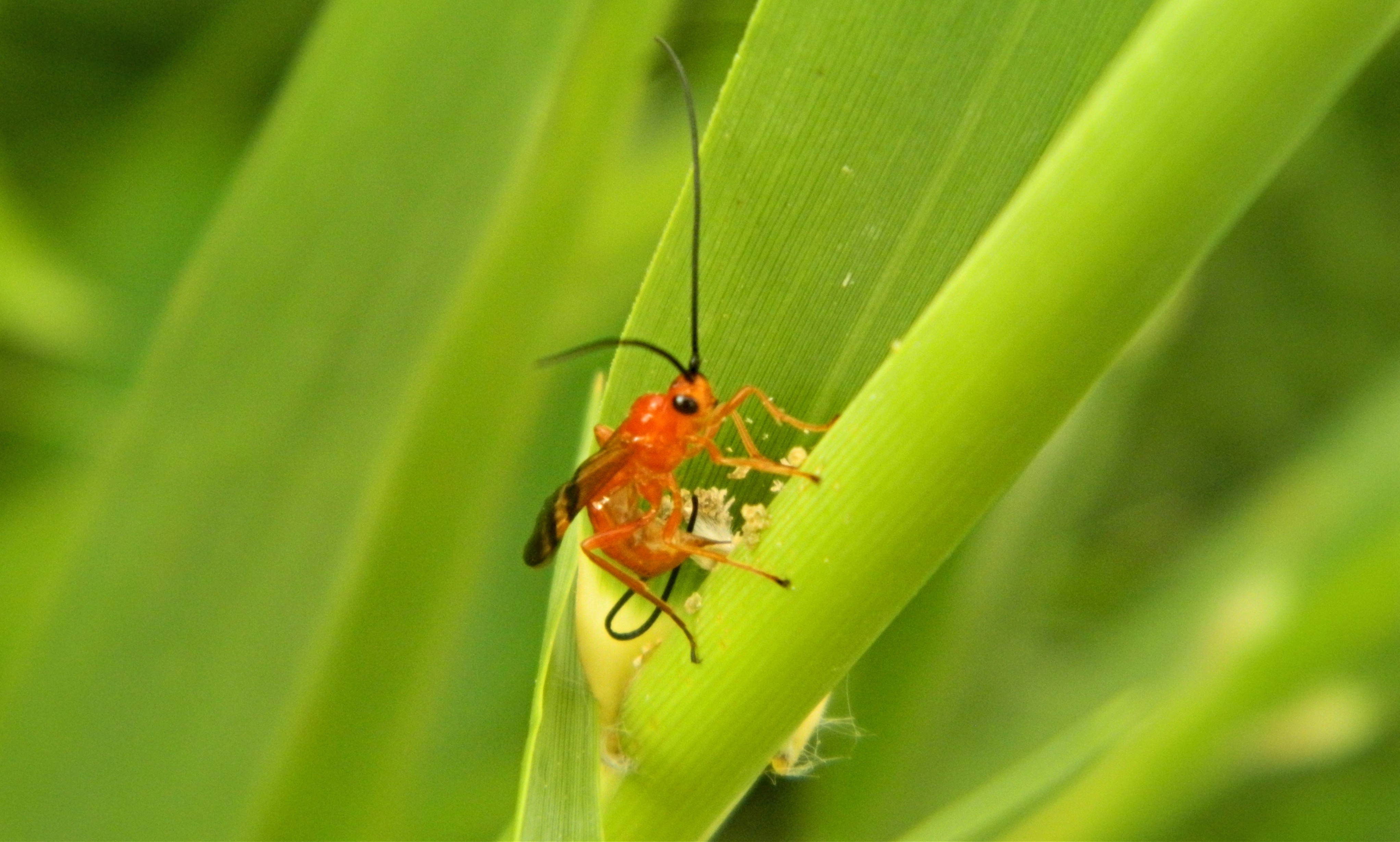
Parasitic wasp laying eggs

Then, as I was taking pictures of some tiny Middle East tree frogs that someone in our group had found, I discovered a parasitic wasp laying eggs in the body of an unsuspecting host. The trip came to an end when we boarded our tour bus for the final time, taking the long drive back to Givat Shmuel. In summary, a great two-day trip comprised of many different habitats and, best of all, four new bird species to add to my list.

University Trip: Golan & Bet Shean Valley

In Galilee, Golan, Israel on June 10, 2018 at 8:50 AM

A month ago, shortly after my trip to Mount Arbel, I went on yet another two-day trip to the north of the country. Offered by my department at Bar Ilan University, this trip was led by Dr Moshe Natan and specialised in wildlife habitats. We departed from Givat Shmuel in the morning, headed north in our tour bus, eager to begin the exciting day. Indeed, excitement was forthcoming; at a rest stop near Bet Shean we saw a booted eagle being mobbed by two crows.

Nesting colony outside Kibbutz Degania

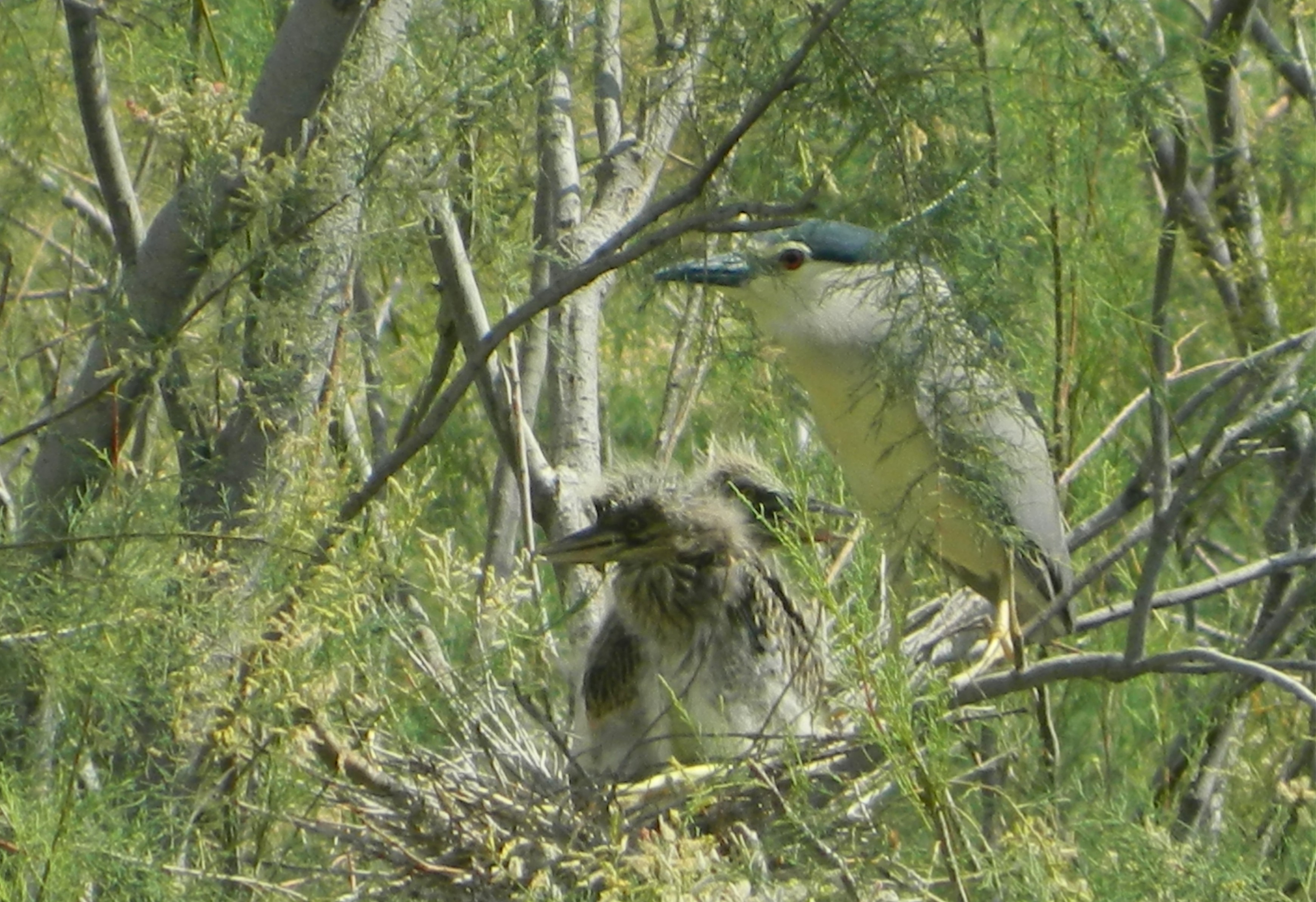
Our first real stop of the day was the expansive nesting grounds on the banks of the Kinneret (or, Sea of Galilee) just outside of Kibbutz Degania. There, species such as night herons, cattle egrets, little egrets, glossy ibises and pygmy cormorants share the thickly-foliaged trees in a joint effort to hatch and raise the next generation. We found a nice spot in the grass that overlooked a handful of the colony’s nests and began to watch. Each species has a different approach in rearing their young, and it was interesting to compare the relatively calm feeding habits of the glossy ibis with those of the violent cattle egret.

Night heron nest

While we watched, a juvenile marsh harrier ventured into the scene, scaring some of the colony’s inhabitants as it soared by. On the banks of the Kinneret down below I was able to make out, with the aid of 7×50 binoculars, a pair of purple herons – my very first time seeing them. An hour or so later we bid farewell to the hundreds of breeding birds and got back into our bus.

View from the Beit Saida Lookout

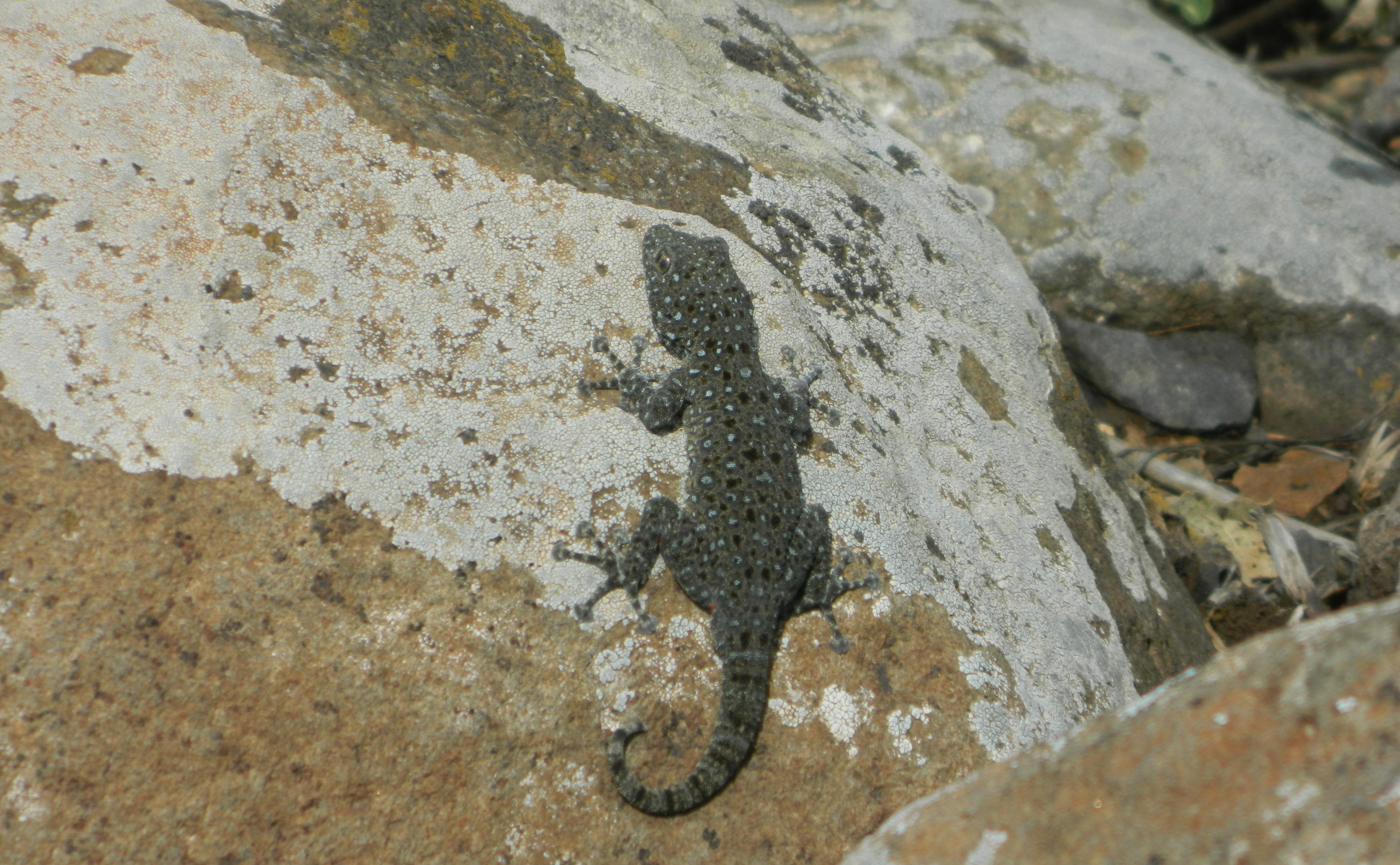
We were headed for the Golan, with a few stops planned out, the first being the Beit Saida Lookout. In addition to the sweeping view of the Kinneret area, two species of animals brought us to the piles of basalt stones at the lookout: the Levante fan-fingered gecko and the rock hyrax.

Levante fan-fingered gecko

Venturing onwards after some bonding with the lizards, we found ourselves disembarking in a small parking lot at the edge of Daliyot Woods. There, we followed a trail towards the peaks and valleys that neighbour the iconic Gamla ridge, where I had visited just one month prior. Enjoying the lovely weather with its sprinkling of raindrops, we crossed a tiny stream and rounded a mountain ridge, treated to a great view. A short-toed eagle passed by us, giving us a few moments of excitement. It was nearly noon when we reached a certain point on the trail that made our guide stop and scan the cliffside with the spotting scope.

Walking in the Nachal Daliyot nature reserve

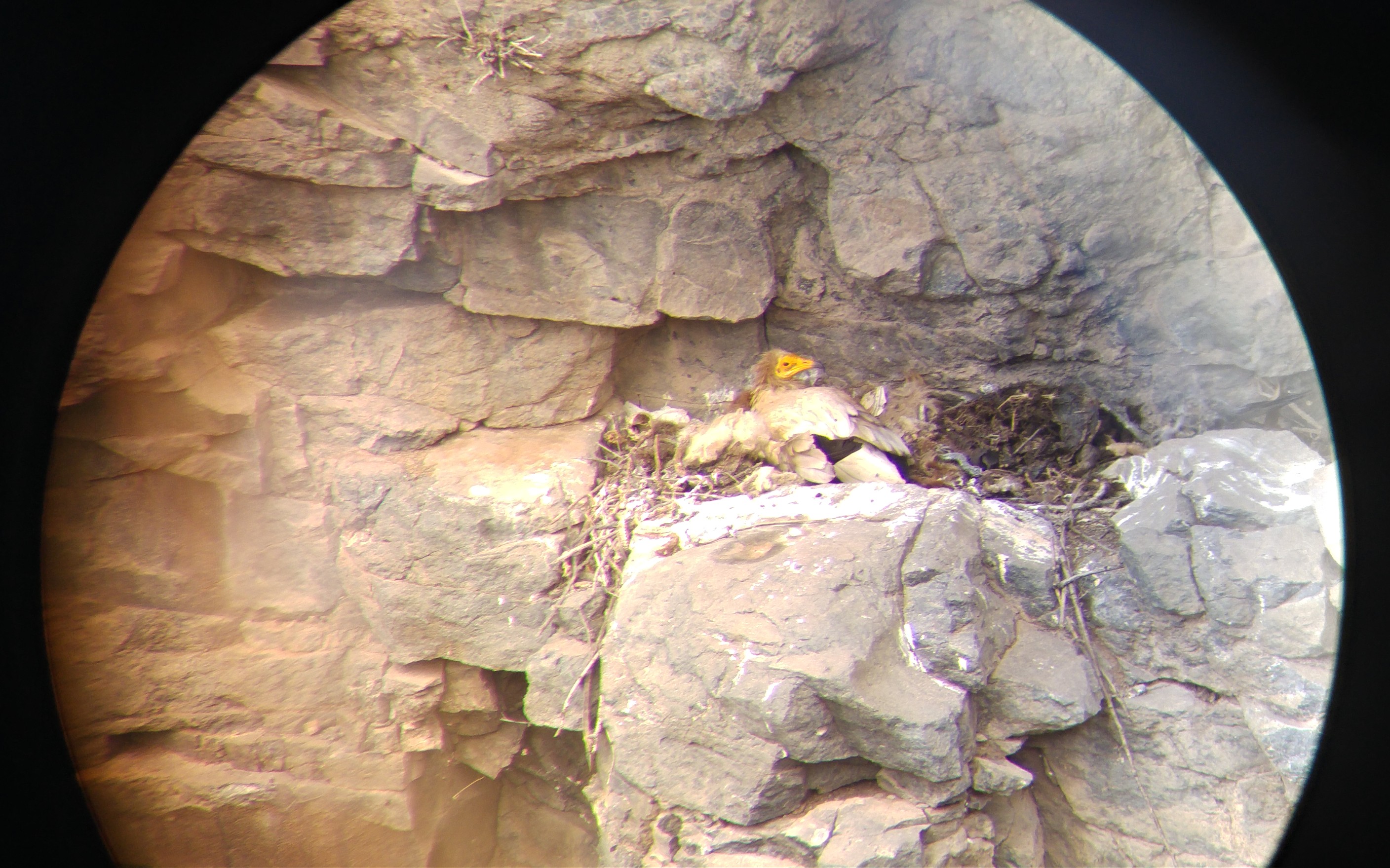
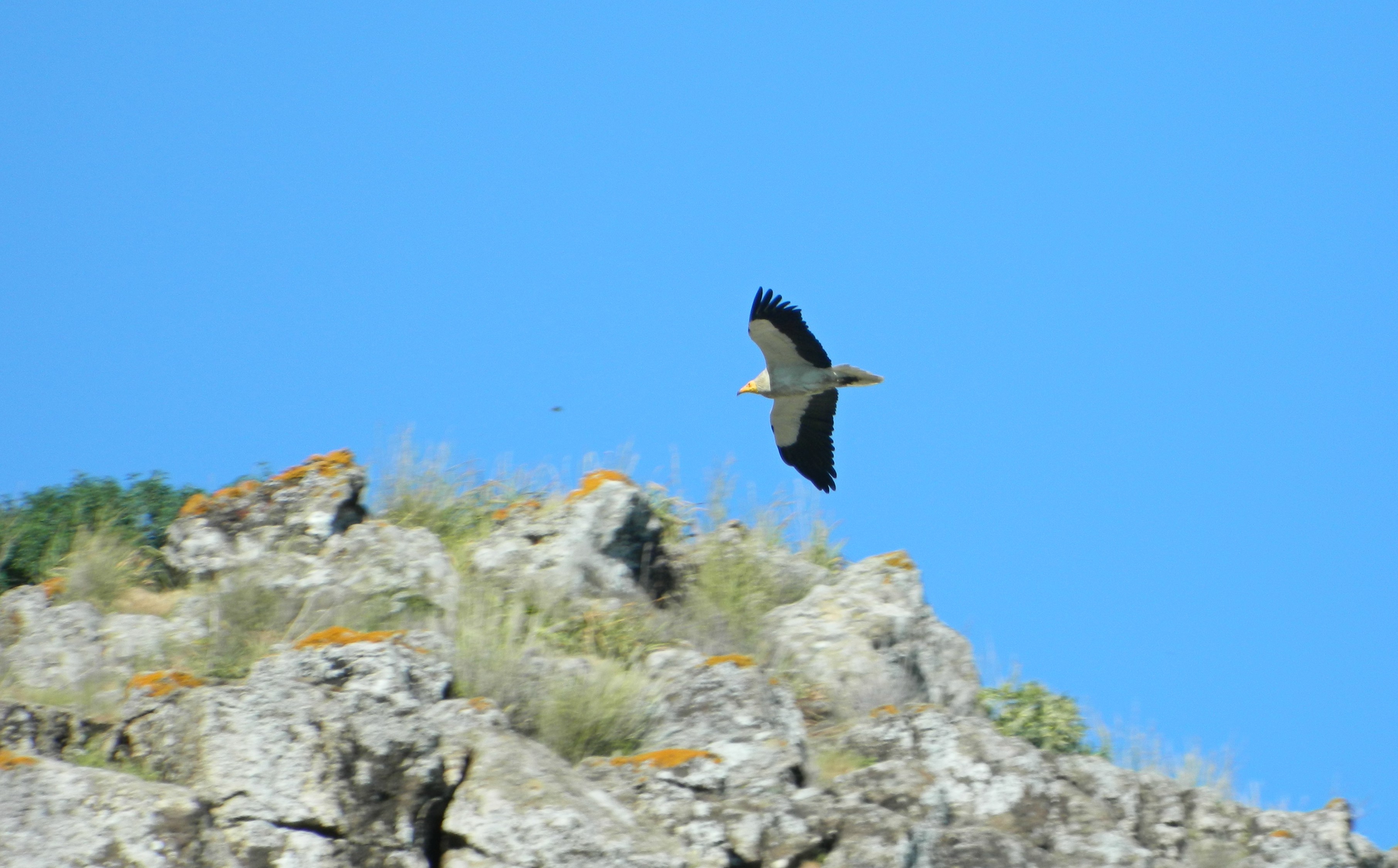
When Dr Natan found what he was looking for he shared it with the rest of us: an Egyptian vulture nest with one of the parents roosting. Nearly impossible to detect to the non-discerning eye, the nest and bird were nearly perfectly camouflaged. We watched the nest while we learned more about Egyptian vultures, the sharp barks of the rock hyraxes interrupting from time to time. When we were finished with the vulture we headed back, via the same slope trail that we had taken earlier.

Spying on the Egyptian vulture nest

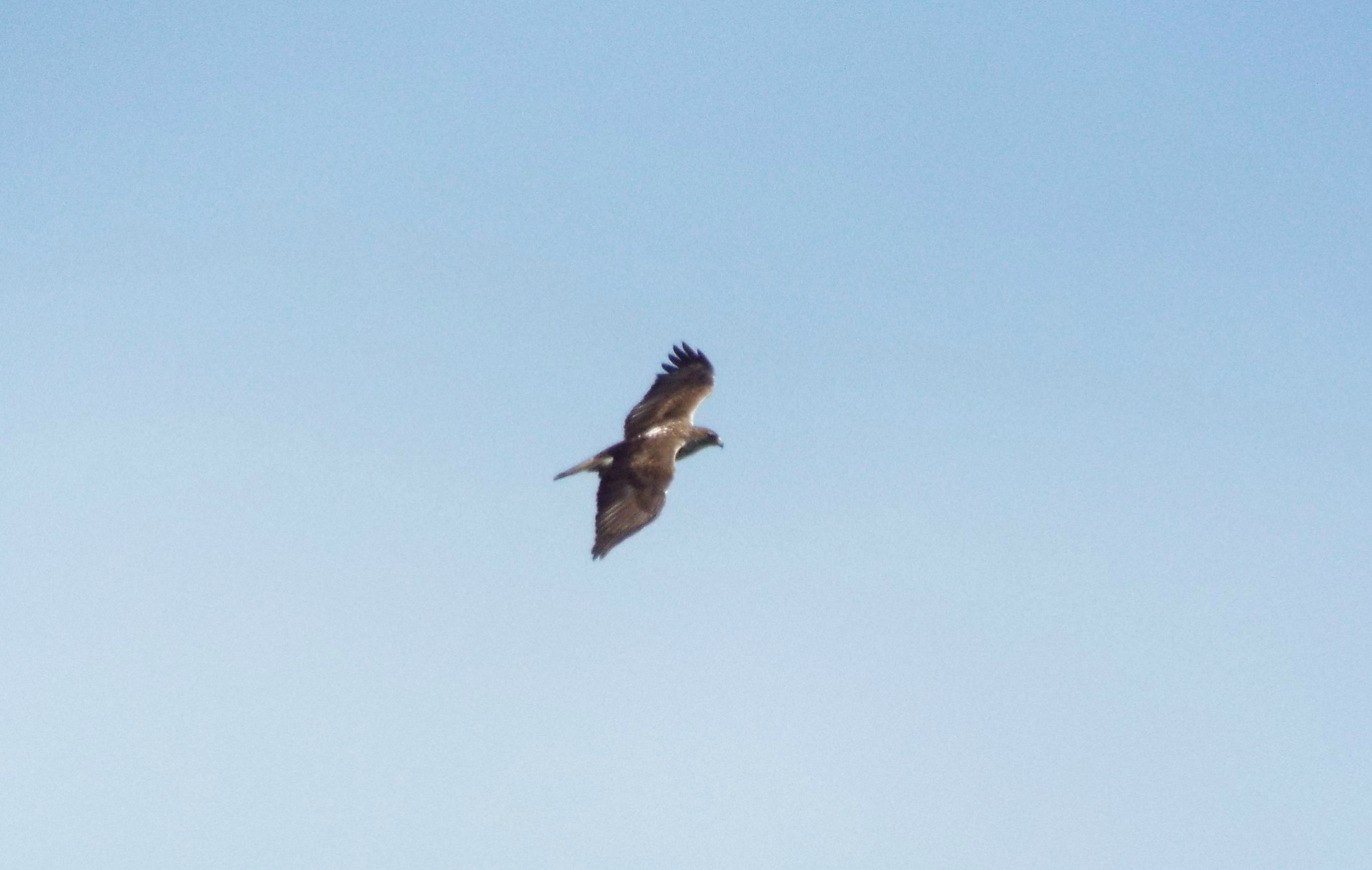
Back in the bus, we then drove over to Nov, a moshav in southern Golan, to look at the nests of white storks. We pulled up alongside one, where one of the parents was sitting, and gazed upon the huge stack of sticks in wonder. Although white storks are plentiful during a fair part of the year, only a handful of them breed in Israel, and the nests are therefore well-known amongst naturalists. Before long the roosting stork’s partner came by to take over the shift, and we watched the first stork fly off to the nearby field to hunt. While we were obsessing over the stork I noticed a black kite and a short-toed eagle in the thermals, mere specks in the blue skies. Before we left we took a quick look at another nearby stork nest, and then headed our way to the Bet Shean Valley.

White stork landing on the nest

We were to be spending the night at Kibbutz Kfar Rupin, at the “Stork’s Bill” Bird Watching Centre’s country dwelling accommodations. Disembarking, we received keys to our rooms and were updated with the evening plans, of which there were many. First, after some rest, I joined Dr Natan and a few others in setting out traps for rodents in a nearby field. Then, joining the rest of our group, we heard a short talk about the centre and birds in the region.

Our country dwelling in Kfar Rupin

Following that, Dr Natan gave us a class on bats and echolocation, promising to show us Kuhl’s pipistrelles on our forthcoming night tour. Armed with all sorts of gadgetry, including devices that read, record and amplify bat calls, we set out for the tour. Almost immediately we could hear the distinct calls of the scops owl, the smallest owl in Israel. Choosing to remain focused on the bats, we were then treated to a fascinating display from the pipistrelles, illuminated in flight by the powerful flashlights and headlamps we were using.

Night touring

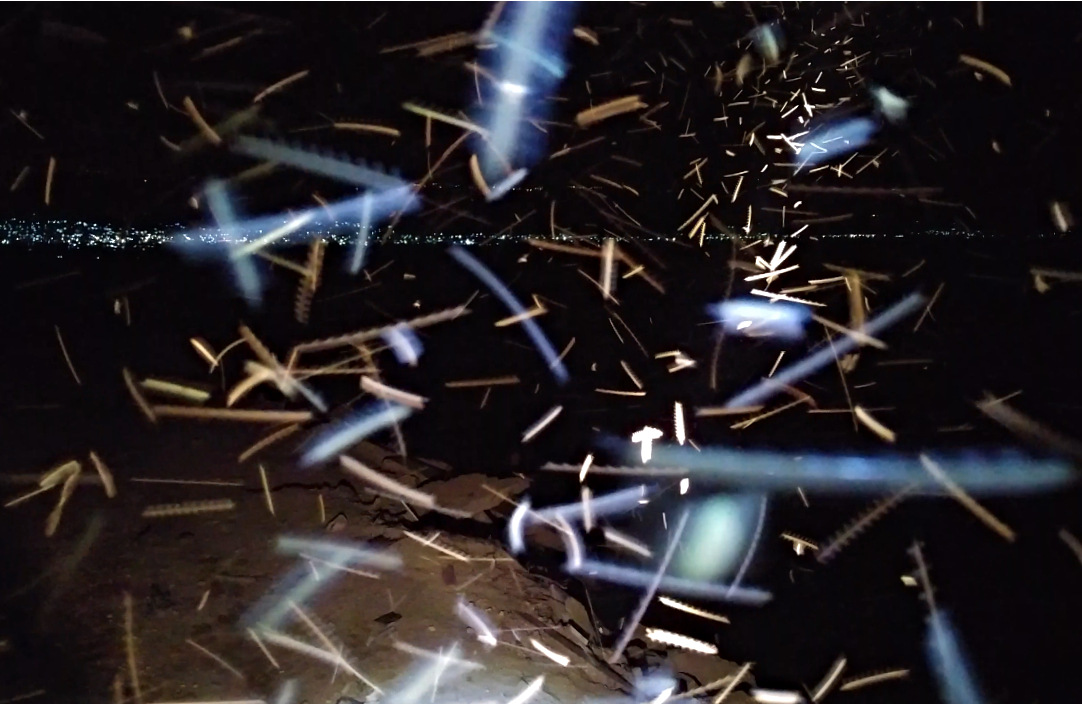
Leaving the residential area of the kibbutz, we moved on over to the cowsheds, constantly scanning the ground and skies for interesting nocturnal wildlife. Our walk took us out of the kibbutz and into the collection of fish ponds, where the insects are more than plentiful. Shining the powerful flashlight cemented in the fact that we were most definitely surrounded by millions if not billions of flying insects, mostly mosquitoes I presume.

Beam of light illuminating the horror of insects

We saw a hedgehog at the water’s edge, fish leaping out of the water sporadically, and the occasional Kuhl’s pipistrelle flying by and activating the electronic sensors. We continued through the insect swarm, avoiding opening our mouths for fear for ingesting winged creatures. The lights of neighbouring Jordan provided a sense of direction for us as we walked the gravel paths between the ponds, constantly seeking out interesting lifeforms. Even looking directly down at the insect and spider-covered ground was a hearty adventure.

Walking along the fish ponds

Our attention soon turned towards the frogs and toads that we could hear calling from the water’s edge. Before long we had captured several fine specimens of both the green toad and the Middle East tree frog. When I was taking the photo of this male tree frog, I hadn’t noticed the mosquito sitting on its head enjoying some sips of amphibian blood.

Middle East tree frog with a mosquito on his head

Making a full loop of the ponds, we eventually reached the cowsheds that we had initially passed on our way out. Taking a slightly different route, we followed the kibbutz’s fence towards our dwelling complex. On the way I played scops owl calls from my Collins Bird Guide phone application, hoping to attract a scops owl. Then, when I was standing in front of a tree, my headlamp illuminating a fair portion of the foliage, I saw a small fluttering shape land on a branch.

Scops owl hiding in the tree

It took my mind a moment to register that it was a scops owl, and I frantically called for my peers to come see the owl once I had established its identity. With the aid of others, I was able to take its picture (mostly, at least) hiding in tree’s foliage. Being that I’ve been wanting to see a scops owl for years, this moment was most rewarding, and I was able to retire to bed feeling quite satisfied. Little did I know that the very next day I’d be seeing another long-awaited bird species just a few kilometres away…

Mount Arbel II

In Galilee, Israel on June 6, 2018 at 7:45 AM

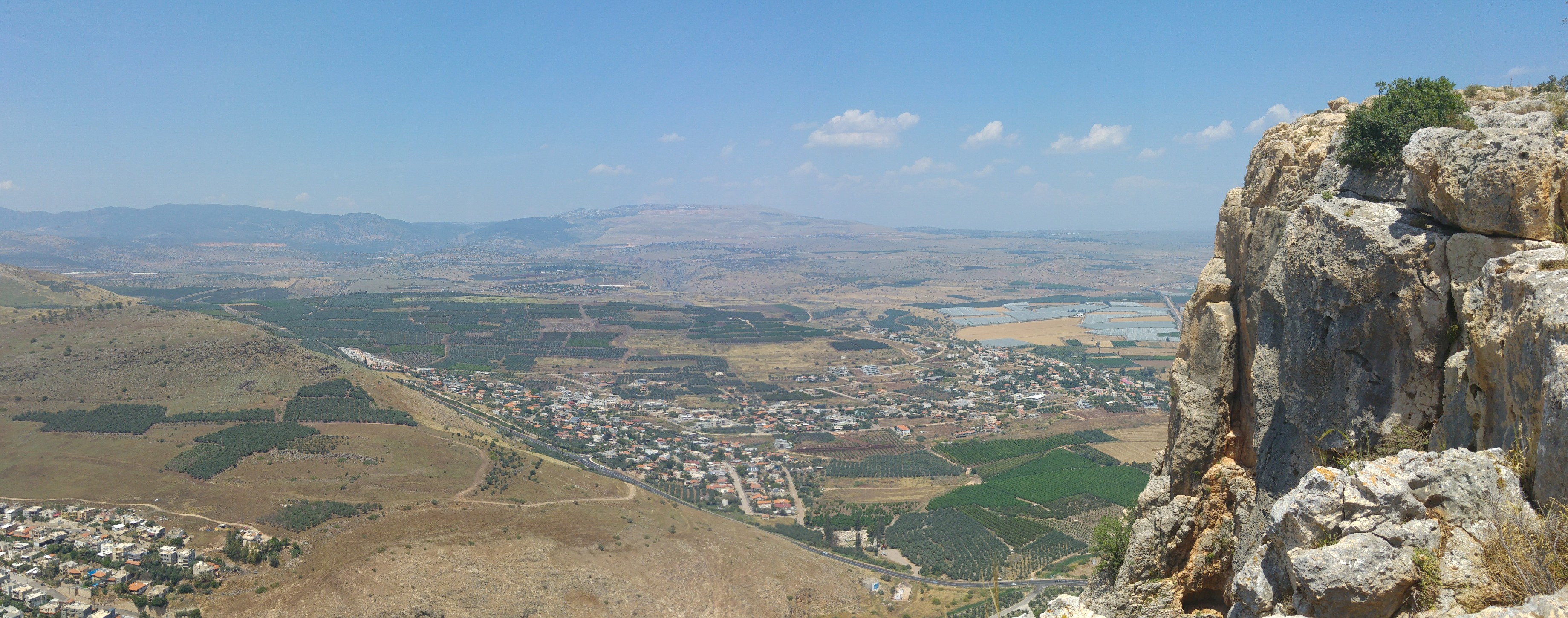
A week and a half after my visit to the Tel Aviv Zoological Research Institute I took another trip, this one to the north of the country with the middle/high school where I work. It was a two-day trip, but the focus of this post shall be on the first day, the more interesting of the two. In fact, I had just gotten back the previous week from another two-day trip to the north with friends, provided by the Student Authority for Immigrants which arranges fancy trips and events for us throughout the academic school year.

Panoramic of the view from Mount Arbel

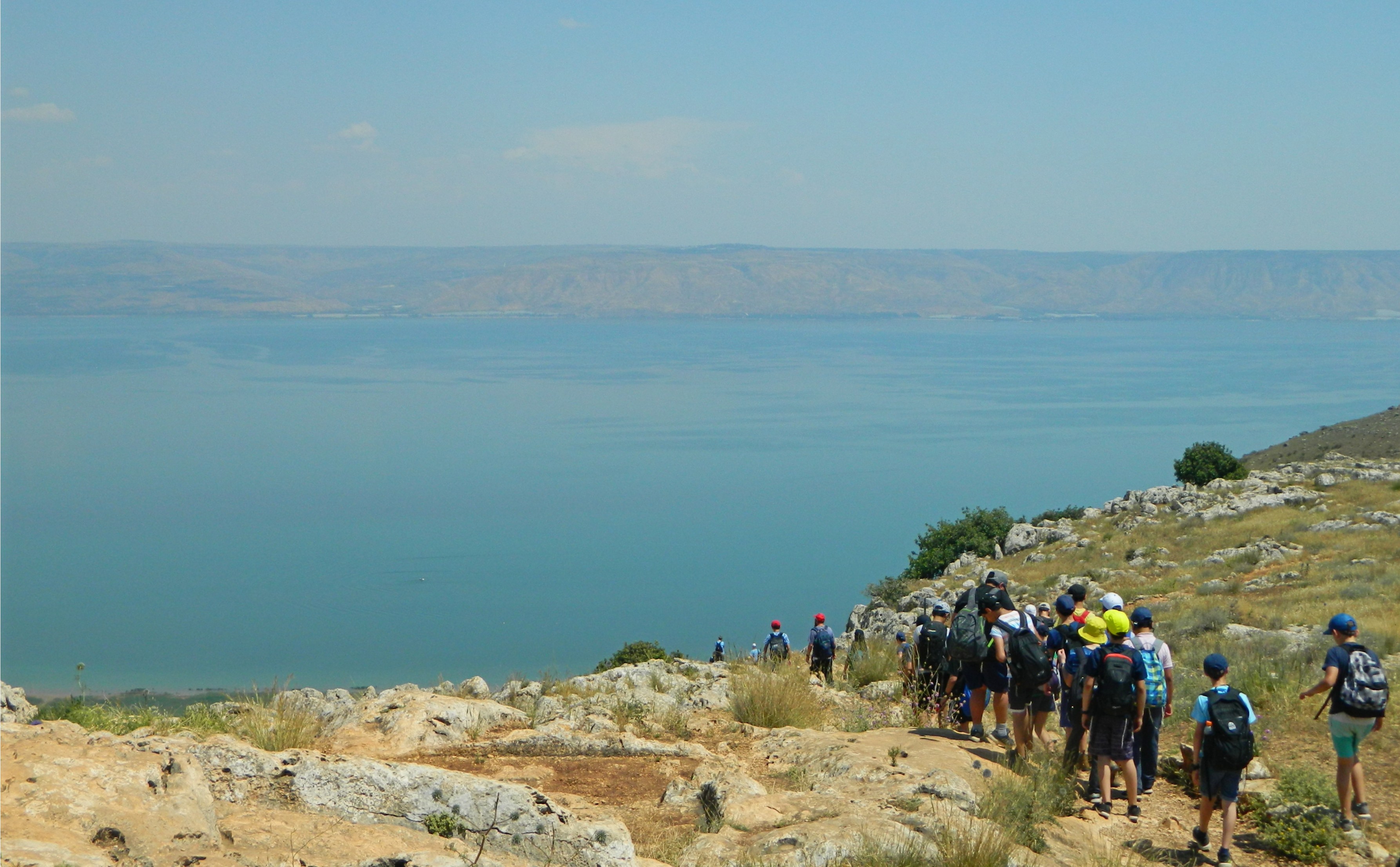
The morning of this trip began at the school where we boarded tour buses and began the drive up north via Road 6. Along the way I got acquainted with our tour guide, Eric Grosser, and spotted small flocks of white storks here and there alongside us. Our destination that day was the peak of Mount Arbel, with its gorgeous vista over the Kinneret (or, Sea of Galilee). We pulled into the parking lot of the national park and awaited the arrival of the final bus.

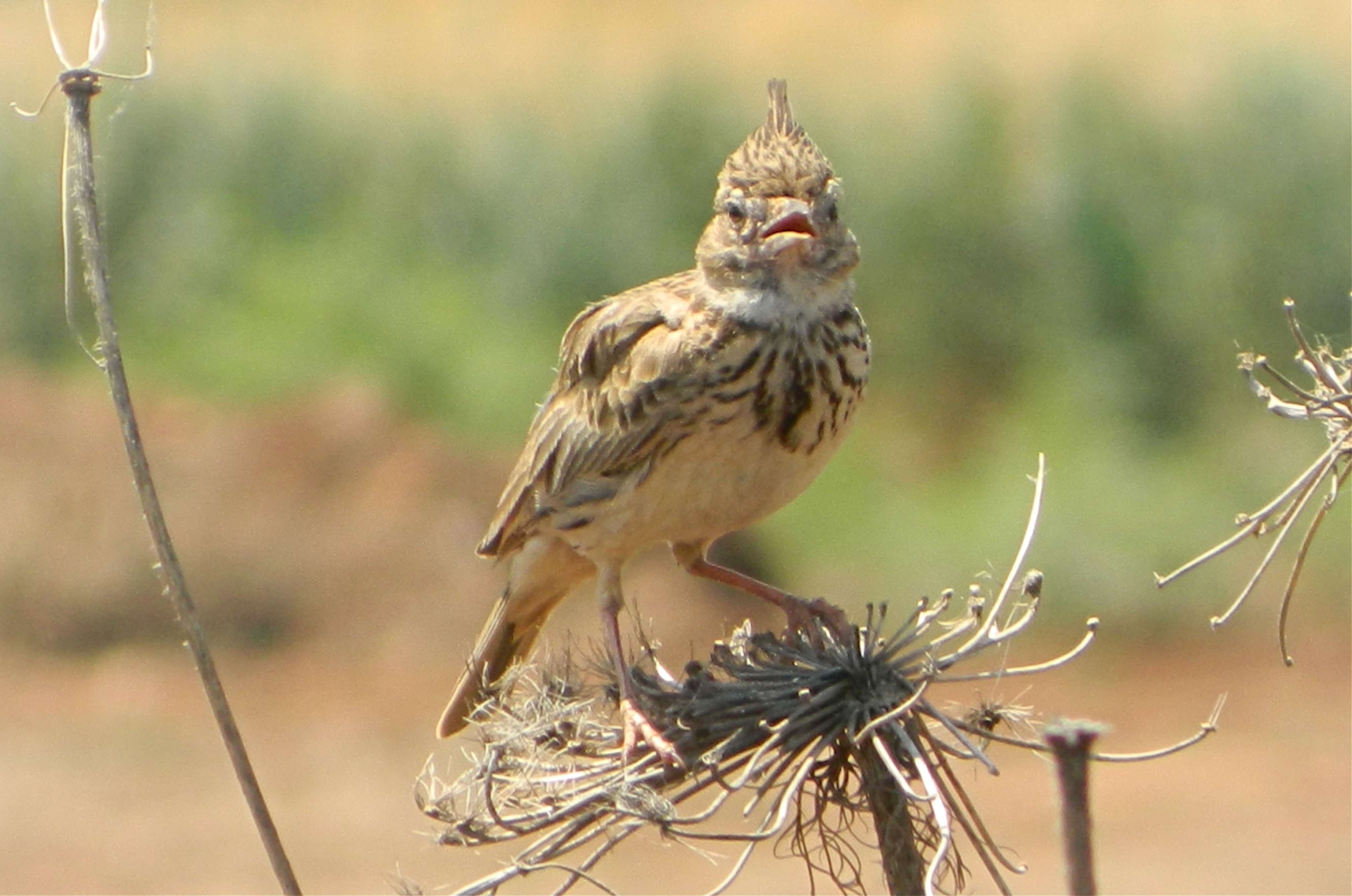
Crested lark looking tired

Exploring around a bit, I noticed the presence of some small birds such as crested larks in the field, great tits in the trees and a goldfinch or two on the fence. In addition, I examined the ancient sarcophagi on display, and a replica of a large basket used by King Herod to attack Jewish rebels hiding in the inaccessible cliffside caves. When the final bus arrived, and we were organised in smaller groups with each our own tour guide, we set off on the trail.

Setting off on the trail

We passed by the stony field, made beautiful with patches of flowering splendid bindweed and wild carrot (upon which the crested lark likes to perch and sing). To the left of us was the cliff edge, with its fantastic views, and to the right, a small water reservoir void of any interesting birds. I casted my eyes to the heavens from time to time, hoping to catch a glimpse of some birds of prey.

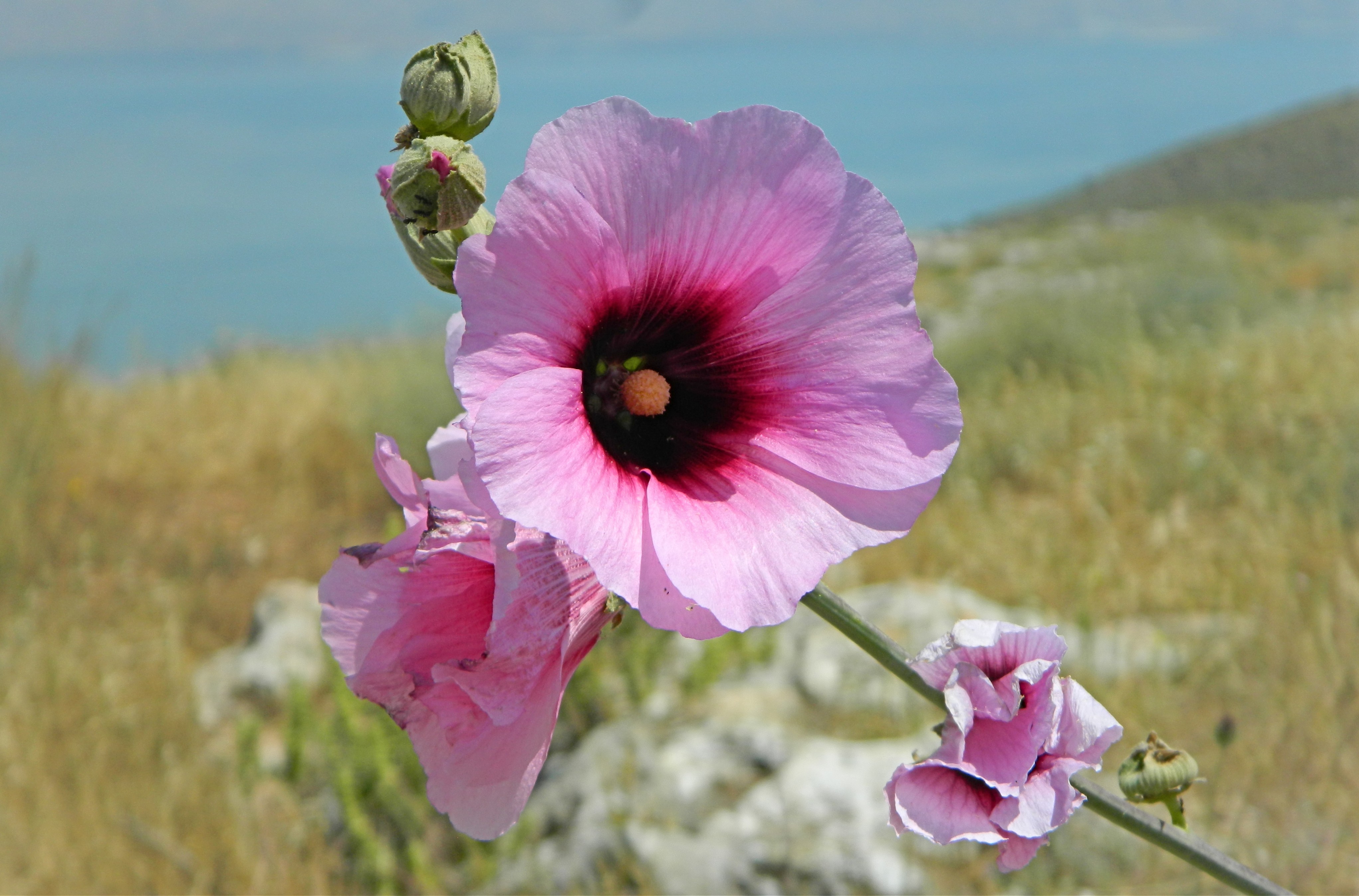
Hollyhock blossoms

We stopped at the Carob Lookout, where an ancient carob tree is working on restoring itself after a storm in 2017 that snapped it in half. Near the lookout we saw the faded cut marks of an ancient quarry; I just wonder what the stones were used for. From the lookout we gazed down on the ruins of Wadi Hamam, and the modern Arab village beside it, at the base of neighbouring Mount Nitai. A short-toed eagle and a common kestrel passed by overhead, and little swifts zipped by at eye level.

Levantine marbled white butterfly

After passing some blooming hollyhocks and a large amount of Levantine marbled white butterflies feasting on sweet thistle nectar, we reached the trail’s descent from the peak. Here progress was slow, and I scoured the cliffsides for interesting wildlife to no avail as I awaited my turn to make my way down the stepped path. The trail curved back in the way we came, and we headed westward along the slope.

Descending down the cliffside

After a few minutes we reached a tall, shallow cave, occupied by cows seeking respite from the sun and heat. Without intruding to disturb them, we continued on the path, making our way across the rock- and vegetation-strewn mountainside. I looked up from time to time to see if I could make out any caves or other curiosities. At last we reached a small stone structure built up against the cliff wall. I crept my way inside, avoiding fresh cowpats, and found two guilty-looking cows huddled up against one of the walls within the house.

Cows hiding within

More cows were gathered outside, but since we hadn’t come for bovine viewing, we continued onwards. Up ahead we found a sign that read “fortress and caves” straight ahead, but our guide was taking us downhill along the Israel National Trail to “Ein Arbel” and “Wadi Hamam”. I took advantage of the junction rest period to go off and explore on my own.

Sign of temptation

I found the fortress directly ahead, perched in the crags of the cliff wall, the old mason work blending in nicely with the pale, streaked rock. According to the informative sign, the four-story fortress was built in the 1600s by the Ottomans, under the local rule of Emir Fakhr al-Din – a Druze vassal who was eventually executed by the sultan.

Looking up at the fortress

Access to the fortress, known as Qalat abu-Ma’an, is provided by wide, basalt steps, which I climbed enthusiastically. At the top, I entered the stone structure, partially under restoration with external and internal scaffolding. Wooden stairs inside to me from one part of the fortress to the other, and I gazed out towards Mount Nitai and the sprawling view below.

Within the fortress

Inside the fortress ruins I found the ancient Roman-era mikva, which was used by the rebelling Jews hiding from Vespasian, Titus and their soldiers. Narrow passages took me from one side to the next, leading me further into the uncharacteristic labyrinth. At the end I found a room with a vaulted ceiling and arched windows, architectural features that I find particularly pleasing to the eye.

Slope trail

While I was admiring the view I saw my group begin the descent down the slope, so I ended my side adventure and caught up with them within minutes, joining them on the way down. At the bottom we found the flowing water of Nachal Arbel, and sat beneath large jujube trees to take a short break as we waited for all the classes to arrive. The sweet smell of the fallen jujube fruits provided an interesting setting as I scans the nearby slope of Mount Nitai and the blue skies above.

View of Mount Arbel from below

Quite unexpected, I saw a docile cow flush a male mountain gazelle from the tall grass on the slope near me, and then a white stork or two soaring past. Adequately rested, we boarded our tour buses and took a short drive over to Ein Nun, a small spring and pool which was built in the 1920s. There I searched for frogs, and was not disappointed, finding a good amount of them for my photographical wants.

Small river frog

The day ended after a visit to the waterless attractions of Kfar Blum Kayaks, and then camping at the Maayan Baruch campsite, where we slept near the banks of Nachal Snir (or Hatsbani). The following day took us to the national park of Banias, where we enjoyed the ruins and the trails. It’d be a shame not to mention the birds sighted that day, with highlights including steppe buzzards, short-toed eagles, greater spotted eagles, honey buzzards and countless flocks of white storks.

Maayan Baruch campsite

But the highlight was later in the day, at the Disaster of the Helicopters memorial (of all places), where I spotted two golden orioles in flight – a bright yellow bird that I’ve been waiting years to see. Thus, the two day trip with the school lads ended on quite the high.

University Trip: Tel Aviv Zoological Research Institute

In Israel, Tel Aviv on June 3, 2018 at 9:07 AM

One Friday many weeks ago I attended another field trip offered by my department in Bar Ilan University. This trip was to the Tel Aviv Zoological Research Institute in the northern end of the city, between Tel Aviv University and the Yarkon River. We congregated outside the institute’s gates while our guide, Dr Moshe Natan, secured our entry. Generally closed to the public, the institute does open for select tour groups such as ours.

Lovely menagerie

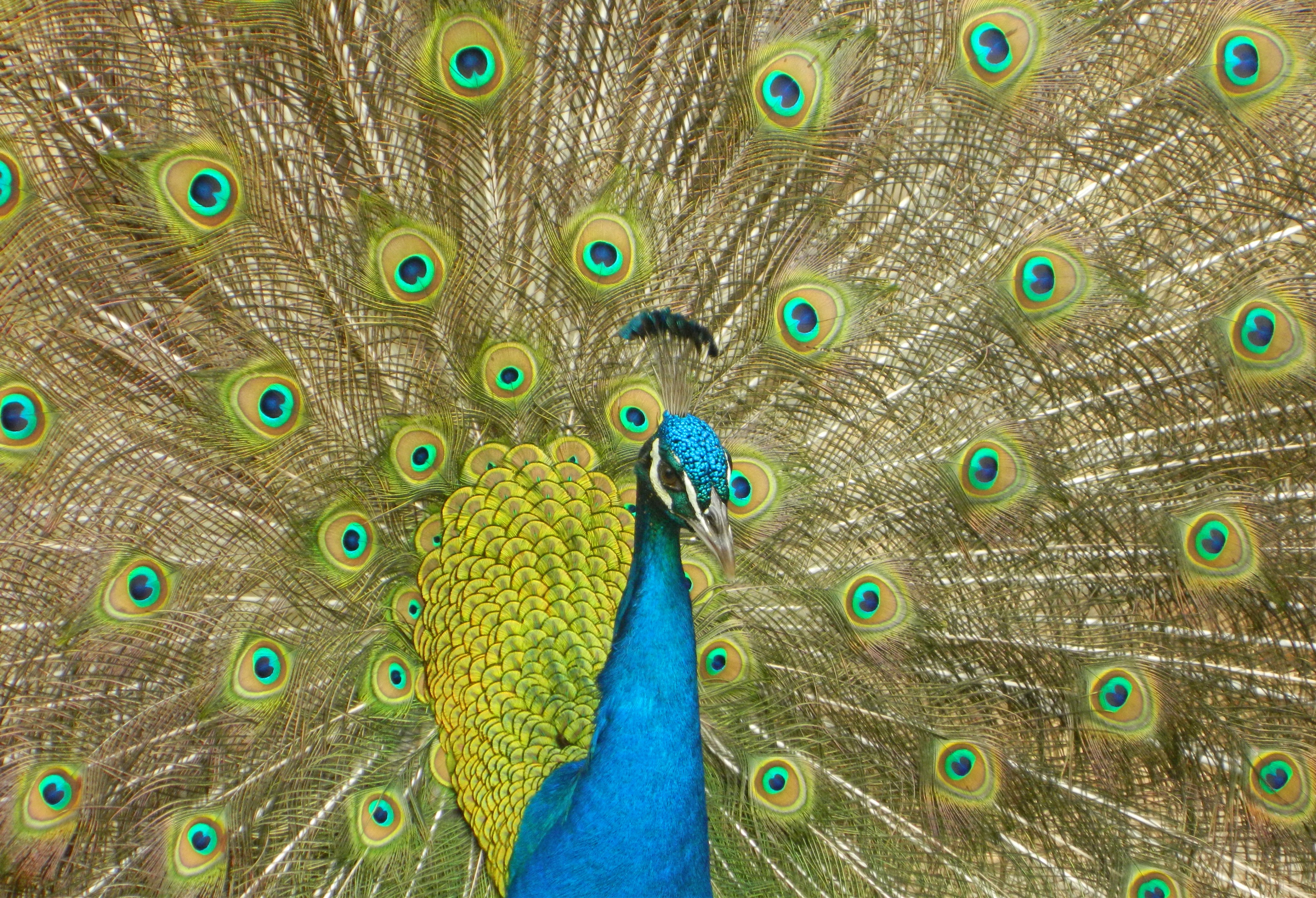
Inside, we gathered together to hear opening words on the tour and the uniqueness of the institute. Similar in concept to the Jerusalem Biblical Zoo, the institute focuses on animals local to Israel and engages in both research and sanctuary for wild animals who, for whatever reason, won’t survive if released back to nature. A slight exception to the rule, countless peacocks roam the grounds, the iconic males in constant display to woo the plainer females.

Vain peacock

The layout of the grounds begins as a circle, with a large open area in the centre, complete with a small pond. There we saw in plain view at least a dozen species at any given moment, some wild and some captive, including gulls, geese, swan, storks, flamingos, peacocks and gazelles. We began at an enclosure for Nubian ibex, a mammal that has become quite common in several locations in Israel, including Mitzpe Ramon in the Negev.

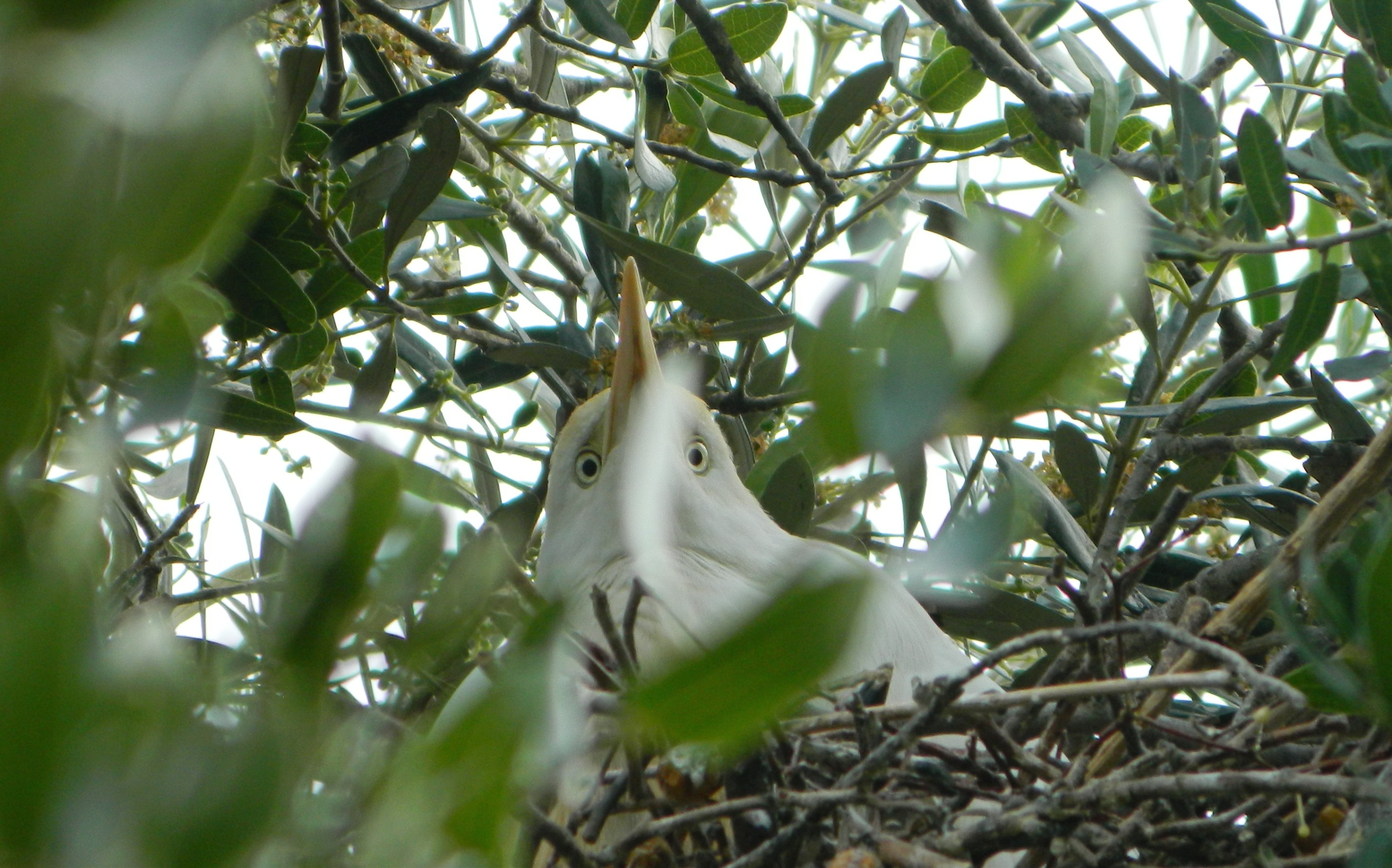
Concerned egret chick

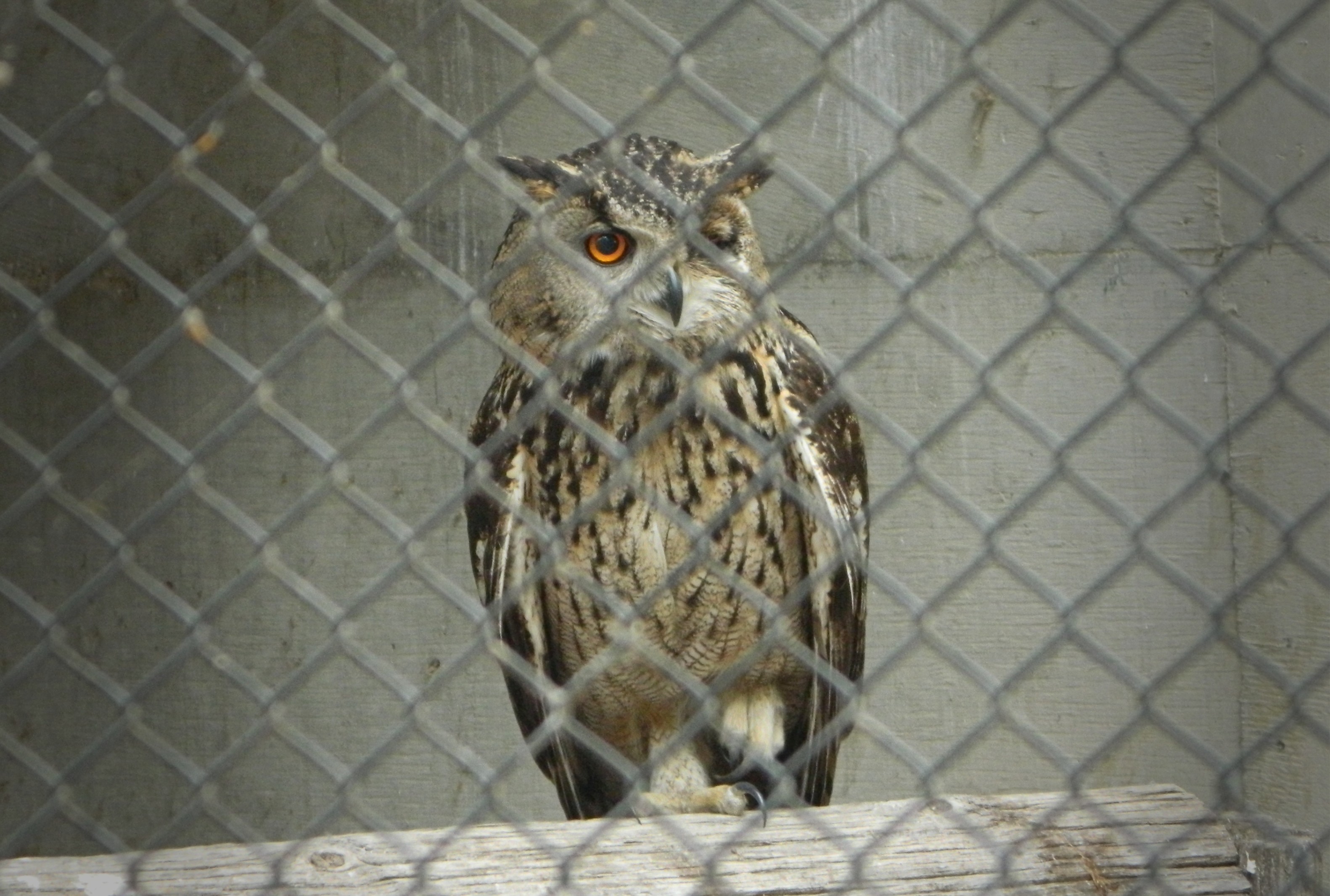
From there we moved onto a large tree beside the walkway, host of many nests belonging to herons, egrets and more. We watched the violent feeding methods of the cattle egret, the frazzled-looking young grabbing the parent’s head, forcing it to regurgitate the food. Moving along, we approached a series of cages filled with an assortment of interesting birds, including spoonbills, sand partridges and white-eyed gulls. Cages further along contained owls such as the eagle owl, pharaoh eagle owl and the tiny scops owl.

One-eyed eagle owl

Finished with the birds for the time being, we then set our eyes upon the wolf enclosure where we watched a male and a female race around the grassy area. Directly opposite we found a muddy patch containing several wild boars — huge frightening beasts that strike fear in the hearts of hikers like me.

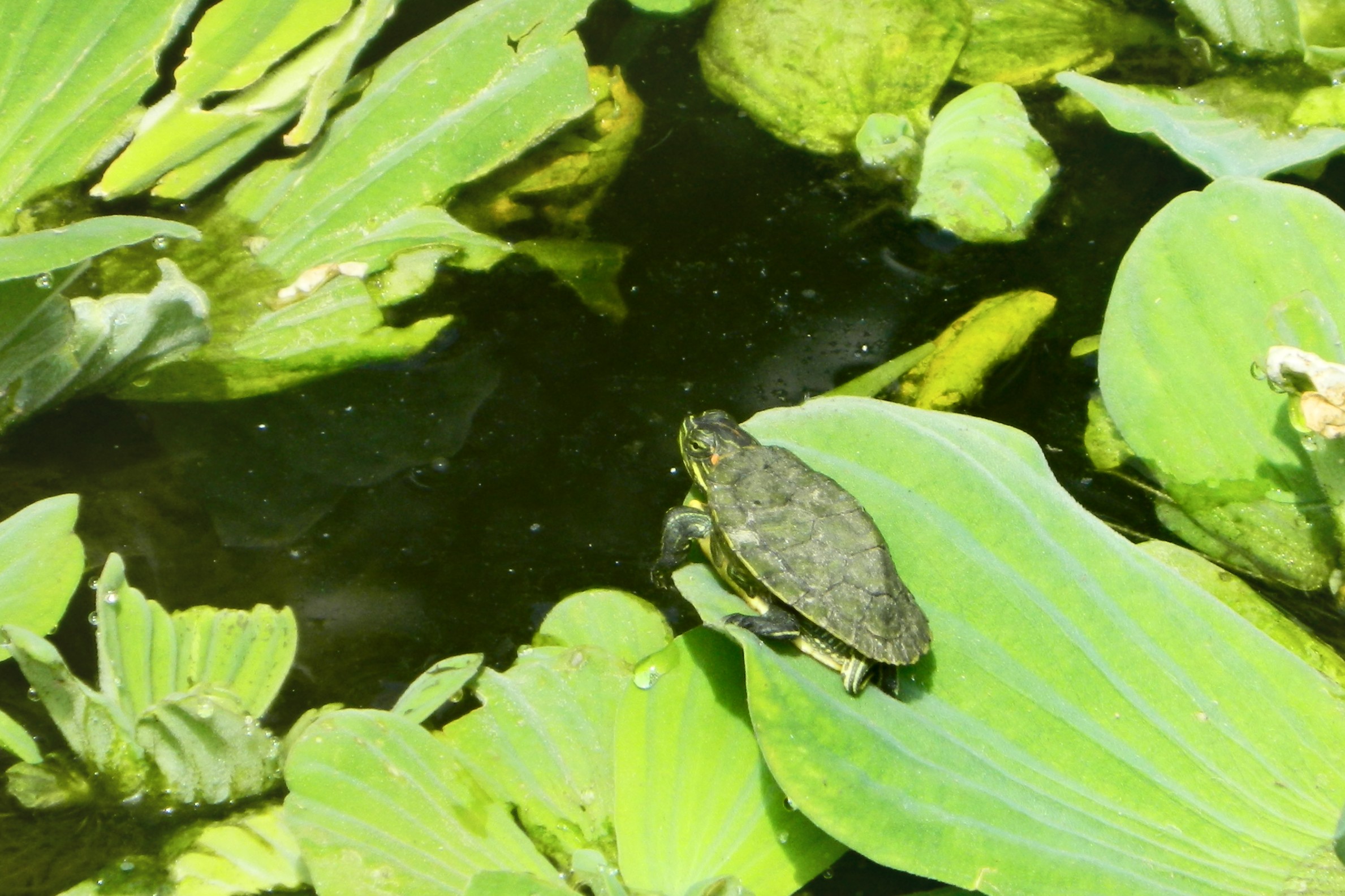
Baby turtle on a lilypad

Continuing along the path, we found sleeping jungle cats and a small flock of nene geese, endemic to the islands of Hawaii. A small pond, choked with lily pads, provided refuge for dozens of red-eared slider turtles. Next, we came upon the cages of the birds of prey, and my excitement grew. We started with some fine specimens of lesser kestrels and a lanner falcon. Next, a cage with some harriers and another cage with some ravens.

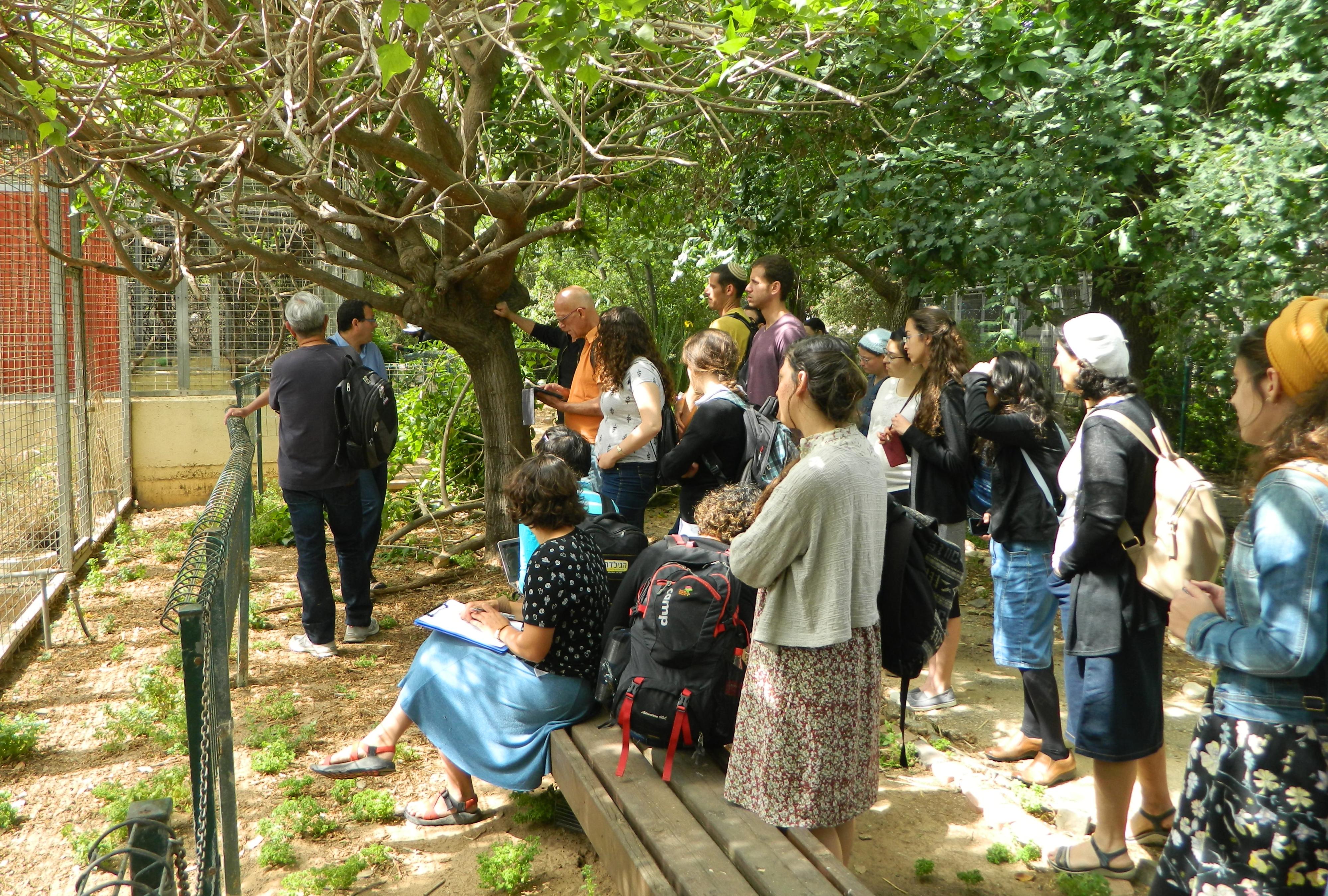
Gathered outside a birdcage

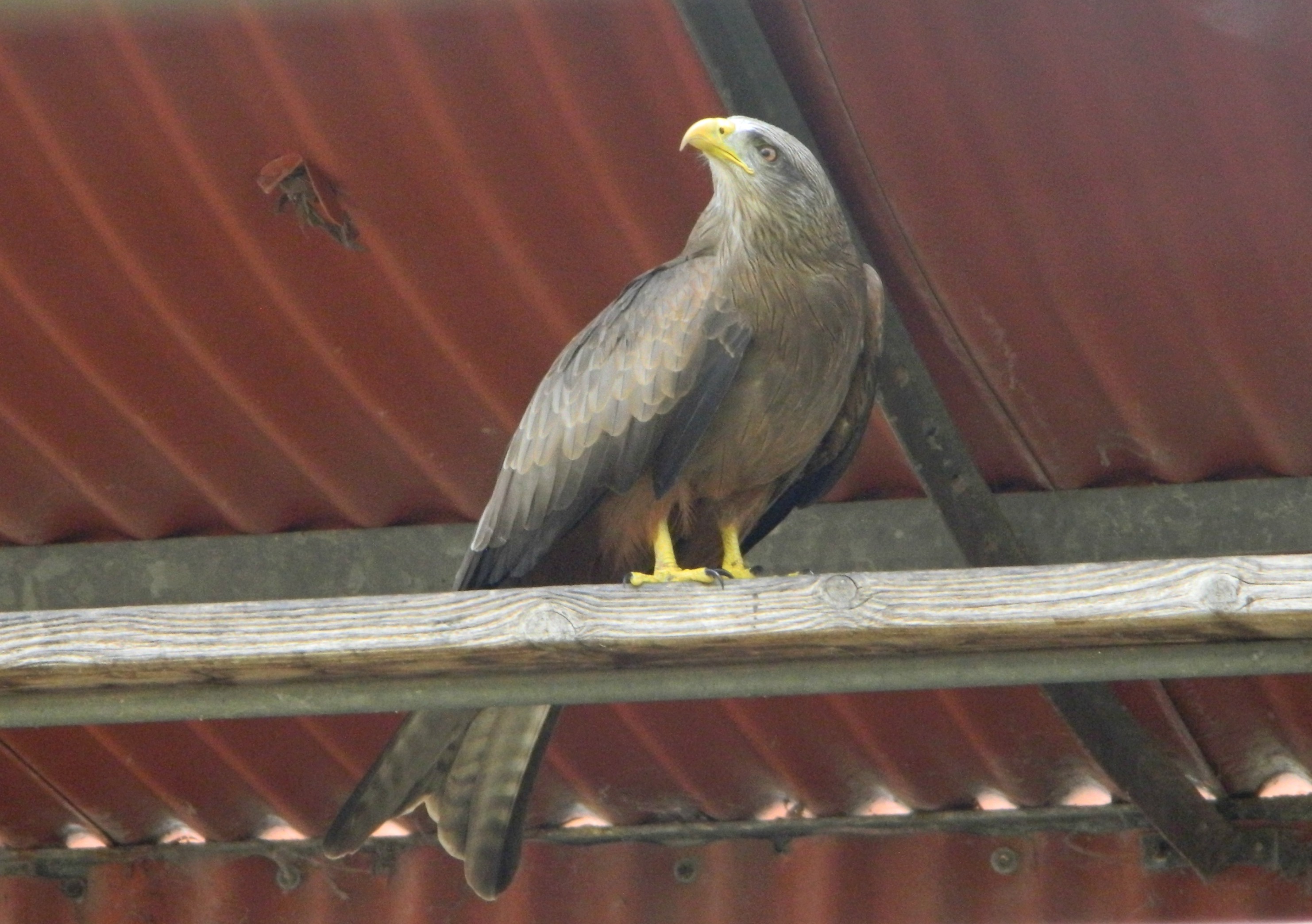
The following cage was occupied with birds of prey of several species: short-toed eagles, long-legged buzzards, black kites and a lone yellow-billed kite (which is very rare in Israel). Neighbouring cages contained eagles and vultures, including the enormous white-tailed eagles (with a maximum wingspan of 240 cm) and Griffon vultures (265 cm).

Yellow-billed kite

From there we visited the porcupine, cormorants and pelicans, and even feigned feeding the herons and egrets in the open area to demonstrate how bold they’ve become. When we had enough entertainment watching the birds of the field we moved towards a small compound on the other side of the central building, where the rodents and reptiles are stored. Alternating between rodent and reptile, we saw many interesting species including golden spiny mice, Arabian horned vipers, the American-native gila monster and my favourite Israeli snake, the black desert cobra.

Golden spiny mouse

We went up and down the rows of cages, peering inside each and every one to spy on the inhabitants. At the tail end, when we were examining a large python and an iguana that reminded me of my days in Miami. Our tour had come to an close, as it was Friday afternoon and Shabbat was approaching. We parted ways, having enjoyed an interesting morning with Dr Moshe Natan at the Tel Aviv Zoological Research Institute.

A video of this trip, which I made for the department’s YouTube channel, can be found HERE.

Jerusalem’s Binyanei HaUma Archaeological Dig

In Israel, Jerusalem on May 27, 2018 at 9:43 AM

On Yom HaZikaron that took place a number of weeks ago, I participated as a volunteer at an ongoing salvage dig in Jerusalem. I had heard about it on Facebook, advertised by Amit Ararat, and made the necessary connections with the Israel Antiquities Authority. I was to be joined by three friends, all fellow students at Bar Ilan University, and together we’d make memories. Adam and I met up in Givat Shmuel and took the bus together to Jerusalem. Itamar had come from his home, and was the first to appear at the dig site that morning. En route, Adam and I passed the relatively new Ariel Sharon park, a landfill-cum-nature preserve, and saw a beautiful red fox standing between the harvested rows of wheat in a field near the road – it was quite the scene.

The digsite

We arrived in Jerusalem and made our way to the dig site, located roadside the International Convention Centre and between the Central Bus Station and Supreme Court. Just to the west, slightly uphill, ruins from the Roman period, including bricks and rooftiles with stamps of the Tenth Legion, were uncovered in the first salvage excavation, in 1949. A later excavation, in 1967, uncovered two potter’s kilns with a other ceramics and ceramic-oriented equipment. Eventually the site was built-over, now the home of the convention centre, and now a small sliver of land beside the nearby street became the target for a new salvage excavation in light of new roadwork-in-planning.

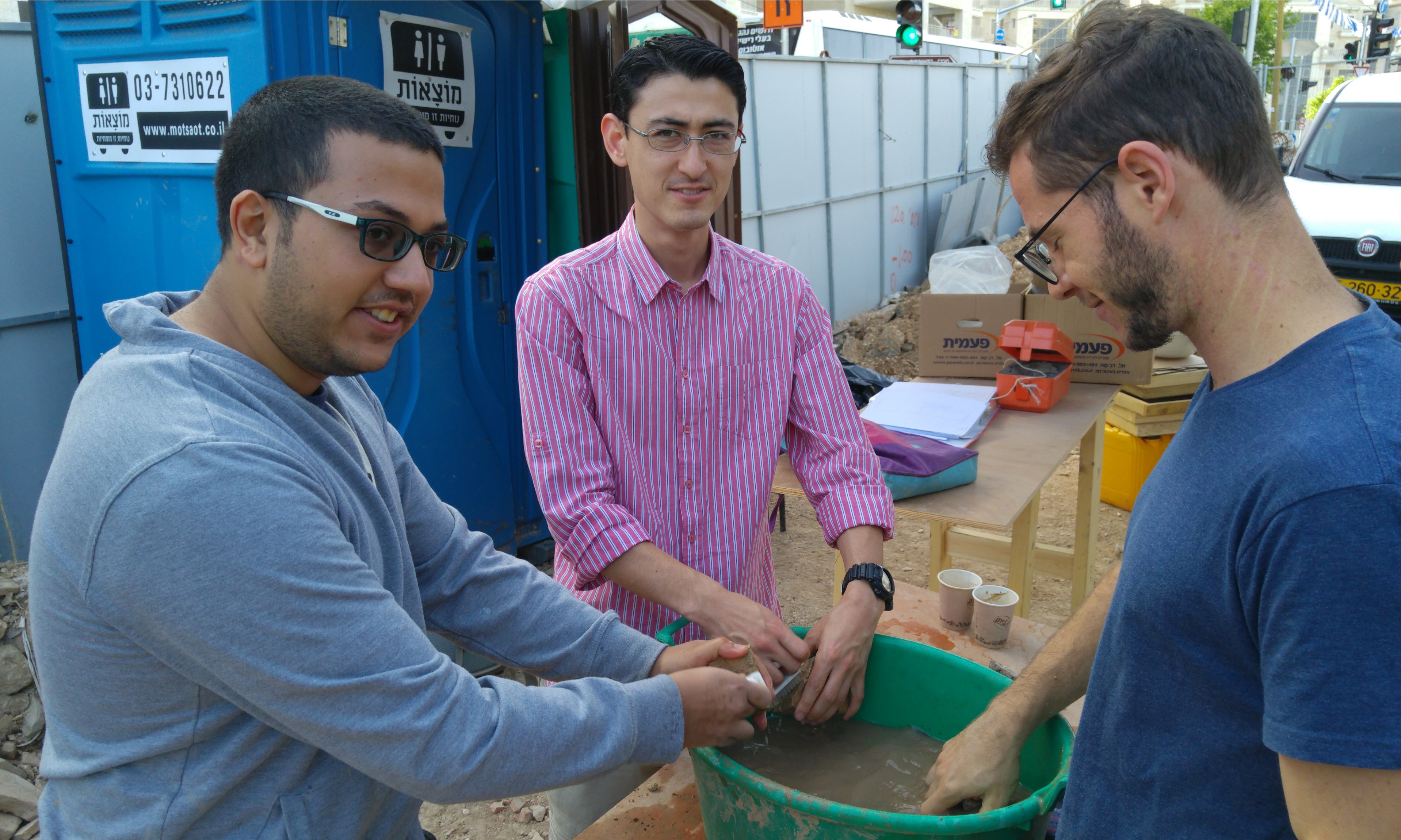
Itamar, Adam and Ido washing pottery

Approaching the fenced-off area, we were able to discern the digsite by the characteristic shade-tents that accompany all digs. Entering, we met up with Itamar and a fellow student from Hebrew University by the name of Ido, both of whom were engaged in pottery washing. They showed us some interesting rooftiles and other ceramics while we waited for Danit, the dig supervisor, to receive us.

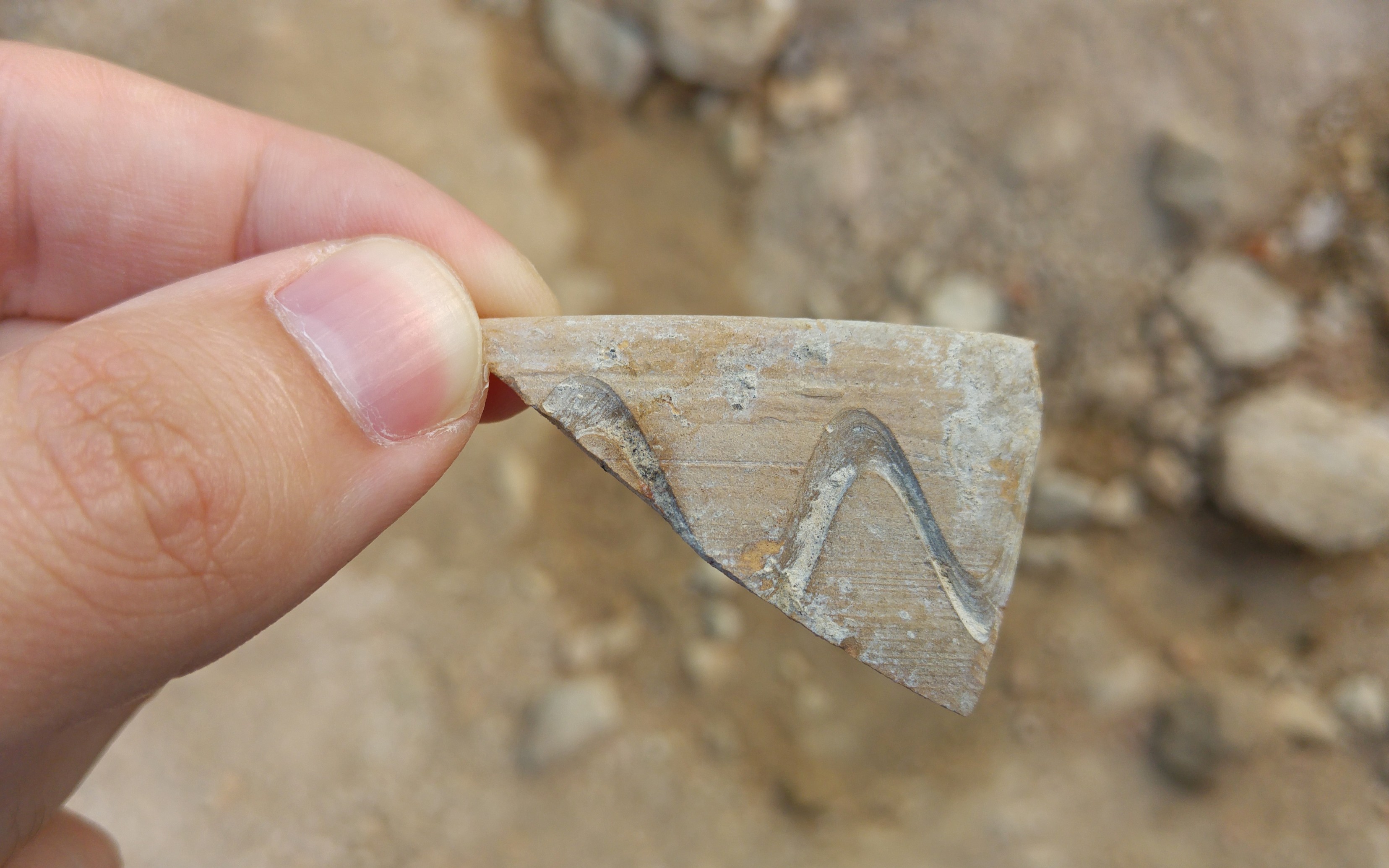
Decorated rim of a vessel

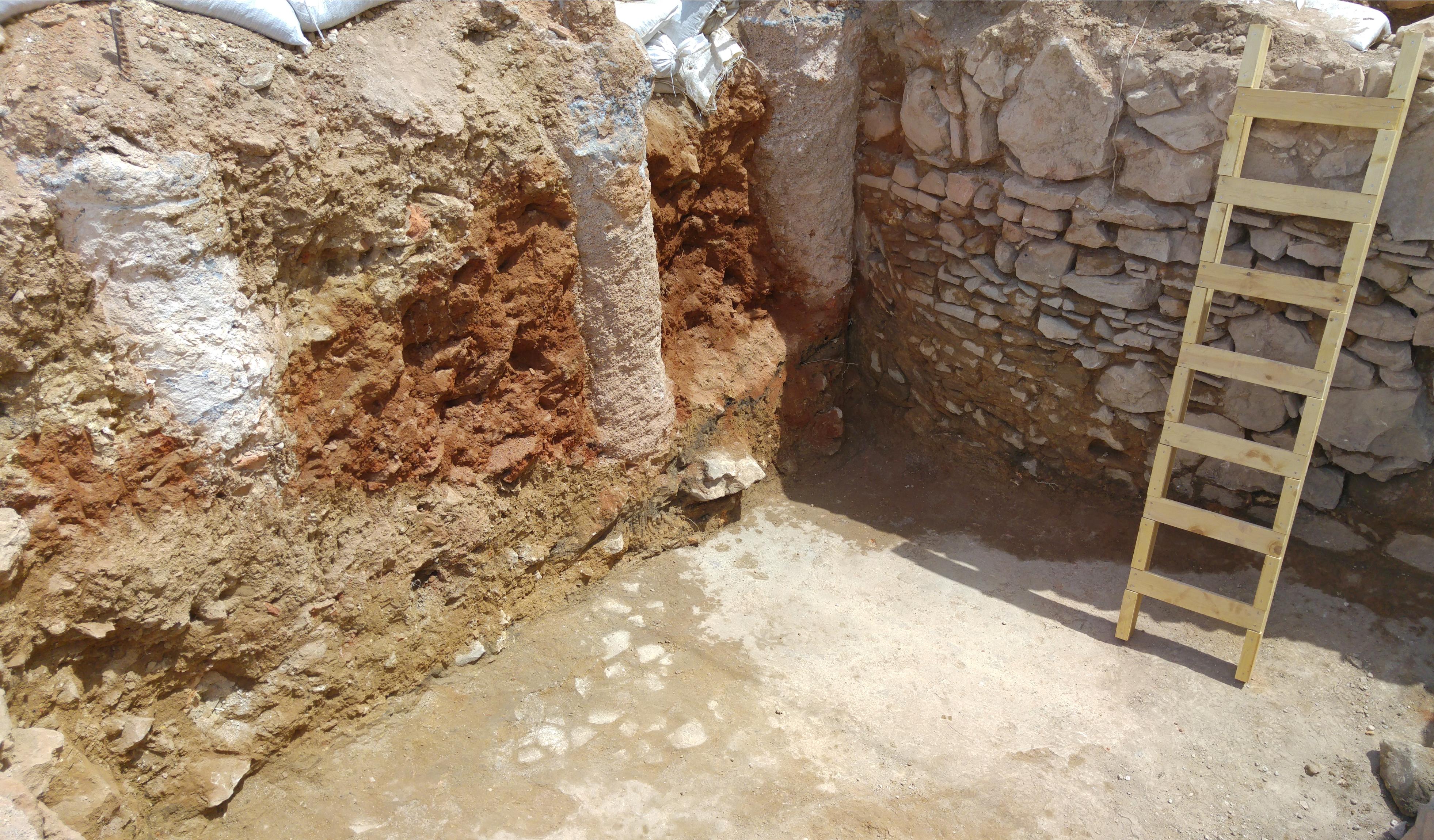
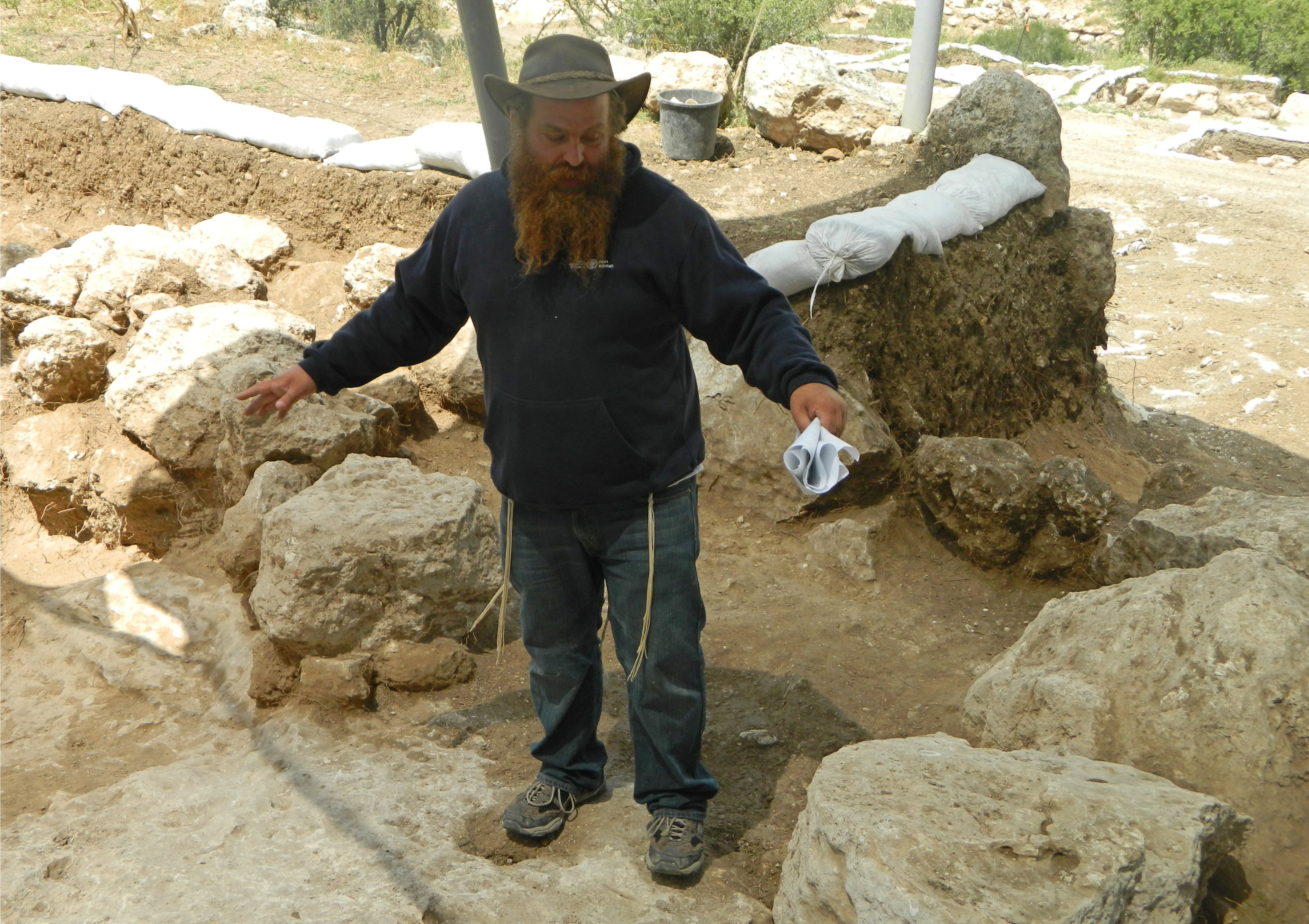
We made the necessary introductions and then enjoyed a brief site tour, catching us up with what’s been going on the past year or so since the salvage dig has been opened. In addition to Itamar and Ido there were a handful of paid laborers, and the third BIU friend, Eitan, who was still en route. Danit showed us to an excavated room, with a plaster floor which needed defining, and we got to work. Facing the eastern baulk of the pit-like room, we began by scraping the baulk straight down, to give us clean edges and a defined joint with the to-be-revealed floor. There were all sorts of potsherds, mostly unmarked rooftiles, until I came across one that had production marks, which I thought was pretty neat.

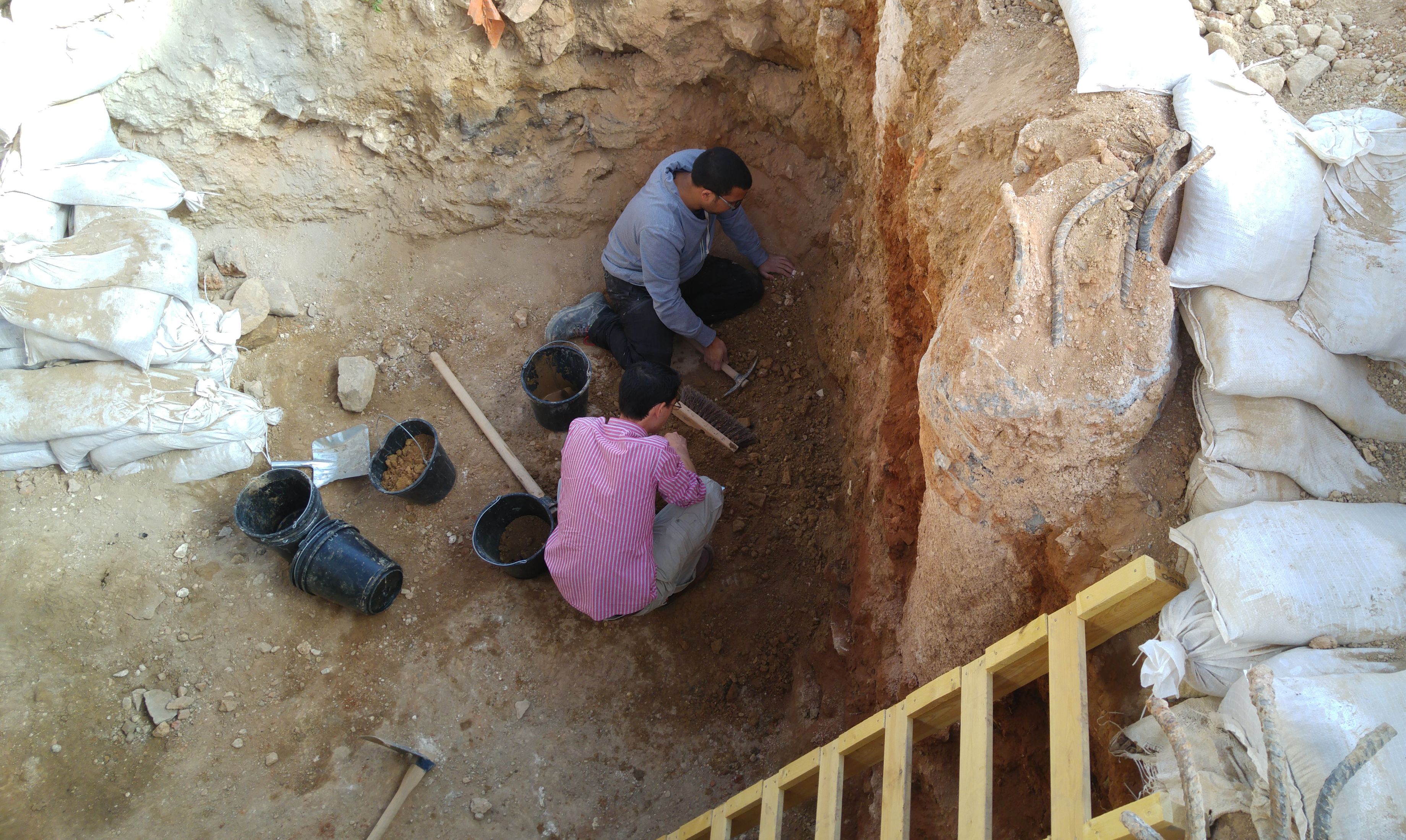
Working in the corner of the pit

What I came across next was similarly interesting, a deposit of wet clay that had a black-grey appearance, and oozed an oil-like substance when condensed. This is easily explained as refuse of the Roman potters, the black substance being nothing but carbon. We enjoyed playing with chunks of the malleable clay, but responsibly got back to work on the wall and the floor. Before long a curious crystal formation was pulled out of the dirt, this item being more of a geological than archaeological curiosity, but interesting to us nonetheless. The buckets of dirt were filled up and emptied by our hands repeatedly as the sun slowly made its way overhead. A common kestrel passed by, giving us a moment of birding enjoyment, respite from the physical labour we were doing. At some point Eitan had joined us, and was working in a spot adjacent to us pulling rooftiles out of the ground.

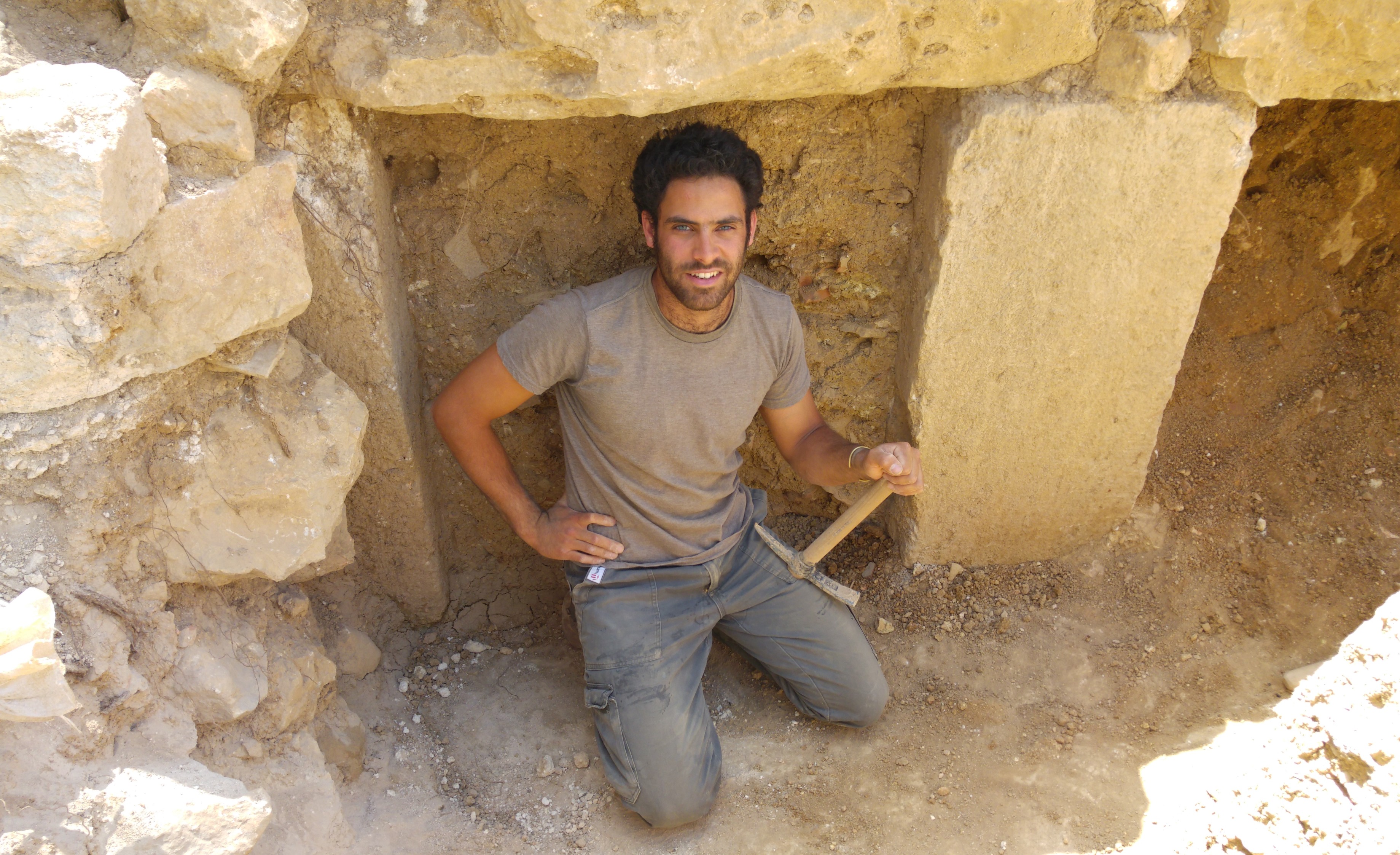
Eitan posing where he was digging

We took a break for lunch, getting basic food supplies such as bread and hummus from a nearby shop. After our feeding and relaxing we returned to work, eager to finish off the floor now that the walls were adequately straightened. It was delicate work, and Adam proved himself a valuable team member with his deft chiseling of the dirt caked onto the ancient plaster. We removed the dirt, scooping it into buckets to be dumped nearby, slowing bringing the old floor back to life.

LEG X FR rooftile

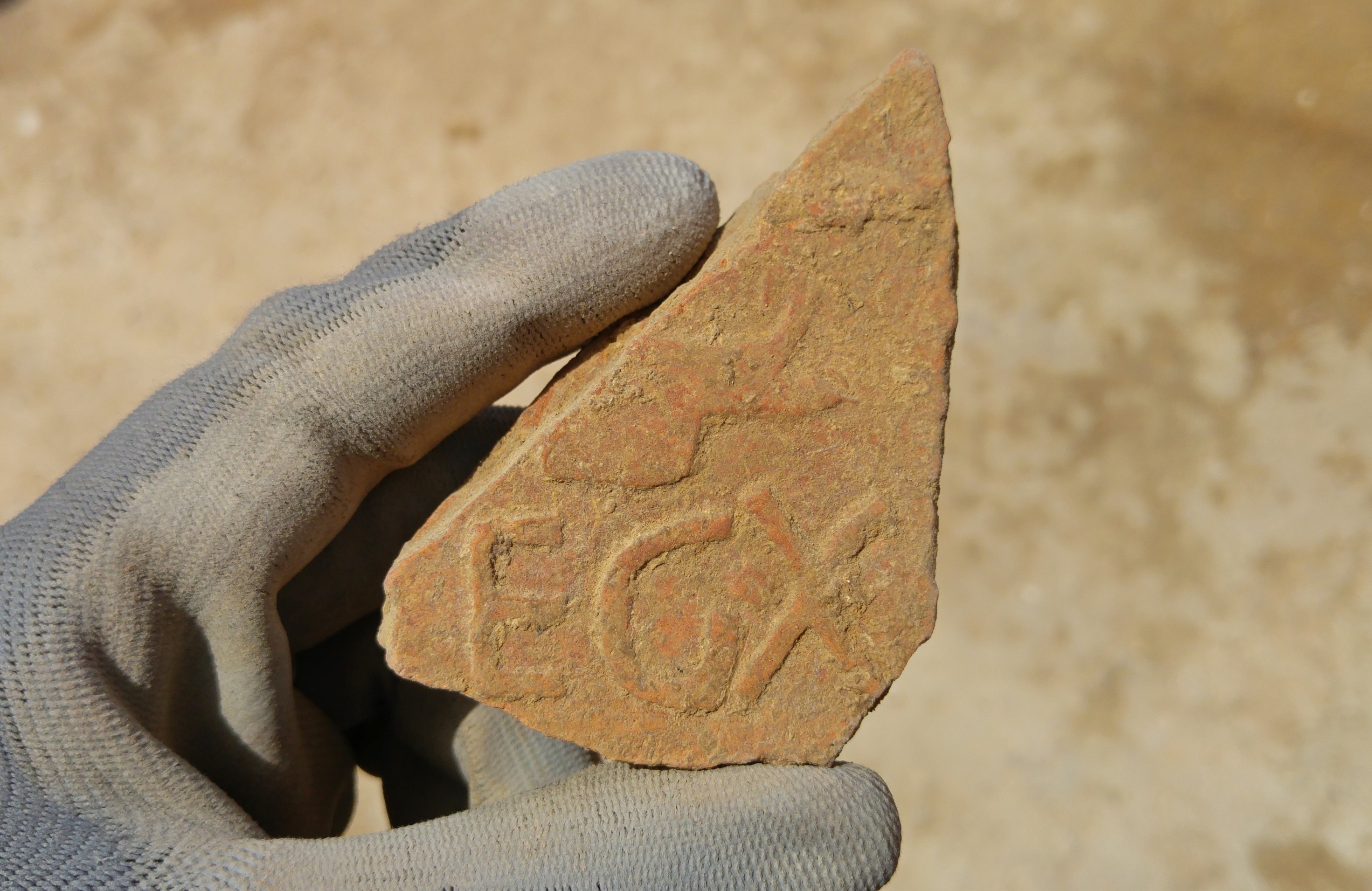
Ido hopped into the pit to clear some rock and scrape around a bit at the western side of the room, and the great sound of laughter could be heard coming out of our pit. But the laughter broke when Eitan managed to find an exceptional piece of tile, featuring part of a Tenth Legion stamp. The “EG X” from the complete term LEG X FR (Legio X Fretensis) was visible, as well as most of the warship that symbolised the unit alongside the wild boar.

After a day’s work

It was an exciting find, one that we were looking forward to since the day began, and it gave us a form of closure that went well with the finished floor job that Itamar, Adam and I had worked on. As the workday was coming to an end, we cleaned up and took pictures, then gave thanks to Danit for hosting us at her digsite. However, Adam and I weren’t quite ready to leave Jerusalem and decided to pay a visit to the Jerusalem Bird Observatory and the neighbouring Rose Garden.

Jerusalem Bird Observatory’s pond

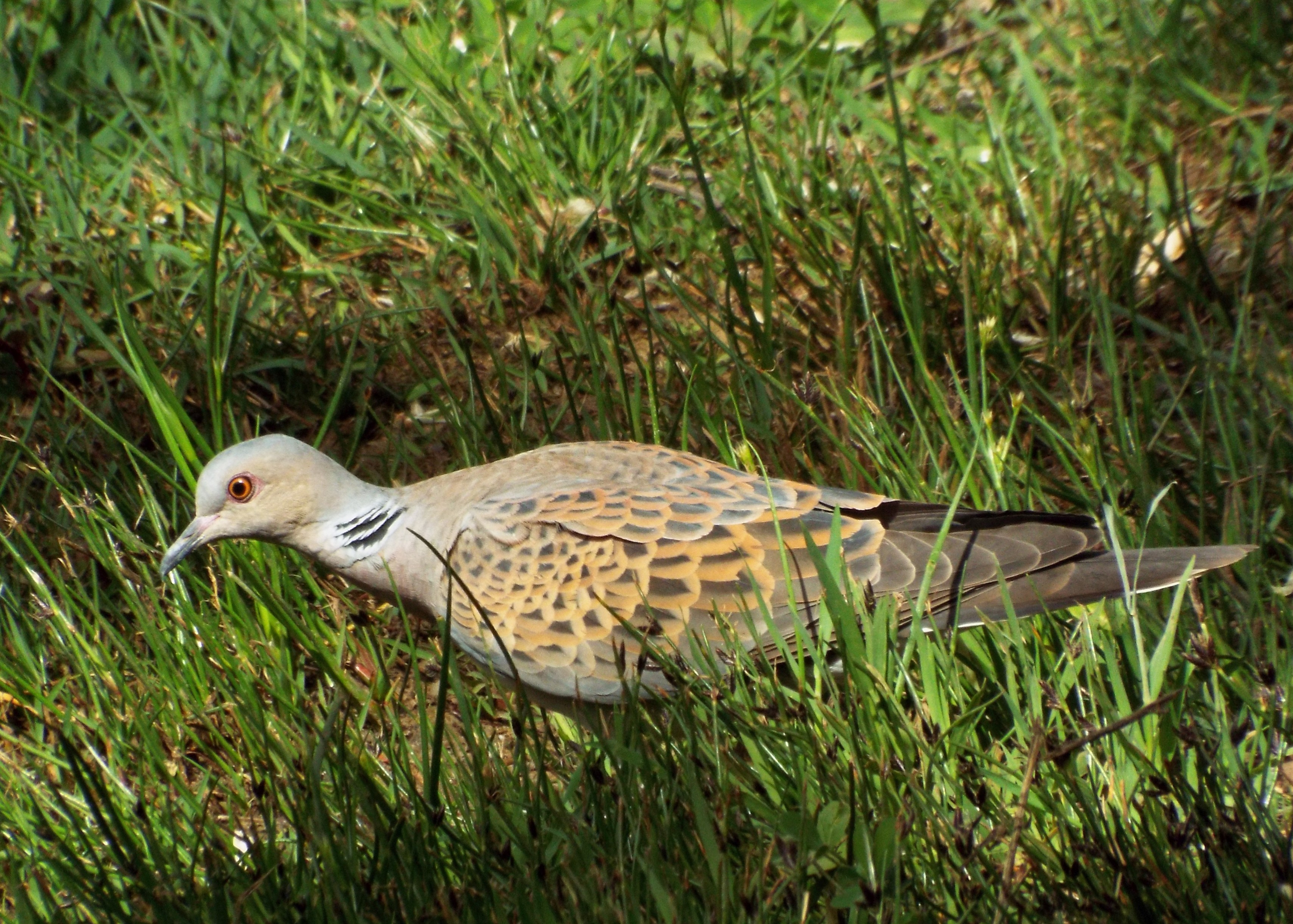
Itamar and Eitan decided to tag along, and we walked on over, starting with the rose gardens where we saw a lot of blackcaps and some Syrian woodpeckers. Approaching the bird observatory we saw a sparrowhawk fly directly over us, taking us by surprise and filling us with excitement. Sitting in the blind at the observatory, we watched the avian activity surrounding a small marshy pond, taking pictures here and there. There were a handful of somewhat interesting songbird species, including: greenfinches, whitethroats, willow warblers and tons of blackcaps. A single turtle dove made an appearance, as did a few thrush nightingales, a first for both Adam and I. Wrapping it up at the observatory, having said our farewells to Itamar and Eitan, we wandered around a bit looking for European nightjars which were spotted that very week. We didn’t find any, but instead saw a steppe buzzard flying over the neighbouring Gan Sacher.

Turtle dove (photo Adam Ota)

Back at the rose gardens, we watched the plentiful thrush nightingales flying about here and there, singing their complex song. In fact, the gardens were full of singing birds and the experience was most enjoyable. But the sun was soon to set and we were wanting for some food. Yom HaAtzmaut (Israel’s Independence Day) was about to start so we got some pizza and watched some of the national ceremony broadcasted on TV before heading back to Givat Shmuel – but not before ending off our exciting day with a pink blind snake slithering out in front of us on our way to the bus.

University Trip: Northwest Negev II

In Israel, Negev on May 22, 2018 at 1:15 PM

The day following our trip to Tel Gezer and other sites, we took another Bar Ilan University field trip, this time to the northwest Negev region. Leading us was Dr Shawn Zelig-Aster, a lecturer in Biblical history, and our destinations included a string of biblical-age settlement ruins. We departed from the campus in the morning and made our way by means of minibus to the first of the sites: Tel el-Hesi.

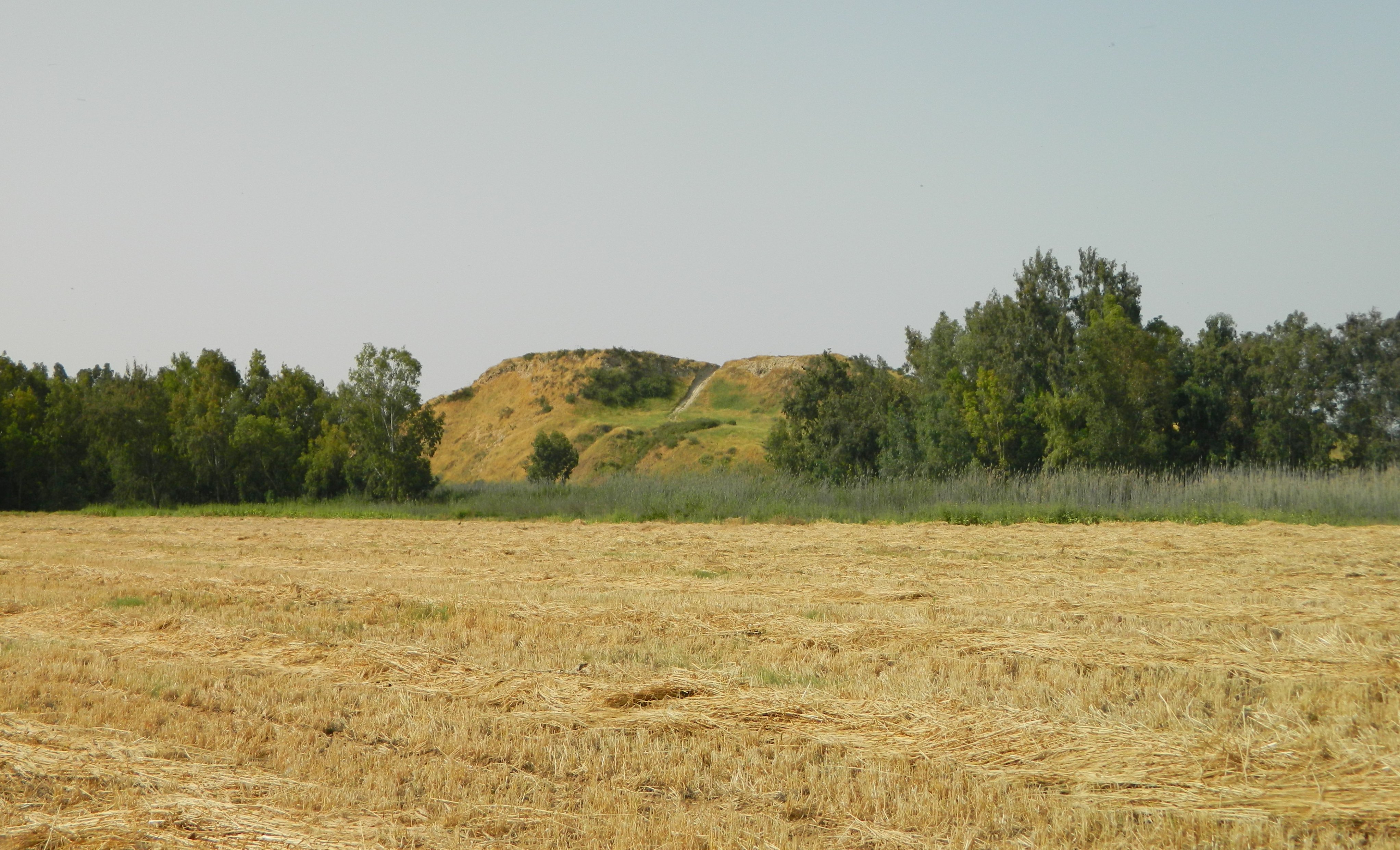
Approaching Tel el-Hesi

Famous for being the first site to be excavated using the concept of chronological stratigraphy, pioneered by British archaeologist Flinders Petrie at Tel el-Hesi in 1890 on behalf of the PEF (as can be seen HERE). According to this method, the understanding of differing levels excavated point directly to different time periods in chronological sequence. Under the belief that Tel el-Hesi was the Biblical city of Lachish, Petrie, and later American archaeologist FJ Bliss, excavated with the use of local Arab laborers to define Levantine archaeological sequences in the most scientific manner yet.

Cereal grain detail

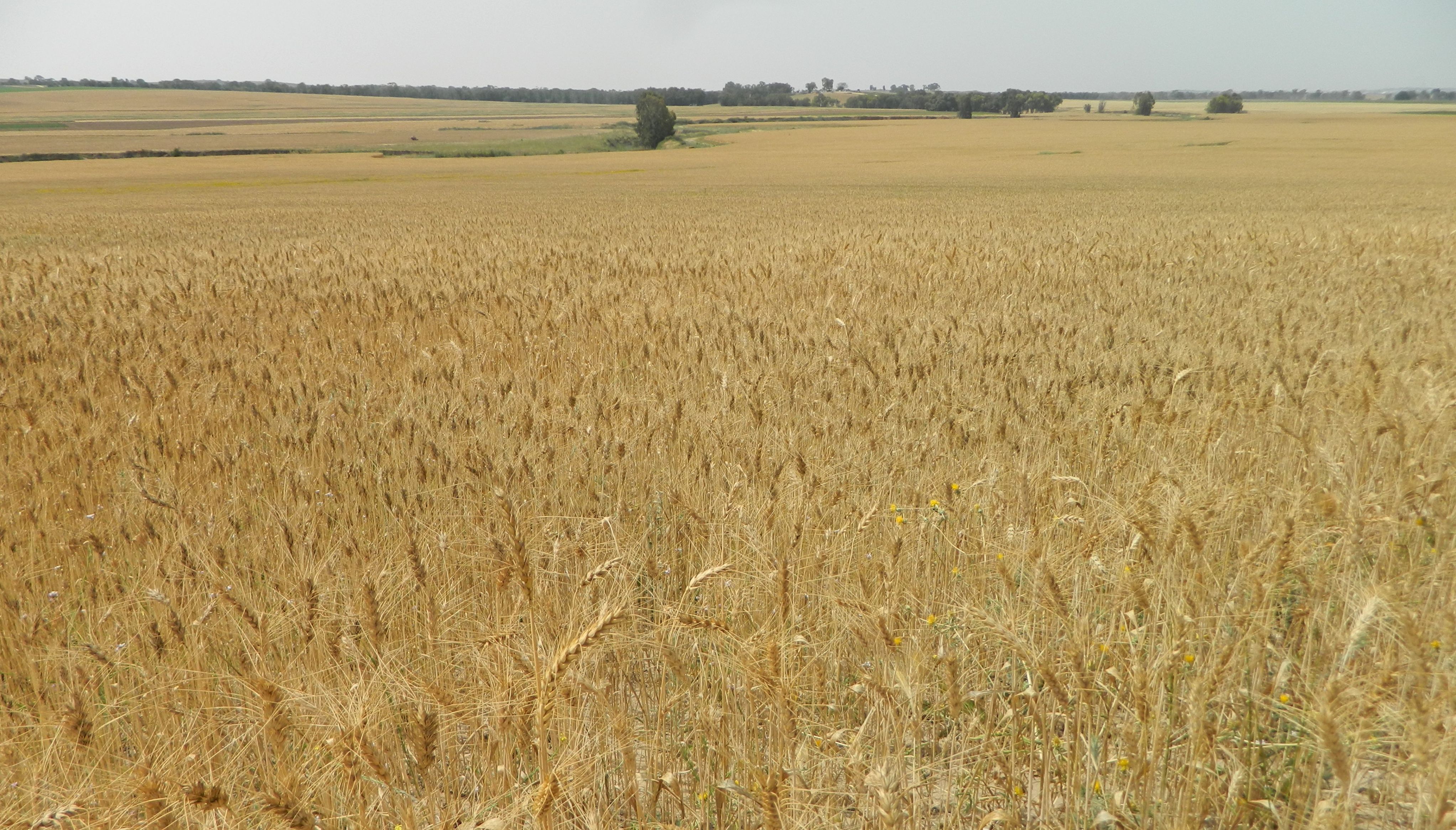
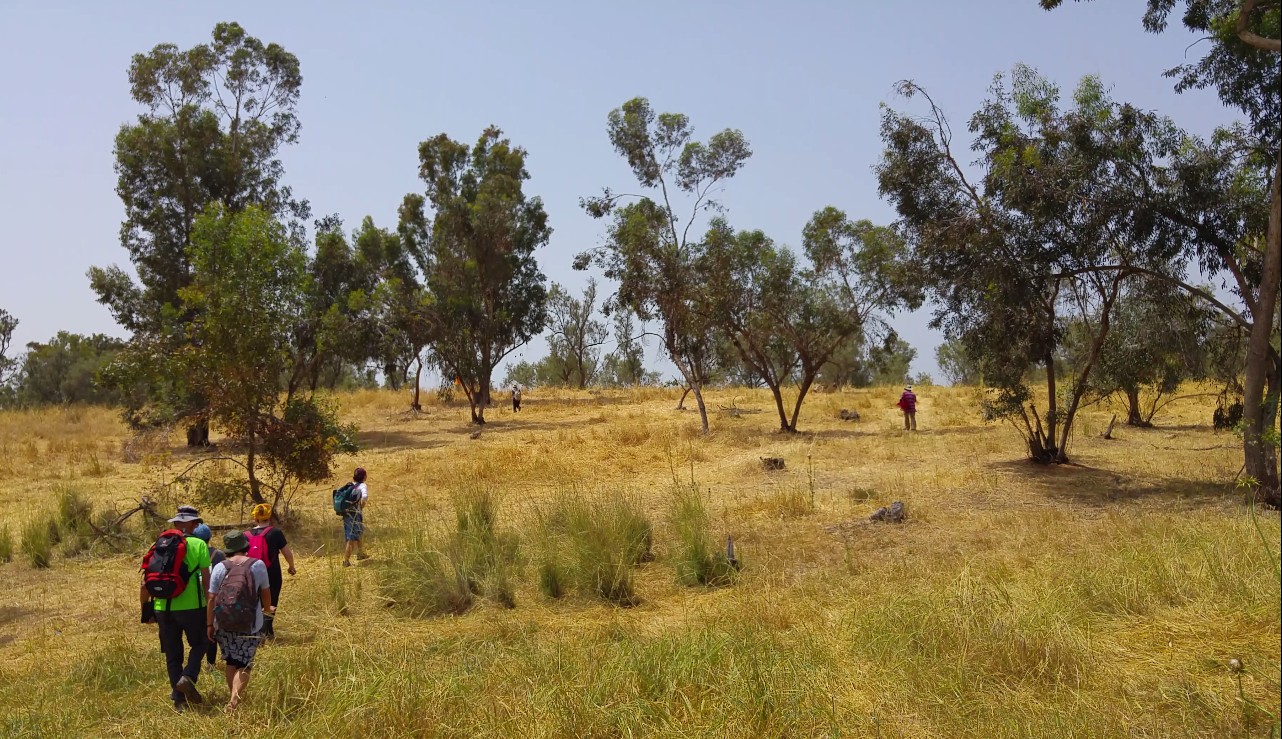
We disembarked from our minibus on an access road off Road 40 in a slightly less scientific manner, gathering around beside a golden wheat field to hear from Dr Zelig-Aster. Being that it’s spring and a different part of the country than I’m usually in, I was eager to find new and interesting birds, as is to be expected. But that had to wait, as there were only a few collared doves and a jackdaw in the nearby vicinity. Properly briefed on the geographical aspect of the land, we began along the dirt road toward Tel el-Hesi, shaded by a row of trees planted alongside the road.

Scenic view

We reached Nachal Shikma, with its flour mill ruins, and continued until we reached a harvested field that gave us the first look at the small tel. As we stood there, learning about the tel and its importance in history, I noticed that the birds flying around above us looked a little peculiar. Maxing out my camera’s 21x optical zoom, I was able to see that these were very colourful European bee-eaters – my first time seeing them.

Beetles on a thistle

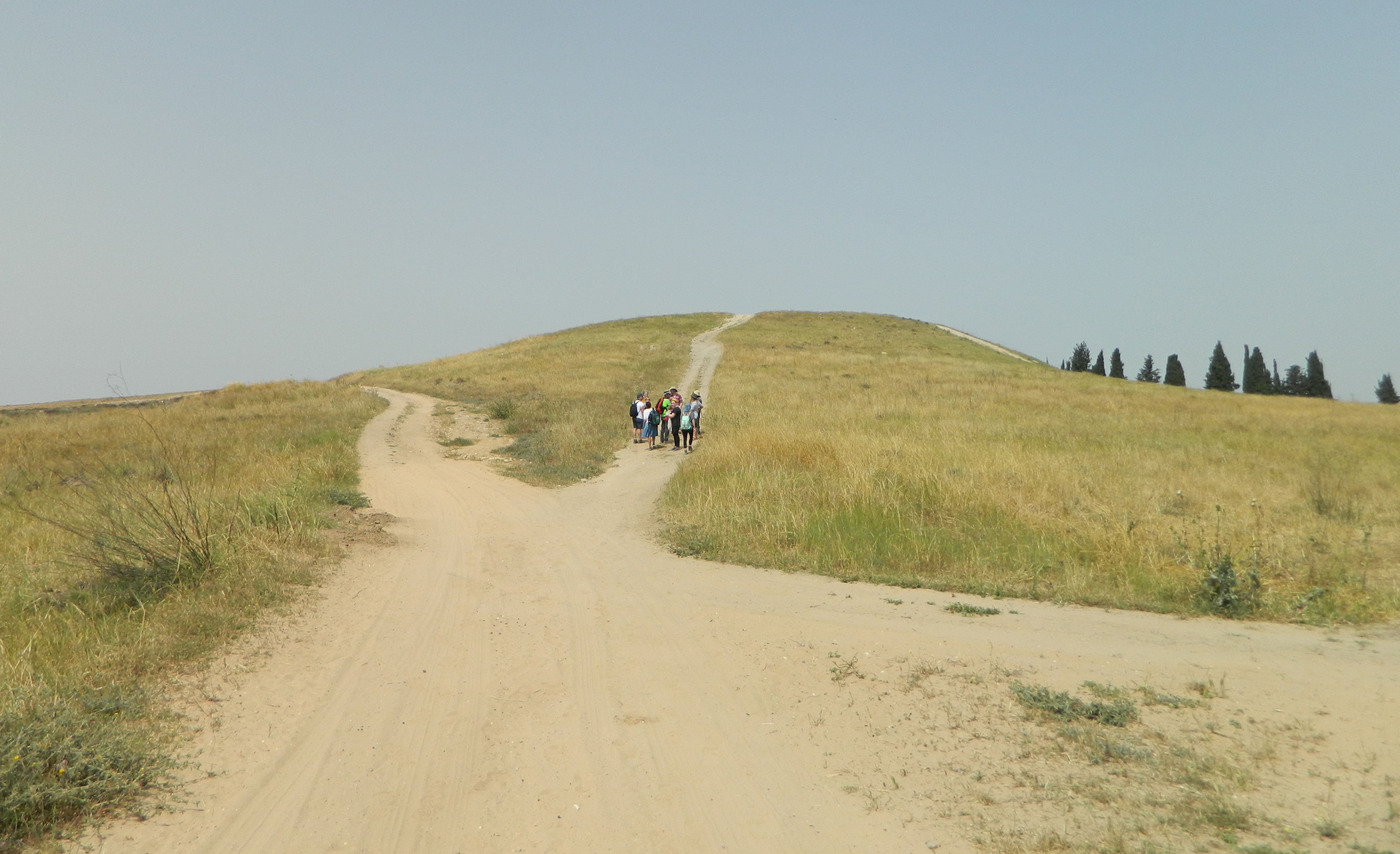
Leaving the field to approach the tel from the north, we continued after seeing a nice step buzzard pass overhead. Next, we found a picturesque field with some of spring’s blossoms still dotting the green grass, and stopped to take a group photo.

Group photo

We approached and then climbed the tel via the dirt road, and as I walked, I noticed a flock of white storks coming from the west and a few black kites mixed in too. At nearly the top of the tel, a small flock of small birds took flight, frightened off by us. Later, I identified them as red-throated pipits – again a first for me.

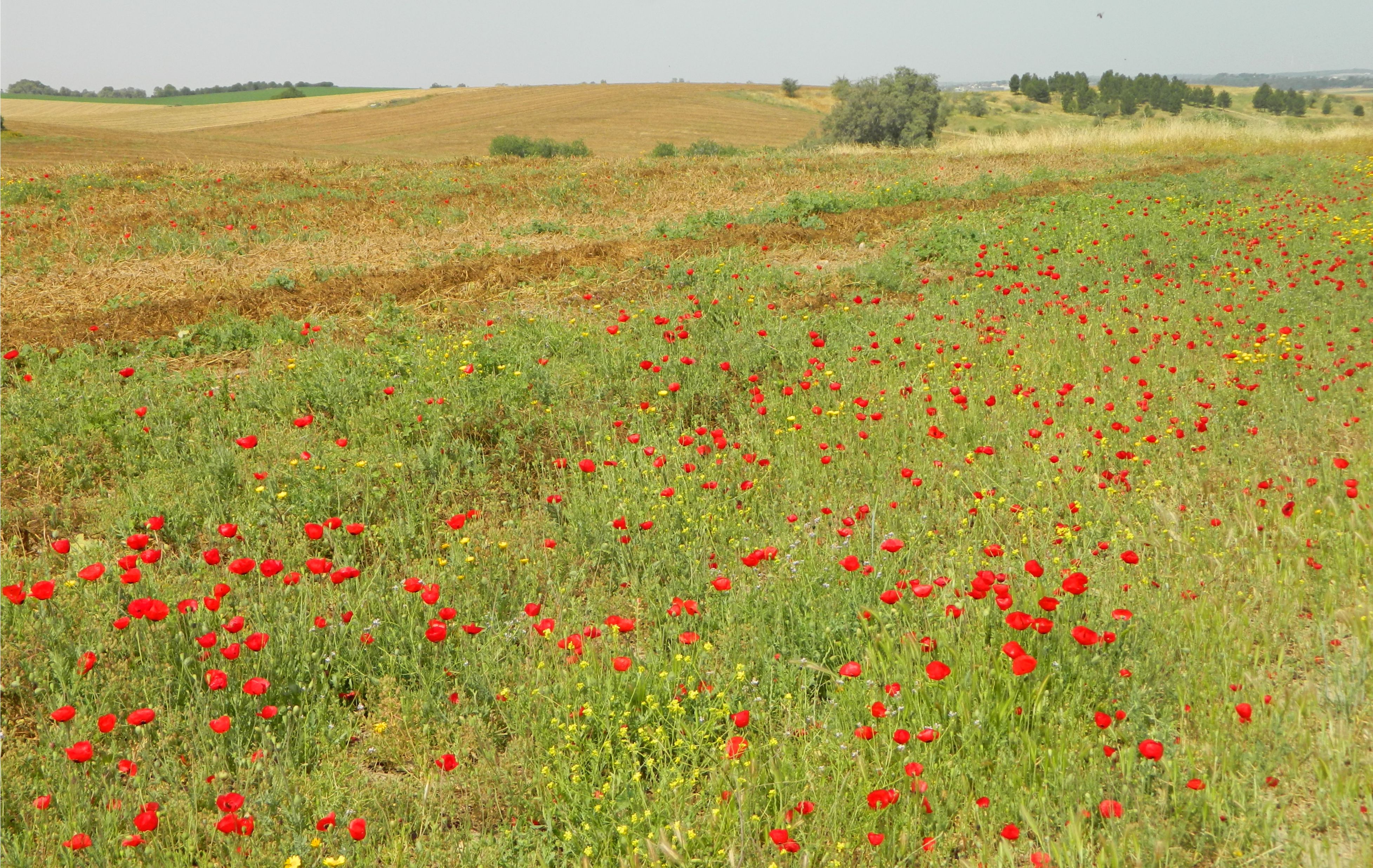
Poppies growing beside the trail

Atop the tel we realised that the bee-eaters were nesting in the red earth banks, and as there wasn’t much to see anymore, we made our way back down after a few minutes, allowing the bee-eaters to continue their breeding undisturbed. From the tel’s vantage point I was afforded a sighting of a masked shrike and this season’s first roller for me – a lovely blue bird that I had only previously seen at the Tel es-Safi archaeological dig in the summer.

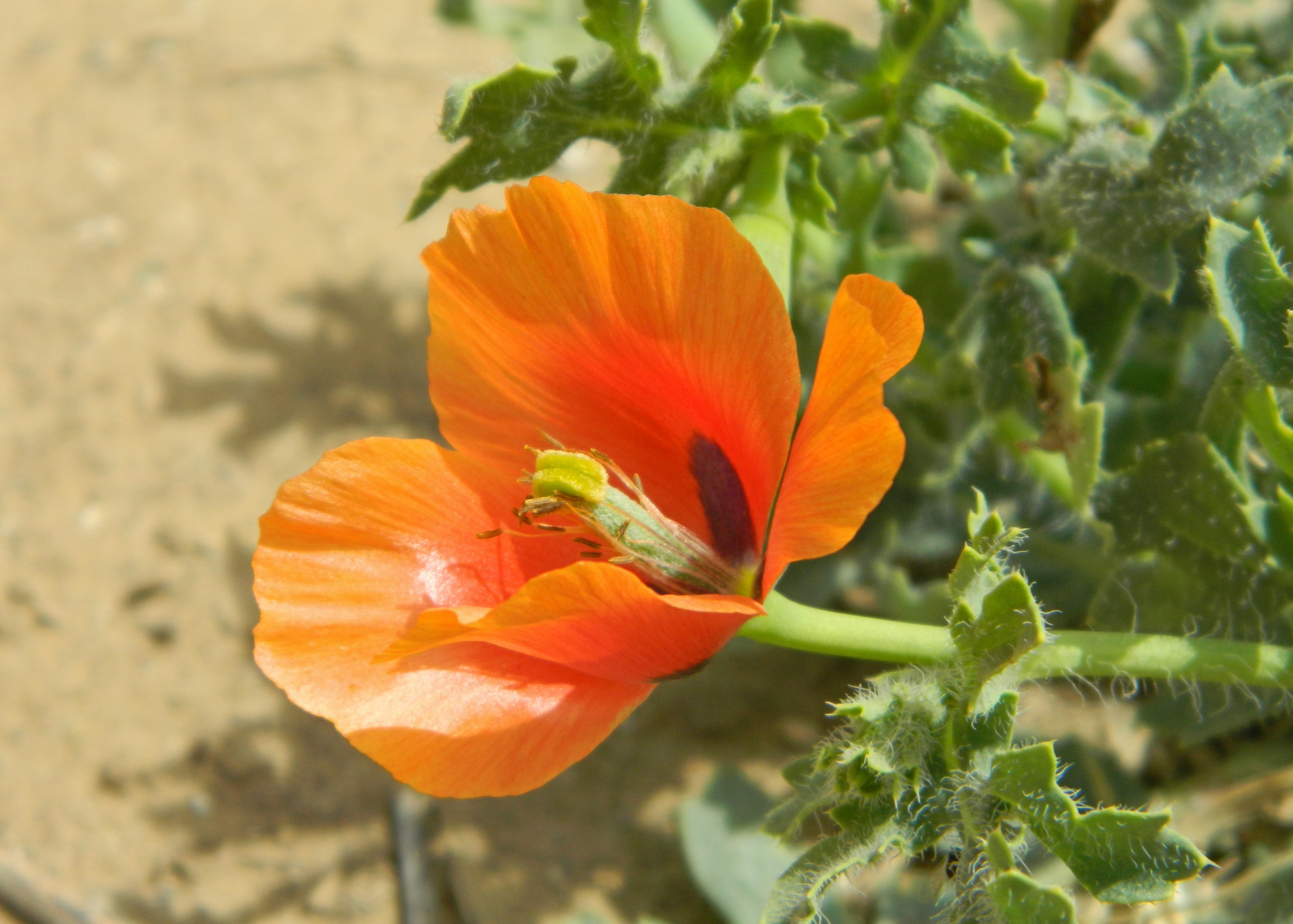
Horned poppy flower

Heading back down the tel, we continued on the dirt road northwest toward the next site on the list: Tel Sheqef. Along the way we found a horned poppy with its orange blossoms growing right in the middle of the road, saw a few more rollers, and nearly had a altercation with some Bedouin shepherd dogs. Two kilometres later we climbed the small hill that is Tel Sheqef.

Tel Sheqef

Without too much visible architecture, the tel was largely covered with earth and dry grass, and made a nice place to stand on. As we stood in a circle, my eyes drifted off to scan the surroundings but my attention was eventually caught by one of the members of our party. We had discovered a couple crude white mosaic stones, similar to those that I found in the Jerusalem aqueduct archaeological dig, and then a couple more. Within minutes we realised that we were surrounded by dozens of these stones and were properly impressed by the implications of a ruined mosaic floor.

Bedouin herding his sheep

We didn’t spend long atop Tel Sheqef with its Bronze, Iron and Hellenistic age ruins, but rather elected to continue onward toward our next site. The walk to the west followed alongside agricultural fields, mostly wheat and potato, for several kilometres of heat and humidity. Off in the distance, we saw black smoke rising, probably a result of the rioting at the Gazan border that was ongoing that week. We trudged along, following the dirt roads until at last we reached a gathering of pine trees. We cut through the trees and found a small hill covered with the same dry grass that adorned the other tels.

Wheat field

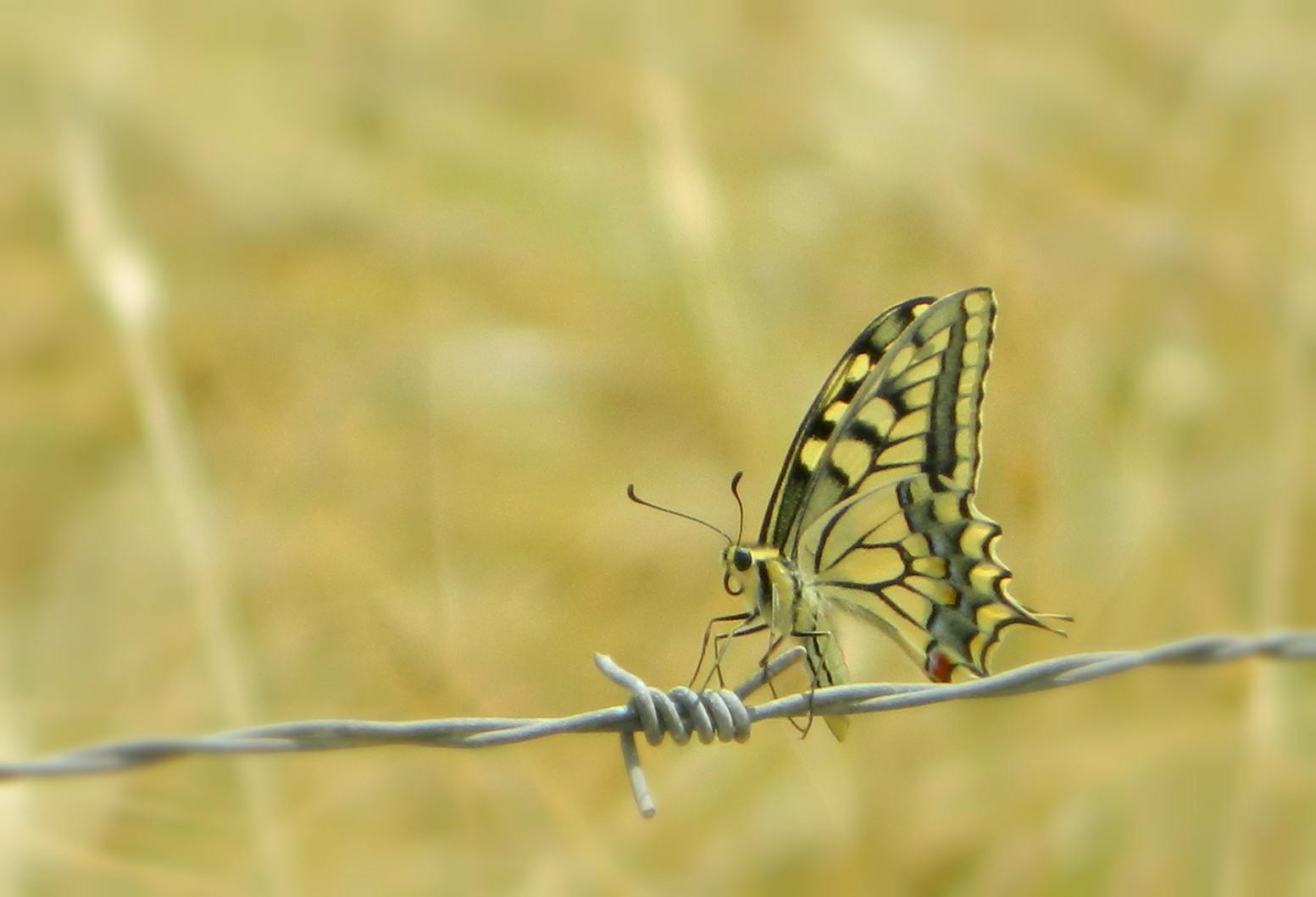
Up top, we gathered around beside some fenced-off ruins that had been excavated in recent years. We were at Khirbet Summeily, just east of Tlamim, a moshav founded in 1950 by immigrants from Djerba. I became immediately distracted by a number of swallowtail butterflies who were obsessively feasting on thistles.

Swallowtail butterfly

I even shared a moment with one particular swallowtail who flew off when I got too close to its thistle. I expected the butterfly to go find a different flower, but no, instead it landed on the barbed wire nearby and waited. This gave me a great opportunity to photograph it, which I did to the best of my ability, and then I backed off. When I was a sufficient distance away, the swallowtail took flight and returned to its thistle, where it continued to feed.

Examining the overgrown ruins of Khirbet Summeily

We briefly learned about the site of Khirbet Summeily, and its lack of biblical identity, and then examined the ruins from up close. Descending the small hill, we returned to the trees and made our way toward the road.

Departing via the trees

Along the way we found countless clumpings of wool from Bedouin sheep that were shorn at the end of the winter, which was a slightly unusual scene. We found our minibus and boarded it, all hot and sweaty, and enjoyed the ride back to BIU, knowing that the next trip was just around the corner.

A video of this trip, which I made for the department’s YouTube channel, can be found HERE.

University Trip: Tel Gezer & RBS Dig

In Israel, Judea on May 14, 2018 at 9:37 AM

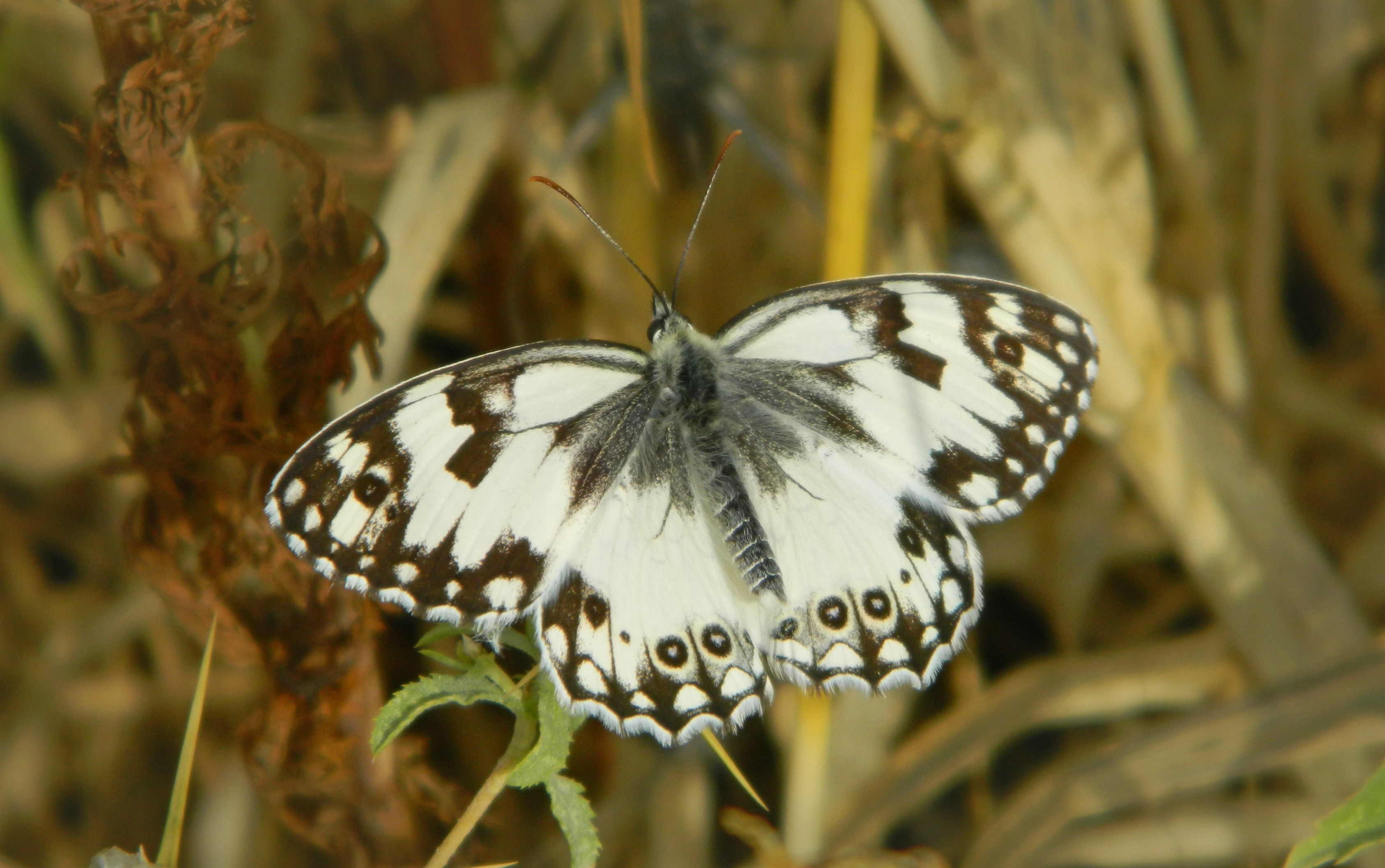
The week following Pesach break I went back down to Givat Shmuel and resumed my studies at Bar Ilan University. That Thursday, I partook in a field trip with Prof Aren Maeir to several sites in the Judean Lowlands. The first on the list was the famous site of Tel Gezer, located nearly seven kilometres northwest of Latrun and just over nine kilometres southeast of the city of Rehovot. We left BIU in the morning and made our way directly to Tel Gezer, our tour bus driving up the run-down access road to the top of the hill. There we disembarked and set off on a counter-clockwise tour of the site. Immediately, I noticed the abundance of black-and-white butterflies fluttering about, feasting on the wildflowers.

Levantine marbled white butterfly

Whilst I was crouching in the thistles distracted by the Levantine marbled white butterflies, Prof Maeir began the site overview lecture. Gezer was first settled in prehistoric times, but an actual city wasn’t established until the Bronze Era, some 4,500 years ago. Mention of Gezer can first be found in Egyptian records, such as the famed el-Amarna letters, and that was followed up by the Bible where it is listed as an important city. Conquering the land from the local Canaanites, the Israelites moved in alongside them in the city of Gezer, unable to conquer it completely. Gezer saw decline after the Hellenistic period, and was rebuilt as a small village during the Ottoman period.

Israelite ruins of Gezer

Gezer was excavated at first in 1902 by RAS Macalister, and archaeological digs have been ongoing nearly every decade since then up until 2015. Open to the general public, with signs and everything, the tel is now open as a national park. Returning to the history of the site, we discussed the famous Gezer calendar, a limestone tablet with a list of agricultural activities corresponding to the months of the year. Dr David Elgavish, a fellow lecturer at BIU, helped with the correct reading of the ancient script, allowing us to properly enjoy the archaic calendar.

Descending into the underground water system

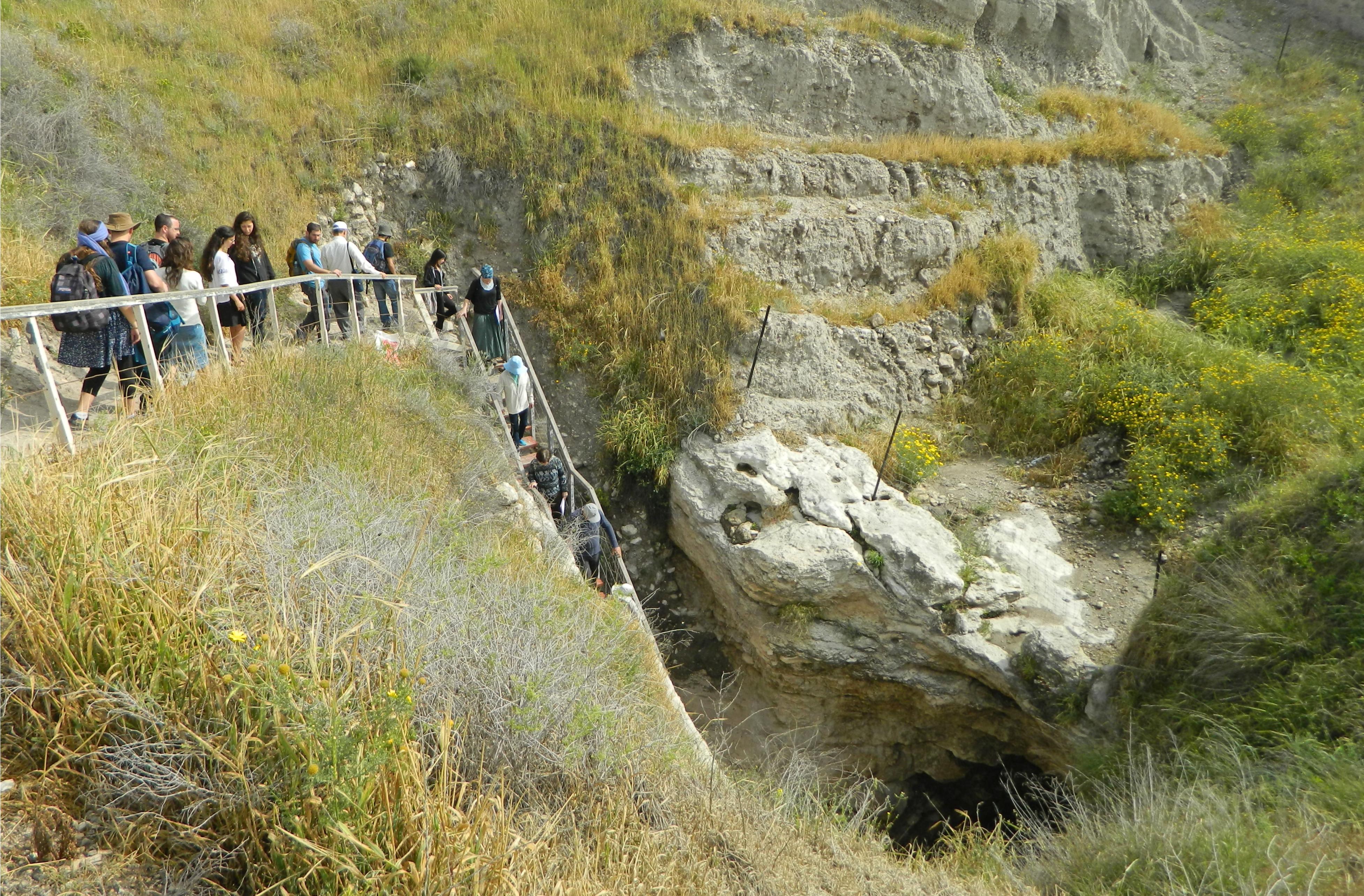
From there we entered the park proper, and made our way to the Canaanite ruins, starting with the ancient tower of large rectangular ashlars. Opposite the large tower, still within the ancient city limits, we found the entrance to the underground water system. We descended by way of stairs and peered into the depths of the sloped subterranean tunnel. Water could be found some forty metres below the surface hences the need for a relatively complicated method of extraction.

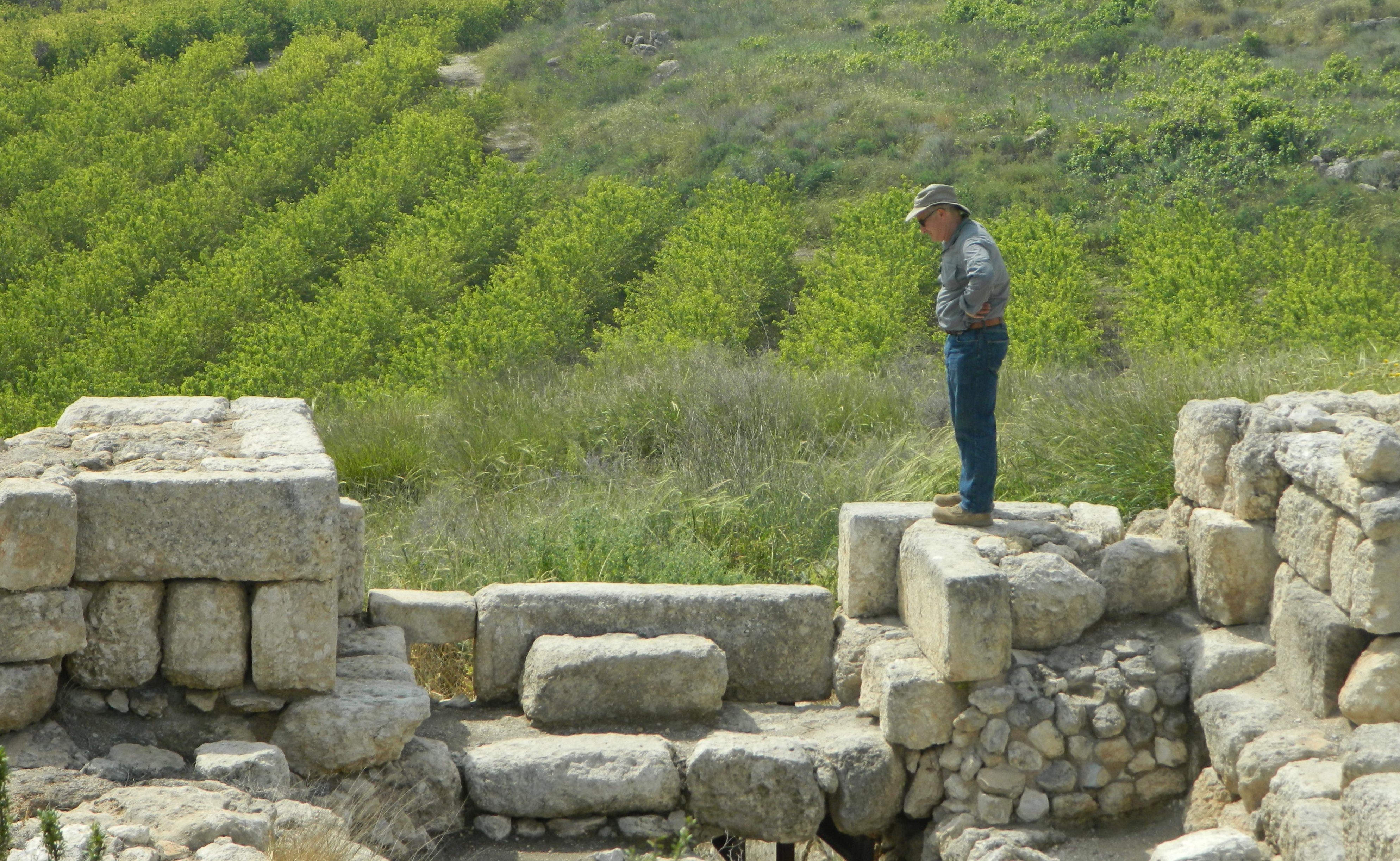
Prof Maeir standing at the gate

Feral pigeons adorned the insides of the tunnel, while jackdaws crowded about outside, watching us indifferently. We climbed back out of the cool tunnel, back into the sun, and made our way to the Canaanite city gate, made of stone and mud brick. A common kestrel made passes overhead, scanning the tall, dry vegetation for prey, and a crested lark could be seen singing from atop a sign.

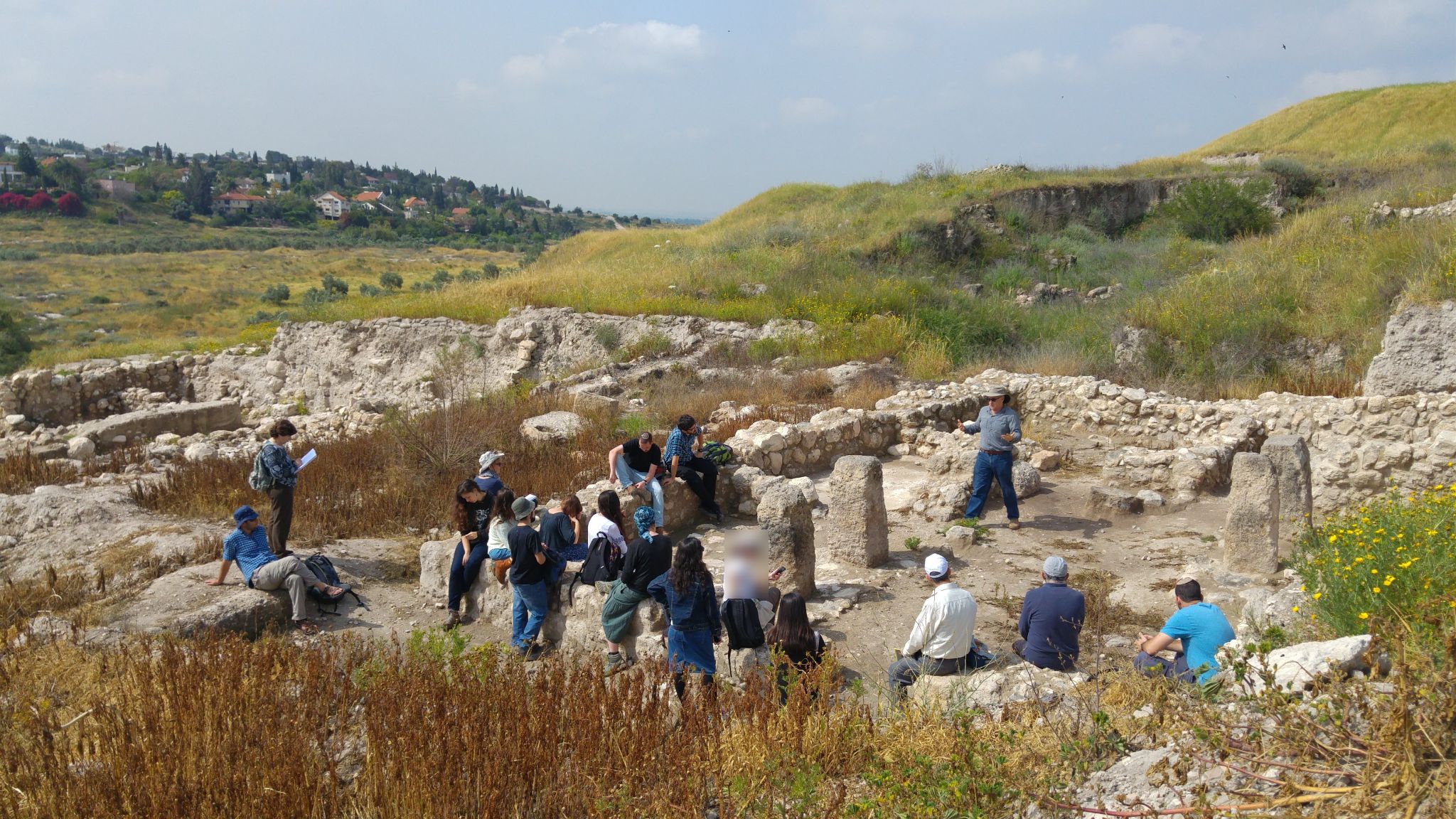
Lecturing within the ruins

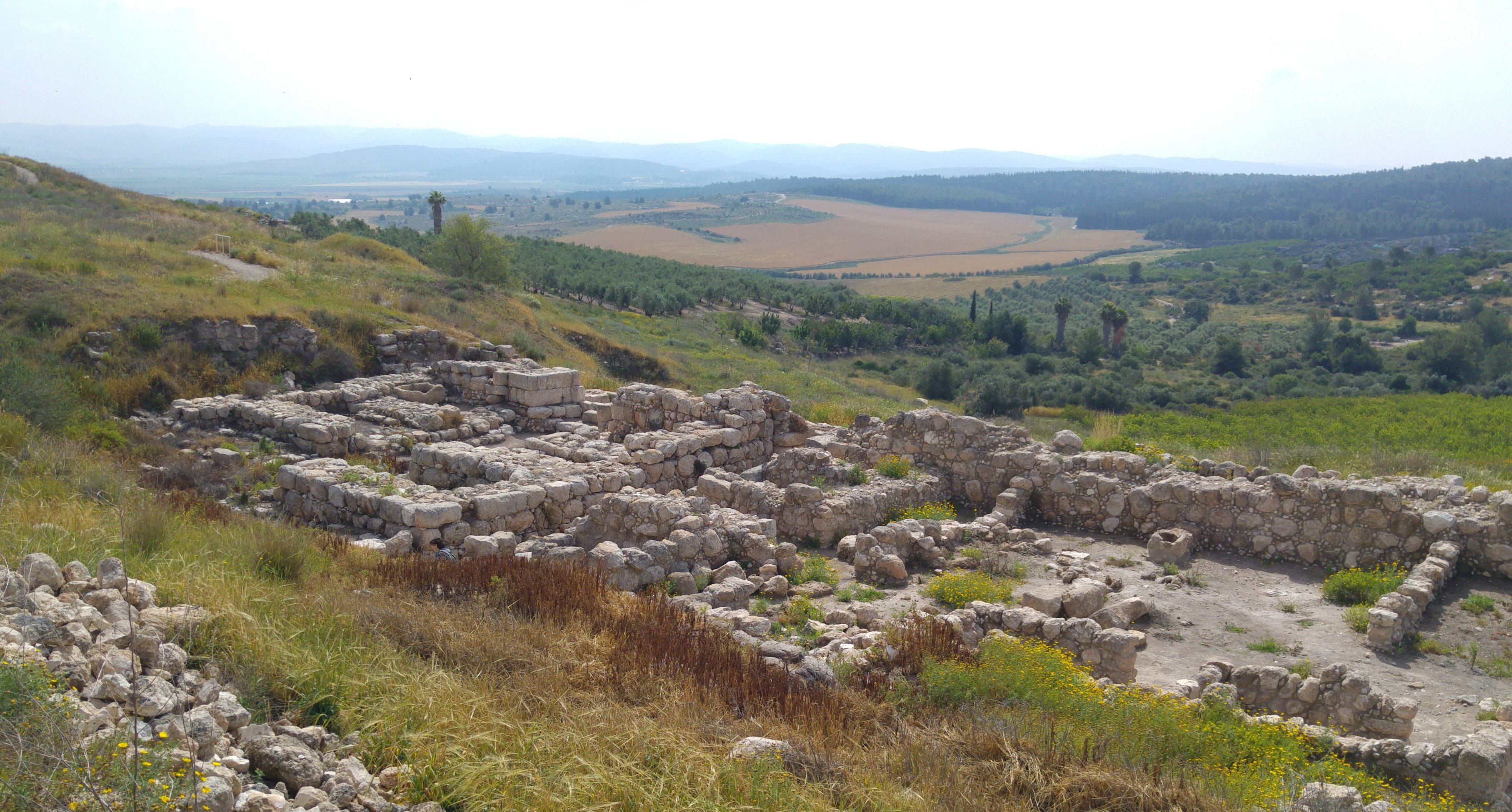
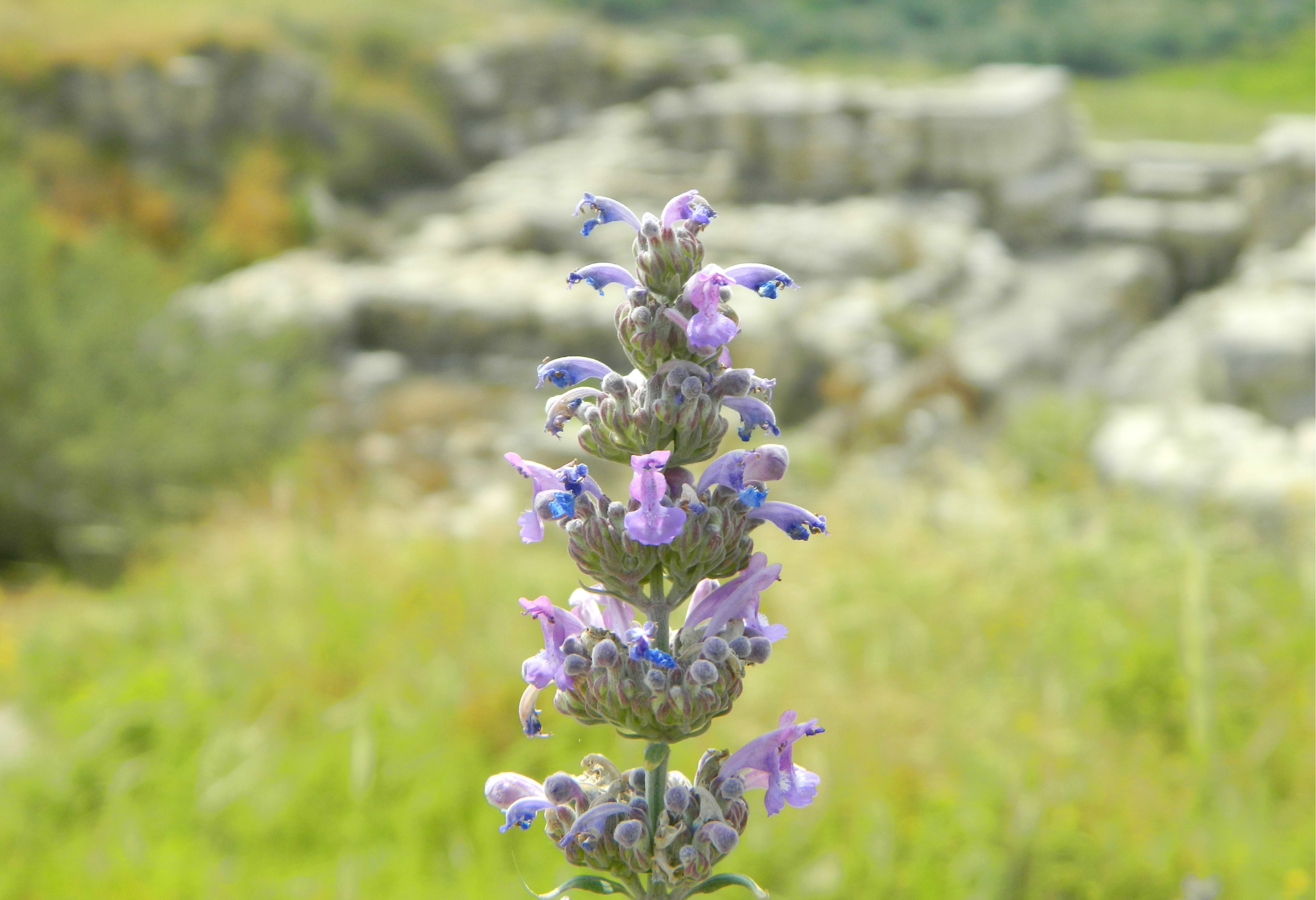
We continued along the dirt path until we reached the Israelite ruins, and the wildflowers that edged the walkway to it. A relatively large area to be excavated, the ruins clearly showed a residential area of the ancient Iron Age city. A large blue-purple wildflower captured my attention, later to be identified as Syrian catnip.

Syrian catnip at Tel Gezer

Prof Maeir lectured first from the vantage point looking over the ruins, and then we descended to see the ancient architecture from up close. Once below, we examined the gate of the casemate wall, comprised of a number of chambres. The gate is associated with the reign of King Solomon, following the biblical passage listing the fortifications at Hazor, Megiddo and Gezer.

Monolithic stones

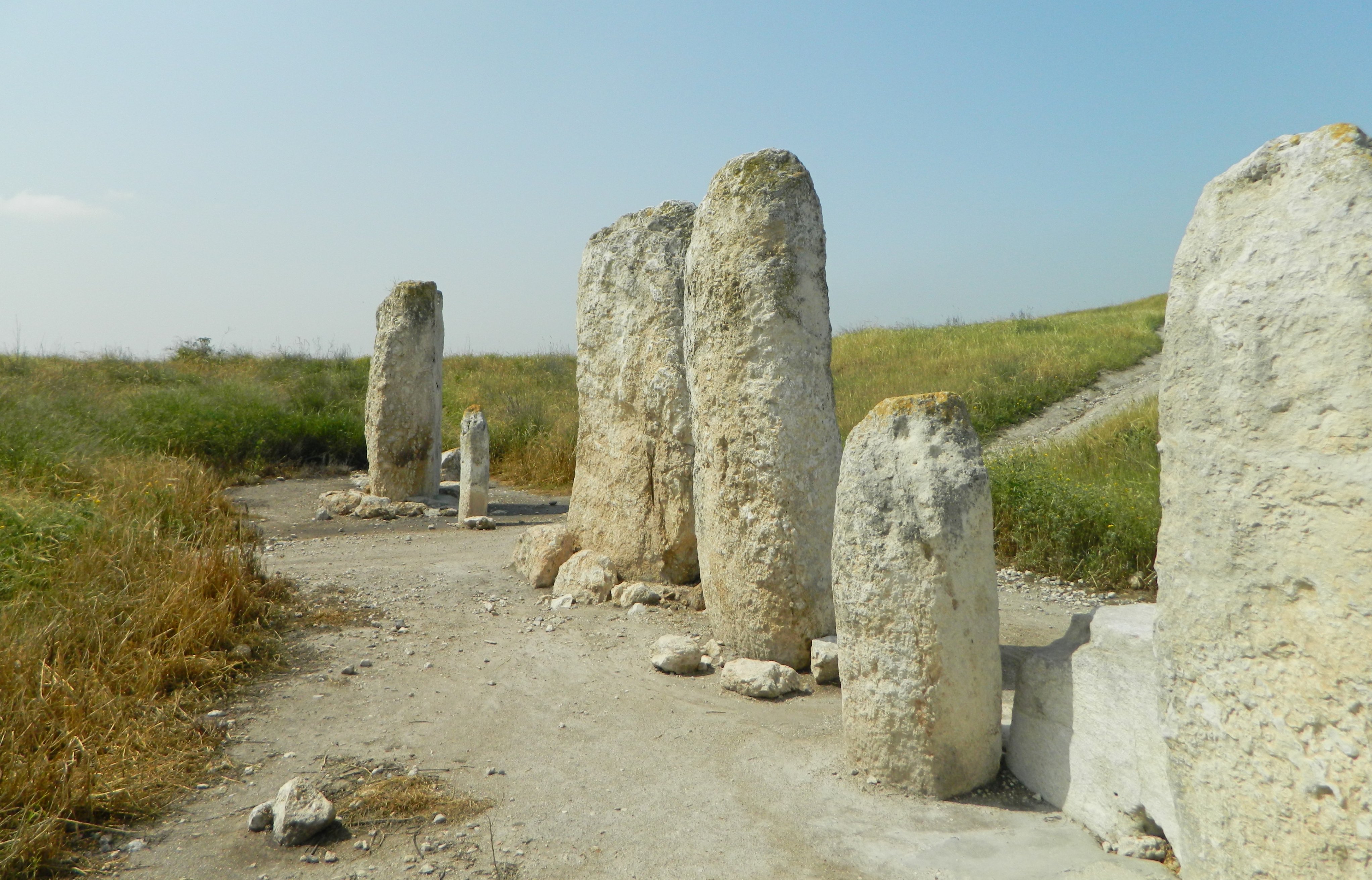
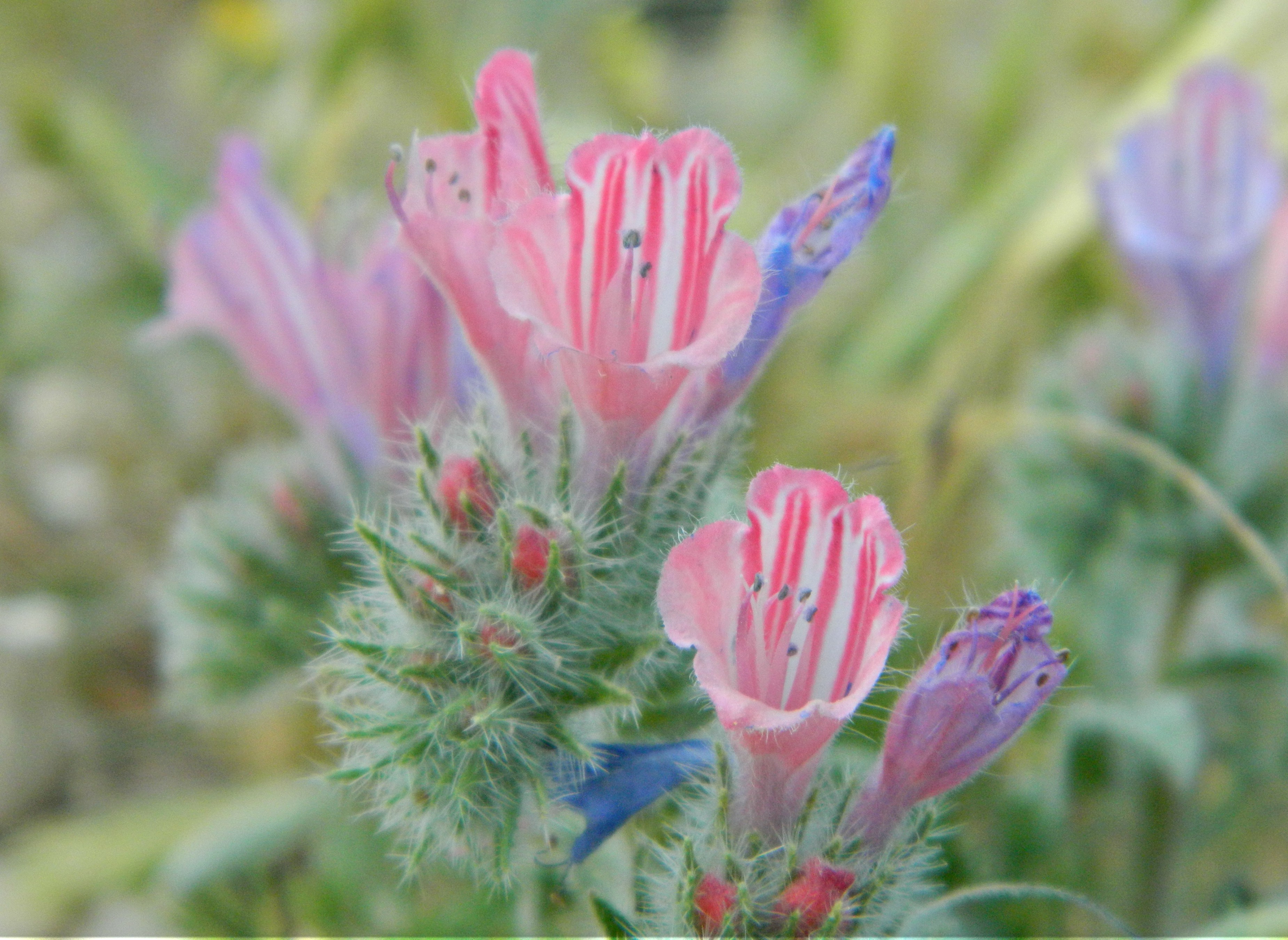
Looping around the east side of the tel, we made our way to the ten monolithic stones standing upright in a line. Large, raw columns, these stones seem to have served as features of a shrine, accompanied with a stone basin of sorts. Quite an unusual sight, which was improved by the presence of viper’s bugloss, one of my favourite wildflowers.

Judean viper’s-bugloss

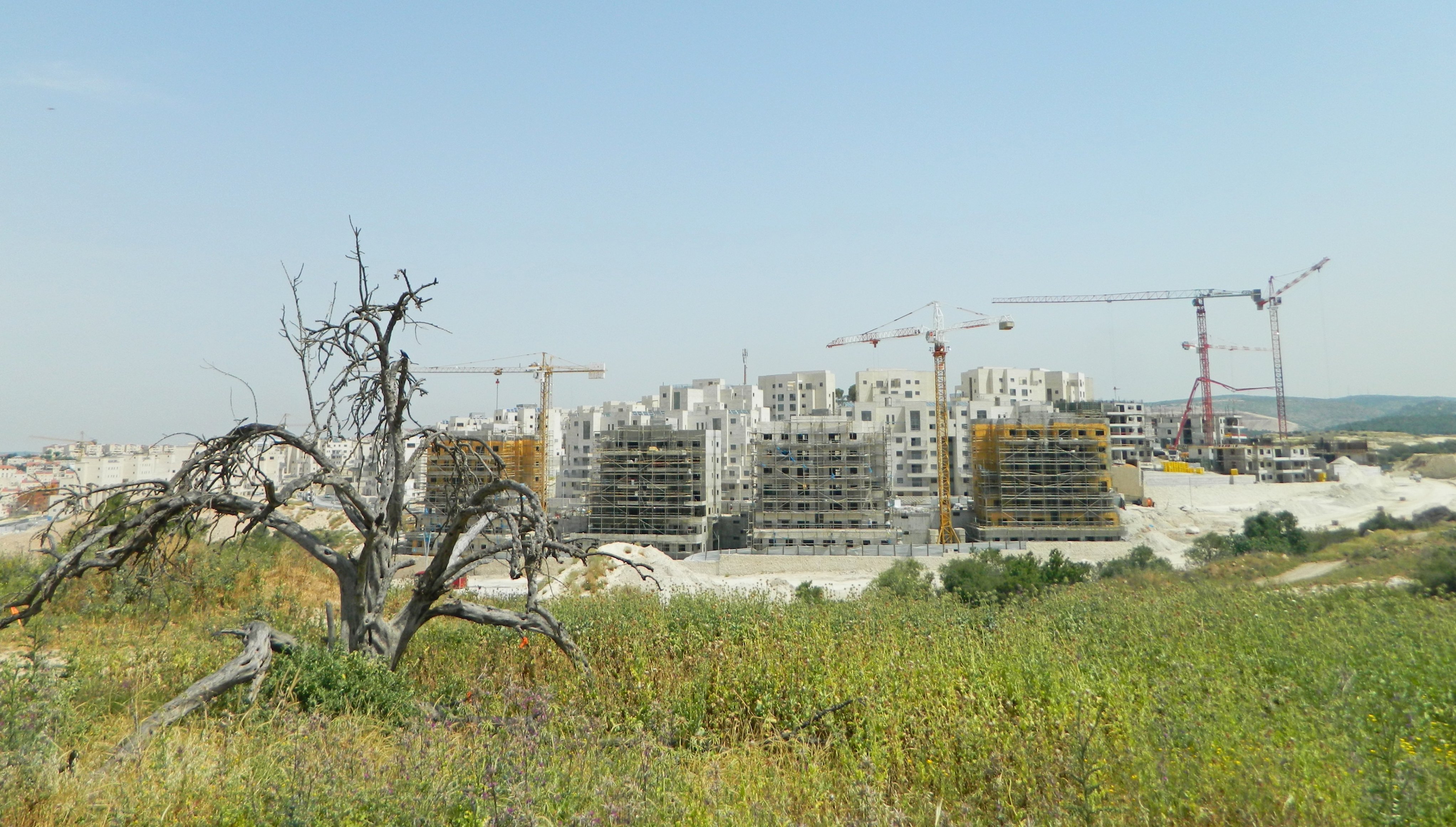
From there we completed our circuit of the tel, passing a demarcated sheikh’s tomb, and then left the hill by means of our tour bus. Our next stop was some fifteen kilometres to the southeast, on land plotted out for one of Bet Shemesh’s planned neighbourhoods. A somewhat controversial topic with lovers of nature and archaeology, the city’s expansion plan calls for the work of salvage excavations by the hands of the Israel Antiquities Authority. It was one of these digs to which we were headed.

Encroaching buildings of Bet Shemesh

Lead by Benyamin Storchan, a BIU graduate with whom I shared a class or two, the salvage excavation was launched to verify that nothing landmark was going to be built over. We met Benyamin under the tarp beside the washed pottery and sat down to hear about the site. He began with a summary of the Bet Shemesh expansion, showing us our location on a detailed satellite image map.

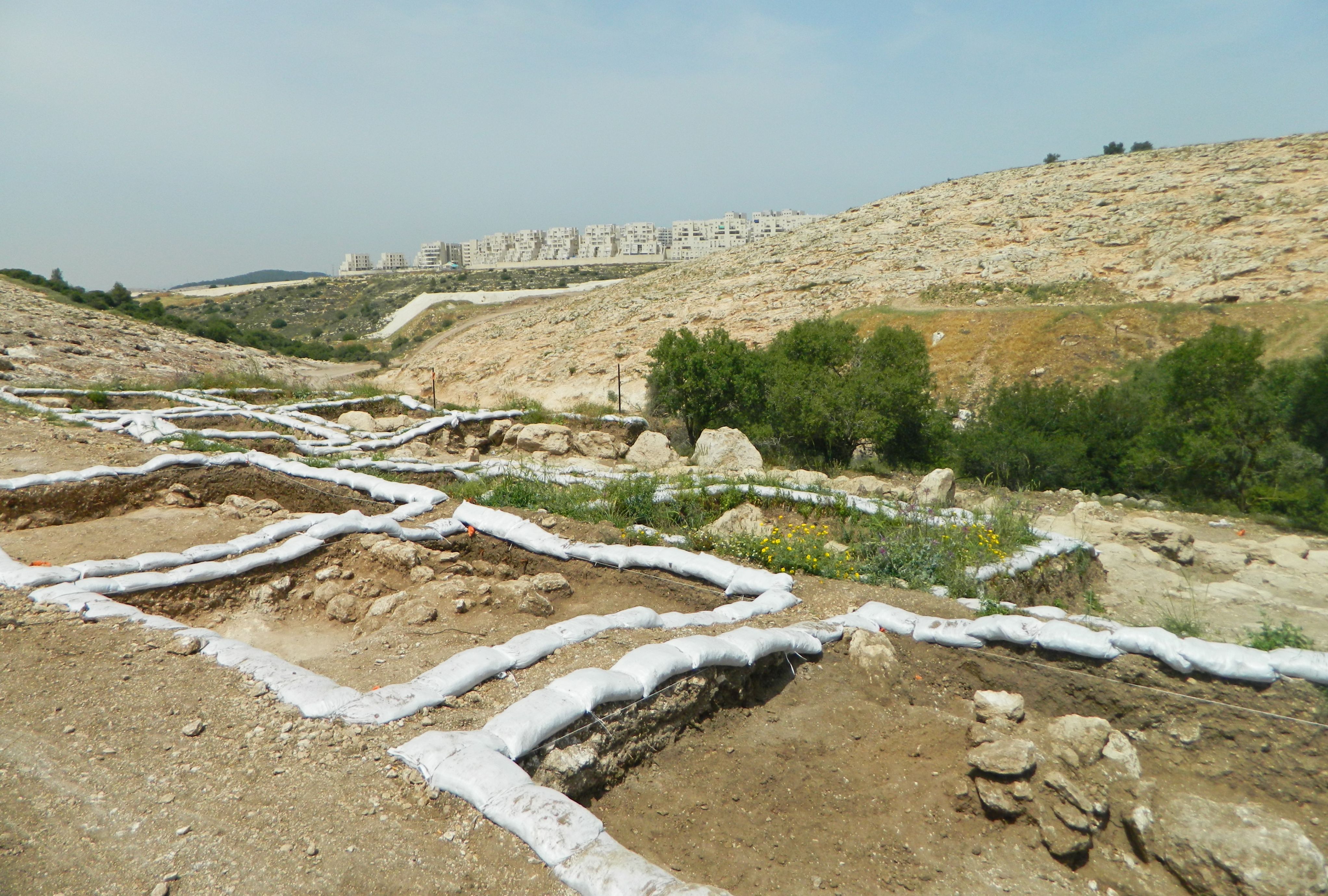
Ramat Bet Shemesh dig squares

After ten minutes or so we left the shade and headed over to examine the dig site. A tractor was working uphill and the dozen or so Arab workers paused to watch us parade by. We began with the lower section, where Benyamin produced a top plan and went over the architectural findings thus far. From there we moved uphill and examined the area currently under excavation.

Benyamin Storchan explaining the architecture

We naturally had some questions about the interesting dig, and hopefully one day the entirety of the excavation results will be published for all of us to enjoy. In the meantime, we headed back down the slope towards the pottery washing station where we examined the findings, including simple mosaic stones, painted potsherds and even a section of what looks to be the neck of a jug with a branch relief.

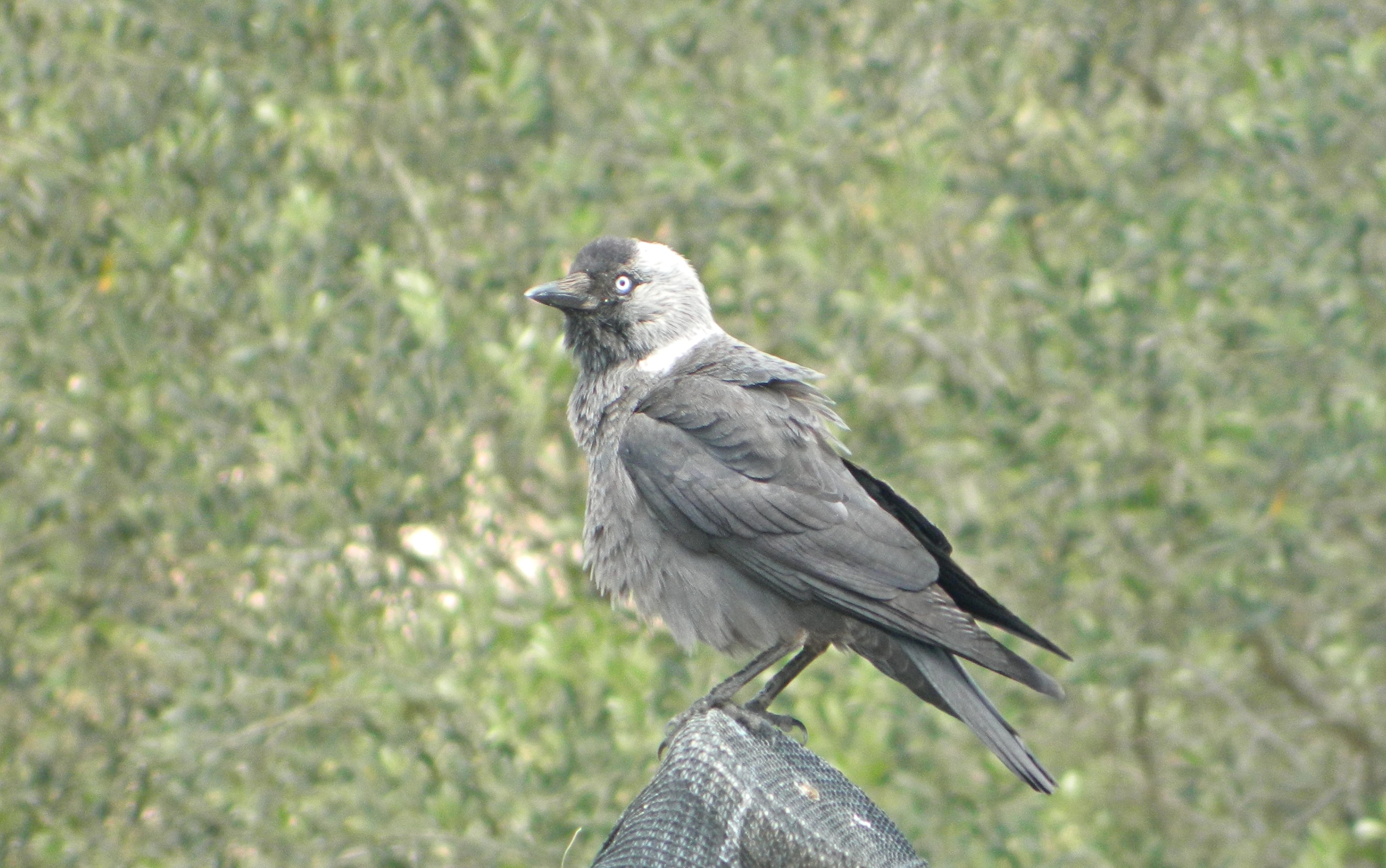
Jackdaw at the dig

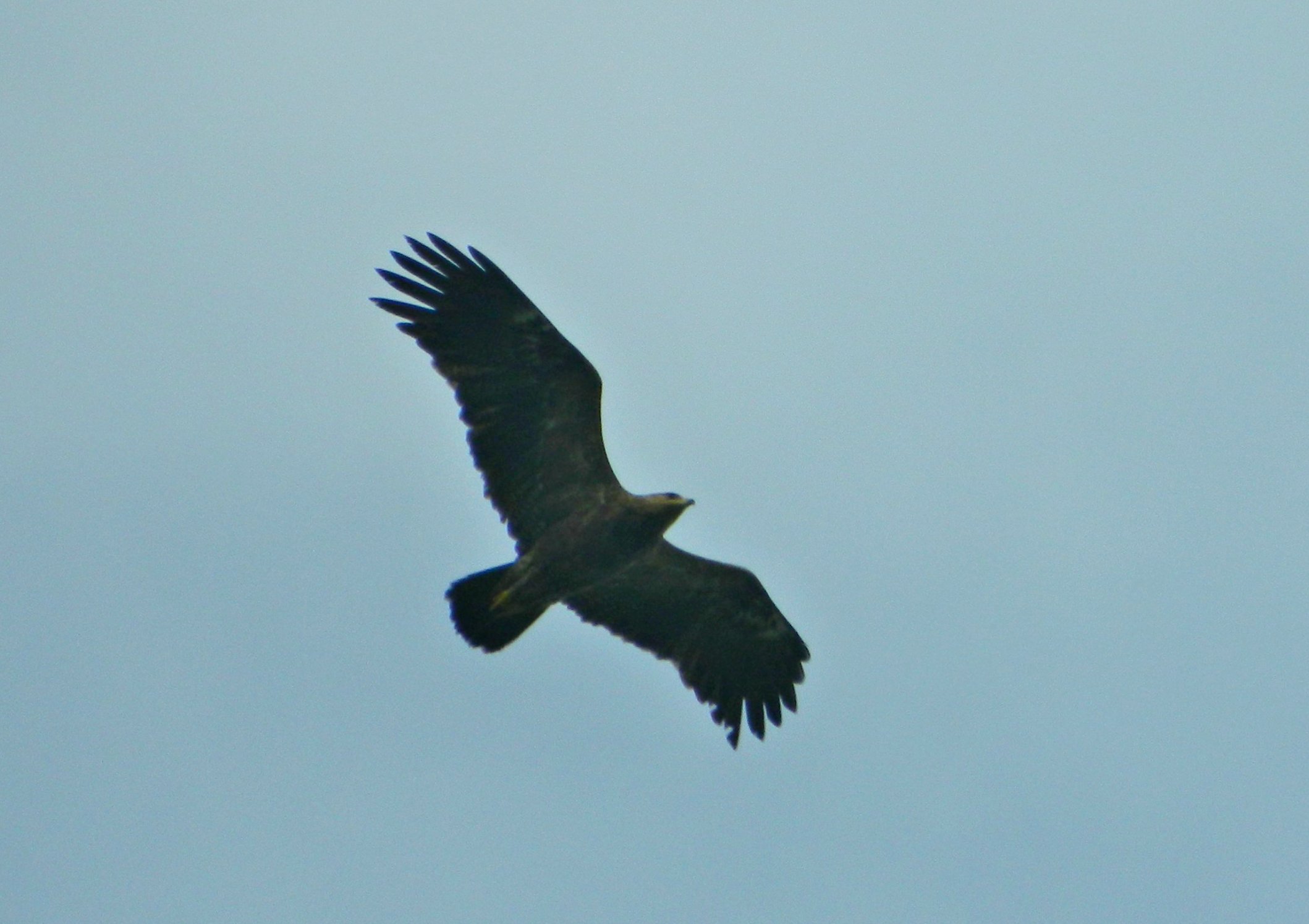
Leaving the dig site having said our thanks and goodbyes, we boarded the tour bus again for a drive over to Tel Azeka. Since I’ve already visited and wrote about Tel Azeka last year, I’ll just give a brief summary of what non-archaeological sightings that were of interest. First, the birds: one or more black kites, steppe buzzards and lesser spotted eagles (and a possible juvenile imperial eagle) flew by overhead, giving me a special joy that comes with neck pain, as I had to crane my neck precariously to watch them high up above me. Several species of butterflies fluttered about here and there, and Judean viper’s-bugloss made a lovely appearance on the top of the tel.

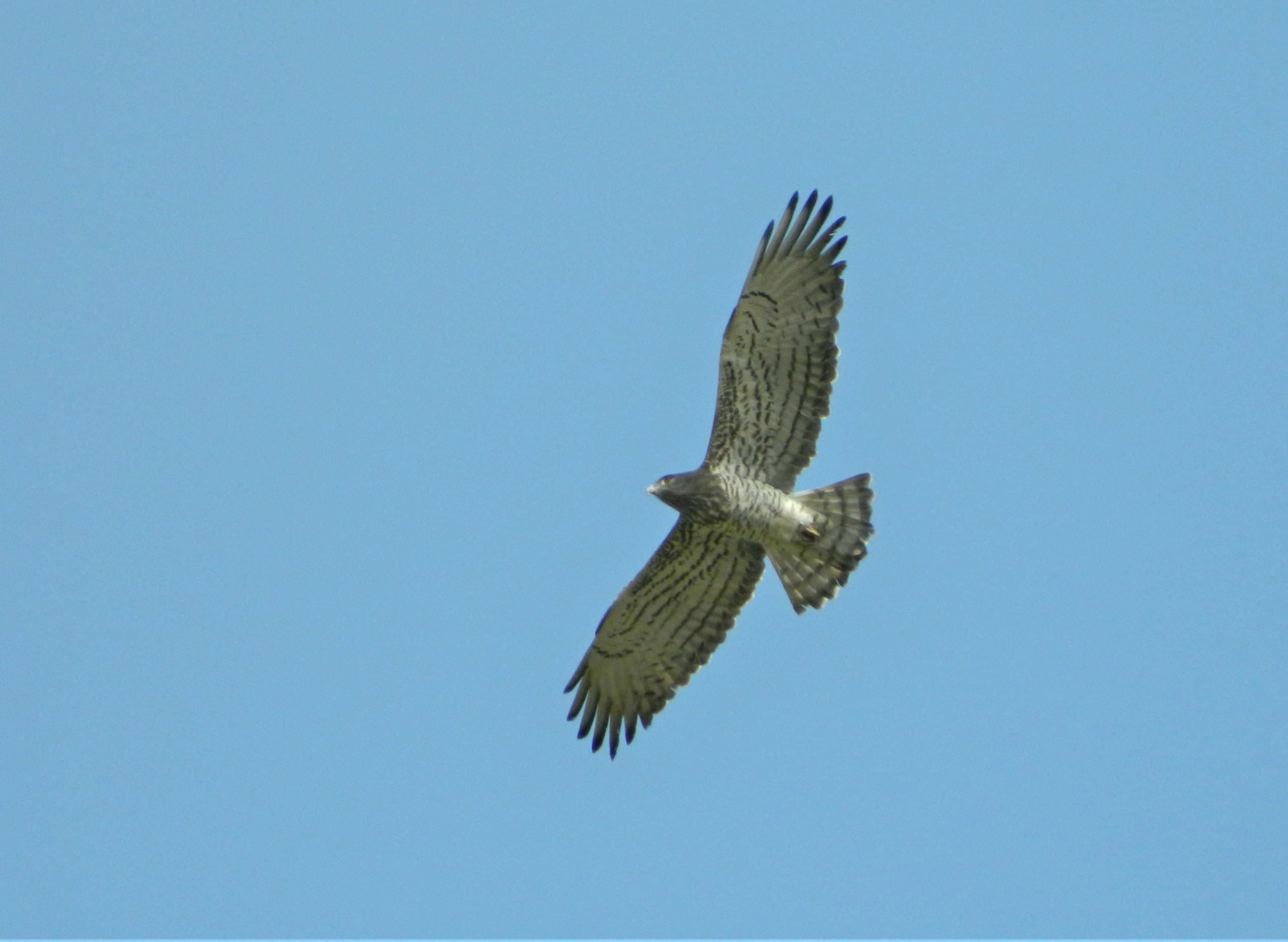
Short-toed eagle

Leaving Tel Azeka after two hours, we attempted to visit the iconic Khirbet Qeiyafa, which I have covered more than once, but unfortunately our bus got slightly stuck in the ruts of the dirt access road. While we waited outside for the bus and driver to sort themselves out, a short-toed eagle appeared just above the trees that were beside us. I think this is my best picture of this species to date. The bus issue was sorted but time had run out, so the trip was called to a premature ending. We enjoyed the drive back to Bar Ilan, some of us already looking forward to the following day’s field trip to the northwest Negev region, the subject of my next blog post.

A video of this trip, which I made for the department’s YouTube channel, can be found HERE.

Gamla II

In Golan, Israel on May 6, 2018 at 9:03 AM

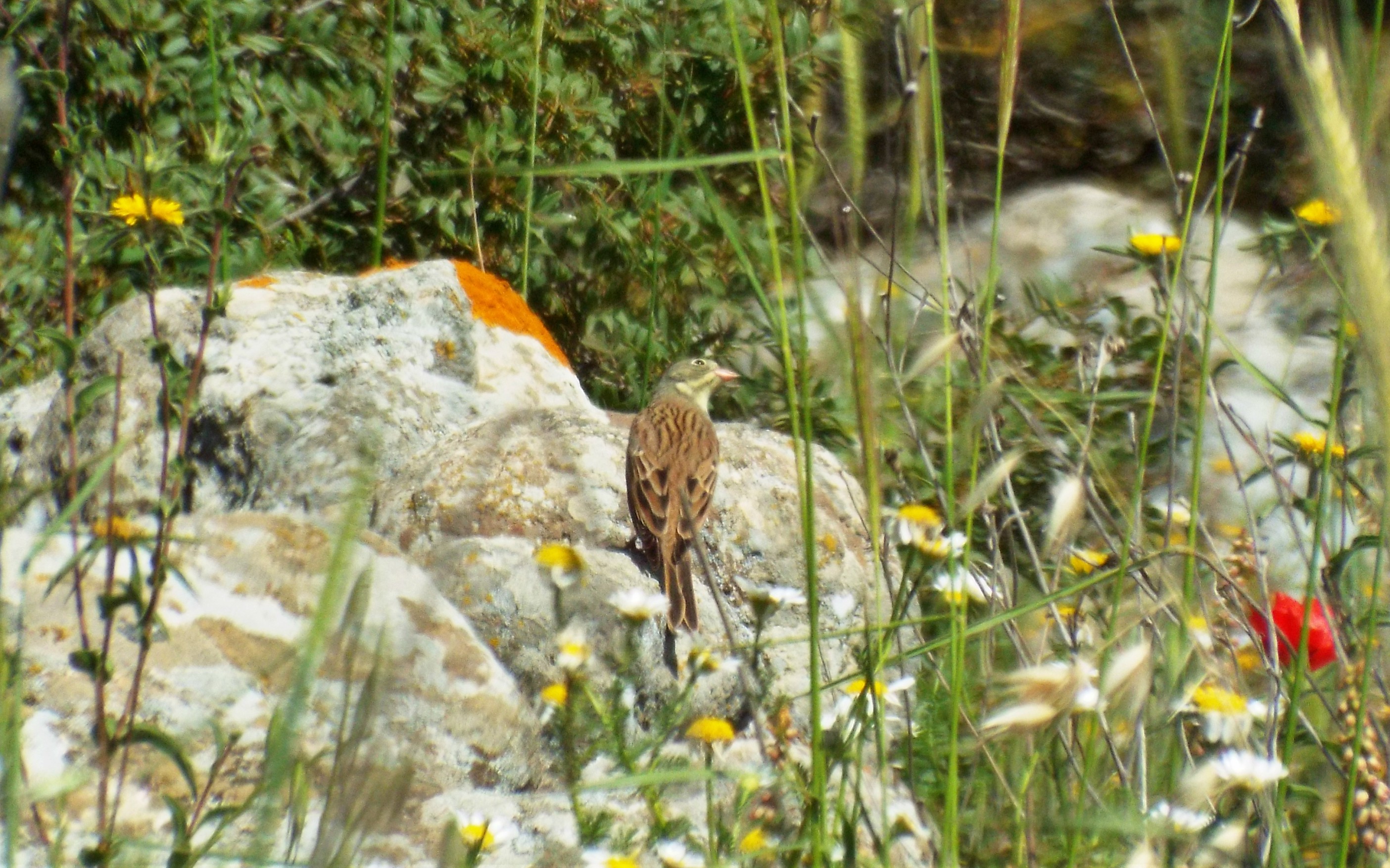
Leaving Nachal Metzar and Ein Pik, my friend Adam and I drove along Roads 98 and 808 until we reached the access road to the next stop on our list: Gamla. As we approached we noticed several large birds of prey in the skies above us, and tried our best to identify them with maintaining the necessary safety to survive the experience mid-drive. At last, after identifying at least one short-toed eagle we pulled into Gamla National Park and parked the car. To my surprise, just in front of the car, perched on a rock, was my very first ortolan bunting just waiting for us to take its picture.

Ortolan bunting (photo Adam Ota)

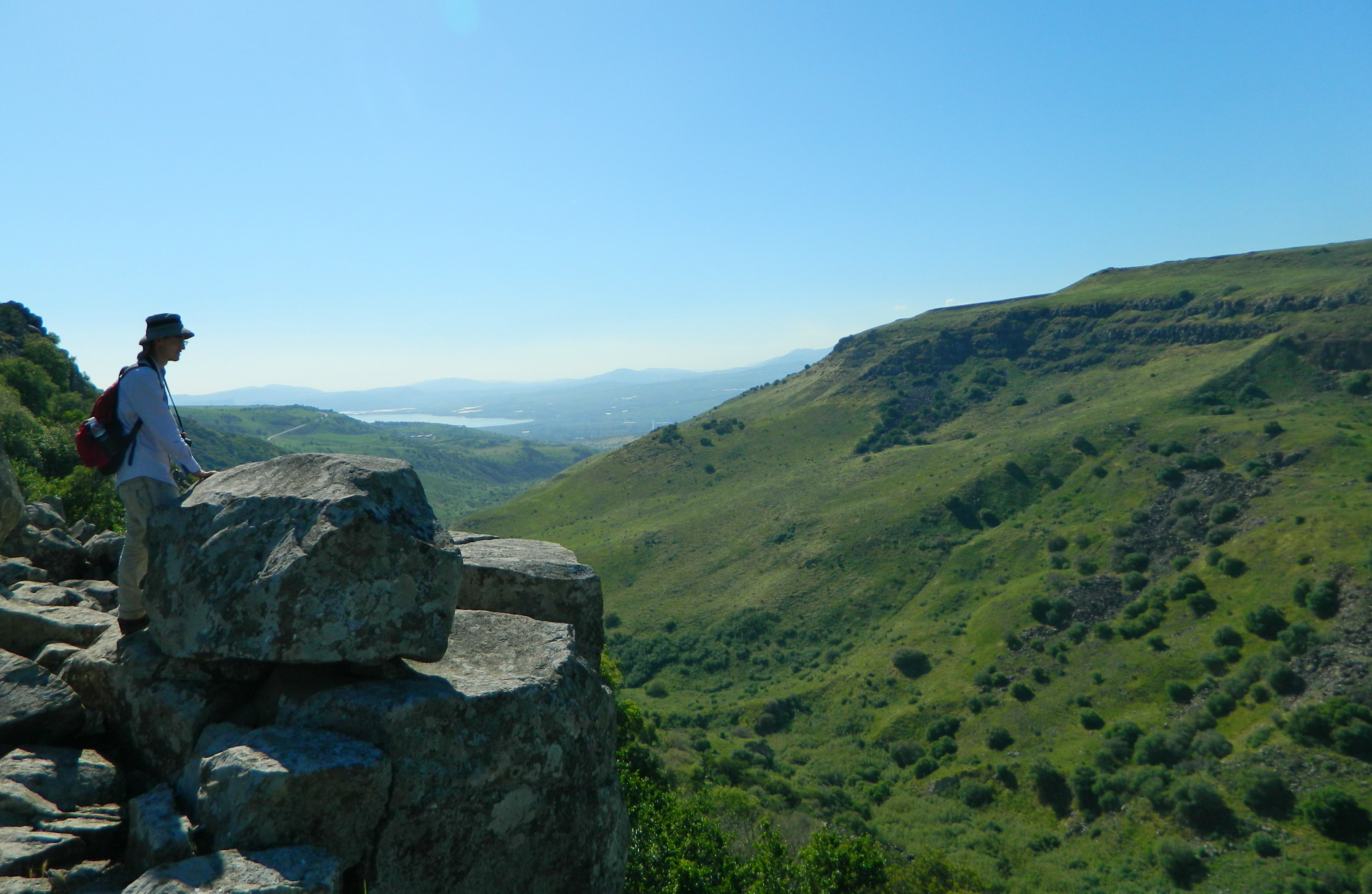
Already filled with excitement, we headed straight for the Vulture Lookout where we knew there’d be interesting sightings. Perched at the eastern side of the deep ravine accentuated by Nachal Gamla, the cliff sides have been the nesting sites for many species for years. When I had visited last, on a trip with my father to both Gilgal Refa’im and Gamla, we had spent a few minutes at the lookout and then headed towards the dolmen and the Gamla Waterfall.

View from the Vulture Lookout

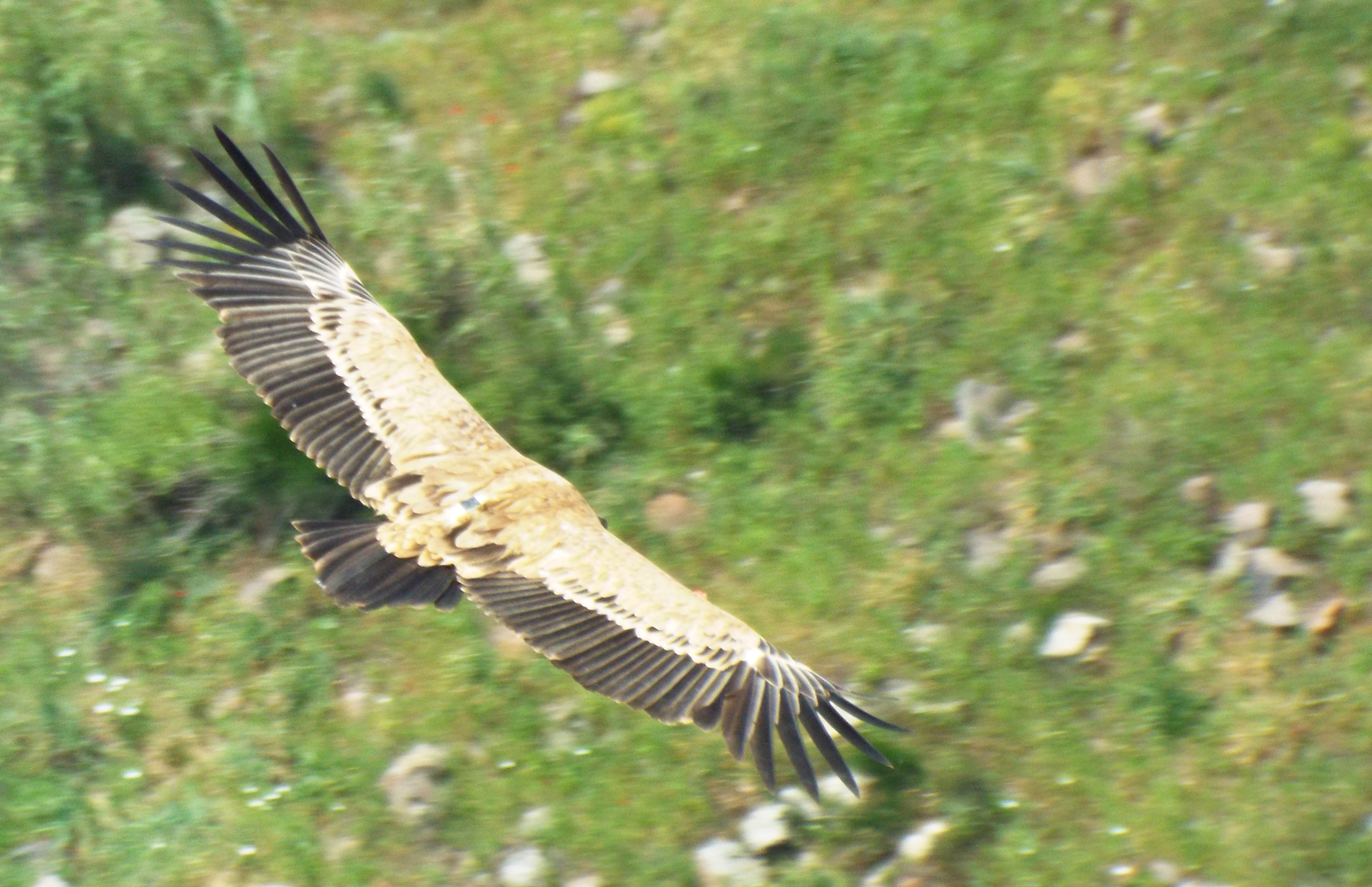
This time Adam and I were dedicated to the birding potential and so we decided to dedicate as much time as possible to spot as many interesting species as possible. With that mindset we planted ourselves at the lookout’s edge and began to watch. Nearly immediately, a few of the park’s iconic Griffon vultures soared out from the sanctuary of the cliff edges, provided us with satisfaction.

Griffon vulture patrolling the slopes (photo Adam Ota)

But there wasn’t just the immense Griffon vultures to be seen, more short-toed eagles and a lesser spotted eagle soared over from the west. We stood there patiently, watching as the large birds of prey passed by, entranced by the richness of the region. Next up, a Bonelli’s eagle emerged from the cliffs, its rounded wings and pale abdomen giving away its identity. I was excited to see my first-ever Bonelli’s eagle, but there was no time to waste because more birds were emerging.

Bonelli’s eagle (photo Adam Ota)

Overhead, we managed to spot a large number of specks in the sky and, with the aid of our zoom lenses, we identified them as a flock of white storks. Mixed in with the storks, but at a slightly different altitude, we spotted a dozen or so black kites. Returning to the cliffs, an Egyptian vulture made an appearance, followed by another Griffon vulture. Together they soared, patrolling the cliff-sides as we watched and took pictures.

Mount Hermon in the distance (photo Adam Ota)

We couldn’t tire of watching these large birds of prey from such a short distance, but there were other birds also capturing our attention. Tons of little swifts zipped by overhead, eating airborne insects, and male blue rock thrushes in their brilliant summer plumage called noisily from the rocks, trying to attract mates.

Blue rock thrush (photo Adam Ota)

We enjoyed lunch while we birdwatched, and exchanged words with the other visitors to the lookout, but eventually it was time to move on. We headed over to the Gamla Lookout, passing by some of the basalt ruins of Deir Qeruh, and took a moment to enjoy the view of the ruined city below.

Ruins of Deir Qeruh

Ancient Gamla was built on a triangular rock wedge that juts out between two streams far below, and is thereby a greatly strategic location for an ancient walled city. First occupied in the Early Bronze Age, the site became most famous for its time as a Jewish city under Roman siege. As described by Jewish-Roman historian Josephus Flavius, the city was attacked by Roman forces first under Agrippa II and then under Vespasian, the latter succeeding in conquering the city despite heavy losses.

Gamla (photo Adam Ota)

We made our way down the winding path towards the entrance of the city, walking gingerly over the stone steps as we continued our search for new and interesting birds. Towards the bottom we spotted a sparrowhawk passing quickly overhead, always a nice addition to a day’s birding.

Ancient city of Gamla

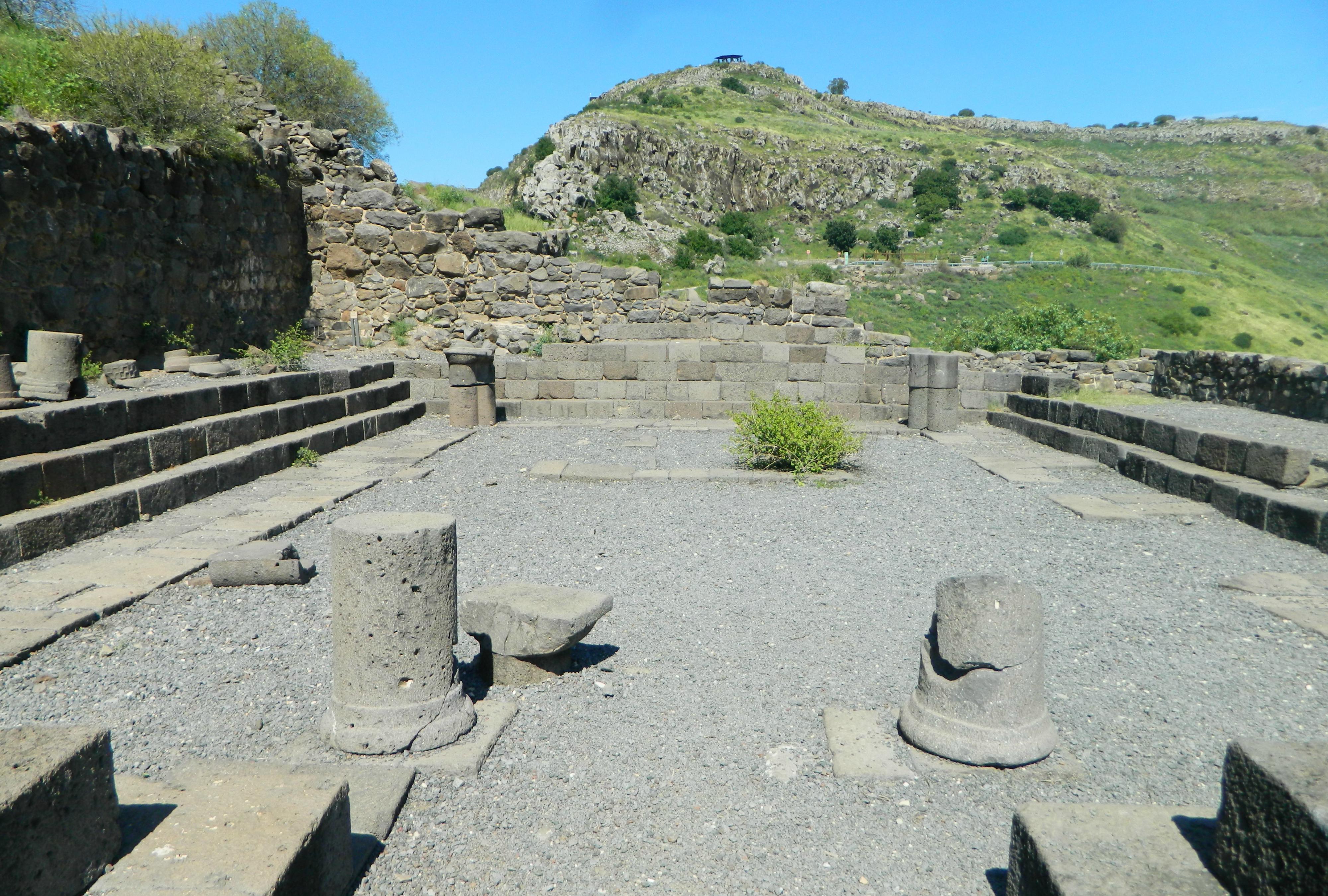
Outside the entrance of the city we found a reconstructed Roman weapons of siege, and then we passed through the breach in the wall where we found the ruins of residential structures and a synagogue. Because Gamla was never rebuilt after the destruction, the remains have largely been left as is, other than disturbances by natural causes.

Gamla’s ancient synagogue

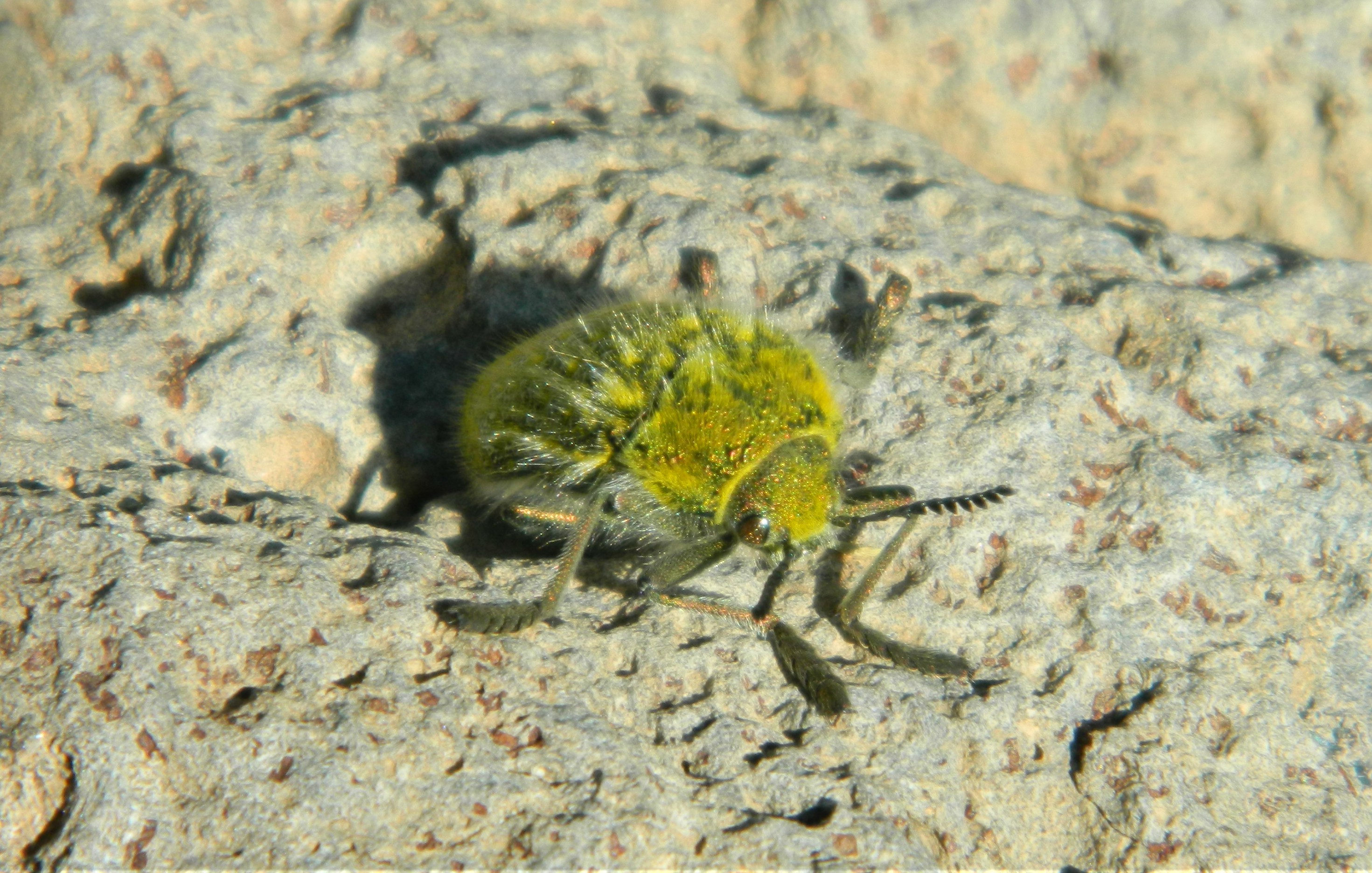
We decided to take the long trail, even though the sun was relentlessly beating down on us, and continued along the slope towards the peak, reaching the oil press and flour mill at the end of the trail. Along the way we spotted a couple of interesting birds, including chukars and a common nightingale. In addition, Adam spotted and caught a bright yellow jewel beetle of the Julodis rothi species.

Julodis rothi jewel beetle

We climbed up from the western quarter, as it is called, and made our way to the peak. Just below the massive rock piling, we sat in the shade of a small tree and surveyed our surroundings. Adam scanned the neighbouring slope with his monocular and I became distracted by the calls of a male common cuckoo, so very distinct that even a clock was designed and named after it.

Atop the peak

I made my way over to the northern slope, pulled up a video of cuckoo calls on YouTube and tried to lure it into my point of view. However, this cuckoo was a wily one; every time I’d appear anywhere near where he’d be, he’d hush up and I would have to slink away to try again. No matter how sneaky I tried to be, he’d always see me coming and I was left disappointed, failing in catching a glimpse of this amazing bird.

Within the Round Tower

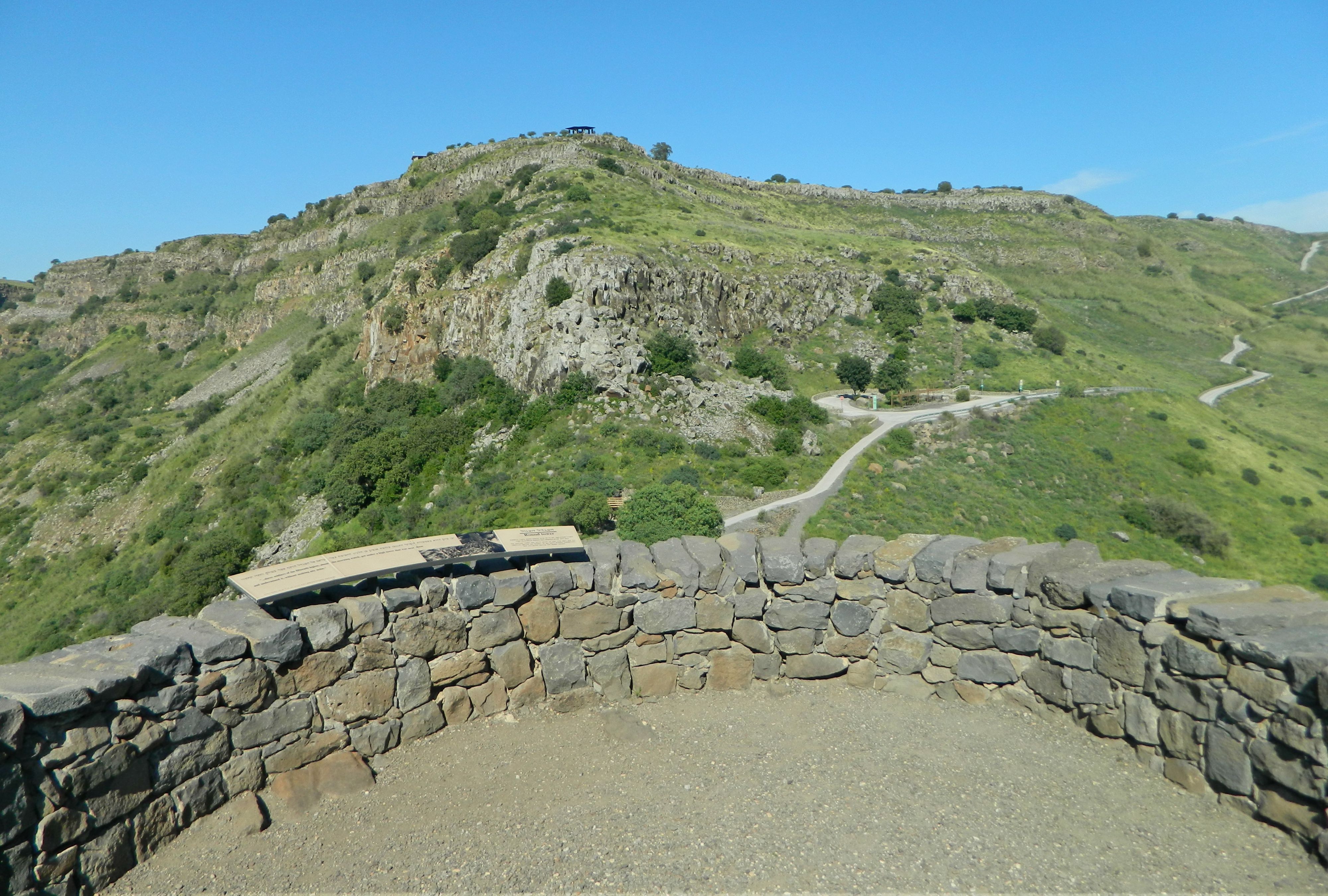
After a good while on the peak, we at last picked ourselves up and made our way back through the ancient ruined city, this time from the ridge trail. At the end, we found the Round Tower and stood in it looking out over the surrounding land as one of the defending soldiers would have done some two thousand years ago.

Egyptian vulture passing by

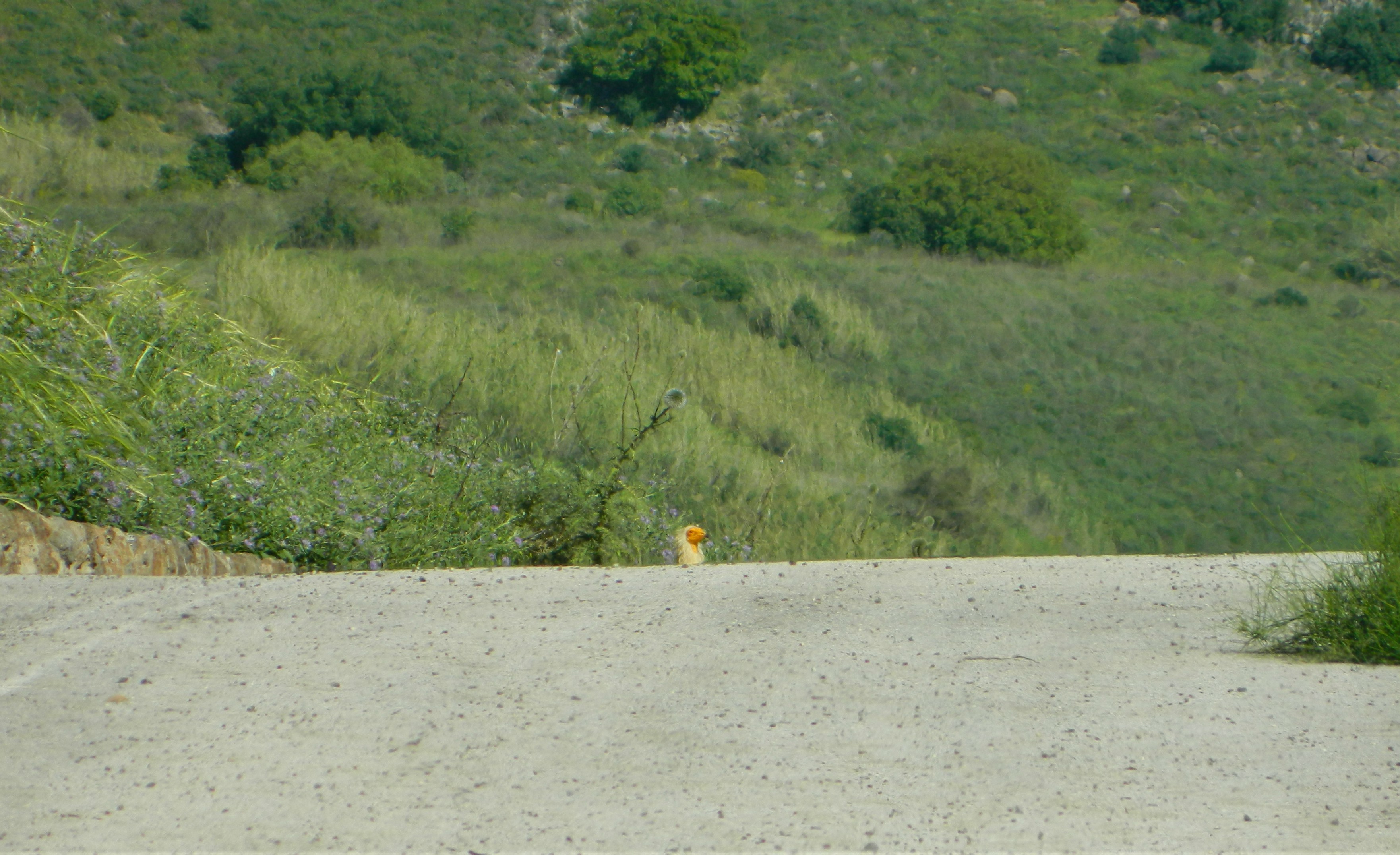
As we were in the tower we were following one of the Egyptian vultures who, curiously enough, landed on the access road where we crossed into the city ruins. When it took flight, Adam snapped a few pictures of it and we saw that it had food in its mouth, which it seemed to have taken back to its nest.

Only the head visible…

That filled us with curiosity so we made our way out of the city and watched as it returned, landing in the same place just out of sight. Seeing us, the vulture took off and we were able to see that there was a dead chicken carcass on the road. Hoping to see some feeding, we settled under a nearby tree, where we’d have an okay vantage point, and waited.

Swarm of white storks in the thermals (photo Adam Ota)

The vulture circled again and again, yet refused to land. Blue rock thrushes, chukars and rock hyraxes provided entertainment in the interim, each engaged in their own pursuit of happiness. Birds of prey overhead also brought us joy, especially a lesser spotted eagle and a juvenile short-toed eagle. But the vulture refused to land.

Short-toed eagle

As always with nature, unexpected surprises are just waiting to happen. We were lounging under the tree when suddenly the vulture landed on a boulder some 15-20 metres from us, and began to drink from a hidden puddle. We watched, nearly slack-jawed, as it drank calmly, allowing Adam to film it.

With that we surmised that it was time that we head on, as the park was closing shortly and we were the last visitors in the area. We climbed back up to the lookout and made our way to the park exit, bringing an end to a truly amazing day trip.

Woodchat shrike (photo Adam Ota)

By the time we returned to my house we were already scheming of more trips to take, because one can never take enough trips in this beautiful land of topographical variety. As to be expected, I took two interesting trips to the Judean Lowlands and Negev the very next week.
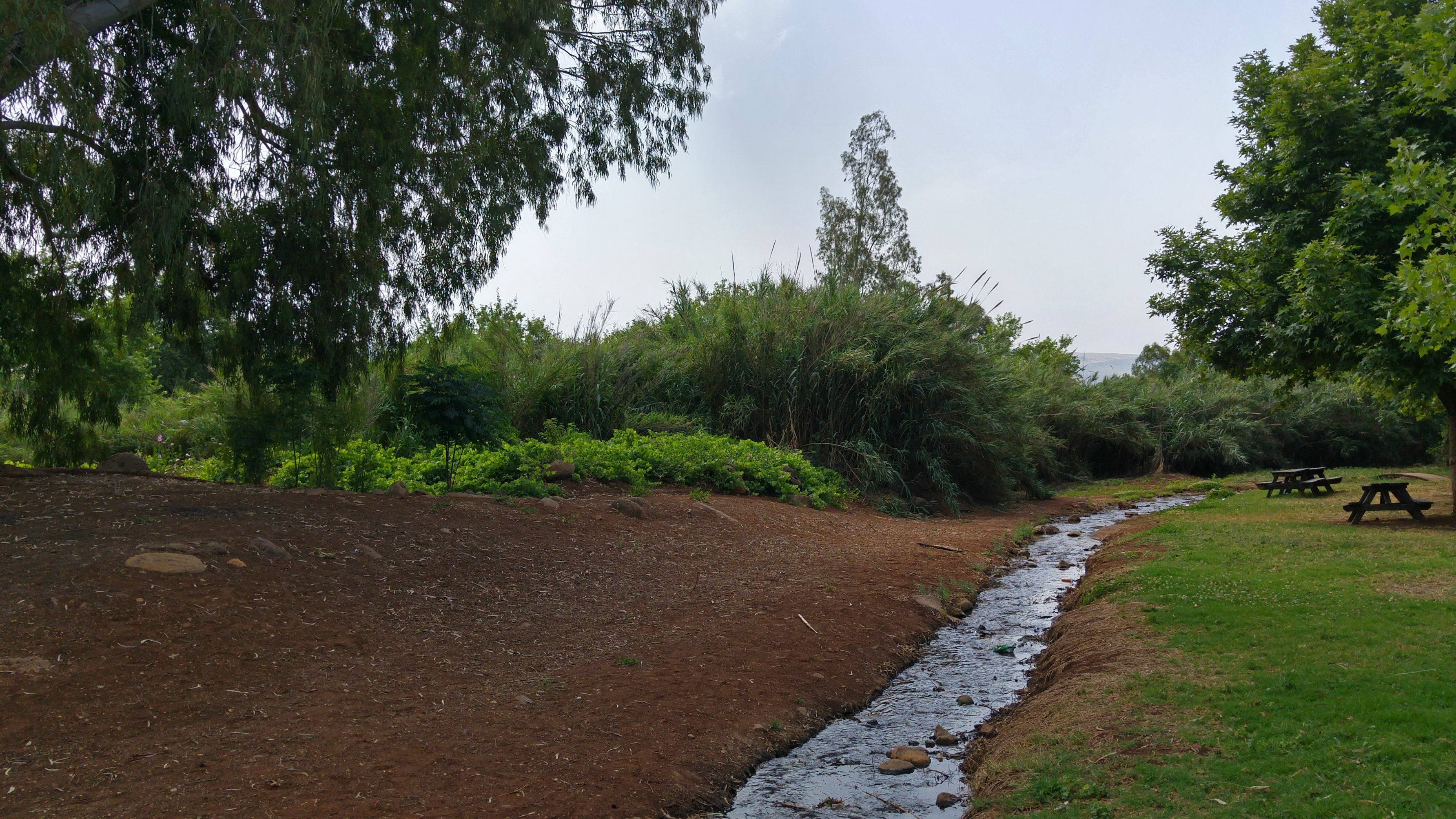
Nachal Metzar

In Golan, Israel on April 29, 2018 at 9:11 AM

When the first day of Pesach (Passover) ended it was time to take advantage of the vacation days and to go somewhere exciting. I had access to a car and was accompanied by frequent guest star Adam, so we decided on a day trip to the Golan. We had just been to the Golan on a university field trip so our appetites were properly whetted, allowing us to leave at an early 4:45am with much excitement. Our trip was geared towards birding and exploring, and, with so much content, will thereby be divided into two posts.

Early morning’s light over the Golan

We drove eastward from Ma’alot and began to see the day’s first light as we reached the valley area between the Galilee and the Golan. Entering the Golan on Road 87, we headed for the first intended site of the day: the mountaintop ruins of Susita. Unfortunately we found that the access road seen on the map is not actually accessible for vehicular traffic and therefore ditched Susita in favour for the next intended destination: Nachal Metzar.

Nachal Metzar

We drove through the very picturesque area of Road 789 – on which I have never been – as the sun began to shine light onto the gentle mountains, and spotted a golden jackal dashing across the road which started our sightings off great. We pulled over at a lookout stop on Road 98, and noticed how unexpectedly cold it was, before making our way to the Nachal Metzar trailhead.

Corn bunting (photo Adam Ota)

There wasn’t any intended hiking plan, we were just going to get out, walk around and see what there was to see. Armed with our cameras, monocular and a bird guide, we stepped into the nature wonderland ready to be impressed.

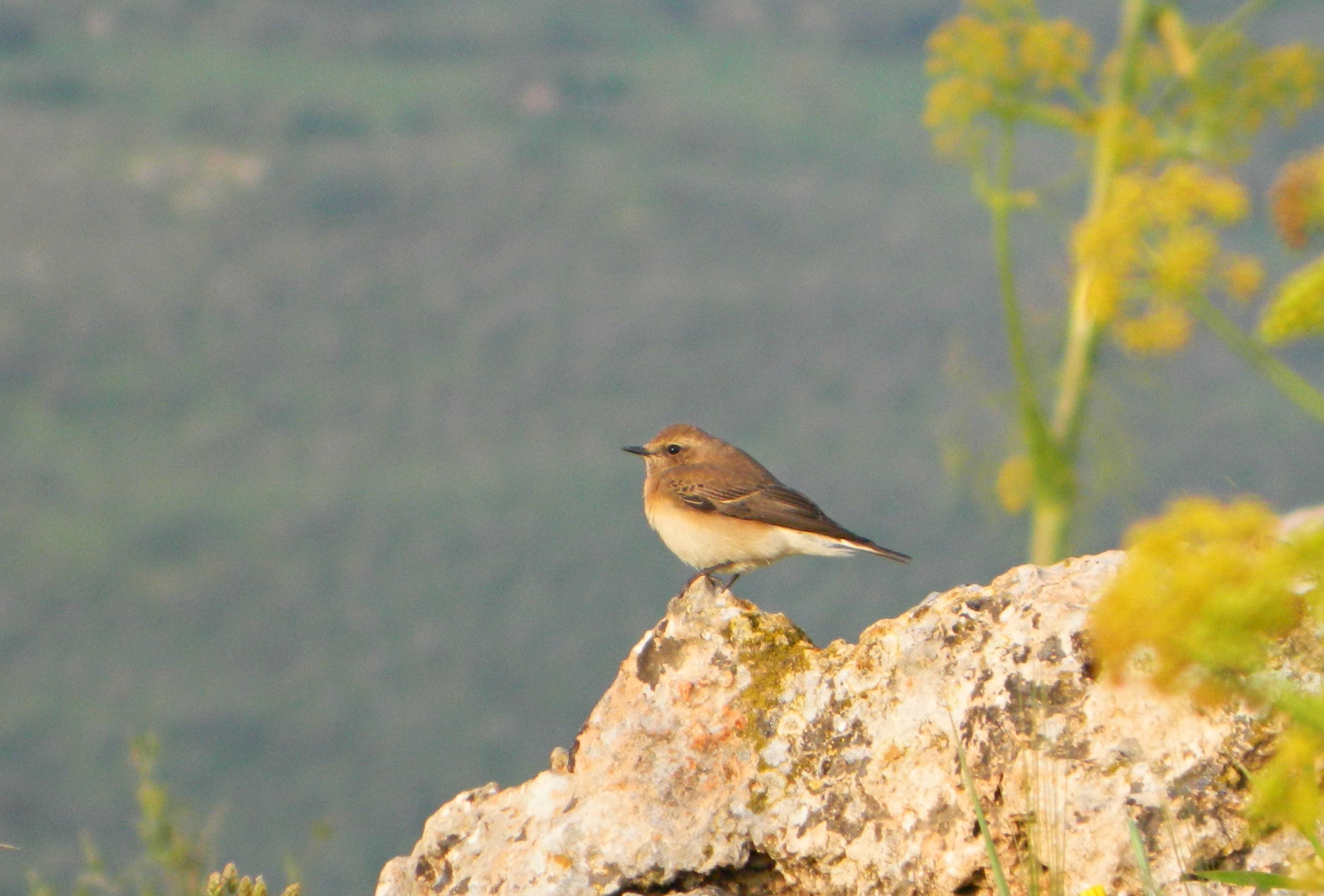
Black-eared wheatear

From the very beginning, there were white storks crossing the small valleys and corn buntings perched out in the open, singing loudly. We took pictures willy-nilly, not wanting to miss an birding identification or a great photographic opportunity. Progress along the blue-marked trail was very slow, as we turned in circles capturing the scene around us. The tall grasses, thistles and occasional bush provided cover for dozens of species of birds and insects and we wanted to see it all.

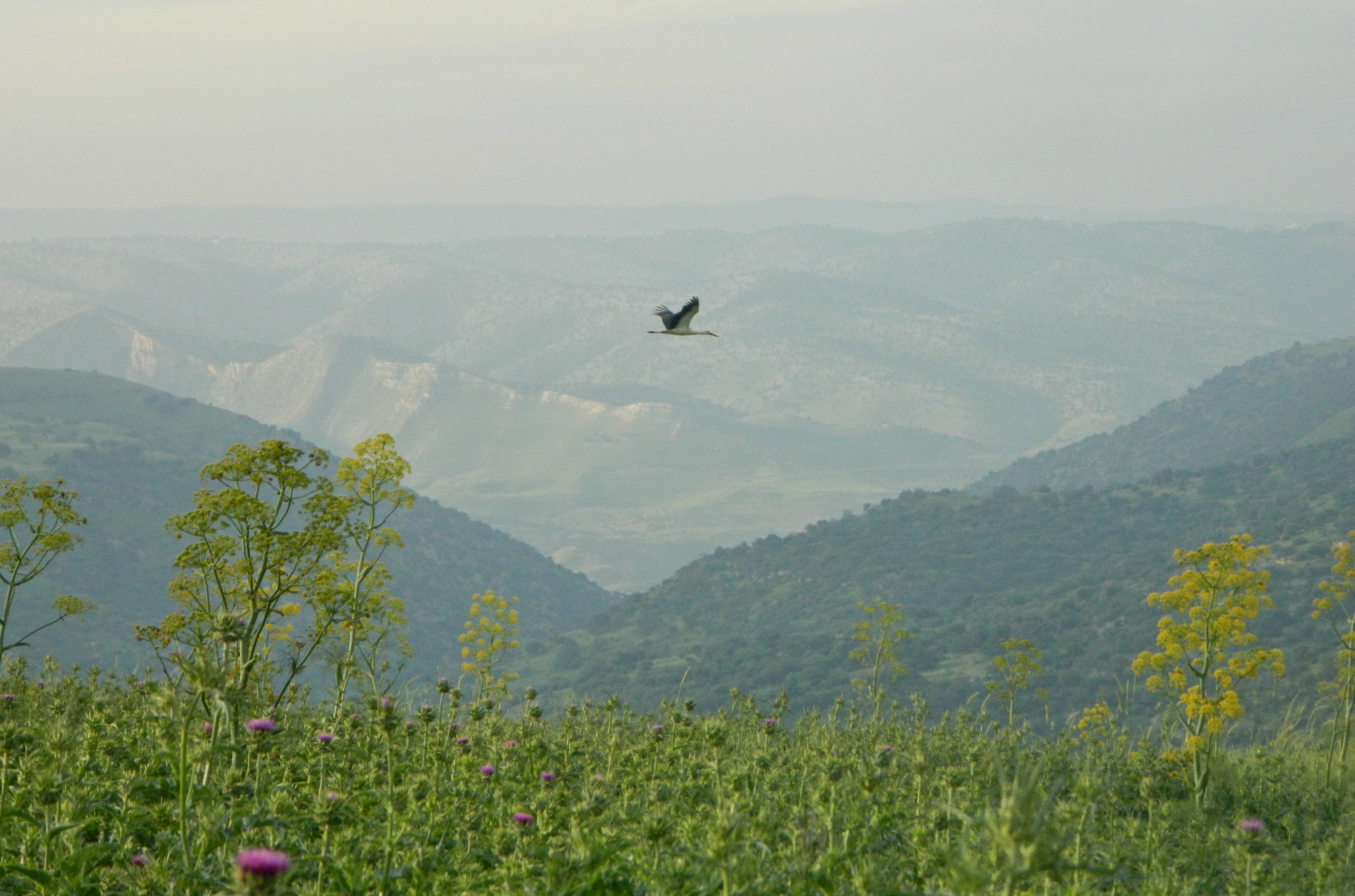
White stork passing by at the right moment

If the wildlife wasn’t enough, the view of the green slopes in morning’s light was absolutely stunning. And, as usual with the spring, the wildflowers made for great optical enjoyment. But it was the birds that captured our attention the most. We switched between keeping an eye on the songbirds to scanning the skies for soaring birds of prey. The first was a short-toed eagle, followed forty minutes later by a lesser spotted eagle who circled above us repeatedly.

Lesser spotted eagle

We made our way downhill towards the streambed, keeping an eye out for unsuspecting white storks on the ground. Another short-toed eagle made an appearance overhead, as well as a bunch of red-rumped swallows, and we reached the wooded streambed. Almost immediately we spotted a small warbler that looked a little different than the usual ones we see, and upon verification, was identified as our very first eastern Bonelli’s warbler.

Adam vs. the eastern Bonelli’s warbler

Ten minutes was all we needed along the dry streambed, as we didn’t see anything else of interest and there was still more places to visit. We made our way back up, passing a procession of caterpillars and an entertaining little squabble between a yellow-vented bulbul and a woodchat shrike (with the smaller shrike emerging as the victor). The white storks continued to accompany us, however some of them now on the ground, hunting for small living things to eat.

White storks (photo Adam Ota)

Casting our eyes to the skies, we spotted a lone black kite making its way northwest, and shortly thereafter, another short-toed eagle and then a booted eagle. We made it back up to the entrance and got into the car after some morning praying and food. Our next stop was Ein Pik, just a minute away to the northeast.

Hoopoe (photo Adam Ota)

Pik was originally the site of a Jewish village during the Roman times some 1,800 years ago, which possibly traces its name to the biblical site of Afek where the kingdoms of Aram and Israel fought a decisive battle to stem the Aramean invasion. Today, the ruins that can be seen, are remains of the Syrian village Pik which preserved the ancient name. Archaeological findings from the ancient Jewish village have been since carted off to sit in museum, such as the Golan Archaeological Museum that I had visited towards the end of my army service in 2015.

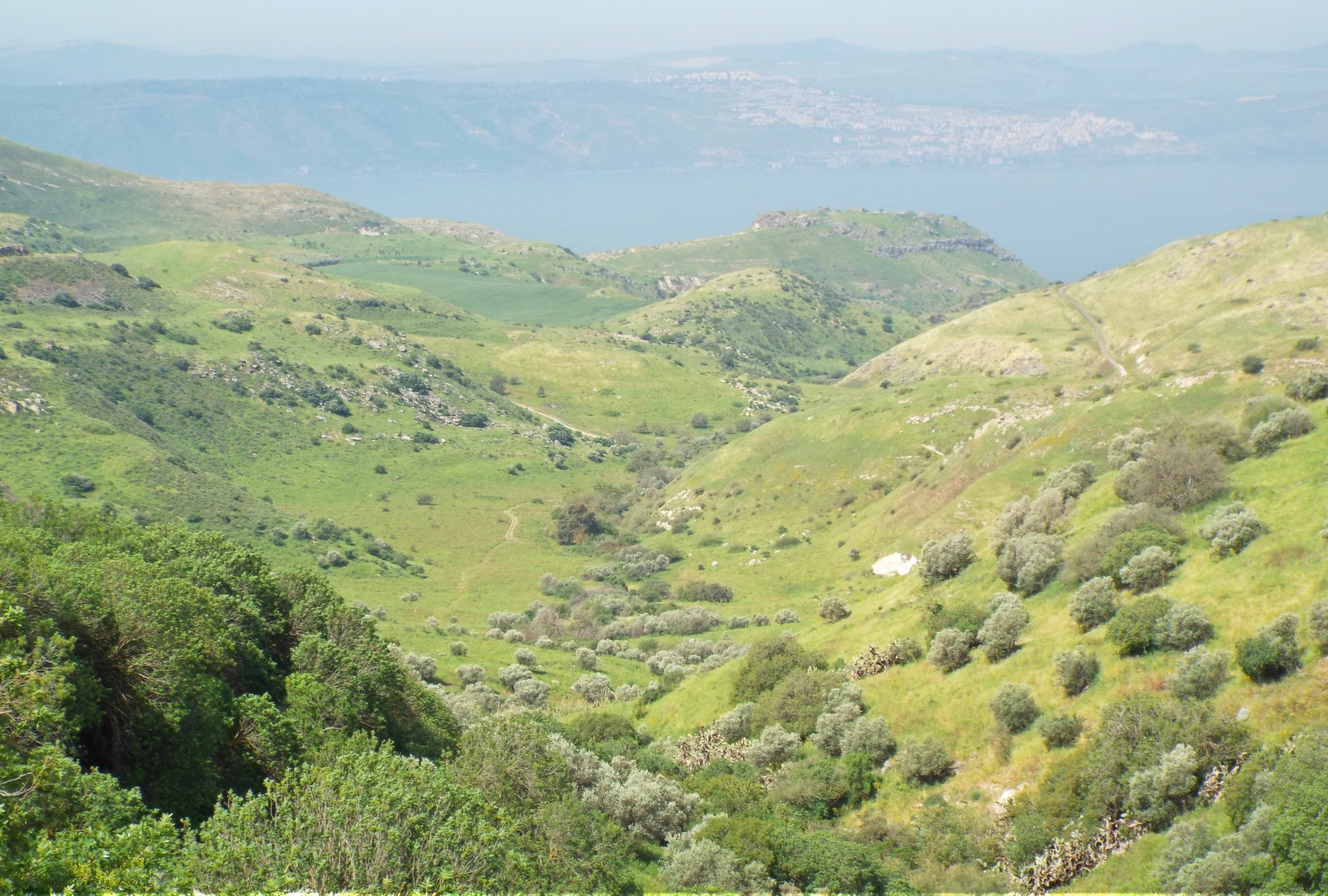
View from Ein Pik (photo Adam Ota)

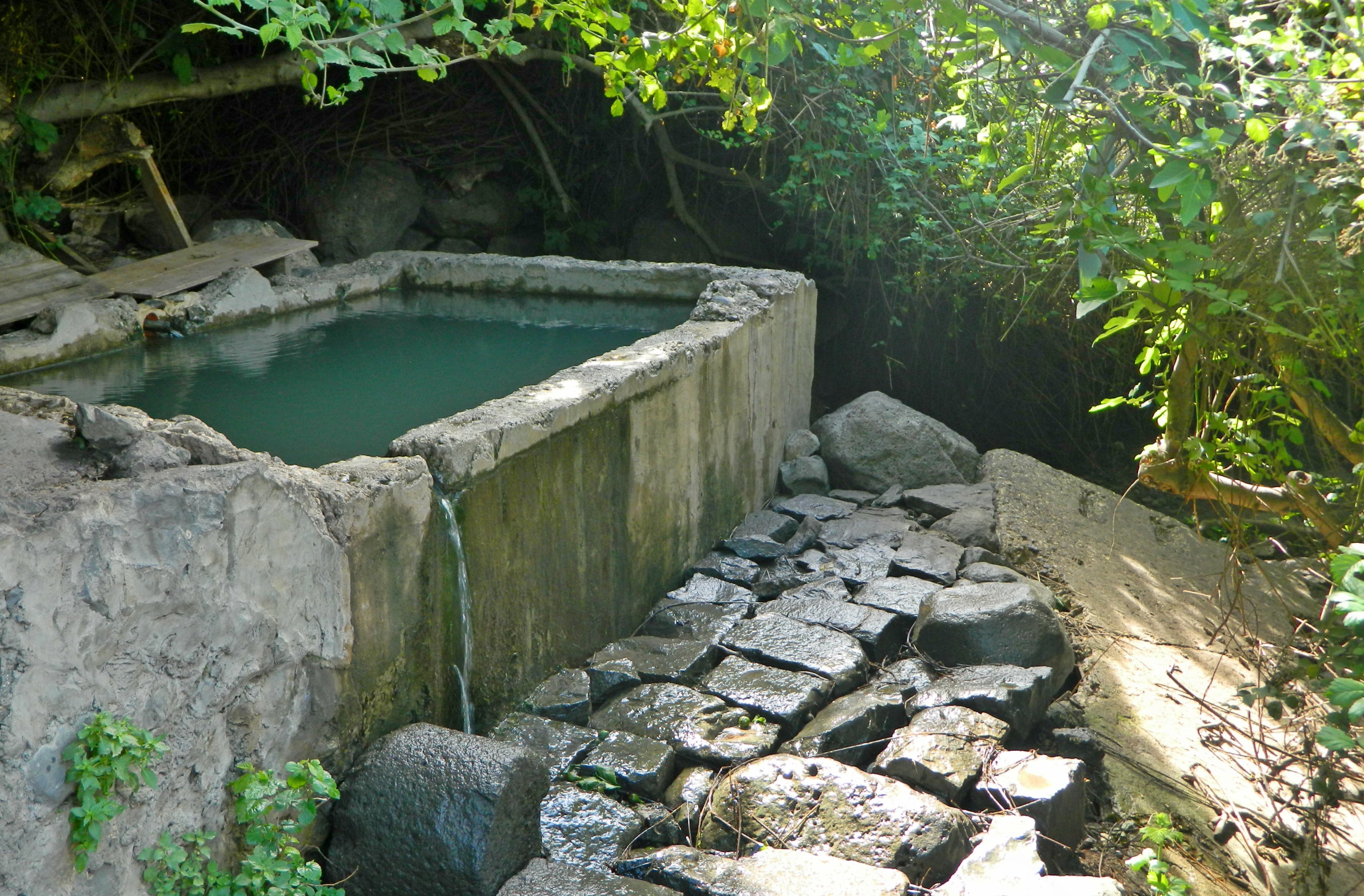
We examined the small basalt ruins, and enjoyed the lookout over the valley below, with the famous site of Susita (Hippos) dead centre, backdropped by the Kinneret. Seeking the spring that contributes the “ein” to the name, we made our way down the slope below us where we found a concrete trough filled with spring water.

Ein Pik

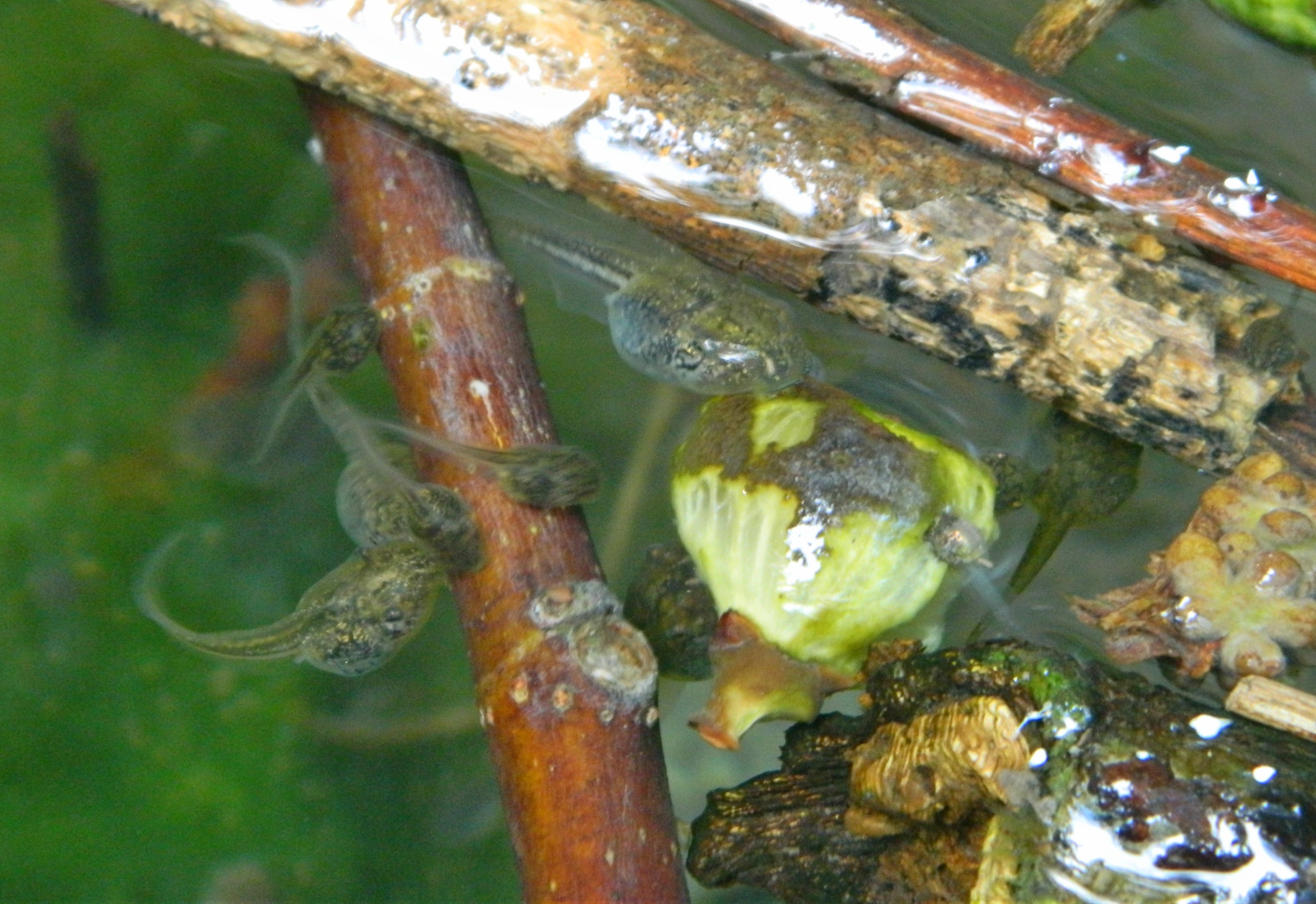
Typical of mountain springs, a hardy fig tree was growing on-site and small, unripe figs had met their end landing in the water. Quite unexpectedly, I noticed that there were tadpoles of different sizes feasting on the bobbing figs. A full-grown frog watched us from the end of the trough, kept company by a large river crab.

Tadpoles feasting on an unripe fig

Several steps away we found the main source of the spring, captured in modernity by a large concrete tub which entices hot, sweaty hikers. We stood for a few minutes in the shade, the trickling water sounds mixing with the chirping of the great tits and sparrows.

Silene oxyodonta flower

When we left, climbing back up to the ruins, we were surprised by a black kite that flew right over our heads. With that excitement we got back into the car to drive over to the next location on our list, Gamla, which will be covered in the next blog post.