Israel's Good Name

Shoham Park

In Central Israel, Israel on February 6, 2022 at 9:43 AM

Taking a hiatus from a string of BIU field trips, the day after my trip to Doq and the Good Samaritan Museum I went on a nice little adventure with Adam Ota to the relatively nearby Shoham Park. It was the very beginning of January and a fair amount of rain had fallen as of late, resulting in renewed growth throughout the country. The seam between the coastal plains and the Shomron was no different, and we found ourselves getting off our bus at Nablat Junction with intentions to explore as far north as we had time for.

Looking down at the field beside Nachal Beit Arif (photo Adam Ota)

Looking down at the field beside Nachal Beit Arif (photo Adam Ota)

Once we had successfully navigated the busy roads and entered the so-called natural land just north of Nachal Beit Arif, we were amazed at how lush and green everything was. There was a cool crispness in the air as we slowly made our way up the cactus-dotted hill, having passed through a defunct military shooting range where we chanced upon our first of many wild asparagus shoots of the day.

In pursuit of wild asparagus shoots

In pursuit of wild asparagus shoots

The vibrant green around us was complemented by dying leaves in multiple shades of orange, yellow and lavender blossoms, and of course the rich brown mud. We followed the marked trail up the hill, merging onto the Israel National Trail and seeing a nice amount of chaffinches and meadow pipits along with the flora. Adam paused here and there to look for stick insects, something that has eluded him for a great number of years here.
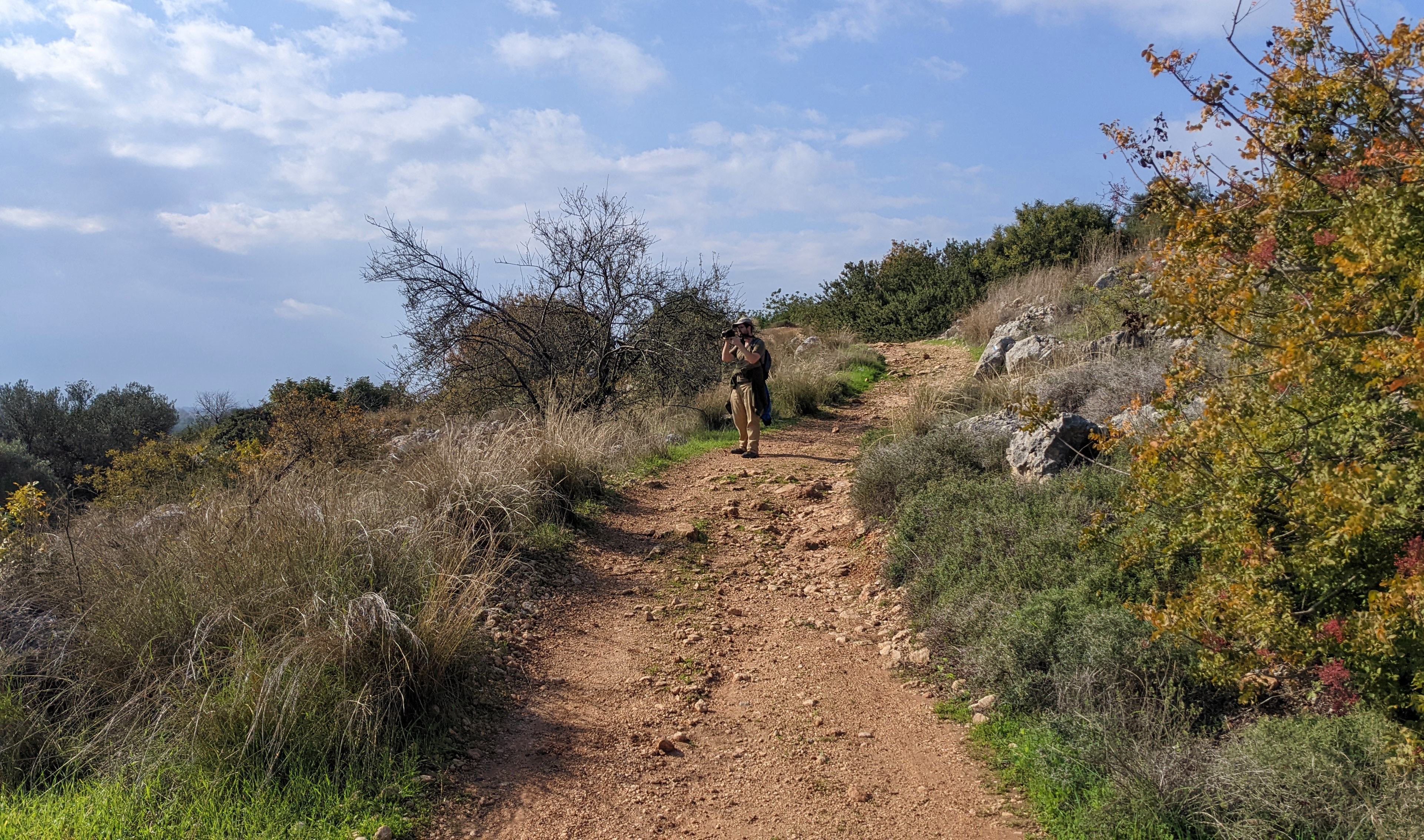
Photographing the lush nature (photo Adam Ota)

Photographing the lush nature (photo Adam Ota)

We spotted some tiny caves among the hewn bedrock, but nothing of any particular interest, except for copious amounts of wild asparagus. It wasn’t until we reached the top of the hill that we saw something of note. Carved into the bedroom were a series of cup marks and larger indentations. According to the sign there, this was part of a cultic site where a small idol was placed and then tiny sacrifices were offered in these tiny hewn cups. The larger depressions served as mortars for grinding the sacrifice prior to offering. There also seemed to be a small olive oil press similarly hewn into the bedrock, perhaps related to the cultic affairs.

Cultic cupmarks from a time long past

Cultic cupmarks from a time long past

Heading down the northern slope, we left the rocky garrigue habitat and entered a small pine tree forest. In a clearing, we found a much larger agricultural installation – this time a winepress, also hewn into the grey bedrock. It was full of water after the rains, and no matter how much Adam peered into the murky depths, he couldn’t find any interesting lifeforms.

Peering into the watery winepress

Peering into the watery winepress

Right beyond the winepress was the remains of an ancient lime kiln, hardly recognisable in its current state of affairs. But it was the next site in the clearing that really excited me – the ornate ruins of the Church of St Bacchus with its stunning mosaic floor. Built sometime in the 400s CE, during the Byzantine period, the church was only discovered in 1986, and later excavated in 1995. It was then that the mosaic floor, with an inscription dedicating it to St Bacchus (who was quite popular during that era), was revealed and restored.

The Church of St Bacchus

The Church of St Bacchus

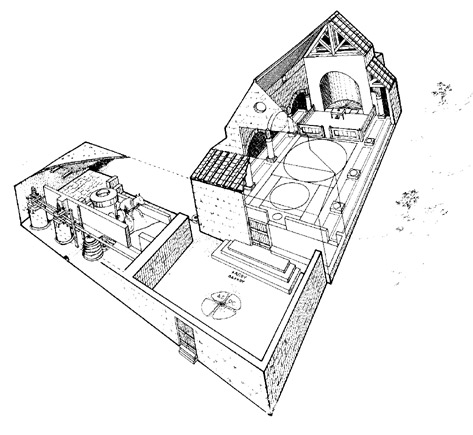
Built outside of the settlement confines, this is what is known as a field church – see an artistic reconstruction HERE. During the course of the excavations, a small broken marble medallion of goddess Tyche/Fortuna was found. According to the inscription encircling the figure, the medallion dates to the year 582-3 CE, during the reign of Byzantine emperors Tiberius II Constantine or Maurice.

Remains of the olive oil press beside the field church

Remains of the olive oil press beside the field church

Adjacent to the church is a large olive oil press, with some of its sections also featuring a modest mosaic floor. Just beyond the press is a large rock-cut pool which was used to store water, after having served as an on-site quarry for the construction projects there. All of these ruins, predominantly harkening back to the Byzantine period, are all affiliated with the nearby Horvat Tinshemet (or Khirbet Sheikh ‘Ali Malikina) which has been identified as Betomelgezis, a site that appears on the famous Madaba Map.

What appears to be Horvat Tinshemet

What appears to be part of Horvat Tinshemet

As we progressed to the vicinity of Horvat Tinshemet, we realised that this site – having never been excavated before – did not have much to look at, at surface value, of course. We found a series of low stone walls and what looks like a cairn of sorts, but nothing distinctly archaeological other than a few surface potsherds. Regardless, we enjoyed poking about in the company of some warblers and chaffinches, and a handful of flustered chukars.
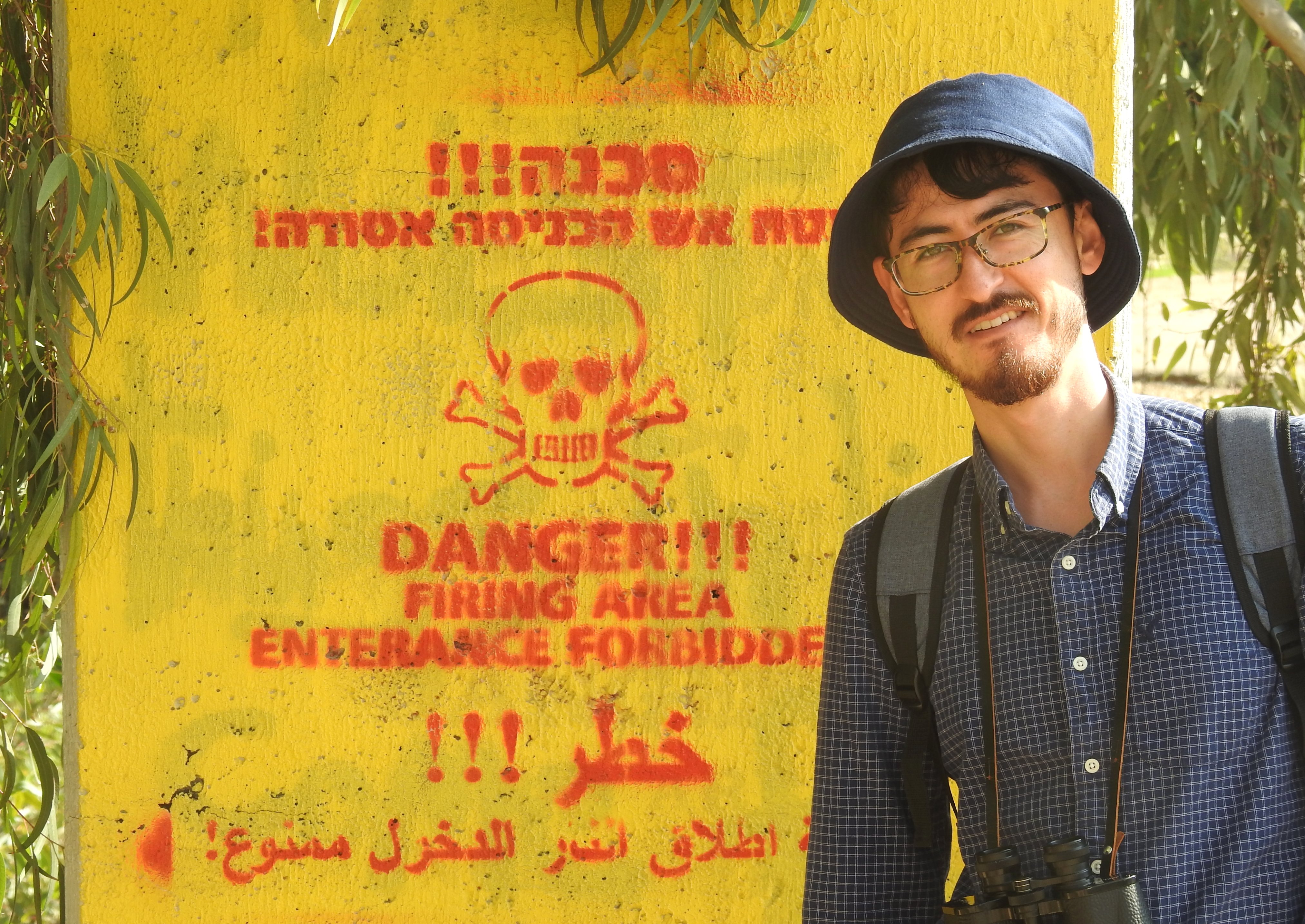
Avoiding the forbidden zone

Avoiding the forbidden zone

From there our next destination was the Bareket vernal pool, which was located on the far side of the Shoham industrial park that was sprawled out before us. Instead of simply walking down the convenient paved road, we decided to go the route less traveled and climbed up a steep hill to circumnavigate from the eastern side. It was a steep walk and required a short break at the peak, which allowed us to appreciate the views that we had of both the ongoing construction and Road 6 that was behind us.

Looking back from whence we came

Looking back from whence we came

Heading back down the northern slope, we found an unusual little orchard and then an insurmountable construction site which made us take the paved road afterall. Looping around, we found the Bareket vernal pool looking rather neglected, yet brimming with water and tiny lifeforms. Adam immediately squatted at the water’s edge, trying to find some interesting waterbugs – and, of course, triops.

The Bareket vernal pool

The Bareket vernal pool

The Bareket vernal pool is the result of ancient quarrying, similar to what we had seen throughout the day, forming a nice body of water quite like a swimming pool with the hewn steps. Despite the searches, it was simply too early in the rainy season to find anything too interesting and we were consigned to just enjoying the deep pool for what it was.

Using the hewn steps to get closer to the water

Using the hewn steps to get closer to the water

There are a number of interesting sites located just north of the vernal pool, but it was getting a wee bit late and we were tired from the long hike, so we called it a day. We had successfully explored most of what Shoham Park has to offer, and each of us had a bountiful wild asparagus harvest – perhaps the best we’d ever had. The rest of the attractions will simply wait for another day, whenever that may be.
University Trip: Doq & the Good Samaritan Museum

In Israel, Jordan River Valley, Judea on January 26, 2022 at 10:20 AM

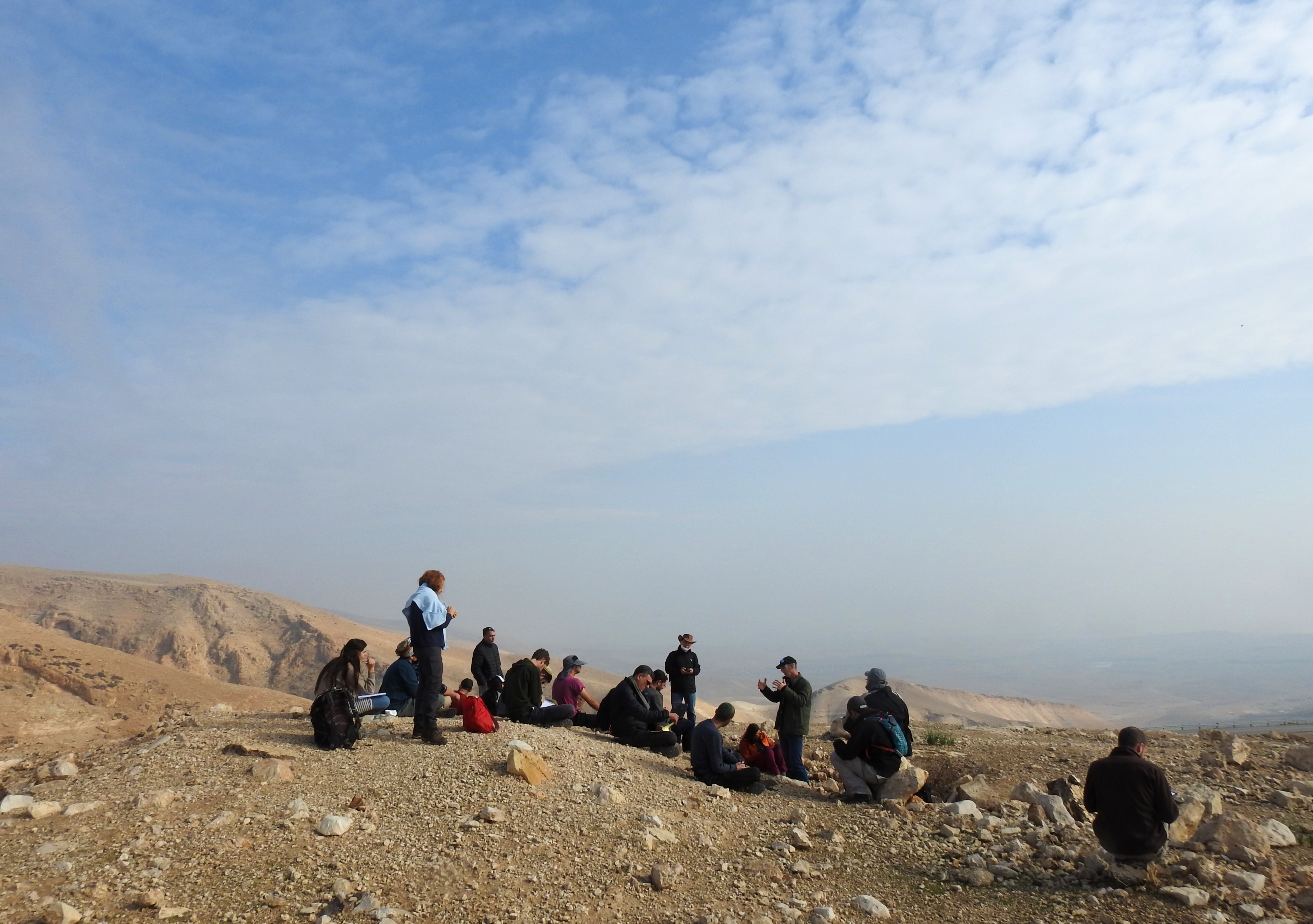
Riding on the coattails of my excursion to some fascinating sites around Nachal Tirza, I embarked on another trip with my university department at the very end of December. This was to be the first of three sequential field trips to the Judean Desert with Dr Dvir Raviv, each of the days dealing in turn with the northern, central and southern regions of the desert.

Looking out over Tariq Abu George

Looking out over Tariq Abu George

Being as this was the first day, our first destination was a small hillock overlooking Tariq Abu George, an important road that was paved by the Jordanians on the remains of an old Roman road. It was named after British army officer Edwin G. Bryant, previous superintendent of the Akko prison, who was nicknamed “Abu George” by his Arab admirers.

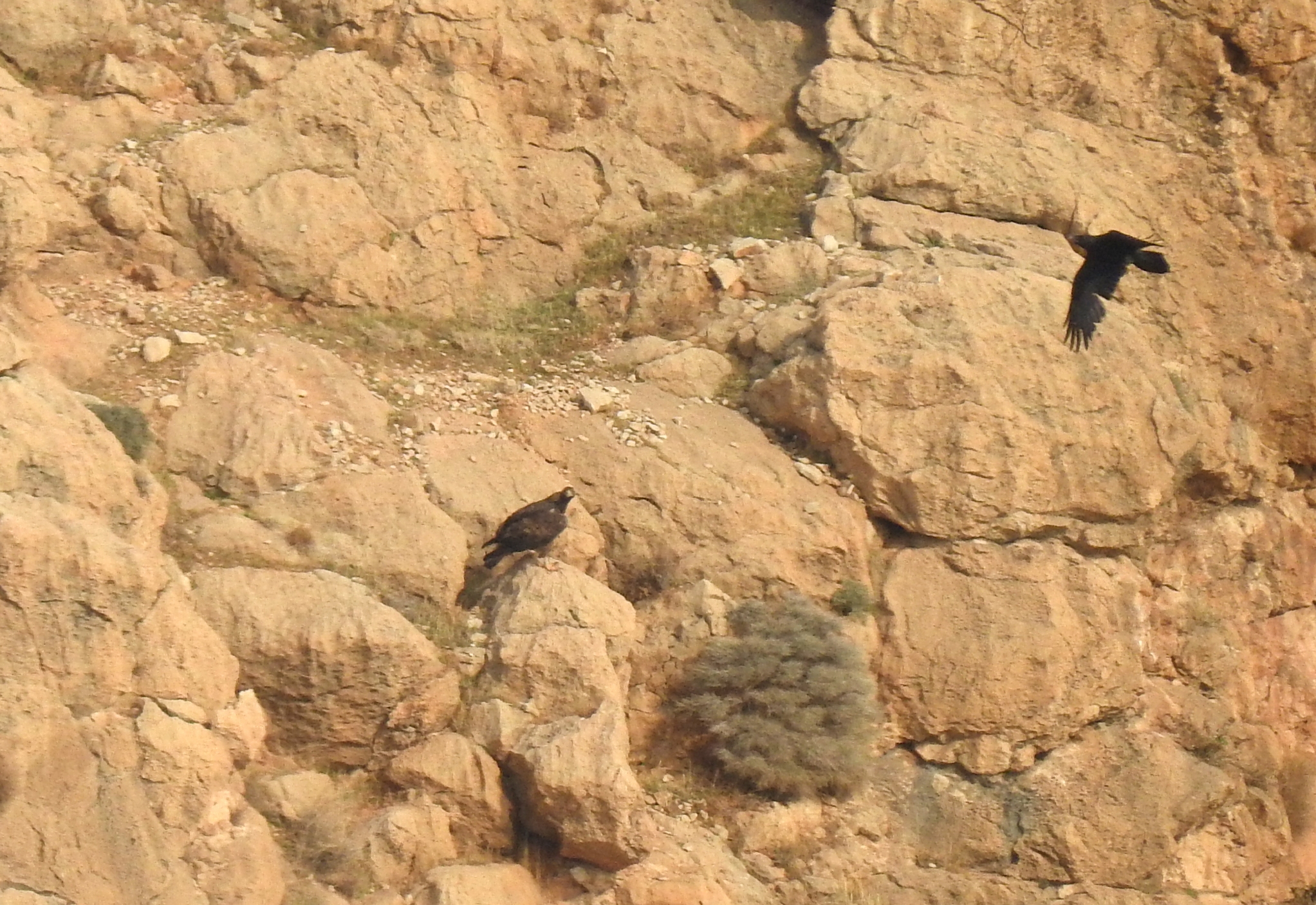
Golden eagle being mobbed by a common raven

Golden eagle being mobbed by a common raven

The reason we were visiting this hillock was to take note of the geographical divide between the southern end of Samaria, and the subsequent start of the Judean Desert. While we surveyed our arid surroundings, I made note of some bird activity around me. First, I spotted a pair of buzzards far off over a ridge to the west, and then a small flock of alpine swifts. Next, much to my surprise, I noticed two somewhat rare golden eagles being mobbed by a few gregarious northern ravens. I had only ever seen golden eagles twice before – and both of those had also been on field trips with Dr Raviv (HERE and HERE)!

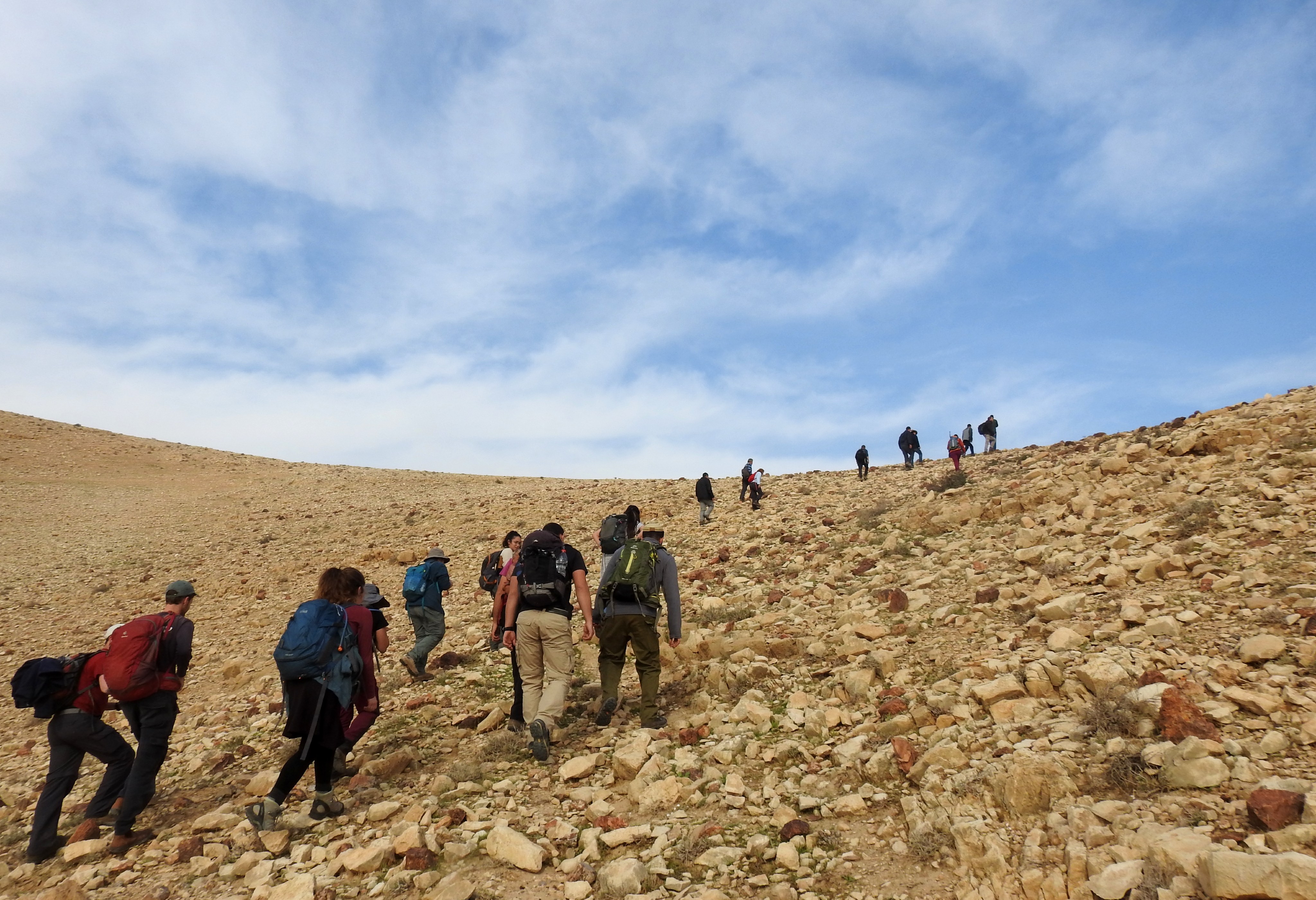
Hiking in the direction of Doq

Hiking in the direction of Doq

Hiking back down the hill to our bus, we then headed for our first real destination of the day, the Hasmonean fortress of Doq. However, getting there was no small challenge, and our bus took a meandering route that led us through a Magav (Israel’s gendarmerie) training base and subsequent firing zones. As we drove I looked out the windows and noticed quite a nice amount of great grey shrikes, black redstarts and other birds. At last, our bus reached the vicinity of Doq and we all got out for a nice hike.

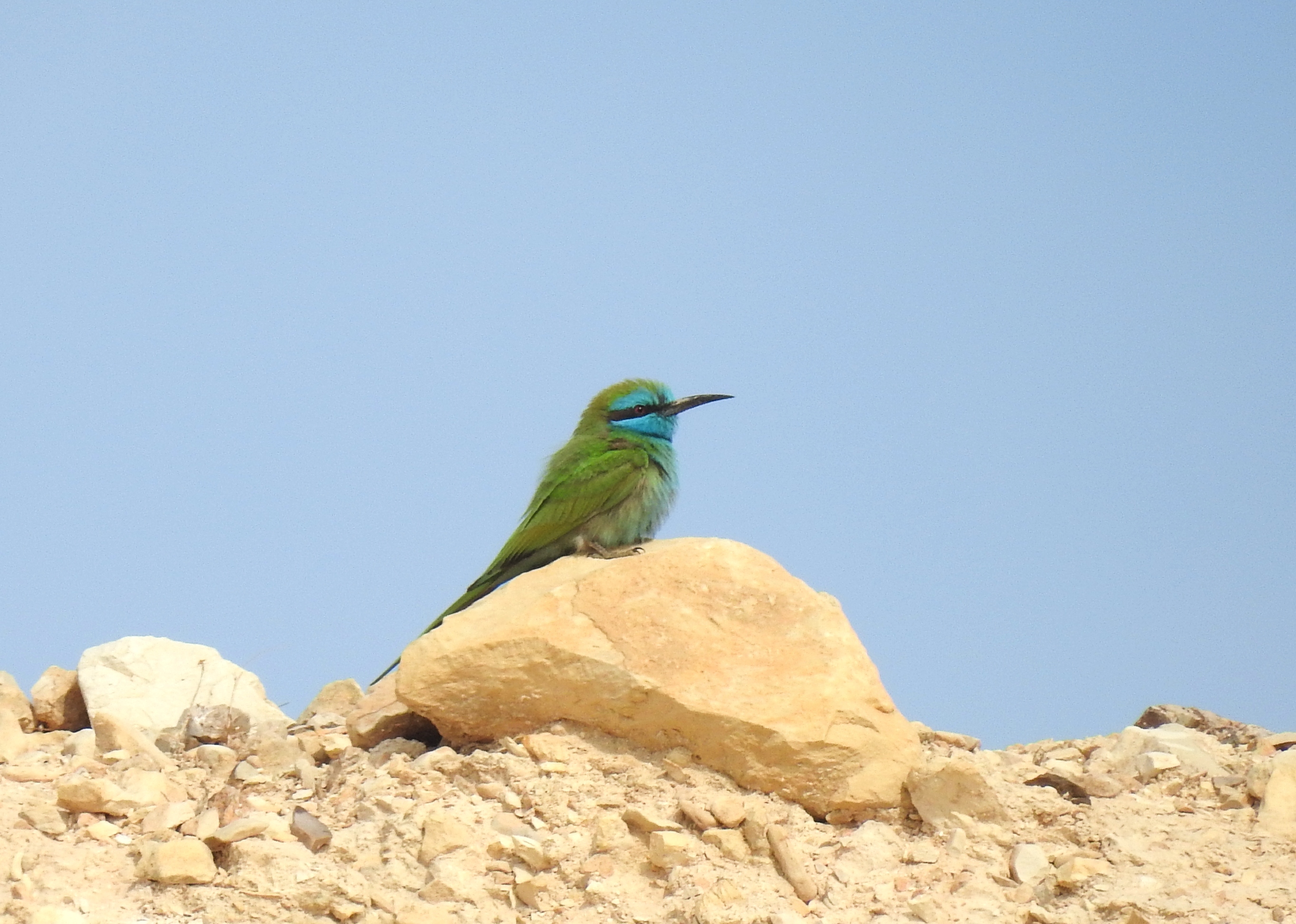
Under the watchful gaze of the Arabian green bee-eater

Under the watchful gaze of the Arabian green bee-eater

Overlooking the ancient city of Jericho, Doq was built during the Hasmonean period, and served as a fortress commanding the region. According to the Book of Maccabees, it was built by Ptolemy son of Abubus, the local governor appointed by Antiochus VII Euergetes, ruler of the Seleucid Empire some thirty years after the story of Hannukah. While the land was still in conflict between the different regional players, Doq was depicted as being the site of treachery against the Hasmoneans during a power struggle over Jerusalem.

Making our way to Doq

Making our way to Doq

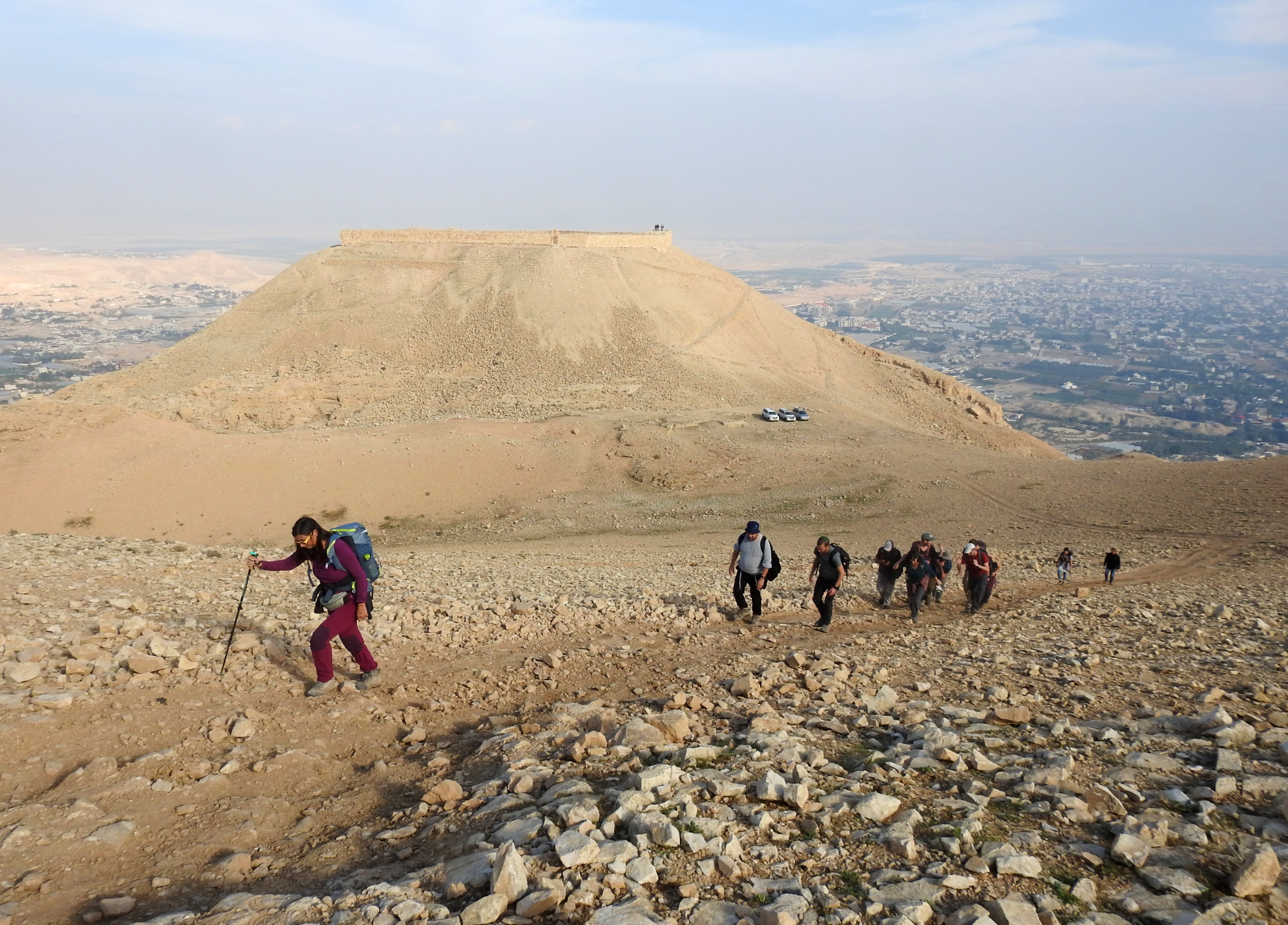
Our visit to Doq (also referred to as Dagon by Josephus) began alongside the dry Wadi el-Mefjer, where an Umayyad-built dam once stood to keep the seasonal flooding from destroying the crops down in the vicinity of Jericho. We hiked up and down the rocky slopes of the Qarantal ridge as we approached the first lookout, where we were able to survey our surroundings.

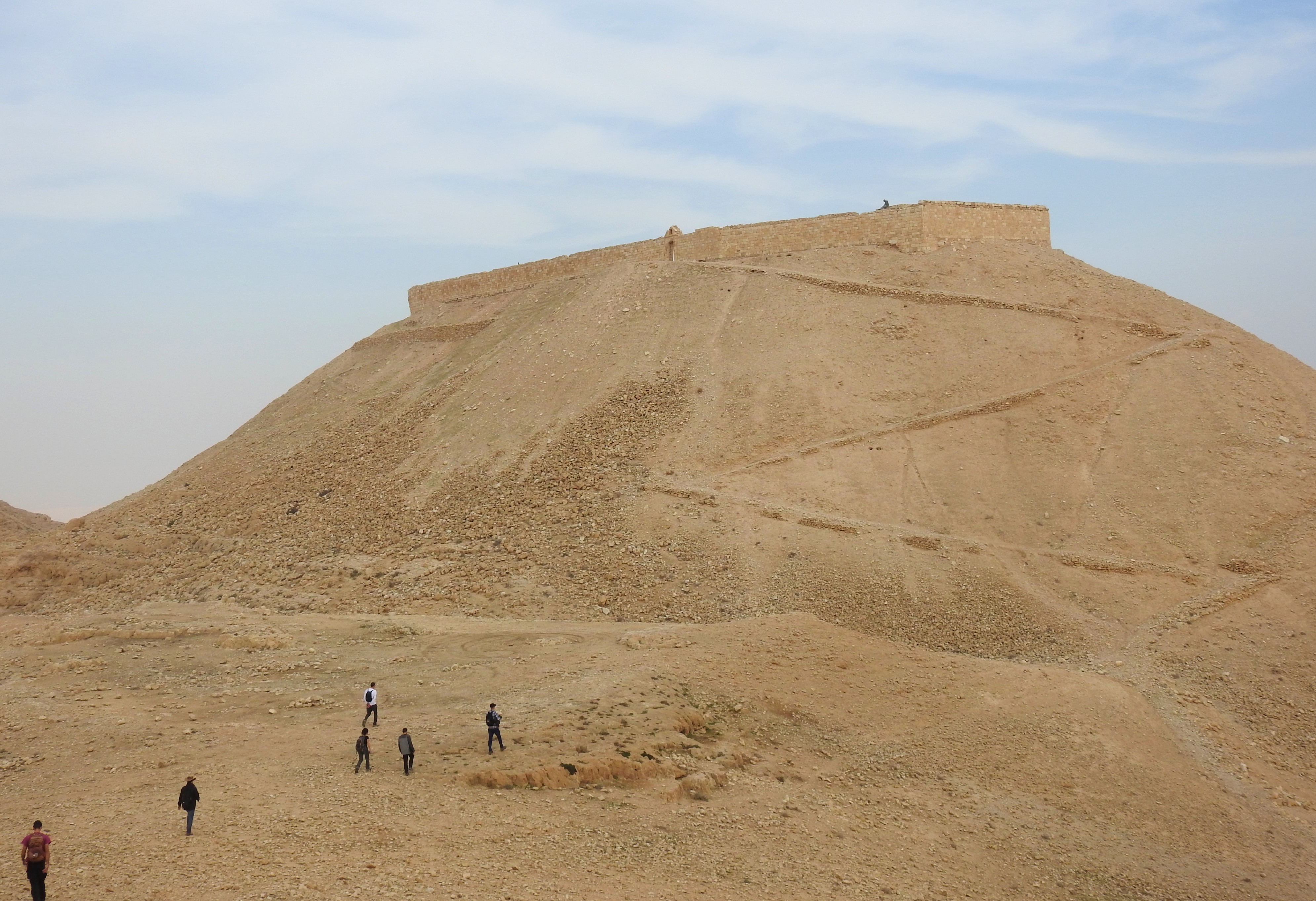
Approaching Doq from the southwest

Approaching Doq from the southwest

From the lookout we pressed onward, climbing the zigzagging path that leads to Doq. Along the way we could see the restored Qarantal Monastery, also known as the Monastery of the Temptation, which was built on the cliffside overlooking Jericho. The monastery was initially built during the Byzantine period, when monasticism swept through the arid regions of the Holy Land, and then rebuilt in 1895 by the Greek Orthodox Church.

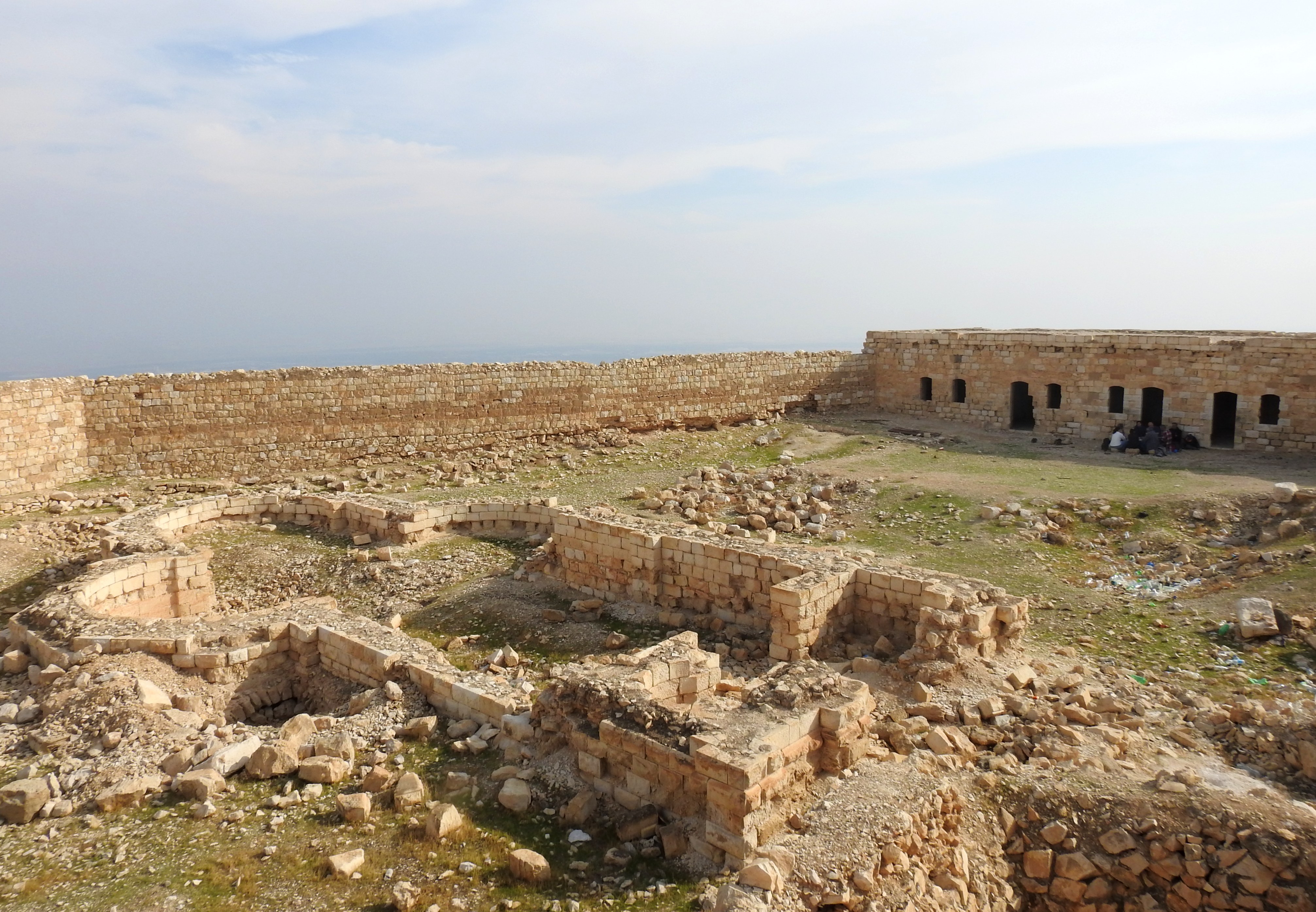
The more recent ruins atop Doq

The more recent ruins atop Doq

At last we reached the peak and we entered the ruins of Doq via a small, yet enchanting doorway that provided a break in the long western wall. However, these ruins were not of the original Doq, but rather also part of a revival attempt by the Greek Orthodox Church in the late 1800s.

Corinthian capstone from the original Doq

Corinthian capstone from the original Doq

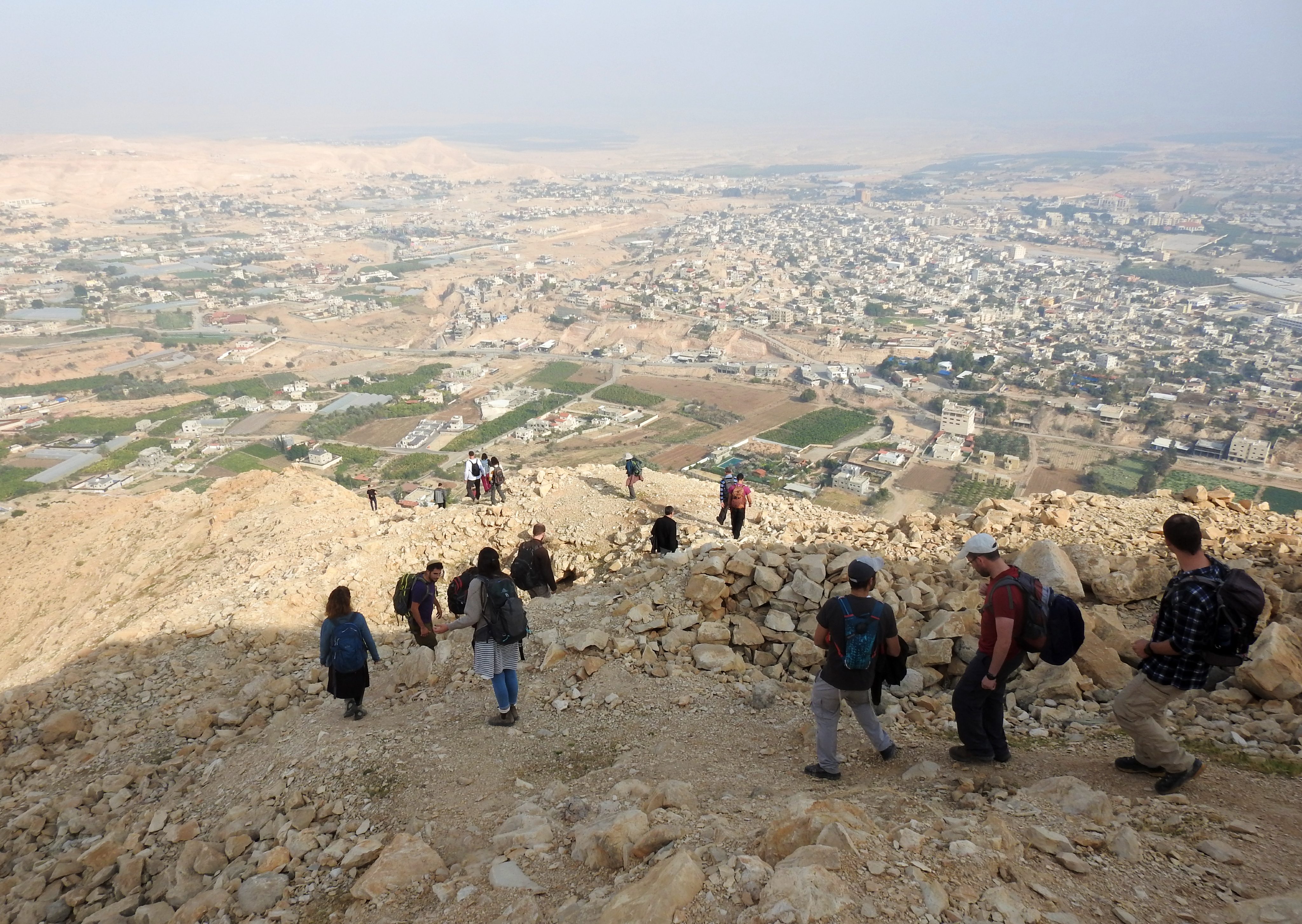
Within, we saw that there was a large rectangular area, marked by a cross-shaped collection of low walls, and a series of arched rooms along the southern wall. We climbed to the roof of the rooms and took in the magnificent view that spread out before us of Jericho and the Qarantal beside us.

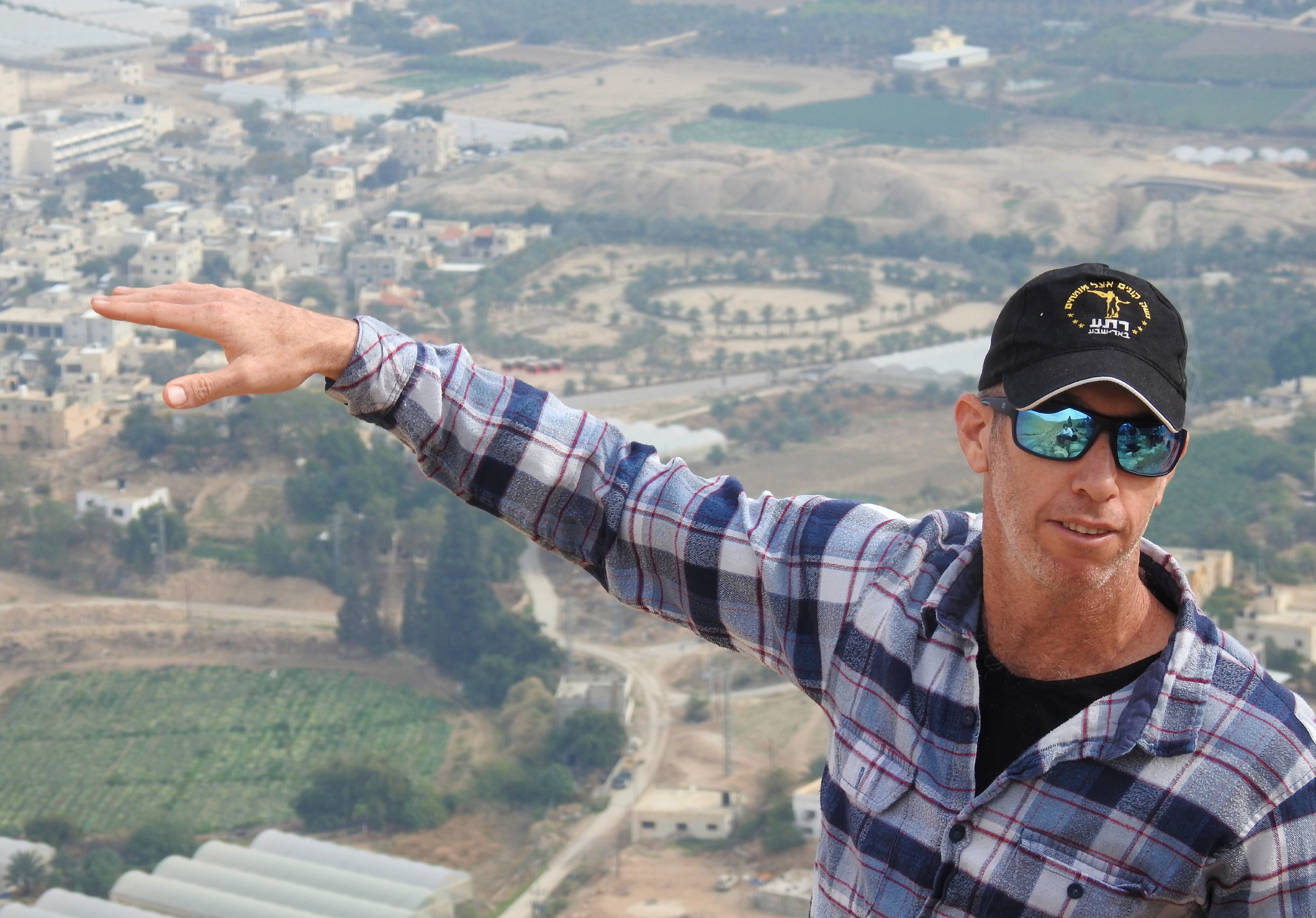
Dr Dvir Raviv backdropped by ancient Jericho

Dr Dvir Raviv backdropped by ancient Tel Jericho

Dr Raviv then gave us a geological survey of the surrounding area, and pointed out the various archaeological landmarks in the city, including the original Tel Jericho, the Shalom Al Yisrael Synagogue, the Herodian hippodrome, an Early Islamic sugar mill and other sites.

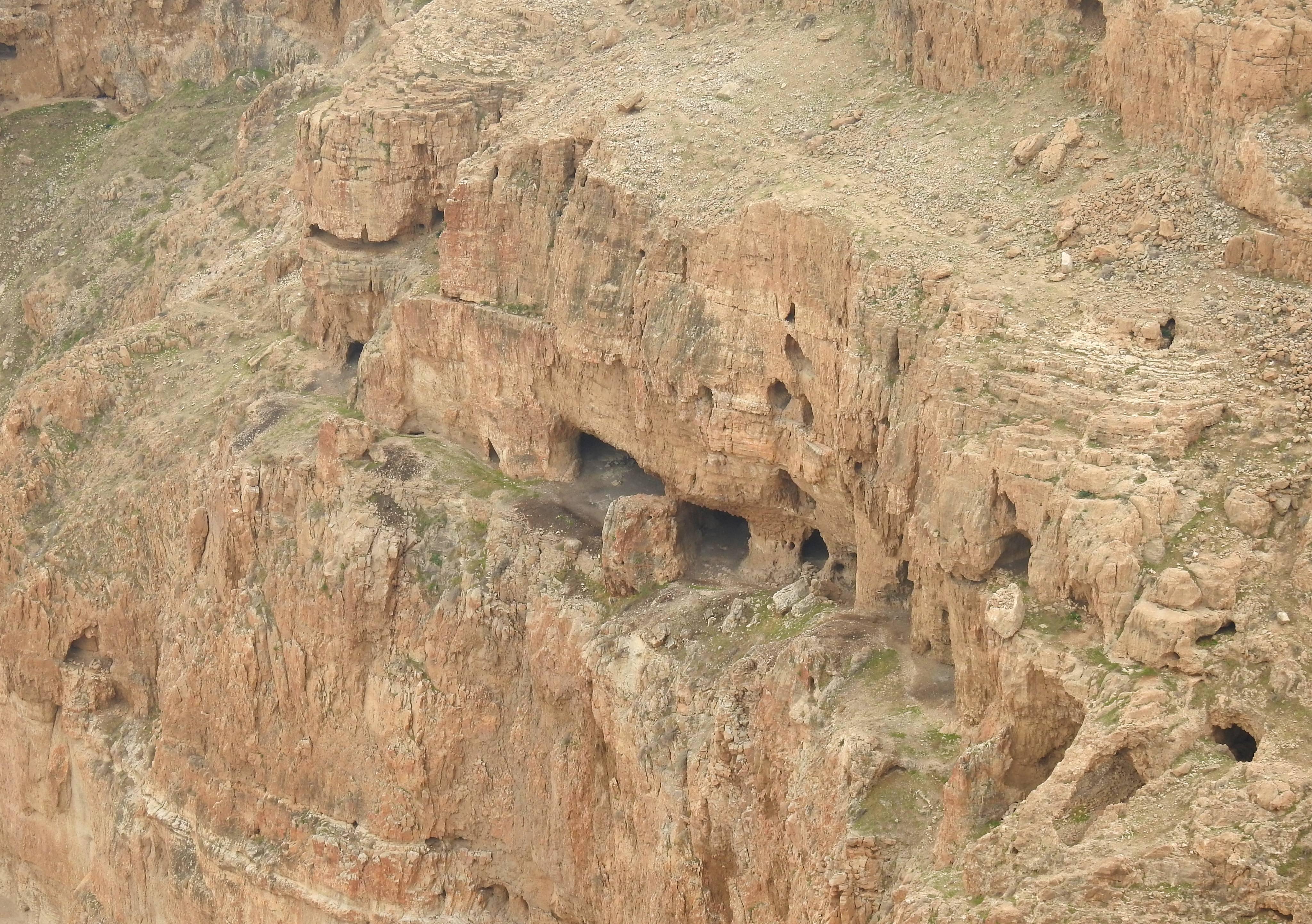
The large cave complex of the Qarantal

The large cave complex of the Qarantal

Turning to the Qarantal ridge, he then pointed out a series of caves marking the craggy cliffside. These were the Caves of the Spies, where it is believed the Israelite spies of the biblical story of Jericho had fled to, as well as other caves that were used in antiquity.

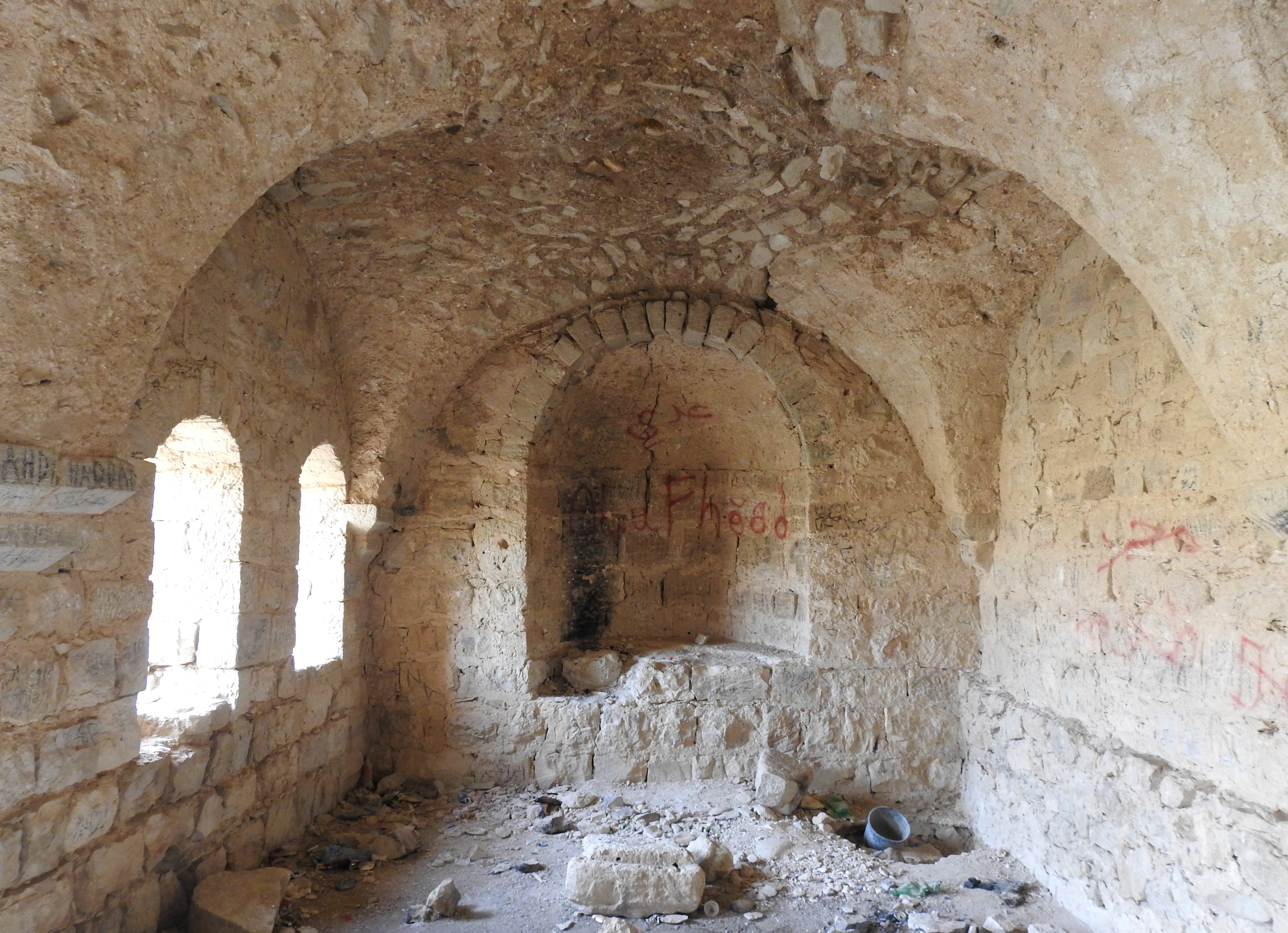
Inside the vaulted rooms

Inside the vaulted rooms

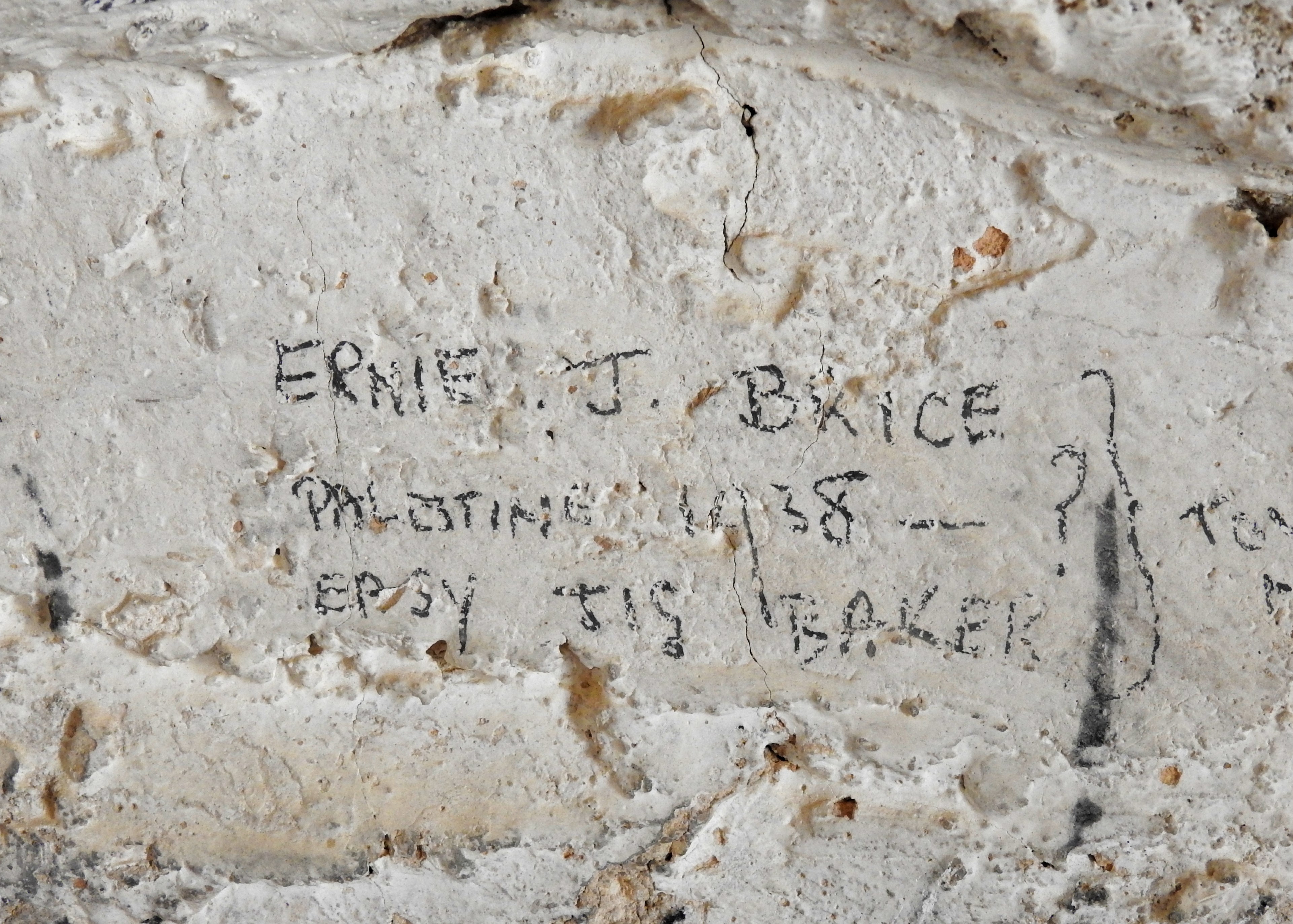
Wandering off to explore the vaulted rooms below us, I found something that intrigued me greatly. Upon the stone walls were written the names of past visitors, many of which were either in Arabic or in plain English. Some of the English graffiti was clearly signed by British soldiers who were likely stationed in the country. One particularly legible scrawl was by one Ernie J Brice, noting his time in Mandate Palestine from 1938 until unknown.

Graffiti left inside Doq's lonely rooms

Graffiti left inside Doq’s lonely rooms

I happened to search this name and found that apparently he was the transmitter operator at the British consulate when Israel was established. His name came up in a 1948 Palestine Post write-up about Israel’s first espionage case, the fledgling government against a British citizen named Frederick William Sylvester who was spying for Israel’s enemies (see more HERE and HERE).

Hiking down to examine the water system

Hiking down to examine the water system

We then explored the remains of the to-be Greek Orthodox Church which incorporated what it believed to be a key shape in the construction, with scattered regal column capitals that bear testament to the grandeur that once was two thousand years ago. From there we left the confines of the wall and began to explore the ancient water system that joined a hewn channel with numerous cisterns.

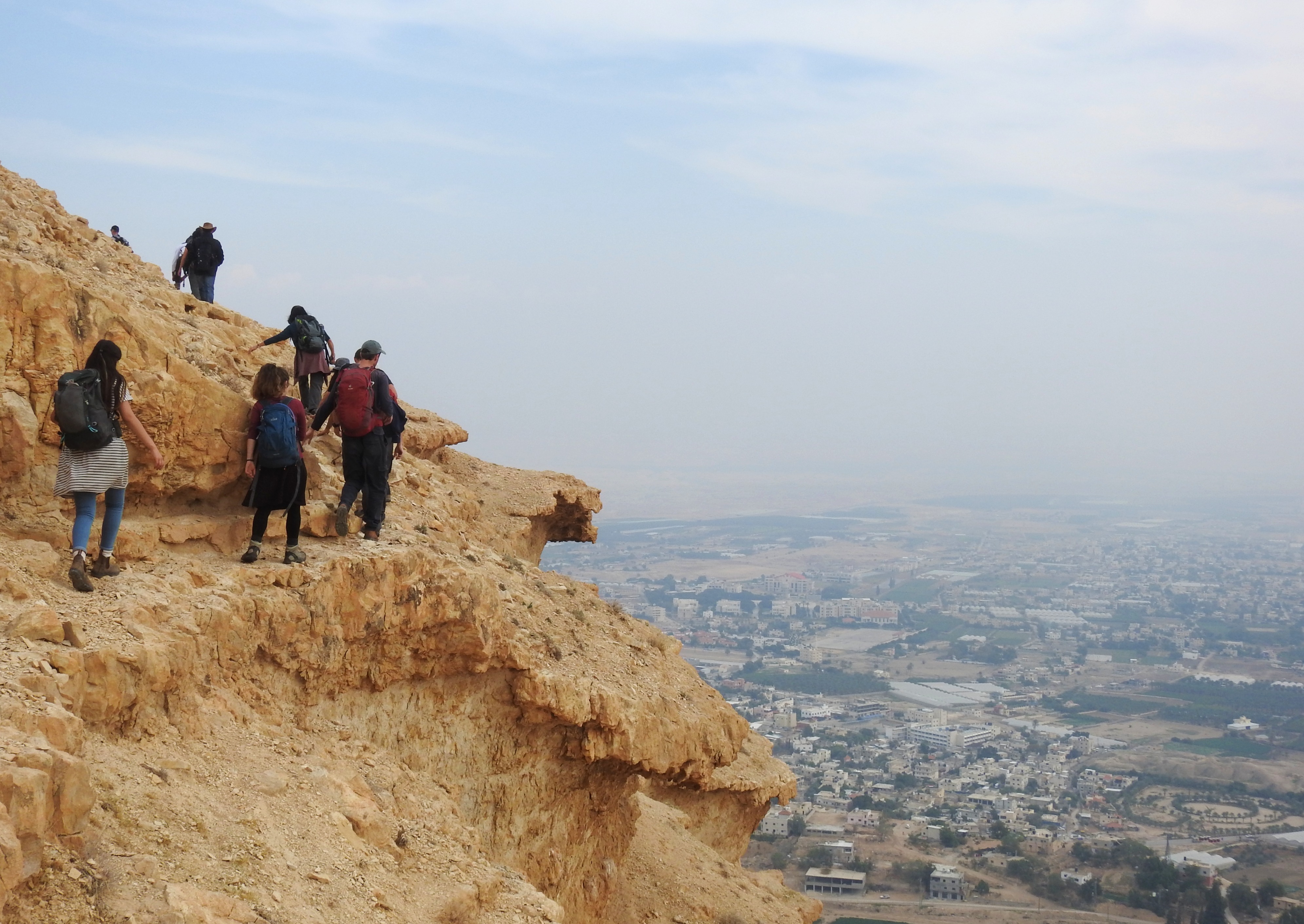
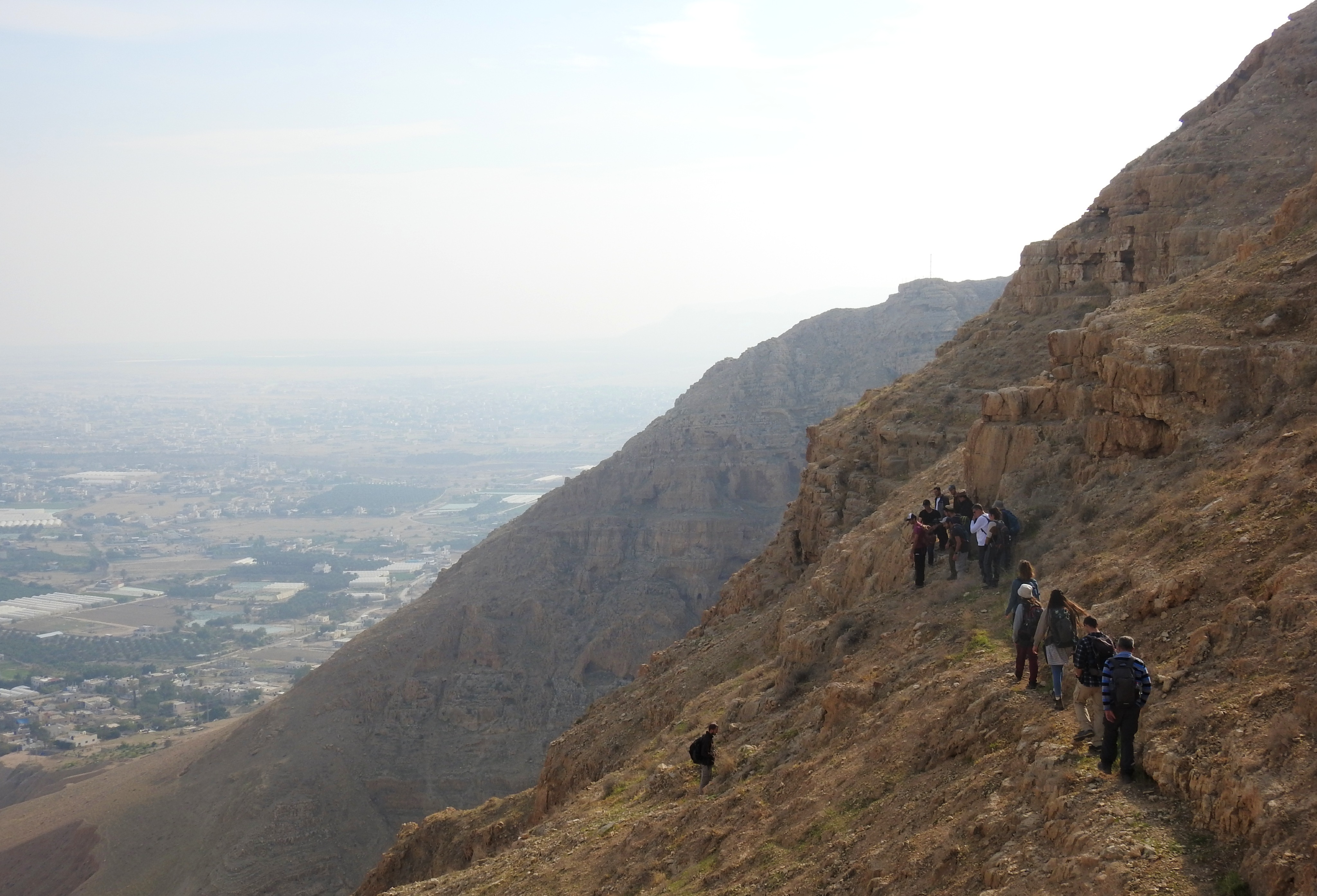
Walking along the water channel on the eastern slope

Walking along the water channel on the eastern slope

Clinging to the craggy cliffside, we walked down the channel and examined the hard work that it took to create such an intricate system in such an arid place – only discovered in 1972. That, and the increasingly breathtaking views of Jericho spread out before us, with the aforementioned Qarantal Monastery just below.

Peering inside one of the system's cisterns

Peering inside one of the system’s cisterns

Hiking the way back was via the same channel, continuing along the northern slope until we reached the adjacent ridge where a practically indiscernible small fort crowned the peak. We stopped there to catch our breaths, looking back at Doq and the areas we had just hiked. Refreshed, we then hiked back to the bus to be shuttled to our next destination of the day.

Hiking up to the small fort

Hiking up to the small fort

Arriving at a place that I have had my eyes on for years, I was eager to get out and explore. We were at the Good Samaritan Museum, a mosaic museum housed on the ruins of a 2,000-year old wayfarers station, and later as a Byzantine-era inn from where its name originates. I had seen the museum site back in early 2018 when I had visited Castellum Rouge, a Crusader fortress built just across Road 1, and now was its time to shine.

The Good Samaritan Museum

The Good Samaritan Museum

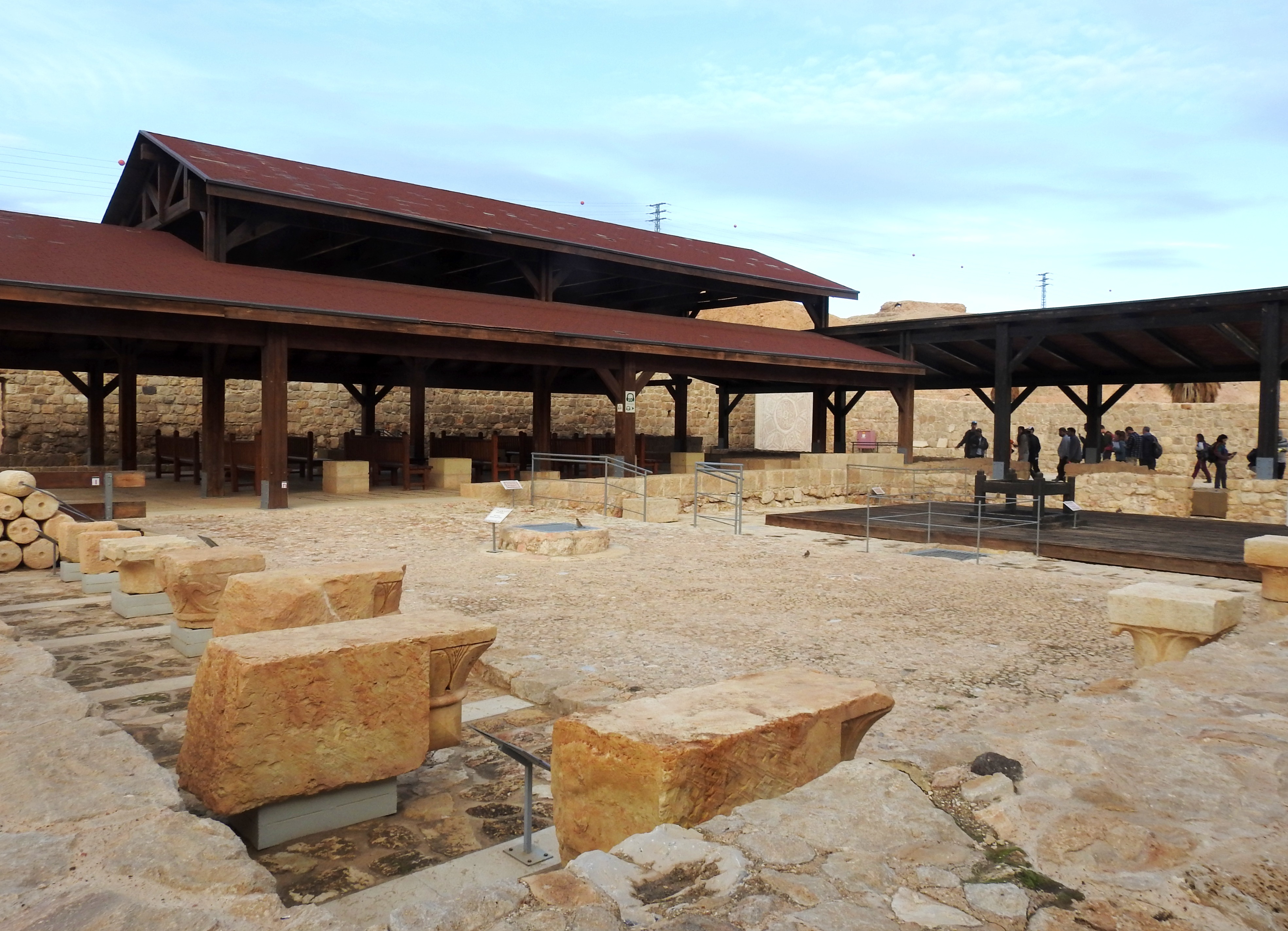
Immediately inside the site’s gates we saw the showcased underground dwelling cave that dates back to the Second Temple period as well as a grand mosaic from the ancient synagogue at Gaza featuring a fine collection of artistic fauna. Many, if not all of the mosaics on display at the museum are those found in archaeological sites that wouldn’t otherwise be able to support the conservation on-site. Thus, when need be, the Israel Antiquities Authority systematically transplants and preserves these fragile works of art to be displayed for all.

The outdoor exhibits of the museum

The outdoor exhibits of the museum

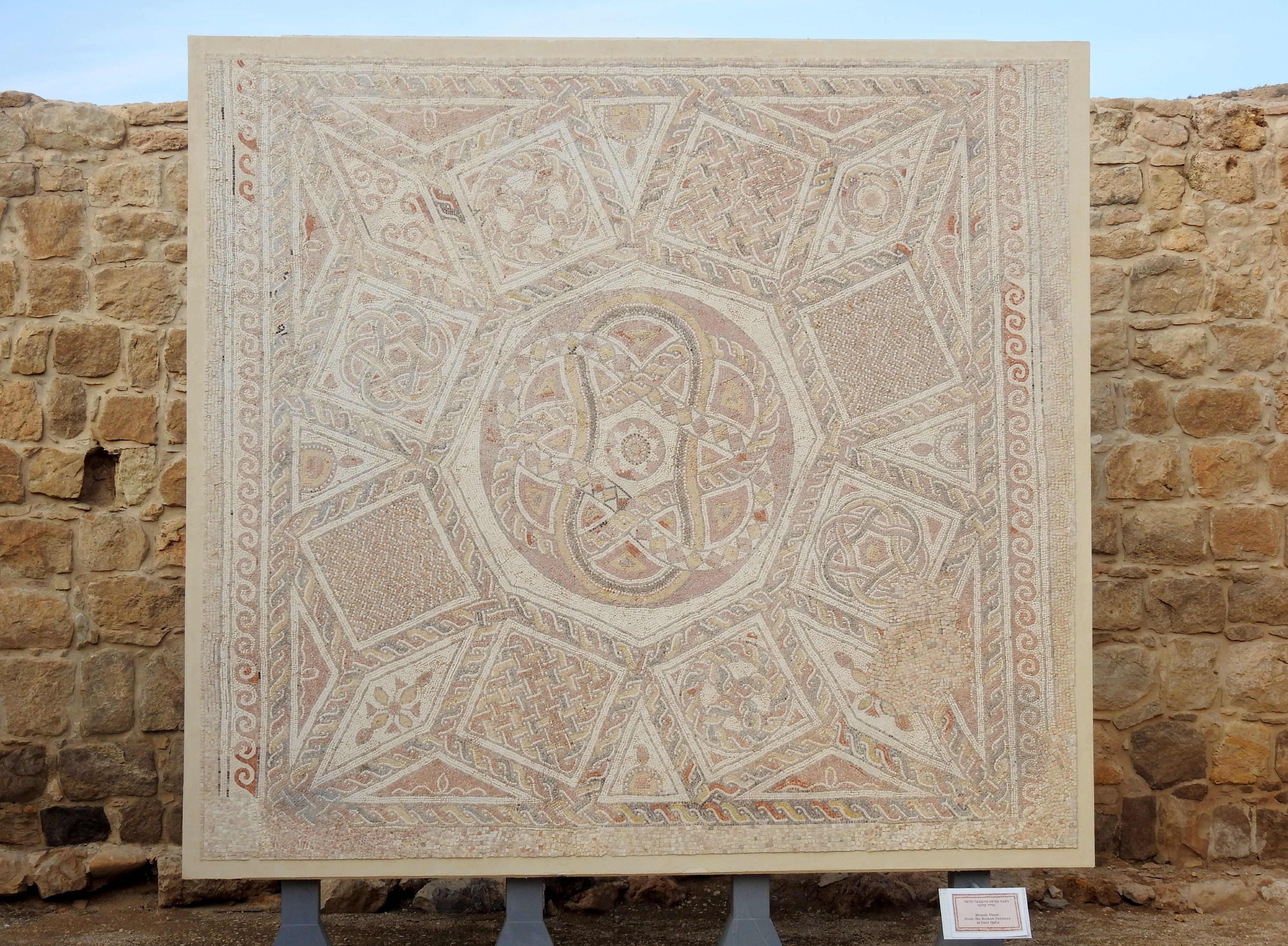
It’d take a long time to list all of the magnificent mosaics that I saw that day, but there are some that stand out for several reasons. The mosaic that excited me most was the one found at Khirbet el-Lattatin, an interesting site just a kilometre or so away from my parents-in-law’s home in Givat Ze’ev. But there were those that impressed with their sheer beauty, such as the mosaics of the church narthex and the Roman fortress at Deir Qal’a, both stunning in their geometric patterns.

The Roman fortress floor from Deir Qal'a

The Roman fortress floor from Deir Qal’a

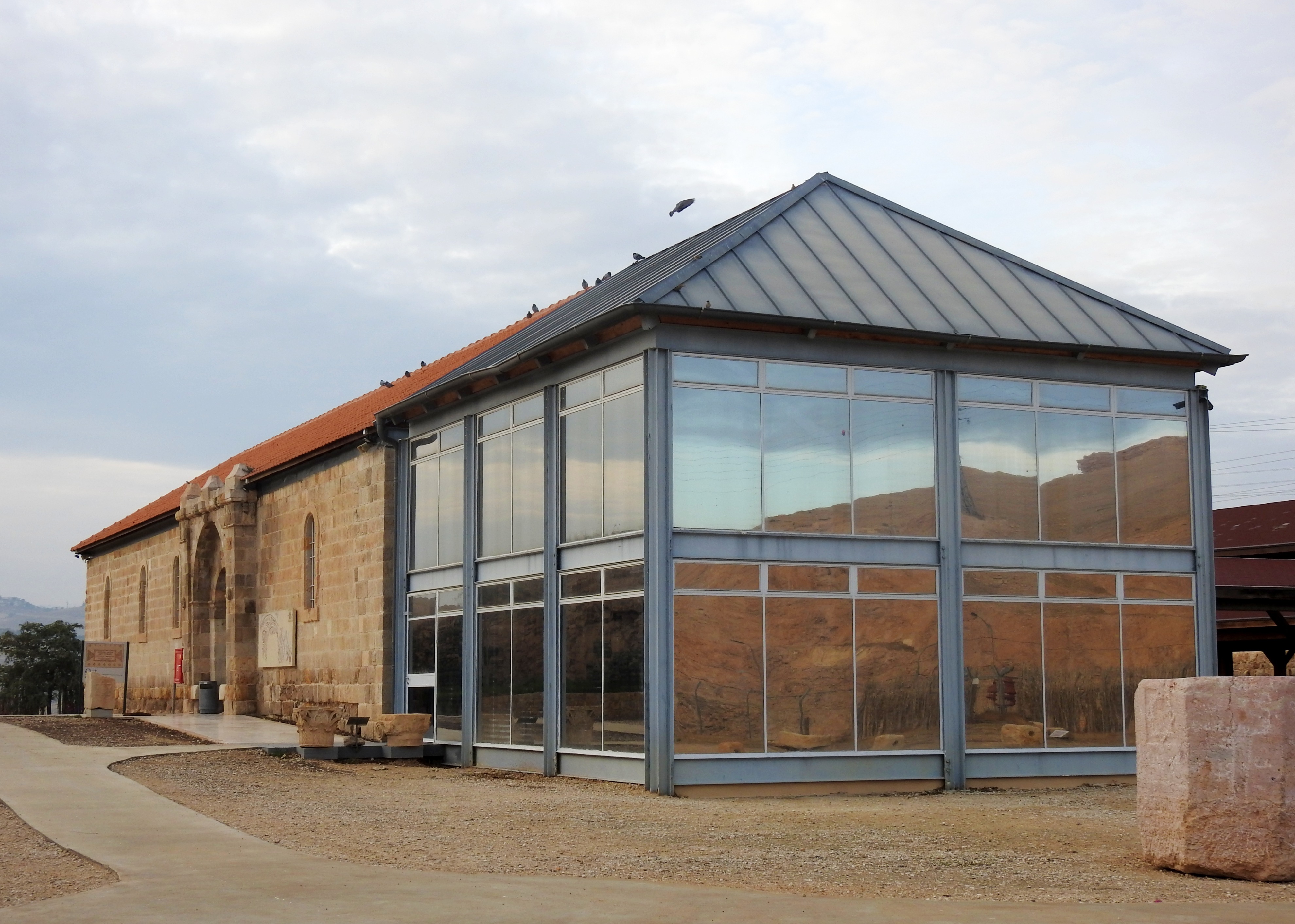
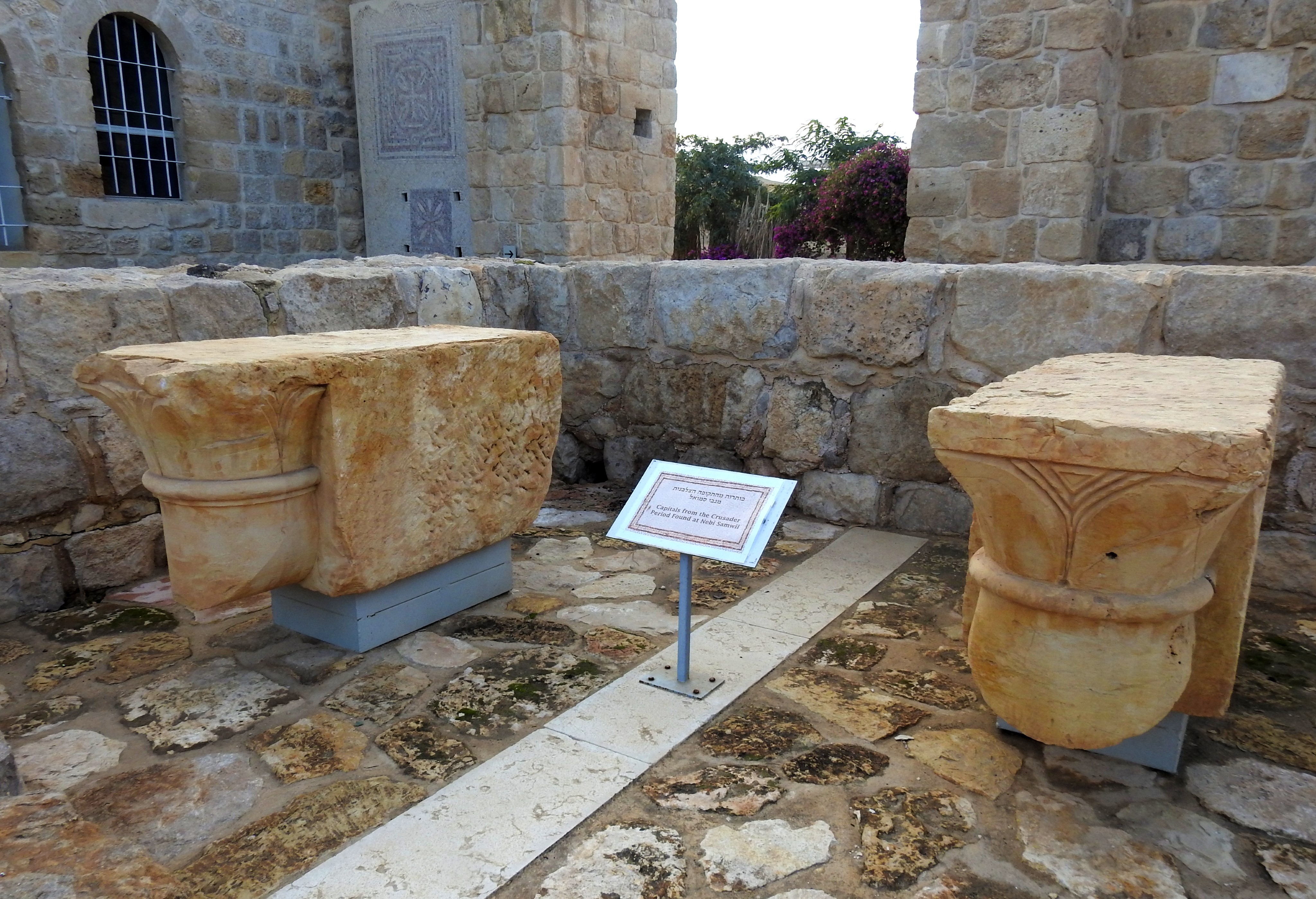
These were all part of the outdoor exhibits, where mosaics are incorporated among the ruins of structures from the Second Temple and Byzantine periods, as well as a water cistern from the Crusader period. I enjoyed seeing capitals from Nabi Samuel, as well as hewn sarcophagi from Shechem (Nablus), but I was also eager to see inside the museum’s central building, originally built during the Ottoman period to serve as a police station guarding the treacherous road outside.

Capitals from Nabi Samuel on display

Capitals from Nabi Samuel on display

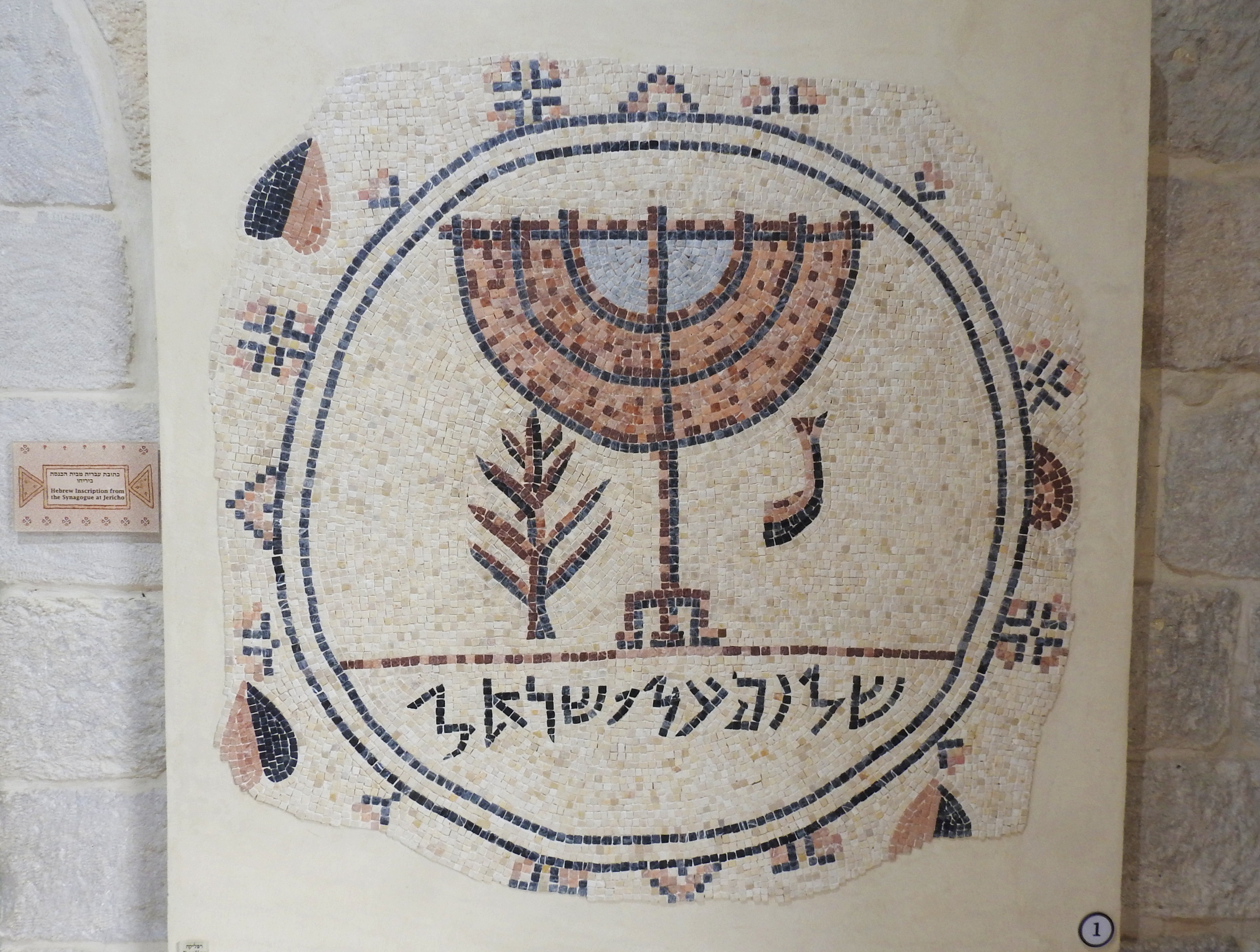
Entering, and rejoicing in the respite from the cold winds outside, I quickly became overwhelmed at the sheer quantity of mosaics on display. The six consecutive rooms, each full of mosaics and other accompanying artefacts, was almost too much to be properly enjoyed in one brief visit. Some did stand out, especially the inscription mosaic from the aforementioned Shalom Al Yisrael Synagogue in Jericho.

The eponymous mosaic from the Shalom Al Yisrael synagogue of Jericho

The eponymous mosaic from the Shalom Al Yisrael synagogue of Jericho

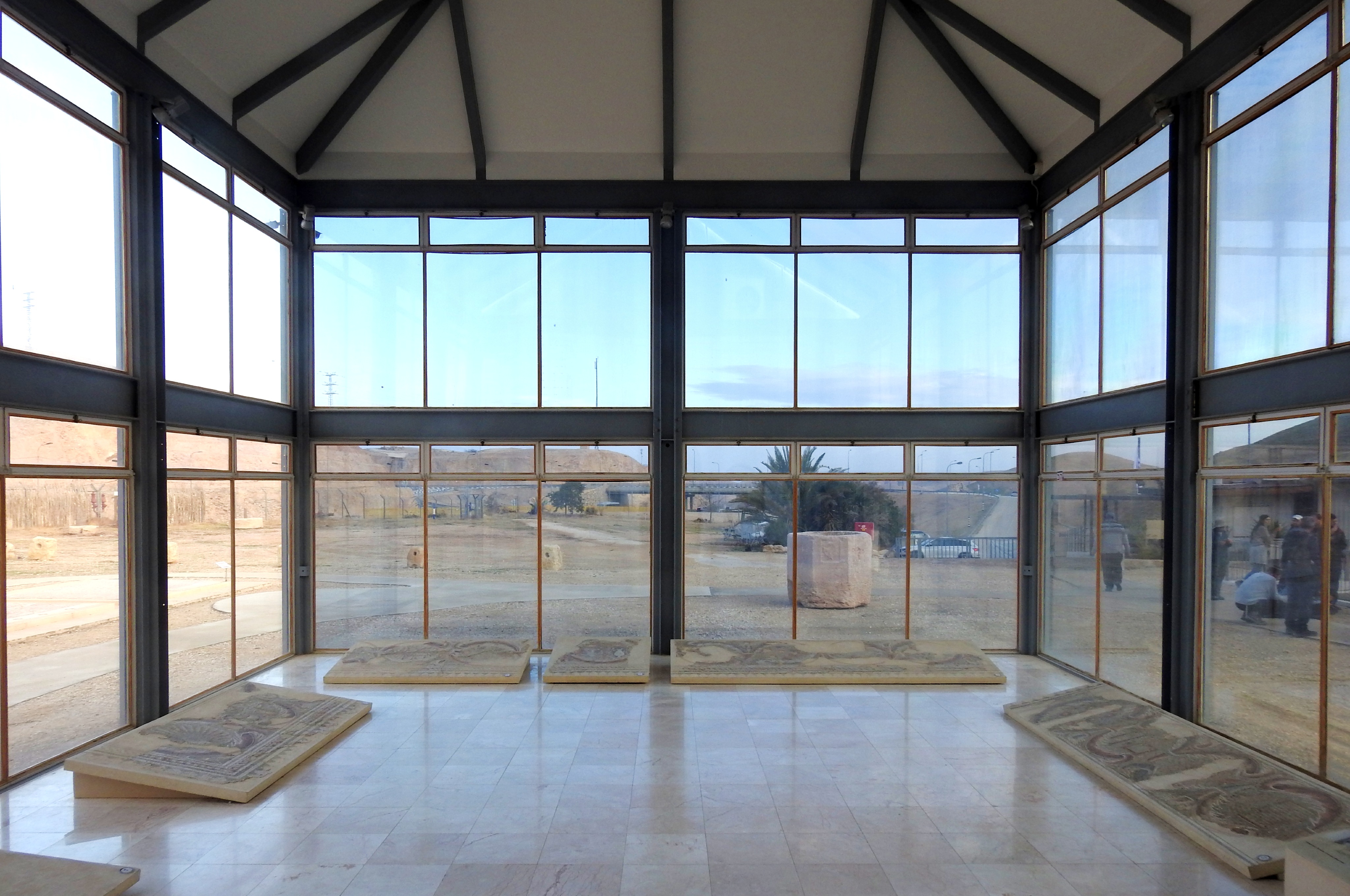
During the Byzantine period, when mosaic floors became an integral component to religious structures, the art was used by all faiths. I became impressed with the quantity and quality of the Samaritan mosaics, hailing from sites such as Mount Gerizim, El-Khirbe and Sha’alavim. However, it was the Samaritan synagogue at Khirbet Samara that took the proverbial cake, the mosaic remains showcased in a large glass-walled room.

Within the room dedicated to Khirbet Samara

Within the room dedicated to Khirbet Samara

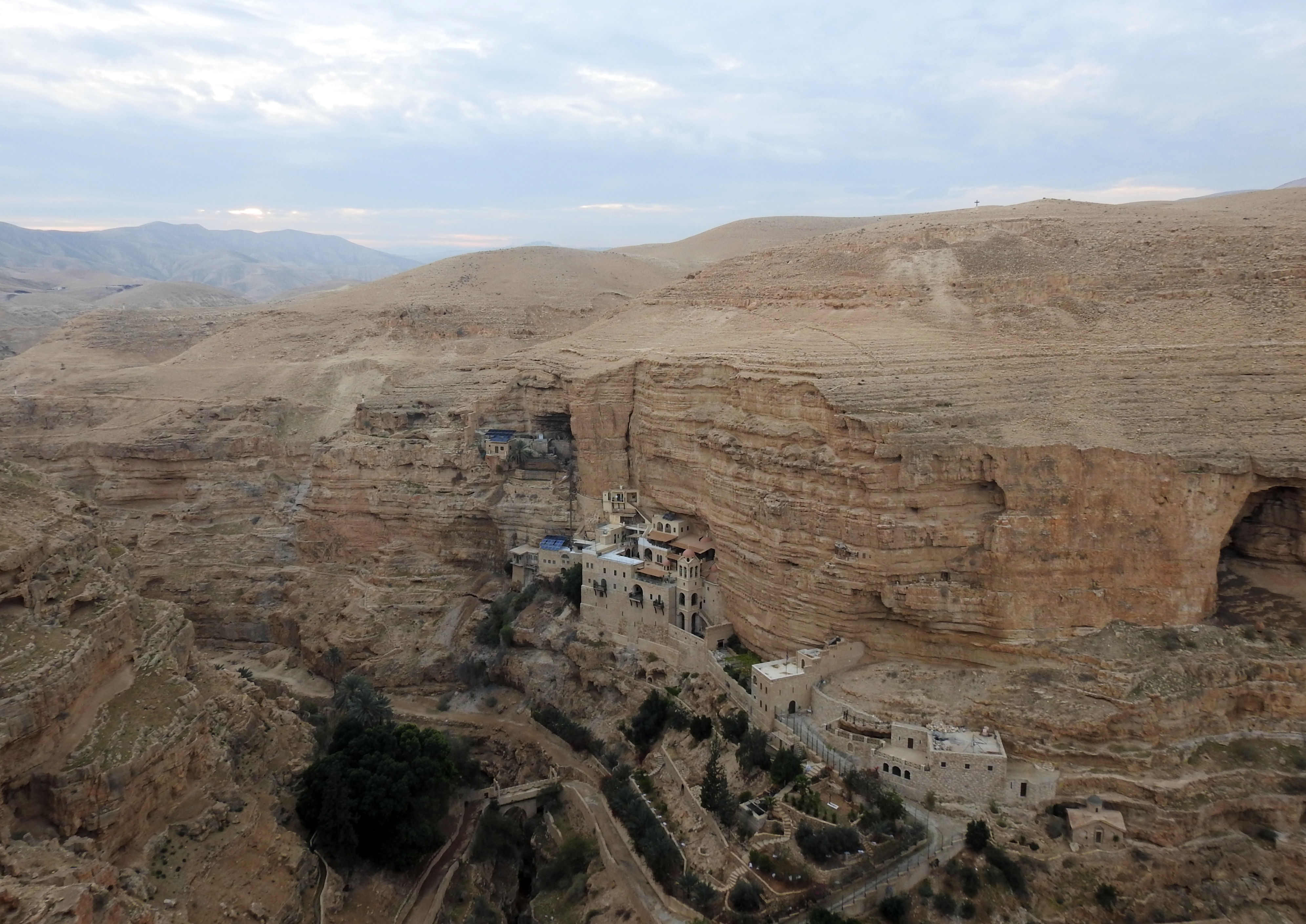
I looked around until it was time to get back on the bus for one last stop. The sun was slowly sinking, and Dr Raviv had one last place he wanted us to see before bringing this first field day to an end. Thankfully, it was not far and before we knew it, we were back outside again and climbing up a short hill to an excellent observation point looking out over Wadi Qelt and the Monastery of St George.

Ending our day at the Monastery of St George lookout

Ending our day at the Monastery of St George lookout

Evening was setting over the picturesque desert, marked by a flock of alpine swifts calling overhead as they welcomed the dusk. Plus, to boost our high spirits even more, a tiny birthday celebration for one of the students was held. The enchanting calls of Tristram’s starlings echoing in the wadi was our last audible memory of the day, accompanying us as we scurried back to our bus for the long ride back home.

University Trip: Sites around Nachal Tirza

In Israel, Jordan River Valley on January 16, 2022 at 10:15 AM

It has been difficult not going on any field trips offered by my Land of Israel Studies and Archaeology department in the past year and a half or so. The last one I had attended was to Tel Arad and Tel Be’er Sheva with Prof Aren Maeir, and the time had come to once again embark on a group tour of some exciting places that I wouldn’t ordinarily be visiting on my own. This time, towards the end of December, I set out on a trip to four archaeological sites in the Nachal Tirza area with Prof Shawn Zelig Aster and Dr Dvir Raviv, the latter being one of my thesis advisors.

The region of our adventure

The region of our adventure

With our target destination being located in the Jordan River Valley area of the country, it was quite a drive to get there coming from Bar Ilan University. Although, on the way, we passed el-Jenab Cave, which I happen to be researching for my thesis and thus pleased me deeply. That, and the breathtaking views of the mountains and wadis on the eastern side of the watershed made the trip already exciting. Before we arrived at our first stop, we had a quick break at a rest stop near Pazael, where I found hundreds of black kites still resting before taking to the skies.

Roosting black kites

Roosting black kites

When we were back in the bus and headed for our first site – Khirbet el-Makhruk – we drove past staggering numbers of both black kites and starlings flying in the vicinity of local garbage dumps. I’d estimate that there were tens of thousands of each, and an additional couple hundred white storks to complete the spellbinding picture. However, this trip was about geography and archaeology and so the bus let us out near Adam Junction and we began the short hike to Khirbet el-Makhruk.

Atop the eastern fortress at Khirbet el-Makhruk

Atop the eastern fortress at Khirbet el-Makhruk

Since we had just experienced a week-long storm, even the arid Jordan River Valley region had received rainfall which was the catalyst for a very exciting event in the circle of life. After the rains, termites come out of their underground complexes and those with wings take to the skies. We swatted the drone-like termites as they flew past, one of them finding its way into my shirt, but then we noticed something incredible. When we had reached the eastern fortress of the ancient site, we saw Israeli gold scorpions running about in broad daylight, nabbing the confused termites and quite literally eating them on the go. Unfortunately, I don’t have the proper macro equipment to capture this moment the way it needs to be, but to witness it was astounding.

An Israeli gold scorpion running off with a termite

An Israeli gold scorpion running off with a termite

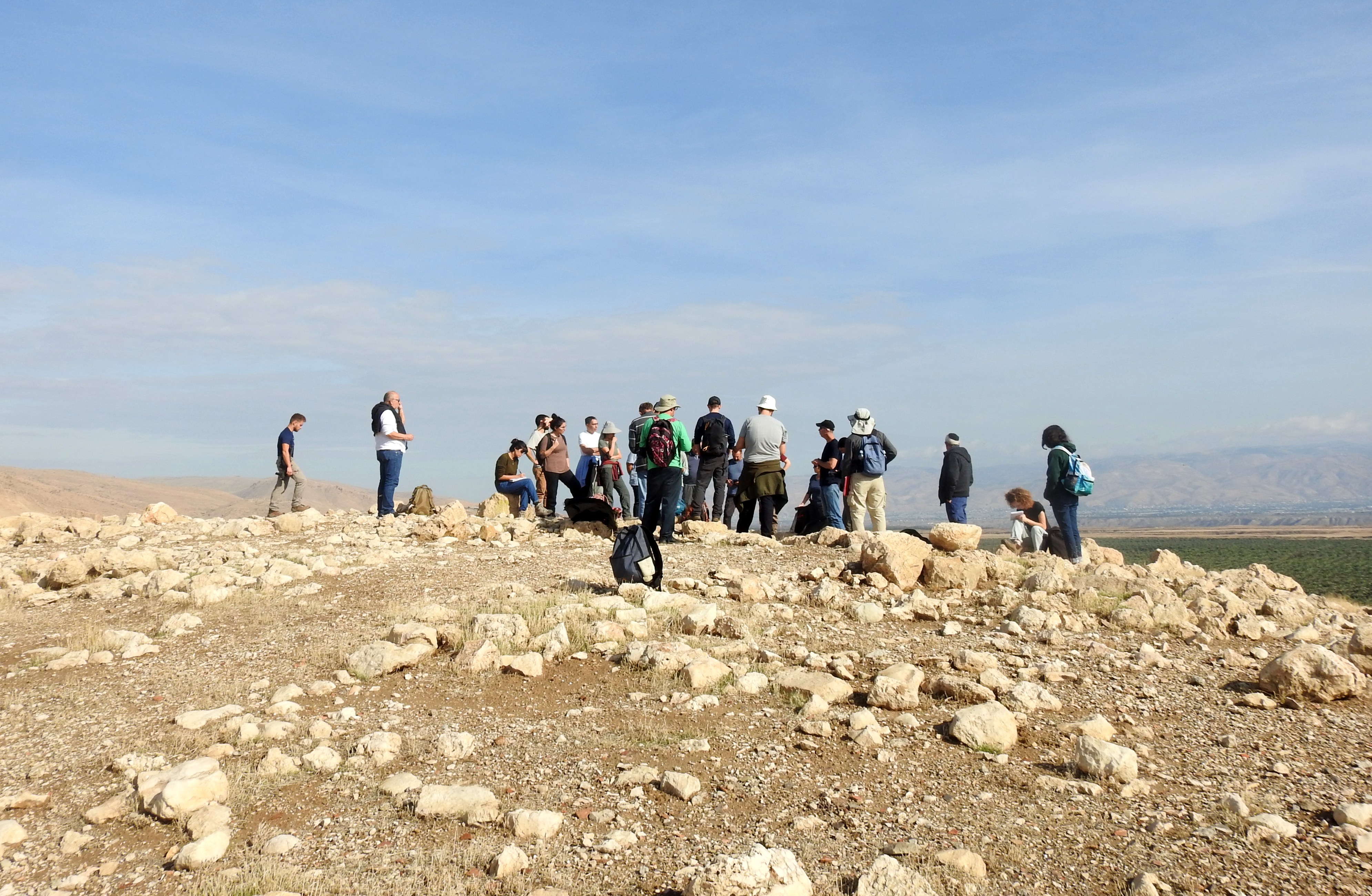
Khirbet el-Makhruk is a complex of small fortresses dating to the Iron Age, or when the Israelites were active, built atop the ruins of an Early Bronze Age city. Not much remains of the ruins, but back then the site was vitally important in its task of keeping the settled hinterland safe. While looking around the eastern hilltop, I found evidence of recent artefact looting, as well as a freshly broken rim of what appears to be an Iron Age jug.

Exploring the circular tower

Exploring the circular tower

We continued up to the small circular tower which effectively guarded the southern side of the complex. There, in the jumbled ruins, I found a painted sherd that either dates to the Late Bronze Age or the Mamluk period, depending on who you ask.

Late Bronze Age or Mamluk painted pottery

Late Bronze Age or Mamluk painted pottery

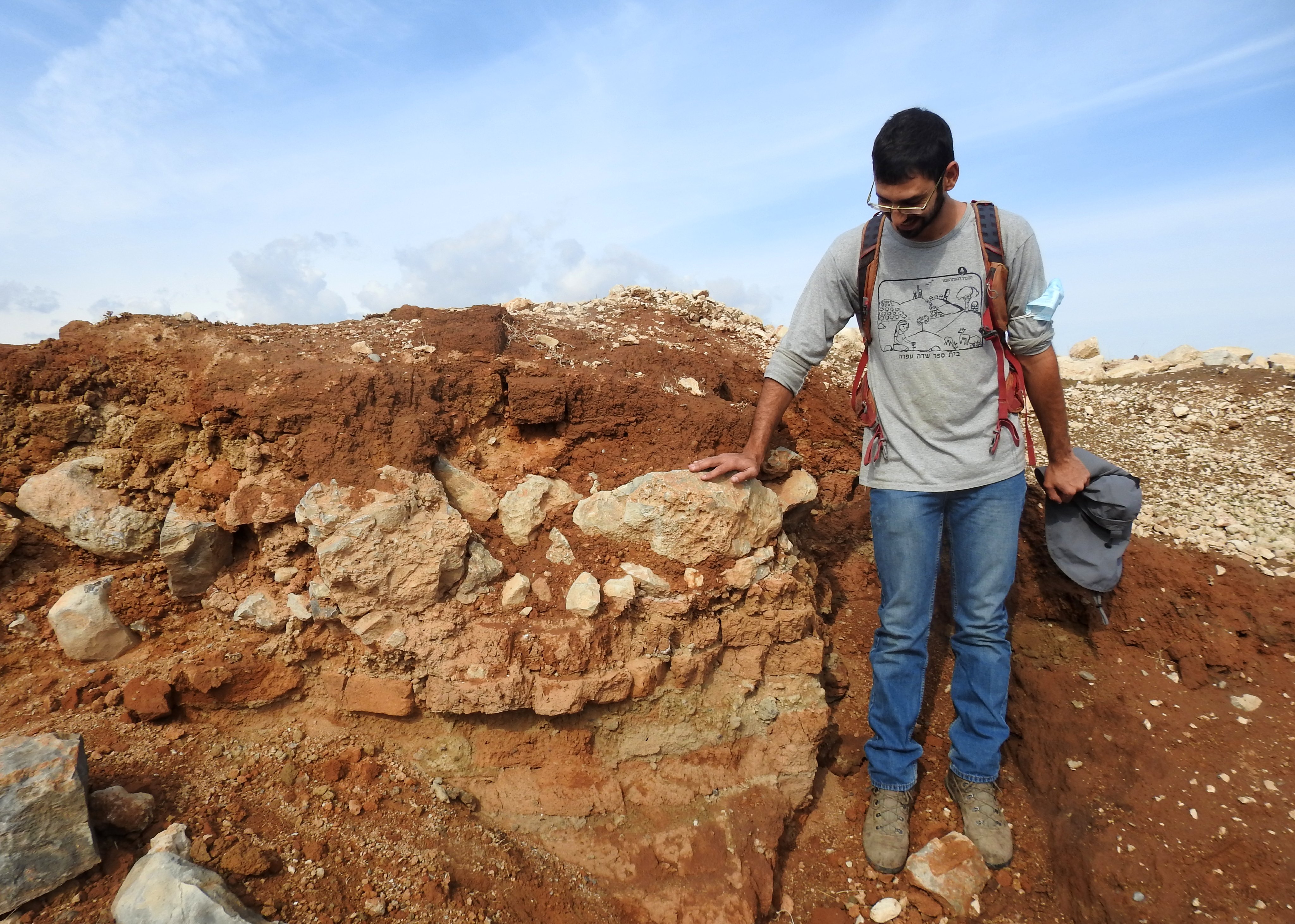
From there we continued on to the northern fortress which was most recently ravaged by IDF fortification trenches, although Ottoman bunkers dating to WWI can also be found in the vicinity. Here we found a recently exposed mud brick wall, beautifully intact and utterly raw evidence of the construction efforts that went into this key site.

Freshly exposed ancient mud brick wall

Freshly exposed ancient mud brick wall

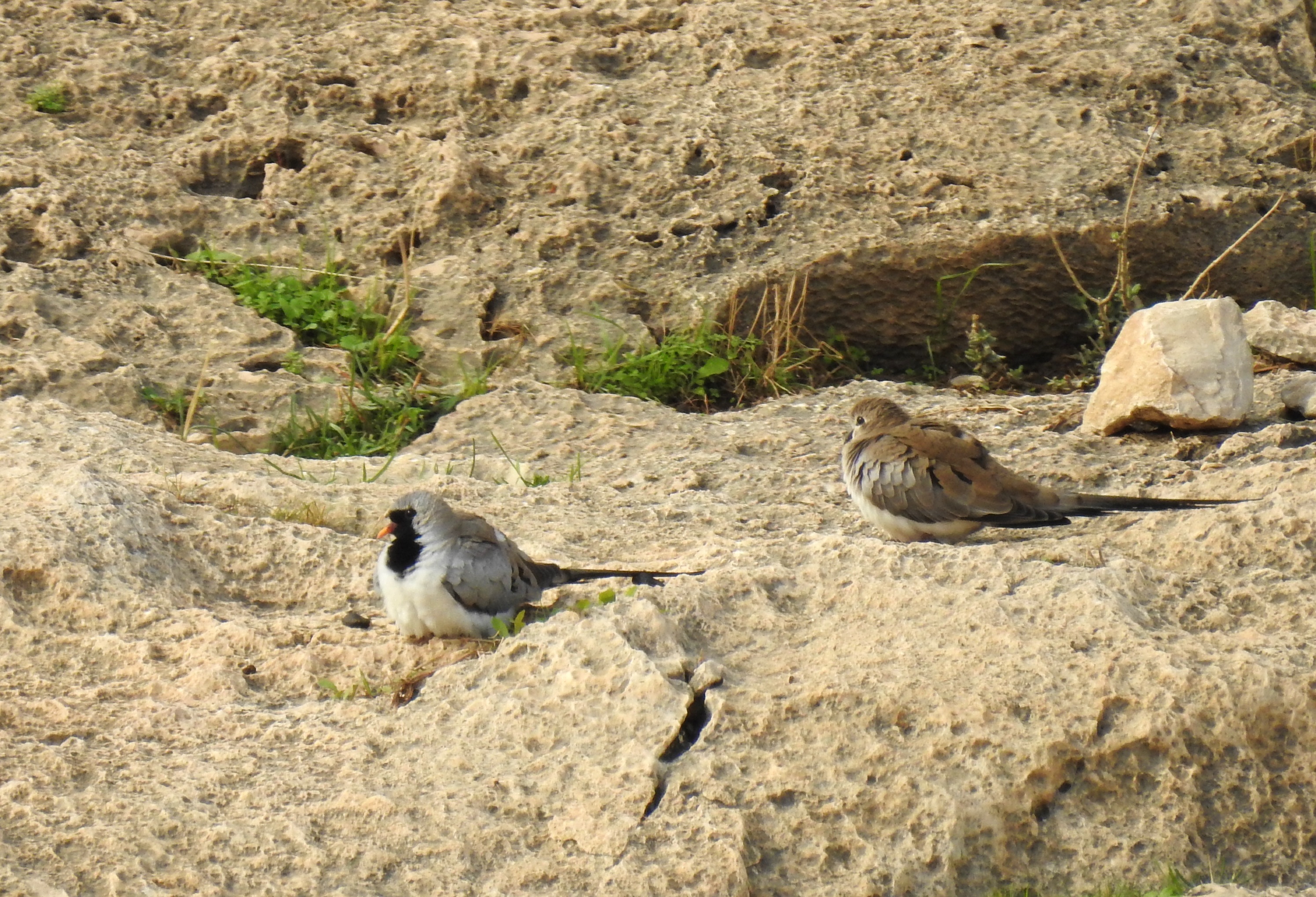
We documented it fully, and began the hike back down to the waiting tour bus. Along the way, I had some pleasing birding moments, including some beautiful green bee-eaters, a flushed sand partridge and my very first Namaqua doves.

My very first Namaqua doves

My very first Namaqua doves

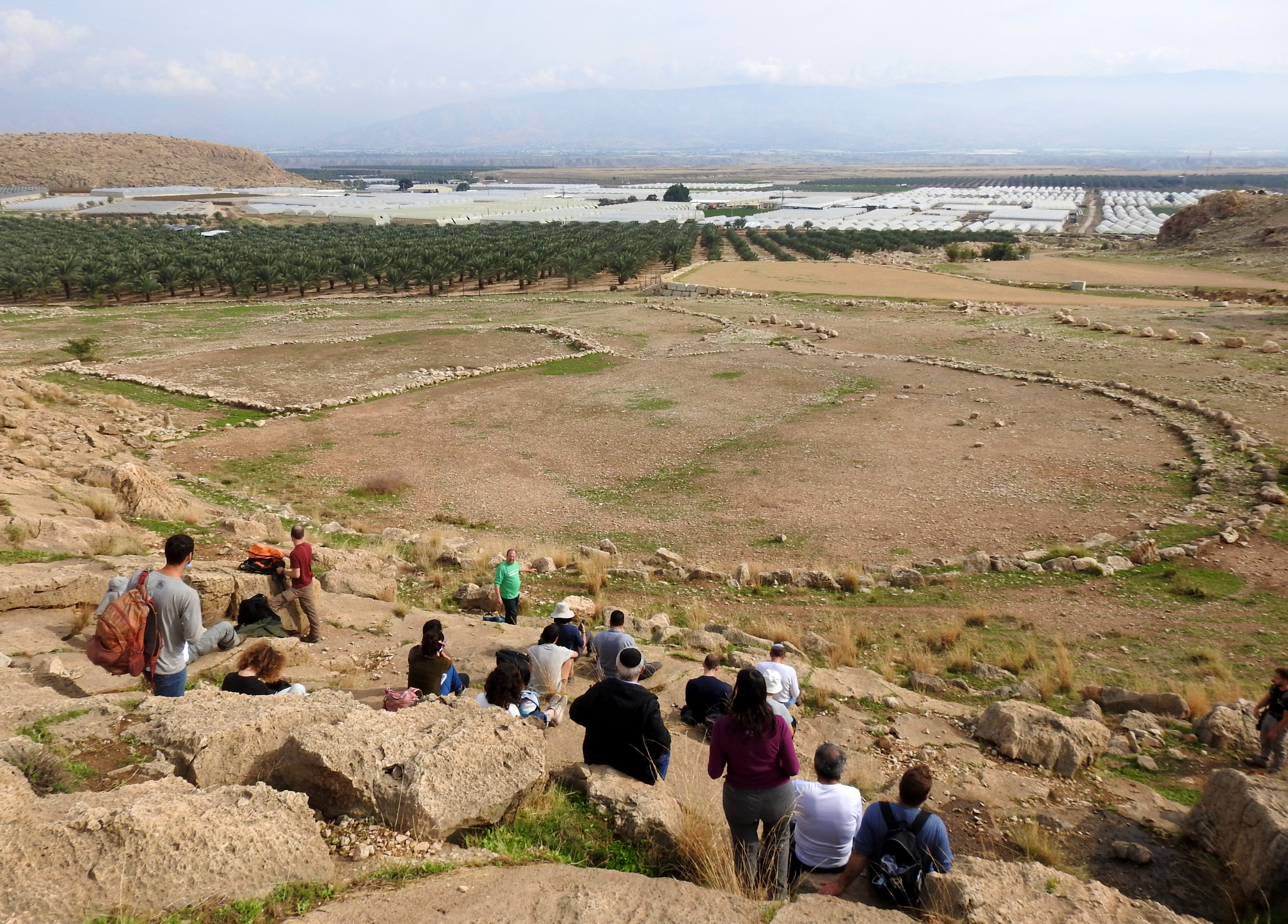
Our bus driver deposited us next outside a date plantation just south of Argaman, where we hiked along the wadi to our next site of interest, Bedhat esh-Sha’ab. Also referred to as Gilgal, this is a unique site attributed to ceremonial usage during the Iron Age. The late archaeologist Adam Zertal suggested that Bedhat esh-Sha’ab was one of the first places the Israelites camped upon crossing into the Holy Land. The other possible candidates also share a distinct footprint-shaped outline, which may connect to biblical terminology concerning conquest.

Bedhat esh-Sha'ab or Gilgal

Bedhat esh-Sha’ab or Gilgal

At any rate, this site is located at the foot of a stepped slope which served as an amphitheatre of sorts during our visit there. Nummulite fossils can be found on these rocks, and sure enough we found some as we searched about. Indeed, I had even quite accidentally photographed a nice grouping of the orange, coin-shaped fossils when taking a picture of a nearby blackstart.

A blackstart perched on a nummulite-dotted rock

A blackstart perched on a nummulite-dotted rock

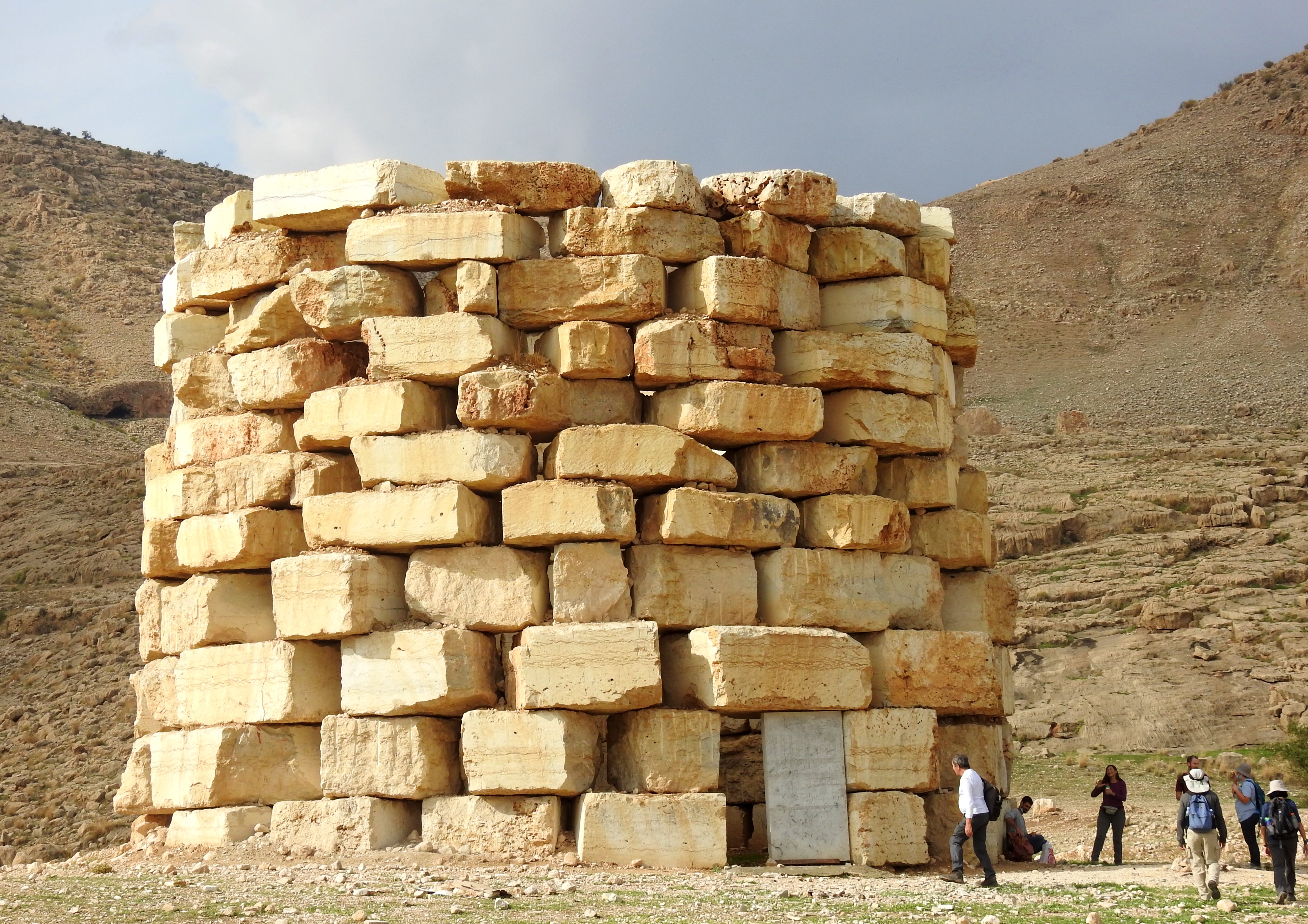
In more recent years, there were efforts to make Bedhat esh-Sha’ab/Gilgal a proper tourist attraction, and a gigantic megalithic tower was erected. While there’s really not much to see inside the beast, we did notice some local lads climbing up to the top to enjoy the lofty views.

The behemoth of a tourist attraction

The behemoth of a tourist attraction

We hiked back to the bus and were shuttled over to the next site on our itinerary, the Roman hilltop fortress known now as Horvat Heraf. Located just north of Argaman, a mere two and a half kilometres from Bedhat esh-Sha’ab, this was a permanent military camp for the Roman army in the Jordan River Valley region. Interestingly enough, this quite noticeable site wasn’t documented by early archaeologists, nor by the British surveyors. It was discovered in 1968, during an emergency survey after the Six Day War, and was, only then, properly analysed and named.

Making our way up to the Roman army camp fortress

Making our way up to the Roman army camp fortress

A fortress of large proportions, the inner section measures a whopping 3,400 square metres, with an additional “lean-to” constructed on the southern side. Three entrances are built into the roomed walls, and a praetorium (officer’s headquarters) in the very centre – see an aerial image of the camp HERE. We were quite understandably impressed by this visibly authentic site, and set about looking for interesting ceramic fragments and maybe even ancient Roman coins (of which we found none).

The ruined praetorium in the centre of the complex

The ruined praetorium in the centre of the complex

What made this extra titillating for me was the fact that this fortified camp was constructed during the reign of Emperor Hadrian, in connection with the Bar Kokhba Revolt (132–136 CE). The evening before, friends Adam and Vered, Bracha and I watched Thermae Romae, a quirky Japanese movie about a Roman architect trying to improve upon the existing Roman bathhouses under the behest of none other than the very same Hadrian. It’s interesting to compare narratives of such a famous, or infamous, historical figure.

Beautiful shades of topography

Beautiful shades of topography

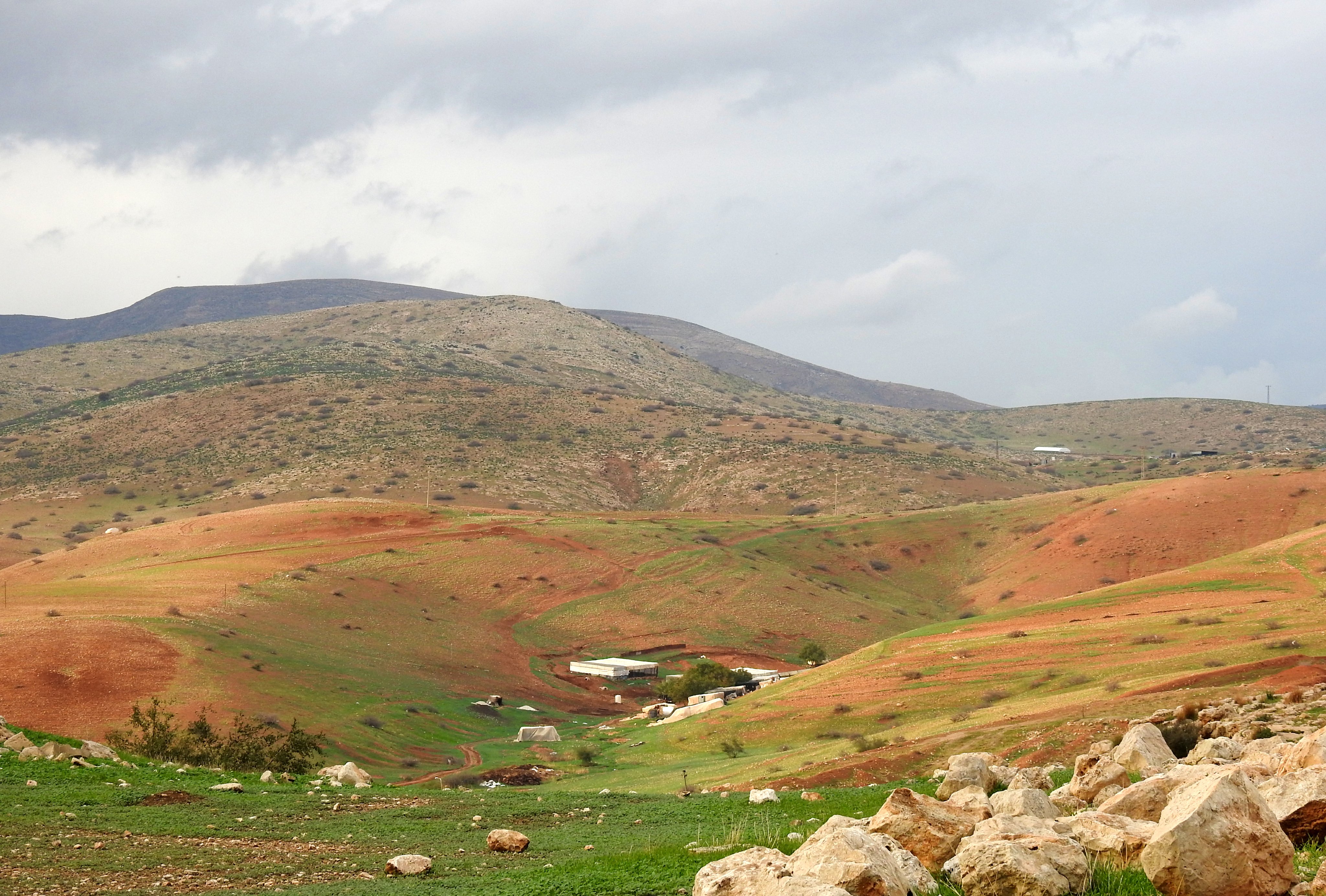
After a light drizzle, we headed back down the mountain and back into our awaiting bus to be taken to the final site for the day. This one was located a bit further upstream, and should be referred to as Khirbet Merah al-‘Enab (Hums a-Tahta), following the advice of Prof Aster. This site is the ruins of an Israelite fortress which helped defend the natural topographical roads that led into the heart of Samaria.

Part of the Israelite fortress at Khirbet Merah al-'Enab

Part of the Israelite fortress at Khirbet Merah al-‘Enab

We arrived on location to see that the site is the literal backyard of a local Arab family, whose patriarch watched us keenly as we enjoyed their hospitality. Our lecturers gave a brief rundown of the site and its importance to the region, and when we left, Prof Aster had a quick conversation with our host in Arabic and it turns out that the both remembered each other from a previous occasion some years back – always charming. With that we made one final hike back to our bus, and off we went back in the direction of Bar Ilan University, bringing yet another field trip to a successful end.